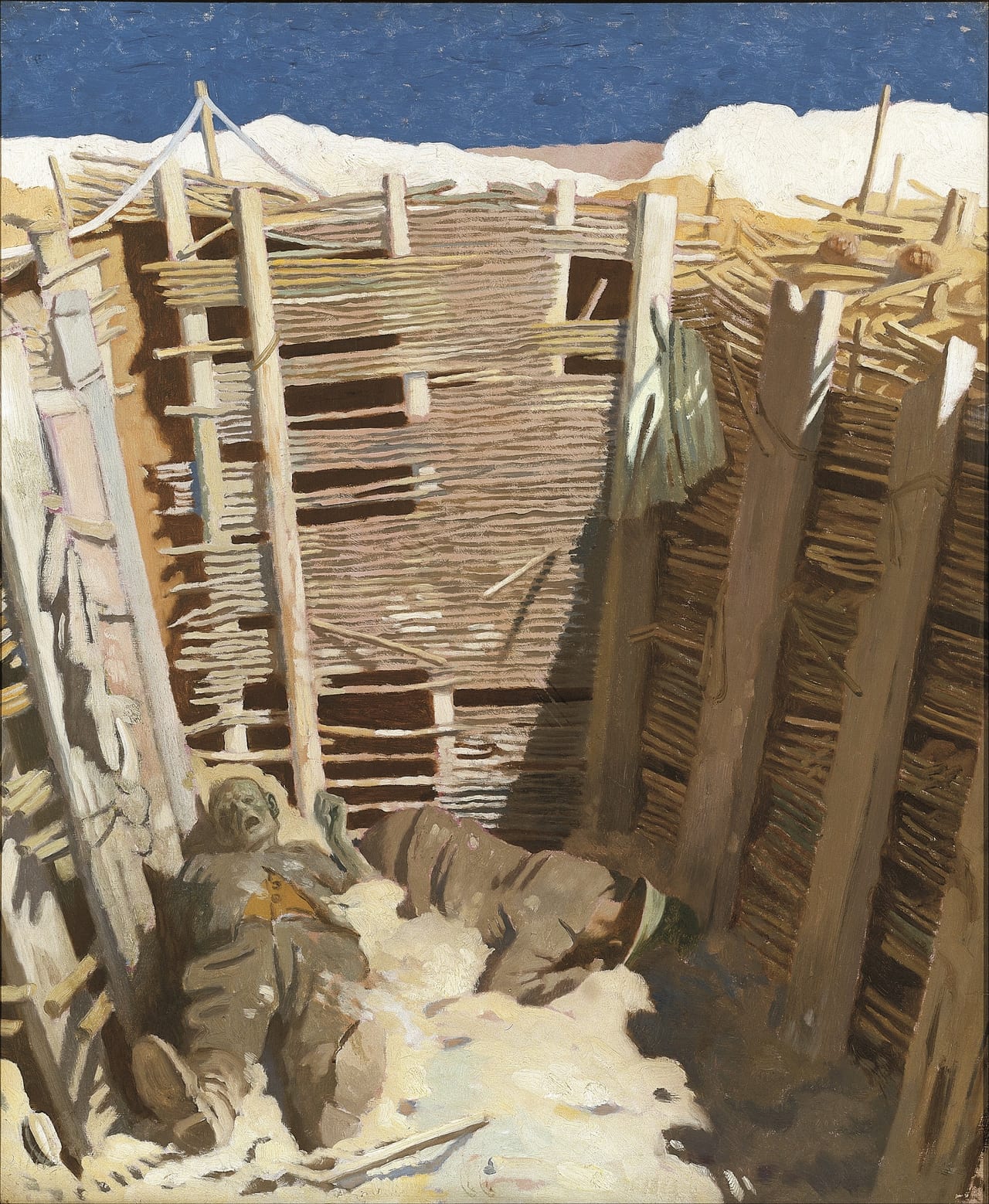
Dead Germans in a Trench
William Orpen · 1918

William Orpen
United Kingdom · 1878–1931
Major Sir William Newenham Montague Orpen was an Irish artist who mainly worked in London. Orpen was a fine draughtsman and a popular, commercially successful painter of portraits for the well-to-do in Edwardian society, though many of his most striking paintings are self-portraits. During World War I, he was the most prolific of the official war artists sent by Britain to the Western Front. There he produced drawings and paintings of ordinary soldiers, dead men, and German prisoners of war, as well as portraits of generals and politicians. Most of these works, 138 in all, he donated to the British government; they are now in the collection of the Imperial War Museum.
Independent artist guide by Momentable. Biography from Wikipedia; artworks credited to the museums that hold them.
 LIVENow streaming · Dead Germans in a Trench
- life
- 1878–1931life
- rights
- Public domainrights
The work
A selection of 2 works, free to stream.
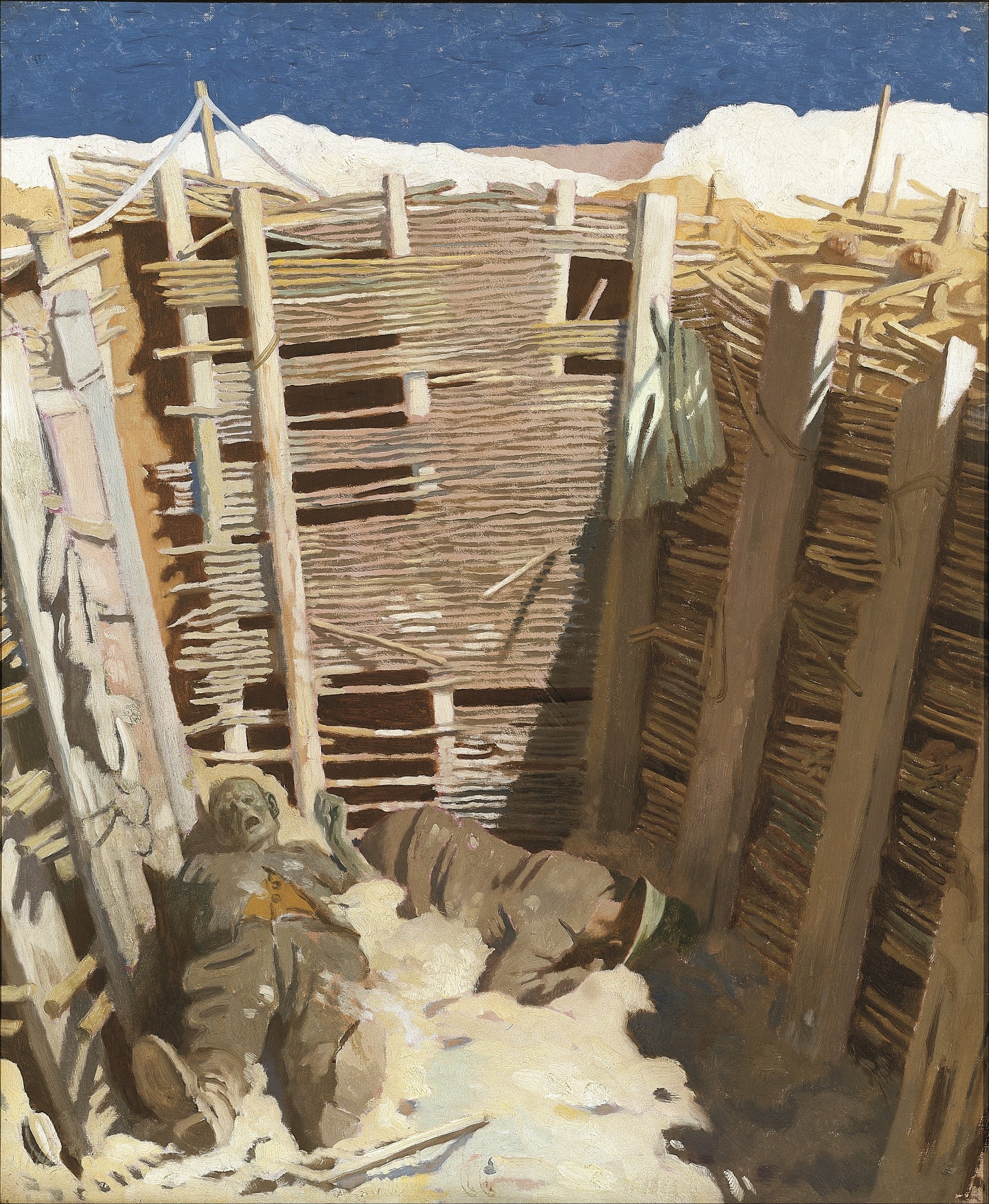
Dead Germans in a Trench
William Orpen · 1918
Imperial War Museum
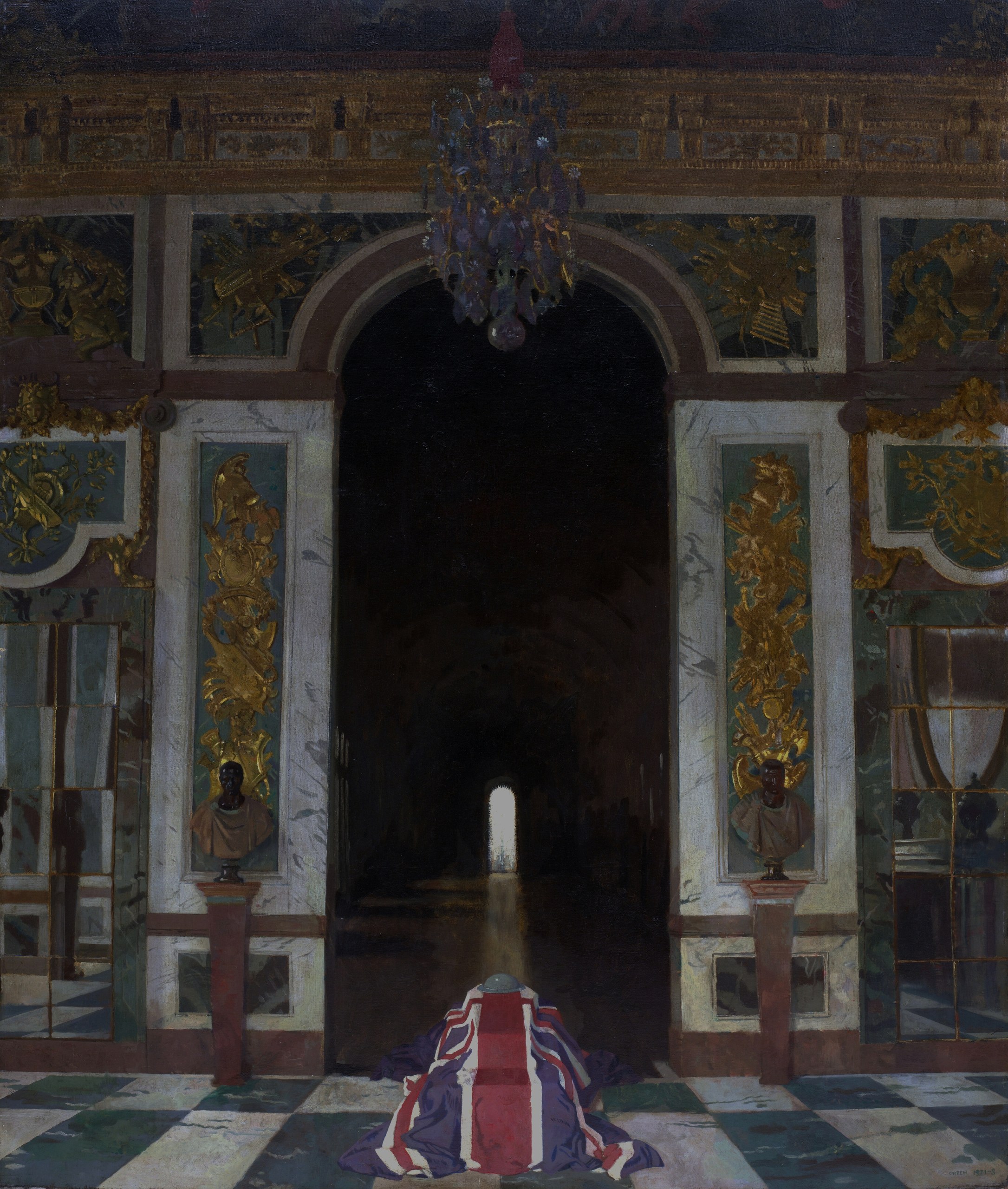
To the Unknown British Soldier in France
William Orpen · 1927
Imperial War Museum
Works worth knowing
What William Orpen made, and why each one is worth looking at.
Dead Germans in a Trench
William Orpen · 1918
Imperial War Museum
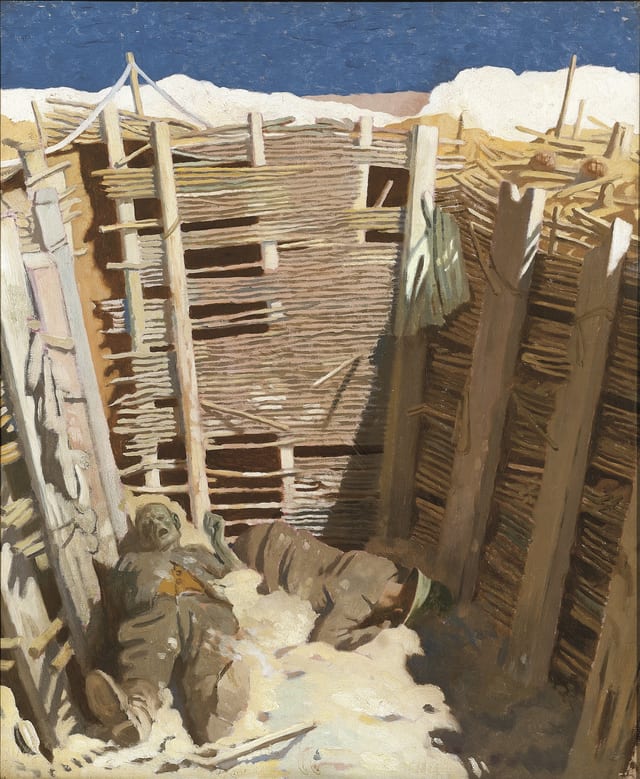
Dead Germans in a Trench is an oil on canvas painting by Irish artist William Orpen, from 1918. The artist donated the painting to the Imperial War Museum, in London, in 1918. It was made during the First World War.
To the Unknown British Soldier in France
William Orpen · 1927
Imperial War Museum
To the Unknown British Soldier in France is an oil-on-canvas painting by Irish artist Sir William Orpen, exhibited in one state in 1923 and then modified in 1927. It was one of three paintings commissioned from Orpen to commemorate the Peace Conference at Versailles in 1919. The work is held by the Imperial War Museum in London.
Where the work hangs
The museums that hold it, and their visitor guides.
If you like William Orpen
Artists held by the same museums.
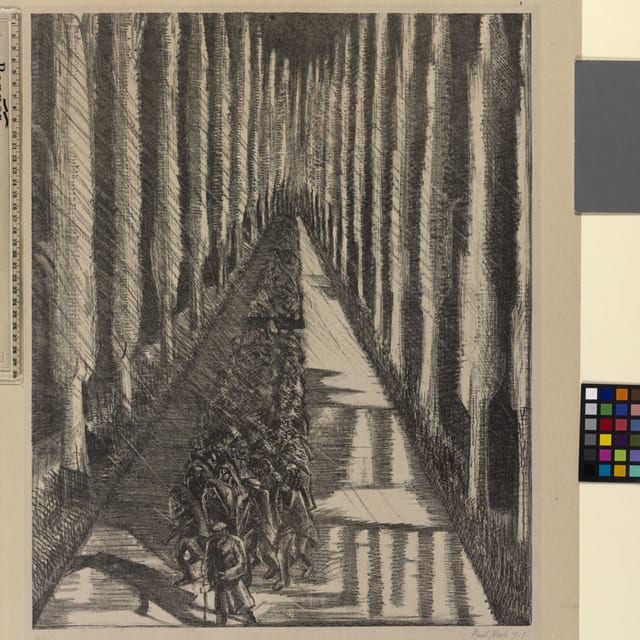
Paul Nash
United Kingdom · 7 in the archive
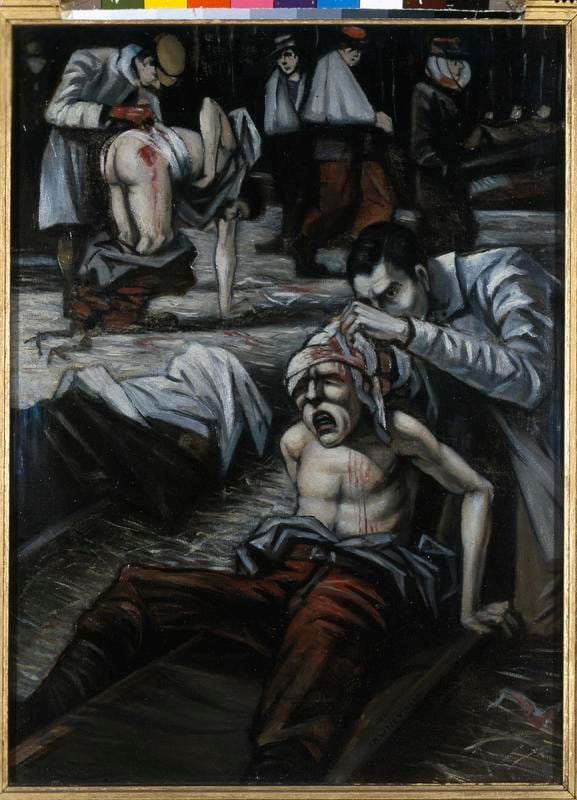
C. R. W. Nevinson
United Kingdom · 5 in the archive
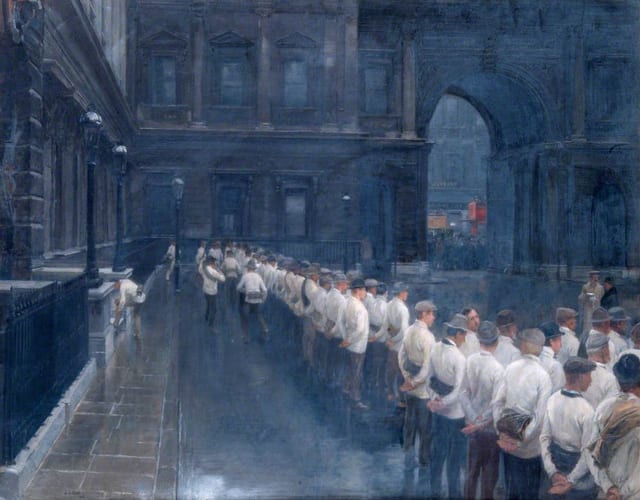
Andrew Carrick Gow
United Kingdom of Great Britain and Ireland · 2 in the archive
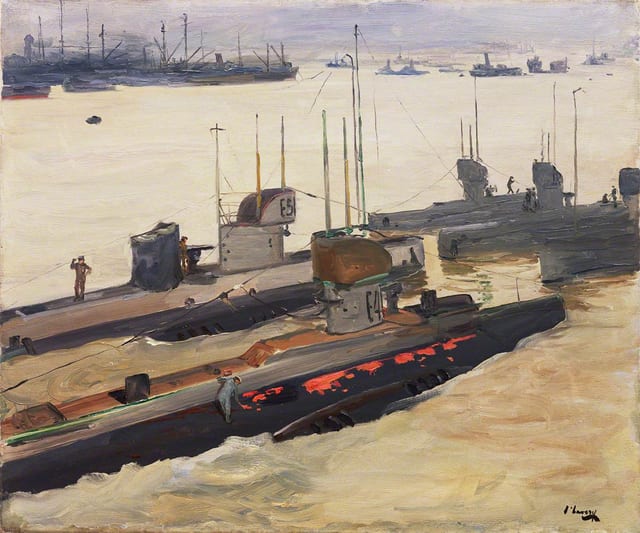
John Lavery
United Kingdom · 2 in the archive
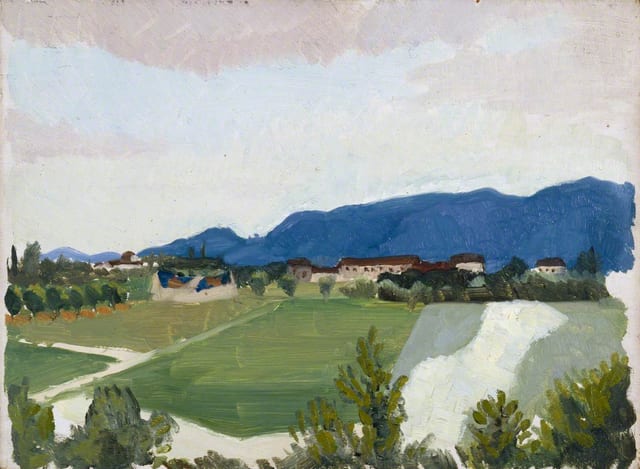
Sydney Carline
United Kingdom · 2 in the archive
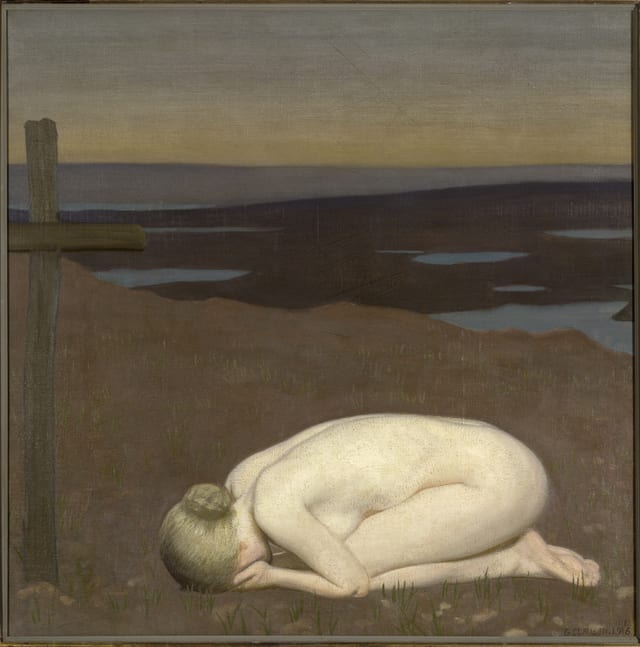
George Clausen
United Kingdom · 1 in the archive
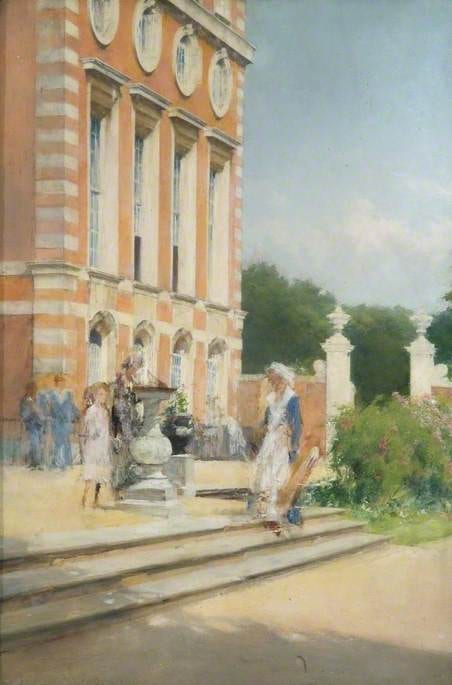
Henry Woods
United Kingdom of Great Britain and Ireland · 1 in the archive
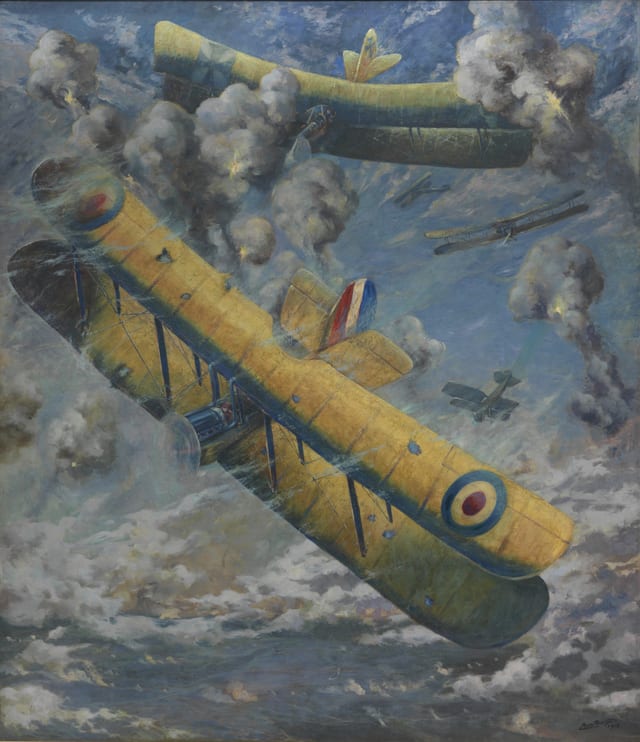
Louis Weirter
1 in the archive
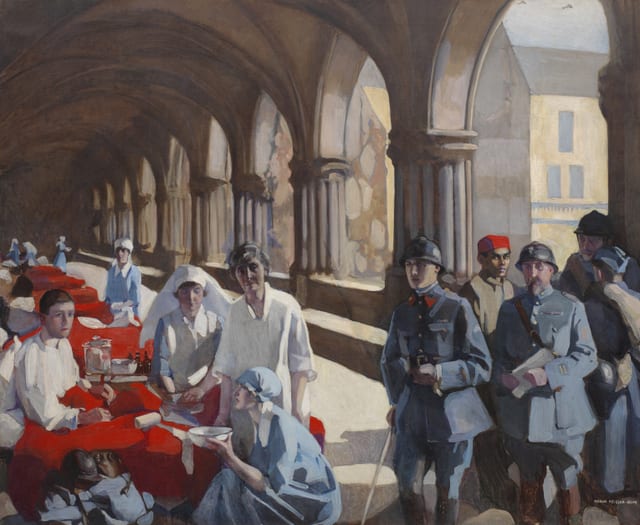
Norah Neilson Gray
United Kingdom · 1 in the archive
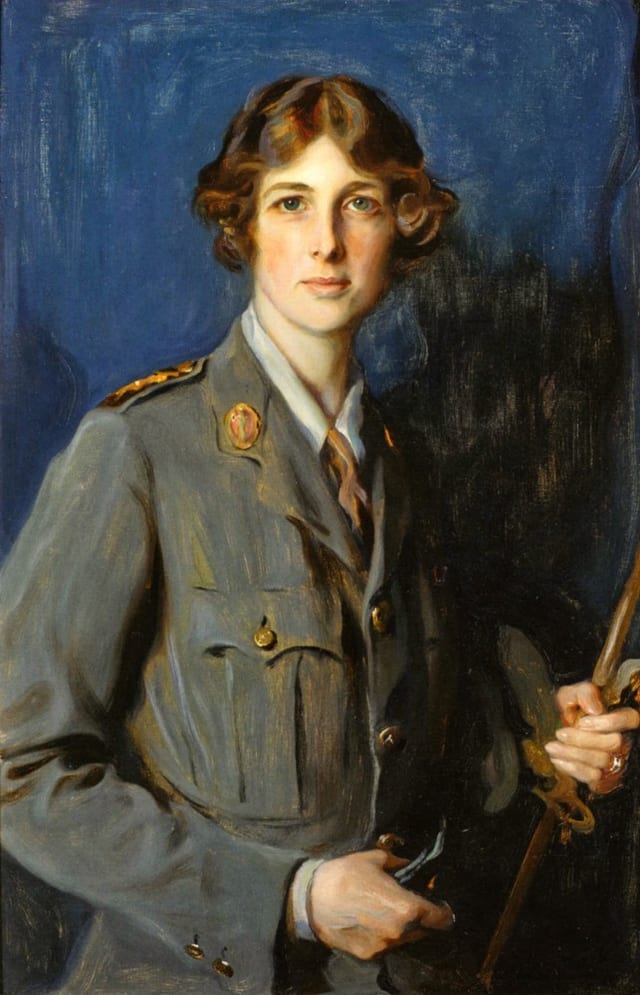
Philip de László
United Kingdom · 1 in the archive
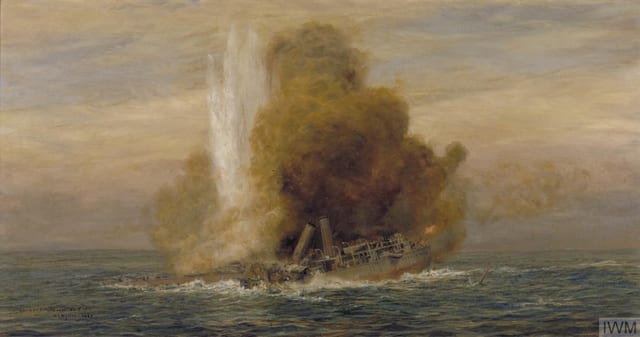
William Lionel Wyllie
United Kingdom · 1 in the archive
Invite the masters into your living room.
William Orpen on your TV, phone, or tablet. Free to start.
View on MomentableIndependent guide by Momentable · biography from Wikipedia · artworks are in the public domain and credited to the museum that holds them