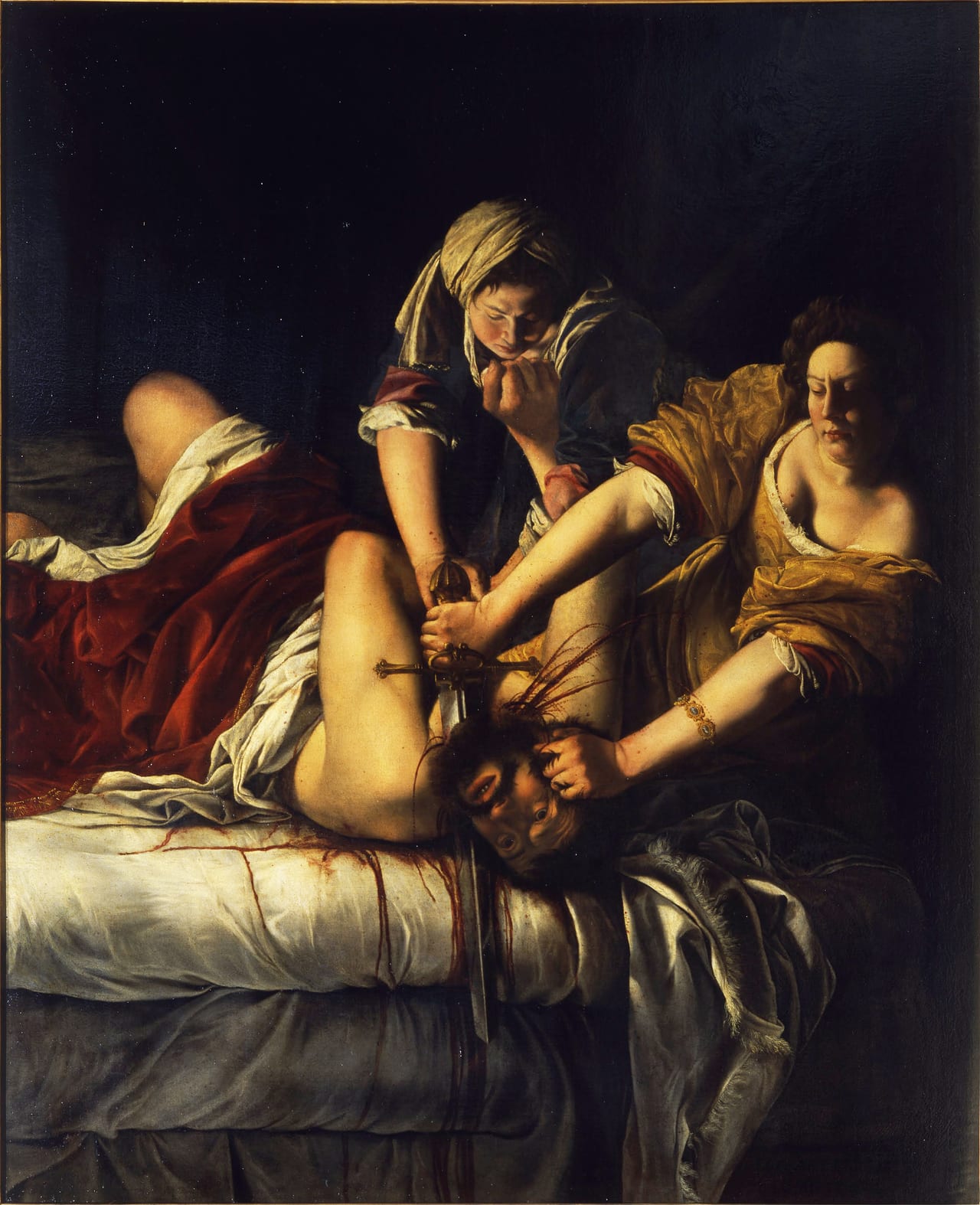
Judith Beheading Holofernes
Artemisia Gentileschi · 1620

Artemisia Gentileschi
Papal States · 1593–1653
The leading woman painter of the seventeenth century, whose Judiths, saints and Magdalenes act with a physical force all their own.
Play 9 works from this collection on your TV, phone or tablet with Momentable Art TV.
Play CollectionRome, Florence, Naples
Artemisia Gentileschi was born in Rome in 1593, the only daughter among five children of the painter Orazio Gentileschi, and she learned the craft in his studio. Her first signed and dated picture, Susanna and the Elders, is from 1610, made when she was seventeen.
In 1611 she was raped by Agostino Tassi, a painter who worked with her father. The trial that followed, in 1612, survives in its documents; Tassi was convicted and banished from Rome, a sentence never carried out. Married soon after, she left for Florence, where she raised five children and in 1616 became one of the first women ever admitted to the Academy of the Arts of Drawing.
Debts brought her back to Rome in 1620, and after a decade there and a stay in Venice she settled in Naples in 1630, running a studio until the end of her life. She worked for rulers from the Grand Duke of Tuscany to the king of Spain, and briefly came to London in 1639, probably to help her father paint a ceiling in Greenwich. A document places her still alive in Naples in August 1654.
Heroines in Caravaggio's light
Her art stands in the line of Caravaggio, whose work she could study again on her return to Rome from Florence: dark grounds, a hard light on flesh and stuff, and scenes caught at their most physical moment. Where Caravaggio's women often pose, hers labour; her Judith does not hold the head at a distance but leans her weight into the blade.
She returned to the story of Judith and Holofernes again and again across her career, before, during and after the killing itself. Around these famous cruelties she built an equally serious body of saints and penitents, women caught at the point of choosing or refusing, painted in gowns of real silk with their hands busy at the work of the soul.
Known works
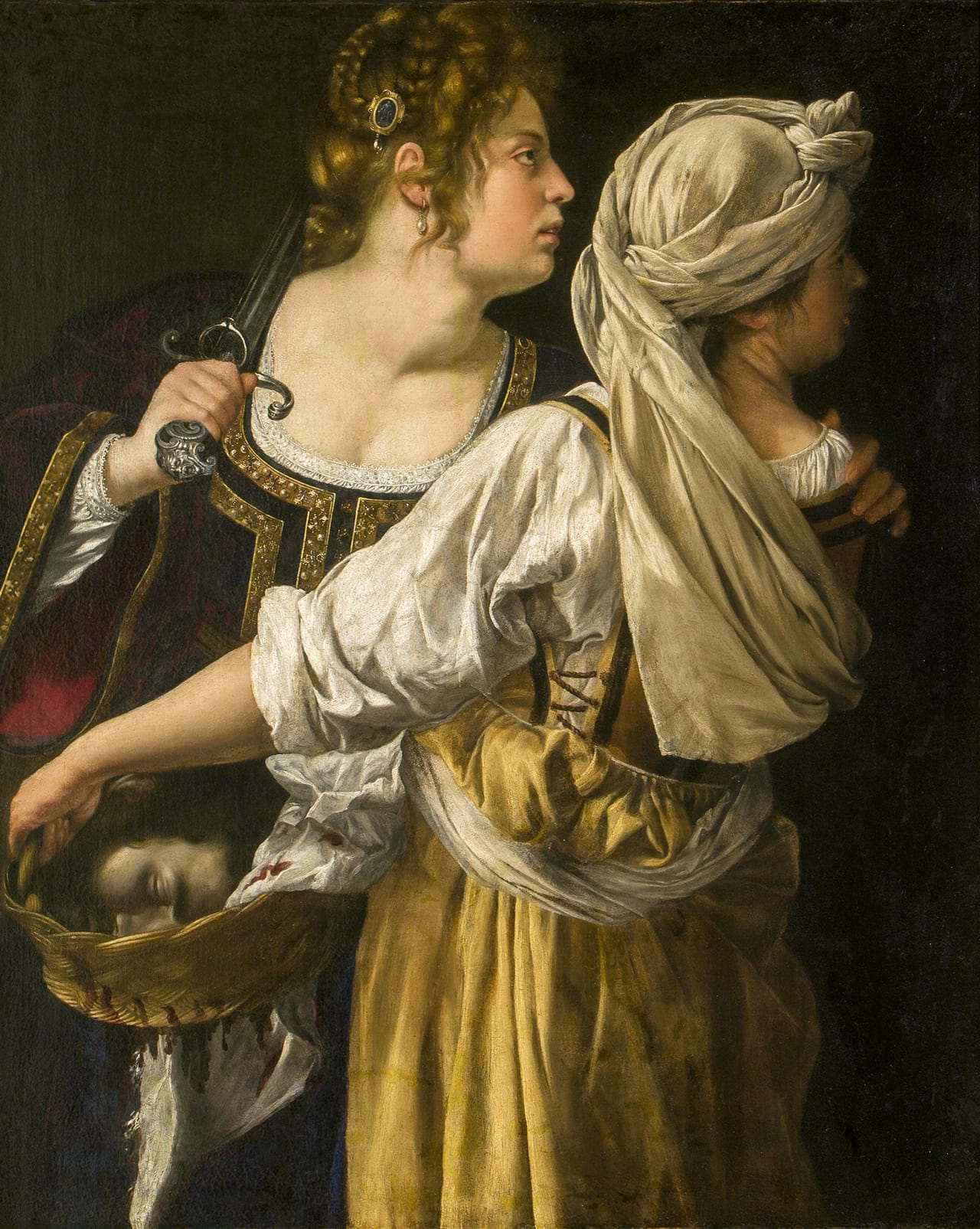
Judith and Her Maidservant
Artemisia Gentileschi · 1610
Palazzo Pitti
Judith and Her Maidservant. The moment after the murder: the two women slip out of the tent, the general's head hidden in the basket the maid carries, every sense on alert. It hangs in the Pitti Palace in Florence.
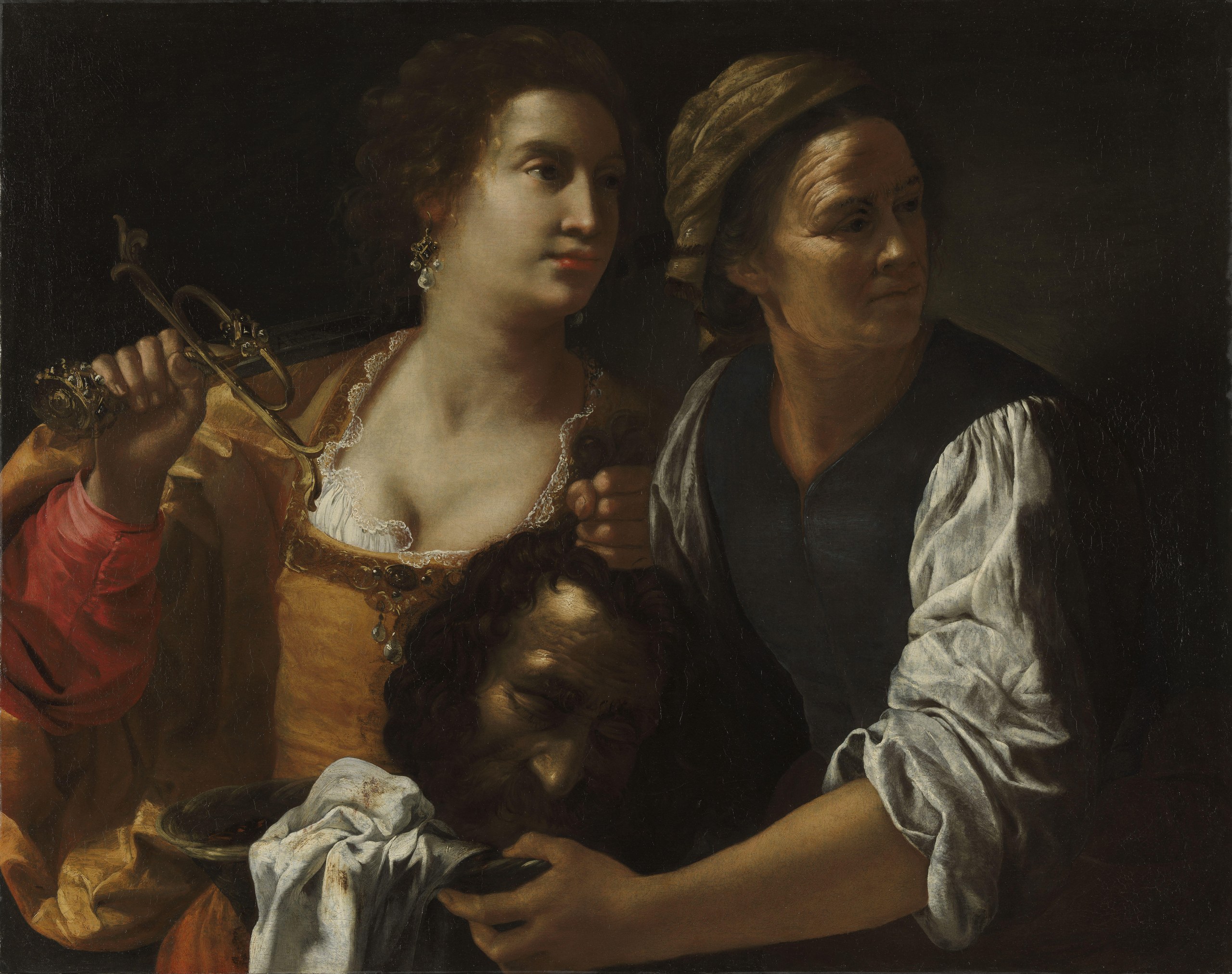
Judith and her Maidservant with the Head of Holofernes
Artemisia Gentileschi · 1639
National Museum of Art, Architecture and Design
Judith and her Maidservant with the Head of Holofernes. A late return to the theme she had treated many times before: the head now the proof in the basket, the maidservant's candle the only defence against discovery. It joined the collection of Norway's national museum in Oslo in 2022.
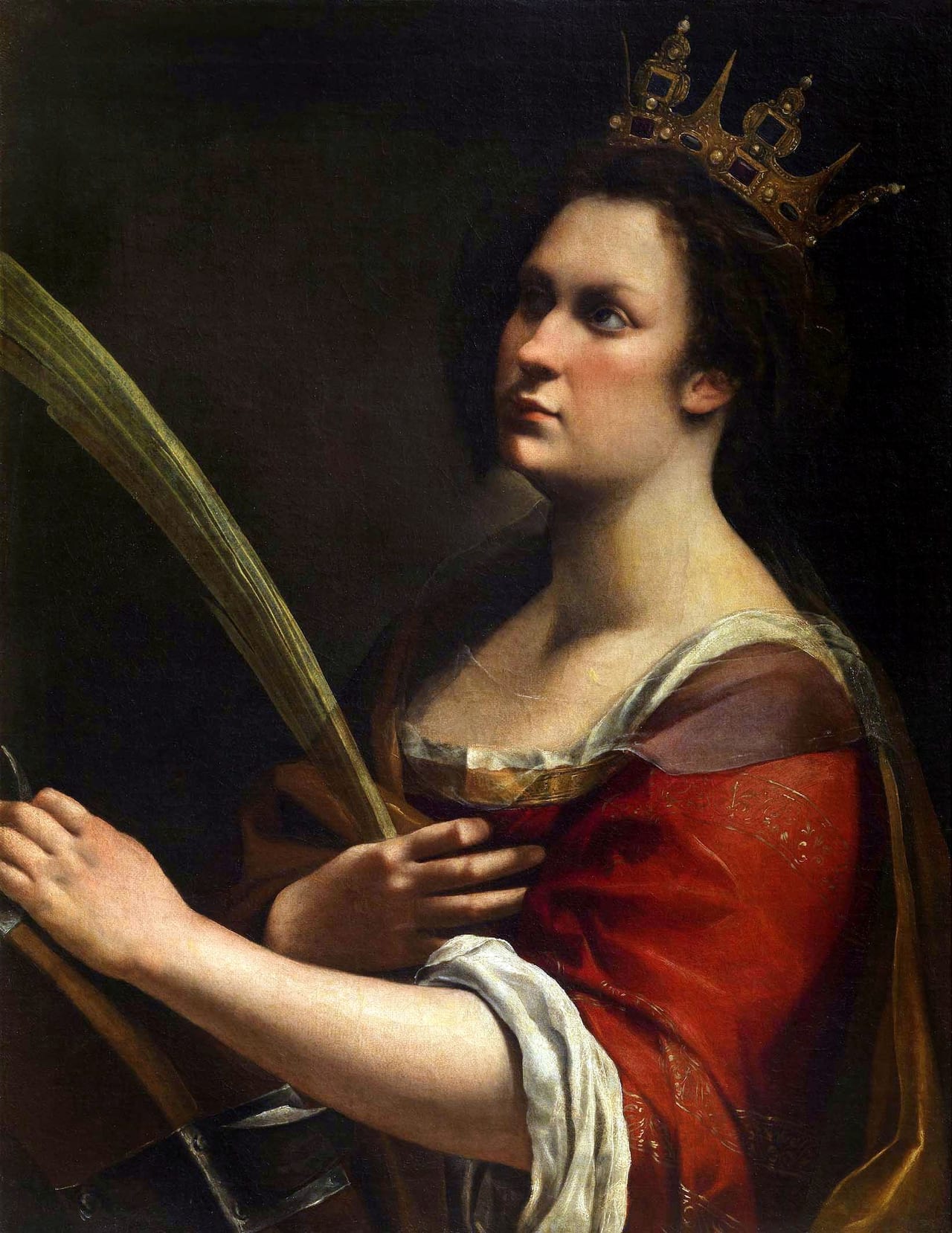
Saint Catherine of Alexandria
Artemisia Gentileschi · 1615
Uffizi Gallery
Saint Catherine of Alexandria. The martyr as a young woman in a red gown worked with gold, a crown on her head and the palm of martyrdom in her hand, leaning on the spiked wheel that broke when it was meant to kill her. Gentileschi likely used the same preparatory drawing for this canvas and for her London self-portrait in the same guise.
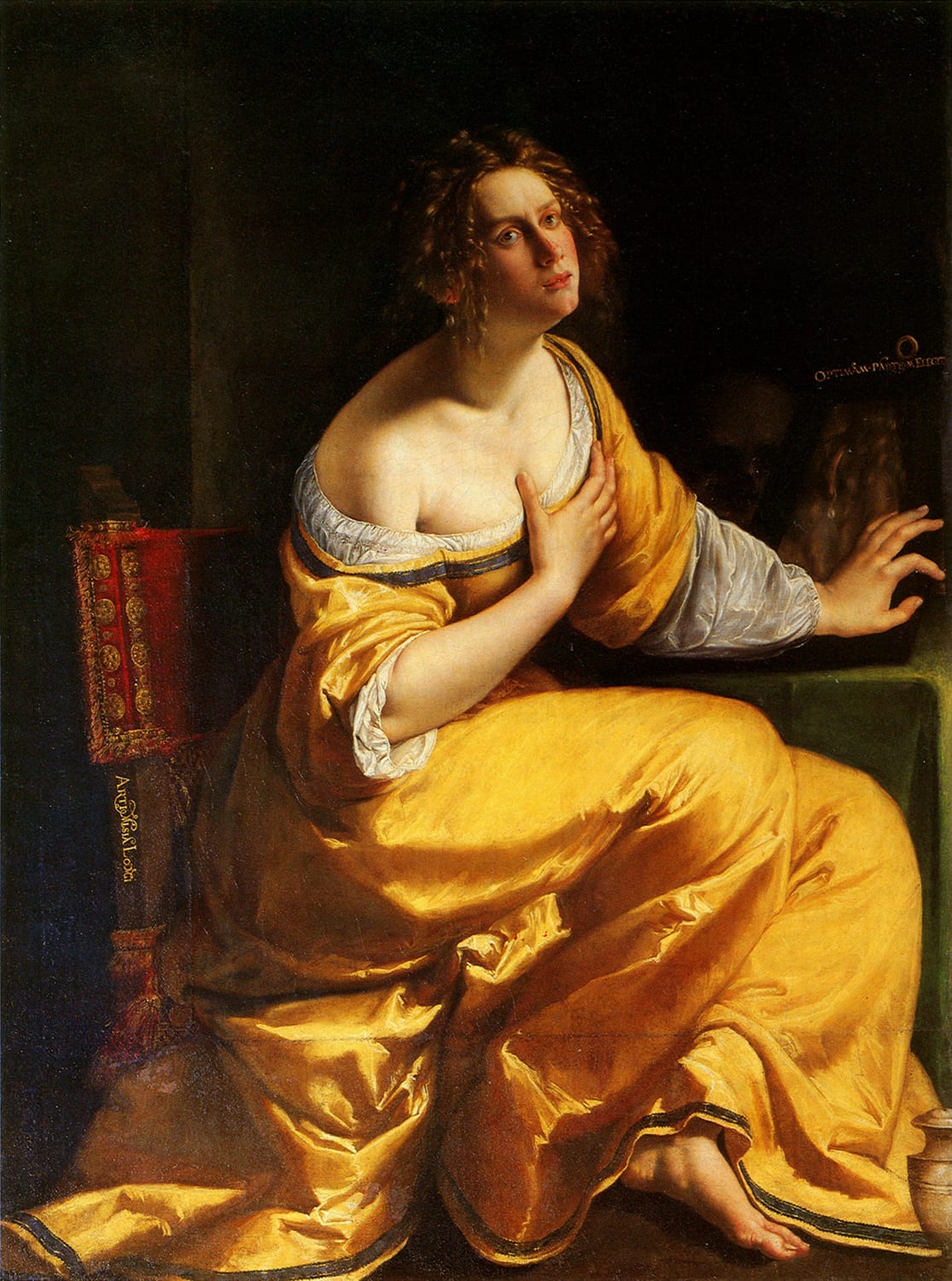
Conversion of the Magdalene
Artemisia Gentileschi · 1620
Palazzo Pitti
Conversion of the Magdalene. Mary in a gown of yellow silk, caught as she turns from a sinner's life to one given to Christ: no crucifix, no wilderness, none of the usual furniture of penitence, only the decision itself. Painted in her Florentine years, it hangs in the Pitti Palace.
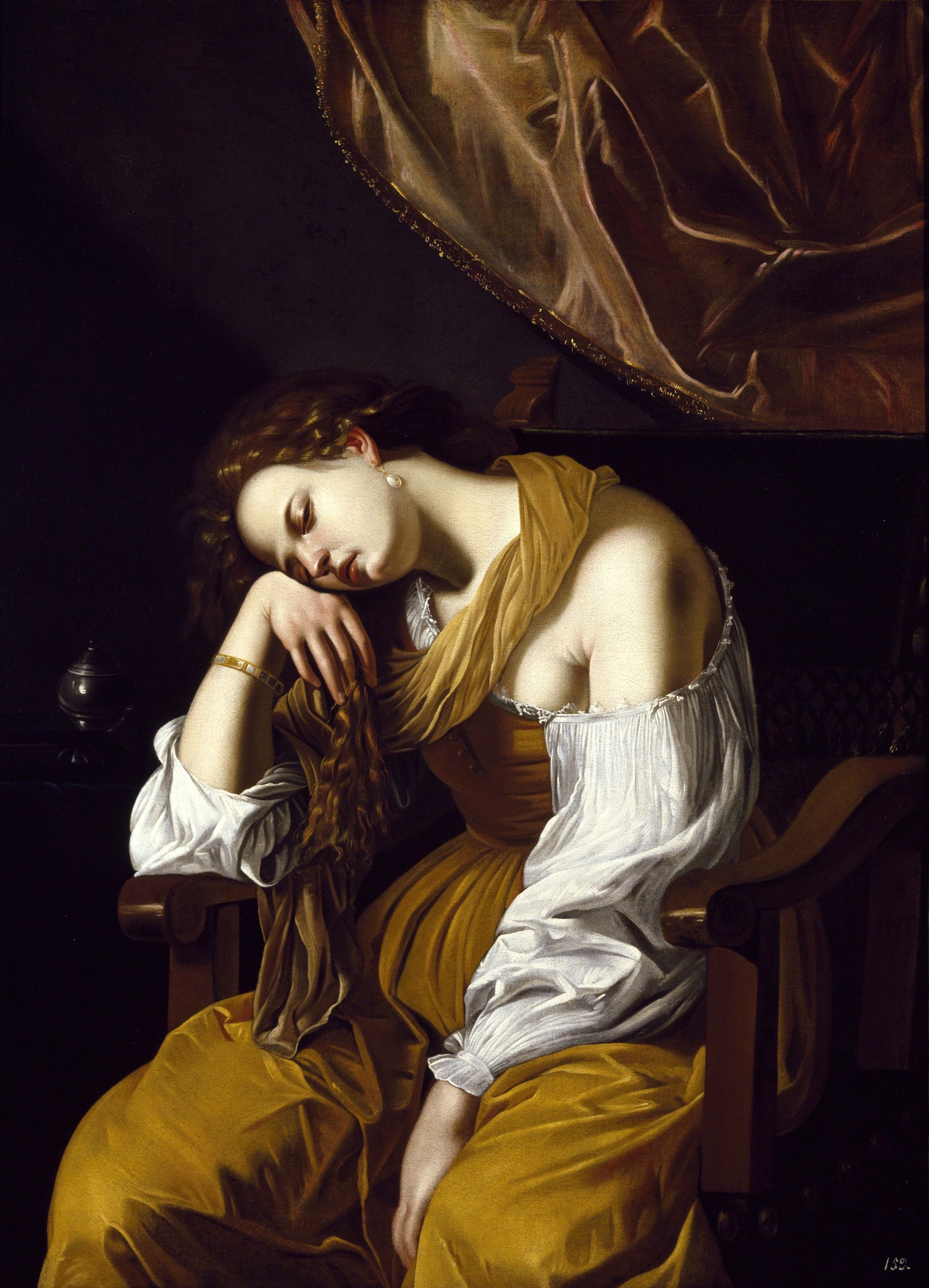
Mary Magdalene as Melancholy
Artemisia Gentileschi · 1620
Museo Soumaya
Mary Magdalene as Melancholy. The saint recast as Melancholia itself, in a painting of the early 1620s now in Mexico City. It is her own copy of her Penitent Magdalene in Seville Cathedral, and study of the two faces suggests the Mexico City version may carry her own features.
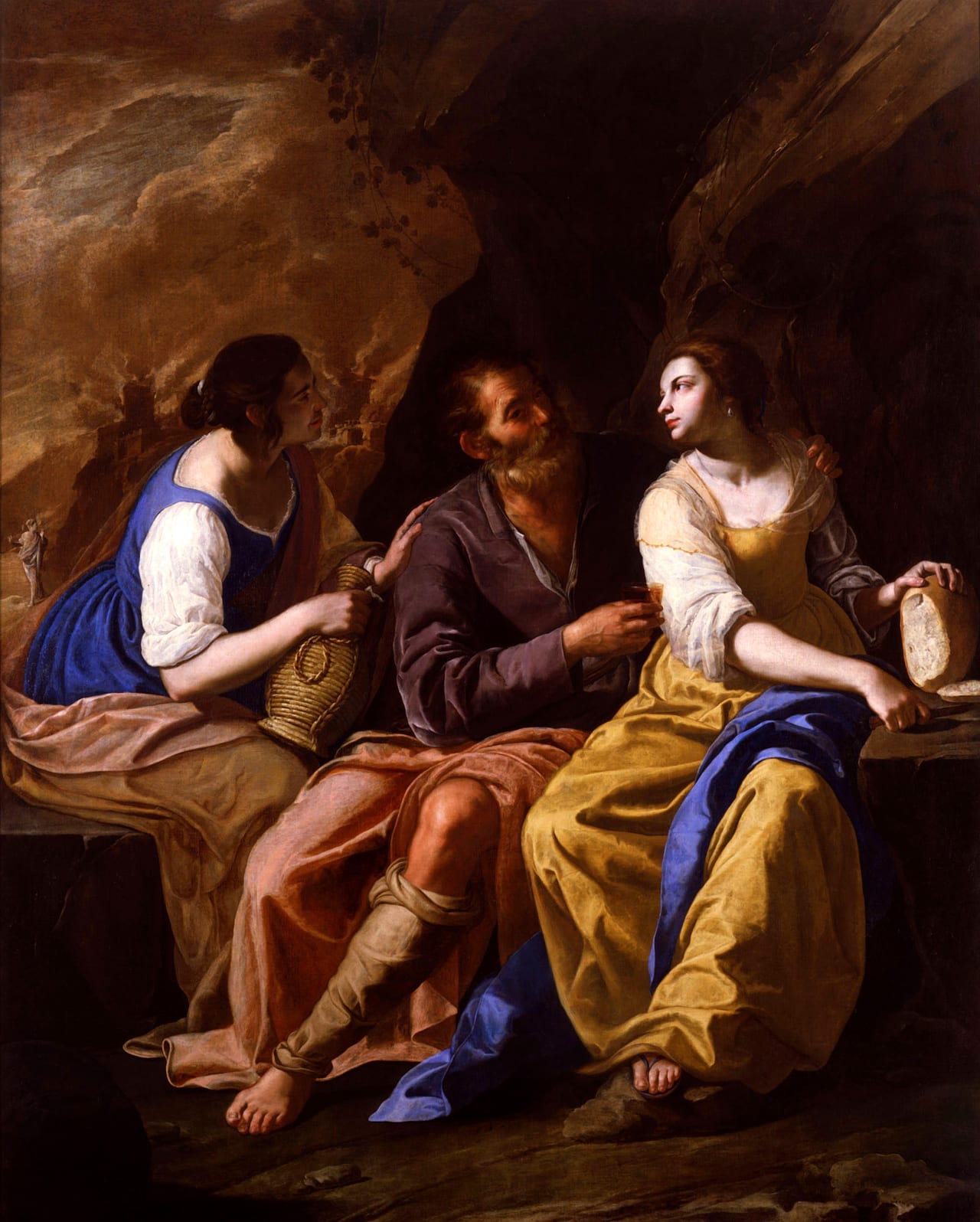
Lot and his Daughters
Artemisia Gentileschi · 1630
Toledo Museum of Art
Lot and his Daughters. Genesis played out in the shadows: Sodom burning on the horizon, Lot's wife turned to a pillar of salt at the left, the old man drunk in a cave while his daughters save their family line. A theme her age loved for both its moral and its scandal, and one she paints without blinking.
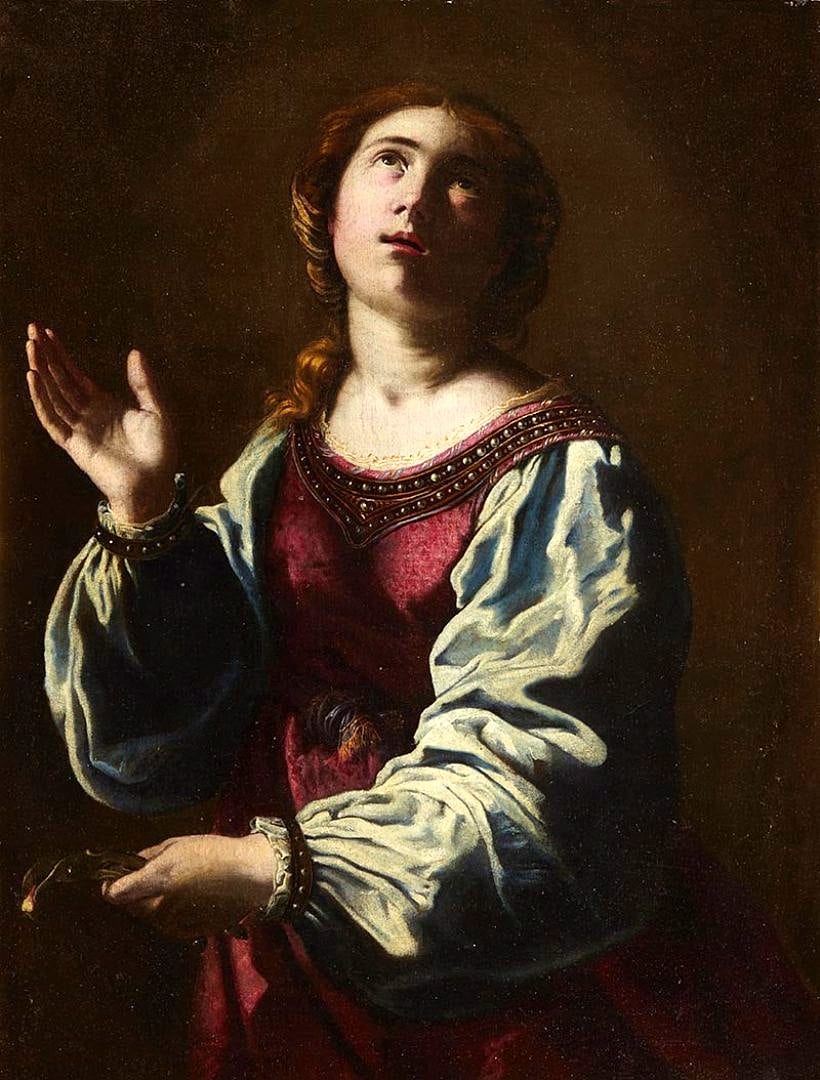
Saint Apollonia
Artemisia Gentileschi · 1642
Museo Soumaya
Saint Apollonia. A painting attributed to her hand, made in the early 1640s: the martyr shown from the waist up against a dark ground, her face lifted, one hand raised and the other holding a pair of tweezers with a tooth, the instrument of her torture under the uprising against Christians in Alexandria.
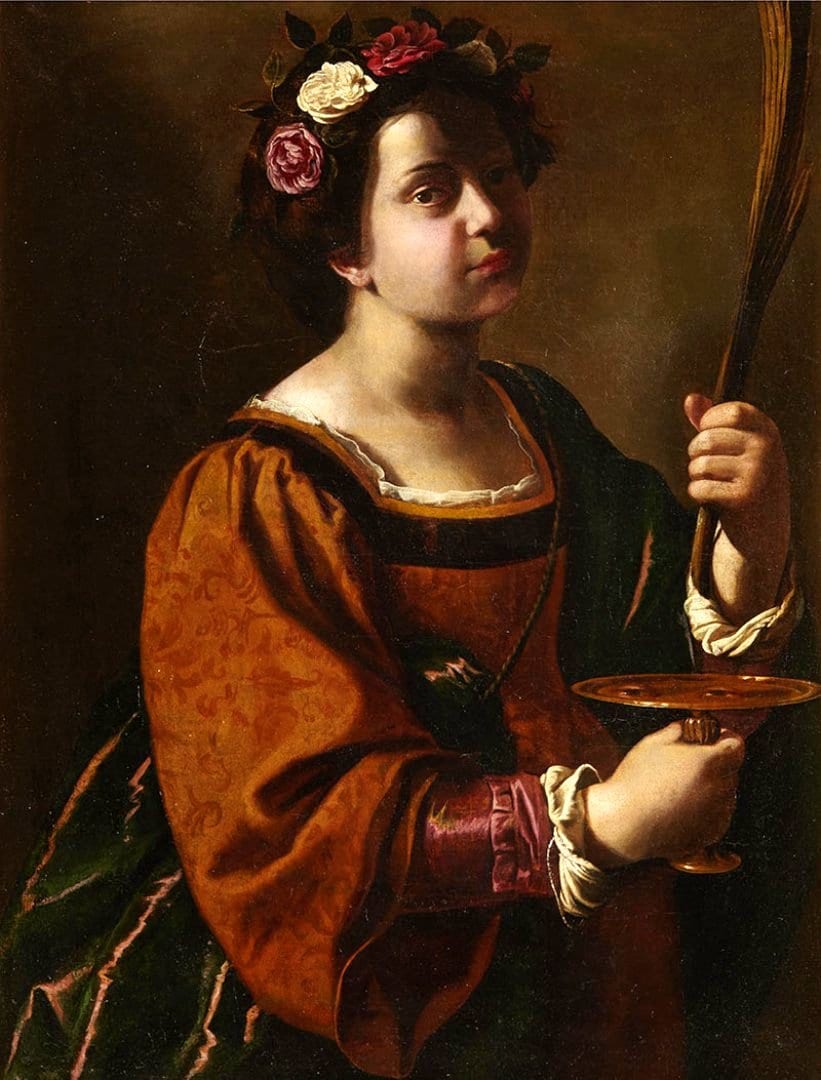
Saint Lucy
Artemisia Gentileschi · 1642
Museo Soumaya
Saint Lucy. The virgin martyr of Syracuse, whose badge in art is a pair of eyes on a golden plate, the emblem of the sight she lost and of her name, which comes from the Latin word for light.
Sources
- National Gallery, London, “Artemisia Gentileschi”
- Uffizi Galleries, “Judith Beheading Holofernes”
- Wikipedia, “Judith Slaying Holofernes (Artemisia Gentileschi, Florence)”
- Wikipedia, “Saint Catherine of Alexandria (Artemisia Gentileschi, Florence)”
- Wikipedia, “Mary Magdalene (Artemisia Gentileschi)”
- Wikipedia, “Judith and Her Maidservant (Artemisia Gentileschi, Florence)”
- Wikipedia, “Judith and Her Maidservant (Artemisia Gentileschi, Oslo)”
- Wikipedia, “Mary Magdalene as Melancholy”
- Wikipedia, “Lot and His Daughters (Artemisia Gentileschi)”
- Wikipedia, “Saint Apollonia (Artemisia Gentileschi)”
- Wikipedia, “Saint Lucy”
Invite Artemisia Gentileschi into your living room
Play 9 works from this collection on your TV, phone or tablet with Momentable Art TV.