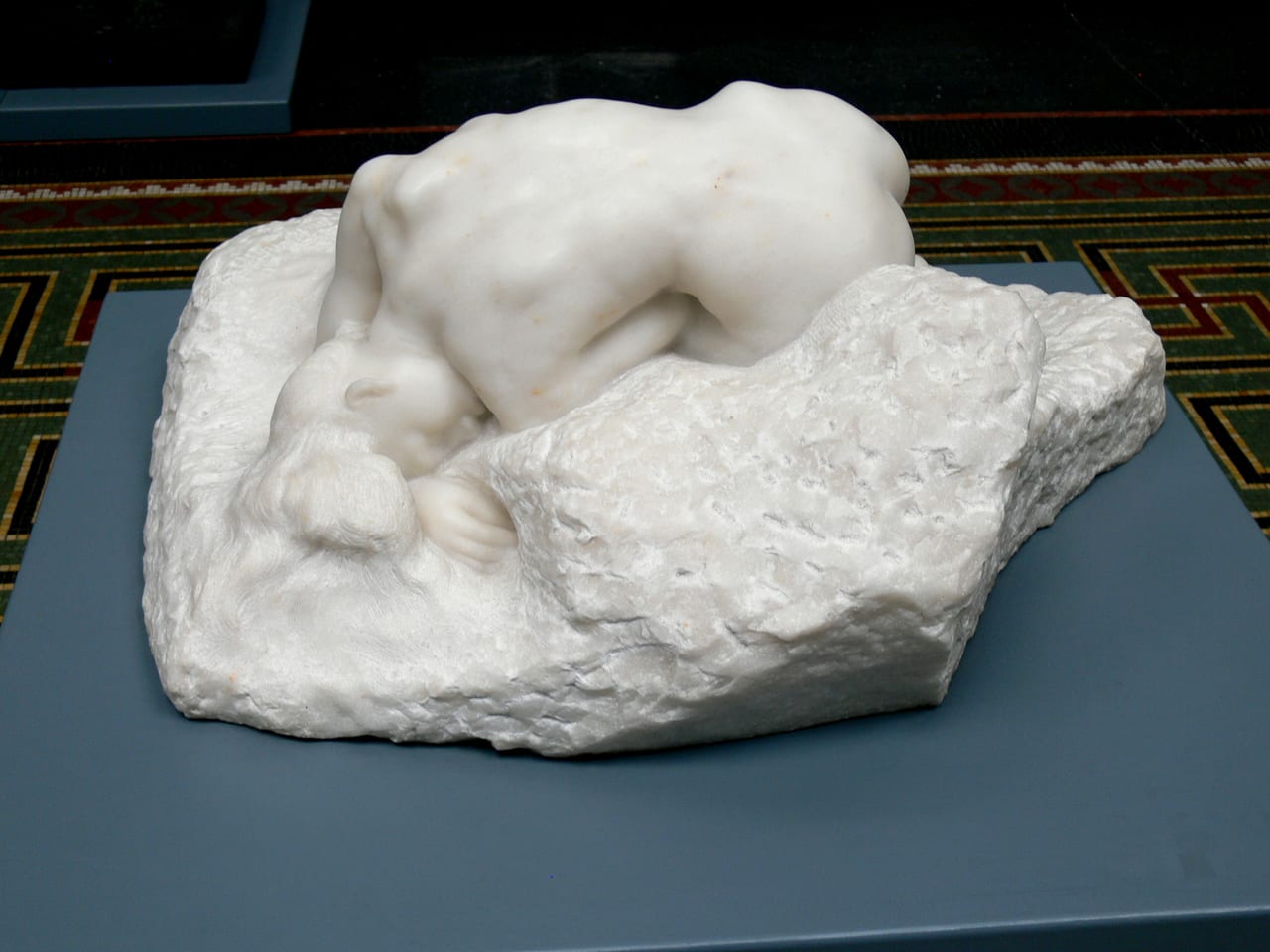
Young mother
Auguste Rodin · 1885

Auguste Rodin
France · 1840–1917
The sculptor who made the living surface of the human body his subject, and in doing so opened the way to modern sculpture.
- 6,000+
- Sculptures in the Musée Rodin, the largest collection anywhere
- 7,000
- Drawings and prints held by the Musée Rodin
- 56
- Portraits made between 1877 and his death in 1917
Play 29 works from this collection on your TV, phone or tablet with Momentable Art TV.
Play CollectionA craftsman's education
François Auguste René Rodin was born in Paris on 12 November 1840 and was drawing by the age of ten. Between fourteen and seventeen he attended the Petite École, a school for art and mathematics; there he learned drawing and painting.
Rejected by the grand schools, he earned his living as a craftsman. He worked as Albert-Ernest Carrier-Belleuse's chief assistant to 1870, designing roof ornaments and embellishments for staircases and doorways, and in 1871 followed his master to Brussels, where they ornamented the Bourse Palace. A two-month visit to Italy in 1875 drew him to the work of Donatello and Michelangelo.
Scandal and recognition
His life-size figure The Age of Bronze of 1877 brought him attention and, with its naturalism, accusations of sculptural cheating; much of his later work was made deliberately over- or under-life-size in answer to them. He then took on the portal he called The Gates of Hell, intended for a museum never built, and gave it roughly the next four decades; several figures from it became sculptures in themselves, among them The Thinker and The Kiss.
The town of Calais commissioned him to commemorate six townspeople who had offered their lives for the sake of the rest of the city; drawing on Froissart's chronicles of the siege, he showed the men not as heroes on a pedestal but as separate, burdened individuals. The society of letters that commissioned his Monument to Balzac in 1891 balked at the result: he preferred to end the project rather than bend the design to its conservative expectations, and after it he completed no further public commission. By 1900, with a pavilion of his work beside the World's Fair in Paris, his reputation was established.
The studio and the bequest
Rodin modeled in clay, and left the enlarging, casting and carving to skilled assistants, making the staged processes of nineteenth-century sculpture part of his method. A generation of younger sculptors learned in his workshop. He lived with the seamstress Rose Beuret from 1864, married her fifty-three years into their life together, and died in 1917, aged seventy-seven.
He left his studio to the French state, with the right to cast bronze from his plasters. The Musée Rodin opened in 1919 in the Hôtel Biron, where he had lived, three years after its founding, and holds the largest Rodin collection in the world. Outside Paris, the Rodin Museum in Philadelphia, opened in 1929, holds one of the largest public collections of his work.
Known works
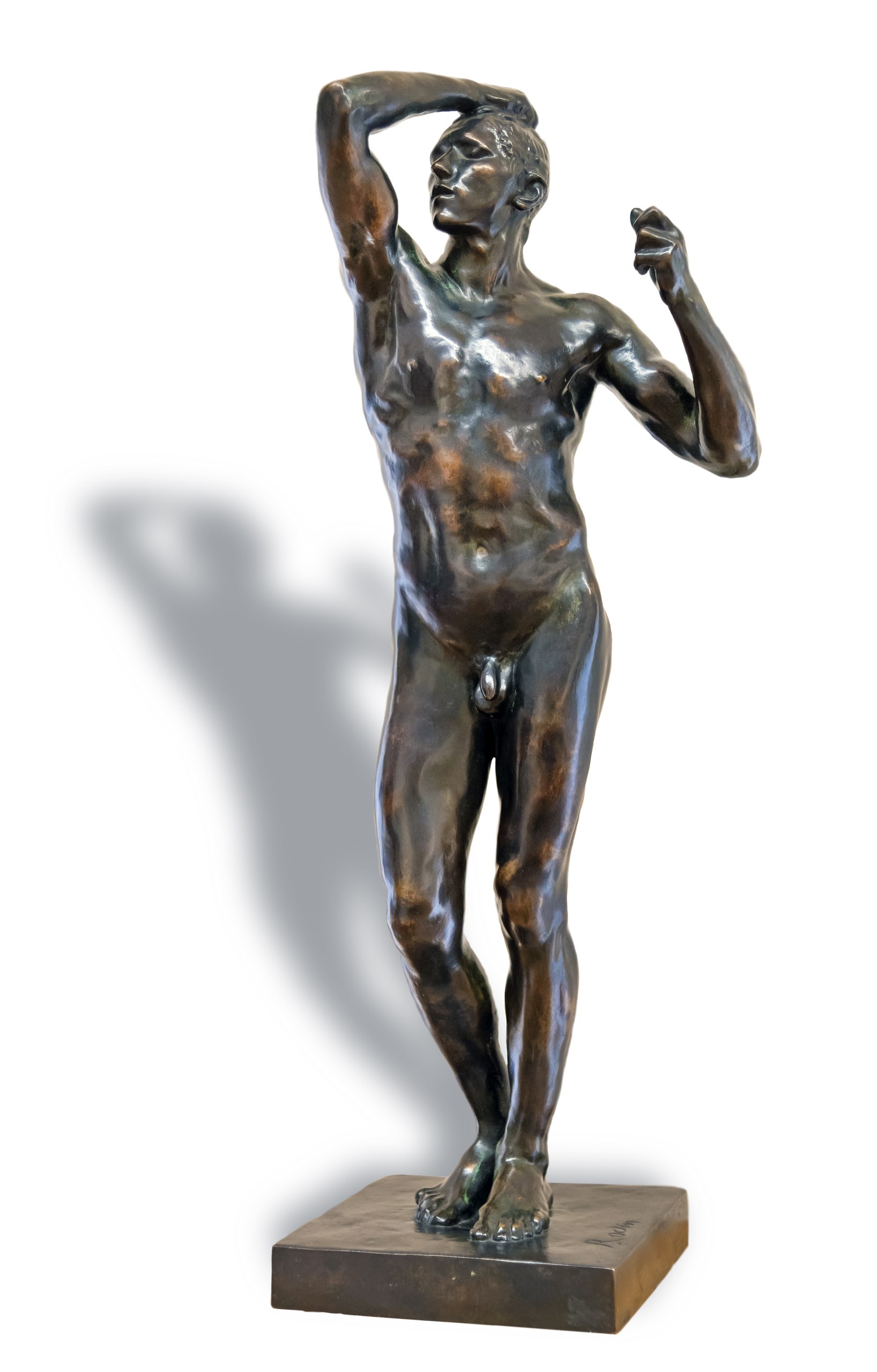
The Age of Bronze
Auguste Rodin · 1877
Musée d'Orsay
The Age of Bronze. A life-size nude standing with one hand on his head, posed by a Belgian soldier; its extreme naturalism prompted suspicion that it was a lifecast, and the pose owes something to Michelangelo's Dying Slave.
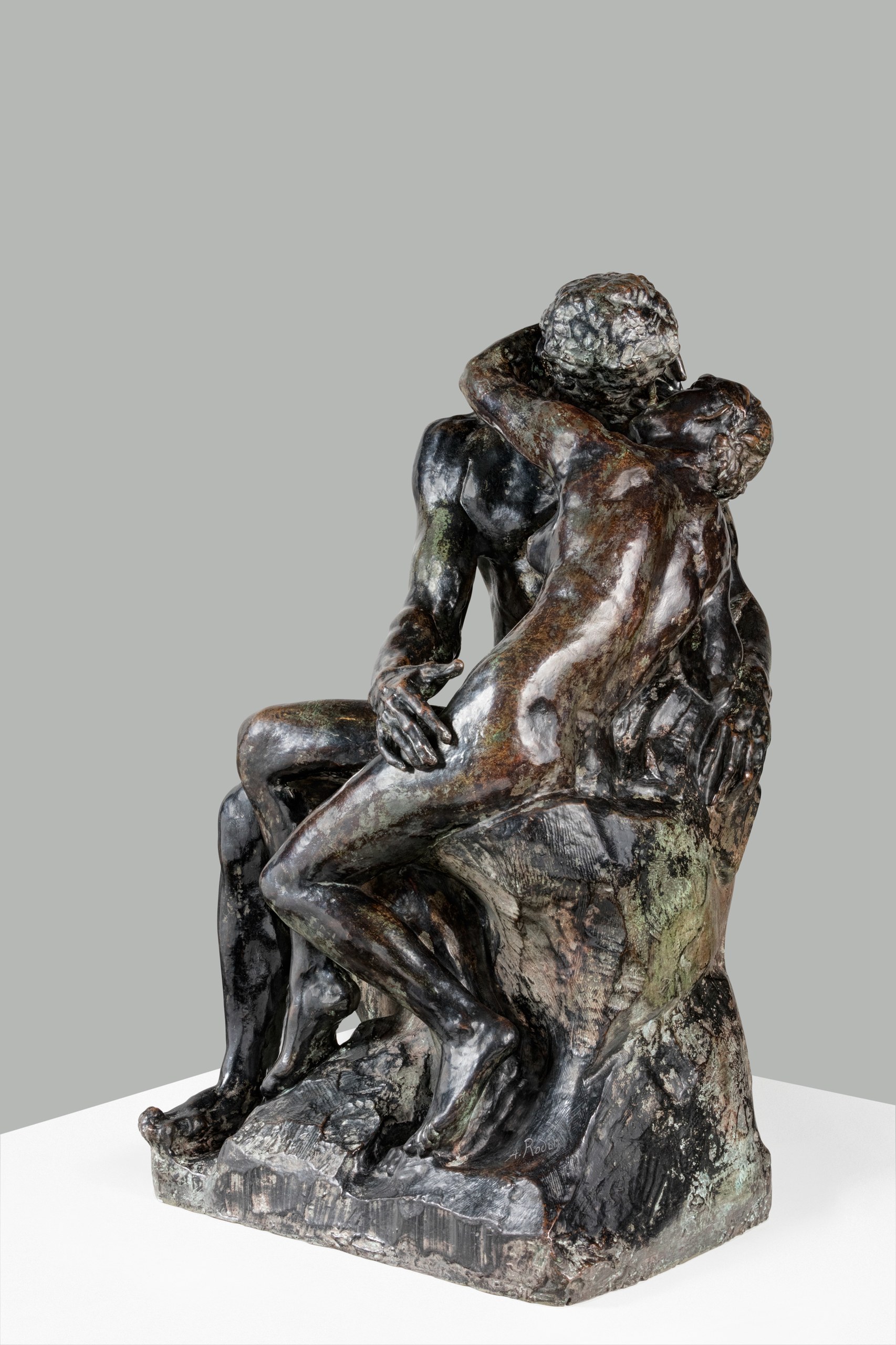
The Kiss
Auguste Rodin · 1880
The Kiss. Two lovers folded into each other in marble; the pair began as a relief on The Gates of Hell and were later taken off the portal and replaced by another embracing couple.
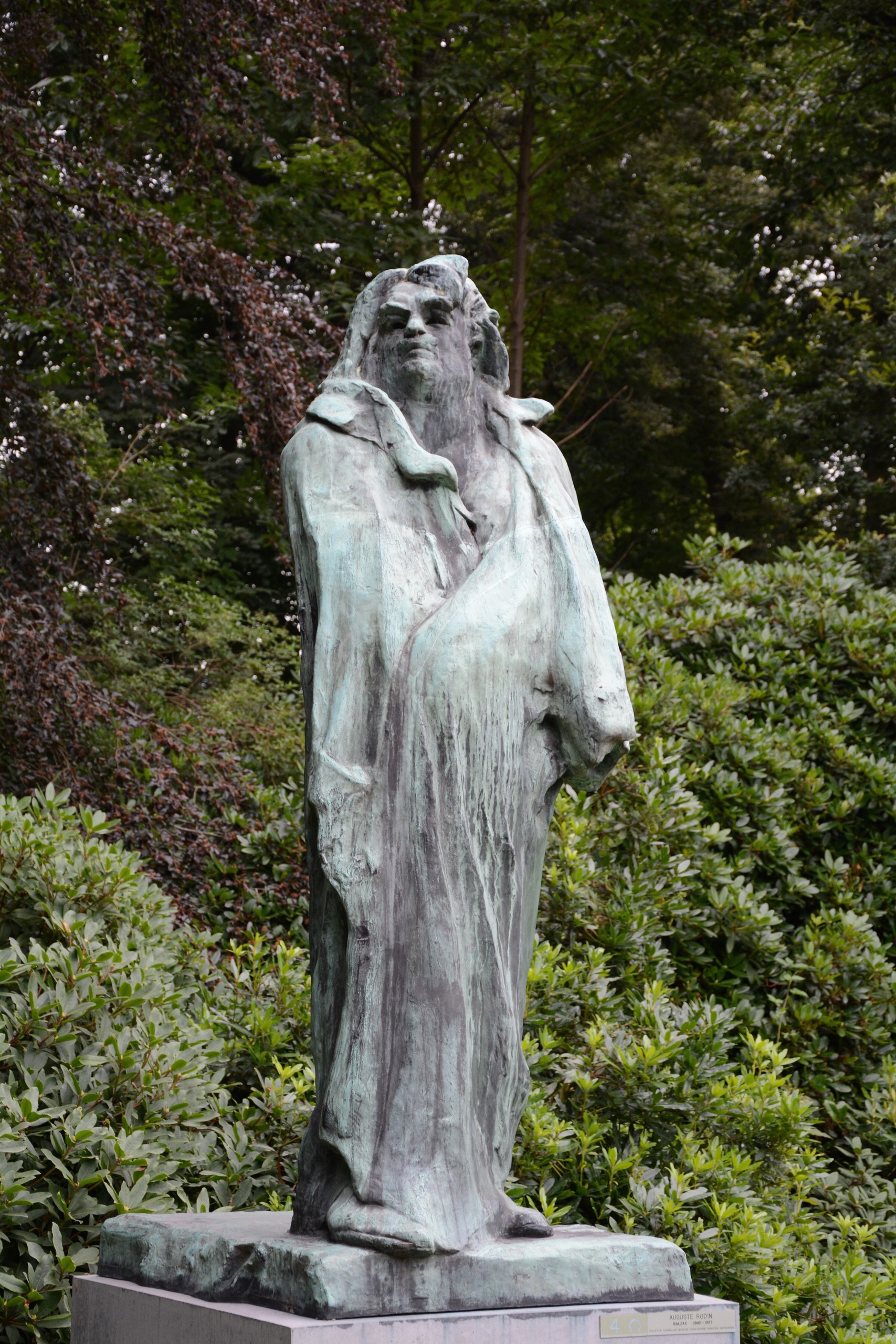
Monument to Balzac
Auguste Rodin · 1890
Ashmolean Museum
Monument to Balzac. The novelist wrapped head to foot in drapery, his face gouged deep; the Société des Gens de Lettres commissioned it in 1891; it aims at the writer's persona, not his physical likeness, and the model was first cast in bronze in 1939, after his death. It is now sometimes called the first truly modern sculpture.
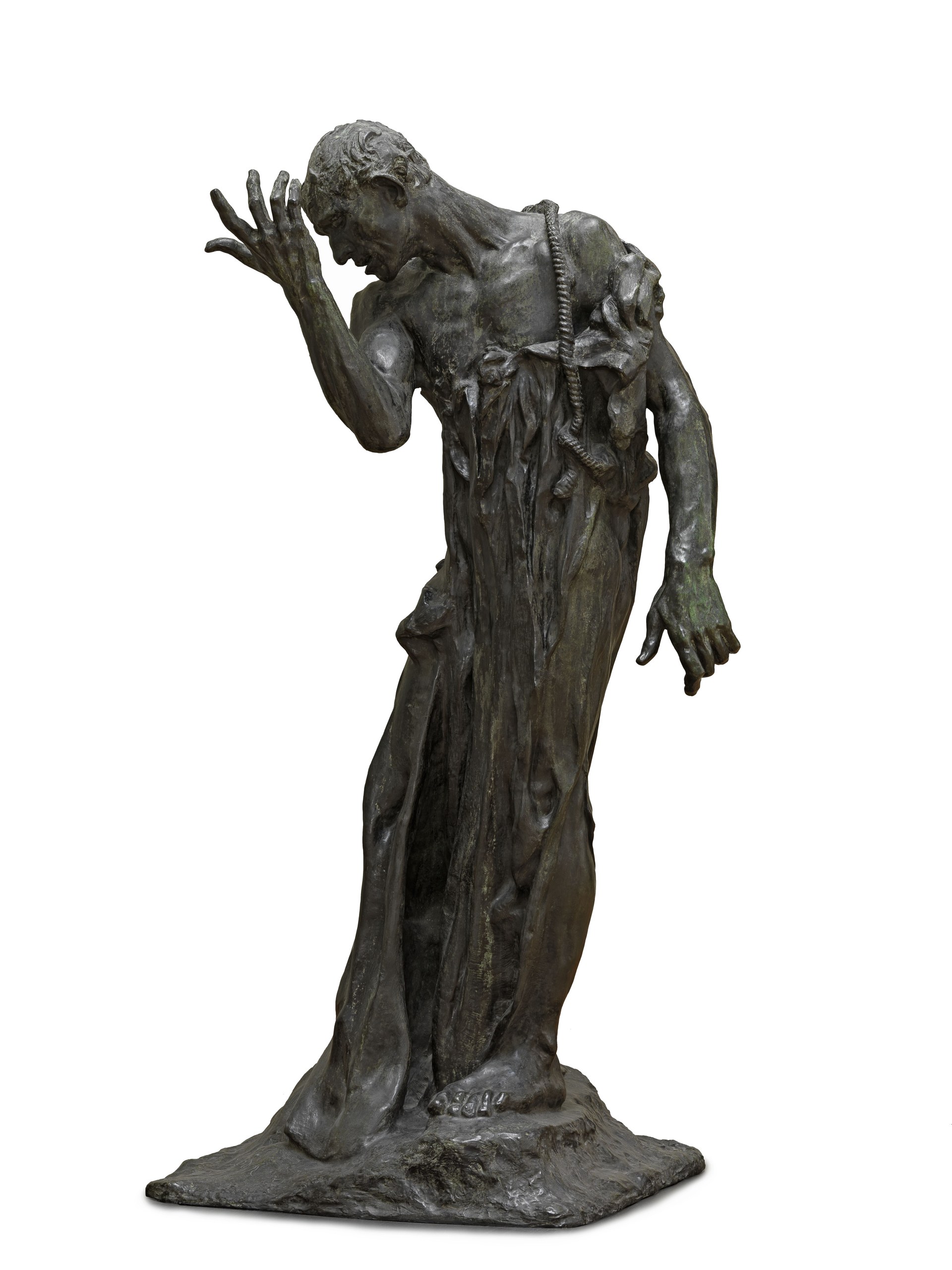
Pierre de Wiessant
Auguste Rodin · 1880
Museo Soumaya
Pierre de Wiessant. One of the six burghers of Calais; Rodin studied the figures nude, then draped them in wet canvas to find how the cloth would hang.
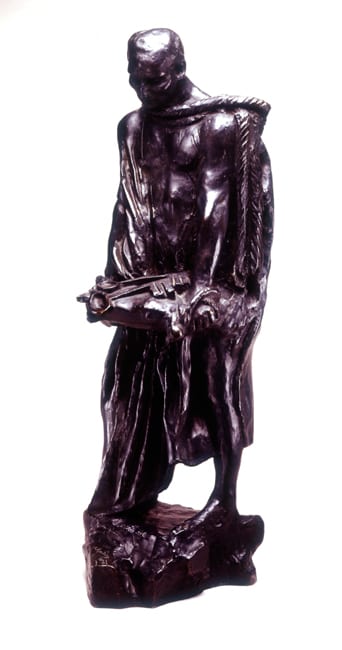
Jean d'Aire
Auguste Rodin · 1885
Museo Soumaya
Jean d'Aire. Another of the six burghers, his noose clear at his neck, holding the cushion that carries the keys of the city.
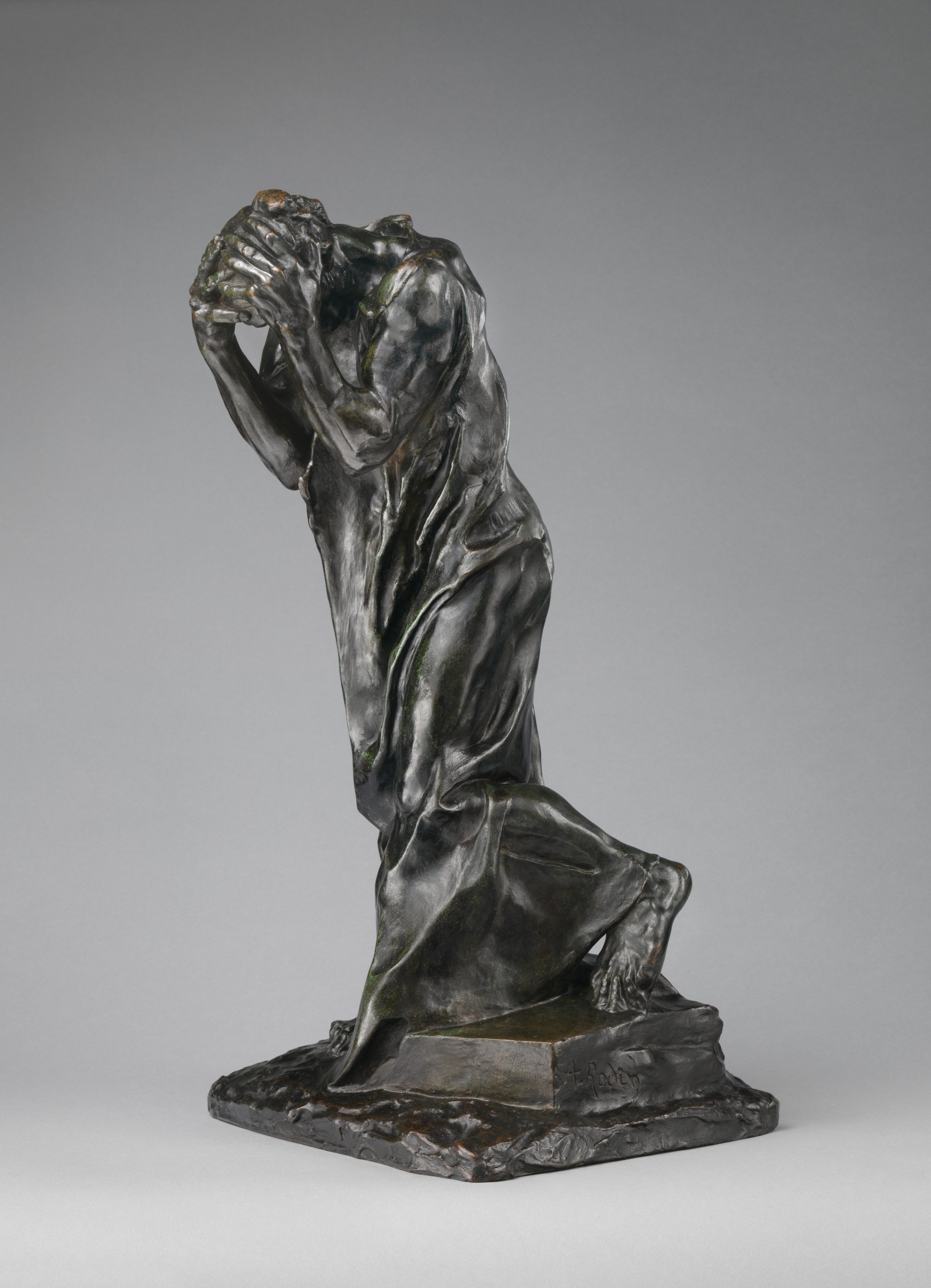
Andrieu d'Andres
Auguste Rodin
Museo Soumaya
Andrieu d'Andres. A third of the six burghers of Calais, one more figure from the group, studied nude before Rodin draped it in wet canvas.
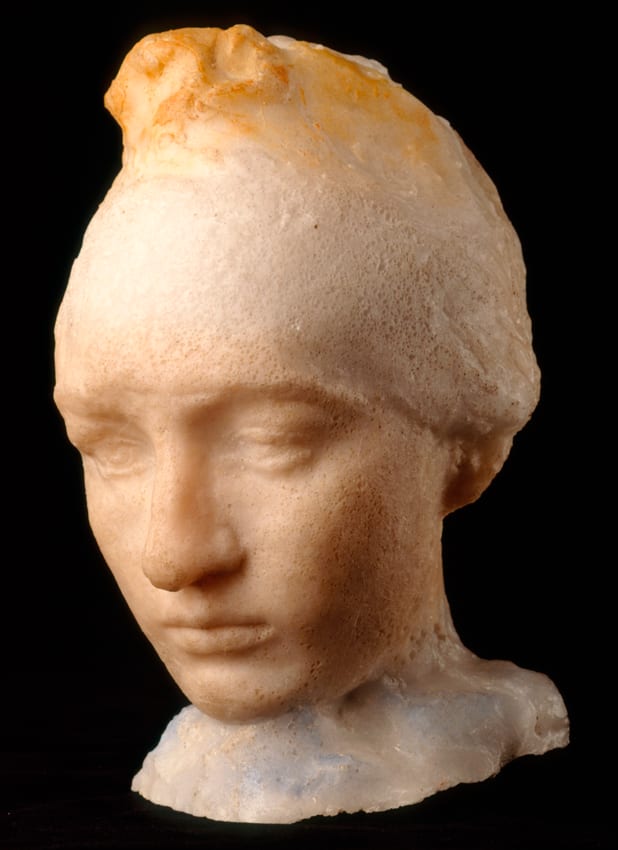
Head of Camille Claudel
Auguste Rodin · 1911
Museo Soumaya
Head of Camille Claudel. The sculptor's studio assistant, associate and lover, shown in a Phrygian cap; conceived in 1884 and executed in 1911 in polychrome glass paste.
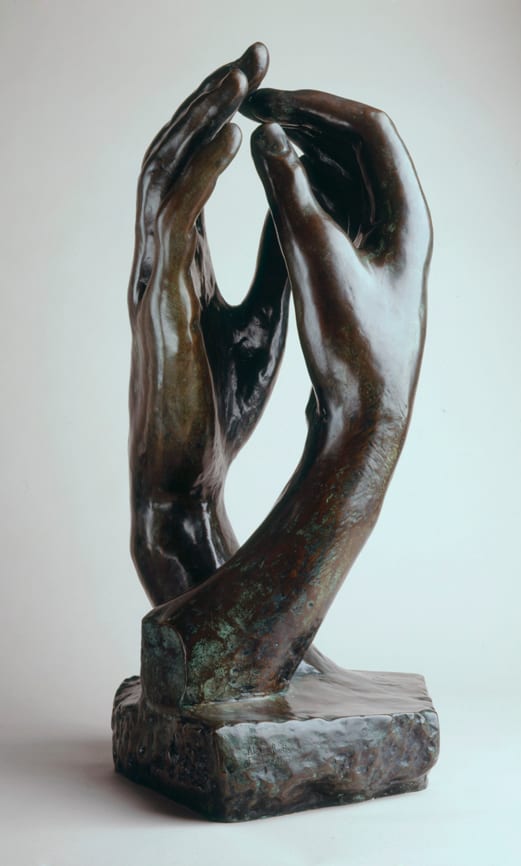
The cathedral
Auguste Rodin · 1908
Museo Soumaya
The cathedral. A late work conceived in 1908: two right hands joined to a point, renamed after his book on the cathedrals of France.
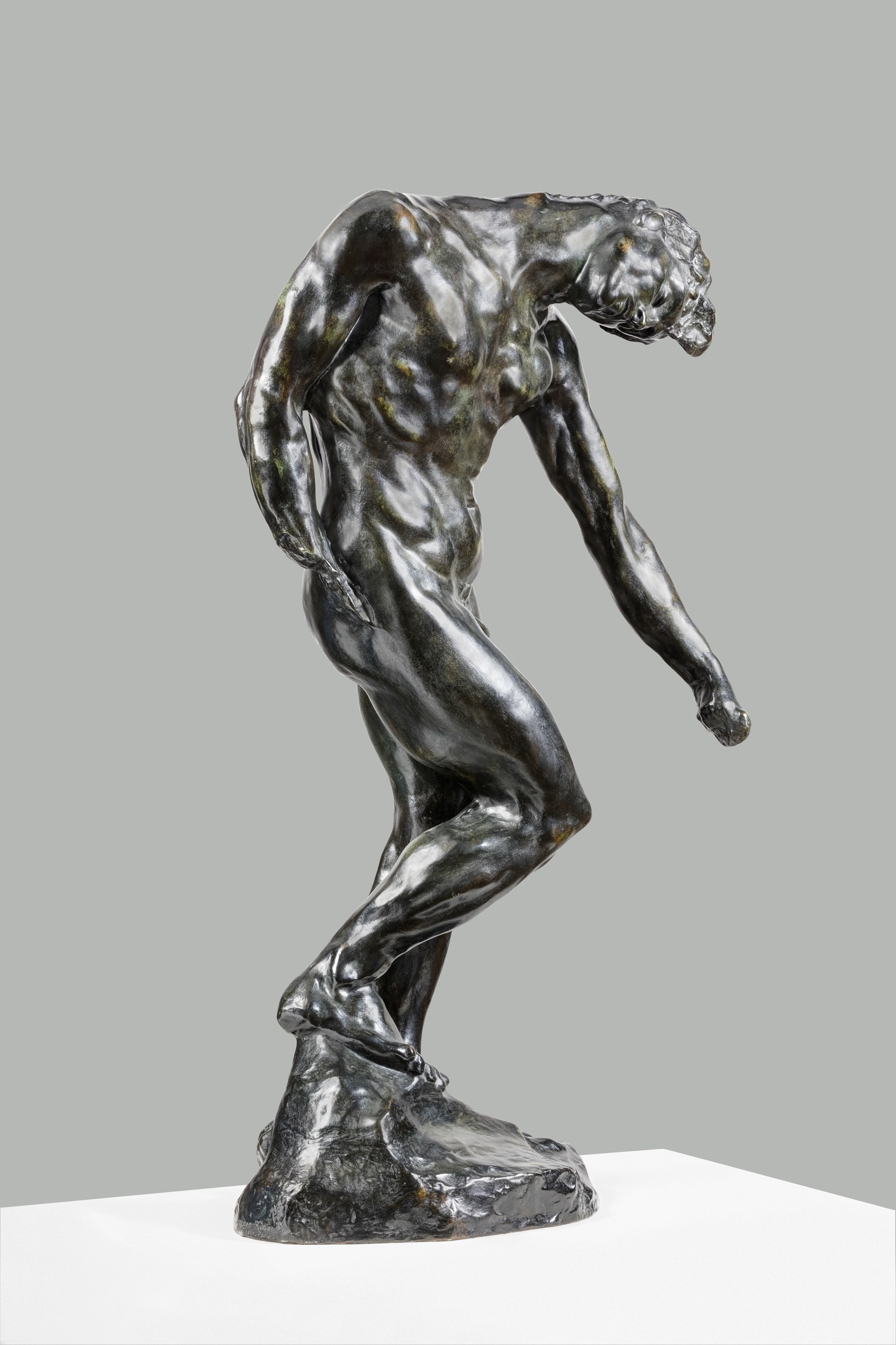
The Shade
Auguste Rodin · 1880
Museo Soumaya
The Shade. A leaning male figure conceived around 1880, set three times atop The Gates of Hell and later grown into the independent group The Three Shades.
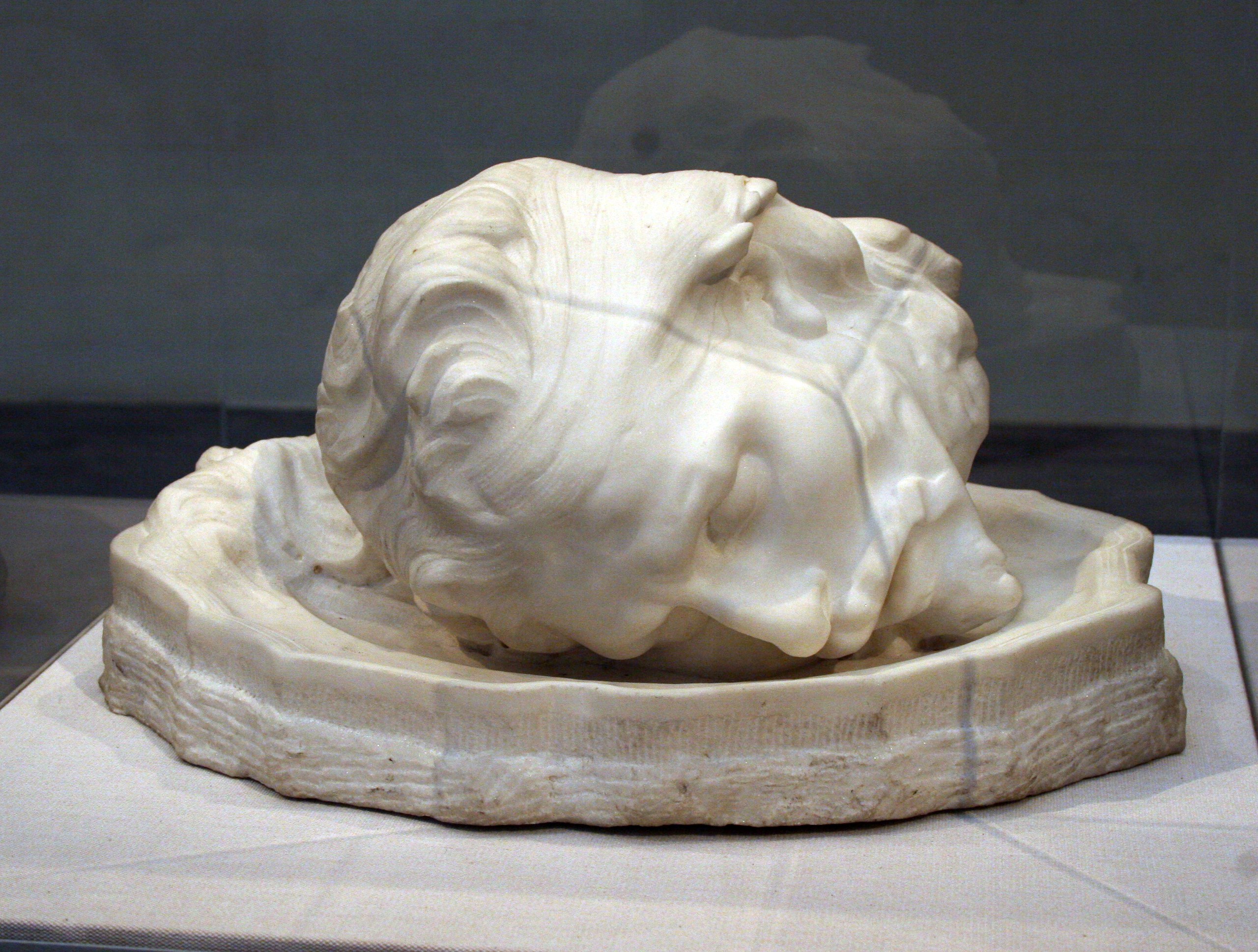
Head of Saint John the Baptist
Auguste Rodin · 1887
Museo Soumaya
Head of Saint John the Baptist. A marble of 1887 that refuses the bust: the head lies on its side upon a baptismal font, cut from his series of sculptures of the walking saint.
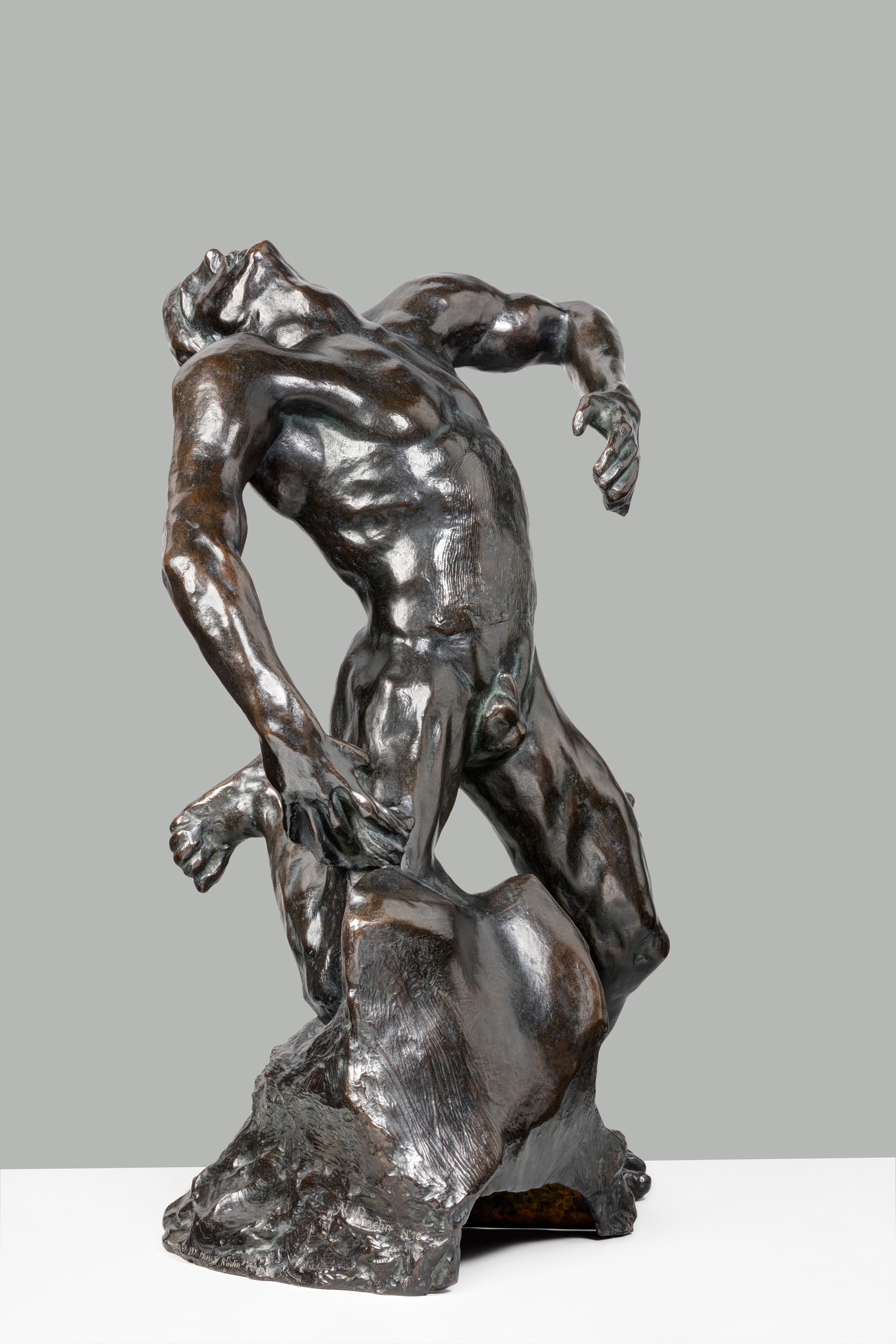
The Falling Man
Auguste Rodin · 1882
Museo Soumaya
The Falling Man. A figure arched backward into the air, modeled in 1882 and set in three places on The Gates of Hell.
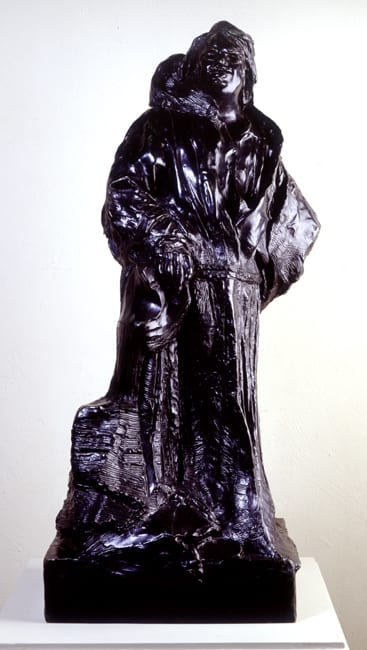
Balzac in the Robe of a Dominican Monk
Auguste Rodin · 1892
Museo Soumaya
Balzac in the Robe of a Dominican Monk. A study for the monument: the novelist already dead, his body hidden under the monk's garment while Rodin searched the writer's life for the man himself.
More to discover
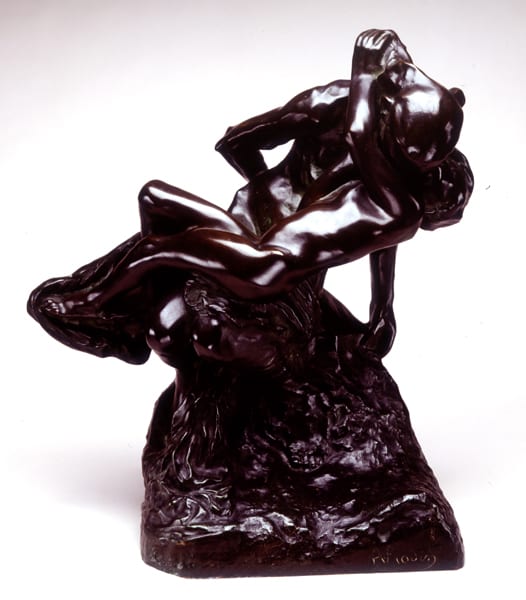
Triumphant Youth
Auguste Rodin · 1894
Museo Soumaya
Triumphant Youth. A figure that came out of the planning for The Gates of Hell, made after Jean Dampt's 1893 sculpture of a young woman resting in an old woman's arms.
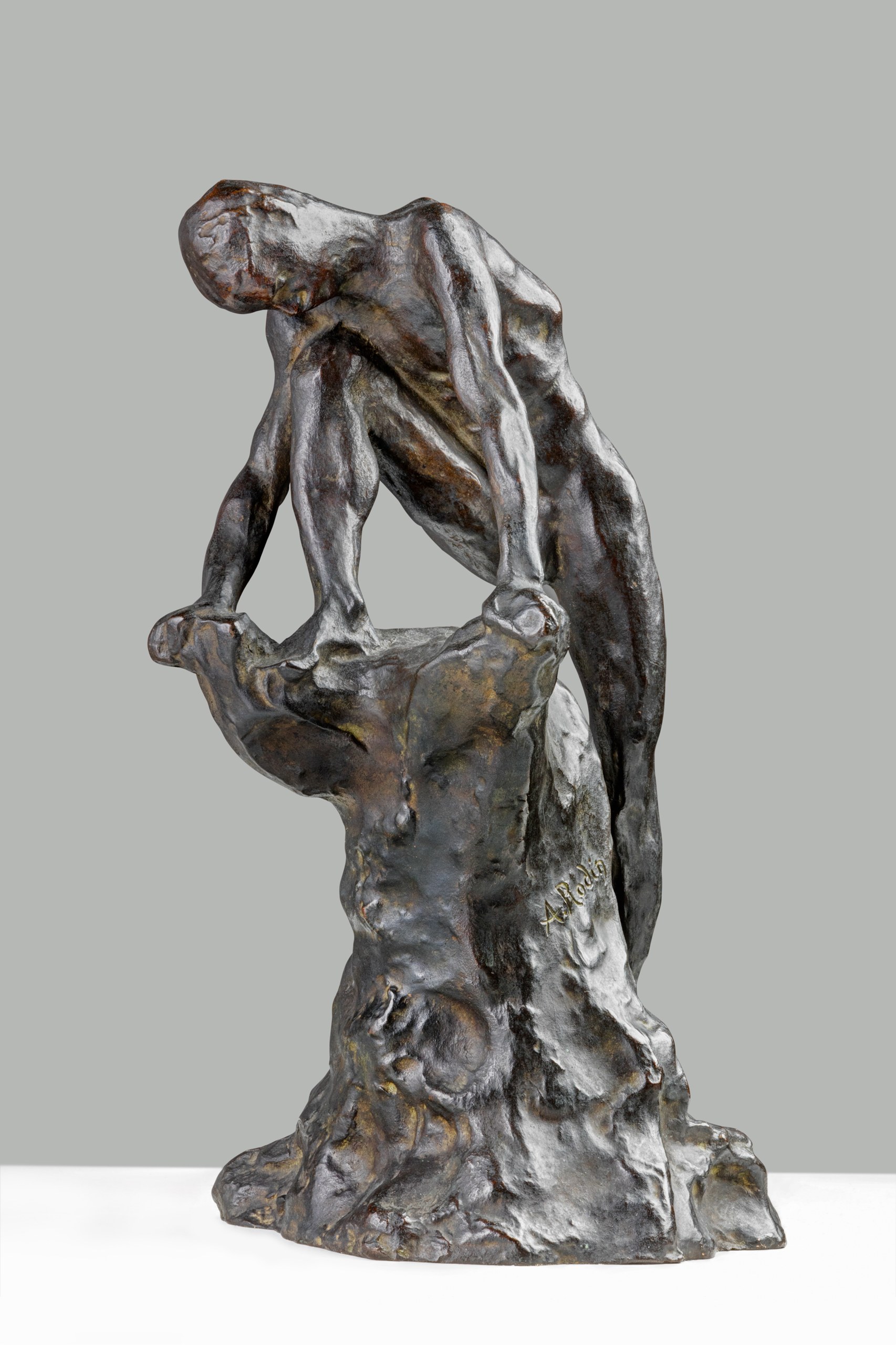
Polyphemus
Auguste Rodin · 1888
Museo Soumaya
Polyphemus. The blinded giant reaching for the Nereid Galatea, from the thirteenth book of Ovid's Metamorphoses; a study for a group planned at the centre of the Gates' right panel.
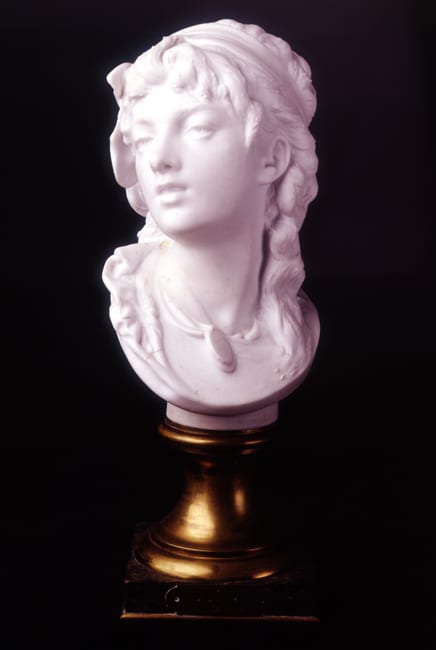
Suzon
Auguste Rodin · 1872
Museo Soumaya
Suzon. An early bust of a woman in the late eighteenth-century Romantic taste, made in Brussels between 1872 and 1873 in homage to Carrier-Belleuse, Rodin's first master.
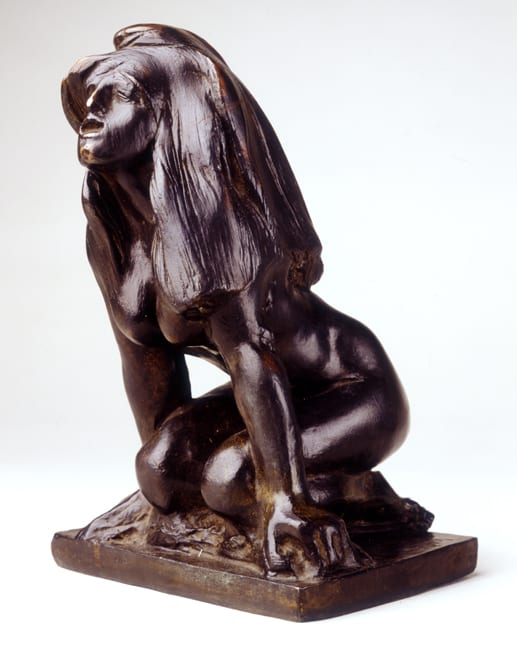
The succubus
Auguste Rodin · 1889
Museo Soumaya
The succubus. A demon in female form kneeling like a cat, eyes shut and mouth open in a scream, conceived in 1889 for the monument to Victor Hugo; Camille Claudel is thought to have been the model.
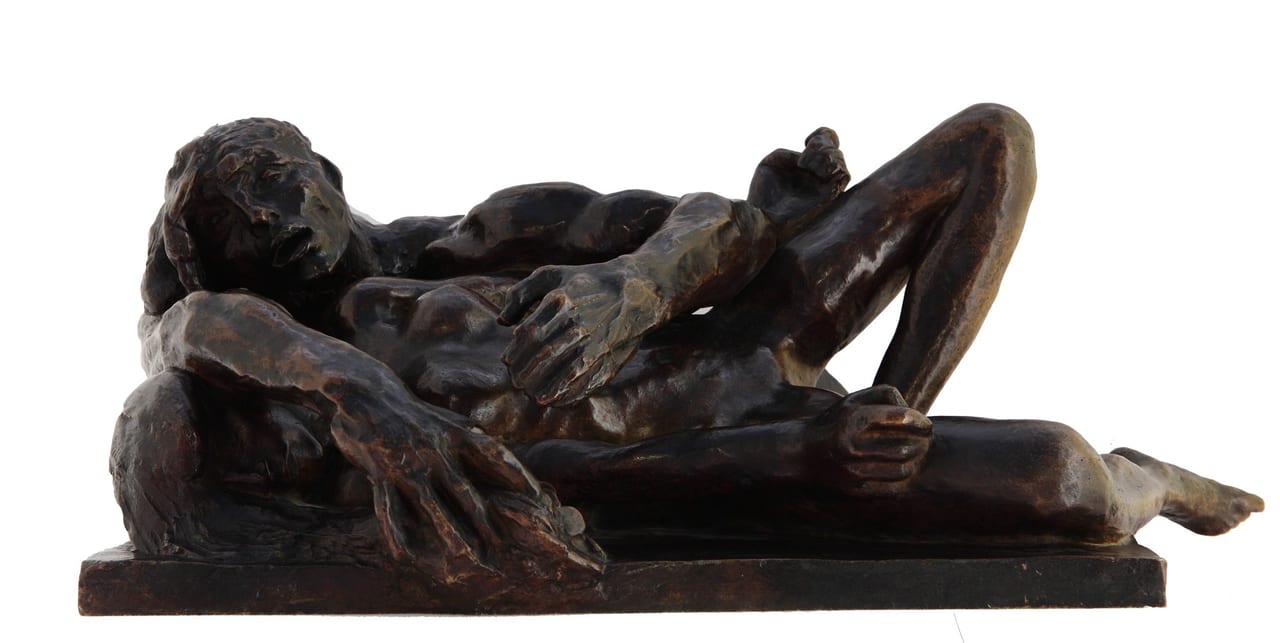
Avarice and lust
Auguste Rodin · 1887
Museo Soumaya
Avarice and lust. Two figures standing for two of the seven capital sins, conceived between 1885 and 1887 for the lower part of the Gates' right door.
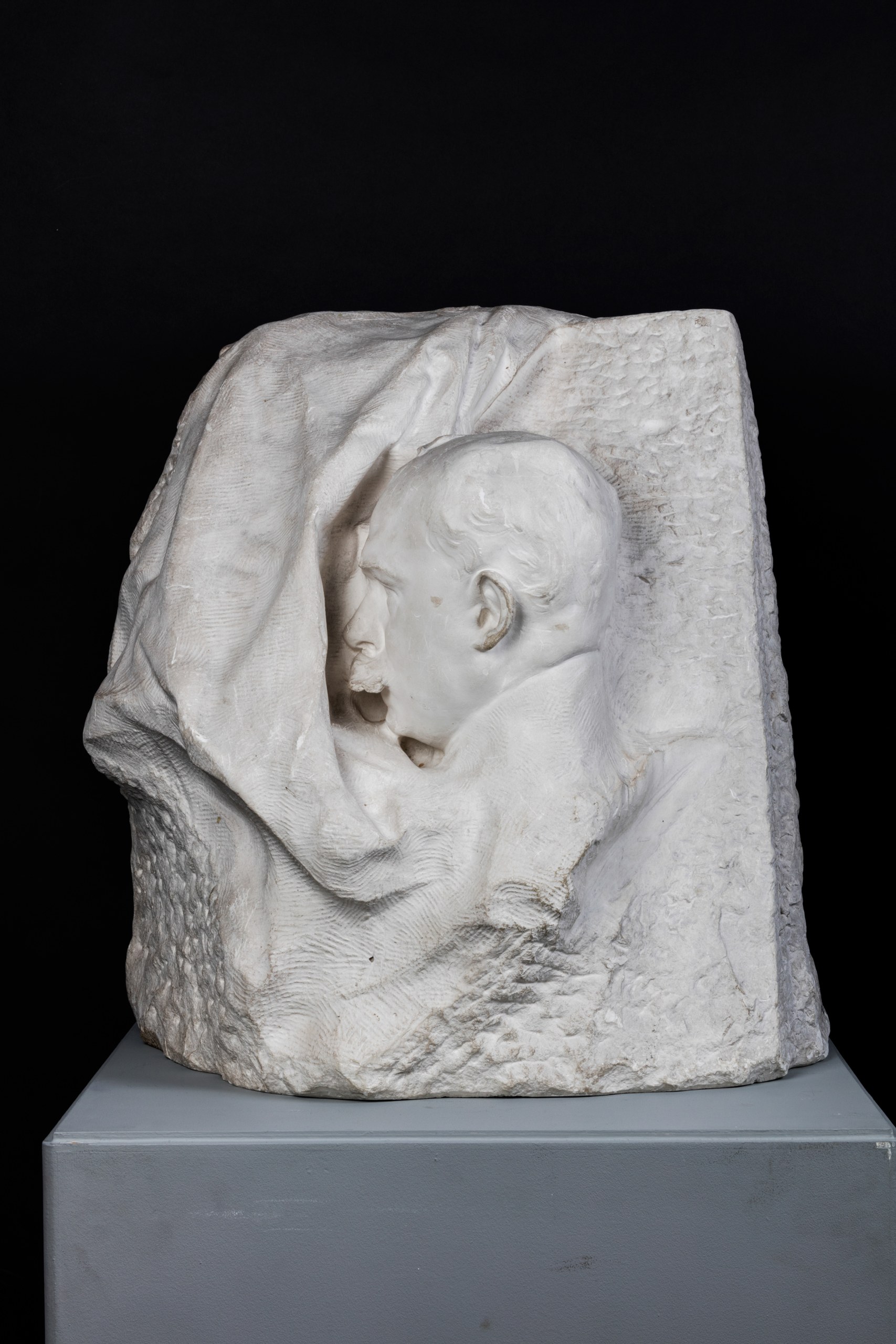
Octave Mirbeau
Auguste Rodin · 1895
Museo Soumaya
Octave Mirbeau. A plaster relief of 1895 honouring the writer who visited the studio, published the first description of The Gates of Hell and promoted Rodin's work in print.
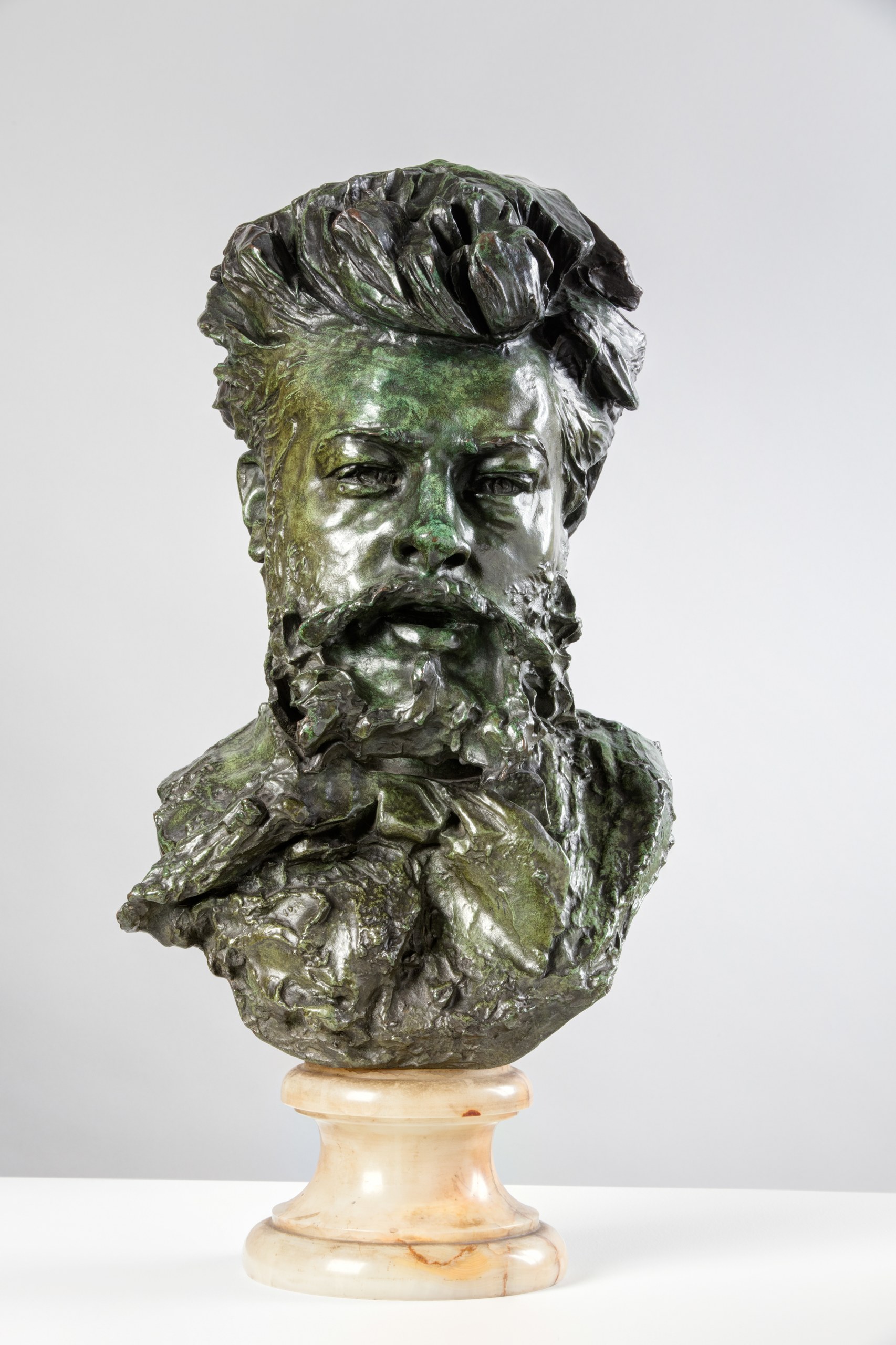
Bust of Maurice Haquette
Auguste Rodin · 1883
Museo Soumaya
Bust of Maurice Haquette. A bronze head of 1883 of the painting teacher Rodin befriended at Sèvres, and the friend who publicly defended him against the casting accusations around The Age of Bronze.
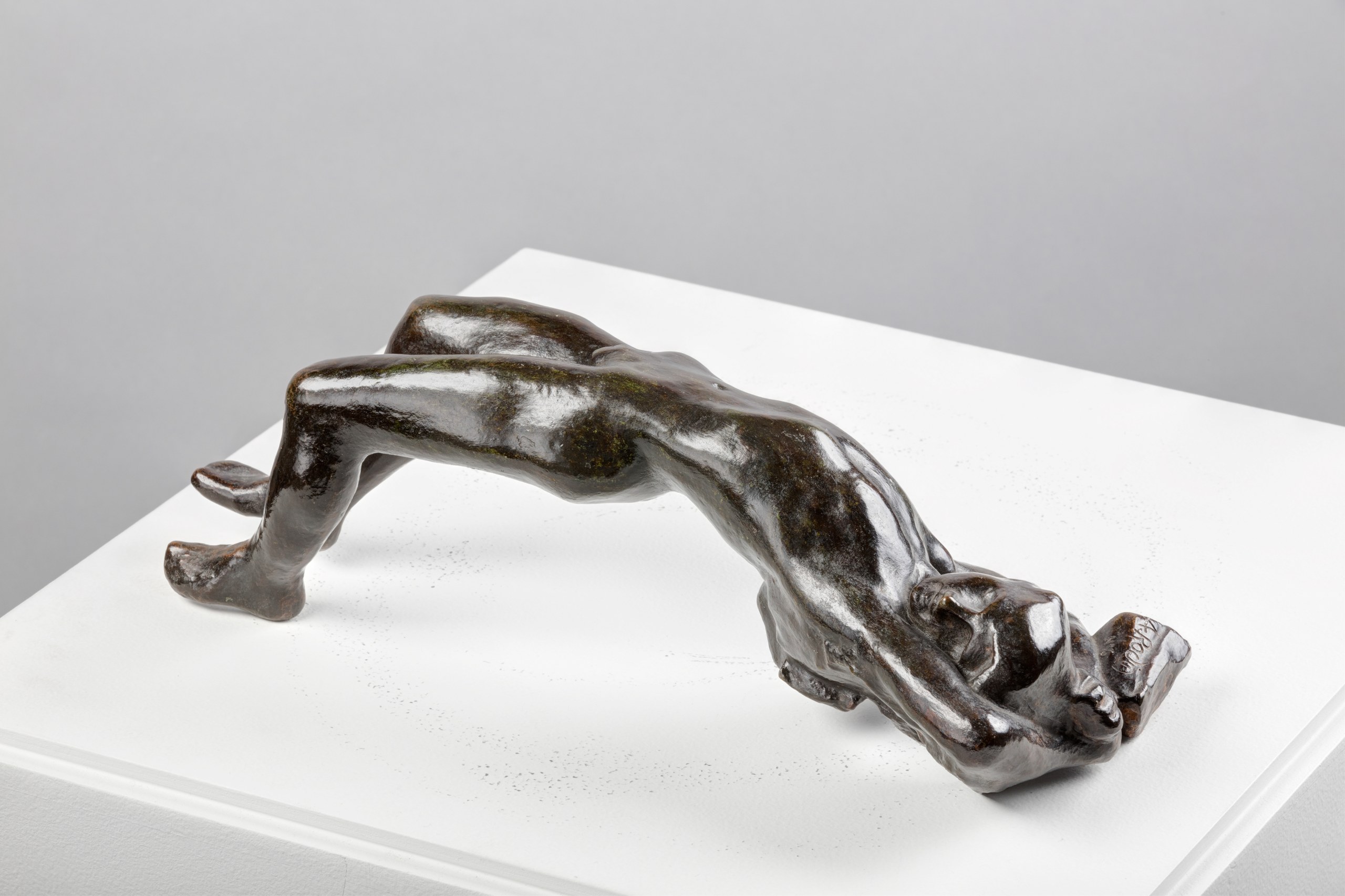
The Kneeling Man
Auguste Rodin · 1888
Museo Soumaya
The Kneeling Man. A figure first conceived in 1888 for The Gates of Hell, whose arms and torso Rodin reused for a female version, The Birth of Venus.
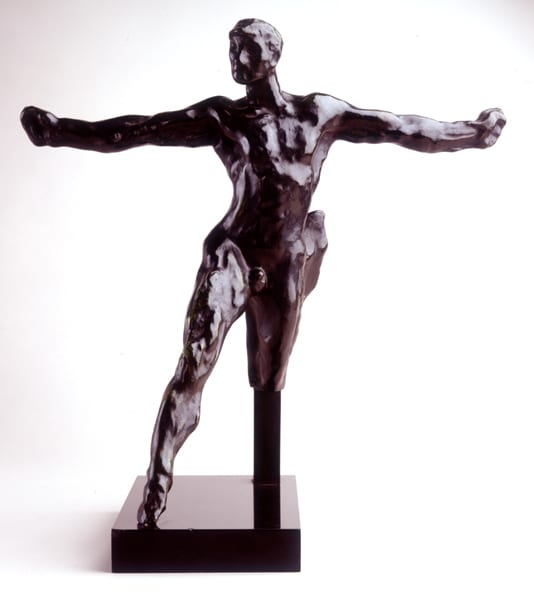
Standing Mercury
Auguste Rodin · 1888
Museo Soumaya
Standing Mercury. The messenger god as a young man, first exhibited in 1888, barely touching the ground with one toe, arms wide.
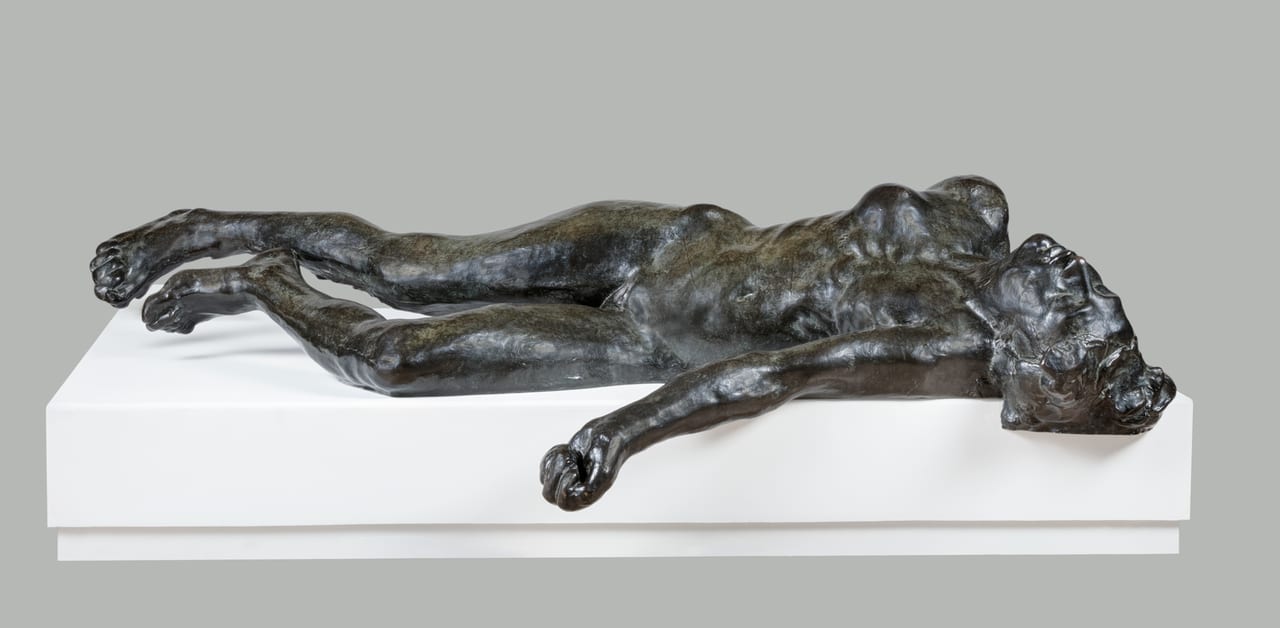
The Martyr
Auguste Rodin · 1885
Museo Soumaya
The Martyr. A naked woman dead or asleep, a study of about 1885 for a figure at the top left of the Gates that Rodin later removed from the portal.
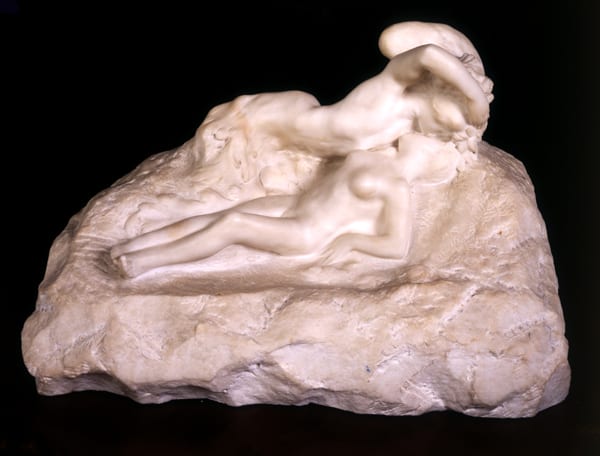
The Phantom and the Maiden's Kiss
Auguste Rodin · 1880
Museo Soumaya
The Phantom and the Maiden's Kiss. A winged man bending over a young woman who turns her face from his kiss, an 1880 work that draws on Dante's underworld and the story of Orpheus, and on his long debt to Michelangelo.
Sources
- Wikipedia, “Auguste Rodin”
- Wikipedia, “The Gates of Hell”
- Wikipedia, “The Kiss (Rodin sculpture)”
- Wikipedia, “The Age of Bronze”
- Wikipedia, “Monument to Balzac”
- Wikipedia, “Pierre de Wiessant”
- Wikipedia, “Jean d'Aire”
- Wikipedia, “Head of Camille Claudel”
- Wikipedia, “The Cathedral (sculpture)”
- Wikipedia, “The Shade (sculpture)”
- Wikipedia, “Head of Saint John the Baptist (Rodin)”
- Wikipedia, “The Falling Man (Rodin)”
- Wikipedia, “Young Mother”
- Wikipedia, “Youth Triumphant”
- Wikipedia, “Polyphemus (sculpture)”
- Wikipedia, “Suzon (sculpture)”
- Wikipedia, “The Succubus (sculpture)”
- Wikipedia, “Avarice and Lust”
- Wikipedia, “Octave Mirbeau (sculpture)”
- Wikipedia, “Bust of Maurice Haquette”
- Wikipedia, “The Kneeling Man”
- Wikipedia, “Standing Mercury”
- Wikipedia, “The Martyr (sculpture)”
- Rodin Museum, Philadelphia Museum of Art, “About the Rodin Museum”
- Wikipedia, “The Maiden Kissed by the Ghost”
- Wikipedia, “Balzac in the Robe of a Dominican Monk”
Invite Auguste Rodin into your living room
Play 29 works from this collection on your TV, phone or tablet with Momentable Art TV.