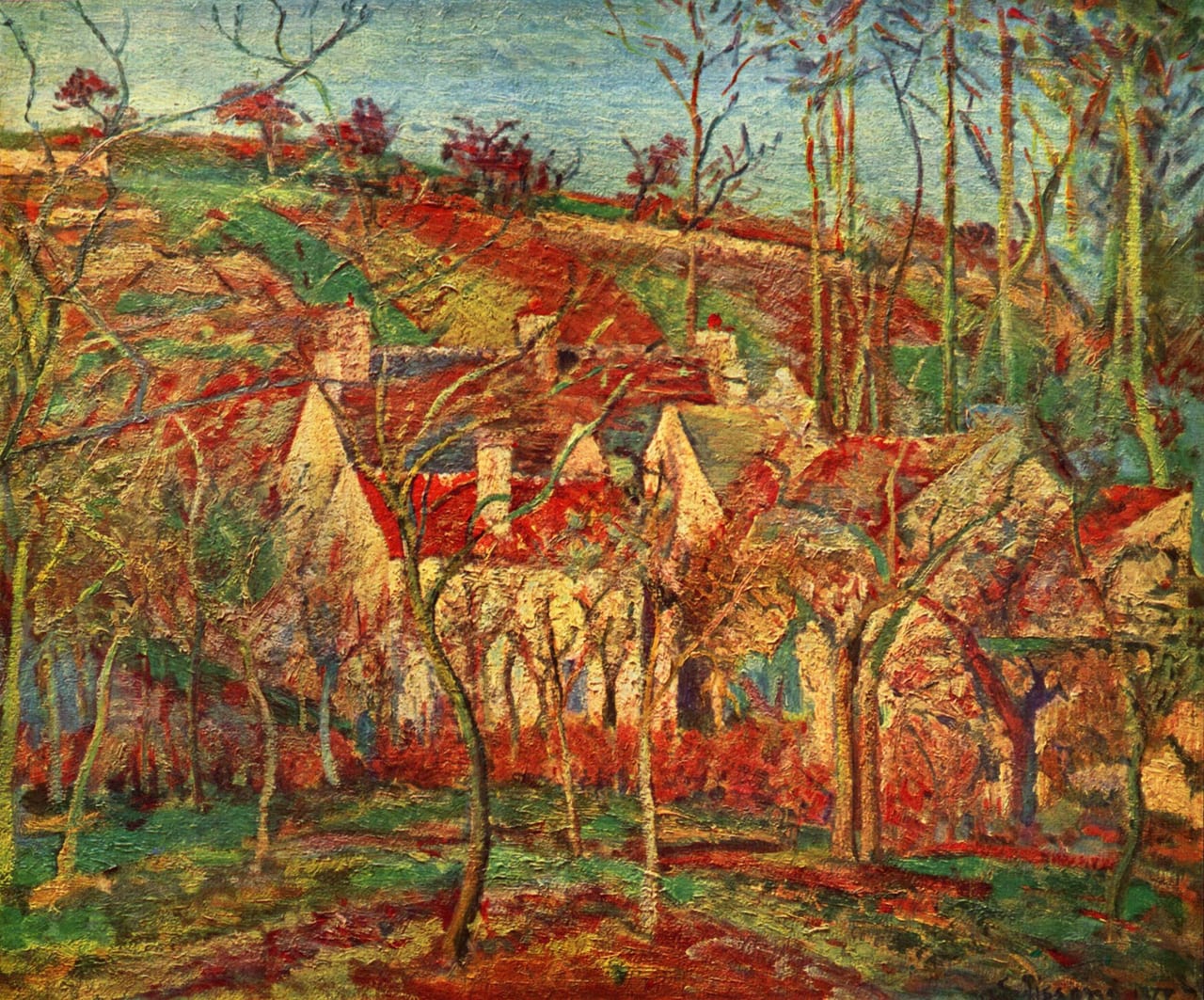
The Red Roofs, Côte Saint-Denis at Pontoise, Winter Effect
Camille Pissarro · 1877

Camille Pissarro
France · 1830–1903
The Impressionist who showed in every one of the group's eight Paris exhibitions, and the older friend Cézanne called a father.
Play 11 works from this collection on your TV, phone or tablet with Momentable Art TV.
Play CollectionFrom Saint Thomas to Paris
Camille Pissarro was born at Charlotte Amalie on Saint Thomas, then the Danish West Indies, on 10 July 1830, to Frederick and Rachel Pissarro. At twelve he was sent to school in France, where his teacher Monsieur Savary grounded him in drawing and told him to take his subjects from nature itself.
Back home as a port clerk he met the Danish painter Fritz Melbye, gave up the family business, and passed two years as a working artist in Venezuela. In 1855, aged twenty-five, he moved back to Paris for good, working as an assistant to the Danish painter Anton Melbye, and at his early Salons he named Melbye and Corot as his masters in the catalogue; his first acceptance at the official Salon came in 1864.
He raised his family outside Paris, at Pontoise and then Louveciennes, painting village life, rivers, woods and people at work. When he came home after the Franco-Prussian war, which his Danish nationality had kept him out of, he found that of the roughly 1,500 canvases of twenty years left behind under the occupation, only some 40 had survived.
The Impressionist of Impressionists
Of all the Impressionists, he alone exhibited at each of the eight Paris exhibitions the group held, from the first in 1874 to the last in 1886. The year before the first of them he helped found the artists' collective behind the shows, wrote its charter, and became what one writer called the "pivotal" figure of the group. Younger painters trusted him: Cézanne said of him that "he was a father for me", and he was a father figure to the major Post-Impressionists in turn, above all Cézanne, but Seurat, Gauguin and Van Gogh too.
He never stopped testing himself. Between about 1885 and 1888 he took up the dotted, systematic touch of the Neo-Impressionists around Seurat and Signac, then let it go again for a looser hand.
Éragny and the last streets
In 1884 he moved his household to Éragny-sur-Epte, a village near Gisors west of Paris, and stayed for the rest of his life, painting its orchards, fields and labourers season after season.
In old age a recurring eye infection meant he could not paint out of doors in cold weather, so he travelled and worked from hotel rooms in Rouen, Paris, Dieppe and Le Havre, watching streets, crowds and weather from above. He died in Paris on 13 November 1903, of sepsis following a prostate abscess, at seventy-three, and lies in Père Lachaise Cemetery.
Known works
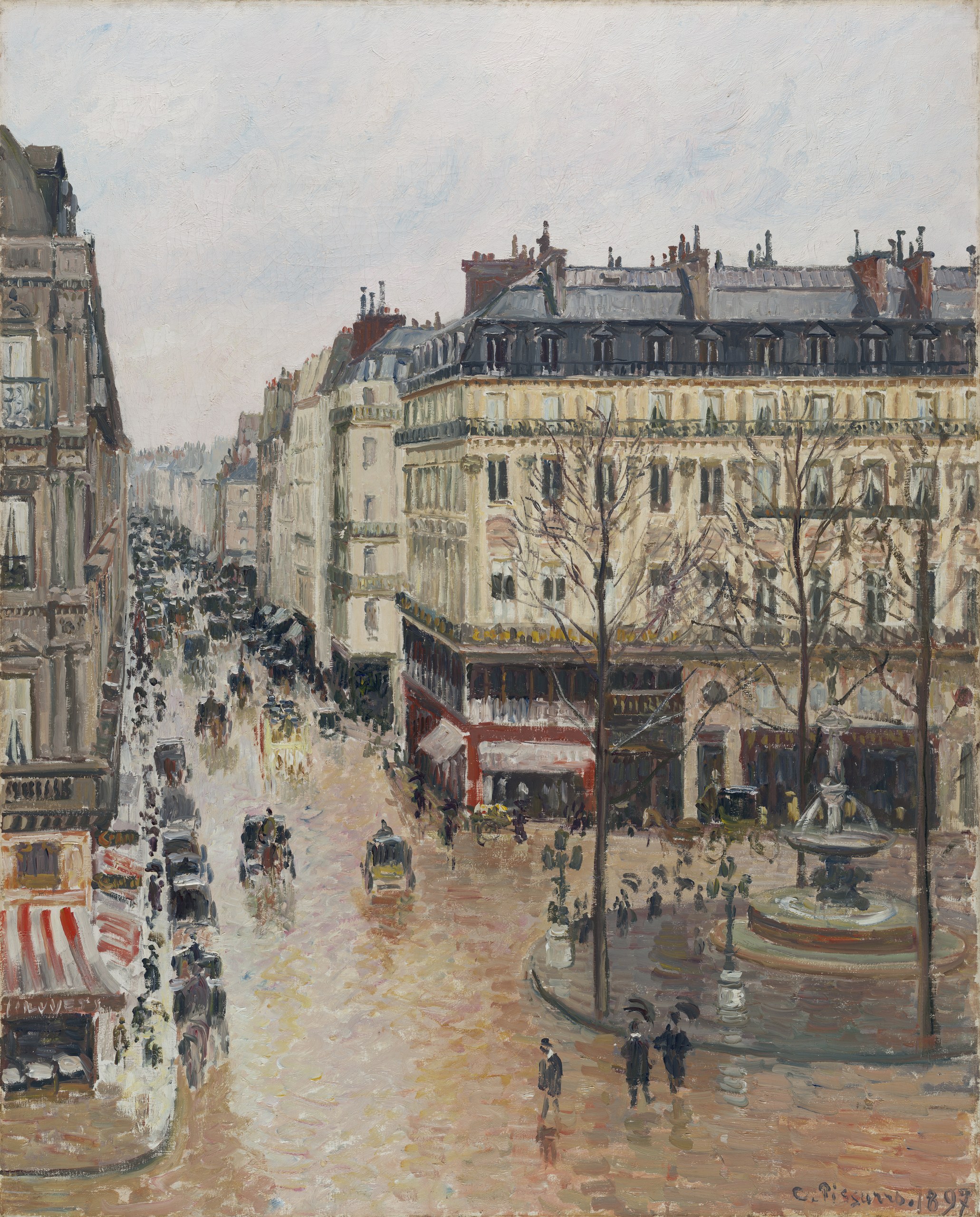
Rue Saint-Honoré in the Afternoon. Effect of Rain
Camille Pissarro · 1897
Thyssen-Bornemisza Museum
A Paris street in the rain, taken from a hotel window: carriages, figures under umbrellas, trees and streetlamps along the rue Saint-Honoré, painted toward the end of his career when he had left Pointillism behind for a looser Impressionist hand.
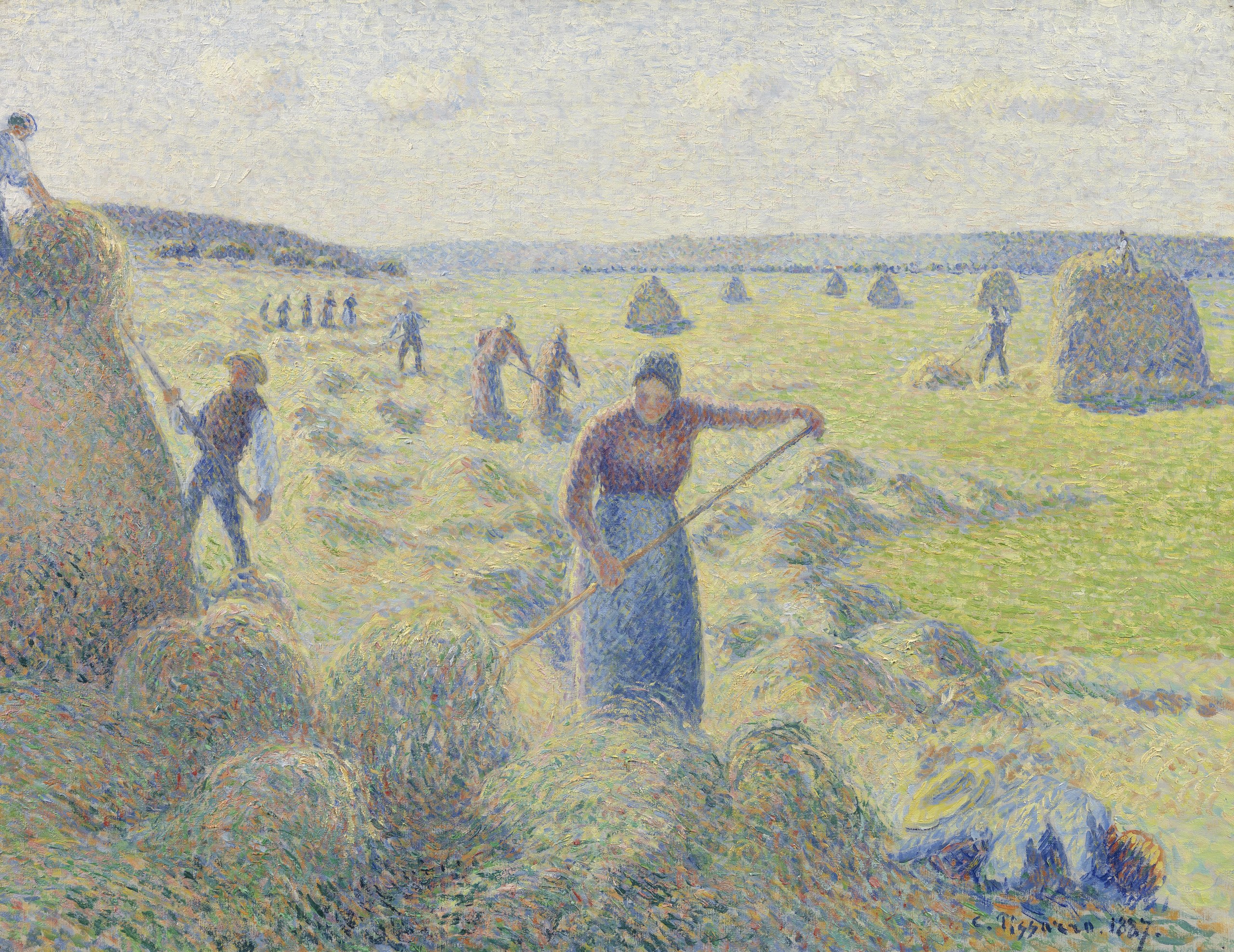
Haymaking, Éragny
Camille Pissarro · 1887
Van Gogh Museum
Workers in a hayfield at his home village, laid on in small touches of colour: one of the harvest scenes of his Neo-Impressionist years.
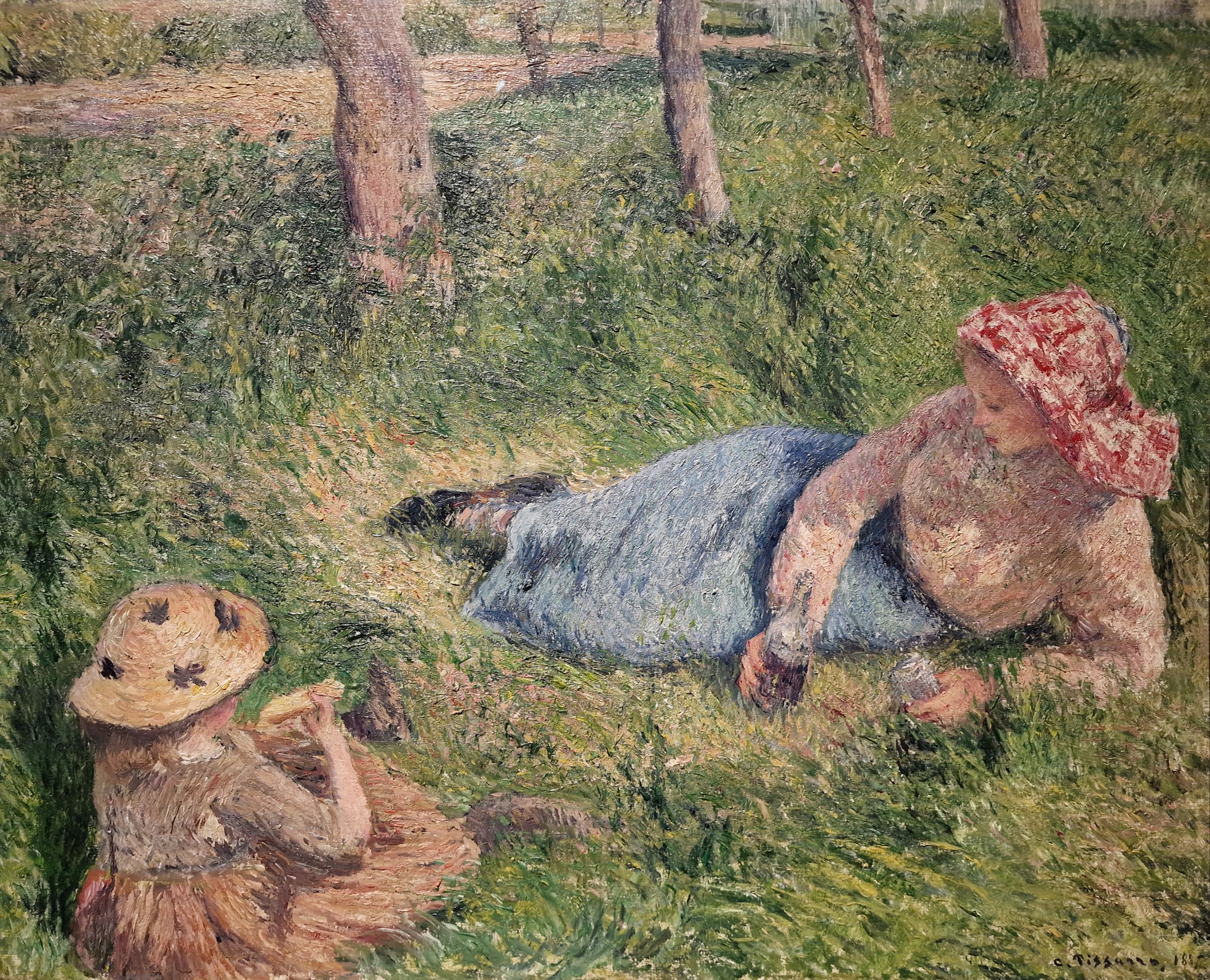
Afternoon Break, Girl and Young Peasant Woman Resting
Camille Pissarro · 1882
Tel Aviv Museum of Art
Two figures at their ease in the fields, the heat held in the greens around them: the rural labour he painted at Pontoise and after.
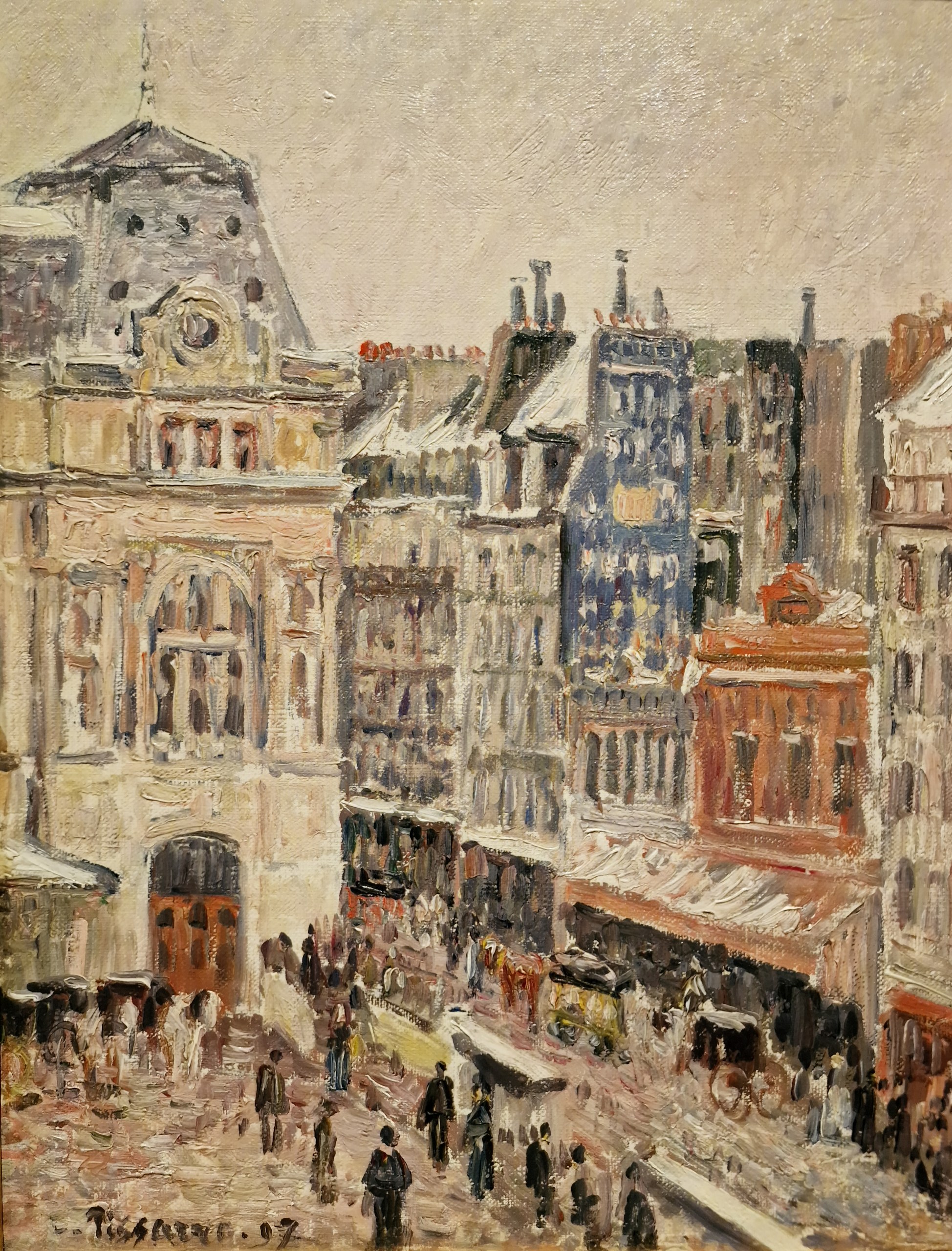
View of Paris, Rue d'Amsterdam
Camille Pissarro · 1897
Tel Aviv Museum of Art
A broad avenue taken from a high window, traffic and pavement life in quick touches, the buildings running down in bands of cream and mauve.
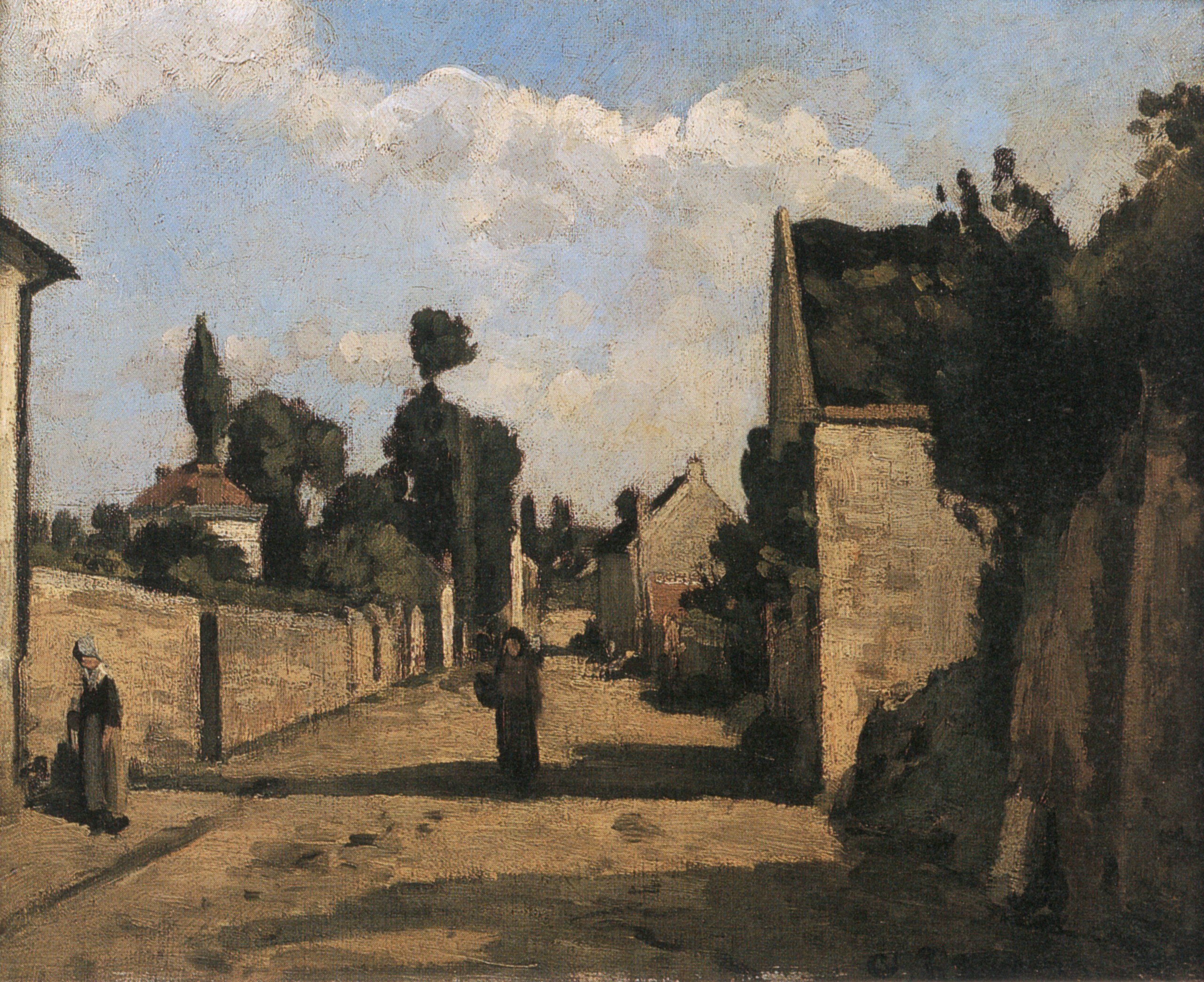
Rue de l'Hermitage, Pontoise
Camille Pissarro · 1866
Tel Aviv Museum of Art
A village lane of modest houses, figures small on the road: the ordinary street of the town where he taught himself to paint modern life.
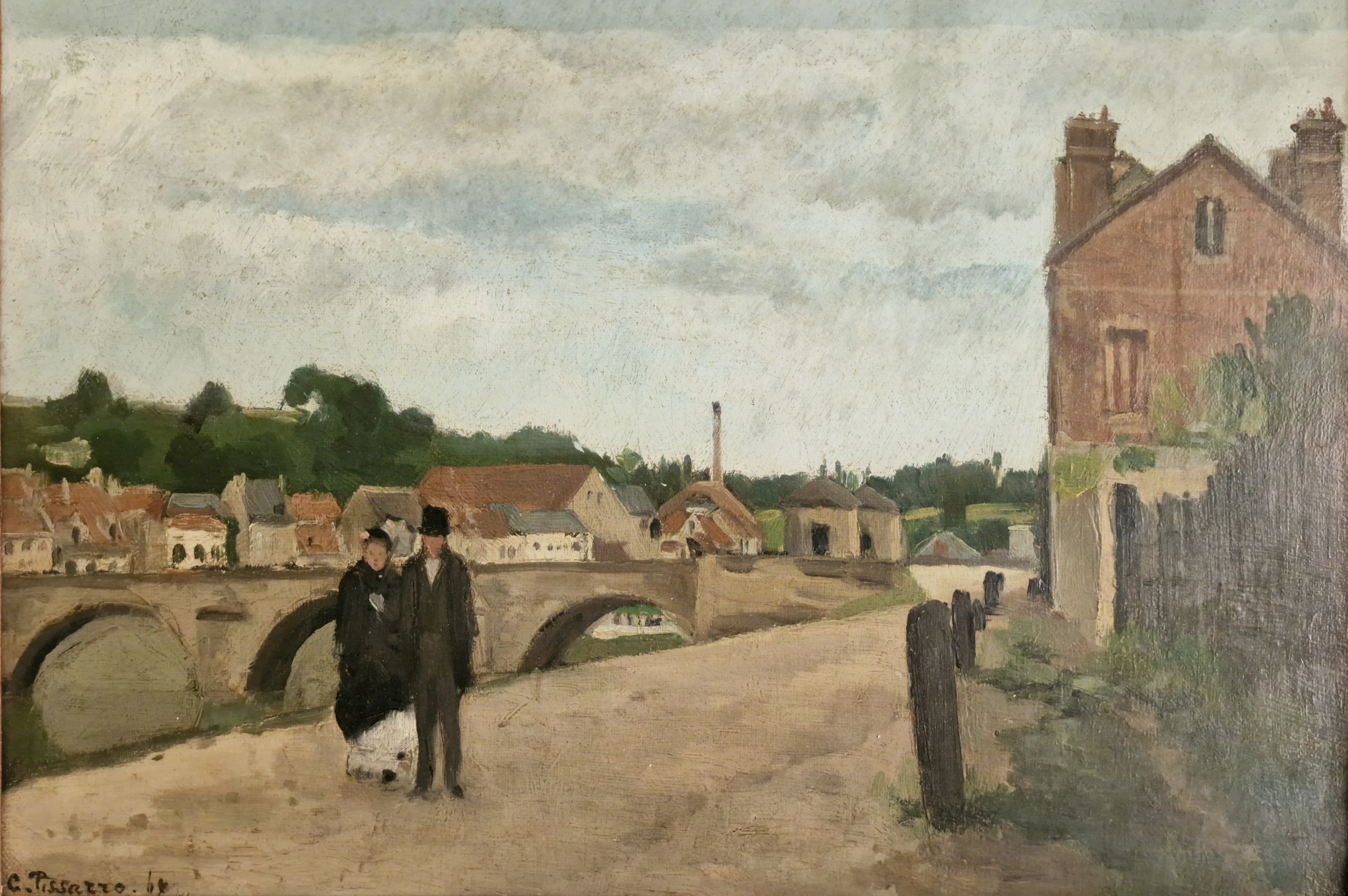
The Chemin de l'Écluse and the Pontoise Bridge
Camille Pissarro · 1867
Tel Aviv Museum of Art
A country road running to the bridge over the river, hills and sky carrying the light.
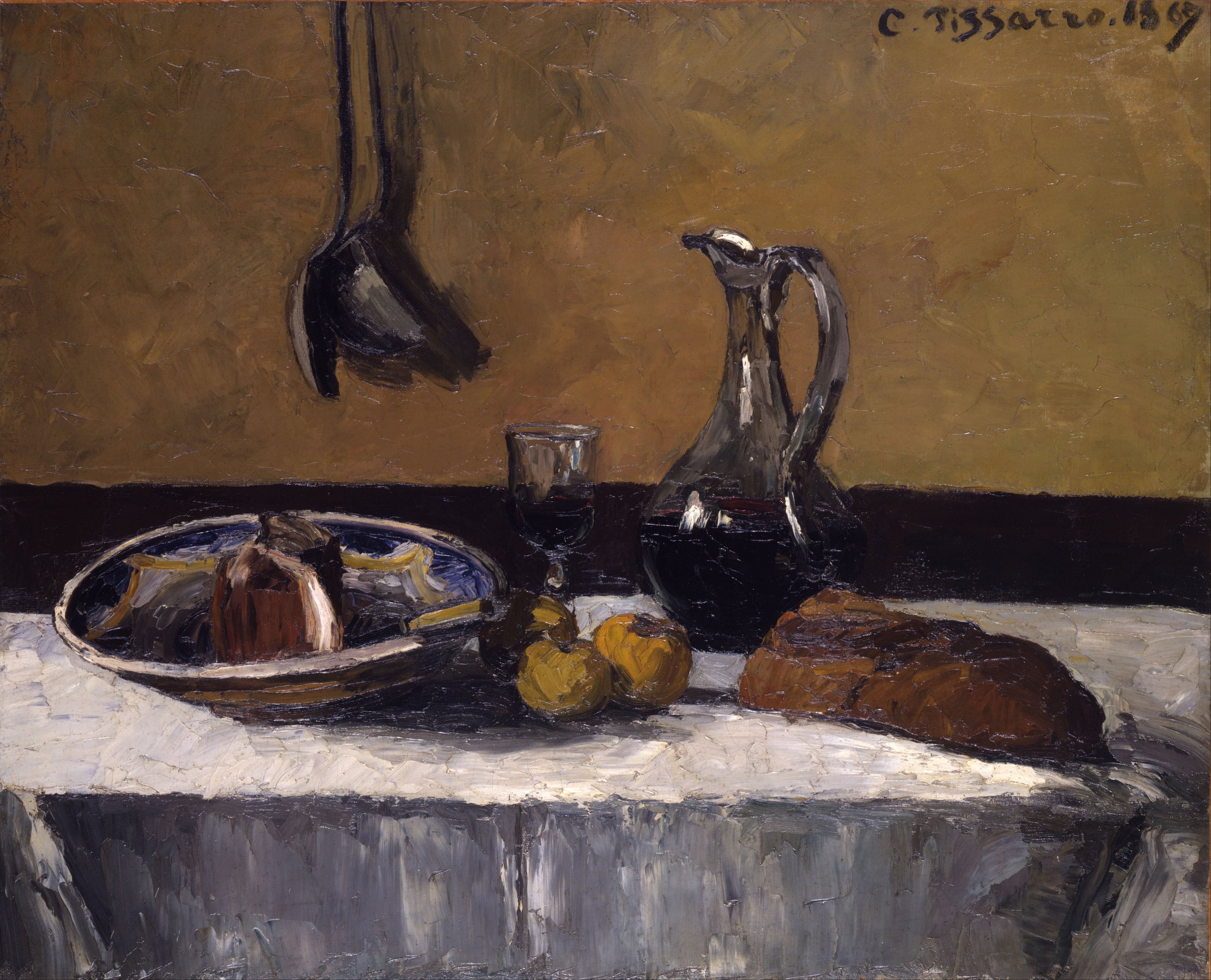
Still Life
Camille Pissarro · 1867
Toledo Museum of Art
Common things set close and plain on a table, from the years when he was finding his way in Paris.
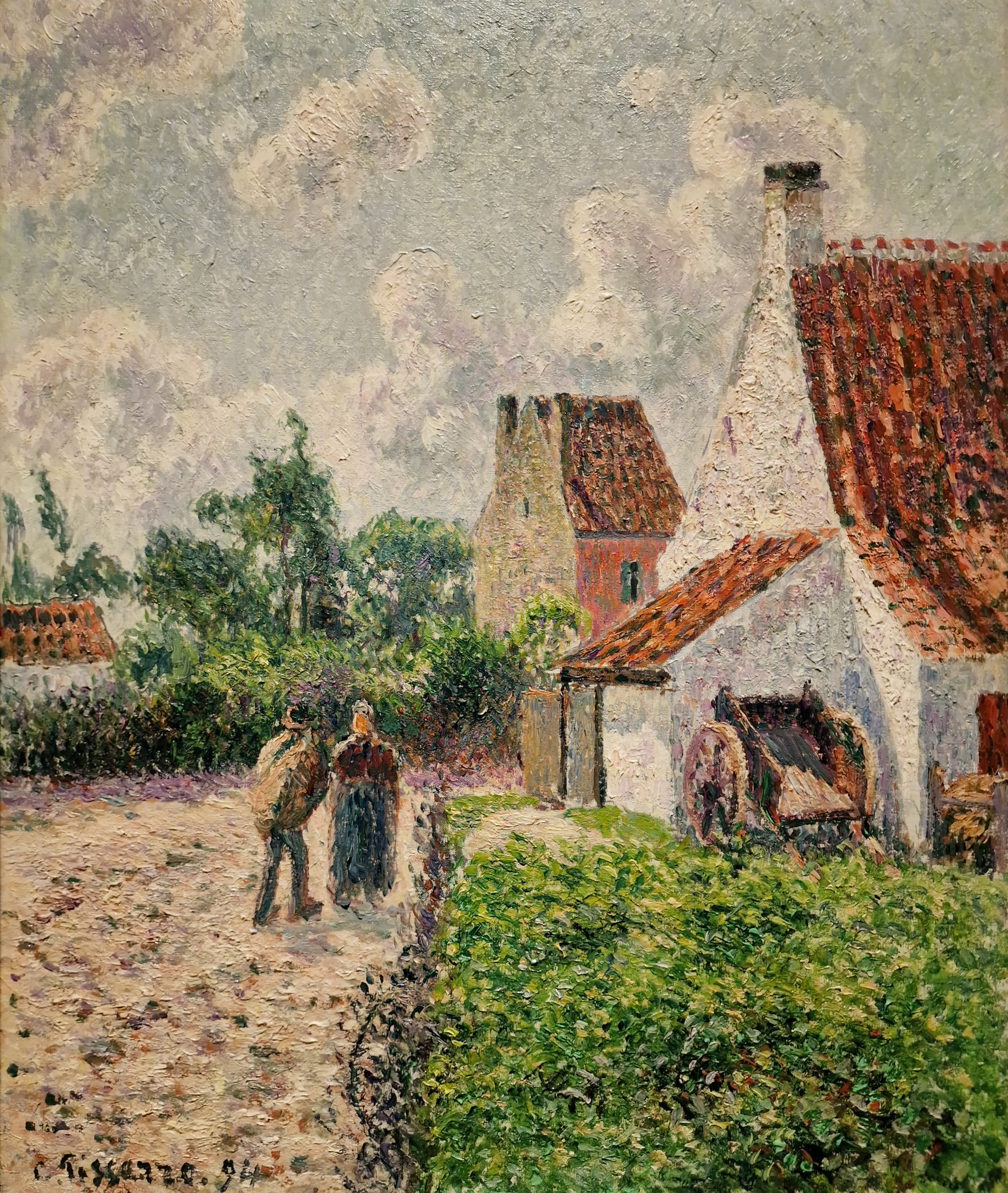
The Pink House, Knokke
Camille Pissarro · 1894
Tel Aviv Museum of Art
A cottage warmed by its rose walls among the greens of a coastal village garden.
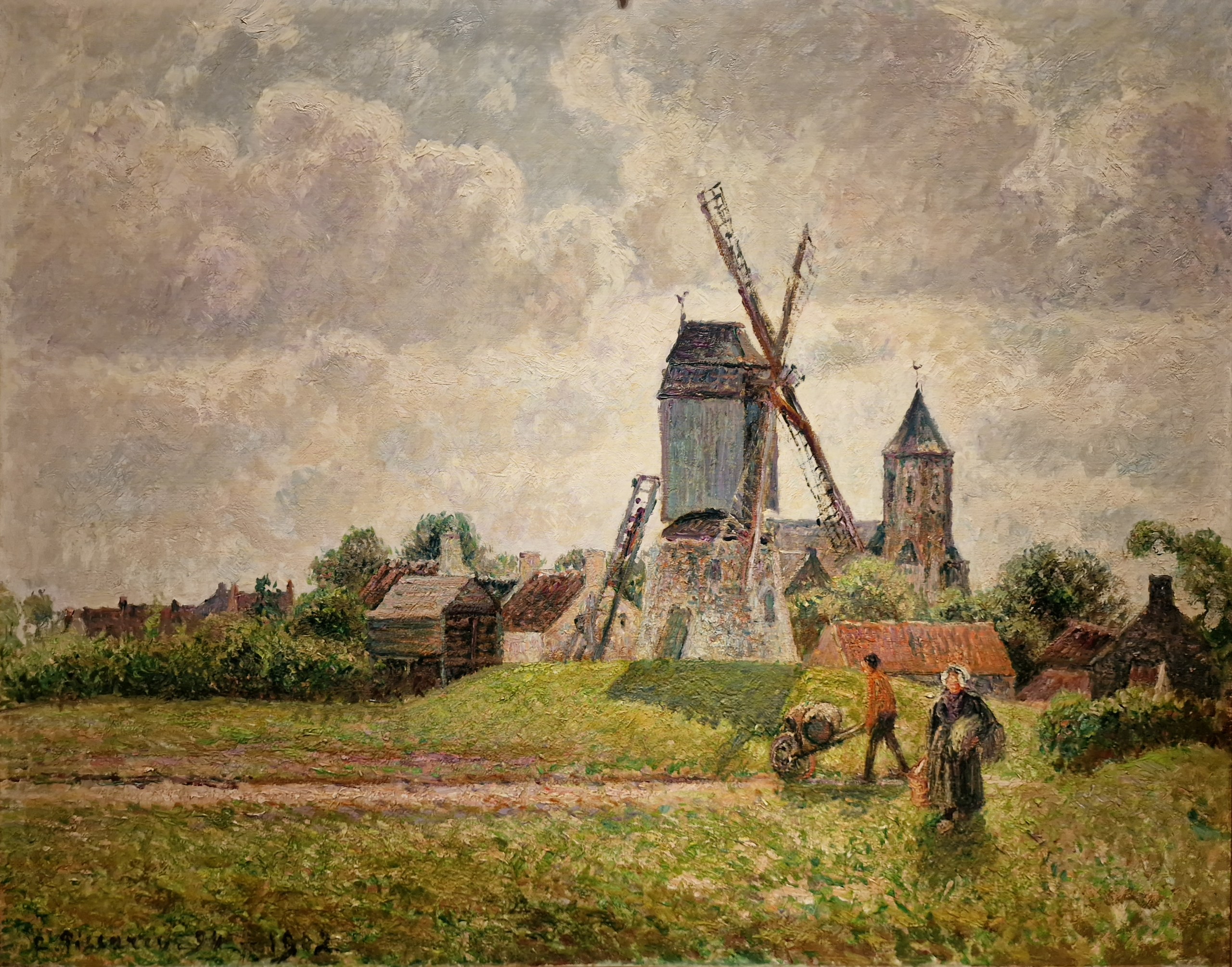
The Old Mill in Knokke
Camille Pissarro · 1898
Tel Aviv Museum of Art
An old mill rising over the low houses of the Belgian coast, the sky doing half the work.
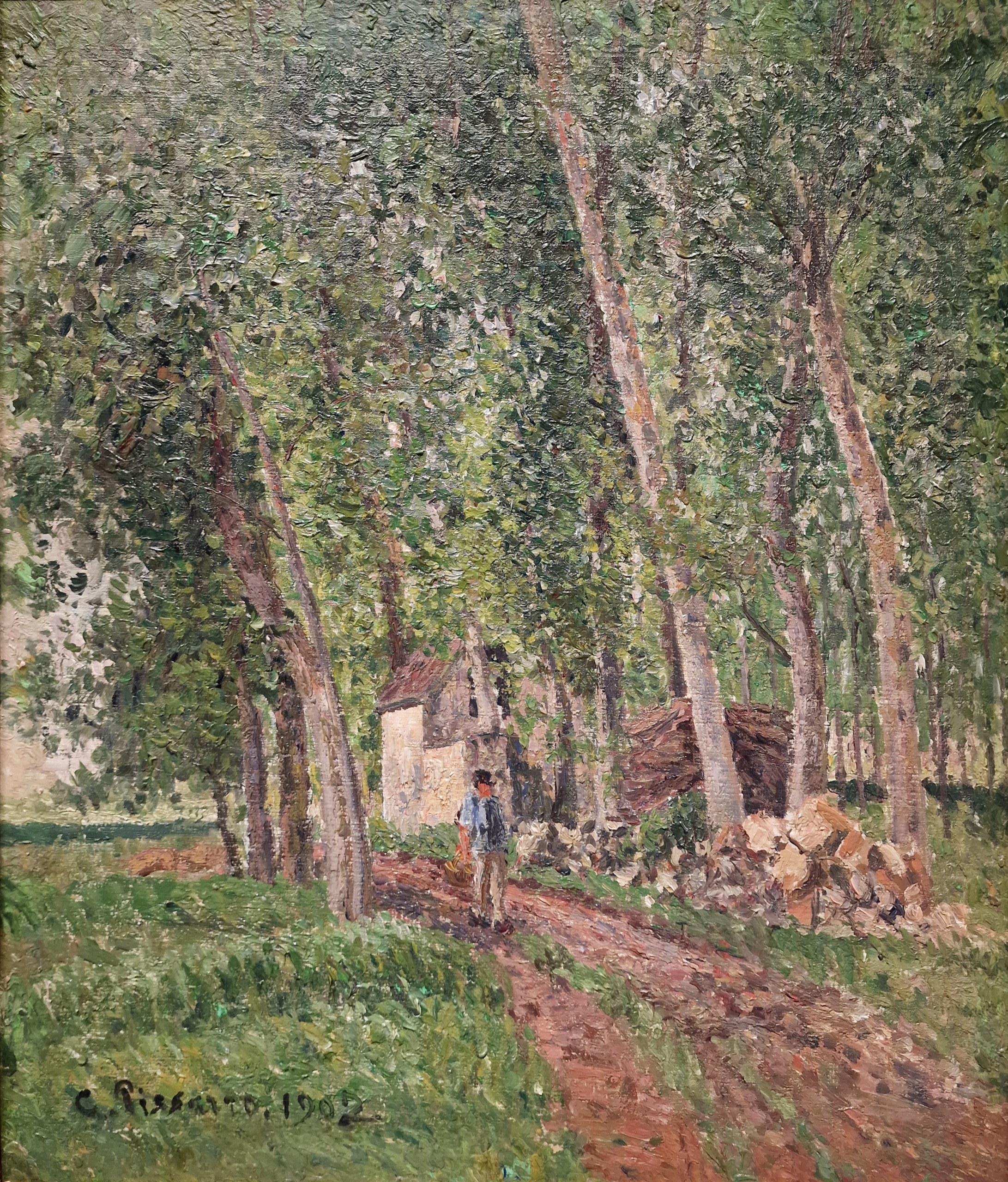
Brushwood at Moret
Camille Pissarro · 1902
Tel Aviv Museum of Art
Stacked cut wood and bare trees near Moret, a late landscape from his last years.
Sources
Invite Camille Pissarro into your living room
Play 11 works from this collection on your TV, phone or tablet with Momentable Art TV.