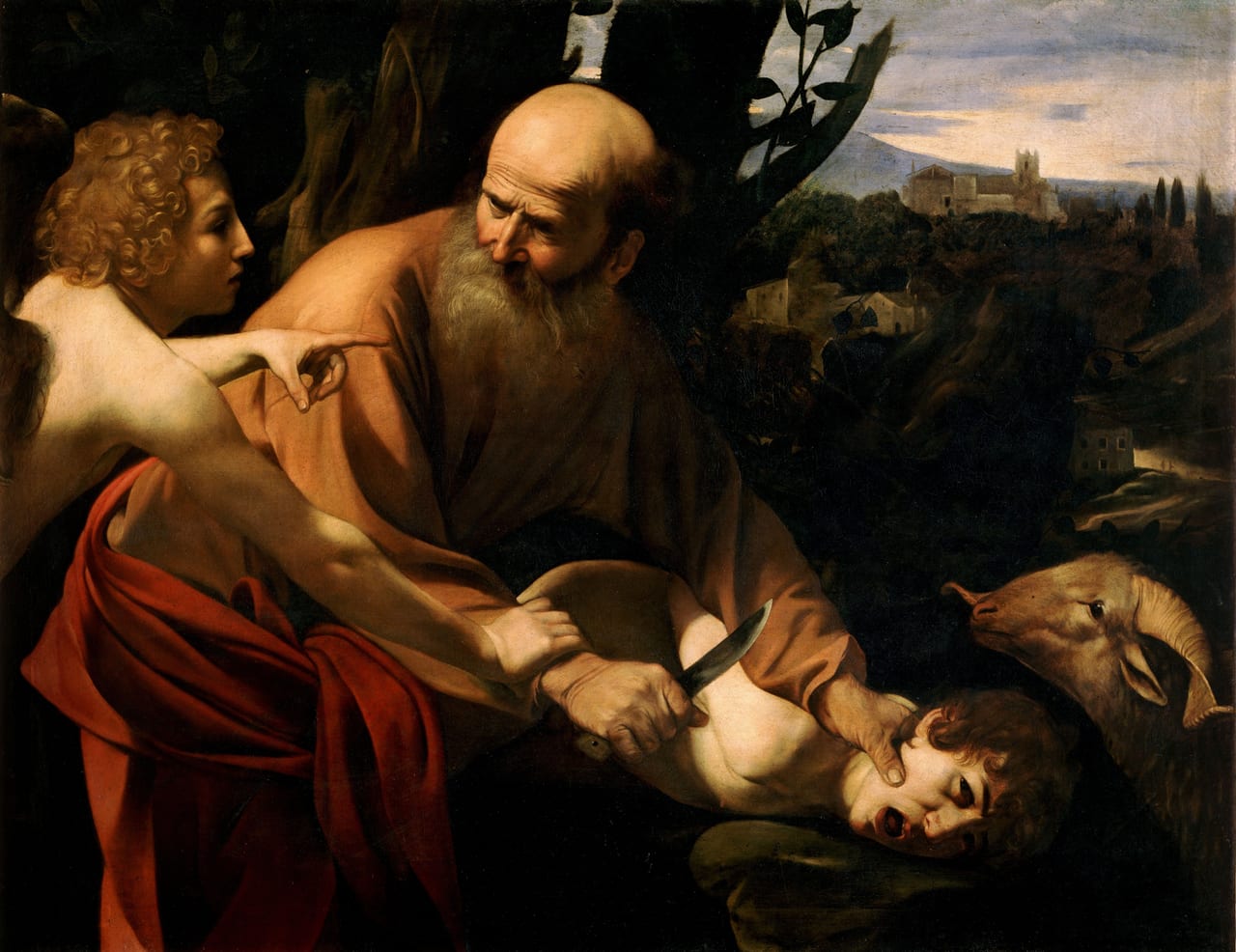
The Taking of Christ
Caravaggio · c. 1602

Caravaggio
Italian · 1571–1610
The bad boy of Roman painting, who put real streets and real faces into the Bible and lit them with a single hard beam.
Play 28 works from this collection on your TV, phone or tablet with Momentable Art TV.
Play CollectionMilan to Rome
Michelangelo Merisi took the name of Caravaggio, the Lombard town he came from, and kept its manners. He trained in Milan from 1584 and reached Rome in 1592 at twenty-one, hungry: for some years he sold small pictures of fruit and flowers and half-length boys in the street, until Cardinal Francesco del Monte, one of the sharpest collectors in the city, took the young man under his roof and opened every door that mattered.
Through the cardinal's circle came the first church commissions, novel enough to make him famous almost at once. He worked fast, from live models, straight onto the canvas with little preparation, and the saints he painted were working people with rough, characterful faces set in rooms and taverns of his own day.
Light and shadow
His instrument was darkness. A beam falls from no visible source, catches a face, a hand, a blade, and leaves the rest to guesswork; the method, sharpened far beyond fashion, was named tenebrism. Ordinary people, ordinary rooms, and between them moments of violence, torture and death held absolutely still.
He drew no line between sacred and street: in the Supper at Emmaus the inn table presses forward until the visitor seems to sit inside the picture. The painters who followed, in Italy, Spain and the Netherlands, were called Caravaggisti, and the Baroque itself is hard to imagine without him.
Flight and death
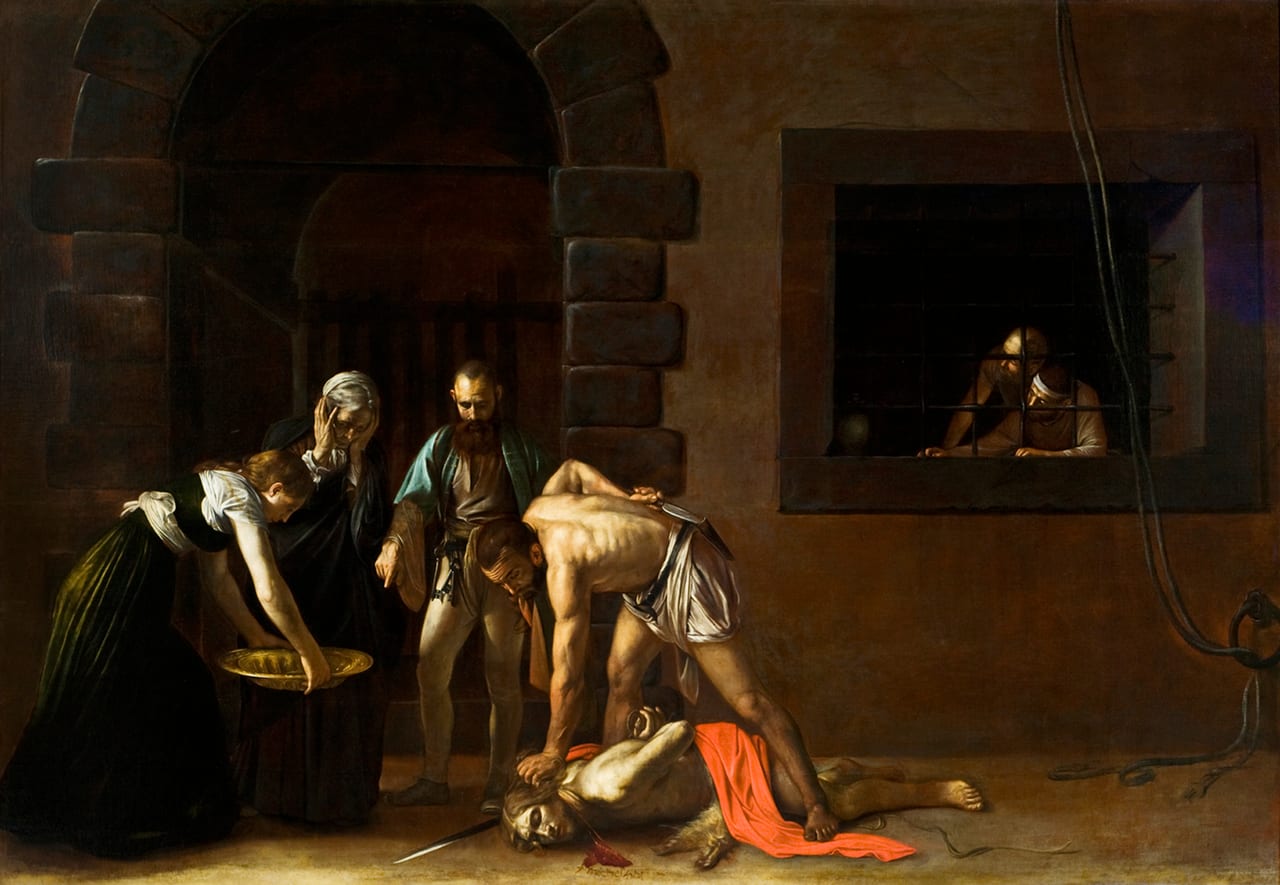
The temper that painted the knife also used it. In 1606 a quarrel, over a woman or a tennis match, ended in a swordfight and a dead opponent, and Caravaggio fled a capital sentence: Naples first, then Malta, where a huge canvas of the Baptist's beheading earned him a knight's spurs, and prison again when he brawled with a brother knight and escaped.
Sicily and Naples followed, more masterpieces, another brawl that left his face cut about. A pardon was won at last; on the journey back he was arrested for some unknown reason, bought his way out of jail, and by then the ship and all he owned had sailed without him; he walked the coast until fever stopped him. He died alone in 1610, at thirty-eight, the most imitated painter in Europe.
Known works
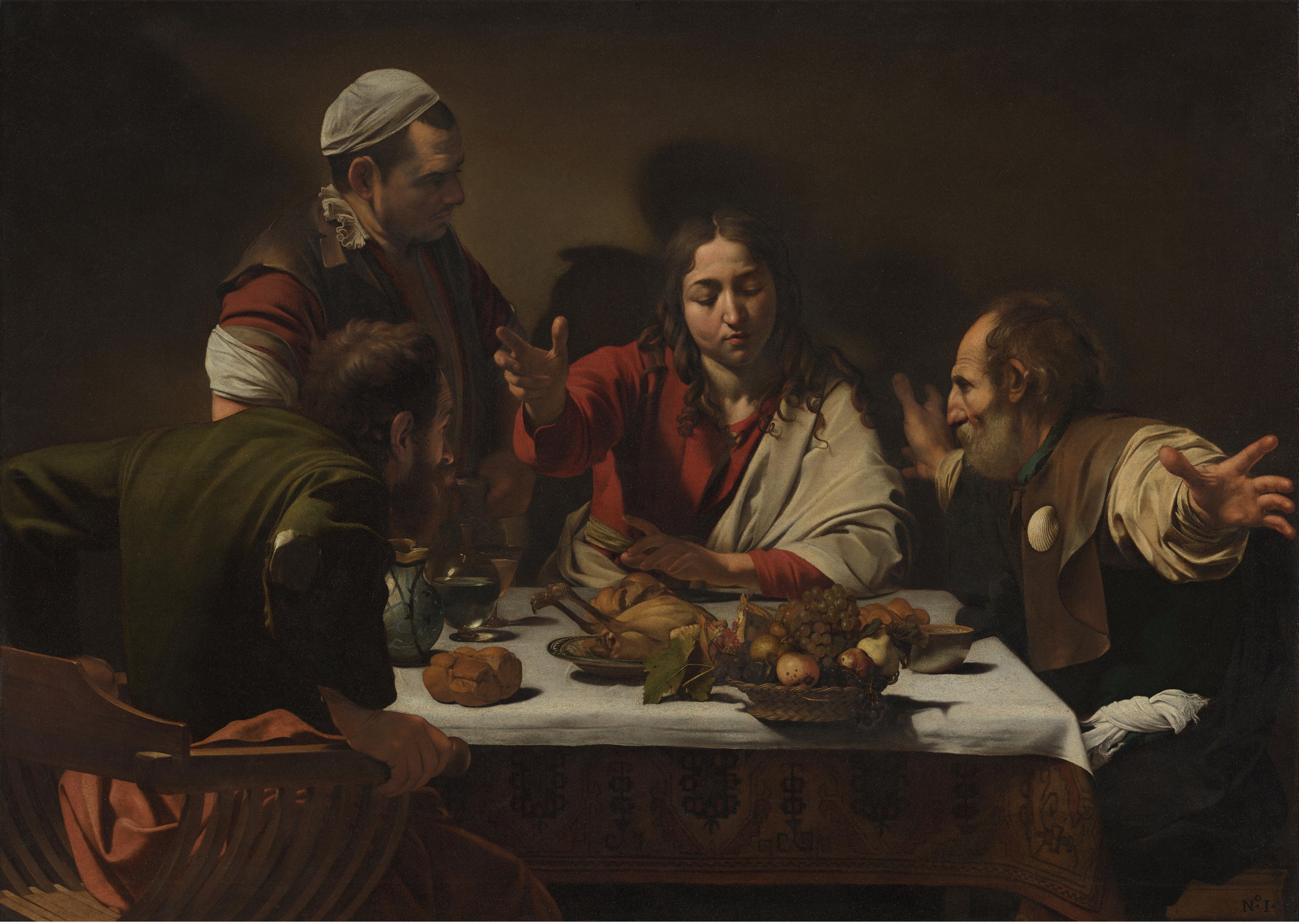
Supper at Emmaus
Caravaggio · 1601
National Gallery
The moment two disciples know their table companion: a beardless, soft-bodied Christ blessing bread while the innkeeper stands puzzled. The elbows and basket of fruit project so far forward the picture behaves like an extension of the room.
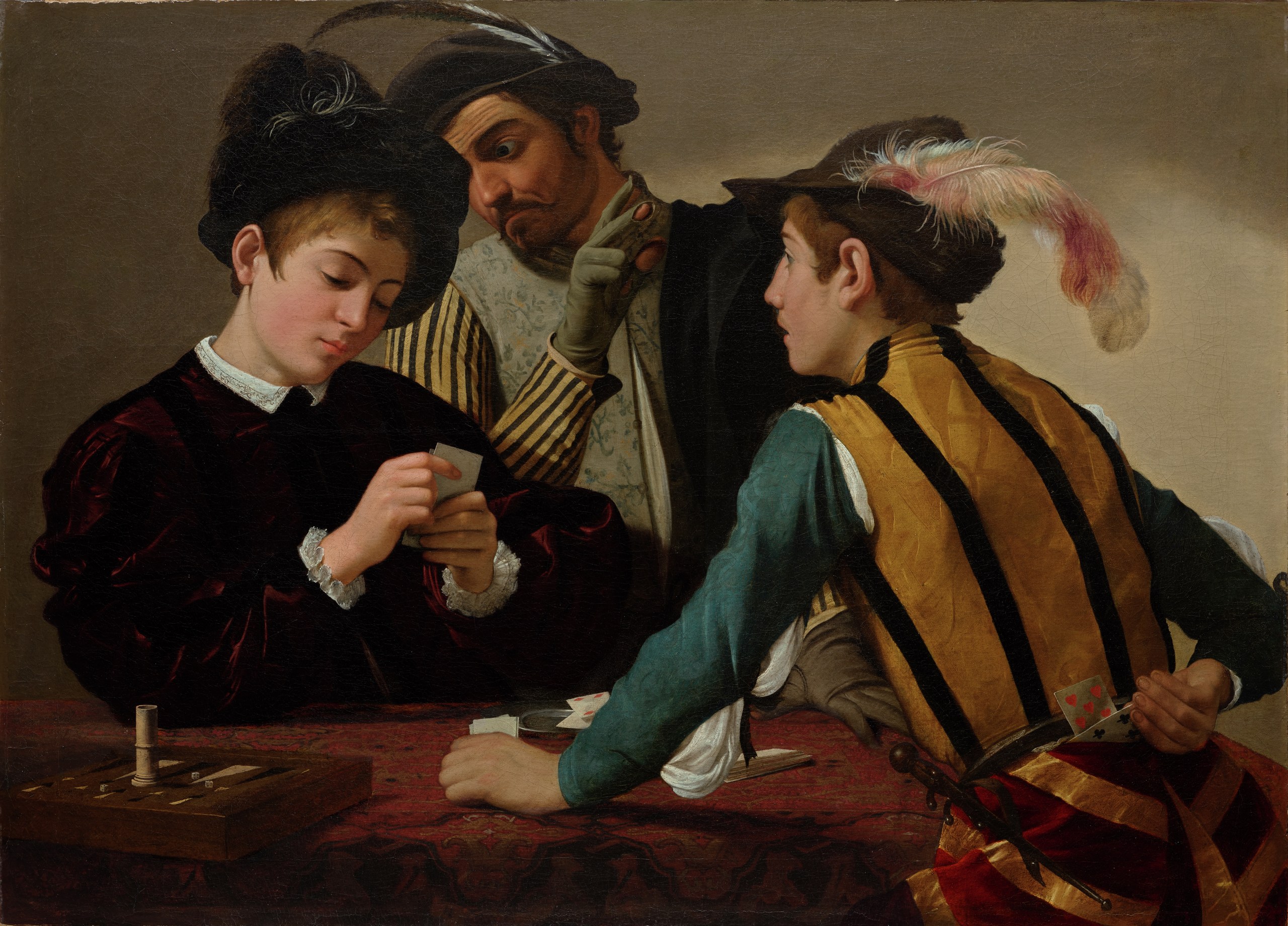
The Cardsharps
Caravaggio · 1596
A rich boy absorbed in his cards, a cheat palming a hidden king behind his back, an older confederate leaning in to signal the hand; the picture that set him up on his own after leaving Cesari's workshop.
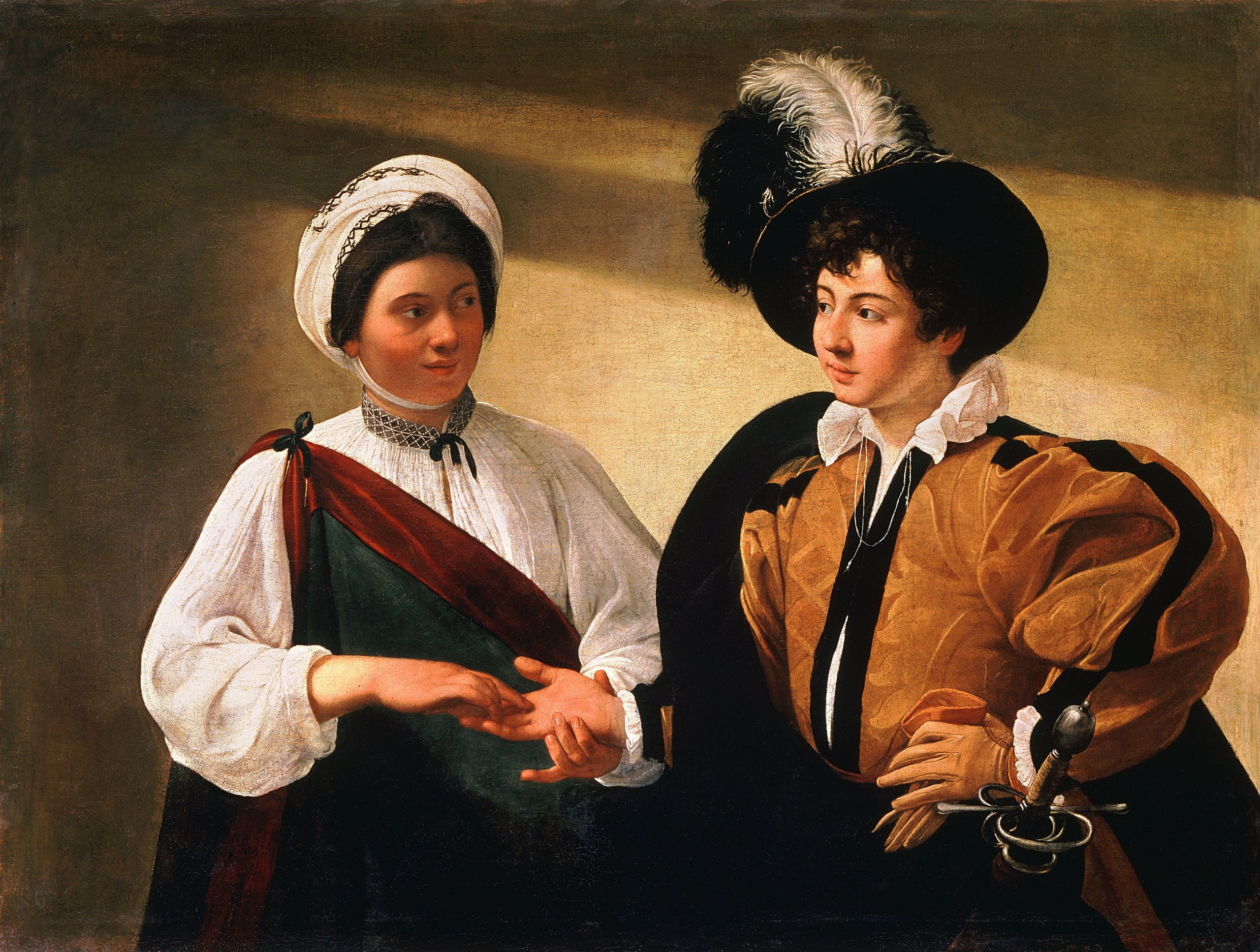
The Fortune Teller
Caravaggio · 1594
Louvre
A gypsy girl reads a young gentleman's palm with one eye on his ring, her fingers already easing it off; he is too busy preening to notice. He painted the scene twice, in versions now in Rome and Paris.
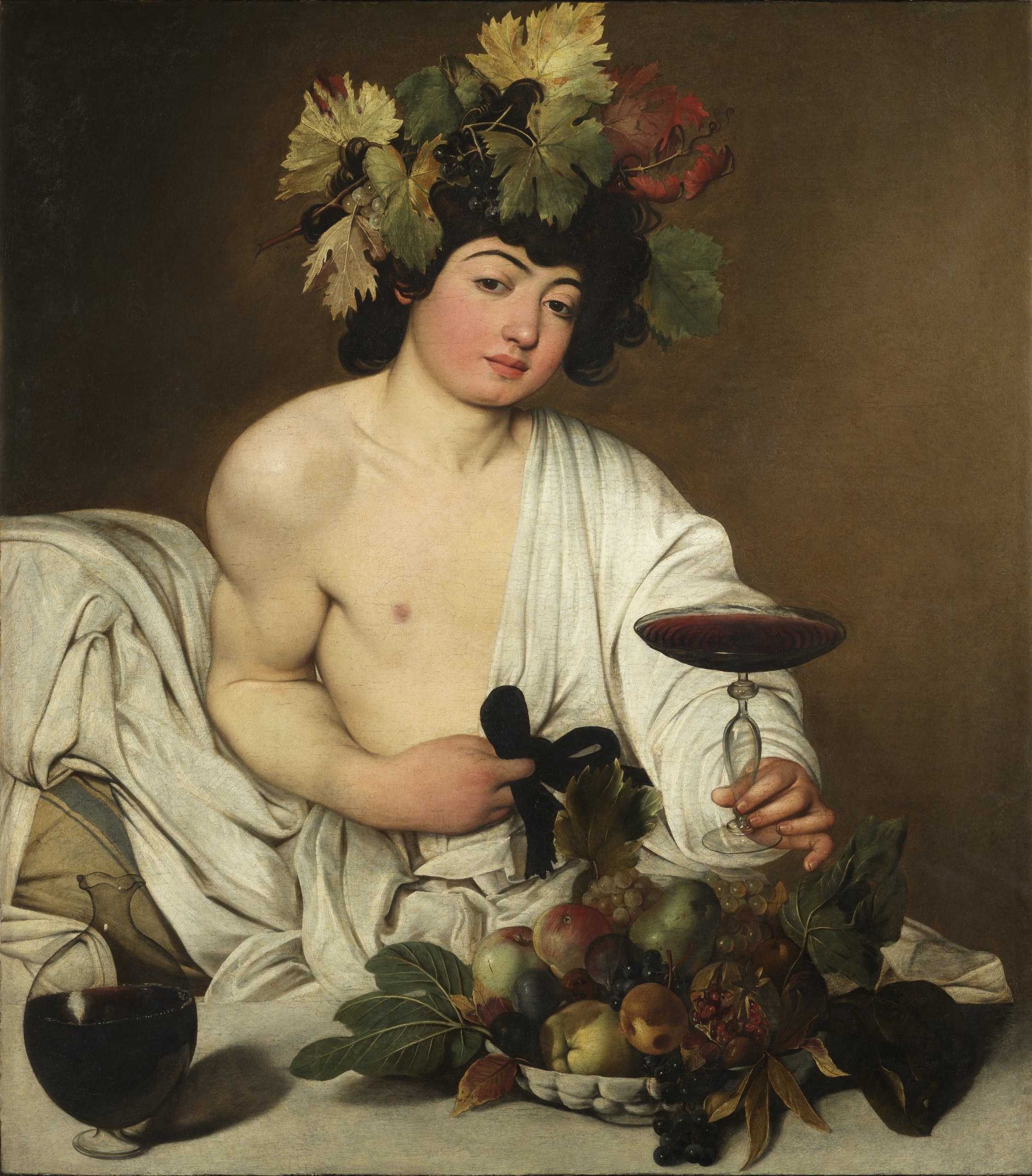
Bacchus
Caravaggio · 1598
Uffizi Gallery
A languid young god offering wine and fruit, the leaves in his hair, the glass trembling with his touch; the fruit in the foreground is going brown.
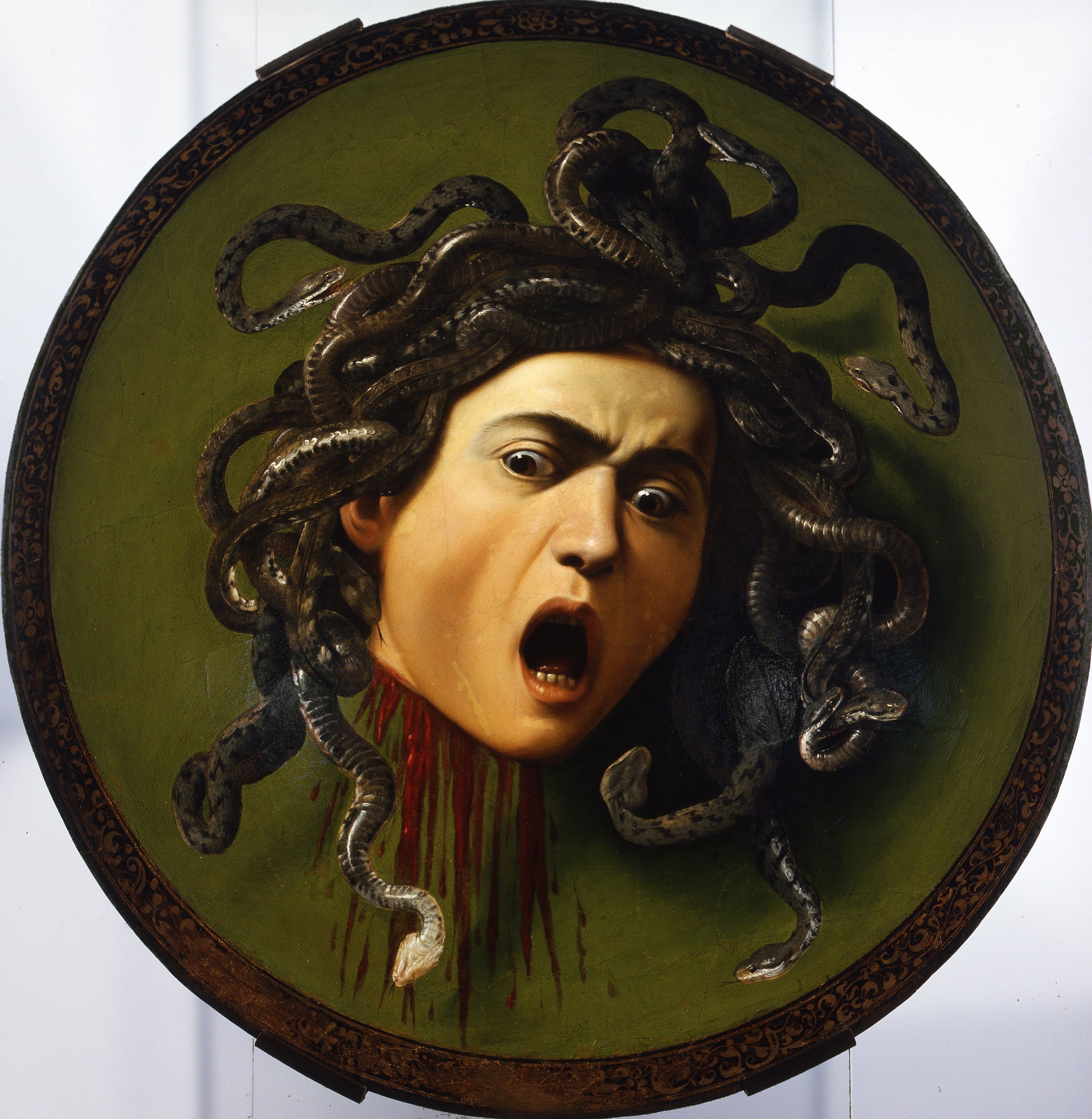
Medusa
Caravaggio · 1597
Uffizi Gallery
The Gorgon's shriek on a parade shield, painted from his own face in a mirror; one version commissioned by del Monte, who planned to give the shield to Ferdinando de' Medici for the Medici collection.
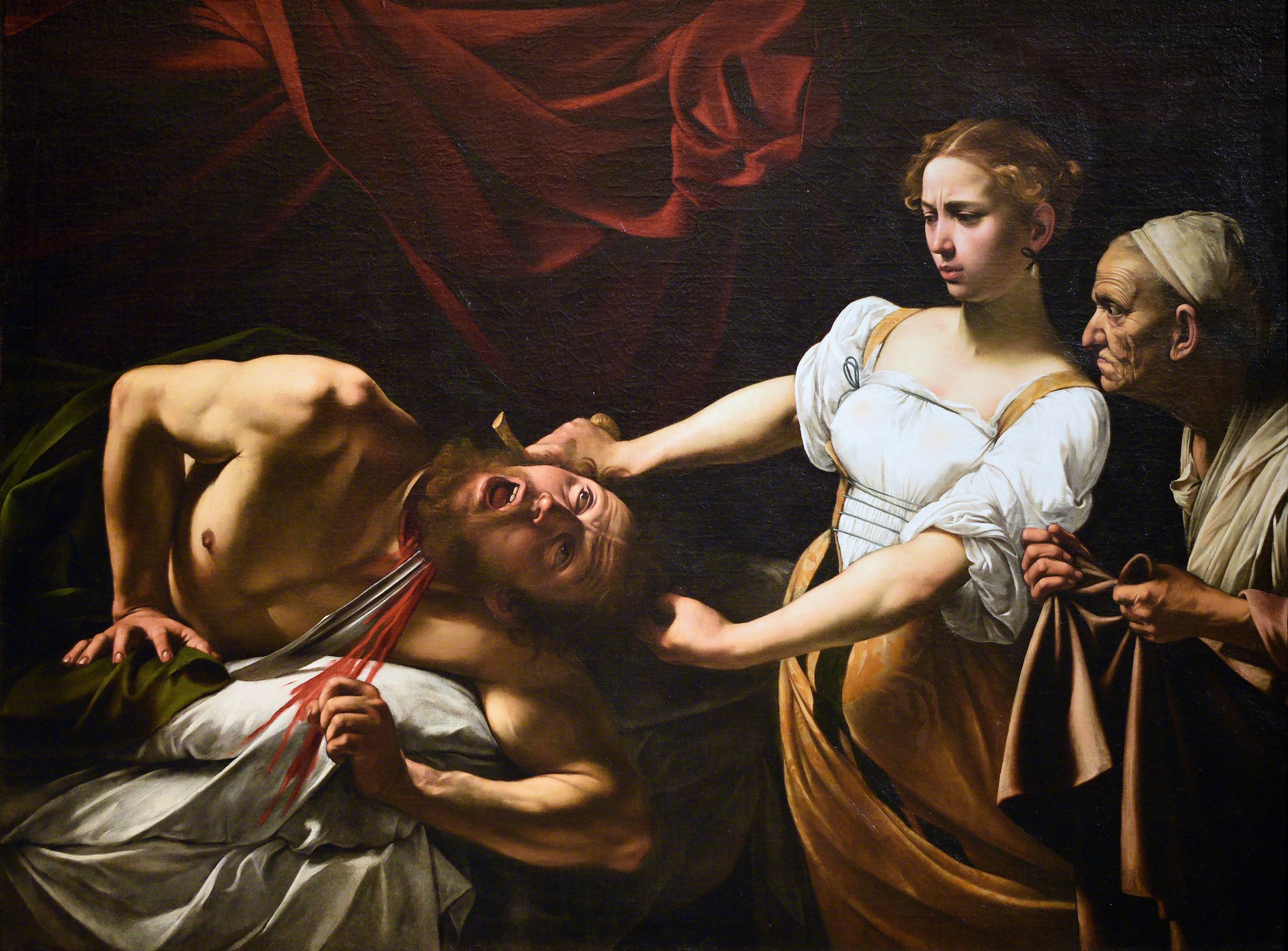
Judith Beheading Holofernes
Caravaggio · 1599
The widow at her work in the Assyrian general's tent after his banquet, sword halfway through the neck, her maid waiting with the sack; painted around 1599 to 1600 and now in Rome's Galleria Nazionale d'Arte Antica.
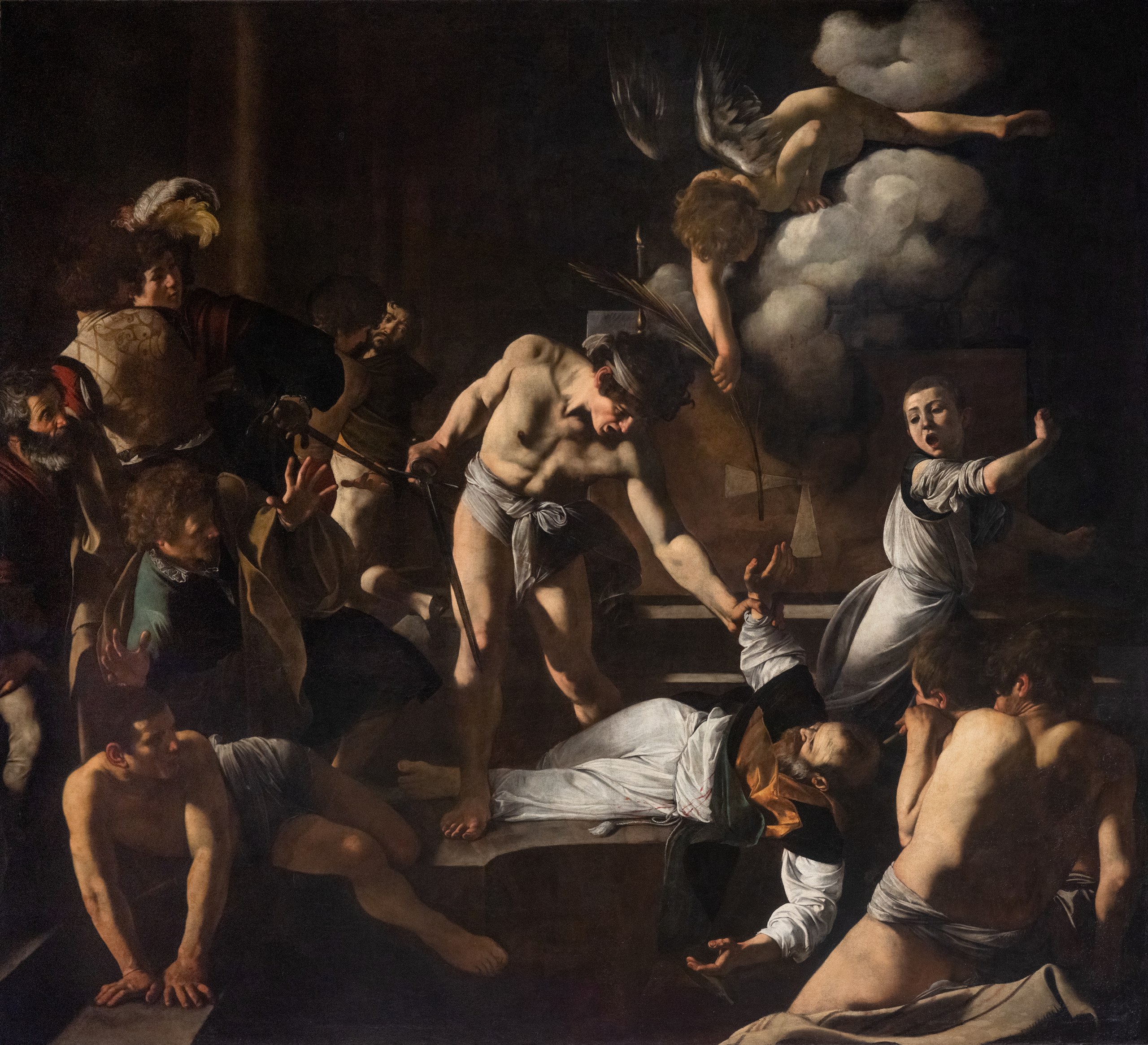
The Martyrdom of Saint Matthew
Caravaggio · 1600
The evangelist toppled at his altar, assassin naked in the glare, the crowd recoiling into shadow; first of the three canvases hung in the Contarelli Chapel, and the making of his name.
The Inspiration of Saint Matthew
Caravaggio · 1602
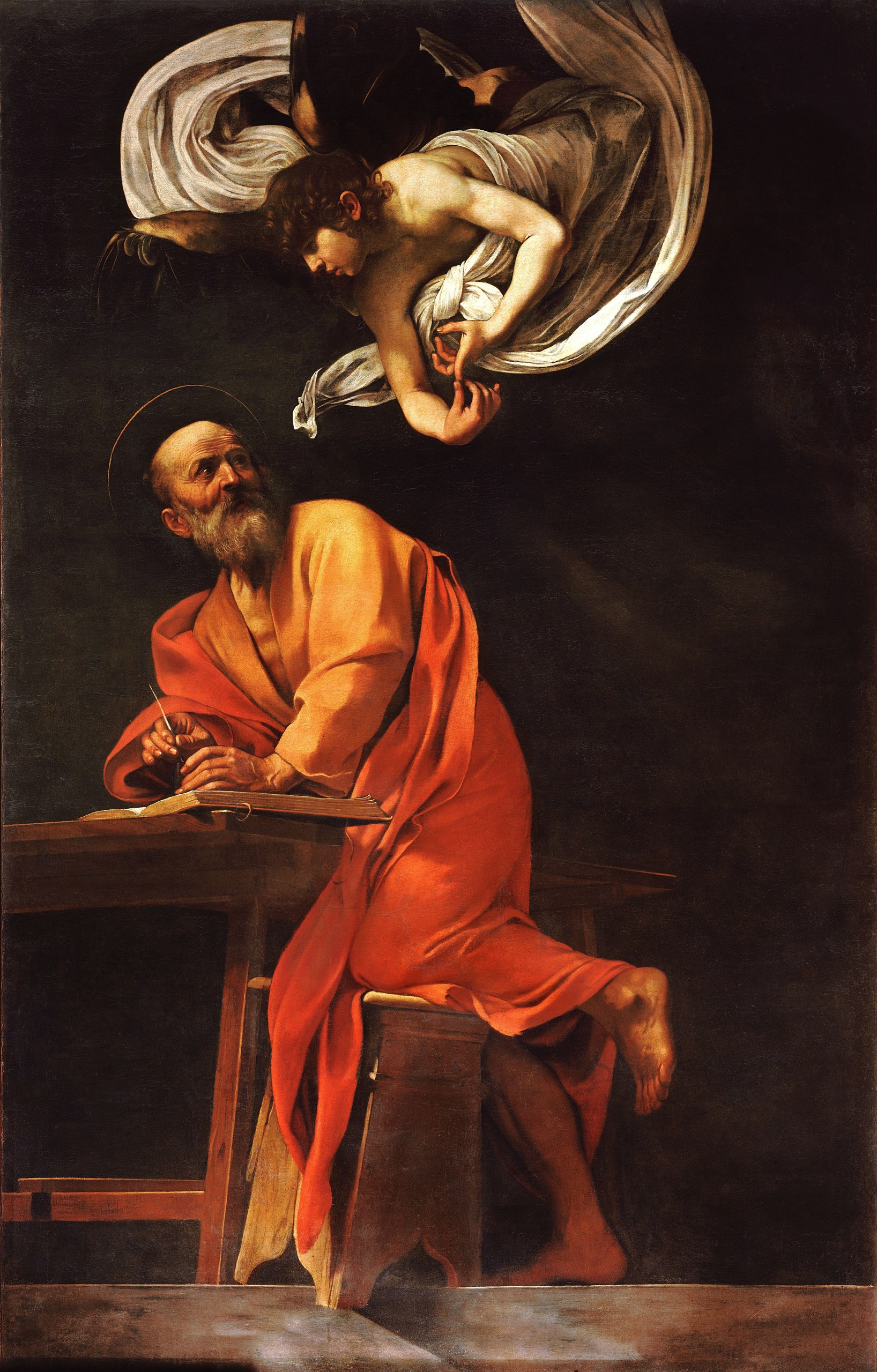
The Contarelli Chapel's altarpiece: an angel draped in nothing but looping cloth swoops over the writing saint, who swings round, one knee on his bench, between the two larger scenes on the side walls.
Conversion on the Way to Damascus
Caravaggio · 1600
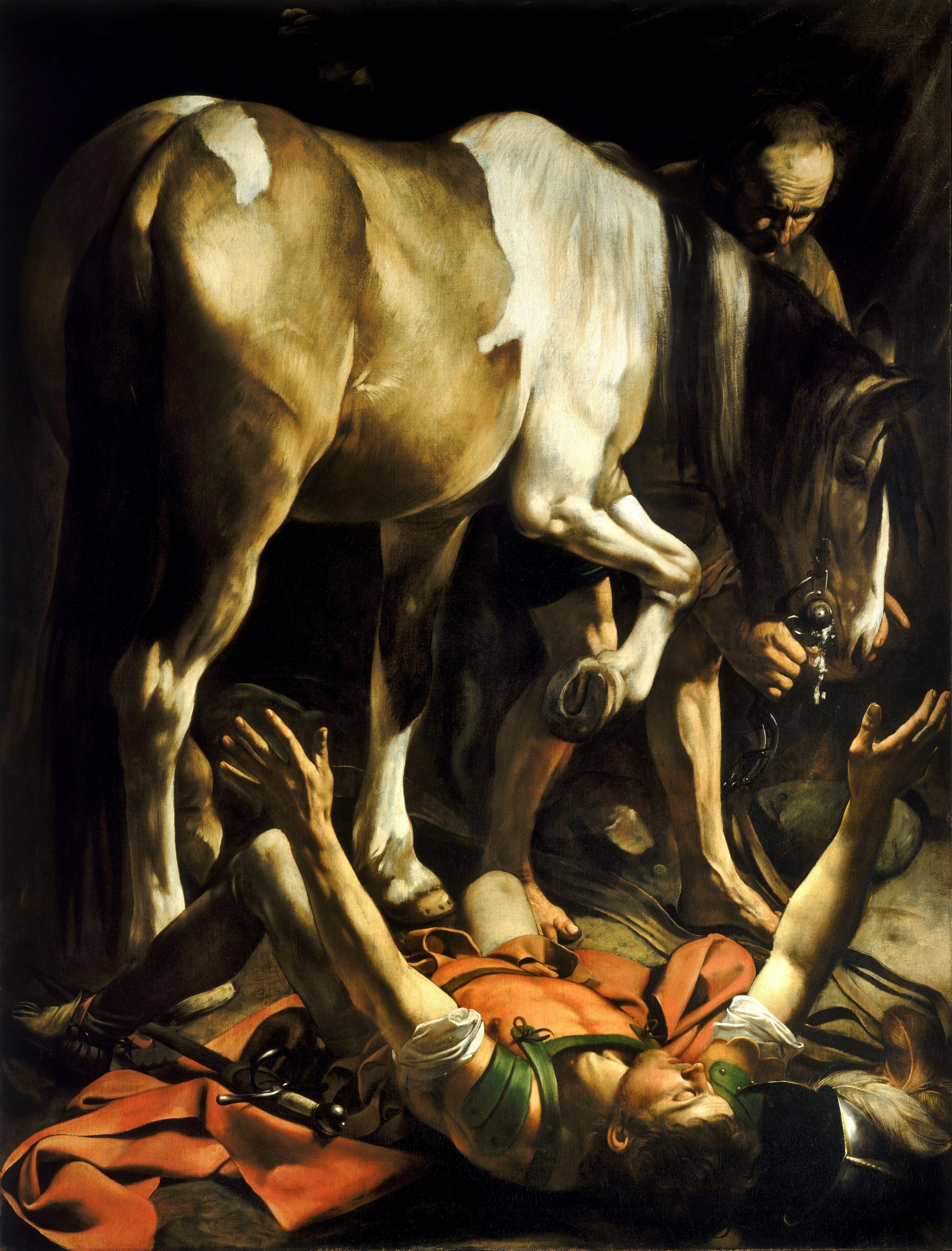
Paul flat on his back in a blinding light, an old groom too deaf to notice, the horse the largest thing in the picture; the drama is all in the splayed hands.
The Beheading of Saint John the Baptist
Caravaggio · 1608
In the oratory of the knights' church in Valletta, a canvas three and a half metres high and more than five wide: the executioner's blade halfway, the prisoner already sinking, the soldiers looking away. Painted for the grand master whose favor made him a knight, and widely held to be his masterpiece.
Death of the Virgin
Caravaggio · 1603
Louvre
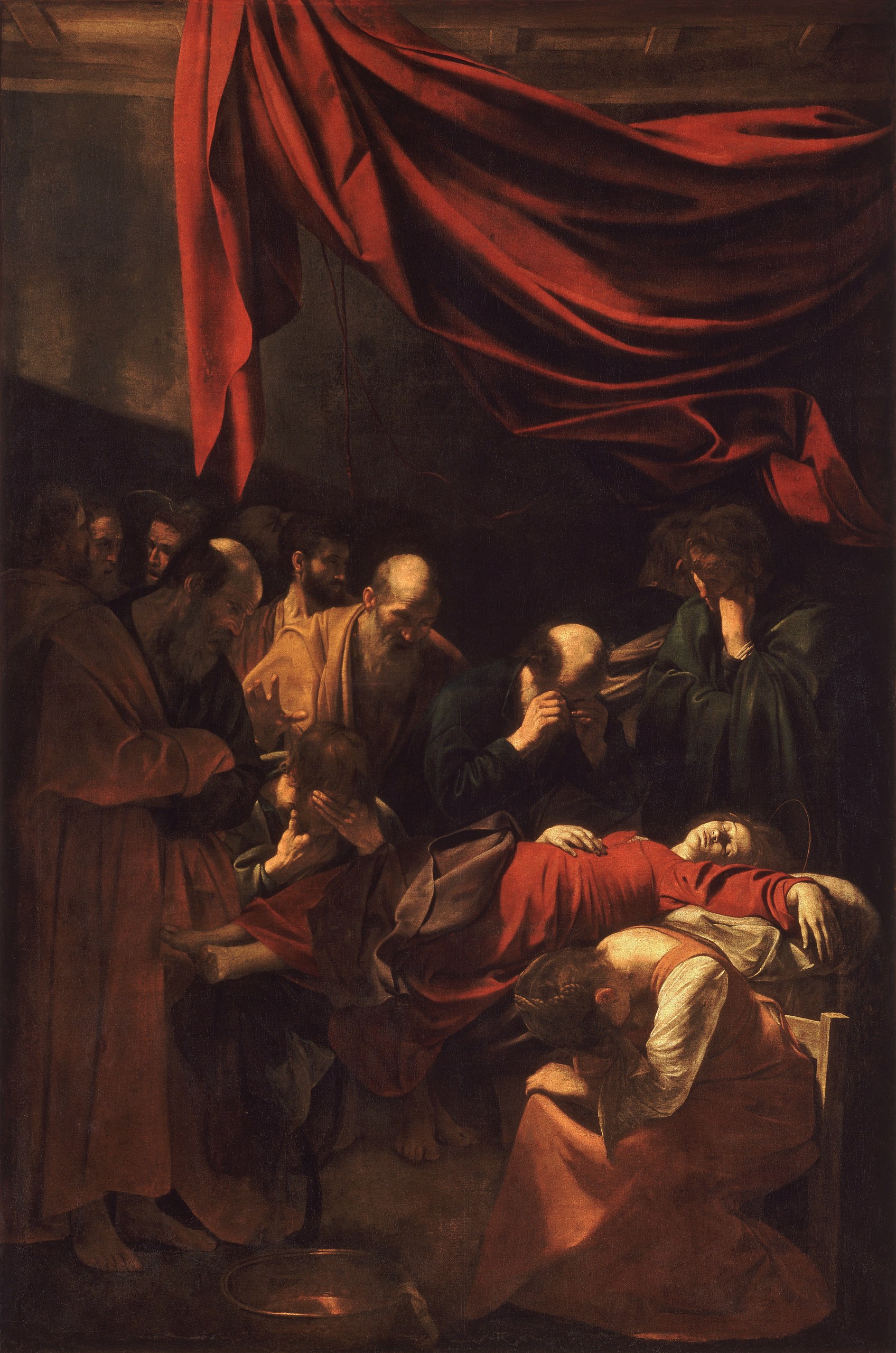
The apostles around Mary on a plain bed, her bare foot hanging over the edge, her body swollen like any drowned woman's; ordered by a papal lawyer for a Carmelite chapel in Trastevere and turned away by the friars as indecorous. It hangs today in the Louvre.
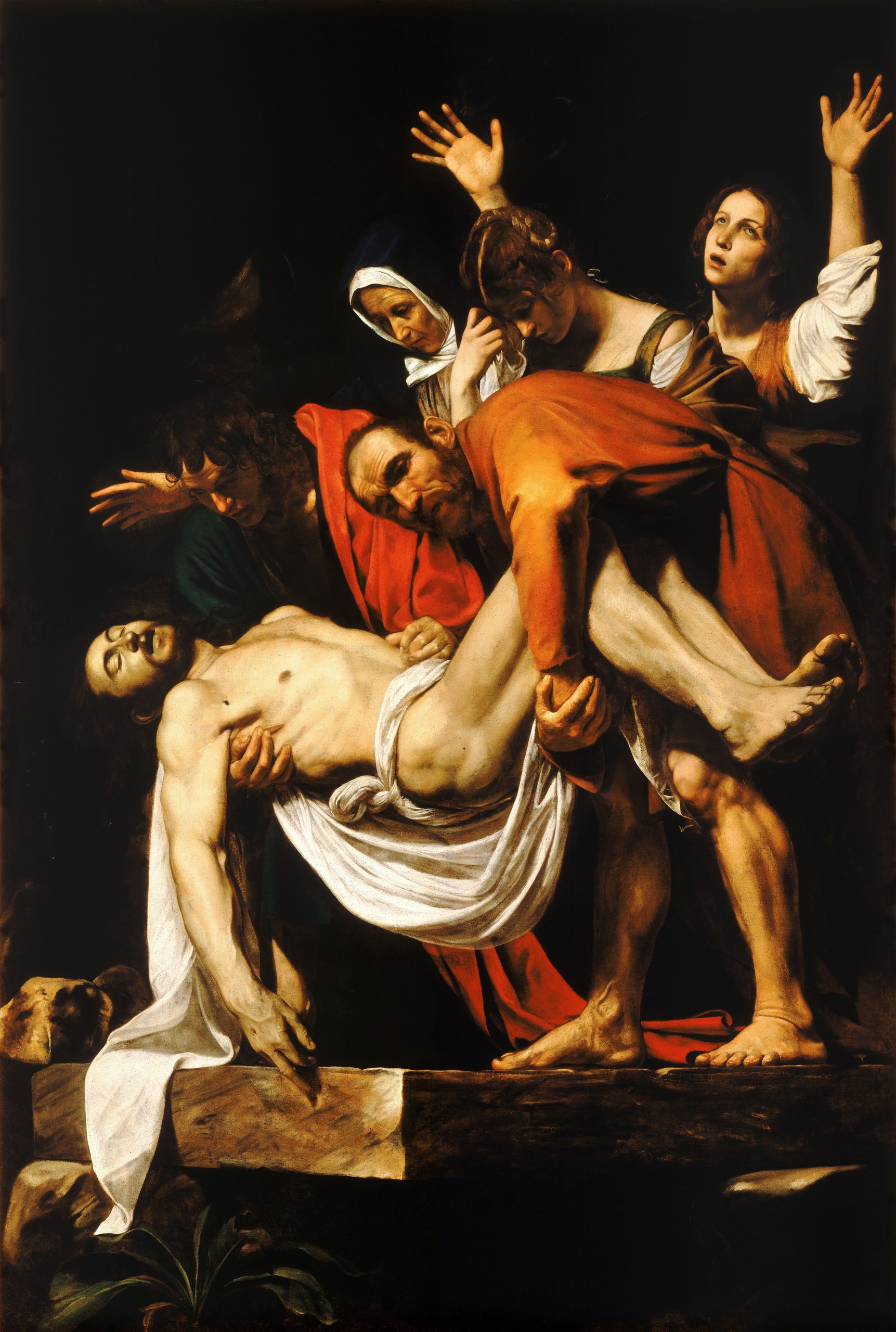
The Entombment of Christ
Caravaggio · 1600
Vatican Museums
The dead Christ handed down toward the viewer across a jutting stone, Nicodemus gripping his legs, the women lost in the black behind; painted for the Chiesa Nuova and copied since by Rubens, Cézanne and half of Europe.
More to discover
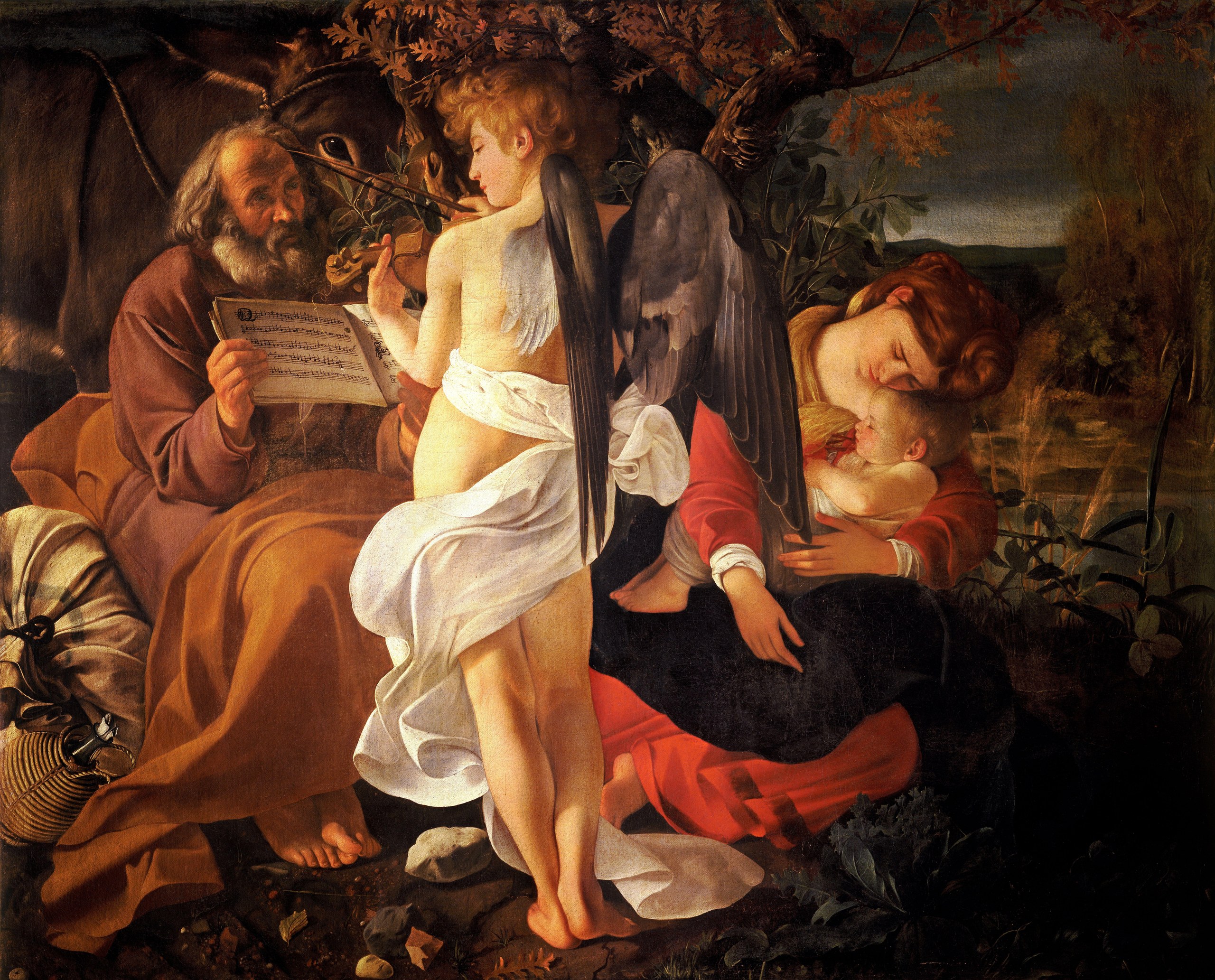
Rest on the Flight into Egypt
Caravaggio · 1597
The Holy Family halting in a wood while an angel plays a viol from a score of sheet music, the whole idyll at dusk.
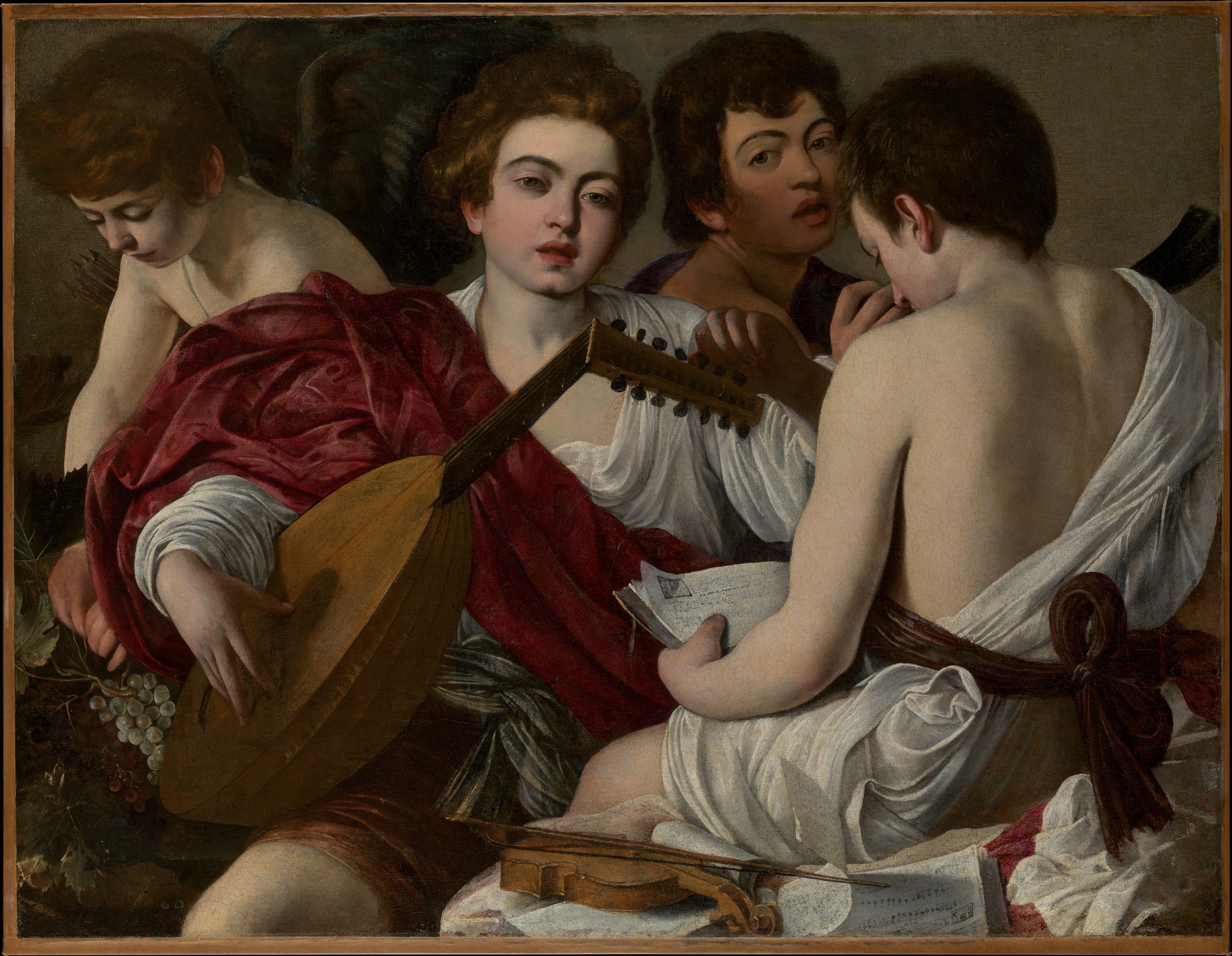
The Musicians
Caravaggio · 1595
Four youths in quarter-light tuning up, a wing just visible on the nearest, who turns to look out of the canvas; thought to be the first picture he made expressly for Cardinal del Monte, whose palace ran on music.
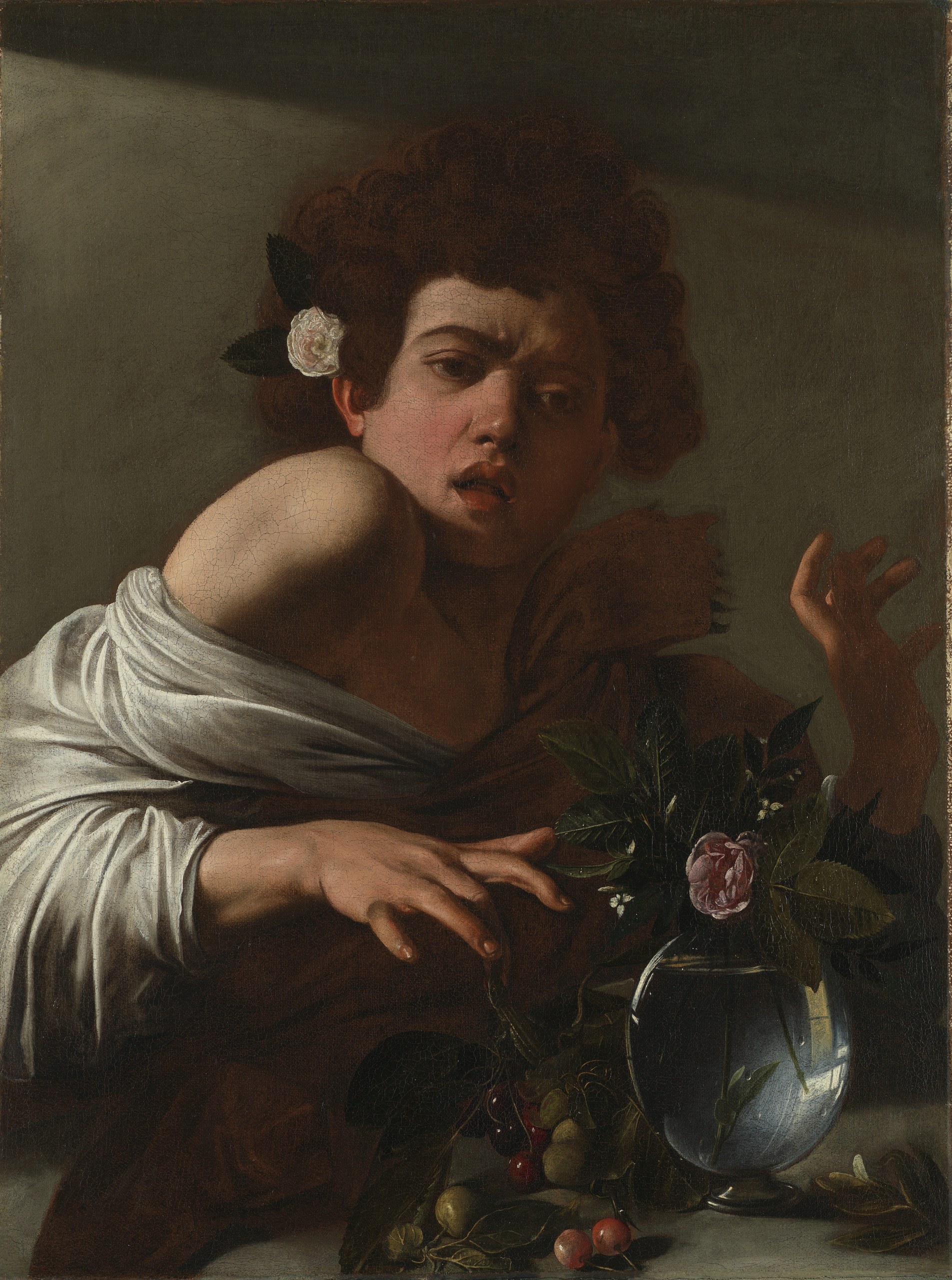
Boy Bitten by a Lizard
Caravaggio · 1594
National Gallery
A boy jerks his hand back from a jar, a lizard clamped to his finger, roses and jasmine spilling; behind the pain, a still life no Dutch master would disown. The National Gallery's version of two.
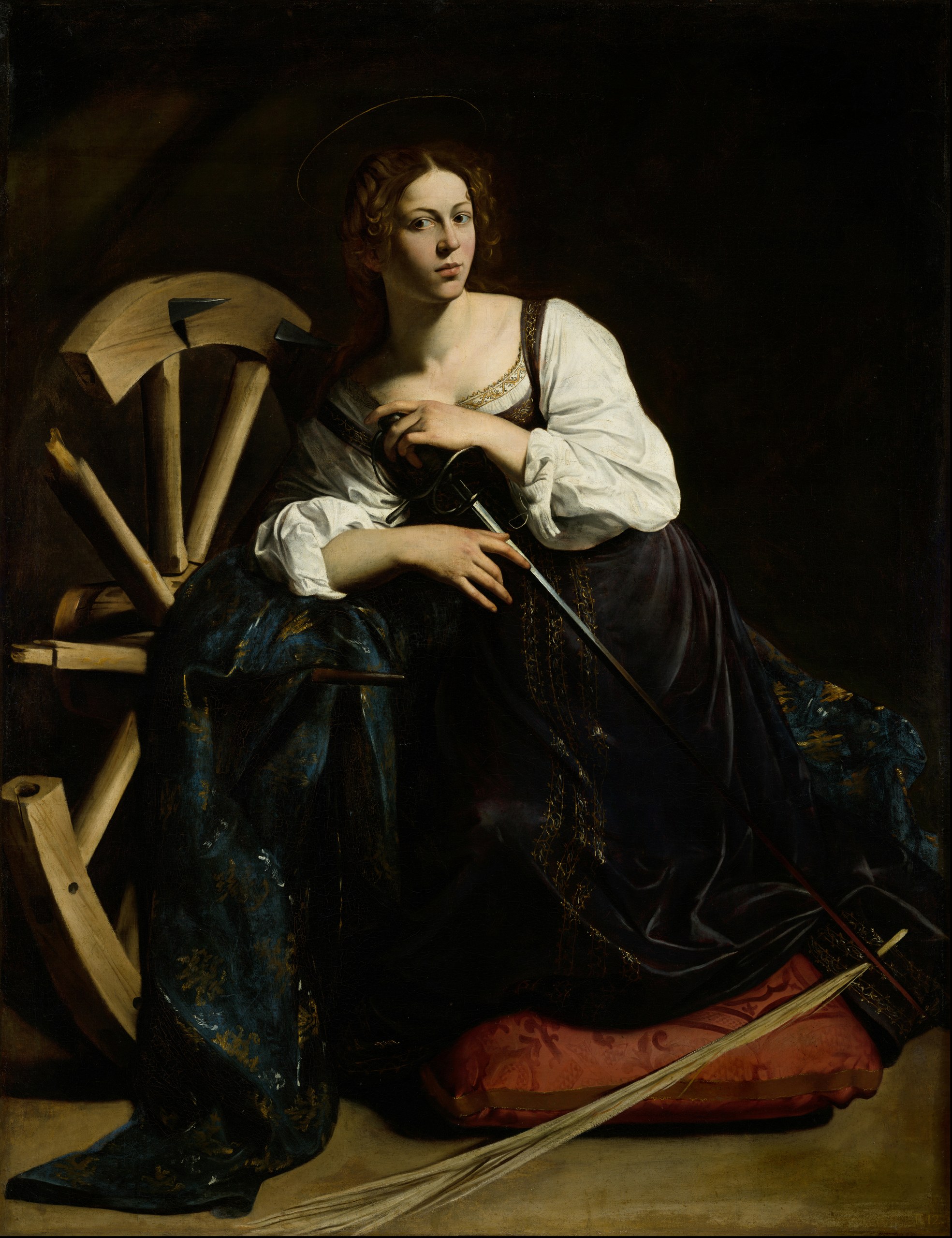
Saint Catherine of Alexandria
Caravaggio · 1598
Thyssen-Bornemisza Museum
The learned princess leaning in thought on the broken wheel meant to kill her, her sword and palm on the floor; from the del Monte collection, and one of his quietest inventions.
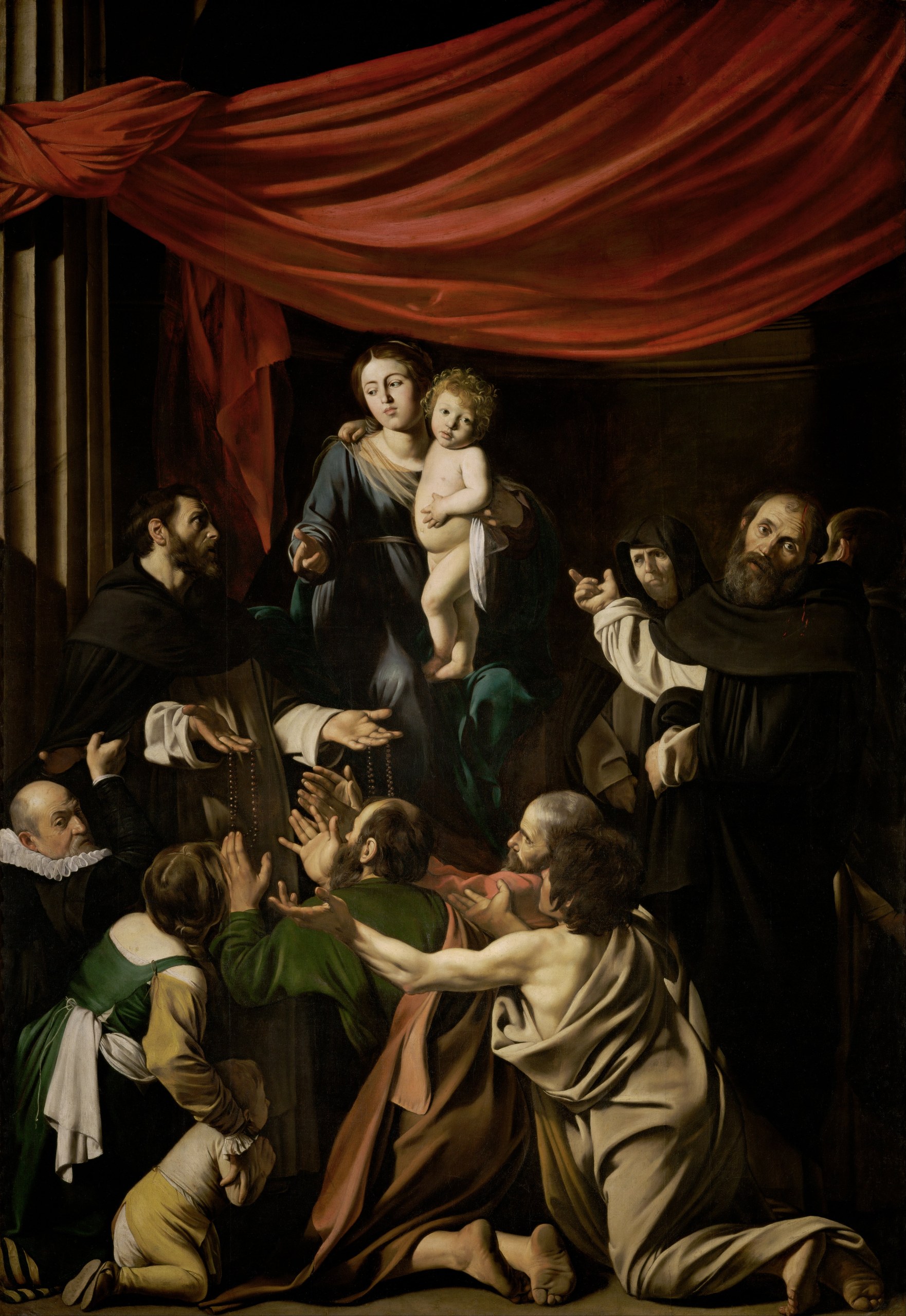
Madonna of the Rosary
Caravaggio · 1607
Kunsthistorisches Museum
The Virgin high on a throne handing rosaries to Saint Dominic and Peter Martyr while the people crowd below, and a donor in black peering out from under the saint's cloak; the one altarpiece of his that fits the ordinary Baroque pattern.
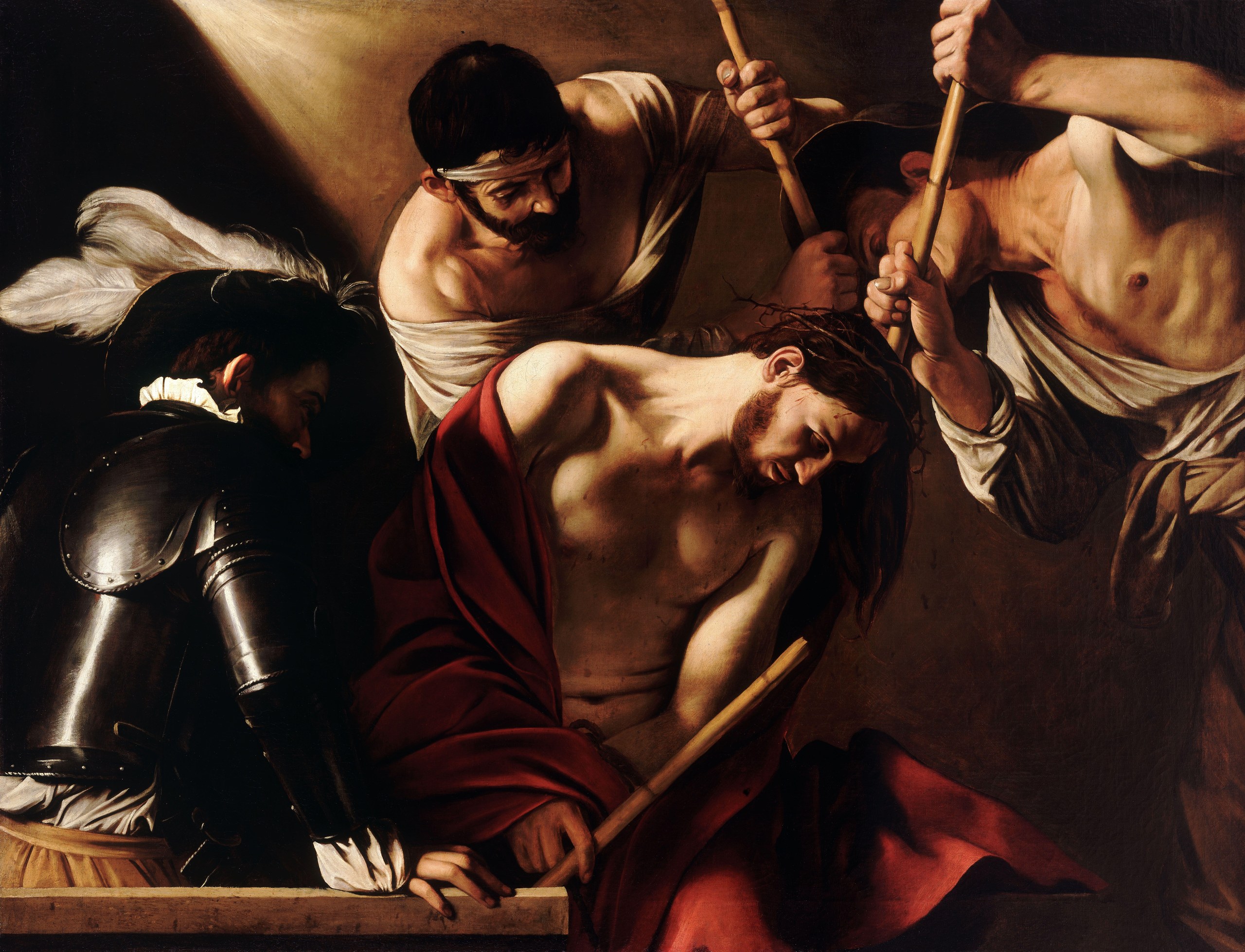
The Crowning with Thorns
Caravaggio · 1602
Kunsthistorisches Museum
Christ bound to a stone post while two torturers press the crown down with their rods, the light landing on his shoulder and theirs; the Viennese canvas, made for his patron Vincenzo Giustiniani.
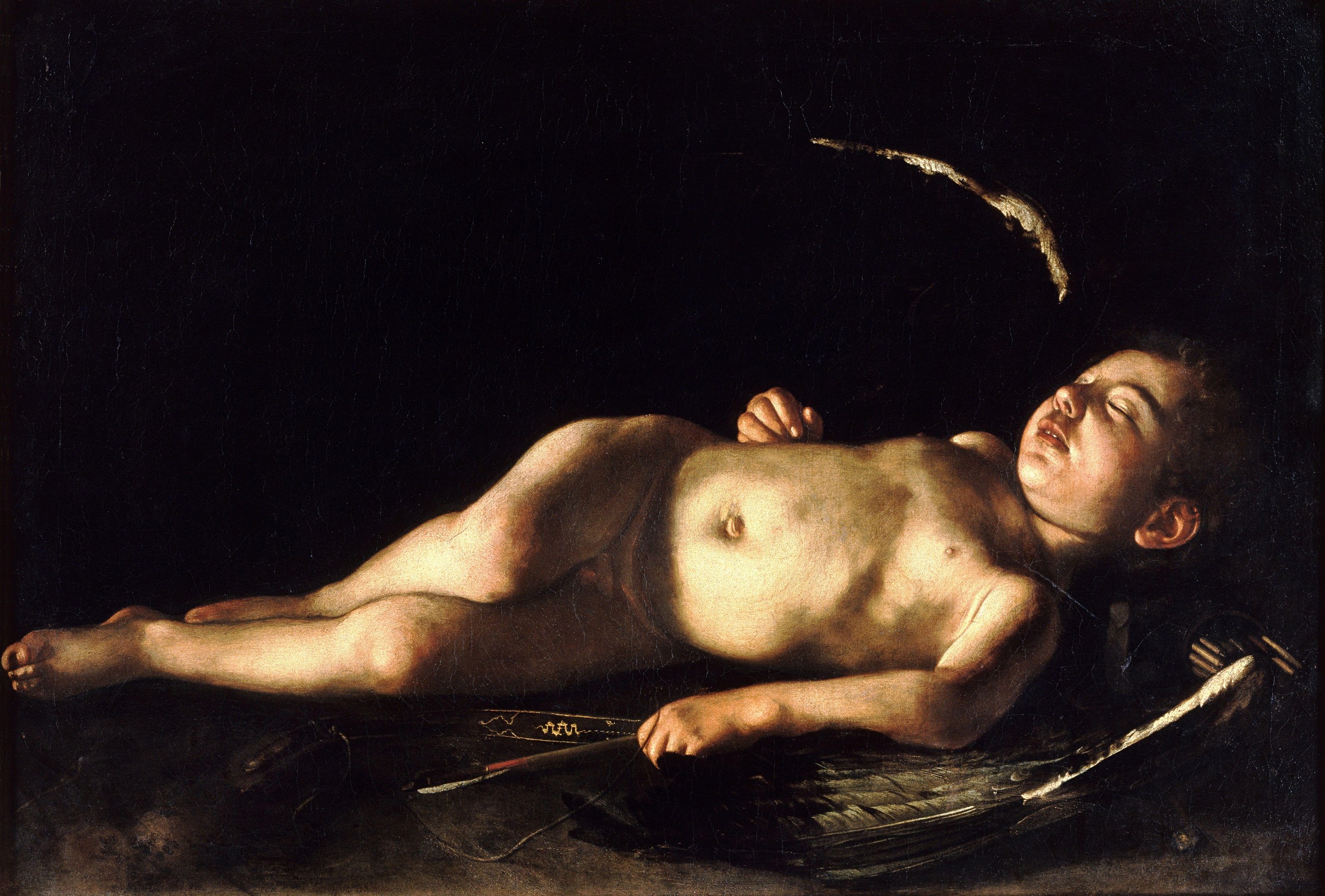
Sleeping Cupid
Caravaggio · 1608
Palazzo Pitti
Cupid asleep on a wing, his bowstring snapped and his arrows dropped, the classical emblem of pleasures given up; painted in Malta in 1608 and dated on its back.
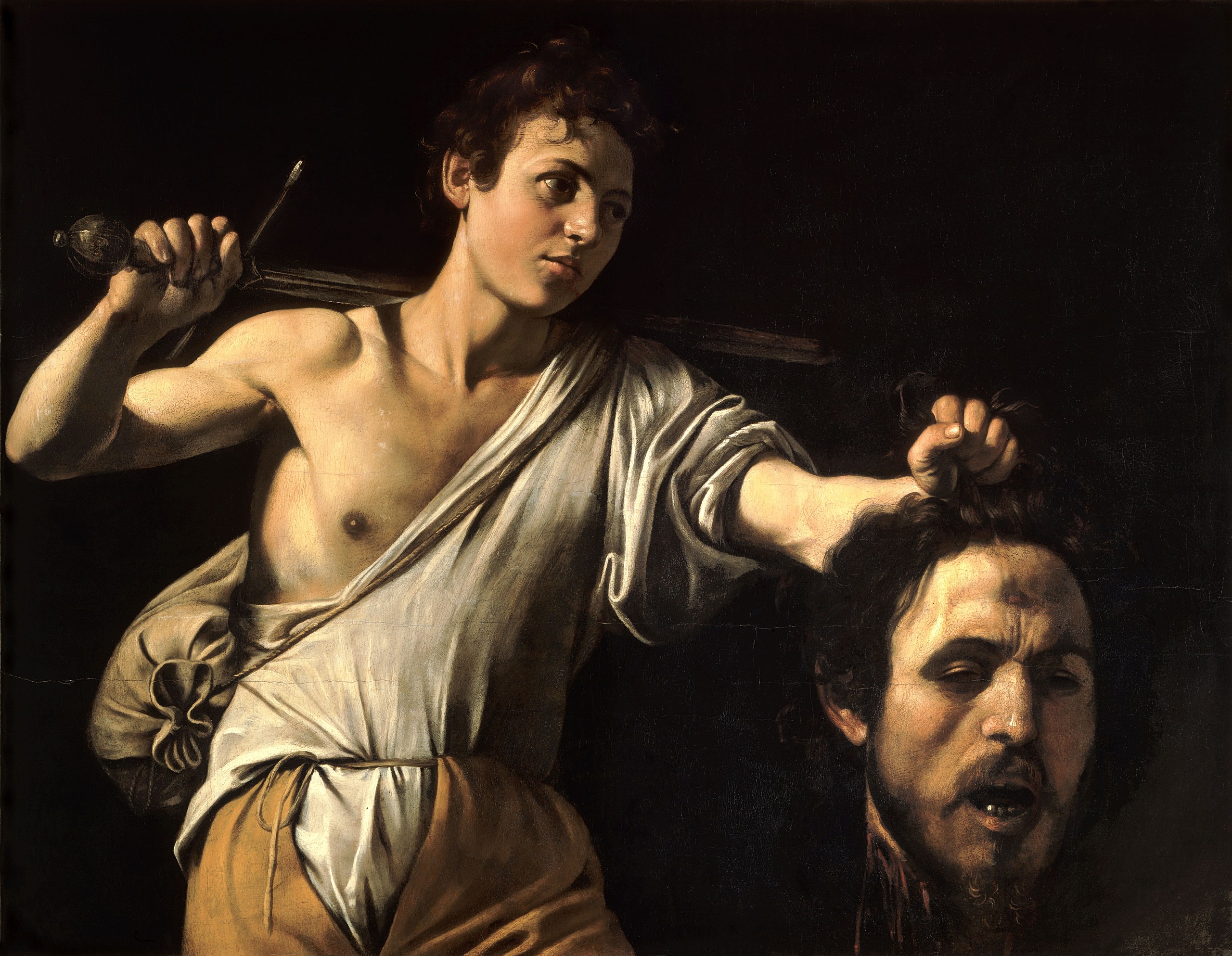
David with the Head of Goliath
Caravaggio · 1607
Kunsthistorisches Museum
The boy holds the giant's severed head at arm's length; one of his three goes at the subject, between an early canvas in the Prado and the late Borghese version.
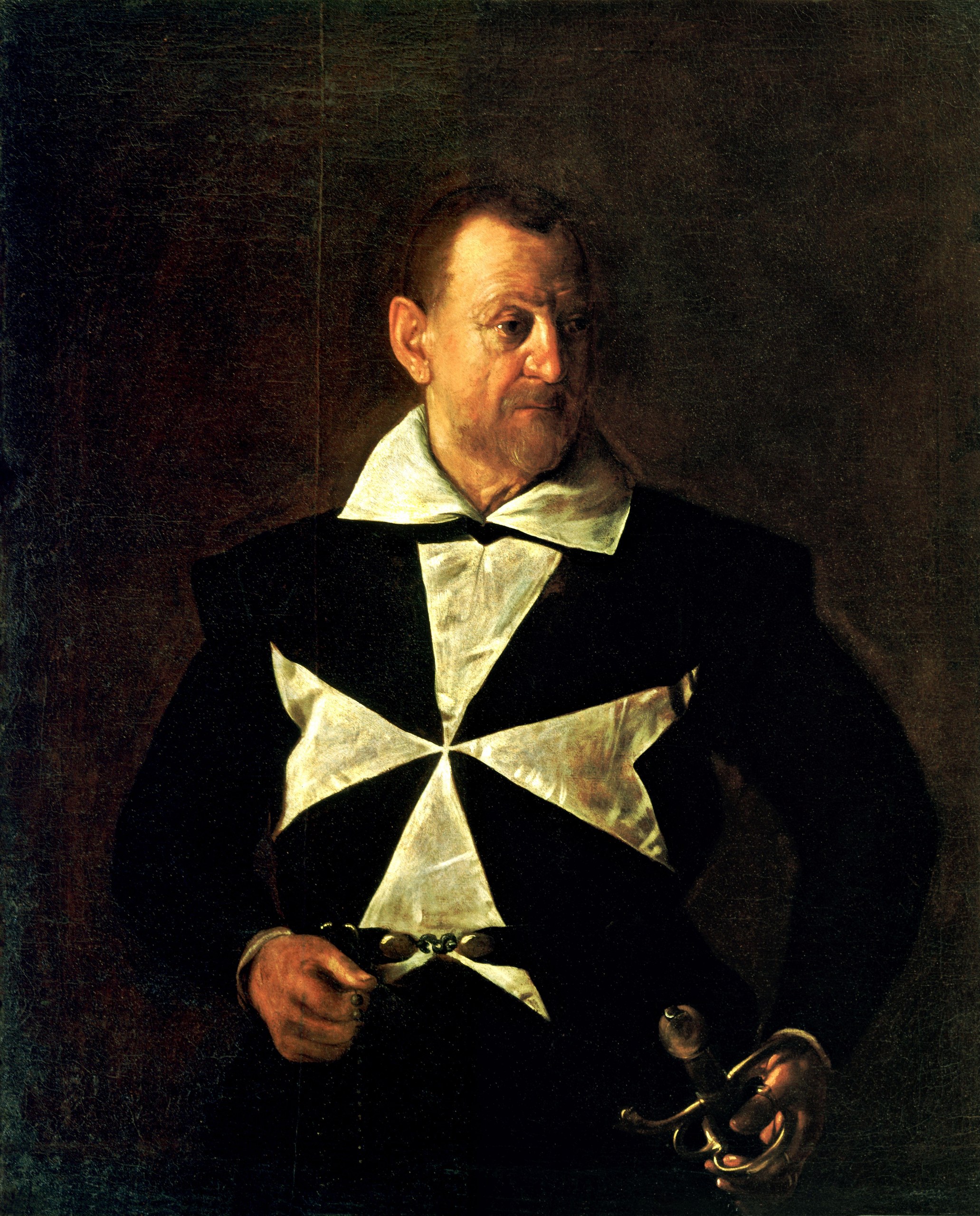
Portrait of Fra Antonio Martelli
Caravaggio · 1607
Palazzo Pitti
An old knight of Malta seated in half light, hand on sword hilt, the armour he has doffed pushed aside; one of the last portraits, from his Malta year of 1607.
Sources
- National Gallery, London, “Michelangelo Merisi da Caravaggio”
- Wikipedia, “Caravaggio”
- Wikipedia, “Death of the Virgin (Caravaggio)”
- Wikipedia, “Supper at Emmaus (Caravaggio, London)”
- Wikipedia, “The Entombment of Christ (Caravaggio)”
- Wikipedia, “The Beheading of Saint John the Baptist (Caravaggio)”
- Wikipedia, “The Cardsharps”
- Wikipedia, “Bacchus (Caravaggio)”
- Wikipedia, “The Fortune Teller (Caravaggio)”
- Wikipedia, “Medusa (Caravaggio)”
- Wikipedia, “Judith Beheading Holofernes (Caravaggio)”
- Wikipedia, “The Martyrdom of Saint Matthew (Caravaggio)”
- Wikipedia, “The Inspiration of Saint Matthew”
- Wikipedia, “Conversion on the Way to Damascus”
- Wikipedia, “Rest on the Flight into Egypt (Caravaggio)”
- Wikipedia, “The Musicians (Caravaggio)”
- Wikipedia, “Boy Bitten by a Lizard”
- Wikipedia, “Saint Catherine of Alexandria (Caravaggio)”
- Wikipedia, “Madonna of the Rosary (Caravaggio)”
- Wikipedia, “The Crowning with Thorns (Caravaggio, Vienna)”
- Wikipedia, “Sleeping Cupid (Caravaggio)”
- Wikipedia, “David with the Head of Goliath (Caravaggio, Vienna)”
- Wikipedia, “Portrait of Fra Antonio Martelli (Caravaggio)”
Invite Caravaggio into your living room
Play 28 works from this collection on your TV, phone or tablet with Momentable Art TV.