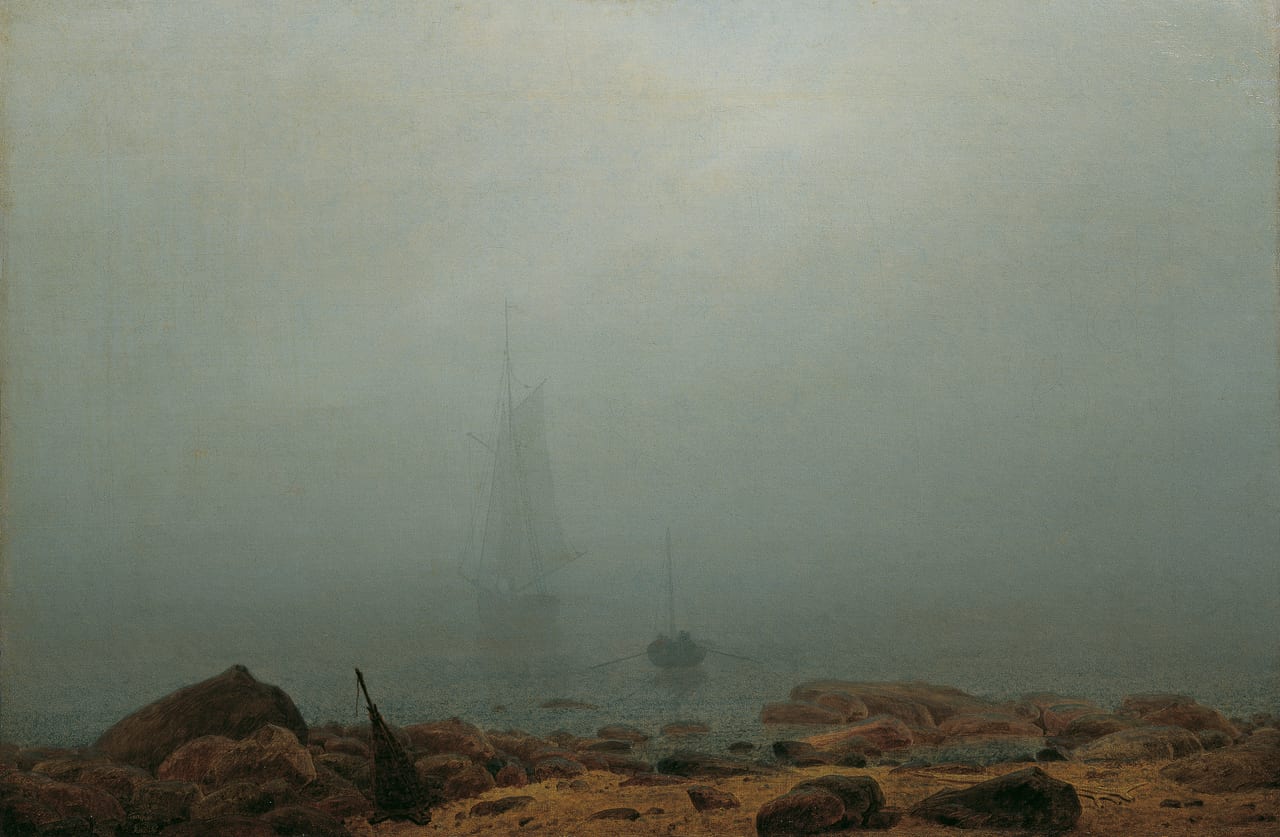
The Sea of Ice
Caspar David Friedrich · 1823

Caspar David Friedrich
Kingdom of Prussia · 1774–1840
The German Romantic who made landscape a subject for contemplation, his small figures seen from behind before sea, mist, ice and ruin.
Greifswald to Dresden
Caspar David Friedrich was born on 5 September 1774 in Greifswald, a Baltic port that then belonged to Swedish Pomerania. He learned his craft in Copenhagen from 1794 to 1798 and then settled in Dresden, where he spent the rest of his working life.
He is generally counted the leading German painter of his day, making symbolic, anti-classical landscapes that answer the natural world with feeling rather than with rules. The French sculptor David d'Angers said he had discovered "the tragedy of landscape". Fame fell away in his later years, and he died in 1840 little regarded.
The figure from behind
His signature image is the figure seen from behind, stopped before mist, bare trees, night skies and Gothic ruin. The viewer stands where the figure stands, looking with it rather than at it.
After long neglect his standing returned: a major revival has run since the 1970s, and his silent pictures influenced the Expressionists, and later the Surrealists and Existentialists. The Sea of Ice, buried in incomprehension when new, is now counted among his masterpieces.
Known works
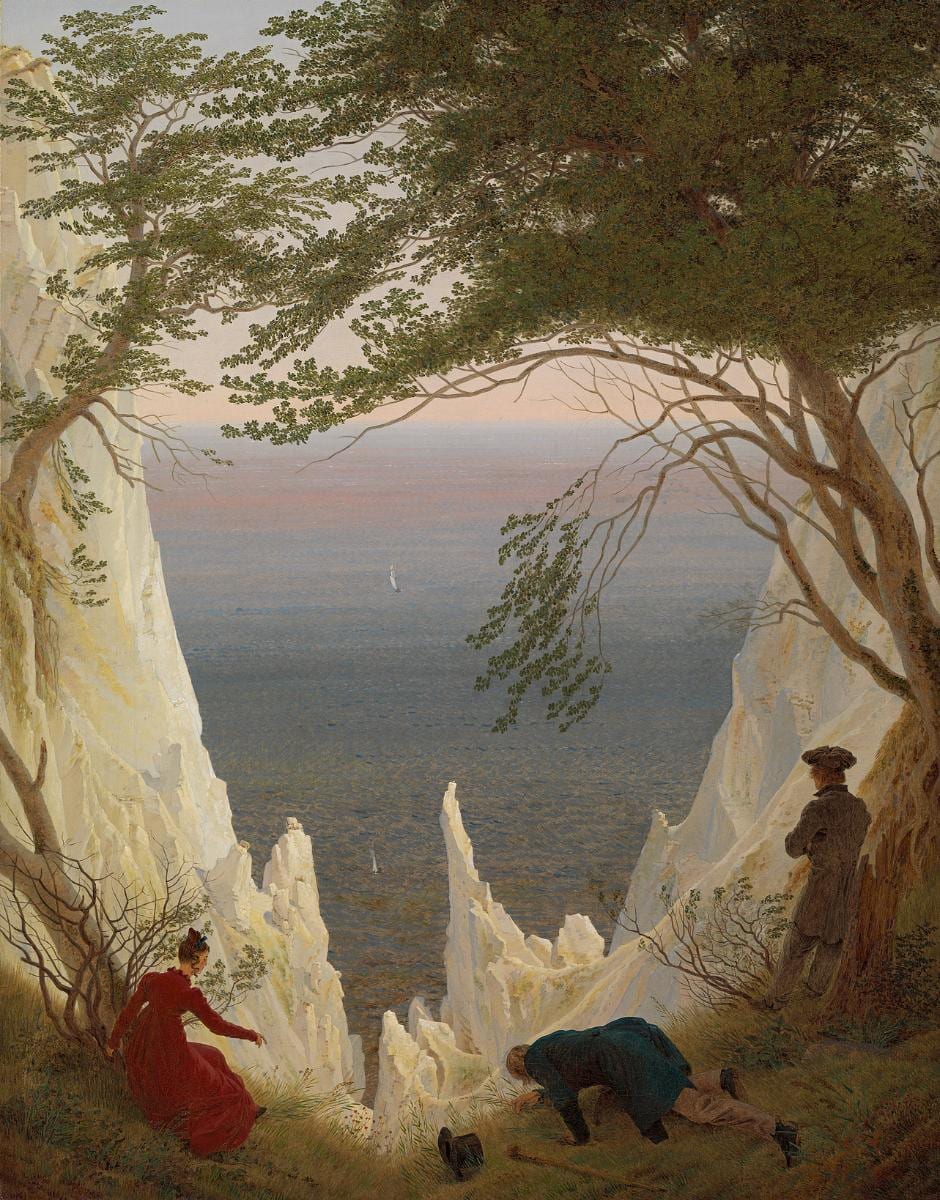
Chalk Cliffs at Ruegen
Caspar David Friedrich · 1818
Chalk Cliffs at Ruegen. A woman in red and two companions lean over white cliffs above the sea, painted after his honeymoon walk on the island of Rügen in 1818.
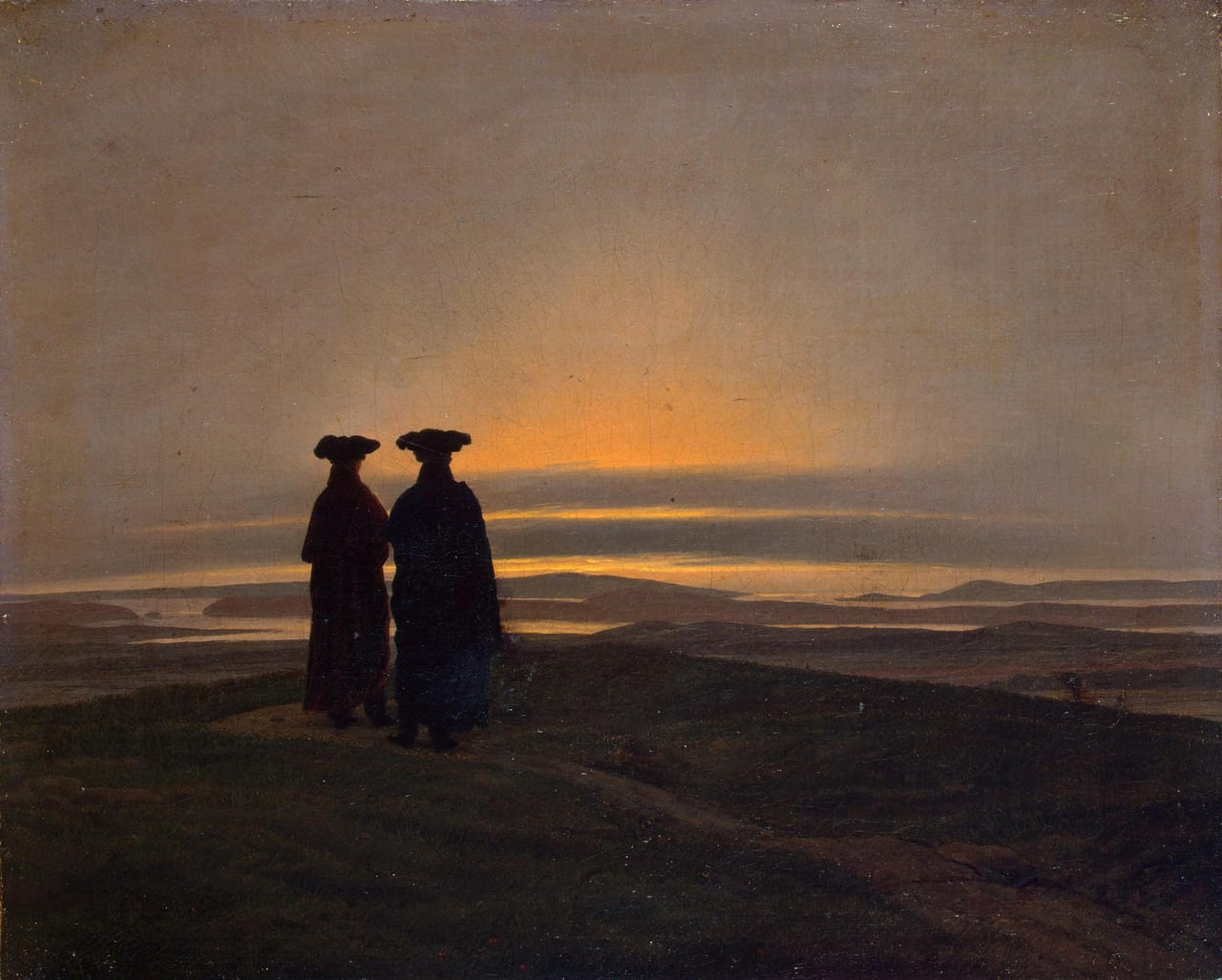
Sunset
Caspar David Friedrich · 1837
State Hermitage Museum
Sunset. Two men stand facing the sea as the light goes, their backs to us; a canvas now in the Hermitage in Saint Petersburg.
Sources
Invite Caspar David Friedrich into your living room