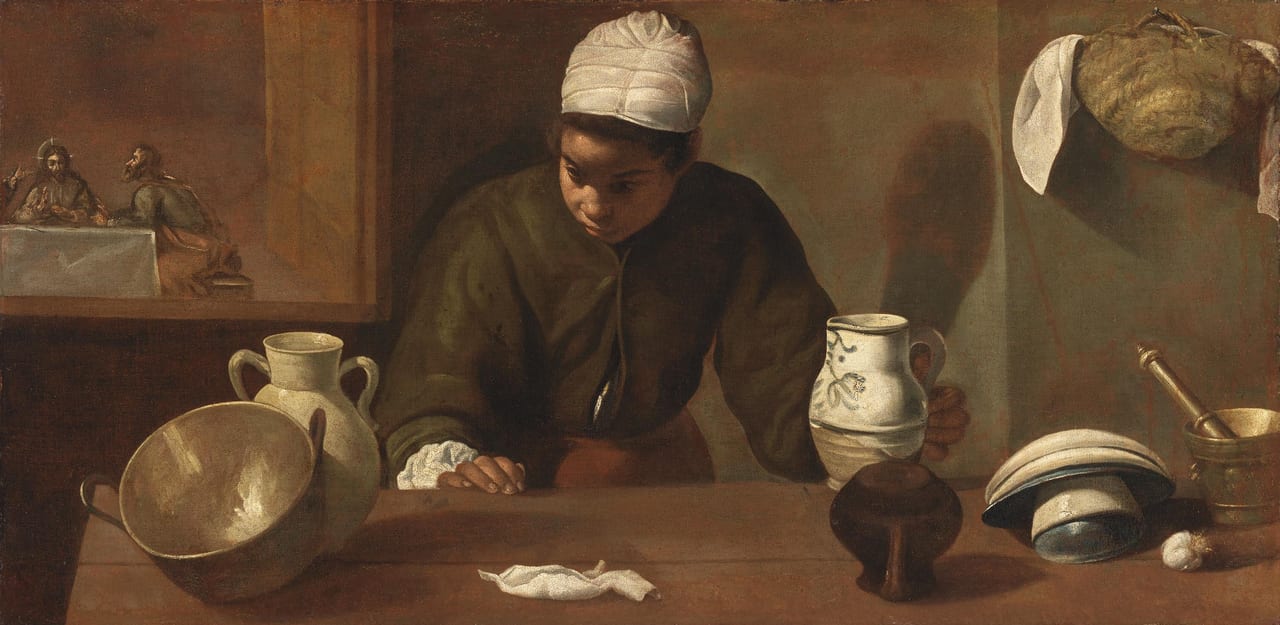
Las Meninas
Diego Velázquez · 1656

Diego Velázquez
Spain · 1599–1660
The leading painter of the Spanish Golden Age, whose court portraits, myths and kitchen scenes changed what painting was allowed to see.
Play 27 works from this collection on your TV, phone or tablet with Momentable Art TV.
Play CollectionSeville to the court
Diego Velázquez was born in Seville and baptised there on 6 June 1599. Trained in the studio of the painter Francisco Pacheco, he was still in his twenties when his portrait of a court patron reached the palace: Philip IV sat for him on 30 August 1623, liked what he saw, and the young painter was called to Madrid. From 1624 the capital was his home for the rest of his life, and he rose to be the leading artist of the court and of the Spanish Golden Age. He died in Madrid on 6 August 1660.
He was never a prolific painter; somewhere between 110 and 120 canvases are known. Most entered the royal collection, and the best of them still hang together in the Prado, though some portraits of the Spanish princesses travelled to Vienna as gifts for their Habsburg betrothed.
Two manners
The early Seville pictures are precise and dark, painted in the tenebrist manner: kitchens and taverns, old women cooking, water sold in the street. A first stay in Italy from 1629 to 1631 loosened everything; he took to preparing his canvases with a light-gray ground, and his colour grew luminous and silvery for good.
He painted directly from the model, and the x-rays show him changing his mind as a canvas grew. Realist and Impressionist painters of the nineteenth century took him as a model, and in the twentieth Picasso, Dalí and Francis Bacon paid him the tribute of painting over his images again.
The court and its margins
Beside the official images of the king and his family he painted the people around them whom no one else bothered to see: the jesters, dwarfs and actors of the palace, painted with a plain respect and hung in the secondary rooms and the king's hunting lodge, where the court painter could work with a freer hand.
He also left a handful of mythologies unlike anyone else's: a god walking into a smithy, Bacchus among drinkers, Venus seen from behind. Between them stands Las Meninas, the picture of his own studio that has been argued over for three centuries.
Known works
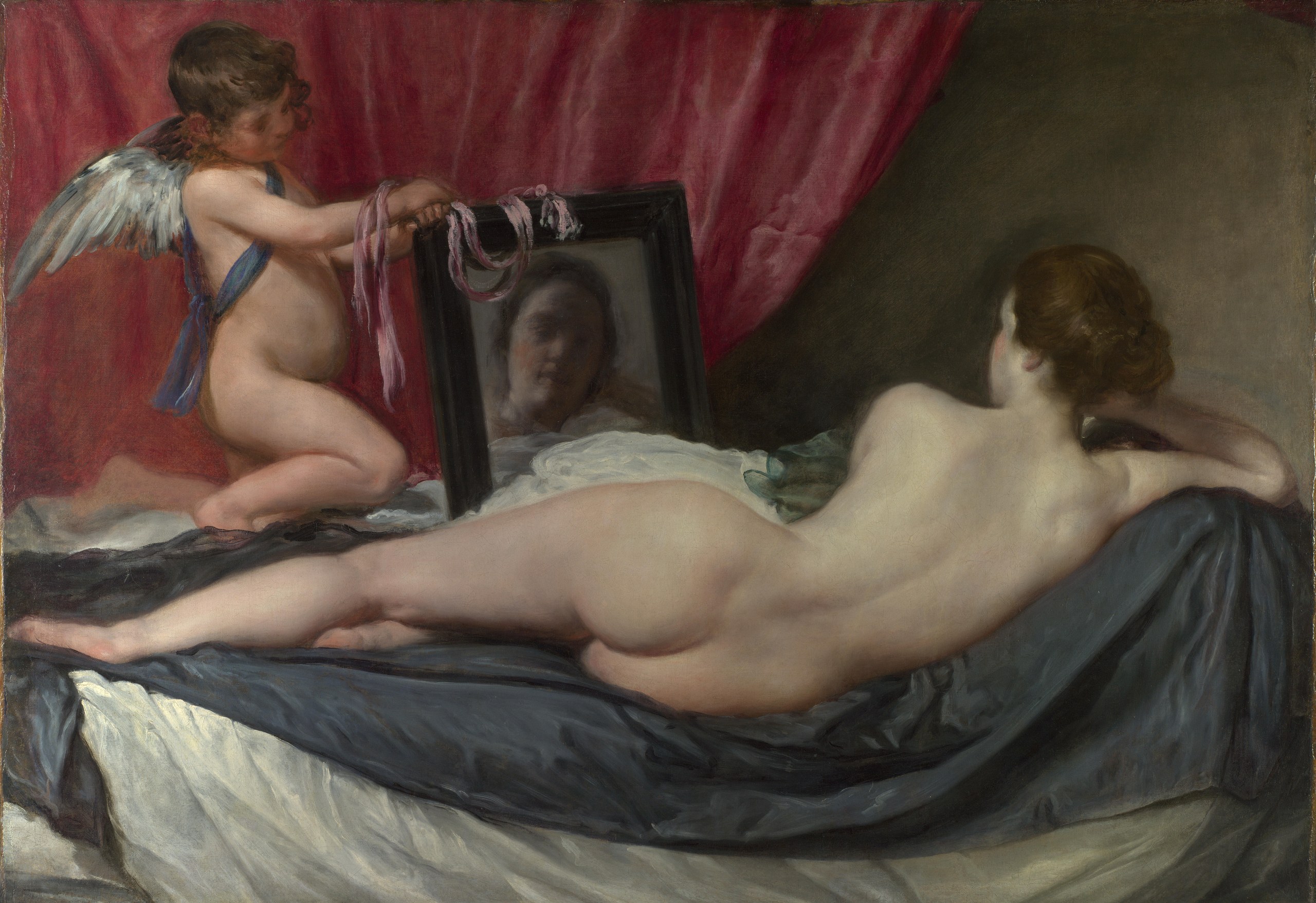
Rokeby Venus
Diego Velázquez · 1644
National Gallery
Rokeby Venus. The goddess lying with her back to us, her face in a mirror Cupid holds; painted between 1647 and 1651, probably in Italy, and his one surviving nude, now in the National Gallery in London.
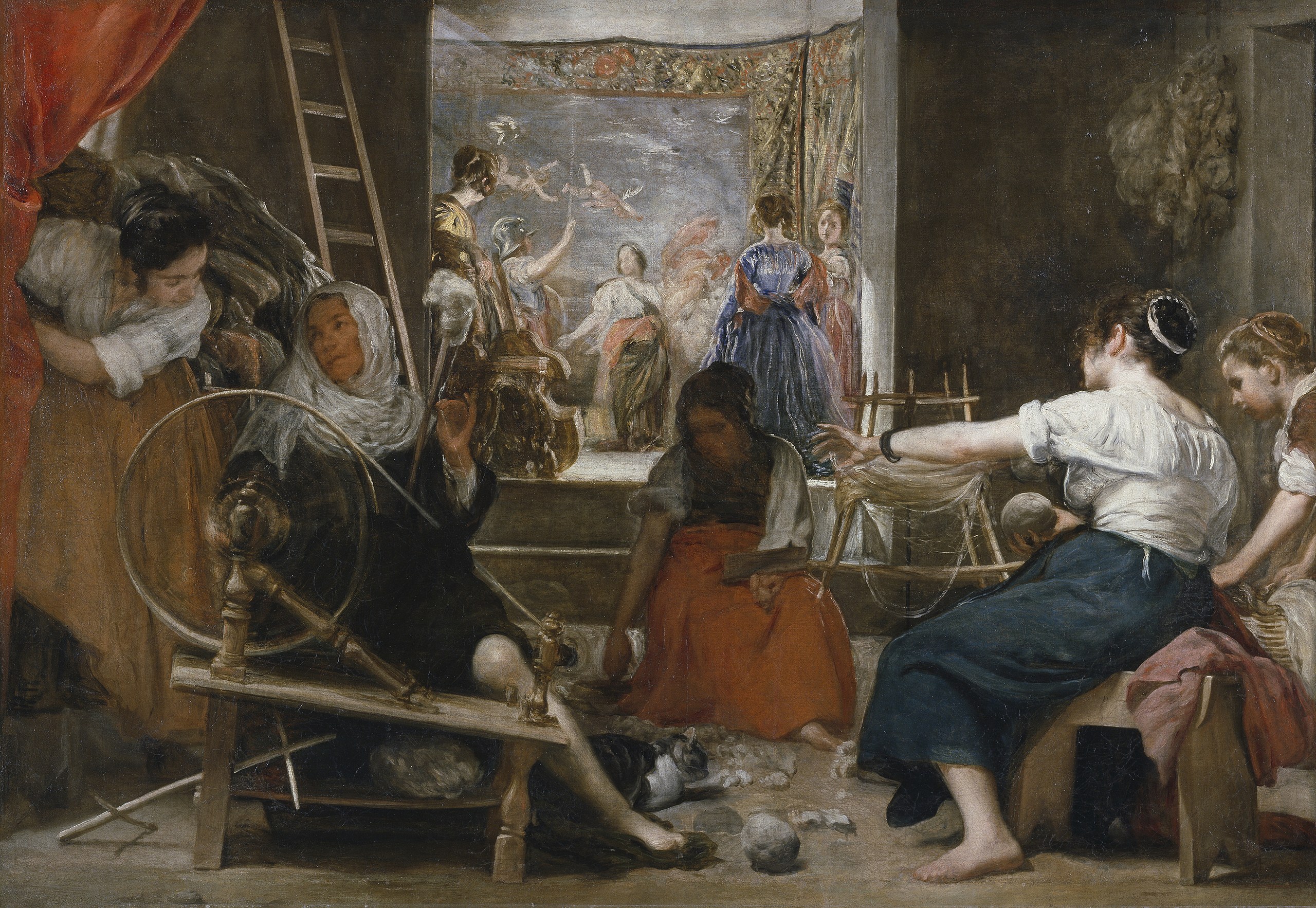
Las Hilanderas
Diego Velázquez · 1655
Museo del Prado
Las Hilanderas. Women at work in the foreground and, deep behind them, the tapestry of Arachne's challenge to Athena: a late fable of weaving, counted among his very greatest paintings.
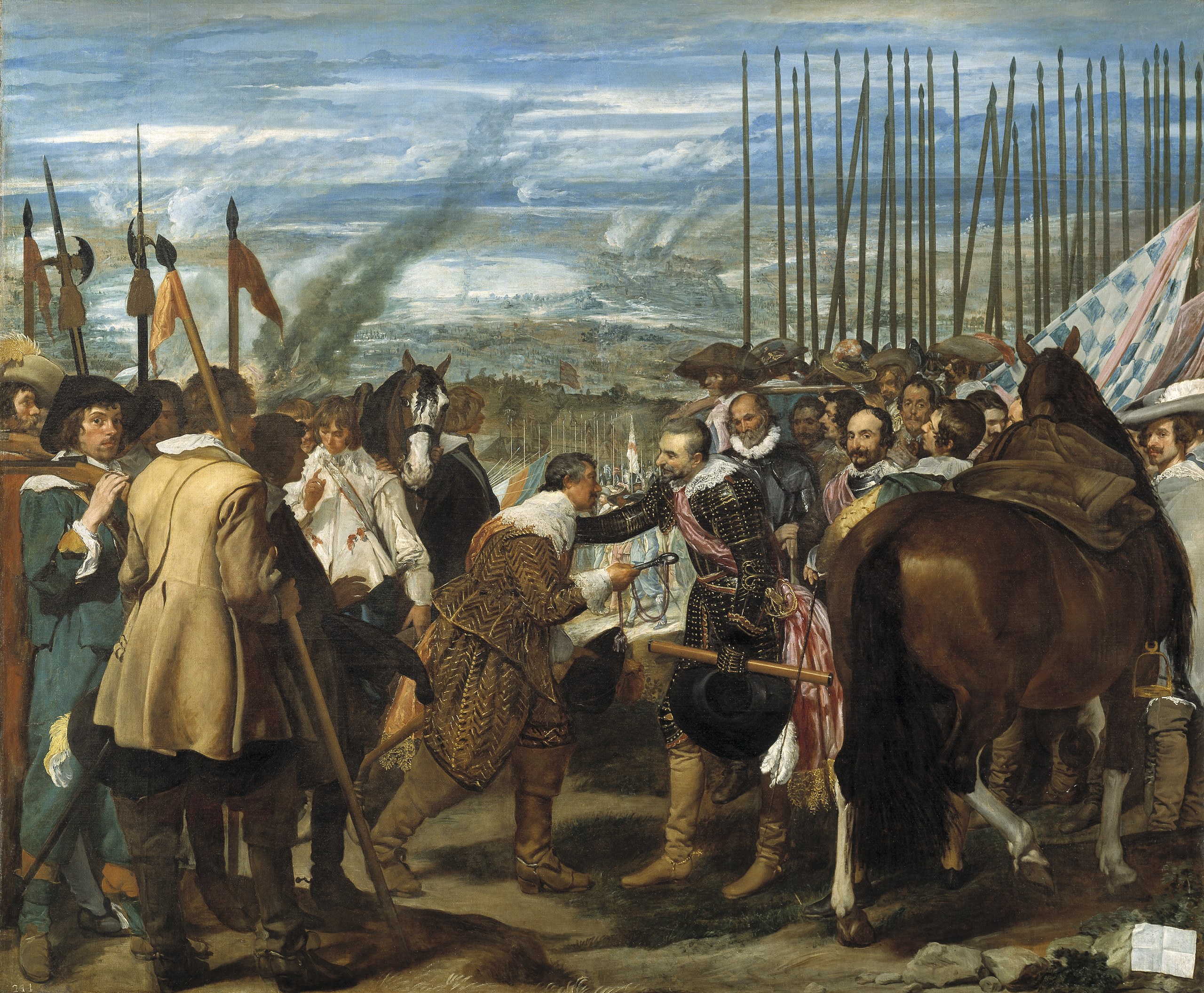
The Surrender of Brea
Diego Velázquez · 1634
Museo del Prado
The Surrender of Breda. The Dutch commander hands the key of the town to the Spanish general Spinola, lances rising behind them; painted in 1634 and 1635, and long counted among his best works.
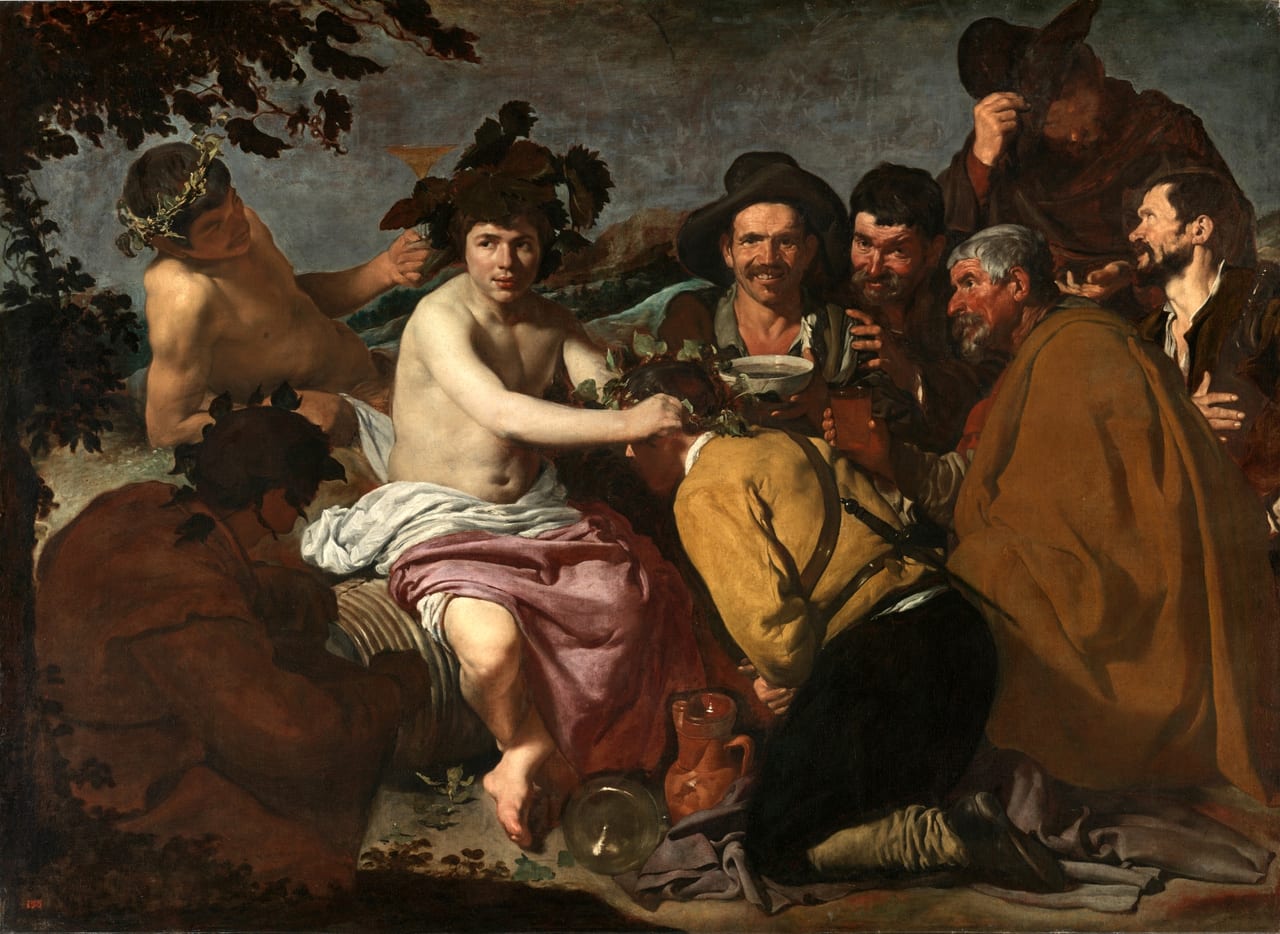
The Triumph of Bacchus
Diego Velázquez · 1628
Museo del Prado
The Triumph of Bacchus. The god crowns a kneeling soldier while drinkers crowd around him, mythology played as a tavern scene; painted for Philip IV before his first voyage to Italy.
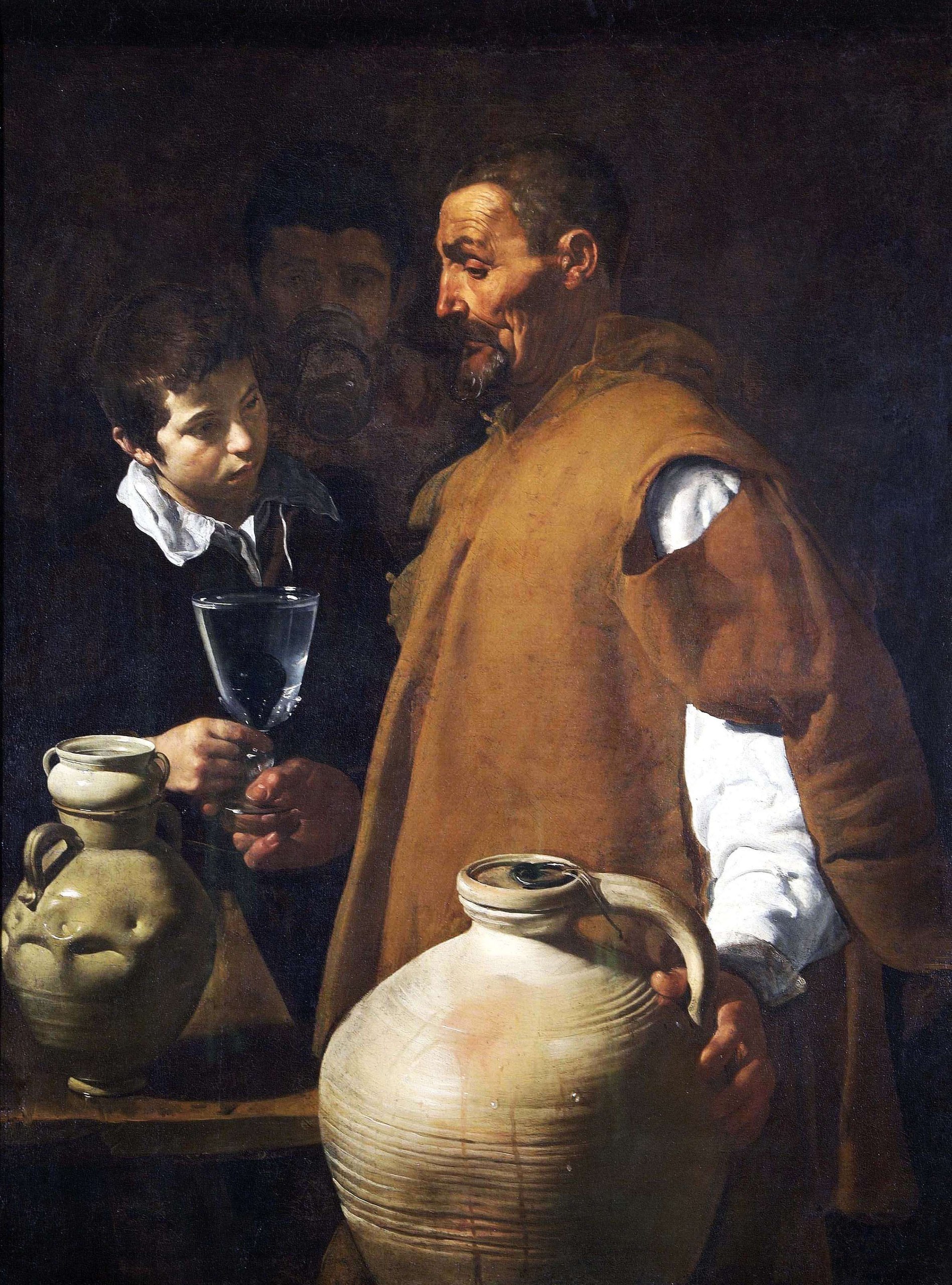
The Waterseller of Seville
Diego Velázquez · 1620
Victoria and Albert Museum
The Waterseller of Seville. An old man passes a glass of water to a boy with no glance between them; the finest of his Seville street subjects, of which this is one version, the original hangs at Apsley House.
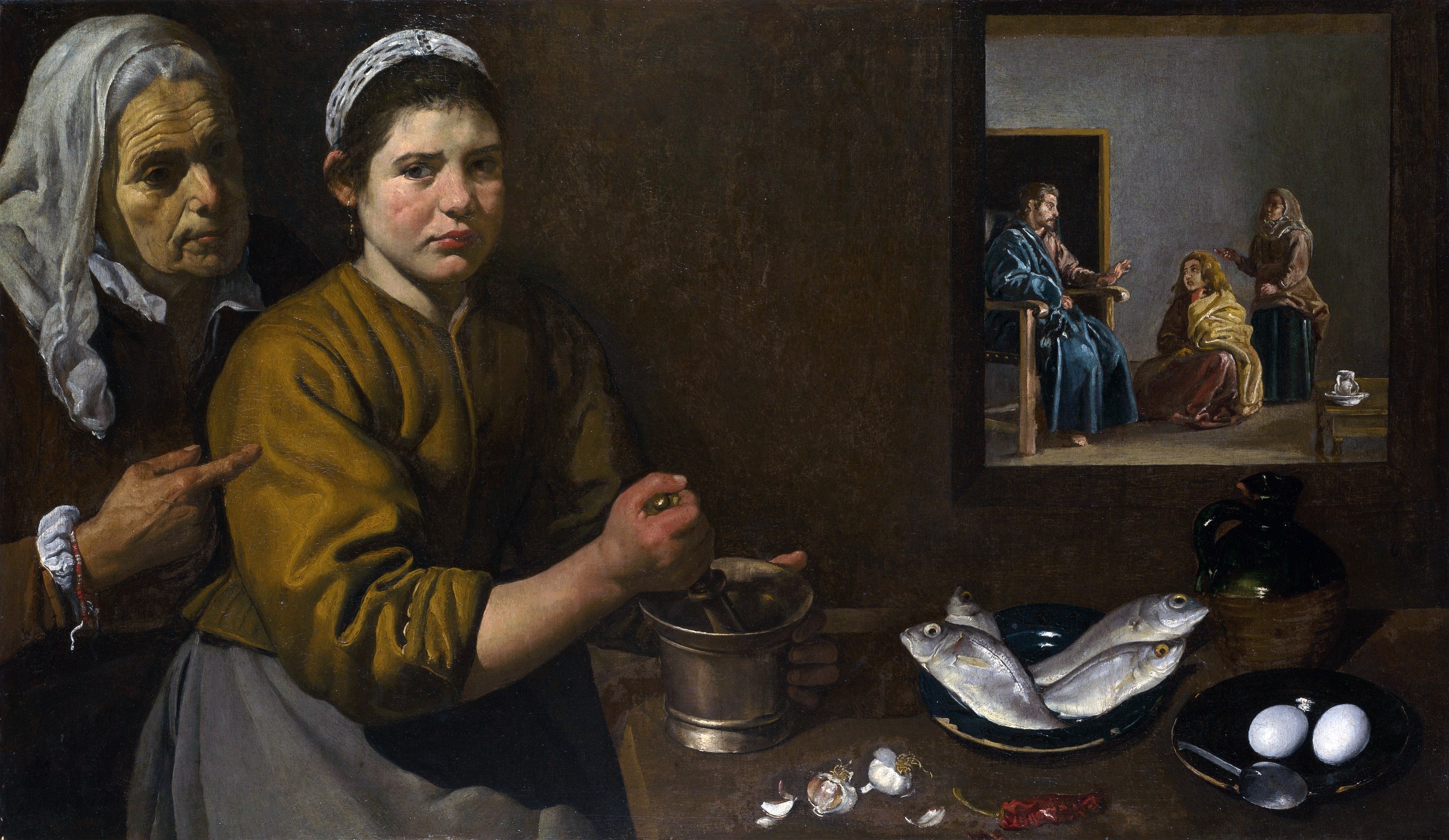
Christ in the House of Martha and Mary
Diego Velázquez · 1618
National Gallery
Christ in the House of Martha and Mary. A kitchen foreground of fish, garlic and a scolding elder, with the Gospel scene glowing in a window at the back: the bodegón carrying a sacred story.
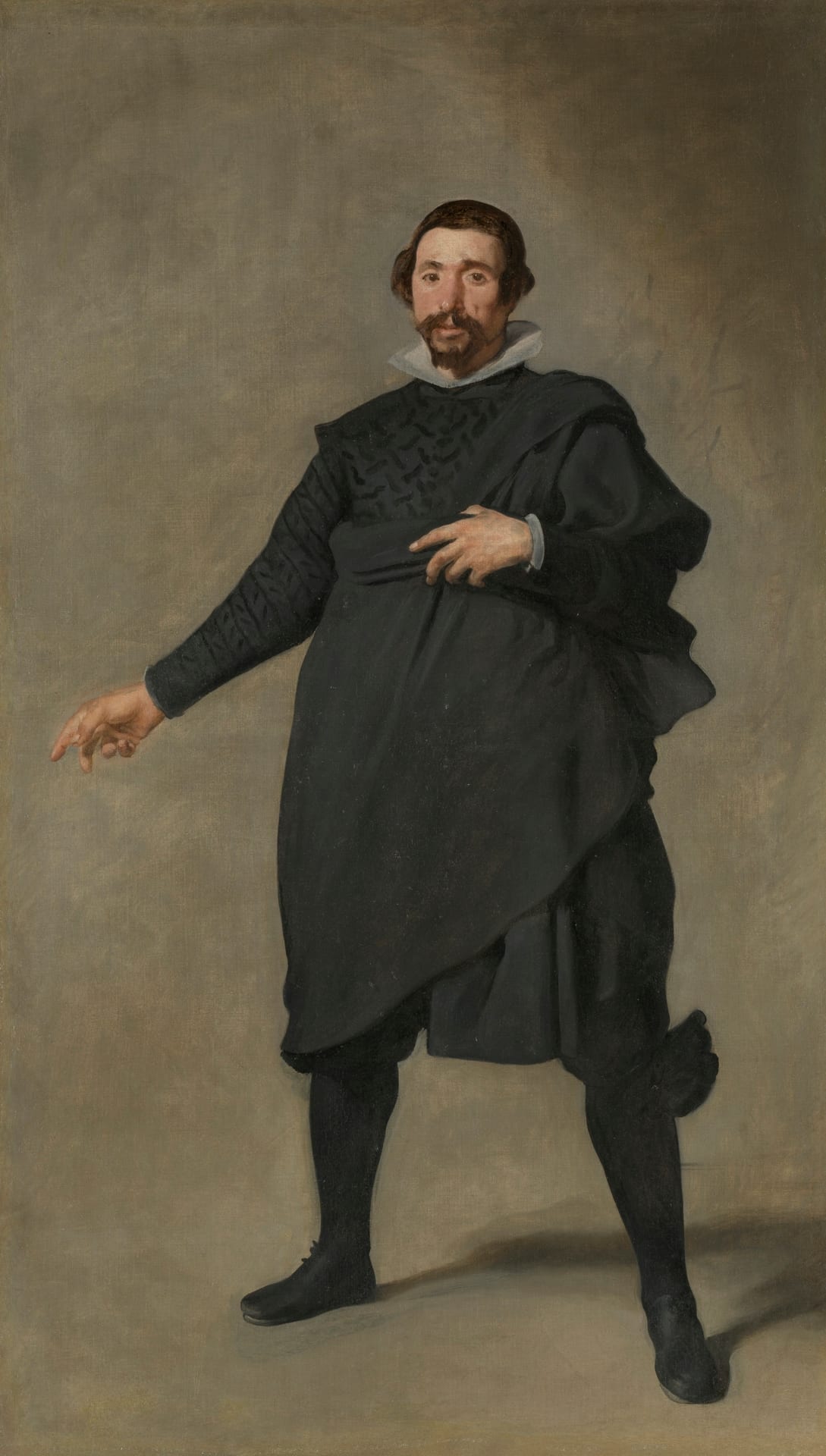
Portrait of Pablo de Valladolid
Diego Velázquez · c. 1635
Museo del Prado
Portrait of Pablo de Valladolid. A court actor in black and gold, one hand flung out, his feet lost in open air; the freest portrait manner of the 1630s, tried out on a jester.
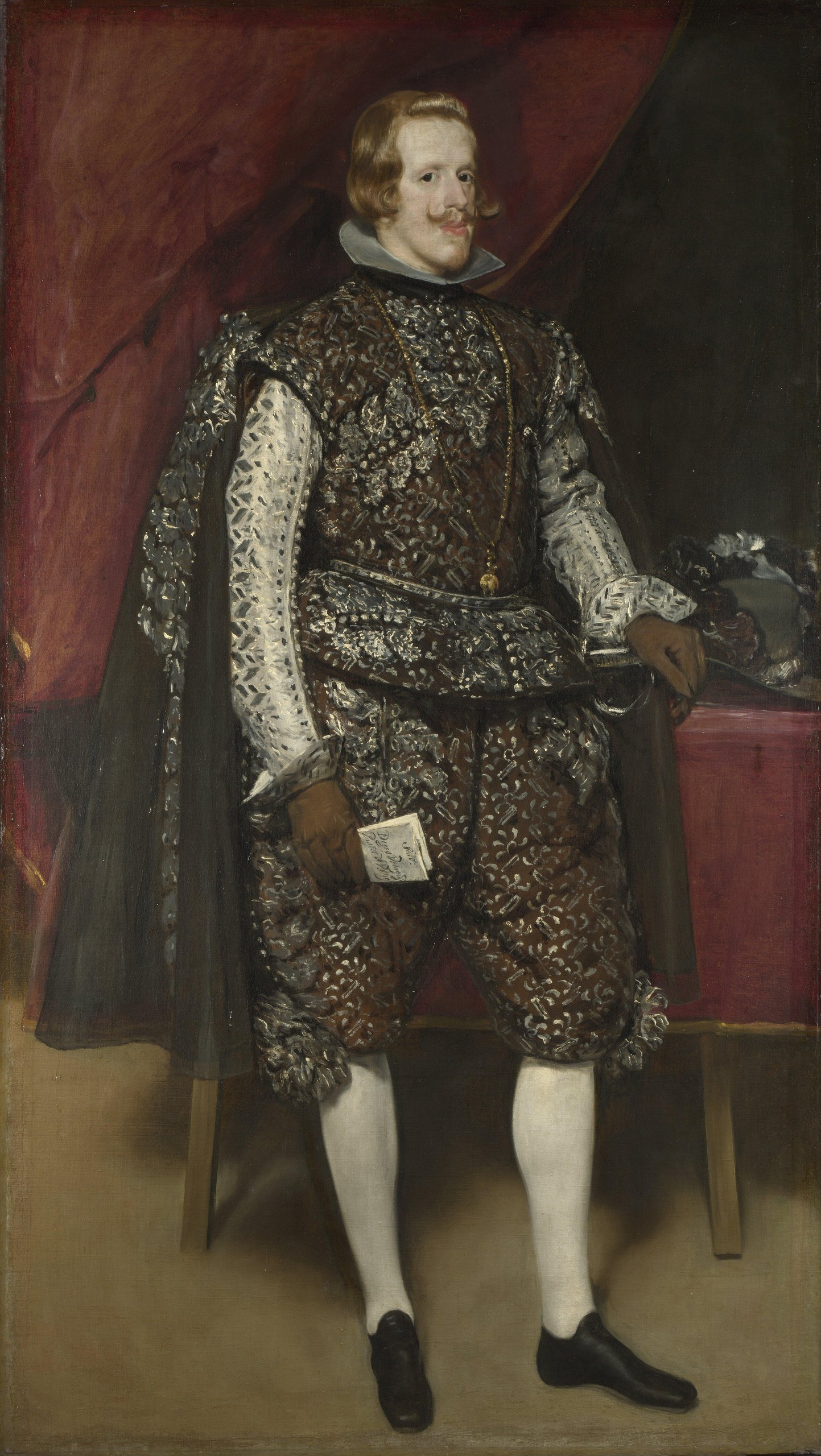
Philip IV in Brown and Silver
Diego Velázquez · 1635
National Gallery
Philip IV in Brown and Silver. Life size and rare for showing the king out of his usual black, in embroidered brown and silver with the Golden Fleece at his chest; the model portrait of the 1630s.
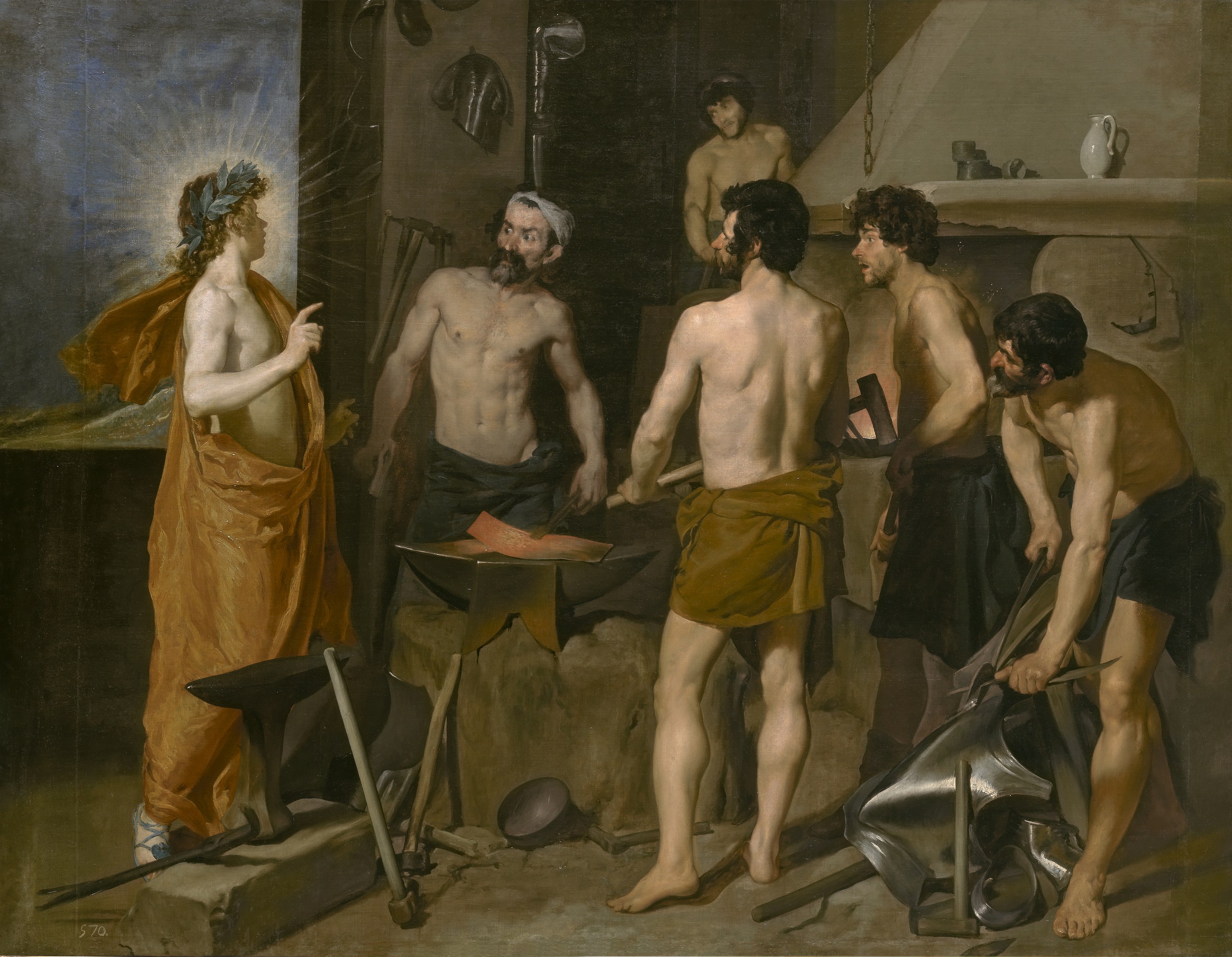
Apollo in the Forge of Vulcan
Diego Velázquez · 1630
Museo del Prado
Apollo in the Forge of Vulcan. The sungod brings news to Vulcan's astonished smiths, their half-naked bodies lit as the court never was; the chief work of his first Italian journey.
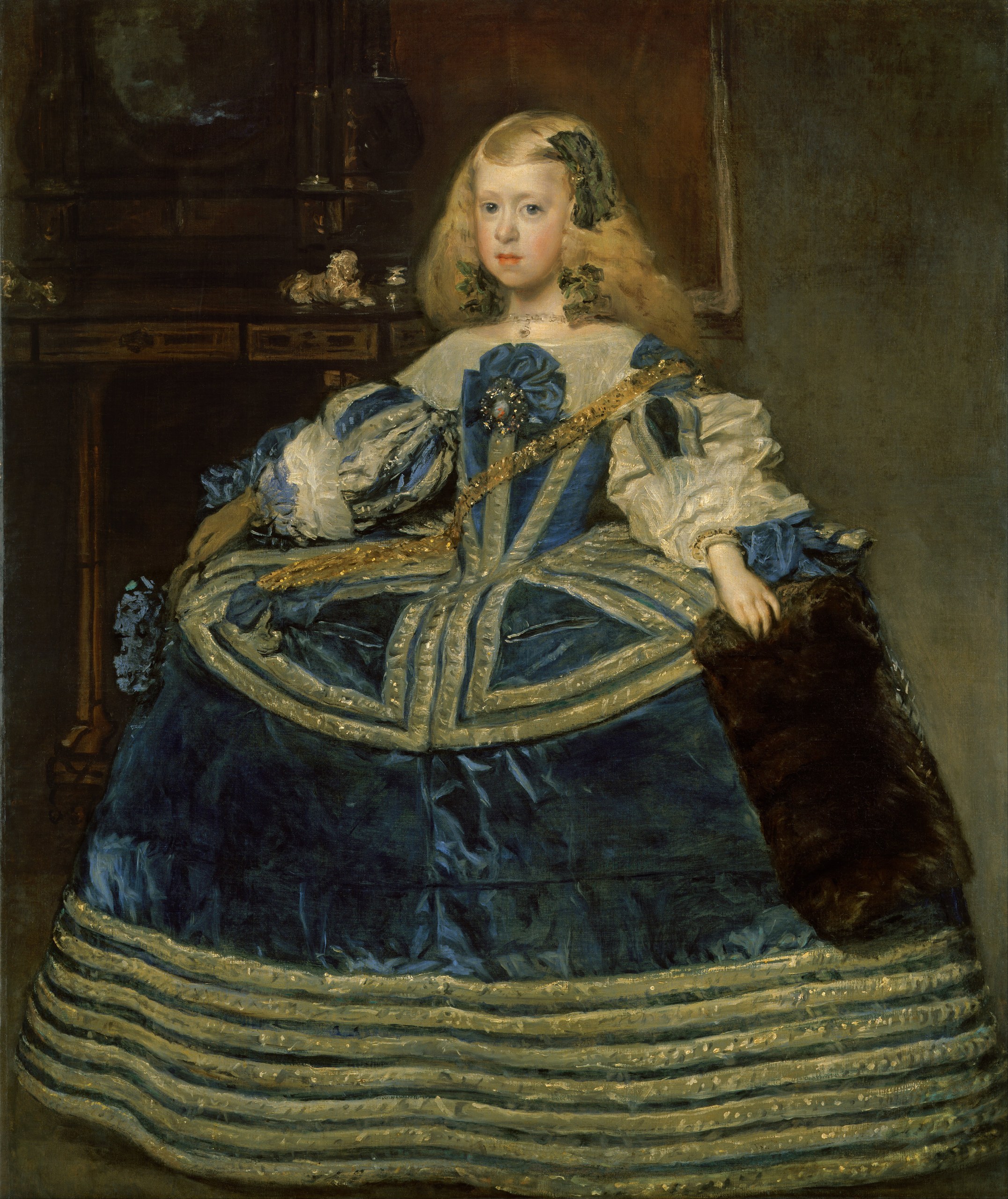
Infanta Margarita Teresa in a Blue Dress
Diego Velázquez · 1659
Kunsthistorisches Museum
Infanta Margarita Teresa in a Blue Dress. The five-year-old of Las Meninas at fifteen, blue silk and pale ringlets, one of his last paintings, sent to Vienna for her uncle and husband Leopold I.
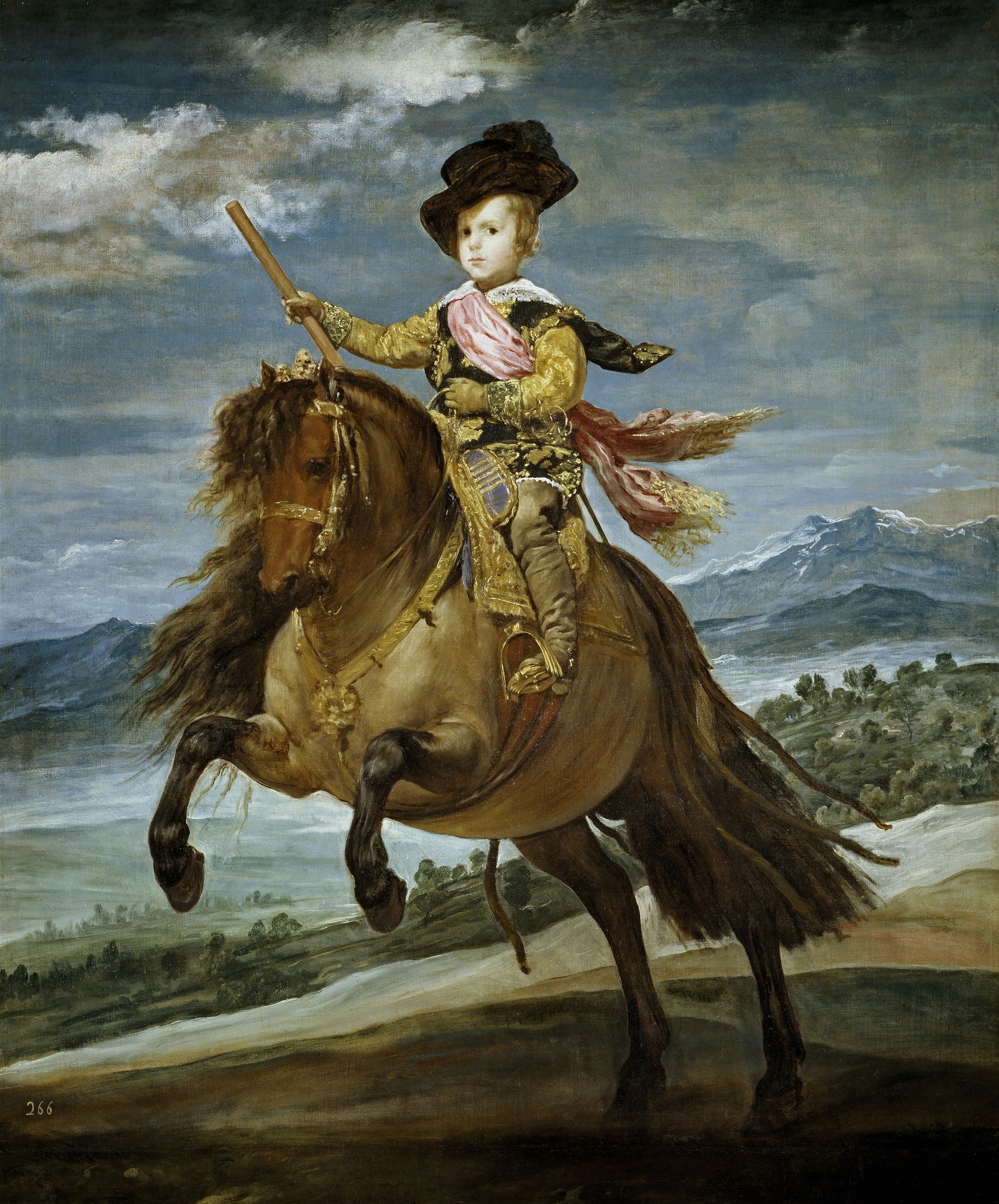
Equestrian Portrait of Prince Balthasar Charles
Diego Velázquez · 1634
Museo del Prado
Equestrian Portrait of Prince Balthasar Charles. The child heir on a prancing pony, painted for the Hall of Realms in the Buen Retiro palace between the mounted portraits of his parents.
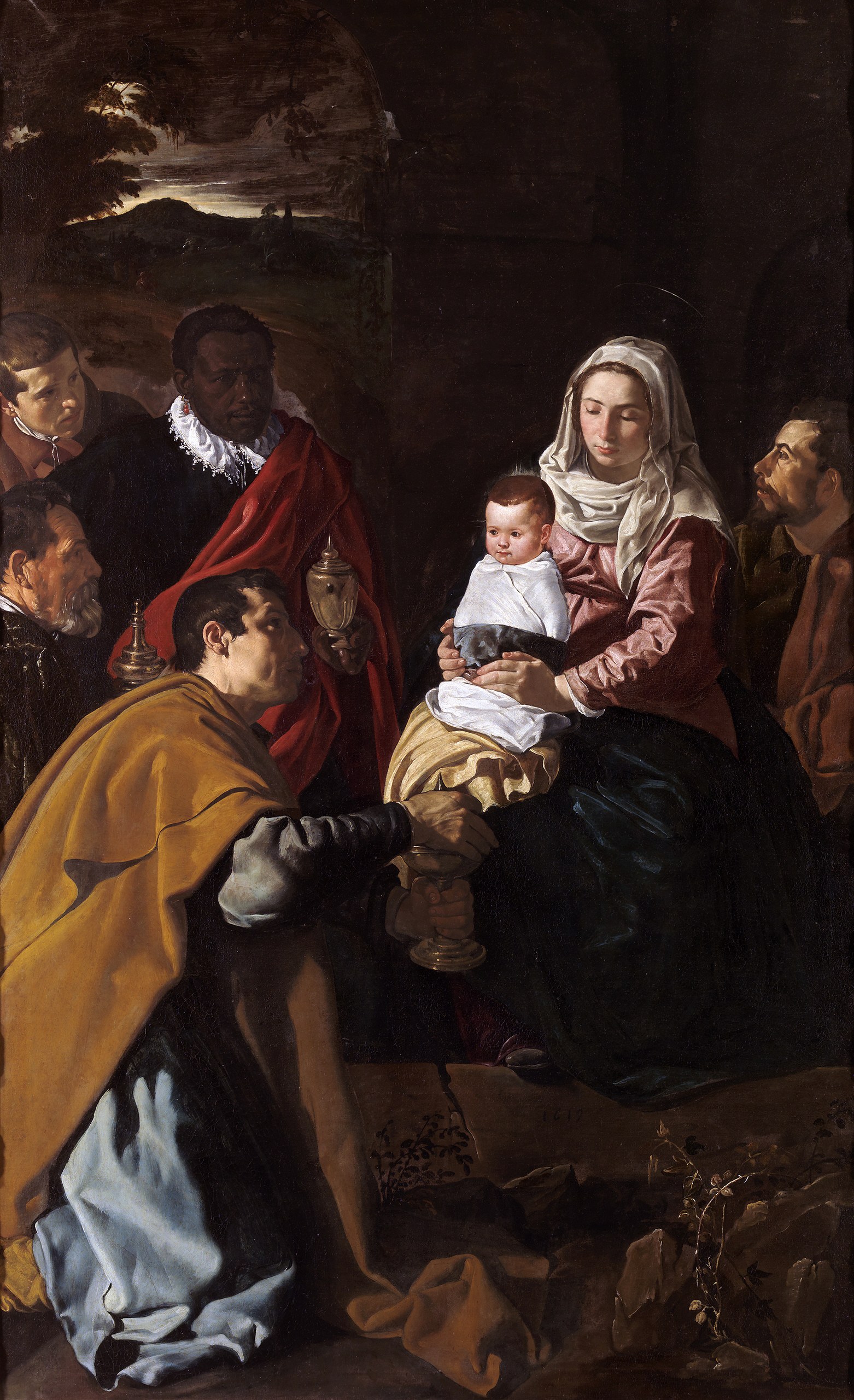
Adoration of the Magi
Diego Velázquez · 1619
Museo del Prado
Adoration of the Magi. The three kings at the manger, painted when he was twenty and the largest of his early works, already carrying his gift for living faces.
More to discover
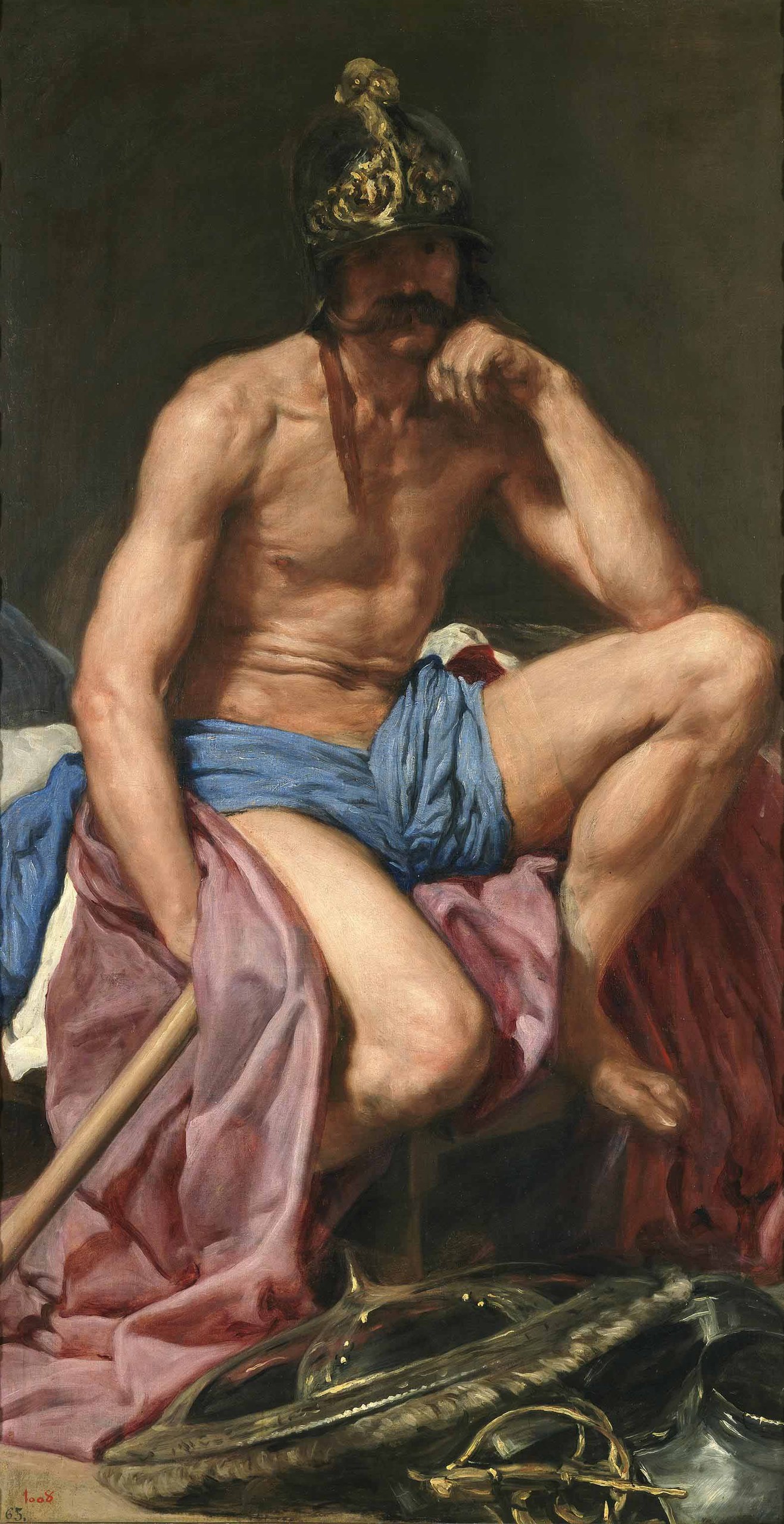
Mars Resting
Diego Velázquez · 1640
Museo del Prado
Mars Resting. The war god sitting disarmed on a bed, helmet off, moustached and tired, a mythology brought down to a man in a room.
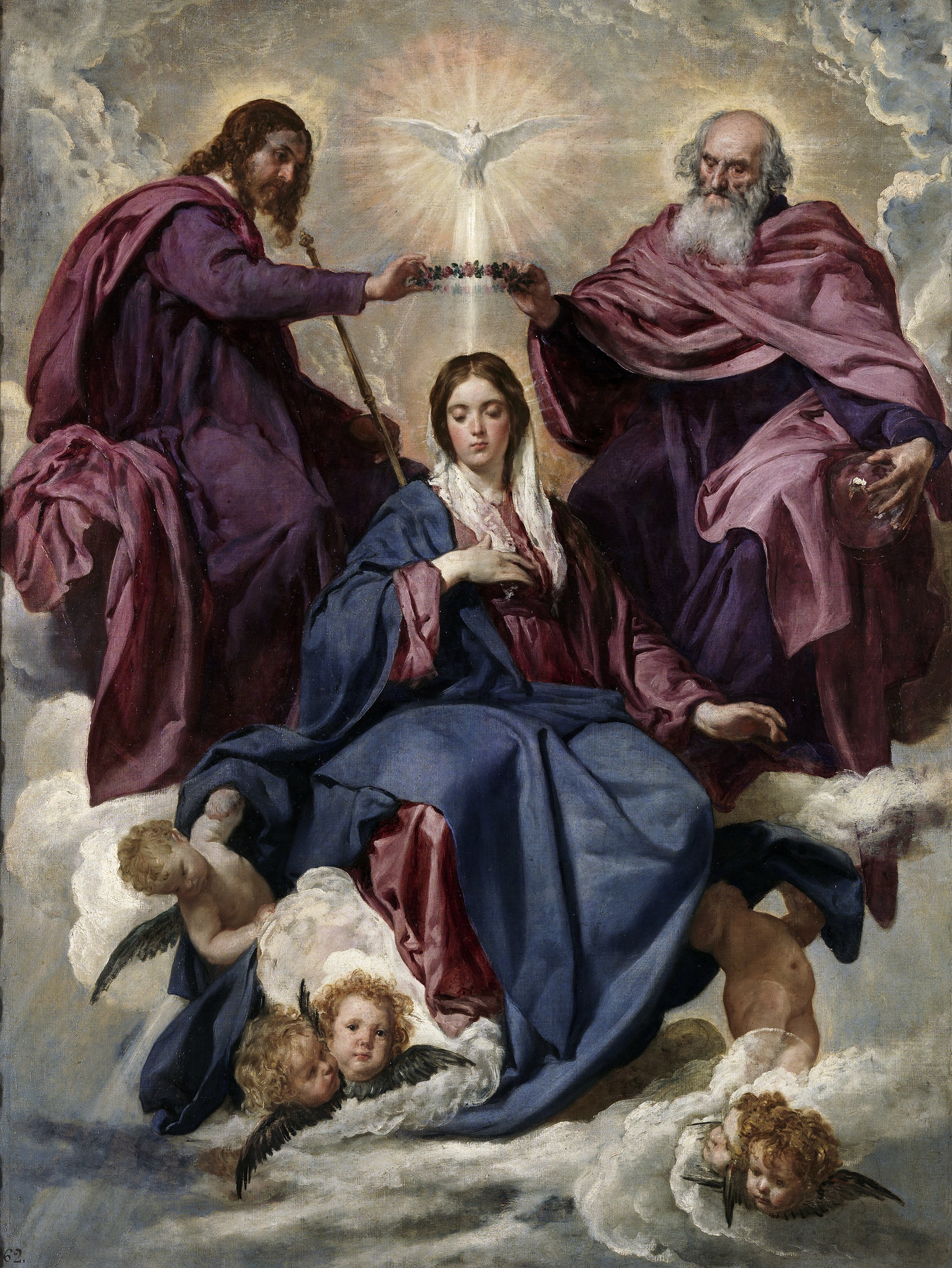
Coronation of the Virgin
Diego Velázquez · 1635–1636
Museo del Prado
Coronation of the Virgin. The Trinity crowning Mary in a cool light; painted about 1635, likely for the queen's oratory in the Madrid Alcázar.
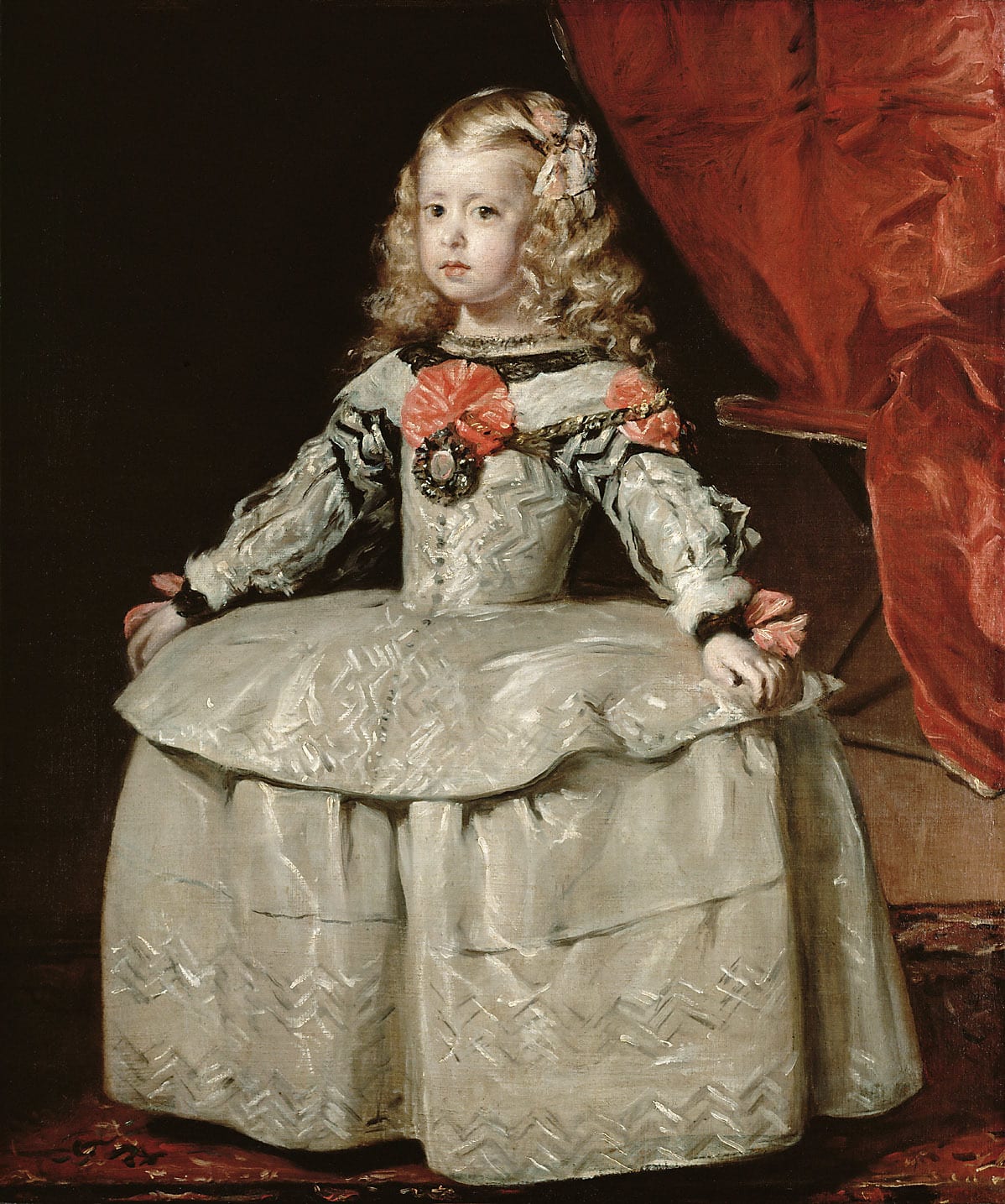
Infanta Margaret Theresa in a White and Silver Dress
Diego Velázquez · 1656
Kunsthistorisches Museum
Infanta Margaret Theresa in a White and Silver Dress. The Las Meninas child again at five, in the white dress of that canvas; sent north for the emperor her future husband.
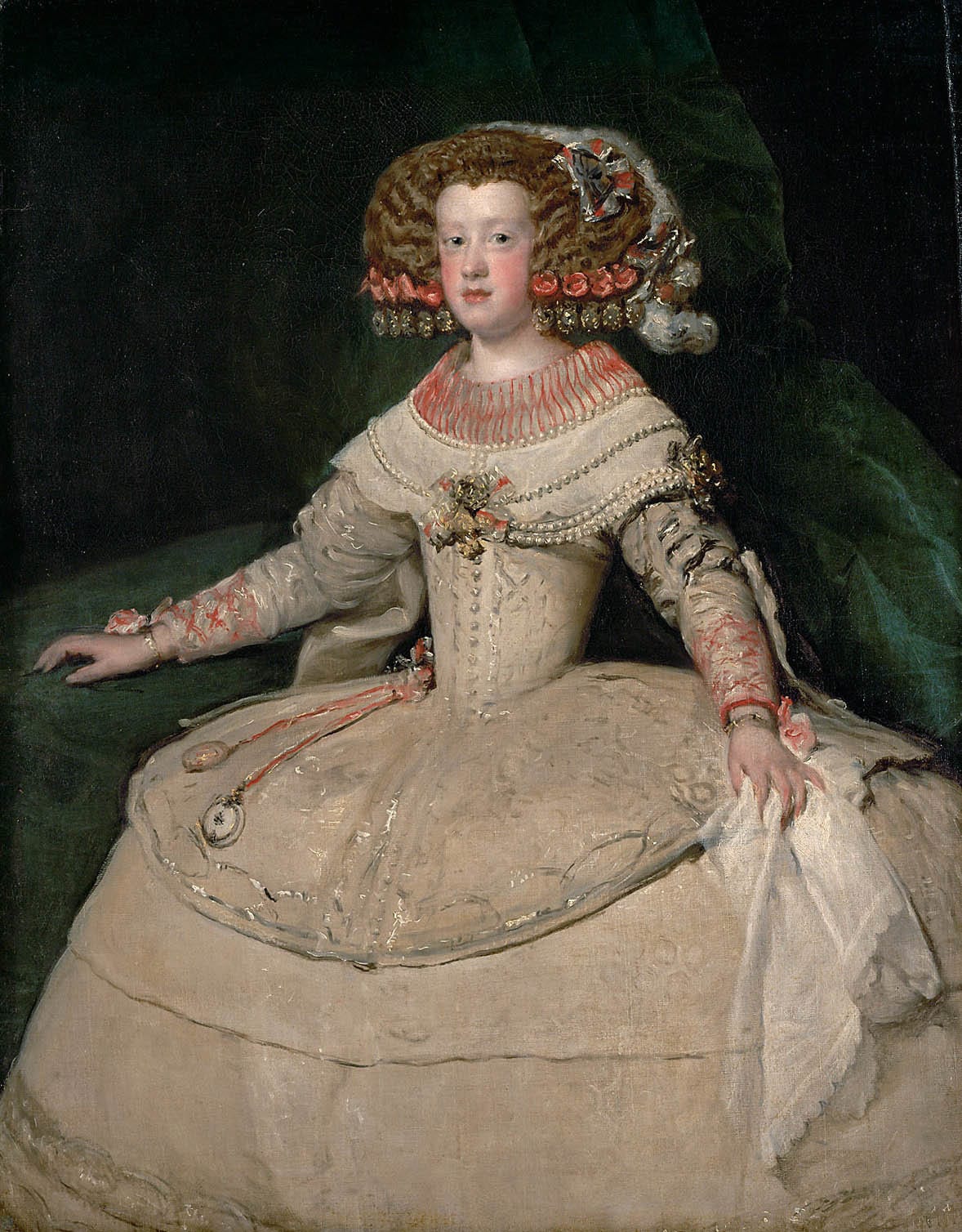
Portrait of the Infanta Maria Theresa of Spain
Diego Velázquez · 1652
Kunsthistorisches Museum
Portrait of the Infanta Maria Theresa of Spain. A girl of about thirteen in a bright dress against the dark, two watches at her waist; counted among the strongest of the late portraits.
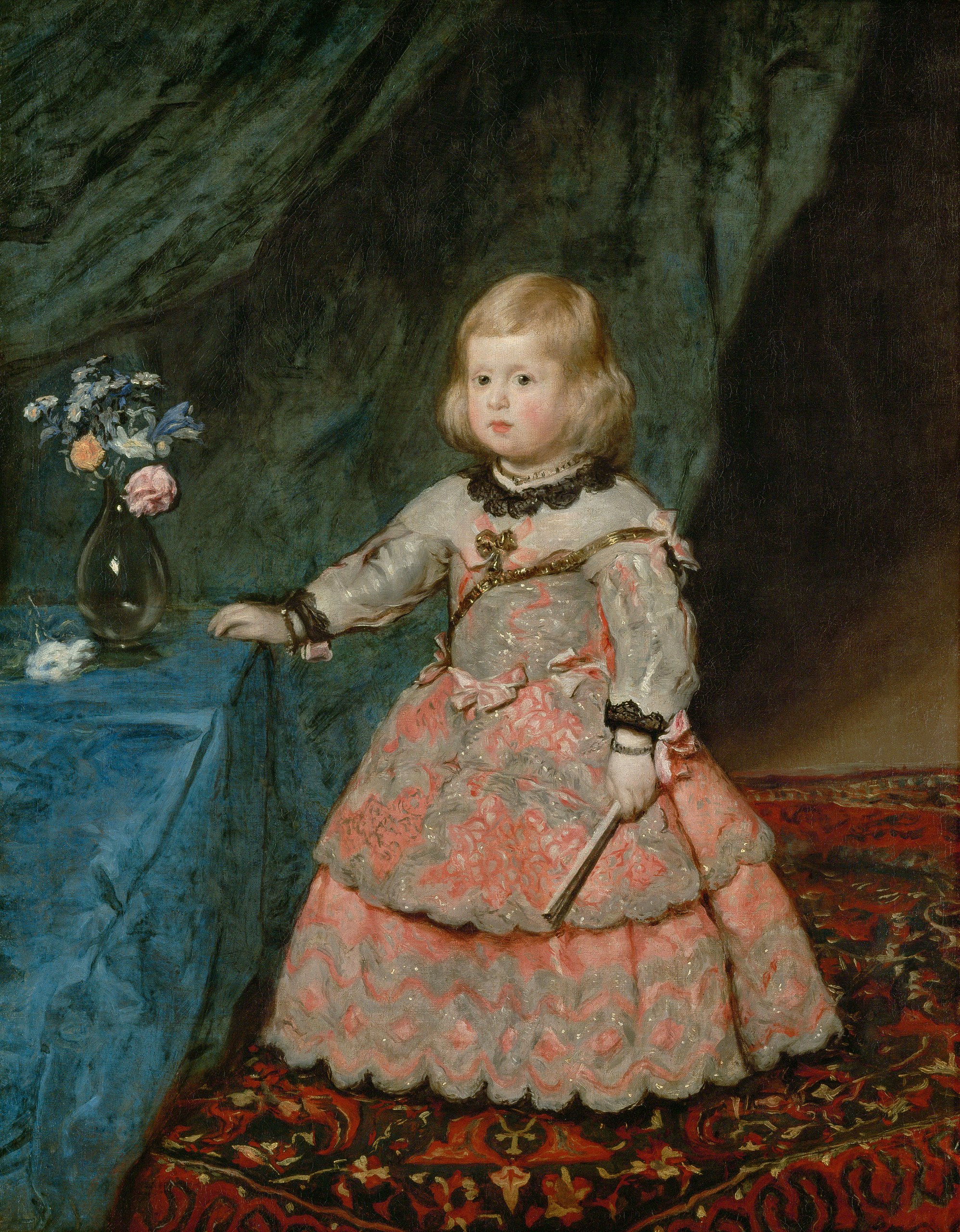
Infanta Margarita Teresa
Diego Velázquez · 1653
Kunsthistorisches Museum
Infanta Margarita Teresa. The first of his five portraits of the elder infanta, a three-year-old in peach silk, kept in Vienna since it left Madrid.
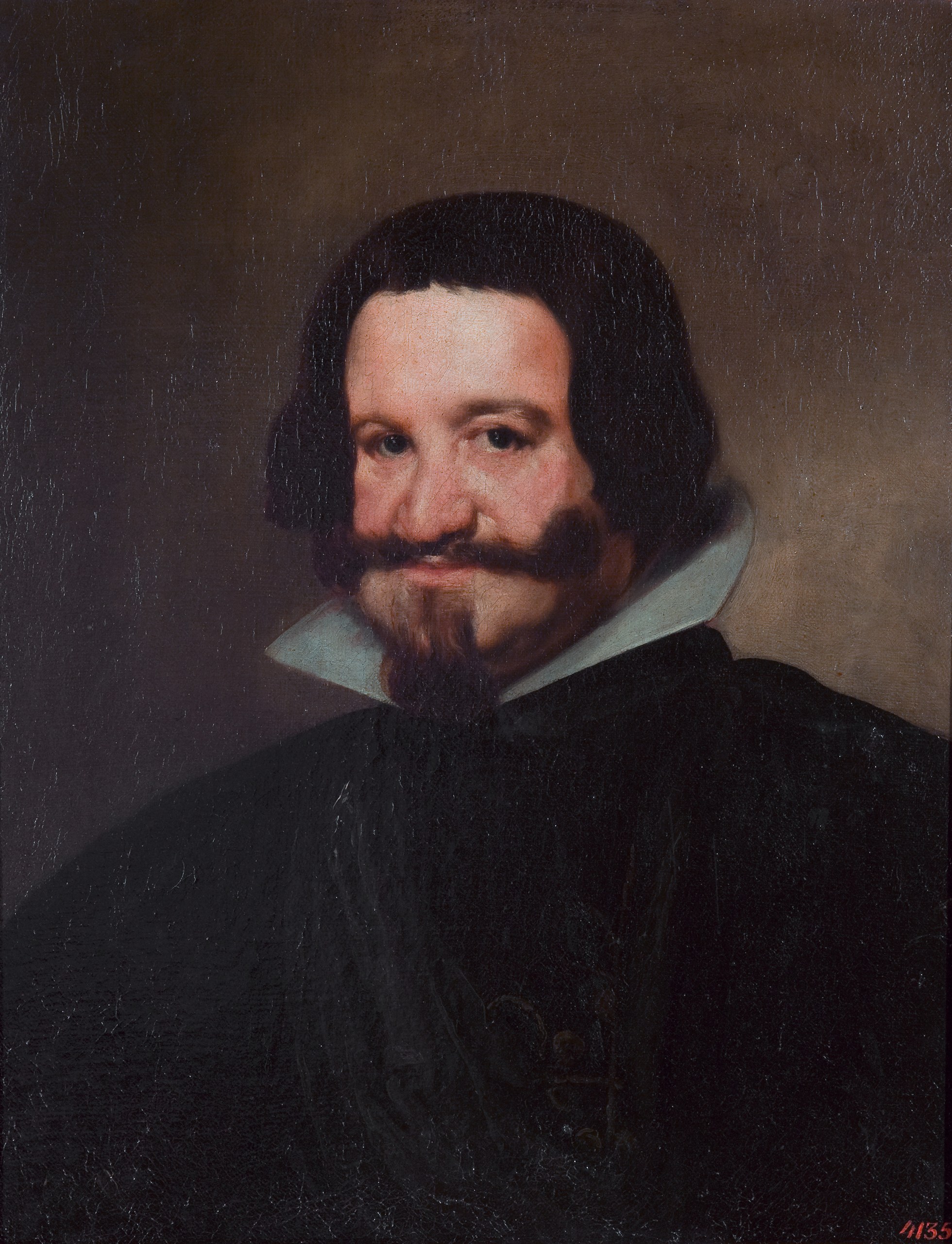
Portrait of the Count-Duke of Olivares
Diego Velázquez · 1638
State Hermitage Museum
Portrait of the Count-Duke of Olivares. The king's all-powerful minister past his prime, face swollen and aged, in black and a white ruff; a likeness without flattery, now in the Hermitage.
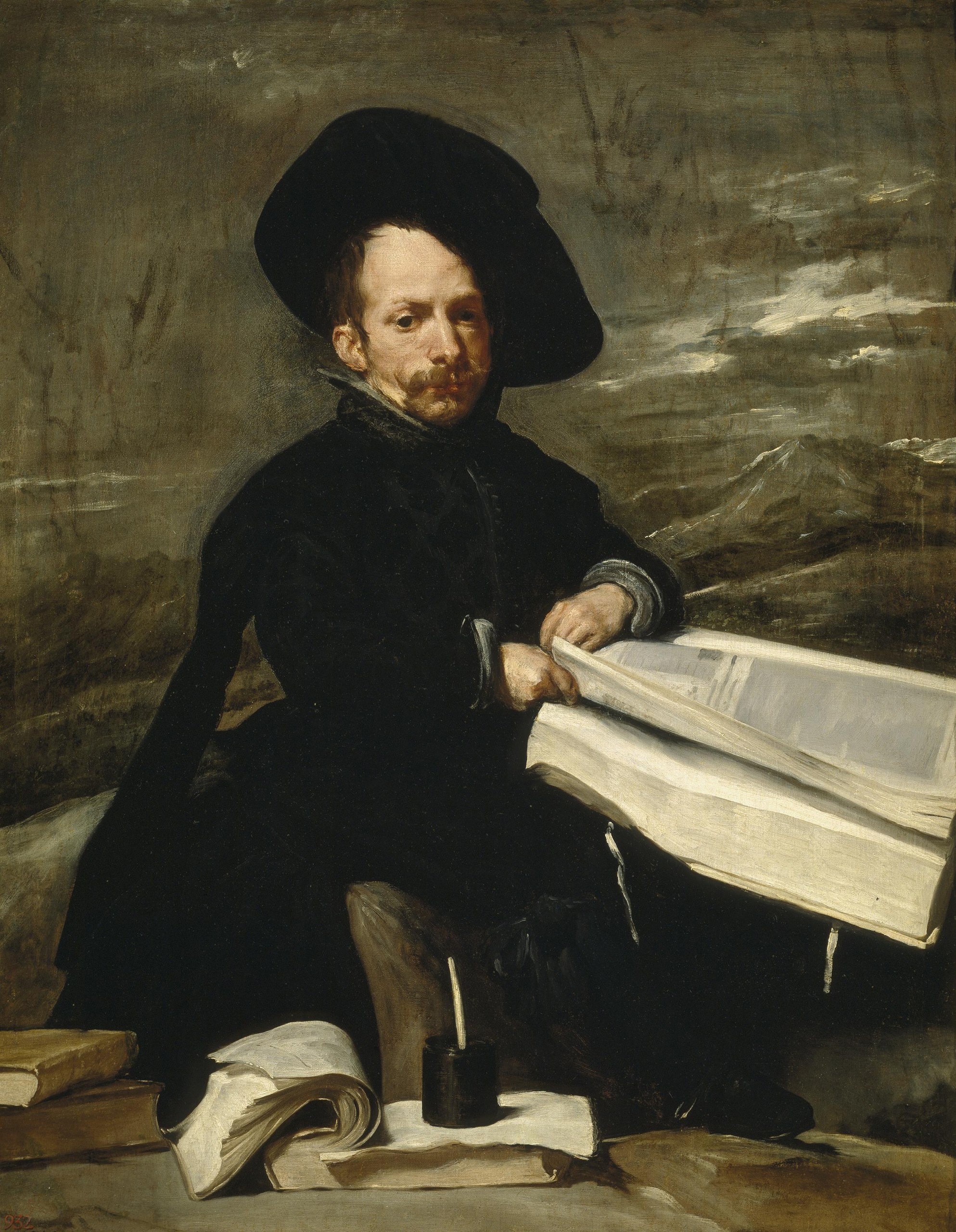
Buffoon with books, formerly known as portrait of "el Primo"
Diego Velázquez · 1640
Museo del Prado
Buffoon with books, formerly known as portrait of "el Primo". The dwarf Don Diego de Acedo among outsized volumes, painted with the realism and respect he gave the whole series for the hunting lodge.
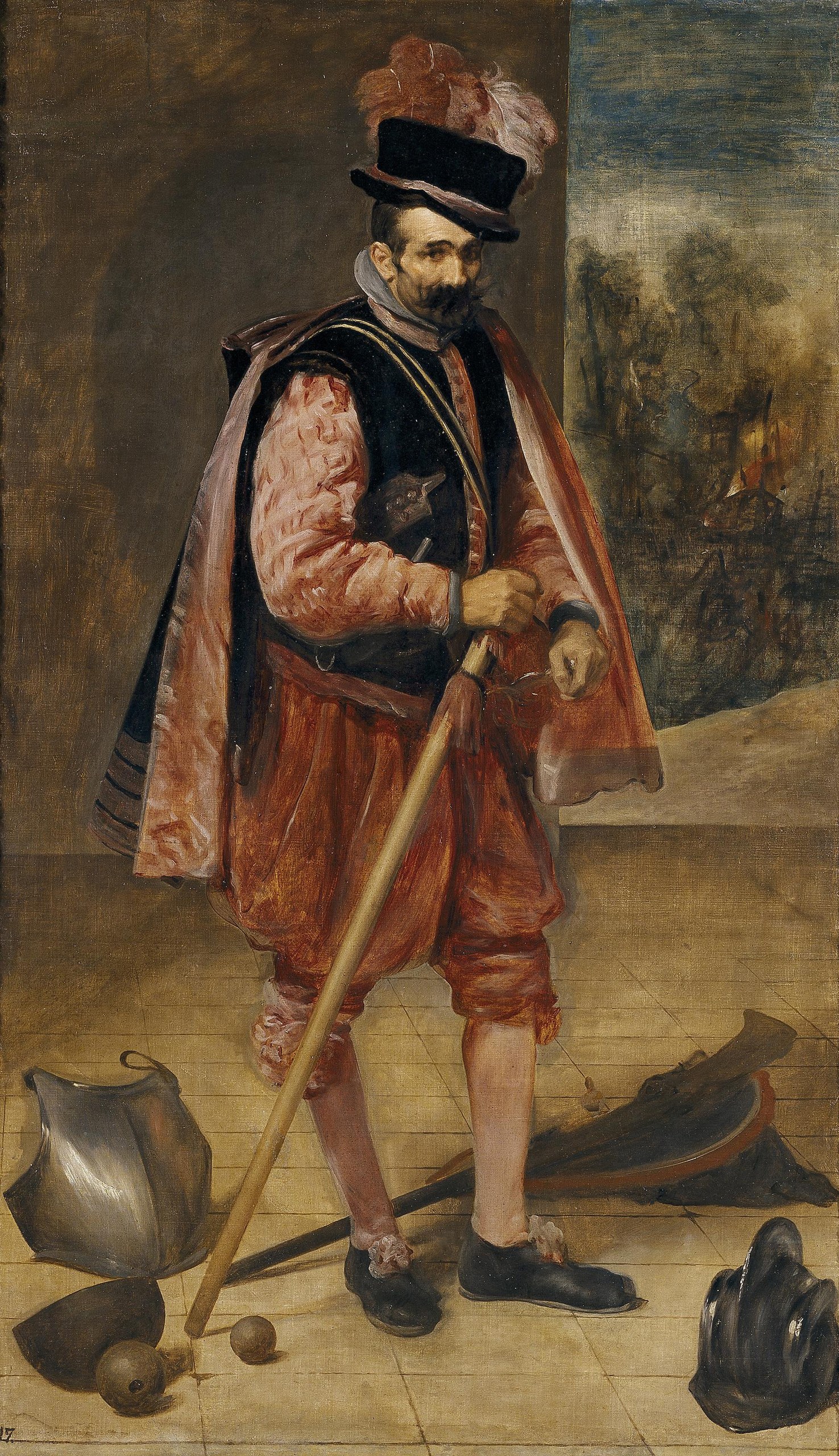
The Jester Named Don John of Austria
Diego Velázquez · 1632
Museo del Prado
The Jester Named Don John of Austria. A court jester dressed up in armour and baton for the battle he never fought, part of the same jester series.
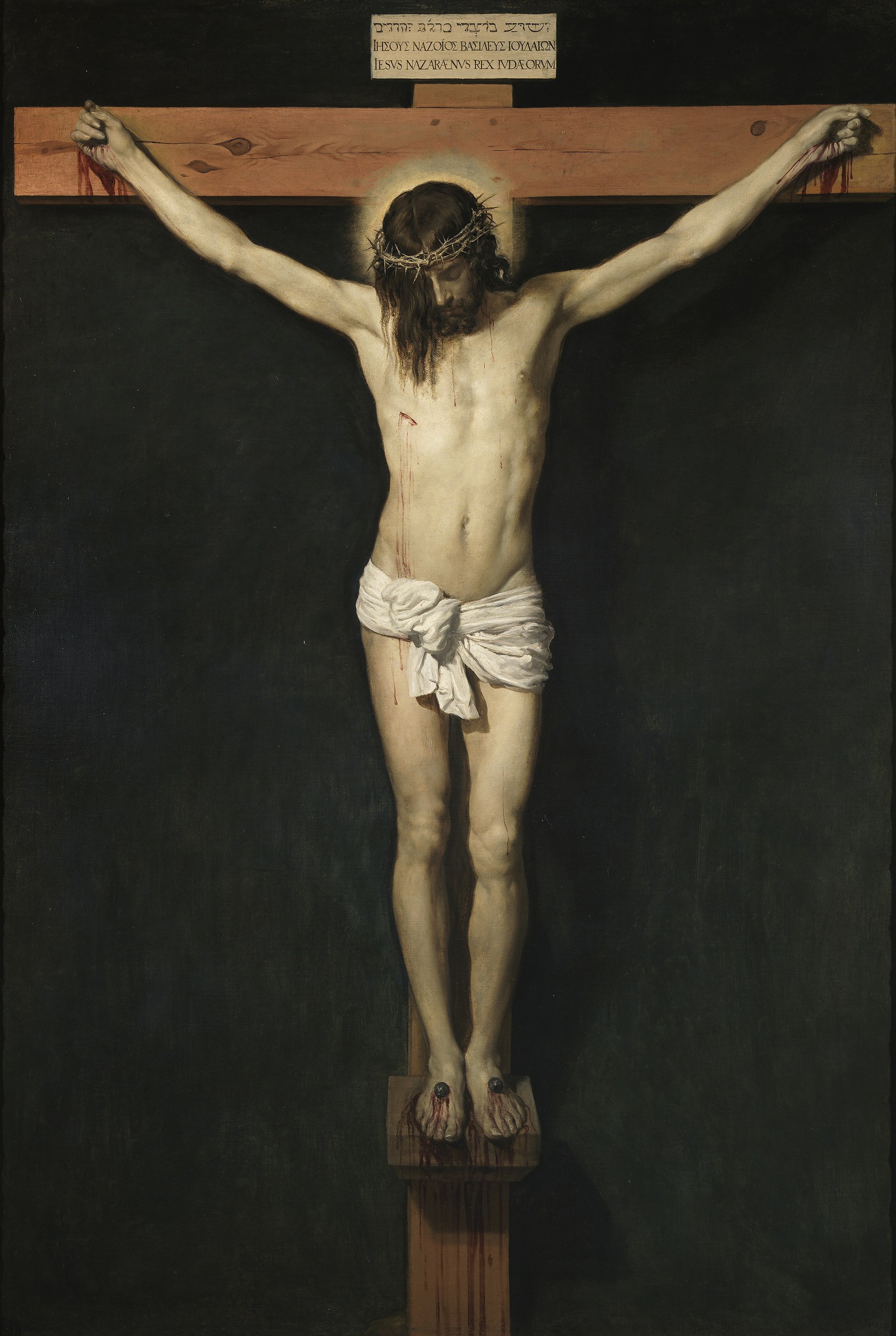
Christ Crucified
Diego Velázquez · 1632
Museo del Prado
Christ Crucified. Christ alone on the cross against a dark green ground, head fallen to his chest; the most famous religious painting in Spain, made for a Benedictine convent in Madrid.
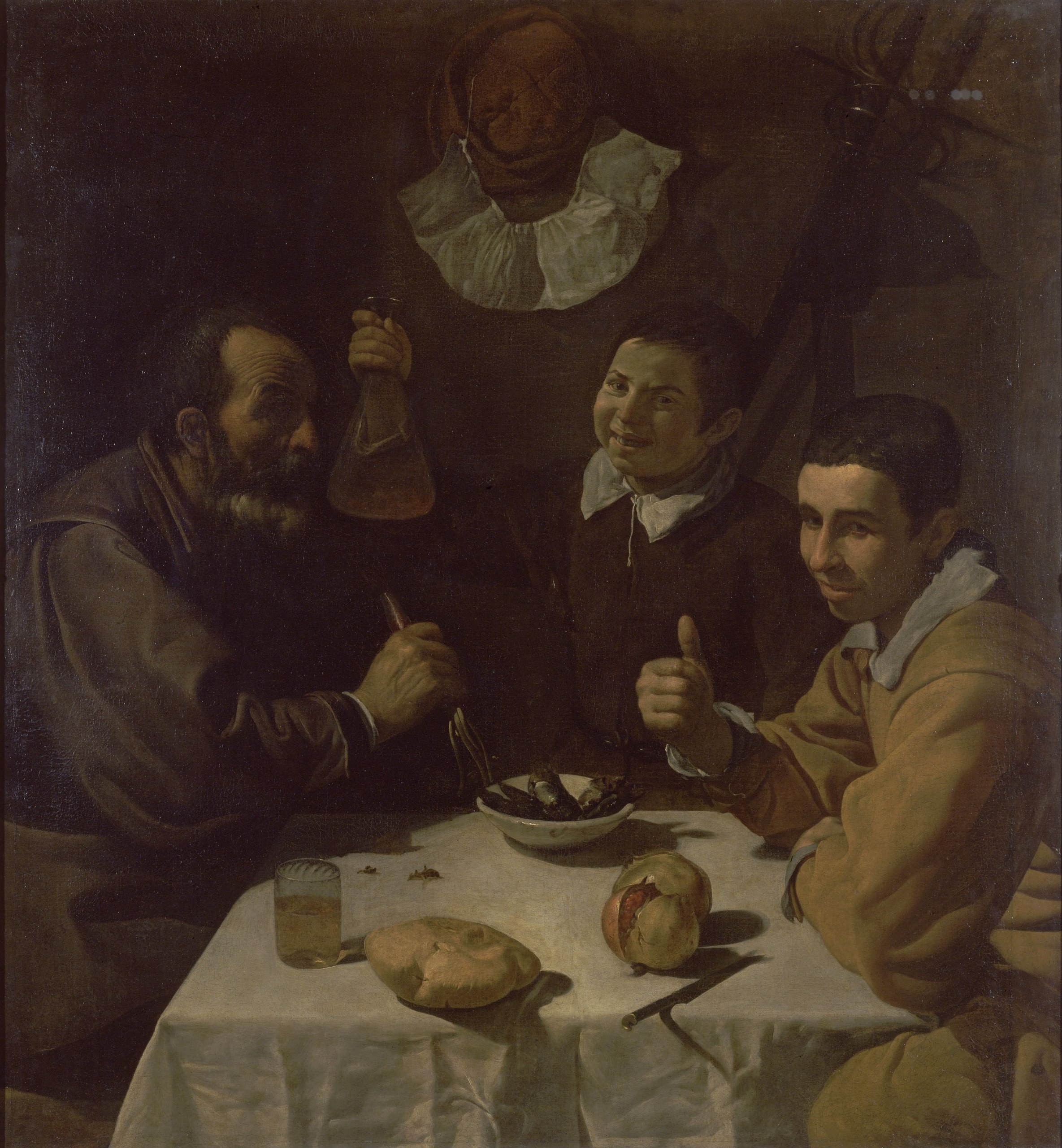
The Lunch
Diego Velázquez · 1617
State Hermitage Museum
The Lunch. Bread and two pomegranates on a creased cloth, an old man, a youth giving the thumbs up and a boy pouring wine: Seville genre painting at the very beginning of his career.
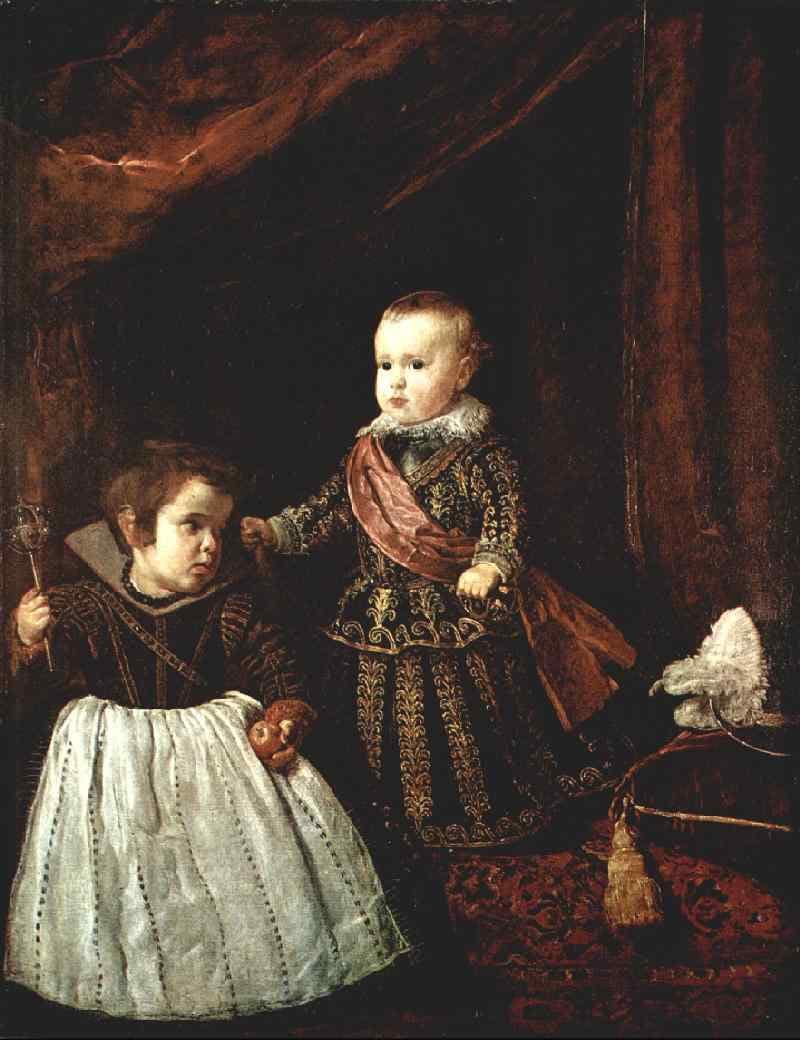
Prince Balthasar Charles With a Dwarf
Diego Velázquez · 1631
Museum of Fine Arts, Boston
Prince Balthasar Charles With a Dwarf. The two-year-old heir in a silver frock beside a court dwarf, the first portrait he made of the boy prince.
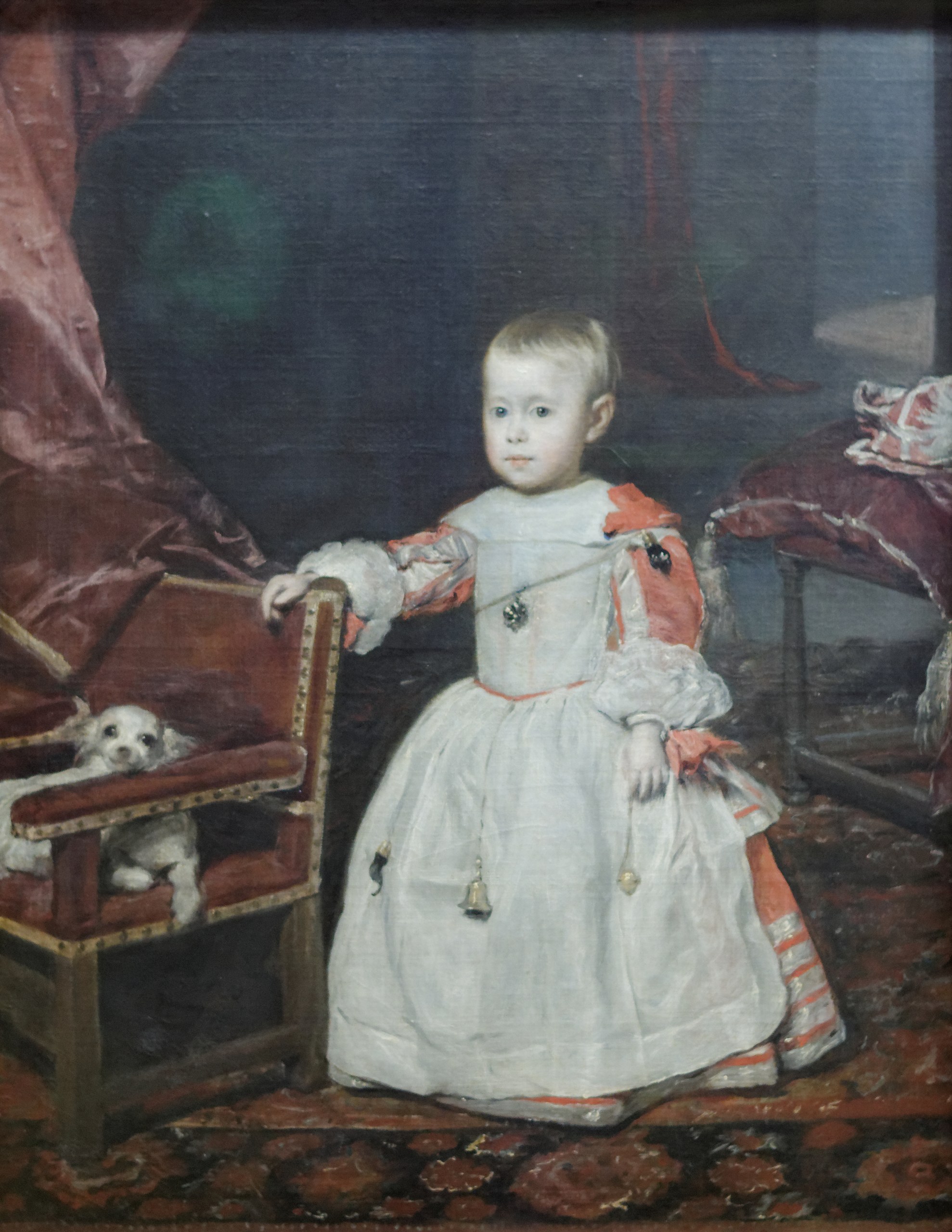
Portrait of Prince Philip Prospero
Diego Velázquez · 1659
Kunsthistorisches Museum
Portrait of Prince Philip Prospero. The infant Prince of Asturias in 1659, standing with a lapdog on the chair under his hand, the amulets he carries marking how precarious his health was.
Sources
- National Gallery, London, “The Toilet of Venus (‘The Rokeby Venus’)”
- Wikipedia, “Diego Velázquez”
- Wikipedia, “Adoration of the Magi (Velázquez)”
- Wikipedia, “Portrait of Pablo de Valladolid”
- Wikipedia, “Coronation of the Virgin (Velázquez)”
- Wikipedia, “Mars Resting”
- Wikipedia, “Christ in the House of Martha and Mary (Velázquez)”
- Wikipedia, “Las Meninas”
- Wikipedia, “Infanta Margarita in a White and Silver Dress”
- Wikipedia, “The Waterseller of Seville”
- Wikipedia, “Philip IV in Brown and Silver”
- Wikipedia, “The Surrender of Breda”
- Wikipedia, “Apollo in the Forge of Vulcan”
- Wikipedia, “The Triumph of Bacchus”
- Wikipedia, “Portrait of the Count-Duke of Olivares (Hermitage)”
- Wikipedia, “The Infanta Maria Theresa of Spain”
- Wikipedia, “Infanta Margarita Teresa in a Peach Dress”
- Wikipedia, “Equestrian Portrait of Prince Balthasar Charles”
- Wikipedia, “The Jester Don Diego de Acedo”
- Wikipedia, “Infanta Margarita Teresa in a Blue Dress”
- Wikipedia, “Las Hilanderas”
- Wikipedia, “Rokeby Venus”
- Wikipedia, “The Lunch (Velázquez)”
- Wikipedia, “Prince Balthasar Charles with a Dwarf”
- Wikipedia, “Christ Crucified (Velázquez)”
- Wikipedia, “The Jester Don John of Austria”
- Wikipedia, “Prince Philip Prospero”
Invite Diego Velázquez into your living room
Play 27 works from this collection on your TV, phone or tablet with Momentable Art TV.