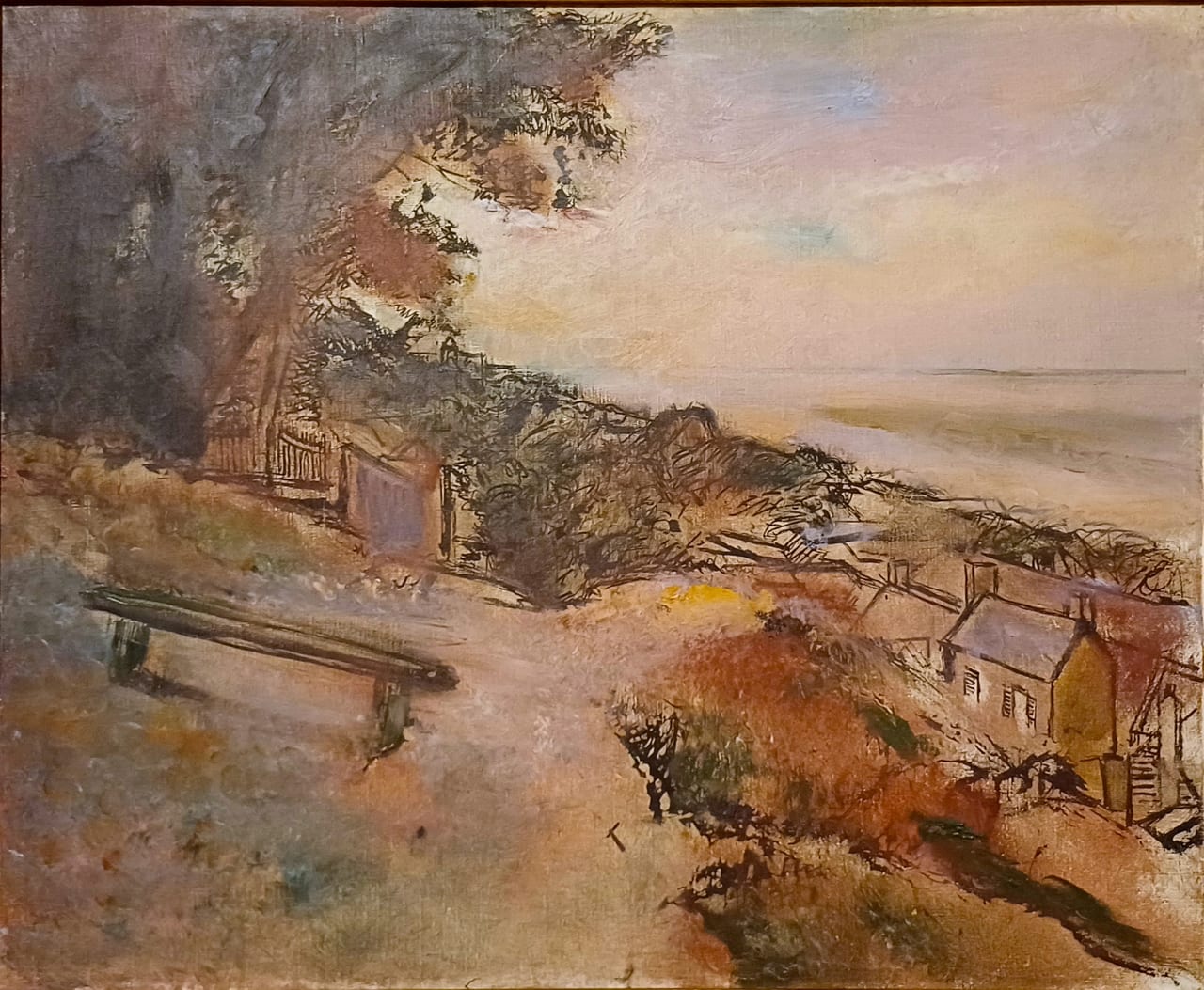
L'Absinthe
Edgar Degas · 1875

Edgar Degas
French · 1834–1917
The painter of dancers, racecourses and café tables who drew like Ingres and looked at Paris like a camera.
Play 23 works from this collection on your TV, phone or tablet with Momentable Art TV.
Play CollectionA copyist who turned to Paris
Hilaire-Germain-Edgar De Gas was born in Paris into a family of moderate wealth. He registered as a copyist at the Louvre, and in 1855 met Ingres, an artist he revered, and kept his advice for the rest of his life. In July 1856 he set out for Italy and stayed three years, making there the first studies for The Bellelli Family; when he copied, he usually chose from an altarpiece one detail that had caught his attention.
Back in Paris he began the great family portrait in a studio large enough for it, though it stayed unfinished until 1867. In these years his eyesight was found to be defective, and a long stay with relatives in New Orleans followed in 1872.
The Impressionist who painted indoors
Degas joined the independent exhibiting society that became known as the Impressionists; between 1874 and 1886 they mounted eight exhibitions, and he showed in all but one of them. He had little in common with the landscape painters among them and mocked painting outdoors; his Paris was indoors, at the Opera, the races and the café.
He mastered pastel in the later 1870s, laying the dry medium in complex layers, and experimented with etching, lithography and monotype, of which he made some three hundred. Sculpture became another strand after 1880, though he showed only one piece in his lifetime. After 1890 his eyes went on failing; he worked in pastel almost to the end of 1907, and spent his last years nearly blind, wandering the streets of Paris. He never married; his sight failing, he restlessly walked the streets of Paris in his last years, and he seems to have stopped working in 1912.
Known works
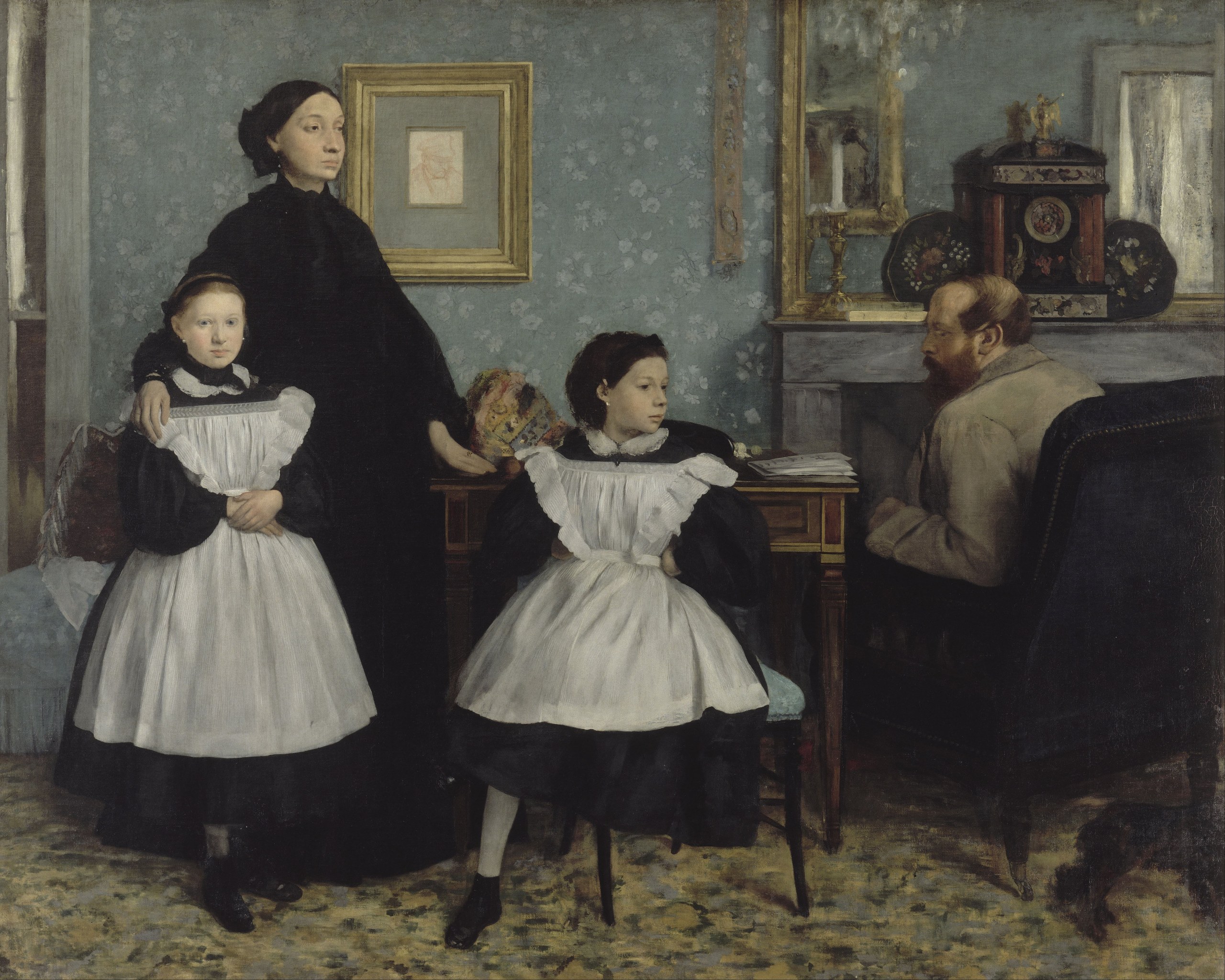
The Bellelli Family
Edgar Degas · 1858
Musée d'Orsay
The Bellelli Family. His aunt Laura in mourning, her exiled Italian husband and their two daughters in a room that holds them all at a distance: the masterwork of his youth, begun from studies in Italy and finished in Paris.
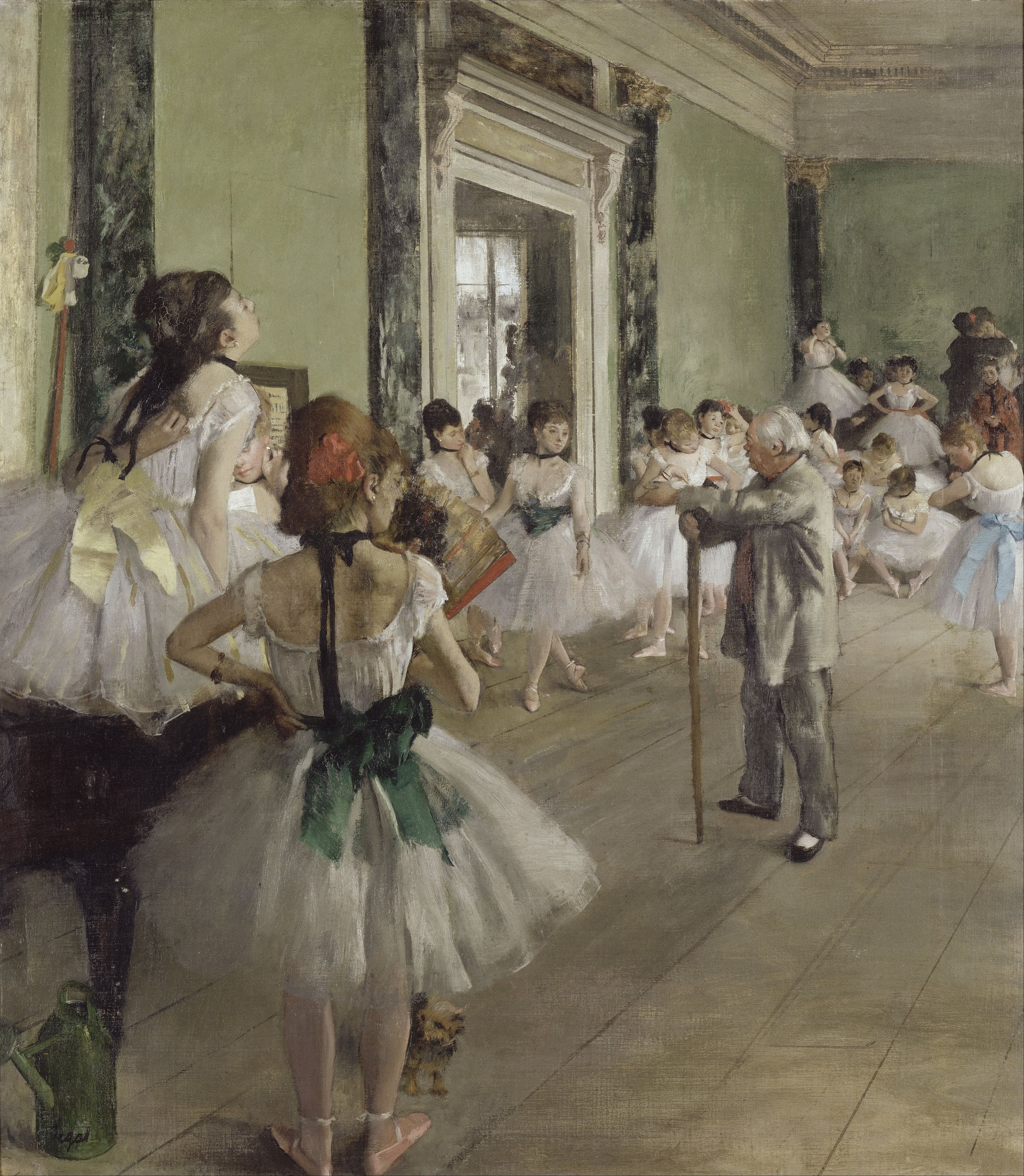
The Ballet Class
Edgar Degas · 1871
Musée d'Orsay
The Ballet Class. The ballet master Jules Perrot at the centre of a rehearsal at the end of a lesson, commissioned by the singer Jean-Baptiste Faure.
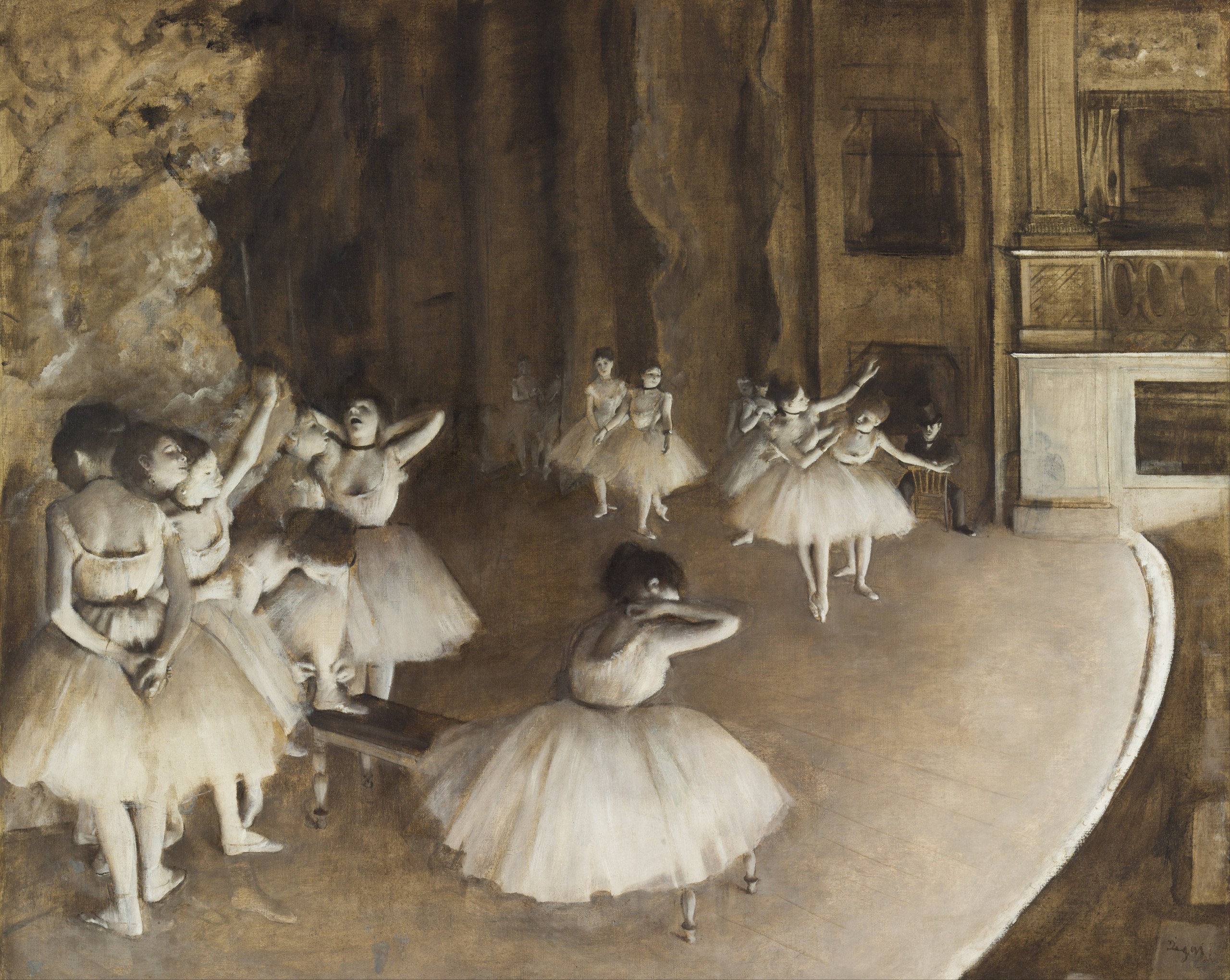
Edgar Degas - Rehearsal on Stage
Edgar Degas · 1874
Musée d'Orsay
Edgar Degas - Rehearsal on Stage. Dancers rehearsing under stage light, a scene built almost without colour.
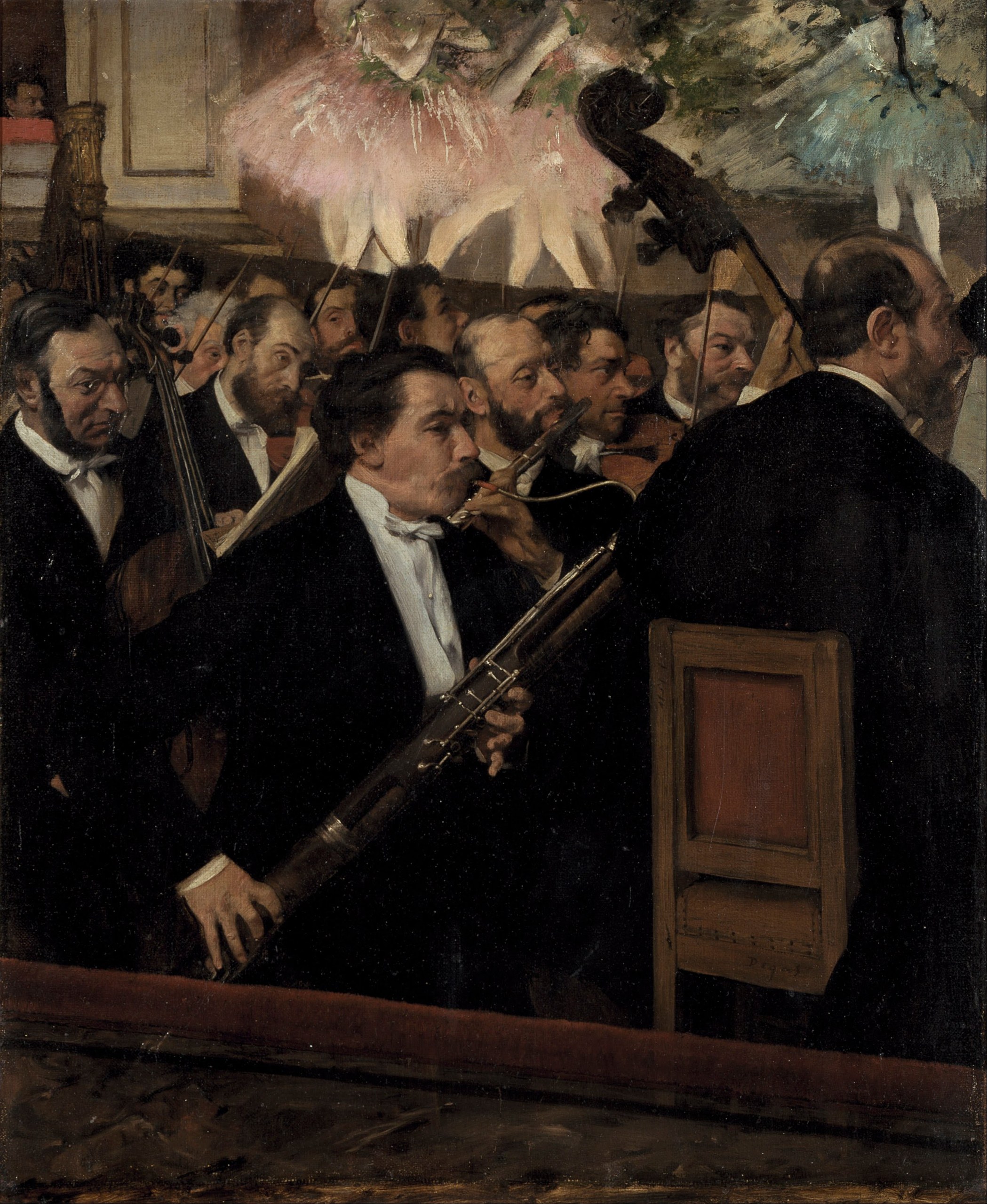
L'Orchestre de l'Opéra
Edgar Degas · 1870
Musée d'Orsay
L'Orchestre de l'Opéra. The players in the pit of the Salle Le Peletier, mostly portraits of his friends, with the bassoonist Désiré Dihau, who commissioned the picture, at their head.
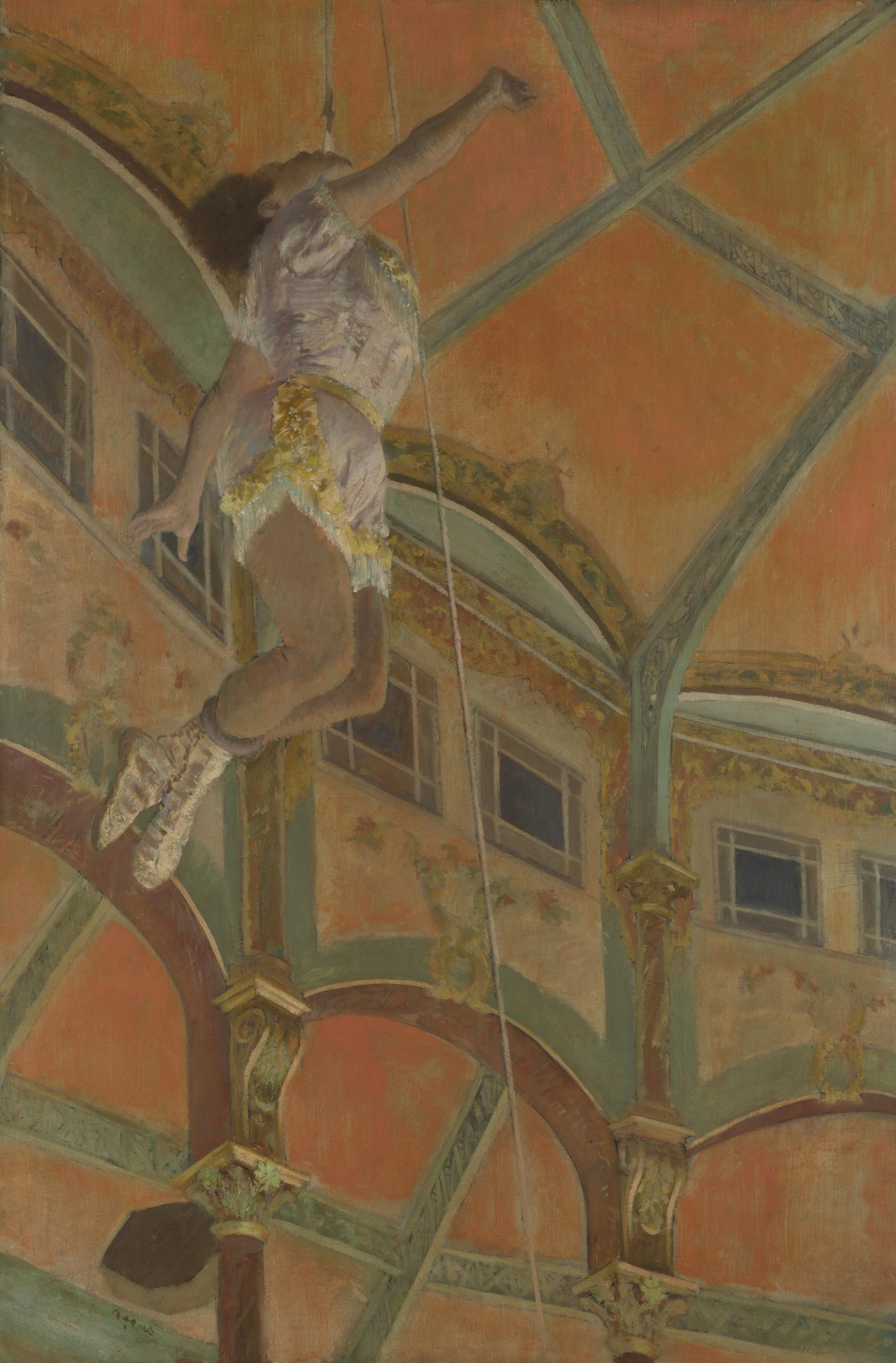
Miss La La at the Cirque Fernando
Edgar Degas · 1879
National Gallery
Miss La La at the Cirque Fernando. The mixed-race acrobat hanging from a trapeze by her knees, the cannon she fired with her teeth her most sensational trick; his only circus painting.
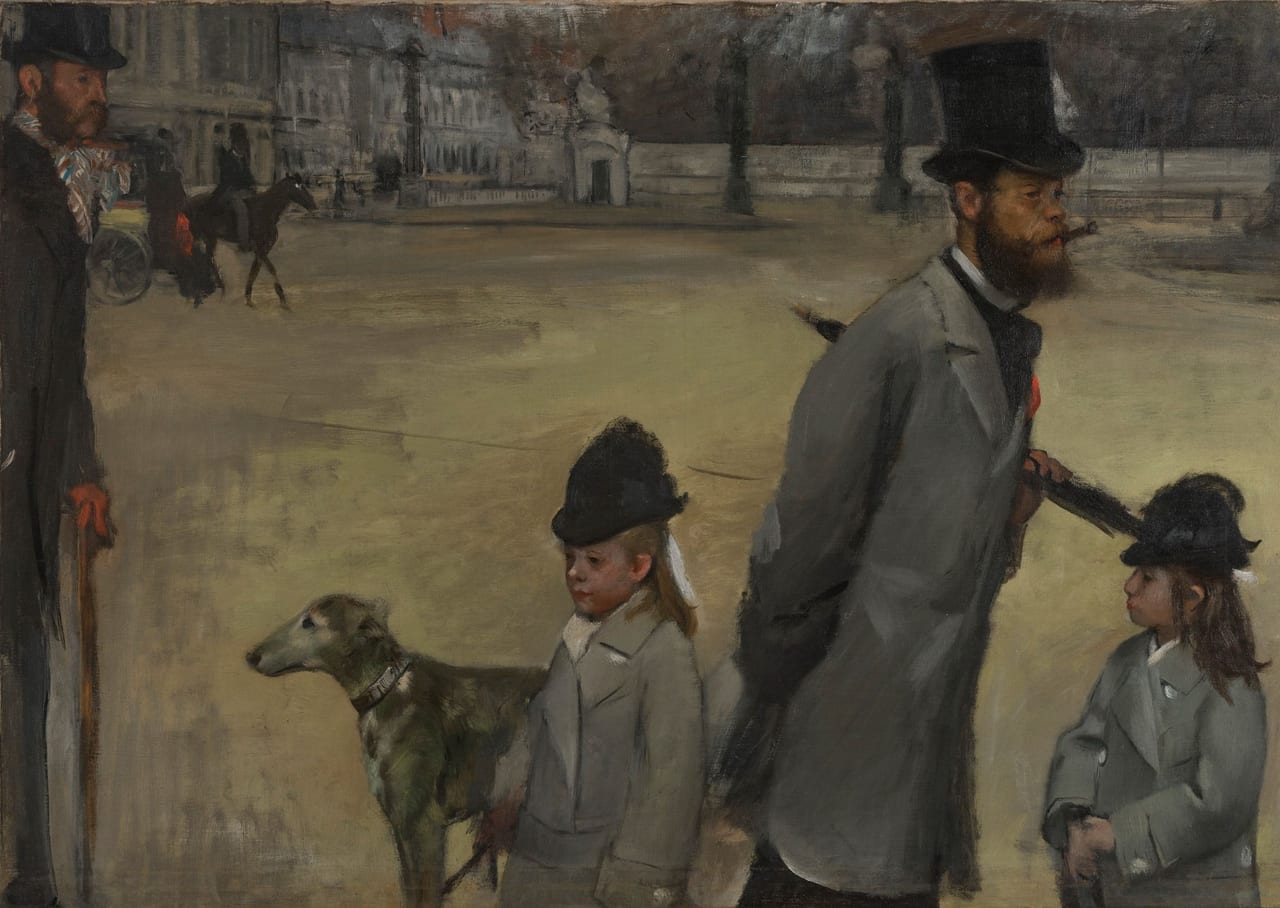
Place de la Concorde
Edgar Degas · 1875
State Hermitage Museum
Place de la Concorde. Viscount Lepic with his daughters and his dog crossing an emptied square, its cropping and use of empty space borrowed from photography; thought lost after the war and shown again by the Hermitage in 1994.
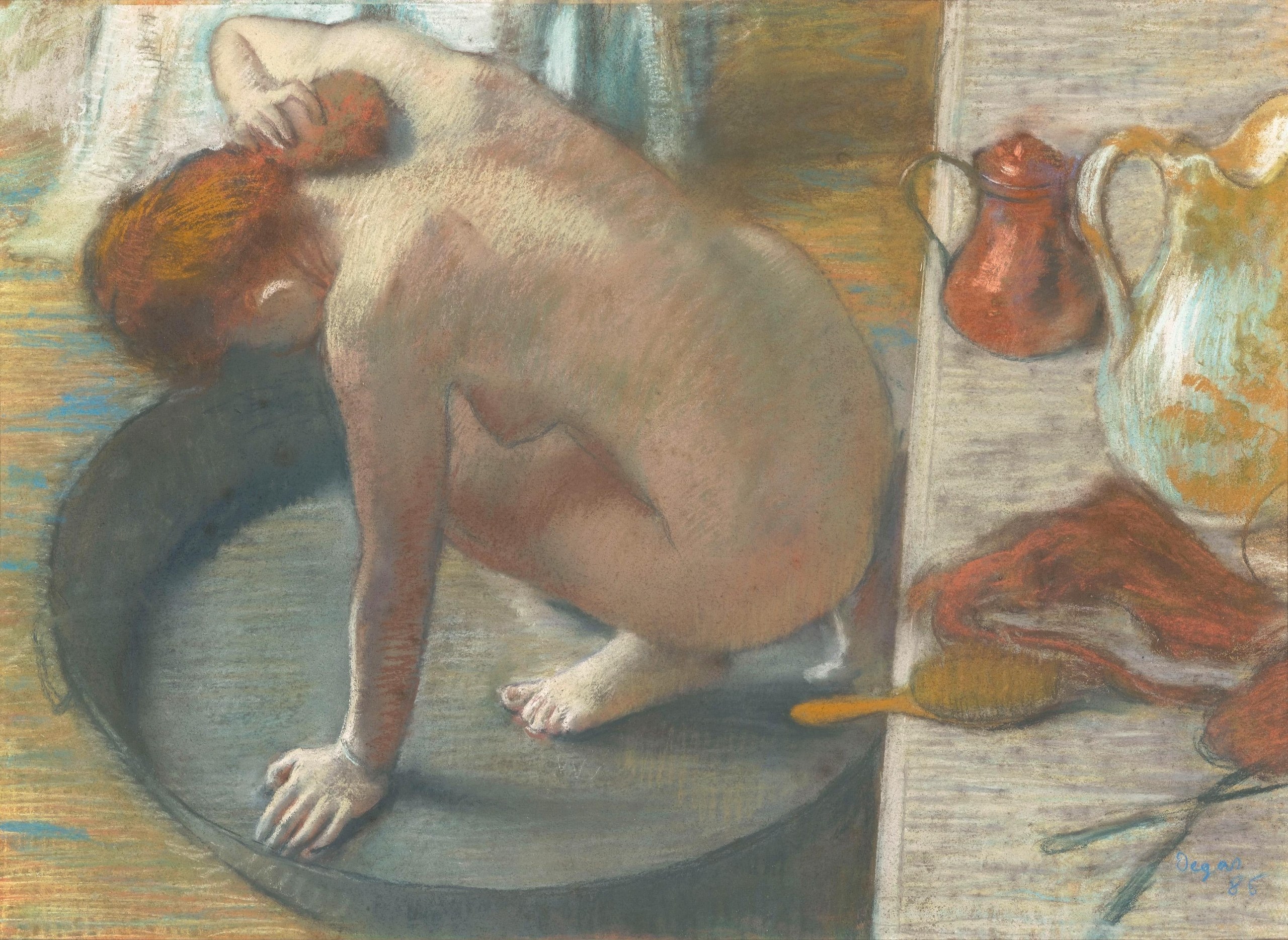
The Tub
Edgar Degas · 1886
Musée d'Orsay
The Tub. A woman crouched in a shallow tub in the early morning light, the edge of a cupboard cutting across her; the high point of the bathing nudes he showed at the eighth Impressionist exhibition in 1886.
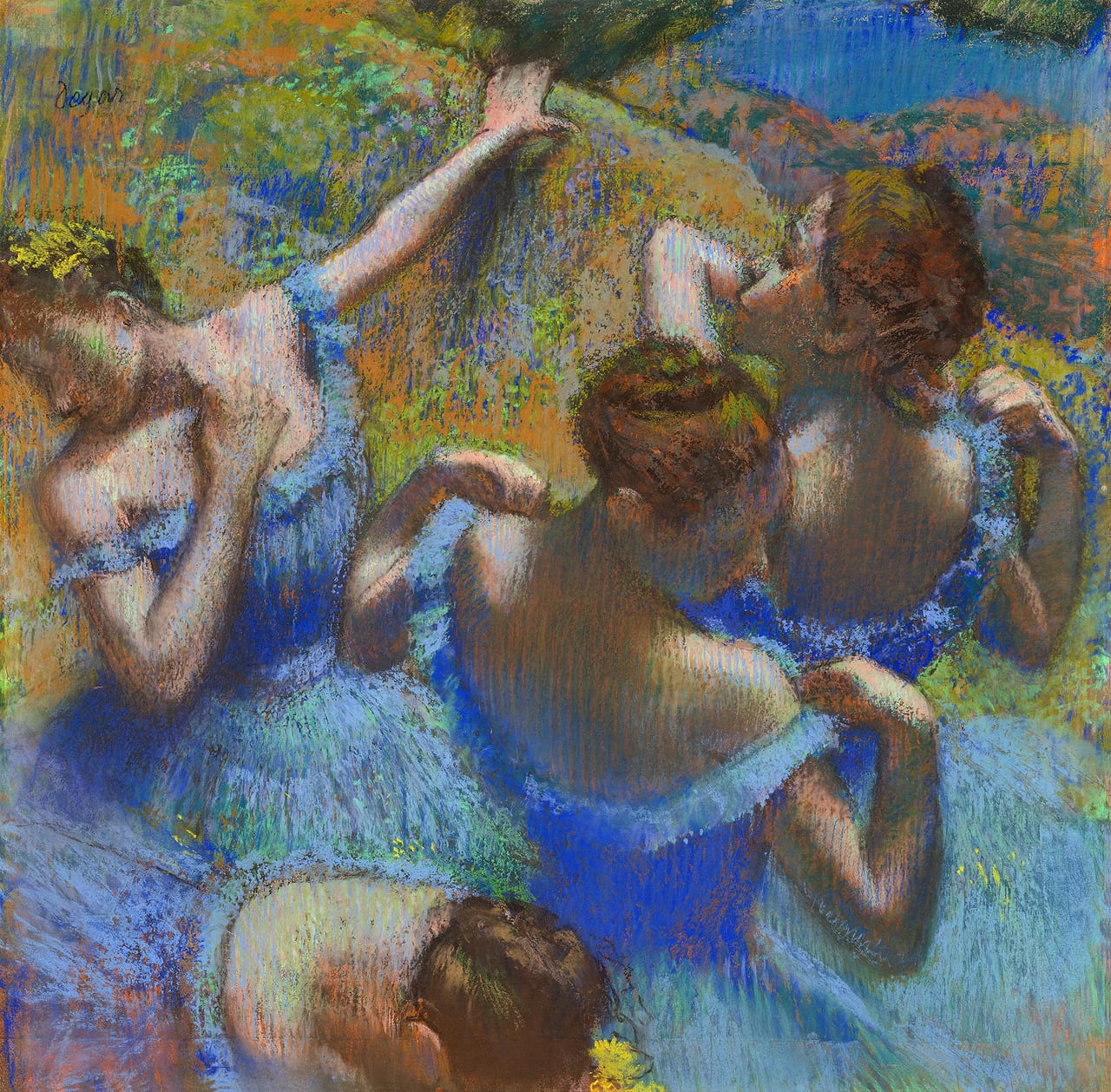
Blue Dancers
Edgar Degas · 1897
Pushkin Museum
Blue Dancers. A pastel of 1897, once in the collections of Durand-Ruel and Sergei Shchukin and in Moscow's Pushkin Museum since 1948.
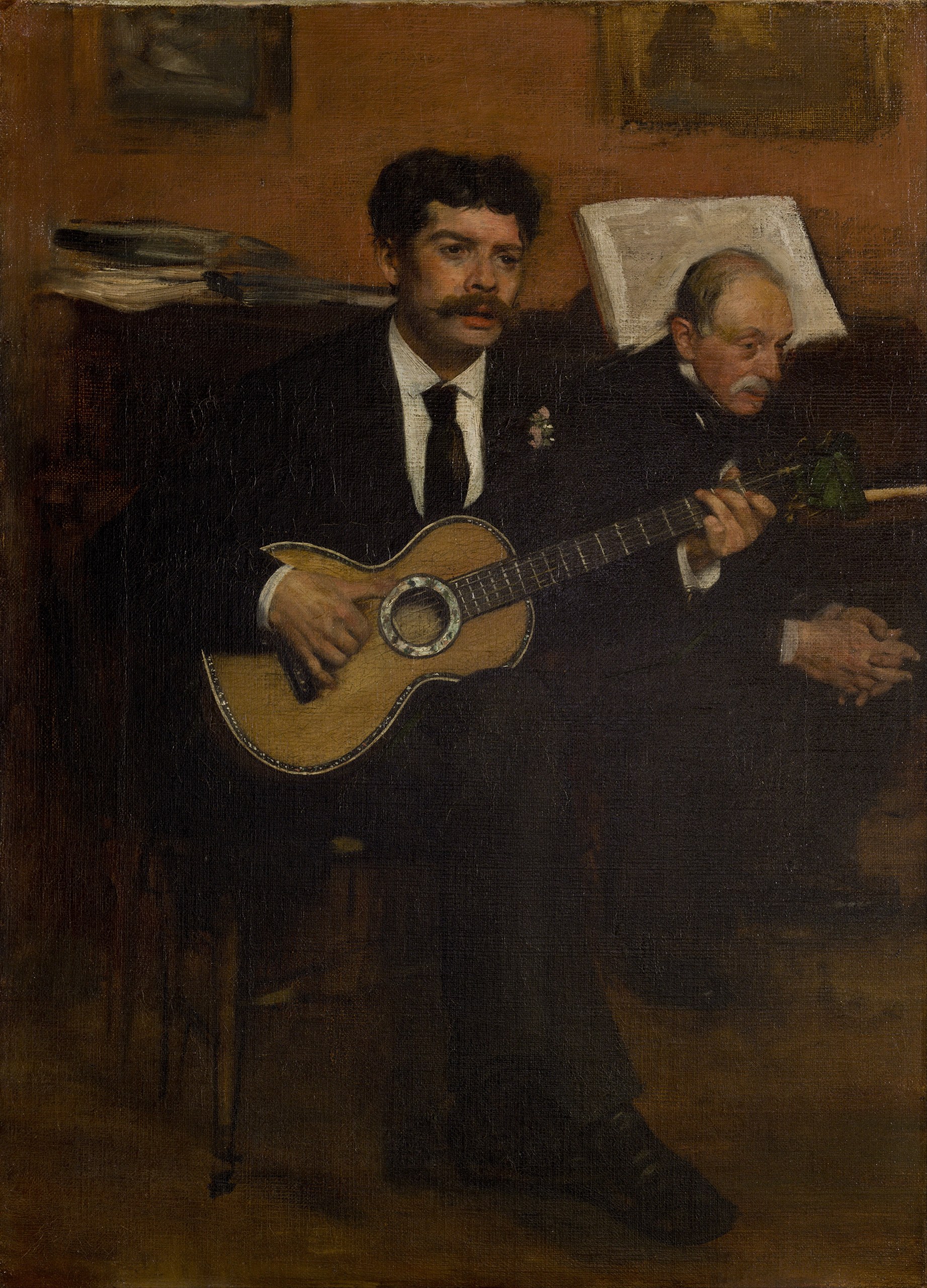
Lorenzo Pagans and Auguste de Gas
Edgar Degas · 1871
Musée d'Orsay
Lorenzo Pagans and Auguste de Gas. The Catalan tenor giving a song and guitar recital while the painter's father listens behind him, one of the musician portraits Degas began in the late 1860s.
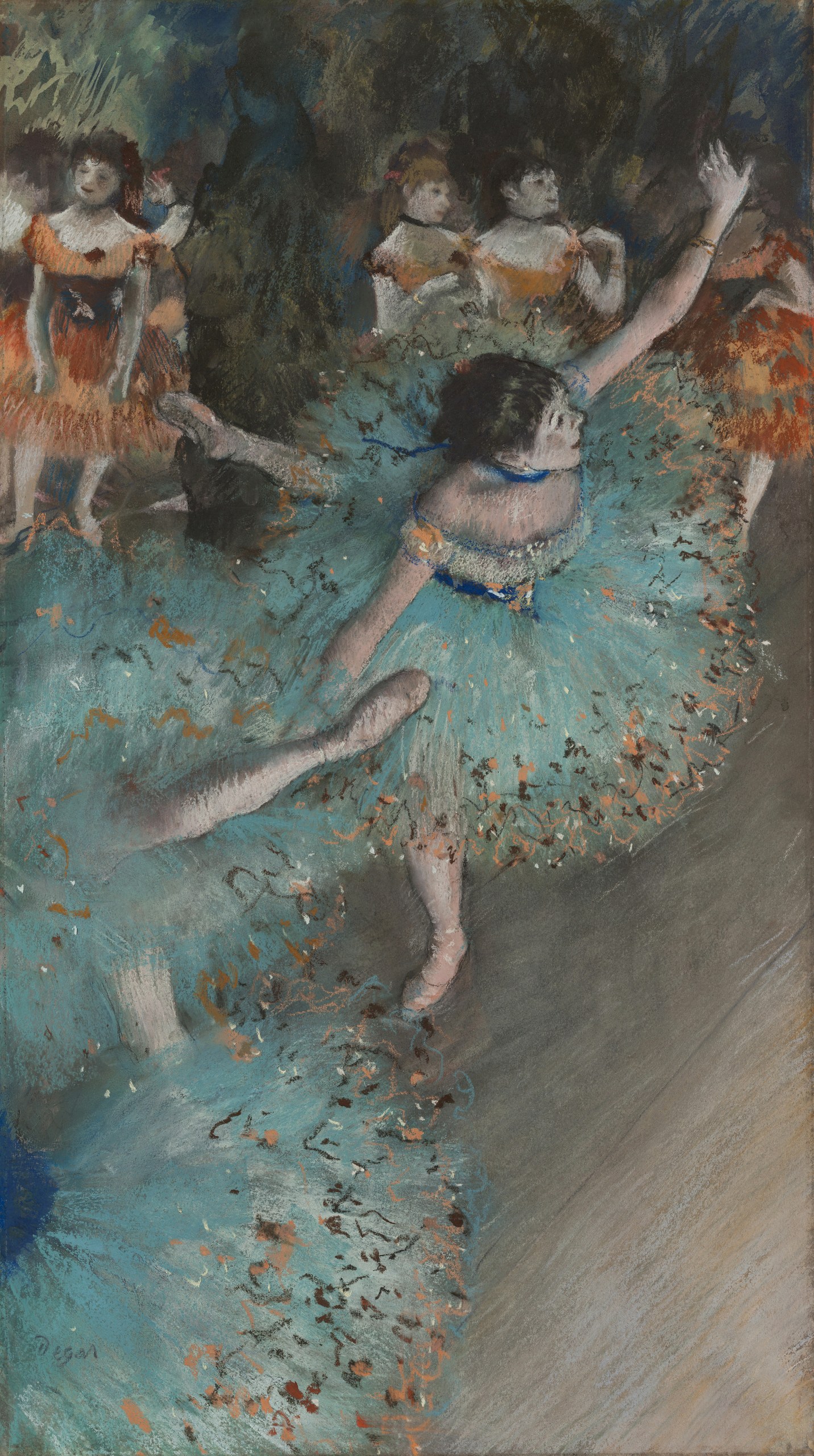
Swaying Dancer
Edgar Degas · 1877
Thyssen-Bornemisza Museum
Swaying Dancer. A dancer in green of 1877 to 1879, now in the Thyssen-Bornemisza Museum in Madrid.
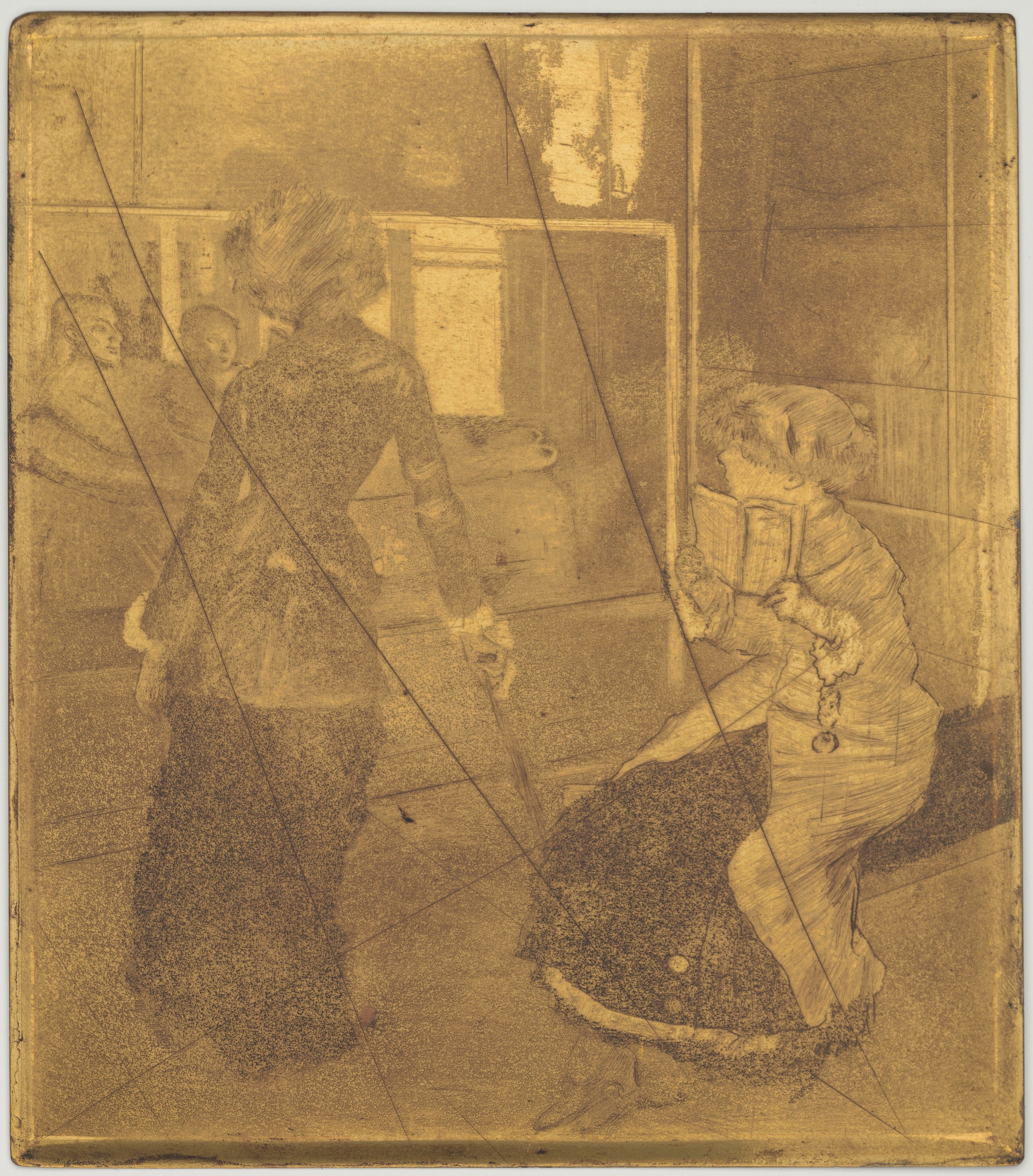
Mary Cassatt at the Louvre: The Etruscan Gallery
Edgar Degas
National Gallery of Art
Mary Cassatt at the Louvre: The Etruscan Gallery. One of two prints of his friend looking at the works in the Louvre while her sister reads a guidebook, made for a prints journal that never appeared.
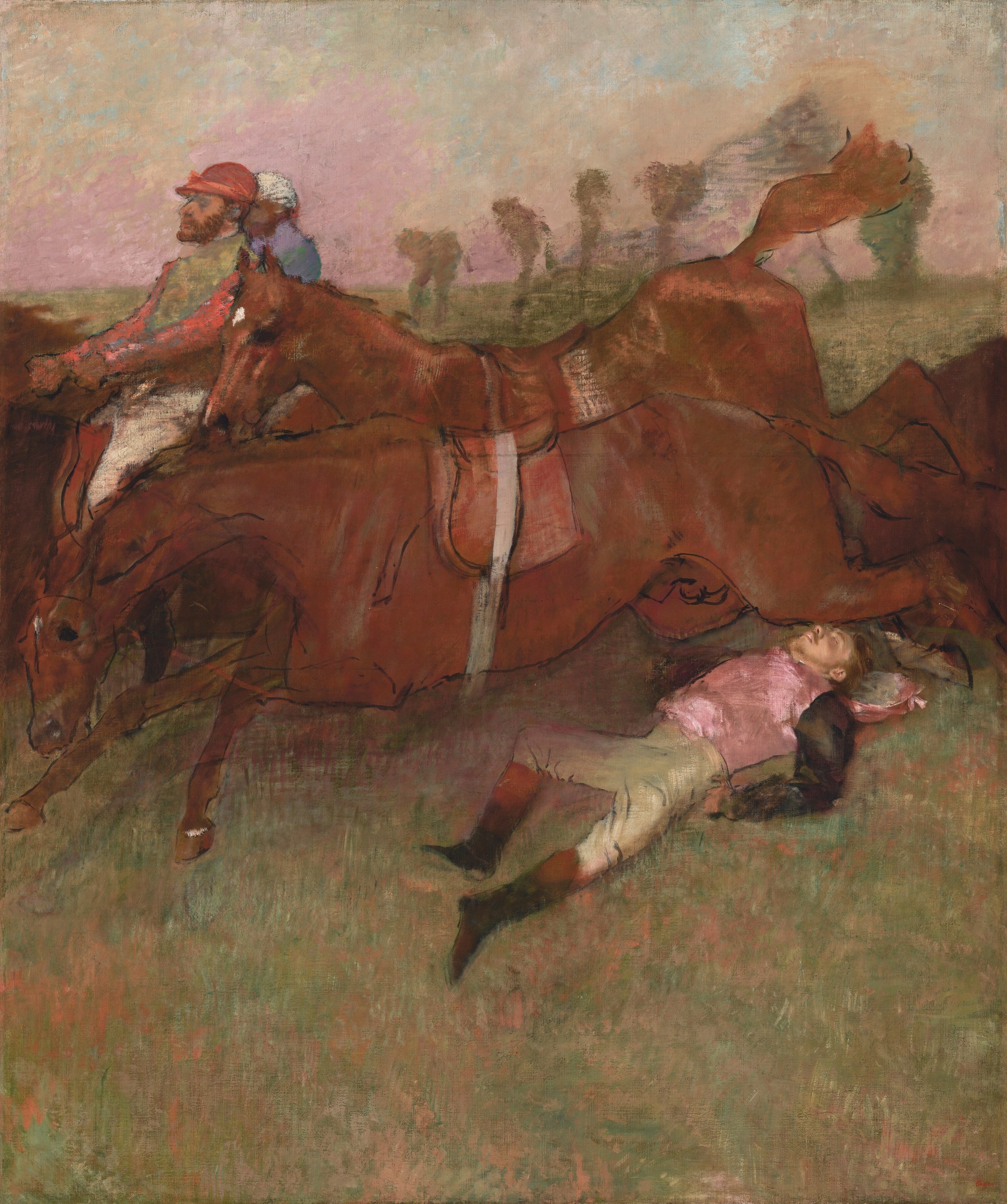
Scene from the Steeplechase: The Fallen Jockey
Edgar Degas
National Gallery of Art
Scene from the Steeplechase: The Fallen Jockey. A rider down before the racecourse crowd, shown at the Salon of 1866 and the signal of his turn from history to the life of his own time.
More to discover
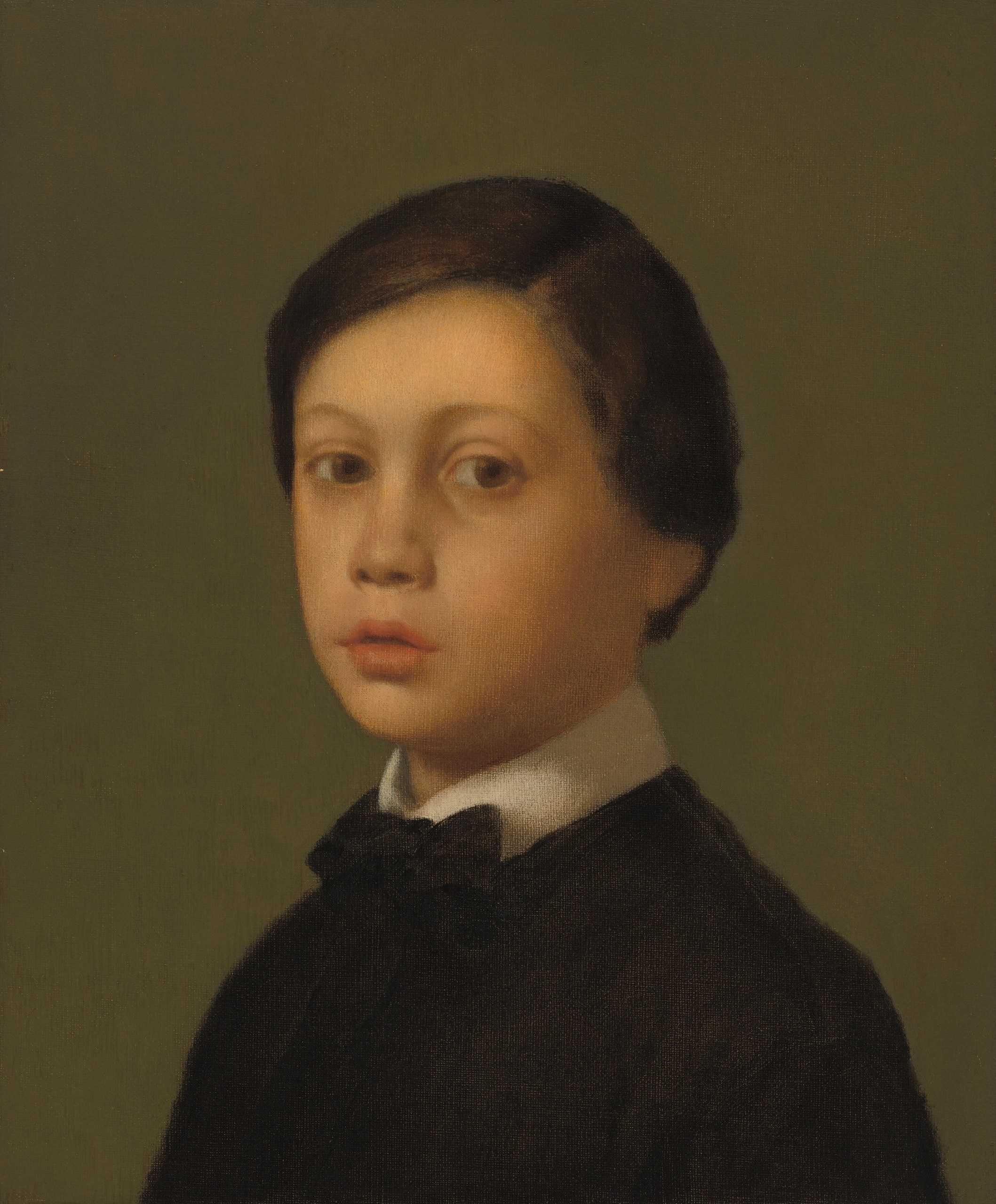
René de Gas
Edgar Degas
National Gallery of Art
René de Gas. His brother, painted in 1855.
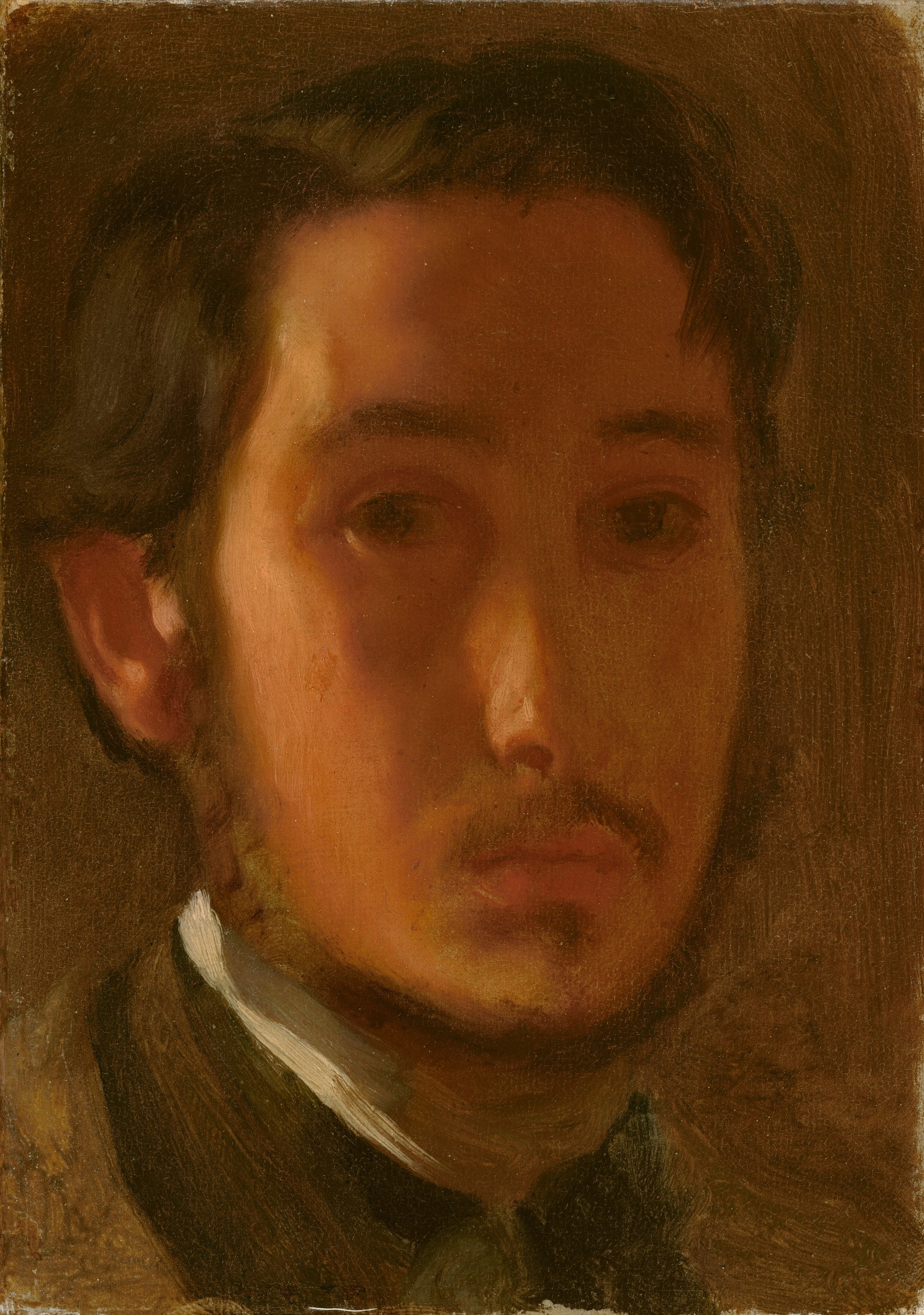
Self-Portrait with White Collar
Edgar Degas
National Gallery of Art
Self-Portrait with White Collar. The young painter's own head in three quarters, an oil on paper laid on canvas of about 1857.
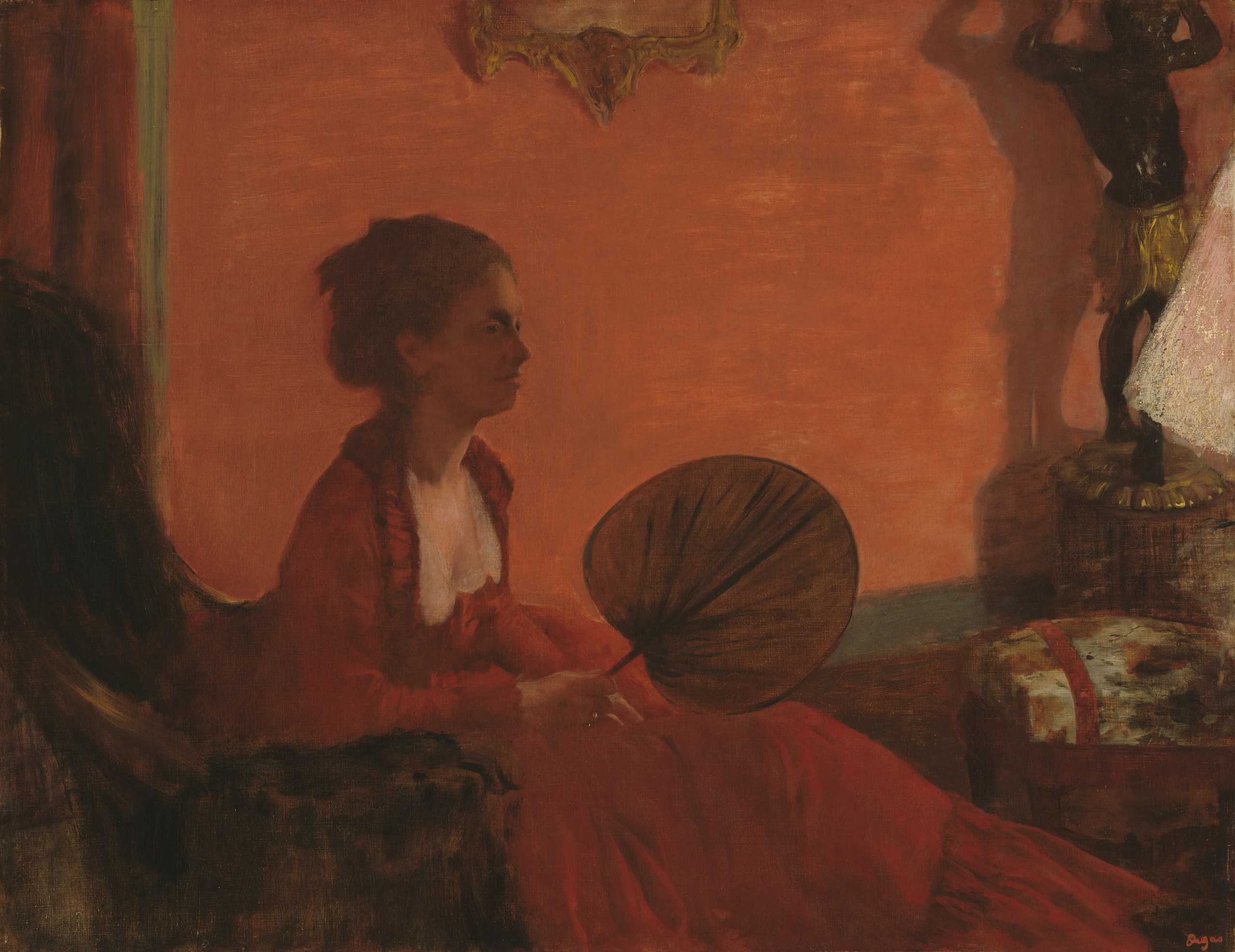
Madame Camus
Edgar Degas
National Gallery of Art
Madame Camus. A full-length portrait of 1869 to 1870, from the years before he threw in his lot with the independents.
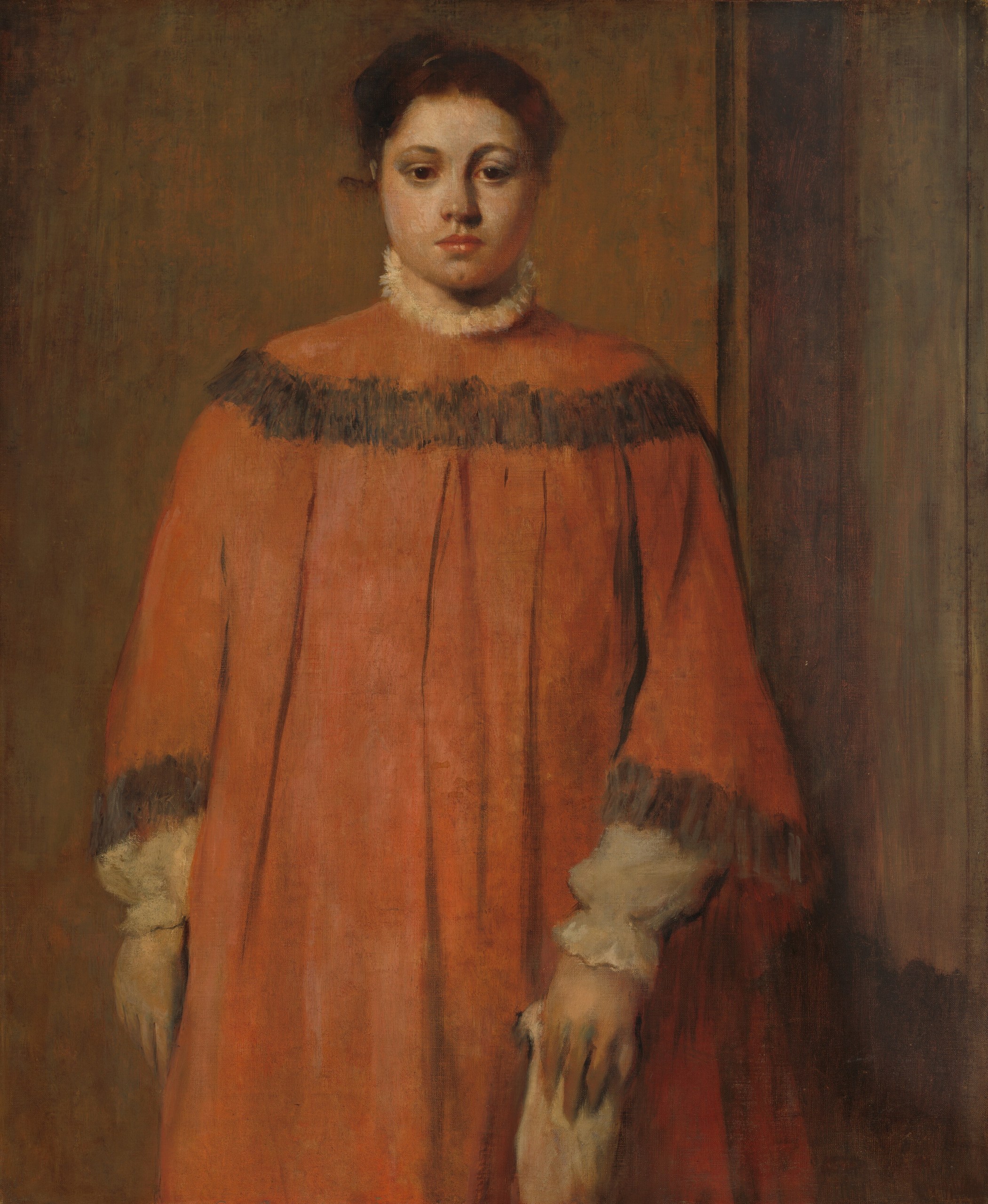
Girl in Red
Edgar Degas
National Gallery of Art
Girl in Red. A woman seated in red, painted around 1866.
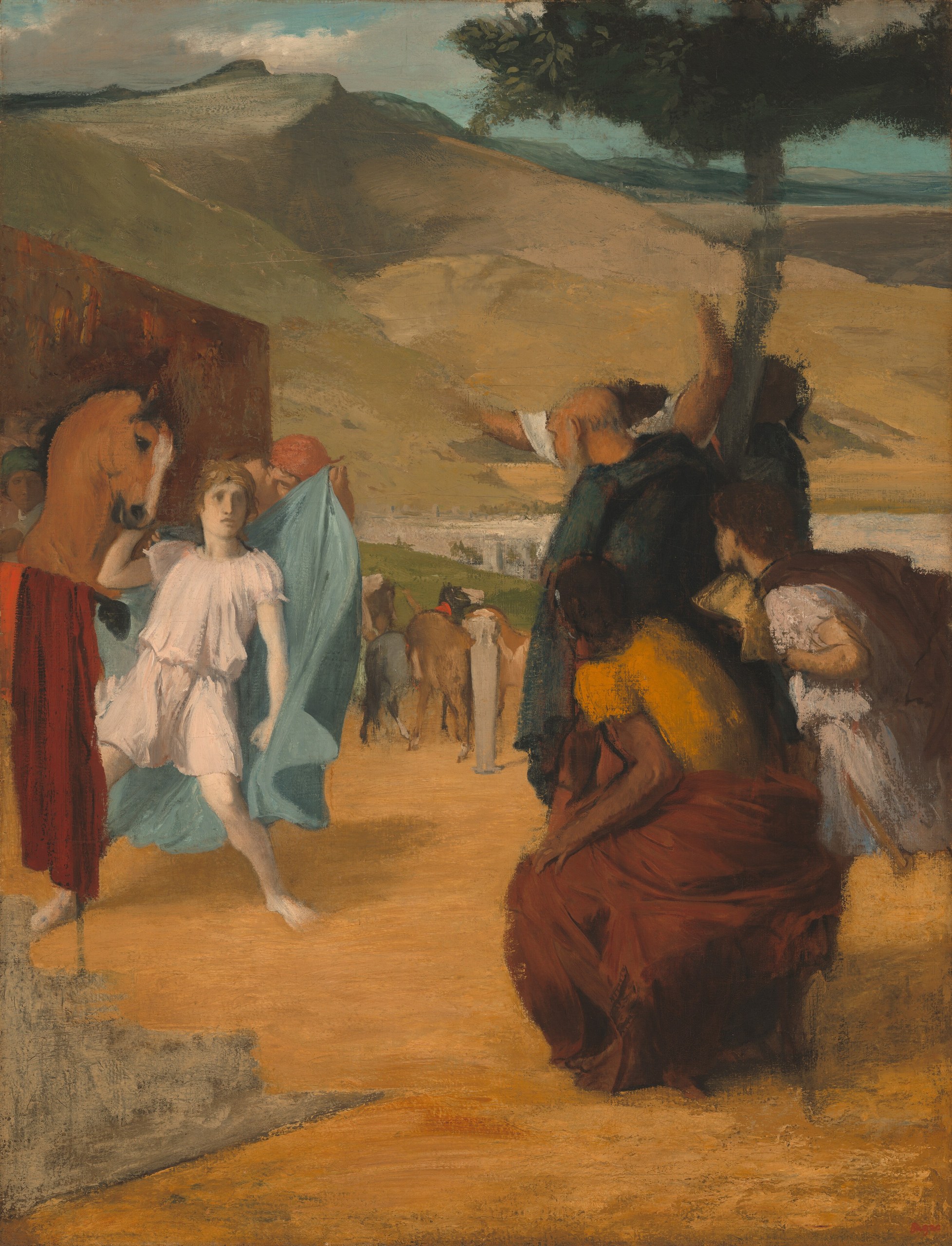
Alexander and Bucephalus
Edgar Degas
National Gallery of Art
Alexander and Bucephalus. One of the history paintings he took up around 1859 to 1860, before the racecourses and stages took over.
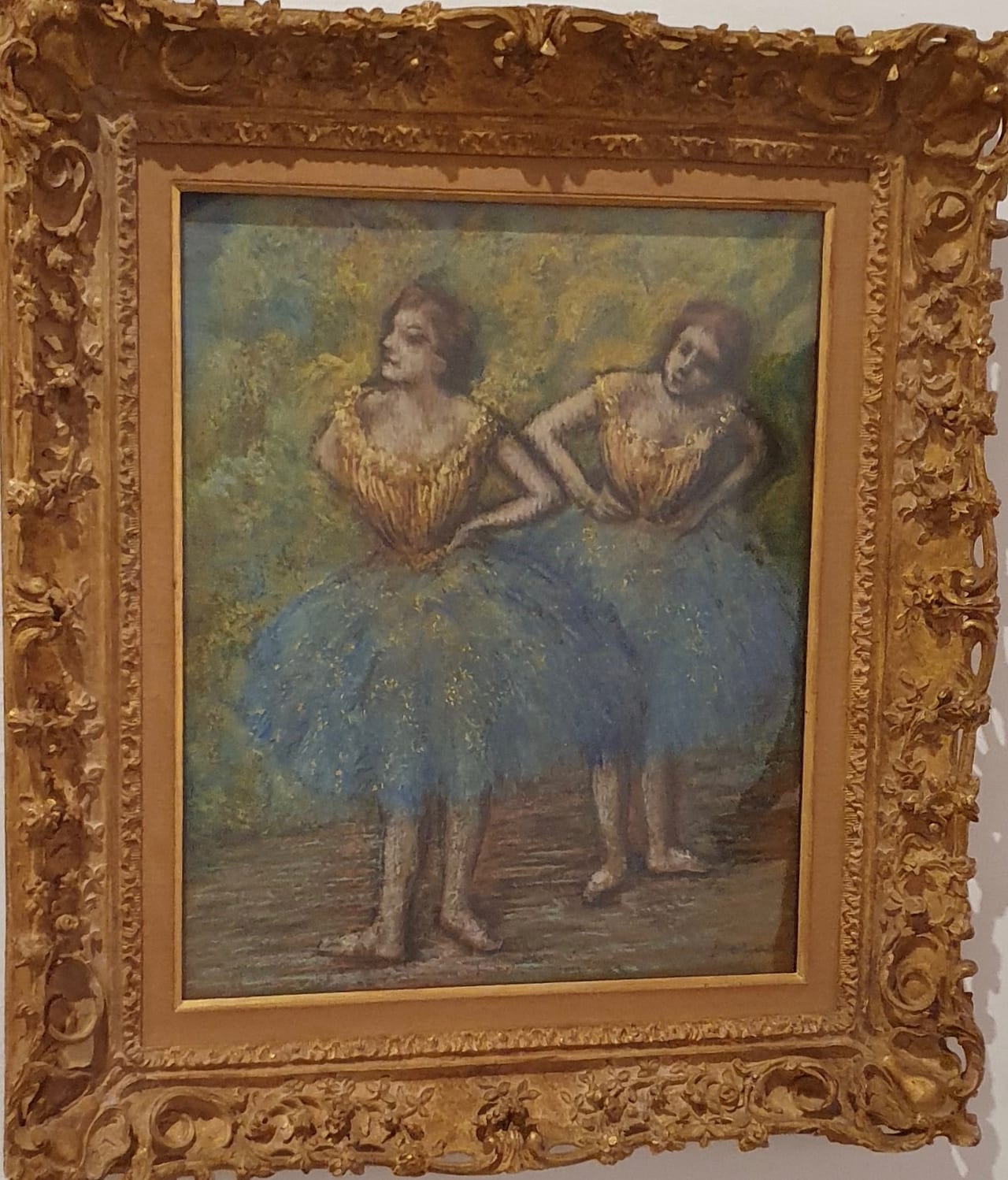
Two Dancers
Edgar Degas · 1893
Tel Aviv Museum of Art
Two Dancers. A pastel of 1893, late work in the medium he had made his own.
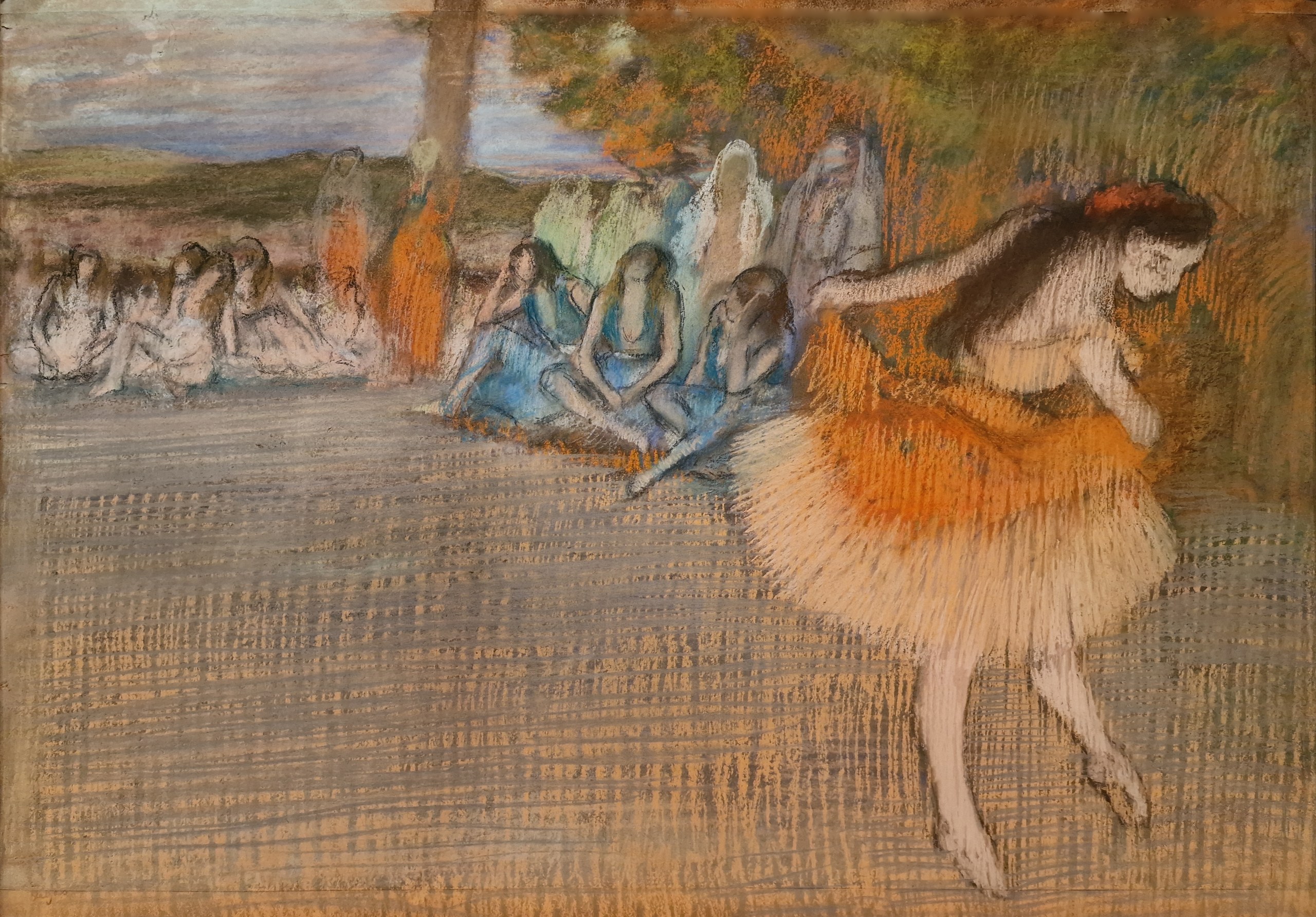
Ballet Scene
Edgar Degas · 1888
Tel Aviv Museum of Art
Ballet Scene. A pastel of 1888, dancers in the wings under stage light.
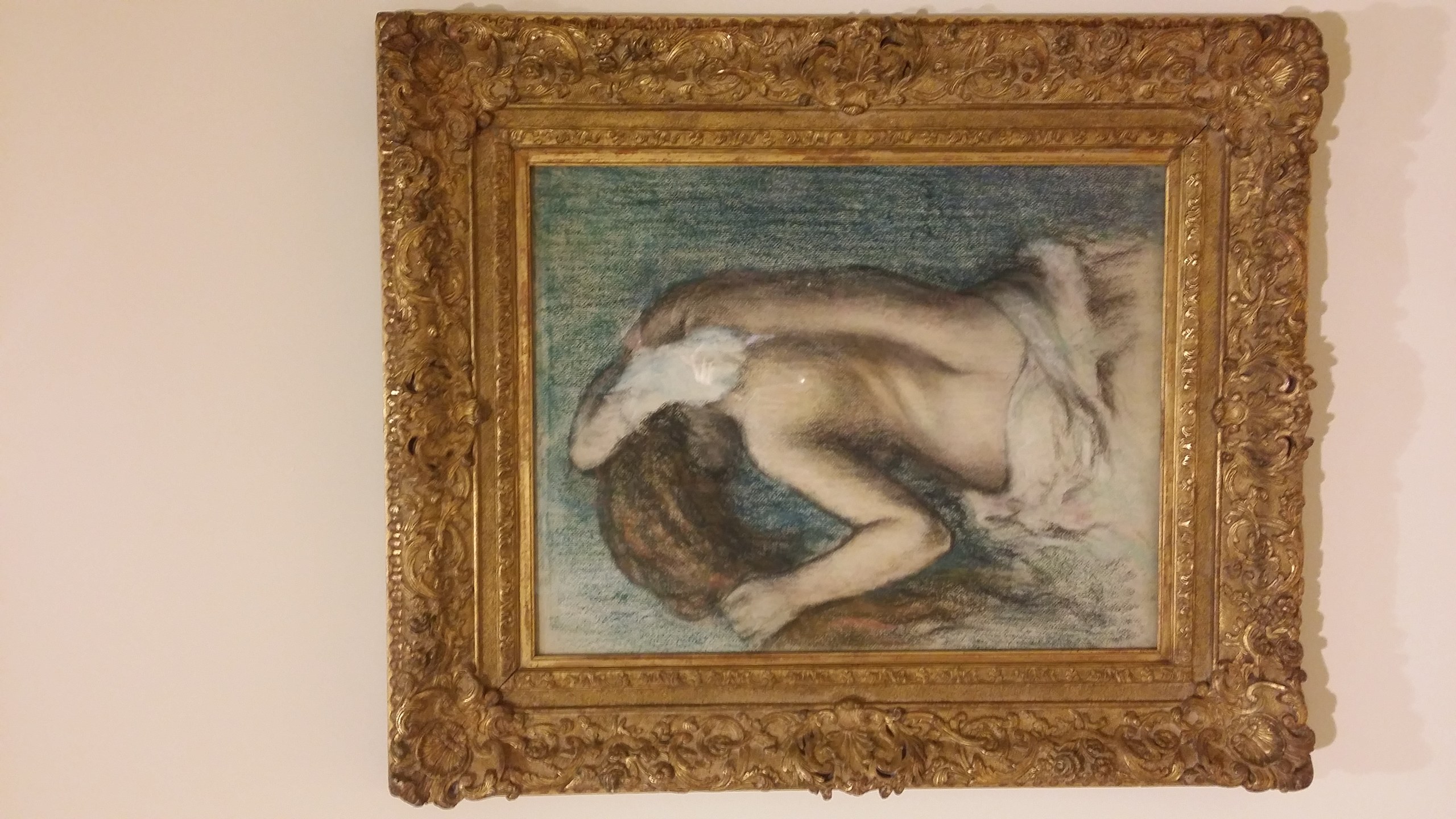
Woman bathing with hair
Edgar Degas · 1906
Museo Soumaya
Woman bathing with hair. A pastel of 1906, one of the women washing and drying themselves that filled his last decades.
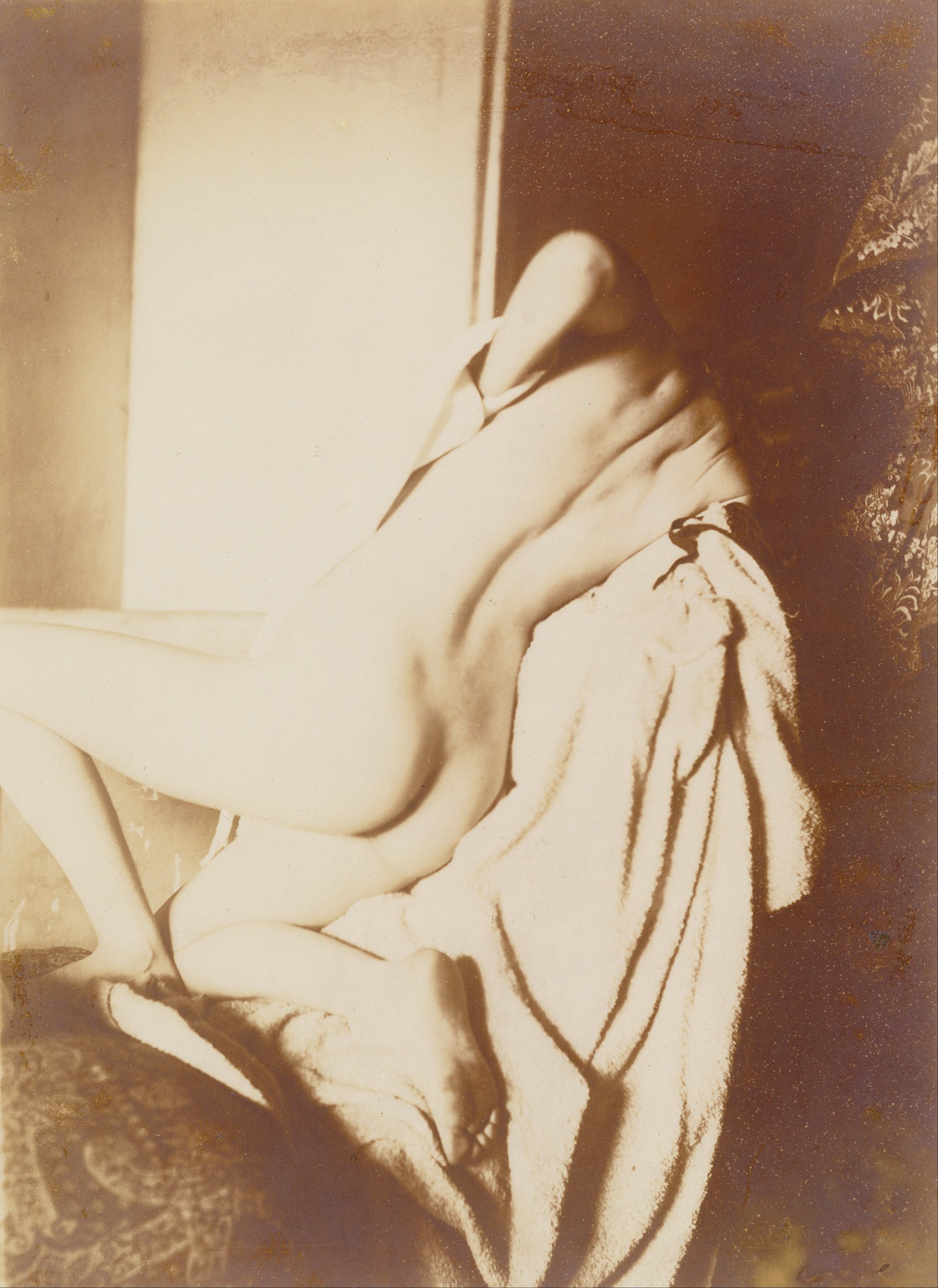
After the Bath, Woman Drying Her Back
Edgar Degas · 1896
Getty Center
After the Bath, Woman Drying Her Back. A photograph of the bathing subject he had drawn and painted in pastel for twenty years.
Sources
- Wikipedia, “Edgar Degas”
- Wikipedia, “The Bellelli Family”
- Wikipedia, “L'Absinthe”
- Wikipedia, “The Ballet Class (Degas, Musée d'Orsay)”
- Wikipedia, “The Orchestra at the Opera”
- Wikipedia, “Miss La La at the Cirque Fernando”
- Wikipedia, “Place de la Concorde (Degas)”
- Wikipedia, “The Tub”
- Wikipedia, “Blue Dancers”
- Wikipedia, “Lorenzo Pagans and Auguste de Gas”
- Wikipedia, “Mary Cassatt”
- National Gallery of Art, open data, “objects”
- Wikidata, works of Edgar Degas
- Wikidata, “Woman bathing with hair”
- Wikidata, “After the Bath, Woman Drying Her Back”
- Wikidata, “Two Dancers”
- Wikidata, “Ballet Scene”
Invite Edgar Degas into your living room
Play 23 works from this collection on your TV, phone or tablet with Momentable Art TV.