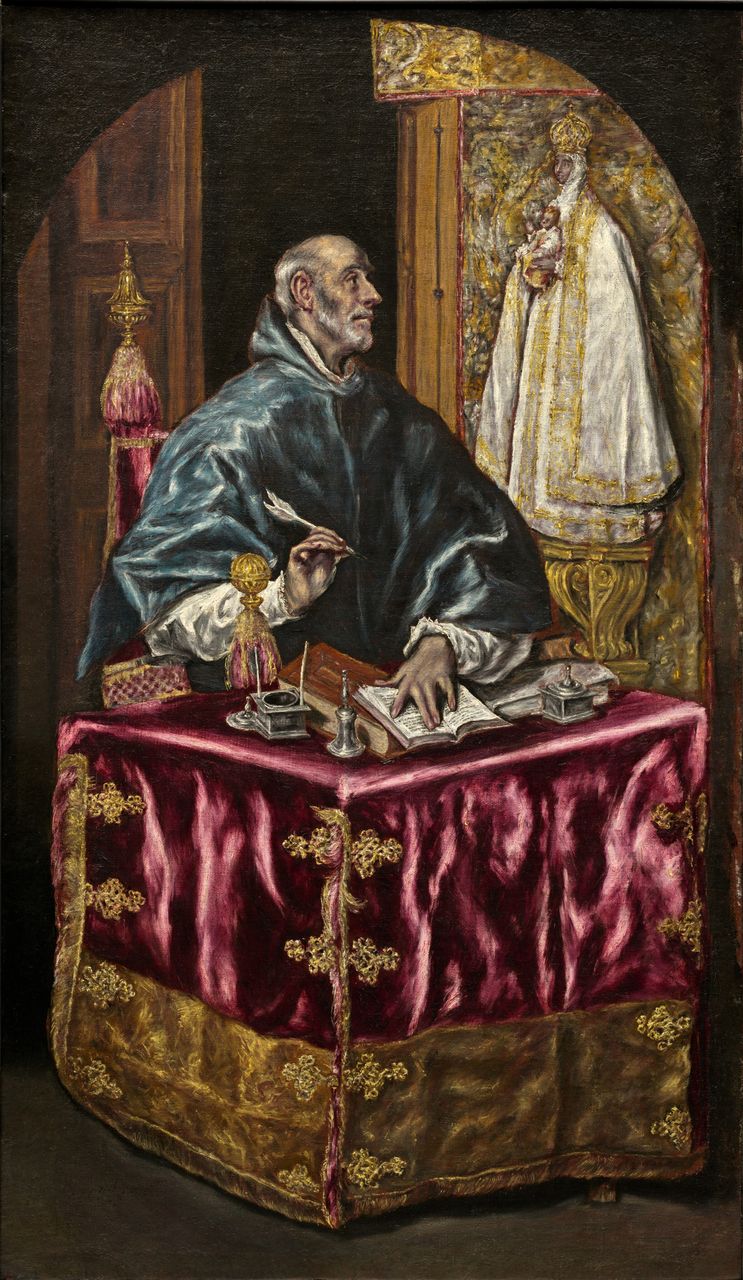
The Nobleman with his Hand on his Chest
El Greco · 1580

El Greco
Greek · 1541–1614
A Greek icon painter from Venetian Crete who became the strangest and most personal painter of Spain, whose elongated saints and ashen light puzzled his own age and founded much of modern art.
Play 20 works from this collection on your TV, phone or tablet with Momentable Art TV.
Play CollectionFrom Candia to Toledo
Domenikos Theotokopoulos, always called El Greco, the Greek, was born in the Kingdom of Candia, today's Crete, then a Venetian possession and a centre of the post-Byzantine art trained first in the icon workshops of the Cretan school. He left for Venice like other Greek artists before him and stayed there until 1570, working, by one friend's account, as a disciple of Titian, then in his eighties; a spell in Rome followed, with a workshop of his own.
In 1577 he moved to Toledo, and Toledo kept him. He lived and worked there until his death in 1614, receiving major commissions and producing the paintings he is known by.
A style of his own
Out of the icons of Crete and the colour of Venice he built a manner no one else has ever been assigned to. Scholars describe him as too individual a painter for any conventional school: figures drawn out tall and slender beyond nature, especially when the canvas was bound for an altarpiece, and colour treated as the most important and least governable part of painting, with primacy over form. His contemporaries found the result dramatic to the point of disturbance; the twentieth century found it prophetic.
The puzzle his own age felt became admiration later. He is regarded as a forerunner of Expressionism and of Cubism, an inspiration to poets as much as painters, and within Spain his pictures shaped Velázquez, who set his figures and folded his draperies in El Greco's manner, and Goya after him.
The painter in his city
The works gathered here show the range of the Toledo years: a great altarpiece of the Resurrection, devotional canvases of penitents and apostles, a portrait of a poet friend, and an Adoration of the Magi from the very start of the career. His last painting, made for the convent where he would be buried, closes the set.
Known works
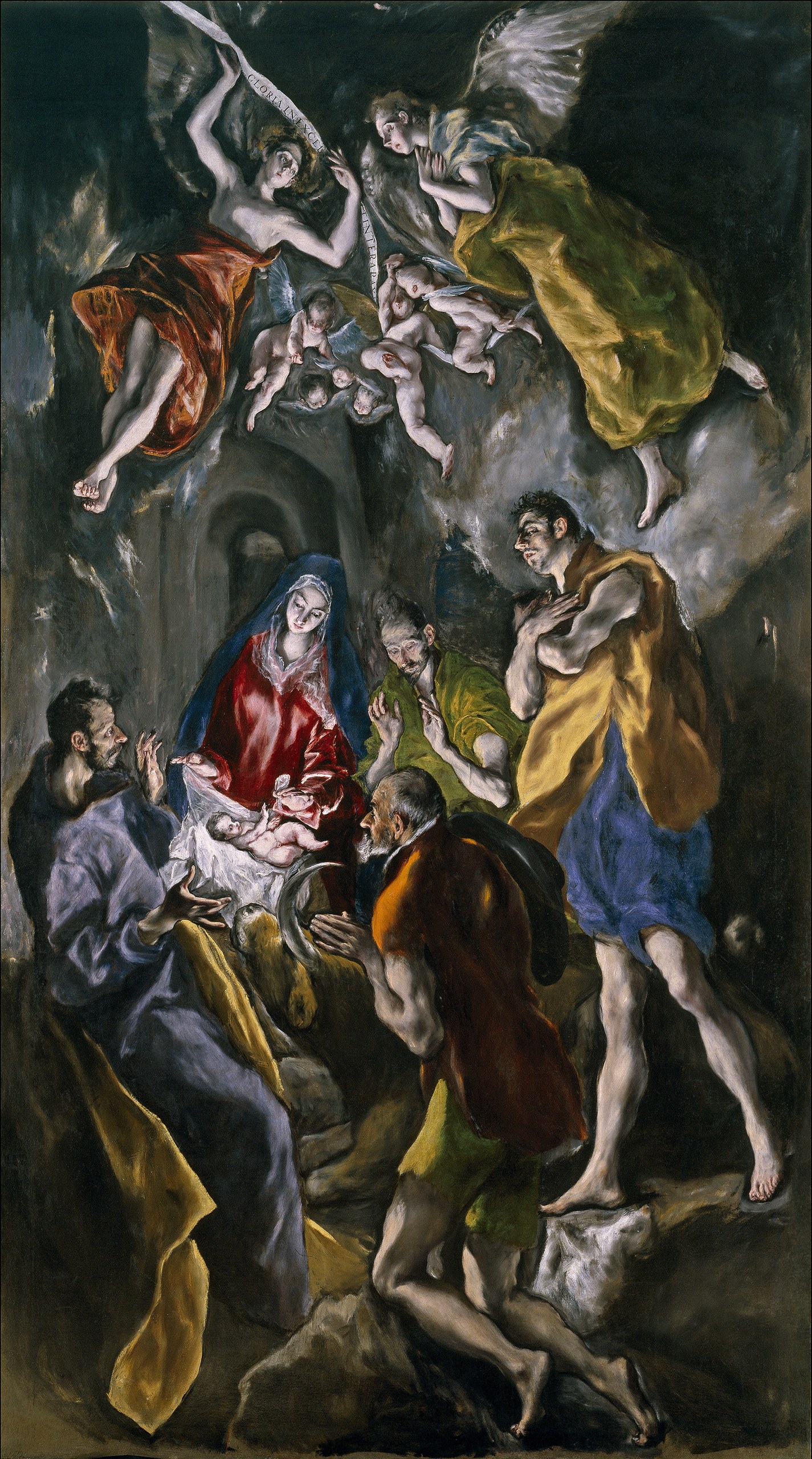
Adoration of the Shepherds
El Greco · 1612
Museo del Prado
Adoration of the Shepherds. The newborn Christ a small blaze of white at the centre of a vortex of shepherds and angels whose bodies spiral upward into heaven; painted in the final year of his own life to hang over his own tomb at Santo Domingo el Antiguo in Toledo, and kept by the Prado as possibly his final work.
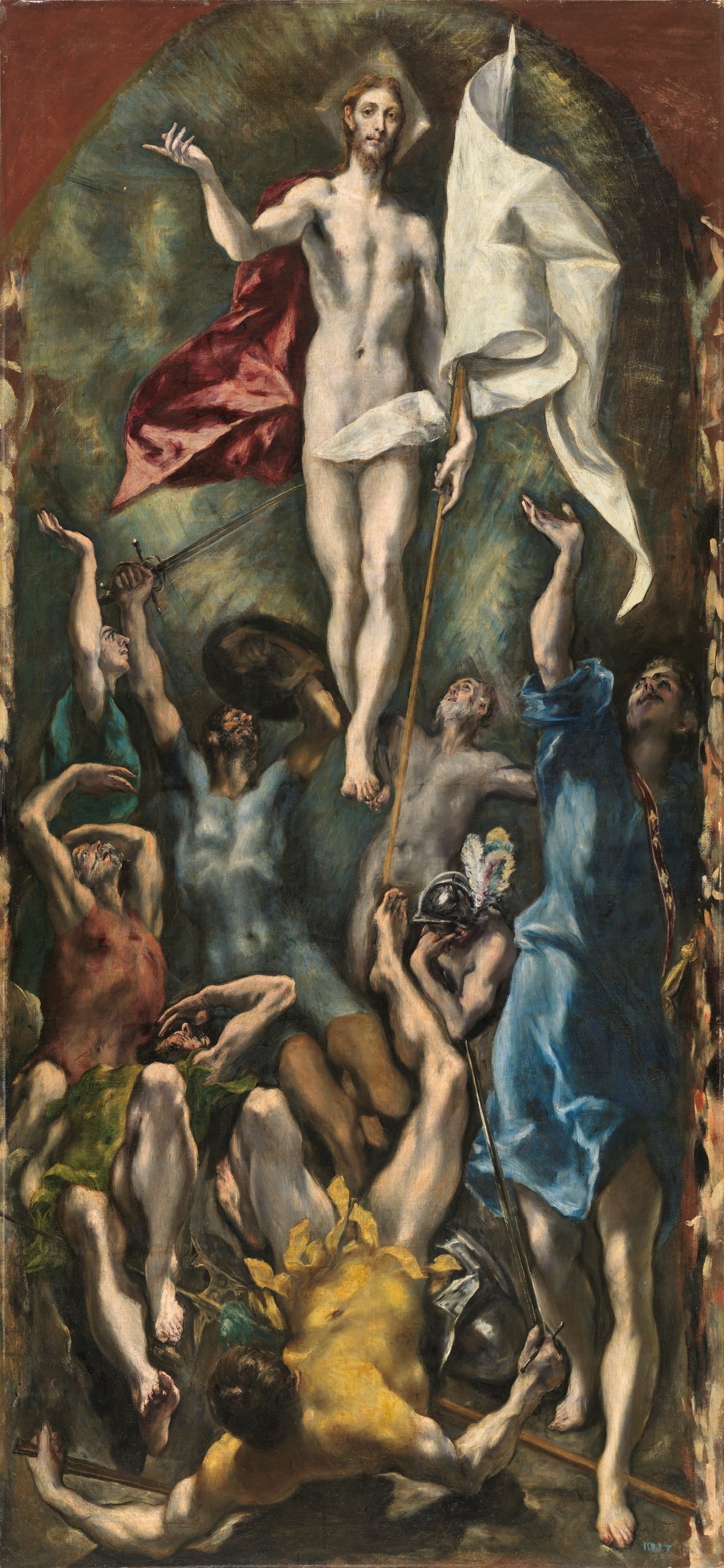
The Resurrection
El Greco · 1598
Museo del Prado
The Resurrection. Christ bursting from the tomb in a white banner of a body above the sleeping soldiers, one of six great canvases made between 1596 and 1599 for the altarpiece of a Madrid college chapel; five of the six canvases are in the Prado today.
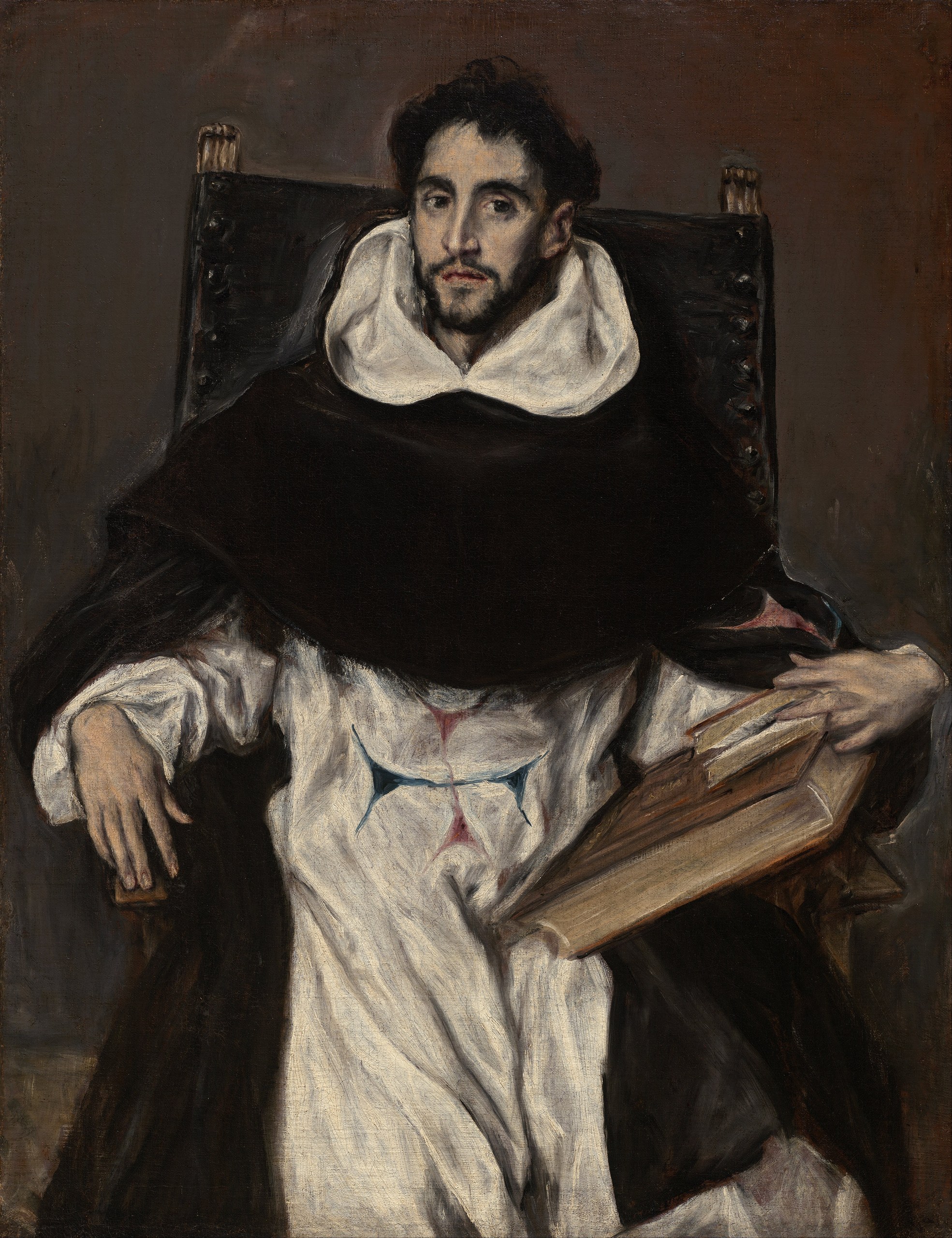
Fray Hortensio Félix Paravicino
El Greco · 1609
Museum of Fine Arts, Boston
Fray Hortensio Félix Paravicino. A Trinitarian friar and major Spanish poet, a close friend of the painter, seen three-quarter length in his habit against a storm-grey ground; painted in 1609 and now in Boston.
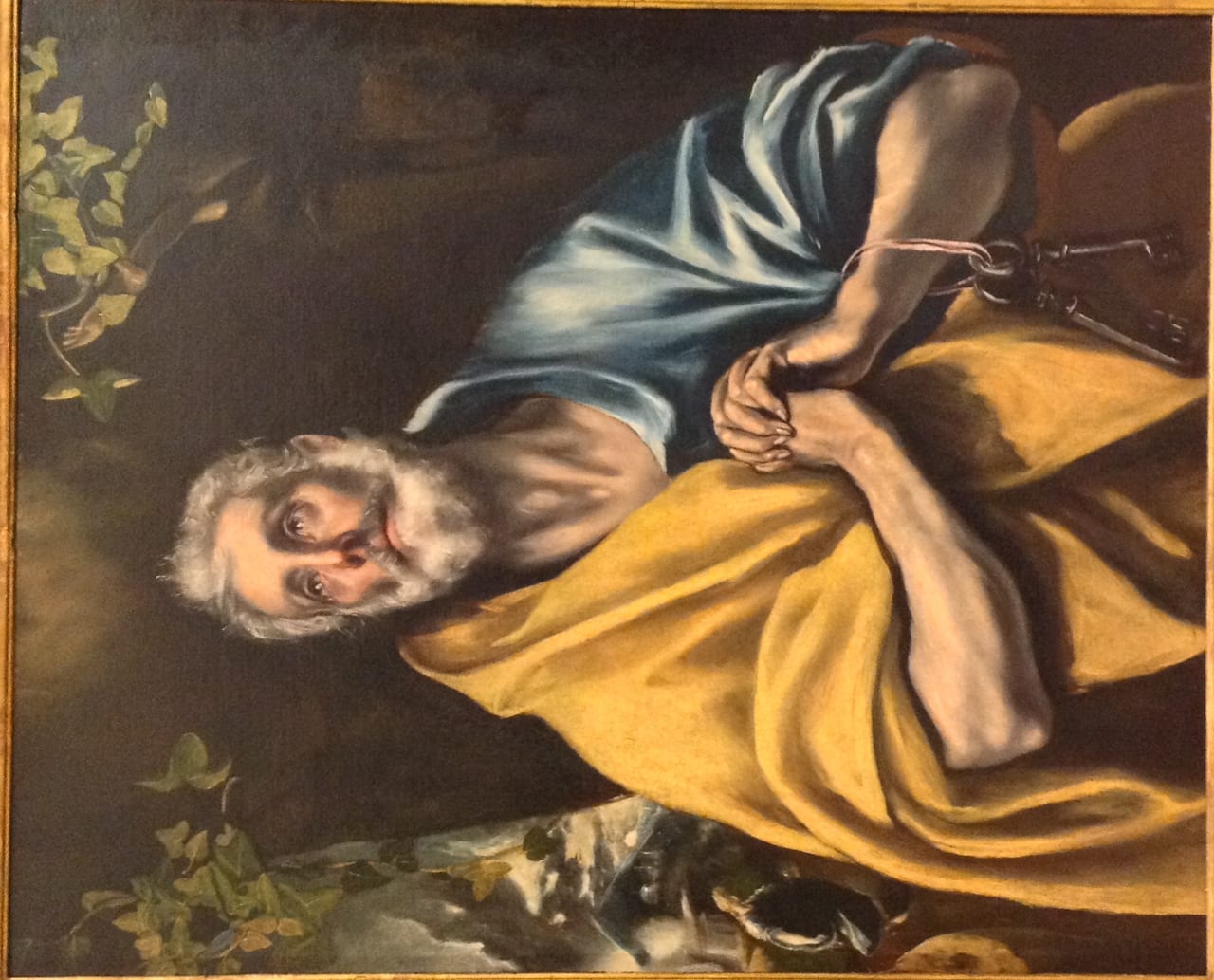
The Tears of St. Peter
El Greco · 1587
Museo Soumaya
The Tears of St Peter. The penitent apostle, hands crossed on his breast, eyes lifted weeping to a sky torn open by light; one of several versions of the subject, this one bought by the Museo Soumaya in Mexico City in 1998.
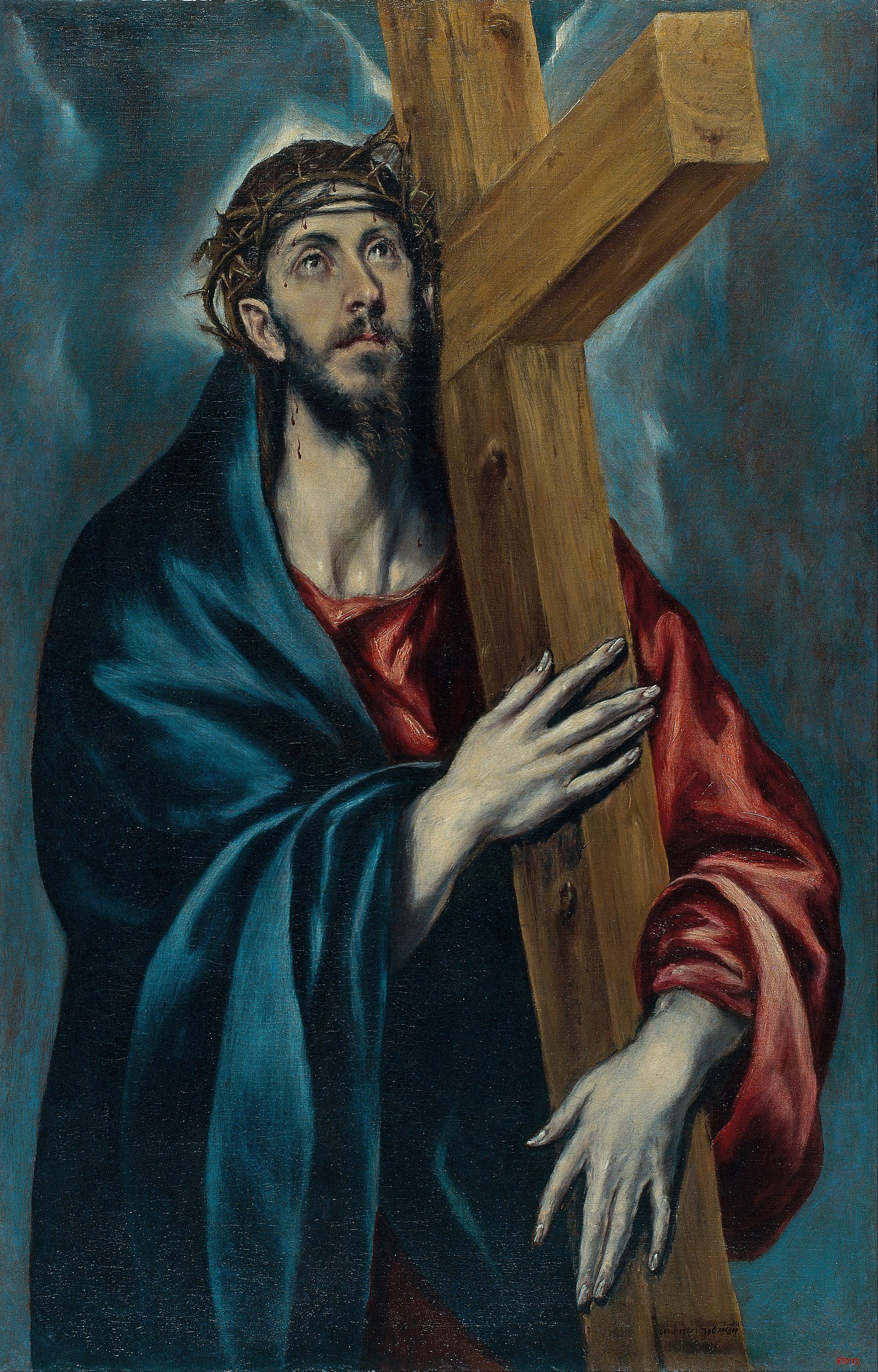
Christ with the cross
El Greco · 1590
Museu Nacional d'Art de Catalunya
Christ with the cross. Christ alone with the beam on his shoulder, his gaze raised to heaven in a face of grey and rose; a Barcelona canvas that passed from the painter Beruete to the collector Santiago Espona, who left it to the Museu Nacional d'Art de Catalunya in 1958.
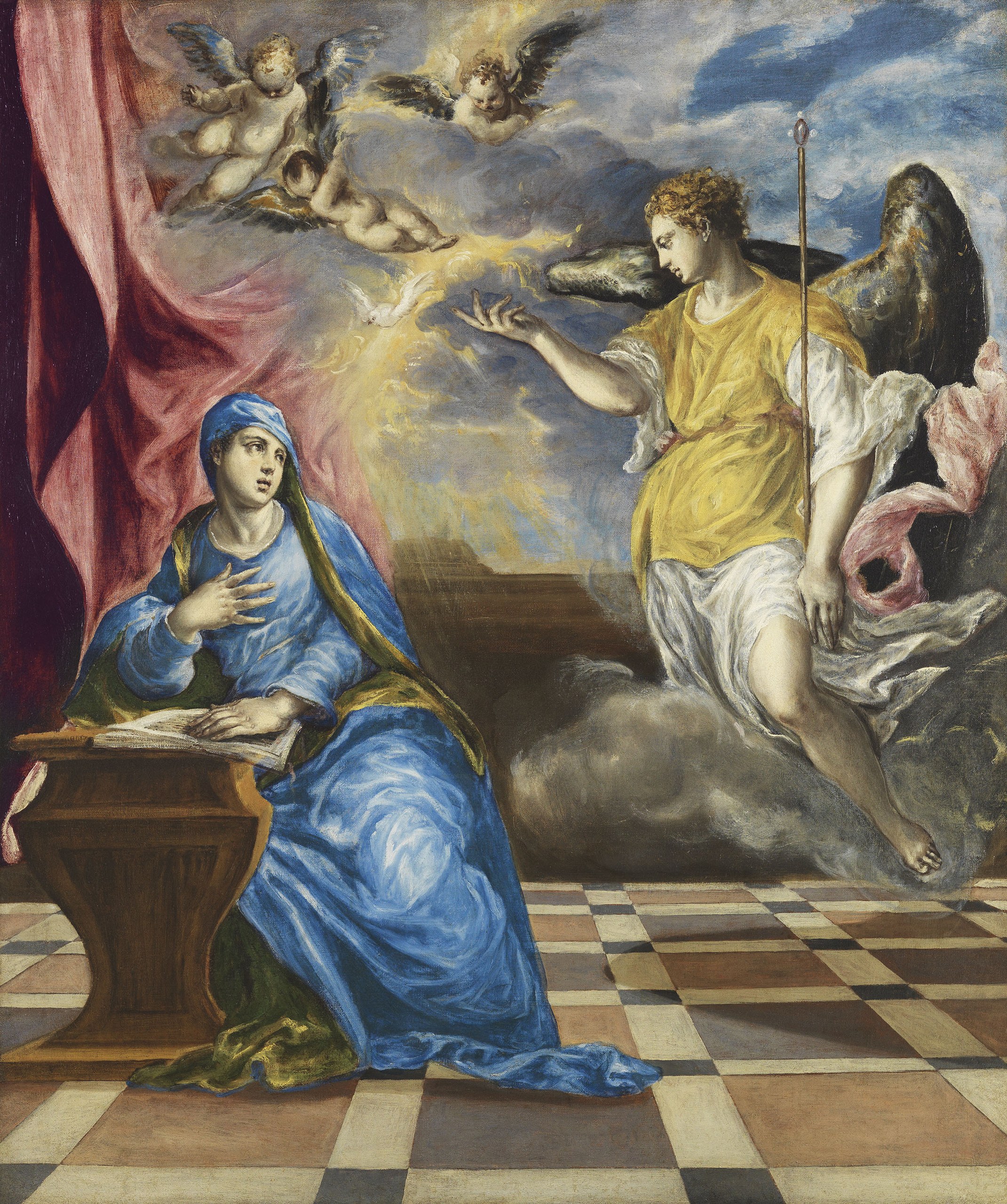
The Annunciation
El Greco · 1576
Thyssen-Bornemisza Museum
The Annunciation. The angel breaking in on the Virgin through a flood of light, painted about 1575 or 1576; among the earliest surviving works of El Greco, still close to his Venetian years, now in the Thyssen-Bornemisza Museum.
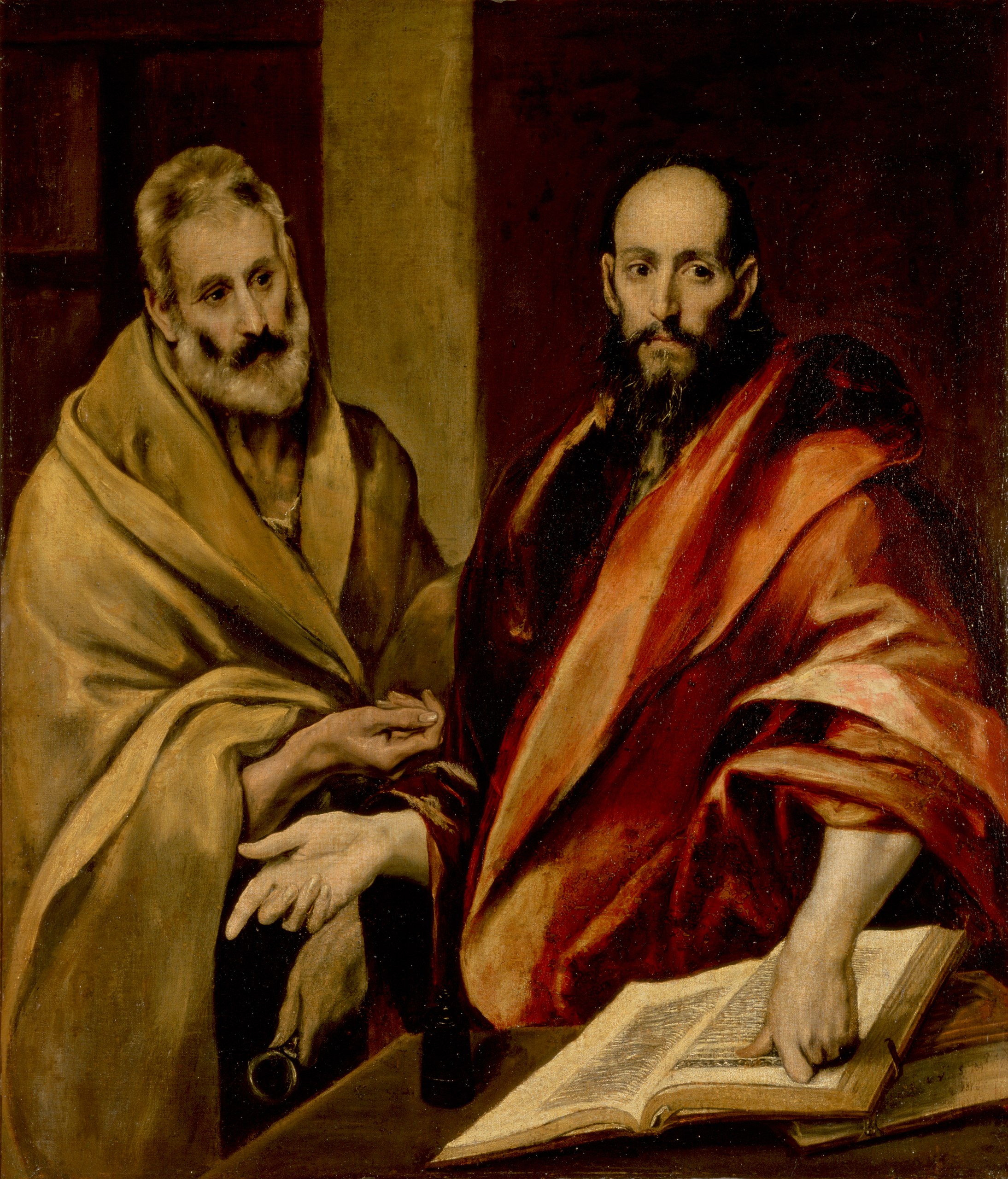
Saints Peter and Paul
El Greco · 1587
State Hermitage Museum
Saints Peter and Paul. The two apostles shoulder to shoulder, Peter's keys in his hand, the open book between them; painted between about 1587 and 1592, and one of several versions of the pairing, this one in the Hermitage.
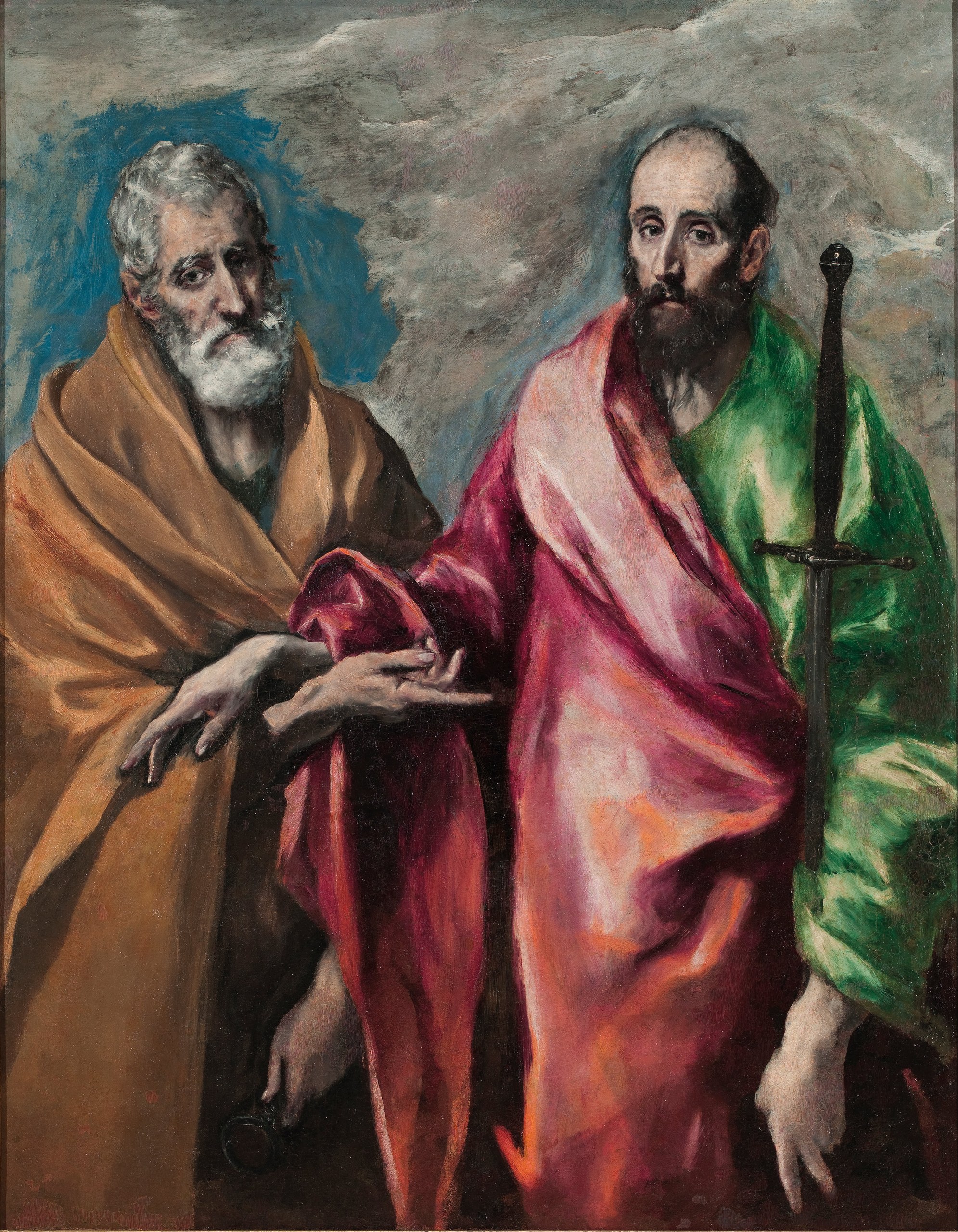
Saint Peter and Saint Paul
El Greco · 1595
Museu Nacional d'Art de Catalunya
Saint Peter and Saint Paul. A later Barcelona pairing of the same two apostles, their heads ringed by an intense blue break in the clouds; the crossed, almost touching hands have been read as disagreement between them, the older Peter gesturing in surrender towards Paul.
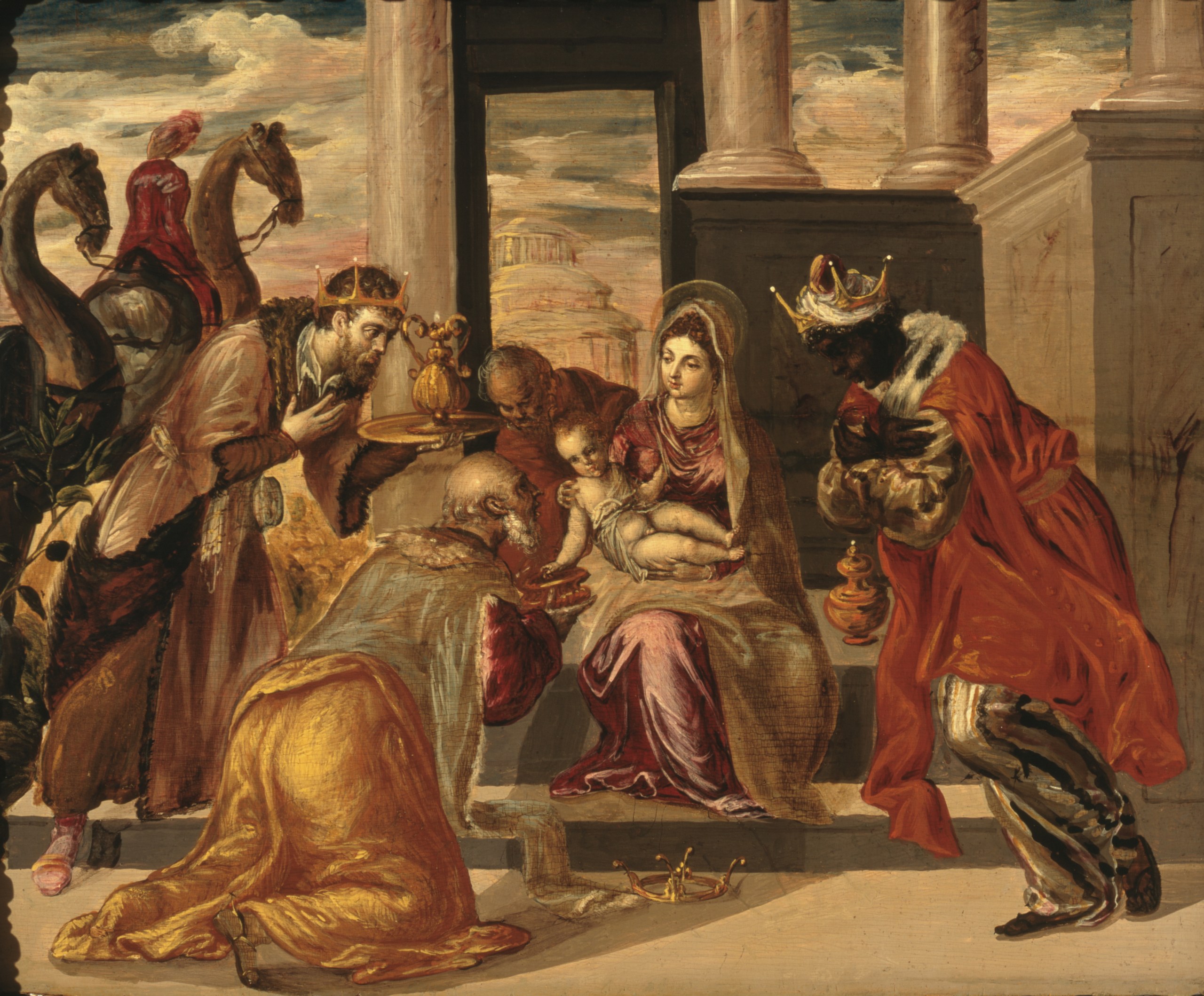
Adoration of the Magi with Camels
El Greco · 1568
Museo Soumaya
Adoration of the Magi with Camels. The kings and their long camel train paying homage, from the very start of the career, around 1568, when the young Cretan was still braiding Byzantine, Venetian and Sienese traditions; the Soumaya holds one of the two versions.
More to discover
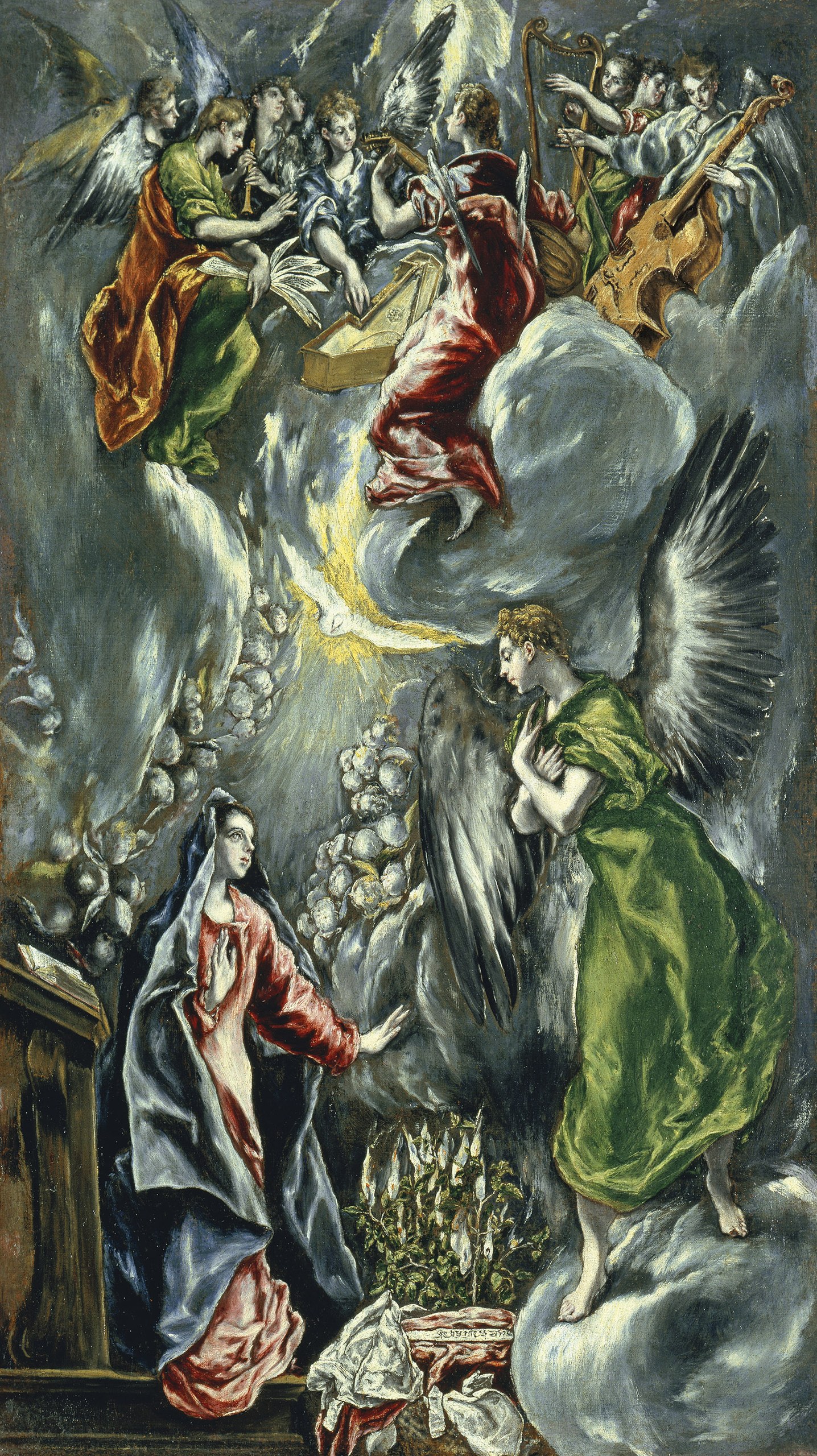
The Annunciation
El Greco · 1598
Thyssen-Bornemisza Museum
The Annunciation. The small replica El Greco made of his great Annunciation for the Aragón college chapel in Madrid, a commission finished in July 1600 and carted from his Toledo workshop for assembly. Mary receives the angel at the meeting of two realms, little around her of the earth beyond the reading desk, while a cloud of musical angels fills the heaven above; the canvas came to the Thyssen from the Pascual collection in Barcelona in 1954.
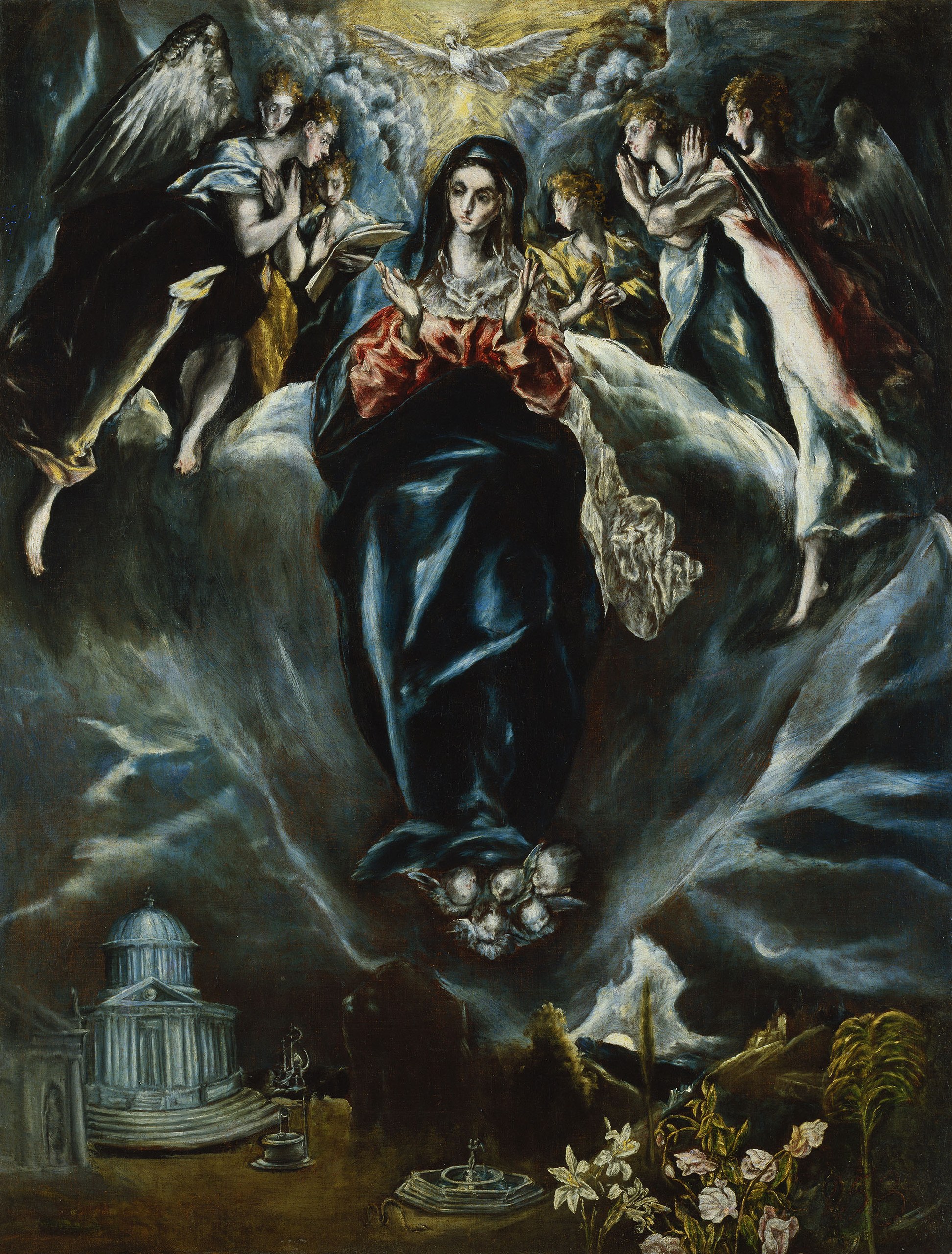
The Immaculate Conception
El Greco · 1611
Thyssen-Bornemisza Museum
The Immaculate Conception. A late Virgin lifted on cloud and cherubim, a work the Thyssen hangs under two names, father and son: Soehner saw a weaker hand in the landscape and gave that part to Jorge Manuel, Wethey listed the canvas with workshop help, and Álvarez Lopera kept it as El Greco's own with his son's collaboration, a late return to his San Román composition with new force and clarity.
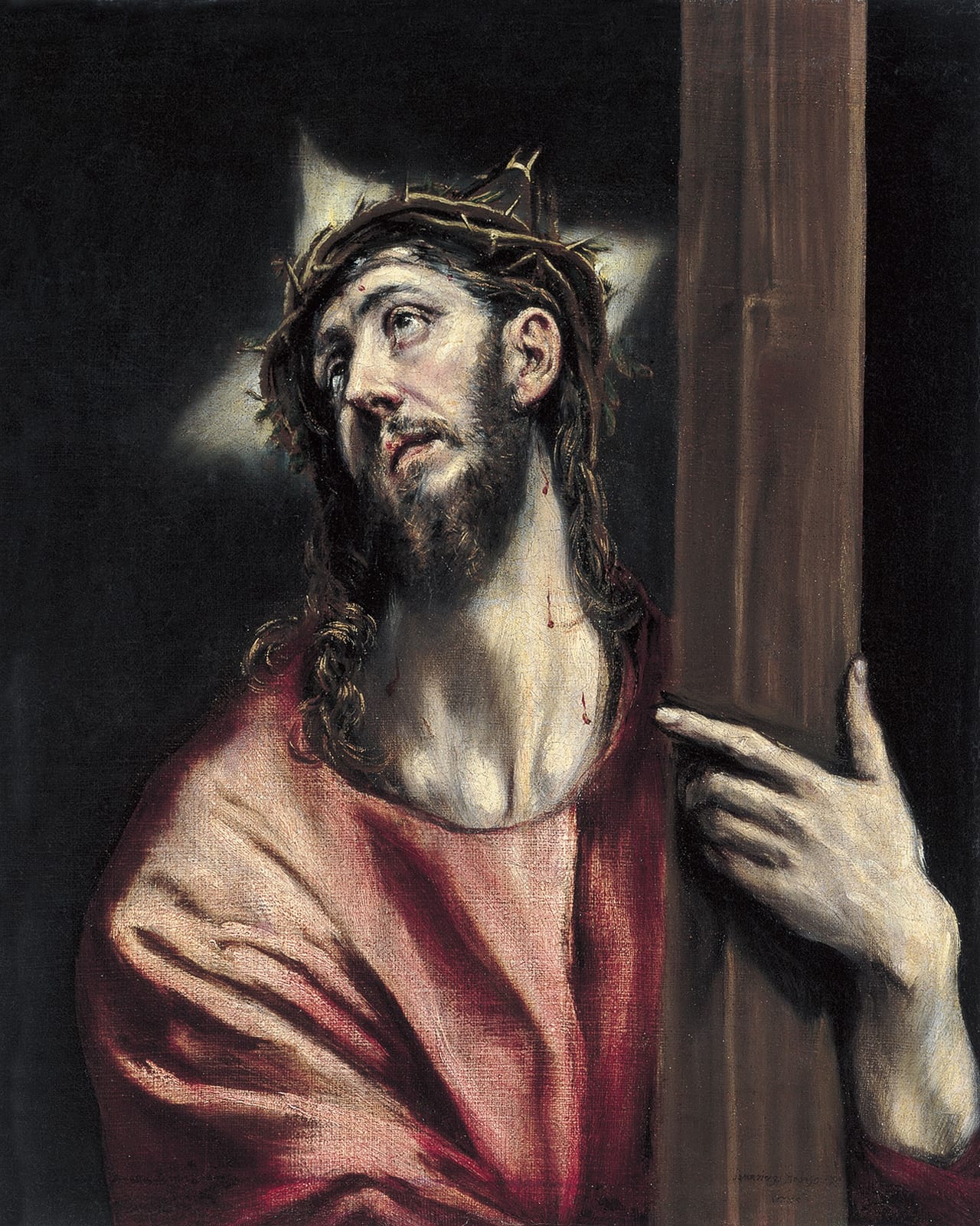
Christ with the Cross
El Greco · 1590
Thyssen-Bornemisza Museum
Christ with the Cross. Christ alone in his red tunic against a neutral ground, the crown of thorns bleeding down his face, his head turned to his right and the arms of the cross left out of the picture: the third of the formats Wethey sorted this subject into. Álvarez Lopera dated it to the decade from 1587; it entered the Thyssen collection in 1930.
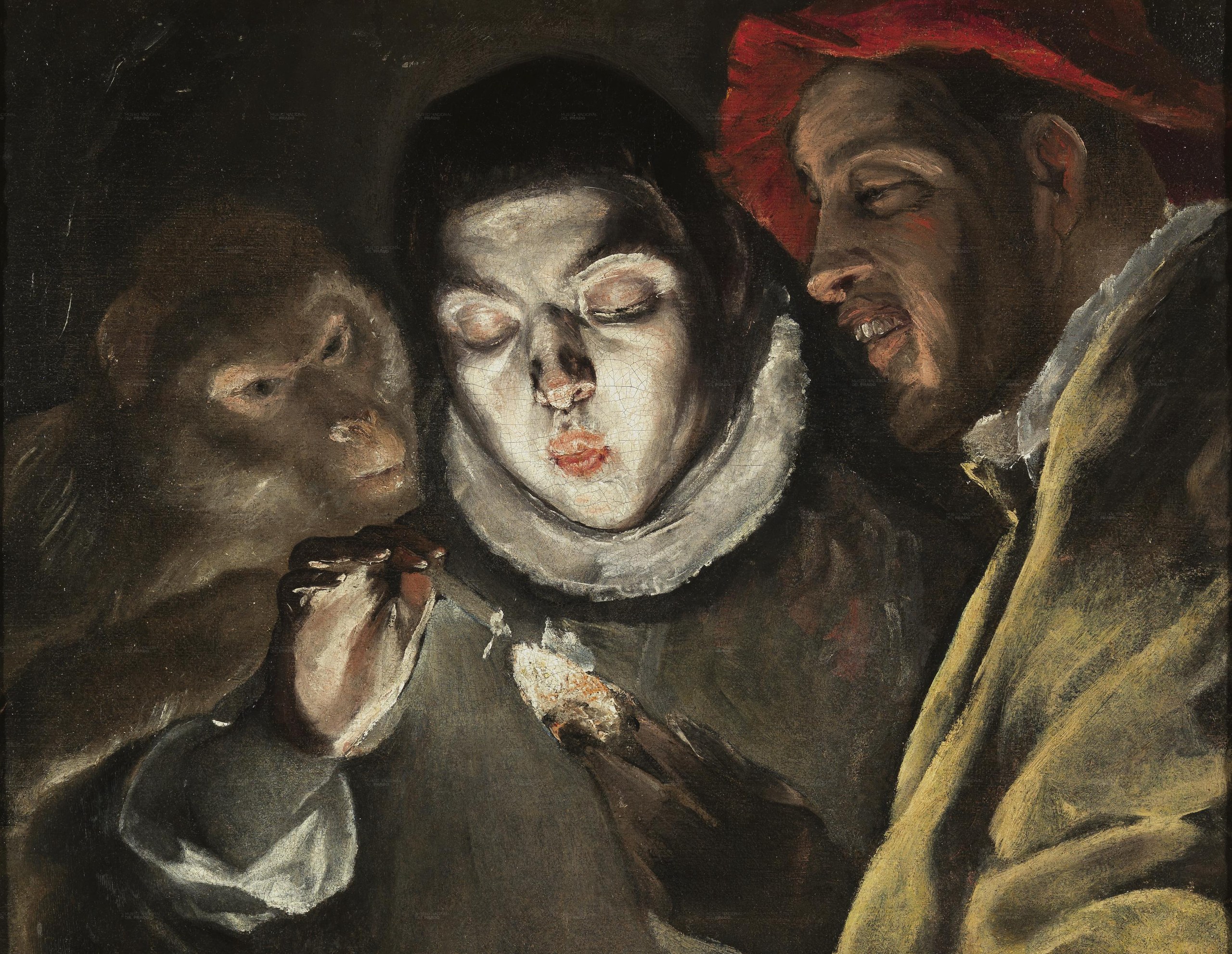
The Fable
El Greco · 1580
Museo del Prado
The Fable. A rare secular puzzle: a young figure in a blue jacket with a white cuff and scarf is watched by a dull brown monkey and a man in a red hat and yellow doublet, all lit by the whitish glow of an ember, an effect traced to the example of Jacopo Bassano. El Greco treated the theme three times, and this Prado canvas counts as the earliest and the most Venetian; whether the watched figure is a girl or a boy, and whether the scene hides a proverb with roots in Pliny, is still argued.
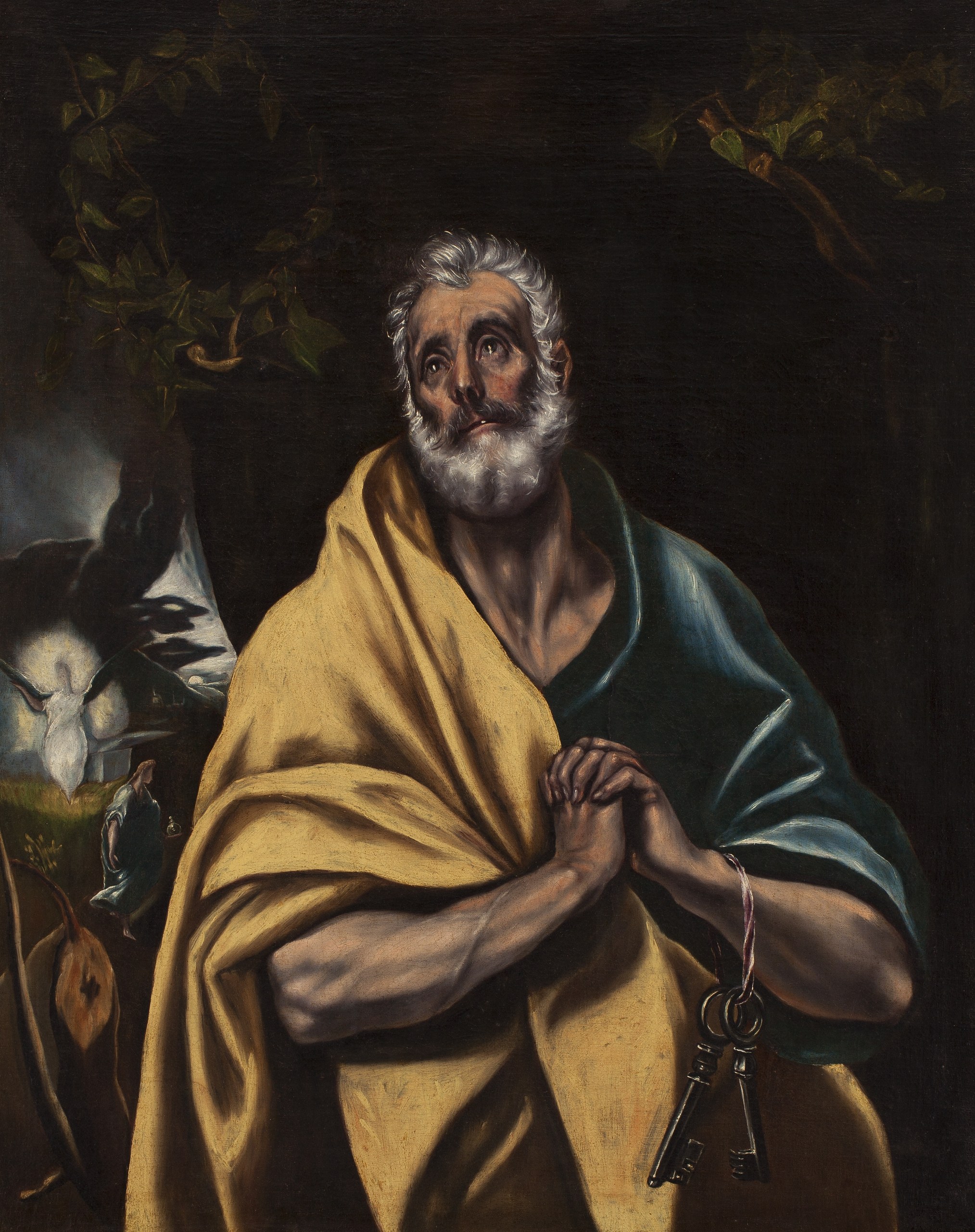
The Tears of Saint Peter
El Greco · 1605
Museu Nacional d'Art de Catalunya
The Tears of Saint Peter. The penitent apostle weeping, a subject El Greco returned to all his life. This canvas carries his Greek signature, and its authorship divides the scholars: Cossío, Mayer and Camón Aznar gave it wholly to the master, Wethey to his school, number X-434 in his catalogue. It hangs in the Cau Ferrat at Sitges, reached through the painter Santiago Rusiñol.
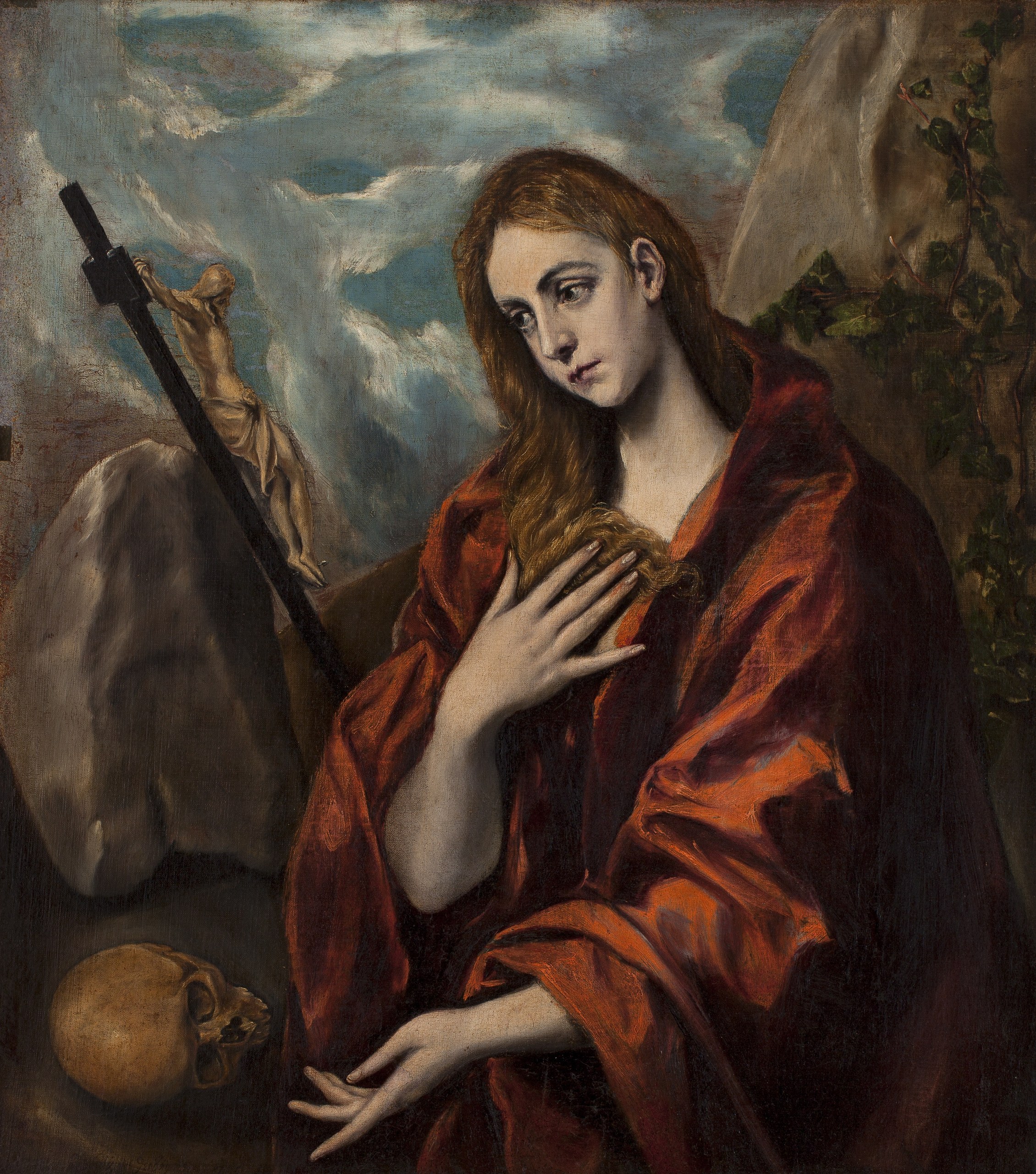
Pentitent Mary Magdalen
El Greco · 1585
Museu Nacional d'Art de Catalunya
Penitent Mary Magdalen. One of the five Magdalen inventions of his career, painted between 1585 and 1590. Where the earlier Budapest Magdalen is a beauty, here the eyes lift and the mood turns inward: sensuality given over to penance, the skull and the folded hands fixing the thought on death and pardon.
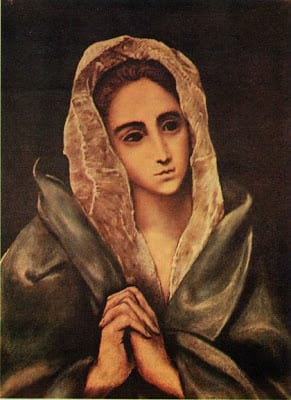
Mourning madonna
El Greco · 1590
Thyssen-Bornemisza Museum
Mourning madonna. The grieving Virgin close up, in oil on canvas, a portrait of sorrow of about 1590 that once stood in the Thyssen holdings at Villa Favorita. The eyes are wet, the head bowed, the dark ground pressing close around her face.
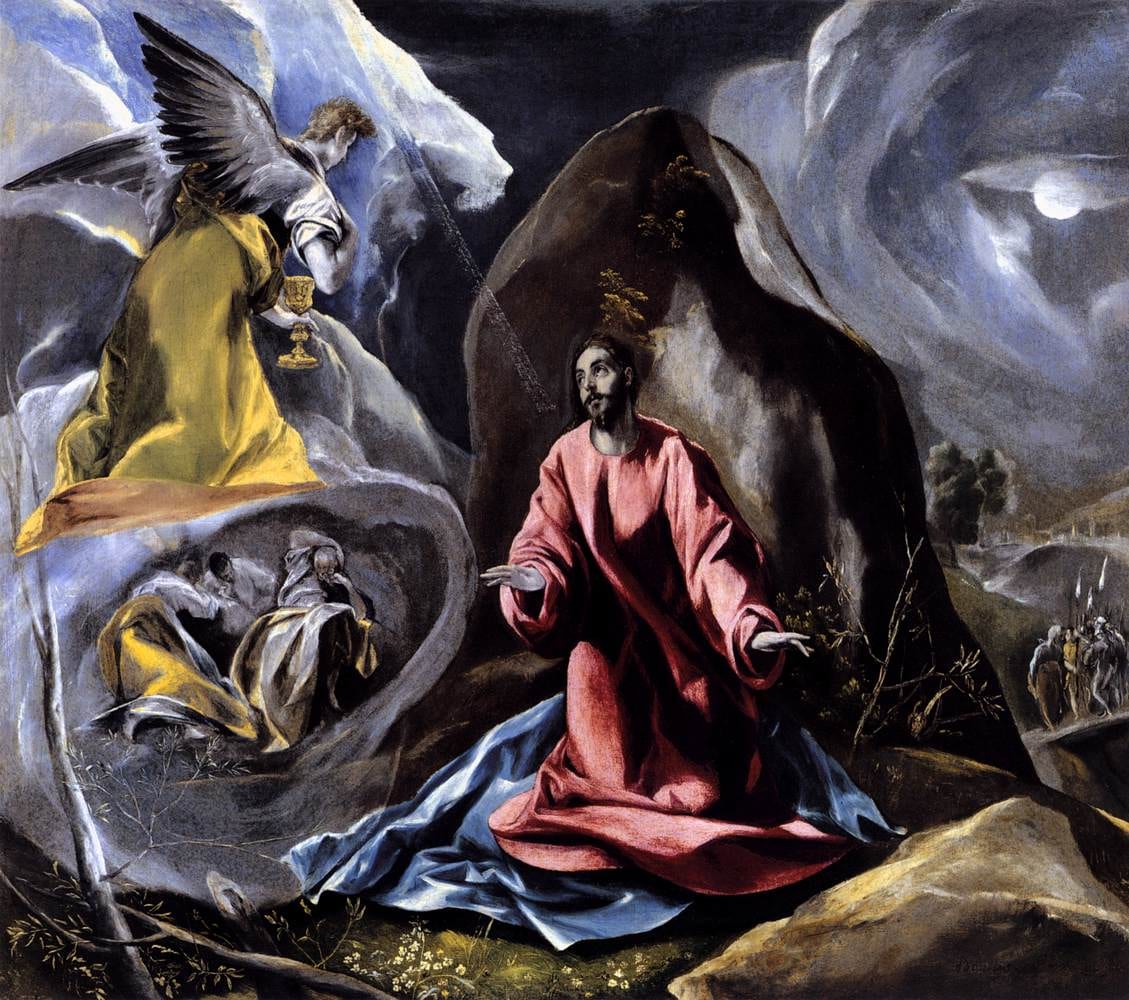
The Agony in the Garden
El Greco · 1590
Toledo Museum of Art
The Agony in the Garden. Christ at prayer in the night garden while his apostles sleep, an oil on canvas of about 1590, a Mannerist vision of the night before the Passion, held by the Toledo Museum of Art in Ohio.
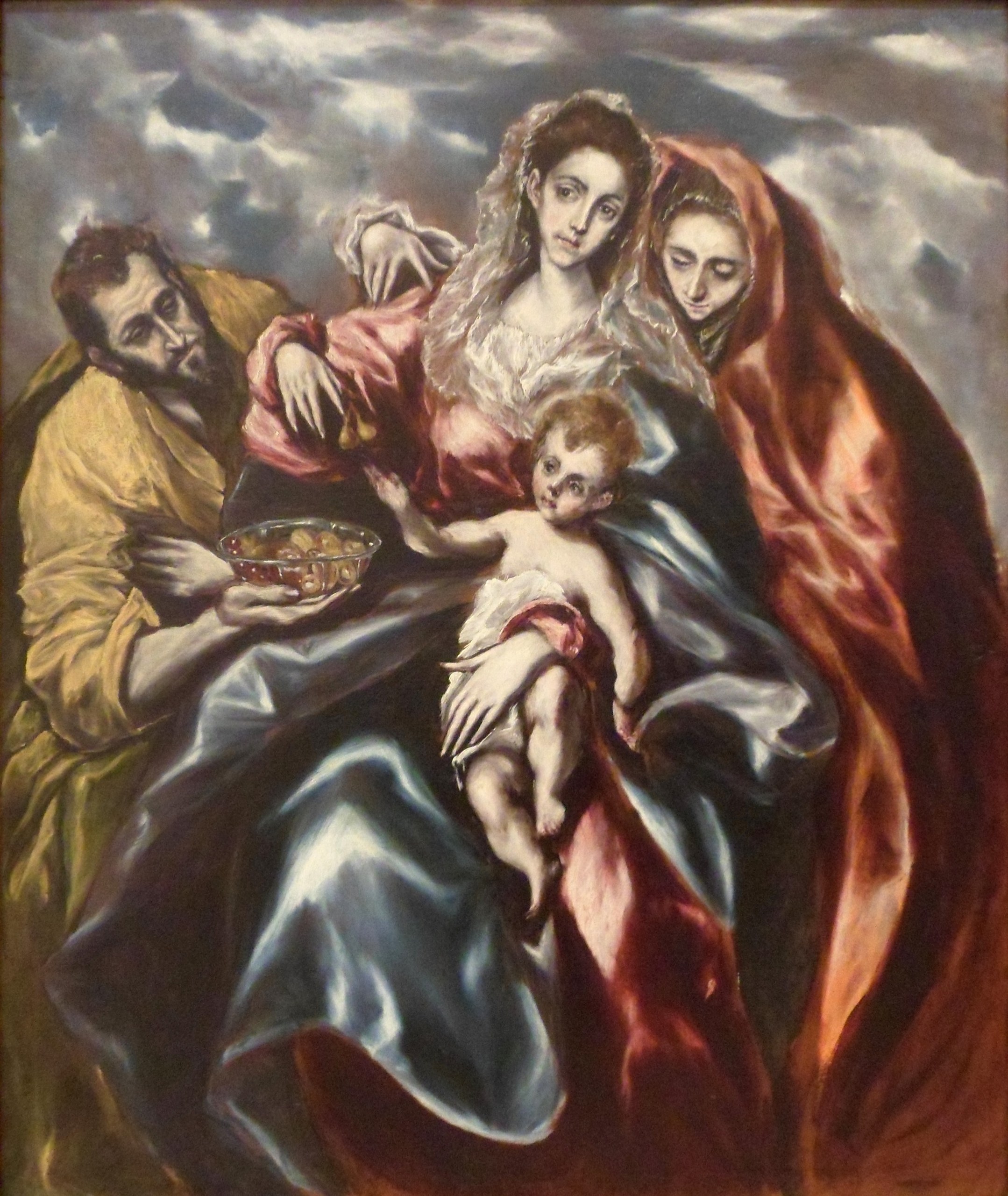
The Holy Family with Mary Magdalen
El Greco · 1610
Museo Soumaya
The Holy Family with Mary Magdalen. The Soumaya's Holy Family of about 1610, a canvas its record places among the works of El Greco and his school and follows from his own Holy Family with Mary Magdalen: the Virgin and Child with the penitent Magdalen in attendance, late devotional painting in his elongated last manner.
Sources
- Wikipedia, “El Greco”
- Wikipedia, “Adoration of the Shepherds (El Greco, Madrid)”
- Wikipedia, “Resurrection (El Greco)”
- Wikipedia, “Portrait of Fray Hortensio Félix Paravacino”
- Wikipedia, “The Tears of Saint Peter (El Greco, Mexico City)”
- Wikipedia, “Christ Carrying the Cross (El Greco, Barcelona)”
- Wikipedia, “Annunciation (El Greco, Museo Thyssen-Bornemisza)”
- Wikipedia, “Saint Peter and Saint Paul (El Greco, Saint Petersburg)”
- Wikipedia, “Saint Peter and Saint Paul (El Greco, Barcelona)”
- Wikipedia, “Adoration of the Magi (El Greco, 1568)”
- Wikipedia, “The Nobleman with his Hand on his Chest”
- Museo Nacional Thyssen-Bornemisza, “Christ with the Cross”
- Museo Nacional Thyssen-Bornemisza, “The Annunciation”
- Museo Nacional Thyssen-Bornemisza, “The Immaculate Conception”
- Wikipedia, “The Tears of Saint Peter (El Greco and studio, Sitges)”
- Web Gallery of Art, “Mary Magdalen in Penitence”
- Wikipedia, “La fábula (El Greco)”
- Wikidata, “Mourning madonna”
- Wikidata, “The Agony in the Garden”
- Wikidata, “The Holy Family with Mary Magdalen”
Invite El Greco into your living room
Play 20 works from this collection on your TV, phone or tablet with Momentable Art TV.