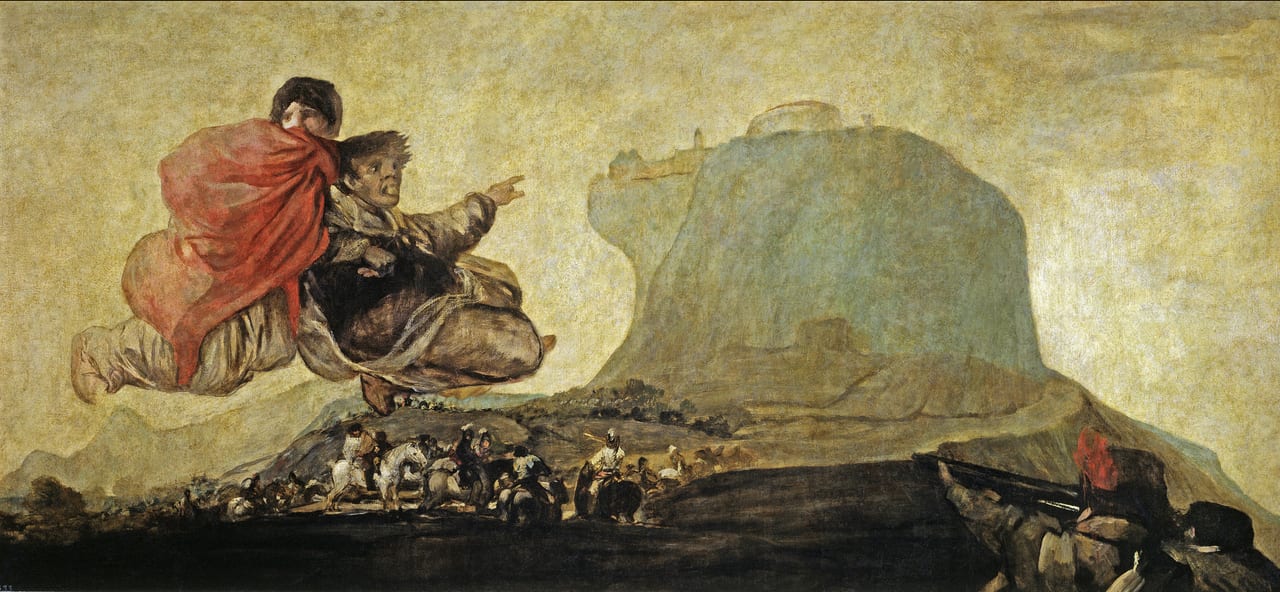
The Clothed Maja
Francisco Goya · 1800

Francisco Goya
Spanish · 1746–1828
Court painter to the Spanish kings who ended up painting his fears straight onto the walls of a lonely house, and changed what painting was allowed to say.
Play 33 works from this collection on your TV, phone or tablet with Momentable Art TV.
Play CollectionFrom Fuendetodos to the court
Goya first saw light in 1746 at Fuendetodos, a village in Aragón, the child of José Benito de Goya and Gracia de Lucientes. The year 1786 brought him a post as painter to the Spanish court, and the years around it gave him his subjects: faces of the aristocracy and the royal circle, and designs in a Rococo spirit for the tapestries of the palace.
A step up came in 1789, when Charles IV gave him the title of court painter, and in 1799 he stood at the summit of his trade with the office of Primer Pintor de Cámara, first painter to the chamber. From there he could look at the great of Spain from a distance of a few feet, which is close enough to be honest.
The illness that changed everything
An illness no doctor ever named struck him in 1793 and took his hearing; the shadows in the work deepened from that year on. The eighty plates of the Caprichos, issued in 1799, laugh at folly, at the powerful and at superstition, and the etchings now called The Disasters of War met the French occupation of his country with scenes of violence no artist had dared before.
He started the Disasters at sixty-two, sick and nearly without hearing. Only in 1863, a third of a century after he died, did the plates reach the public, when it had become safe to look at what they accused.
The House of the Deaf Man
In 1819 he bought a country place by the Manzanares outside Madrid, remembered as the Quinta del Sordo, the deaf man's house, a name that was already its name when he moved in. There, between 1819 and 1823, cut off from the world and soured by the turn Spanish politics had taken, he worked in oil on the bare plaster of its rooms: fourteen pictures he never named and hardly intended for any eye. Lifted from the walls onto canvas later, they hang now in the Prado.
Spain lost him in 1824, when he left for Bordeaux and the company of friends who shared his liberal politics, taking with him Leocadia Weiss, the young housekeeper who kept his last years and may have loved him. He died in France in 1828; the Milkmaid of Bordeaux belongs to that final stretch.
Known works
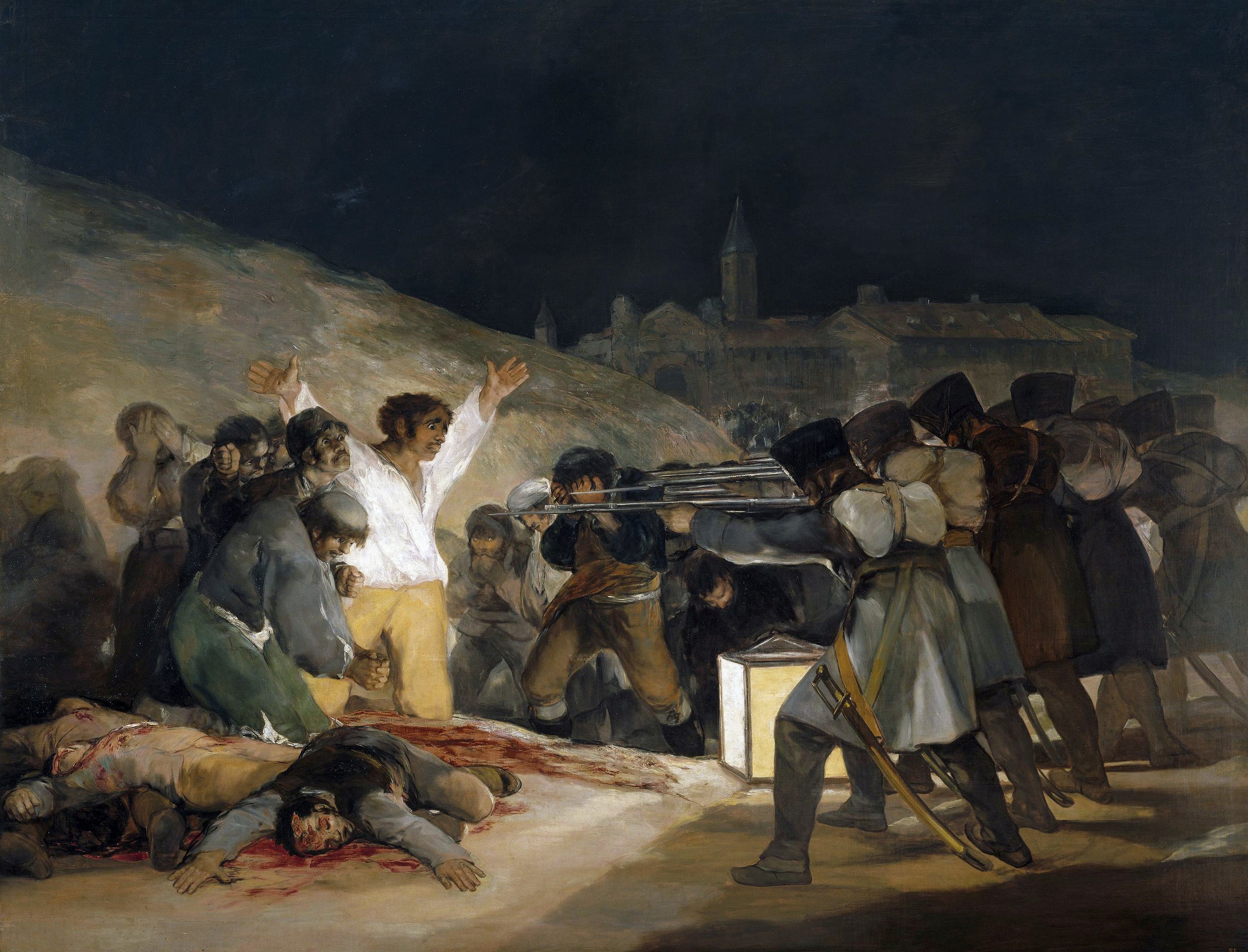
The Third of May 1808
Francisco Goya · 1814
Museo del Prado
Faceless soldiers in a line, one man in a white shirt lit by a lantern with both arms open; the provisional government that followed the French ousting bought it at Goya's own urging, and it stands among the founding pictures of modern art.
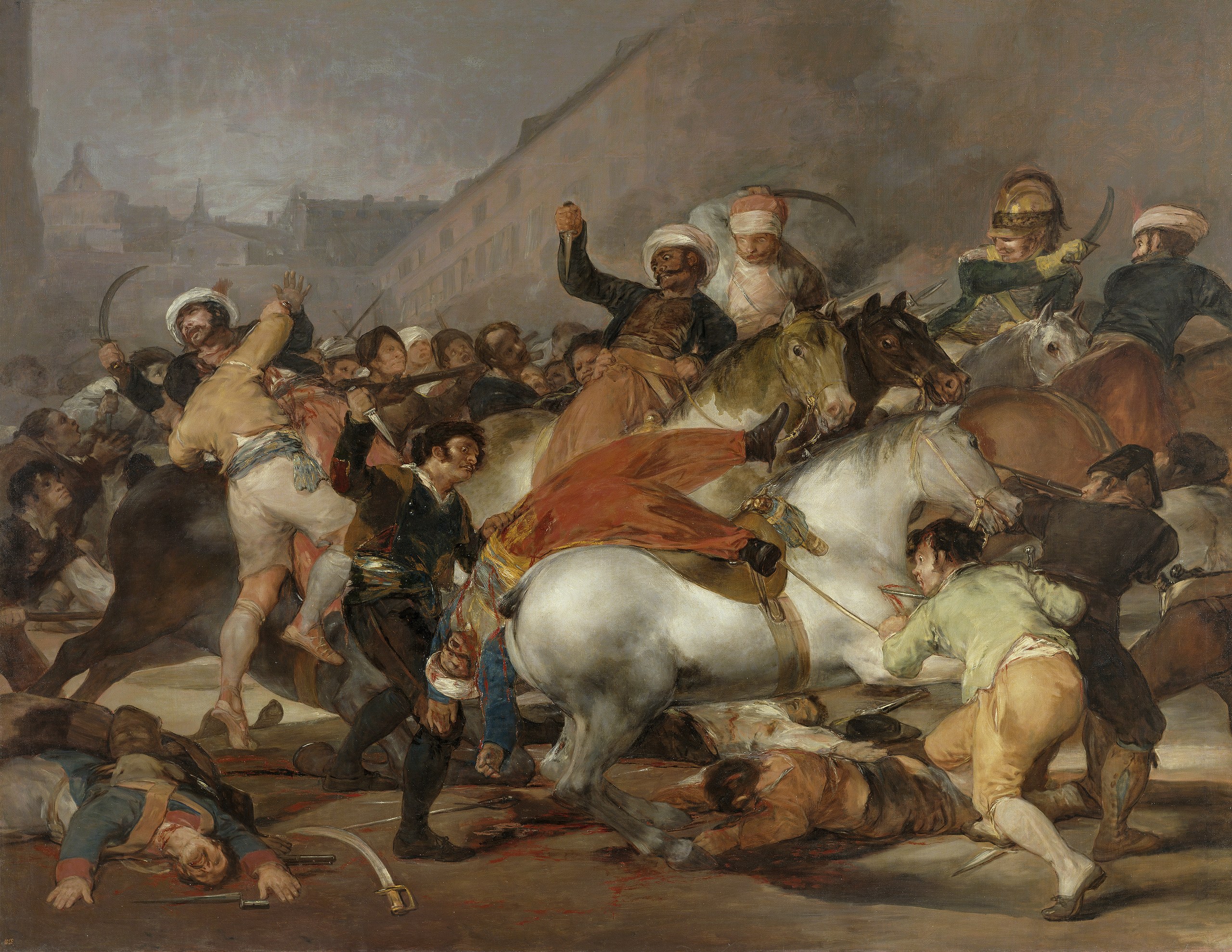
The Second of May 1808
Francisco Goya · 1814
Museo del Prado
The people of Madrid rising against the occupying French, one of the revolts that set the Peninsular War alight; its companion piece is the firing squad of the Third of May, and both were painted together in 1814.
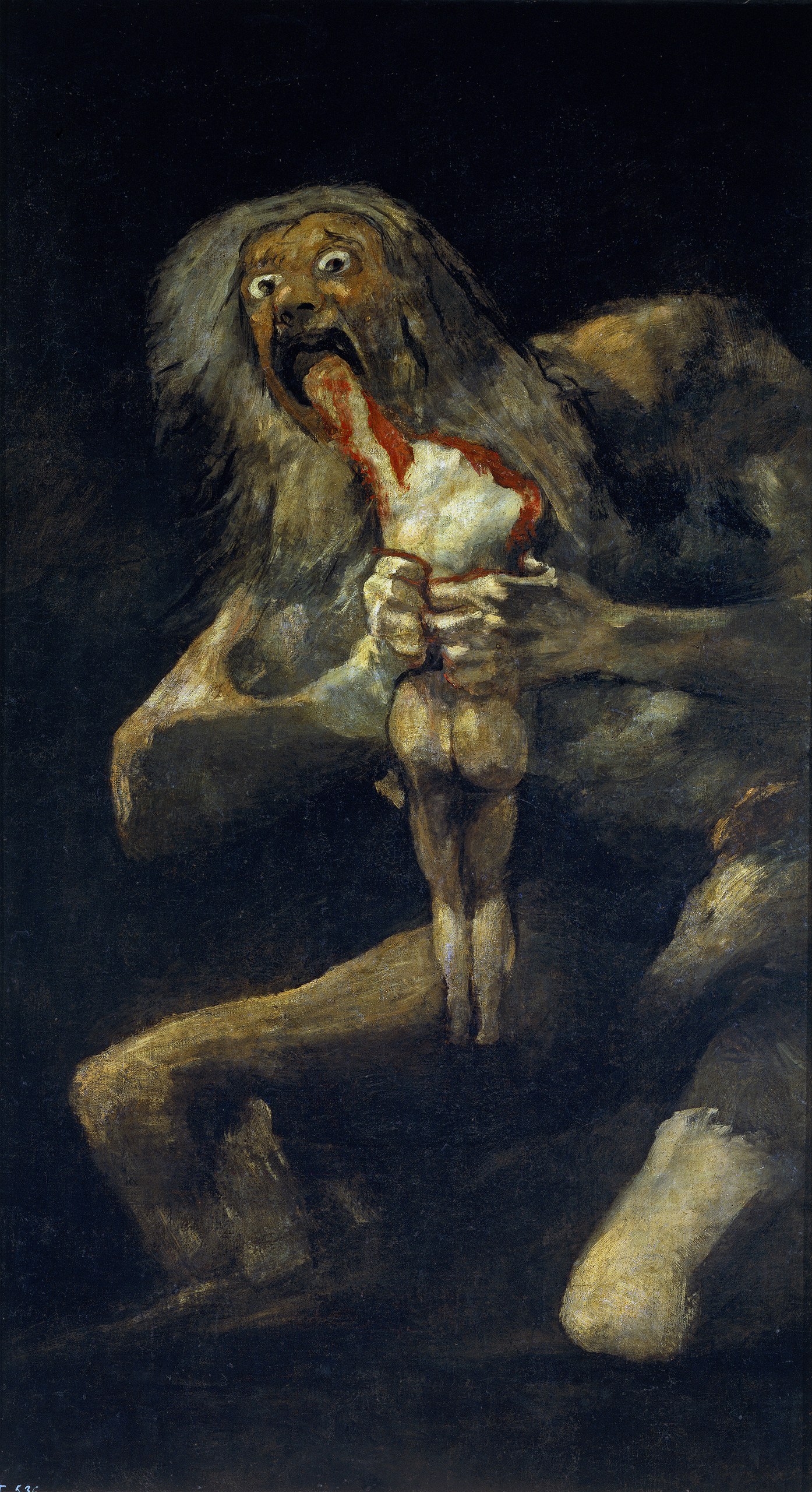
Saturn Devouring His Son
Francisco Goya · 1820
Museo del Prado
The old god bent over a half-eaten body; done straight onto a wall of Goya's own house between 1820 and 1823, it came off the plaster onto canvas only after he was gone, and belongs now to the Prado.
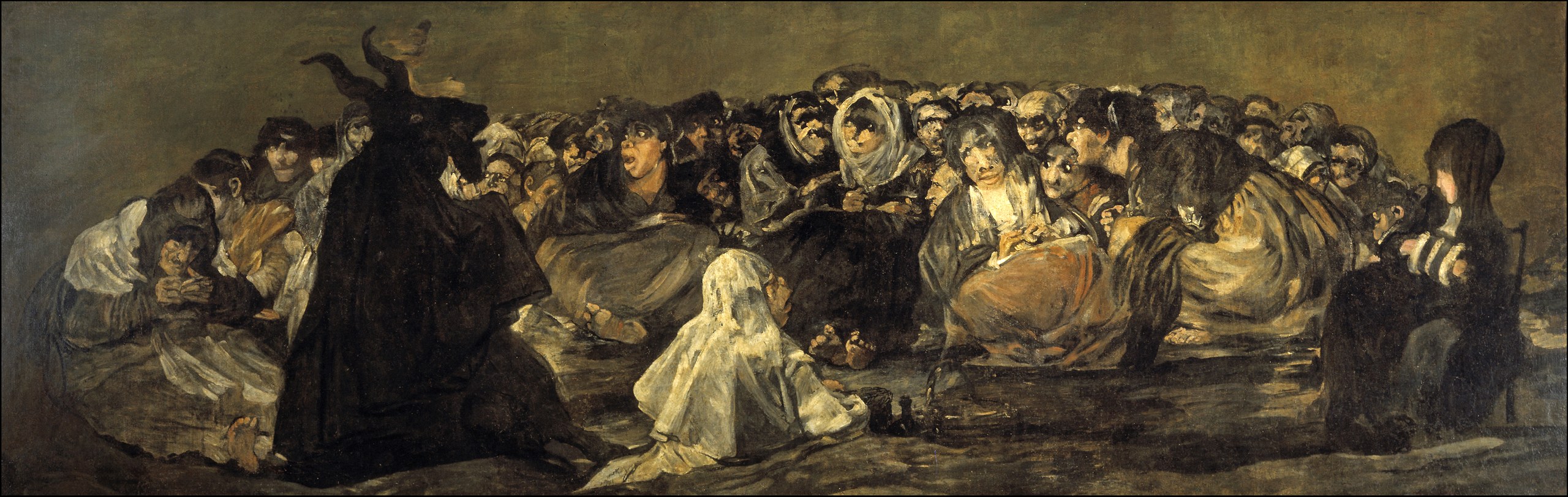
Witches' Sabbath
Francisco Goya · 1820
Museo del Prado
The devil as a great goat, a moonlit shape looming above a ring of frightened crones; worked in oil on the plaster of the Quinta del Sordo, it is one of the fourteen Black Paintings.
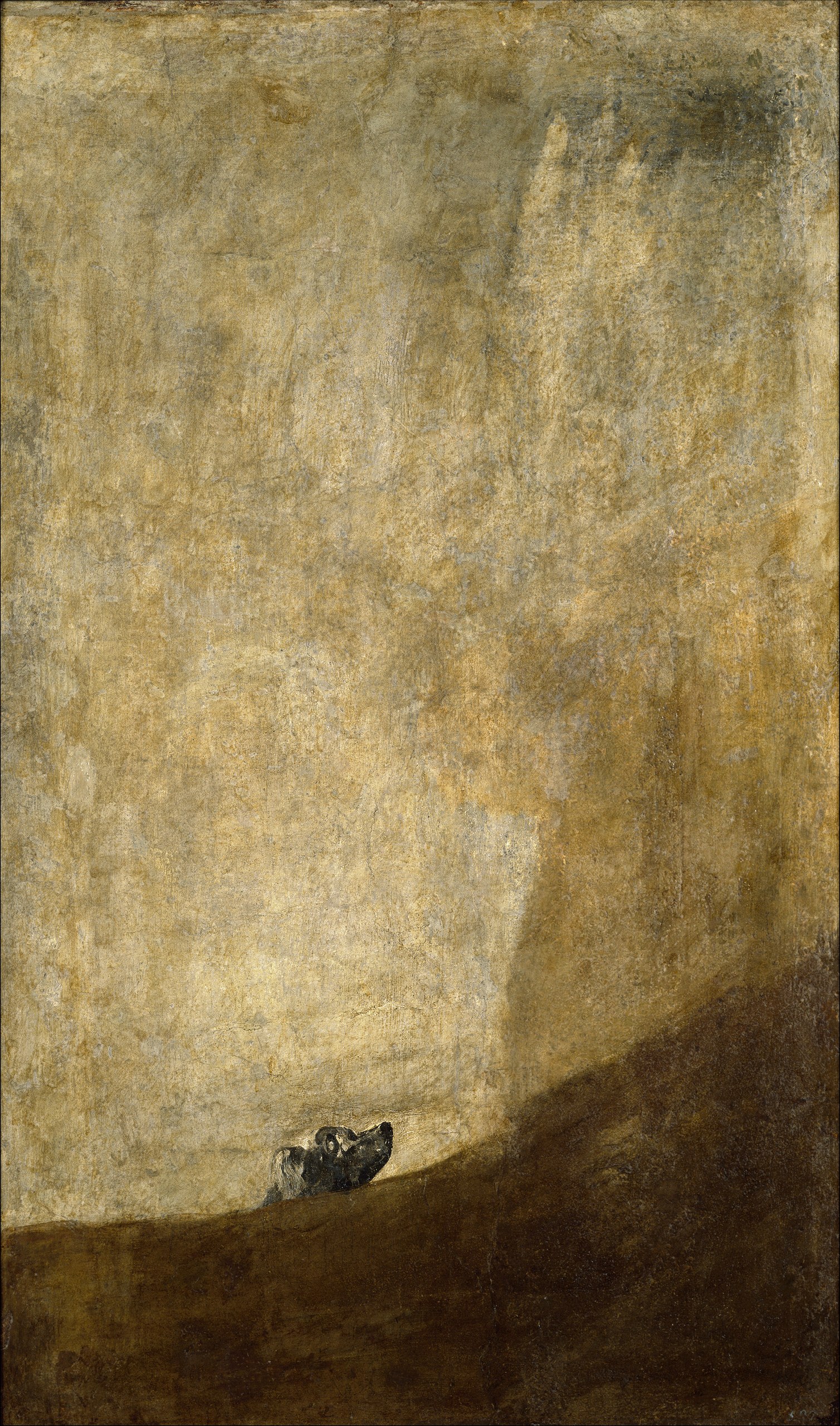
The Dog
Francisco Goya · c. 1820–1823
Museo del Prado
Nothing but a dog's head, looking up out of an emptiness that seems to be burying it; one of the Black Paintings, made on the walls of the house when Goya was in his seventies, alone and in deep trouble of mind and body.
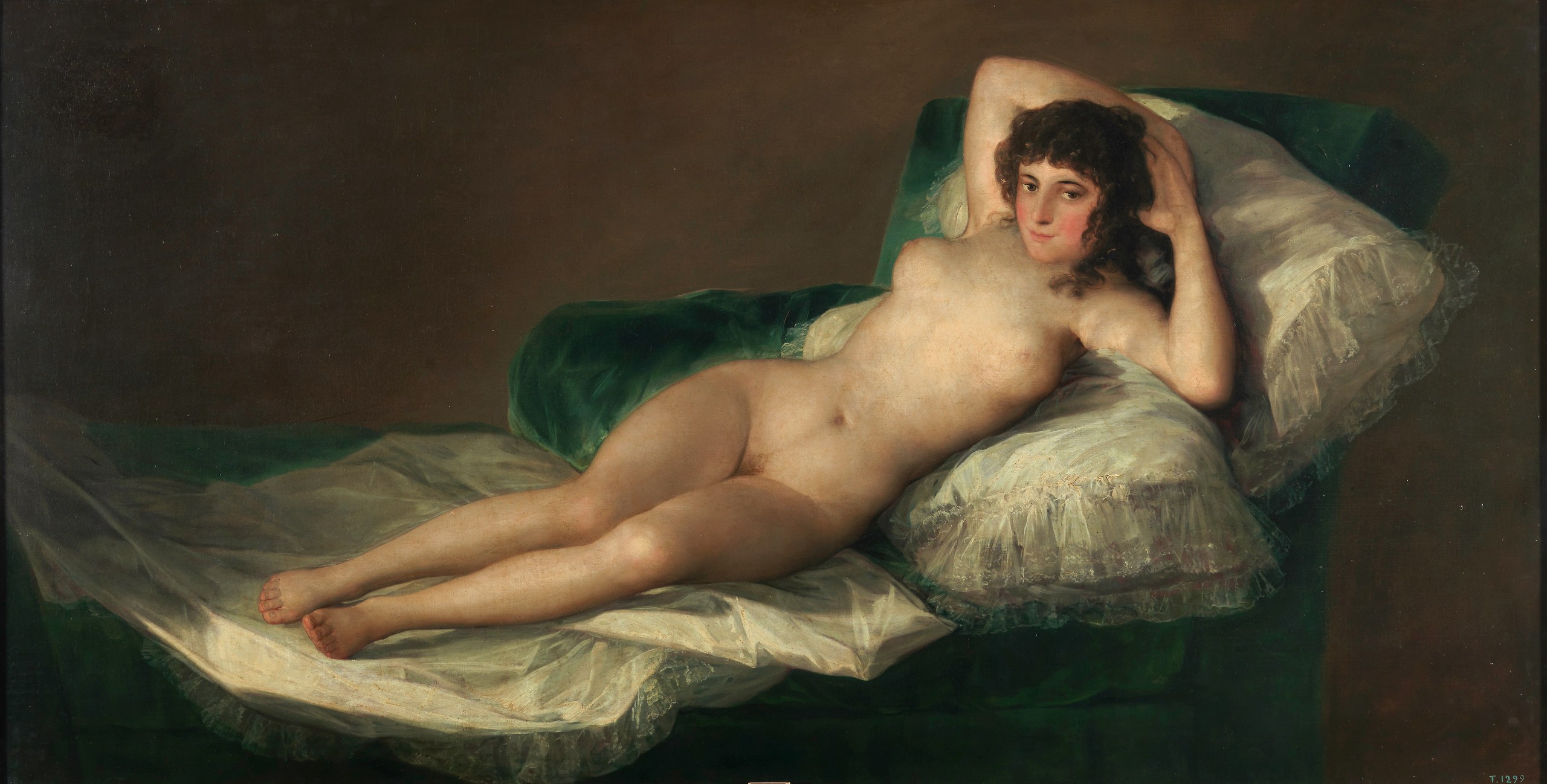
La maja desnuda
Francisco Goya · 1795
Museo del Prado
A naked woman at her ease on pillows, meeting the viewer's eye without a flicker; the cabinet of Manuel Godoy likely held it among his private nudes, the Inquisition later confiscated it, and the Prado has had it since 1901.
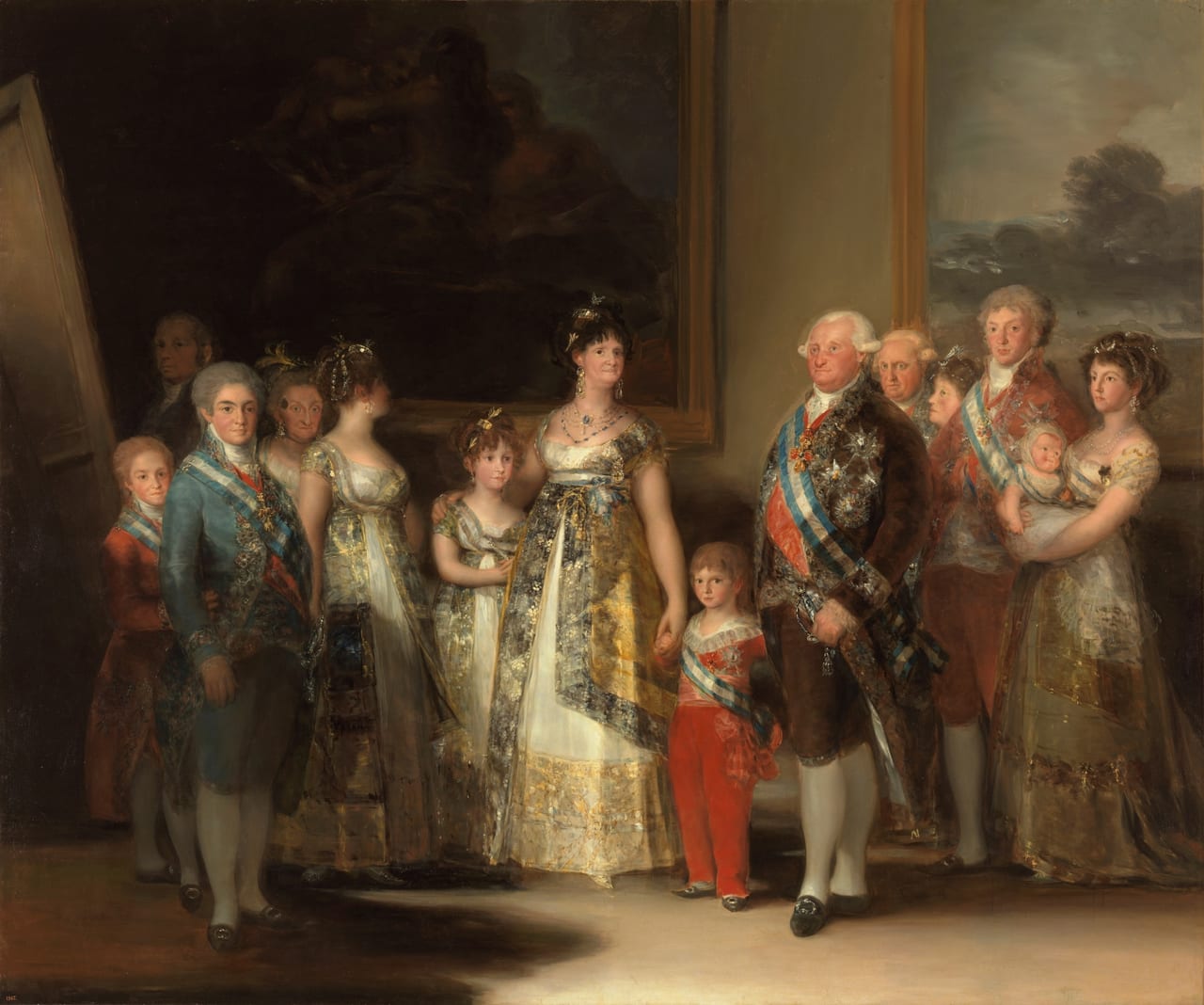
Charles IV of Spain and His Family
Francisco Goya · 1800
Museo del Prado
The king and his household at full size, draped in costume and jewels with complete display; begun in 1800, the year after Goya's elevation to first chamber painter, and finished by the summer of 1801, it has never flattered them once.
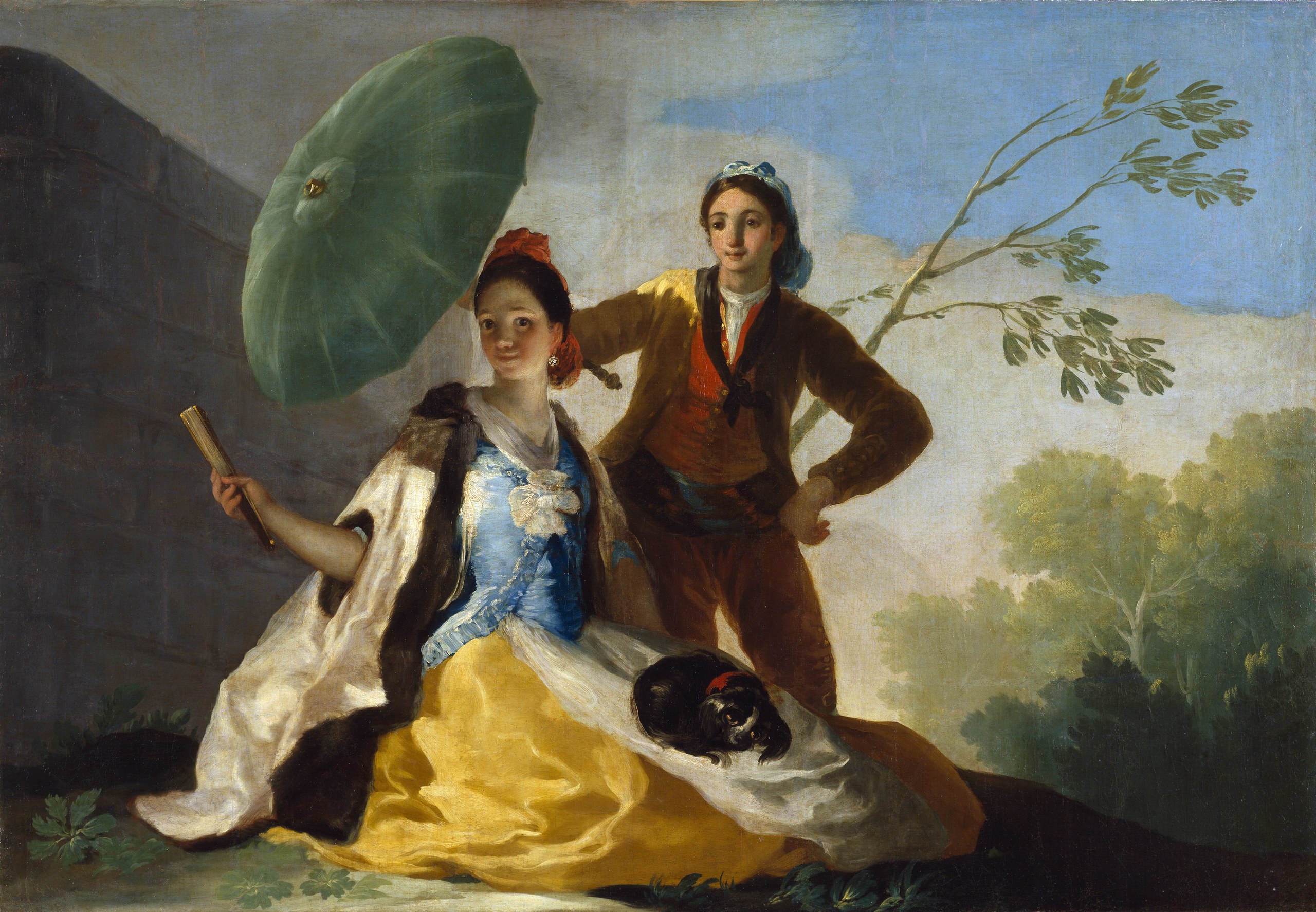
The Parasol
Francisco Goya · 1777
Museo del Prado
A boy holds an umbrella over a girl resting on a bench while clouds gather; painted as one of a run of designs meant to be woven and hung at the Royal Palace of El Pardo, and kept today beside Blind Man's Bluff in the Prado.
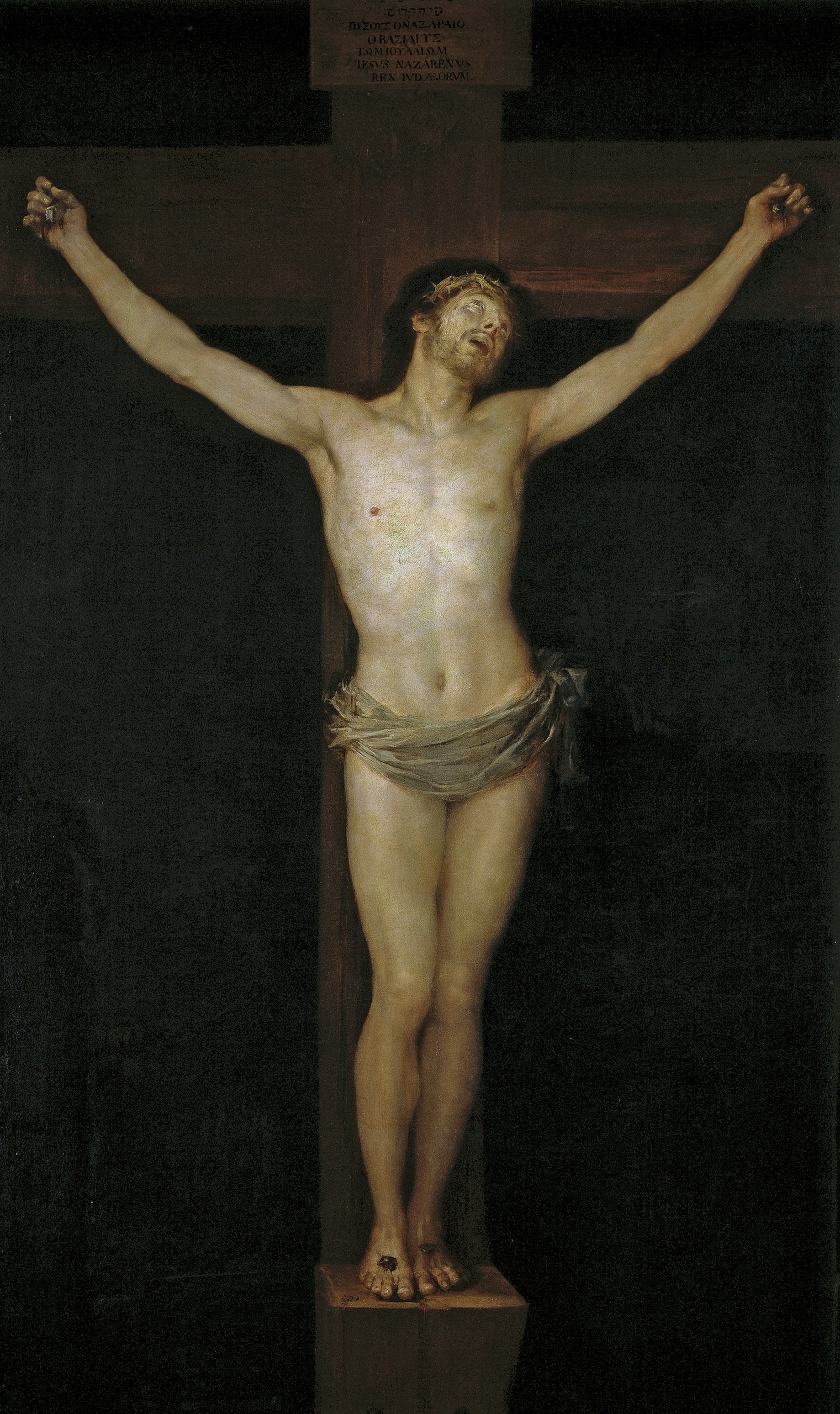
Christ Crucified
Francisco Goya · 1780
Museo del Prado
The reception piece with which Goya was made an academician of San Fernando: a neoclassical Christ on a black ground with no landscape, the right leg forward, owing its darkness to Velázquez and its stance to Mengs.
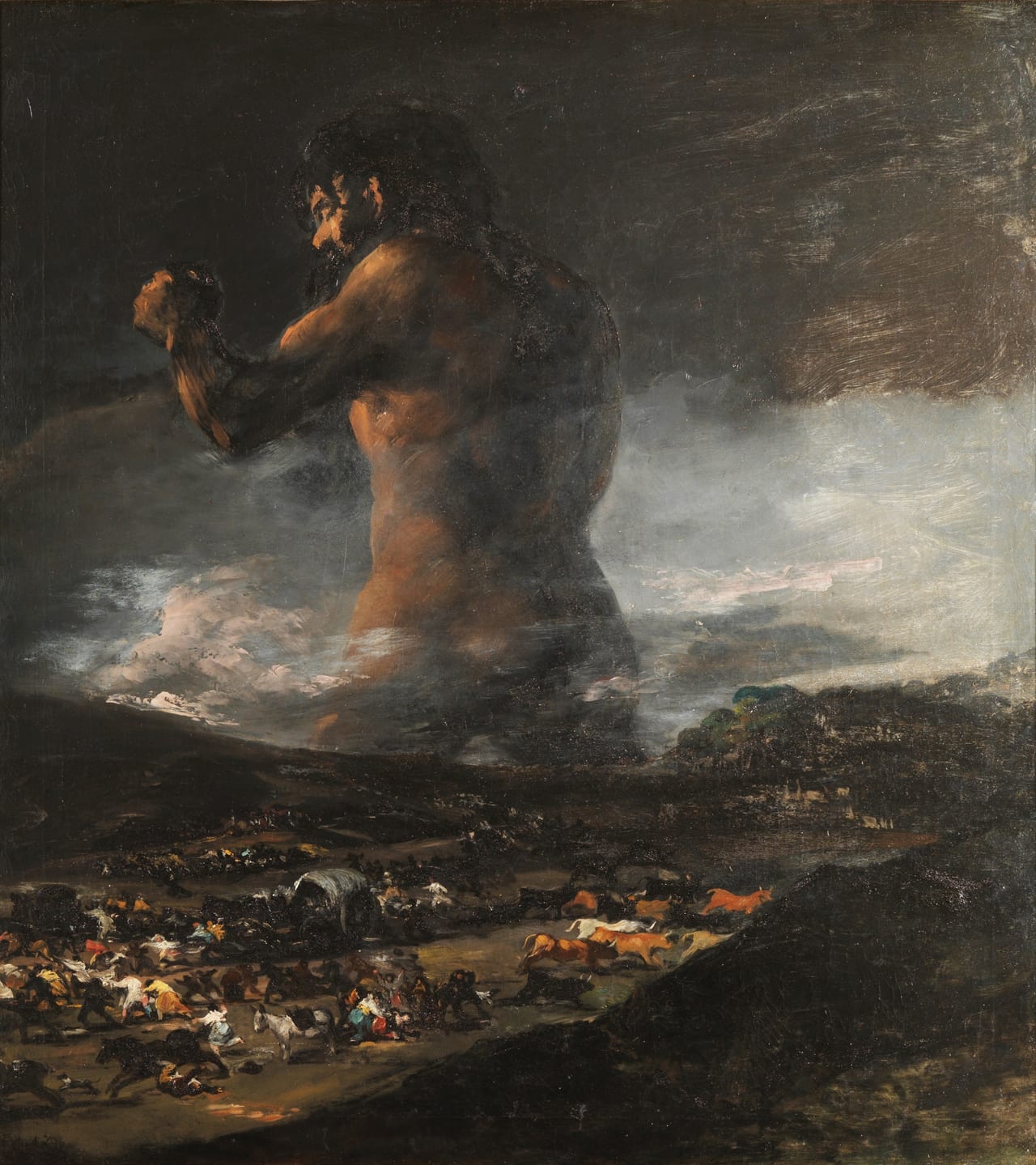
The Colossus
Francisco Goya · 1818
Museo del Prado
A giant strides across the middle of the canvas toward the left while the country empties before him; long given to Goya, it reached the Prado in 1931 with the bequest of Pedro Fernández Durán and keeps his name, though the attribution is argued.
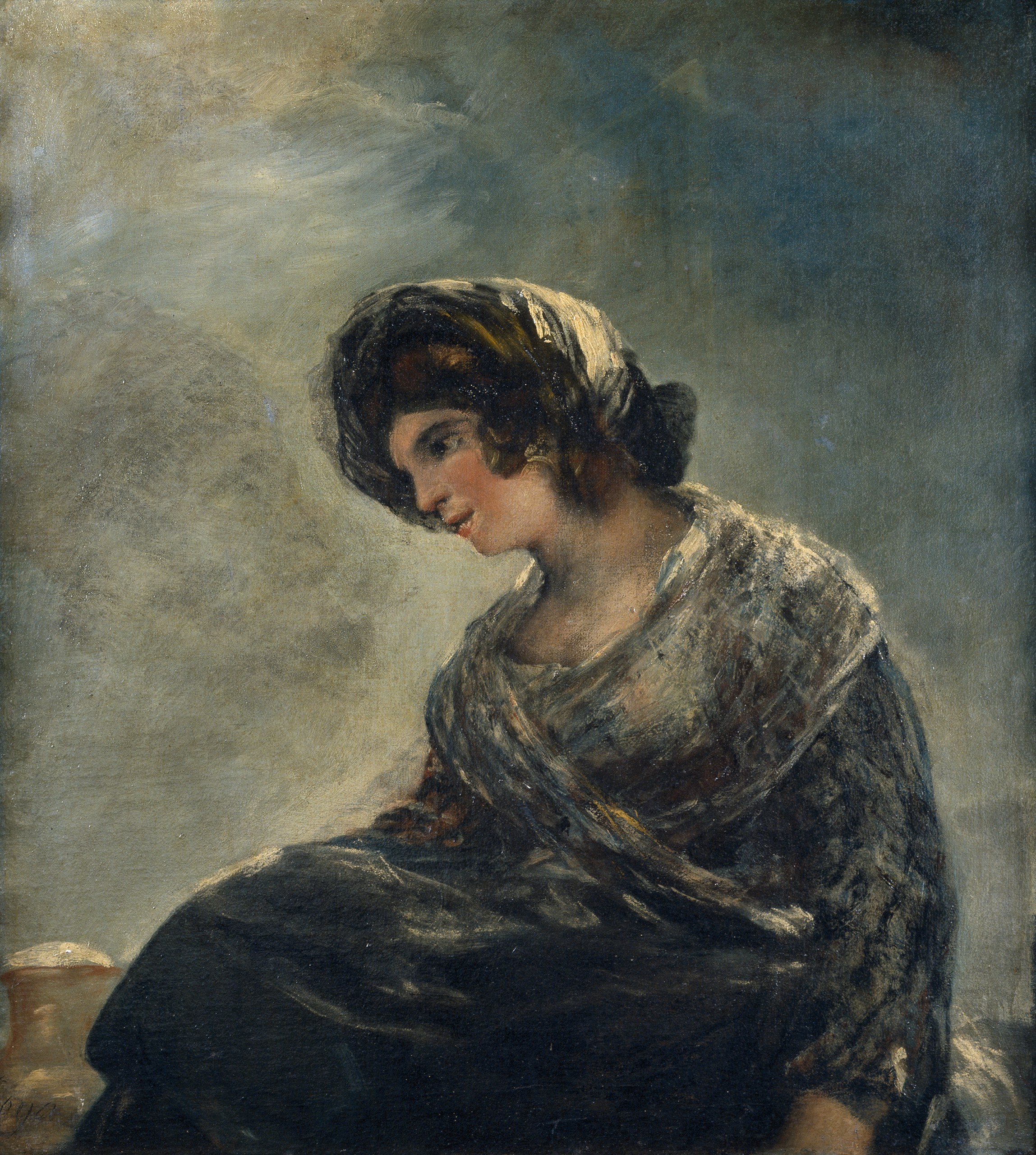
The Milkmaid of Bordeaux
Francisco Goya · 1827
Museo del Prado
A girl at a parapet under pale, new green light; held to be from the last stretch of his life and among his masterpieces, though it has been claimed for Rosario Weiss's hand, a claim generally thought unlikely.
More to discover
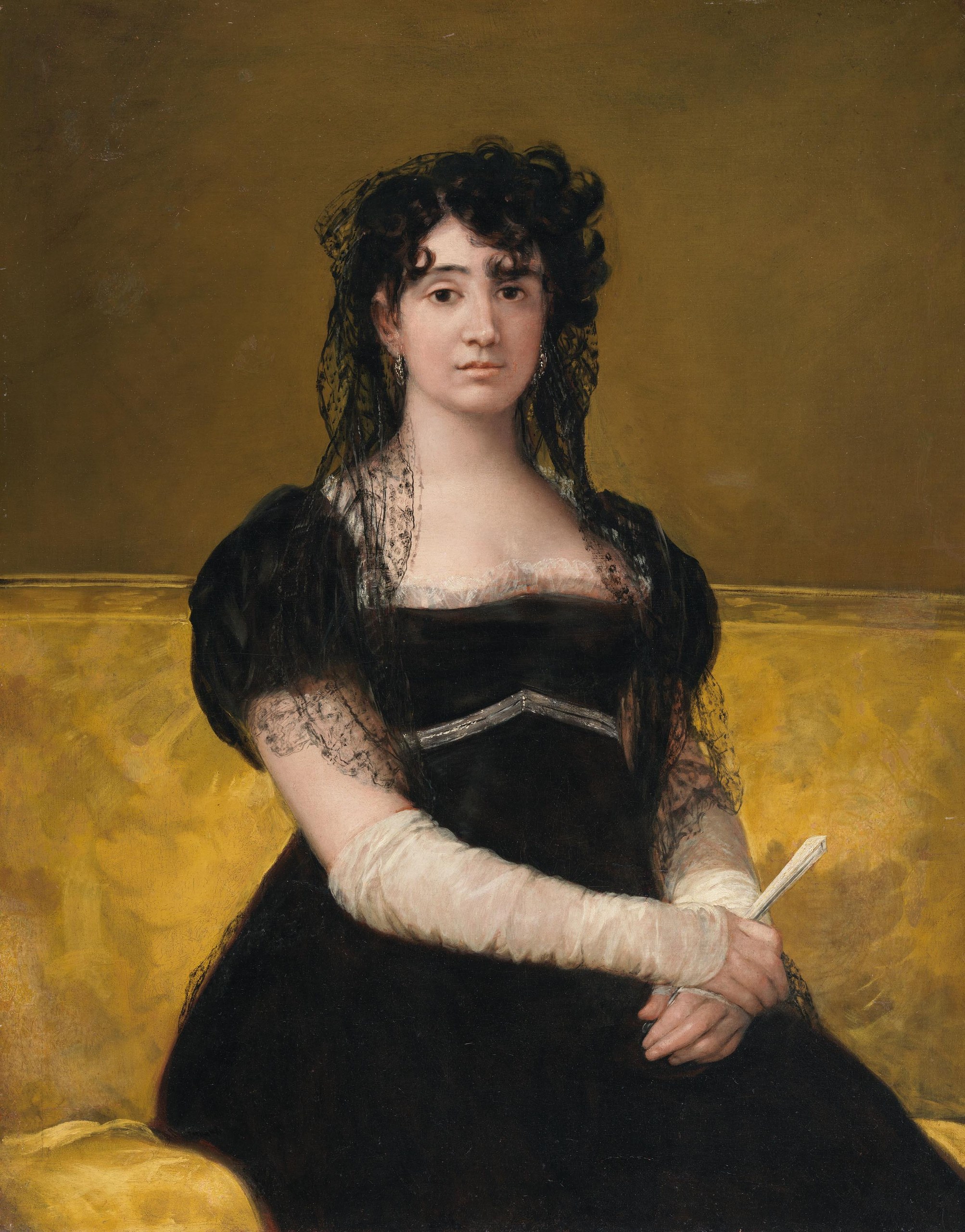
Portrait of Doña Antonia Zárate
Francisco Goya · 1805
National Gallery of Ireland
The actress wrapped in white satin and a black lace shawl against a brown dark; robbed twice, and a year after the second theft it passed, at least on paper, into the National Gallery of Ireland.
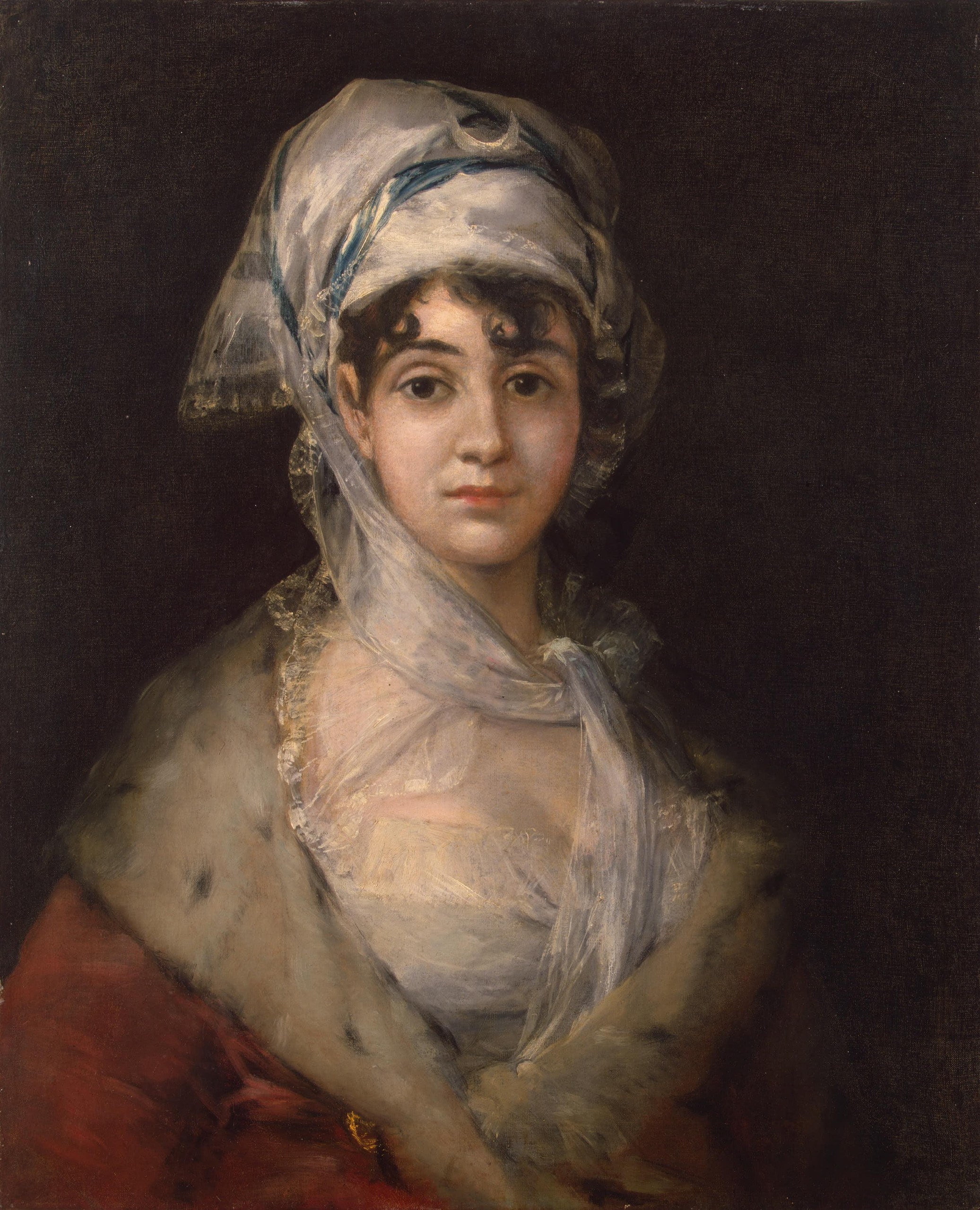
Portrait of the Actress Antonia Zarate
Francisco Goya · 1810
State Hermitage Museum
The same sitter again, some years later, likely worked over the Dublin version; it lives in the Hermitage, and if it is wholly from Goya's hand it is the one Goya painting in any Russian collection.
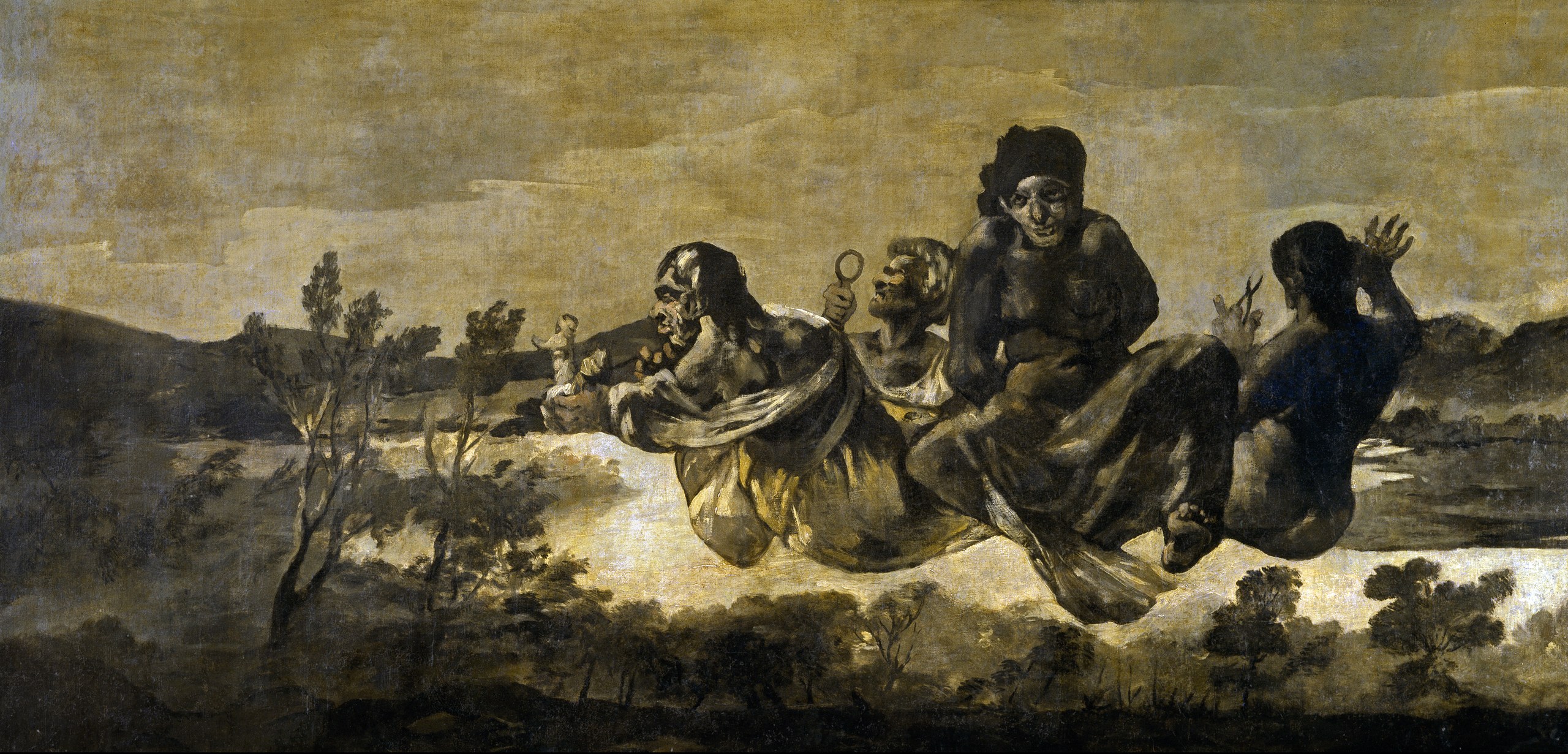
Atropos
Francisco Goya · c. 1820–1823
Museo del Prado
The three Fates with their spindle, shears and glass, adrift above a dim landscape; painted on the walls of the Quinta del Sordo between 1819 and 1823 by a man of seventy-five in despair.
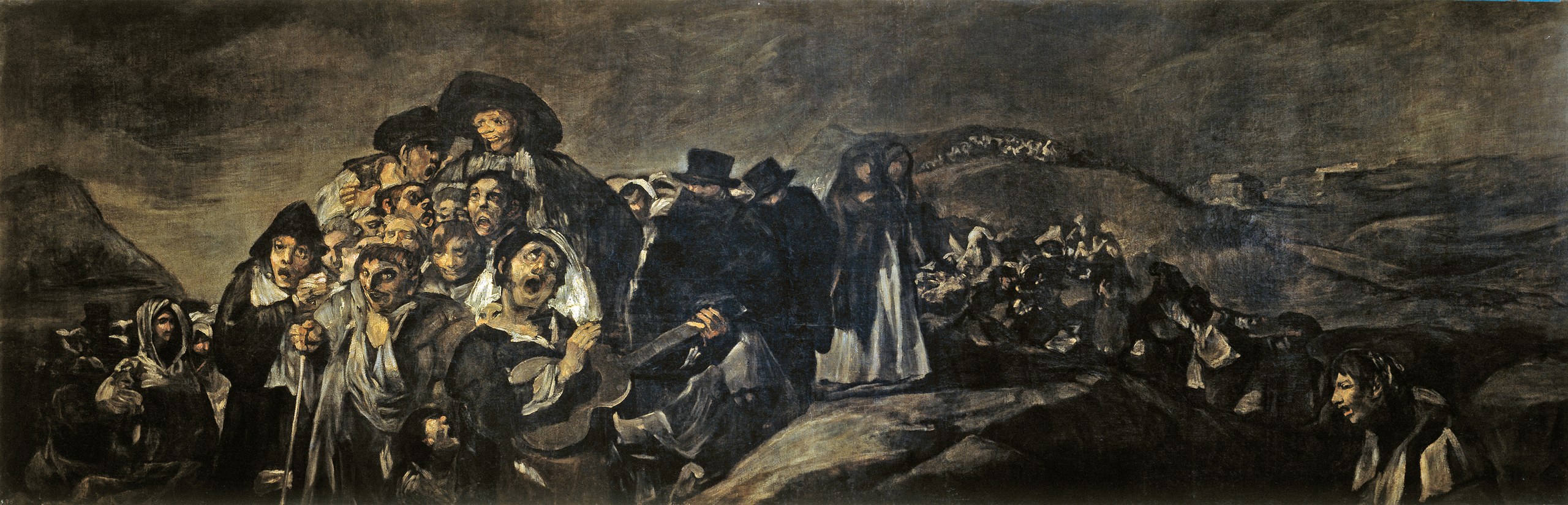
A Pilgrimage to San Isidro
Francisco Goya · c. 1820–1823
Museo del Prado
A long, dark procession straggles downhill by the river away from a hopeless horizon; the Black Painting with the most figures and the least comfort.
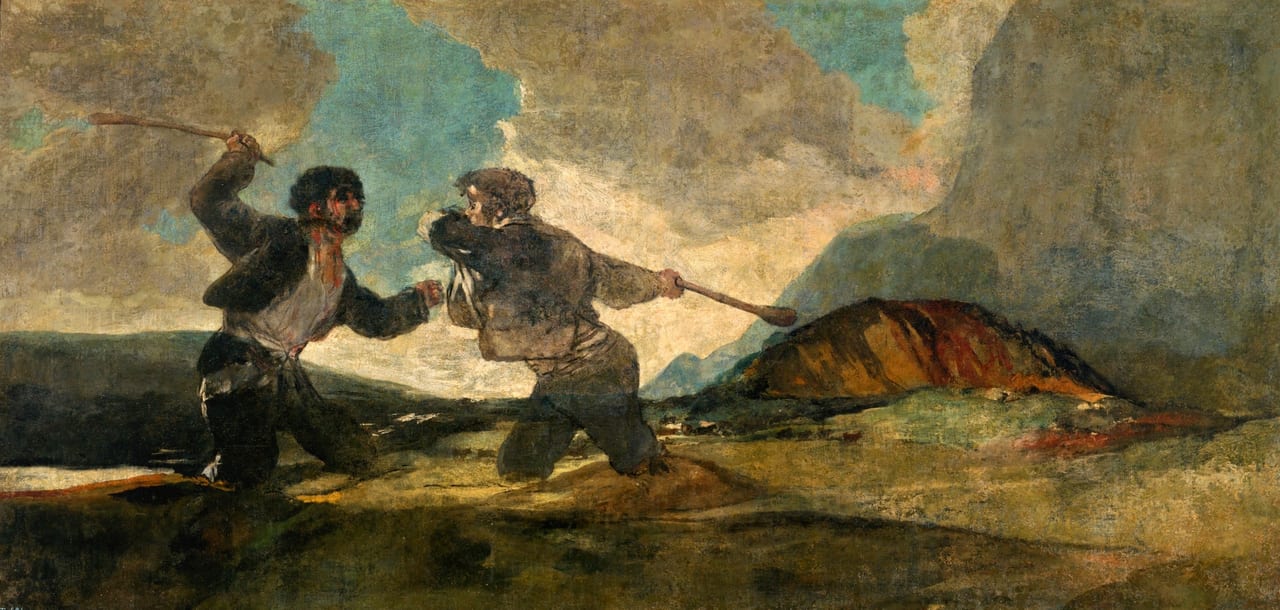
Fight with Cudgels
Francisco Goya · 1820
Museo del Prado
Two peasants club each other in a landscape that has them buried to the knee in sand or mud; it sat in the upper room of the Quinta del Sordo.
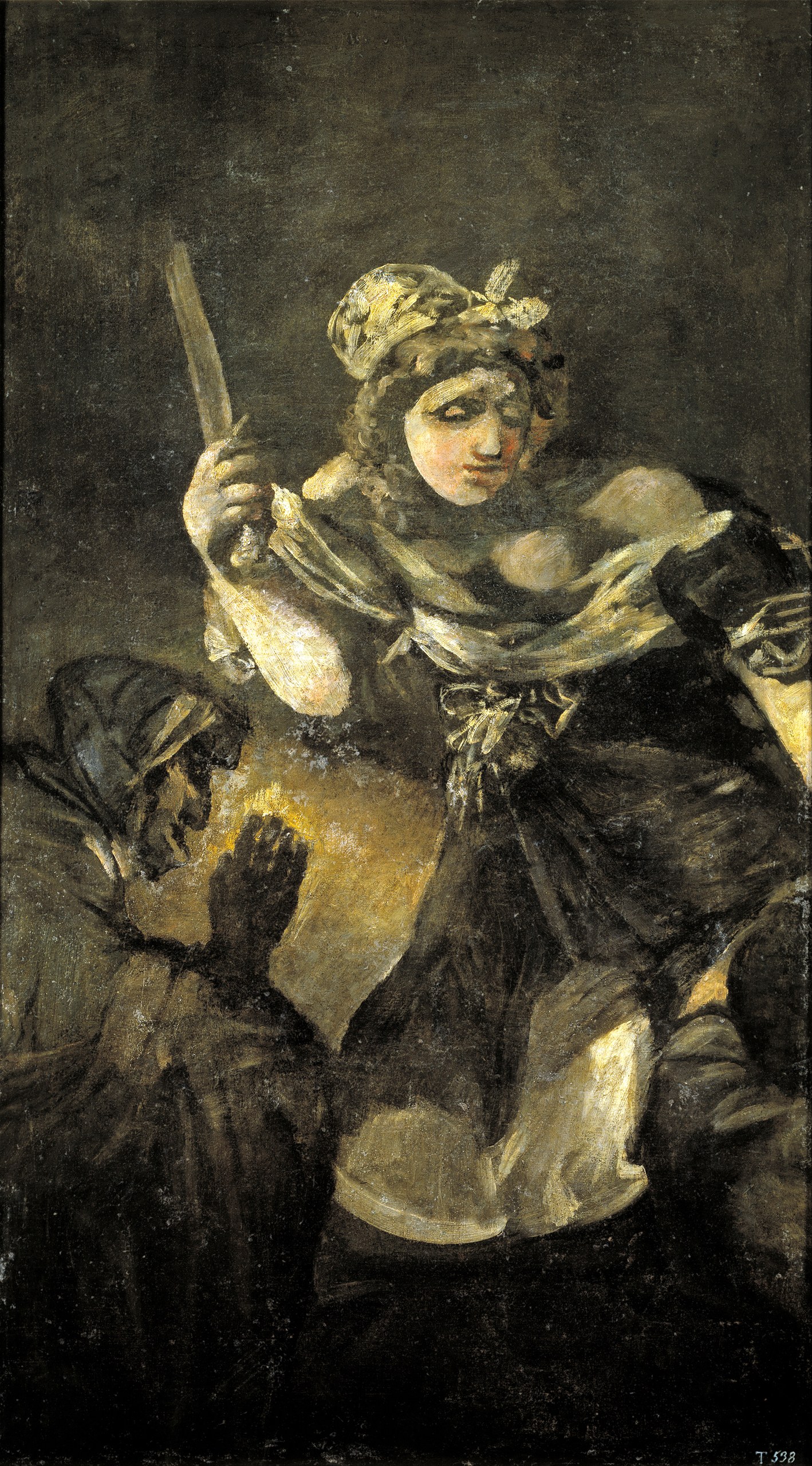
Judith and Holofernes
Francisco Goya · c. 1820–1823
Museo del Prado
Blacks, ochres and reds laid on in wide, forceful strokes, an arm thrust out and holding the sword; the victim and his blood are kept out of frame, against every convention of the subject.
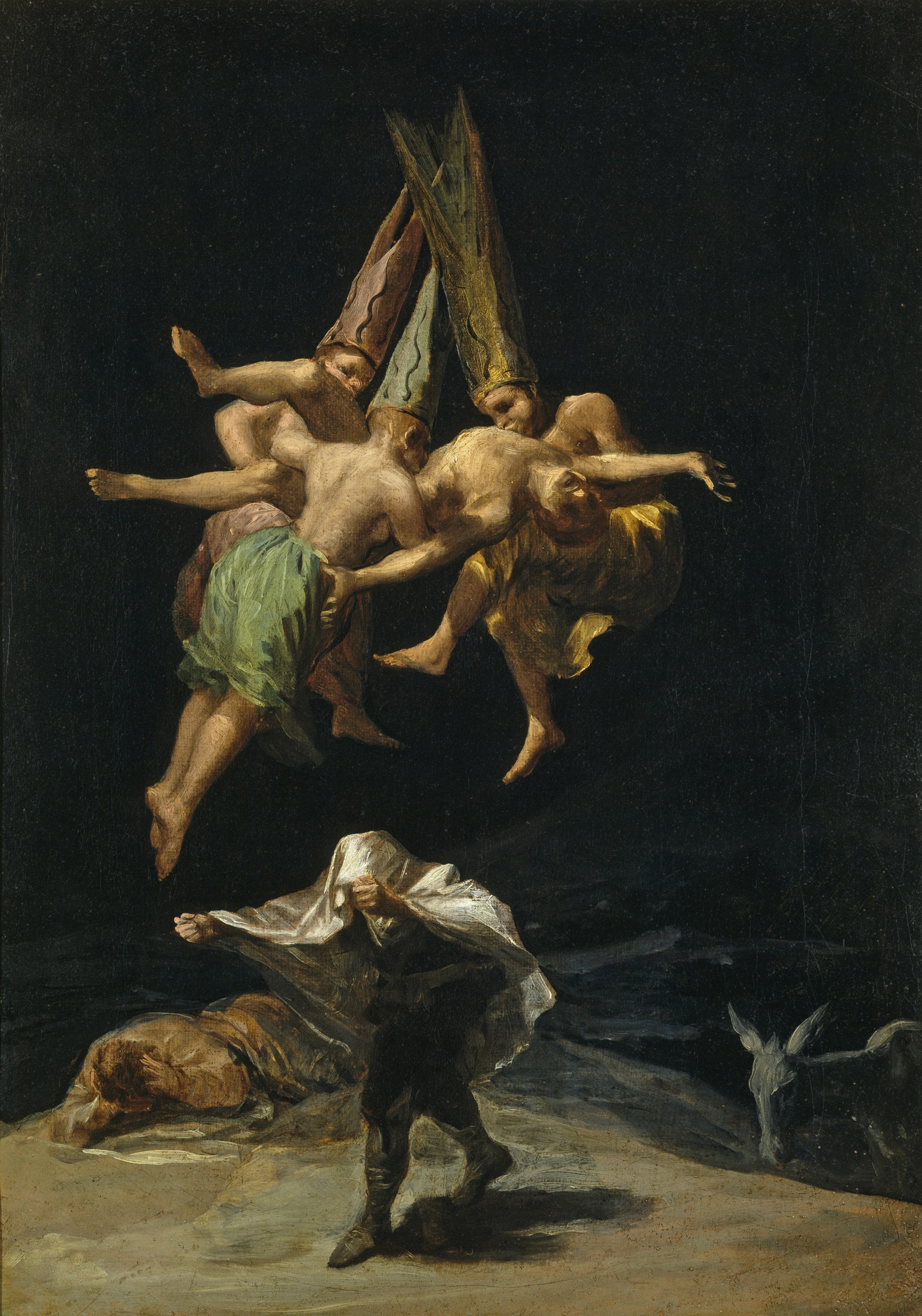
Witches' Flight
Francisco Goya · 1797
Museo del Prado
Three draped figures bear a sprawled body through the night sky above a man stopping his ears; from the six witchcraft pictures the Duke and Duchess of Osuna acquired in 1798, and praised as the finest and fiercest of them.
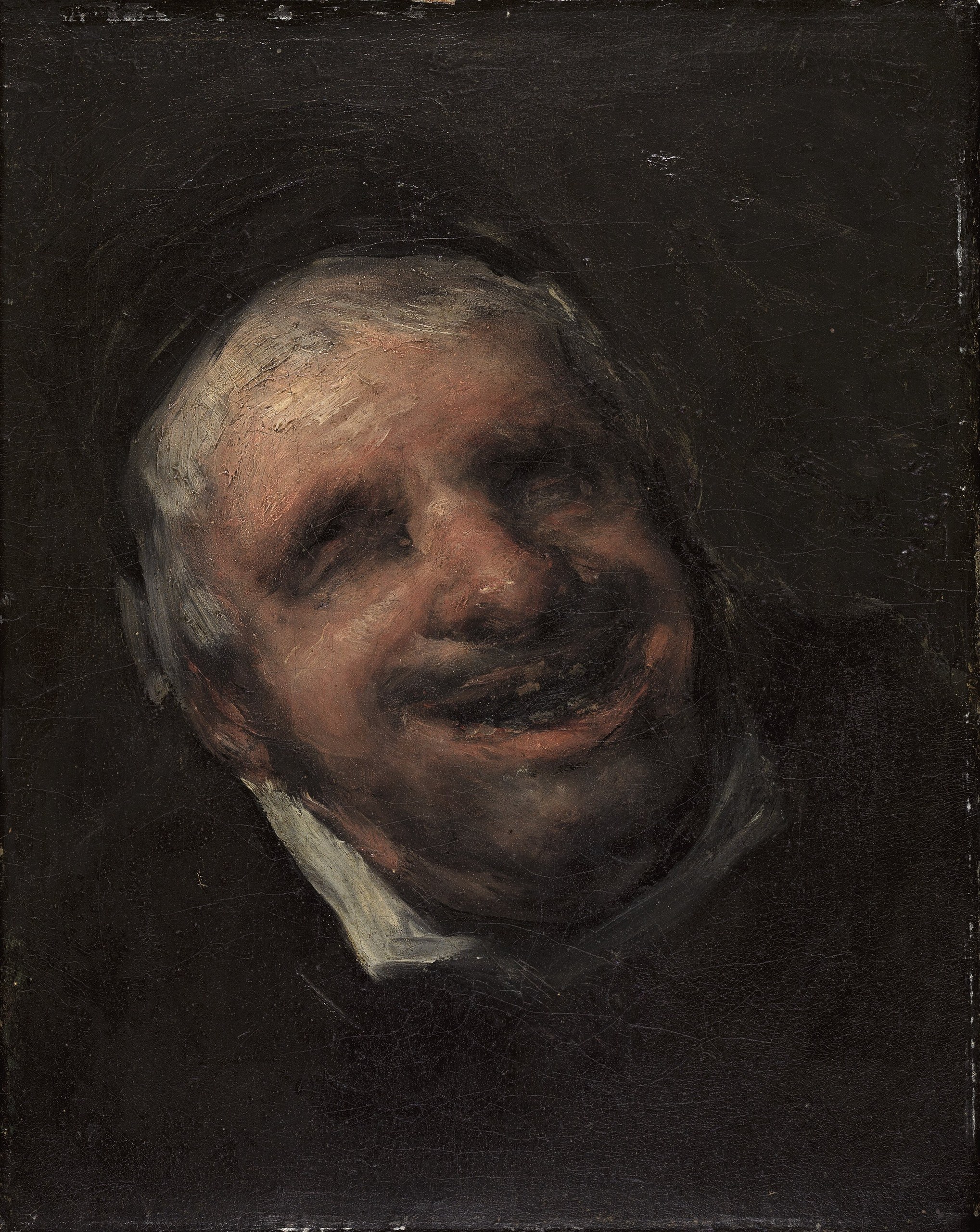
El tío Paquete
Francisco Goya · 1820
Thyssen-Bornemisza Museum
A blind street singer known to everyone in Madrid, his grinning face pushed up against the front of the picture; blindness and comedy in one head, a century ahead of the Expressionists.
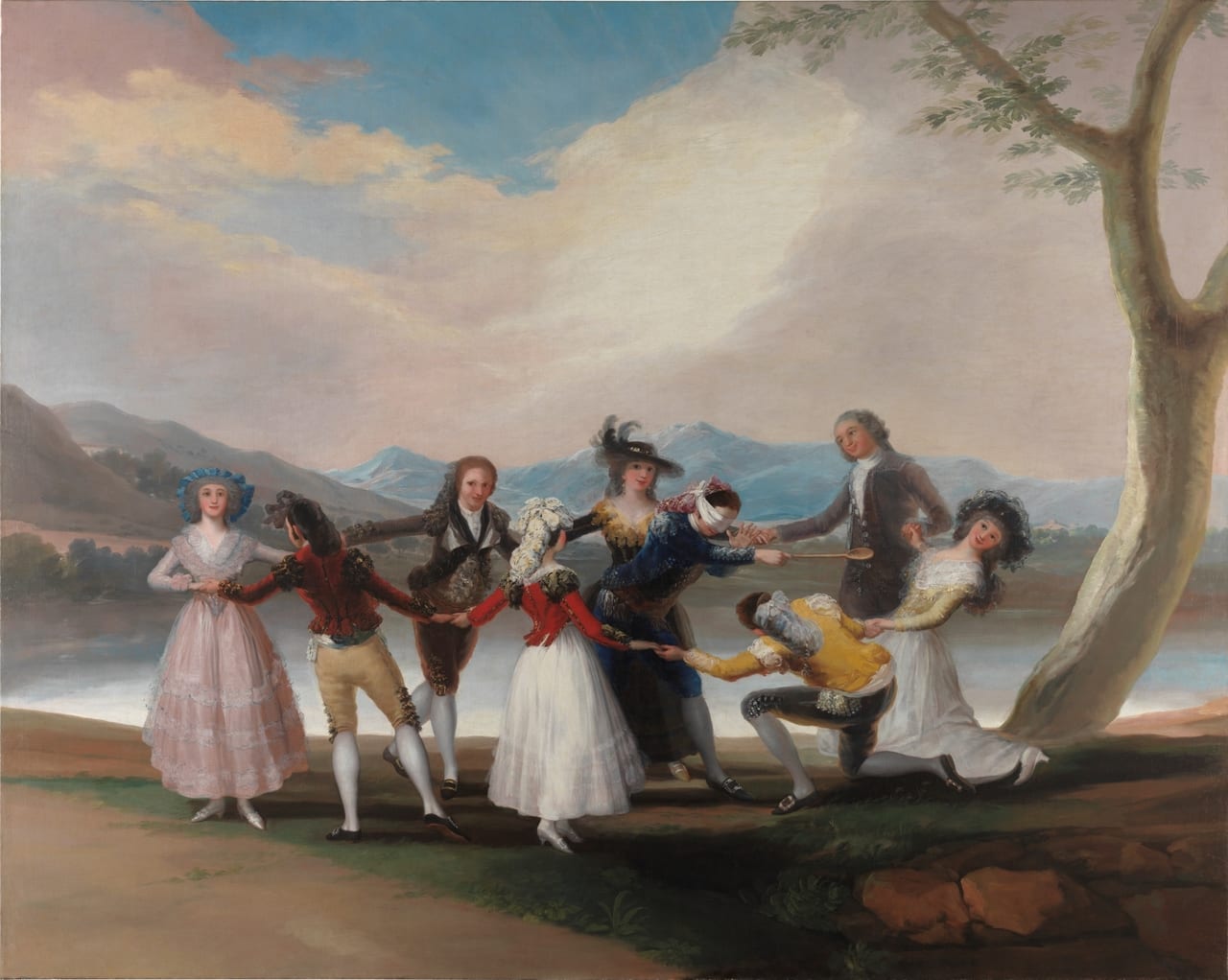
Blind Man's Bluff
Francisco Goya · 1788
Museo del Prado
Young men and women circle a blindfolded player armed with a wooden spoon, one of the last of the Rococo cartoons woven for the palace of El Pardo, and the gentlest.
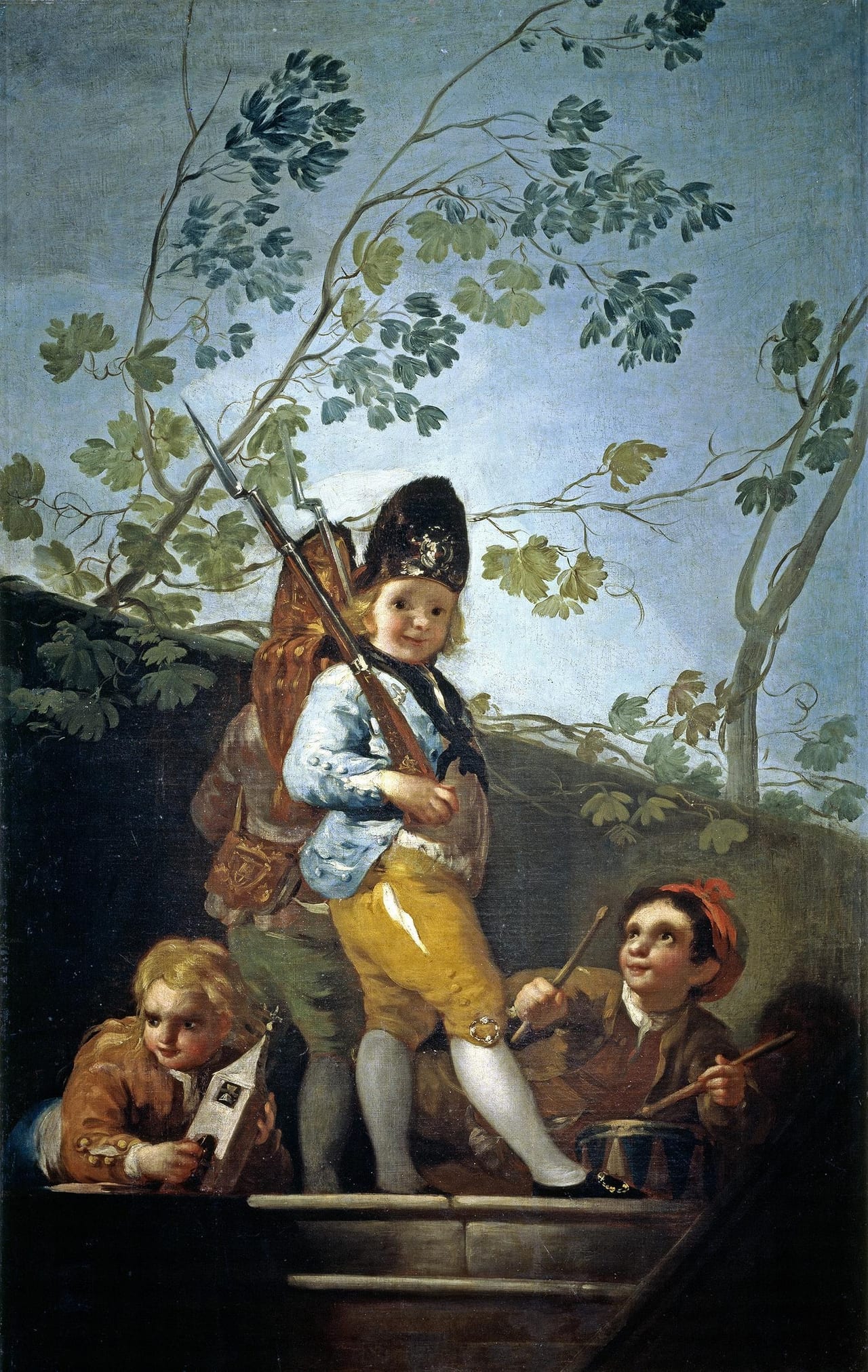
Boys playing soldiers
Francisco Goya · 1778
Museo del Prado
Children at play on a slope, and at the front a small contented warrior staring straight out, counted among his best things; the touch and the light here run ahead of Impressionism.
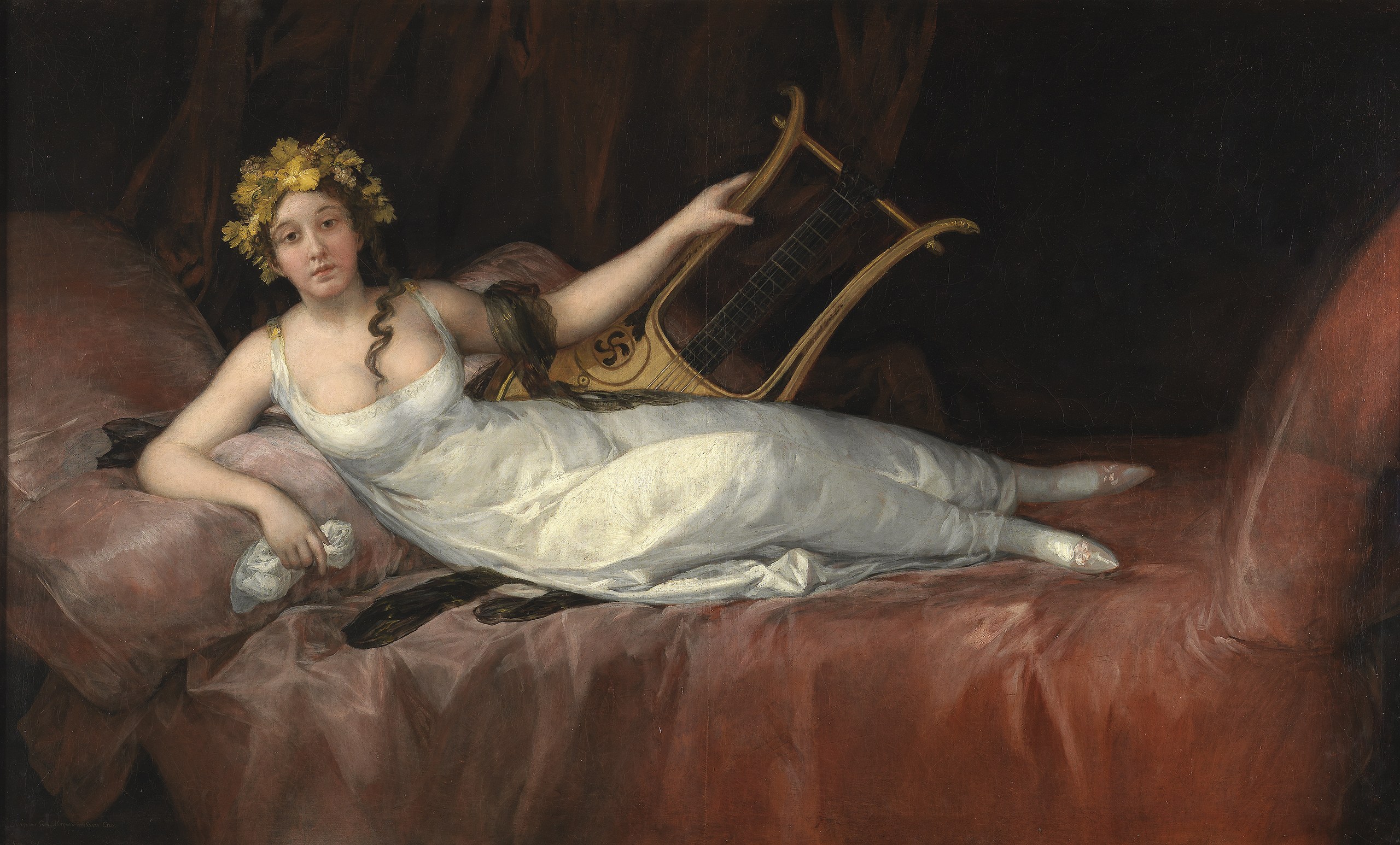
Portrait of the Marchioness of Santa Cruz
Francisco Goya · 1805
Museo del Prado
A young noblewoman of a family Goya knew, posed as a poet with her lyre in 1805; after long legal fighting the picture was bought for the Prado in 1986.
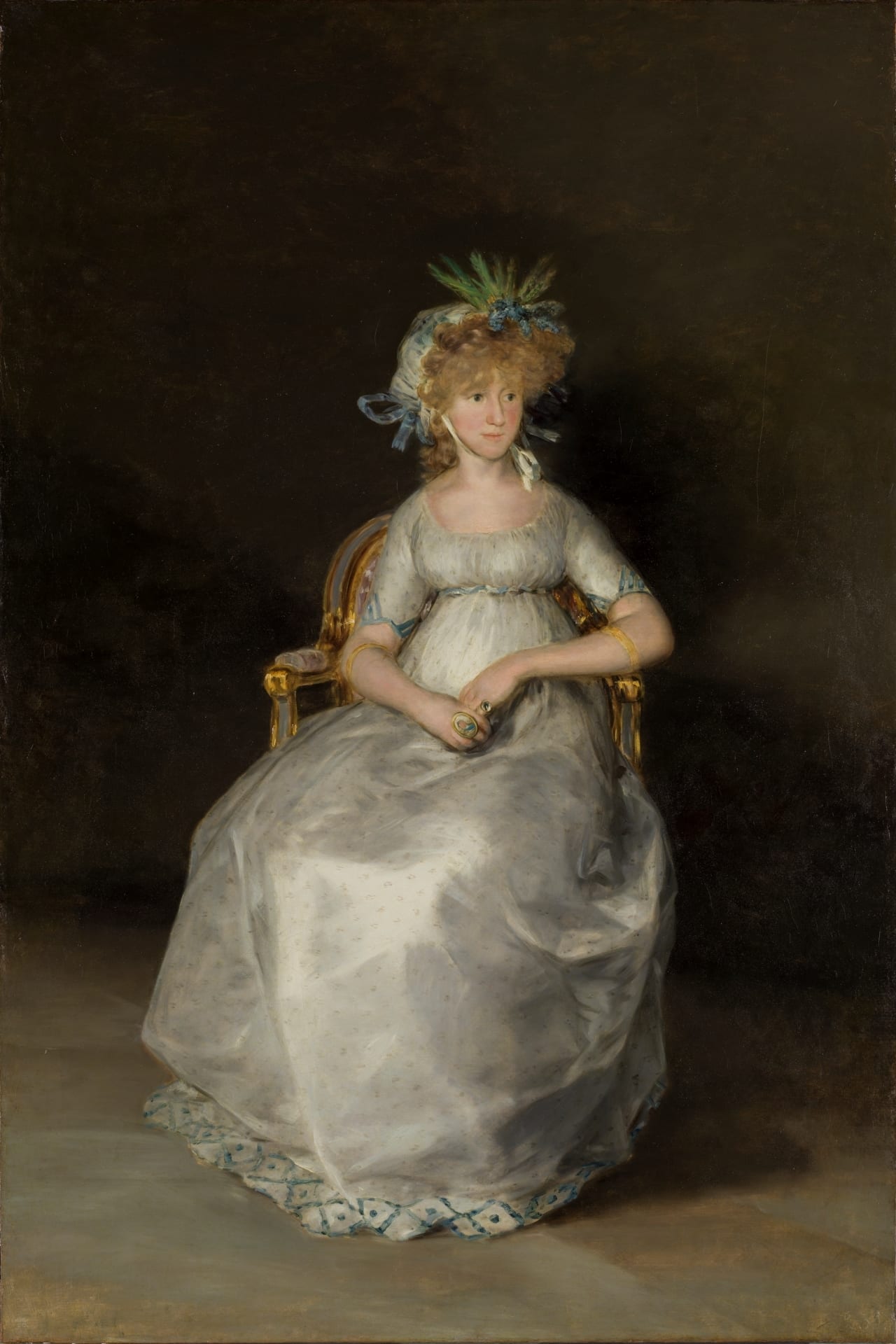
Countess of Chinchon
Francisco Goya · 1800
Museo del Prado
María Teresa de Borbón, pushed by the queen and by calculation into marrying Godoy, the prime minister, a union of convenience not of affection; she sits uneasy in a vast hat, yellow gloves in her lap.
Sources
- Wikipedia, “Francisco Goya”
- Wikipedia, “The Third of May 1808”
- Wikipedia, “The Second of May 1808”
- Wikipedia, “Saturn Devouring His Son”
- Wikipedia, “Witches' Sabbath (The Great He-Goat)”
- Wikipedia, “The Dog (Goya)”
- Wikipedia, “La maja desnuda”
- Wikipedia, “Charles IV of Spain and His Family”
- Wikipedia, “The Parasol”
- Wikipedia, “Christ Crucified (Goya)”
- Wikipedia, “The Colossus (painting)”
- Wikipedia, “The Milkmaid of Bordeaux”
- Wikipedia, “Portrait of Doña Antonia Zárate (1805)”
- Wikipedia, “Portrait of Doña Antonia Zárate (1810–1811)”
- Wikipedia, “Atropos (Goya)”
- Wikipedia, “A Pilgrimage to San Isidro”
- Wikipedia, “Fight with Cudgels”
- Wikipedia, “Judith and Holofernes (Goya)”
- Wikipedia, “Witches' Flight”
- Wikipedia, “Tío Paquete”
- Wikipedia, “Blind Man's Bluff (Goya)”
- Wikipedia, “Boys Playing Soldiers”
- Wikipedia, “Portrait of the Marchioness of Santa Cruz”
- Wikipedia, “The Countess of Chinchon”
- Wikipedia, “Los caprichos”
- Wikipedia, “The Disasters of War”
- Wikipedia, “Portrait of Doña Isabel de Porcel”
Invite Francisco Goya into your living room
Play 33 works from this collection on your TV, phone or tablet with Momentable Art TV.