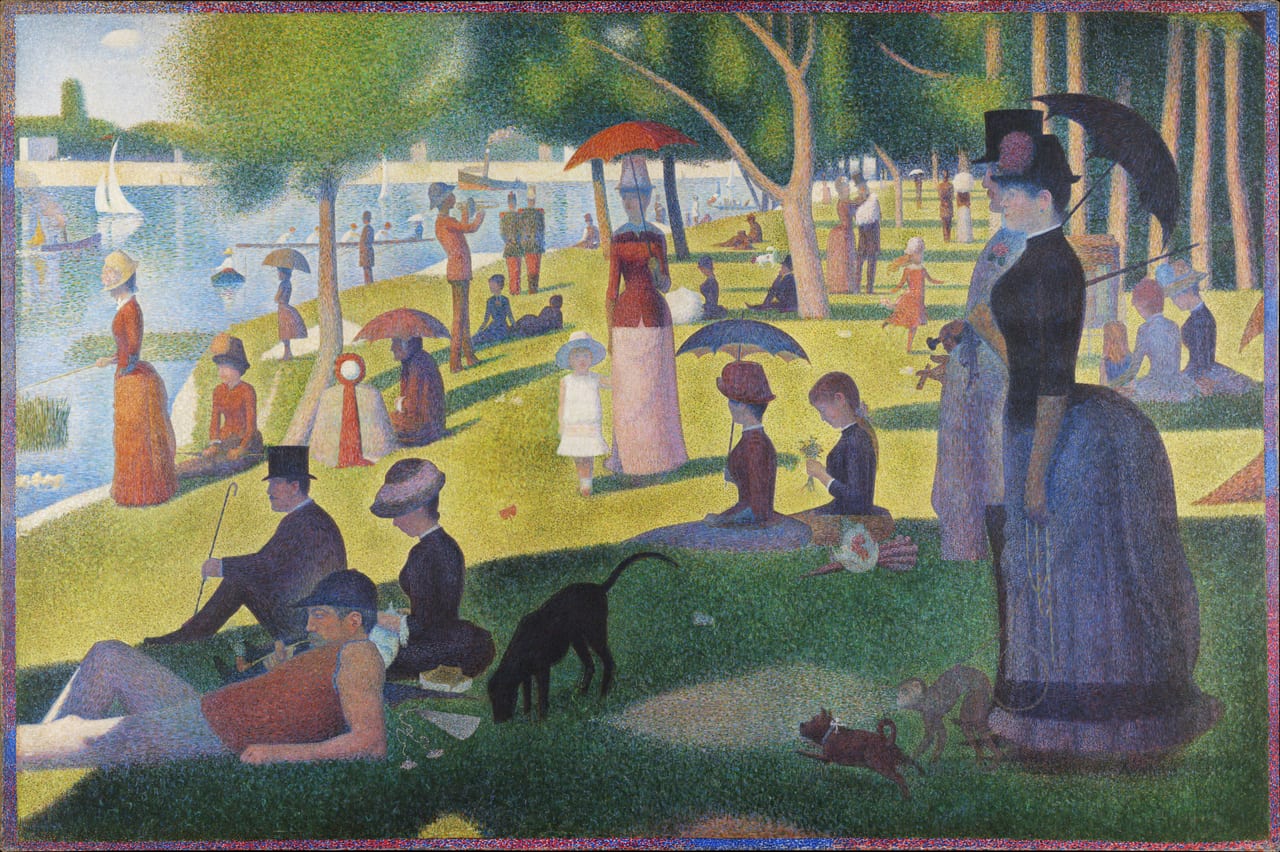
A Sunday Afternoon on the Island of La Grande Jatte
Georges Seurat · 1884

Georges Seurat
French · 1859–1891
The quiet revolutionary of Paris painting, who built pictures from dots of pure colour and set modern art on a new path before he died at thirty-one.
Play 9 works from this collection on your TV, phone or tablet with Momentable Art TV.
Play CollectionA calculated hand
Georges Seurat was born in Paris on 2 December 1859. He learned drawing first at a municipal school of sculpture and design, then entered the École des Beaux-Arts in 1878, where Henri Lehmann trained him on casts of antique sculpture and copies of the old masters.
A year of military service at Brest broke his schooling, and he came back to Paris and spent two years on drawing alone, in black conté on rough paper. Those twin gifts stayed together for good: an extreme and delicate sensibility, and an almost mathematical precision of mind.
Dots instead of strokes
Seurat devised the techniques the world now knows as chromoluminarism and pointillism: no blended stroke, but small touches of colour set side by side to mix in the eye. The vast park scene of La Grande Jatte, painted from 1884 to 1886, started Neo-Impressionism and stands among the icons of late nineteenth-century painting.
Bathers at Asnières, finished in 1884 when he was twenty-four, was the first of the two huge machines of his career; the Salon jury rejected it, and its fame came only long after his early death. The Circus, the third of his circus subjects after the Parade and Le Chahut, was still unfinished when he died in March 1891.
Known works
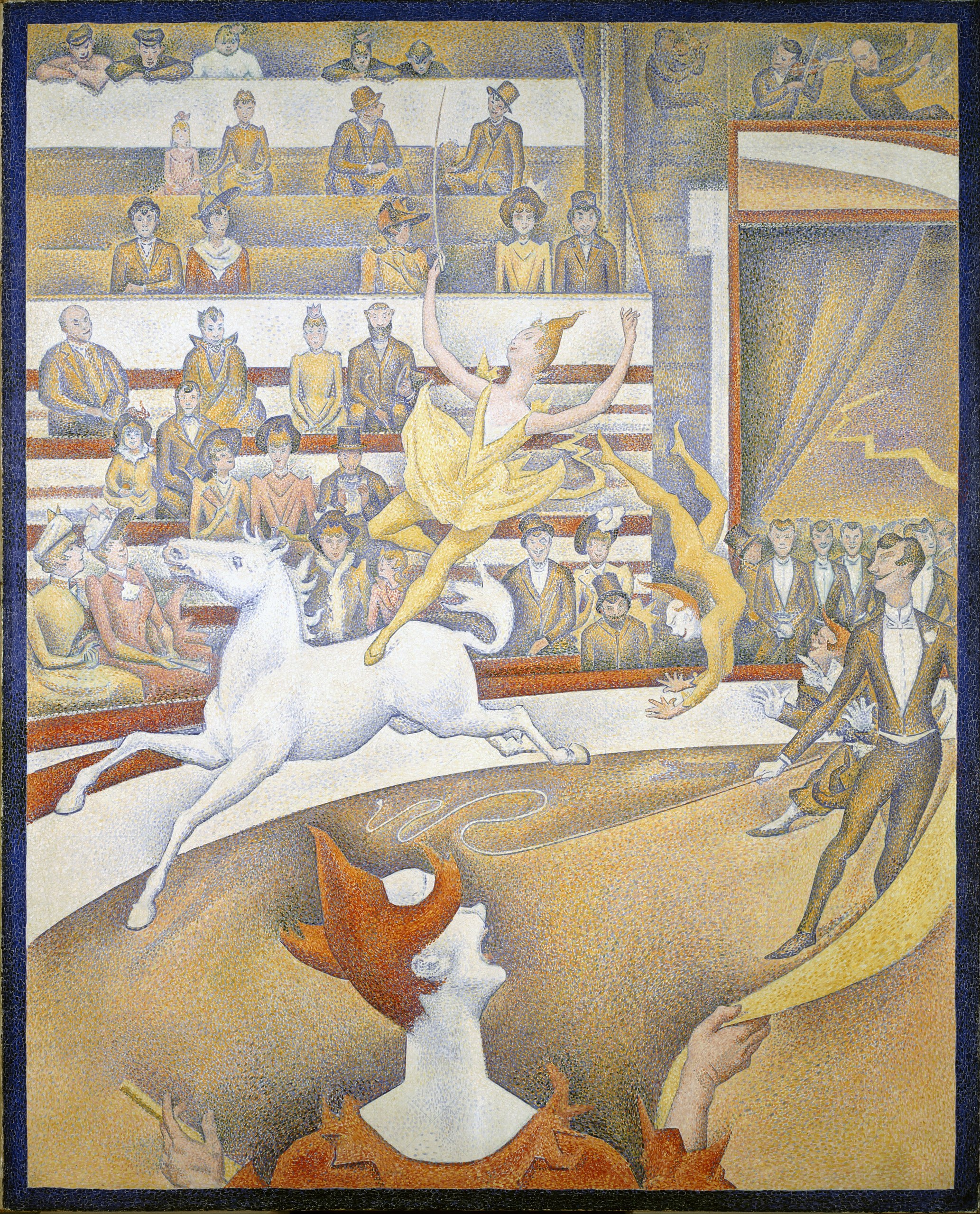
The Circus
Georges Seurat · 1891
Musée d'Orsay
The Circus. A bareback rider stands on a horse at the Circus Fernando while the ring swirls around her; his last painting, left unfinished at his death and now in the Musée d'Orsay.
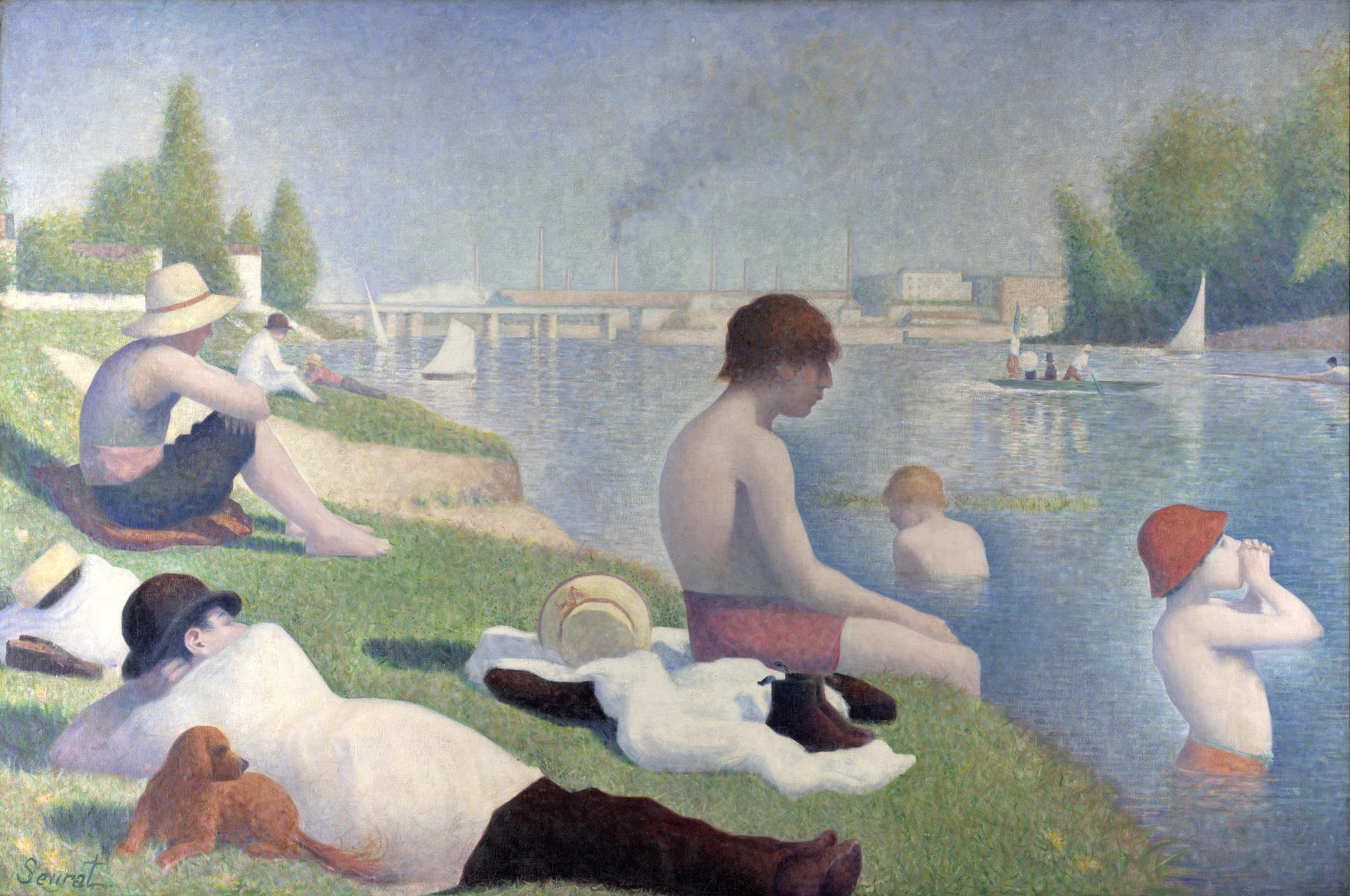
Bathers at Asnières
Georges Seurat · 1884
National Gallery
Bathers at Asnières. Boys in the Seine at a suburban riverbank, clothes piled on the grass, factory chimneys across the water: the first monumental canvas, rejected by the Salon of 1884 and now a highlight of the National Gallery in London.
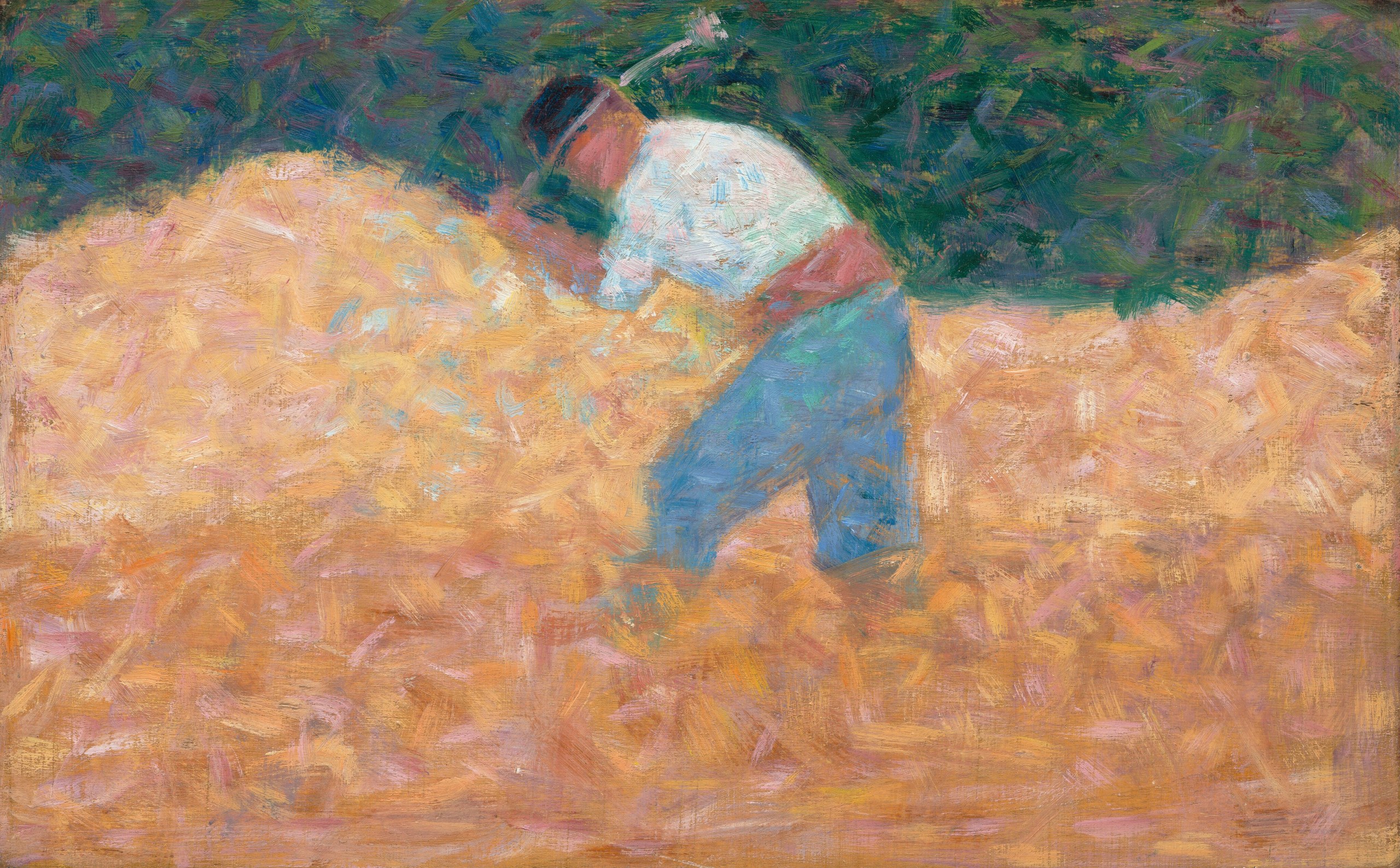
The Stone Breaker
Georges Seurat
National Gallery of Art
The Stone Breaker. A single labourer at his stones, the century's hardest work given one small, still canvas.
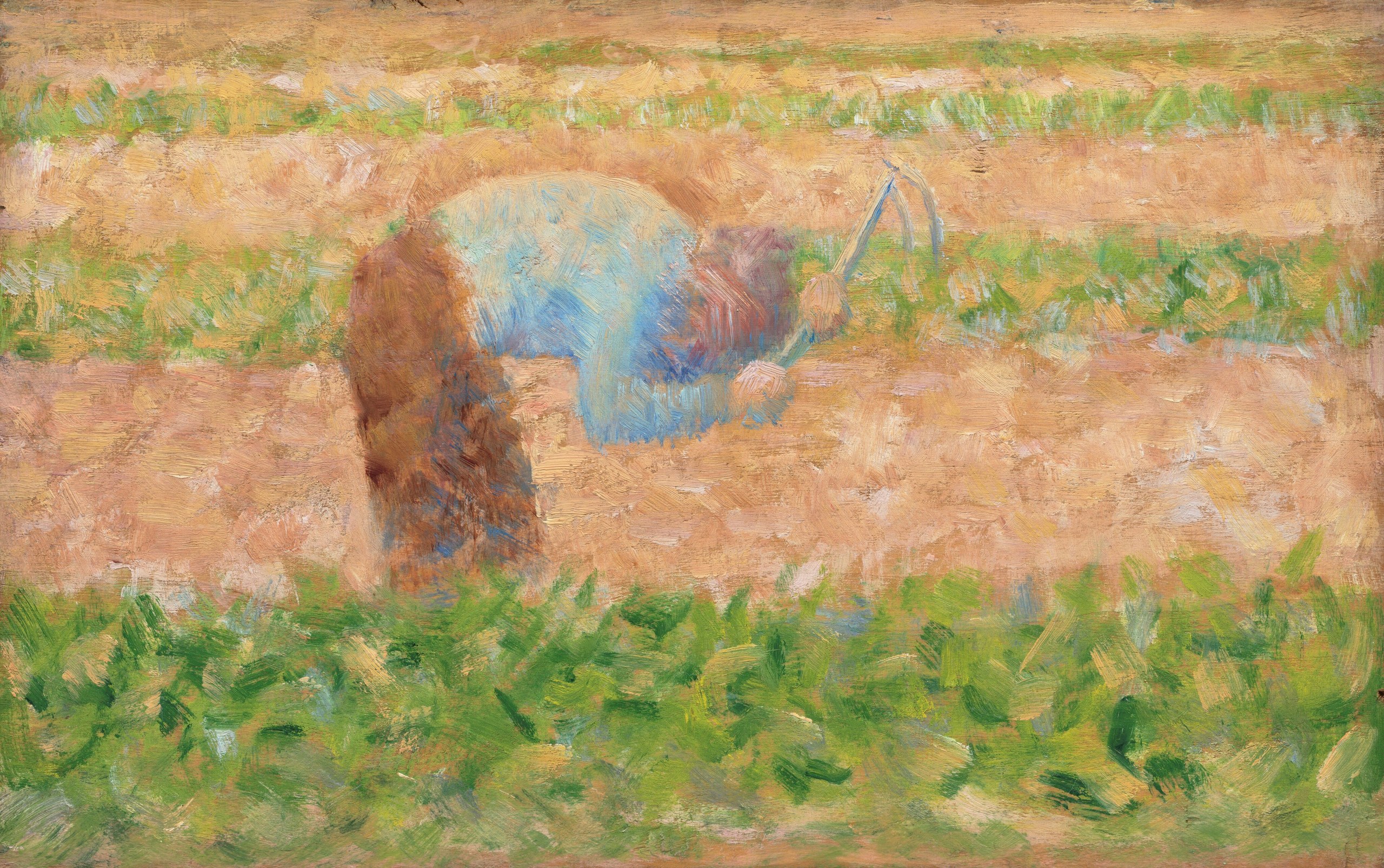
Man with a Hoe
Georges Seurat
National Gallery of Art
Man with a Hoe. A field worker leaning on his hoe, the figure held in the same patient silence as his riverbank boys.
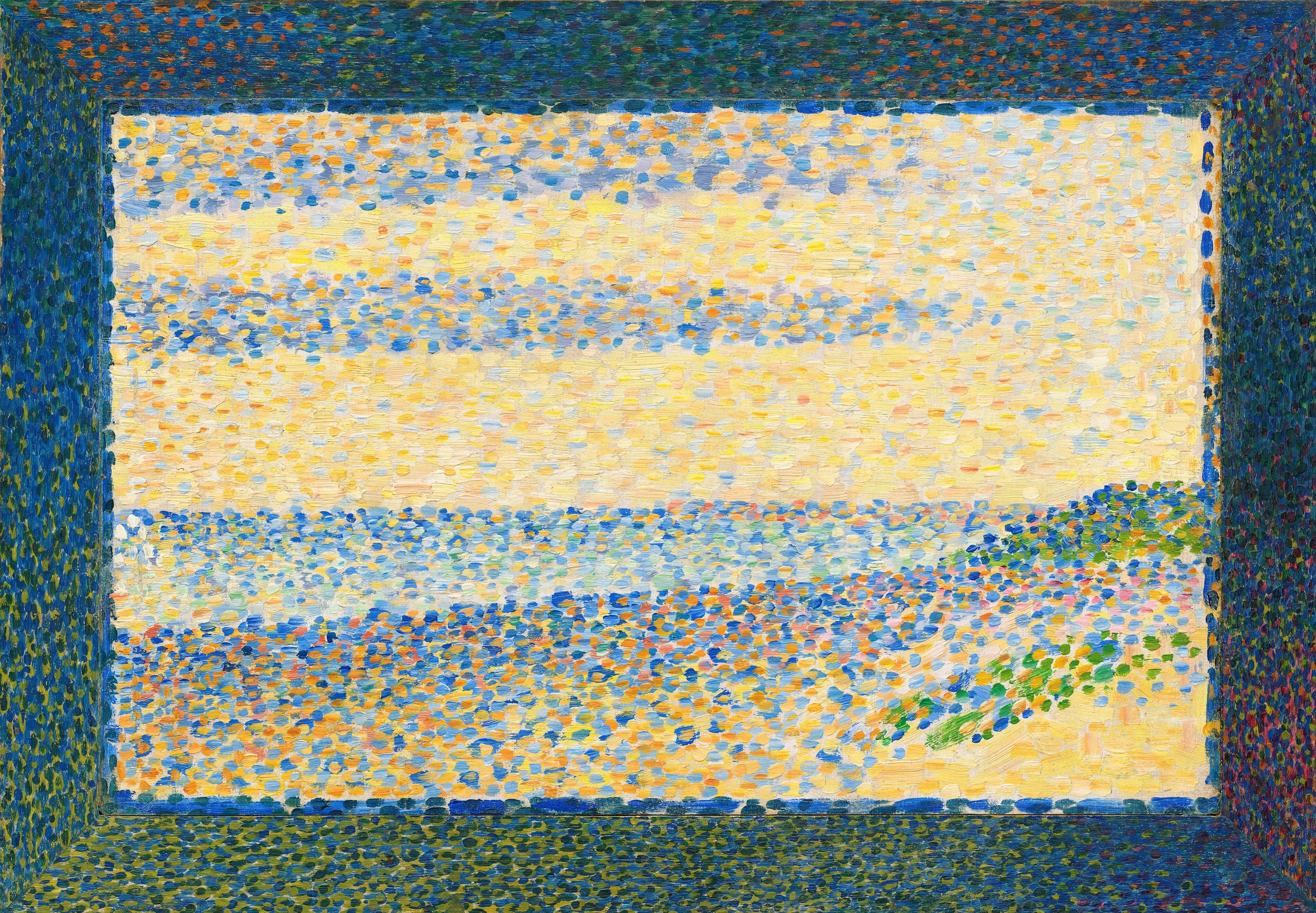
Seascape (Gravelines)
Georges Seurat
National Gallery of Art
Seascape (Gravelines). Quiet harbour water laid in bands of tone rather than drama, painted at the small Channel port where Seurat worked in the summer of 1890.
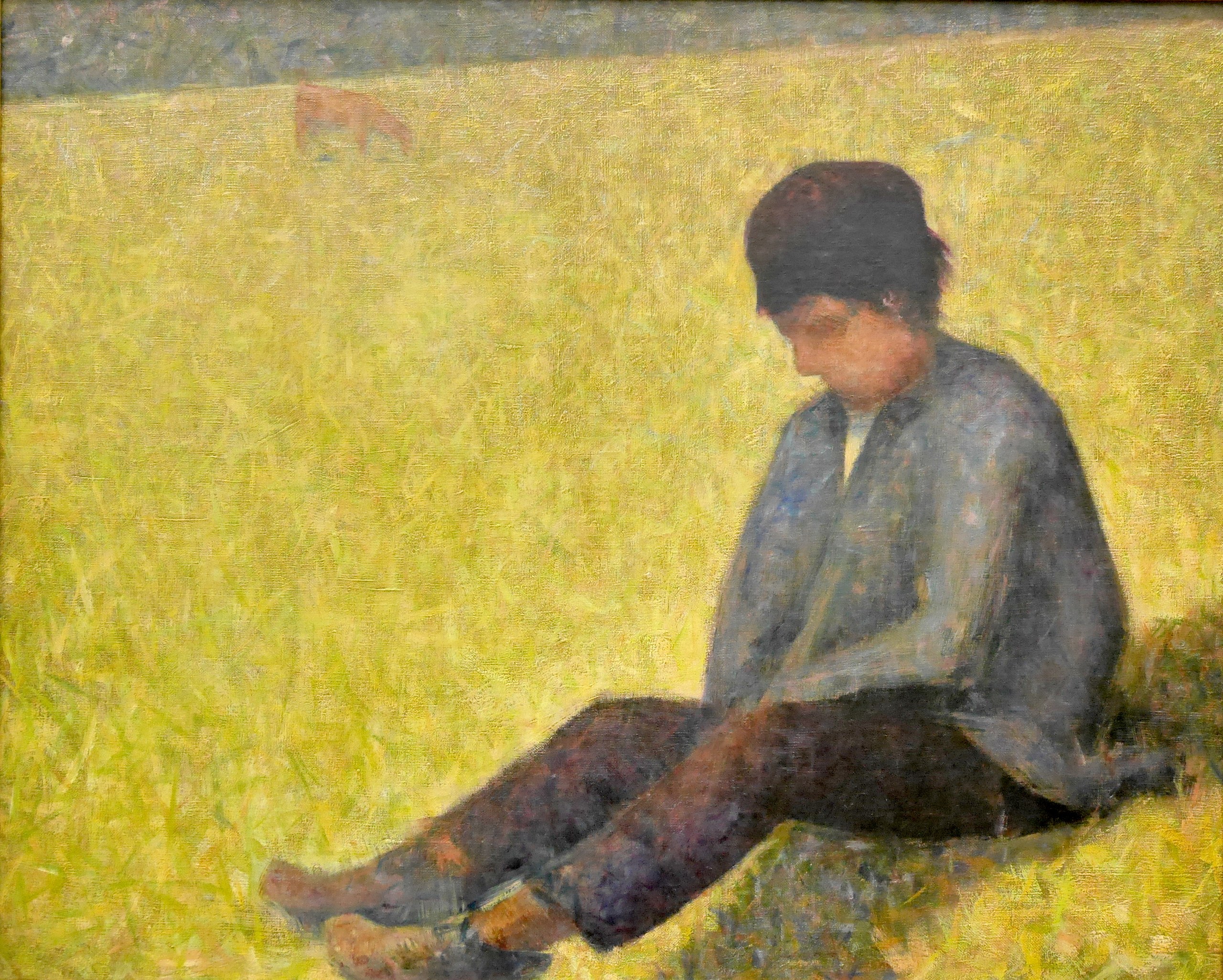
Boy Sitting in a Meadow
Georges Seurat · 1882
Kelvingrove Art Gallery and Museum
Boy Sitting in a Meadow. A boy at rest in deep grass, the figure held in by the quiet horizontals of the field.
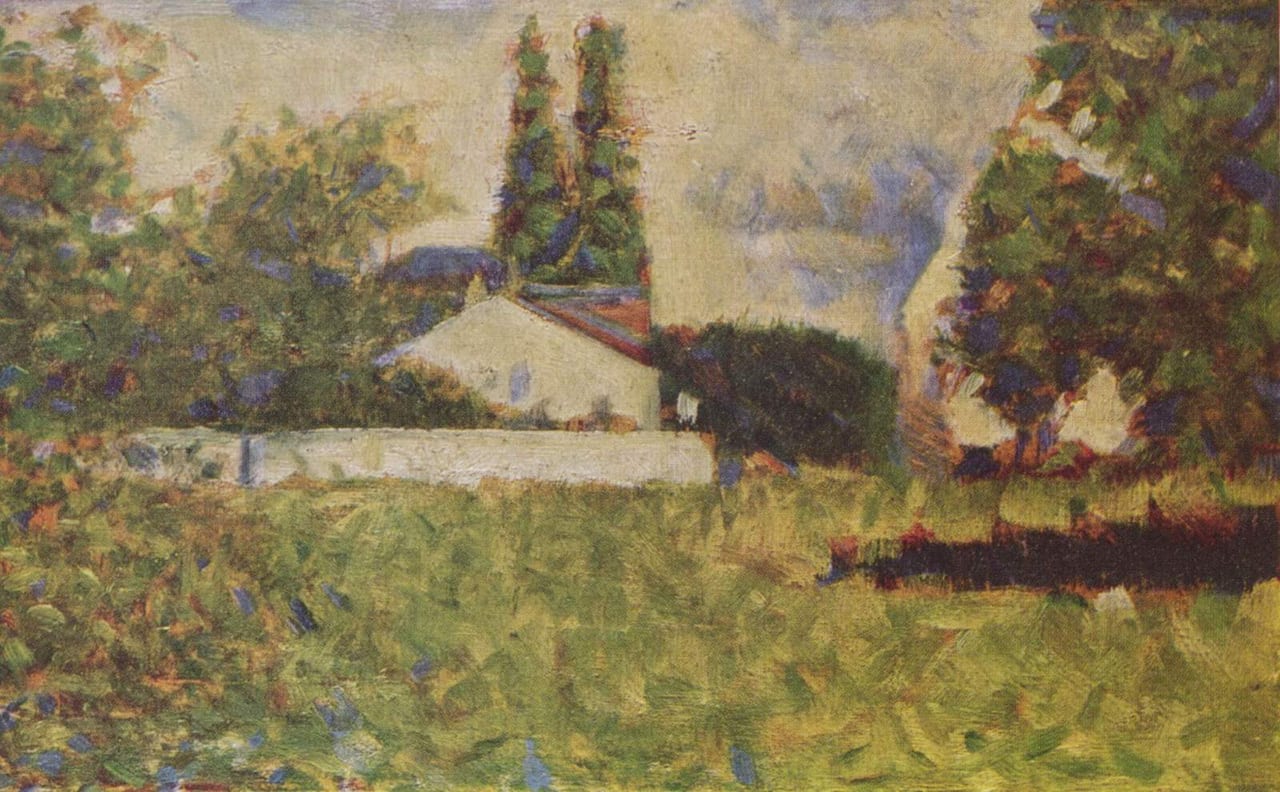
House among Trees
Georges Seurat · 1883
Kelvingrove Art Gallery and Museum
House among Trees. Buildings swallowed by foliage, the green doing the work that dots would later do.
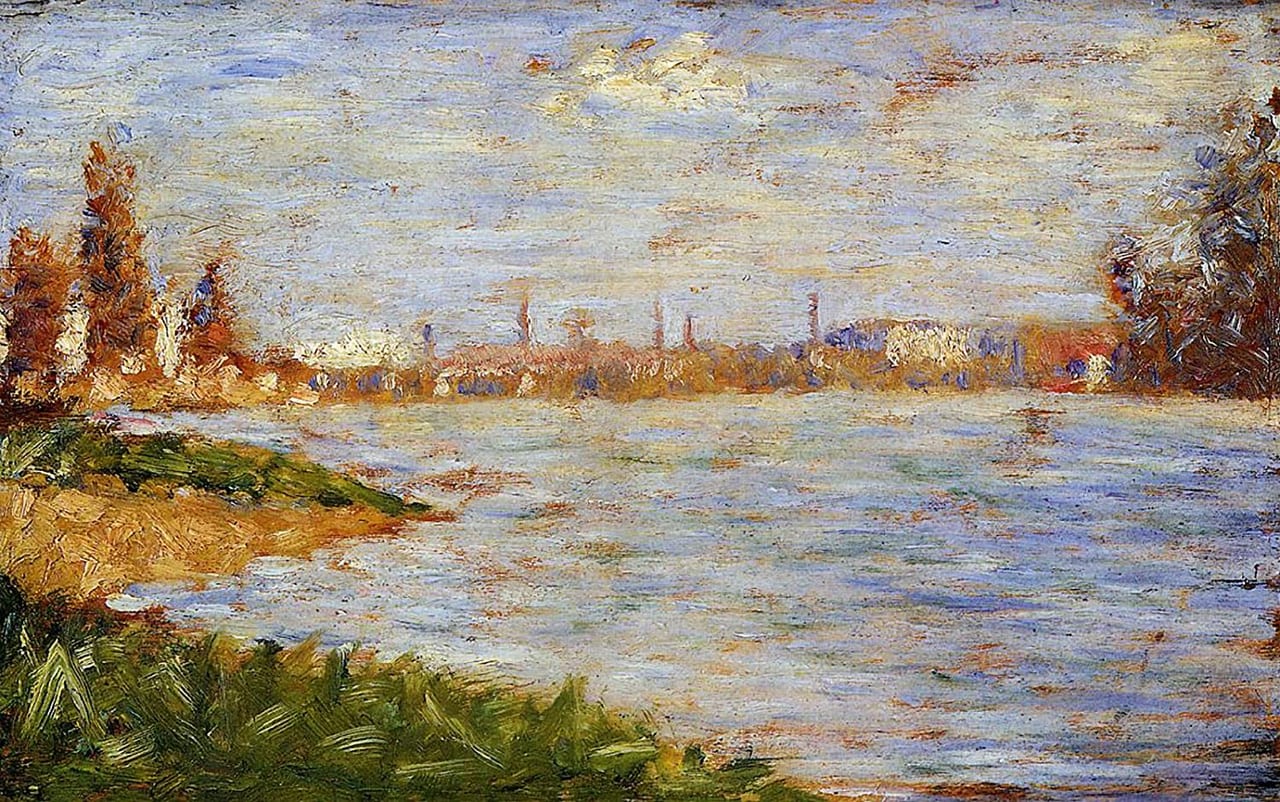
The Riverbanks
Georges Seurat · 1882
Kelvingrove Art Gallery and Museum
The Riverbanks. Water and banks laid out in flat, deliberate bands, a landscape built like a diagram of light.
Sources
Invite Georges Seurat into your living room
Play 9 works from this collection on your TV, phone or tablet with Momentable Art TV.