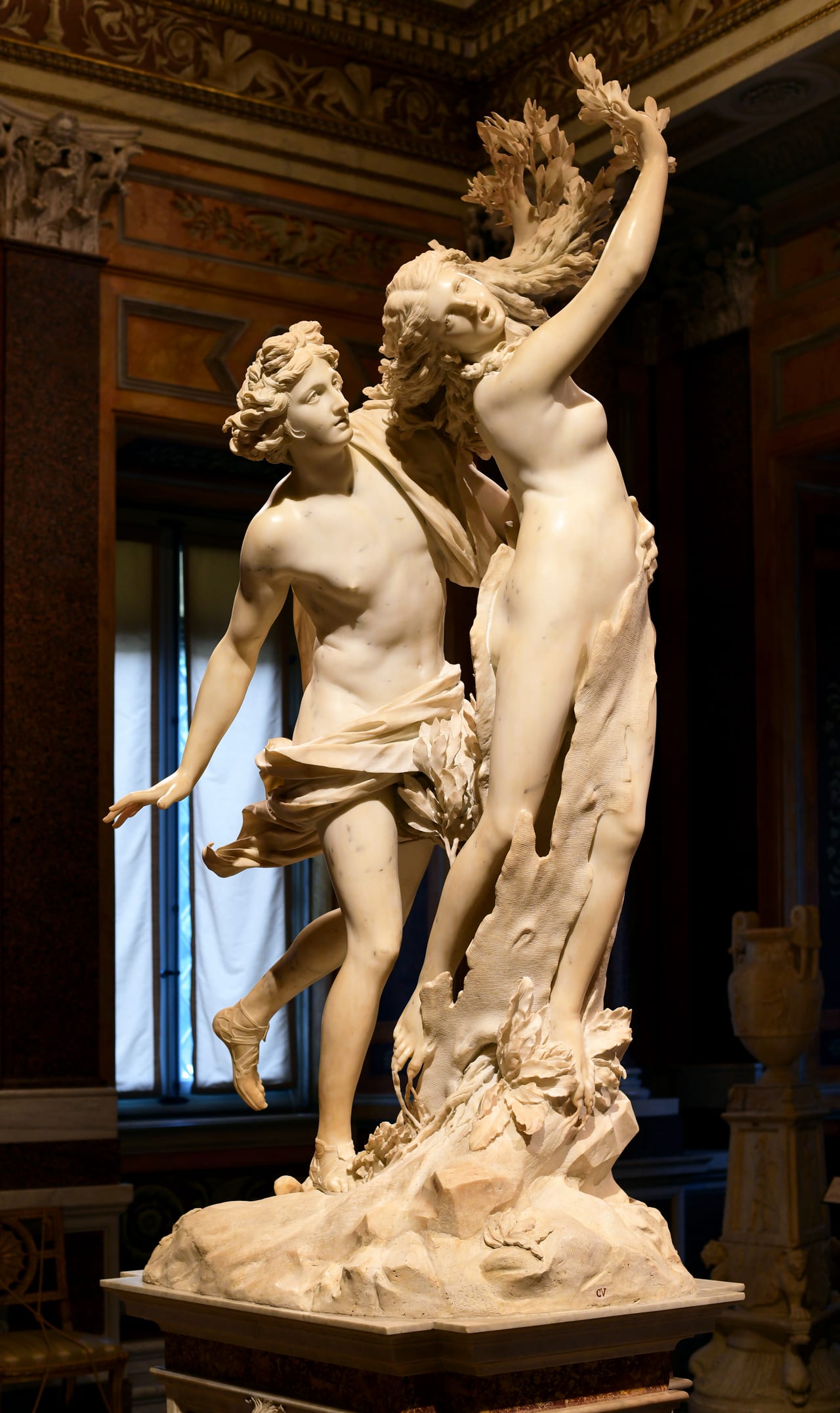
Apollo and Daphne
Gian Lorenzo Bernini · 1622

Gian Lorenzo Bernini
Italy · 1598–1680
The sculptor who taught marble to run, to fly and to cry out, and who gave Baroque Rome its fountains, its colonnades and the great bronze canopy over the tomb of Saint Peter.
Play 17 works from this collection on your TV, phone or tablet with Momentable Art TV.
Play CollectionA prodigy in Rome
Gian Lorenzo Bernini was born in Naples on 7 December 1598, the son of the Mannerist sculptor Pietro Bernini. Once the family reached Rome the boy's gifts travelled ahead of him to Cardinal Scipione Borghese, the reigning pope's all-powerful nephew, and under that patronage the young sculptor rose fast. Pope Paul V, having watched the child work, foretold that here was, in his words, 'the Michelangelo of his age'.
For Borghese's villa he carved the groups that fixed his name while he was still in his twenties, among them the abduction of Proserpina and Apollo and Daphne, the last and most praised of the cardinal's commissions from him and a work its first admirers already spoke of as a marvel of the new sculpture.
The pope's sculptor
In 1623 his patron Maffeo Barberini became Pope Urban VIII, and from that year to Urban's death in 1644 the family's patronage was his, almost without rival. He stands as the leading sculptor of his age and the one credited with founding the Baroque style of sculpture, but he worked on the largest scale as an architect too: the piazza and colonnades before Saint Peter's, the interior of the basilica, fountains, tombs and palaces across the city. Urban is remembered telling him that Rome was made for him and he for Rome.
When Urban VIII died in 1644 the Barberini patronage ended, and under Innocent X Bernini had to win the Pamphili commission for the Four Rivers Fountain on the Piazza Navona by manoeuvring behind the scenes; under that pope's successor, Alexander VII, he again held artistic domination in Rome. He stayed at work almost to the last, dying of a stroke on 28 November 1680, within a fortnight of laying down his tools.
Marble in motion
What Bernini asked of stone no sculptor had asked before it. In the Borghese groups the marble grips and twists with living weight, and was praised from the first for mimicking flesh; in his portrait busts the faces turn, frown and cry out; in his fountains water, rock and figure become one spectacle. The compositions are held like theatre at the moment of greatest strain: the god reaching, the martyr wrenching at the tree, the damned soul with its mouth open.
Known works
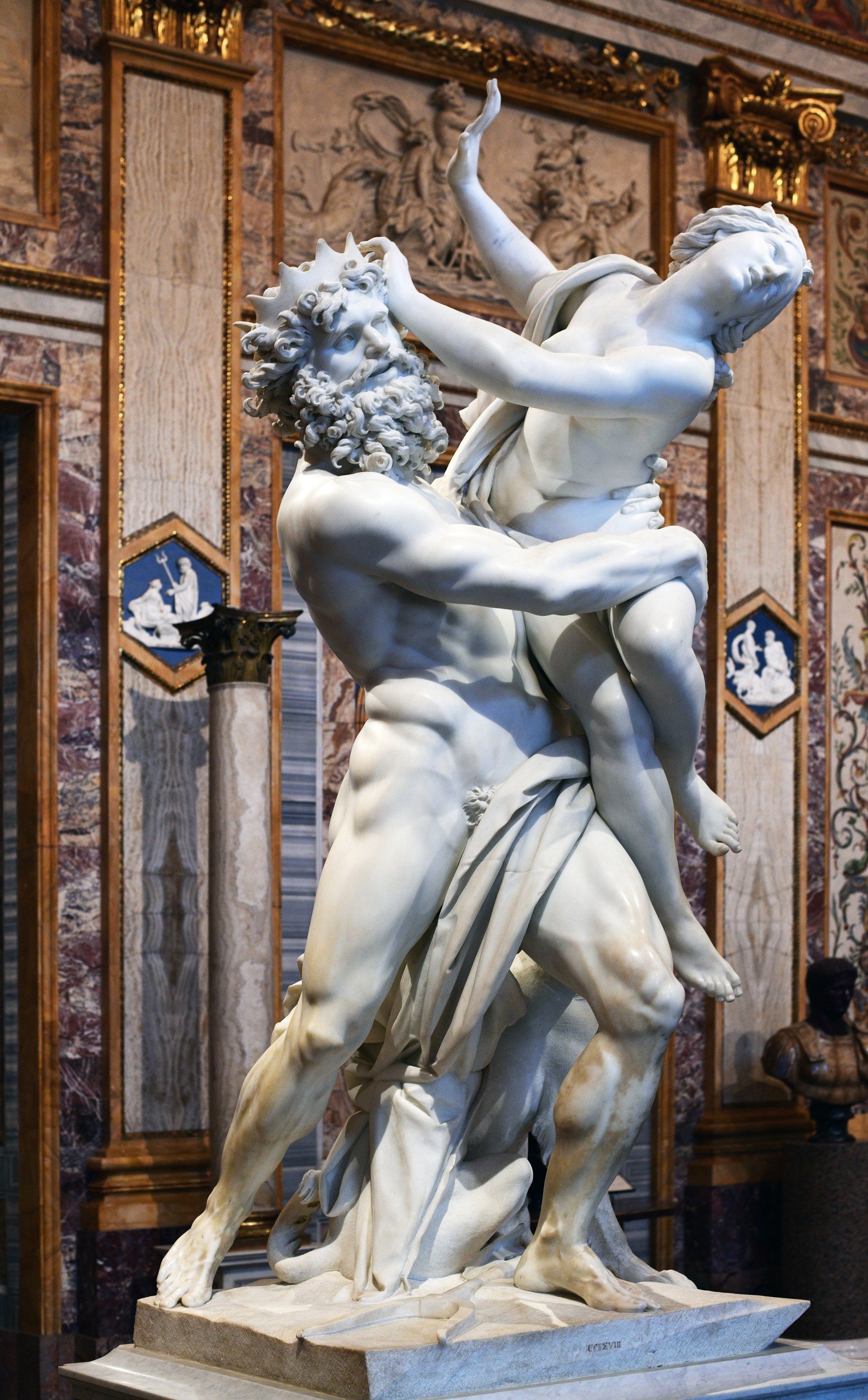
The Rape of Proserpina
Gian Lorenzo Bernini · 1624
The Rape of Proserpina. Pluto lifts the girl bodily from the ground while she twists against him, a three-headed Cerberus barking at his knee; finished when Bernini was twenty-three, commissioned by Borghese and passed by him to Cardinal Ludovisi as a courtly gift. A trickle of tears runs into the expressiveness of the face.
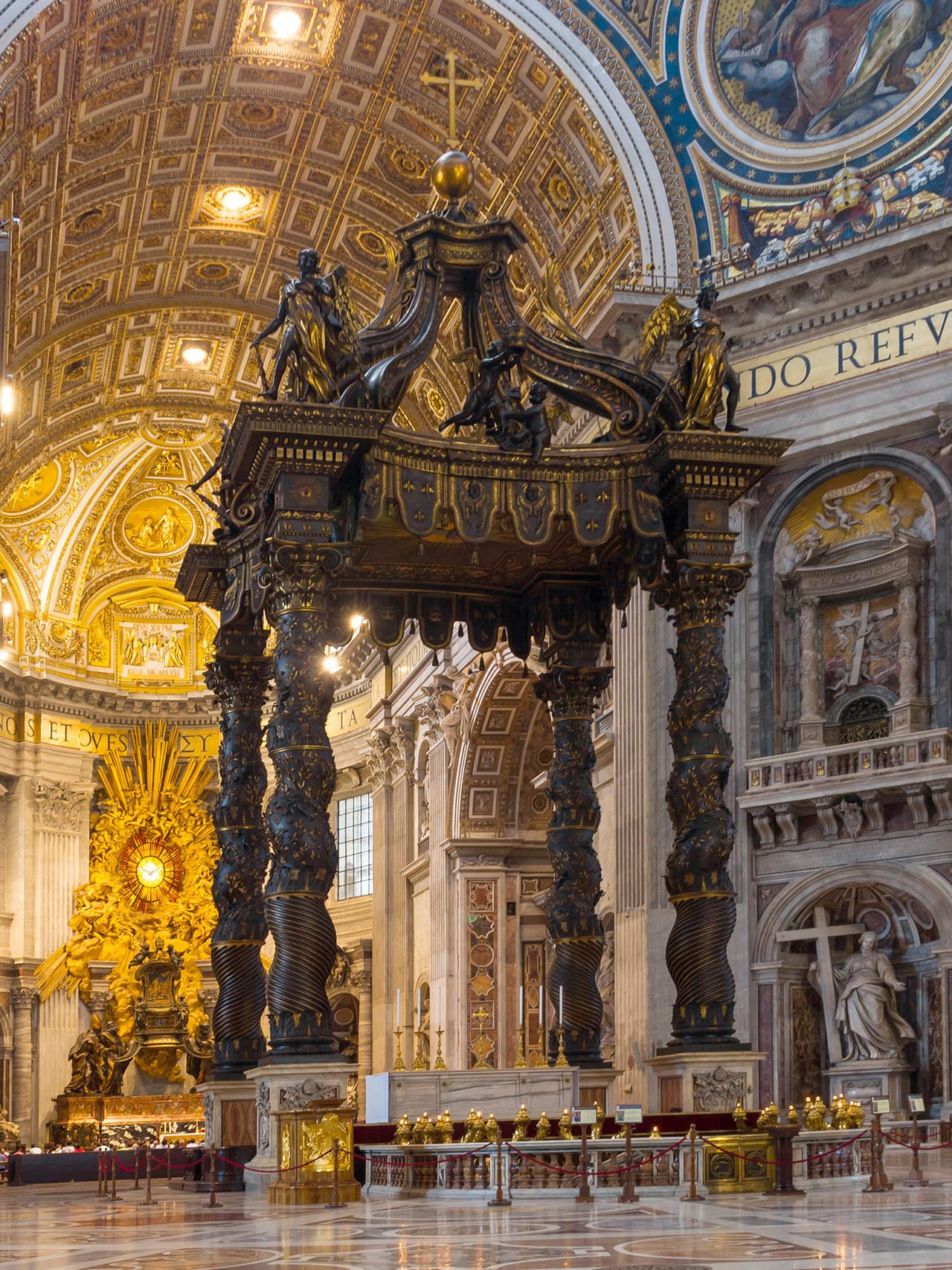
St. Peter's Baldachin
Gian Lorenzo Bernini · 1620
St Peter's Baldachin. A bronze canopy of great twisted columns rising over the high altar of Saint Peter's, at the centre of the crossing under the dome; commissioned by Urban VIII and built from 1623 to 1634 to mark, monumentally, the apostle's tomb beneath it.
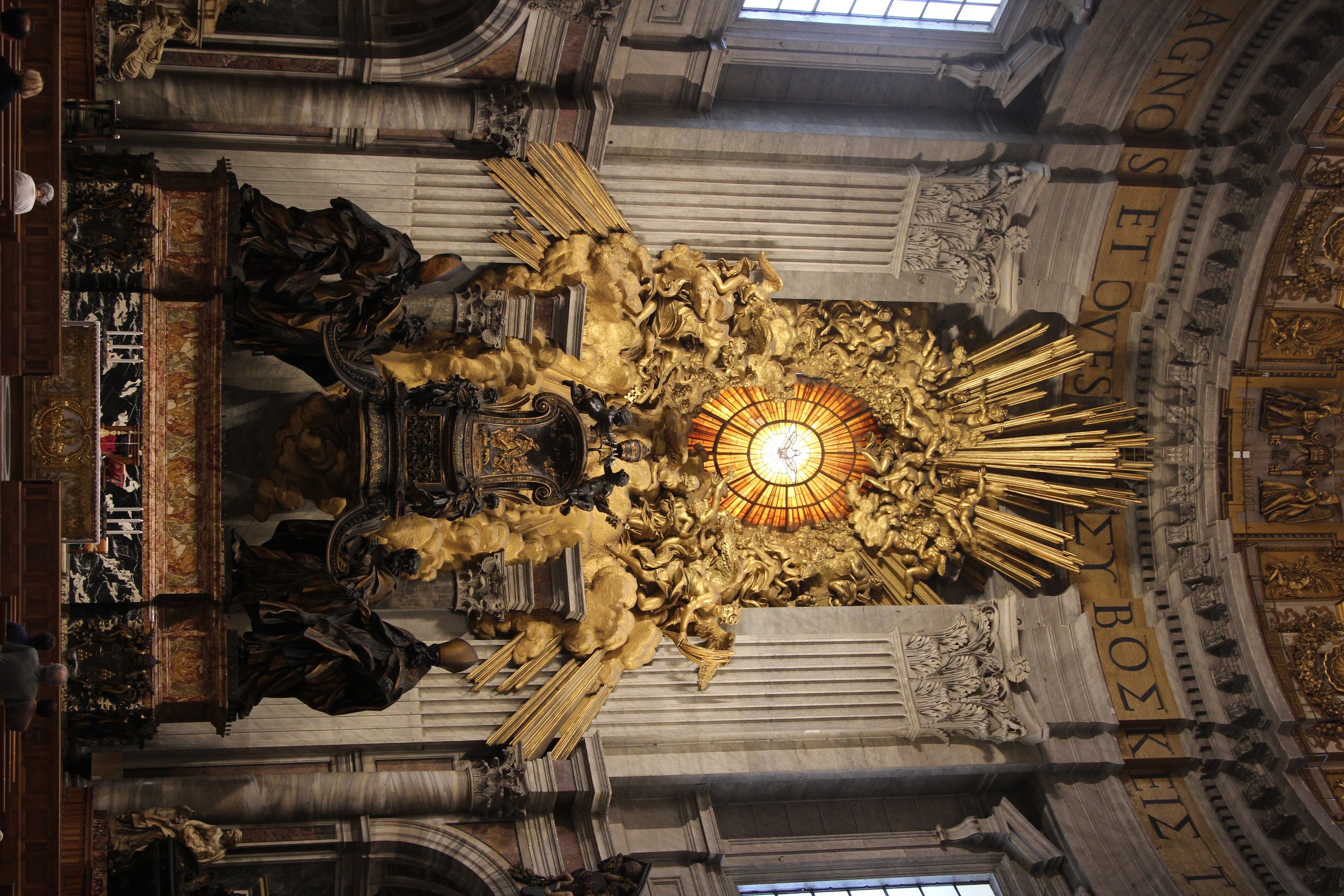
Chair of Saint Peter
Gian Lorenzo Bernini · 1647
Chair of Saint Peter. A casing of gilt bronze, worked between 1647 and 1653, that holds the wooden throne kept by tradition as the Apostle's own; the church's second altar, raised in the apse of the basilica.
Four Rivers Fountain
Gian Lorenzo Bernini · 1640
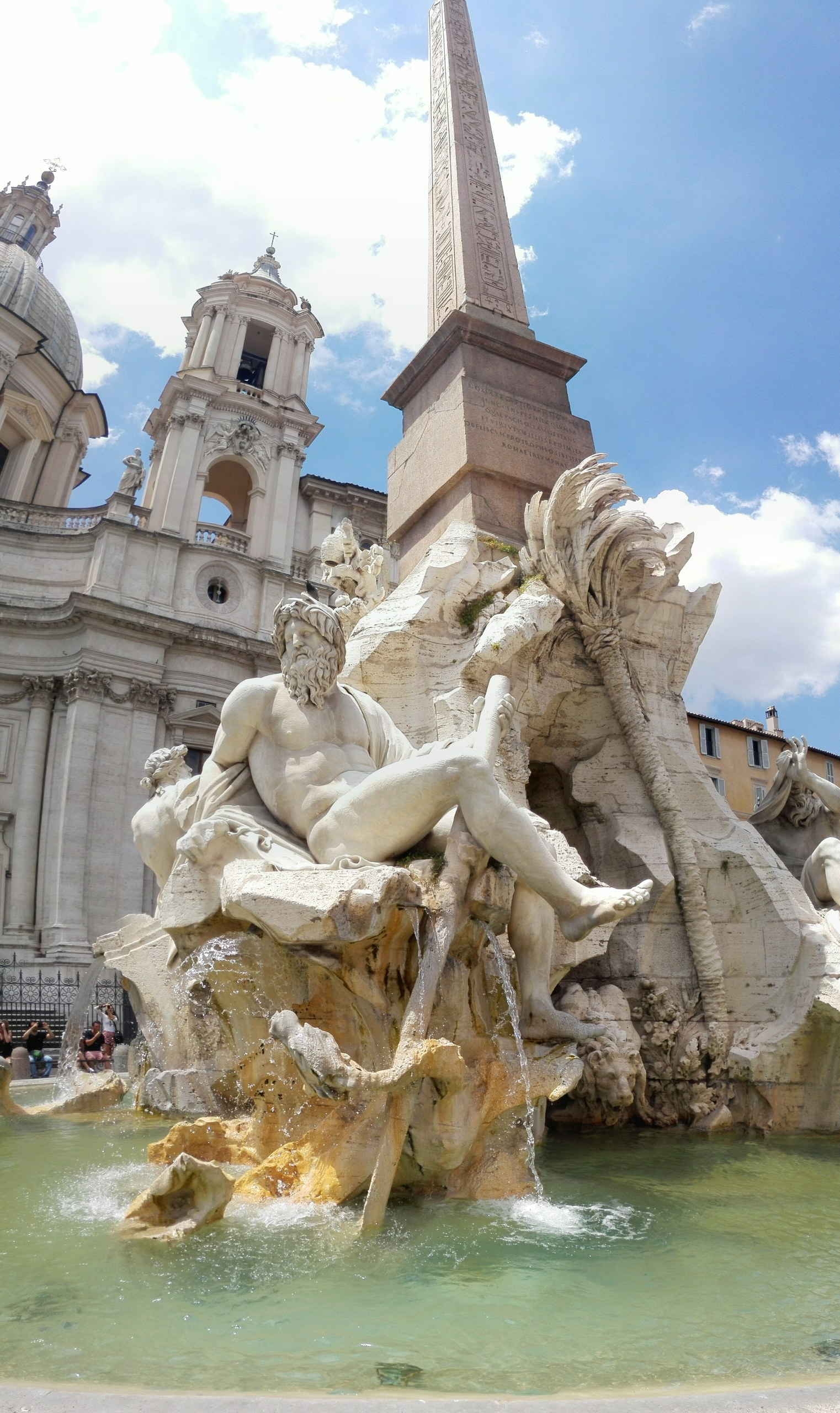
Four Rivers Fountain. Travertine rocks climbing out of a basin in the Piazza Navona to bear four river gods, the Nile, the Danube, the Ganges and the Río de la Plata, and above them an obelisk under the Pamphili dove; designed in 1651 for Innocent X, whose family palace faced the square.
Triton Fountain
Gian Lorenzo Bernini
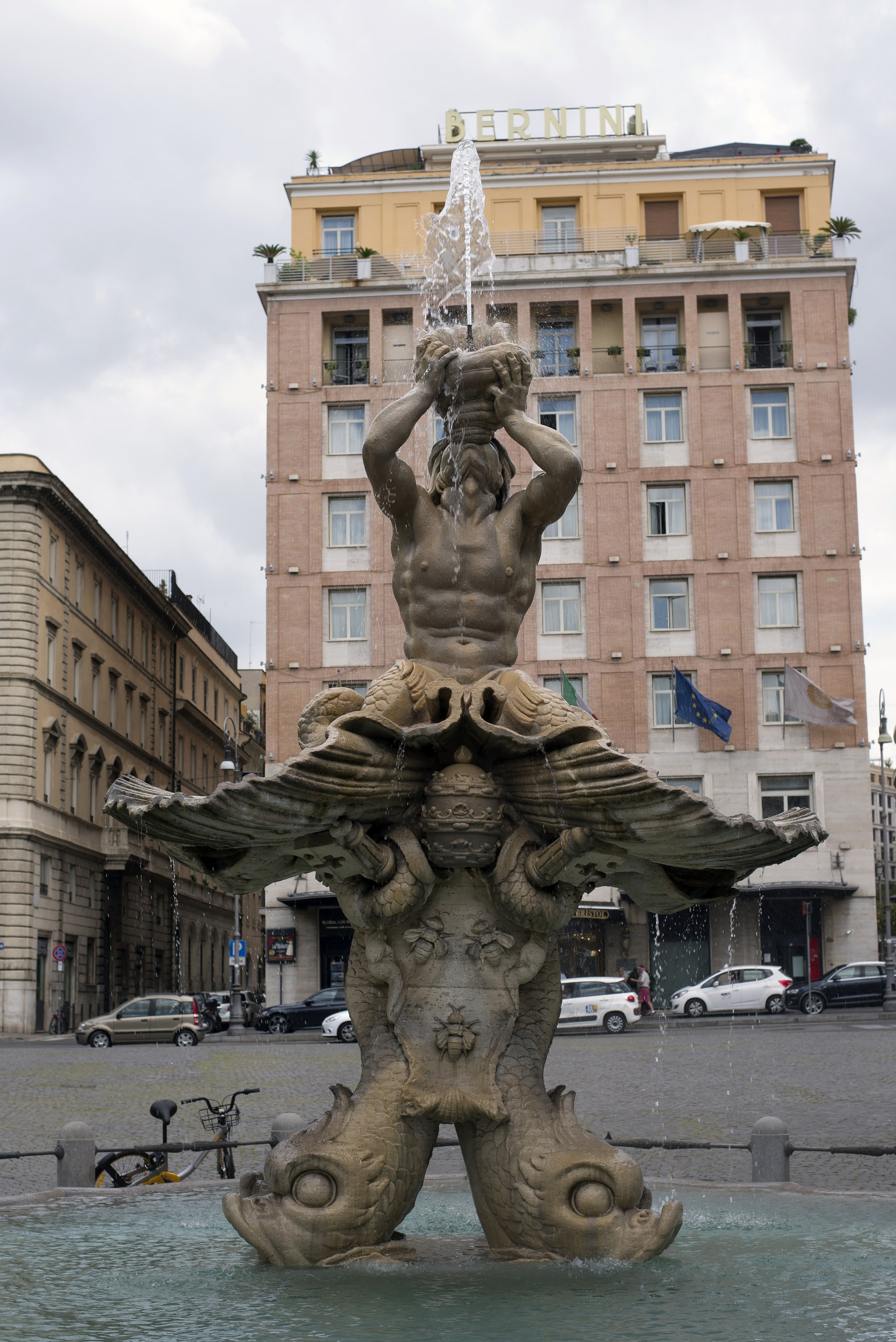
Triton Fountain. A merman larger than life kneeling on a shell in the Piazza Barberini and blowing a jet of water through a conch, four dolphins twined below around the papal tiara, the crossed keys and the Barberini bees; carried out in travertine in 1642 and 1643 for Urban VIII.
Damned Soul
Gian Lorenzo Bernini · 1619
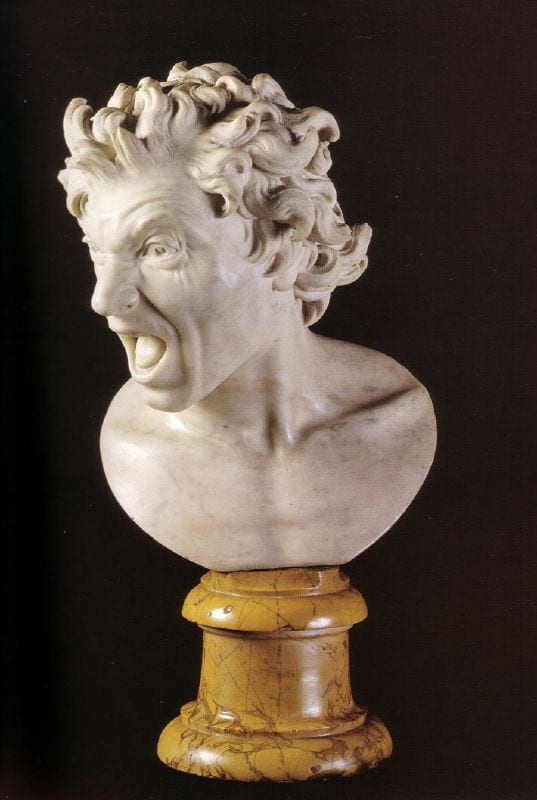
Damned Soul. A bust with the mouth open in a cry, the brows knotted and the whole face convulsed; carved as the pendant to a Blessed Soul and kept in Rome in the Palazzo di Spagna.
Saint Sebastian
Gian Lorenzo Bernini · 1617
Thyssen-Bornemisza Museum
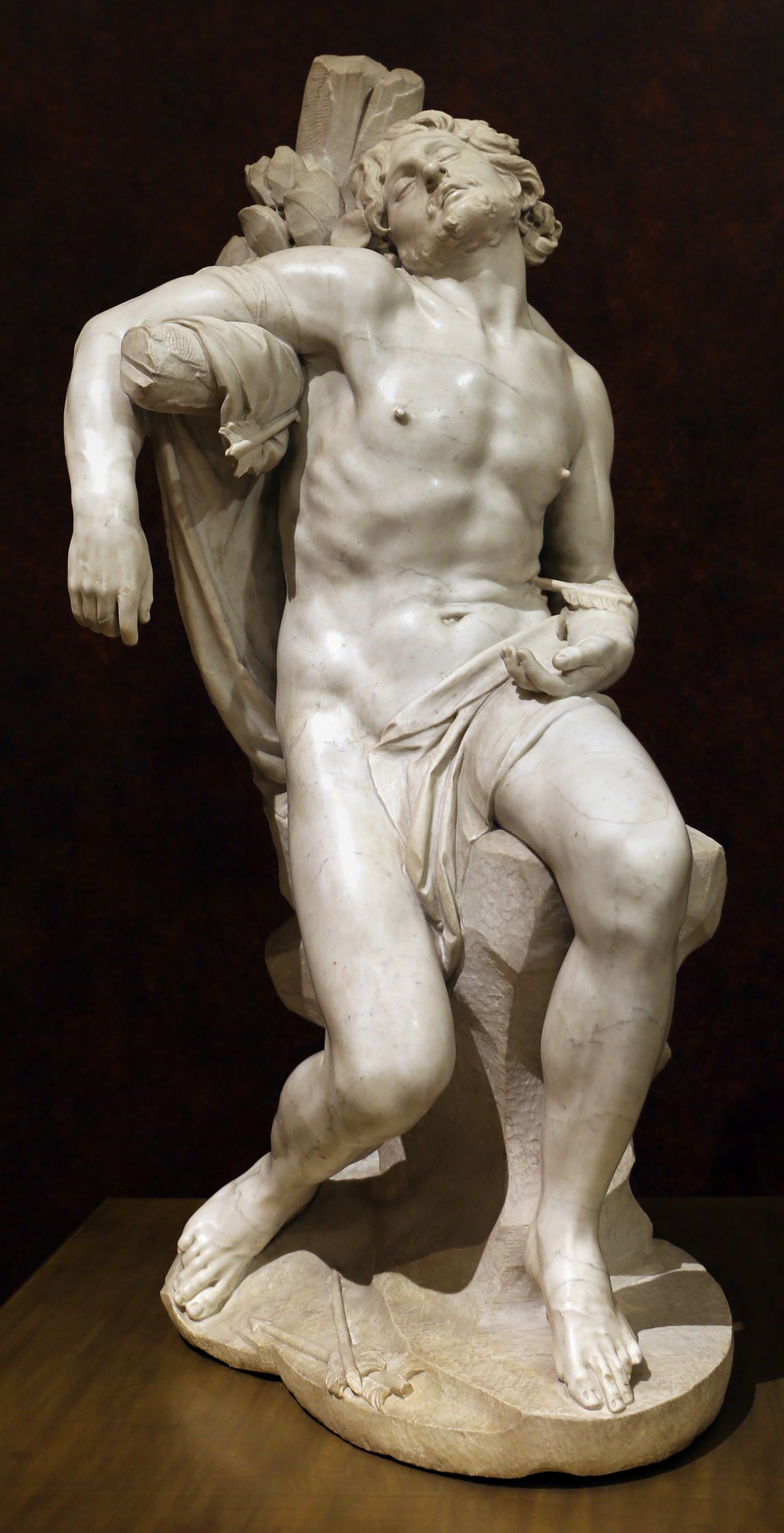
Saint Sebastian. The martyr, smaller than life size, strapped to a tree and shot through with arrows, the body wrenching against the trunk; an early work of 1617 and 1618, now shown in Madrid at the Thyssen-Bornemisza Museum in a private collection.
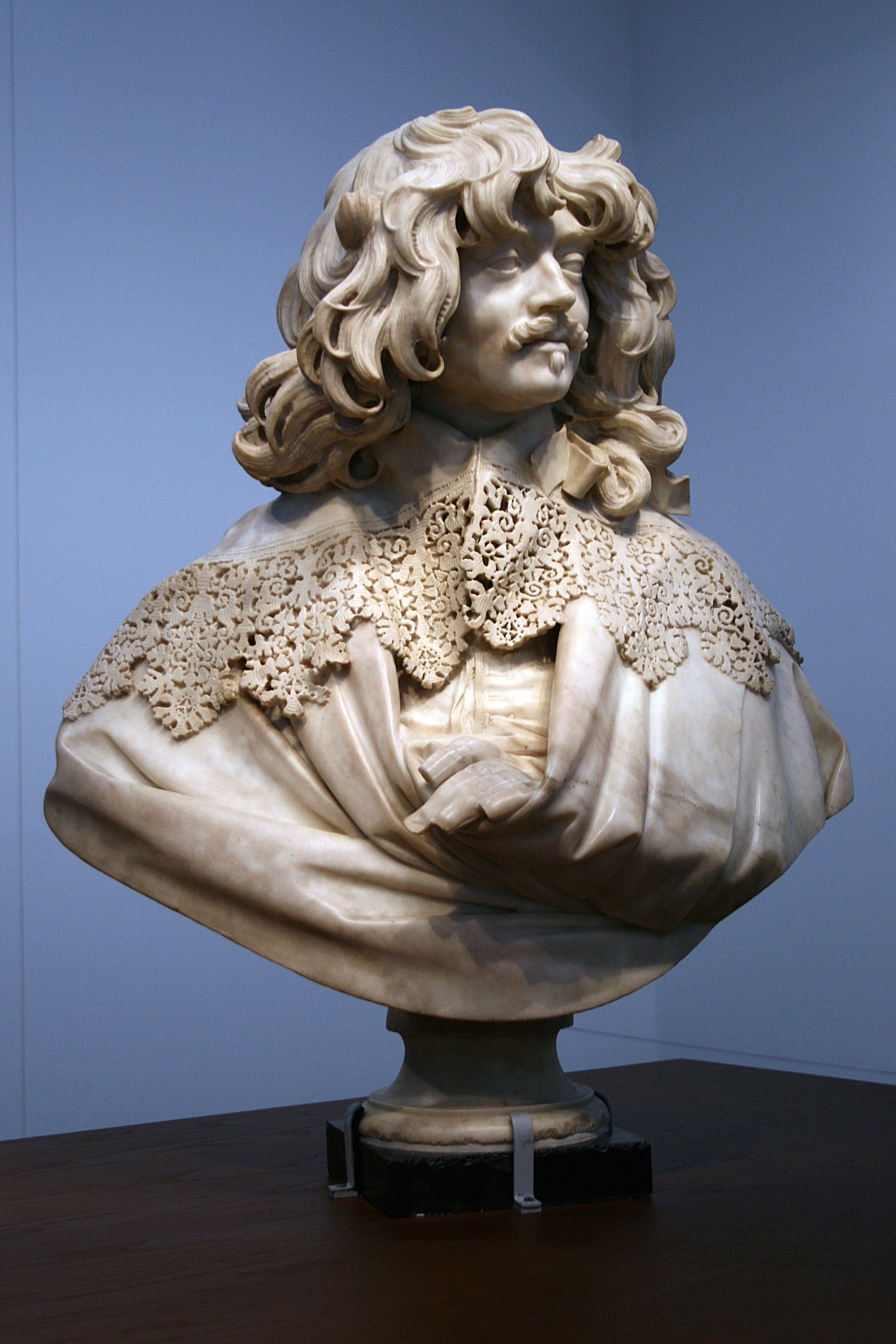
Bust of Thomas Baker
Gian Lorenzo Bernini · 1638
Victoria and Albert Museum
Bust of Thomas Baker. An English gentleman of the court of Charles I, set high on his lace collar; a marble of 1638 in which much of the carving was done by a pupil, probably Andrea Bolgi, and one of the few Berninis in London, at the Victoria and Albert Museum.
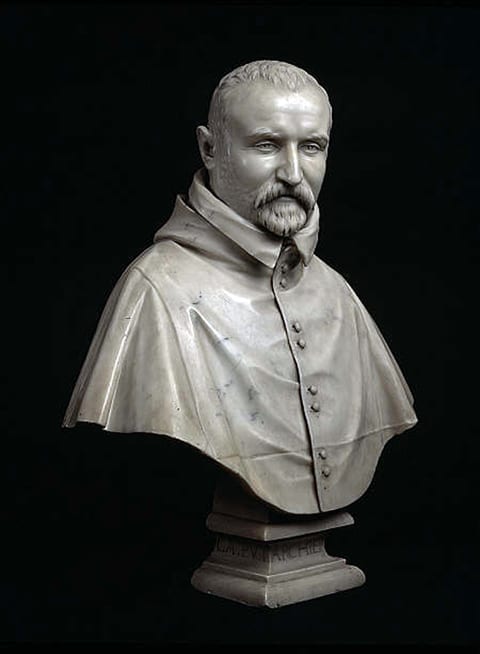
Bust of Carlo Antonio del Pozzo
Gian Lorenzo Bernini · 1622
Scottish National Gallery
Bust of Carlo Antonio del Pozzo. An archbishop of Pisa in skullcap and robes, the head alive with attention; commissioned by the archbishop's nephew, the collector Cassiano del Pozzo, and in Edinburgh since 1986 after two centuries at Castle Howard.
More to discover
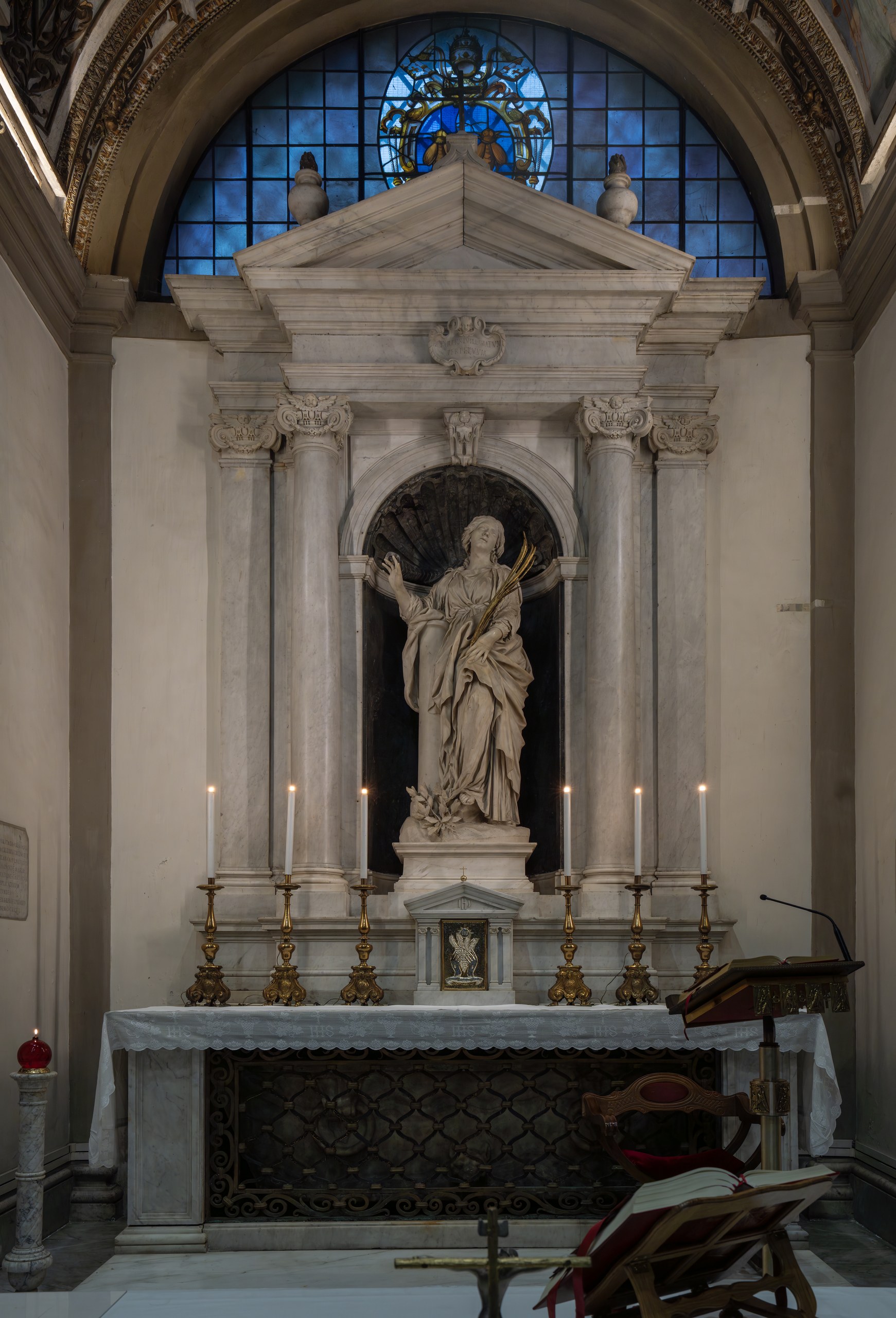
St Bibiana
Gian Lorenzo Bernini · 1624
St Bibiana. The martyr standing at the high altar of her church in Rome, holding the leafy branch of her story; carved between 1624 and 1626 for Urban VIII after the saint's body was said to be found again, and counted the first work of its Christian Baroque type.
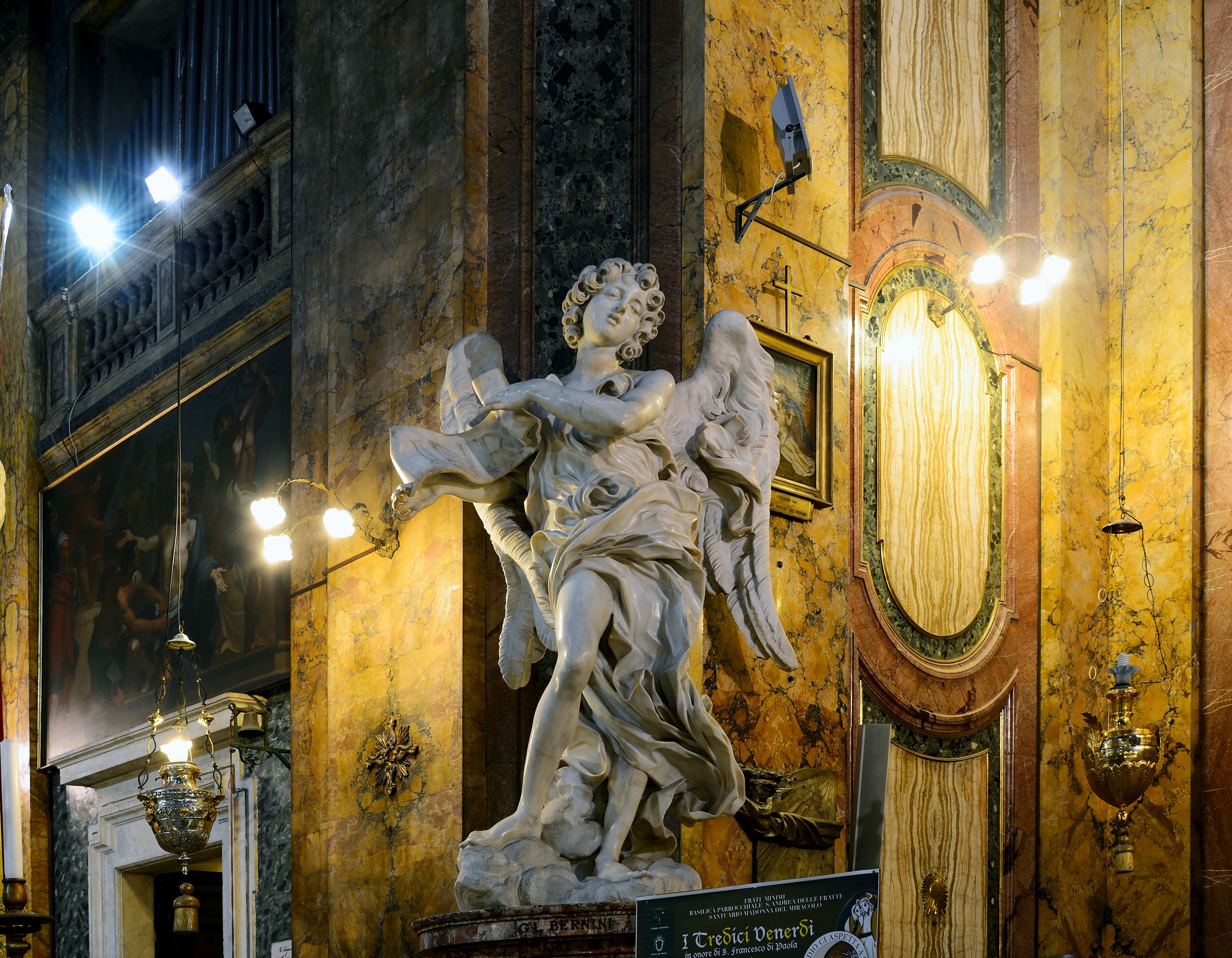
Angel with the Superscription
Gian Lorenzo Bernini · 1667
Angel with the Superscription. One of the angels made for the Ponte Sant'Angelo carrying the instruments of the Passion; the original, of 1667 to 1669, now stands in Sant'Andrea delle Fratte, with a copy left on the bridge.
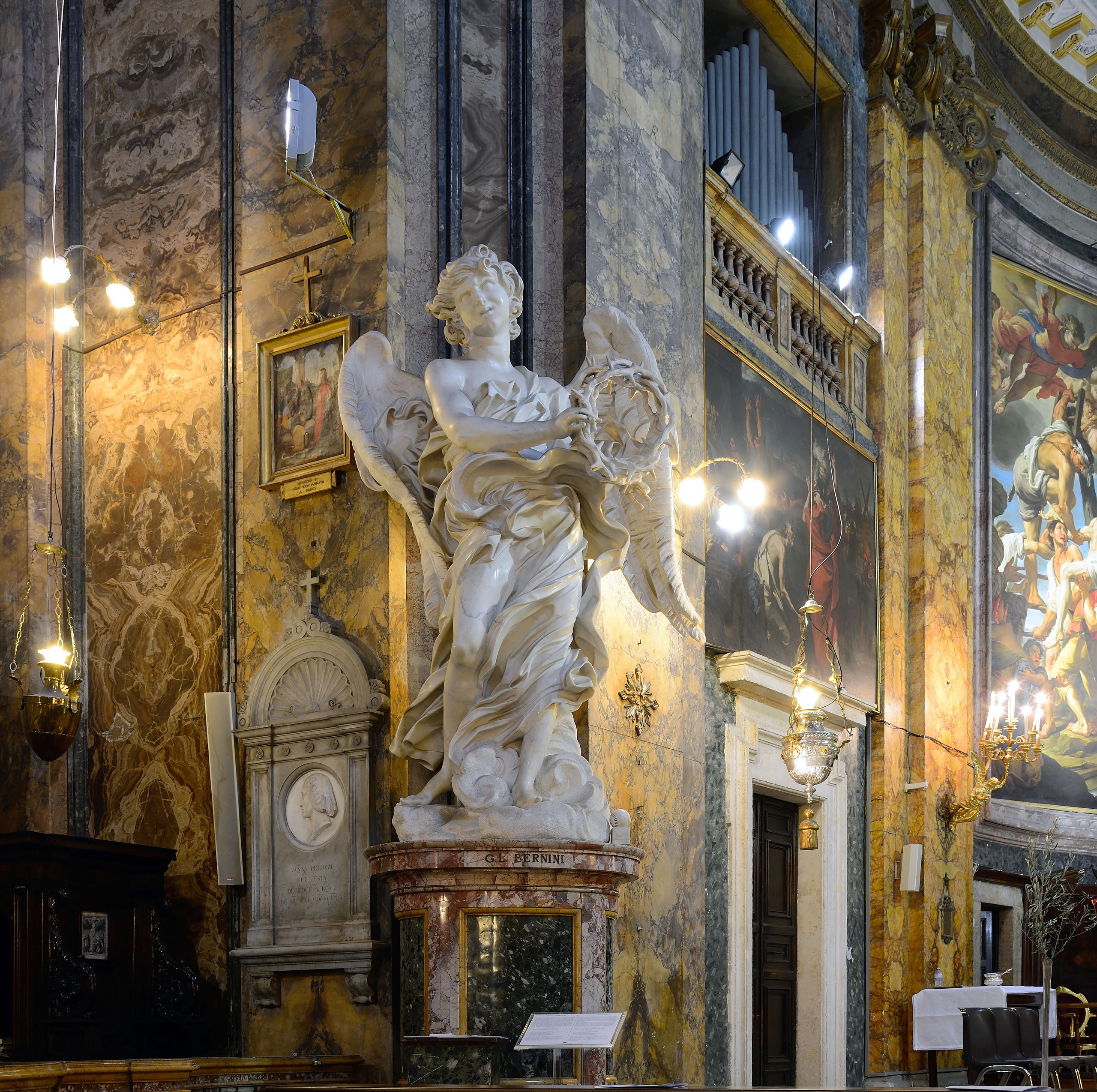
Angel with the Crown of Thorns
Gian Lorenzo Bernini · 1660
Angel with the Crown of Thorns. A companion angel of the same bridge commission, the crown held out at arm's length; the terracotta model for it survives in the Louvre.
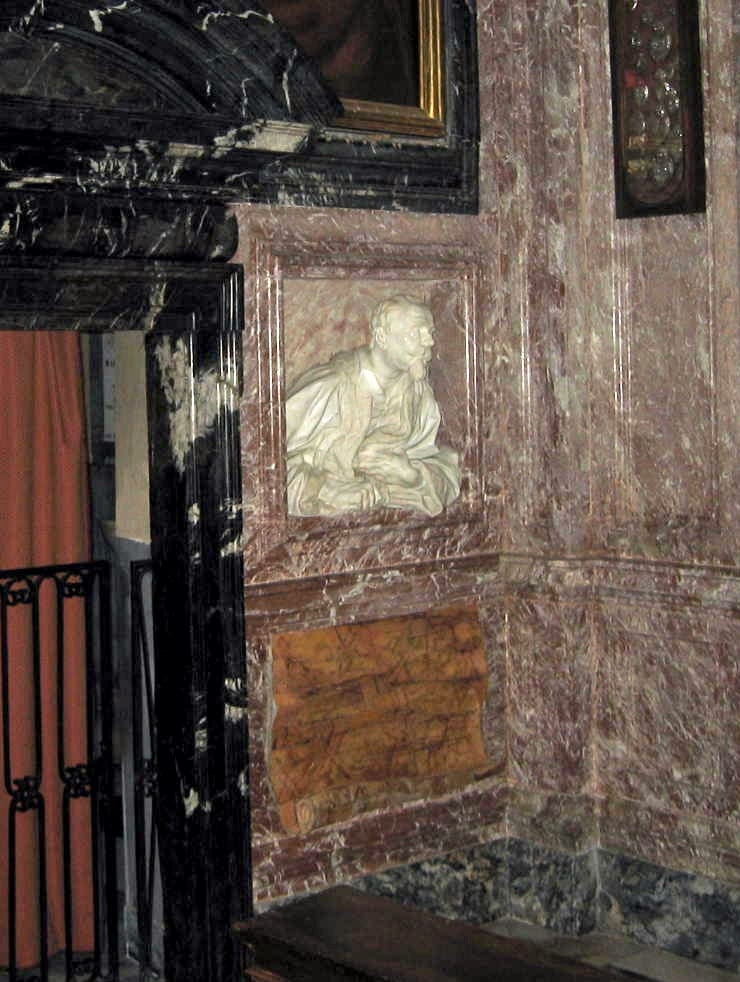
Bust of Gabriele Fonseca
Gian Lorenzo Bernini · 1668
Bust of Gabriele Fonseca. The pope's own physician caught in a burst of movement, one hand lifting the cloak at his collar; carved for San Lorenzo in Lucina in Rome between 1668 and 1674.
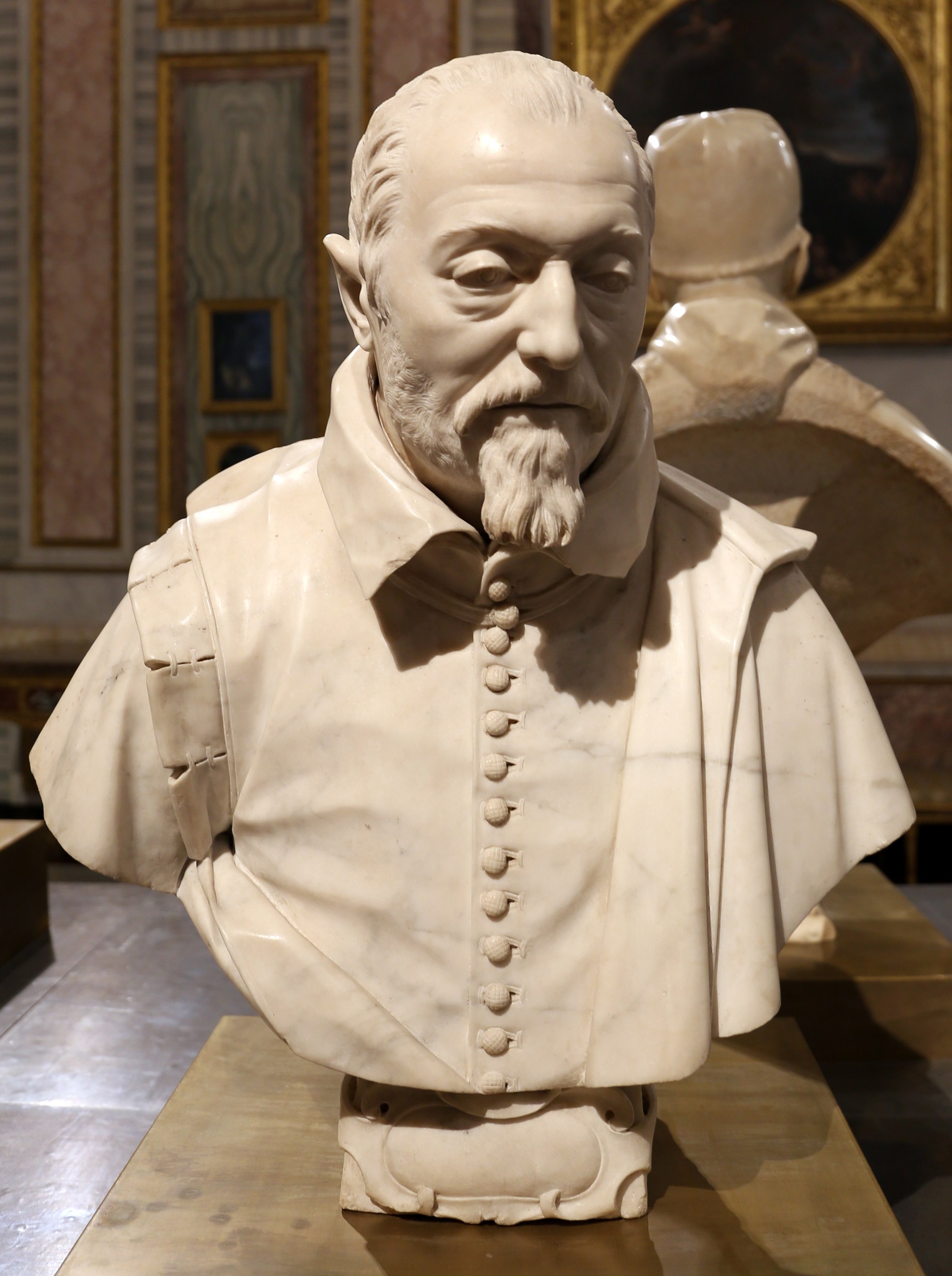
Bust of Antonio Cepparelli
Gian Lorenzo Bernini · 1622
Bust of Antonio Cepparelli. A doctor of Rome, the face heavy and watchful above the collar; carved around 1622 and kept by the Roman church of San Giovanni dei Fiorentini.
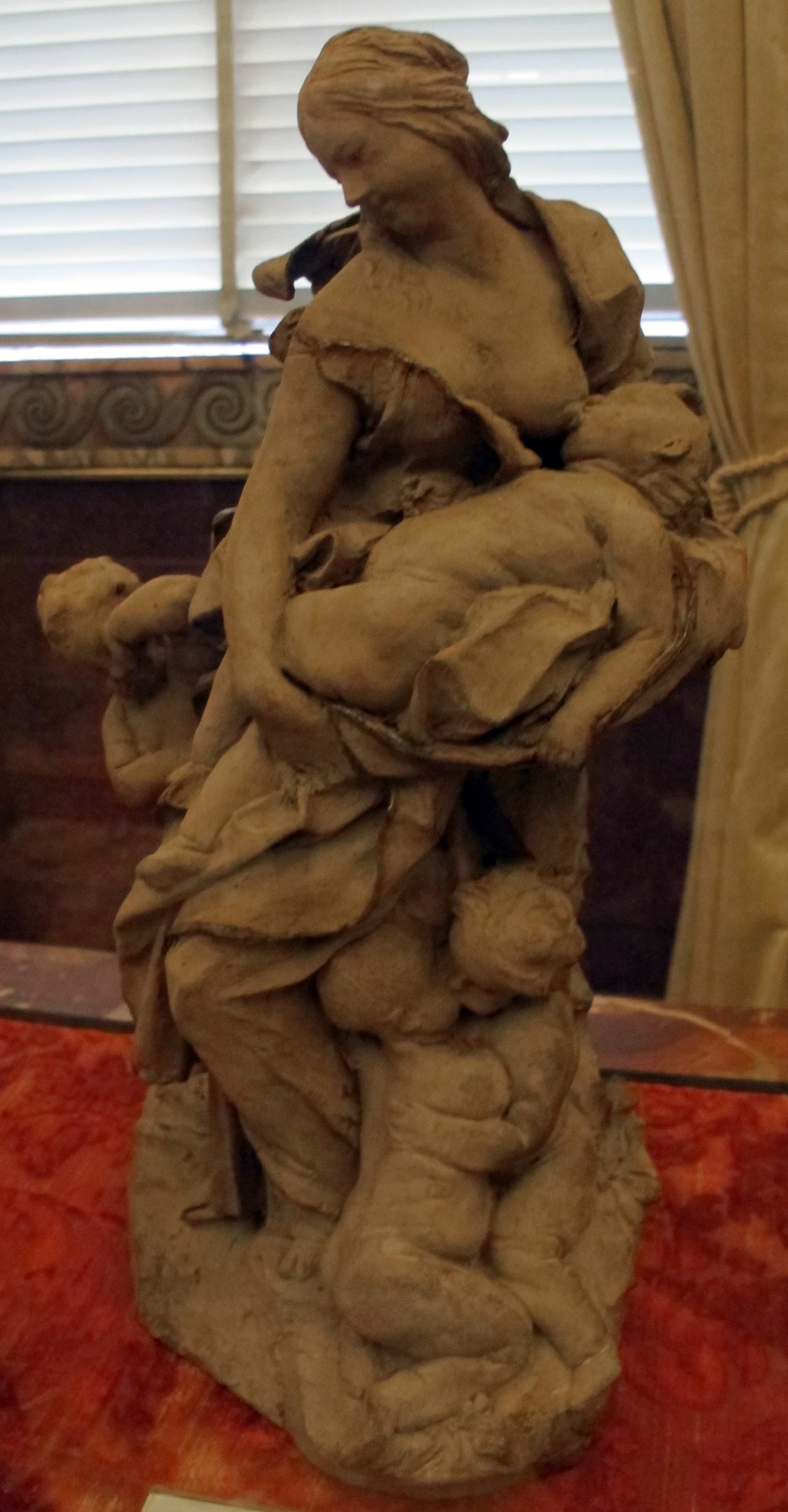
Charity with Four Children
Gian Lorenzo Bernini · 1627
Vatican Museums
Charity with Four Children. A terracotta sixteen inches high, the nurse at one breast while three other children clamber about her; the model Bernini made for the tomb of Urban VIII, and it still carries the print of his thumb in the clay.
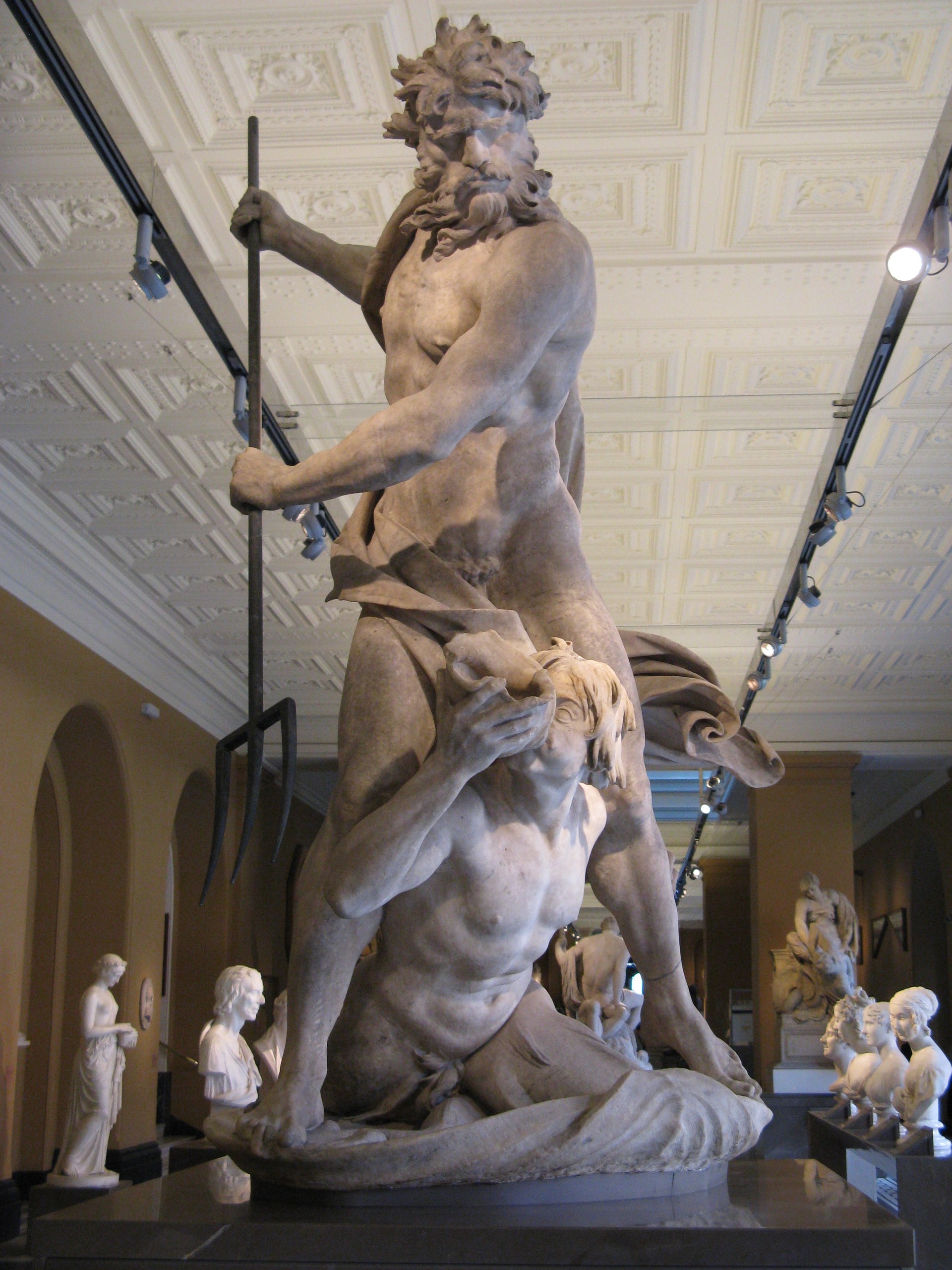
Neptune and Triton
Gian Lorenzo Bernini · 1620
Victoria and Albert Museum
Neptune and Triton. The sea god striding forward with his trident while his herald sounds a great twist of shell between them; carved for a cardinal's garden pond in Rome in 1622 and 1623, and standing today in the Victoria and Albert Museum.
Sources
- Wikipedia, “Gian Lorenzo Bernini”
- Wikipedia, “Saint Bibiana (Bernini)”
- Wikipedia, “Angel with the Superscription”
- Wikipedia, “Angel with the Crown of Thorns”
- Wikipedia, “Bust of Gabriele Fonseca”
- Wikipedia, “Bust of Antonio Cepparelli”
- Wikipedia, “Damned Soul”
- Wikipedia, “Saint Sebastian (Bernini)”
- Wikipedia, “Bust of Thomas Baker”
- Wikipedia, “Bust of Carlo Antonio del Pozzo”
- Wikipedia, “Charity with Four Children”
- Wikipedia, “The Rape of Proserpina”
- Wikipedia, “St. Peter's Baldachin”
- Wikipedia, “Chair of Saint Peter”
- Wikipedia, “Fontana dei Quattro Fiumi”
- Wikipedia, “Fontana del Tritone, Rome”
- Wikipedia, “Apollo and Daphne (Bernini)”
- Wikipedia, “Neptune and Triton”
Invite Gian Lorenzo Bernini into your living room
Play 17 works from this collection on your TV, phone or tablet with Momentable Art TV.