The Kiss
Gustav Klimt · 1907

Gustav Klimt
Austrian Empire · 1862–1918
The Viennese painter who dressed desire in gold leaf and pattern, and led the break that opened his city's art to the modern century.
Play 29 works from this collection on your TV, phone or tablet with Momentable Art TV.
Play CollectionFrom decorator to Secession
Gustav Klimt, born in 1862 outside Vienna, was the son of a gold engraver from Bohemia, and the family trade returned to him thirty years later in the form of gold leaf. He trained at the city's school of applied arts, studying architectural painting there from 1876 to 1883, and then earned his living decorating staircases and ceilings for theatres and museums. For the Burgtheater ceilings he was given the Gold Cross of Merit by Emperor Franz Joseph, then the top artistic distinction Austria had to give.
The break in his life came with the ceilings painted for the Great Hall of the University of Vienna. The three faculty pictures were finished around 1900 and greeted with outrage; critics called them pornography, the university left them off its ceiling, and Klimt accepted no public commission after them. In 1897 he had already put himself at the head of the younger painters who walked out of the official body to found the Vienna Secession, serving as its president and shaping its journal, Ver Sacrum.
The golden phase
After 1900 his reputation rested on portraits of women, roughly one great canvas a year, its surface governed by the principles of Art Nouveau: flatness, decoration, gold leaf. Venice and Ravenna, with their Byzantine mosaics, are the likeliest source of the gold technique. These years were good to him: the golden phase brought applause from critics and money in equal measure.
He said it plainly: "I have never painted a self-portrait." His material was other people, and the female body above all, clothed in pattern or not clothed at all. The drawings and paintings he made of it fed directly into the art of the younger Egon Schiele, who took the same honesty further.
The Attersee summers
From the end of the 1890s he passed every summer at the Attersee with the Flöge family and painted while he was there. Landscape was the only subject outside the human figure that ever held him for long. He worked with such fierceness that people around the lake nicknamed him the Waldschrat, the forest spirit.
The lake pictures are built as deliberately as the portraits: trunks, water and meadow are arranged into a single decorated plane, with the depth squeezed out of them. They flatten distance so thoroughly that the usual explanation is that he worked looking through a telescope, which turns a view into a surface.
Known works
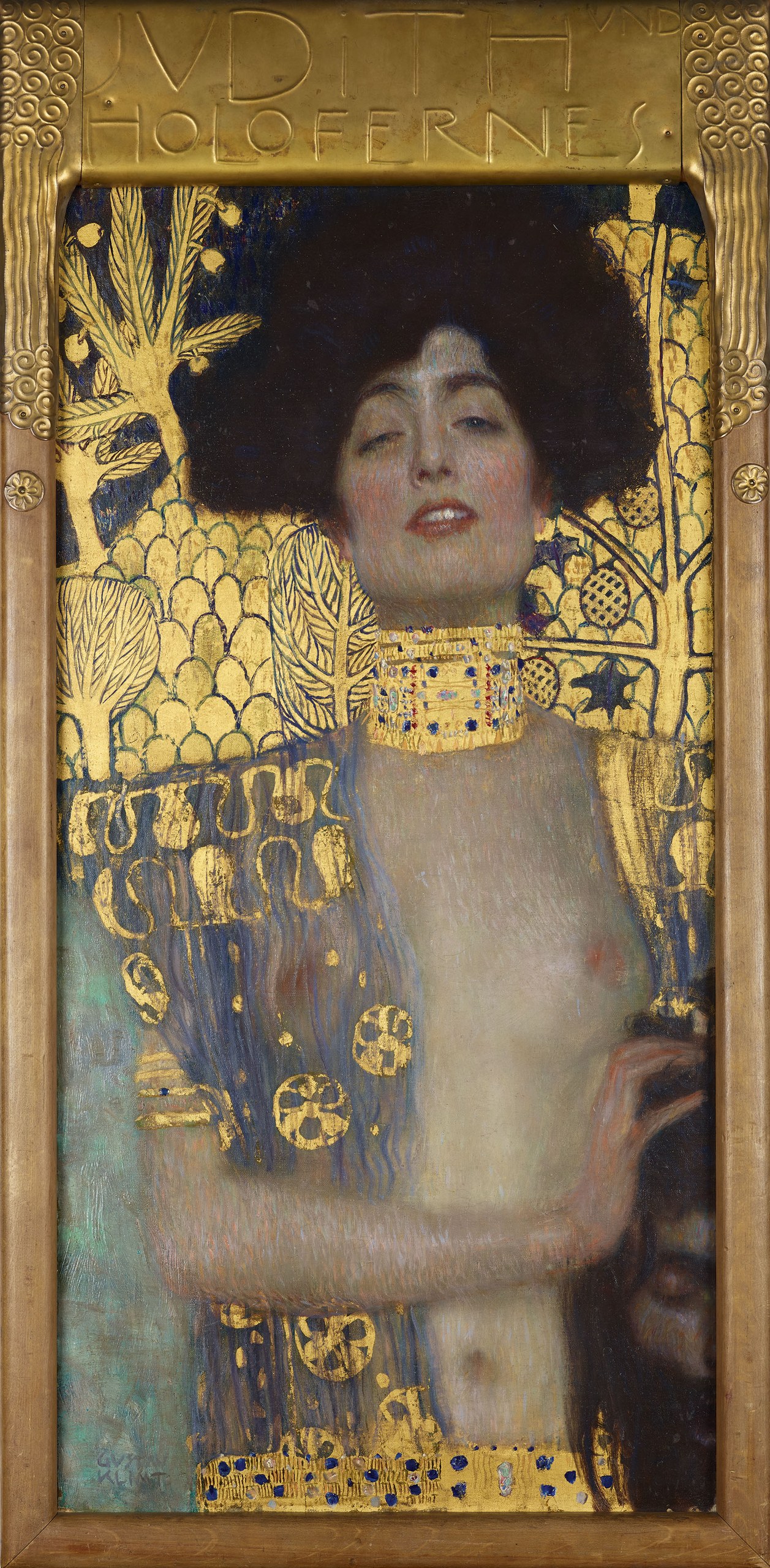
Judith I
Gustav Klimt · 1901
Upper Belvedere
The biblical saviour of her city holds the general's severed head, but Klimt gives her no piety: drooping lids, parted lips, a gold collar at her neck, pleasure where the old painters put courage.

Beethoven Frieze
Gustav Klimt · 1901
Upper Belvedere
A painted wall made for the Secession's 1902 exhibition honouring the composer, in which struggling humanity crawls toward happiness past monsters and gentle knights; built in light materials for a single season, and kept forever.
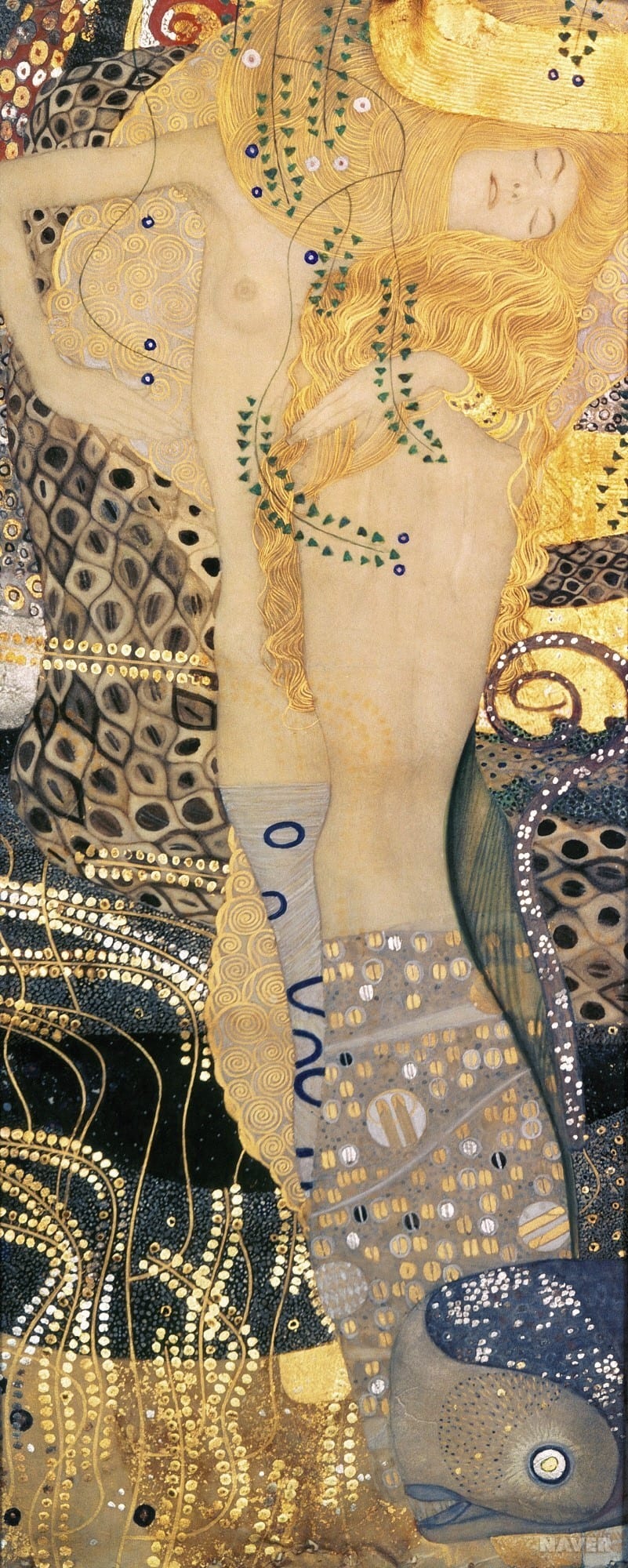
The Hydra
Gustav Klimt · 1906
Upper Belvedere
Nude women drift and intertwine through dark water, golden weed below them and a fish staring out from the corner with one fixed eye: the underwater dream he called his water serpents.
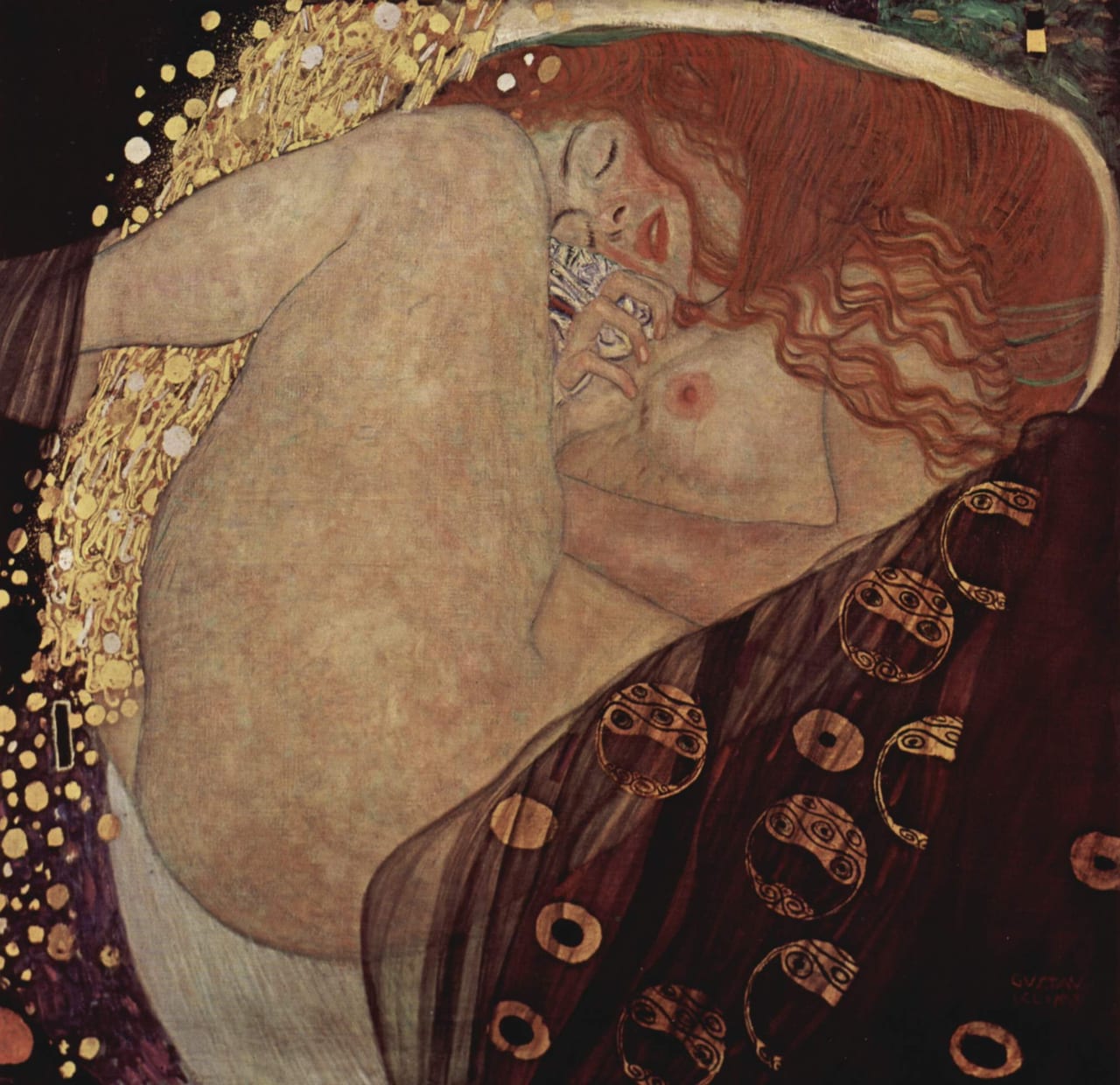
Danaë
Gustav Klimt · 1907
The princess of the myth curls around a shower of gold, Zeus arriving as coins and ribbons; many painters of the day used her as an emblem of divine love, and none stripped the emblem so bare.
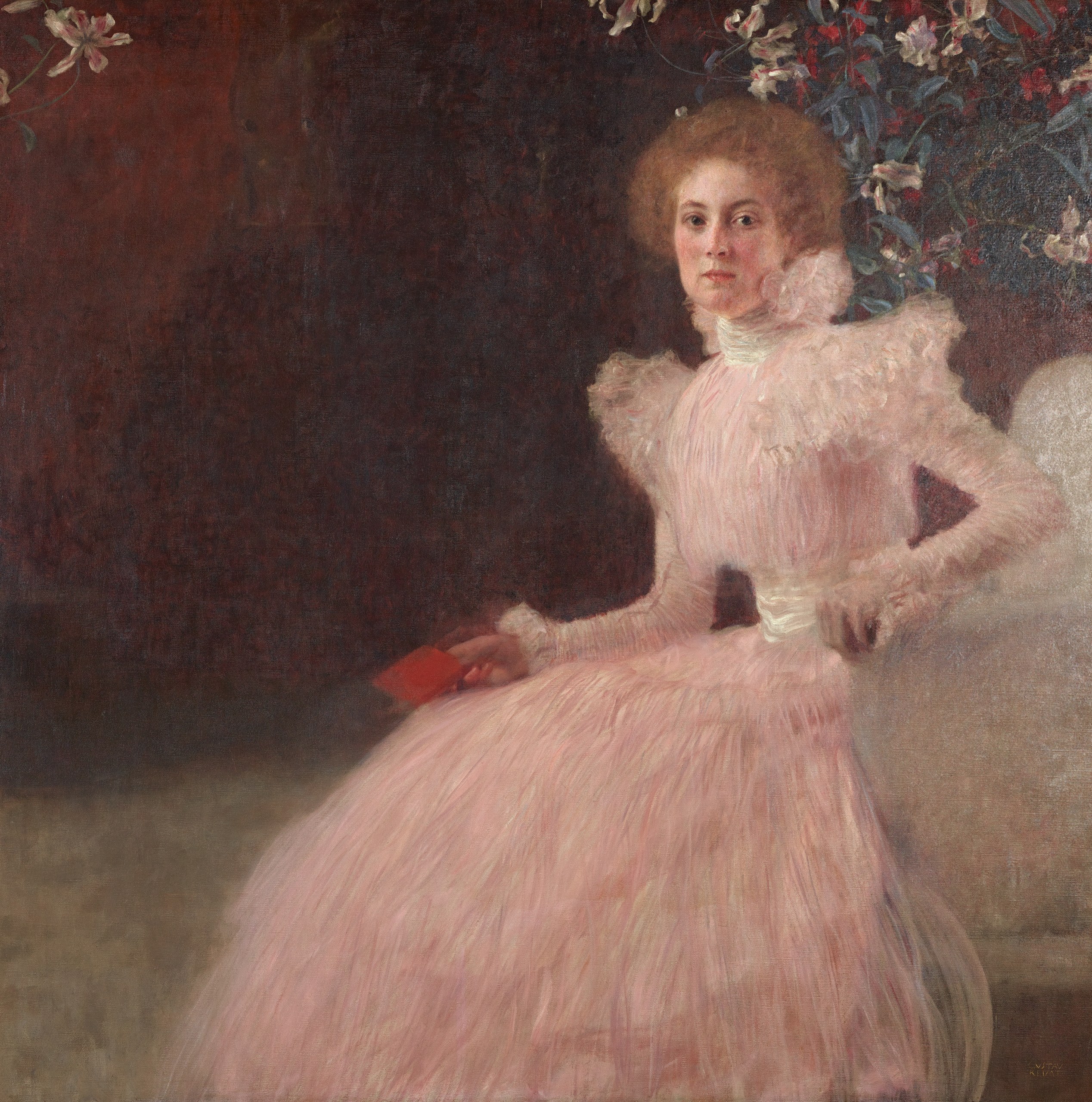
Sonja Knips
Gustav Klimt · 1898
Upper Belvedere
A young wife in white silk at the edge of an armchair, orchids and roses pressing in around her, the whole surface already tilting toward ornament.
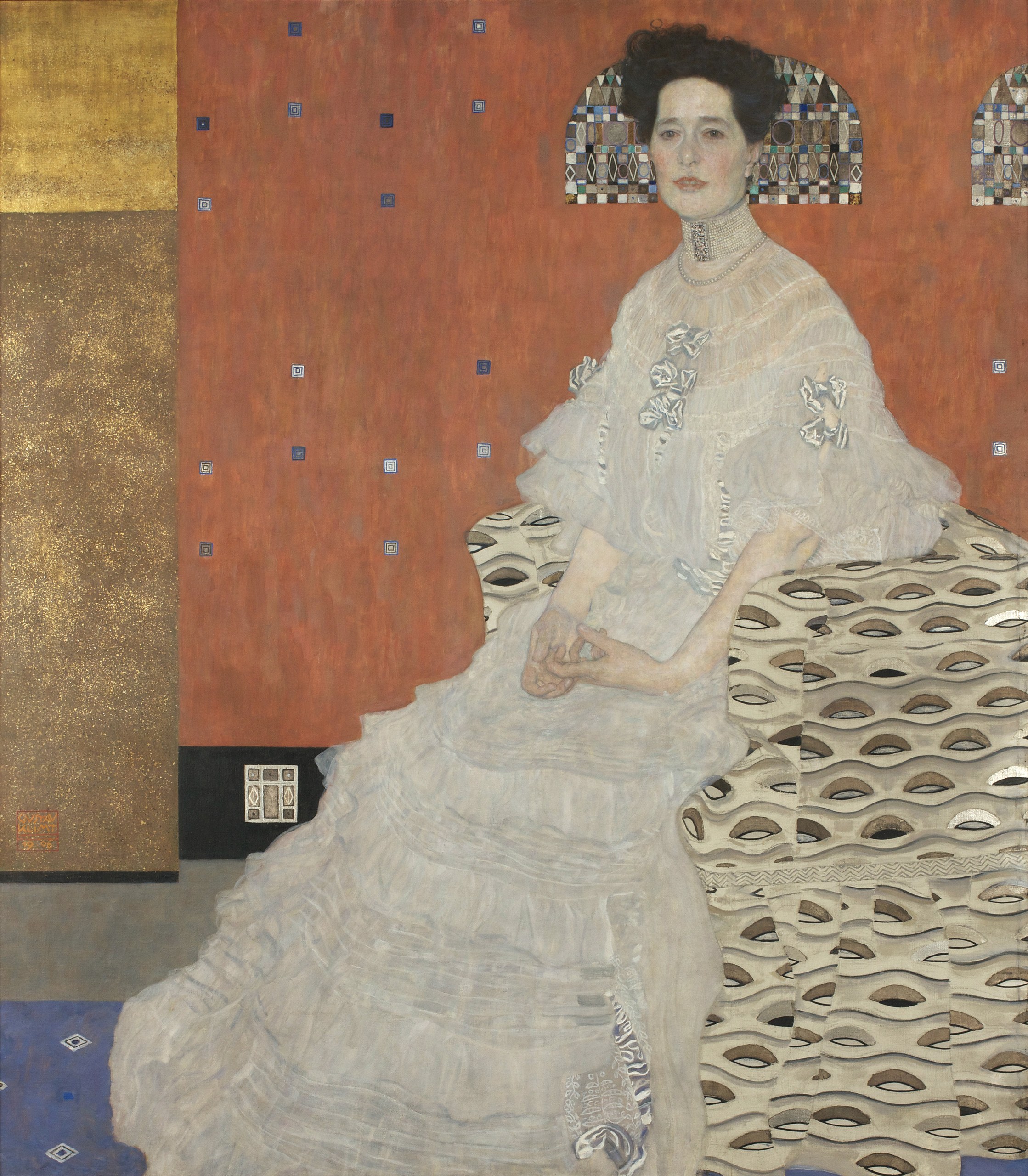
Fritza Riedler
Gustav Klimt · 1906
Upper Belvedere
A woman seated before a wall of circles and rectangles, her head and shoulders set inside a quiet field of white.
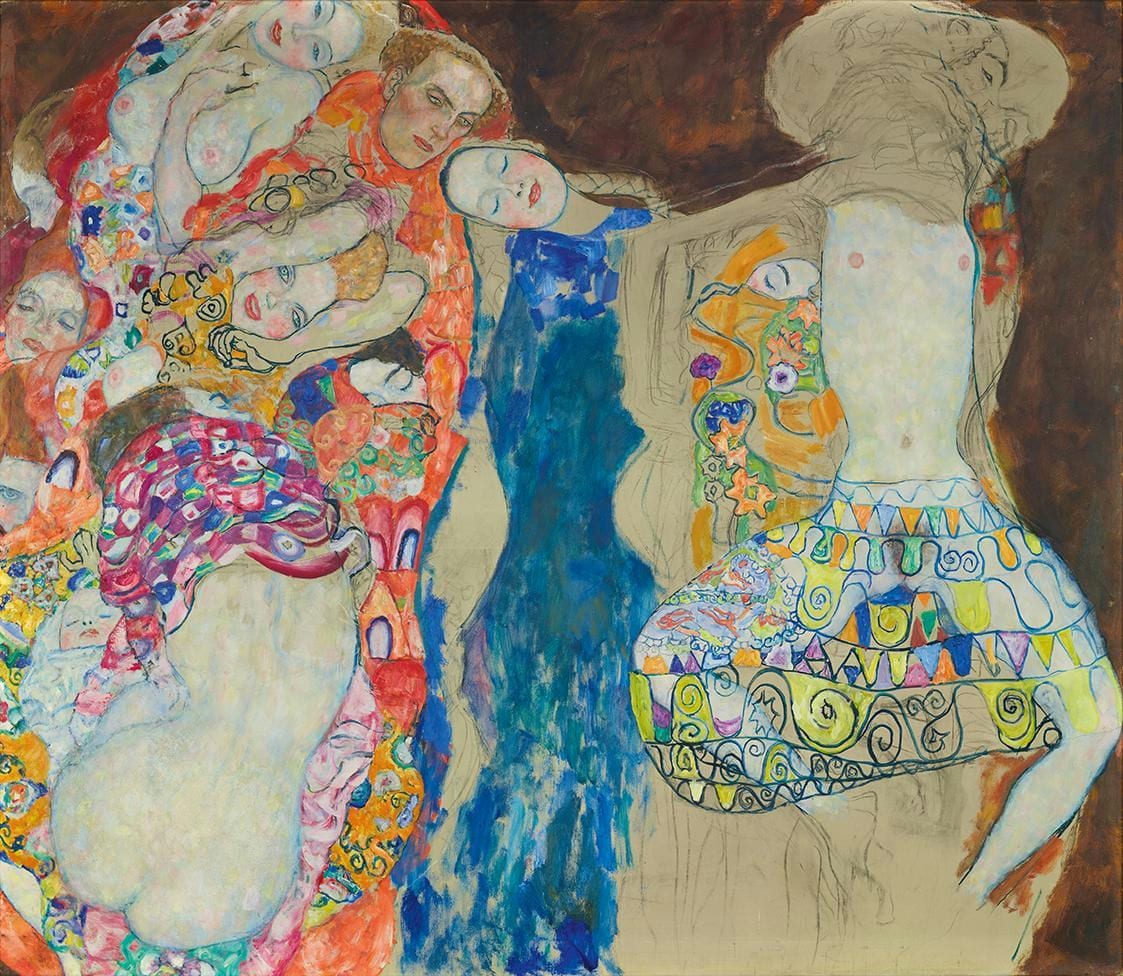
The Bride
Gustav Klimt · 1917
Upper Belvedere
A sleeper under a coverlet of flowers and bodies, among the canvases still standing unfinished in his studio at his death in 1918.
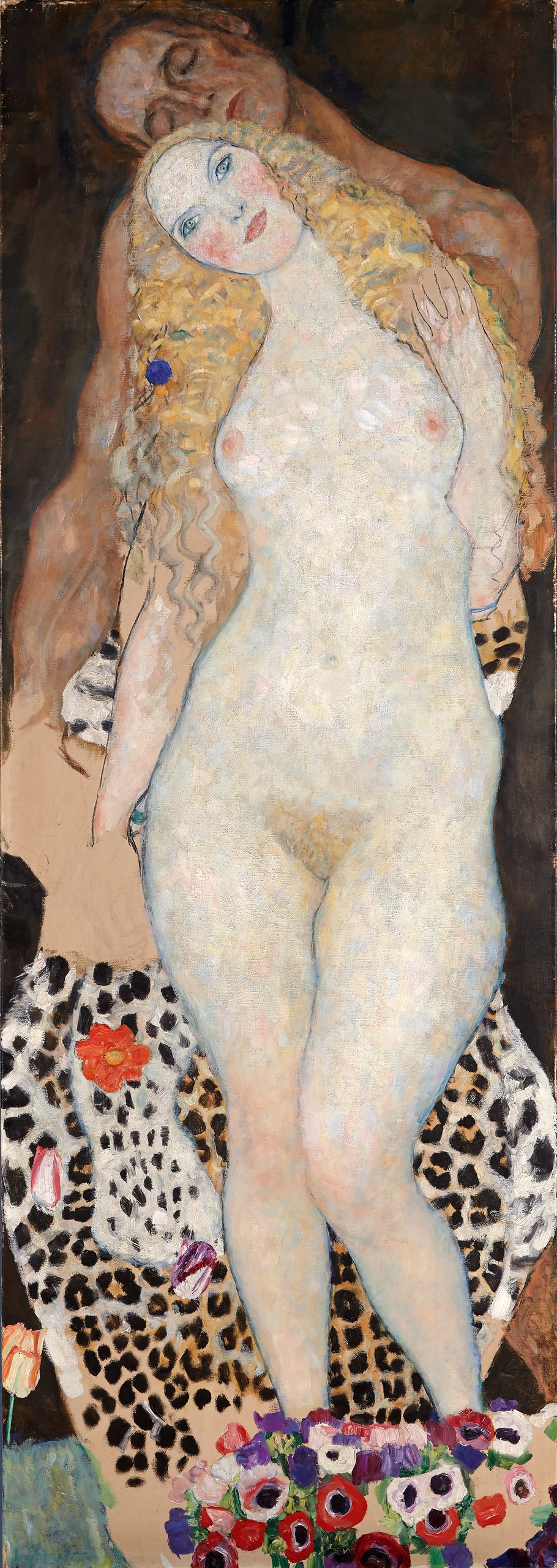
Adam and Eve
Gustav Klimt · 1917
Upper Belvedere
The first couple in a darkening garden, the last of his great allegories of man and woman, also left incomplete when he died.
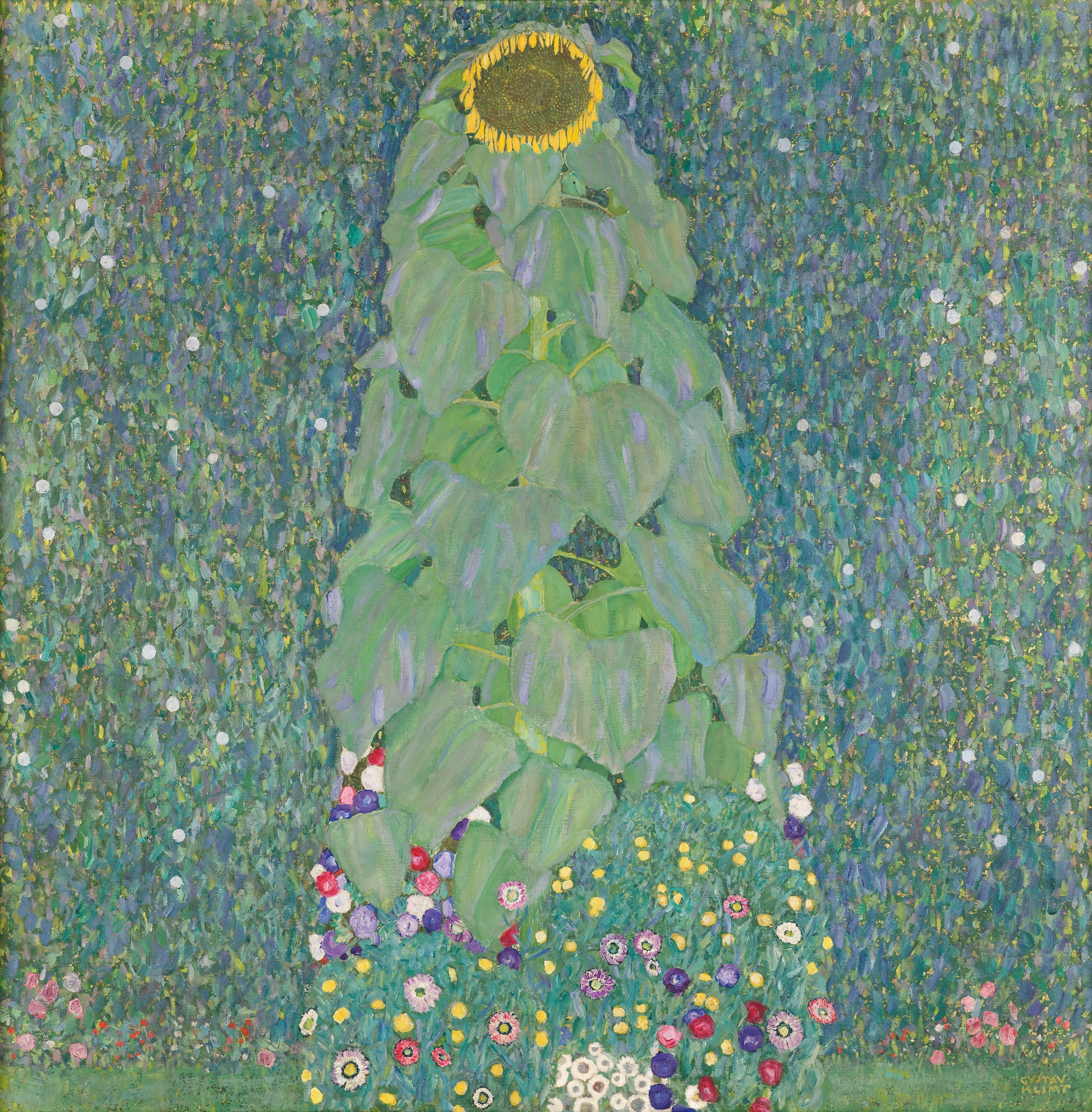
Sunflower
Gustav Klimt · 1907
Upper Belvedere
One tall flower over a red bed of garden bloom, given the closeness and gravity he usually saved for a face.
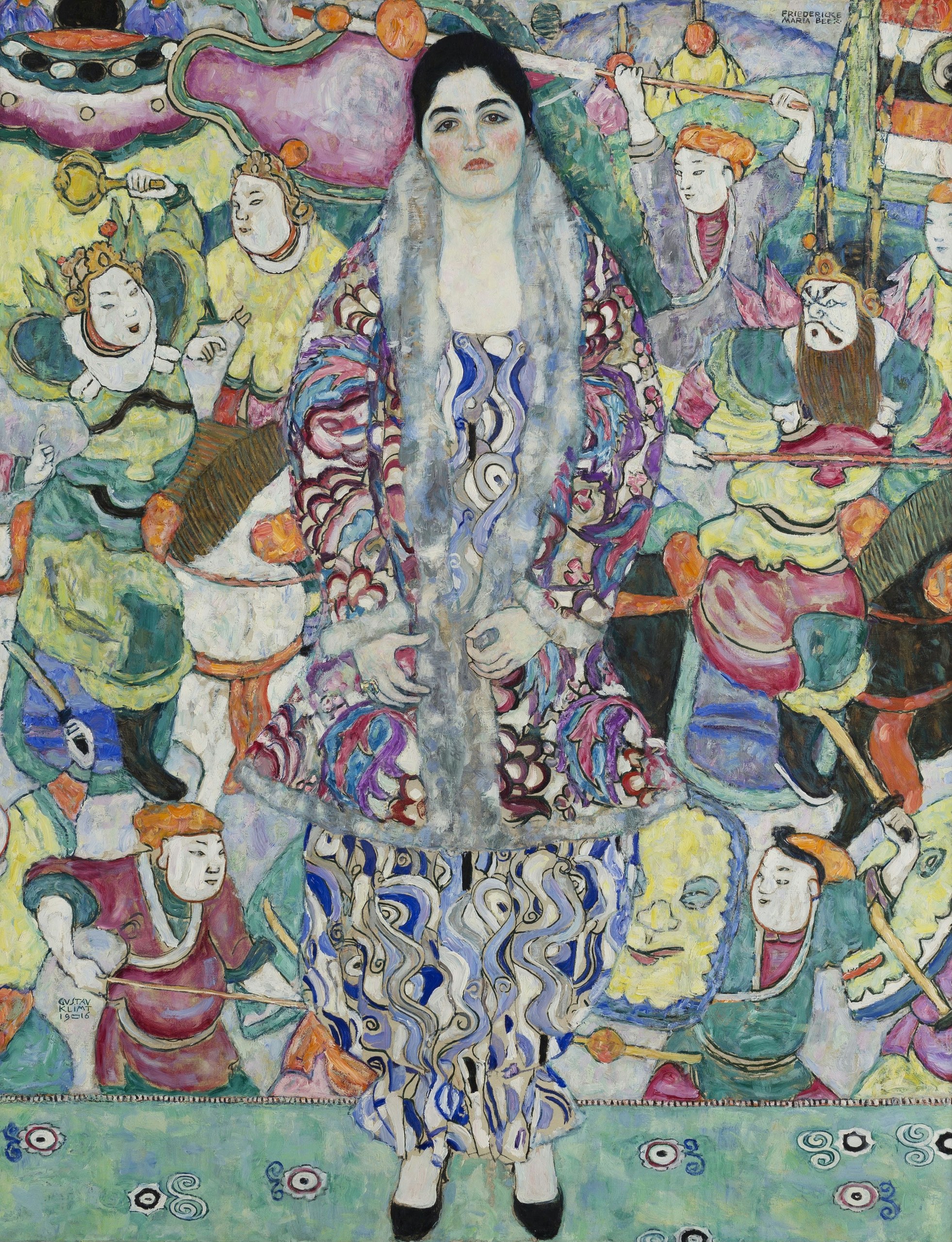
Portrait of Friedericke Maria Beer
Gustav Klimt · 1916
Tel Aviv Museum of Art
A Viennese hostess wrapped in a Chinese robe against walls of Asian ornament.
More to discover
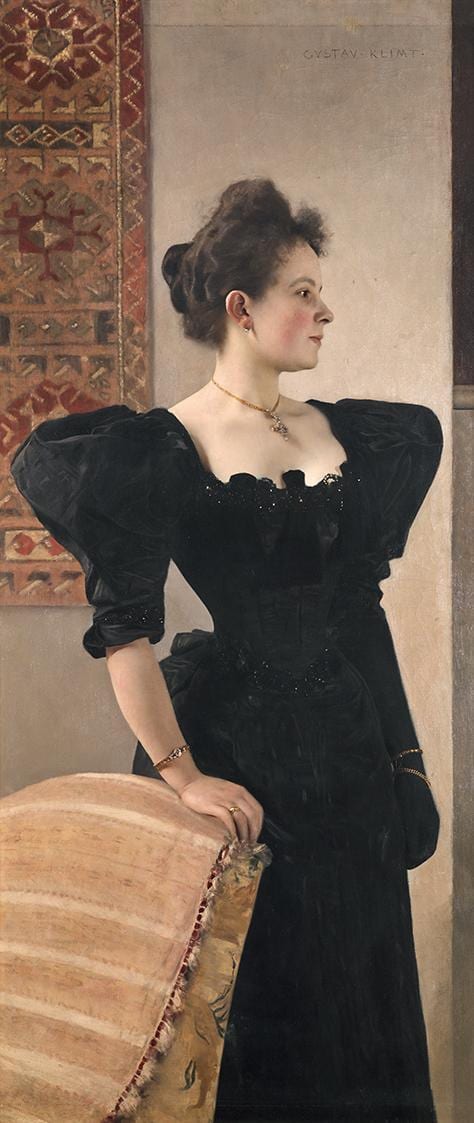
Portrait of a Woman
Gustav Klimt · 1894
Upper Belvedere
Portrait of a Woman. An early salon portrait in the smooth academic finish, the sitter's dark dress and steady gaze already the centre of the design; this was the face his painting wore before gold arrived.
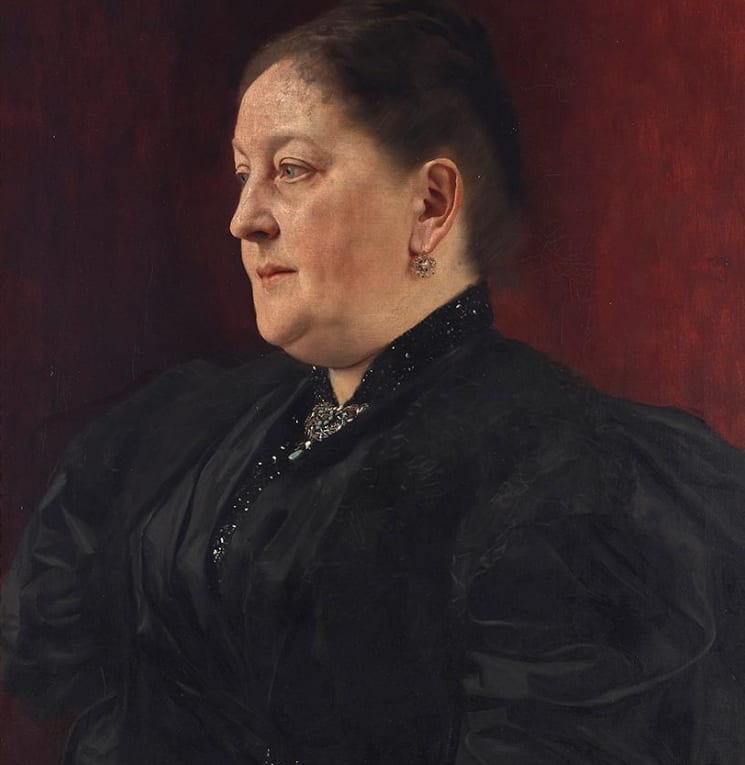
Portrait of Mathilde Trau
Gustav Klimt · 1893
Upper Belvedere
A young woman in black holding one rose, painted in the old smooth finish just before the Secession broke with the past.
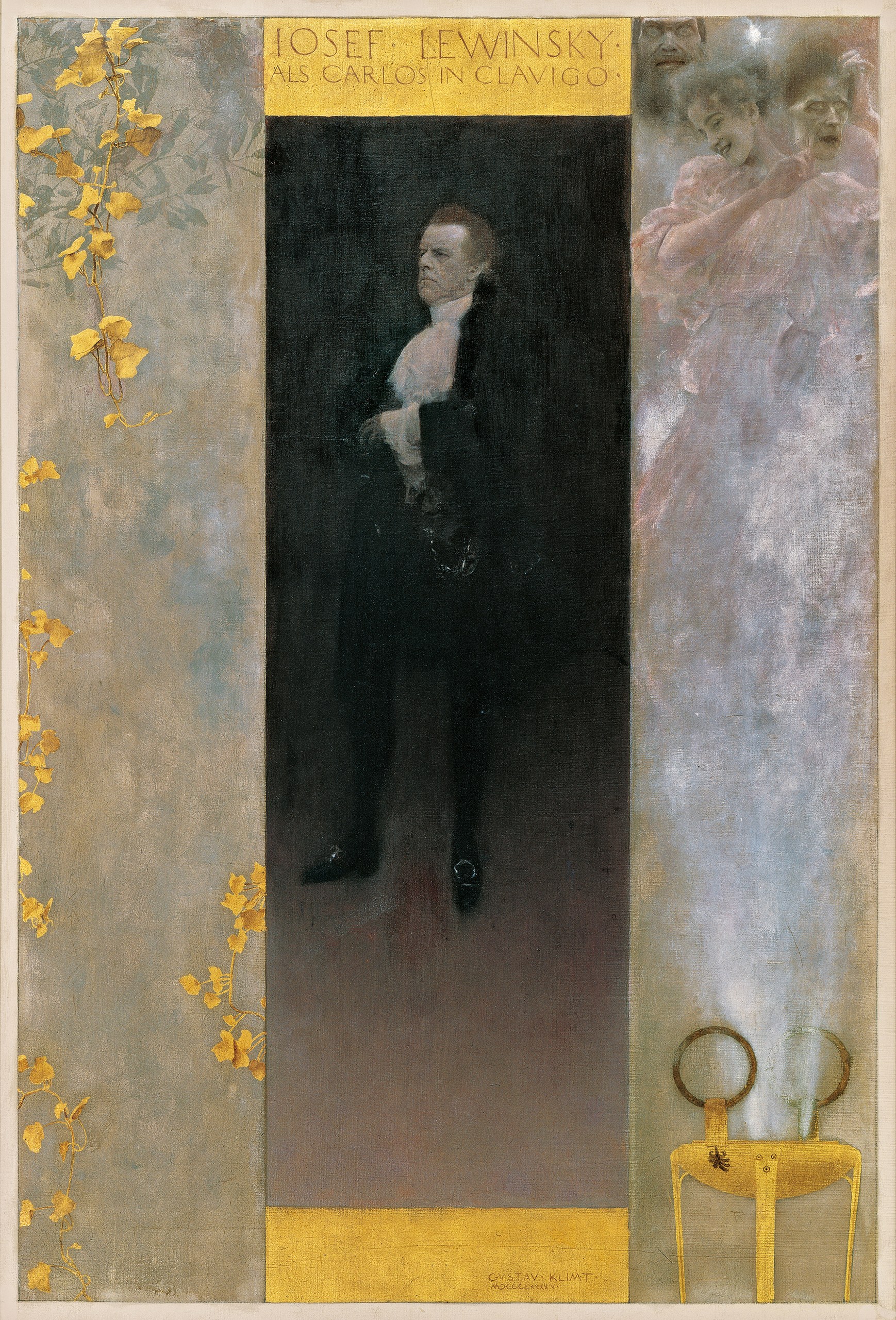
Josef Lewinsky as Carlos in Clavigo
Gustav Klimt · 1895
Upper Belvedere
An actor in costume on the stage, the picture in which the young decorator of buildings first shows himself a painter of character.
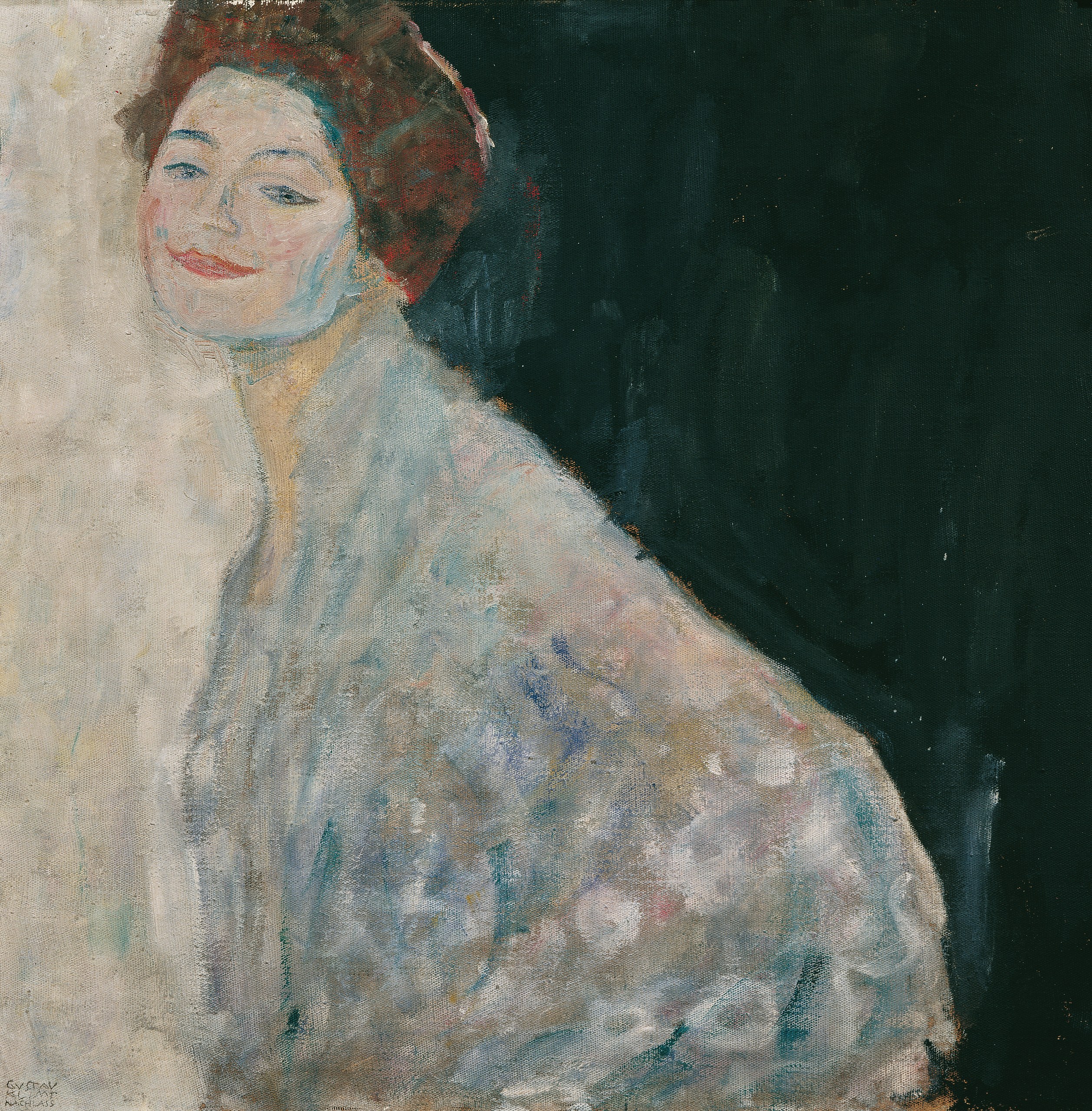
Lady in White
Gustav Klimt · 1917
Upper Belvedere
A late portrait in which the pale dress and the flowers behind it become almost one surface of light.
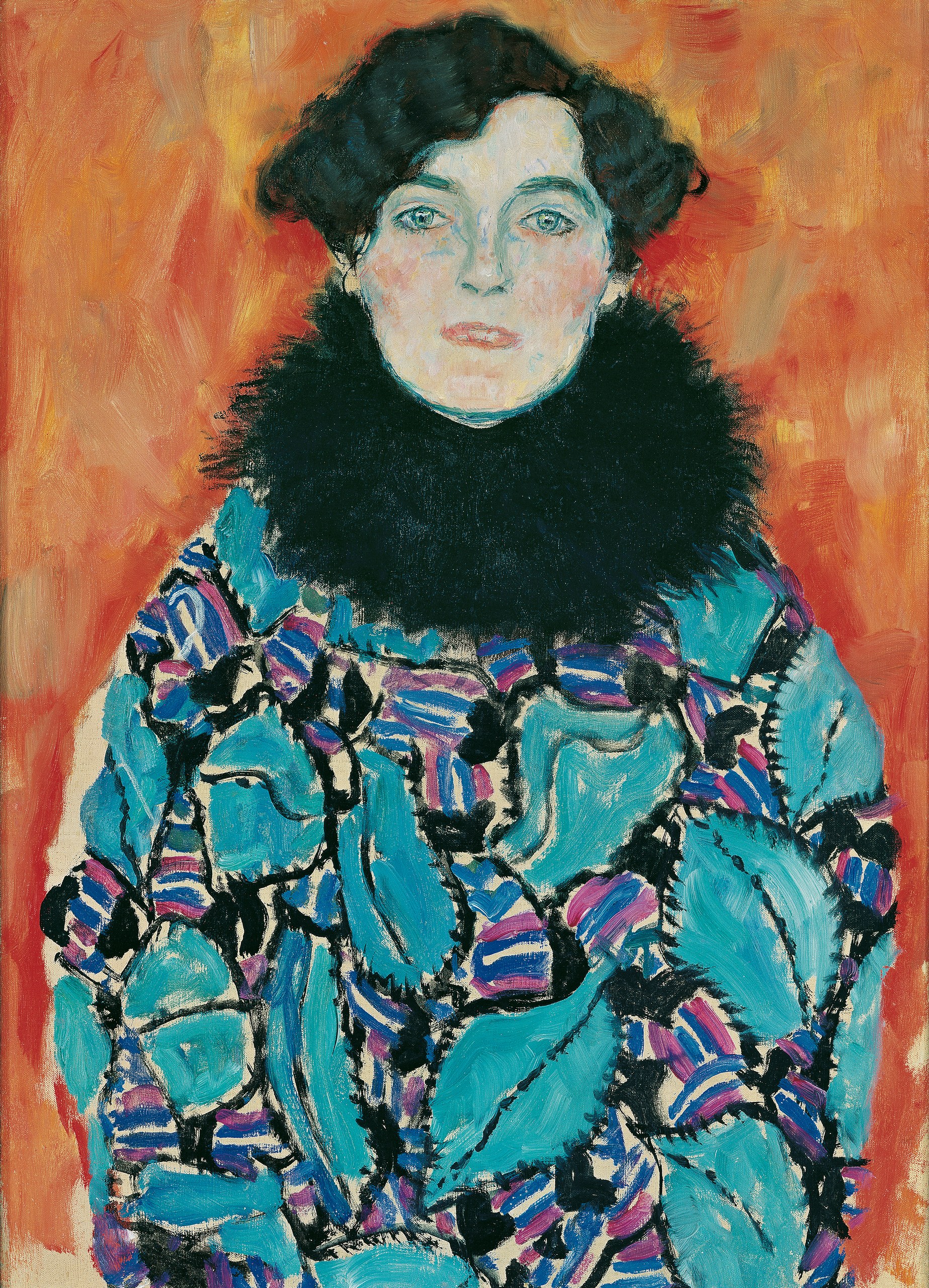
Portrait of Johanna Staude
Gustav Klimt · 1917
Upper Belvedere
A dark-eyed face between a wide collar and a wall of green and violet, the ornament pressing close around it.
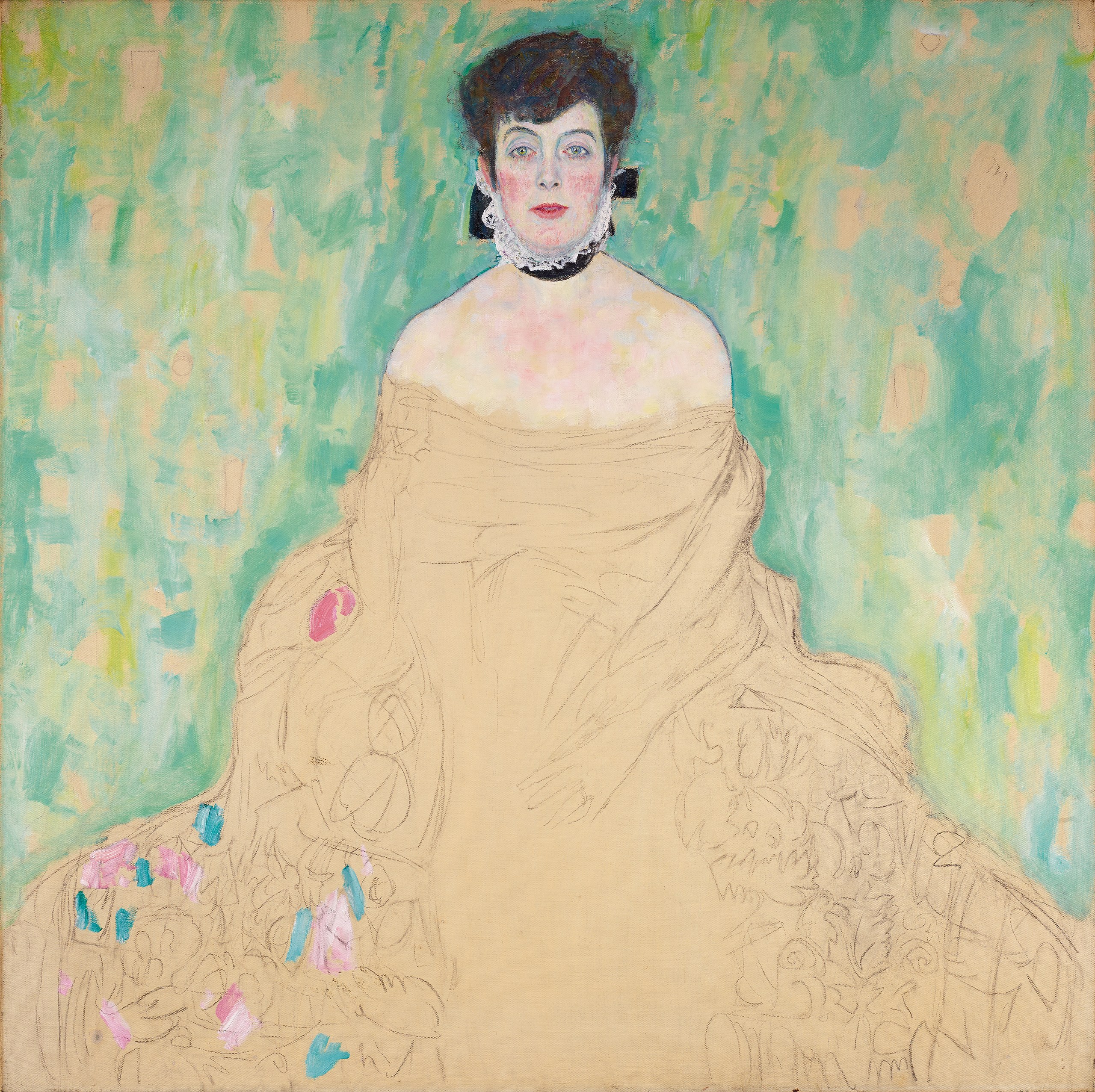
Portrait of Amalie Zuckerkandl
Gustav Klimt · 1917
Upper Belvedere
A commission he never finished; decades later an Austrian panel ruled that the canvas stays in the Belvedere.
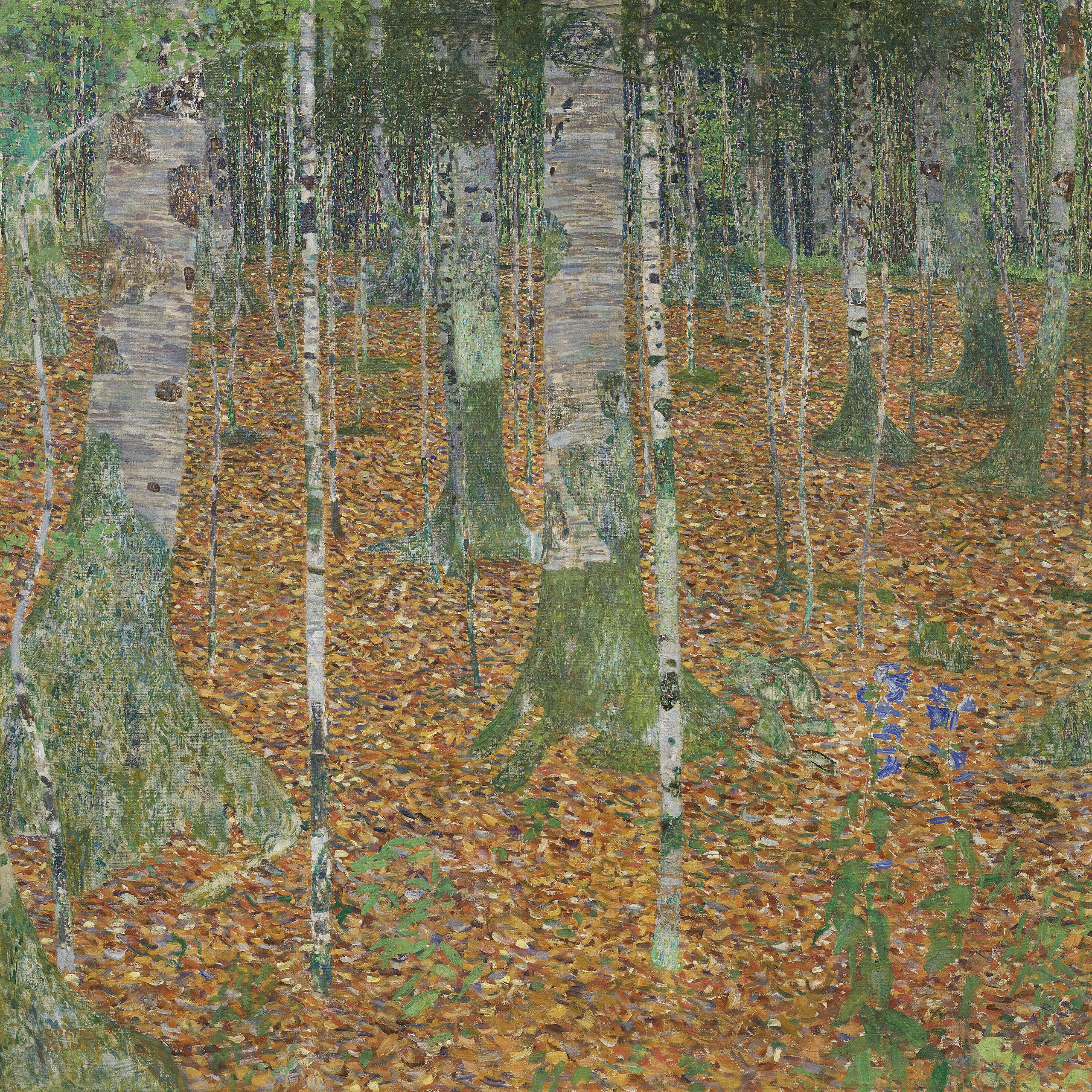
Birch Forest
Gustav Klimt · 1903
Upper Belvedere
Trunks packed edge to edge until the wood becomes a screen of blue, green and speckled white, a landscape constructed like one of his ornaments.
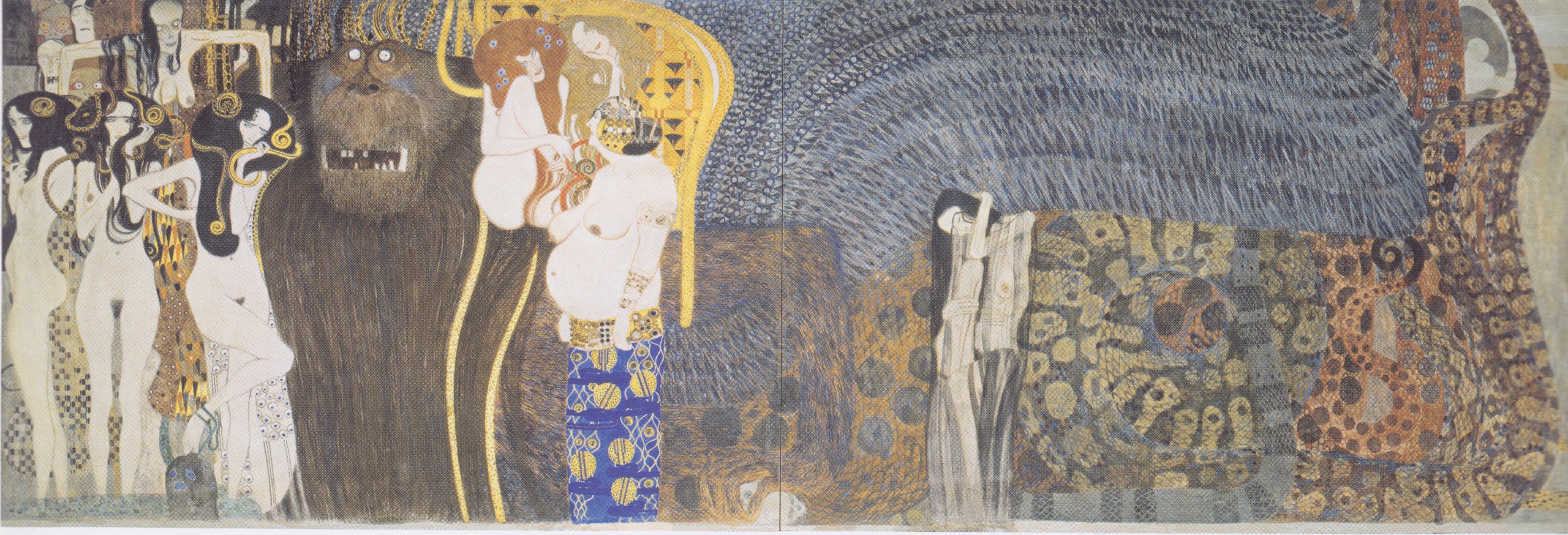
The Hostile Powers, the Titan Typhoeus, the Three Gorgons
Gustav Klimt · 1902
Upper Belvedere
The centre wall of the Beethoven Frieze: the giant Typhon, against whom even gods fought in vain, with his three gorgon daughters above him, lust, intemperance and gnawing care in female form.
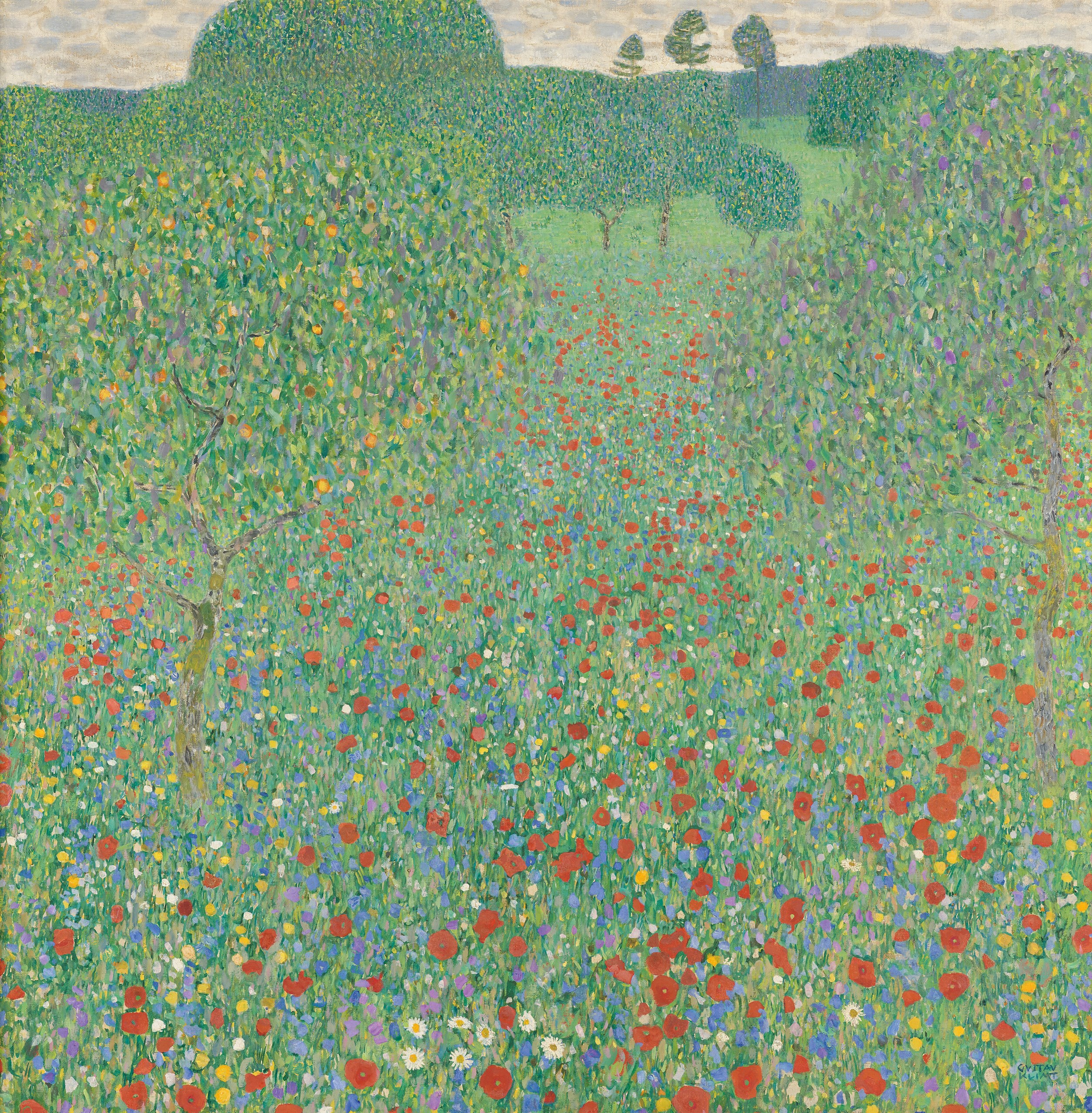
Poppy Field (Mohnfeld)
Gustav Klimt · 1907
Upper Belvedere
A lakeside meadow turned solid red, the flowers massed until they read as pure colour.
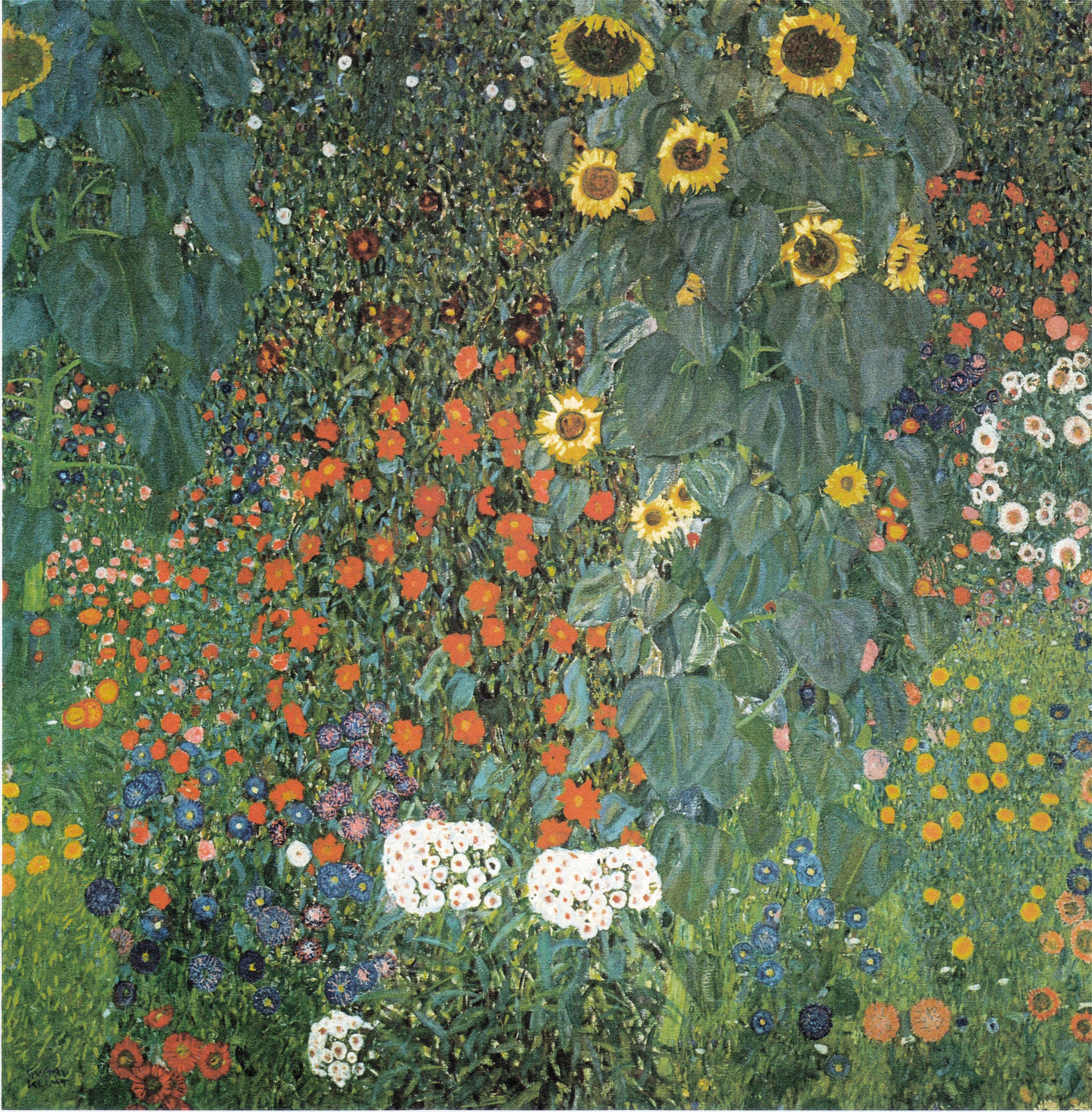
Bauerngarten mit Sonnenblumen
Gustav Klimt · 1906
Upper Belvedere
A square of cottage garden crowding sunflowers and dahlias to its edges, the horizon gone.
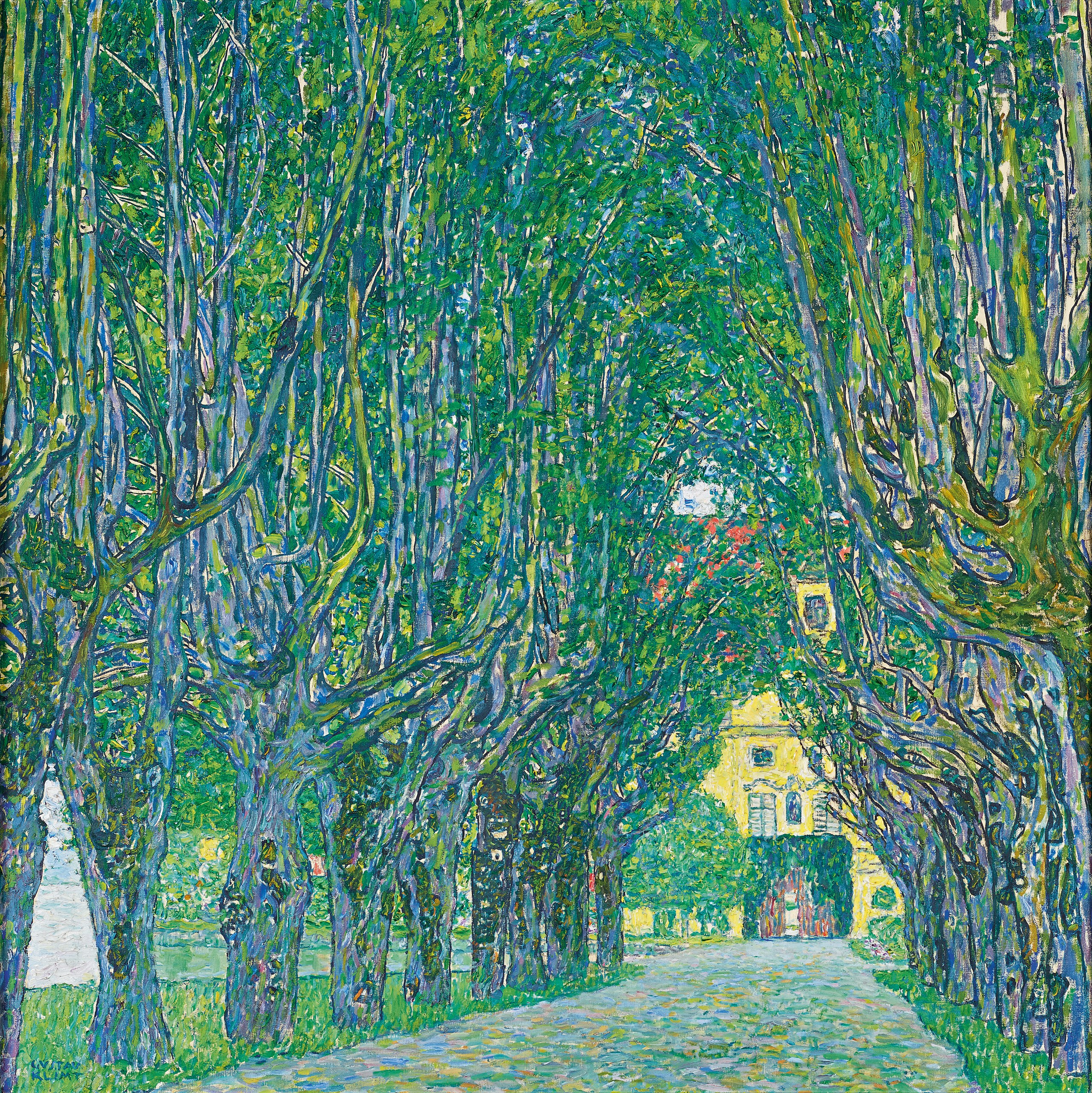
Avenue in the Park of Schloss Kammer
Gustav Klimt · 1912
Upper Belvedere
A straight drive of dark trees running to the country house, the perspective pressed as flat as a woven hanging.
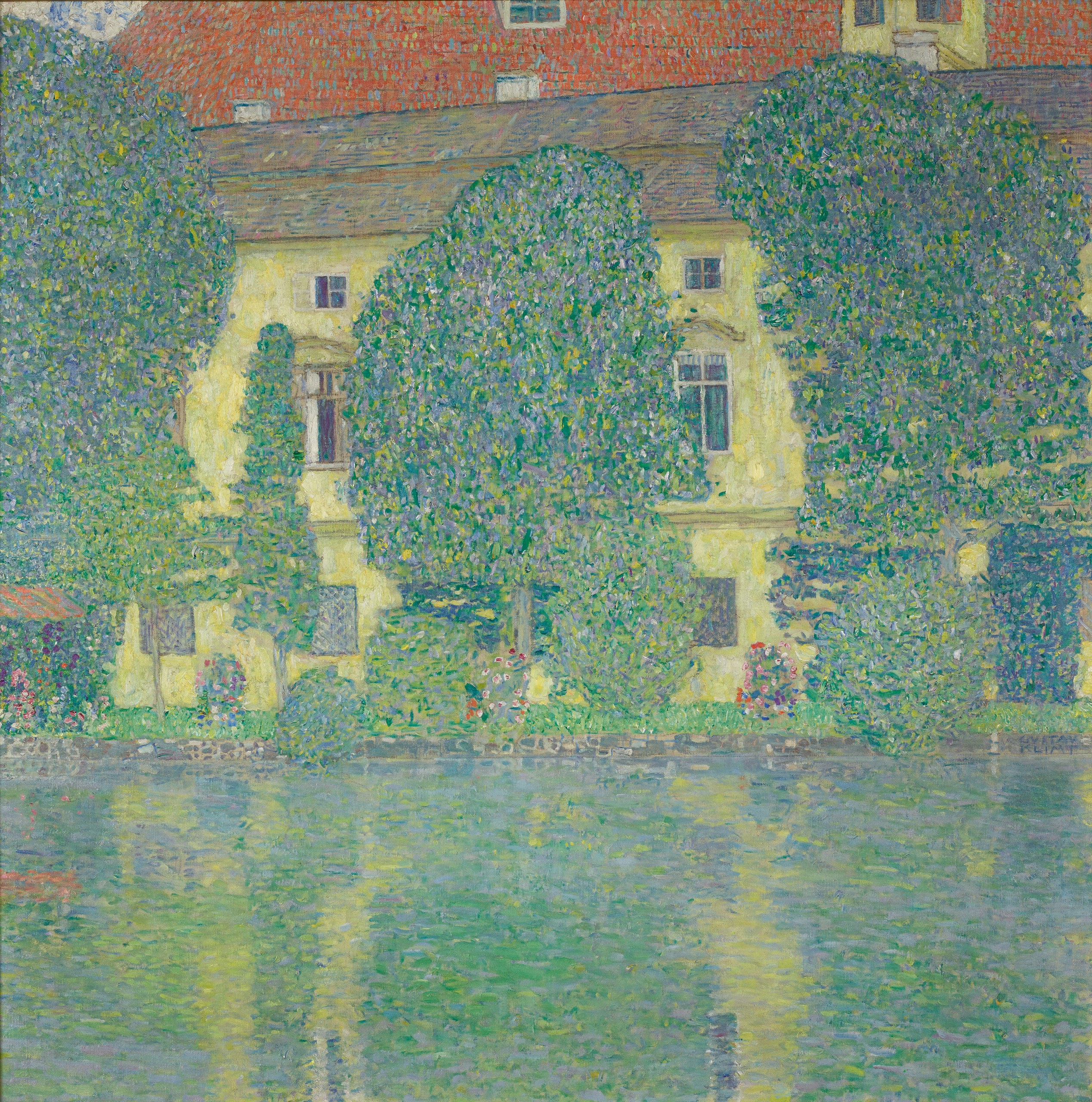
Castle Kammer at Attersee III
Gustav Klimt · 1910
Upper Belvedere
The villa on its point of land above the water, its walls simplified into a screen of light and pattern.
Sources
Invite Gustav Klimt into your living room
Play 29 works from this collection on your TV, phone or tablet with Momentable Art TV.