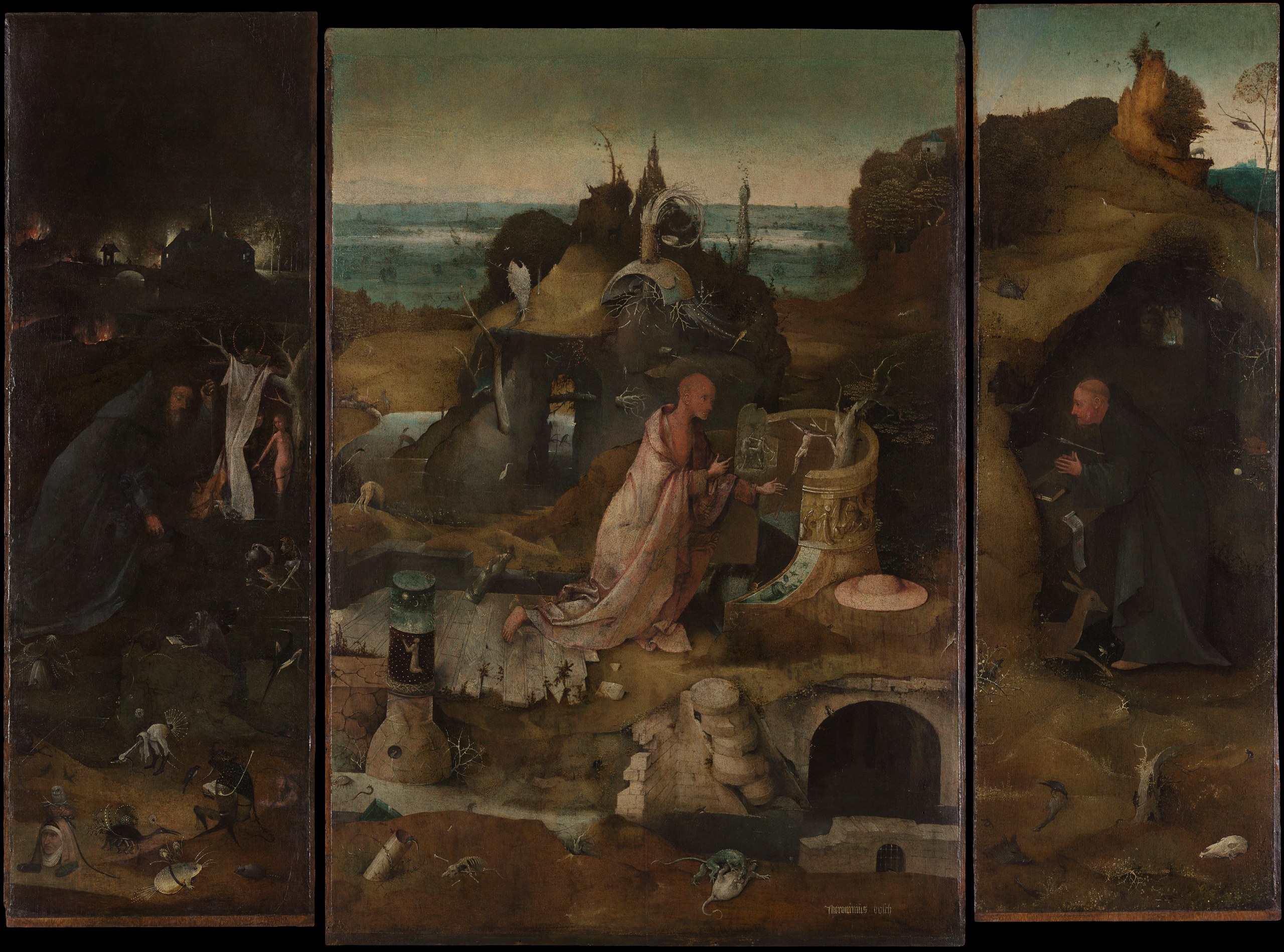
The Garden of Earthly Delights
Hieronymus Bosch · 1490

Hieronymus Bosch
Dutch · 1450–1516
The painter of heaven and hell, whose teeming visions of sin and punishment have fascinated viewers for five hundred years.
- 25
- Paintings attributed to him today
- 16
- Triptychs he produced, at least
- 8
- Drawings confidently identified as his
Play 16 works from this collection on your TV, phone or tablet with Momentable Art TV.
Play CollectionA life in Den Bosch
Hieronymus Bosch, born Jheronimus van Aken, lived his whole life in and around 's-Hertogenbosch, a flourishing city in Brabant; his date of birth is undocumented and only estimated, around 1450.
Almost nothing is known of him as a person. He left no letters or diaries; what is known comes from municipal records and the account books of the Brotherhood of Our Lady, the devotional confraternity he joined in 1486 or 1487 and which remained the centre of his working life.
Hell and the fantastic
His work, generally oil on oak panel, mainly gives fantastic form to religious concepts and narratives. Collectors in the Netherlands, Austria and Spain sought him out within his own lifetime, and copyists followed, above all for his macabre and nightmarish visions of hell.
His inventions reshaped the northern art of the sixteenth century, and his best-known successor was Pieter Bruegel the Elder. The triptych was his great form: at least sixteen of them, of which eight survive whole and five more in fragments.
The attribution problem
He did not date his paintings, and the circle of works given to him has kept shrinking as study deepens. Roughly twenty-five panels are now judged to be his own hand, together with eight drawings, and several famous ones are still fought over.
Philip II of Spain, collecting in the late 1500s, took a large share of the paintings; the Haywain he bought reached the Prado, the tabletop of the Seven Deadly Sins hangs there still, and the Garden of Earthly Delights has been housed there since 1939.
Known works
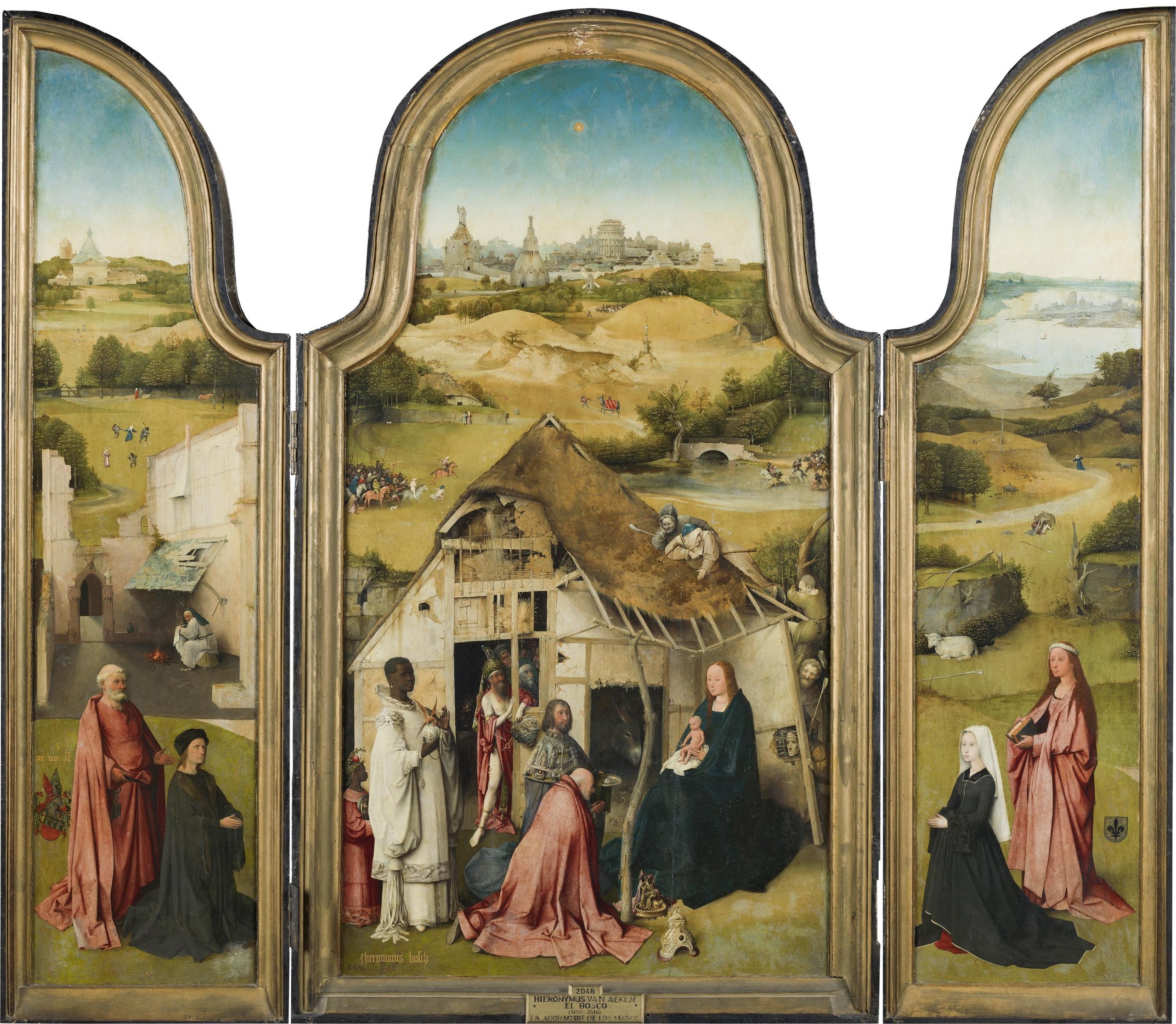
The Epiphany
Hieronymus Bosch · 1494
Museo del Prado
The Epiphany. The Magi and their strange retinue kneel before the Christ child in and around a ruined hut, the world outside the door already restless.
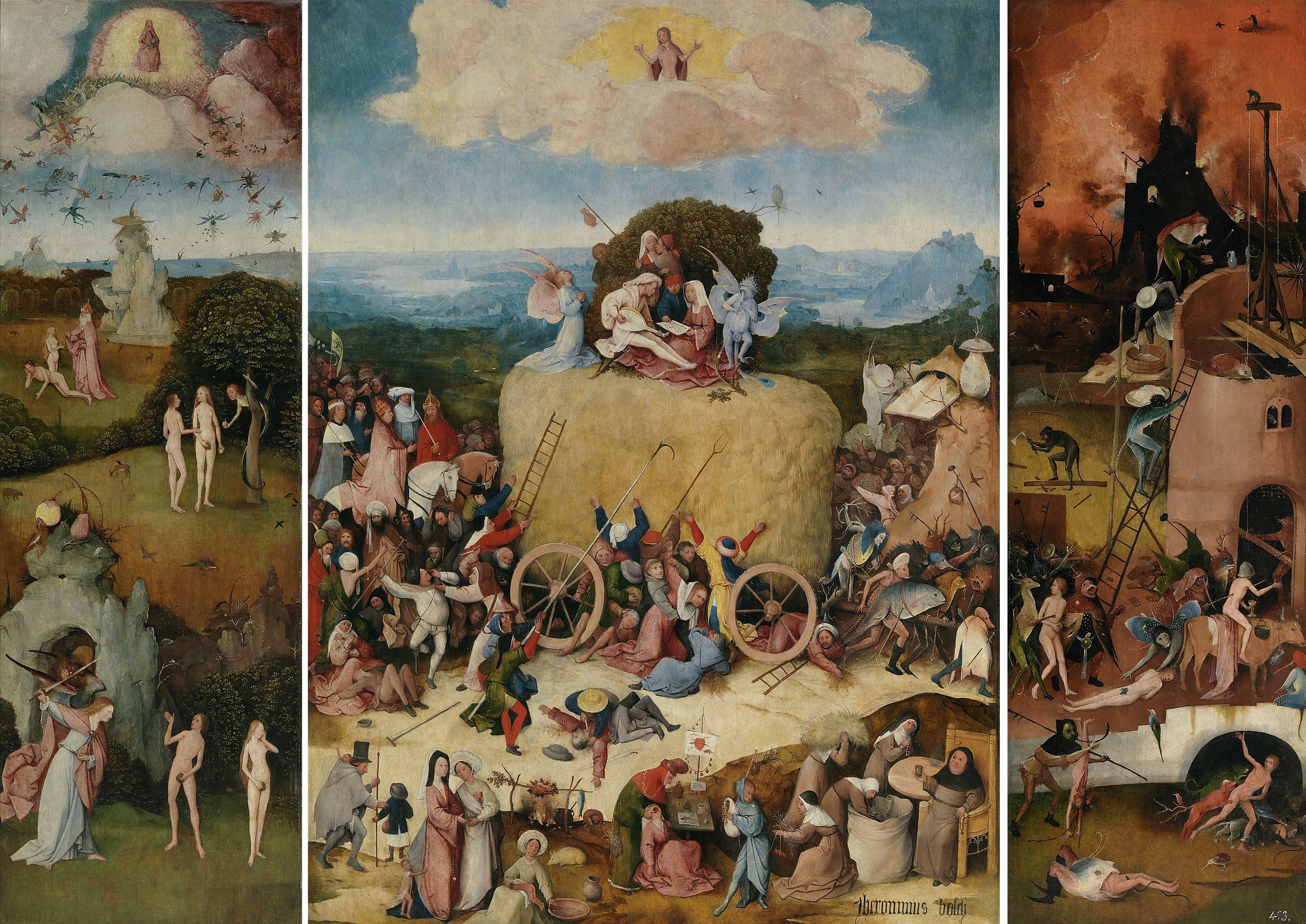
The Haywain Triptych
Hieronymus Bosch · 1510
Museo del Prado
A great wagon of hay that all the world grabs at, paradise falling into war on the left wing and hell waiting on the right; the middle panel carries his signature, and the whole came to Spain with Philip II's purchase of 1570.
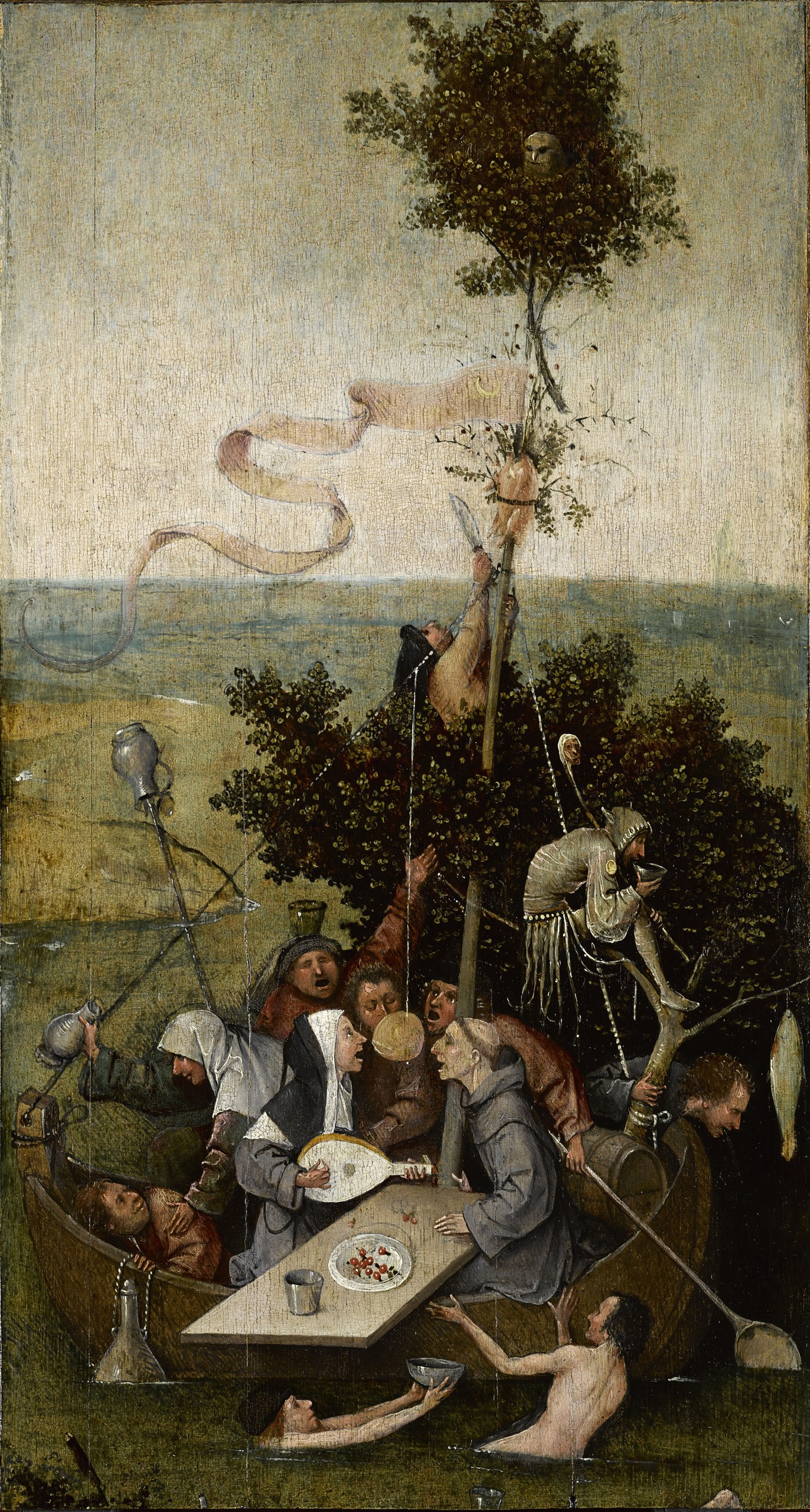
Ship of Fools
Hieronymus Bosch · 1500
Louvre
A monk and nun drift downriver with a crowd of revellers, a fragment about two-thirds of its original length, cut from a lost triptych on the deadly sins of which it paints gluttony.
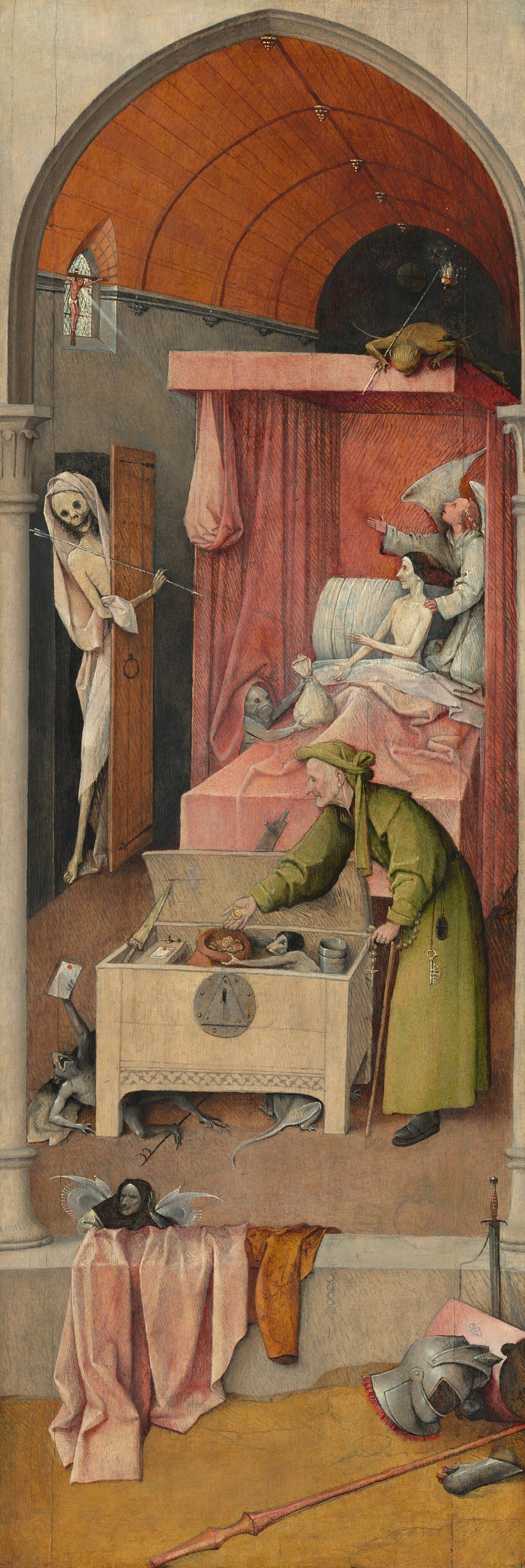
Death and the Miser
Hieronymus Bosch
National Gallery of Art
A dying man clutches his purse while death leans in at the door and an angel gestures from the bedpost: the other wing of the Ship of Fools altarpiece, its prodigality set against that panel's miserliness.
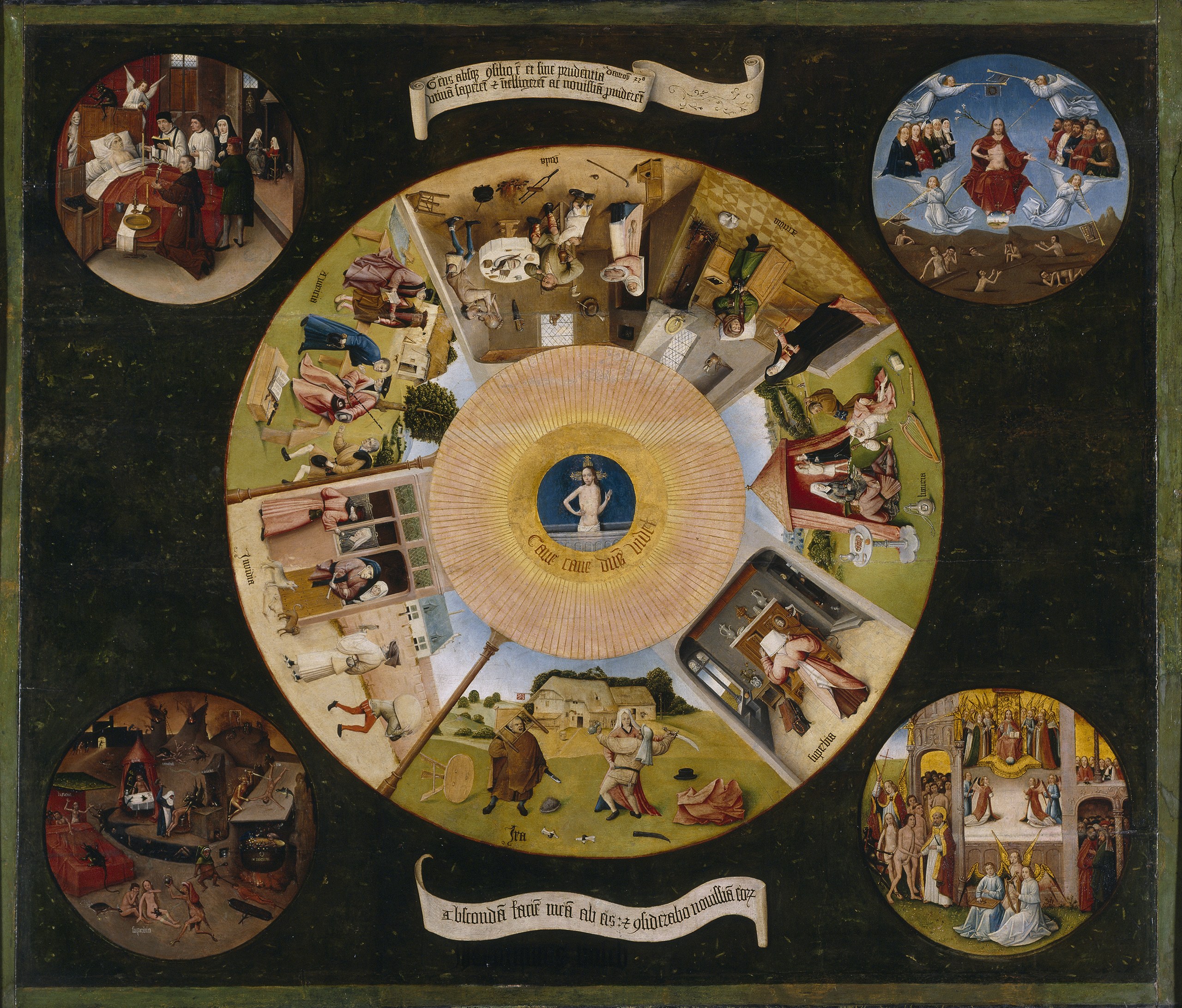
The Seven Deadly Sins and the Four Last Things
Hieronymus Bosch · 1500
Museo del Prado
The Seven Deadly Sins and the Four Last Things. A tabletop of circles: the seven sins played as scenes from ordinary life rather than allegory, ringed by Death, Judgment, Heaven and Hell. Doubts about his hand go back to 1898, and a 2015 study gave it to a follower; the Prado keeps it all the same.
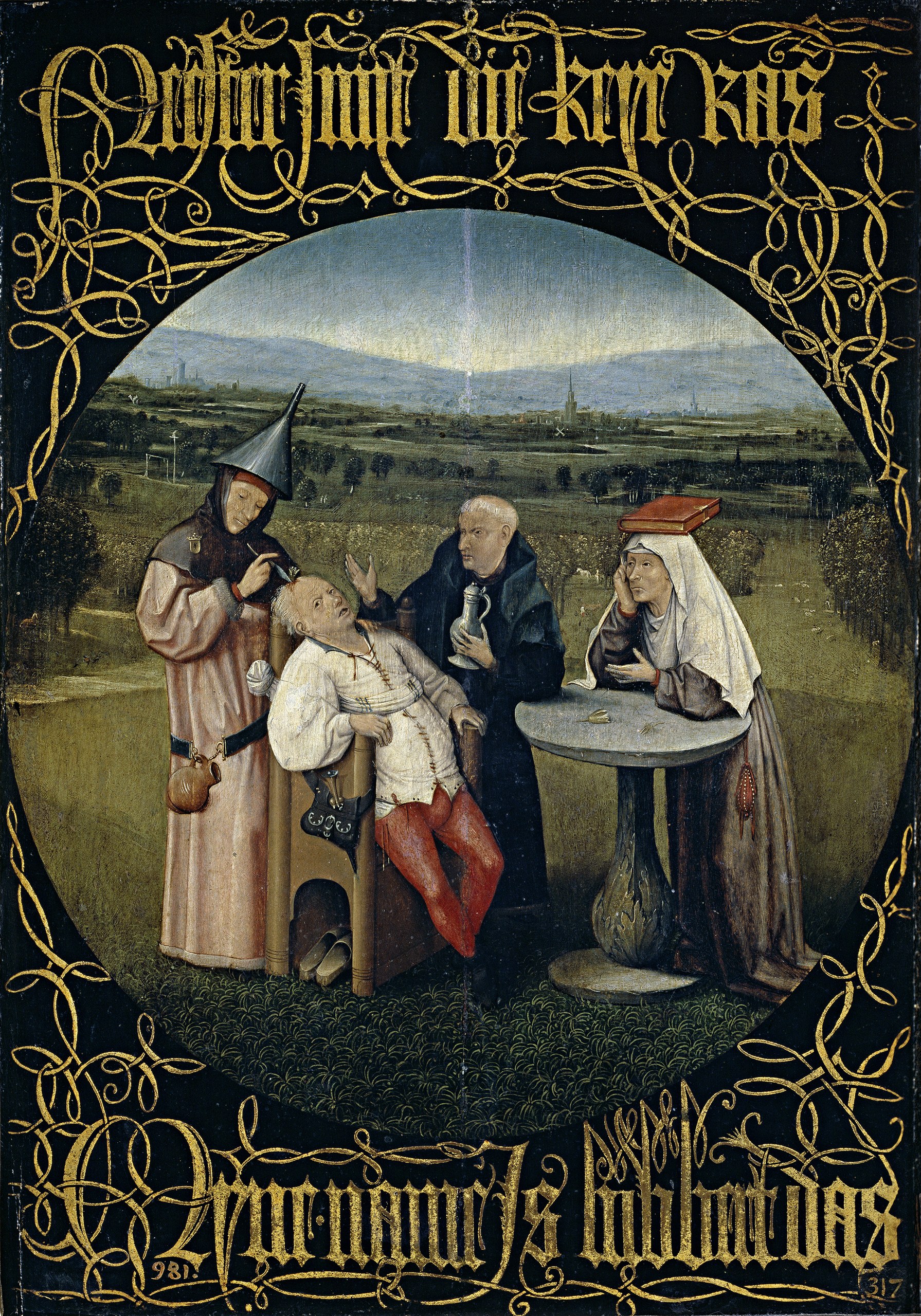
Cutting the Stone
Hieronymus Bosch · 1503
Museo del Prado
A surgeon in a funnel hat opens a patient's skull to remove the stone of madness, which leaves as a flower bulb while a woman looks on, a book balanced on her head.
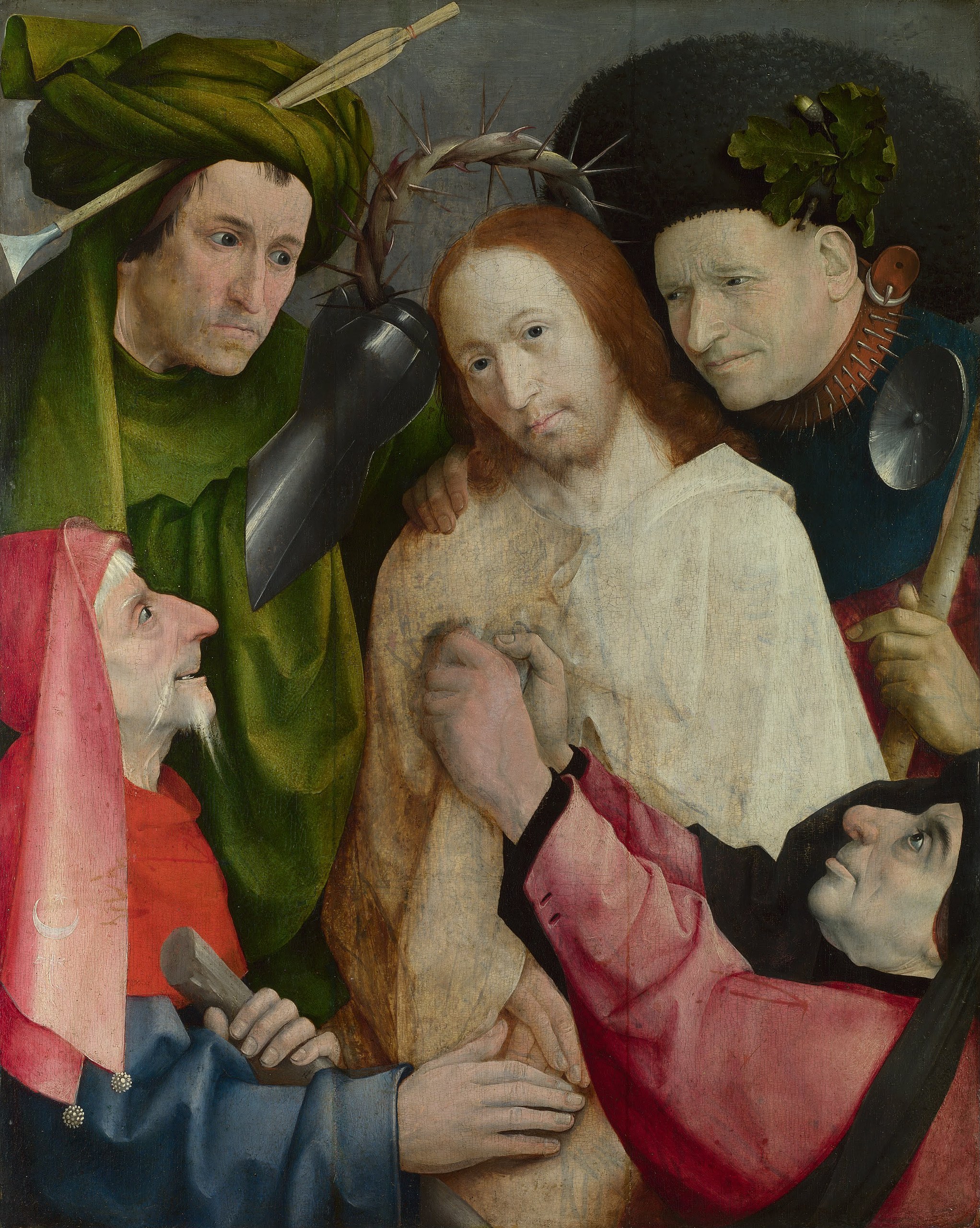
Christ Crowned with Thorns
Hieronymus Bosch · 1495
National Gallery
Christ steady at the centre while four tormentors crowd him from every side, each face a different cruelty; the National Gallery dates it to around 1510.
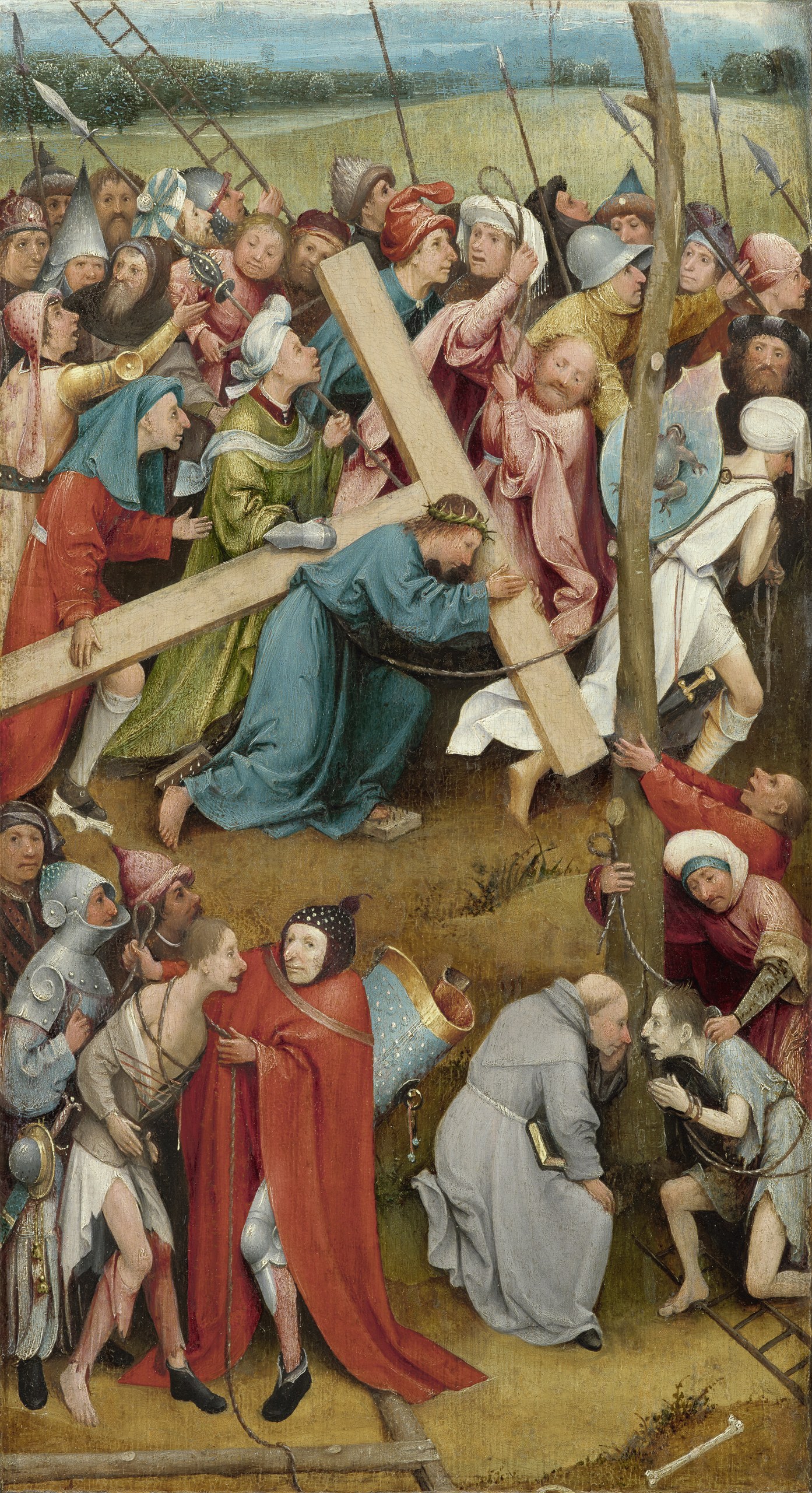
Christ Carrying the Cross
Hieronymus Bosch · 1500
Kunsthistorisches Museum
The cross rises through a wall of malicious faces that fill the whole panel, Christ's face calm among them.
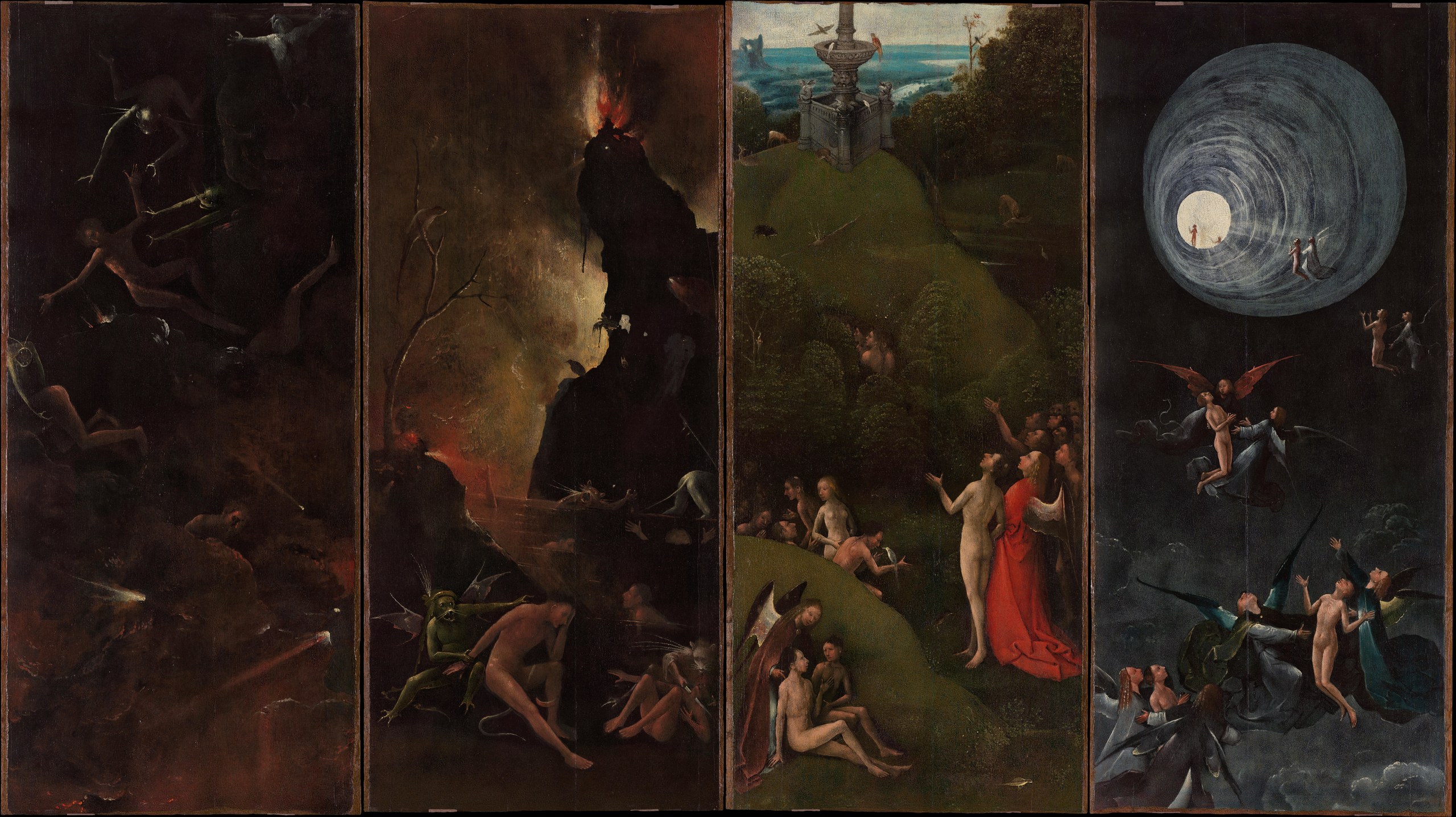
Visions of the Hereafter
Hieronymus Bosch · 1502
Doge's Palace
Visions of the Hereafter. Four panels of the afterlife, now in Venice: the blessed rising, paradise, the fall of the damned and hell itself, painted after 1490 as one upward journey out of darkness.
Sources
- Wikipedia, “Hieronymus Bosch”
- Wikipedia, “The Garden of Earthly Delights”
- Wikipedia, “The Haywain Triptych”
- Wikipedia, “Ship of Fools (painting)”
- Wikipedia, “The Seven Deadly Sins and the Four Last Things”
- Wikipedia, “Cutting the Stone”
- Wikipedia, “Christ Crowned with Thorns (Bosch, London)”
- Wikipedia, “Christ Carrying the Cross (Bosch, Vienna)”
- Wikipedia, “Hell (Bosch)”
- Wikipedia, “The Crucifixion of Saint Wilgefortis”
- Wikipedia, “The Hermit Saints”
- Wikipedia, “Fall of the Damned into Hell”
- Wikipedia, “Terrestrial Paradise (Bosch)”
Invite Hieronymus Bosch into your living room
Play 16 works from this collection on your TV, phone or tablet with Momentable Art TV.