The Fighting Temeraire
J. M. W. Turner · 1839

J. M. W. Turner
Kingdom of Great Britain · 1775–1851
The painter of light who made sea, weather and steam the true subjects of British art, and left nearly everything he made to the nation.
- 32,342
- Works by Turner in the Tate
- about 100
- Finished oil paintings left to the nation
- 19,000+
- Sketches, drawings and watercolours in the bequest
Play 27 works from this collection on your TV, phone or tablet with Momentable Art TV.
Play CollectionThe painter of light
Of all the English Romantics, none is held in such affection as Joseph Mallord William Turner. He grew up a stone's throw from Covent Garden and joined the Royal Academy Schools in 1789, still in his early teens; his watercolours appeared there from 1790, his oils six years later.
Light itself became his cause. Colour grows ever more brilliant across his career until it carries the picture rather than merely filling it, which is where his nickname came from. He started within the topographical habits of the eighteenth century and soon measured himself against older masters: the Dutch marine painters, and the sunlit classical vistas of Claude and Richard Wilson.
Steam and the sunset
No painter of his day took the new machinery of Britain as seriously as he did. Two of his best-loved canvases put steam at their heart: the tug hauling a Trafalgar veteran to the breaker's yard, and the locomotive bursting through the rain on the Maidenhead Railway Bridge. His own age found the looseness of that handling scandalous; ours treats it as prophecy.
He painted his age as elegy. The old warship had covered itself at Trafalgar, yet by 1838 the Admiralty had sold the rotting hull for its timber value, and Turner set its final tow against a copper sunset in which sail hands the river over to steam. Critics of the railway picture found speed itself made visible, and the engine keeps coming at the viewer still.
What he left
In 1840 he met the young critic John Ruskin, whose advocacy made his reputation for the century that followed. When Turner died, a rich man, in 1851 the scale of his gift became clear: the nation received roughly a hundred finished oils, two hundred unfinished canvases, more than nineteen thousand works on paper and some two hundred sketchbooks, the working memory of a long life spent looking at light.
Most of those paintings hang at Tate Britain today, while a handful of the grandest, among them the Temeraire and his Claude-inspired Carthage, stayed where his will fixed them, on the walls of the National Gallery.
Known works
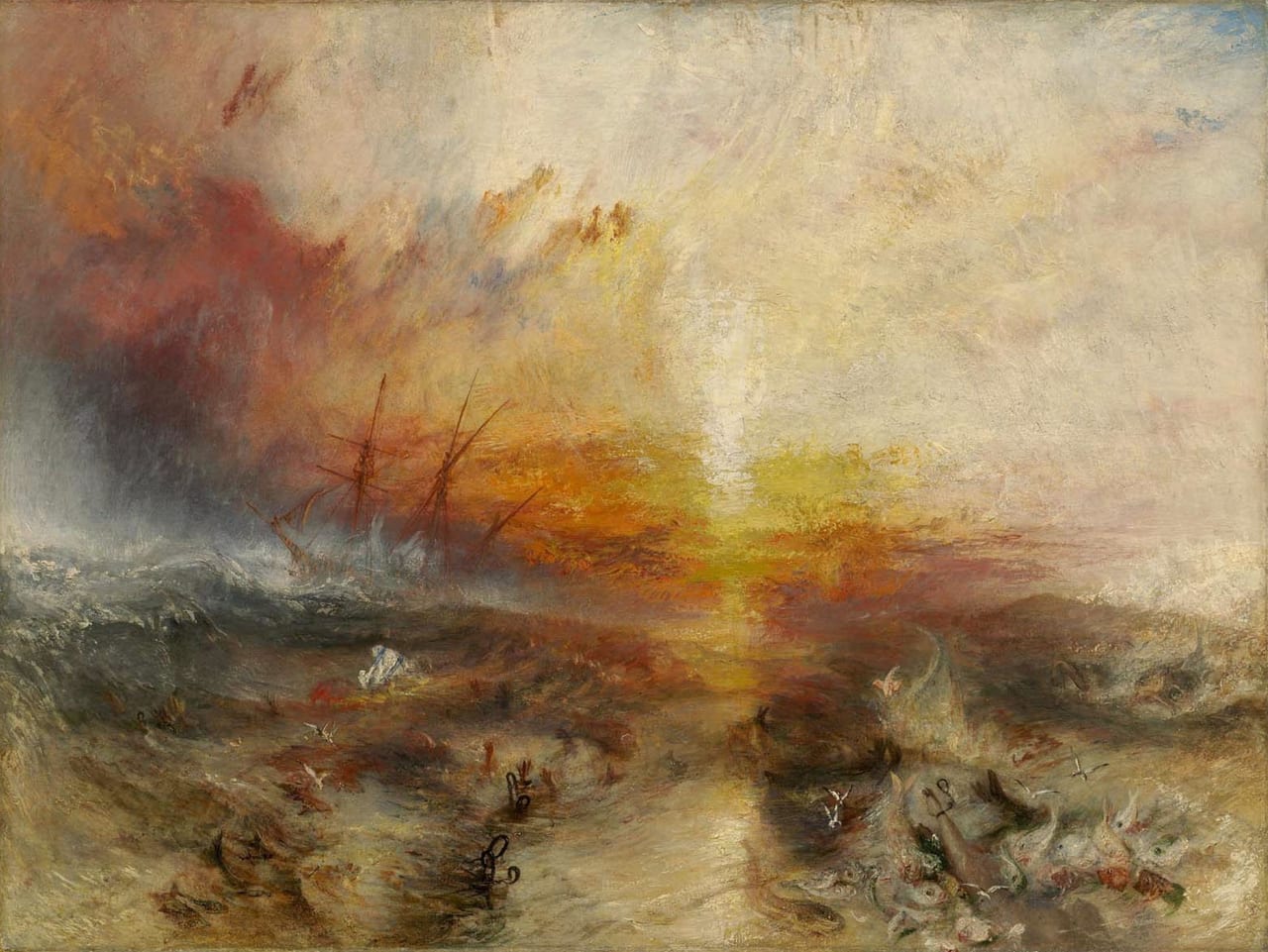
The Slave Ship
J. M. W. Turner · 1840
Museum of Fine Arts, Boston
The Slave Ship. Turner's abolitionist storm: a hull sinks into waves the colour of fire while the sea keeps what was thrown overboard. Hung at the Royal Academy in 1840, at the height of the international campaign against the slave trade.
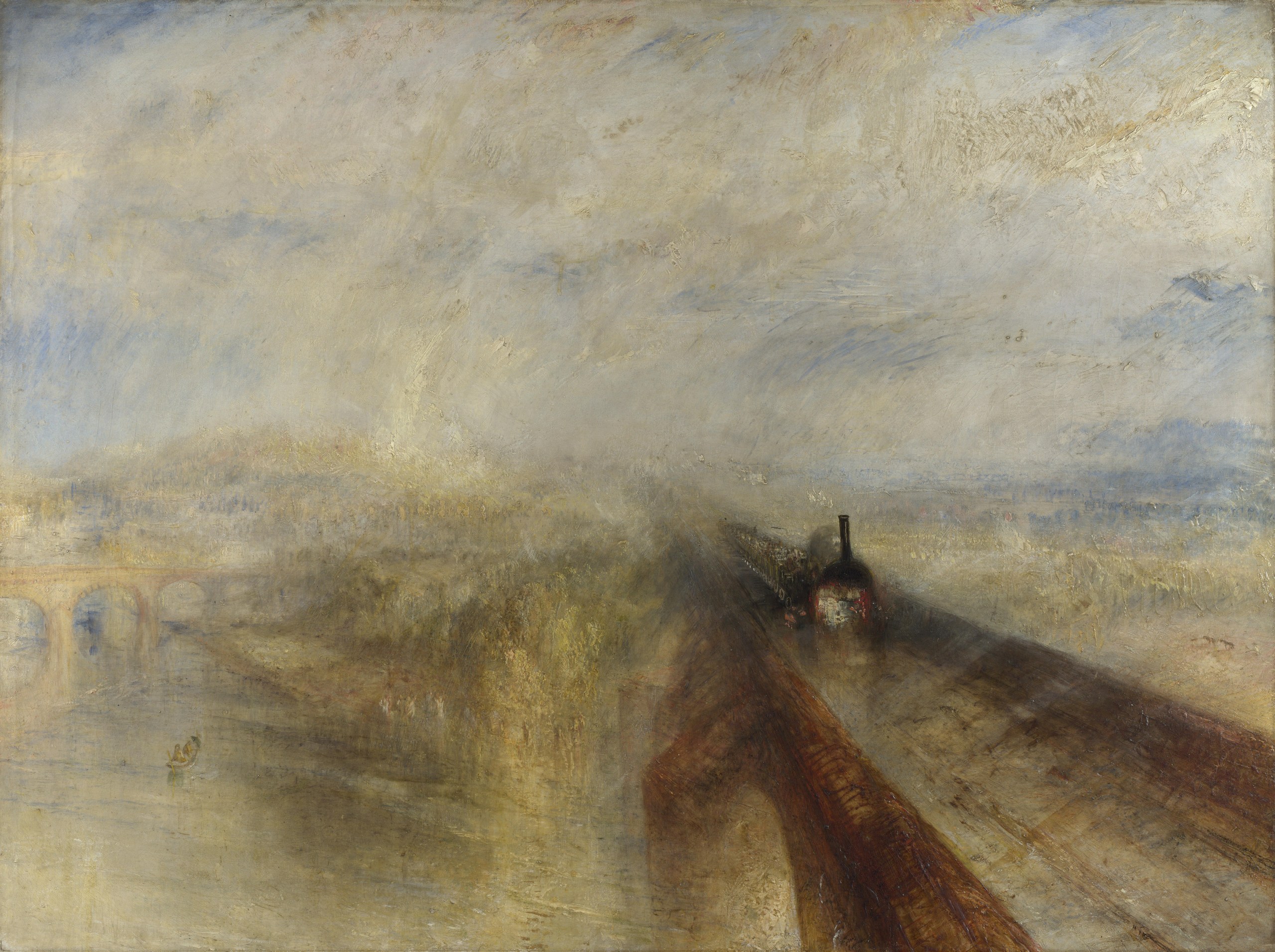
Rain, Steam and Speed – The Great Western Railway
J. M. W. Turner · 1843
National Gallery
Rain, Steam and Speed – The Great Western Railway. A locomotive bursts out of the rain across the Maidenhead viaduct, the bridge foreshortened so hard the engine seems to enter the room; a hare, lightly brushed in midway along the track, stands for the speed of the natural world against the machine.
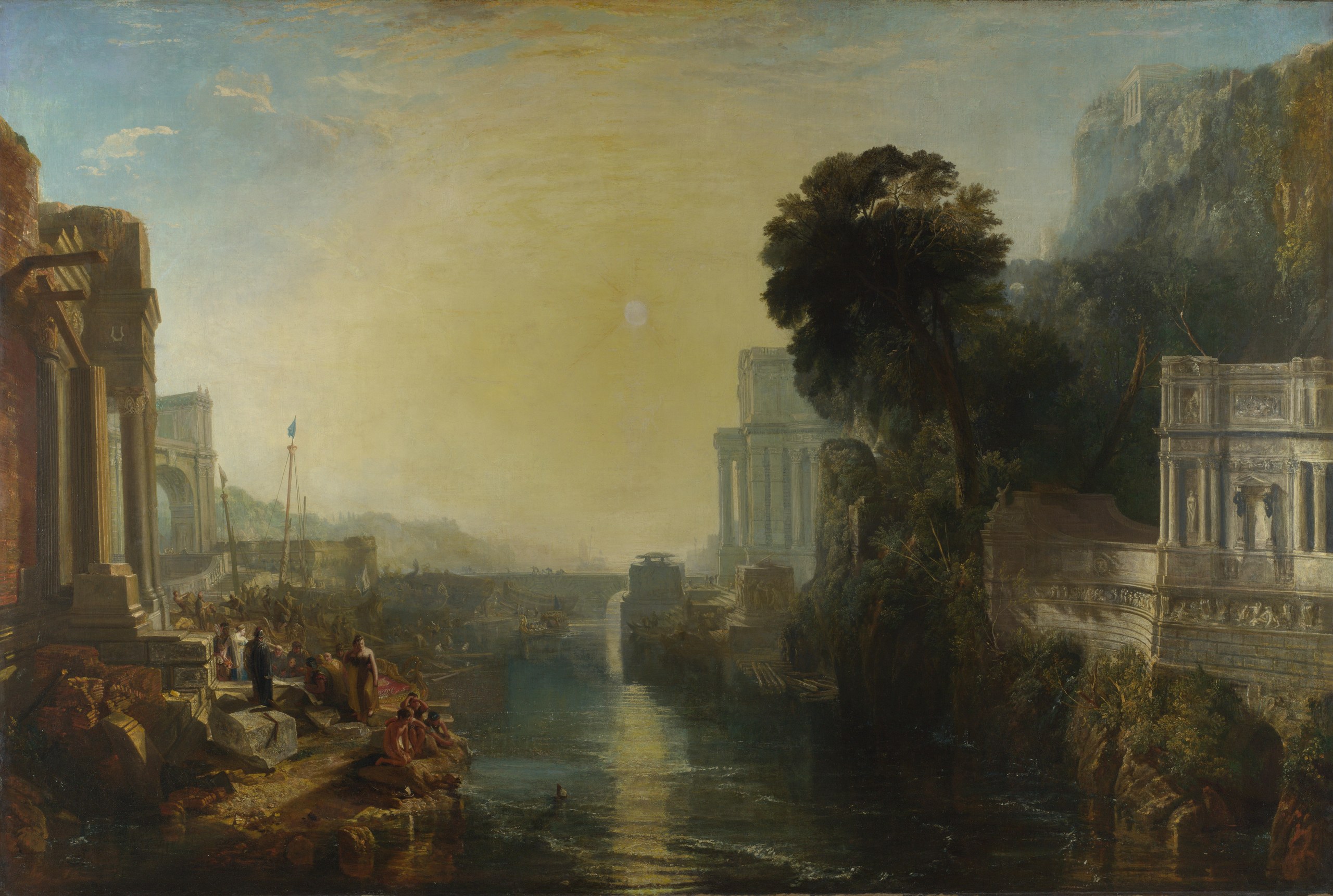
Dido building Carthage
J. M. W. Turner · 1815
National Gallery
Dido building Carthage. Carthage rising on a sunlit bay while its queen, in blue, visits the tomb being raised for her husband. Turner's open challenge to Claude's seaports, painted ten times over in his meditations on the rise and fall of empires.
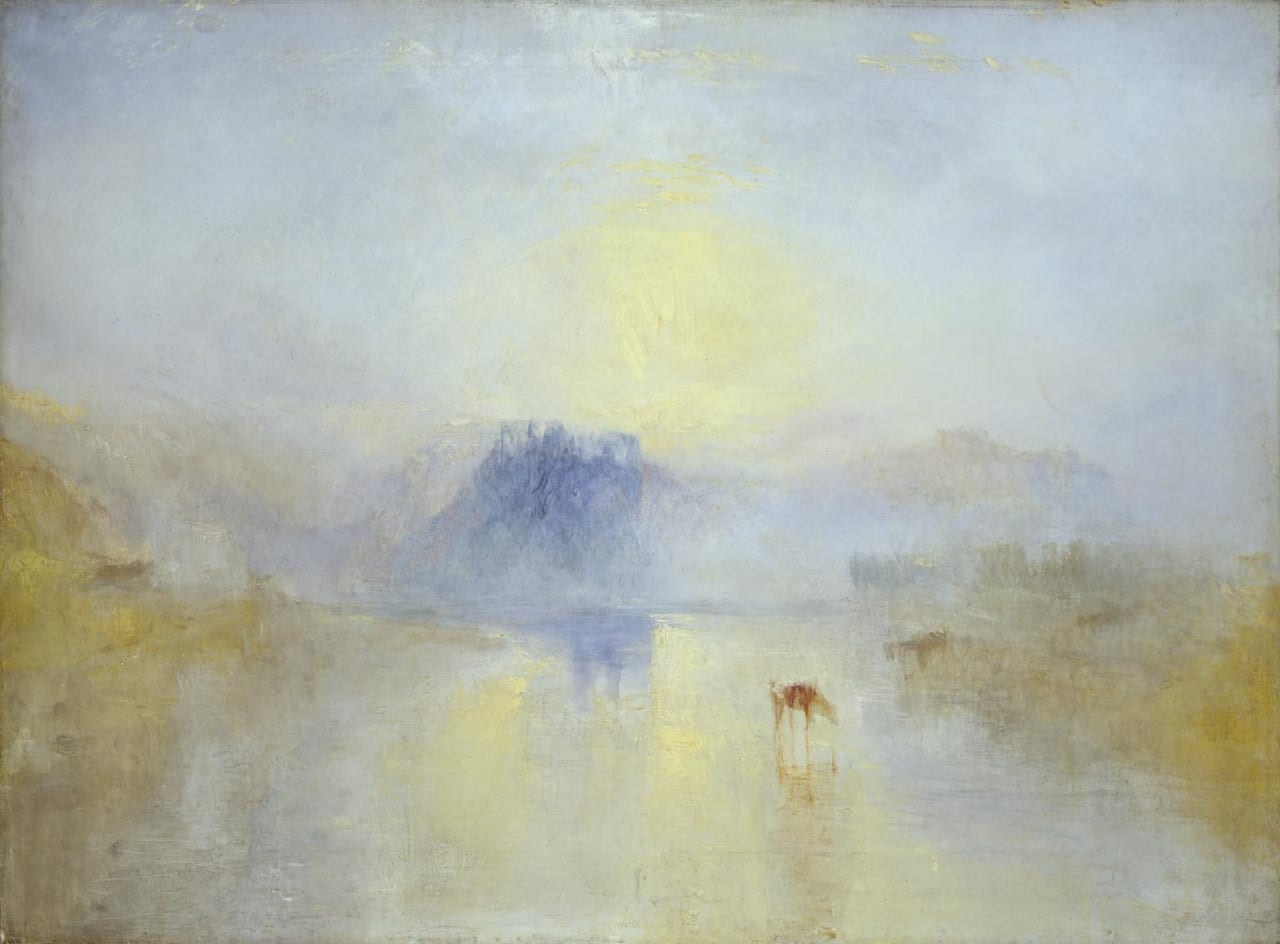
Norham Castle, Sunrise
J. M. W. Turner · 1845
Tate Britain
Norham Castle, Sunrise. A castle wall dissolving into morning on the Scottish border: one of his last paintings, its subject barely more than a memory of dawn light and the soft shapes that light leaves behind.
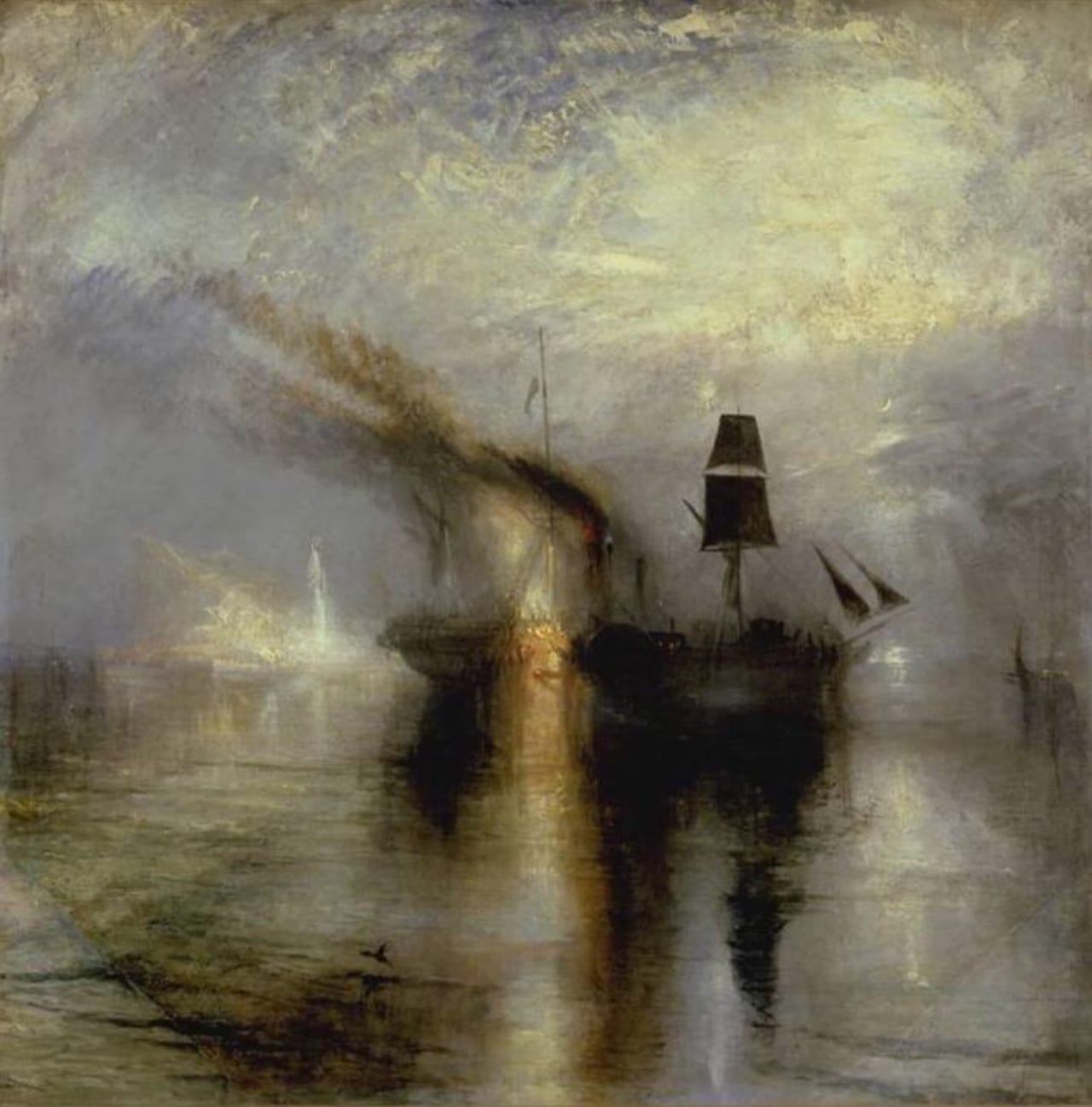
Peace – Burial at Sea
J. M. W. Turner · 1842
Tate Britain
Peace – Burial at Sea. A warship buries the painter David Wilkie at sea in cool whites, blues and black; Wilkie died of typhoid in 1841 while returning from the Middle East, and Turner built him a funeral out of rigging, steam and cold light.
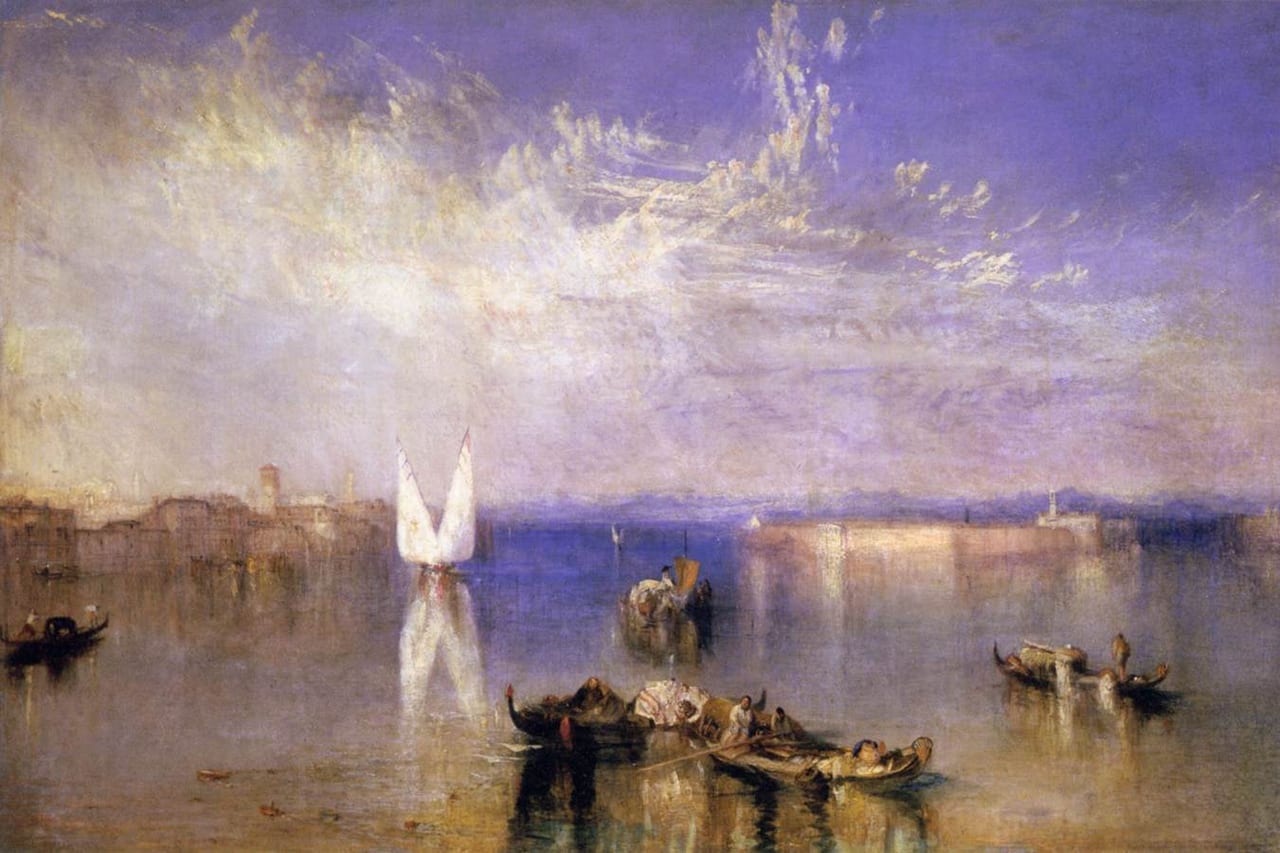
The Campo Santo
J. M. W. Turner · 1842
Toledo Museum of Art
The Campo Santo. Venice's new cemetery island seen across the water, a subject almost no other painter took; the city itself lies far off to the left, dissolved in a luminous haze.
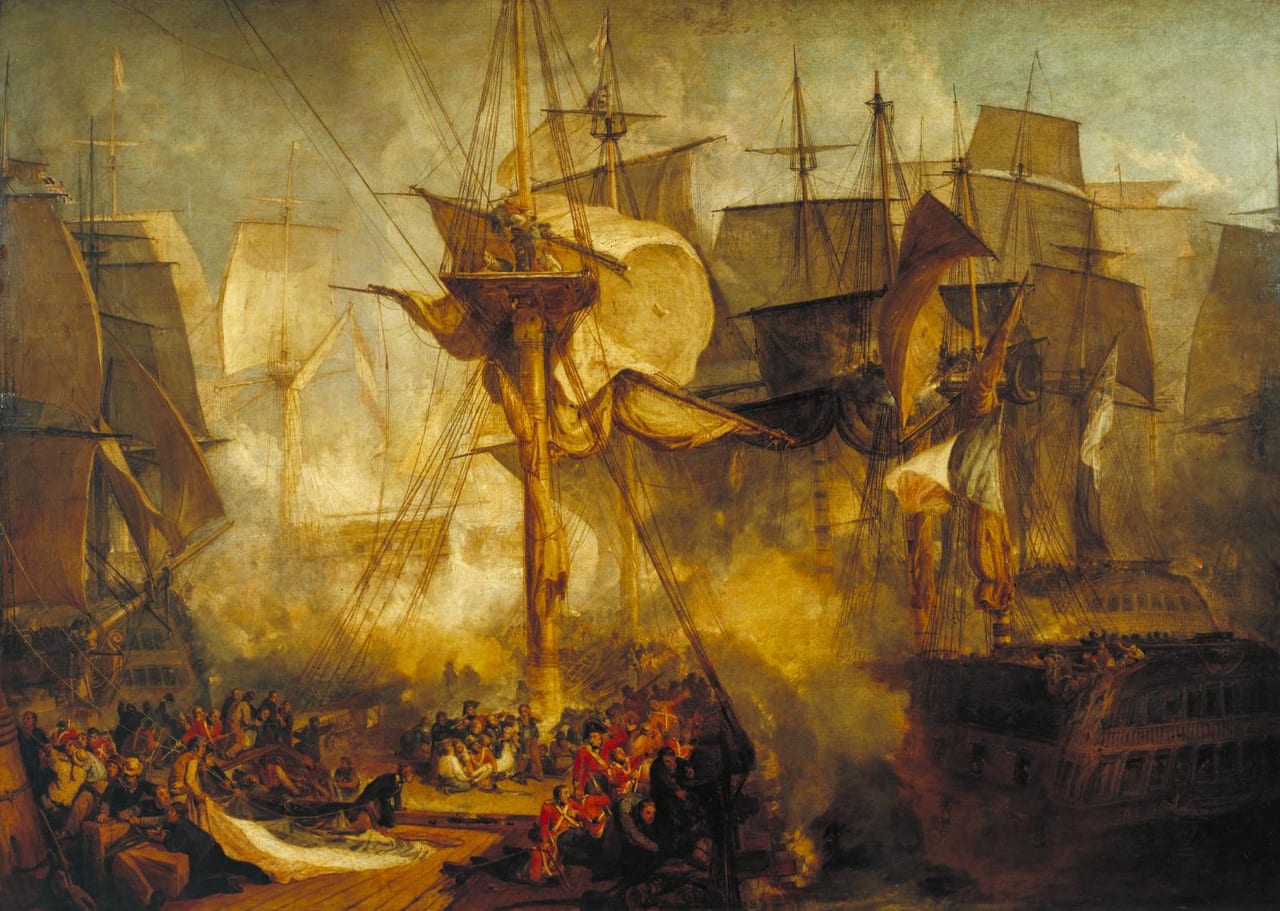
The Battle of Trafalgar (1806)
J. M. W. Turner · 1806
Tate Britain
The Battle of Trafalgar (1806). Nelson's victory rendered as weather: ships, smoke and sea merged into one rolling grey, with the Temeraire already caught in the middle of the confusion.
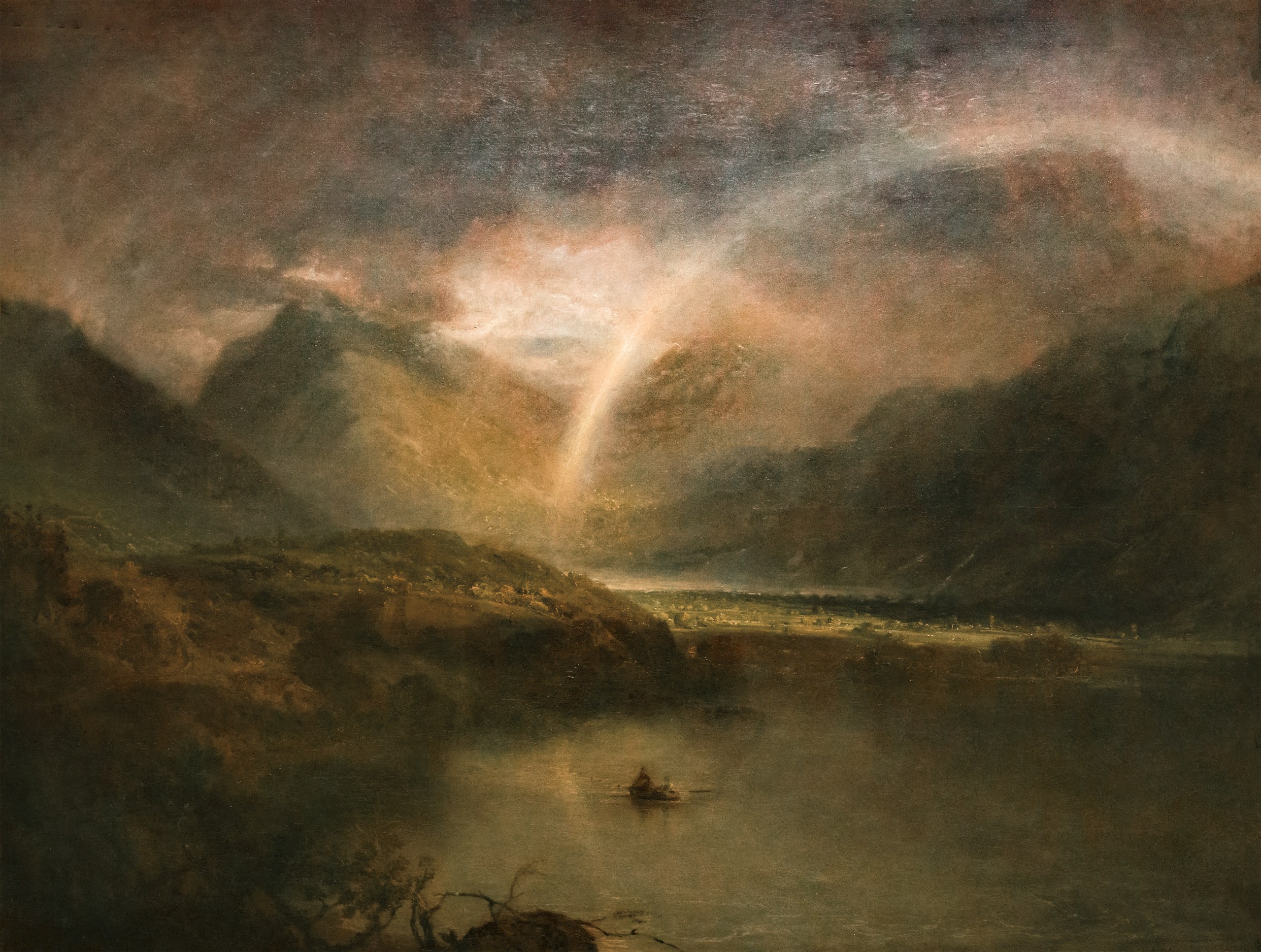
Buttermere Lake, with Park of Cromackwater, Cumberland, a Shower
J. M. W. Turner · 1797
Tate Britain
Buttermere Lake, with Park of Cromackwater, Cumberland, a Shower. A Lake District storm passing: the hills doubled in dark water, white cattle giving the scale, light breaking where the rain ends.
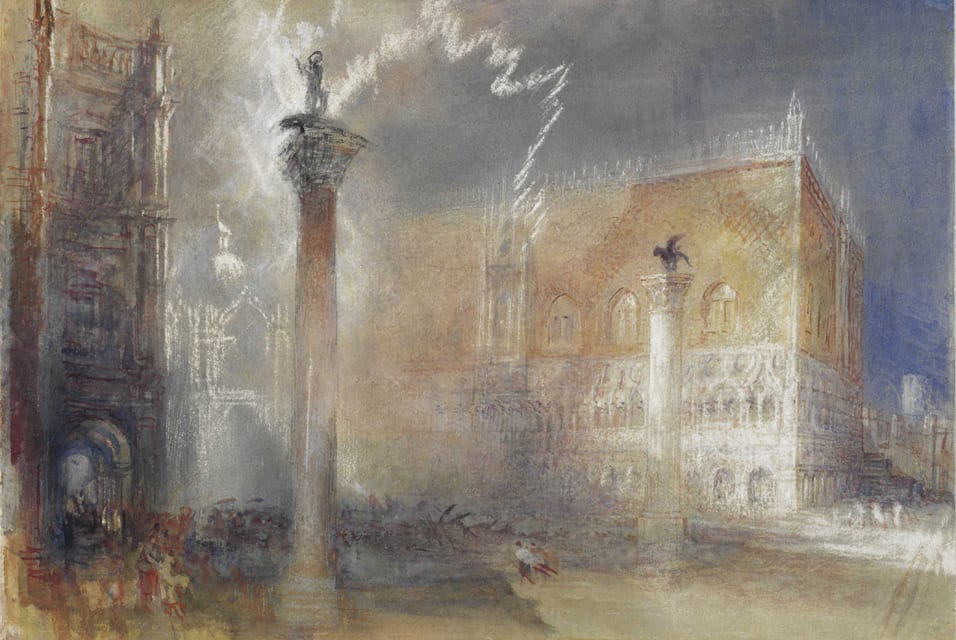
The Piazzetta, Venice
J. M. W. Turner · 1835
Scottish National Gallery
The Piazzetta, Venice. St Mark’s campanile and the Doge’s Palace caught in a wash of afternoon light, the great square’s stones turned to porcelain by watercolour.
More to discover
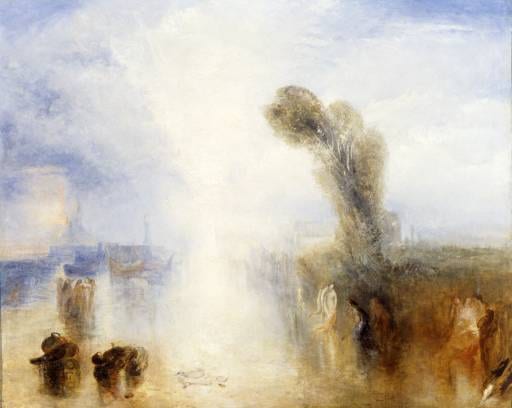
Neapolitan Fisher Girls Surprised Bathing by Moonlight
J. M. W. Turner · 1840
Huntington Library, Art Museum and Botanical Gardens
Neapolitan Fisher Girls Surprised Bathing by Moonlight. Bathers scatter through the Bay of Naples as Vesuvius erupts on the horizon; the scene grew from sketches Turner made on his 1819 journey through Italy.
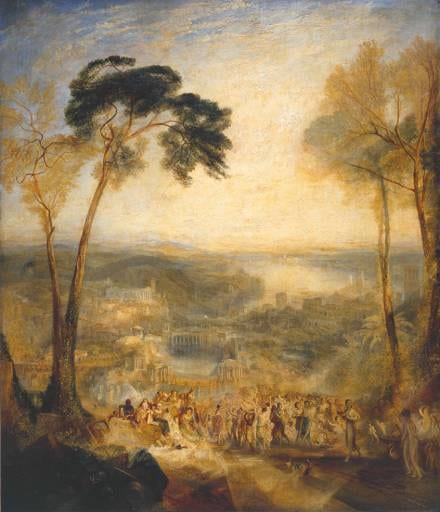
Phryne Going to the Public Baths as Venus: Demosthenes Taunted by Aeschines
J. M. W. Turner · 1838
Tate Britain
Phryne Going to the Public Baths as Venus: Demosthenes Taunted by Aeschines. Ancient Athens in fancy dress: the celebrated courtesan processes to the baths dressed as Venus while two orators quarrel, two old legends braided into a single theatrical scene.
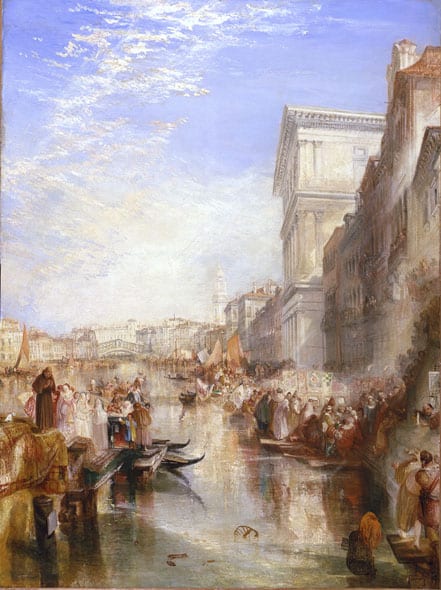
The Grand Canal: Scene - A Street in Venice
J. M. W. Turner · 1837
Huntington Library, Art Museum and Botanical Gardens
The Grand Canal: Scene - A Street in Venice. The Grand Canal treated as exactly what it was to Venetians, a street of water, gondolas moving like carriages under a high pale sky.
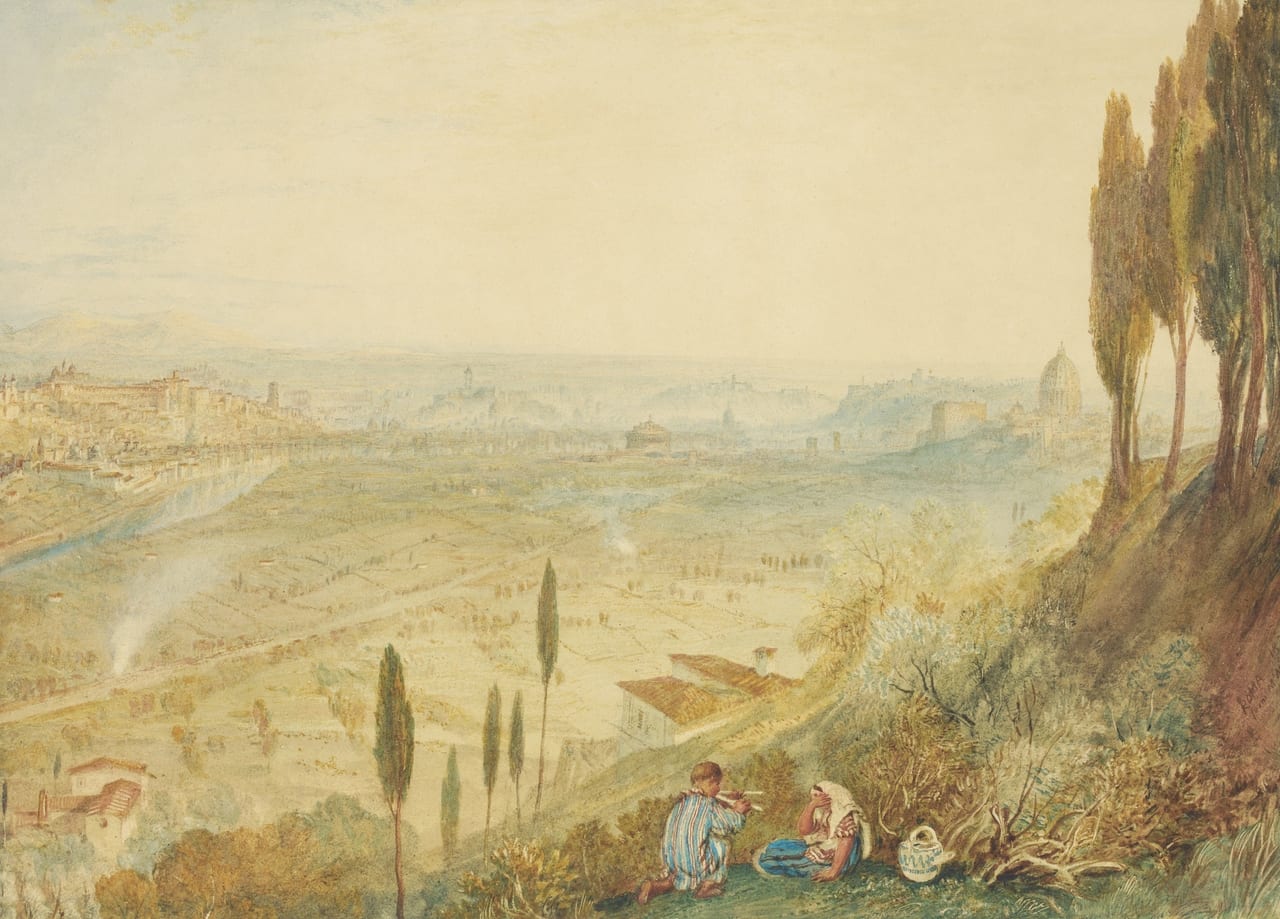
Rome from Monte Mario
J. M. W. Turner · 1820
Scottish National Gallery
Rome from Monte Mario. The city gathered into one warm haze from the hill above the Tiber, domes and garden walls dissolving at their edges.
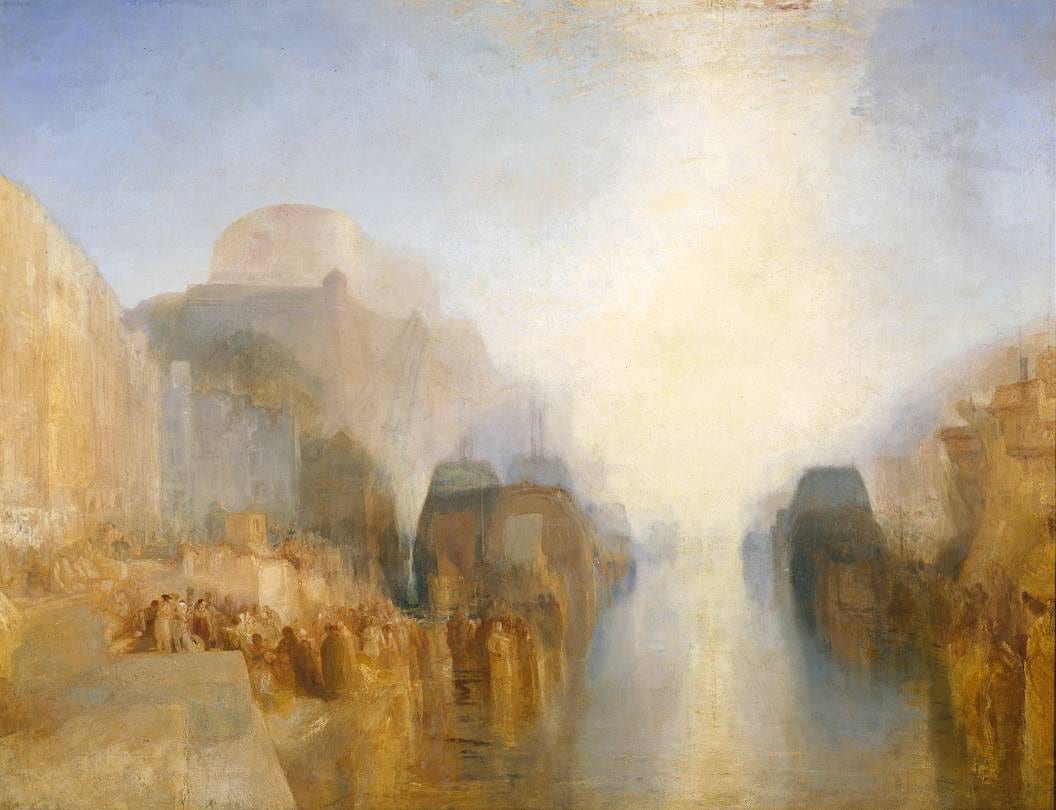
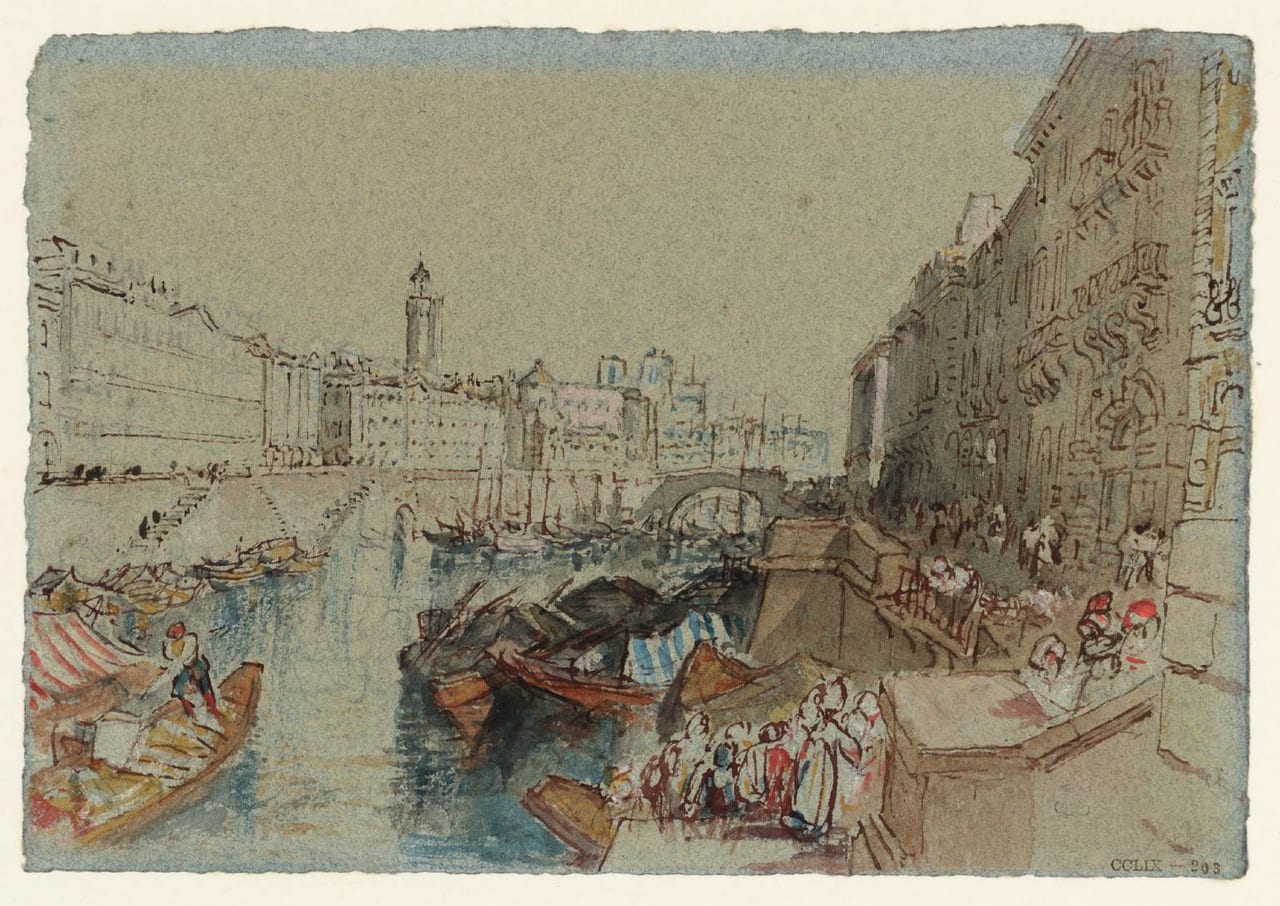
The Harbour of Brest The Quayside and Chateau
J. M. W. Turner · 1826
Tate Britain
The Harbour of Brest The Quayside and Chateau. The Breton naval port drawn with a draughtsman's precision, masts and fortifications pressed together, then flooded with channel light.
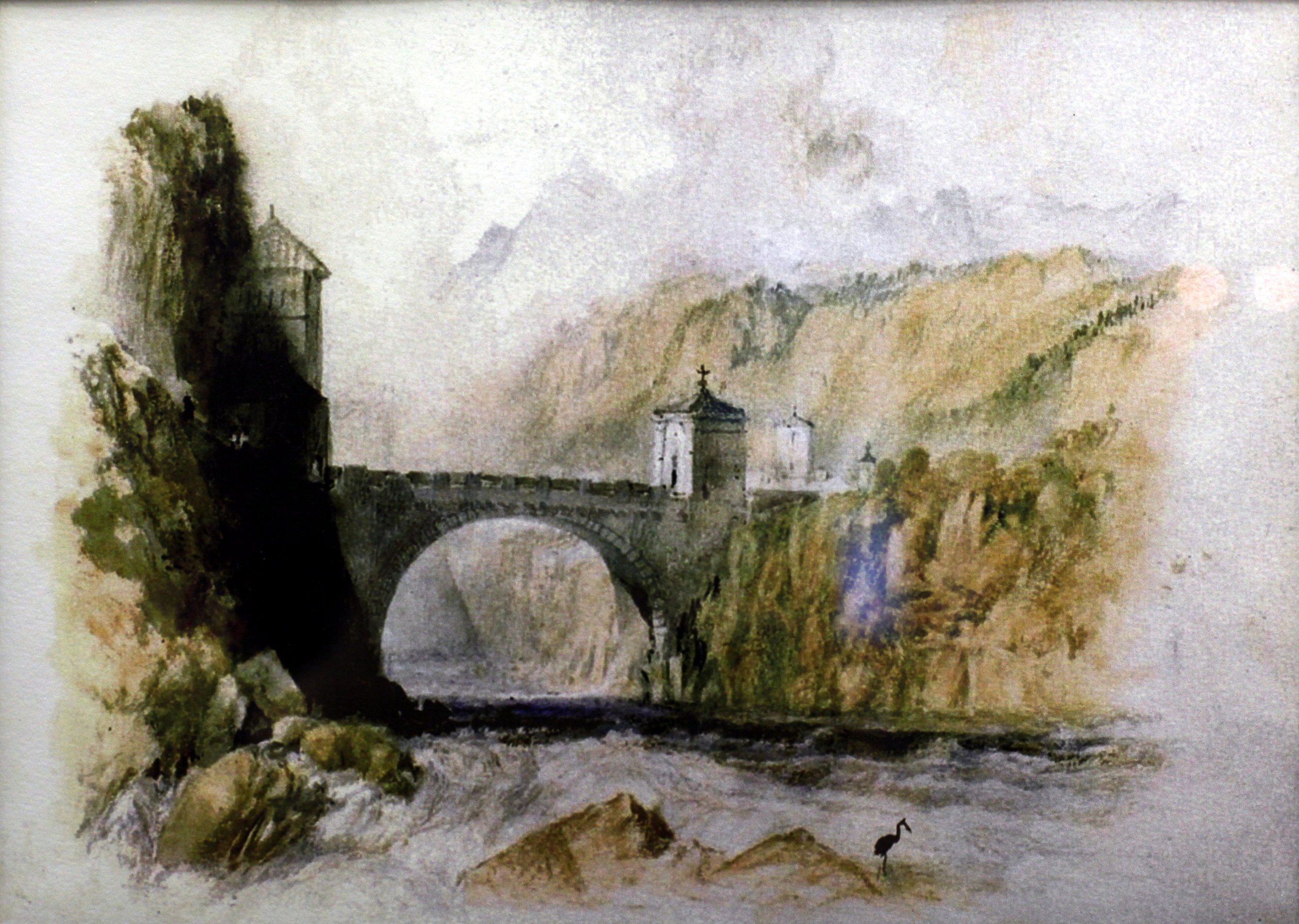
Saint-Maurice bridge
J. M. W. Turner · 1820
Tate Britain
Saint-Maurice bridge. An Alpine crossing held between dark rock and racing cloud, the water beneath it carried in quick strokes.
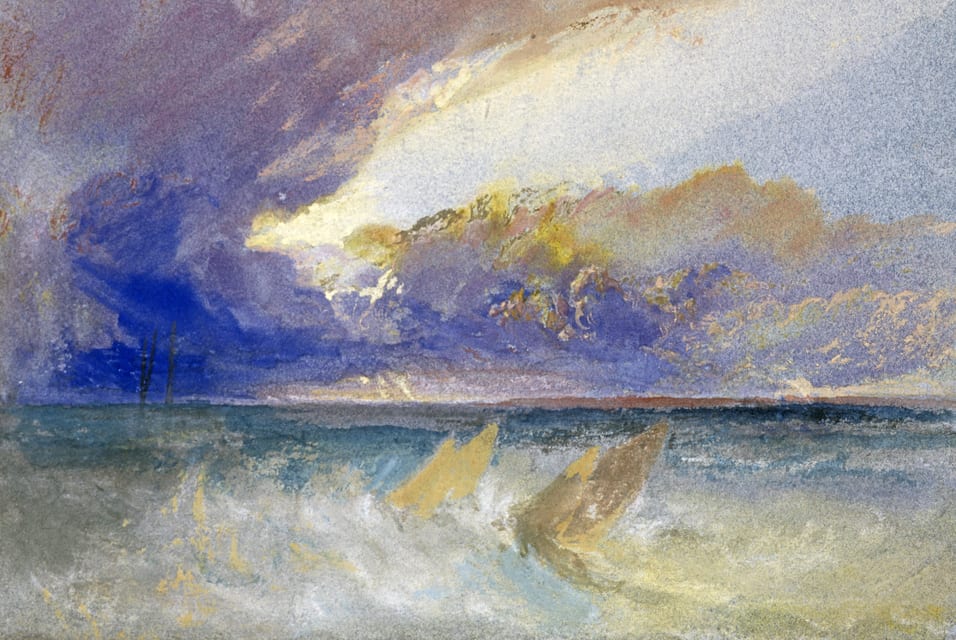
Sea View
J. M. W. Turner · 1826
Scottish National Gallery
Sea View. Open water under a wide sky, the horizon set low so that the weather itself fills the sheet.
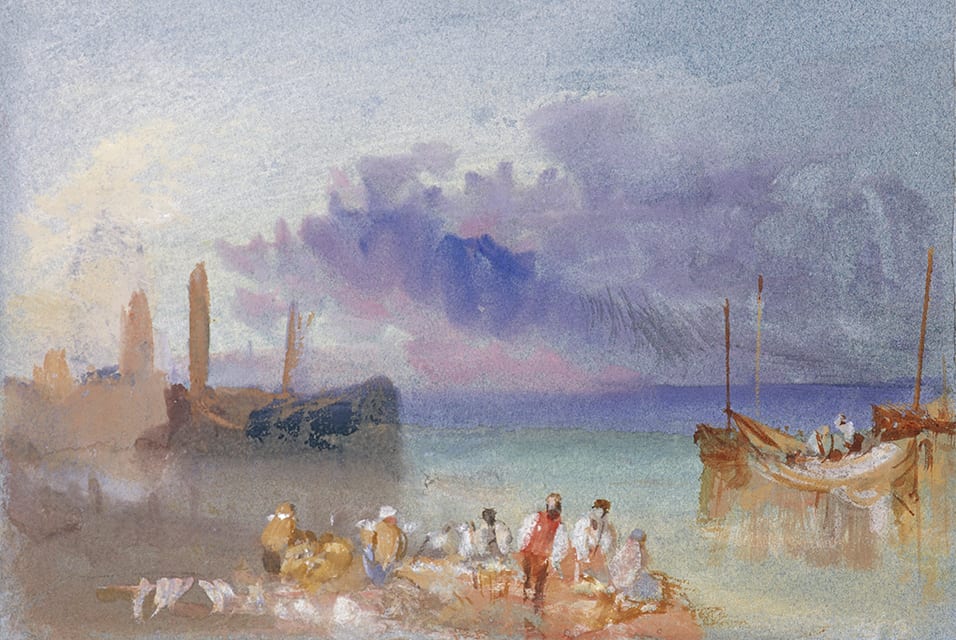
Harbour View
J. M. W. Turner · 1826
Scottish National Gallery
Harbour View. Shipping at rest between sea and shore, the whole scene washed in the grey-pearl light of the channel coast.
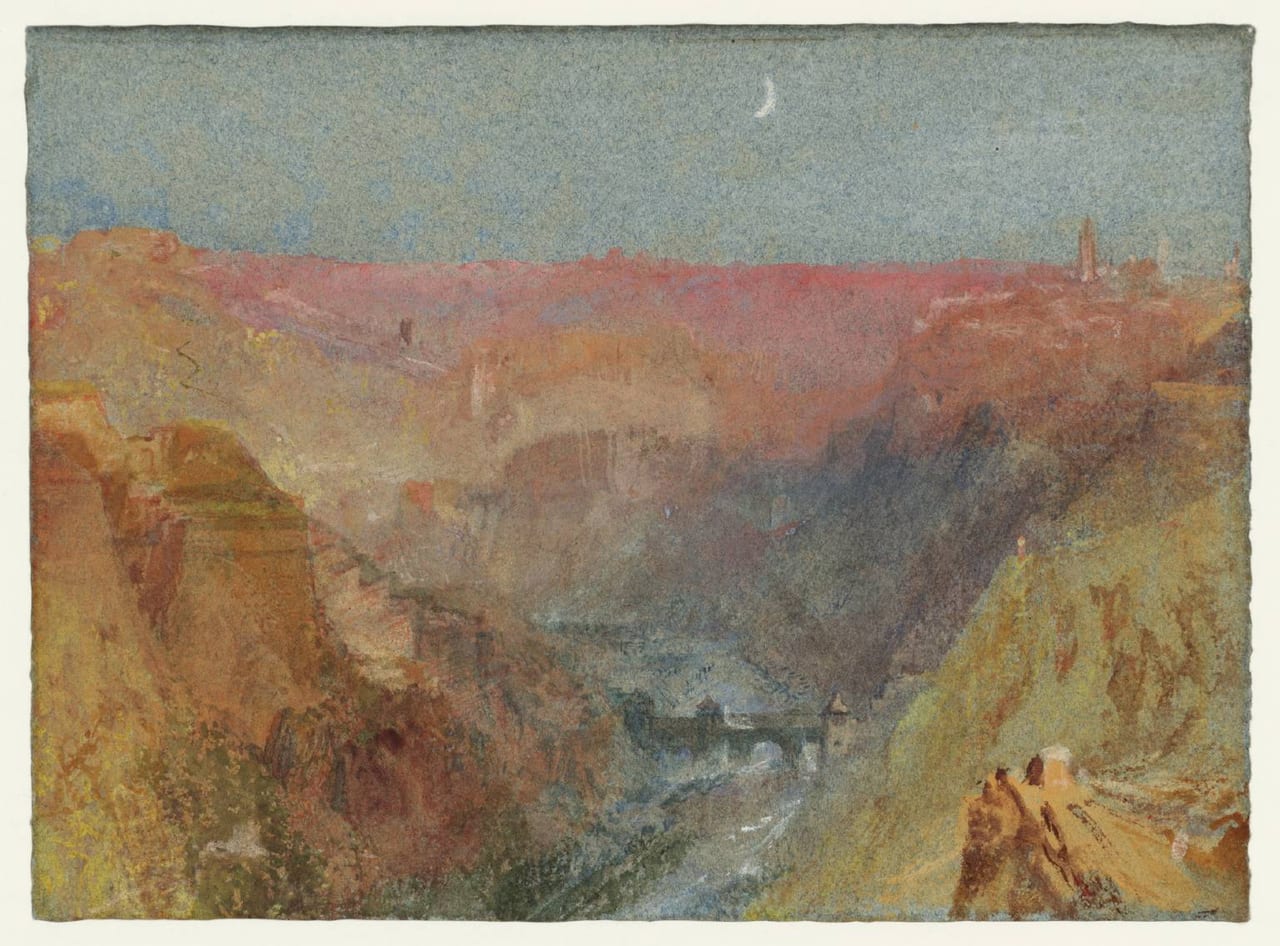
Luxembourg from the Alzette Valley to the North
J. M. W. Turner · 1839
Tate Britain
Luxembourg from the Alzette Valley to the North. The town stacked in terraces above its valley, spires and gardens held in clear northern air.
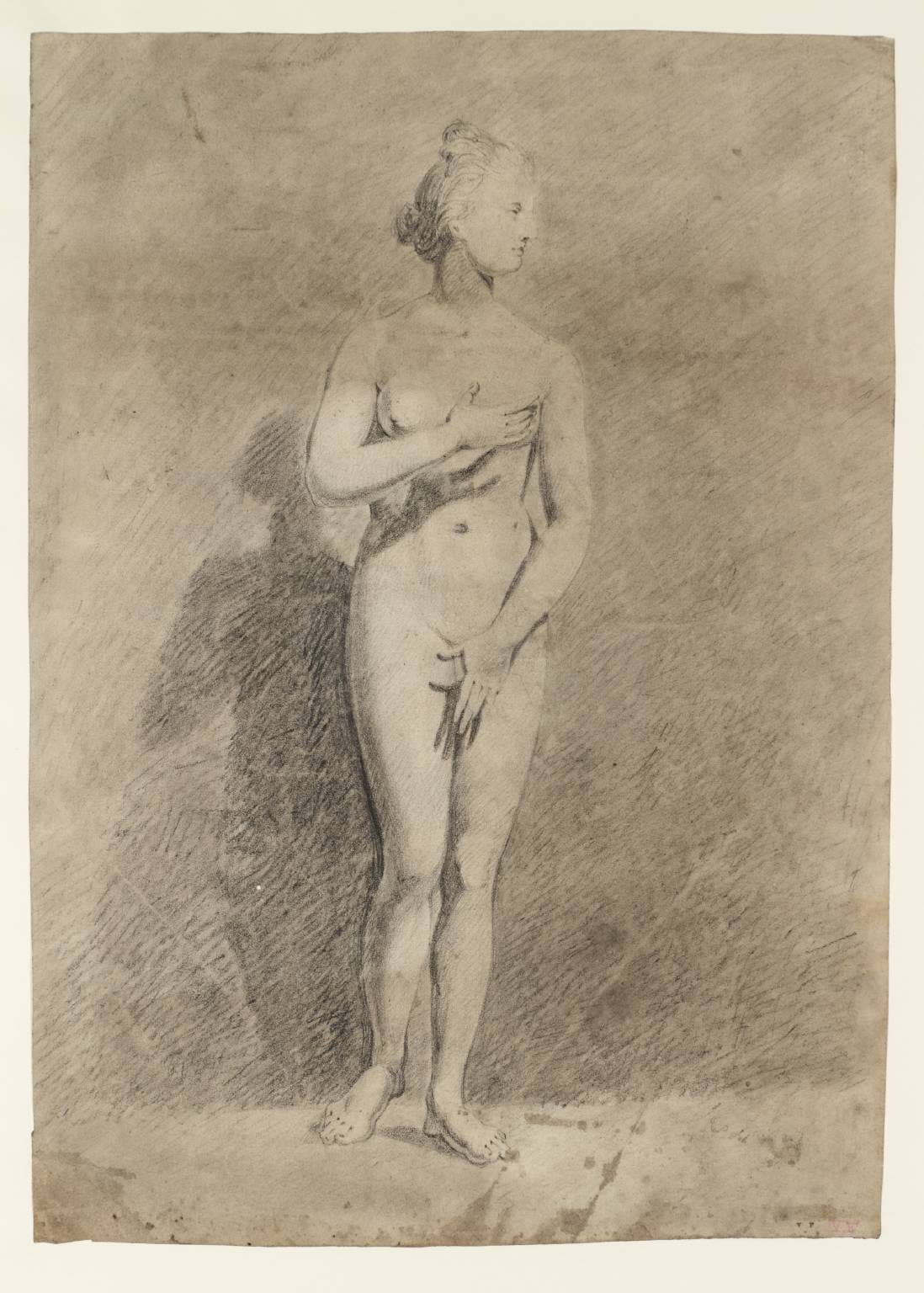
Study of the Venus de’ Medici
J. M. W. Turner · 1792
Tate Britain
Study of the Venus de’ Medici. A drawing made inside the Royal Academy schools, the young Turner working from the casts that taught his generation the antique figure.
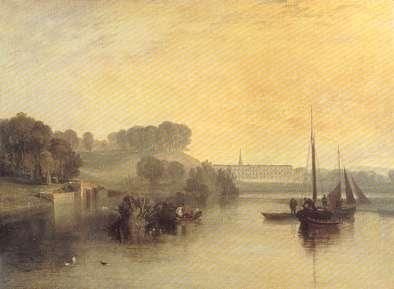
A distant view of Petworth House across the lake in Petworth Park
J. M. W. Turner
Tate Britain
A distant view of Petworth House across the lake in Petworth Park. The great house seen far off across park and water, absorbed into a Sussex landscape he knew as a much-pampered guest.
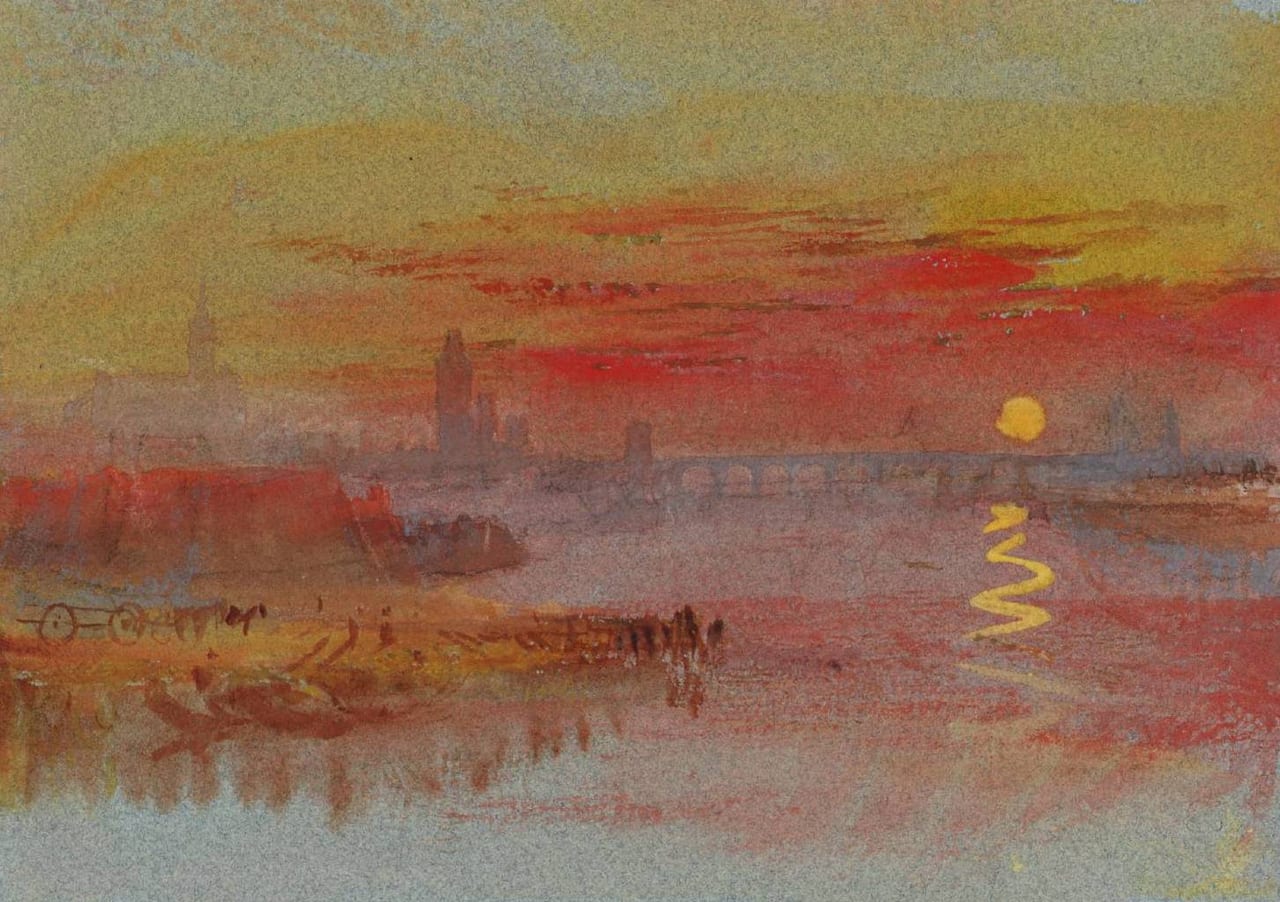
The Scarlet Sunset
J. M. W. Turner
Tate Britain
The Scarlet Sunset. The sun going down in a single band of red, water and air built from the same burning colour.
Sources
- National Gallery, London, “Joseph Mallord William Turner”
- Tate, “Joseph Mallord William Turner 1775-1851”
- National Gallery, London, “The Fighting Temeraire”
- National Gallery, London, “Rain, Steam, and Speed - The Great Western Railway”
- National Gallery, London, “Dido building Carthage”
- Wikipedia, “J. M. W. Turner”
- Wikipedia, “The Slave Ship”
- Wikipedia, “Norham Castle, Sunrise”
- Wikipedia, “Peace – Burial at Sea”
- Wikipedia, “Campo Santo, Venice”
- Wikipedia, “Phryne Going to the Public Baths as Venus”
- Wikipedia, “Neapolitan Fisher Girls Surprised Bathing by Moonlight”
Invite J. M. W. Turner into your living room
Play 27 works from this collection on your TV, phone or tablet with Momentable Art TV.