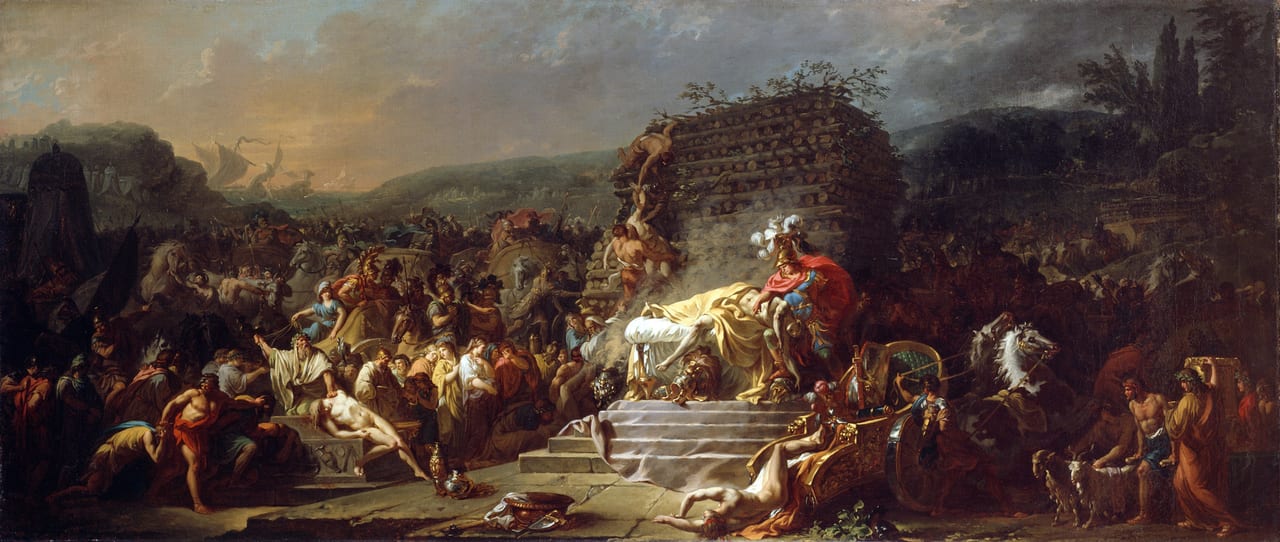
The Oath of the Horatii
Jacques-Louis David · 1784

Jacques-Louis David
France · 1748–1825
The painter of the French Revolution and of its emperor, who made Roman virtue and Napoleonic splendour look like the truth, and taught a generation of painters how to paint like it.
Play 17 works from this collection on your TV, phone or tablet with Momentable Art TV.
Play CollectionParis, Rome and the prize
Jacques-Louis David was born in Paris on 30 August 1748 into a prosperous family, and came to painting by way of Boucher, who passed the boy on to his own friend Joseph-Marie Vien, a painter of the classical reaction against Rococo. The route to Rome ran through the Académie's prize, and David was beaten at it again and again before he carried it off in 1774 with his Erasistratus, the lovesick prince diagnosed by his father's doctor.
Italy settled his art. There he studied the seventeenth-century masters, Poussin, Caravaggio and the Carracci, and the High Renaissance above all: Raphael left a deep and lasting mark on him. He came home with a manner already his own, drawn from antiquity, lit like stone, and waiting for a subject worthy of it.
Painting for the Revolution
The subject arrived with the crisis. The Oath of the Horatii, painted in Rome in 1784 and 1785, turned a Roman legend of three brothers sworn to fight for their city into an instant success with critics and public alike, and it remains among the best-known paintings of the Neoclassical style. Five years on, his Brutus, the founder of the Republic ordering the deaths of his own sons, hung at the Salon of 1789 as an allegory of civic virtue whose resonance for the republican cause needed no explaining.
When the Revolution came, David gave it more than pictures. He became an active supporter of it and a friend of Robespierre, in effect a dictator of the arts under the Republic; he sat in the National Convention, voted for the death of the King, and was divorced for it by his royalist wife. His Death of Marat, the murdered friend rendered like a saint, is perhaps his most famous painting, the revolution's own Pietà. After Robespierre fell, David went to prison.
The Emperor's painter, and exile
Release brought a new master. He attached himself to Napoleon, and as the Emperor's official painter spent years on the Coronation, a canvas almost ten metres wide, begun in a former chapel near the Sorbonne and finished, with his student Georges Rouget's help, in January 1808. When the Bourbons returned, David exiled himself to Brussels rather than swear allegiance, and stayed there to the end of his life, painting on until a carriage struck him as he left a theatre in 1825; he died of the blow on 29 December.
His studio had trained much of the painting of the age, and through those many pupils he remained the strongest single influence on French art of the early nineteenth century.
Known works
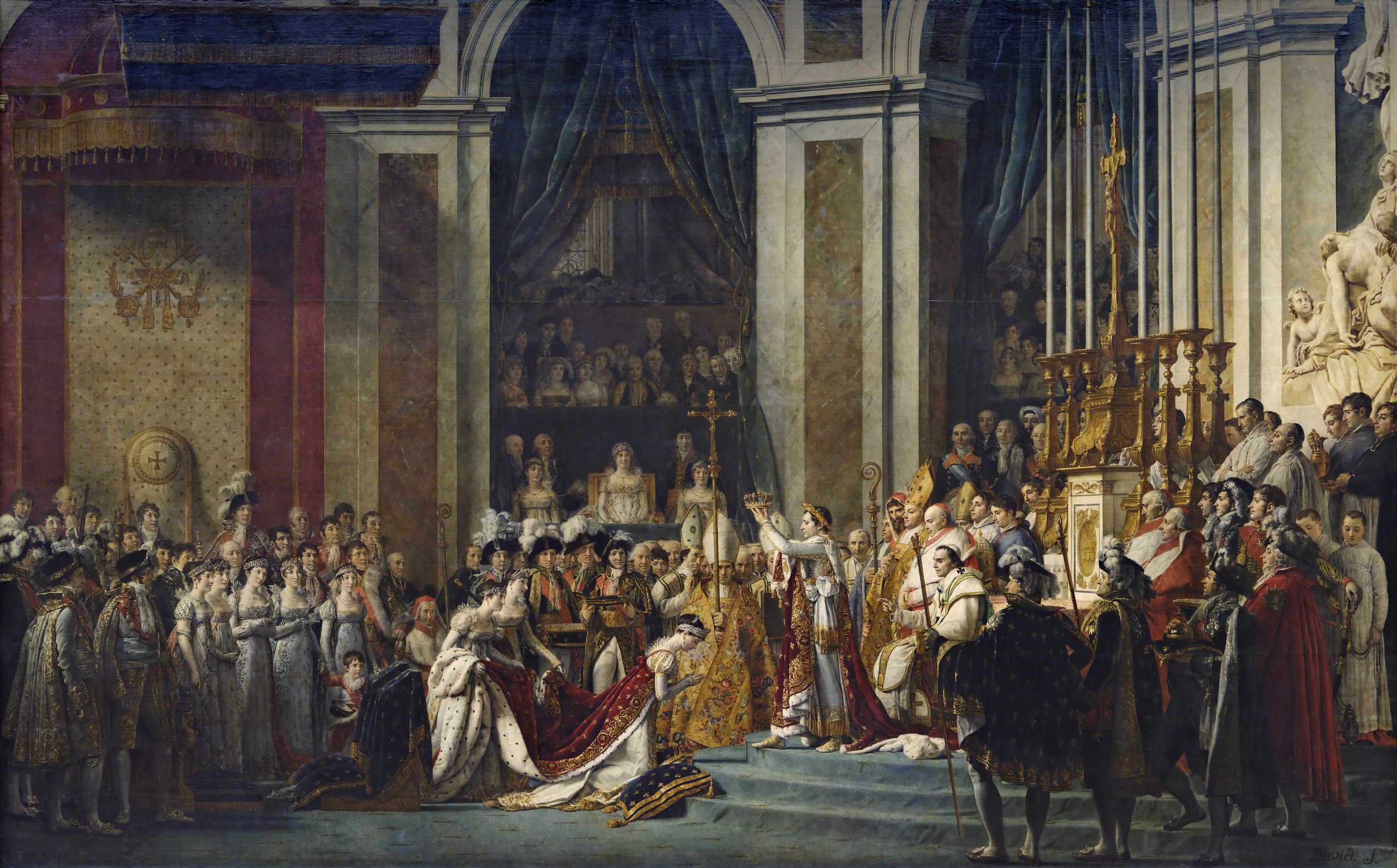
The Coronation of Napoleon
Jacques-Louis David · 1807
Louvre
The Coronation of Napoleon. Napoleon crowning himself before the altar of Notre-Dame, then crowning Josephine, in a crowd of robed and coroneted witnesses painted one by one in David's workshop; commissioned by Napoleon in 1804, given its finishing touches by his student Georges Rouget in January 1808, and now filling a wall of the Louvre.
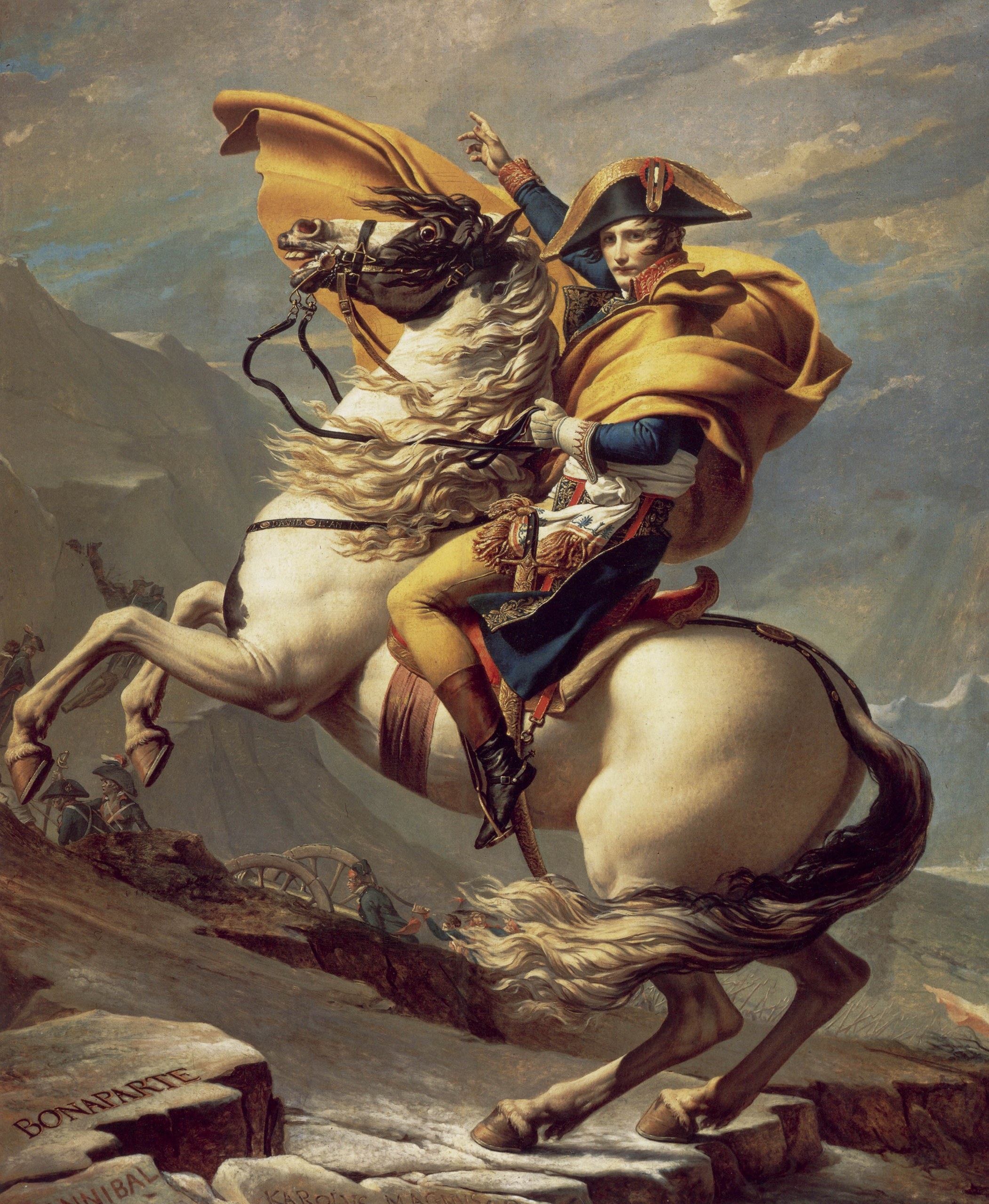
Napoleon Crossing the Alps
Jacques-Louis David · 1801
Napoleon Crossing the Alps. The First Consul on a rearing horse, his name carved in the rock below Hannibal's and Charlemagne's, pointing up the pass; the first of five equestrian versions painted from 1801, idealising a crossing actually made on a mule.
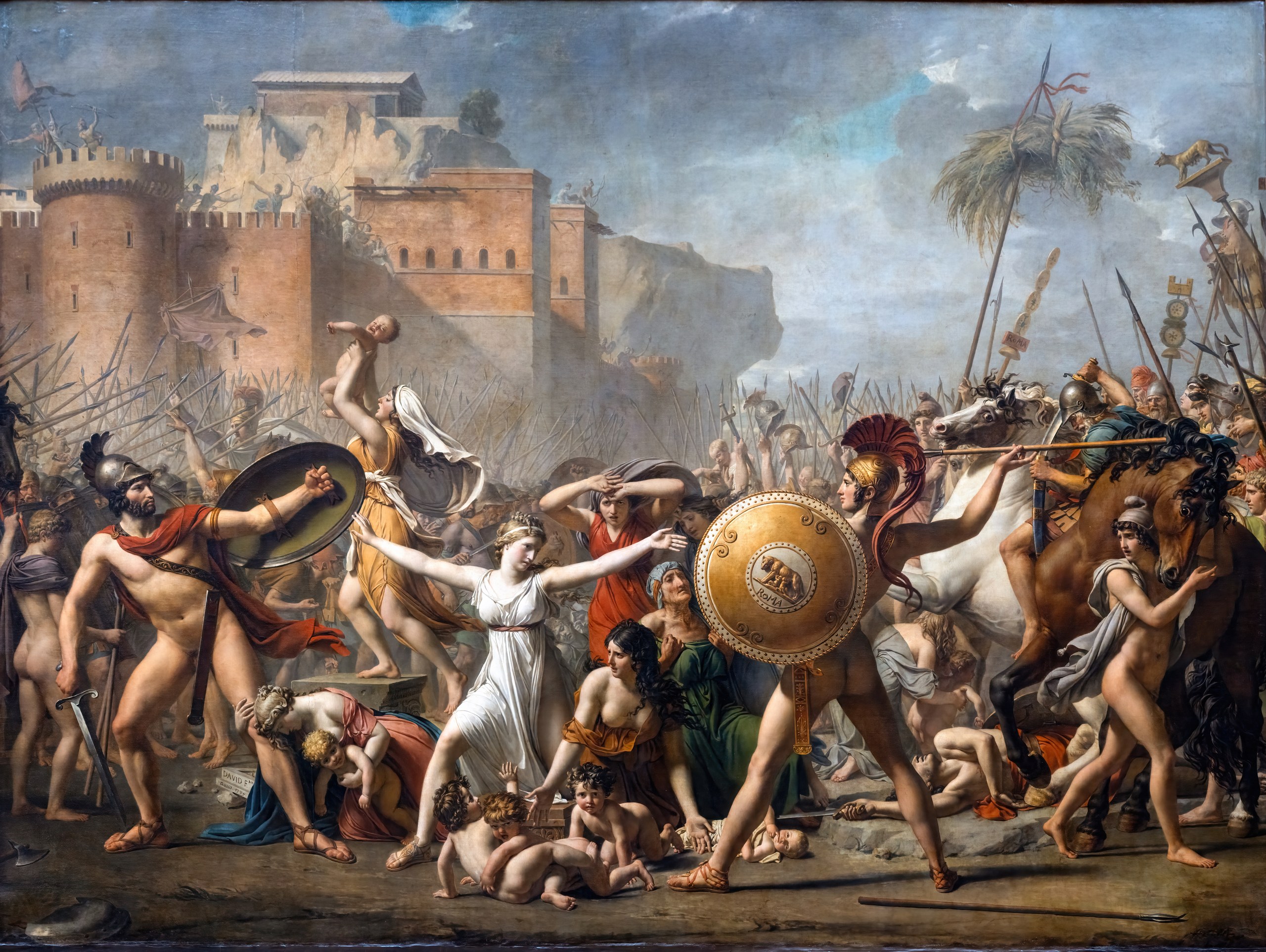
The Intervention of the Sabine Women
Jacques-Louis David · 1799
Louvre
The Intervention of the Sabine Women. The Sabine women throwing themselves and their children between Roman husbands and Sabine fathers mid-battle; begun in 1796 after his wife visited him in prison, as an homage to her and a plea for reconciliation after the Revolution's blood, and nearly four years in the making.
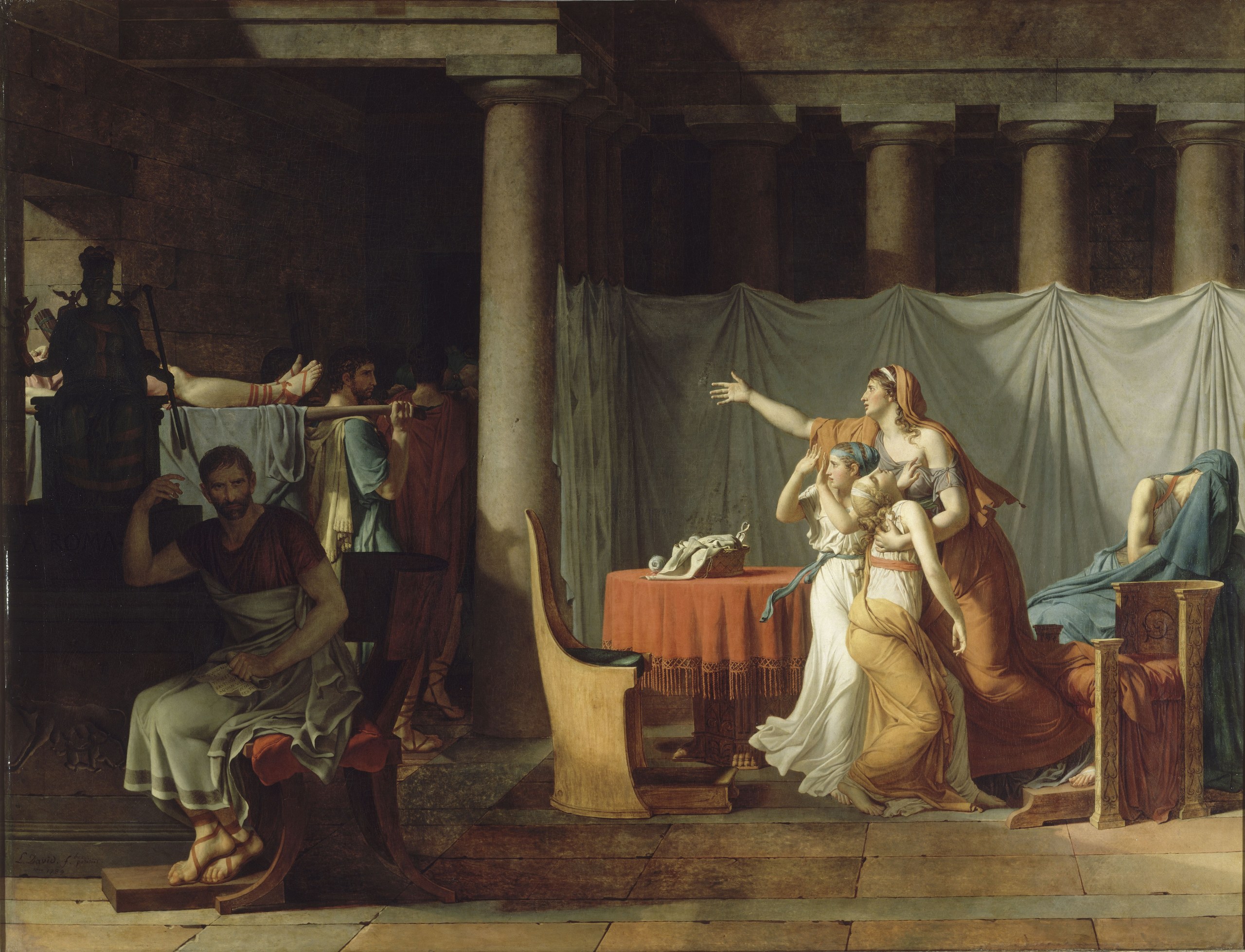
The Lictors Bring to Brutus the Bodies of His Sons
Jacques-Louis David · 1789
Louvre
The Lictors Bring to Brutus the Bodies of His Sons. Brutus in shadow at the left, alone with his decision while the bodies of the sons he condemned for conspiring against the Republic are carried in behind him; shown at the Salon of 1789, months before the fall of the Bastille.
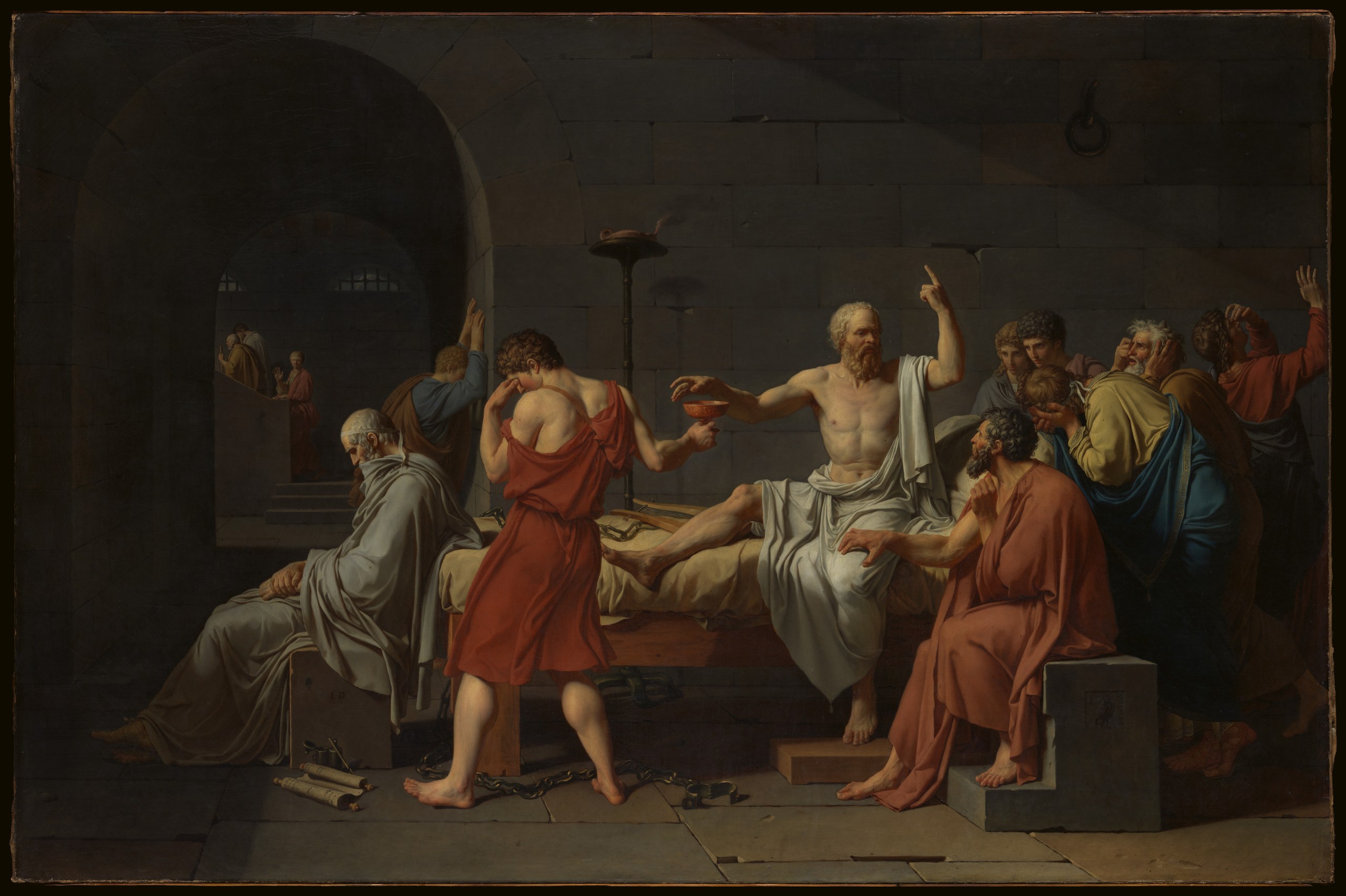
The Death of Socrates
Jacques-Louis David · 1787
The Metropolitan Museum of Art
The Death of Socrates. The condemned philosopher upright on his bed, one hand over the cup of hemlock and the other still teaching, his pupils collapsing around him while his wife looks back from the stairs; painted in 1787 from Plato's Phaedo.
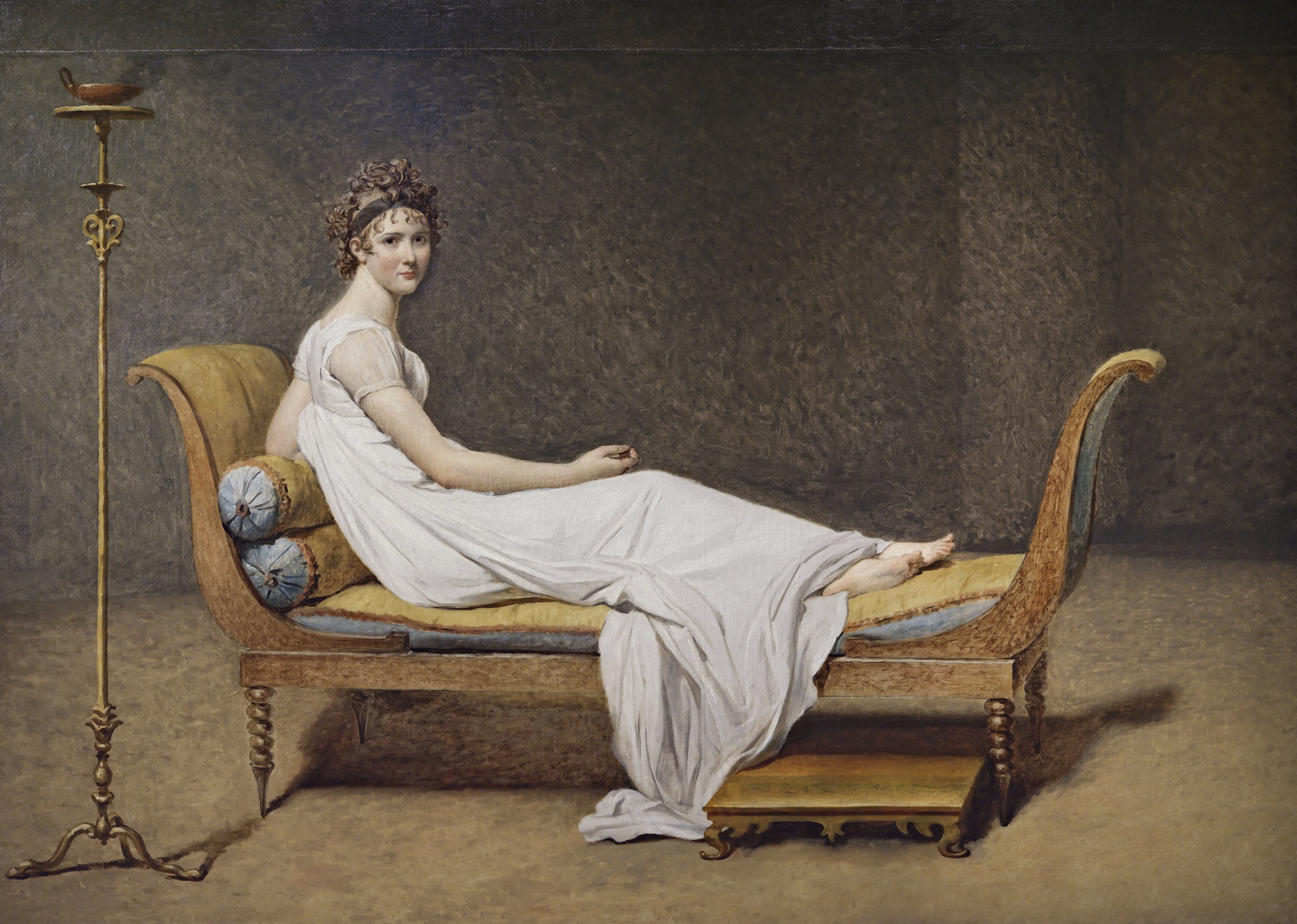
Portrait of Madame Récamier
Jacques-Louis David · 1800
Louvre
Portrait of Madame Récamier. The celebrated beauty reclining along a plain sofa in a white Empire dress, an extinguished lamp smoking above her; a portrait left unfinished whose horizontal format was new for its time, and whose cool distance set the tone for a century of elegant boredom.
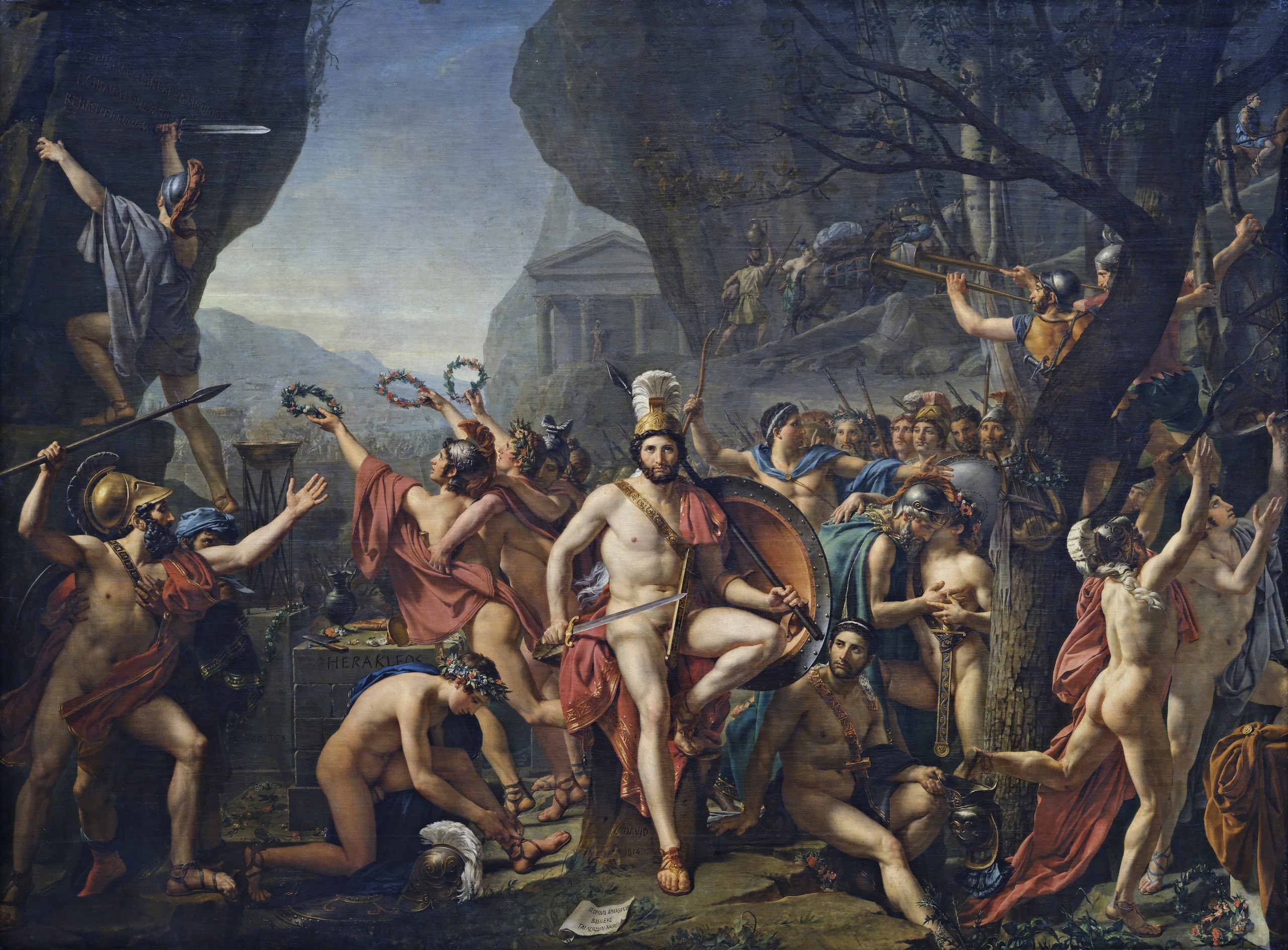
Leonidas at Thermopylae
Jacques-Louis David · 1814
Louvre
Leonidas at Thermopylae. The Spartan king and his Three Hundred arming and crowding at the mouth of the pass before the Persians come; a work David wrestled with for fifteen years, from 1799 to 1814, his pupil Rouget helping at the end.
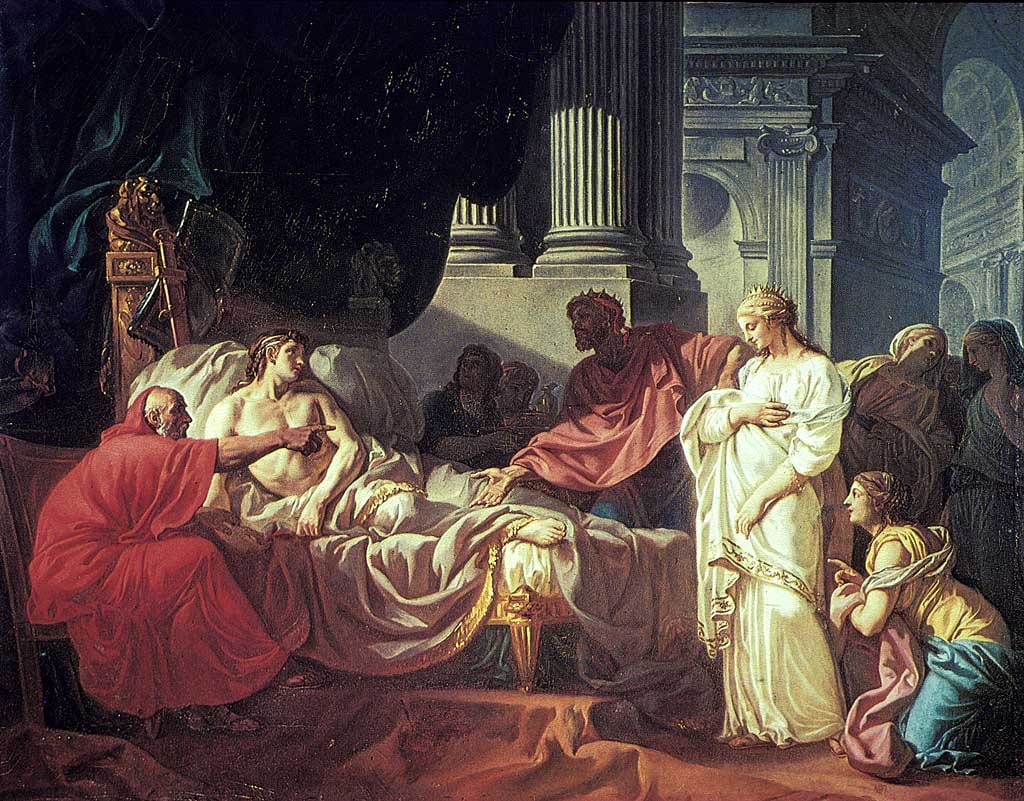
Erasistratus Discovering the Cause of Antiochus' Disease
Jacques-Louis David · 1774
Erasistratus Discovering the Cause of Antiochus' Disease. The physician taking the young Antiochus' pulse as his beautiful stepmother enters, and finding lovesickness; the canvas that won David the Prix de Rome in 1774.
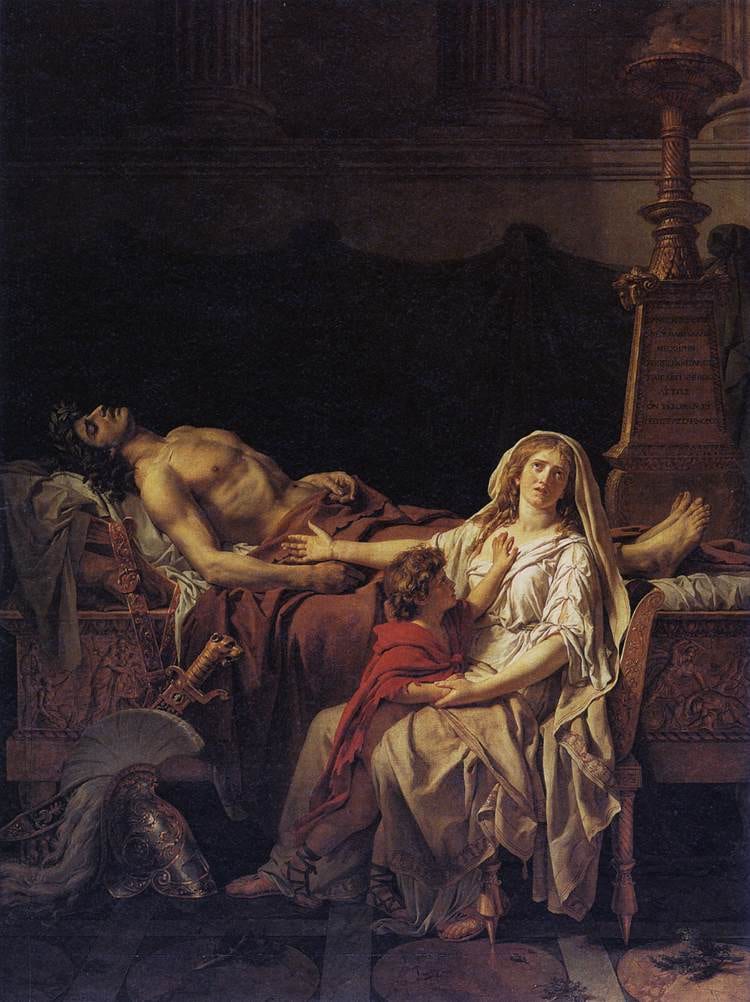
Andromache Mourning Hector
Jacques-Louis David · 1782
Louvre
Andromache Mourning Hector. The widow comforted by her son at the foot of the bed where the arms of the dead Hector lie; shown in 1783, and the picture that elected David to the Académie Royale.
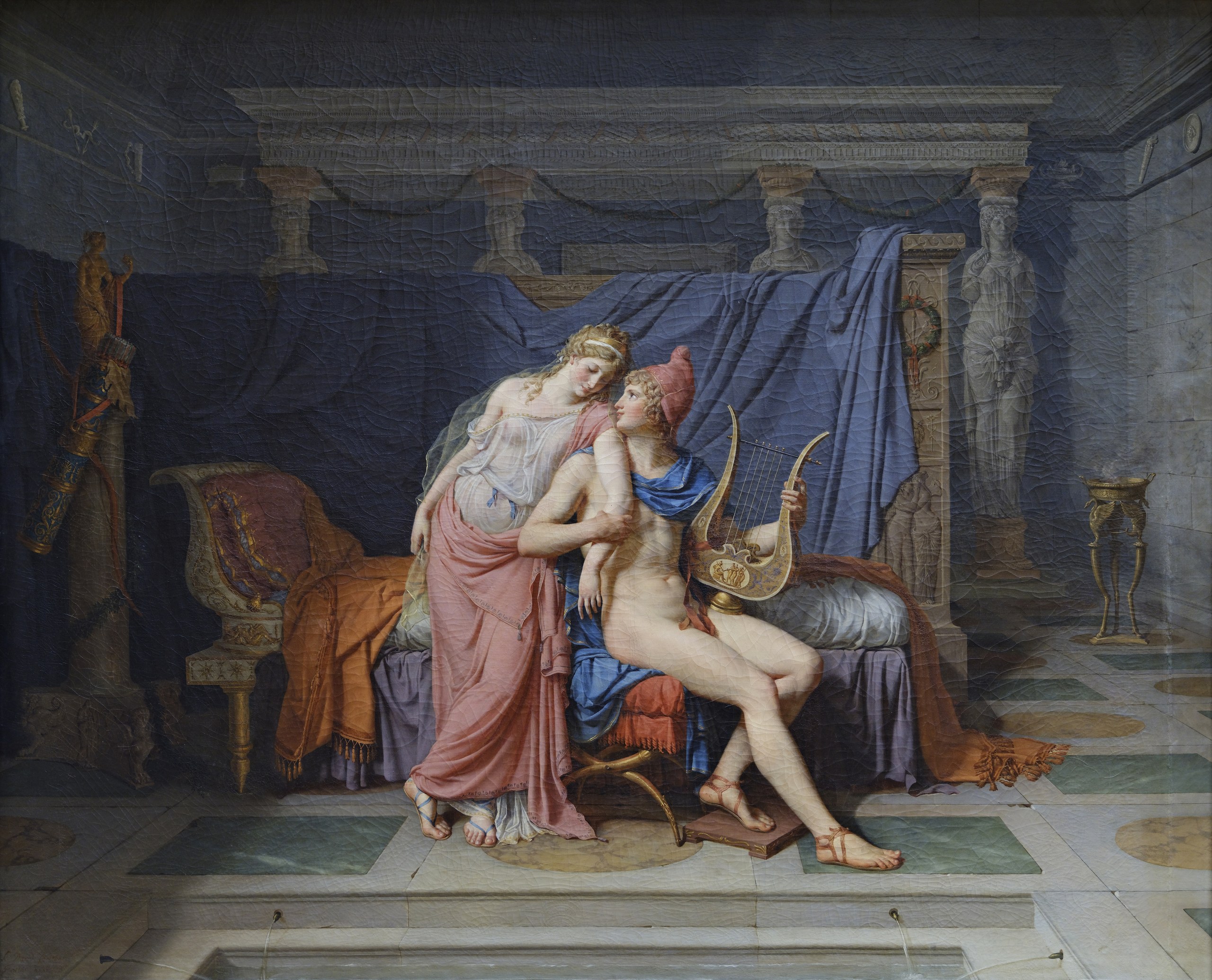
Paris and Helen
Jacques-Louis David · 1788
Louvre
Paris and Helen. The lovers at ease before a bed with Cupid at their knee, painted in 1788 for the comte d'Artois; David in his rare gallant mood, and the first of his two great mythologies of love.
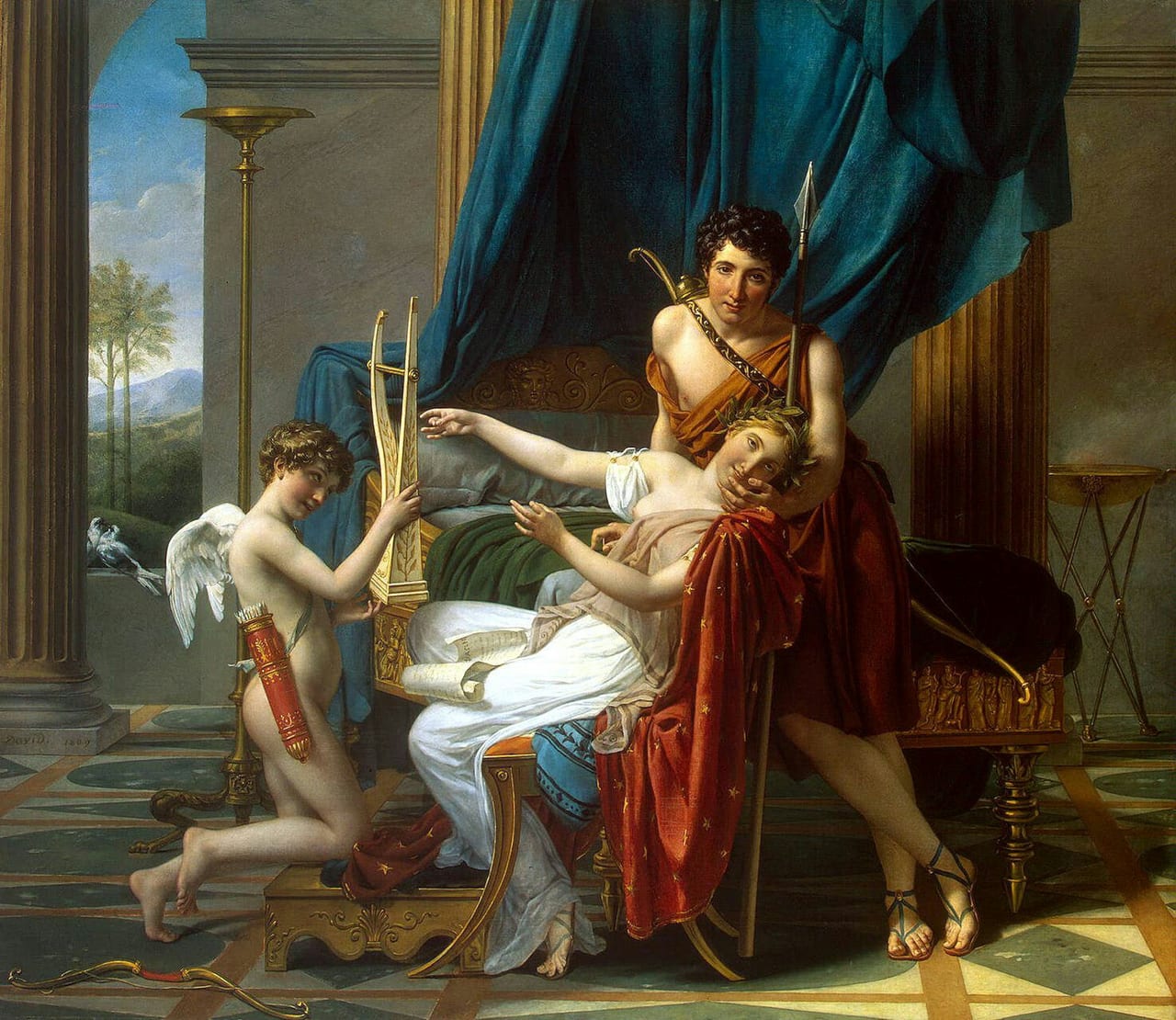
Sappho and Phaon
Jacques-Louis David · 1809
State Hermitage Museum
Sappho and Phaon. The poet of Lesbos reaching for her lover as Cupid bends the bow beside them; painted in 1809 for Prince Yusupov's palace in Saint Petersburg, and the only David the Hermitage owns.
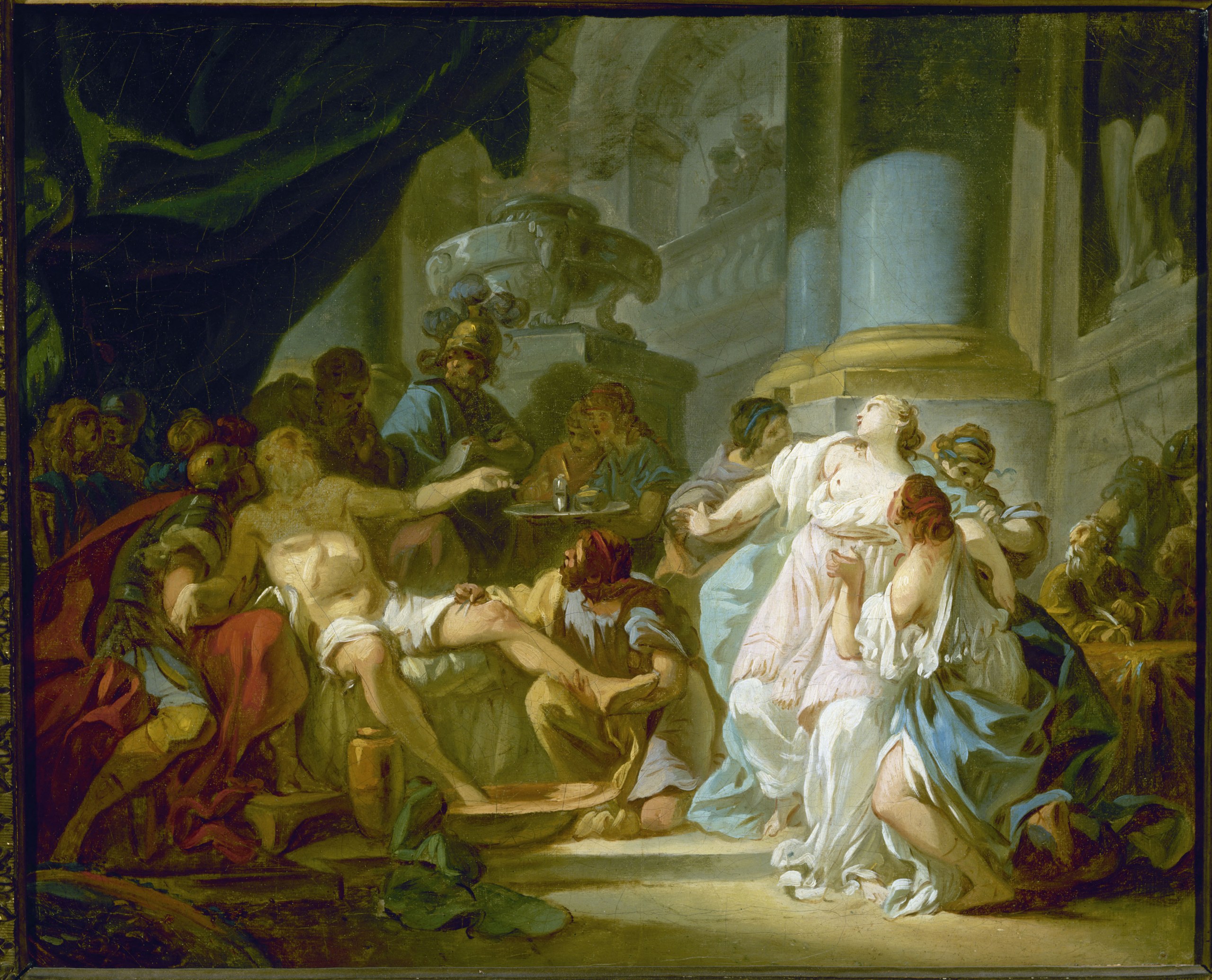
The Death of Seneca
Jacques-Louis David · 1773
The Death of Seneca. The philosopher opened his veins by Nero's order, his wife dragged away as she tries to die with him; a young man's picture of 1773, all Boucher-like gesture, that lost the Prix de Rome to Peyron's sterner version of the same death.
Sources
- Wikipedia, “Jacques-Louis David”
- Wikipedia, “Oath of the Horatii”
- Wikipedia, “The Coronation of Napoleon”
- Wikipedia, “The Intervention of the Sabine Women”
- Wikipedia, “The Lictors Bring to Brutus the Bodies of His Sons”
- Wikipedia, “The Death of Socrates”
- Wikipedia, “Napoleon Crossing the Alps”
- Wikipedia, “Portrait of Madame Récamier”
- Wikipedia, “Leonidas at Thermopylae”
- Wikipedia, “Erasistratus Discovering the Cause of Antiochus' Disease”
- Wikipedia, “Andromache Mourning Hector”
- Wikipedia, “The Loves of Paris and Helen”
- Wikipedia, “Sappho and Phaon”
- Wikipedia, “The Death of Seneca”
- Wikipedia, “Napoleon Crossing the Alps”
Invite Jacques-Louis David into your living room
Play 17 works from this collection on your TV, phone or tablet with Momentable Art TV.