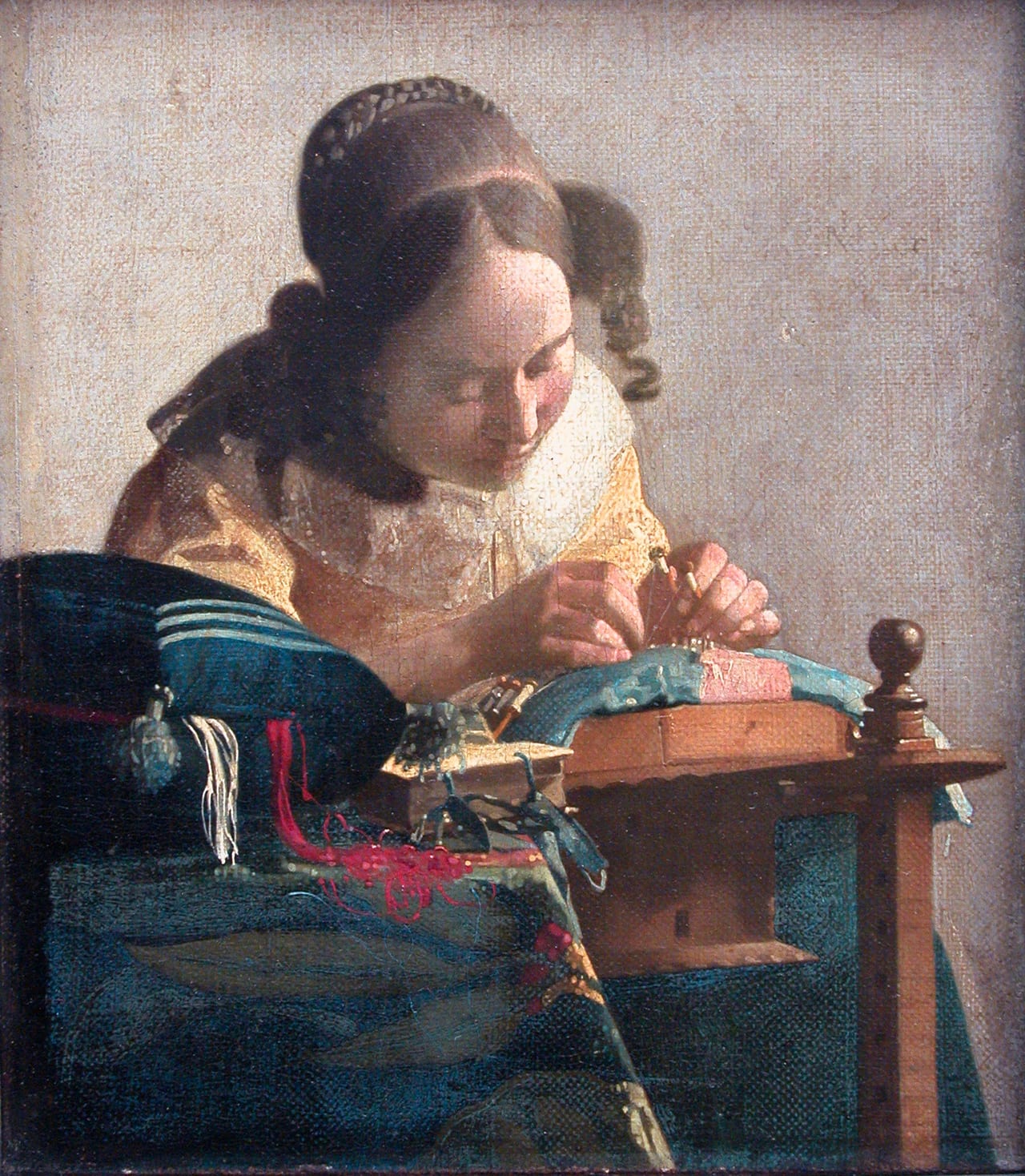
The Lacemaker
Johannes Vermeer · 1669

Johannes Vermeer
Dutch Republic · 1632–1675
The painter of Delft, whose quiet rooms lit from one window hold some of the most closely looked-at pictures ever made.
Play 20 works from this collection on your TV, phone or tablet with Momentable Art TV.
Play CollectionA life in Delft
Johannes Vermeer stands with the greatest of the Dutch masters on the strength of barely three dozen surviving paintings. Born in Delft in 1632, perhaps taught by the local history painter Leonaert Bramer, he joined the painters' guild as a master in 1653, the year of his marriage; he was a Catholic in a Protestant city.
He worked slowly and seldom, yet collectors from abroad came to his studio to see what he had. The disaster of 1672 ruined him; he died three years later insolvent, his widow and children left with nothing.
Pearly light
The canvases of the 1650s reach for religious and mythological matter as well as everyday life, under the pull of the Utrecht followers of Caravaggio such as ter Brugghen. From Carel Fabritius, who worked in Delft in the early 1650s, he may have taken his fascination with lenses, optics and the camera obscura.
The mature interiors are lit like pearl. Each object is set where it will carry the eye, the architecture of the room is made precise, his figures keep to their quiet tasks, and the key to the scene often hangs on the wall behind them, inside a picture within the picture.
Known works
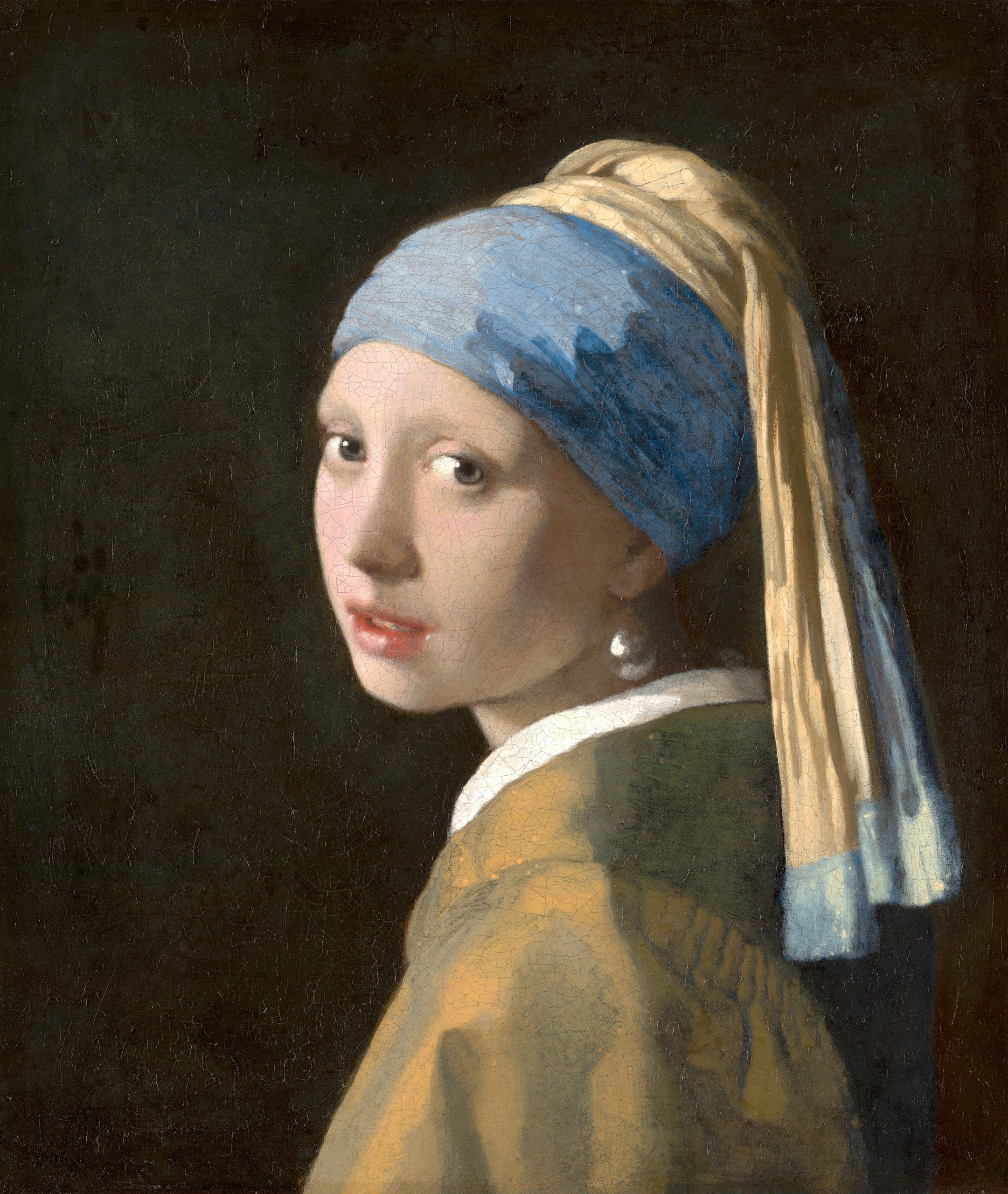
Girl with a Pearl Earring
Johannes Vermeer · 1665
A girl turning out of the dark in exotic dress and a turban, an outsized pearl at her ear: not a portrait but a tronie, a study of a head, in The Hague since 1902.
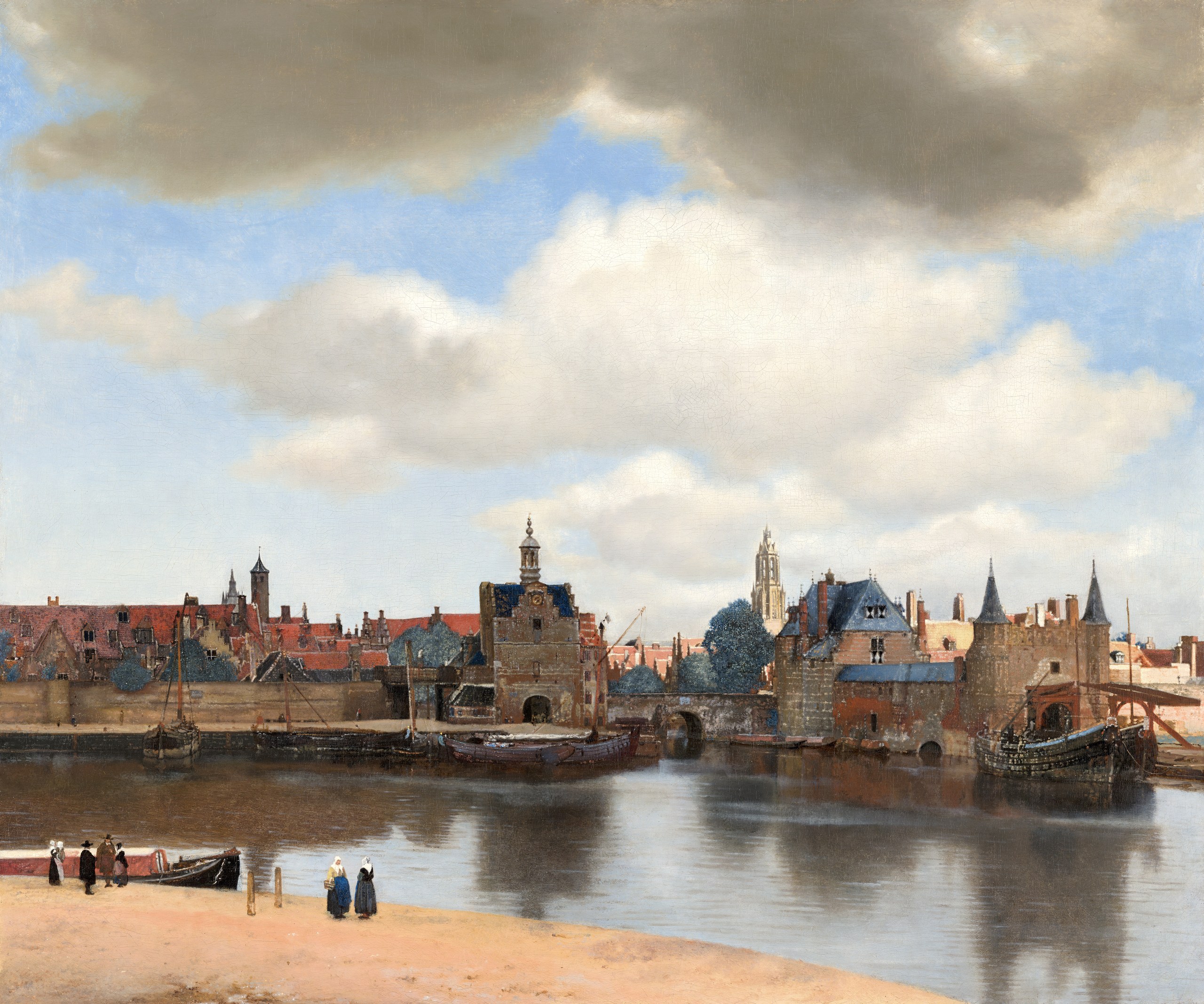
View of Delft
Johannes Vermeer · 1661
His home town across the harbour water: gates and bridge, the Nieuwe Kerk spire catching the sun, boats at the quay. It is the only cityscape he left, and one of the pictures he is most known by.
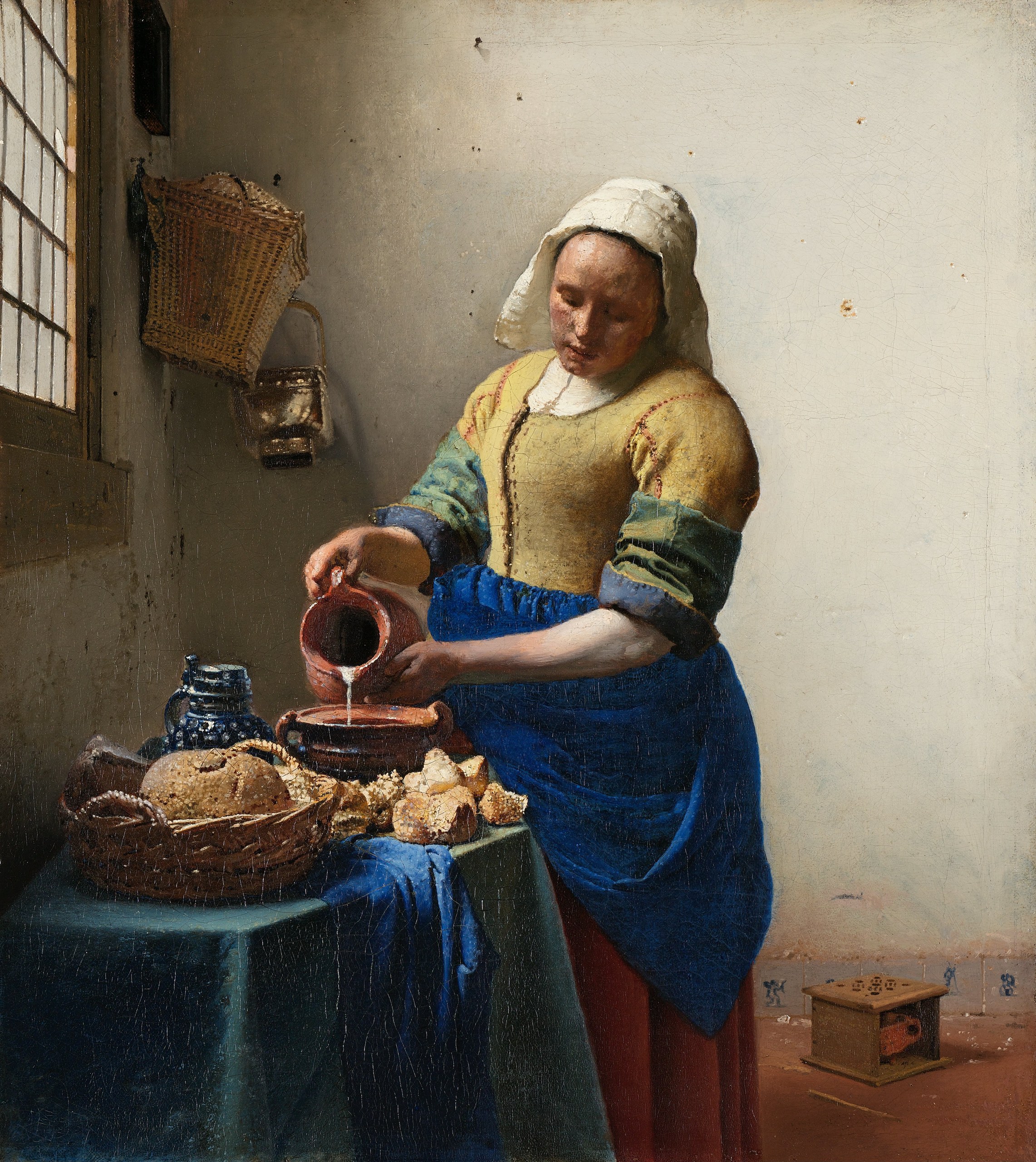
The Milkmaid
Johannes Vermeer · 1660
Rijksmuseum
A kitchen maid pours milk, lost in the work; everything else in the room holds still, and light plays over the surfaces in hundreds of tiny coloured points.
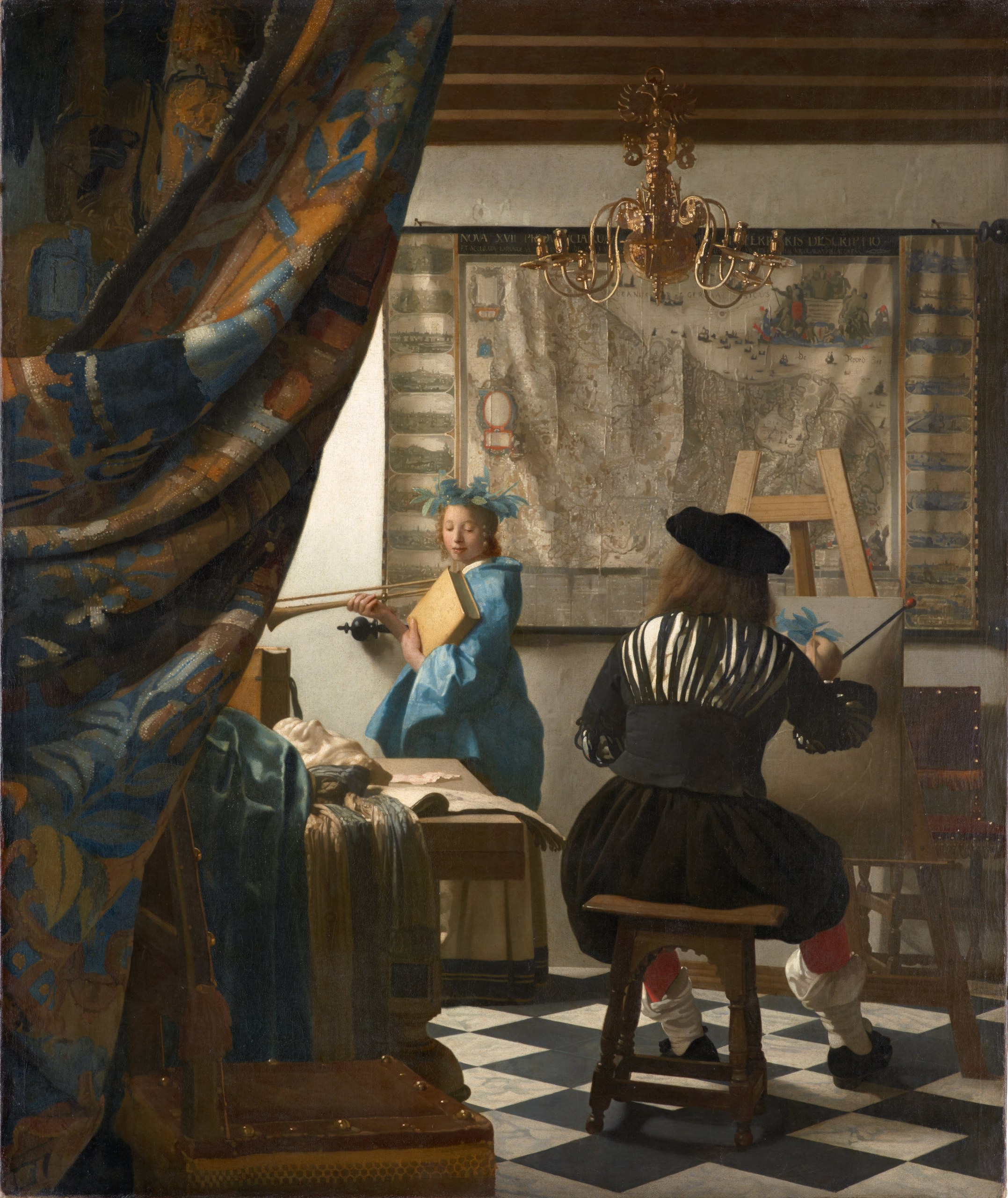
The Art of Painting
Johannes Vermeer · 1667
Kunsthistorisches Museum
A painter in elegant costume before a crowned model, the map of the Netherlands on the wall behind them: long read as an allegory of the art itself, and his most intricately constructed picture.
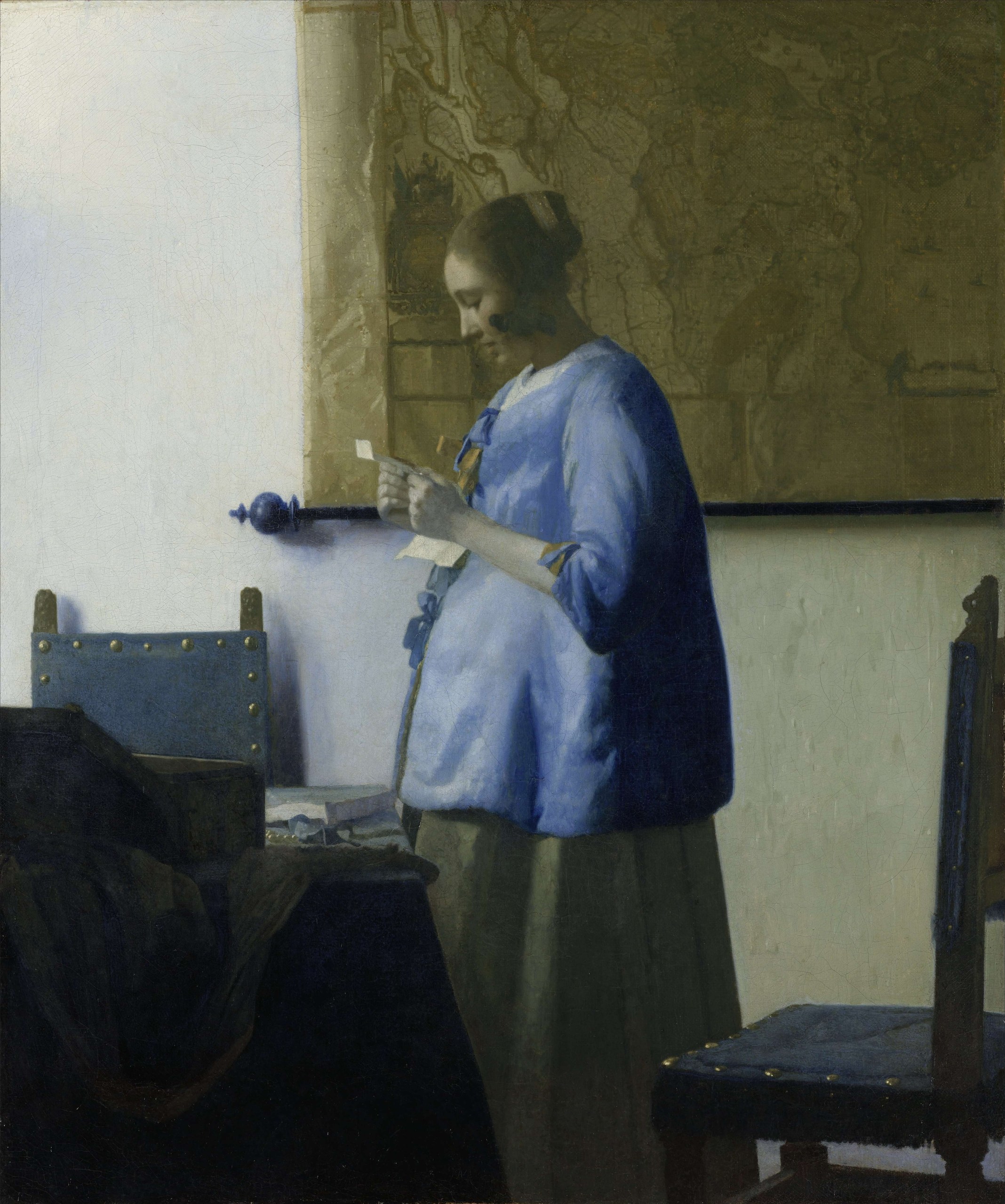
Woman in Blue Reading a Letter
Johannes Vermeer · 1664
Rijksmuseum
A woman wrapped in blue, given over to a letter in light from a window we never see; the first Vermeer the Rijksmuseum ever held.
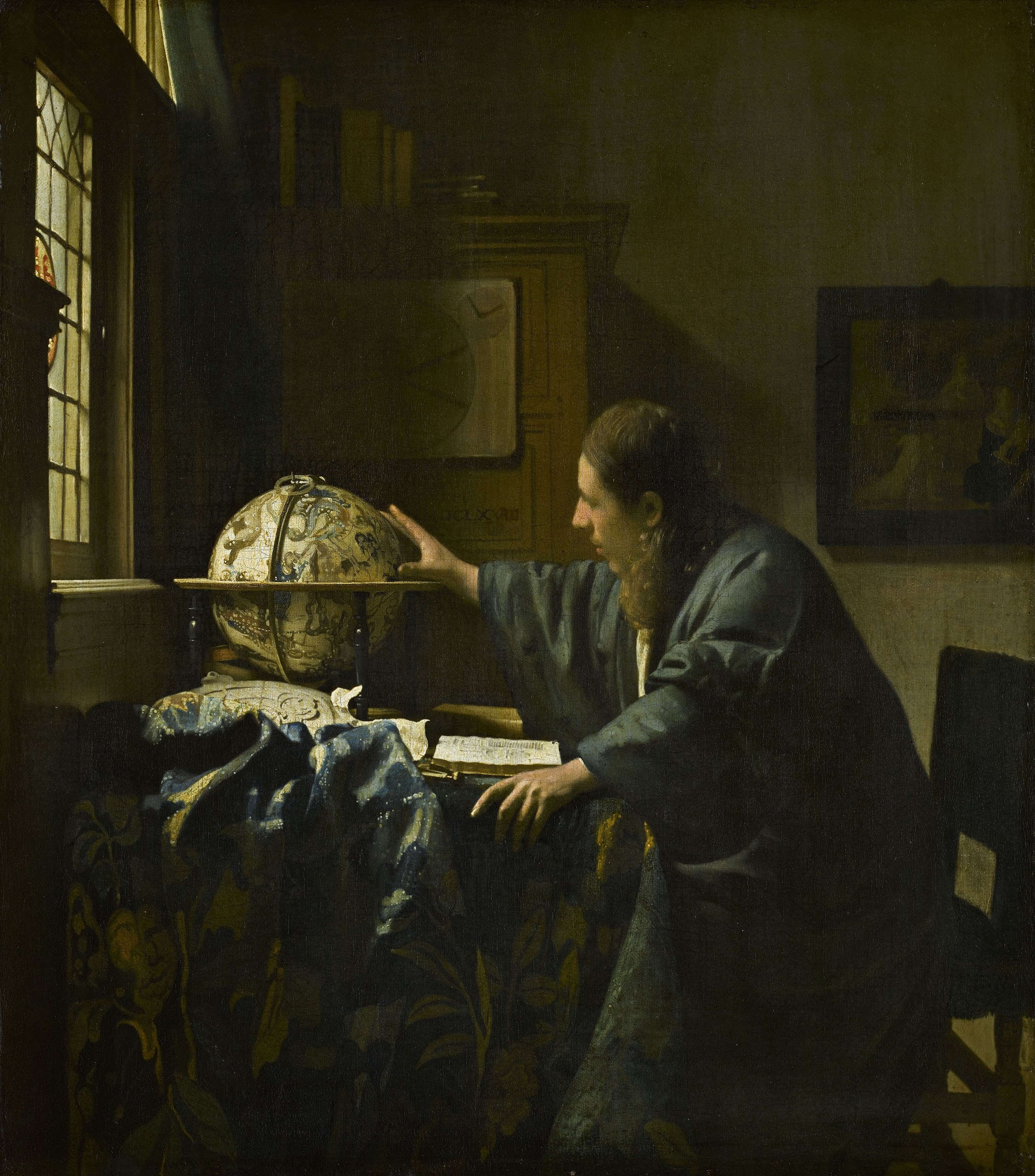
The Astronomer
Johannes Vermeer · c. 1668
Louvre
A scholar in his robe reaches for the celestial globe; science sits for its portrait in a Dutch study, the sitter probably the same man as in the later Geographer, perhaps Antonie van Leeuwenhoek himself.
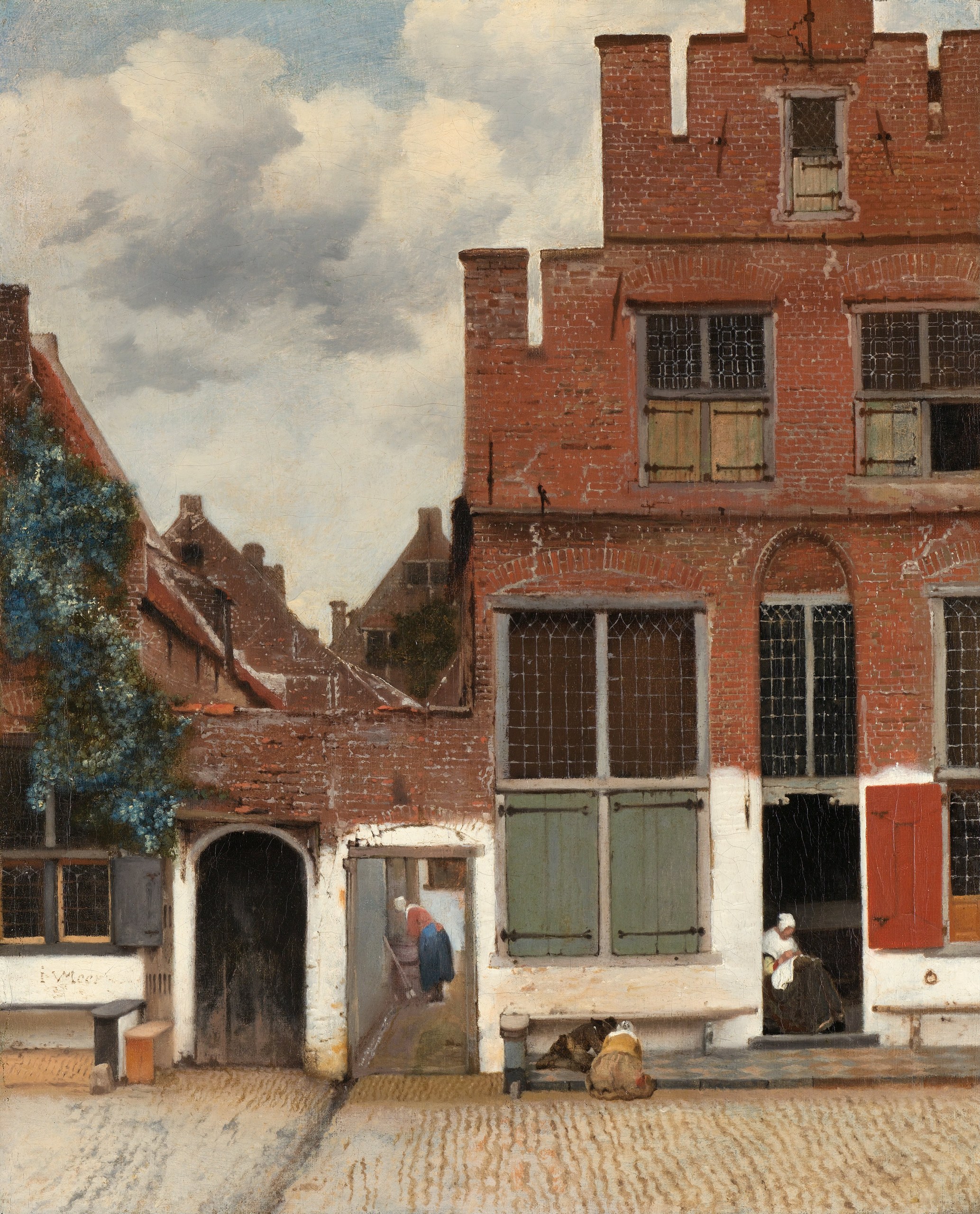
The Little Street
Johannes Vermeer · 1658
Rijksmuseum
Brick, whitewash and cracks made almost touchable, two houses in his home town with women at the doorway and a child on the step.
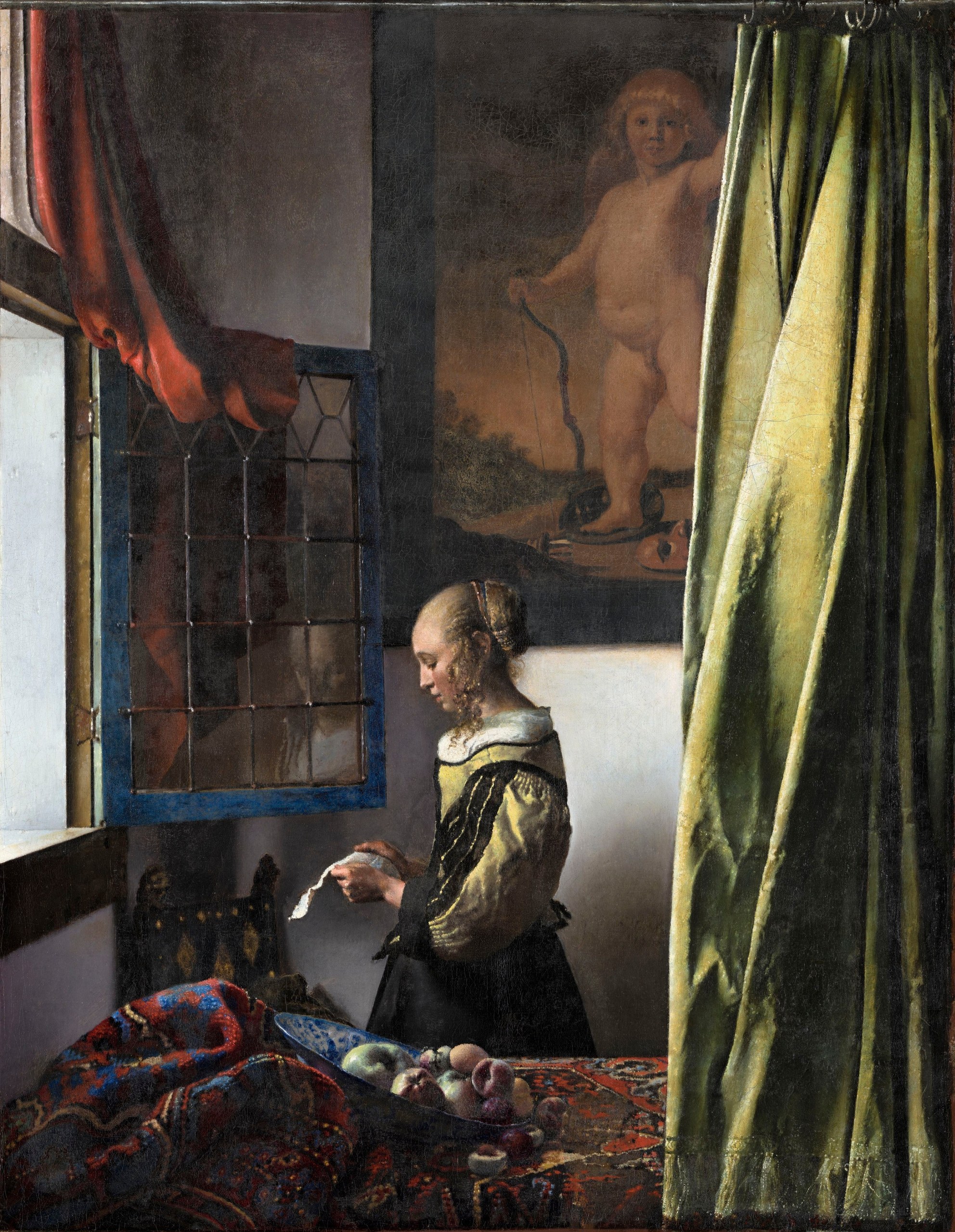
Girl Reading a Letter at an Open Window
Johannes Vermeer · 1658
A girl given over to her letter in window light; a Cupid hidden for centuries under overpaint came back in the restoration finished in 2021, returning the picture Vermeer meant us to see.
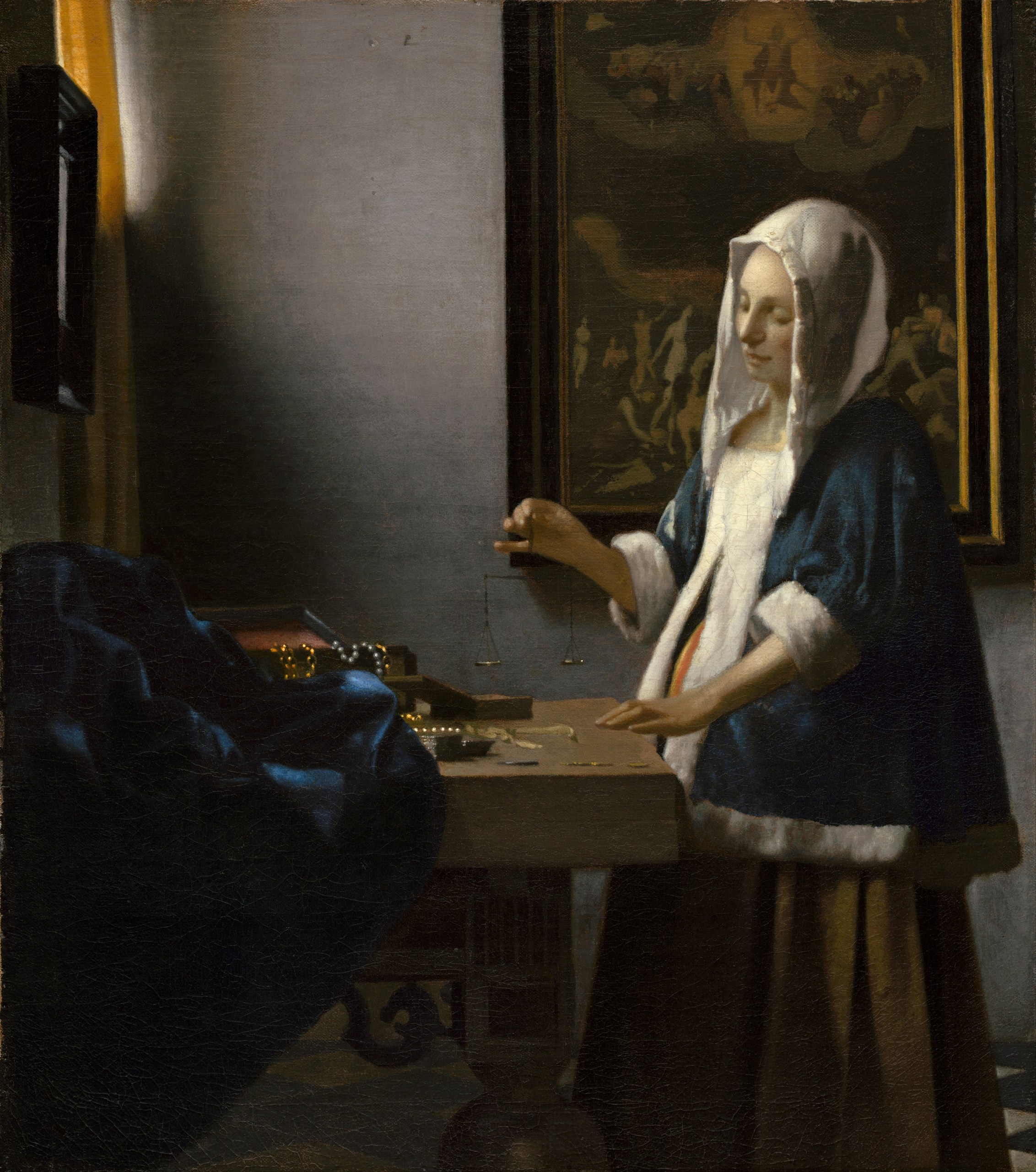
Woman Holding a Balance
Johannes Vermeer · 1665
Before a Last Judgment on the wall, a woman holds a tiny balance perfectly still; the pans are empty, and whether she stands for holiness or for the world has never been settled.
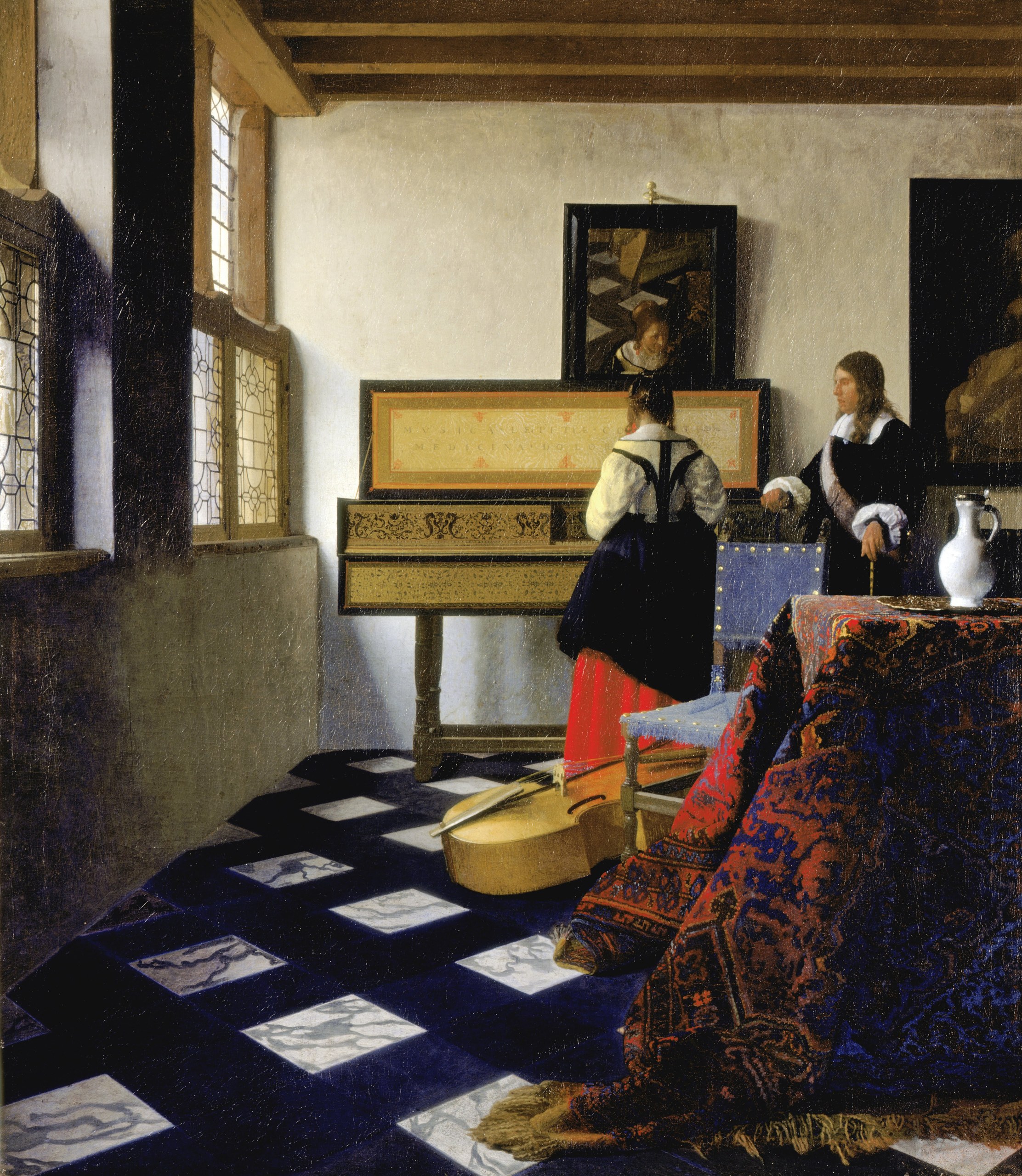
The Music Lesson
Johannes Vermeer · 1662
A pupil at the virginal, her teacher at her shoulder, in a tiled room receding far back; one of the few pictures that stayed in his house until the debts forced its sale, and in the British Royal Collection since 1762.
More to discover
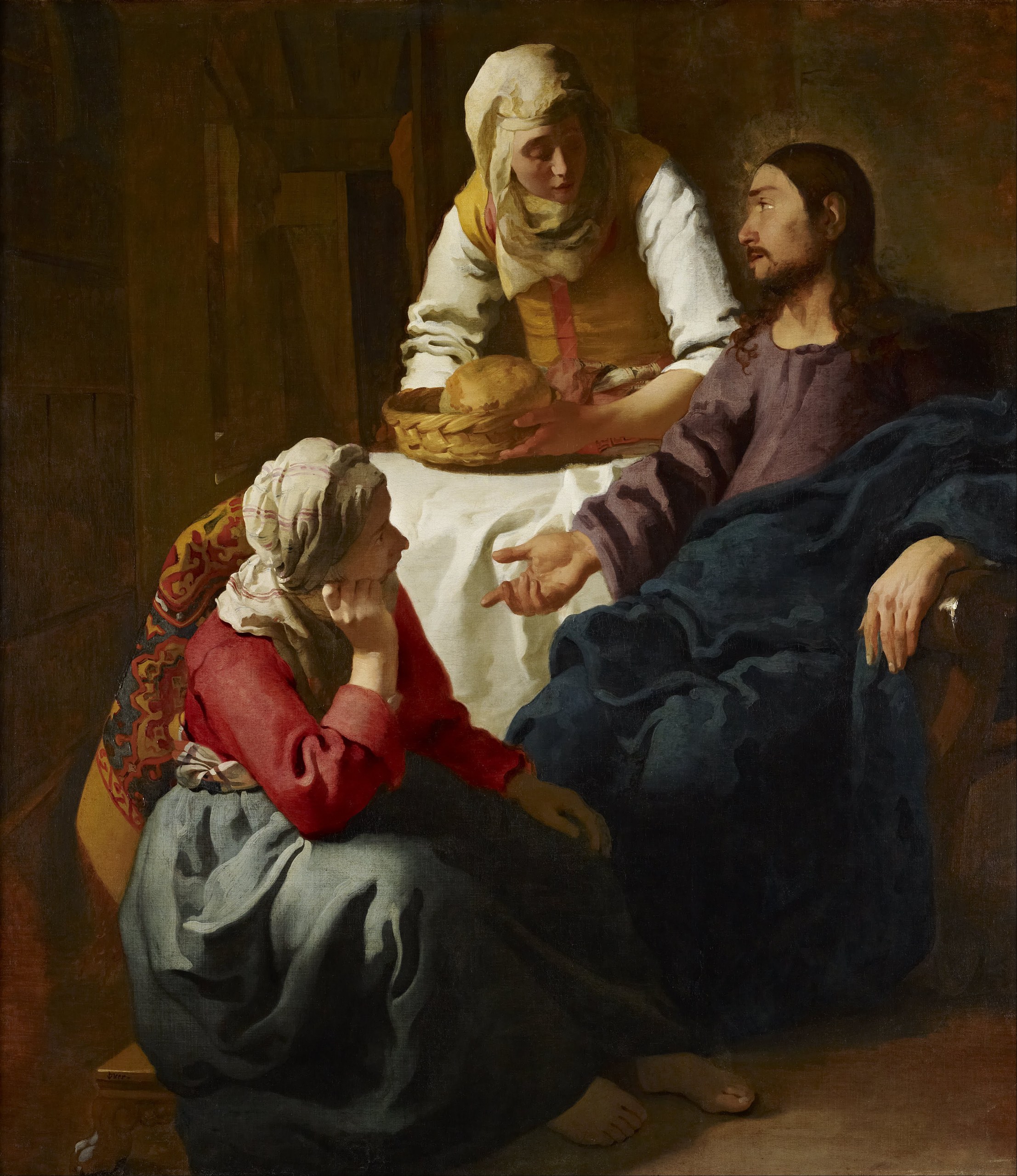
Christ in the House of Martha and Mary
Johannes Vermeer · 1650
Scottish National Gallery
Christ at table while Martha serves and Mary sits listening at his feet: his largest canvas and almost the only one on an open religious subject.
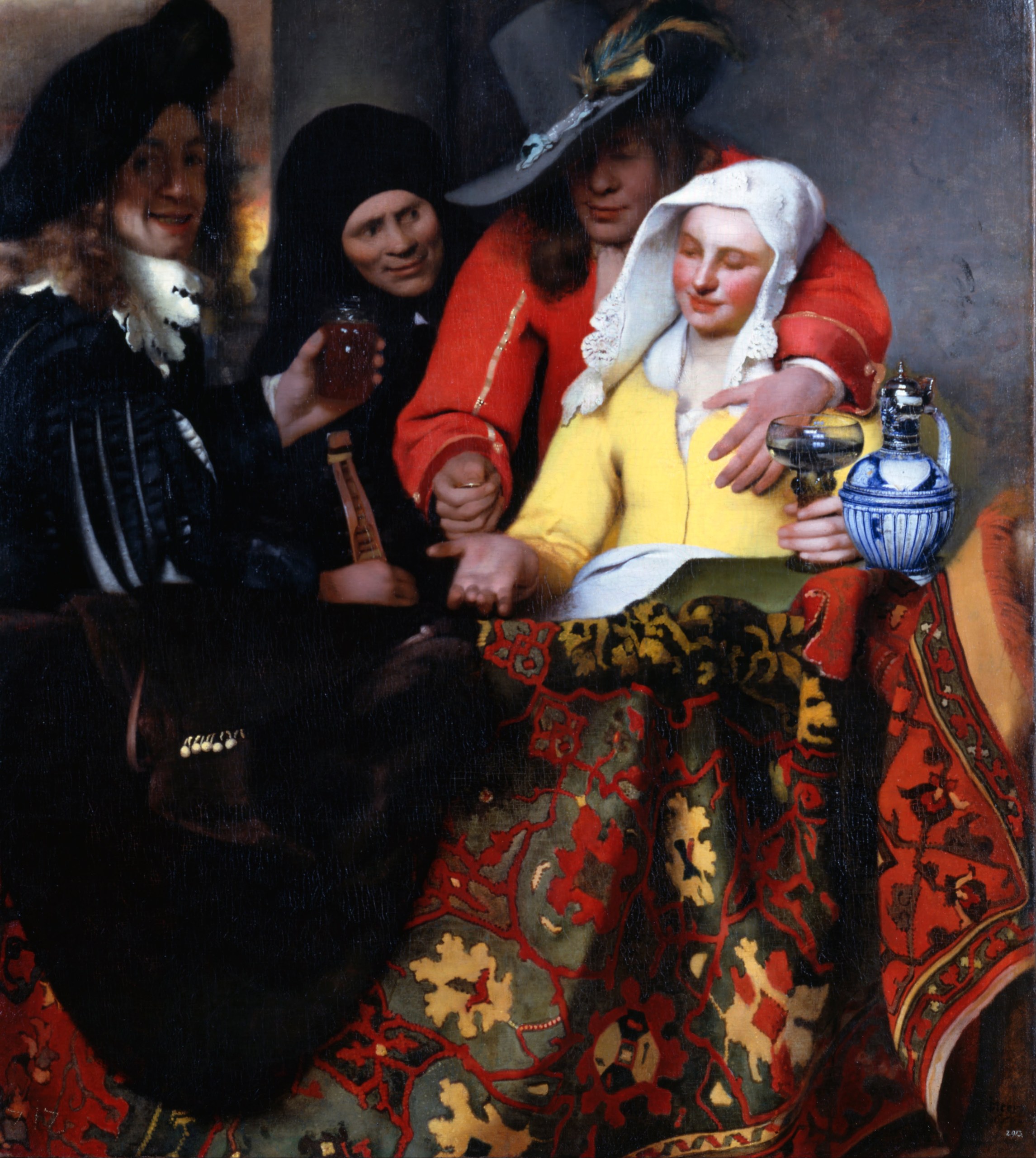
The Procuress
Johannes Vermeer · 1656
Mercenary love, perhaps in a brothel, painted in 1656 when he was twenty-four: his first genre picture, one of the very few he signed and dated, with a man in a black beret at the right often identified as the painter himself.
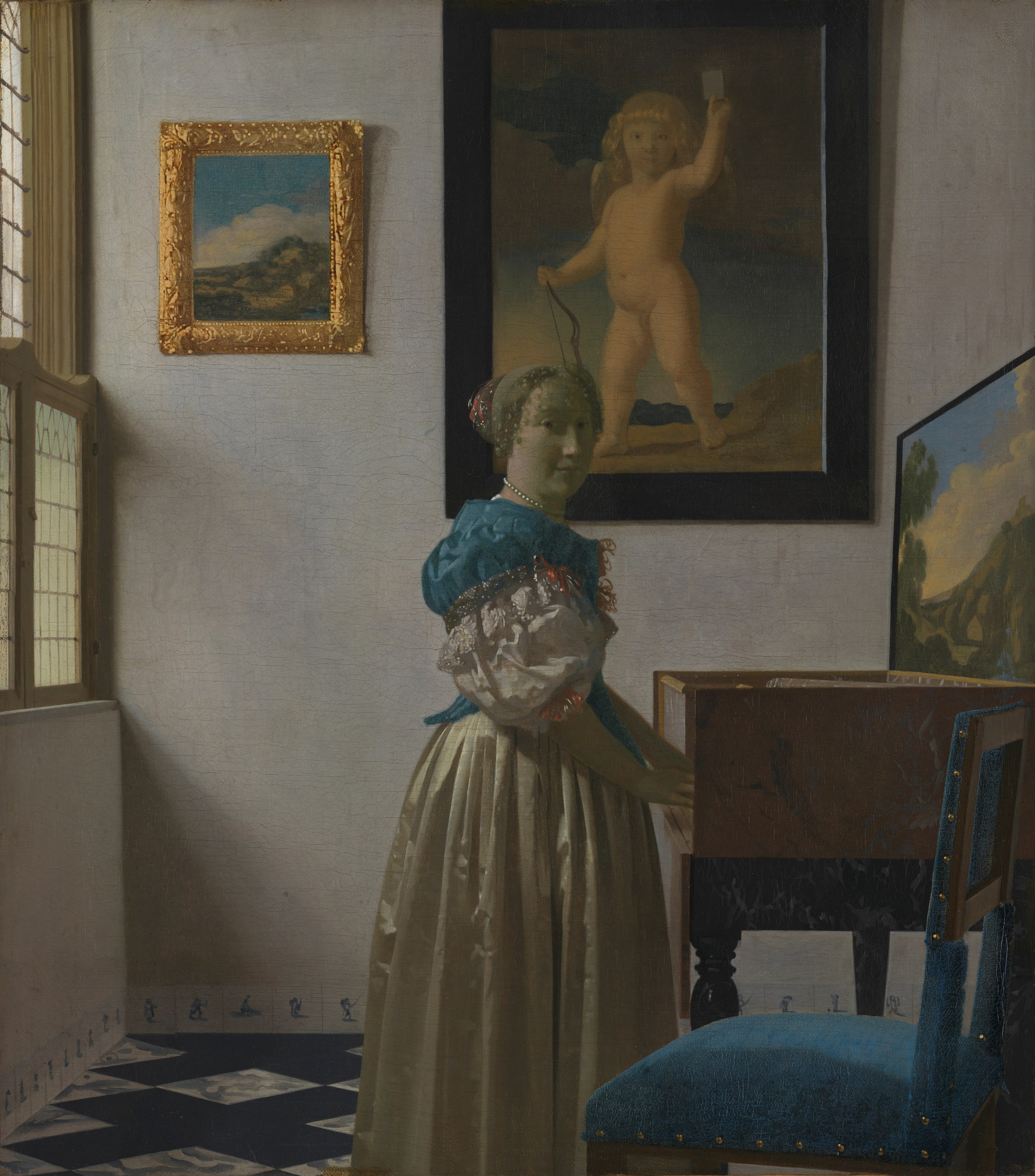
A Young Woman Standing at a Virginal
Johannes Vermeer · 1670
National Gallery
A woman at the keyboard looks straight out at us, an empty chair beside her and a Cupid on the wall behind, as if she waits for a lover.
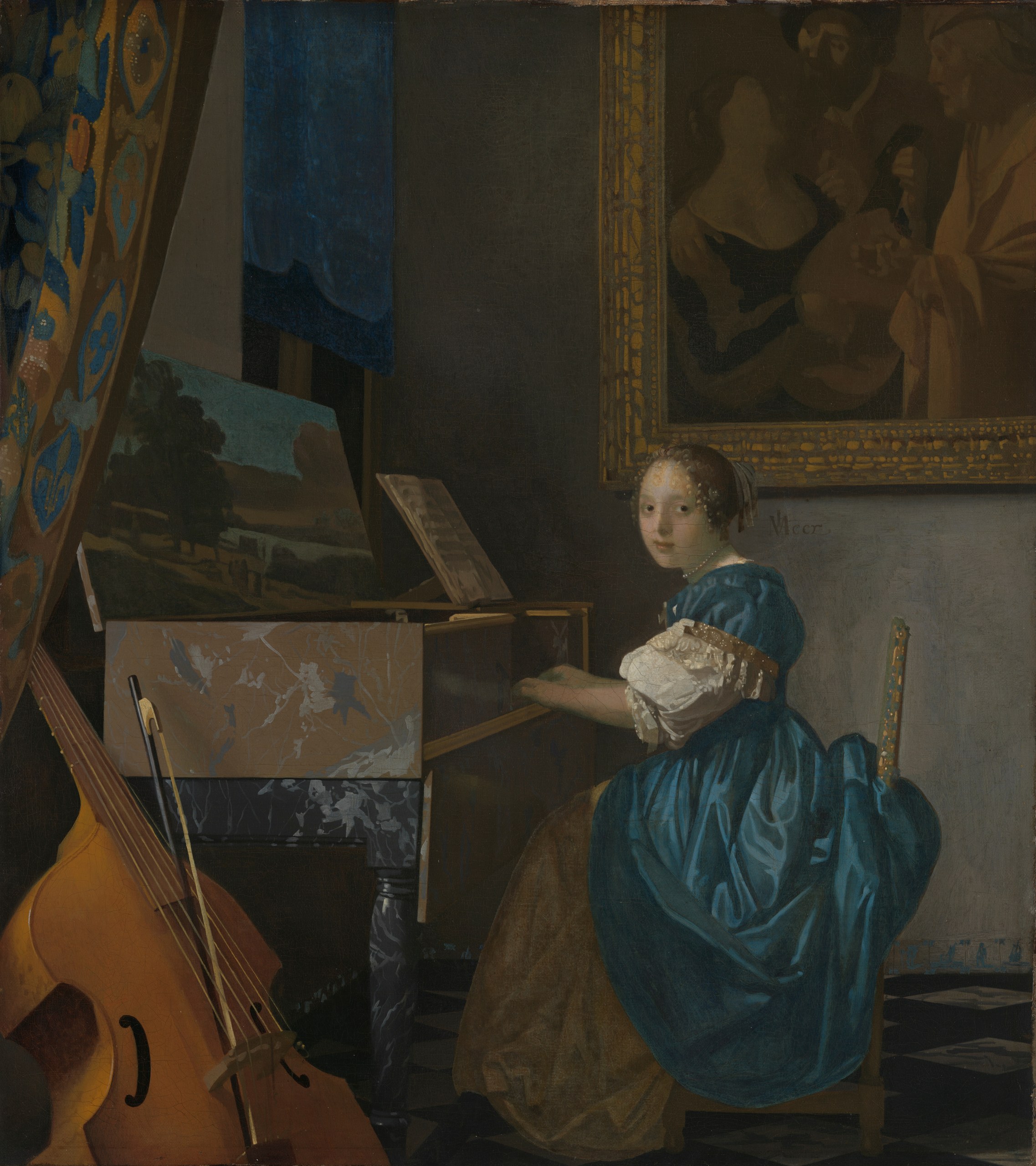
A Young Woman seated at a Virginal
Johannes Vermeer · 1670
National Gallery
Its companion in London and its opposite in mood: a tapestry drawn aside, the window dark, the light falling from in front of the picture onto a woman at the keys, a scene of a procuress and her client on the wall behind her.
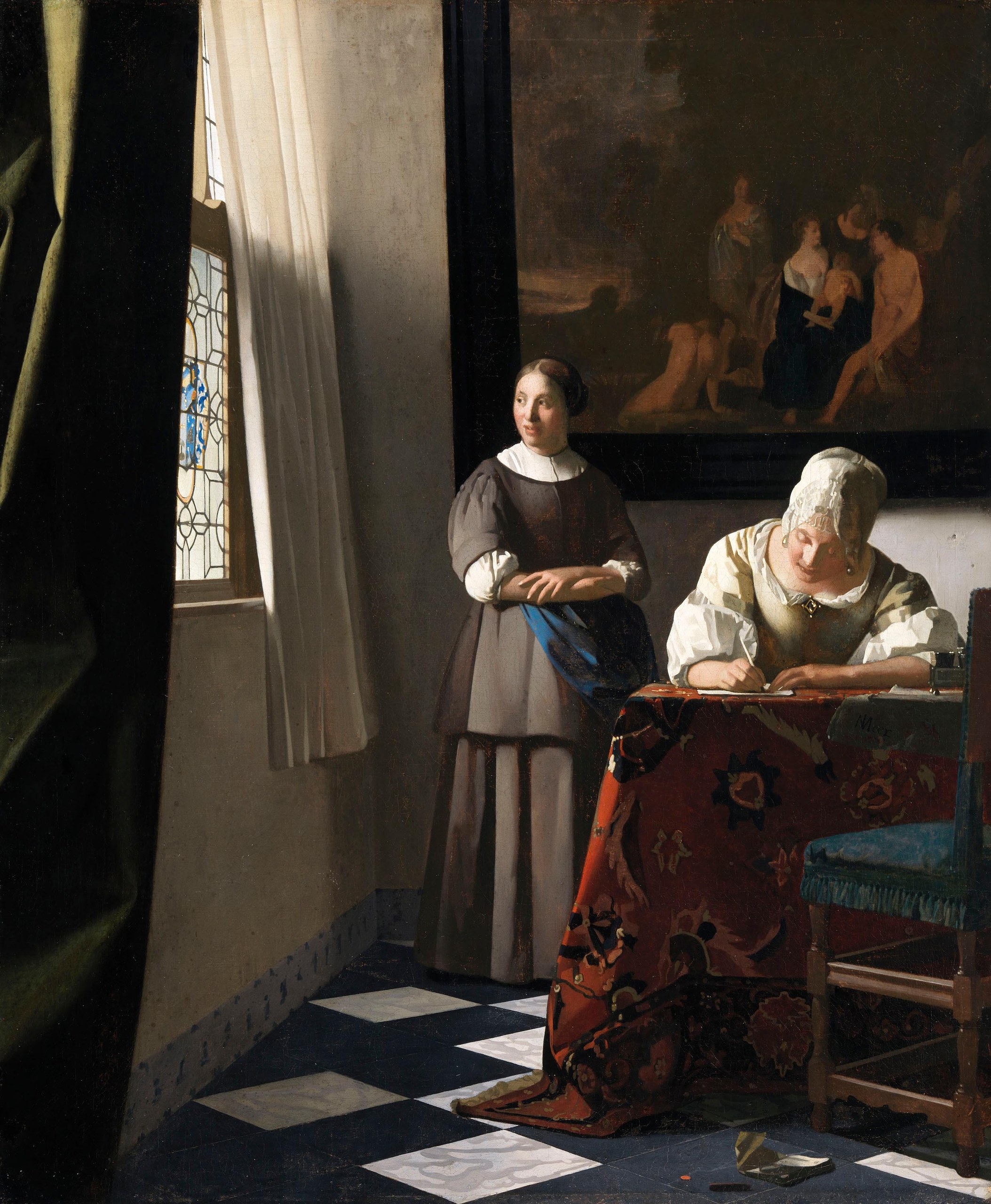
Lady Writing a Letter with her Maid
Johannes Vermeer · 1670
National Gallery of Ireland
A lady bends over her writing while the maid waits at the window, perhaps to carry the letter to someone unseen; taken from Russborough House twice, and twice got back.
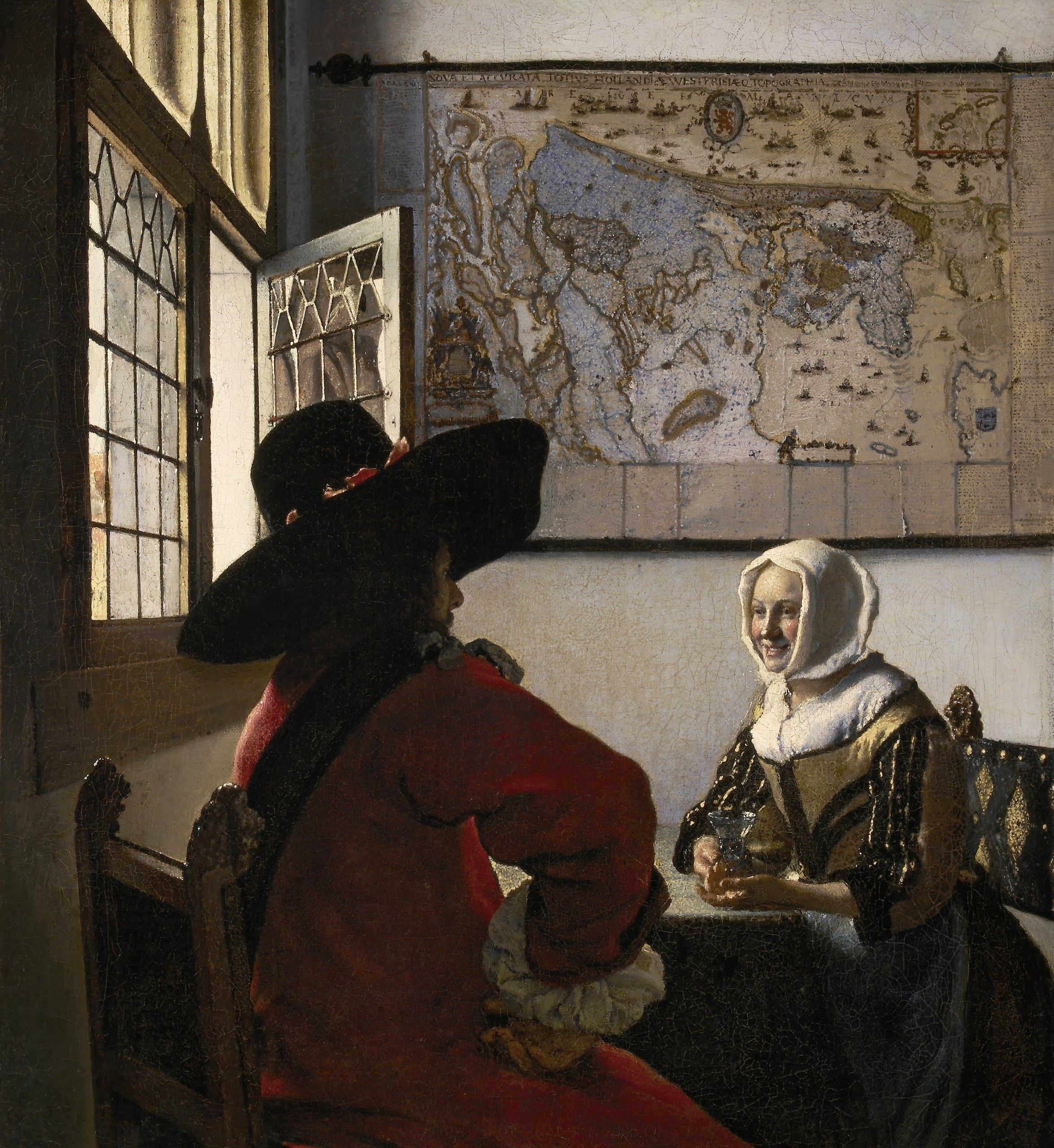
Officer and Laughing Girl
Johannes Vermeer · 1658
A soldier in a red hat and a girl laughing across the table, the great map of Holland glowing between them; the perspective may owe something to the camera obscura.
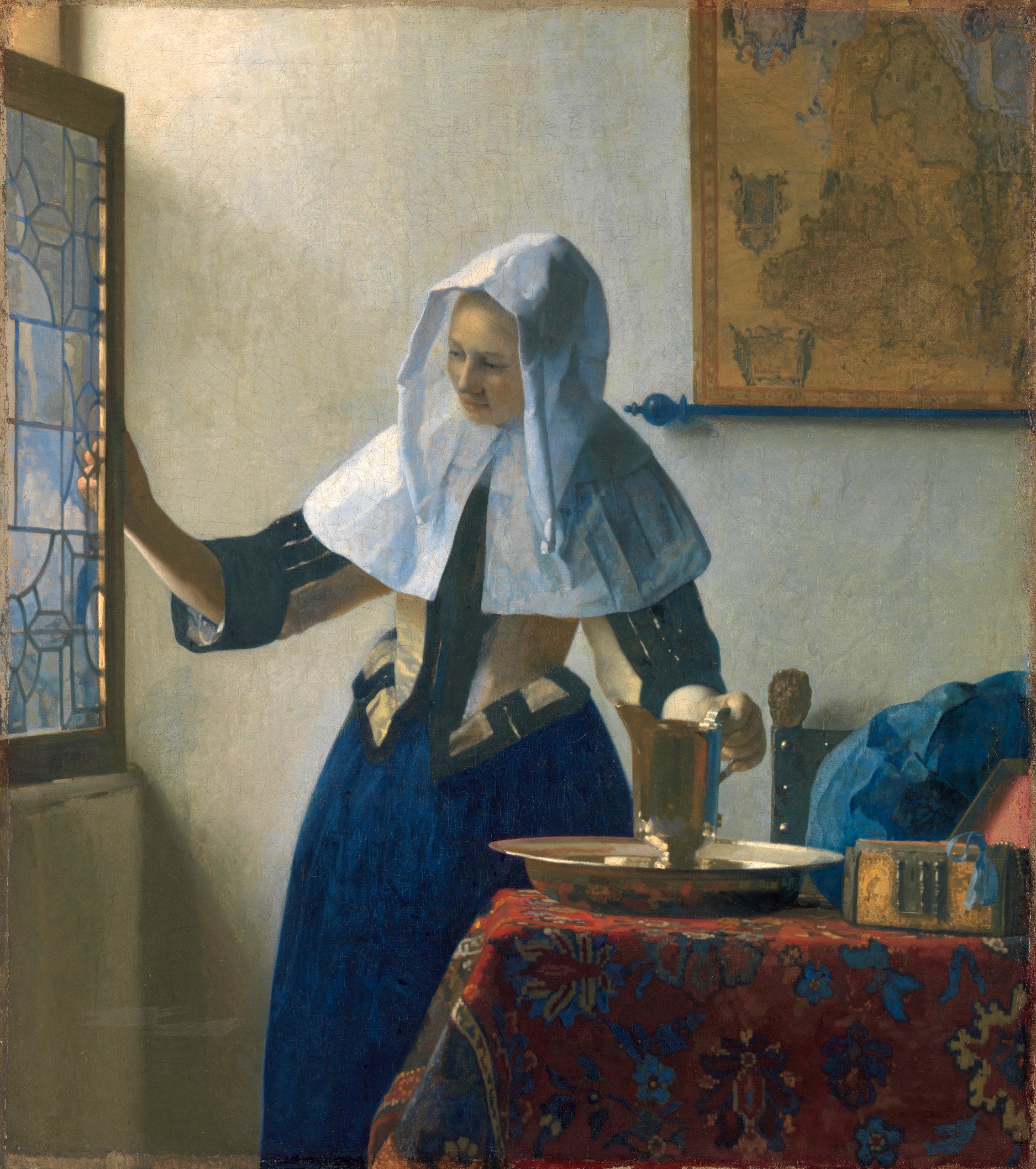
Woman with a Water Jug
Johannes Vermeer · 1660
One hand at the window latch, the other steadying the jug on its platter, a red rug of Asian weave behind her: a whole domestic ritual held in silver and blue.
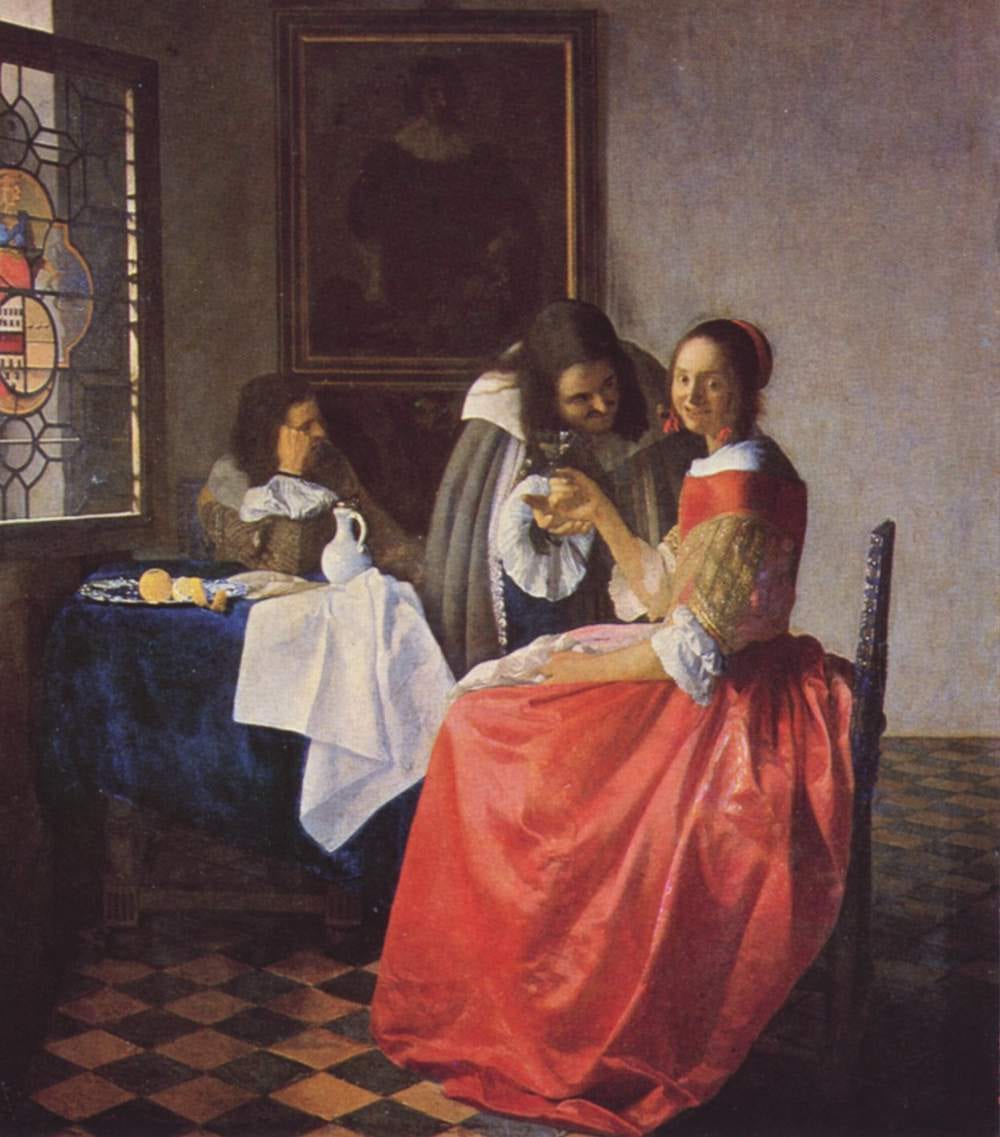
The Girl with the Wine Glass
Johannes Vermeer · 1650
A woman raises her glass to us between two men at a sunlit table, the costly ultramarine of the cloth doing quiet work under the merriment.
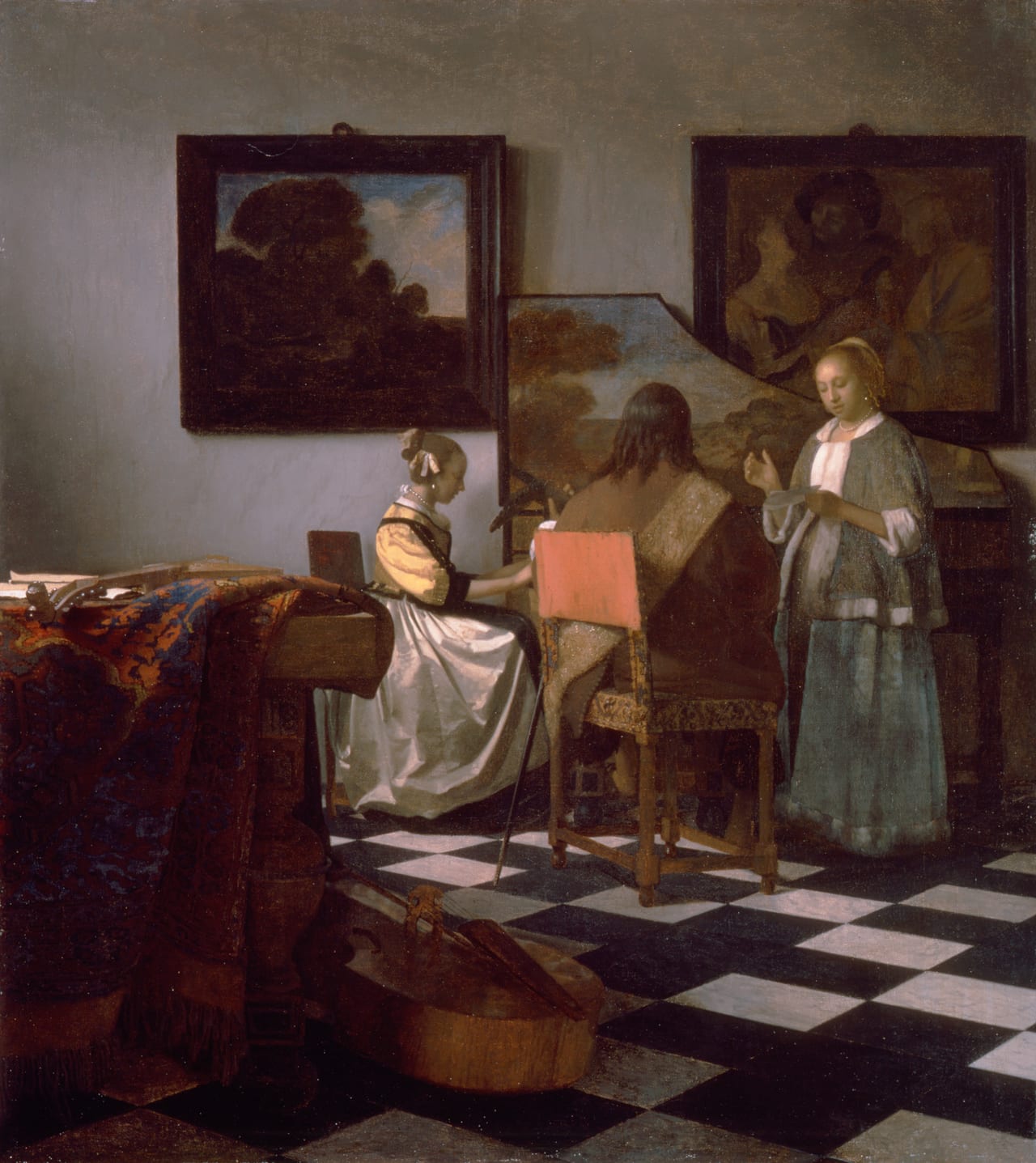
The Concert
Johannes Vermeer · 1663
Two women and a man making music in a panelled room; carried out of the Gardner Museum in Boston in 1990 and never seen since, likely the most valuable lost painting in the world.
Sources
- National Gallery, London, “Johannes Vermeer”
- Rijksmuseum, “The Milkmaid”
- Rijksmuseum, “View of Houses in Delft, Known as ‘The Little Street’”
- National Gallery, London, “A Young Woman standing at a Virginal”
- National Gallery, London, “A Young Woman seated at a Virginal”
- Wikipedia, “View of Delft”
- Wikipedia, “Girl with a Pearl Earring”
- Wikipedia, “The Art of Painting”
- Wikipedia, “Woman Reading a Letter (Vermeer)”
- Wikipedia, “The Astronomer”
- Wikipedia, “Girl Reading a Letter at an Open Window”
- Wikipedia, “Woman Holding a Balance”
- Wikipedia, “The Music Lesson”
- Wikipedia, “Lady Writing a Letter with her Maid”
- Wikipedia, “Christ in the House of Martha and Mary (Vermeer)”
- Wikipedia, “The Concert (Vermeer)”
- Wikipedia, “Officer and Laughing Girl”
- Wikipedia, “The Procuress (Vermeer)”
- Wikipedia, “Woman with a Water Jug”
- Wikipedia, “The Girl with the Wine Glass”
Invite Johannes Vermeer into your living room
Play 20 works from this collection on your TV, phone or tablet with Momentable Art TV.