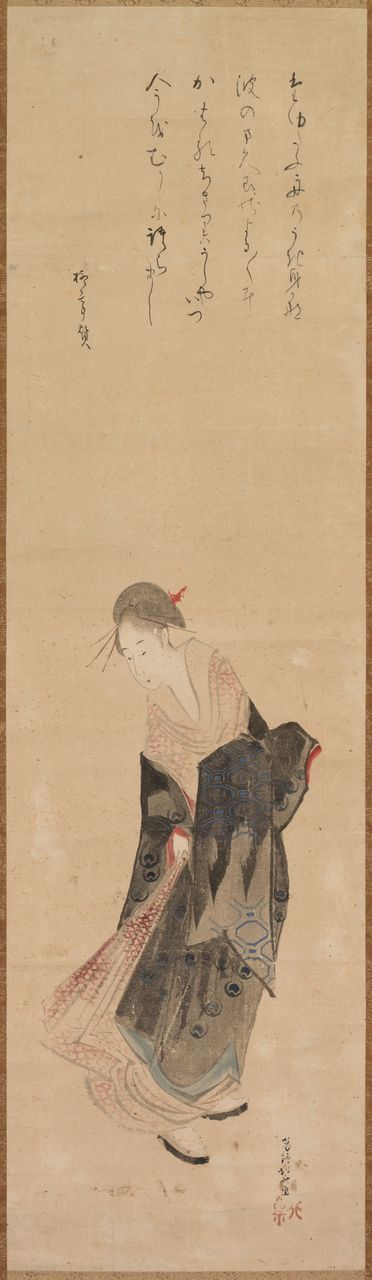
Beauty (Bijin)
Katsushika Hokusai

Katsushika Hokusai
Japanese · 1760–1849
The Japanese master of the woodblock print, whose wave curling over three fishing boats became the most recognised image in the art of Japan.
Play 3 works from this collection on your TV, phone or tablet with Momentable Art TV.
Play CollectionFrom an Edo workshop
Hokusai drew from early childhood, perhaps at the side of a father who decorated mirrors, and at fourteen was given to a woodcarver to learn the trade. At eighteen he moved into the studio of Katsukawa Shunshō, the print designer, and began the career that would run for seventy years.
In 1798 he handed his working name to a pupil and stepped out on his own, tied to no school. Two years later he had taken the name the world knows: Katsushika, for the corner of Edo where he was born, and Hokusai, the north studio, a bow to the North Star of his Buddhist faith. He signed himself with at least thirty names over a long life, each change marking a new period of the art.
The mountain and the wave
He did more than anyone to widen ukiyo-e, the floating world picture, beyond the courtesans and actors it had served, turning it toward landscape, plants and animals. His great monument is the series of views of Mount Fuji, begun when travel was opening up across Japan and fed by his own devotion to the mountain. Its first sheet, the wave off Kanagawa, and the later clearing morning over the summit carried his fame at home and abroad.
That wave brought a new pigment with it: Prussian blue, which changed what Japanese prints could do. Its design joins the flat patterns of the native tradition to a perspective worked out in Europe, and that meeting of two ways of seeing is part of why it succeeded so quickly in both. In the late nineteenth century his prints reached Paris and changed European painting, among the admirers counted Vincent van Gogh and Claude Monet.
Working to the end
The prints made his name, but the prints are only part of it: he painted hanging scrolls and fans, and drew for picture books by the hundred. From the age of six he drew and kept redrawing, never satisfied, until his death at eighty-eight.
The depth of his invention and the sureness of his line place him, by wide agreement, among the great draughtsmen any period has produced. Beside the prints he painted hanging scrolls in ink and colour and pictures for fans: objects made slowly, for a wall or for the hand rather than a printing block.
Known works
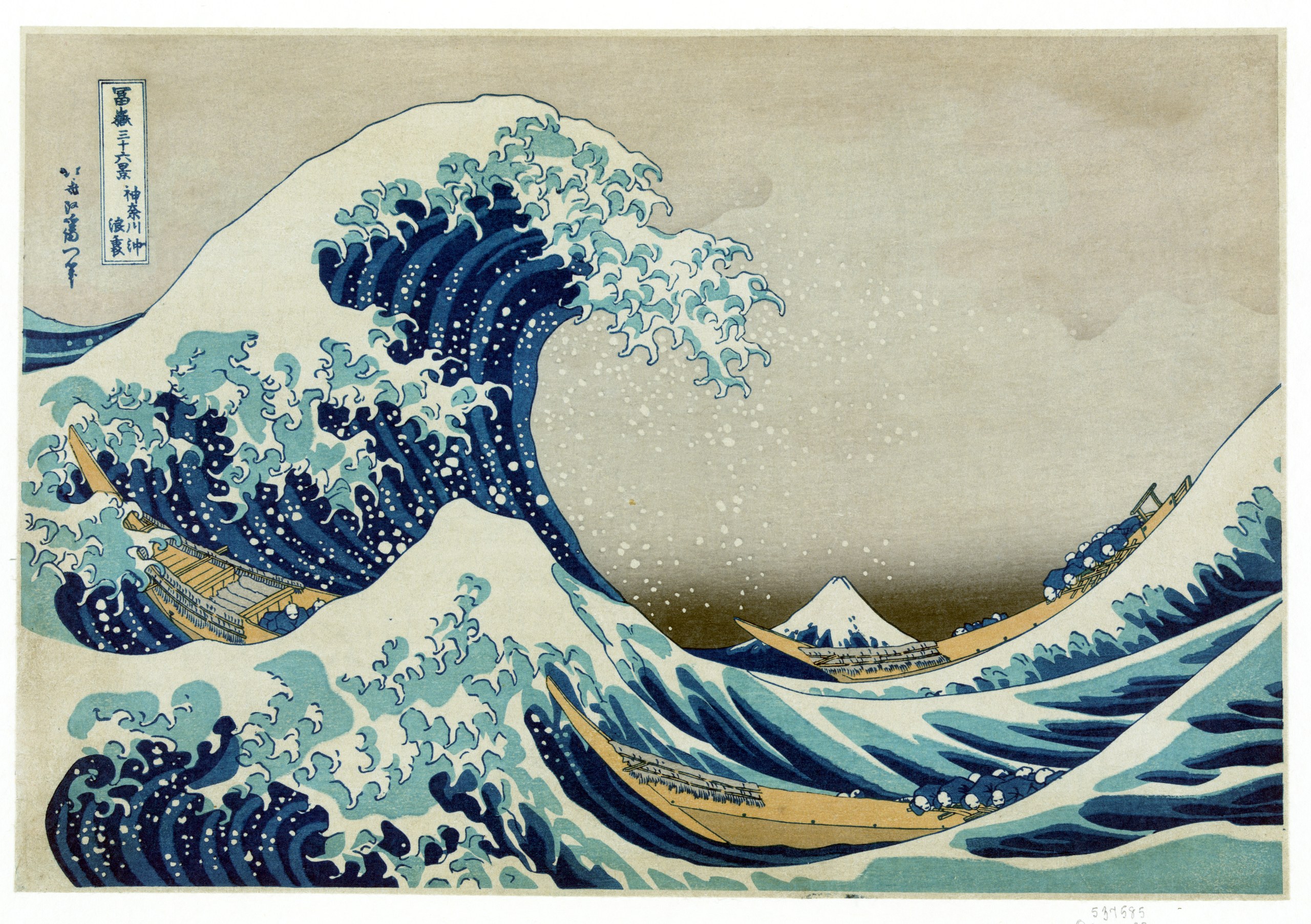
The Great Wave off Kanagawa
Katsushika Hokusai · 1830
British Museum
The Great Wave off Kanagawa. Fishing boats row under a wall of water whose crest breaks into claws, while Fuji sits small on the horizon behind; the sheet that begins the Fuji series, and the one print of Japan the whole world can call to mind.
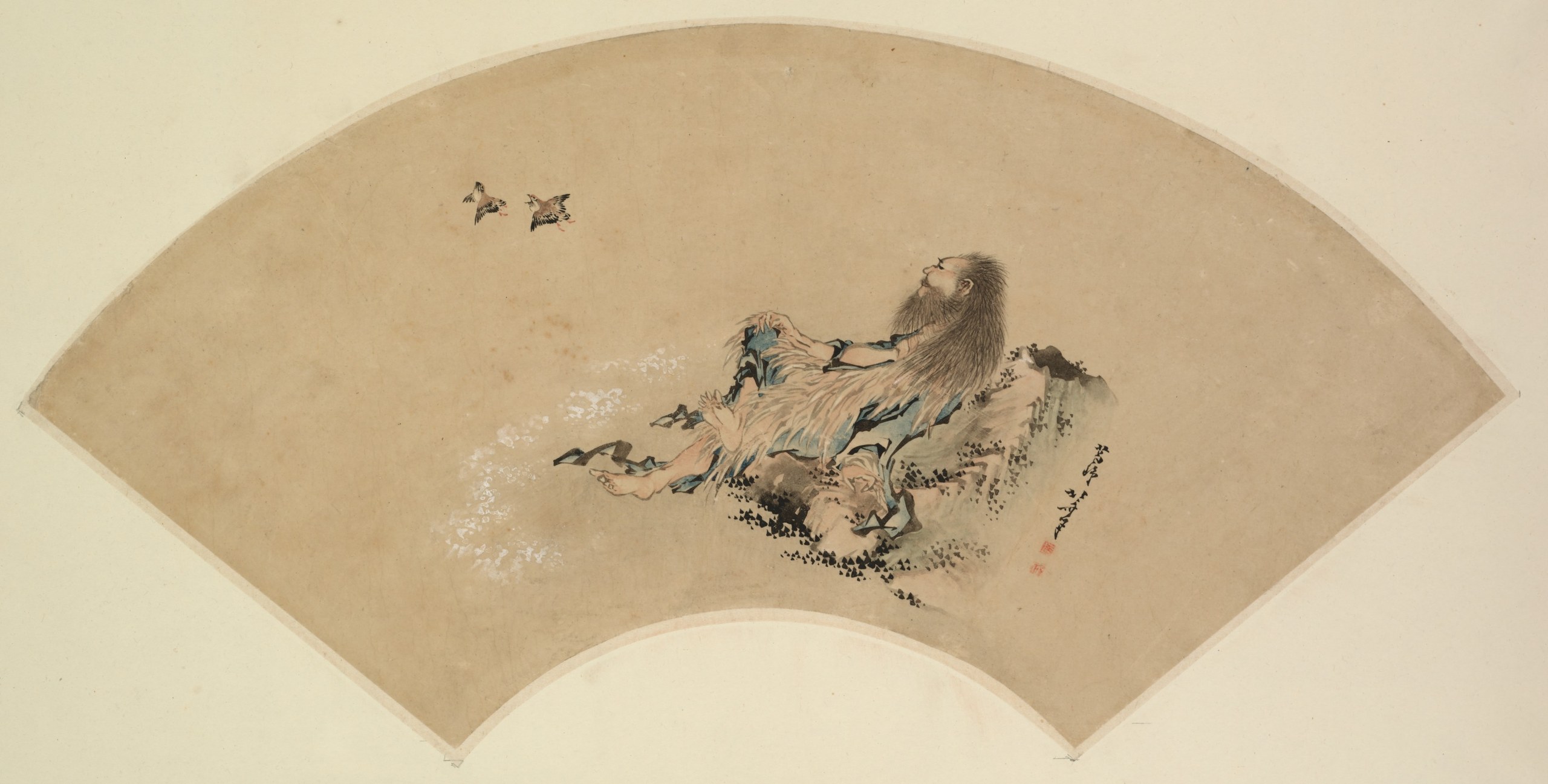
Risshi by the Sea Watching Birds
Katsushika Hokusai
The Cleveland Museum of Art
Risshi by the Sea Watching Birds. A fan painting in colour on paper, a poet on the shore with birds above the water; a small, usable object from the hand that moved a mountain.
Sources
Invite Katsushika Hokusai into your living room
Play 3 works from this collection on your TV, phone or tablet with Momentable Art TV.