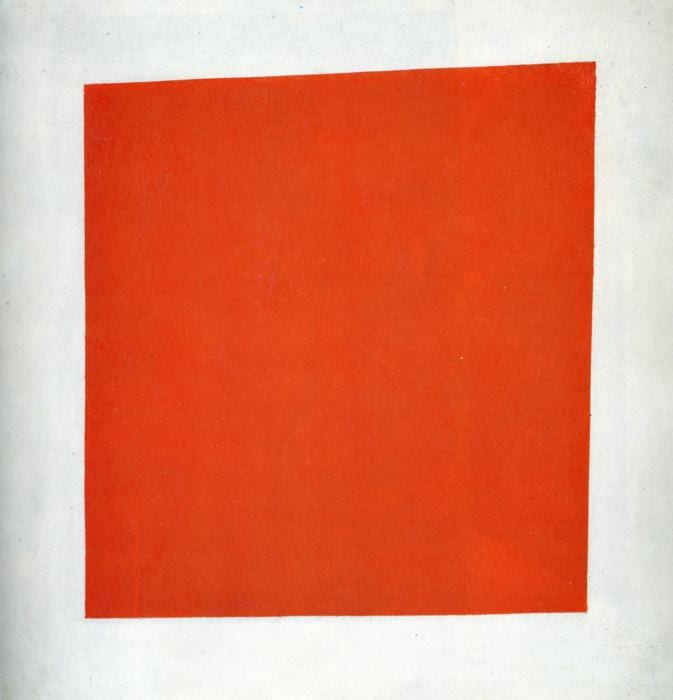
Red Square
Kazimir Malevich · 1915

Kazimir Malevich
Russian Empire · 1878–1935
Kazimir Severinovich Malevich was a Russian avant-garde artist and art theorist, whose work and writings pioneered the development of abstract painting in the 20th century. He is best known as the founder of Suprematism, a radically non-objective form of painting he introduced in 1915. Born in Kiev, modern-day Ukraine, to an ethnic Polish family, Malevich worked primarily in Russia and became a leading figure of the Russian avant-garde. His work has also been associated with the Ukrainian avant-garde. Early in his career, he worked in multiple styles, assimilating Impressionism, Symbolism, Fauvism, and Cubism through reproductions and the works acquired by contemporary Russian collectors.
Known works
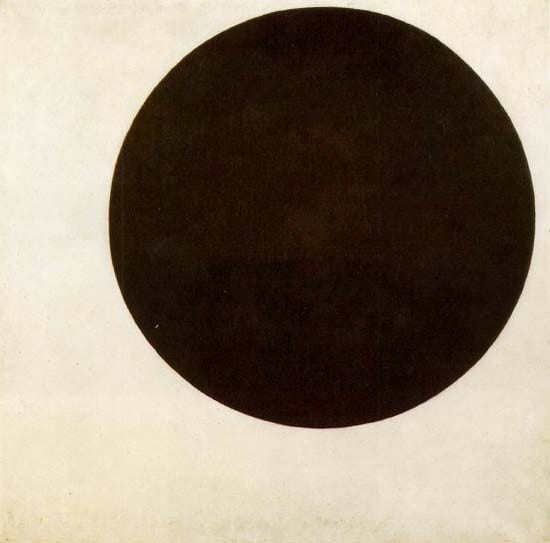
Black Circle
Kazimir Malevich · 1924
State Russian Museum
Black Circle (or motive 1915) is a 1924 oil-on-canvas painting by the Russian avant-garde artist Kazimir Malevich, founder of the Suprematism movement. From the mid-1910s, Malevich abandoned any trace of figurature or representation from his paintings in favour of pure abstraction. The work depicts a monumental perfect black circle floating on a flat white background.
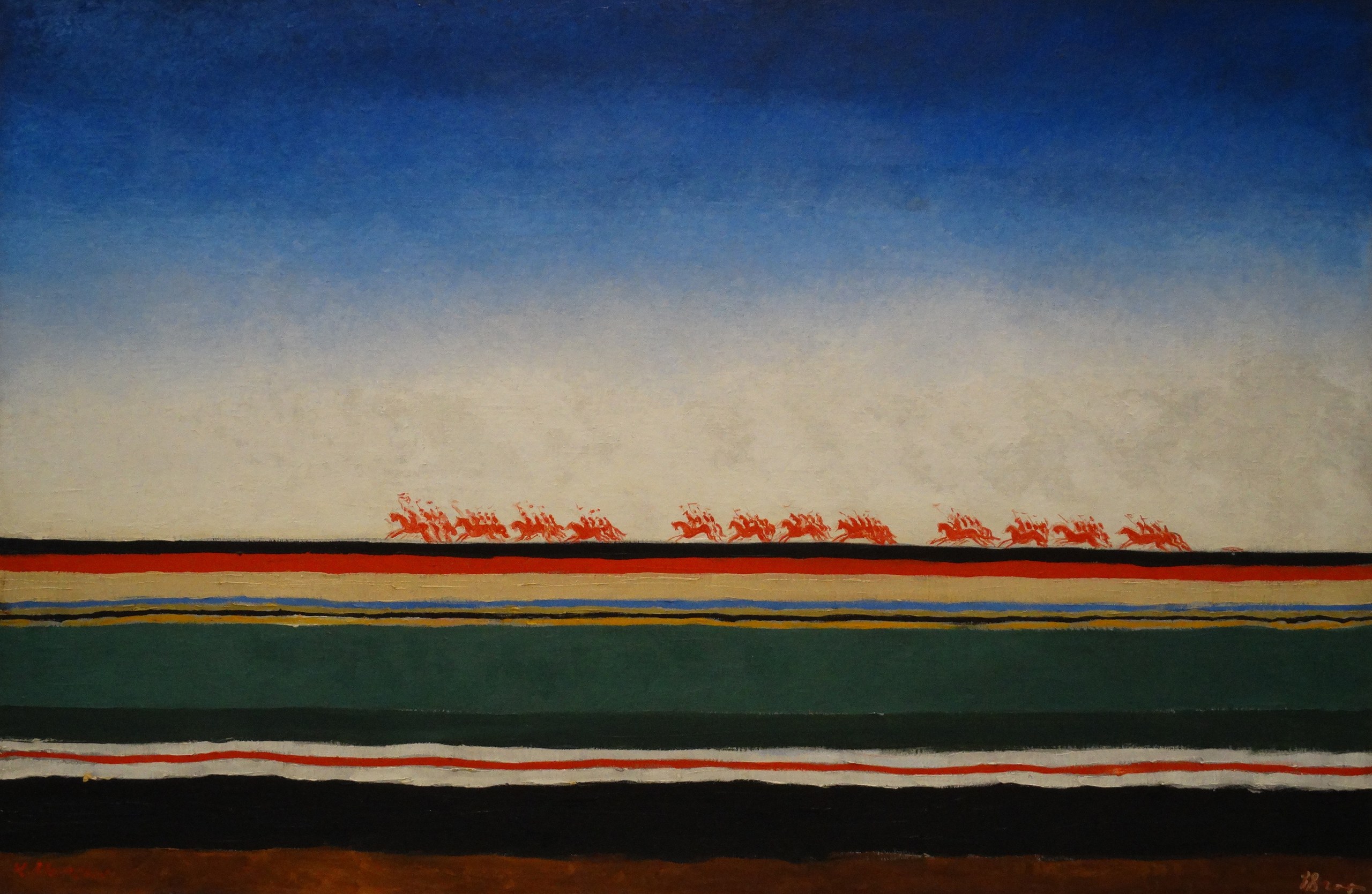
Red Cavalry Riding
Kazimir Malevich · 1932
State Russian Museum
Red Cavalry Riding is an oil on canvas painting around 1932 by the Russian avant-garde artist Kazimir Malevich. It is held in the Russian Museum, in Saint Petersburg. It depicts Red Cavalry horsemen racing across a plain, the ground beneath them illustrated with Suprematist stripings of color.
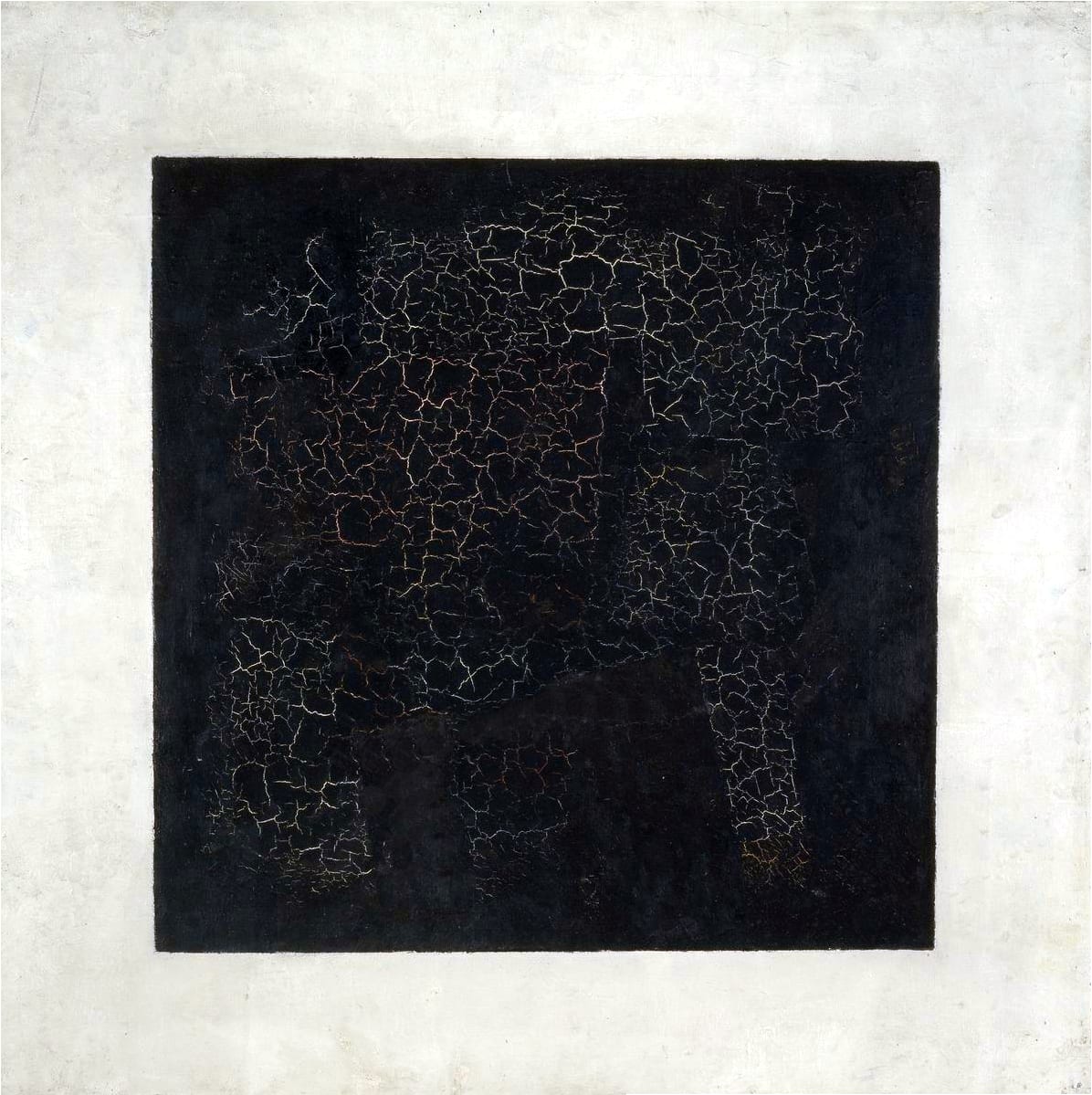
Black Square (1915)
Kazimir Malevich · 1915
Tretyakov Gallery
Black Square is a 1915 oil on linen canvas painting by the Russian avant-garde artist and theorist Kazimir Malevich. There are four painted versions, the first of which was completed in 1915 and described by the artist as his breakthrough work and the inception of his Suprematist art movement (1915 to 1919). In his manifesto for the Suprematist movement, Malevich stated that the paintings were intended as "a desperate struggle to free art from the ballast of the objective world" by focusing solely on form.
Sources
Invite Kazimir Malevich into your living room