Mona Lisa
Leonardo da Vinci · 1503

Leonardo da Vinci
Italian · 1452–1519
The painter of the Mona Lisa and The Last Supper, who finished barely twenty paintings and left thousands of pages of notebooks in their place.
- 13,000
- Pages of notes and drawings that survive
- 25
- Major works attributed to him, at most
- 4
- Portraits of women by his hand that survive
Play 18 works from this collection on your TV, phone or tablet with Momentable Art TV.
Play CollectionAn apprentice in Florence
Leonardo was born in 1452 near the Tuscan hill town of Vinci and trained in Florence under the sculptor Andrea del Verrocchio. By 1472 his name stood on the rolls of the city's painters, yet almost nothing from those Florentine years of independence has come down to us: much of what he touched he never brought to an end, and time took the rest.
Feeling the city too small for him, he put himself forward to the Sforza rulers of Milan, advertising his talent for bridges, cannon and waterworks and tacking painting on at the close of the letter. Milan rewarded him with nearly two decades of work before a French army broke the dukedom in 1499 and sent him back to Tuscany, where, in about 1503, he set down the first strokes of the portrait the world now queues to see.
The motions of the mind
His conviction as a painter was that a figure's bearing and features must disclose what the figure is thinking; the National Gallery in London holds up his mural of Christ announcing his betrayal as the fullest proof of it, twelve men reacting each in his own way. The same conviction drives his portraits: a face held at the moment an expression begins, which is why the Mona Lisa's half-smile has never been settled.
So few pictures reached completion in his lifetime that hunting for genuine Leonardos became an industry of its own, with imitations and studio copies dressed up as the master. Late in life a stroke paralysed his right arm. He died in France in 1519 at sixty-seven, his drawings and notebooks bequeathed to his pupil Francesco Melzi.
The notebooks
In parallel with the easel ran the paper: volume upon volume on anatomy, plants, water, machines and the laws of picture-making, the writing running right to left so that it reads in a mirror. Among the projects are wings for a flying man and the screw-shaped machine that anticipates the helicopter, none of it built.
He filled these sheets daily, all his life, wherever he was; what survives of them runs to thirteen thousand pages that treat the study of nature and the making of images as one discipline. The Renaissance drew no hard line between the two, and he drew it less than anyone.
Known works
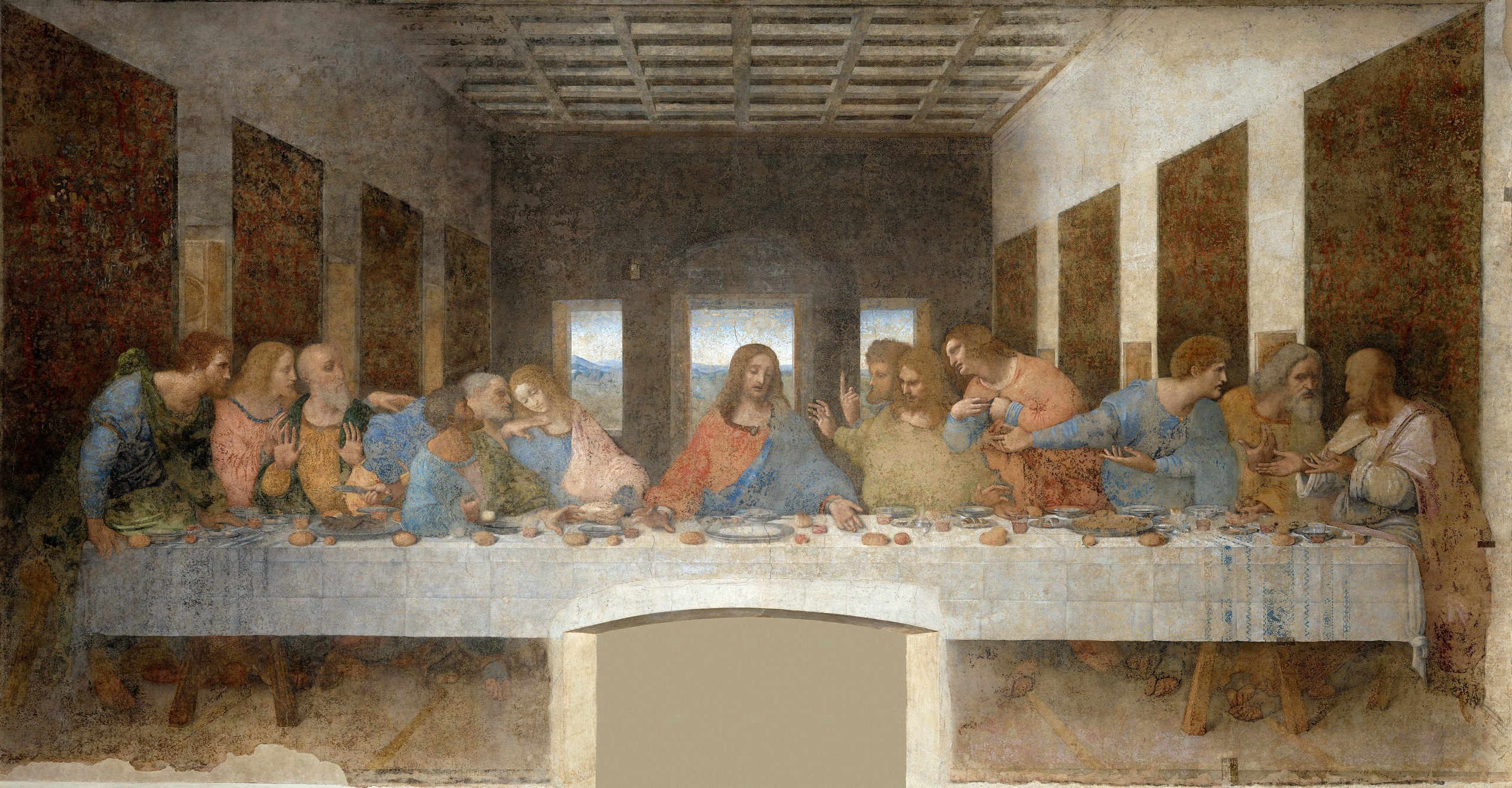
The Last Supper
Leonardo da Vinci · 1490
The wall of the friars' refectory at Santa Maria delle Grazie in Milan carries this mural: the words that one of the twelve will betray him have just been spoken, and the shock runs through every figure at the table. Its grip on space, on perspective and on feeling caught in motion has kept it famous for five hundred years.
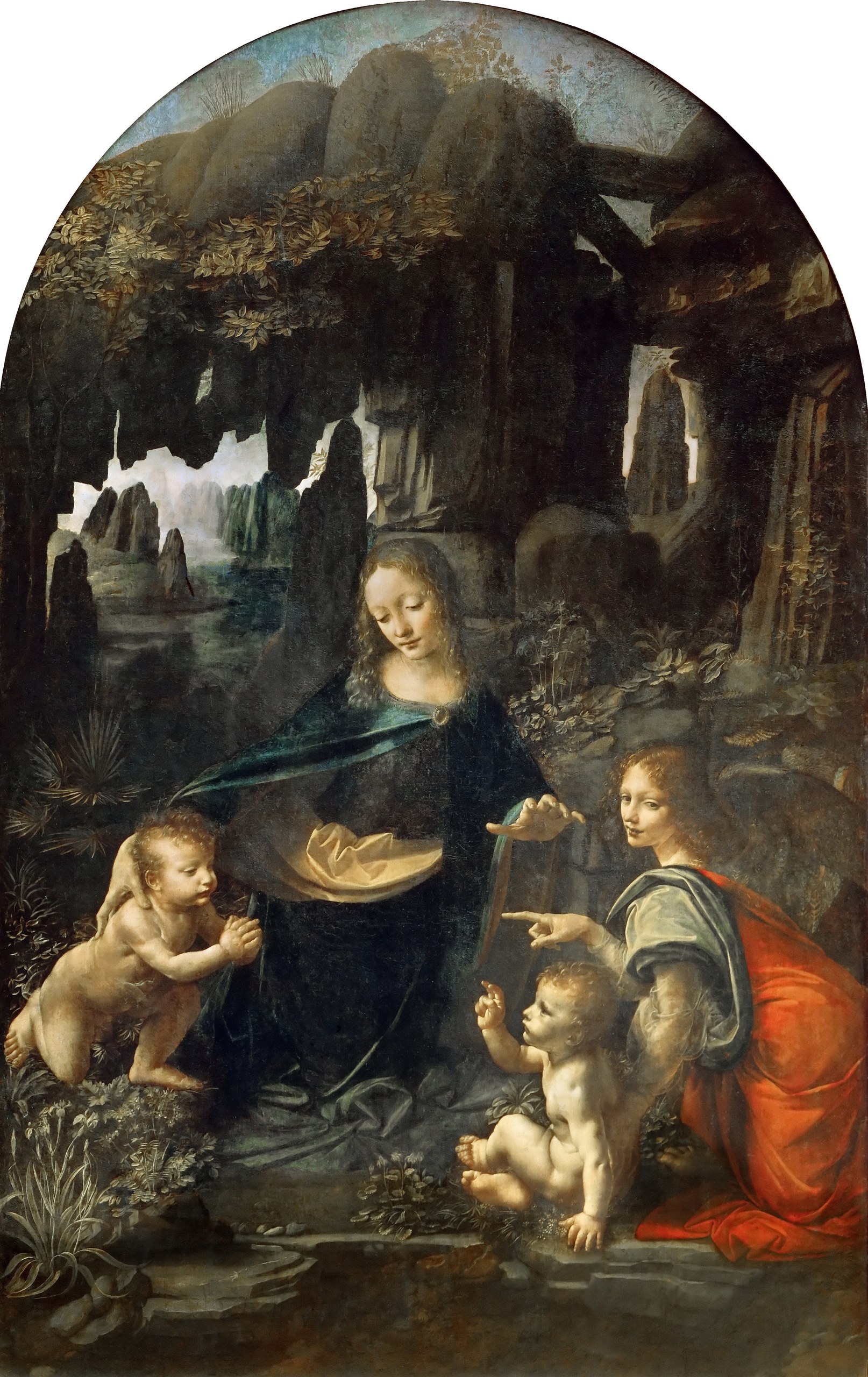
Virgin of the Rocks
Leonardo da Vinci
Mary, the Christ child, the infant Baptist and an angel set in a grotto of eroded rock, lit as if by light from a cave mouth above. He painted the invention twice, both versions close to two metres high; the earlier and finer is in Paris, its companion in London.
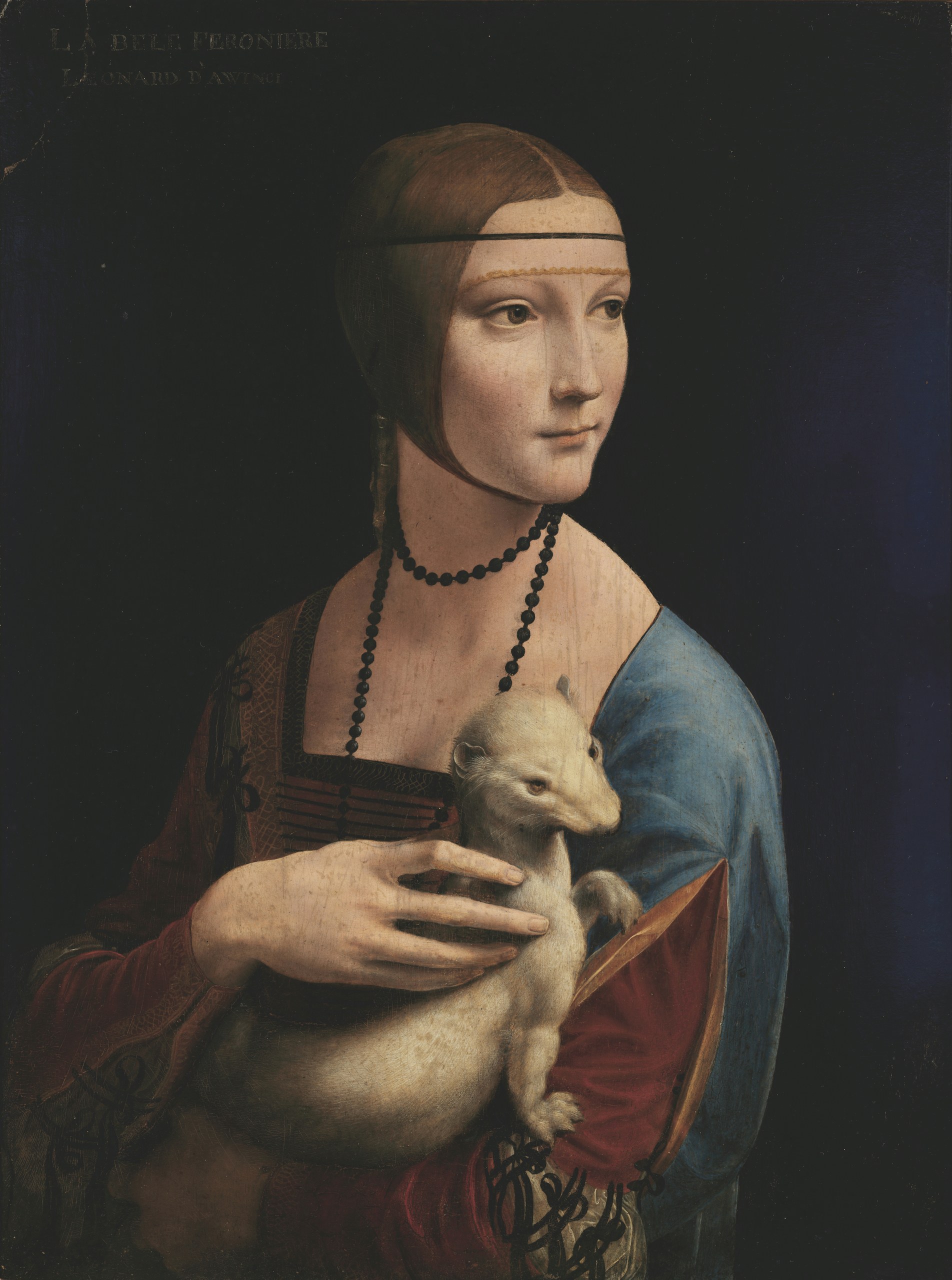
Lady with an Ermine
Leonardo da Vinci · 1490
National Museum in Kraków
Cecilia Gallerani, mistress of Duke Ludovico Sforza, holds the ermine that turns as she turns, head and body at opposing angles. Oil on walnut, painted in about 1489 to 1491, and one of the mere four portraits of women from his hand that survive.
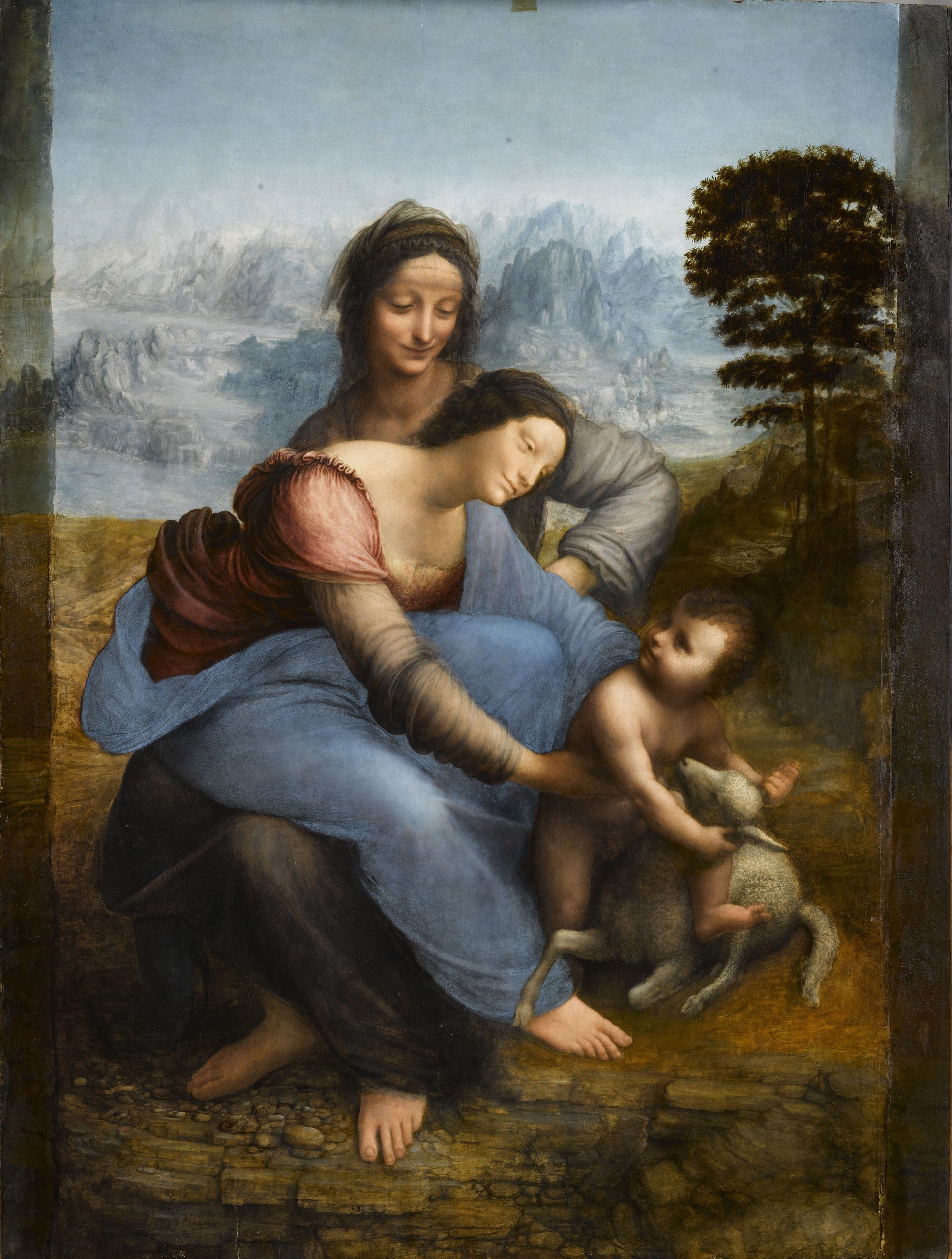
The Virgin and Child with Saint Anne
Leonardo da Vinci · 1511
Louvre
Three generations share one panel: Saint Anne, her daughter Mary and the infant Christ, who reaches for a lamb, the beast of his coming sacrifice. Examination before restoration in 2008 brought faint sketches by the master to light on the reverse of the wood.
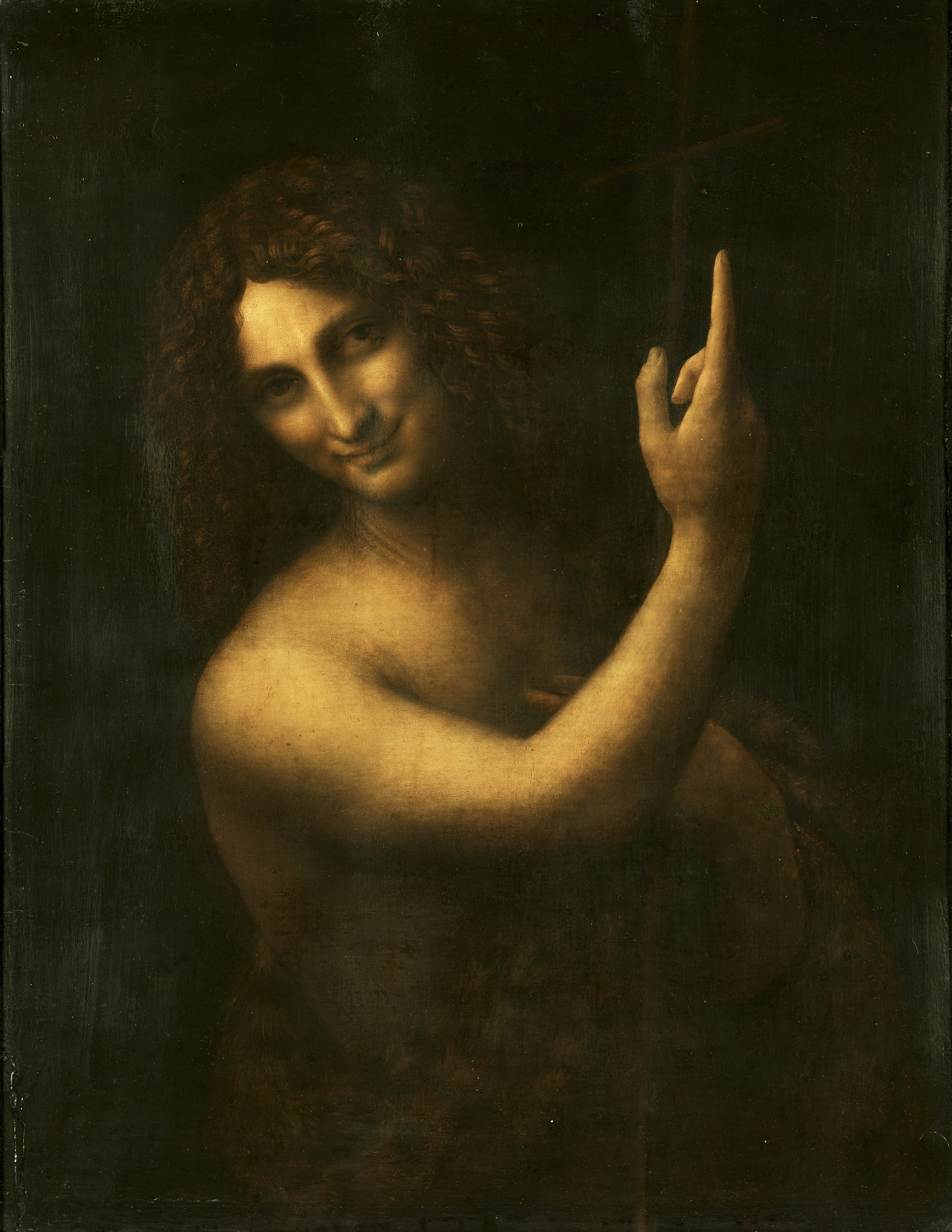
Saint John the Baptist
Leonardo da Vinci · 1514
Louvre
Probably the last picture he completed, between 1513 and 1516: the Baptist rises out of pure darkness, curls catching an unseen light, one finger pointing heavenward. It hangs in the Louvre.
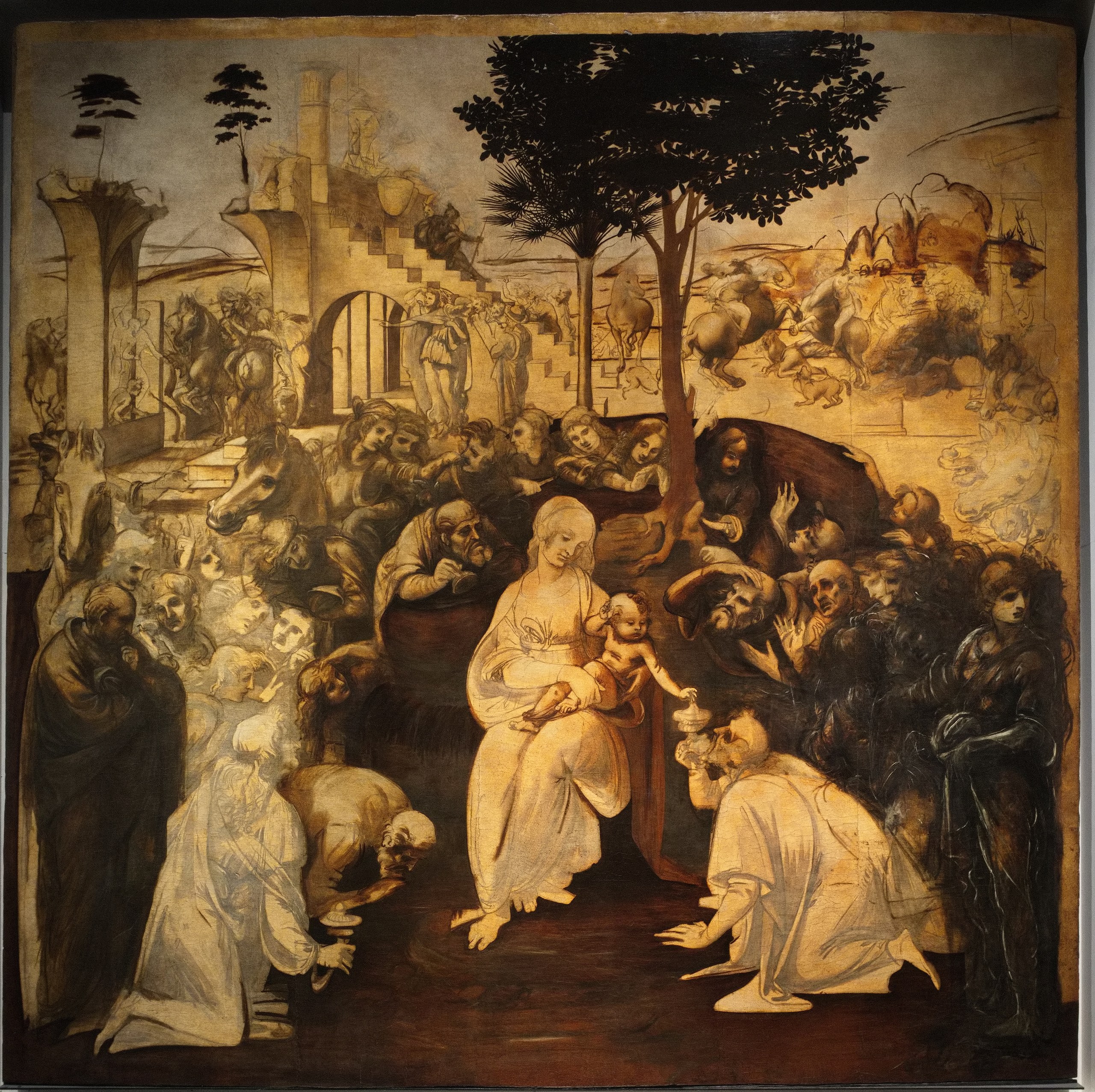
Adoration of the Magi
Leonardo da Vinci · 1482
Uffizi Gallery
The Augustinian friars of San Donato in Scopeto, outside Florence, commissioned this altarpiece in 1481; a year later he had left it behind for Milan, and it survives as a great brown underdrawing: charcoal, ink and wash, the Virgin and Child at the centre of a storm of horses, heads and ruined stairways that no colour ever calmed.
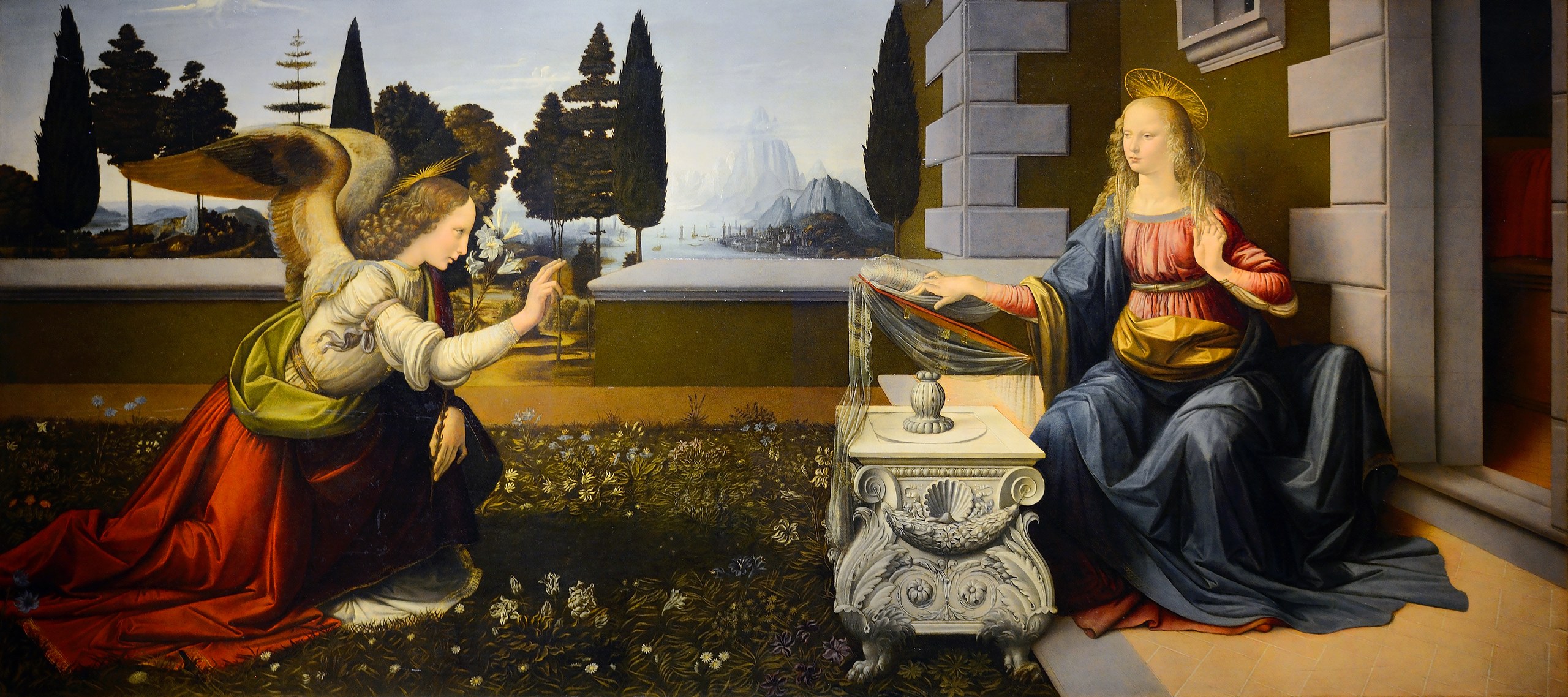
Annunciation
Leonardo da Vinci · 1472
Uffizi Gallery
The earliest major painting of his that remains, made while he was still learning beside Verrocchio: the angel greeting Mary in a walled Tuscan garden, oil and tempera on a poplar panel. It stands among the best-loved renderings of the scene in Christian art.
![Ginevra de' Benci [obverse]](https://art.momentable.art/momentable/nga/50724_w2560.jpg)
Ginevra de' Benci [obverse]
Leonardo da Vinci
National Gallery of Art
A young Florentine aristocrat against a hedge of juniper, the tree that puns on her name in Italian and stood for a woman's honour. Bought in 1967, it remains the only painting by him that the public can see in the Americas.
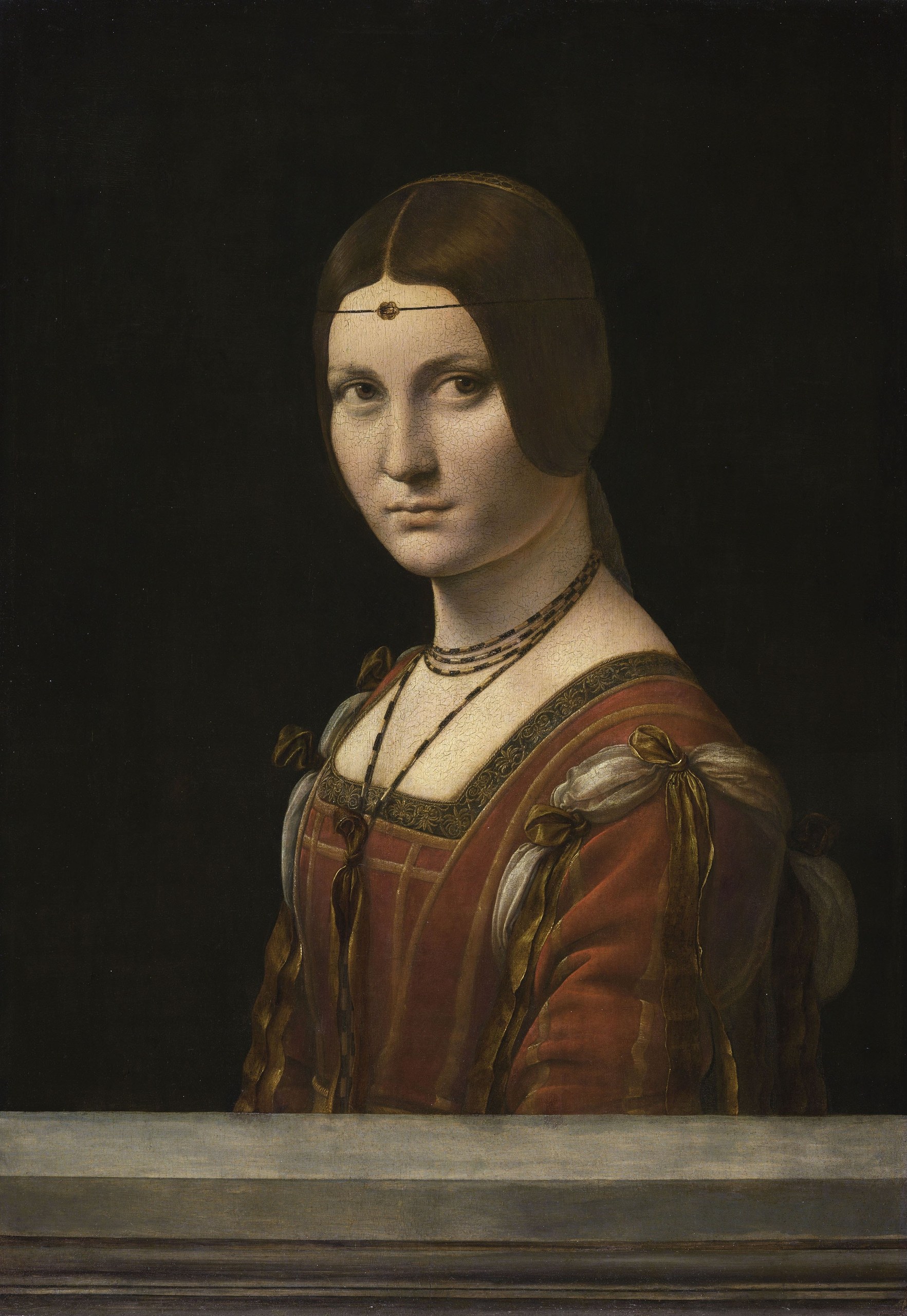
La Belle Ferronnière
Leonardo da Vinci · 1495
Louvre
A lady of the Milanese court whose identity nobody has fixed: the name she goes by, given in the seventeenth century, was a veiled joke about an ironmonger's wife, and one later guess made her Lucretia Crivelli, a maid of honour who took the Duke's eye.
More to discover
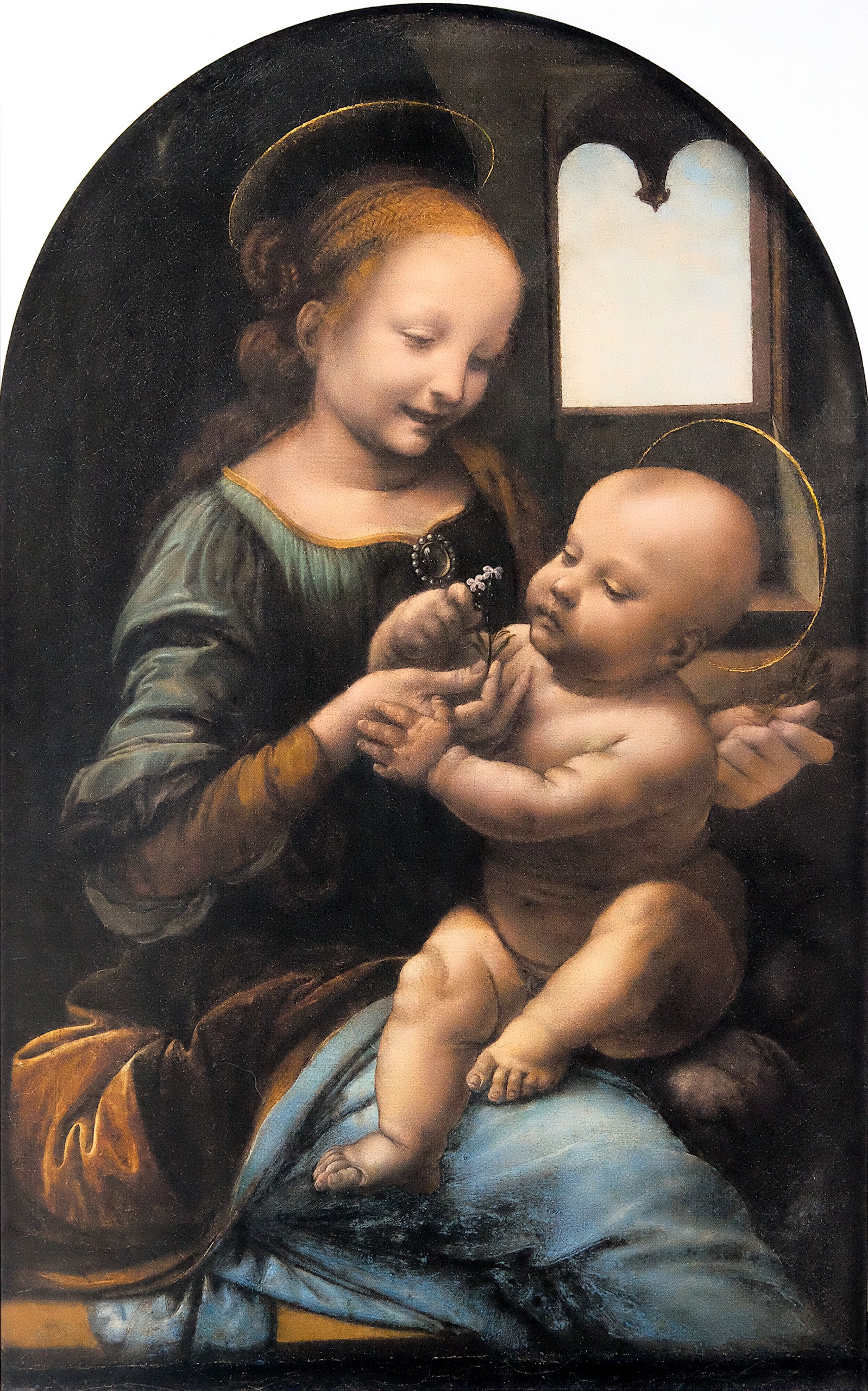
Benois Madonna
Leonardo da Vinci · 1480
State Hermitage Museum
The Madonna and Child with Flowers, likely the first thing he painted with no hand from Verrocchio, one of two Madonnas taken up in 1478. The infant twists to guide his mother's fingers, coaxing the flower into the middle of his gaze.
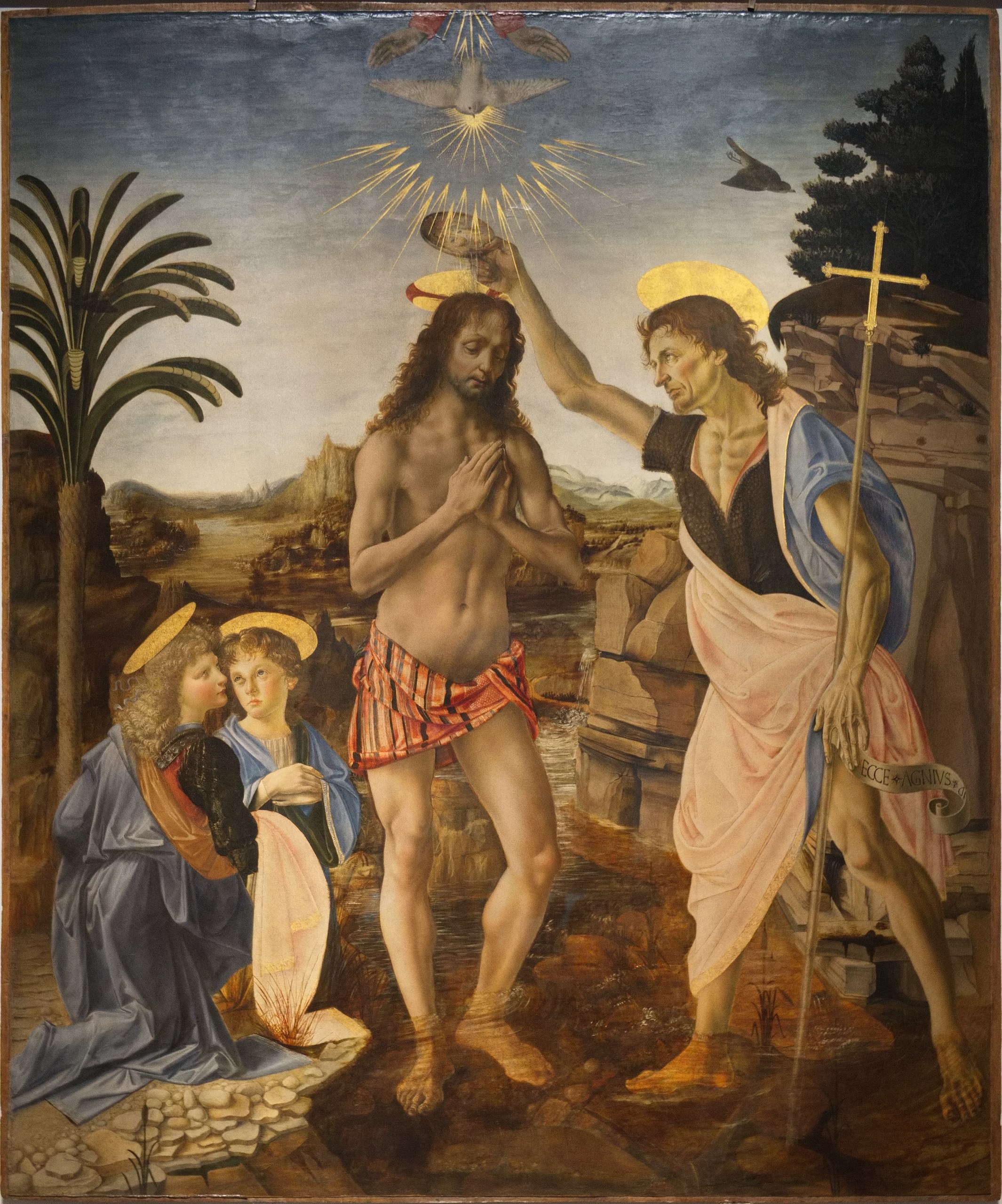
The Baptism of Christ
Leonardo da Vinci · 1470
Uffizi Gallery
The studio panel of about 1475 on which the boy first appears: the kneeling angel at the left is on record as his, soft and lit where the rest is firm and dry, and modern scholarship hands him much of the far valley behind as well.
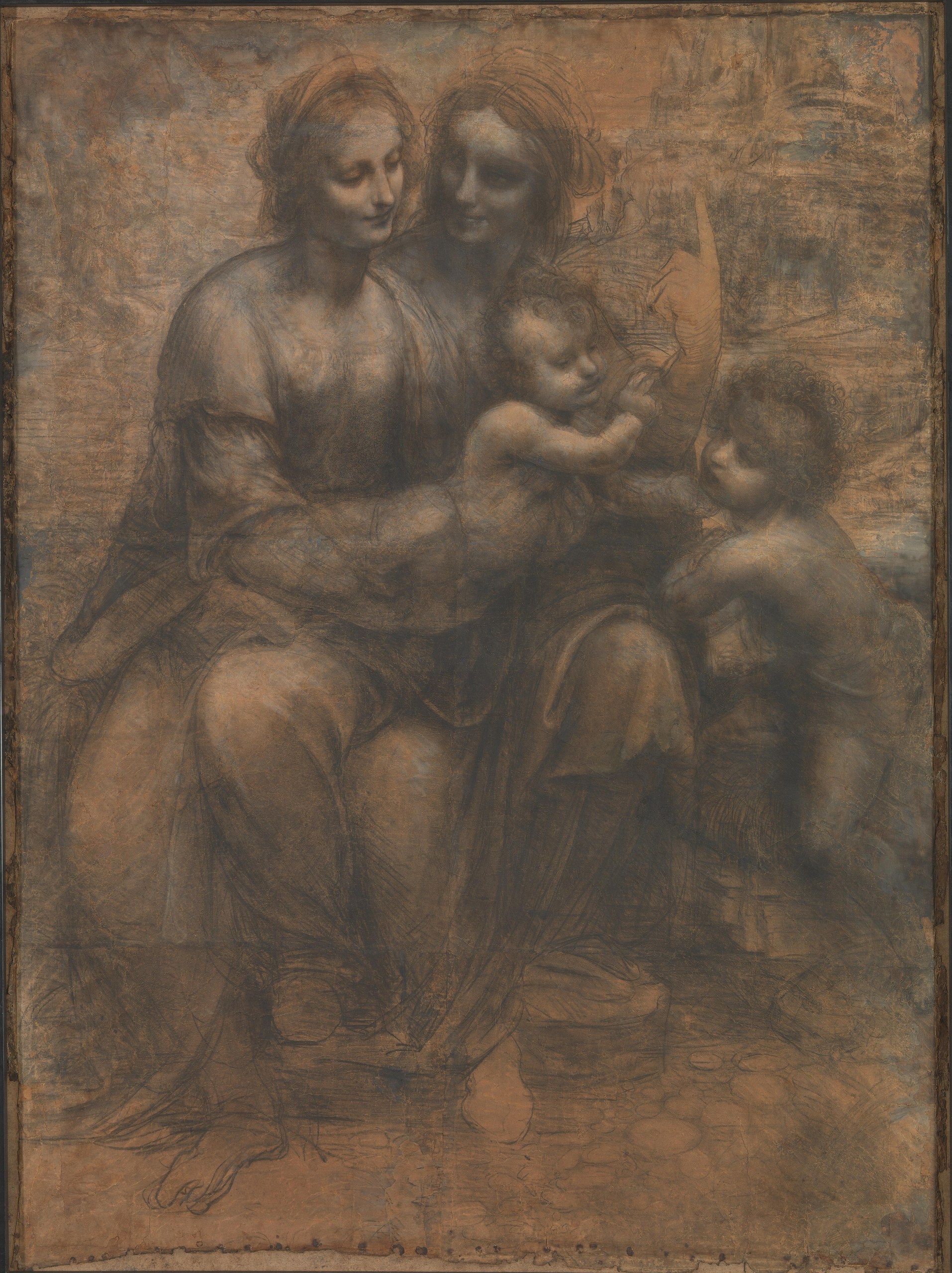
The Virgin and Child with Saint Anne and Saint John the Baptist
Leonardo da Vinci · 1500
National Gallery
Charcoal and chalk on eight sheets glued into one, the Virgin and Saint Anne with the two children worked up at full scale. It is his only surviving cartoon of this size, and no finished panel was ever made from it.
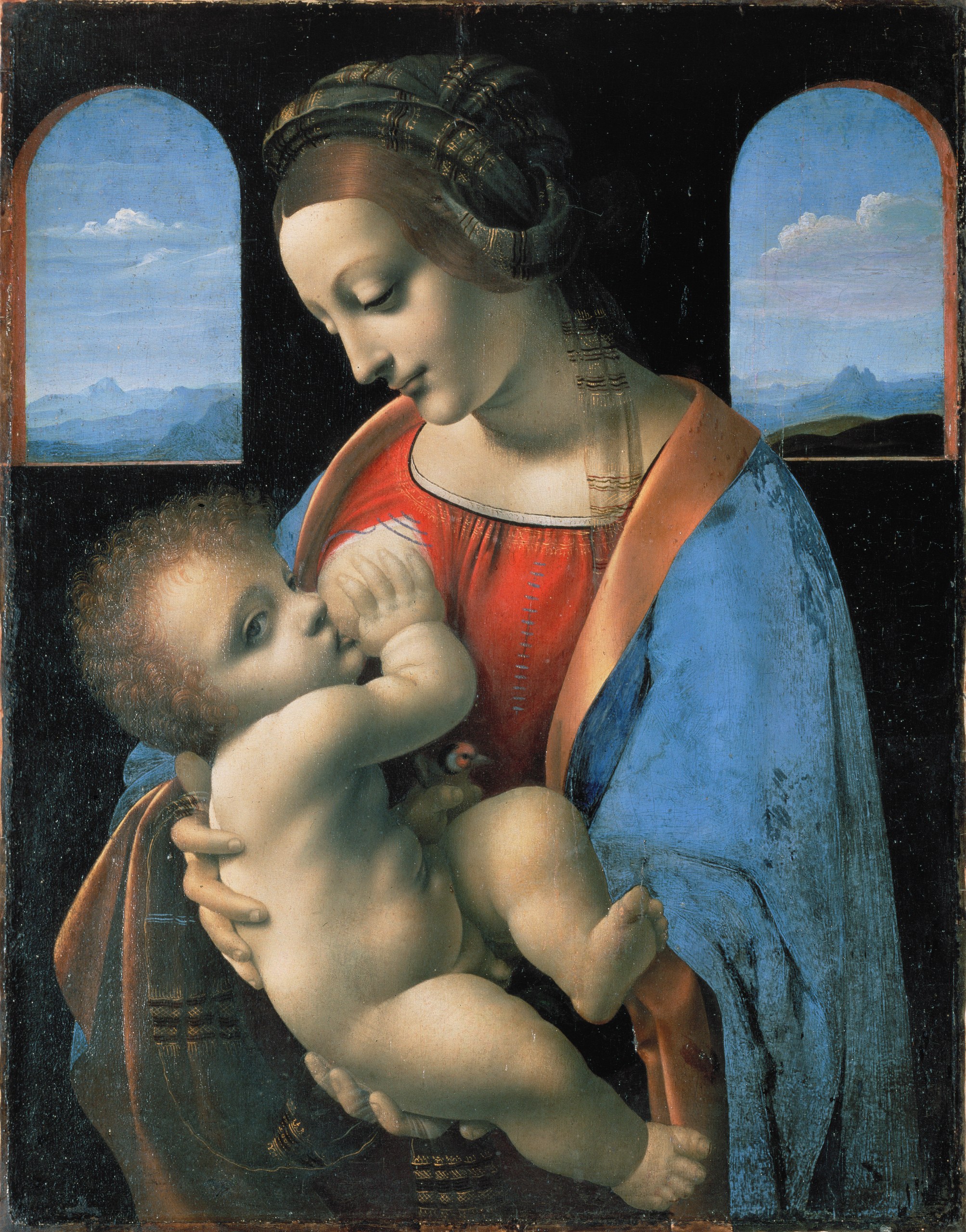
Madonna Litta
Leonardo da Vinci · 1490
State Hermitage Museum
Mary nurses the child, who grips a goldfinch, a bird bound to the Passion. The Hermitage defends the attribution to Leonardo himself; other scholars assign the panel to a pupil, Boltraffio or d'Oggiono among the names.
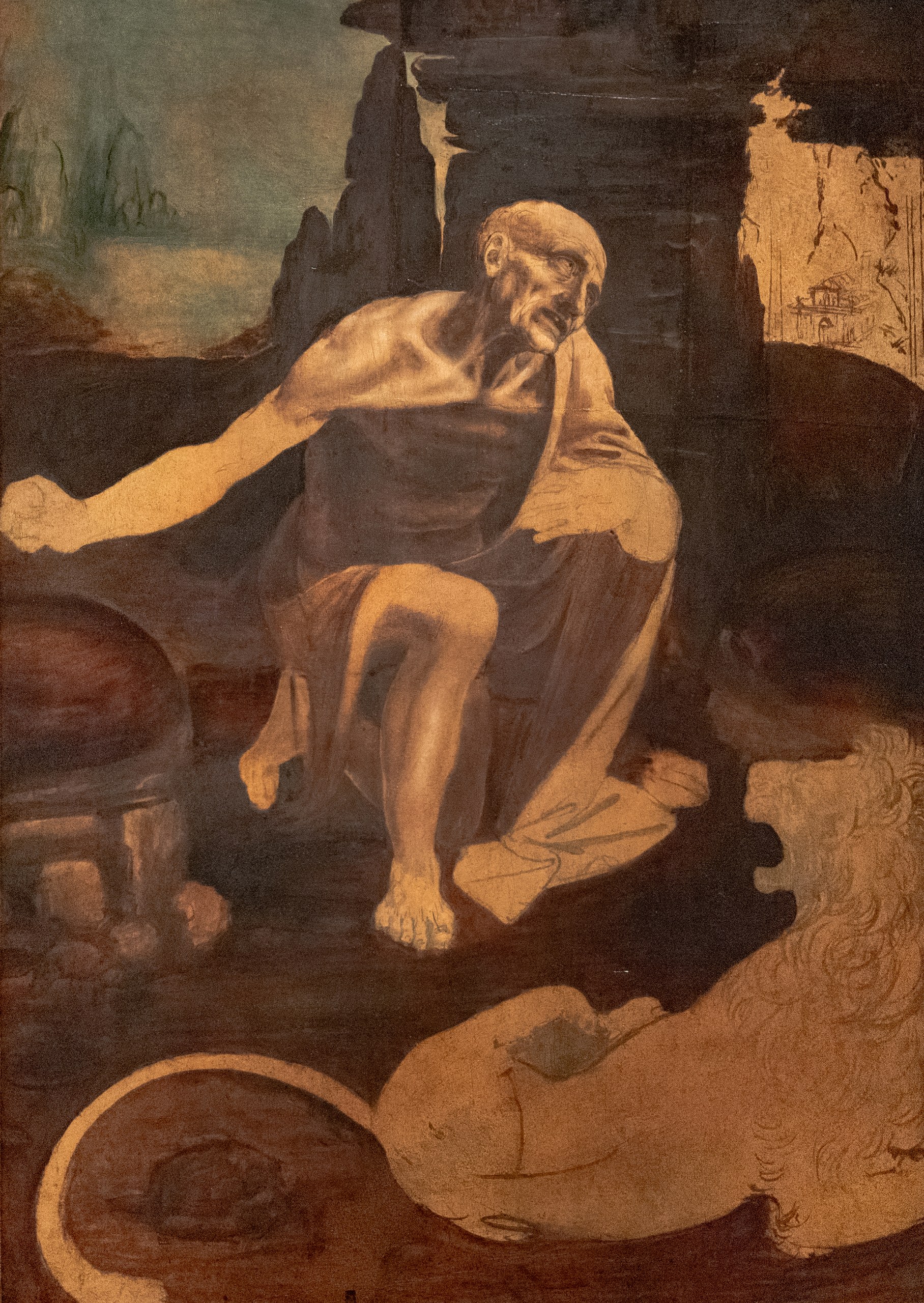
Saint Jerome in the Wilderness
Leonardo da Vinci · 1480
Vatican Museums
An unfinished panel with the design laid in tones of grey: the old hermit kneels breastbone to rock in a barren landscape, the lion beside him, a stone in his raised fist. After his death the board was cut into five pieces; joined again, a small triangle stays missing.
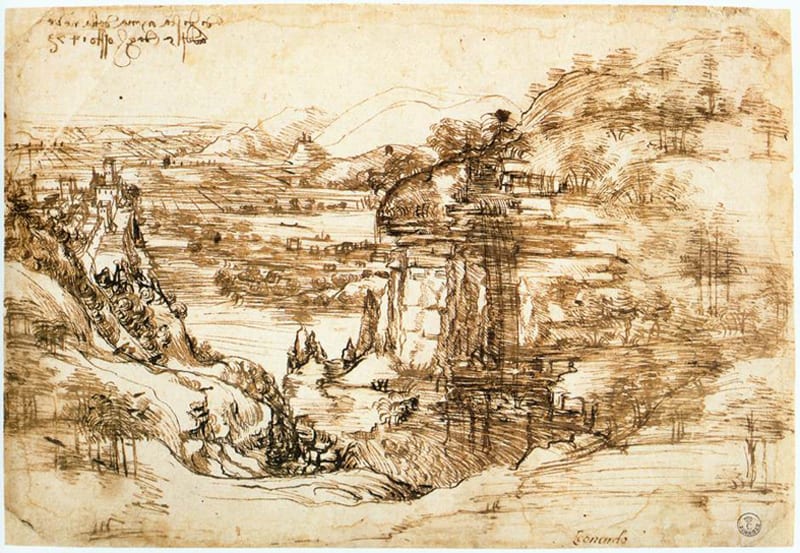
Arno Landscape
Leonardo da Vinci · 1473
Uffizi Gallery
The earliest drawing he signed with a date, 5 August 1473: the valley of the Arno in pen strokes, river, heights, castles and worked fields carried into the distance with the same observing eye that kept the notebooks.
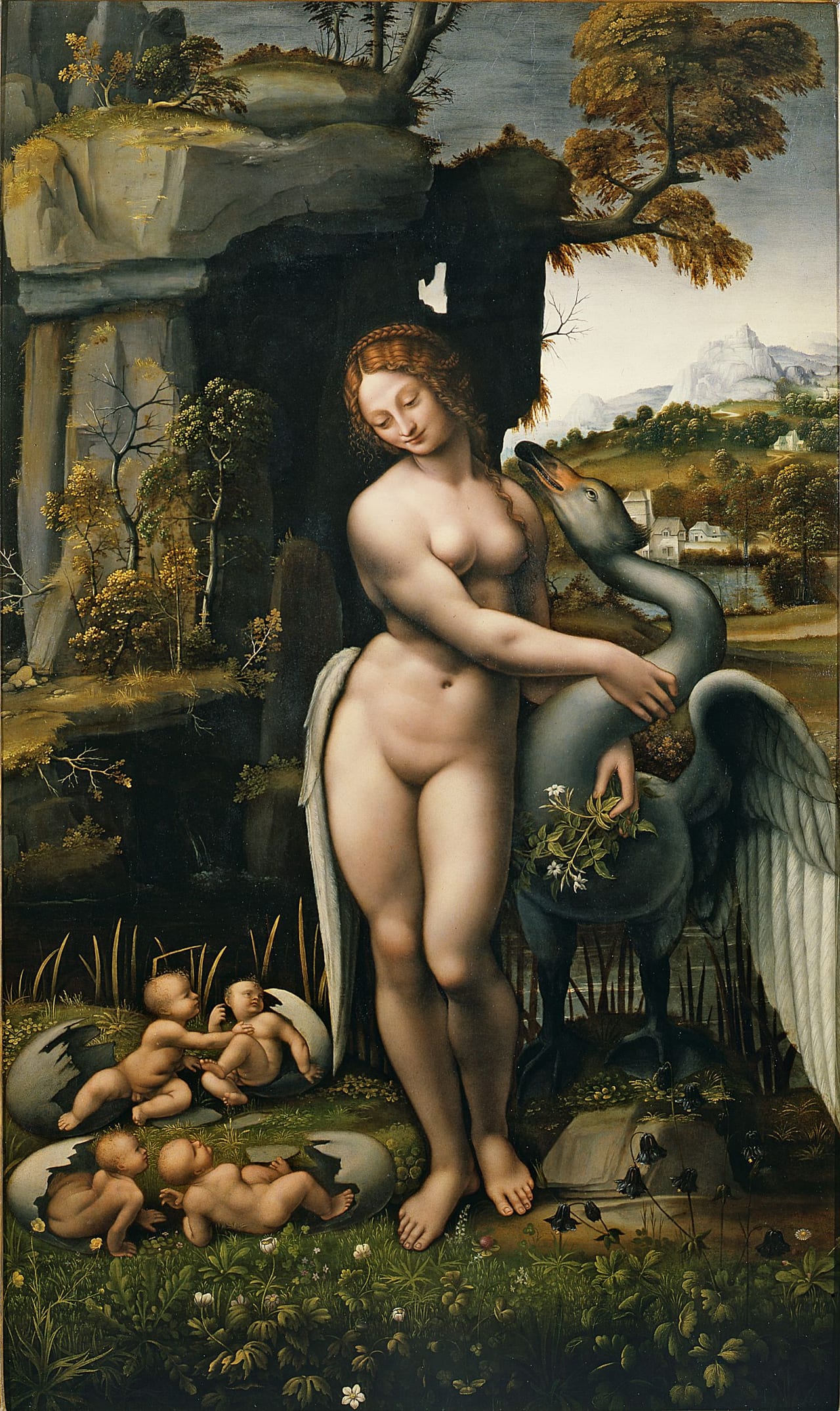
Leda and the Swan
Leonardo da Vinci · 1505
Uffizi Gallery
His lost painting of Leda survives only in versions from the workshop; this one, given by art historians today to a student, perhaps Francesco Melzi, ranks among the three nearest to the vanished original.
Sources
- National Gallery, London, “Leonardo da Vinci”
- Musée du Louvre, collections, “La Joconde”
- Wikipedia, “Leonardo da Vinci”
- Wikipedia, “Mona Lisa”
- Wikipedia, “The Last Supper (Leonardo)”
- Wikipedia, “Virgin of the Rocks”
- Wikipedia, “Lady with an Ermine”
- Wikipedia, “The Virgin and Child with Saint Anne (Leonardo)”
- Wikipedia, “Saint John the Baptist (Leonardo)”
- Wikipedia, “Adoration of the Magi (Leonardo)”
- Wikipedia, “Annunciation (Leonardo)”
- Wikipedia, “Ginevra de' Benci”
- Wikipedia, “La Belle Ferronnière”
- Wikipedia, “Benois Madonna”
- Wikipedia, “The Baptism of Christ (Verrocchio and Leonardo)”
- Wikipedia, “The Virgin and Child with Saint Anne and Saint John the Baptist”
- Wikipedia, “Madonna Litta”
- Wikipedia, “Saint Jerome in the Wilderness (Leonardo)”
- Wikipedia, “Leda and the Swan (Uffizi)”
Invite Leonardo da Vinci into your living room
Play 18 works from this collection on your TV, phone or tablet with Momentable Art TV.
![Wreath of Laurel, Palm, and Juniper with a Scroll inscribed Virtutem Forma Decorat [reverse]](https://art.momentable.art/momentable/nga/50725_w1280.jpg)