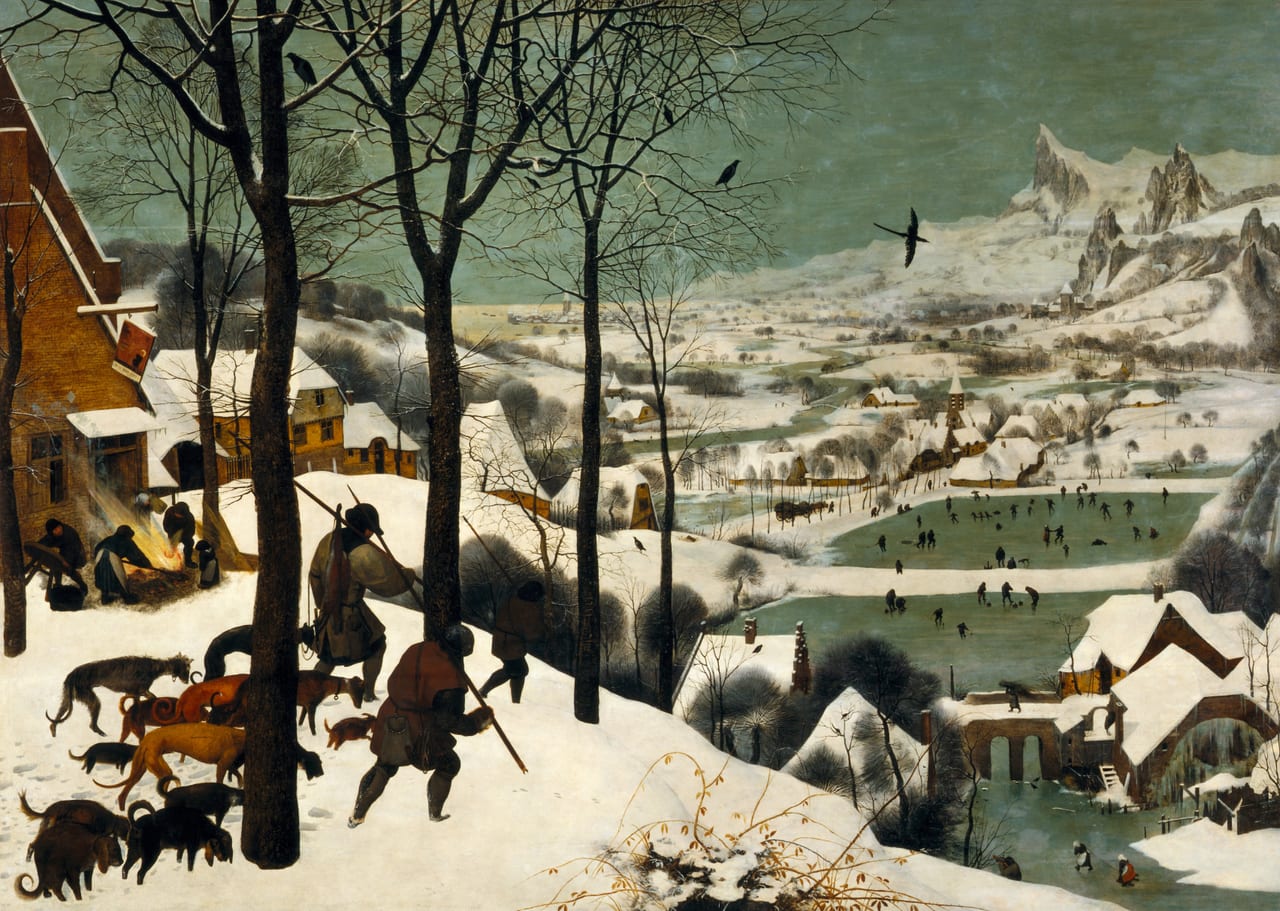
The Hunters in the Snow
Pieter Brueghel the Elder · 1565

Pieter Brueghel the Elder
Duchy of Brabant · 1525–1569
The painter who put peasants, games, seasons and dread into large panels, and became the most influential Netherlandish artist of his century.
Play 16 works from this collection on your TV, phone or tablet with Momentable Art TV.
Play CollectionFrom Breda to Antwerp
Karel van Mander names his master as Pieter Coecke van Aelst of Antwerp, and in 1551 Brueghel became a free master in that city's guild of Saint Luke. Soon after he set out for Italy; he had left it by 1554 and reached Antwerp again by 1555. The drawings from the journey held to be authentic are all of landscapes, and the celebrated series of large mountain drawings long thought made on the trip is no longer given to him at all.
Back in Antwerp by 1555, he worked for a decade mainly as a designer of prints for Hieronymus Cock, the leading publisher of northern Europe, and only from the end of the 1550s did painting become his main medium. Every famous painting he left comes from the last decade of his short life. In 1563 he married his late master's daughter Mayken Coecke and moved to Brussels, where he died on 9 September 1569, leaving two sons, both well known as painters, whom his early death left without his training.
The peasant and the intellectual
Brueghel made peasants and their ways the chief subject of serious painting, a thing rarely done before him, and earned the old nickname of Peasant Bruegel. He was no peasant himself: he moved in humanist circles in Antwerp, and recent scholarship stresses the intellectual content of his work. His earlier panels crowd dozens of small figures across a wide view; in the 1560s the crowds give way to a few much larger figures, painted with a monumentality learned from Italian art.
The seasons occupied him in 1565, the year of his months; of the six panels, five were still extant, three of them in Vienna. His unsentimental record of village ritual and work has become a prime source of evidence about sixteenth-century life, and his winter of that year is read even as a witness of the Little Ice Age.
Known works
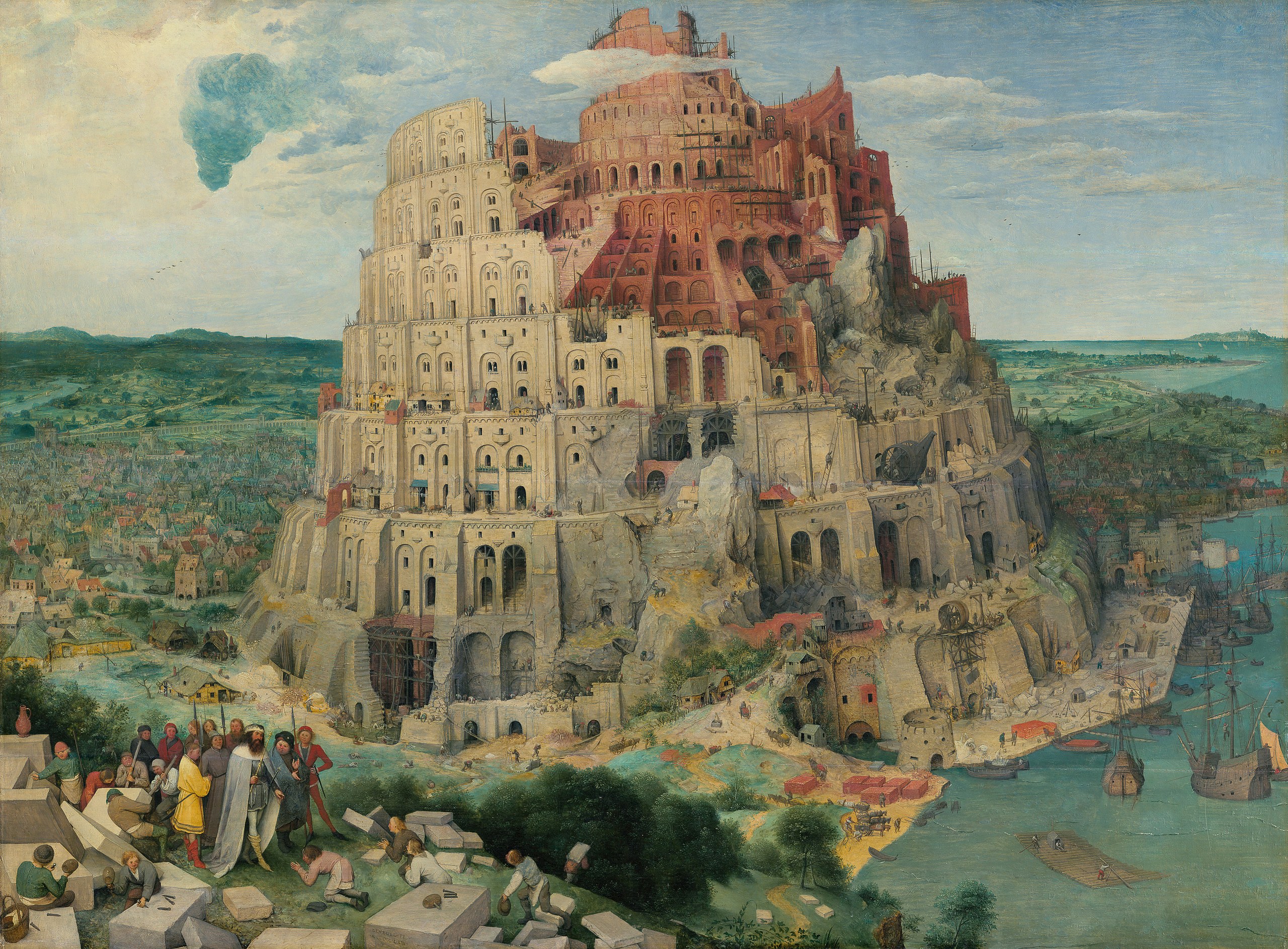
The Tower of Babel
Pieter Brueghel the Elder · 1563
Kunsthistorisches Museum
The Tower of Babel. A man-made mountain of arches and spiralling ramps rising from a harbour town, its construction rather than its punishment the painter's subject; dated 1563.
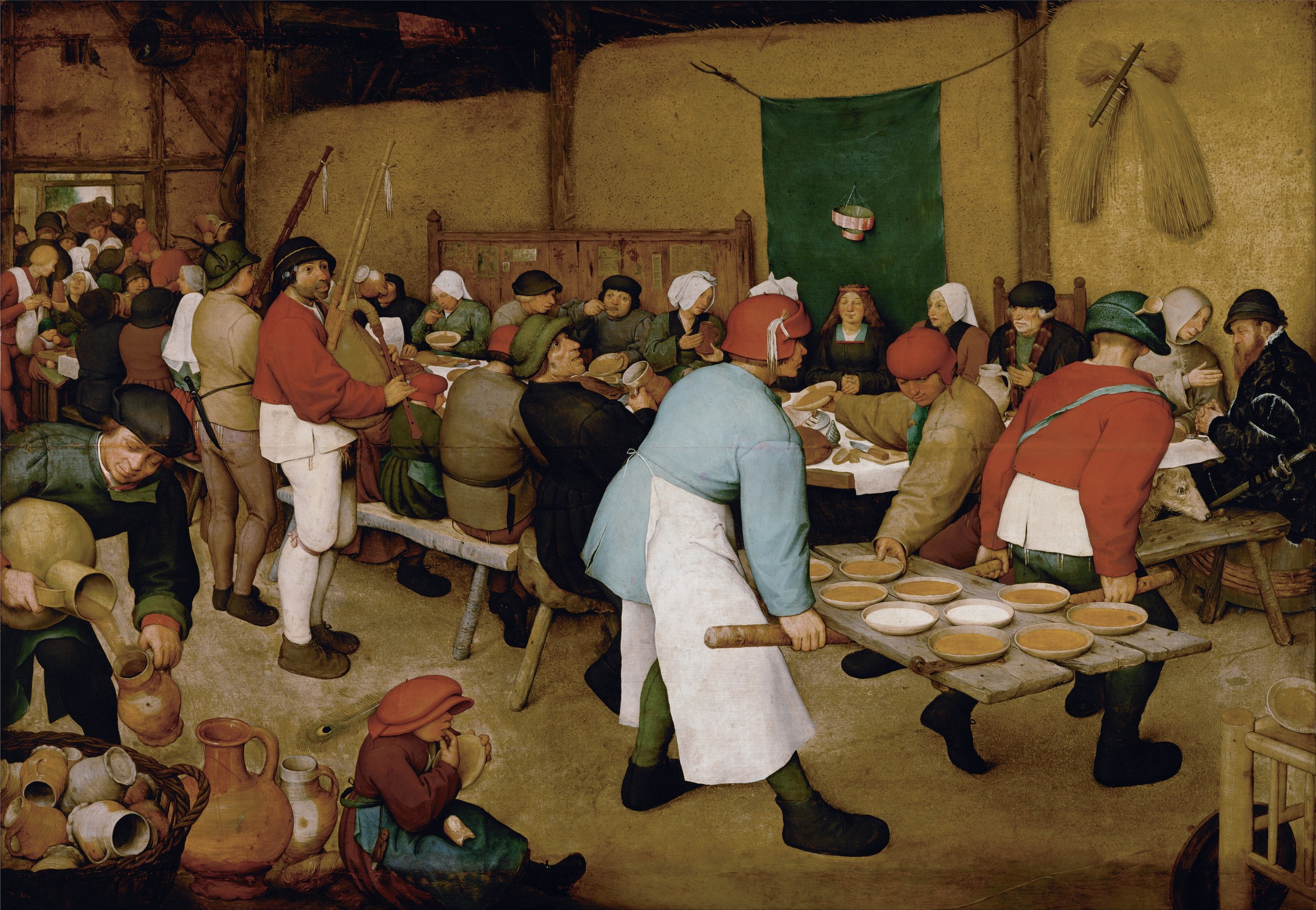
The Peasant Wedding
Pieter Brueghel the Elder · 1568
Kunsthistorisches Museum
The Peasant Wedding. The bride under her paper crown before a green cloth, porters carrying plates on a door off its hinges, pipers and a dog under the bench: a barn feast.
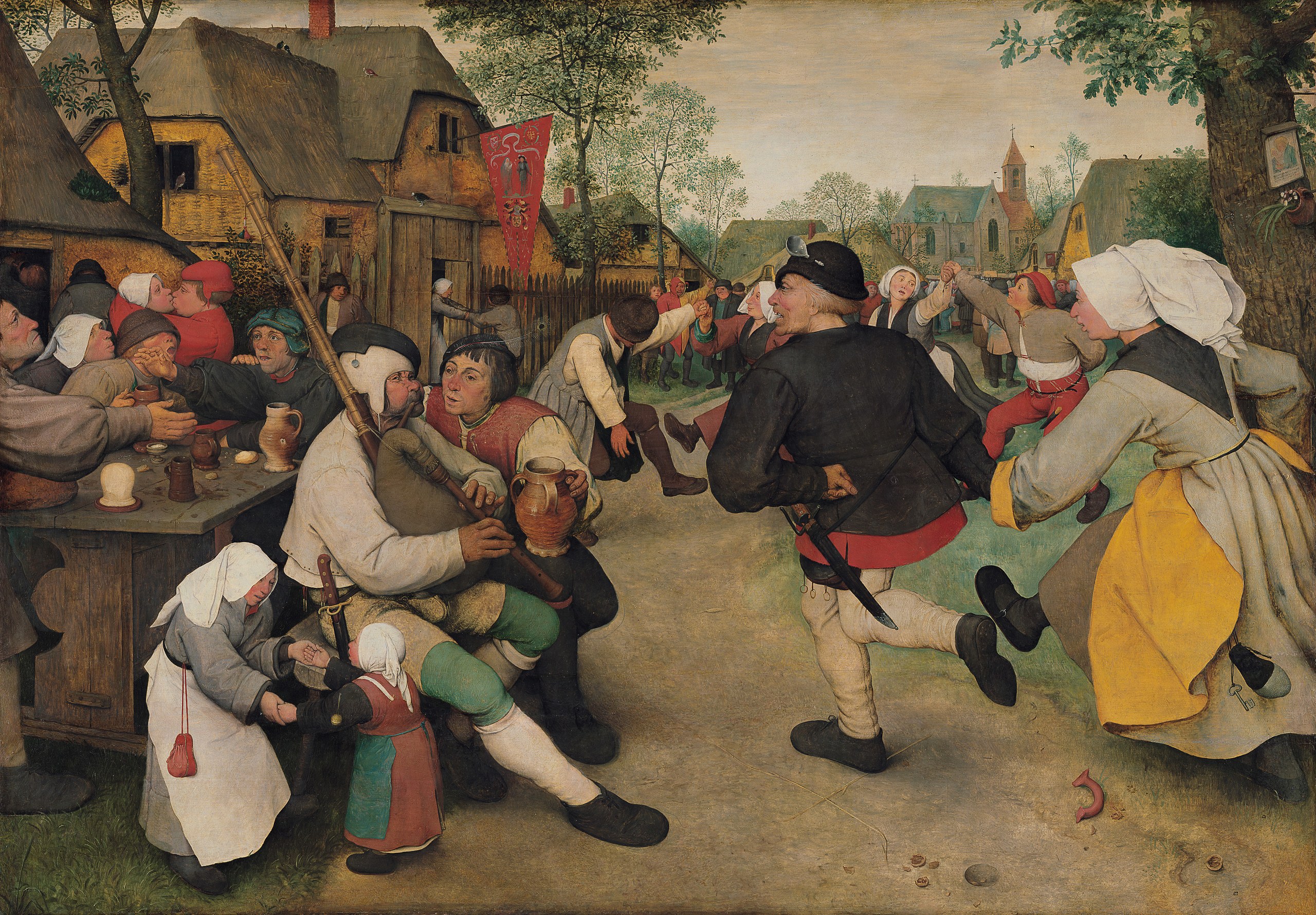
The Peasant Dance
Pieter Brueghel the Elder · 1568
Kunsthistorisches Museum
The Peasant Dance. Kermis dancers and drinkers outside an inn, painted at about the same time as the Wedding and of the same size, with the monumental figures of his late style.
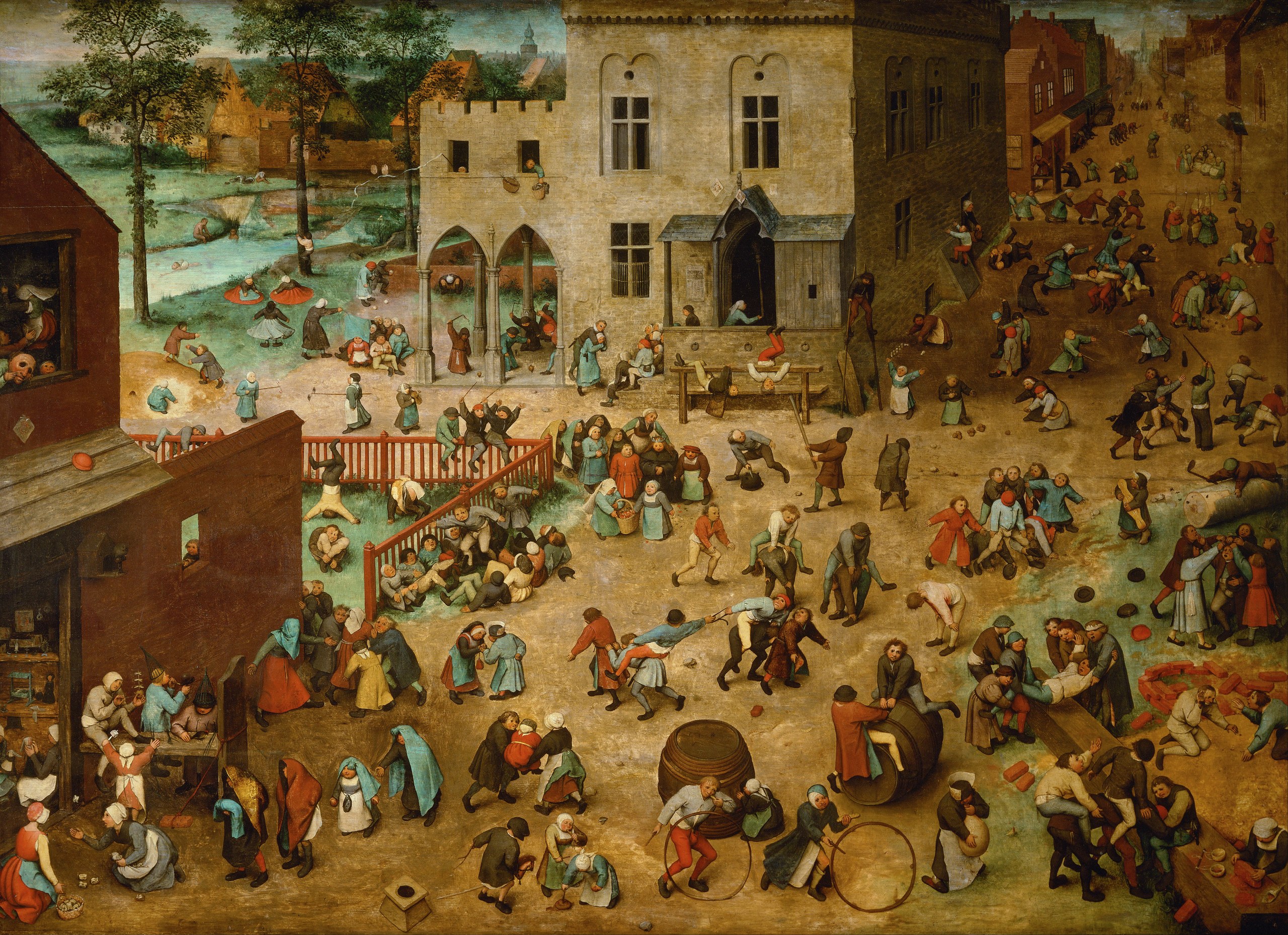
Children's Games
Pieter Brueghel the Elder · 1560
Kunsthistorisches Museum
Children's Games. A town square given over entirely to children, over ninety of the games they played at the time identified among them.
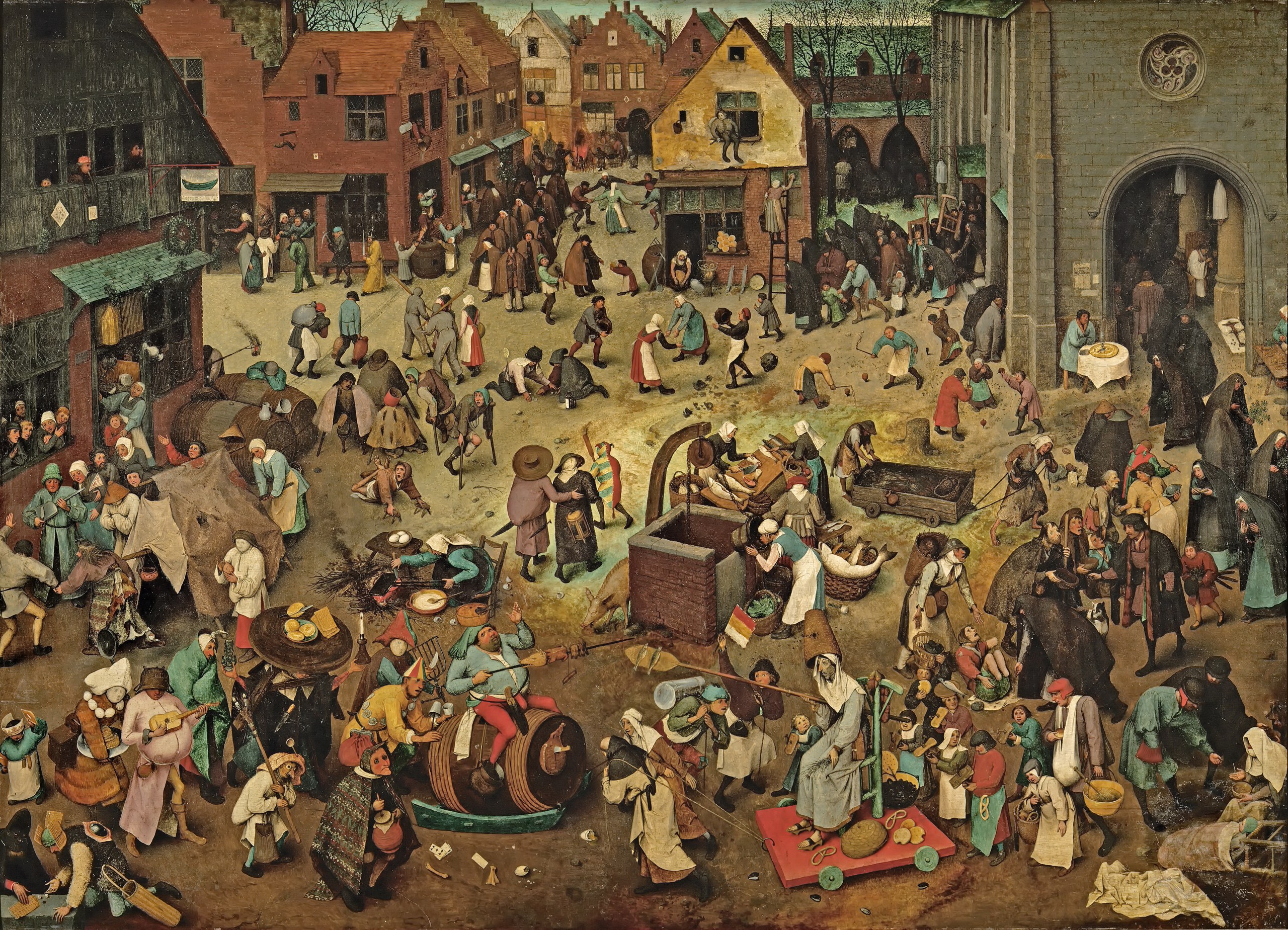
The Fight Between Carnival and Lent
Pieter Brueghel the Elder · 1559
Kunsthistorisches Museum
The Fight Between Carnival and Lent. A panorama of nearly 200 figures staging the clash of fat against lean, the inn against the church, in one teeming square.
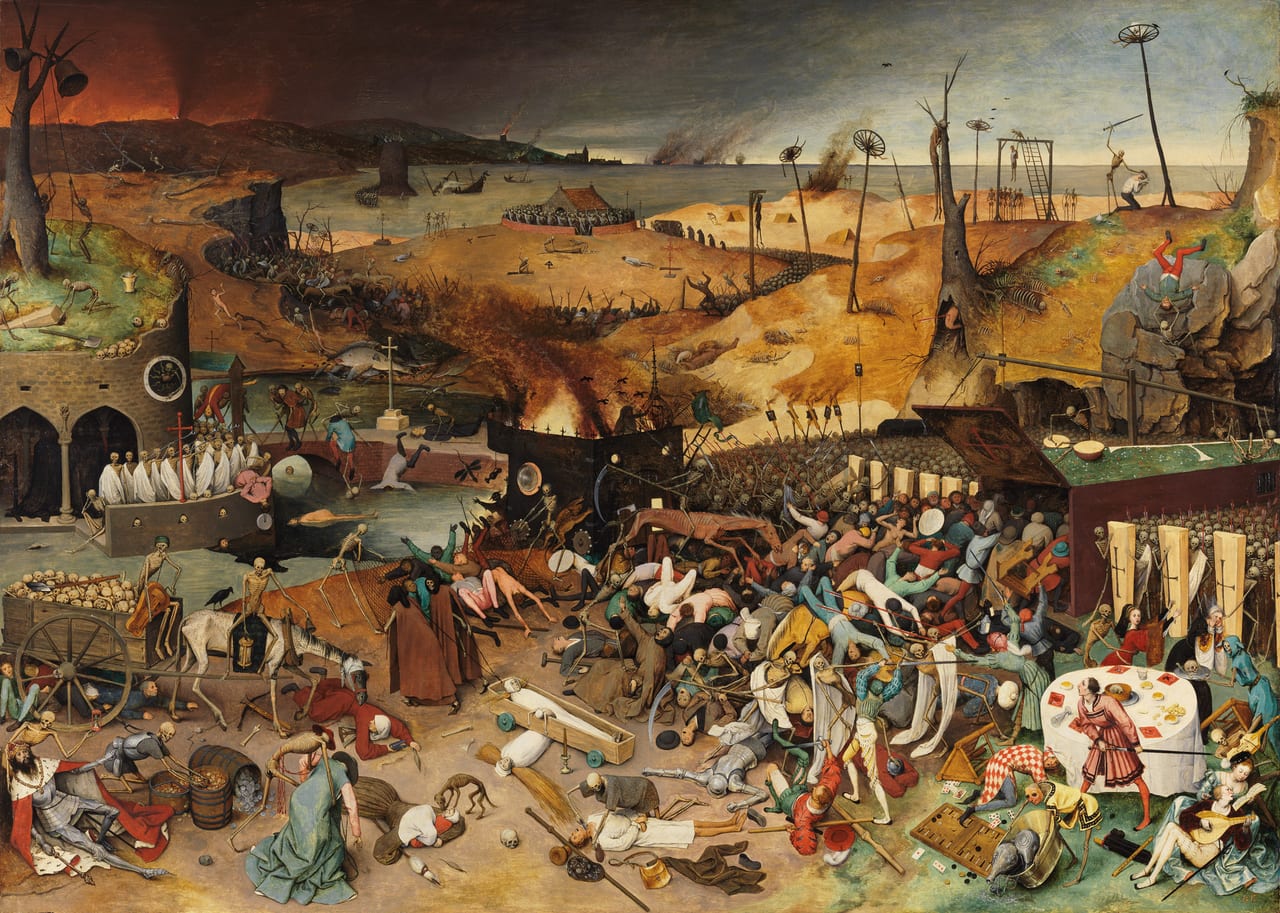
The Triumph of Death
Pieter Brueghel the Elder · 1560
Museo del Prado
The Triumph of Death. An army of skeletons over a blackened landscape of fires and shipwrecks, cutting down king and peasant alike; in the Prado since 1827.
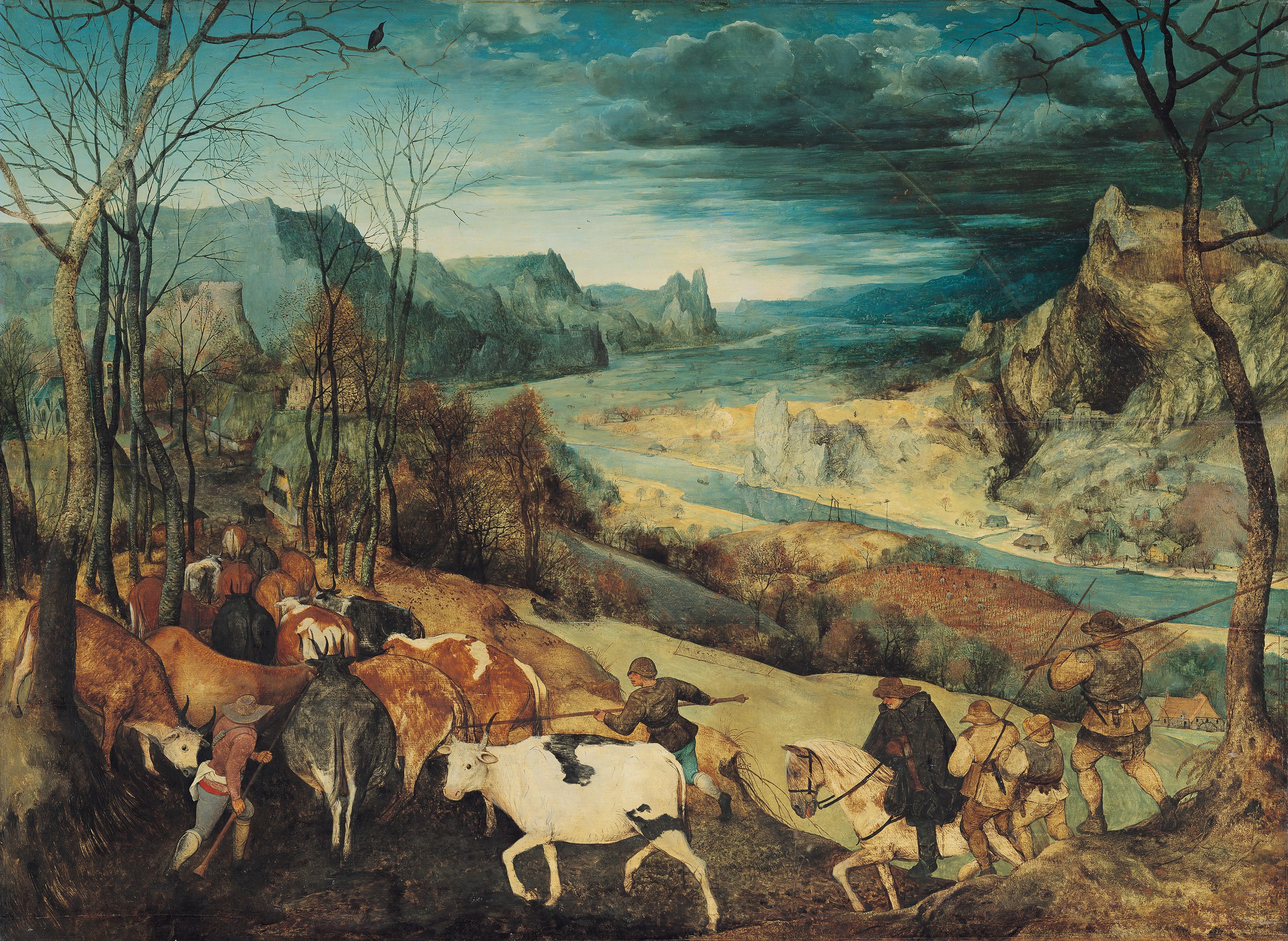
The Return of the Herd
Pieter Brueghel the Elder · 1565
Kunsthistorisches Museum
The Return of the Herd. Cattle driven down from the high pasture through autumn woods, the October and November panel of the months of 1565.
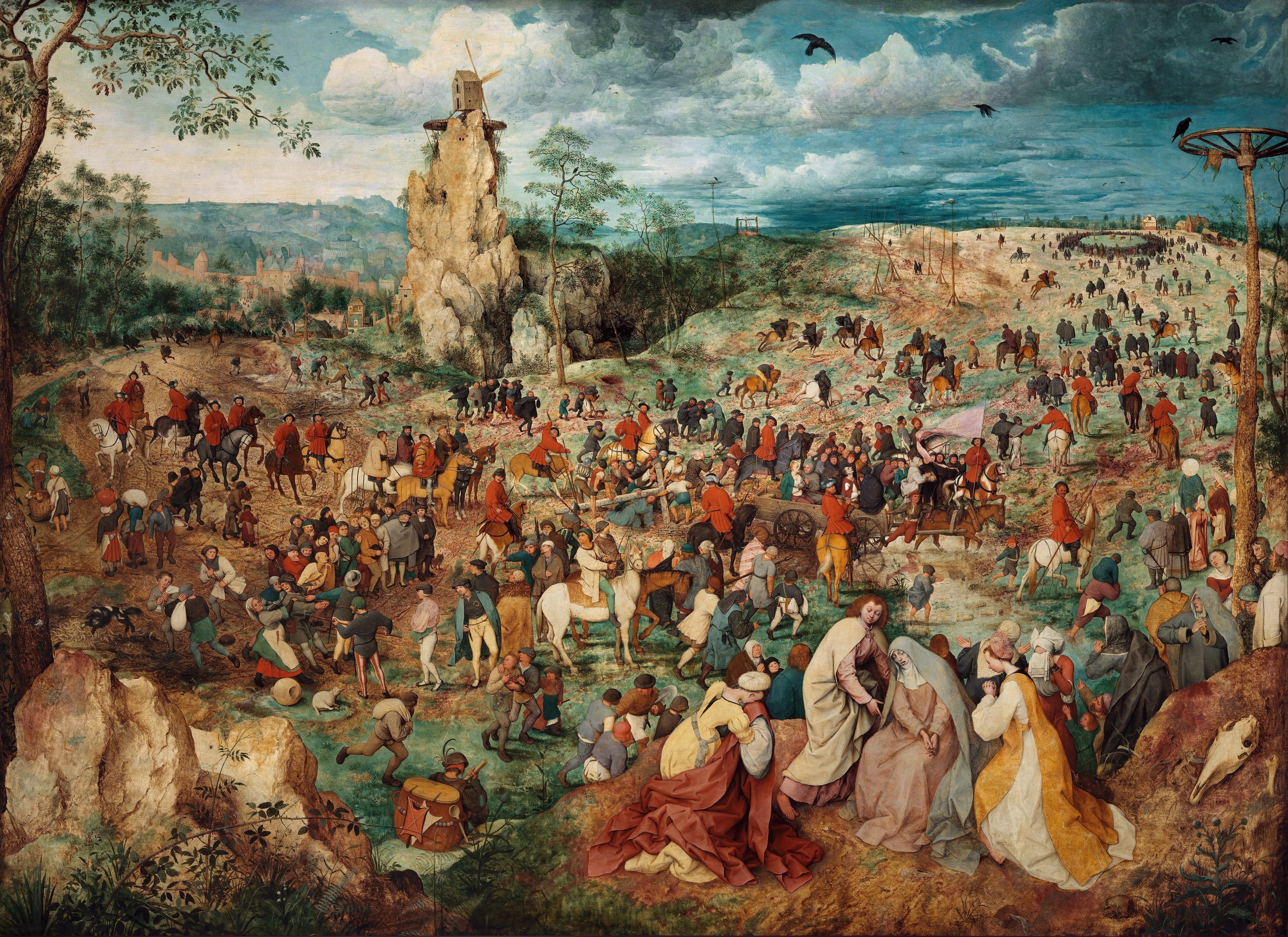
The Procession to Calvary
Pieter Brueghel the Elder · 1564
Kunsthistorisches Museum
The Procession to Calvary. Christ's cross carried through a crowd of contemporaries in a wide landscape, the second-largest painting Brueghel ever made.
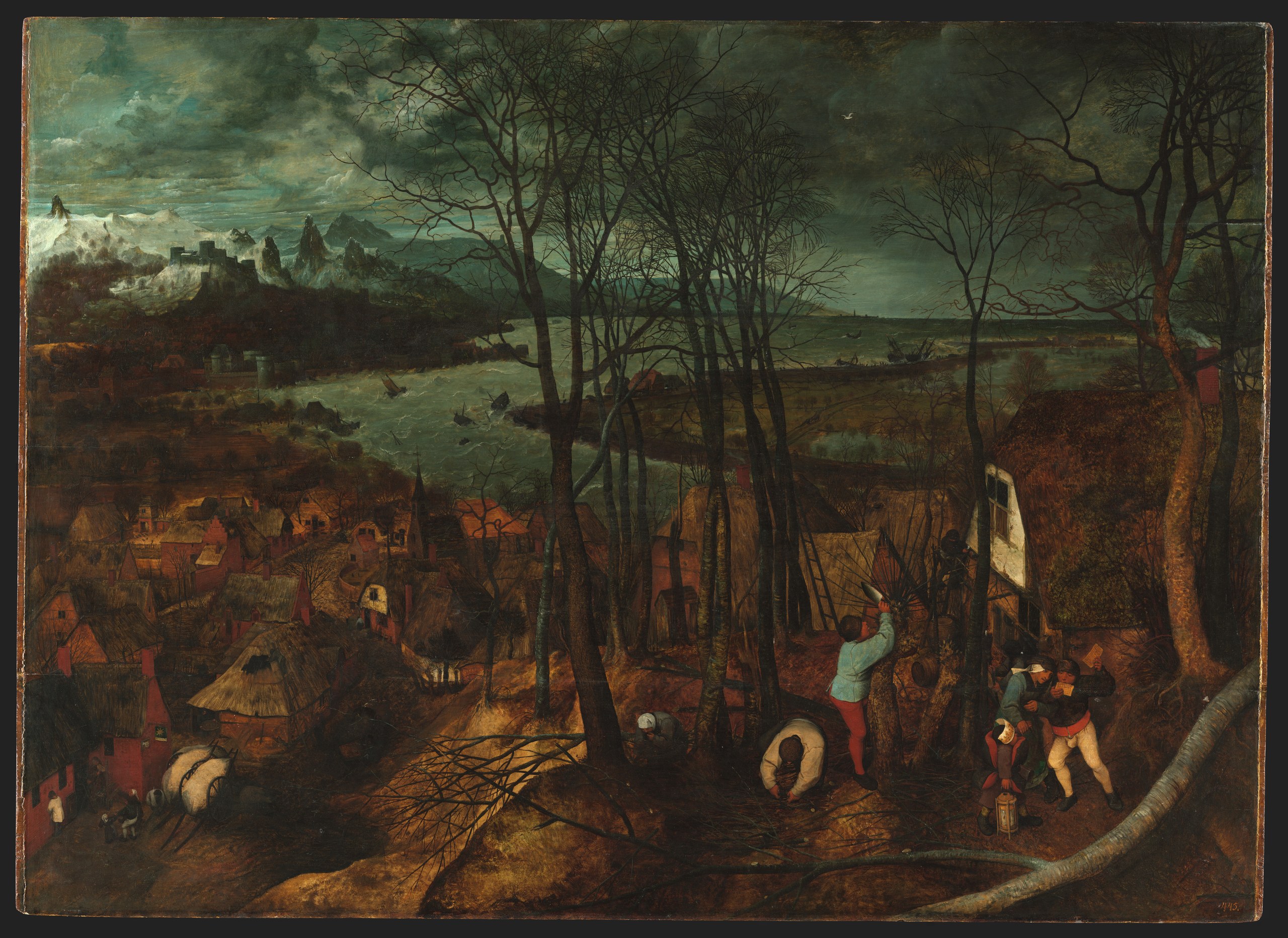
The Gloomy Day
Pieter Brueghel the Elder · 1565
Kunsthistorisches Museum
The Gloomy Day. Leafless trees, ships driven against the shore and a boy crowned in paper before Carnival: February and March in the series of the months.
More to discover
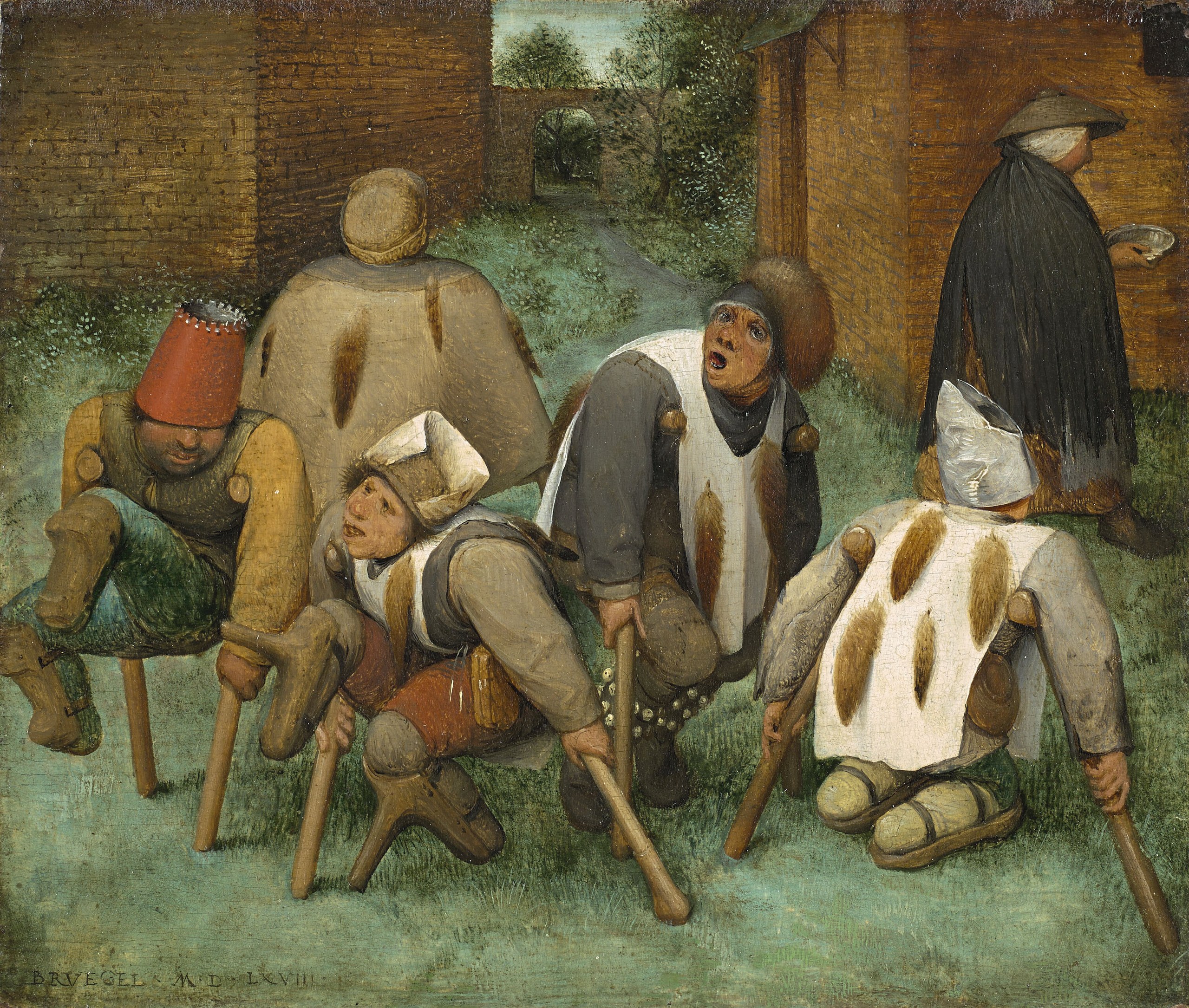
The Beggars
Pieter Brueghel the Elder · 1568
Louvre
The Beggars. Five cripples wearing carnival headgear for king, soldier, bourgeois, peasant and bishop, a satire whose meaning is still argued over; his only painting in the Louvre.
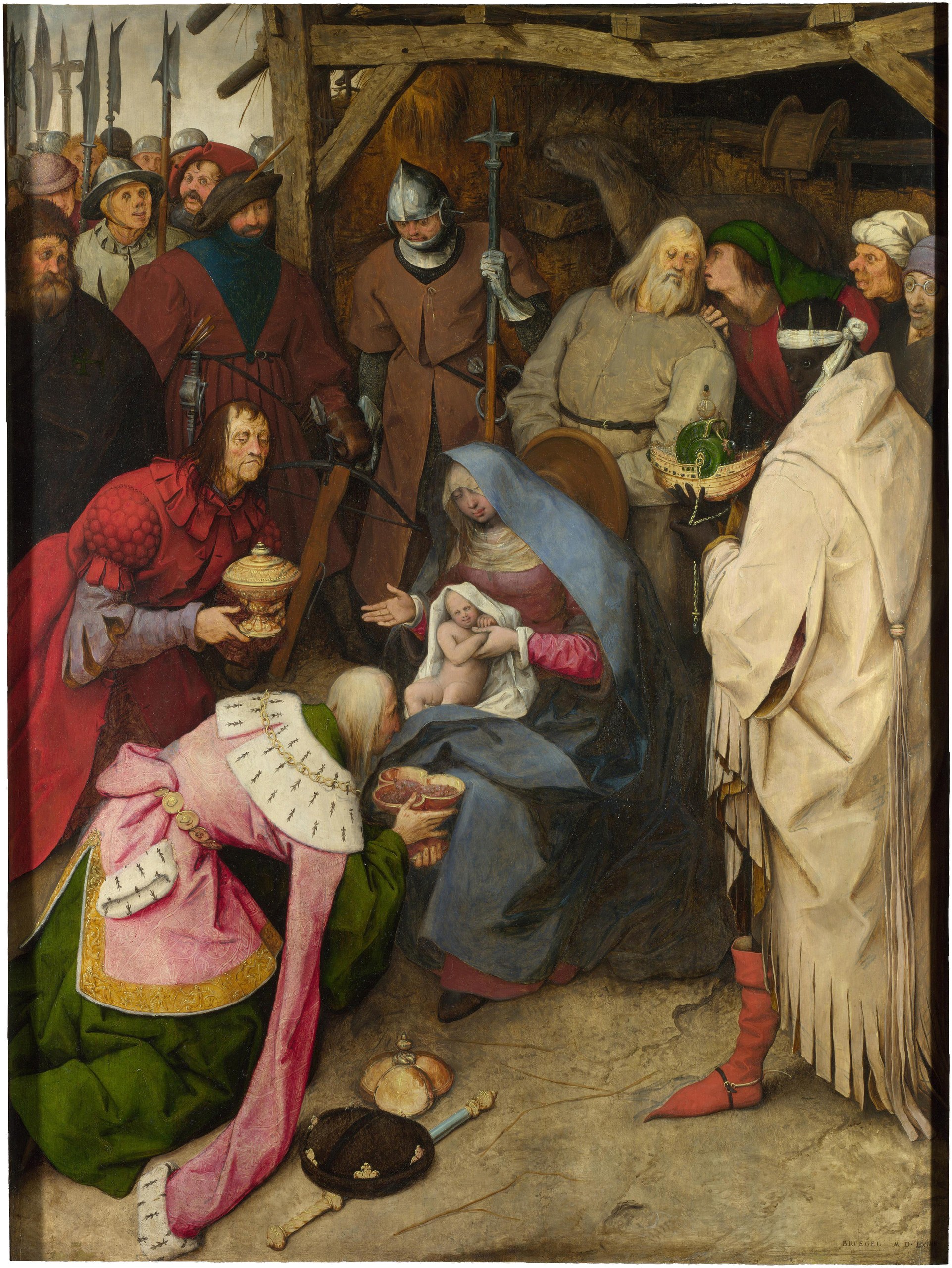
The Adoration of the Kings
Pieter Brueghel the Elder · 1563
National Gallery
The Adoration of the Kings. The Magi and their retinue crowding around the Virgin and Child, one of the very few upright panels he ever painted.
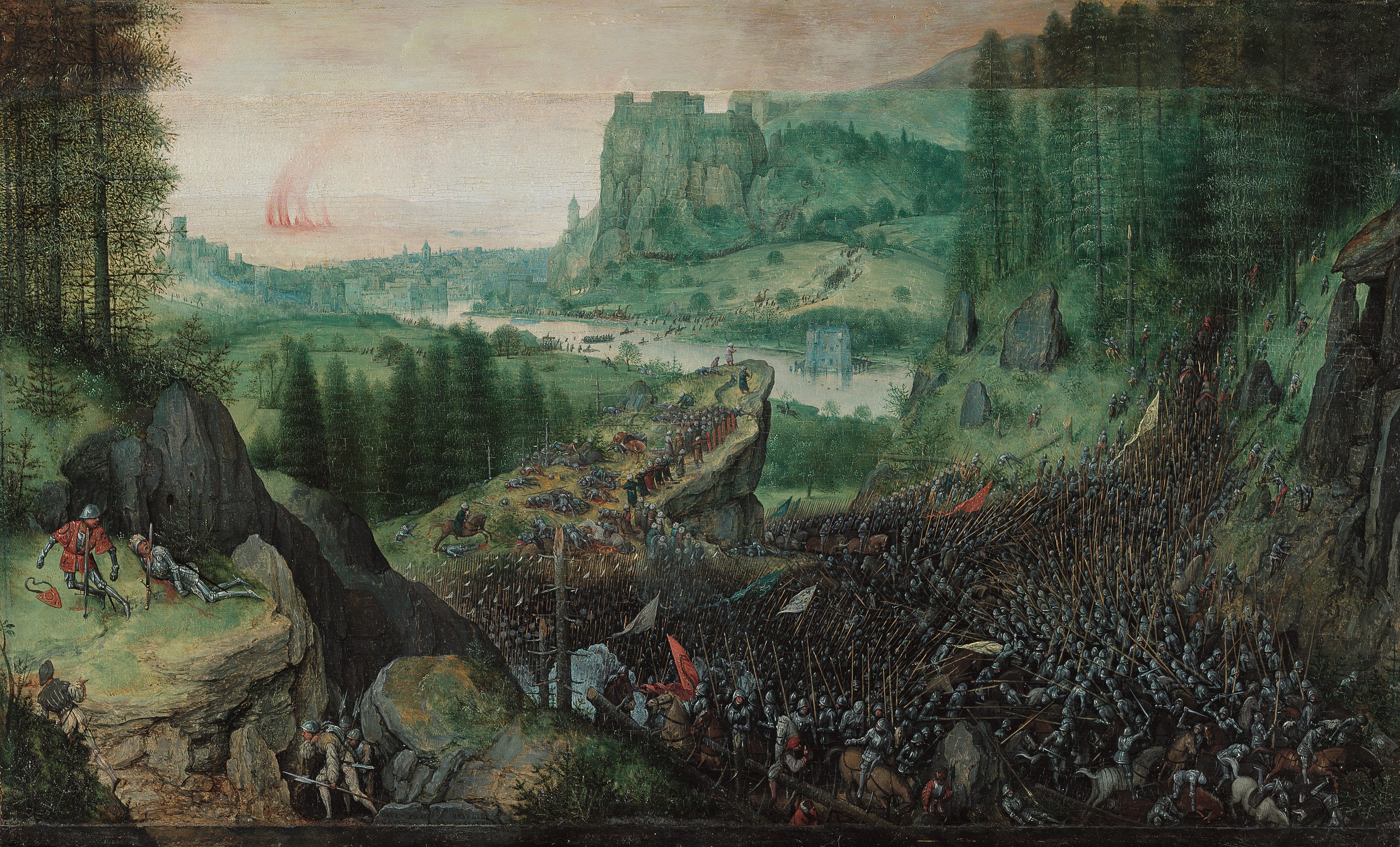
The Suicide of Saul
Pieter Brueghel the Elder · 1562
Kunsthistorisches Museum
The Suicide of Saul. The wounded king falling on his sword above a battle that fills the valley: an early attempt to bind figure painting and landscape together, and the first time this subject had been put in a painting.
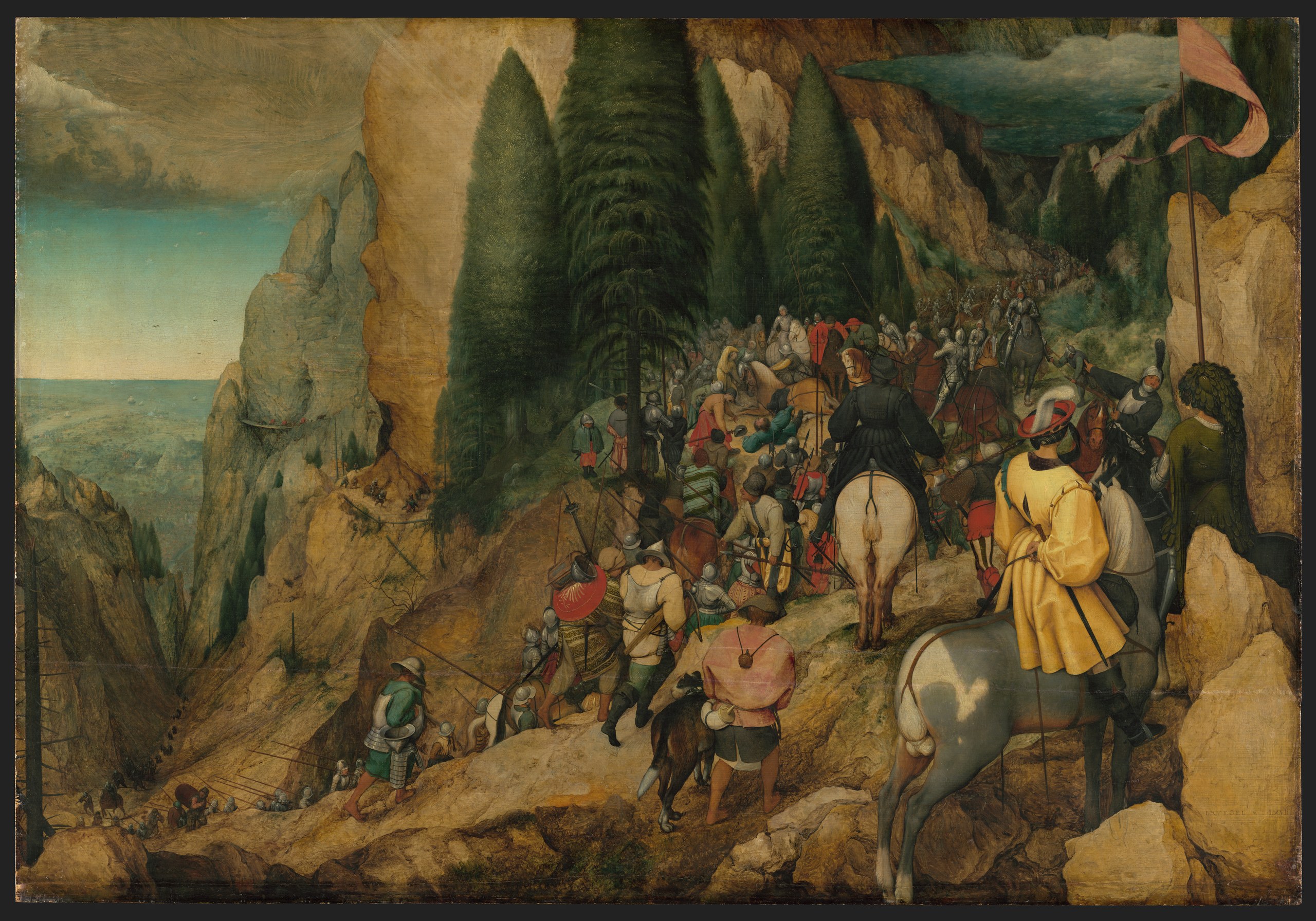
Conversion of Paul
Pieter Brueghel the Elder · 1567
Kunsthistorisches Museum
Conversion of Paul. The road to Damascus as a mountain pass crowded with soldiers in the dress and armour of Bruegel's own day, the fallen convert almost lost in the crowd.
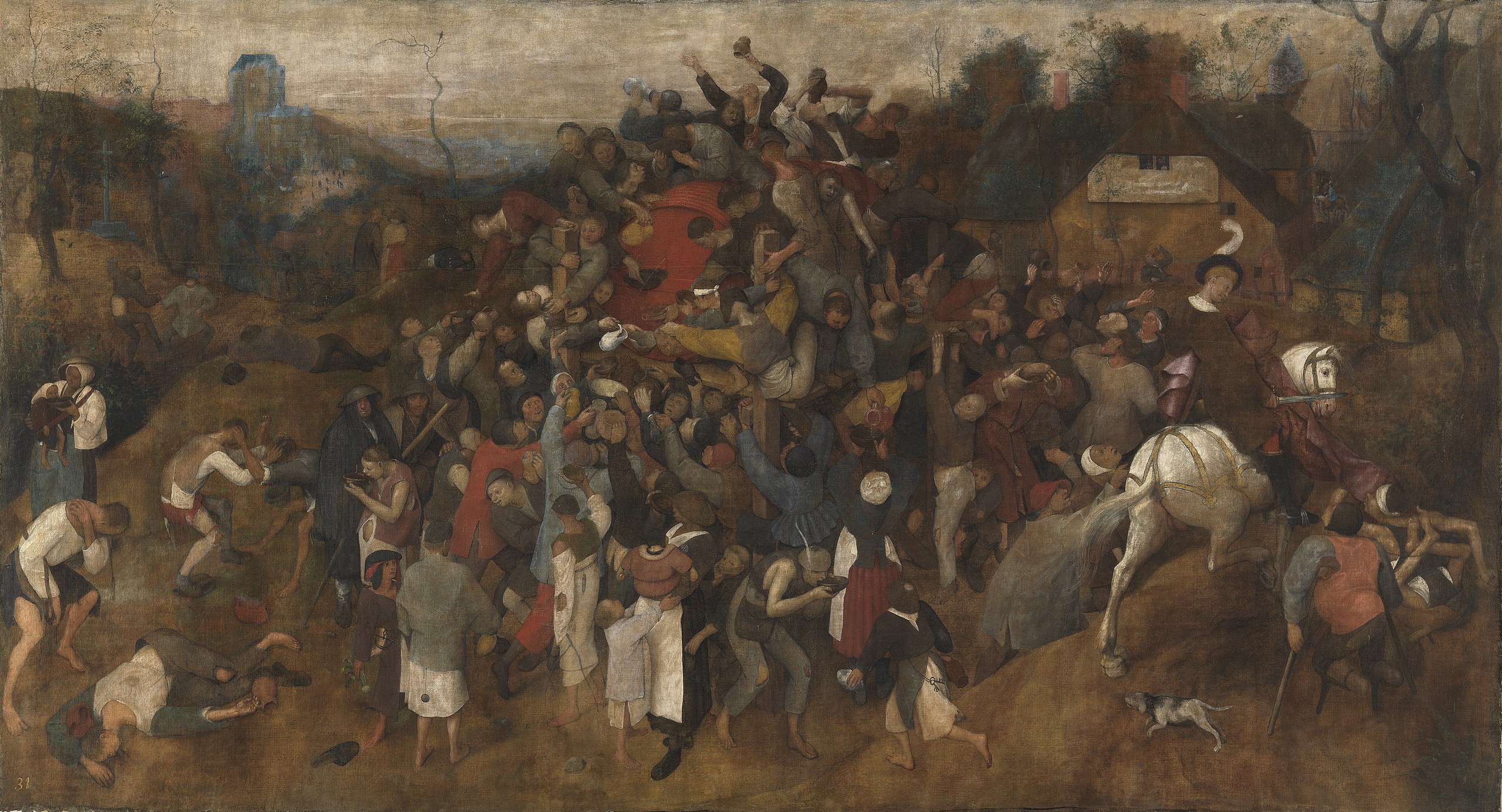
The Wine of Saint Martin's Day
Pieter Brueghel the Elder · 1566
Museo del Prado
The Wine of Saint Martin's Day. Peasants scrambling for the first wine of the season at the November festival, the legend of the saint sharing his cloak pushed to the edge of the crowd; the Prado identified it as a Bruegel original in 2010.
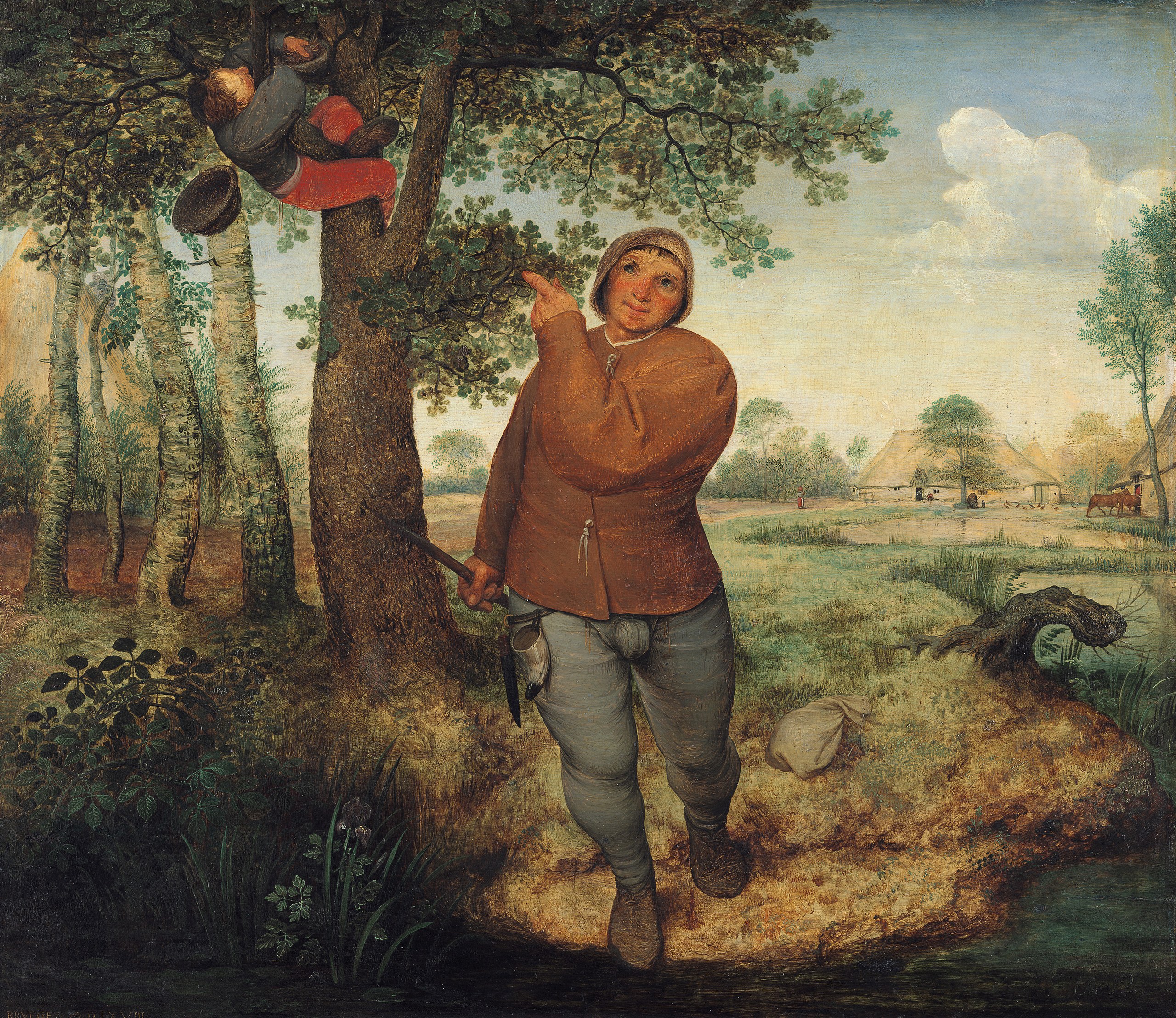
The Peasant and the Nest Robber
Pieter Brueghel the Elder · 1568
Kunsthistorisches Museum
The Peasant and the Nest Robber. Two monumental peasants in a late panel, one pointing up while the other climbs to raid a nest: a proverb about the man who knows and the man who takes, and a moralising contrast between them.
Sources
- Wikipedia, “Pieter Bruegel the Elder”
- Wikipedia, “The Peasant Wedding”
- Wikipedia, “Children's Games (Bruegel)”
- Wikipedia, “The Fight Between Carnival and Lent”
- Wikipedia, “The Beggars”
- Wikipedia, “Adoration of the Kings (Bruegel)”
- Wikipedia, “The Hunters in the Snow”
- Wikipedia, “The Tower of Babel (Bruegel)”
- Wikipedia, “The Peasant Dance”
- Wikipedia, “The Triumph of Death”
- Wikipedia, “The Return of the Herd”
- Wikipedia, “The Procession to Calvary (Bruegel)”
- Wikipedia, “The Gloomy Day”
- Wikipedia, “The Suicide of Saul”
- Wikipedia, “Conversion of Paul (Bruegel)”
- Wikipedia, “The Wine of Saint Martin's Day”
- Wikipedia, “The Peasant and the Nest Robber”
Invite Pieter Brueghel the Elder into your living room
Play 16 works from this collection on your TV, phone or tablet with Momentable Art TV.