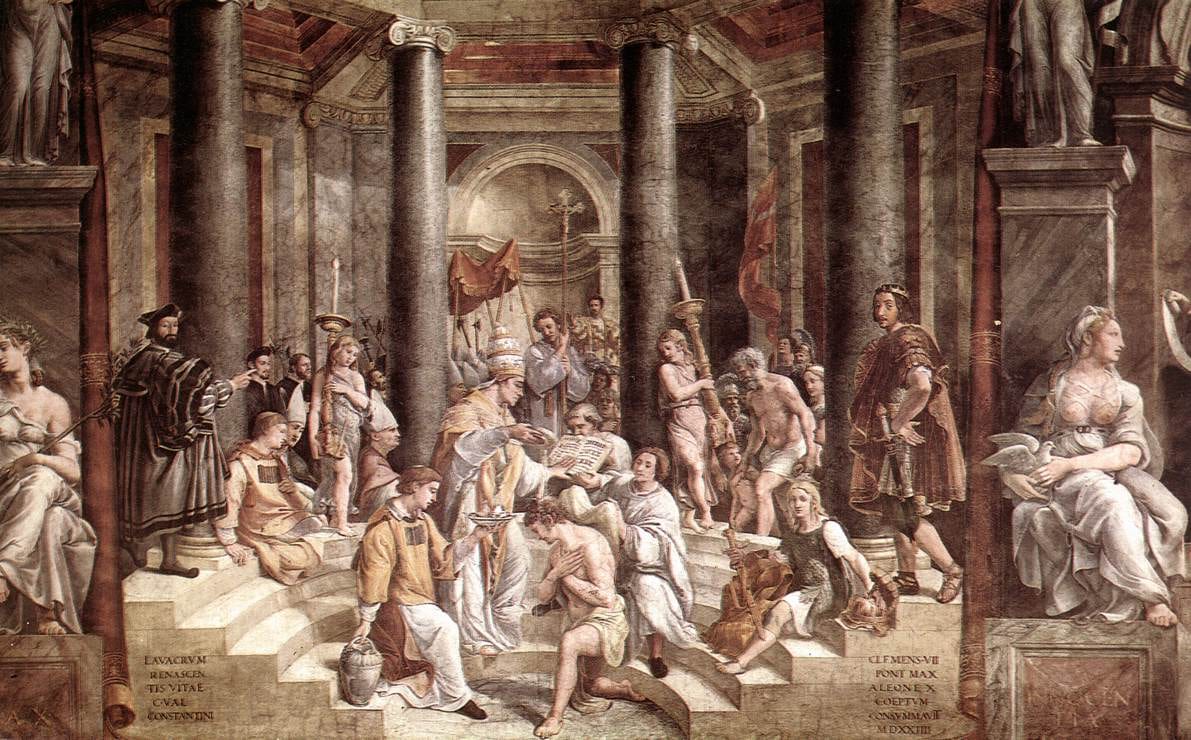
Stanza della Segnatura
Raphael · 1508

Raphael
Holy Roman Empire · 1483–1520
The High Renaissance painter whose calm, perfectly ordered pictures became the standard Western art measured itself against for four hundred years.
- 50
- Pupils and assistants in his Roman workshop
- 400+
- Drawings that survive
- 10
- Cartoons designed for the Sistine Chapel tapestries
Play 39 works from this collection on your TV, phone or tablet with Momentable Art TV.
Play CollectionUrbino and Perugino
Raphael was born in Urbino in 1483, the son of Giovanni Santi, who painted for the duke of that small and highly cultivated city. His father died when the boy was eleven, and his training probably followed in the workshop of the Umbrian master Pietro Perugino; by 1500, still in his teens, he counted as a master in his own right.
The early altarpieces and devotional panels arrange their figures in Perugino's rather stiff balance, and the master's stamp on the young man is unusually strong. Even so early, patrons were already seeking him out.
The Florentine years
Florence held him from 1504 to 1508, and he arrived there a provincial and left a modern painter. Leonardo da Vinci was the revelation: the pose and setting of the Mona Lisa stand behind his portrait of the lady with the unicorn, and Leonardo's smoky transitions of tone enter the Madonnas of these years.
The Madonnas he painted in Florence made his name. Tender and grave at once, they remain among the best loved images of the Virgin and Child the Renaissance produced.
Rome and the Stanze
In 1508 Pope Julius II summoned him to Rome to fresco the rooms of the Vatican apartment, and that decoration became the largest and most central work of his life. The first room, the Stanza della Segnatura, holds the School of Athens and its companion walls, and it fell on Rome like an event: the frescoes are still generally counted his greatest achievement.
Julius died and Leo X kept him at work; room followed room, with much of the later painting entrusted to assistants from a workshop that grew enormous. His last twelve Roman years, spent in the service of two popes and their circle, were his most triumphant, and death took him in 1520, at thirty-seven, with nothing yet in decline.
Known works
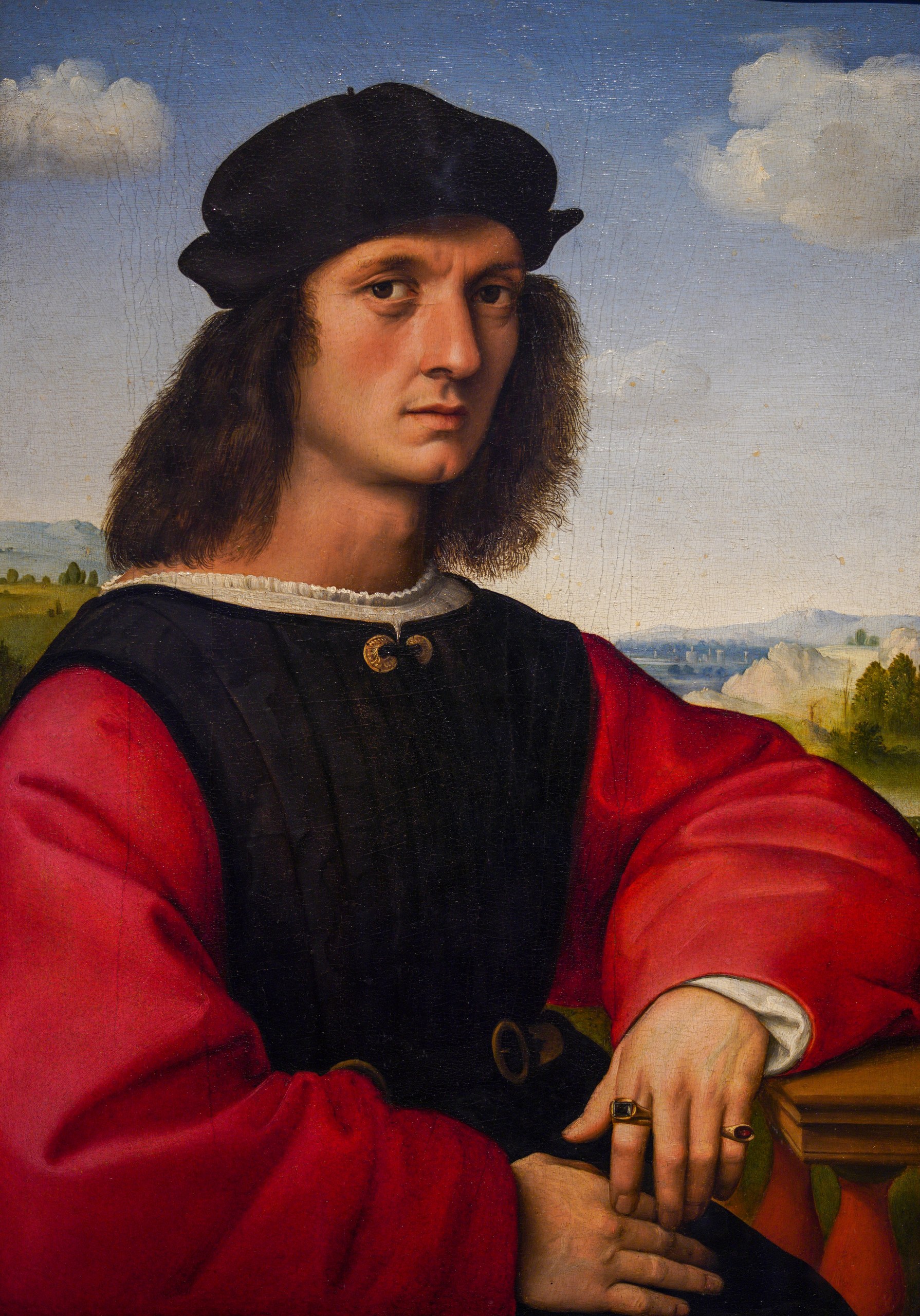
Portrait of Agnolo Doni
Raphael · 1500
Palazzo Pitti
Portrait of Agnolo Doni. The rich cloth merchant in a turban cap, painted at the same time as his wife Maddalena's portrait; the pair stand as the sober Florentine face of his portraiture.
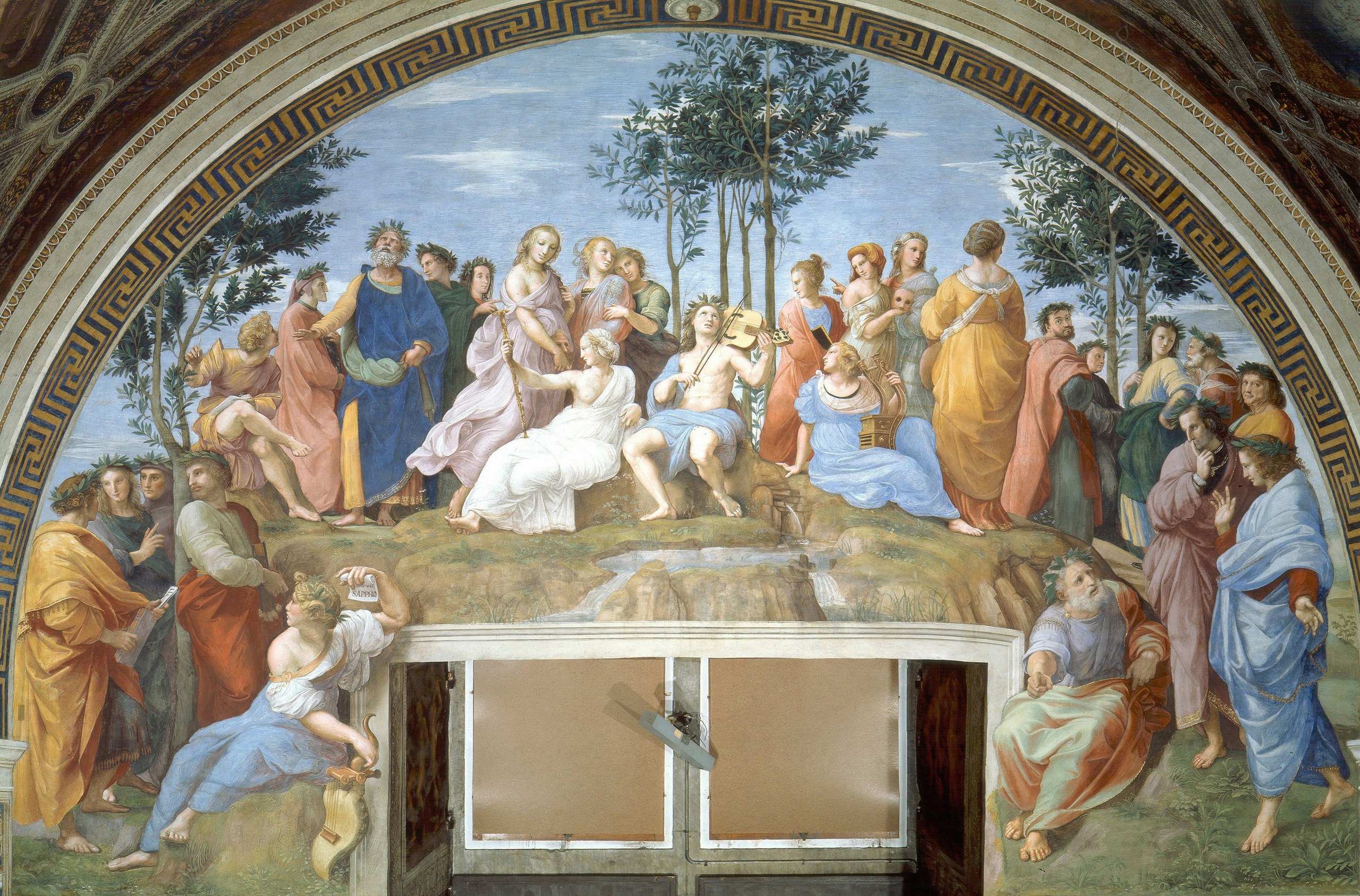
The Parnassus
Raphael · 1500
Vatican Museums
Apollo with the Muses and the ancient poets, Sappho among them, on the slopes of the sacred mountain; likely the room's second wall finished, around 1509 to 1511.
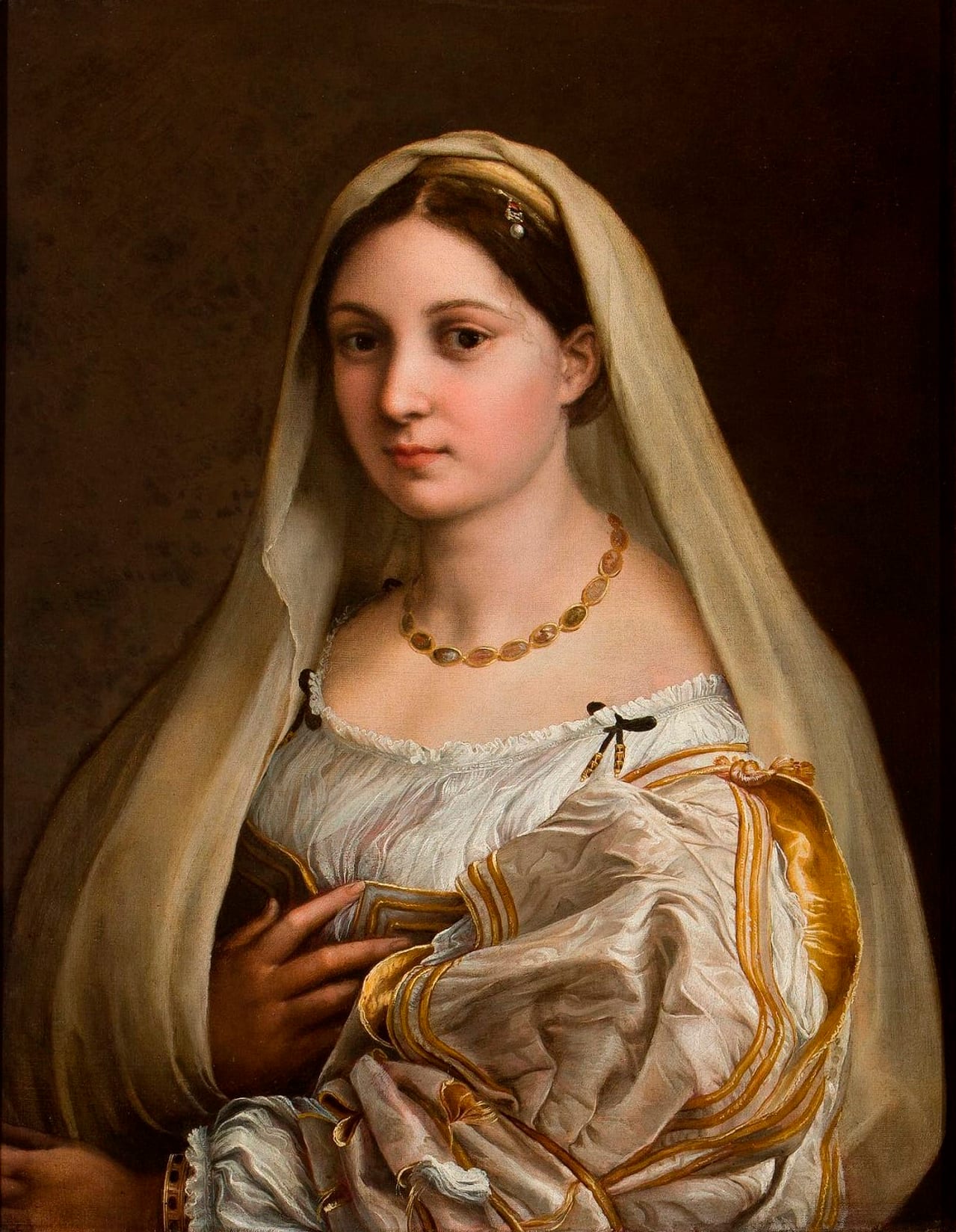
La velata
Raphael · 1513
Palazzo Pitti
The veiled woman in a sleeve of silver damask, opulent and perfectly still; tradition names her Margherita Luti, the baker's daughter and the painter's Roman love.
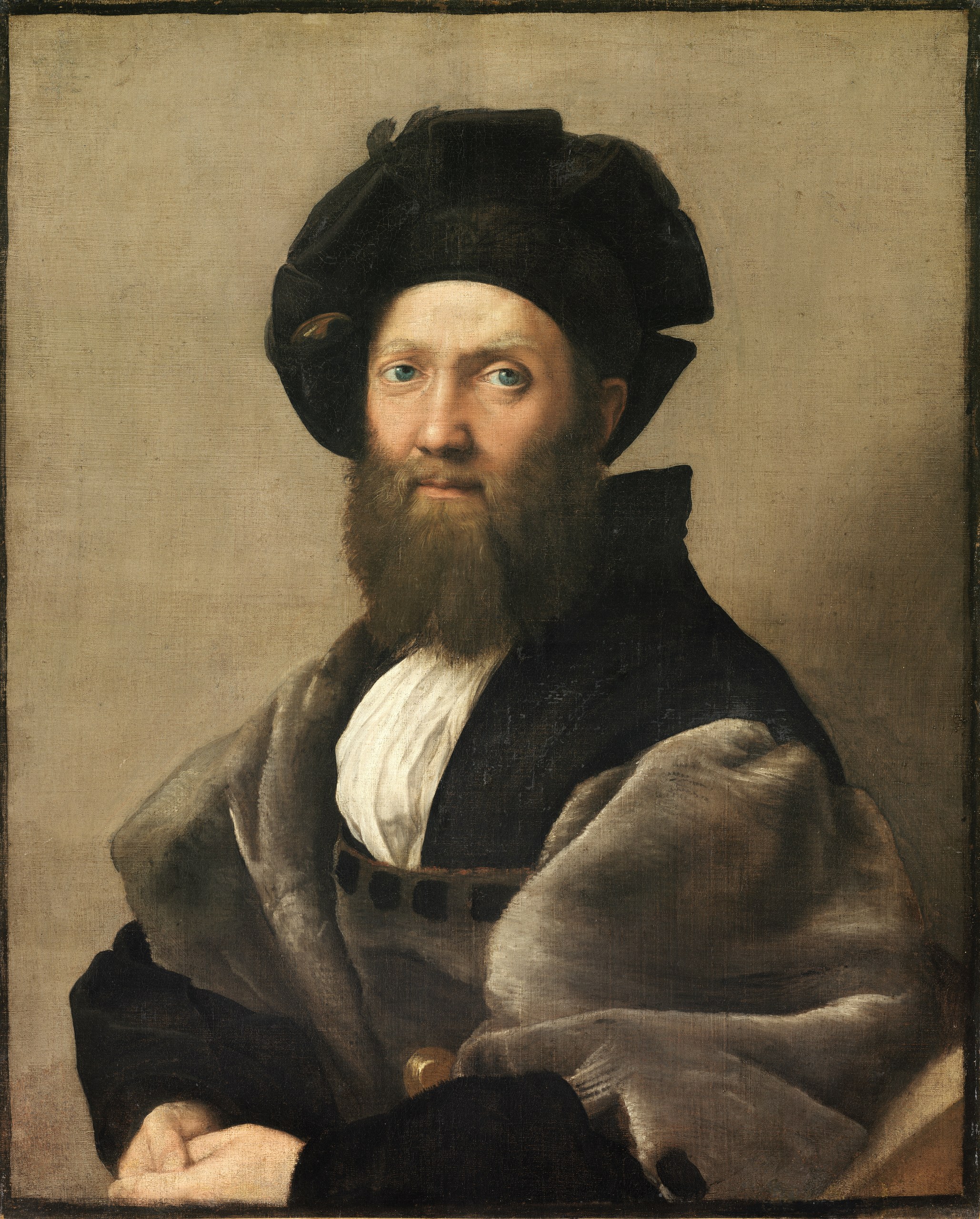
Portrait of Baldassare Castiglione
Raphael · 1515
Louvre
The diplomat and author of the Book of the Courtier seated in grey and fur, the very model of the High Renaissance gentleman; among the finest portraits of the age, and one that never stopped influencing later painters.
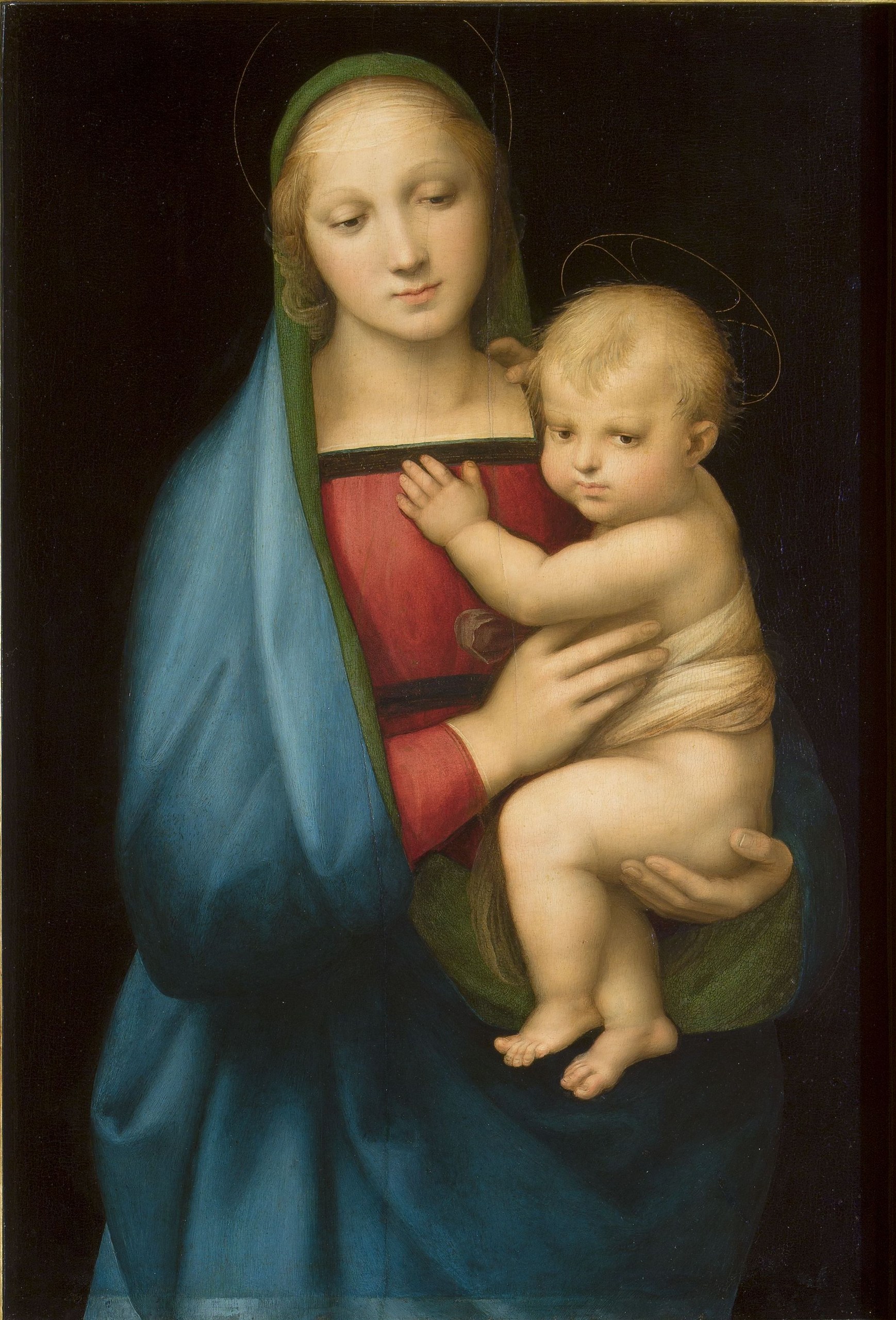
Madonna del Granduca
Raphael · 1506
Palazzo Pitti
A small, quiet Virgin and Child, probably from 1505, soon after he reached Florence; the softened outlines show what Leonardo was teaching him there.
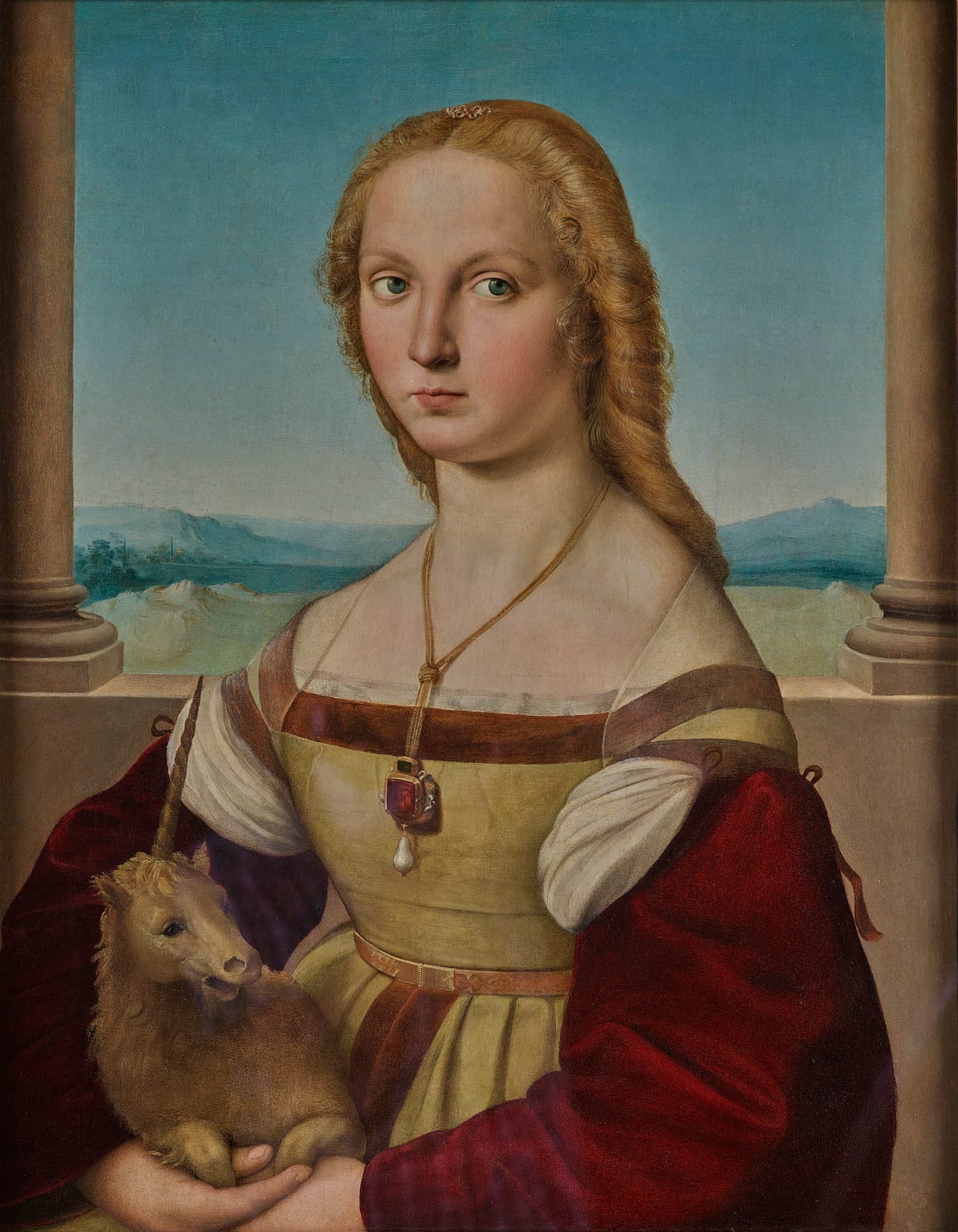
Portrait of a Lady with a Unicorn
Raphael · 1505
Louvre
A young unmarried woman with a small unicorn in her lap, her loggia and her pose borrowed from the Mona Lisa then on Leonardo's easel in the same city.
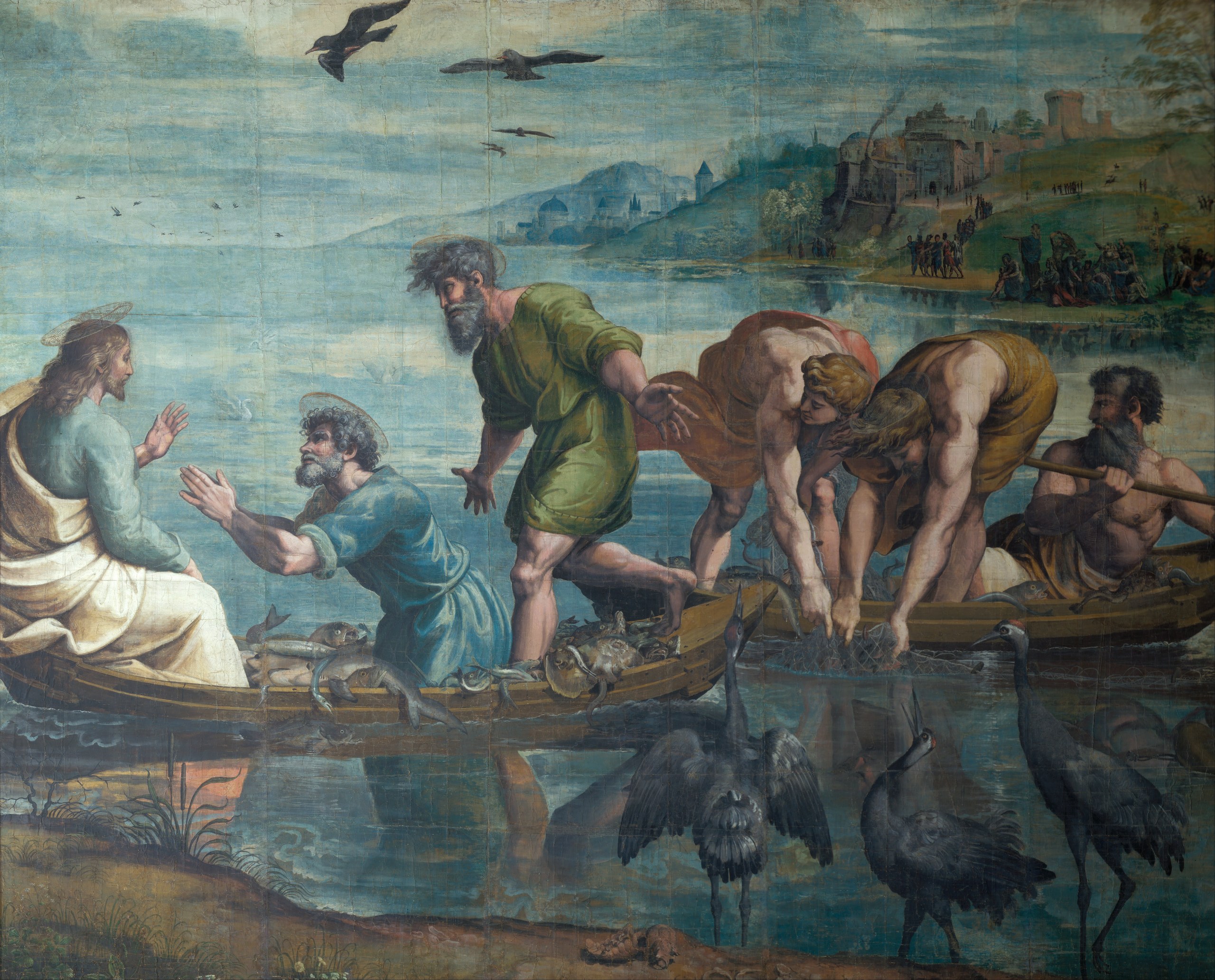
Raphael Cartoons
Raphael · 1510
Victoria and Albert Museum
Seven full-scale painted designs for the tapestries Leo X ordered for the Sistine Chapel, woven in Brussels and ranked ever since among the greatest treasures of the Renaissance; they have hung in London, on loan from the Crown, since 1865.
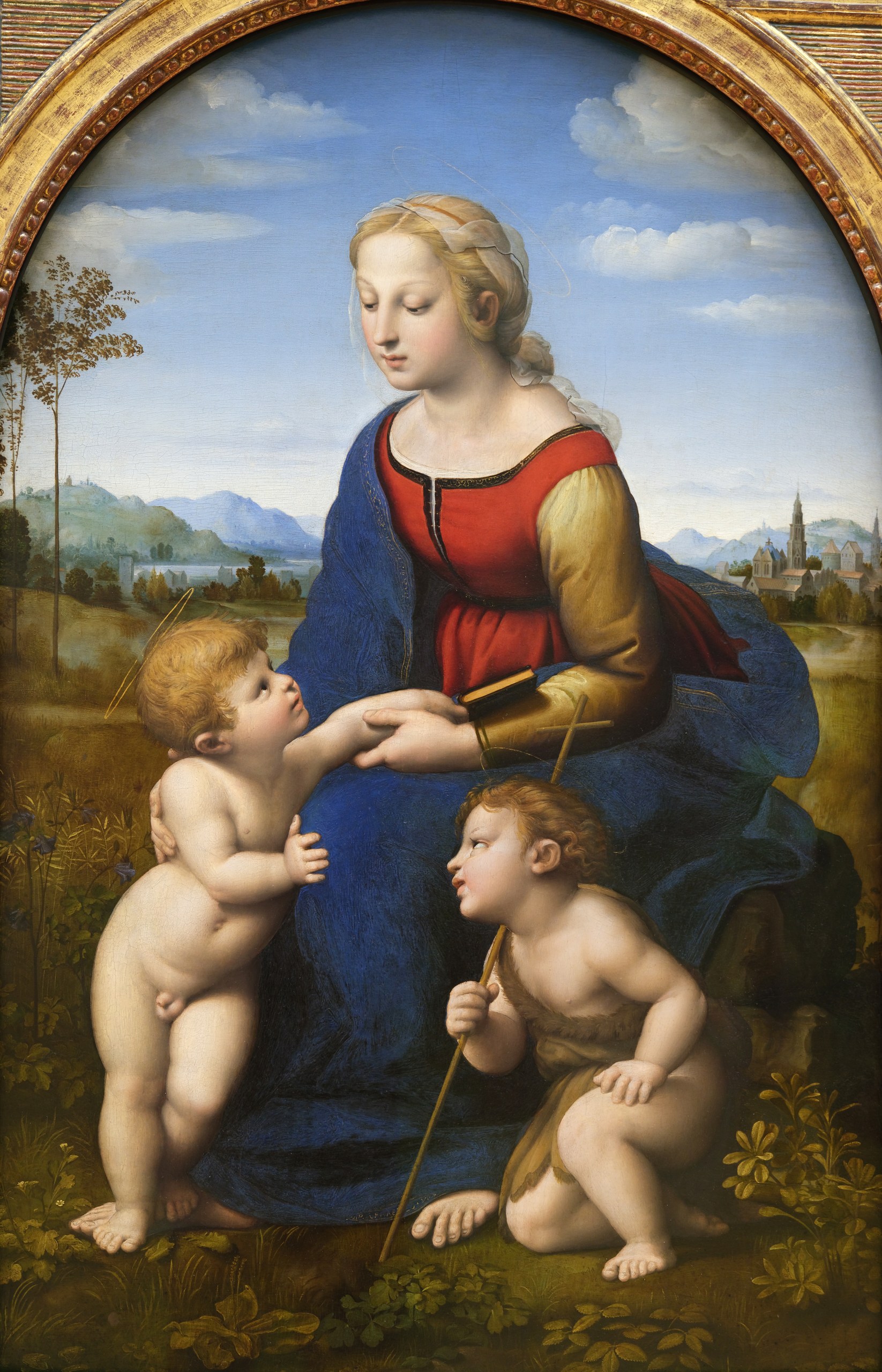
La Belle Jardinière
Raphael · 1500
Louvre
The Virgin with Christ and the young Baptist in a Tuscan landscape, begun by Raphael and completed by Ridolfo del Ghirlandaio; many historians place it at the summit of his Florentine years.
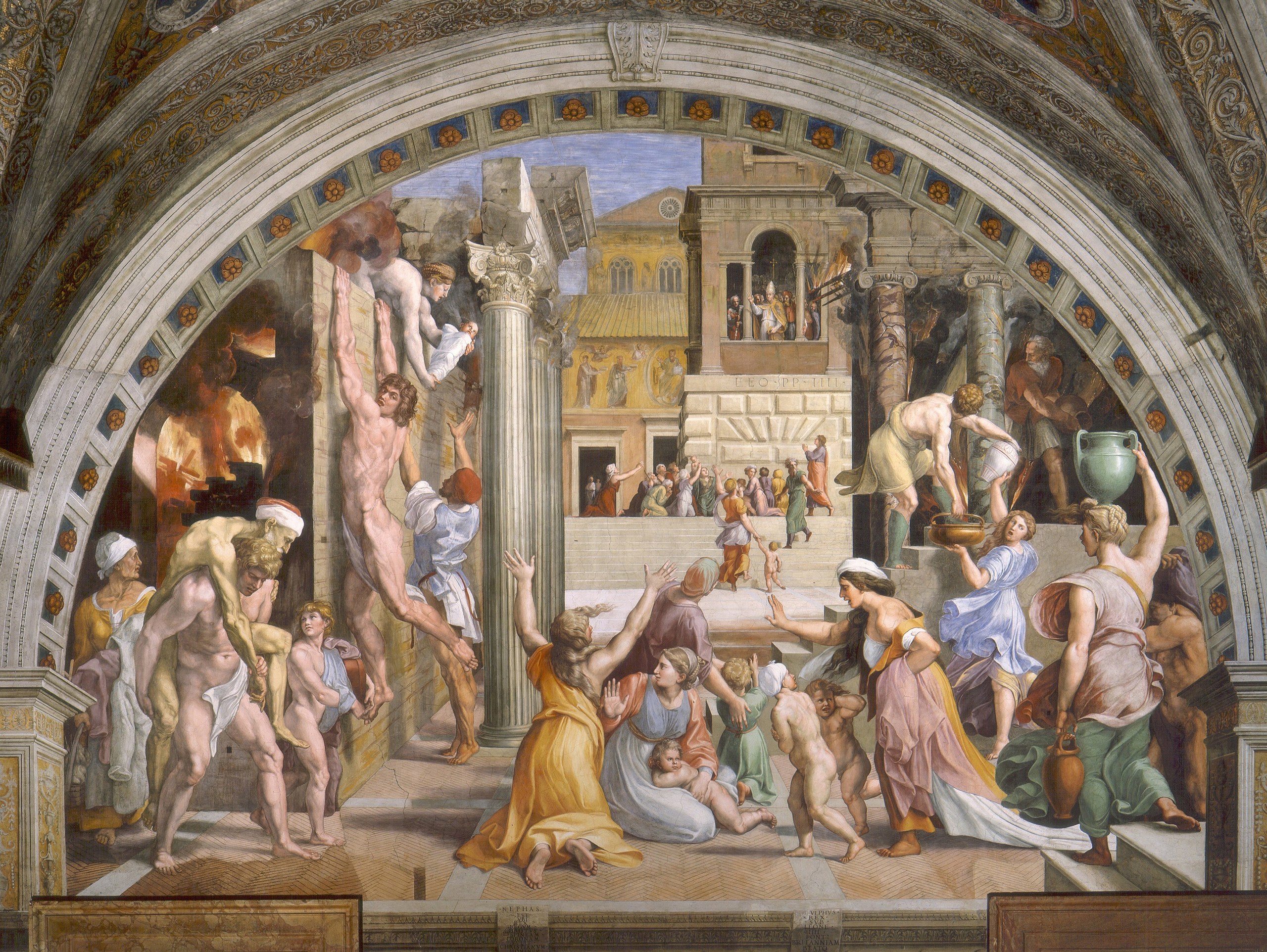
The Fire in the Borgo
Raphael · 1514
Vatican Museums
Leo IV halting a fire with a blessing from the old basilica while the figures below strain like antique statues; the design is Raphael's, the broad execution probably Giulio Romano's.
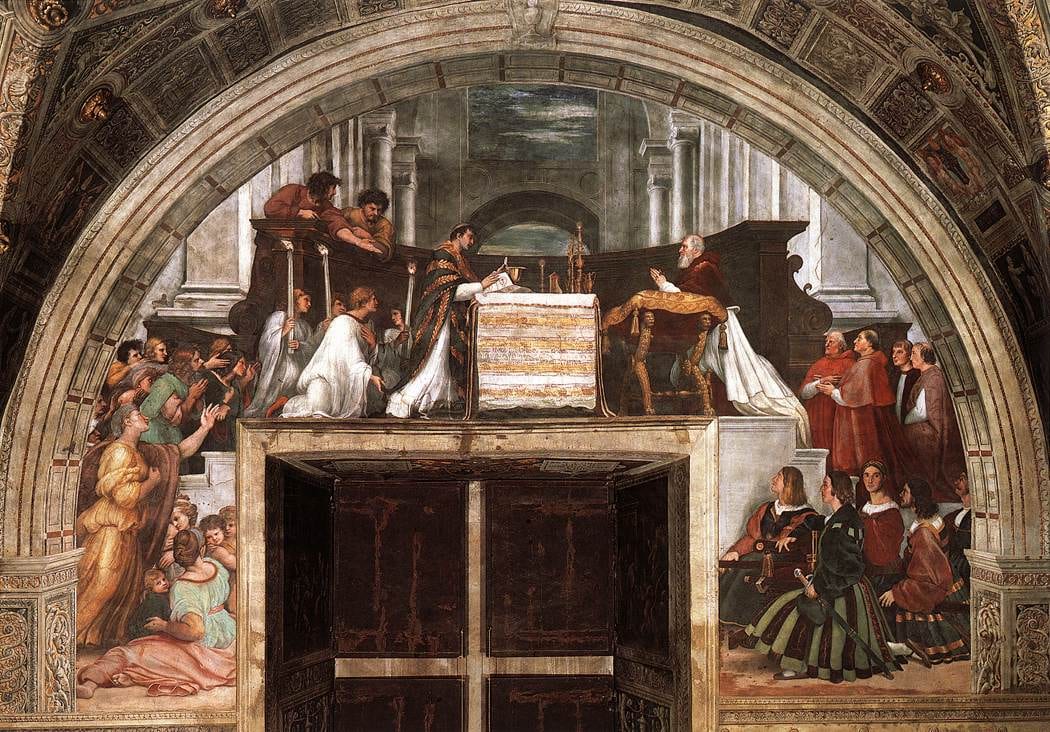
The Mass at Bolsena
Raphael · 1512
Vatican Museums
The doubting Bohemian priest at the altar as the host begins to bleed, a miracle said to have occurred in 1263, painted for the Stanza di Eliodoro with the light doing the telling.
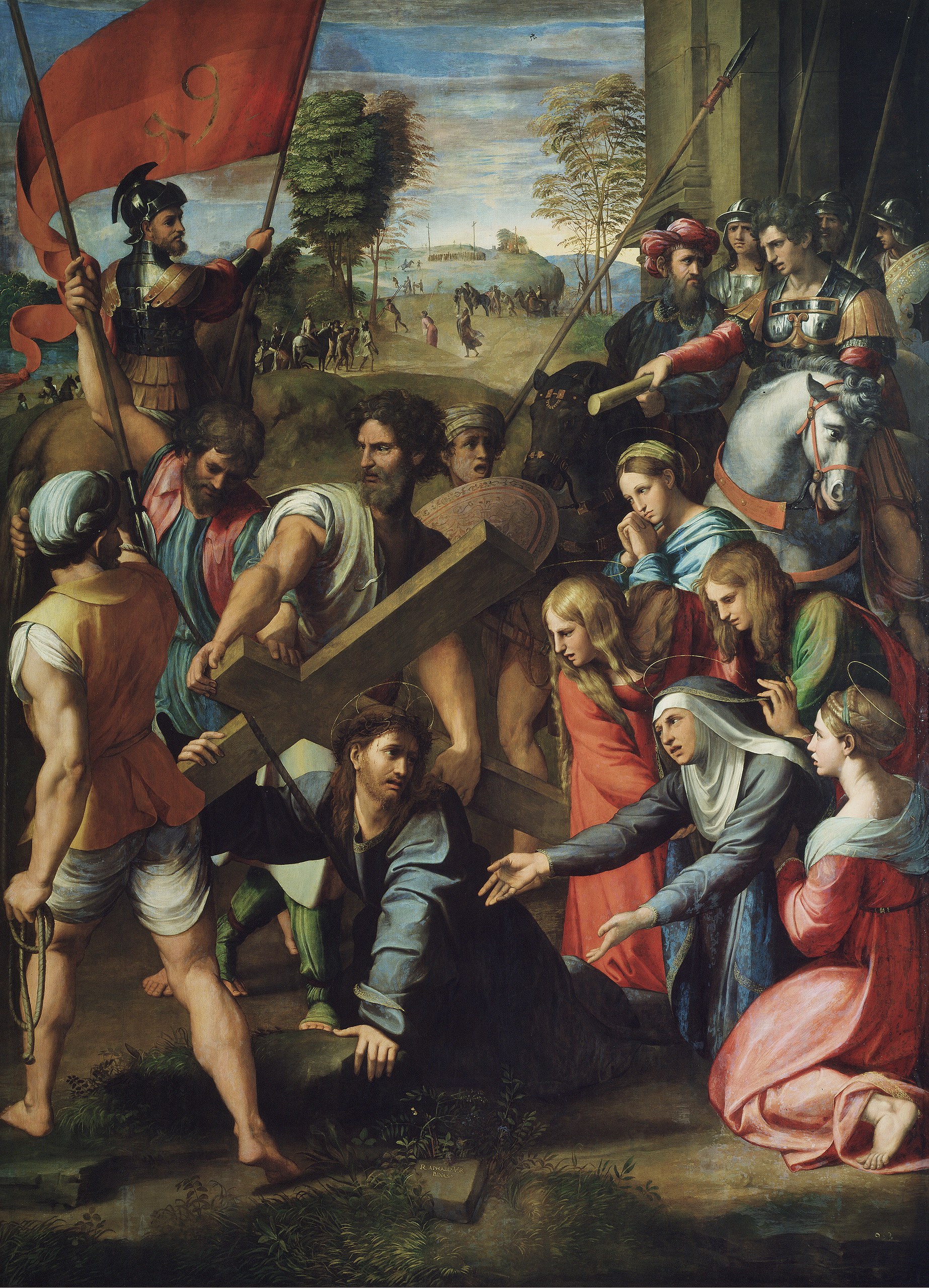
Christ Falling on the Way to Calvary
Raphael · 1515
Museo del Prado
Christ collapses under the cross and his mother faints with the shock; all the feeling is packed into the front of the picture, a key work in the growth of his late manner.
More to discover
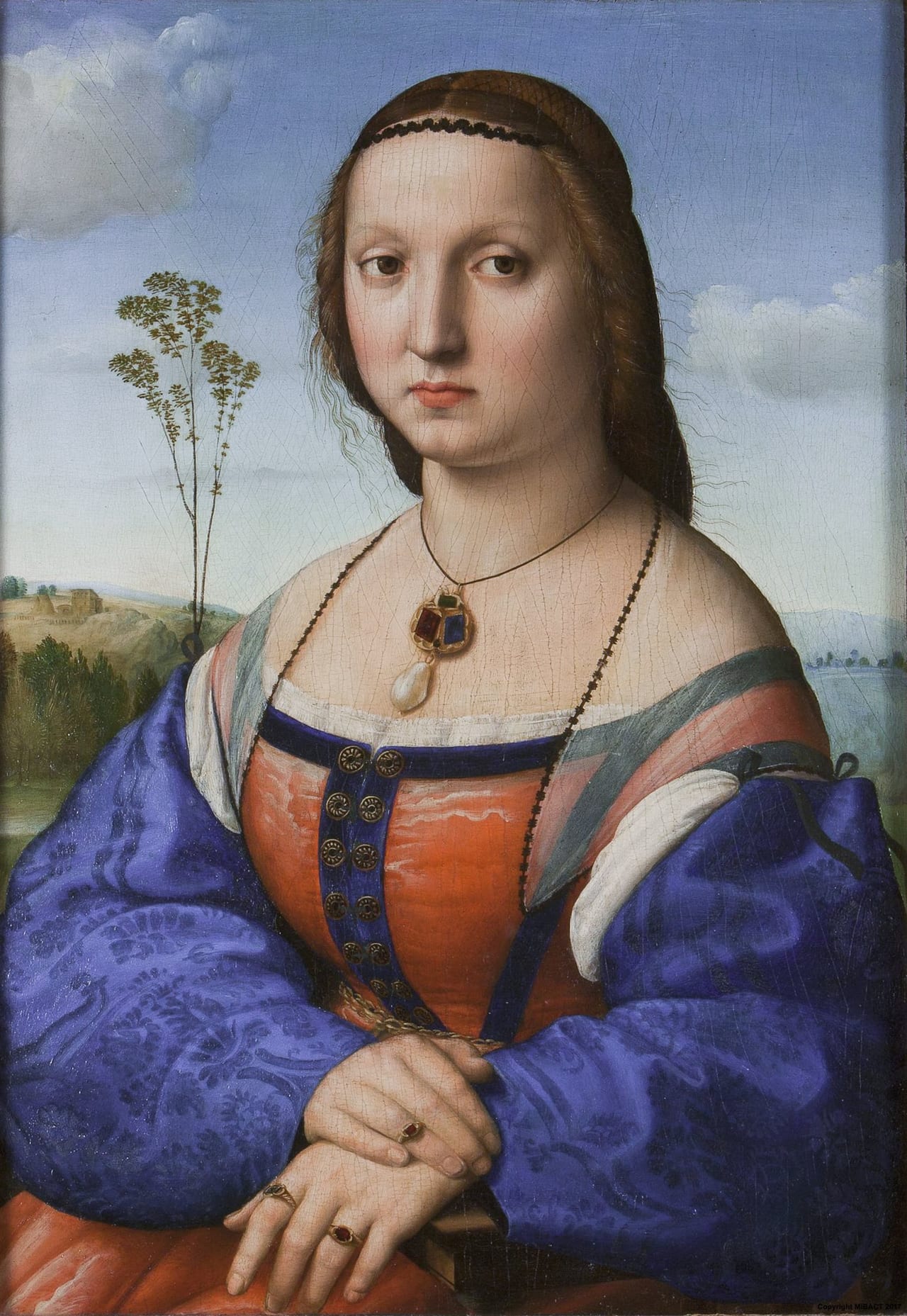
Portrait of Maddalena Doni
Raphael · 1505
Palazzo Pitti
The wife of a rich Florentine cloth merchant, painted alongside the portrait of her husband Agnolo: pearls, a patterned bodice, a distant blue landscape.
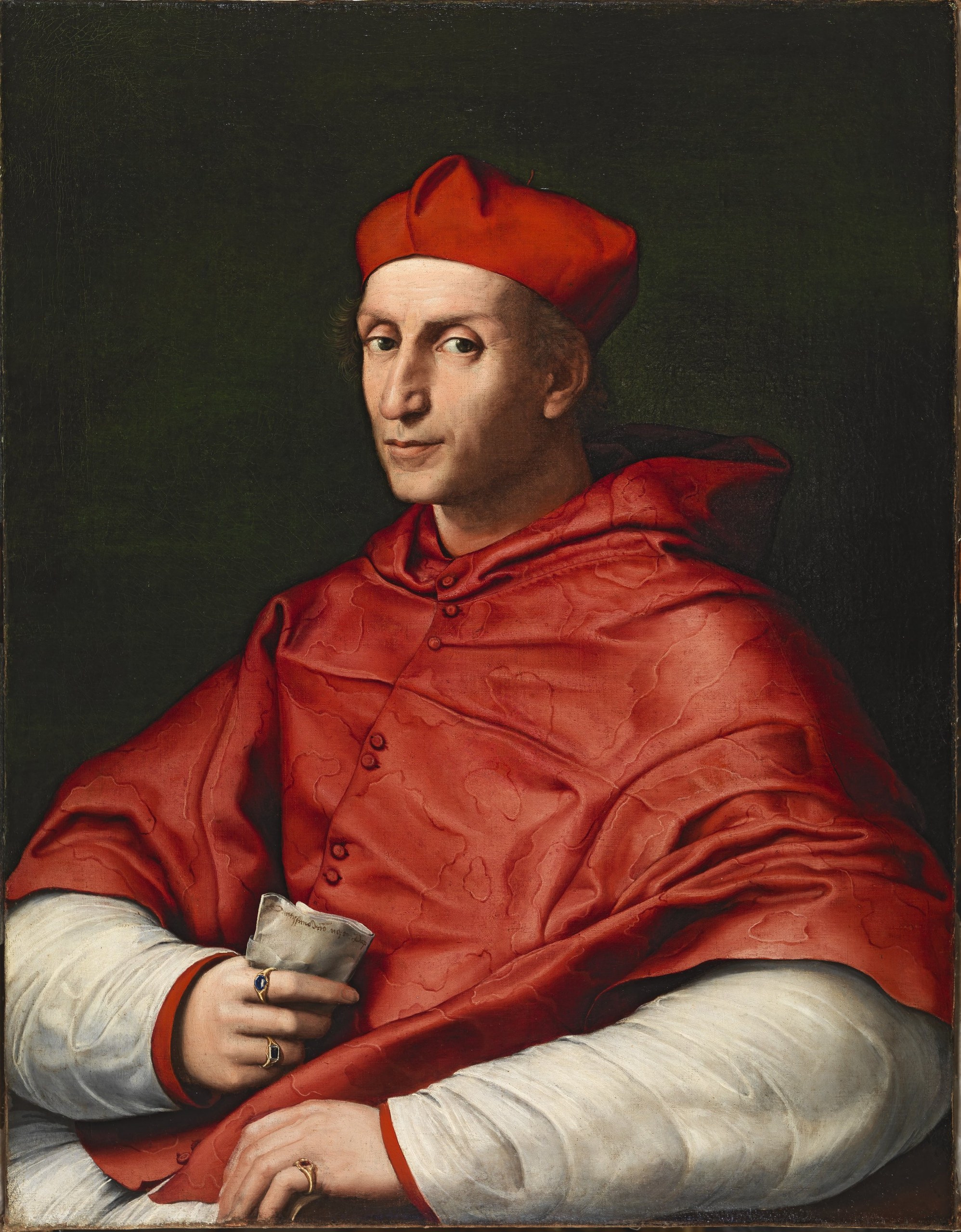
Portrait of Cardinal Bibbiena
Raphael · 1516
Palazzo Pitti
The pope's private secretary and Raphael's friend, in red against green; the handling is stiffer than his norm, and some critics give it to a pupil.
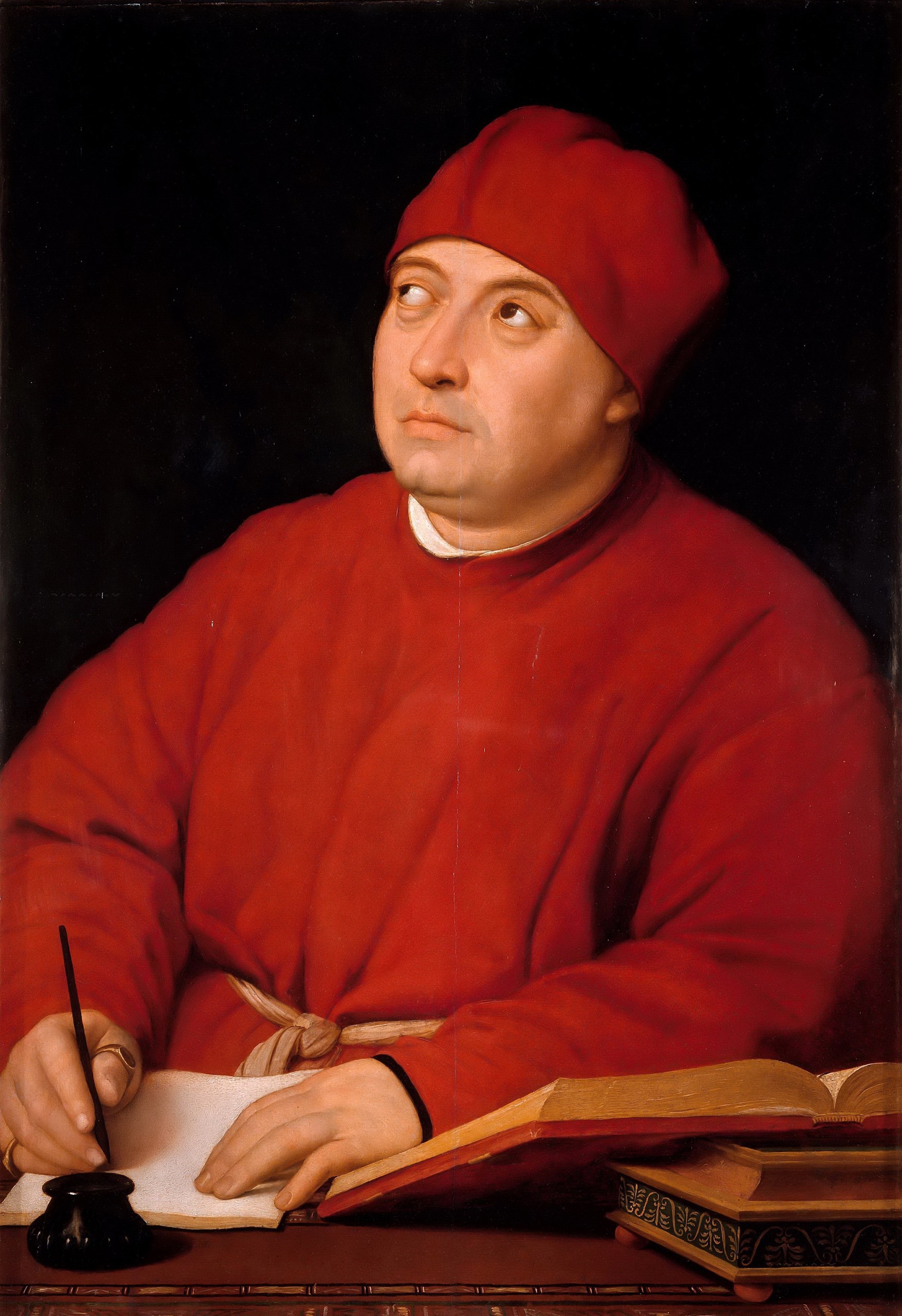
Portrait of Tommaso Inghirami, called Fedra
Raphael · 1510
Palazzo Pitti
A friend of the painter, cross-eyed and caught mid-turn as he writes; the first likeness in which Raphael set a whole body in motion.
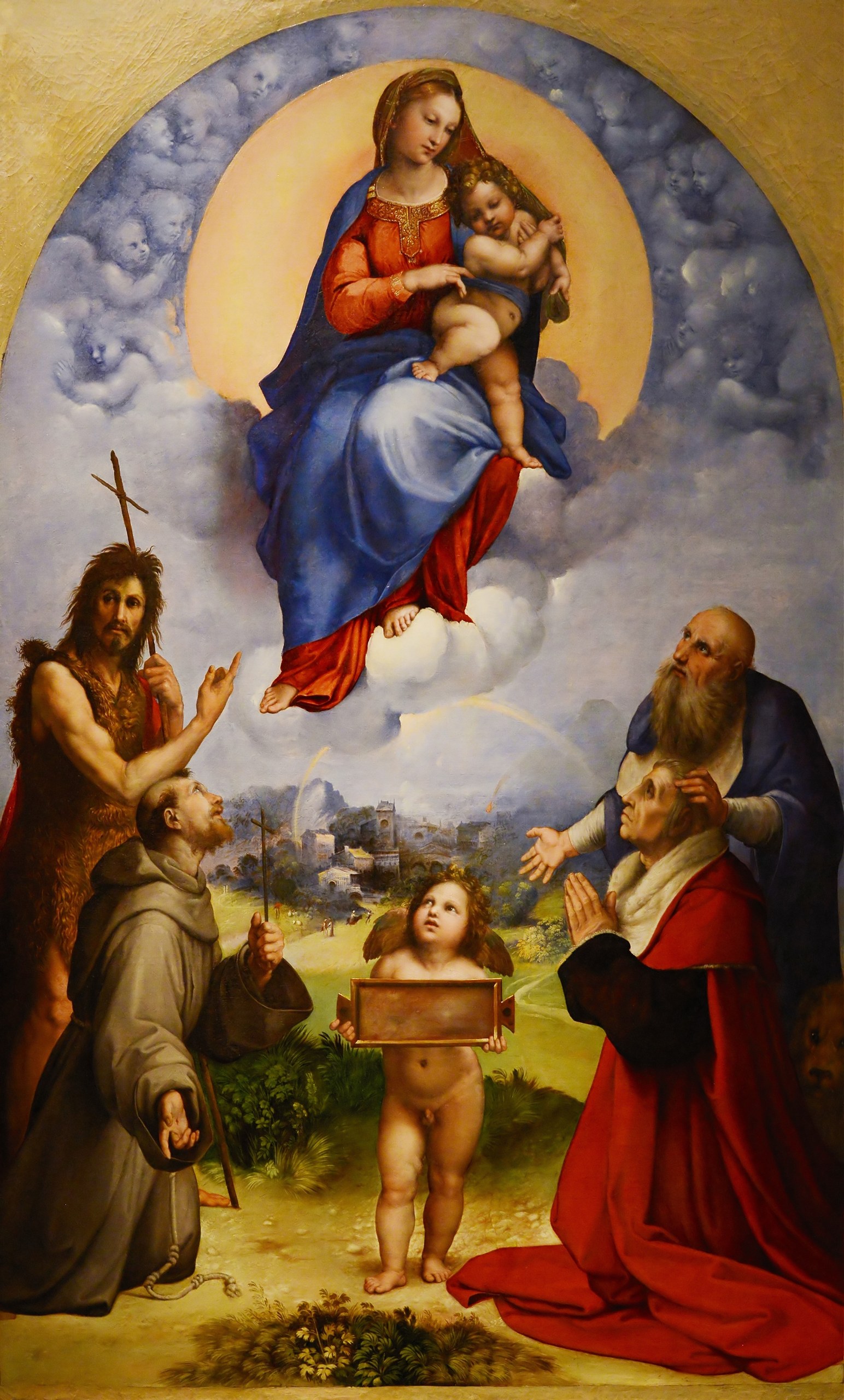
Madonna of Foligno
Raphael · 1511
Vatican Museums
The Virgin on a cloud with saints and a kneeling donor, painted for the chamberlain of Julius II and later moved from wood panel to canvas.
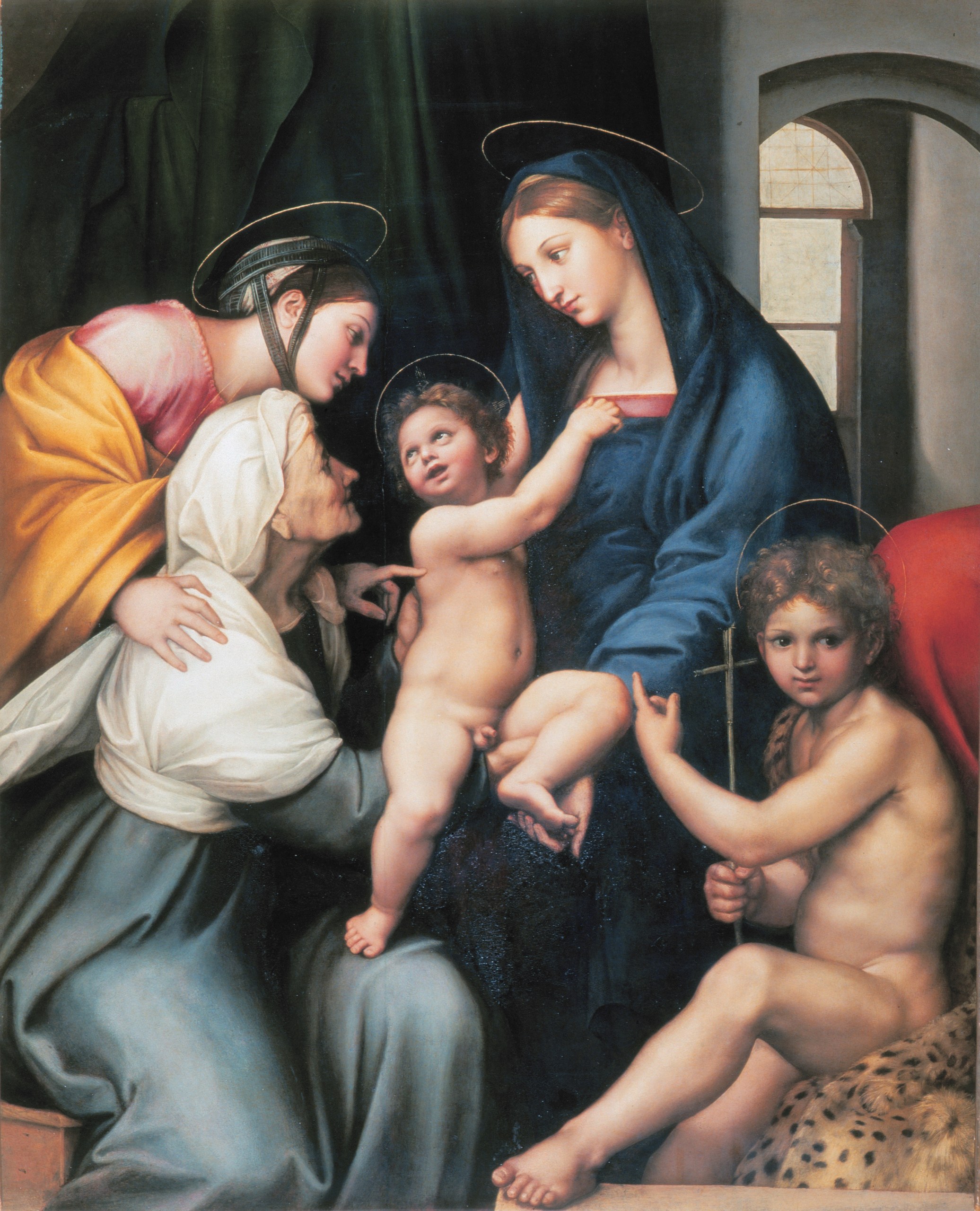
Madonna dell'Impannata
Raphael · 1513
Palazzo Pitti
The Virgin, Elisabeth and two saints with the children in a warm interior, a panel Vasari recorded as commissioned by Bindo Altoviti.
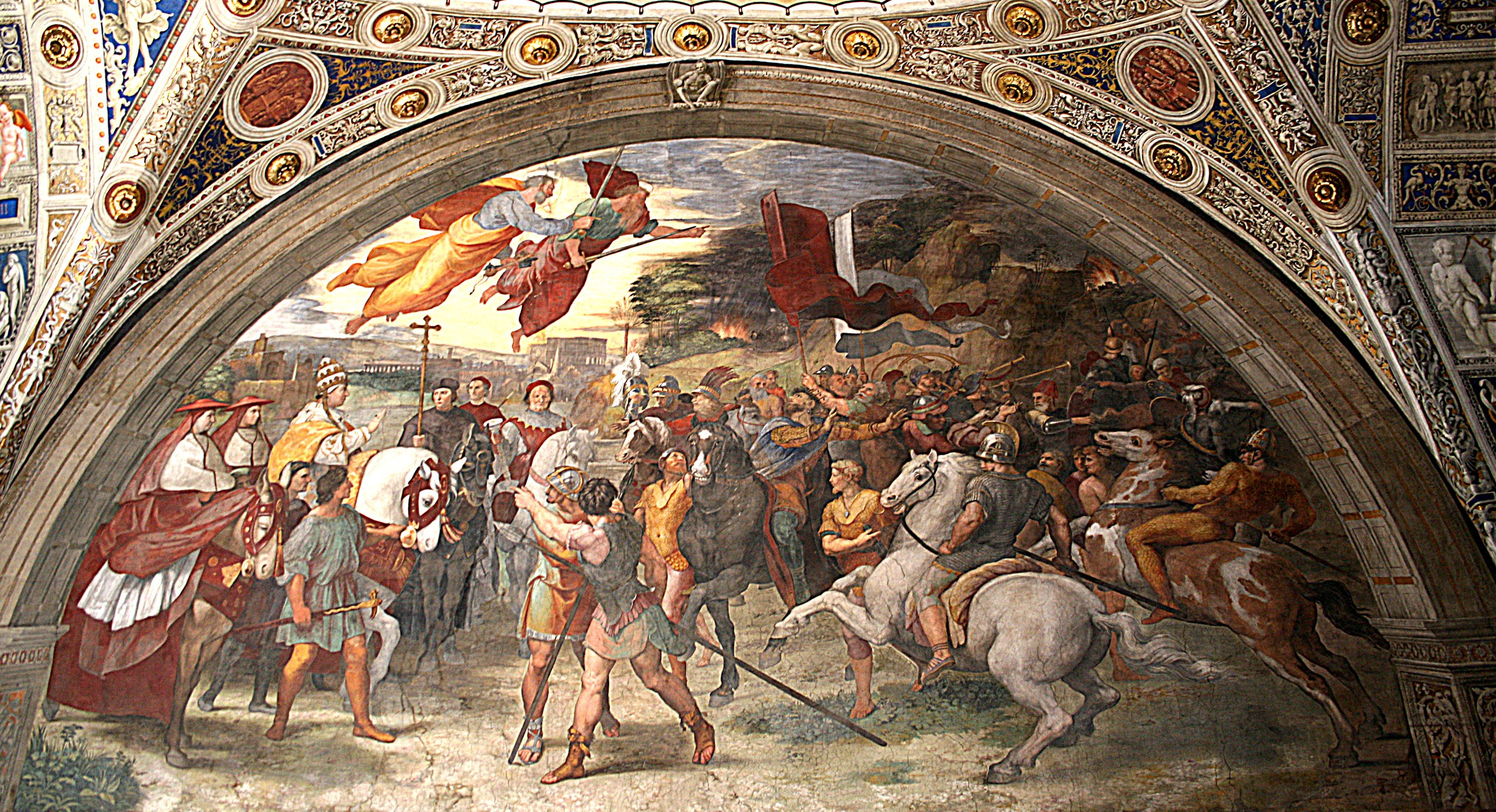
The Meeting of Leo the Great and Attila
Raphael · 1513
Vatican Museums
The pope halting the Hun while Saints Peter and Paul descend armed from the sky; the pontiff's face began as Julius II and was changed to the new Leo X mid-work.
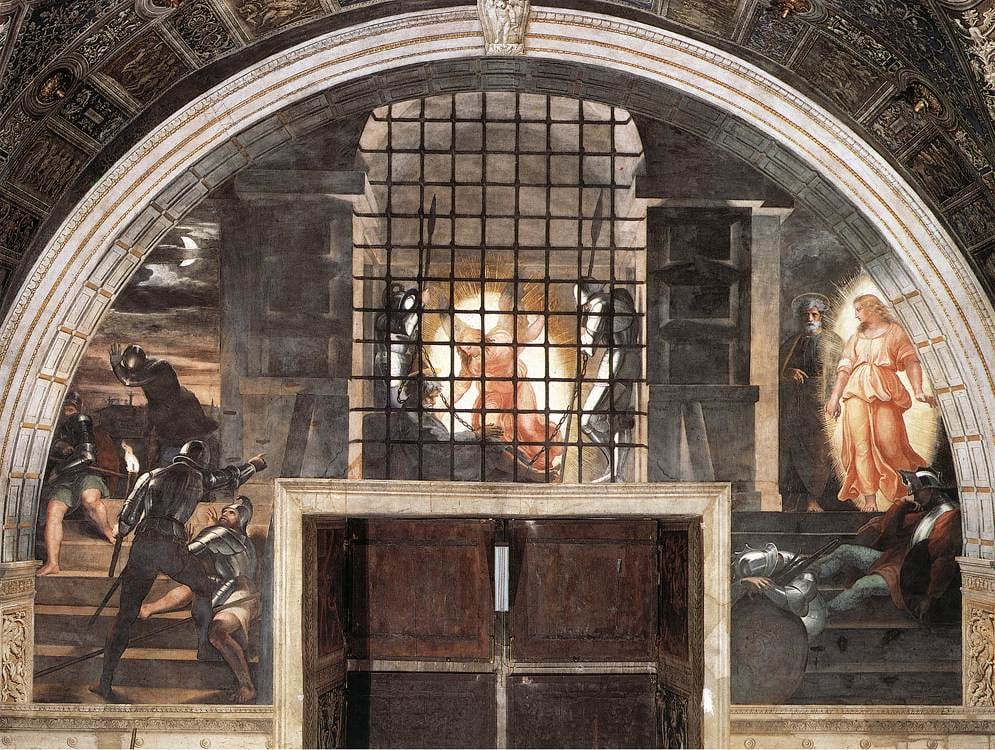
Liberation of Saint Peter
Raphael · 1514
Vatican Museums
An angel waking Peter in a dark cell and leading him past the sleeping guards, the miracle of 1514 told in scenes of night light.
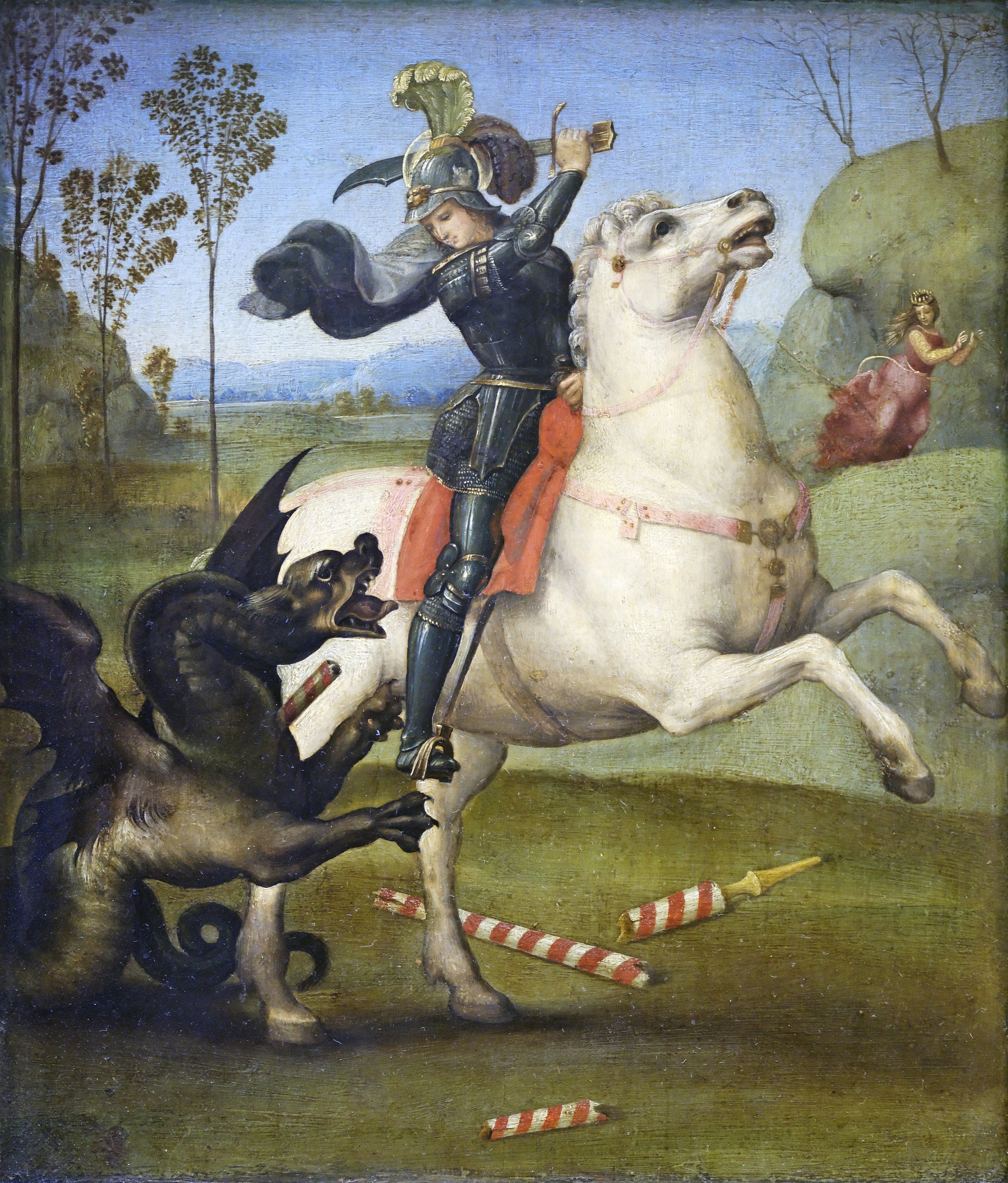
Saint George and the Dragon
Raphael · 1500
Louvre
A small panel of the knight in combat, once bound in leather with the Saint Michael as a diptych and later owned by Louis XIV.
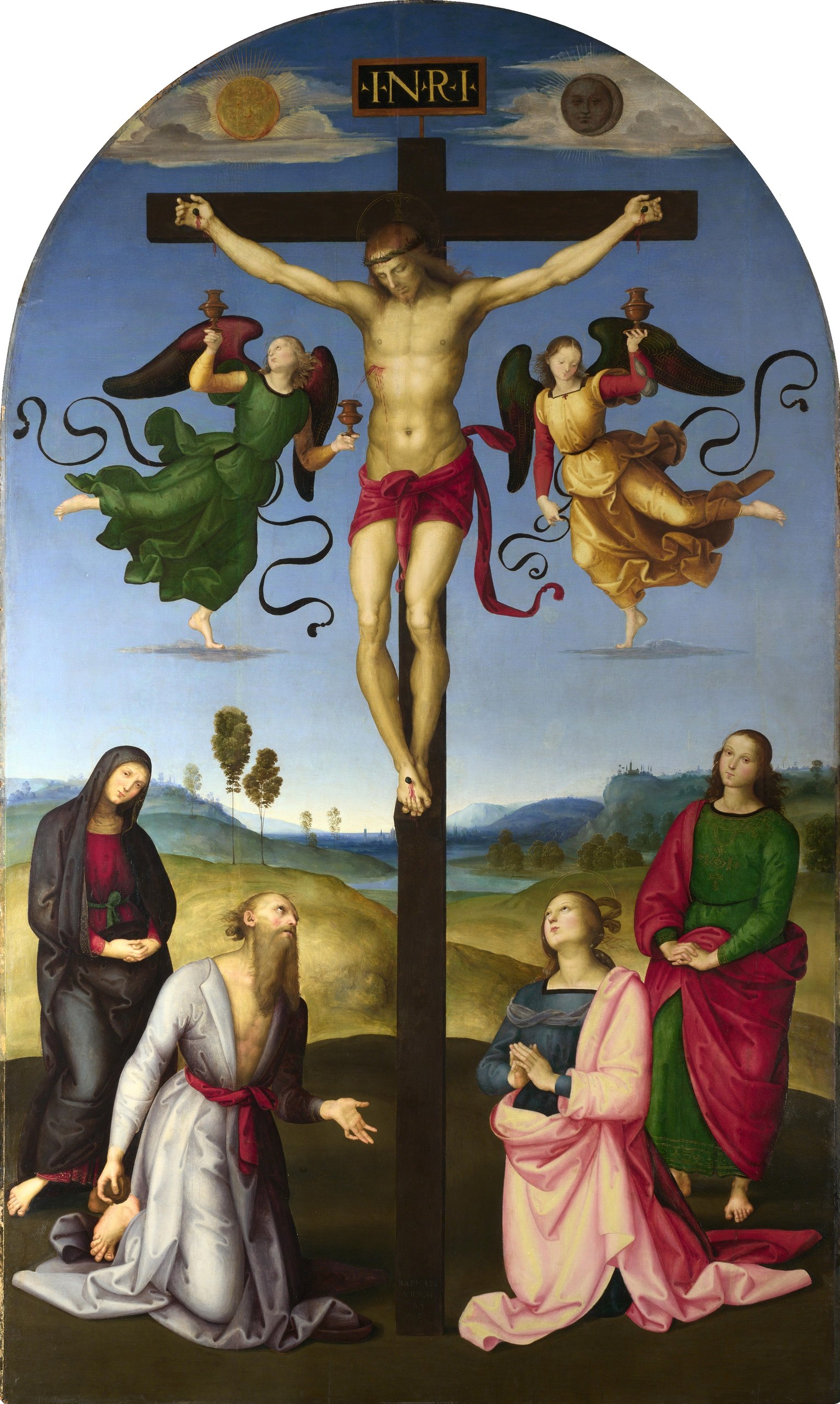
Mond Crucifixion
Raphael · 1502
National Gallery
One of his earliest surviving works, a Crucifixion altarpiece with the Virgin, saints and catching angels, painted for a burial chapel near his home town of Urbino.
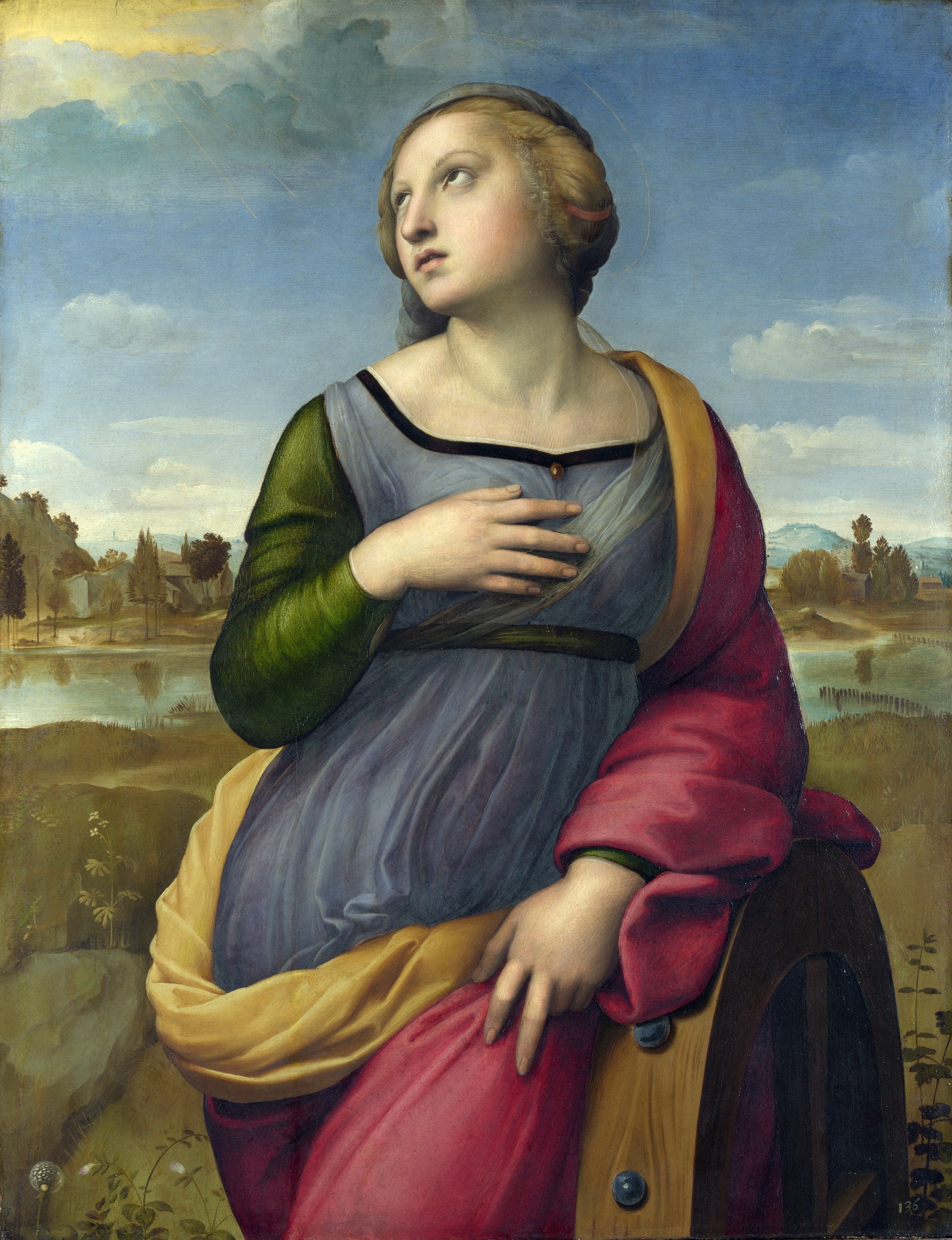
Saint Catherine of Alexandria
Raphael · 1507
National Gallery
The saint leaning on the wheel of her martyrdom, her gaze upward still Perugino while her swaying pose is pure Leonardo: the young artist in transit between two worlds.
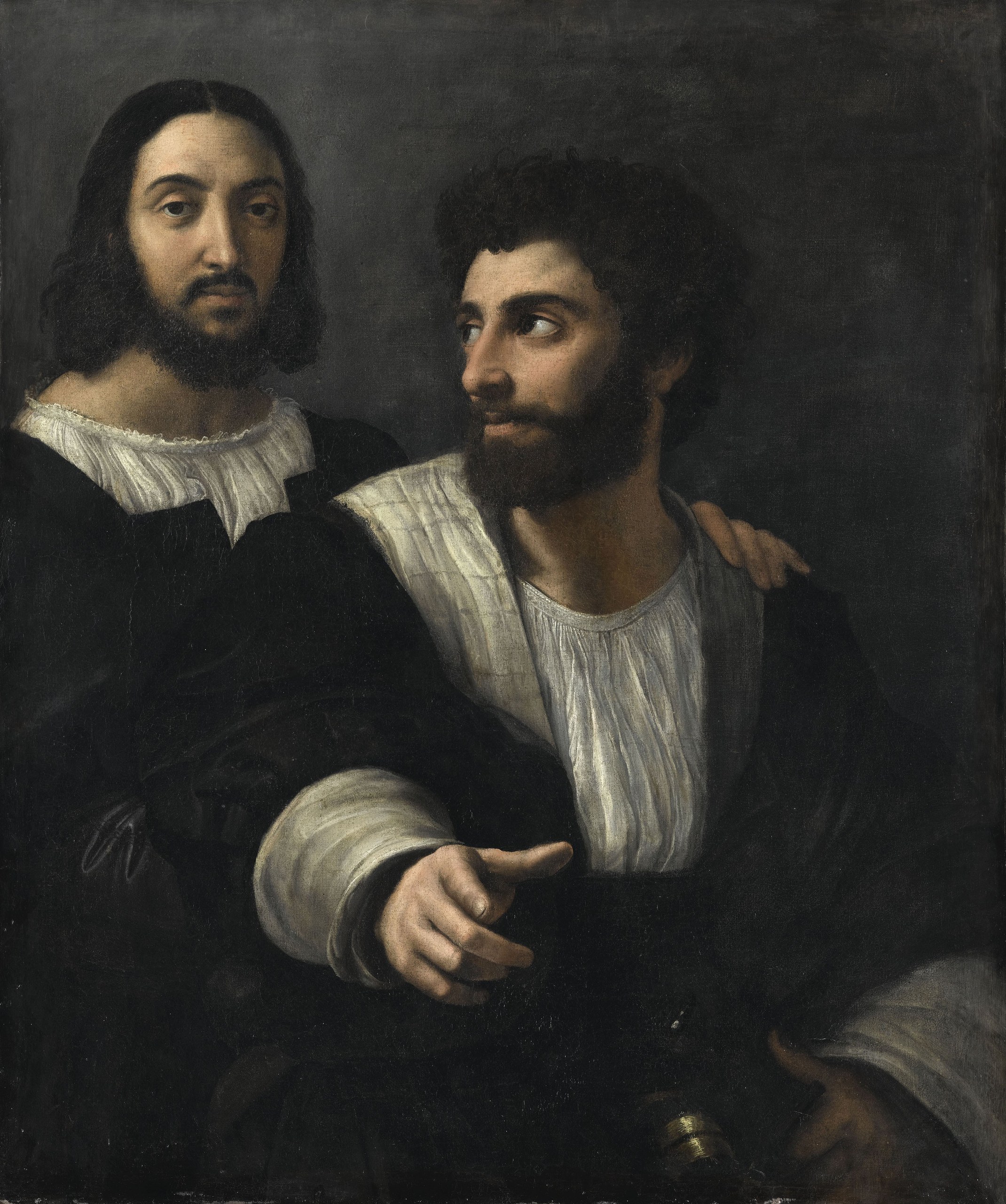
Self-portrait with a friend
Raphael · 1510
Louvre
The painter at the edge of the canvas beside an unknown companion who rests a hand on his shoulder, from the very end of his life.
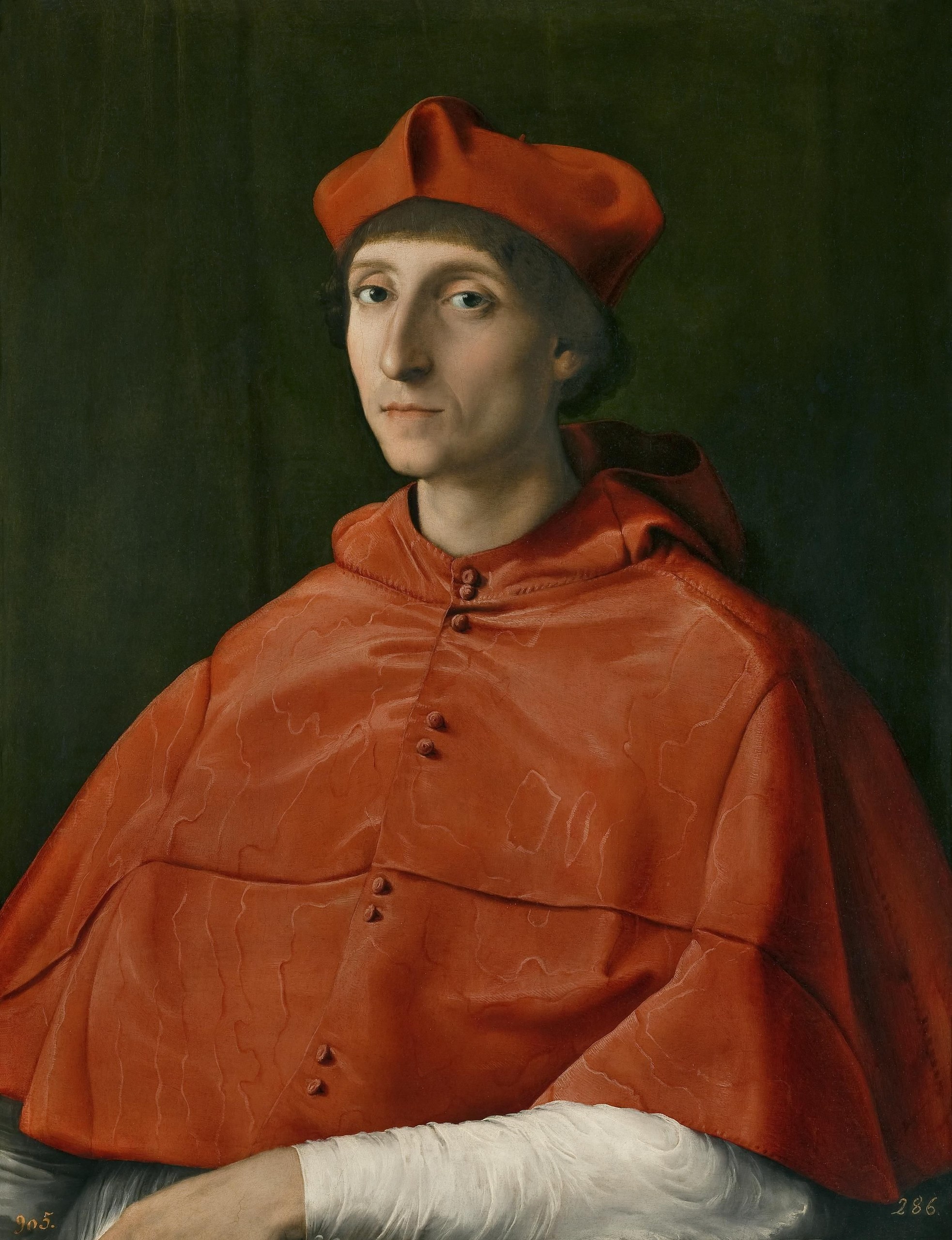
Portrait of a Cardinal
Raphael · 1510
Museo del Prado
An unnamed prince of the church in red, turned to stare; the realism of a painter who could, in Pietro Bembo's phrase, "paint people as more real than they really are".
Sources
- Wikipedia, “Raphael”
- Wikipedia, “Stanza della Segnatura”
- Wikipedia, “The Parnassus”
- Wikipedia, “La velata”
- Wikipedia, “Portrait of Baldassare Castiglione”
- Wikipedia, “Madonna del Granduca”
- Wikipedia, “Portrait of a Young Woman with a Unicorn”
- Wikipedia, “Raphael Cartoons”
- Wikipedia, “La belle jardinière”
- Wikipedia, “The Fire in the Borgo”
- Wikipedia, “The Mass at Bolsena”
- Wikipedia, “Christ Falling on the Way to Calvary”
- Wikipedia, “Portrait of Maddalena Doni”
- Wikipedia, “Portrait of Cardinal Bibbiena (Raphael)”
- Wikipedia, “Portrait of Tommaso Inghirami”
- Wikipedia, “Madonna of Foligno”
- Wikipedia, “Madonna dell'Impannata”
- Wikipedia, “The Meeting of Leo the Great and Attila”
- Wikipedia, “Liberation of Saint Peter (Raphael)”
- Wikipedia, “Saint George (Raphael, Louvre)”
- Wikipedia, “Mond Crucifixion”
- Wikipedia, “Saint Catherine of Alexandria (Raphael)”
- Wikipedia, “Self-Portrait with a Friend”
- Wikipedia, “Portrait of a Cardinal (Raphael)”
- Victoria and Albert Museum, “The Raphael Cartoons”
Invite Raphael into your living room
Play 39 works from this collection on your TV, phone or tablet with Momentable Art TV.