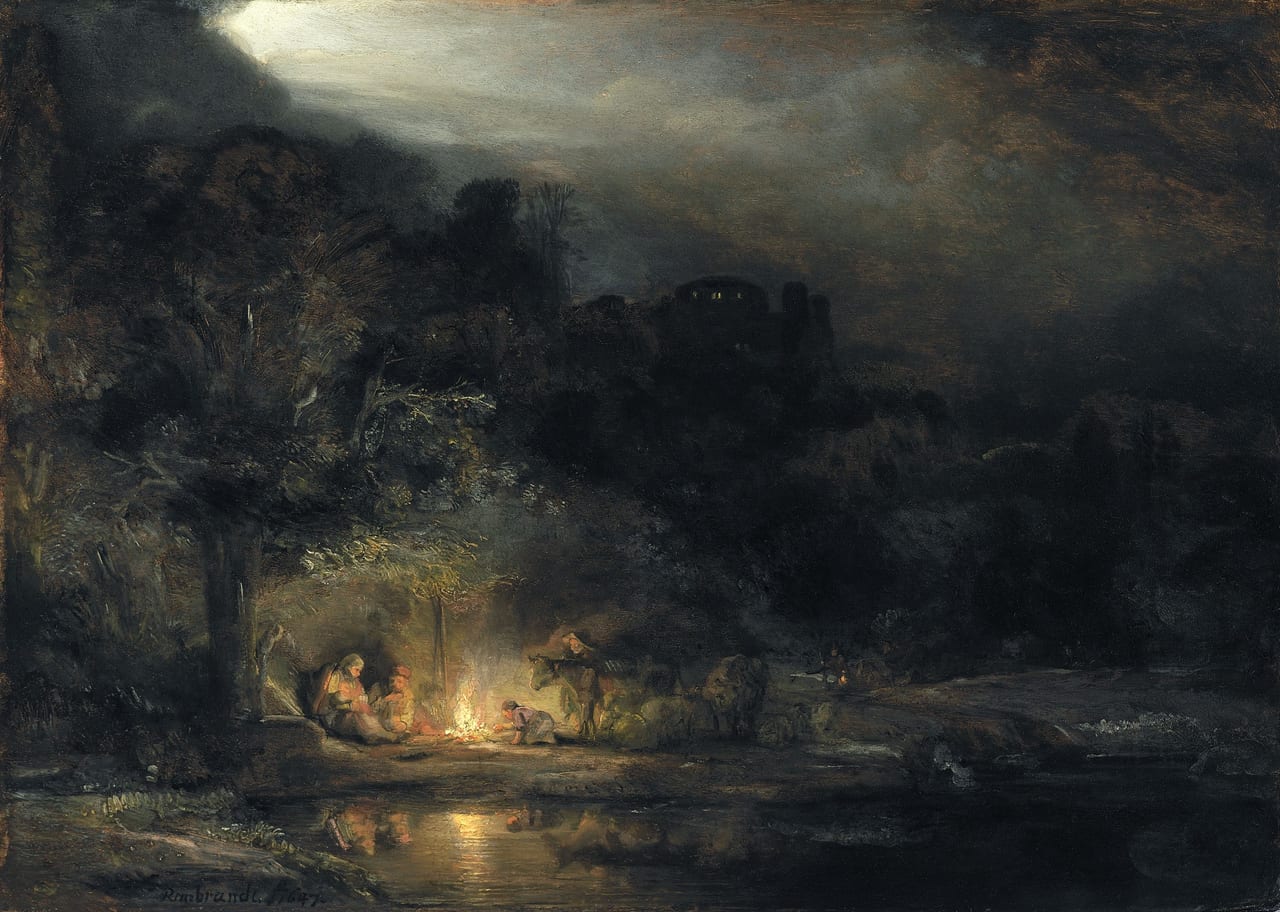
The Night Watch
Rembrandt · 1642

Rembrandt van Rijn
Dutch · 1606–1669
The painter of Amsterdam at its height, who made the human face the great subject of art.
- About 80
- Self portraits that survive
- 27
- Works in the National Gallery, London
- 16
- Of his most important works at the Rijksmuseum
Play 36 works from this collection on your TV, phone or tablet with Momentable Art TV.
Play CollectionFrom Leiden to Amsterdam
Rembrandt van Rijn was born in the Dutch city of Leiden in 1606, and by about 1631 he had settled in Amsterdam, then the richest port of northern Europe. The city's leading families and institutions were soon giving him work. The militia company painting made for the Arquebusiers' guild hall showed its sitters actually doing something rather than lining up to pose, and it remains his largest and most famous canvas.
For a period he stood as the best known painter in Amsterdam. In July 1656, granted a respectable arrangement that spared him prison, he lost his fortune and kept working; the late paintings, made with less ease and more depth, followed.
Light and the face
He found a new way of describing a face, mapping it in shifting patches of light and dark rather than lighting one cheek and leaving the other in shade. It is why his portraits feel watched rather than posed, thinking rather than sitting.
He had posed himself since youth, and self portraits came more and more often as he aged; about eighty survive from a forty-year career, more than any other painter of his time left.
Known works
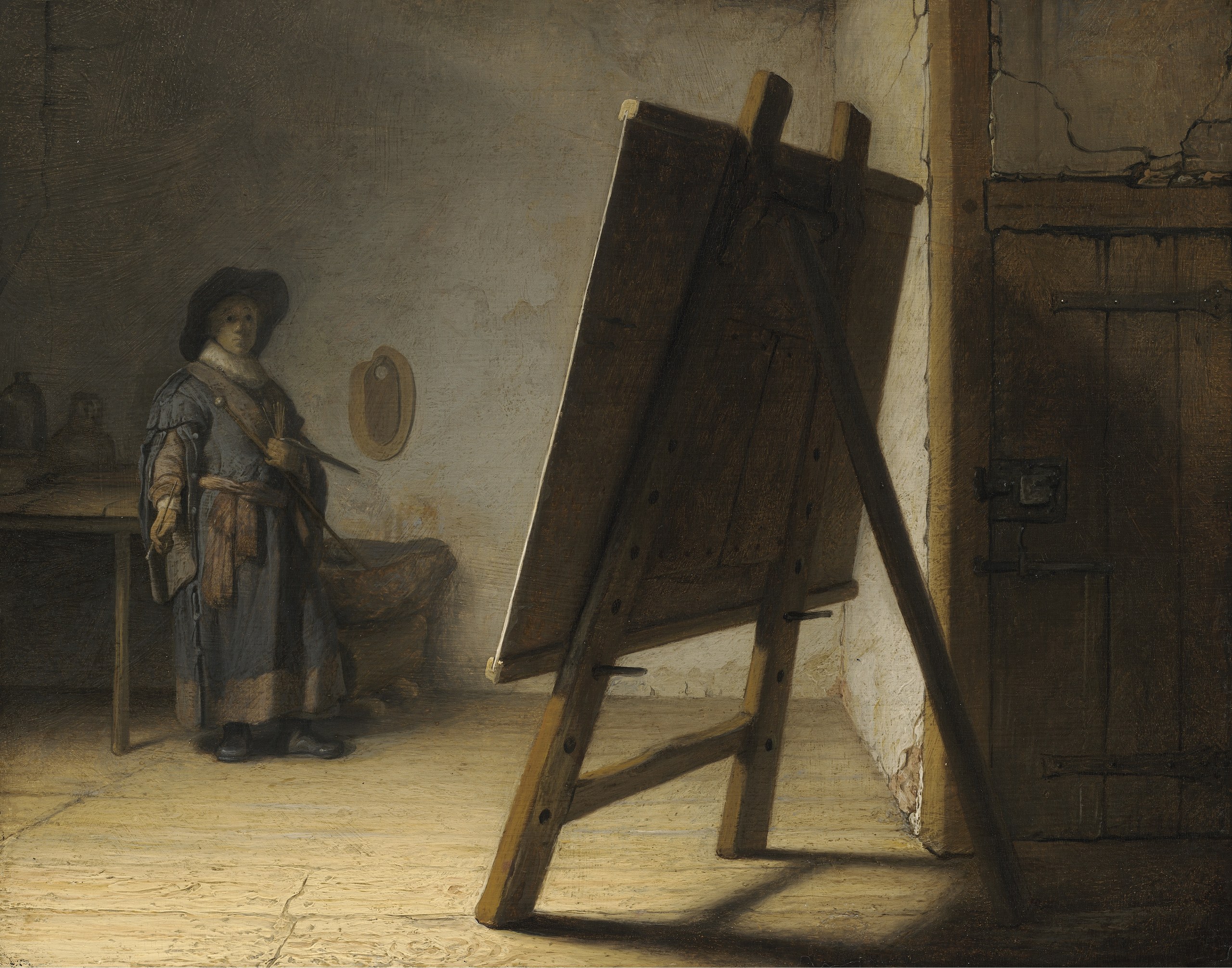
Artist in his studio
Rembrandt · 1628
Museum of Fine Arts, Boston
Artist in his studio. A young painter stands tiny beside an enormous easel in a dim room, the canvas looming out of the gloom: a whole theatre of light.
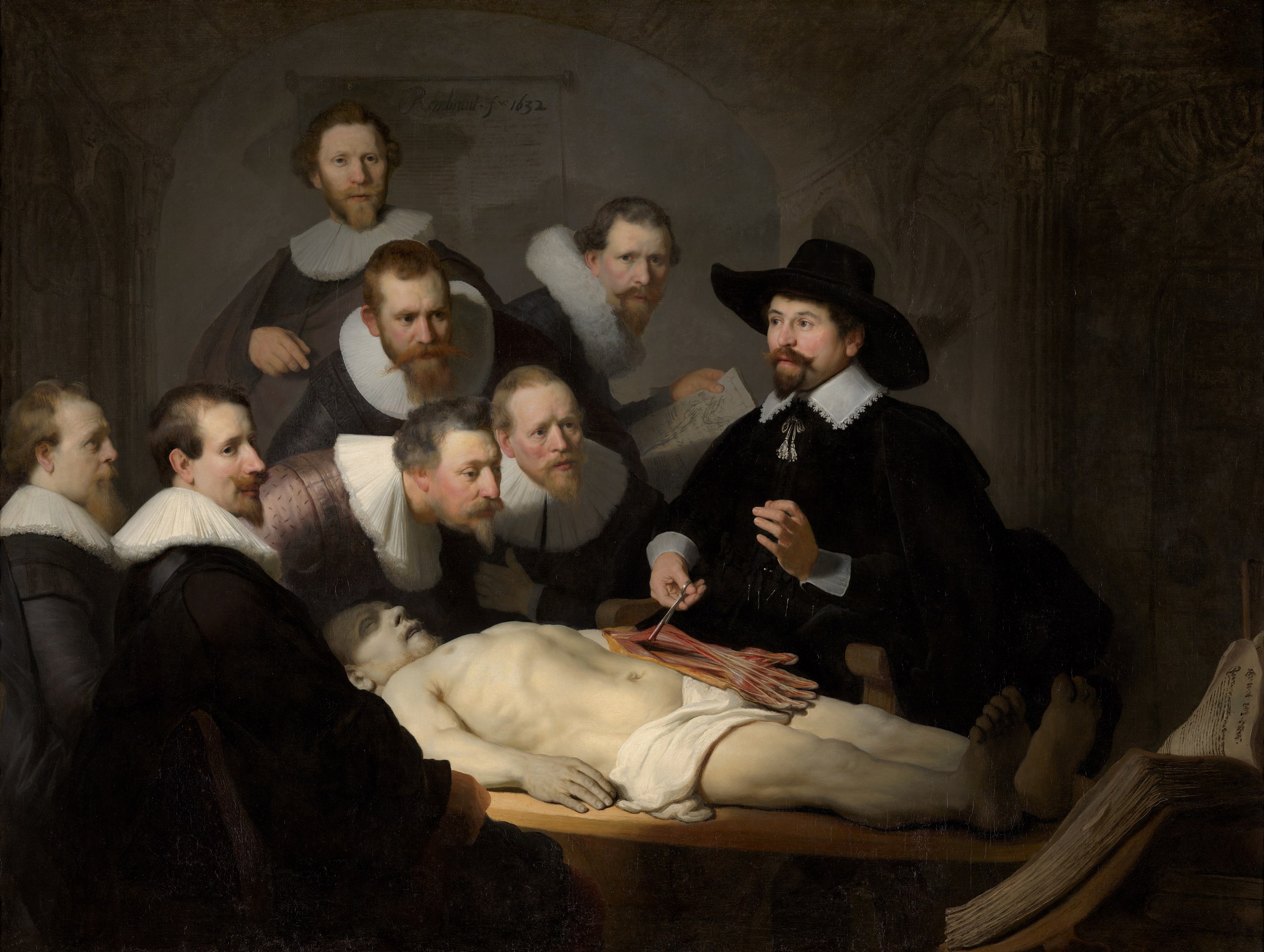
The Anatomy Lesson of Dr. Nicolaes Tulp
Rembrandt · 1632
Tulp explains the muscles of the forearm to a ring of surgeons, every face angled a different way toward the corpse. Painted for the surgeons' guild room and counted among the masterpieces of his first Amsterdam years.
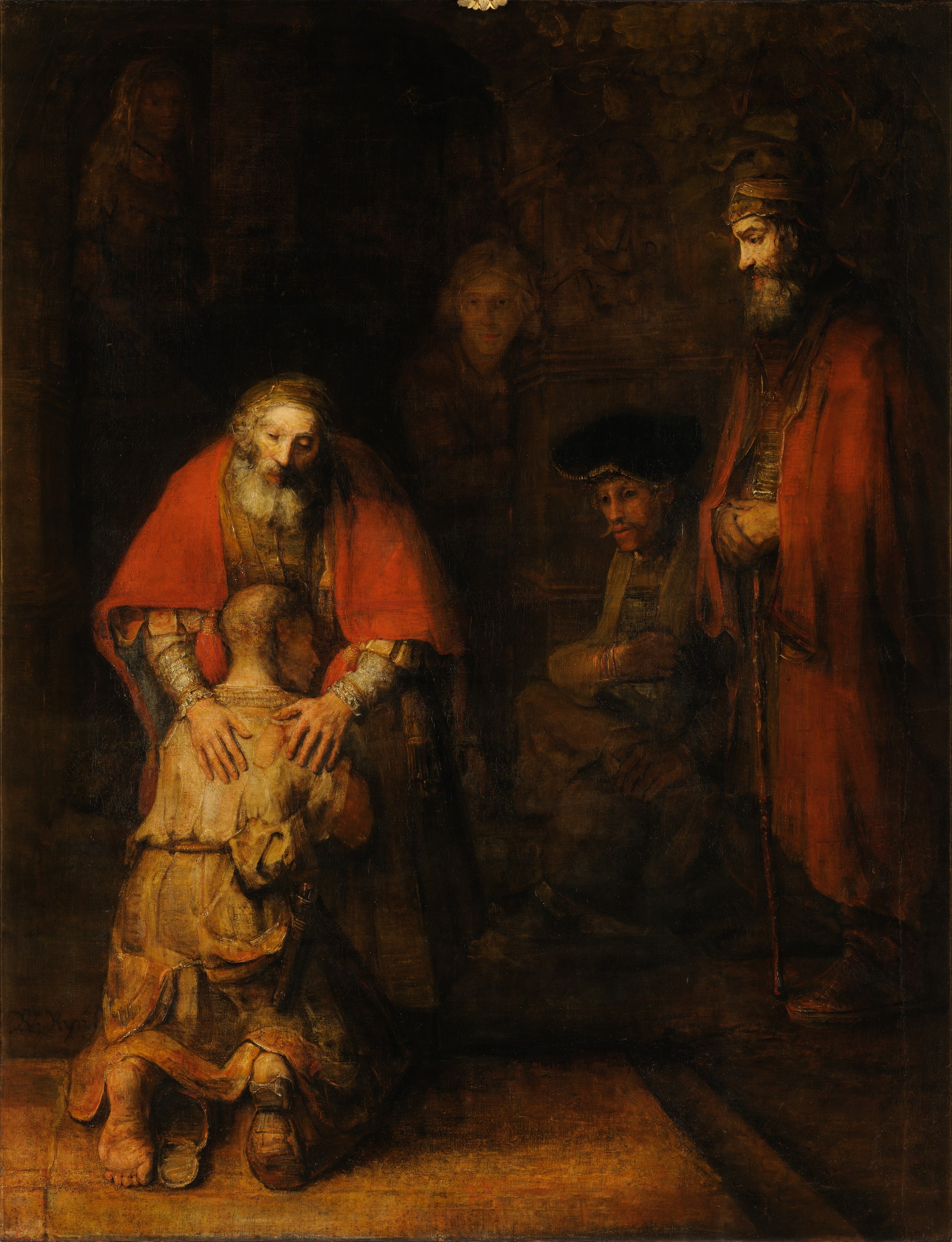
The Return of the Prodigal Son
Rembrandt · 1668
State Hermitage Museum
The son kneels before his father in repentance, and the old man's two hands rest on his back. Among his final works, likely finished no more than two years before he died in 1669.
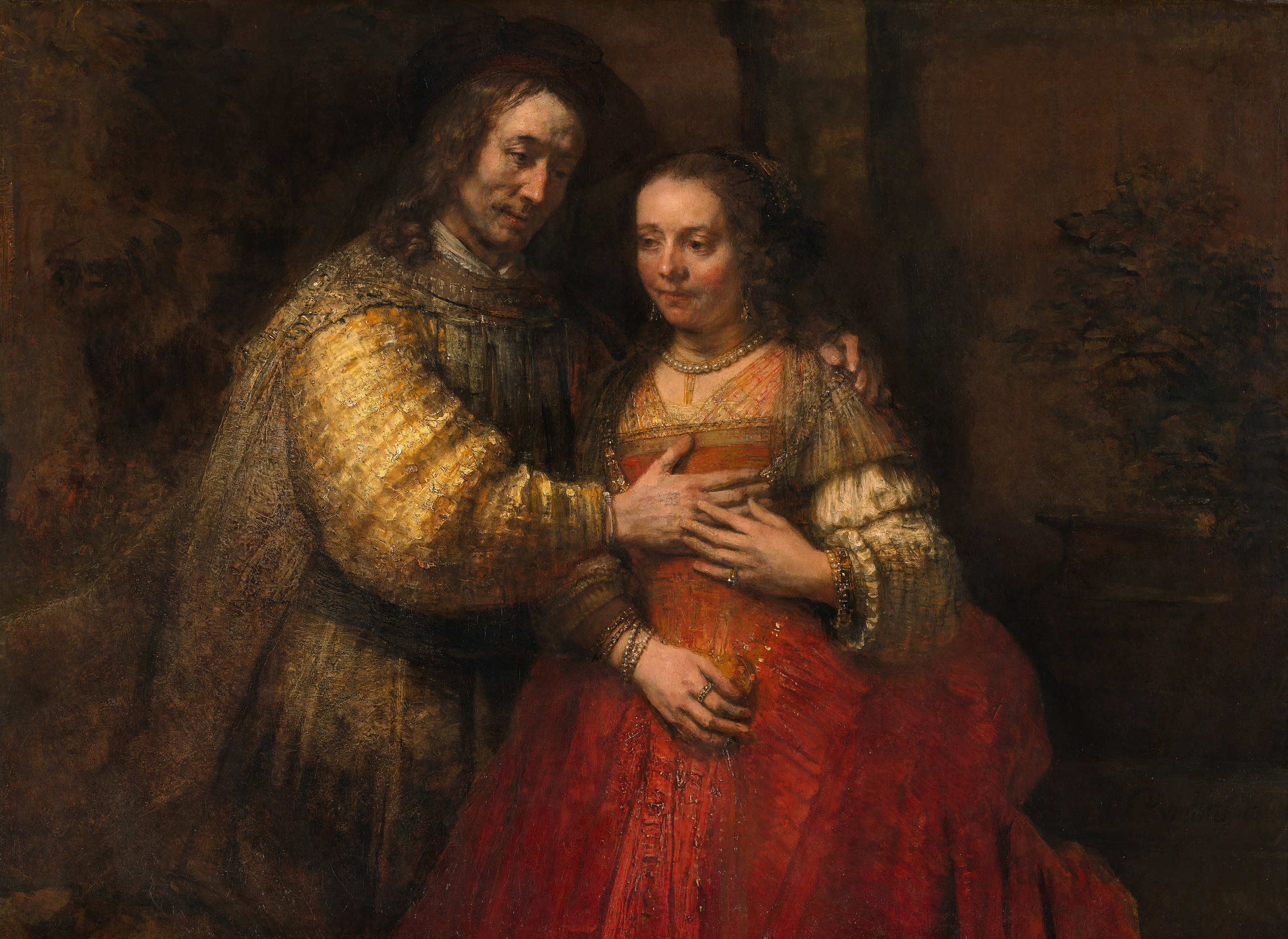
The Jewish Bride
Rembrandt · 1667
Rijksmuseum
A man lays his hand on a woman's breast and she covers it with her own. The old title rests on a reading no longer accepted; who the couple are is still uncertain.
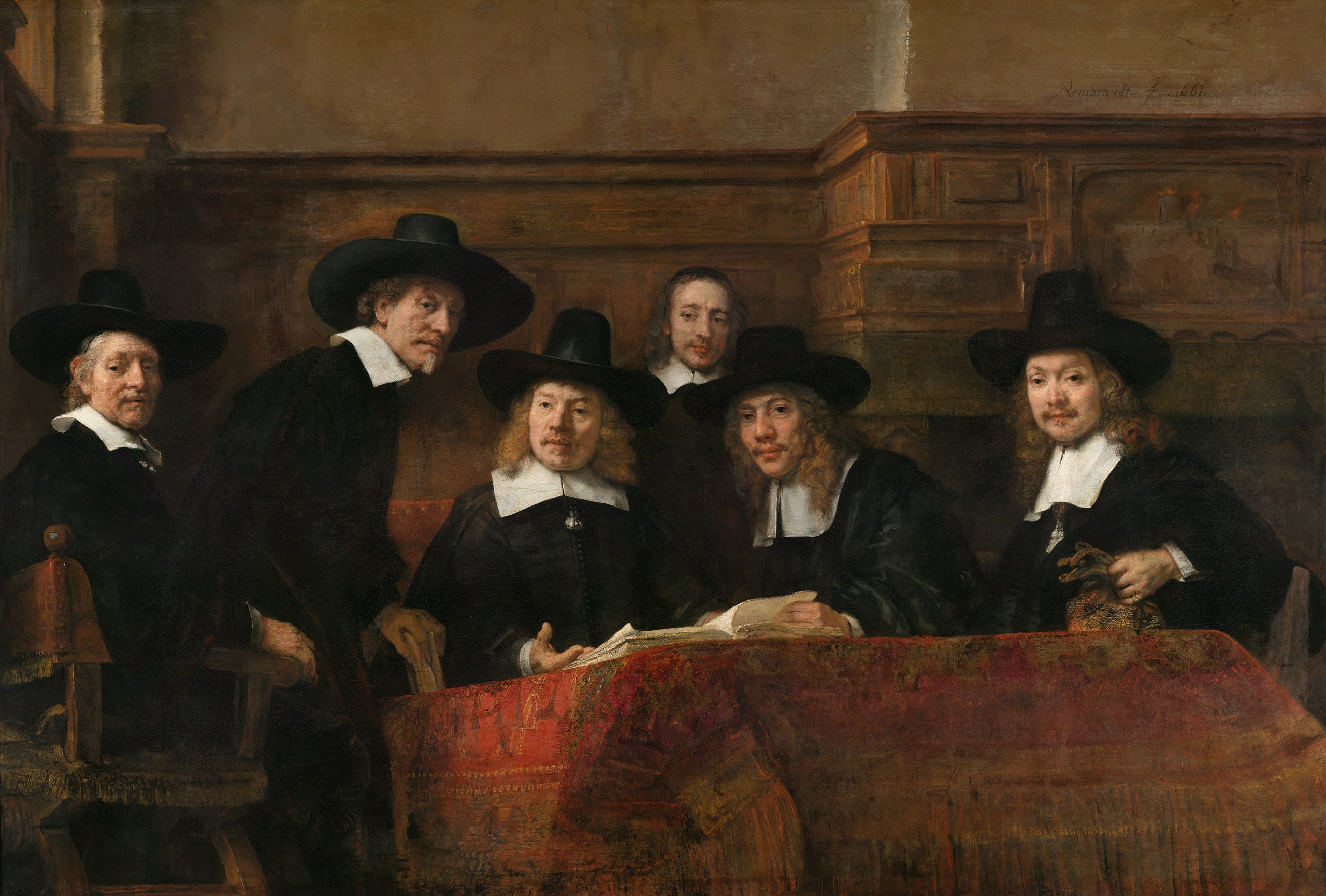
Syndics of the Drapers' Guild
Rembrandt · 1662
Rijksmuseum
Five men of the Amsterdam cloth guild, charged with inspecting the cloth, look up from their table, their servant behind them. Painted in 1662.
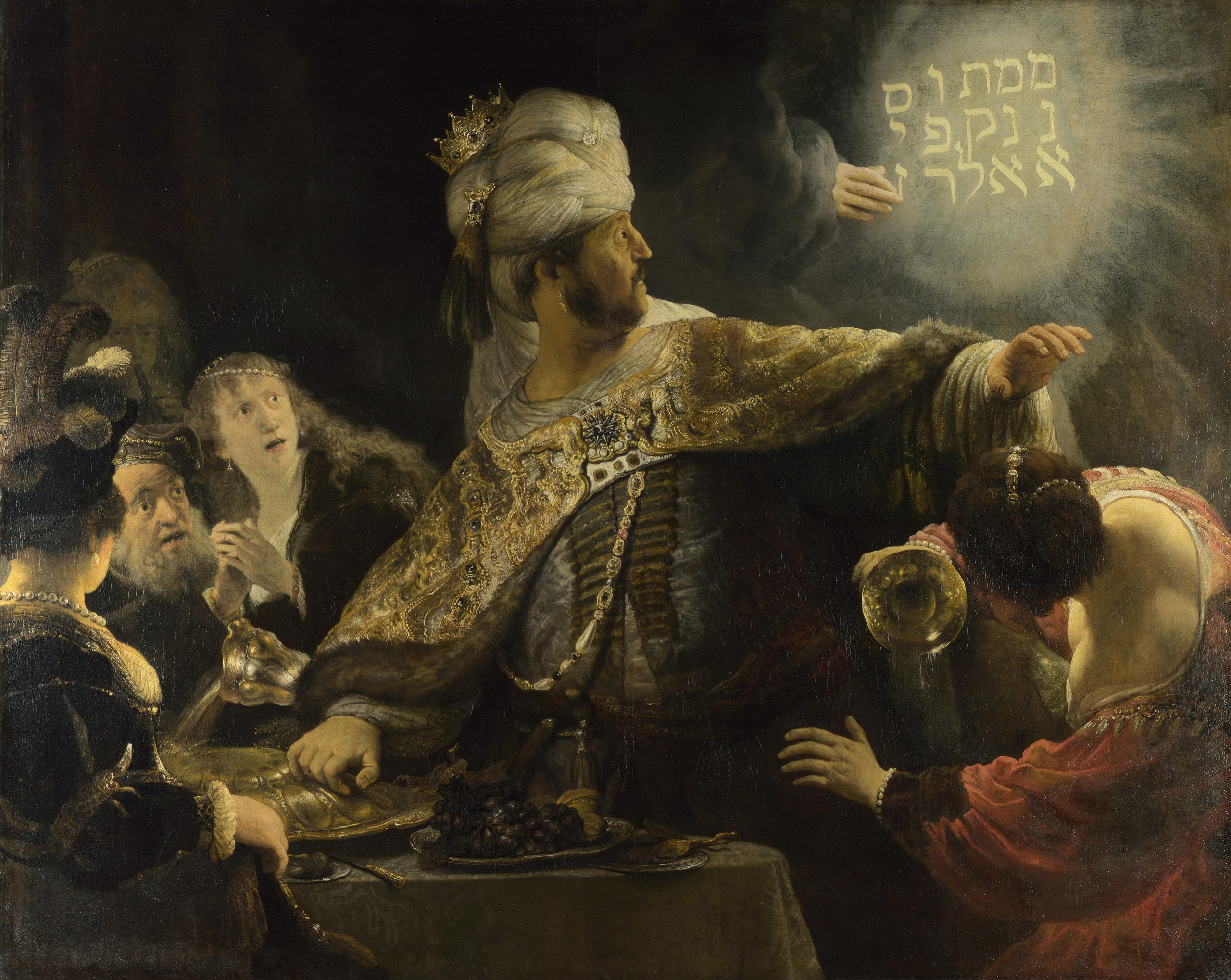
Belshazzar's Feast
Rembrandt · 1636
National Gallery
A king recoils as words of fire appear on the wall behind him; the jewels, the goblets and the horror are caught in one sweep of light. His great dramatic painting of a story from the Old Testament.
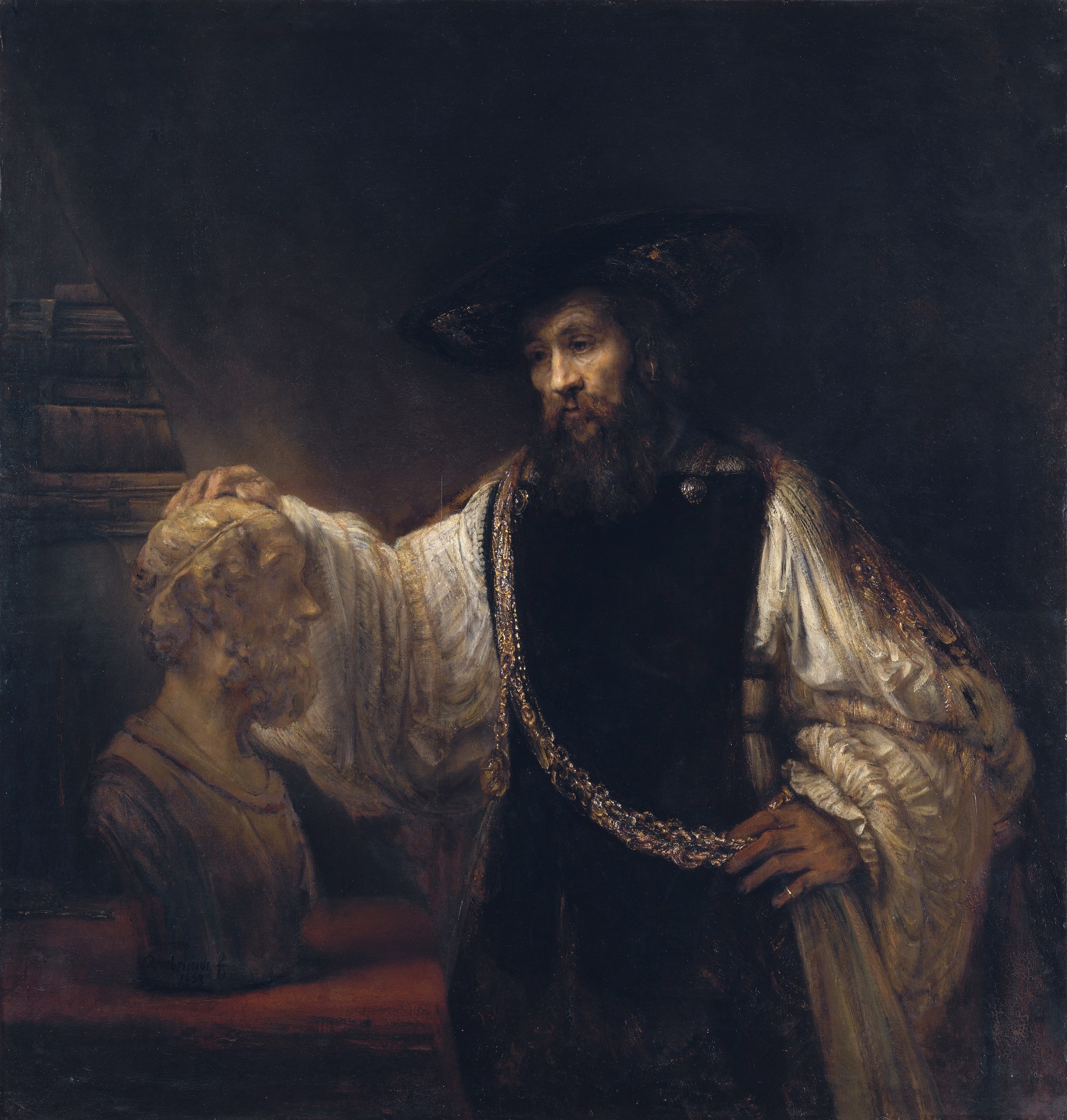
Aristotle with a Bust of Homer
Rembrandt · 1653
Aristotle, wearing a gold chain, rests his hand on a sculpted head of Homer and thinks. It was painted as a commission for the collection of Don Antonio Ruffo.
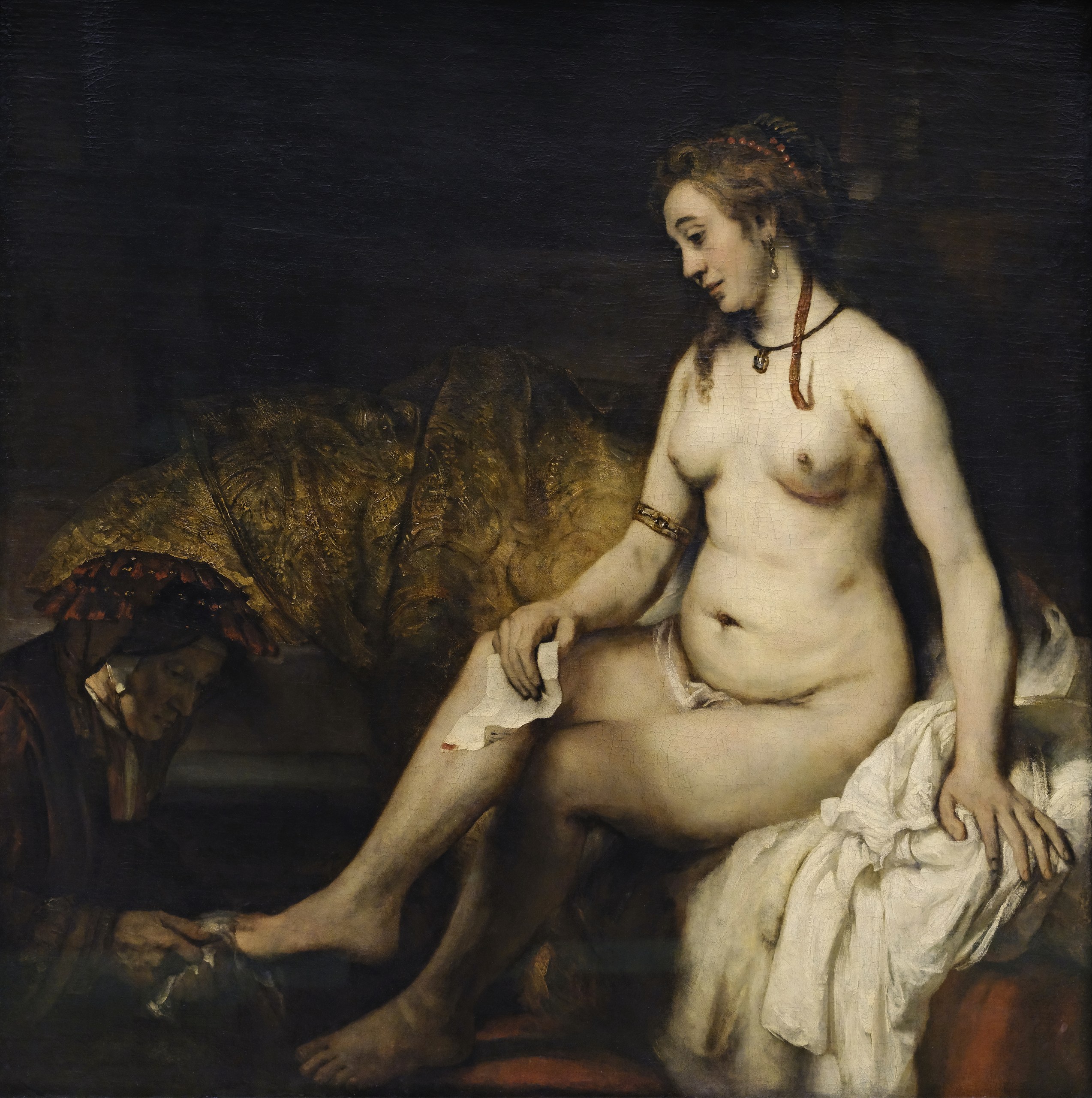
Bathsheba at Her Bath
Rembrandt · 1654
Louvre
Bathsheba sits with the king's letter in her hand, in a moment from the Old Testament story told in 2 Samuel 11. The painting is both sensual and empathetic.
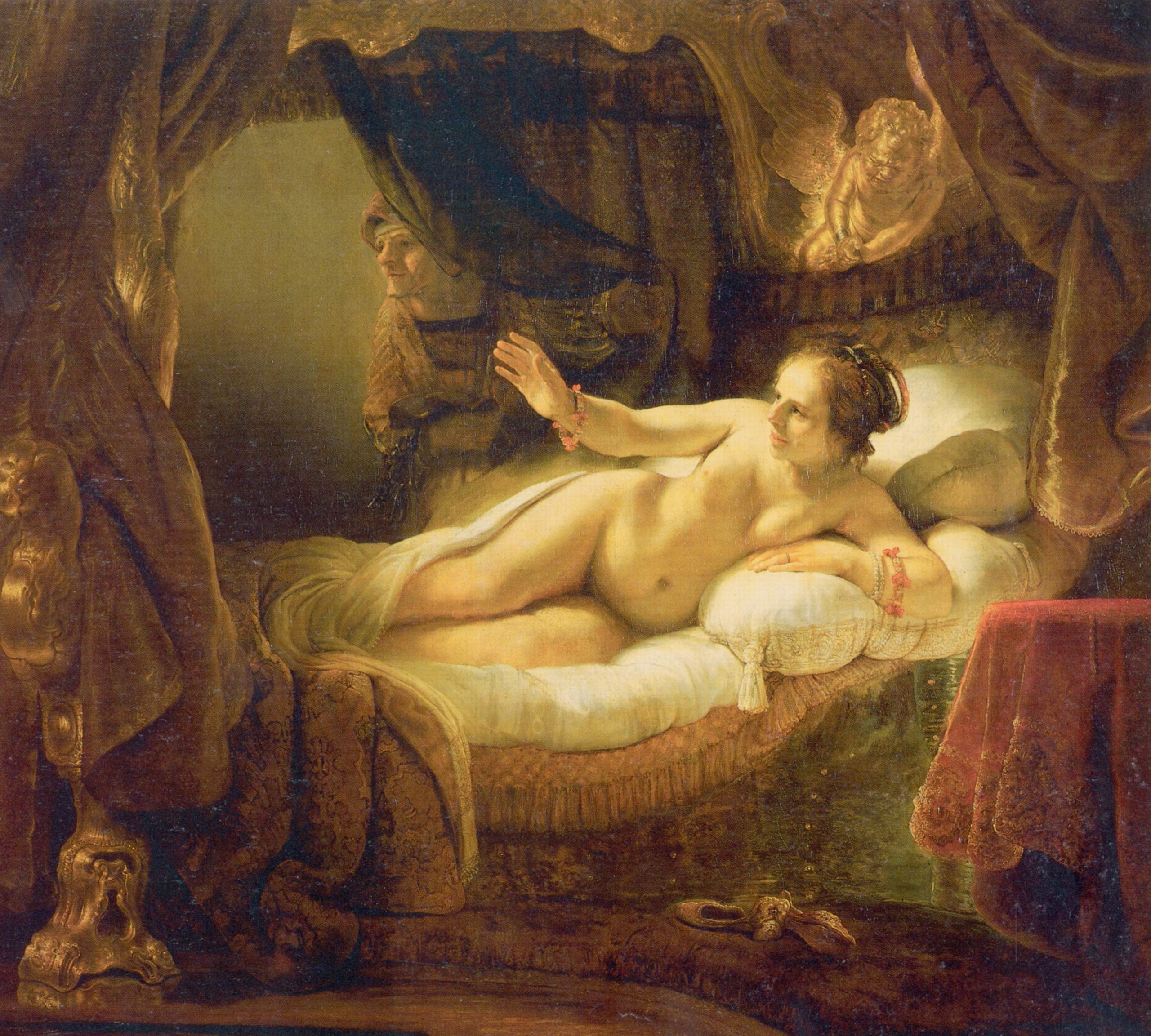
Danaë
Rembrandt · 1636
State Hermitage Museum
Danaë, on her bed, lifts a hand toward the light: she is presumably welcoming Zeus, who came to her as a shower of gold. First completed in 1636, it was reworked by 1643 at the latest.
More to discover
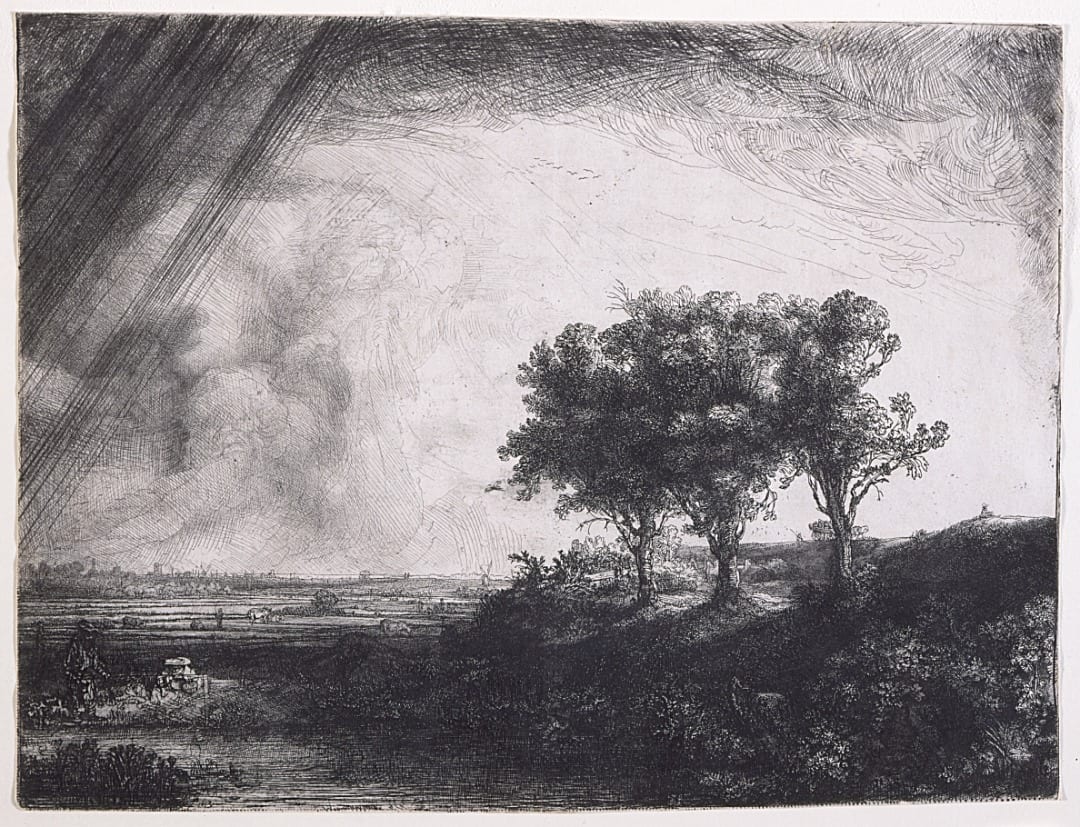
The Three Trees
Rembrandt · 1643
Victoria and Albert Museum
Three trees stand against a wide sky as a storm clears. A print in etching and drypoint from 1643, and his most famous and largest landscape print.
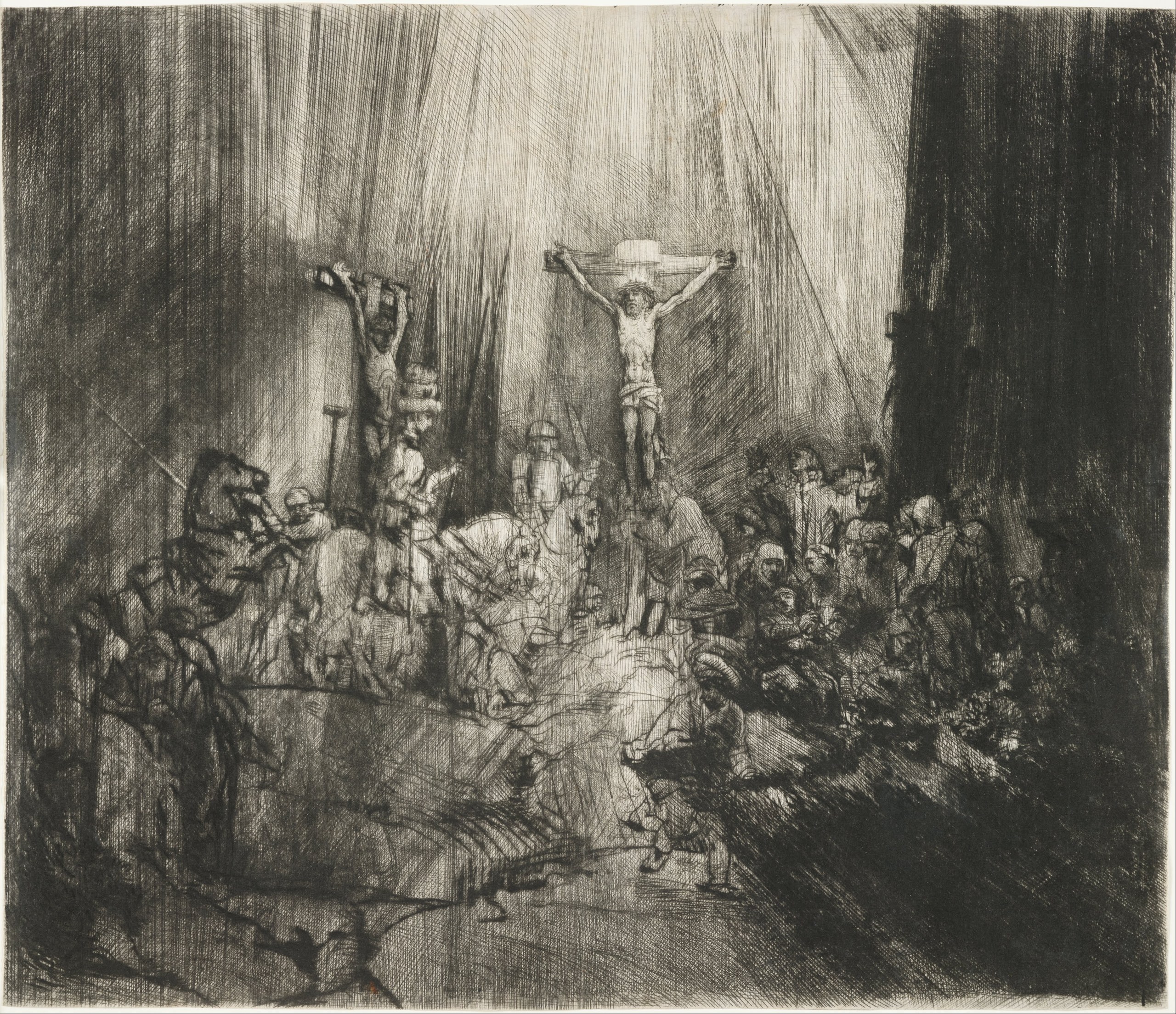
The Three Crosses
Rembrandt · 1653
Museum of Fine Arts, Boston
The crucifixion in etching and drypoint, 1653: a beam of light pierces the darkened sky and falls on the figure of Christ.
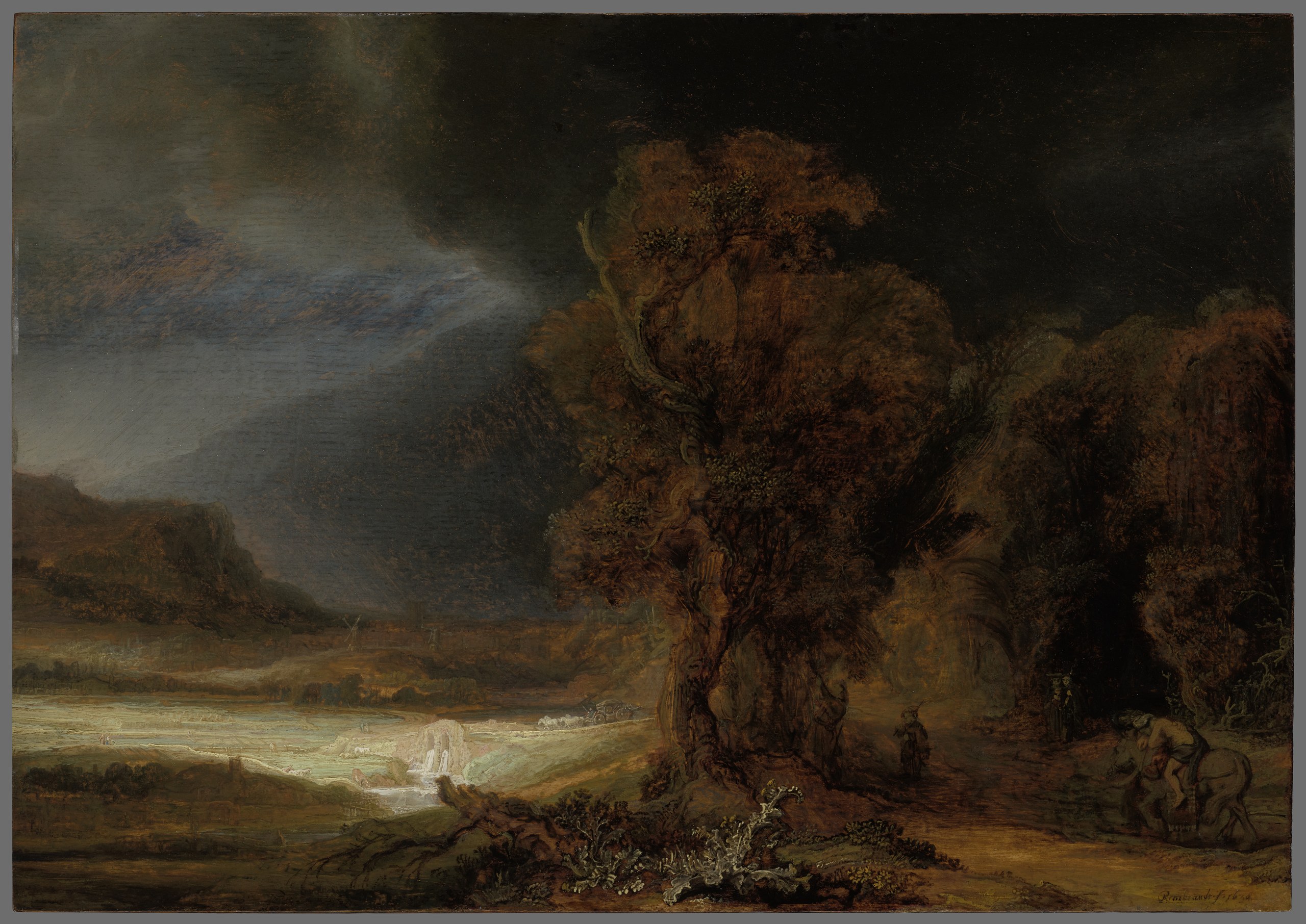
Landscape with the Good Samaritan
Rembrandt · 1638
National Museum in Kraków
A small parable under a large sky. It is one of only six landscapes he painted in oil.
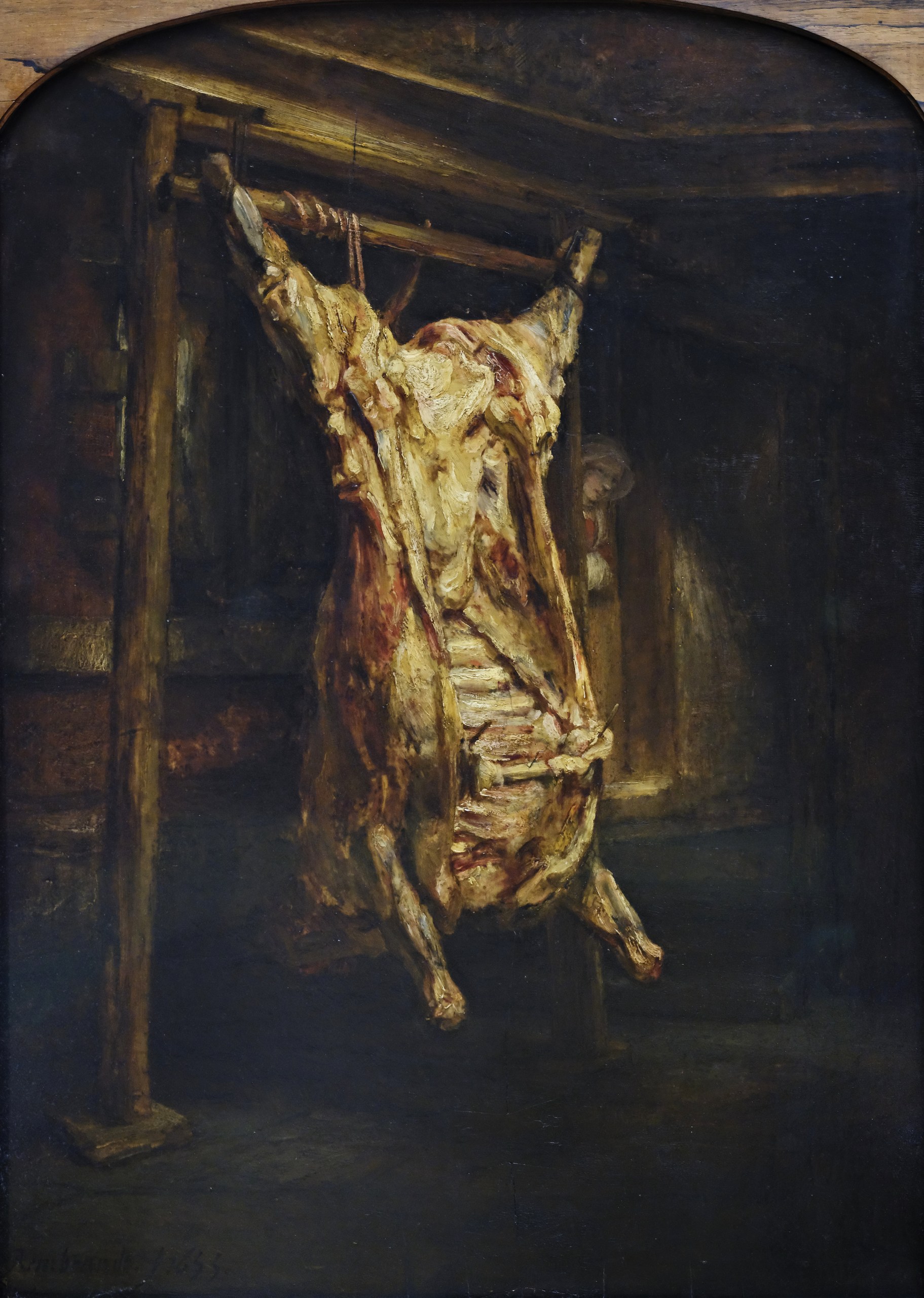
A Slaughtered Ox
Rembrandt · 1655
Louvre
A carcass hangs in a dark room, and nothing else is needed. A still life on beech panel from 1655, in the Louvre since 1857.
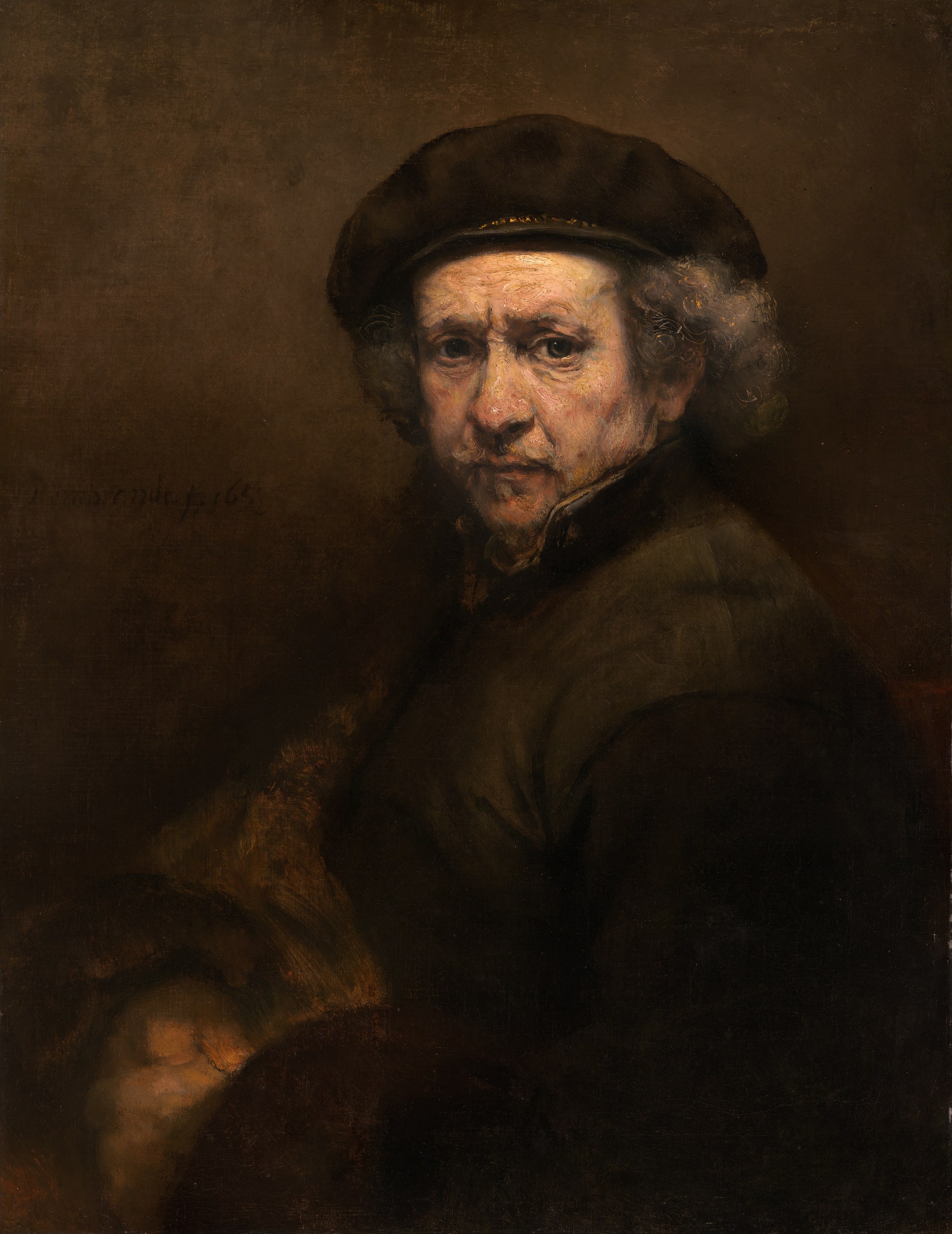
Self Portrait with Beret and Turned-Up Collar
Rembrandt · 1659
He sits wrapped in a thickly painted fur coat, hands folded together, staring straight out of the canvas; it entered Washington's national gallery in 1937.
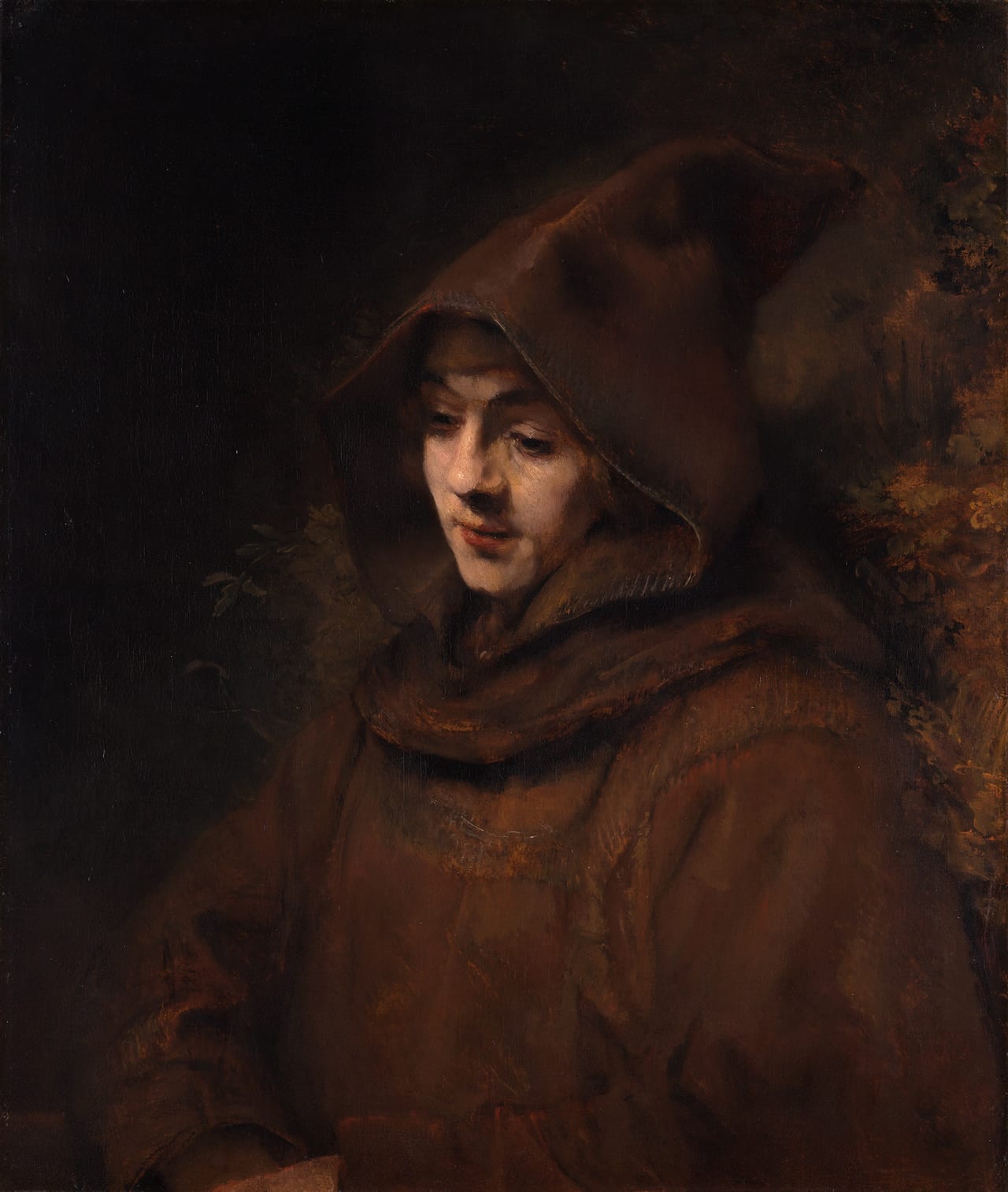
Titus as a Monk
Rembrandt · 1660
Pushkin Museum
His son Titus, eyes lowered, in the habit of a Franciscan.
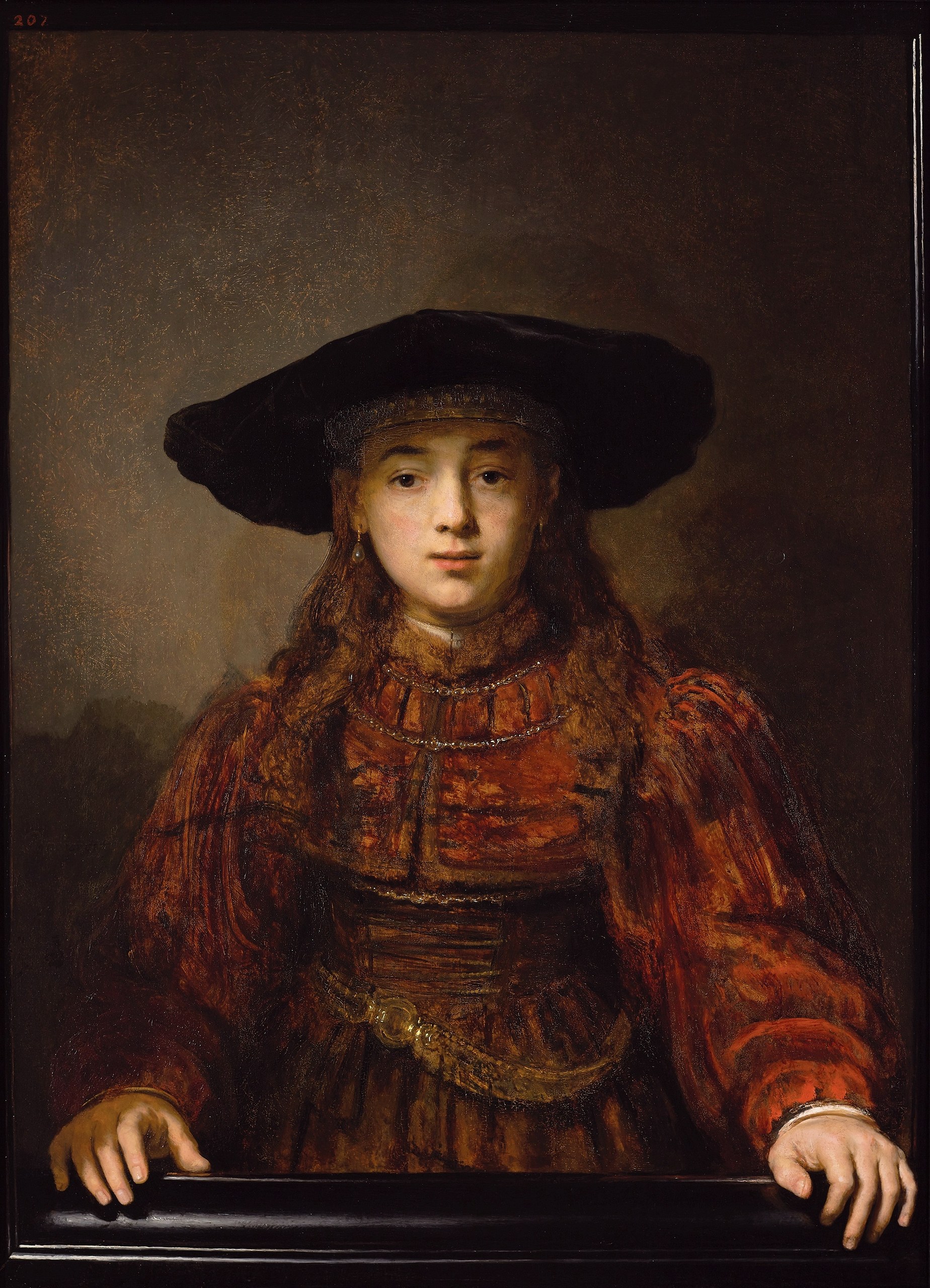
Girl in a Picture Frame
Rembrandt · 1641
Royal Castle, Warsaw
A girl rests her hands on a painted frame, as if about to step out of it. Its authorship was once questioned and was confirmed in 2006.
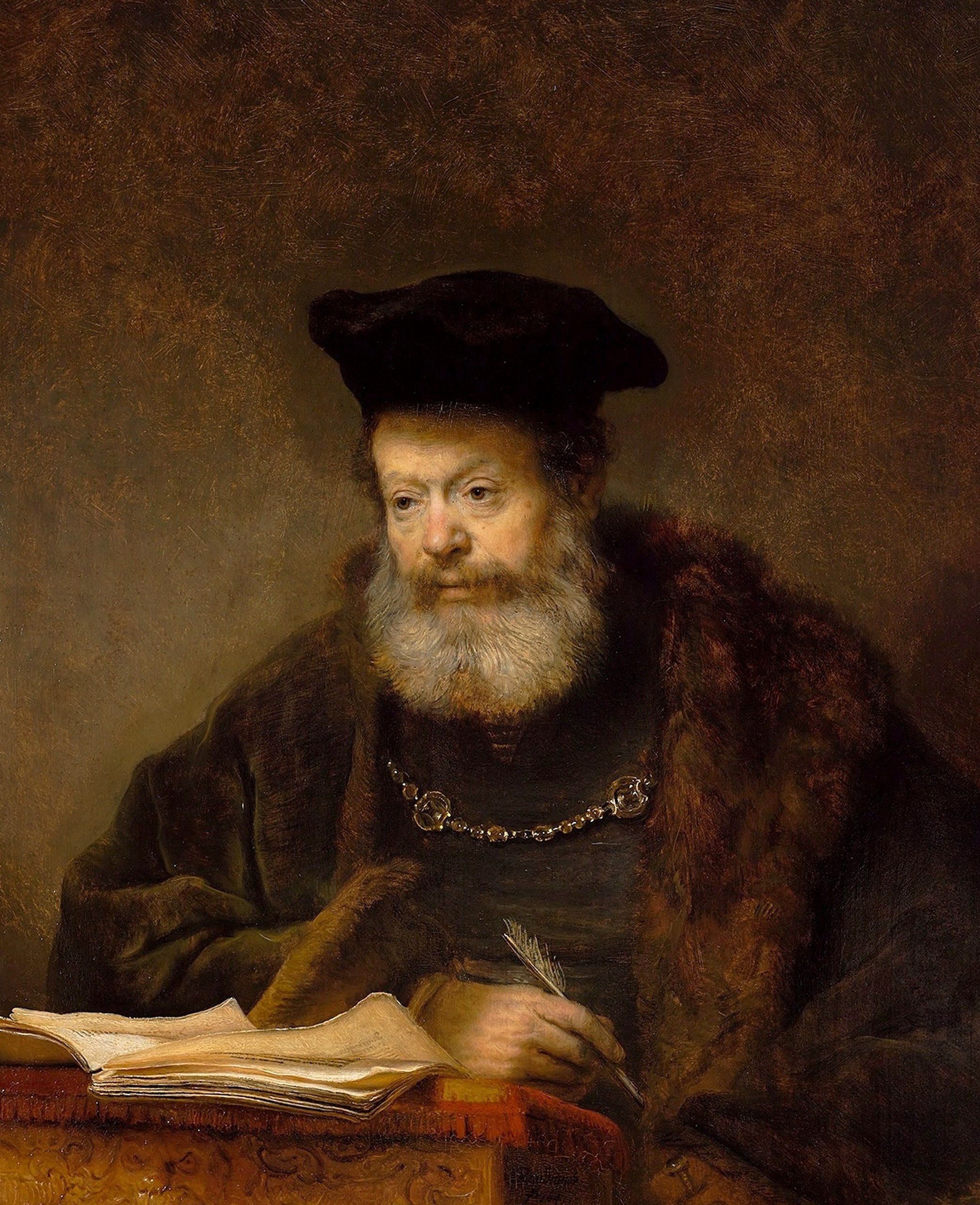
Scholar at his desk
Rembrandt · 1641
Royal Castle, Warsaw
An old man in a black hat, a fur-lined cloak and a gold chain looks up from his writing. One of only three paintings by Rembrandt in Polish collections.
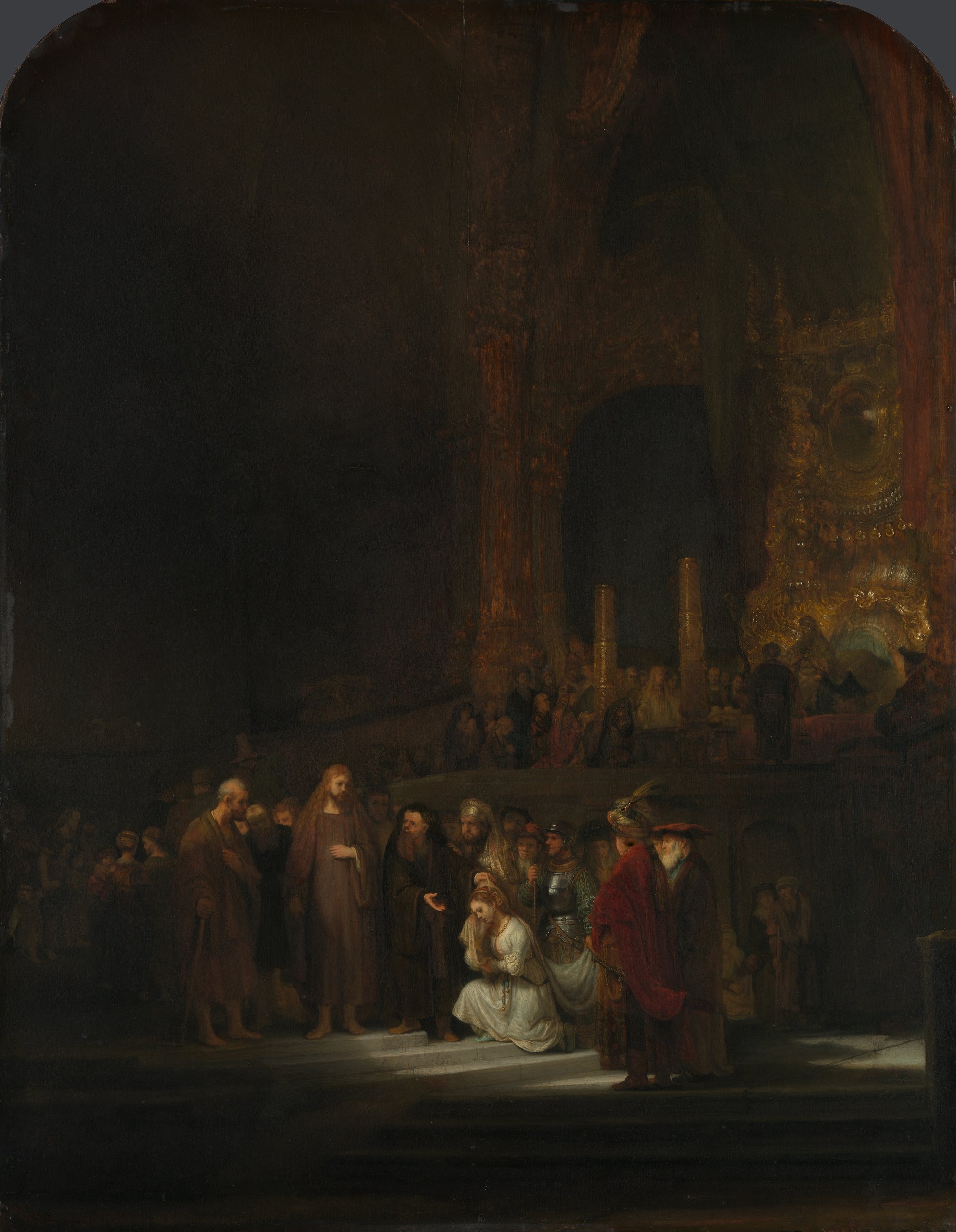
The Woman Taken in Adultery
Rembrandt · 1644
National Gallery
A woman kneels in a shaft of light in the vast dark of the temple. The National Gallery in London bought it in 1824, among its founding purchases.
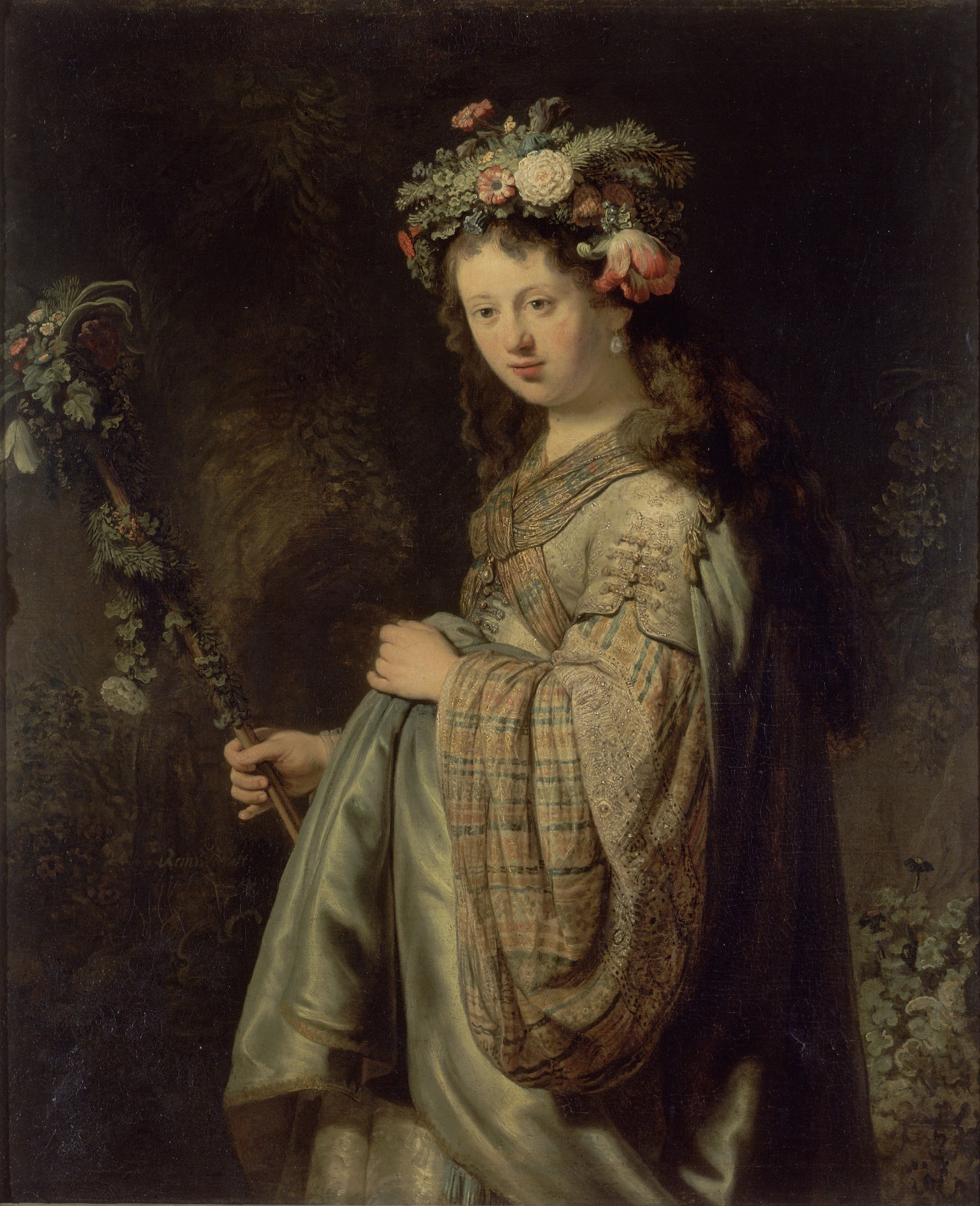
Flora
Rembrandt · 1634
State Hermitage Museum
His young wife Saskia as the Roman goddess of spring, swathed in silk and satin with a floral headdress, painted in Amsterdam during the years of his early success there.
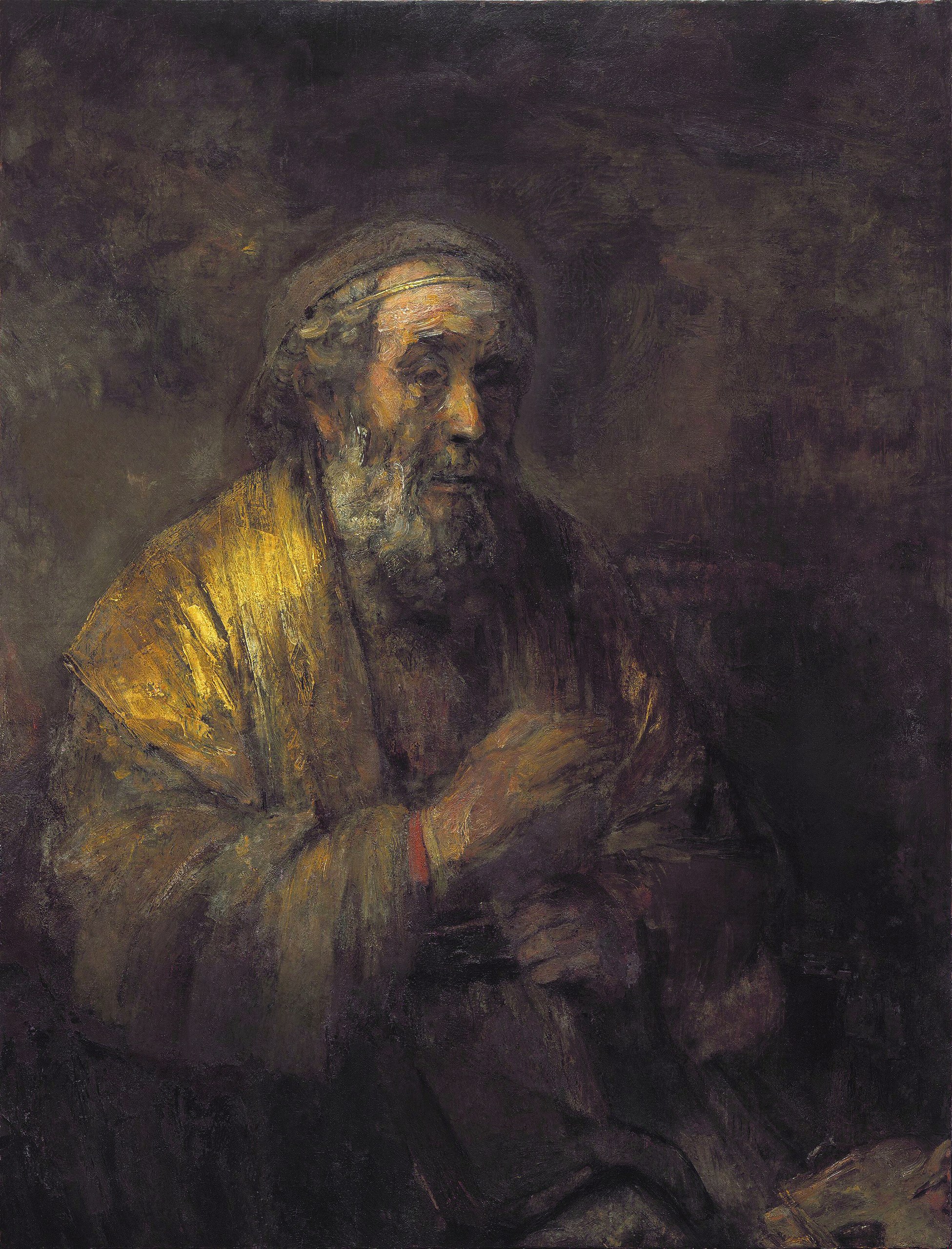
Homer
Rembrandt · 1663
The blind poet dictating his verses, one of three works commissioned by the Sicilian nobleman Antonio Ruffo alongside Aristotle with a Bust of Homer, and bequeathed to the Mauritshuis in 1946.
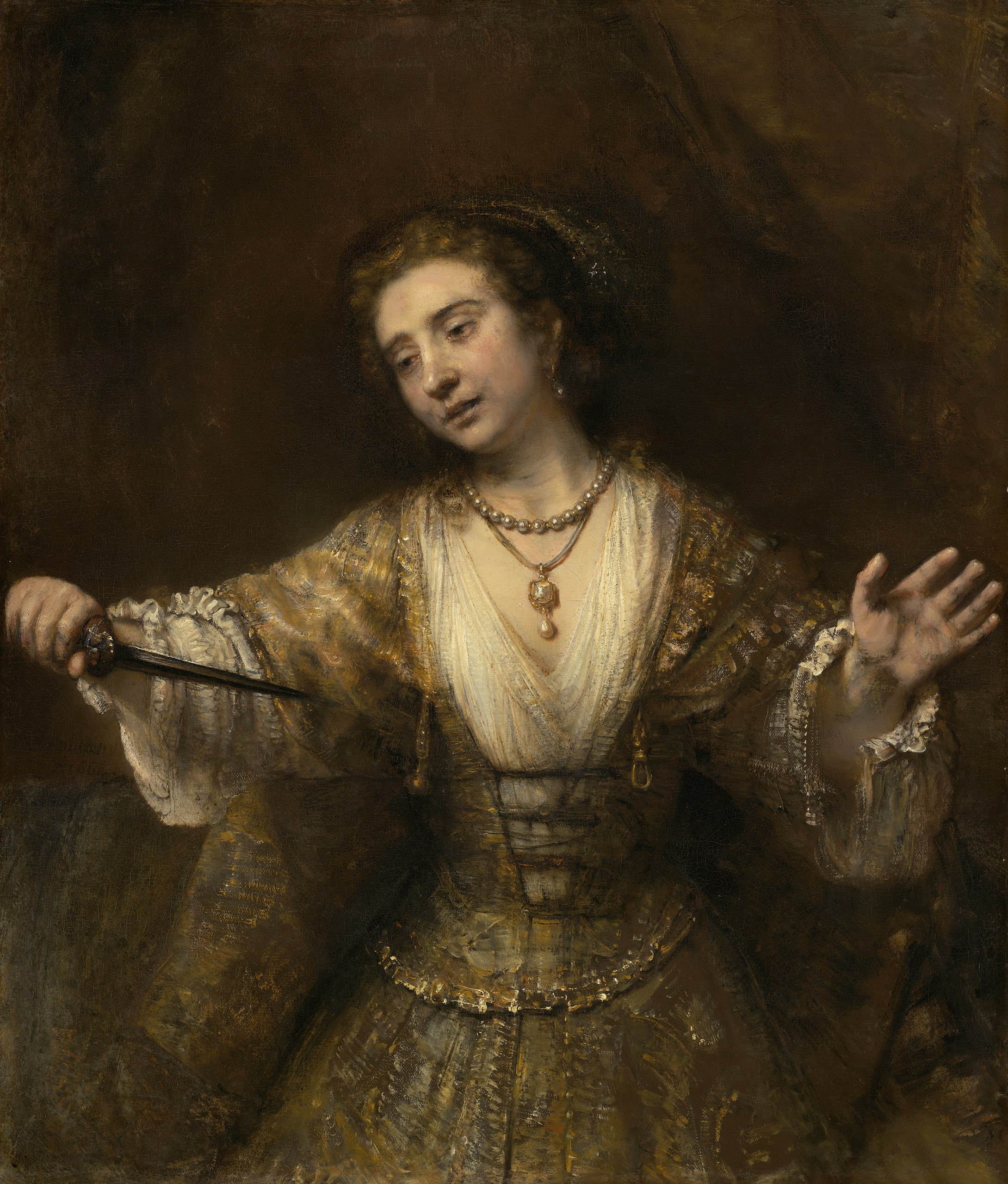
Lucretia
Rembrandt · 1664
The Roman noblewoman at her suicide, a pearl at her ear and a dagger pointed at her breast; the Rembrandt Research Project has since set the 1664 canvas outside the artist's own hand.
Sources
- National Gallery, London, “Rembrandt”
- Rijksmuseum, “Rembrandt van Rijn: his life and talent”
- National Gallery, London, “Self Portrait at the Age of 63”
- Rijksmuseum, “The Night Watch”
- National Gallery, London, “Belshazzar’s Feast”
- Wikipedia, “The Anatomy Lesson of Dr. Nicolaes Tulp”
- Wikipedia, “The Return of the Prodigal Son (Rembrandt)”
- Wikipedia, “The Jewish Bride”
- Wikipedia, “Syndics of the Drapers' Guild”
- Wikipedia, “Aristotle with a Bust of Homer”
- Wikipedia, “Bathsheba at Her Bath (Rembrandt)”
- Wikipedia, “Danaë (Rembrandt)”
- Wikipedia, “The Three Trees”
- Wikipedia, “The Three Crosses”
- Wikipedia, “Landscape with the Good Samaritan”
- Wikipedia, “Slaughtered Ox”
- Wikipedia, “Self-Portrait with Beret and Turned-Up Collar”
- Wikipedia, “Titus as a Monk”
- Wikipedia, “The Girl in a Picture Frame”
- Wikipedia, “The Scholar at the Lectern”
- Wikipedia, “The Woman Taken in Adultery (Rembrandt)”
- Wikipedia, “Flora (Rembrandt, Hermitage)”
- Wikipedia, “Homer Dictating his Verses”
- Wikipedia, “Lucretia (Rembrandt, 1664)”
Invite Rembrandt van Rijn into your living room
Play 36 works from this collection on your TV, phone or tablet with Momentable Art TV.