The Birth of Venus
Sandro Botticelli · 1485

Sandro Botticelli
Italian · 1445–1510
Florence's painter of line, whose pagan goddesses and grave Madonnas still set the look of the early Renaissance in the mind's eye.
Play 25 works from this collection on your TV, phone or tablet with Momentable Art TV.
Play CollectionFlorence and the Medici
The son of a tanner, born Alessandro di Mariano Filipepi, he took the name Botticelli from a nickname for a small wine cask. He seems first to have trained as a goldsmith and then in the studio of Fra Filippo Lippi, and by 1470 he kept a workshop of his own. Nearly all his working life was passed in the service of the Medici and their circle, for whom his most ambitious secular paintings were made.
So great stood his name that in 1481 the Pope called him to Rome to help cover the fresh walls of the Sistine Chapel, where he frescoed episodes from the life of Moses and the temptation of Christ, besides several papal likenesses. He was back in Florence by 1482, and the record shows no later journey beyond Tuscany's borders.
Mythologies and crisis
The dozen years from 1478 were his height: the period of the great mythologies, among them the Birth of Venus, in which a decorative line learned perhaps at the goldsmith's bench meets the supple figures of the classical tradition. On canvas after canvas the gods arrive at a scale Western art had hardly attempted since antiquity, and Venus herself, newly born, steps ashore from the sea fully grown.
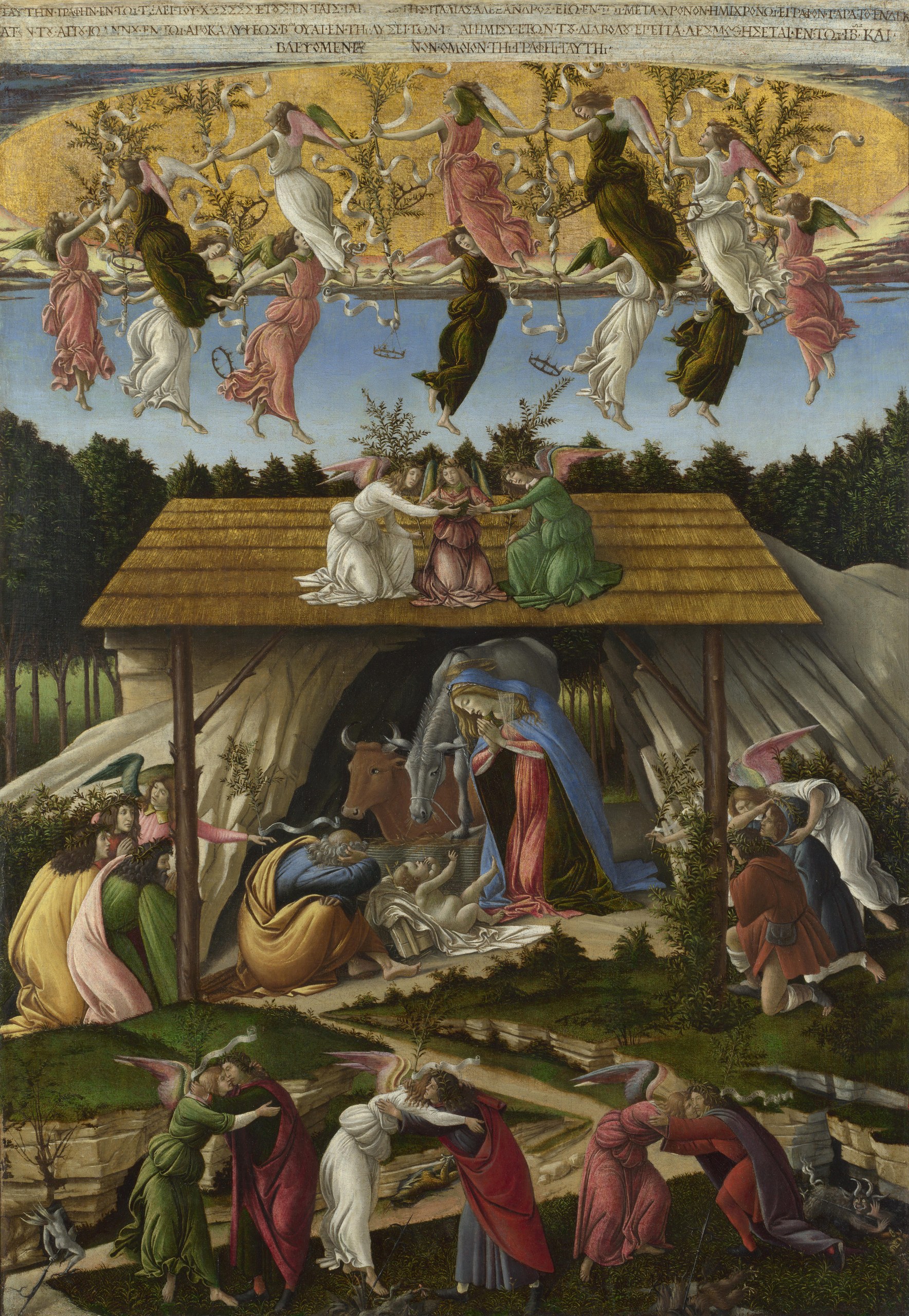
The 1490s broke the spell. The Medici were driven out of Florence, war and plague unsettled Italy, and under the preaching of Savonarola, whose follower the ageing painter became, and the ornamental grace of the earlier work gave way to something plainer and harder. His last pictures wear their religious urgency openly, and none more so than the Mystic Nativity, where the end of the world is painted as though it were at hand.
Known works
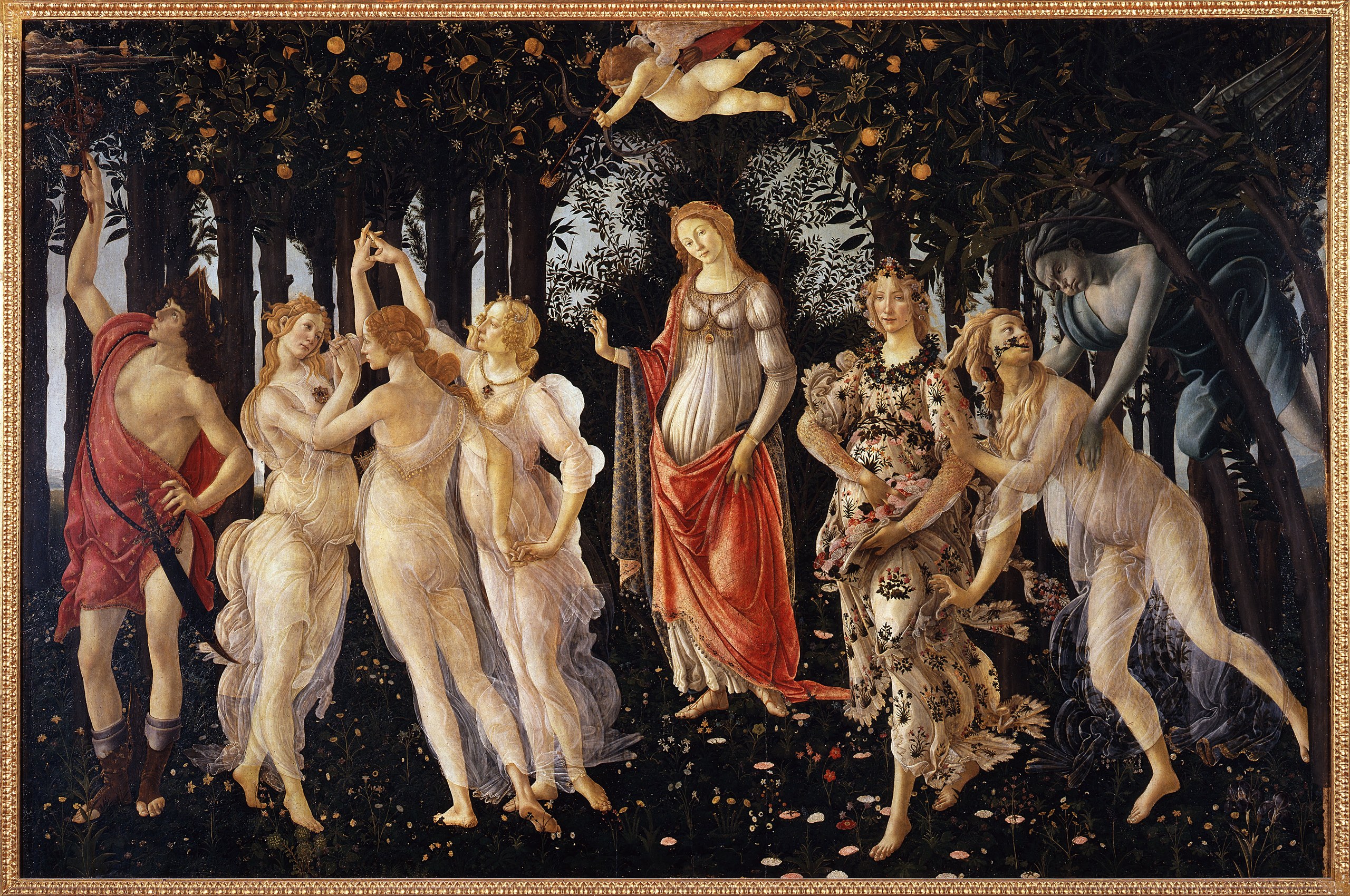
Primavera
Sandro Botticelli · 1480
Uffizi Gallery
Primavera. Figures from classical myth stand together in a spring garden, though no surviving story gathers exactly this group. An allegory of the season's growth, painted in the late 1470s or early 1480s, argued over ever since: among the most discussed and most loved pictures in Western art, named by the historian Vasari, who saw it outside Florence by 1550.
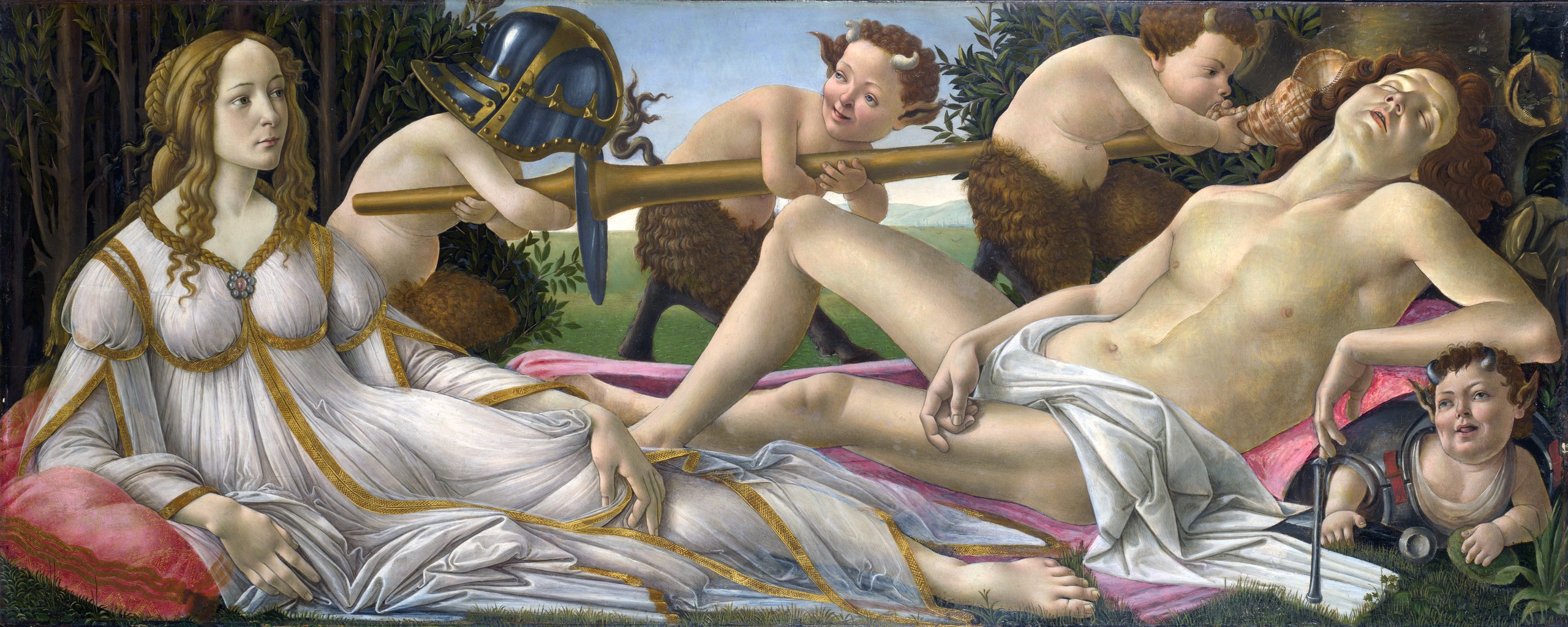
Venus and Mars
Sandro Botticelli · 1485
National Gallery
Venus and Mars. The goddess of love watching the god of war asleep in a wood, satyr children toying with his armour: beauty and valour at play. Painted about 1485, probably to celebrate a wedding and set into bedroom furniture, its learned idea likely worked out with the Medici poet Poliziano.
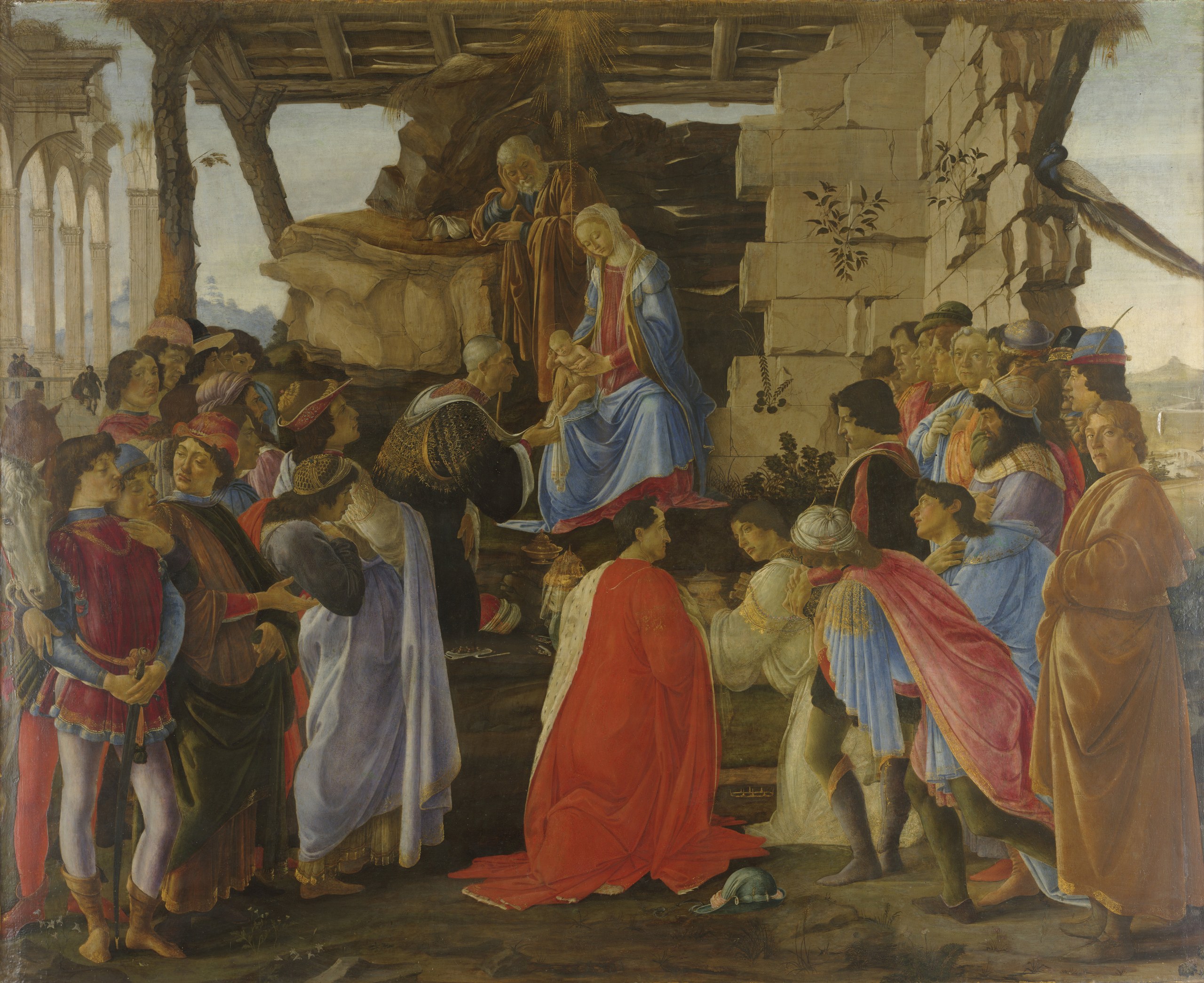
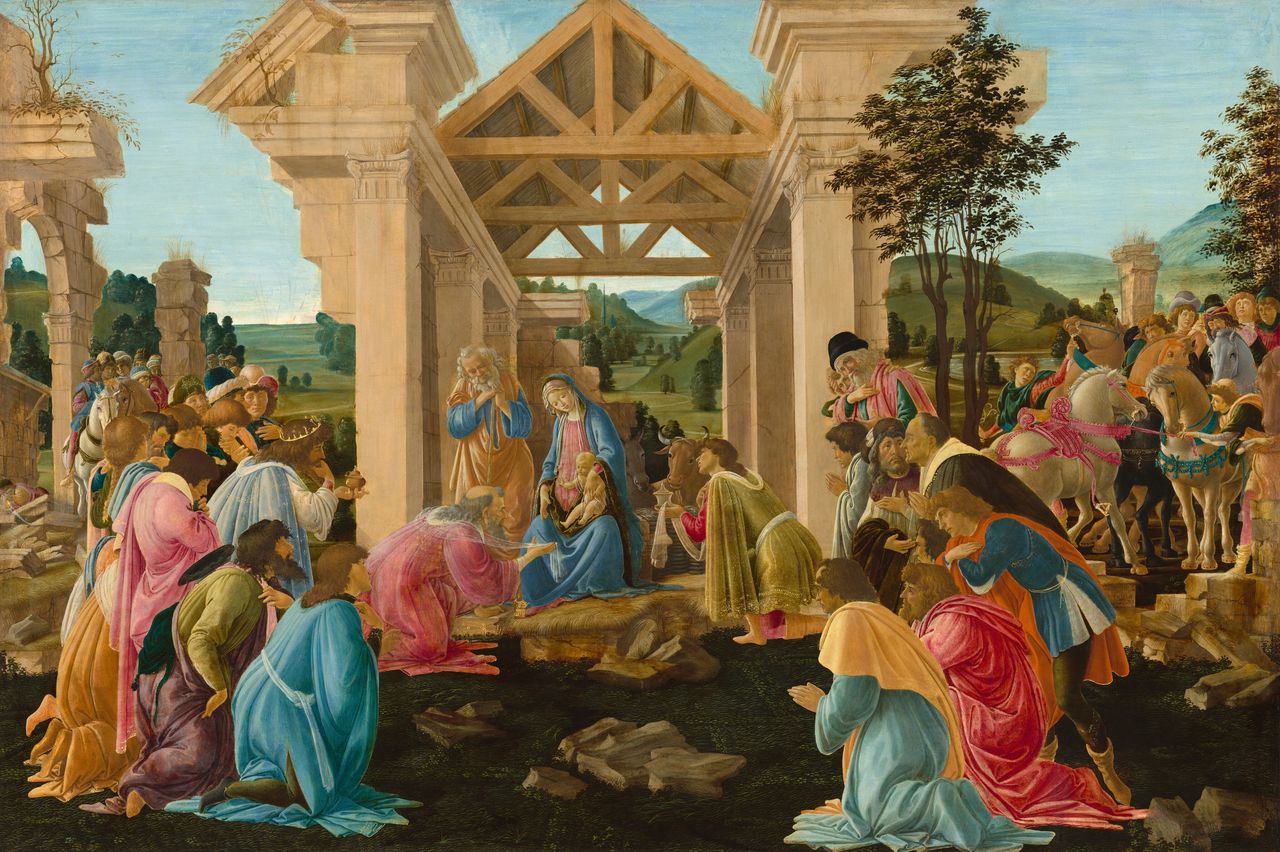
Adoration of the Magi
Sandro Botticelli · 1475
Uffizi Gallery
Adoration of the Magi. The kings kneel with their gold, frankincense and myrrh before the Child, ringed by a crowd of onlookers. Painted around 1475 for the chapel of the Florentine broker Gaspare di Zanobi del Lama in Santa Maria Novella, the altarpiece of a man making his claim on the Medici world.
The Mystical Nativity
Sandro Botticelli · 1500
National Gallery
The Mystical Nativity. The Child reaching up to his mother, kings and shepherds guided in by angels, heaven opening as a golden ring of dancing spirits while demons flee through the rocks below. A Greek inscription links the picture to Italy's troubles, the French invasions and Florence's own strife, read through the Book of Revelation and the promise of Christ's return: his strangest and most personal religious painting.
Madonna of the Pomegranate
Sandro Botticelli · 1487
Uffizi Gallery
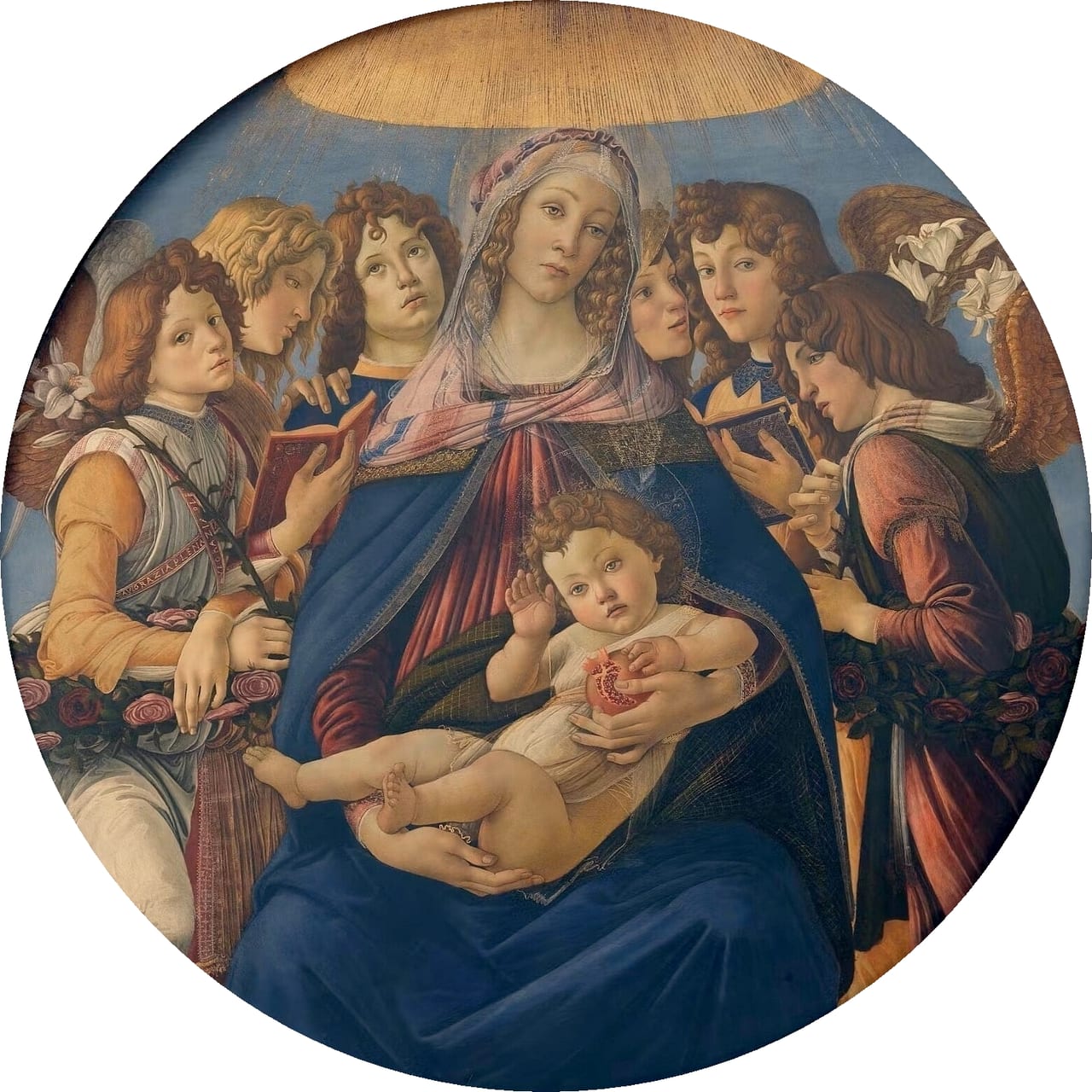
Madonna of the Pomegranate. The Virgin and Child in a round panel, angels set evenly to each side, the fruit held in her left hand. Painted around 1487, with the smoother, warmer surfaces his tempera allowed, and among the most familiar images of his maturity.
Fortitude
Sandro Botticelli · 1470
Uffizi Gallery
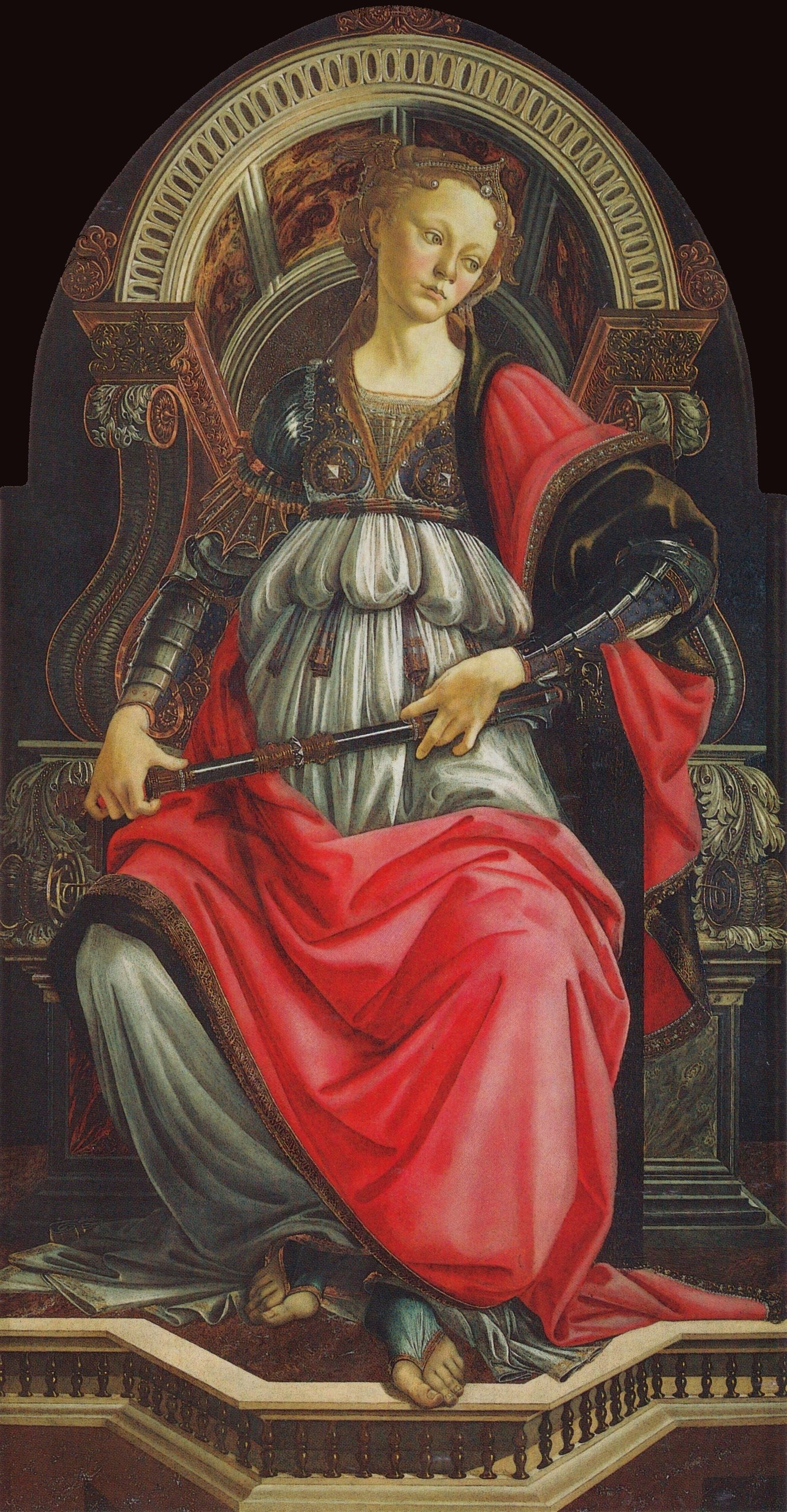
Fortitude. A seated woman in armour, from the first masterpiece of his that history records, painted in 1470. One of seven Virtues made for the Tribunal Hall of the Palazzo della Signoria; his rivals for the set were the workshop of Piero del Pollaiuolo.
Portrait of a Man with a Medal of Cosimo the Elder
Sandro Botticelli · 1474
Uffizi Gallery
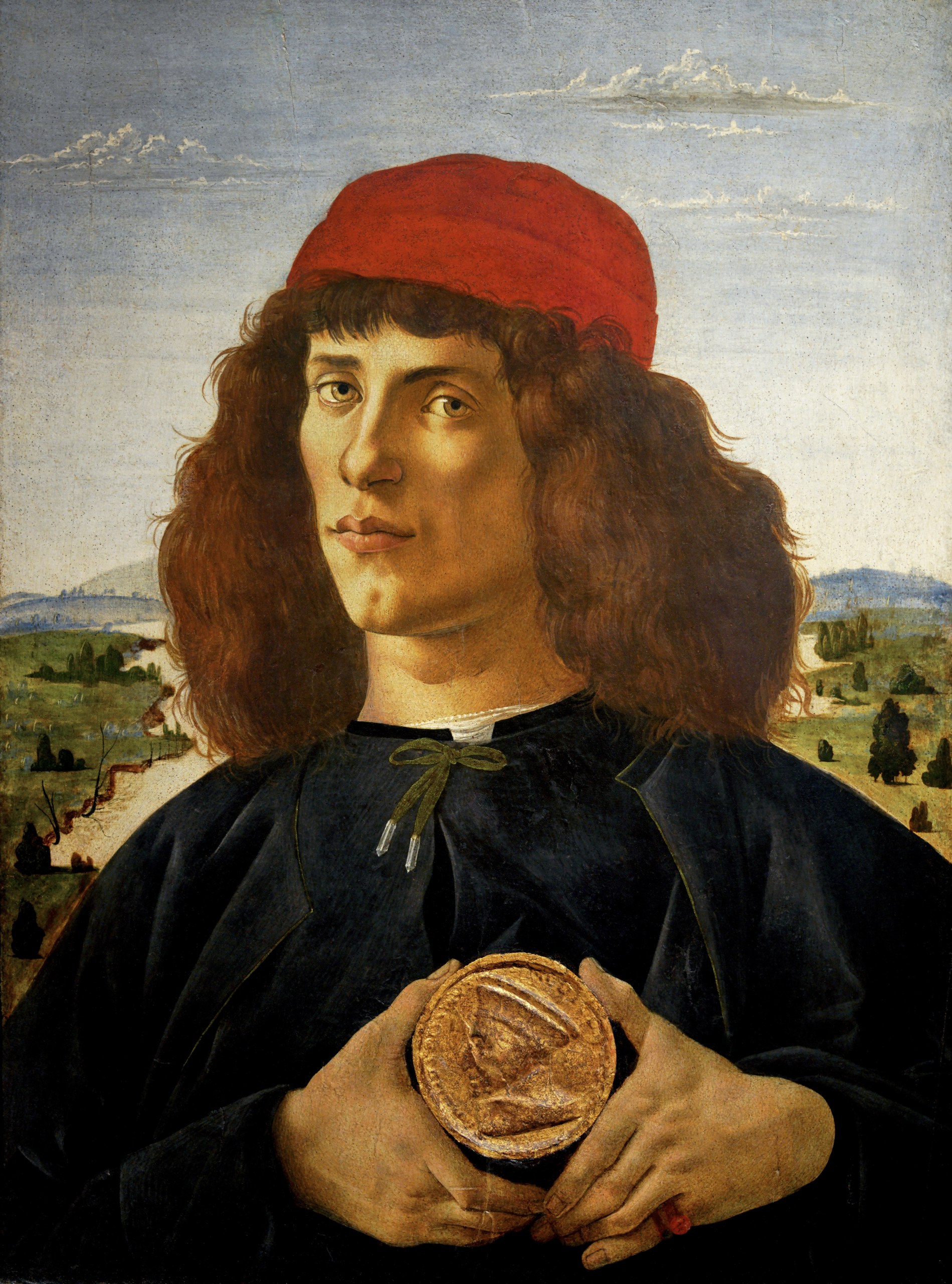
Portrait of a Man with a Medal of Cosimo the Elder. A young man in the open air, holding up a gilded medal bearing the profile of the first Medici, the medal itself modelled in gesso and set into the panel. Who he is has never been settled: one of the standing puzzles of Renaissance portraiture.
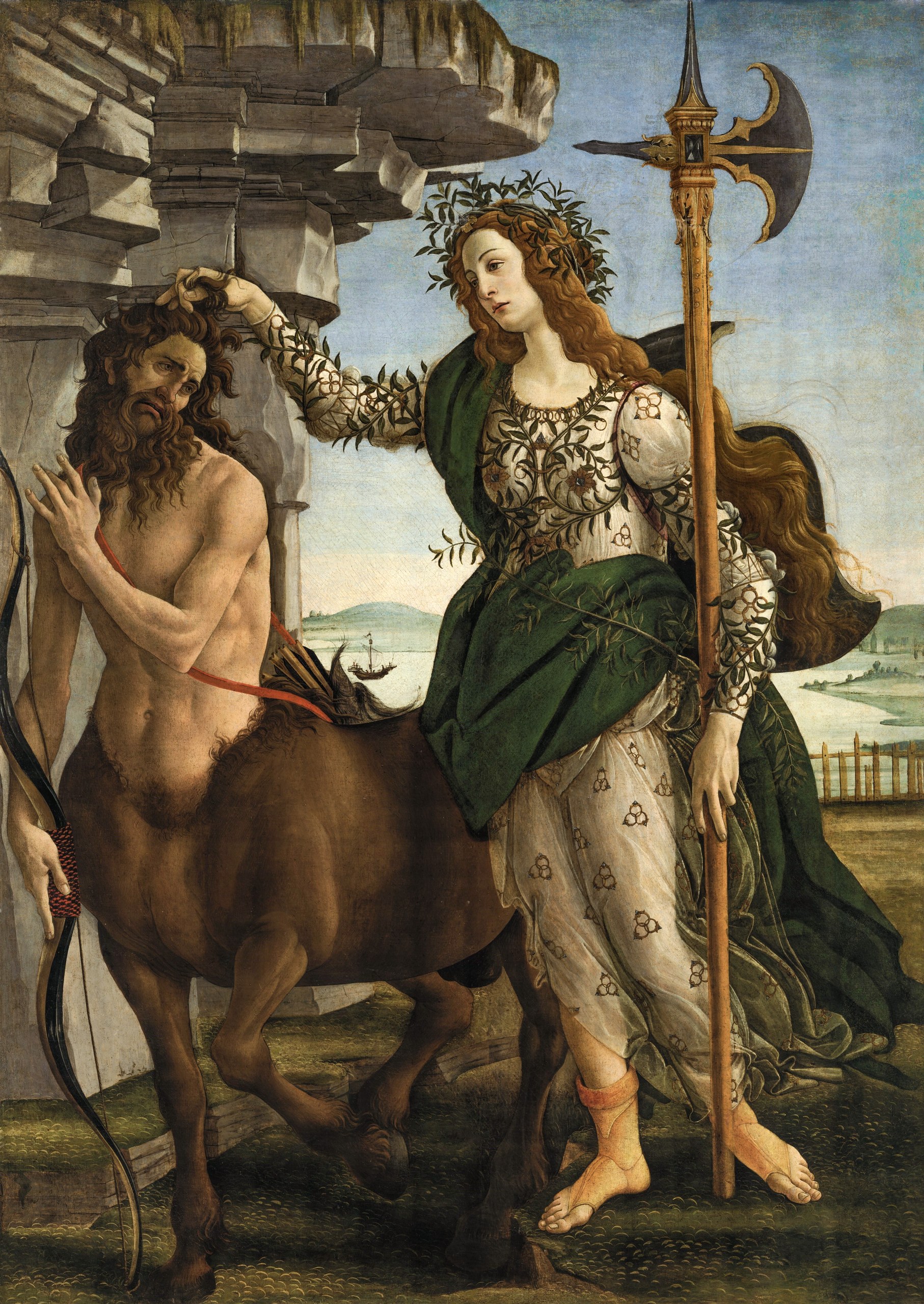
Pallas and the Centaur
Sandro Botticelli · 1482
Uffizi Gallery
Pallas and the Centaur. A woman of the classics seizing a centaur by the hair, his bow useless, her dress woven with the Medici rings: an allegory, likely of reason holding appetite, from about 1482. It has been proposed as a companion to the Primavera.
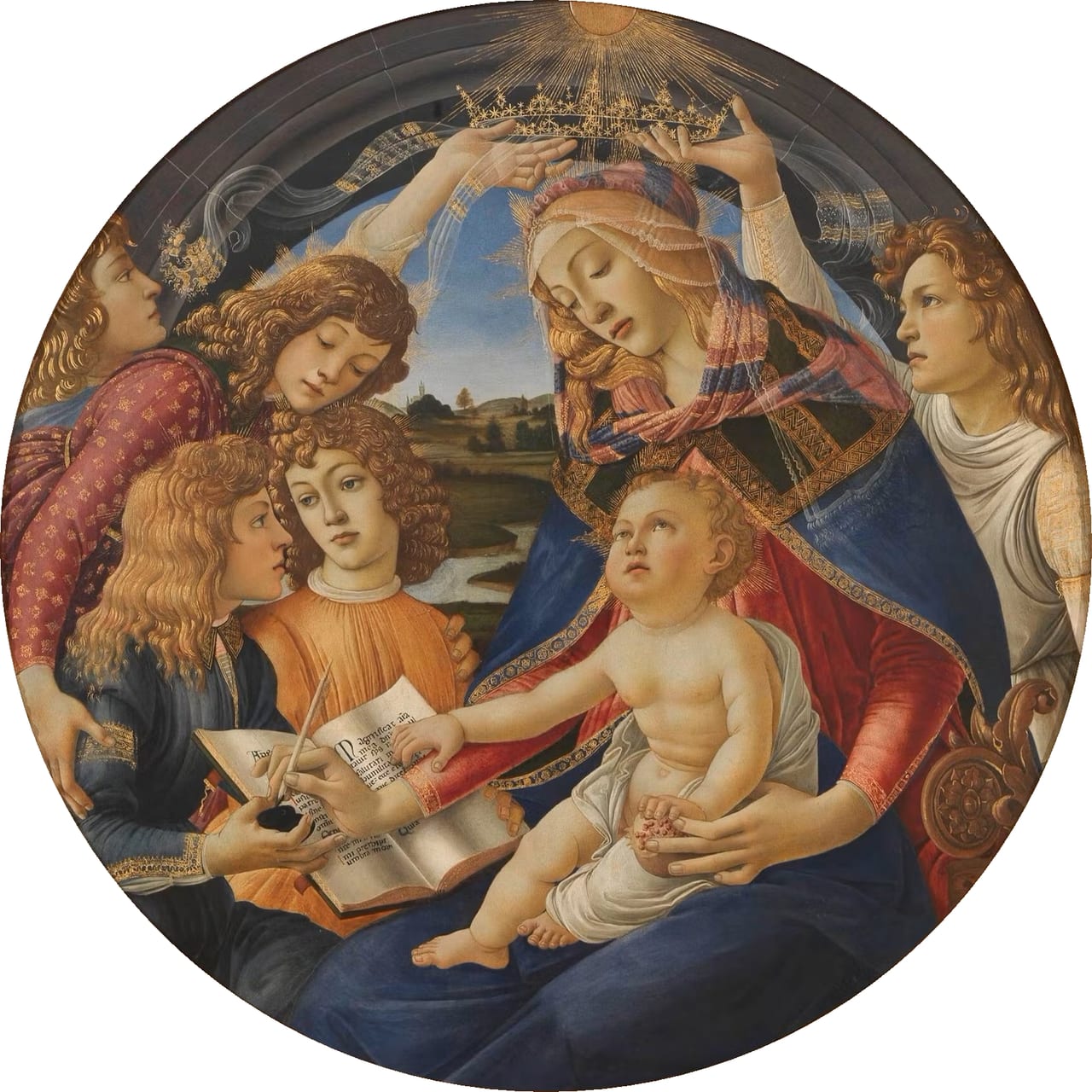
Madonna of the Magnificat
Sandro Botticelli · 1483
Uffizi Gallery
Madonna of the Magnificat. A round painting of the Virgin writing the Magnificat, a pomegranate in her other hand, the Christ Child on her lap while two angels set a crown upon her head. Its early history is lost; the Uffizi bought it from a private collection in 1784.
More to discover
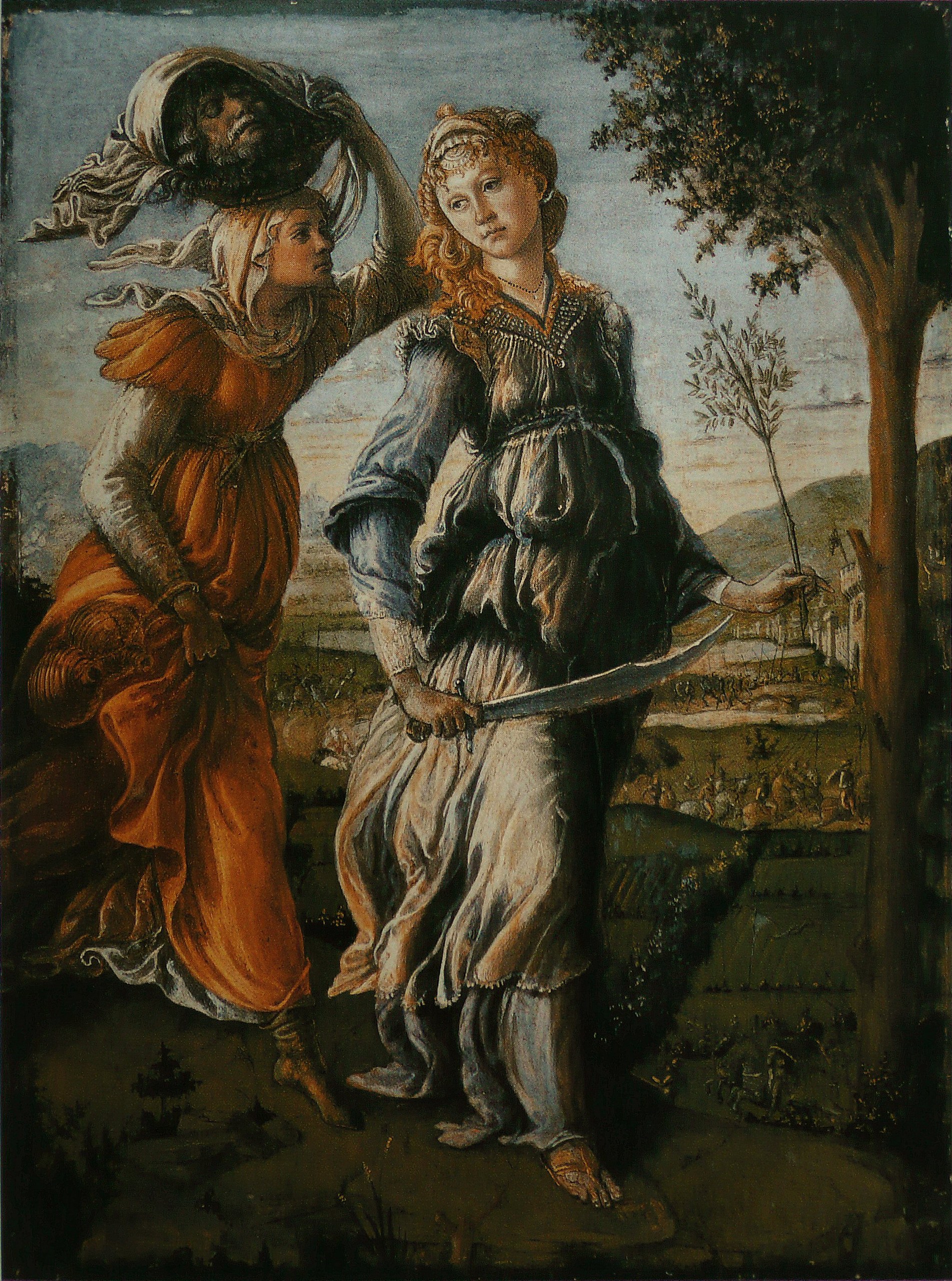
The Return of Judith to Bethulia
Sandro Botticelli · 1470
Uffizi Gallery
The Return of Judith to Bethulia. Judith and her maid striding home after the killing, the general's head carried in the basket. A small panel of about 1472, painted with its pendant, the discovery of Holofernes' body, which the Uffizi also holds.
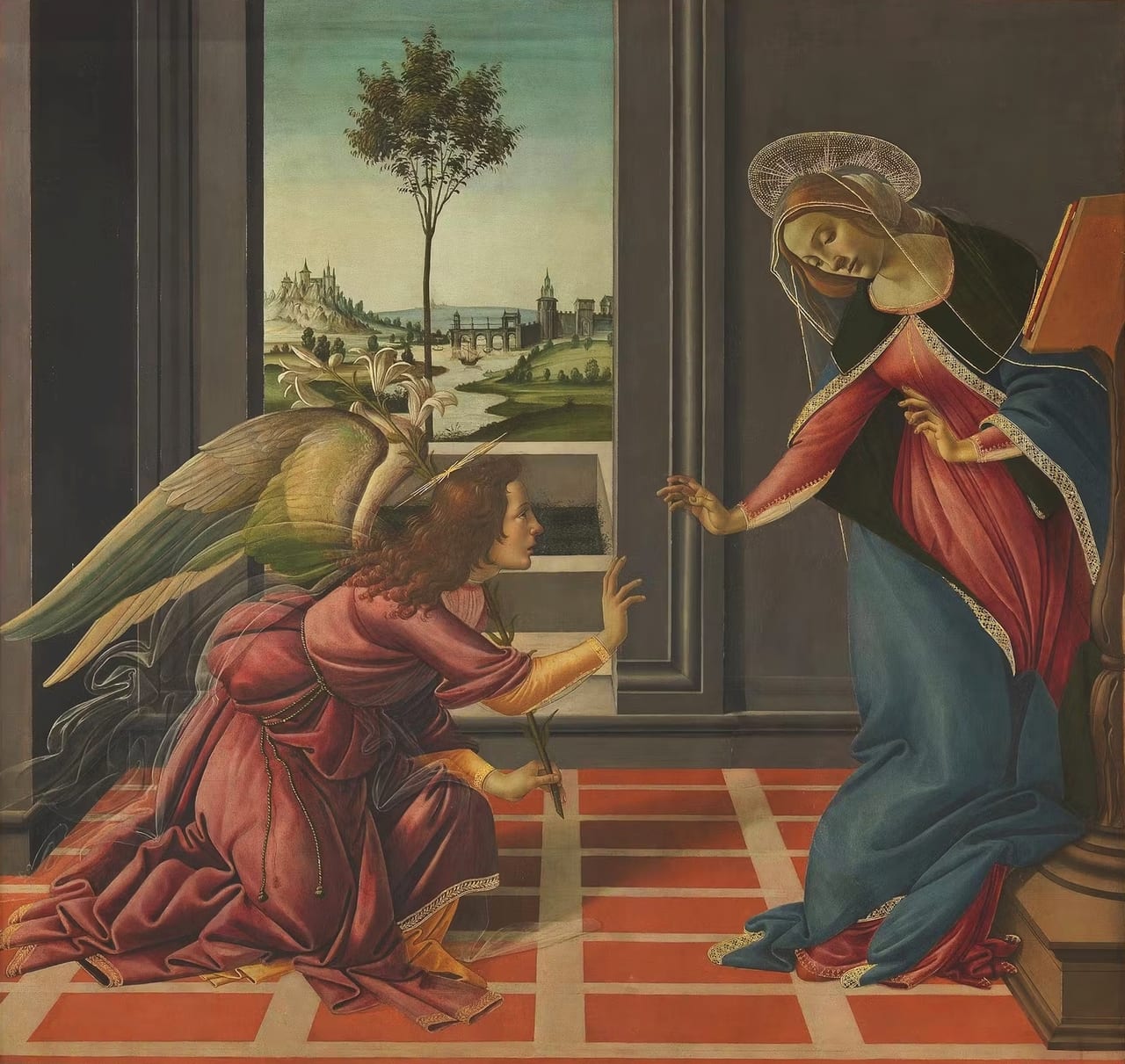
Cestello Annunciation
Sandro Botticelli · 1489
Uffizi Gallery
Cestello Annunciation. The angel bursting in on the Virgin in a bare room whose perspective runs away behind them. Made in 1489 for a patron's chapel in the Cestello monastery church, with words from Luke's Gospel cut into the original frame below.
Saint Augustine in His Cell
Sandro Botticelli · 1490
Uffizi Gallery
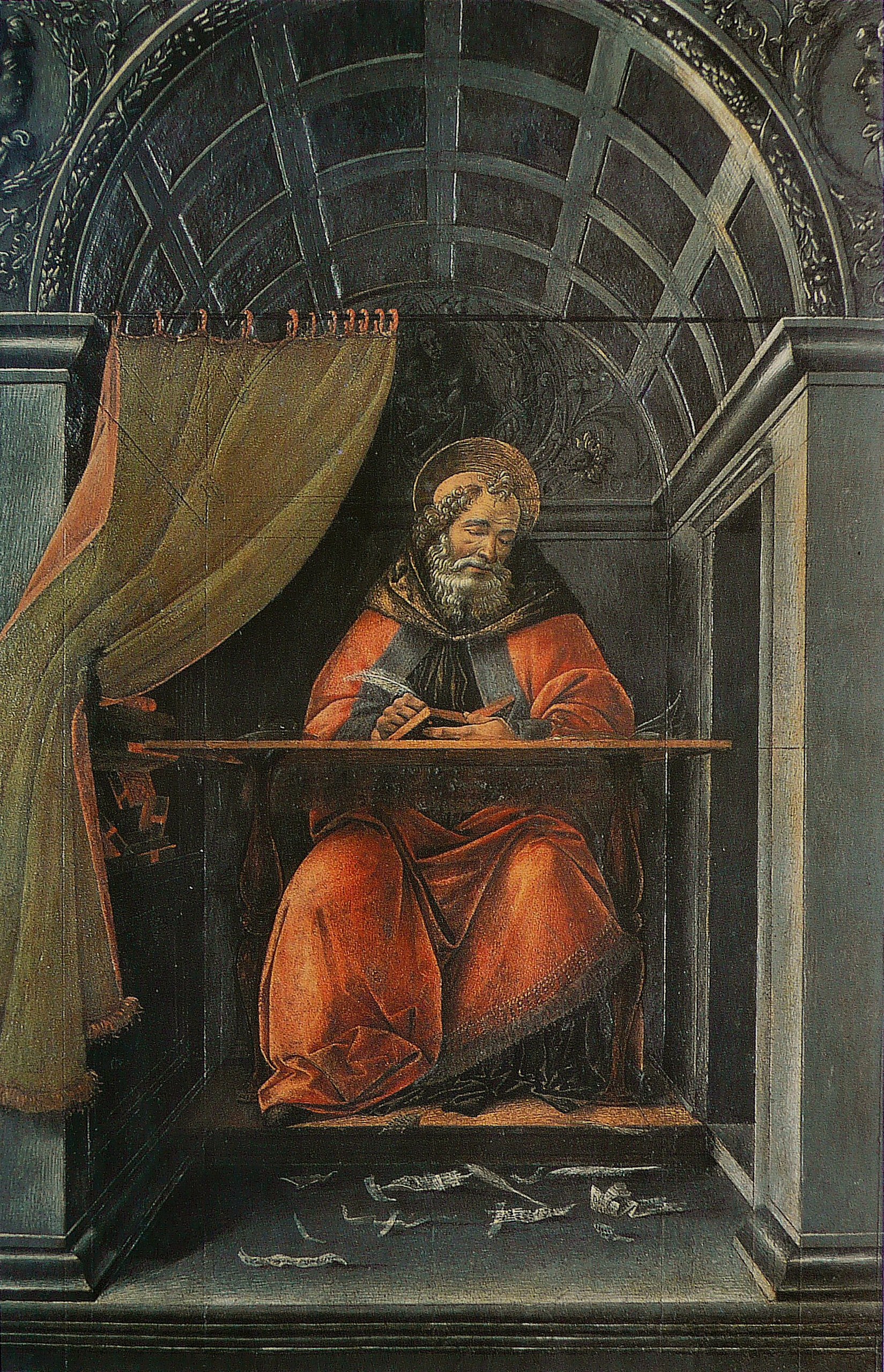
Saint Augustine in His Cell. The scholar saint at his desk in his cell, his books and instruments about him, painted around 1490 to 1494. He wears the robes of bishop and hermit at once, a clue that the picture was made for an Augustinian hermit of Santo Spirito.
Calumny of Apelles
Sandro Botticelli · 1497
Uffizi Gallery
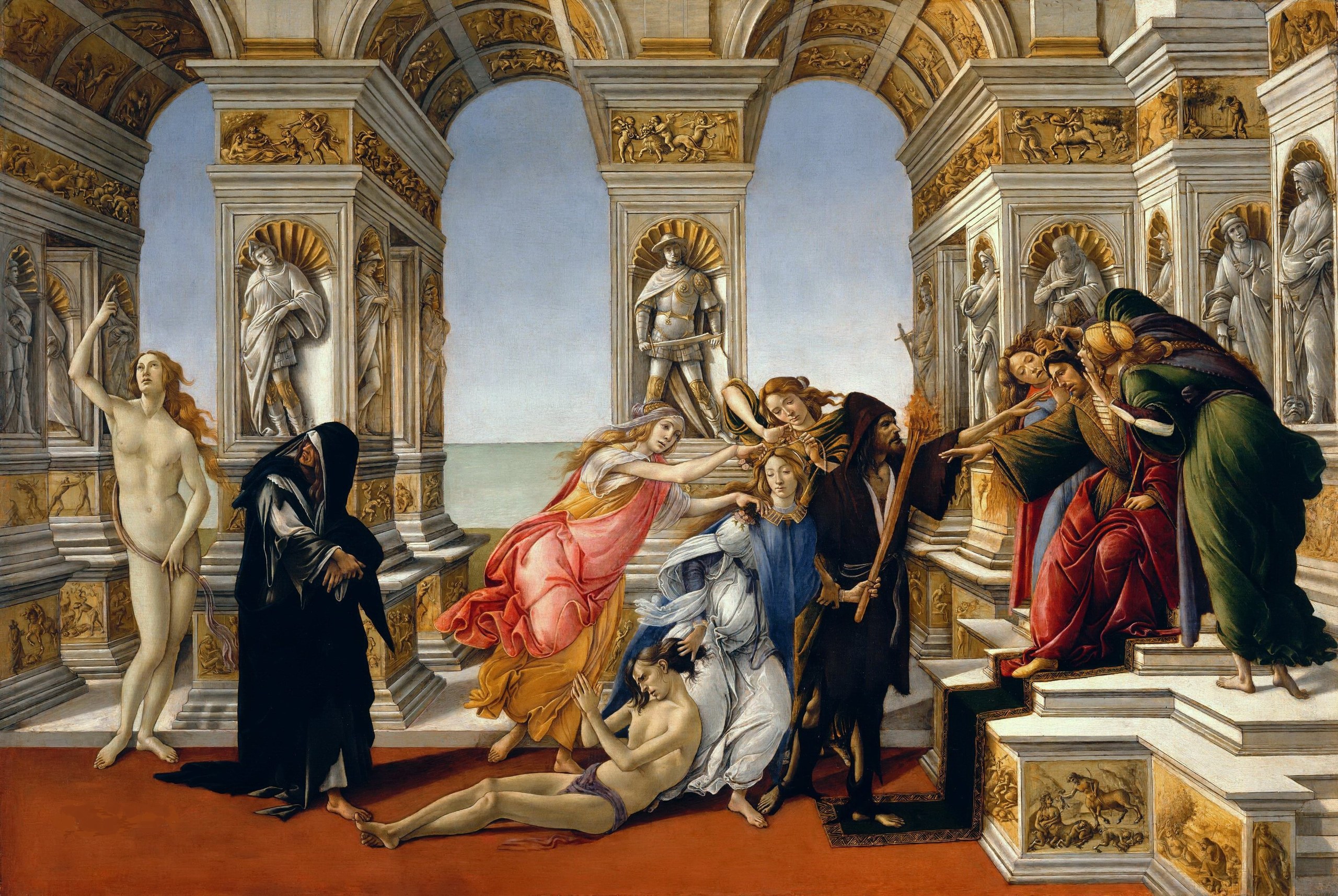
Calumny of Apelles. A court of allegorical figures, Slander dragged before a judge with kings whose ears are grown large: the recreation, of about 1495, of a celebrated ancient painting known only through a text by Lucian. Alberti had urged painters to attempt the subject sixty years before.
Madonna della Loggia
Sandro Botticelli · 1467
Uffizi Gallery
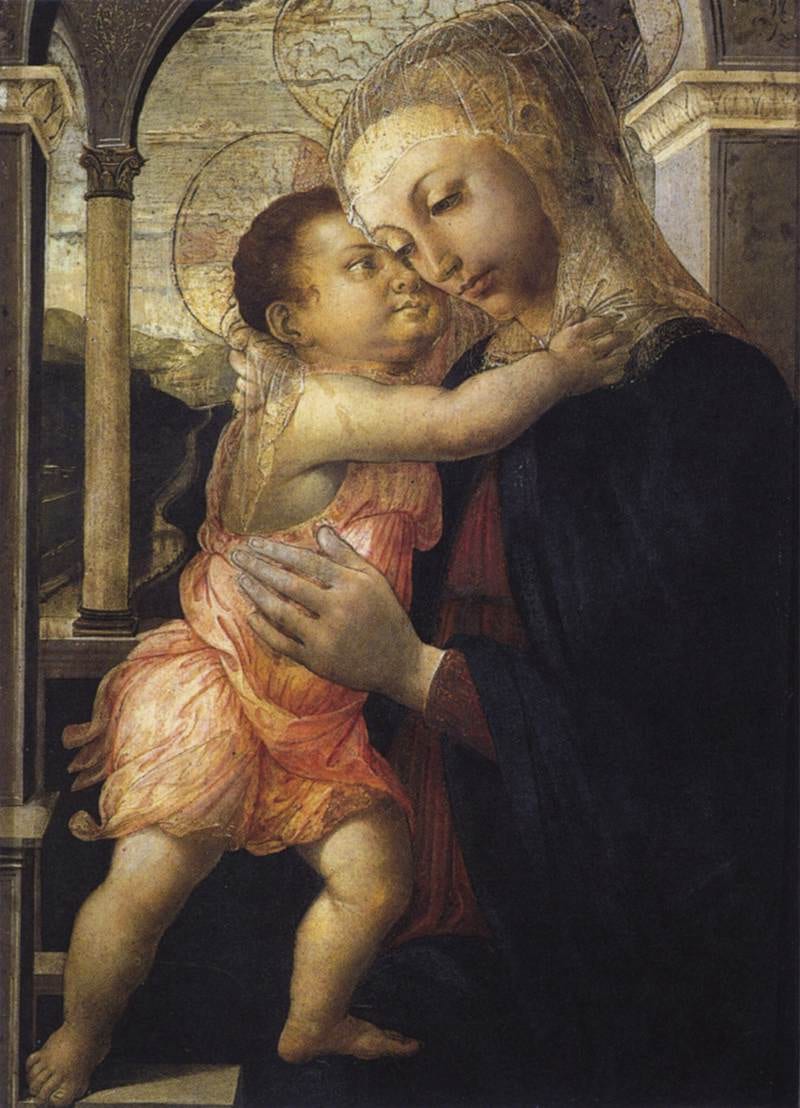
Madonna della Loggia. The Virgin and Child seated in the arch of a loggia, she in a dark blue cloak over a red dress. Among his earliest treatments of the subject, from about 1467, and a work given to him by attribution rather than certainty.
Madonna in Glory with Seraphim
Sandro Botticelli · 1469
Uffizi Gallery
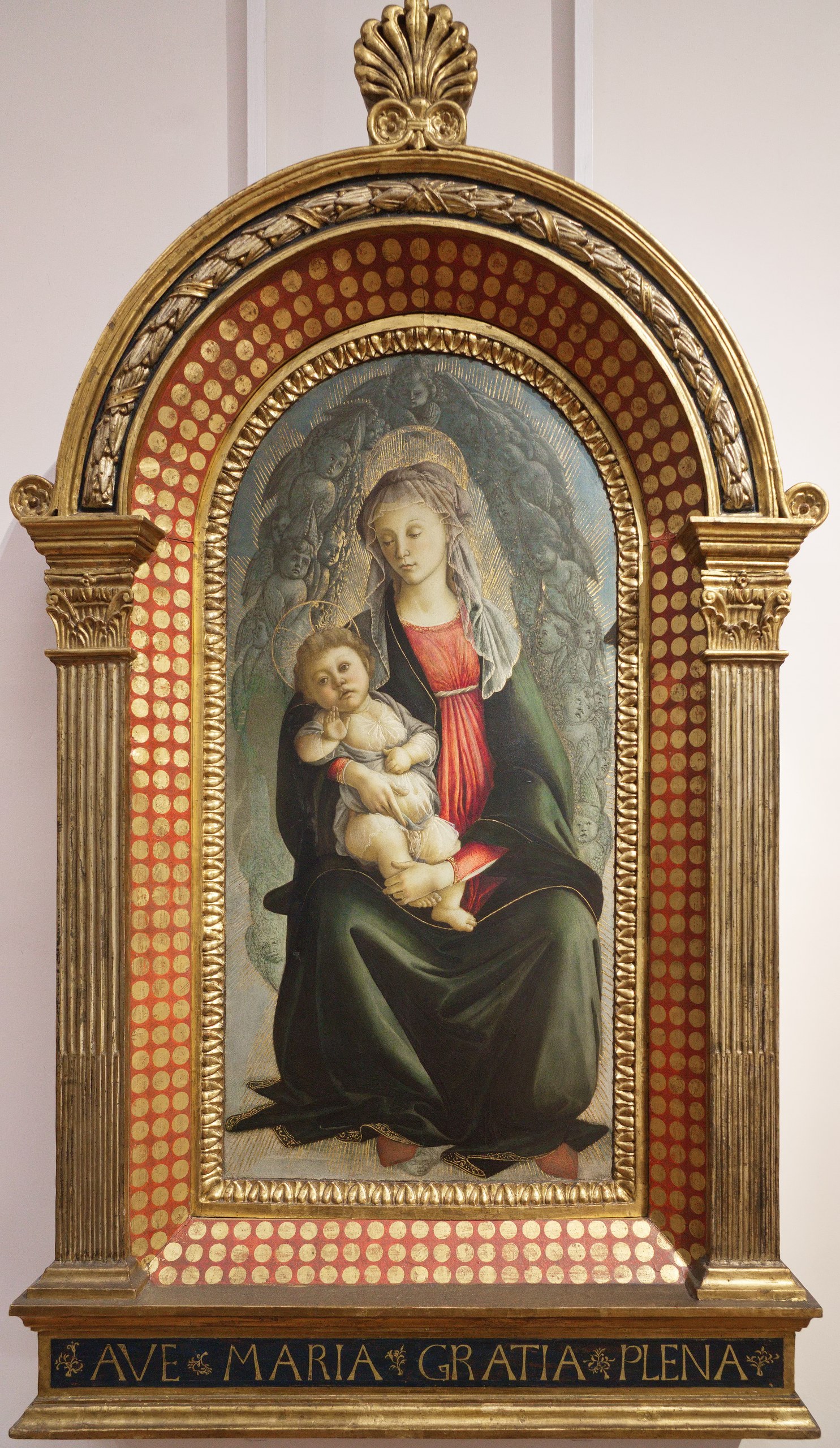
Madonna in Glory with Seraphim. The Virgin enthroned among flames, from about 1469 to 1470. Where it was first made is unknown; it passed for anonymous in the Uffizi's own inventories of 1784 and 1825 before his name was settled on it.
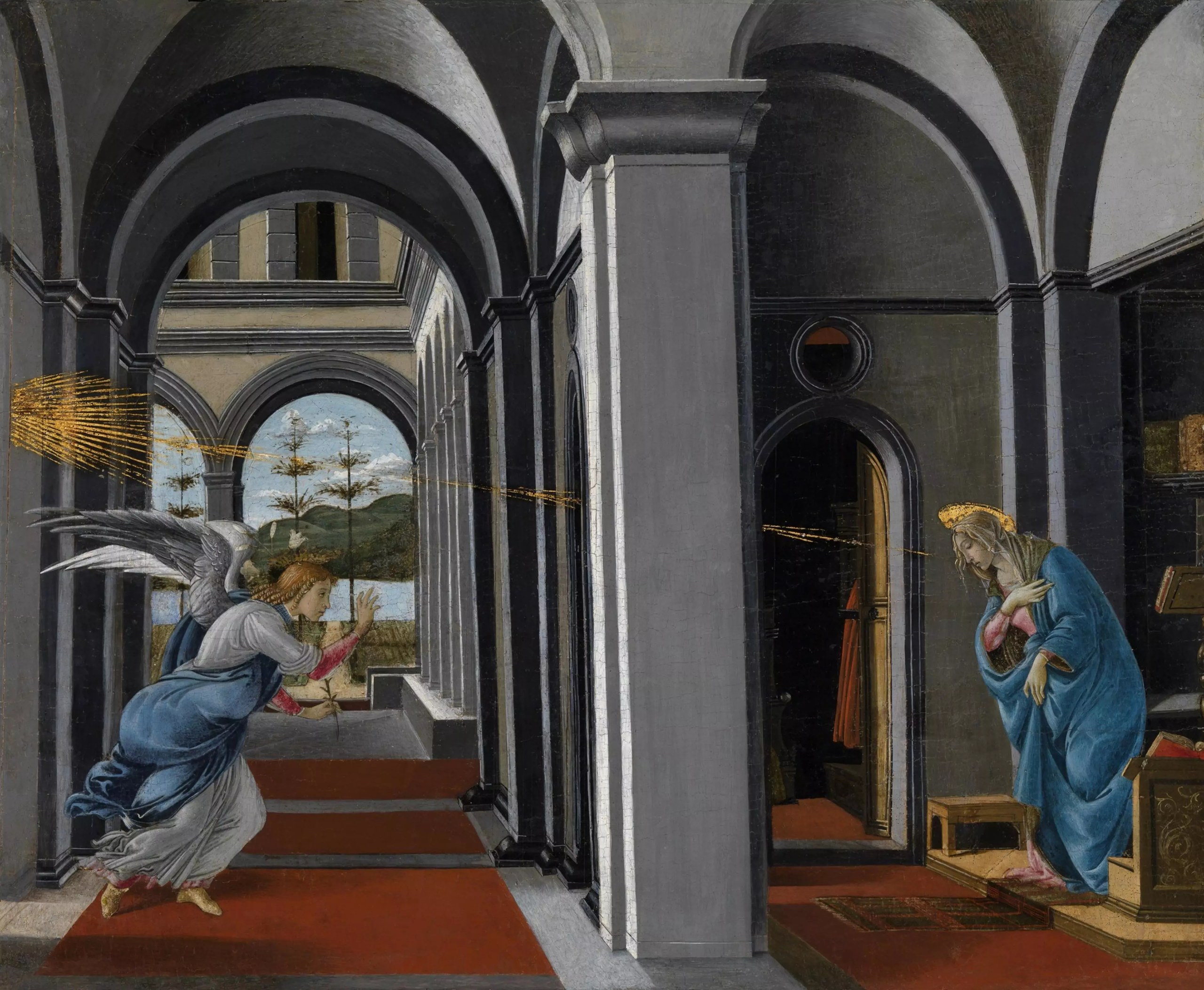
The Annunciation
Sandro Botticelli · 1487
Kelvingrove Art Gallery and Museum
The Annunciation. The angel Gabriel and the Virgin across a floor that recedes like a stage, painted with his studio and now in Glasgow. An old inscription on the back records that it once hung in a Florentine church, Saint Barnaba; a close version of the same year is in New York.
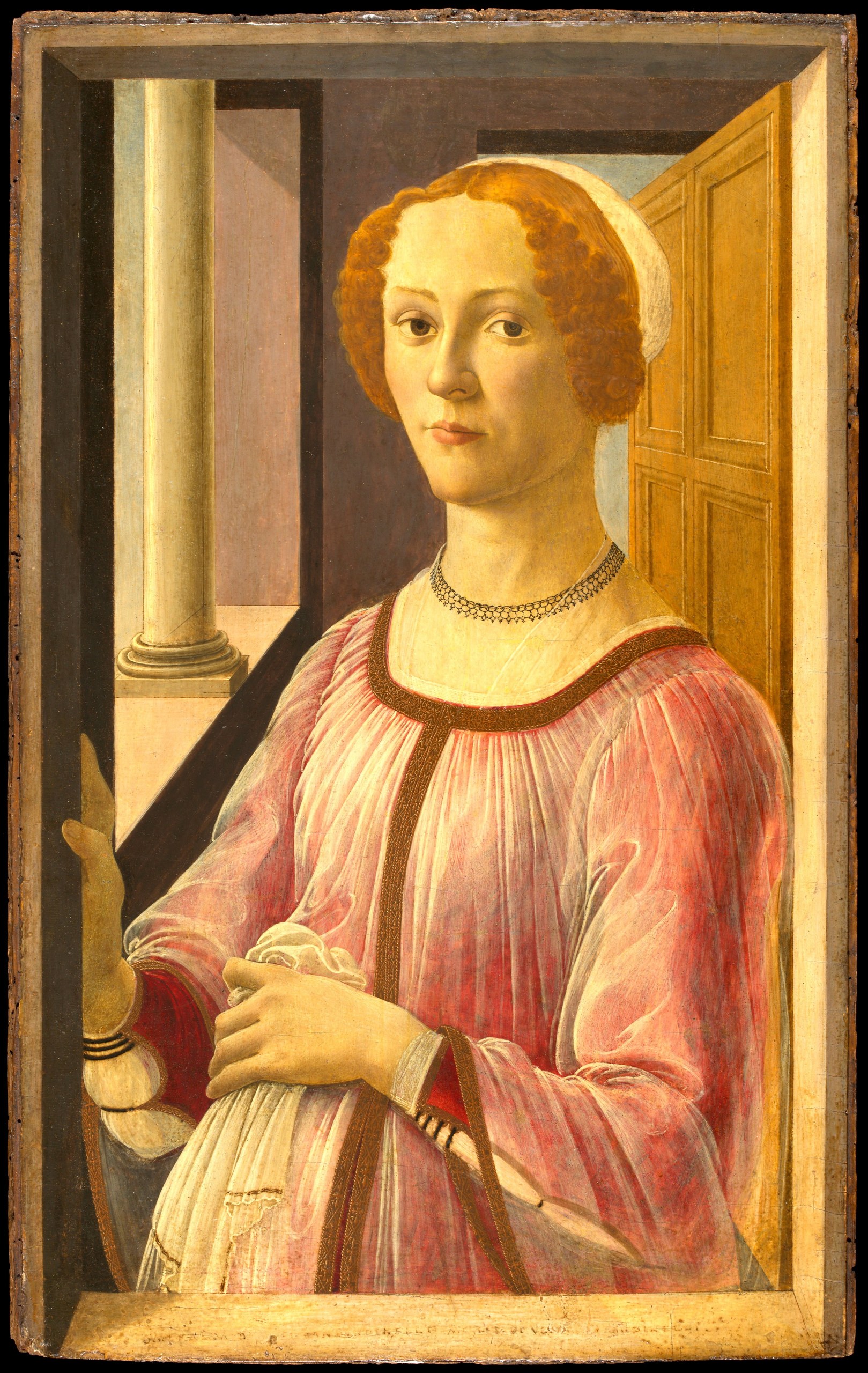
Portrait of a Lady known as Esmeralda Brandini
Sandro Botticelli · c. 1475
Victoria and Albert Museum
Portrait of a Lady known as Esmeralda Brandini. A woman in profile, her hand at her window, painted about 1475. The name comes from a later inscription on the sill; the sitter has been read as the sculptor Baccio Bandinelli's grandmother.
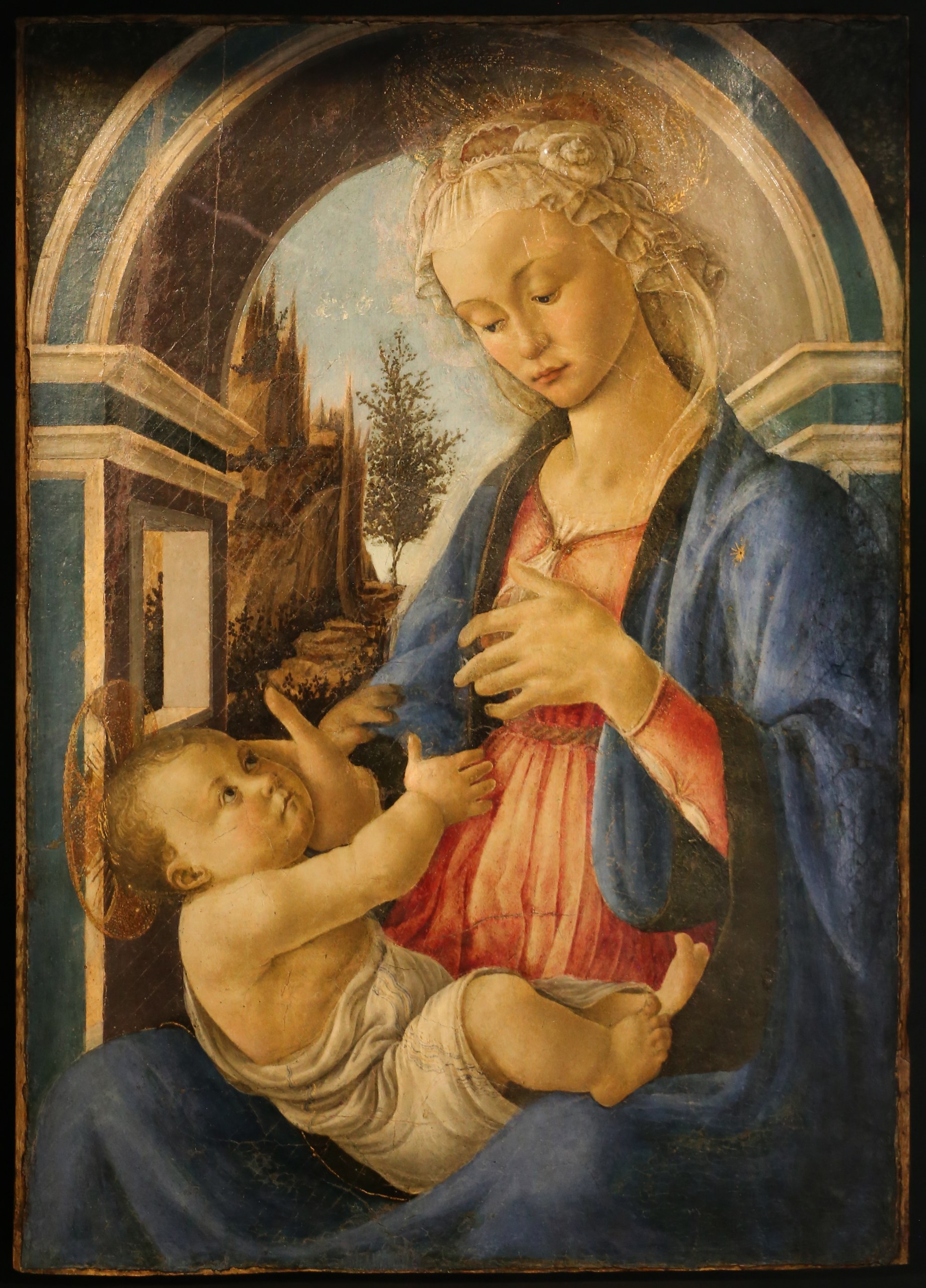
Madonna and Child
Sandro Botticelli · 1467
Madonna and Child. A quiet Virgin and Child of about 1467, small and severe, now in the Petit Palais at Avignon.
Sources
- National Gallery, London, “Sandro Botticelli”
- National Gallery, London, “Mystic Nativity”
- Wikipedia, “Primavera (Botticelli)”
- Wikipedia, “Venus and Mars (Botticelli)”
- Wikipedia, “Adoration of the Magi (Botticelli)”
- Wikipedia, “Madonna of the Pomegranate”
- Wikipedia, “Fortitude (Botticelli)”
- Wikipedia, “Portrait of a Man with a Medal of Cosimo the Elder”
- Wikipedia, “Pallas and the Centaur”
- Wikipedia, “Madonna of the Magnificat”
- Wikipedia, “The Return of Judith to Bethulia”
- Wikipedia, “Cestello Annunciation”
- Wikipedia, “Saint Augustine in His Study (Botticelli, Uffizi)”
- Wikipedia, “Calumny of Apelles”
- Wikipedia, “Madonna della Loggia (Botticelli)”
- Wikipedia, “Madonna in Glory with Seraphim (Botticelli)”
- Wikipedia, “Annunciation (Botticelli, Glasgow)”
- Wikipedia, “Portrait of a Lady Known as Smeralda Brandini”
- Wikipedia, “Madonna and Child (Botticelli, Avignon)”
- Wikipedia, “The Birth of Venus”
- Wikipedia, “Sandro Botticelli”
Invite Sandro Botticelli into your living room
Play 25 works from this collection on your TV, phone or tablet with Momentable Art TV.