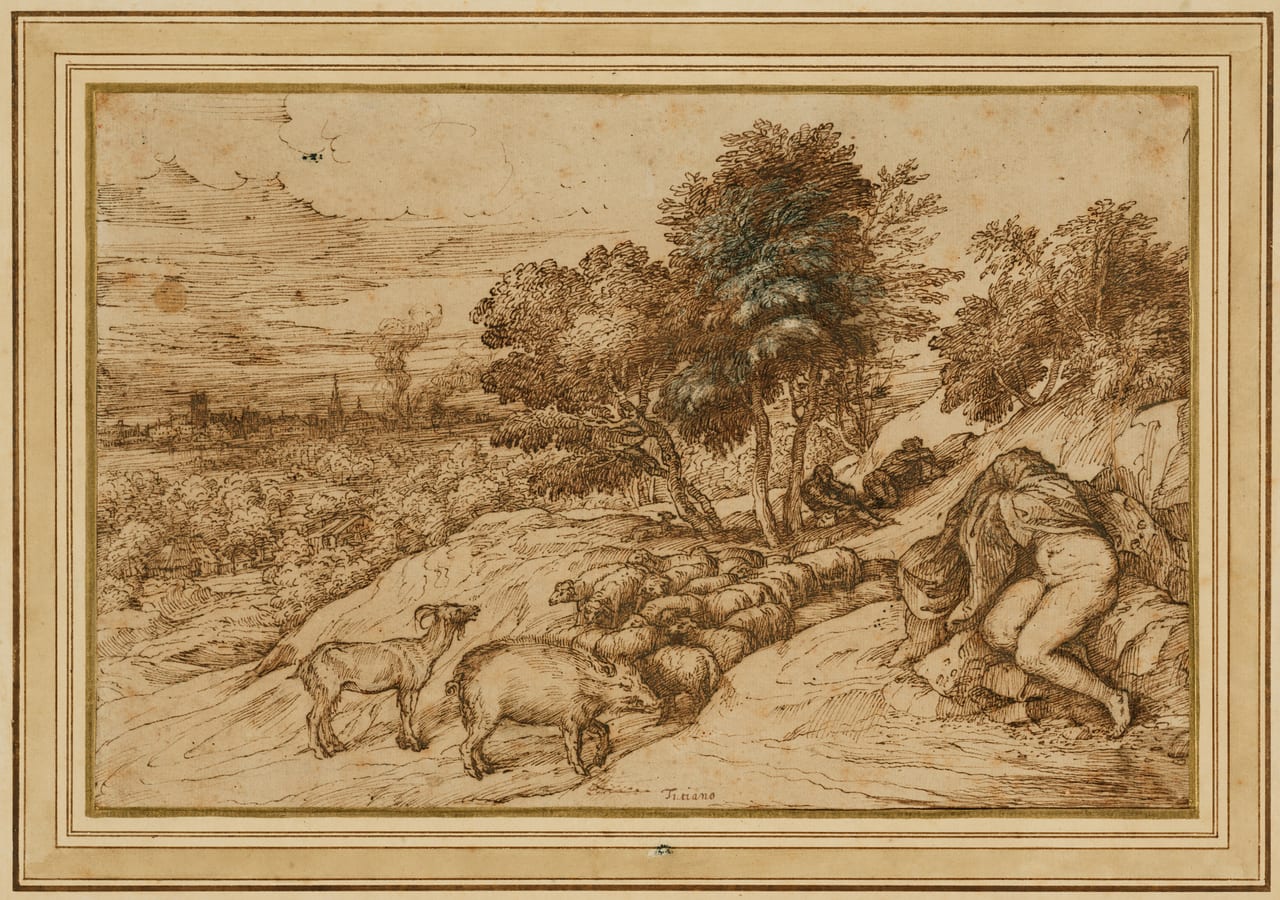
Bacchus and Ariadne
Titian · 1520

Titian
Italian · 1488–1576
The greatest painter of sixteenth-century Venice, whose colour and brushwork set the course of European painting for three centuries.
Play 40 works from this collection on your TV, phone or tablet with Momentable Art TV.
Play CollectionFrom Cadore to Venice
Tiziano Vecellio was born around 1490 in Pieve di Cadore, a mountain town in the Dolomites under Venetian rule. He reached Venice at about ten and trained first under the mosaicist Sebastiano Zuccato and then joined the workshop of Giovanni Bellini, at the time the most important in the city. It was Giorgione, however, who shaped his early manner, and the two worked side by side in 1508 and 1509 on the outside walls of the Fondaco dei Tedeschi, where the young man's sections were praised above his colleague's. After Giorgione died in 1510, Titian launched his independent career without a rival of his own generation in Venice.
Frescoes in Padua in 1511 marked his maturity, and the Assunta altarpiece he displayed in 1518 was a revolutionary watershed in the design of the Venetian altarpiece. He became famous as a portraitist, and as a painter of mythologies for intellectually ambitious patrons, which drew the courts of northern Italy to him.
The painter of emperors
From 1516 Titian worked for Alfonso I d'Este, Duke of Ferrara, on the camerino d'alabastro, a private room hung with mythologies from classical poetry; his Bacchanals for that room are in the Prado today, and Bacchus and Ariadne, painted for the same cycle, hangs in London. His meeting with the Emperor Charles V in Bologna in 1530 was a determining event: he rapidly became principal painter to the imperial court, a position that brought immense privileges, honours and even titles, and from then on he was the painter most sought after at the courts of Europe.
For Charles's son Philip II of Spain he painted, from about 1551, the mythological series he referred to as his poesie: seven famous canvases of scenes from Ovid, among them Diana and Callisto, and The Death of Actaeon, which he seems never to have resolved to his satisfaction and which remained in his studio at his death.
The late style
From the late 1550s Titian reworked his whole technique: the brush grew freer, description gave way to suggestion, and in his last years he pushed his painting to the edge of abstraction, a manner later writers have called magic impressionism. Titian died of the plague on 27 August 1576 and was buried in the Frari.
Known works
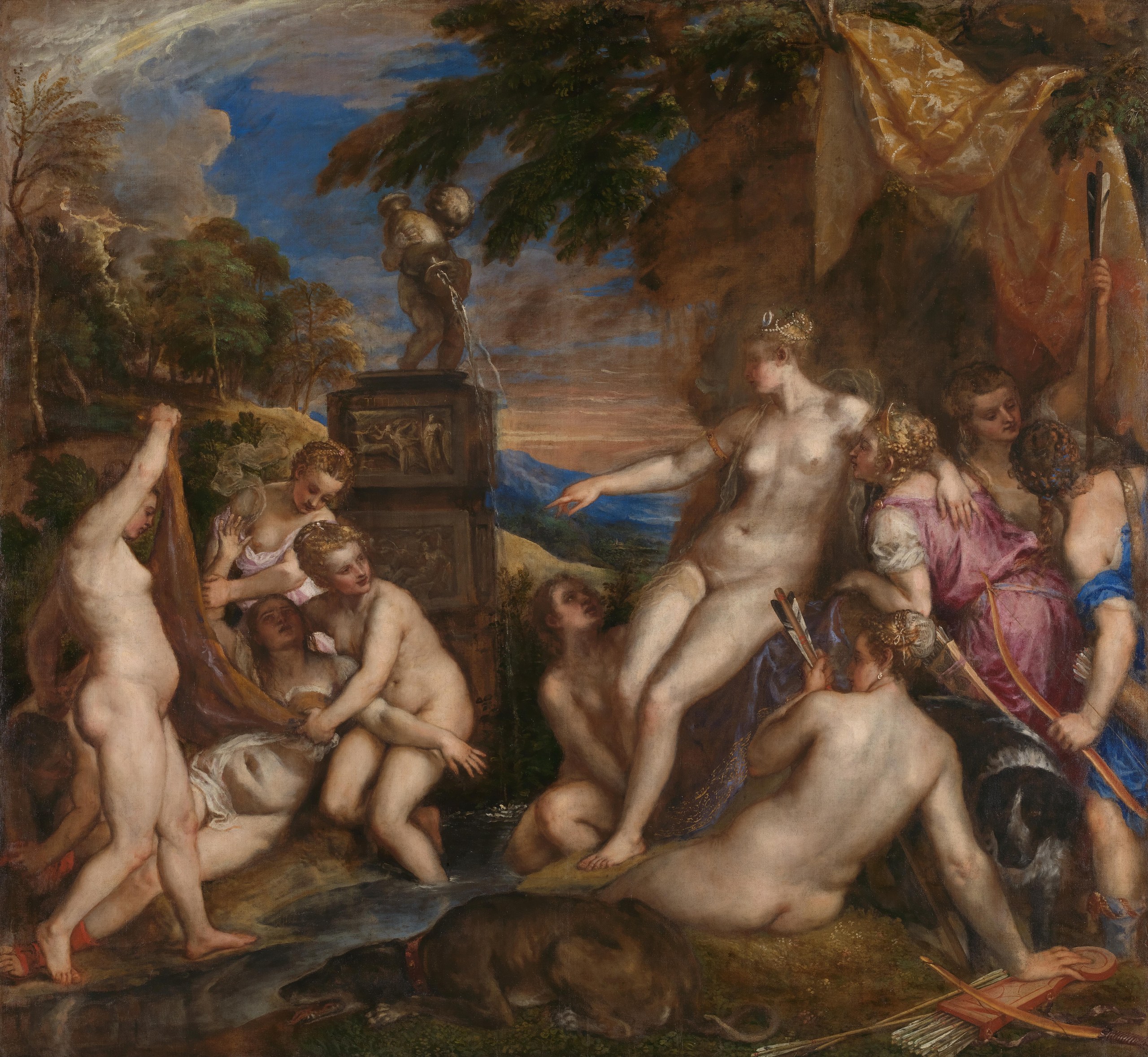
Diana and Callisto
Titian · 1557
National Gallery
Diana and Callisto. The moment the goddess discovers her maid is pregnant by Jupiter, one of the seven poesie painted for Philip II of Spain from Ovid's Metamorphoses.
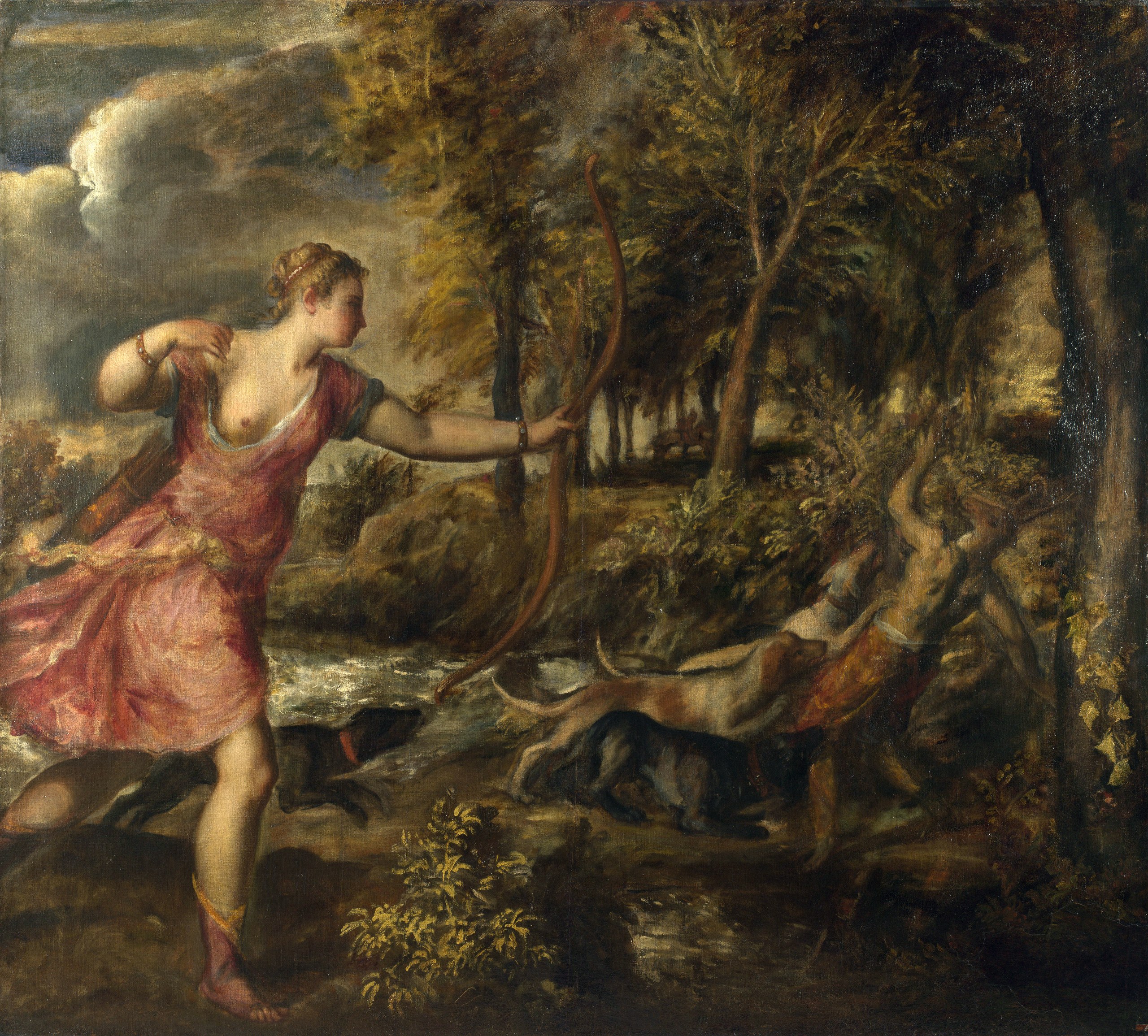
The Death of Actaeon
Titian · 1567
National Gallery
The Death of Actaeon. The hunter turned to a stag and torn apart by his own hounds, a sequel Titian left unresolved in his studio at his death, its finish still debated.
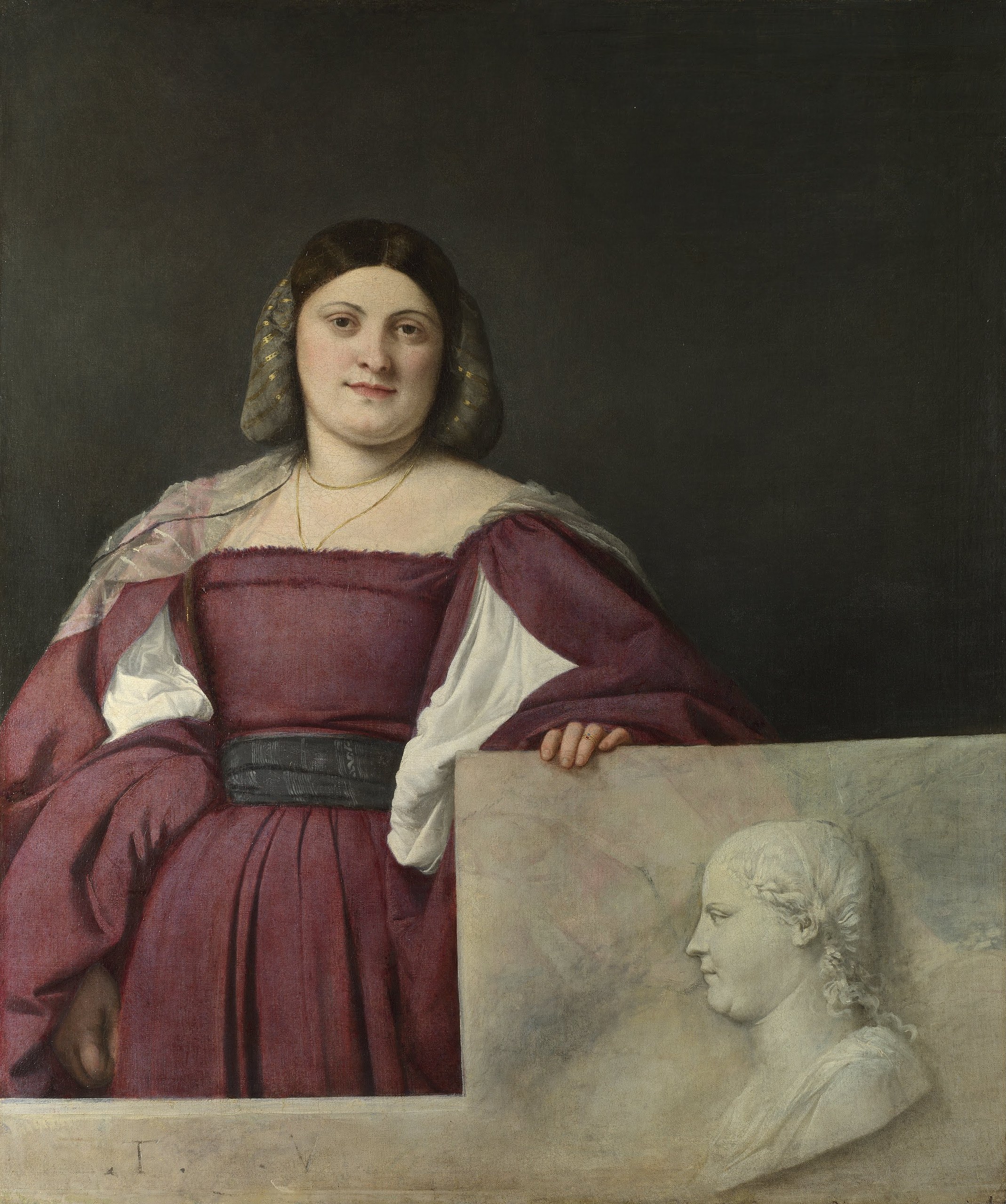
La Schiavona
Titian · 1510
National Gallery
La Schiavona. A unknown woman of the Venetian nobility, proud and full of life, accepted since it left Giorgione's orbit as a youthful masterpiece.
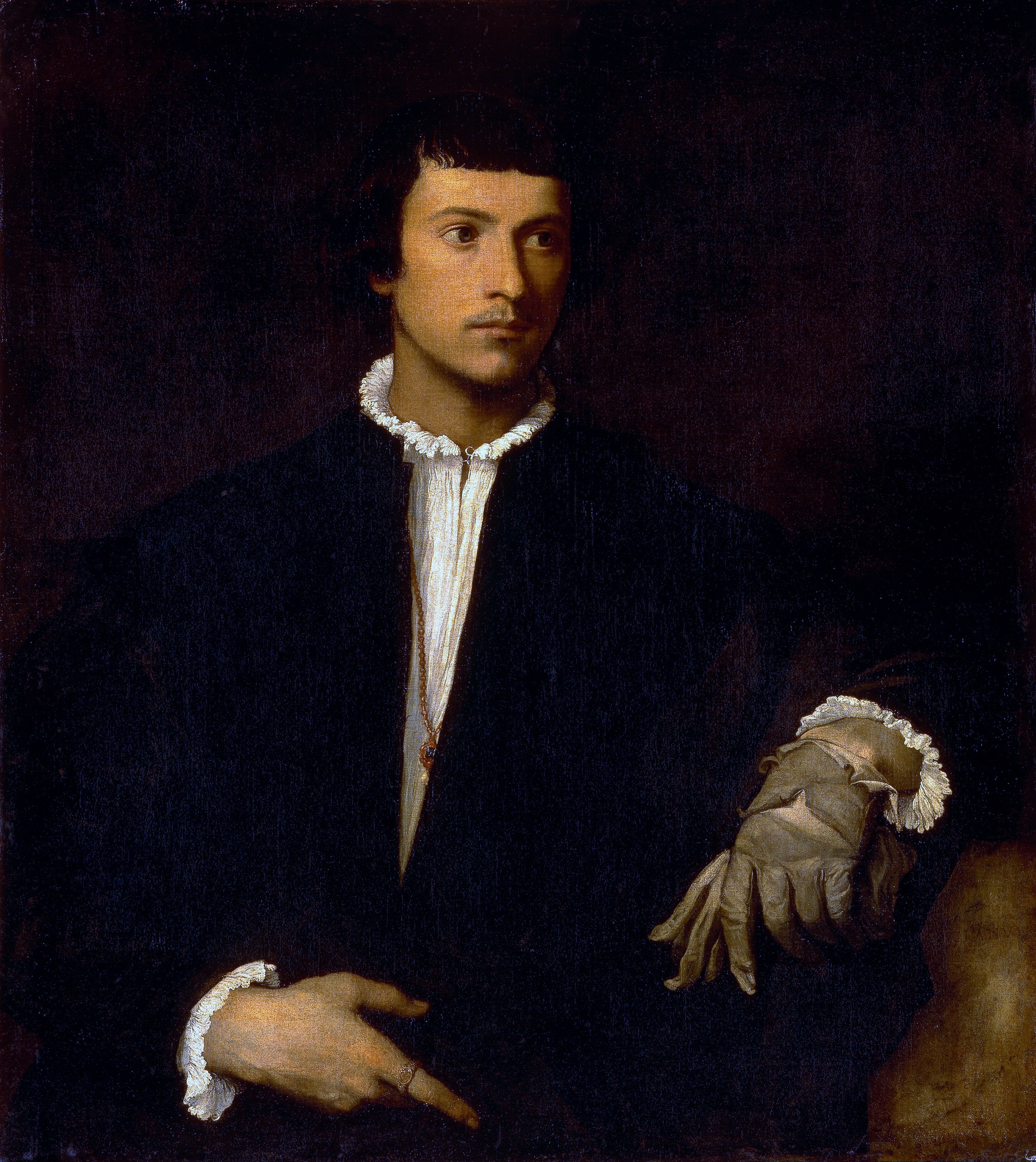
Man with a Glove
Titian · 1520
Louvre
Man with a Glove. A young man in black turned from the window, one glove on and one off; it passed from the Gonzaga collection to Charles I of England and finally to the Louvre.
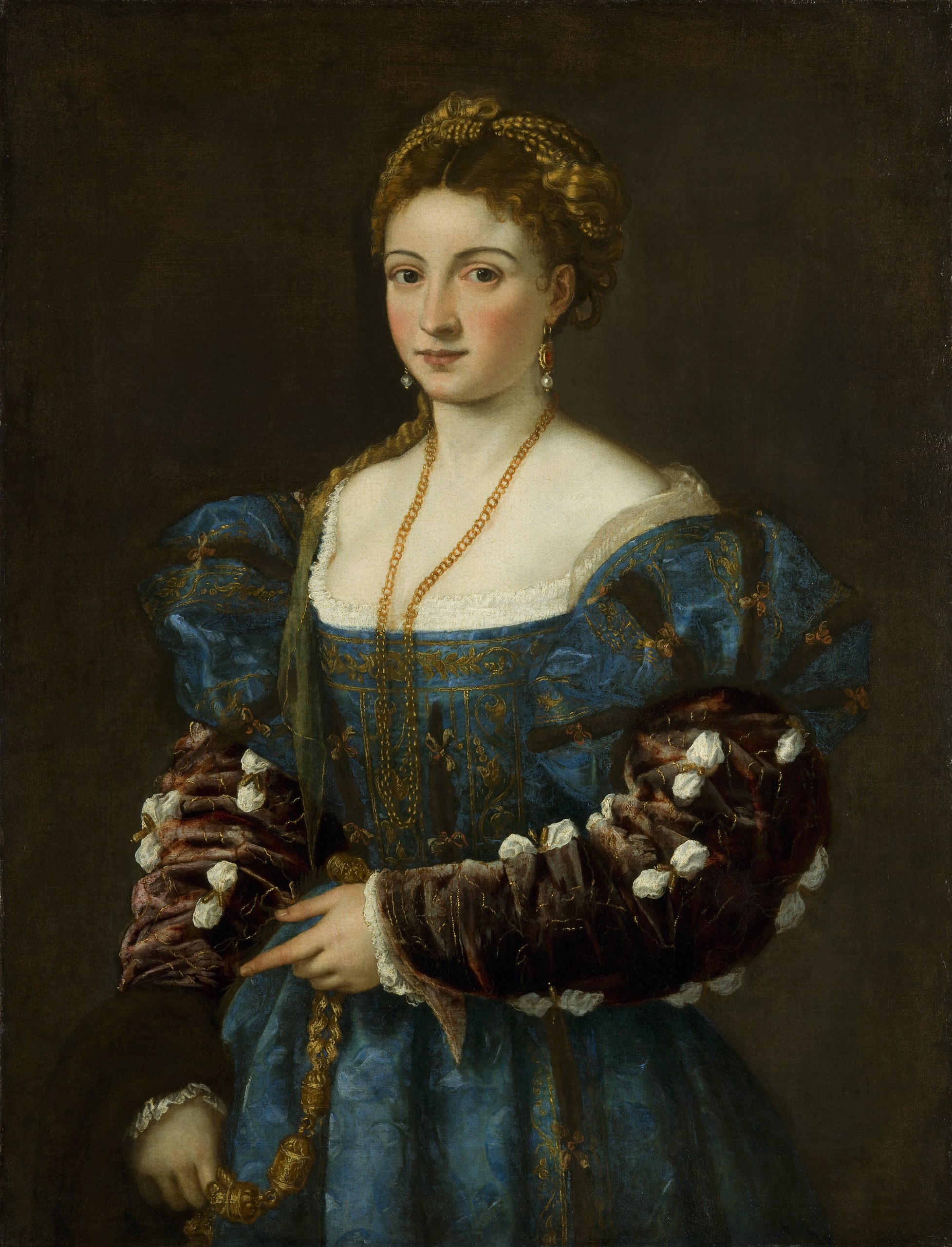
La Bella
Titian · 1537
Palazzo Pitti
La Bella. A young woman in a blue dress with gold ornaments against the dark, pointing to the zibellino on her arm; the portrait can be dated by a letter of May 1536.
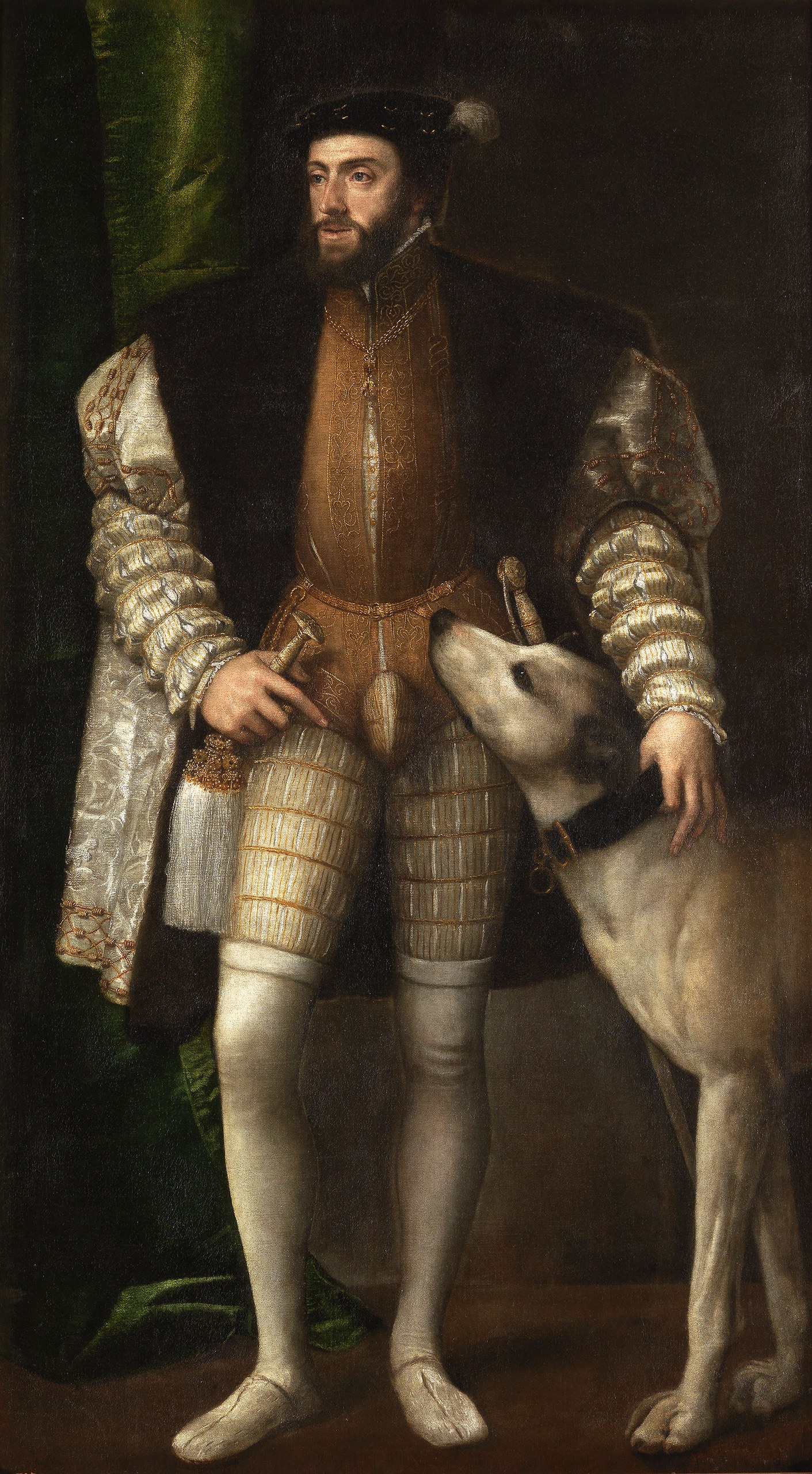
Portrait of Charles V with a Dog
Titian · 1533
Museo del Prado
Portrait of Charles V with a Dog. The emperor standing beside a hunting dog, painted in Bologna in 1533 in place of a portrait by Seisenegger that had failed to please him.
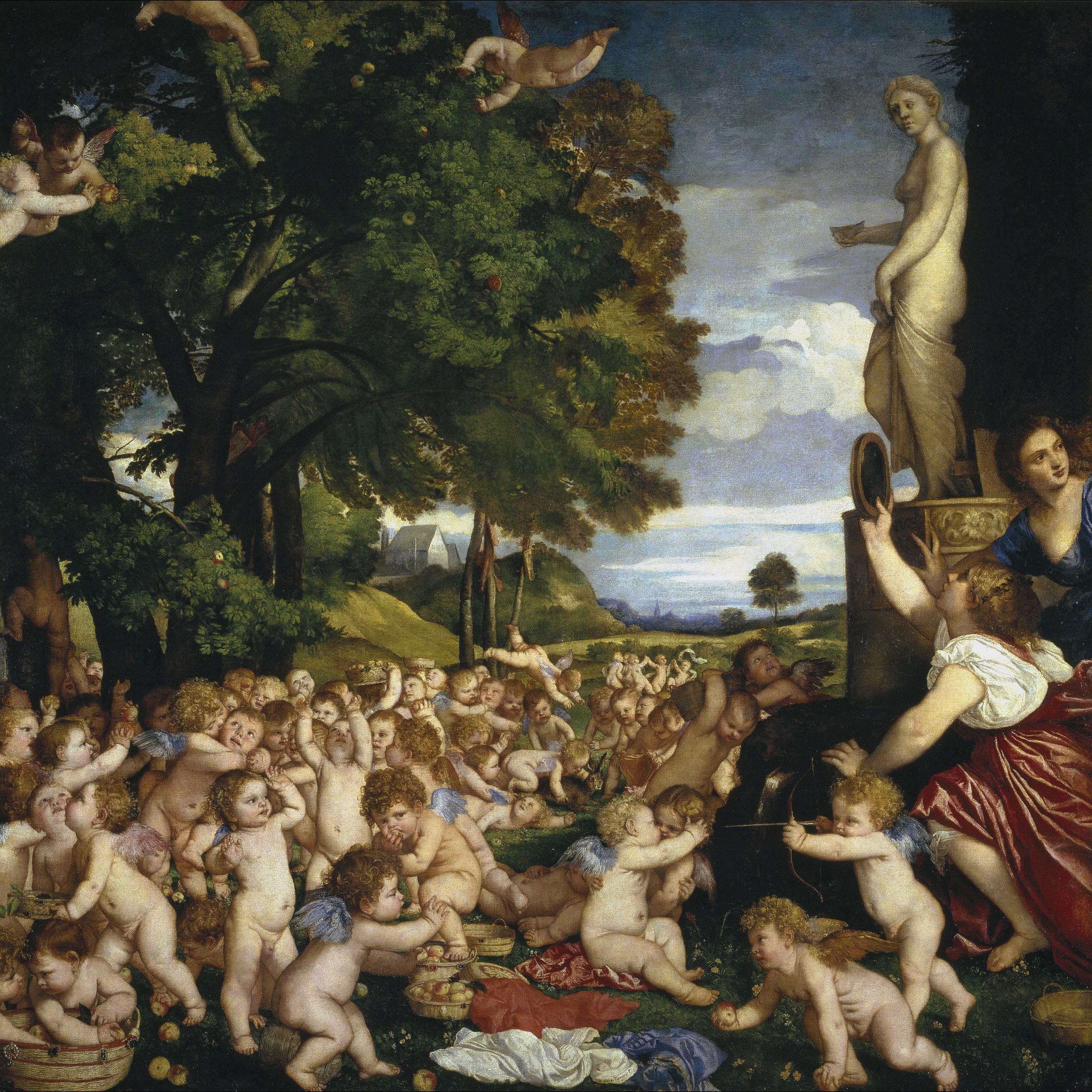
The Worship of Venus
Titian · 1518
Museo del Prado
The Worship of Venus. A Roman rite of the first of April: nymphs at a shrine of Venus while a swarm of putti climbs trees, fights, gathers apples and pulls each other's hair.
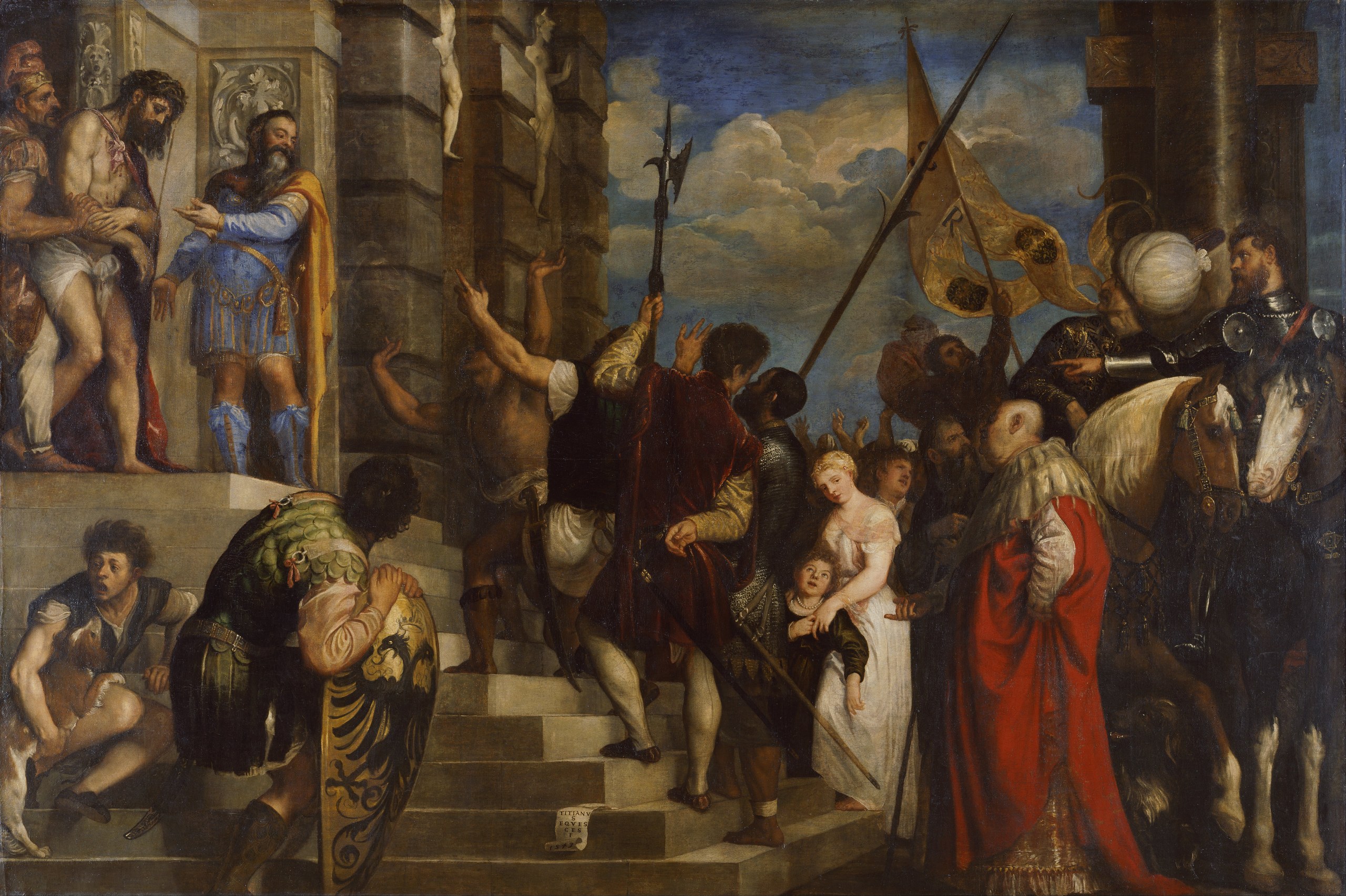
Ecce Homo
Titian · 1543
Kunsthistorisches Museum
Ecce Homo. A large canvas signed and dated 1543, painted for a Flemish merchant in Venice; Henry III of France is said to have offered 800 ducats for it in vain.
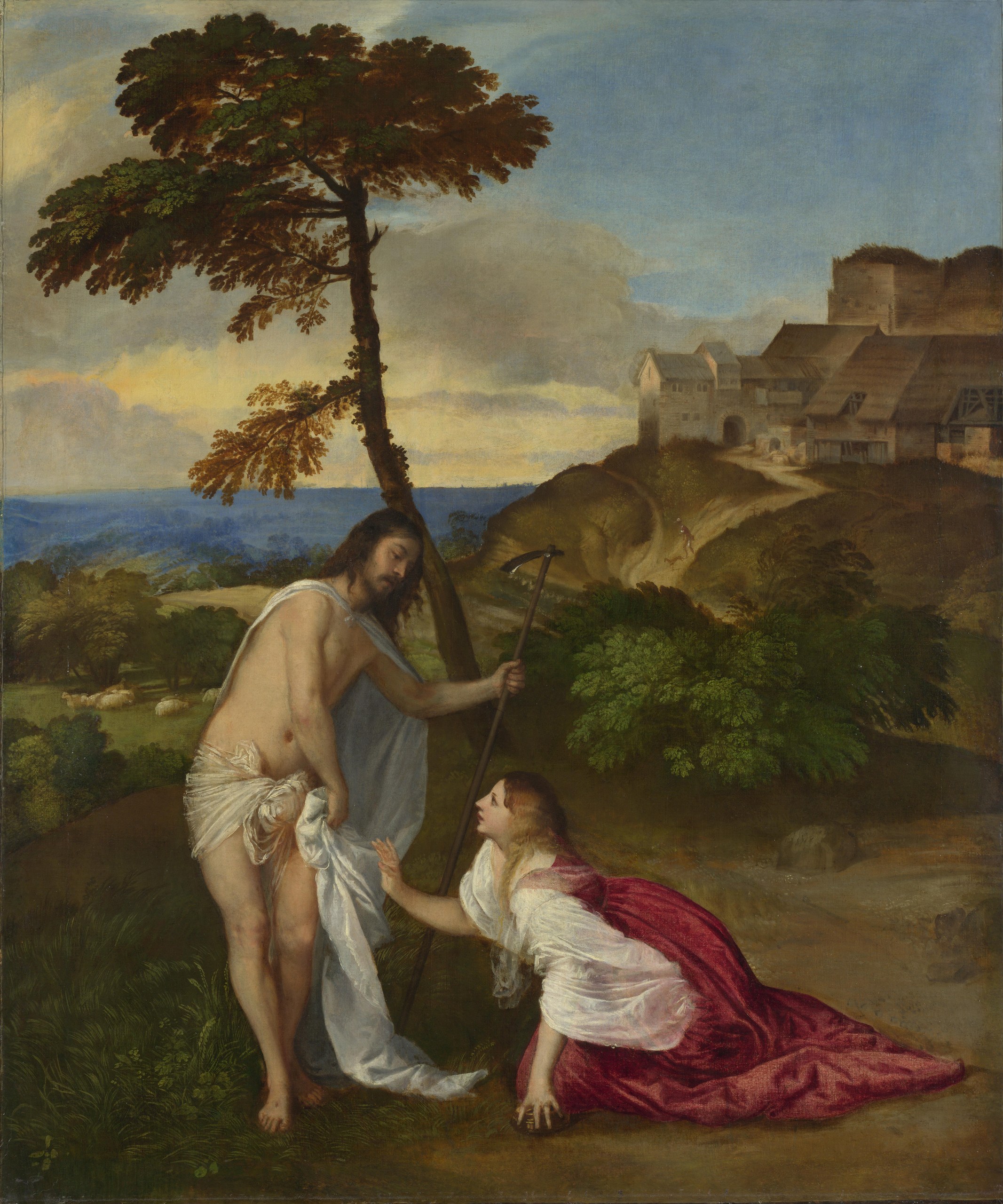
Noli me tangere
Titian · 1514
National Gallery
Noli me tangere. Christ and Mary Magdalene in a garden soon after the resurrection, in the National Gallery since 1856.
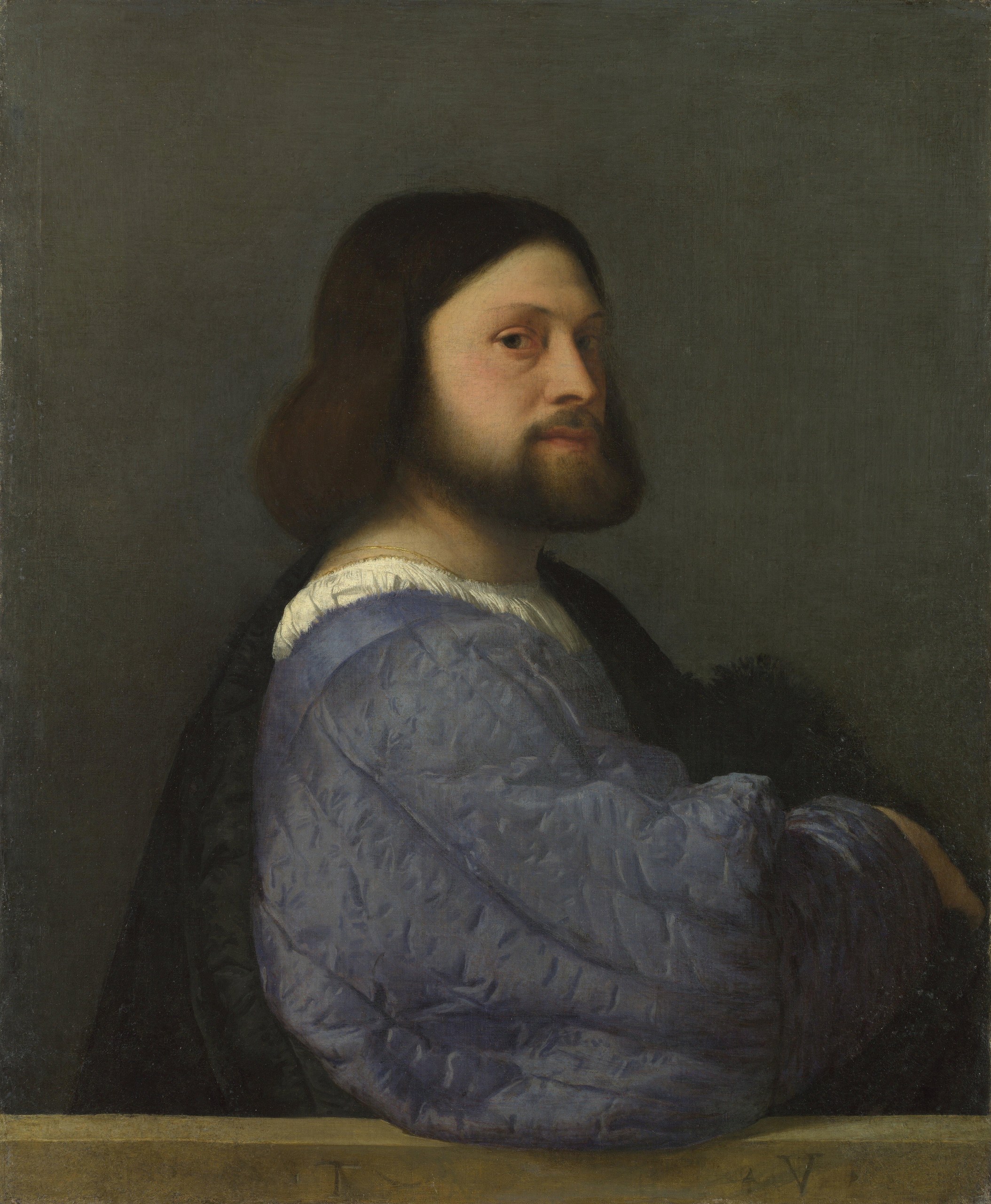
Portrait of Gerolamo (?) Barbarigo
Titian · 1510
National Gallery
Portrait of Gerolamo (?) Barbarigo. The man with the quilted sleeve, his arm breaking past the parapet into the viewer's space; once called an Ariosto, once a self-portrait.
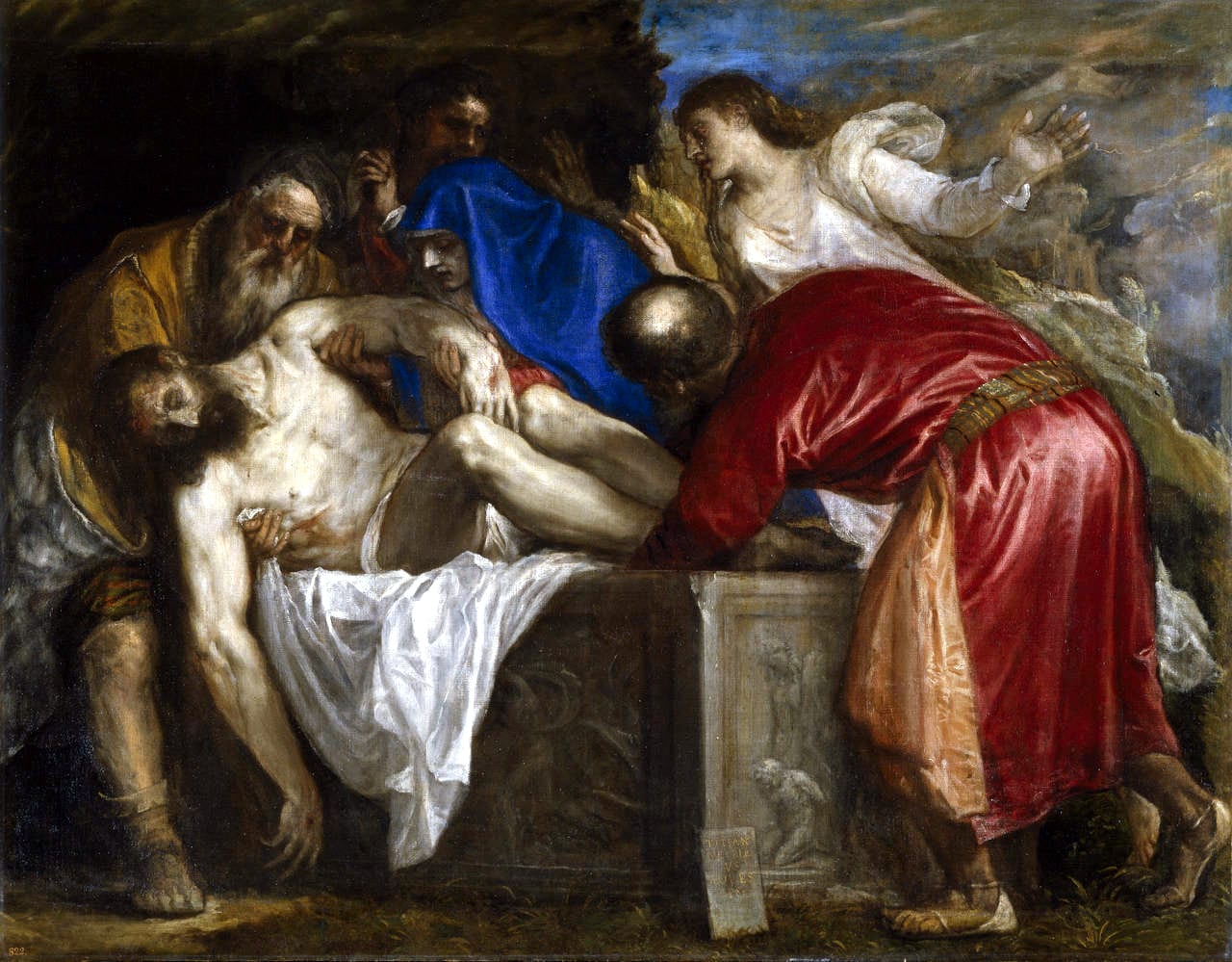
The Entombment
Titian · 1559
Museo del Prado
The Entombment. Christ lowered into a sarcophagus whose stone carries the story of Cain and Abel and Isaac's binding, painted for Philip II and sent to Spain with the two Dianas.
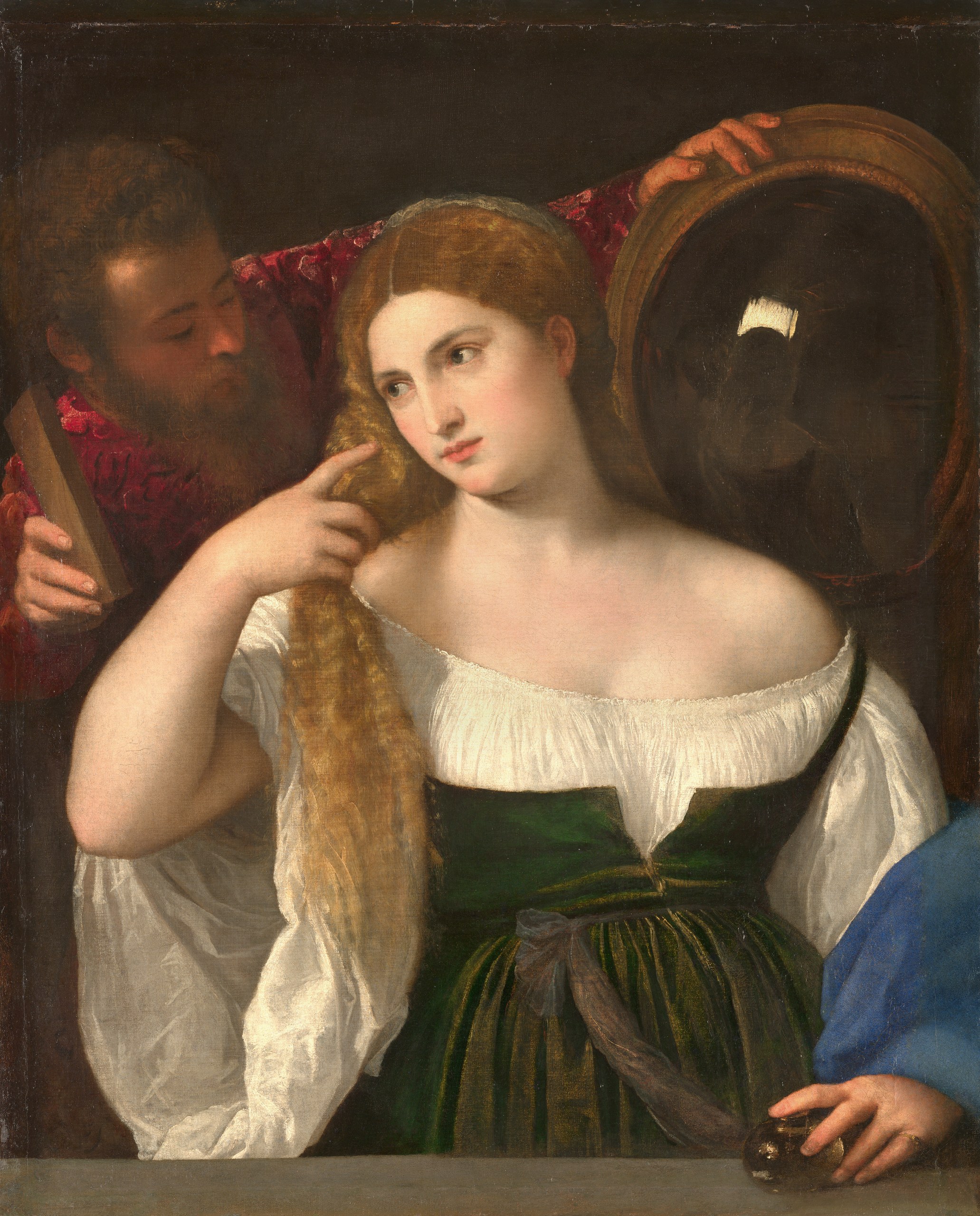
Woman with a Mirror
Titian · 1515
Louvre
Woman with a Mirror. A woman at her toilet held in the Louvre, bought from the Gonzaga by Charles I of England and later owned by Louis XIV.
More to discover
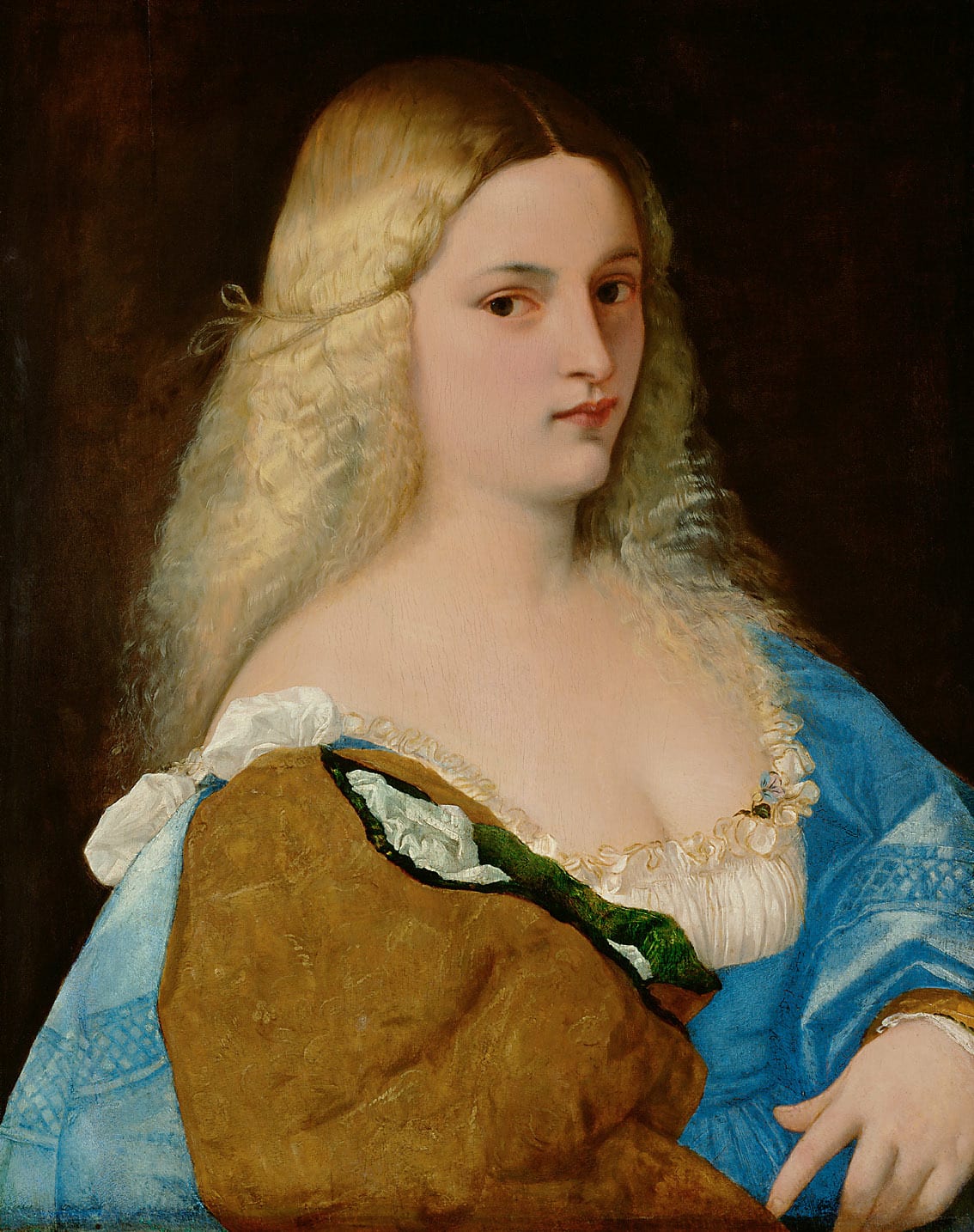
Violante
Titian · 1515
Kunsthistorisches Museum
Violante. A young woman with a flower in her hair, once the star of the Archduke Leopold Wilhelm's cabinet, reproduced twice in its printed catalogue.
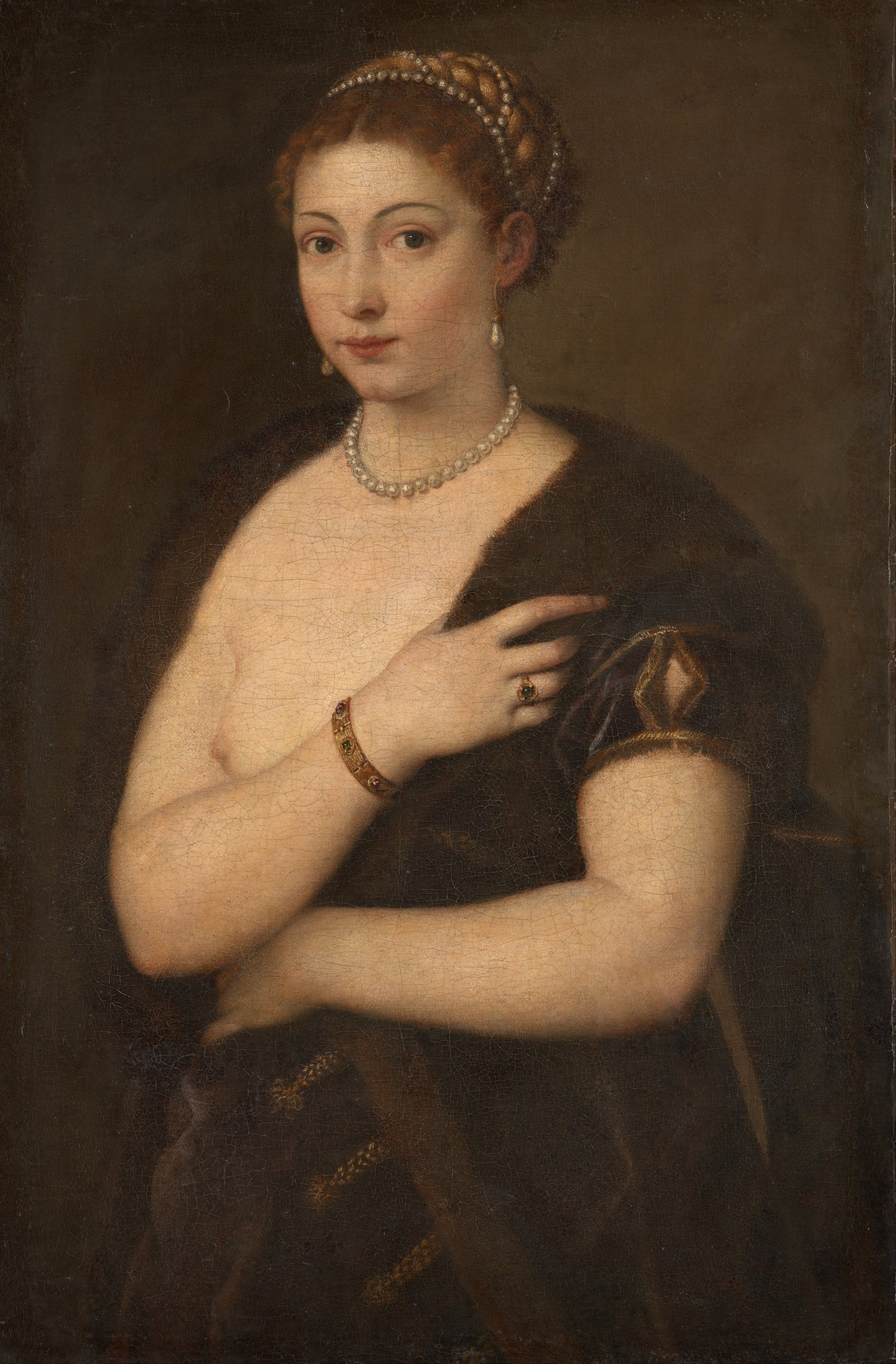
Girl in a Fur
Titian · 1535
Kunsthistorisches Museum
Girl in a Fur. The same model Titian used for La Bella and the Venus of Urbino, wrapped in fur, probably painted for the Duke of Urbino or his son.
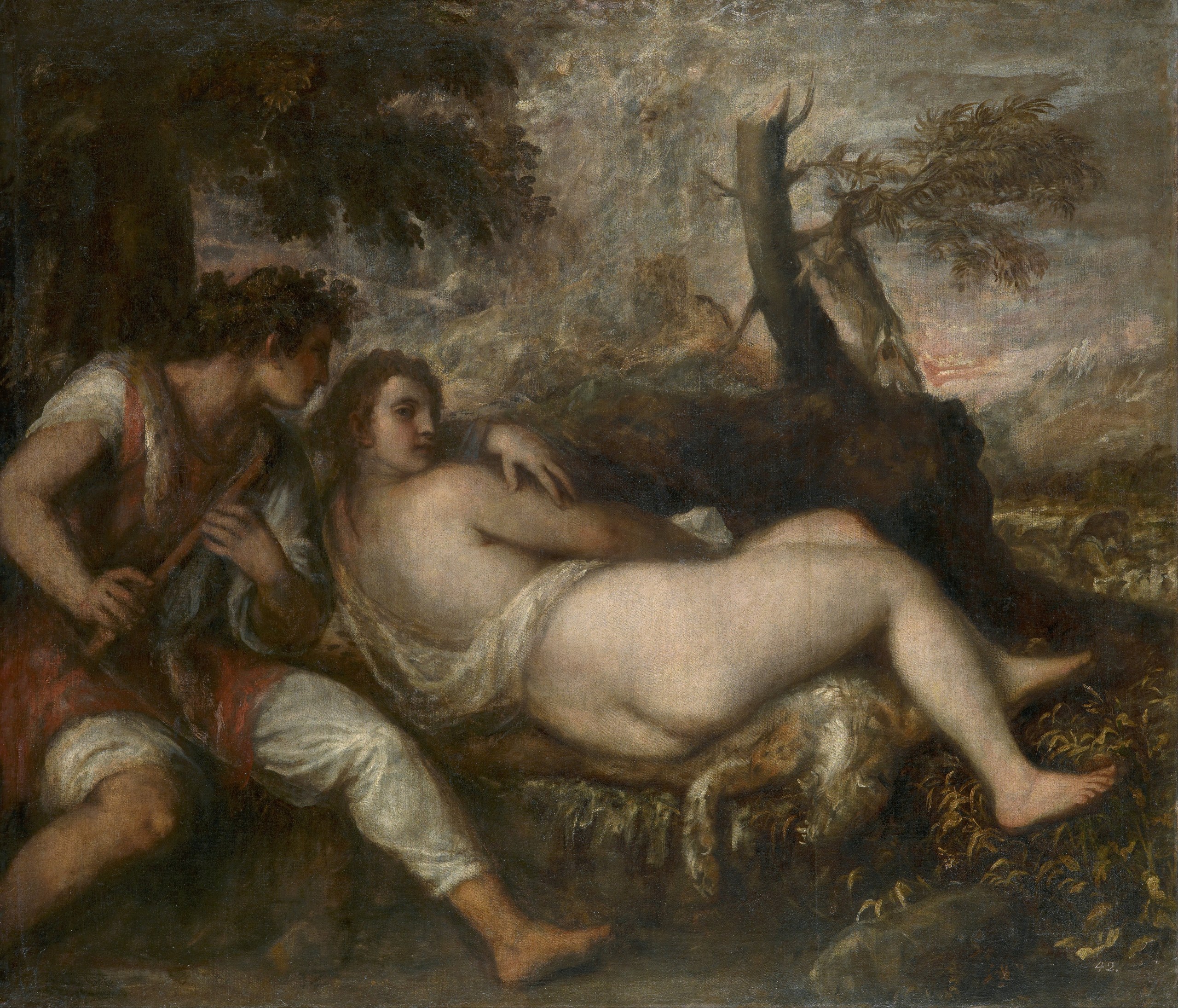
Nymph and Shepherd
Titian · 1570
Kunsthistorisches Museum
Nymph and Shepherd. A shepherd playing his flute beside a reclining nude with her back turned to us, a late pastoral of about 1570.
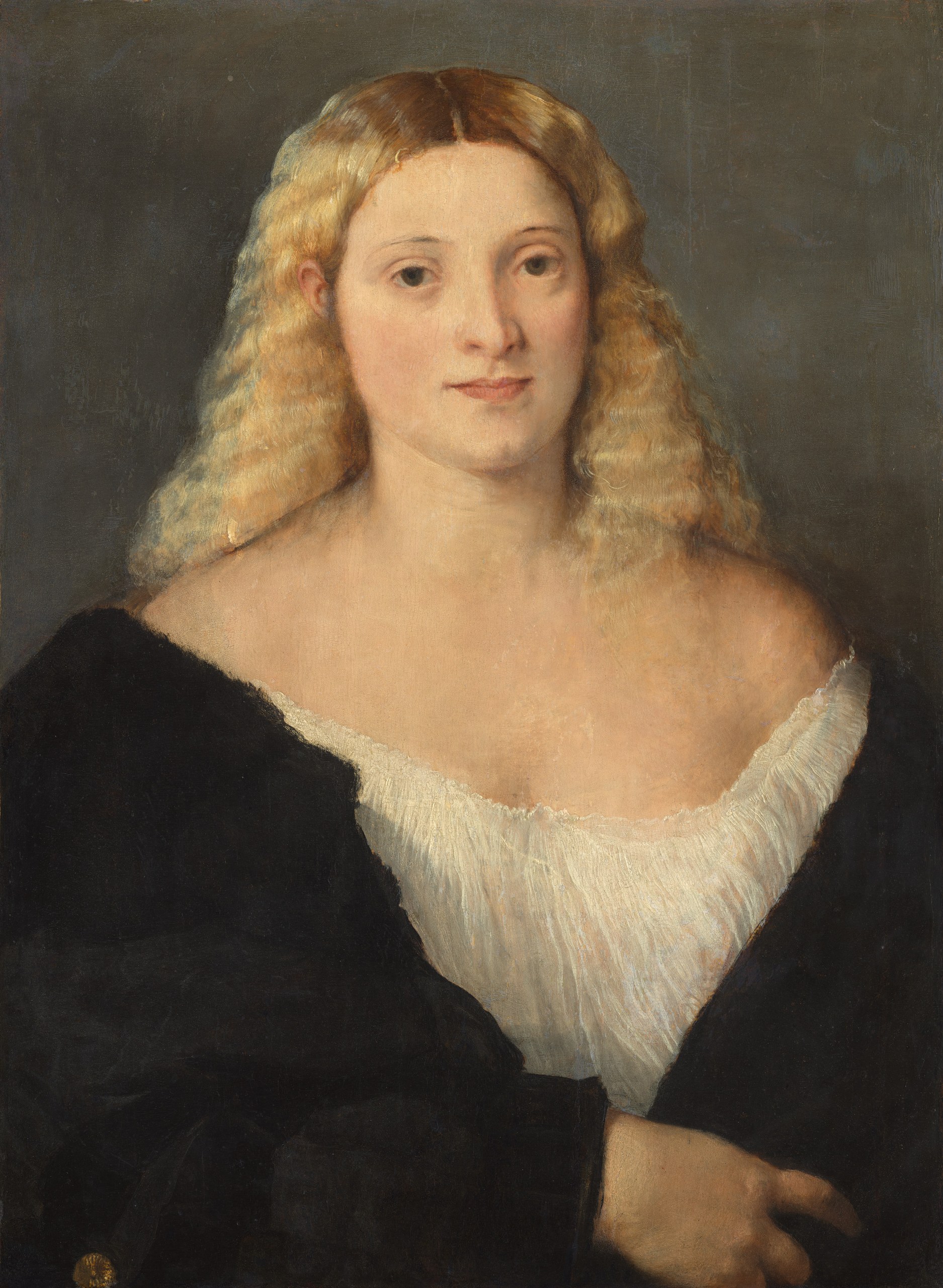
Young Woman in a Black Dress
Titian · 1520
Kunsthistorisches Museum
Young Woman in a Black Dress. A half-length woman holding her dress over her white shift, brought back to Titian by Roberto Longhi after generations of other names.
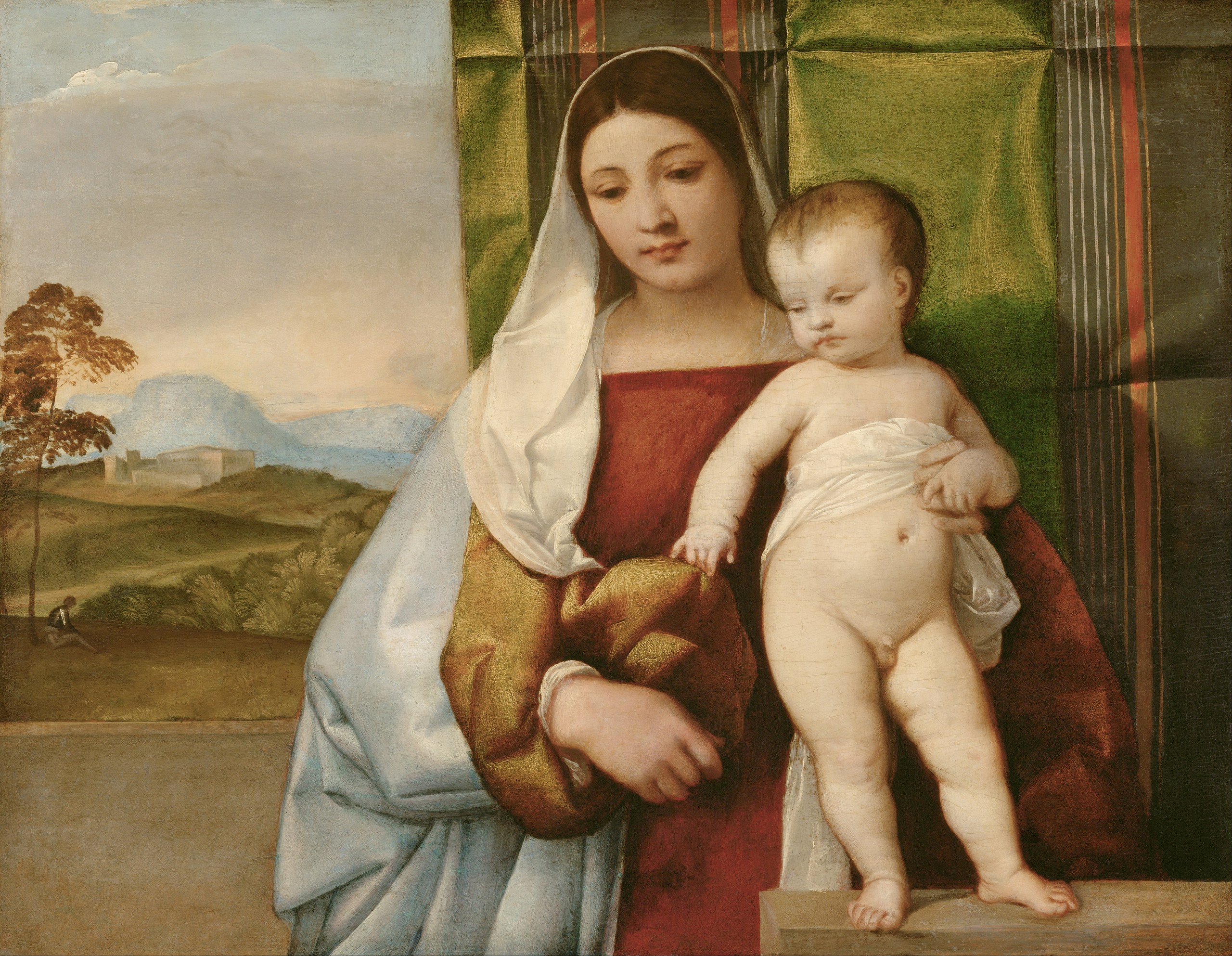
The Gypsy Madonna
Titian · 1510
Kunsthistorisches Museum
The Gypsy Madonna. The Virgin and Child painted for a home rather than a church, close to Bellini's formulas and long given to Giorgione.
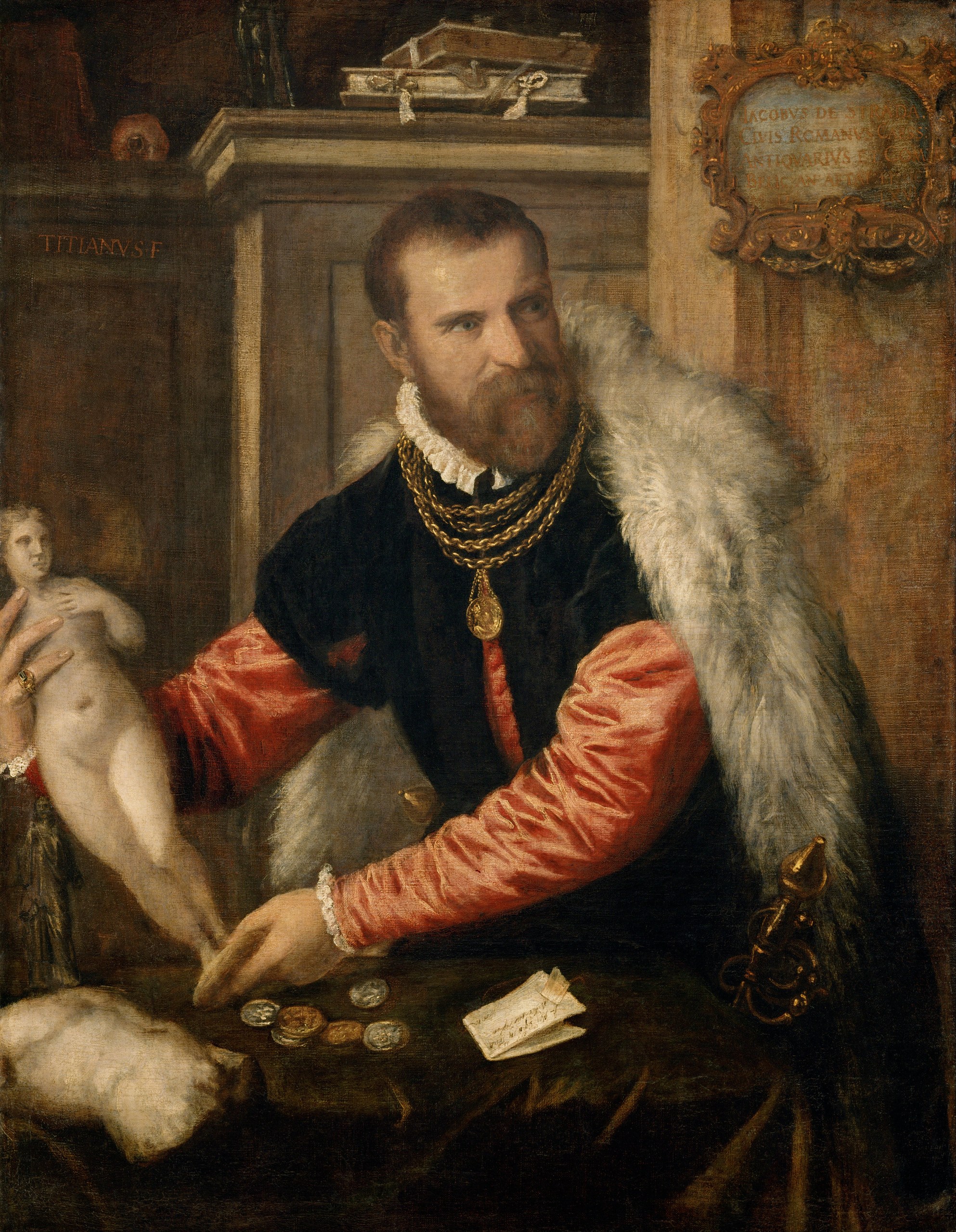
Portrait of Jacopo Strada
Titian · 1567
Kunsthistorisches Museum
Portrait of Jacopo Strada. The imperial antiquary in his study among his objects, wearing the gold chain of his appointment the year before.
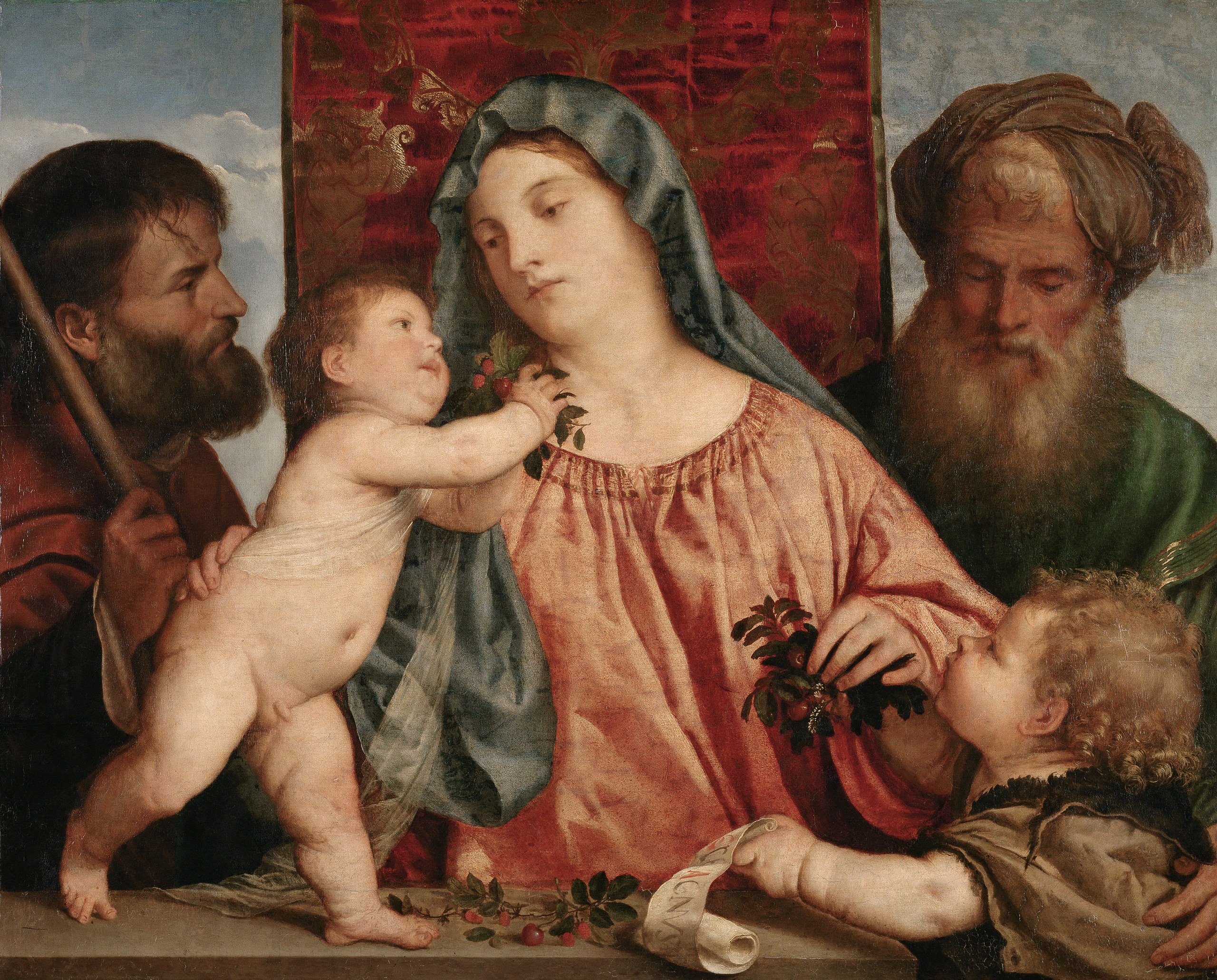
Madonna of the Cherries
Titian · 1517
Kunsthistorisches Museum
Madonna of the Cherries. The Child wriggles on a parapet offering his mother cherries, a hint of the Passion, against a red and gold damask curtain.
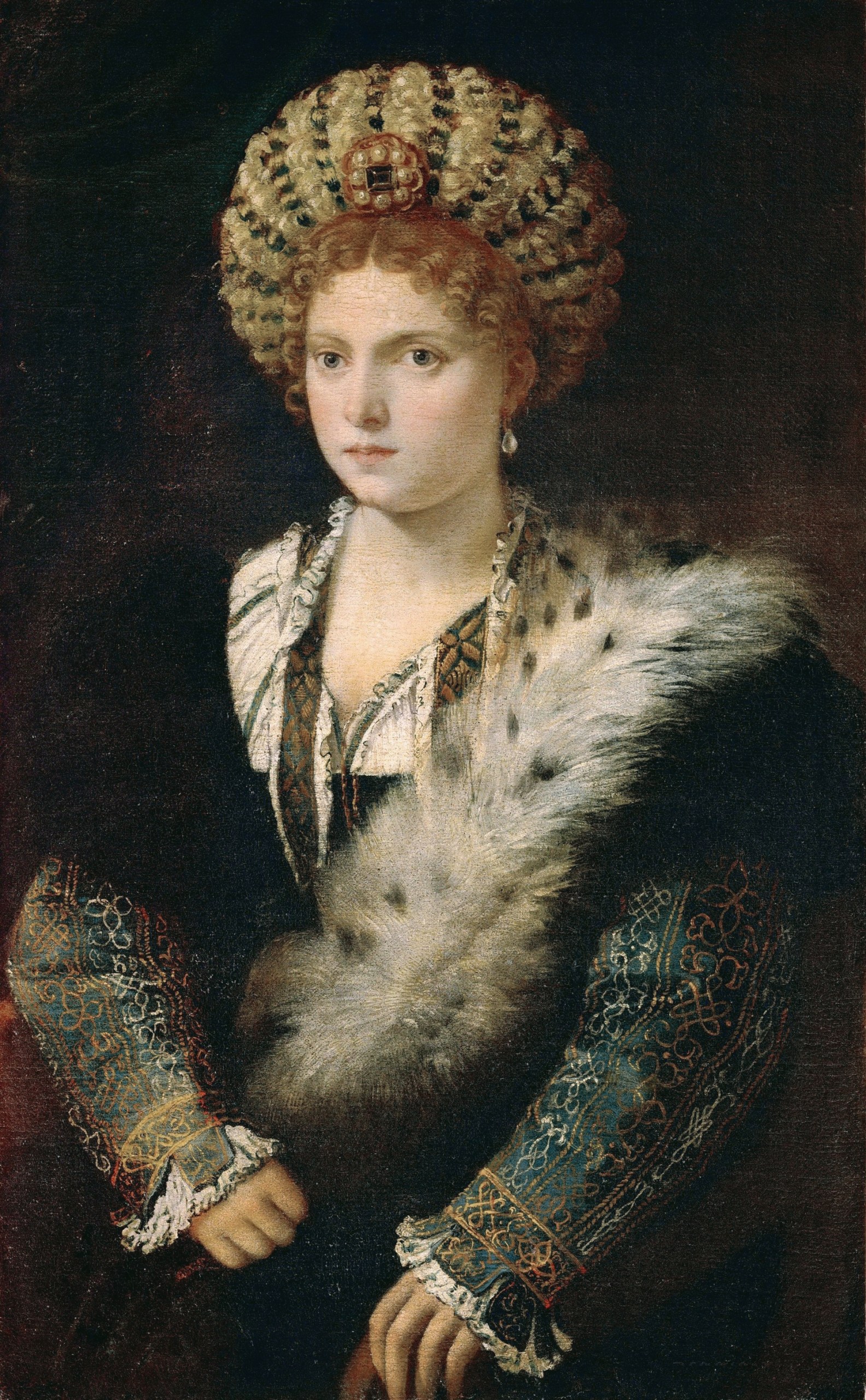
Portrait of Isabella d'Este
Titian · 1535
Kunsthistorisches Museum
Portrait of Isabella d'Este. A woman in fur and a balzo headdress with a large pearl earring, generally assumed to be the Marquess of Mantua.
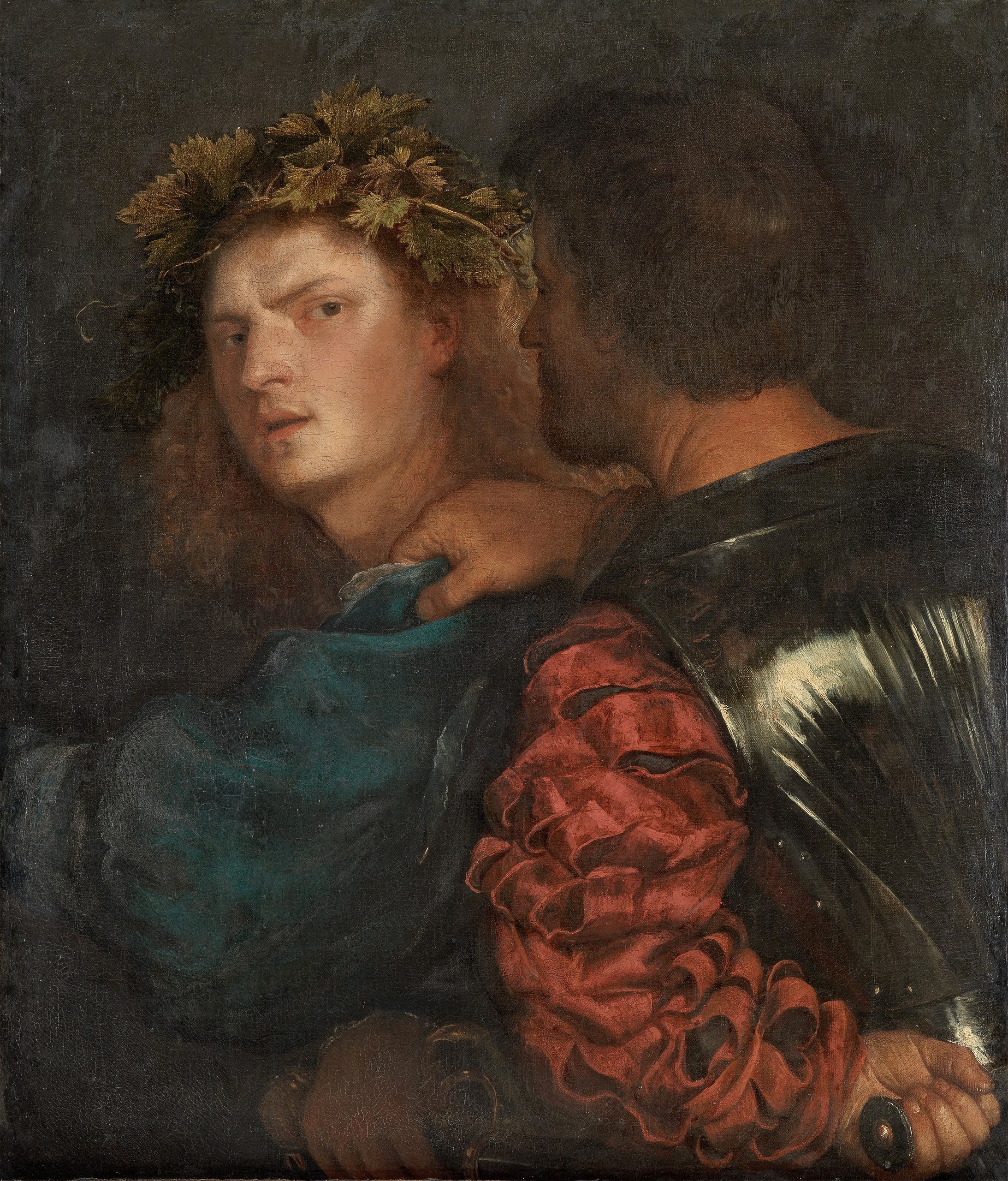
The Bravo
Titian · 1520
Kunsthistorisches Museum
The Bravo. An armoured soldier tapping the shoulder of a garlanded youth while his own hand hides a dagger: an attack about to happen.
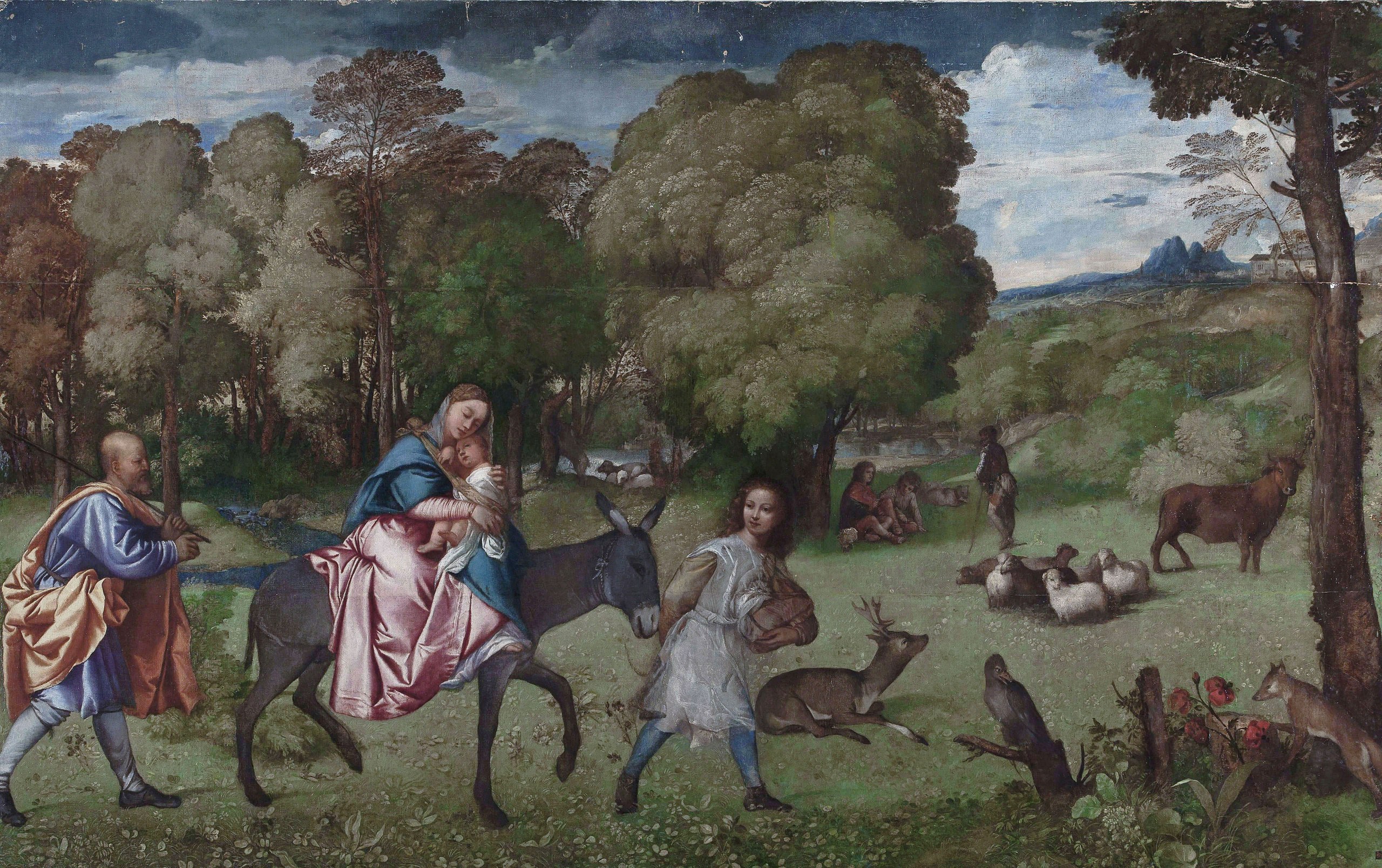
Flight into Egypt
Titian · 1508
State Hermitage Museum
Flight into Egypt. The Holy Family crossing a wide pastoral landscape, an early work of about 1508 whose bold brush and colour have been called worthy of his masterpieces.
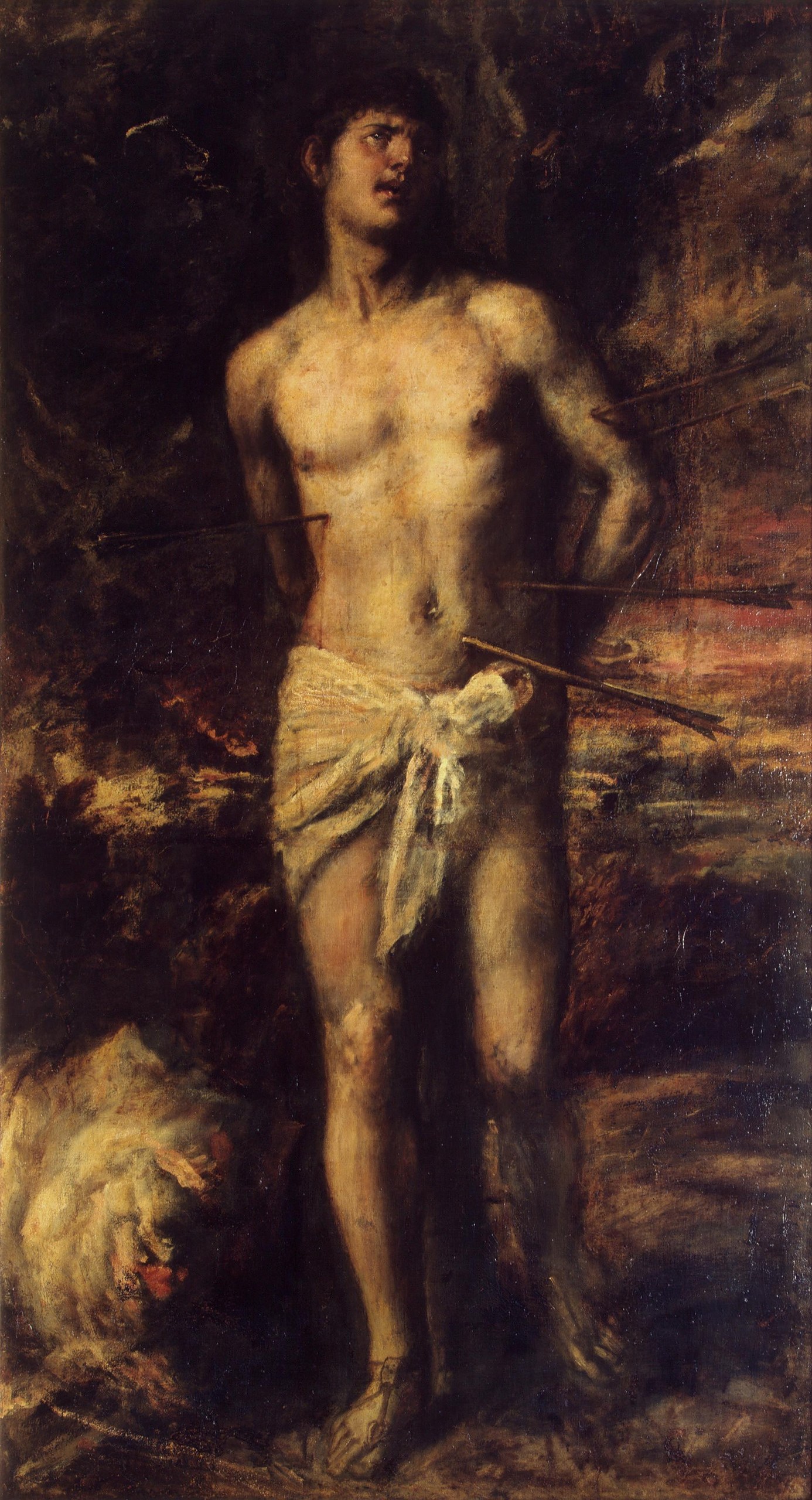
Saint Sebastian
Titian · 1570
State Hermitage Museum
Saint Sebastian. The bound martyr painted late, around 1570, and bought for the Hermitage out of a Venetian gallery in 1850.
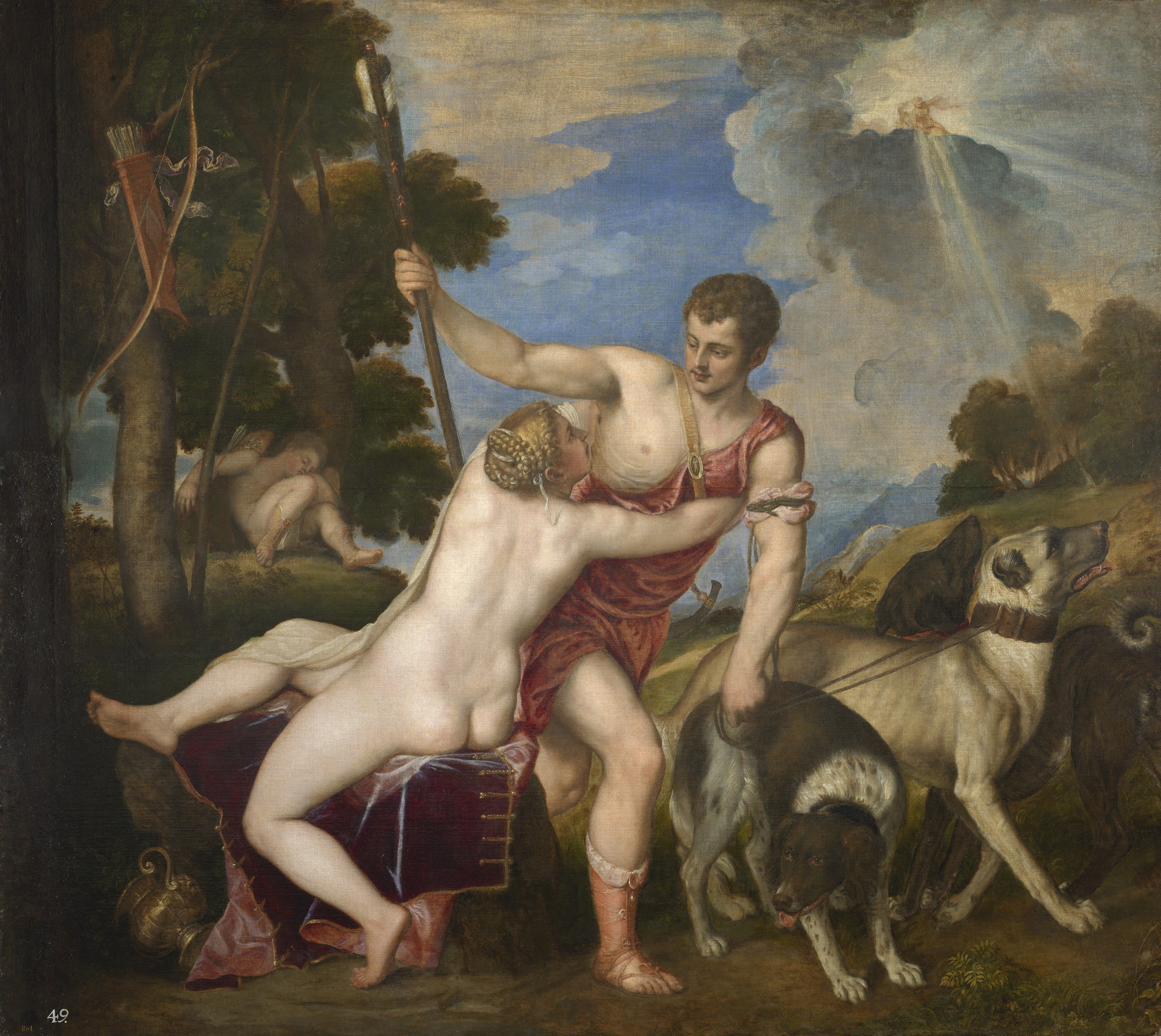
Venus and Adonis
Titian · 1554
Museo del Prado
Venus and Adonis. Adonis pulling away from Venus at dawn, his hounds' leads wound around his arm and Cupid asleep behind; the only version with a firm date, set out in the painter's letters to Philip II in 1554.
Sources
- National Gallery, London, “Titian”
- Wikipedia, “Venus and Adonis (Titian, Oxford)”
- Wikipedia, “Diana and Callisto”
- Wikipedia, “The Death of Actaeon”
- Wikipedia, “La Schiavona”
- Wikipedia, “Man with a Glove”
- Wikipedia, “La Bella”
- Wikipedia, “Portrait of Charles V with a Dog”
- Wikipedia, “The Worship of Venus”
- Wikipedia, “Ecce Homo (Titian, Vienna)”
- Wikipedia, “Noli me tangere (Titian)”
- Wikipedia, “A Man with a Quilted Sleeve”
- Wikipedia, “The Entombment (Titian, 1559)”
- Wikipedia, “Woman with a Mirror”
- Wikipedia, “Violante (Titian)”
- Wikipedia, “Girl in a Fur”
- Wikipedia, “Nymph and Shepherd”
- Wikipedia, “Young Woman in a Black Dress”
- Wikipedia, “The Gypsy Madonna”
- Wikipedia, “Portrait of Jacopo Strada”
- Wikipedia, “Madonna of the Cherries”
- Wikipedia, “Portrait of Isabella d'Este (Titian)”
- Wikipedia, “The Bravo (Titian)”
- Wikipedia, “Flight into Egypt (Titian)”
- Wikipedia, “Saint Sebastian (Titian, Hermitage)”
Invite Titian into your living room
Play 40 works from this collection on your TV, phone or tablet with Momentable Art TV.