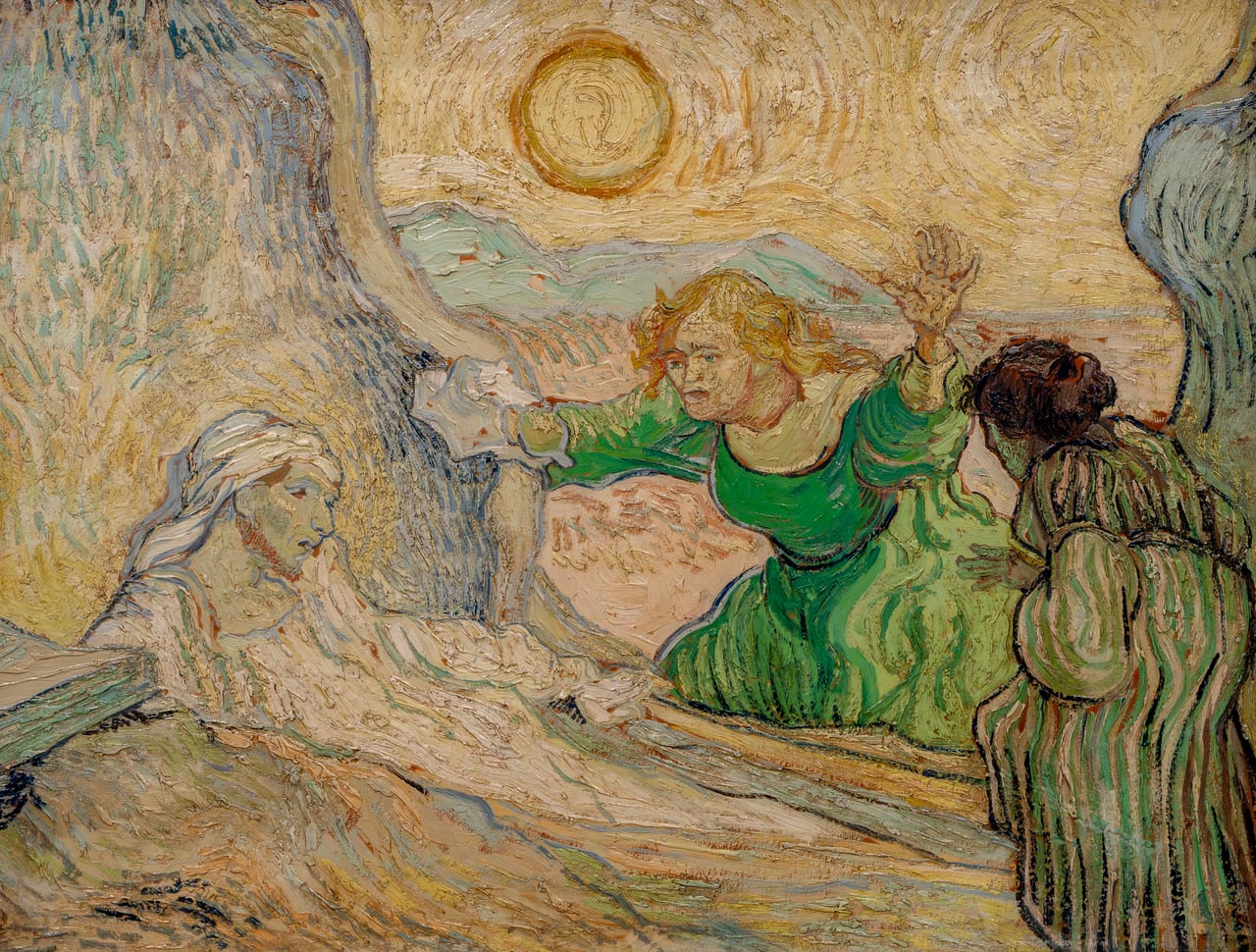
The Potato Eaters
Vincent van Gogh · 1885

Vincent van Gogh
Dutch · 1853–1890
A Dutch painter who found his voice in the last two years of a ten-year career, and whose fields, chairs and faces are now among the best-loved pictures ever made.
- 2,100
- Artworks made in just over a decade
- 2,000+
- Letters he probably wrote in total
- 30+
- Copies after works by his favourite artists
Play 40 works from this collection on your TV, phone or tablet with Momentable Art TV.
Play CollectionHolland to Paris
Vincent was a pastor's son from Brabant who came to art late: gallery work in London and Paris, a spell as a lay preacher, and only in his late twenties a serious brush in his hand. Painting took hold of him completely, and within a dozen years he was gone.
Classes in Antwerp brought him Japanese prints and Rubens; Paris in 1886 brought Degas, Gauguin and Seurat, and his palette let in the light. His early pictures of peasants, dark and earthen, gave way to the colour that the south of France would set on fire.
Arles to Auvers
In 1888 he took a house in Arles and hoped to found a studio of the south with Gauguin, who came that autumn; the visit ended in the crisis in which part of an ear was lost. The year in Arles was his most fertile, two hundred canvases of harvests, orchards and night cafés, yellow against ultramarine.
He entered the asylum of Saint-Paul-de-Mausole at Saint-Rémy in 1889 and kept painting between attacks, translating Millet and Delacroix when the weather or his nerves kept him indoors. In 1890, at Auvers north of Paris, a fresh collapse ended in the shot that killed him two days later.
The letters
Everything we can know of his mind sits in the letters to his brother Theo, an art dealer who paid Vincent's way for years and matched him in feeling. From 1872 to 1890 the two exchanged hundreds of them, and they carry his thinking about art almost whole.
The letters have also worked against him: the story of the illness has tended to crowd out the pictures, which he built as deliberately as any painter alive. It is worth holding the two apart, the suffering that filled the pages and the skill that filled the canvases.
Known works
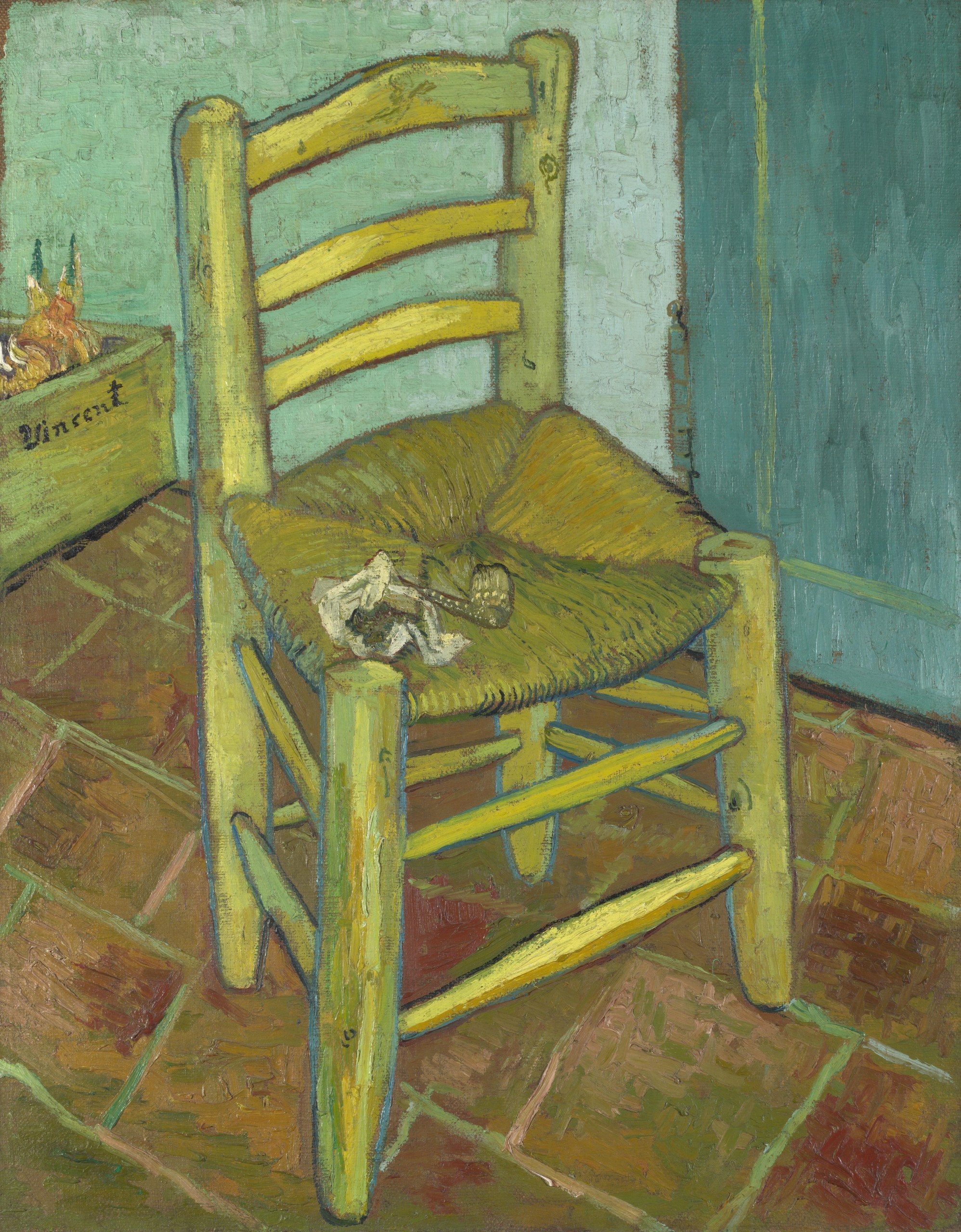
Van Gogh's Chair
Vincent van Gogh · 1889
National Gallery
A plain rush-seated chair on red tiles, a pipe and tobacco on the seat, painted late in 1888 as Gauguin arrived to share the yellow house. One of the most familiar images he ever made.
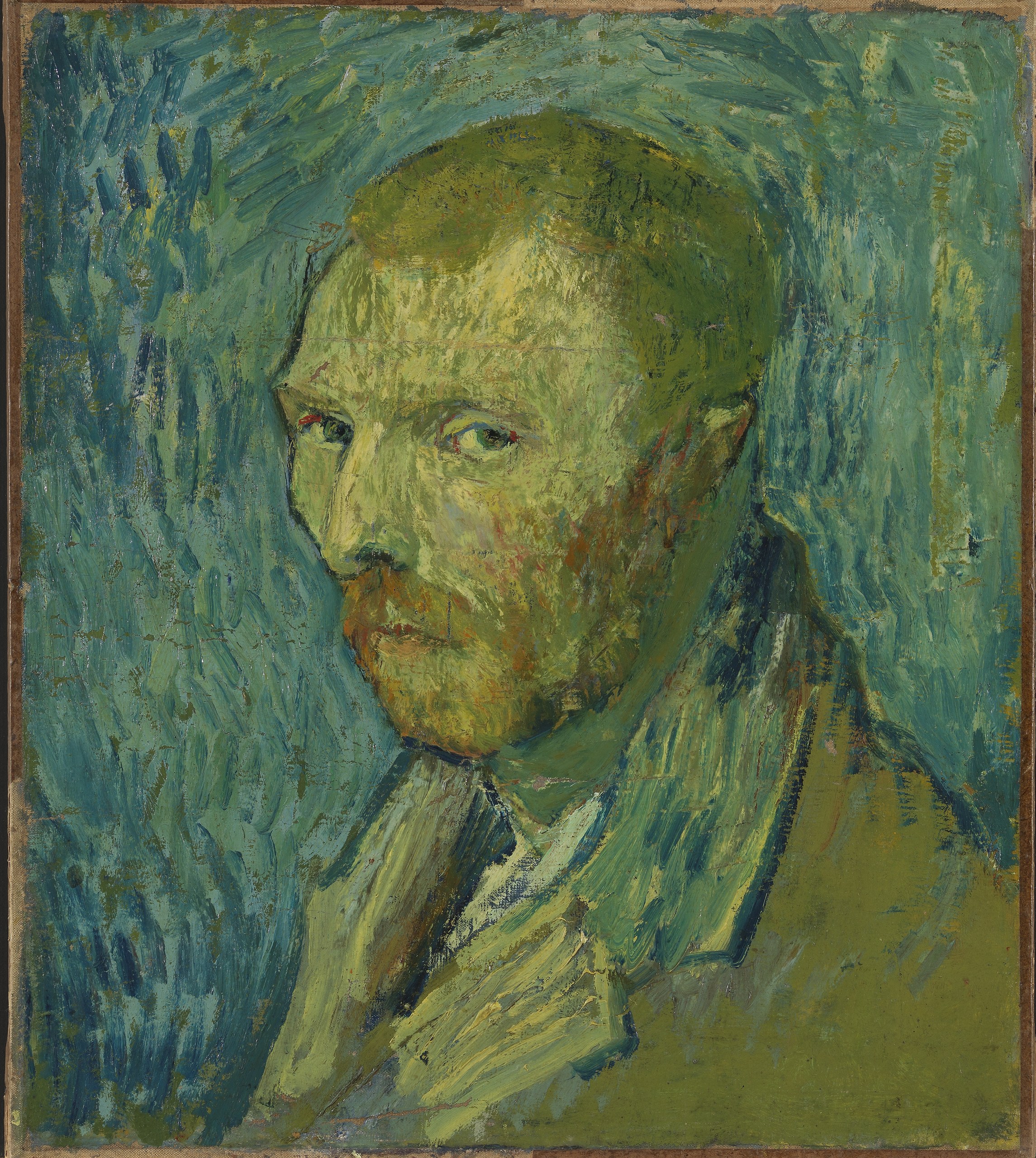
Self-portrait
Vincent van Gogh · 1889
National Museum of Art, Architecture and Design
Head turned aside against a swirling ground, made at the asylum in Saint-Rémy in 1889 and confirmed as his by the Van Gogh Museum in 2020; he wrote that August that he was still unwell but ready to work again.
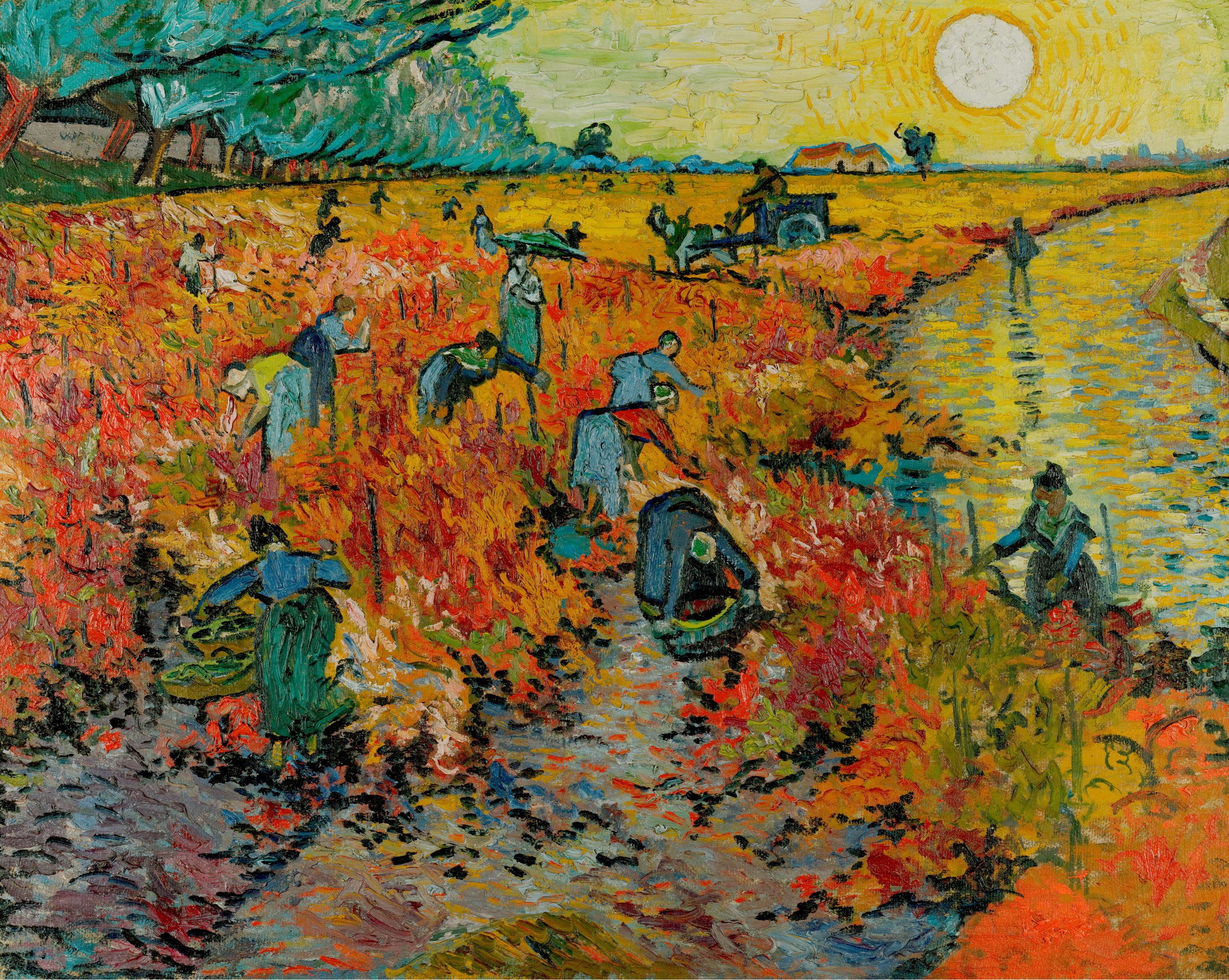
The Red Vineyard
Vincent van Gogh · 1888
Pushkin Museum
Women gathering grapes in a field of pure red near Arles, November 1888; shown at Les XX in Brussels in 1890, where Anna Boch bought it, the one canvas known by name that he sold before he died.
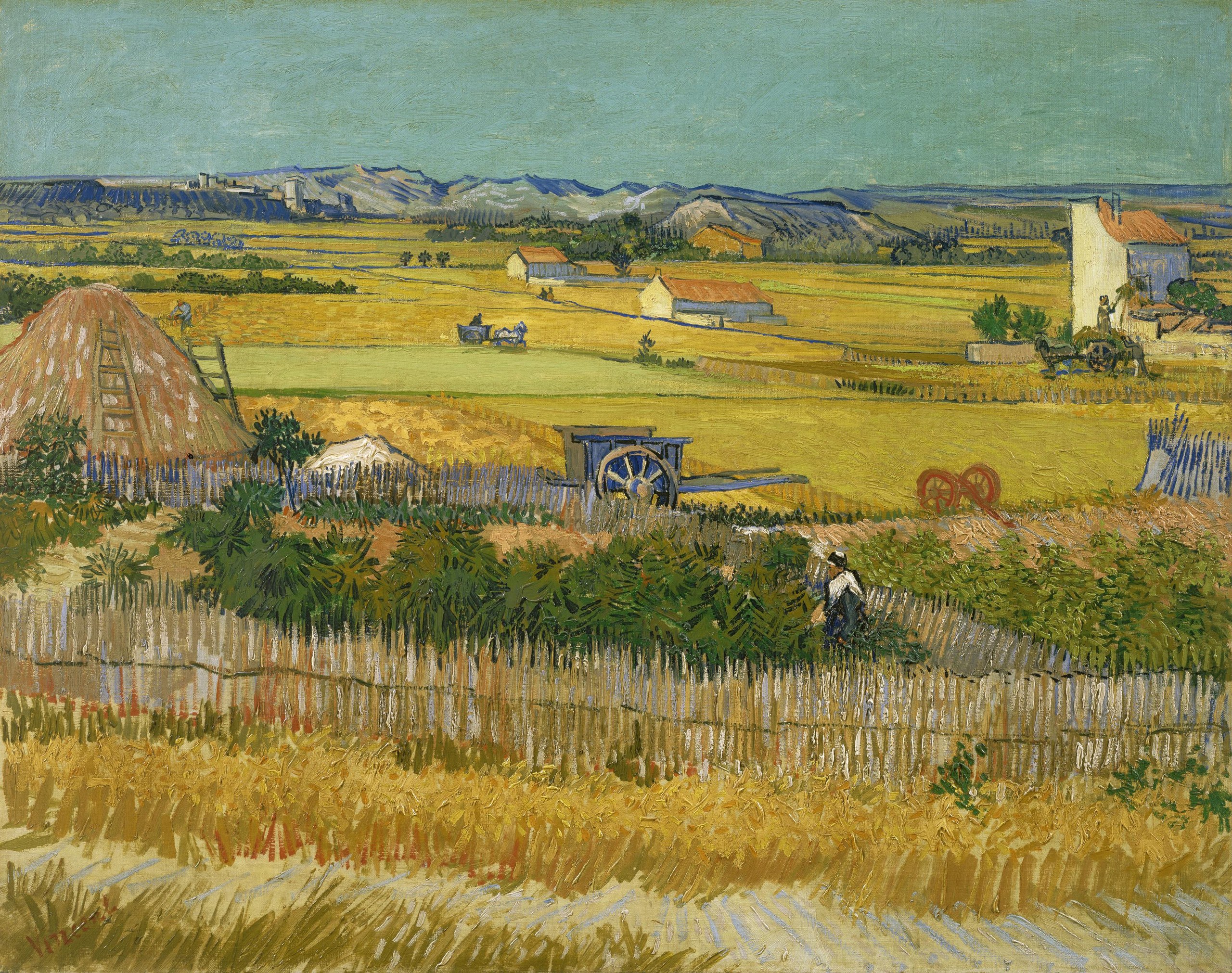
Harvest at La Crau, with Montmajour in the Background
Vincent van Gogh · 1888
Van Gogh Museum
The plain outside Arles stacked in flat bands, orchards, ladders, carts and wheat, the abbey far off on its hill; among the abundance of that Arles summer.
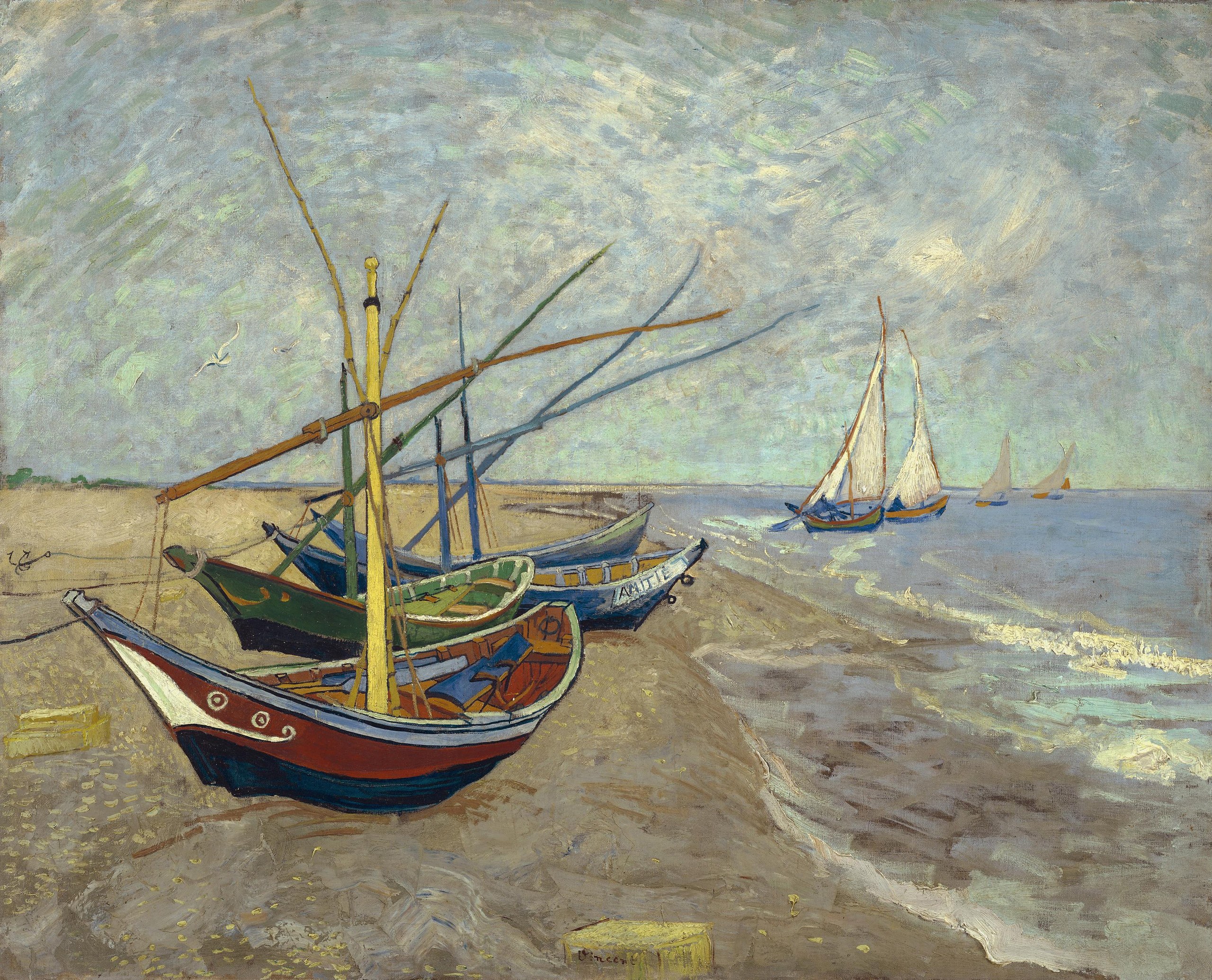
Fishing Boats on the Beach at Les Saintes-Maries-de-la-Mer
Vincent van Gogh · 1888
Van Gogh Museum
The little fleet hauled up on the sand, hulls in complementary reds and greens, the sea striped behind; from his June 1888 visit to the fishing village, when he painted the boats and the sea.
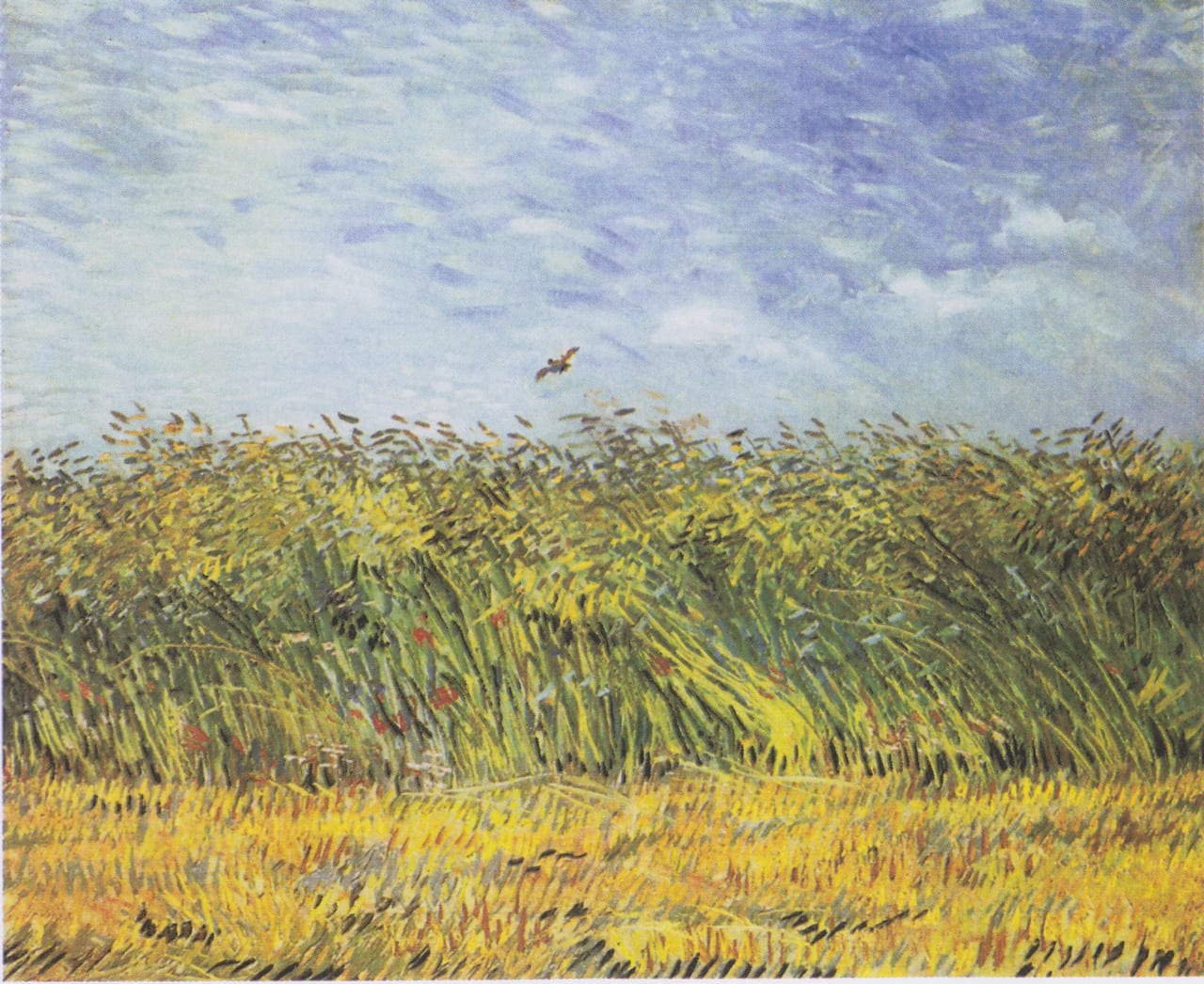
Wheat Field with a Lark
Vincent van Gogh · 1887
Van Gogh Museum
A half-cut field under a sky of small moving clouds, poppies and cornflowers running through the stubble; a Paris-year canvas of 1887, the summer he was teaching himself to be bright.
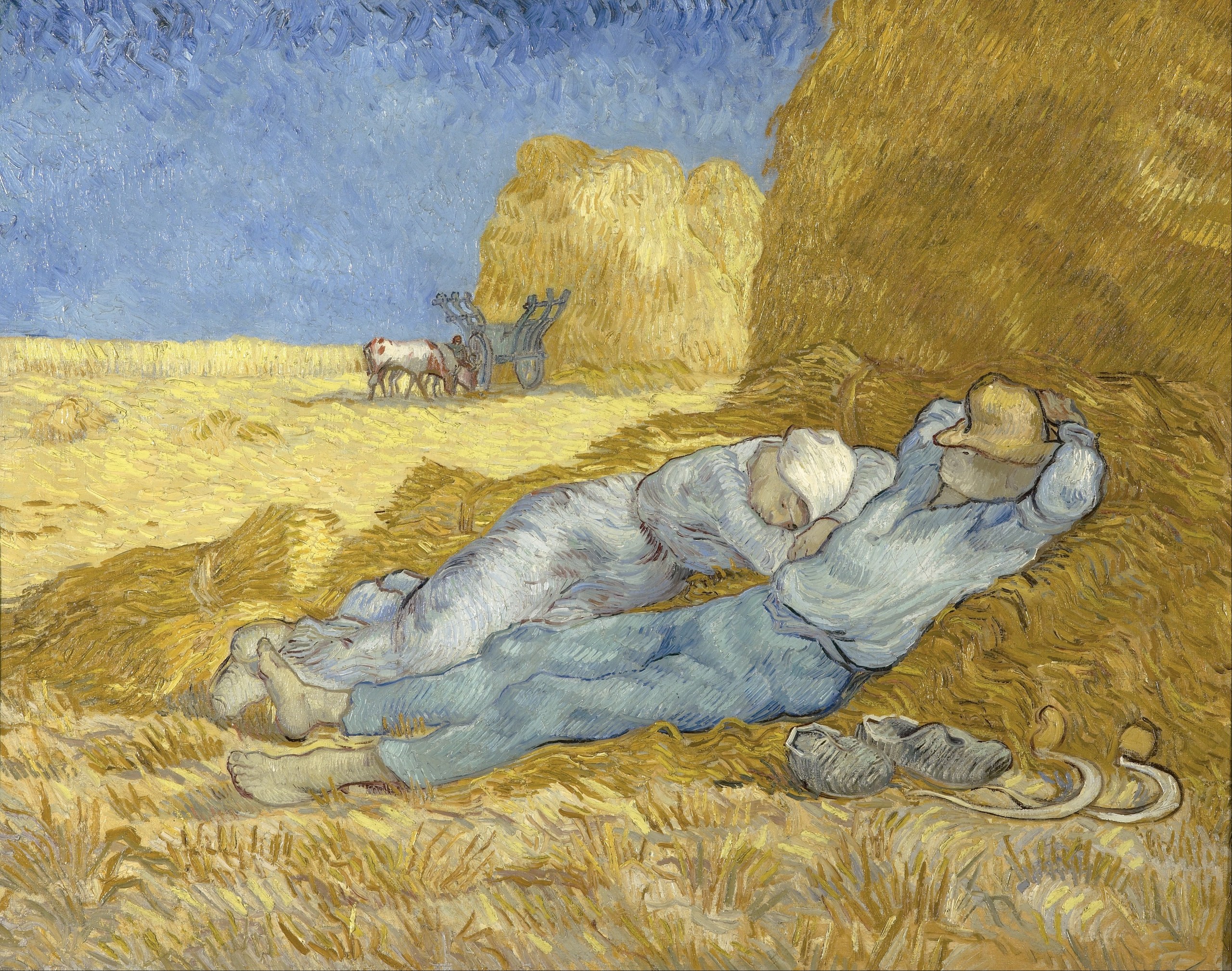
The siesta (after Millet)
Vincent van Gogh · 1890
Musée d'Orsay
Two harvesters asleep against a haycock at noon, taken from Millet and reset in Vincent's yellow and blue; painted indoors at Saint-Rémy in the winter of 1889 to 1890 and long counted among his best.
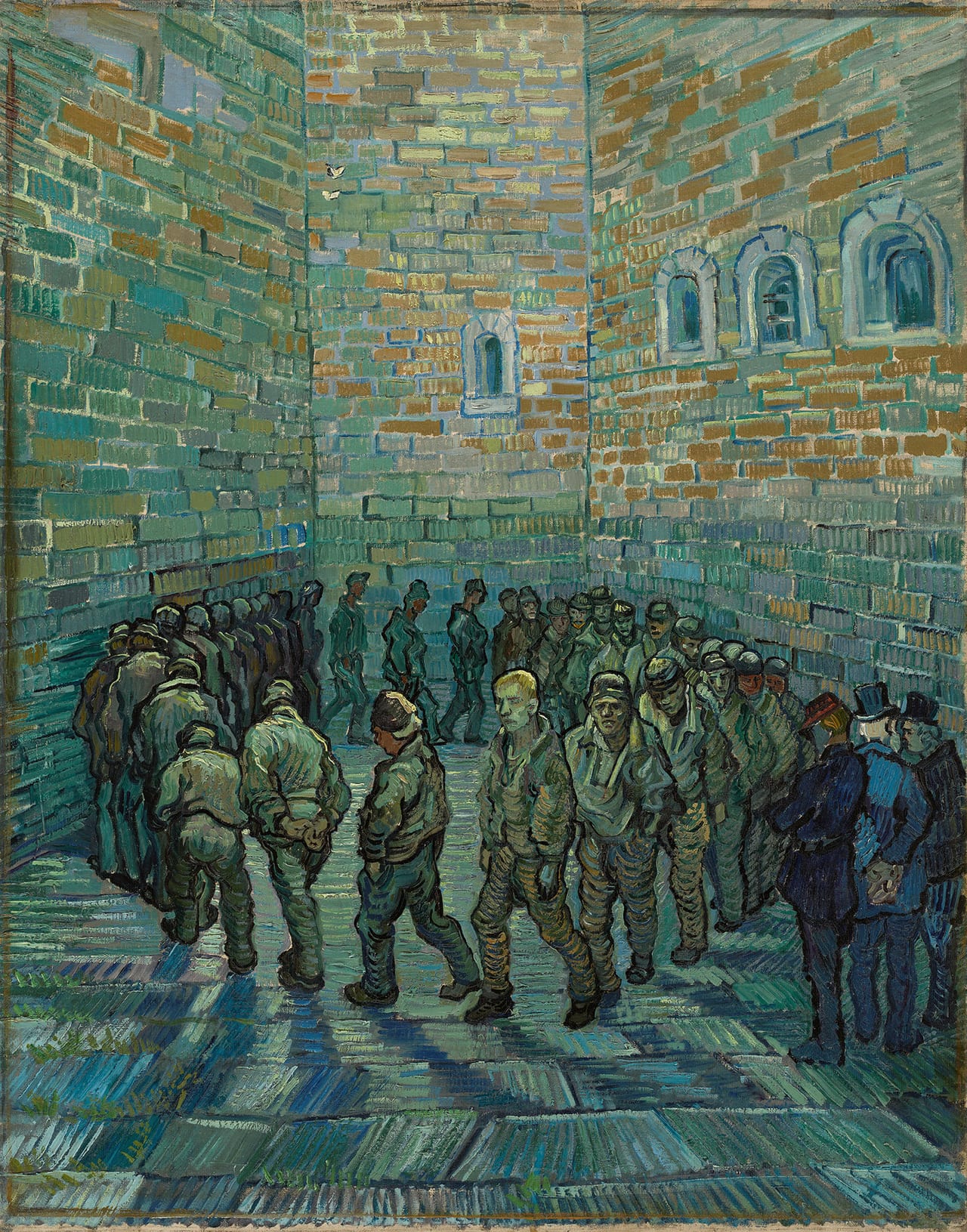
Prisoners Exercising
Vincent van Gogh · 1890
Pushkin Museum
Convicts trudging a circle in a walled yard, painted at Saint-Paul in February 1890 after Doré's engraving of Newgate, and hard to read as anything but a self-portrait of the asylum.
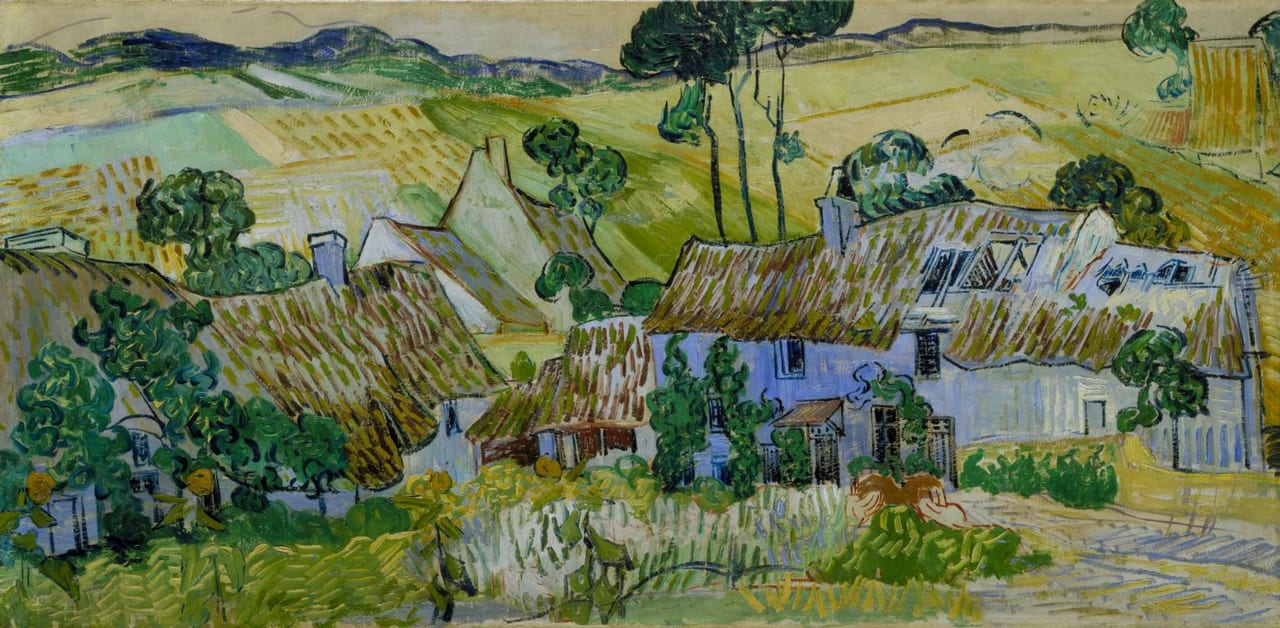
Farms near Auvers
Vincent van Gogh · 1890
National Gallery
Tumbled thatched cottages rolling away in green, from Cordeville on the edge of Auvers; among the last things he painted, hurried and probably never finished, the sky still blank.
More to discover
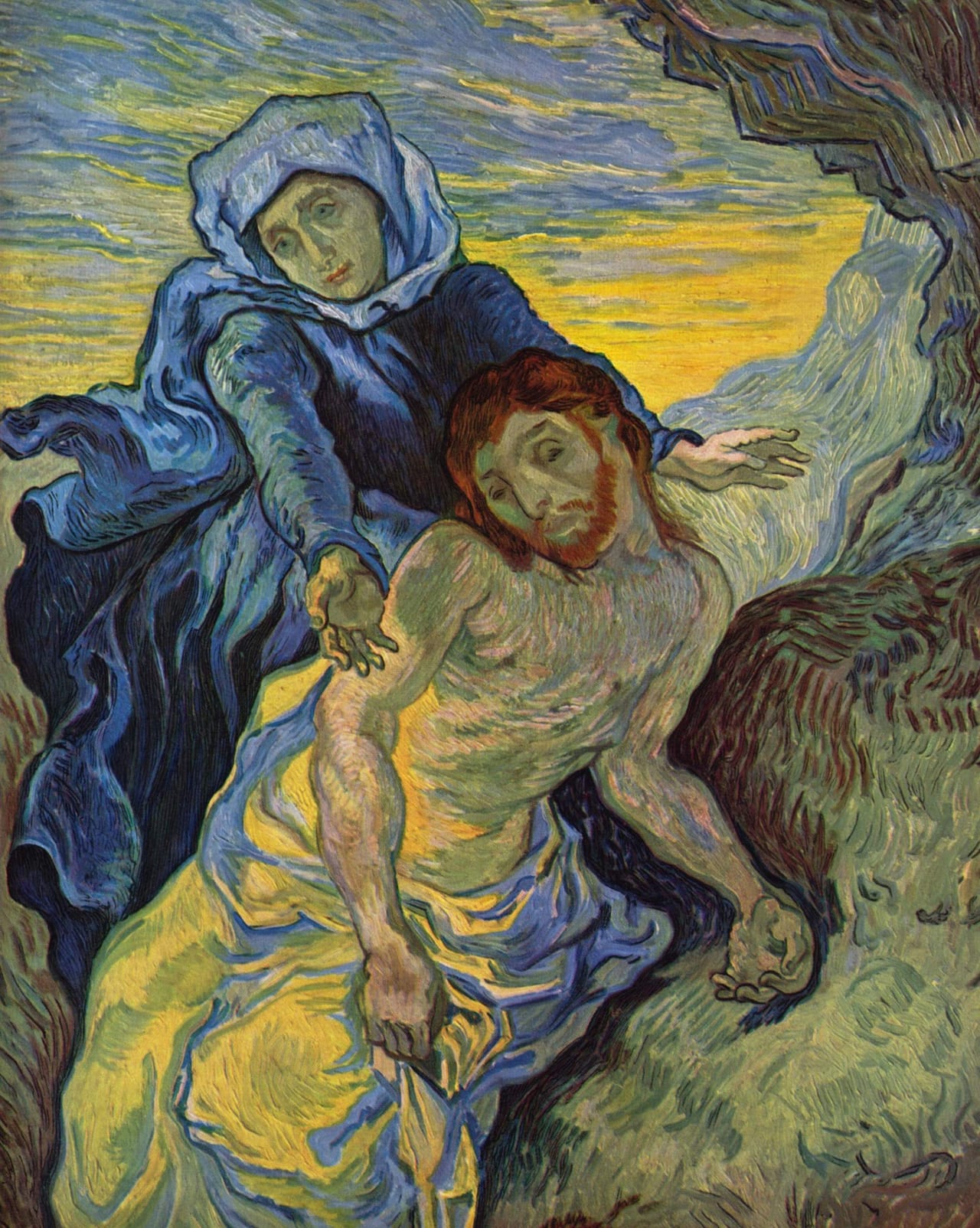
Pietà (after Delacroix), The
Vincent van Gogh · 1889
Van Gogh Museum
The dead Christ in the arms of Mary, re-imagined in blues with Vincent's own red-bearded face on the body; the first of the Saint-Rémy copies after Delacroix, Millet, Daumier and Rembrandt, which Theo called some of his strongest work.
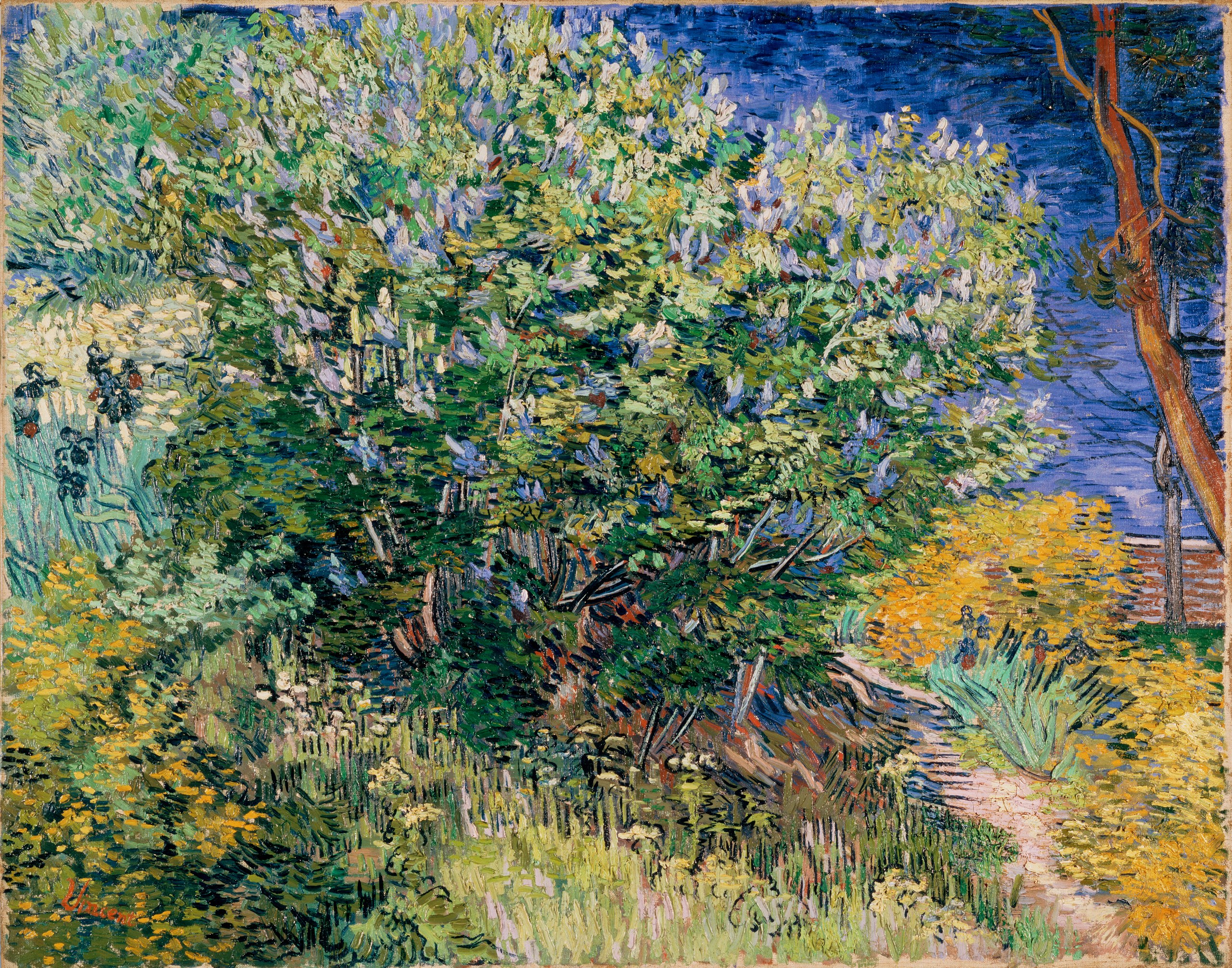
Lilac Bush
Vincent van Gogh · 1889
State Hermitage Museum
A bush in the garden of the asylum, one of the very first things he set down at Saint-Paul in May 1889, painting within days of his arrival; irises and lilacs, the hospital's own ground, kept him going until he could face the fields.
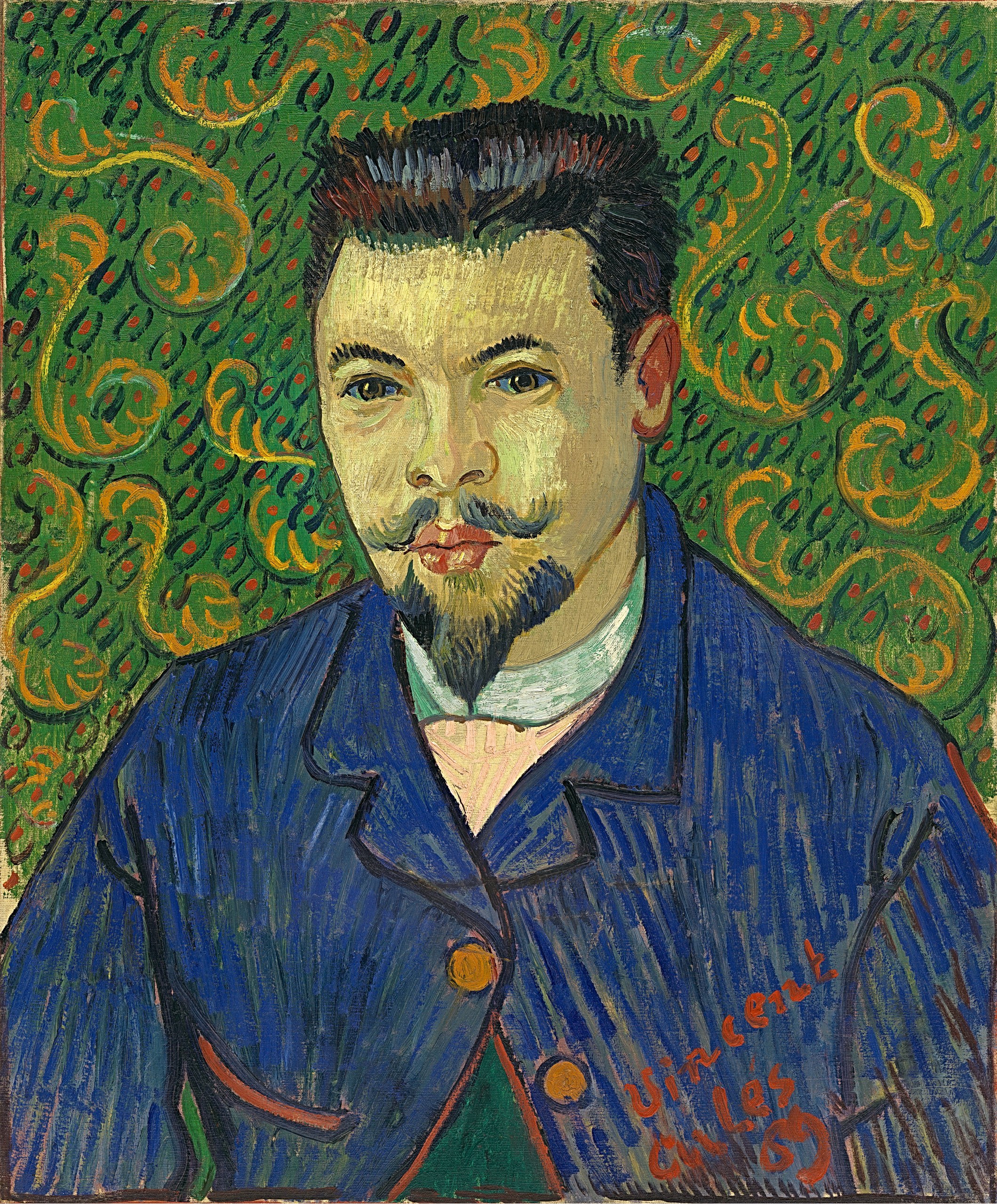
Portrait of Doctor Felix Rey
Vincent van Gogh · 1889
Pushkin Museum
The young intern at Arles who patched his ear, given a canvas in thanks; the Rey family thought the face absurd and propped it against a hole in the chicken house for a decade before the world decided otherwise.
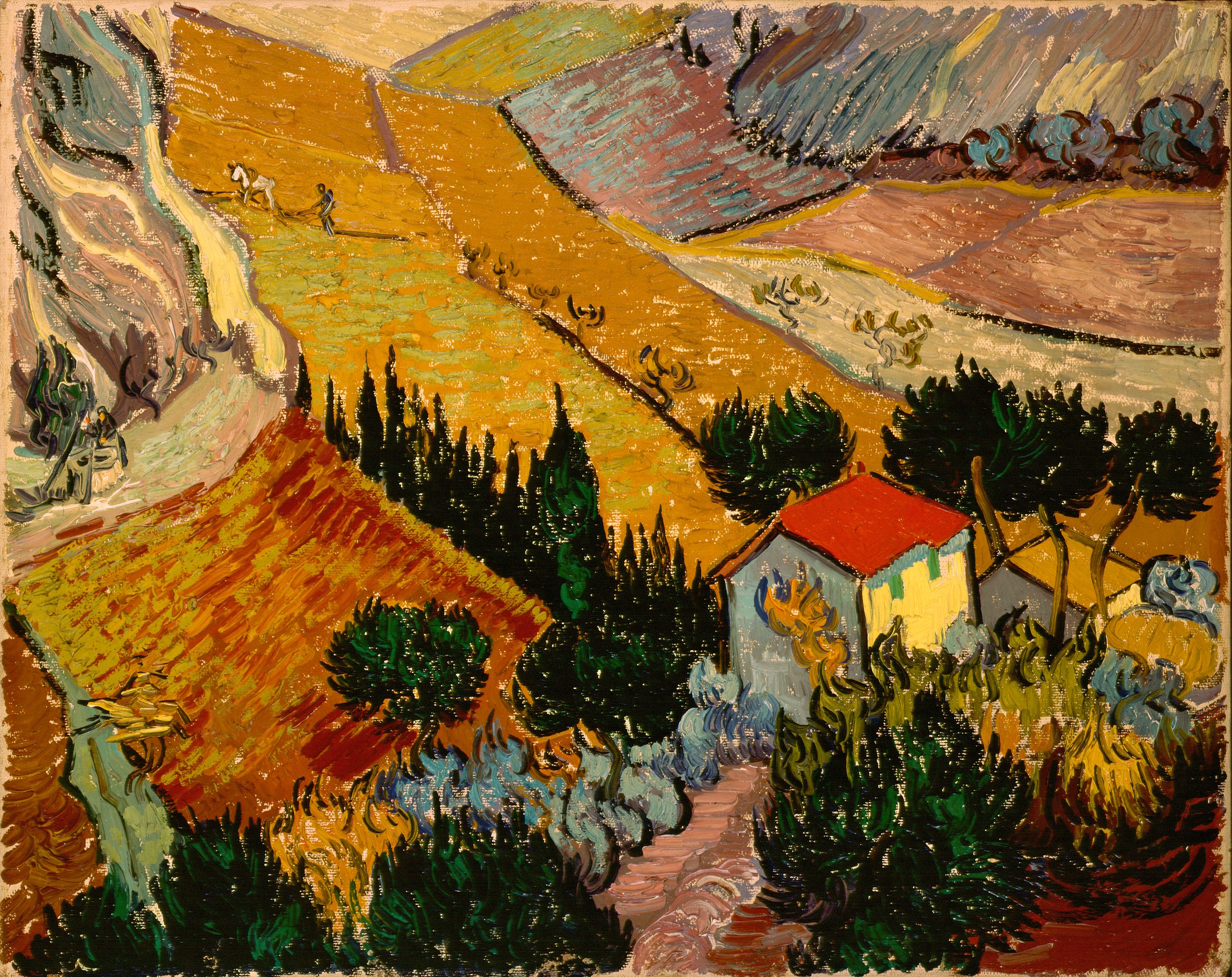
Landscape with House and Ploughman
Vincent van Gogh · 1889
State Hermitage Museum
A valley watched from high above, cottage, walls and one bent worker laid out like a map; painted at Saint-Rémy in the autumn of 1889 and lost from sight for half a century, resurfacing in 1995 among works carried off in the war.
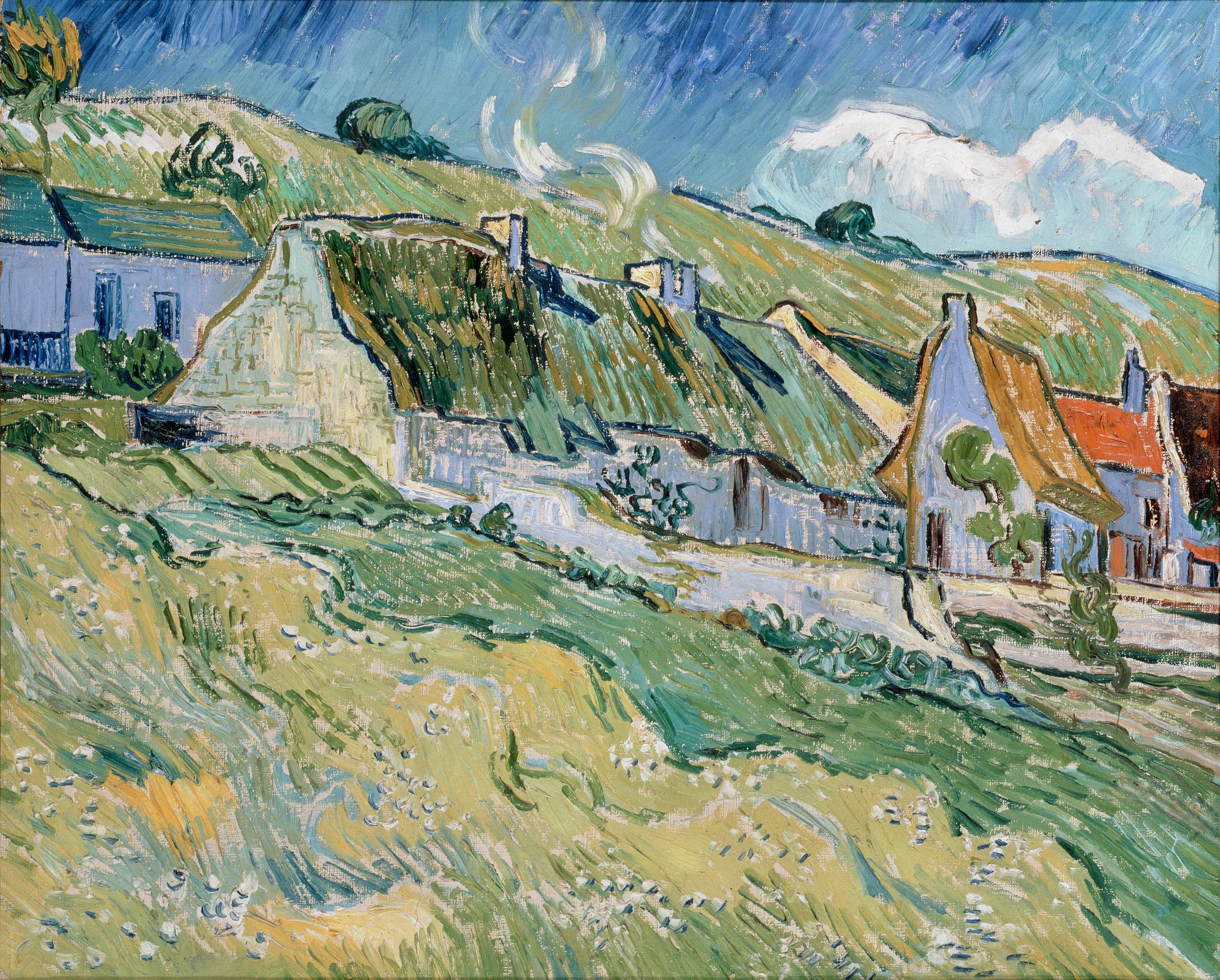
Thatched Cottages and Houses
Vincent van Gogh · 1890
State Hermitage Museum
The roofs of Cordeville swelling against the sky in his last Auvers weeks, May 1890, after he had left the asylum; thatch and cloud drawn with the same agitated outline.
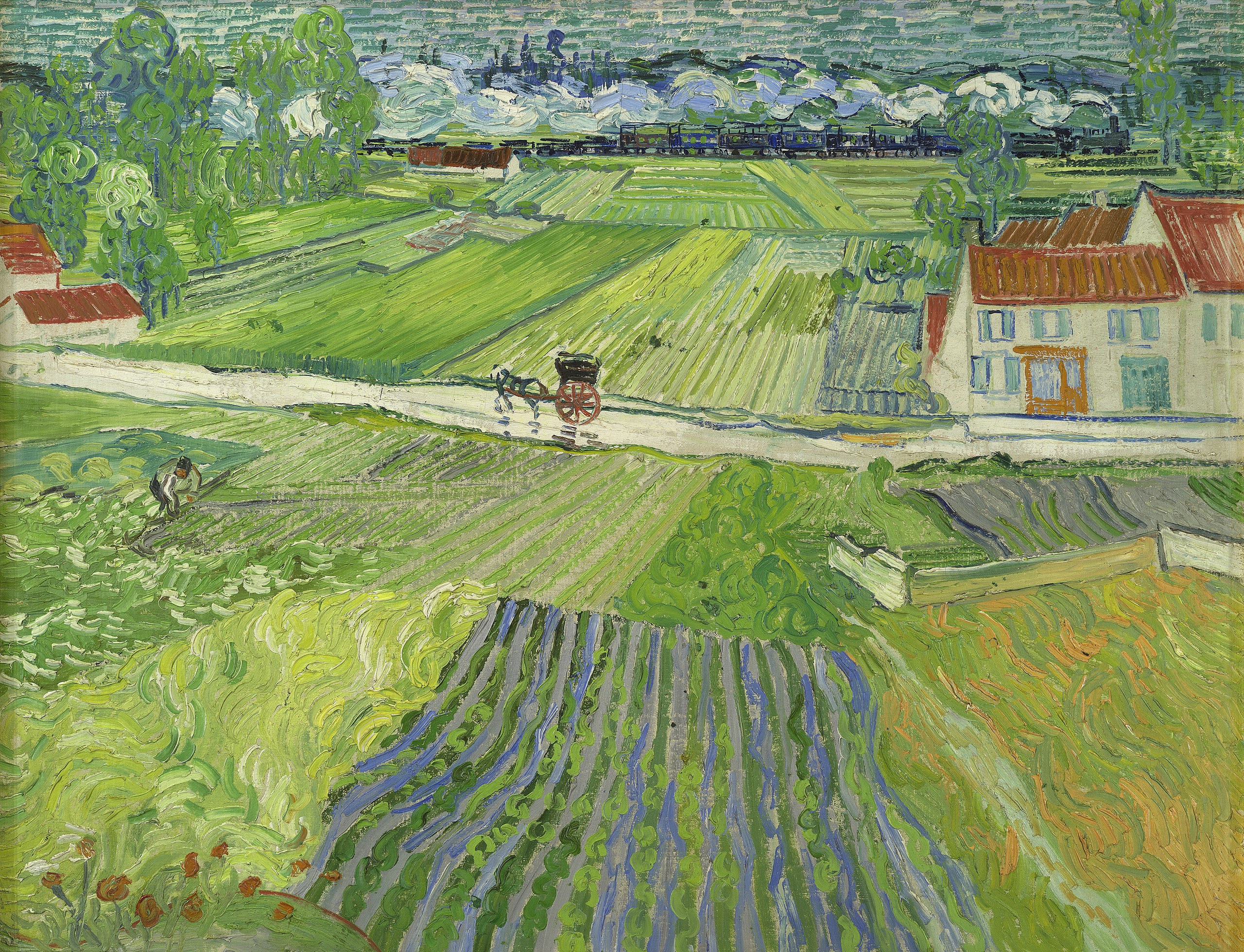
Landscape with a Carriage and a Train
Vincent van Gogh · 1890
Pushkin Museum
An Auvers lane with a carriage going one way and a train the other, painted in June 1890 in the week after his portraits of Dr Gachet; the high viewpoint had been his habit since sketching in the dunes at Scheveningen.
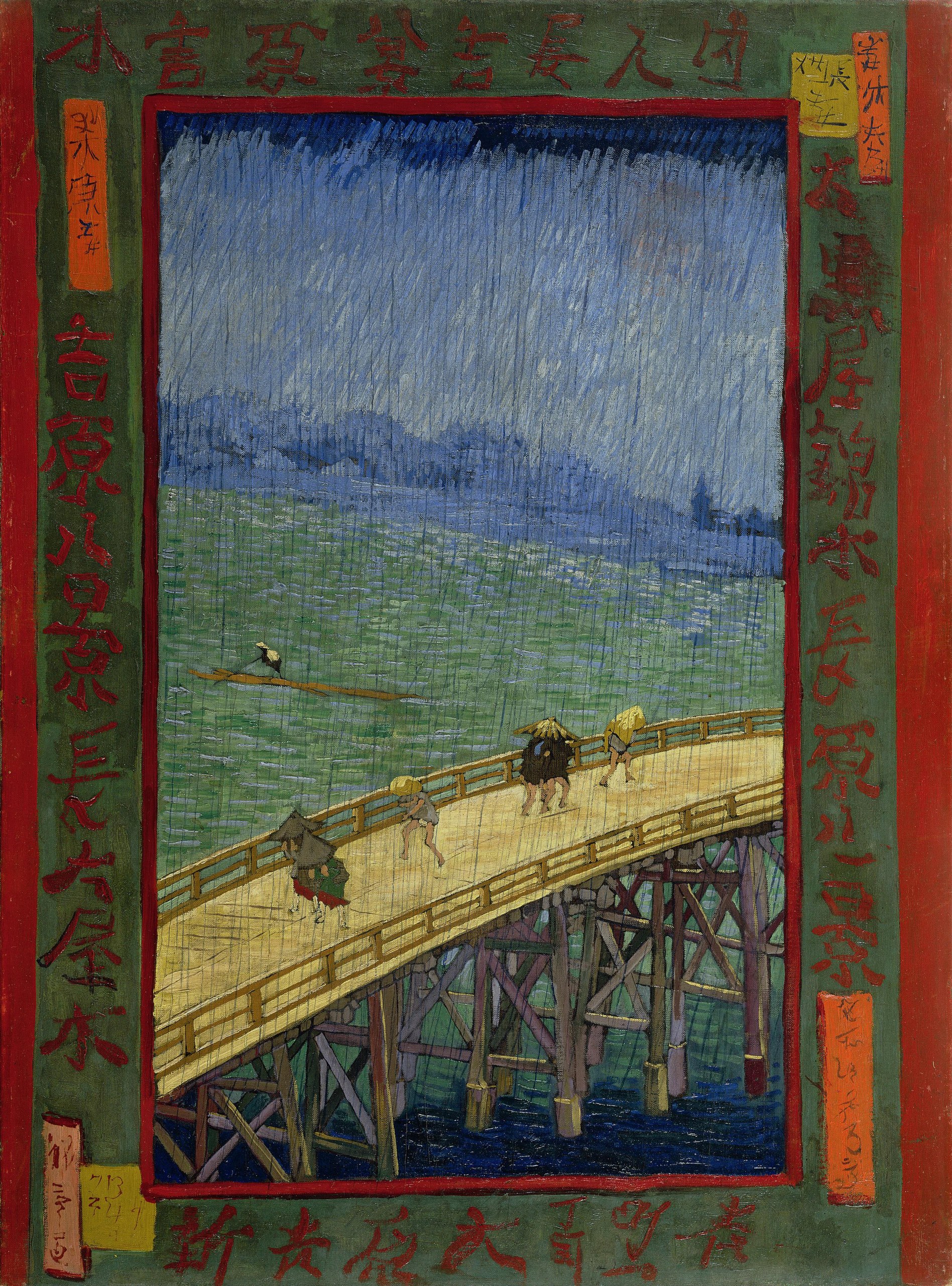
Bridge in the rain, after Hiroshige
Vincent van Gogh · 1887
Van Gogh Museum
His full-colour homage to a Hiroshige print: figures hunched under umbrellas crossing a wooden bridge, the rain in straight grey stripes; one of the copies after Japanese prints that opened his eyes in Paris.
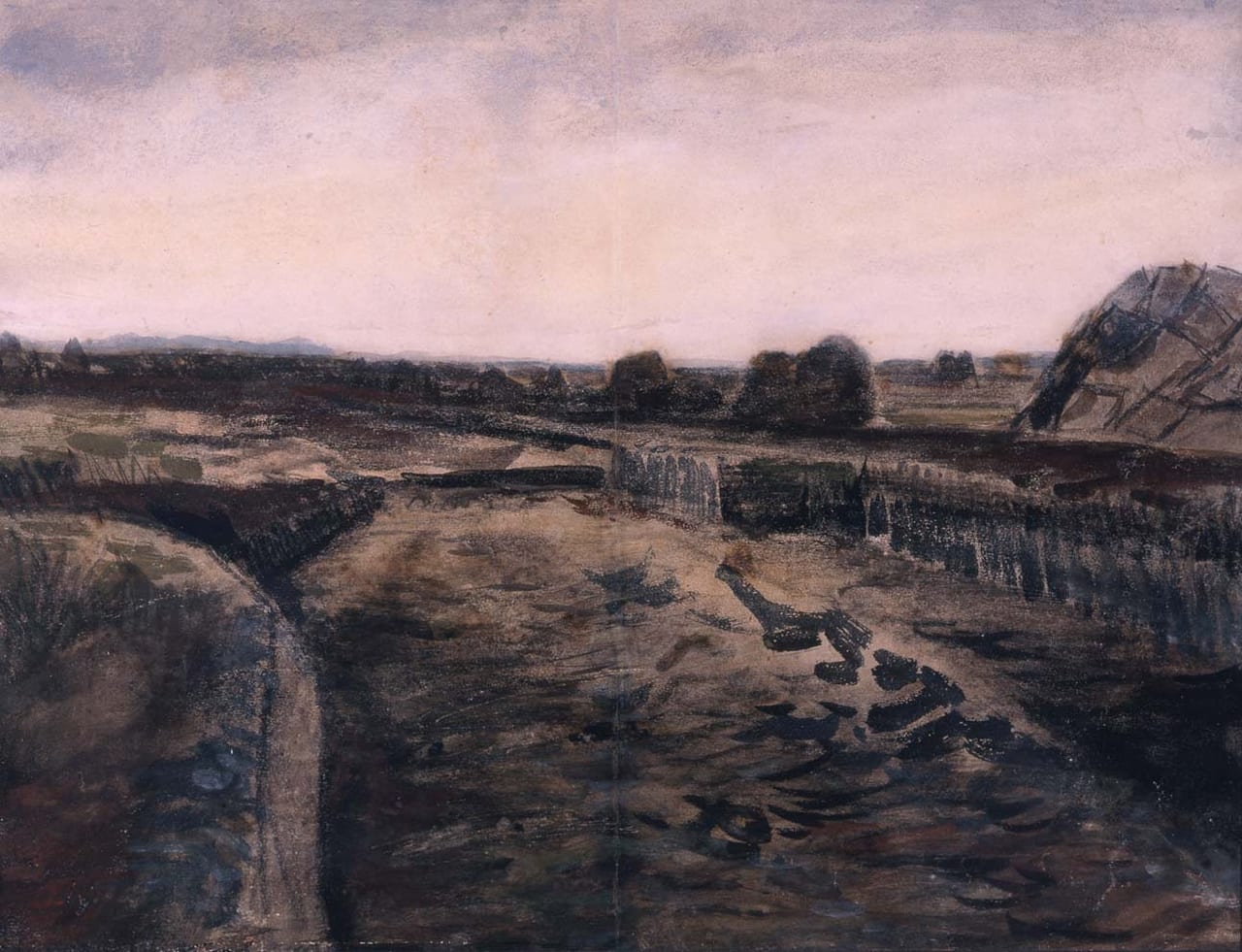
Peatery in Drenthe
Vincent van Gogh · 1883
Museo Soumaya
A watercolour of a peat cutting at dusk from late 1883, his lonely months in the Drenthe moors; the whole weight of the hour sits in the pink line of the horizon.
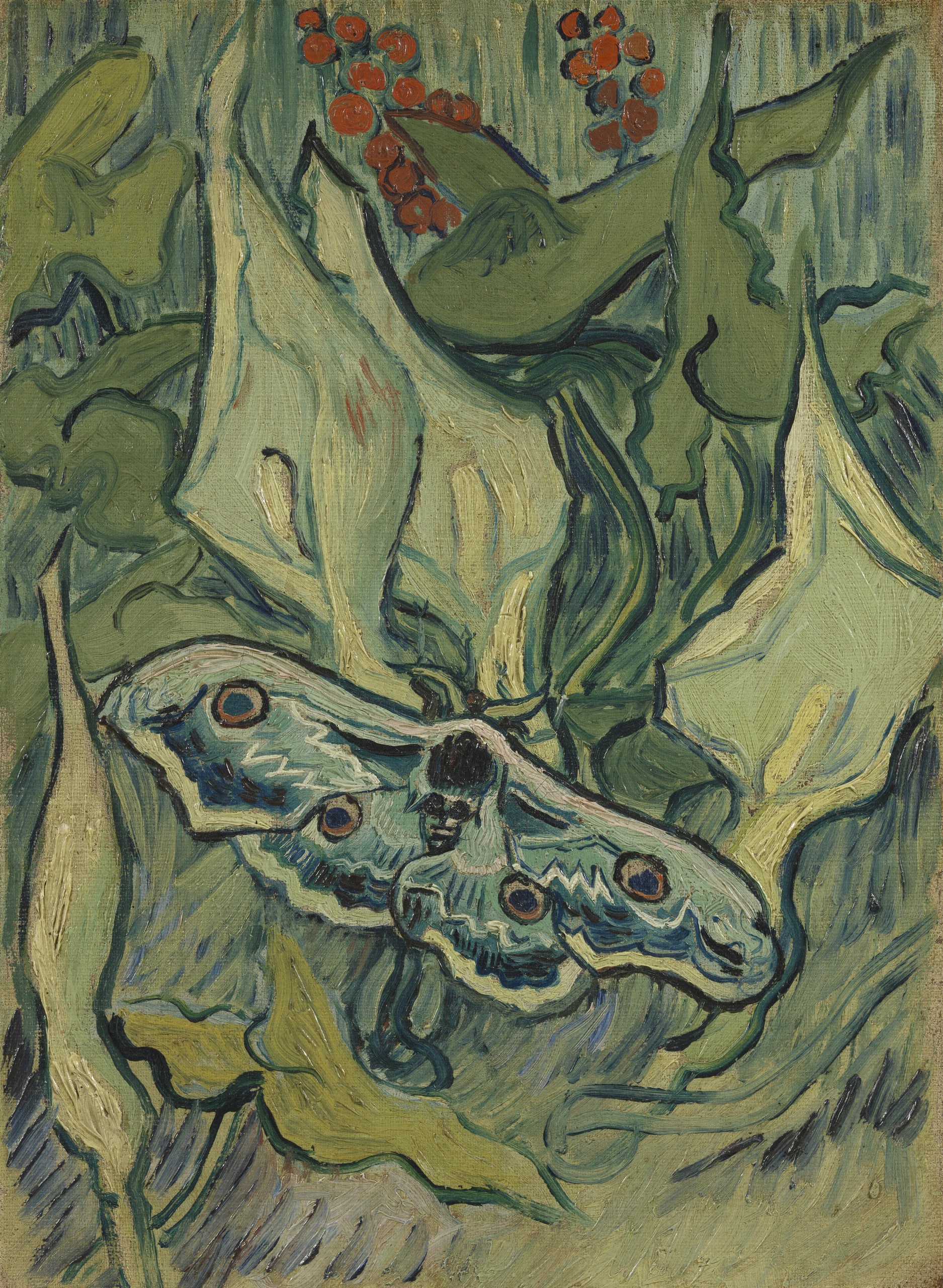
Giant Peacock Moth
Vincent van Gogh · 1889
Van Gogh Museum
One great moth alone on a dark ground, its wings patterned in grey and green, the feathers of a bird in miniature.
Sources
- National Gallery, London, “Vincent van Gogh”
- Wikipedia, “Vincent van Gogh”
- Wikipedia, “The Potato Eaters”
- Wikipedia, “Van Gogh's Chair”
- Wikipedia, “The Red Vineyard”
- Wikipedia, “Self-portrait (van Gogh, Oslo)”
- Wikipedia, “Farms near Auvers”
- Wikipedia, “The Siesta (Van Gogh)”
- Wikipedia, “Prisoners' Round (after Gustave Doré)”
- Wikipedia, “Wheat Field with a Lark”
- Wikipedia, “Pietà (after Delacroix)”
- Wikipedia, “Lilac Bush”
- Wikipedia, “Portrait of Doctor Rey”
- Wikipedia, “Valley with Ploughman Seen from Above”
- Wikipedia, “Landscape with a Carriage and a Train”
- Wikipedia, “Thatched Cottages and Houses”
- Wikipedia, “Peatery in Drenthe”
- Van Gogh Museum, “Van Gogh’s Letters”
Invite Vincent van Gogh into your living room
Play 40 works from this collection on your TV, phone or tablet with Momentable Art TV.