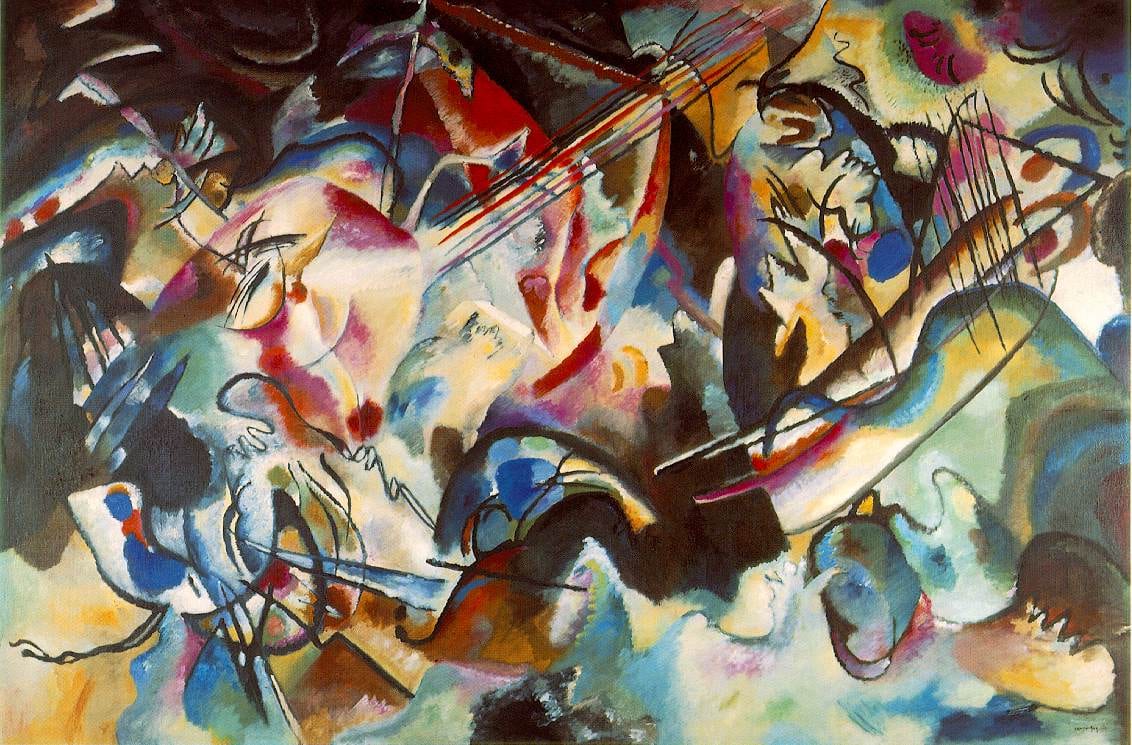
Composition VI
Wassily Kandinsky · 1913

Wassily Kandinsky
Russian Empire · 1866–1944
The Russian painter who set colour free from anything it had to stand for, among the first in Western art to paint pure abstraction.
Play 10 works from this collection on your TV, phone or tablet with Momentable Art TV.
Play CollectionFrom law to colour
Born in Moscow and trained first in law and economics, Wassily Kandinsky came late to the studio: he took up life drawing, sketching and anatomy only at thirty, then moved to Munich in 1896, to Anton Ažbe's private school and afterwards the Academy of Fine Arts.
Years of travel across Europe ended at Murnau, the Bavarian market town whose strong light flattened his colour into pattern, and back in Munich he founded the New Artists' Association of 1909, the seed from which the Blue Rider group grew.
Thinking in sound
He thought about painting the way a composer thinks about sound, and named his major series in musical terms, the Improvisations and the ten Compositions. Of Composition VI, painted in 1913, he said himself that nothing he painted was more complex.
War took him back to Moscow in 1914. From 1922 he taught at the Bauhaus until the Nazis closed the school in 1933, and his last decade ran in France, where he became a citizen in 1939 and died at Neuilly-sur-Seine in 1944.
Known works
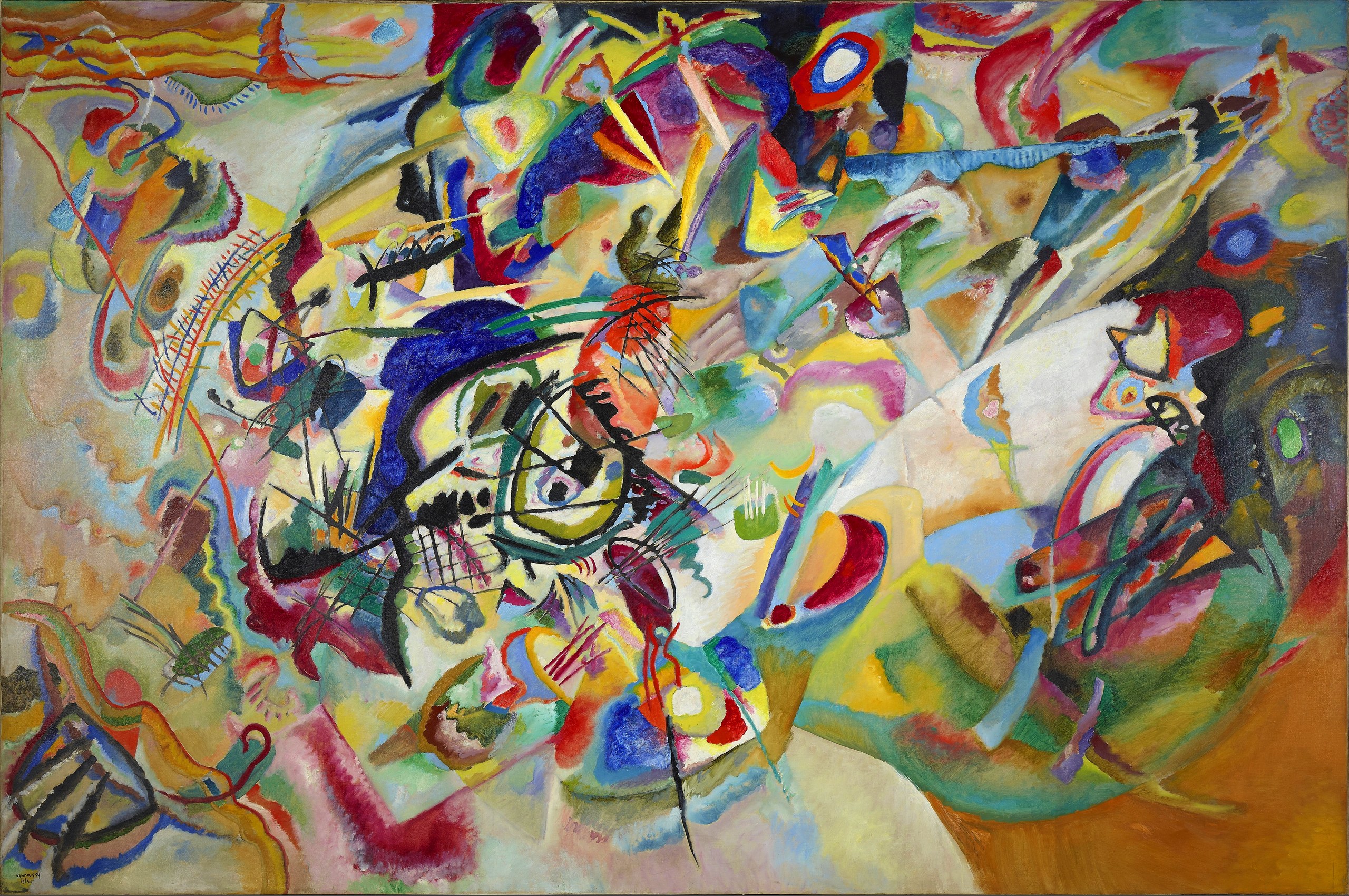
Composition VII
Wassily Kandinsky · 1913
Tretyakov Gallery
Resurrection, Judgment, the Flood and the Garden of Eden braided into one apocalyptic surge of colour, the summit of his pre-war Munich years, at the Tretyakov Gallery in Moscow.
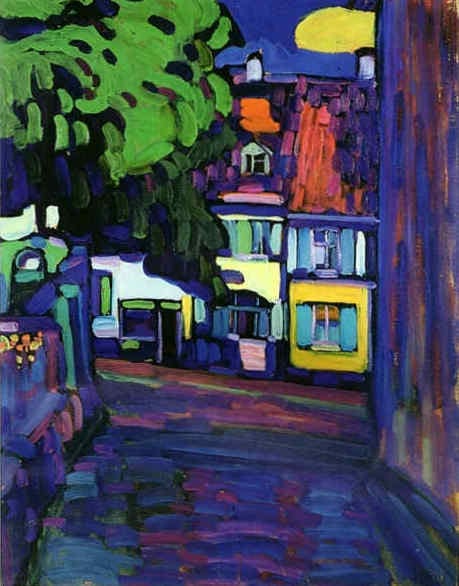
Houses in Murnau on Obermarkt
Wassily Kandinsky · 1908
Thyssen-Bornemisza Museum
Houses in Murnau on Obermarkt. The Bavarian market street in full frontal colour, houses and hills flattened into pattern, from the town where his way toward abstraction began.
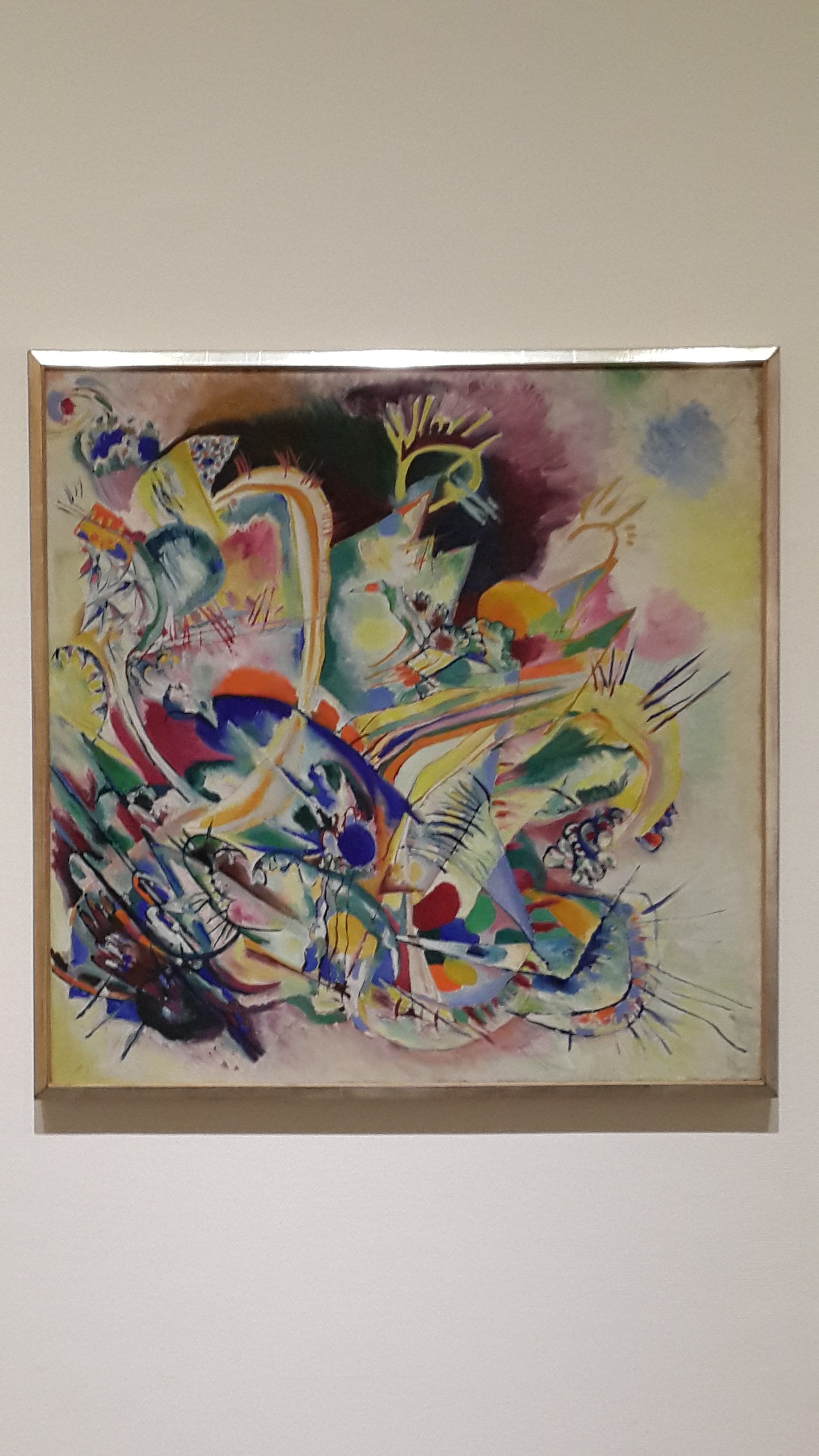
Untitled Improvisation
Wassily Kandinsky · 1914
Tel Aviv Museum of Art
Untitled Improvisation. One of the improvisations of his Munich years before the war, colour and line moving as music moves, with no subject holding them still.
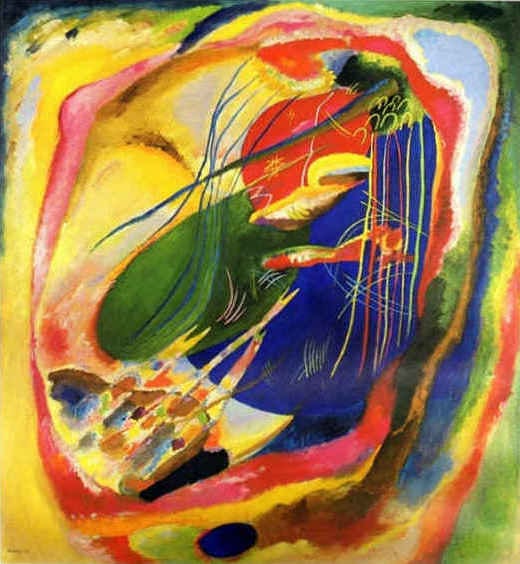
Painting with Three Spots
Wassily Kandinsky · 1914
Thyssen-Bornemisza Museum
Painting with Three Spots. Three centres of brightness hold the canvas like planets in orbit, the paint around them built in cold and warm wedges.
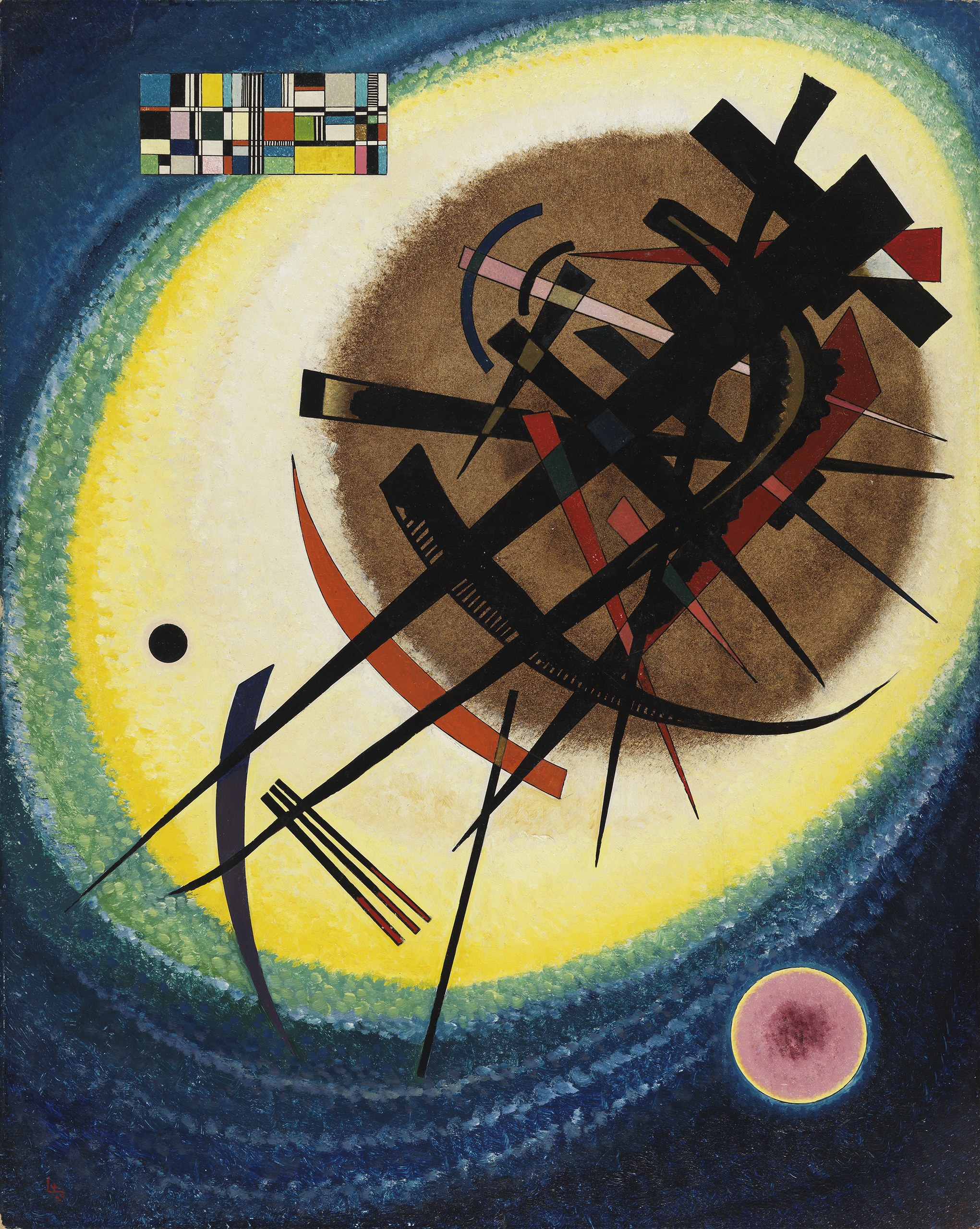
In the Bright Oval
Wassily Kandinsky · 1925
Thyssen-Bornemisza Museum
In the Bright Oval. A luminous oval of circles, wedges and lances of colour, from the Bauhaus years when his vocabulary turned to instruments.
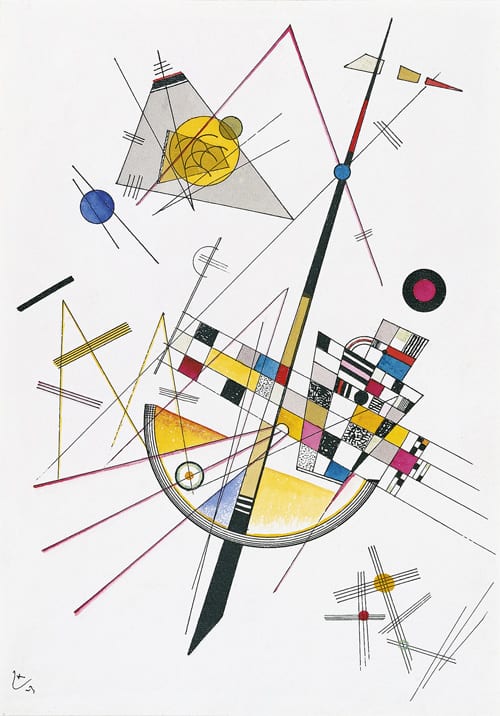
Delicate Tension
Wassily Kandinsky · 1923
Thyssen-Bornemisza Museum
Delicate Tension. A bare ground crossed by one taut diagonal and a scatter of small precise shapes, balance carried to the edge of breaking.
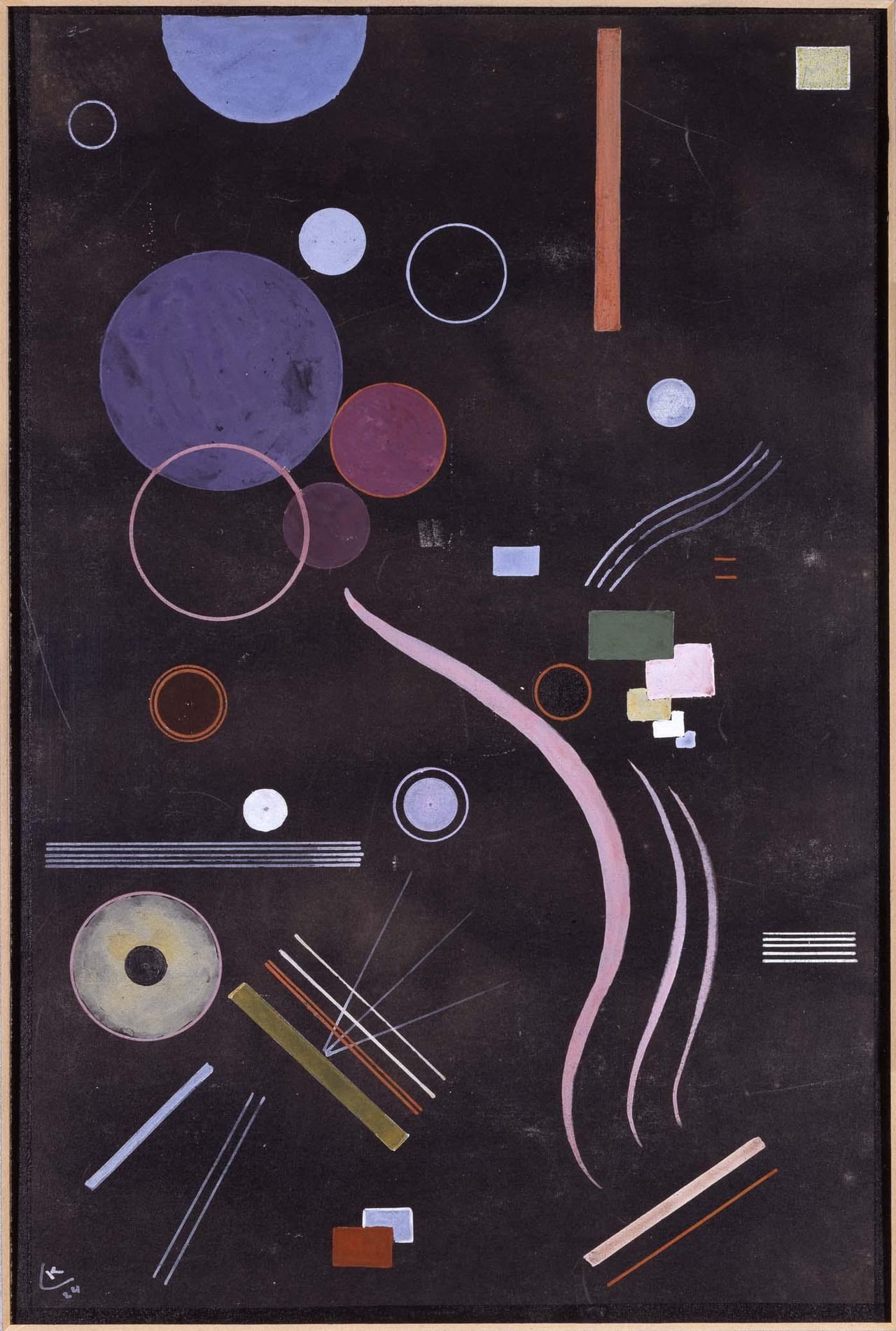
Acentric
Wassily Kandinsky · 1924
Museo Reina Sofía
Acentric. Weight thrown off centre, the picture held together by counterweights of colour rather than any middle point.
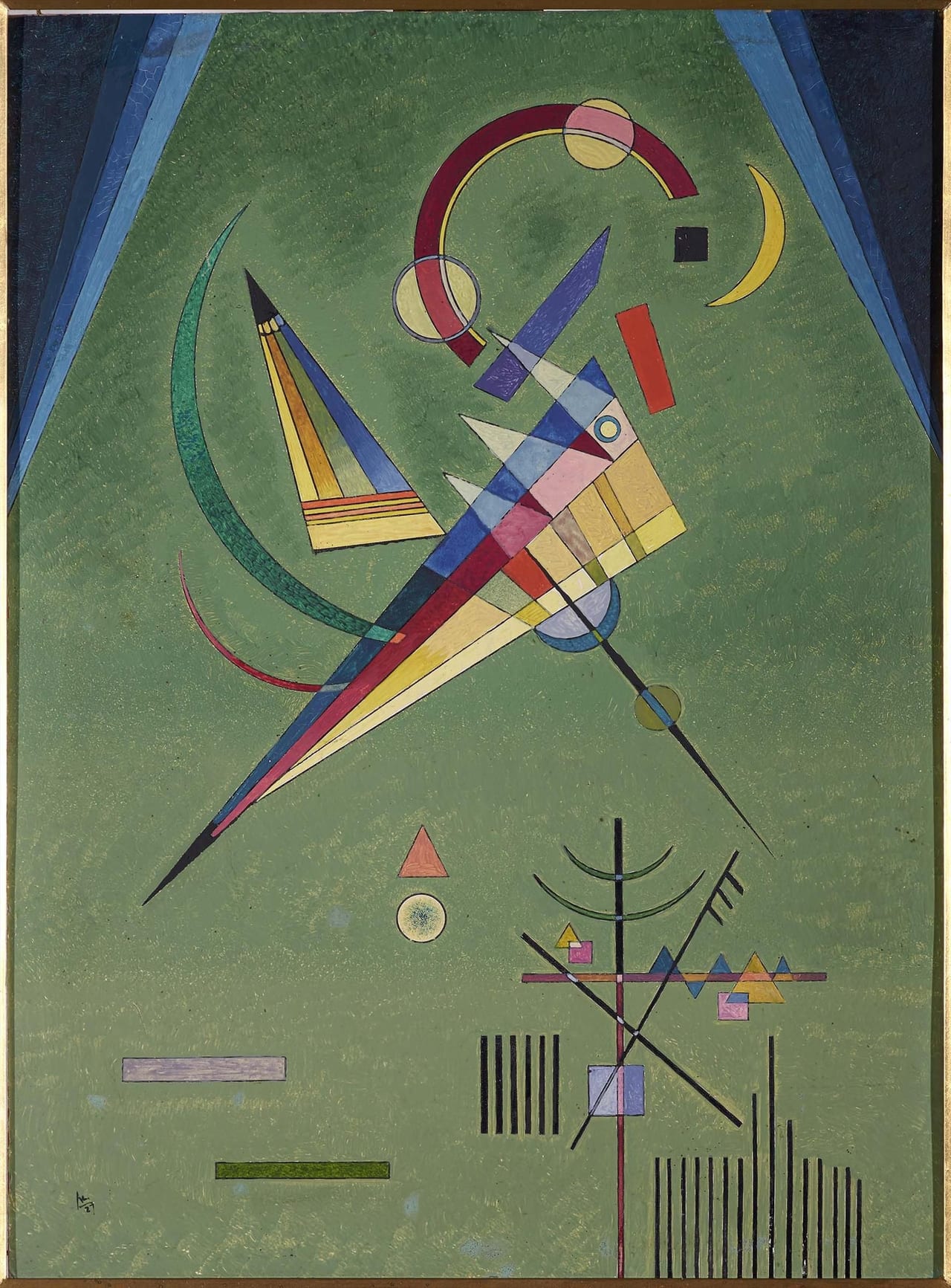
Free
Wassily Kandinsky · 1927
Museo Reina Sofía
Free. Forms loosed across an open ground, the title a statement of the palette's freedom in his late Paris years.
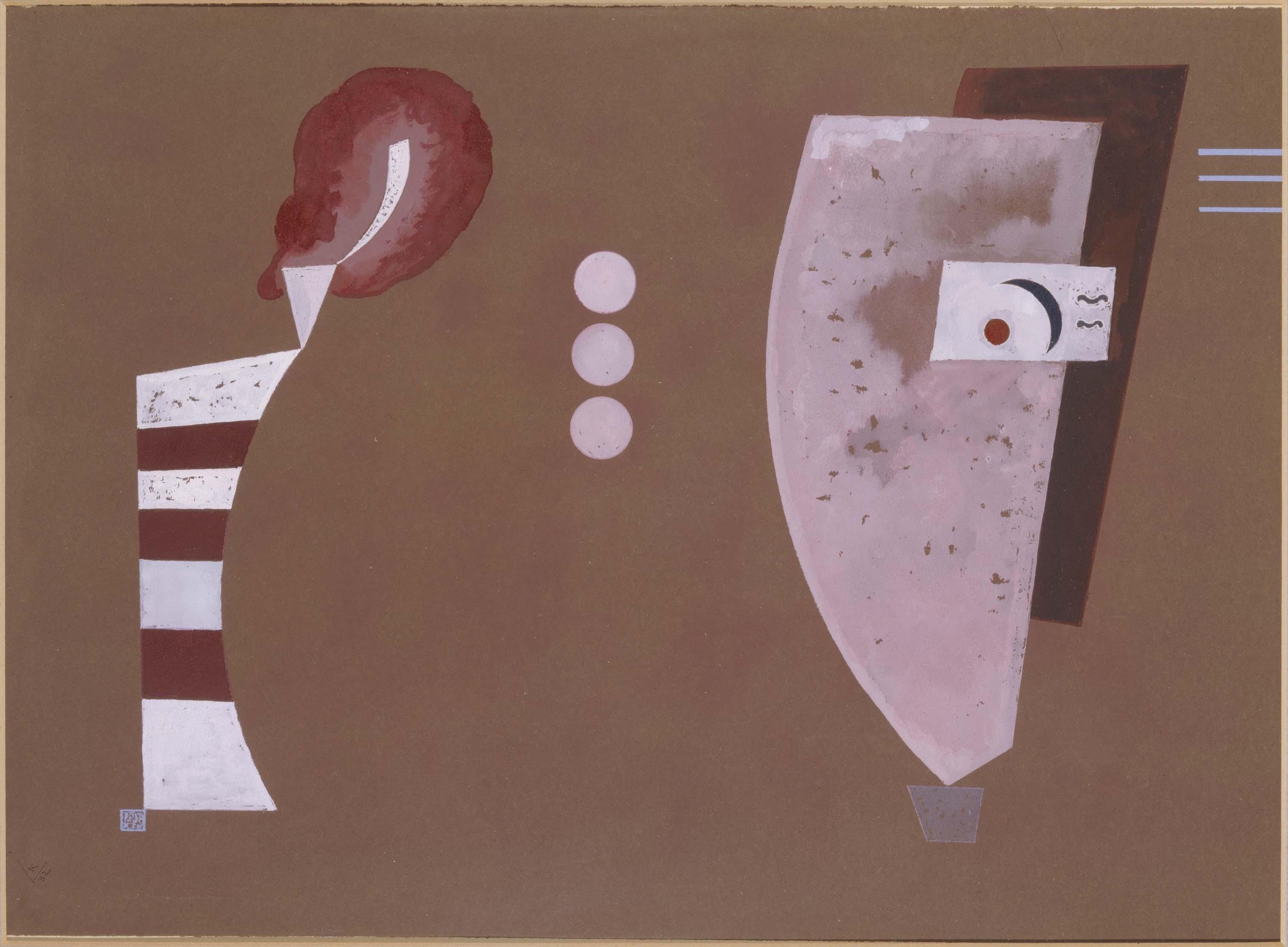
Centre Circles
Wassily Kandinsky · 1932
Museo Reina Sofía
Centre Circles. Circles stacked and centred like lenses, colour ringing colour, from the great synthesis of his final decade.
Sources
Invite Wassily Kandinsky into your living room
Play 10 works from this collection on your TV, phone or tablet with Momentable Art TV.