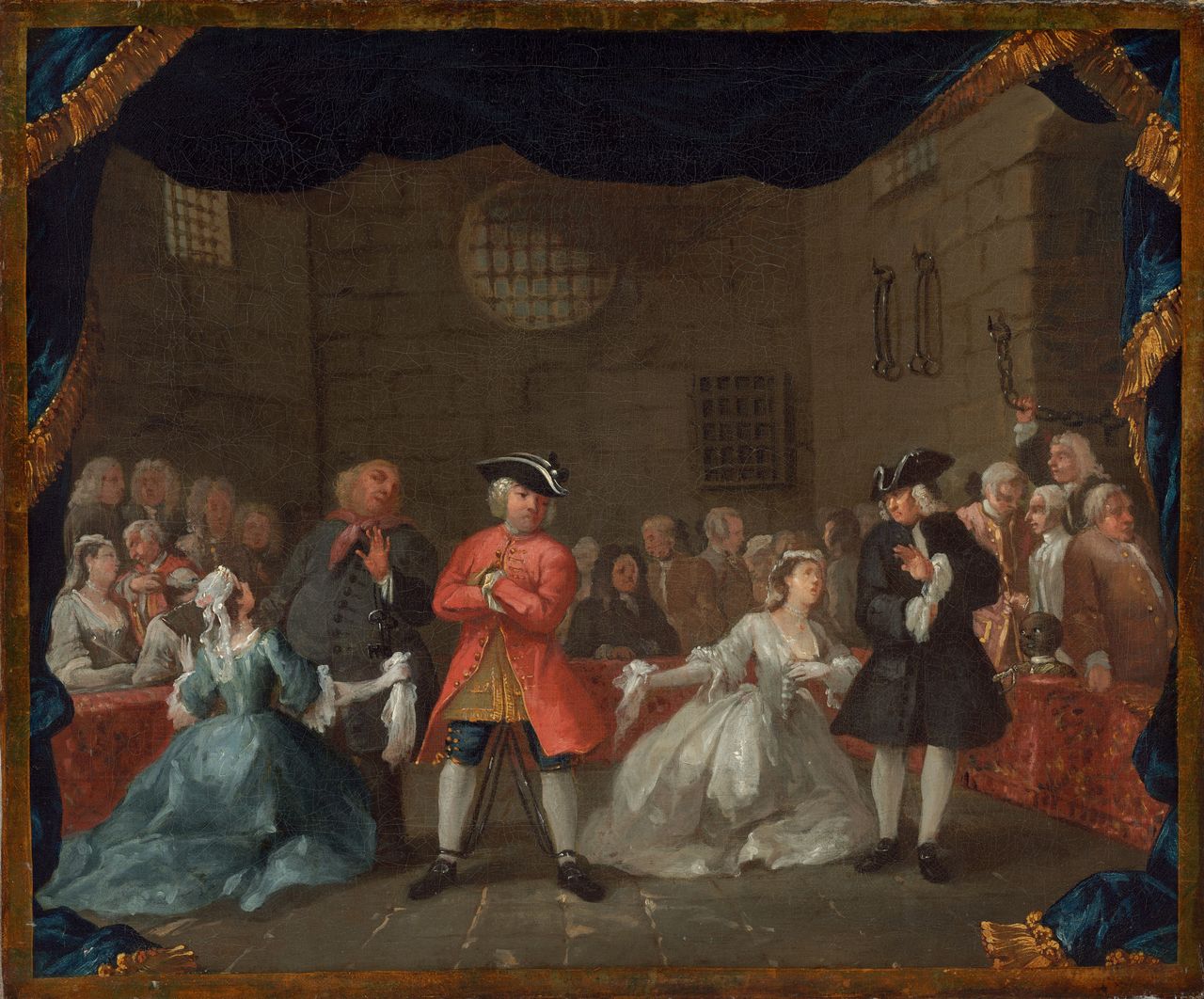
A Scene from The Beggar's Opera
William Hogarth

William Hogarth
English · 1697–1764
William Hogarth was an English painter, engraver, satirist, cartoonist and writer. His work ranges from realistic portraiture to comic strip-like series of pictures called "modern moral subjects", and he is perhaps best known for his series A Harlot's Progress, A Rake's Progress and Marriage A-la-Mode. Familiarity with his work is so widespread that satirical political illustrations in this style are often referred to as "Hogarthian".
Play 6 works from this collection on your TV, phone or tablet with Momentable Art TV.
Play CollectionKnown works
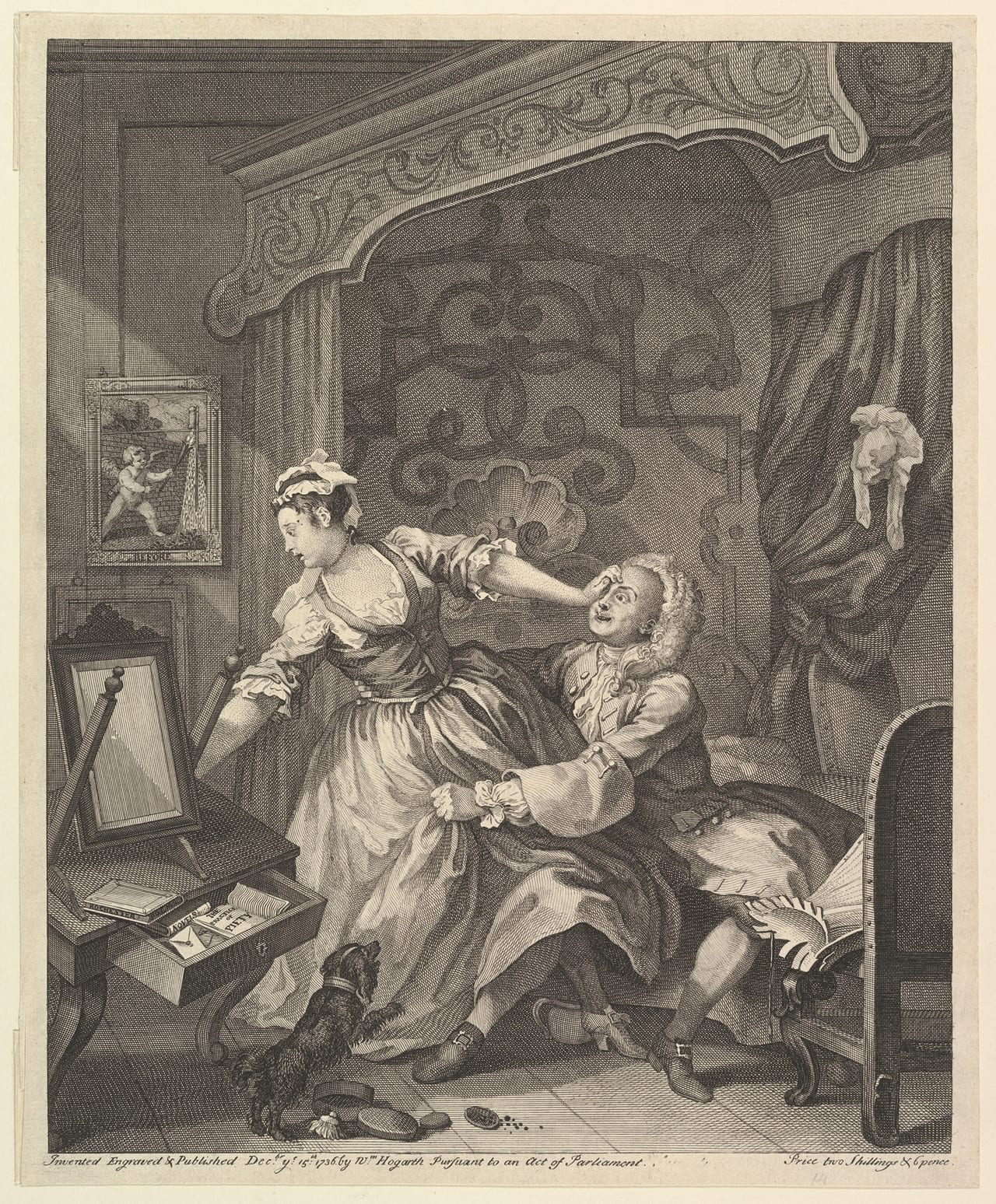
Before and After
William Hogarth · 1731
Tate Britain
Before and After is a pair of comic paintings by British painter William Hogarth. He made two painted versions in 1730–1731. The first version showed an exterior scene in a wooded glade, based on contemporary French pastoral fête galante, while a second version moved the scene indoors.
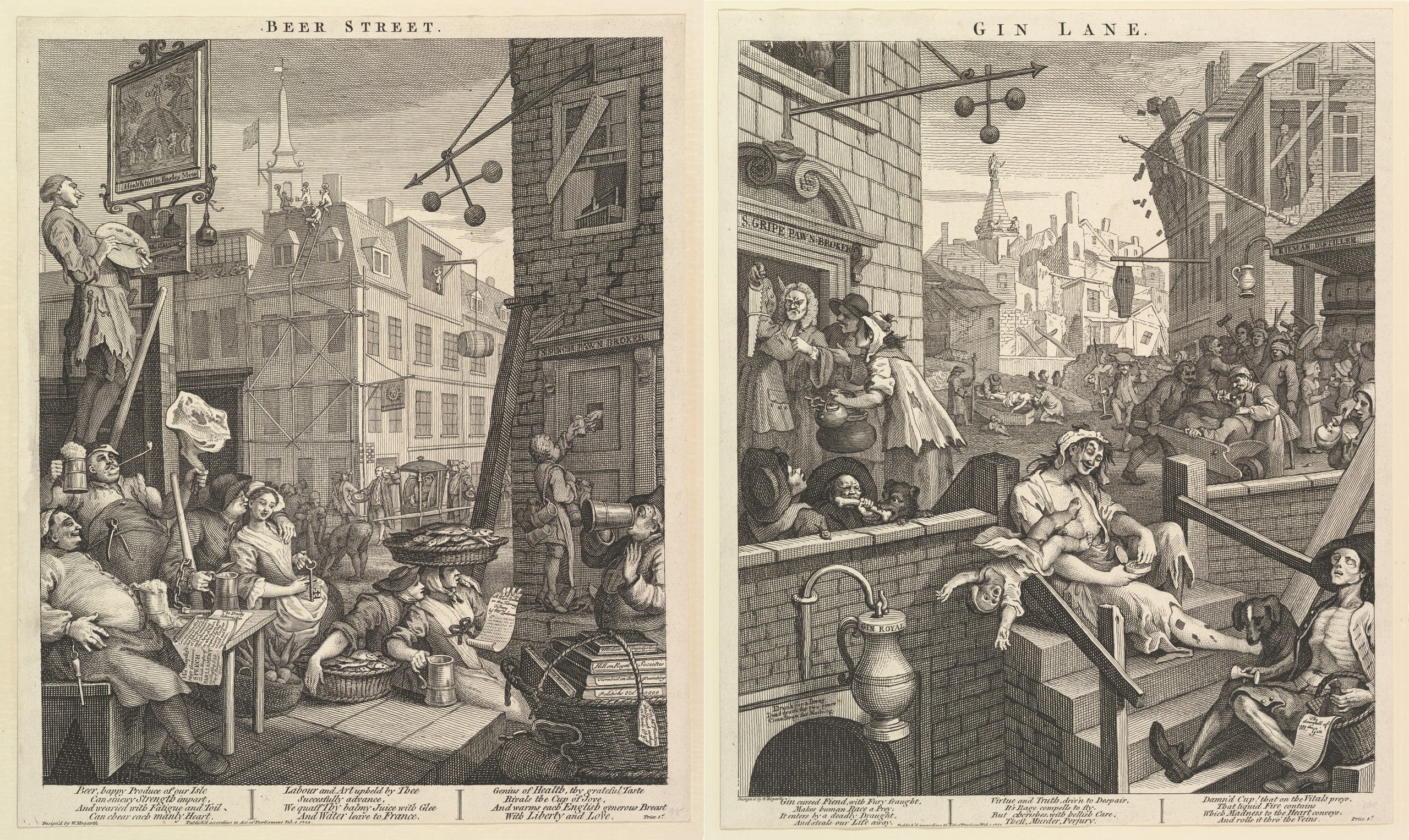
Beer Street and Gin Lane
William Hogarth · 1751
Victoria and Albert Museum
Beer Street and Gin Lane are two prints issued in 1751 by English artist William Hogarth in support of what would become the Gin Act. Designed to be viewed alongside each other, they depict the evils of the consumption of gin (then a generic term for grain-based distilled spirits) as a contrast to the merits of drinking beer. At almost the same time and on the same subject, Hogarth's friend Henry Fielding published An Inquiry into the Late Increase in Robbers.
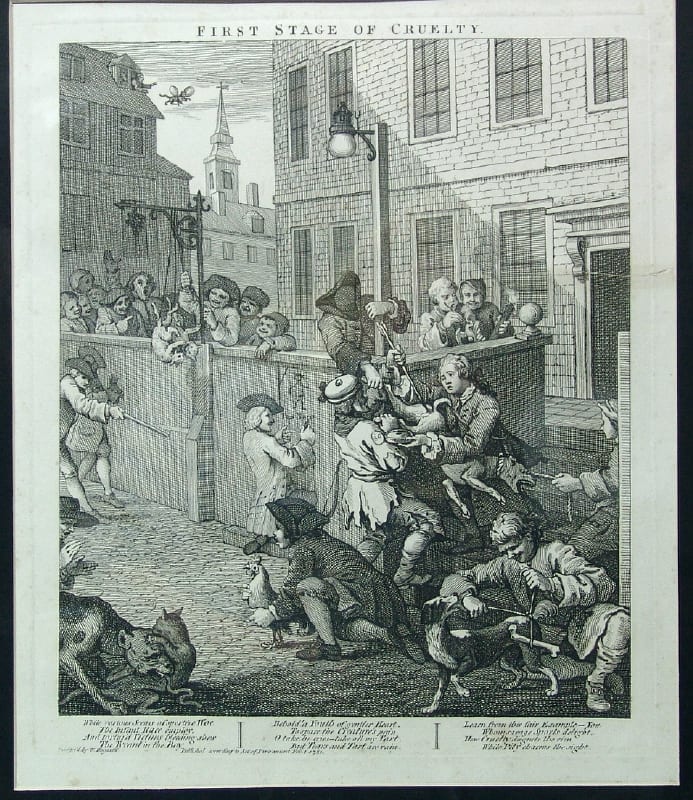
The Four Stages of Cruelty
William Hogarth
Victoria and Albert Museum
The Four Stages of Cruelty is a series of four printed engravings published by English artist William Hogarth in 1751. Each print depicts a different stage in the life of the fictional Tom Nero. Beginning with the torture of a dog as a child in the First stage of cruelty, Nero progresses to beating his horse as a man in the Second stage of cruelty, and then to robbery, seduction, and murder in Cruelty in perfection.
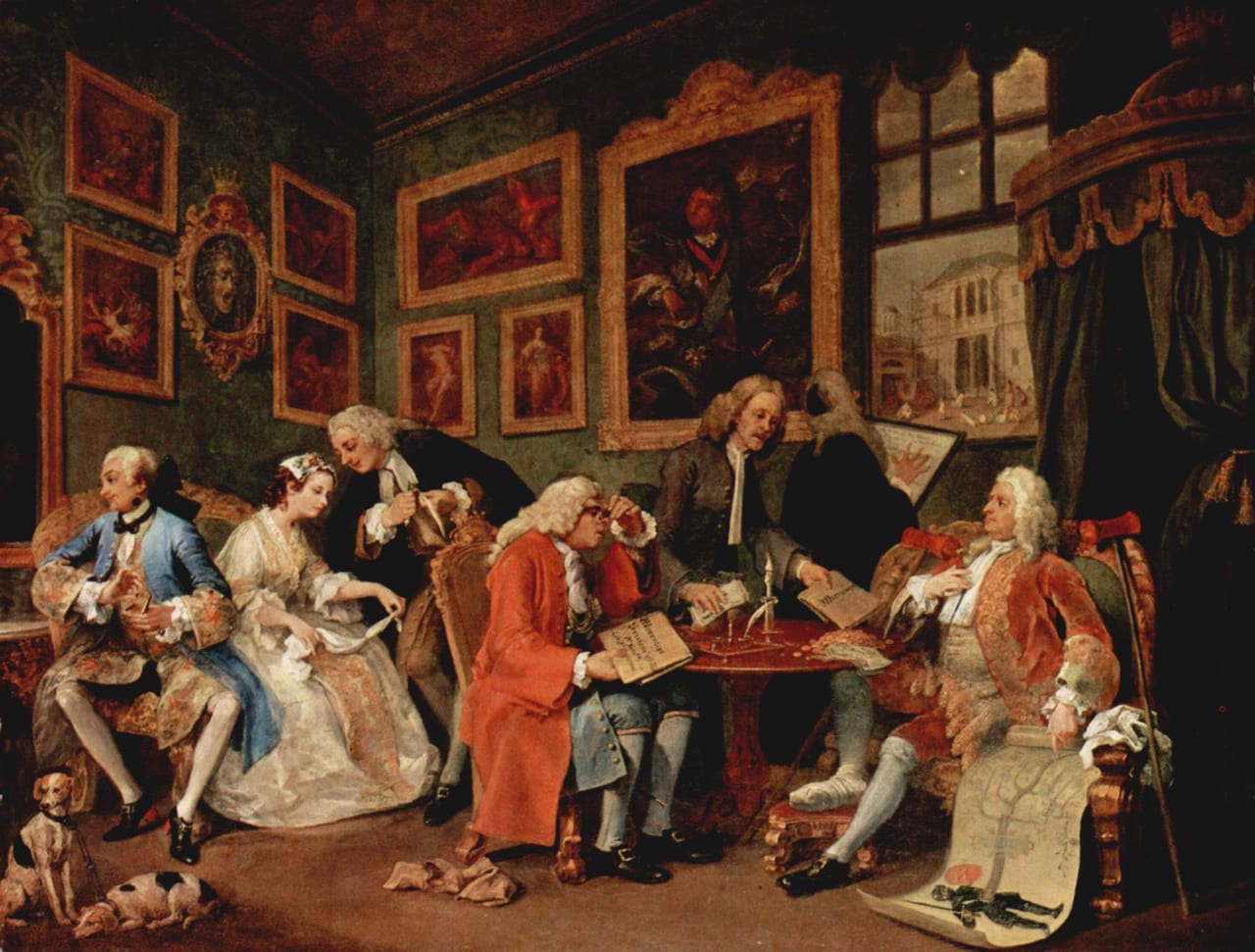
Marriage à-la-mode
William Hogarth · 1743
National Gallery
Marriage A-la-Mode is a series of six pictures painted by William Hogarth between 1743 and 1745, intended as a pointed skewering of 18th-century society. They show the disastrous results of an ill-considered marriage for money or social status, and satirize patronage and aesthetics. The pictures are held in the National Gallery in London.
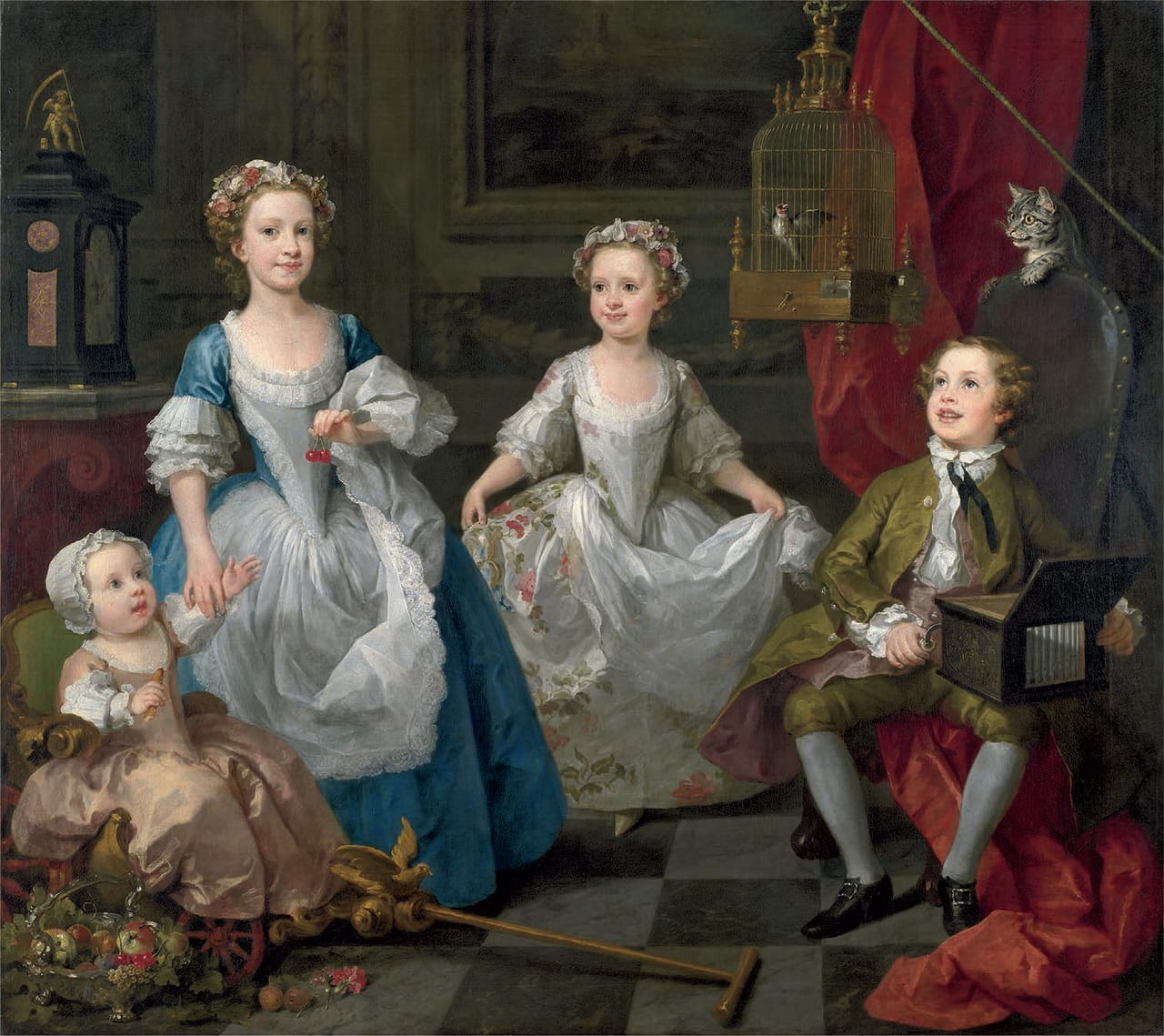
The Graham Children
William Hogarth · 1742
National Gallery
The Graham Children is an oil painting completed by William Hogarth in 1742. It is a group portrait depicting the four children of Daniel Graham, apothecary to King George II. The youngest child had died by the time the painting was completed.
Sources
Invite William Hogarth into your living room
Play 6 works from this collection on your TV, phone or tablet with Momentable Art TV.