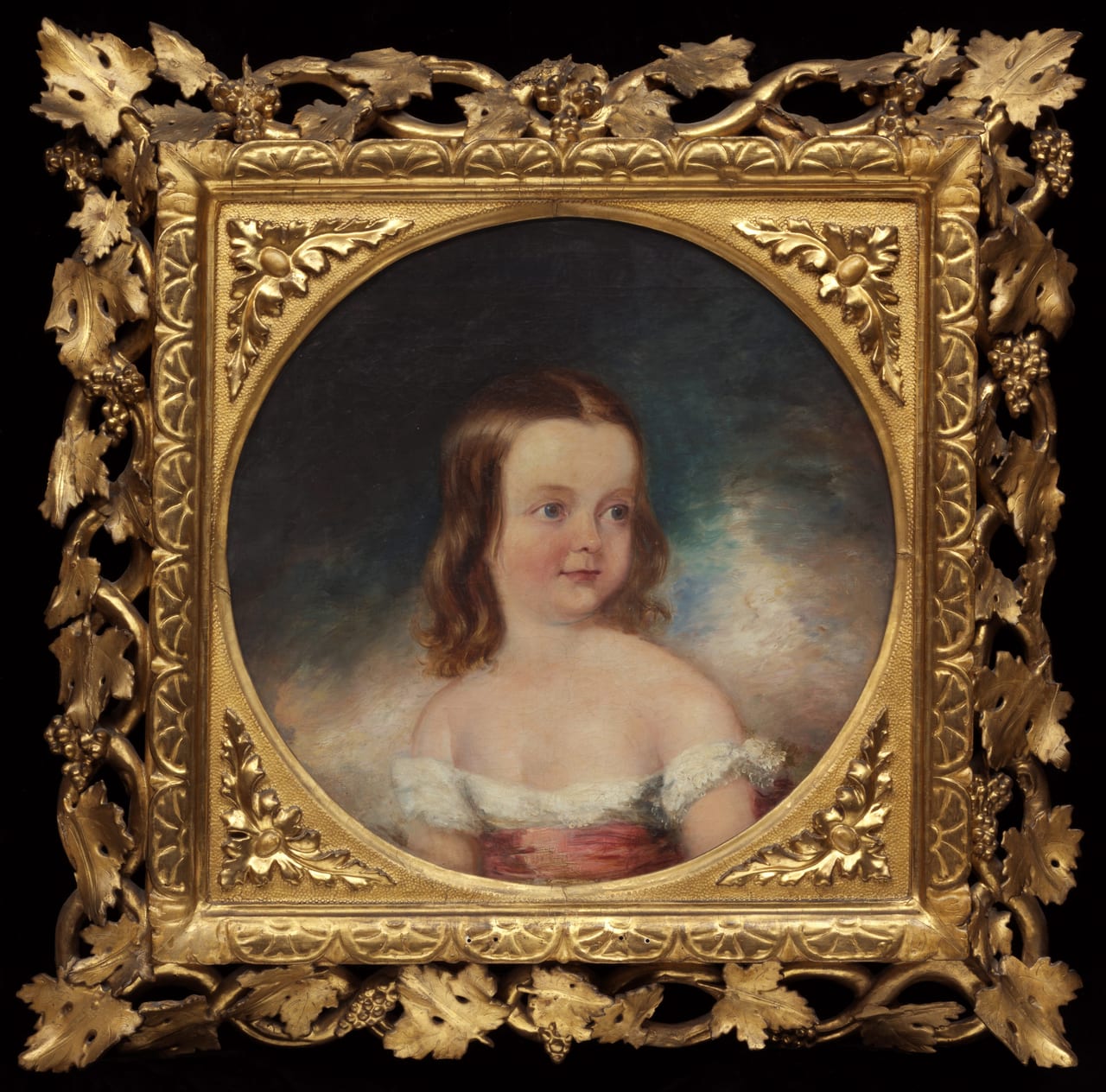
The Gordon riots 1780
John Seymour Lucas · 1879

Art Gallery of New South Wales
Sydney
The Art Gallery of New South Wales began in Sydney in 1871 as a society of 30 art-loving citizens, and it is now one of Australia’s flagship art museums. Its founding resolution allowed it to buy in London as well as in Sydney. It holds one of the world’s best collections of Australian art and major Victorian works by Frederic Leighton and Edward Poynter, and since 2022 its original building and a second one have formed a single campus joined by an art garden.
- begun by a society of 30 art-loving citizens, with no collection and no building
- Since 1871
- a gallery of Aboriginal and Melanesian art opened, the first such space in an Australian art museum
- In 1973
- of international art given by John Kaldor and his family in 2008
- 200+ works
From a society of art lovers to a campus
The gallery began on 24 April 1871, with no collection and no building, when 30 art-loving citizens formed a society to support artists and to spread the knowledge and enjoyment of art; a public meeting in Sydney that day set out to found an Academy of Art. Government support came in 1874, and works of art were bought from that year. The gallery’s first dedicated building went up in 1879 as part of the Sydney International Exhibition; known as the Fine Arts Annexe, it was rededicated as the Art Gallery of New South Wales in 1880. When fire destroyed the neighbouring Garden Palace in 1882, the trustees called for a fireproof gallery in a more central place.
The site in the Domain was settled after long debate, and in 1885 a plain building by the gallery’s first architect, John Horbury Hunt, opened there; it looked like a factory and was nicknamed the ‘art barn’. Hunt was controversially replaced by the government architect Walter Liberty Vernon, and building to Vernon’s design began in 1896, but shortage of money stopped work after 1909, by which time only a quarter of the building and its facade were complete. The Art Gallery of New South Wales Act of 1958 changed how the gallery was governed and, after nearly 60 years, took ‘National’ out of its name.
A new wing opened in May 1972, and the Bicentennial extensions that opened in December 1988 doubled the gallery’s floor space; Andrew Andersons was the project architect for both. A building by the Japanese architects SANAA followed: with the Sydney Modern Project, completed in 2022, the gallery became a campus of two buildings linked by a public art garden, and in 2024 the two were given the Aboriginal language names Naala Badu and Naala Nura.
Building the collection
In its founding years the gallery collected contemporary Australian, Asian and international art. In 1879 a large group of ceramics and bronzes entered the collection, a gift from the Government of Japan after the Sydney International Exhibition. The resolution that set the gallery up allowed it to buy in London as well as in Sydney, and English nineteenth-century painting and contemporary British art are particularly well represented; the gallery has an extensive collection of British Victorian art, among it major works by Frederic Leighton and Edward Poynter.
The gallery has supported Australian artists since its foundation, and its Australian collection is one of the best in the world. Its purchases in the 1890s included Arthur Streeton’s Fire’s on in 1893, Tom Roberts’s The Golden Fleece in 1894 and Frederick McCubbin’s On the wallaby track in 1897. Roberts, back in Melbourne in 1885, had founded the first artists’ camp in the bush, at Box Hill, with McCubbin and Louis Abrahams, and later joined Charles Conder and Streeton at the Eaglemont camp; despite the protests, the Heidelberg School came to dominate Australian art for more than 30 years.
Until the middle of the twentieth century the gallery held no Indigenous Australian art. In 1948 it acquired a gift of bark and paper paintings from the American-Australian Scientific Expedition to Arnhem Land; in 1973 it opened a gallery of Aboriginal and Melanesian art, the first such space in an Australian art museum, and in 1994 it opened Yiribana, meaning ‘this way’ in the Eora language, as a gallery for Aboriginal and Torres Strait Islander art. In 2008 John Kaldor and his family gave it more than 200 major international works of art.
The prizes and the landscape
The gallery is home to the long-running Archibald Prize, Australia’s most prominent art prize, first awarded in 1921 to William McInnes for his portrait of the architect Desbrowe Annear, together with the Sulman, Wynne and Dobell prizes, among others. Several of its Australian landscapes won the Wynne Prize: George W Lambert’s Across the black soil plains for 1899, and Elioth Gruner’s Morning light in 1916 and Spring frost in 1919. Gruner won the Wynne seven times, the most of any Australian artist besides Hans Heysen.
What to see
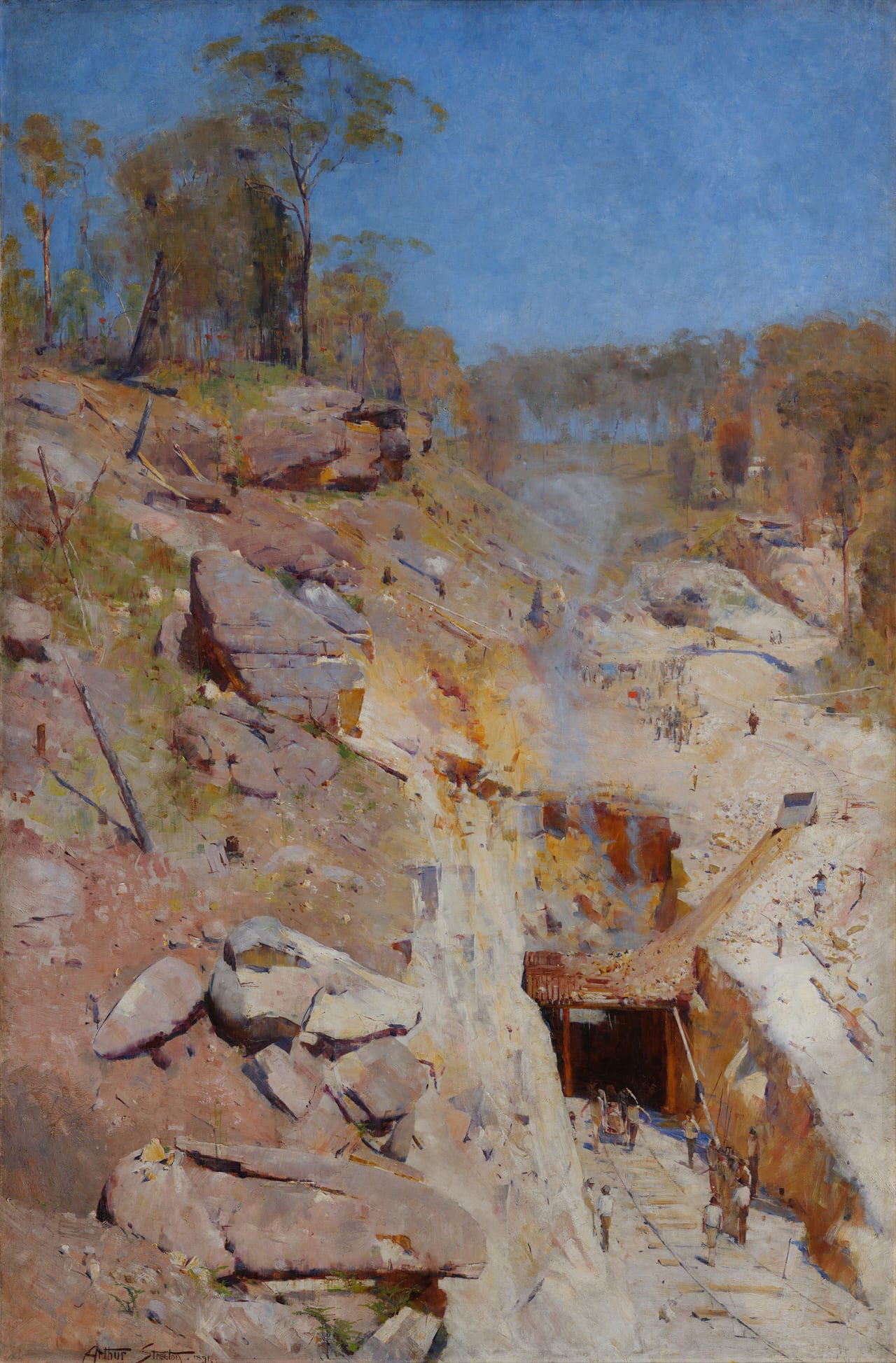
Fire’s on
Arthur Streeton · 1891
It is considered Arthur Streeton’s greatest evocation of the country’s heat and sunlight. The railway is being cut across the Blue Mountains west of Sydney, and the picture catches the moment a worker dies in an explosion: ‘Fire’s on’ was the warning shout as the gang blasted the Lapstone Tunnel through the hill. Purchased in 1893.
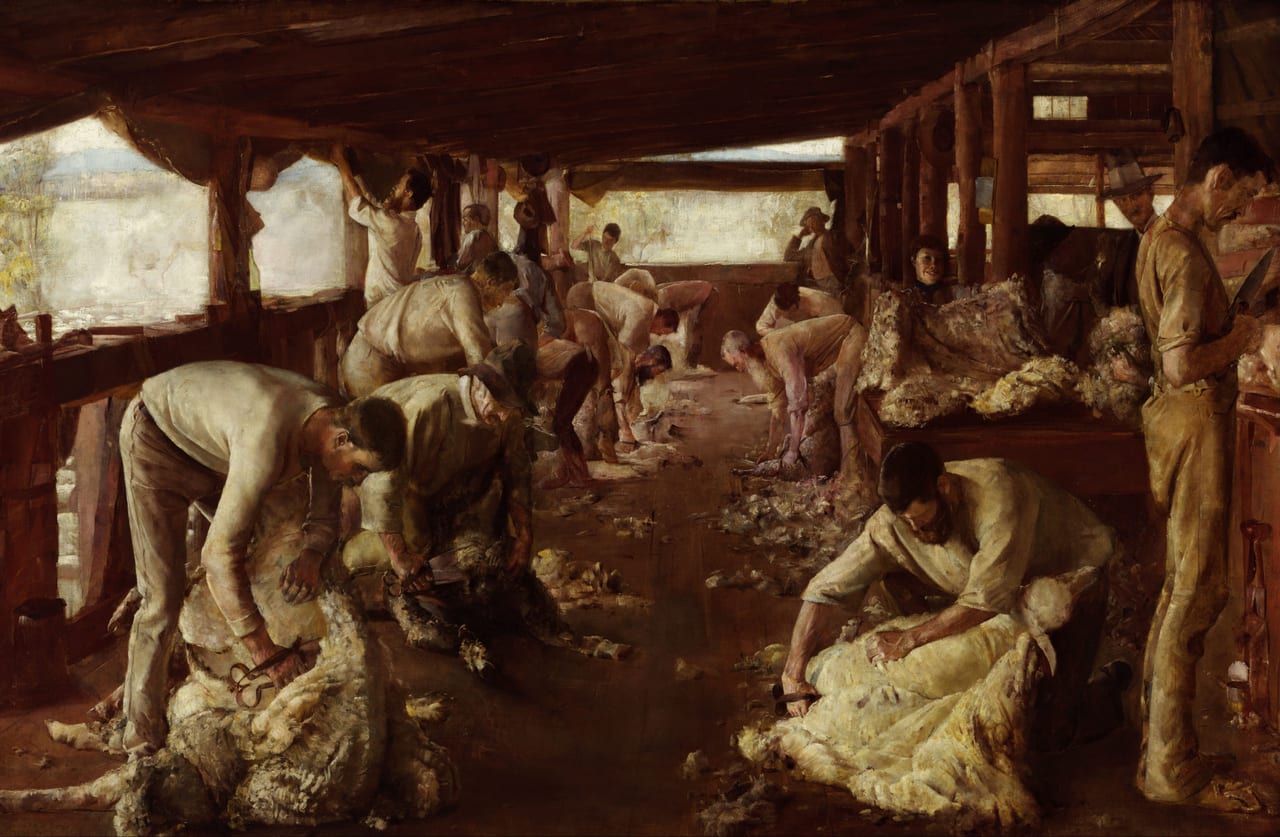
The Golden Fleece
Tom Roberts · 1894
Tom Roberts painted it during a stay at Newstead Station, in the New England tablelands of northern New South Wales. First called Shearing at Newstead, it was renamed for the Greek myth of the Argonauts’ voyage in search of the Golden Fleece, a title that reflects how Roberts made the rural worker a hero and called up Australia as an Arcadian land of pastoral plenty. Purchased in 1894.
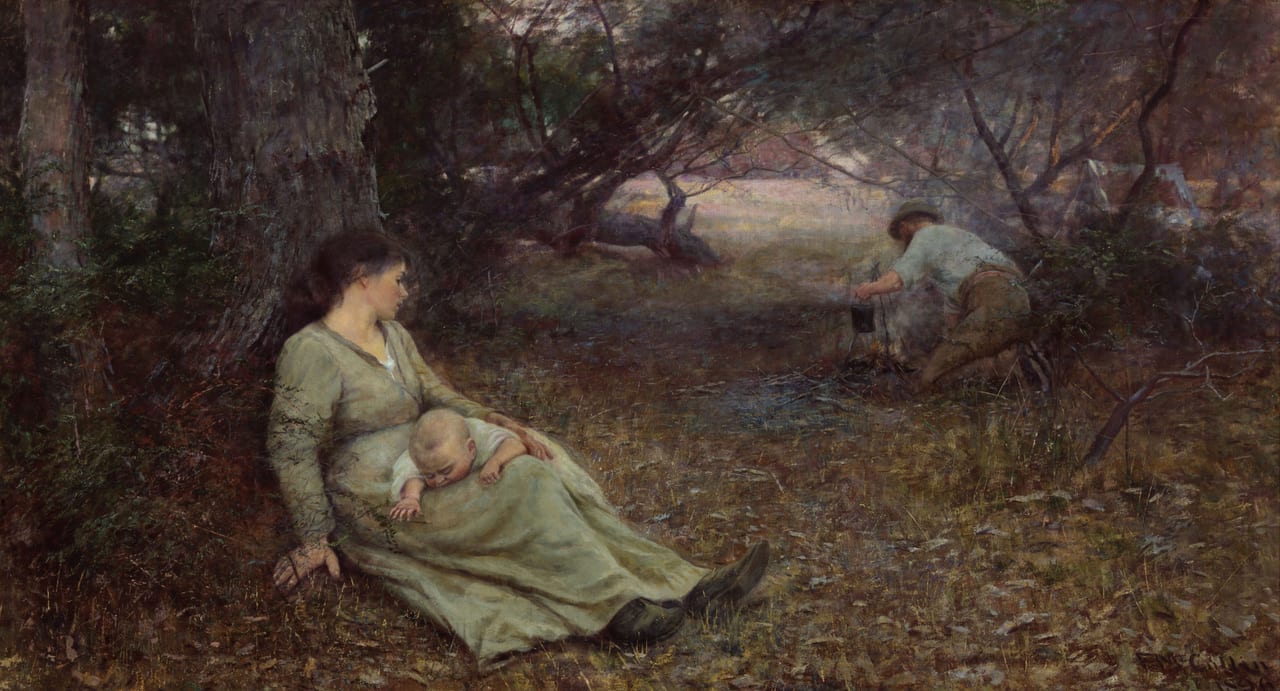
On the wallaby track
Frederick McCubbin · 1896
Frederick McCubbin, a principal member of the Heidelberg group, painted it close to his Melbourne home with his own family as models, and gave it a nationalist message and a plain sympathy for rural labouring life. To be on the wallaby track was said of itinerant workers who roamed the bush on the edges of properties looking for work. Purchased in 1897.
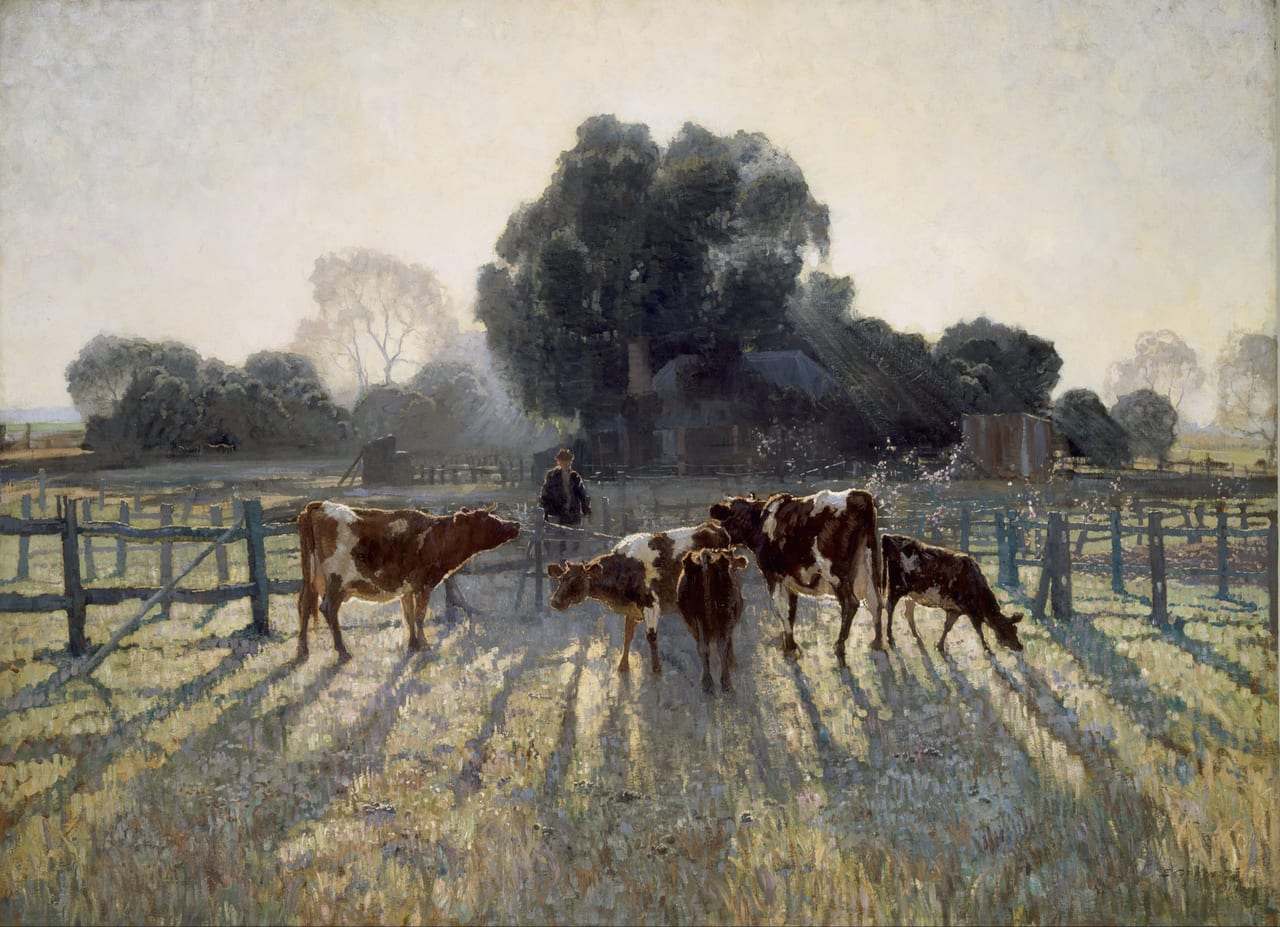
Spring frost
Elioth Gruner · 1919
Elioth Gruner’s Wynne Prize winner of 1919 is perhaps the most loved Australian landscape painting in the gallery. To paint so large a canvas outdoors he built a shelter to keep the weather off it and wrapped his legs in chaff bags against frostbite; though it was painted largely in the open at Emu Plains, he likely finished parts of it later in his city studio. Gift of F G White, 1939.
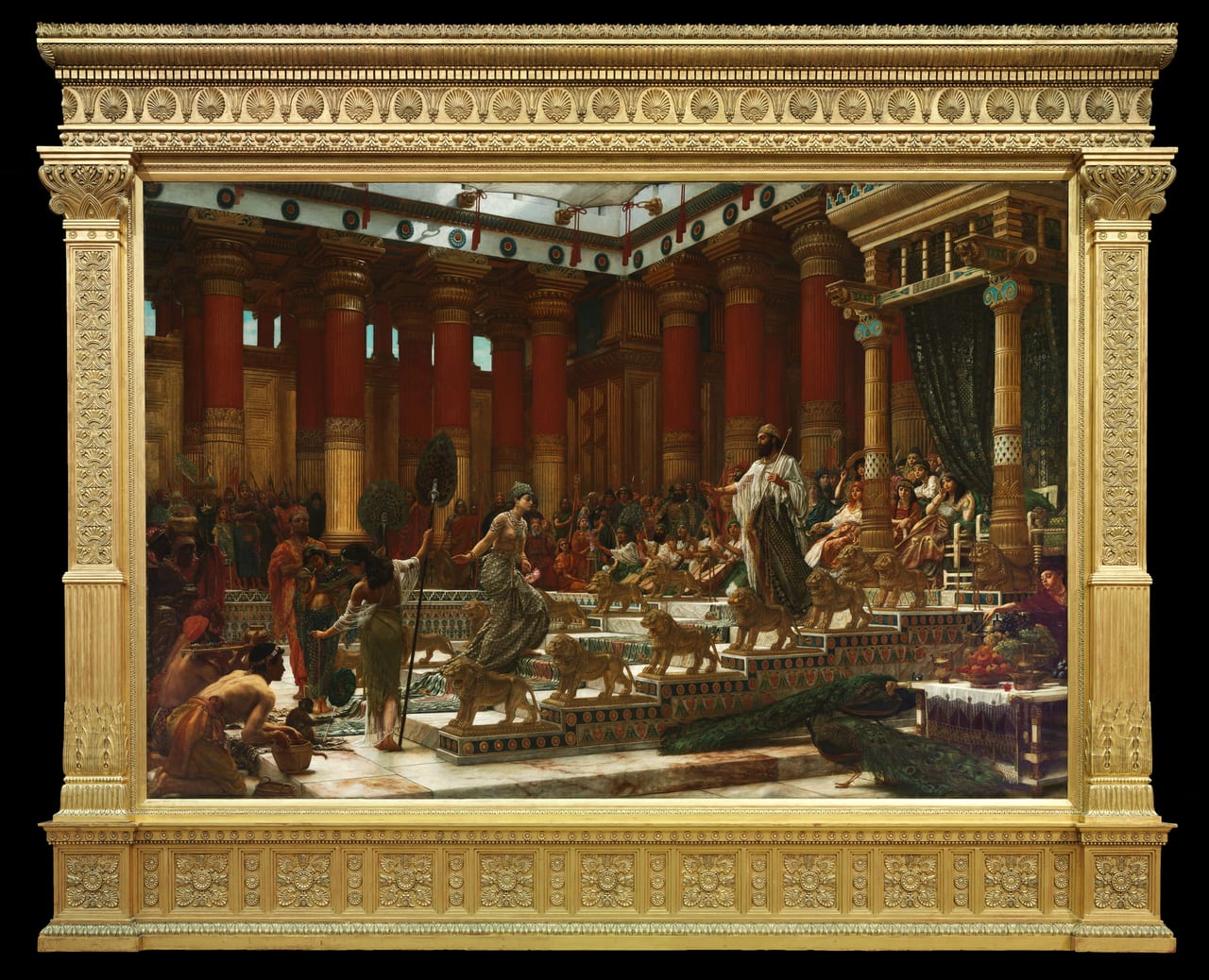
The visit of the Queen of Sheba to King Solomon
Edward Poynter · 1881–1890
Edward Poynter’s picture typifies the ambitions of the academic painters known as the Victorian Olympians. The frame takes up the composite architecture of Solomon’s temple, bridging the distance in time and place between the viewer and the scene, while Poynter’s obsession with accurate detail leaves the figures looking somewhat doll-like. Trained in Paris under the classicist Charles Gleyre, he looked for art in the weight of detail rather than in dramatic synthesis. Purchased in 1892.
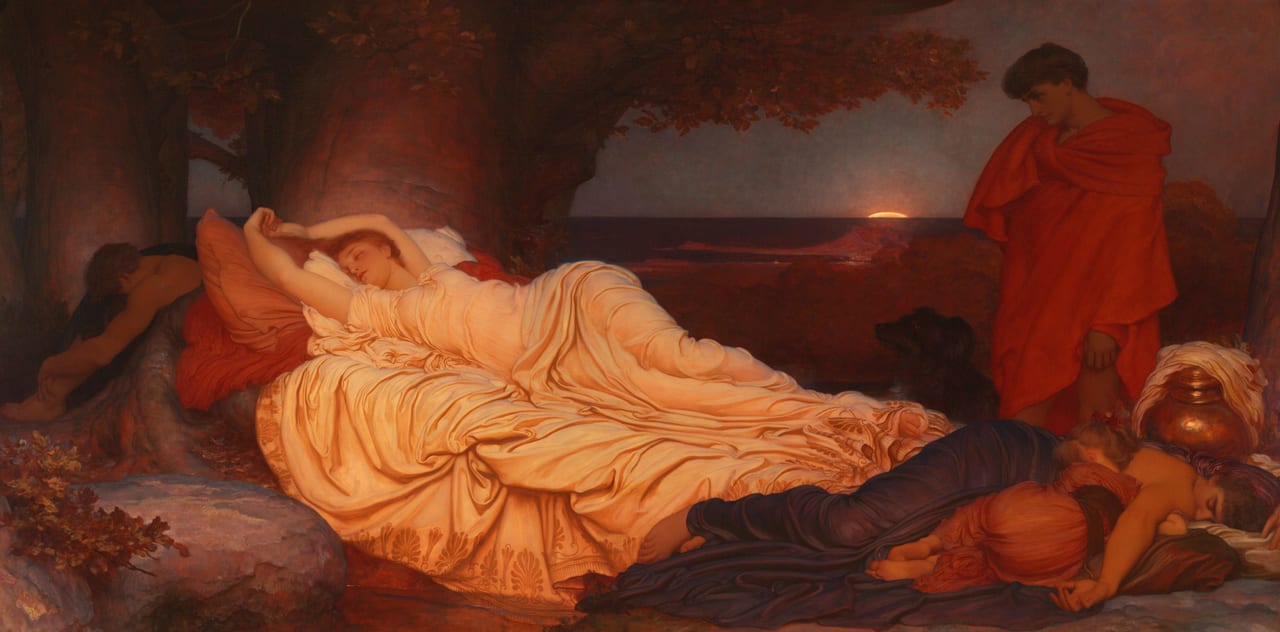
Cymon and Iphigenia
Frederic Leighton · 1884
Frederic Leighton took the story from Boccaccio’s Decameron, in which the well-born Galesus is renamed Cymon, ‘beast’, for his brutishness, until one mild May afternoon he comes upon Iphigenia asleep, falls in love at once and becomes a lifelong devotee of beauty and philosophy. The languorous picture shows the technical finesse and intense eroticism of Leighton’s style. Purchased in 1976.
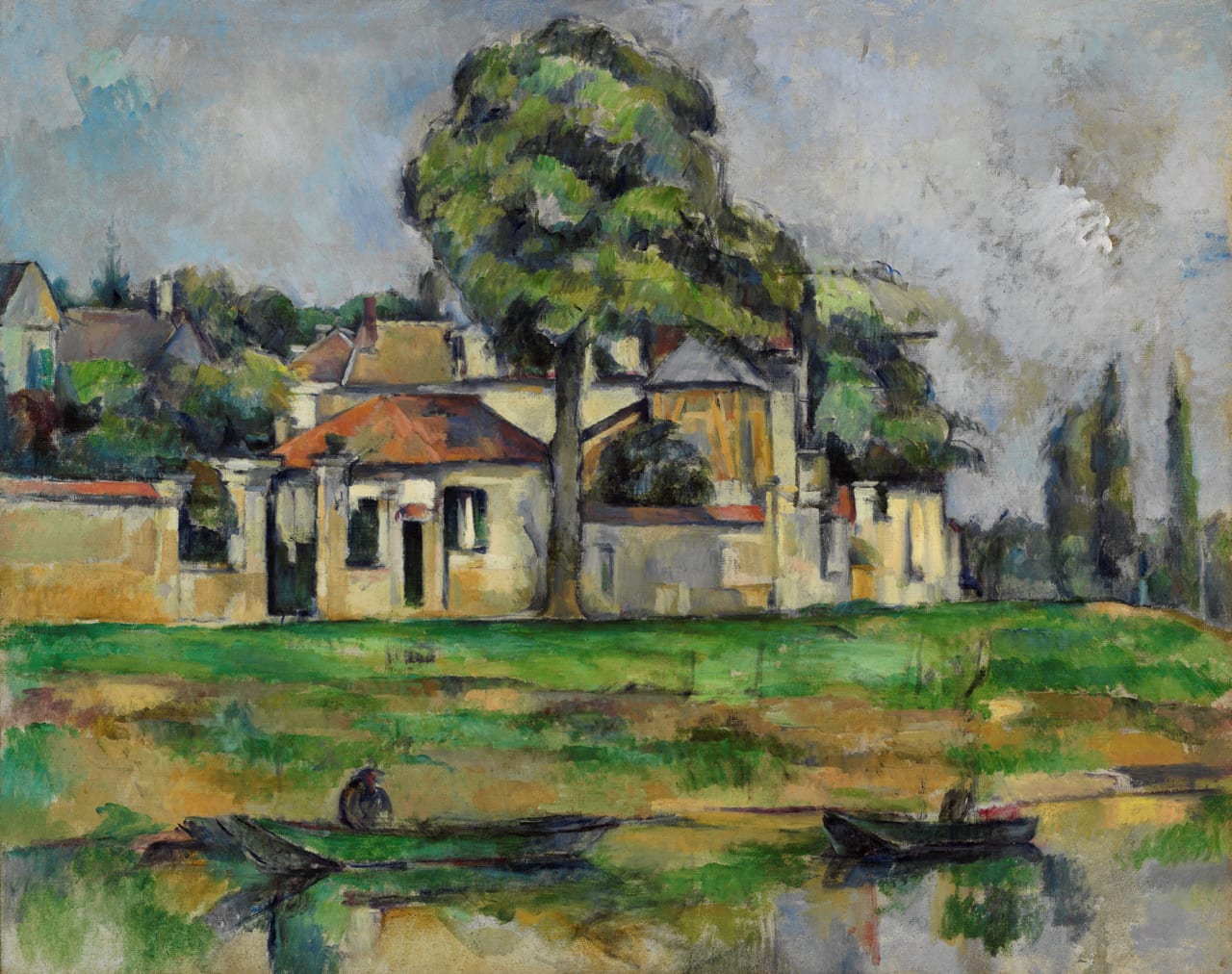
Banks of the Marne
Paul Cézanne · c. 1888
Paul Cézanne set out sky, buildings, embankment and water in horizontal bands, a habit of many of his landscapes, on a canvas of his favourite size. It dates from his ‘underground’ years, 1877 to 1895; the art dealer Ambroise Vollard remembered it in Cézanne’s first exhibition at his Paris gallery in 1895, with ‘everything in it to please the art lover’. The gallery bought it in 2008, paying more than it had for any other work of art.
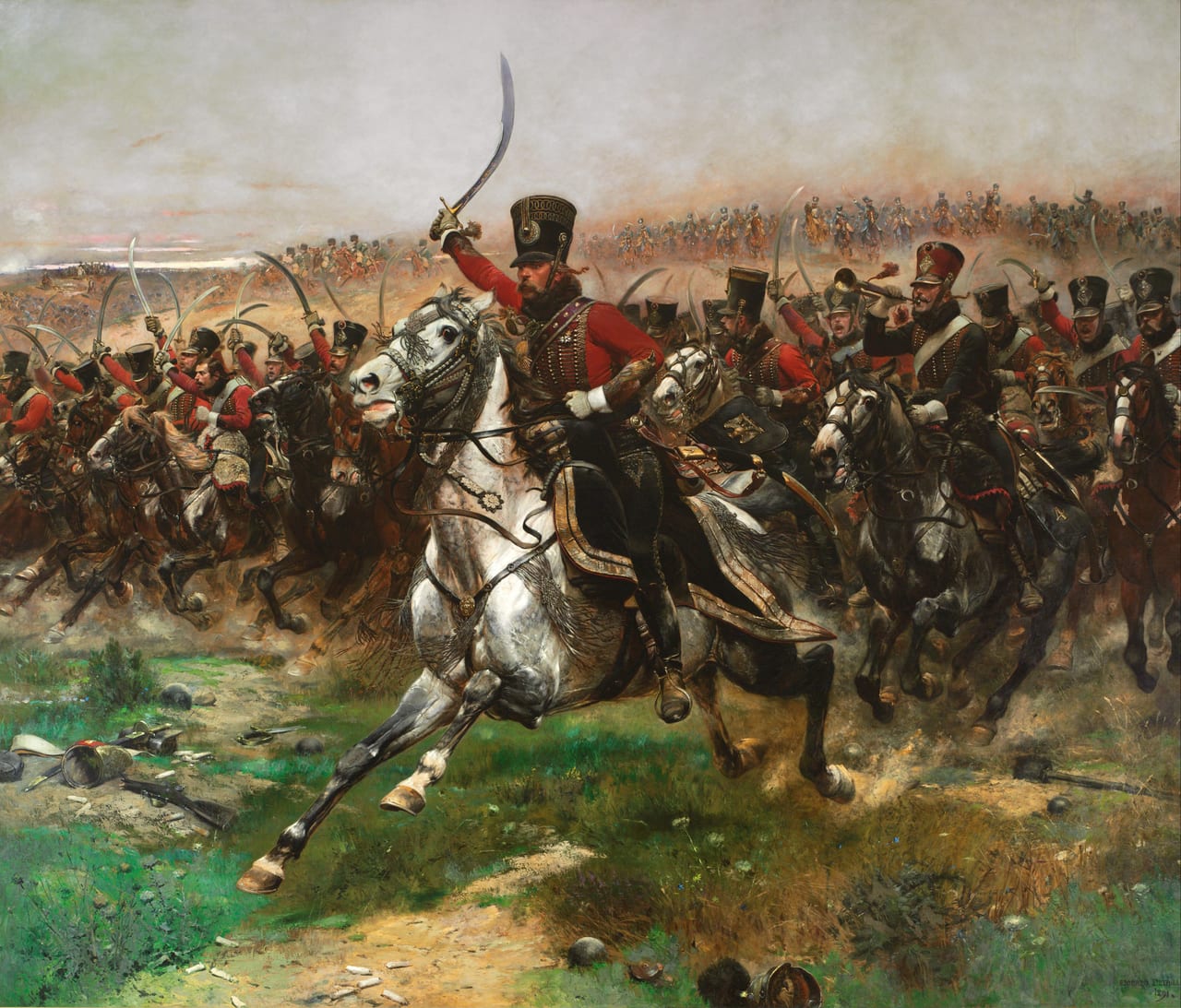
Vive l’Empereur!
Édouard Detaille · 1891
Édouard Detaille looks back to the Napoleonic Wars in this charge of the 4th Hussars, which shows no particular battle. The gallery spent four-fifths of its acquisition budget for 1893 on it, and as it is one of the gallery’s most popular works, in 2014 the gallery added Basile Lemeunier’s portrait of Detaille at work on this vast canvas.
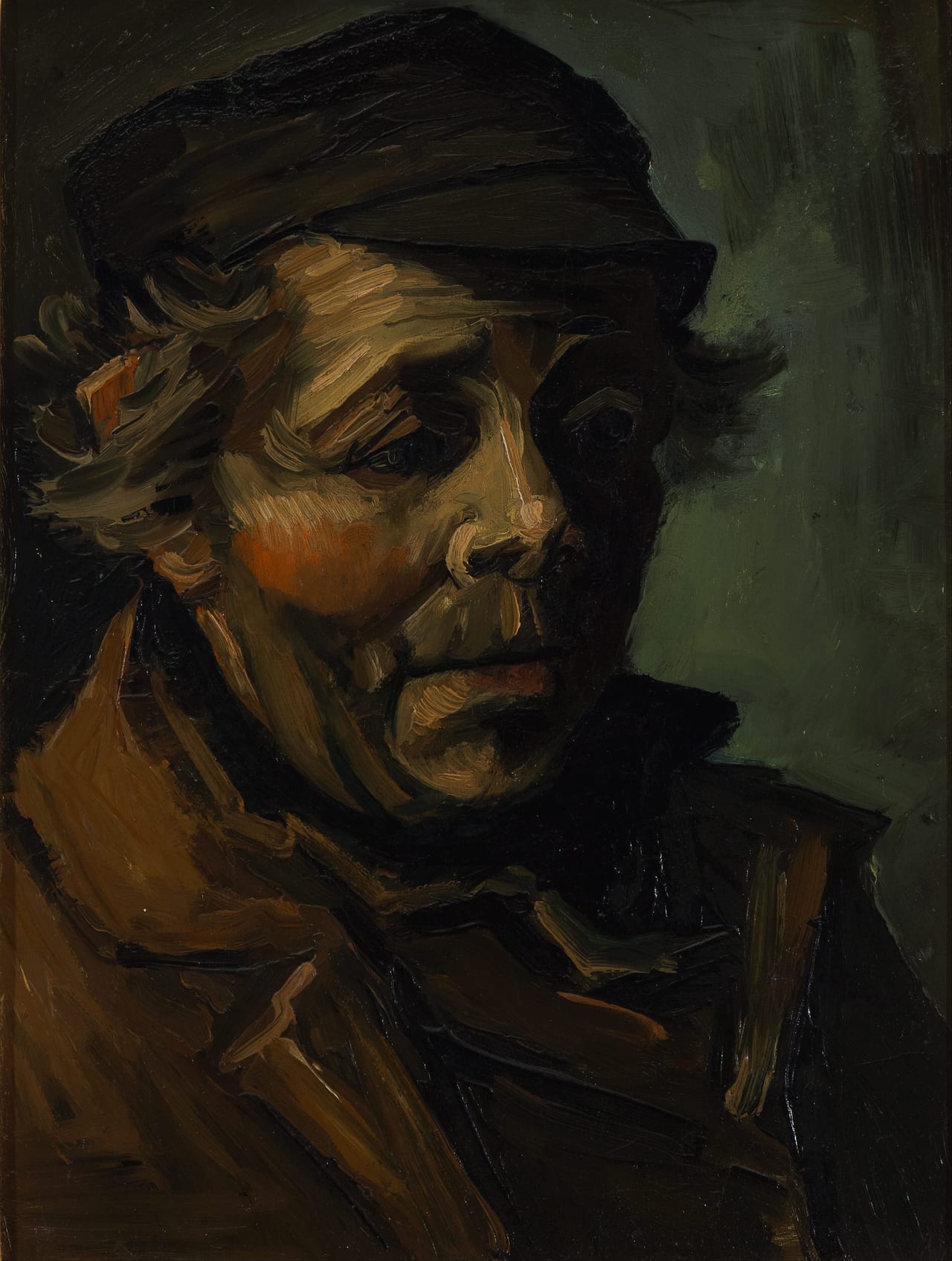
Head of a peasant
Vincent van Gogh · 1884
Between December 1884 and the completion of this nocturne, Vincent van Gogh painted forty bust-length portraits of peasant types, his ‘Heads of the People’, as it were. Fiery highlights on flesh and fabric suggest lamplight; the sitter is in all likelihood Antonius van Rooij, paterfamilias of the group. Bought through the Art Gallery of New South Wales Foundation in 1990.
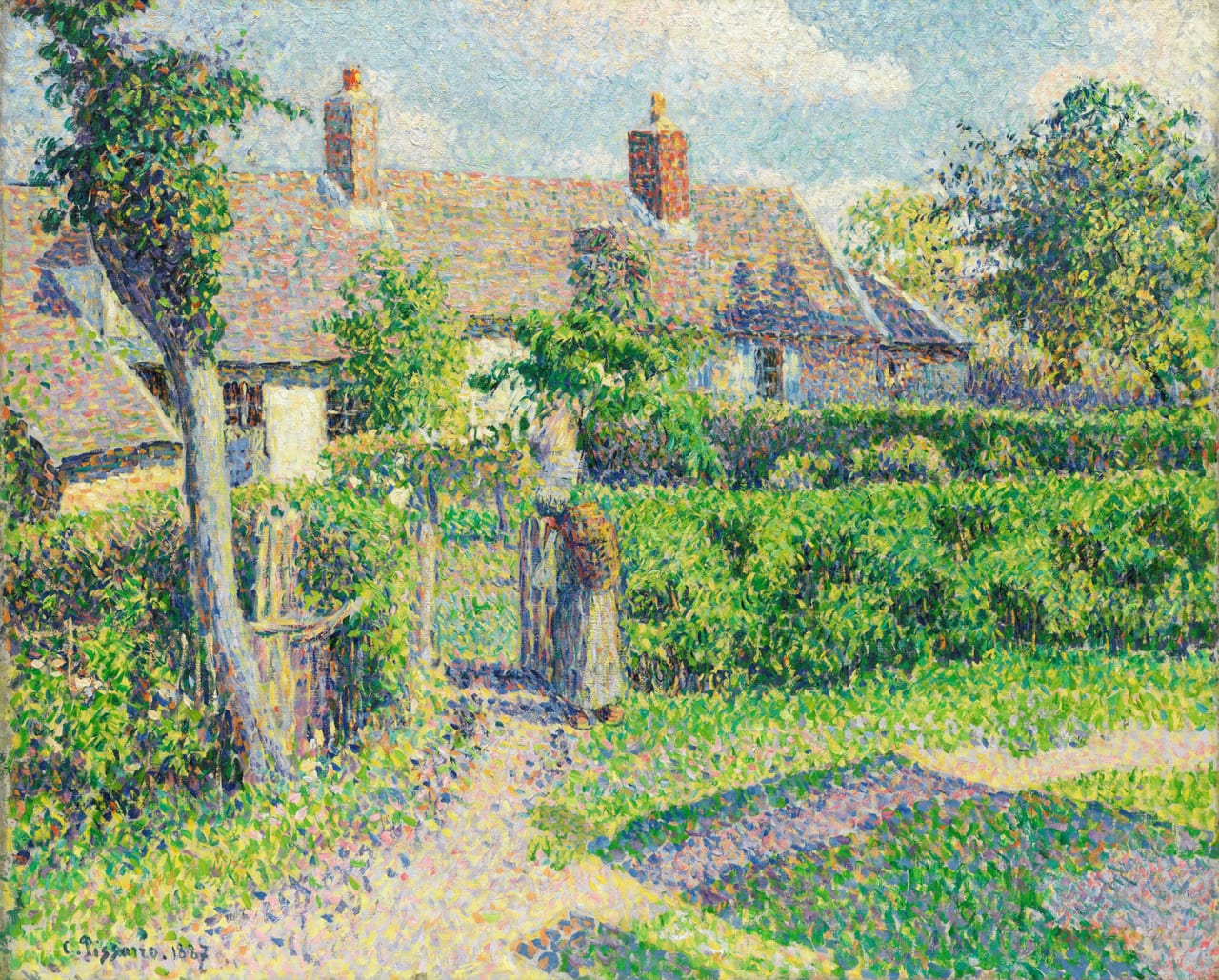
Peasants’ houses, Éragny
Camille Pissarro · 1887
Camille Pissarro painted it in the years from 1884 to 1888 when he tried the pointillist method of the younger Seurat, building form from separate strokes, or dots, of pigment. The cast shadows that come in from the right are deliberately naive, an innovation that would matter to the younger post-impressionists, Gauguin and Cézanne among them. Purchased in 1935.
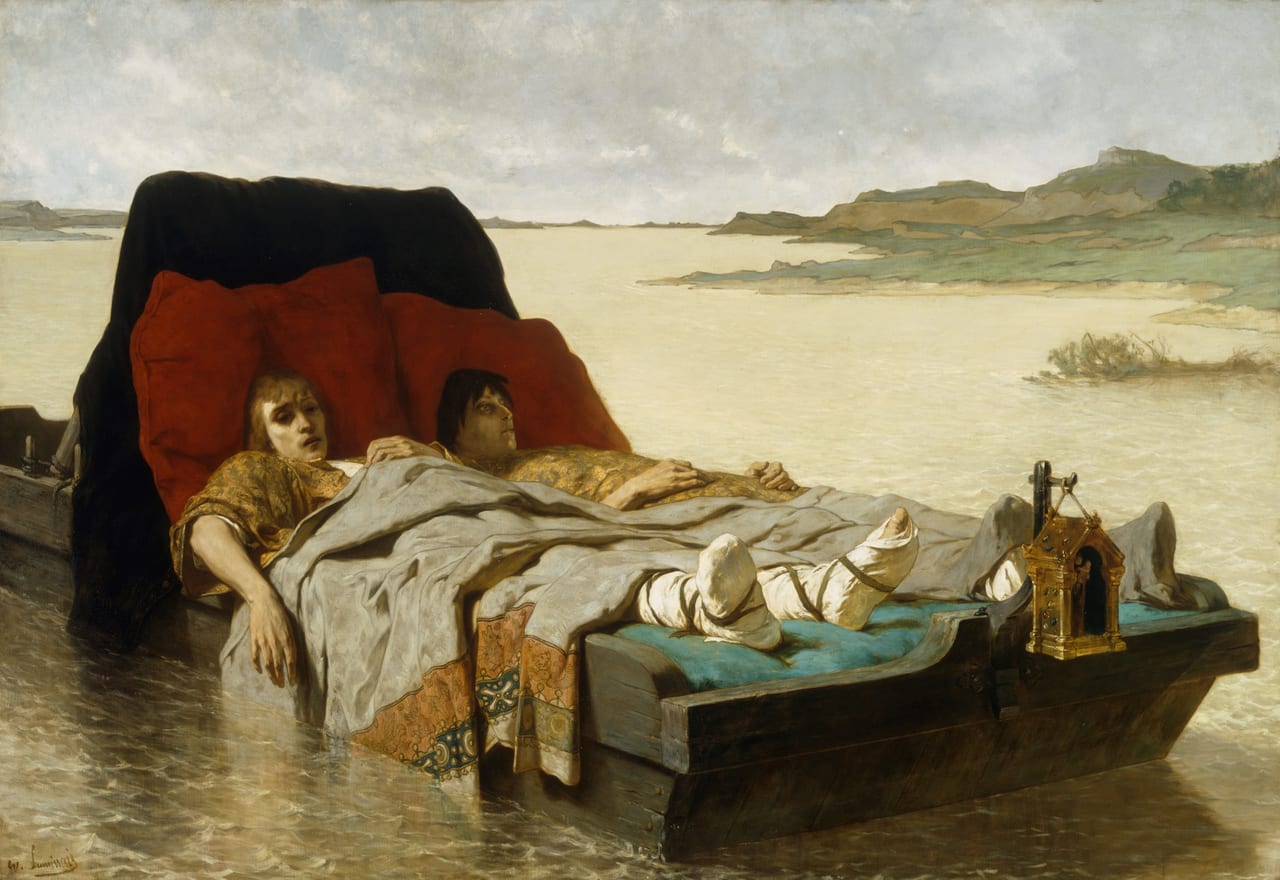
The sons of Clovis II
Évariste-Vital Luminais · 1880
Évariste-Vital Luminais tells the story: alarmed at her sons’ rebellion against their absent father, King Clovis, the regent Bathilde has their tendons cut and sends them helpless downstream on a barge. A Benedictine monastery in the distance foreshadows their salvation. The picture was a great success at the Paris Salon of 1880, one Luminais never repeated. Purchased in 1886.
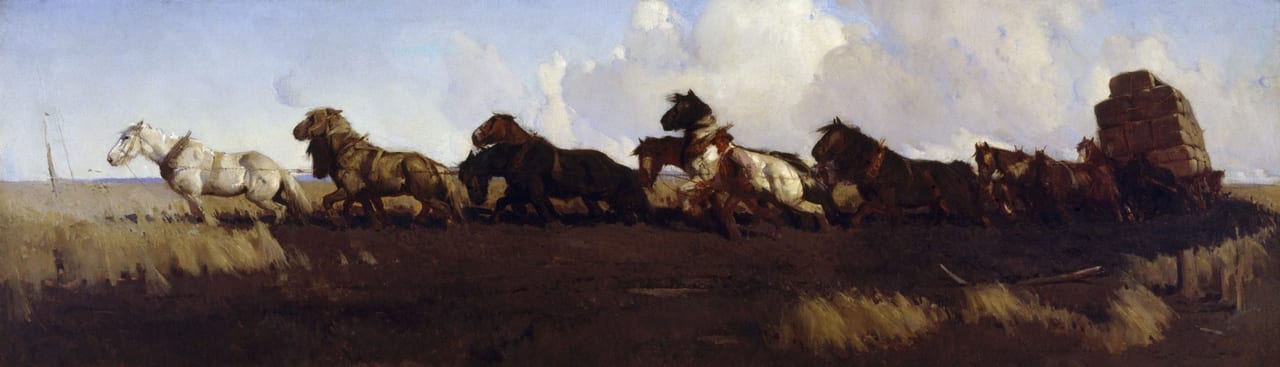
Across the black soil plains
George Washington Lambert · 1899
George W Lambert began this ambitious picture at 26, drawing on his youth in the bush near Warren, New South Wales, while he lived with his mother at Hornsby. Working in a small garden shed, he had to set the canvas diagonally across it and still could not stretch it to its full extent. It won the Wynne Prize for landscape for 1899, the year the gallery acquired it, and the next year Lambert left for London on the first New South Wales Society of Artists Travelling Scholarship.
Collections
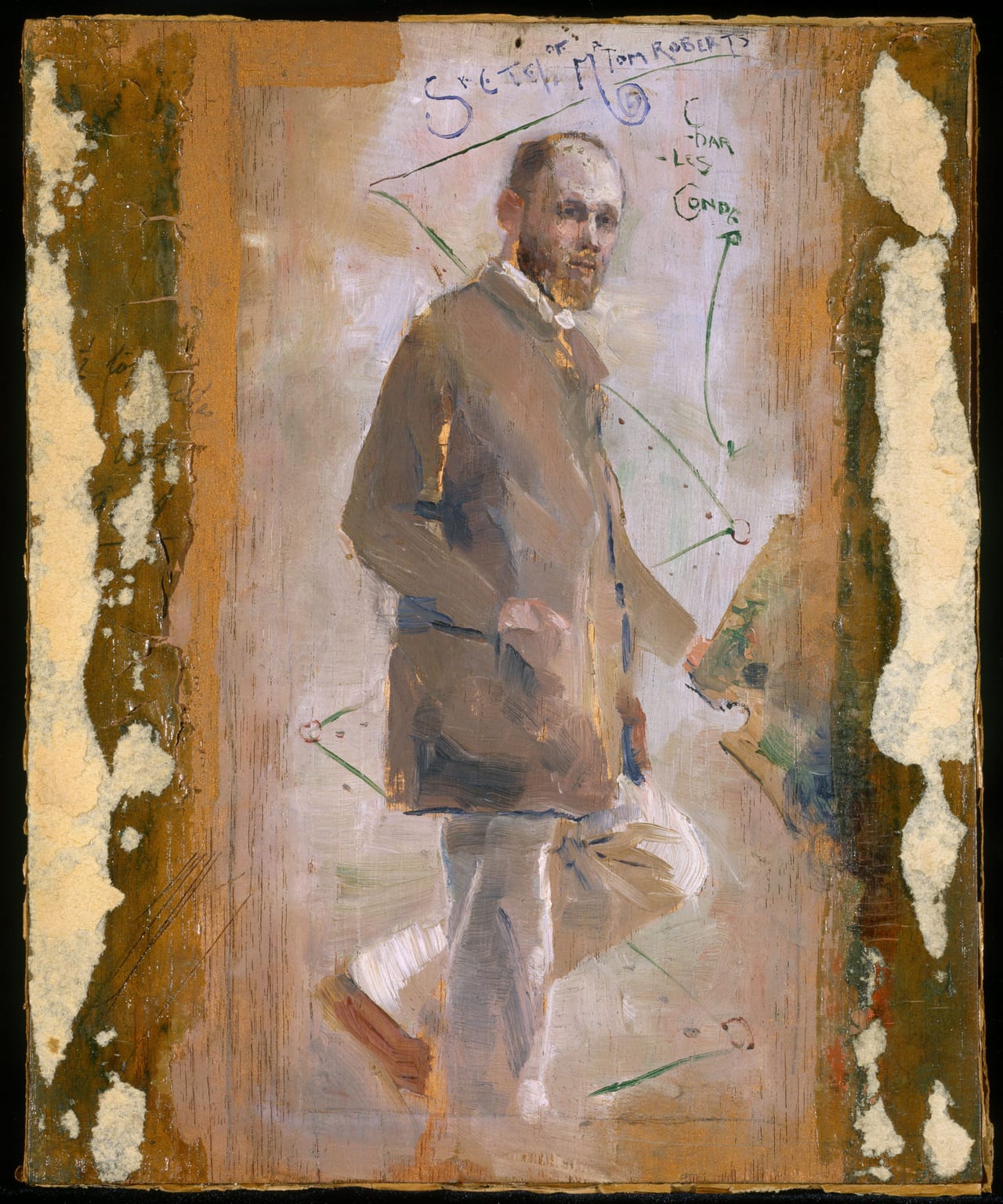
The Heidelberg School
An Impressionist (Tom Roberts) · Charles Conder · c. 1889
This portrait of Tom Roberts by his friend Charles Conder is a rare work from Conder’s brief Australian years, 1884 to 1890. The zigzag background, based on a surveyor’s chain, recalls Conder’s early employment in Sydney, looks ahead to his later decorative style and echoes the cover he designed for the catalogue of the 9 by 5 exhibition. Bought with funds from the Art Gallery Society of New South Wales in 1997.
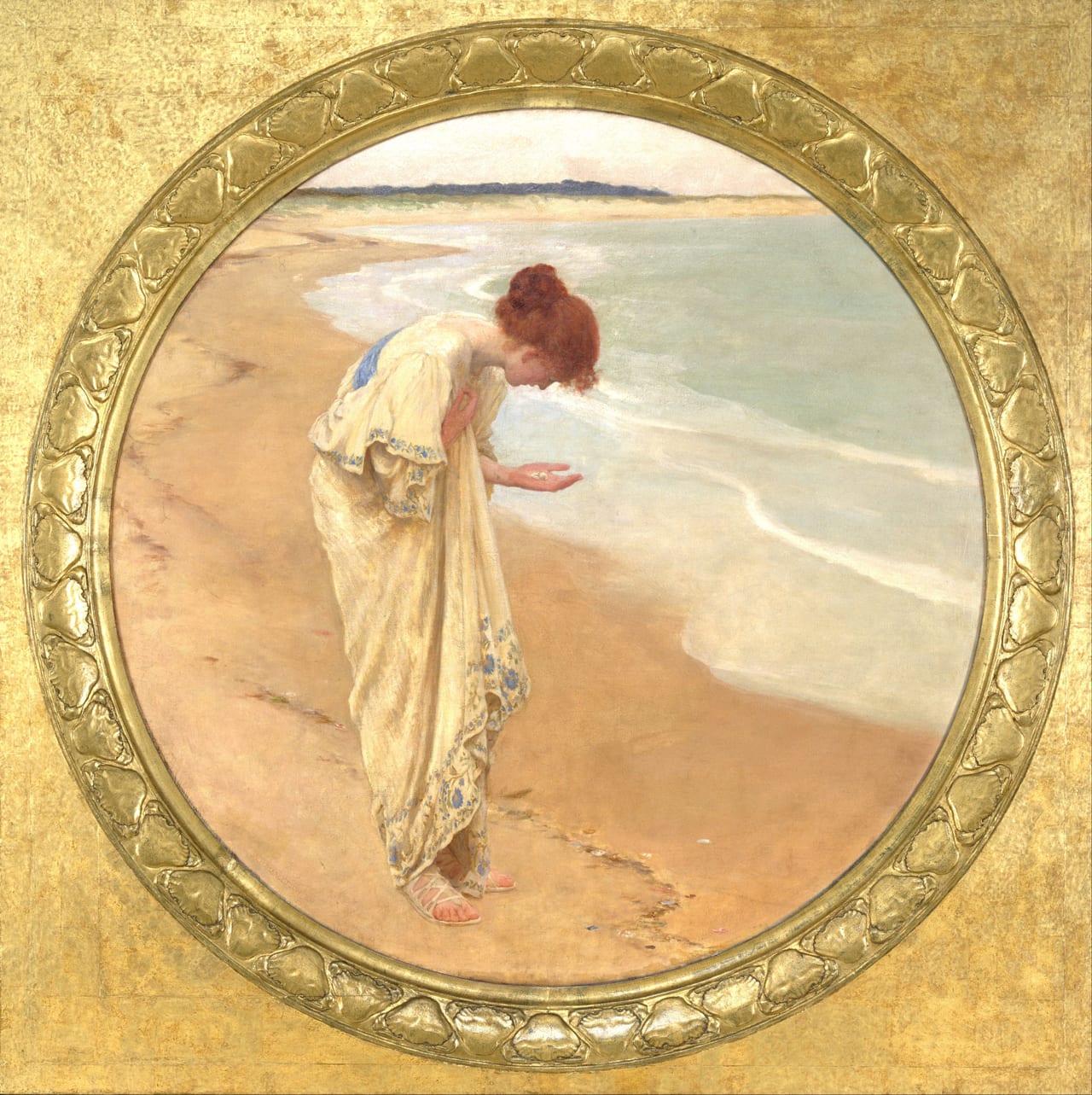
Victorian classicism
The sea hath its pearls · William Henry Margetson · 1897
William Henry Margetson followed better-known contemporaries such as Leighton and Poynter into Victorian classicism. His young woman bending on a wave-lapped beach is dressed to evoke the classical past more than late Victorian England, the pearl of the title is a pun on the maiden herself, and the circlet of crabs carved on the frame is integral to the picture. Purchased in 1897.
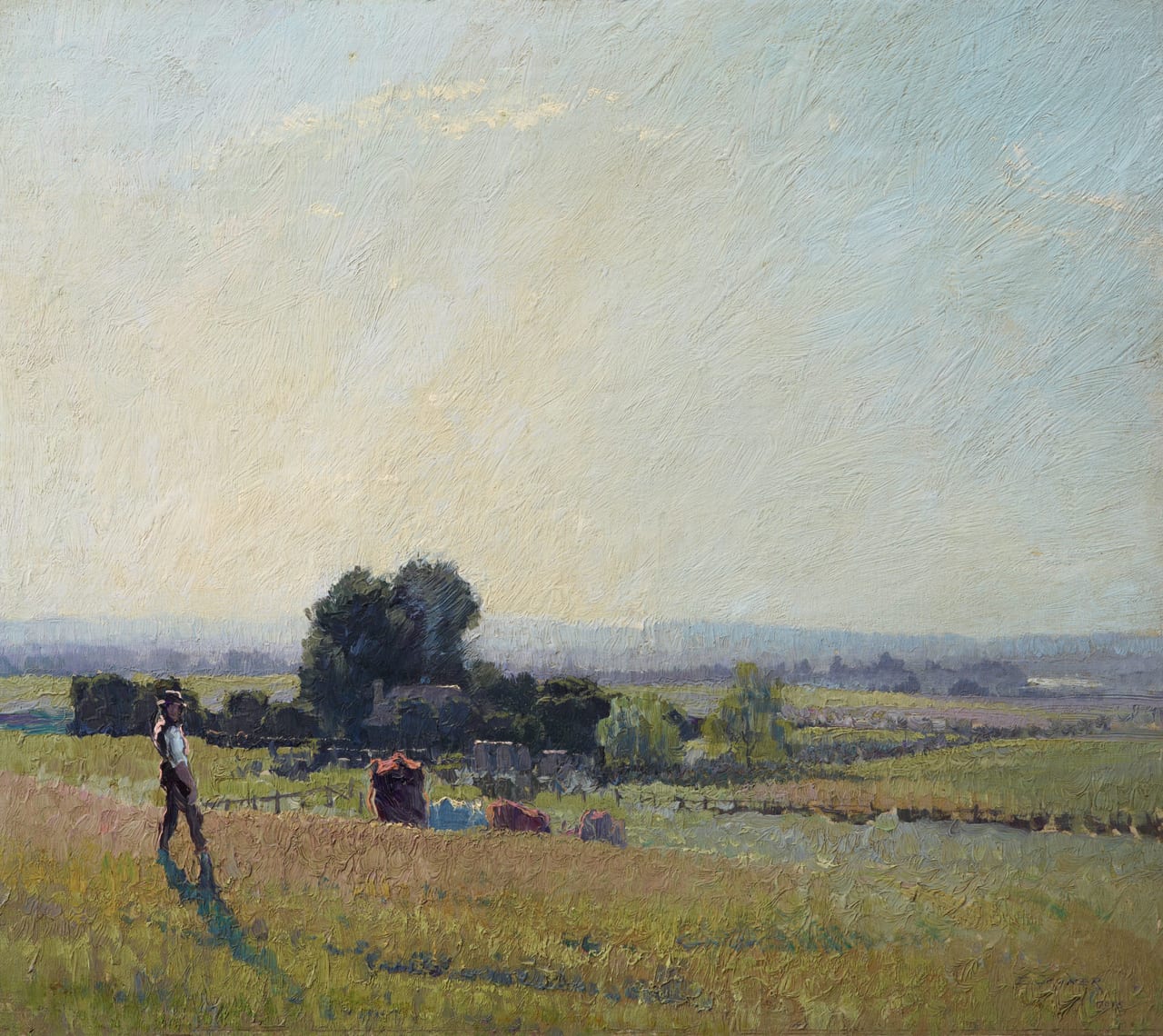
The last Australian impressionist
Morning light · Elioth Gruner · 1916
Elioth Gruner, often regarded as the last of the Australian impressionists, came to be seen as perhaps the most accomplished and lyrical painter of light the country had. This picture, hailed as the high point of his Emu Plains series of 1915 to 1919, won the Wynne Prize in 1916 and was bought by the trustees at once, the first of his works to enter the collection.
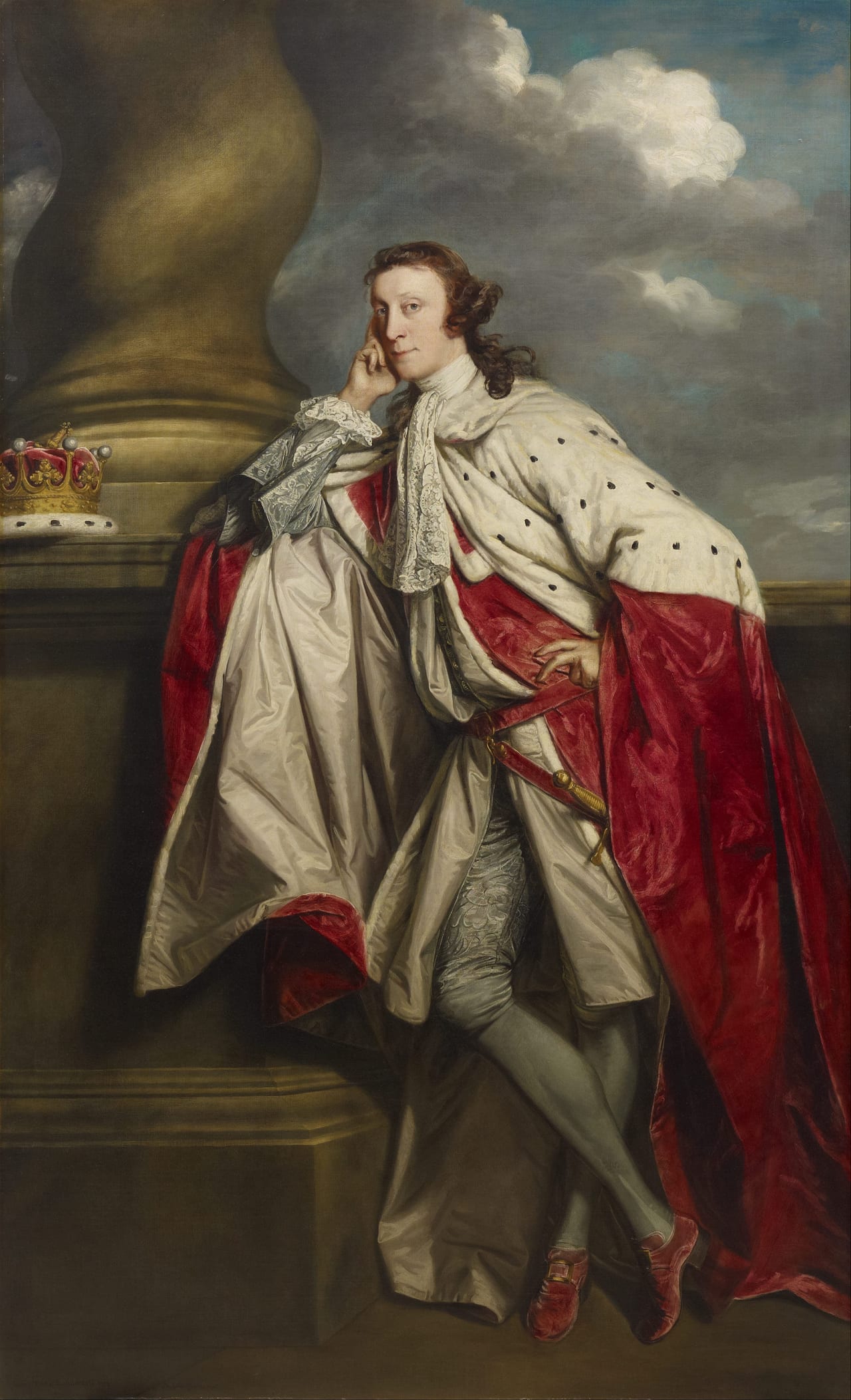
British portraiture
James Maitland, 7th Earl of Lauderdale · Joshua Reynolds · 1759–1760
Joshua Reynolds shows the 41-year-old Lord Lauderdale in his coronation robes, a crimson velvet cloak with a white fur cape and collar; the cape’s three rows of ermine mark him as an earl. He leans on the base of a twisted column, a hint of a trip to Italy he never in fact made, which lends an air of nonchalance to an otherwise formal grand-manner portrait. Bought in 1976 with an anonymous gift fund for an eighteenth-century portrait.
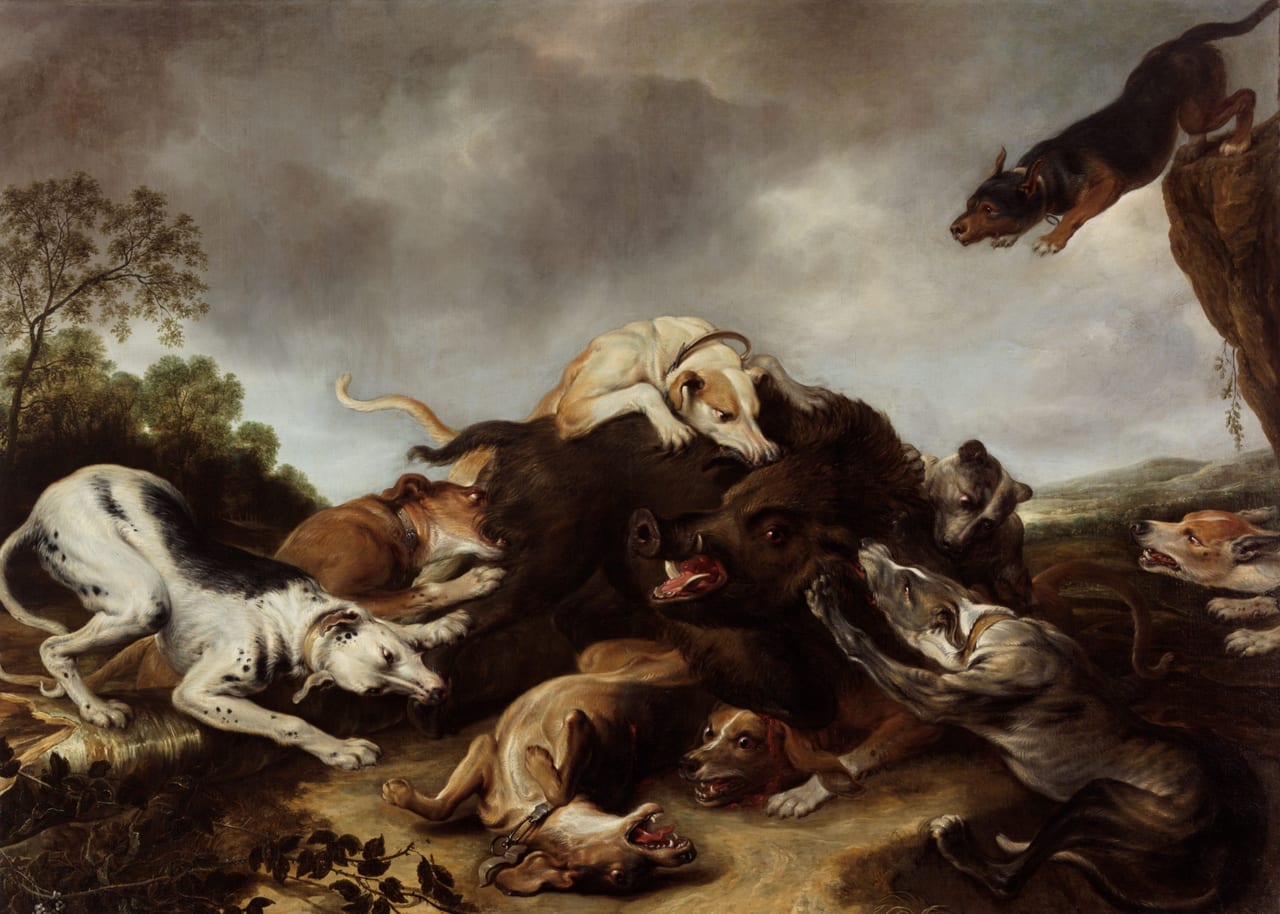
The hunt
The boar hunt · Frans Snyders · c. 1650s
Snyders was often employed by Rubens, painting still-life elements and animals for him, and from the 1610s he turned more and more to hunting scenes. The composition was adapted from an early-1620s picture in the Muzeum Narodowe in Poznań. Gift of Charles Davies-Scourfield, 2005.
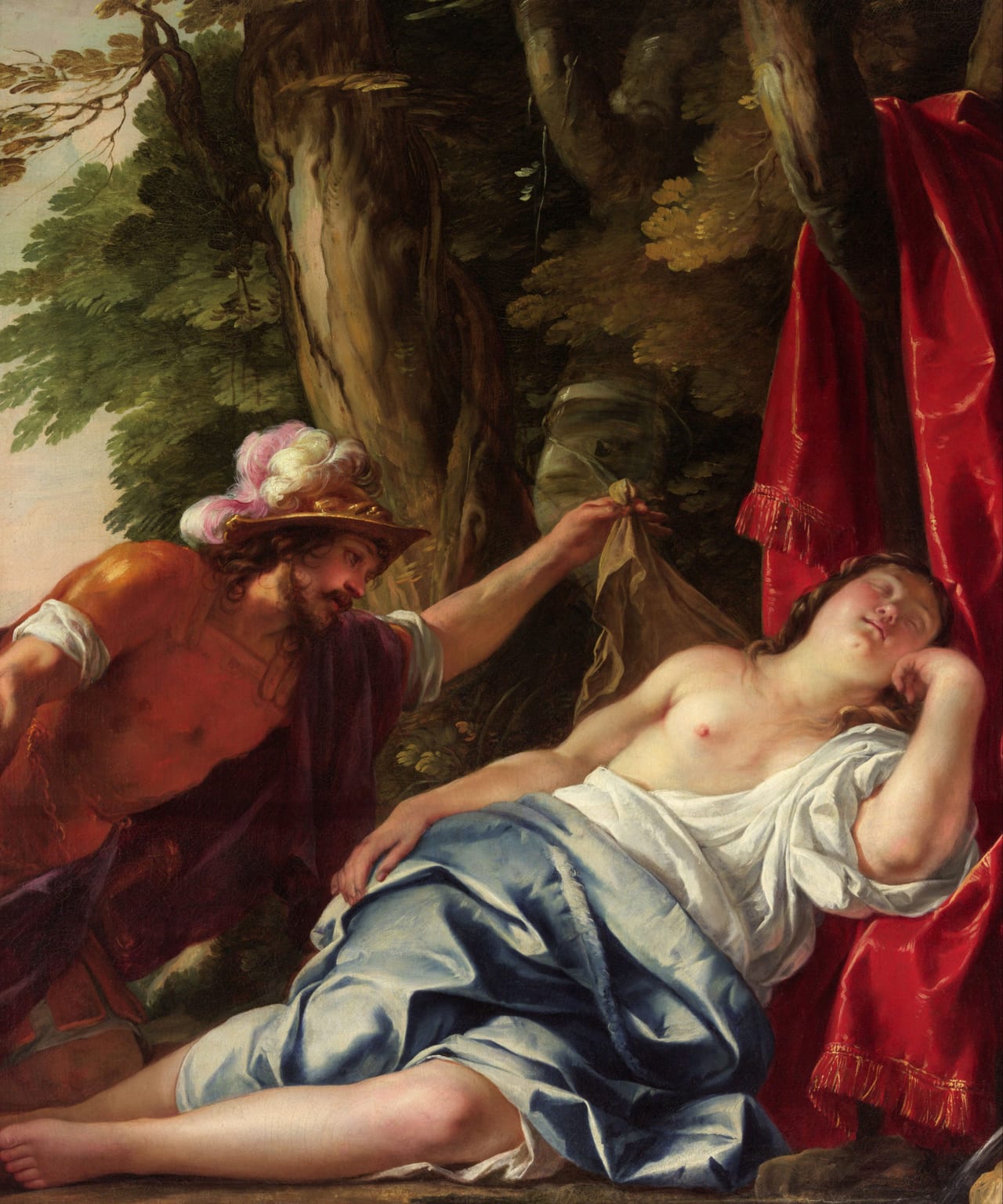
Seventeenth-century France
Mars and the vestal virgin · Jacques Blanchard · c. 1637–1638
Jacques Blanchard was one of the most important painters working in Paris in the first half of the seventeenth century, and he died young, in 1638. His subject is the vestal virgin Rhea Silvia asleep by a stream, found by Mars, an encounter that led to the birth of Romulus and Remus, the founders of Rome. The upright, squarish canvas strongly suggests that it was once set into the panelling of a room with other paintings on related themes. Bought in 2007 with funds from a gift by James Fairfax AC and the support of the Art Gallery Society of New South Wales.
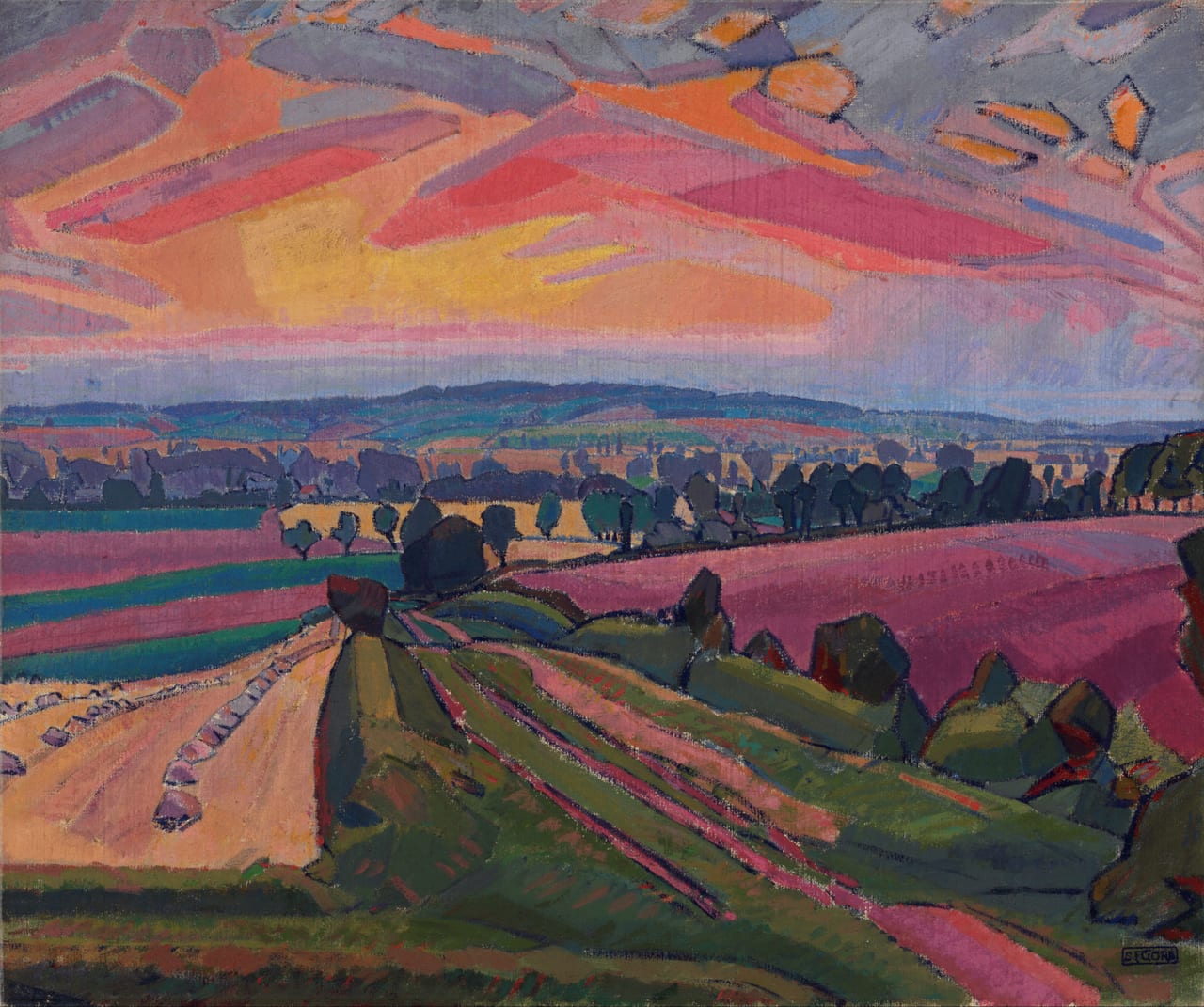
The Camden Town Group
The Icknield Way · Spencer Gore · 1912
Spencer Gore, a founder member of the Camden Town Group of younger artists around Walter Sickert, gave this luminous landscape the stamp of Cézanne, inflected by the more expressive accents of van Gogh and Gauguin. Paintings of this kind considerably influenced Grace Cossington Smith, then a young Sydney painter, who may have seen them in London as early as 1912. Purchased in 1962.
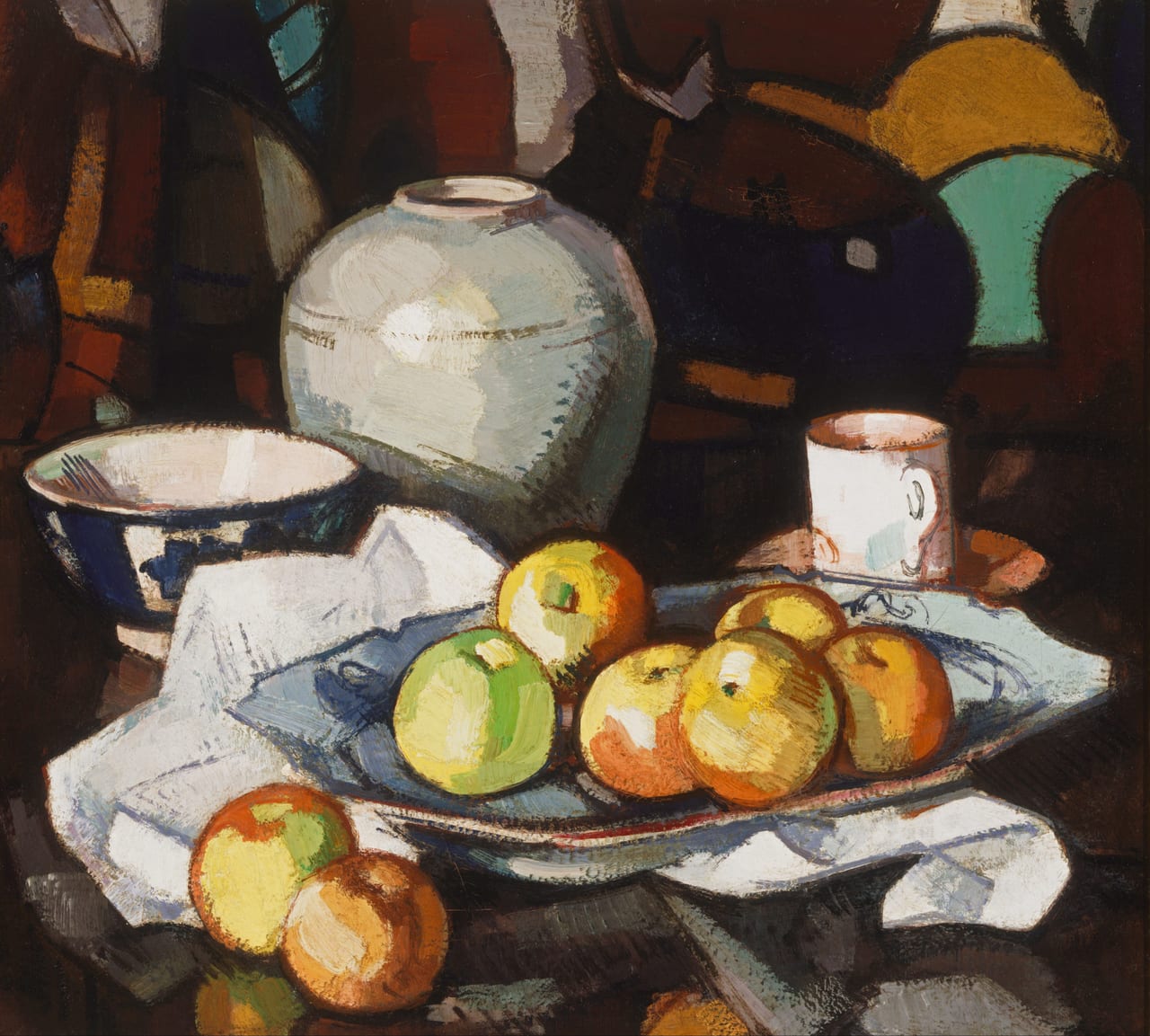
The Scottish colourists
Still life: apples and jar · Samuel Peploe · c. 1912–1916
Samuel Peploe is the most acclaimed of the Scottish colourists, painters influenced by the wild colour and loose brushwork of the French Fauves. Like Cézanne, he was obsessed throughout his career with painting the perfect still life. Purchased in 1947.
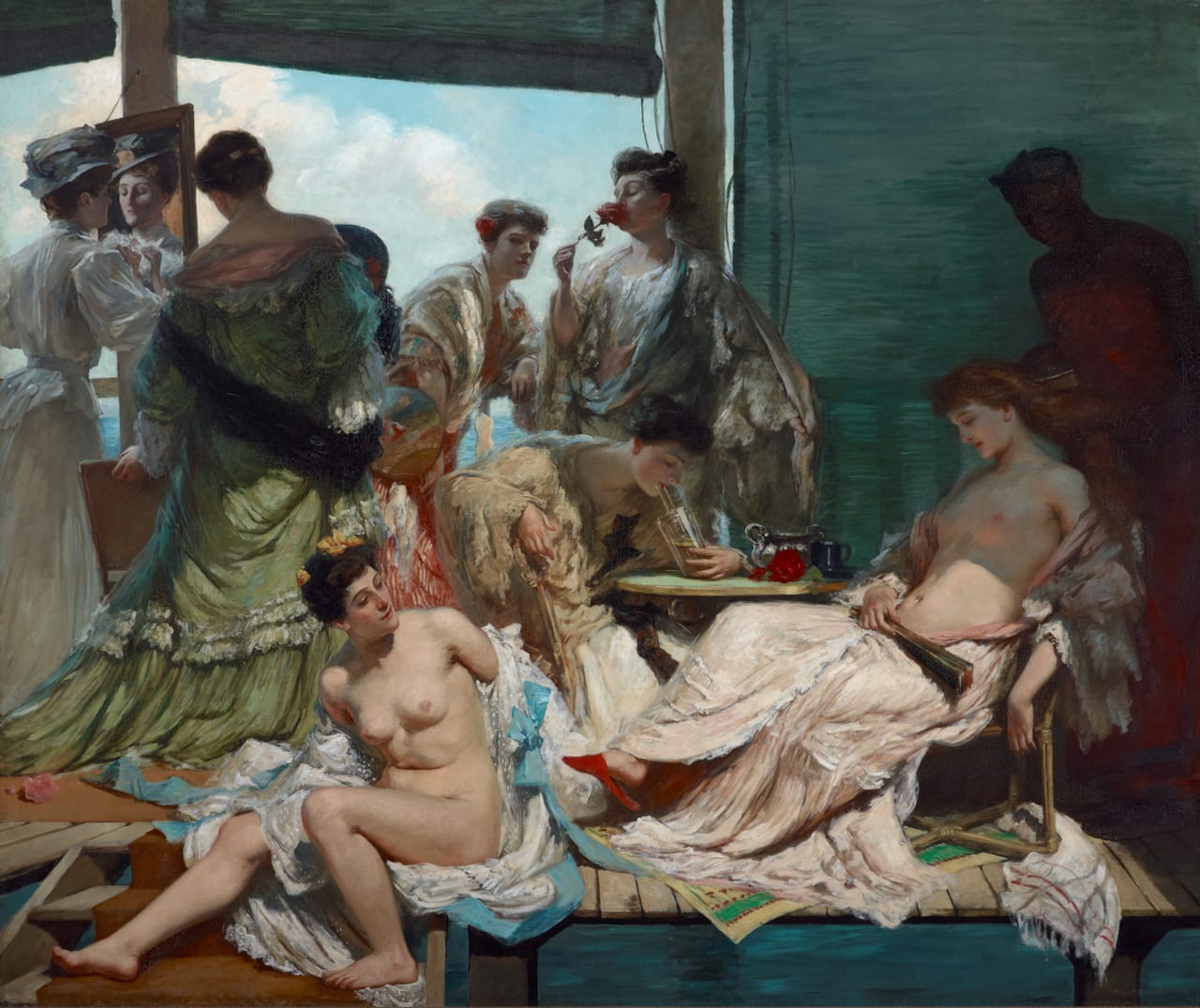
Australians in Paris
Summer time · Rupert Bunny · c. 1907
Rupert Bunny, born and raised in Melbourne, found success and critical acclaim living as an expatriate in fin-de-siècle Paris. Shown at the New Salon in 1907, this picture of seven women lounging in a bathhouse, sipping iced tea among freshly plucked roses, sums up the leisured spirit of the Belle Époque; Bunny modelled every figure on his wife, Jeanne Morel. Purchased in 1928.
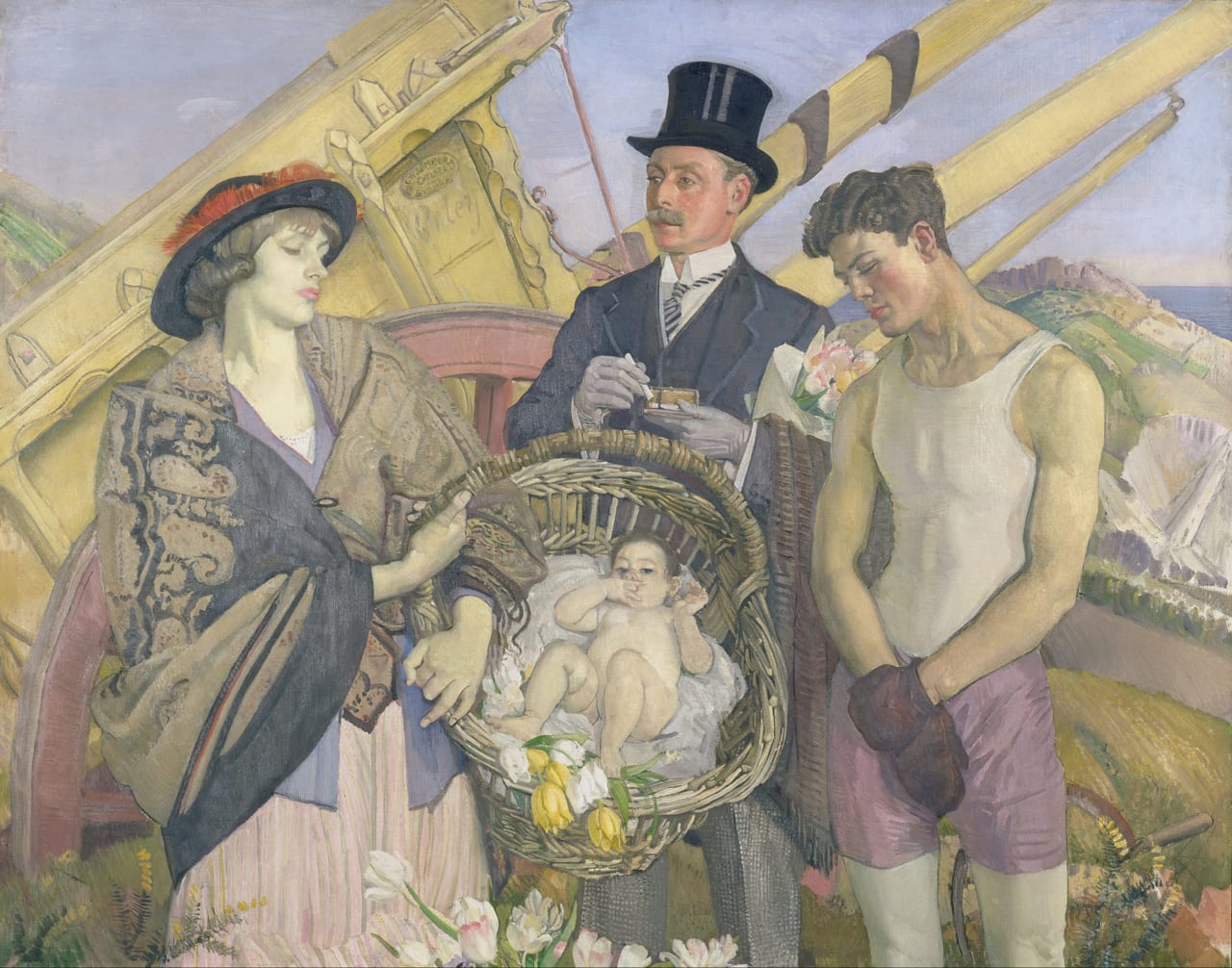
Modern Australian portraiture
Important people · George Washington Lambert · 1914–1921
By painting a flower-seller, a clerk and a boxer, George W Lambert set out to parody the convention that only people of wealth or social standing had their portraits painted, and questioned social values by mixing classes. His approach was formalist, but the subject also reflects his acquaintance with the Irish playwright George Bernard Shaw, whom he admired for his ridicule of social snobbery. Purchased in 1930.
Artists
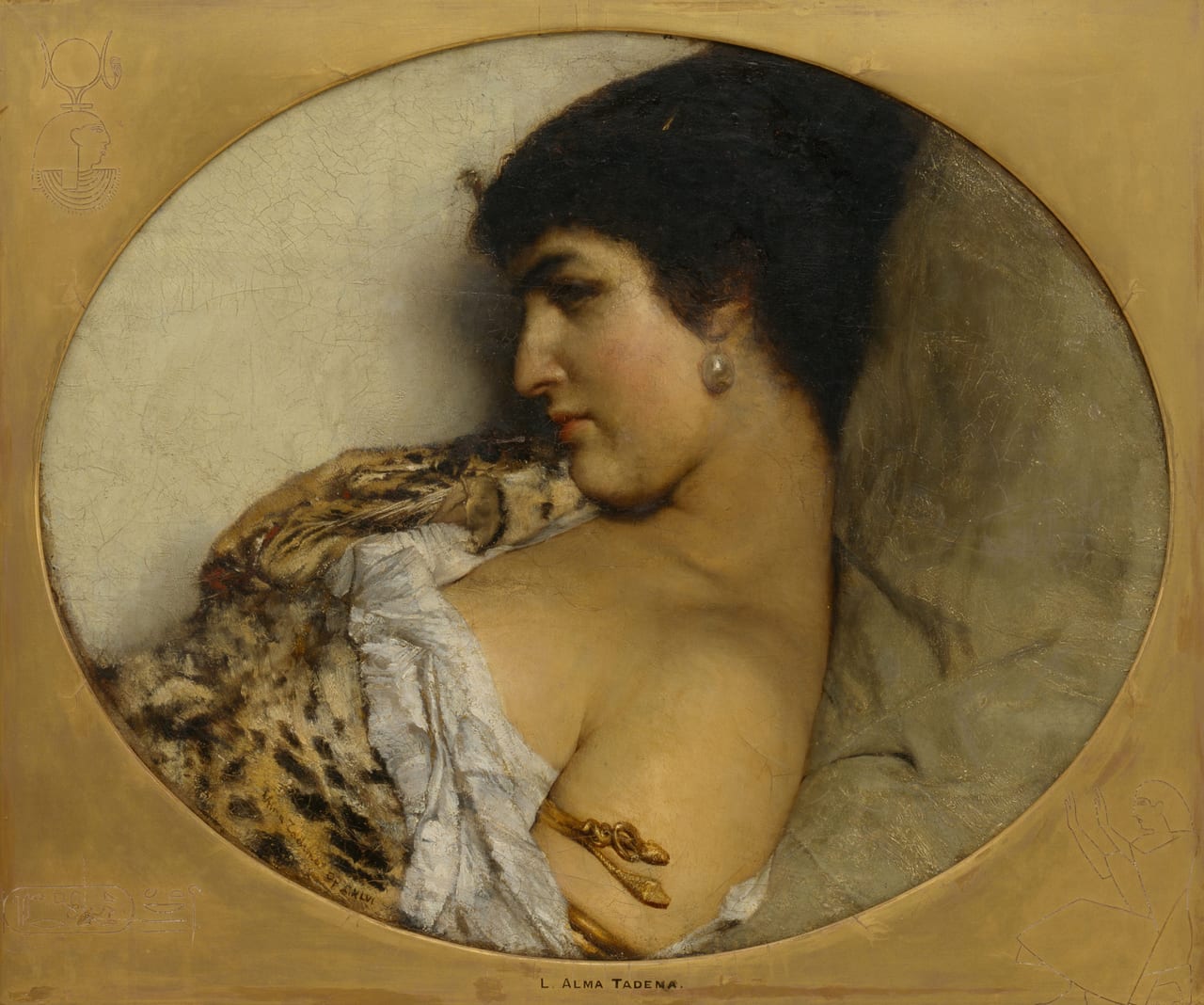
Lawrence Alma-Tadema
Cleopatra · 1875
Cleopatra is by Lawrence Alma-Tadema, a Dutch-born painter of everyday life in the ancient world, immensely popular in his time, who excelled at re-creating ancient architecture and costume and the textures of marble, bronze and silk.
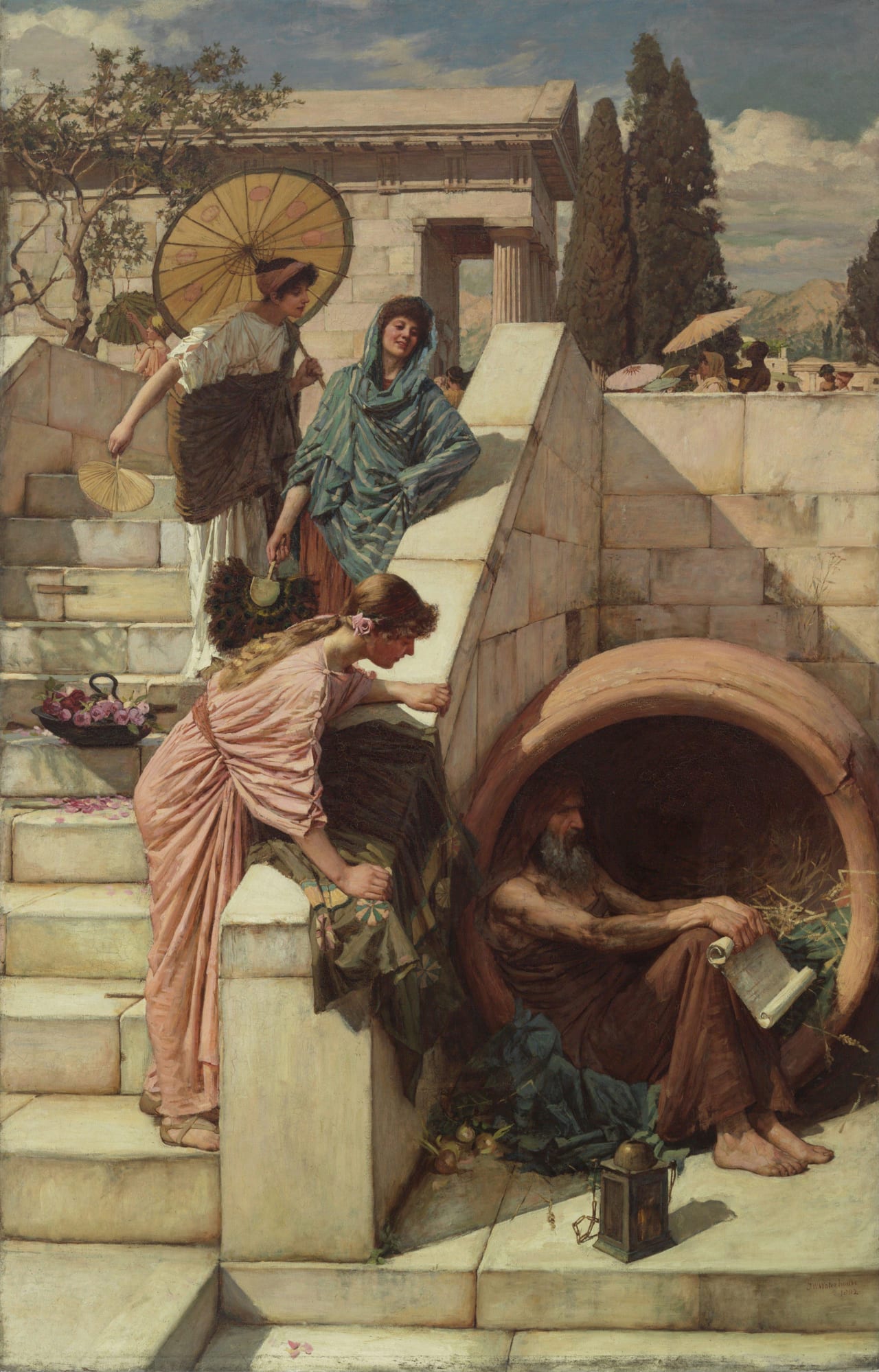
John William Waterhouse
Diogenes · 1882
Diogenes is by John William Waterhouse, an English painter of the Victorian era, known for his large paintings of classical mythological subjects.
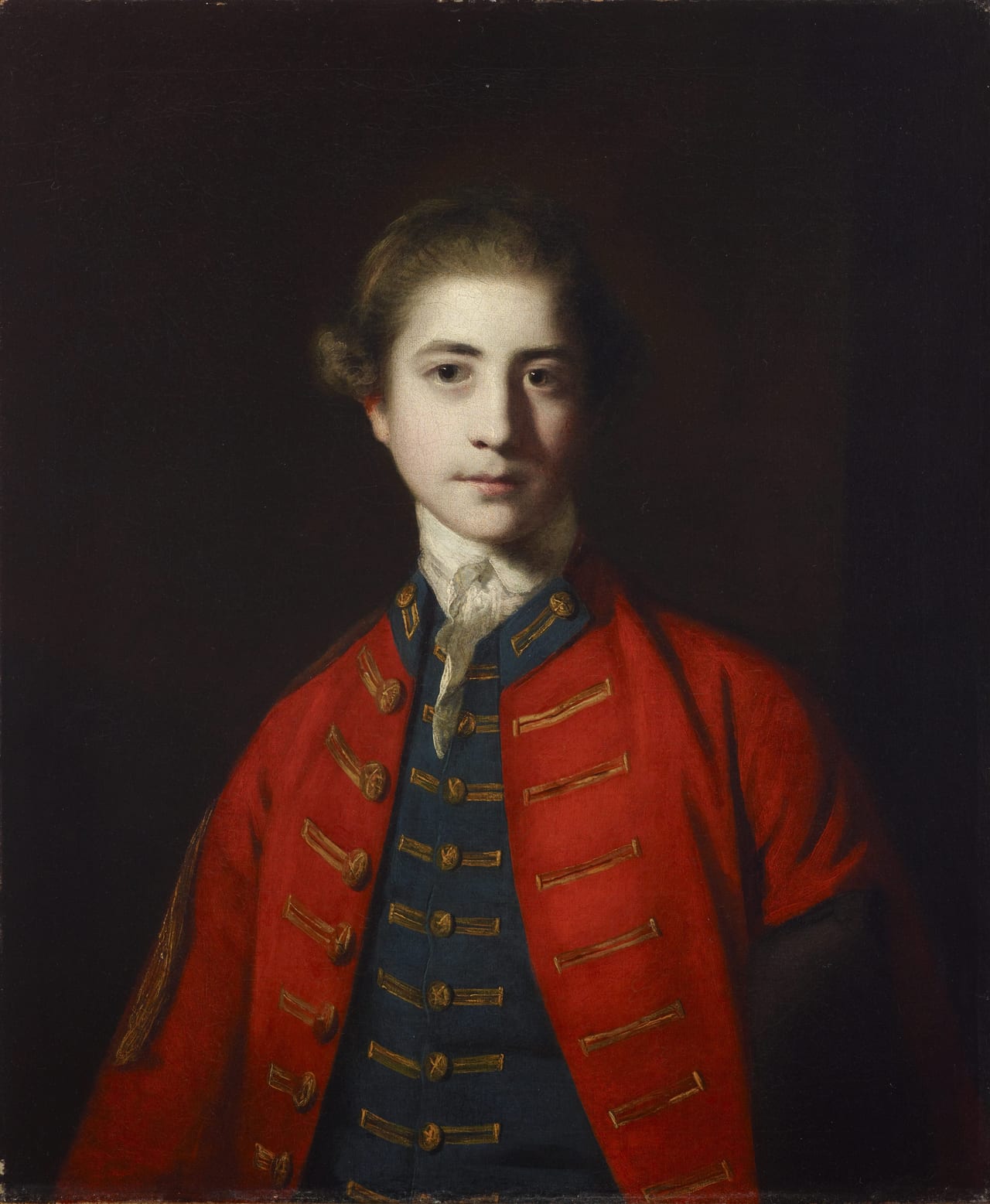
Joshua Reynolds
Stephen Croft · 1760
Stephen Croft is by Joshua Reynolds, an English painter who specialised in portraits, a founder and the first president of the Royal Academy of Arts.
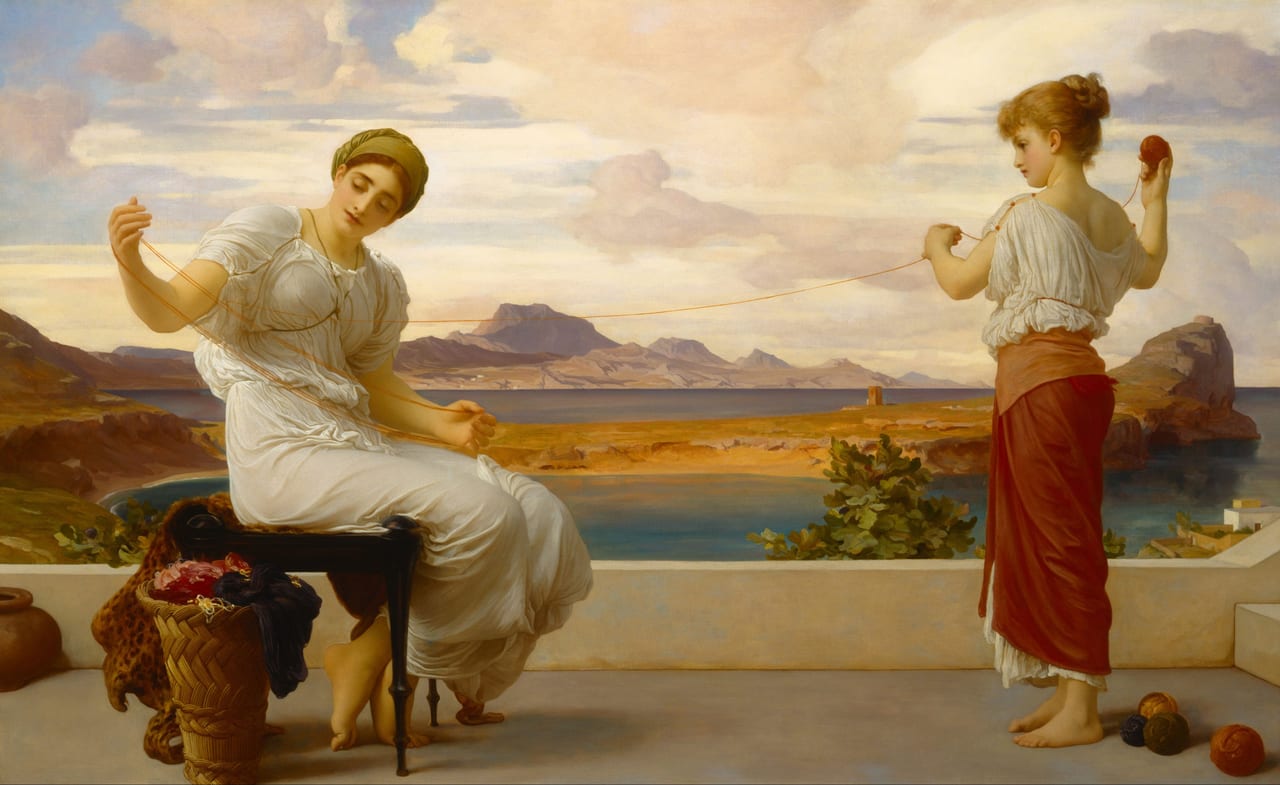
Frederic Leighton
Winding the skein · c. 1878
He painted historical, biblical and classical subjects in an academic style; his pictures were enormously popular in his lifetime, then fell out of critical favour for many decades in the early twentieth century.
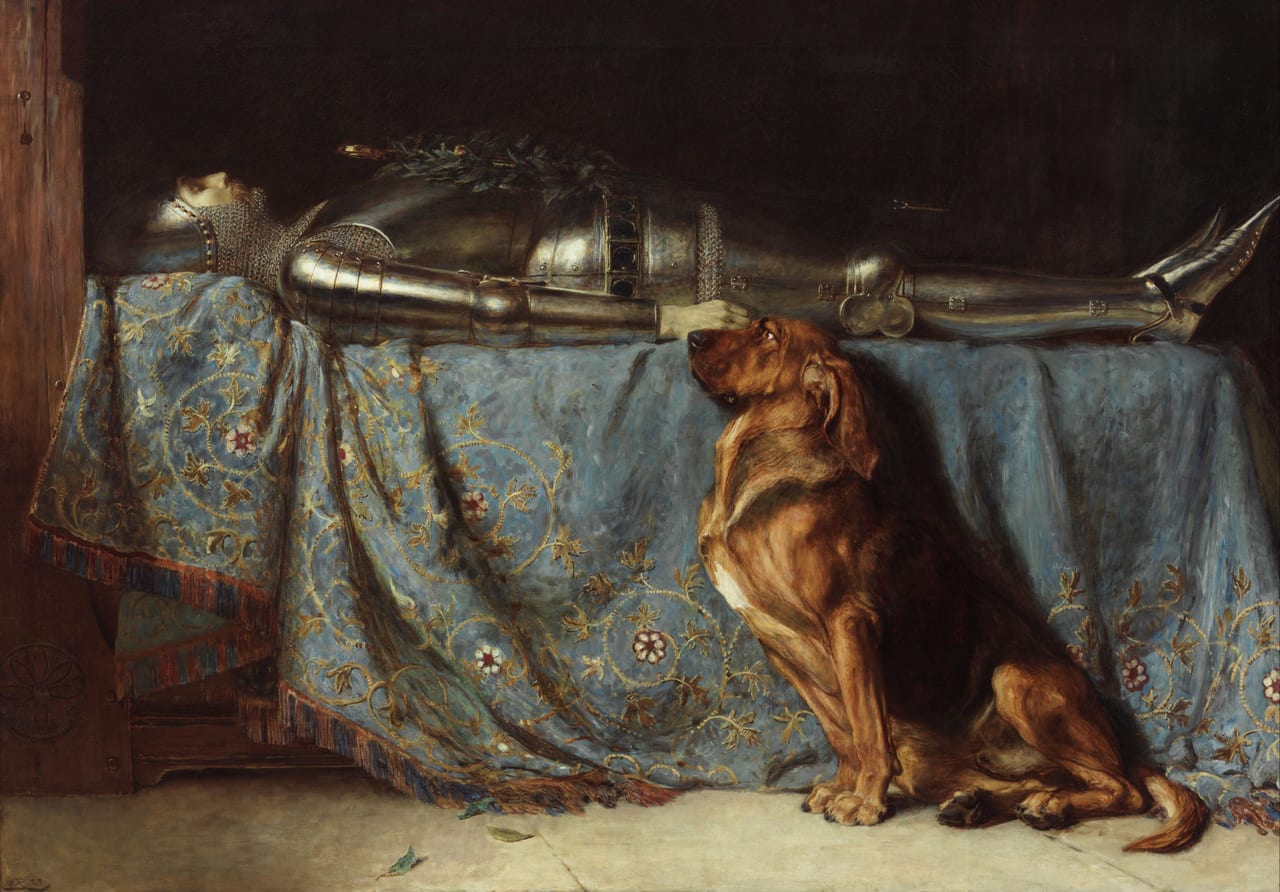
Briton Rivière
Requiescat · 1888
Requiescat is by Briton Rivière, a British artist of Huguenot descent who showed many kinds of painting at the Royal Academy but gave much of his life to painting animals.
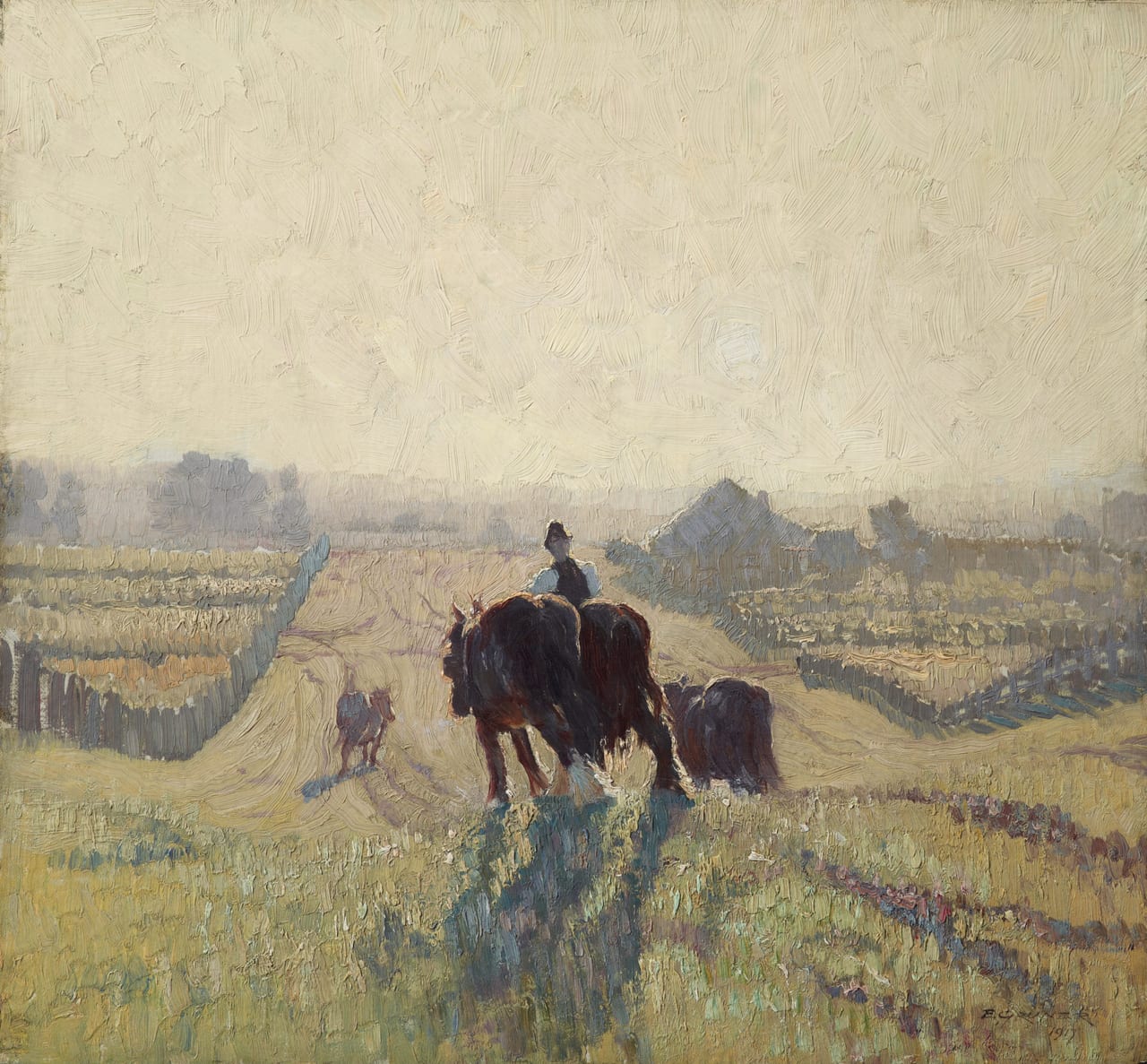
Elioth Gruner
Frosty sunrise · 1917
A successor to the open-air tradition of the Heidelberg School, known for high-key impressionist landscapes and the passing effects of light.
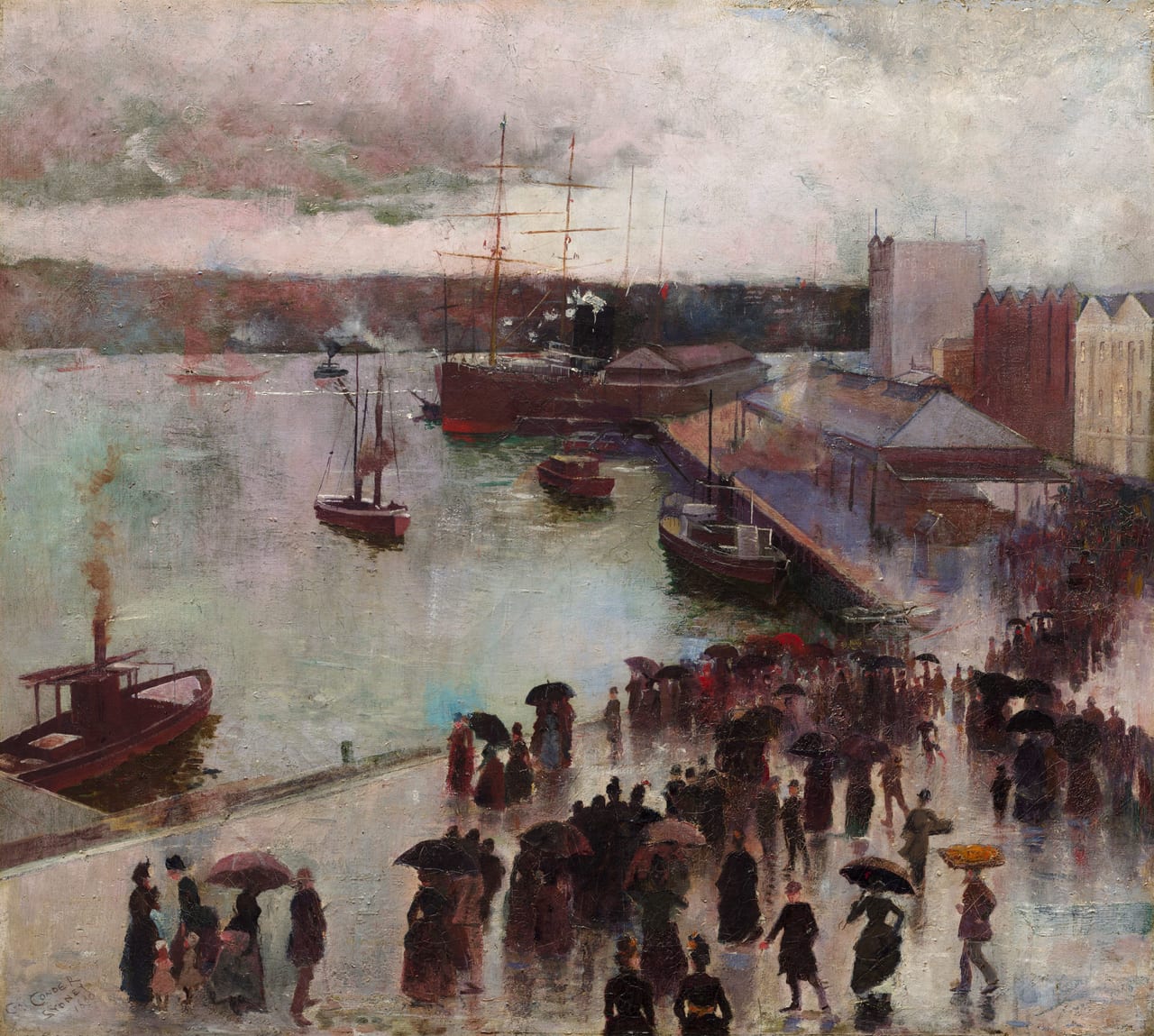
Charles Conder
Departure of the Orient - Circular Quay · 1888
Arriving in Australia in 1884 as a teenager, he became a key founder of the Heidelberg School; this picture, shown in Sydney in 1888, was his debut, and six years after arriving he went back to Europe, where he mixed with Toulouse-Lautrec and Oscar Wilde.
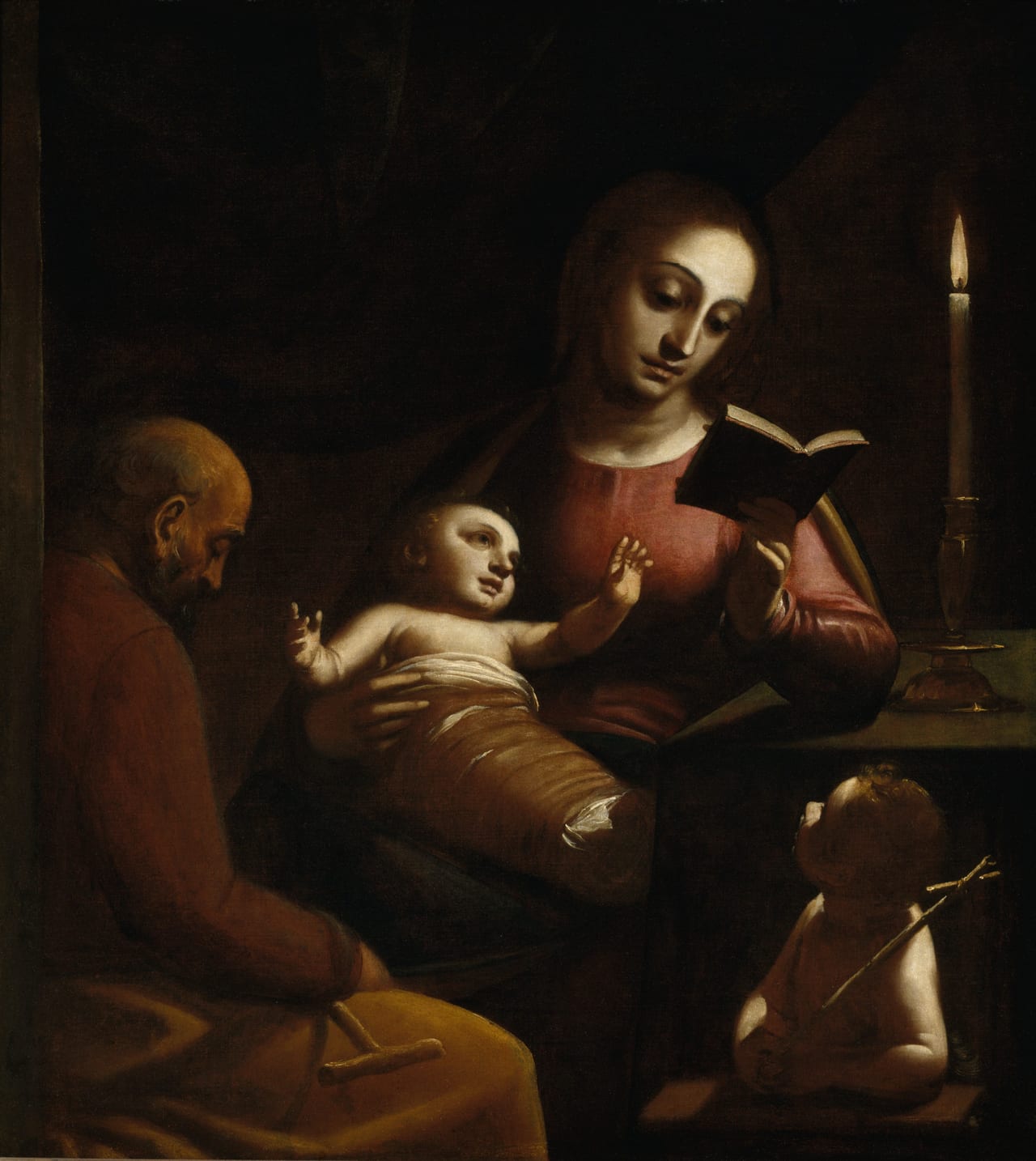
Luca Cambiaso
Holy Family with St John the Baptist · c. 1578
Considered the founder of the Genoese school, he set the local tradition of history painting in fresco through his many decorations of the city’s churches and palaces.
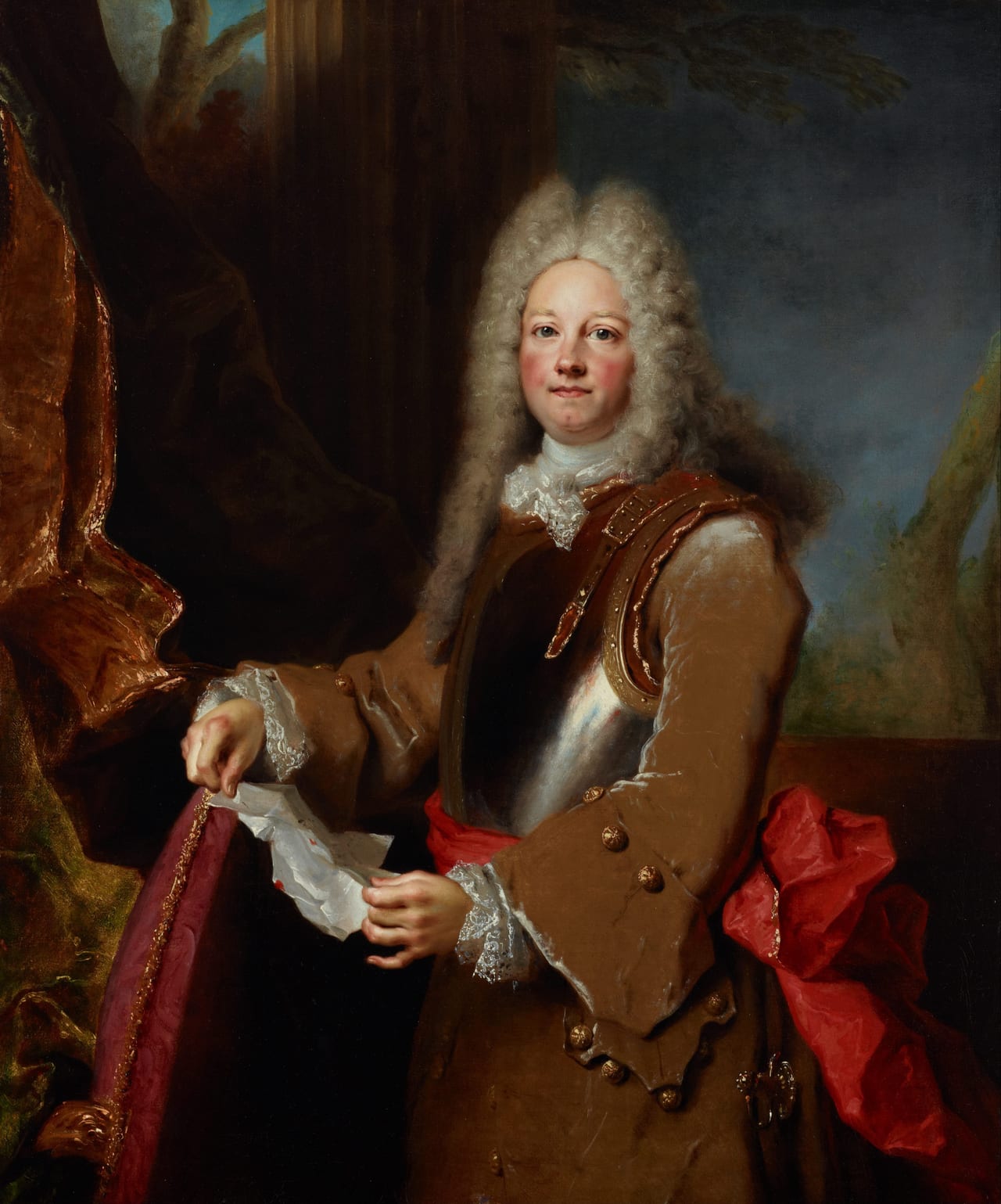
Nicolas de Largillière
Portrait of an officer · c. 1714–1715
Portrait of an officer is by Nicolas de Largillière, a French painter, director of the Académie de Peinture et de Sculpture from 1733 to 1735.
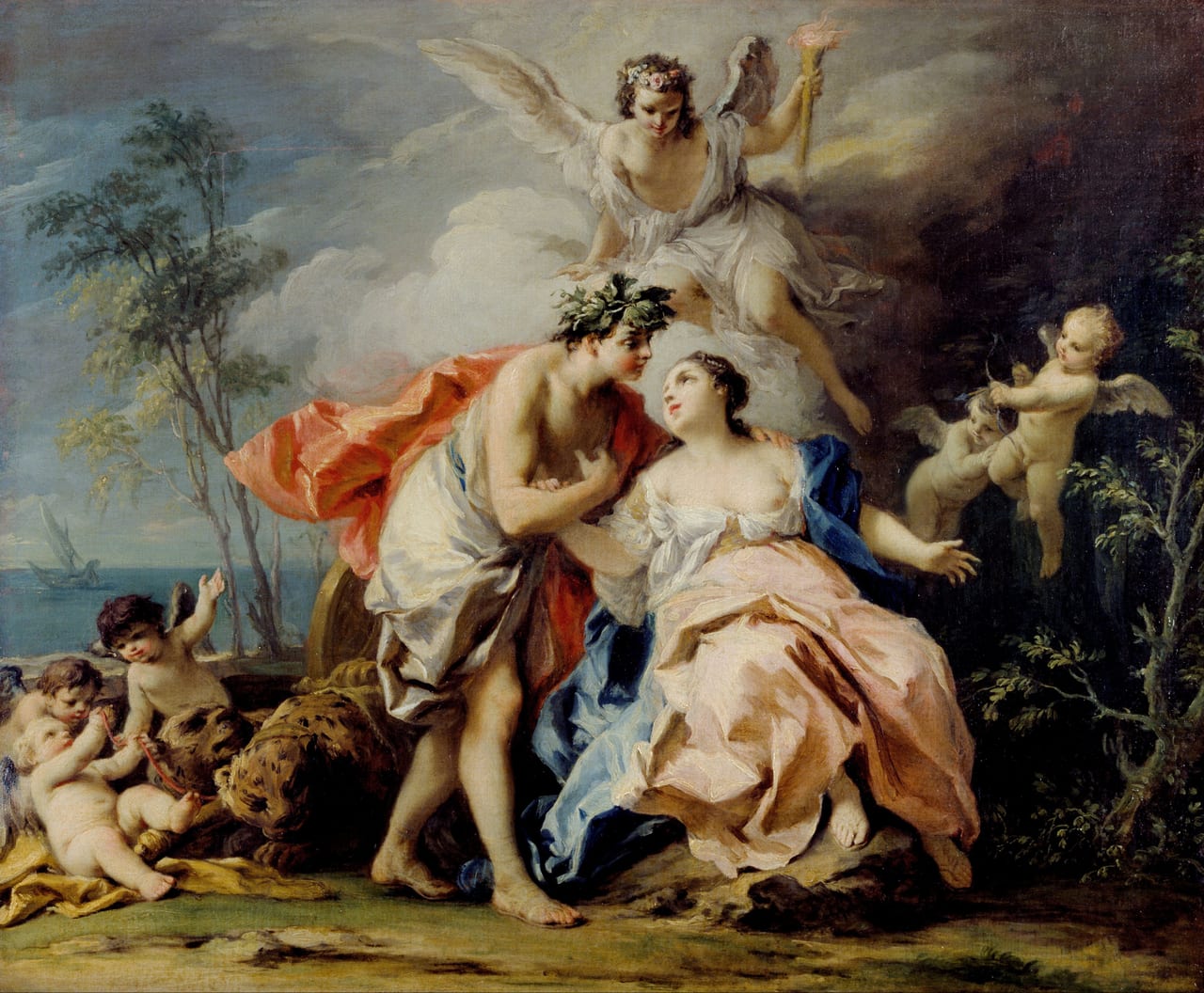
Jacopo Amigoni
Bacchus and Ariadne · c. 1740–1742
Bacchus and Ariadne is by Jacopo Amigoni, an Italian painter of the late Baroque or Rococo who began in Venice and worked prolifically across Europe, where his sumptuous portraits were much in demand.
Artworks
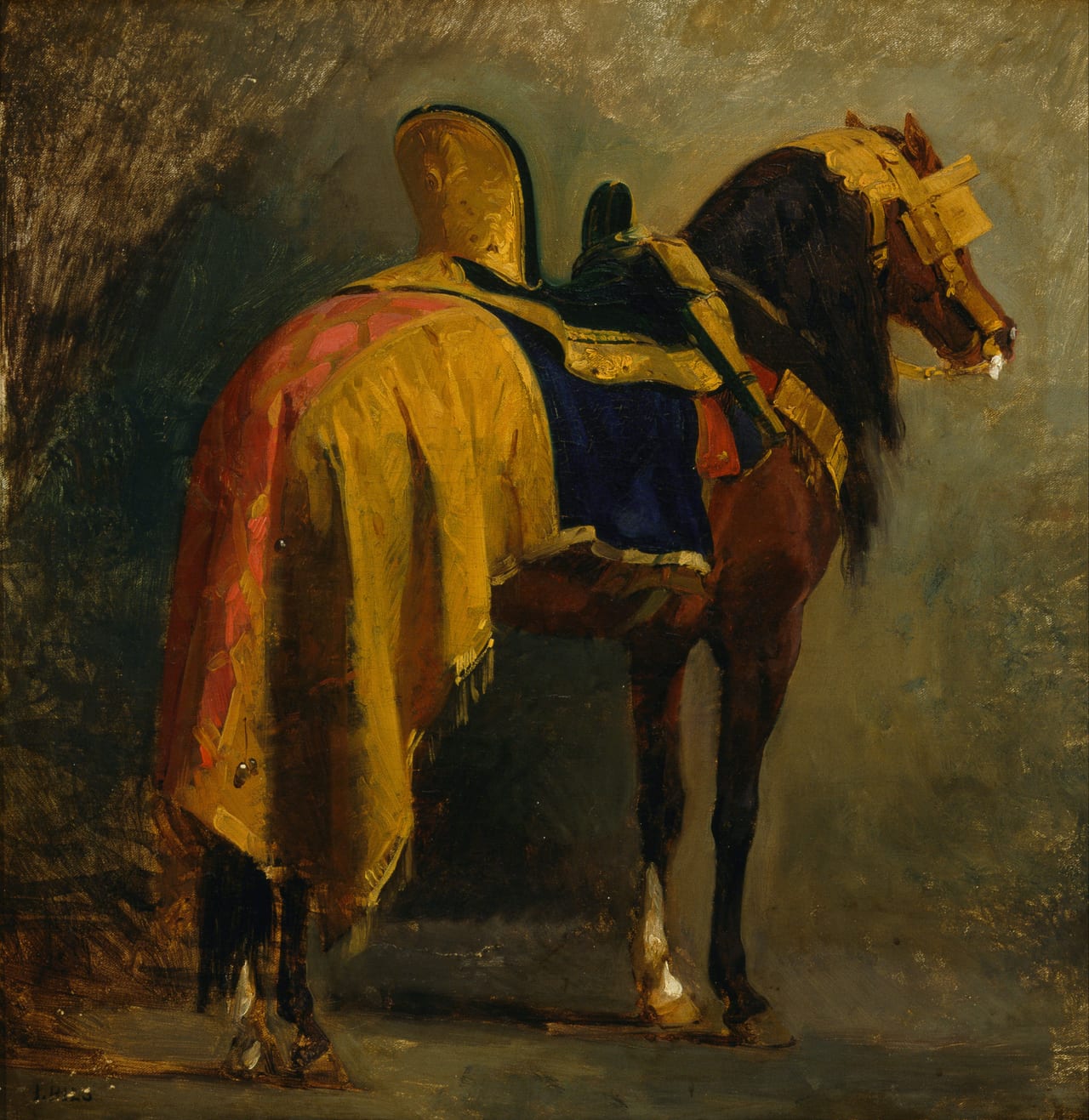
Horse caparisoned
Isidore Pils · c. 1860
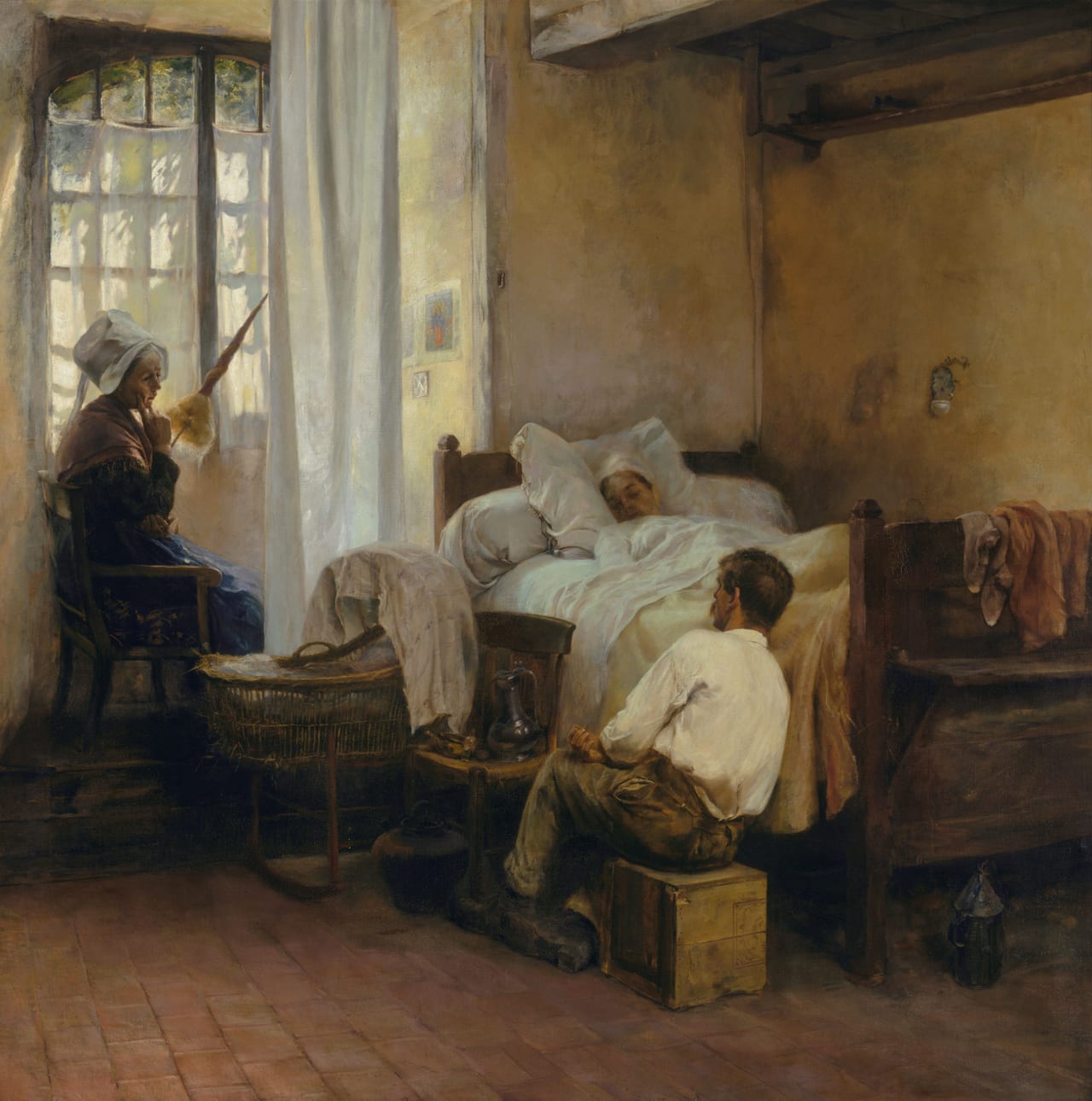
The first born
Gaston La Touche · 1887
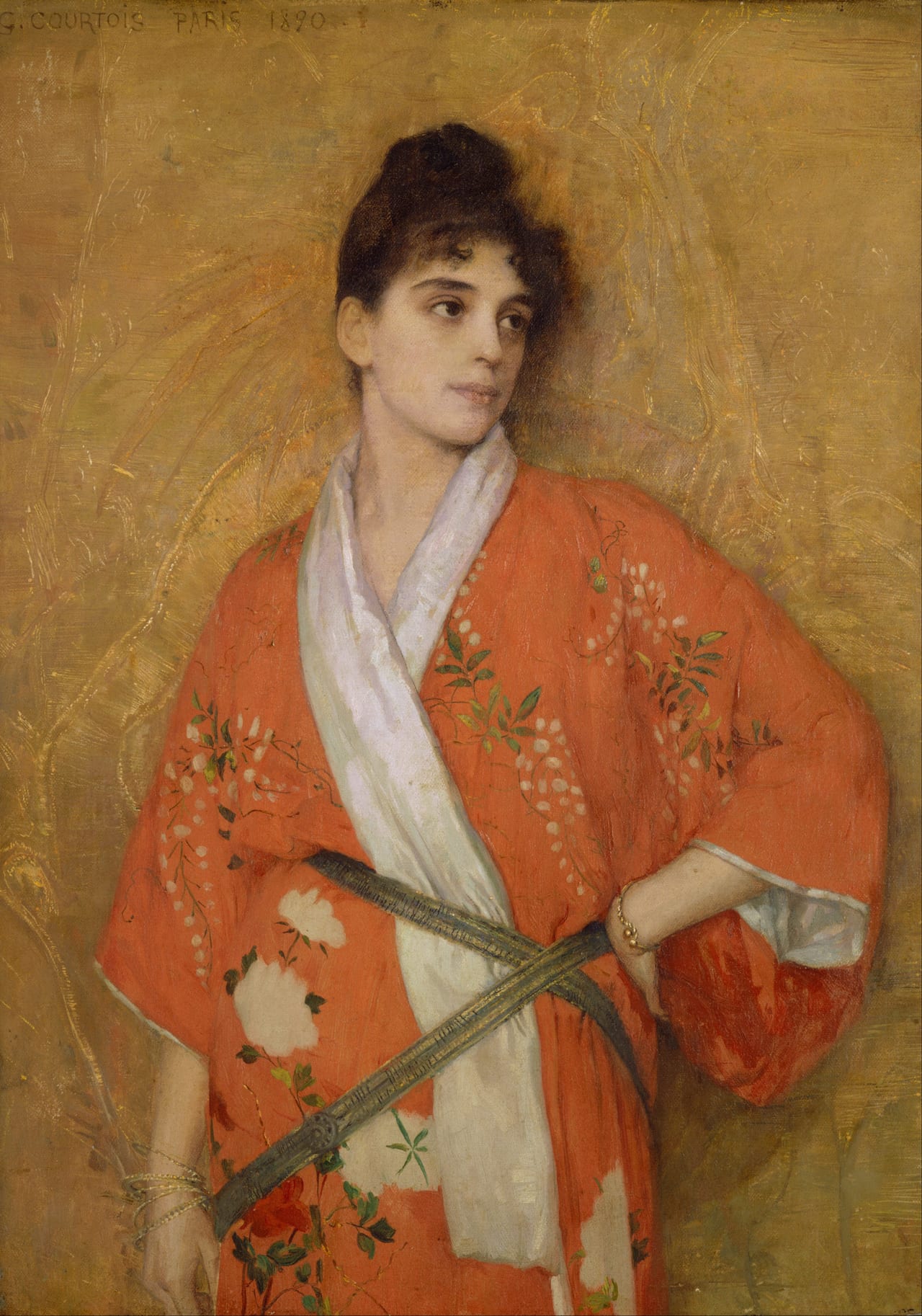
Study
Gustave-Claude-Étienne Courtois · 1890
Sources
- Art Gallery of New South Wales collection, Arthur Streeton, “Fire’s on”
- Art Gallery of New South Wales collection, Tom Roberts, “The Golden Fleece”
- Art Gallery of New South Wales collection, Frederick McCubbin, “On the wallaby track”
- Art Gallery of New South Wales collection, Elioth Gruner, “Spring frost”
- Art Gallery of New South Wales collection, Edward Poynter, “The visit of the Queen of Sheba to King Solomon”
- Art Gallery of New South Wales collection, Frederic Leighton, “Cymon and Iphigenia”
- Art Gallery of New South Wales collection, Paul Cézanne, “Banks of the Marne”
- Art Gallery of New South Wales collection, Édouard Detaille, “Vive l’Empereur!”
- Art Gallery of New South Wales collection, Vincent van Gogh, “Head of a peasant”
- Art Gallery of New South Wales collection, Camille Pissarro, “Peasants’ houses, Éragny”
- Art Gallery of New South Wales collection, Évariste-Vital Luminais, “The sons of Clovis II”
- Art Gallery of New South Wales collection, George W Lambert, “Across the black soil plains”
- Art Gallery of New South Wales collection, Charles Conder, “An Impressionist (Tom Roberts)”
- Art Gallery of New South Wales collection, William Henry Margetson, “The sea hath its pearls”
- Art Gallery of New South Wales collection, Elioth Gruner, “Morning light”
- Art Gallery of New South Wales collection, Joshua Reynolds, “James Maitland, 7th Earl of Lauderdale”
- Art Gallery of New South Wales collection, Frans Snyders, “The boar hunt”
- Art Gallery of New South Wales collection, Jacques Blanchard, “Mars and the vestal virgin”
- Art Gallery of New South Wales collection, Spencer Gore, “The Icknield Way”
- Art Gallery of New South Wales collection, Samuel Peploe, “Still life: apples and jar”
- Art Gallery of New South Wales collection, Rupert Bunny, “Summer time”
- Art Gallery of New South Wales collection, George W Lambert, “Important people”
- Art Gallery of New South Wales collection, Lawrence Alma-Tadema, “Cleopatra”
- Art Gallery of New South Wales collection, John William Waterhouse, “Diogenes”
- Art Gallery of New South Wales collection, Joshua Reynolds, “Stephen Croft”
- Art Gallery of New South Wales collection, Frederic Leighton, “Winding the skein”
- Art Gallery of New South Wales collection, Briton Rivière, “Requiescat”
- Art Gallery of New South Wales collection, Elioth Gruner, “Frosty sunrise”
- Art Gallery of New South Wales collection, Charles Conder, “Departure of the Orient - Circular Quay”
- Art Gallery of New South Wales collection, Luca Cambiaso, “Holy Family with St John the Baptist”
- Art Gallery of New South Wales collection, Nicolas de Largillière, “Portrait of an officer”
- Art Gallery of New South Wales collection, Jacopo Amigoni, “Bacchus and Ariadne”
- Art Gallery of New South Wales collection, Isidore Pils, “Horse caparisoned”
- Art Gallery of New South Wales collection, Gaston La Touche, “The first born”
- Art Gallery of New South Wales collection, Gustave Courtois, “Study”
- Art Gallery of New South Wales collection, John Seymour Lucas, “The Gordon riots 1780”
- Art Gallery of New South Wales, “History”
- Art Gallery of New South Wales, “Illustrated history”
- Art Gallery of New South Wales, “About us”
- Britannica, “Art Gallery of New South Wales”
- Wikipedia, “Art Gallery of New South Wales”
- Britannica, “Tom Roberts”
- Britannica, “Sir Lawrence Alma-Tadema”
- Britannica, “John William Waterhouse”
- Wikipedia, “Joshua Reynolds”
- Wikipedia, “Frederic Leighton”
- Wikipedia, “Briton Rivière”
- Wikipedia, “Elioth Gruner”
- Wikipedia, “Luca Cambiaso”
- Wikipedia, “Nicolas de Largillière”
- Wikipedia, “Jacopo Amigoni”
- Wikipedia, “Rupert Bunny”
- The Gordon riots 1780 — Public domain via Wikimedia Commons (Public domain)
- Fire's on — Public domain via Wikimedia Commons (Public domain)
- The Golden Fleece — Public domain via Wikimedia Commons (Public domain)
- On the wallaby track — Public domain via Wikimedia Commons (Public domain)
- Spring frost — Public domain via Wikimedia Commons (Public domain)
- The visit of the Queen of Sheba to King Solomon — Public domain via Wikimedia Commons (Public domain)
- Cymon and Iphigenia — Public domain via Wikimedia Commons (Public domain)
- Banks of the Marne — Public domain via Wikimedia Commons (Public domain)
- Vive l'Empereur! — Public domain via Wikimedia Commons (Public domain)
- Head of a peasant — Public domain via Wikimedia Commons (Public domain)
- Peasants' houses, Éragny — Public domain via Wikimedia Commons (Public domain)
- The sons of Clovis II — Public domain via Wikimedia Commons (Public domain)
- Across the black soil plains — Public domain via Wikimedia Commons (Public domain)
- An Impressionist (Tom Roberts) — Public domain via Wikimedia Commons (Public domain)
- The sea hath its pearls — Public domain via Wikimedia Commons (Public domain)
- Morning light — Public domain via Wikimedia Commons (Public domain)
- James Maitland, 7th Earl of Lauderdale — Public domain via Wikimedia Commons (Public domain)
- The boar hunt — Public domain via Wikimedia Commons (Public domain)
- Mars and the vestal virgin — Public domain via Wikimedia Commons (Public domain)
- The Icknield Way — Public domain via Wikimedia Commons (Public domain)
- Still life: apples and jar — Public domain via Wikimedia Commons (Public domain)
- Summer time — Public domain via Wikimedia Commons (Public domain)
- Important people — Public domain via Wikimedia Commons (Public domain)
- Cleopatra — Public domain via Wikimedia Commons (Public domain)
- Diogenes — Public domain via Wikimedia Commons (Public domain)
- Stephen Croft — Public domain via Wikimedia Commons (Public domain)
- Winding the skein — Public domain via Wikimedia Commons (Public domain)
- Requiescat — Public domain via Wikimedia Commons (Public domain)
- Frosty sunrise — Public domain via Wikimedia Commons (Public domain)
- Departure of the Orient - Circular Quay — Public domain via Wikimedia Commons (Public domain)
- Holy Family with St John the Baptist — Public domain via Wikimedia Commons (Public domain)
- Portrait of an officer — Public domain via Wikimedia Commons (Public domain)
- Bacchus and Ariadne — Public domain via Wikimedia Commons (Public domain)
- Horse caparisoned — Public domain via Wikimedia Commons (Public domain)
- The first born — Public domain via Wikimedia Commons (Public domain)
- Study — Public domain via Wikimedia Commons (Public domain)
Invite the Art Gallery of New South Wales into your living room