A View of the Two Lakes and Mountain House, Catskill Mountains, Morning
Thomas Cole · c. 1844

Brooklyn Museum
Brooklyn
The Brooklyn Museum began in 1823 as a library for Brooklyn’s apprentices; at 560,000 square feet, it is now New York City’s second-largest museum. Its art collection contains around 500,000 objects, among them Egyptian antiquities across more than three thousand years and American art from the colonial period on, where Gilbert Stuart’s George Washington and Edward Hicks’s The Peaceable Kingdom are among the most famous works.
- objects, around, in the museum’s art collection
- 500,000
- paintings in the museum’s first exhibition, opened to the public in June 1897
- Nearly 600
- and more spanned by the museum’s Egyptian antiquities
- 3,000 years
From an apprentices’ library
In August 1823 a group of Brooklyn citizens, Augustus Graham among them, set up the Brooklyn Apprentices’ Library in Brooklyn Heights. In 1843 it joined with the Brooklyn Lyceum to form the Brooklyn Institute, which put on shows of painting and sculpture alongside lectures on many subjects. Fire destroyed the institute’s building in 1891.
Fundraising for a new museum had been announced in February 1889. A year later, with Franklin Hooper as director, the institute remade itself as the Brooklyn Institute of Arts and Sciences and began to plan a museum, and McKim, Mead & White won the design competition, which the Brooklyn Daily Eagle called “one of the most important in the history of architecture”. Almost 600 paintings went on show on 1 June 1897, months before the museum formally opened on 2 October; it was among the last major buildings put up in the city of Brooklyn before Greater New York was formed in 1898.
A building only partly built
The first plan was for a building four times the size of the one that stands. Once Brooklyn had become part of greater New York in 1898, support for the project waned, and the New York Daily News likened the building to a movie set. Eighty statues were planned for the facade, twenty for each of four themes, classical, medieval and Renaissance, modern European and American, and Asian; the Piccirilli Brothers carved the thirty that were made.
Daniel Chester French made the sculptures in the pediment. His two allegorical figures, Brooklyn and Manhattan, were made in 1916 for the Brooklyn end of the Manhattan Bridge and moved to stand beside the museum’s entrance in 1963.
Building the collection
The museum’s American art began with Francis Guy’s Winter Scene in Brooklyn, left to it in 1846. In 1855 American art was named a collection of its own, and the first work commissioned for it was a landscape by Asher B. Durand. The collection now runs from about 1720 to about 1945, in portraits, pastels, sculpture and prints.
Egyptian collecting began early in the twentieth century, through purchases such as the collection of the Egyptologist Charles Edwin Wilbour, whose heirs also gave his library, and through excavations the museum sponsored; Wilbour’s collection brought the painting of Lady Tjepu in 1916. In 1900 the museum acquired James Tissot’s whole watercolour series on the life of Christ.
The same year brought the first African works and the first art of the Pacific Islands, a hundred wooden figures and shadow puppets, from New Guinea and from the Dutch East Indies; the Pacific holdings now approach 5,000 works. In 1923 Stewart Culin of the new Department of Ethnology put 1,400 African pieces on view, among the earliest shows of African art held in the United States.
Renewal
A competition to redesign the west wing drew 103 entrants, and Arata Isozaki of James Stewart Polshek Partners won it; his plan kept much of McKim, Mead & White’s layout while adding a great hall, trapezoidal courtyards and an obelisk. Some 33,000 square feet of the west wing reopened as galleries in November 1993.
In 2000 James Polshek was hired to design a glass-clad entrance; he called the old front a “wasteland” and wanted to build “Brooklyn’s new front stoop”. A $10 million grant from the Henry Luce Foundation paid for the Luce Center for American Art on the fifth floor, and the renovation was finished in April 2004.
Judy Chicago’s The Dinner Party came to the museum in 2002, a gift from the Elizabeth A. Sackler Foundation, and has been on permanent view since 2007 at the heart of the Elizabeth A. Sackler Center for Feminist Art. The South Asian and Islamic galleries reopened in 2022, ending twelve years of work on the Asian galleries.
What to see
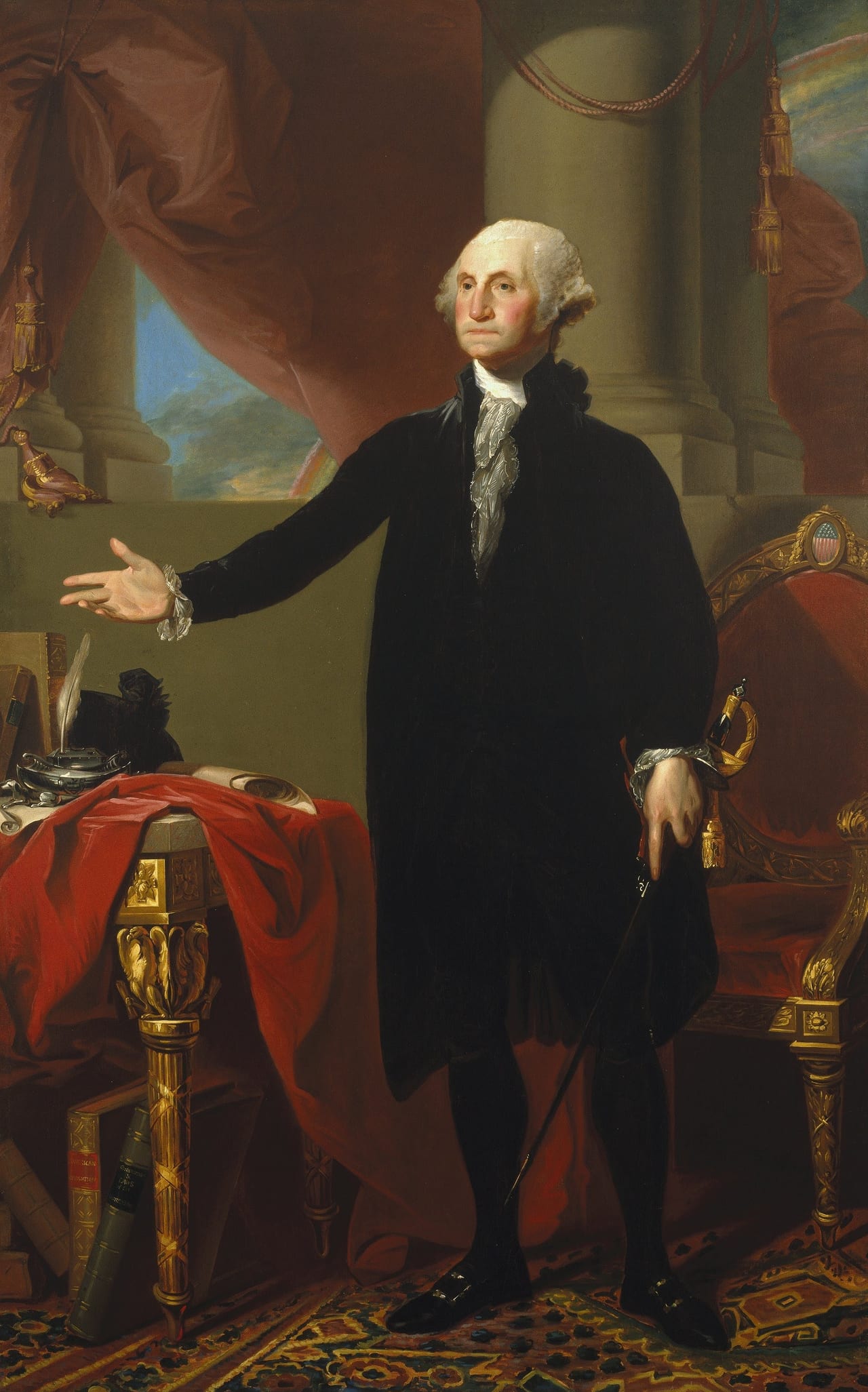
George Washington
Gilbert Stuart
Gilbert Stuart, one of the great portraitists of his day, gave the original of this life-size portrait to the Marquess of Lansdowne; it shows Washington at 64, in his last year as president. Stuart painted three replicas, and William Kerin Constable commissioned this one. The plain suit and the dress sword, not a battle sword, stand for a democratic government rather than a monarchy or a military dictatorship. It is among the most famous works in the museum’s American art collection.
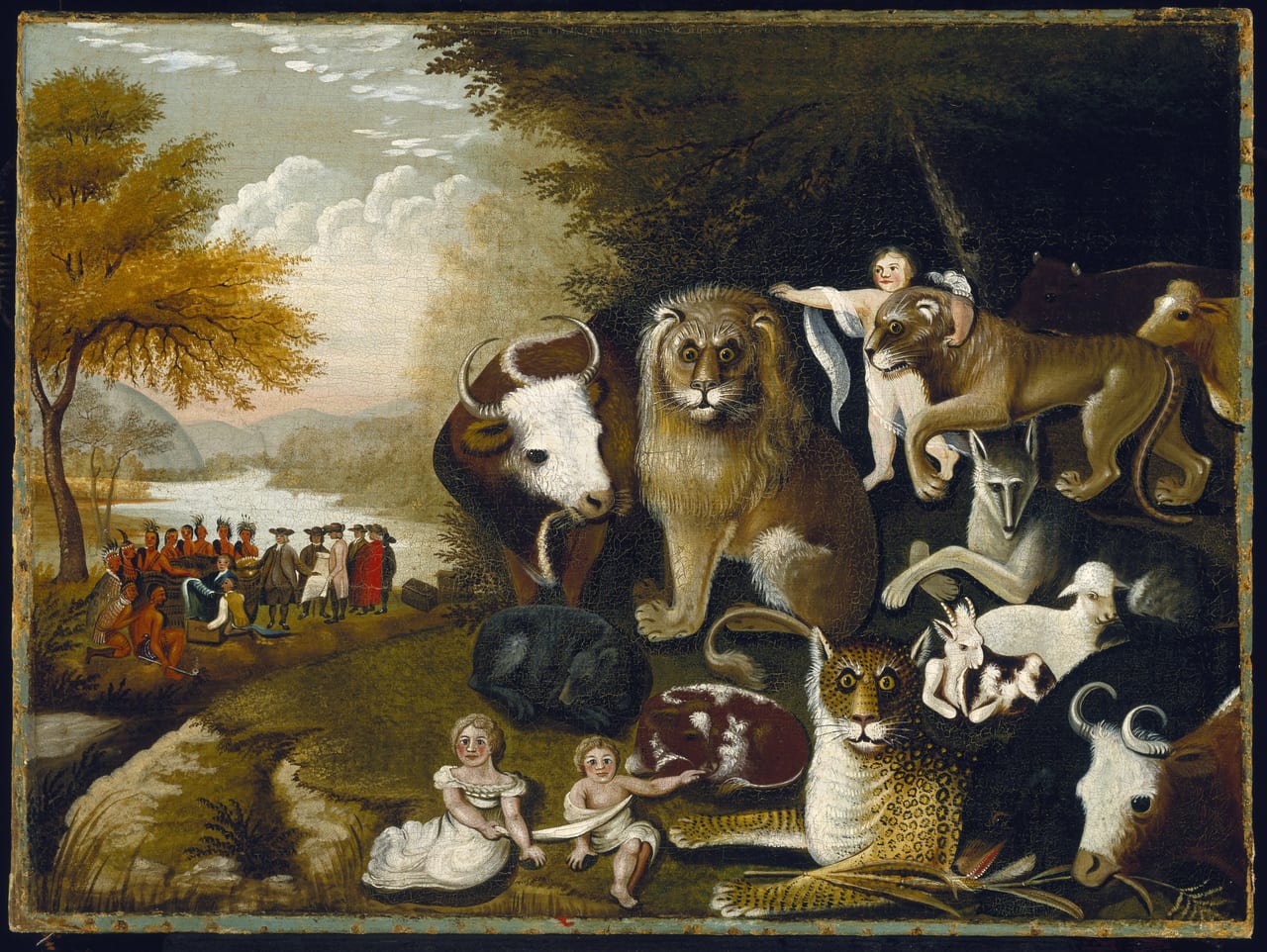
The Peaceable Kingdom
Edward Hicks · c. 1830–1840
Edward Hicks, a Quaker, believed Pennsylvania fulfilled Isaiah’s prophecy of justice and gentleness among people and beasts. At left William Penn and his fellow Quakers make their treaty with the Indians; at right Isaiah’s animals crowd together, small children playing among them. With Stuart’s George Washington, it is among the most famous works in the museum’s American art collection.
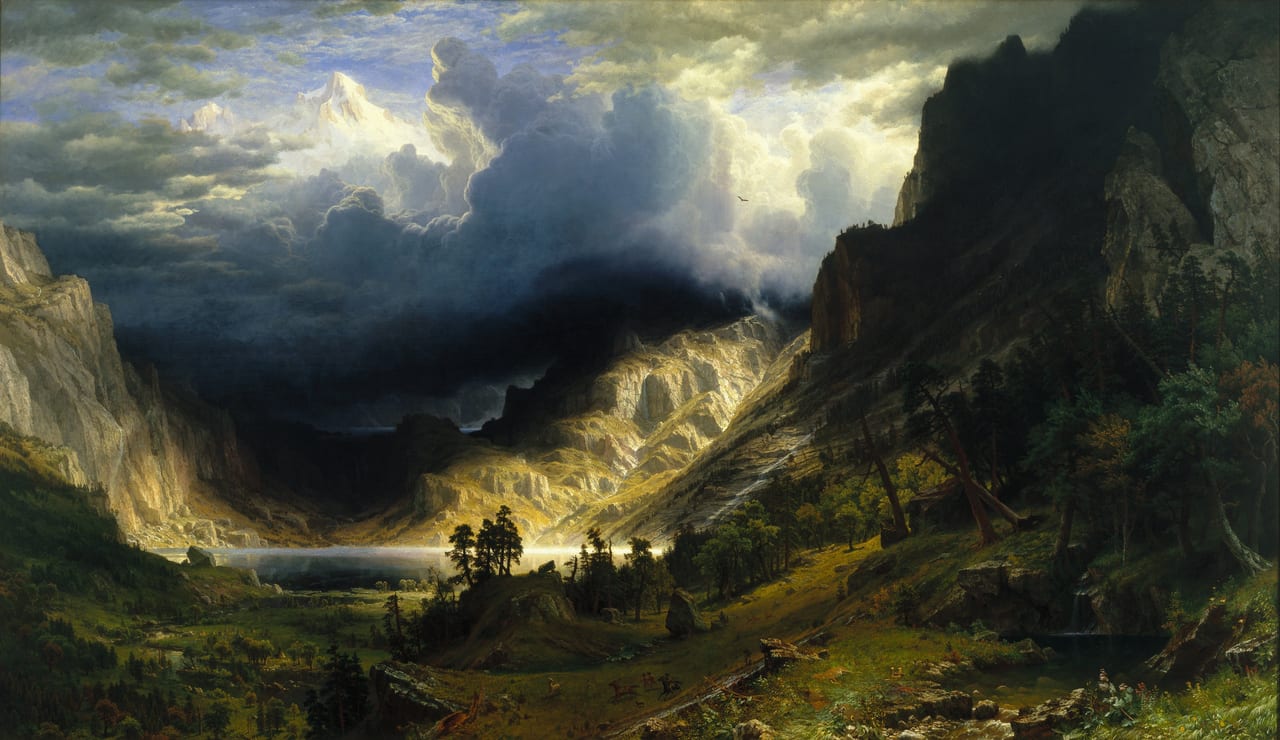
A Storm in the Rocky Mountains, Mt. Rosalie
Albert Bierstadt · 1866
Albert Bierstadt, of the last generation of painters tied to the Hudson River school, based it on sketches from his 1863 expedition, when he was taken up to the Chicago Lakes in the Colorado Rockies. He named the unnamed peak Mount Rosalie after Rosalie Osborne Ludlow, then his friend’s wife, whom he married in 1866. Native American hunters chase deer in the foreground, a camp lies by a stream beyond, and the mountains, made larger than life, sit in sun or storm. The museum acquired it in 1976.
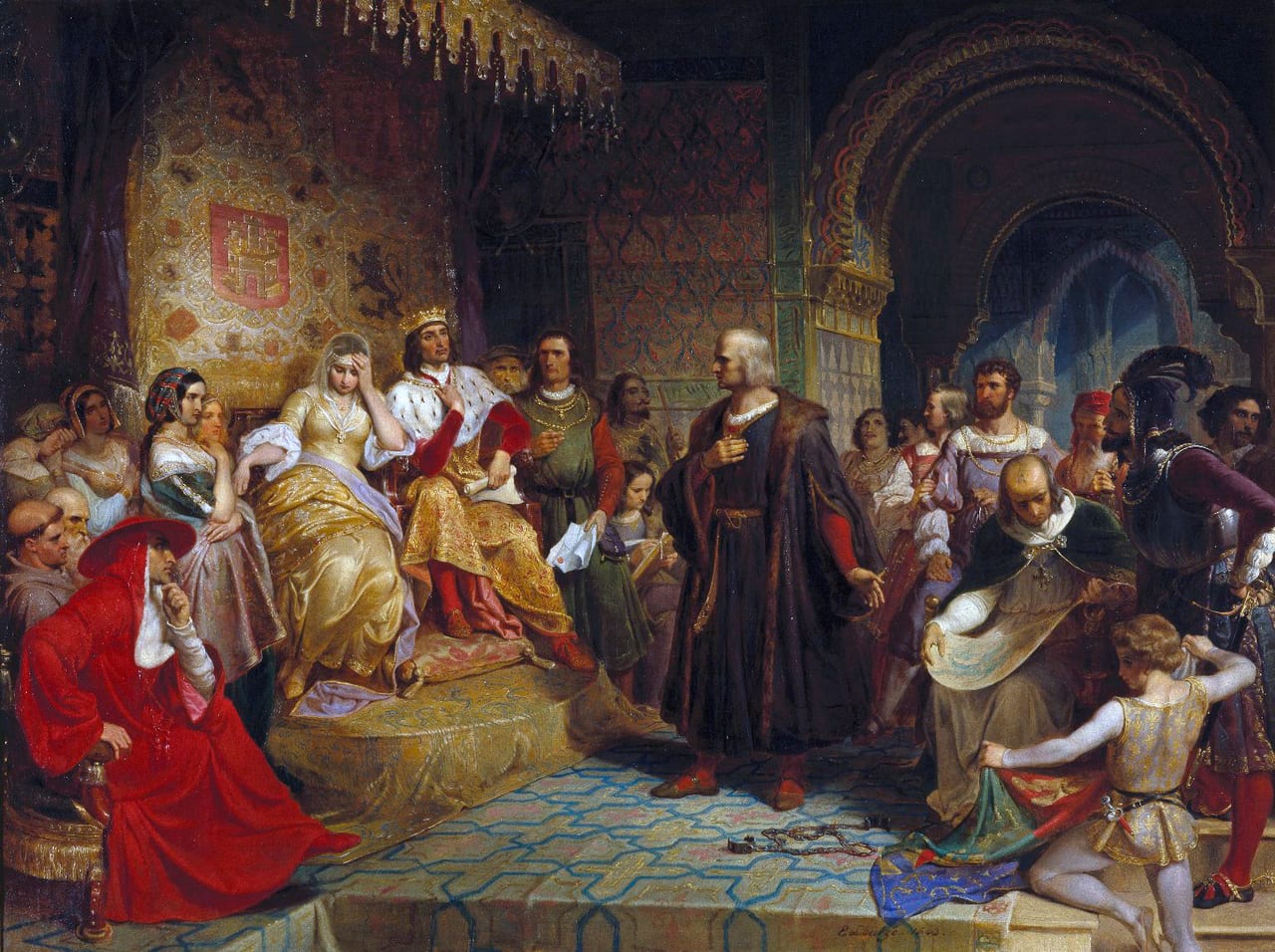
Columbus Before the Queen
Emanuel Leutze · 1843
Emanuel Leutze, the German-born history painter of Washington Crossing the Delaware, signed and dated this, the third of his six Columbus subjects, in 1843. At the Spanish court Columbus addresses Ferdinand and Isabella, both enthroned, trying to win them to his plan of reaching India by sailing west; the king speaks to him while the queen looks away, a hand on her head. A monk unveils a nautical chart, and a cardinal in a red hat, seated in the left corner, seems to listen closely.
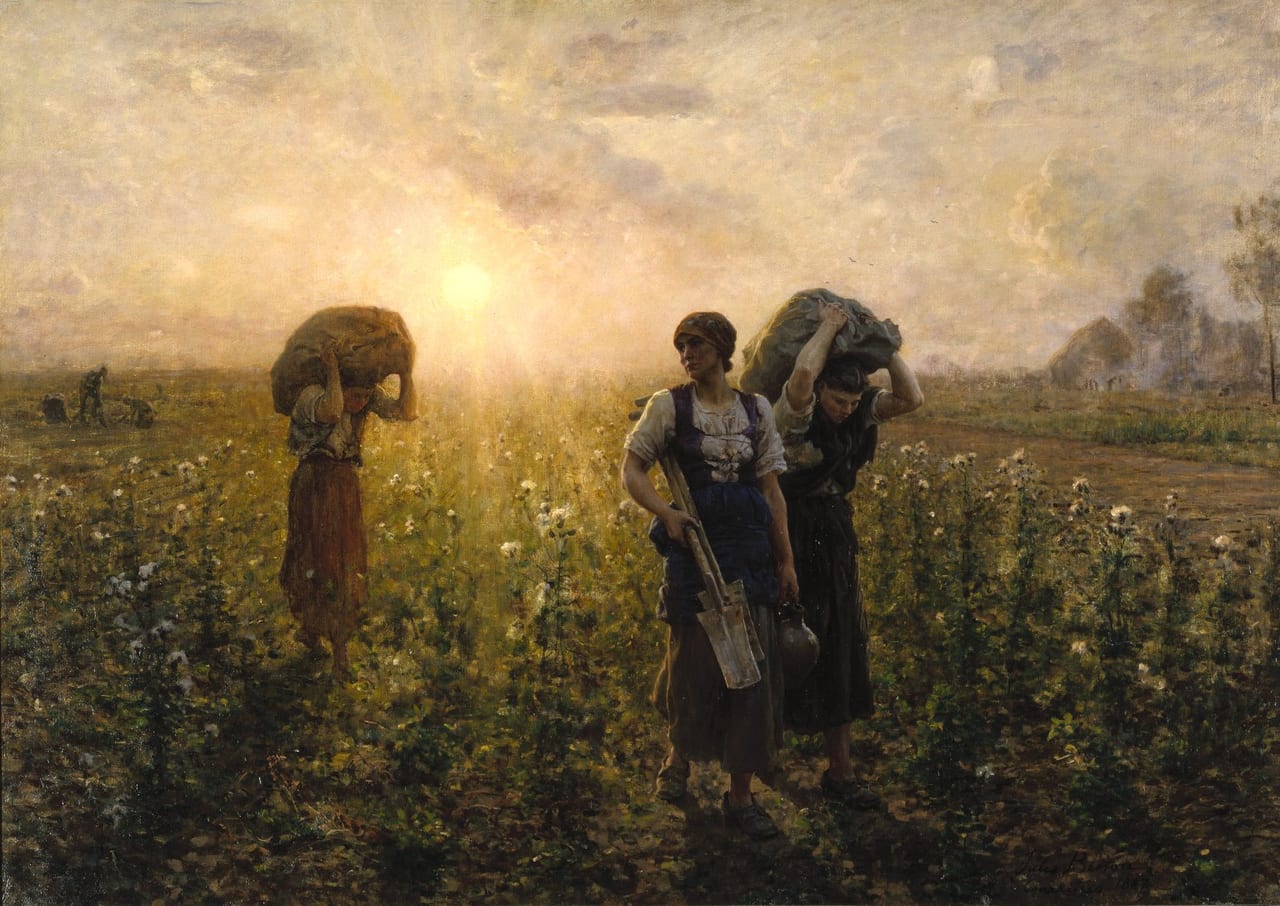
The End of the Working Day
Jules Breton · 1886–1887
At sunset three peasant women walk home across fields in flower, two with heavy loads on their backs, the third carrying shovels and a pitcher. Jules Breton’s vision of peasant life is rather idealised, far from Millet’s realism. The museum sees in the women’s stances “postures evoking those of ancient classical sculpture”.
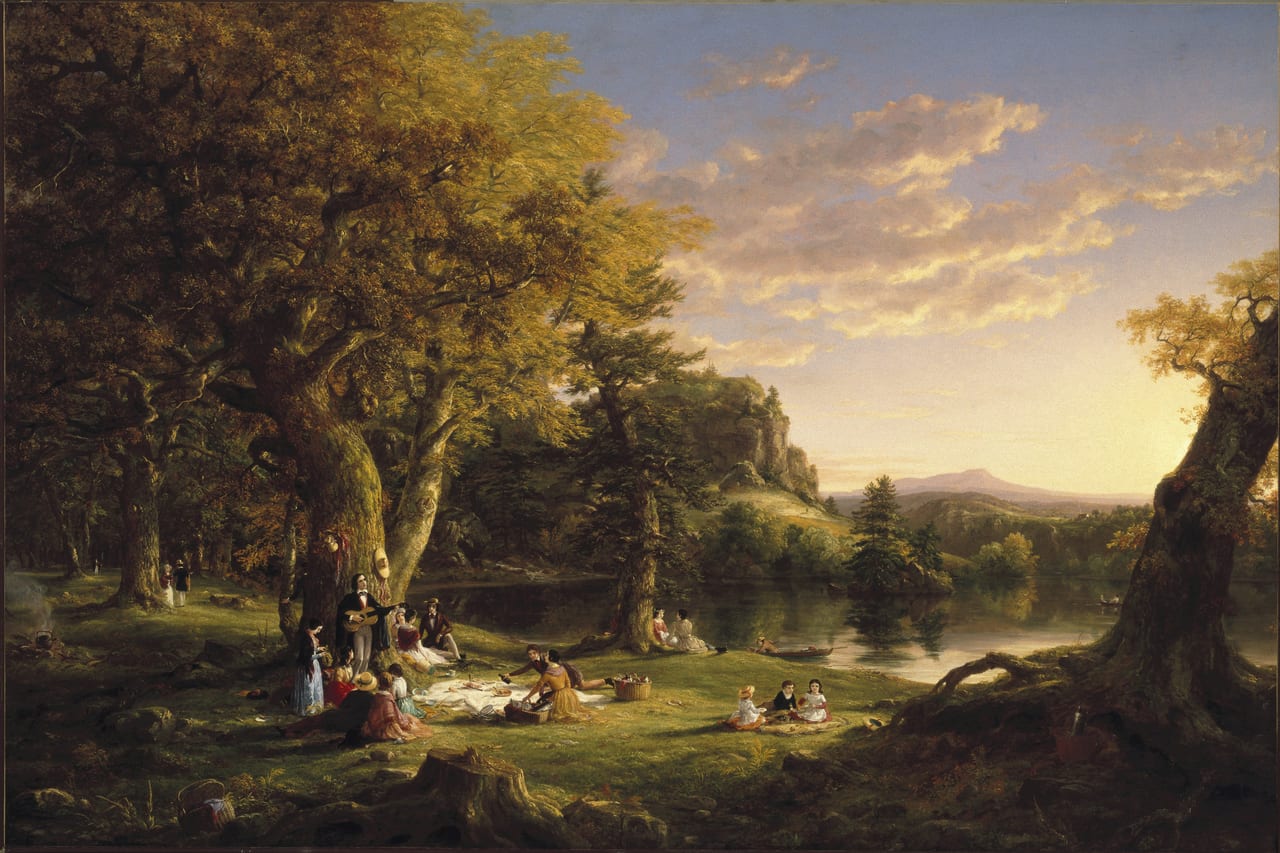
The Pic-Nic
Thomas Cole · 1846
An early American picture of a picnic. In Thomas Cole’s picture, set in the Hudson River Valley with the Catskills in the distance, a guitarist plays to a well-dressed party who have finished their meal, laid out from splint baskets on blue-and-white china; the young people wander the woods and go boating on the lake.
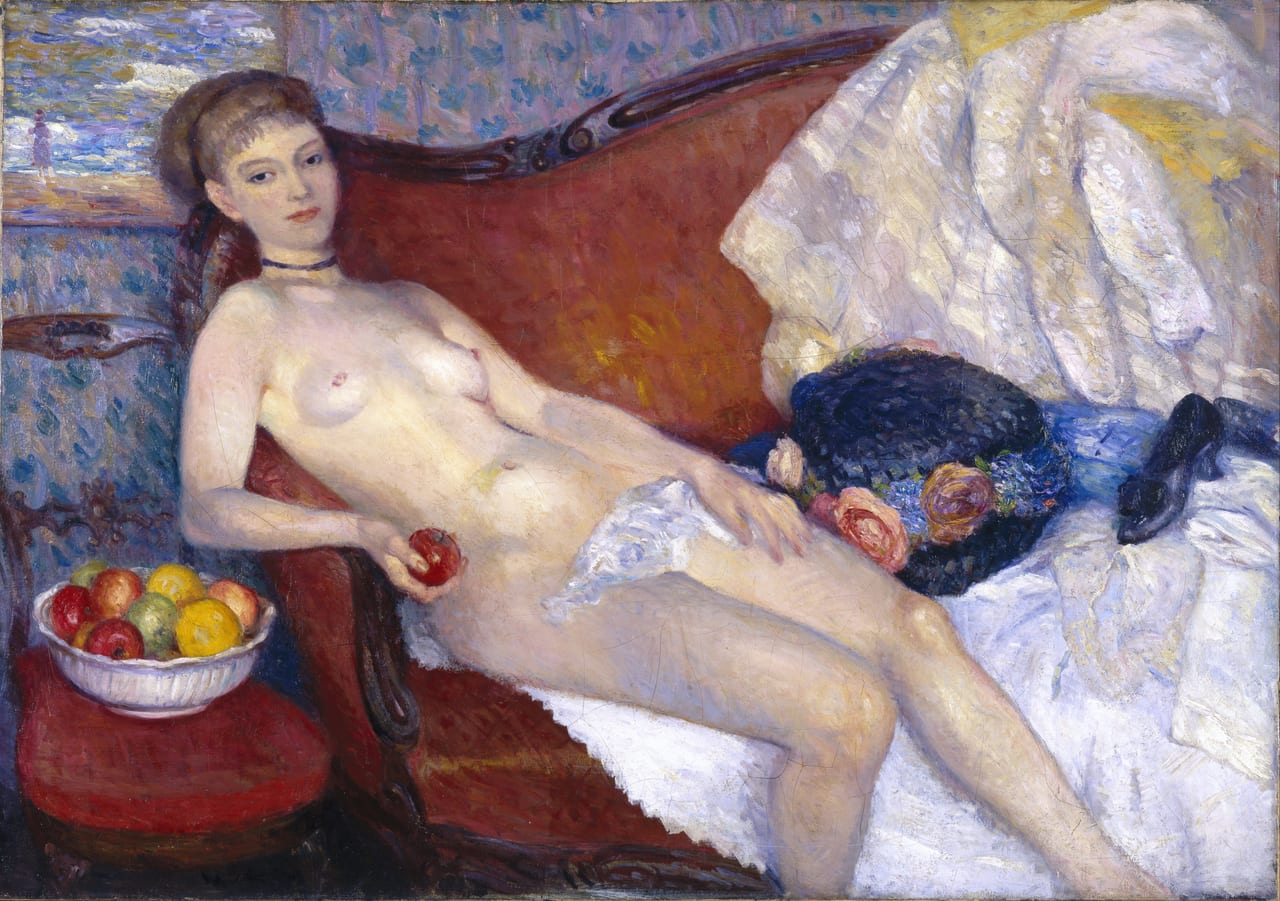
Nude with Apple
William James Glackens · 1909–1910
A model lies on a couch holding an apple, her hat set beside her as though she had just come in or was about to go. William Glackens painted it after his Ashcan years, and it is said to mark the turning point in his style and his break with The Eight; its relaxed pose, its comfortable room and its bright colour set it apart from the Ashcan painters.
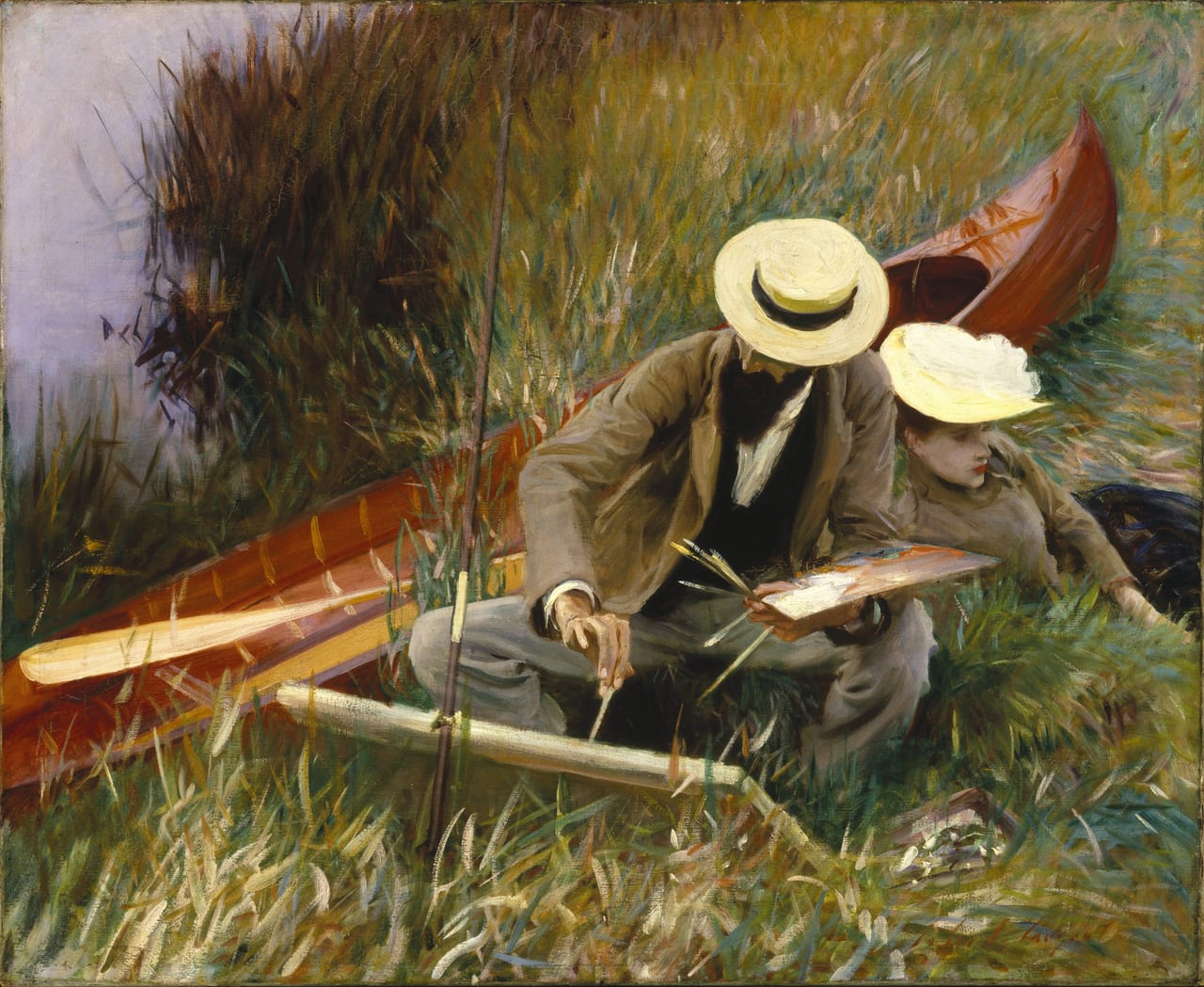
An Out-of-Doors Study
John Singer Sargent · 1889
John Singer Sargent, trained in Paris under Carolus-Duran and open to Impressionist techniques, painted his friend, the artist Paul César Helleu, sketching in the open air with his wife, Alice Guérin, at his side. A photograph very close to the picture suggests that Sargent sometimes worked from photographs when composing.
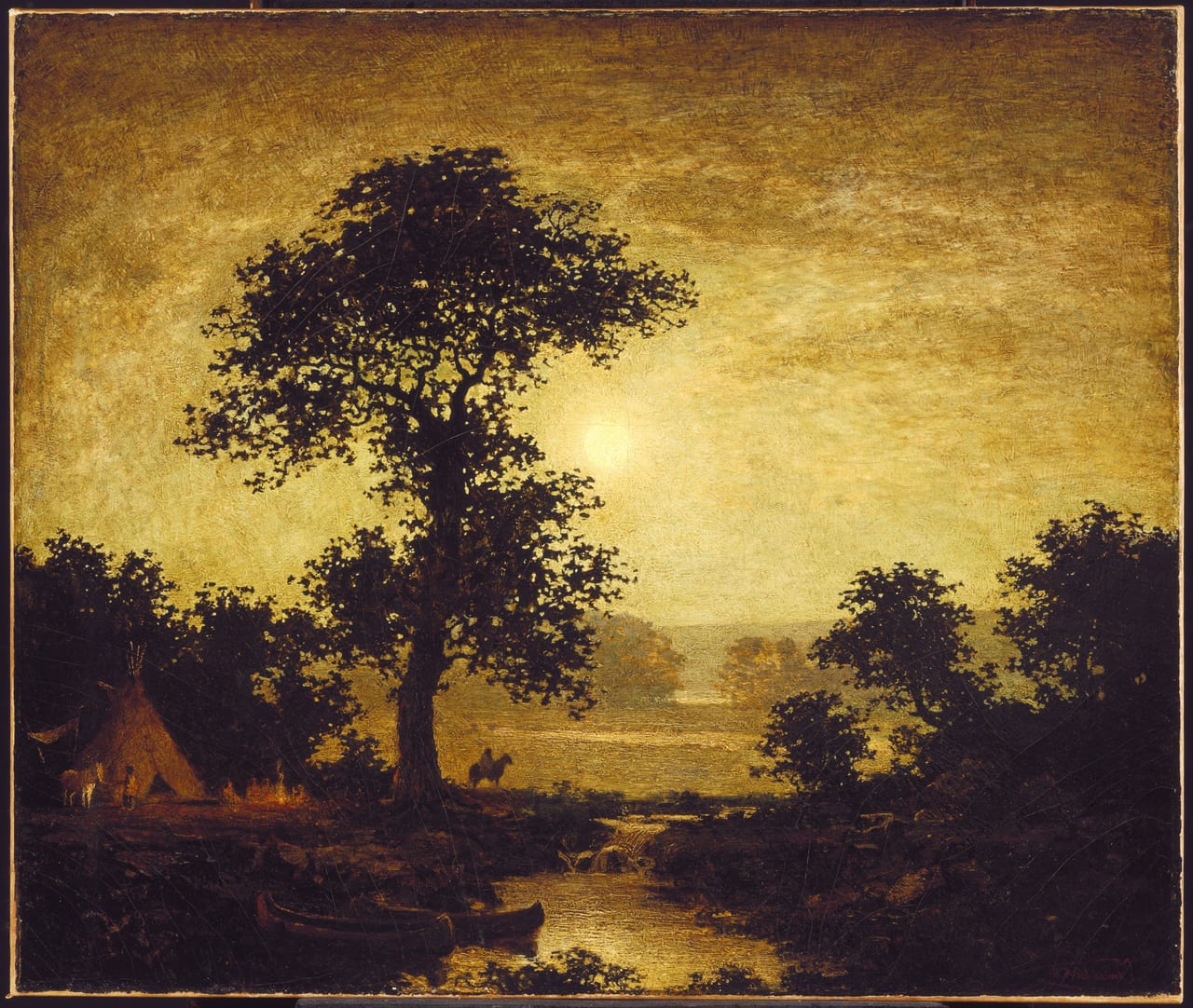
Moonlight
Ralph Albert Blakelock · 1885
Ralph Albert Blakelock painted many moonlit scenes in luminous, thickly laid paint that carry a mysterious romanticism. This one, from 1885, is the Moonlight referred to in Paul Auster’s novel Moon Palace.
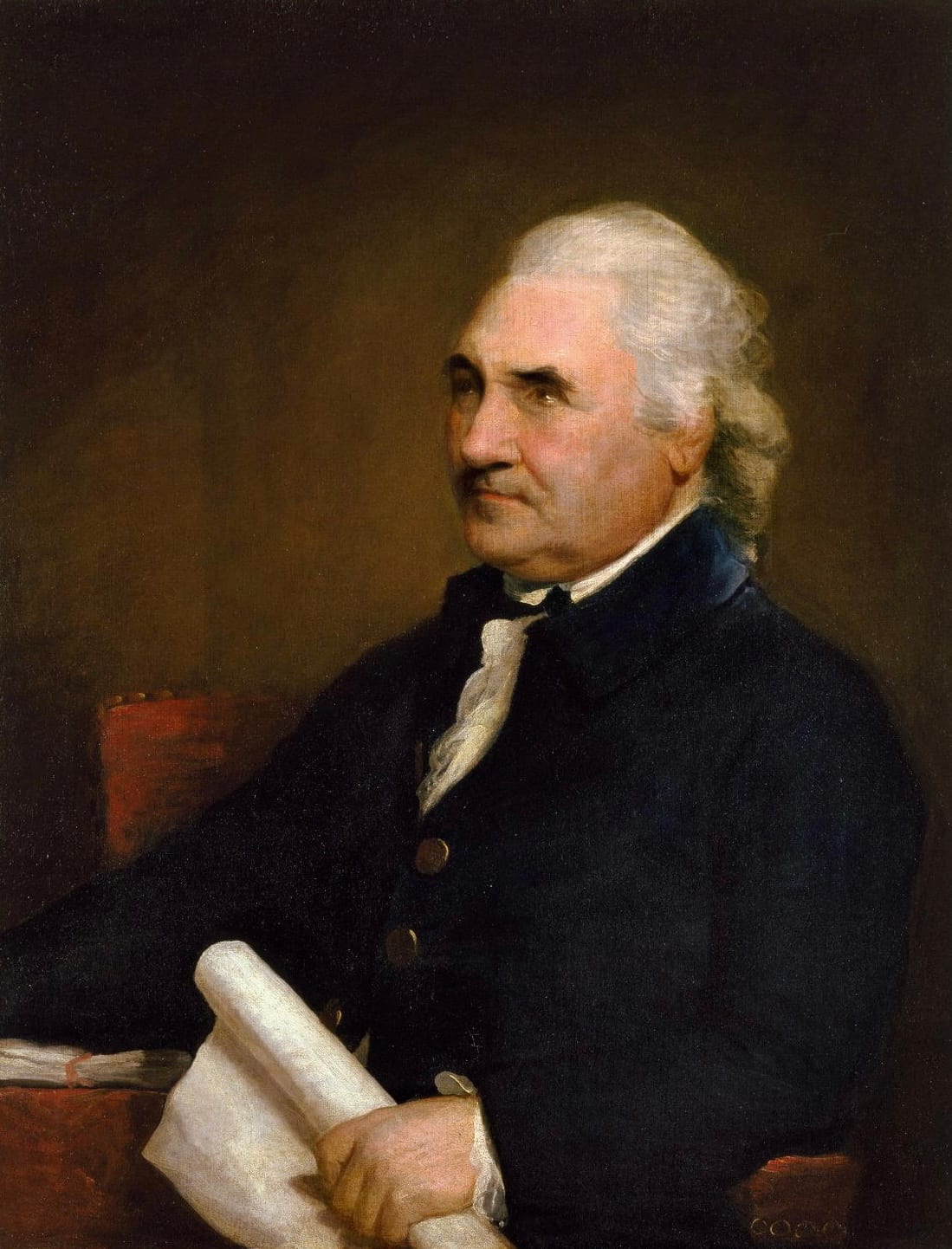
Colonel Isaac Barré
Gilbert Stuart · 1785
Isaac Barré, a Dublin-born soldier and politician who coined “Sons of Liberty” for the colonists resisting the Stamp Act, was wounded in the face by a French musket ball at Quebec in 1759; Gilbert Stuart hid the wound in heavy shadow. Barré ordered three portraits from Stuart; one was commissioned as a gift for the Earl of St Vincent.
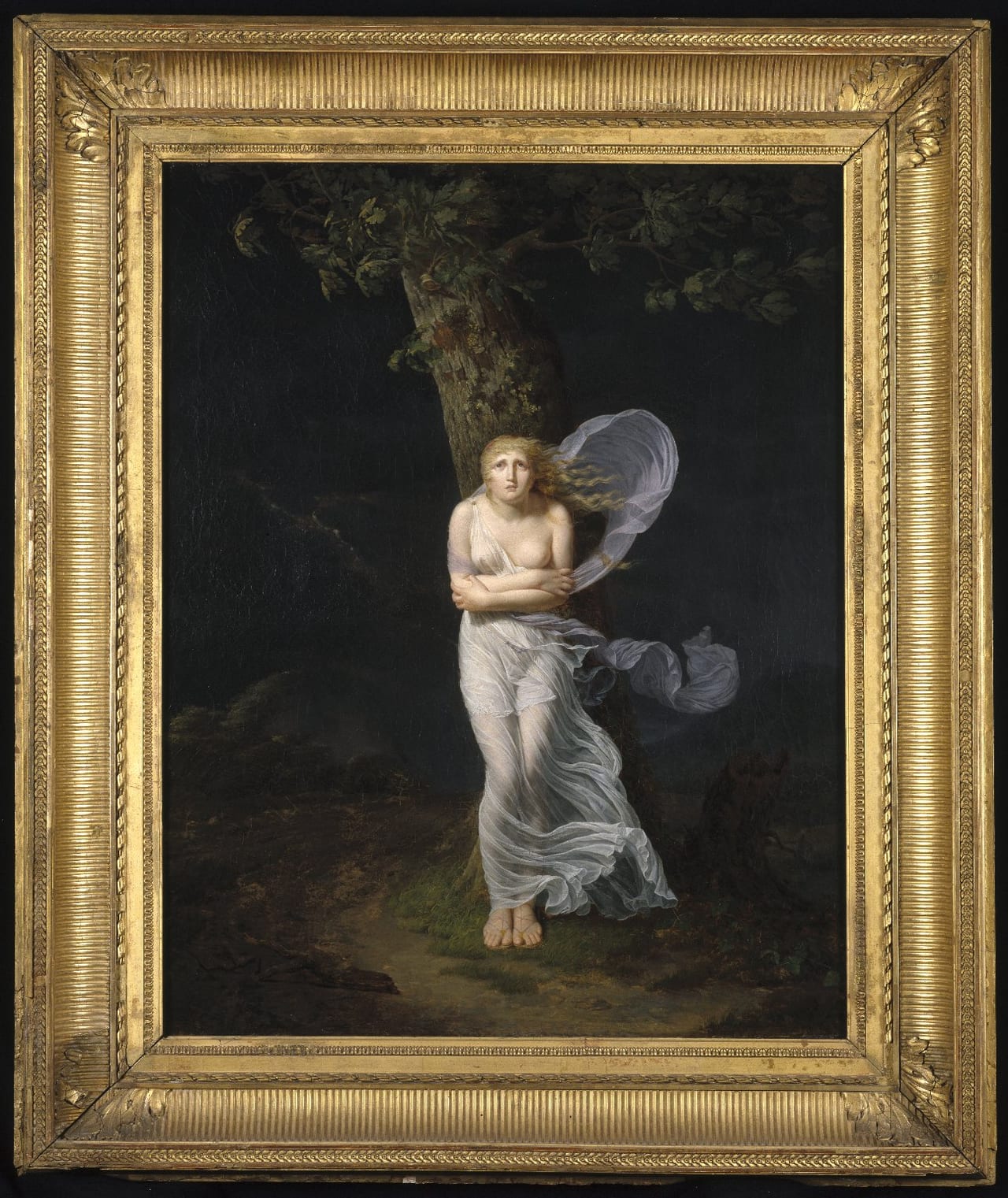
Young Woman Overtaken by a Storm
Féréol Bonnemaison · 1799
Caught in a storm, a young woman in thin, translucent clothing is left open to the weather. Féréol Bonnemaison had fled to Britain during the Terror; the picture was displayed at the Salon of 1799, held at the Louvre. Gothic in style, it has been read as an allegory of the chaos after the French Revolution.
Collections
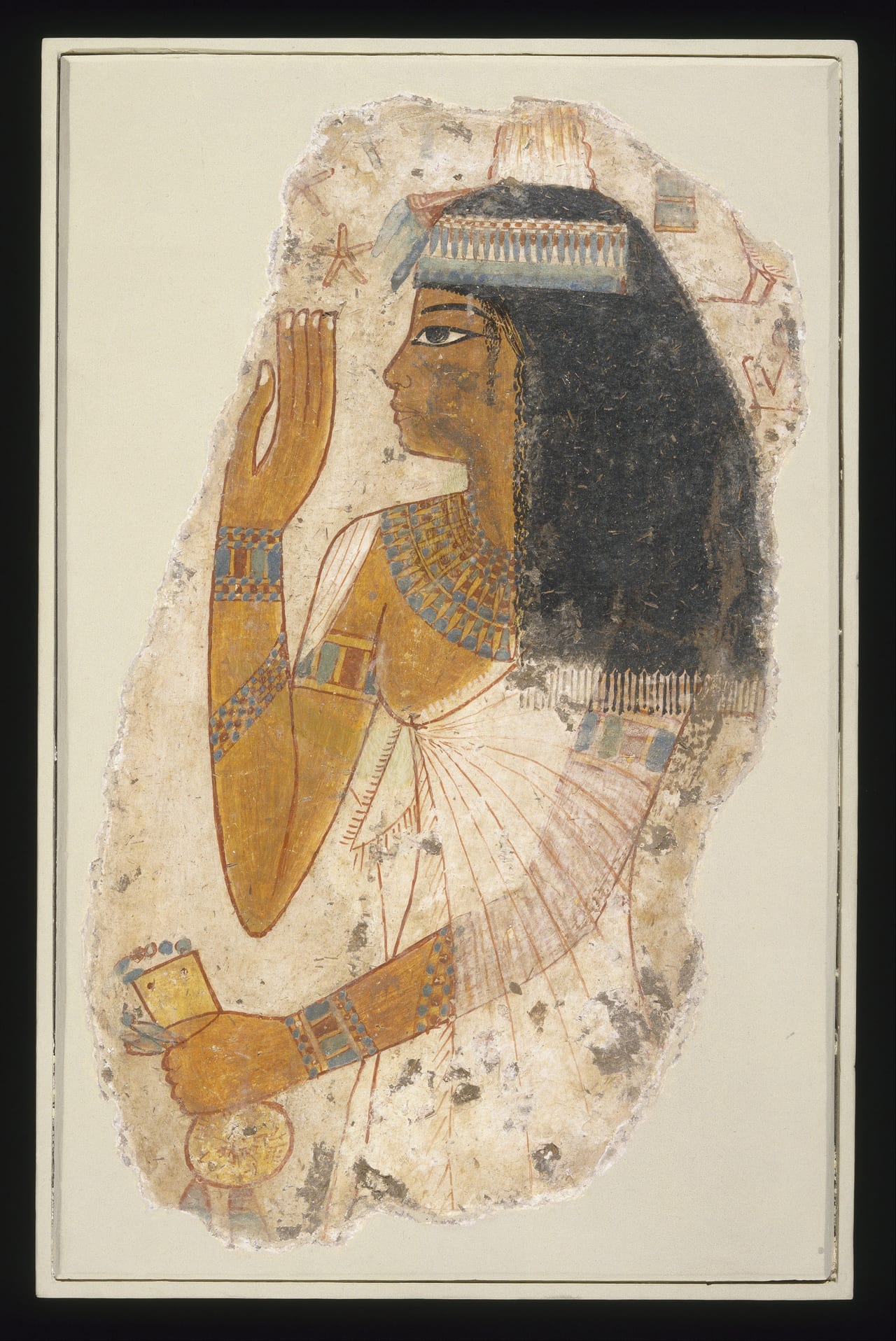
Egyptian art
Painting of Lady Tjepu · 1390–1353 BC
Lady Tjepu, richly dressed and jewelled, holds a menat; flowers crown her wig and a small cone of grease or fat sits on her head, and her name and title, “Lady of the House”, are written behind her. This fragment of a fresco from Tomb 181 at Thebes, painted in the reign of Amenhotep III, once showed her behind her son Nebamun. It came with Charles Edwin Wilbour’s collection in 1916.
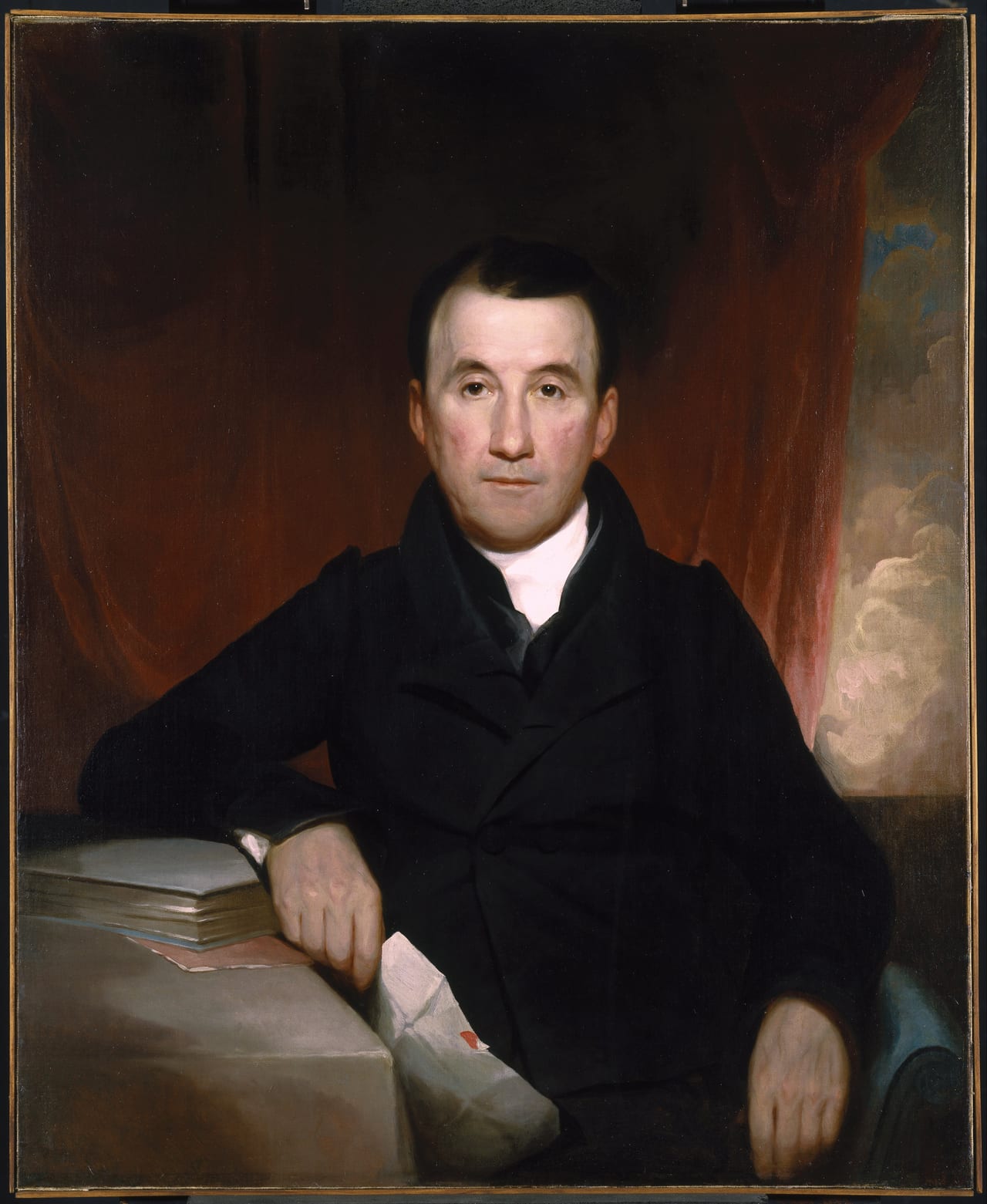
American art
Jonas Platt · Samuel Finley Breese Morse · 1828
American art is strongly represented in the museum from the colonial period on. Samuel Morse, a portrait painter before he turned to the telegraph, painted the New York politician Jonas Platt in 1828.
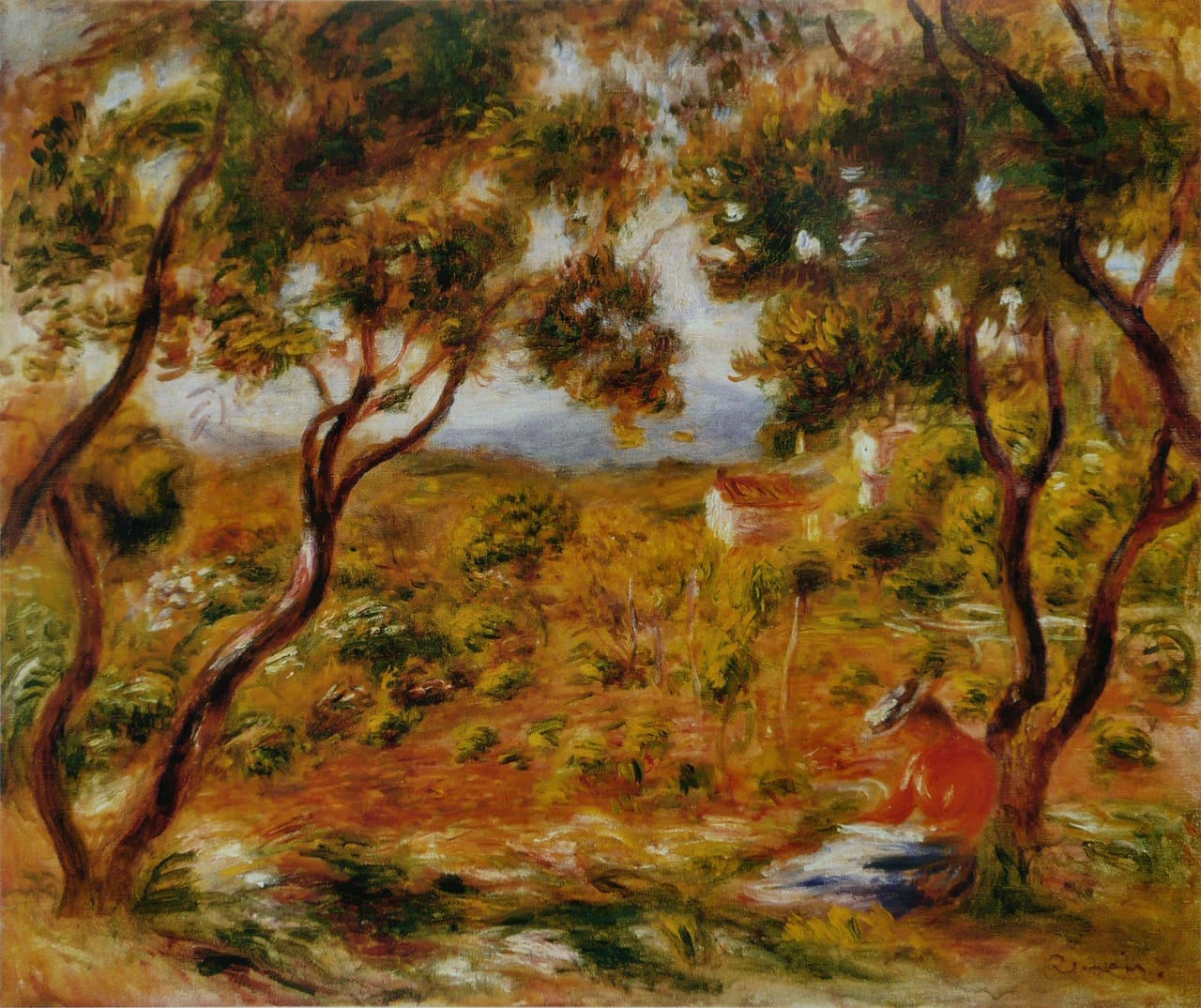
European painting
The Vineyards at Cagnes · Pierre-Auguste Renoir · 1908
European pictures reach from late Gothic and early Italian Renaissance paintings, among them Lorenzo Monaco and Giovanni Bellini, through Frans Hals and Gerard Dou to French painting of the nineteenth century: Daubigny, Boudin, Morisot, Degas, Caillebotte, Monet, Pissarro and Cézanne. Pierre-Auguste Renoir, who had drawn away from Impressionism in the mid-1880s, painted these vineyards at Cagnes in 1908.
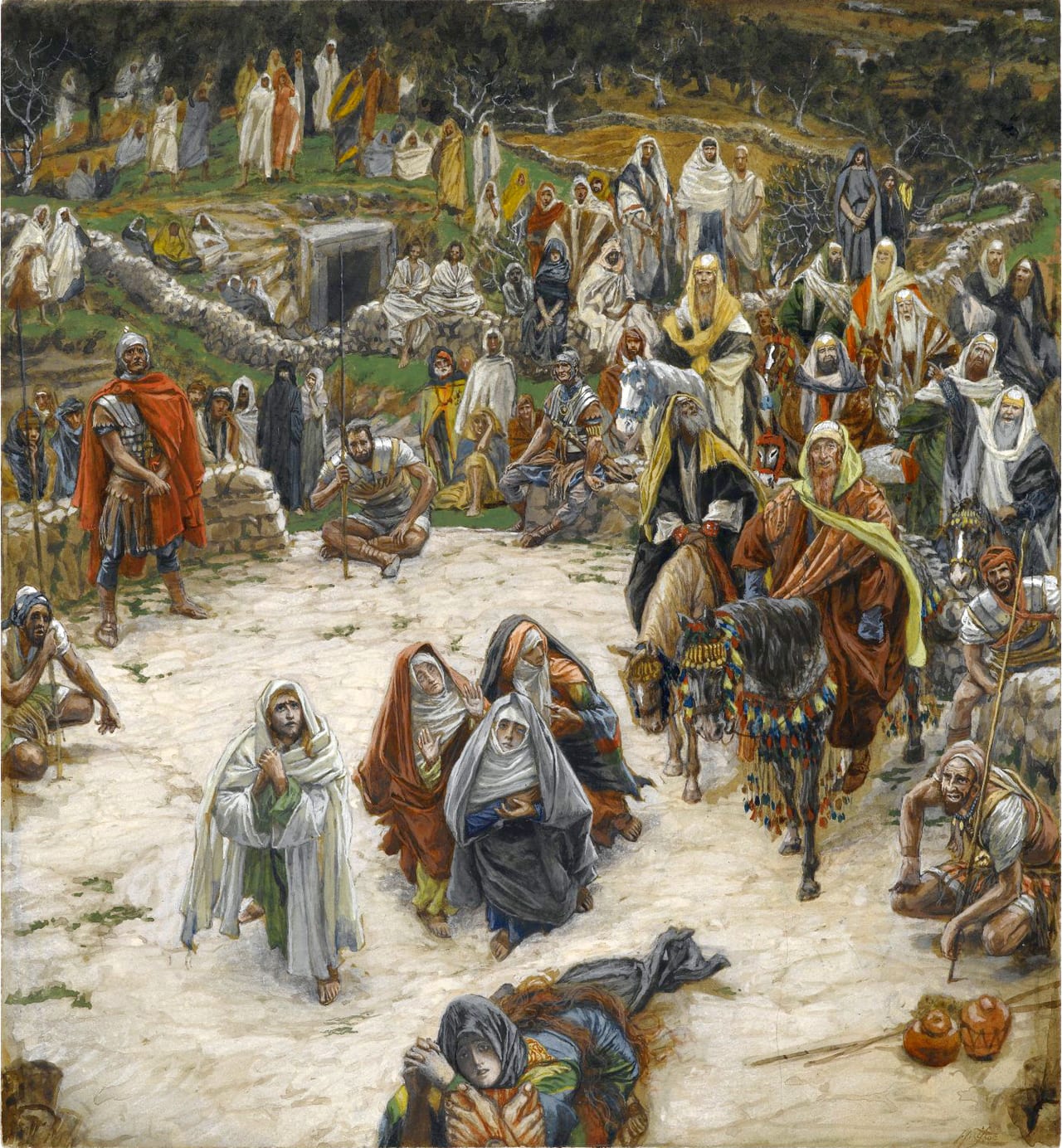
Tissot’s life of Christ
What Our Lord Saw from the Cross · James Tissot · c. 1890
After a mystical experience in 1885, James Tissot resolved to illustrate the life of Christ and travelled in the Middle East to study daily life there. In this watercolour the Crucifixion is seen from the cross itself: of Jesus only the feet show, above the distraught Mary Magdalene, while followers, bystanders and Roman legionaries gather and the tomb’s entrance lies in the distance. The museum acquired the whole series, finished between 1886 and 1894, in 1900.
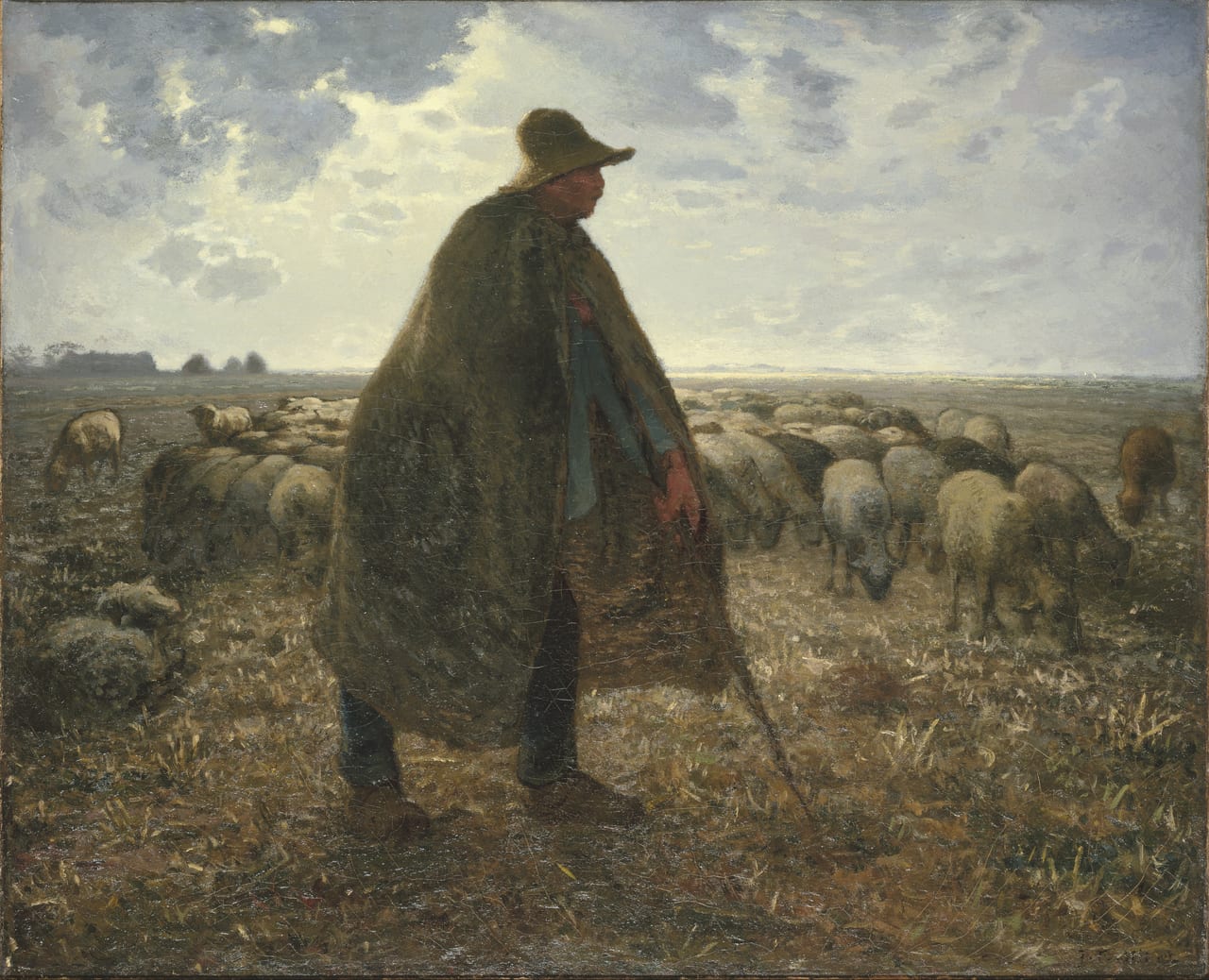
The Herriman bequest
Shepherd Tending His Flock · Jean-François Millet · 1860s
William Henry Herriman, a collector who left Brooklyn for Rome in 1865, bequeathed many works to the museum, among them Jean-François Millet’s Shepherd Tending His Flock, painted in the 1860s.
Artists
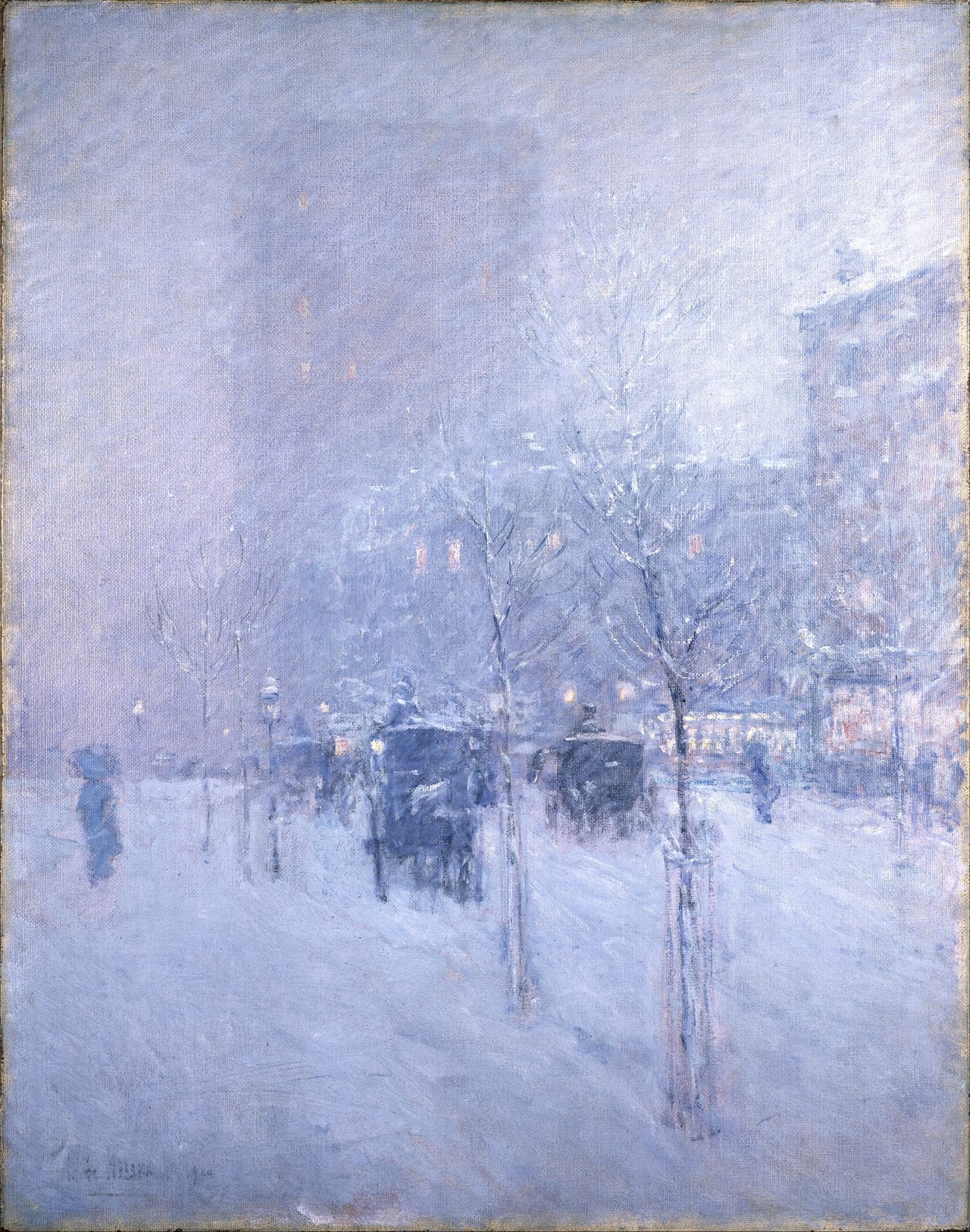
Childe Hassam
Late Afternoon, New York, Winter · c. 1900
Late Afternoon, New York, Winter is the work of a painter and printmaker who was among the leading voices of French Impressionism in American art.
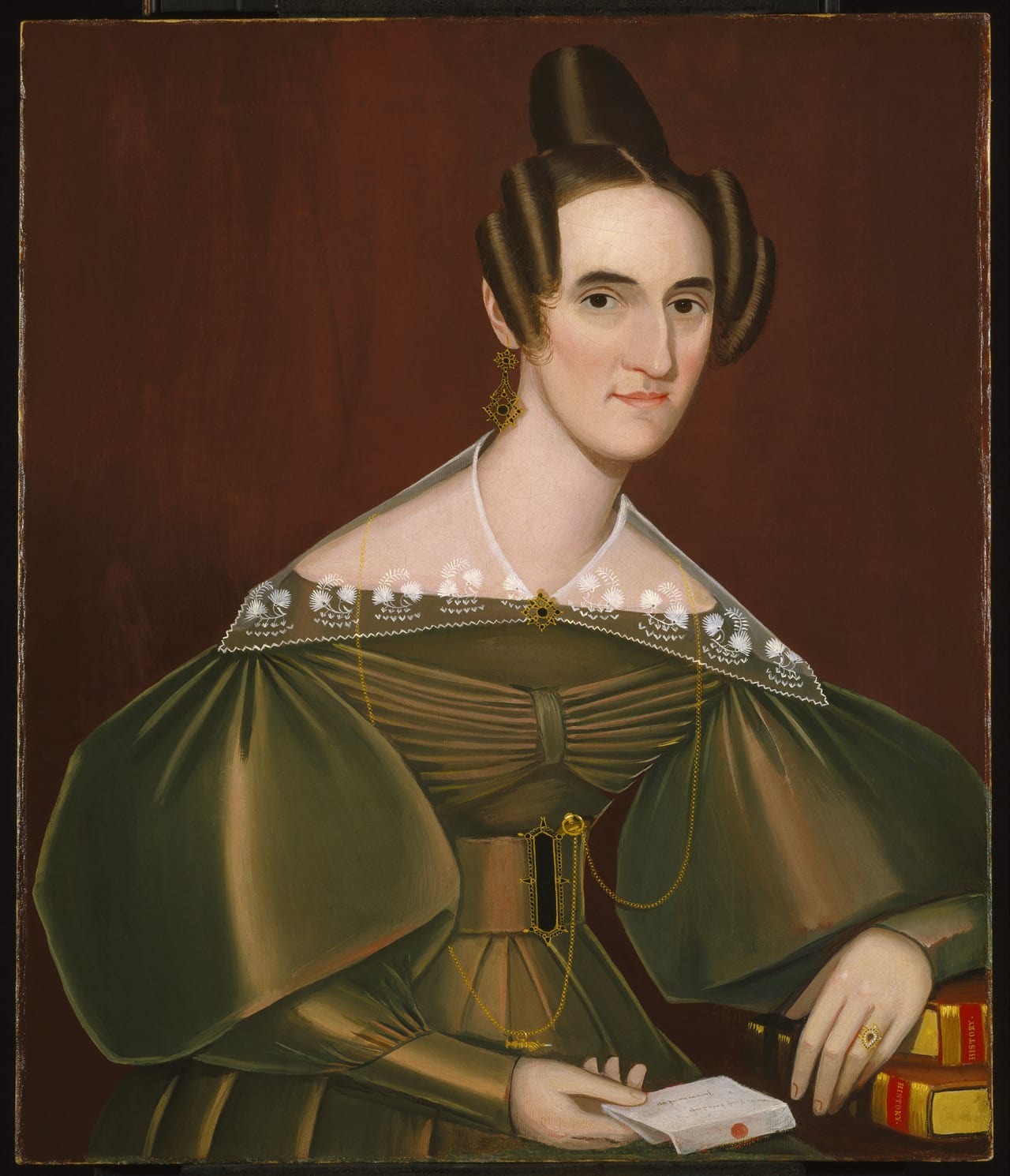
Ammi Phillips
Jeannette Woolley, later Mrs. John Vincent Storm · 1838
Jeannette Woolley’s portrait comes from a prolific travelling portraitist of Connecticut, Massachusetts and New York; more than eight hundred paintings are given to him, only eleven signed.
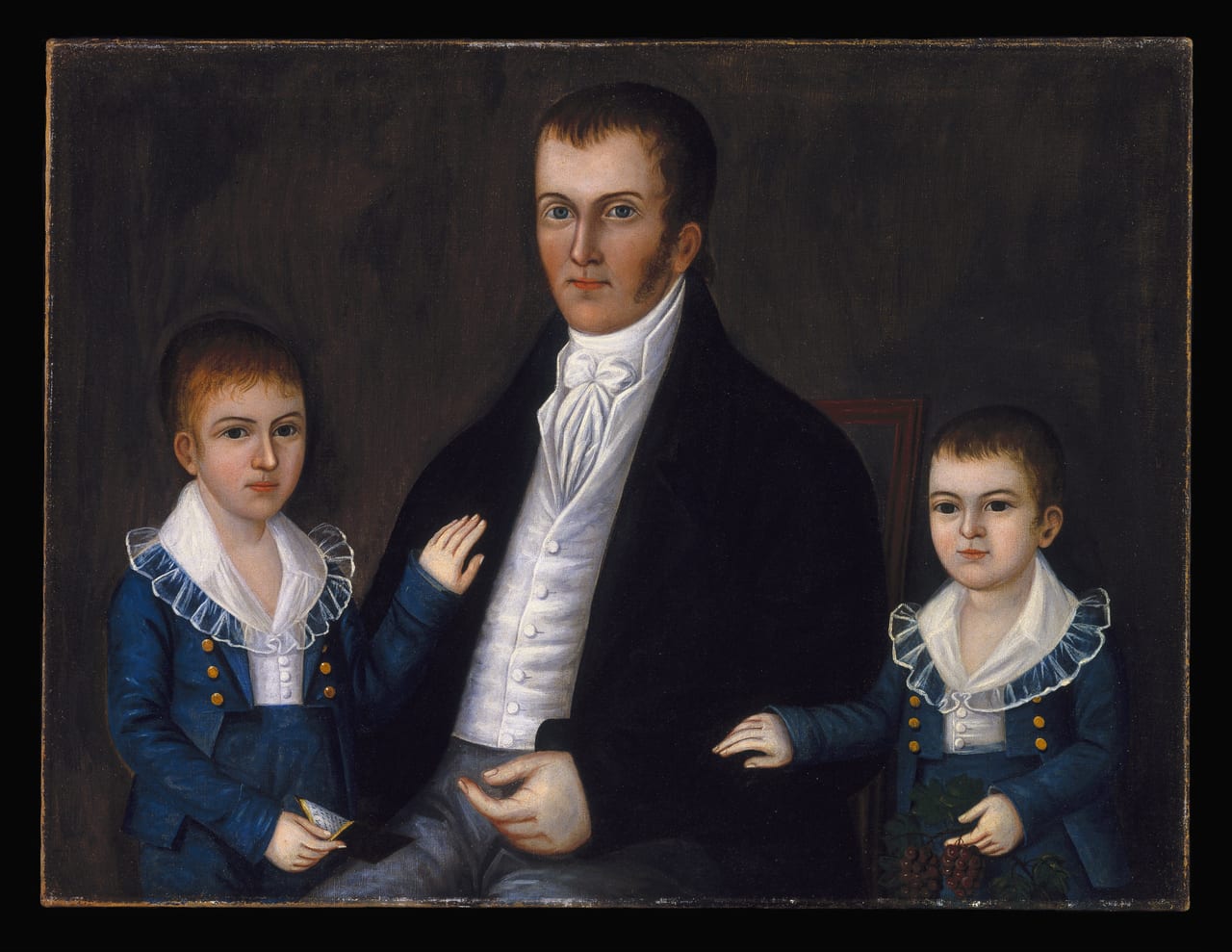
Joshua Johnson
John Jacob Anderson and Sons, John and Edward · c. 1812
The Anderson portrait is by a painter from near Baltimore, of African and European ancestry, who portrayed prominent Maryland residents and their children; he has been called the “earliest documented professional African-American painter”.
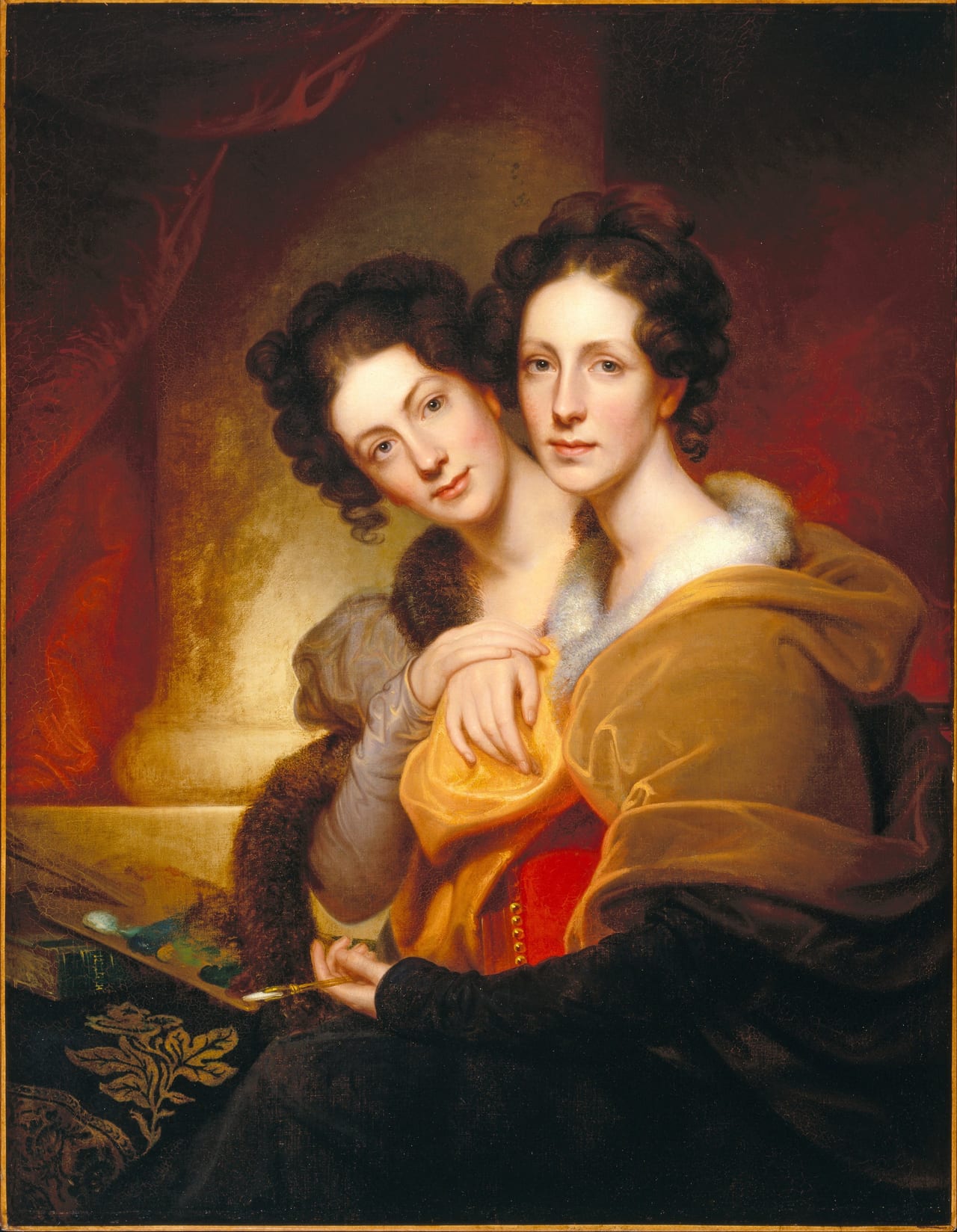
Rembrandt Peale
The Sisters (Eleanor and Rosalba Peale) · c. 1826
The Sisters is by a painter and writer who portrayed prominent people in Europe and in the post-Revolutionary United States.
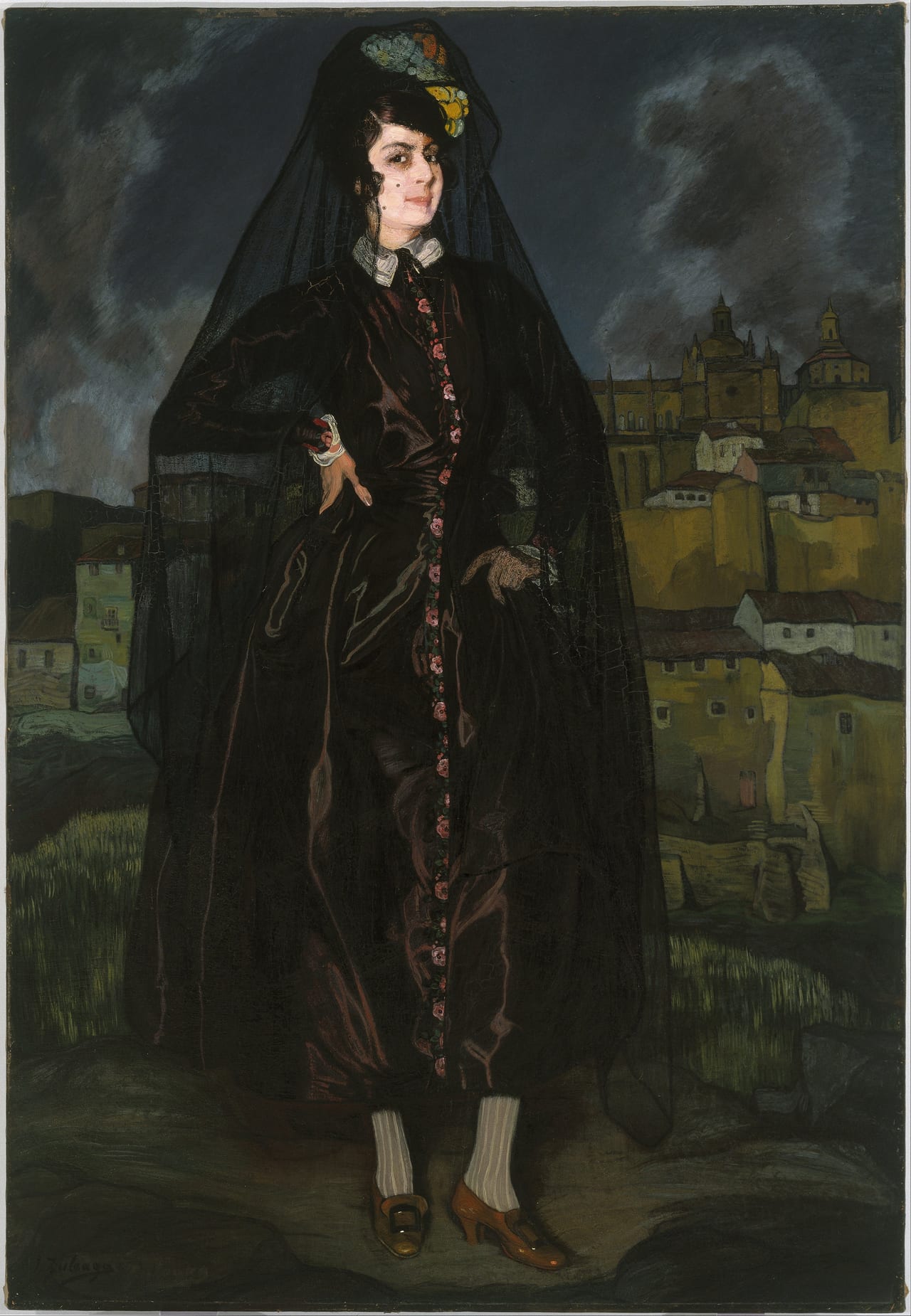
Ignacio Zuloaga
Anita Ramírez, in black · c. 1915
Anita Ramírez, in black is by a Spanish painter of genre scenes and portraits, known for theatrical figures from Spain’s culture and folklore.
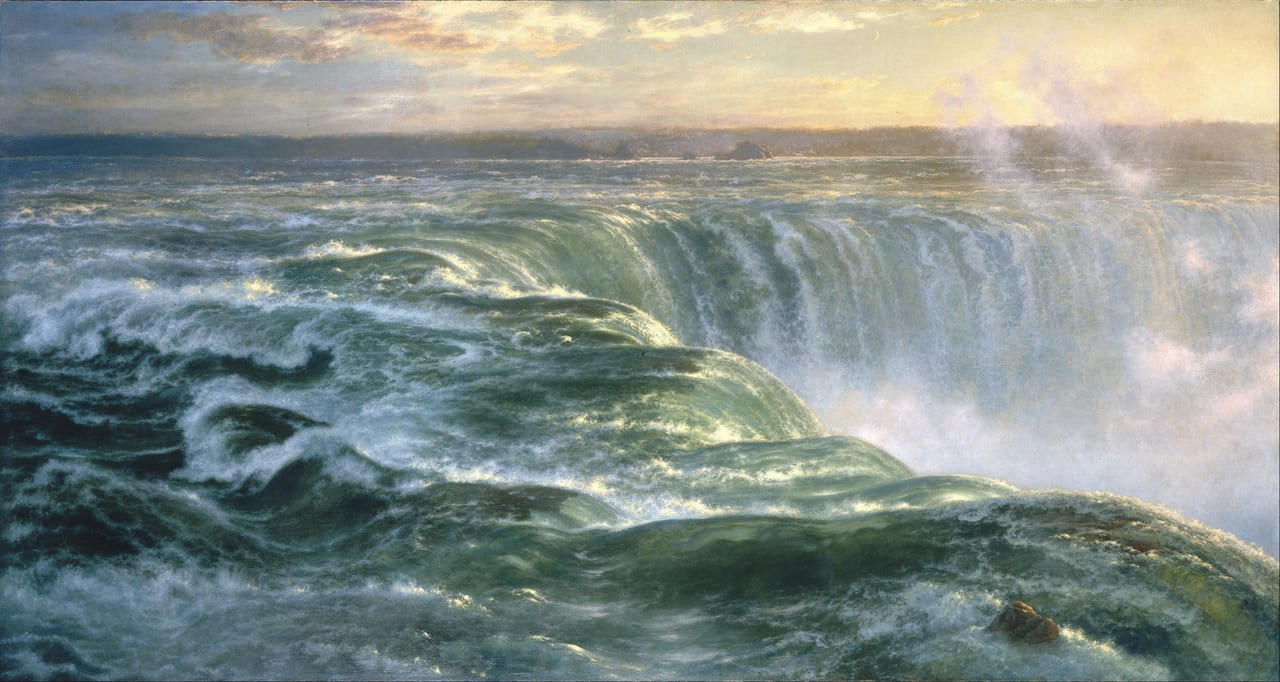
Louis Rémy Mignot
Niagara · 1866
Niagara is by a painter of French Catholic descent associated with the Hudson River School, whose Southern heritage and years in Europe gave him his own way with vegetation and atmosphere.
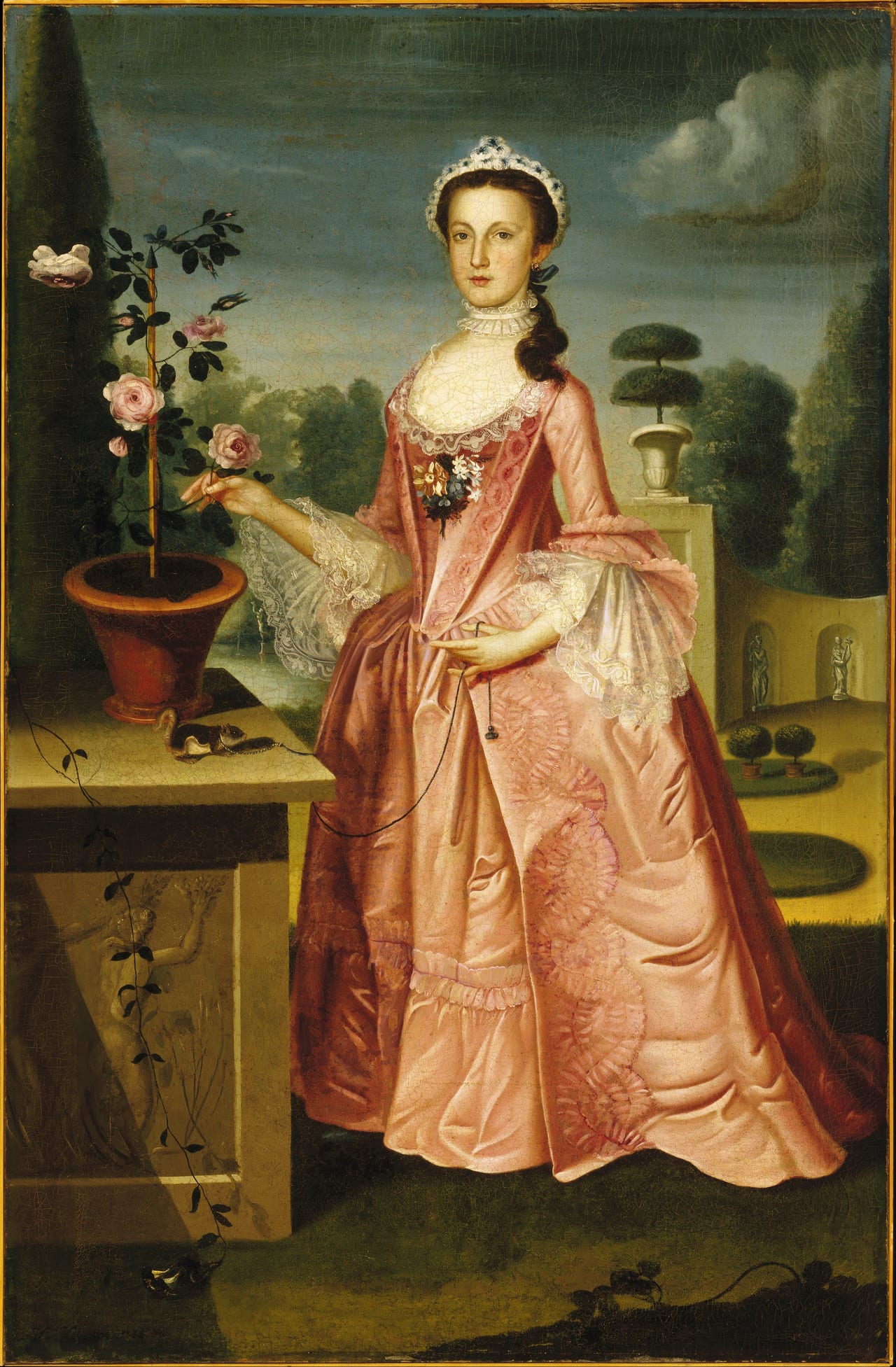
William Williams
Deborah Hall · 1766
Deborah Hall is by a British painter who also wrote The Journal of Llewellin Penrose, Seaman, a novel some count as the first American novel.
Artworks
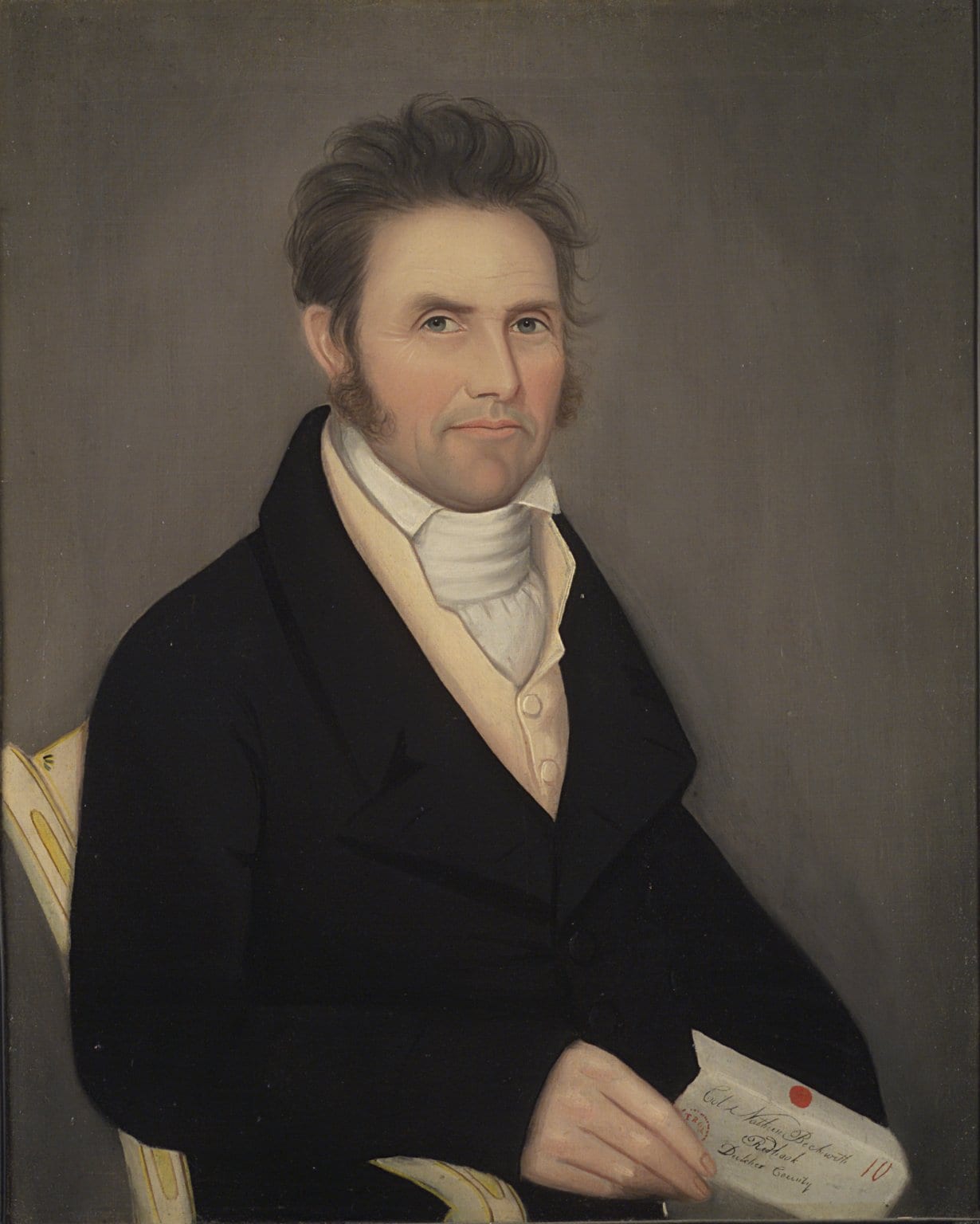
Colonel Nathan Beckwith
Ammi Phillips · c. 1817
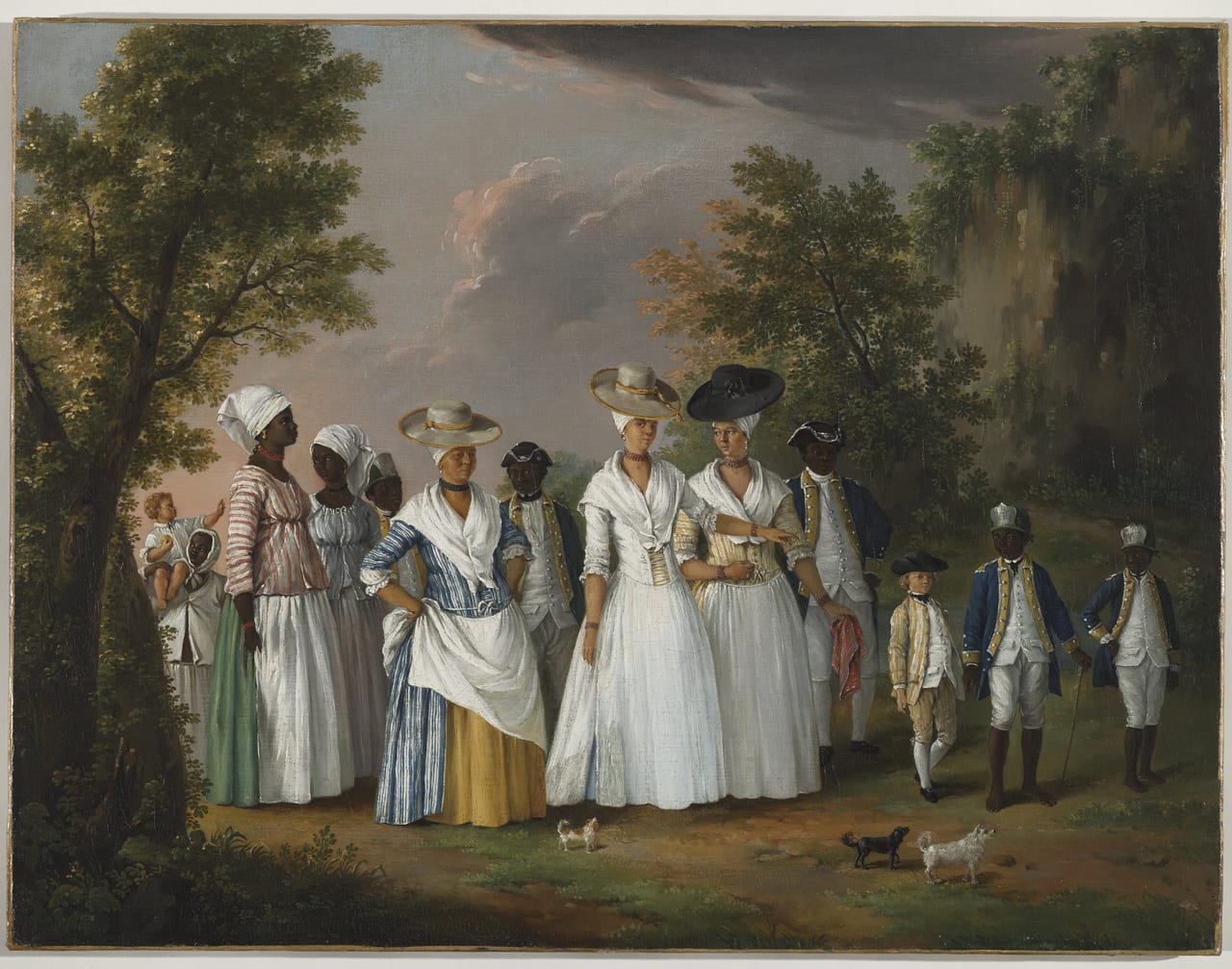
Free Women of Color with their Children and Servants in a Landscape
Agostino Brunias
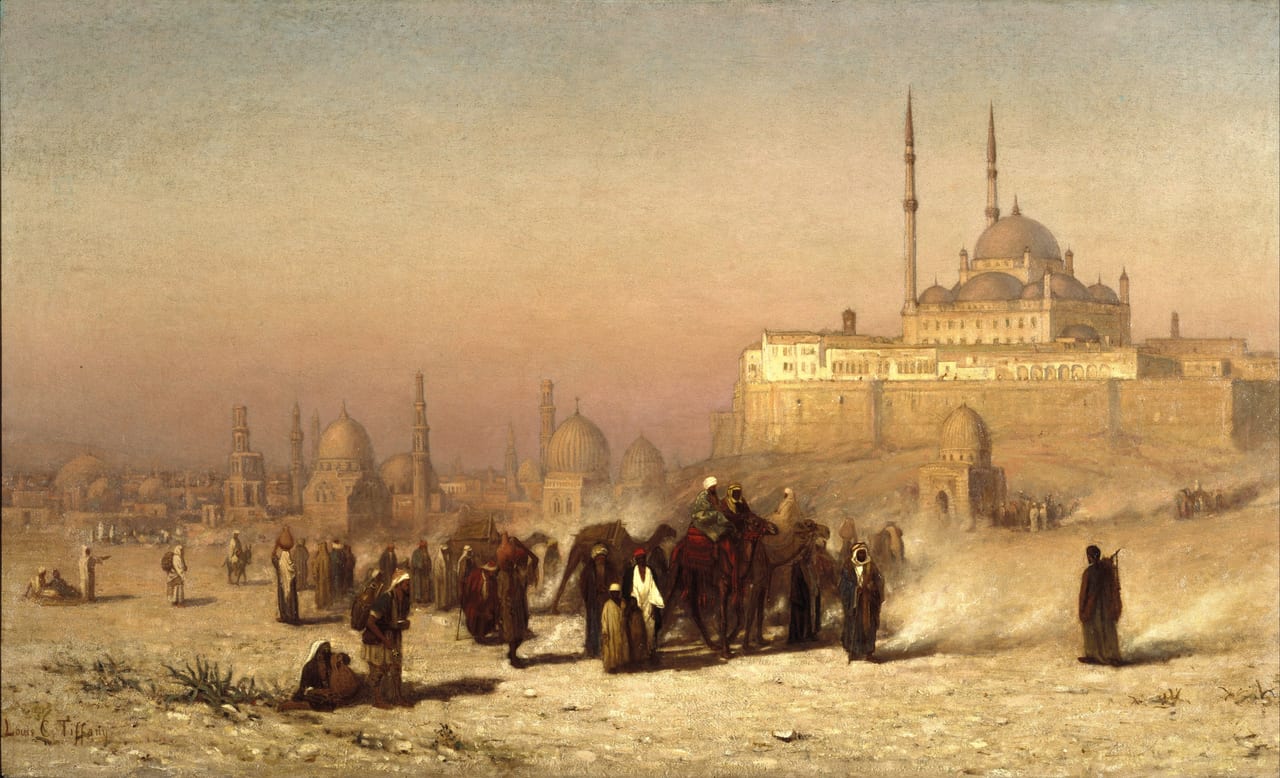
On the Way between Old and New Cairo, Citadel Mosque of Mohammed Ali, and Tombs of the Mamelukes
Louis Comfort Tiffany · 1872
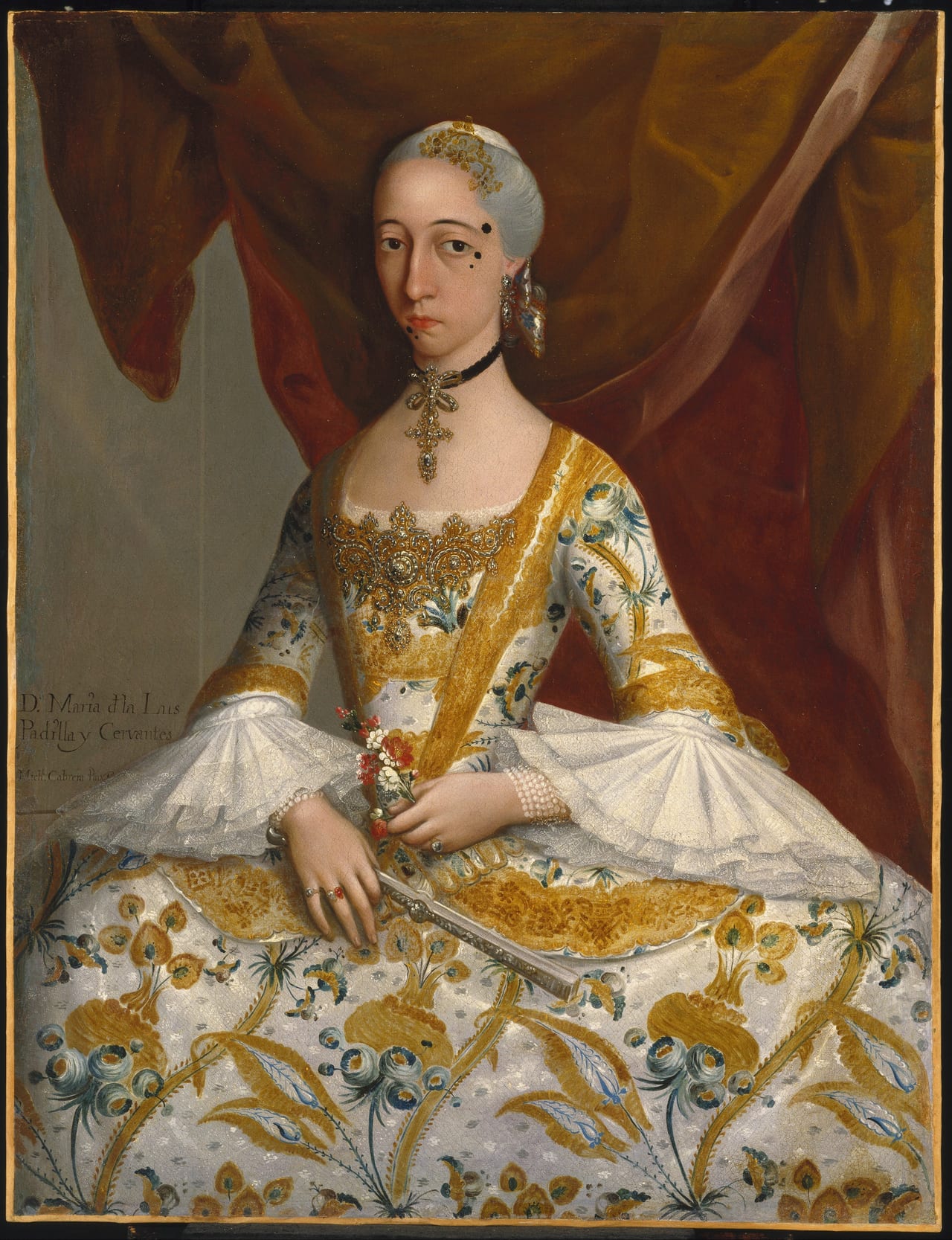
Doña María de la Luz Padilla y (Gómez de) Cervantes
Miguel Cabrera · c. 1760
Sources
- Wikipedia, “Brooklyn Museum”
- Britannica, “Albert Bierstadt”
- Wikipedia, “A Storm in the Rocky Mountains, Mt. Rosalie”
- Wikipedia, “Painting of Lady Tjepu”
- Wikipedia, “What Our Lord Saw from the Cross”
- Britannica, “James Tissot”
- Wikipedia, “Columbus Before the Queen”
- Britannica, “Emanuel Leutze”
- Wikipedia, “Young Woman Overtaken by a Storm”
- Wikipedia, “The End of the Working Day”
- Wikipedia, “Portrait of Isaac Barré”
- Britannica, “Gilbert Stuart”
- Wikipedia, “Lansdowne Portrait”
- Britannica, “Edward Hicks”
- Wikipedia, “Picnic”
- Wikipedia, “William Glackens”
- Wikipedia, “John Singer Sargent”
- Britannica, “Ralph Albert Blakelock”
- Wikipedia, “Ralph Albert Blakelock”
- Wikipedia, “Agostino Brunias”
- Wikipedia, “William H. Herriman”
- Britannica, “Thomas Cole”
- Wikipedia, “Thomas Cole”
- Britannica, “Childe Hassam”
- Wikipedia, “Samuel Morse”
- Wikipedia, “Ammi Phillips”
- Wikipedia, “Joshua Johnson (painter)”
- Britannica, “Rembrandt Peale”
- Wikipedia, “Rembrandt Peale”
- Britannica, “Ignacio Zuloaga”
- Wikipedia, “Ignacio Zuloaga”
- Britannica, “Louis Comfort Tiffany”
- Wikipedia, “Louis Comfort Tiffany”
- Wikipedia, “Outline of Cairo”
- Wikipedia, “Miguel Cabrera (painter)”
- Wikipedia, “William Williams (artist)”
- Wikipedia, “Louis Rémy Mignot”
- Wikipedia, “Cagnes-sur-Mer”
- Britannica, “Pierre-Auguste Renoir”
- Britannica, “John Singer Sargent”
- Wikipedia, “Childe Hassam”
- A View of the Two Lakes and Mountain House, Catskill Mountains, Morning — Public domain via Wikimedia Commons (Public domain)
- George Washington — Public domain via Wikimedia Commons (Public domain)
- The Peaceable Kingdom — Public domain via Wikimedia Commons (Public domain)
- A Storm in the Rocky Mountains, Mt. Rosalie — Public domain via Wikimedia Commons (Public domain)
- Columbus Before the Queen — Public domain via Wikimedia Commons (Public domain)
- The End of the Working Day — Public domain via Wikimedia Commons (Public domain)
- The Pic-Nic — Public domain via Wikimedia Commons (Public domain)
- Nude with Apple — Public domain via Wikimedia Commons (Public domain)
- An Out-of-Doors Study — Public domain via Wikimedia Commons (Public domain)
- Moonlight — Public domain via Wikimedia Commons (Public domain)
- Colonel Isaac Barré — Public domain via Wikimedia Commons (Public domain)
- Young Woman Overtaken by a Storm — Public domain via Wikimedia Commons (Public domain)
- Painting of Lady Tjepu — Public domain via Wikimedia Commons (Public domain)
- Jonas Platt — Public domain via Wikimedia Commons (Public domain)
- The Vineyards at Cagnes — Public domain via Wikimedia Commons (Public domain)
- What Our Lord Saw from the Cross — Public domain via Wikimedia Commons (Public domain)
- Shepherd Tending His Flock — Public domain via Wikimedia Commons (Public domain)
- Late Afternoon, New York, Winter — Public domain via Wikimedia Commons (Public domain)
- Jeannette Woolley, later Mrs. John Vincent Storm — Public domain via Wikimedia Commons (Public domain)
- John Jacob Anderson and Sons, John and Edward — Public domain via Wikimedia Commons (Public domain)
- The Sisters (Eleanor and Rosalba Peale) — Public domain via Wikimedia Commons (Public domain)
- Anita Ramírez, in black — Public domain via Wikimedia Commons (Public domain)
- Niagara — Public domain via Wikimedia Commons (Public domain)
- Deborah Hall — Public domain via Wikimedia Commons (Public domain)
- Colonel Nathan Beckwith — Public domain via Wikimedia Commons (Public domain)
- Free Women of Color with their Children and Servants in a Landscape — Public domain via Wikimedia Commons (Public domain)
- On the Way between Old and New Cairo, Citadel Mosque of Mohammed Ali, and Tombs of the Mamelukes — Public domain via Wikimedia Commons (Public domain)
- Doña María de la Luz Padilla y (Gómez de) Cervantes — Public domain via Wikimedia Commons (Public domain)
Invite the Brooklyn Museum into your living room