Tulip Fields at Sassenheim
Claude Monet · 1886

Clark Art Institute
Williamstown
Sterling and Francine Clark chartered their institute in 1950 to house the collection they had gathered together, and it opened to the public in 1955 in Williamstown, Massachusetts. Its galleries are especially strong in French Impressionist and Academic painting and in Winslow Homer, George Inness and John Singer Sargent, and its grounds run to 140 acres of lawn, meadow and walking trail.
- given in 2024 from the collection of Aso O. Tavitian, among the largest donations in the Clark’s history
- 331 works
- of lawns, meadows and walking trails, with long-term artworks and installations
- 140 acres
- in the photography collection, among them Atget, Cameron, Le Gray, Nadar and Talbot
- 1,000+ works
Sterling and Francine Clark
Robert Sterling Clark, born in New York City in 1877, was one of the heirs to the Singer sewing machine fortune, for his grandfather had been in business with Isaac Singer as his partner. After taking an engineering degree at Yale he joined the US Army and was posted to the Philippines and later to China. Between 1908 and 1909 he led thirty-six men on an expedition to a remote part of northern China, and the expedition drew the first map of that little-known region.
When the expedition was over, Clark made his home in Paris and started to collect. There he met Francine Clary, a Frenchwoman born in 1876 who had acted with the Comédie Française, and they married in 1919. She shared his appetite for art and spoke her mind when the pair met dealers; he called her his “touchstone in judging pictures.” Trusting chiefly their own judgement and taste, the two built up paintings, silver, sculpture, porcelain, drawings and prints.
Sterling Clark took no outside advisers and kept away from museums, and the collection stayed largely private, “rarely loaned or viewed”, and mostly kept in storage. As the Cold War brought rapid nuclear armament, they began to fear for its safety in New York, where they lived. In 1949 they visited Williamstown, where his grandfather and father had both been trustees of Williams College. In 1950 they founded the institute as a permanent home for the collection, with a double mission as museum and as centre for research and higher education, and it opened its doors on 17 May 1955.
From Old Masters to the Impressionists
Sterling Clark’s first purchases, made in 1912, included a Portrait of a Man by Hyacinthe Rigaud, and in those early years Italian, Dutch and Flemish painters held his attention most. Beside the Old Masters he bought favourites of his own: Sargent, Homer, Degas and Renoir. After 1920 French painting of the later nineteenth century took over his buying, and it remains the cornerstone of the collection, which reaches from the fourteenth and fifteenth centuries to the Barbizon painters and the Impressionists; his collecting did not extend into the twentieth century.
Clark’s favourite dealers included Knoedler and Durand-Ruel; in 1933 Sterling Clark bought Monet’s Tulip Fields at Sassenheim directly from the private collection of Paul Durand-Ruel, Monet’s dealer. His love of horses equalled his passion for collecting. In 1954 his champion thoroughbred, Never Say Die, took the Derby at Epsom, and the collection holds pictures of jockeys and races and of famous English and American horses.
Today the holdings run from the Renaissance to the early twentieth century, in painting, sculpture, prints, drawings, photographs and decorative arts, European and American. They are richest in French Impressionist and Academic paintings, in British oil sketches, drawings and silver, and in the Americans Homer, Inness and Sargent. The works on paper trace the graphic arts from the fifteenth century onwards, with significant groups by Dürer, Claude, Constable, Degas, Toulouse-Lautrec, Gauguin and Homer.
A campus and its gifts
The Clark started as one white marble museum building, designed by Daniel Perry, begun in 1952 and opened in 1955. Pietro Belluschi and The Architects Collaborative added the red granite Manton Research Center in 1973, with a library, seminar rooms, galleries, offices and an auditorium. In 2001 Tadao Ando was asked to design two more buildings: the Lunder Center at Stone Hill, opened in 2008 and home to the Williamstown Art Conservation Center, and the Clark Center, opened in 2014. Selldorf Architects remodelled the older buildings and Reed Hilderbrand reworked the grounds.
In 2007 the Manton Foundation gave the Manton Collection of British Art, paintings and works on paper by Gainsborough, Constable, Turner and others, formed by Sir Edwin Manton and Florence, Lady Manton. Sir Edwin, born in Essex twenty miles from “Constable Country”, once owned up to being “a compulsive buyer”. In 2013 Frank and Katherine Martucci gave eight landscapes by George Inness, joining the two of his works the Clark already owned.
In 2024 came 331 works from the collection of Aso O. Tavitian: paintings, sculpture, drawings and decorative arts made between the fifteenth and nineteenth centuries, by artists such as Jan van Eyck, Rubens, Bernini, Houdon and Vigée-Lebrun. The gift more than doubles the Clark’s sculpture holdings. Its permanent home is to be a new wing by Selldorf Architects, clad in multicoloured veined marble, with twelve galleries on a single level linking the Museum Building to the Manton Research Center.
What to see
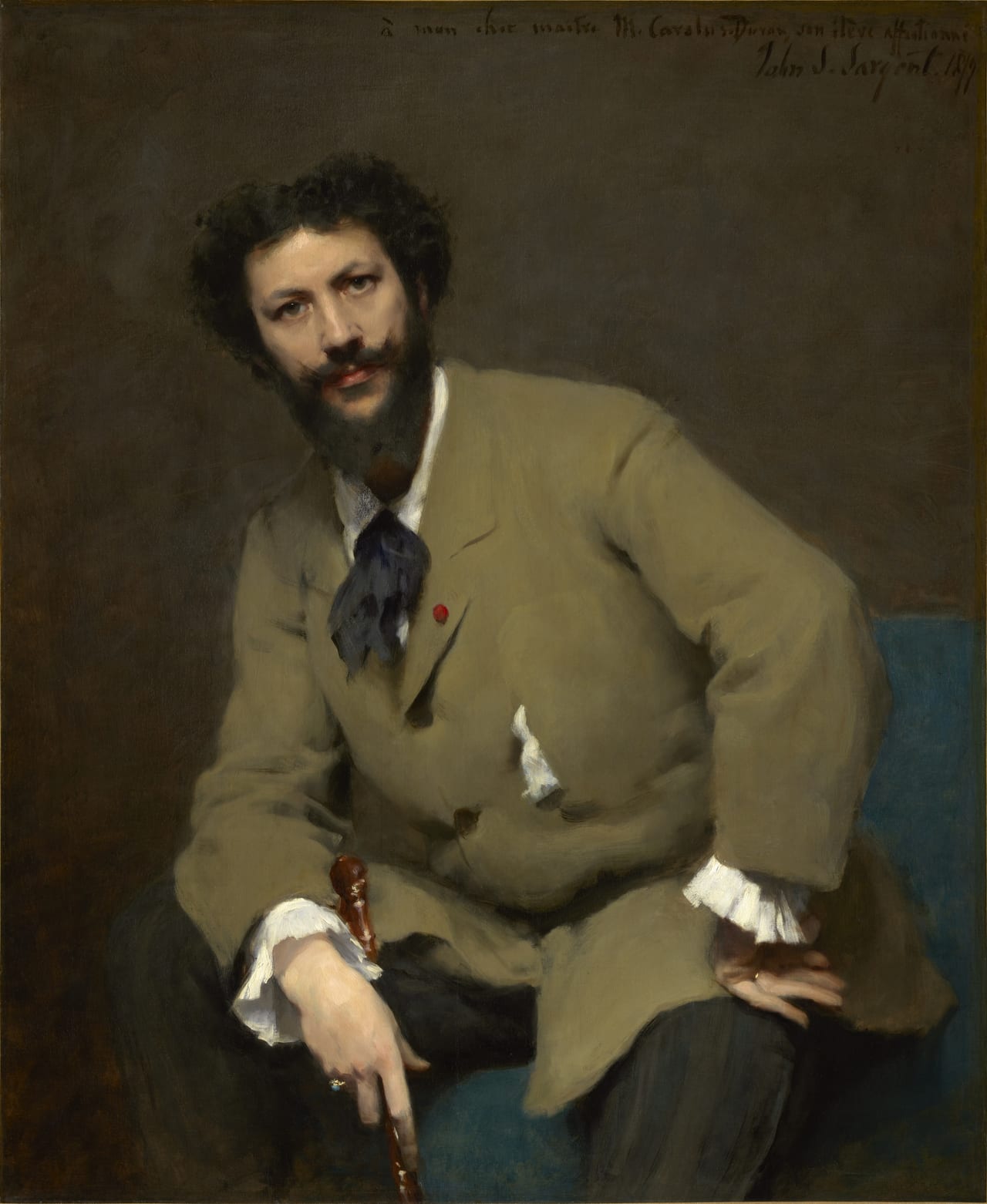
Carolus-Duran
John Singer Sargent · 1879
Shown in a casual pose and elegant clothes, Sargent’s teacher is presented as a dandy, with the Legion of Honour’s red pin on his lapel; in the 1870s he was among the most celebrated portrait painters in Paris. Showing this portrait, to great acclaim, set Sargent’s own career going, and along the top he wrote a homage to his master, signing himself an “affectionate pupil.”
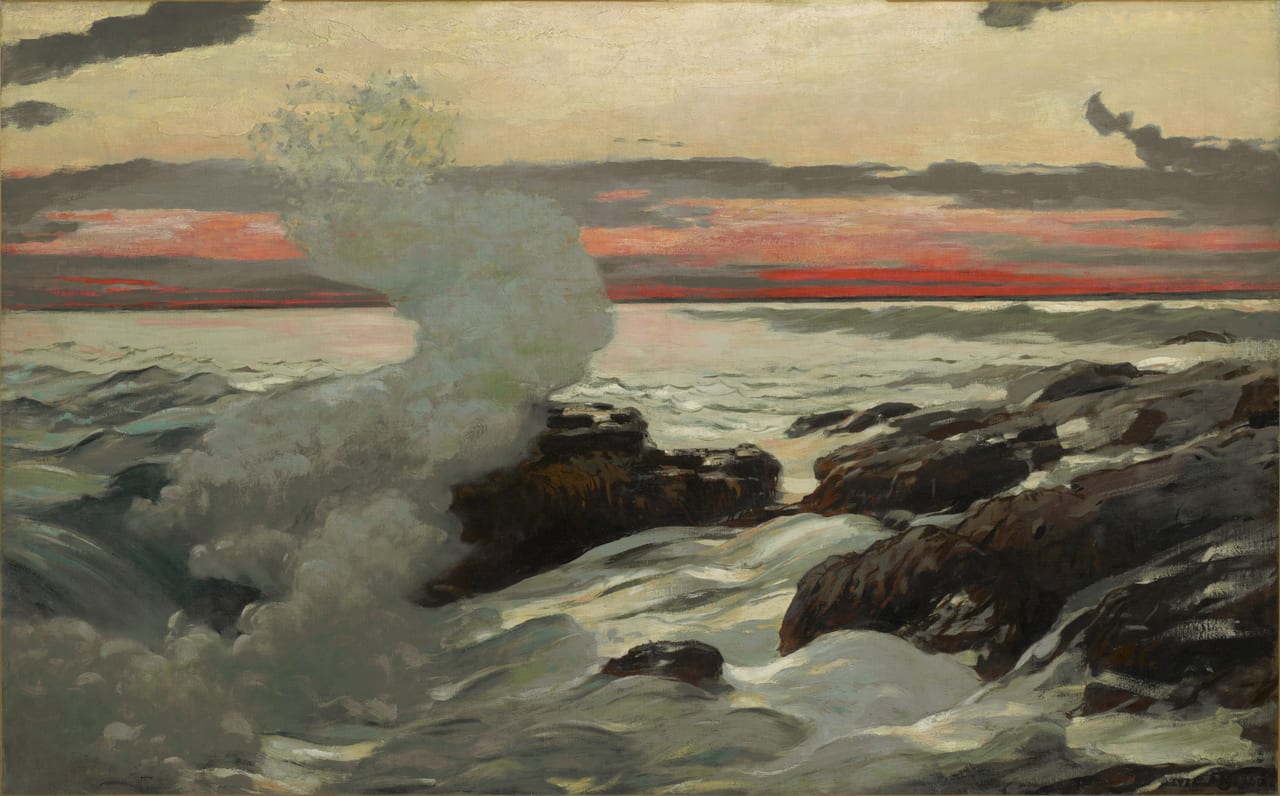
West Point, Prout's Neck
Winslow Homer · 1900
Bands of brilliant colour stretch across the horizon and lay a rosy glow on the ocean as seawater surges round massive rocks. Homer held it among his best paintings and wrote that it was painted “fifteen minutes after sunset—not one minute before”; catching that moment took “many days of careful observation” from one point on the Maine coast near his studio.
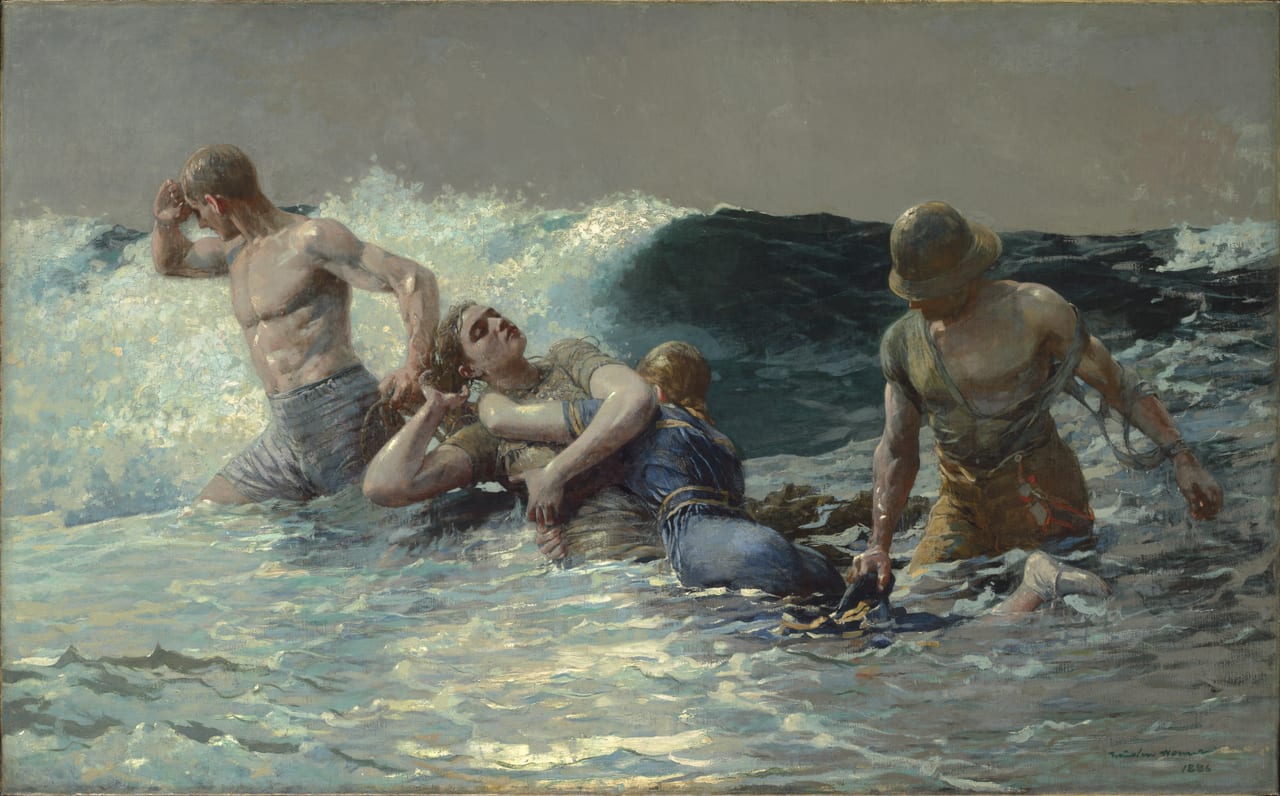
Undertow
Winslow Homer · 1886
Rescuers try to haul two women ashore, weighed down by waterlogged bathing dresses and in danger of being pulled under by an undertow. Homer modelled the figures on ancient Greek marble statues, and they look as solid as stone; yet, for all their muscle, their struggle speaks of human frailty before the sea. Something he saw near Atlantic City in 1883 allegedly inspired the scene.
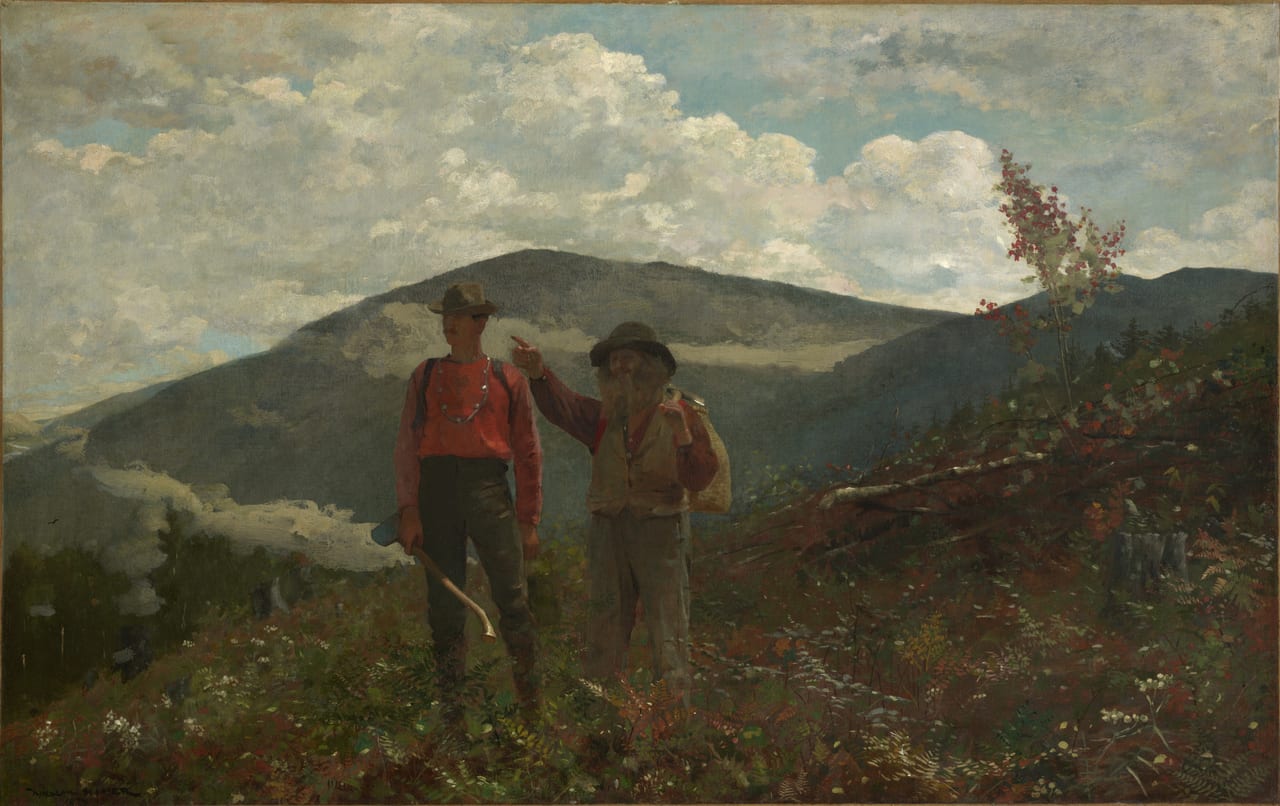
Two Guides
Winslow Homer · 1877
The two men were well-known wilderness guides in New York’s Adirondack Mountains, a region Homer often visited, and the axes they carry, with cut trees close by, suggest trail-clearing work for hunters and hikers. The richly coloured scene alludes to the cycles of life, from summer to autumn and from sapling to stump, and to experience passing from elder to youth.
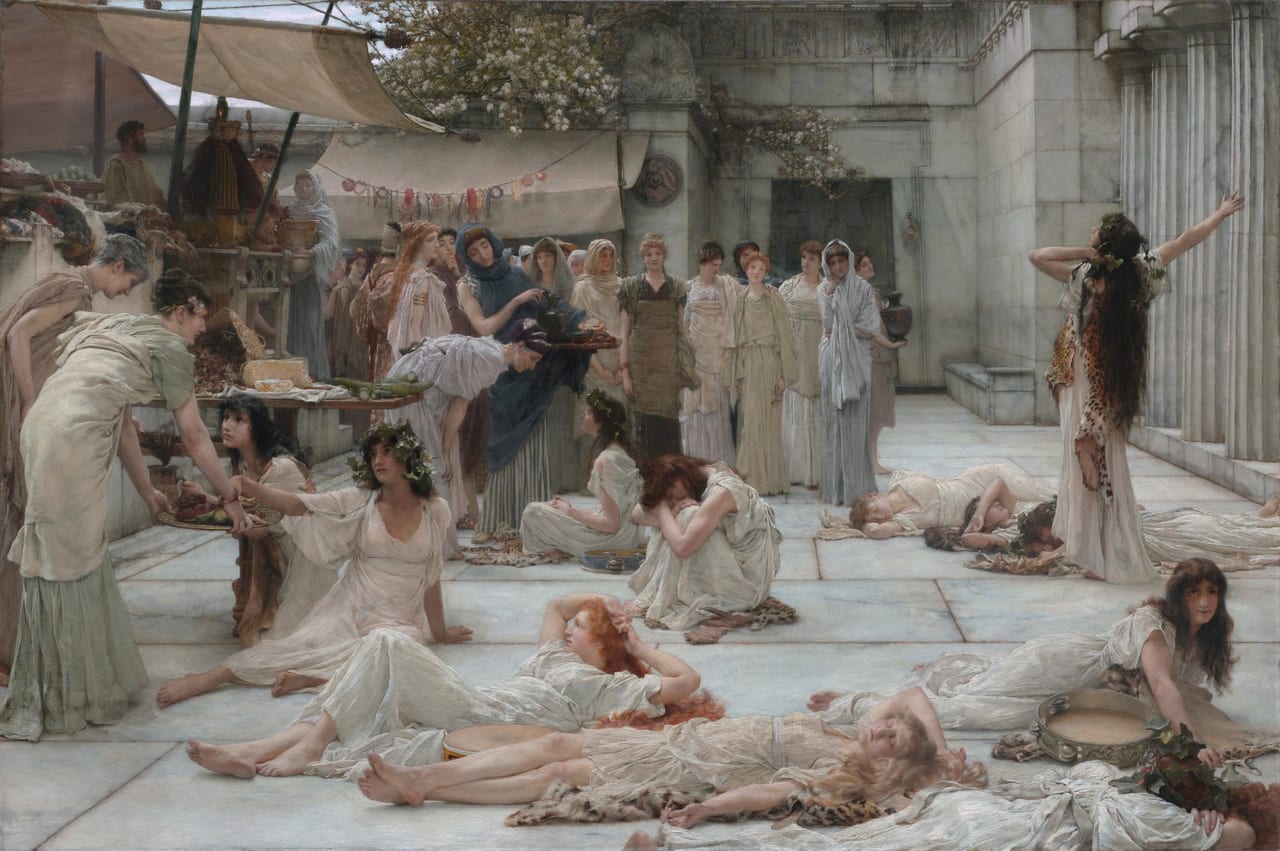
The Women of Amphissa
Lawrence Alma-Tadema · 1887
Followers of Bacchus wake in the marketplace of Amphissa after wandering there from Phocis in a night of ritual dancing. The two places are at war, yet the women of Amphissa offer the bacchantes nourishment and protection. Alma-Tadema took the episode from the Greek historian Plutarch and staged it as a lesson in charity for his Victorian public.
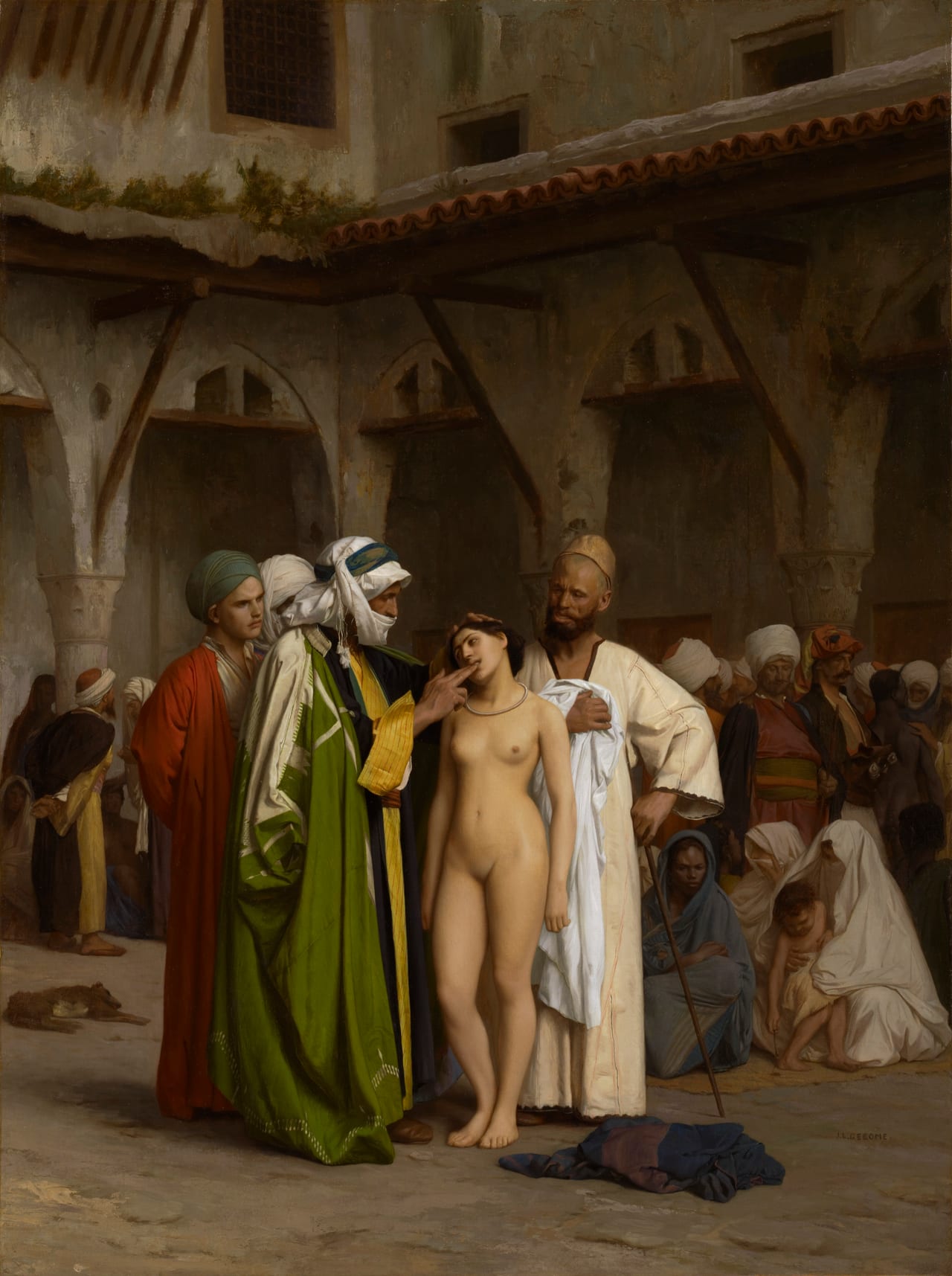
Slave Market
Jean-Léon Gérôme · 1866
In a public courtyard, would-be slave owners inspect the bodies of a naked woman at the centre and a man at far right. The clothing and architecture evoke places such as Egypt and Turkey, where Gérôme spent months travelling and sketching. Made from imagination and observation alike, the dehumanising scene casts Islamic society as strange, violent and depraved, and pictures of this kind “appealed to France’s assumptions of its own moral superiority” while its colonial empire grew across North Africa.
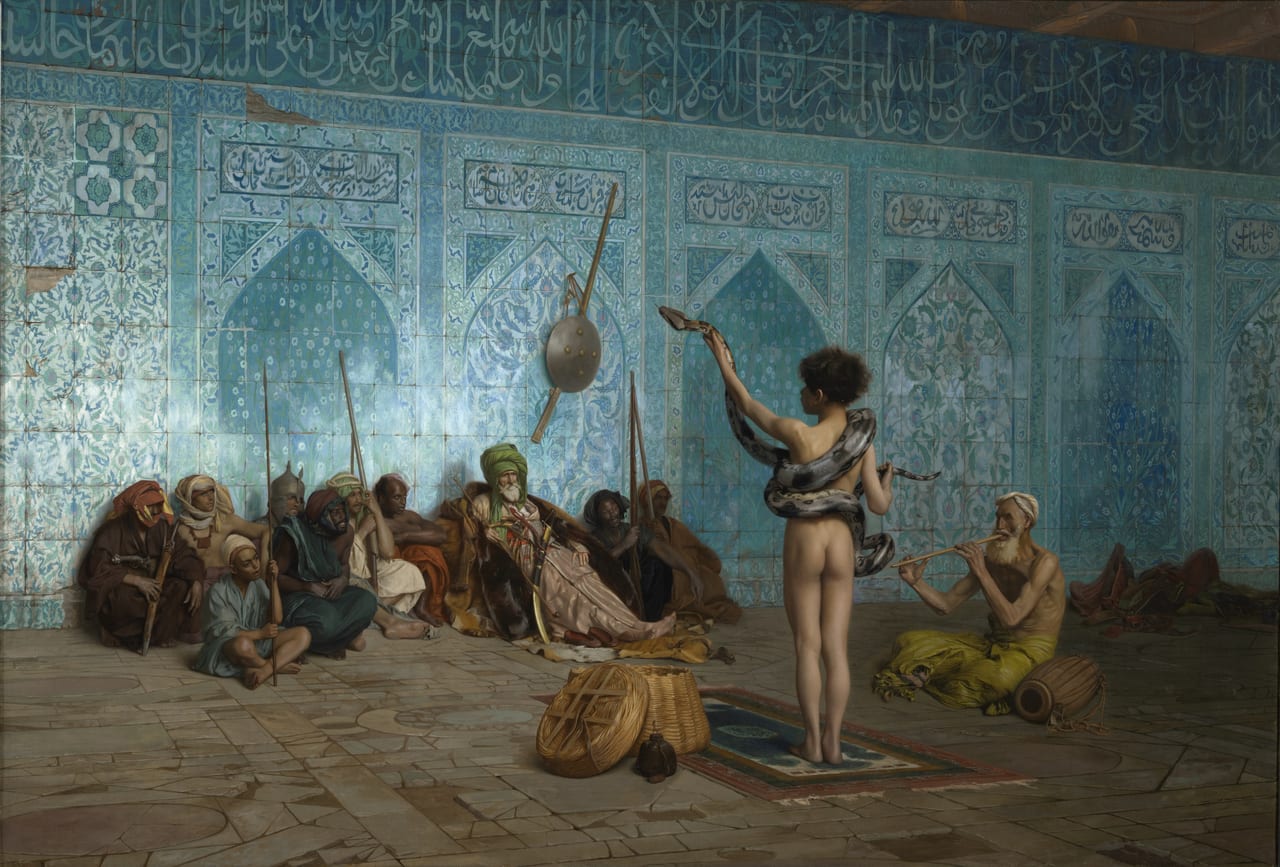
Snake Charmer
Jean-Léon Gérôme · c. 1879
Istanbul’s Topkapı palace inspired the tiled wall and the stone floor is like the floor of Cairo’s mosque of Amr, all painted with minute precision, yet the scene is a European fantasy of the Islamic world. The watching men, in garments and weapons taken from several cultures, look dazed, and their gaze on the boy’s naked body makes us aware of our own. Orientalist painting of this sort both reflected and shaped European prejudice about lands beyond Europe’s borders.
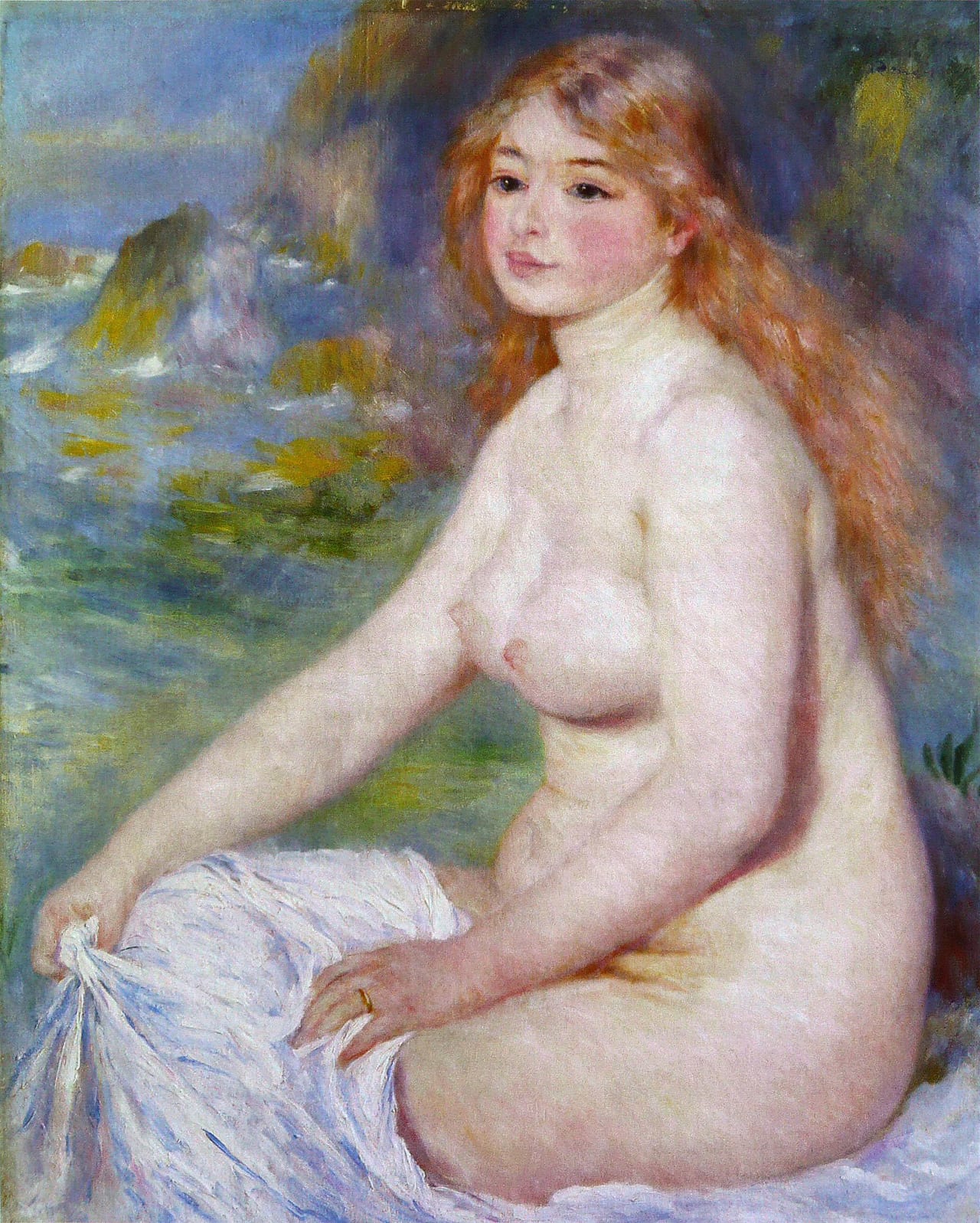
Blonde Bather
Pierre-Auguste Renoir · 1881
Renoir painted this nude while travelling in Italy, and his model was probably Aline Charigot, later his wife. The plain composition gives the figure a monumental presence, an approach he drew from the art of ancient Rome and of the Italian Renaissance seen on that journey, which he described as representing “eternal beauty.”
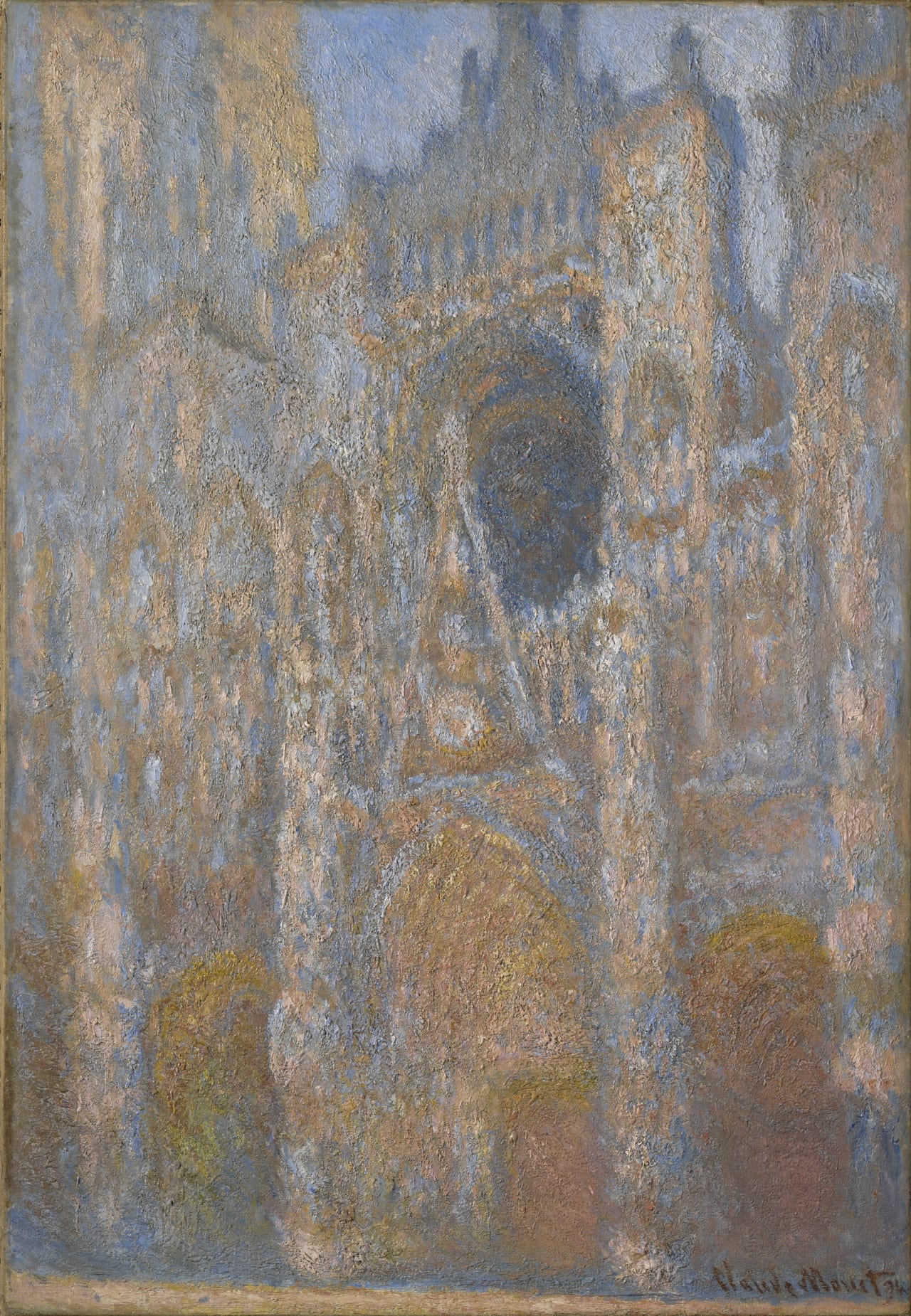
Rouen Cathedral, the Façade in Sunlight
Claude Monet · c. 1892–94
“What a task this cathedral is!” Monet wrote from Rouen to his wife at Giverny. He painted nearly thirty views of the façade, moving from canvas to canvas to catch the changing hours, and went on working at the series for two more years at home. Here encrusted strokes summon sunlight glinting off pale stone; from a distance the arched doorways, rose window and towers come into focus.
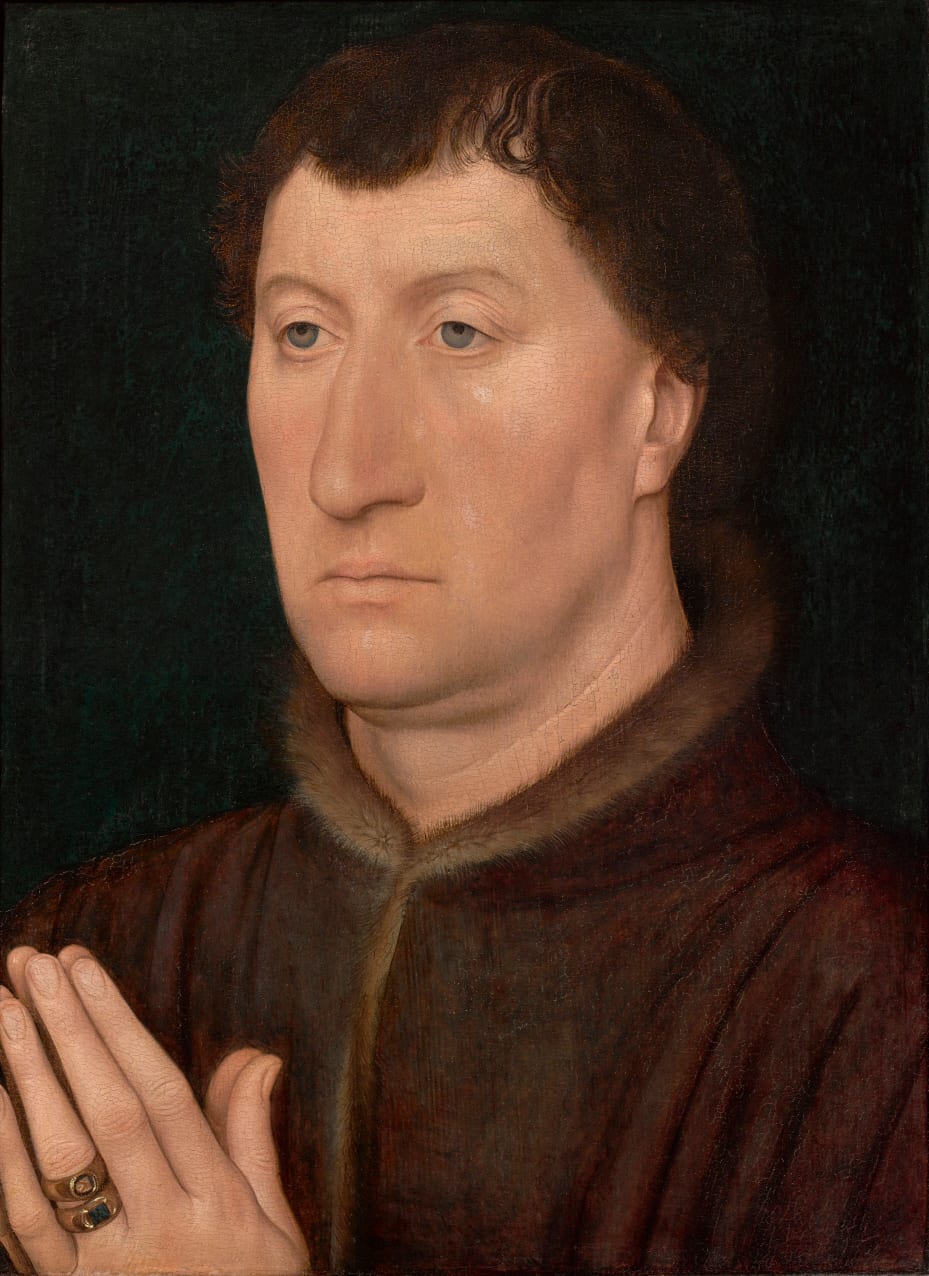
The Canon Gilles Joye
Hans Memling · 1472
The frame’s inscriptions record that Gilles Joye, priest and composer, was 47 when Memling painted him. Memling chose realism over flattery, setting down the wrinkles round the eyes and on the neck, and Joye’s coat of arms appears on his ring and again on the frame. Behind the pious face, church records hint at a livelier man, reprimanded for brawling, for offensive language and for living with a woman.
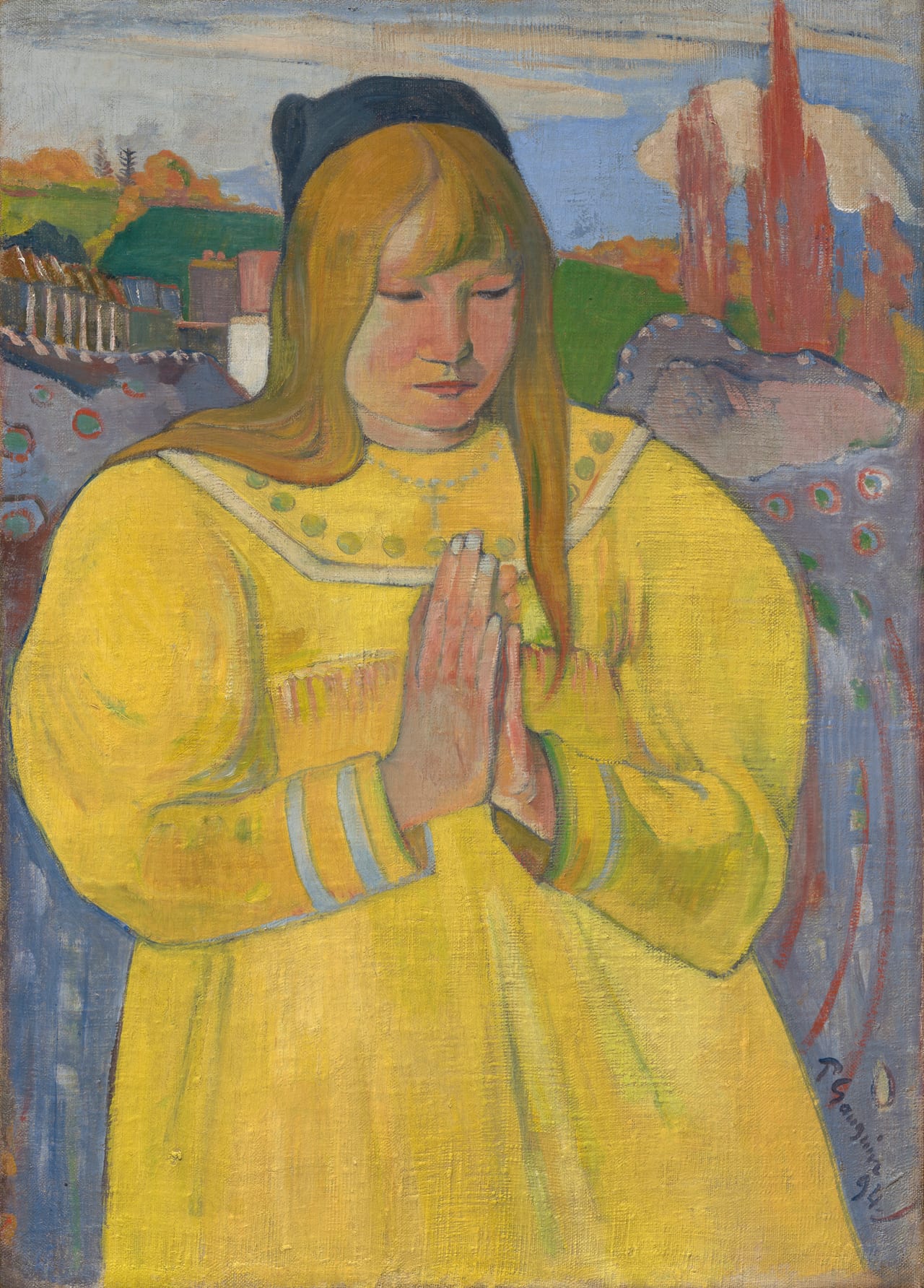
Young Christian Girl
Paul Gauguin · 1894
A girl with bowed head and joined hands prays as lilac shapes fan out round her shoulders like wings; russet cypresses and rolling green hills suggest Brittany. Gauguin painted it in northern France after a long stay in Tahiti, and in place of a Breton woman’s white cap and dark clothes she wears a dress like those Christian missionaries brought to the South Sea Islands.
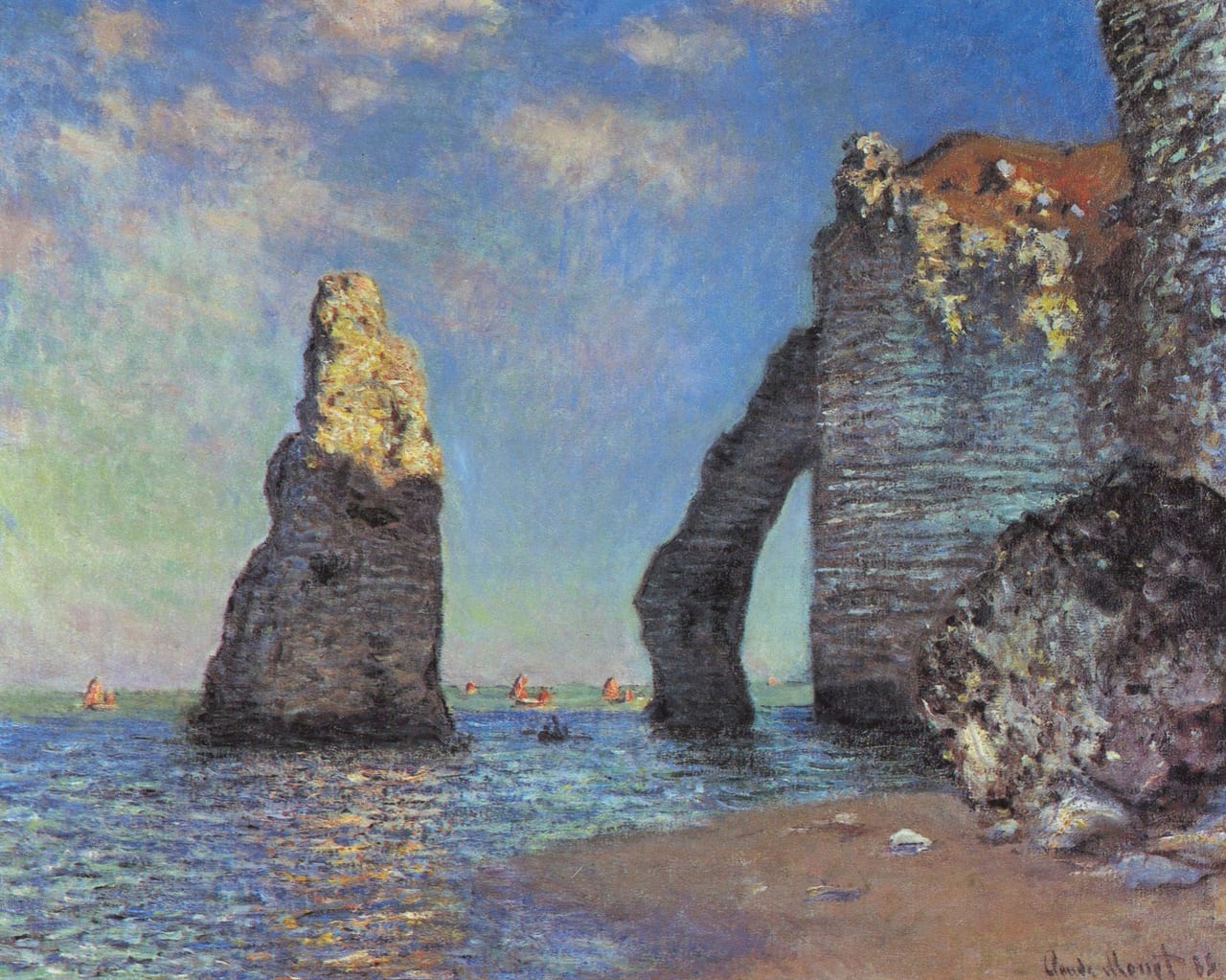
The Cliffs at Étretat
Claude Monet · 1885
Monet painted the Normandy coast nearly fifty times between October and December 1885; this canvas shows the Porte d’Aval, a natural arch, and the freestanding, needle-like rock beside it, seen from an unusual spot reached only by boat or a precipitous path. Guy de Maupassant described how Monet “watched the sun and the shadows, capturing in a few brushstrokes a falling ray of light or a passing cloud.”
Collections
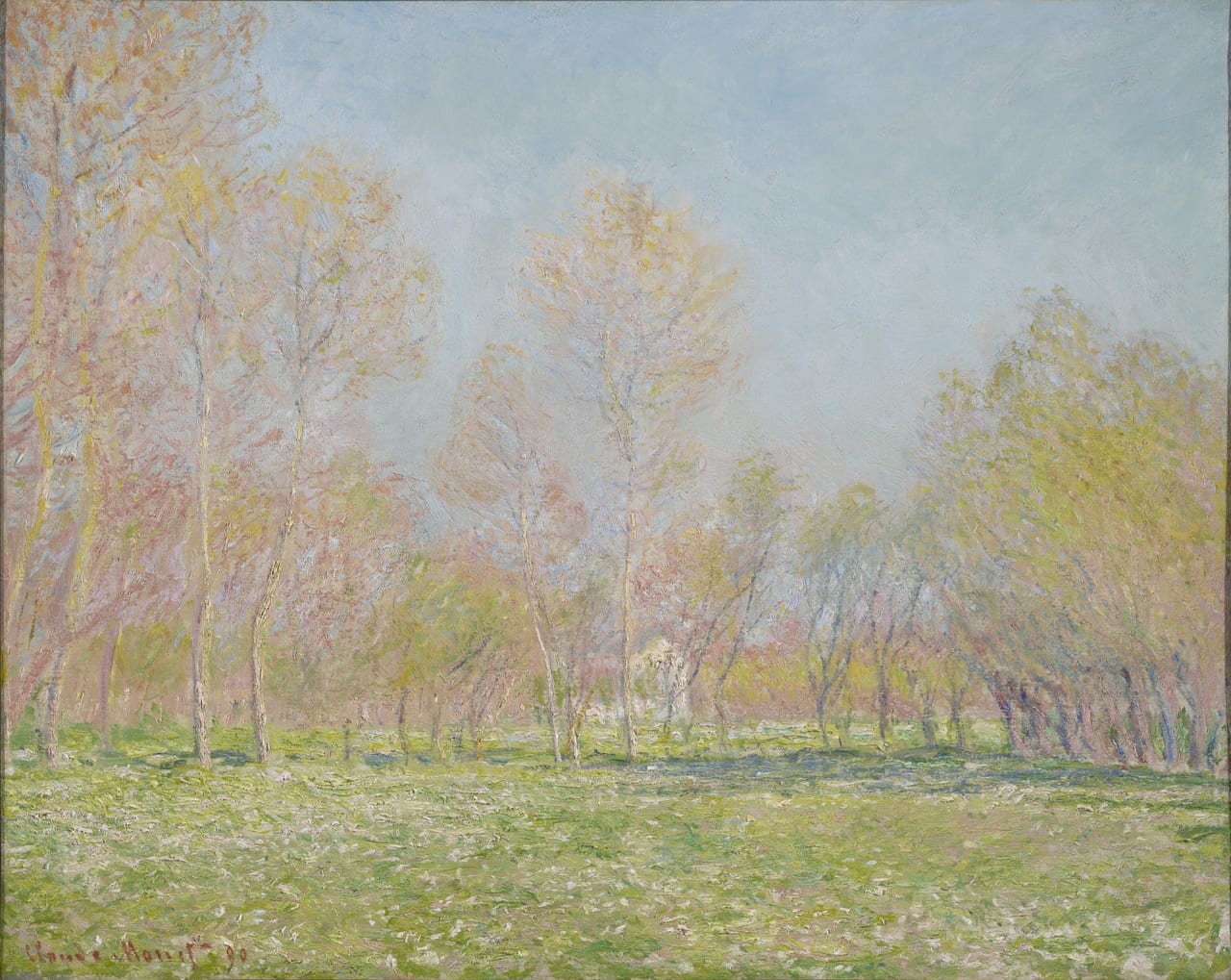
French Impressionism
Spring in Giverny · Claude Monet · 1890
Impressionism is what the Clark is best known for today. Monet moved in 1883 to Giverny, a small village north-west of Paris; in this view, dabs of green and white up front lead the eye to a screen of trees, and through them the white walls of a house can just be made out. With richly varied strokes and no distinct point of interest, he turns attention to the colour and texture of the surface itself.
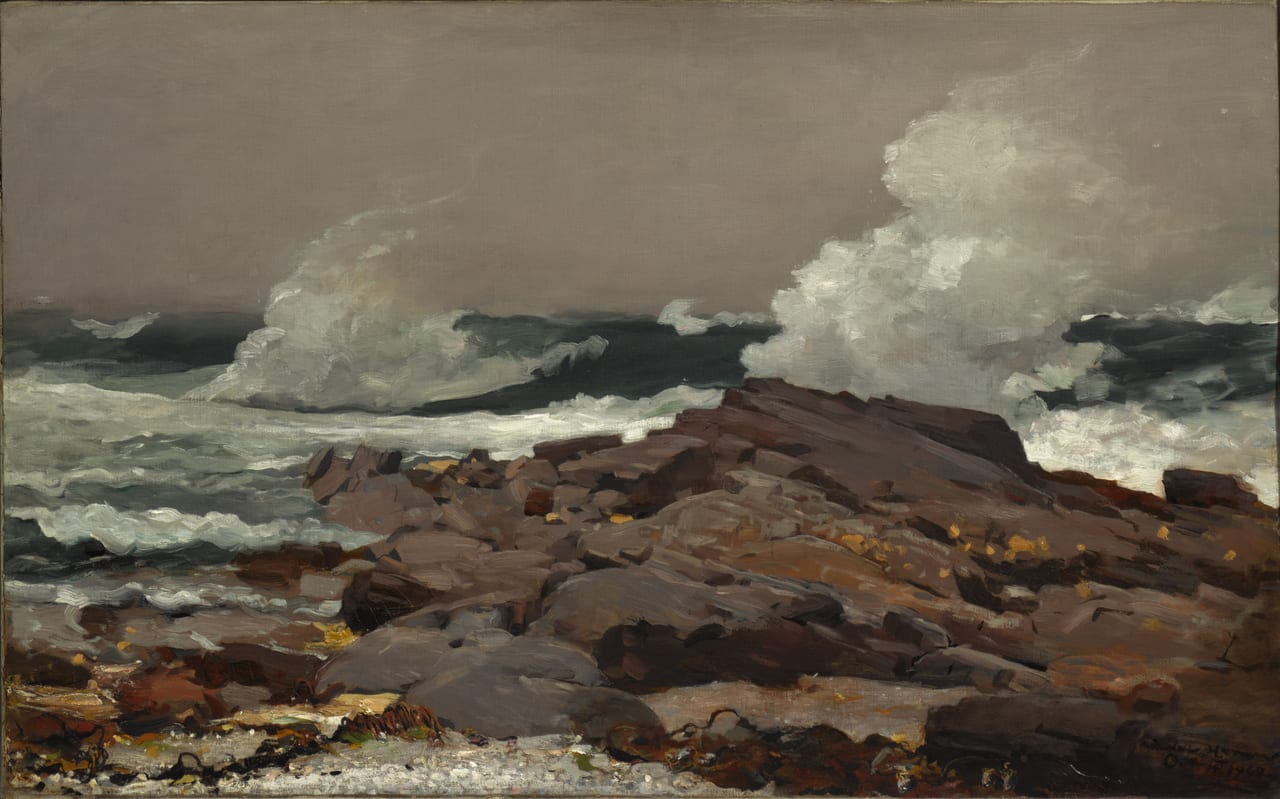
Winslow Homer
Eastern Point · Winslow Homer · 1900
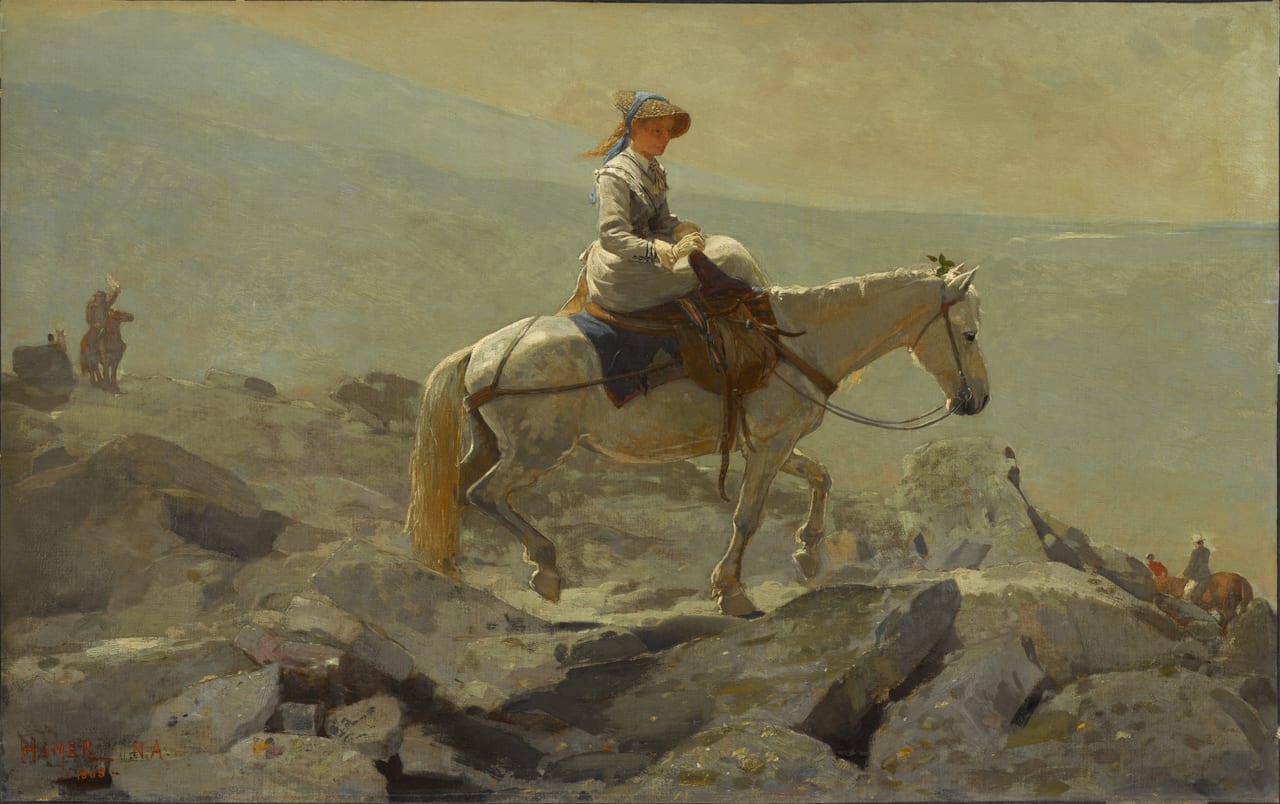
Homer is one of three American painters in whom the collection is especially rich. He completed Eastern Point in one month, recording the turbulent weather near his studio in Maine: surf in deep blue-green and opaque white churns under an ominous grey sky, and touches of red, ochre and yellow describe the rocks. Shown in 1901, it struck a New York critic: it was “quite the next thing to a brisk tramp along the shore on a stormy day.” In an earlier picture, The Bridle Path, White Mountains, he set a young woman riding sidesaddle along a rocky path in New Hampshire; she seems lost in thought, apart from the other riders.
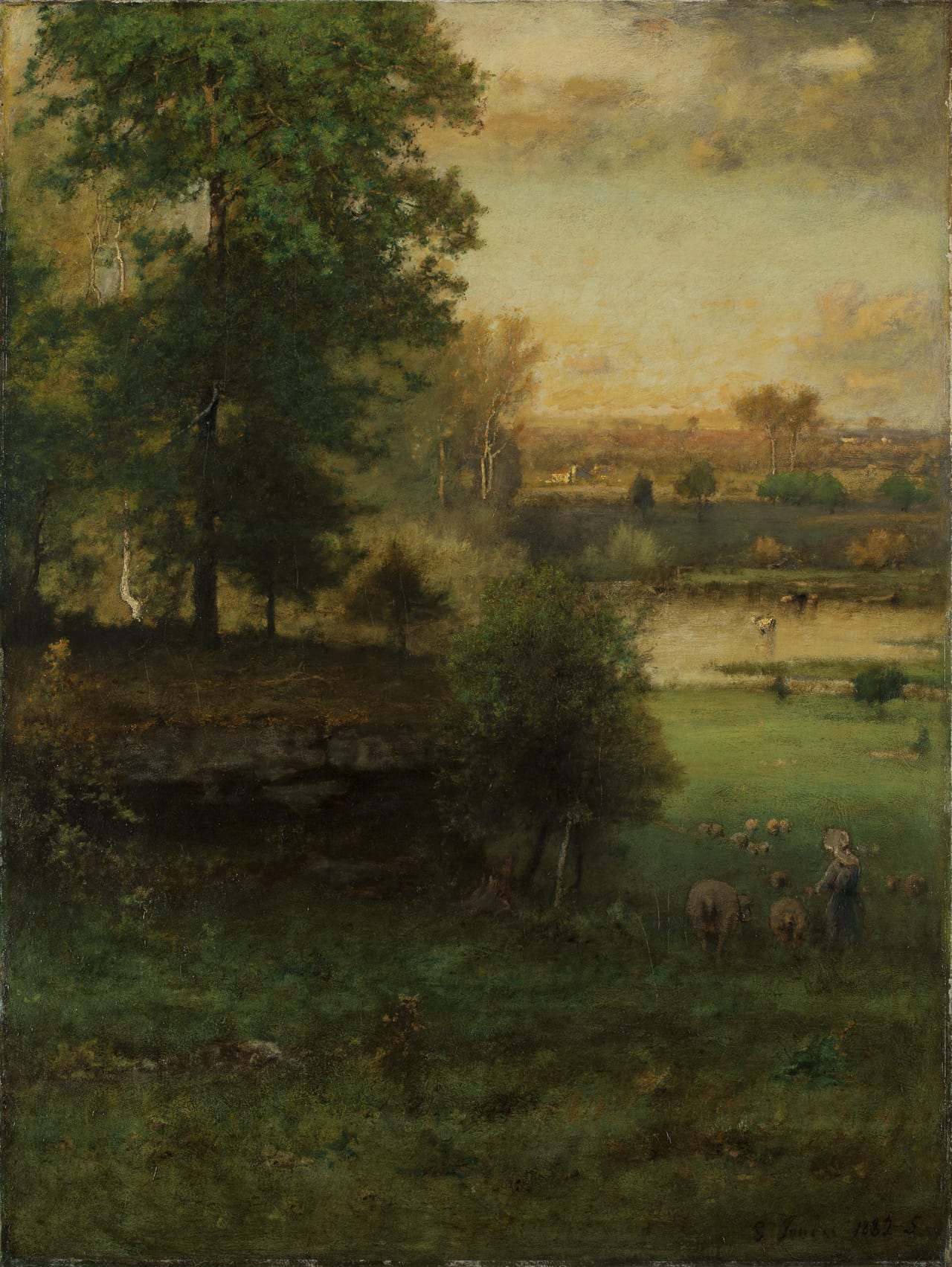
George Inness
Scene at Durham, an Idyll · George Inness · 1882–85
Inness often worked on a painting over a long stretch. He began Scene at Durham, an Idyll in 1882 and changed its composition and colour over the next three years, turning early afternoon into late with orange on the horizon, a darker rocky ledge and deeper shadow in the trees. Frank and Katherine Martucci gave it to the Clark in 2013.
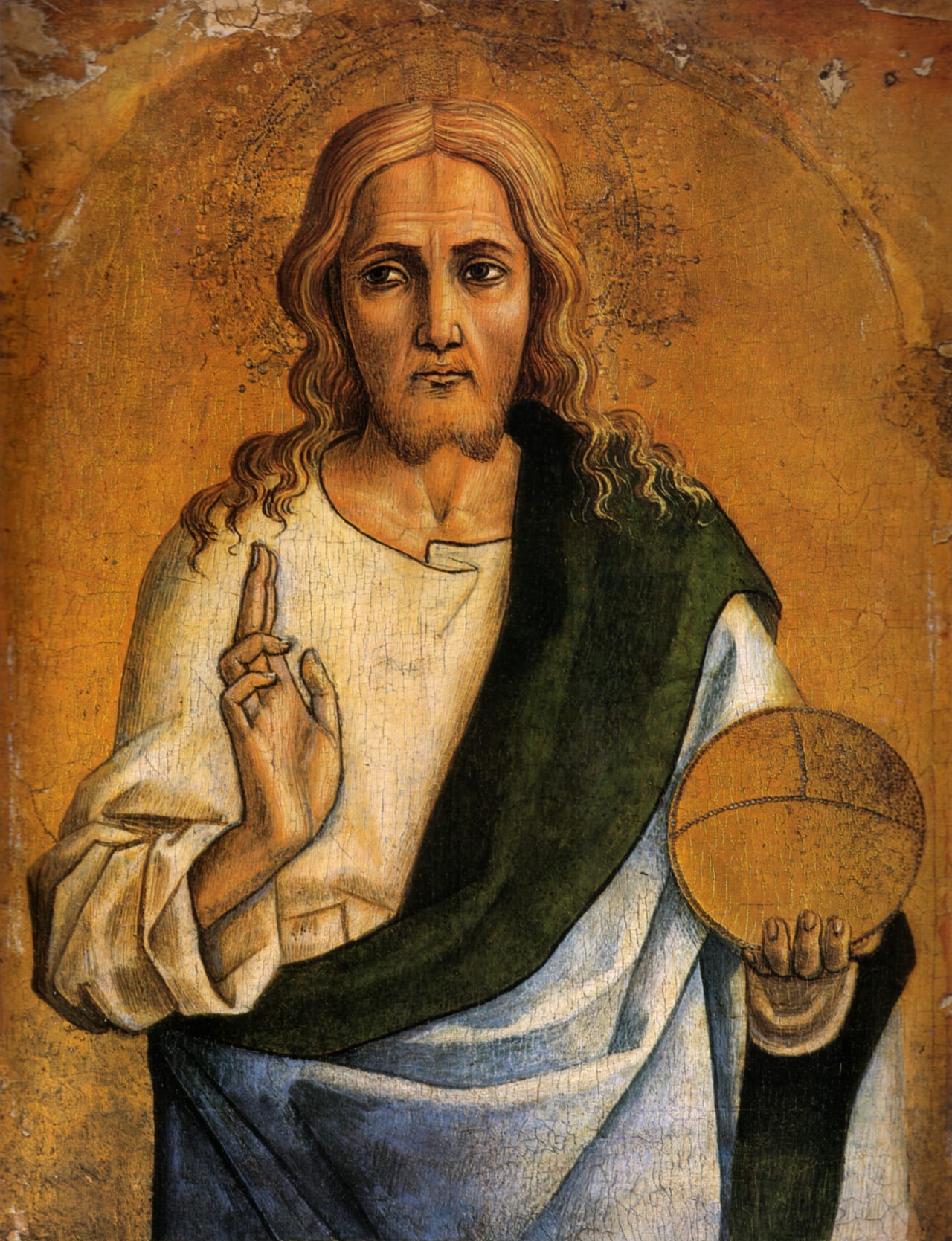
Early Italian painting
Salvator Mundi · Carlo Crivelli · c. 1470–72
In his early collecting years Sterling Clark was drawn above all to Italian, Dutch and Flemish painters. In Crivelli’s panel Jesus is the saviour of the world, his right hand raised in blessing and his left holding a globe, in a traditional image meant to aid prayer. The panel once stood at the centre of a predella, the row of pictures beneath the main sections of an altarpiece; Crivelli painted that altarpiece for a Franciscan monastery in central Italy.
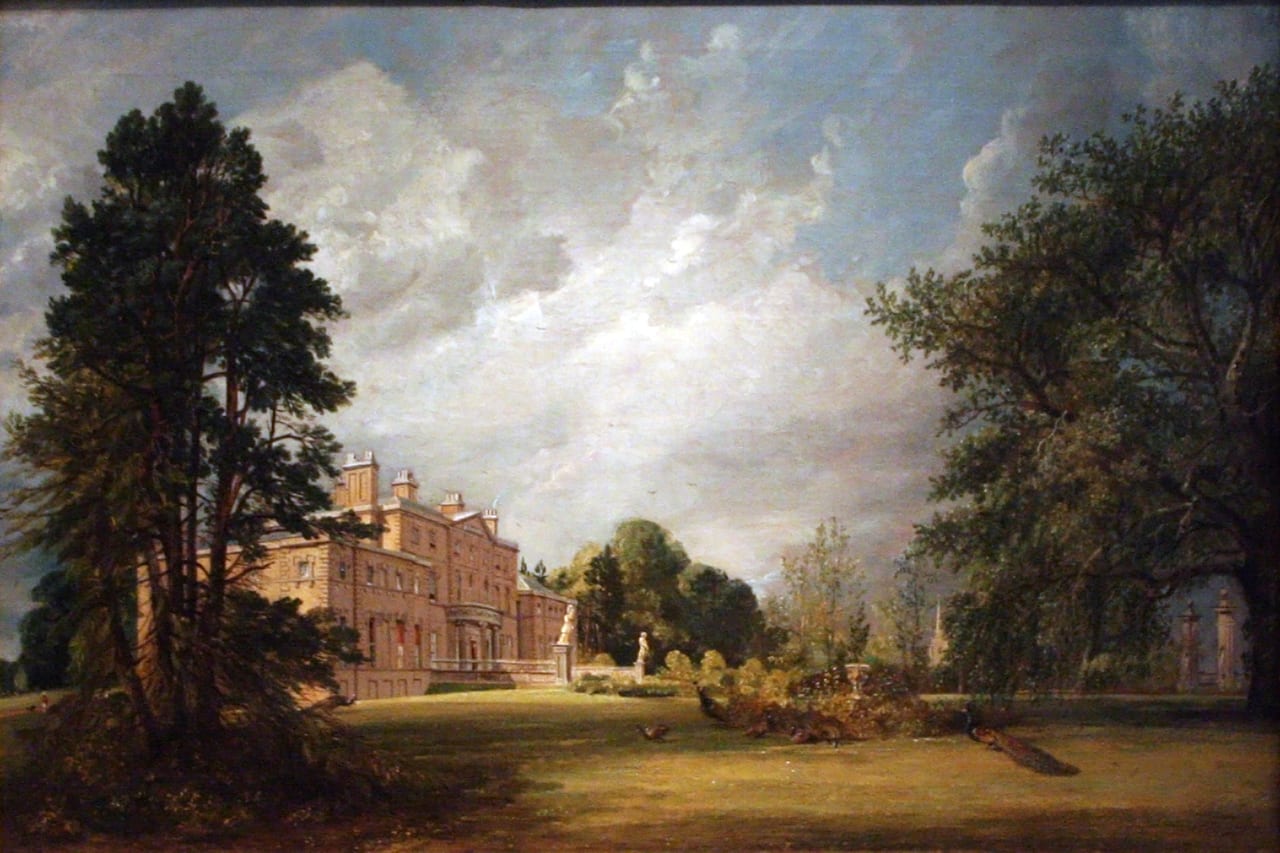
British landscape
Malvern Hall · John Constable · 1821
Constable is better known for the farms and open country of his native Suffolk, but he also painted elegant country houses. His first view of Malvern Hall dates from 1809, which was also the first landscape he finished outdoors; years later the sister of its owner commissioned this picture, perhaps as a reminder of her childhood home. A dramatic sky and close details such as the peacocks on the lawn add to the estate’s grandeur.
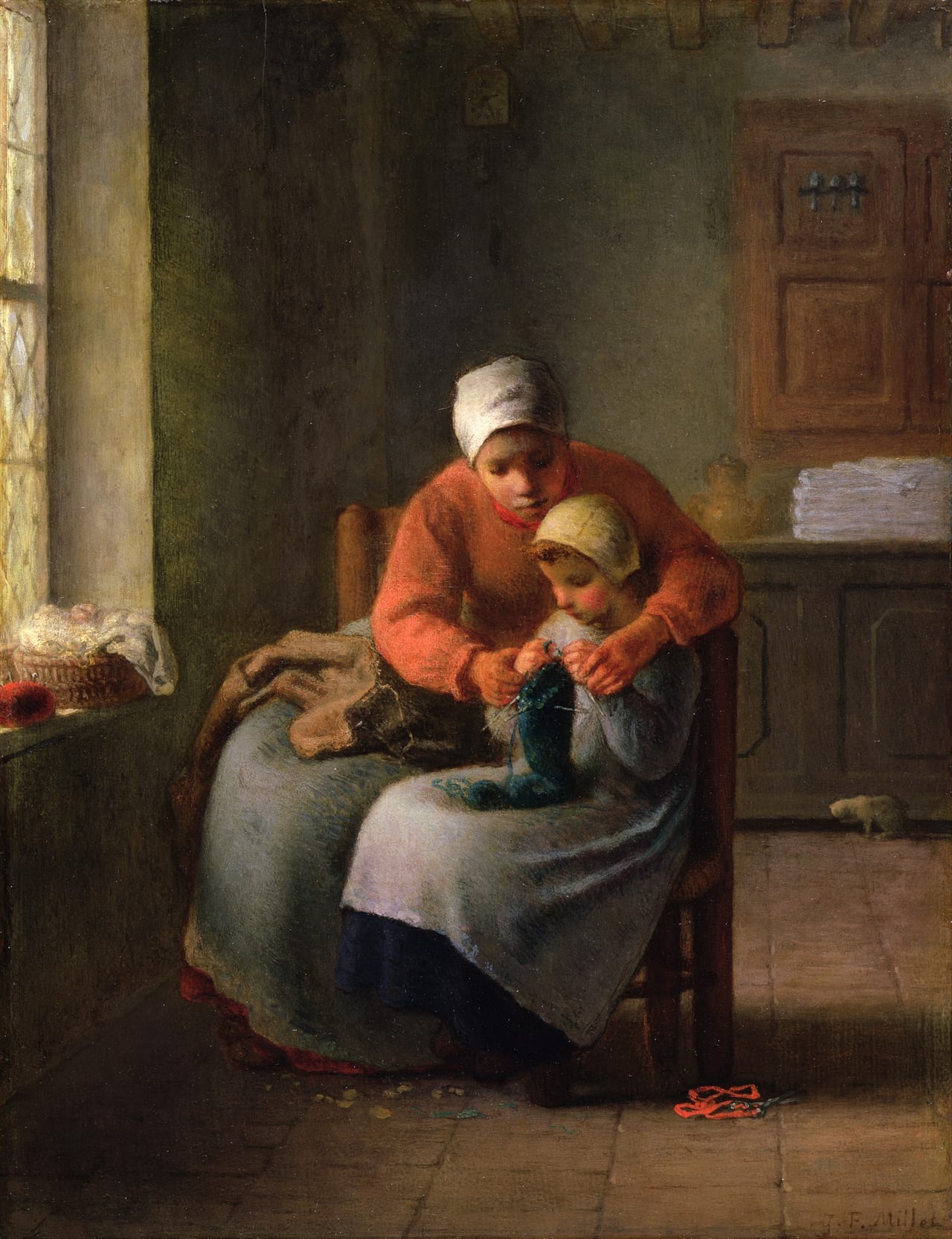
Barbizon and rural life
The Knitting Lesson · Jean-François Millet · c. 1860
A mother or older sister has put down her mending to guide a small girl’s knitting. Millet dwells on the closeness of rural family life and on skills handed down; the tiled floor and leaded window are probably taken from his own house in the village of Barbizon, south-east of Paris, and also recall details of seventeenth-century Dutch painting.
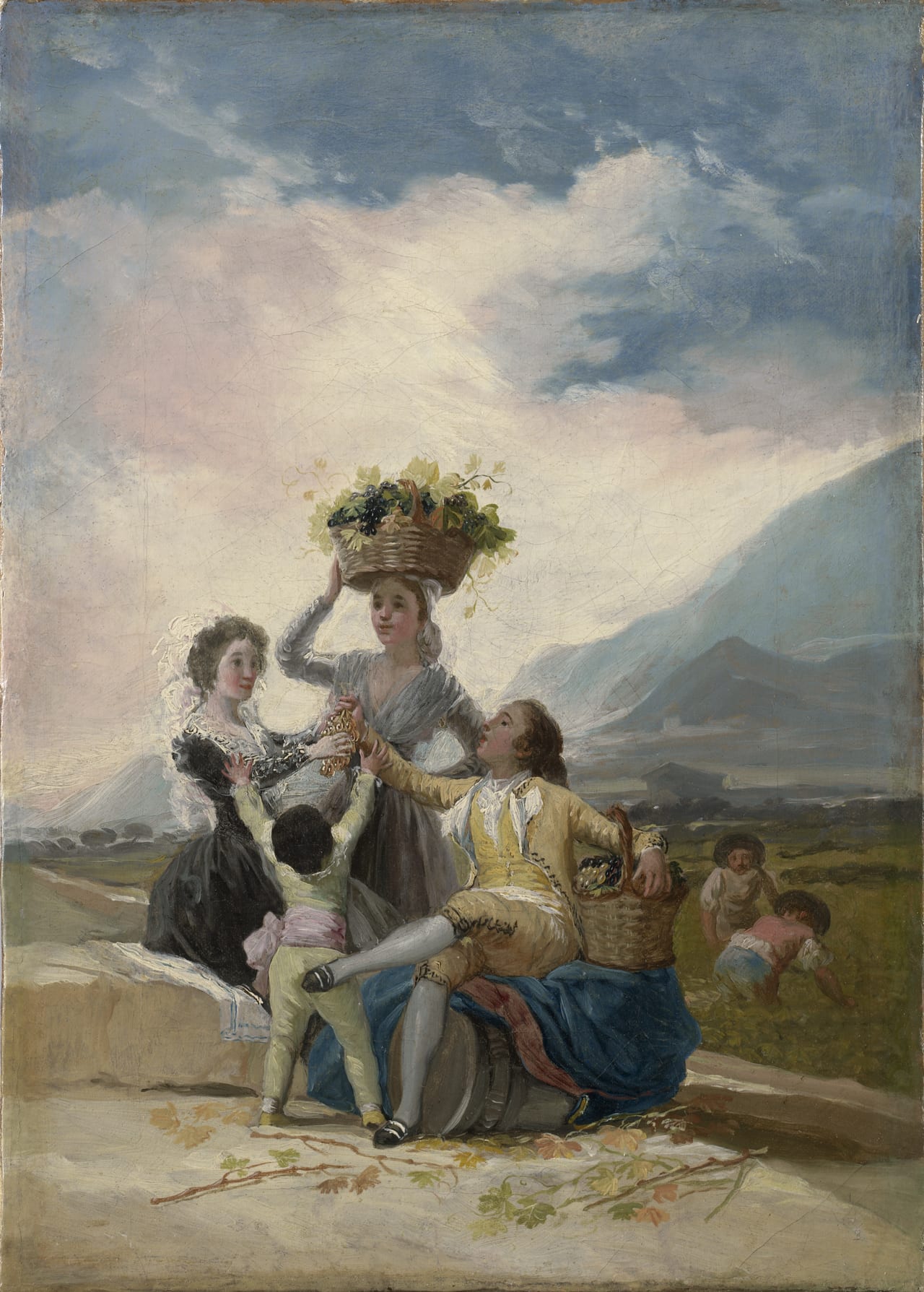
Goya
Autumn · Francisco Goya · 1786
In 1786 Goya was commissioned to design tapestries for a dining room in the El Pardo palace in Madrid, and the king asked for “pleasant, light-hearted subjects.” This sketch for one of them went to him for approval. A child stretches towards a bunch of grapes held out by a young man in a smart yellow suit to a lady in black, while behind them a servant balancing a basket of grapes on her head stands for Autumn and its plentiful harvest.
Academic painting
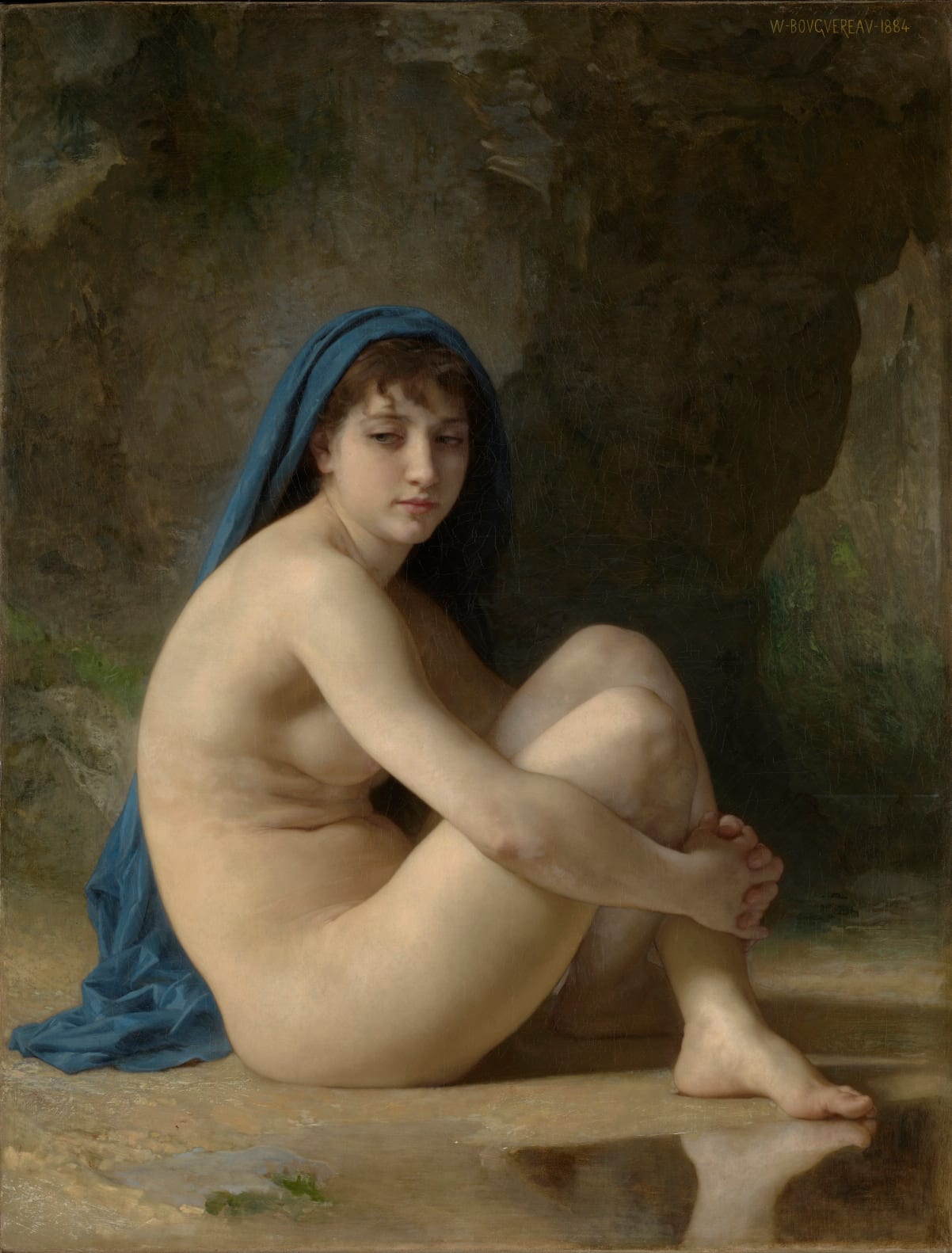
Seated Nude · William-Adolphe Bouguereau · 1884
Academic painting is one of the collection’s particular strengths. Trained in that tradition, Bouguereau saw the female nude as an ideal subject for showing his skill: he renders this model’s complex pose with subtle light and shade, her soft, smooth skin set against raw earth, jagged rock and glassy water. Sterling Clark praised his technique again and again in his diaries.
After Impressionism
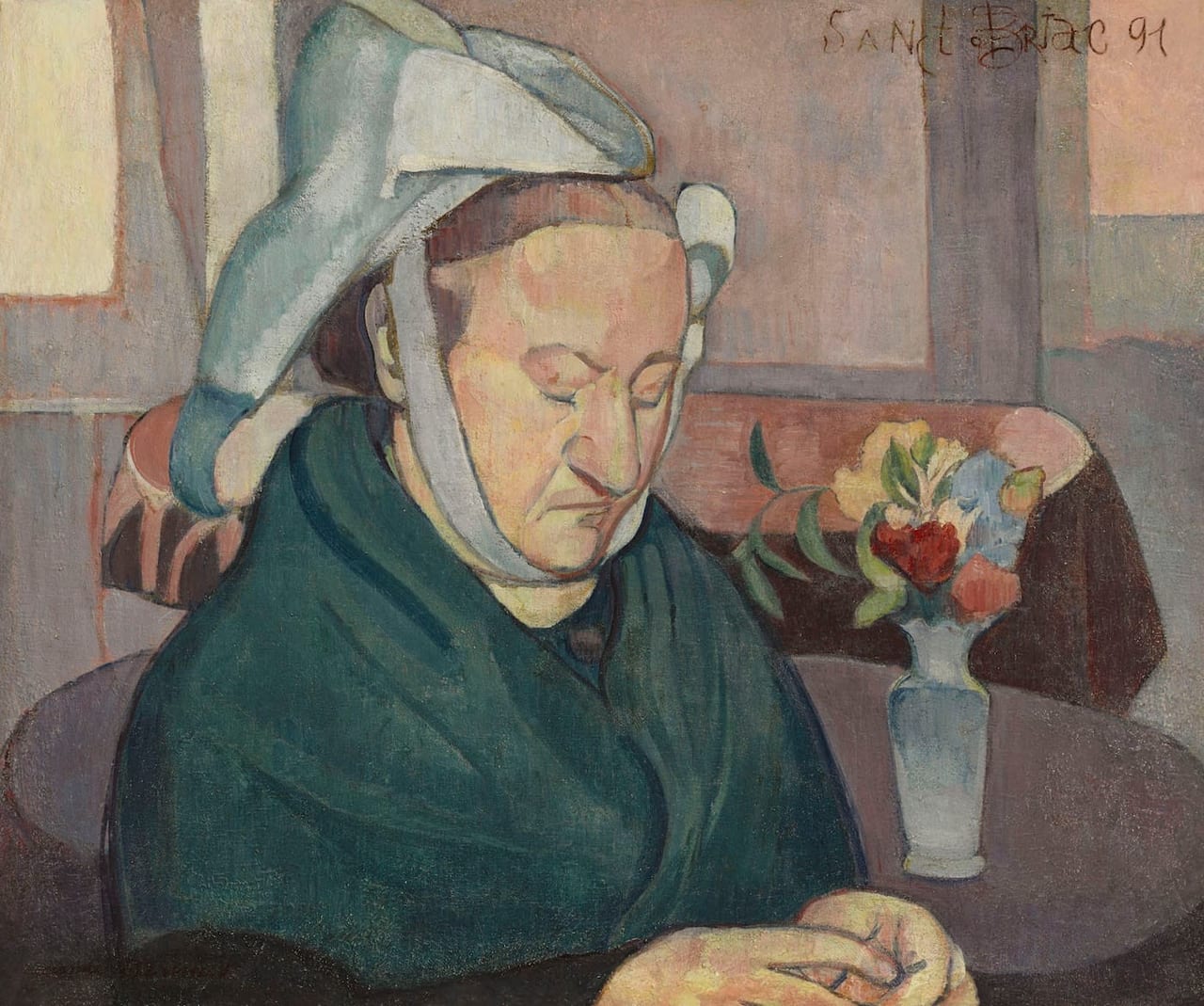
Portrait de Madame Lemasson · Émile Bernard · 1891
Madame Lemasson kept the inn where Bernard stayed whenever he came to Saint Briac, a town on the Breton coast, between 1886 and 1892. She sits knitting before a table with a vase of flowers, in the traditional Breton headdress. Flattened forms, blocks of colour and strong contours mark the Synthetist style, Bernard’s own term for setting his work apart from the Impressionists.
Artists
Winslow Homer
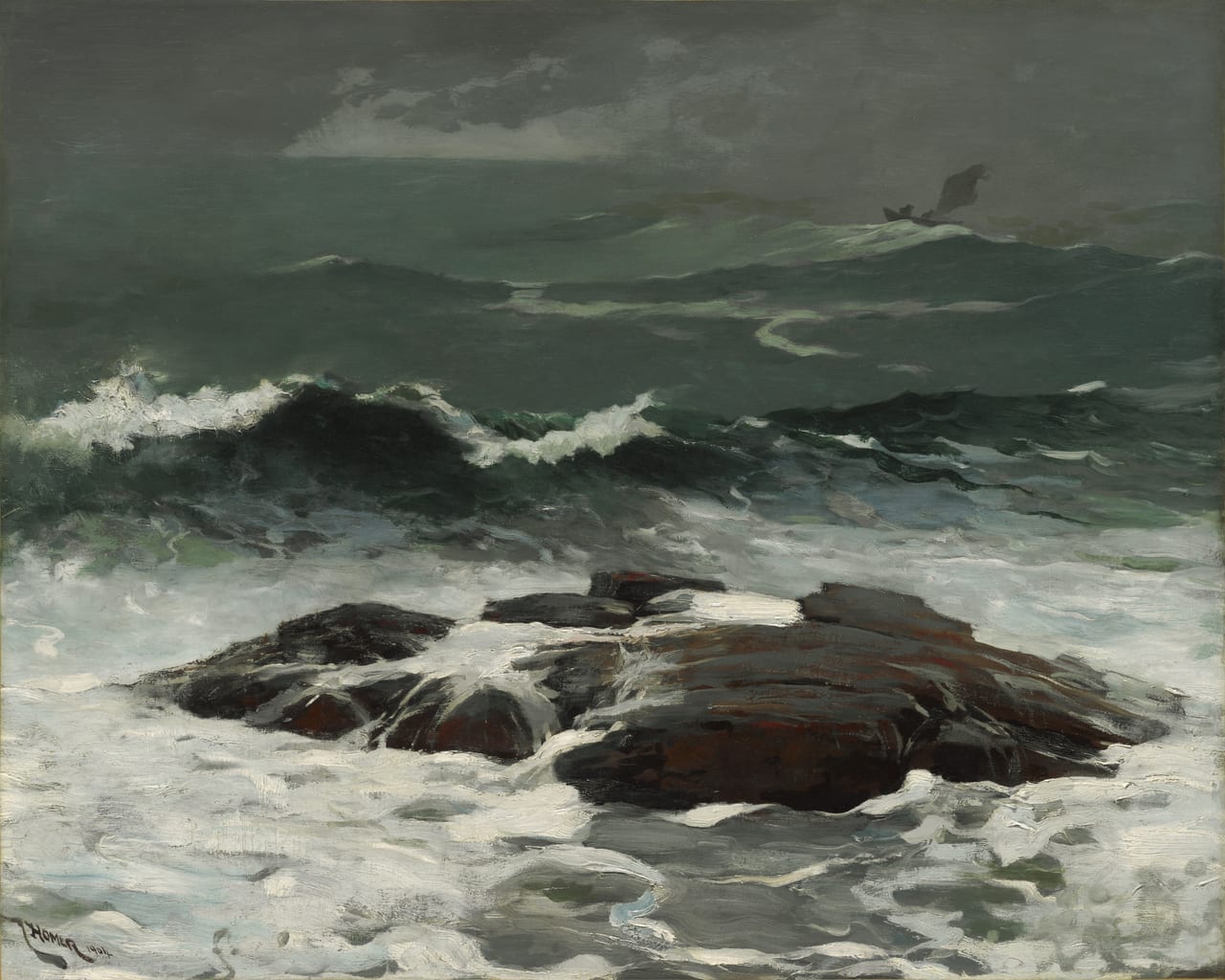
Summer Squall · 1904
Summer Squall grew out of a sudden storm Homer watched from his studio at Prouts Neck, Maine, the white water pouring over a flat rock that in kinder weather was one of his favourite fishing spots. His sea pictures rank among the most powerful and expressive American painting of the late nineteenth century.
Pierre-Auguste Renoir
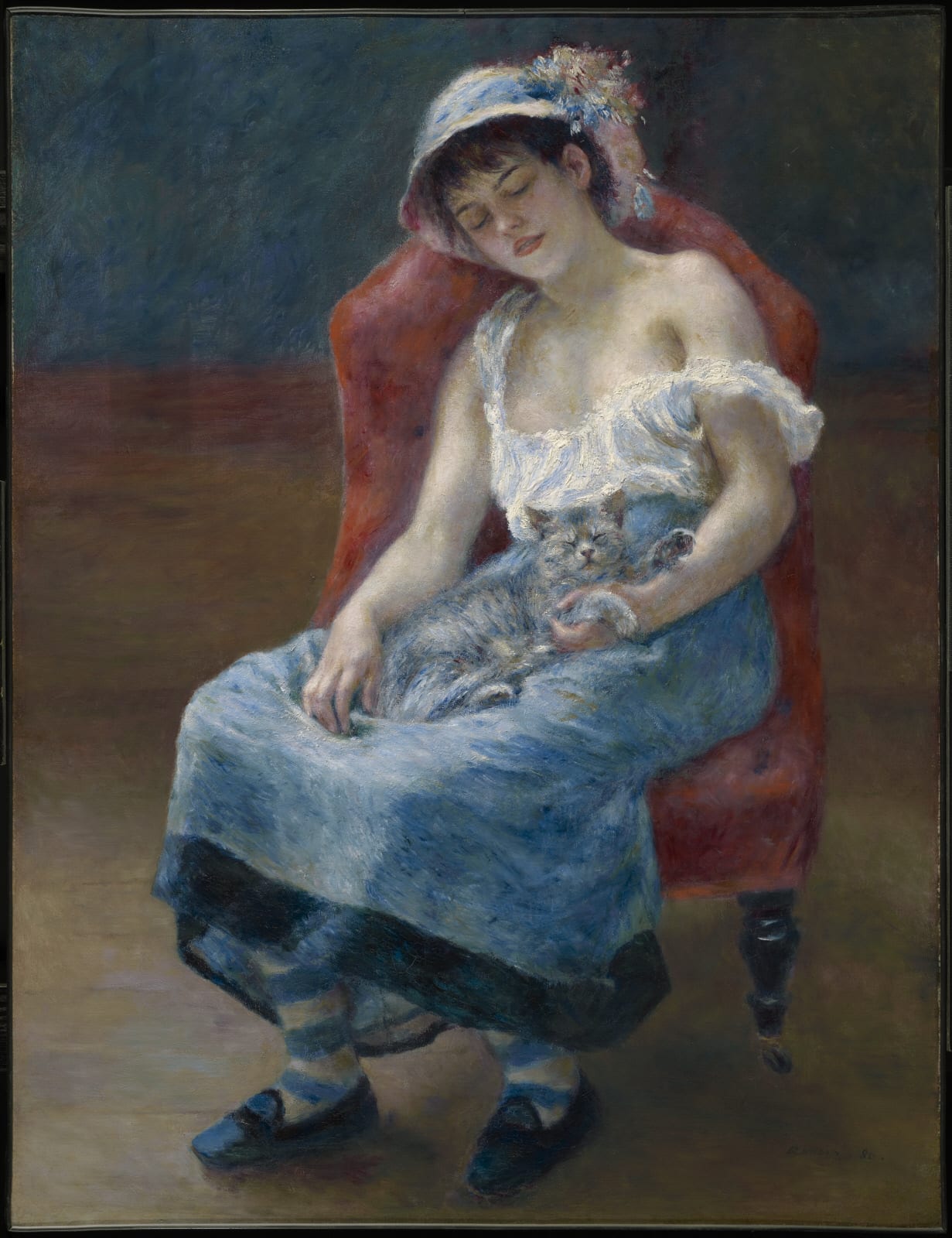
Sleeping Girl · 1880
A young woman dozes in a chair, a sleepy cat in her lap and her undergarment slipping off one shoulder; the model is thought to have lived in Montmartre. By the middle of the 1880s Renoir had left the Impressionists behind for a more disciplined, formal handling of portraits and figures.
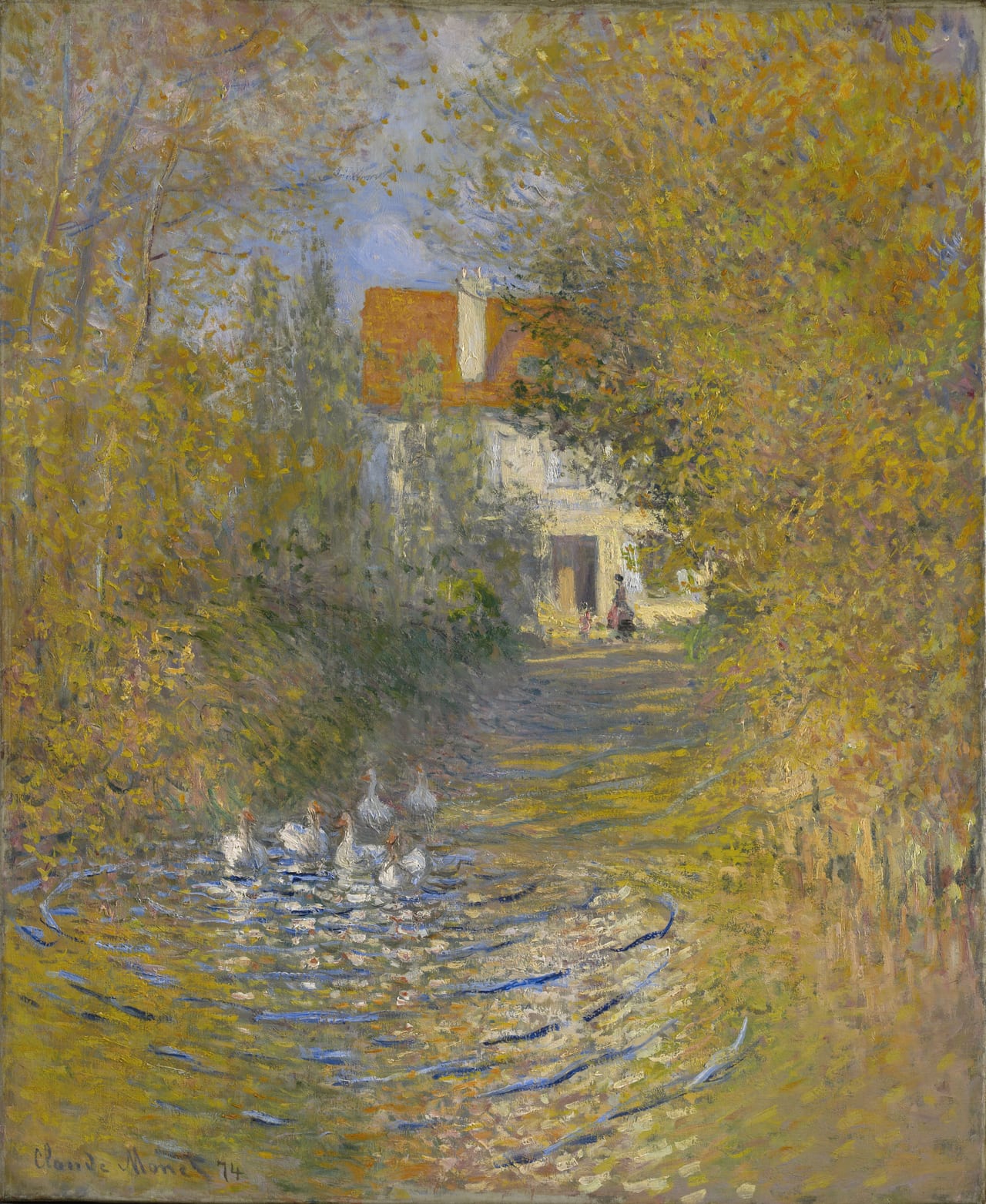
Claude Monet
The Geese · 1874
Made a few months after the first Impressionist show, The Geese has the bright tone and thick dabs of colour of Monet’s experiments at the time, in an unusual upright format: tall trees shade a path from rippling water to a woman and child before a sunlit, whitewashed building. Monet started, led and never stopped championing the Impressionist style.
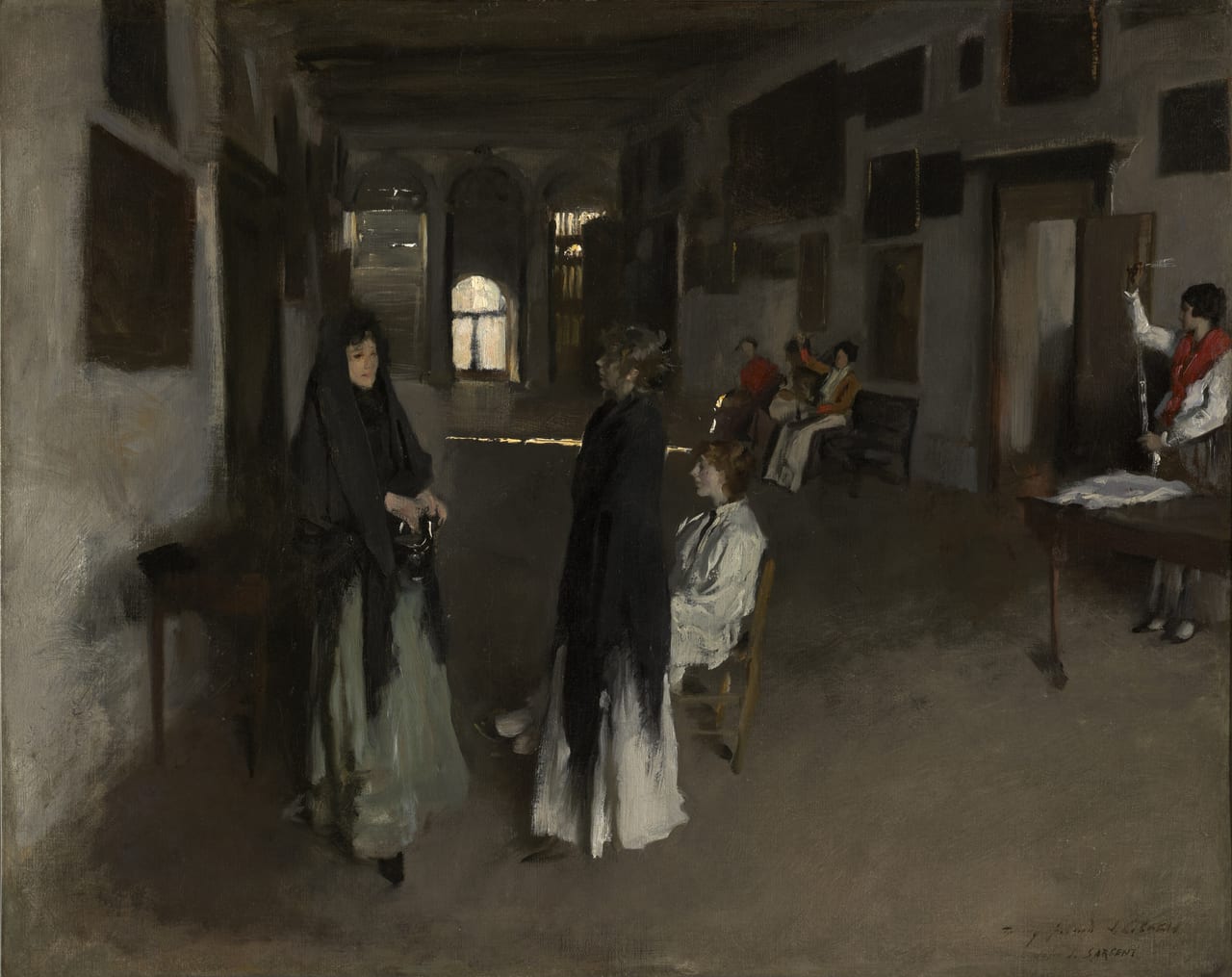
John Singer Sargent
A Venetian Interior · c. 1880–82
In a dim room some women string Venetian glass beads while others pause to talk, and bright windows at the far end draw the eye inward. On visits to Venice in the 1880s Sargent painted its people’s everyday lives, not its landmarks, and some critics hold that his finest work came in the years after his 1879 study trips, among them his pictures of Venetian workers.
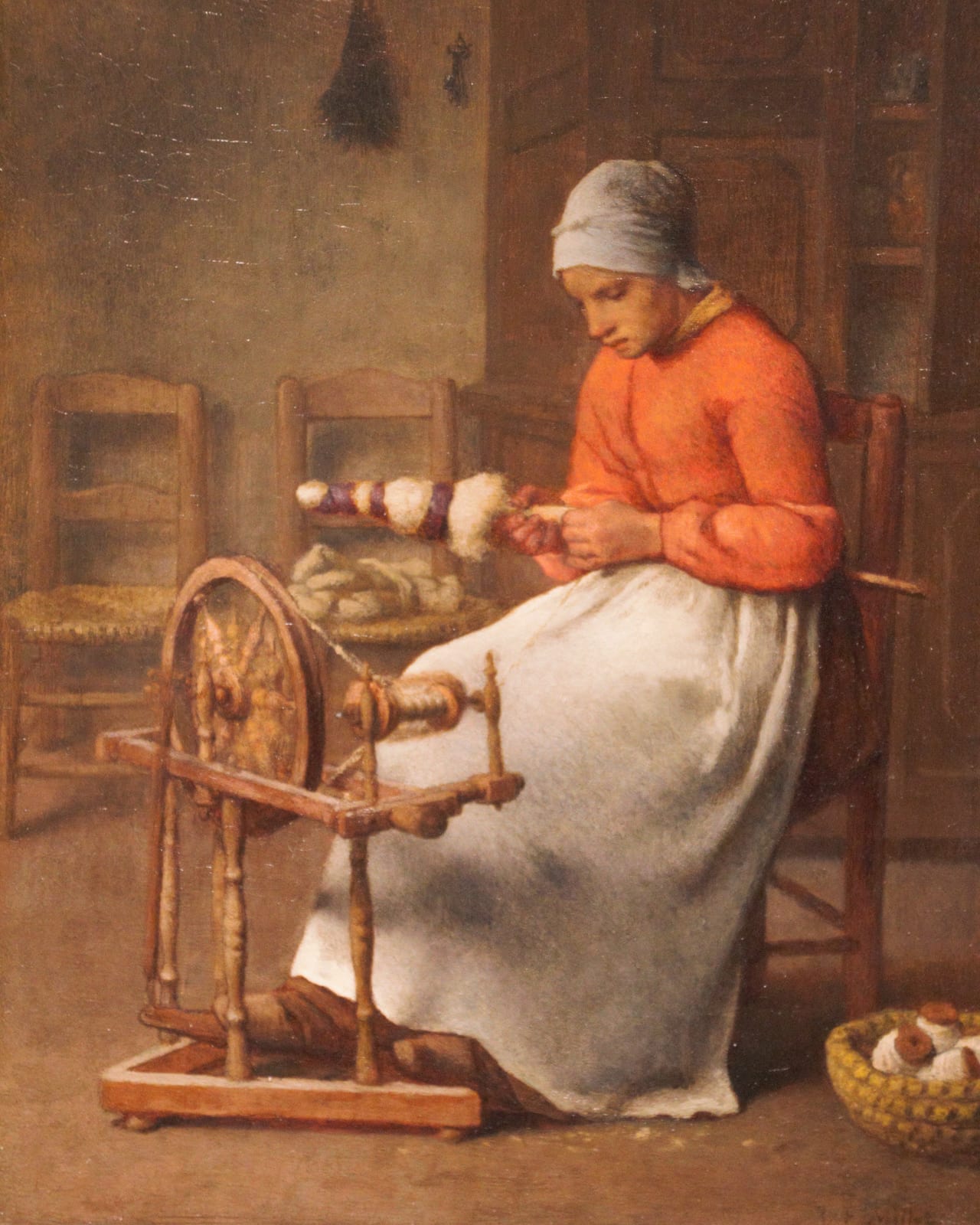
Jean-François Millet
Woman Spinning · c. 1855–60
Bent on her task, a woman spins flax in a shadowy, humble room; the warm red of her shirt and a purple ribbon on the distaff lift the muted colours. Millet, one of the founders of the Barbizon School, often painted traditional rural work and gave labour and labourers their dignity.
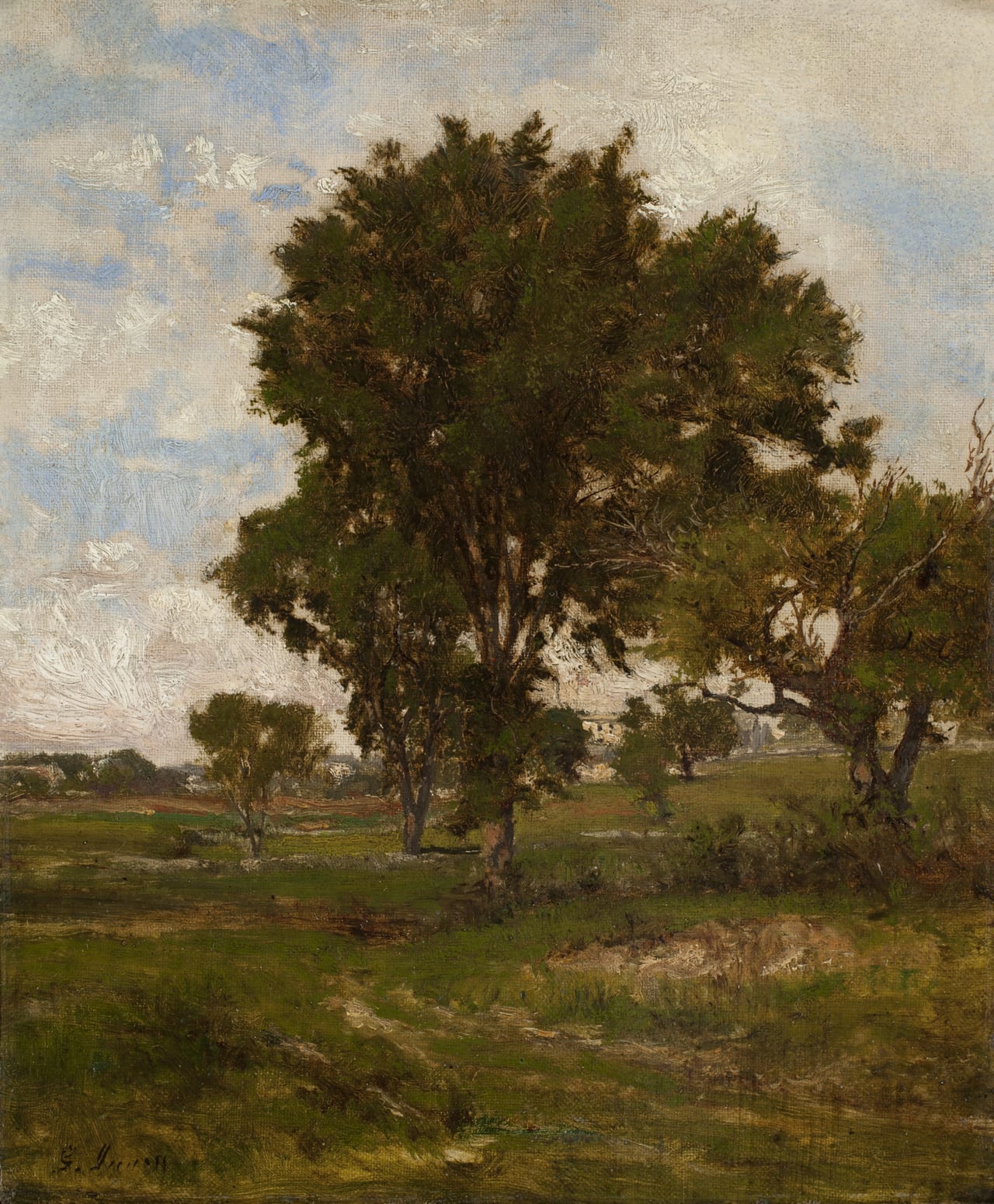
George Inness
The Elm Tree · c. 1880
Inness made The Elm Tree in his studio as a study of a favourite spot in Milton, New York; the central elm and the far white house return in other paintings, among them Autumn in Montclair, also at the Clark. Largely self-taught, he is known above all for the luminous, atmospheric quality of his late landscapes.
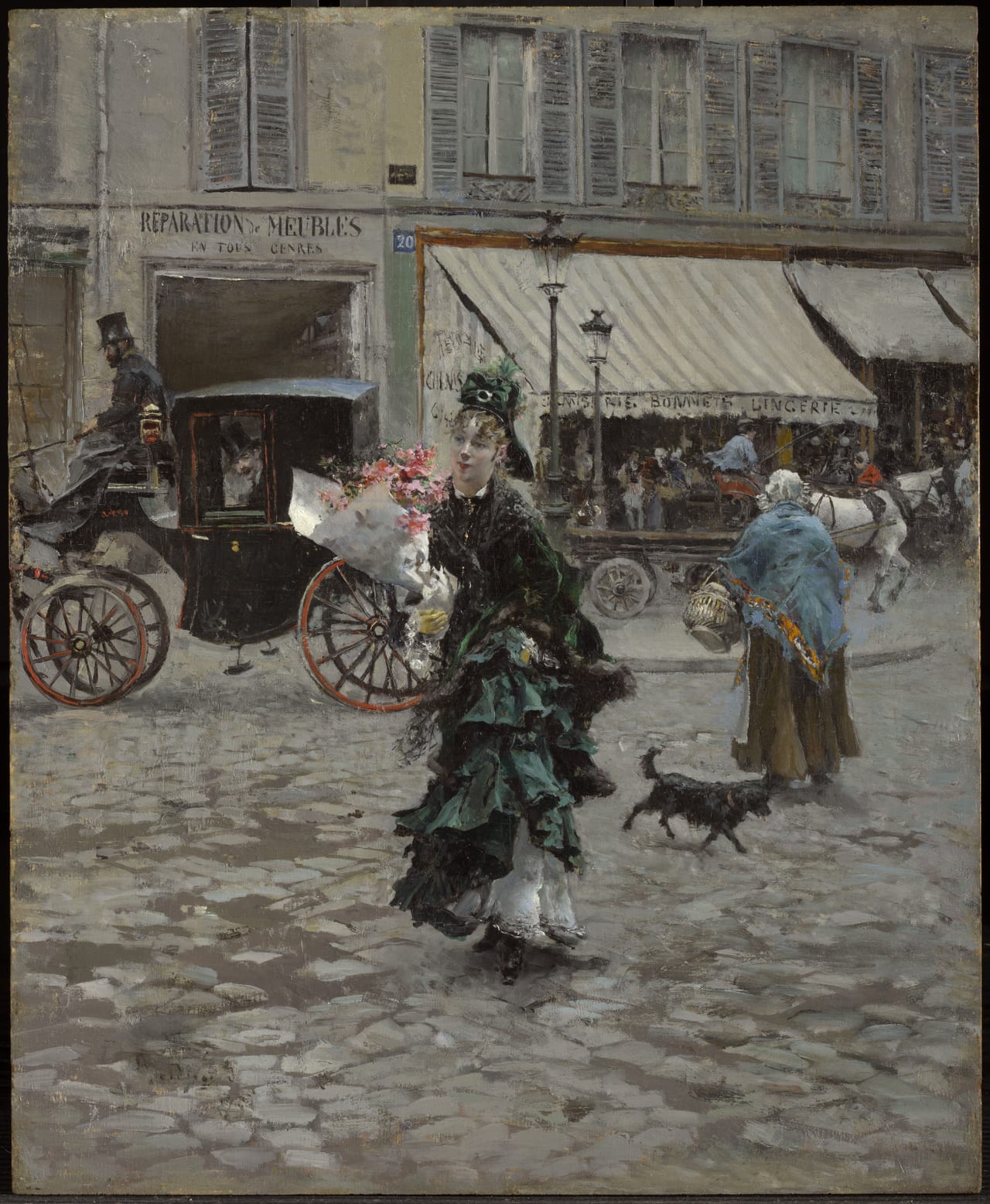
Giovanni Boldini
Crossing the Street · 1873–75
Figures hurry every way along a busy Paris street while an elegantly dressed woman, unaccompanied, crosses the cobbles and catches the eye of a man in a carriage. The panel carries two dates, perhaps because Boldini finished or reworked it two years after starting; he lived and worked in Paris for most of his career.
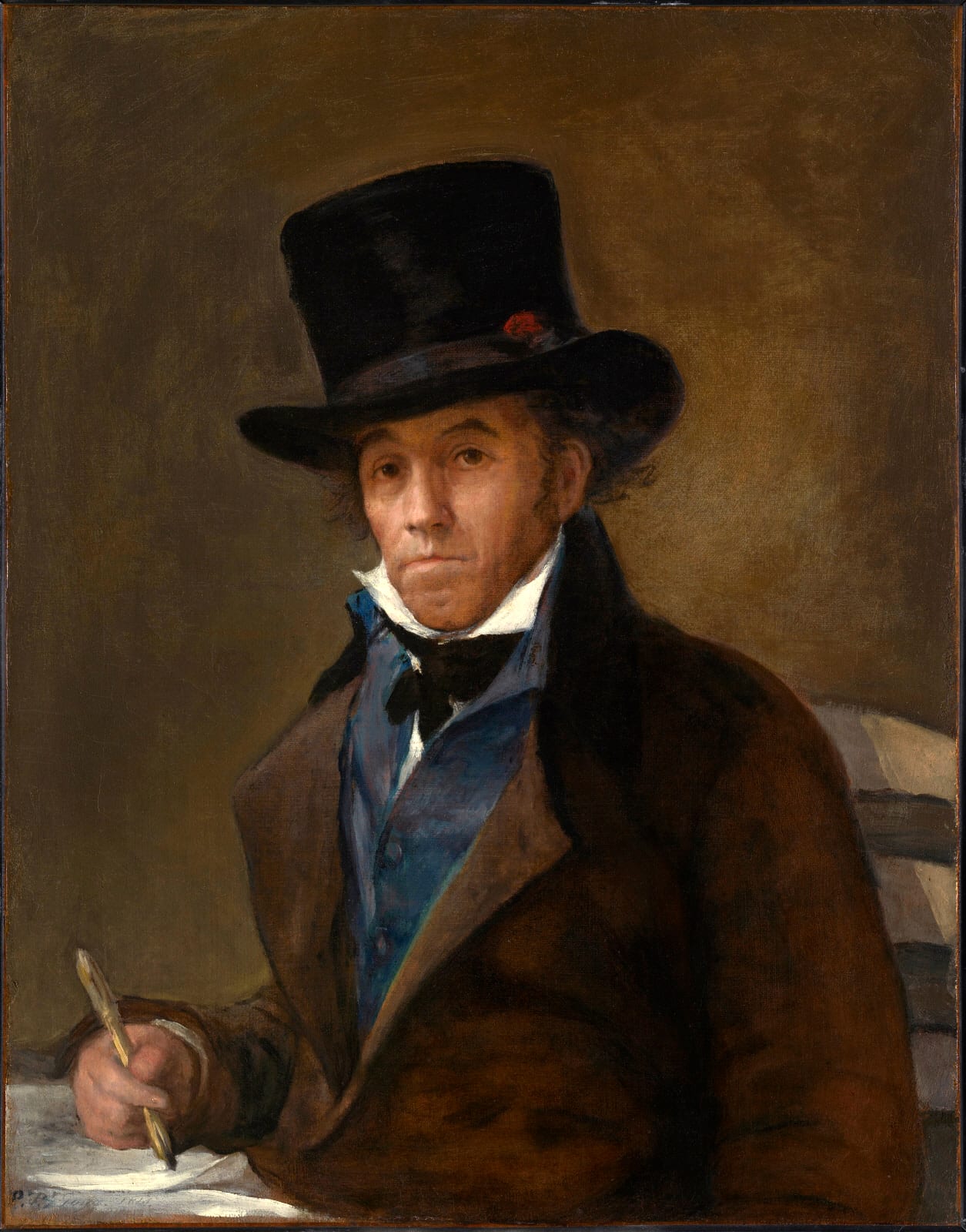
Francisco Goya
Asensio Juliá · 1814
A dazzling white collar under a blue vest lights the sitter’s face, and a touch of red enlivens the dark top hat; he looks up from his work, a charcoal holder in his hand, and he has been identified as Asensio Juliá, a painter who was Goya’s friend and colleague. His Disasters of War etchings bear witness to the horrors of the Napoleonic invasion.
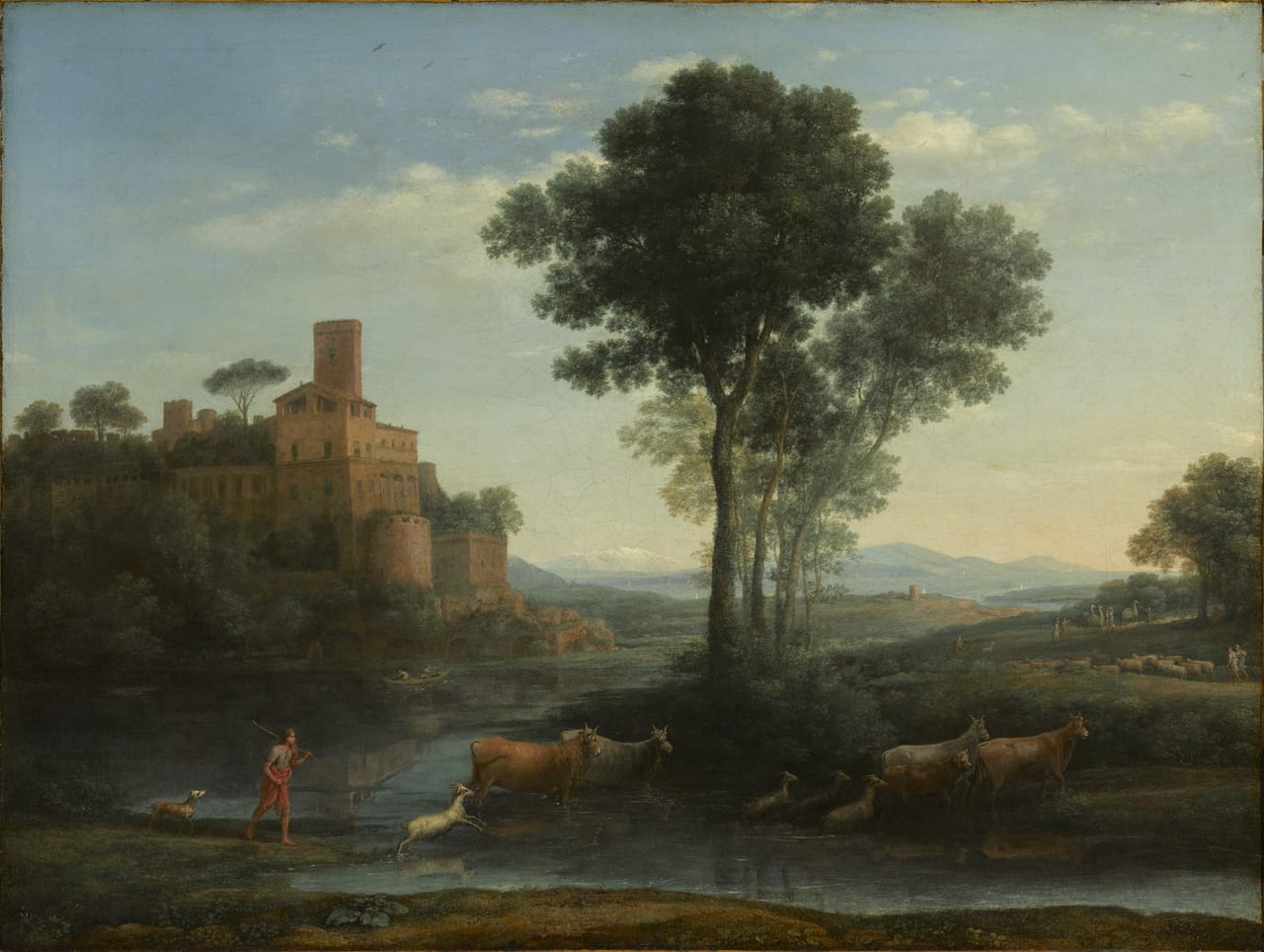
Claude Lorrain
Landscape with the Voyage of Jacob · 1677
A winding river, graceful trees and a grand castle make an idealised vision of the country near Rome, where Claude worked for most of his career; tiny camels at the right hint at Jacob’s journey to Canaan. His particular gift was the poetic rendering of light, which was especially influential in England from the mid-eighteenth to the mid-nineteenth century.
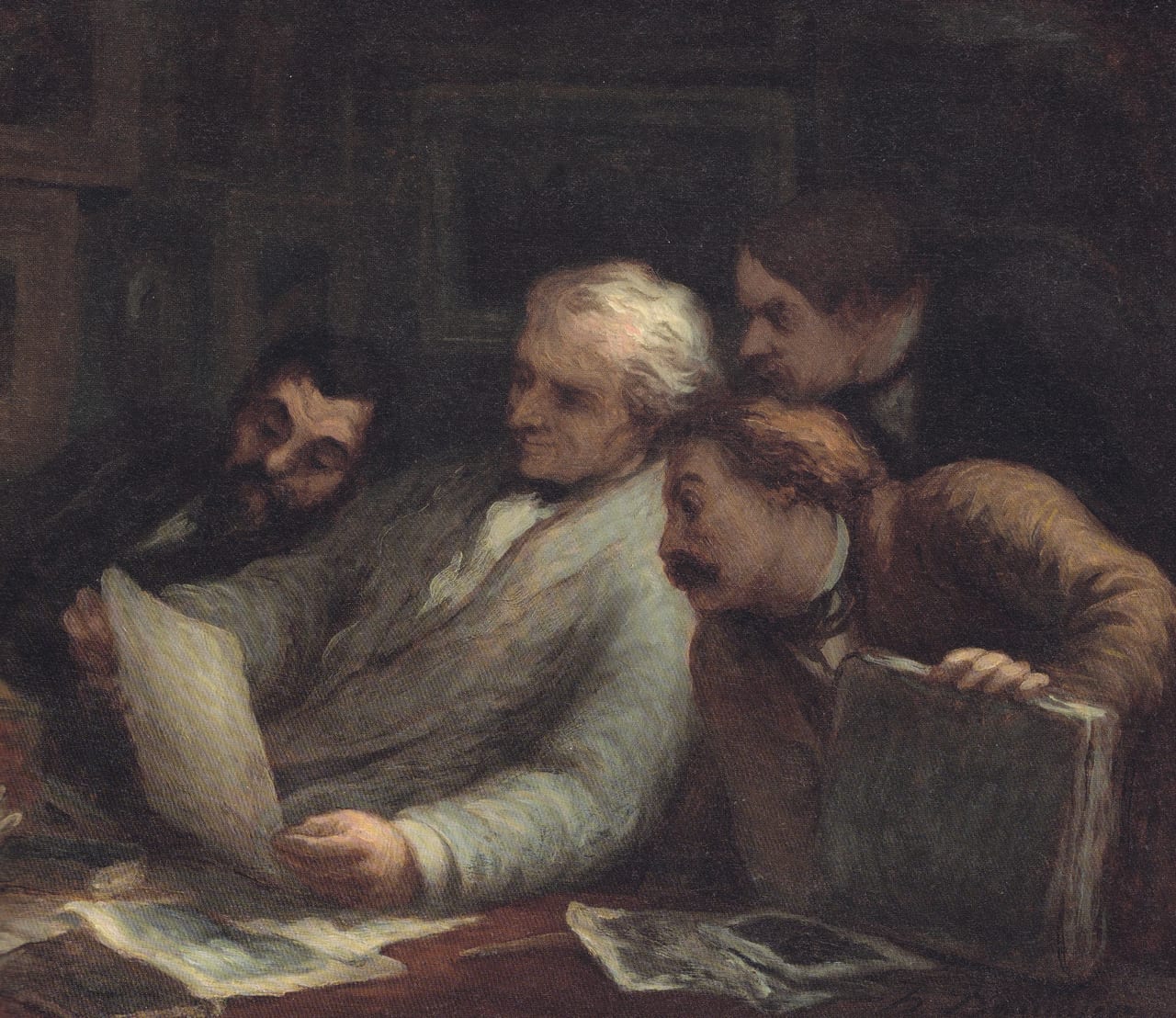
Honoré Daumier
The Print Collectors · c. 1860–63
Connoisseurs crowd round a print one of them holds up to the light, some admiring, others reserving judgement, amid portfolios strewn across the table. Daumier was renowned for cartoons satirising French politics and society, while his paintings, hardly known in his lifetime, helped bring Impressionist techniques into modern art.
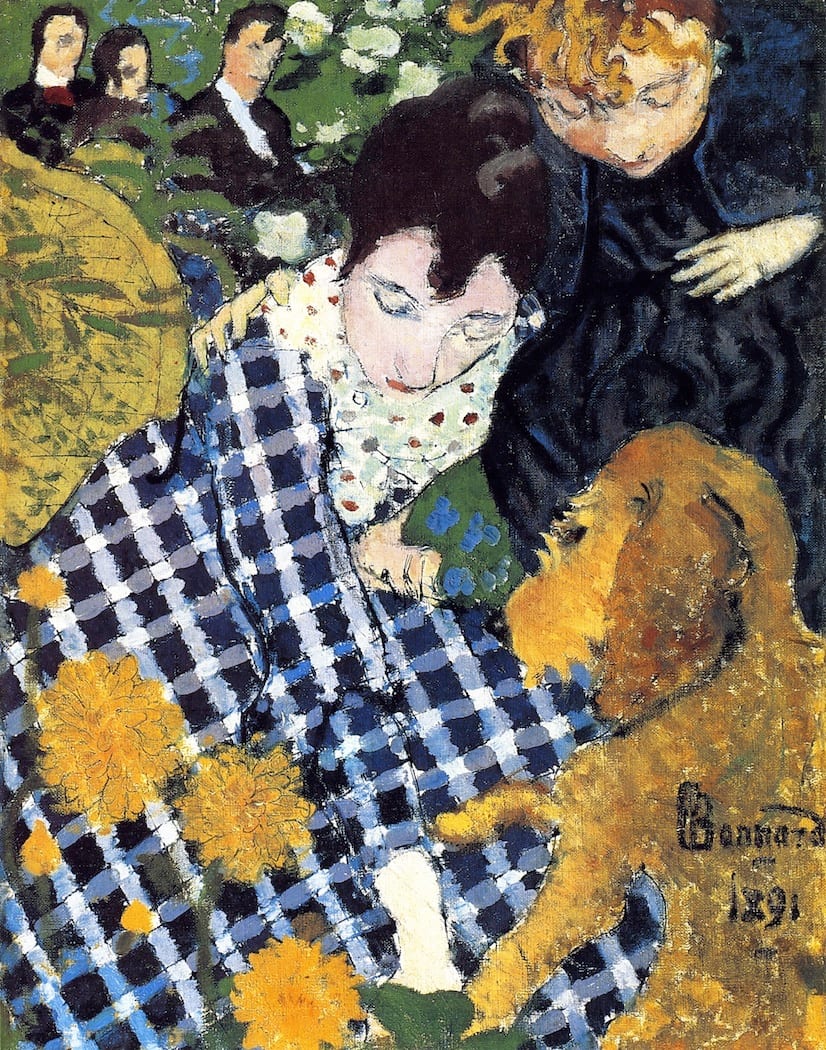
Pierre Bonnard
Women with a Dog · 1891
Bonnard’s sister and cousin play with the family dog in a garden, three more figures just visible behind them; he compressed the space, flattened the folds and patterns of their clothes and outlined shapes in pencil and ink. The experiments belong to the decorative style of the Nabis, the young painters he was then associated with.
Artworks
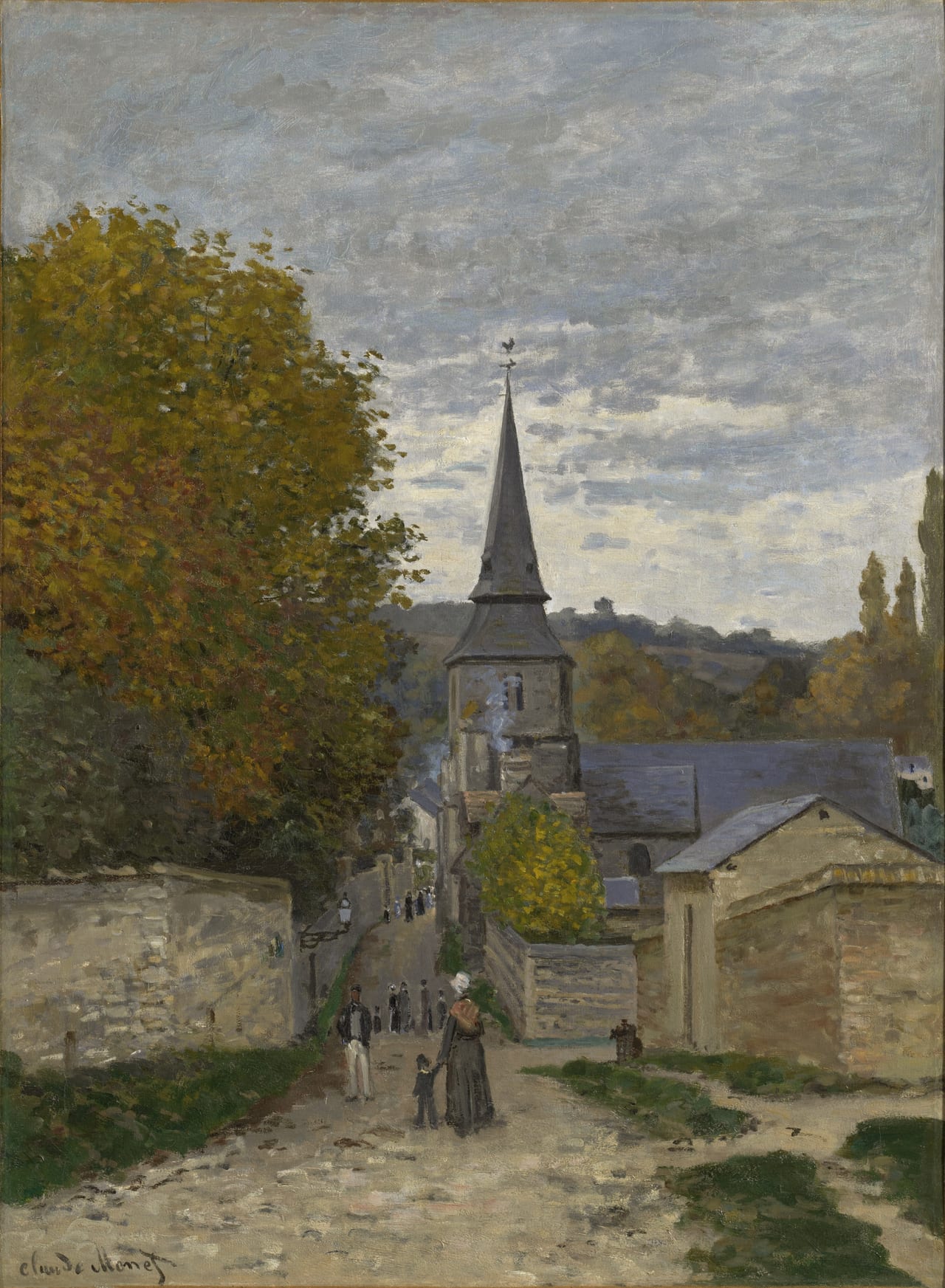
Street in Sainte-Adresse
Claude Monet · 1867
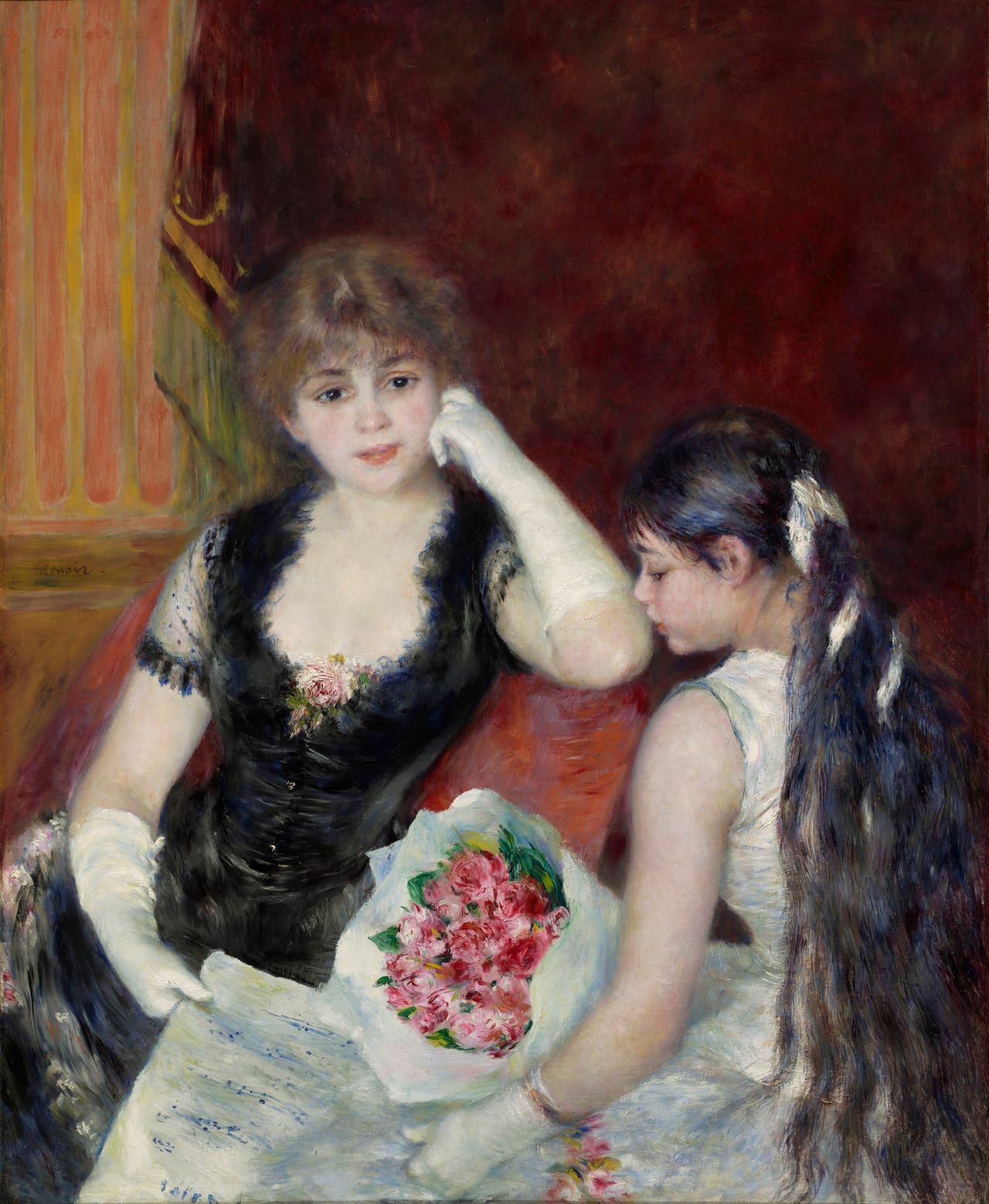
A Box at the Theater (At the Concert)
Pierre-Auguste Renoir · 1880
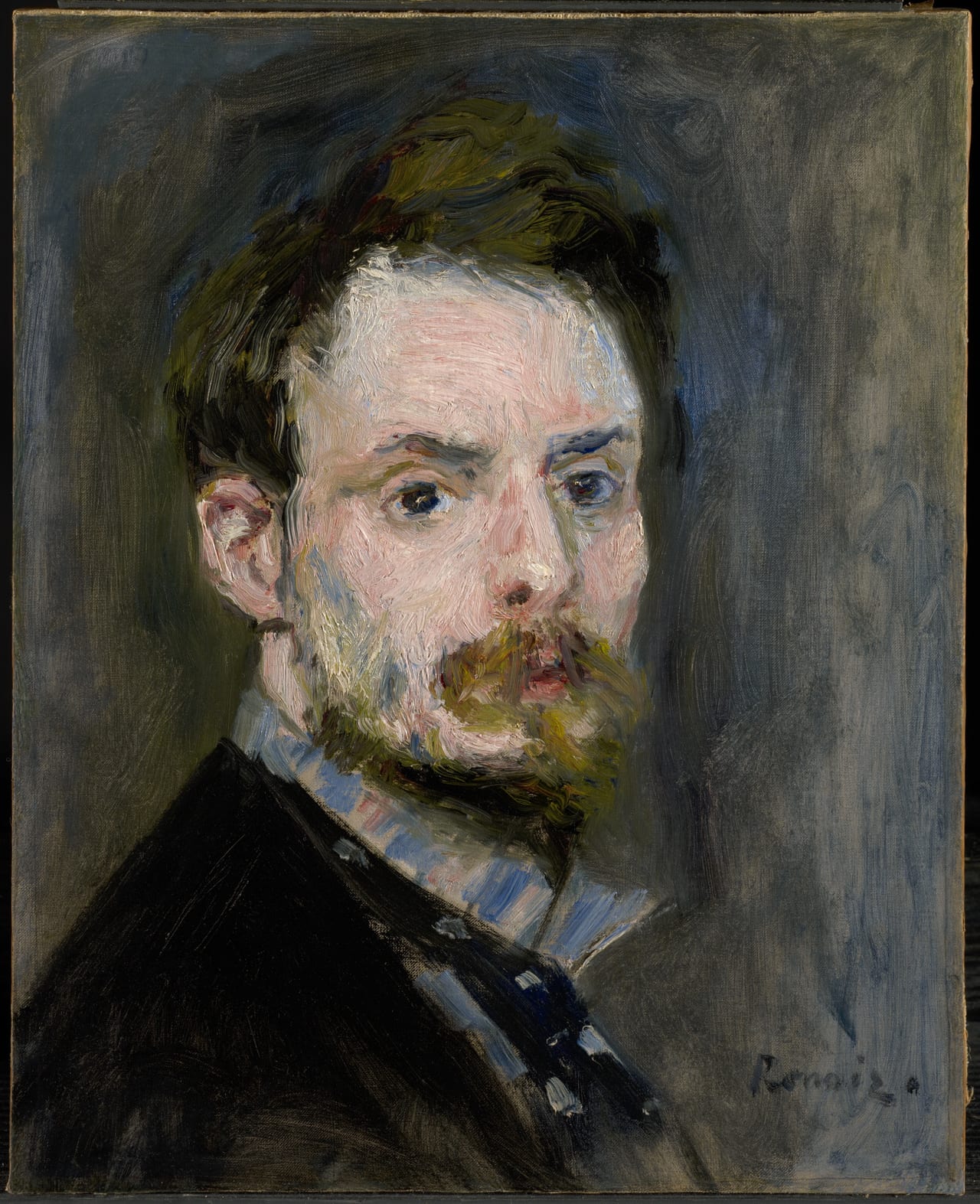
Self-Portrait
Pierre-Auguste Renoir · c. 1875
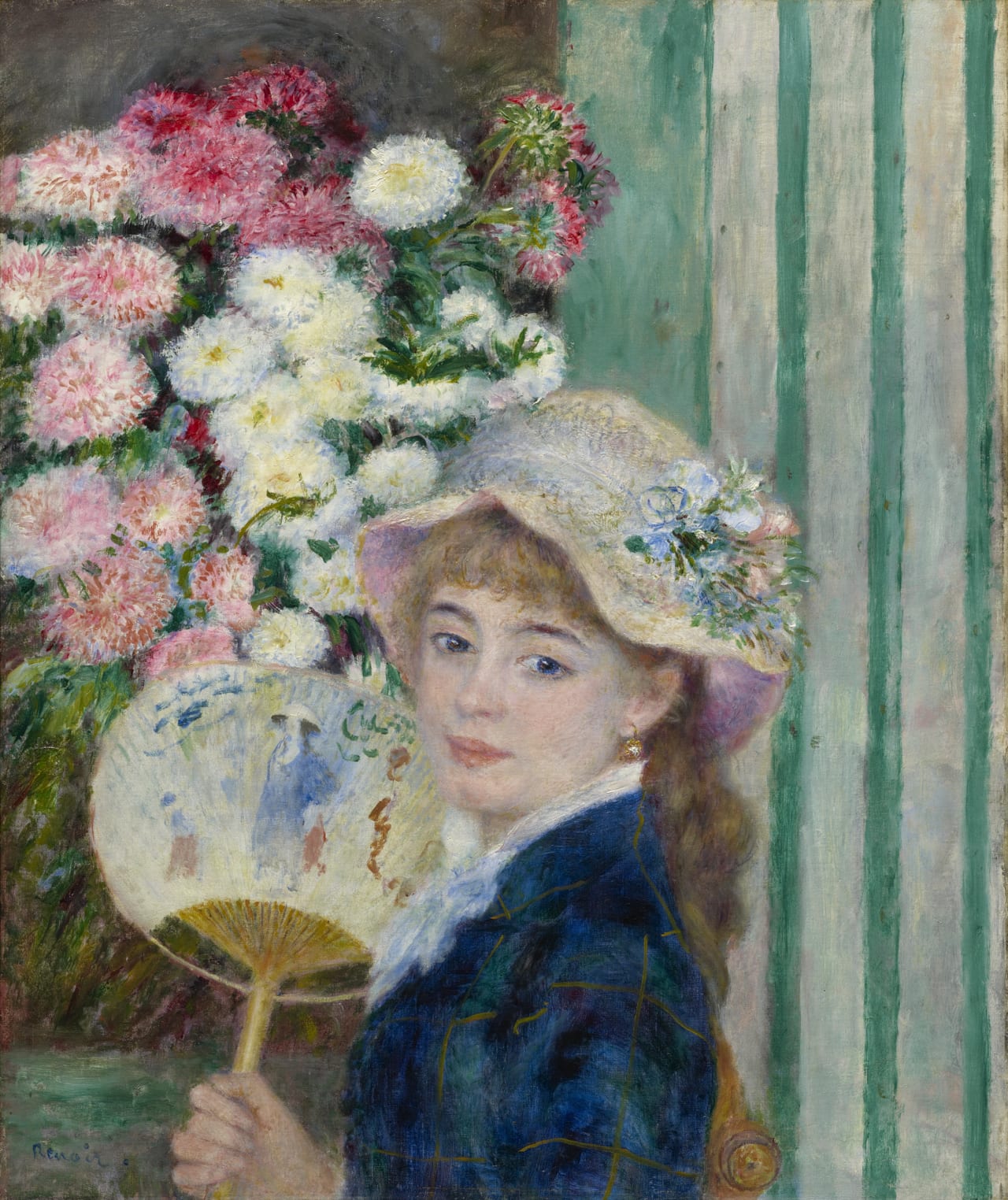
Woman with a Fan
Pierre-Auguste Renoir · c. 1879
Pierre-Auguste Renoir, CC BY-SA 4.0, via Wikimedia Commons · Licence: CC BY-SA 4.0 · resized
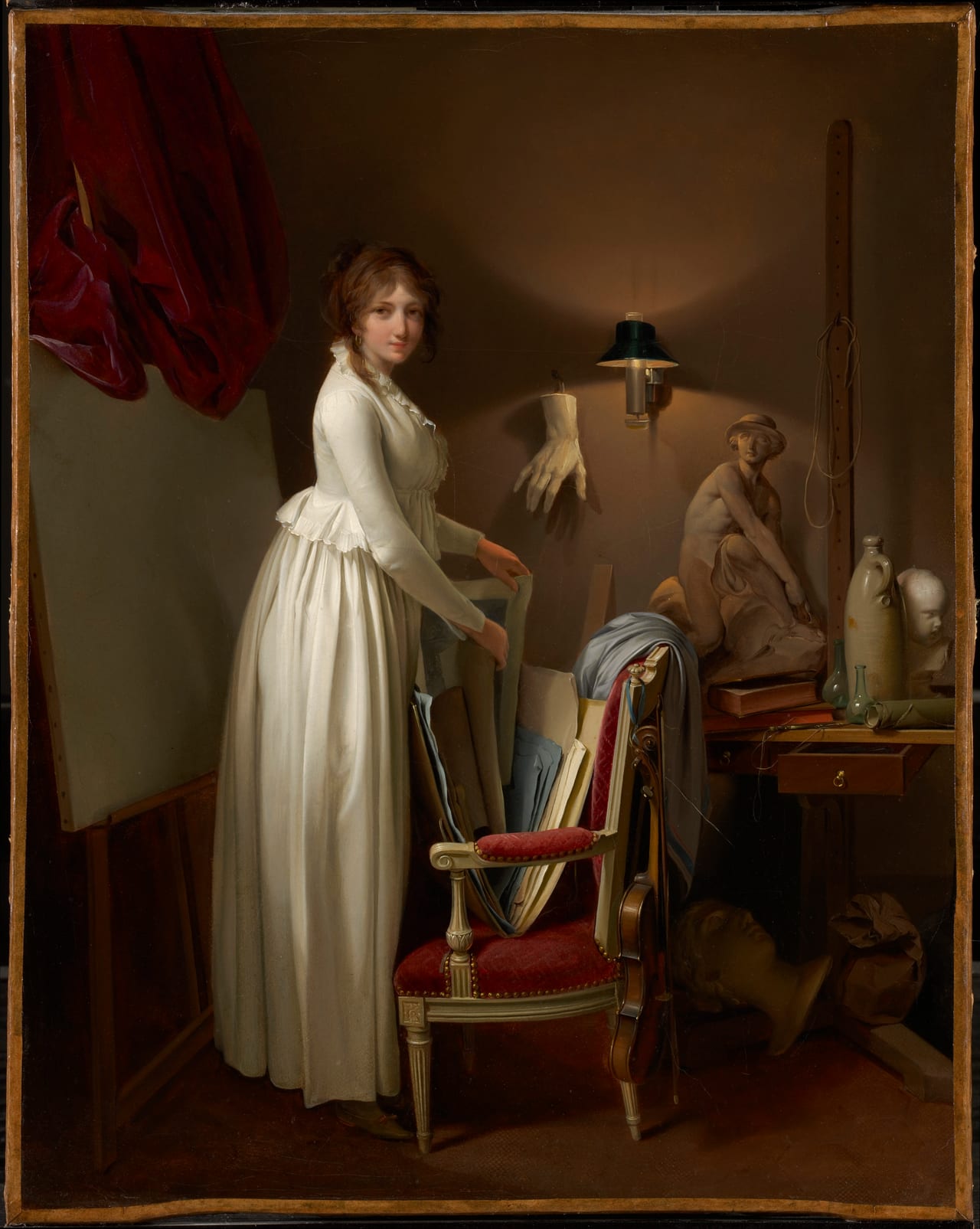
The Artist's Wife in His Studio
Louis-Léopold Boilly · c. 1795–99
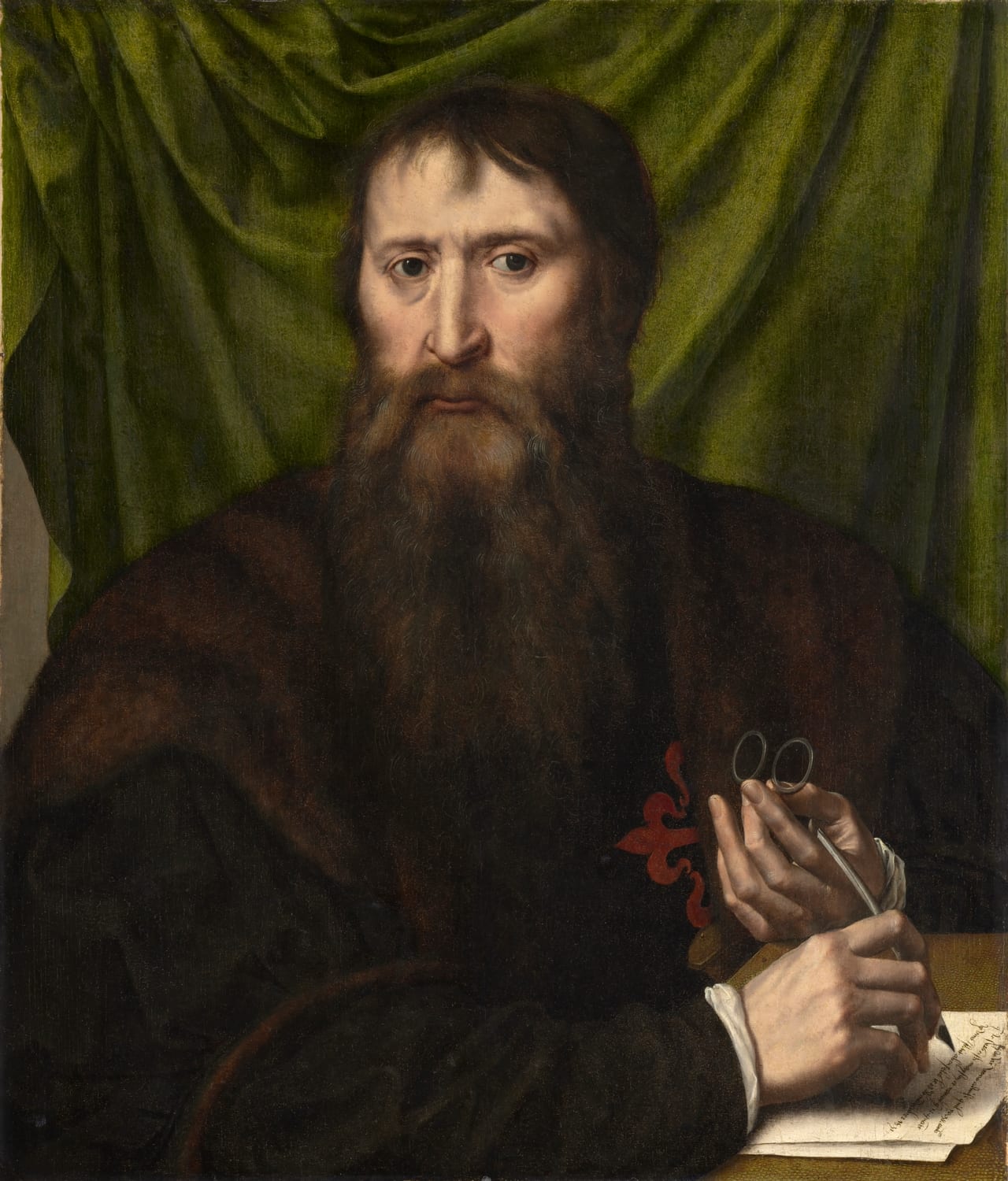
Felipe de Guevara
Jan Cornelisz Vermeyen · 1531
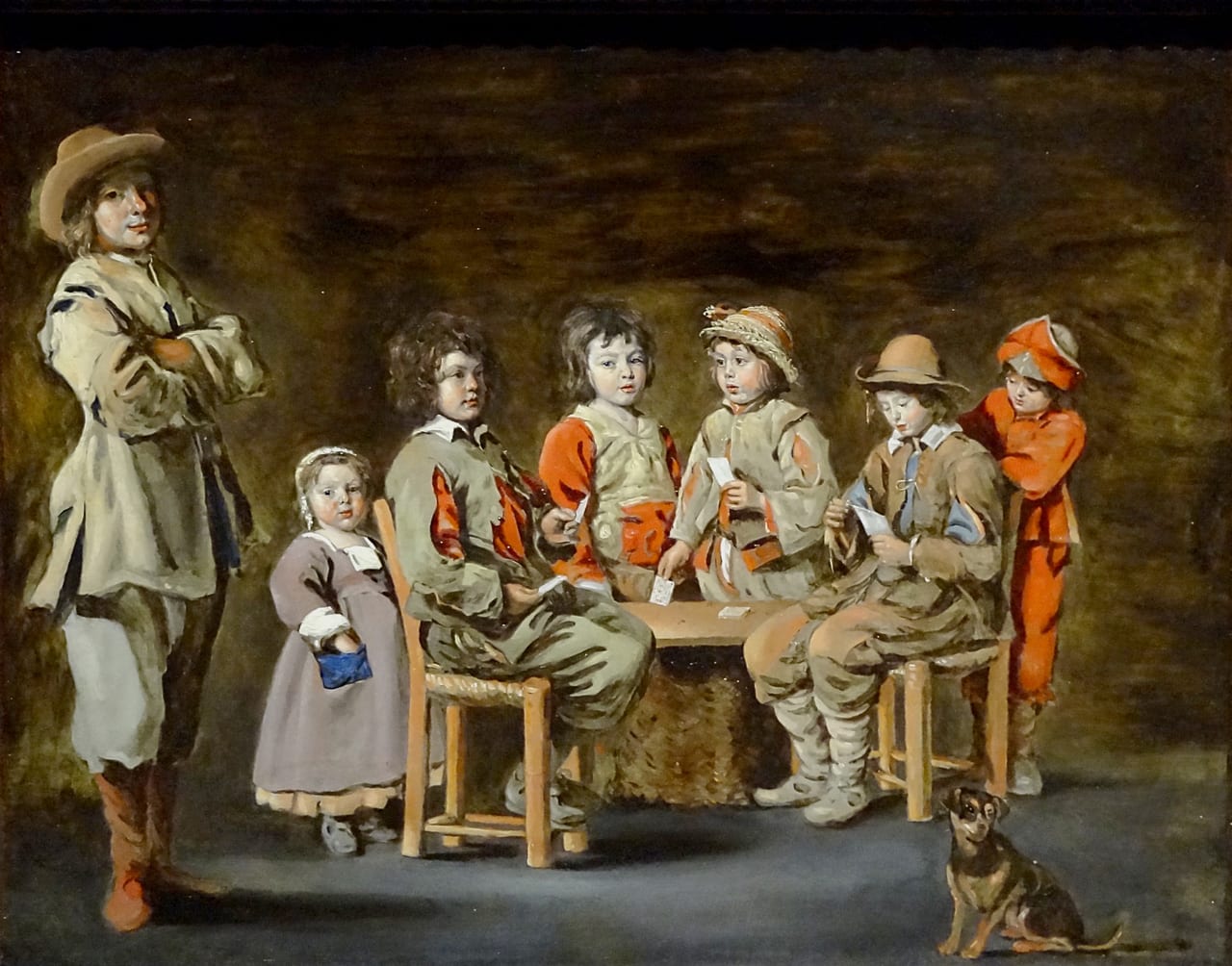
The Young Card Players
Antoine Le Nain · 1643
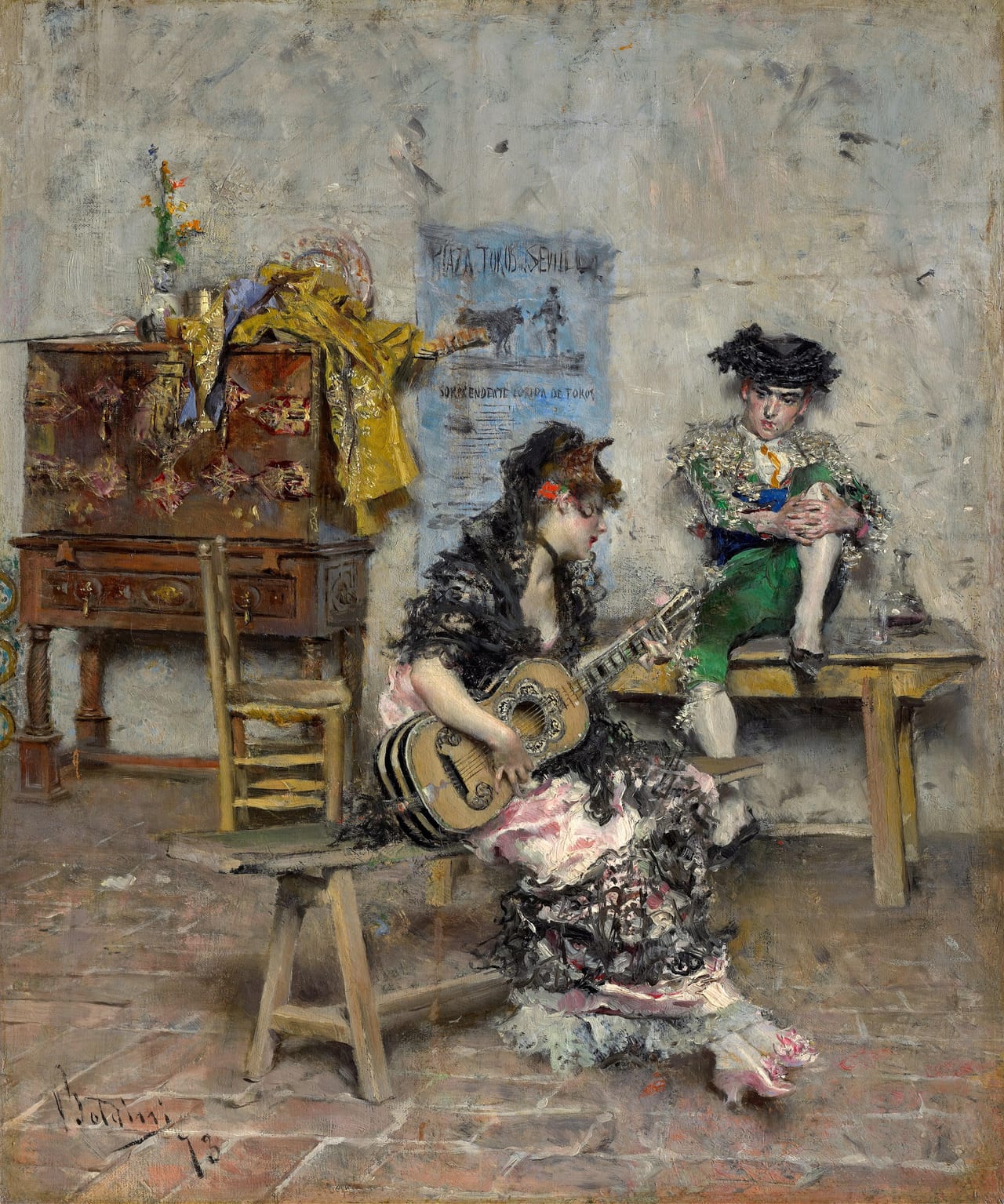
Guitar Player
Giovanni Boldini · 1872
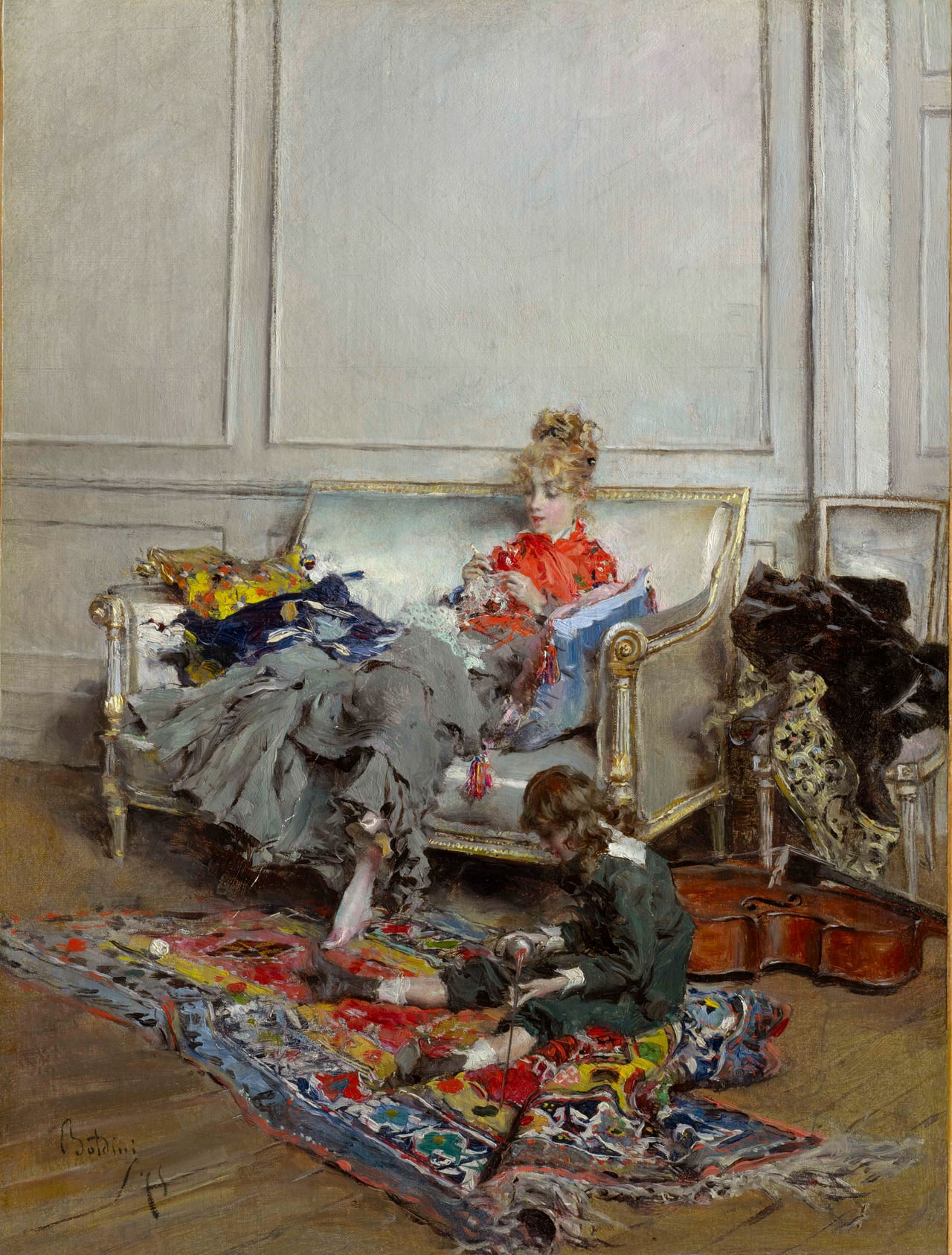
Young Woman Crocheting
Giovanni Boldini · 1875
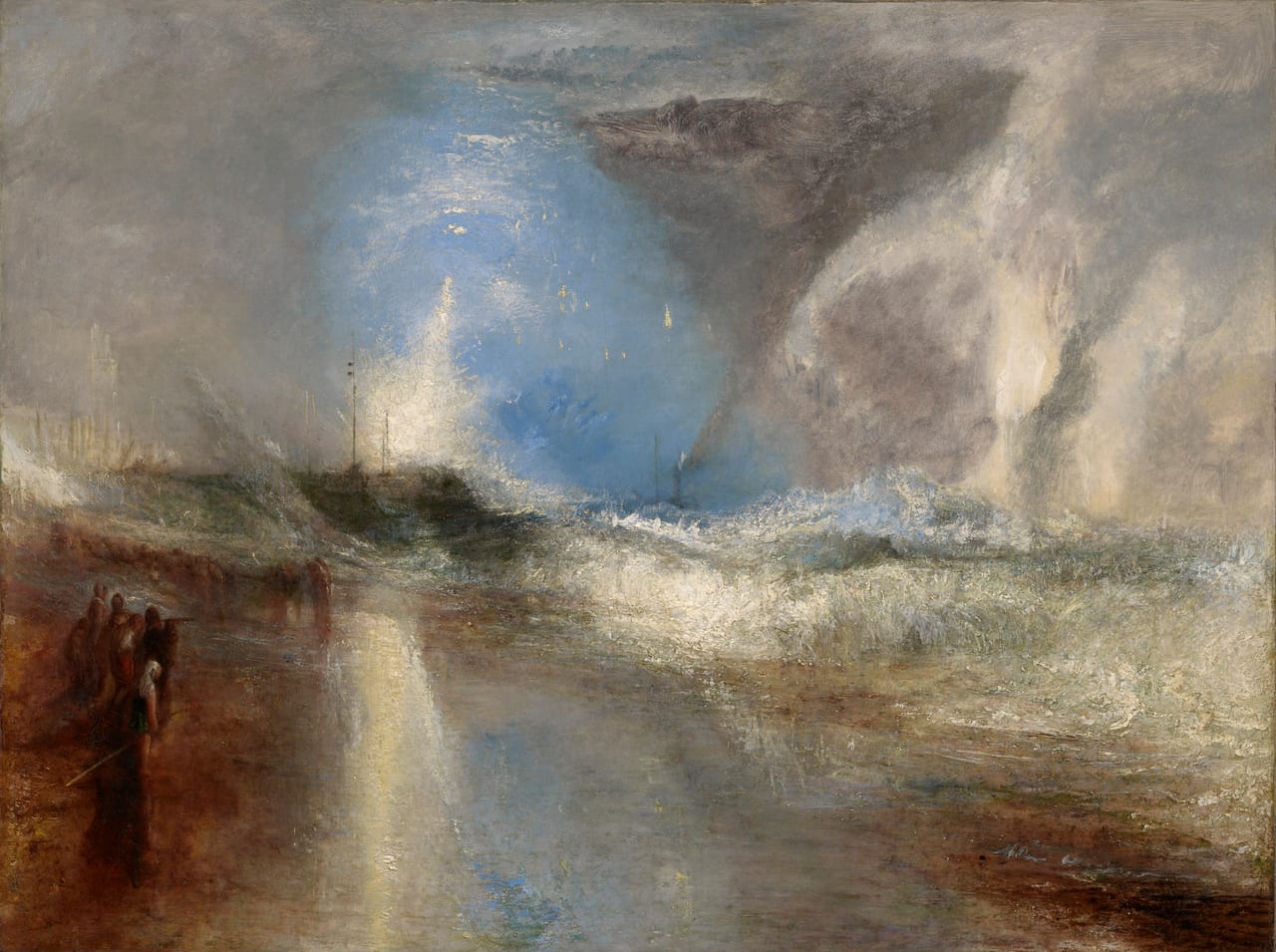
Rockets and Blue Lights (Close at Hand) to Warn Steamboats of Shoal Water
J. M. W. Turner · 1840
Sources
- Clark Art Institute, “The Clark”
- Clark Art Institute, “Sterling & Francine Clark”
- Clark Art Institute, “Collections Overview”
- Clark Art Institute, “Museum”
- Clark Art Institute, “About the Architecture”
- Clark Art Institute, “Aso O. Tavitian Wing”
- Clark Art Institute, “Tulip Fields at Sassenheim”
- Clark Art Institute, “Carolus-Duran”
- Clark Art Institute, “Rockets and Blue Lights”
- Clark Art Institute, “West Point, Prout’s Neck”
- Clark Art Institute, “Undertow”
- Clark Art Institute, “The Women of Amphissa”
- Clark Art Institute, “Slave Market”
- Clark Art Institute, “Snake Charmer”
- Clark Art Institute, “Blonde Bather”
- Clark Art Institute, “Rouen Cathedral, the Façade in Sunlight”
- Clark Art Institute, “The Canon Gilles Joye”
- Clark Art Institute, “Young Christian Girl”
- Clark Art Institute, “The Cliffs at Étretat”
- Clark Art Institute, “A Box at the Theater (At the Concert)”
- Clark Art Institute, “Eastern Point”
- Clark Art Institute, “Scene at Durham, an Idyll”
- Clark Art Institute, “Salvator Mundi”
- Clark Art Institute, “Malvern Hall”
- Clark Art Institute, “The Knitting Lesson”
- Clark Art Institute, “Autumn”
- Clark Art Institute, “Seated Nude”
- Clark Art Institute, “Portrait de Madame Lemasson”
- Clark Art Institute, “Summer Squall”
- Clark Art Institute, “Sleeping Girl”
- Clark Art Institute, “The Geese”
- Clark Art Institute, “A Venetian Interior”
- Clark Art Institute, “Woman Spinning”
- Clark Art Institute, “The Elm Tree”
- Clark Art Institute, “Crossing the Street”
- Clark Art Institute, “Asensio Juliá”
- Clark Art Institute, “Landscape with the Voyage of Jacob”
- Clark Art Institute, “The Print Collectors”
- Clark Art Institute, “Women with a Dog”
- Clark Art Institute, “Street in Sainte-Adresse”
- Clark Art Institute, “Spring in Giverny”
- Clark Art Institute, “Self-Portrait”
- Clark Art Institute, “Woman with a Fan”
- Clark Art Institute, “The Artist’s Wife in His Studio”
- Clark Art Institute, “Felipe de Guevara”
- Clark Art Institute, “The Young Card Players”
- Clark Art Institute, “Guitar Player”
- Clark Art Institute, “Young Woman Crocheting”
- Clark Art Institute, “Two Guides”
- Clark Art Institute, “The Bridle Path, White Mountains”
- Britannica, “Winslow Homer”
- Britannica, “Pierre-Auguste Renoir”
- Britannica, “Claude Monet”
- Britannica, “John Singer Sargent”
- Britannica, “George Inness”
- Britannica, “Francisco Goya”
- Britannica, “Claude Lorrain”
- Britannica, “Honoré Daumier”
- Britannica, “Pierre Bonnard”
- Wikipedia, “Clark Art Institute”
- Wikipedia, “Jean-François Millet”
- Wikipedia, “Giovanni Boldini”
- Tulip Fields at Sassenheim — Public domain via Wikimedia Commons (Public domain)
- Carolus-Duran — Public domain via Wikimedia Commons (Public domain)
- West Point, Prout's Neck — Public domain via Wikimedia Commons (Public domain)
- Undertow — Public domain via Wikimedia Commons (Public domain)
- Two Guides — Public domain via Wikimedia Commons (Public domain)
- The Women of Amphissa — Public domain via Wikimedia Commons (Public domain)
- Slave Market — Public domain via Wikimedia Commons (Public domain)
- Snake Charmer — Public domain via Wikimedia Commons (Public domain)
- Blonde Bather — Public domain via Wikimedia Commons (Public domain)
- Rouen Cathedral, the Façade in Sunlight — Public domain via Wikimedia Commons (Public domain)
- The Canon Gilles Joye — Public domain via Wikimedia Commons (Public domain)
- Young Christian Girl — Public domain via Wikimedia Commons (Public domain)
- The Cliffs at Étretat — Public domain via Wikimedia Commons (Public domain)
- Spring in Giverny — Public domain via Wikimedia Commons (Public domain)
- Eastern Point — Public domain via Wikimedia Commons (Public domain)
- Scene at Durham, an Idyll — Public domain via Wikimedia Commons (Public domain)
- Salvator Mundi — Public domain via Wikimedia Commons (Public domain)
- Malvern Hall — Public domain via Wikimedia Commons (Public domain)
- The Knitting Lesson — Public domain via Wikimedia Commons (Public domain)
- Autumn — Public domain via Wikimedia Commons (Public domain)
- Seated Nude — Public domain via Wikimedia Commons (Public domain)
- Portrait de Madame Lemasson — Public domain via Wikimedia Commons (Public domain)
- Summer Squall — Public domain via Wikimedia Commons (Public domain)
- Sleeping Girl — Public domain via Wikimedia Commons (Public domain)
- The Geese — Public domain via Wikimedia Commons (Public domain)
- A Venetian Interior — Public domain via Wikimedia Commons (Public domain)
- Woman Spinning — Public domain via Wikimedia Commons (Public domain)
- The Elm Tree — Public domain via Wikimedia Commons (Public domain)
- Crossing the Street — Public domain via Wikimedia Commons (Public domain)
- Asensio Juliá — Public domain via Wikimedia Commons (Public domain)
- Landscape with the Voyage of Jacob — Public domain via Wikimedia Commons (Public domain)
- The Print Collectors — Public domain via Wikimedia Commons (Public domain)
- Women with a Dog — Public domain via Wikimedia Commons (Public domain)
- Street in Sainte-Adresse — Public domain via Wikimedia Commons (Public domain)
- A Box at the Theater (At the Concert) — Public domain via Wikimedia Commons (Public domain)
- Self-Portrait — Public domain via Wikimedia Commons (Public domain)
- Woman with a Fan — Pierre-Auguste Renoir, CC BY-SA 4.0, via Wikimedia Commons (CC BY-SA 4.0)
- The Artist's Wife in His Studio — Public domain via Wikimedia Commons (Public domain)
- Felipe de Guevara — Public domain via Wikimedia Commons (Public domain)
- The Young Card Players — CC0 via Wikimedia Commons (CC0)
- Guitar Player — Public domain via Wikimedia Commons (Public domain)
- Young Woman Crocheting — Public domain via Wikimedia Commons (Public domain)
- Rockets and Blue Lights (Close at Hand) to Warn Steamboats of Shoal Water — Public domain via Wikimedia Commons (Public domain)
Invite the Clark into your living room