The Farewell of Telemachus and Eucharis
Charles Meynier · c. 1800

Louvre Abu Dhabi
Abu Dhabi
Born of an agreement that the governments of Abu Dhabi and France signed in 2007, the Louvre Abu Dhabi opened on Saadiyat Island in November 2017 in a building by Jean Nouvel. Its galleries are arranged by time rather than by geography, a journey in twelve chapters from prehistory to the present, in which works from its own growing collection are shown beside loans from French, Emirati and regional museums.
- opened on Saadiyat Island, in a building by Jean Nouvel
- November 2017
- in the geometric structure of Nouvel’s dome
- 7,850 stars
- acquired for the permanent collection in 2020
- 167 works
A museum made by two countries
The Louvre Abu Dhabi began in March 2007, when the United Arab Emirates and France entered a partnership for cultural exchange whose centrepiece was to be a museum on Saadiyat Island. Representatives of the two governments signed the agreement on 6 March 2007, and the French Parliament ratified it on 9 October that year. Agence France-Muséums, which brings together 17 of France’s best-known cultural institutions, coordinates the loans of works to the museum and gives it management expertise.
When the project was announced in 2007, the museum was expected to open in 2012. Building work officially began on 26 May 2009, and the museum was inaugurated on 8 November 2017 by the French President, Emmanuel Macron, the Crown Prince of Abu Dhabi, Mohammed bin Zayed Al Nahyan, and the Prime Minister of the UAE, Mohammed bin Rashid Al Maktoum. The Louvre Abu Dhabi is a national museum of the UAE, and the Department of Culture and Tourism – Abu Dhabi oversees it.
Nouvel’s dome
Jean Nouvel drew on the architectural traditions of the region and on the site itself, where the Arabian sky meets the sand of Saadiyat Island and the waters of the Arabian Gulf. At the heart of his design is a vast silvery dome that seems to hover over the museum-city below. Taking the cupola of Arabic architecture as its model, the dome is a geometric lattice of 7,850 stars, repeated at different sizes and angles in eight layers. Sunlight filters through the perforations in the dome to make the ‘rain of light’ inside, a tribute to nature inspired by the palm trees of Abu Dhabi, whose leaves soften the bright sun into a dappled pattern on the ground. When the museum opened in 2017, the latticed dome won the building praise.
Under it, the Louvre Abu Dhabi is a cluster of 55 buildings, 23 of them galleries, inspired by the low-rise homes of the region and surrounded by water. The dome also shades the open plaza from the sun and cuts the energy used by the buildings beneath. The galleries begin in the Grand Vestibule, whose floor, after the manner of a nautical chart, carries a winding line tracing the coastline of the United Arab Emirates; in place of ports, it bears names in several languages for the places the works on show come from.
A collection of its own
On 26 May 2009, the day building work officially began, the exhibition Talking Art: Louvre Abu Dhabi presented the institution’s first 19 acquisitions, among them a Mamluk Quran of the fourteenth century, Bellini’s Virgin and Child and Mondrian’s Composition with blue, red, yellow and black of 1922. A second exhibition, Birth of a Museum, opened at Manarat Al Saadiyat in May 2013 as the first large preview of the collection, with 130 works the government of Abu Dhabi had acquired for it. In 2012 the museum began to collect photography; its first acquisitions in the field included pictures by Roger Fenton, George Wilson Bridges and Joseph-Philibert Girault de Prangey.
Every work entering the collection passes a strict international protocol, set out in the 2007 agreement between Abu Dhabi and France and aligned with the 1970 UNESCO convention. Works are chosen with the Musée du Louvre and the Abu Dhabi authorities for their art-historical importance, condition and provenance and for the stories of cultural connection they can tell, and each is assessed and approved by an acquisitions committee whose members, from Abu Dhabi and France, include leading curators. In 2020 the museum acquired 167 new works. The collection now spans thousands of years, from prehistoric tools and religious texts to celebrated paintings and contemporary art, and the galleries show some 600 works from it, refreshed with loans from the museum’s international partners.
What to see
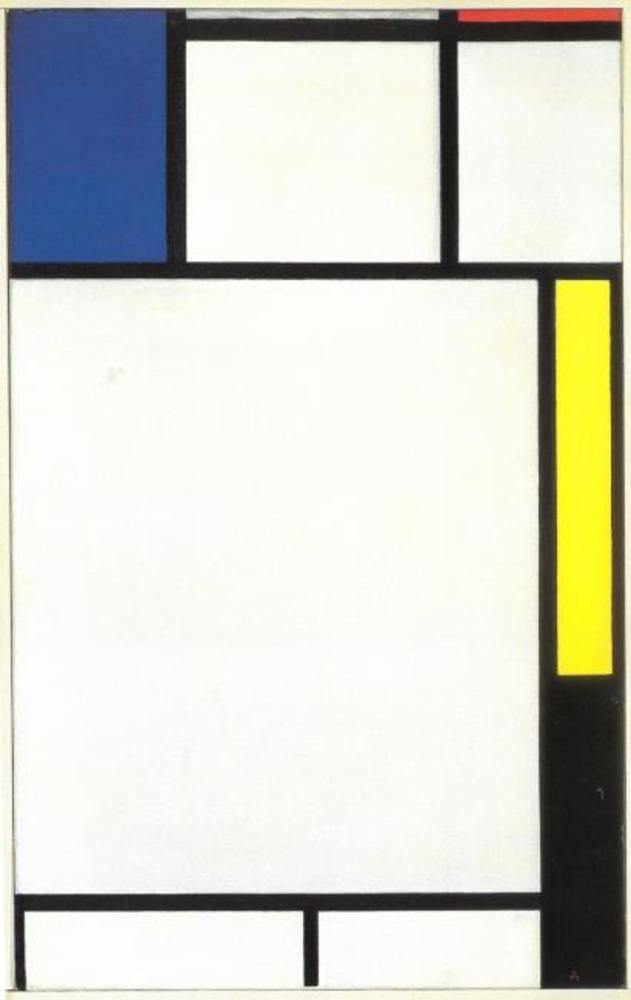
Composition with Blue, Red, Yellow and Black
Piet Mondrian · 1922
Planes of colour, pushed back towards the edges, seem to draw the eye to a space beyond this painting of 1922. Piet Mondrian, a major exponent of the Dutch abstract movement De Stijl, built his compositions from right angles and the principle of ‘constant ratio’: asymmetrical grids of vertical and horizontal lines punctuated by rectangles of varied shape and size. The painting was one of the institution’s first 19 acquisitions, shown to the public in 2009.
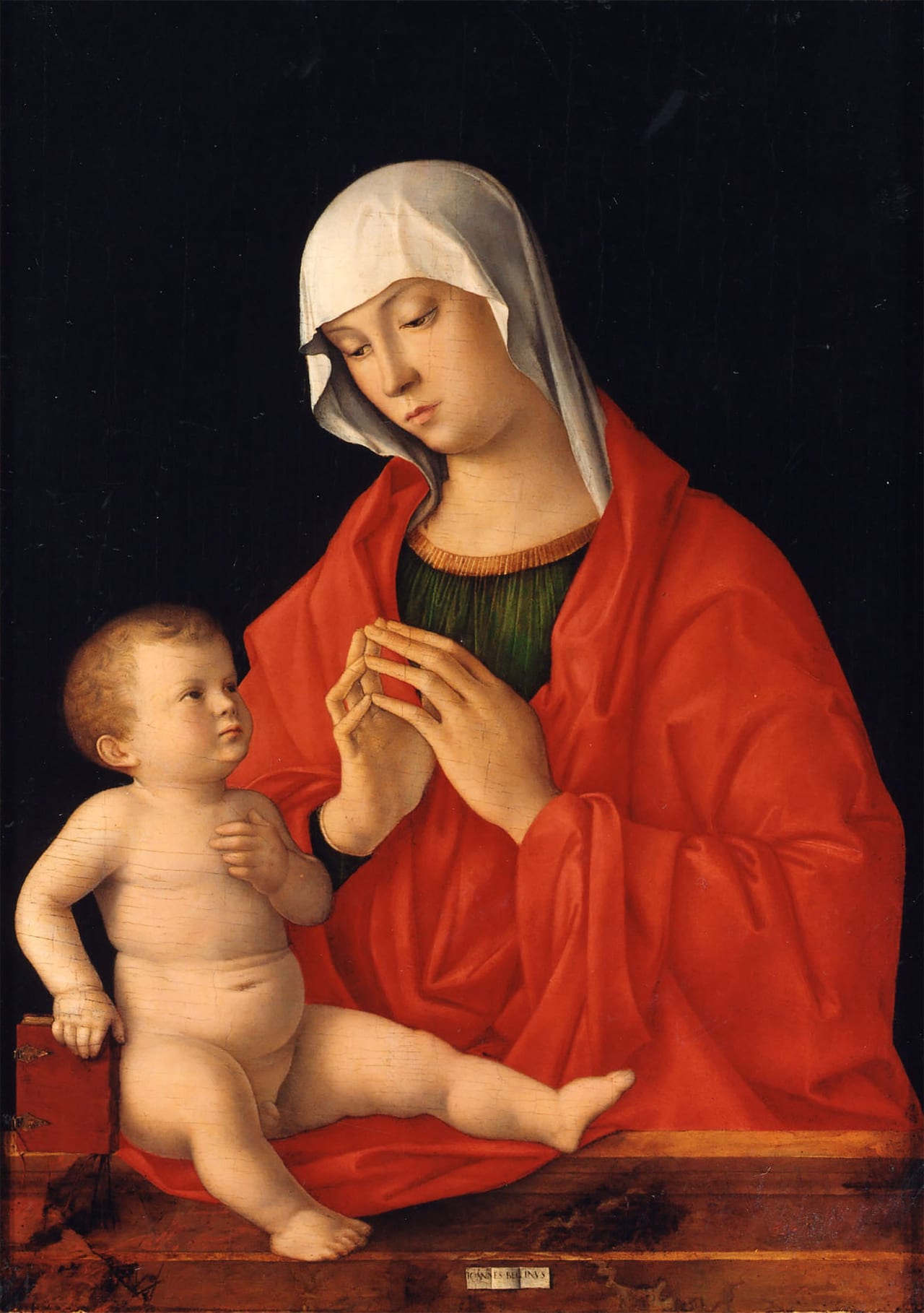
Virgin and Child
Giovanni Bellini · 1480–1485
The Virgin joins her hands in prayer before her son, who sits on her red mantle, the colour of the Passion and of her love for him; under the Child’s right hand lies a book standing for the Holy Scriptures, and so for his destiny, already written. Unusually for Giovanni Bellini, a plain black ground takes the place of the landscape and deepens the colour. Probably painted in the early 1480s, the panel is very typical of the early Venetian Renaissance, when oil painting was a new technique that set Venice apart from Italy’s other artistic centres.
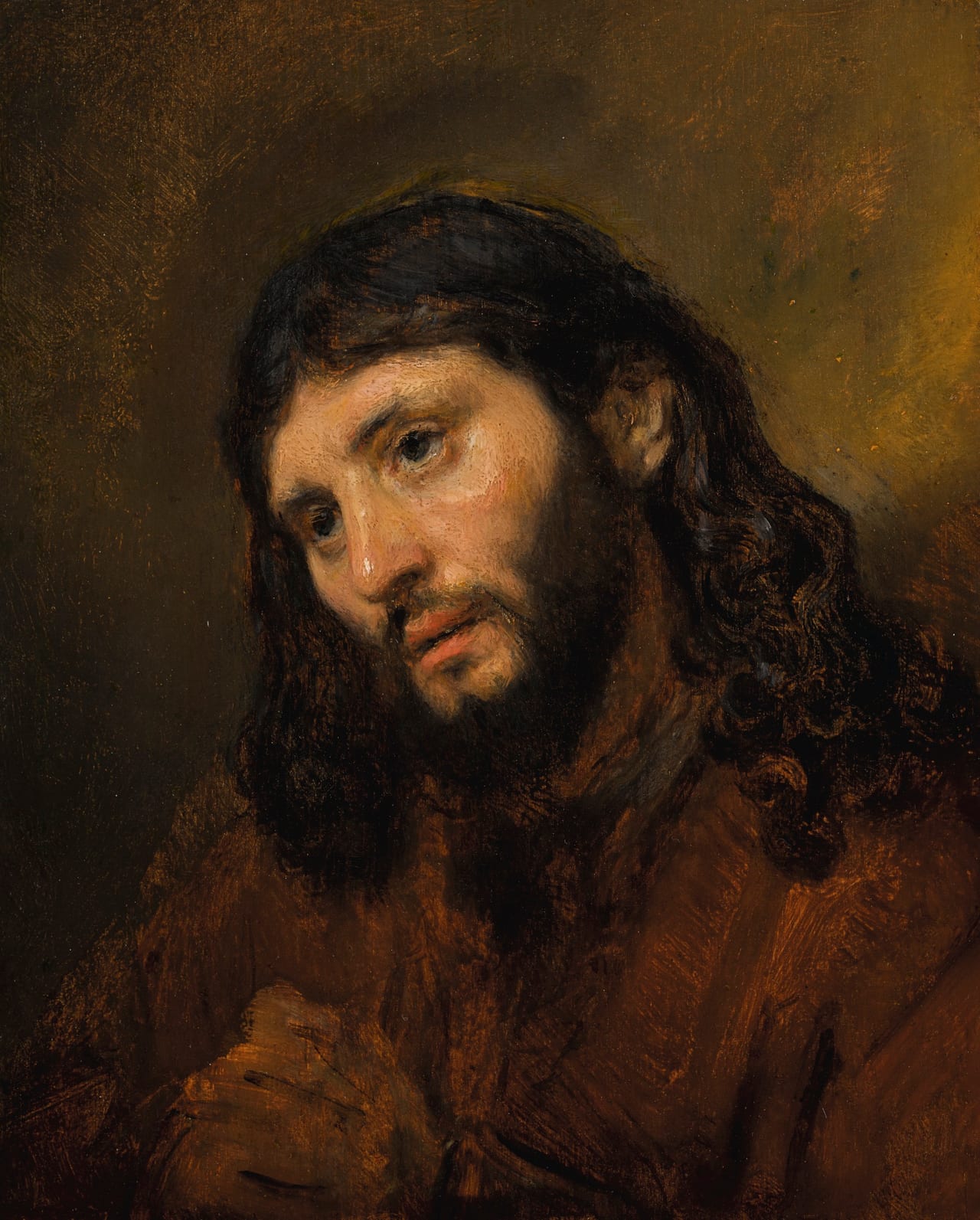
Head of a Young Man with Clasped Hands
Rembrandt van Rijn · c. 1648–1652
A young man with black hair and clasped hands is Rembrandt’s study for the figure of Christ, painted in oil on an oak panel 25.5 by 20.1 centimetres. It belongs to his group of Figures of Christ, with six other sketches of the same model, and shows how he sought the angle or profile that made best use of the light. The model probably came from the Jewish community of the neighbourhood where Rembrandt lived. With a man in prayer in place of a majestic sovereign, the subject suggests a new type of image in the Christian world, one that underlines human humility.
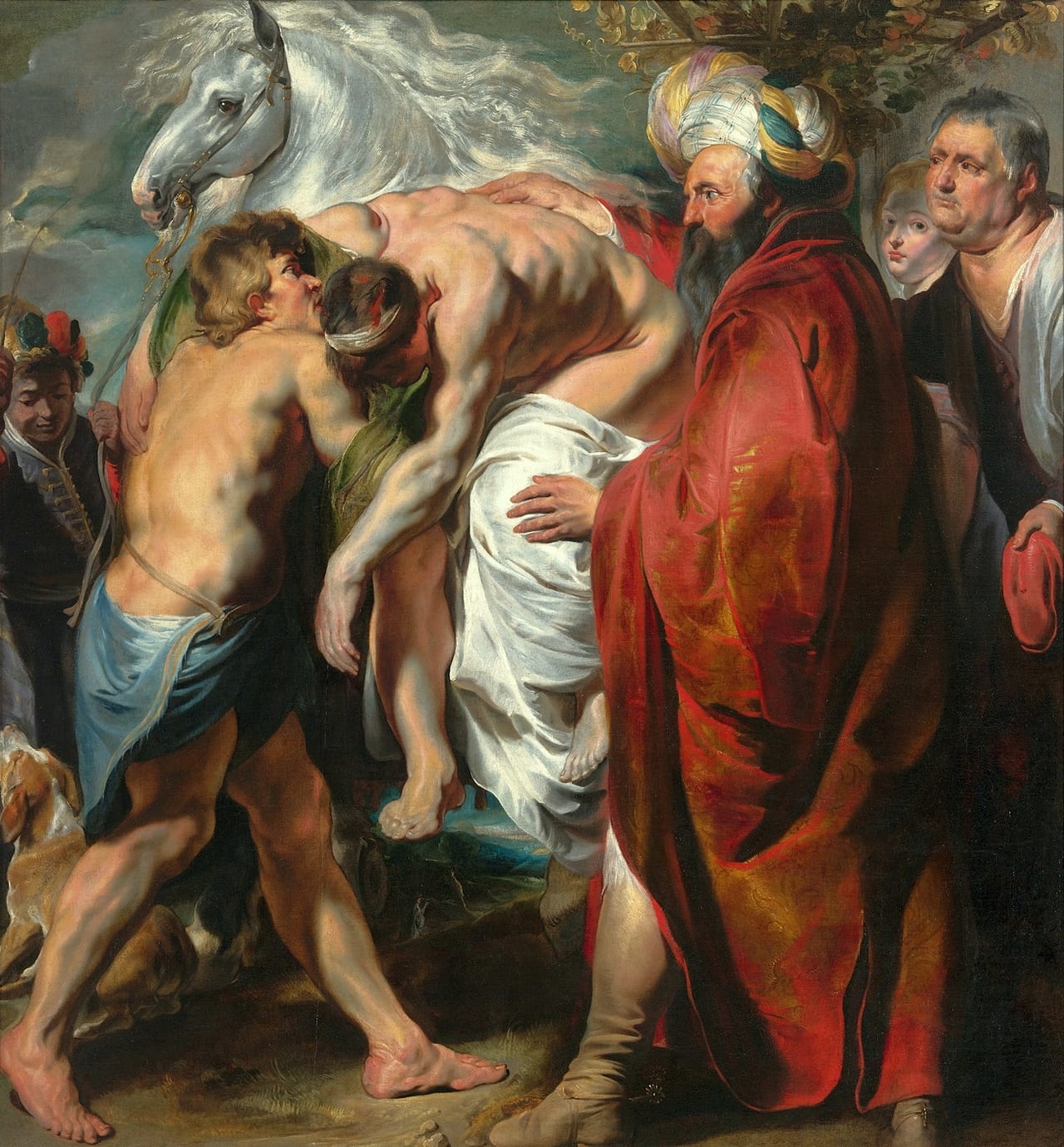
The Good Samaritan
Jacob Jordaens · c. 1615–1616
A man in a turban and rich Eastern dress stops to help a traveller whom robbers have stripped, wounded and left by the road: Jacob Jordaens chose one of the most dramatic moments of the biblical story, a picture of generosity and compassion. The theatrical scene is built on the strong diagonals of the Baroque, and the traveller’s body slumps forward as if to come out of the frame, making those who look witnesses and asking them to weigh their own values. Jordaens, a great master of Flemish Baroque painting, trained like Rubens under Adam van Noort.
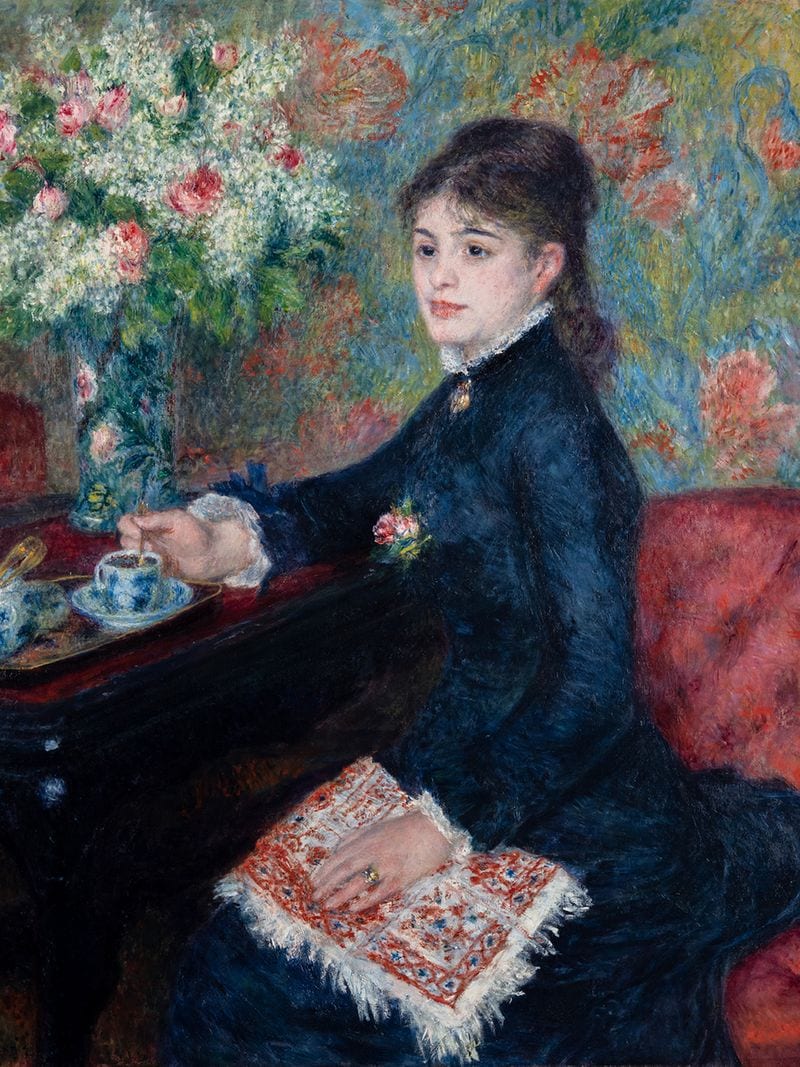
The Cup of Chocolate
Pierre-Auguste Renoir · 1877–1878
A young French bourgeois woman drinks either coffee or chocolate in a setting of luxury; Pierre-Auguste Renoir’s model was known as Margot. He painted the picture in 1877–78, when he, like the other Impressionists, was having little success with his exhibitions: he sent nothing to the Impressionist exhibition of March 1878 and submitted The Cup of Chocolate to the Salon of that year instead. By the middle of the 1880s he had left the movement for a more disciplined, formal technique in portraits and figure paintings, particularly of women. Formerly in private collections, the painting was acquired by the museum in 2022.
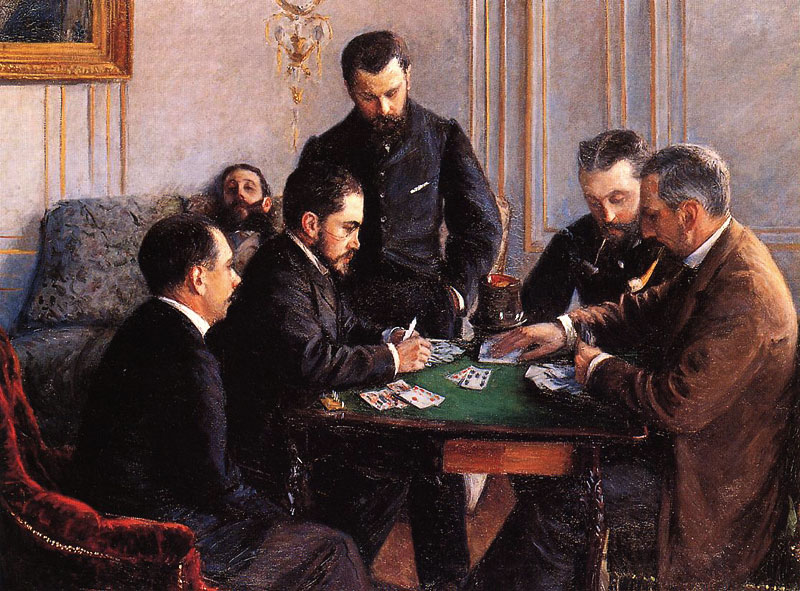
The Bezique Game
Gustave Caillebotte · 1880
Gustave Caillebotte painted his friends at cards in the luxurious Boulevard Haussmann apartment he shared with his brother, the composer Martial Caillebotte, who smokes a pipe on the right. Martial and three friends sit at a game of bezique, a variation on belote, while another man stands and watches; absorbed in the game, the players seem unaware of the painter. Card games were a common subject of Flemish genre painting, but Caillebotte gives this one the monumental dimension of a history painting, set firmly in his own time; he is credited with introducing the high-angle view into painting. The picture of 1880 was first shown at the seventh Impressionist exhibition in 1882, first in the catalogue.
Collections
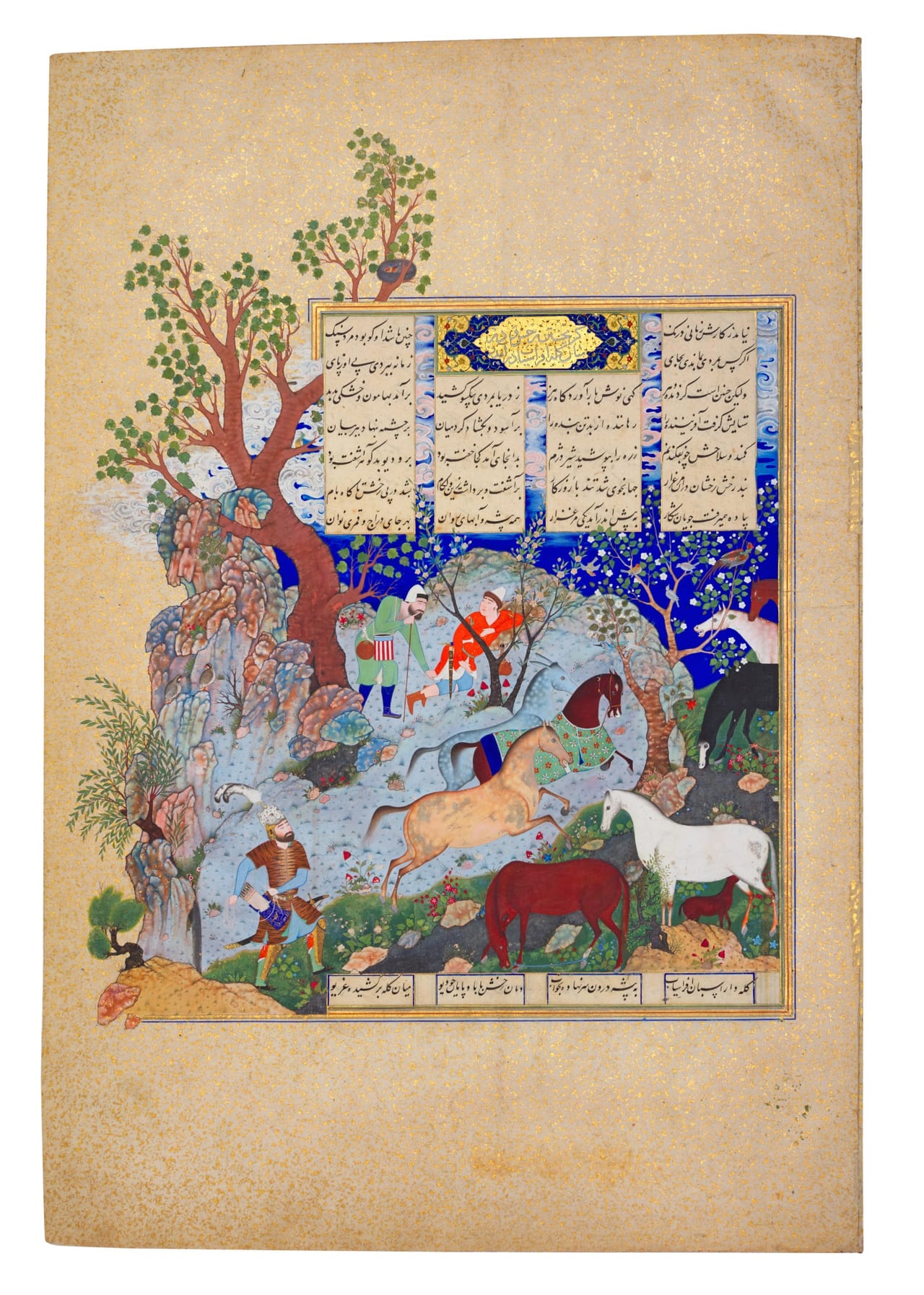
Rustam recovers Rakhsh from Afrasiyab’s herd, a folio from The Shahnameh of Shah Tahmasp
Rustam recovers Rakhsh from Afrasiyab’s herd, illustrated folio from The Shahnameh of Shah Tahmasp · Mirza ‘Ali · c. 1525–1535
Rustam recovers Rakhsh from Afrasiyab’s herd in this folio of The Shahnameh of Shah Tahmasp, painted at Tabriz in about 1525–35 by Mirza ‘Ali in gouache, ink and gold on paper. The manuscript, among the most famous illustrated copies of Ferdowsi’s epic and a high point of the Persian miniature, held 759 pages, 258 of them miniatures painted by artists of the imperial workshop at Tabriz under Shah Ismail I and Shah Tahmasp I; it was broken up in the 1970s, and its pages are now in collections around the world.
Artists
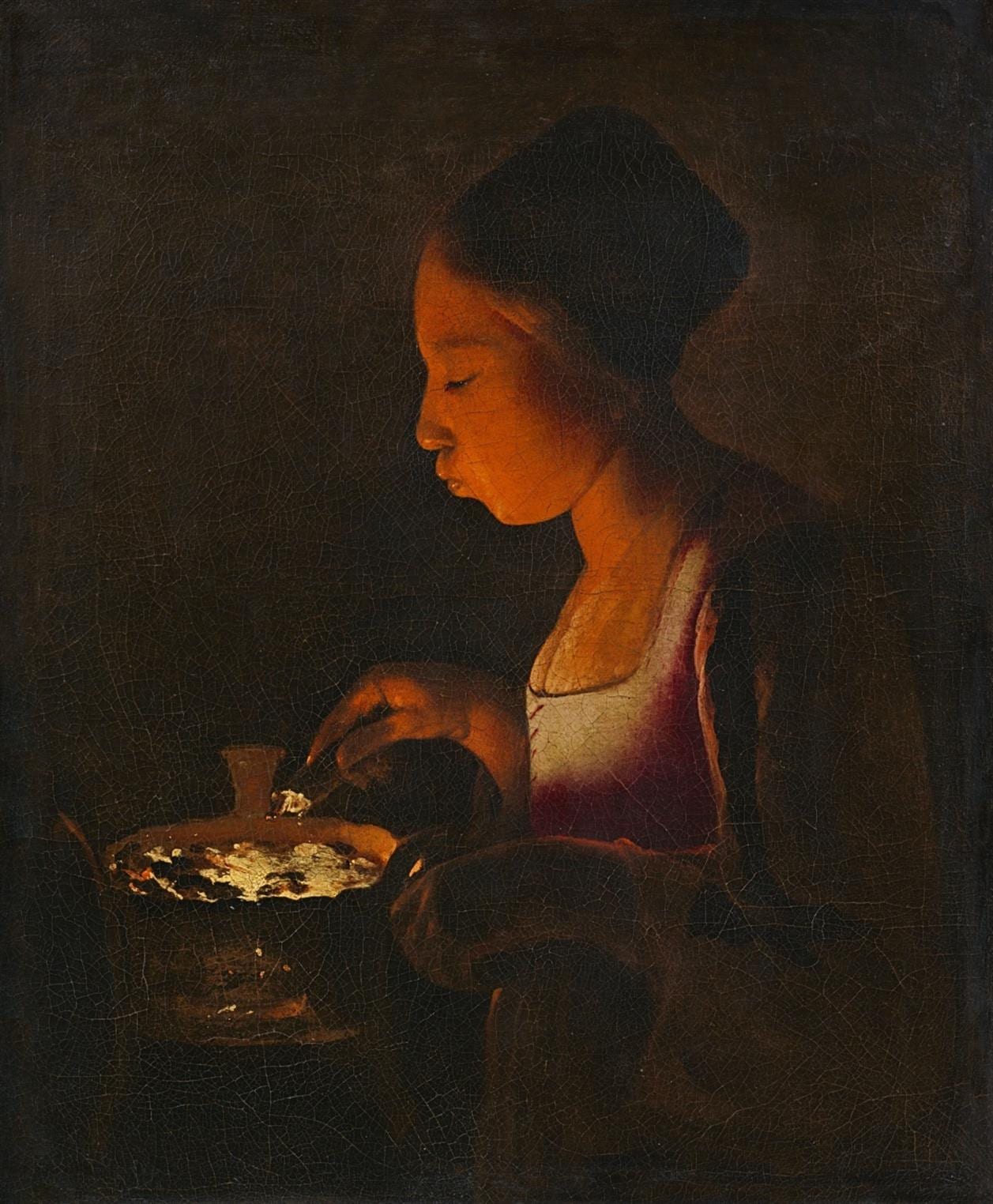
Georges de La Tour
A Girl Blowing on a Brazier · 1646–1648
A Girl Blowing on a Brazier, painted between 1646 and 1648, is by a painter mostly of candlelit subjects, well known in his own time and then forgotten until well into the twentieth century, when works long given to other hands were recognised as his and established his reputation as a giant of French painting. The pictures of his maturity simplify the human figure to a startling geometry and show interiors lit only by candles or torches.
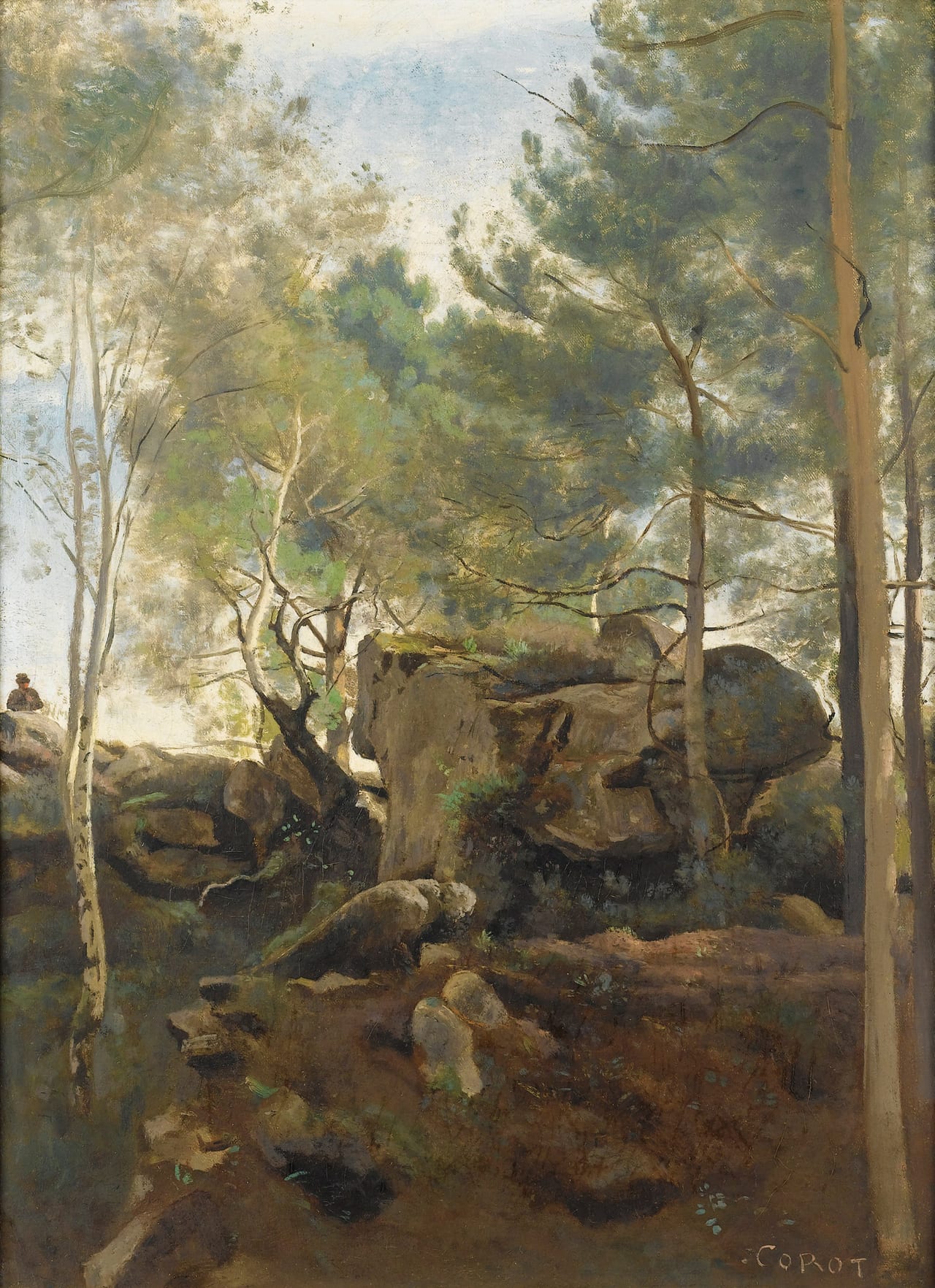
Camille Corot
In Fontainebleau Forest: Pines and Birch Trees in the Rocks · c. 1845–1850
In this forest near Paris, joined to the capital by railway in 1849, Corot builds up the rocks, pines and birches in brushstrokes, with a small figure on the left to give the scale and a little depth. He was associated with the Barbizon painters drawn to the forest, and, known above all for his landscapes, he inspired, and in part anticipated, the landscape painting of the Impressionists.
Jean-Baptiste Camille Corot, CC BY-SA 4.0, via Wikimedia Commons · Licence: CC BY-SA 4.0 · resized
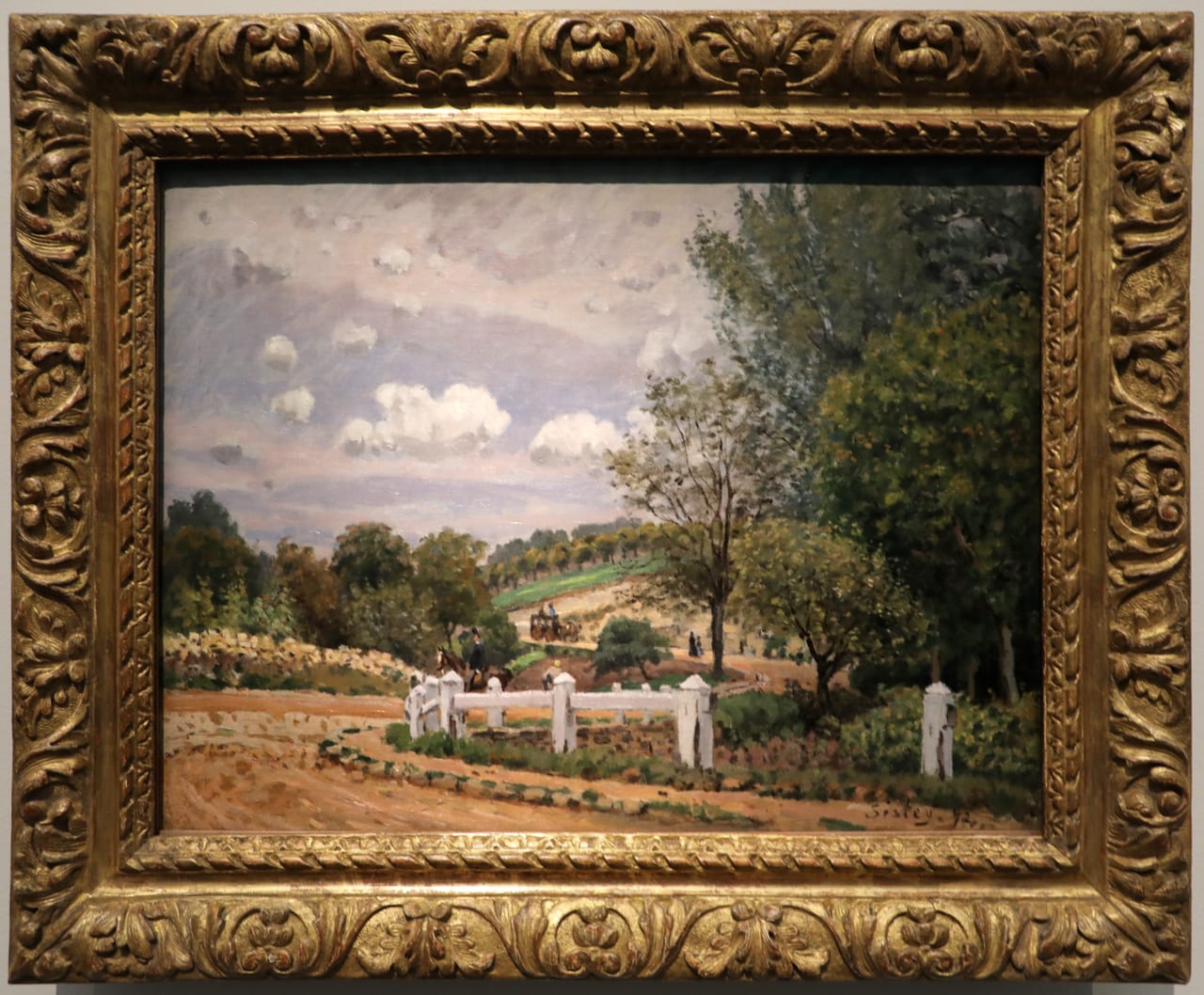
Alfred Sisley
The Road to Verrières · 1872
A winding road running to the horizon is the centre of this complex composition, painted outdoors near Paris in 1872 and an early example of Impressionism in its lively brushwork and fine handling of light. Sisley was essentially a landscape painter, and much of his best and most spontaneous work was done around Paris between 1872 and 1880; his early style owed much to Corot.
Alfred Sisley, CC BY-SA 4.0, via Wikimedia Commons · Licence: CC BY-SA 4.0 · resized
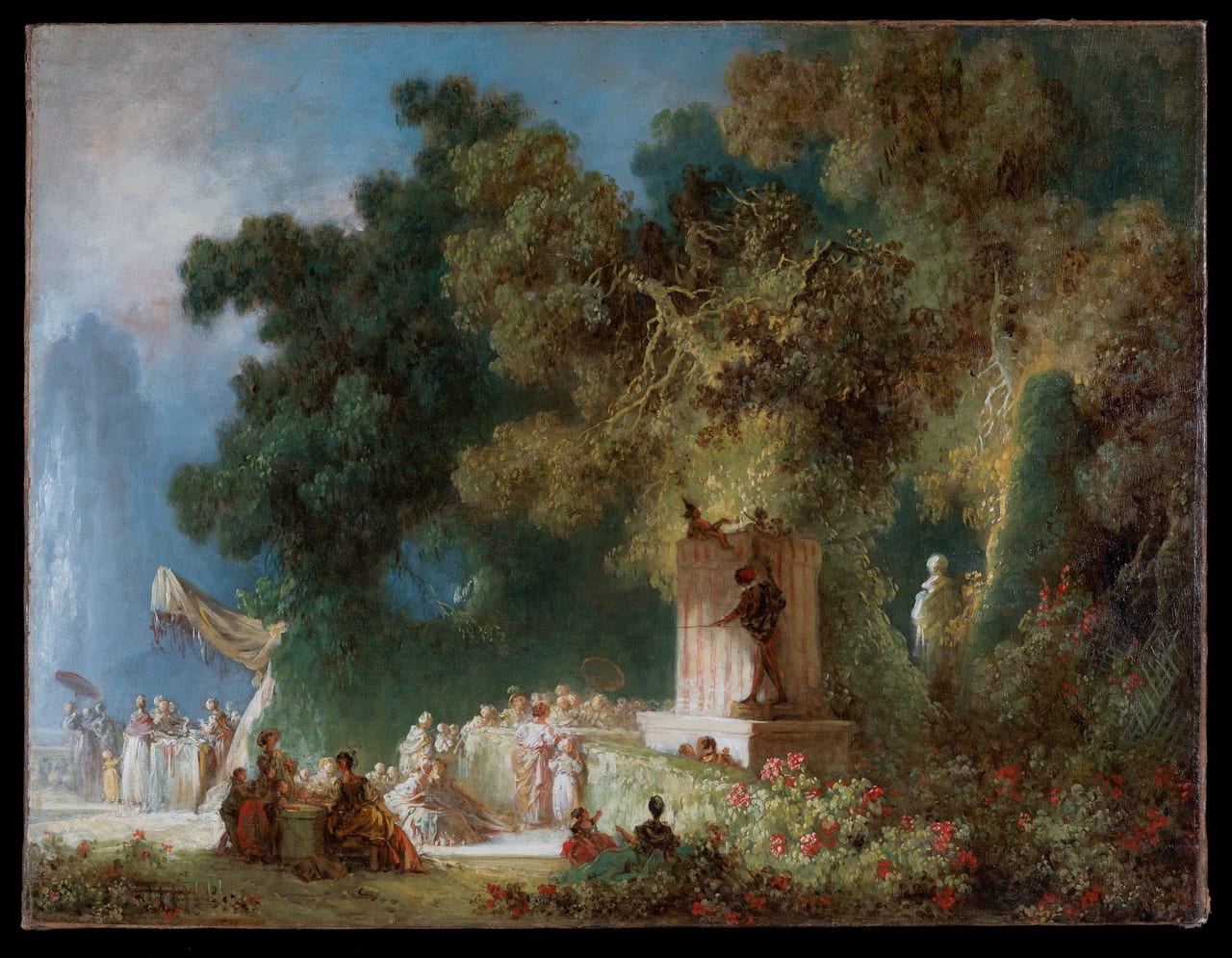
Jean-Honoré Fragonard
Les marionnettes · 1775–1778
Young women and their children look on at a puppet show in a wooded park in this horizontal genre scene in oil on canvas, painted in the Rococo manner between 1775 and 1778; it has been in the museum since 2022. Fragonard’s most familiar works, such as The Swing of 1767, are marked by a delicate hedonism; after winning a scholarship, he left for the French Academy in Rome on 17 September 1756.
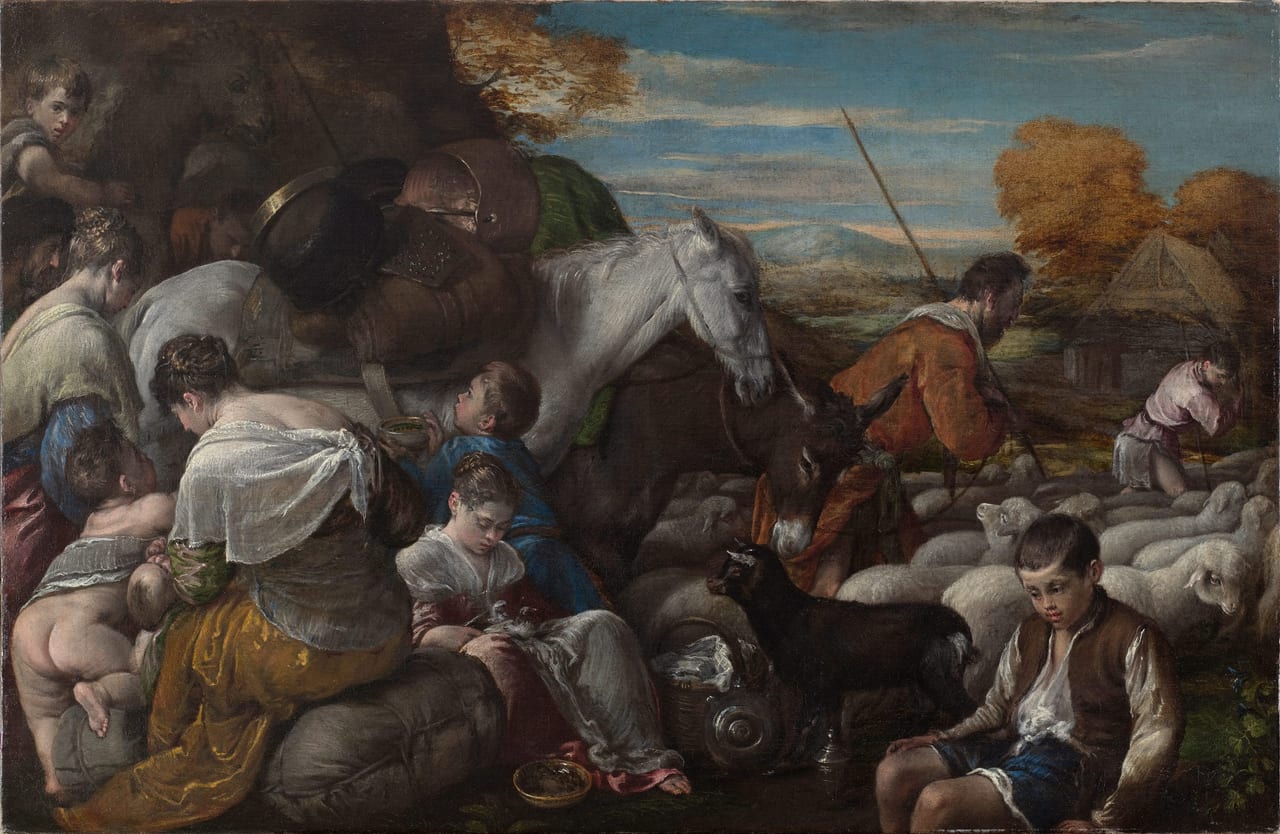
Jacopo Bassano
Jacob’s Journey · c. 1565–1570
Jacob’s journey back to his family, told in Genesis, is no more than a pretext here for animals, figures and clothing, in a composition that has left religion behind; the drawing dissolves into paint, with subtle shifts of colour and visible brushstrokes. Bassano, a late Renaissance painter of the Venetian school and the outstanding member of a thriving family workshop, turned especially to landscape and genre about 1565–70, when he produced his first paintings of rural life.
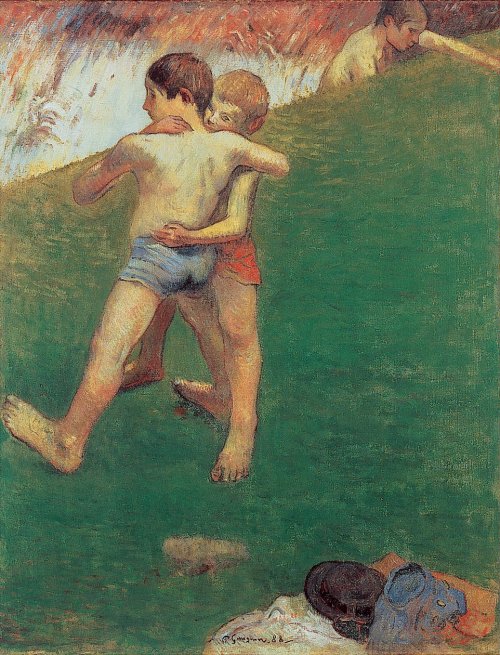
Paul Gauguin
Children Wrestling · 1888
Two children wrestle on a green meadow that fills three quarters of this upright picture, their clothes on the grass in the foreground and a third child at the upper right painted without modelling. Gauguin, who had discovered Japanese prints through Vincent van Gogh in 1887, painted this Breton wrestling match at Pont-Aven in 1888 “like a Japanese crepon print”, with a summary execution, a palette of a few colours and no horizon. A painter, printmaker and sculptor, he sought a ‘primitive’ expression of spiritual and emotional states.
Artworks
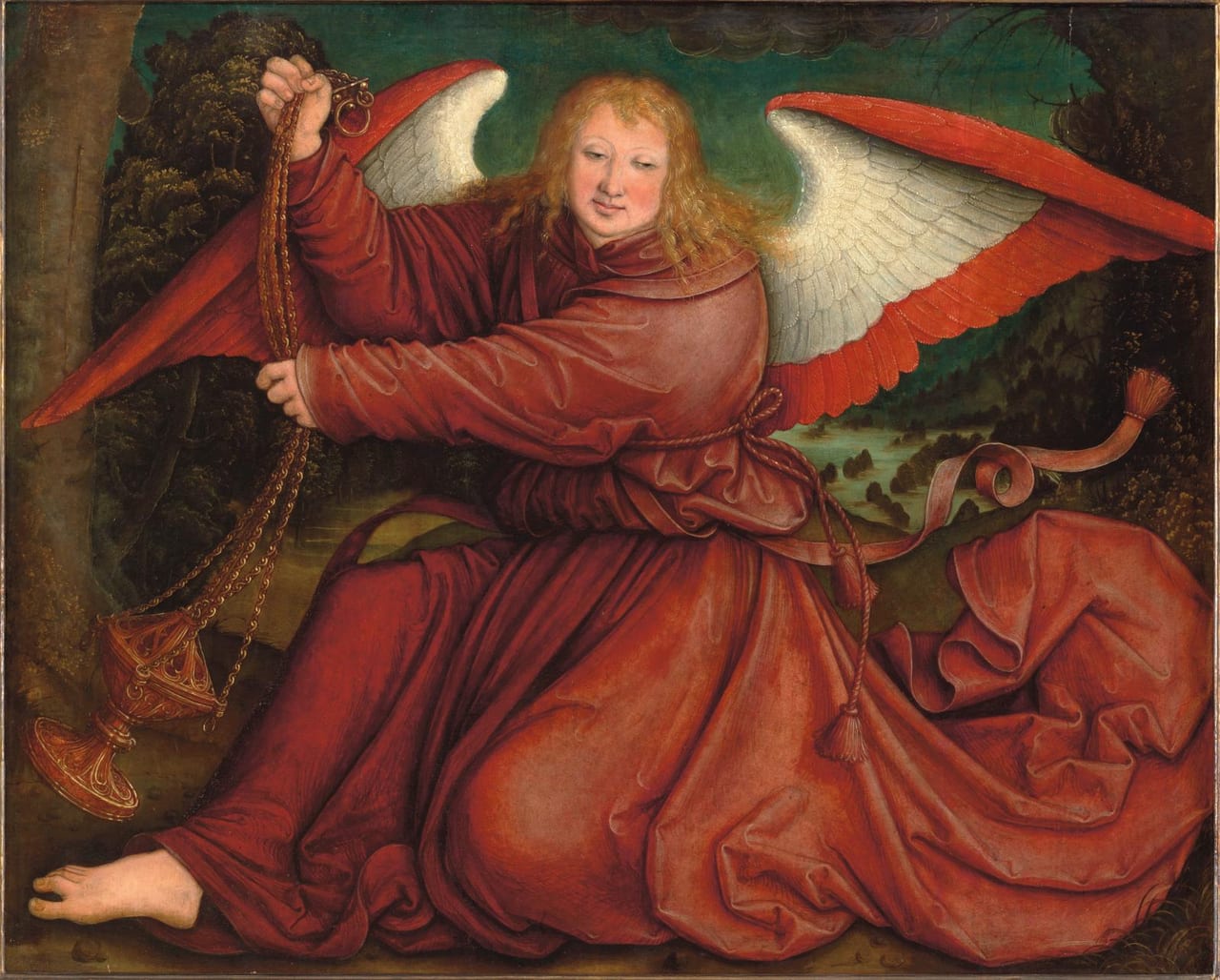
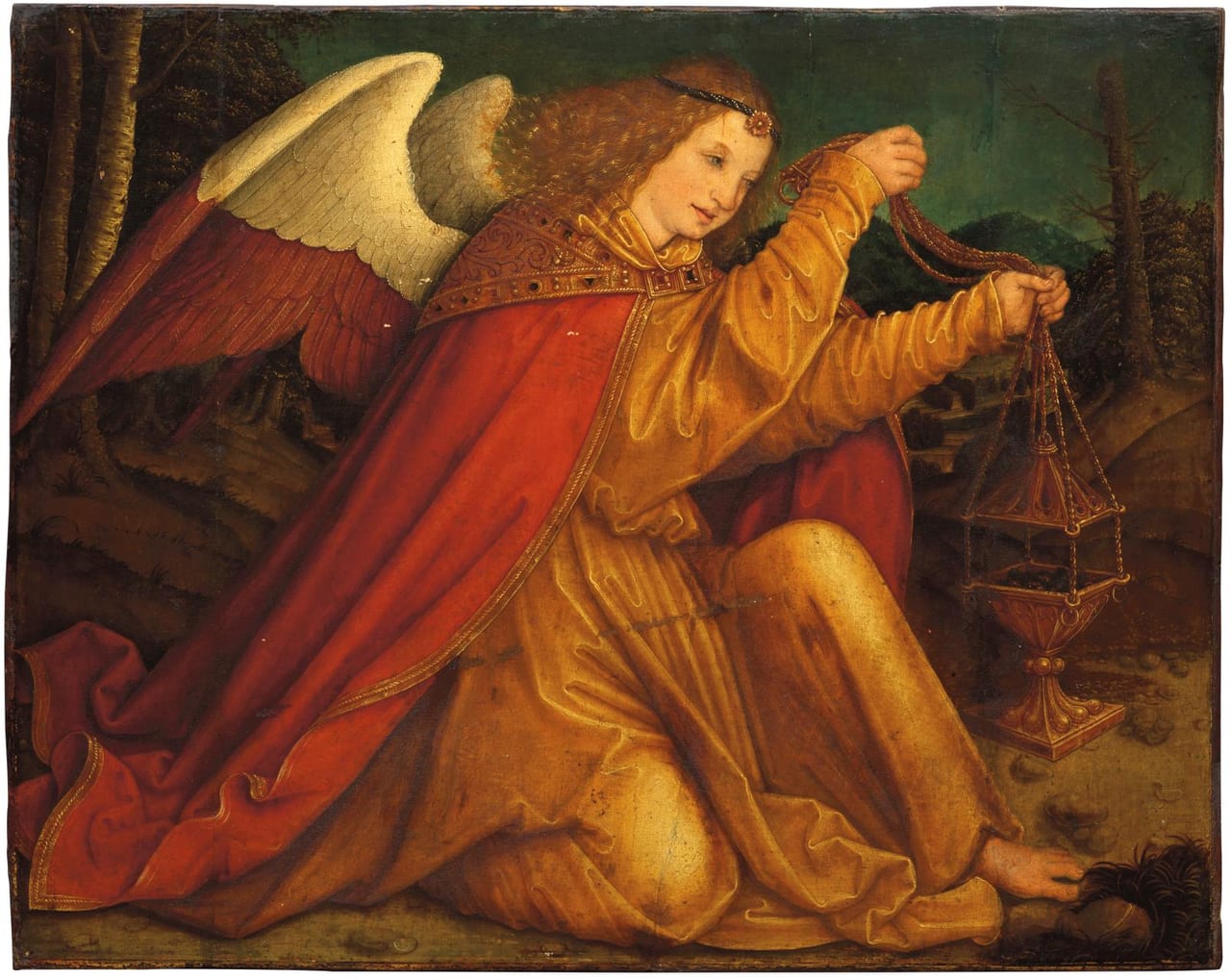
Thurifer Angel
Bernhard Strigel · c. 1520
This angel carries a censer, as an acolyte does during ceremonies; thurifer angels appear often in the Bible and in religious images, interceding between God and man. Bernhard Strigel, one of the most important masters of the passage from Gothic to Renaissance, painted it about 1520 and showed the angel in an attitude of adoration. Incense, already an offering to the gods in the pagan religions of antiquity, became in Christian worship the visible form of the prayers of the faithful rising to God. The museum also owns a second thurifer angel by Strigel, in a yellow tunic, of about the same date.
Sources
- Louvre Abu Dhabi Collection, Piet Mondrian, “Composition with Blue, Red, Yellow and Black”
- Louvre Abu Dhabi, Highlights of the Collection, “Composition with Blue, Red, Yellow and Black”
- Louvre Abu Dhabi Collection, Giovanni Bellini, “Virgin and Child”
- Louvre Abu Dhabi, Highlights of the Collection, “Virgin and Child”
- Louvre Abu Dhabi Collection, Rembrandt van Rijn, “Head of a Young Man with Clasped Hands, Study of the Figure of the Christ”
- Louvre Abu Dhabi, Highlights of the Collection, “Head of a Young Man with Clasped Hands, Study of the Figure of the Christ”
- Louvre Abu Dhabi Collection, Georges de La Tour, “A Girl Blowing on a Brazier”
- Louvre Abu Dhabi Collection, Jacob Jordaens, “The Good Samaritan”
- Louvre Abu Dhabi, Highlights of the Collection, “The Good Samaritan”
- Louvre Abu Dhabi Collection, Camille Corot, “In Fontainebleau Forest: Pines and Birch Trees in the Rocks”
- Louvre Abu Dhabi, Highlights of the Collection, “In Fontainebleau Forest: Pines and Birch Trees in the Rocks”
- Louvre Abu Dhabi Collection, Pierre-Auguste Renoir, “The Cup of Chocolate”
- Louvre Abu Dhabi Collection, Alfred Sisley, “The Road to Verrieres”
- Louvre Abu Dhabi Collection, Alfred Sisley, “The Road to Verrieres”, collection page
- Louvre Abu Dhabi Collection, Bernhard Strigel, “Thurifer Angel”
- Louvre Abu Dhabi Collection, Bernhard Strigel, “Thurifer Angel in a Yellow Tunic”
- Louvre Abu Dhabi Collection, Jacopo Bassano, “Jacob’s Journey”
- Louvre Abu Dhabi Collection, Jean-Honoré Fragonard, “Les marionnettes”
- Louvre Abu Dhabi Collection, Mirza ‘Ali, “Rustam recovers Rakhsh from Afrasiyab’s herd”
- Louvre Abu Dhabi Collection, Charles Meynier, “The Farewell of Telemachus and Eucharis”
- Louvre Abu Dhabi, “Our Story”
- Louvre Abu Dhabi, “Our Partners”
- Louvre Abu Dhabi, “Architecture”
- Louvre Abu Dhabi, “Museum Galleries”
- Louvre Abu Dhabi, “The Grand Vestibule”
- Louvre Abu Dhabi, “Impressionism: Pathways to Modernity” exhibition podcast
- Louvre Abu Dhabi, “Louvre Abu Dhabi curates and collects”
- Britannica, “Louvre Abu Dhabi”
- Britannica, “Georges de La Tour”
- Britannica, “Piet Mondrian”
- Britannica, “Camille Corot”
- Britannica, “Alfred Sisley”
- Britannica, “Jacob Jordaens”
- Britannica, “Jacopo Bassano”
- Britannica, “Jean-Honoré Fragonard”
- Britannica, “Pierre-Auguste Renoir”
- Britannica, “Shāh-nāmeh”
- Wikipedia, “Louvre Abu Dhabi”
- Wikipedia, “The Cup of Chocolate”
- Louvre Abu Dhabi Collection, Bernhard Strigel, “Thurifer Angel”, record
- Louvre Abu Dhabi Collection, Paul Gauguin, “Children Wrestling”
- Louvre Abu Dhabi, Highlights of the Collection, “Children Wrestling”
- Britannica, “Paul Gauguin”
- Louvre Abu Dhabi Collection, Gustave Caillebotte, “The Bezique Game”
- Louvre Abu Dhabi, Highlights of the Collection, “The Bezique Game”
- Britannica, “Gustave Caillebotte”
- Louvre Abu Dhabi Collection, Jacopo Bassano, “Jacob’s Journey”, collection page
- Wikipedia, “Shahnameh of Shah Tahmasp”
- Wikipédia (French), “Les Marionnettes”
- The Farewell of Telemachus and Eucharis — Public domain via Wikimedia Commons (Public domain)
- Composition with Blue, Red, Yellow and Black — Public domain via Wikimedia Commons (Public domain)
- Virgin and Child — Public domain via Wikimedia Commons (Public domain)
- Head of a Young Man with Clasped Hands — Public domain via Wikimedia Commons (Public domain)
- The Good Samaritan — Public domain via Wikimedia Commons (Public domain)
- The Cup of Chocolate — Public domain via Wikimedia Commons (Public domain)
- The Bezique Game — Public domain via Wikimedia Commons (Public domain)
- Rustam recovers Rakhsh from Afrasiyab’s herd, illustrated folio from The Shahnameh of Shah Tahmasp — Public domain via Wikimedia Commons (Public domain)
- A Girl Blowing on a Brazier — Public domain via Wikimedia Commons (Public domain)
- In Fontainebleau Forest: Pines and Birch Trees in the Rocks — Jean-Baptiste Camille Corot, CC BY-SA 4.0, via Wikimedia Commons (CC BY-SA 4.0)
- The Road to Verrières — Alfred Sisley, CC BY-SA 4.0, via Wikimedia Commons (CC BY-SA 4.0)
- Les marionnettes — Public domain via Wikimedia Commons (Public domain)
- Jacob’s Journey — Public domain via Wikimedia Commons (Public domain)
- Children Wrestling — Public domain via Wikimedia Commons (Public domain)
- Thurifer Angel — Public domain via Wikimedia Commons (Public domain)
Invite the Louvre Abu Dhabi into your living room