Two Bathers
Paul Gauguin · 1887

Museo Nacional de Bellas Artes
Buenos Aires
Created by presidential decree in 1895, the Museo Nacional de Bellas Artes in Buenos Aires is one of Argentina’s most important public art institutions. Its more than 12,000 pieces, from paintings and sculpture to prints, textiles and objects, take in pre-Columbian, colonial, Argentine and international art, from the third century BC to the present. Its first director, the painter and critic Eduardo Schiaffino, wanted a collection through which visitors could read the history of art, on the example of the European and North American museums of his day.
- created by decree of President José Evaristo Uriburu
- Since 1895
- paintings, sculpture, drawings, prints, textiles and objects
- 12,000+ pieces
- from the collection on show in Neuquén since September 2004
- 200+ works
Schiaffino’s museum
The Ateneo, a body Schiaffino founded with Eduardo Sívori, Ernesto de la Cárcova, Ángel Della Valle and other artists, organised the first exhibitions of Argentine art and pressed for a national museum. Schiaffino and his colleagues wanted an encyclopaedic museum that would educate public taste and encourage local art. Its first gifts were the collections of Adriano Rossi and José Prudencio de Guerrico, and Schiaffino asked friends and collectors to help it grow. It opened in a building on Florida Street that now houses the Galerías Pacífico.
In 1906 Schiaffino travelled to Europe on an official mission to enlarge the founding collection: he visited museums, met collectors and artists, bought old and contemporary painting, and acquired the Bayley collection of drawings and preparatory studies by old masters. In 1909 the museum moved to Plaza San Martín, into the Argentine Pavilion of iron and glass that had been built in Paris for the Exposition Universelle of 1889, then taken down and brought to Buenos Aires. Schiaffino remained director until 1910, and Cupertino del Campo later led the museum for twenty years, from 1911 to 1931. Its permanent home is the old Recoleta drainage pumping station, built in 1870 and converted for the museum by the architect Alejandro Bustillo.
Gifts and purchases
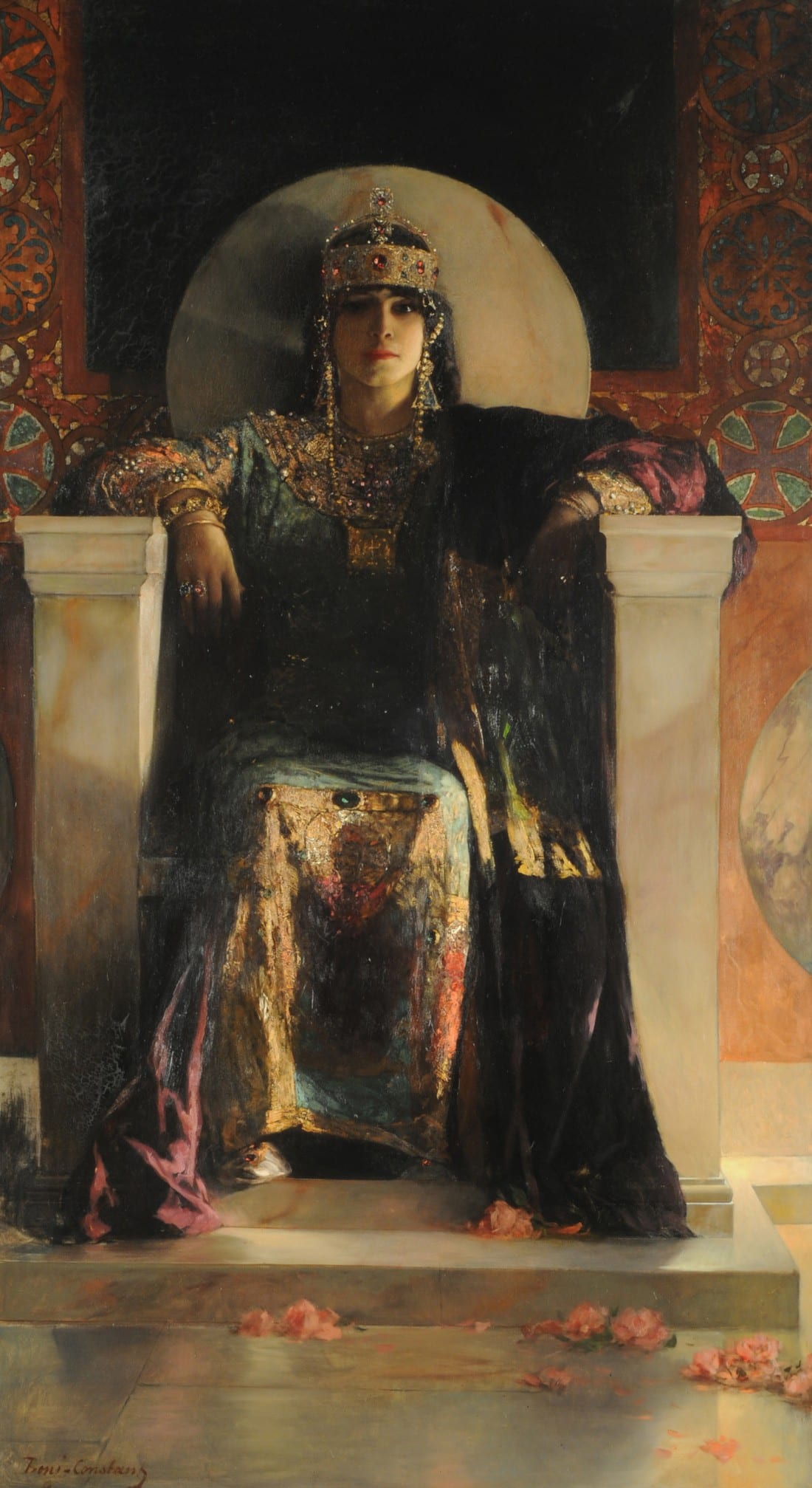
The French school is, with the Italian and the Spanish, among the largest in the collection; Jean-Joseph Benjamin-Constant’s Théodora of 1887 is one of its French pictures. Two large groups of works joined the collection: the legacy of Parmenio Piñero and Leonela Rojas in 1907 and the donation of Ángel Roverano in 1910, both with French, Spanish and Italian artists. In 1938 the Guerrico family gave a collection that already held more than a hundred significant works by the middle of the nineteenth century, from the Spanish, Italian and Flemish schools and above all the French, with anonymous pieces, copies after great masters, coins and Japanese carvings. Purchases in the 1940s to build the European collection included Rodin’s The Kiss and Manet’s The Surprised Nymph.
The critic Jorge Romero Brest, director from 1955 to 1964, modernised both the building and the collections, and through the Torcuato di Tella Institute, a leading promoter of avant-garde Argentine artists, and other channels the museum took in a large body of modern art. Antonio Berni’s Pesadilla de los injustos joined the collection in 2009, and late in 2012 three more of his works came to the museum, two of them given by the artist’s daughter. When building work ended in June 2015, eighteen rooms reopened, and on the first floor sixteen rooms opened with some 300 works of twentieth-century art.
Painting in Argentina
Prilidiano Pueyrredón, one of the country’s first prominent painters, was among the first to take up the gaucho, in the Romantic manner he had found in Europe, and he was the first painter in Buenos Aires to paint nudes: the two that survive, La siesta and El baño, are in the museum. Ángel Della Valle, who studied with Antonio Ciseri in Florence, made his name with the countryside, the gaucho and other criollo subjects, and Ernesto de la Cárcova trained under Giacomo Grosso at the Accademia Albertina in Turin.
Cándido López, a soldier and painter who worked in a naïve style, learned to paint with his left hand after a grenade at the Battle of Curupayty in 1866 cost him his right arm above the elbow; the former president Mitre became his patron, paying a subsidy in return for a series of pictures documenting the Paraguayan War. He meant to paint about a hundred and finished 52; the museum holds several, among them Trinchera de Curupaytí and Después de la Batalla de Curupaytí. The museum also holds a Retrato de niña, oil on panel, by the Peruvian painter Daniel Hernández Morillo.
What to see
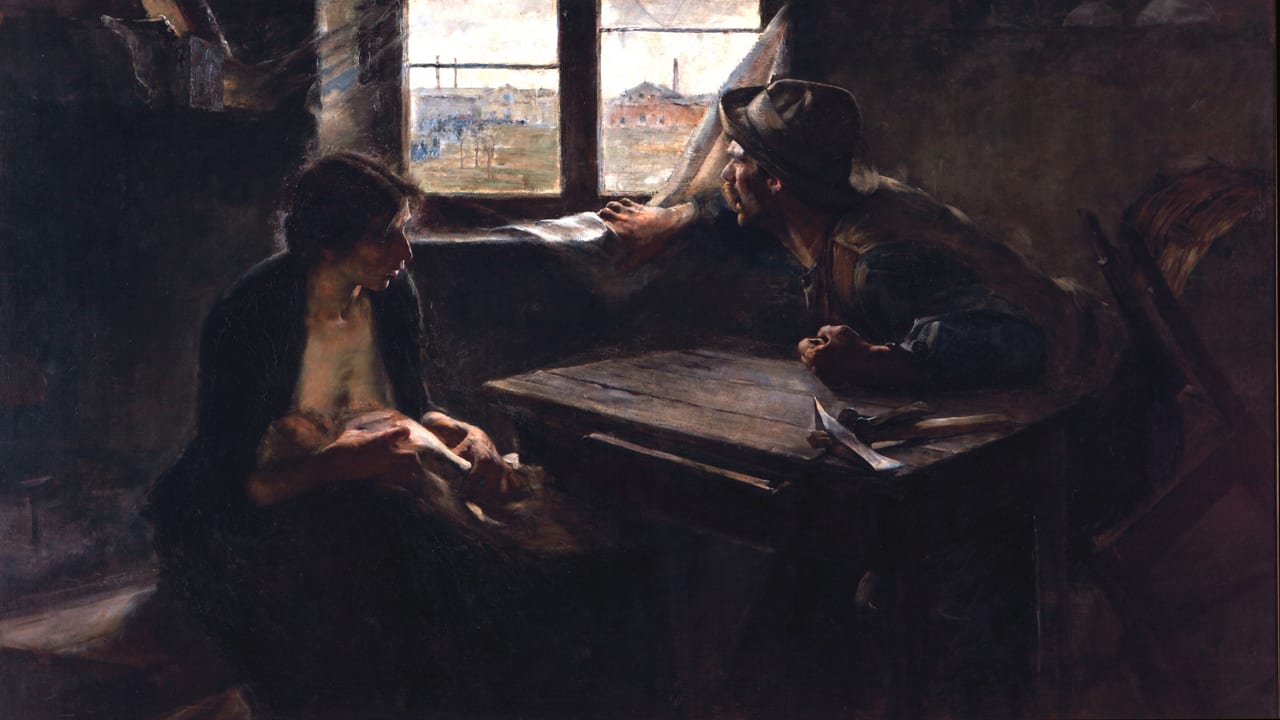
Sin pan y sin trabajo
Ernesto de la Cárcova
Ernesto de la Cárcova set the scene in the industrial south of Buenos Aires, in the hard recession that followed the crisis of 1890. First shown at the second salon of the Ateneo in 1894, it was the first major Argentine painting to take social questions as its subject. Schiaffino selected it to be sent to the St Louis World’s Fair of 1904, where it won the Grand Prize, and acquired it for the museum in 1906.
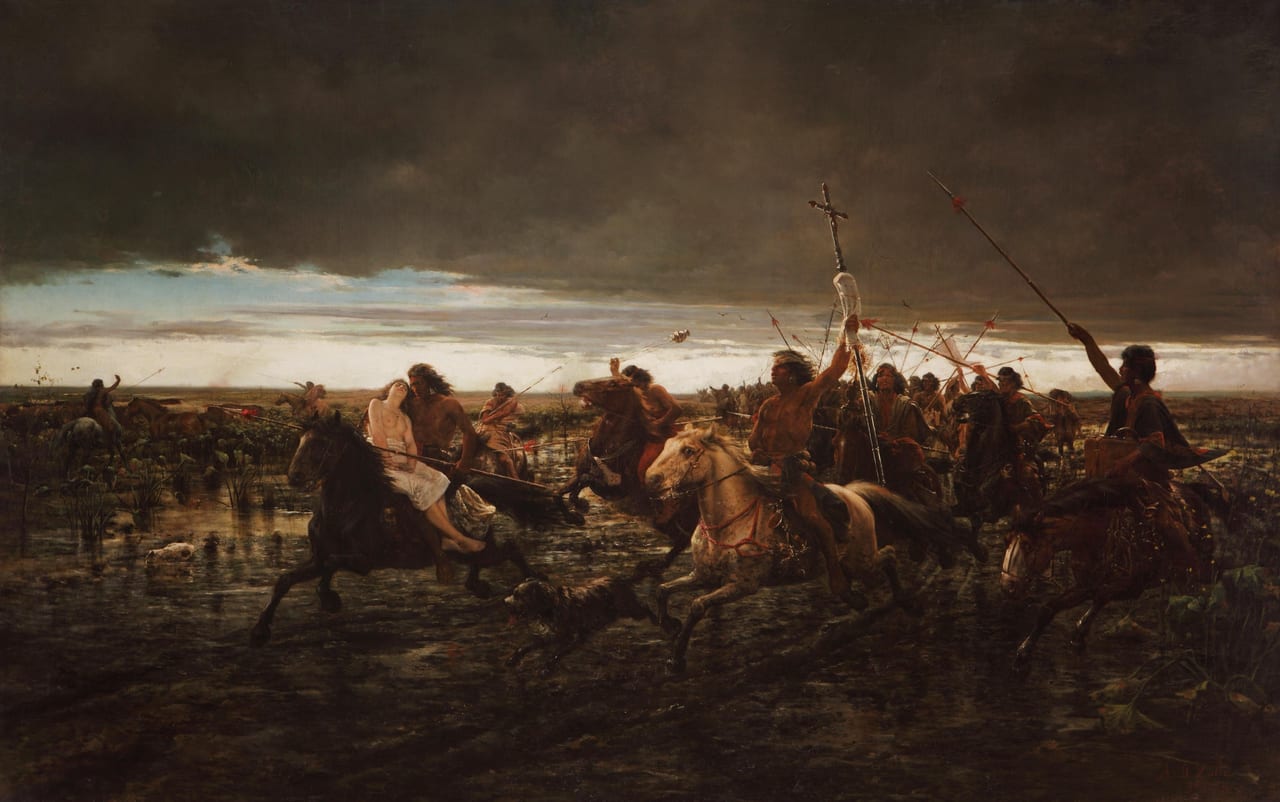
La vuelta del malón
Ángel Della Valle · 1892
Ángel Della Valle’s oil of 1892 was the first large-format painting in Argentina to take an Indigenous subject. He showed it that year, to great success, at the Nocetti y Repetto bazaar, because the city still had no salons or art galleries, and it was exhibited in the Argentine pavilion at the international exposition in Chicago.
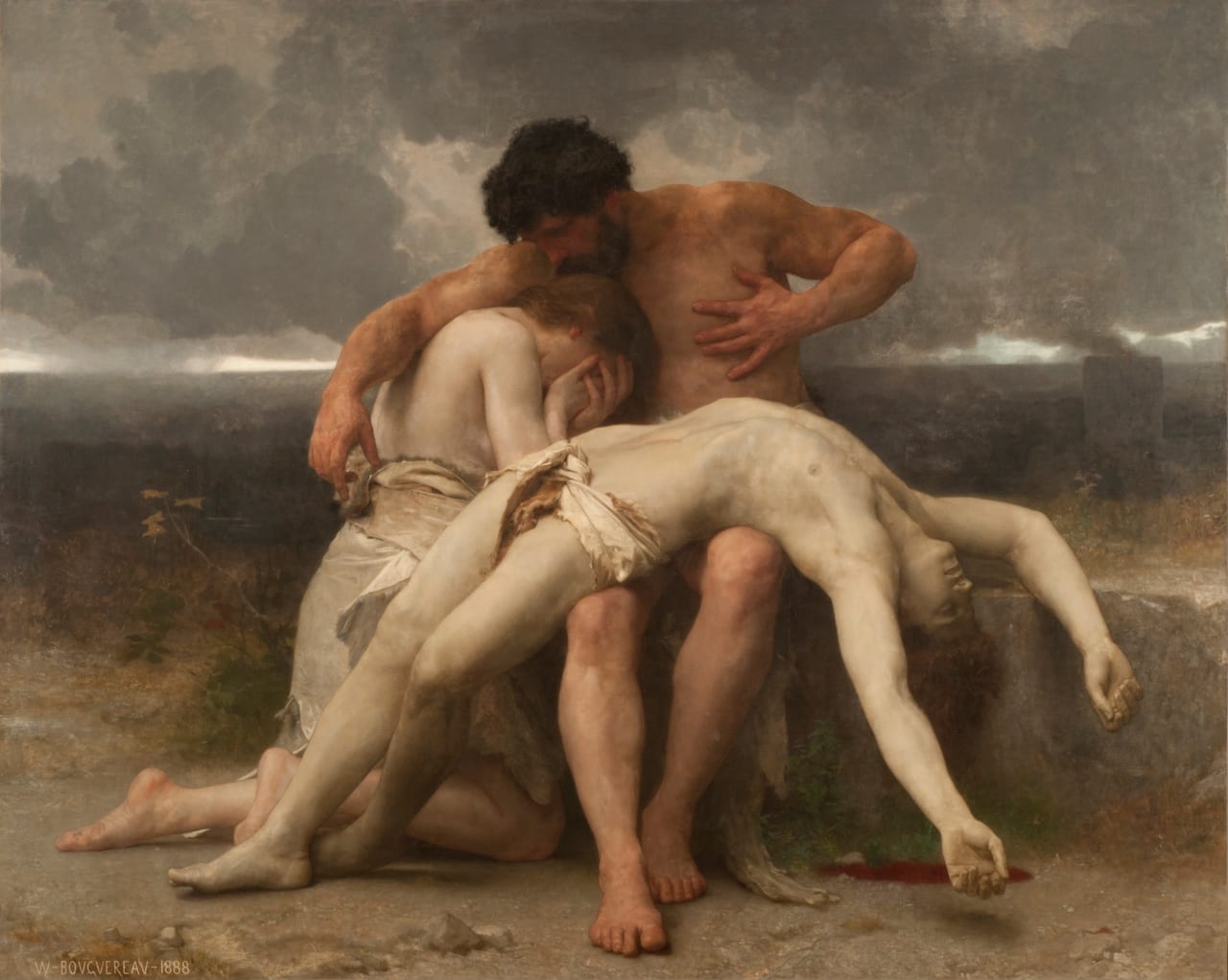
The First Mourning
William-Adolphe Bouguereau · 1888
Adam and Eve have just found the body of their son Abel, killed by Cain: the first human death the Bible records. Bouguereau painted it in 1888, shortly after losing his own second son. The canvas measures 203 by 252 centimetres.
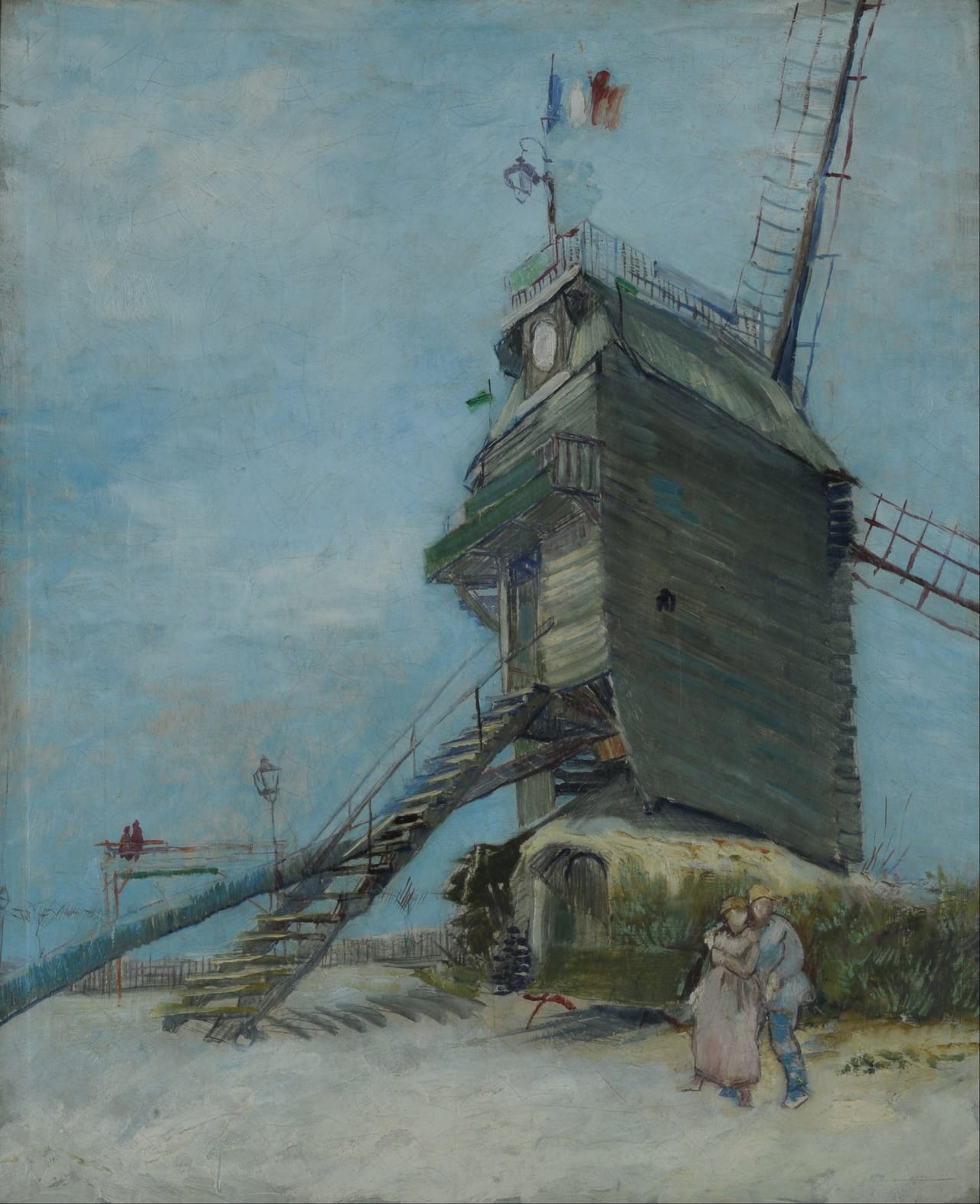
Le Moulin de la Galette
Vincent van Gogh
Van Gogh painted the Moulin de la Galette, a windmill near the flat he shared with his brother Theo in Montmartre, several times. Its owners made the most of the view from the butte over Paris. Artists he met, among them Toulouse-Lautrec, Signac and Gauguin, drew him towards Impressionism and lighter, more colourful works. In this version he laid the paint on thickly, in impasto, partly to carry feeling: the strokes show in the mill and the steps, and each of the two figures’ faces is just a couple of touches of the brush.
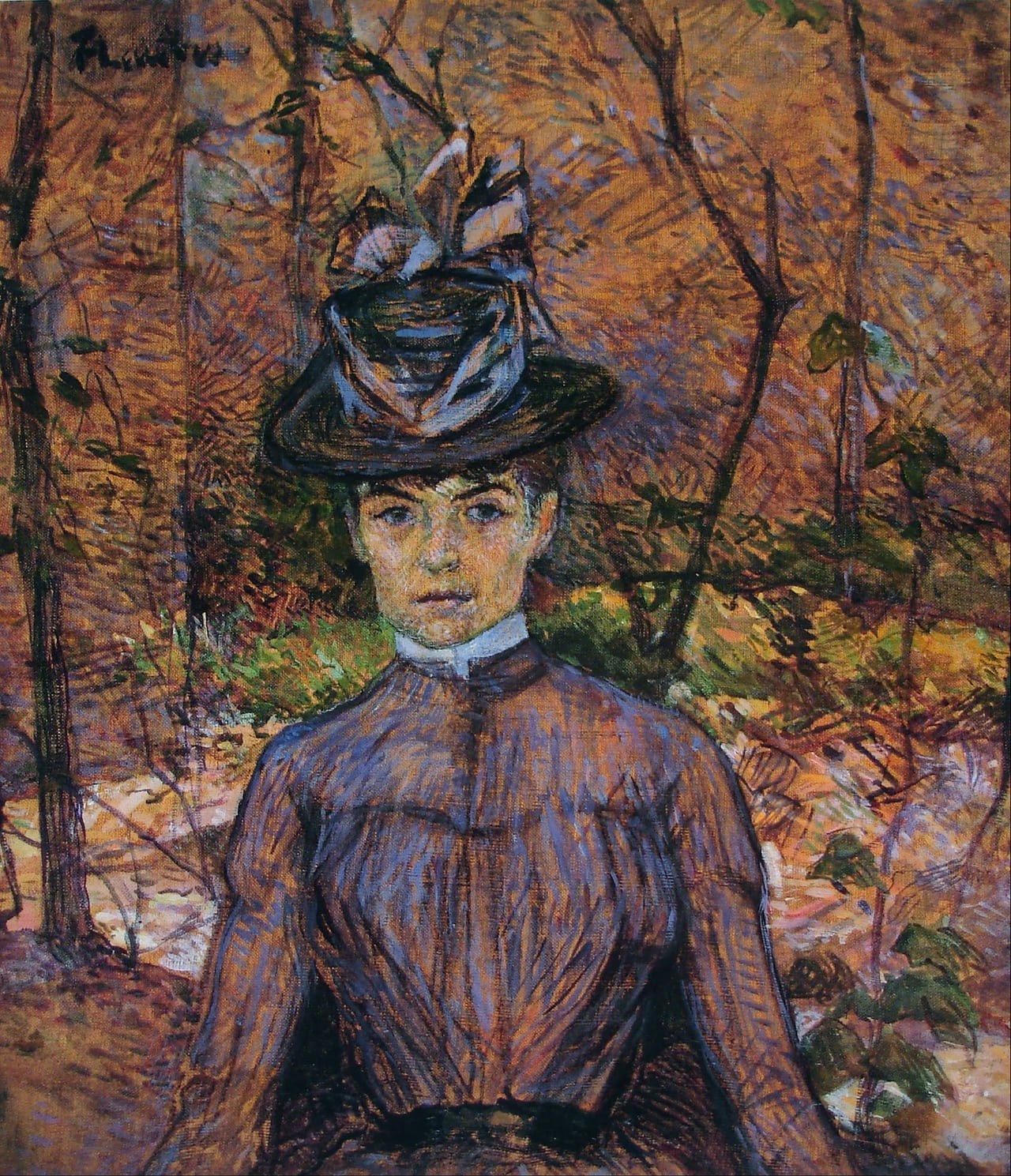
Portrait of Suzanne Valadon
Henri de Toulouse-Lautrec · 1885
Toulouse-Lautrec and Suzanne Valadon, artist and model, were friends in Montmartre, and he made many portraits of her. Here she walks straight towards the viewer through what looks like autumn, fashionable in a purple dress and hat, and his handling of light sets her apart from a background of similar colours.
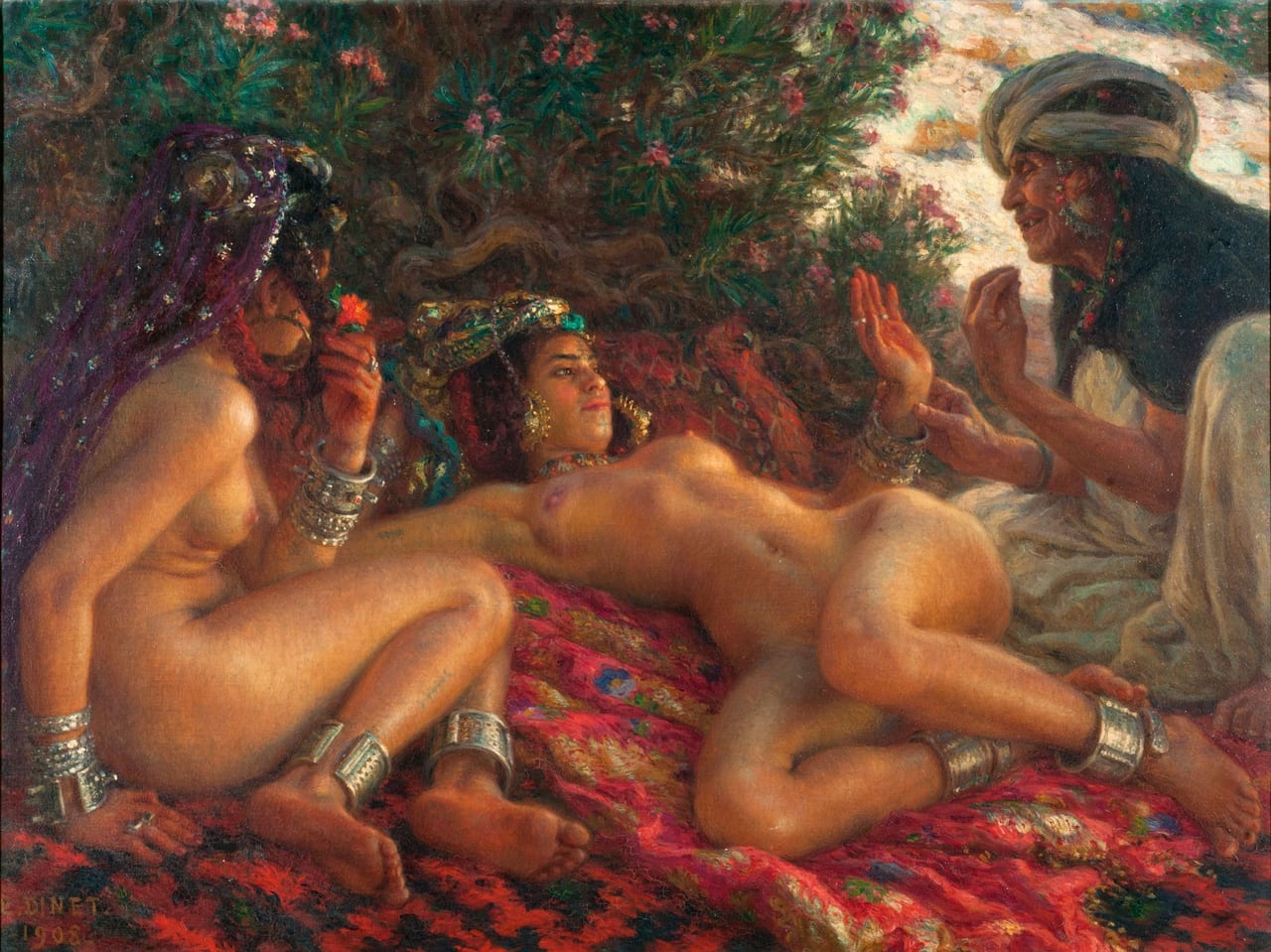
Satan’s Messenger
Nasreddine Dinet · 1908
Nasreddine Dinet painted it in Algeria in 1908; its subject is Iblis, the figure of the Devil in Islam. It was shown at the Société Nationale des Beaux-Arts in 1909 and has been in the museum since 1911, the gift of Carlos Madariaga and Josefa Anchorena de Madariaga; in 1931 it went to the International Colonial Exhibition in Paris.
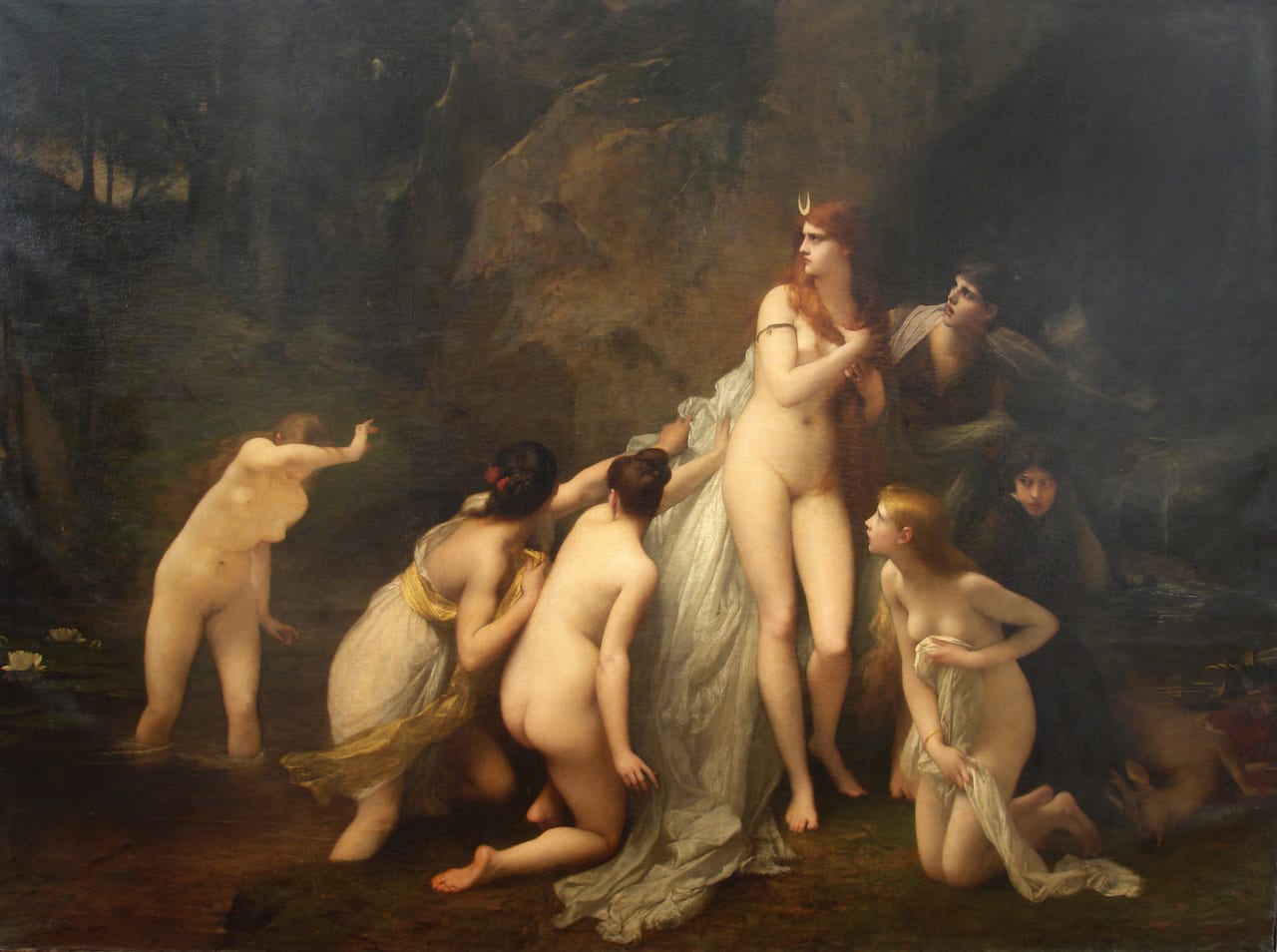
Diana Surprised
Jules Joseph Lefebvre · 1879
The subject comes from Ovid’s Metamorphoses: the hunter Actaeon comes upon the goddess Diana and her nymphs as they bathe, and they try to cover themselves. Lefebvre did not think the canvas, 279 by 371.5 centimetres, complete in time for the Exposition Universelle of 1878; it appeared at the Salon of 1879, with a short poem by Georges Lafenestre.
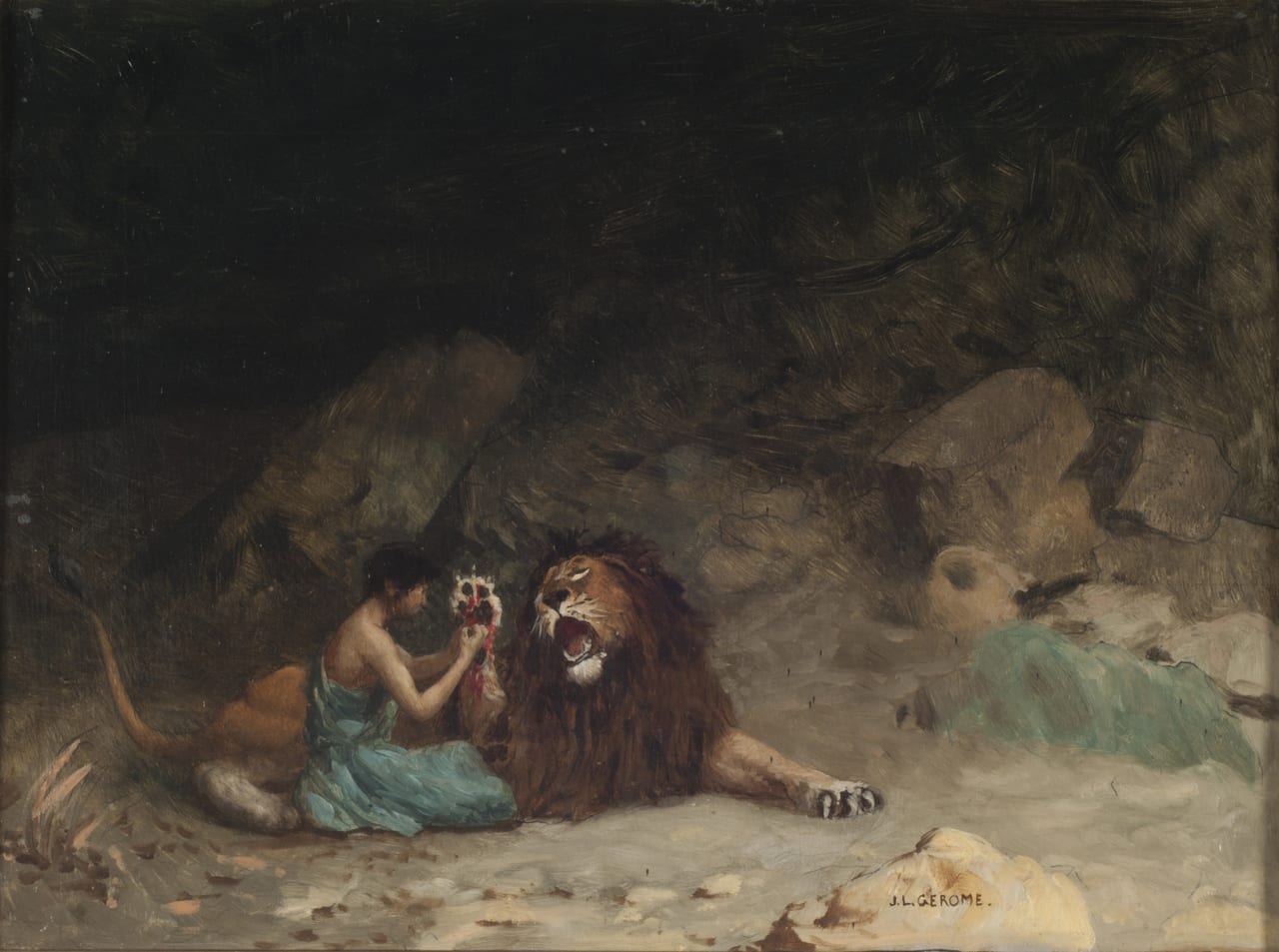
Androcles
Jean-Léon Gérôme
Gérôme’s painting, tentatively dated 1902, shows Androcles sitting cross-legged on the floor of the cave, drawing the thorn from the paw of a lion that roars in agony.
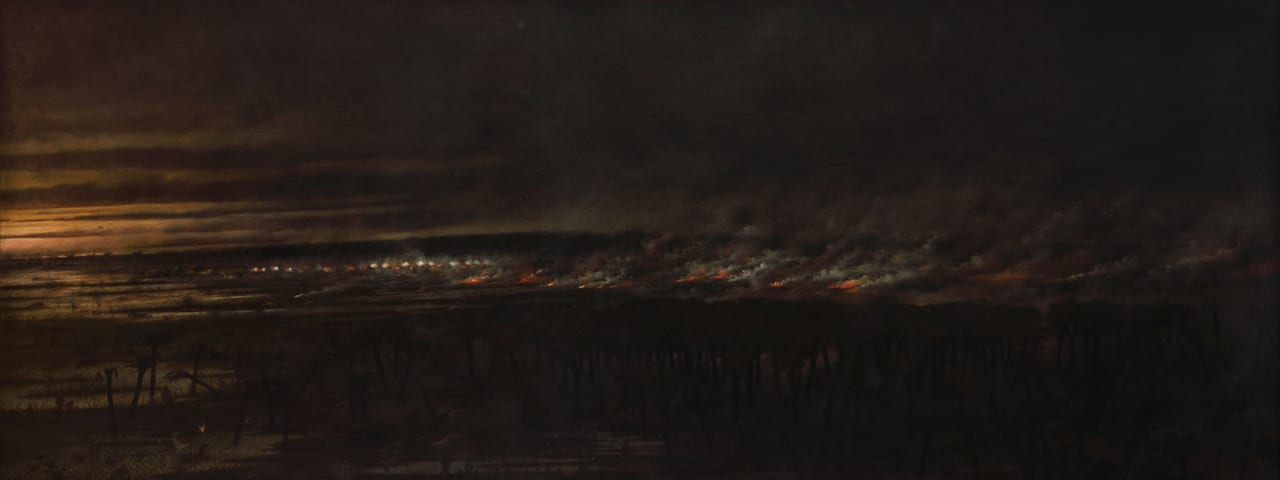
Batalla de Yataytí Corá, 2 de julio de 1866
Cándido López
Cándido López painted this battle of 1866, fought between Argentine and Paraguayan troops in the Paraguayan War, with his left hand. The landscape burns in an almost entirely dark range of colour: the figures can barely be seen, and the eye picks out scorched trees and grass, with clouds and sky on the horizon. The long horizontal format lets him set out many actions at once.
Collections
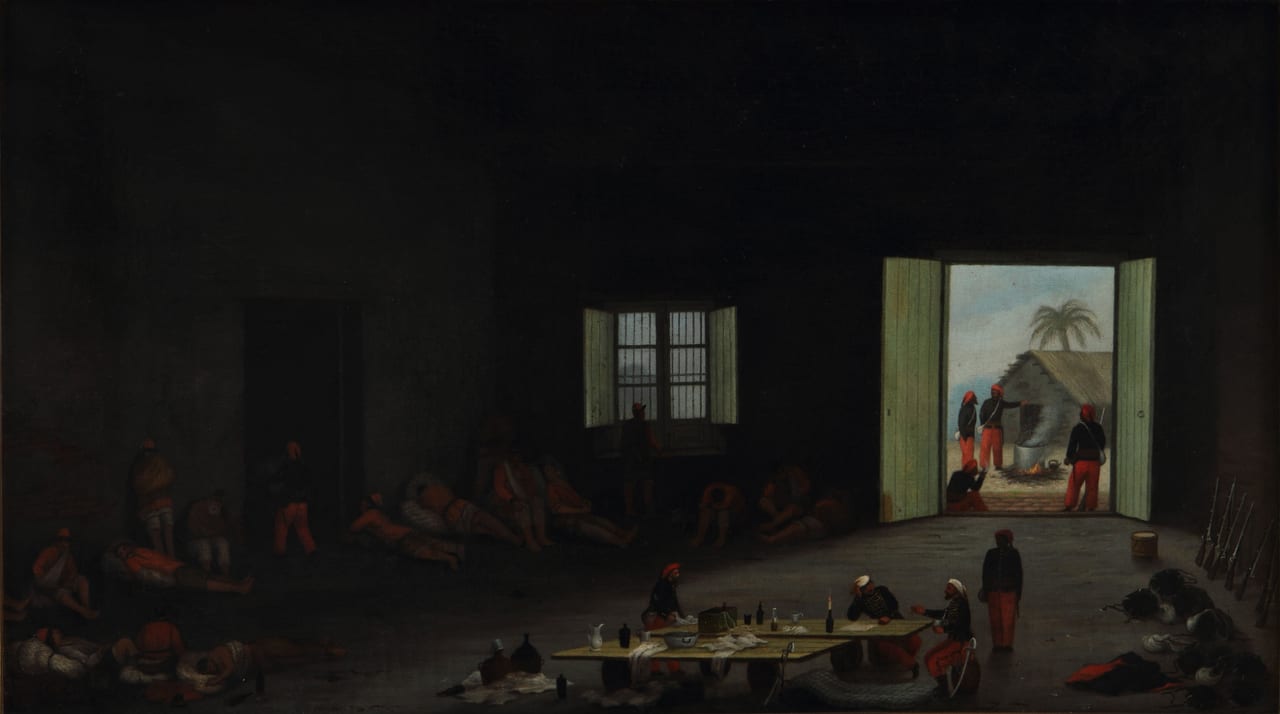
Cándido López and the Paraguayan War
Soldados paraguayos heridos, prisioneros de la batalla de Yatay · Cándido López · 1892
Wounded Paraguayan soldiers taken prisoner at the Battle of Yatay, painted in 1892. López’s war landscapes are unusually wide, in a proportion of about one to three, and the soldiers of both sides appear in them more than anything like tiny shadows.
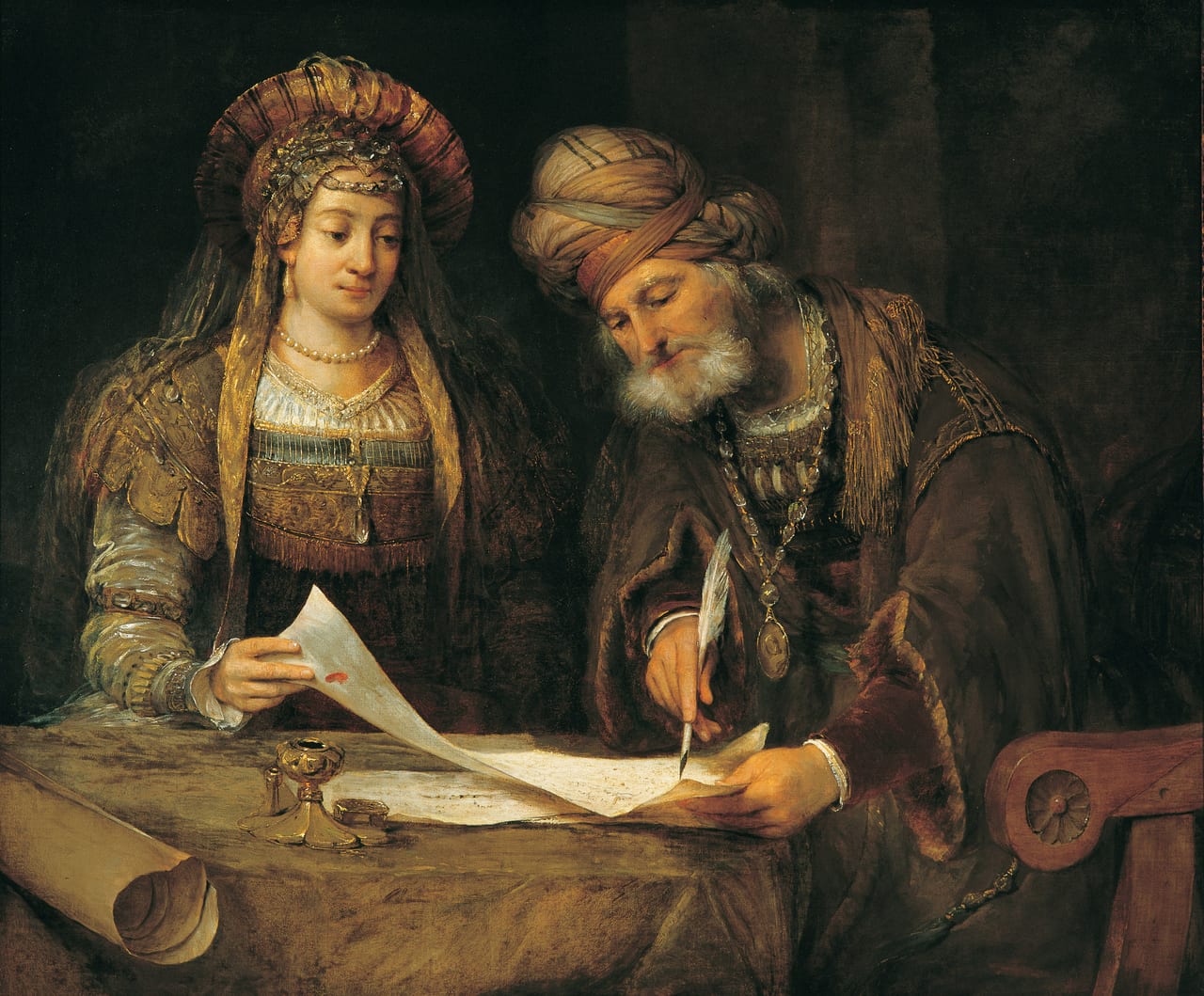
Dutch painting
Ester y Mardoqueo escribiendo la primera carta del Purim · Aert de Gelder · 1675
Aert de Gelder, Rembrandt’s pupil in Amsterdam around 1661, was the only Dutch artist of the late seventeenth and early eighteenth centuries to work in the tradition of Rembrandt’s late style. He returned to the story of Esther several times: it was popular in seventeenth-century Holland, whose people likened their own struggle against Spanish rule to that of the Jews of antiquity against their enemies. This oil came from the Hirsch collection; the museum also holds works by Rembrandt himself.
Artists
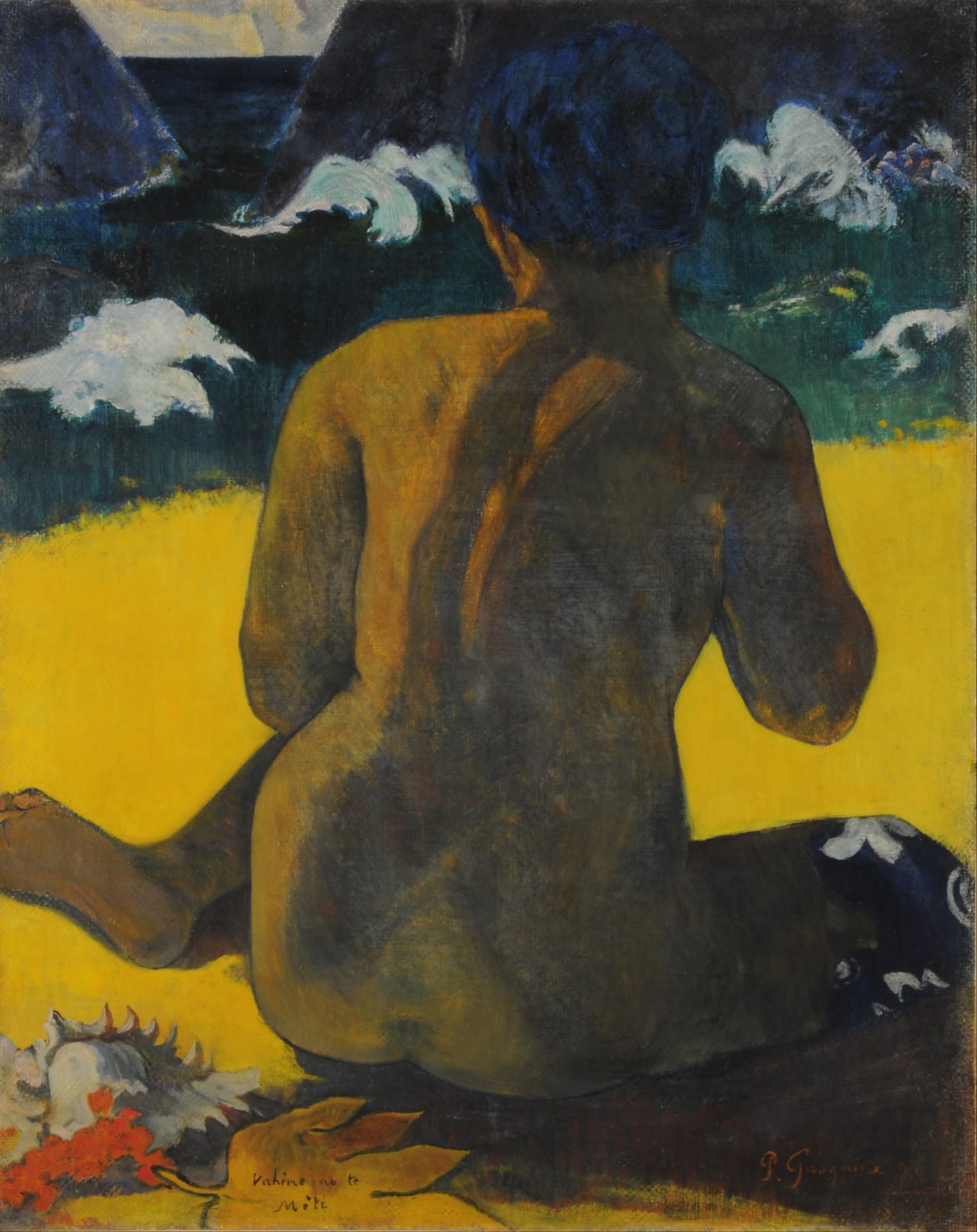
Paul Gauguin
Vahine no te miti · 1892
Searching for a more direct expression, he developed Synthetism; drawn by a romanticised view of an untouched paradise, he first reached Papeete in June 1891 and gave his pictures Tahitian titles.
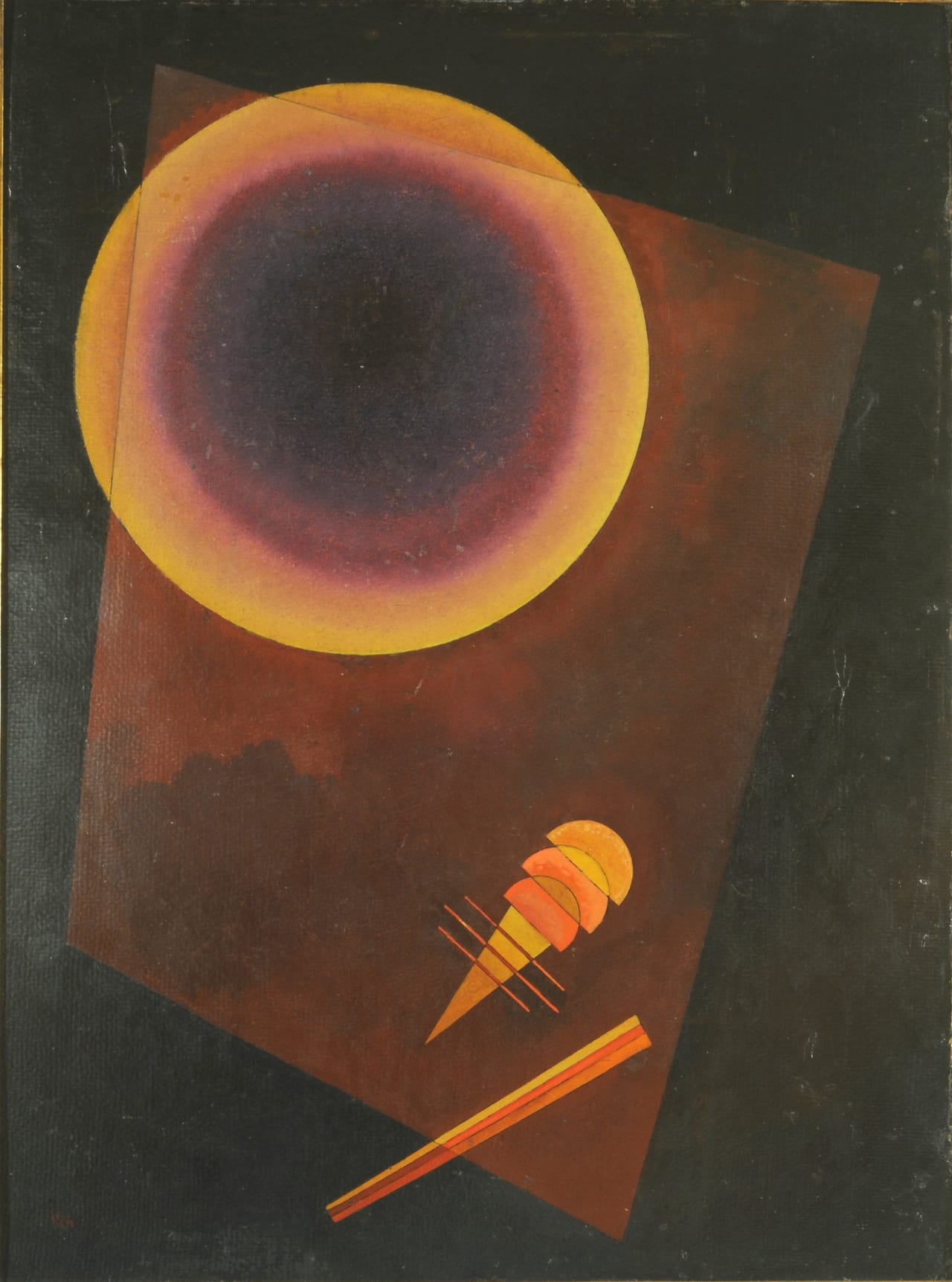
Wassily Kandinsky
Circle (with Brown) · 1929
One of the first creators of pure abstraction in modern painting, he founded Der Blaue Reiter in Munich; his forms moved from fluid and organic to geometric and finally pictographic. A German citizen from 1928, he left for Paris in 1933, when the Nazis forced the Bauhaus to close.
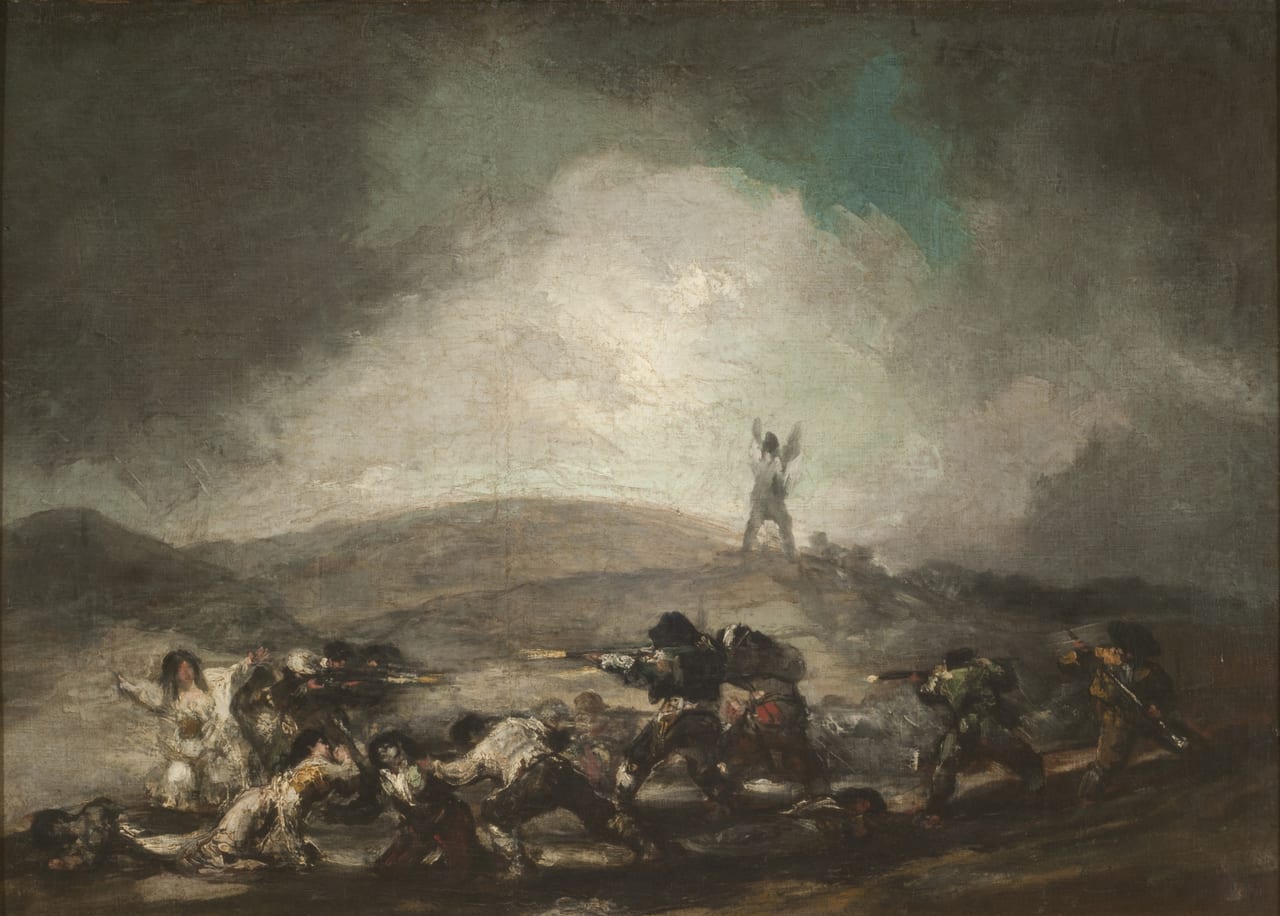
Francisco Goya
War Scene · 1808
His paintings, drawings and engravings reflected the upheavals of his time, and his etchings The Disasters of War record the horrors of the Napoleonic invasion. The museum holds several of his scenes of 1808, among them Fire in a hospital.
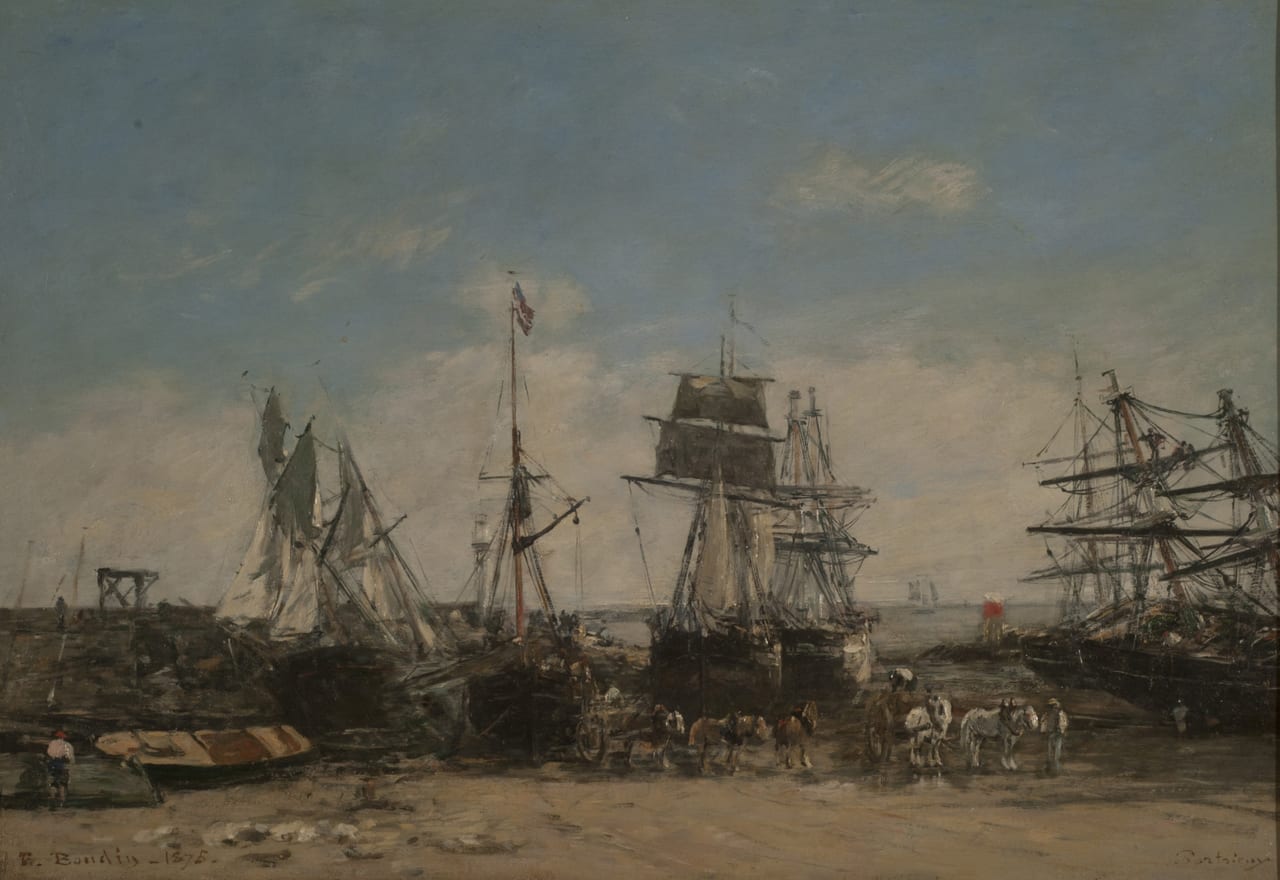
Eugène Boudin
Le rivage de Portrieux, Côtes-du-Nord · 1875
One of the first French landscape painters to work outdoors, straight from nature, he took up the sea in 1853 and noted the weather, the light and the hour on the backs of his pictures. In 1858 he persuaded the young Claude Monet to become a landscape painter.
Artworks
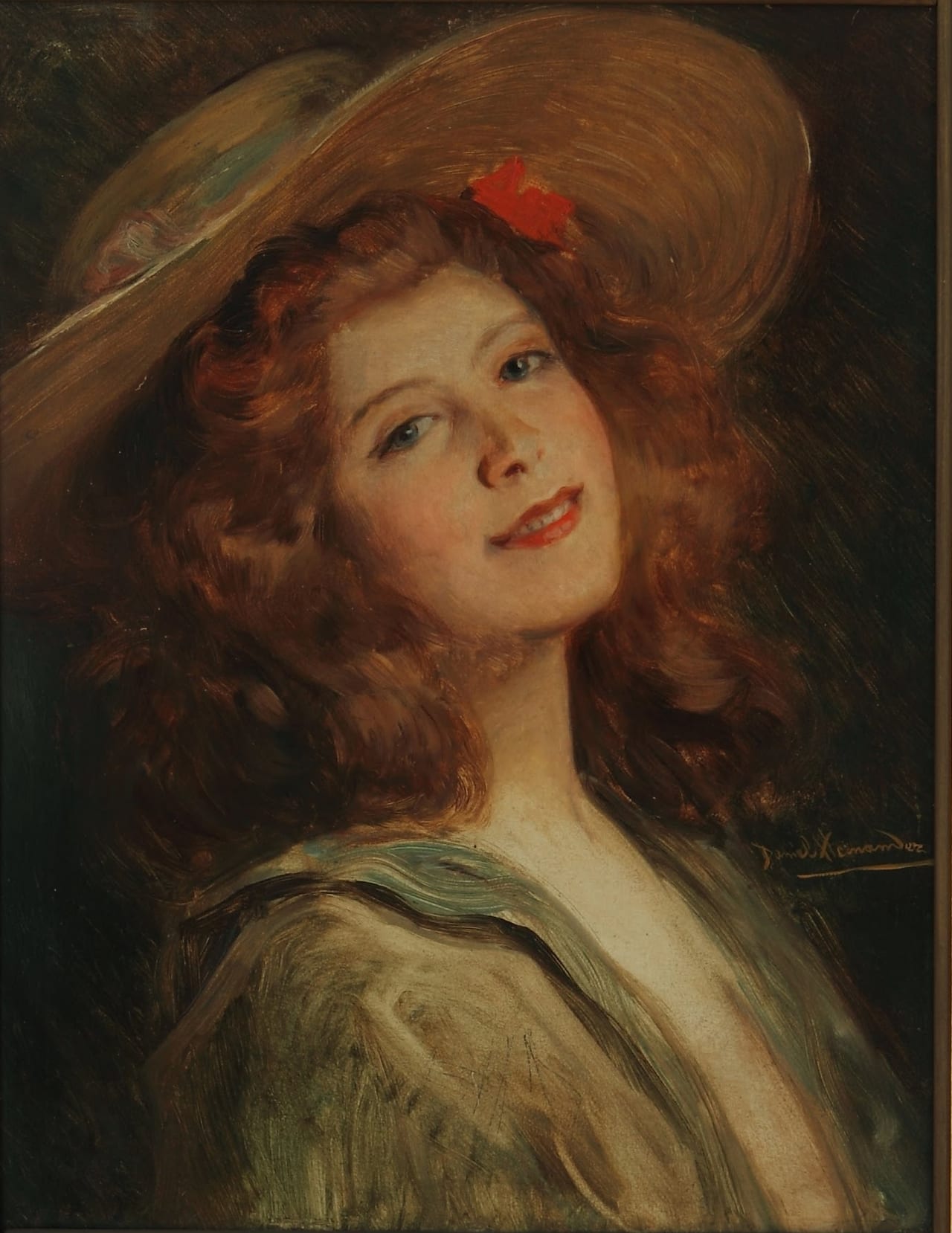
Retrato de niña
Daniel Hernández Morillo
Sources
- Britannica, “Paul Gauguin”
- Britannica, “Wassily Kandinsky”
- Britannica, “Francisco Goya”
- Britannica, “Eugène Boudin”
- Britannica, “Aert de Gelder”
- Wikipedia (Spanish), “Museo Nacional de Bellas Artes (Argentina)”
- Wikipedia, “Museo Nacional de Bellas Artes (Buenos Aires)”
- Wikipedia, “Eduardo Schiaffino”
- Wikipedia, “Without Bread and Without Work”
- Wikipedia, “Ernesto de la Cárcova”
- Wikipedia (Spanish), “Ernesto de la Cárcova”
- Wikipedia (Spanish), “La vuelta del malón”
- Wikipedia (Spanish), “Ángel della Valle”
- Wikipedia, “Ángel Della Valle”
- Wikipedia, “The First Mourning”
- Wikipedia, “Le Moulin de la Galette (Van Gogh series)”
- Wikipedia, “Montmartre (Van Gogh series)”
- Wikipedia, “Portrait of Suzanne Valadon (Toulouse-Lautrec)”
- Wikipedia, “Satan’s Messenger”
- Wikipedia (Spanish), “La Mensajera de Satanas”
- Wikipedia, “Diana Surprised”
- Wikipedia, “Androcles and the Lion”
- Wikipedia (Spanish), “Batalla de Yataytí Corá, 2 de julio de 1866”
- Wikipedia (Spanish), “Cándido López (pintor)”
- Wikipedia, “Cándido López”
- Wikipedia (Spanish), “Arent de Gelder”
- Wikipedia, “Jean-Joseph Benjamin-Constant”
- Wikipedia, “Prilidiano Pueyrredón”
- Wikipedia (Spanish), “Retrato de niña”
- Wikipedia, “List of paintings by Paul Gauguin”
- Wikipedia, “List of paintings by Wassily Kandinsky”
- Wikipedia, “List of works by Francisco Goya”
- Wikipedia, “List of paintings by Eugène Boudin”
- Two Bathers — Public domain via Wikimedia Commons (Public domain)
- Sin pan y sin trabajo — Public domain via Wikimedia Commons (Public domain)
- La vuelta del malón — Public domain via Wikimedia Commons (Public domain)
- The First Mourning — Public domain via Wikimedia Commons (Public domain)
- Le Moulin de la Galette — Public domain via Wikimedia Commons (Public domain)
- Portrait of Suzanne Valadon — Public domain via Wikimedia Commons (Public domain)
- Satan's Messenger — Public domain via Wikimedia Commons (Public domain)
- Diana Surprised — Public domain via Wikimedia Commons (Public domain)
- Androcles — Public domain via Wikimedia Commons (Public domain)
- Batalla de Yataytí Corá, 2 de julio de 1866 — Public domain via Wikimedia Commons (Public domain)
- Soldados paraguayos heridos, prisioneros de la batalla de Yatay — Public domain via Wikimedia Commons (Public domain)
- Ester y Mardoqueo escribiendo la primera carta del Purim — Public domain via Wikimedia Commons (Public domain)
- Vahine no te miti — Public domain via Wikimedia Commons (Public domain)
- Circle (with Brown) — Public domain via Wikimedia Commons (Public domain)
- War Scene — Public domain via Wikimedia Commons (Public domain)
- Le rivage de Portrieux, Côtes-du-Nord — Public domain via Wikimedia Commons (Public domain)
- Retrato de niña — Public domain via Wikimedia Commons (Public domain)
Invite the MNBA into your living room