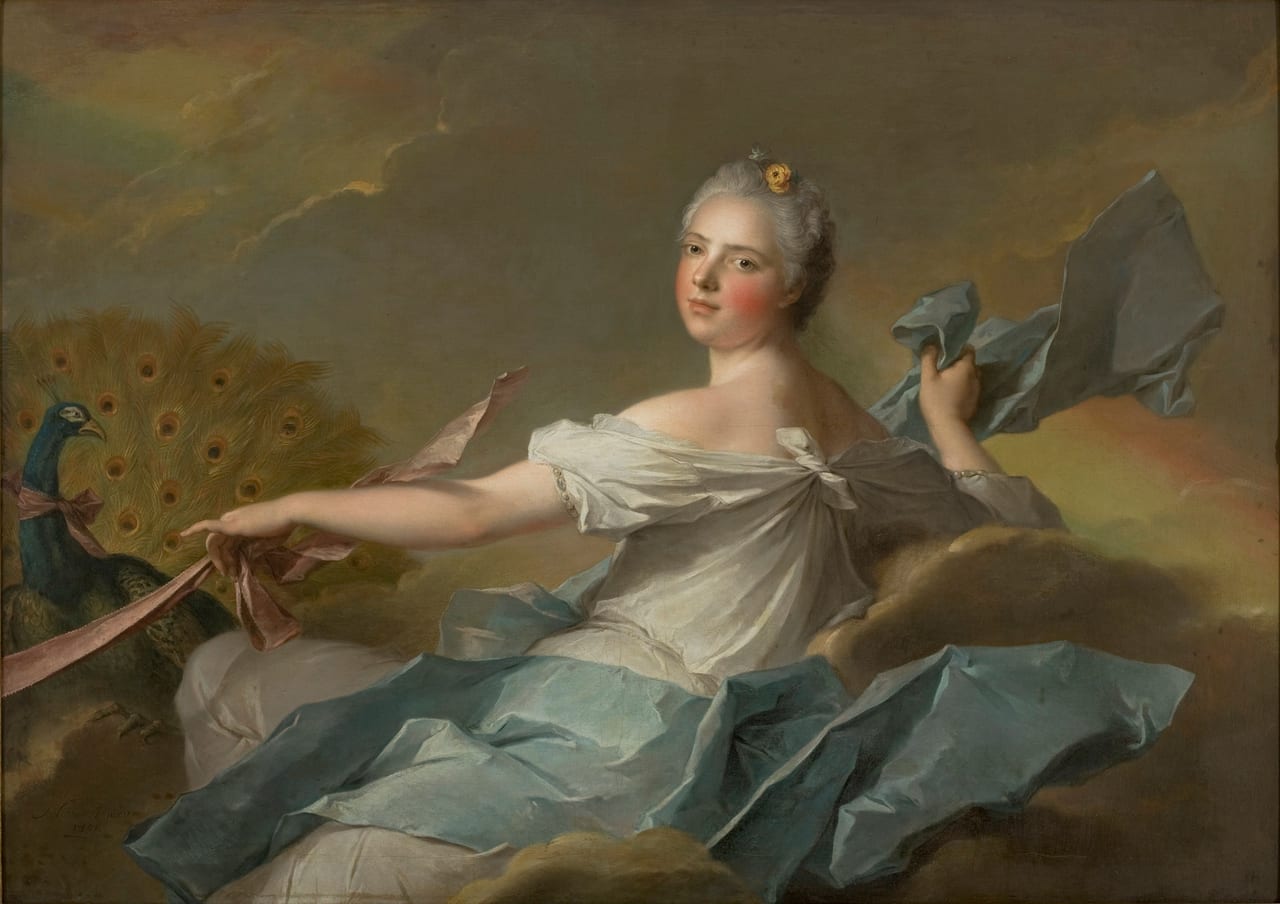
Lady Smiling (Portrait of Alphonsine Fournaise)
Pierre-Auguste Renoir · 1875

Museu de Arte de São Paulo Assis Chateaubriand
São Paulo
Founded in 1947, the Museu de Arte de São Paulo Assis Chateaubriand is a private non-profit institution, and its collection is considered the most important of European art in the southern hemisphere. Lina Bo Bardi’s glass-and-concrete building of 1968 is raised 8 metres off the ground on red pillars; inside, the paintings stand on the crystal easels she designed, panes of glass set in concrete blocks, so that visitors walk among them as through a forest of works that seem to float in the air.
- a private non-profit institution
- Since 1947
- from the collection toured European museums between 1953 and 1957
- 100 masterpieces
- by Renoir in the collection, covering almost his whole career
- 12 paintings
Chateaubriand, Bardi and a museum for São Paulo
Assis Chateaubriand and Pietro Maria Bardi founded the museum in 1947. Chateaubriand, founder and owner of the Diários Associados, then the largest media and press group in Brazil, began a campaign in the late 1940s to acquire masterpieces for a collection of international renown; the end of the Second World War had so changed the European art market that fine works could be bought at reasonable prices. Bardi, an Italian professor, critic and art dealer who had owned galleries in Milan and Rome, came to Brazil with his wife, the architect Lina Bo Bardi, bringing his library and his own art collection. He had meant to lead the project for only a year; he gave it the rest of his life.
The museum opened to the public on 2 October 1947 on the upper floors of the Diários Associados headquarters in the centre of São Paulo, showing its first acquisitions, among them canvases by Picasso and Rembrandt. Lina Bo Bardi designed its interior and fittings, with a new system for hanging paintings away from the wall, and it was the first museum in Brazil to collect and exhibit modern art. Between 1953 and 1957 a selection of 100 masterpieces from the collection toured European museums, among them the Musée de l’Orangerie in Paris and the Tate Gallery in London, and in 1957 the collection itself went on show in the United States, at New York’s Metropolitan Museum of Art and the Toledo Museum of Art. Chateaubriand bought Raphael’s Resurrection of Christ without a certificate of attribution, trusting Bardi’s eye, and it was to Bardi that the Italian historian Roberto Longhi wrote to confirm Perugino as the painter of Saint Sebastian at the Column.
Lina Bo Bardi’s building and the crystal easels
By the middle of the 1950s the museum had outgrown its first home, which held spaces for teaching art as well as galleries. Lina Bo Bardi’s new building, completed in 1968, is a structure of glass and concrete raised 8 metres off the ground on massive red pillars. To keep the view the site required towards the city centre, the building was conceived as suspended above the ground: its main body stands on four pillars at its sides, leaving an open area of 74 metres beneath it. That ground-level space has served as a gathering place for concerts, protests and socialising. Queen Elizabeth II inaugurated the new building on 7 November, during her visit to Brazil; Assis Chateaubriand had died months before.
In the large room on the second floor, the works on display stand on Lina Bo Bardi’s crystal easels, panes of glass set in concrete blocks, arranged in rows with no dividing walls. Taken off the walls, the paintings let visitors walk between them. The easels were introduced when the building opened in 1968, gave way to walls in 1996 and were brought back in 2015. The labels are on the back, because Bo Bardi wanted the first encounter with each work to be direct, free of context and of the artist’s name, the title and the date.
Acervo em transformação, the long-term display of the collection, has kept changing since then, as its title says: works come and go with loans, new acquisitions and rotation. One of the museum’s main criteria for acquiring is that a work has been in one of its exhibitions, so the display holds many works shown in its cycles Histórias afro-atlânticas in 2018, Histórias das mulheres, histórias feministas in 2019 and Histórias brasileiras in 2021–22.
From Raphael to Exu
MASP’s collection is considered the most important of European art in the southern hemisphere. Beside works by Raphael, Ingres, Van Gogh, Cézanne, Renoir, Monet and Picasso, it holds pieces from other cultures, such as a pair of Chinese warriors and a sculpture of the African deity Exu. The collection is listed as national heritage by IPHAN, Brazil’s national historic and artistic heritage institute, and it continues to grow through gifts from individuals and partnerships with companies and institutions.
Among the Brazilian artists are self-taught artists who worked outside the traditional circuit of art and the academy and are often left out of the history of art: Albino Braz, Rafael Borjes de Oliveira, Maria Auxiliadora, Agostinho Batista de Freitas and José Antônio da Silva. The group helps to build a broader, more diverse picture of Brazilian culture, beside such recognised names as Anita Malfatti, Di Cavalcanti, Candido Portinari and Victor Meirelles. Eliseu Visconti’s Flowers has its own story: the painter gave it to Assis Chateaubriand in 1927; years later it was stolen, and it was recovered only in 1967, when it officially entered the collection under the title Trepadeira em flor.
What to see
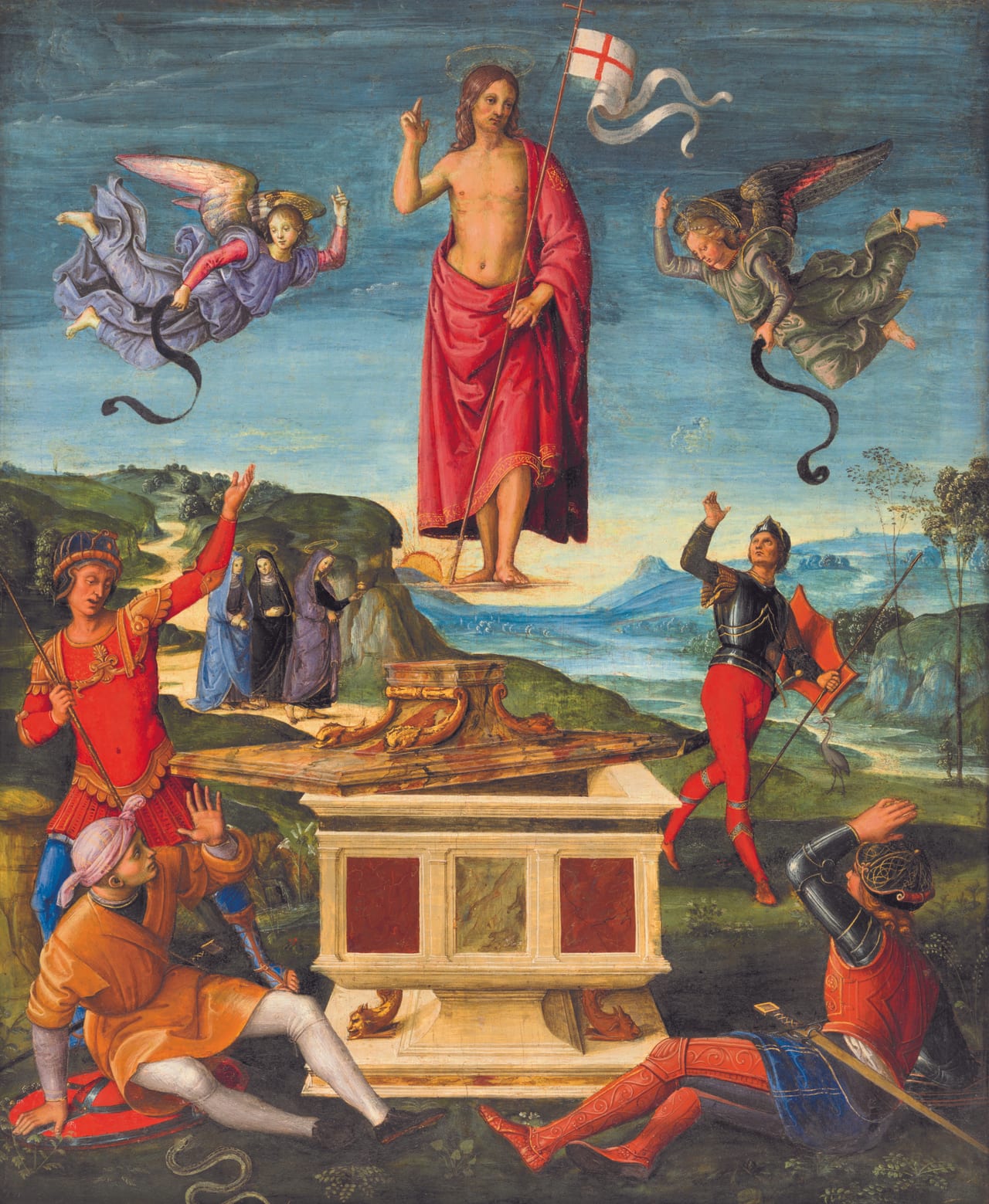
Resurrection of Christ
Raphael · 1499–1502
Long debated by art historians, the painting was finally attributed to the young Raphael. It shows what he took from Perugino’s workshop, a strict division of the vertical and horizontal axes: Christ’s feet mark the centre of the picture, above the rectangle formed by four guards gesturing in different directions. Chateaubriand bought it on an Easter Sunday at the Knoedler gallery in New York, with no certificate of attribution, trusting only Bardi’s experience and eye; years later two preparatory drawings for it, signed by Raphael, were found in the Ashmolean Museum in Oxford, settling the attribution Bardi had suggested.
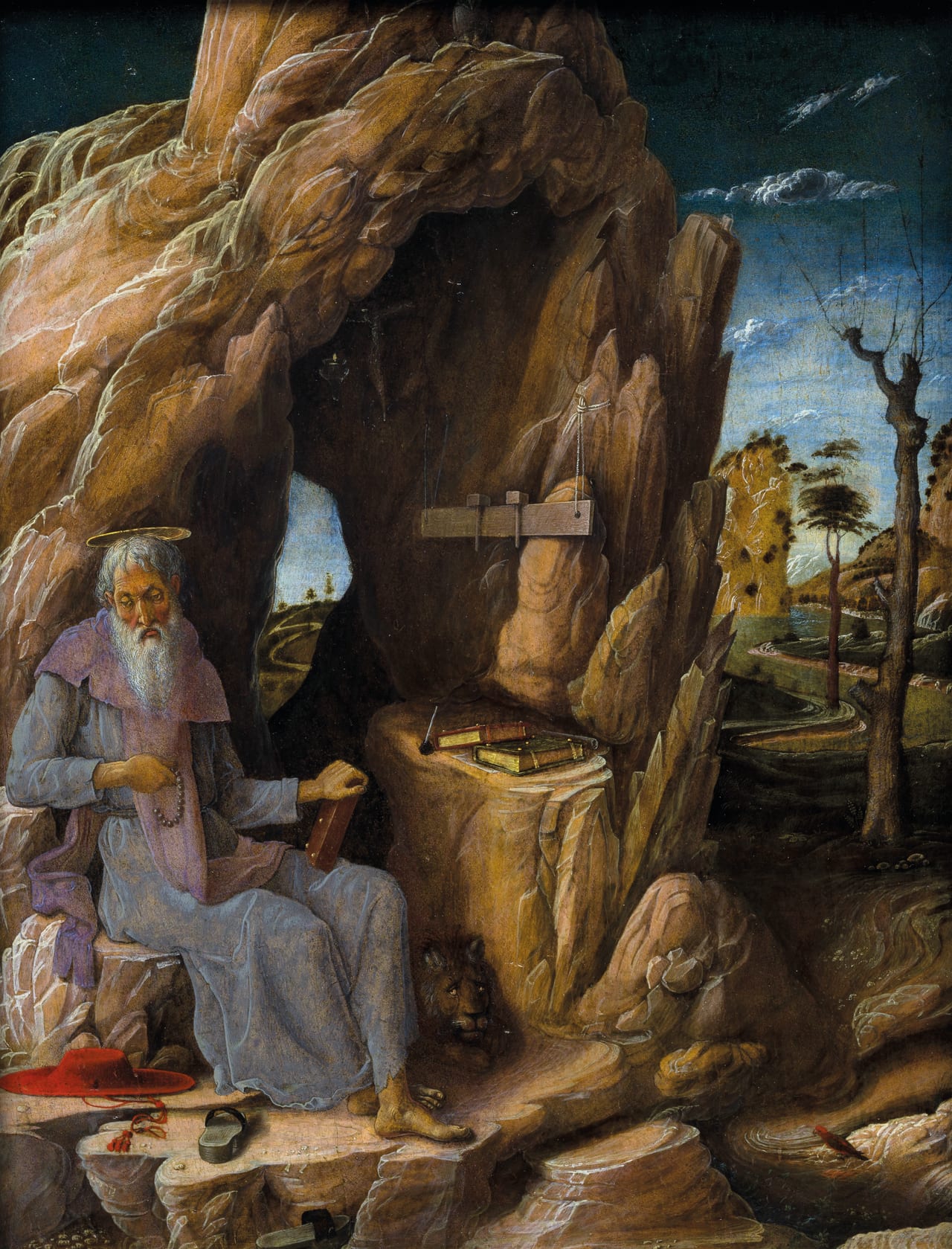
Saint Jerome Penitent in the Desert
Andrea Mantegna · 1448–51
A work of Mantegna’s youth, probably painted while he was working on the Ovetari Chapel in Padua. Jerome is in the desert of Chalcis in Syria, the hermit seeking learning and penance in solitude, with his traditional attributes: the lion from whose paw he is said to have pulled a thorn, the red cardinal’s hat, a candle burning in the cave before a crucifix, and closed books around him as he prays. Its authorship was long questioned, but some features resemble Mantegna’s other work, among them the owl that recurs in the Ovetari Chapel frescoes.
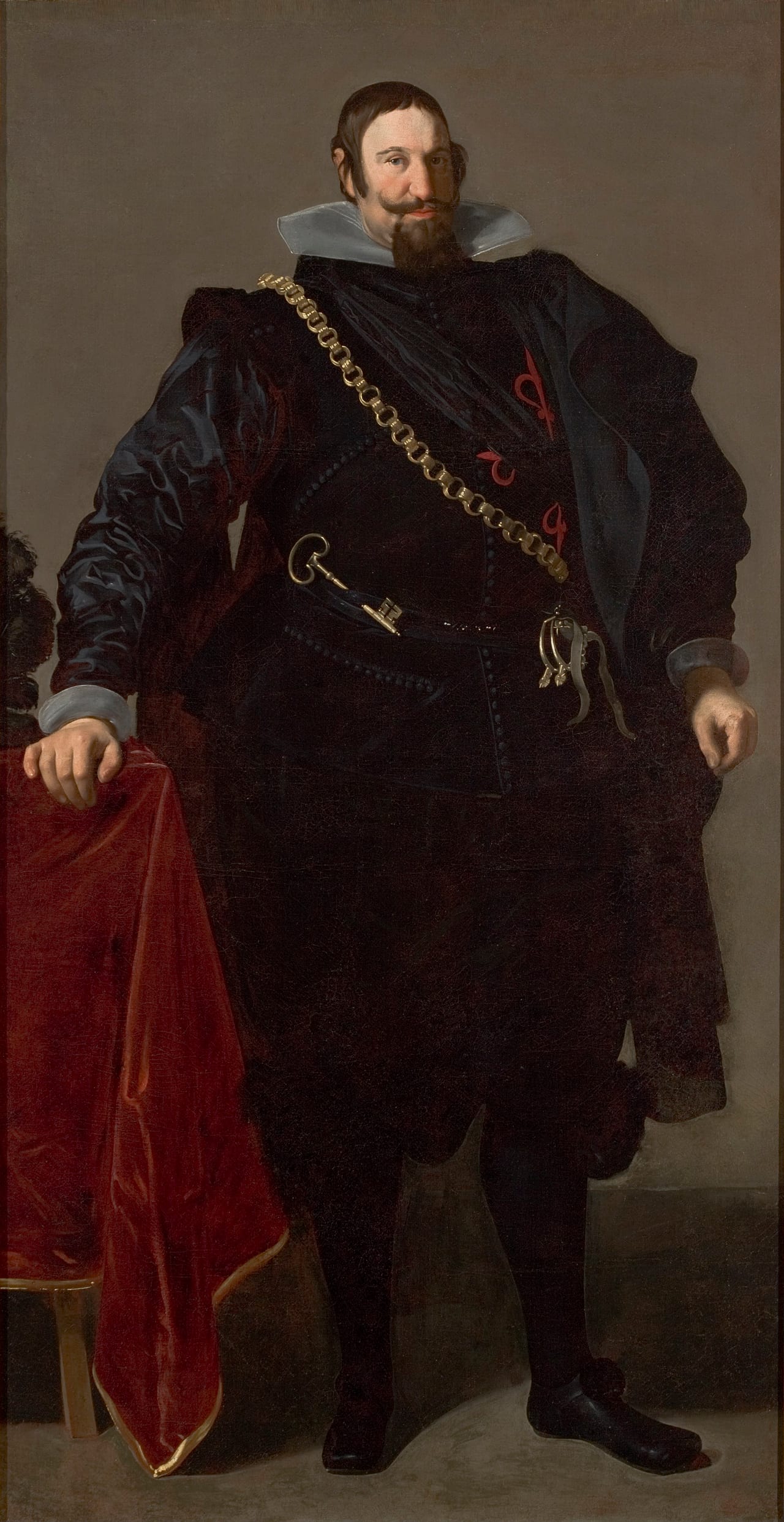
Portrait of the Count-Duke of Olivares
Diego Velázquez · 1624
The support of Olivares, the powerful first minister of Philip IV, won Velázquez his appointment as court painter at only 25, so the portrait marks a particularly important moment in his career. Olivares displays many symbols of power: the great key, the two spurs at his waist and the long gold chain, badges of the offices of Sumiller de Corps and Caballerizo Mayor that gave him unrestricted access to the king’s rooms, and on his chest the red cross of the Order of Alcántara, a sign of belonging to the highest Castilian nobility.
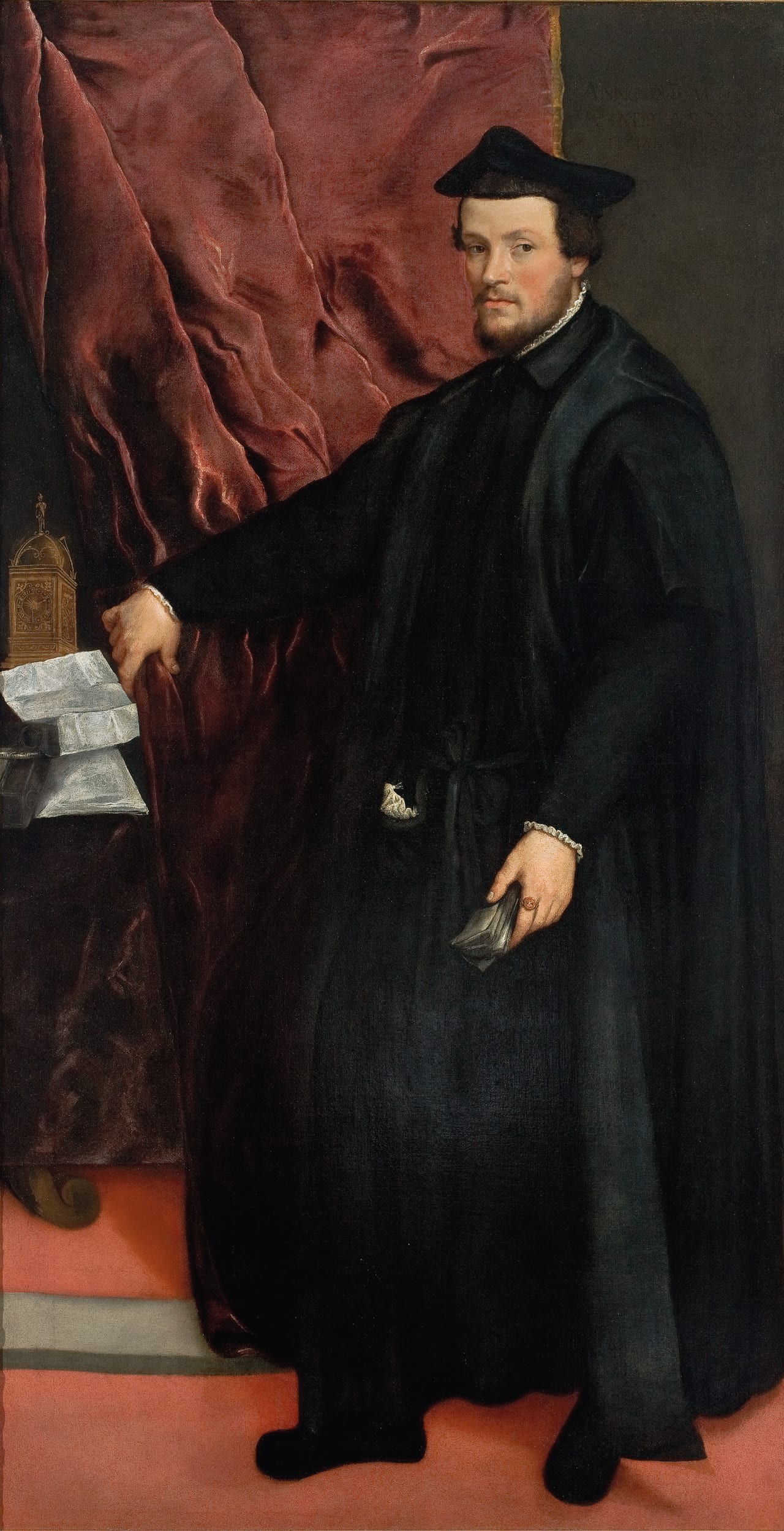
Portrait of Cardinal Cristoforo Madruzzo
Titian · 1552
Titian, the most famous portraitist of his time, painted the cardinal standing and without the purple robes of his high rank in the Roman curia. Madruzzo, prince and bishop of Trento, played a leading part in the negotiations that made the city the seat of the Council of Trent (1545–63), and the portrait was painted in those years. The clock on the table at the left, common in portraits of political figures of the period, alludes to how fleeting time and power are.
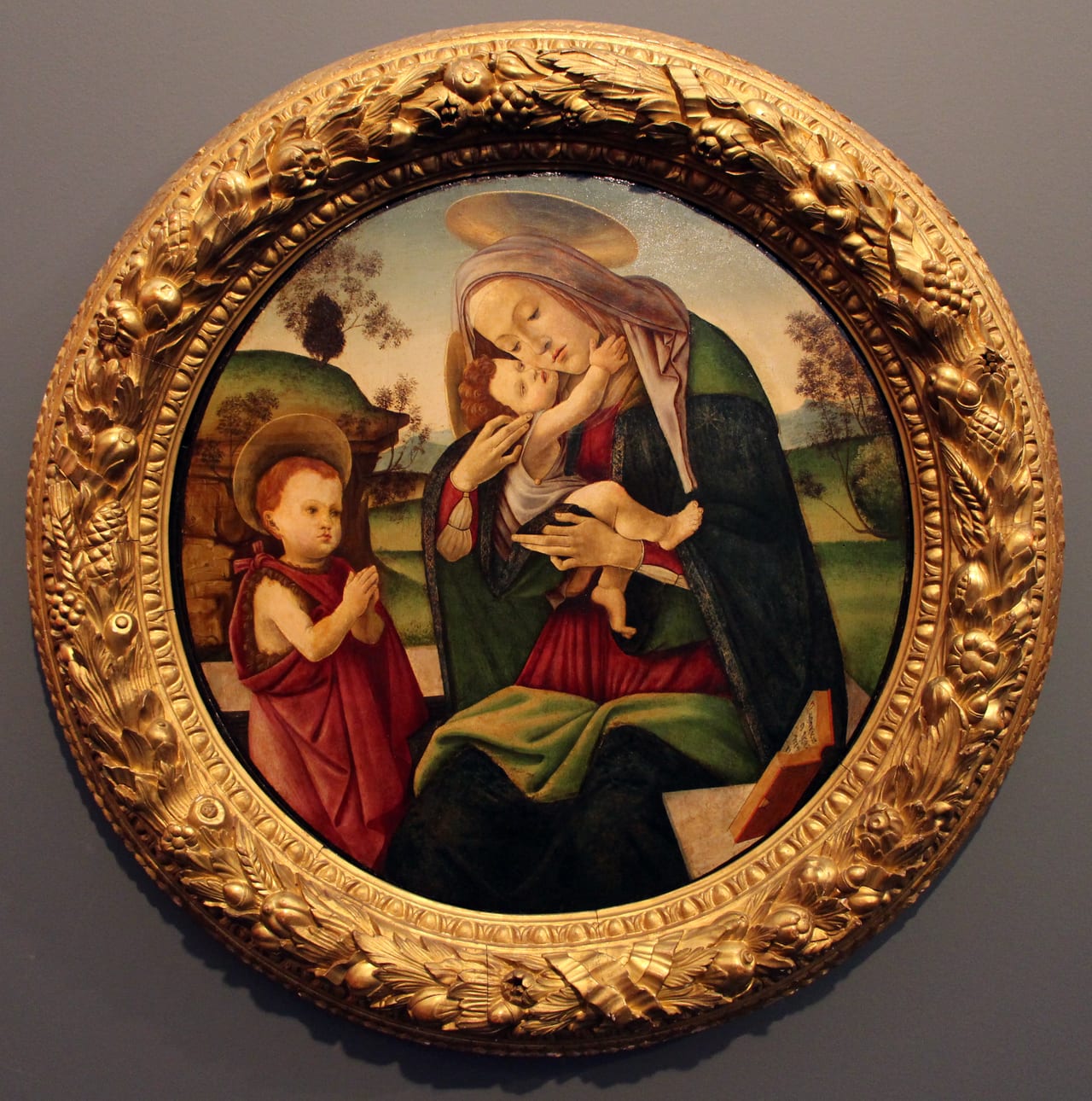
Virgin and Child with the Infant John the Baptist
Sandro Botticelli · 1490–1500
Art historians see this round picture as painted by Botticelli himself, with some parts, the young John the Baptist and the landscape, done by assistants in his workshop. Glances and the gestures of feet and hands point in several directions, the figures are close and harmonious, the colours clear and the outlines sharp and precise. It belongs to the last phase of his career, influenced by the religious ideals of Girolamo Savonarola.
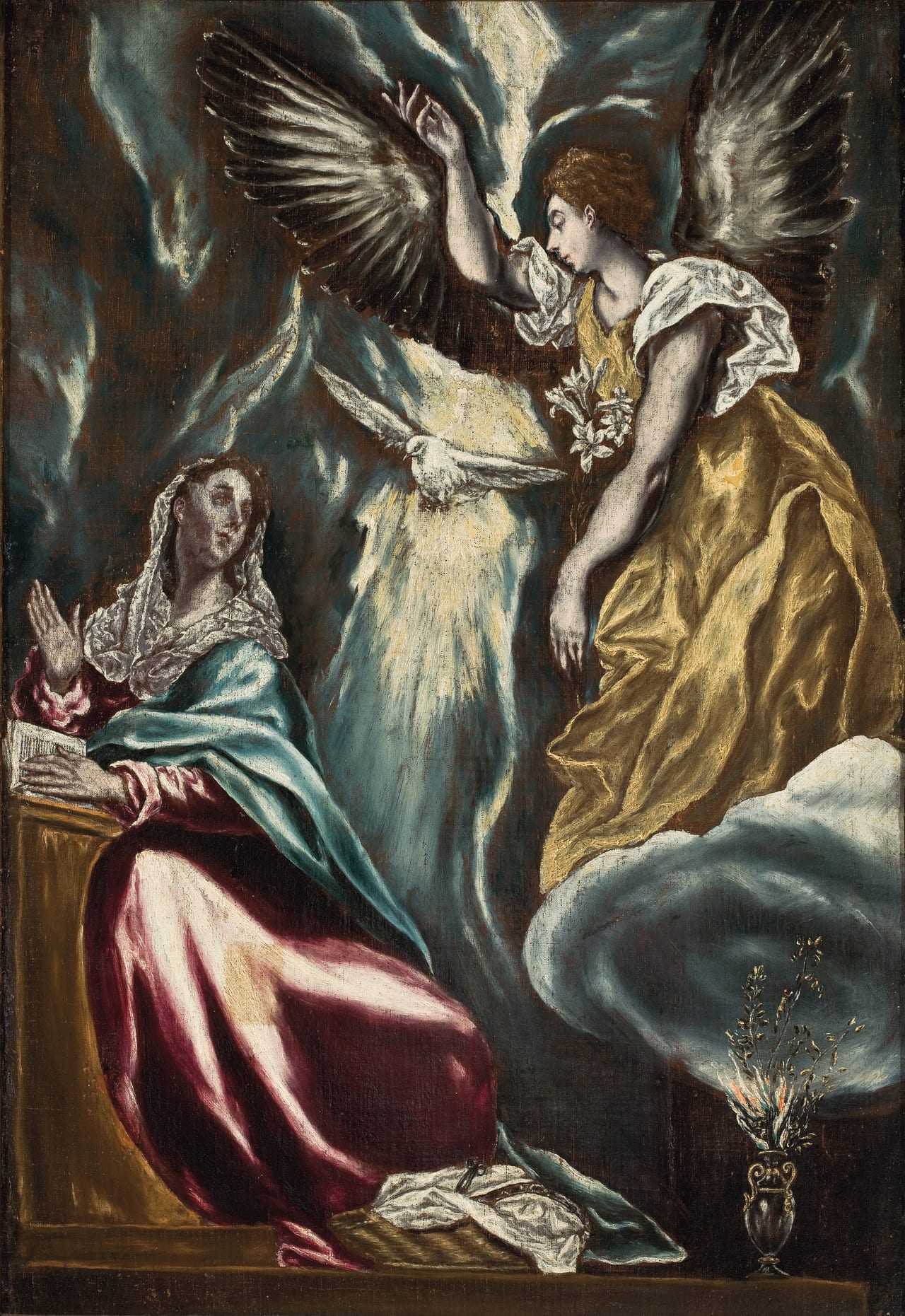
Annunciation
El Greco · c. 1600
The inventory drawn up after El Greco’s death lists this Annunciation with six other almost identical versions, now in Cuba, the United States, Japan, Spain and Hungary and all dated between 1595 and 1605. The bodies of Mary and the angel Gabriel are exaggeratedly elongated, stressing their spiritual tension; the white lily stands for purity, and the burning bush is the one through which God is said to have first shown his presence to Moses. The dark, ghostly setting, with a burst of light for the Holy Spirit in the form of a dove, makes the atmosphere rapt and dramatic.
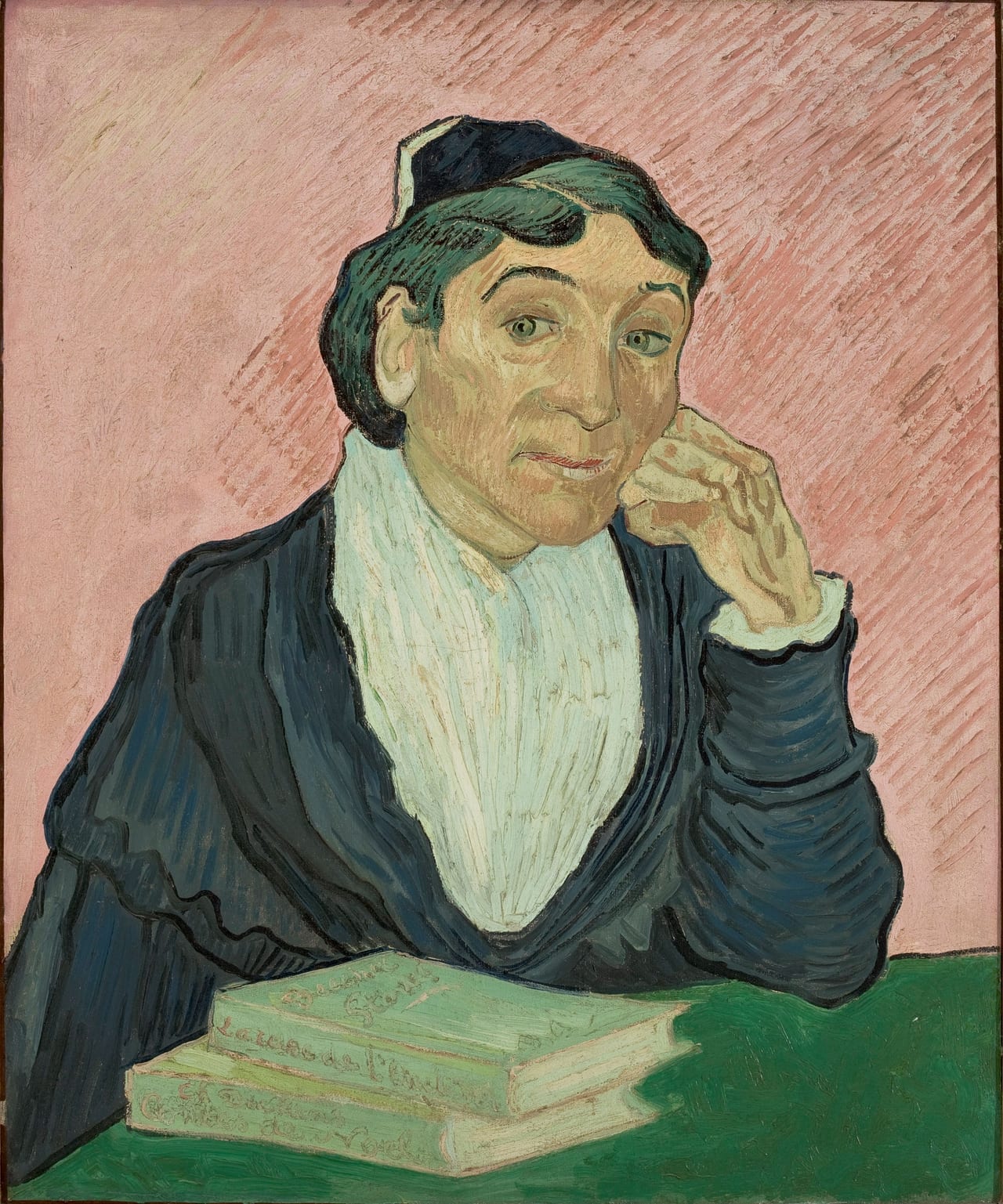
L’Arlésienne
Vincent van Gogh · 1890
Van Gogh mentioned the picture in two letters of June 1890. To Paul Gauguin he wrote that it was based on a drawing of Gauguin’s, and that he therefore considered it a joint work; to his sister he described it as the ideal image of the character of the women of Arles. The sitter is Marie Julien Ginoux, owner of the Café de la Gare, who let the artist a room in 1888. Three other versions exist, in Rome, New York and Otterlo.
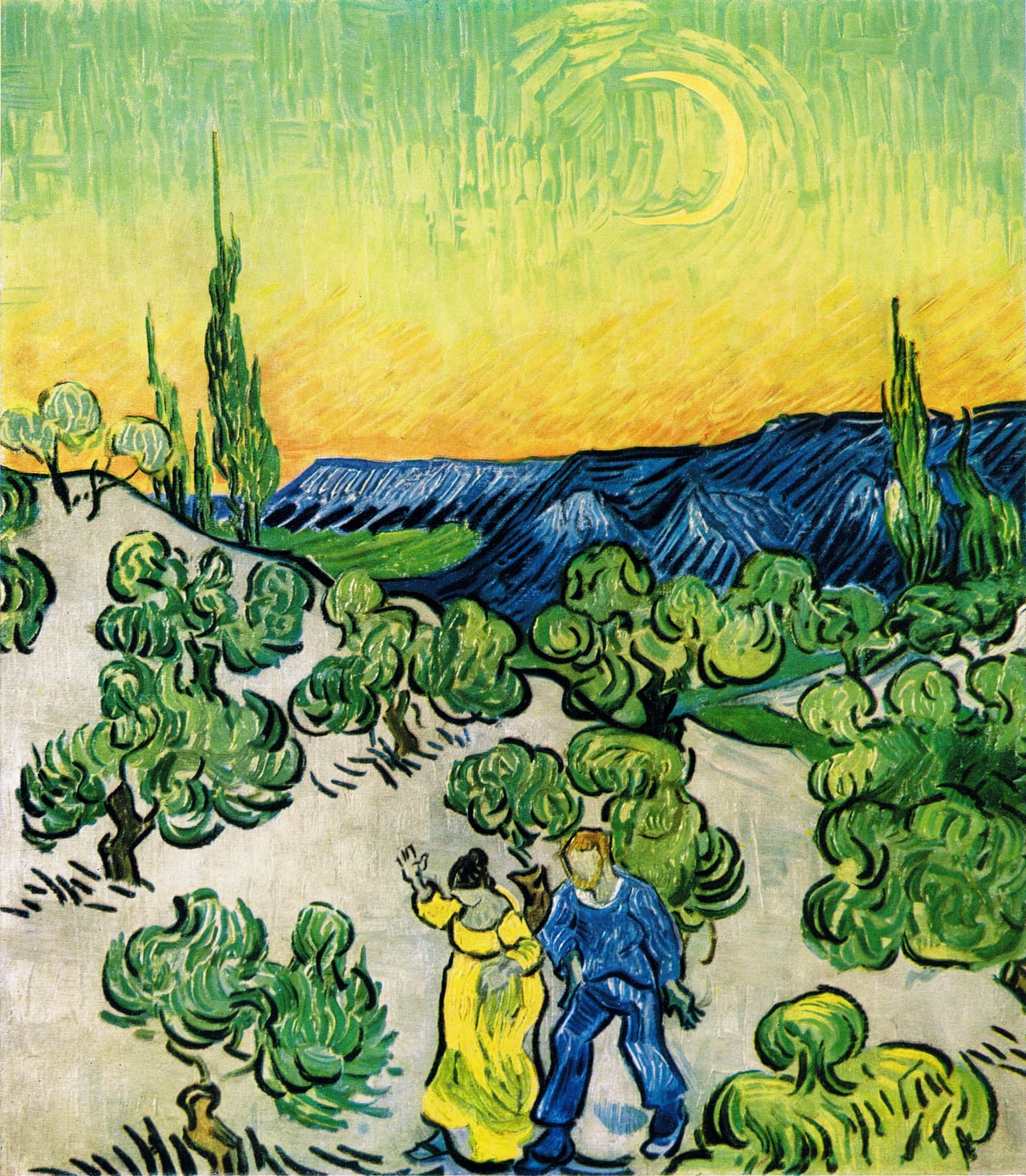
Walk at Dusk
Vincent van Gogh · 1889–90
Van Gogh’s brushstrokes suggest agitation, a strange atmosphere in which sky, plants and figures all seem to move, and strong, saturated colours drive their rhythm. He saw the sky from the window of the asylum at Saint-Rémy and described it to his brother Theo as a night sky with a numbing moon. For some interpreters the red-haired man on this romantic walk is the artist himself. The museum bought it in 1958.
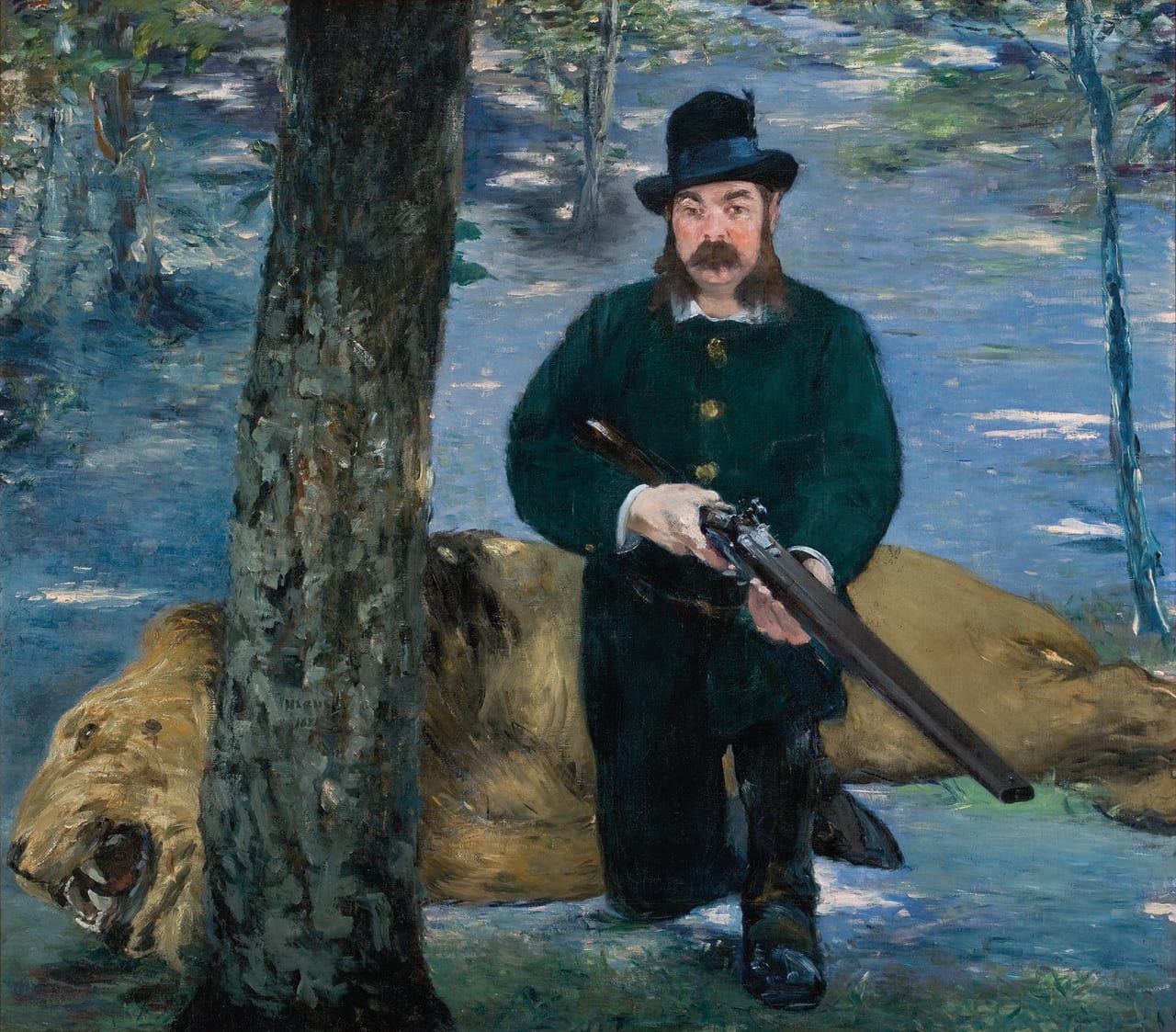
Monsieur Eugène Pertuiset, the Lion Hunter
Édouard Manet · 1881
One of the largest canvases Manet painted. The kneeling man with a gun in his hand was a personal friend of the artist, a collector and dealer in art and in arms, a lover of night life and of hunting. The picture parodies the Romantic hero, the opposite of the fierce struggles between men and animals painted by Eugène Delacroix, and it also mocks the decorous, artificial gestures of Salon painting.
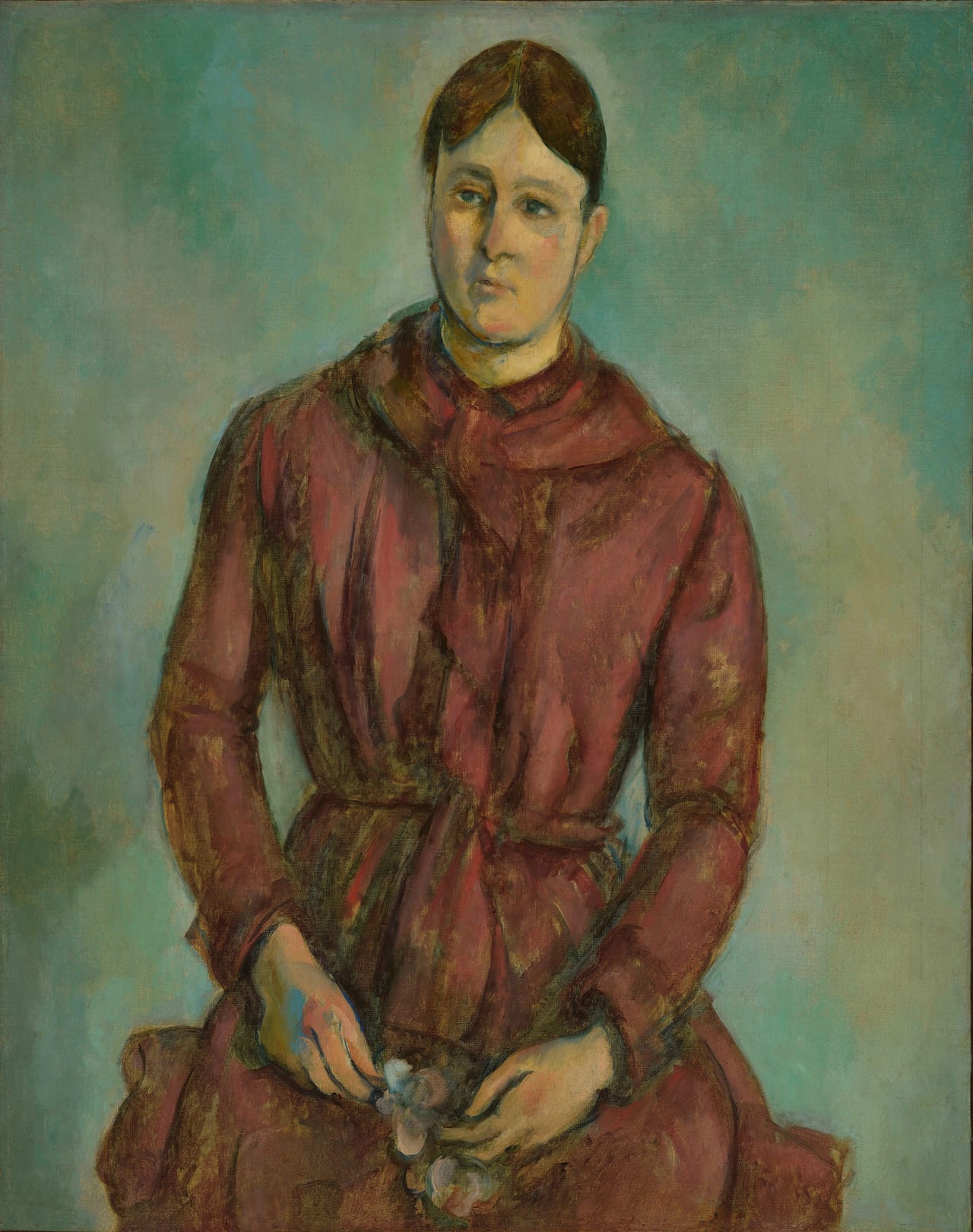
Madame Cézanne in Red
Paul Cézanne · 1888–90
Cézanne portrayed Hortense Fiquet in 29 paintings and some 50 drawings between 1872 and 1892, always facing the front, her hair parted in the middle, often seated. The most complex and representative are the four in which she wears a red dress, probably painted in Paris. MASP’s is the most concentrated and singular of them, with nothing in the scene to disturb the figure: the blue-green background sets off the red dress, painted like an intricate monochrome sculpture, and her face is the most expressive, her gaze, somewhere between sad and tired, fixed on something to the painter’s left.
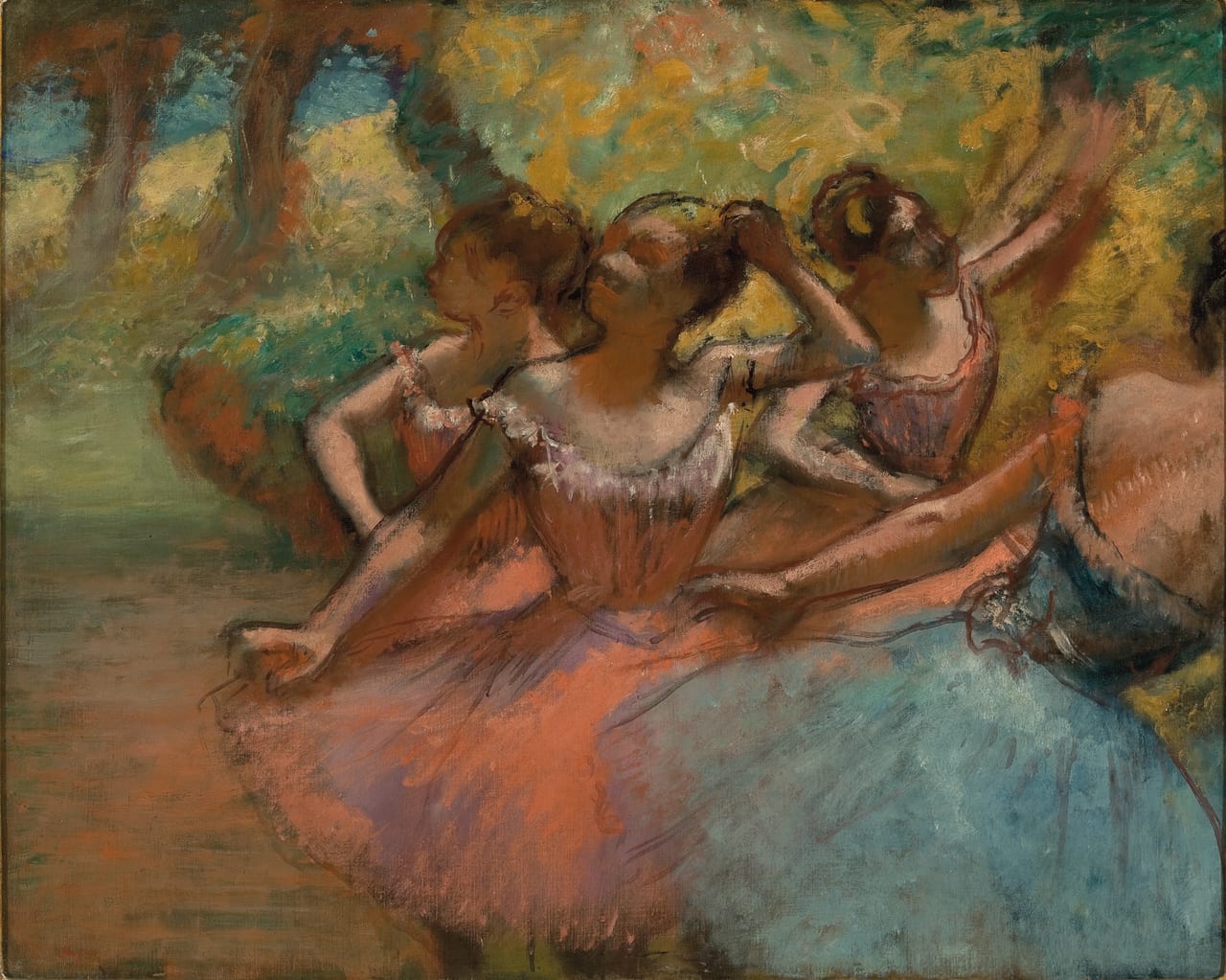
Four Dancers on Stage
Edgar Degas · 1885–90
Degas did not value painting out of doors; he preferred to study the movement of people and animals, and was a pioneer in using the optical resources of photography. So it is here: on the central dancer’s arm the shadow is made with blue marks, purple patches in the tutu let the pink stand out and, by contrast, gain light, and part of her face is green, blurring its expression and bringing out the gesture.
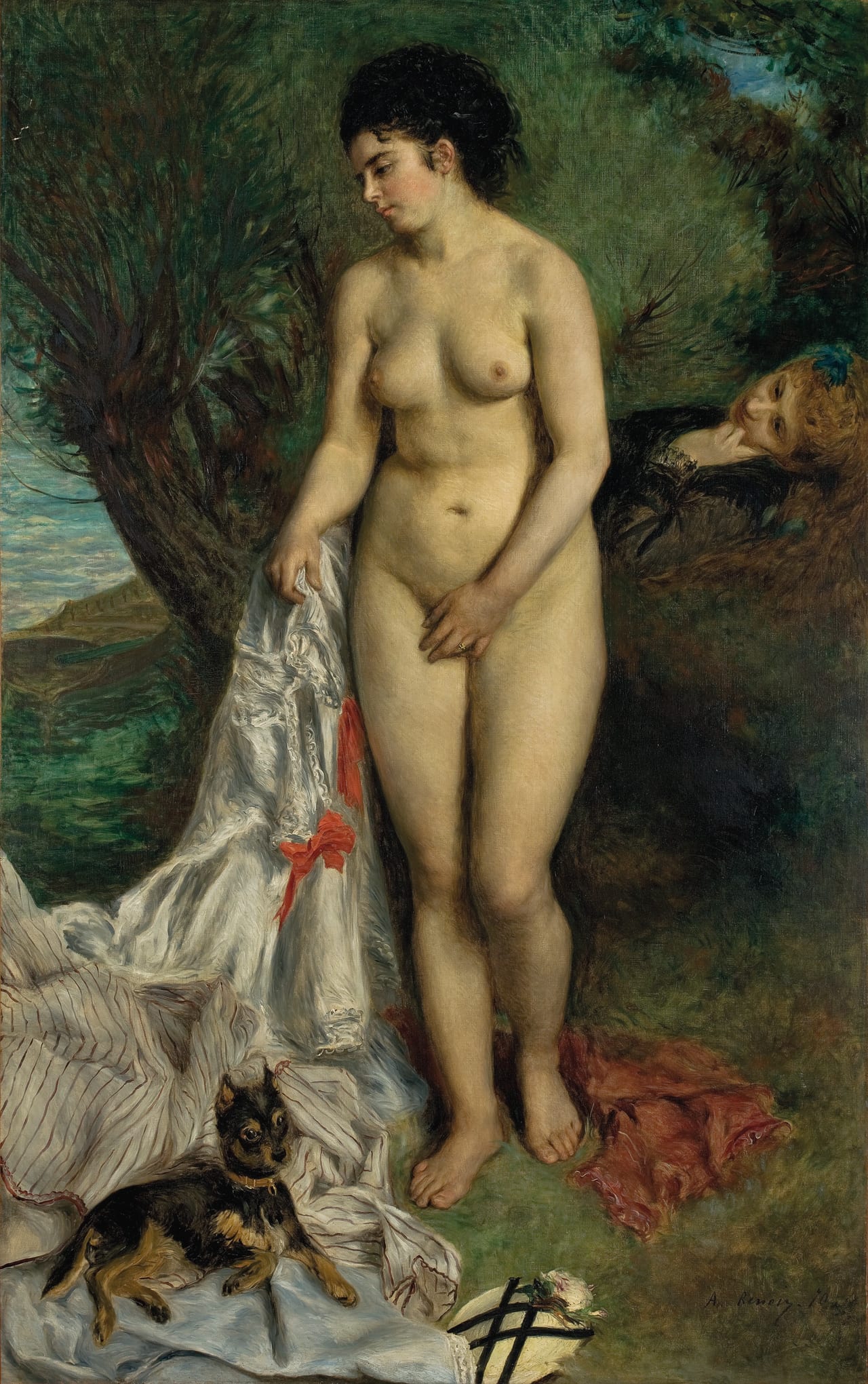
Bather with a Griffon Dog: Lise on the Bank of the Seine
Pierre-Auguste Renoir · 1870
Lise Tréhot posed for many of Renoir’s canvases, among them some of the most important of his early work. This one was shown at the Salon of 1870, together with his smaller Odalisque of the same year, also modelled by Lise. The picture is a string of references to the history of art: it quotes Gustave Courbet’s celebrated The Bathers of 1853 and recalls the Venus of Knidos.
Collections
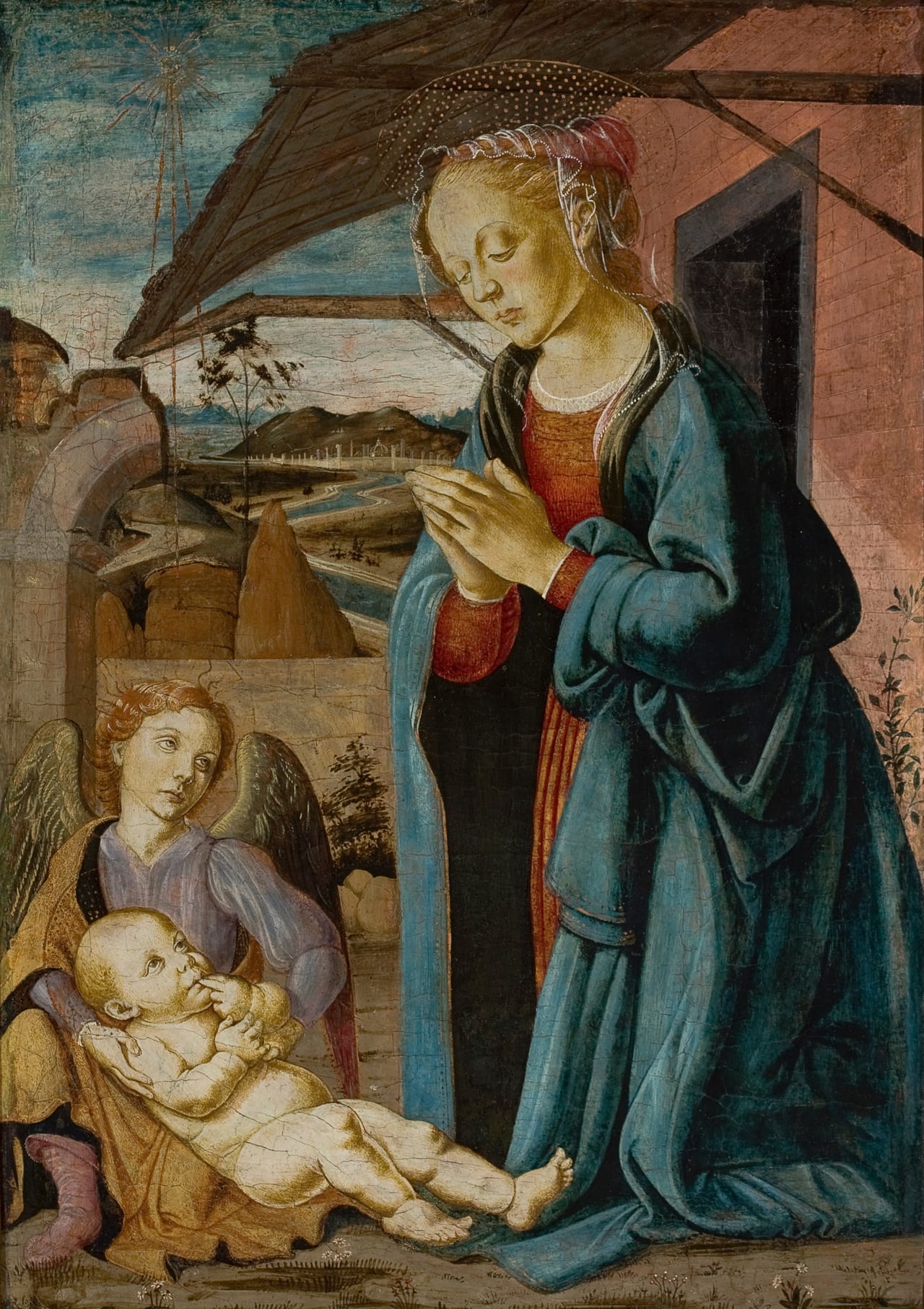
Florence in the fifteenth century
Madonna Adoring the Christ Child with an Angel · Biagio d'Antonio · c. 1475
In the foreground of Biagio d’Antonio’s picture, a manger built on an ancient ruin encloses the scene; far off lies Florence, still within its fourteenth-century walls, where Brunelleschi’s dome of Santa Maria del Fiore can be made out. The picture came to the museum through Studio d’Arte Palma, P. M. Bardi’s gallery in Rome, attributed to Francesco Botticini; as early as 1945 Roberto Longhi had put forward Biagio d’Antonio instead, a suggestion recent scholars have endorsed.
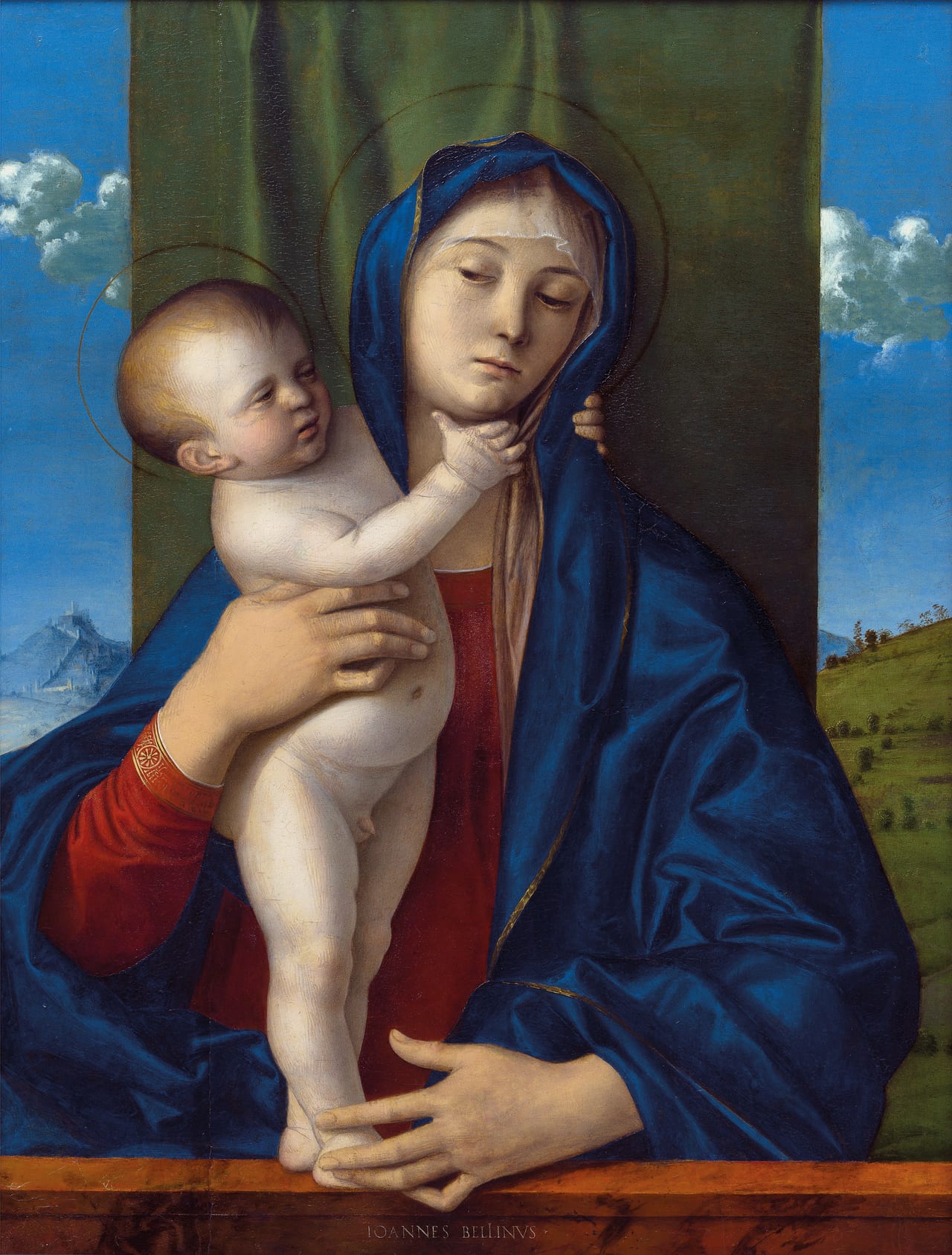
Venice
Madonna Willys · Giovanni Bellini · 1480–90
Giovanni Bellini, official painter to the Republic of Venice from 1483, shows a certain distance between Mary and Jesus: their bodies are close, but their faces are melancholy and Mary seems to shy away, without the tenderness of other Italian madonnas of the time. The parapet in front of them separates the viewer from the scene and may also suggest an altar on which the child is offered in sacrifice.
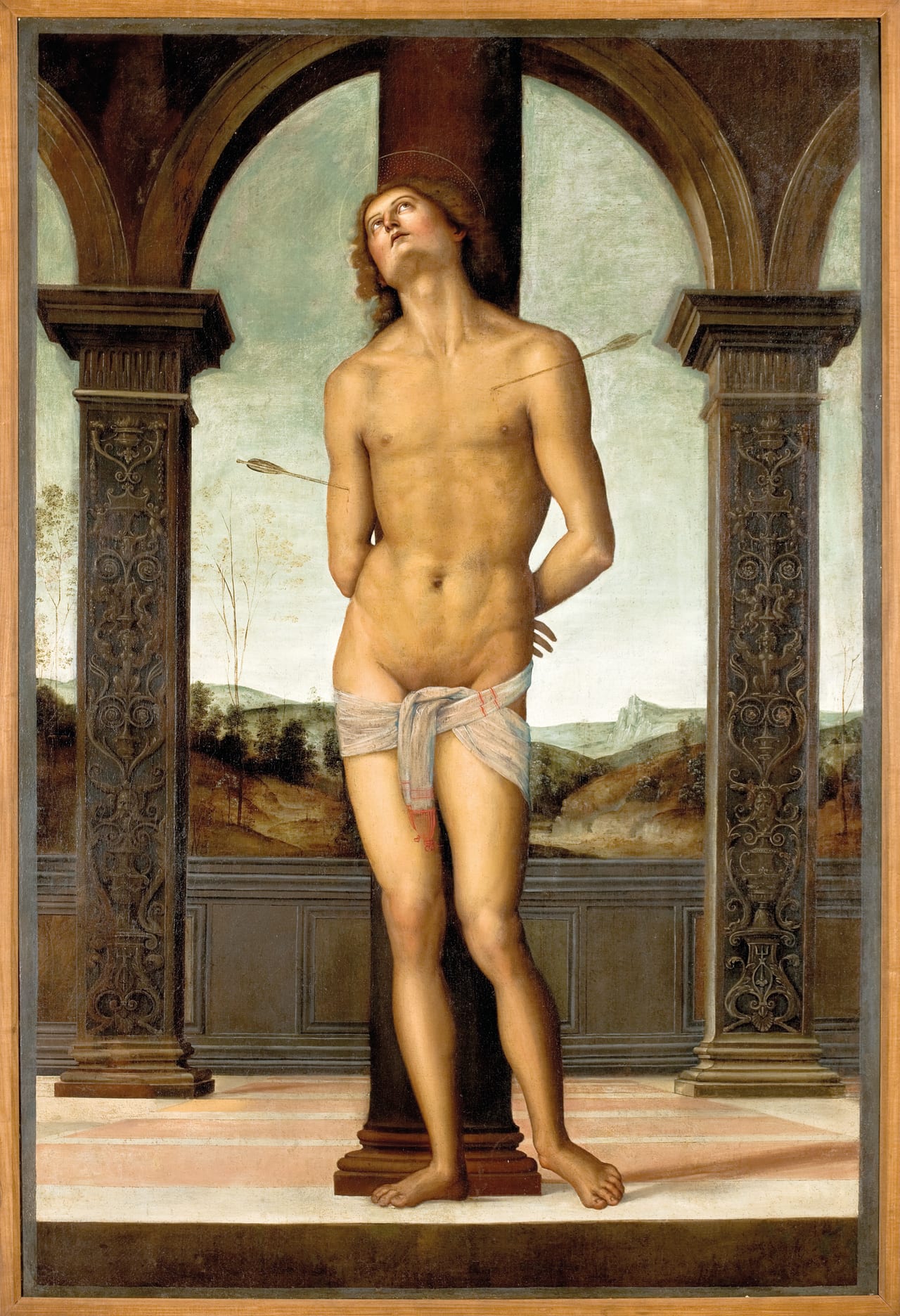
Umbria
Saint Sebastian at the Column · Pietro Perugino · 1500–10
Today best known as Raphael’s teacher, Perugino left his mark by combining the clearly outlined figures of Florence with the Umbrian way of building space from architecture. Both can be seen here: Saint Sebastian is clearly drawn and set at the centre, and depth comes from overlapping columns and arches and the geometric pattern of the floor.
Spain
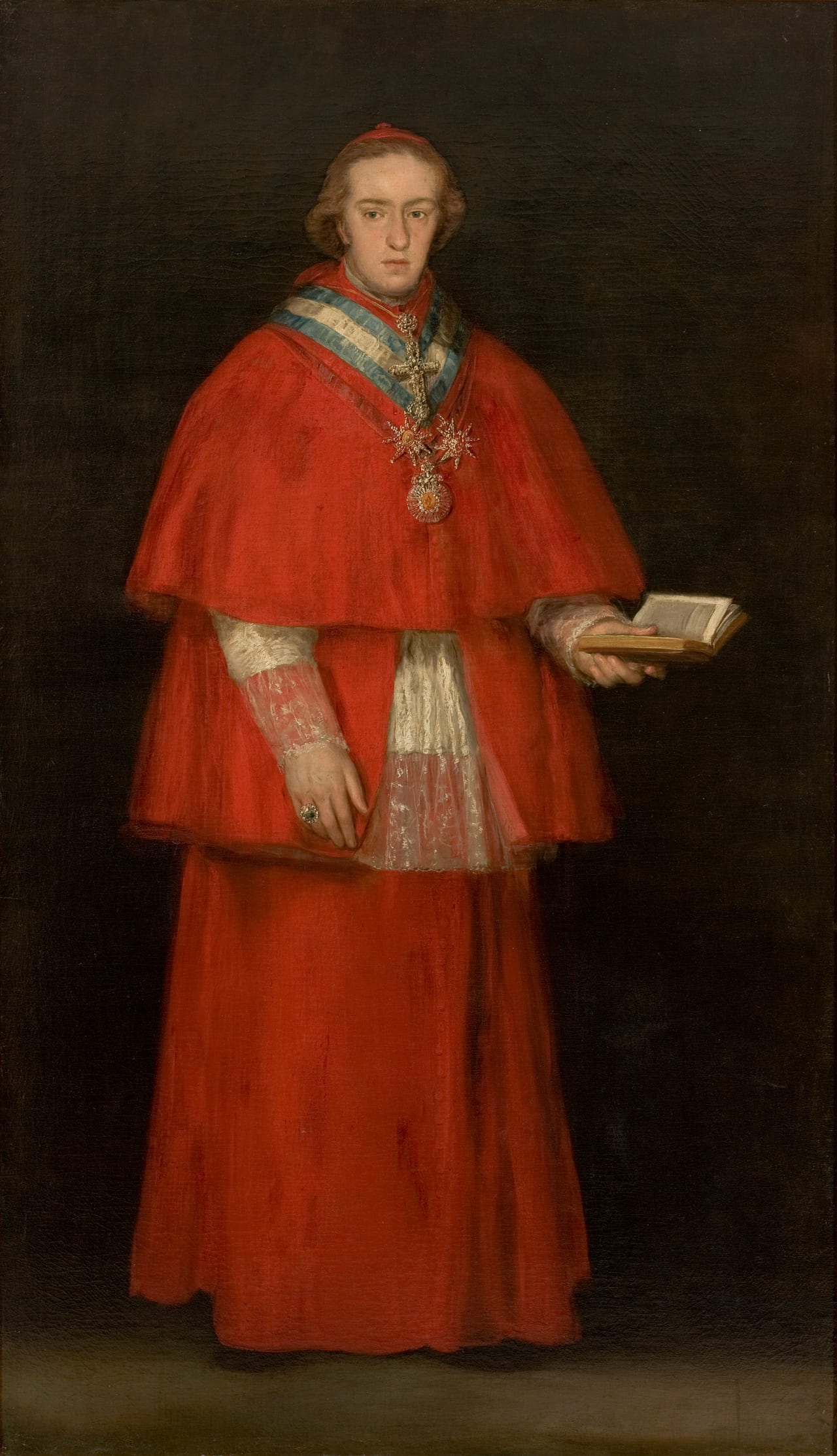
Portrait of Cardinal Luis María de Borbón y Vallabriga · Francisco Goya · 1798–1800
Goya painted Cardinal Luis María de Borbón y Vallabriga four times: as a child, in a family portrait, and twice after his appointment in the Church. This version is thought to have been made when the sitter was named cardinal and archbishop of Seville, at about 20. The cardinal wears the insignia of the Order of Charles III and of the Holy Spirit and holds an open breviary, in a theatrical light that hides where the background ends.
France in the eighteenth century
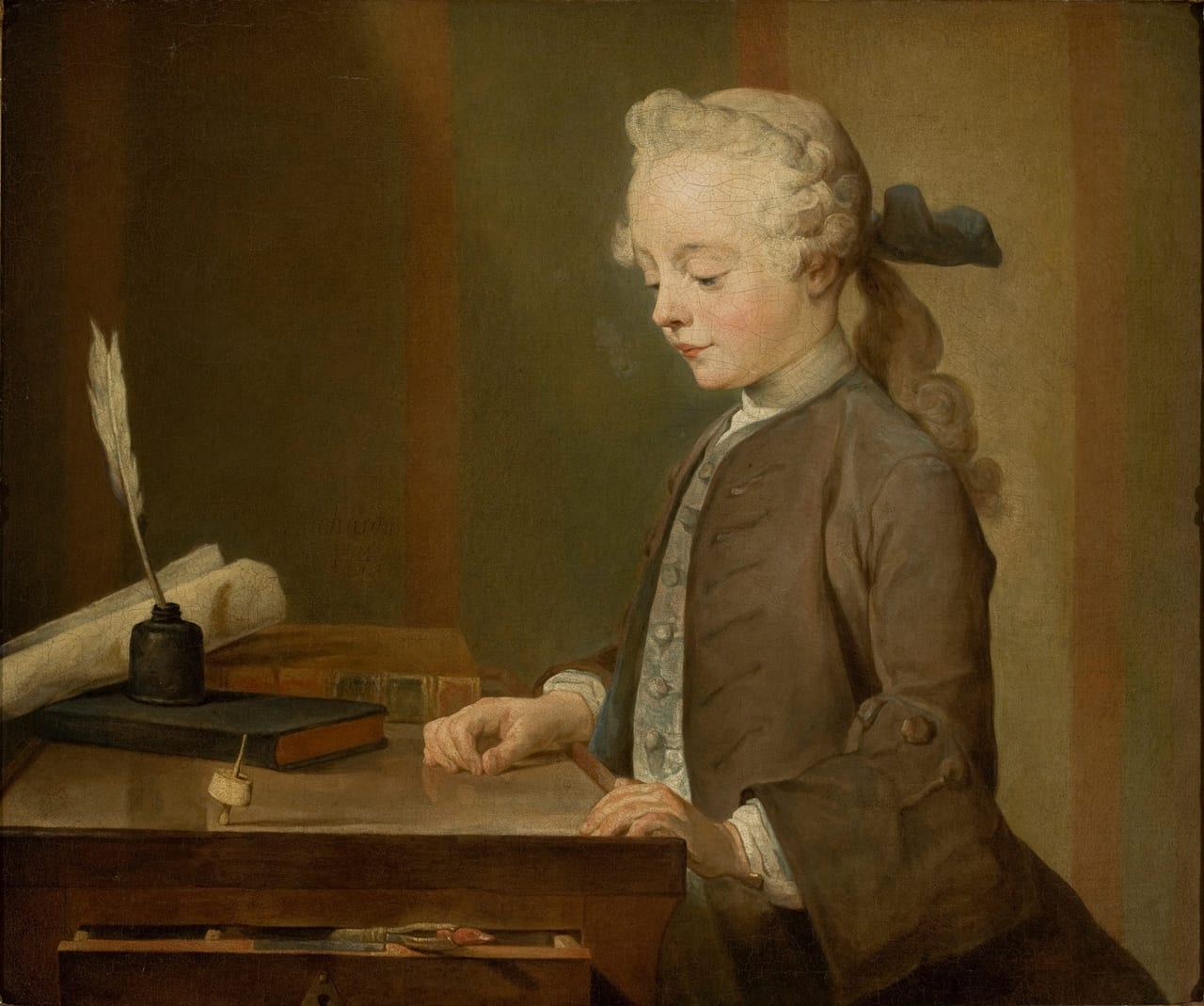
Portrait of Auguste Gabriel Godefroy · Jean-Baptiste-Siméon Chardin · 1741
Chardin’s sitter is the son of a jeweller and banker for whom the painter made many other works. The boy watches his top spin, distracted from the books, inkwell and parchment on his desk; the top was understood as a symbol of the inconstancy of a child’s character and of fortune.
Versailles
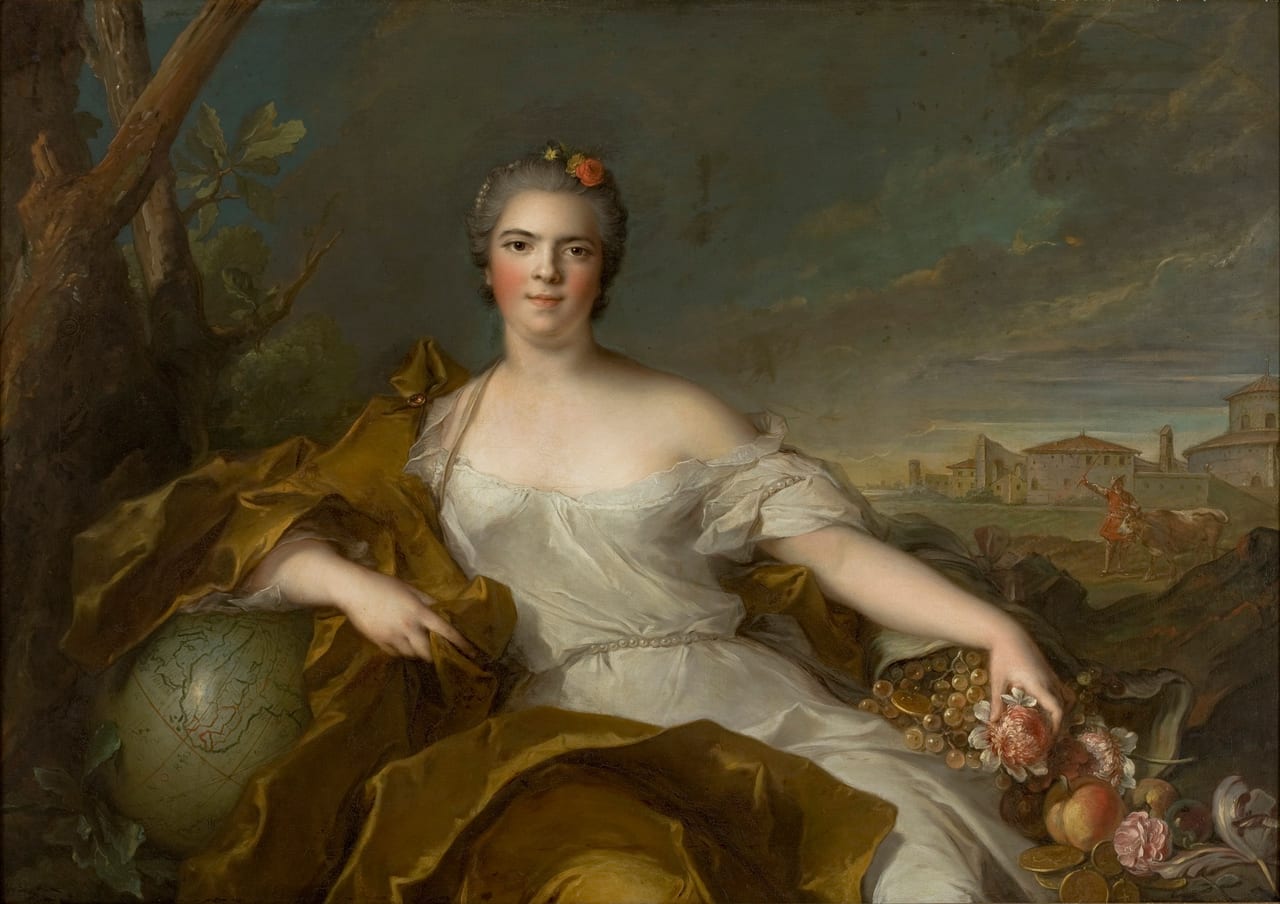
Madame Louise-Élisabeth, Duchess of Parma: Earth · Jean-Marc Nattier · 1750
Jean-Marc Nattier’s paintings at MASP bring together four of the daughters of Louis XV, each linked to one of the four elements by a globe, a brazier, a peacock or an amphora: the eldest, Louise-Élisabeth, to earth, Anne-Henriette to fire, Marie-Adélaïde to air and Marie-Louise-Thérèse-Victoire to water. They once decorated a room in the Palace of Versailles. The Brazilian National Congress gave this one in 1952.
Romanticism
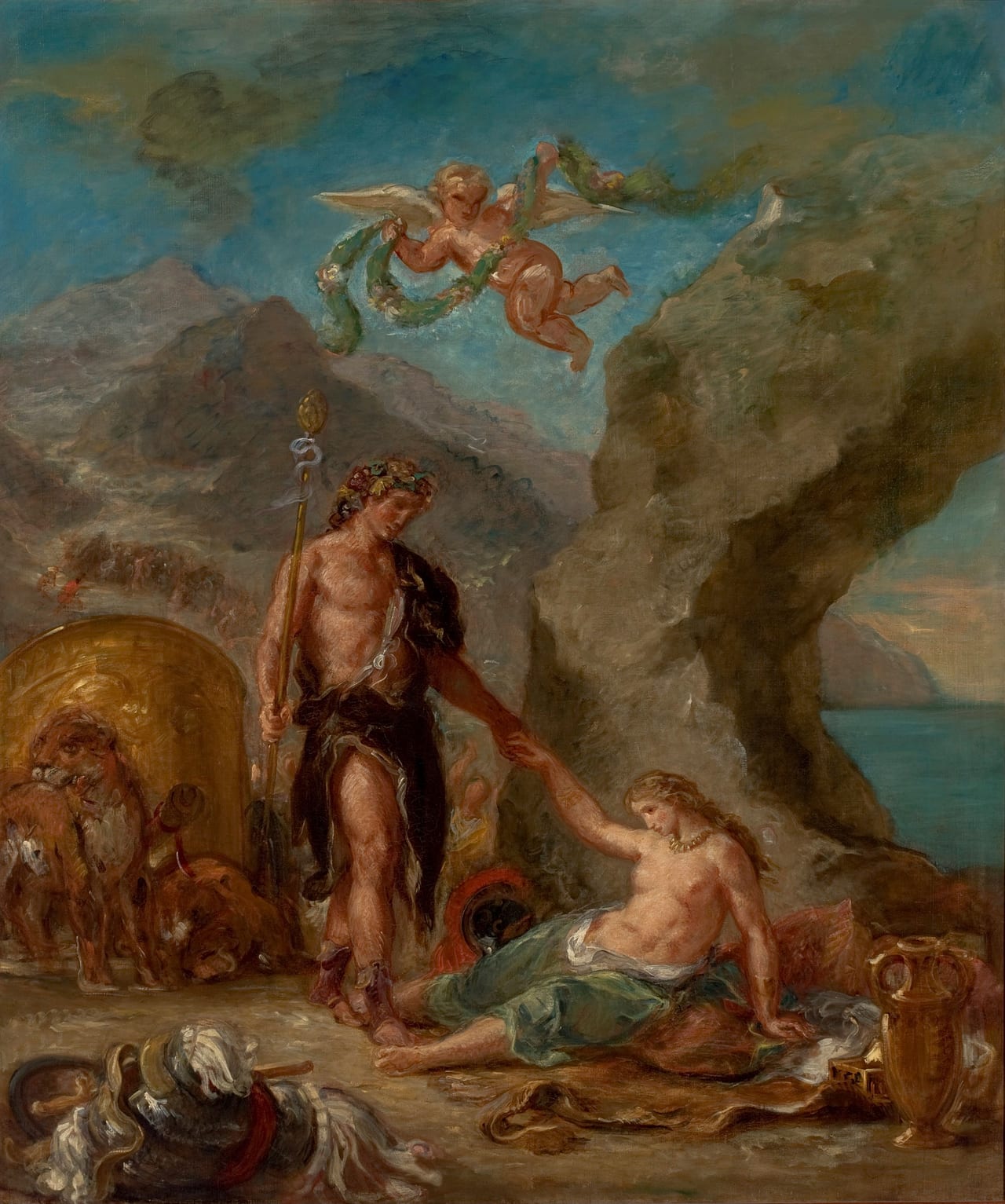
Autumn: Bacchus and Ariadne · Eugène Delacroix · 1856–63
The French industrialist Jacques-Frédéric Hartmann commissioned MASP’s paintings by Delacroix to decorate his home; in them Delacroix joins the theme of the four seasons to Greco-Roman myths. The broad brushstrokes are the same for setting and figures, and the curves of rocks, restless clouds, plants and water seem to follow the sinuous bodies, giving the whole its tension.
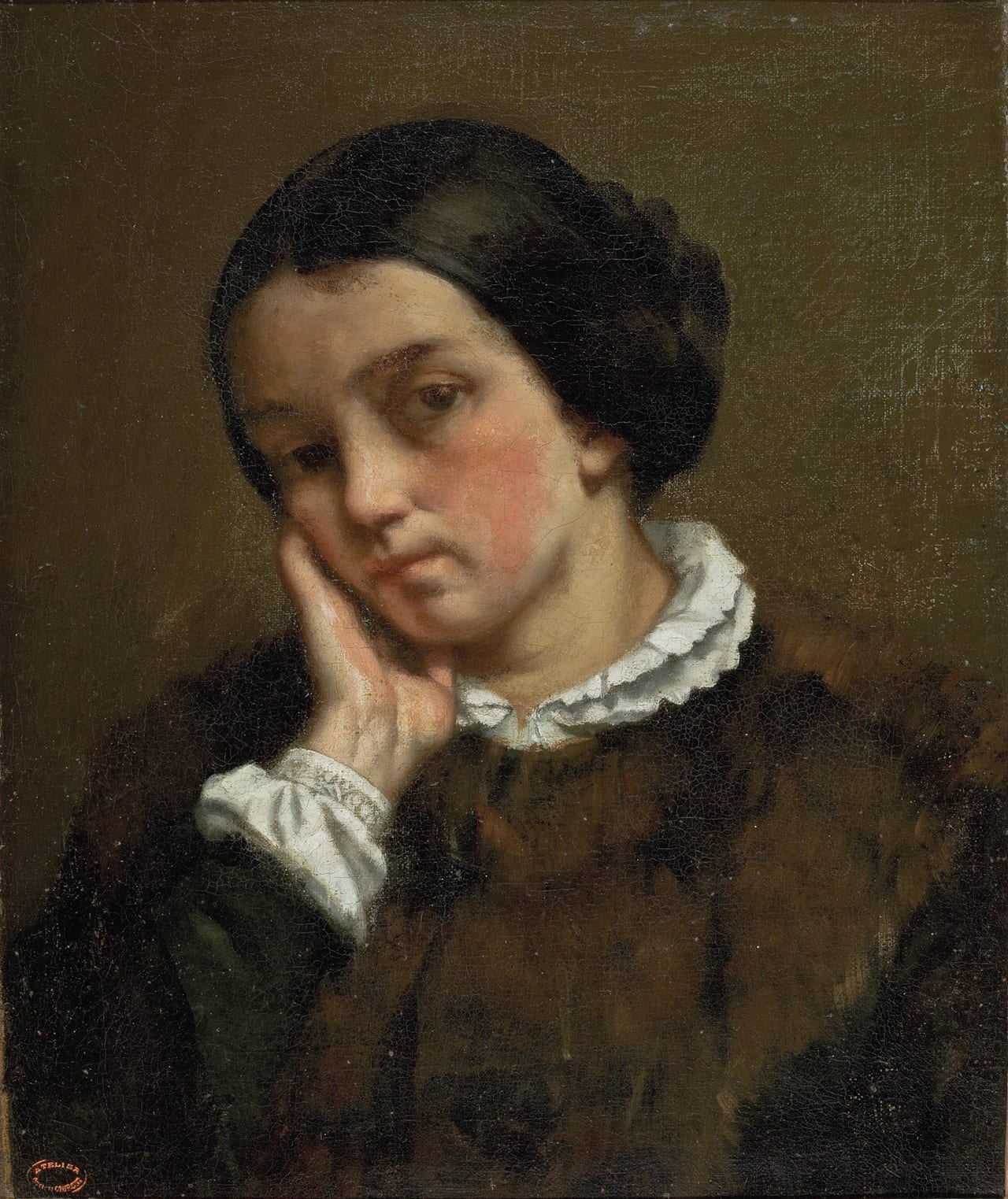
Realism
Zélie Courbet · Gustave Courbet · 1847
Gustave Courbet, the leading representative of realism in nineteenth-century French painting, painted his sisters Zélie and Juliette almost thirty years apart, and MASP holds both portraits. Zélie keeps his typical dark surfaces, mostly greys and sepias, with a few touches of colour; her features are not idealised, and her expression is relaxed and affectionate.
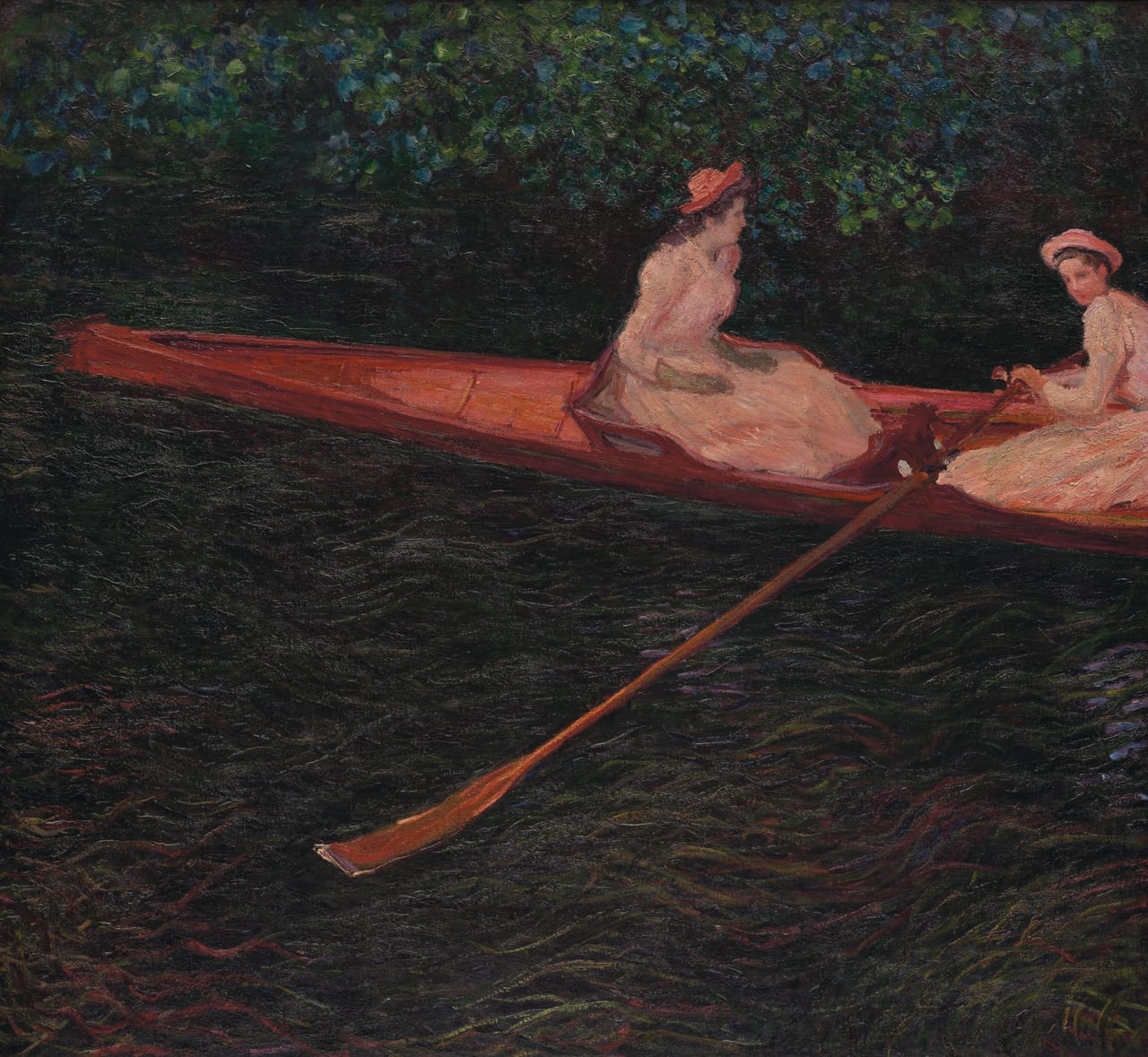
Impressionism
The Canoe on the Epte · Claude Monet · c. 1890
The Canoe on the Epte shows Claude Monet’s interest in the effects of light on the surface of water. The thick paint is made of pure colours that blend when seen from a distance, and the current, filling the whole lower part of the picture, shows that he was after the effects of both the plants’ reflections and the river’s depth. The blurred figures and the canoe cut off by the edge of the canvas recall photography, a decisive influence on him. Bought in 1953.
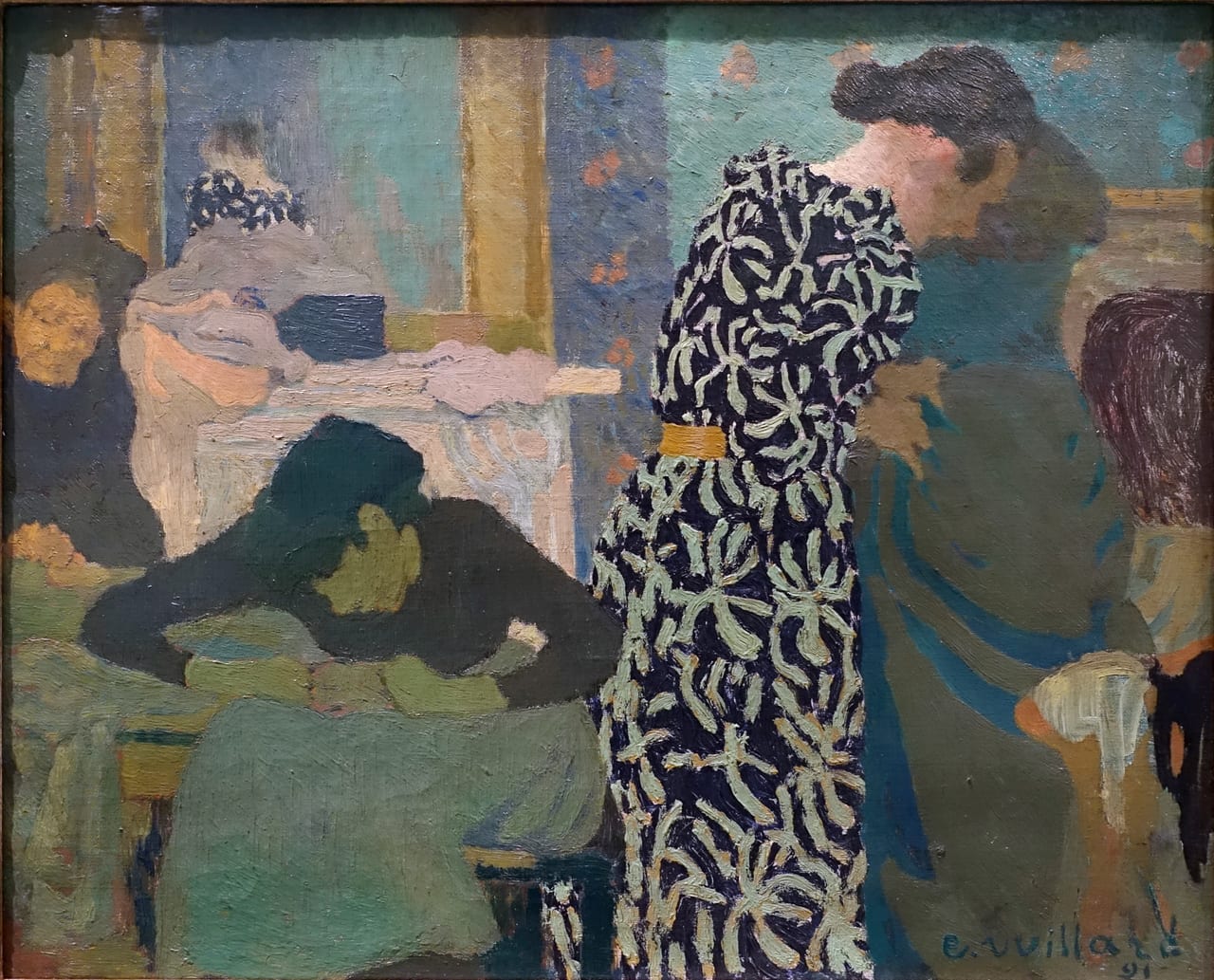
The Nabis
The Patterned Dress · Édouard Vuillard · 1891
In 1891, the year of this picture, Édouard Vuillard and his friend Pierre Bonnard took part in the first exhibition of the Nabis, a group that rejected both academic tradition and Impressionism. The subject, his mother’s dressmaking workshop, recurs in his early work. The faces are all effaced: no identities emerge, only appearances made by patches of colour and the patterns of the clothes and the room.
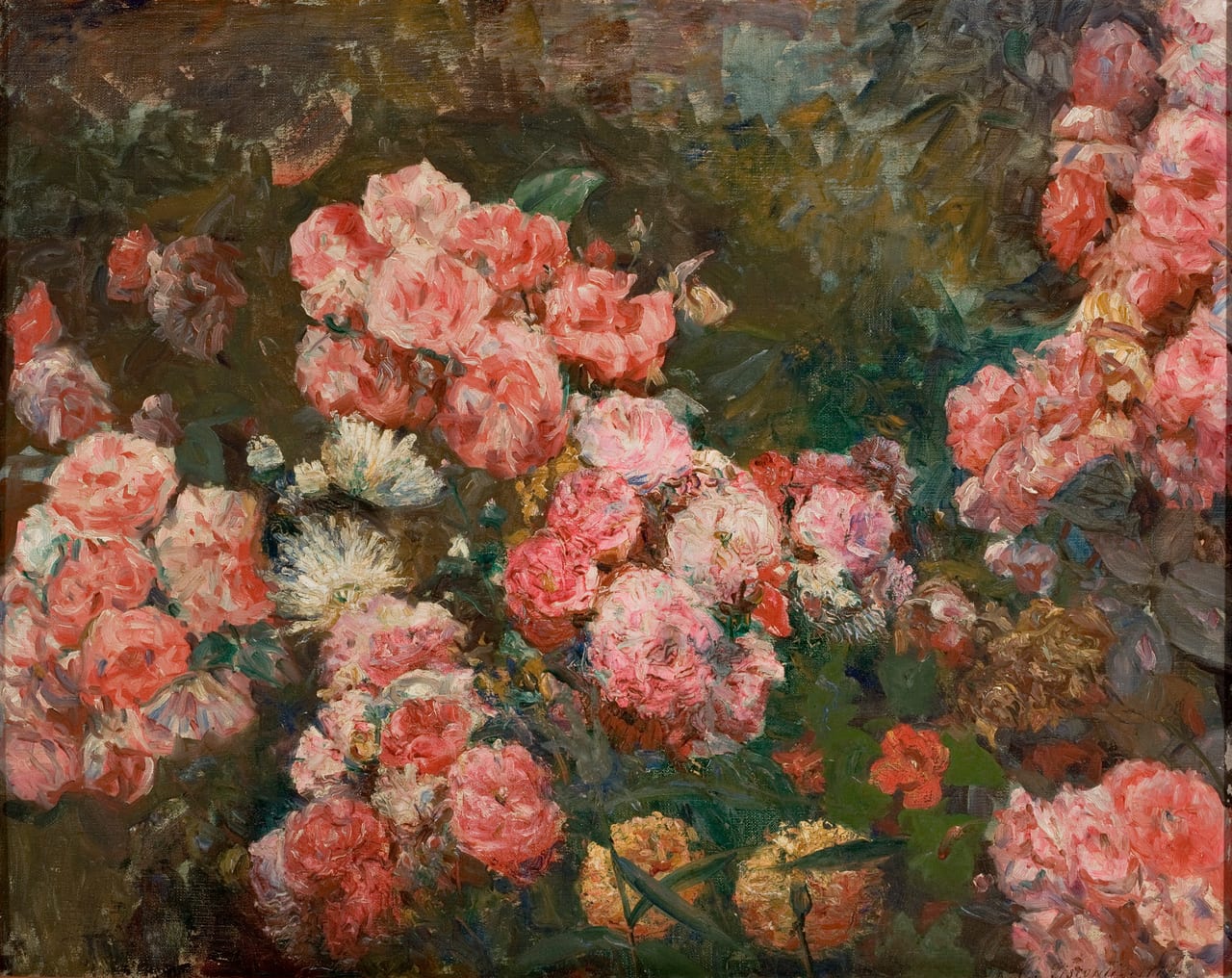
Brazil
Flowers · Eliseu Visconti · 1917
Flowers, by Eliseu Visconti, shows four kinds of flowers, pink, white and orange, over leaves in many greens, with no sharp outlines between the petals, which shows the strong influence of Impressionism on his painting. He painted it while living between Rio de Janeiro and Paris, from where he often travelled to Saint-Hubert, his wife’s family village. Born in Italy, Visconti is one of the leading names of academic painting in Brazil at the turn of the twentieth century.
Artists
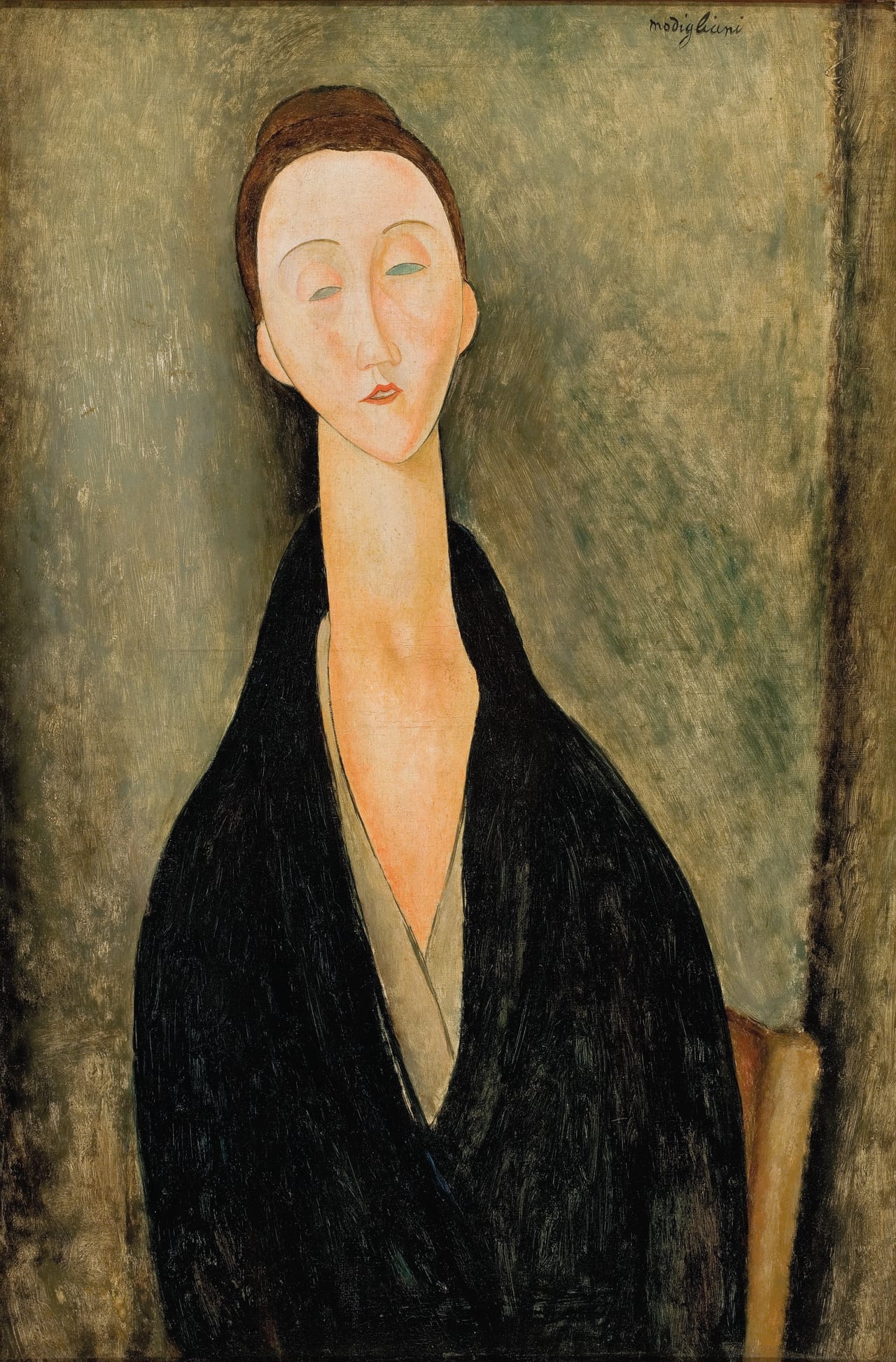
Amedeo Modigliani
Lunia Czechowska · c. 1918
He studied at the academies of Florence and Venice before moving to Paris in 1906. MASP’s six paintings by him, all made between 1915 and 1919, entered the collection from 1950 to 1952; this one came in as Madame Zborowski, but the sitter has since been shown to be not Leopold Zborowski’s wife but a friend, of whom Modigliani painted many portraits.
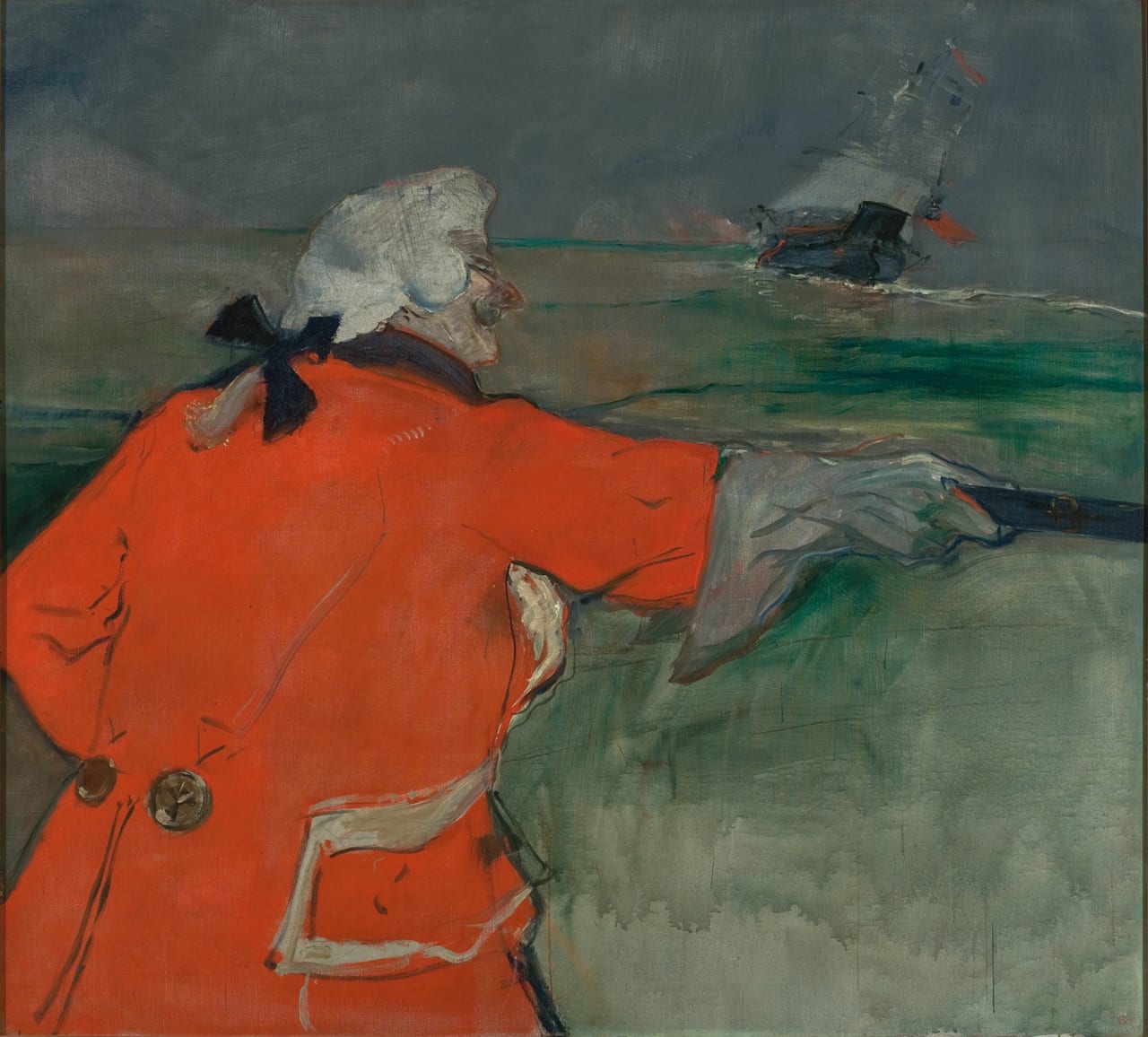
Henri de Toulouse-Lautrec
Paul Viaud as an Eighteenth-Century Admiral · 1901
In his last years, suffering from alcoholism, he had as his companion Paul Viaud, an old acquaintance of his mother’s. The two spent several seasons by the sea, and in 1901 he painted this large portrait of Viaud dressed as an eighteenth-century admiral. MASP holds ten of his works.
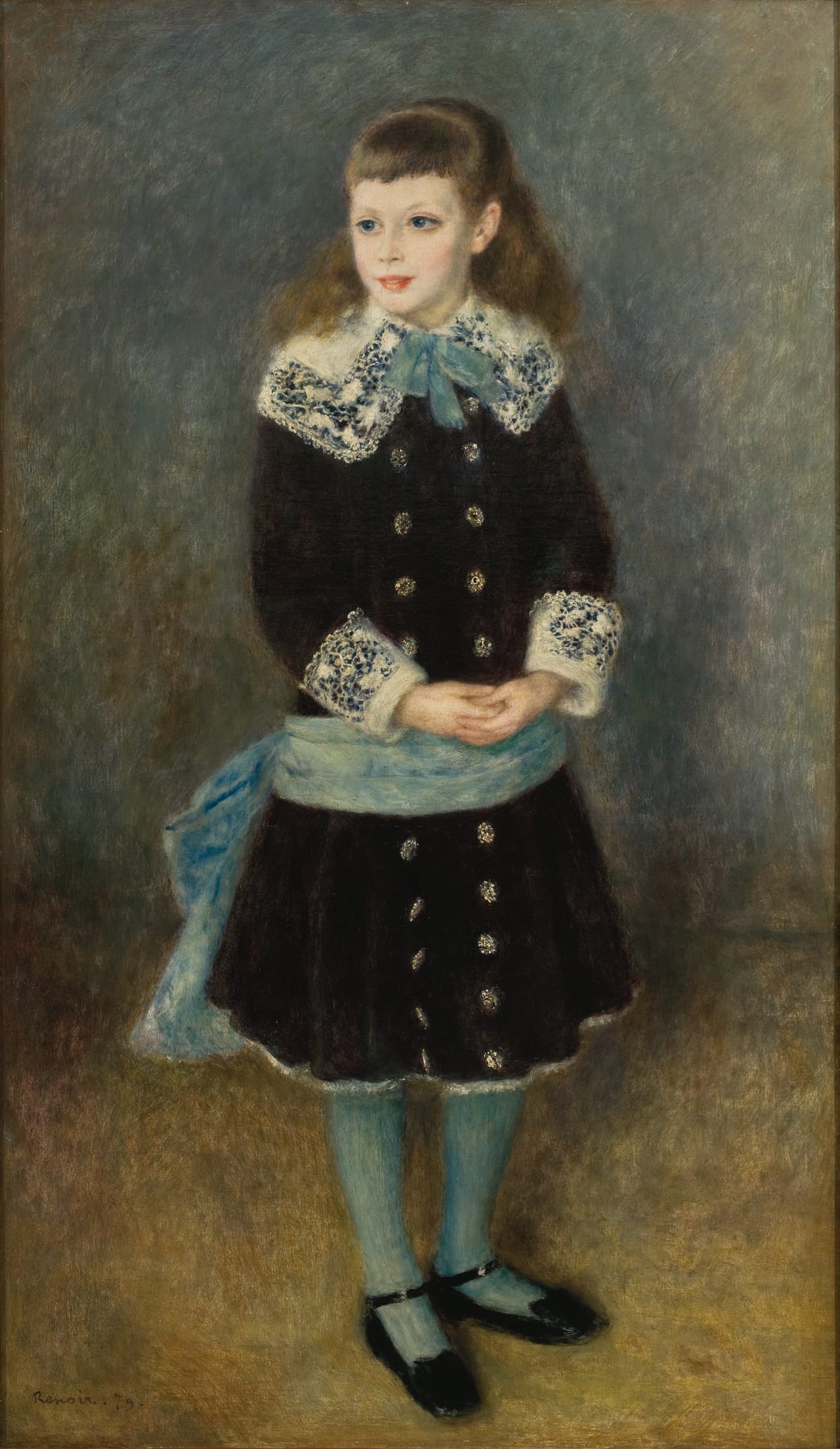
Pierre-Auguste Renoir
Portrait of Marthe Bérard · 1879
One of the first group of Impressionists, he gave great weight to the human figure, and MASP’s twelve paintings by him span almost his whole career. Marthe was the first of Paul Bérard’s four children that Renoir painted, and the picture was his first commissioned portrait.
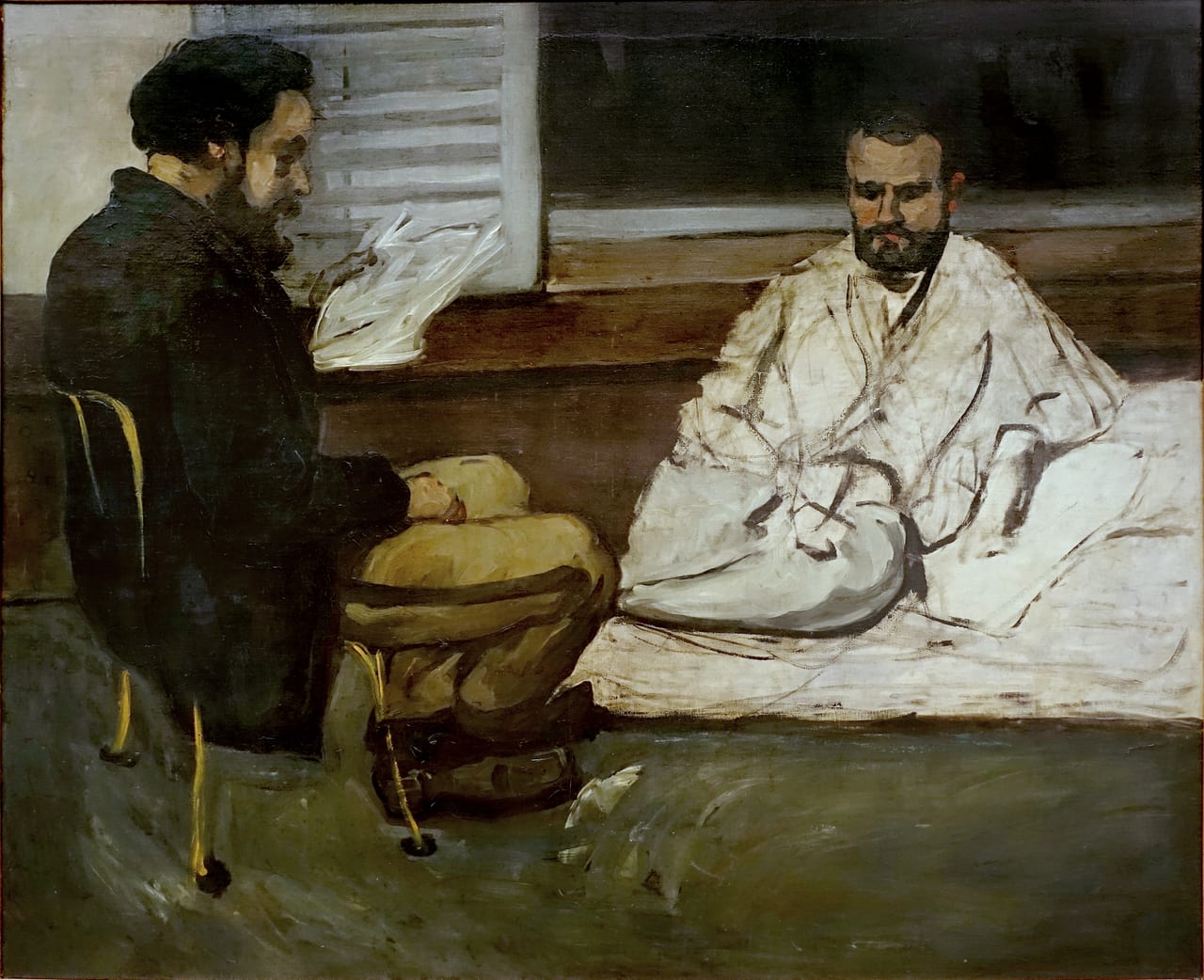
Paul Cézanne
Paul Alexis Reading a Manuscript to Zola · 1869–70
Cézanne and the two sitters named in the title all came from Aix-en-Provence. The canvas was found in Zola’s cellar in 1927, after the death of his wife, and was probably left unfinished because of the Franco-Prussian War. It is one of five canvases by Cézanne at MASP.
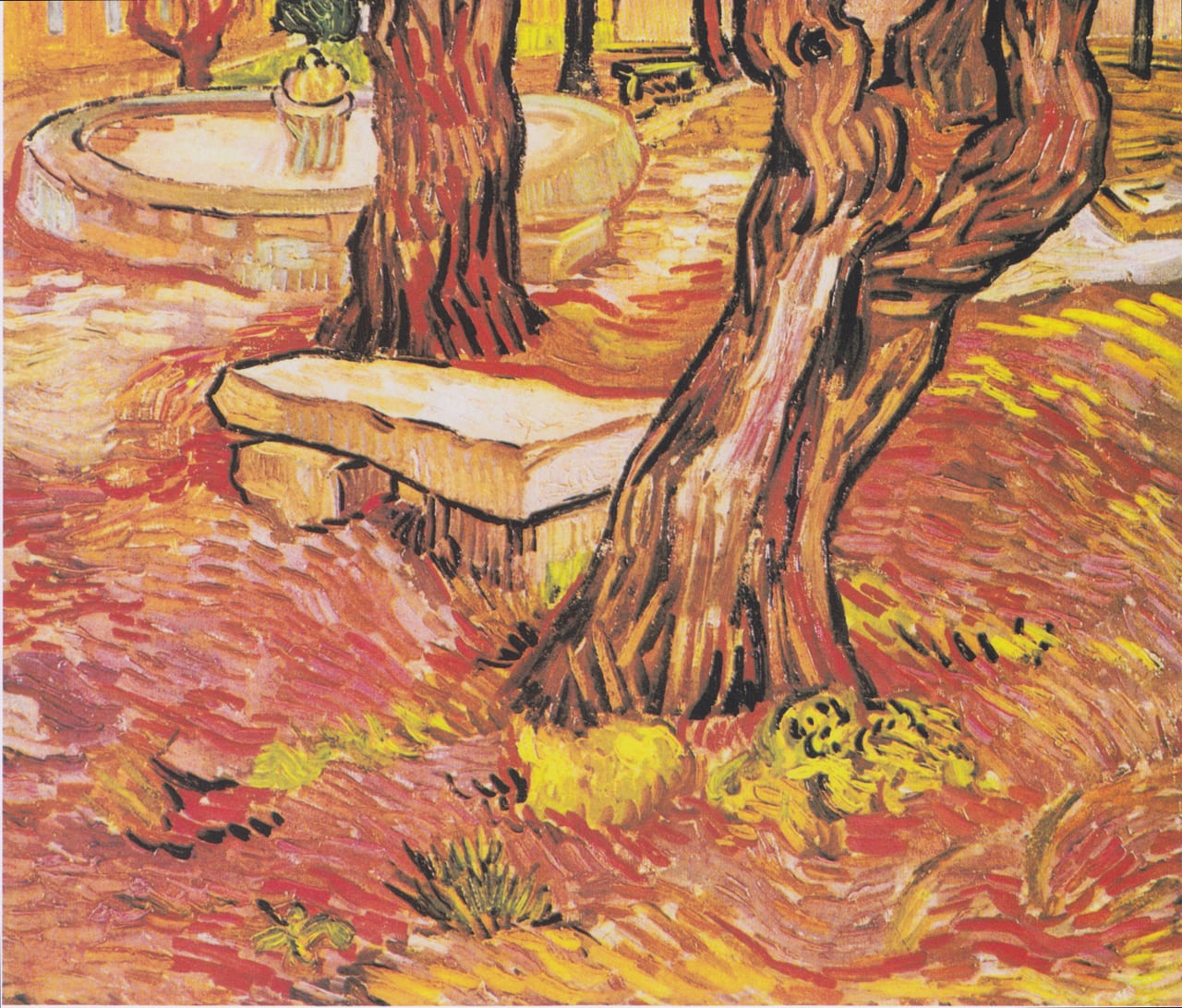
Vincent van Gogh
Stone Bench in the Asylum at Saint-Rémy · 1889
A picture of the routine of his confinement in the intervals between his attacks. For many historians, the twisted trees and the brushmarks that stir the landscape express the artist’s inner conflicts.
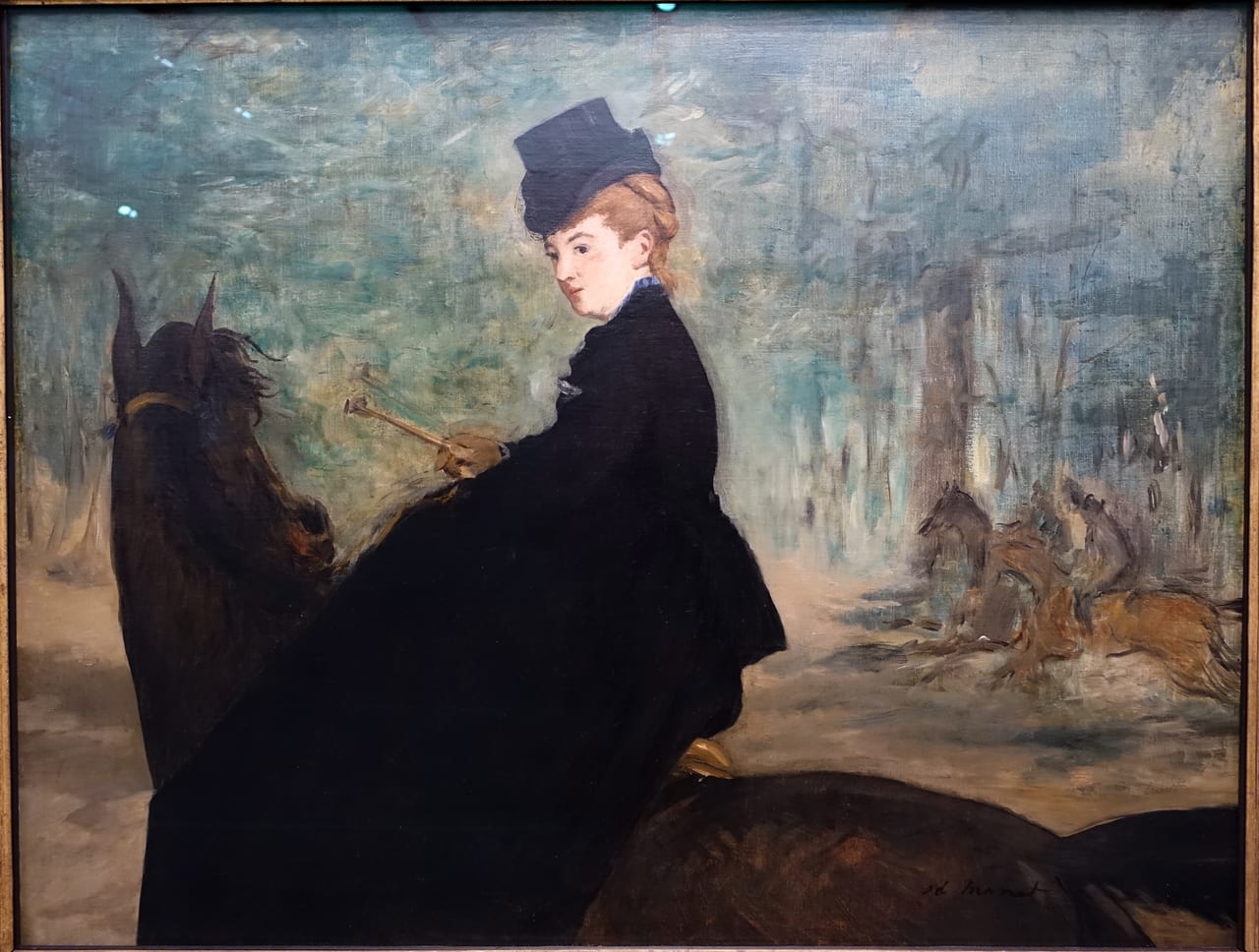
Édouard Manet
The Horsewoman: Portrait of Marie Lefébure · 1870–75
A forerunner of Impressionism and a key figure in the passage from academic to modern art. The rider’s switch seems to have been painted twice, a pentimento; artists usually hid such corrections, but Manet tried to add a sense of movement.
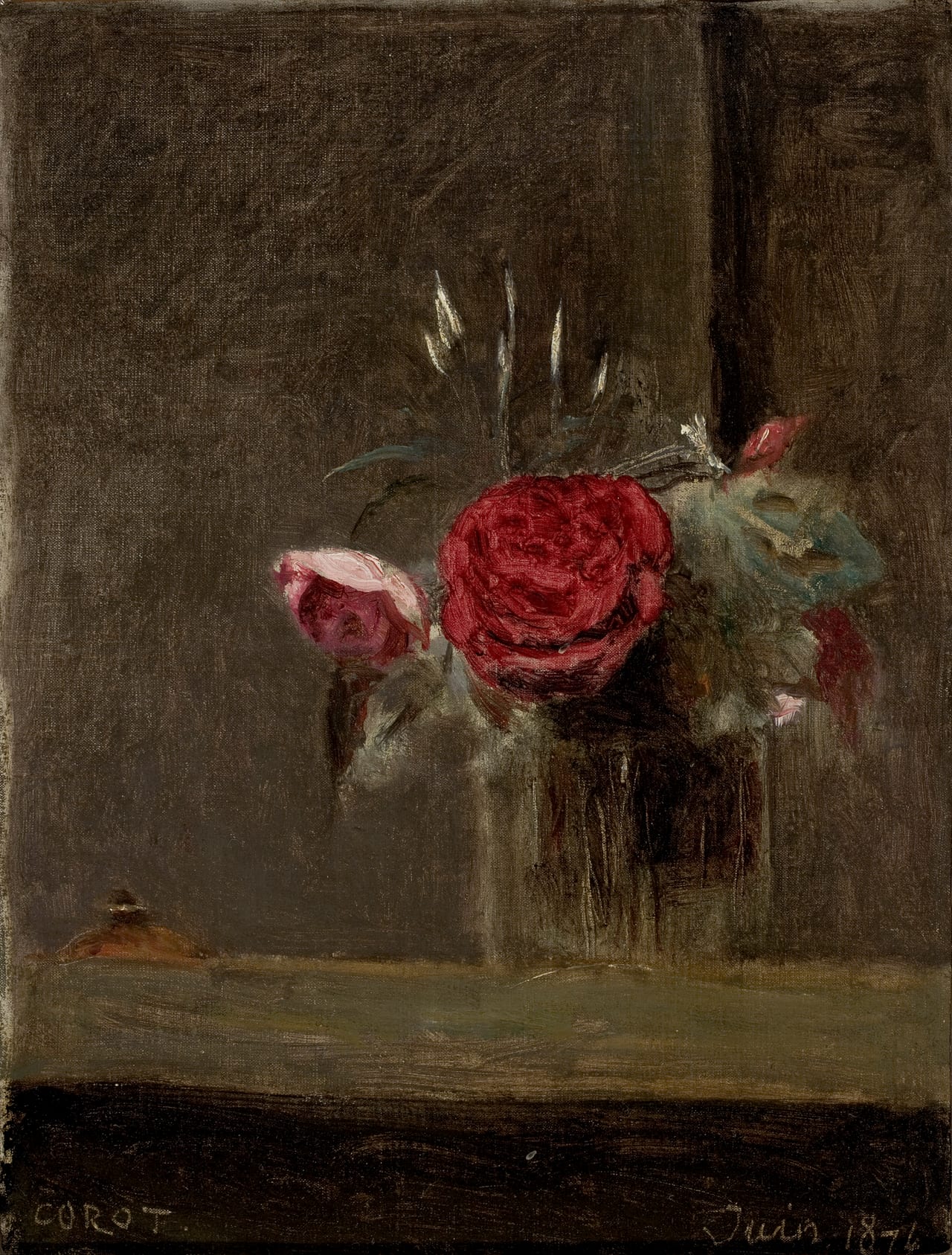
Jean-Baptiste Camille Corot
Roses in a Glass · 1874
MASP holds five works by him: three portraits, a landscape and a still life. This is one of only three flower paintings he made; the transparent glass and the mix of thin and thick paint give a feeling of moisture.
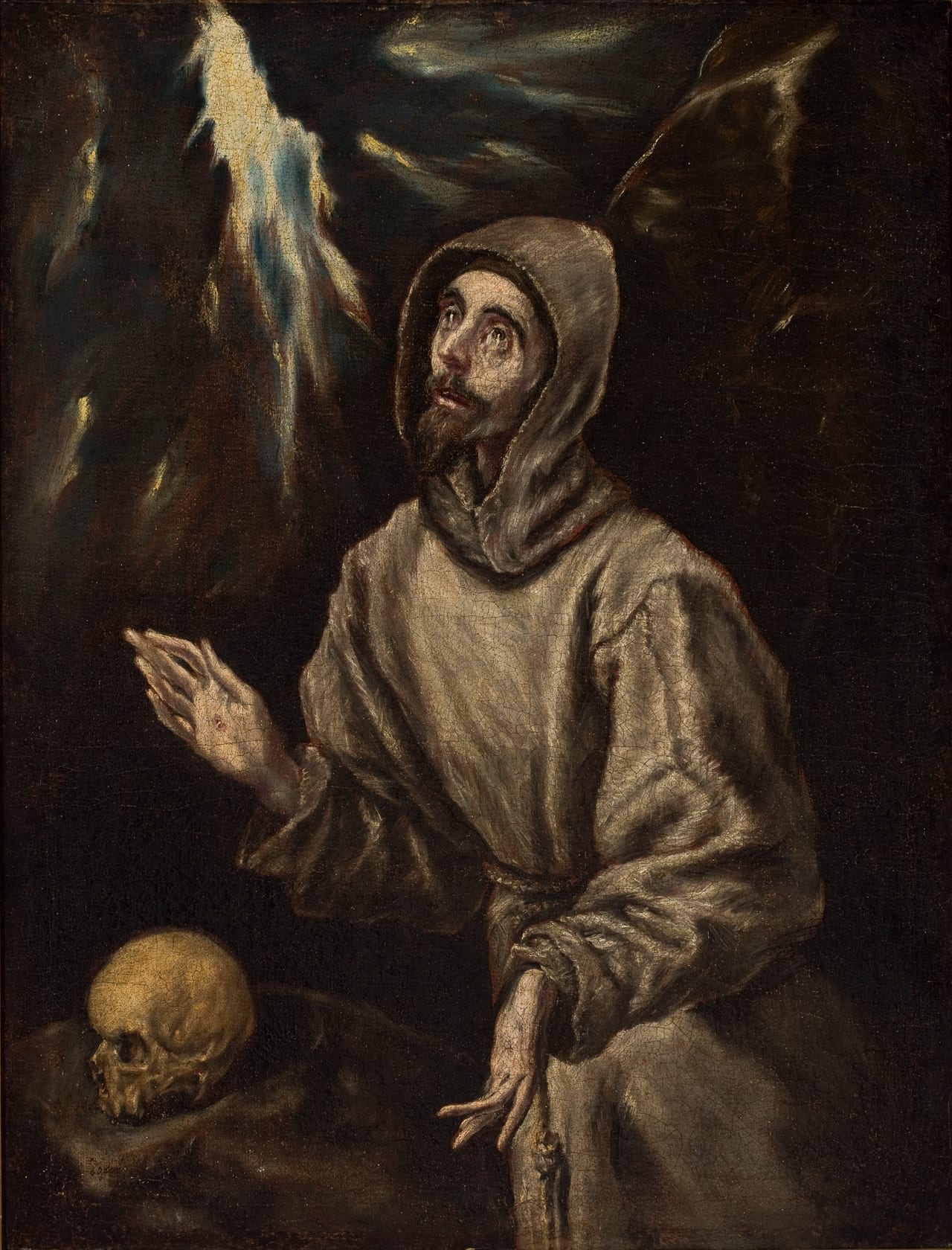
El Greco
Ecstasy of Saint Francis with the Stigmata · 1600
Trained in Crete in a tradition of Byzantine origin, he went to Venice before 1567 and to Spain in 1575, settling in Toledo. Some seventy works signed by him centre on Saint Francis; he organised his paintings in almost identical series, repeating subjects, models and sizes, to sell them.
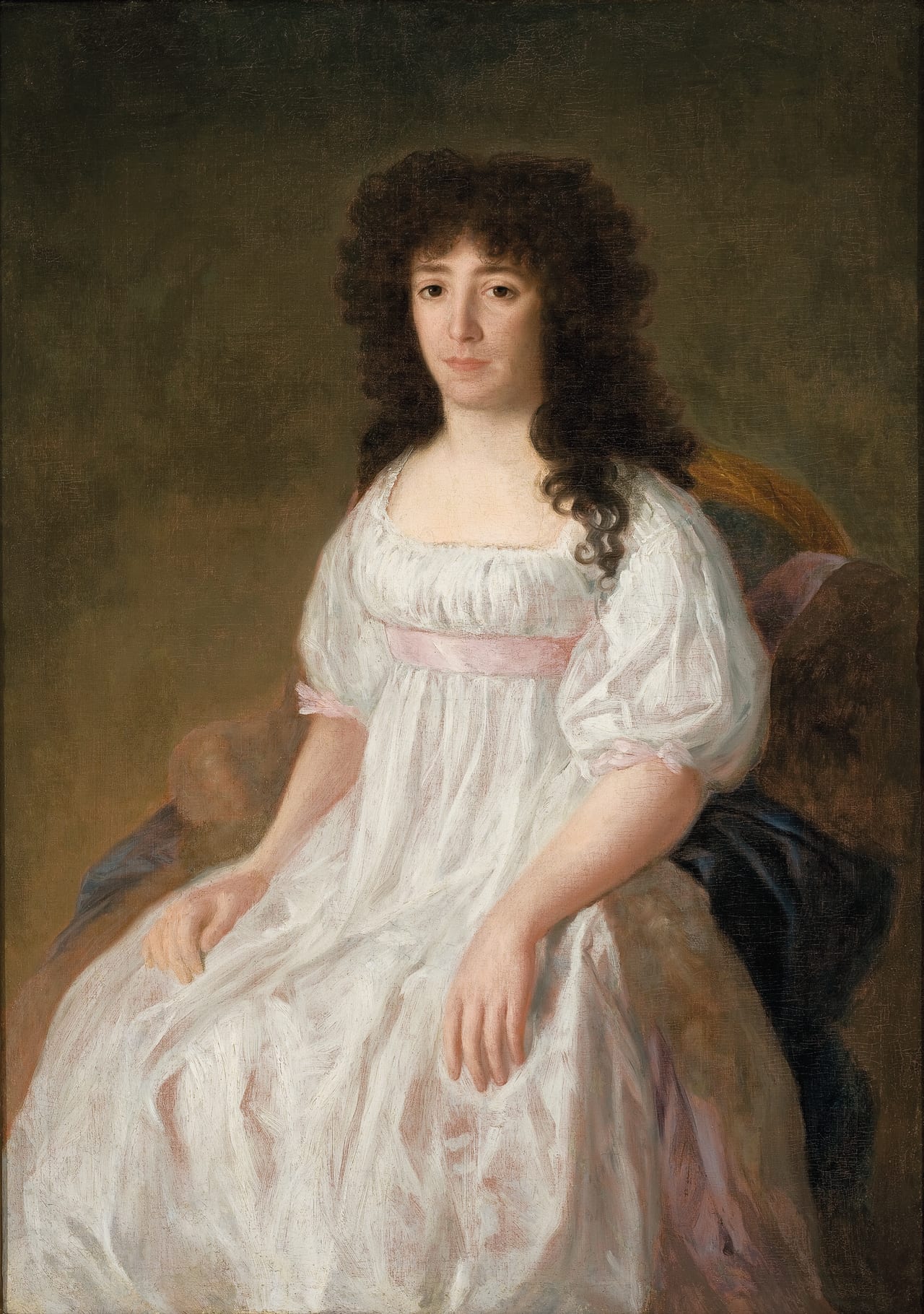
Francisco Goya
Portrait of the Countess of Casa Flores · 1790–97
He became painter to the chamber of King Charles IV in 1789 and gave up his posts in 1797 because of deafness. The sitter, the Mexican wife of Lieutenant Colonel José Luis Flores Pereira, castellan of the port of Acapulco, wears pink and white painted in transparent strokes against her black hair.
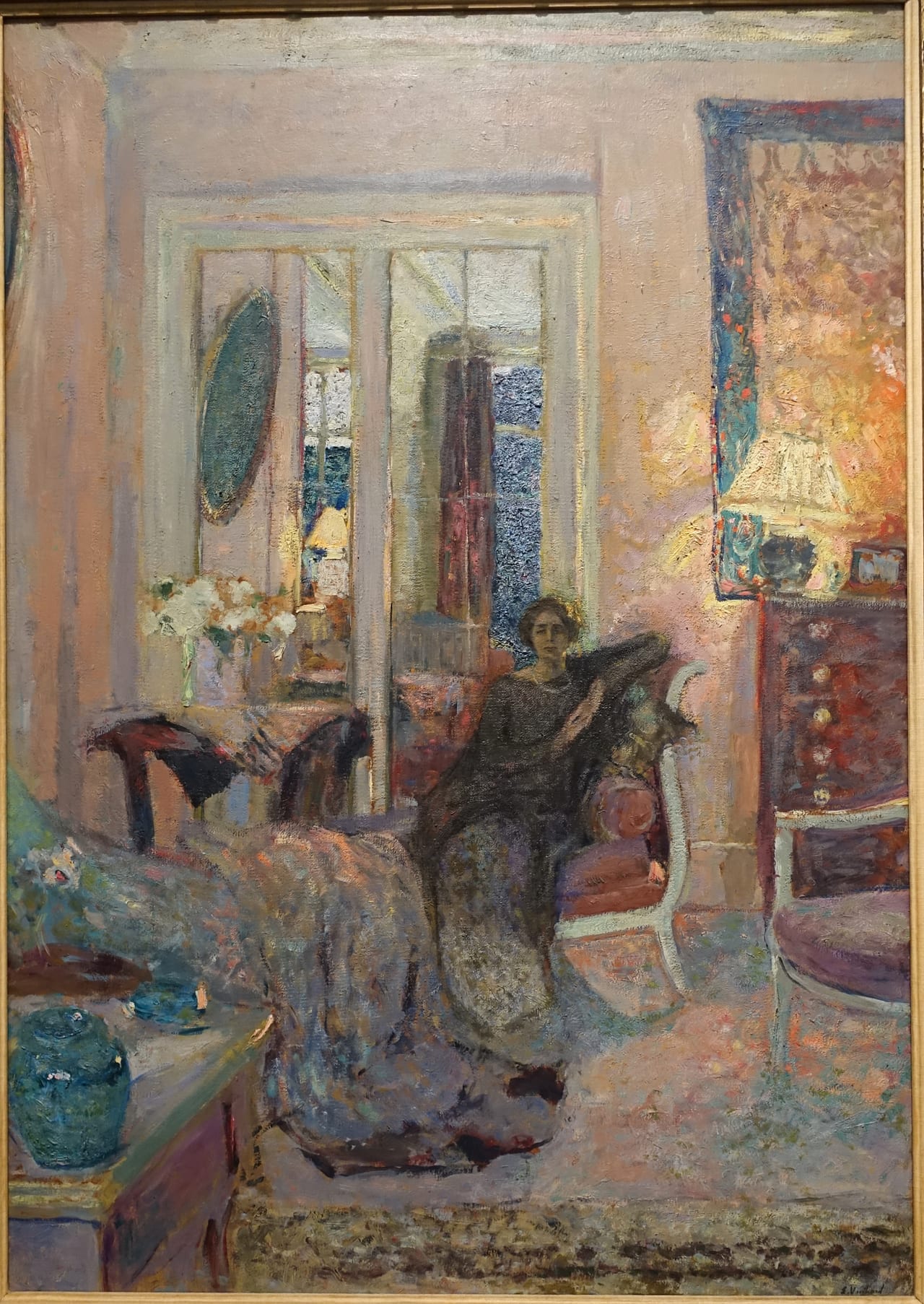
Édouard Vuillard
Princess Bibesco · c. 1920
He made several commissioned works for the Romanian princes Bibesco. His sitter, Marthe Lahovary, born in Bucharest in 1888, became Princess Bibesco through her marriage to the princes’ uncle Georges and was known for her writing and her memoirs; she is seen alone in an elegant drawing room, surrounded by rich ornament.
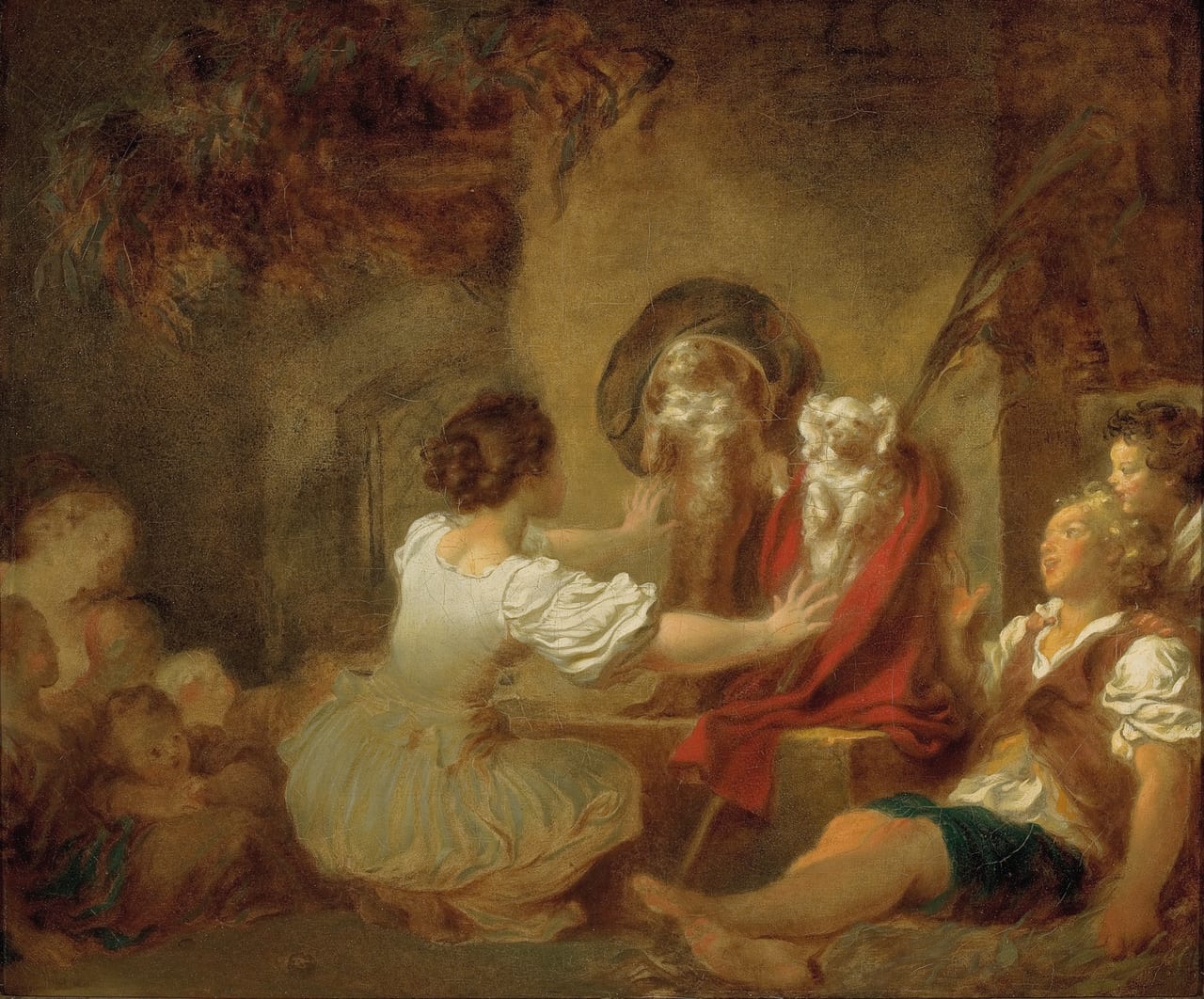
Jean-Honoré Fragonard
Education Is Everything · 1775–80
A pupil of Chardin, he treats education more informally than his teacher: a young woman plays with two dogs to amuse the children, one in a red cloak, the other in a wide-brimmed black hat, as if mocking the showy habits of the aristocracy against which France would rise a few years later.
Artworks
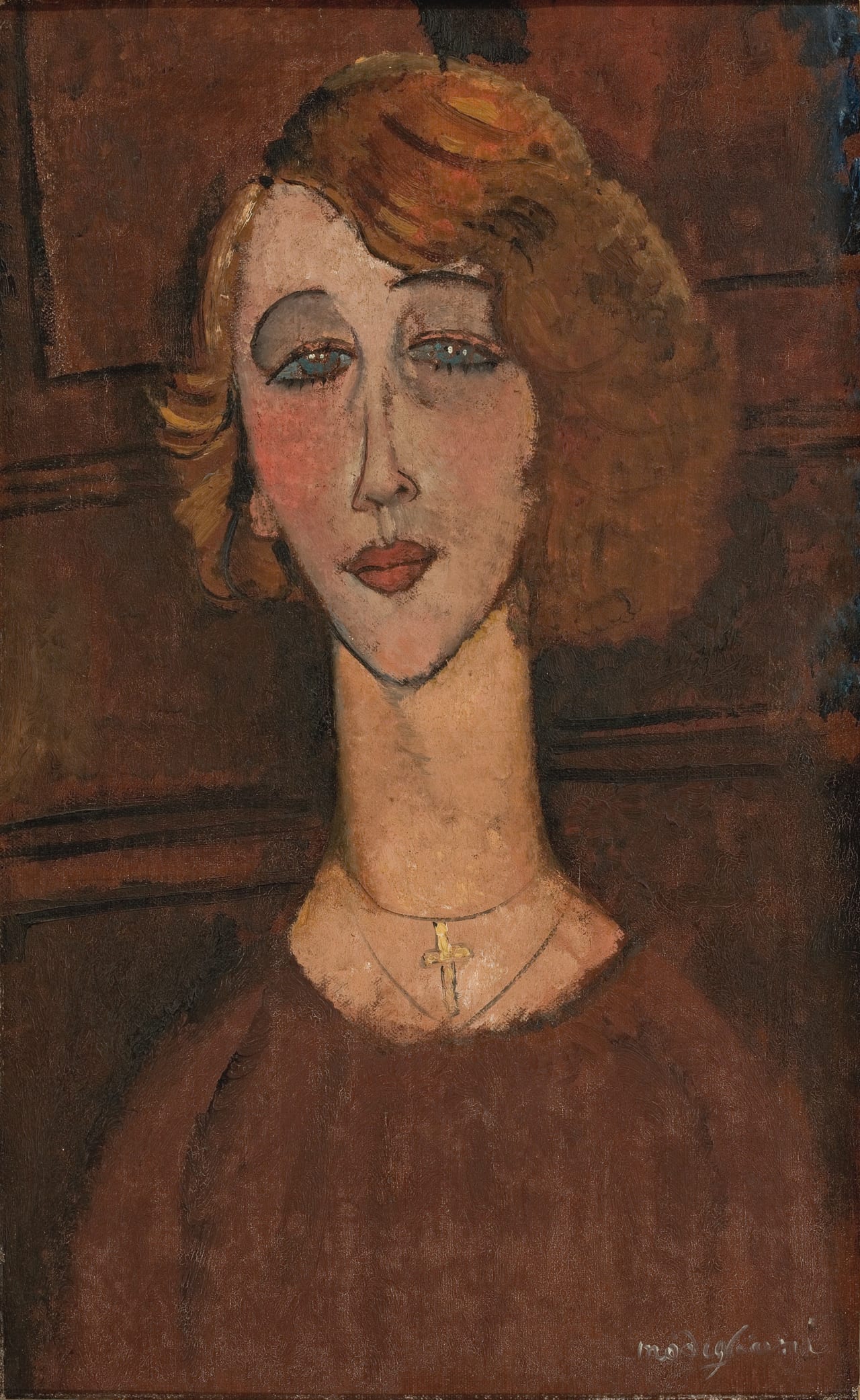
Renée
Amedeo Modigliani · 1917
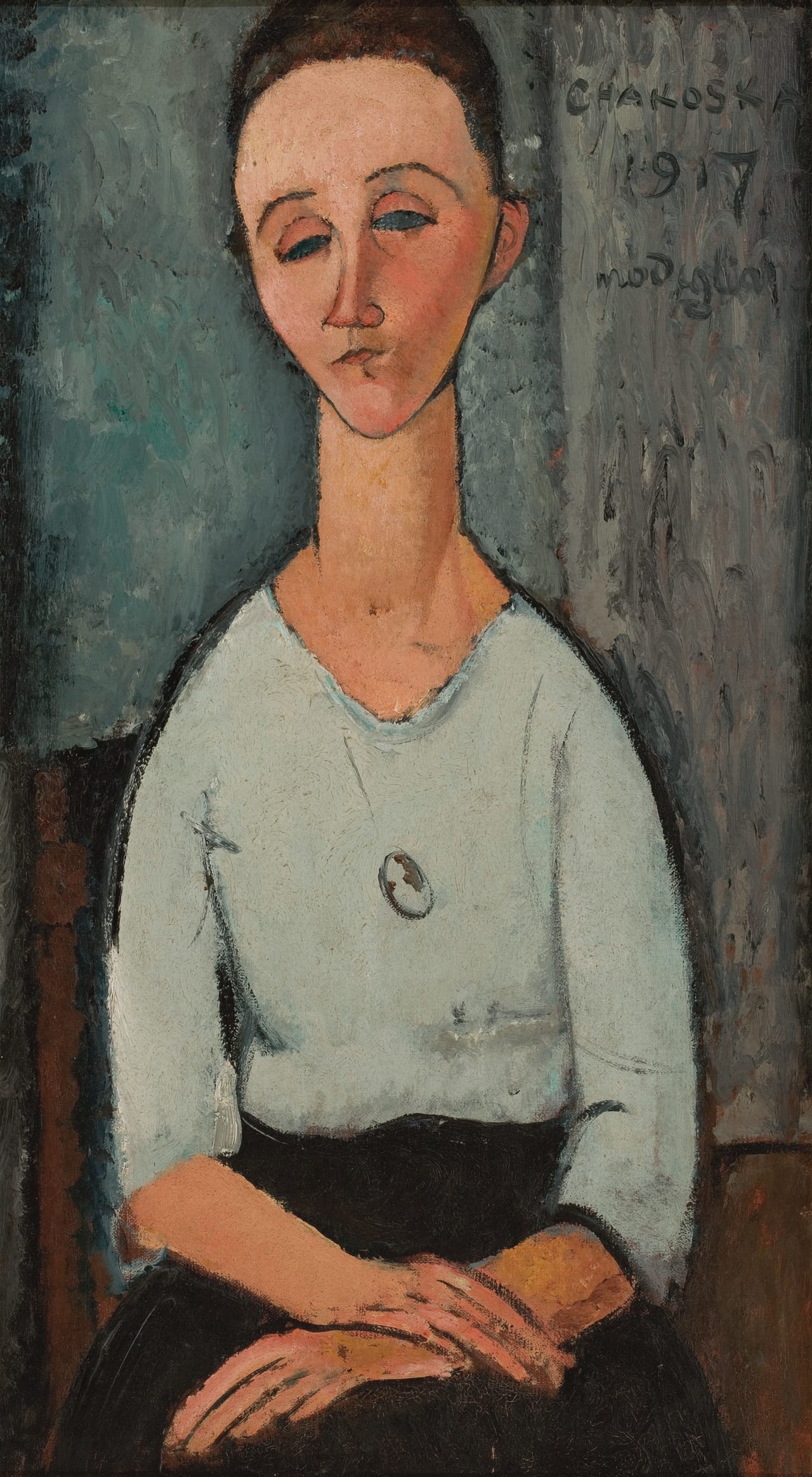
Chakoska
Amedeo Modigliani · 1917
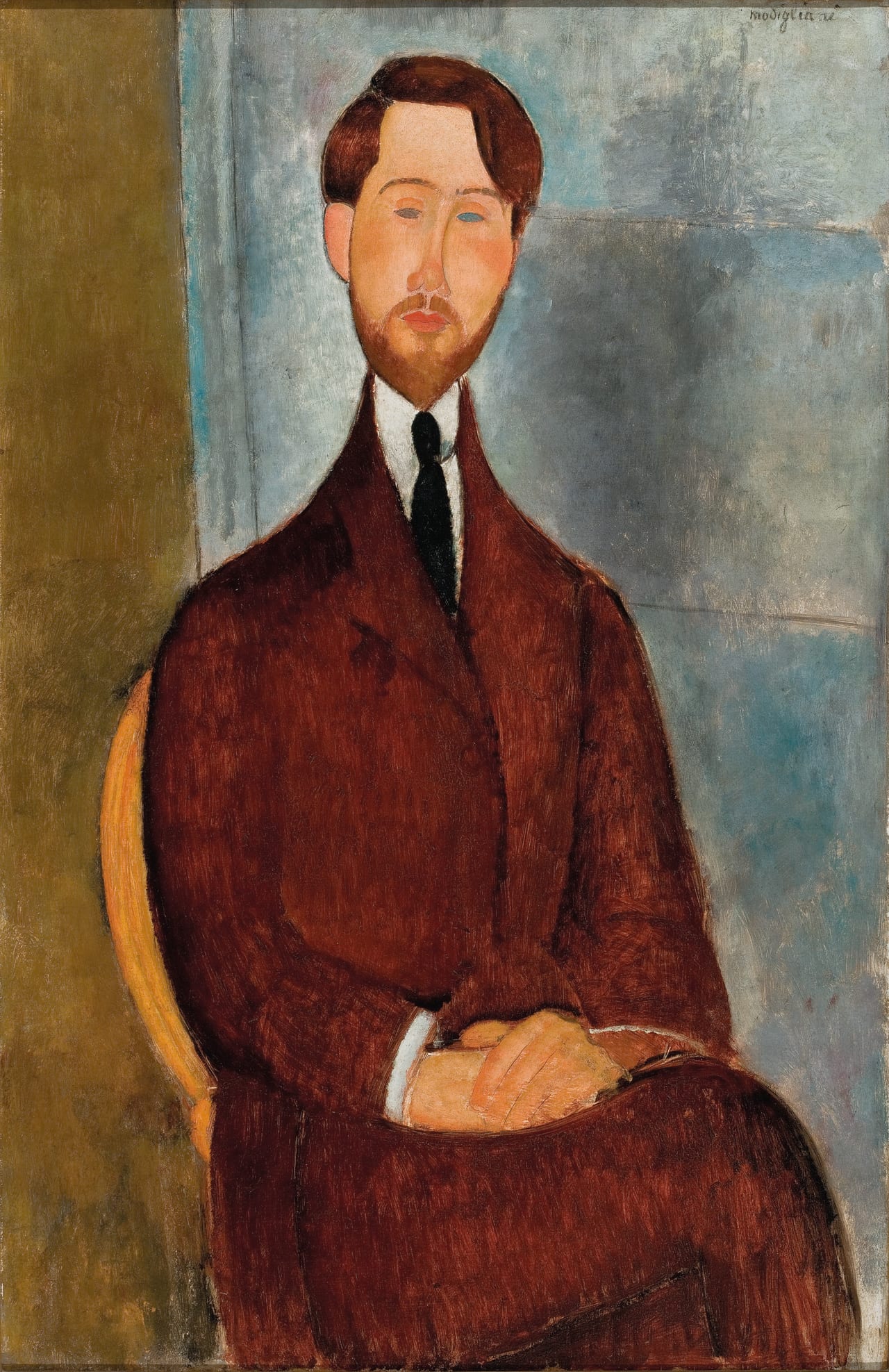
Portrait of Leopold Zborowski
Amedeo Modigliani · 1916–19
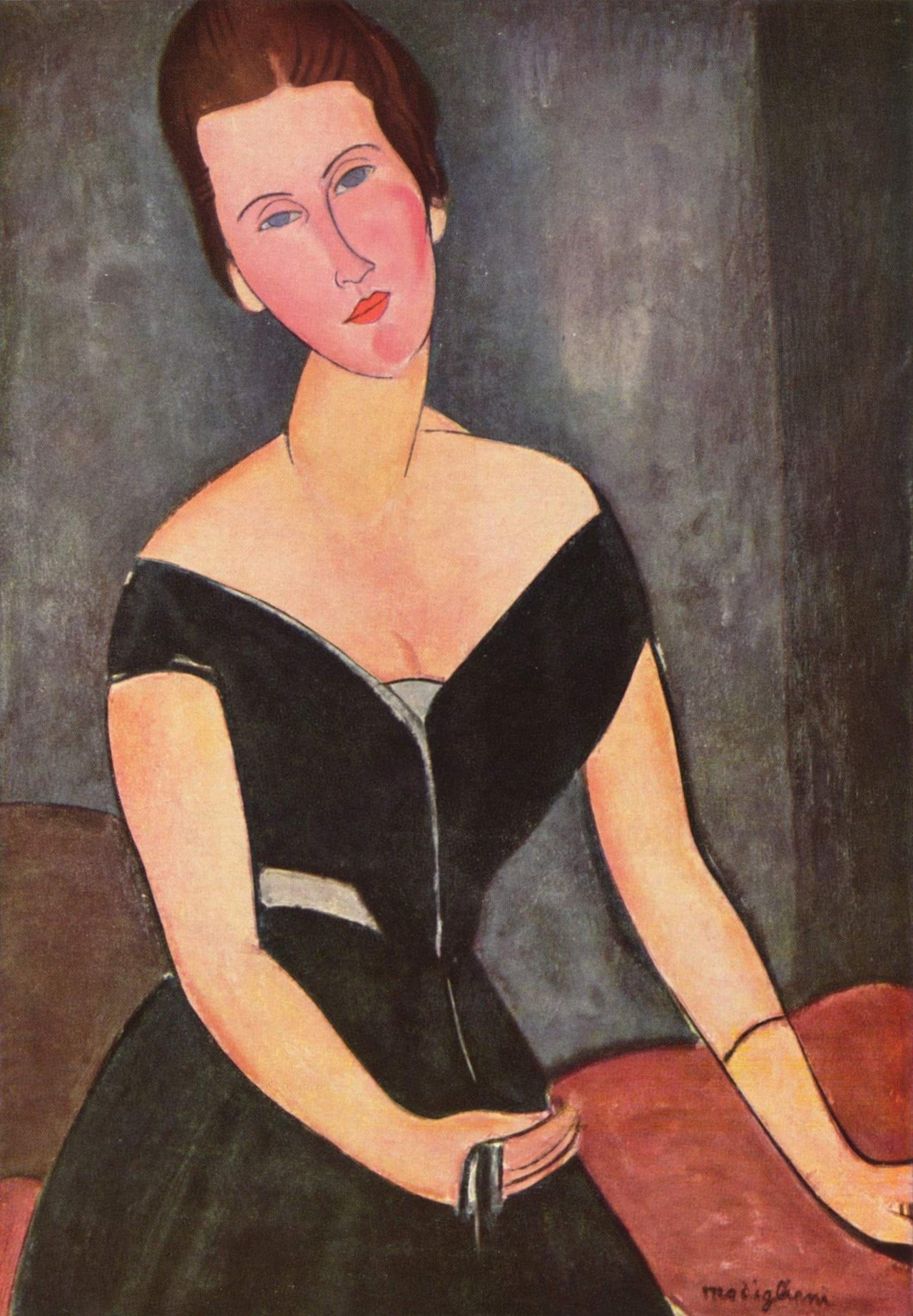
Madame G. van Muyden
Amedeo Modigliani · 1916–17
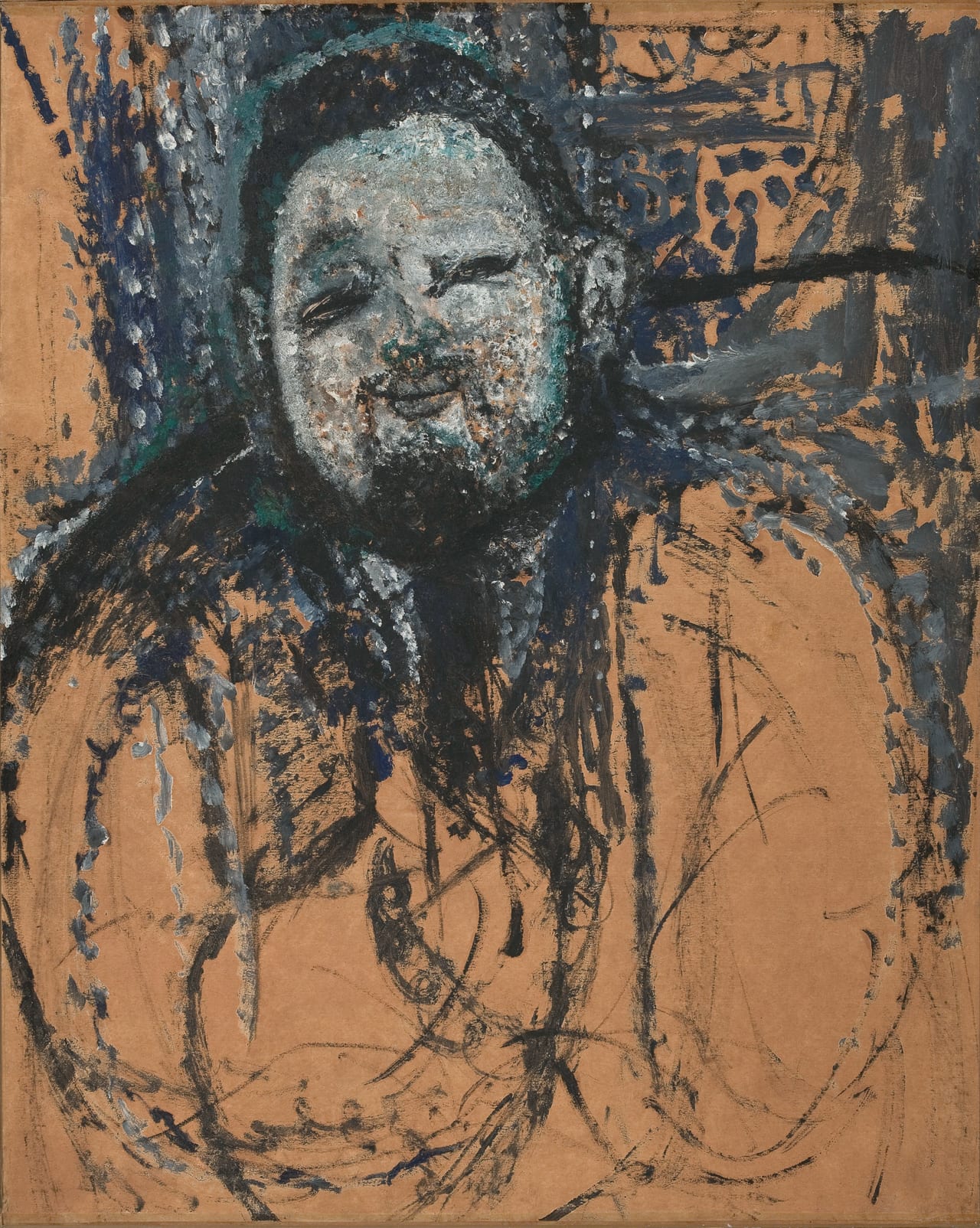
Portrait of Diego Rivera
Amedeo Modigliani · 1916
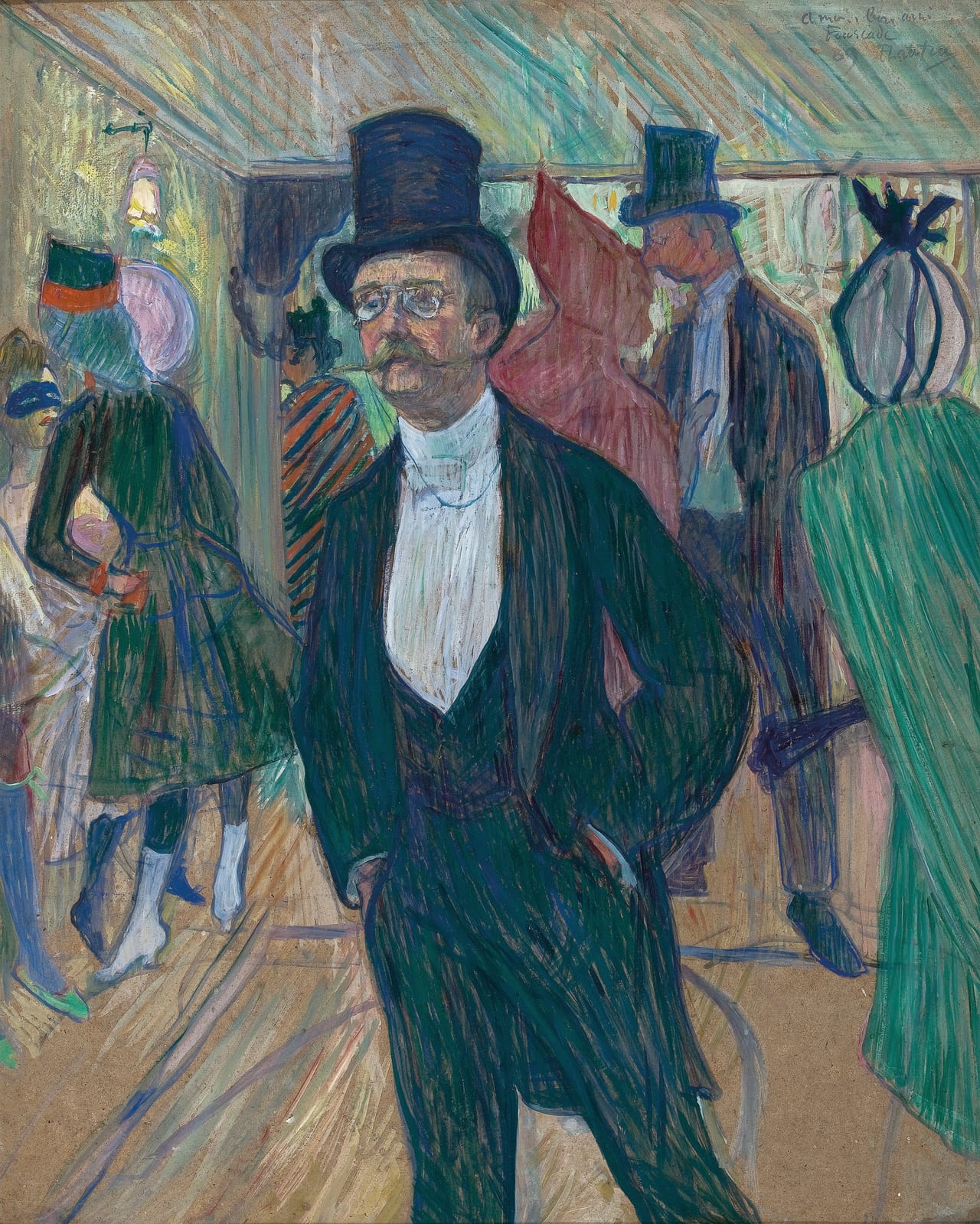
Monsieur Fourcade
Henri de Toulouse-Lautrec · 1889
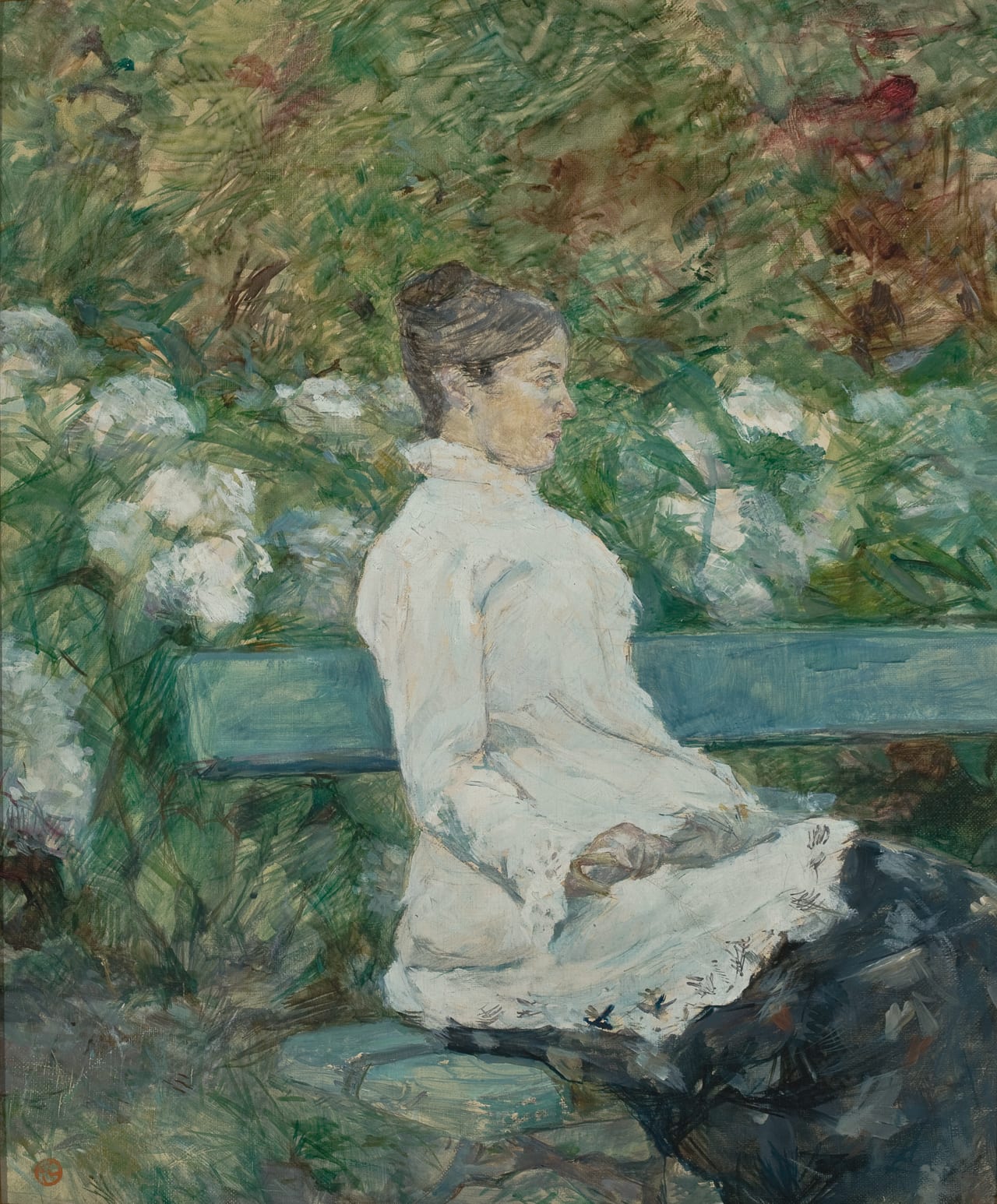
Countess Adèle de Toulouse-Lautrec
Henri de Toulouse-Lautrec · 1880–82
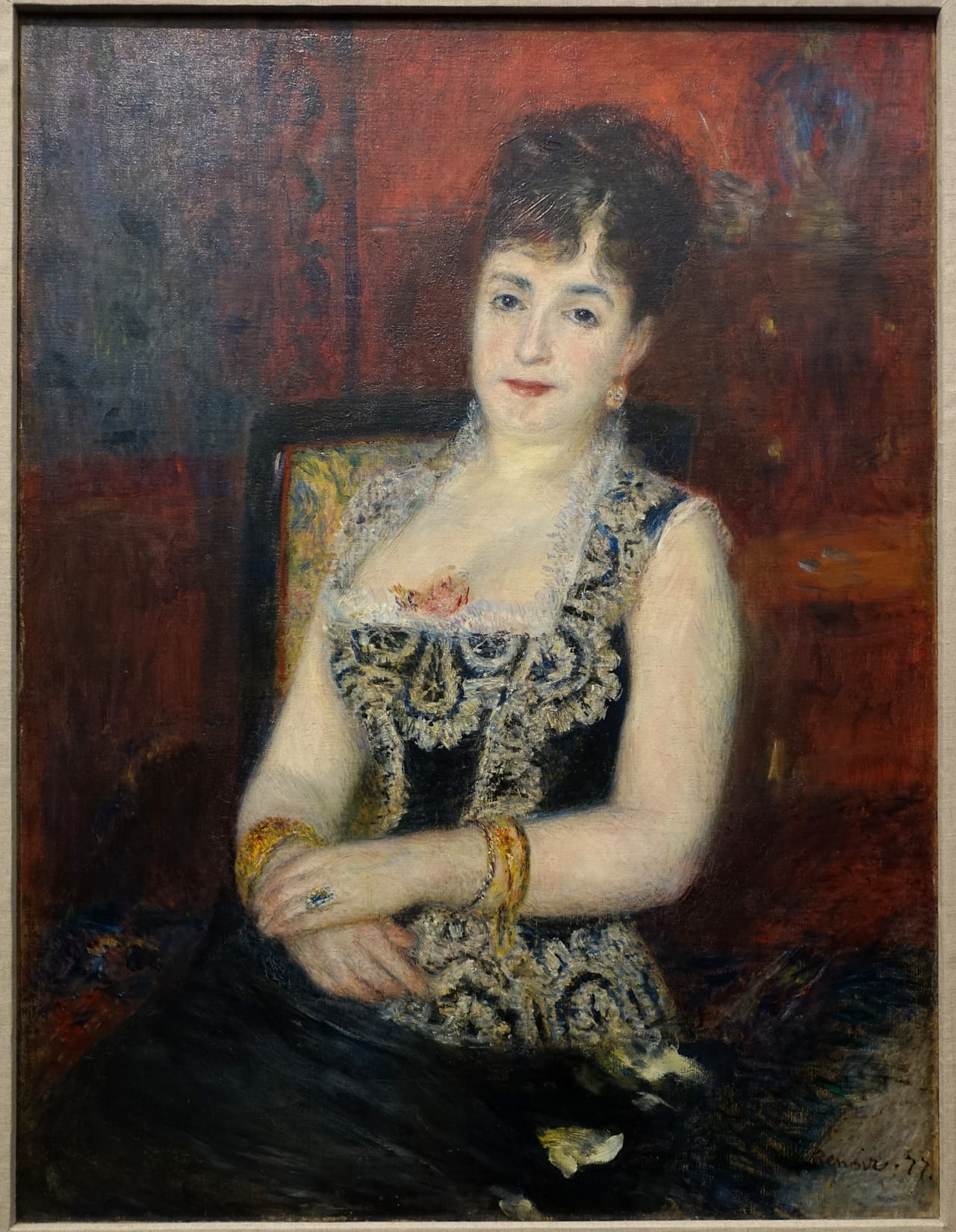
Portrait of the Countess of Pourtalès
Pierre-Auguste Renoir · 1877
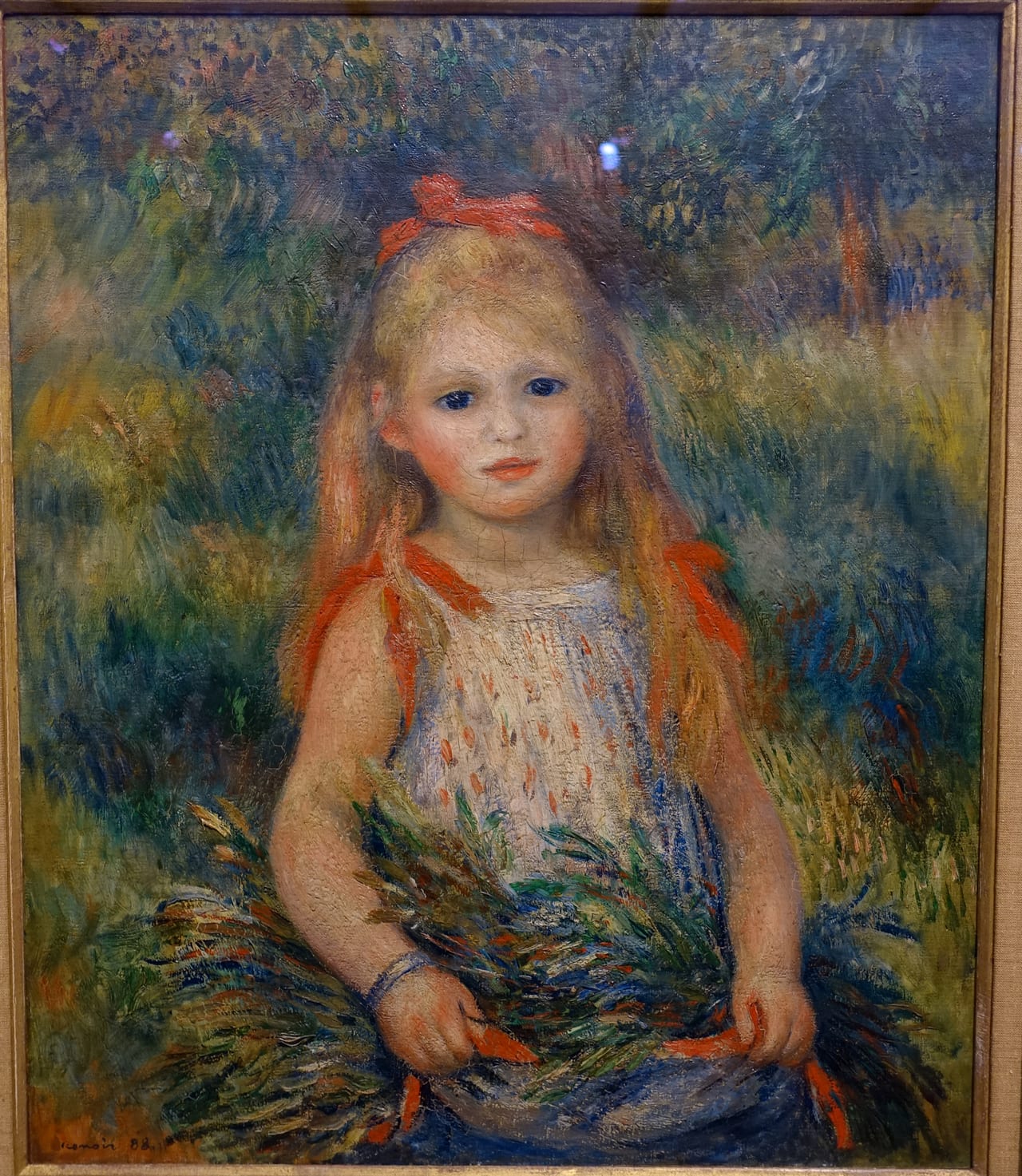
Girl with Ears of Wheat
Pierre-Auguste Renoir · 1888
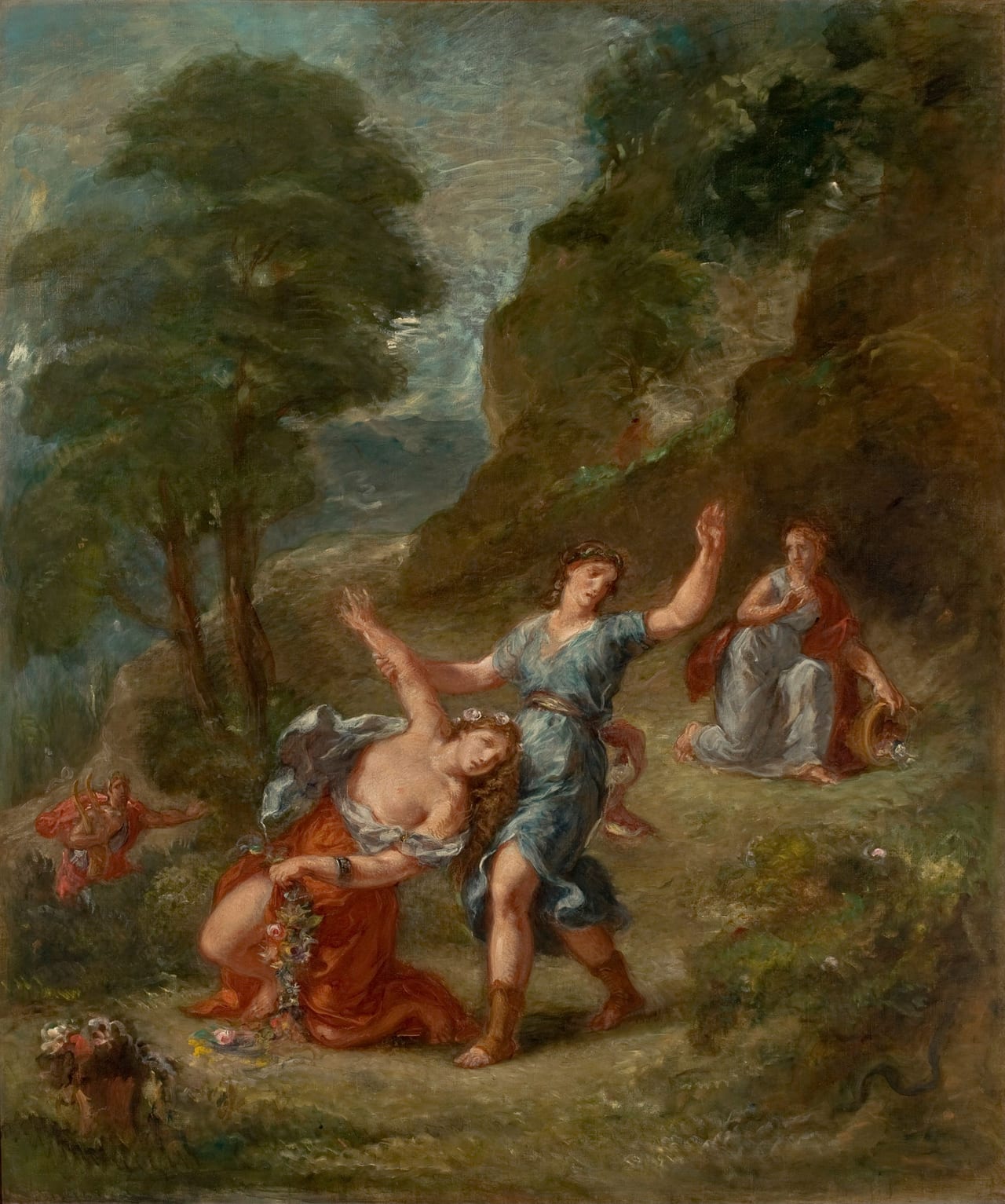
Spring: Eurydice Is Bitten by a Snake While Picking Flowers
Eugène Delacroix · 1856–63
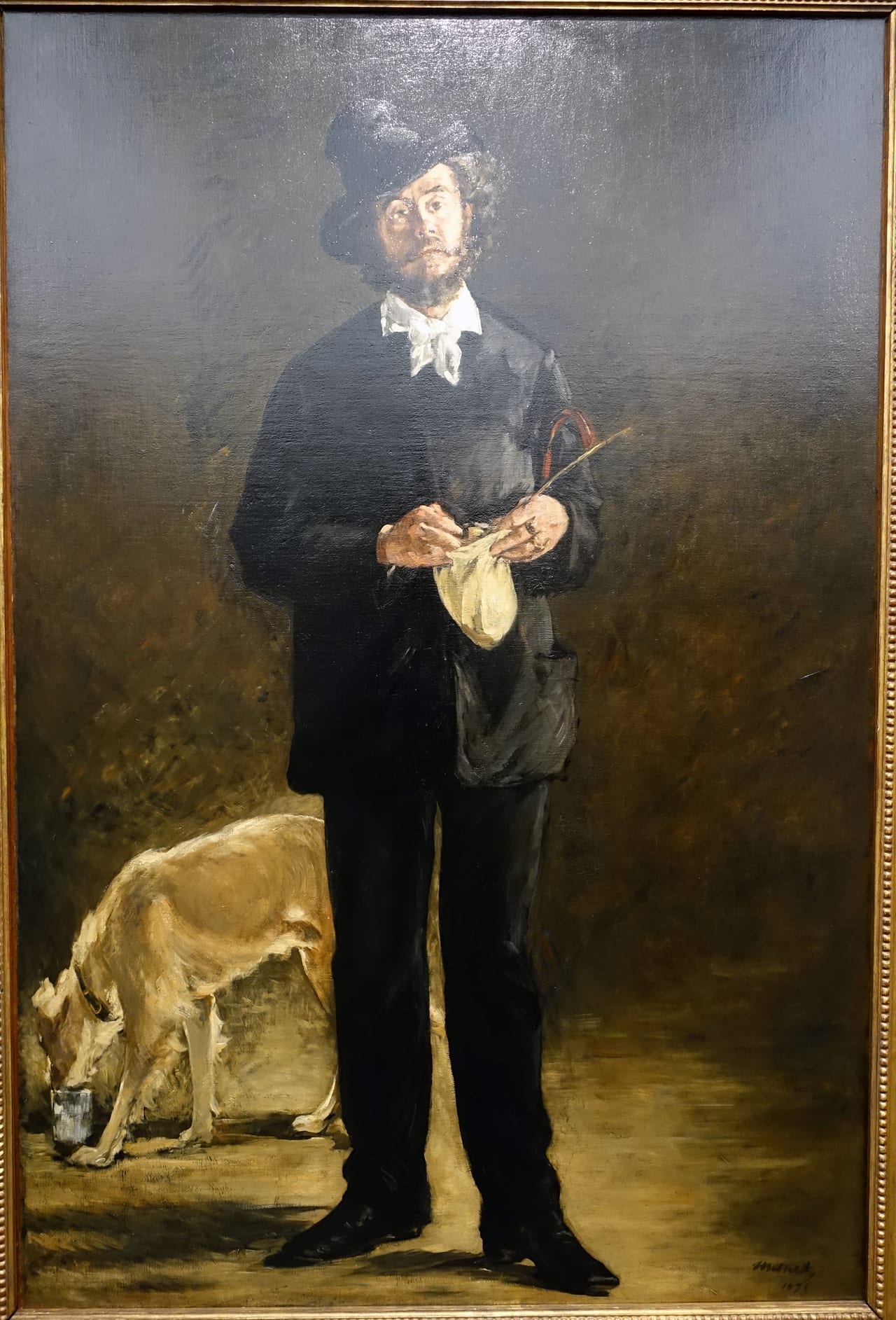
The Artist: Portrait of Marcellin Desboutin
Édouard Manet · 1875
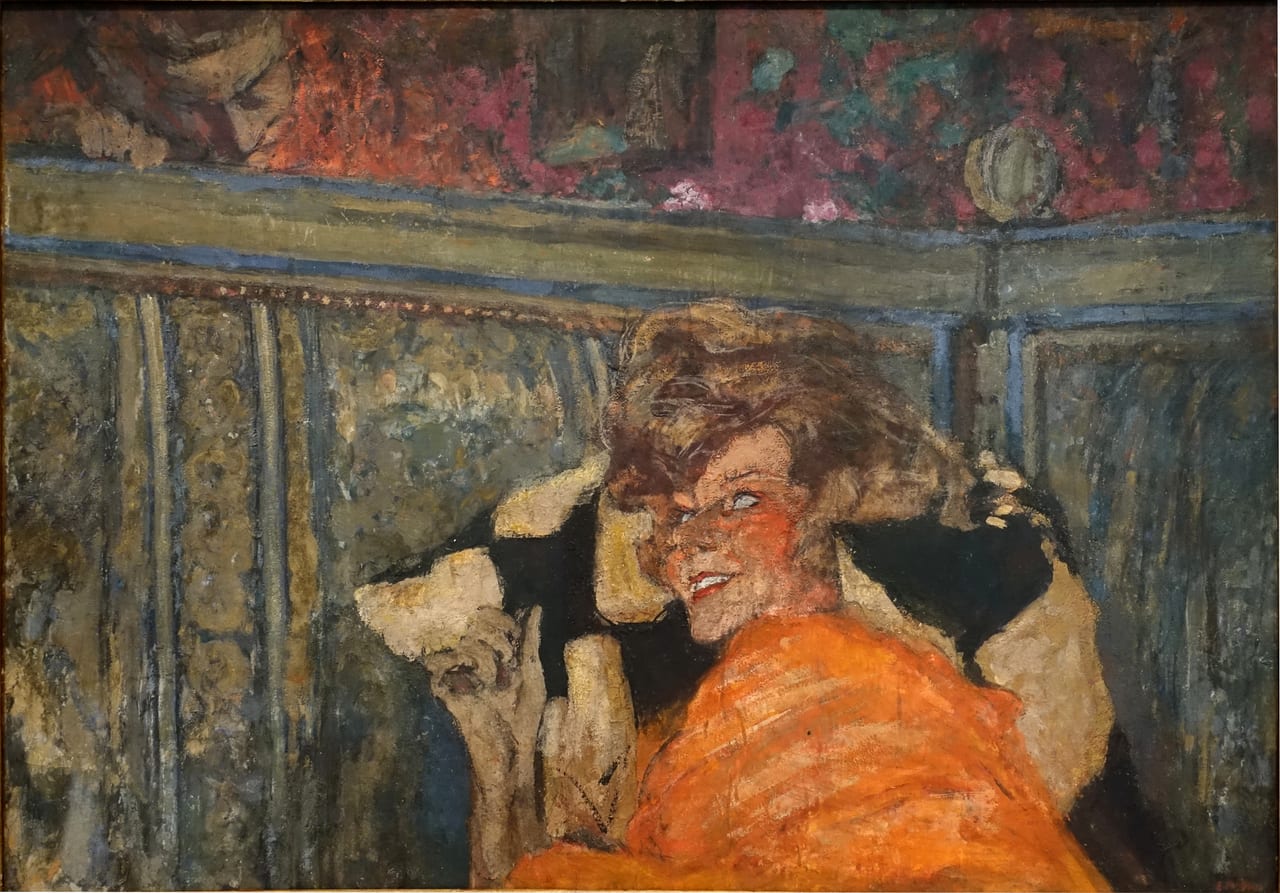
Yvonne Printemps and Sacha Guitry
Édouard Vuillard · c. 1917
Sources
- MASP collection, Raphael, “Resurrection of Christ”
- MASP collection, Andrea Mantegna, “Saint Jerome Penitent in the Desert”
- MASP collection, Diego Velázquez, “Portrait of the Count-Duke of Olivares”
- MASP collection, Titian, “Portrait of Cardinal Cristoforo Madruzzo”
- MASP collection, Sandro Botticelli, “Virgin and Child with the Infant John the Baptist”
- MASP collection, El Greco, “Annunciation”
- MASP collection, Vincent van Gogh, “L’Arlésienne”
- MASP collection, Vincent van Gogh, “Walk at Dusk”
- MASP collection, Édouard Manet, “Monsieur Eugène Pertuiset, the Lion Hunter”
- MASP collection, Paul Cézanne, “Madame Cézanne in Red”
- MASP collection, Edgar Degas, “Four Dancers on Stage”
- MASP collection, Pierre-Auguste Renoir, “Bather with a Griffon Dog: Lise on the Bank of the Seine”
- MASP collection, Biagio d'Antonio, “Madonna Adoring the Christ Child with an Angel”
- MASP collection, Giovanni Bellini, “Madonna Willys”
- MASP collection, Pietro Perugino, “Saint Sebastian at the Column”
- MASP collection, Francisco Goya, “Portrait of Cardinal Luis María de Borbón y Vallabriga”
- MASP collection, Jean-Baptiste-Siméon Chardin, “Portrait of Auguste Gabriel Godefroy”
- MASP collection, Jean-Marc Nattier, “Madame Louise-Élisabeth, Duchess of Parma: Earth”
- MASP collection, Eugène Delacroix, “Autumn: Bacchus and Ariadne”
- MASP collection, Gustave Courbet, “Zélie Courbet”
- MASP collection, Claude Monet, “The Canoe on the Epte”
- MASP collection, Édouard Vuillard, “The Patterned Dress”
- MASP collection, Eliseu Visconti, “Flowers”
- MASP collection, Amedeo Modigliani, “Lunia Czechowska”
- MASP collection, Henri de Toulouse-Lautrec, “Paul Viaud as an Eighteenth-Century Admiral”
- MASP collection, Pierre-Auguste Renoir, “Portrait of Marthe Bérard”
- MASP collection, Paul Cézanne, “Paul Alexis Reading a Manuscript to Zola”
- MASP collection, Vincent van Gogh, “Stone Bench in the Asylum at Saint-Rémy”
- MASP collection, Édouard Manet, “The Horsewoman: Portrait of Marie Lefébure”
- MASP collection, Jean-Baptiste Camille Corot, “Roses in a Glass”
- MASP collection, El Greco, “Ecstasy of Saint Francis with the Stigmata”
- MASP collection, Francisco Goya, “Portrait of the Countess of Casa Flores”
- MASP collection, Édouard Vuillard, “Princess Bibesco”
- MASP collection, Jean-Honoré Fragonard, “Education Is Everything”
- MASP collection, Amedeo Modigliani, “Renée”
- MASP collection, Amedeo Modigliani, “Chakoska”
- MASP collection, Amedeo Modigliani, “Portrait of Leopold Zborowski”
- MASP collection, Amedeo Modigliani, “Madame G. van Muyden”
- MASP collection, Amedeo Modigliani, “Portrait of Diego Rivera”
- MASP collection, Henri de Toulouse-Lautrec, “Monsieur Fourcade”
- MASP collection, Henri de Toulouse-Lautrec, “Countess Adèle de Toulouse-Lautrec”
- MASP collection, Pierre-Auguste Renoir, “Portrait of the Countess of Pourtalès”
- MASP collection, Pierre-Auguste Renoir, “Girl with Ears of Wheat”
- MASP collection, Eugène Delacroix, “Spring: Eurydice Is Bitten by a Snake While Picking Flowers”
- MASP collection, Édouard Manet, “The Artist: Portrait of Marcellin Desboutin”
- MASP collection, Édouard Vuillard, “Yvonne Printemps and Sacha Guitry”
- MASP collection, Pierre-Auguste Renoir, “Lady Smiling (Portrait of Alphonsine Fournaise)”
- MASP, “Sobre o MASP”
- MASP, “Acervo”
- MASP, “Acervo em transformação”
- Britannica, “Lina Bo Bardi”
- Wikipedia, “São Paulo Museum of Art”
- Lady Smiling (Portrait of Alphonsine Fournaise) — Public domain via Wikimedia Commons (Public domain)
- Resurrection of Christ — Public domain via Wikimedia Commons (Public domain)
- Saint Jerome Penitent in the Desert — Public domain via Wikimedia Commons (Public domain)
- Portrait of the Count-Duke of Olivares — Public domain via Wikimedia Commons (Public domain)
- Portrait of Cardinal Cristoforo Madruzzo — Public domain via Wikimedia Commons (Public domain)
- Virgin and Child with the Infant John the Baptist — Public domain via Wikimedia Commons (Public domain)
- Annunciation — Public domain via Wikimedia Commons (Public domain)
- L’Arlésienne — Public domain via Wikimedia Commons (Public domain)
- Walk at Dusk — Public domain via Wikimedia Commons (Public domain)
- Monsieur Eugène Pertuiset, the Lion Hunter — Public domain via Wikimedia Commons (Public domain)
- Madame Cézanne in Red — Public domain via Wikimedia Commons (Public domain)
- Four Dancers on Stage — Public domain via Wikimedia Commons (Public domain)
- Bather with a Griffon Dog: Lise on the Bank of the Seine — Public domain via Wikimedia Commons (Public domain)
- Madonna Adoring the Christ Child with an Angel — Public domain via Wikimedia Commons (Public domain)
- Madonna Willys — Public domain via Wikimedia Commons (Public domain)
- Saint Sebastian at the Column — Public domain via Wikimedia Commons (Public domain)
- Portrait of Cardinal Luis María de Borbón y Vallabriga — Public domain via Wikimedia Commons (Public domain)
- Portrait of Auguste Gabriel Godefroy — Public domain via Wikimedia Commons (Public domain)
- Madame Louise-Élisabeth, Duchess of Parma: Earth — Public domain via Wikimedia Commons (Public domain)
- Autumn: Bacchus and Ariadne — Public domain via Wikimedia Commons (Public domain)
- Zélie Courbet — Public domain via Wikimedia Commons (Public domain)
- The Canoe on the Epte — Public domain via Wikimedia Commons (Public domain)
- The Patterned Dress — Public domain via Wikimedia Commons (Public domain)
- Flowers — Public domain via Wikimedia Commons (Public domain)
- Lunia Czechowska — Public domain via Wikimedia Commons (Public domain)
- Paul Viaud as an Eighteenth-Century Admiral — Public domain via Wikimedia Commons (Public domain)
- Portrait of Marthe Bérard — Public domain via Wikimedia Commons (Public domain)
- Paul Alexis Reading a Manuscript to Zola — Public domain via Wikimedia Commons (Public domain)
- Stone Bench in the Asylum at Saint-Rémy — Public domain via Wikimedia Commons (Public domain)
- The Horsewoman: Portrait of Marie Lefébure — Public domain via Wikimedia Commons (Public domain)
- Roses in a Glass — Public domain via Wikimedia Commons (Public domain)
- Ecstasy of Saint Francis with the Stigmata — Public domain via Wikimedia Commons (Public domain)
- Portrait of the Countess of Casa Flores — Public domain via Wikimedia Commons (Public domain)
- Princess Bibesco — Public domain via Wikimedia Commons (Public domain)
- Education Is Everything — Public domain via Wikimedia Commons (Public domain)
- Renée — Public domain via Wikimedia Commons (Public domain)
- Chakoska — Public domain via Wikimedia Commons (Public domain)
- Portrait of Leopold Zborowski — Public domain via Wikimedia Commons (Public domain)
- Madame G. van Muyden — Public domain via Wikimedia Commons (Public domain)
- Portrait of Diego Rivera — Public domain via Wikimedia Commons (Public domain)
- Monsieur Fourcade — Public domain via Wikimedia Commons (Public domain)
- Countess Adèle de Toulouse-Lautrec — Public domain via Wikimedia Commons (Public domain)
- Portrait of the Countess of Pourtalès — Public domain via Wikimedia Commons (Public domain)
- Girl with Ears of Wheat — Public domain via Wikimedia Commons (Public domain)
- Spring: Eurydice Is Bitten by a Snake While Picking Flowers — Public domain via Wikimedia Commons (Public domain)
- The Artist: Portrait of Marcellin Desboutin — Public domain via Wikimedia Commons (Public domain)
- Yvonne Printemps and Sacha Guitry — Public domain via Wikimedia Commons (Public domain)
Invite MASP into your living room