The Starry Night
Vincent van Gogh · 1889

Museum of Modern Art
New York
A New York museum whose collection spans the late nineteenth century to the present, told room by room on 53rd Street in Manhattan.
- 200,000+
- works in the collection
- 2,190,440
- visitors in 2022
- 6
- curatorial departments
- 1st
- museum to open departments of film and photography
Three women and a nine-day opening
The museum was the idea of three women: Lillie P. Bliss, Mary Quinn Sullivan and Abby Aldrich Rockefeller, who conceived it in 1929. They took modest rooms on a floor of the Heckscher Building on Fifth Avenue, and the doors opened on the seventh of November that year, less than two weeks after the Wall Street Crash.
Alfred H. Barr Jr., a young protégé put forward by Paul Sachs at Goodyear's request, was suggested as director. In November 1929, the same month it opened, its first successful loan exhibition showed paintings by Van Gogh, Gauguin, Cézanne and Seurat.
The permanent home went up on 53rd Street: a building in the International Style by Philip L. Goodwin and Edward Durell Stone, which opened in May 1939 before 6,000 guests and a radio address from President Franklin D. Roosevelt. Philip Johnson reshaped the garden in 1953, and it still carries the founding benefactor's name.
One story, hung in time
Six departments now run the collection, from Architecture and Design to Film and Photography. It was under Barr that the museum became the first anywhere to set up curatorial departments for photography and for film, and the museum has been instrumental in shaping the history of modern art, particularly modern art from Europe.
Since the 2019 reopening, which added 47,000 square feet of galleries, the displays have dropped the old separation of painting from design and works on paper: the whole collection now runs as one chronology, every medium in the same thread. The holdings count more than 200,000 works, from drawing and printmaking to film and electronic media.
Photography sits inside the same story rather than beside it: Alfred Stieglitz's cloud photographs, made between 1925 and 1934; Hill and Adamson opened Scotland's first photographic studio in 1843. In Queens, the contemporary affiliate MoMA PS1.
Famous works in the collection
The Starry Night, painted by Van Gogh in June 1889 from his room at the asylum of Saint-Rémy-de-Provence, its village added from imagination, has hung here since 1941 through the Lillie P. Bliss Bequest, the trust of the museum's own co-founder. Rousseau's dream of a lion musing over a recumbent woman on a moonlit night arrived in 1939, the gift of Olga Guggenheim.
Picasso's Les Demoiselles d'Avignon, five nude figures in a brothel on Carrer d'Avinyó, painted in 1907, forms part of the permanent collection. Dalí's The Persistence of Memory, the melting clocks of 1931, came in 1934 by an anonymous hand and has never left.
Pollock's One: Number 31, 1950, one of the largest and most prominent examples of his drip-style work; Wyeth's Christina's World of 1948; Mondrian's Broadway Boogie Woogie, painted after his 1940 arrival in New York; Warhol's 32 soup-can panels of 1961 and 1962; and Lichtenstein's Drowning Girl of 1963.
What to see
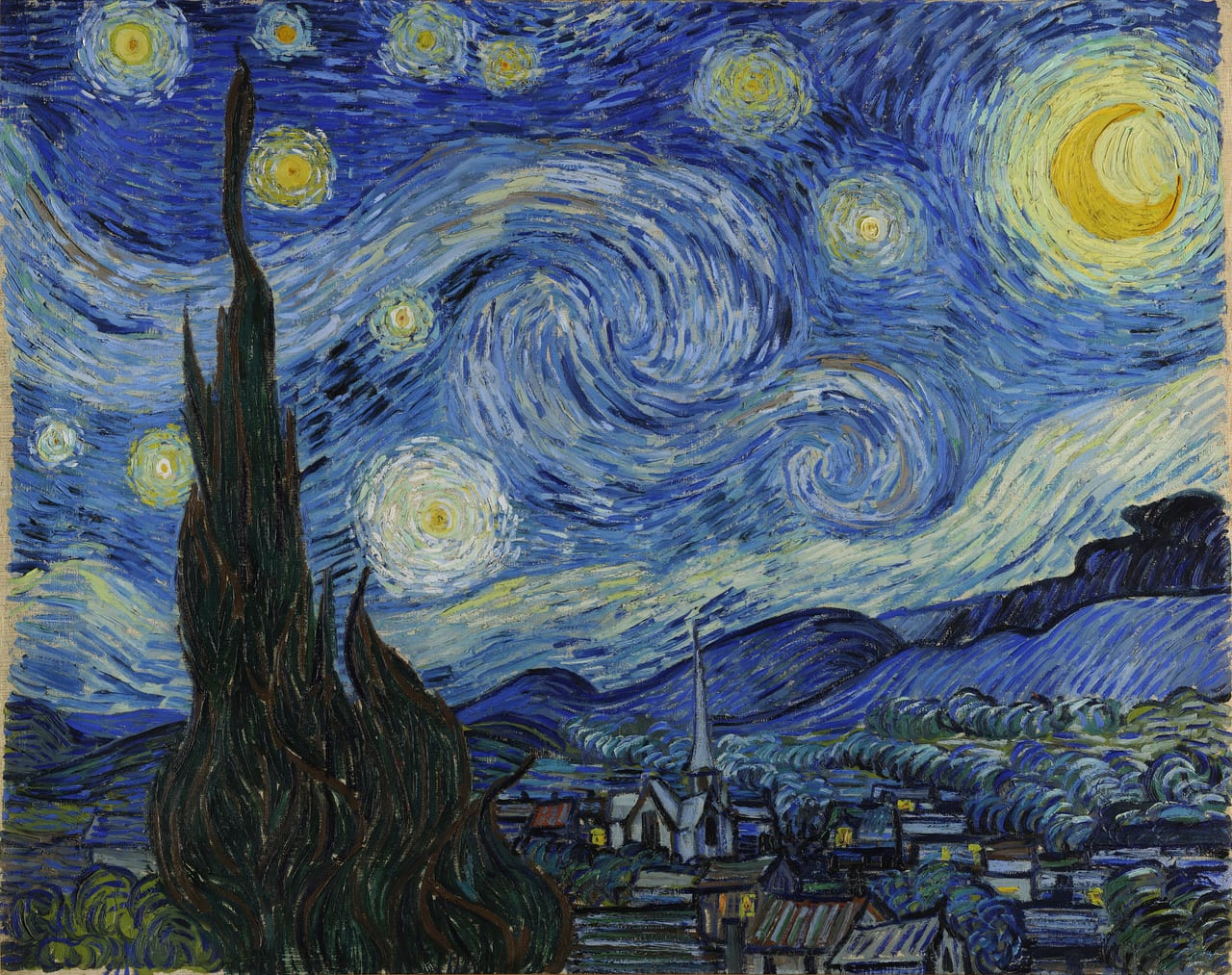
The Starry Night
Vincent van Gogh · 1889
Van Gogh's sky of June 1889, painted from his window at Saint-Rémy with an imagined village below; it entered the collection in 1941 through the Lillie P. Bliss Bequest.
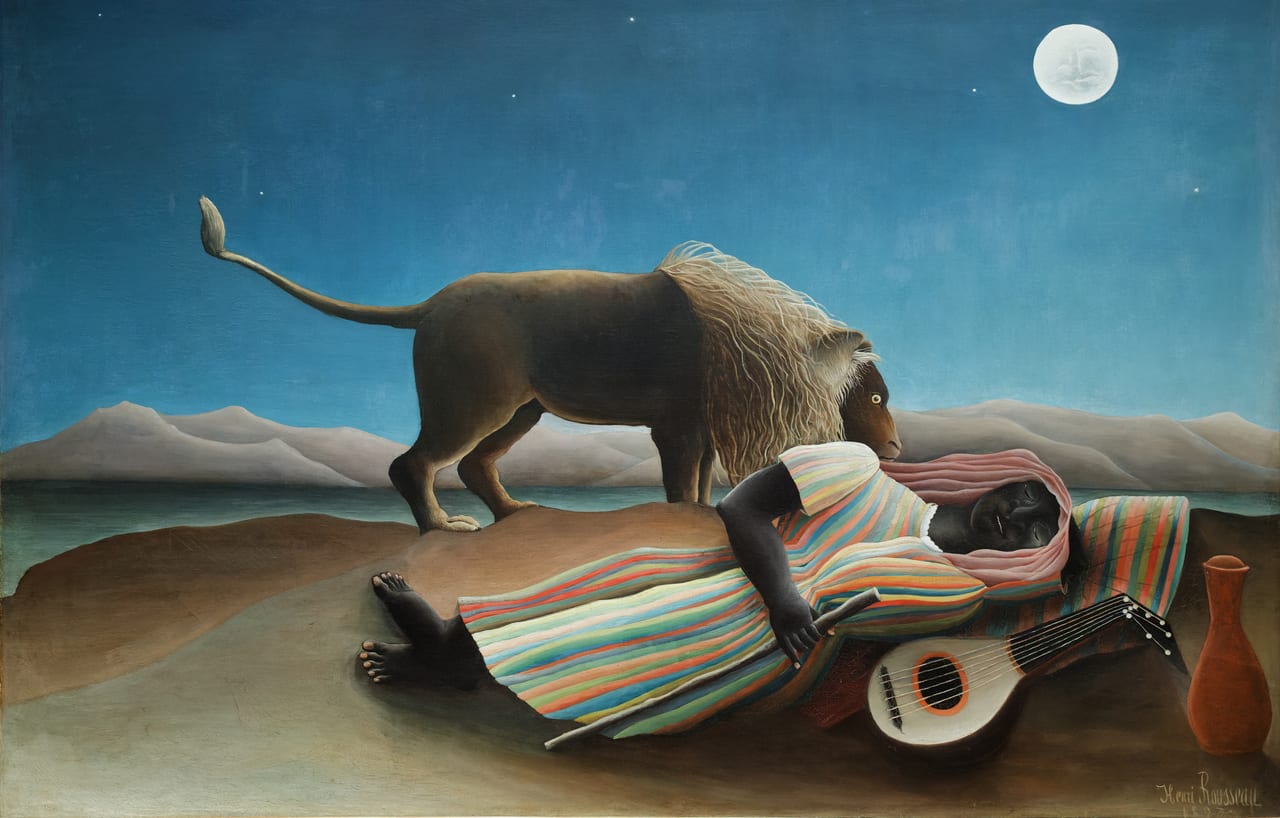
The Sleeping Gypsy
Henri Rousseau · 1897
A lion muses over a sleeping woman beneath a moon, given to the museum in 1939 by Olga Guggenheim.
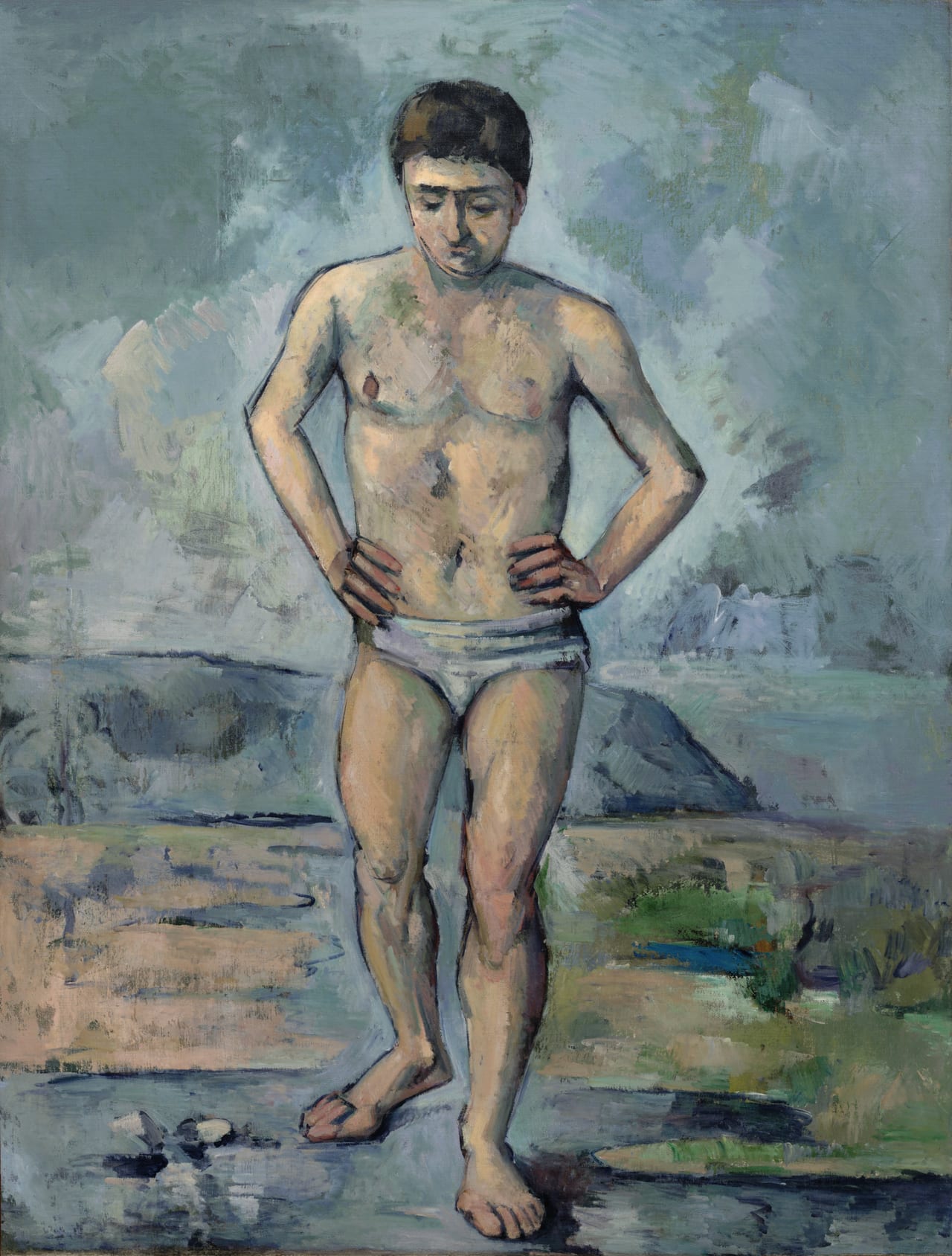
The Bather
Paul Cézanne · 1885
Cézanne's standing youth of 1885, figure and landscape built from the same deliberate strokes.
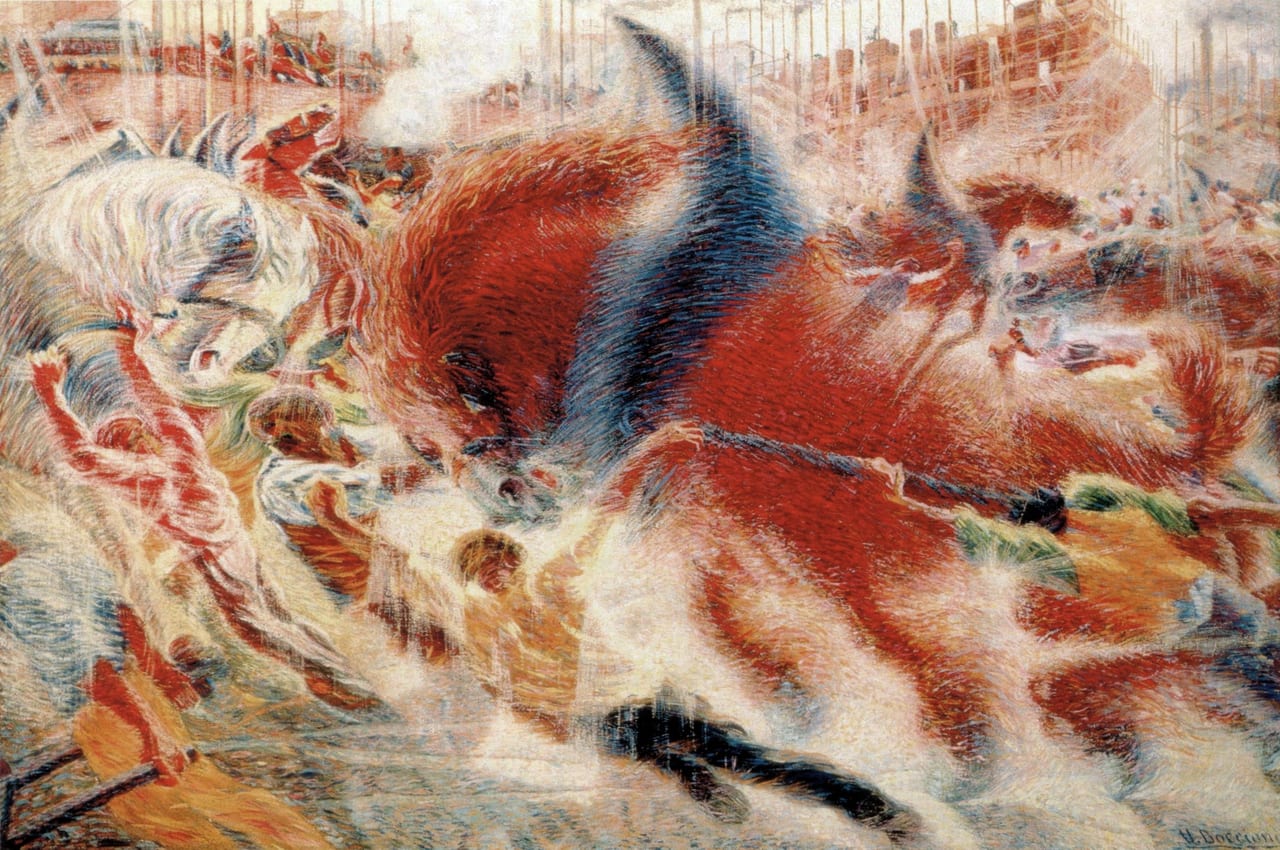
The City Rises
Umberto Boccioni · 1910
Boccioni's breakthrough Futurist canvas of 1910, with workmen and horses among scaffolding and brick buildings in swirling red and orange strokes.
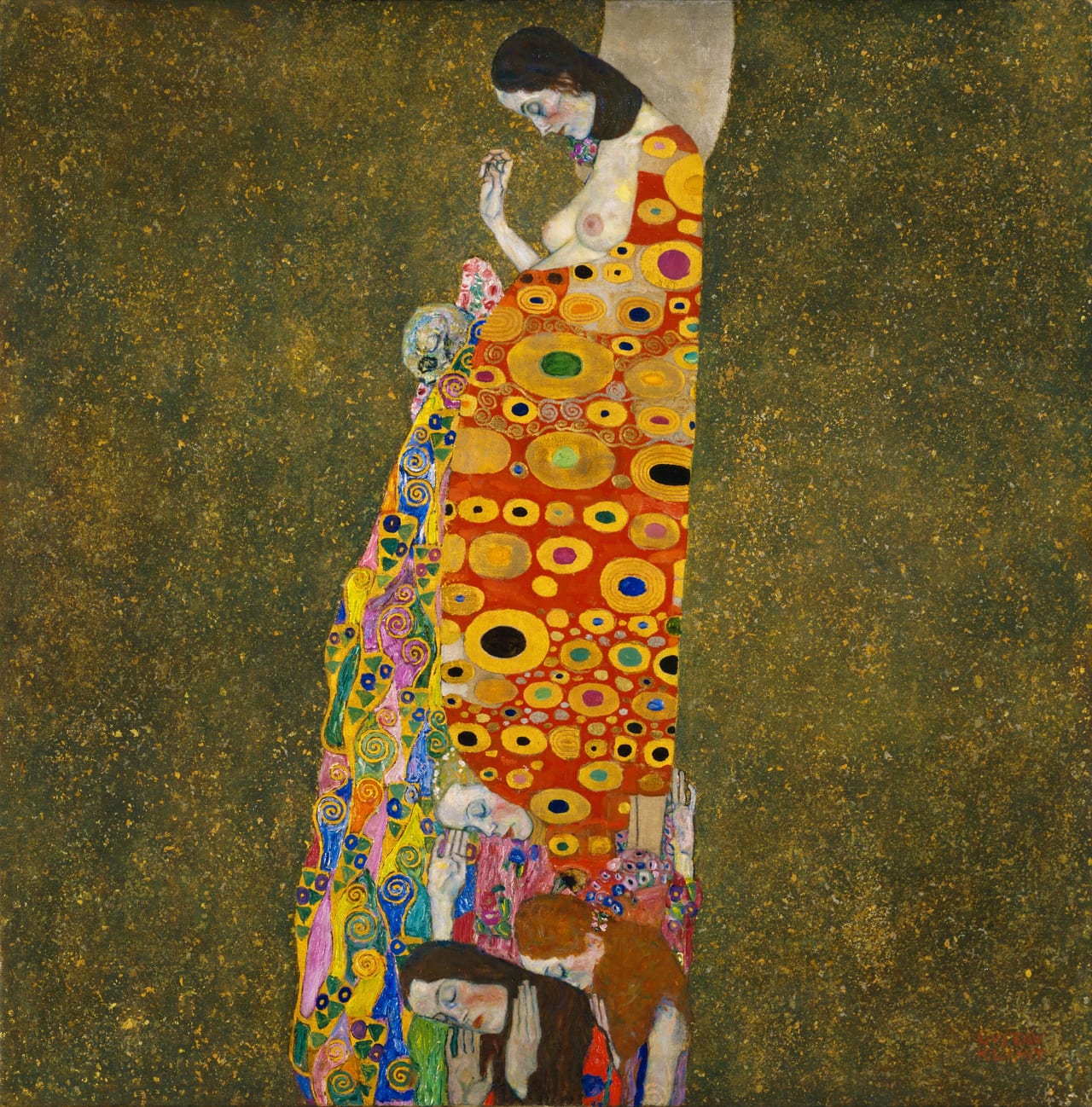
Hope II
Gustav Klimt · 1907
Klimt's picture of an expectant mother with closed eyes, bought by the museum in 1978.
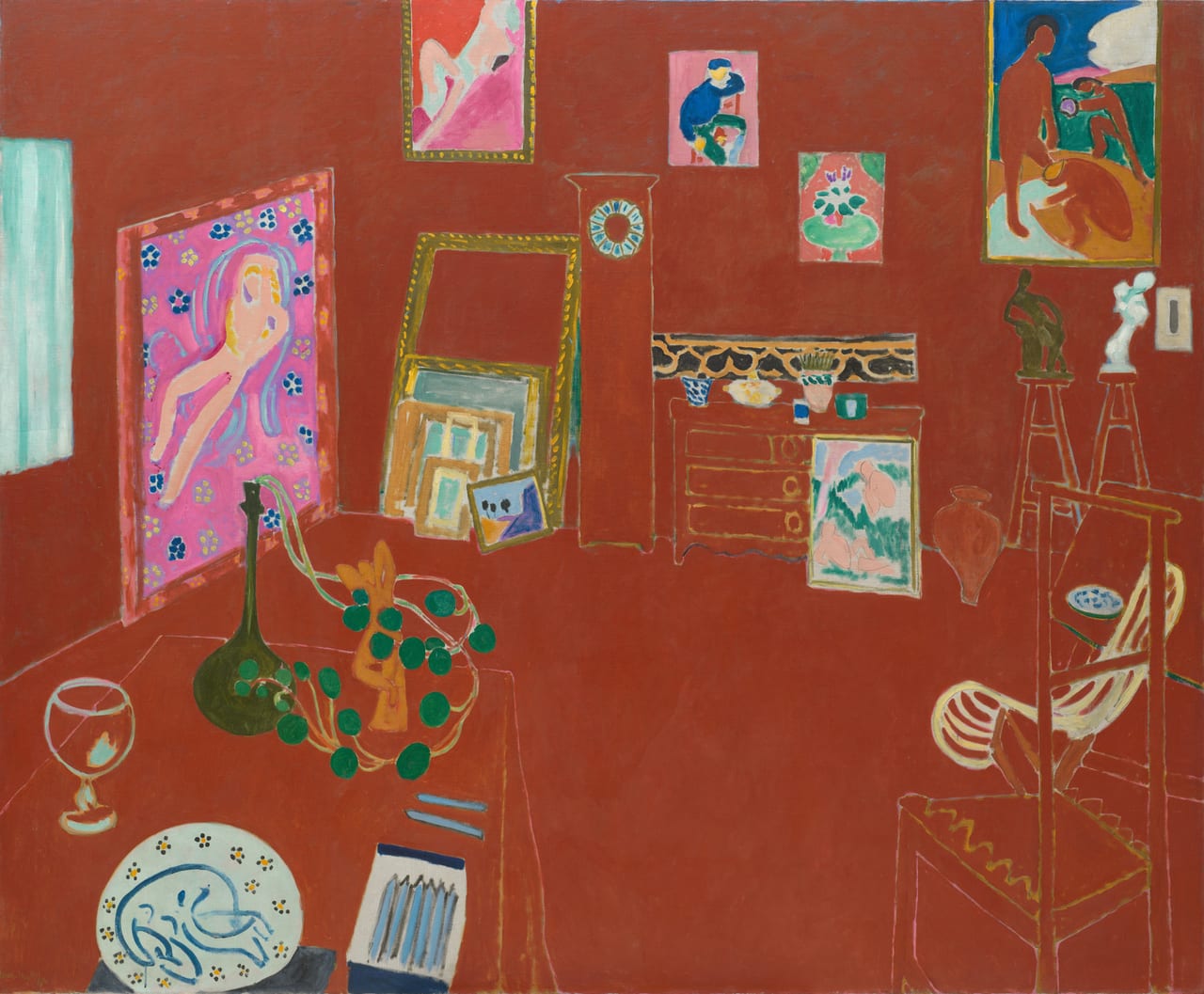
L’Atelier Rouge
Henri Matisse · 1911
Matisse's studio of 1911, walls and floor drowned in a single red on which his own paintings and sculptures float.
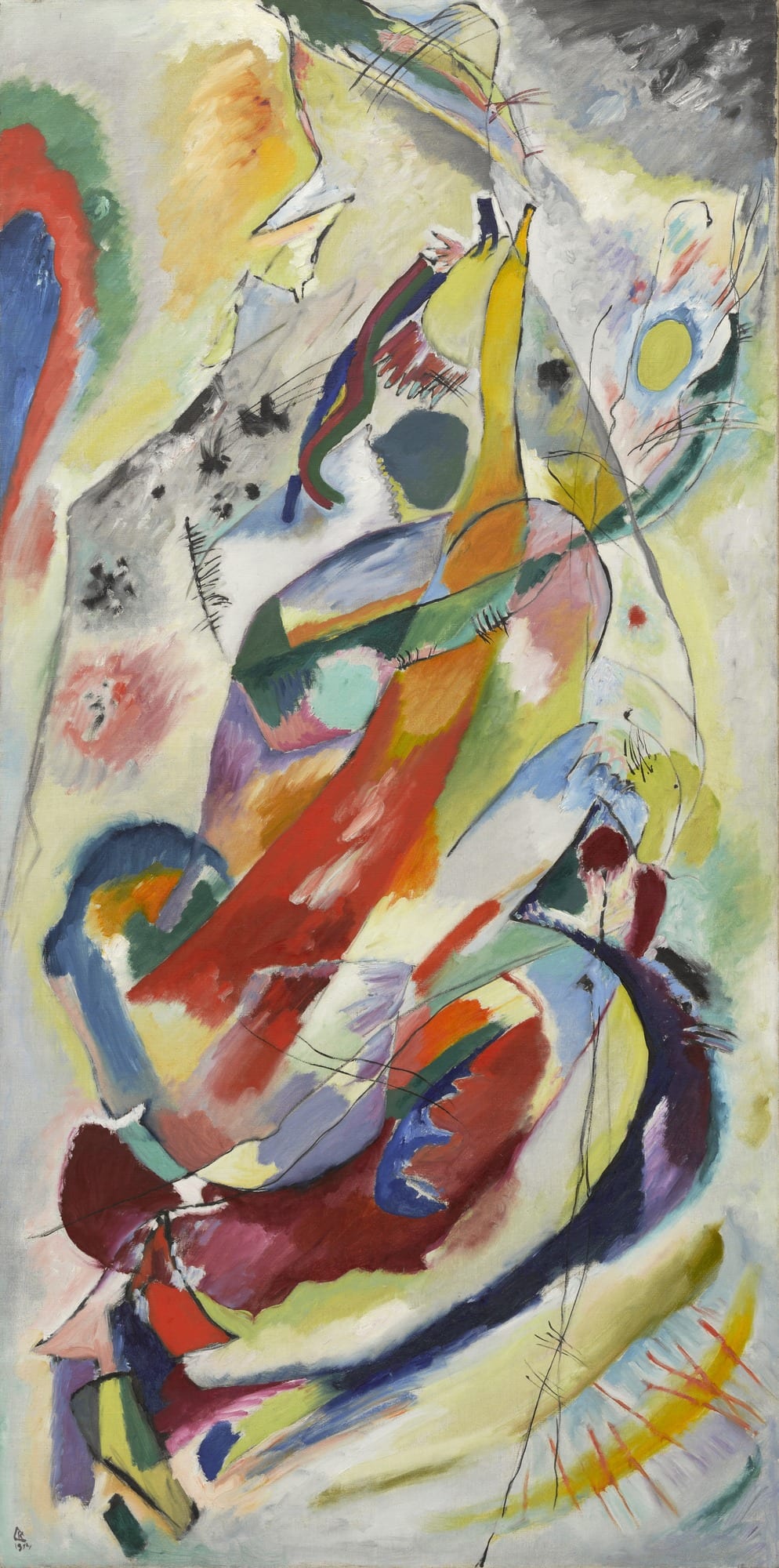
Panel for Edwin R. Campbell No. 1
Wassily Kandinsky · 1914
Kandinsky's panel of 1914, abstract colour without object or horizon.
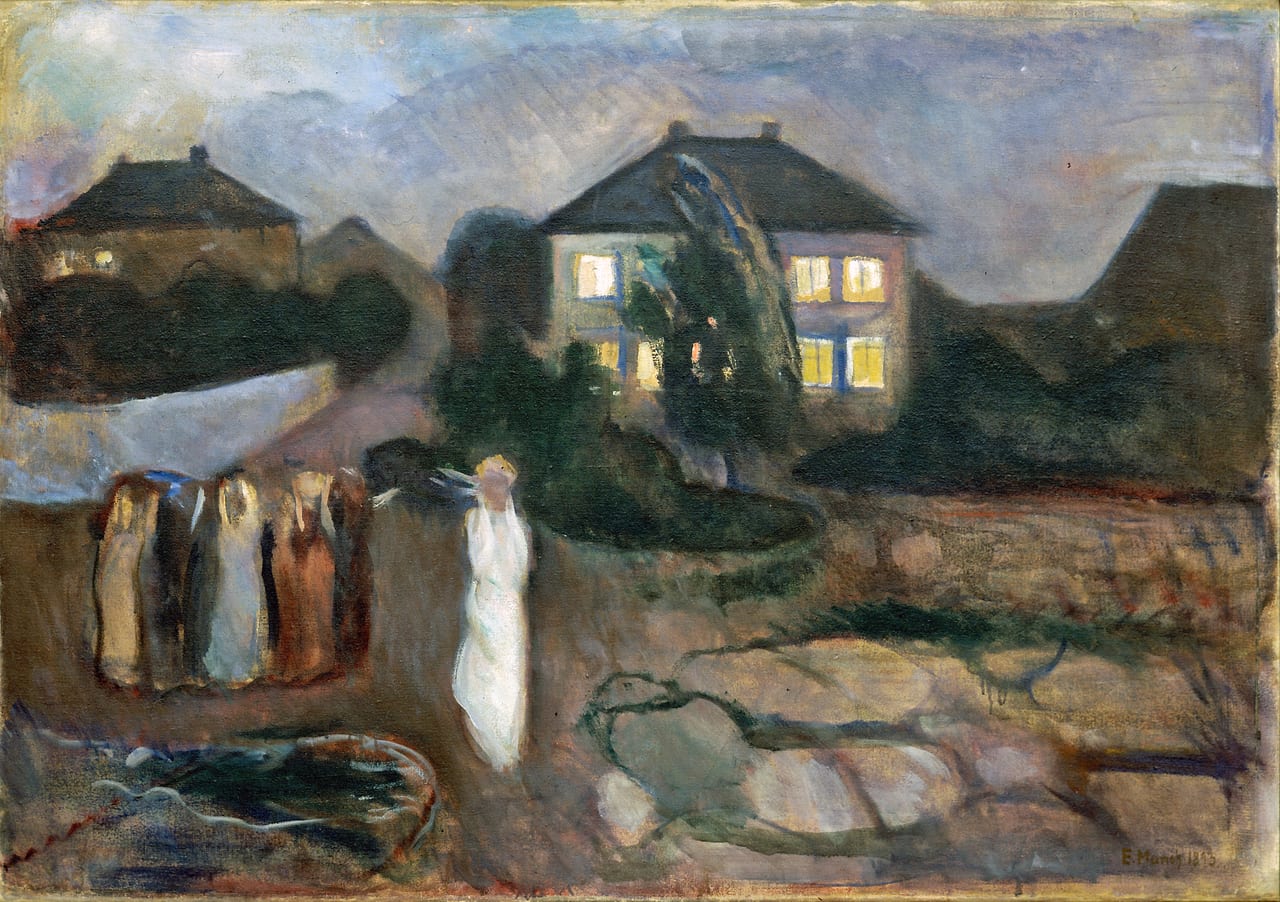
The Storm
Edvard Munch · 1893
Munch in 1893: a hazy sky over a house with lit windows, a bent tree, and women in brown, ochre and pale gowns huddled on the road before it.

Water Lilies
Claude Monet · 1914
Monet's water lilies spread across a three-panel triptych, its horizon dissolved into water and reflection.
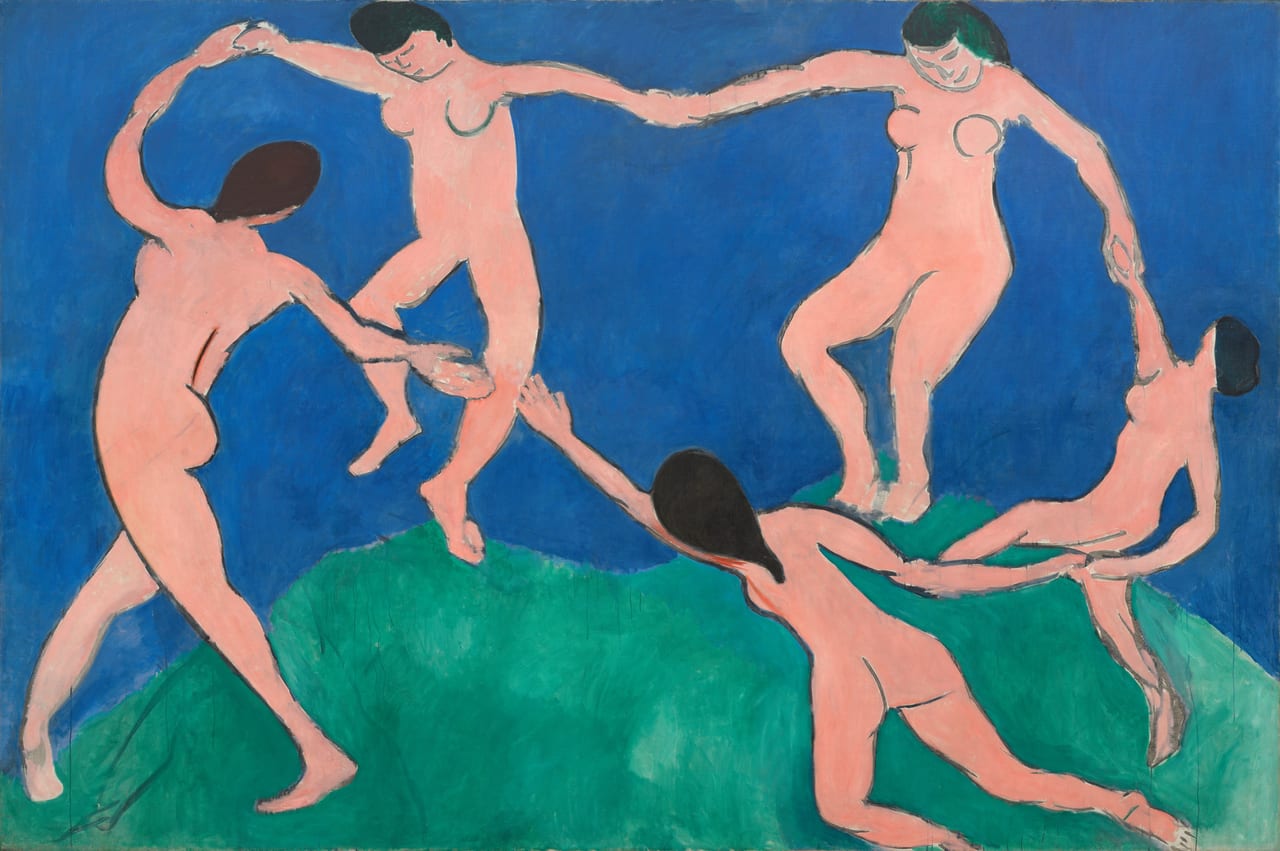
Dance (I)
Henri Matisse · 1909
Matisse's ring of dancers of 1909, their thin outlines open between two joined hands at the left as the figures turn.
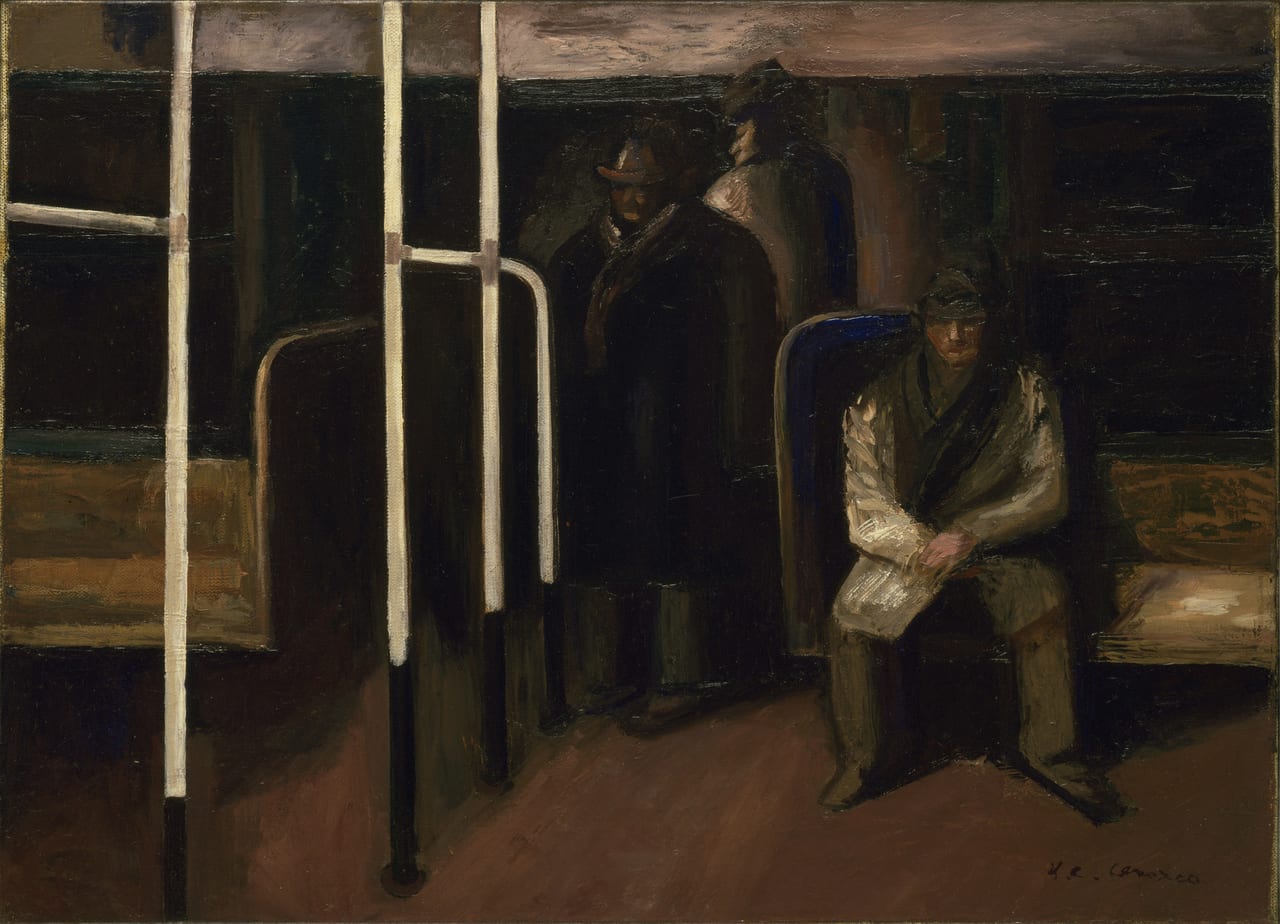
The Subway
José Clemente Orozco · 1928
Orozco's 1928 image of the New York underground.
Also at the museum, not yet free to picture
Unique Forms of Continuity in Space
Boccioni modelled this striding figure in plaster in 1913 and never saw it cast; two bronzes were made in 1931, and this is one of them.
Collections
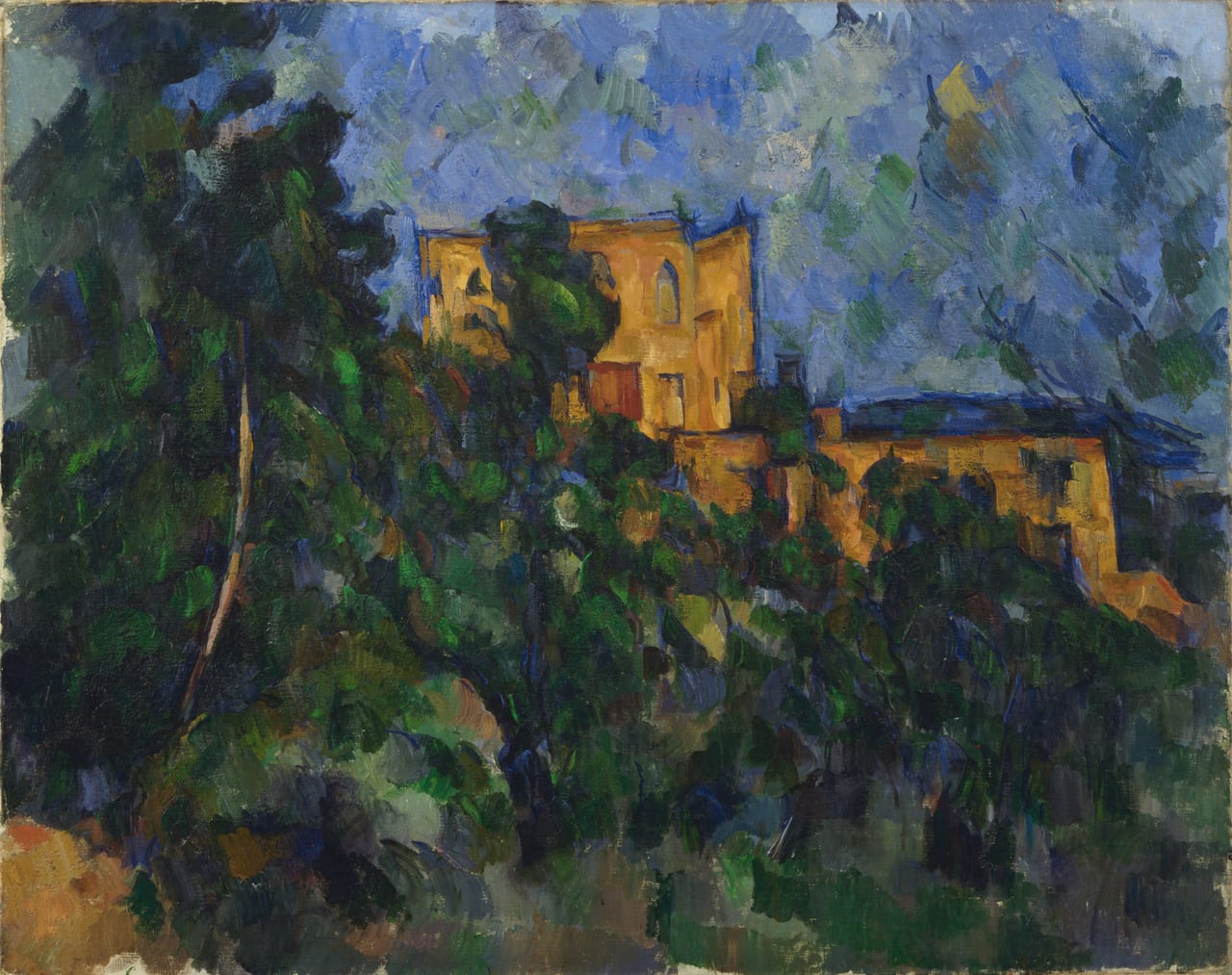
Cézanne's Provence
Château Noir 1903 · Paul Cézanne · 1903
From early still lifes to the late views of the mountain above Aix-en-Provence, a subject Cézanne treated in roughly eighty paintings and watercolors; Château Noir, painted in 1903, the ochre house among dark pines.
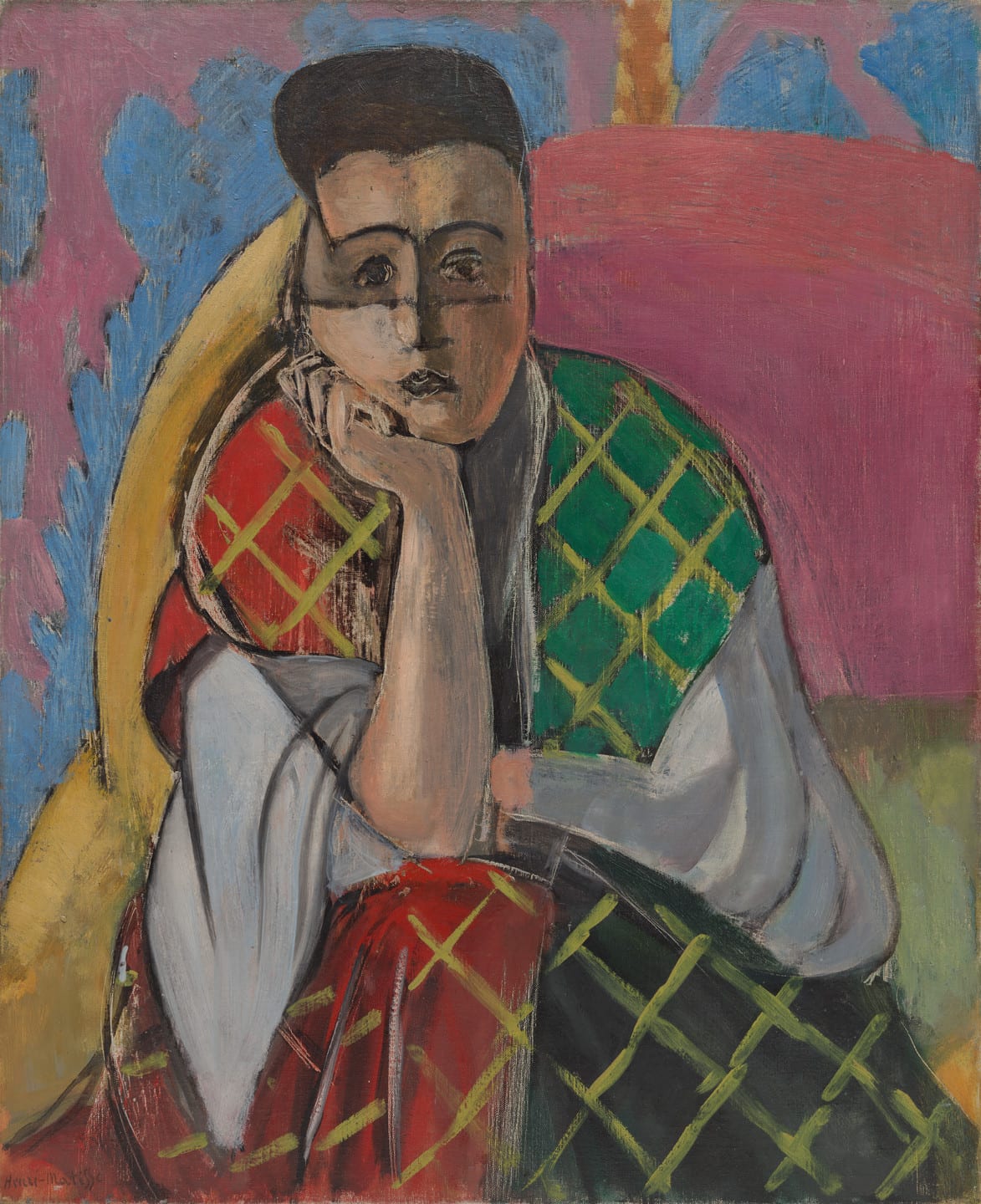
Matisse in motion
Woman with a Veil · Henri Matisse · 1927
A veiled sitter of 1927, among this run of Matisses.
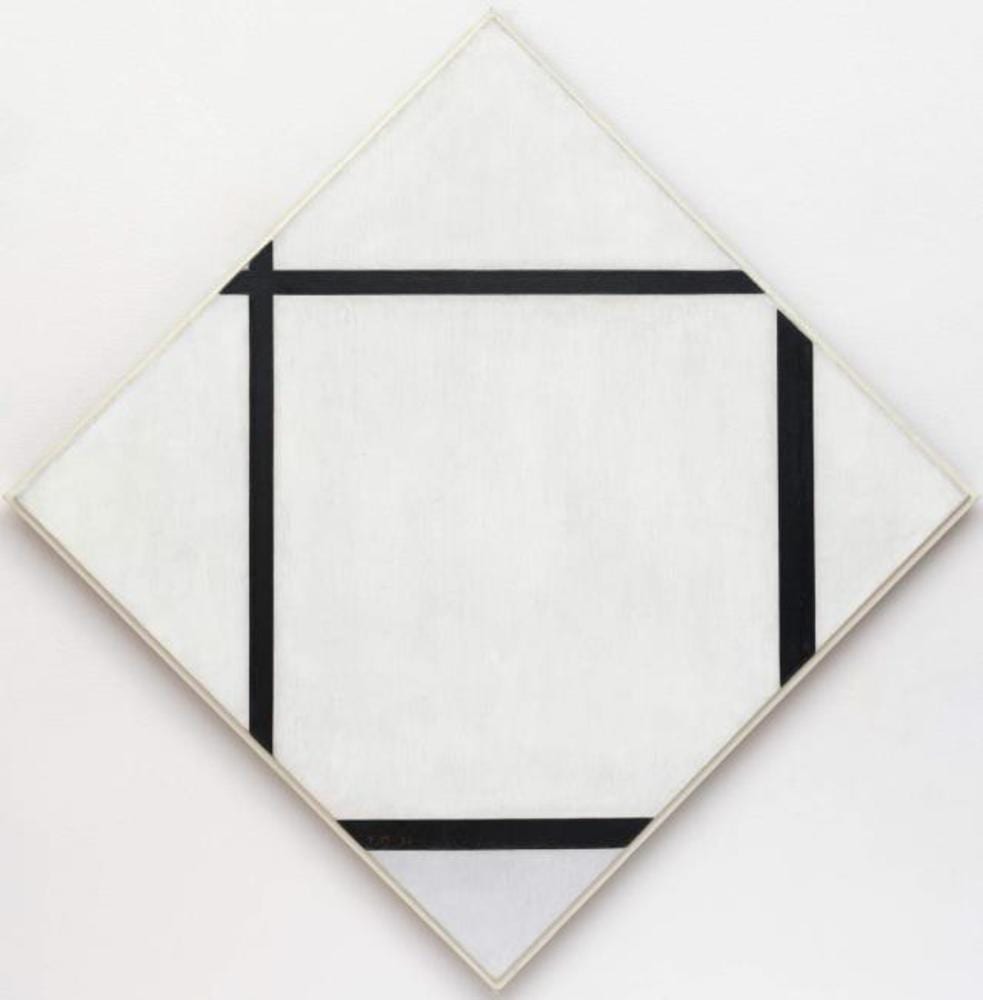
Mondrian to the edge
Tableau I: Lozenge with Four Lines and Gray · Piet Mondrian · 1926
From a dune view painted at Domburg in 1909 to the diamond-format geometry of 1926.
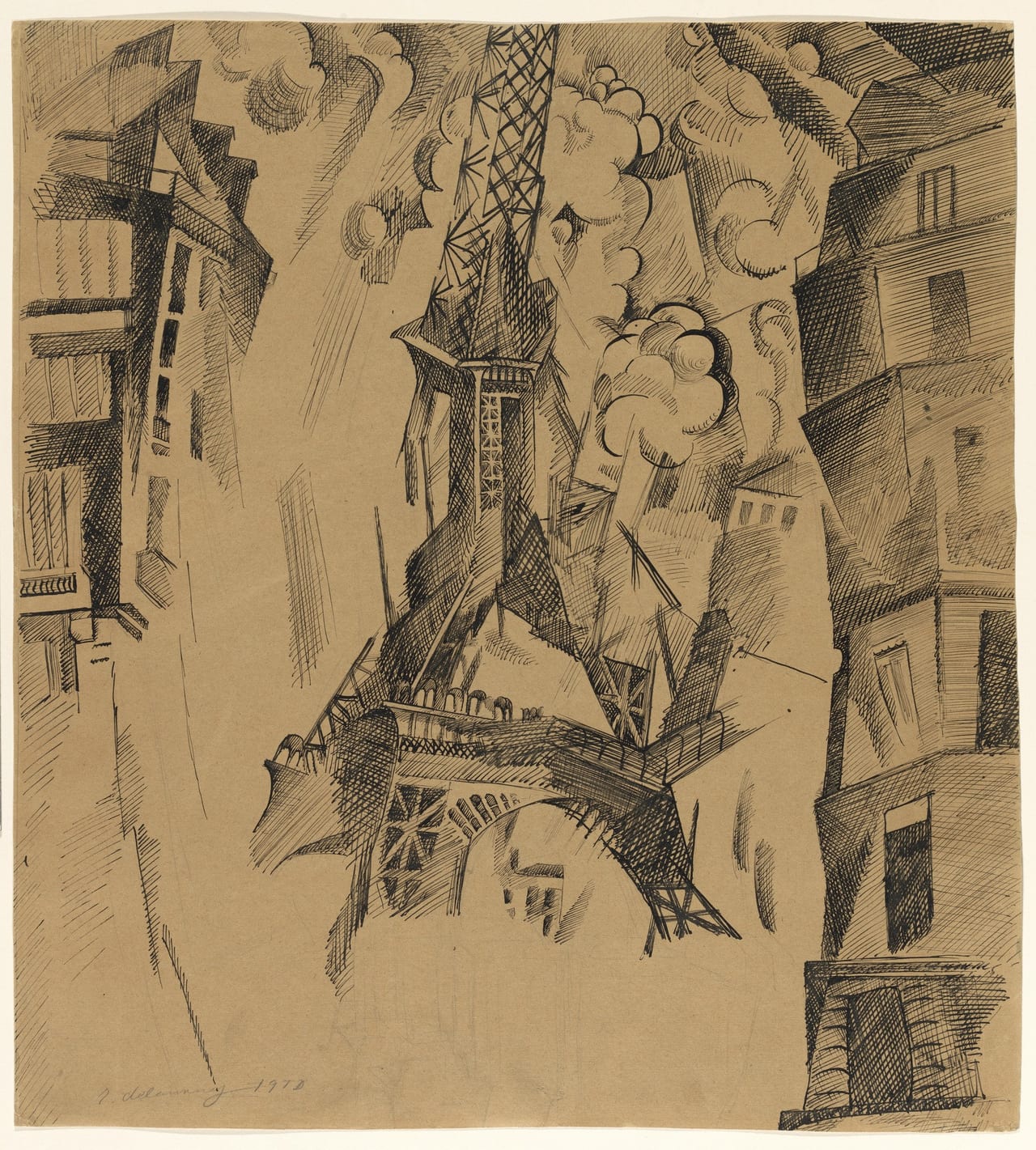
Delaunay's Eiffel Tower
The Tower · Robert Delaunay · 1911
The Tower painted again and again from 1909 on: on this sheet, Paris ironwork broken into angled planes between buildings and clouds.
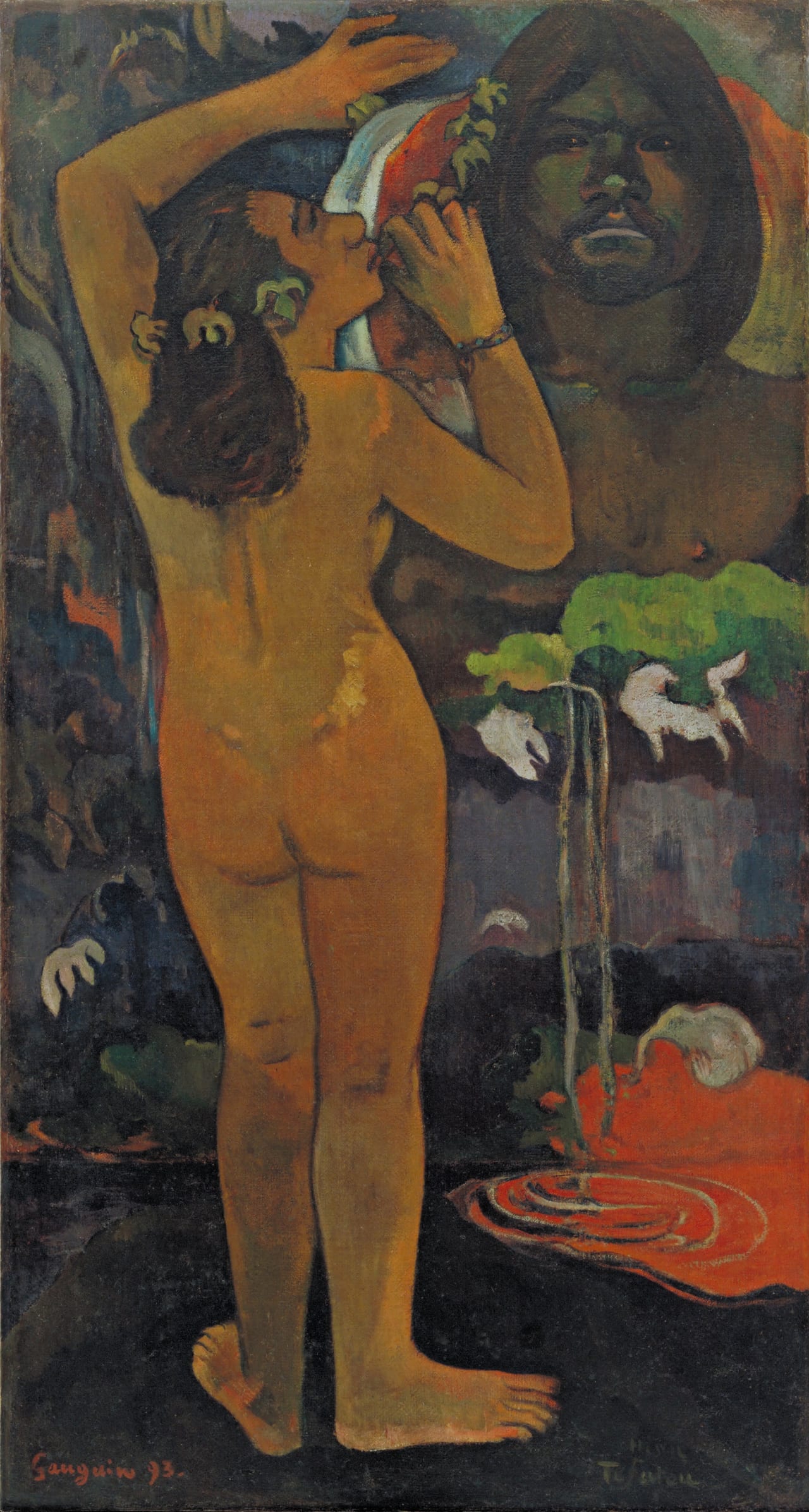
Gauguin's tropics
The Moon and the Earth · Paul Gauguin · 1893
Brittany, Martinique, then Tahiti in the 1890s, still a French colony: saturated colour and mythic figures.
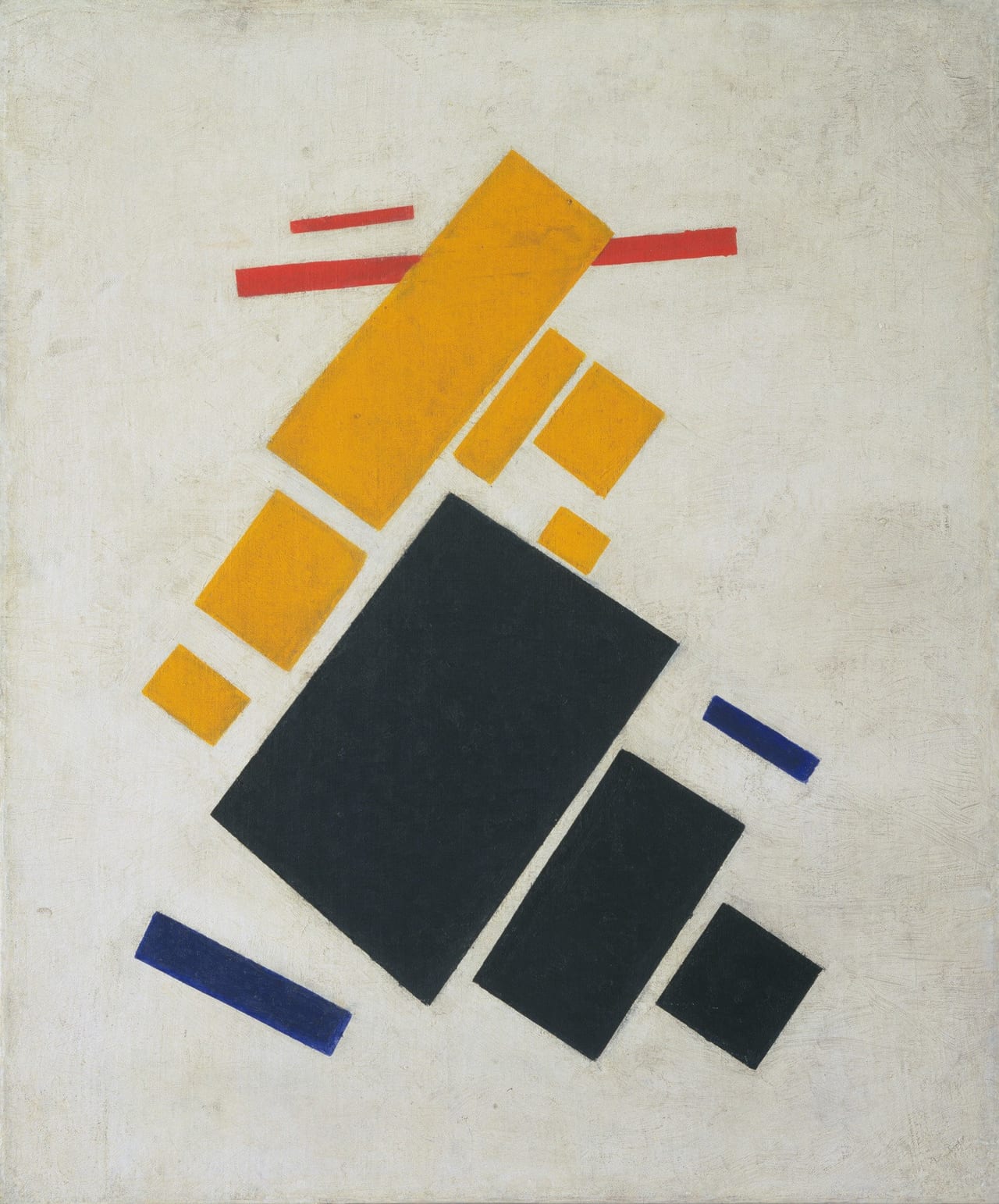
Malevich and Suprematism
Suprematist Composition: Airplane Flying · Kazimir Malevich · 1915
The non-objective painting Malevich introduced in 1915: flying colour masses on white.
Artists
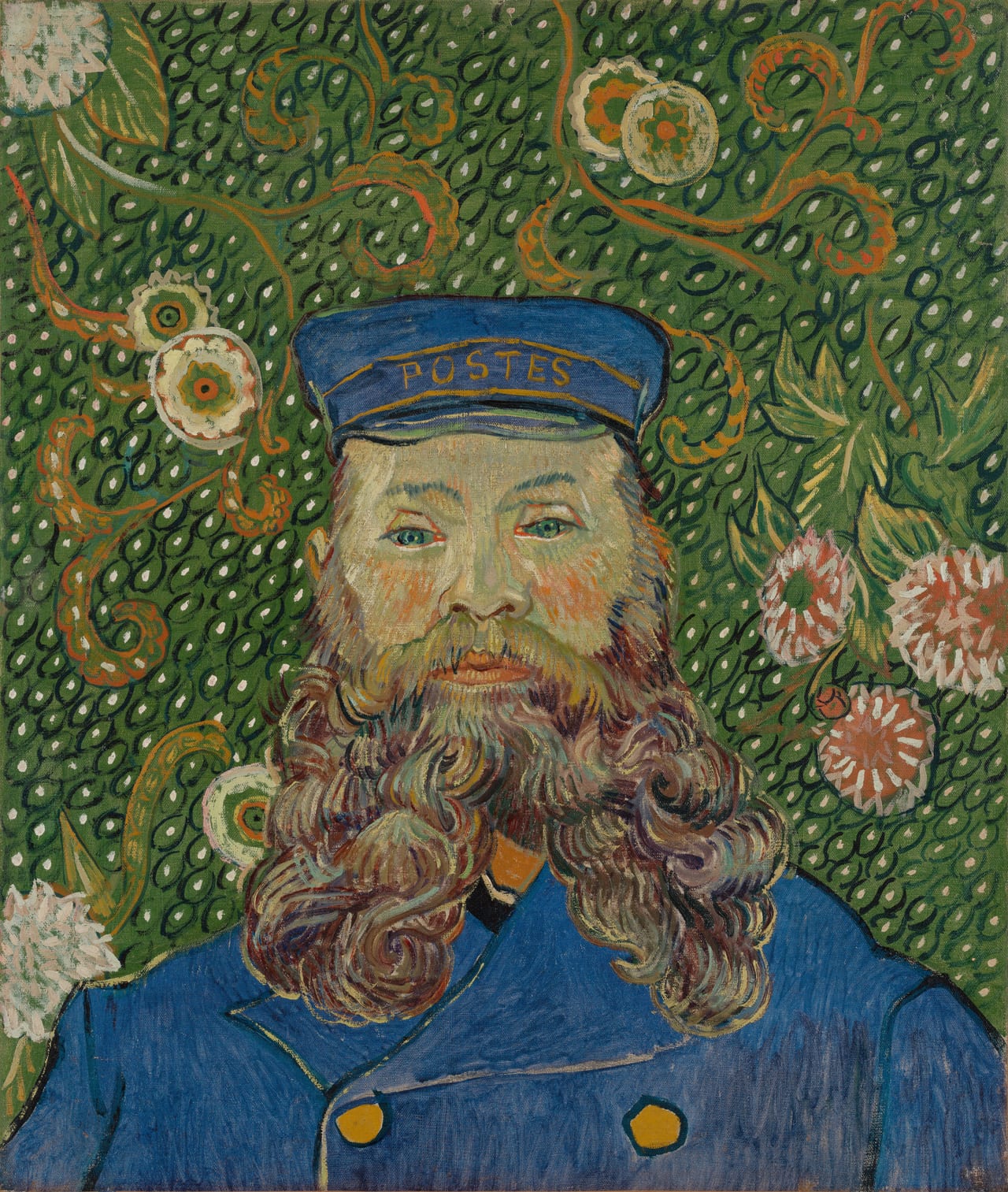
Vincent van Gogh
Portrait of Joseph Roulin · 1889
Dutch painter, 1853 to 1890.
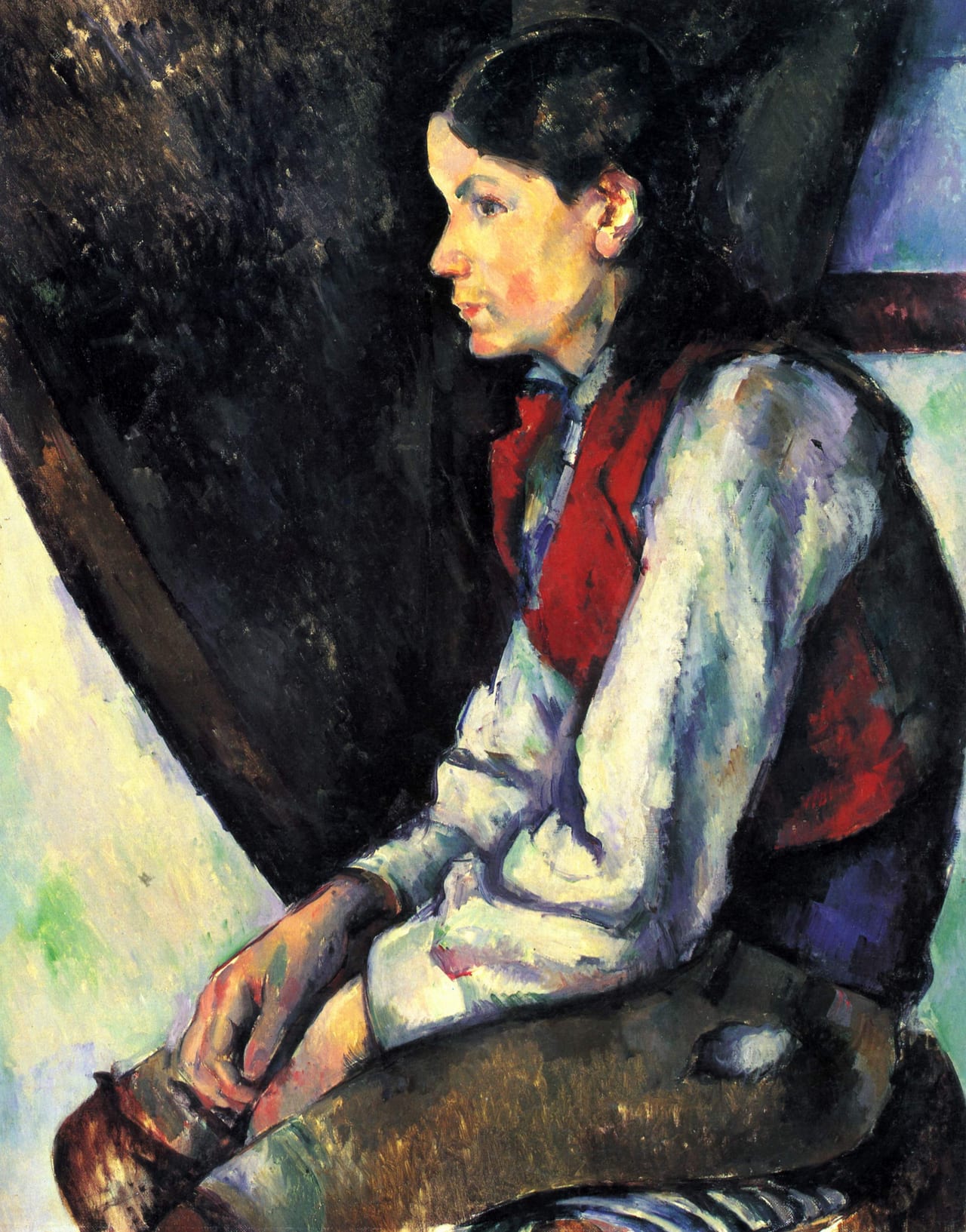
Paul Cézanne
Boy in a Red Vest · 1888
French painter, 1839 to 1906.
Henri Matisse
Woman with a Veil · 1927
French painter, 1869 to 1954.
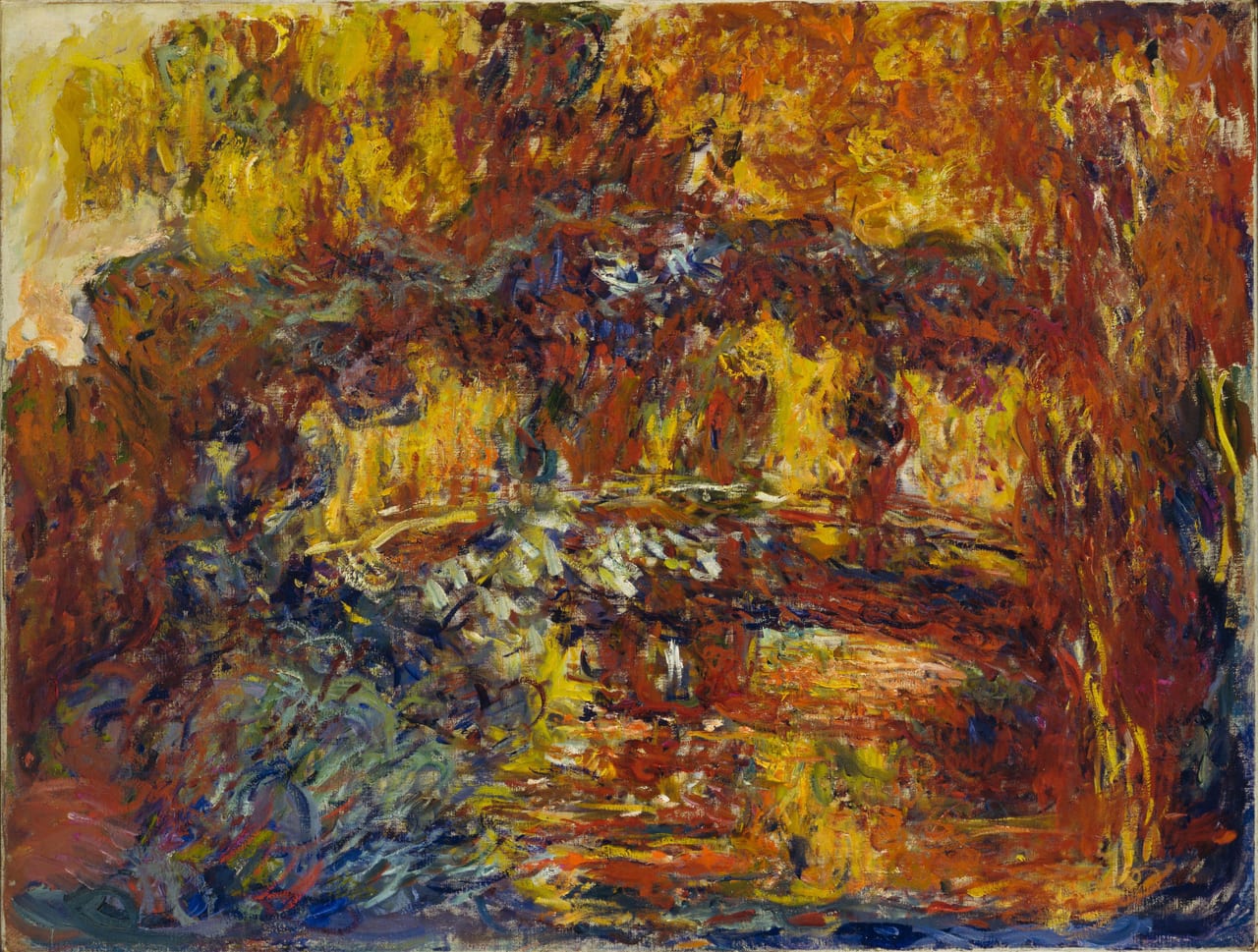
Claude Monet
The Japanese Footbridge · 1920
French painter, 1840 to 1926.
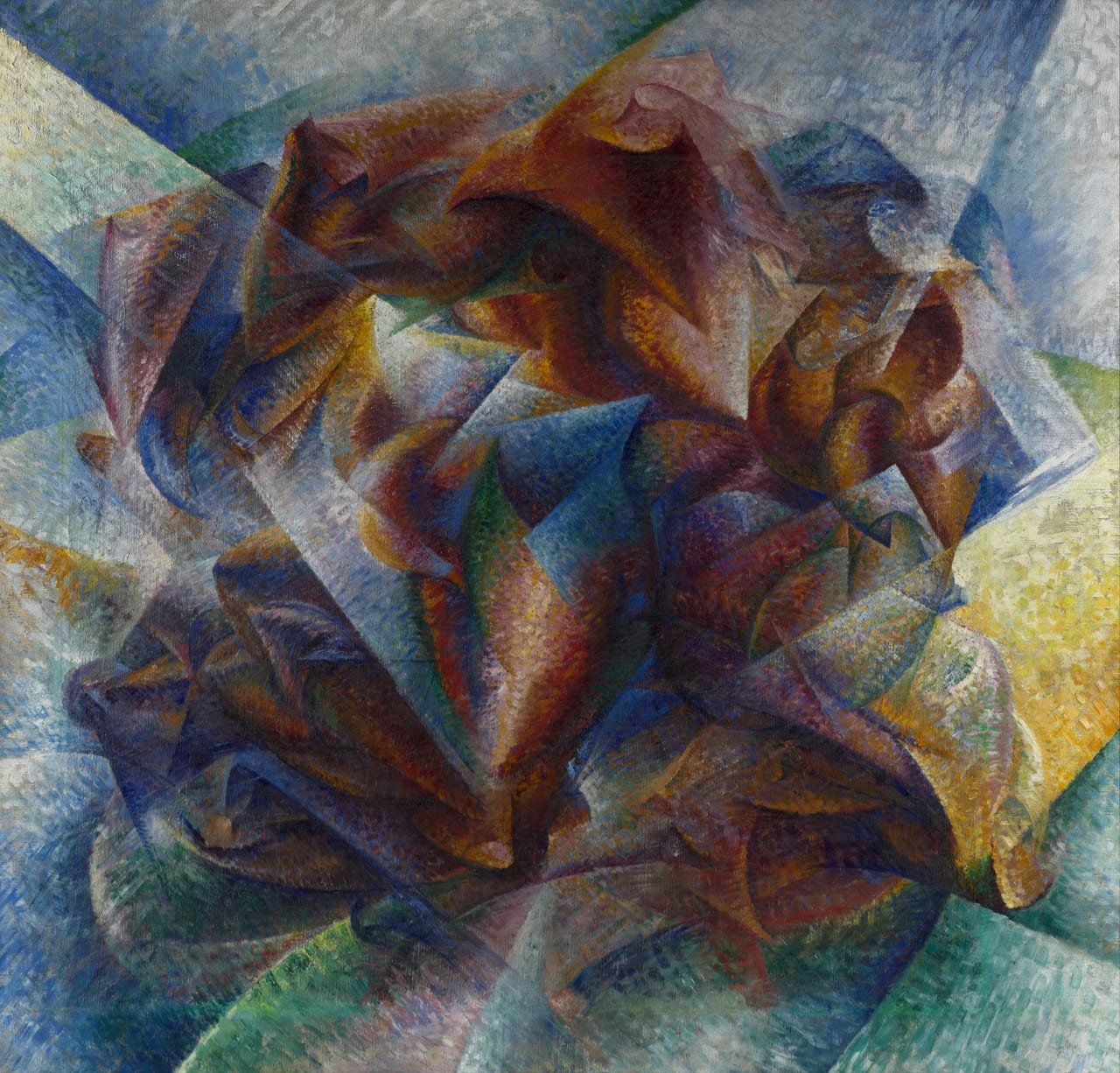
Umberto Boccioni
Dynamism of a Soccer Player · 1913
Italian painter and sculptor, 1882 to 1916.
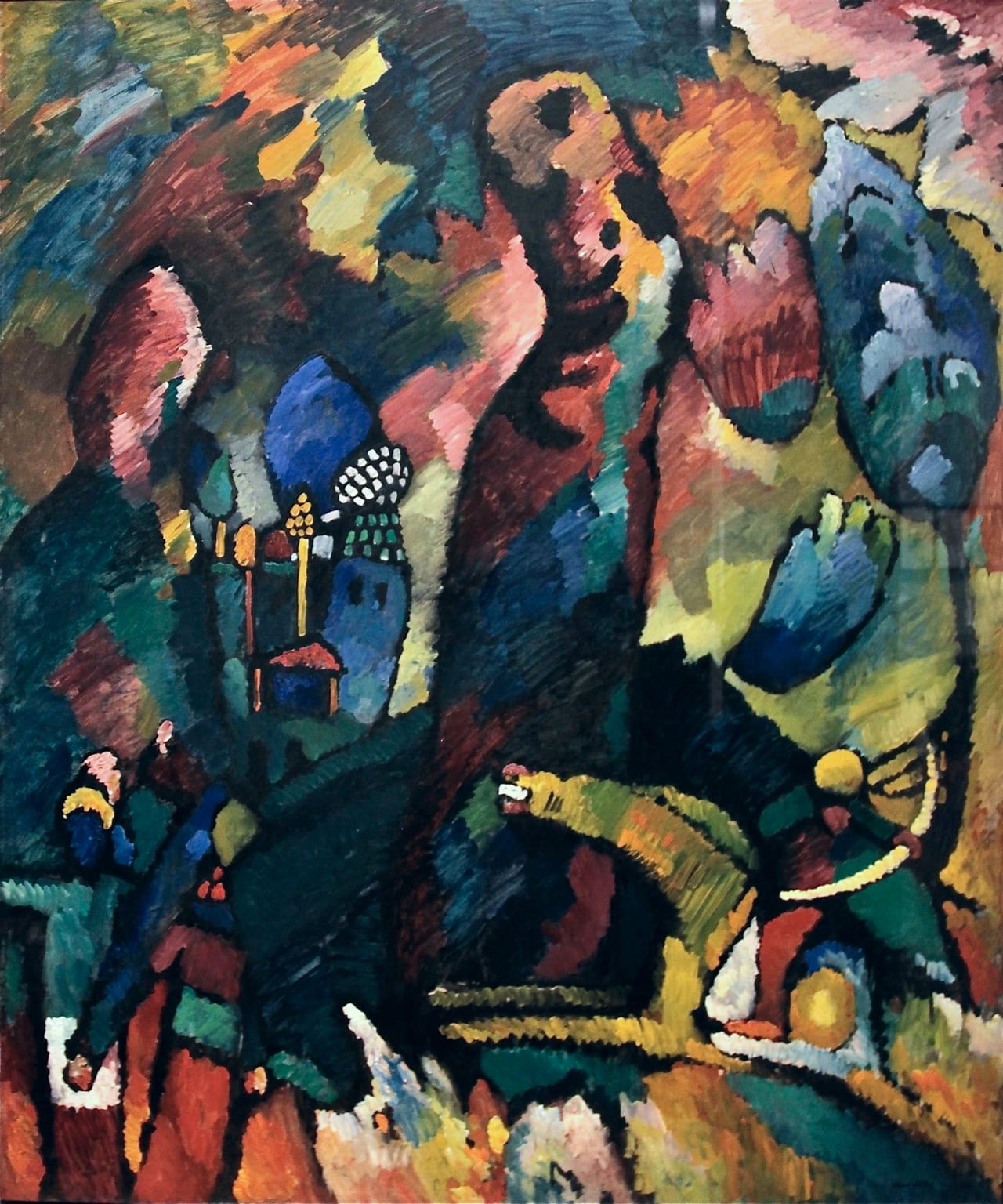
Wassily Kandinsky
Picture with an Archer · 1909
Russian painter, 1866 to 1944, among the first in the West to paint without a subject.
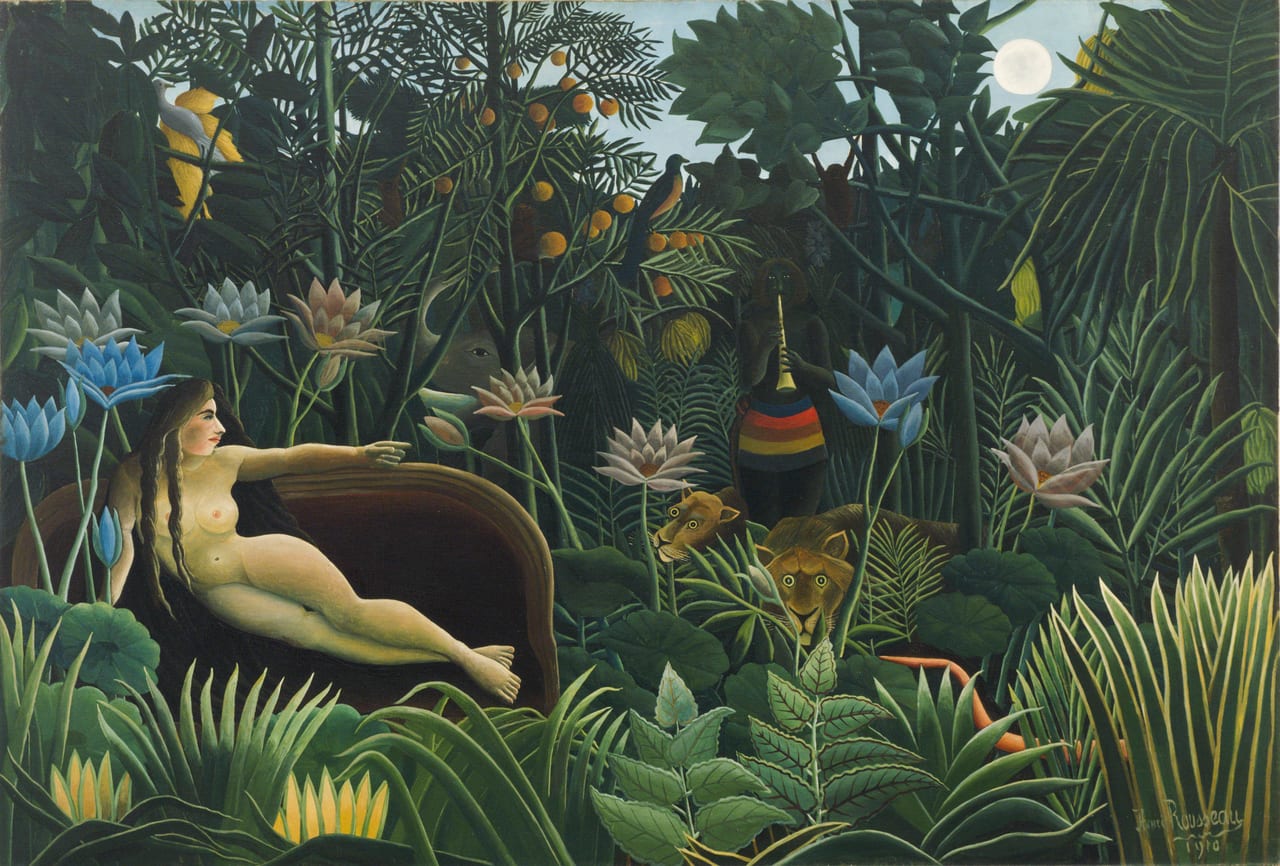
Henri Rousseau
The Dream · 1910
French naive painter, 1844 to 1910.
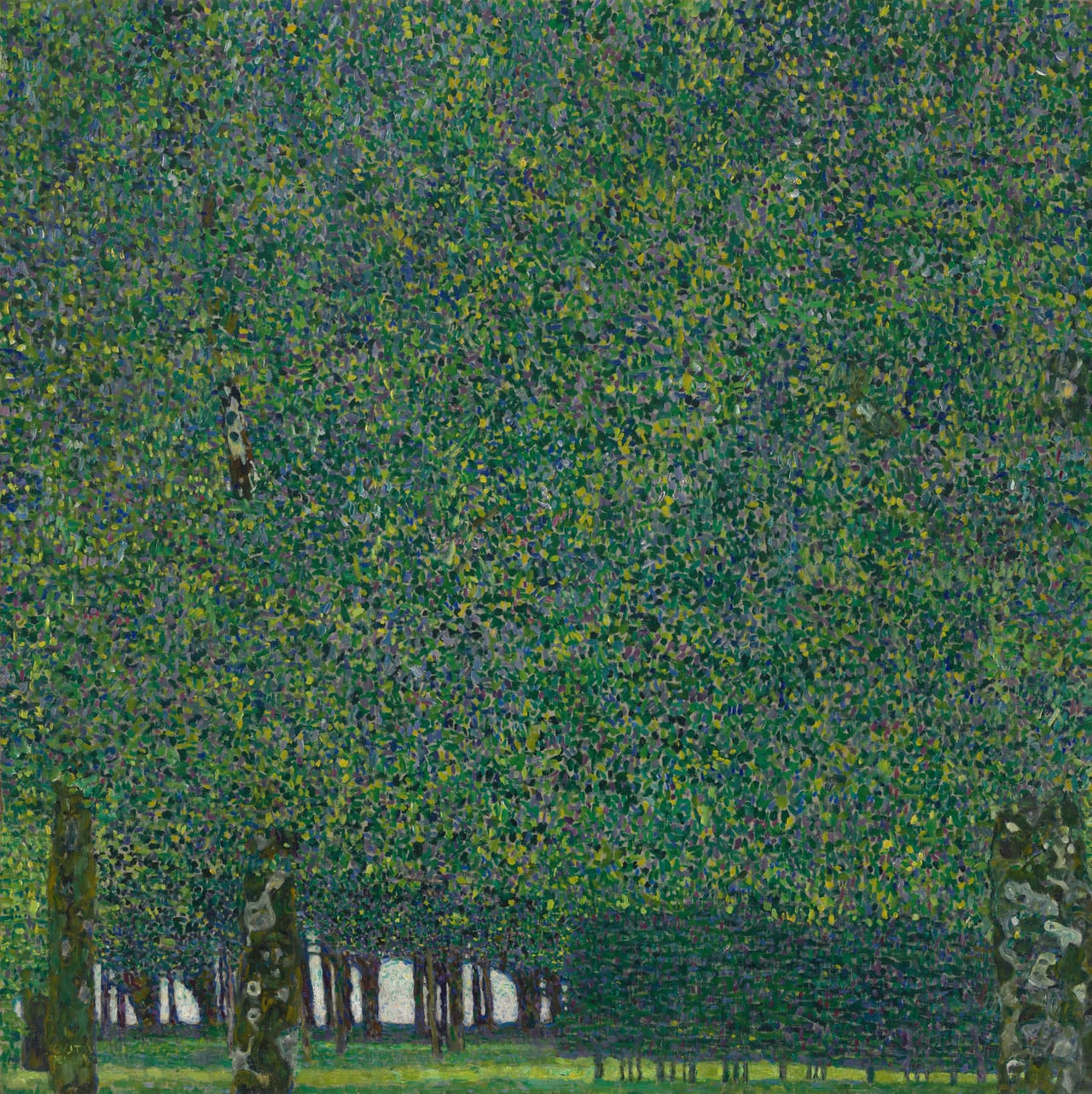
Gustav Klimt
The Park · 1909
Austrian symbolist painter, 1862 to 1918.
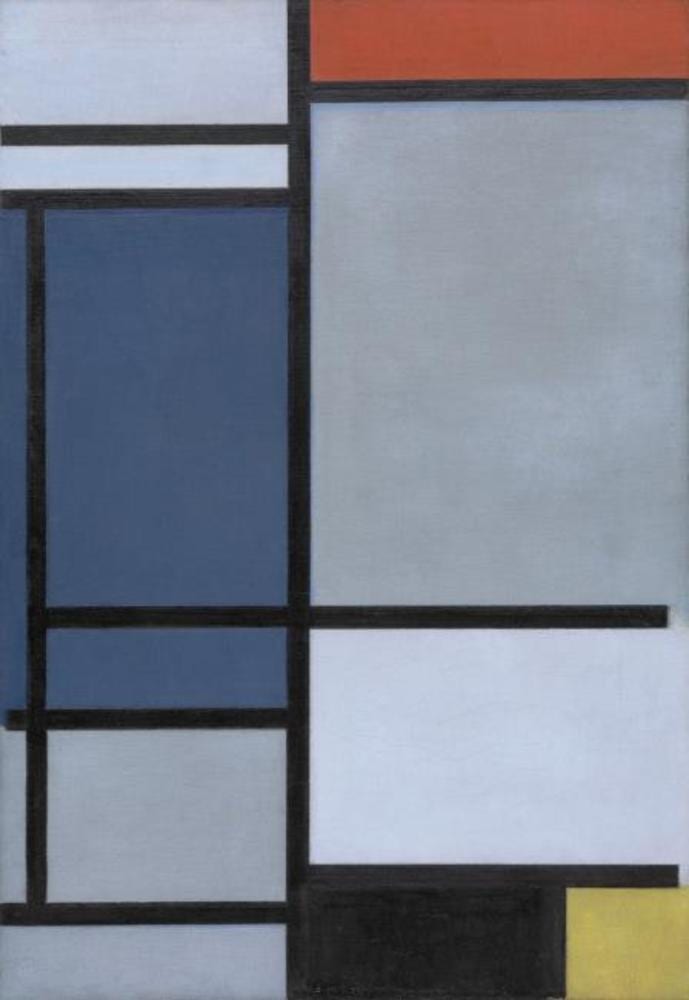
Piet Mondrian
Composition with Red Blue Black Yellow and Gray · 1921
Dutch painter, 1872 to 1944.
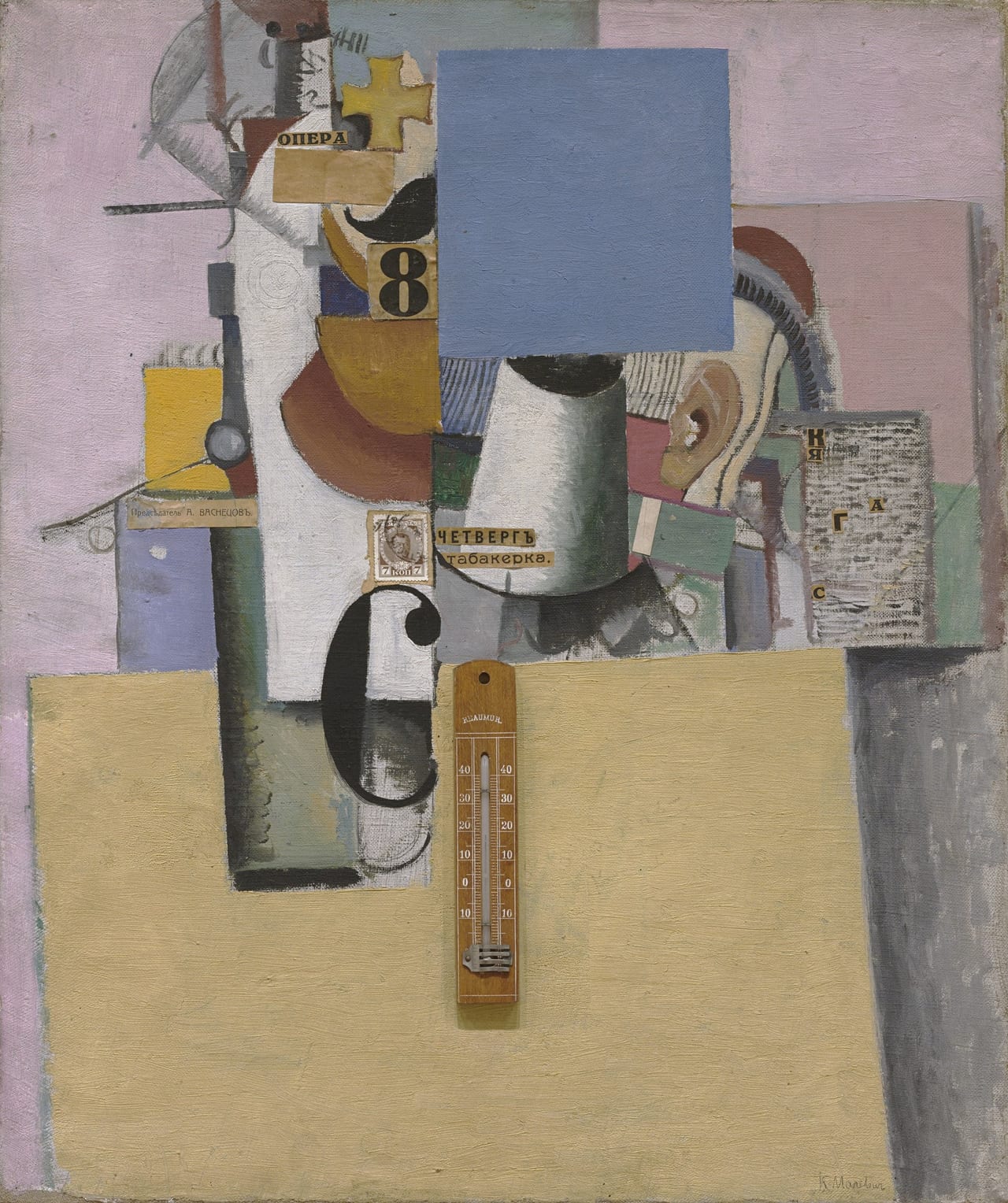
Kazimir Malevich
Reservist of the First Division · 1914
Russian avant-garde painter, 1879 to 1935, who founded Suprematism and put his first non-objective forms before the public in 1915.
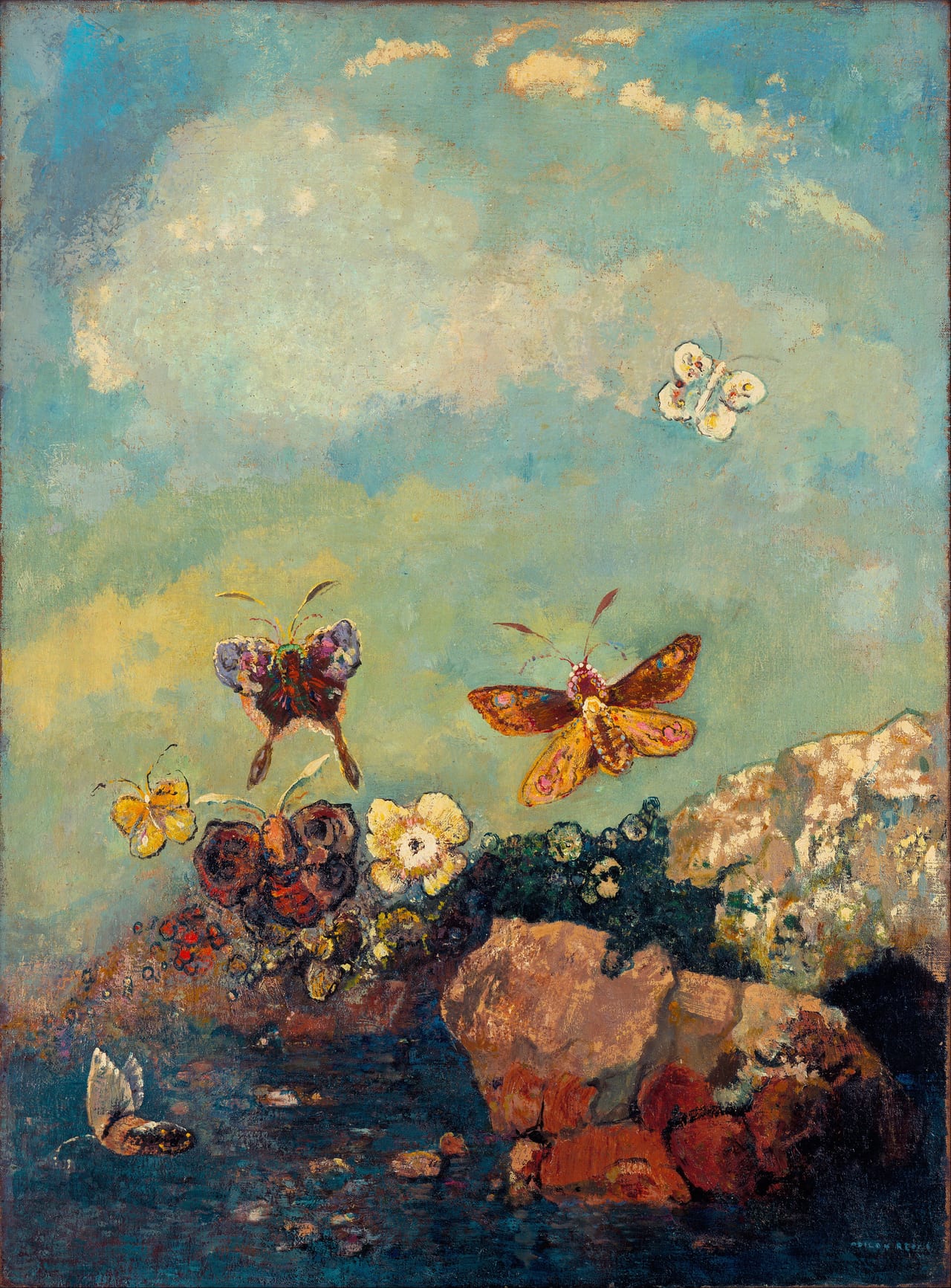
Odilon Redon
Butterflies · 1910
French painter, 1840 to 1916.
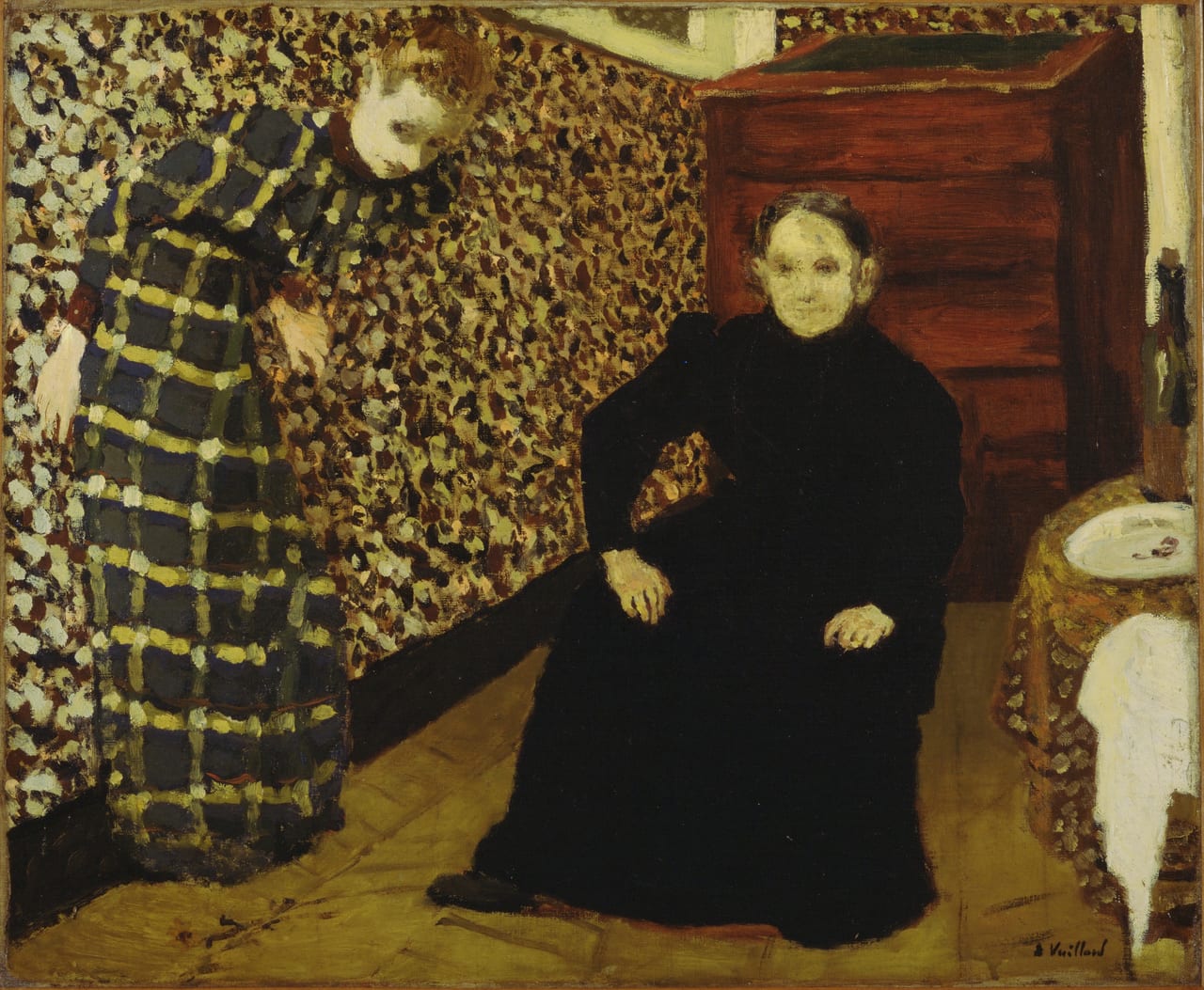
Édouard Vuillard
Interior Mother and Sister of the Artist · 1893
French painter, 1868 to 1940, a Nabi.
Artworks
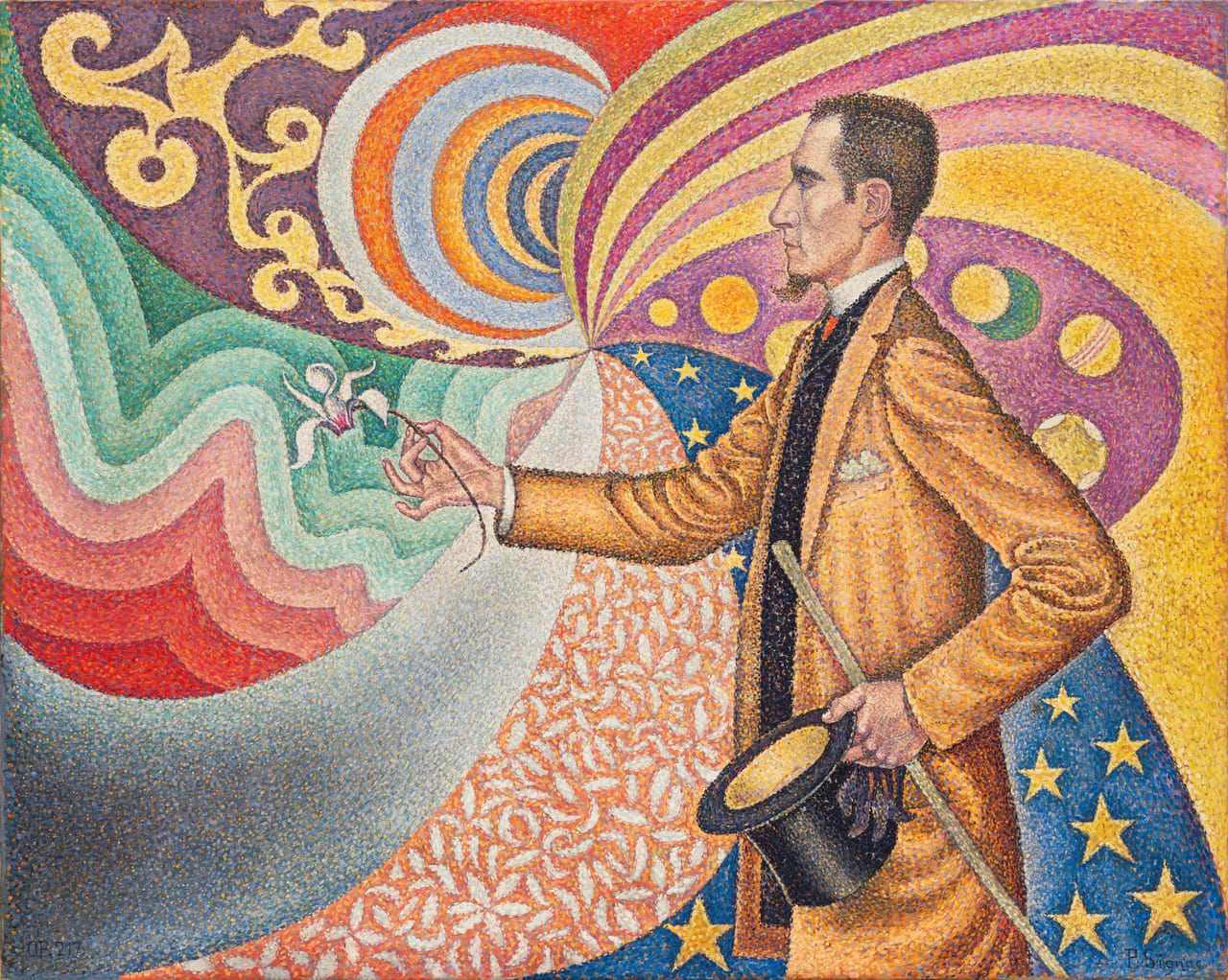
Opus 217. Against the Enamel of a Background Rhythmic with Beats and Angles, Tones, and Tints, Portrait of M. Félix Fénéon in 1890
Paul Signac · 1890
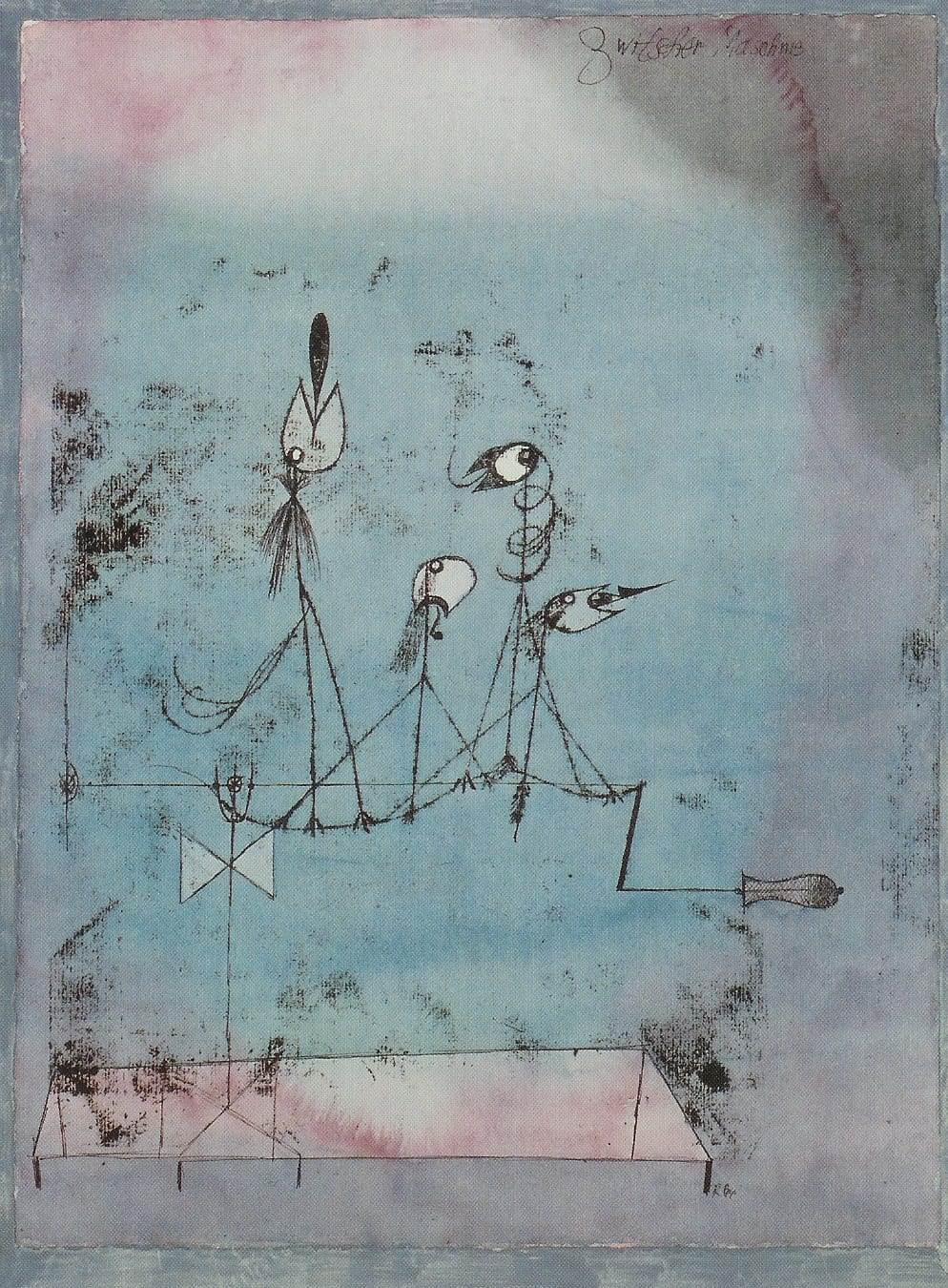
Twittering Machine
Paul Klee · 1922
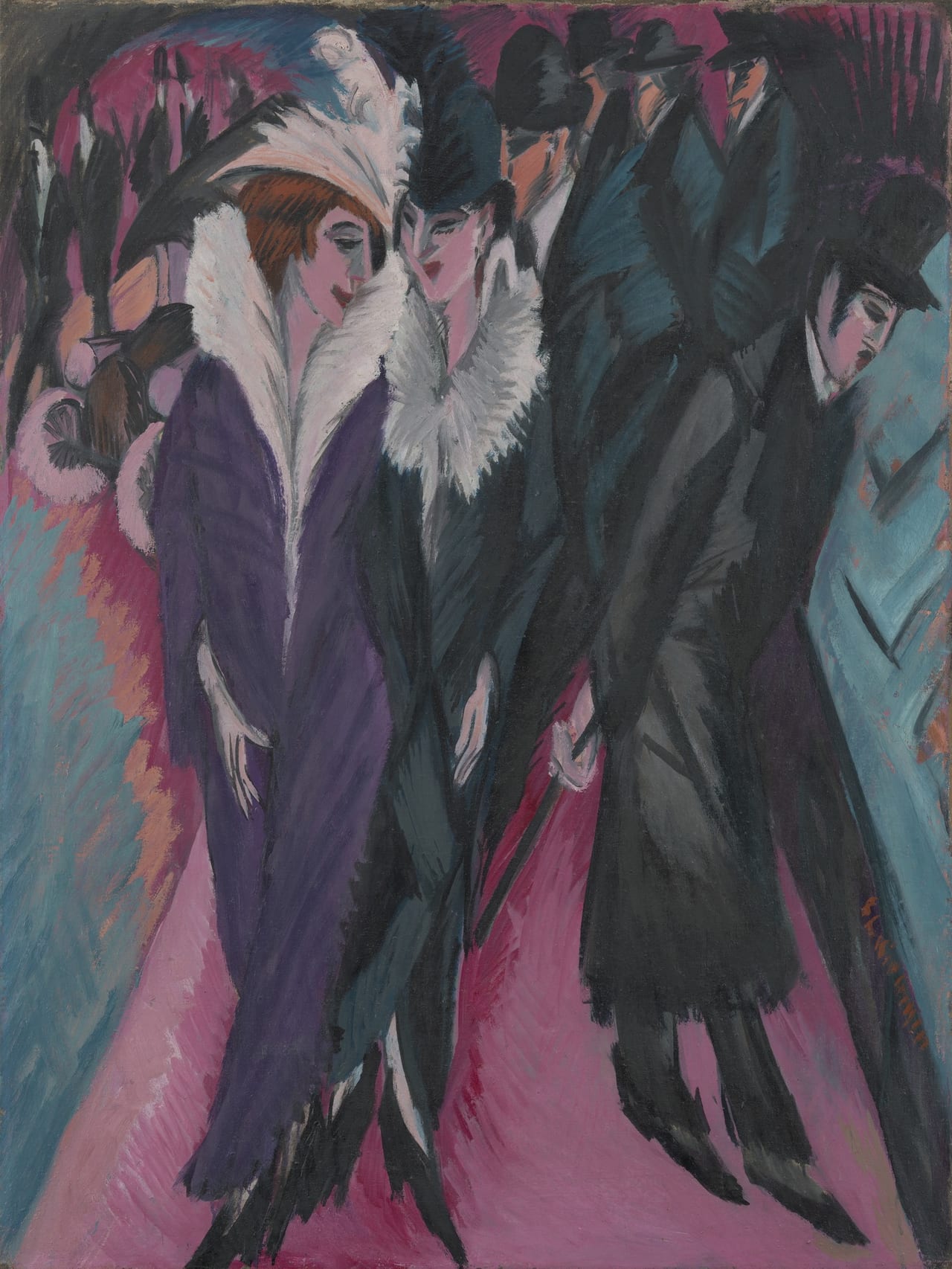
Street, Berlin
Ernst Ludwig Kirchner · 1913
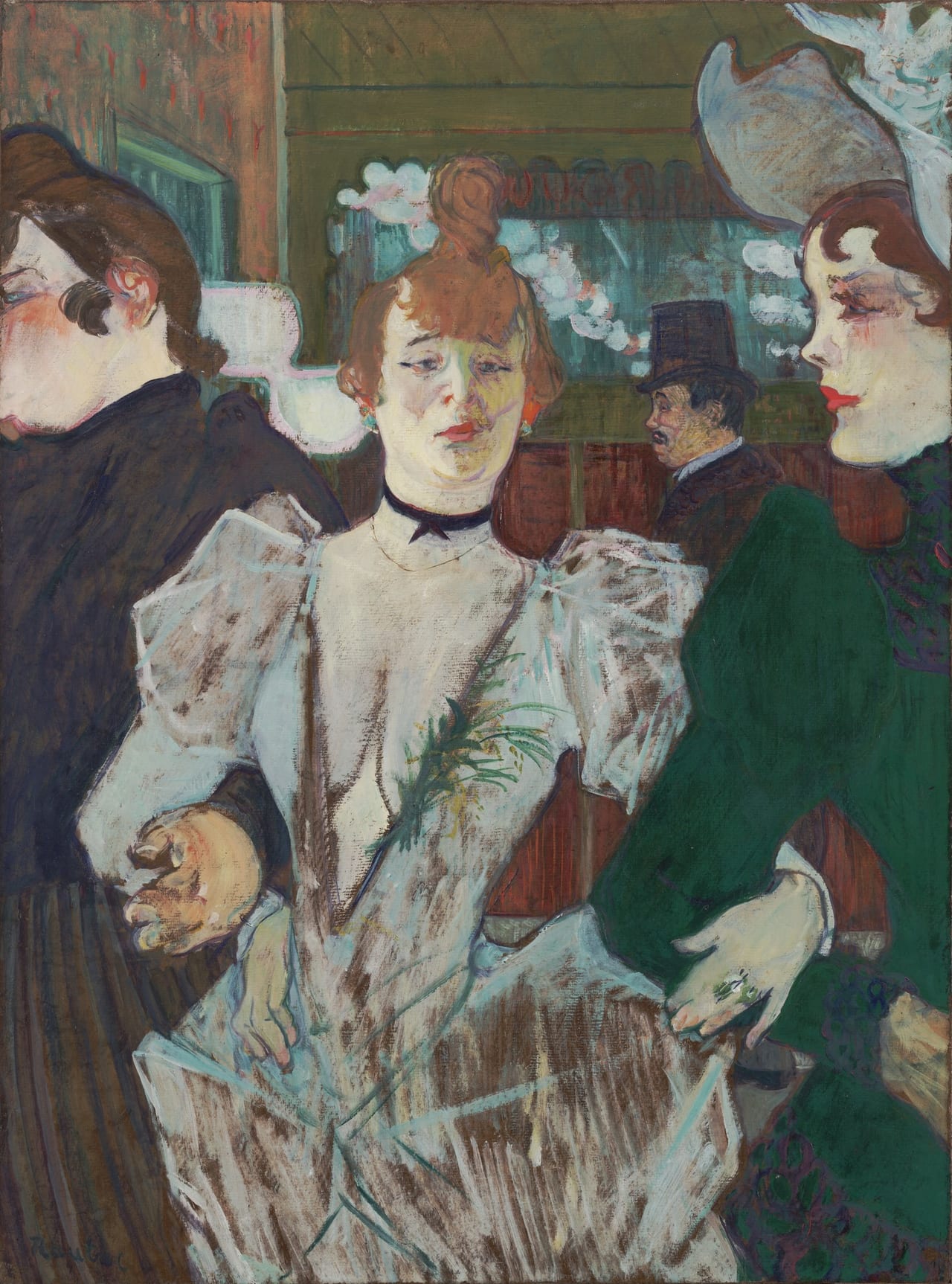
La Goulue at the Moulin Rouge
Henri de Toulouse-Lautrec
Henri de Toulouse-Lautrec, CC BY-SA 4.0, via Wikimedia Commons
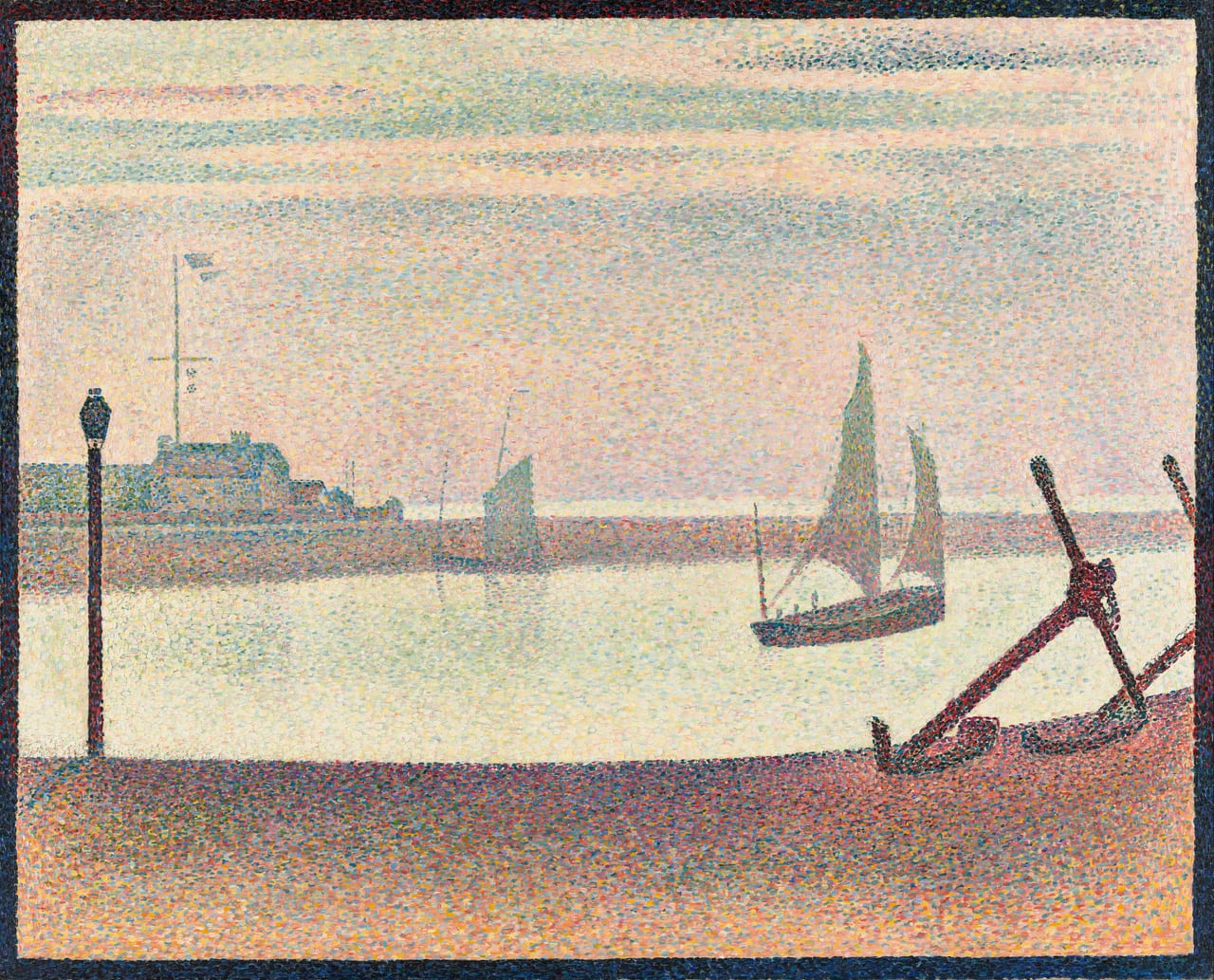
The Channel at Gravelines, Evening
Georges Seurat · 1890
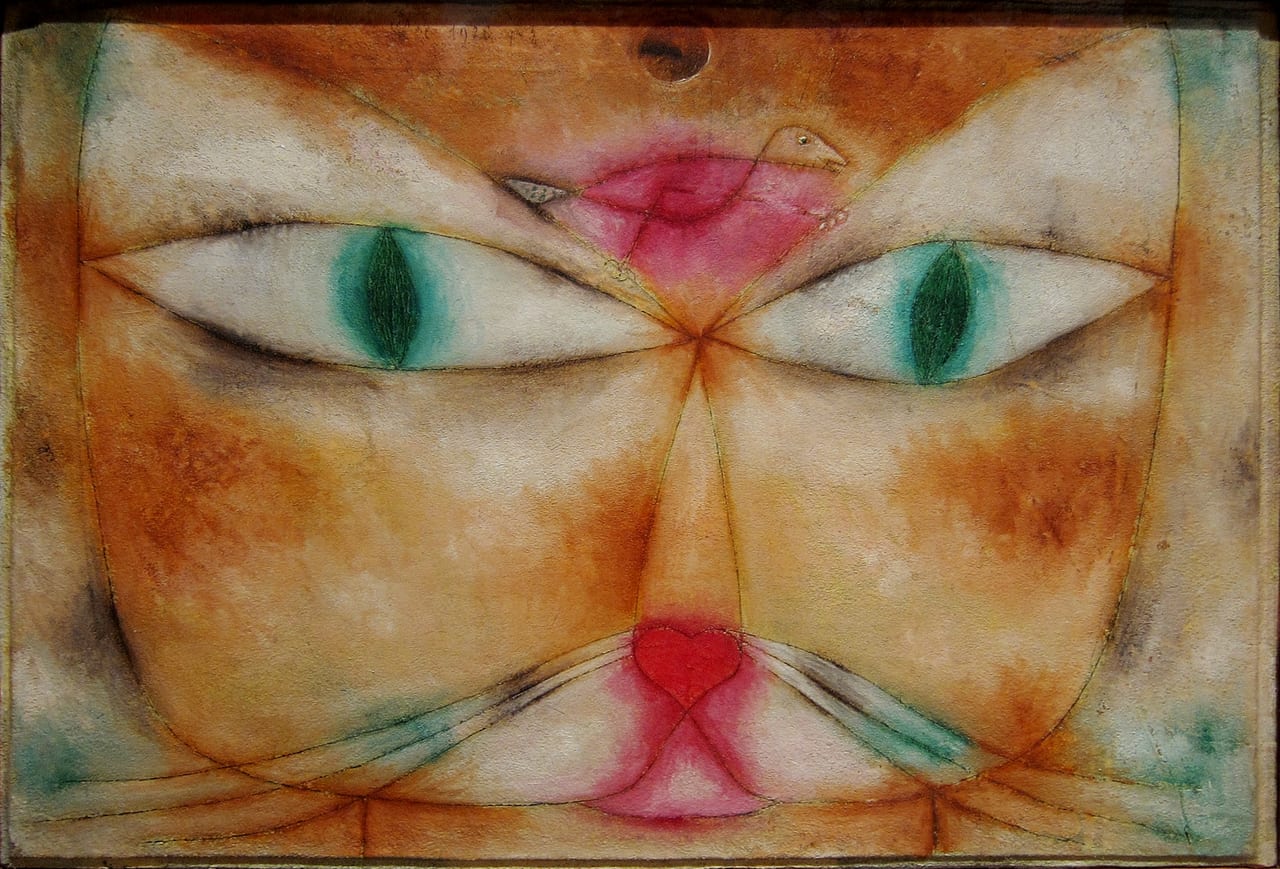
Cat and Bird
Paul Klee · 1928
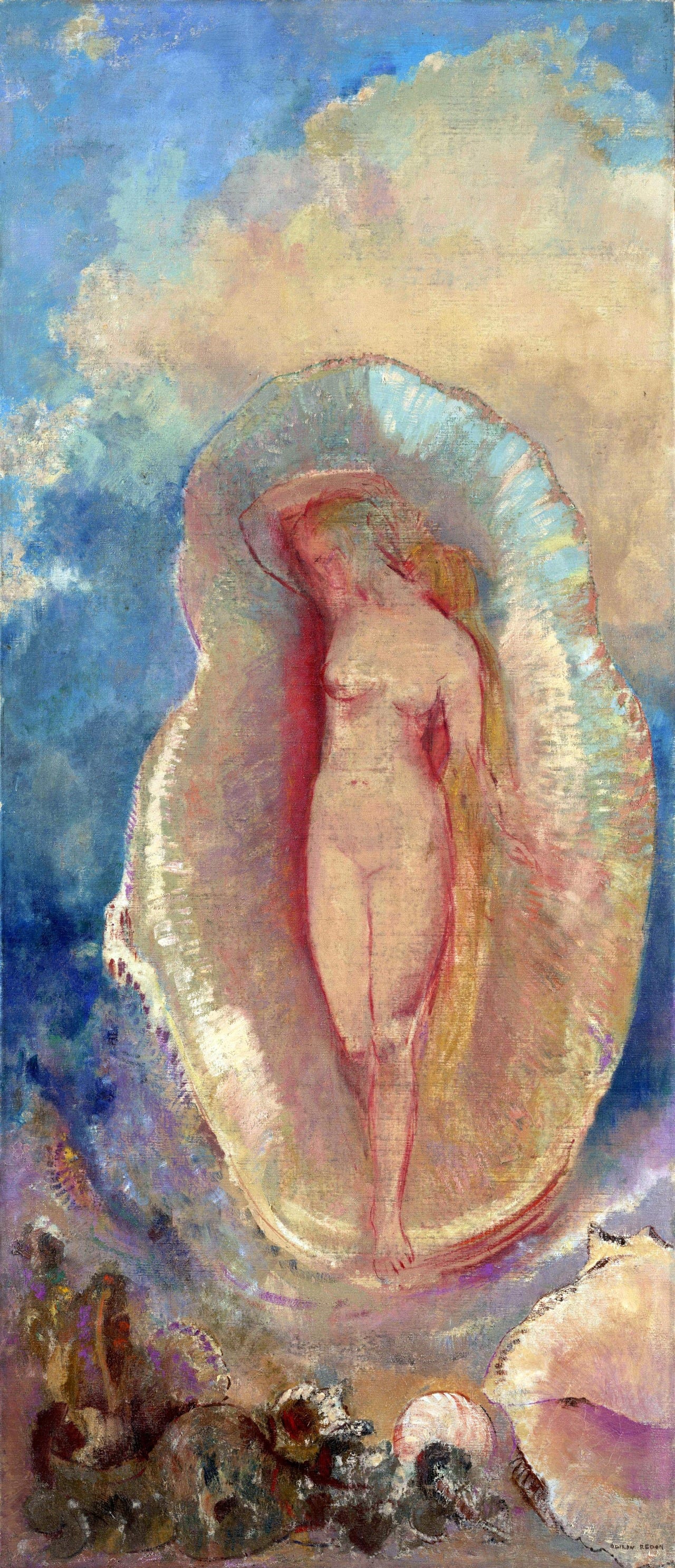
The Birth of Venus
Odilon Redon · 1912
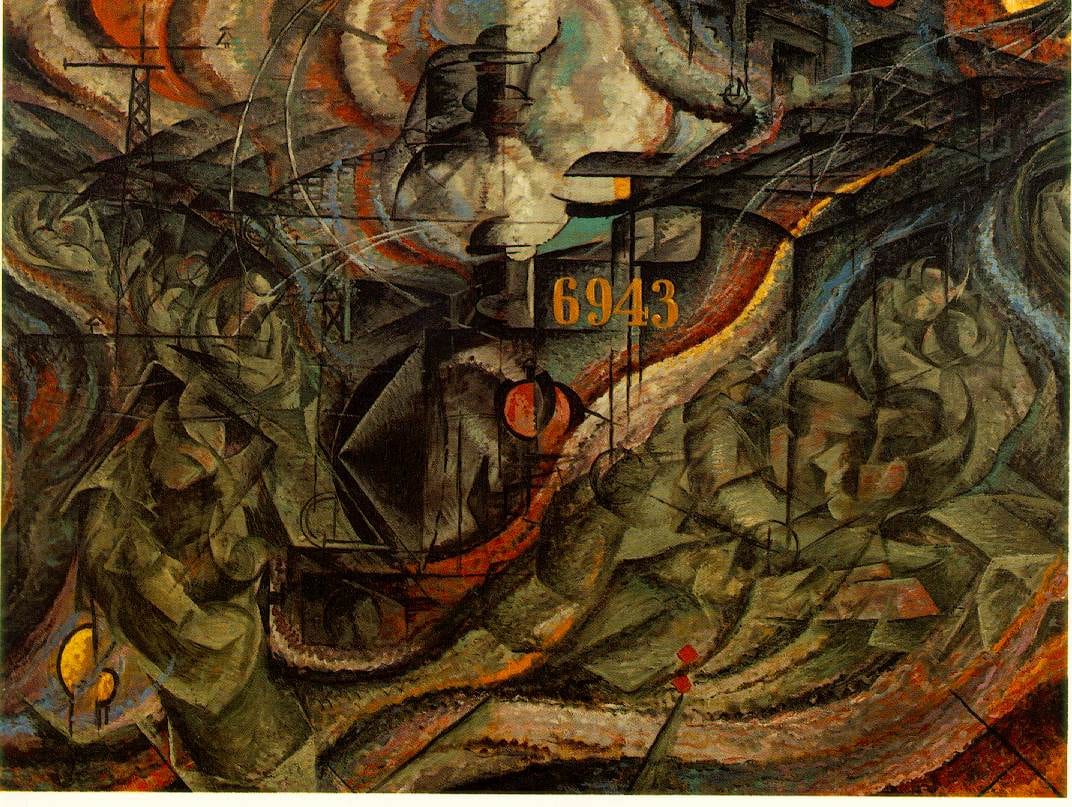
States of Mind I: The Farewells
Umberto Boccioni · 1911
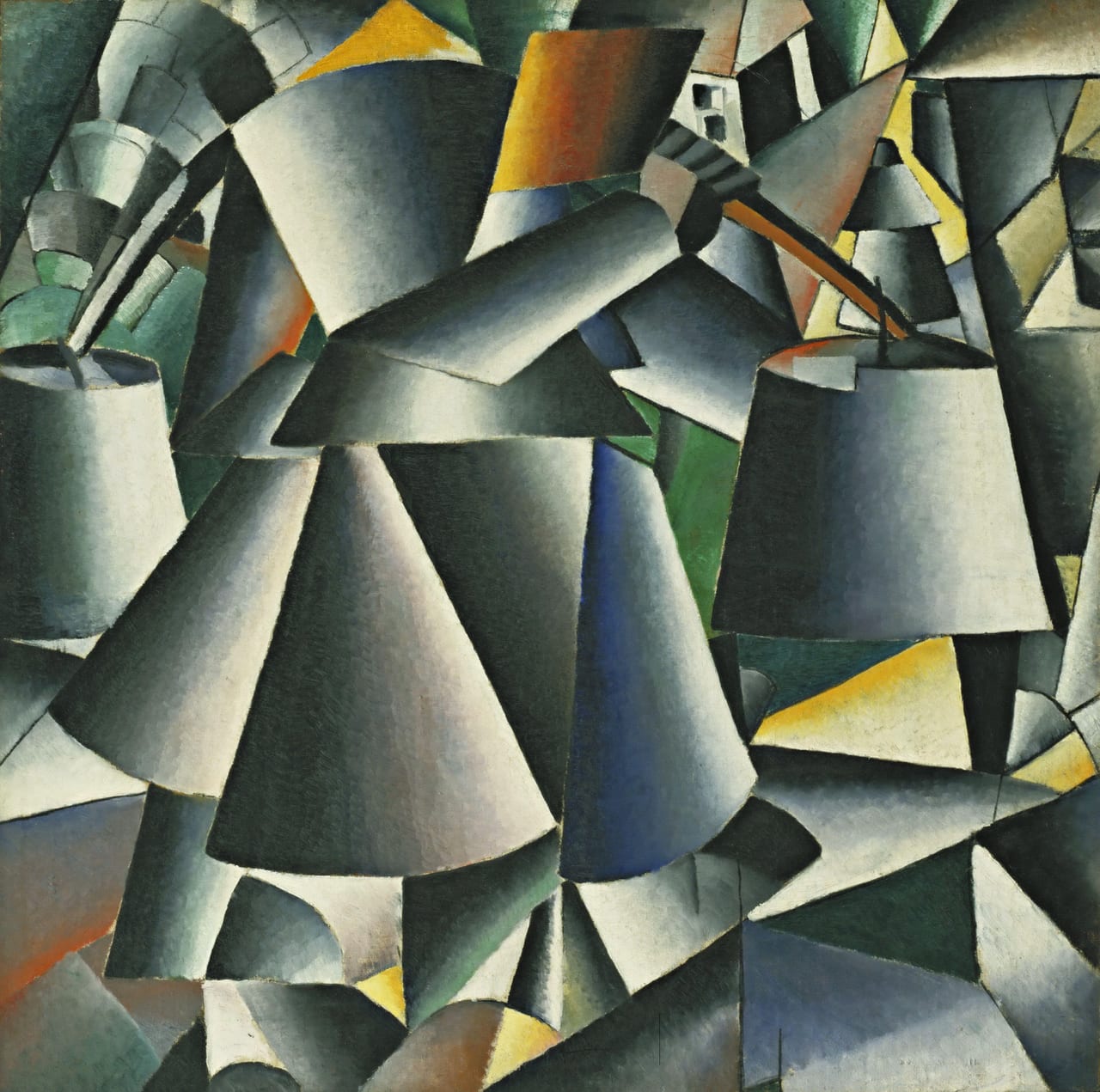
Woman with Pails: Dynamic Arrangement
Kazimir Malevich · 1912
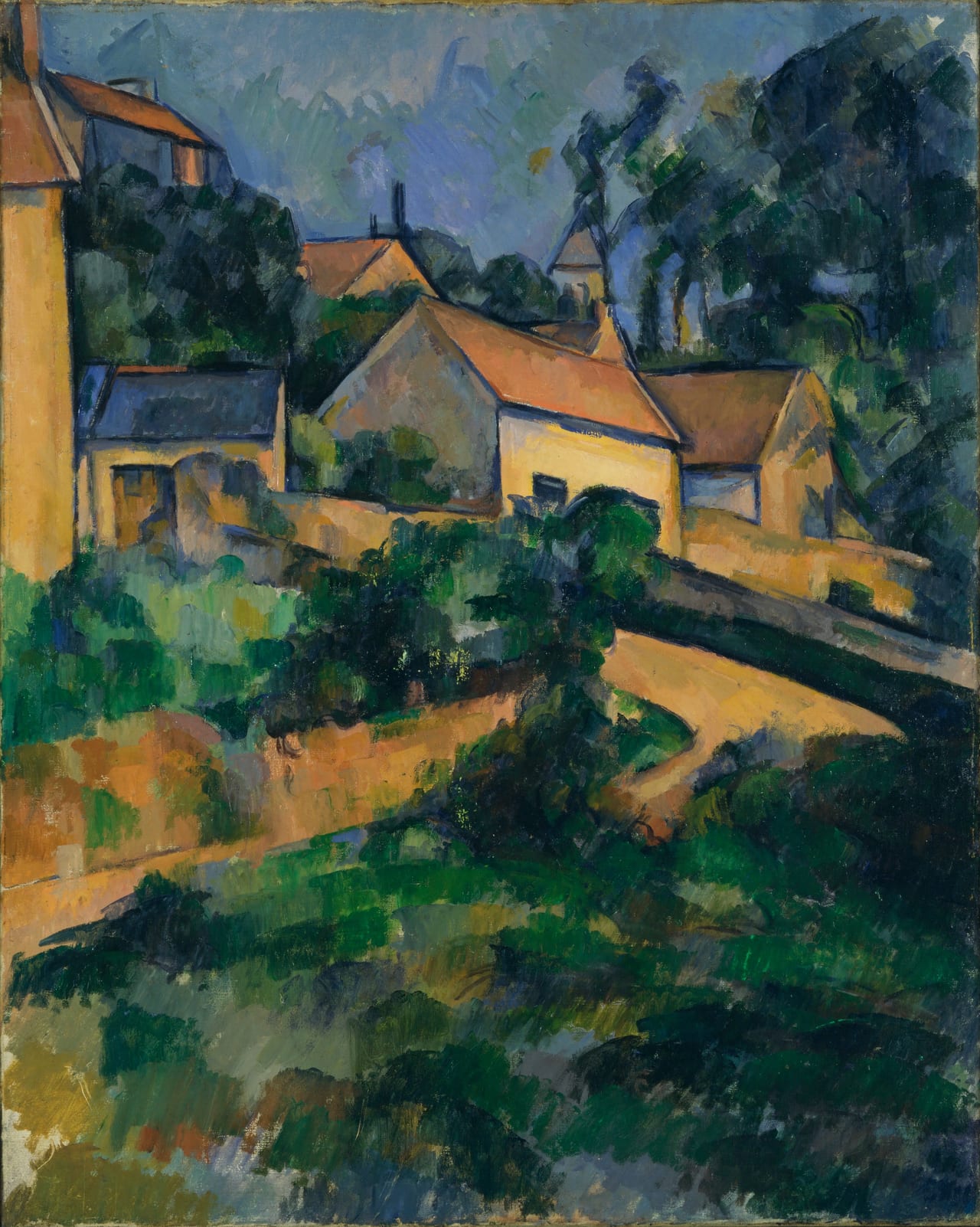
Turning Road at Montgeroult
Paul Cézanne · 1898
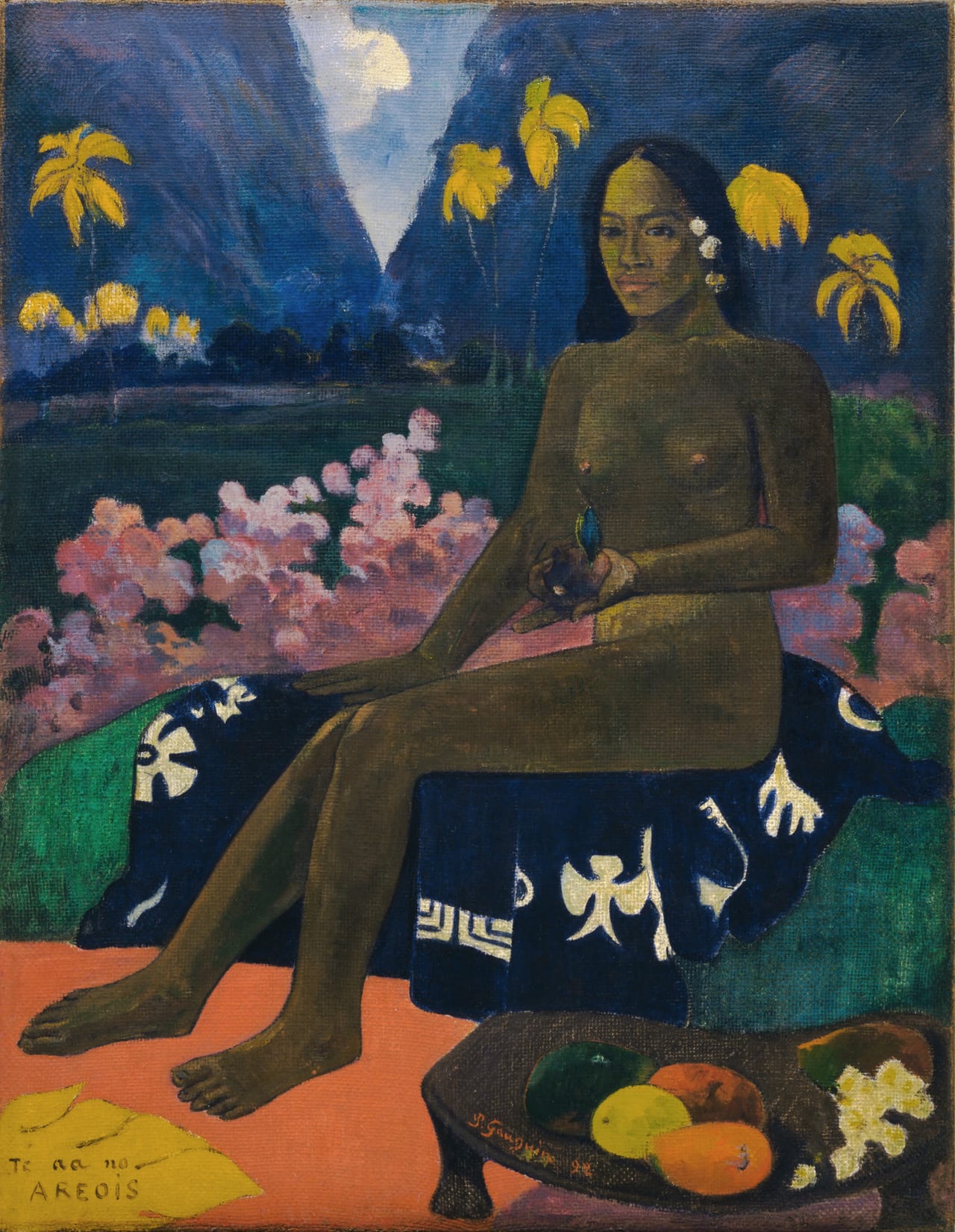
The Seed of the Areoi
Paul Gauguin · 1892
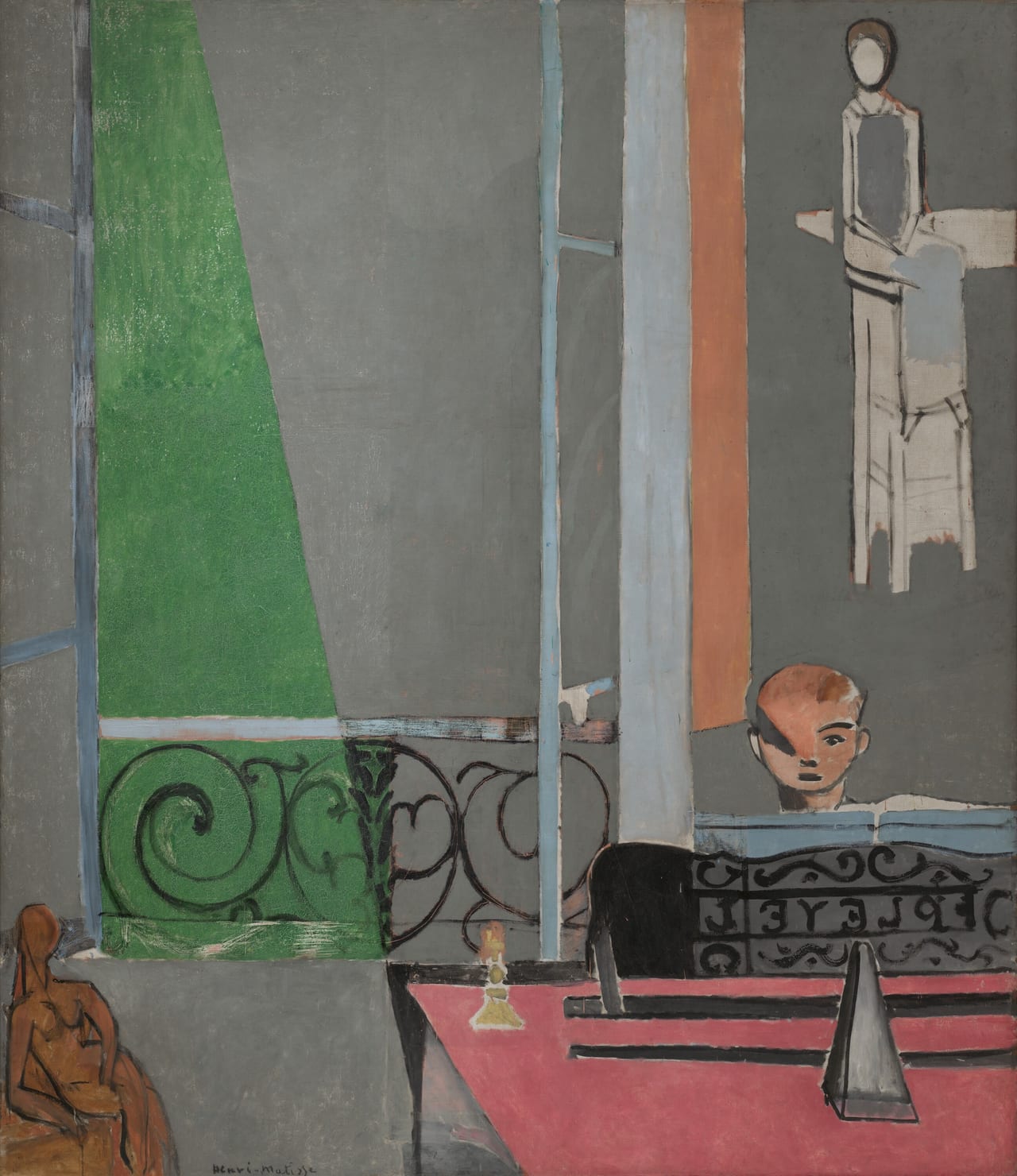
Piano Lesson
Henri Matisse · 1916
Sources
- Wikipedia, “Museum of Modern Art”
- Wikipedia, “The Starry Night”
- Wikipedia, “The Sleeping Gypsy”
- Wikipedia, “Henri Rousseau”
- Wikidata, “The Bather (Q2520343)”
- Wikipedia, “The City Rises”
- Wikipedia, “Hope II”
- Wikipedia, “Gustav Klimt”
- Wikipedia, “The Red Studio”
- Wikipedia, “Matisse”
- Wikidata, “Panel for Edwin R. Campbell No. 1 (Q19883716)”
- Wikidata, “The Storm (Q18752525)”
- Wikidata, “Water Lilies triptych (Q3877090)”
- Wikidata, “Dance (I) (Q19883545)”
- Wikipedia, “Unique Forms of Continuity in Space”
- Wikidata, “The Subway (Q19883996)”
- Wikipedia, “Les Demoiselles d'Avignon”
- Wikipedia, “The Persistence of Memory”
- Wikipedia, “Christina's World”
- Wikipedia, “Campbell's Soup Cans”
- Wikipedia, “Broadway Boogie Woogie”
- Wikipedia, “One: Number 31, 1950”
- Wikipedia, “Drowning Girl”
- Wikipedia, “Mont Sainte-Victoire (Cézanne)”
- Wikipedia, “Paul Cézanne”
- Wikidata, “Woman with a Veil (Q19883956)”
- Wikipedia, “Piet Mondrian”
- Wikidata, “Tableau I: Lozenge with Four Lines and Gray (Q19883941)”
- Wikipedia, “Robert Delaunay”
- Wikipedia, “Paul Gauguin”
- Wikipedia, “Kazimir Malevich”
- Wikipedia, “Odilon Redon”
- Wikipedia, “Édouard Vuillard”
- Wikipedia, “Wassily Kandinsky”
- Wikidata, “Artist records (Q5582, Q296, Q152797)”
- Wikipedia, “Equivalents”
- Wikipedia, “Hill & Adamson”
- Wikidata, “Château Noir 1903 (Q18688317)”
- The Starry Night — Public domain via Wikimedia Commons (Public domain)
- The Sleeping Gypsy — Public domain via Wikimedia Commons (Public domain)
- The Bather — Public domain via Wikimedia Commons (Public domain)
- The City Rises — Public domain via Wikimedia Commons (Public domain)
- Hope II — Public domain via Wikimedia Commons (Public domain)
- L’Atelier Rouge — Public domain via Wikimedia Commons (Public domain)
- Panel for Edwin R. Campbell No. 1 — Public domain via Wikimedia Commons (Public domain)
- The Storm — Public domain via Wikimedia Commons (Public domain)
- Water Lilies — Public domain via Wikimedia Commons (Public domain)
- Dance (I) — Public domain via Wikimedia Commons (Public domain)
- The Subway — Public domain via Wikimedia Commons (Public domain)
- Château Noir 1903 — Public domain via Wikimedia Commons (Public domain)
- Woman with a Veil — Public domain via Wikimedia Commons (Public domain)
- Tableau I: Lozenge with Four Lines and Gray — Public domain via Wikimedia Commons (Public domain)
- The Tower — Public domain via Wikimedia Commons (Public domain)
- The Moon and the Earth — Public domain via Wikimedia Commons (Public domain)
- Suprematist Composition: Airplane Flying — Public domain via Wikimedia Commons (Public domain)
- Portrait of Joseph Roulin — Public domain via Wikimedia Commons (Public domain)
- Boy in a Red Vest — Public domain via Wikimedia Commons (Public domain)
- The Japanese Footbridge — Public domain via Wikimedia Commons (Public domain)
- Dynamism of a Soccer Player — Public domain via Wikimedia Commons (Public domain)
- Picture with an Archer — yakovlev.alexey from Moscow, Russia, CC BY-SA 2.0, via Wikimedia Commons (CC BY-SA 2.0)
- The Dream — Public domain via Wikimedia Commons (Public domain)
- The Park — Public domain via Wikimedia Commons (Public domain)
- Composition with Red Blue Black Yellow and Gray — Public domain via Wikimedia Commons (Public domain)
- Reservist of the First Division — Public domain via Wikimedia Commons (Public domain)
- Butterflies — Public domain via Wikimedia Commons (Public domain)
- Interior Mother and Sister of the Artist — Public domain via Wikimedia Commons (Public domain)
Invite the Museum of Modern Art into your living room