Lake Nemi, sunset
Joseph Wright of Derby · c. 1790

National Gallery of Victoria
Melbourne
Founded in 1861, the National Gallery of Victoria in Melbourne is the oldest public art gallery in Australia, and its collection runs from the art of ancient civilisations to work fresh from the studio. Alfred Felton’s bequest of 1903 gave it, for a time, more to spend on art than the National and Tate galleries in London together, and brought it Tiepolo’s The Banquet of Cleopatra, a Paris boulevard by Pissarro and some of its most loved Australian pictures.
- the oldest public art gallery in Australia
- Since 1861
- in the collection, the second largest of any Australian gallery
- 76,000+ works
- acquired through Alfred Felton’s bequest by 2001
- 15,000+ items
Australia’s oldest public gallery
The gallery was founded in 1861. In 1959 the Melbourne firm Grounds Romberg Boyd won the contract to design a new building for it and the neighbouring Arts Centre, and in 1968 the gallery moved from the State Library site in Swanston Street to St Kilda Road, where Sir Roy Grounds’s building opened in August that year. Its first exhibition there, The Field, opened on 21 August: the first comprehensive showing in Australia of colour field painting and abstract sculpture.
Over the Great Hall, Leonard French spent 1963 to 1967 on a ceiling of cut glass, still the largest in the world. The gallery left the building for renovation and expansion in 1999; when it reopened in 2003 it took back only the international collections, and the Australian collection moved to a new building nearby. Its works, which belong to the people of Victoria, are now shown at the gallery’s two city locations, NGV International and the Ian Potter Centre: NGV Australia.
The Felton Bequest
Alfred Felton, a Melbourne businessman who lived modestly in two rooms of the Esplanade Hotel at St Kilda, bequeathed the gallery 383,163 pounds in his will of 1903, a buying fund larger at the time than those of the National and Tate galleries in London together. It transformed the gallery’s painting and sculpture from Europe, Britain and the United States; many of those works are in the international collection, which now spans most of the major movements and artists from the early Middle Ages to 2000. In the first half of the twentieth century the bequest took the gallery into the international market, adding European masters and antiquities to the collection: Pissarro’s Boulevard Montmartre, morning, cloudy weather in 1905, Hokusai’s The great wave off Kanagawa in 1909 and Tiepolo’s The Banquet of Cleopatra in 1933.
From the middle of the century the bequest also acquired First Nations and other Australian art, later contemporary work as well, and by 2001 it had brought the collection more than 15,000 items. Dr Mary Woodall, appointed on 1 May 1965 as the first woman to advise the bequest from London, revived its buying of old masters between 1965 and 1974, acquiring major works by Claude Lorrain, Guido Reni and Annibale Carracci; seven of her major purchases dominate NGV International’s mezzanine galleries of European art from the sixteenth and seventeenth centuries. In 2021 the bequest acquired Lavinia Fontana’s Mystic marriage of Saint Catherine, by a painter regarded as the first professional woman painter.
Australian painting
The Australian collection grew from the gallery’s colonial beginnings to record painting, sculpture, decorative arts and time-based work from settlement to the twentieth century: the artists of the colonial and postcolonial years, the arrival of modernism early in the twentieth century, and abstract and colour-field painting after it.
The Heidelberg School painters, among them Tom Roberts, Frederick McCubbin and Charles Conder, were instrumental in introducing Impressionism to Australia. Back in Melbourne in 1885, Roberts, with McCubbin and Louis Abrahams, founded the first artists’ camp in the bush at Box Hill, and later joined Charles Conder and Arthur Streeton at Eaglemont; the Impression Exhibition of 1889 showed landscapes painted on the lids of cedar cigar boxes. Despite the protests, the Heidelberg School of Roberts and his fellow Impressionists dominated Australian art for more than thirty years. McCubbin’s The pioneer, acquired in 1906, and Roberts’s Shearing the rams, acquired in 1932, both came through the Felton Bequest and are among the gallery’s most loved works.
What to see
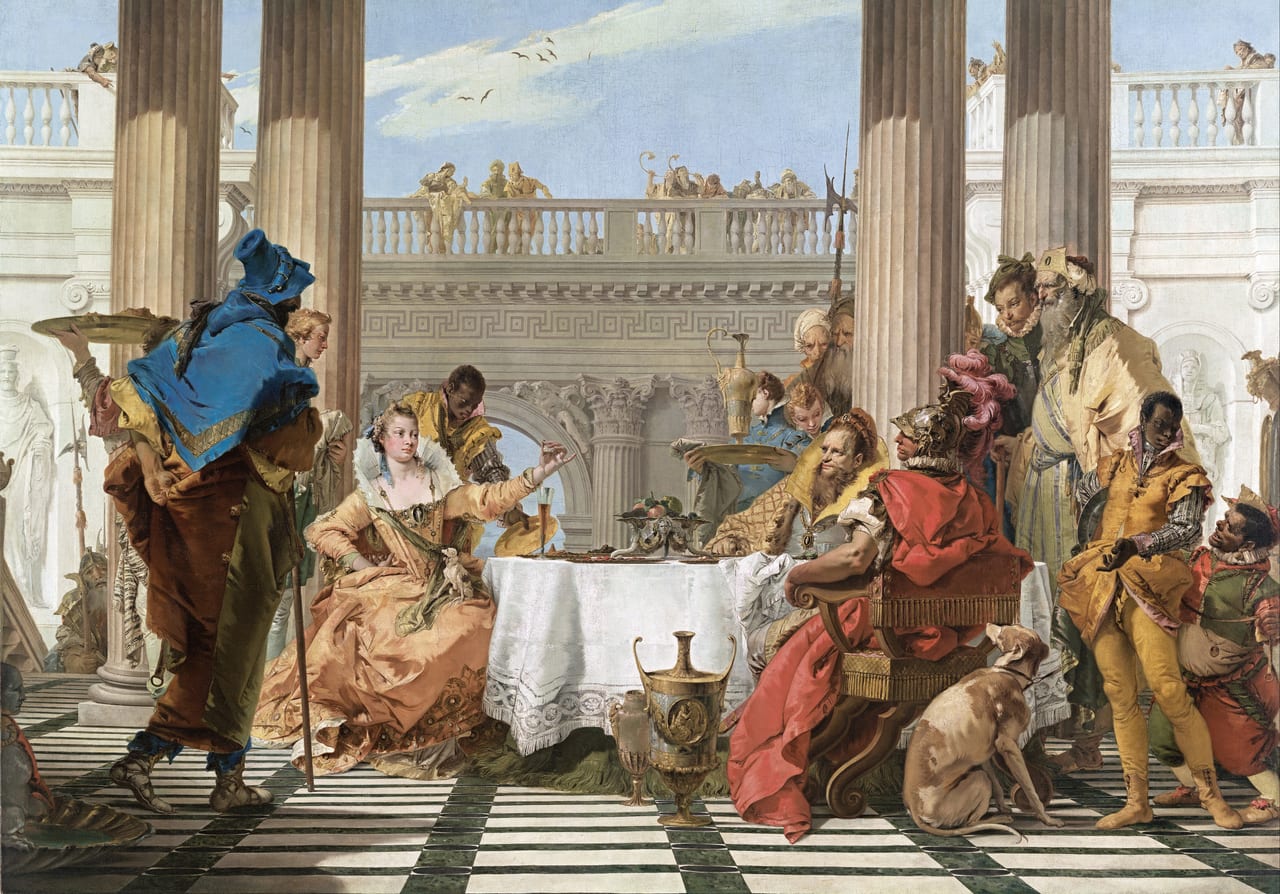
The Banquet of Cleopatra
Giambattista Tiepolo · 1743–1744
The story comes from Pliny’s Natural History: Cleopatra wagered that she could give a feast more lavish than any of Mark Antony’s. Tiepolo shows the moment when she takes off one of her two priceless pearl earrings, dissolves it in vinegar and drinks it, and Antony loses the bet. Acquired in 1933, it is still one of the most celebrated works in the collection.
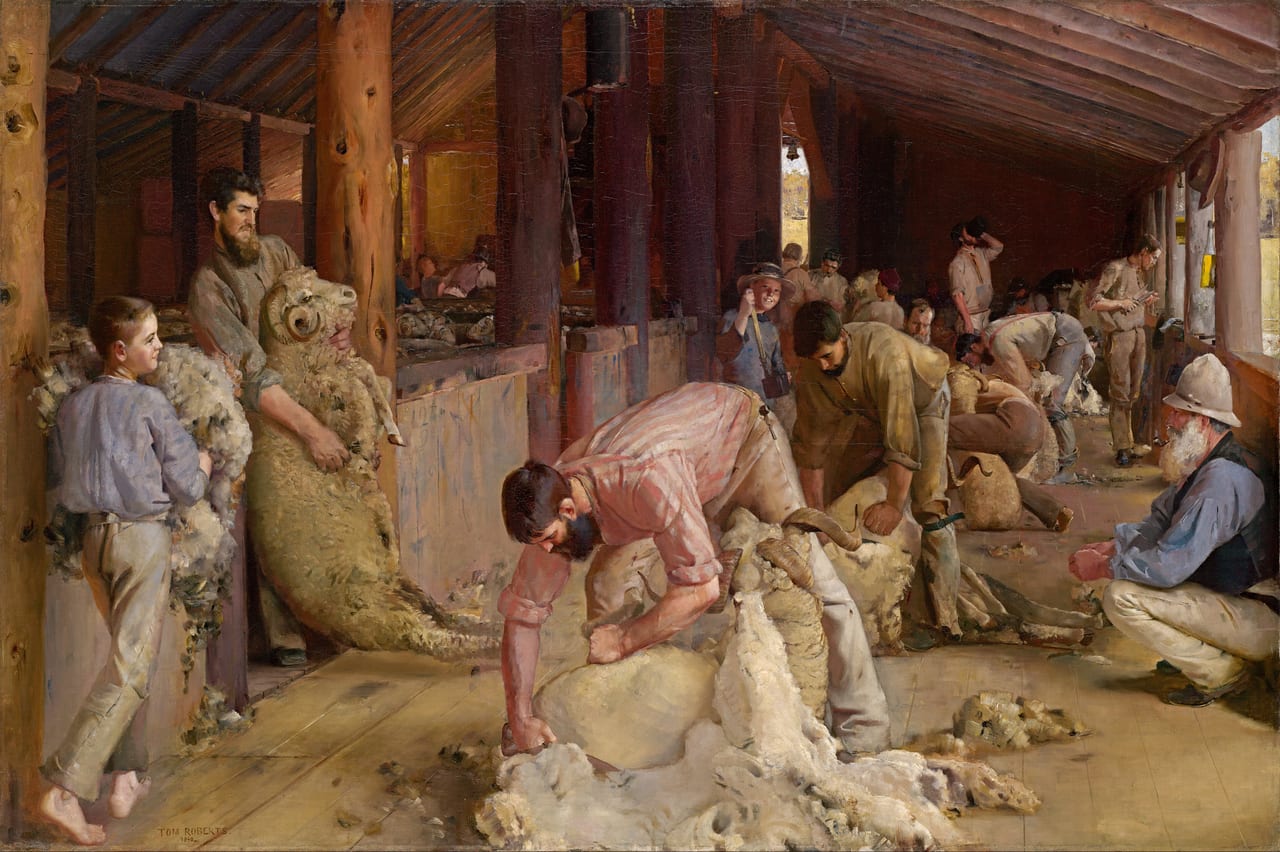
Shearing the rams
Tom Roberts · 1890
Roberts made sketches on the spot at Brocklesby Station, Corowa, in New South Wales, in the late spring of 1888, and came back for the next two shearing seasons to work on the canvas. In the empty woolshed he paid young Susan Bourne, who posed as the tar boy, and her sister sixpence each to stir up the dust. The picture answers the nationalist feeling of late nineteenth-century Australia.
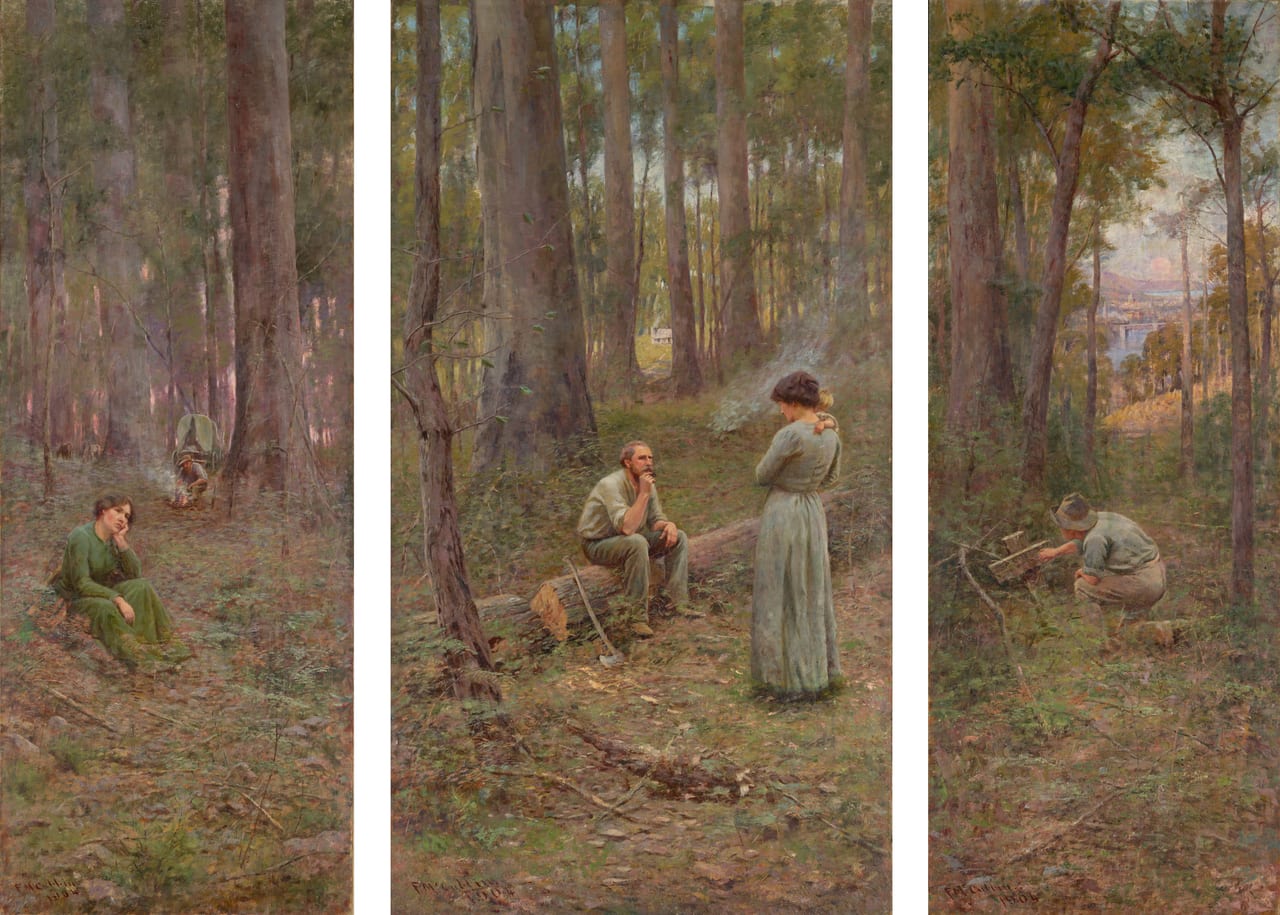
The pioneer
Frederick McCubbin · 1904
McCubbin’s tribute to Federation is a large triptych in the form of an altarpiece, following a pioneer family through struggle, resourcefulness and tragedy; the prosperous city of Melbourne, just visible behind them, hints at the future. It was the last of his historical narratives, and the Felton Bequest acquired it in 1906.
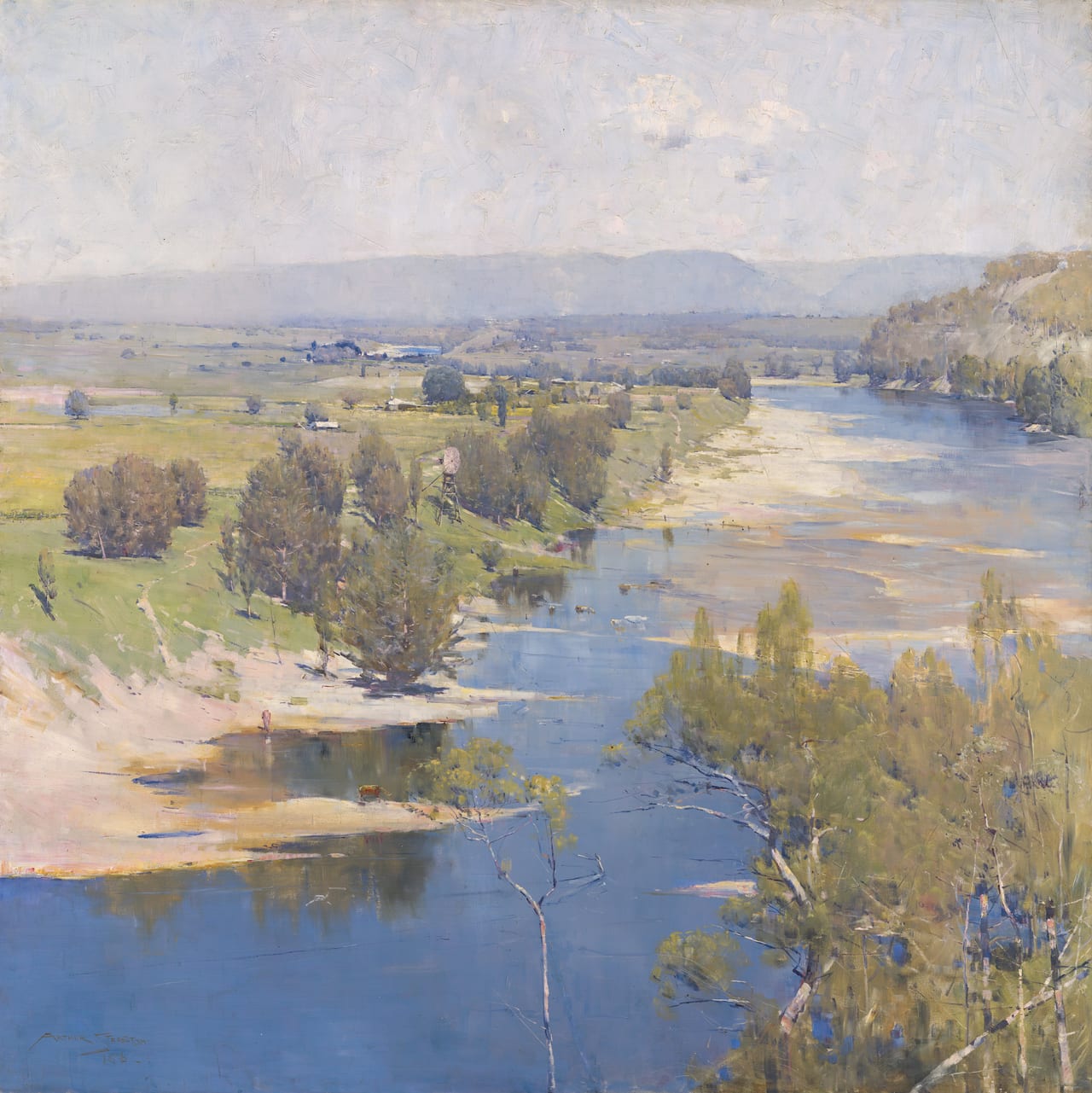
‘The purple noon’s transparent might’
Arthur Streeton · 1896
On the upper Hawkesbury River, between Richmond Bridge and Windsor, Streeton found a wide view towards the Blue Mountains and took his title from a line of Shelley. He painted it almost wholly outdoors in two days, noting 108 degrees Fahrenheit in the shade. The gallery bought it in 1896.
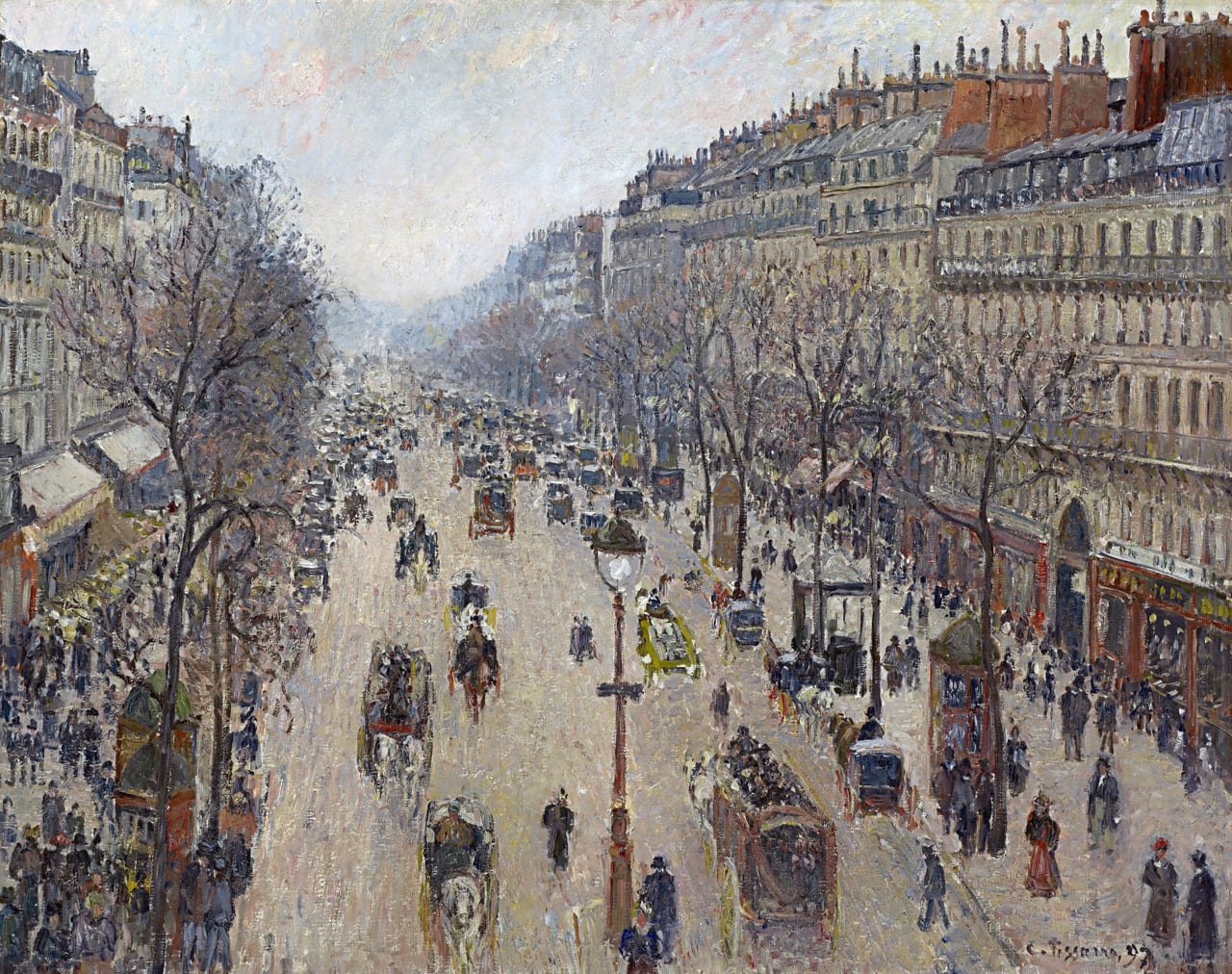
Boulevard Montmartre, morning, cloudy weather
Camille Pissarro · 1897
In February 1897 Pissarro began a series on the great Paris boulevards, and by 17 April he had painted fourteen views of the Boulevard Montmartre from a hotel window, less interested in the street’s layout than in passing light and weather. The Felton Bequest acquired it in 1905.
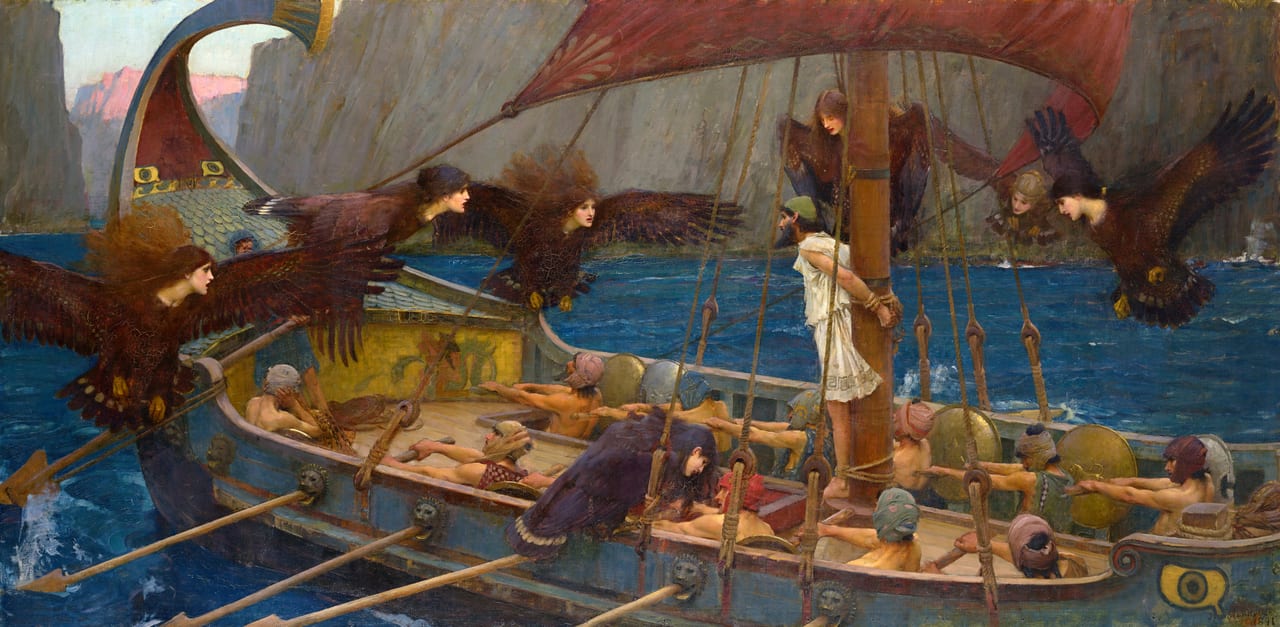
Ulysses and the Sirens
John William Waterhouse · 1891
Ulysses wanted to hear the sirens’ song, so his crew bound him to the mast and stopped their own ears. Waterhouse gave each siren a bird’s body and a beautiful woman’s head, a motif he took from an ancient Greek vase in the British Museum. The gallery bought it in 1891.
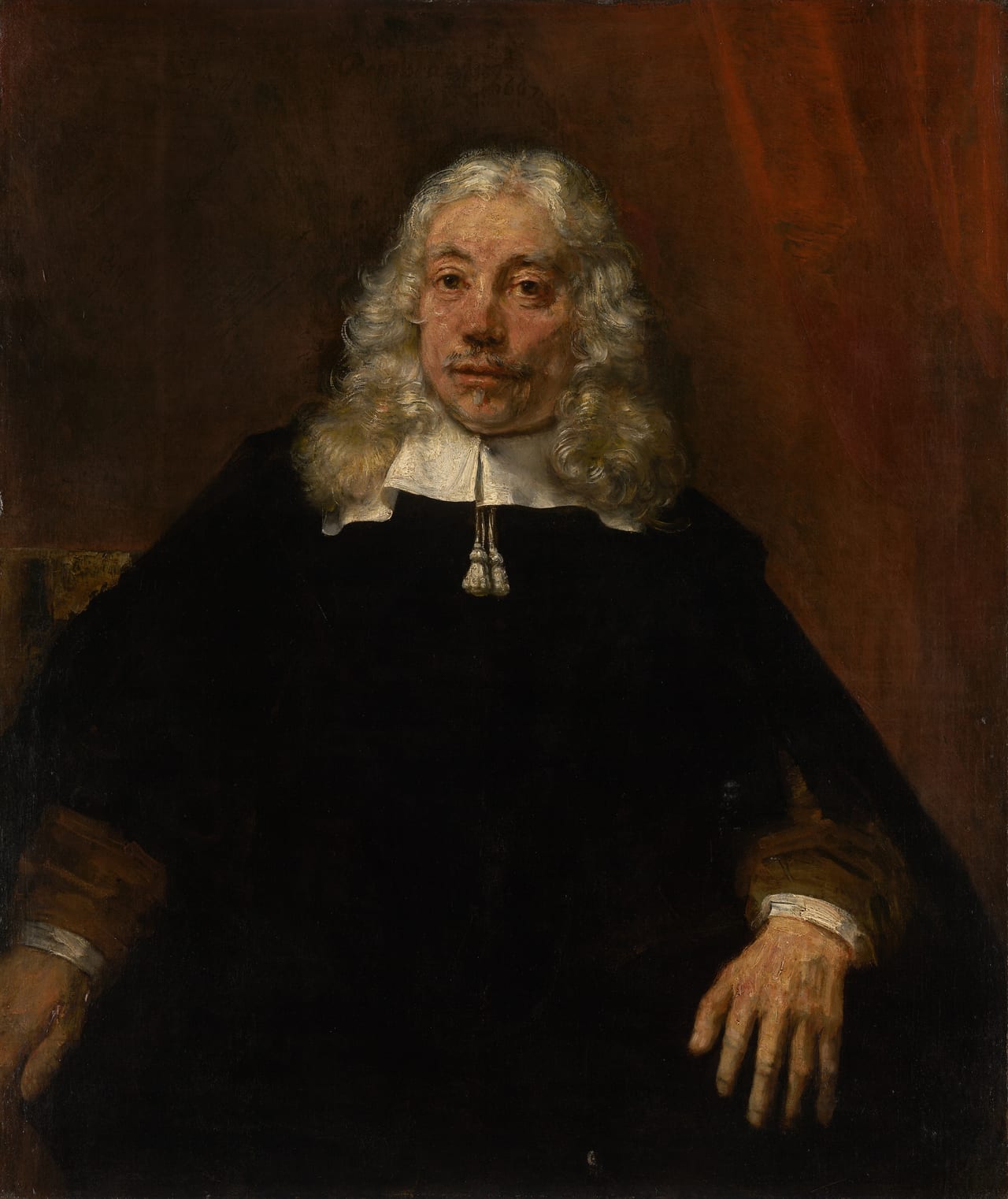
Portrait of a white-haired man
Rembrandt · 1667
Painted two years before he died, this is Rembrandt’s second-last portrait and an outstanding example of his late manner. The frame crops the unidentified sitter’s right hand, and Rembrandt used the sharp end of his brush to gouge the paint of the sitter’s hair. Felton Bequest, 1951.
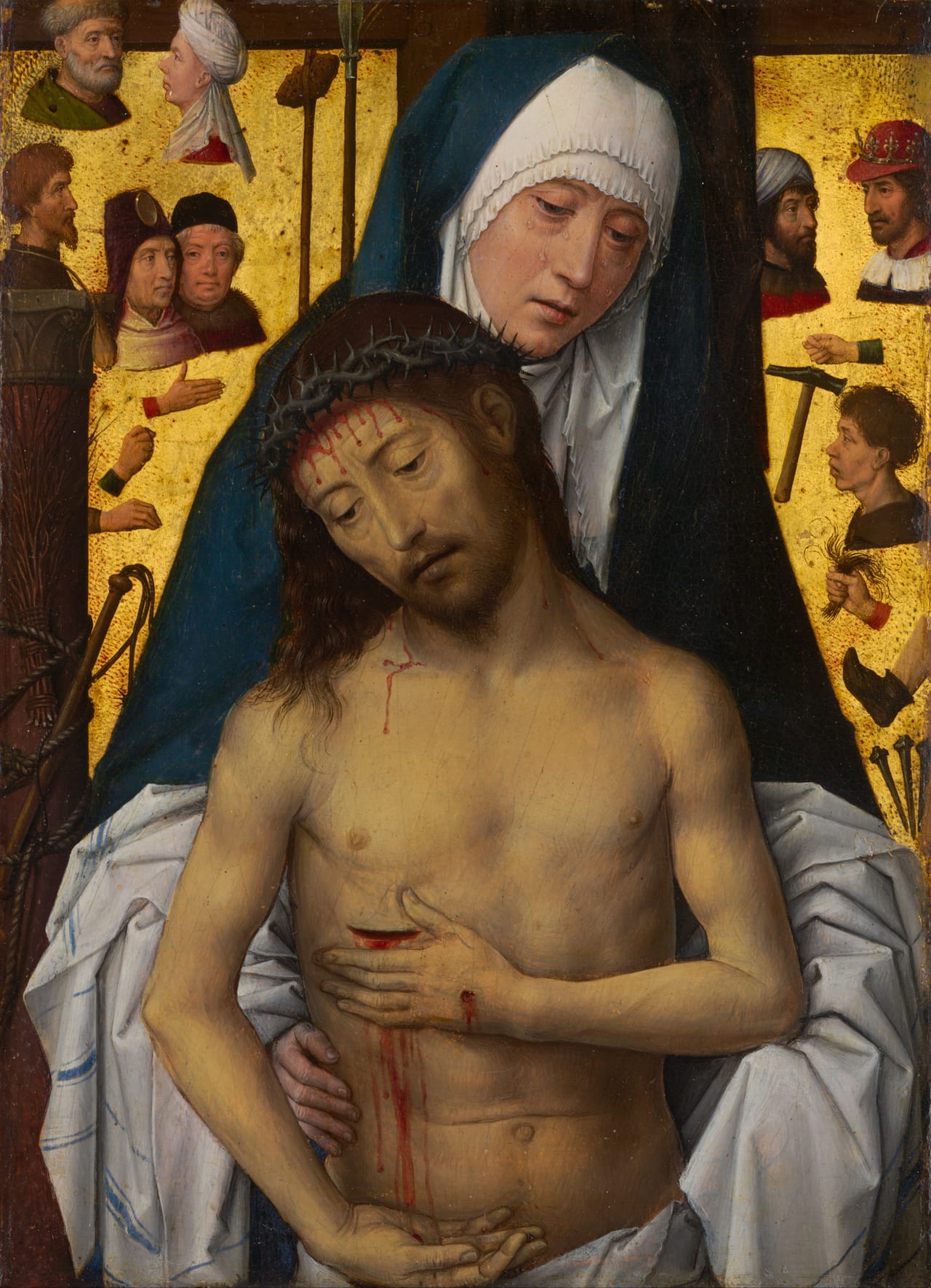
The Man of Sorrows in the arms of the Virgin
Hans Memling · 1475 or 1479
Christ, showing the wounds of the Passion yet open-eyed and so ‘alive’, is cradled in his grieving mother’s arms as an image of pity; praying before such images was thought to speed the soul through Purgatory. Memling, from a small town near Frankfurt, became a citizen of Bruges in 1465. Felton Bequest, 1924.
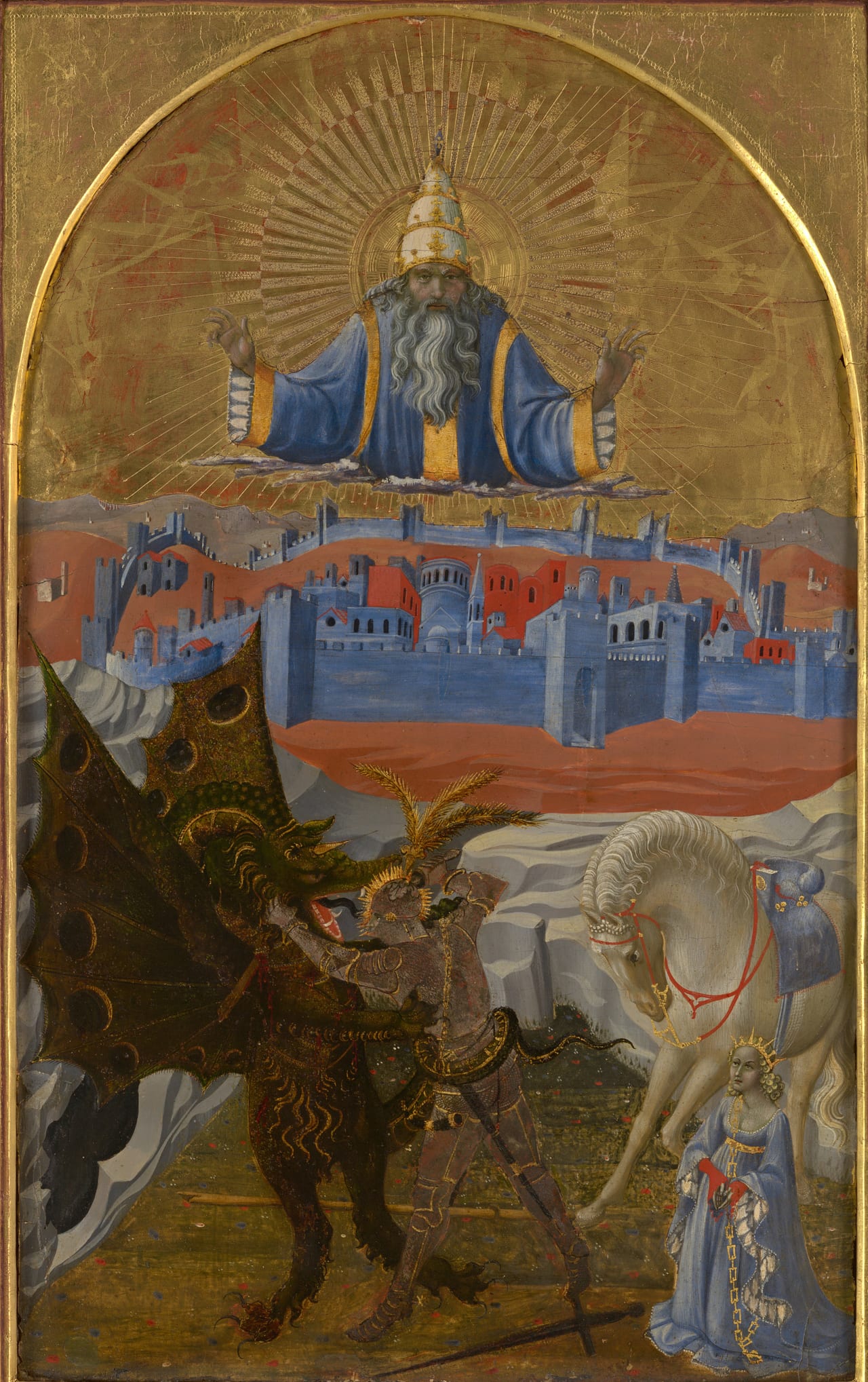
Saint George slaying the dragon
Paolo Uccello · c. 1430
Uccello is thought to have painted the panel in Venice around 1430, while he was there to restore the Byzantine mosaics of San Marco. In the Golden Legend George saves a pagan Libyan princess who was to be sacrificed to the dragon; the story stood for Christian conversion. Felton Bequest, 1949.
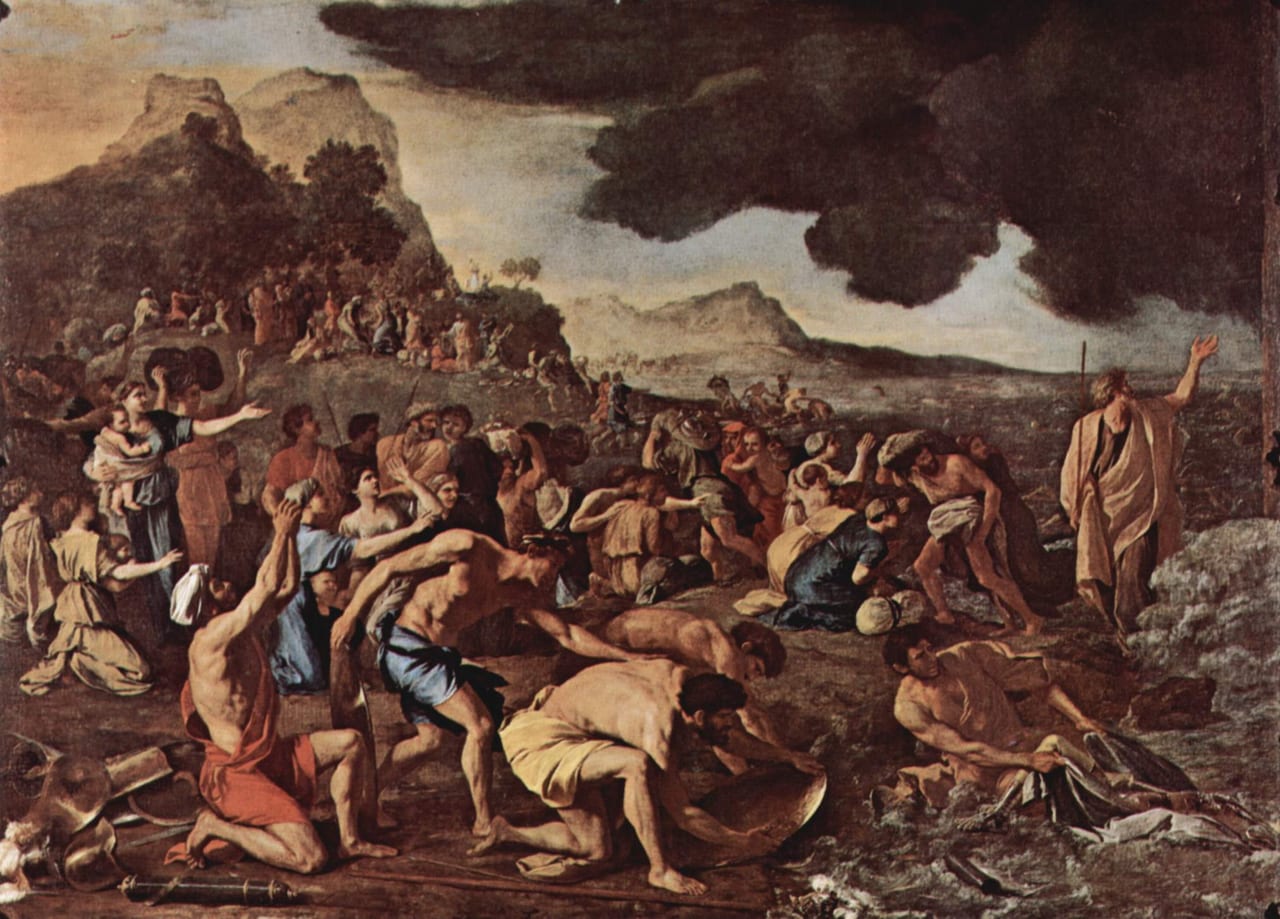
The Crossing of the Red Sea
Nicolas Poussin · 1632–1634
The collector Amedeo dal Pozzo commissioned it for a series on the life of Moses for his palace in Turin. Poussin shows the moment from Exodus just after the sea has closed over the Egyptian army in pursuit, saving the Israelites in their flight. Felton Bequest, 1948.
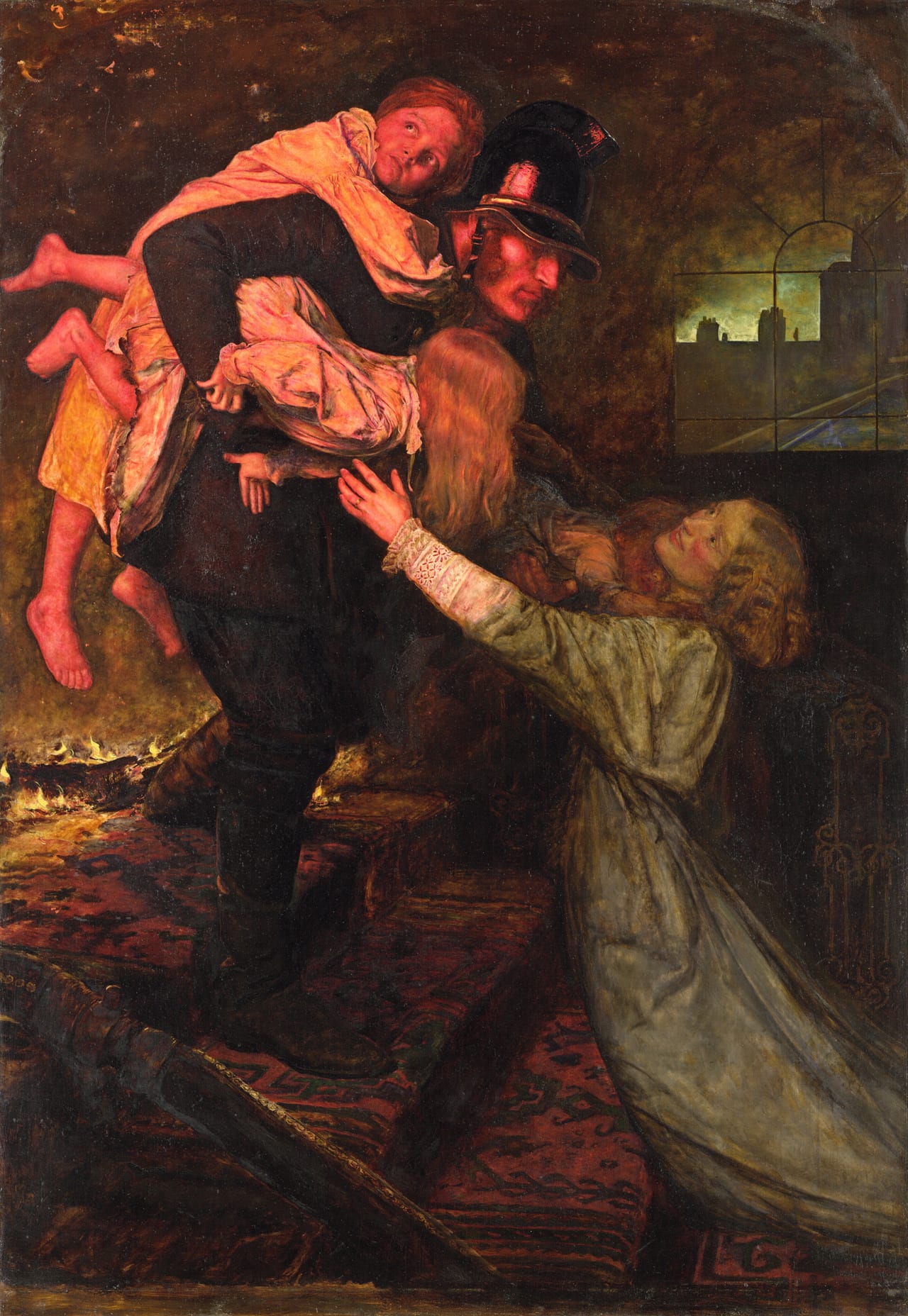
The rescue
John Everett Millais · 1855
Millais meant the picture to honour firemen, men ‘quietly doing a noble work’; fire was an ever-present danger of city life. At the Royal Academy in 1855 John Ruskin singled it out as ‘the only great picture exhibited this year’. Felton Bequest, 1924.
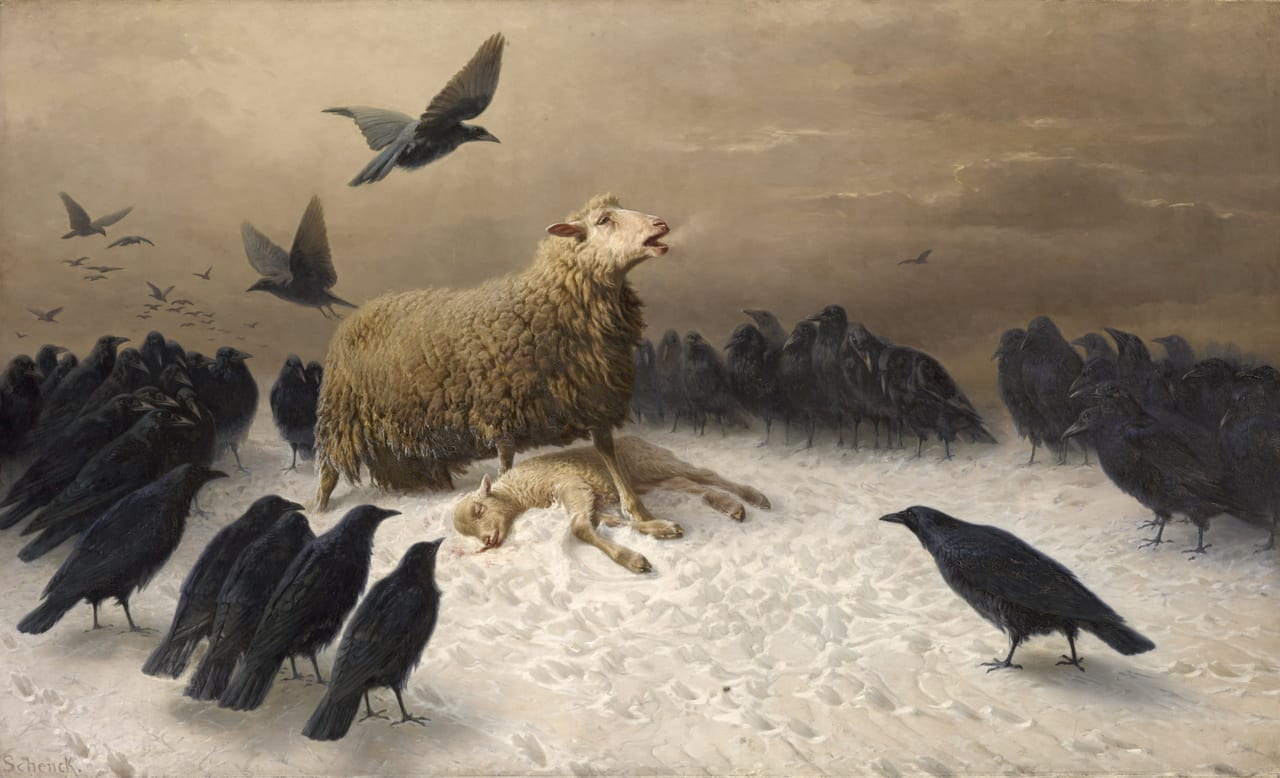
Anguish
August Friedrich Albrecht Schenck · 1878
Schenck gives the ewe a human determination and sorrow, while the crows look organised, waiting patiently for her to weaken. He worked mostly in France and showed at the Paris Salons for more than thirty years; this was first exhibited there in 1878, and the gallery bought it in 1880.
Collections
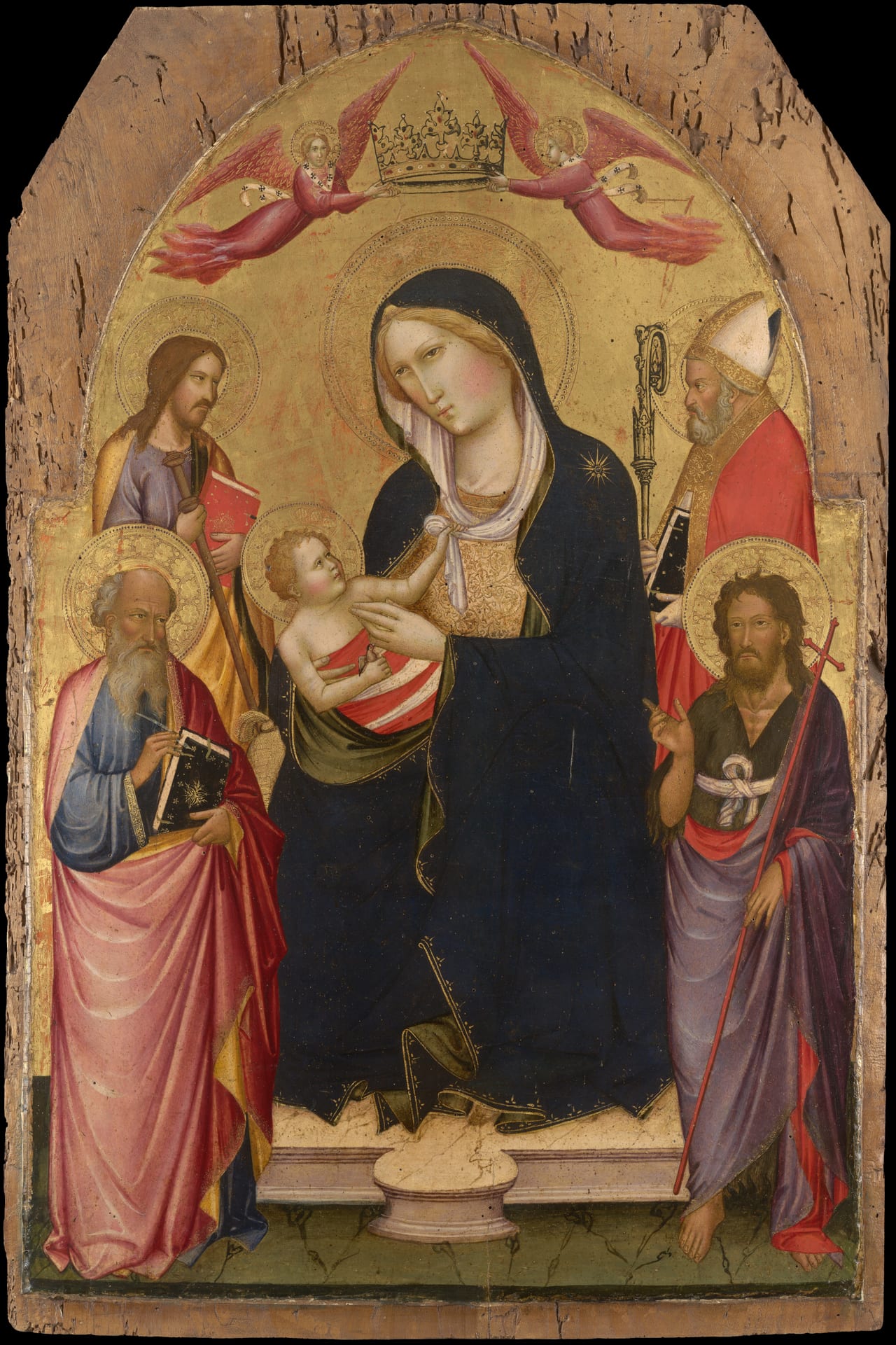
Gothic Florence
Madonna and Child with Saint John the Evangelist, Saint John the Baptist, Saint James of Compostela and Saint Nicholas of Bari · Agnolo Gaddi · c. 1388–1390
Agnolo Gaddi, a gifted follower of Giotto, painted this panel as the centre of a private altarpiece, the Florentine Gothic at its most refined. The finch in Christ’s hand, a bird that lives among thorns, points to the Crown of Thorns he will later wear. Bought through the NGV Foundation in 2003.
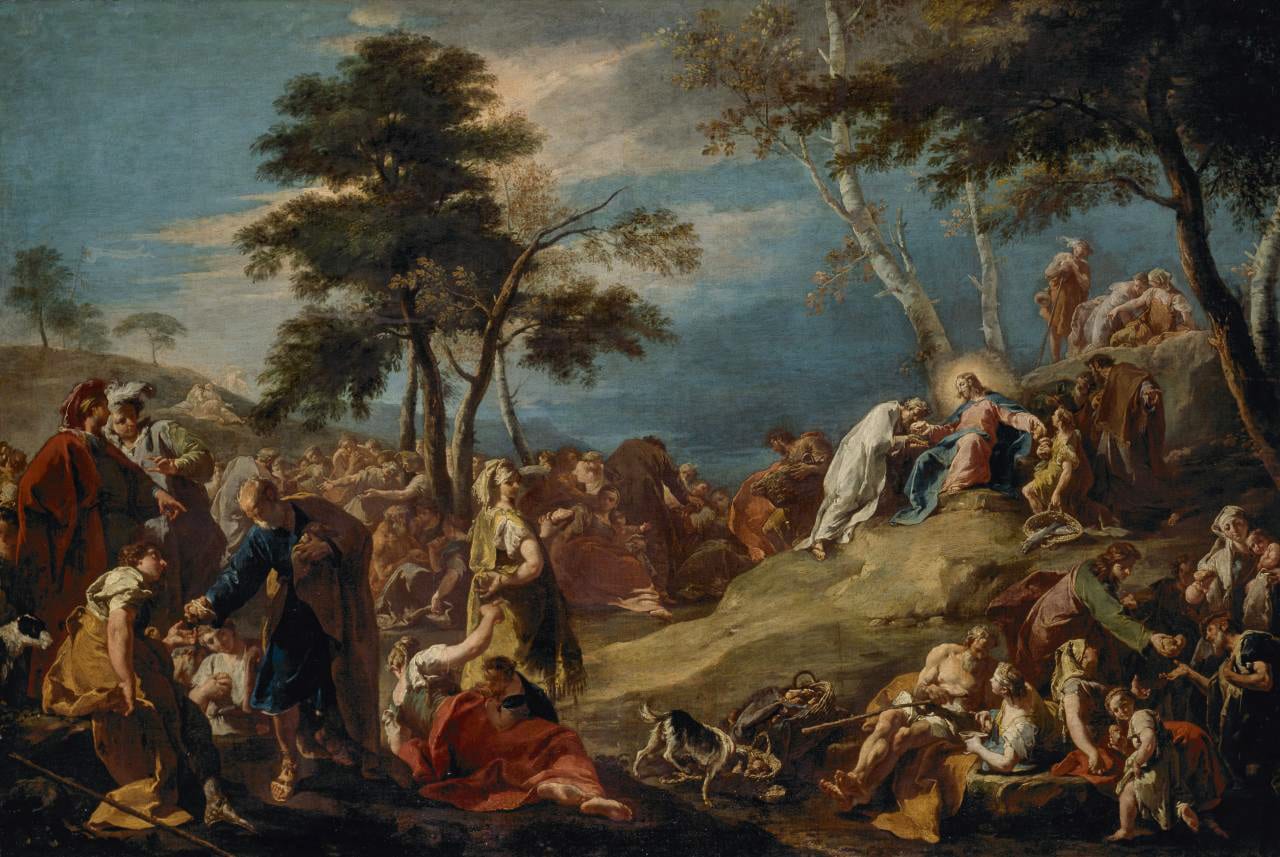
Venice in the eighteenth century
The miracle of the loaves and fishes · Giambattista Pittoni · c. 1725
Pittoni ranked with Tiepolo among the leading painters of eighteenth-century Venice, though he worked differently, building up motifs with great care and often reworking details. This miracle has features found only in the Gospel of John. Felton Bequest, 1951.
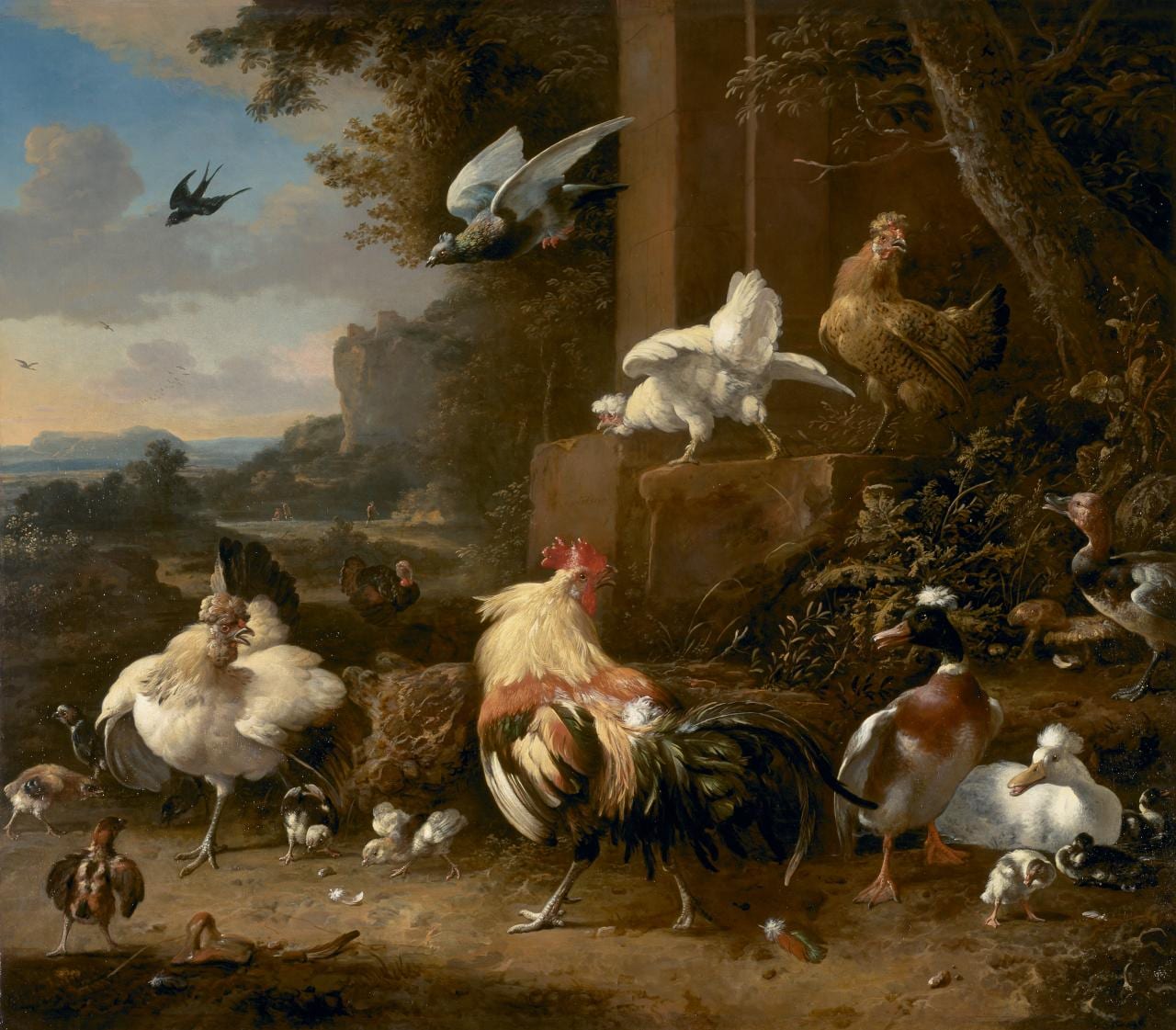
Dutch painting
The poultry yard · Melchior d’Hondecoeter · late 17th century
Melchior d’Hondecoeter, the ‘Raphael of birds’, was the best-known bird painter of seventeenth-century Holland. Here the poultry panic at a broken jug handle in the foreground, which seems to be a makeshift tool for killing table birds, a memento mori in many such scenes. Felton Bequest, 1920.
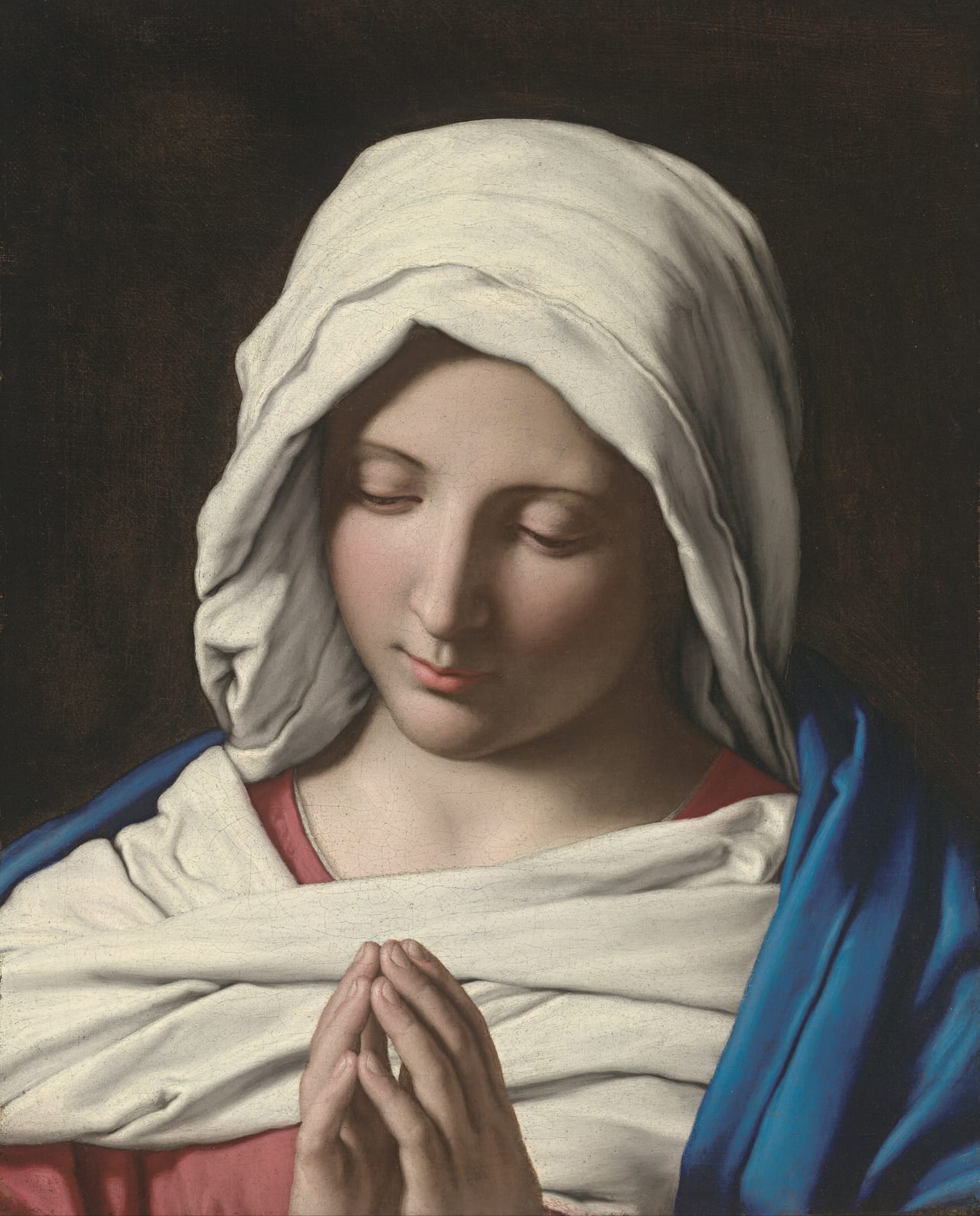
The Baroque in Rome
Madonna in prayer · Sassoferrato · c. 1640–1650
Giovanni Battista Salvi took the name Sassoferrato from his birthplace in the Marches and specialised in devotional images. The strong chiaroscuro shows Caravaggio’s lasting hold on Rome, and the picture typifies the Counter-Reformation’s renewed devotion to the Virgin. Bought through the NGV Foundation in 2002.
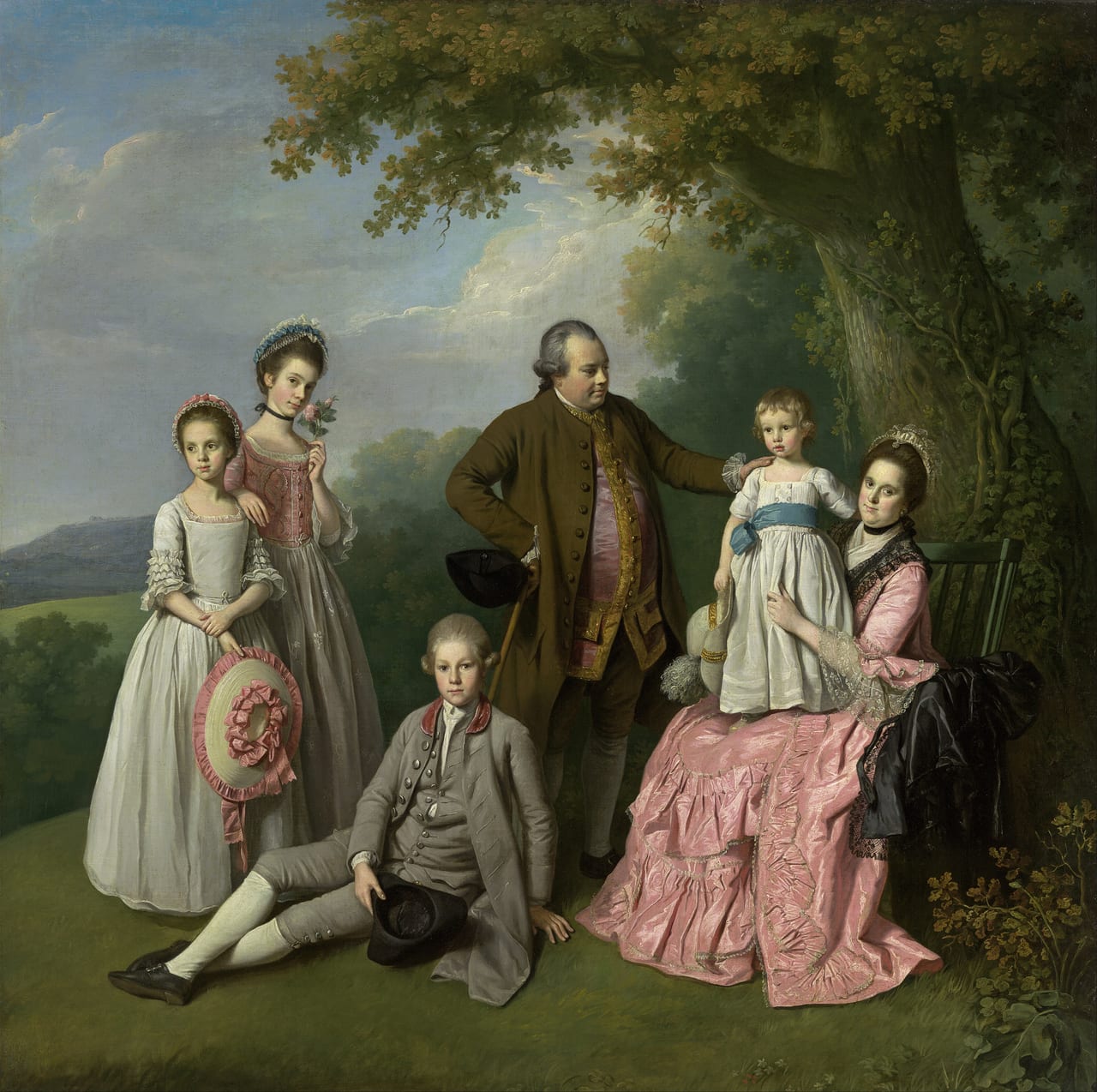
British portraiture
The Pybus family · Nathaniel Dance · c. 1769
John Pybus, home for good in 1768 after two decades with the East India Company in India and Indonesia, chose the fashionable Nathaniel Dance to paint him with his wife Martha and their four children, a choice that shows his social aims and the fortune he had made abroad. Felton Bequest, 2003.
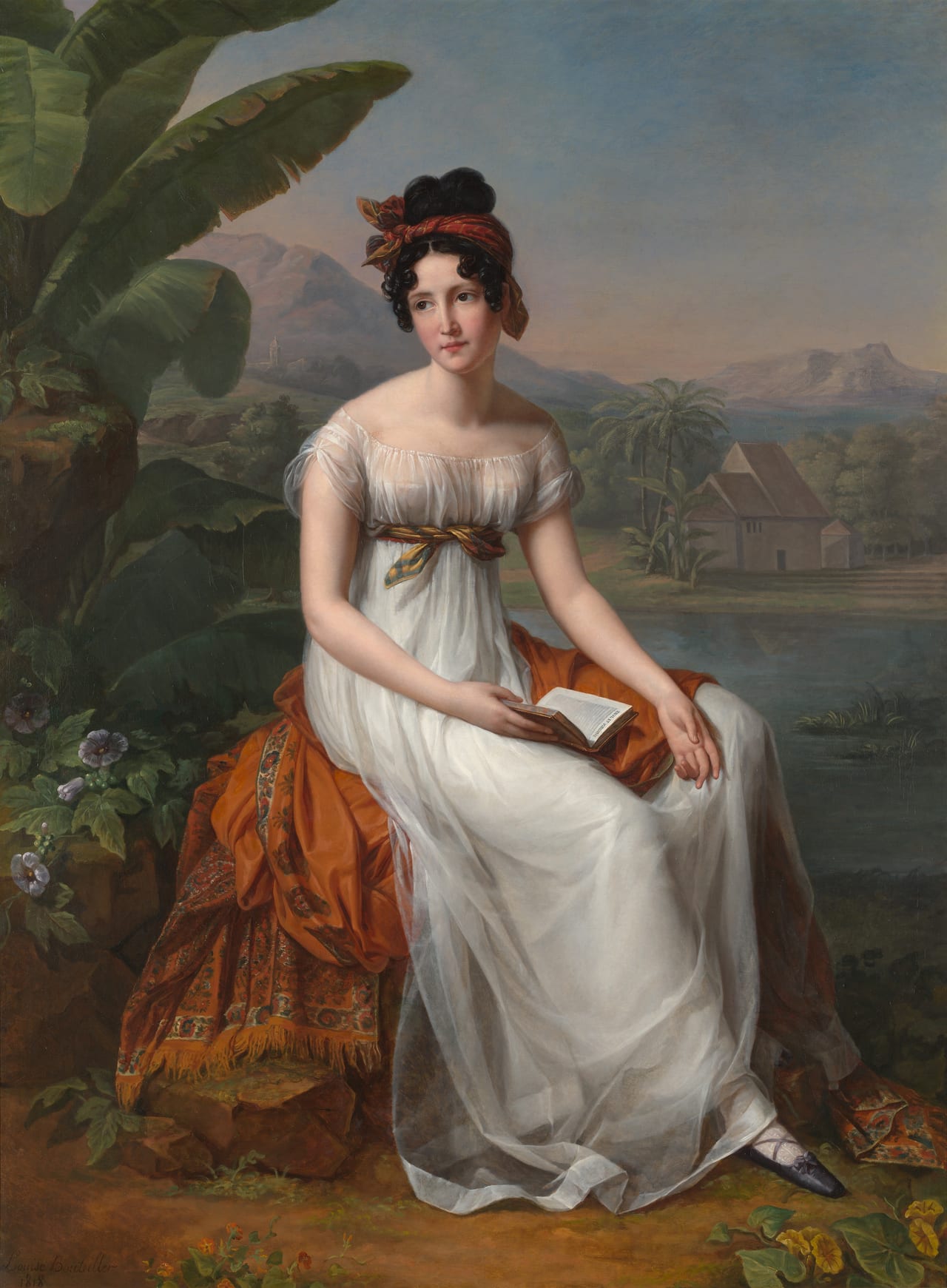
Women artists
Césarine de Houdetot, Baronne de Barante, reading Paul et Virginie · Louise Bouteiller · 1818
The gallery is committed to acquiring more works by women and LGBTQI+ artists, historically underrepresented in large public collections of international art. Louise Bouteiller, born in Haiti and trained in Paris, shows the Baronne de Barante at twenty-three, lost in the novel Paul et Virginie before a lush Mauritian landscape. Bought in 2018.
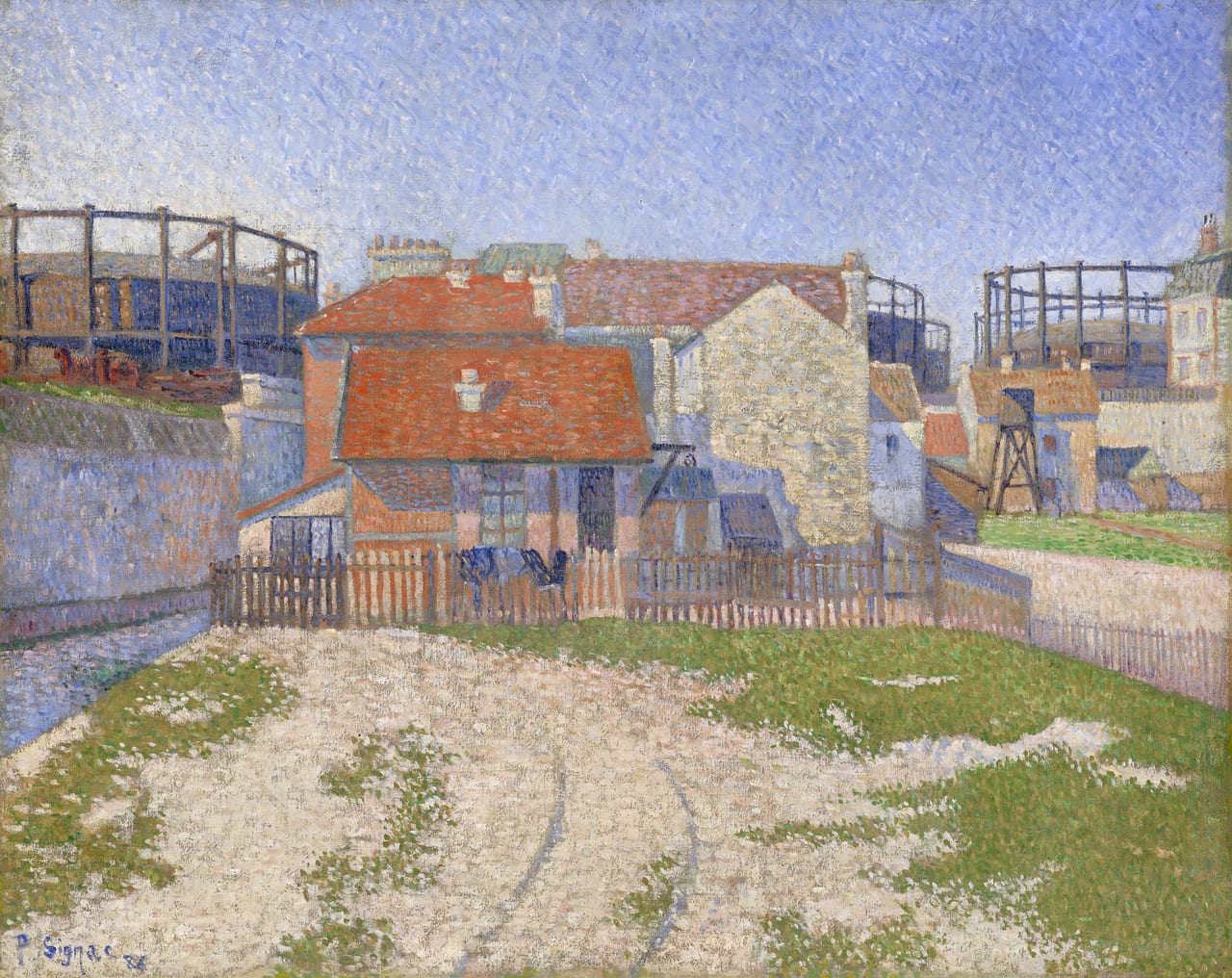
Neo-Impressionism
Gasometers at Clichy · Paul Signac · 1886
One of the first pictures Signac painted on Neo-Impressionist principles. From the start his landscapes showed semi-industrial places, a choice that followed from his family’s move in 1880 to Asnières, an outer district of Paris full of factories, chimneys and gas tanks. Felton Bequest, 1948.
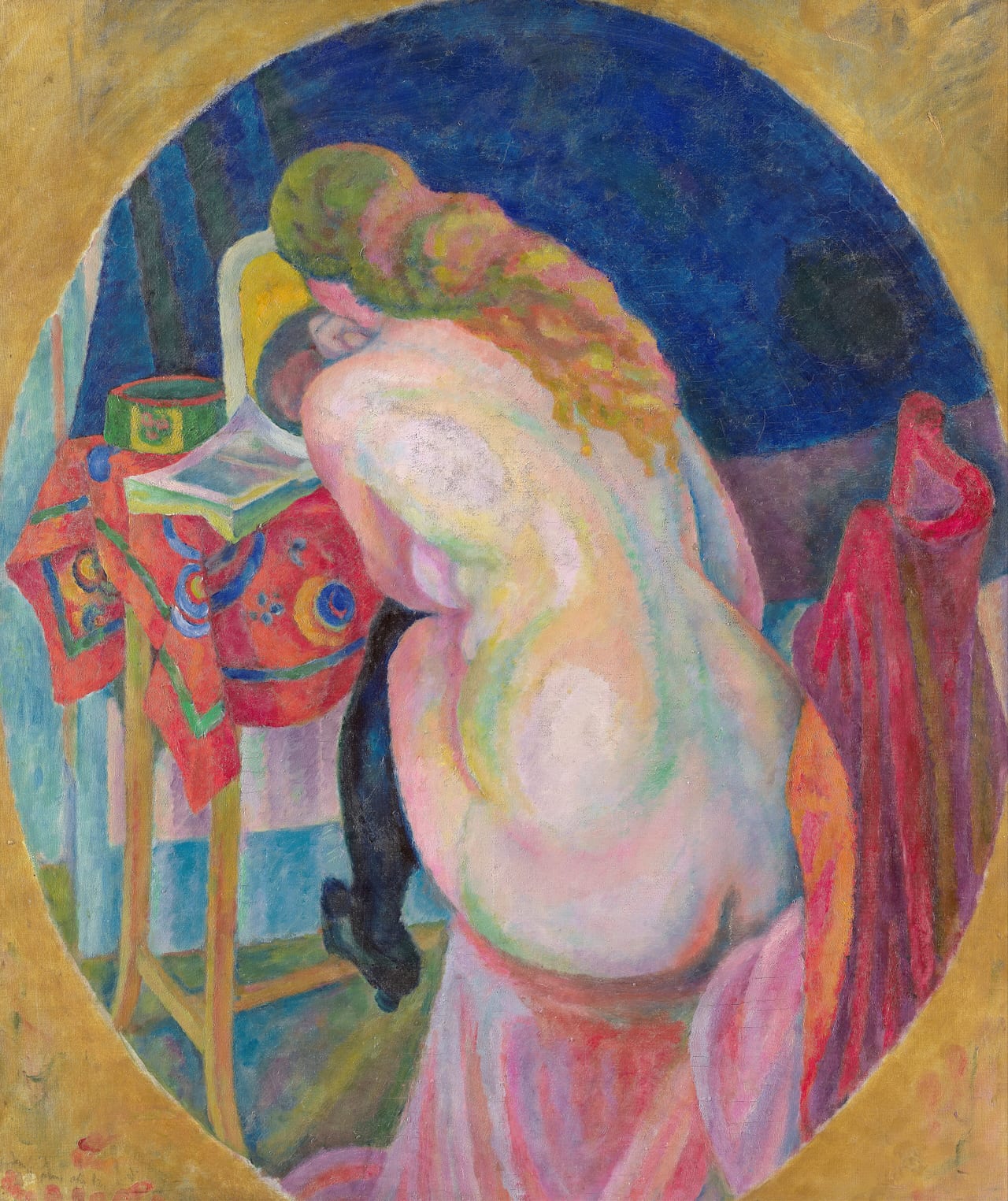
Modernism in France
Nude woman reading · Robert Delaunay · 1915
In his Circular Forms of 1912 Robert Delaunay set colour free of any tie to reality and used it abstractly for movement and depth; they are seen as the first works of non-representational painting by a French artist. Here he applies the same principles of colour to the human figure, in a nude reading. Felton Bequest, 1966.
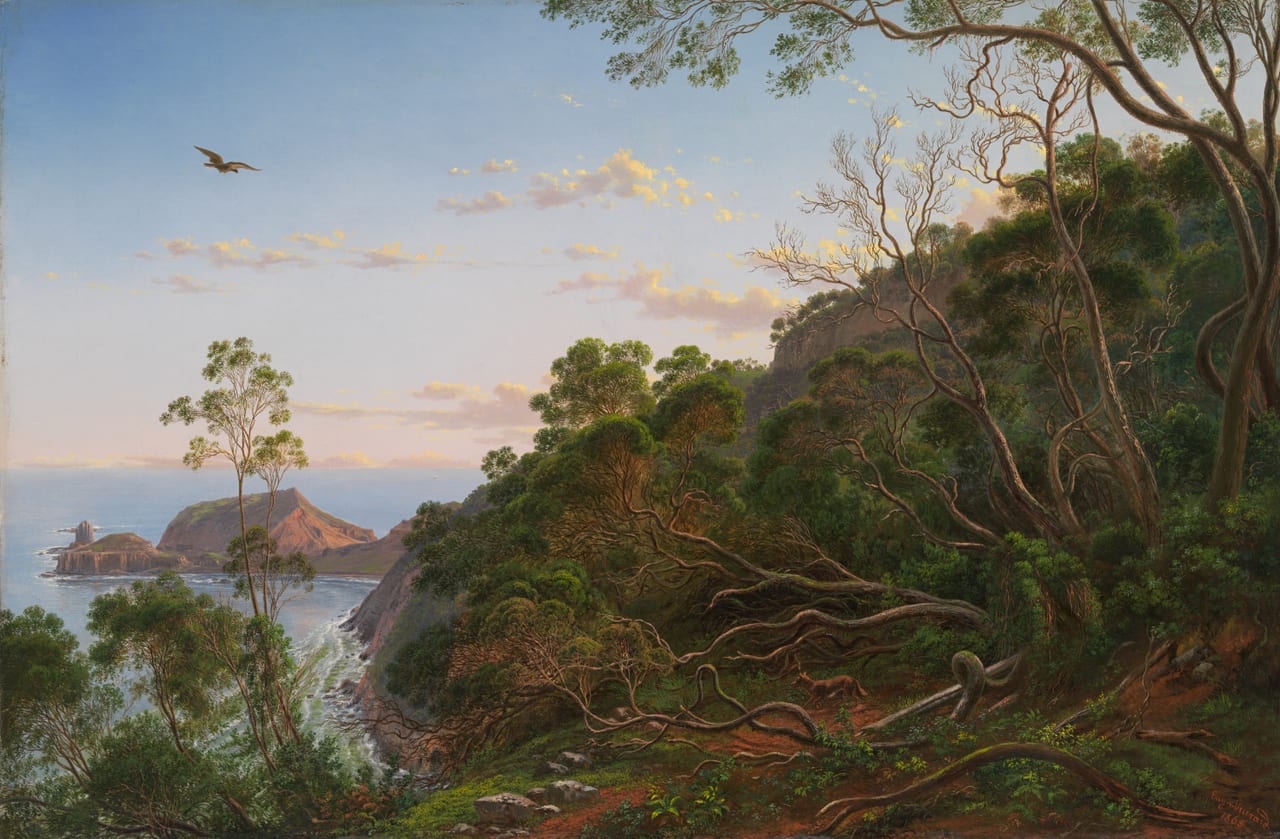
Colonial Australia
Tea Trees near Cape Schanck, Victoria · Eugene von Guérard · 1865
The Australian collection begins with the colonial painters. Near Cape Schanck, Eugene von Guérard made use of the Golden Section and split the scene along a diagonal into sunlight and shadow, while a fox in the undergrowth watches a sea bird wheel in from the left. Bought in 2006.
Artists
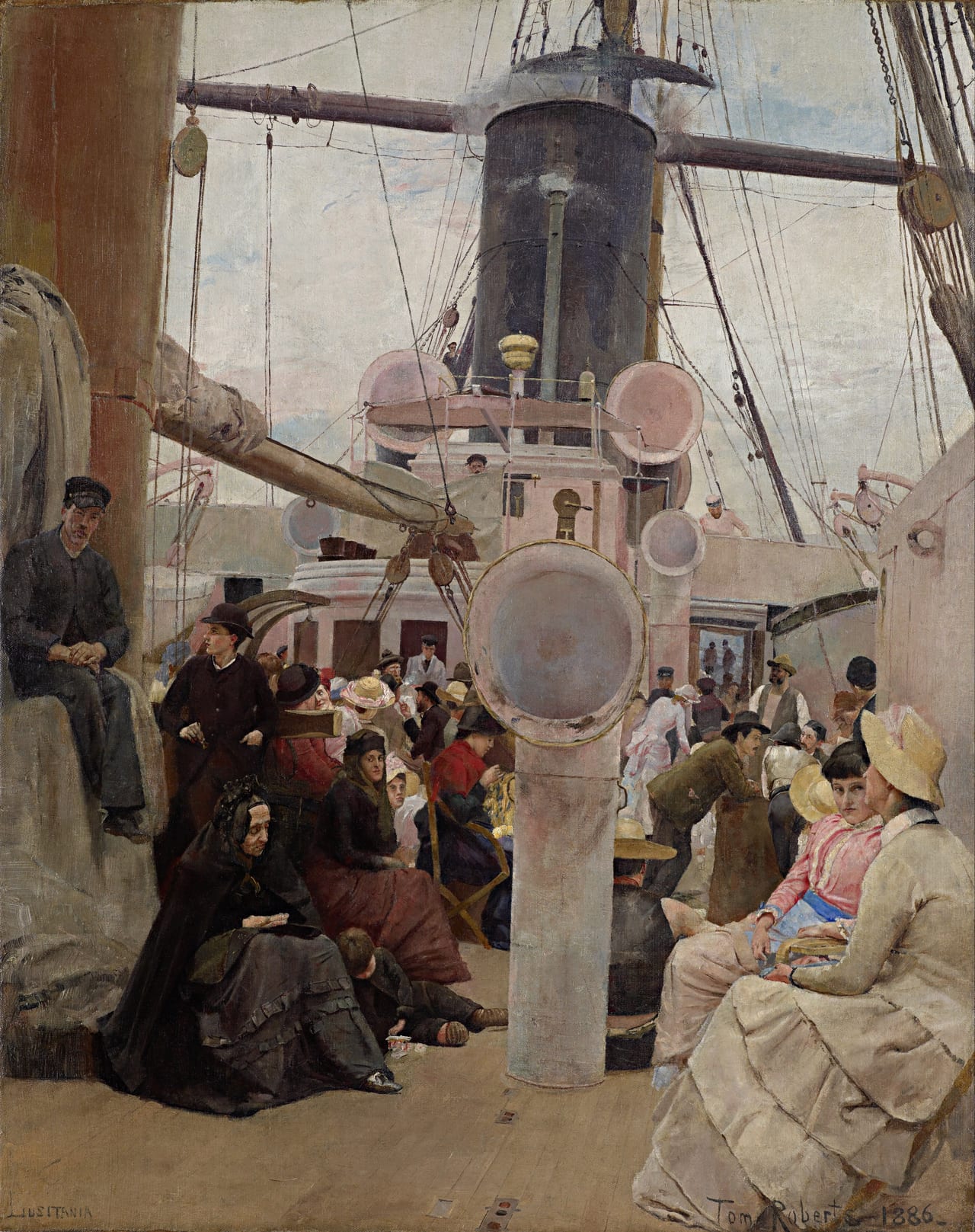
Tom Roberts
Coming South · 1886
He introduced Impressionism to Australia; Coming South, painted after his return from Europe, was his first look at the migrant experience, one of the great themes of Australian life.
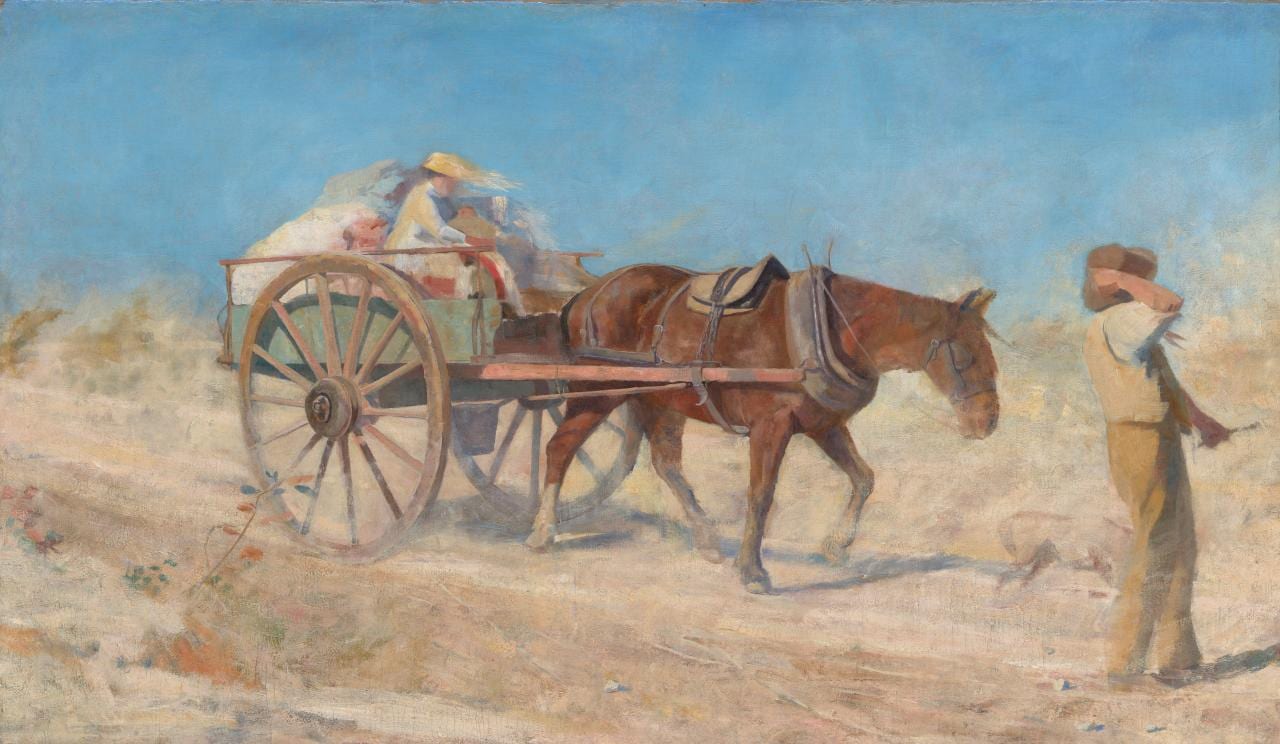
Frederick McCubbin
The North wind · c. 1888
The North wind is by Frederick McCubbin, a painter and art teacher, and a prominent member of the Heidelberg School, the movement also called Australian impressionism.
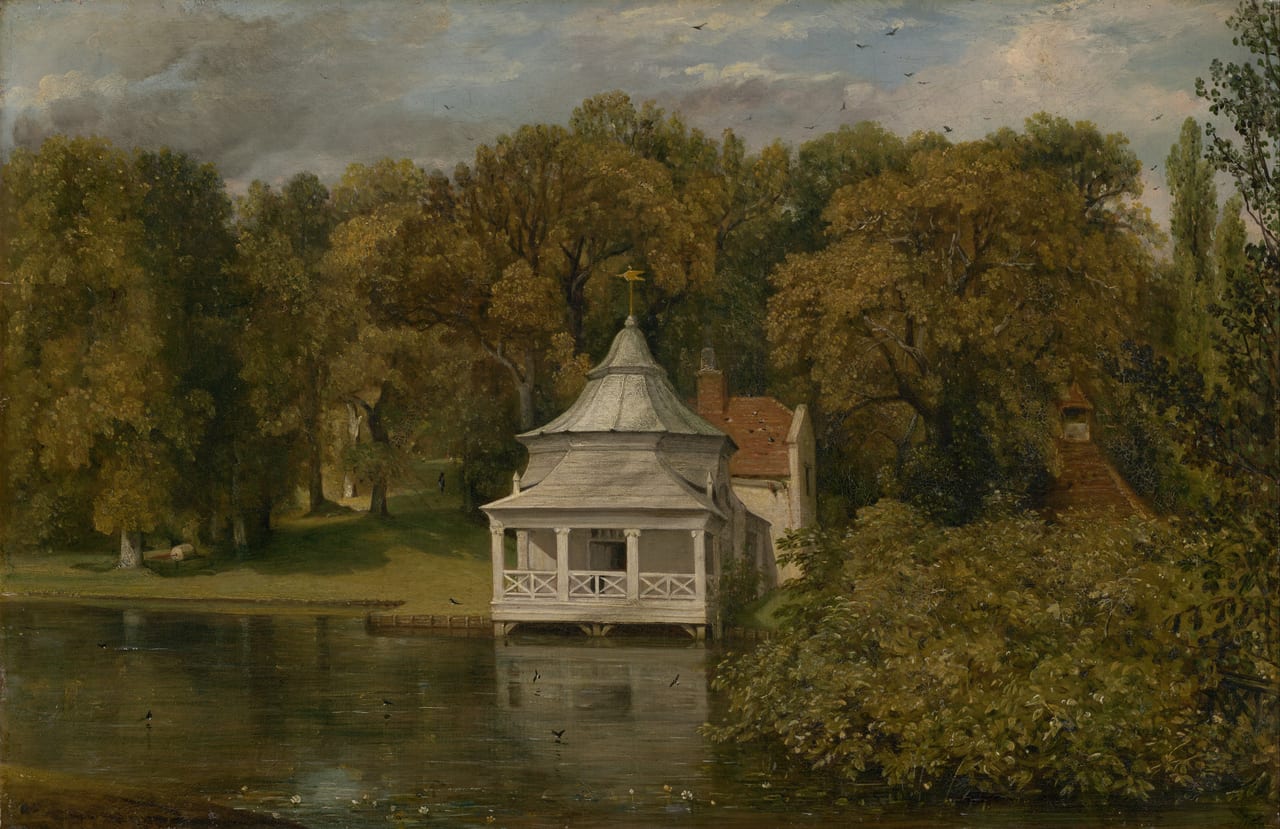
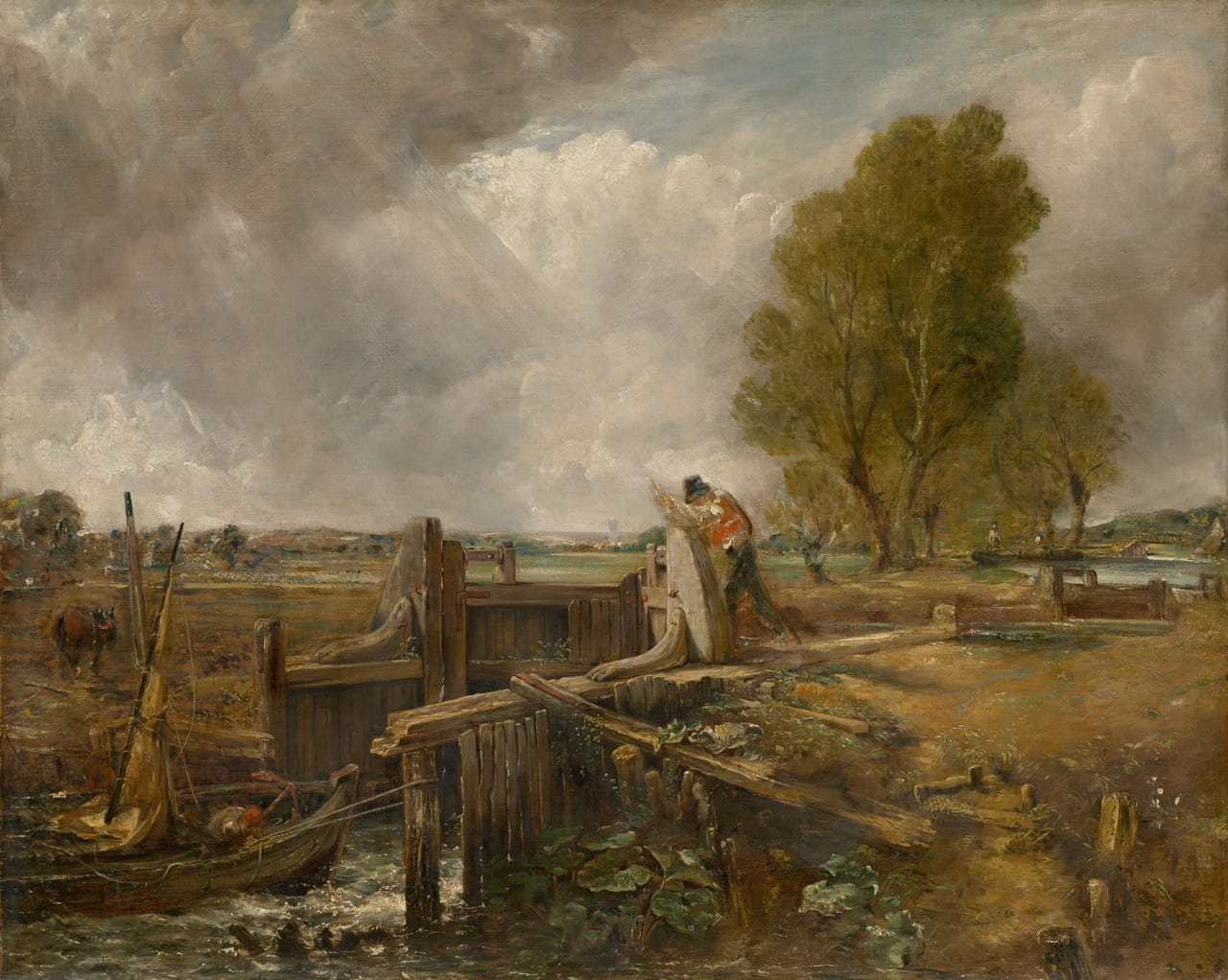
John Constable
The Quarters behind Alresford Hall · 1816
A major figure in English landscape painting of the early nineteenth century, best known for his paintings of the English countryside, particularly his native Stour valley; here the ‘little fishing house’ at Alresford Hall in Essex.
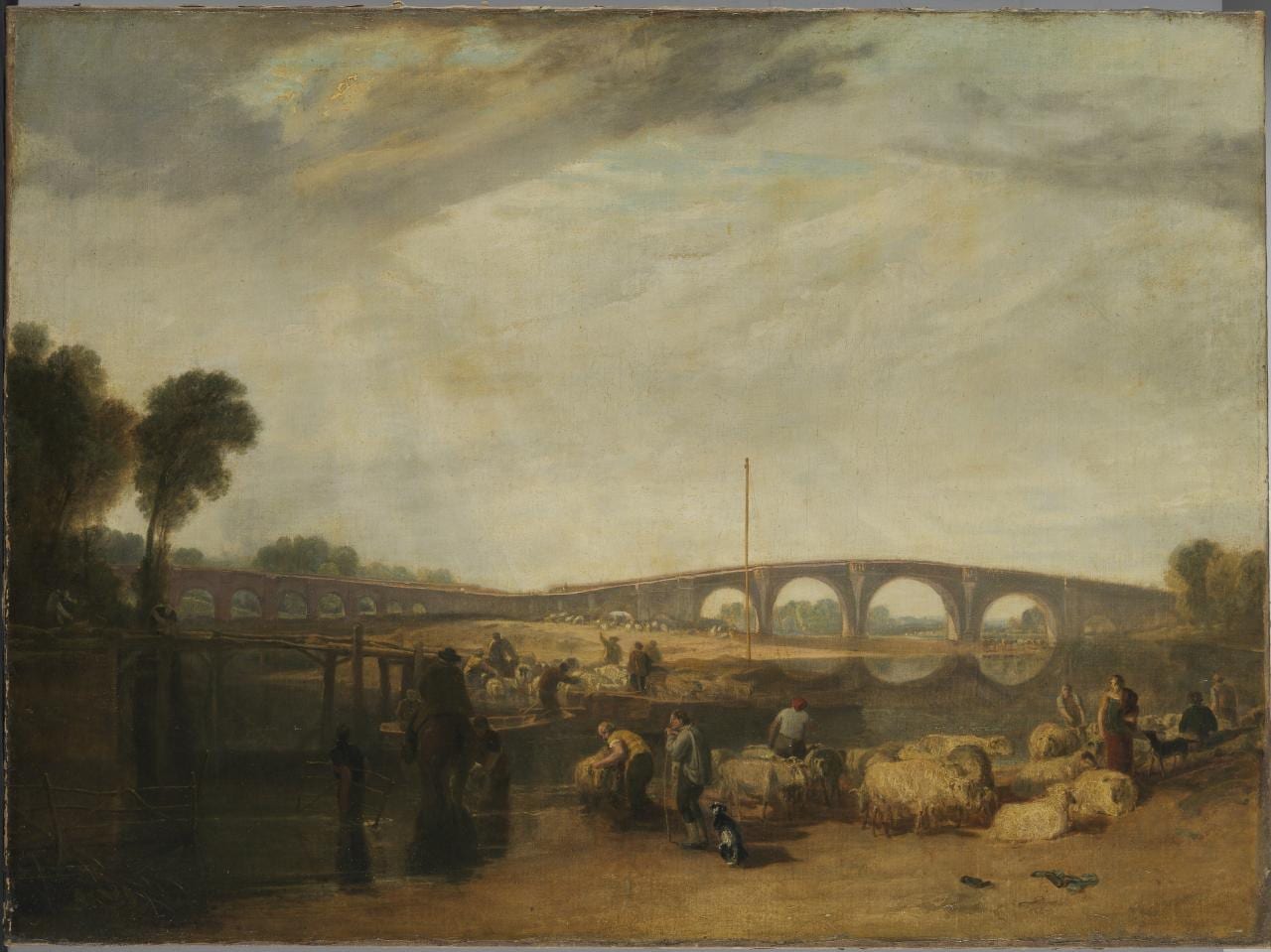
J. M. W. Turner
Walton bridges · c. 1806
Walton bridges is by J. M. W. Turner, an English Romantic landscape painter, unmatched in the range and sublimity of his studies of light, colour and atmosphere.
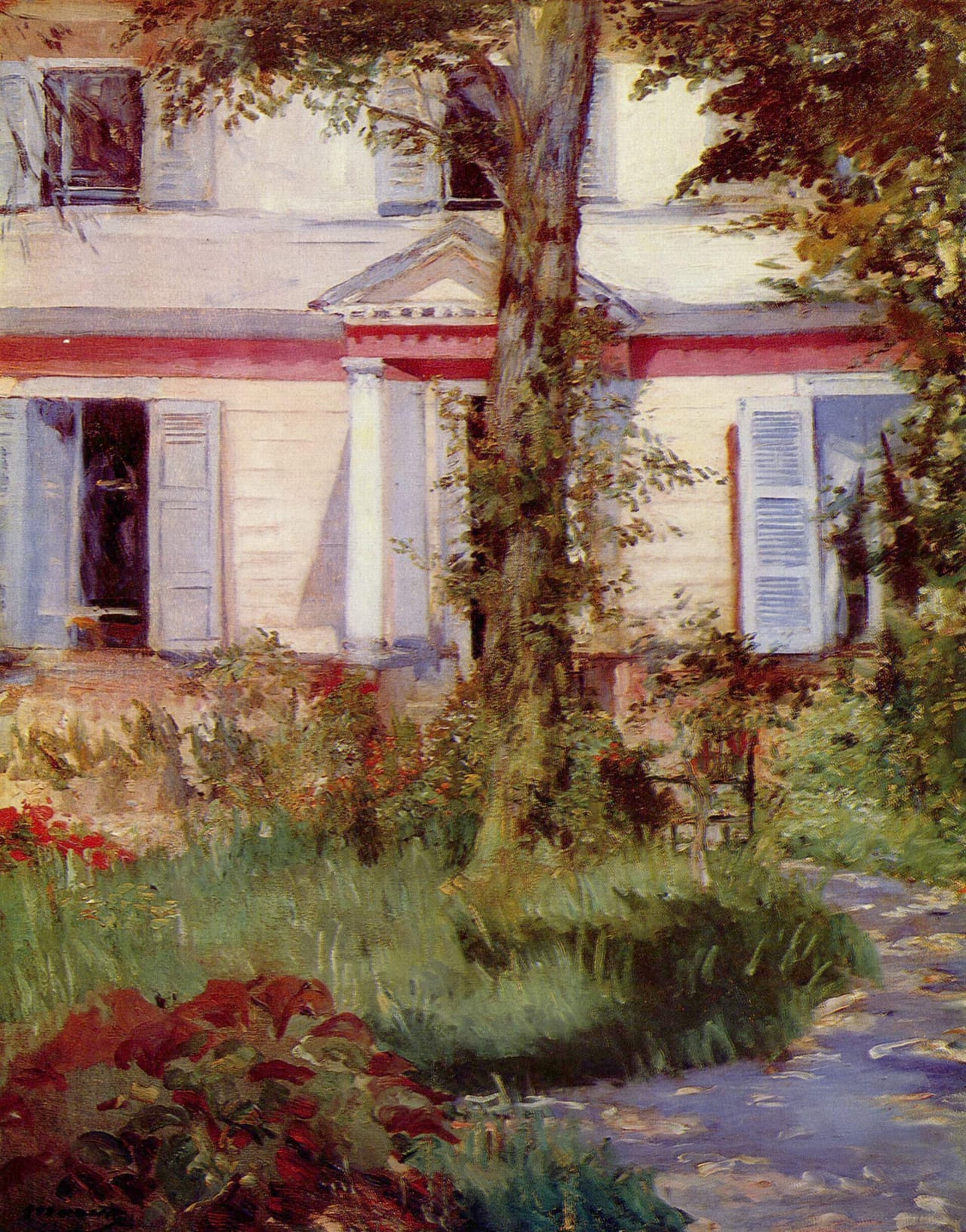
Édouard Manet
The house at Rueil · 1882
He broke with traditional ways of representing and painted the life of his own day; he spent the summer of 1882 at this house in Rueil.
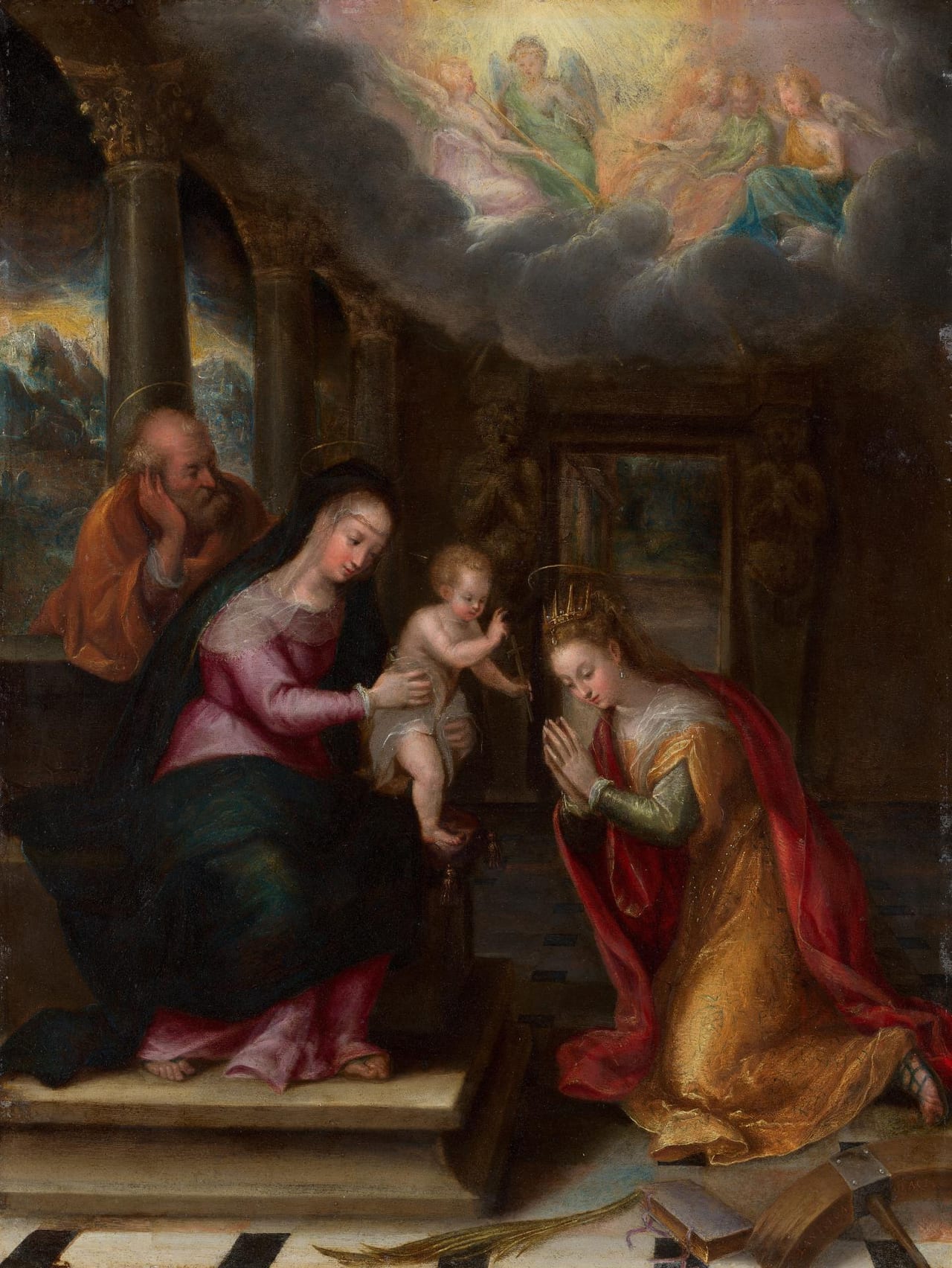
Lavinia Fontana
Mystic marriage of Saint Catherine · 1574–1577
Mystic marriage of Saint Catherine is by Lavinia Fontana, a leading portraitist in late sixteenth-century Bologna and one of the first women to paint large public commissions of figures; the Felton Bequest acquired this in 2021.
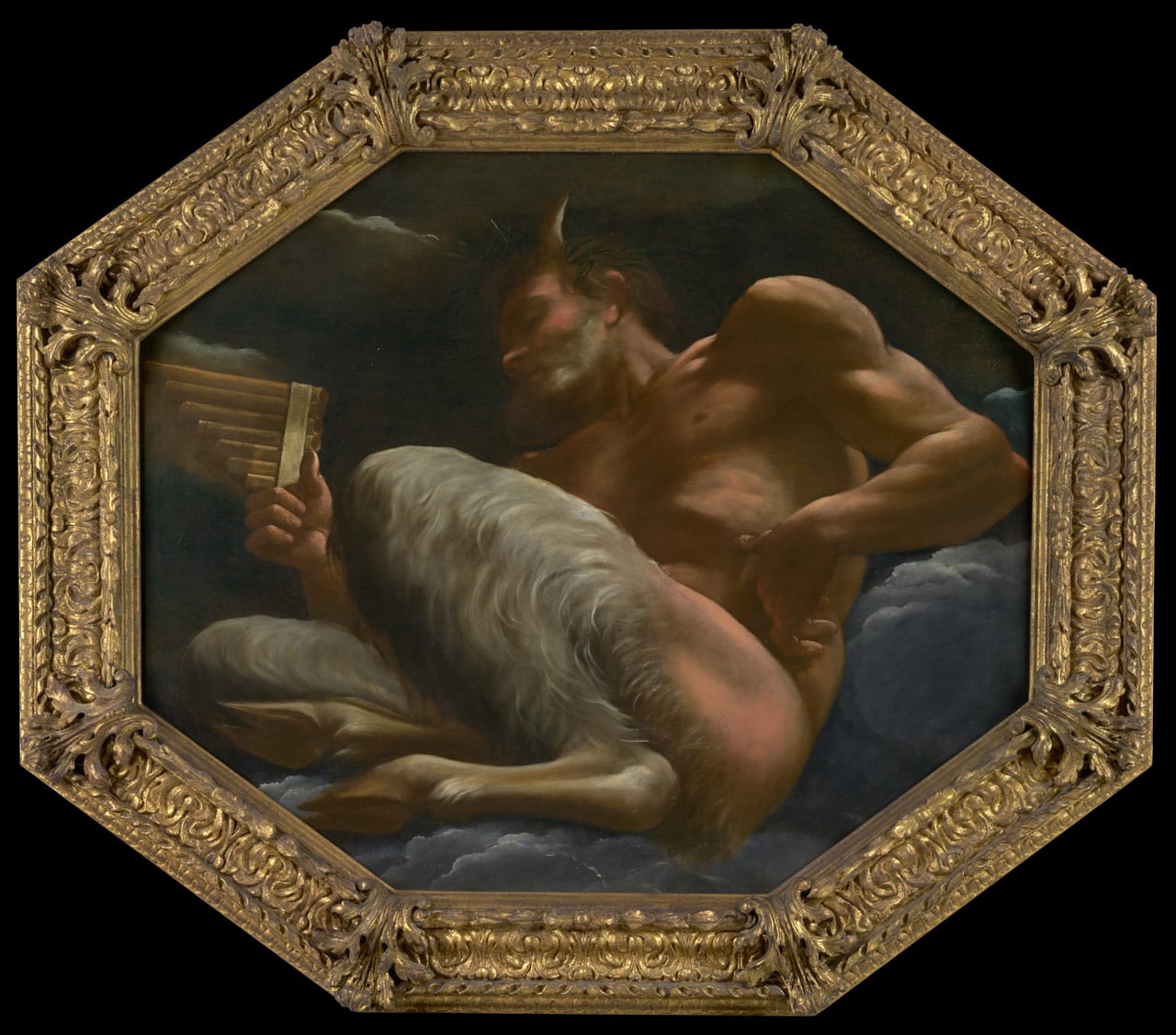
Annibale Carracci
Pan · c. 1592
The most gifted of the three Carracci painters, he helped recover High Renaissance classicism from Mannerism. Pan is one of fifteen classical deities Cesare d’Este, Duke of Ferrara, commissioned for a ceiling.
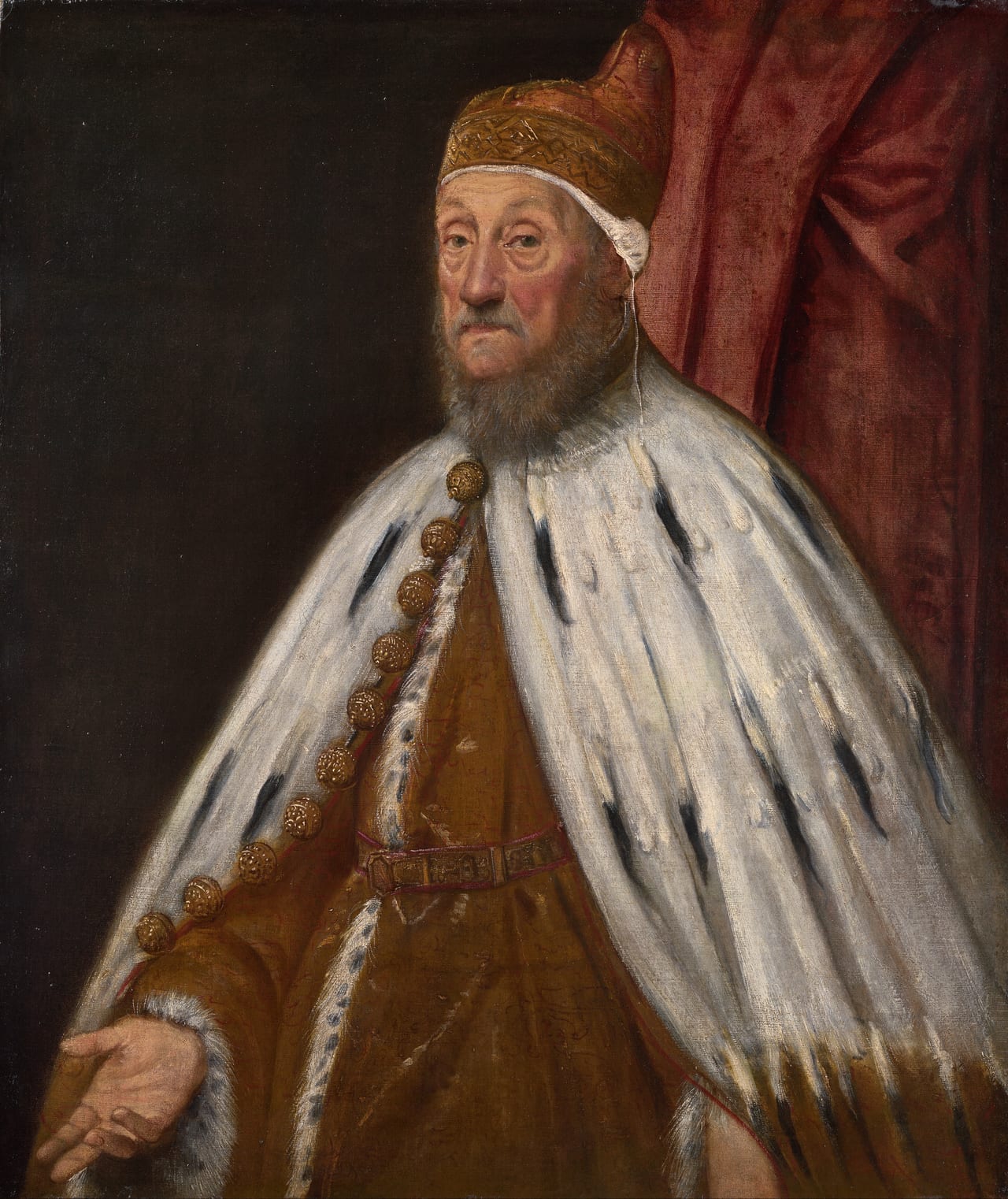
Jacopo Tintoretto
Doge Pietro Loredano · 1567–1570
A great Mannerist of the Venetian school, prominent enough to be appointed Venetian court painter in 1559.
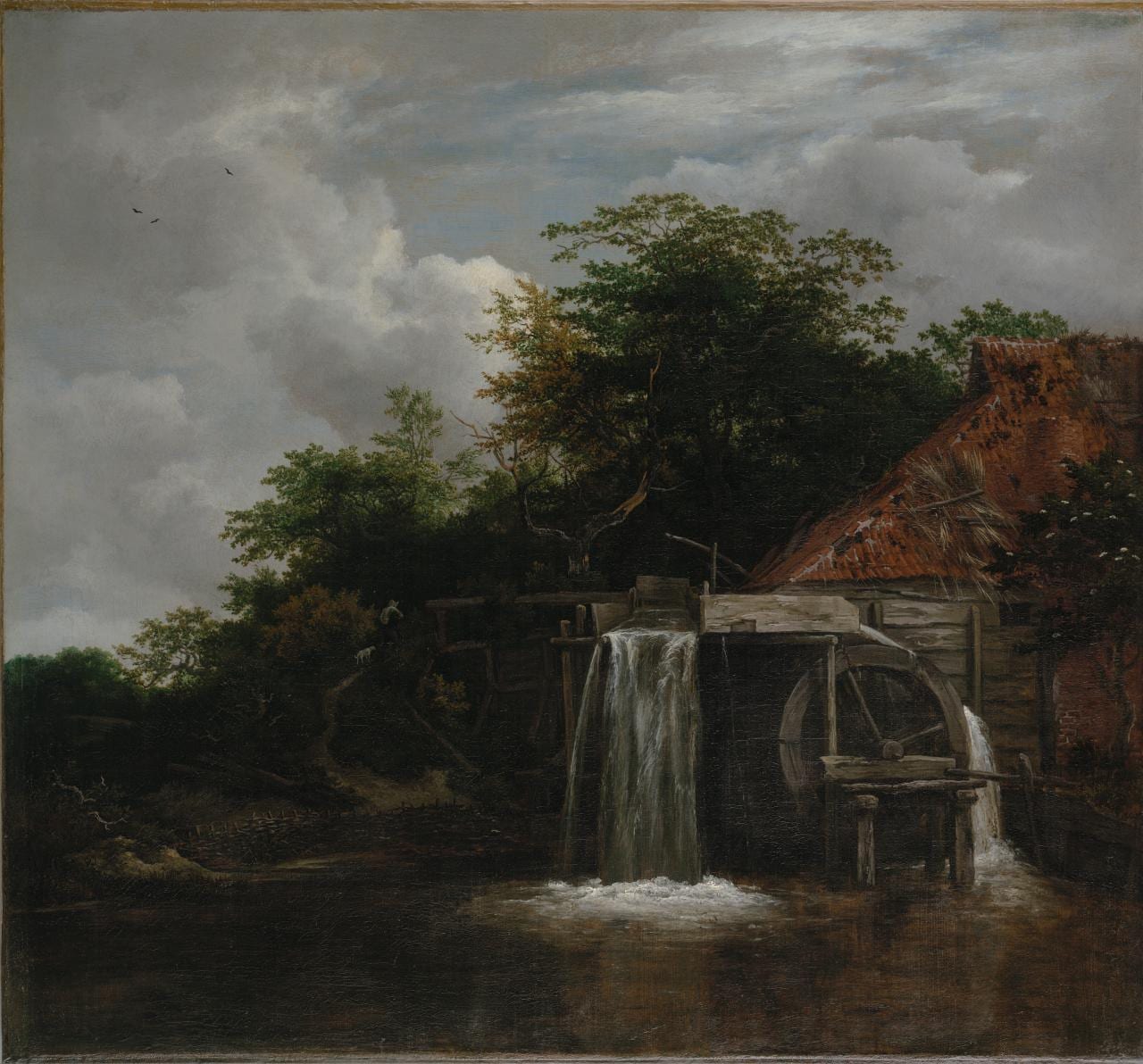
Jacob van Ruisdael
The watermill · c. 1660
Often counted among the greatest Dutch landscape painters, he left an oeuvre of some 700 paintings.
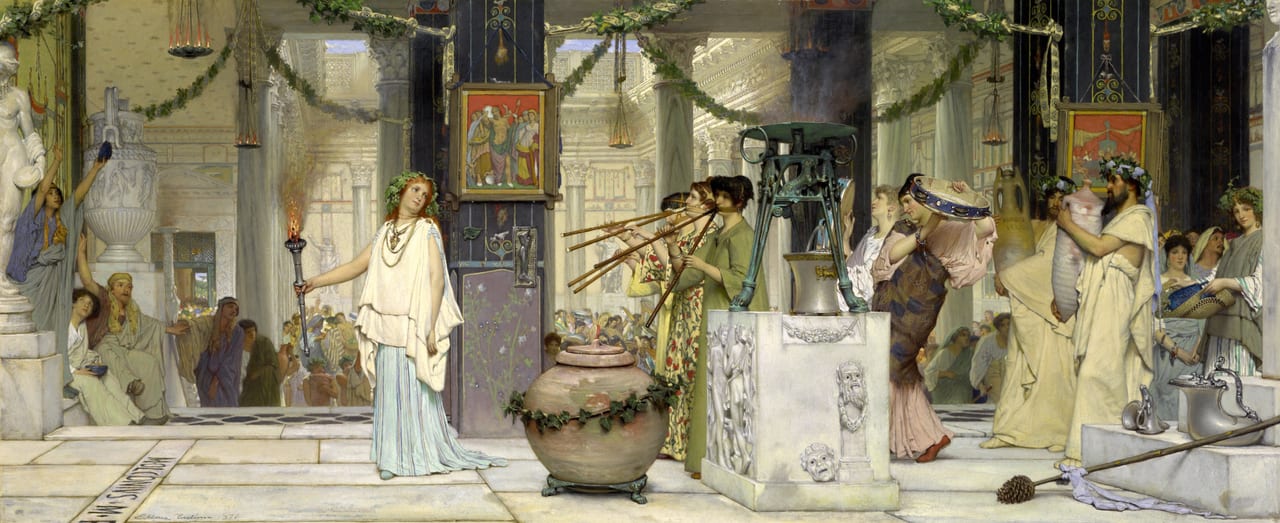
Lawrence Alma-Tadema
The vintage festival · 1871
Dutch-born, he moved to England from Belgium in 1870; his vivid recreations of daily life in ancient Rome and Greece won him acclaim and financial security.
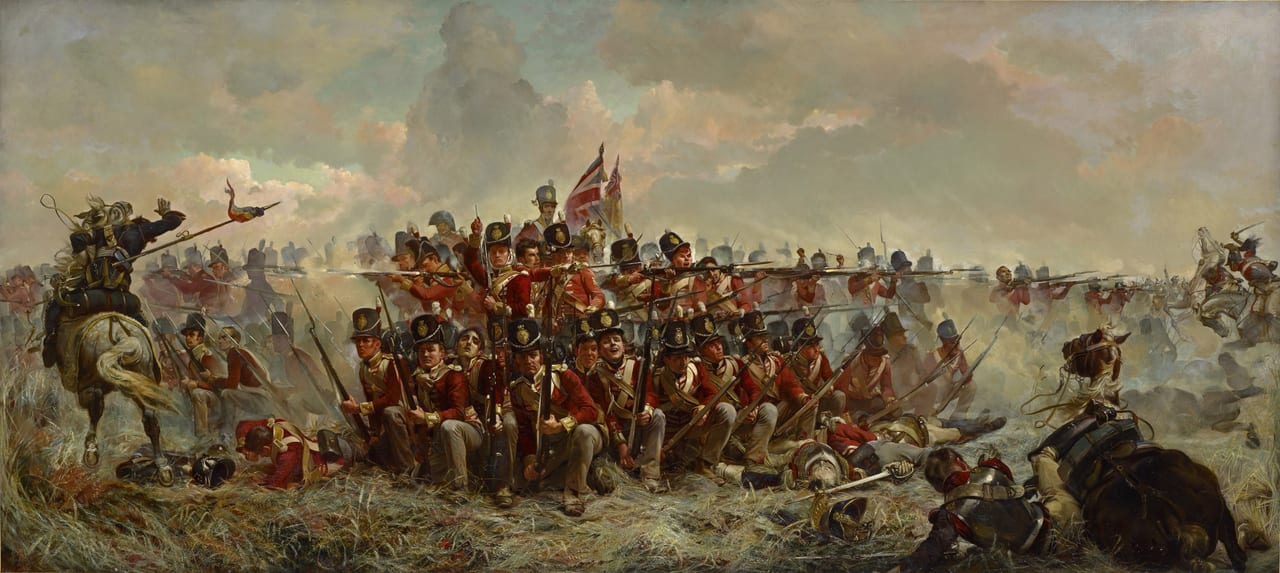
Elizabeth Thompson
The 28th Regiment at Quatre Bras · 1875
She was among the leading late nineteenth-century painters of military and historical subjects; acquired in 1884, this was voted the gallery’s most popular picture in 1906.
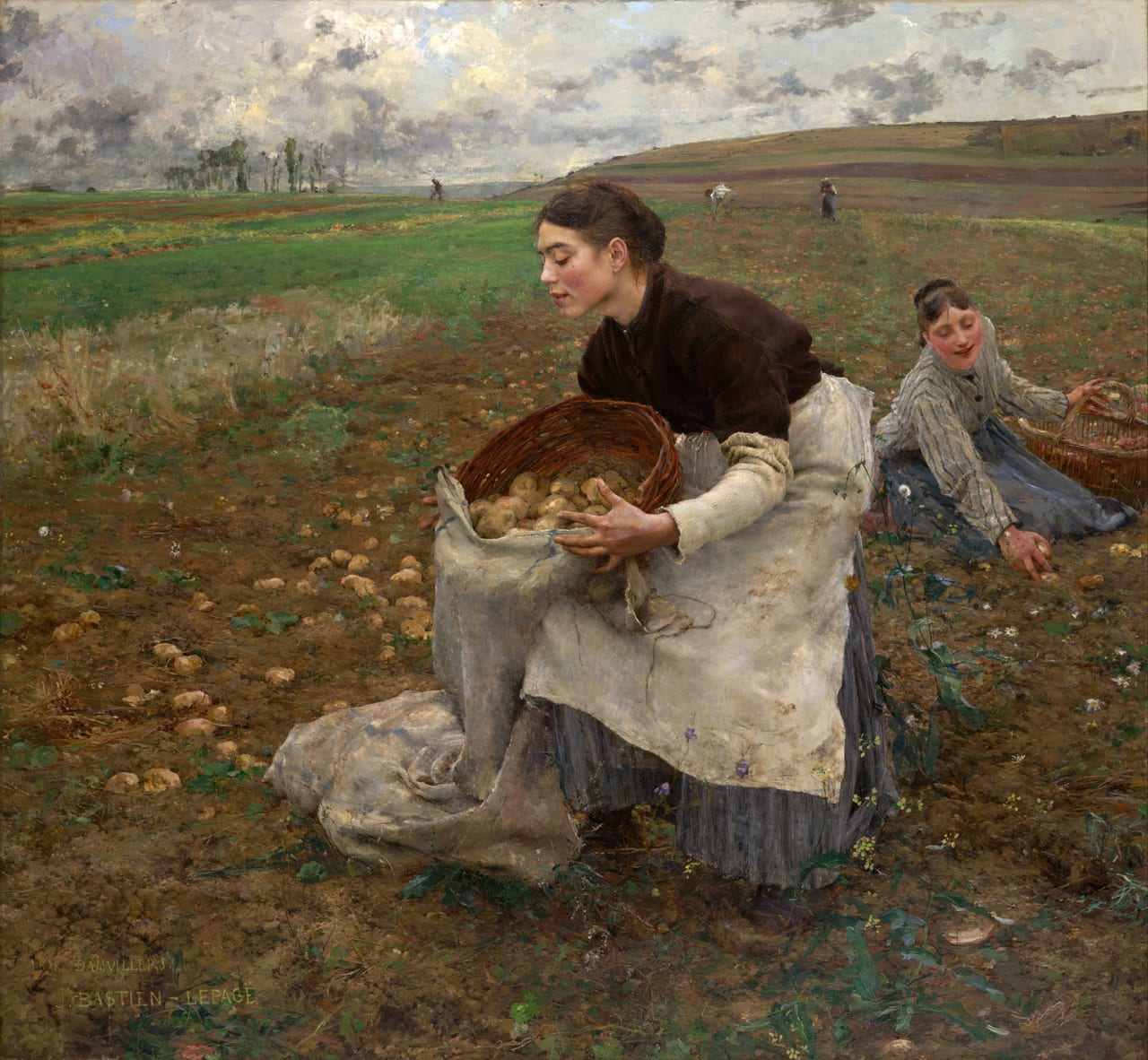
Jules Bastien-Lepage
October · 1878
Following Millet and Courbet, he set out to paint rural life as he knew it, honouring the peasants’ dignity but also the hardships. October was painted at his native village of Damvillers, in the Meuse Valley.
Artworks
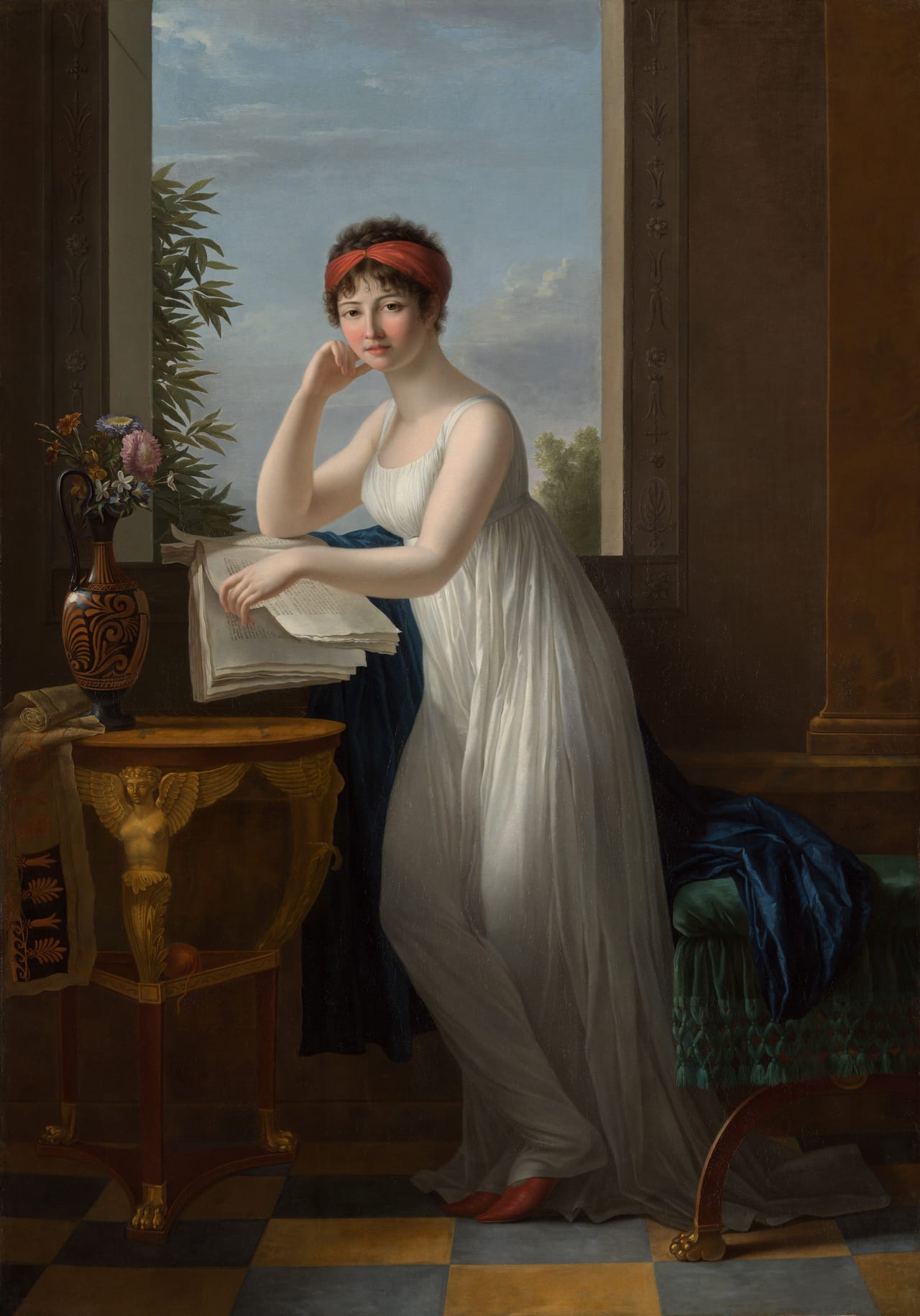
A young woman leaning on the edge of a window
Marie Victoire Lemoine · c. 1798–1799
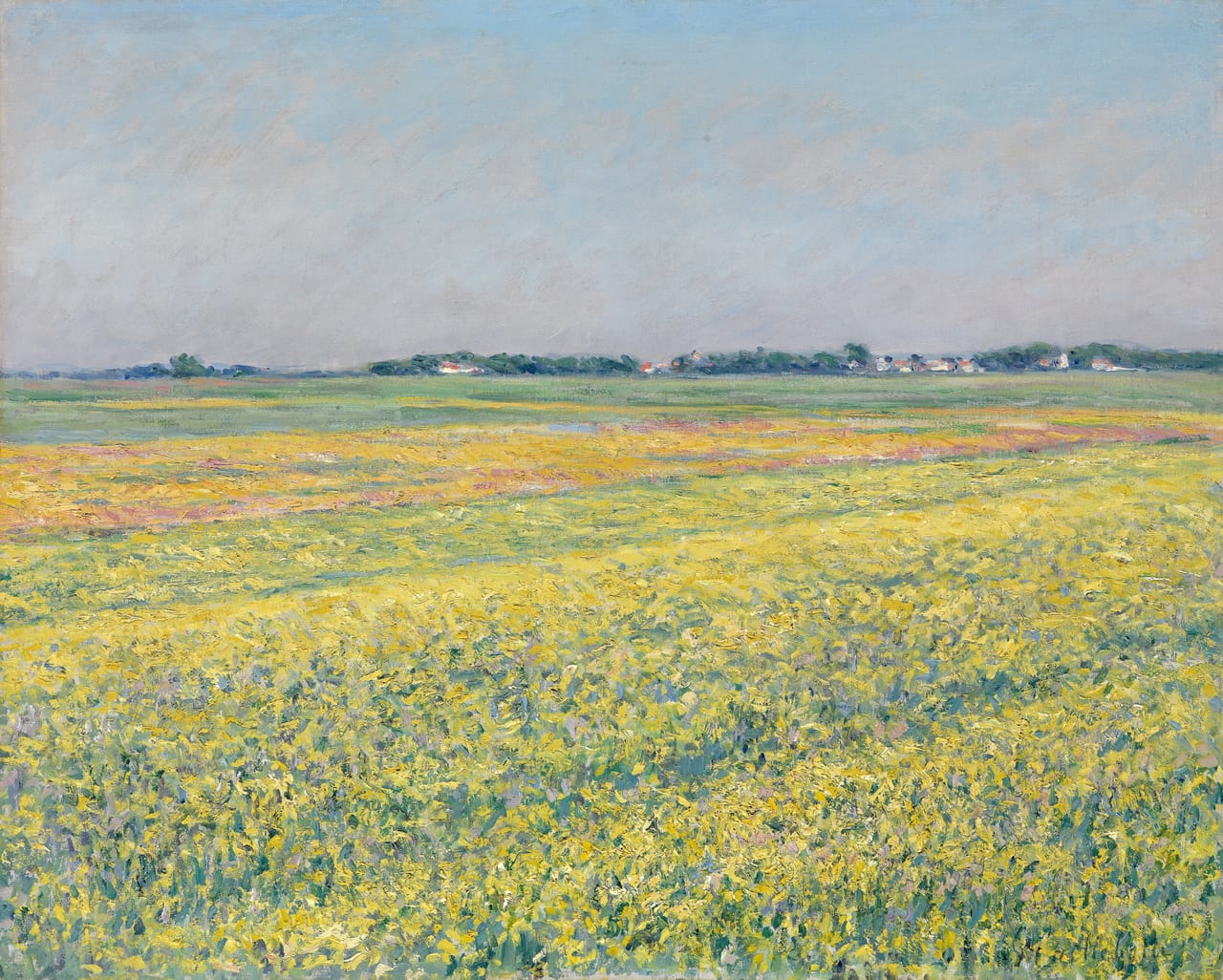
The plain of Gennevilliers, yellow fields
Gustave Caillebotte · 1884
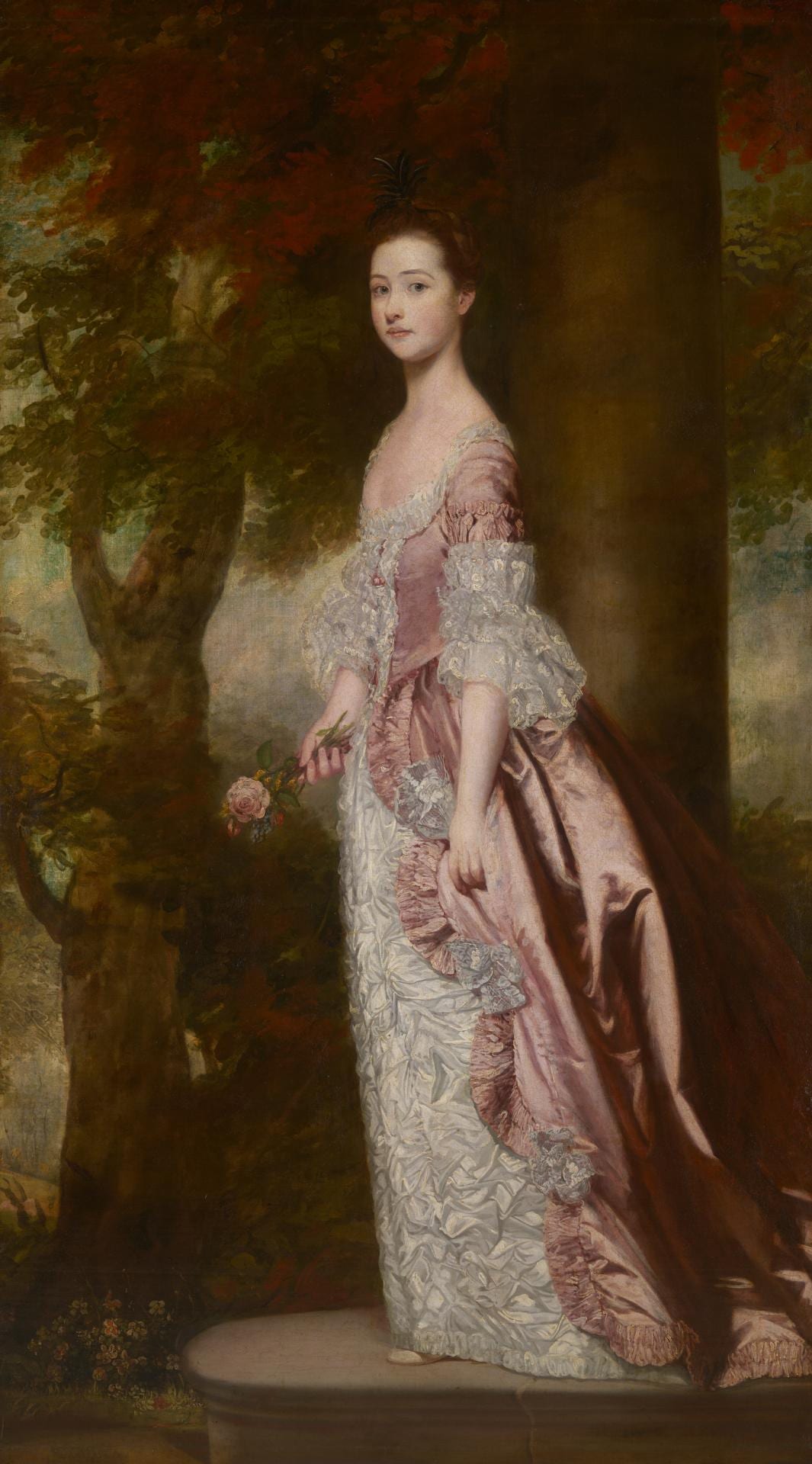
Miss Susanna Gale
Joshua Reynolds · c. 1763–1764
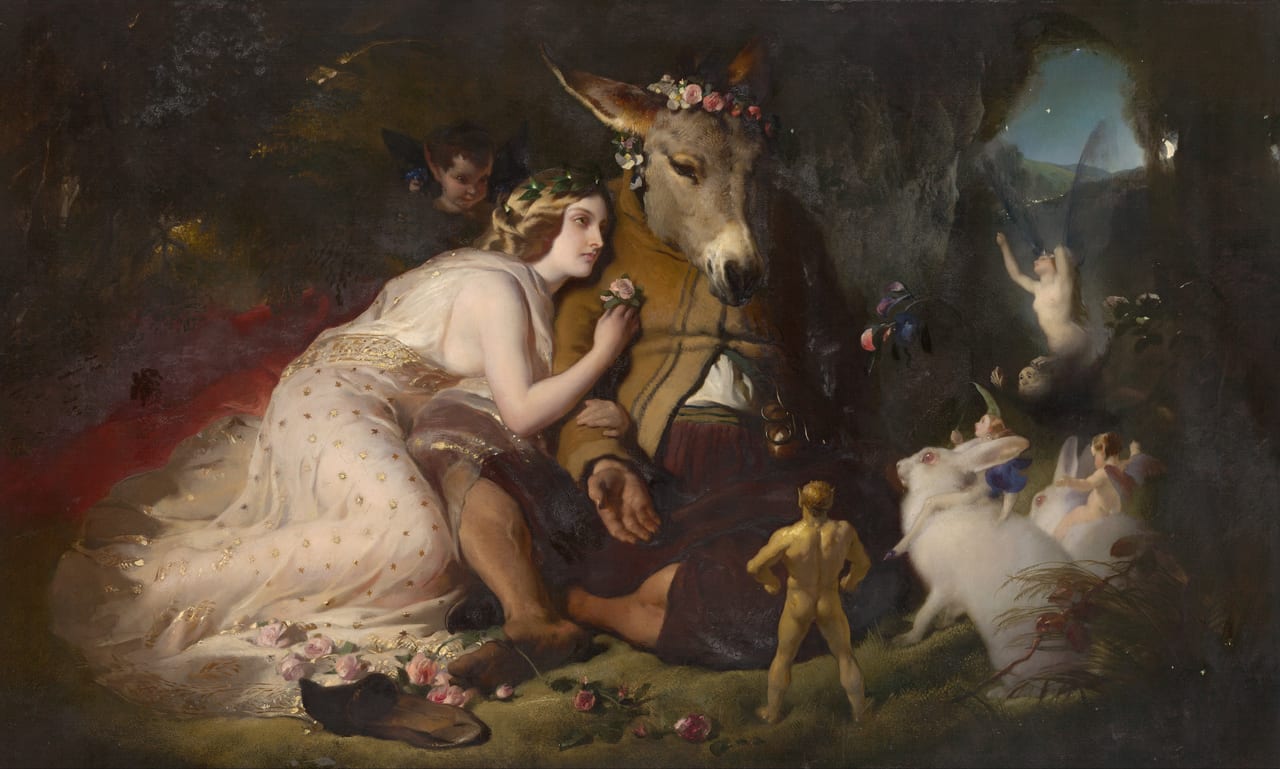
Scene from A Midsummer Night’s Dream. Titania and Bottom
Edwin Landseer · 1848–1851
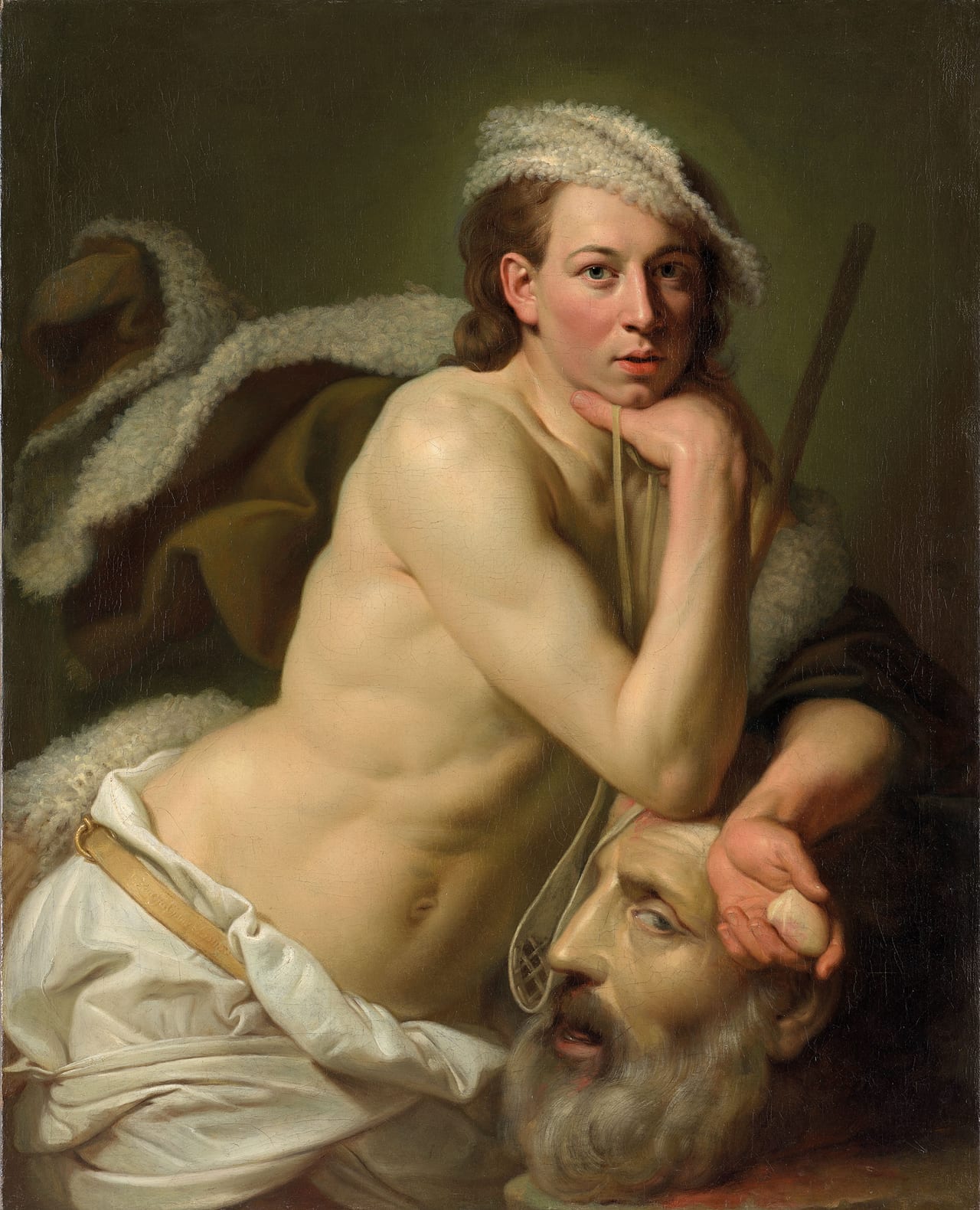
David with the head of Goliath
Johan Joseph Zoffany · 1756
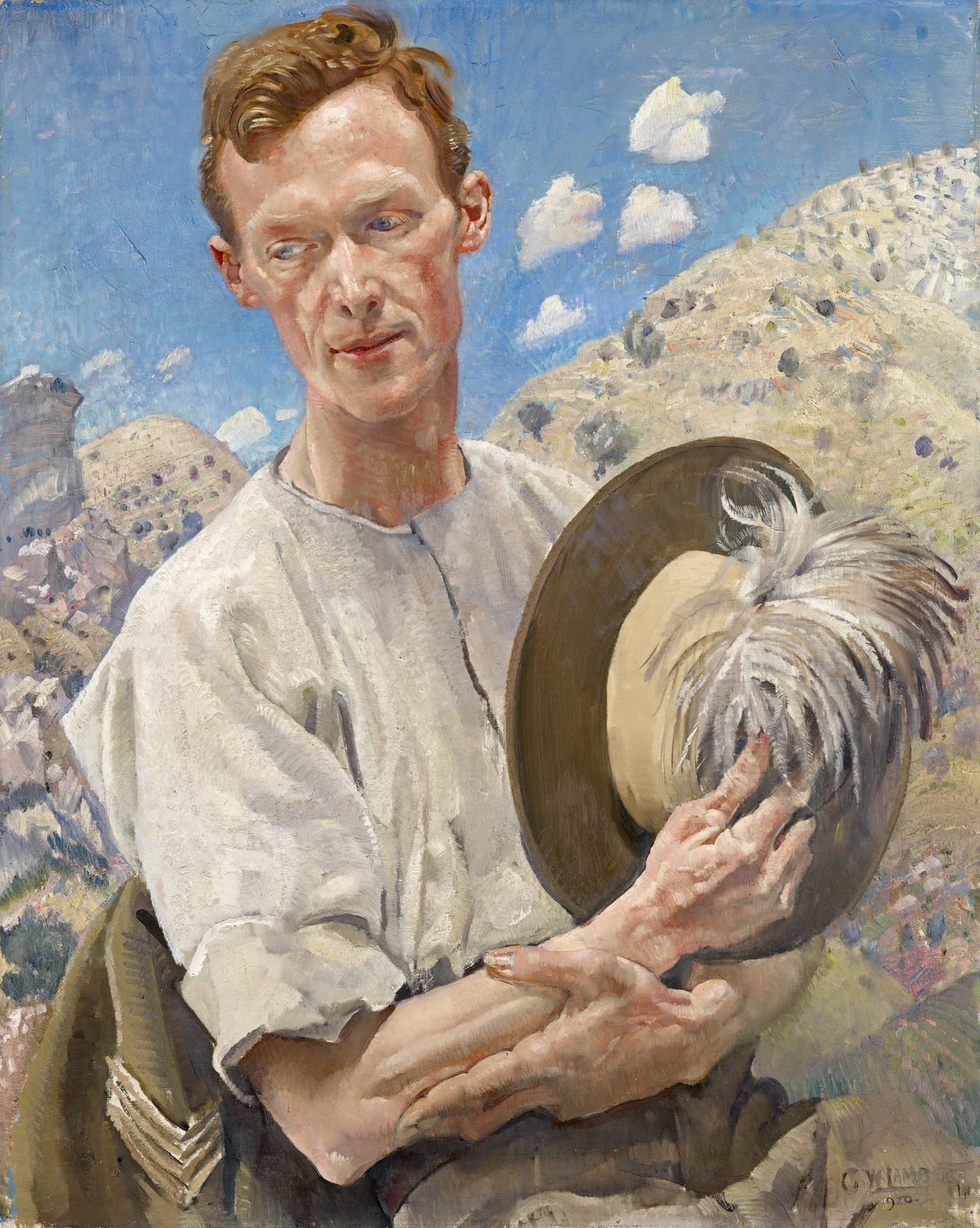
A sergeant of the Light Horse
George W. Lambert · 1920
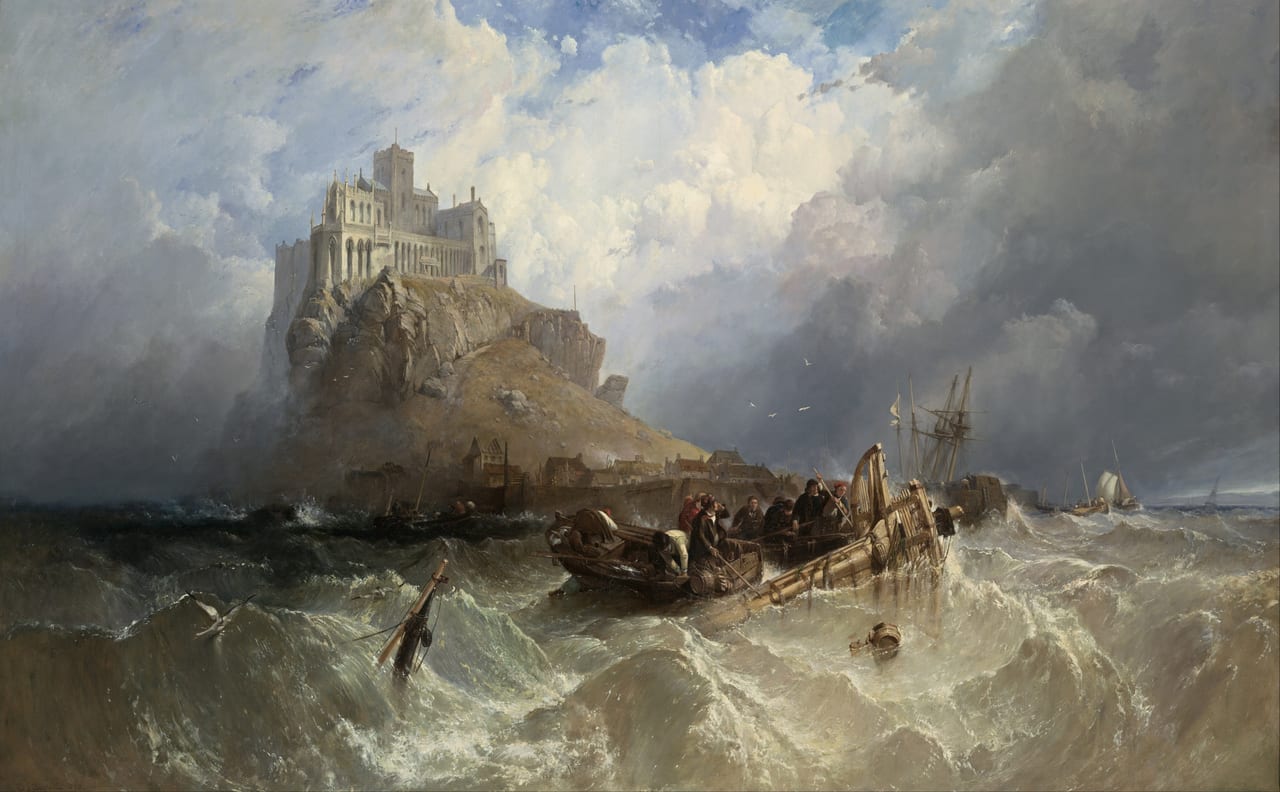
Mount St Michael, Cornwall
Clarkson Stanfield · 1830
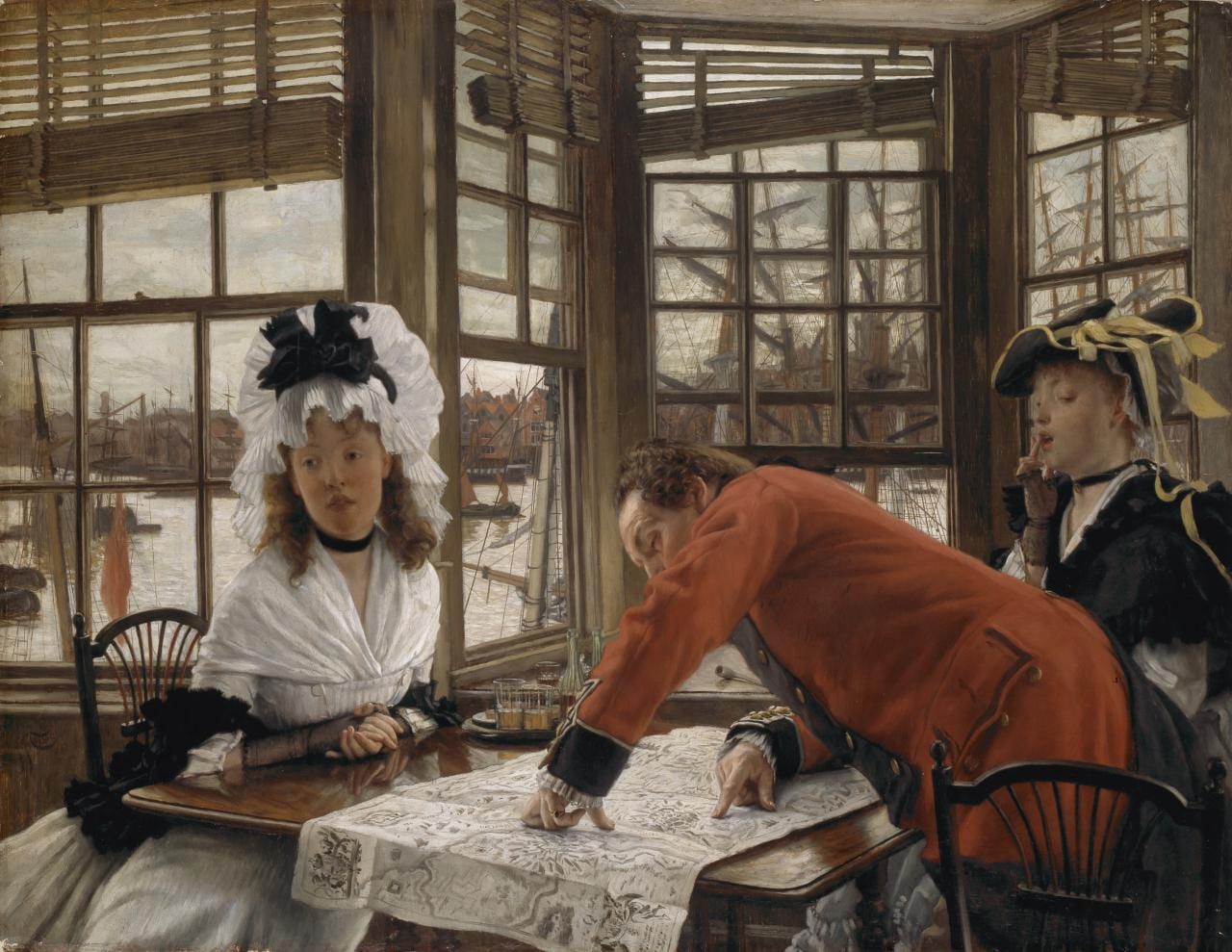
An interesting story
James Tissot · c. 1872
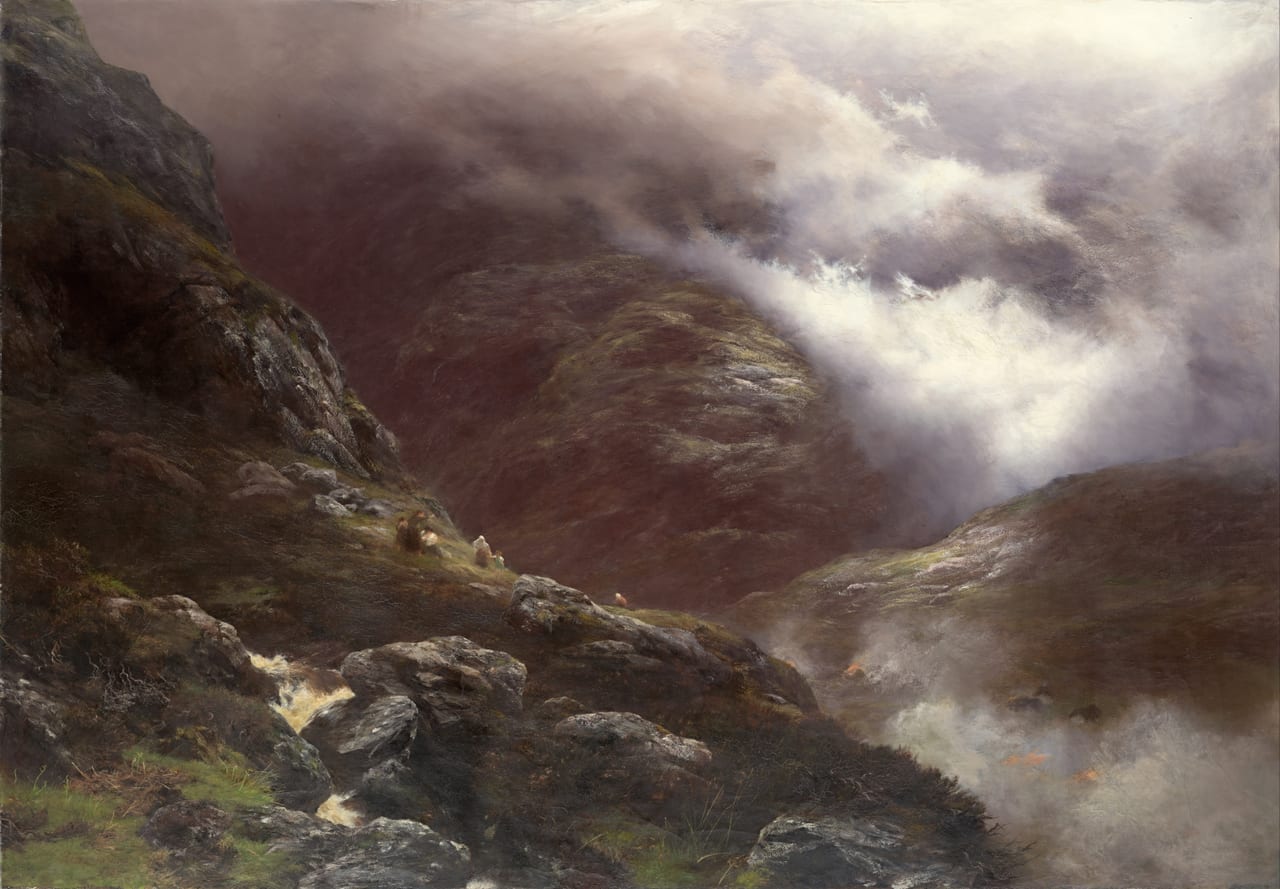
After the Massacre of Glencoe
Peter Graham · 1889
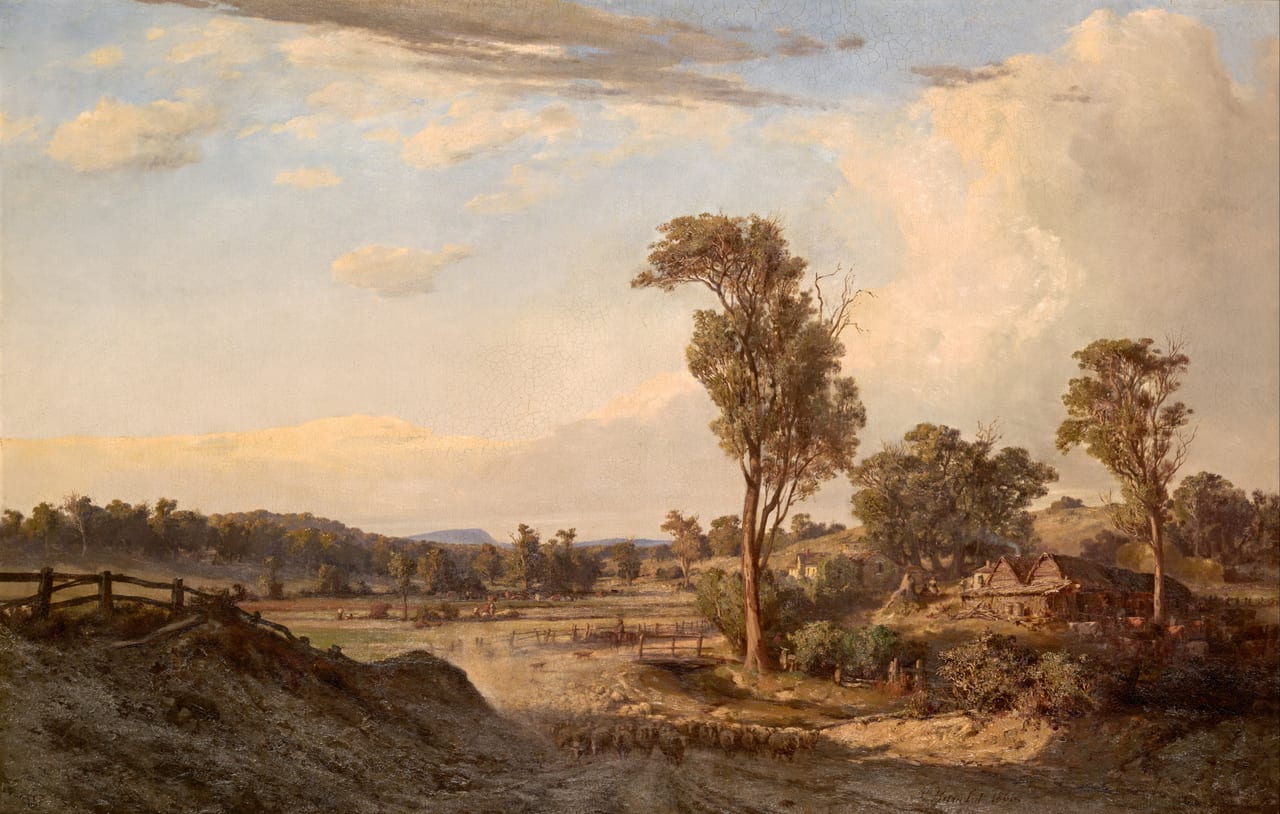
Summer afternoon, Templestowe
Louis Buvelot · 1866
Sources
- NGV Collection Online, Giambattista Tiepolo, “The Banquet of Cleopatra”
- NGV Collection Online, Tom Roberts, “Shearing the rams”
- NGV Collection Online, Frederick McCubbin, “The pioneer”
- NGV Collection Online, Arthur Streeton, “‘The purple noon’s transparent might’”
- NGV Collection Online, Camille Pissarro, “Boulevard Montmartre, morning, cloudy weather”
- NGV Collection Online, John William Waterhouse, “Ulysses and the Sirens”
- NGV Collection Online, Rembrandt, “Portrait of a white-haired man”
- NGV Collection Online, Hans Memling, “The Man of Sorrows in the arms of the Virgin”
- NGV Collection Online, Paolo Uccello, “Saint George slaying the dragon”
- NGV Collection Online, Nicolas Poussin, “The Crossing of the Red Sea”
- NGV Collection Online, John Everett Millais, “The rescue”
- NGV Collection Online, August Friedrich Albrecht Schenck, “Anguish”
- NGV Collection Online, Agnolo Gaddi, “Madonna and Child with Saint John the Evangelist, Saint John the Baptist, Saint James of Compostela and Saint Nicholas of Bari”
- NGV Collection Online, Giambattista Pittoni, “The miracle of the loaves and fishes”
- NGV Collection Online, Melchior d’Hondecoeter, “The poultry yard”
- NGV Collection Online, Sassoferrato, “Madonna in prayer”
- NGV Collection Online, Nathaniel Dance, “The Pybus family”
- NGV Collection Online, Louise Bouteiller, “Césarine de Houdetot, Baronne de Barante, reading Paul et Virginie”
- NGV Collection Online, Paul Signac, “Gasometers at Clichy”
- NGV Collection Online, Eugene von Guérard, “Tea Trees near Cape Schanck, Victoria”
- NGV Collection Online, Tom Roberts, “Coming South”
- NGV Collection Online, Frederick McCubbin, “The North wind”
- NGV Collection Online, John Constable, “The Quarters behind Alresford Hall”
- NGV Collection Online, J. M. W. Turner, “Walton bridges”
- NGV Collection Online, Édouard Manet, “The house at Rueil”
- NGV Collection Online, Lavinia Fontana, “Mystic marriage of Saint Catherine”
- NGV Collection Online, Annibale Carracci, “Pan”
- NGV Collection Online, Jacopo Tintoretto, “Doge Pietro Loredano”
- NGV Collection Online, Jacob van Ruisdael, “The watermill”
- NGV Collection Online, Lawrence Alma-Tadema, “The vintage festival”
- NGV Collection Online, Elizabeth Thompson, “The 28th Regiment at Quatre Bras”
- NGV Collection Online, Jules Bastien-Lepage, “October”
- NGV Collection Online, Robert Delaunay, “Nude woman reading”
- NGV Collection Online, Marie Victoire Lemoine, “A young woman leaning on the edge of a window”
- NGV Collection Online, Gustave Caillebotte, “The plain of Gennevilliers, yellow fields”
- NGV Collection Online, Joshua Reynolds, “Miss Susanna Gale”
- NGV Collection Online, Edwin Landseer, “Scene from A Midsummer Night’s Dream. Titania and Bottom”
- NGV Collection Online, Johan Joseph Zoffany, “David with the head of Goliath”
- NGV Collection Online, George W. Lambert, “A sergeant of the Light Horse”
- NGV Collection Online, Clarkson Stanfield, “Mount St Michael, Cornwall”
- NGV Collection Online, James Tissot, “An interesting story”
- NGV Collection Online, Peter Graham, “After the Massacre of Glencoe”
- NGV Collection Online, Louis Buvelot, “Summer afternoon, Templestowe”
- NGV Collection Online, Joseph Wright of Derby, “Lake Nemi, sunset”
- NGV, “Art Start: Discover the NGV and its collections”
- NGV, “International Art”
- NGV, “Australian Art”
- NGV, “The lasting impact of Alfred Felton’s legacy”
- NGV, “Buying for the future: Mary Woodall and Italian Old Master paintings”
- NGV, “NGV International: 50th Anniversary”
- Britannica, “National Gallery of Victoria”
- Wikipedia, “National Gallery of Victoria”
- Britannica, “Heidelberg School”
- Britannica, “Tom Roberts”
- Britannica, “John Constable”
- Britannica, “J.M.W. Turner”
- Britannica, “Édouard Manet”
- Britannica, “Lavinia Fontana”
- Britannica, “Annibale Carracci”
- Britannica, “Tintoretto”
- Britannica, “Jacob van Ruisdael”
- Wikipedia, “Frederick McCubbin”
- Lake Nemi, sunset — Public domain via Wikimedia Commons (Public domain)
- The Banquet of Cleopatra — Public domain via Wikimedia Commons (Public domain)
- Shearing the rams — Public domain via Wikimedia Commons (Public domain)
- The pioneer — Public domain via Wikimedia Commons (Public domain)
- ‘The purple noon’s transparent might’ — Public domain via Wikimedia Commons (Public domain)
- Boulevard Montmartre, morning, cloudy weather — Public domain via Wikimedia Commons (Public domain)
- Ulysses and the Sirens — Public domain via Wikimedia Commons (Public domain)
- Portrait of a white-haired man — Public domain via Wikimedia Commons (Public domain)
- The Man of Sorrows in the arms of the Virgin — Public domain via Wikimedia Commons (Public domain)
- Saint George slaying the dragon — Public domain via Wikimedia Commons (Public domain)
- The Crossing of the Red Sea — Public domain via Wikimedia Commons (Public domain)
- The rescue — Public domain via Wikimedia Commons (Public domain)
- Anguish — Public domain via Wikimedia Commons (Public domain)
- Madonna and Child with Saint John the Evangelist, Saint John the Baptist, Saint James of Compostela and Saint Nicholas of Bari — Public domain via Wikimedia Commons (Public domain)
- The miracle of the loaves and fishes — Public domain via Wikimedia Commons (Public domain)
- The poultry yard — Public domain via Wikimedia Commons (Public domain)
- Madonna in prayer — Public domain via Wikimedia Commons (Public domain)
- The Pybus family — Public domain via Wikimedia Commons (Public domain)
- Césarine de Houdetot, Baronne de Barante, reading Paul et Virginie — Public domain via Wikimedia Commons (Public domain)
- Gasometers at Clichy — Public domain via Wikimedia Commons (Public domain)
- Nude woman reading — Public domain via Wikimedia Commons (Public domain)
- Tea Trees near Cape Schanck, Victoria — Public domain via Wikimedia Commons (Public domain)
- Coming South — Public domain via Wikimedia Commons (Public domain)
- The North wind — Public domain via Wikimedia Commons (Public domain)
- The Quarters behind Alresford Hall — Public domain via Wikimedia Commons (Public domain)
- Walton bridges — Public domain via Wikimedia Commons (Public domain)
- The house at Rueil — Public domain via Wikimedia Commons (Public domain)
- Mystic marriage of Saint Catherine — Public domain via Wikimedia Commons (Public domain)
- Pan — Public domain via Wikimedia Commons (Public domain)
- Doge Pietro Loredano — Public domain via Wikimedia Commons (Public domain)
- The watermill — Public domain via Wikimedia Commons (Public domain)
- The vintage festival — Public domain via Wikimedia Commons (Public domain)
- The 28th Regiment at Quatre Bras — Public domain via Wikimedia Commons (Public domain)
- October — Public domain via Wikimedia Commons (Public domain)
- A young woman leaning on the edge of a window — Public domain via Wikimedia Commons (Public domain)
- The plain of Gennevilliers, yellow fields — Public domain via Wikimedia Commons (Public domain)
- Miss Susanna Gale — Public domain via Wikimedia Commons (Public domain)
- Scene from A Midsummer Night’s Dream. Titania and Bottom — Public domain via Wikimedia Commons (Public domain)
- David with the head of Goliath — Public domain via Wikimedia Commons (Public domain)
- A sergeant of the Light Horse — Public domain via Wikimedia Commons (Public domain)
- Mount St Michael, Cornwall — Public domain via Wikimedia Commons (Public domain)
- An interesting story — Public domain via Wikimedia Commons (Public domain)
- After the Massacre of Glencoe — Public domain via Wikimedia Commons (Public domain)
- Summer afternoon, Templestowe — Public domain via Wikimedia Commons (Public domain)
Invite the NGV into your living room