The Progress of Love: The Meeting
Jean-Honoré Fragonard

The Frick Collection
New York
Henry Clay Frick, who made his fortune in coke and steel, built his Manhattan house intending it to become a public museum after his family ceased to reside there, and it opened as one in 1935. Its rooms hold European paintings from the fourteenth to the nineteenth century, by Bellini, Holbein, Titian, Vermeer, Rembrandt, Velázquez, Goya, Turner and Whistler among others, hung among antique furniture, Chinese porcelain and Limoges enamels.
- in the collection as of 2025, paintings and other objects together
- 1,800 works
- of art and decoration in the collection when Henry Clay Frick died
- 635 pieces
- growth in the collection since the museum first opened to the public
- More than 30%
A steel magnate’s pictures
Henry Clay Frick was a magnate of coke and steel. The first picture in his permanent collection, bought in 1880 once he had settled in Pittsburgh, was Luis Jiménez’s In the Louvre, but only from the mid-1890s did he buy paintings in large numbers. Explaining why he collected art, he said: “I can make money. I cannot make pictures.” He and his family gathered the collection guided by two advisers, the dealer Joseph Duveen and the English critic Roger Fry.
Frick began with salon pieces and pictures of the Barbizon School, buying 90 paintings from Charles Carstairs between 1895 and 1900 alone. Through the 1900s his purchases were more and more Old Masters, and by the early 1910s the collection was largely English and Dutch, with French and Spanish paintings scattered among them. Many of his pictures show women.
When the family moved from Pittsburgh to New York in 1905 they leased the William H. Vanderbilt House, and Frick went on adding to the collection. Frick’s permanent house was designed with the collection in mind by Thomas Hastings, of the firm Carrère and Hastings; it was completed in 1914, and Frick built it intending that it would become a public museum once his family no longer lived in it.
From house to museum
Frick died in 1919, at 69, leaving the house as a public museum for his collection and a $15 million endowment to maintain the collection. His widow, Adelaide, stayed on in the mansion with their daughter Helen, and in April 1920 the trustees incorporated the Frick Collection. Helen catalogued most of the collection over the following decade, and in 1920 she founded the Frick Art Reference Library, first kept in the house’s basement bowling alley.
After Adelaide Frick died in 1931, the architect John Russell Pope set about turning the residence into a museum: he redesigned several rooms and added an entrance hall, the Garden Court and new galleries, with a six-storey building beside it for the library. The museum opened to the public in 1935. The works were placed to suit the character of the rooms rather than in order of date, and ropes at first kept visitors to a set path; once they came down, the rooms could be seen in any order.
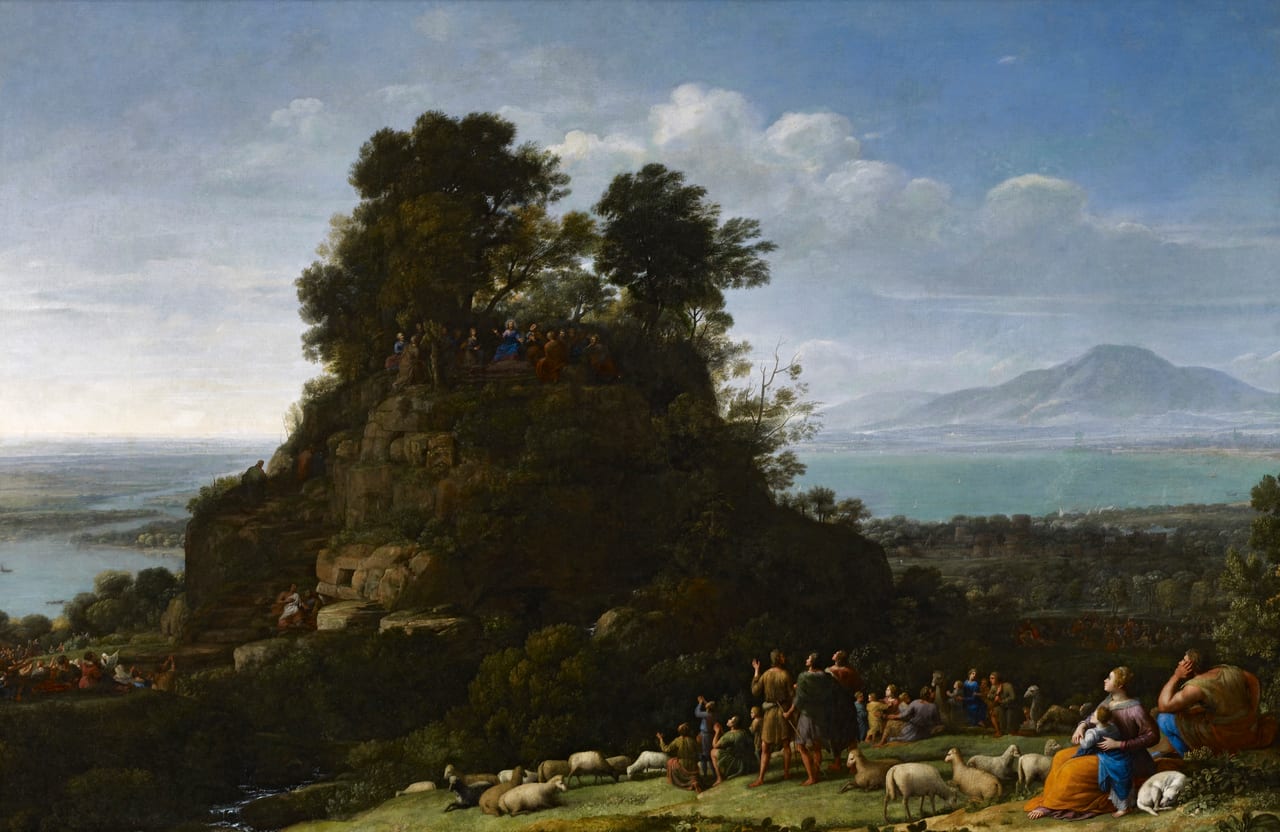
The collection has grown by more than 30 percent since the opening. Before the museum opened, the trustees bought Ingres’s Comtesse d’Haussonville, a painting by Duccio and Paolo Veneziano’s Coronation of the Virgin; works by Cimabue, Duccio, Piero della Francesca and Filippo Lippi first entered the collection between 1924 and 1950, Jan van Eyck’s Virgin and Child, with Saints and Donor in the 1950s, and Claude Lorrain’s Sermon on the Mount in the 1960s. Until 1948 the museum accepted gifts of art only from members of the Frick family. It may not sell anything it owns, and it can lend works acquired after Frick’s death but none that he owned in his lifetime.
Pictures among the furniture
Paintings and sculpture share the old living rooms with antique furniture, Chinese porcelain, Limoges enamels and Persian rugs. Toward the end of his life Frick turned to porcelain, sculpture and furniture; in 1919 he bought 40 Limoges enamels from J. P. Morgan’s collection, among the last things he bought himself. Later additions include Winthrop Edey’s collection of timepieces and, since the 2010s, 131 pieces of Meissen porcelain.
Among the museum’s best-known works is Fragonard’s series of wall paintings The Progress of Love, dated 1771–72 and 1790–91, kept company by Rococo armchairs and Sèvres porcelain. In 1770 Madame du Barry had commissioned Fragonard to decorate her newly built pavilion at Louveciennes with paintings of the Progress of Love; the Louveciennes paintings were probably rejected as too Rococo for a wholly Neoclassical setting. Frick obtained Fragonard panels from the collection of J. P. Morgan and moved them into his drawing room. Parts of the house have since been modified for the art it holds, among them a room for the Fragonard panels.
Away and home again
The Frick closed in mid-March 2020, in the pandemic, and an expansion began that year. In March 2021 the collection went on show a few blocks off, as Frick Madison, in the building that had been the Whitney Museum of American Art. There the paintings were grouped by age and region and hung against stark dark grey walls, in contrast to the ornate decoration of the house, and in 2023 Barkley L. Hendricks became the first artist of colour to have a solo show at the institution. Frick Madison closed on 3 March 2024.
In April 2018 the Frick announced a revised plan for its expansion, designed by Annabelle Selldorf. The house reopened in April 2025 with an improved reception hall, a new underground auditorium and the museum’s first education centre. Bedrooms and sitting rooms on the second floor, shut to the public for more than eight decades, became galleries; after the renovation Helen Clay Frick’s bedroom displayed the early Italian Renaissance paintings she had collected.
What to see
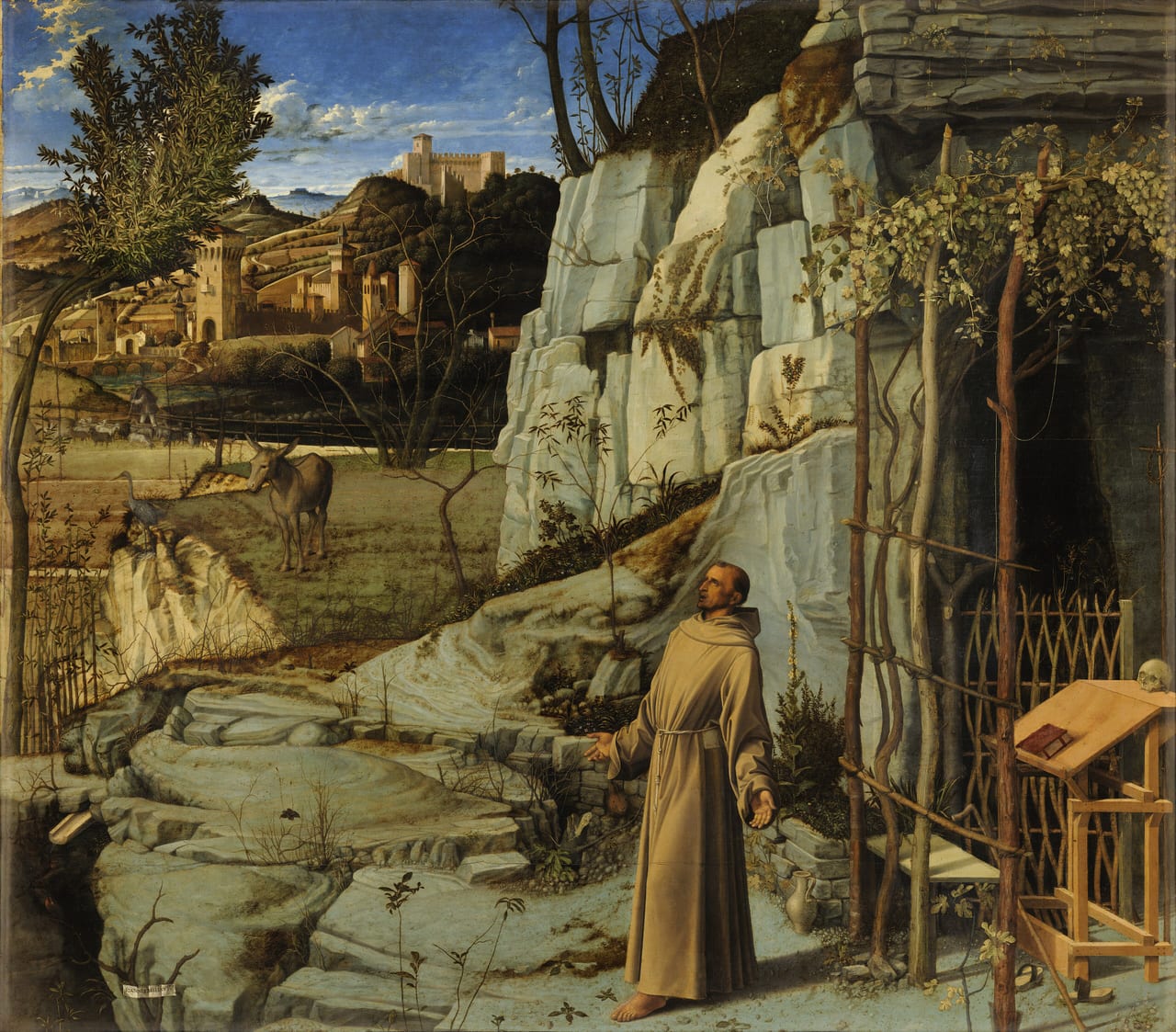
Saint Francis in the Desert
Giovanni Bellini · c. 1475–80
Barefoot in a brown robe, Saint Francis has stepped out of his cave and stands looking upward, arms spread wide, as golden rays fall from the top left corner. Inside the cave are his book, a skull, a crown of thorns and a cross made of stems. Bellini set the saint in one of the largest Renaissance landscapes, with a walled hill, a bridge over running water, a bird like a grey heron, a donkey and a shepherd with his flock. Frick bought it in 1915.
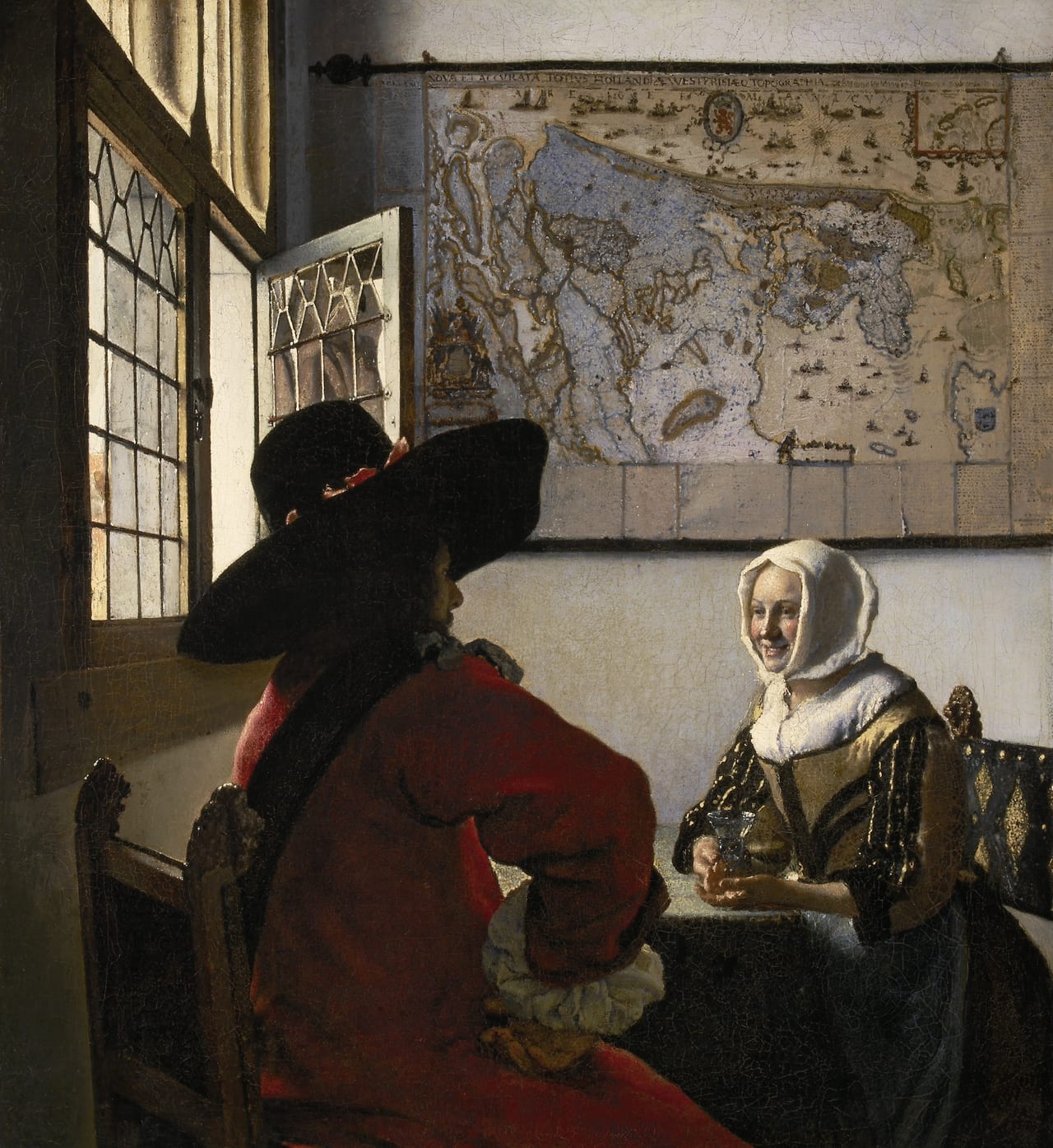
Officer and Laughing Girl
Johannes Vermeer · c. 1657
Light from an open window at the left falls softly on a woman in a yellow dress, a wine glass in her hand. In the foreground is a cavalier in a red coat and a broad-brimmed beaver hat; on the wall hangs a large map by Balthasar Florisz. van Berckenrode. What passes between them can only be guessed. It is one of three Vermeers in the collection, with Girl Interrupted at Her Music and Mistress and Maid.
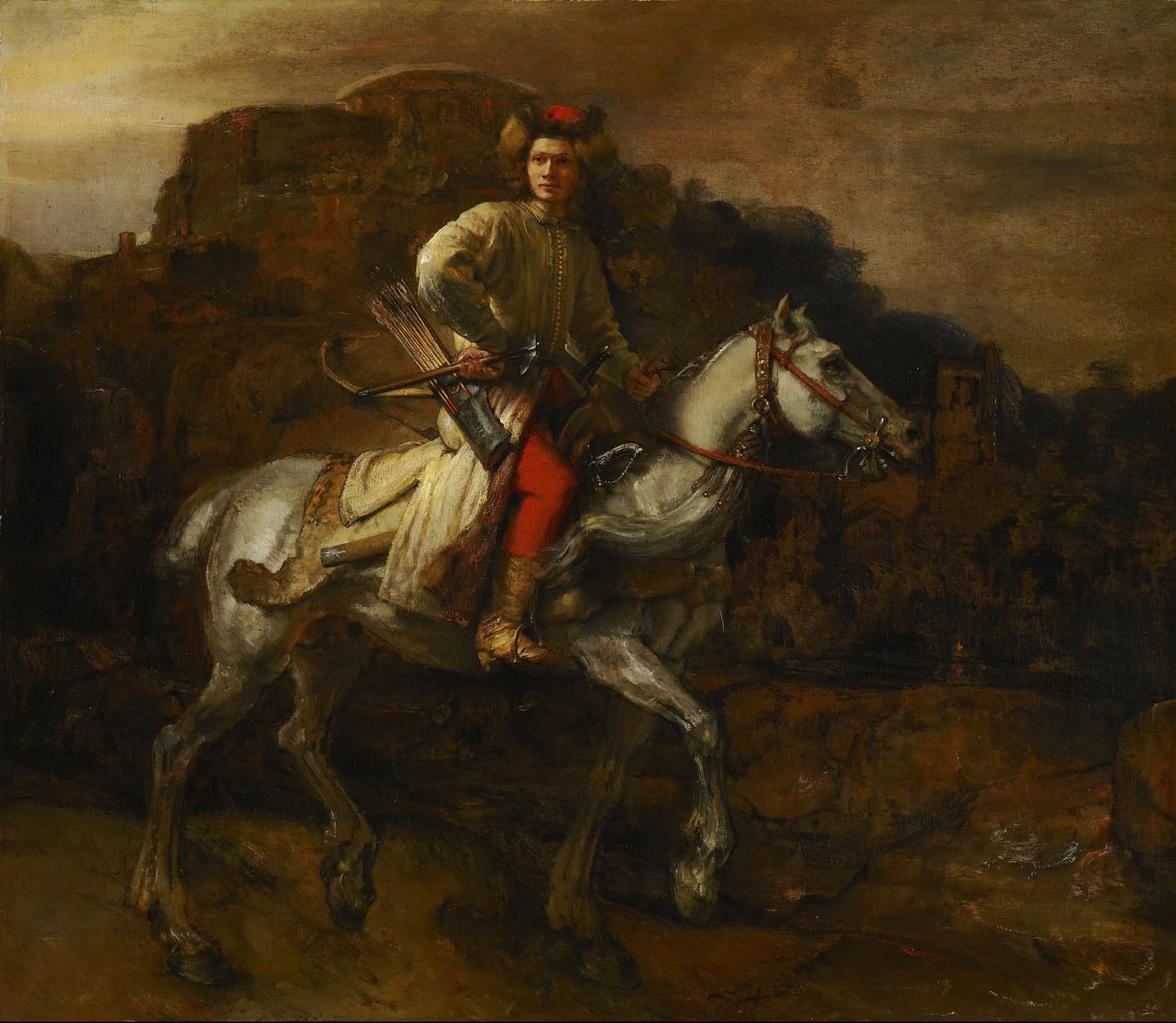
The Polish Rider
Rembrandt · 1650s
A young man rides through a murky landscape, parts of the background only sketched in or left unfinished. When Zdzisław Tarnowski sold the painting to Frick in 1910, it was agreed to be by Rembrandt; that has been questioned since, but only by a minority, and the Frick itself never changed its own attribution. There has also been debate over whether the rider was meant as a portrait of a particular person, and if so of whom.
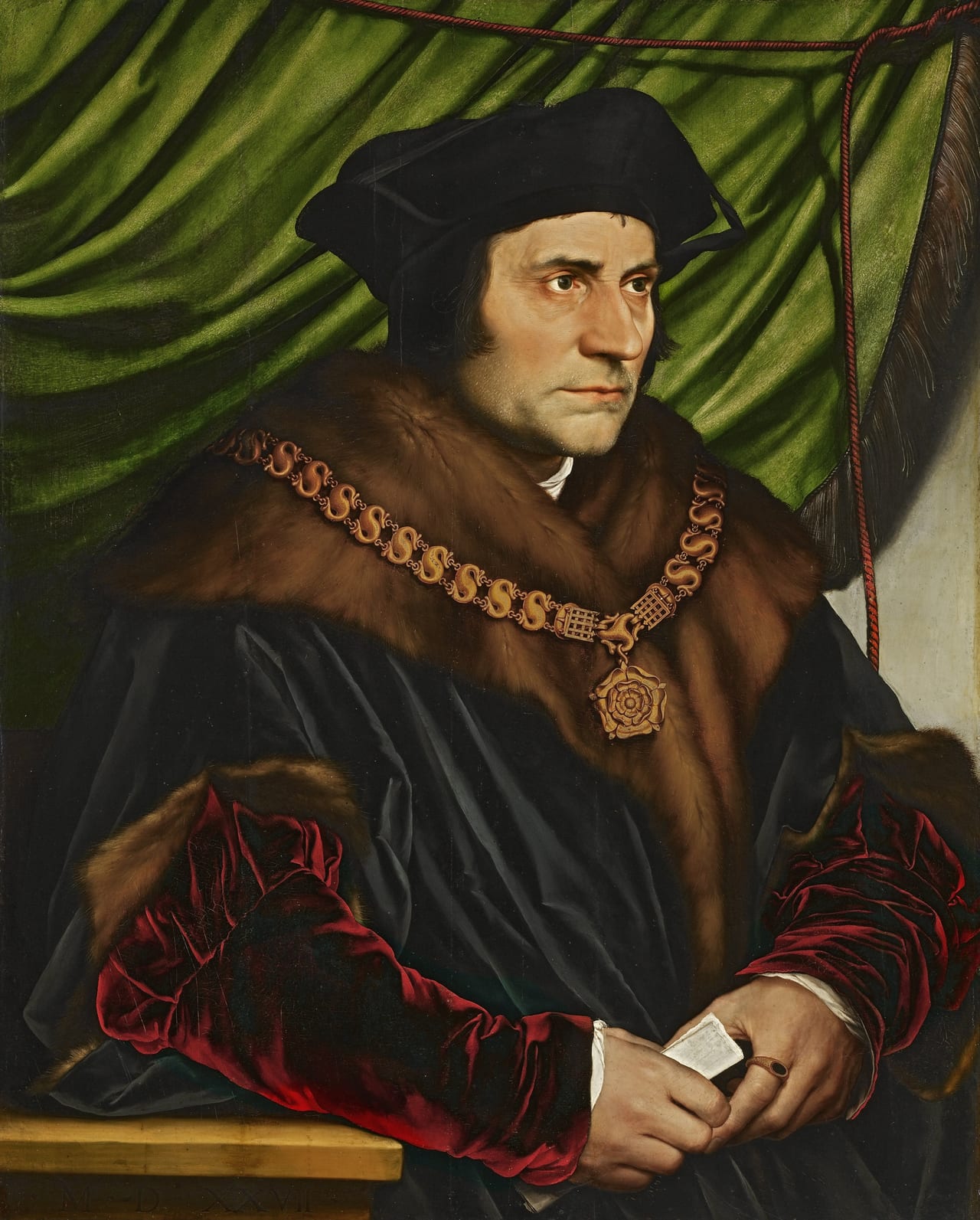
Portrait of Sir Thomas More
Hans Holbein the Younger · 1527
Holbein shows the English statesman and humanist holding a book, in a fur-lined coat of black satin and red velvet, wearing the Tudor Collar of Esses with its Tudor rose, a sign of loyalty and high office; a cord tied in a loose Franciscan knot at upper right speaks of his faith. Holbein was living in London from 1526, and Erasmus, whose friendship he had gained, recommended that he befriend More, then a powerful knight and speaker in the English Parliament. This single portrait of 1527 was among Holbein’s most impressive works for More.
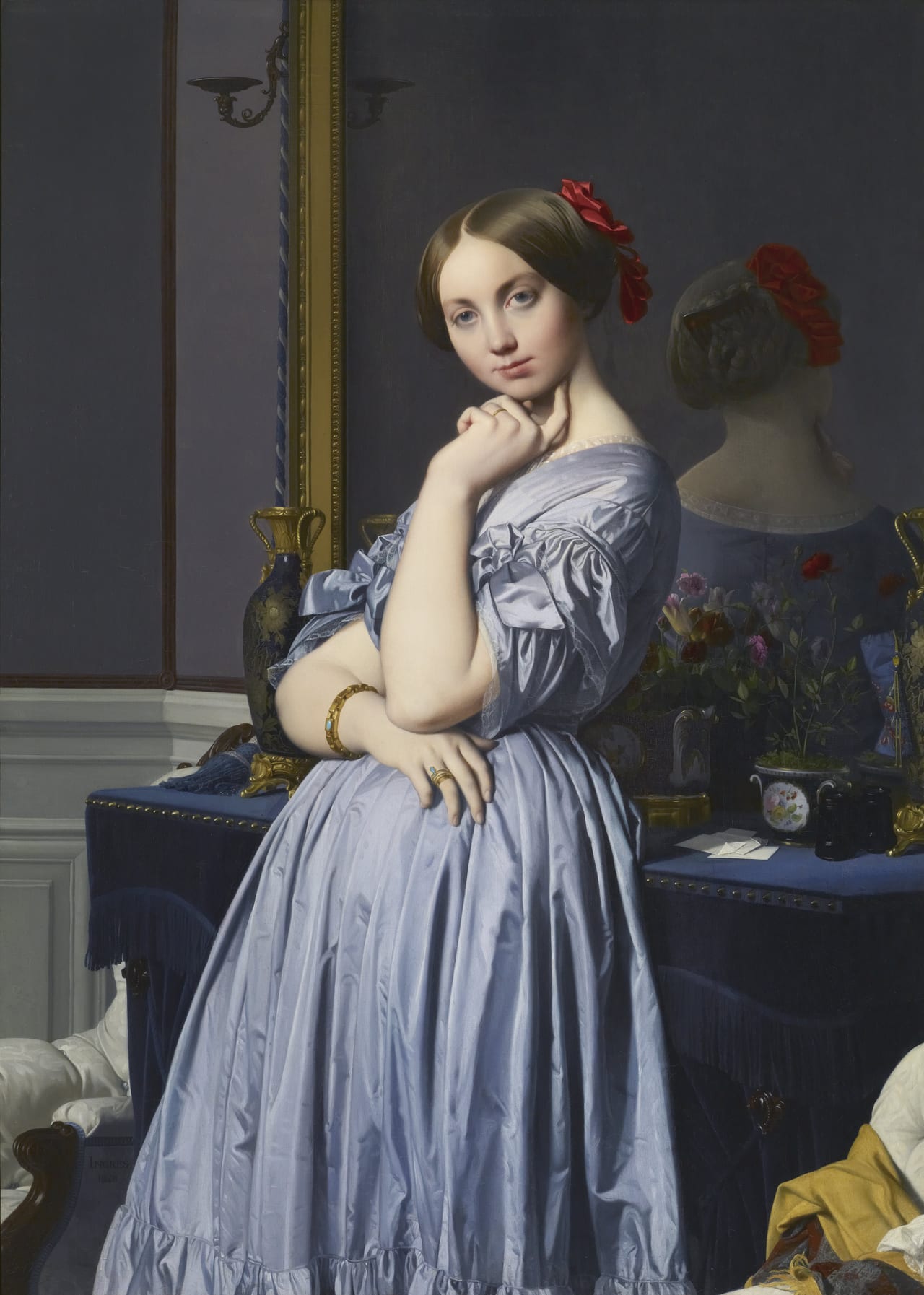
Comtesse d’Haussonville
Jean-Auguste-Dominique Ingres · 1845
Louise de Broglie was 27 when Ingres painted her facing us, with a demure look, in folded grey-blue satin of the same hue as her eyes, her figure caught again in the mirror behind. Ingres later complained that he had not fully captured her charms. It is one of the portraits in which Ingres caught the elegance of the feminine elite, and one of the famous pieces the trustees added to the collection after Frick’s death.
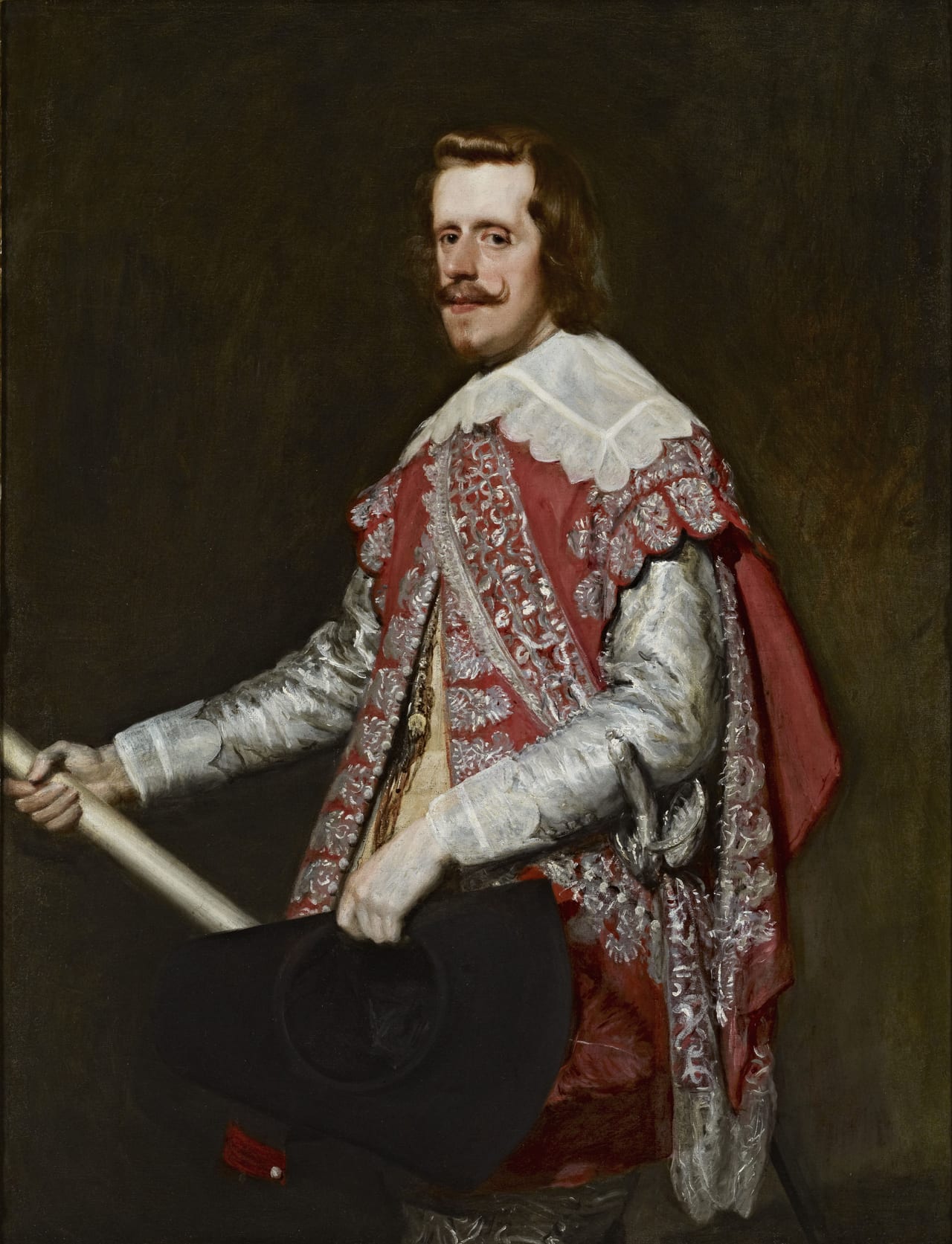
Portrait of Philip IV in Fraga
Diego Velázquez · 1644
Velázquez painted the king in three sittings in June 1644 at Fraga, where Philip had moved his court during the campaign that won back Lérida from France. Finished before the end of June, it was sent to Philip’s wife, Elisabeth, who ordered it put on public view. The Frick acquired the painting in 1911, the year a copy at Dulwich, previously mistakenly considered the original, was attributed to Juan Bautista Martínez del Mazo, and the New York canvas was recognised as Velázquez’s own.
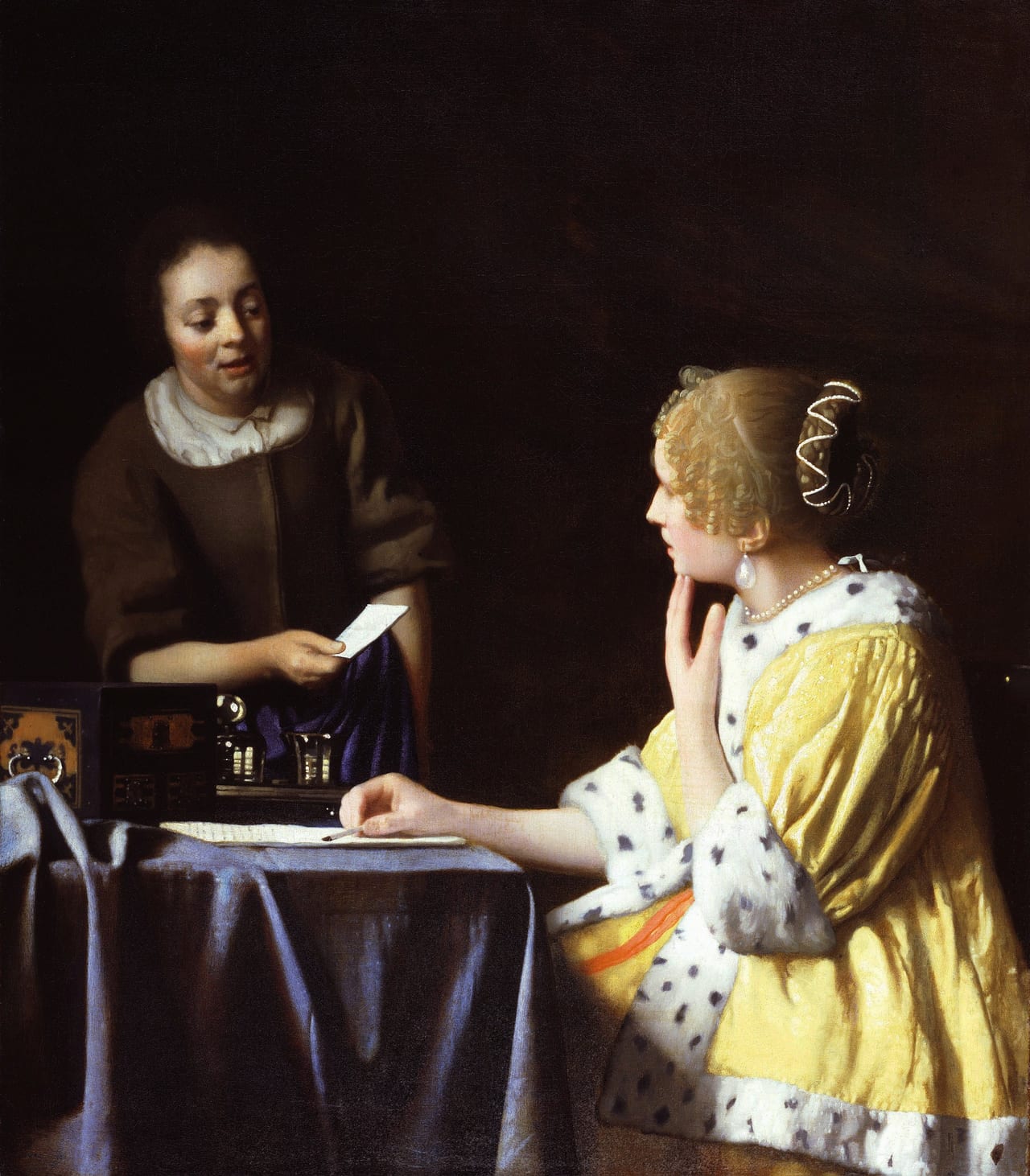
Mistress and Maid
Johannes Vermeer · 1666–67
A mistress and her maid look over a letter she has just received. Light from the left falls on the mistress’s face, lips slightly parted, fingertips raised to her chin; her fur-lined yellow overcoat is laid in with sweeping strokes of lead-tin yellow, the background dark, with blue in the silk tablecloth and the maid’s apron. The two women’s gestures suggest worry over what the letter may say. Frick acquired it between 1917 and 1919.
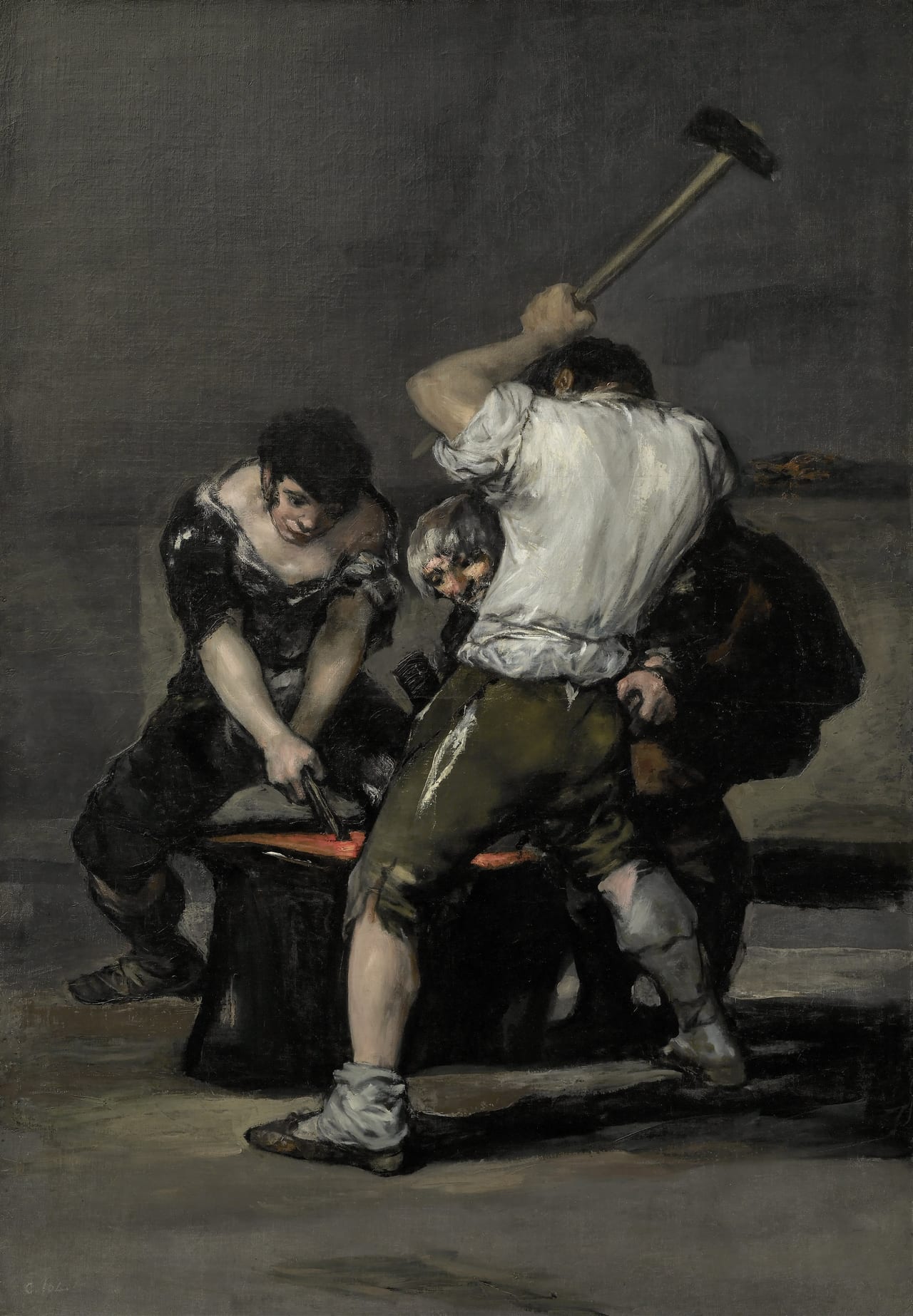
The Forge
Francisco Goya · c. 1817
Three blacksmiths toil over an anvil in a study of greys, blues and black, lit by the blazing red of hot metal. Goya gives the men heroic, muscular arms and heavy backs but coarse faces. They are probably meant for Spain’s working people, hammering out the country’s future, though other meanings have been suggested. No one commissioned the painting, and it was not sold in Goya’s lifetime.
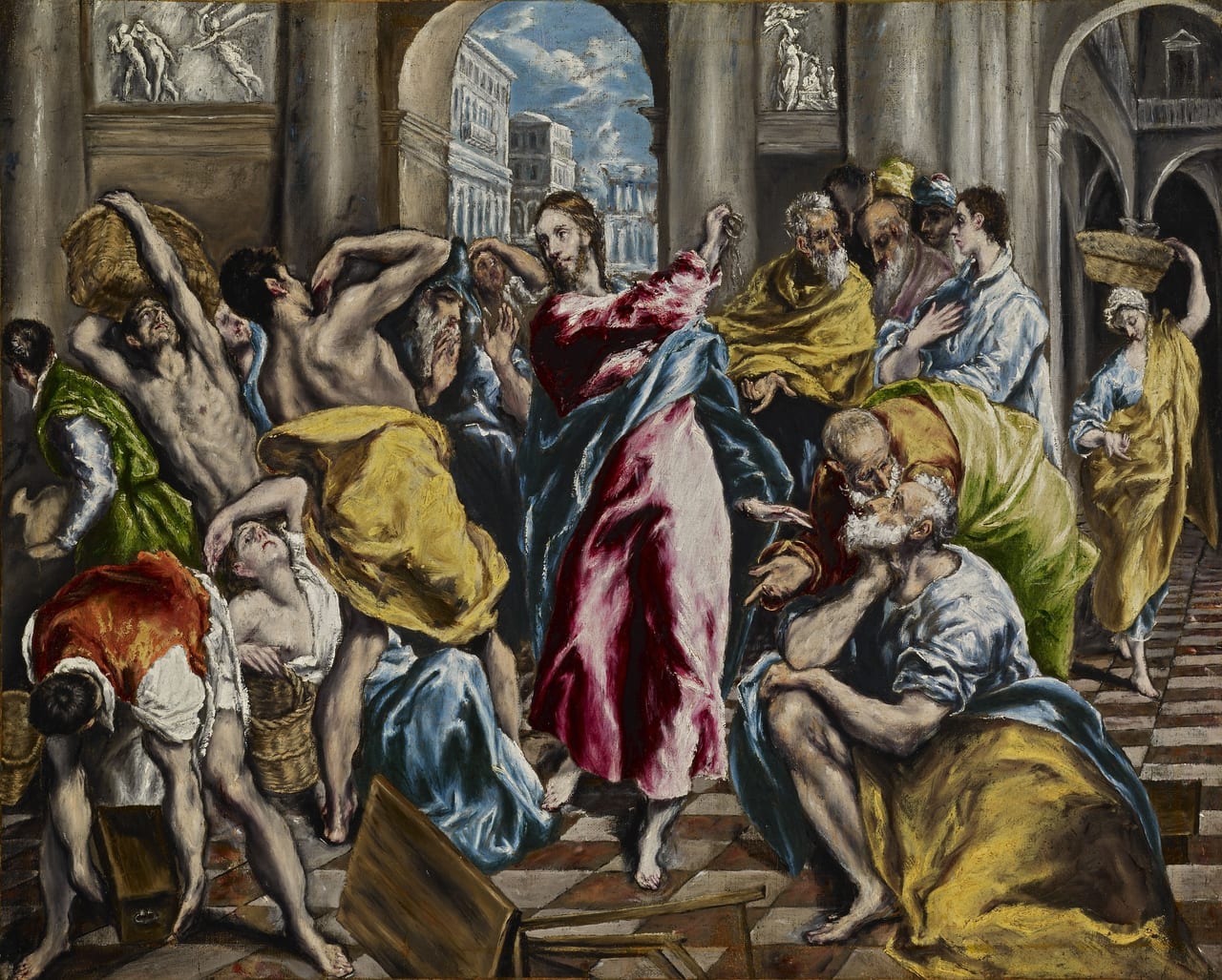
Christ Driving the Money Changers from the Temple
El Greco · 1595–1600
Christ drives the traders out of the Temple, his figure drawn out tall, as is the man kneeling to his right, who would be unnaturally tall if he stood up. The subject consumed El Greco, and many versions of it survive; this one dates from 1595–1600. Also called The Cleansing of the Temple, it is considered one of his best-known religious paintings.
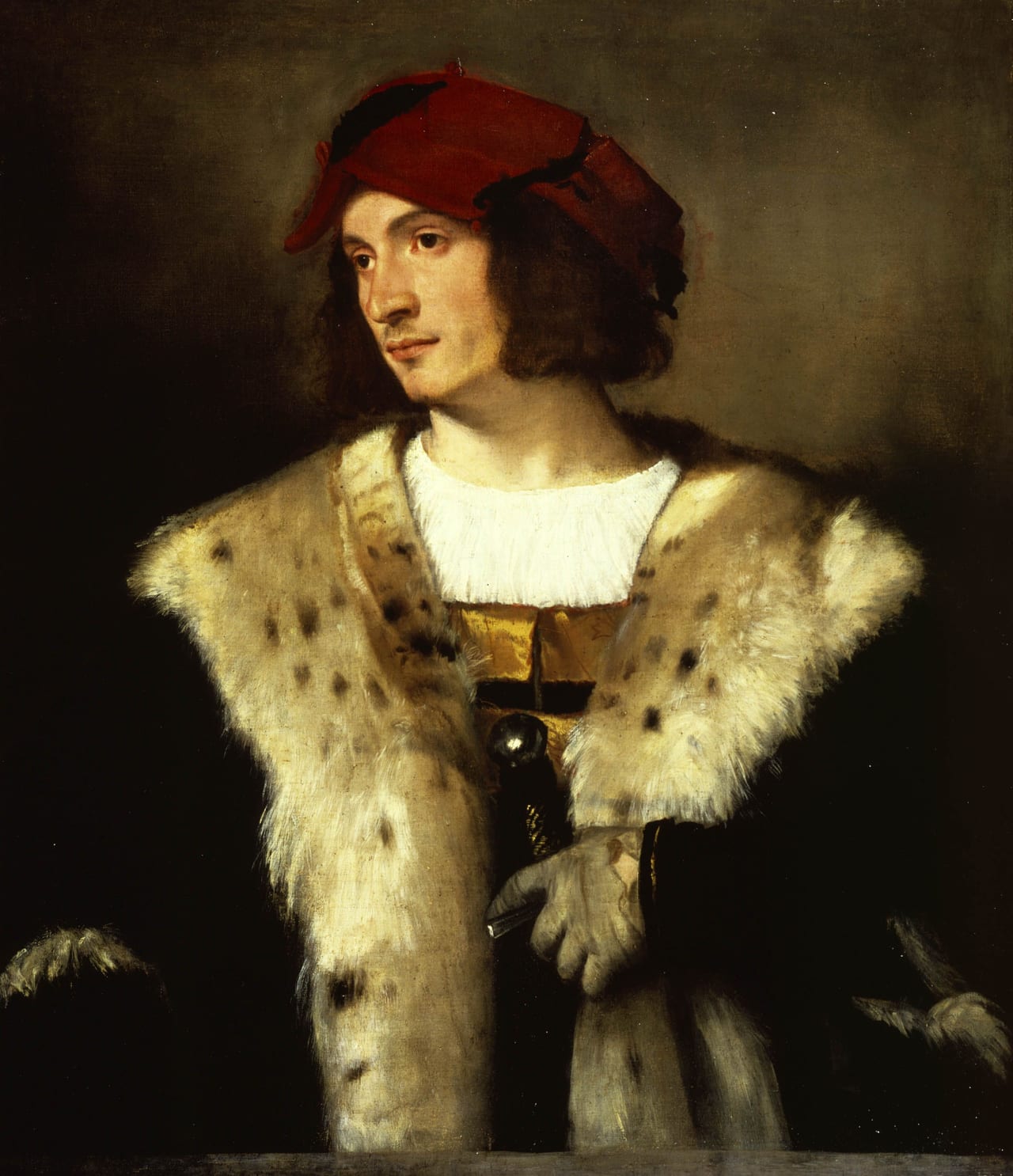
Portrait of a Man in a Red Cap
Titian · c. 1516
The young sitter, still unidentified, wears the vivid red cap that gives the picture its name. Writing in 1910, the critic Charles Ricketts recalled that it had passed through Christie’s darkened and dirty, when he took it for an early work by Francesco Vecellio; once it was cleaned, he wrote, the brown background had become a luminous warm grey and the glove and fur revealed the master’s tender touch. Sir Hugh Lane bought it in 1906, and Frick acquired it in 1915.
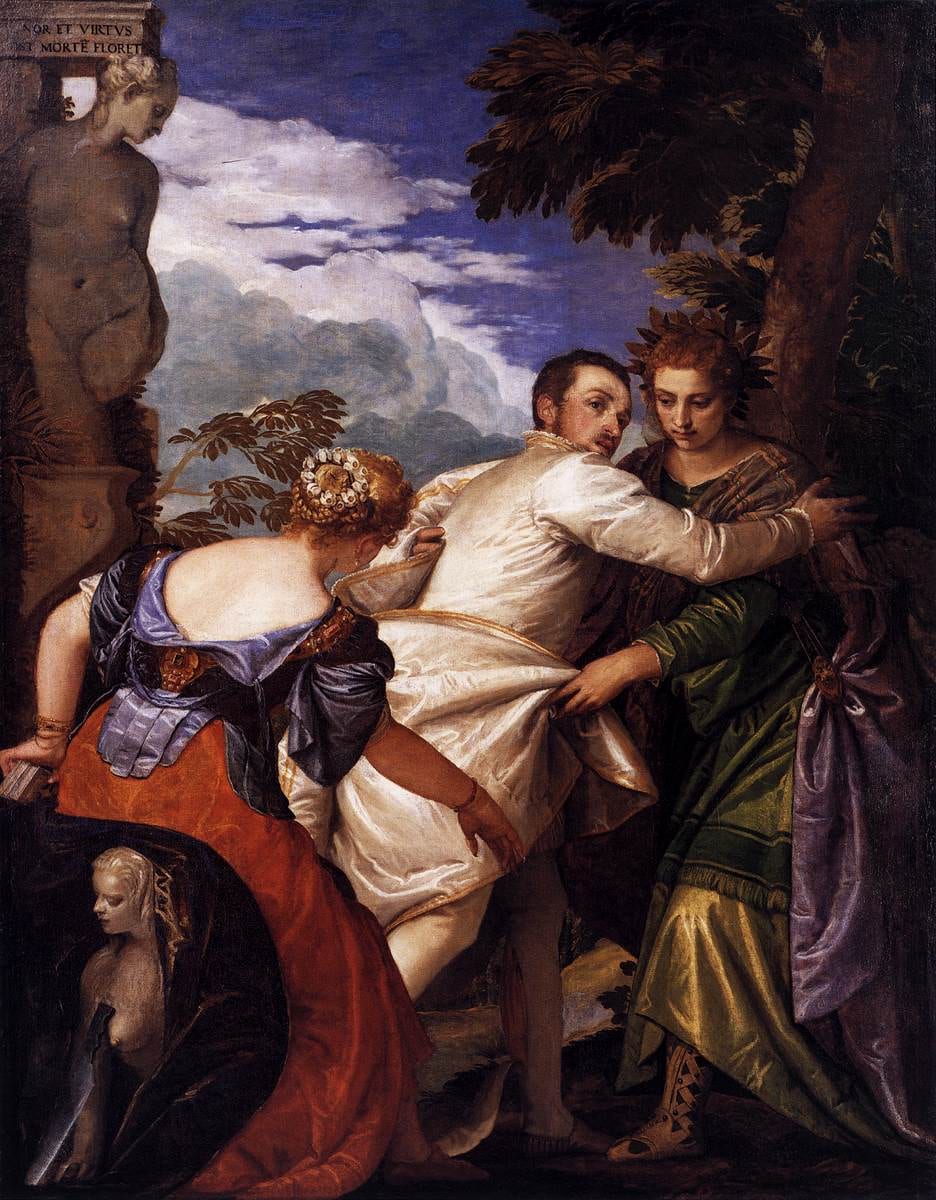
Allegory of Virtue and Vice
Paolo Veronese · c. 1565
Two women pull Hercules in opposite directions. Virtue seems to be winning, but Vice, a dagger and a statue of a sphinx hidden behind her skirt, has torn his stocking and still reaches for him. An inscription on the stonework above declares that honour and virtue flourish after death. With Wisdom and Strength, also at the Frick, it is thought to be Veronese’s first allegory of this kind.
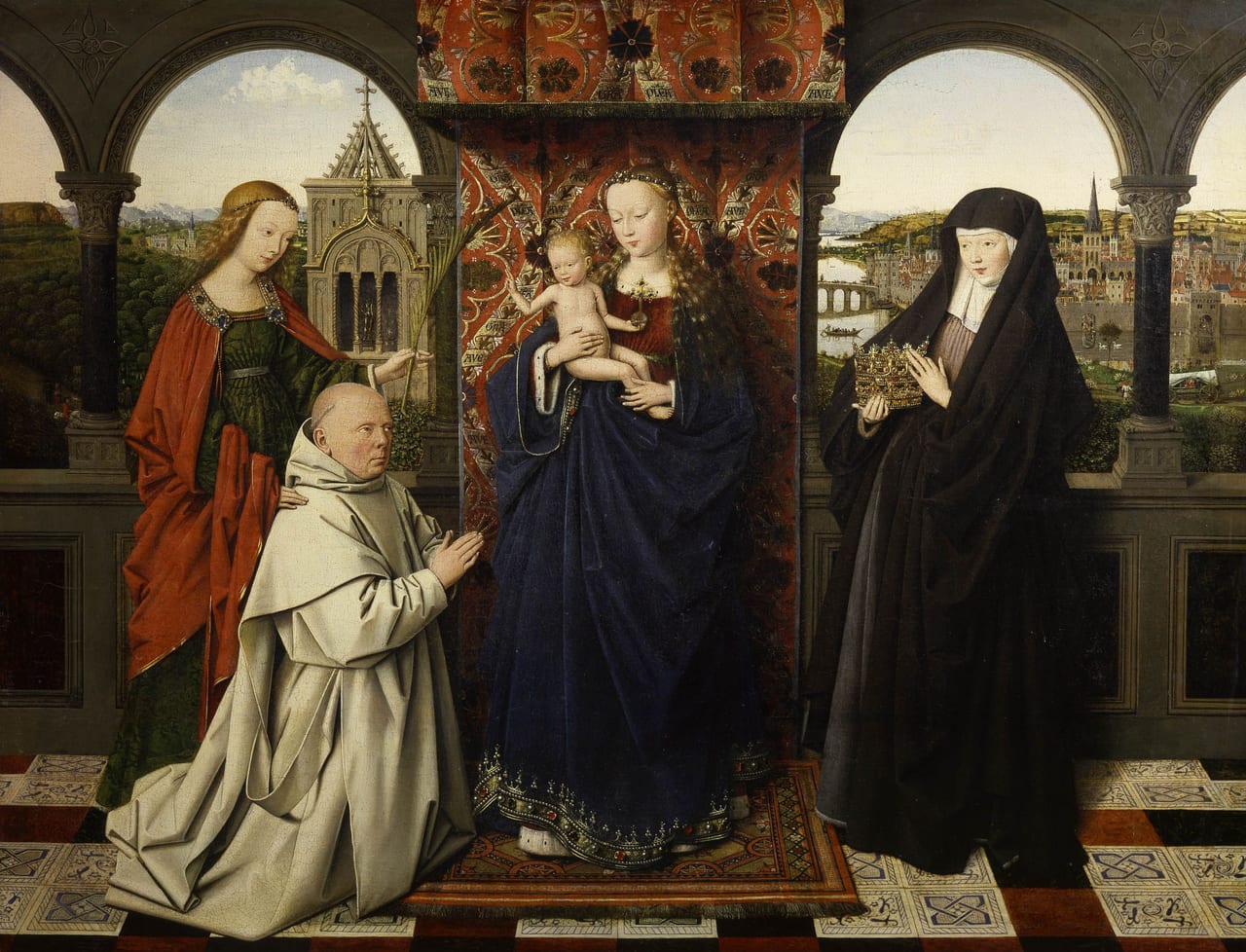
Virgin and Child, with Saints and Donor
Jan van Eyck and workshop · c. 1441–43
The Virgin stands in majesty on an oriental carpet, holding the Christ Child. Saint Barbara stands before her tower, Saint Elizabeth of Hungary wears a nun’s habit, and the donor Jan Vos, prior of a Carthusian monastery near Bruges, kneels in prayer. Van Eyck began the panel about 1441 and is thought to have painted the Virgin and Child and planned the whole; a member of his workshop finished the rest. The Frick acquired it in 1954.
Artists
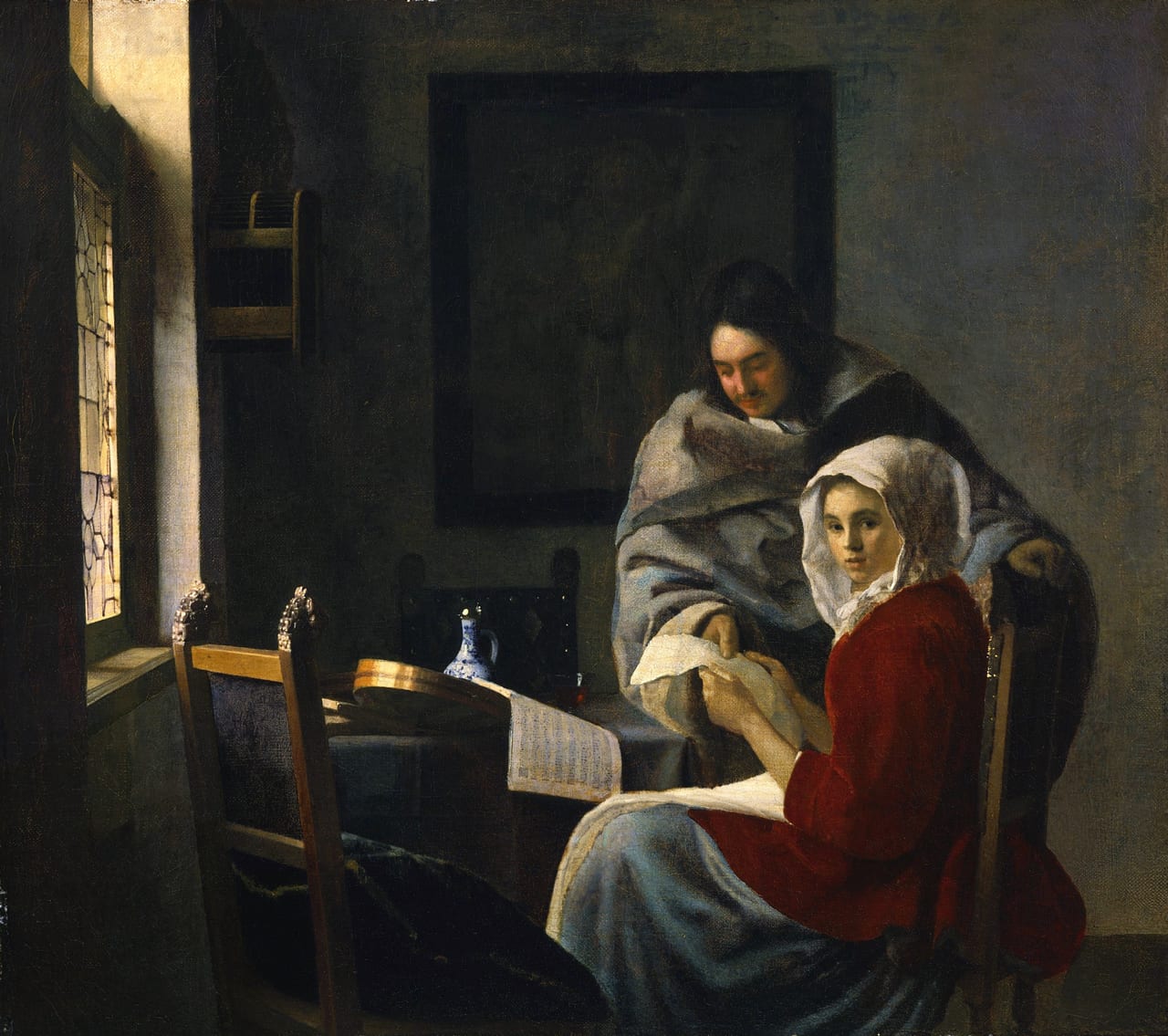
Johannes Vermeer
Girl Interrupted at Her Music · c. 1658–59
Girl Interrupted at Her Music is by Johannes Vermeer, a Dutch painter whose later pictures of daily life indoors are remarkable for their purity of light and form; only about 36 of his paintings survive.
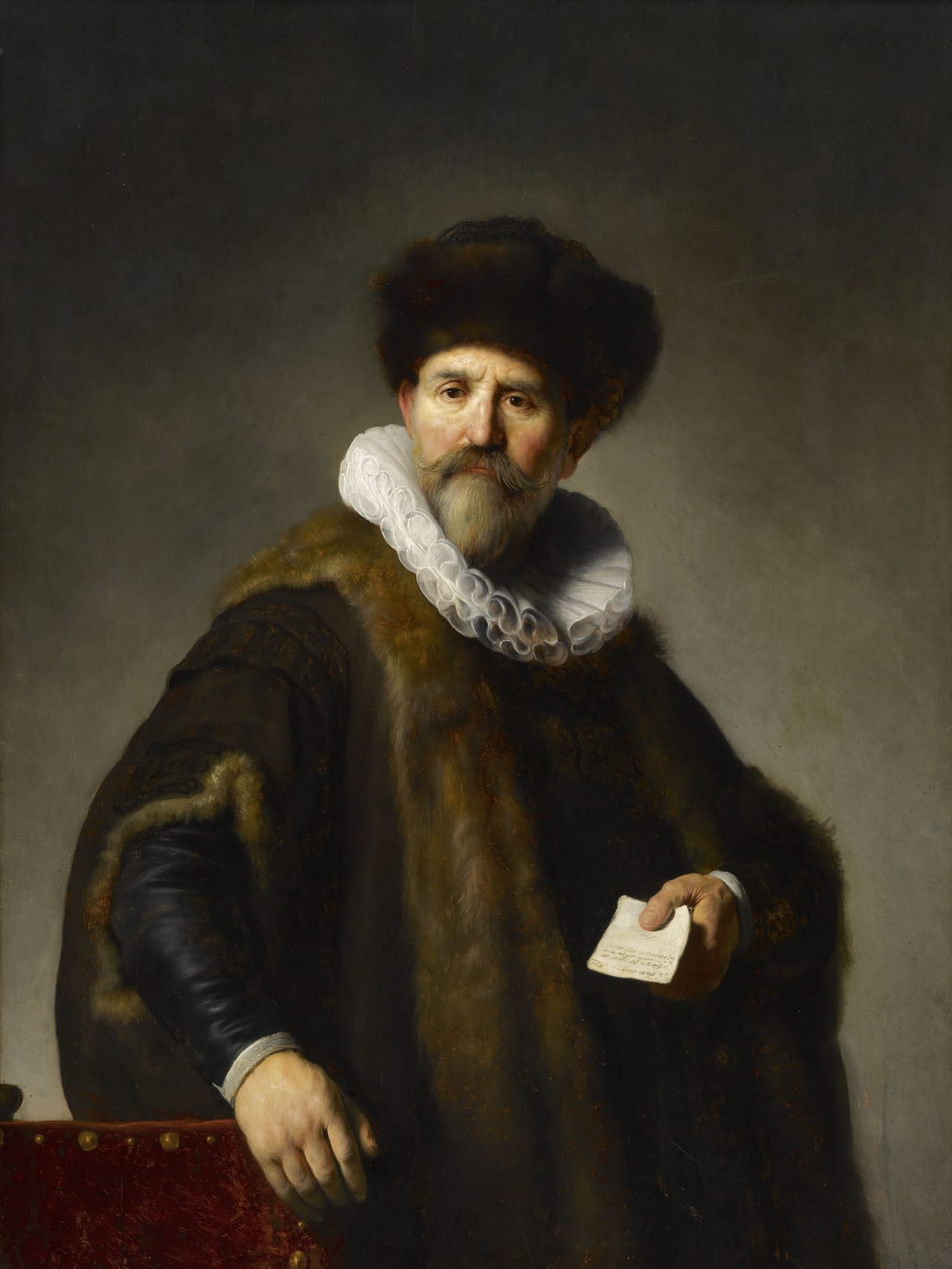
Rembrandt
Portrait of Nicolaes Ruts · 1631
Portrait of Nicolaes Ruts is by Rembrandt, the Dutch Baroque painter and printmaker, one of art’s greatest storytellers, with an exceptional gift for showing people in their moods and dramatic guises.
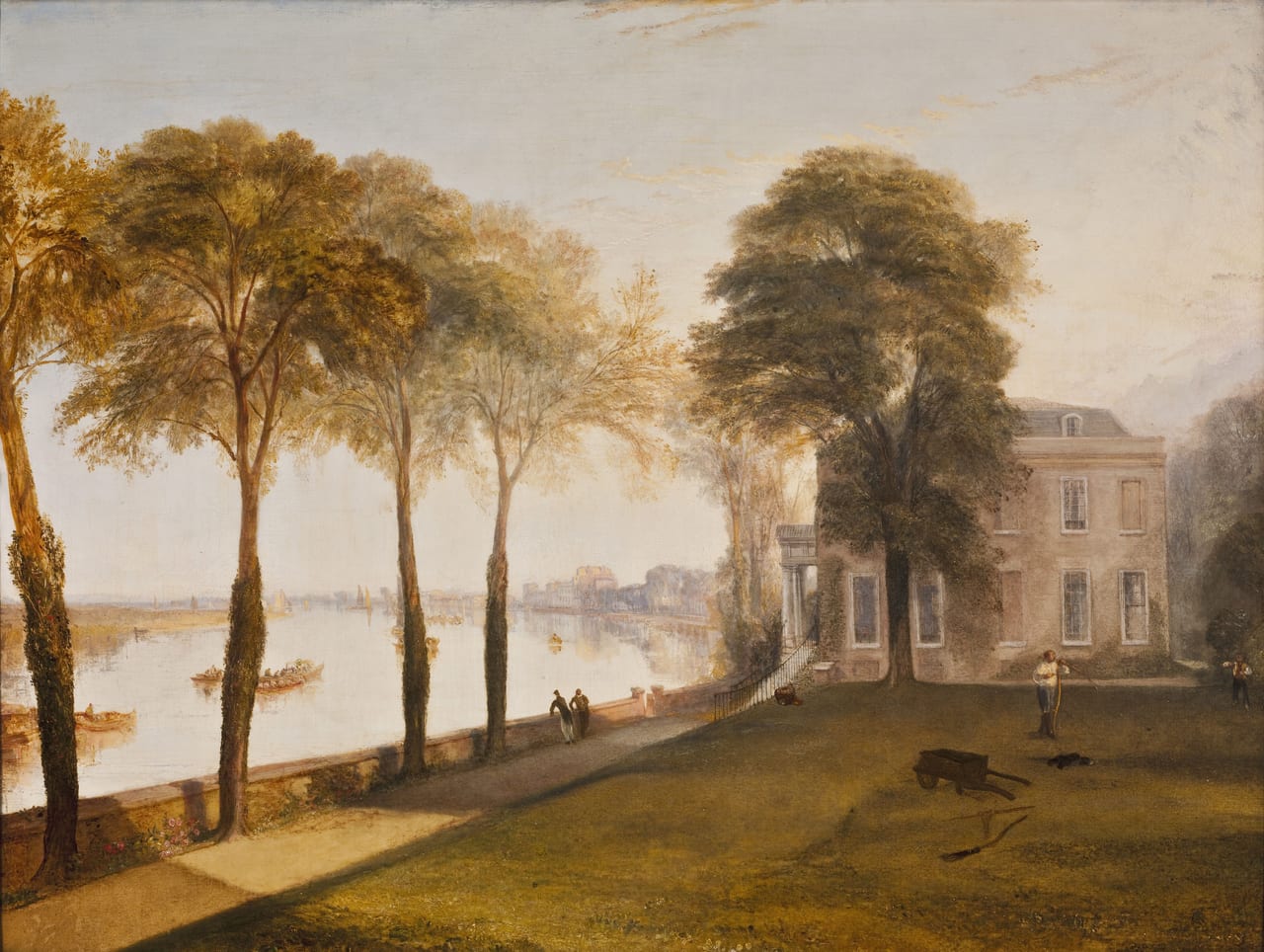
J. M. W. Turner
Mortlake Terrace: Early Summer Morning · 1826
Mortlake Terrace: Early Summer Morning is by J. M. W. Turner, an English Romantic landscape painter whose studies of light, colour and atmosphere had no equal in their range and sublimity.
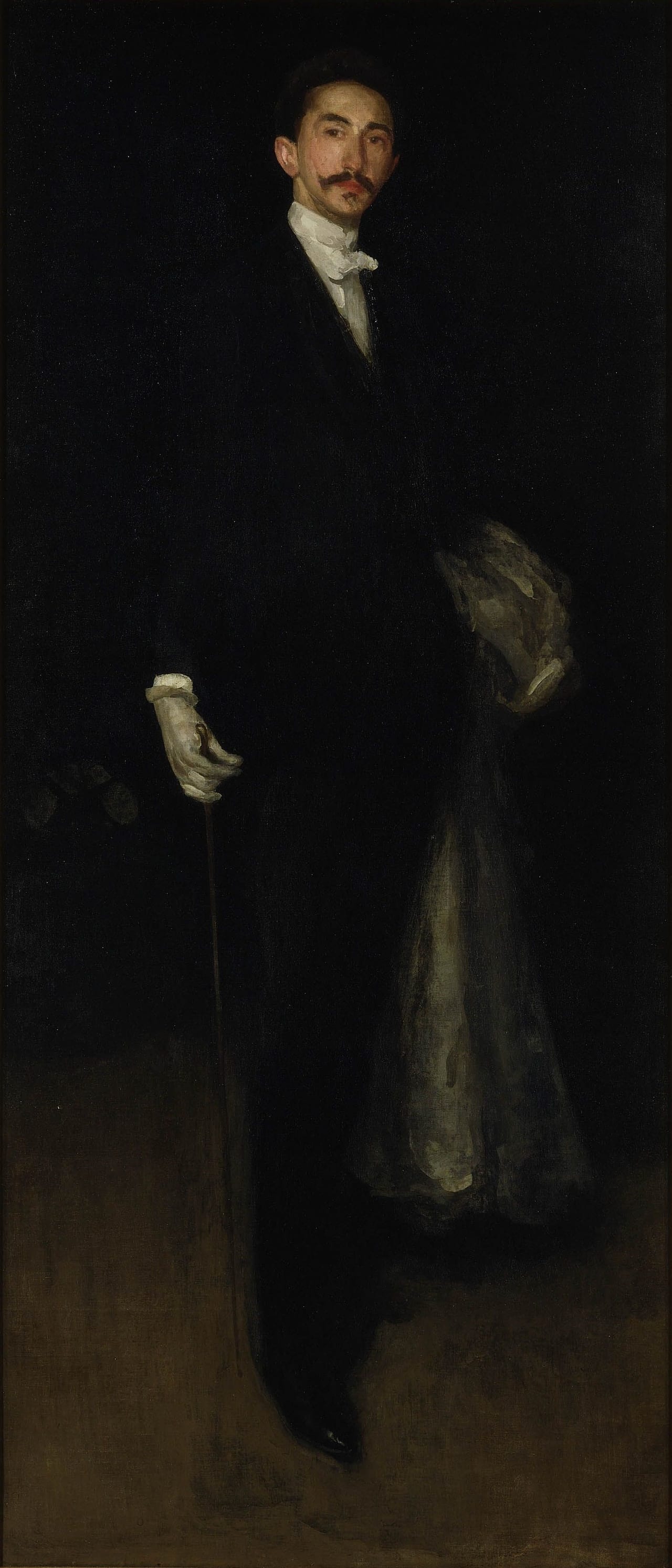
James McNeill Whistler
Arrangement in Black and Gold: Comte Robert de Montesquiou-Fezensac · 1892
From the 1870s he turned to portraits of simple forms and muted tones, drawn to Velázquez; his Montesquiou is among the finest of his portraits.
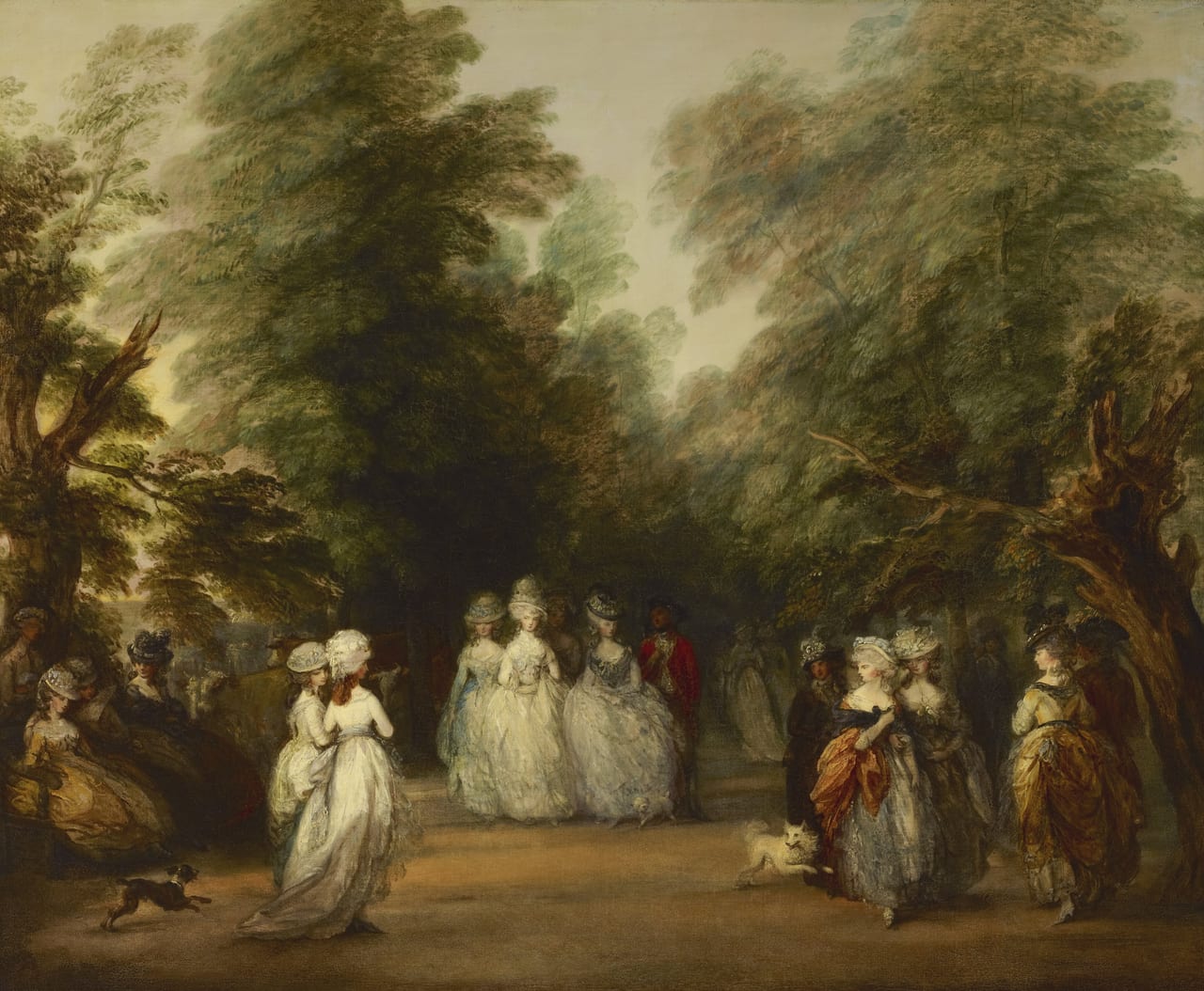
Thomas Gainsborough
The Mall in St. James's Park · 1783
The Mall in St. James's Park is by Thomas Gainsborough, the most versatile English painter of his century, in portraits and landscapes alike; late in life he also painted seascapes and country children.
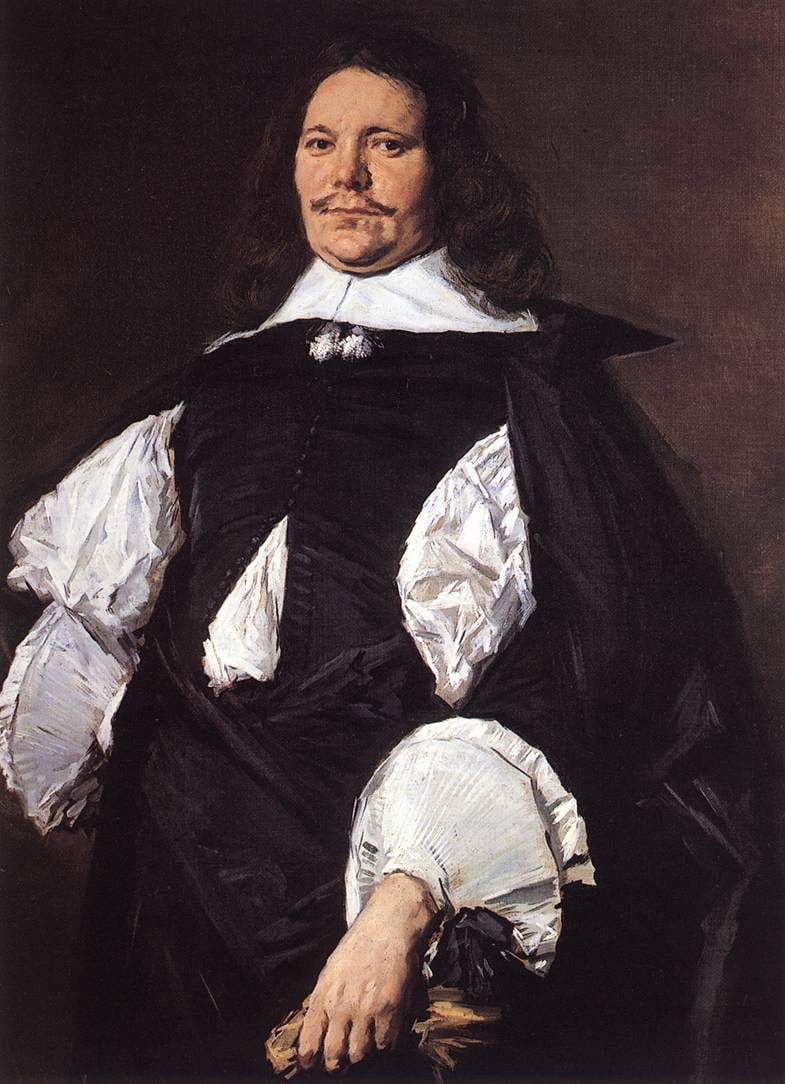
Frans Hals
Portrait of a Man · c. 1660
Portraitist of the burghers of Haarlem, with a handling so loose it came close to Impressionism, and freer still as he grew older.
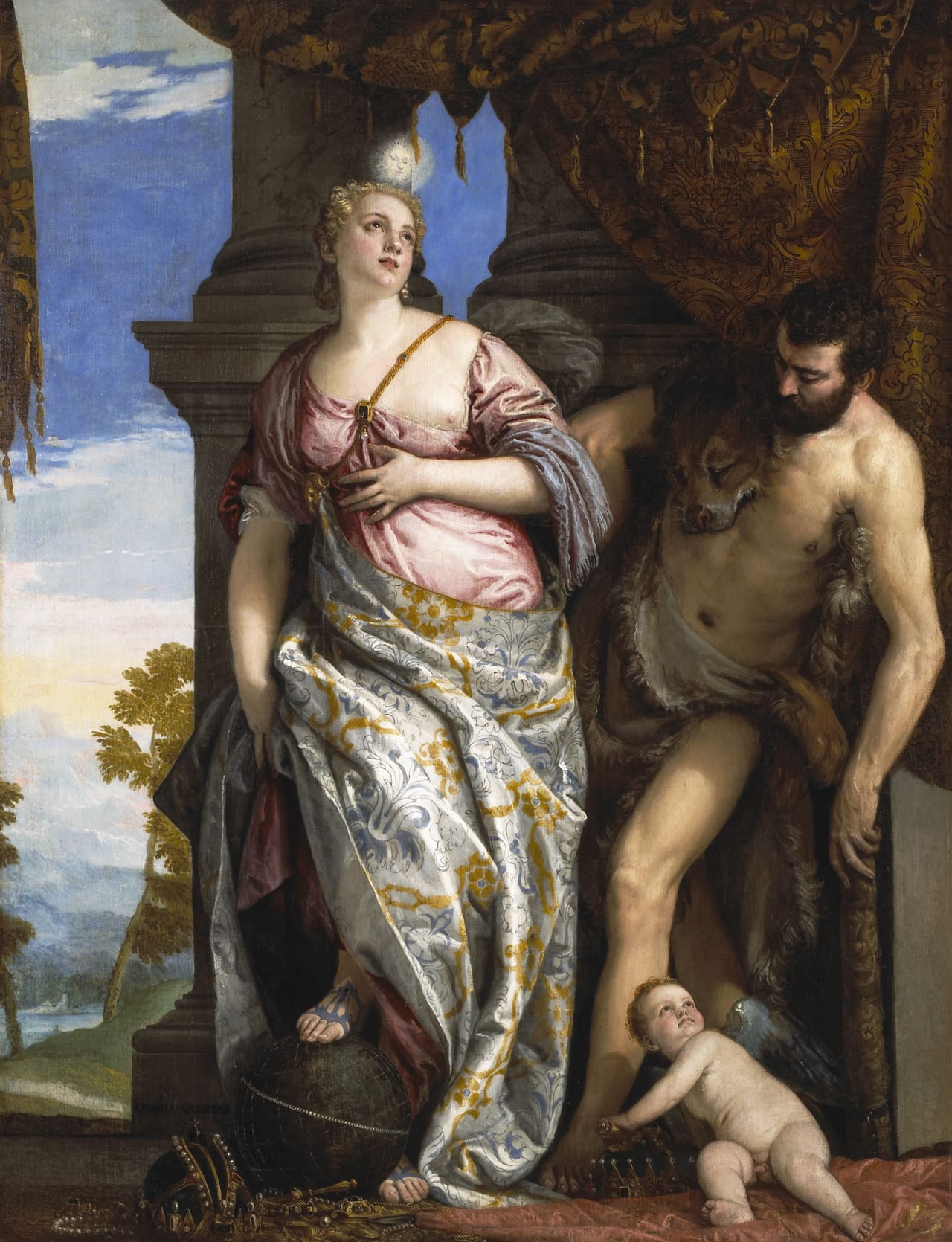
Paolo Veronese
Allegory of Wisdom and Strength · c. 1565
One of the major Venetian painters of the sixteenth century, known for huge, crowded canvases of allegory, scripture and history in splendid colour, set in classicising architecture.
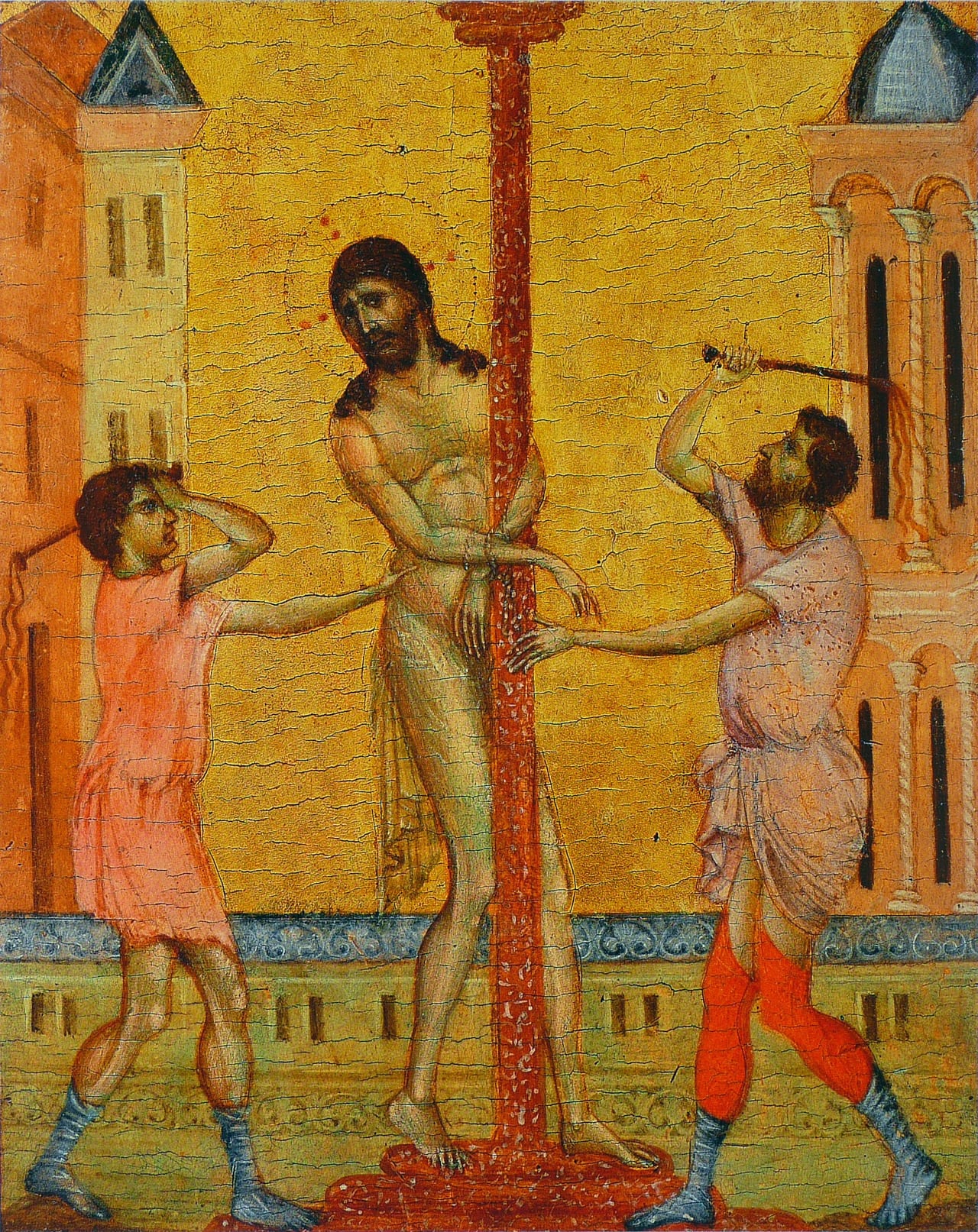
Cimabue
The Flagellation of Christ · c. 1280
The Flagellation of Christ is by Cimabue, a painter and mosaicist, and the last of the great Italian artists working in the Byzantine manner; this panel is his only painting in the United States.
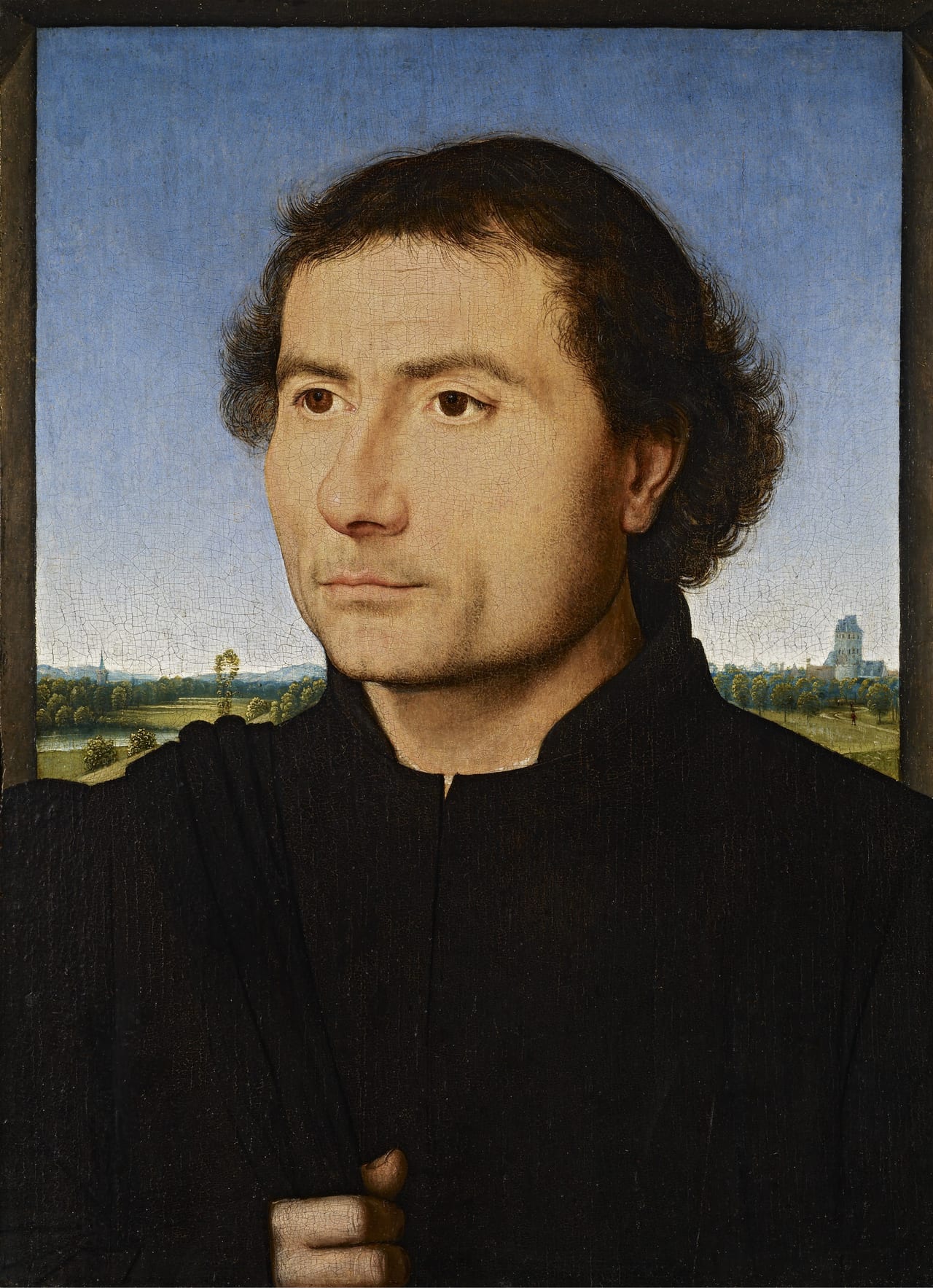
Hans Memling
Portrait of a Man · c. 1470
Portrait of a Man is by Hans Memling, a leading painter of the Bruges school, whose many imitators and followers bear witness to his popularity across Flanders.
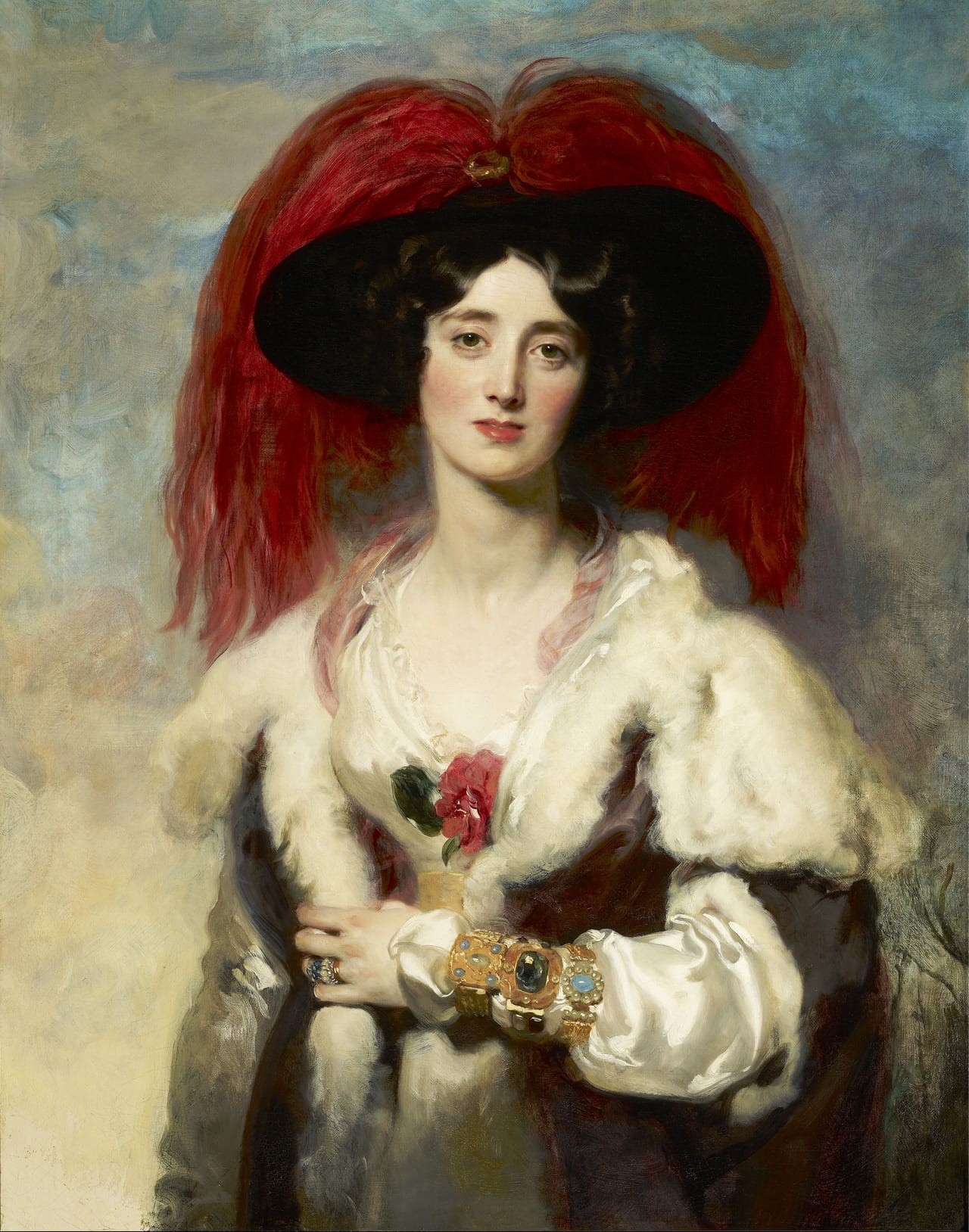
Thomas Lawrence
Julia, Lady Peel · 1827
Julia, Lady Peel is by Thomas Lawrence, the most fashionable English portrait painter of the late eighteenth and early nineteenth centuries.
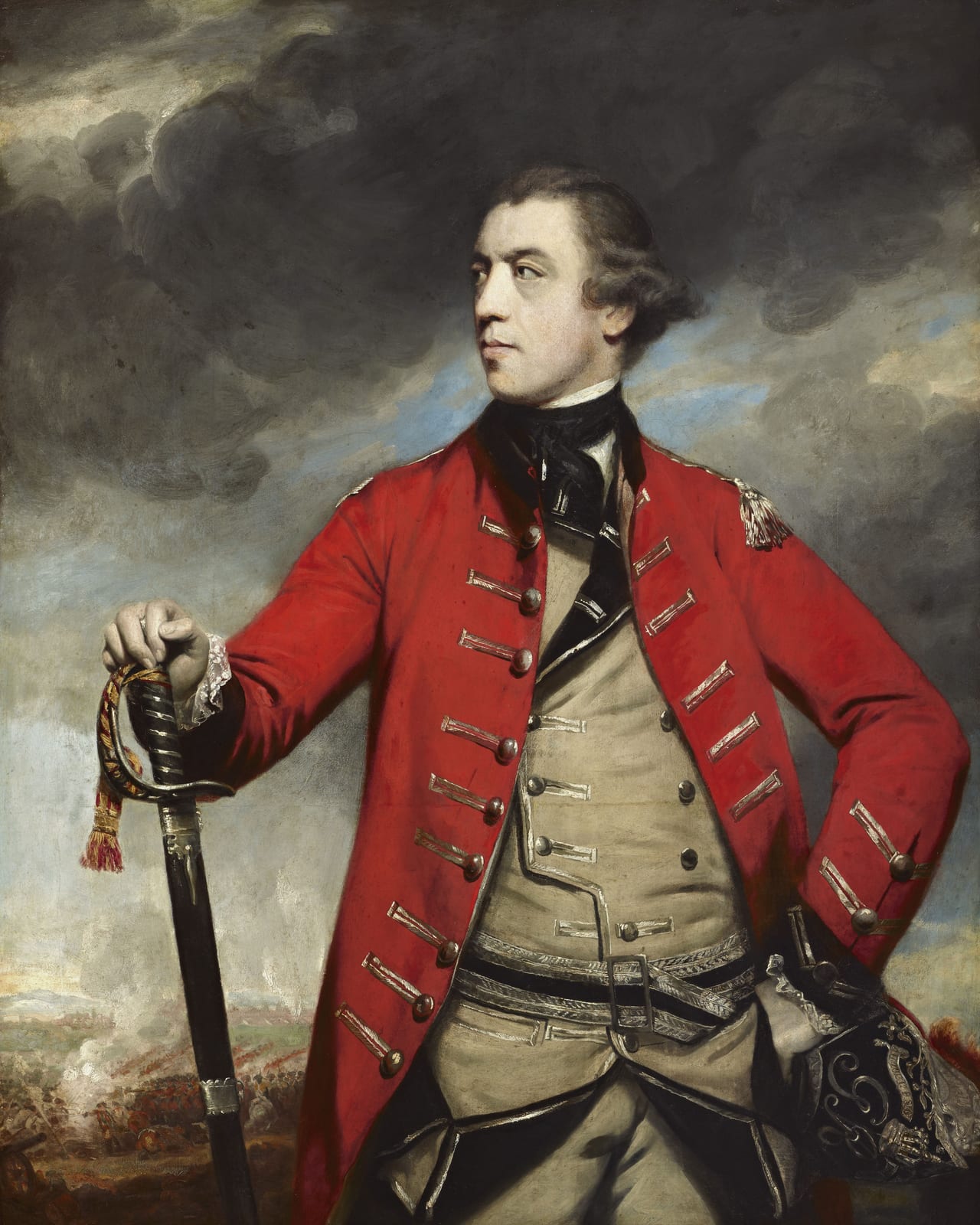
Joshua Reynolds
General John Burgoyne · 1766
General John Burgoyne is by Joshua Reynolds, the portraitist who dominated English art in the middle and later eighteenth century, and the first president of the Royal Academy, founded in 1768.
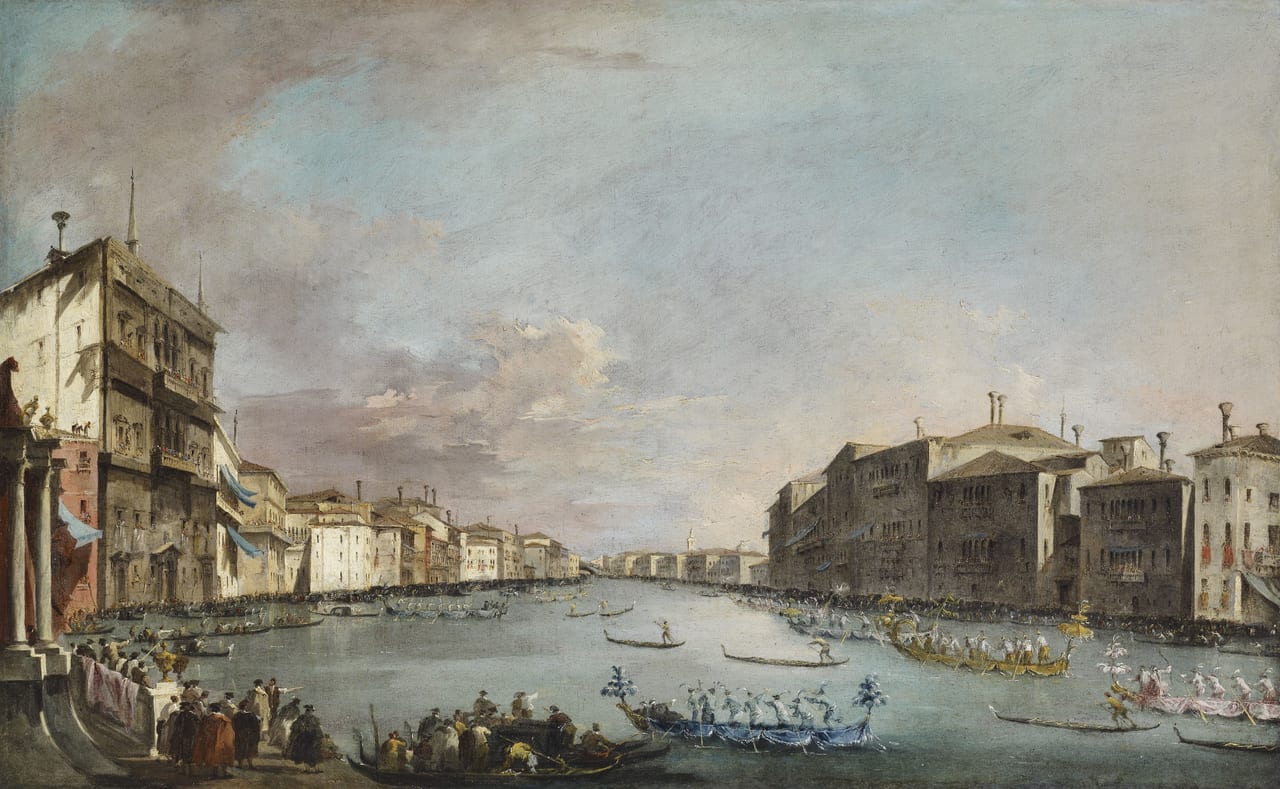
Francesco Guardi
Regatta in Venice · c. 1770
Among the finest Venetian landscape painters of the Rococo period.
Artworks
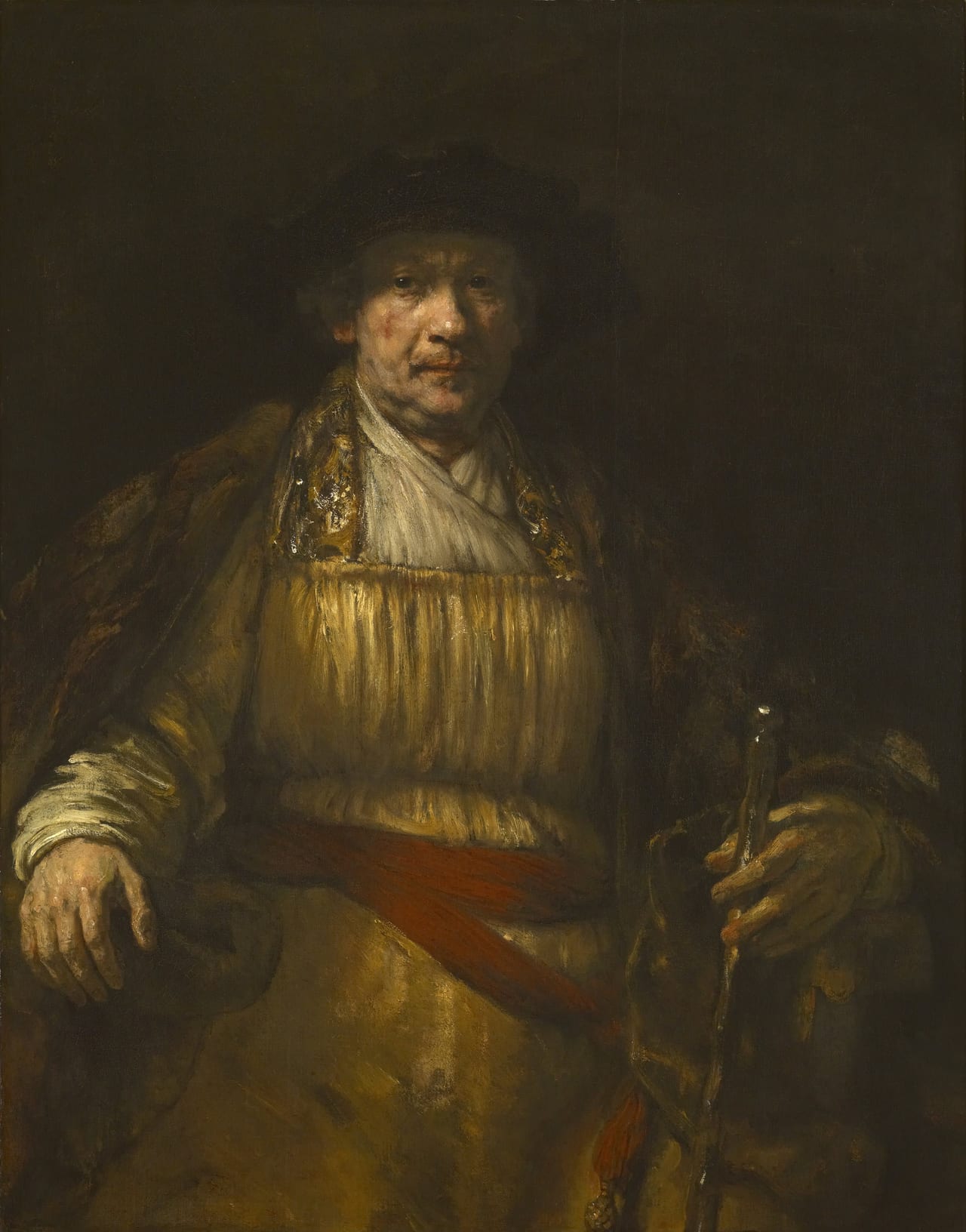
Self Portrait
Rembrandt · 1658
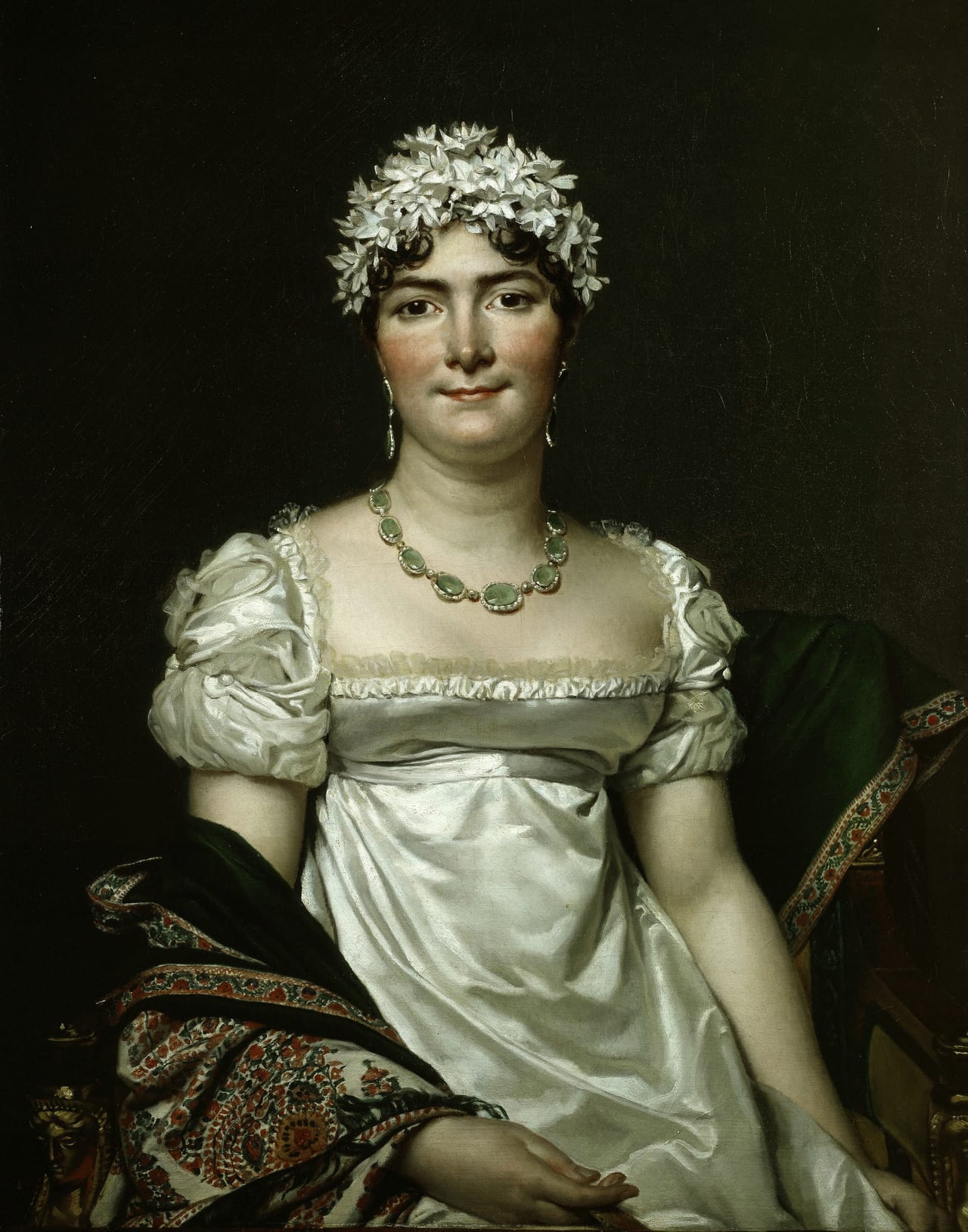
The Comtesse Daru
Jacques-Louis David · 1810
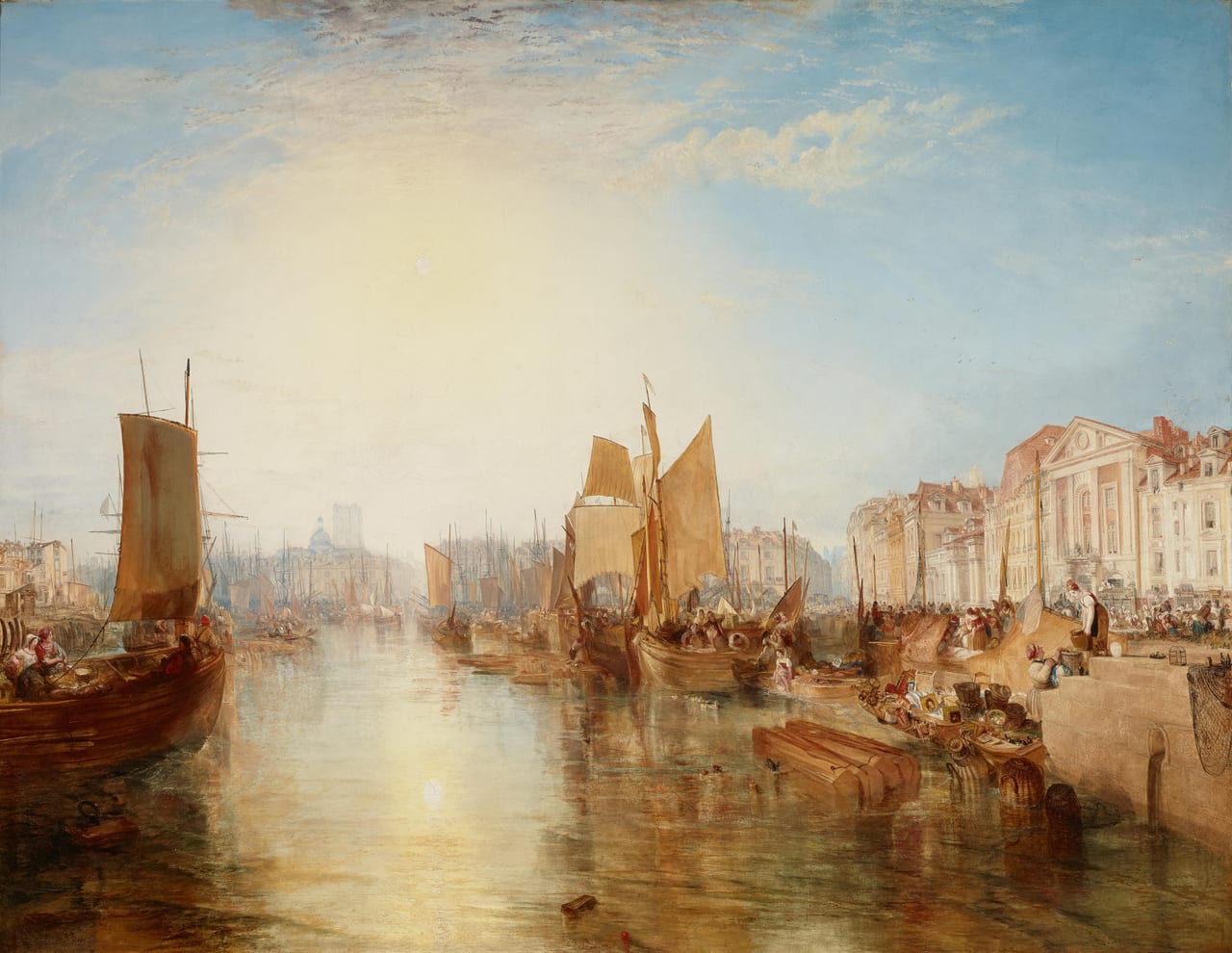
The Harbor of Dieppe
J. M. W. Turner · 1825
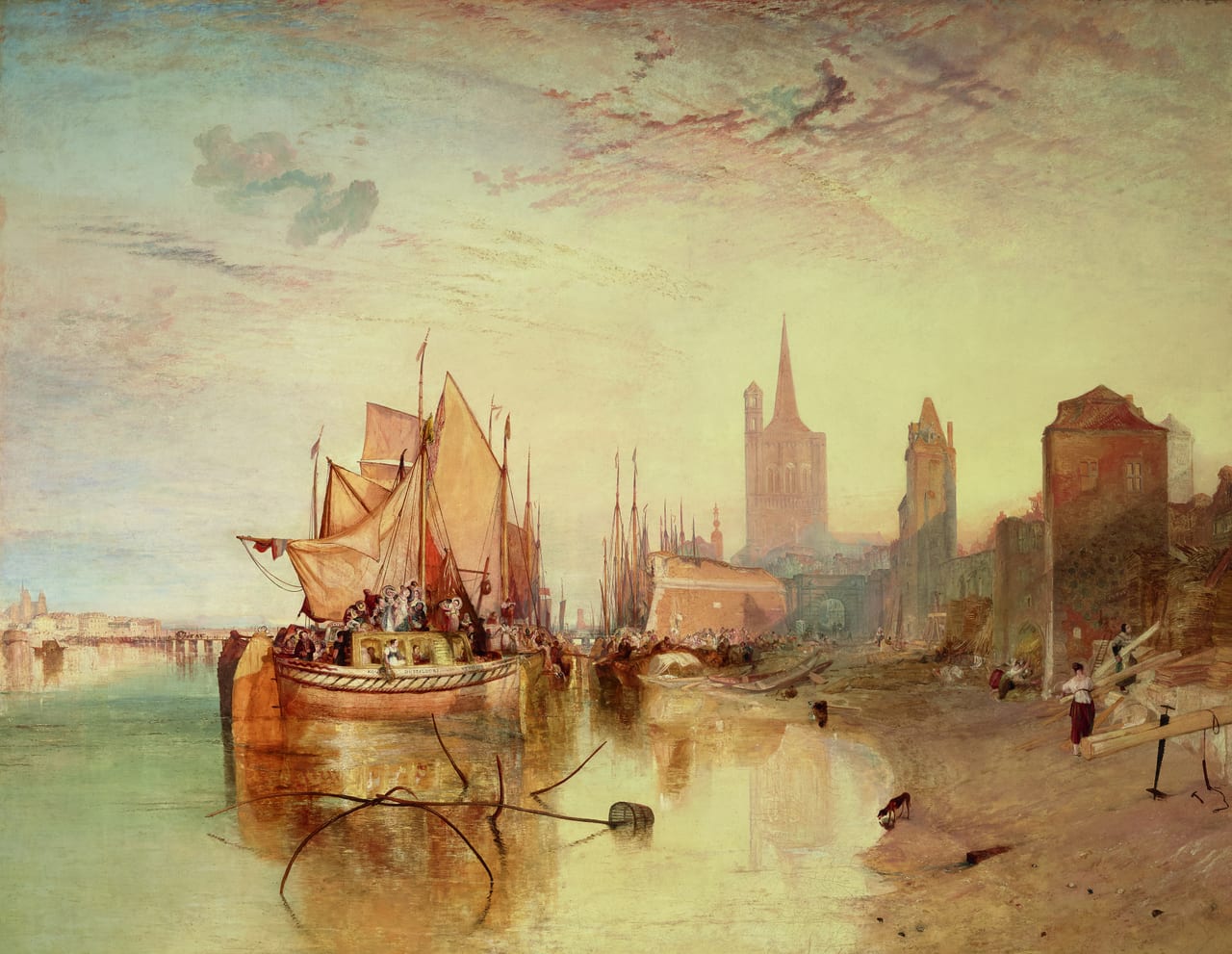
Cologne: The Arrival of a Packet-Boat: Evening
J. M. W. Turner · 1826
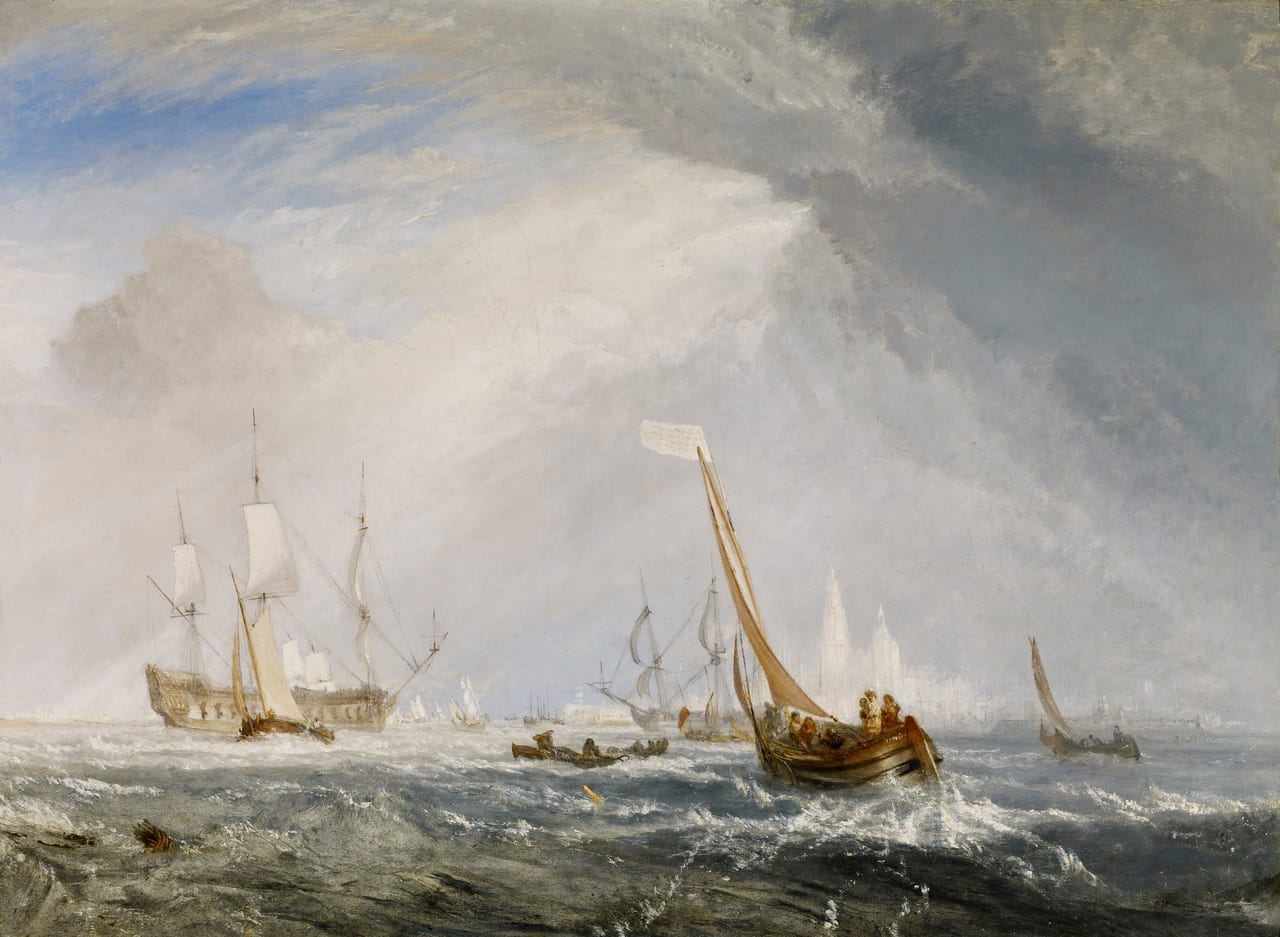
Antwerp: Van Goyen Looking Out for a Subject
J. M. W. Turner · 1833
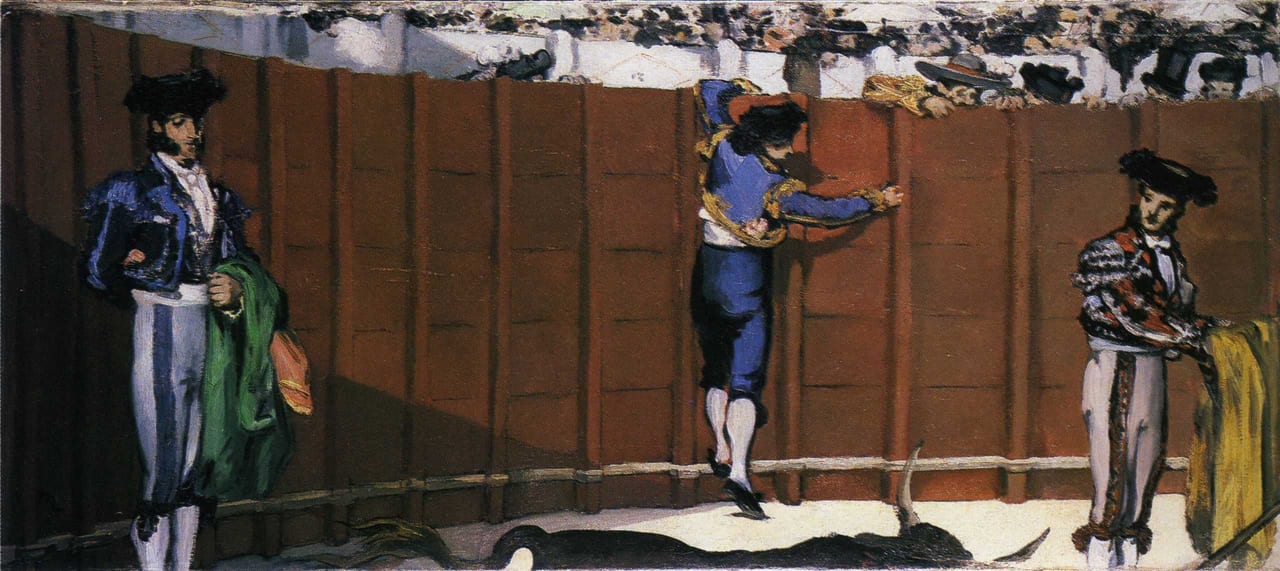
The Bullfight
Édouard Manet · 1864–65
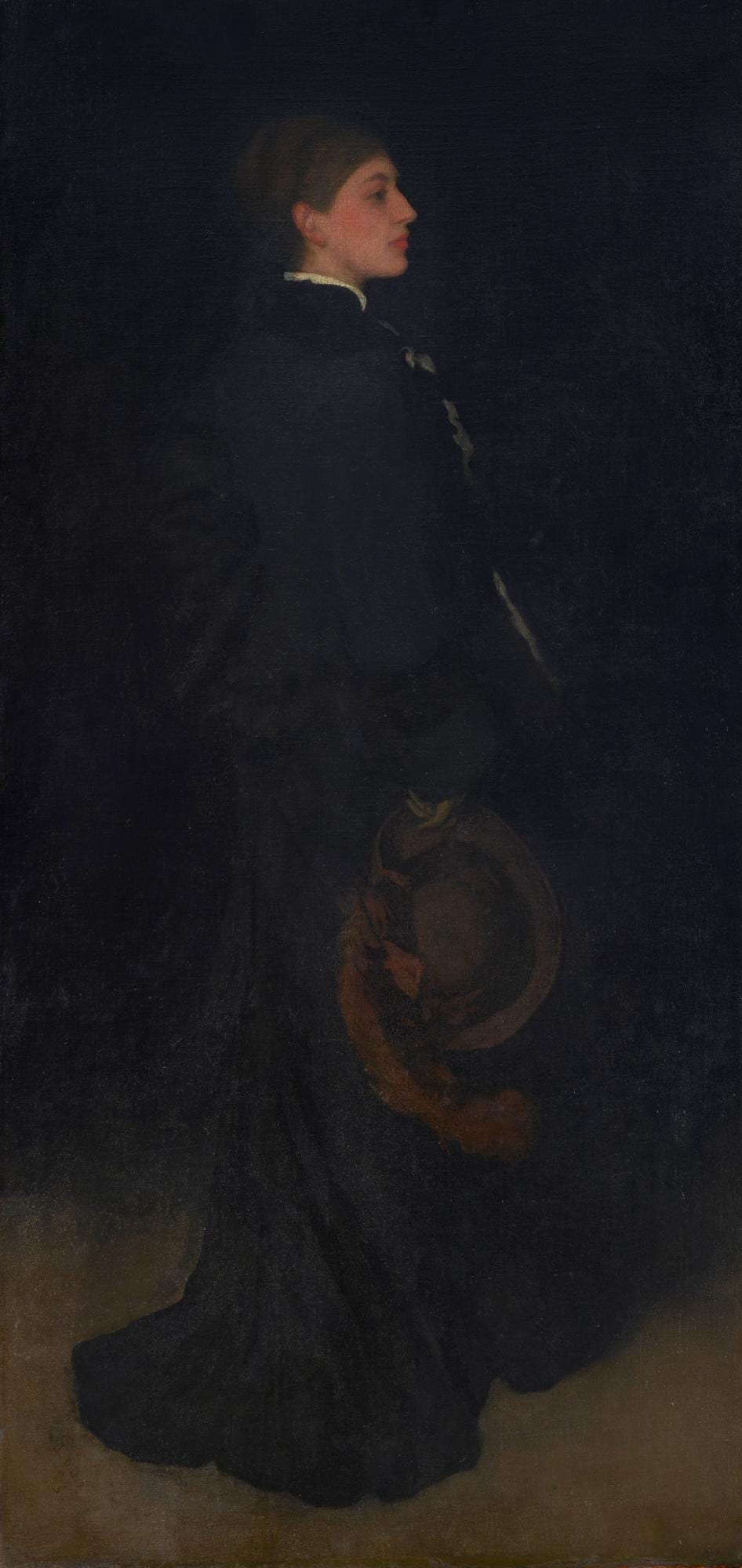
Arrangement in Brown and Black: Portrait of Miss Rosa Corder
James McNeill Whistler · c. 1876–78
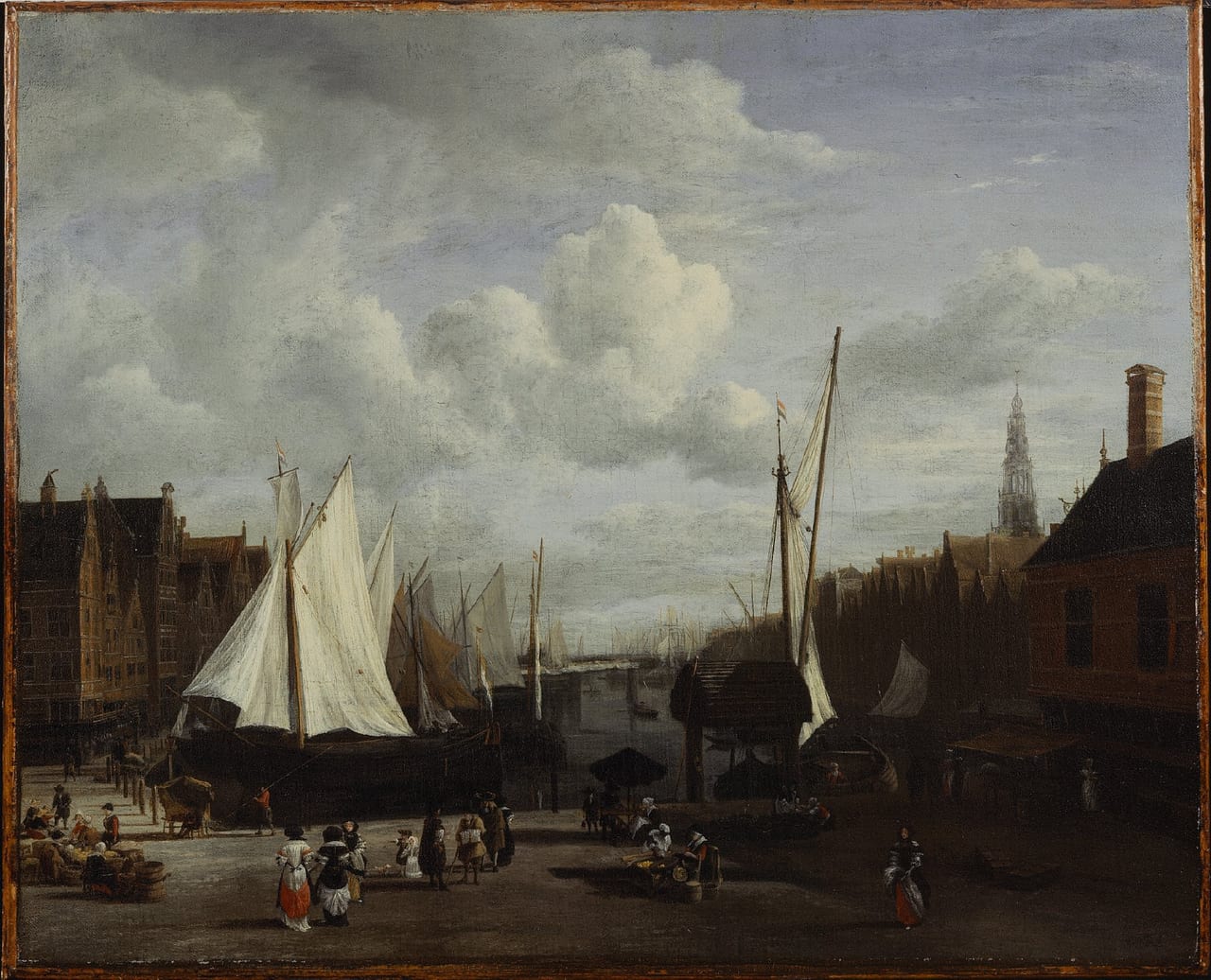
Quay at Amsterdam
Jacob van Ruisdael · c. 1675
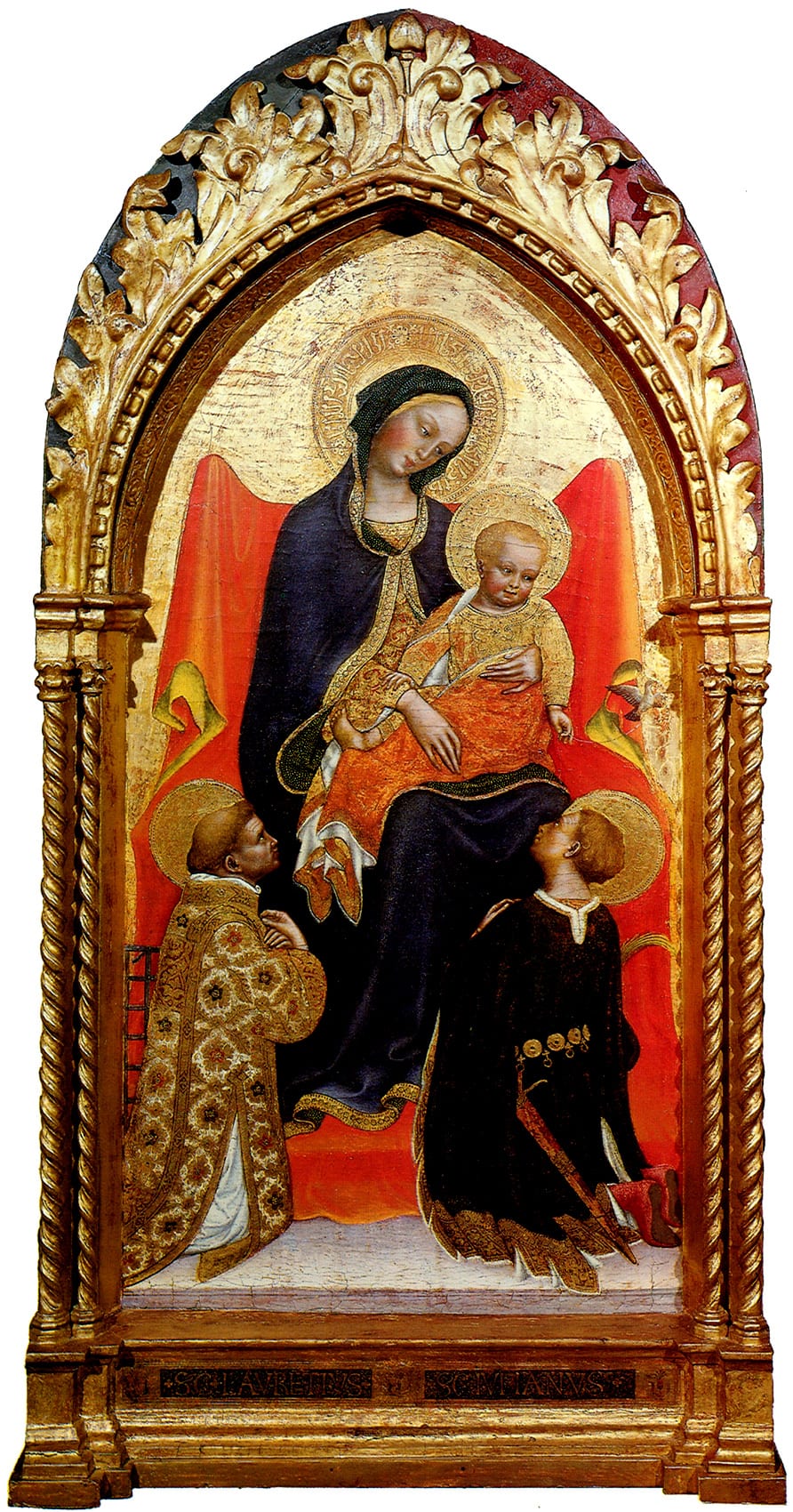
Madonna and Child, with Saints Lawrence and Julian
Gentile da Fabriano · c. 1423–25
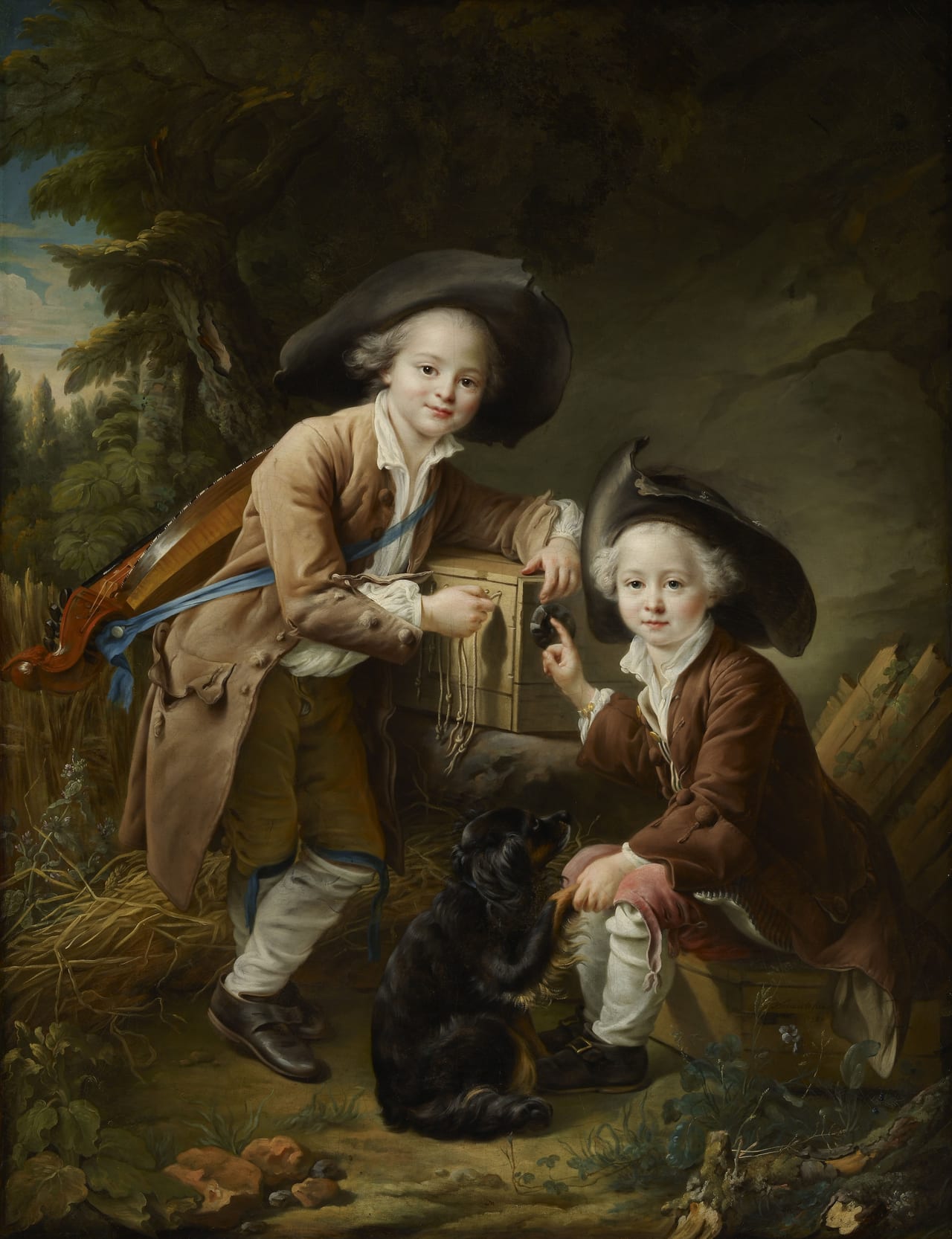
The Comte and Chevalier de Choiseul as Savoyards
François-Hubert Drouais · 1758
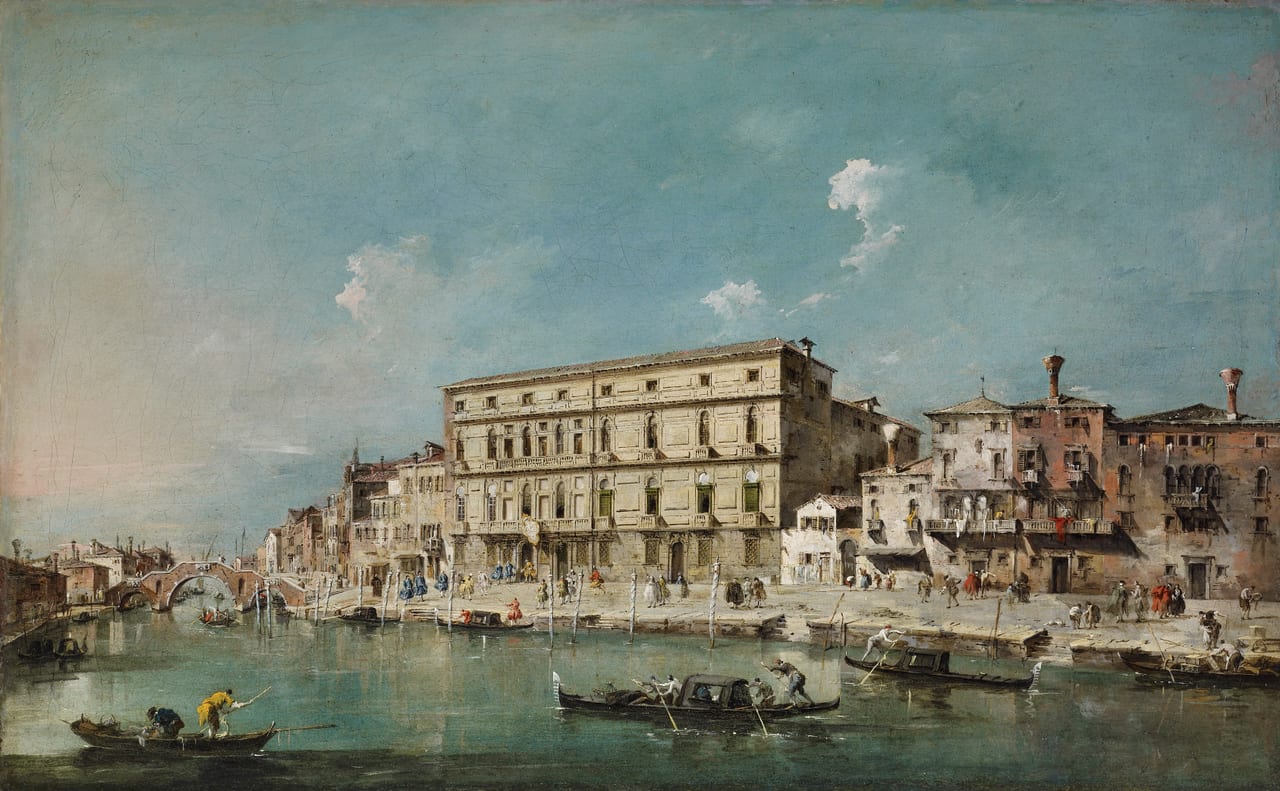
View of the Cannaregio Canal in Venice
Francesco Guardi · c. 1770
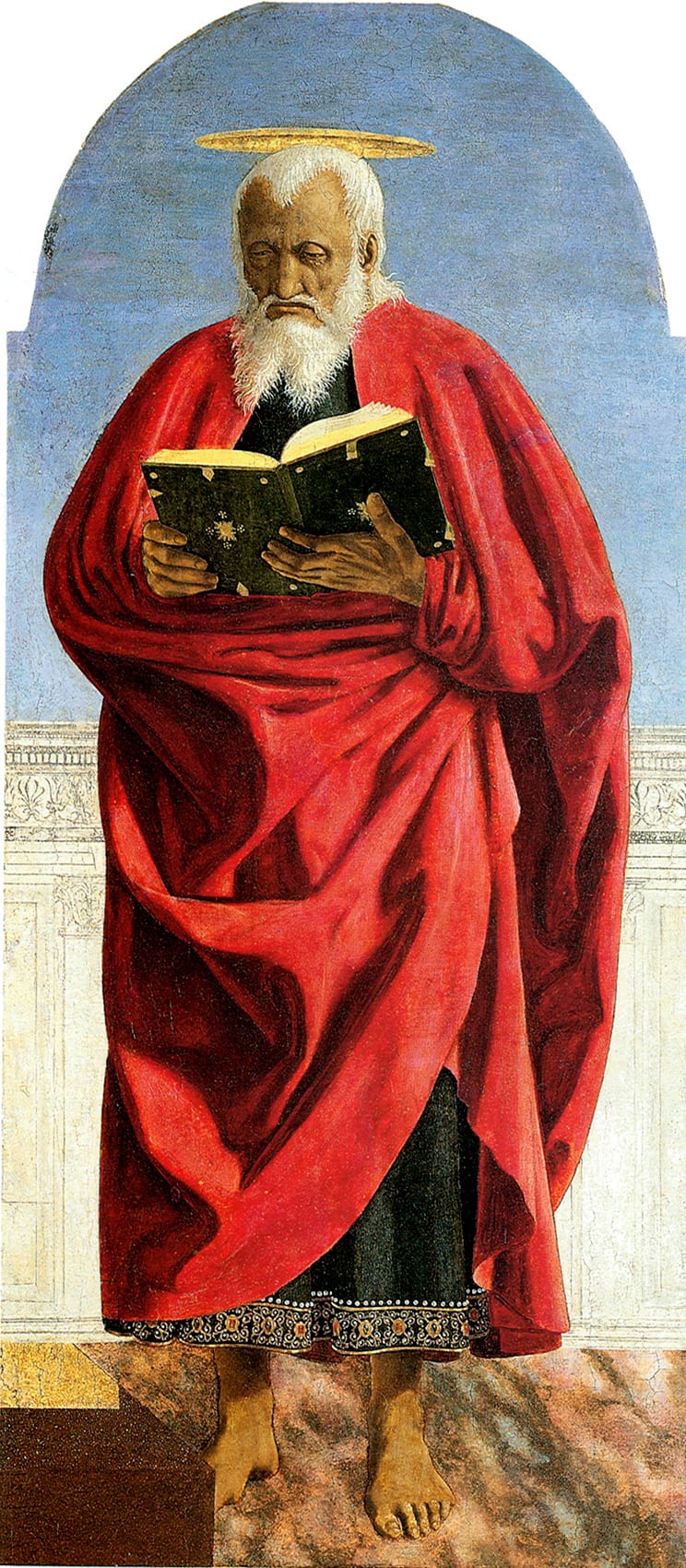
St. John the Evangelist
Piero della Francesca
Sources
- Britannica, “Frick Collection”
- Wikipedia, “Frick Collection”
- Britannica, “Johannes Vermeer”
- Britannica, “Rembrandt”
- Britannica, “Hans Holbein the Younger”
- Britannica, “J.M.W. Turner”
- Britannica, “James McNeill Whistler”
- Britannica, “Thomas Gainsborough”
- Britannica, “Frans Hals”
- Britannica, “Paolo Veronese”
- Britannica, “Cimabue”
- Britannica, “Hans Memling”
- Britannica, “Sir Thomas Lawrence”
- Britannica, “Sir Joshua Reynolds”
- Britannica, “Francesco Guardi”
- Britannica, “Jean-Honoré Fragonard”
- Britannica, “J.-A.-D. Ingres”
- Wikipedia, “Saint Francis in Ecstasy (Bellini)”
- Wikipedia, “Officer and Laughing Girl”
- Wikipedia, “The Polish Rider”
- Wikipedia, “Portrait of Sir Thomas More”
- Wikipedia, “Portrait of Comtesse d’Haussonville”
- Wikipedia, “Portrait of Philip IV in Fraga”
- Wikipedia, “Mistress and Maid”
- Wikipedia, “The Forge (Goya)”
- Wikipedia, “Christ Driving the Money Changers from the Temple (El Greco, New York)”
- Wikipedia, “Portrait of a Man in a Red Cap”
- Wikipedia, “Madonna of Jan Vos”
- Wikipedia, “Girl Interrupted at Her Music”
- Wikipedia, “Portrait of Nicolaes Ruts”
- Wikipedia, “Mortlake Terrace: Early Summer Morning”
- Wikipedia, “Portrait of Robert de Montesquiou (Whistler)”
- Wikipedia, “The Mall in St. James’s Park”
- Wikipedia, “Portrait of a Man (Frans Hals, Frick)”
- Wikipedia, “Allegory of Wisdom and Strength”
- Wikipedia, “The Flagellation of Christ (Cimabue)”
- Wikipedia, “Portrait of a Man (Hans Memling)”
- Wikipedia, “Portrait of Julia, Lady Peel”
- Wikipedia, “Portrait of John Burgoyne”
- Wikipedia, “Regatta in Venice”
- Wikipedia, “Self-Portrait (Frick, Rembrandt)”
- Wikipedia, “Portrait of Comtesse Daru”
- Wikipedia, “The Harbour of Dieppe”
- Wikipedia, “Cologne, the Arrival of a Packet Boat in the Evening”
- Wikipedia, “Van Goyen Looking Out for a Subject”
- Wikipedia, “The Bullfight”
- Wikipedia, “Portrait of Rosa Corder”
- Wikipedia, “View of the Dam and Damrak at Amsterdam (Frick Collection)”
- Wikipedia, “Madonna and Child with Saints Julian and Lawrence”
- Wikipedia, “The Comte and Chevalier de Choiseul as Savoyards”
- Wikipedia, “View of the Cannaregio Canal”
- Wikipedia, “Allegory of Virtue and Vice (Veronese)”
- The Progress of Love: The Meeting — Public domain via Wikimedia Commons (Public domain)
- Saint Francis in the Desert — Public domain via Wikimedia Commons (Public domain)
- Officer and Laughing Girl — Public domain via Wikimedia Commons (Public domain)
- The Polish Rider — Public domain via Wikimedia Commons (Public domain)
- Portrait of Sir Thomas More — Public domain via Wikimedia Commons (Public domain)
- Comtesse d'Haussonville — Public domain via Wikimedia Commons (Public domain)
- Portrait of Philip IV in Fraga — Public domain via Wikimedia Commons (Public domain)
- Mistress and Maid — Public domain via Wikimedia Commons (Public domain)
- The Forge — Public domain via Wikimedia Commons (Public domain)
- Christ Driving the Money Changers from the Temple — Public domain via Wikimedia Commons (Public domain)
- Portrait of a Man in a Red Cap — Public domain via Wikimedia Commons (Public domain)
- Allegory of Virtue and Vice — Public domain via Wikimedia Commons (Public domain)
- Virgin and Child, with Saints and Donor — Public domain via Wikimedia Commons (Public domain)
- Girl Interrupted at Her Music — Public domain via Wikimedia Commons (Public domain)
- Portrait of Nicolaes Ruts — Public domain via Wikimedia Commons (Public domain)
- Mortlake Terrace: Early Summer Morning — Public domain via Wikimedia Commons (Public domain)
- Arrangement in Black and Gold: Comte Robert de Montesquiou-Fezensac — Public domain via Wikimedia Commons (Public domain)
- The Mall in St. James's Park — Public domain via Wikimedia Commons (Public domain)
- Portrait of a Man — Public domain via Wikimedia Commons (Public domain)
- Allegory of Wisdom and Strength — Public domain via Wikimedia Commons (Public domain)
- The Flagellation of Christ — Public domain via Wikimedia Commons (Public domain)
- Portrait of a Man — Public domain via Wikimedia Commons (Public domain)
- Julia, Lady Peel — Public domain via Wikimedia Commons (Public domain)
- General John Burgoyne — Public domain via Wikimedia Commons (Public domain)
- Regatta in Venice — Public domain via Wikimedia Commons (Public domain)
- Self Portrait — Public domain via Wikimedia Commons (Public domain)
- The Comtesse Daru — Public domain via Wikimedia Commons (Public domain)
- The Harbor of Dieppe — Public domain via Wikimedia Commons (Public domain)
- Cologne: The Arrival of a Packet-Boat: Evening — CC0 via Wikimedia Commons (CC0)
- Antwerp: Van Goyen Looking Out for a Subject — Public domain via Wikimedia Commons (Public domain)
- The Bullfight — Public domain via Wikimedia Commons (Public domain)
- Arrangement in Brown and Black: Portrait of Miss Rosa Corder — Public domain via Wikimedia Commons (Public domain)
- Quay at Amsterdam — Public domain via Wikimedia Commons (Public domain)
- Madonna and Child, with Saints Lawrence and Julian — Public domain via Wikimedia Commons (Public domain)
- The Comte and Chevalier de Choiseul as Savoyards — Public domain via Wikimedia Commons (Public domain)
- View of the Cannaregio Canal in Venice — Public domain via Wikimedia Commons (Public domain)
- St. John the Evangelist — Public domain via Wikimedia Commons (Public domain)
Invite the Frick into your living room