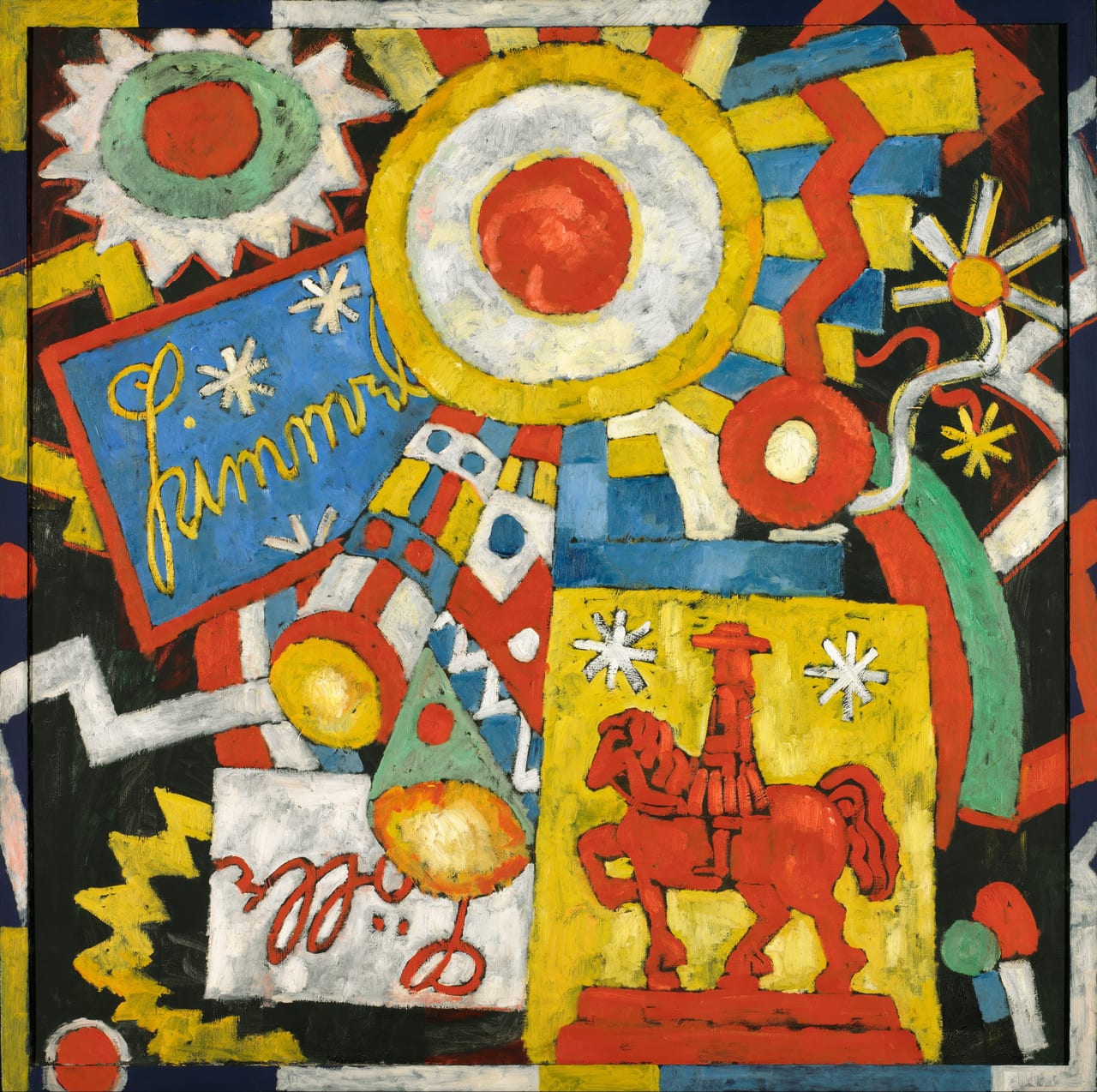
Water Lilies
Claude Monet

The Nelson-Atkins Museum of Art
Kansas City
A newspaper founder and a retired schoolteacher, who likely never met, left the estates that built the Nelson-Atkins in Kansas City, and it opened in 1933. Its outstanding feature is its Asian art, with a collection of Chinese landscape painting among the finest in the West, and Caravaggio’s Saint John the Baptist in the Wilderness is one of its greatest treasures.
- in the Chinese collection, from every phase of China’s artistic activity
- 7,000+ works
- in the Japanese collection, from the 7th century to the early 20th
- 2,000+ works
- of French painting and pastel, from the 1600s to 1945
- 110 works
Two estates, one museum
The Nelson-Atkins grew from the hopes of two people who likely never met, and neither lived to see it open. William Rockhill Nelson, who founded The Kansas City Star and developed real estate, held that art and culture were necessities if a city was to be truly civilised; when he died in 1915, his will directed the bulk of his estate to a trust for buying works of art. Mary McAfee Atkins, a retired schoolteacher and real estate investor moved by the art she had seen on her travels in Europe, died in 1911 and left the city about a third of her estate to buy land for a public art museum.
The trustees of the two estates chose to join the bequests, with smaller ones from others, into a single institution, built on the grounds of Oak Hall, Nelson’s home. The Kansas City firm of Wight and Wight designed it in the Beaux-Arts manner, on the model of the Cleveland Museum of Art, and Charles Keck created 23 limestone panels for its exterior, among them wagon trains setting out west from Westport Landing. Ground was broken in July 1930. When the doors opened on 11 December 1933, the east wing was the Atkins Museum of Fine Arts and the rest of the building the William Rockhill Nelson Gallery of Art.
Since that opening day it has welcomed, in the words spoken then, “all groups, all races, all creeds.” The campus now joins the original Nelson-Atkins Building to the Bloch Building, which opened in 2007, and to the Donald J. Hall Sculpture Park.
A collection bought from scratch
Nelson left money, not a collection of his own, so the curators could assemble one from nothing, and at the height of the Great Depression they met a market flooded with art and very few buyers. Buying for the new galleries in the 1930s fell to the earliest curators and trustees, who worked with advisers and dealers, and within a short time the museum had one of the largest art collections in the country.
Most of the Asian art was bought by Laurence Sickman, then a Harvard fellow in China. After graduating in 1930 he had travelled there on a Harvard-Yenching scholarship, and Langdon Warner, who had been buying for the trustees and was leaving for Japan, recommended that the young man negotiate the purchases in his place. The trustees came to respect his judgement and sent him thousands of dollars to spend; by 1941 his purchases had made the gallery’s Asian holdings among the best in the country. Sickman became its second director in 1953 and retired on 31 January 1977.
The Chinese paintings are among the most important outside Asia, above all those of the tenth to thirteenth centuries, with masterworks such as Xu Daoning’s Fisherman’s Evening Song. In the Chinese Temple Gallery stands a twelfth-century figure of Guanyin of the Southern Sea in painted wood, hailed as the finest sculpture of its kind outside China, and the museum, a pioneer in collecting Chinese furniture, is famed for its Ming and early Qing hardwood pieces.
Gifts, lenses and a sculpture park
Gifts have reshaped the collection since. In 2015 Henry W. and Marion H. Bloch gave their collection, which doubled the museum’s Impressionist and Post-Impressionist paintings in size and significance, with works by Manet, Morisot, Cézanne, Caillebotte and Seurat and the first paintings by Toulouse-Lautrec, Vuillard and Matisse to enter it. From the 1970s gifts from the Enid and Crosby Kemper Foundation enriched the American collection, which also holds the largest public collection of work by the Missourian Thomas Hart Benton, including 45 paintings and drawings he bequeathed himself.
Steven Holl, who won an international competition for the addition in 1999, conceived it with his design partner Chris McVoy as five glass pavilions, which they call lenses, set east of the original building above a largely underground structure. Named for Henry W. Bloch, a co-founder of H&R Block, the Bloch Building opened in June 2007, its glass cubes channelling light down into the galleries below. On the lawn outside, the Donald J. Hall Sculpture Park holds the largest collection of monumental Henry Moore bronzes in the United States, and Shuttlecocks, the site-specific work of Claes Oldenburg and Coosje van Bruggen.
Beyond China, the Japanese collection is strongest in folding screens of the sixteenth to early twentieth centuries, above all Kaihō Yūshō’s pair Pine and Plum by Moonlight. More than 1,100 objects of South and Southeast Asian, Himalayan and Islamic art include two folios from the Mughal Gulshan Album, bought in 1948, and nearly 150 Tibetan and Nepalese sculptures, thangkas and ritual objects bequeathed by Joseph H. Heil in 1974.
What to see
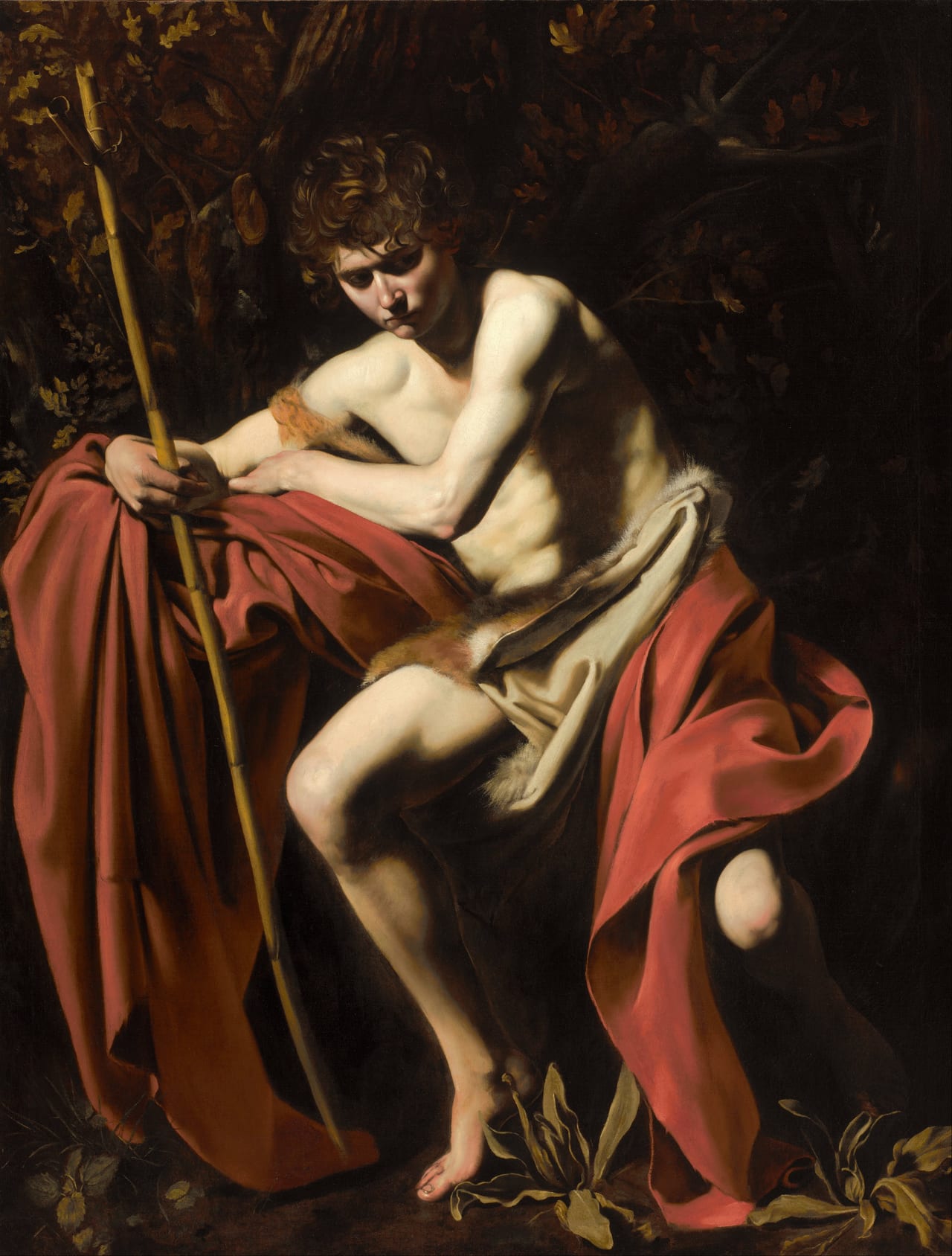
Saint John the Baptist in the Wilderness
Caravaggio · c. 1604
In 1604 Caravaggio was commissioned to paint John the Baptist for the papal banker Ottavio Costa, who meant it as an altarpiece for a small oratory at Conscente but liked it so much that he sent a copy there and kept the original. The adolescent saint leans forward out of deep shadow, and his brooding melancholy has caught the attention of almost every commentator. There is no halo, no sheep and no leather girdle, nothing but a thin reed cross.
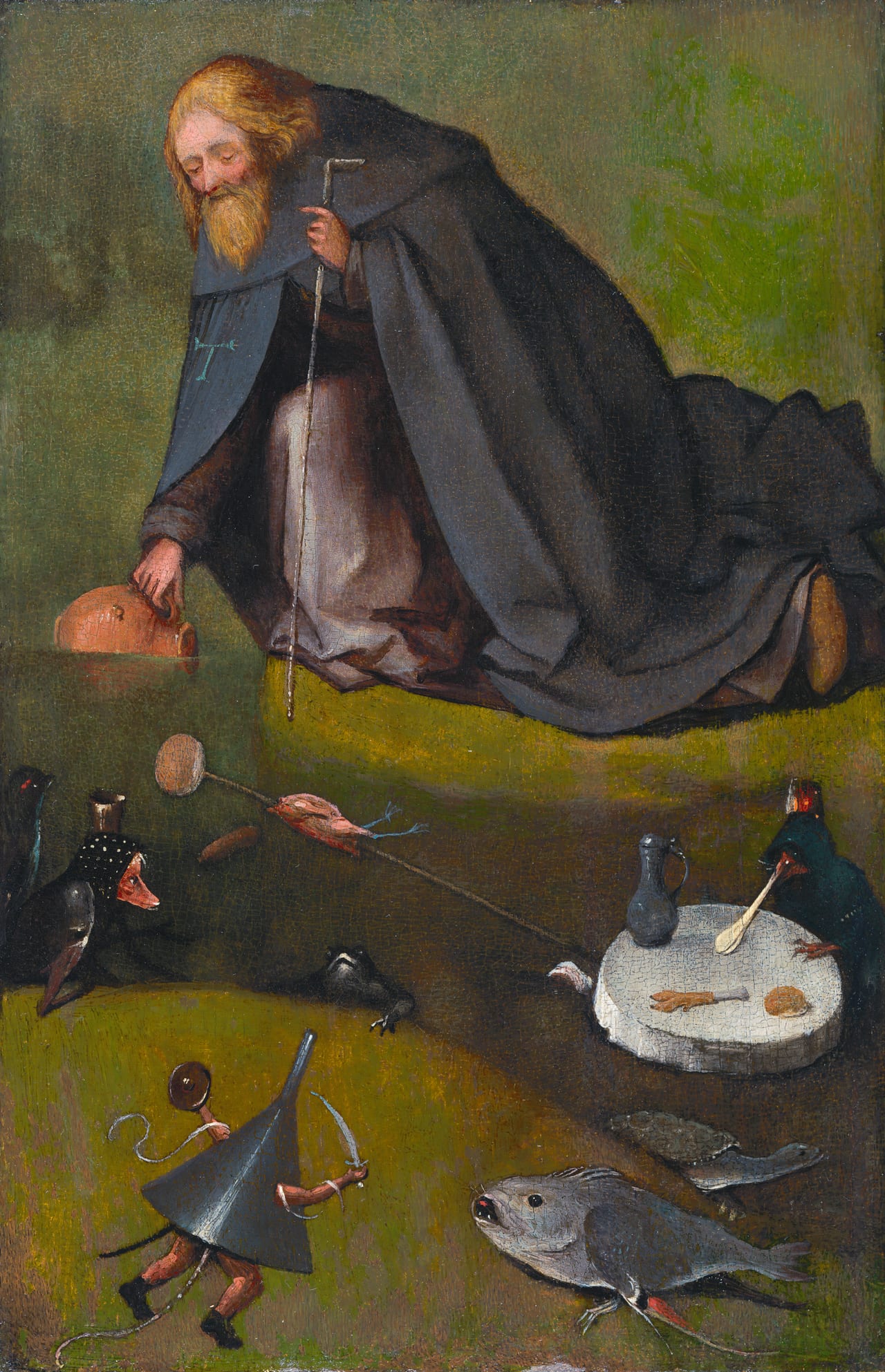
The Temptation of Saint Anthony
Hieronymus Bosch
Hunched over, his arm stretched out, Saint Anthony fills a crock with water, while small grotesque demons gather round: a hooded fox-headed demon on the left, a spoon-billed one at a table on the right and, along the bottom, a fish fighting a funnel with human limbs. Bosch was recognised as a highly imaginative “creator of devils”. Long attributed to his workshop, the panel is now held to be his own, on the evidence of its underdrawing and a dendrochronological examination. Researchers judged from its shape, size and composition that it is a fragment of a larger scene.
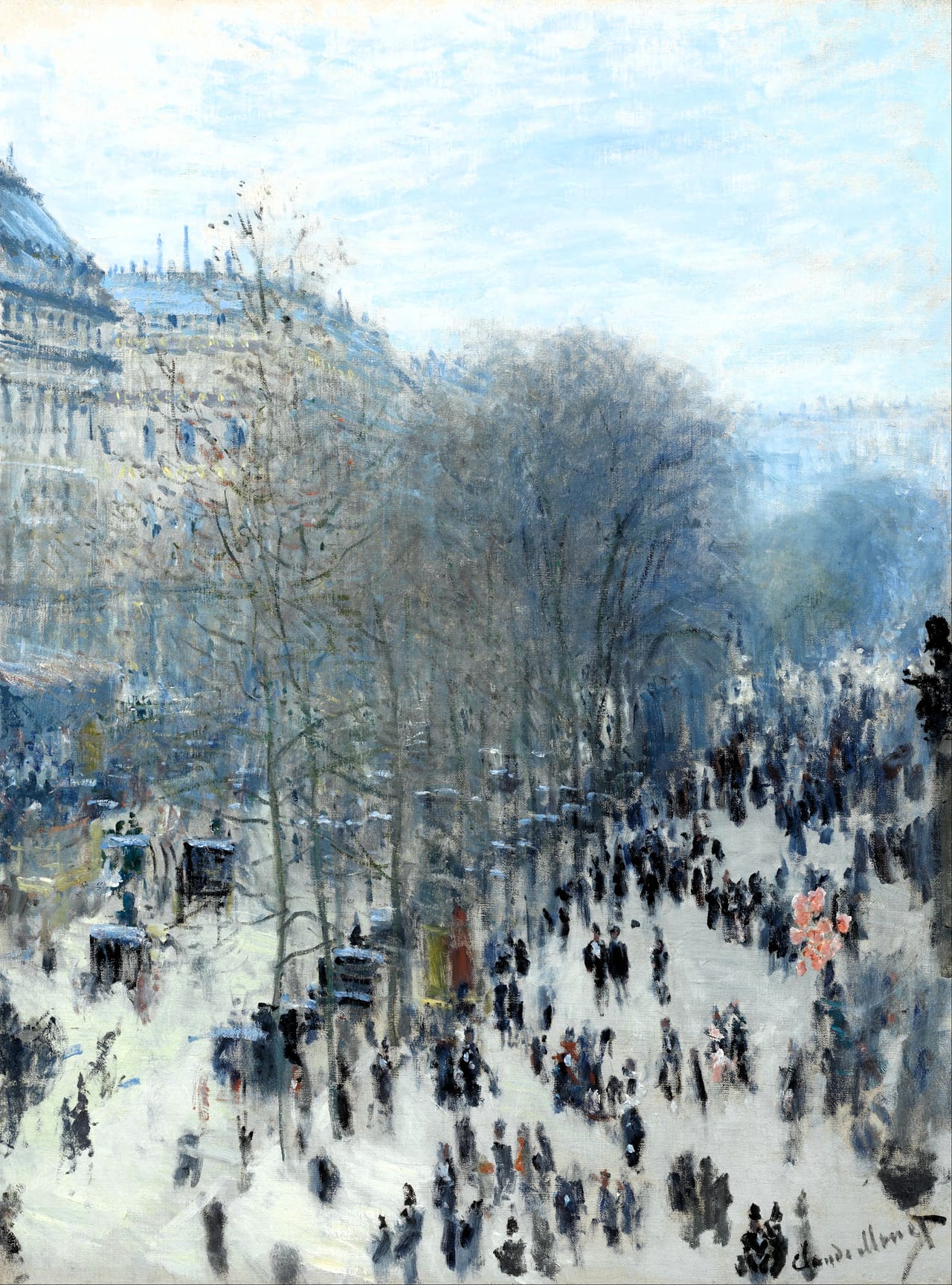
Boulevard des Capucines
Claude Monet · 1873–1874
Monet painted the boulevard twice; this upright canvas shows it under snow, looking towards the Place de l’Opéra. The pedestrians and horse-drawn carriages are blurry figures in loose black brushstrokes, meant to suggest the black coats of the French bourgeoisie. A yellow and brown Morris advertising column rises by the trees, a cluster of reddish-pink balloons fills the right foreground, and figures wearing top-hats look down on the street from a neighbouring balcony. The other, horizontal version is in Moscow.
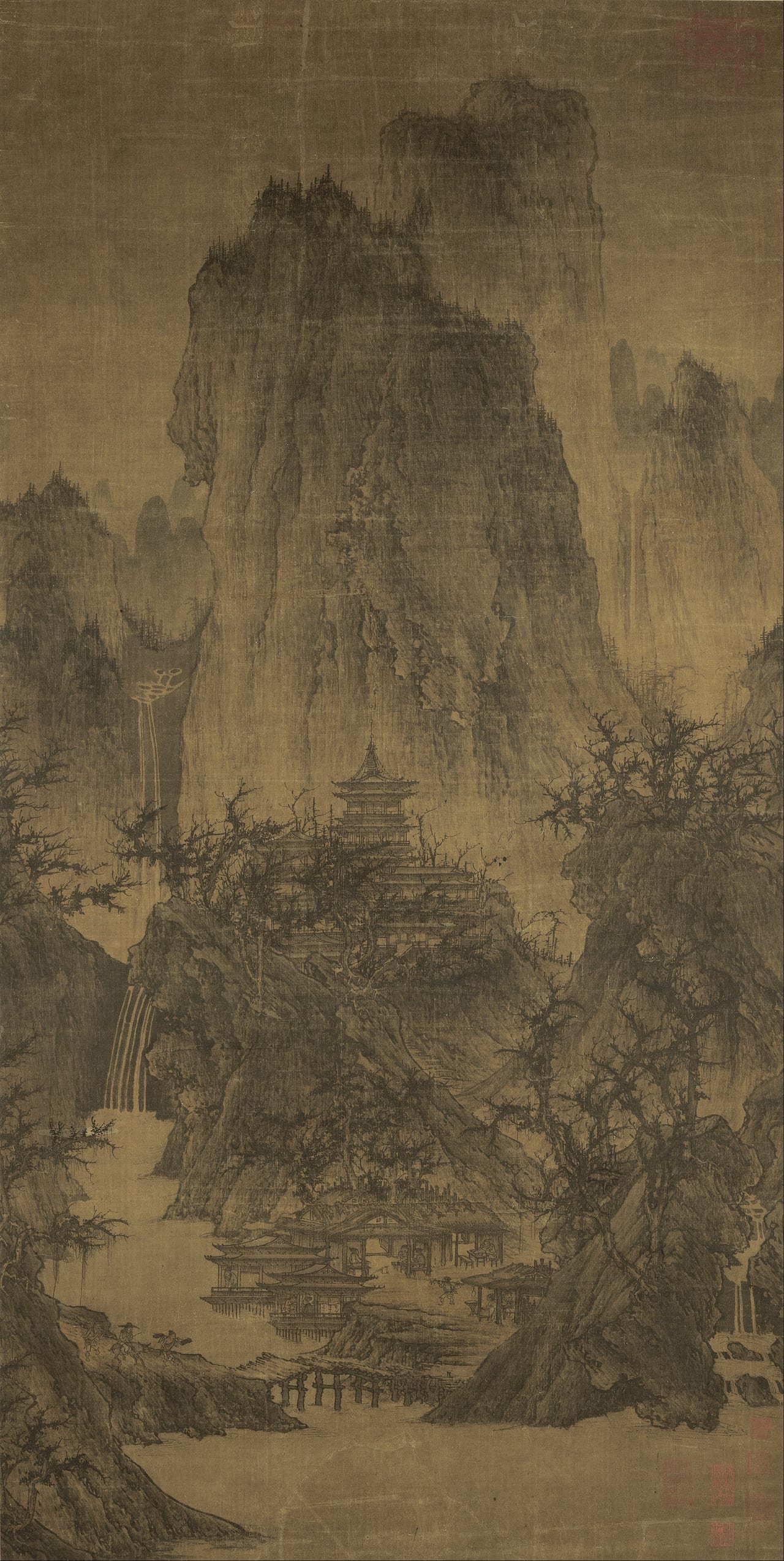
A Solitary Temple Amid Clearing Peaks
Attributed to Li Cheng
The museum names this hanging scroll, which it attributes to Li Cheng, among the masterworks of its Chinese painting. Li Cheng, a scholar who lived a few years into the Song dynasty, gave the soft, billowing earth of north-eastern China a “cloudlike” texture: layers of graded ink wash inside firmly brushed, scallop-edged contours.

Twelve Views from a Thatched Hut
Xia Gui
Xia Gui’s Twelve Views from a Thatched Hut survives in several copies, and the original is probably this fragmentary scroll. Xia, who served in the Imperial Academy under Emperor Ning Zong, often painted landscapes in ink monochrome with minimal colour, marked by quick, sharp strokes.
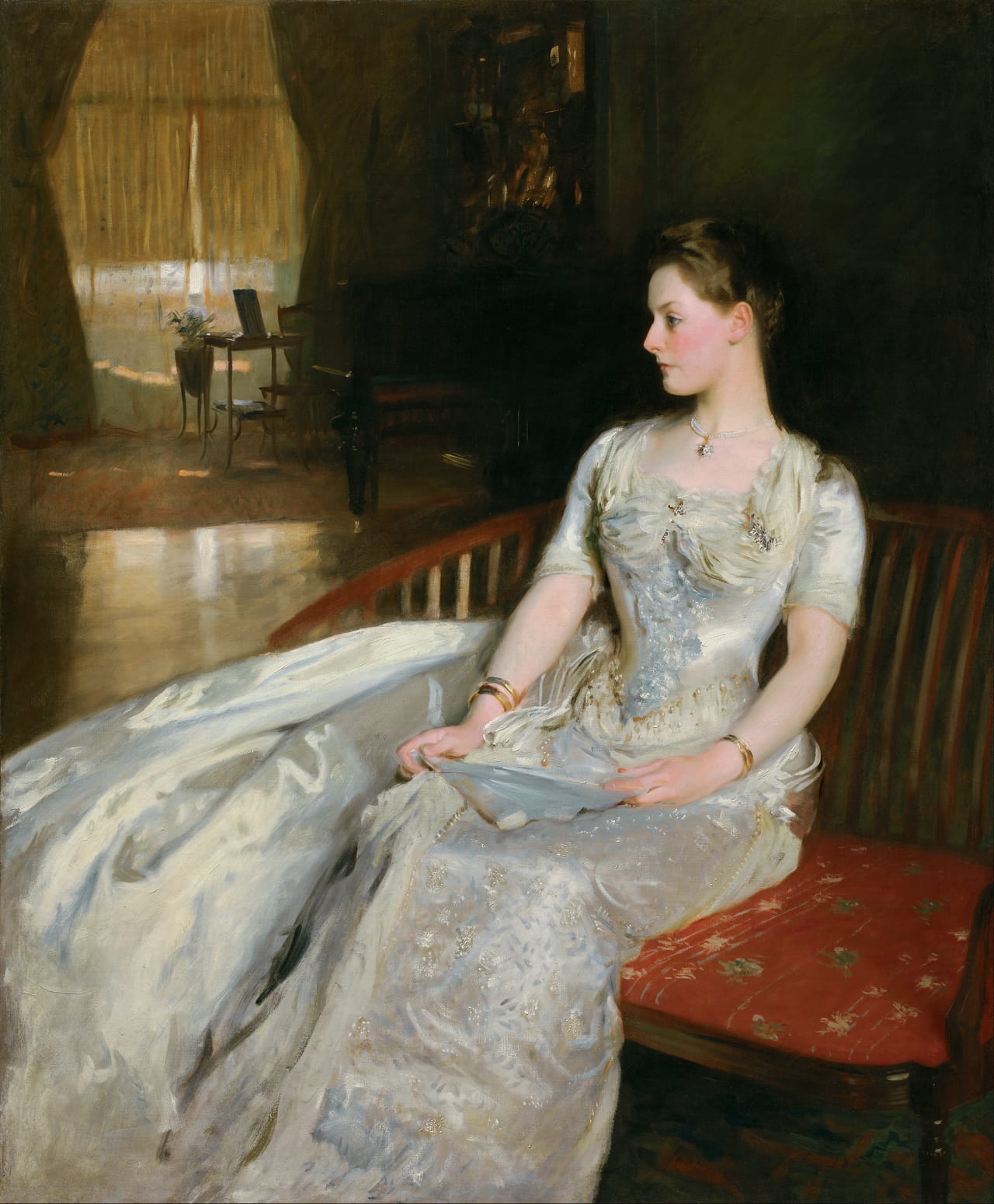
Mrs. Cecil Wade
John Singer Sargent · 1886
Frances Wade, born in Glasgow, was 23 when she sat for Sargent in her London home, in the white satin gown she had worn to be presented to Queen Victoria. Bright light washes over her skin and dress as she sits on a wooden bench with a red floral cushion; behind her, in the dim room, midday light trickles through a window hung with a yellow curtain. It was his first major project after the scandal of Madame X.
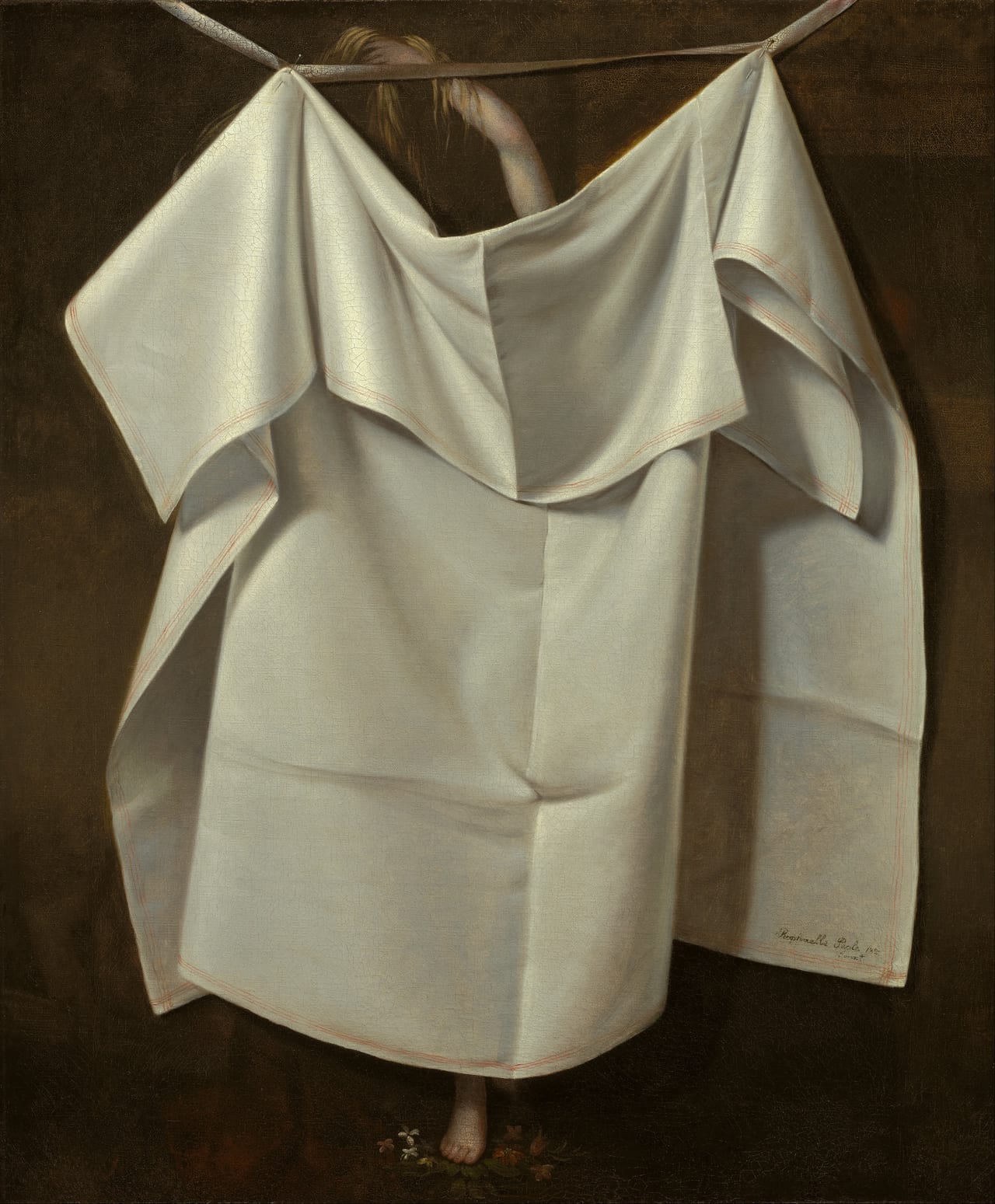
Venus Rising From the Sea—A Deception
Raphaelle Peale · c. 1822
Peale, a painter of still lifes, kept their dark background here but set aside food for Venus, barely visible behind a painted napkin that seems to cover her. Family stories say he meant it partly as a prank on his wife: by making it look as if he were hiding a pornographic image under a napkin, he hoped to goad her into scratching at the canvas. It was one of the museum’s important early American purchases.
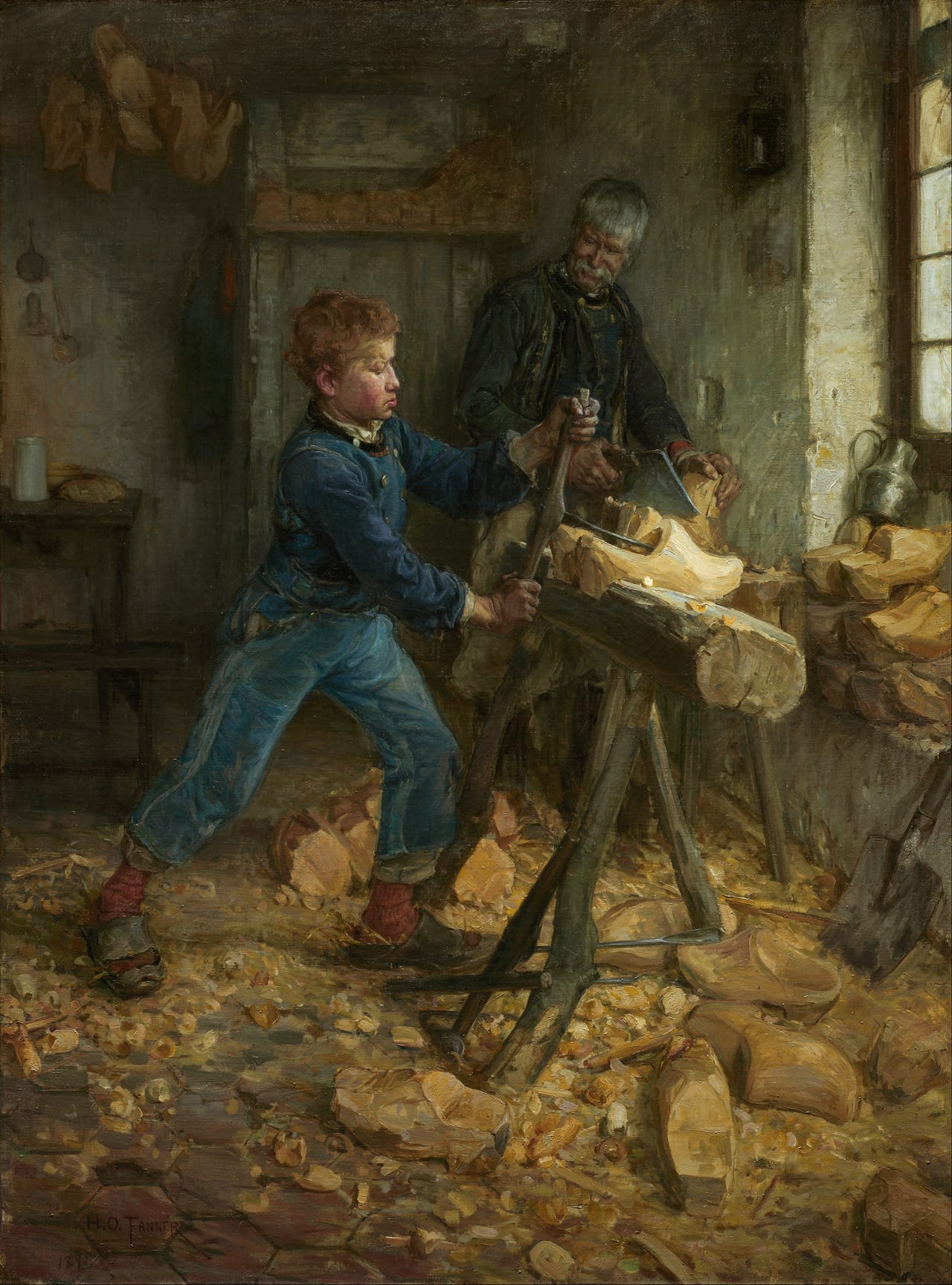
The Young Sabot Maker
Henry Ossawa Tanner · 1895
An older man proudly watches a boy push his weight against the crossbar of an auger to carve a sabot, a wooden shoe, with shavings scattered over the workshop floor. The picture follows a theme of Tanner’s genre paintings, age instructing youth, seen also in The Banjo Lesson, and stresses the dignity of work that Booker T. Washington, a family friend, publicised. The Paris Salon of 1895 accepted it.
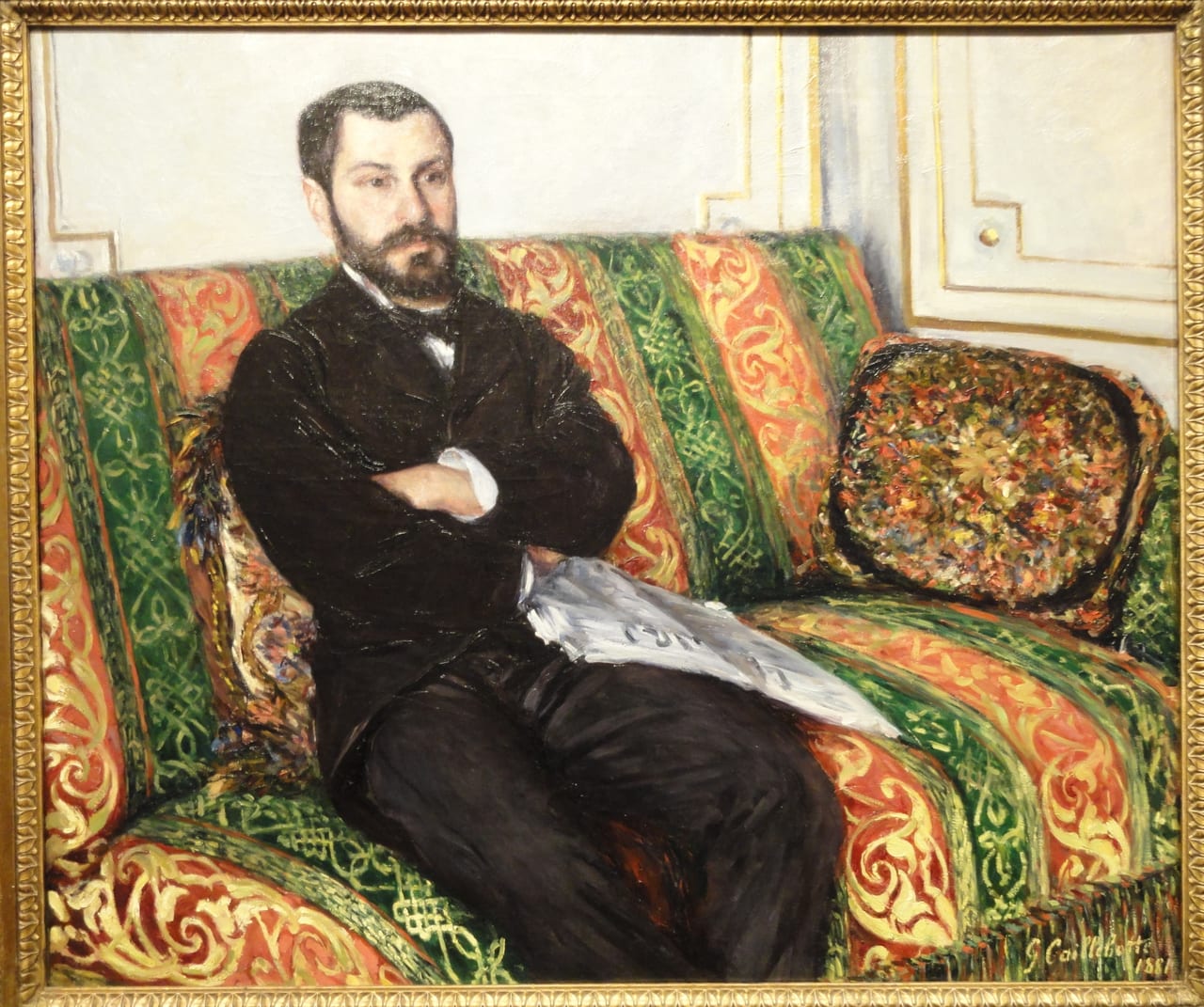
Portrait of Richard Gallo
Gustave Caillebotte · 1881
Gallo, a childhood friend of Caillebotte and a banker’s son, sits dressed in black on a sofa, arms crossed, a newspaper unfolded on his left thigh. That year he joined the Constitutionnel as a journalist, but the paper he holds is its competitor Le Figaro. The portrait is one of seven of Gallo that Caillebotte painted between 1878 and 1884, and it went relatively unnoticed at the last Impressionist exhibition, in 1882.
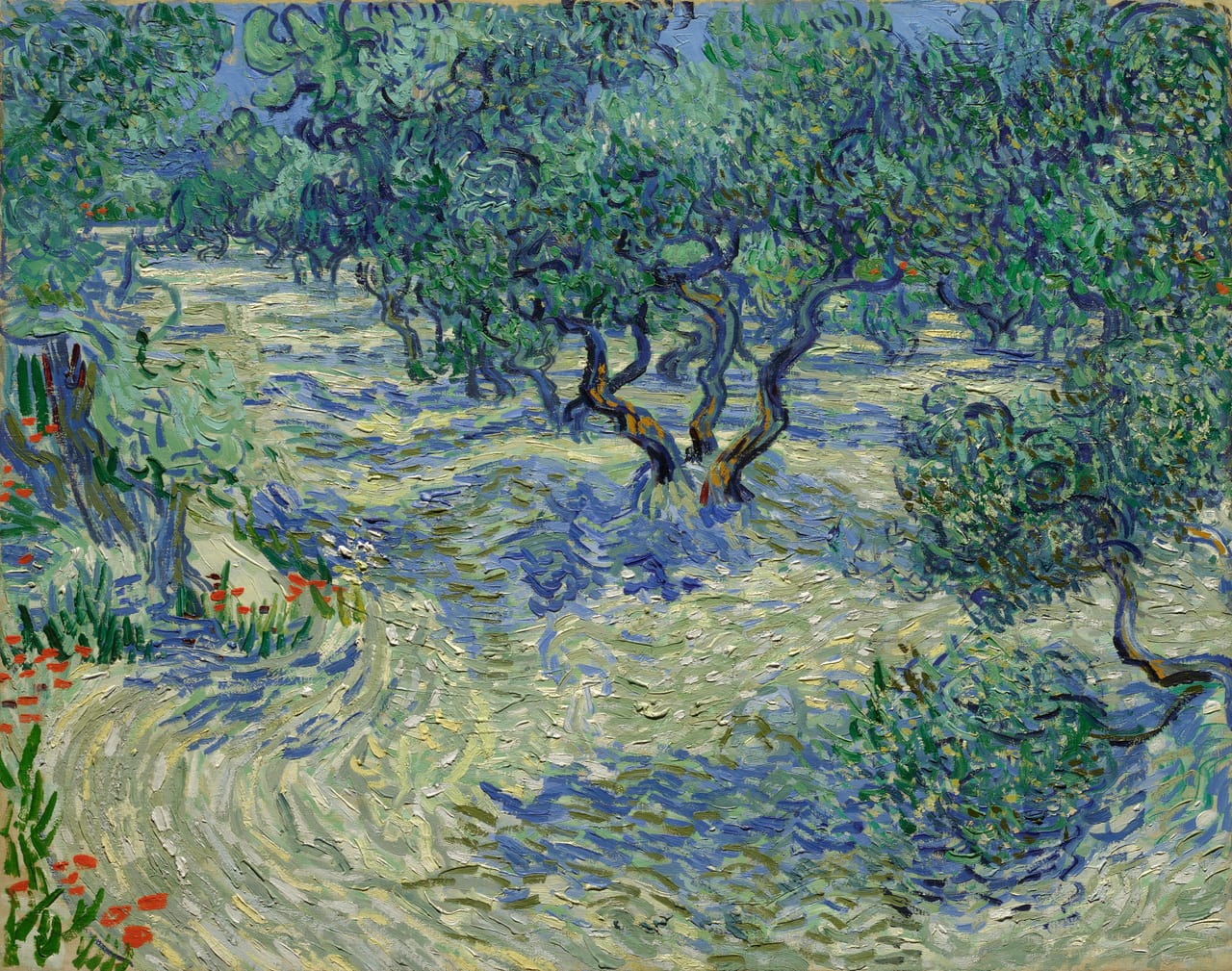
Olive Trees
Vincent van Gogh
In a letter of July 1889 van Gogh described an orchard of olive trees with grey leaves, “their violet shadows lying on the sunny sand.” The “repetitive, rectangular brush strokes” give it an energy that heightens its emotional impact. In 2017 the remains of a grasshopper were found in the paint, presumed to have been dead already when it arrived as he worked outdoors.
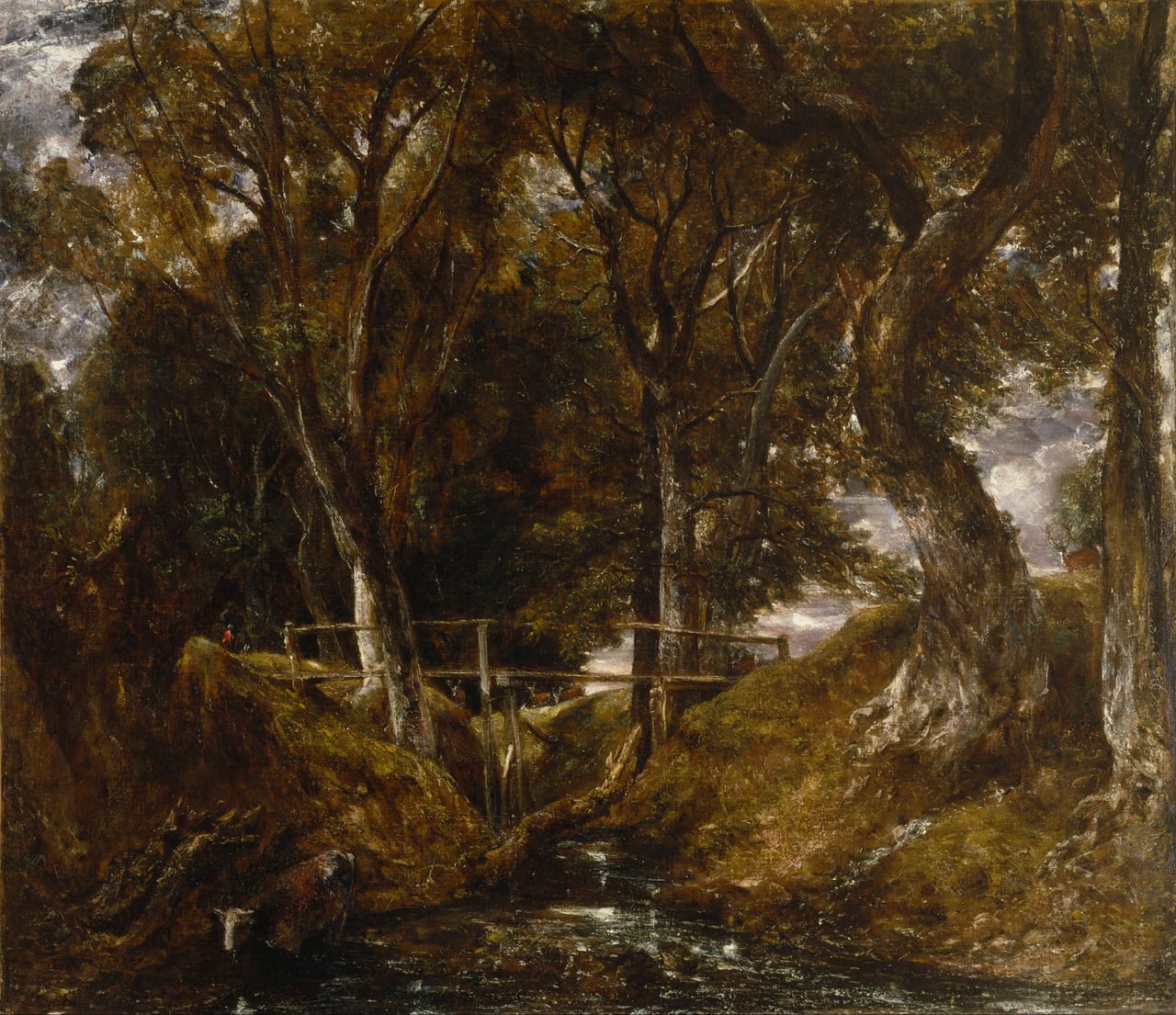
Helmingham Dell
John Constable · 1830
A young woman in red is about to cross a bridge in a dell in the grounds of Helmingham Hall, Suffolk, a view that seems to go back to a sketch Constable made as early as 1800. He began it for a friend, the bookseller James Carpenter, in exchange for a landscape Carpenter had given up, then kept it and paid him instead. Only a small glimpse of sky shows, which is unusual in his work.
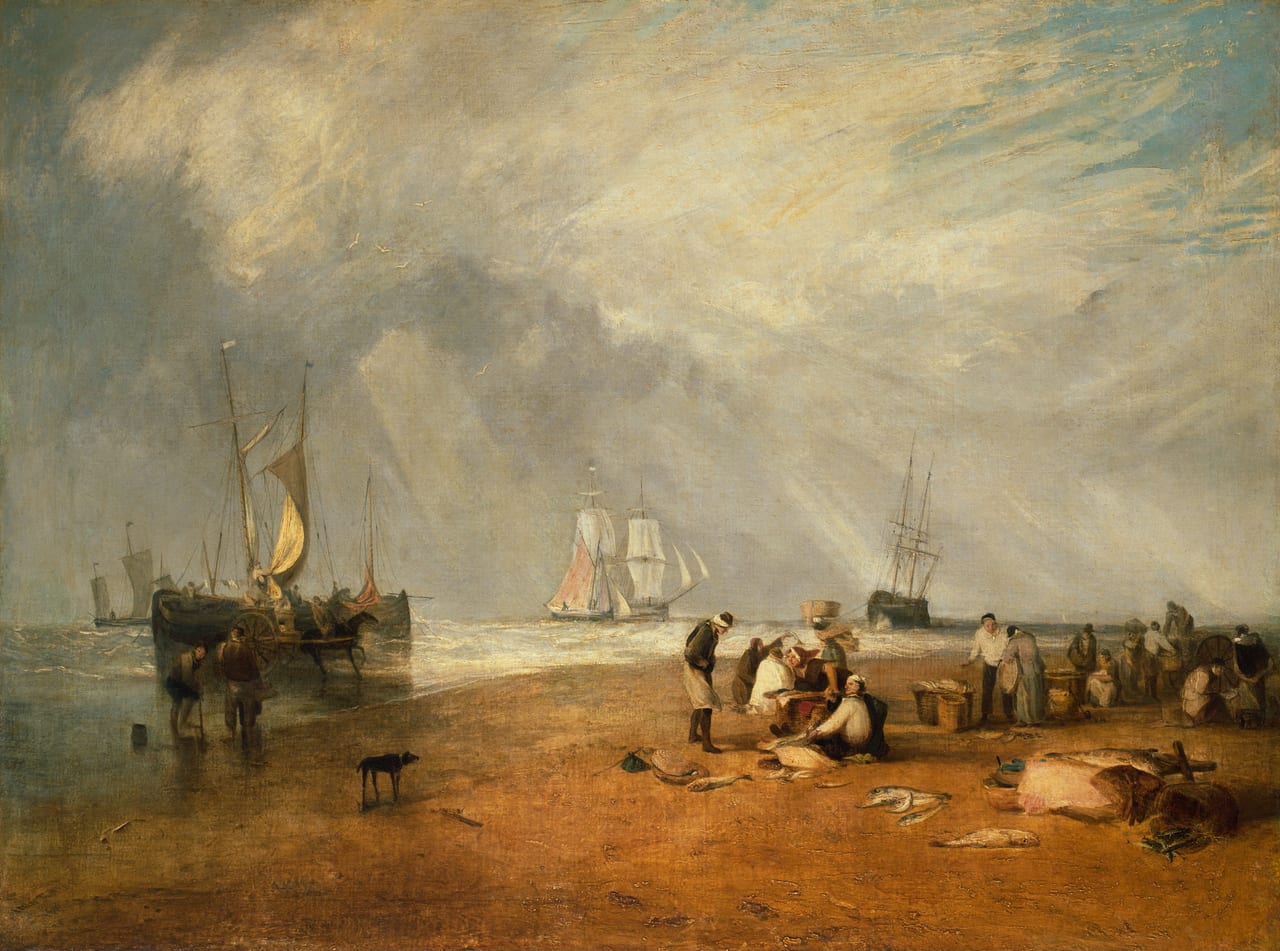
The Fish Market at Hastings Beach
J. M. W. Turner · 1810
Fishermen sell their catch on the beach at Hastings in Sussex. The politician known as Mad Jack Fuller commissioned the picture, and Turner chose to show it in his own studio gallery in Queen Anne Street, Marylebone, rather than at the Royal Academy.
Artists
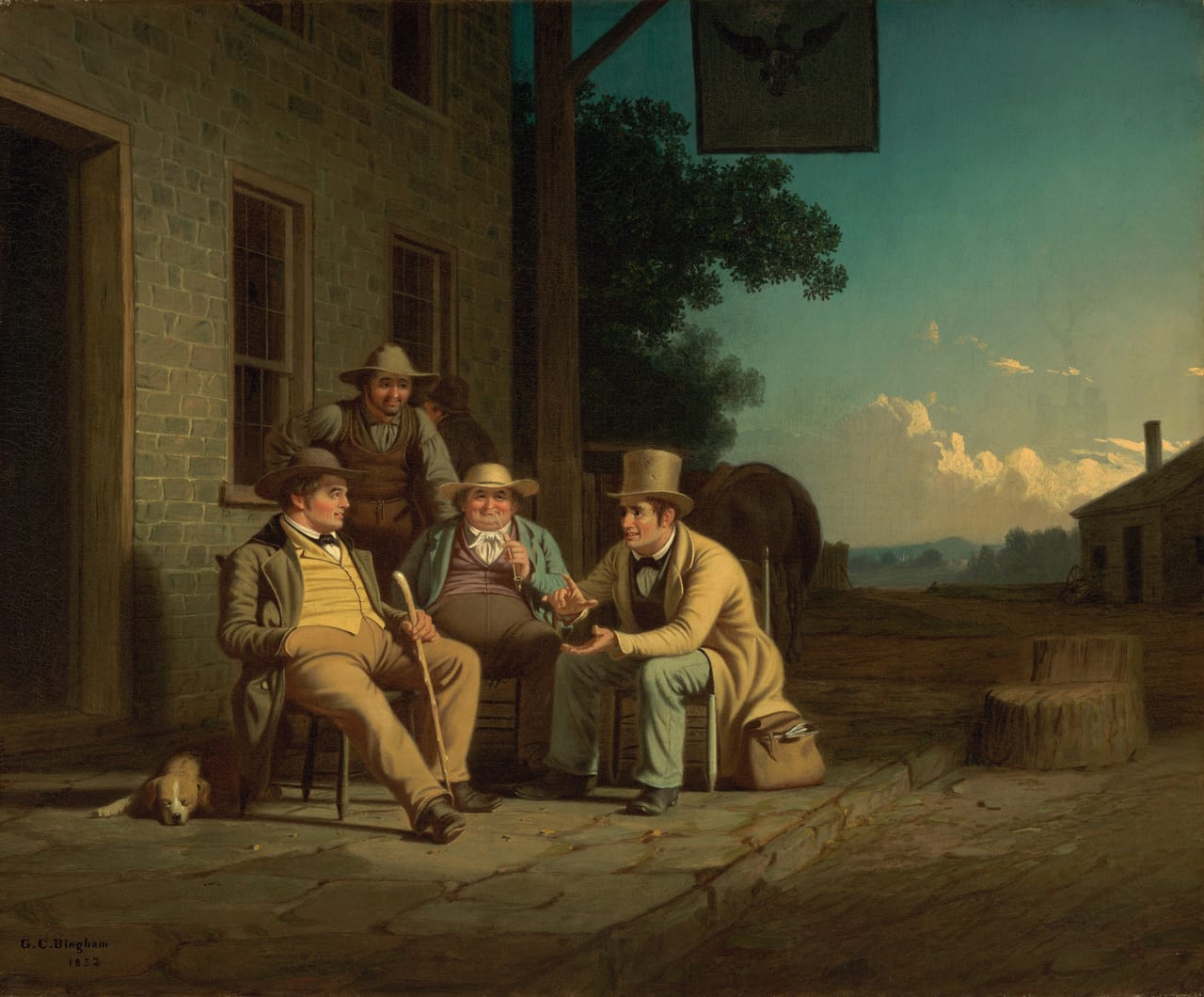
George Caleb Bingham
Canvassing for a Vote · 1852
Canvassing for a Vote belongs to the museum’s major holding of Bingham’s work, paintings that throw light on life and democracy on the American frontier. A frontier painter of landscapes and portraits, noted above all for scenes of river life in the Midwest, he died in Kansas City in 1879.
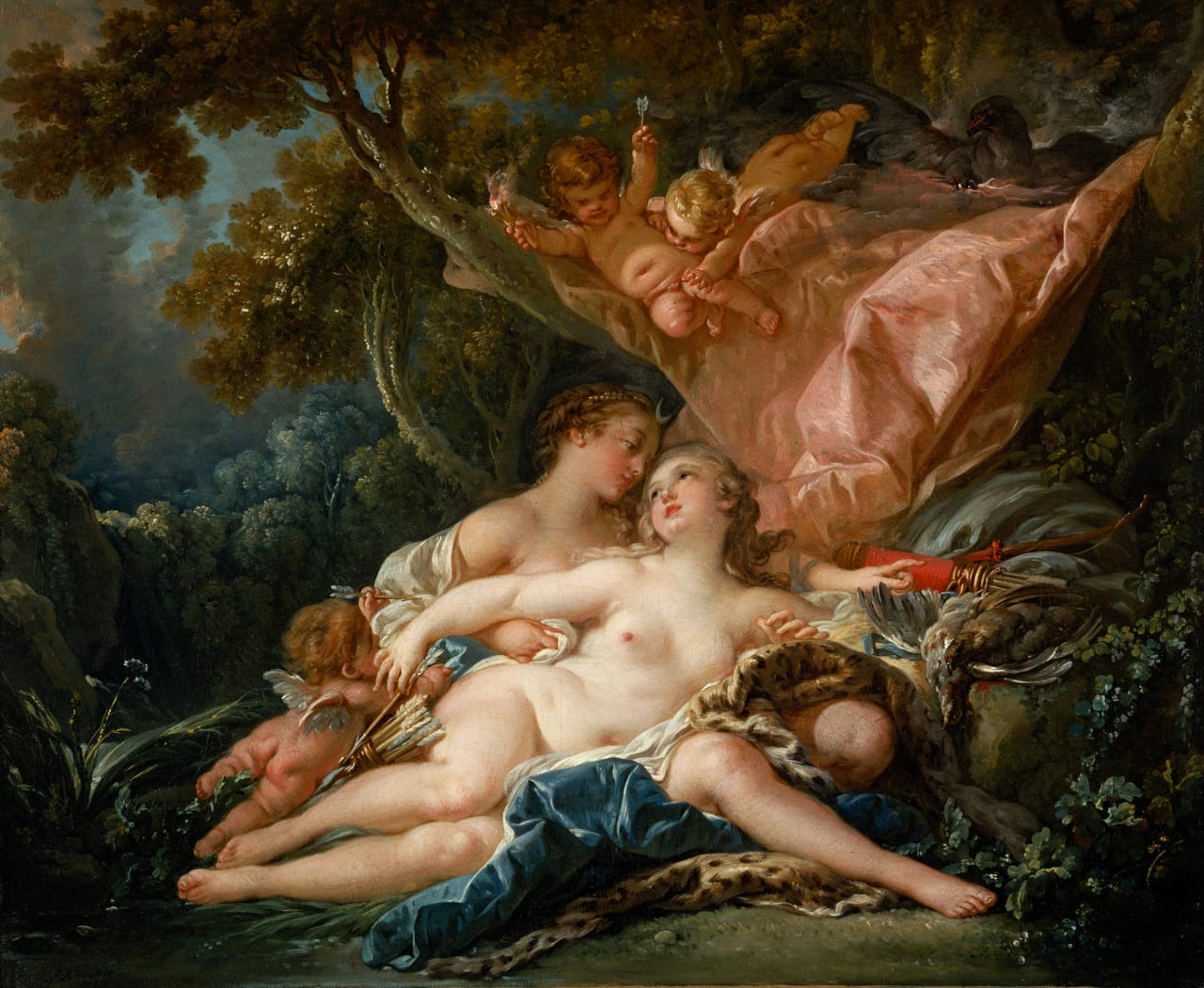
François Boucher
Jupiter in the Guise of Diana, and the Nymph Callisto · 1759
Jupiter, disguised as the goddess Diana, seduces the nymph Callisto. Boucher, a painter, engraver and designer, made works regarded as the perfect expression of French taste in the Rococo.
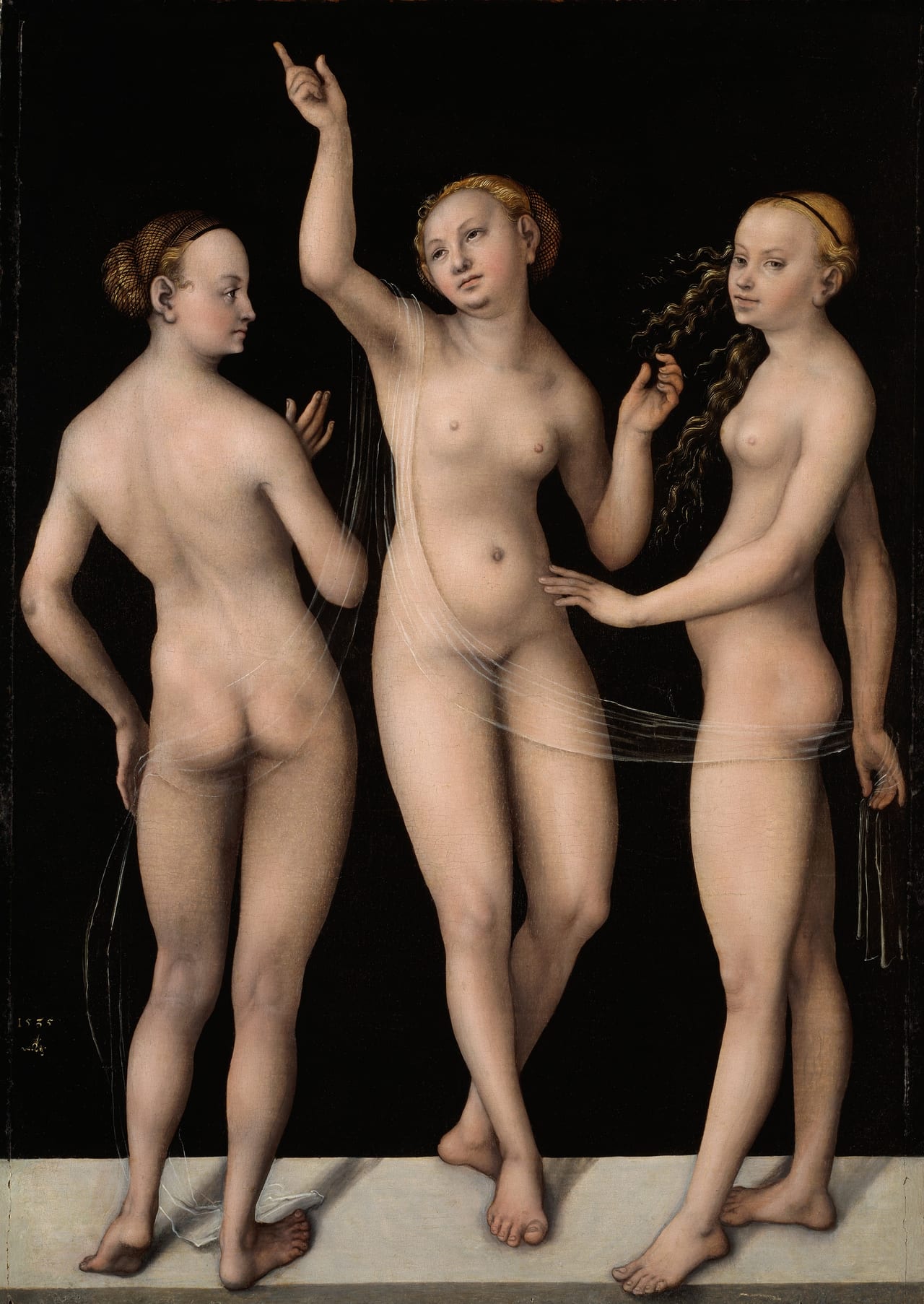
Lucas Cranach the Elder
The Three Graces · 1535
This is the 1535 version of the Three Graces, a subject Cranach painted more than once. A leading painter of Saxony, he made altarpieces, court portraits, portraits of the Protestant Reformers and innumerable pictures of women.
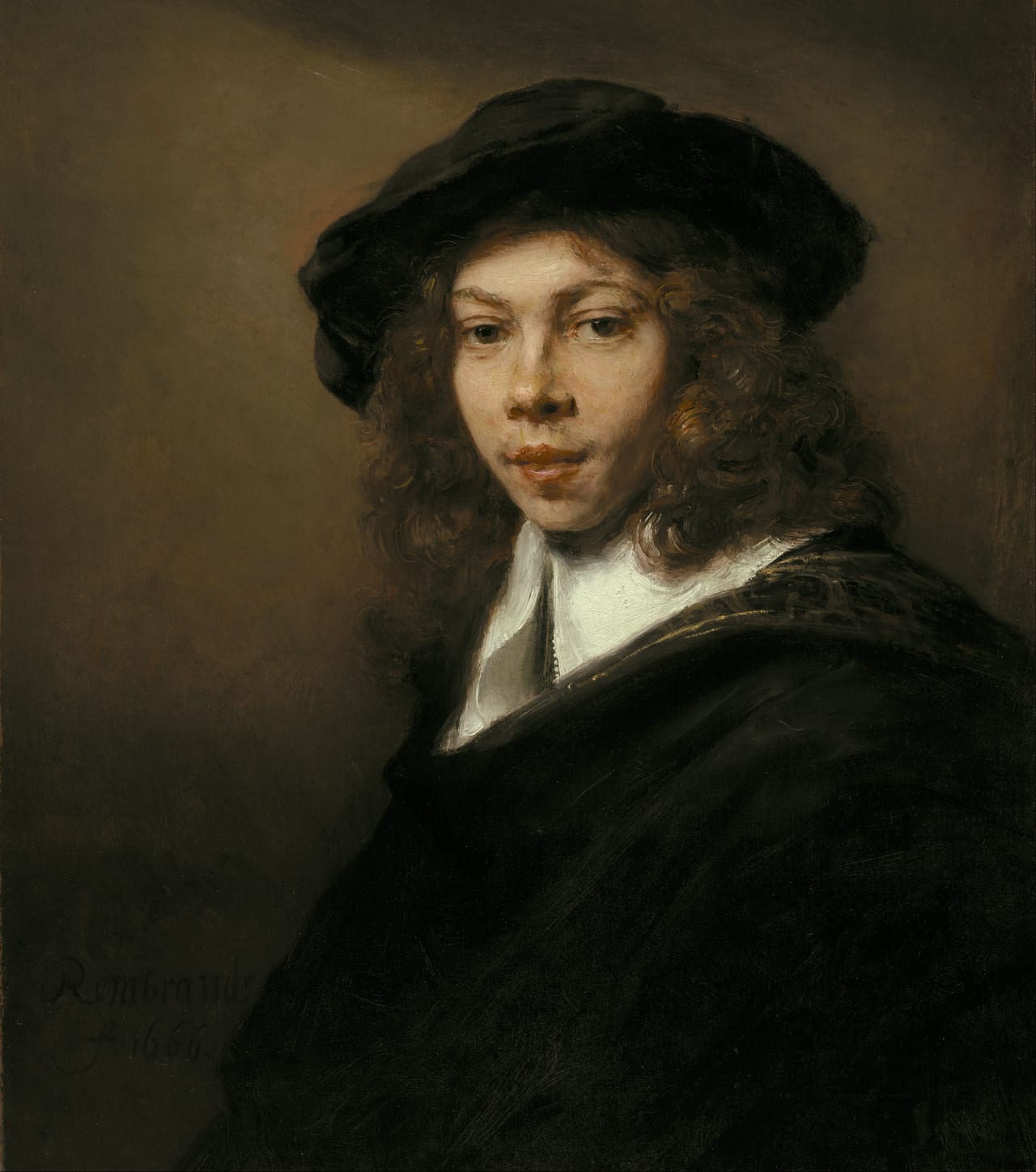
Rembrandt
Young Man in a Black Beret · 1666
This young man in a black beret is among the Rembrandt portraits the museum counts as Netherlandish highlights. Rembrandt, a painter of light and shade, had a rare gift for showing people in their moods and dramatic guises.
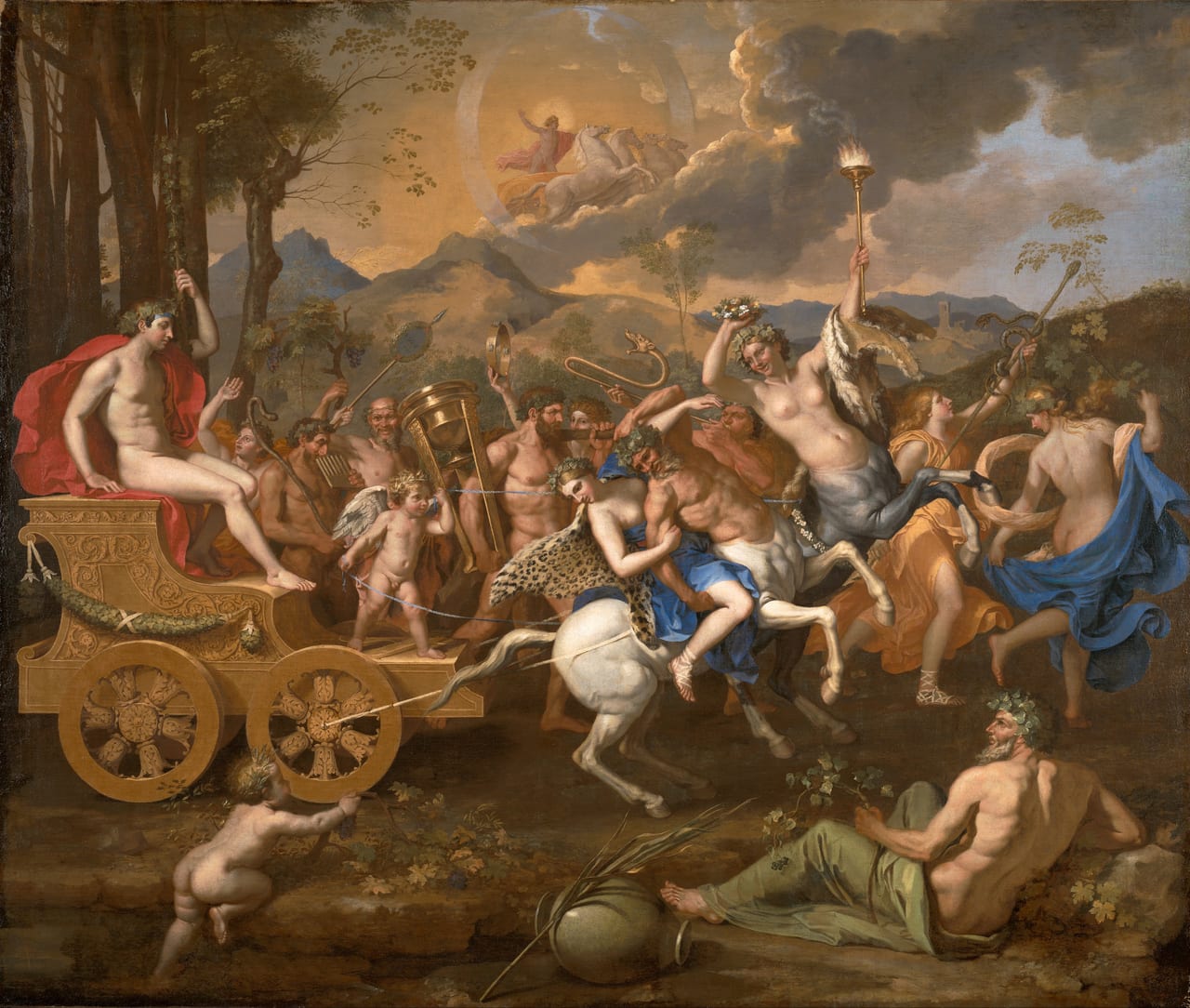
Nicolas Poussin
The Triumph of Bacchus · 1635–1636
The Triumph of Bacchus takes its subject from mythology, one of the sources of the history paintings Poussin made in Rome, where he spent nearly all his working life. He founded the French Classical tradition, and his pictures are notable for narrative clarity and dramatic force.
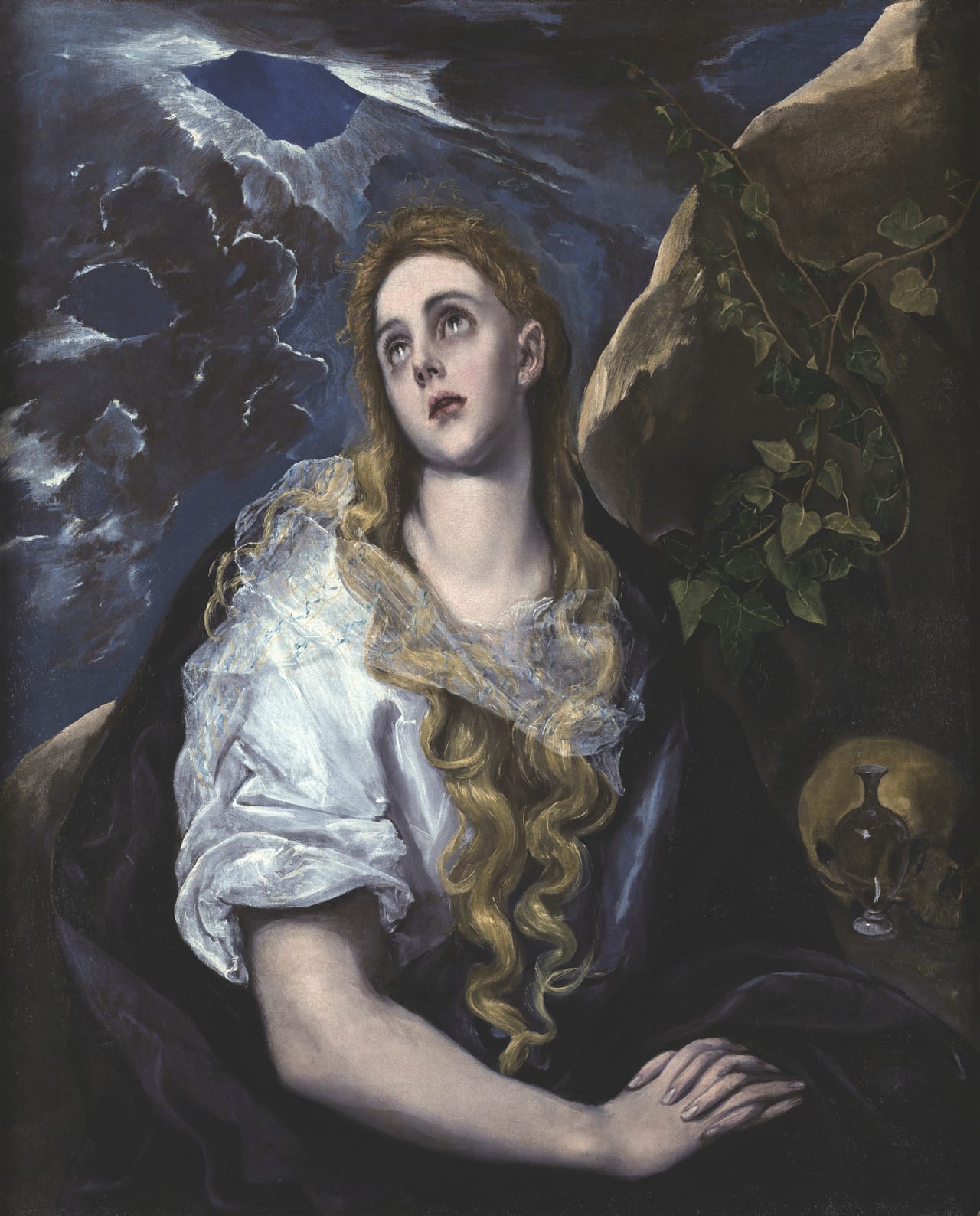
El Greco
The Penitent Magdalene · c. 1580–1585
The Penitent Magdalene is a later version of a subject El Greco painted more than once. His dramatic, expressionistic style, the work of a master of Spanish painting, puzzled his contemporaries and found new admirers in the twentieth century.
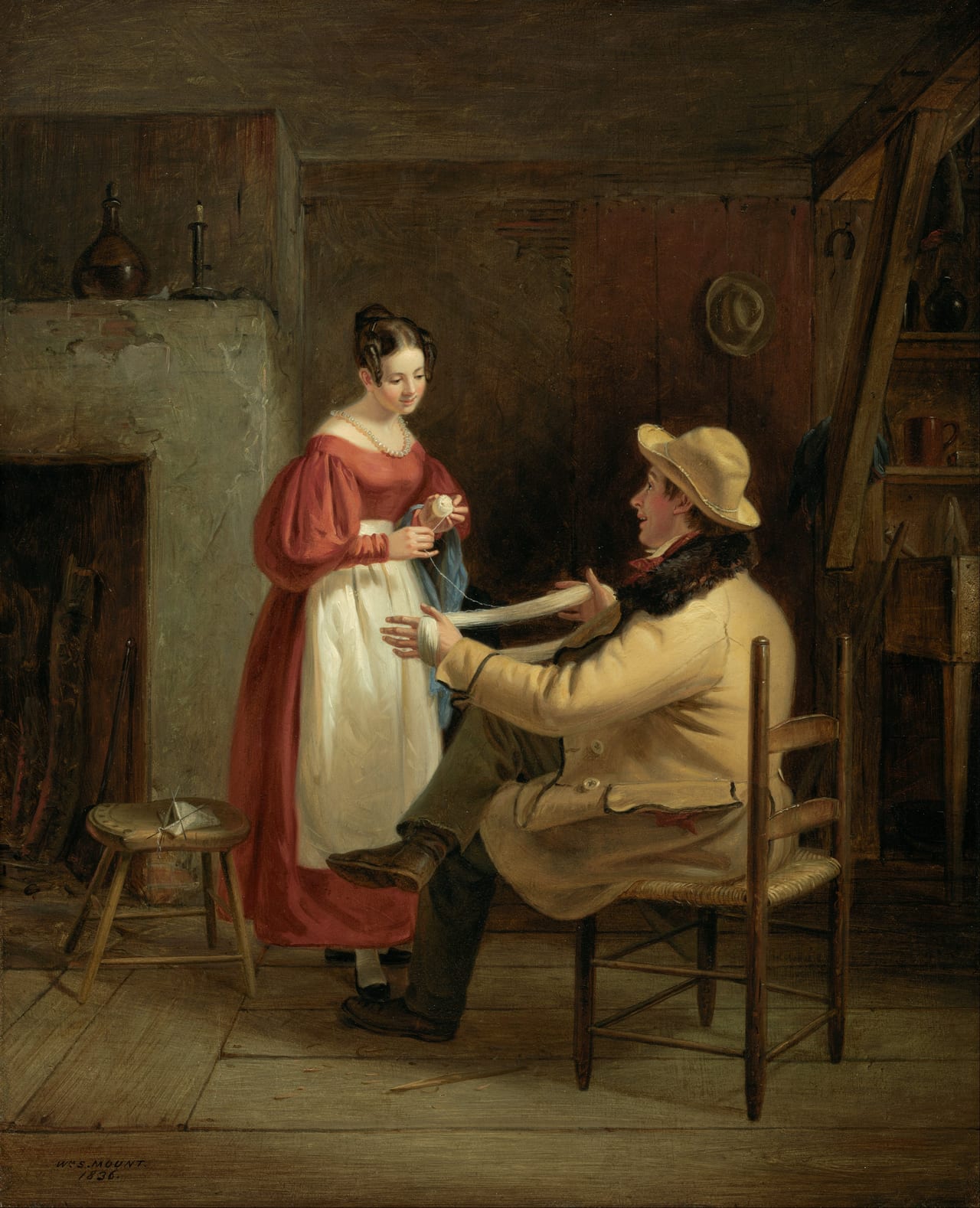
William Sidney Mount
Winding Up · 1836
Winding Up is by William Sidney Mount, a genre painter mainly of country life on his native Long Island, and one of the first and best anecdotal painters of nineteenth-century America.
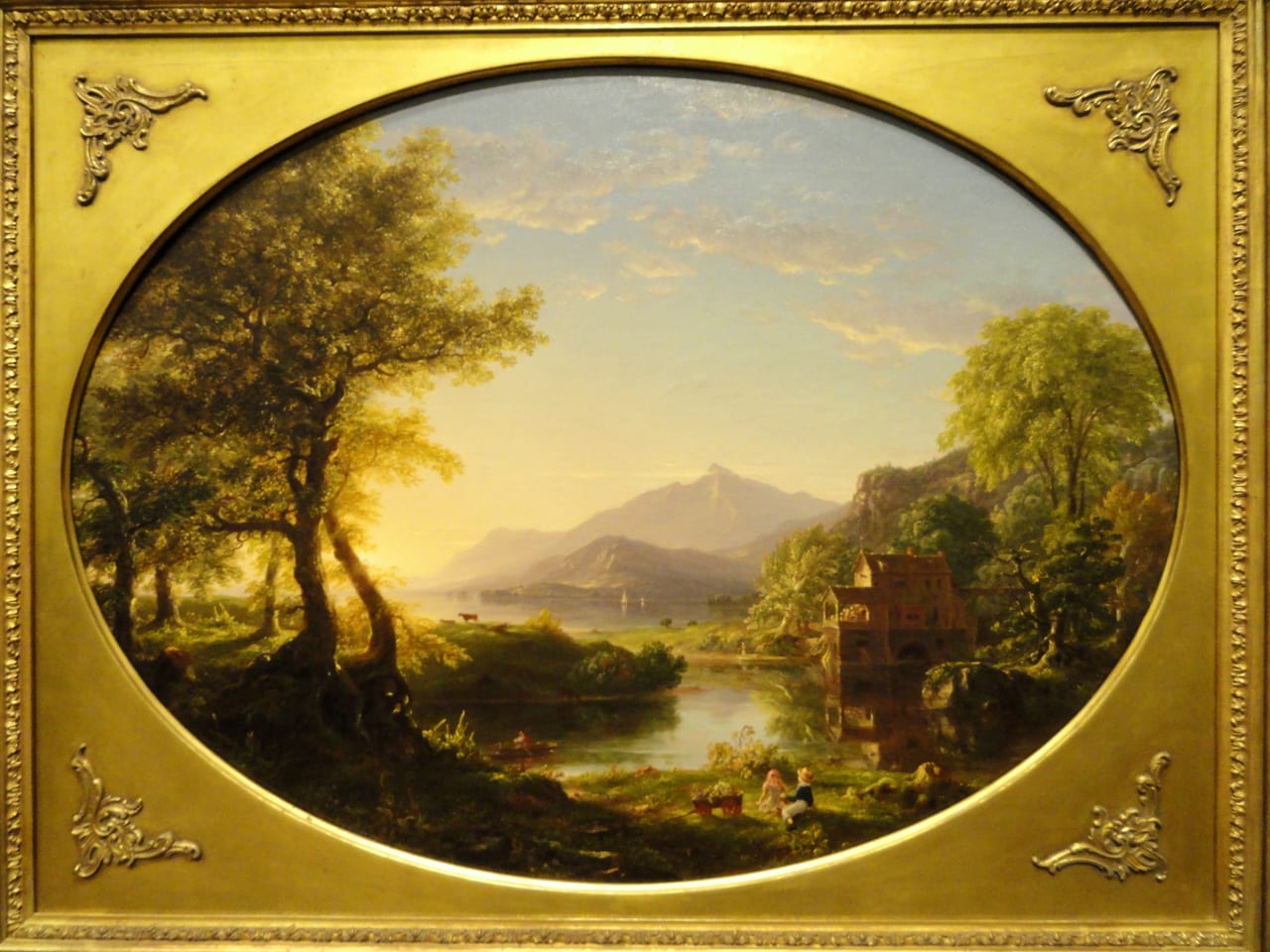
Thomas Cole
The Mill, Sunset · 1844
The Mill, Sunset came to the museum through the Ever Glades Fund. Born in Lancashire, Cole became an American Romantic landscape painter and a founder of the Hudson River school.
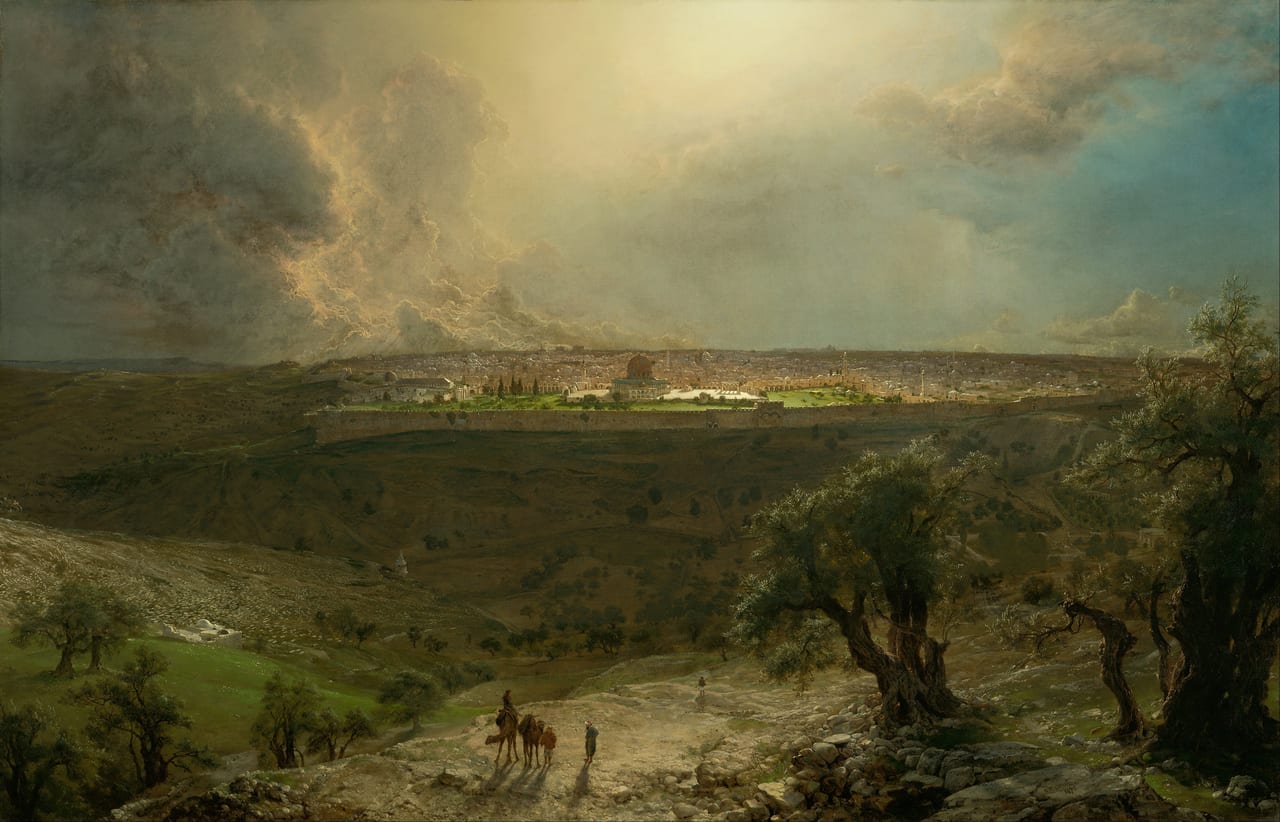
Frederic Edwin Church
Jerusalem from the Mount of Olives · 1870
This view of Jerusalem from the Mount of Olives came to the museum among the key gifts of the Enid and Crosby Kemper Foundation. Church, an American Romantic landscape painter, was among the leading members of the Hudson River school.
Artworks
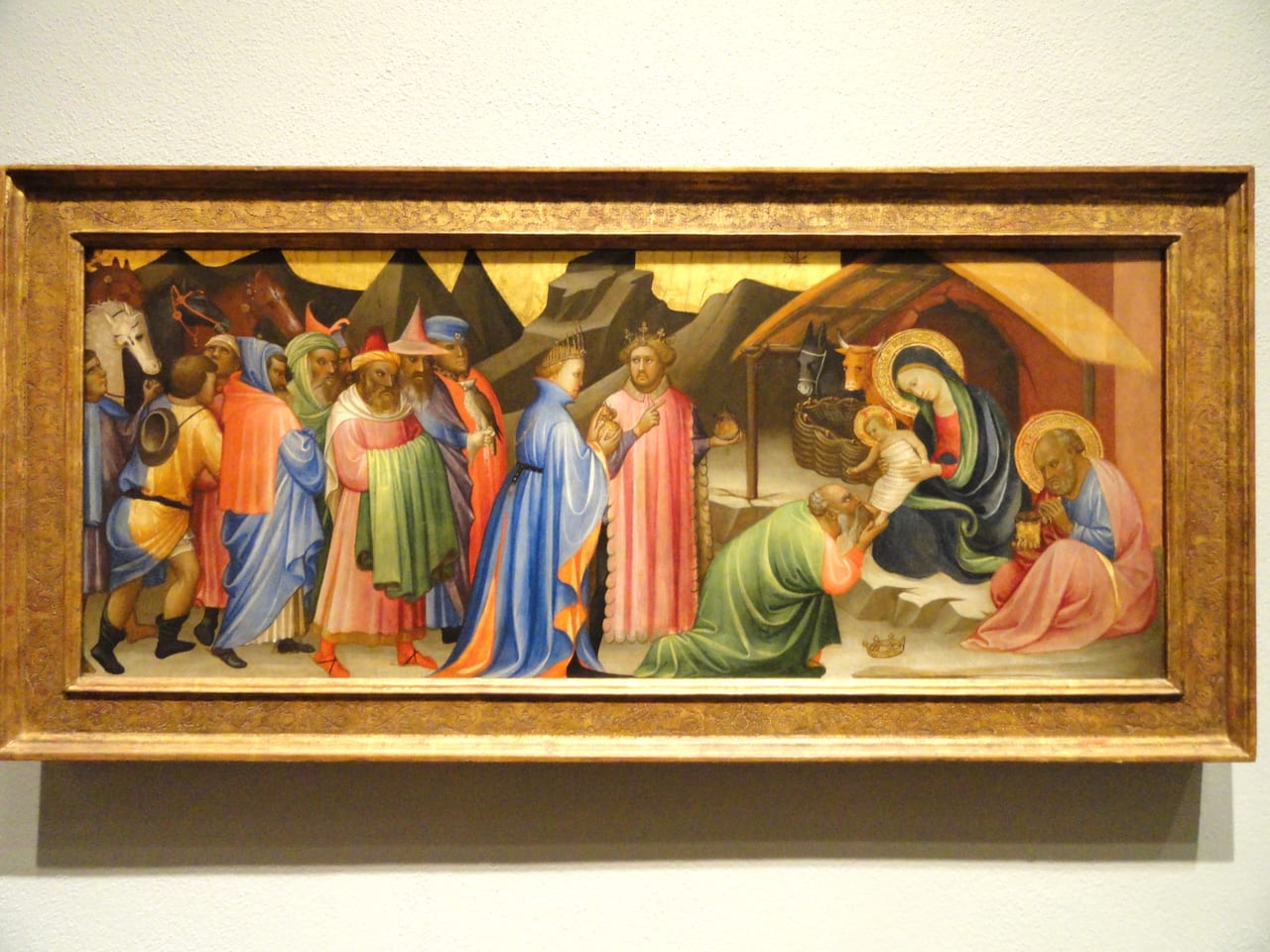
Adoration of the Magi
Gherardo Starnina
Sources
- Nelson-Atkins, “History of the Nelson-Atkins”
- Nelson-Atkins, “Chinese”
- Nelson-Atkins, “European”
- Nelson-Atkins, “American Art”
- Nelson-Atkins, “Japanese”
- Nelson-Atkins, “South & Southeast Asian”
- Nelson-Atkins, French Paintings and Pastels, 1600–1945, “Preface”
- Britannica, “Nelson-Atkins Museum of Art”
- Britannica, “Hiëronymus Bosch”
- Britannica, “Xia Gui”
- Britannica, “Li Cheng”
- Britannica, “George Caleb Bingham”
- Britannica, “François Boucher”
- Britannica, “Lucas Cranach, the Elder”
- Britannica, “Rembrandt”
- Britannica, “Nicolas Poussin”
- Britannica, “William Sidney Mount”
- Britannica, “Thomas Cole”
- Britannica, “Frederic Edwin Church”
- Britannica, “El Greco”
- Wikipedia, “Nelson-Atkins Museum of Art”
- Wikipedia, “John the Baptist (Caravaggio)”
- Wikipedia, “The Temptation of St Anthony (Kansas City)”
- Wikipedia, “Boulevard des Capucines (Monet)”
- Wikipedia, “Portrait of Mrs. Cecil Wade”
- Wikipedia, “Raphaelle Peale”
- Wikipedia, “The Young Sabot Maker”
- Wikipedia, “Portrait of Richard Gallo”
- Wikipedia, “Olive Trees (Van Gogh series)”
- Wikipedia, “Helmingham Dell”
- Wikipedia, “The Fish Market at Hastings Beach”
- Wikipedia, “Jupiter and Callisto (Boucher, 1759)”
- Wikipedia, “The Three Graces (Cranach)”
- Wikipedia, “Penitent Magdalene (El Greco)”
- Wikipedia, “Water Lilies (Monet series)”
- Wikipedia, “George Caleb Bingham”
- Wikipedia, “Xia Gui”
- Water Lilies — Public domain via Wikimedia Commons (Public domain)
- Saint John the Baptist in the Wilderness — Public domain via Wikimedia Commons (Public domain)
- The Temptation of Saint Anthony — Public domain via Wikimedia Commons (Public domain)
- Boulevard des Capucines — Public domain via Wikimedia Commons (Public domain)
- A Solitary Temple Amid Clearing Peaks — Public domain via Wikimedia Commons (Public domain)
- Twelve Views from a Thatched Hut — Public domain via Wikimedia Commons (Public domain)
- Mrs. Cecil Wade — Public domain via Wikimedia Commons (Public domain)
- Venus Rising From the Sea—A Deception — Public domain via Wikimedia Commons (Public domain)
- The Young Sabot Maker — Public domain via Wikimedia Commons (Public domain)
- Portrait of Richard Gallo — Public domain via Wikimedia Commons (Public domain)
- Olive Trees — Public domain via Wikimedia Commons (Public domain)
- Helmingham Dell — Public domain via Wikimedia Commons (Public domain)
- The Fish Market at Hastings Beach — Public domain via Wikimedia Commons (Public domain)
- Canvassing for a Vote — Public domain via Wikimedia Commons (Public domain)
- Jupiter in the Guise of Diana, and the Nymph Callisto — Public domain via Wikimedia Commons (Public domain)
- The Three Graces — Public domain via Wikimedia Commons (Public domain)
- Young Man in a Black Beret — Public domain via Wikimedia Commons (Public domain)
- The Triumph of Bacchus — Public domain via Wikimedia Commons (Public domain)
- The Penitent Magdalene — Public domain via Wikimedia Commons (Public domain)
- Winding Up — Public domain via Wikimedia Commons (Public domain)
- The Mill, Sunset — Public domain via Wikimedia Commons (Public domain)
- Jerusalem from the Mount of Olives — Public domain via Wikimedia Commons (Public domain)
- Adoration of the Magi — CC0 via Wikimedia Commons (CC0)
Invite the Nelson-Atkins into your living room