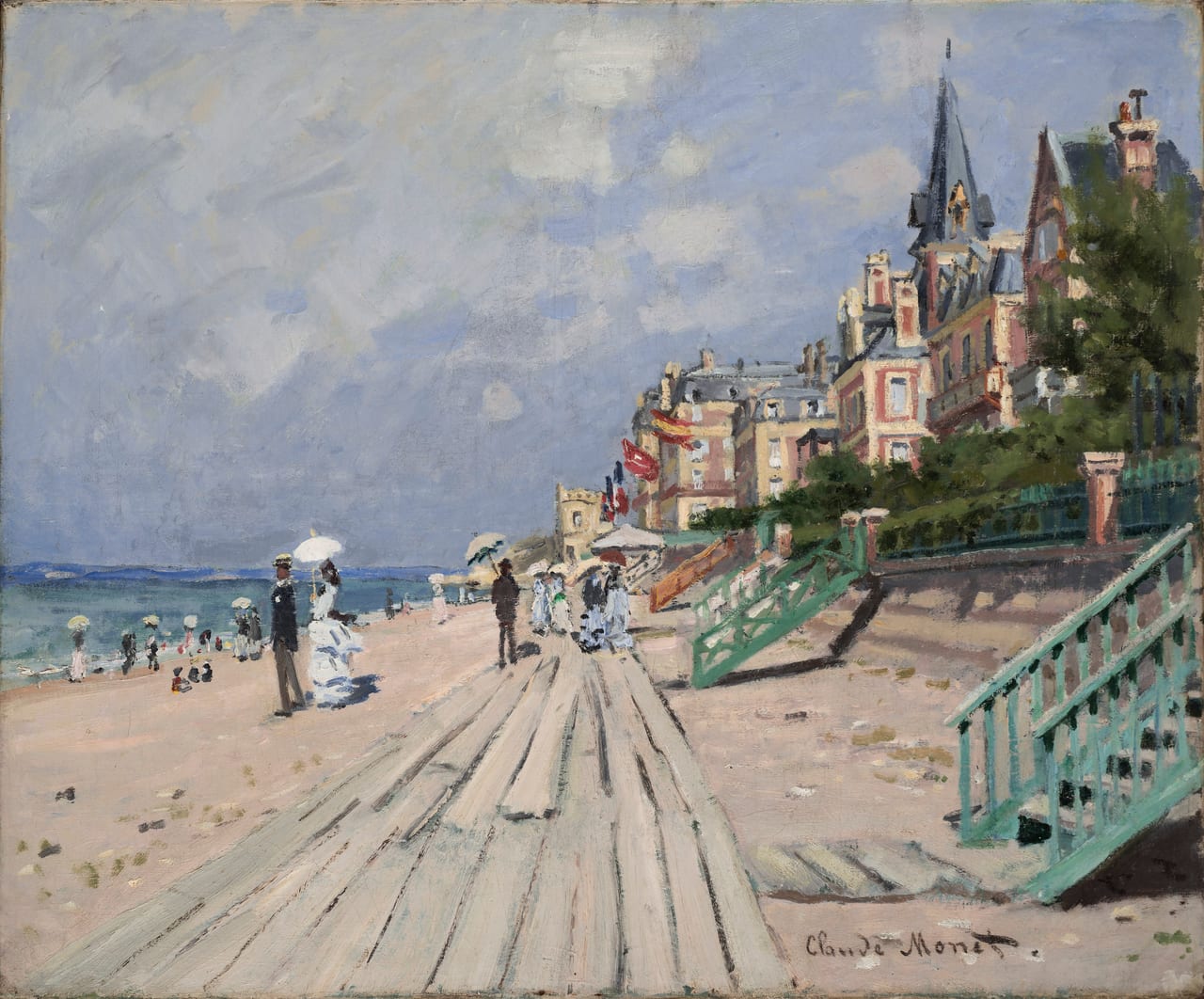
The Coast of Brittany
James McNeill Whistler · 1861

Wadsworth Atheneum Museum of Art
Hartford
Daniel Wadsworth founded his atheneum in Hartford, Connecticut, in 1842, and it opened two years later, the oldest public art museum in the United States. Its collections are particularly strong in works by the Hudson River School and in other American paintings, in Baroque paintings, in American colonial furniture and decorative arts, and in Impressionist and modern art. It was the first American museum to buy works by Caravaggio, Salvador Dalí, Joan Miró and Piet Mondrian.
- of refurbished galleries added when all five buildings were renovated
- 16,000 square feet
- in the European collection, beside some 500 sculptures and 3,500 works on paper
- About 900 paintings
- by Thomas Cole, with 11 by Frederic Edwin Church, among its most notable Hudson River School paintings
- 13 landscapes
Daniel Wadsworth’s atheneum
Daniel Wadsworth, an amateur artist and architect and a patron of the arts, is remembered above all for founding the museum in his home city, in 1842. He first pictured a gallery for fine arts, but the institution was set up instead as an atheneum, the nineteenth-century word for a body devoted to the study of the humanities and science, with a library, works of art and artifacts. Determined to promote American artists, Wadsworth bought the whole holdings of New York’s American Academy of the Fine Arts, and many of the objects shown at first came from his own collection.
Ithiel Town and Alexander Jackson Davis designed the Gothic Revival “castle” that is the oldest building, raised on the site of the Wadsworth family home. Building began in 1842, after the museum was incorporated on 1 June, and it opened on 31 July 1844. It shared its rooms with the Connecticut Historical Society, the Natural History Society and the Young Men’s Institute; not until 1964, when the others had all moved out, were the buildings given wholly to fine art. The Colt Memorial and Morgan Memorial buildings were added about 1910, the Avery Memorial in 1934 and the Goodwin building in 1969.
Later donors built on the family’s generosity. Foremost were Elizabeth Jarvis Colt, widow of the firearms magnate Samuel Colt, whose gifts included the Colt firearms collection and an important group of Hudson River School landscapes, and the Hartford-born financier John Pierpont Morgan, who brought Renaissance decorative arts and colonial American furniture.
Chick Austin and the Sumner fund
In 1927 the banker Frank Sumner left the museum a million dollars, which became an endowment for acquisitions. That year A. Everett “Chick” Austin Jr., a young Harvard graduate, was hired as director, and he stayed until 1944. Austin enlarged the European paintings with an emphasis on the Baroque, was one of the first museum directors to buy work by living avant-garde artists of Europe and America, and brought in music, dance, theatre, film and photography.
In 1931 the Atheneum became the first American museum to buy a work by Salvador Dalí, La Solitude, and the first to hold a Surrealism exhibition, five years ahead of the Museum of Modern Art in New York. It was first again with Joan Miró in 1934, Piet Mondrian in 1936 and Caravaggio in 1943, when it bought Saint Francis of Assisi in Ecstasy.
Under Austin the museum also staged the first major Pablo Picasso retrospective in the United States, in 1934, the year Gertrude Stein and Virgil Thomson’s opera Four Saints in Three Acts had its world premiere there. In 1933 it had sponsored George Balanchine’s move from the Soviet Union; in December 1934 the Producing Company of the School of American Ballet gave its first performances in the Avery Memorial Theatre, Serenade, his first ballet choreographed in America, among them.
With Austin and Charles Cunningham above all as directors, the Sumner money paid for major works by Tintoretto, Caravaggio, Strozzi, Van Dyck, Zurbarán, Gauguin, Dalí and Miró. In the 1940s and 1950s the bequests of Clara Hinton Gould and Anne Parrish Titzell enlarged the Hudson River School and Impressionist holdings, bringing celebrated paintings by Church, Cole, Gifford, Monet and Renoir.
Landscapes, a restoration and a lute player
One of the largest collections of Hudson River School painting is here, its most notable works including 13 landscapes by Thomas Cole and 11 by Frederic Edwin Church, both personal friends of Daniel Wadsworth. In his later years Wadsworth became a patron of Cole and advised him on routes for sketching trips. Church, born in Hartford, became Cole’s pupil at Catskill, New York, in 1844, at the age of 18, after Wadsworth, a neighbour of his family, introduced the two.
Zurbarán painted Saint Serapion in 1628 for the monastery of the Shod Mercedarians in Seville, and the Atheneum acquired it in 1951. From 2015 a two-year treatment led by the chief conservator, Ulrich Birkmaier, with art historians, conservators, a hand surgeon and an artist among his advisers, removed yellowed varnish and old discoloured restorations. Paint had been lost around the saint’s proper right hand, of which only a faint thumb and traces of the index and middle fingers remained, and the hand was rebuilt in stable yet reversible pigments.
In January 2014 the Atheneum bought Artemisia Gentileschi’s Self-Portrait as a Lute Player, which made it the first museum in New England to own her work. A $33 million renovation of all five buildings began in 2010 and was completed in 2015, adding 16,000 square feet of refurbished galleries and reinstalling the European art, the European decorative arts and the contemporary art in full.
What to see
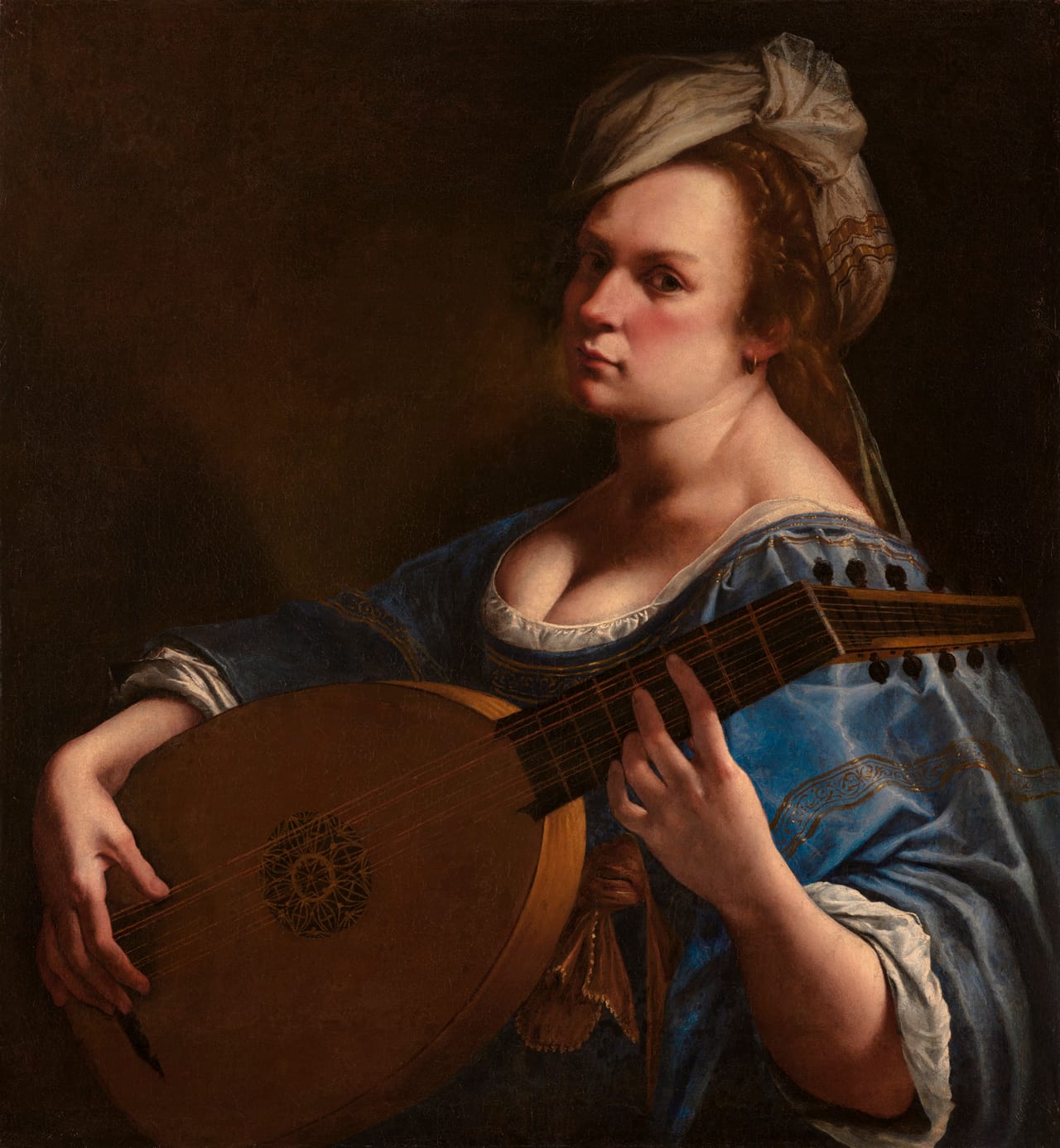
Self-Portrait as a Lute Player
Artemisia Gentileschi
Seen from the waist up against a solid black ground, lit as if by a spotlight, Gentileschi turns the lute the way she turns her face so that we can see it. A white cloth stitched with gold thread is wound about her head, and with the low-cut blouse it casts her as a Romani musician. A 1638 inventory of the Villa Medici at Artimino suggests a Medici patron in Florence.
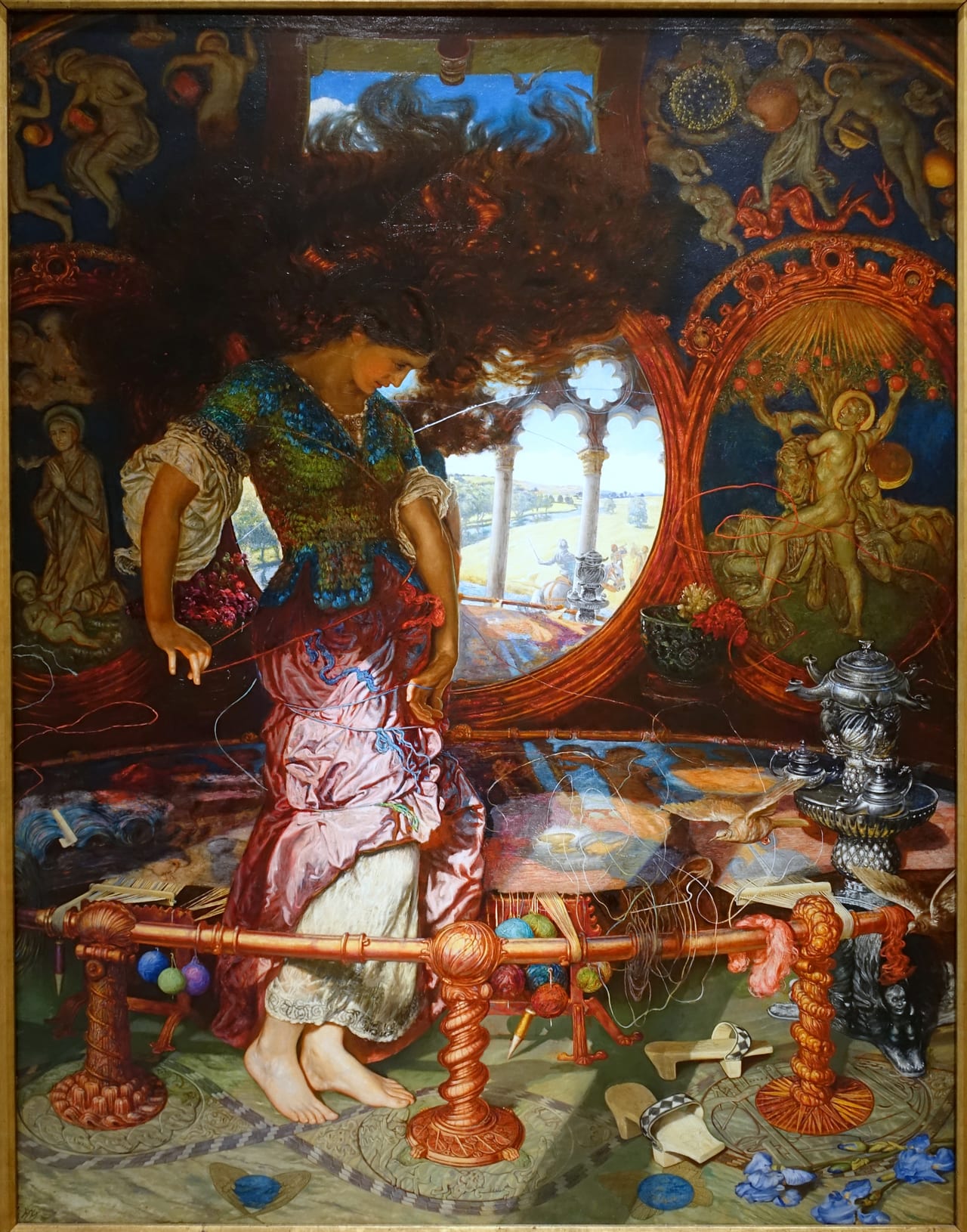
The Lady of Shalott
William Holman Hunt · c. 1888–1905
Hunt shows the instant after Tennyson’s Lady has looked straight out at Sir Launcelot: her weaving breaks and traps her in its threads, her hair whips up above her head, two doves fly past a silver candlestick, and the round mirror behind her, cracked across, reflects the knight riding by. The Atheneum bought it in 1961, paying through the Ella Gallup Sumner and Mary Catlin Sumner Collection Fund.
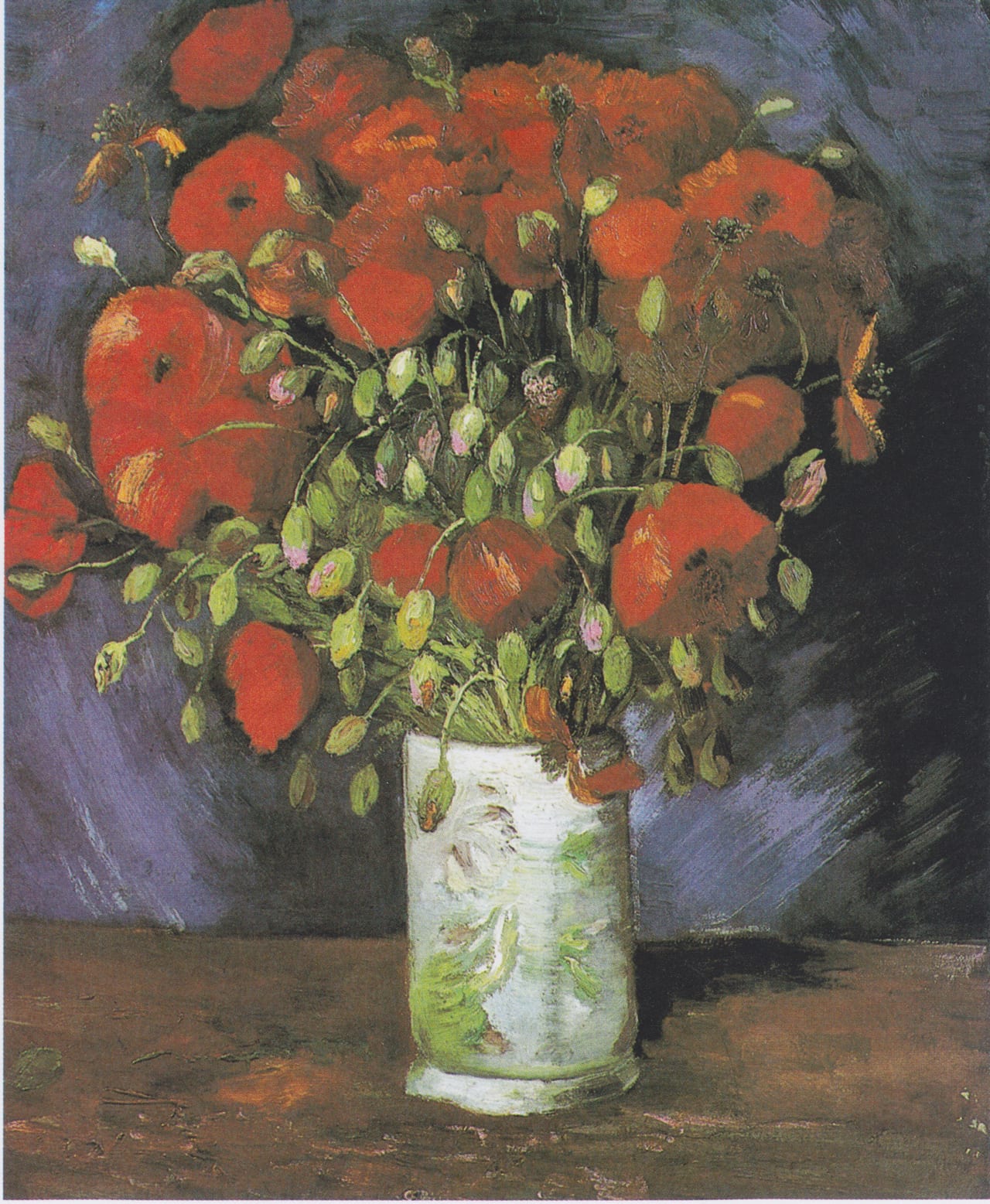
Vase with Red Poppies
Vincent van Gogh · 1886
Van Gogh painted this bouquet in Paris, where friends and acquaintances sent him flowers every week for his still lifes. It came to the museum from Anne Parrish Titzell in 1957. When its authenticity was questioned in 1990 the museum sent it to the Van Gogh Museum, which declared it genuine; an X-ray had shown the outline of a man’s portrait under the flowers.
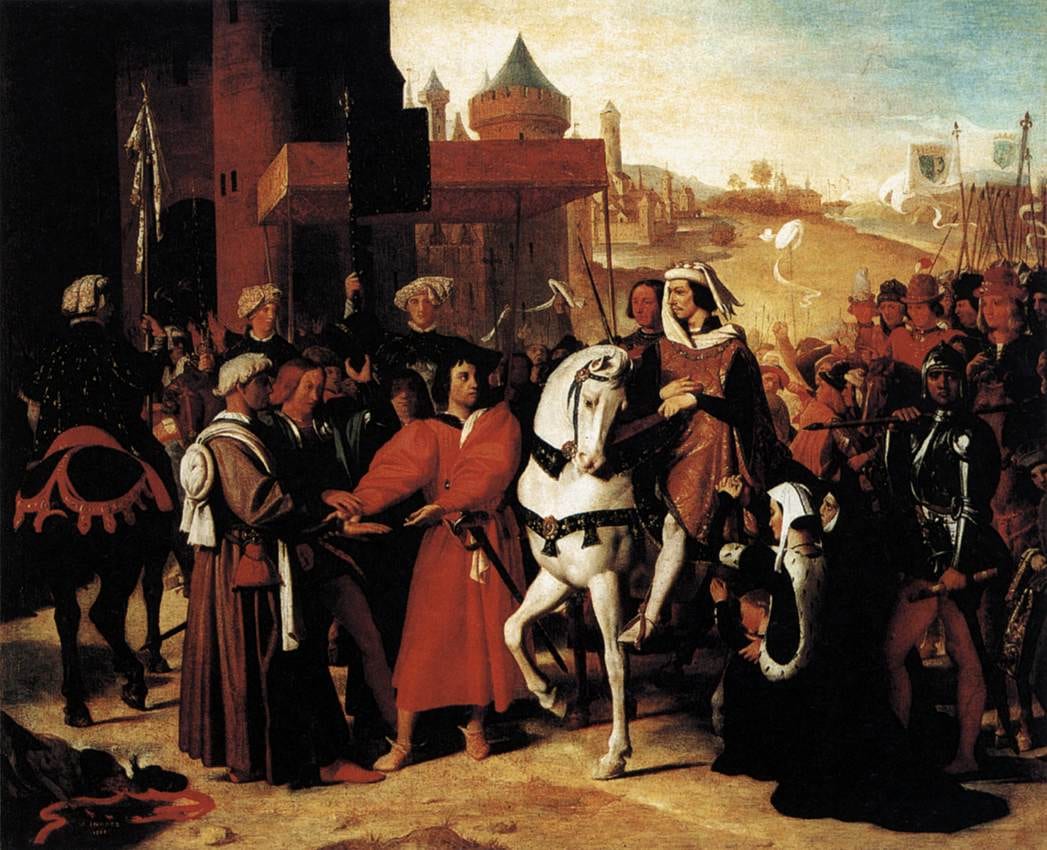
The Dauphin’s Entry Into Paris
Jean-Auguste-Dominique Ingres · 1821
A small scene of medieval history from Ingres’s Troubadour period: the future Charles V of France returns to Paris on 2 August 1358 after a revolt. Amédée-David de Pastoret commissioned it, and his ancestor Jehan Pastoret, president of the parlement of Paris, is the figure in red.
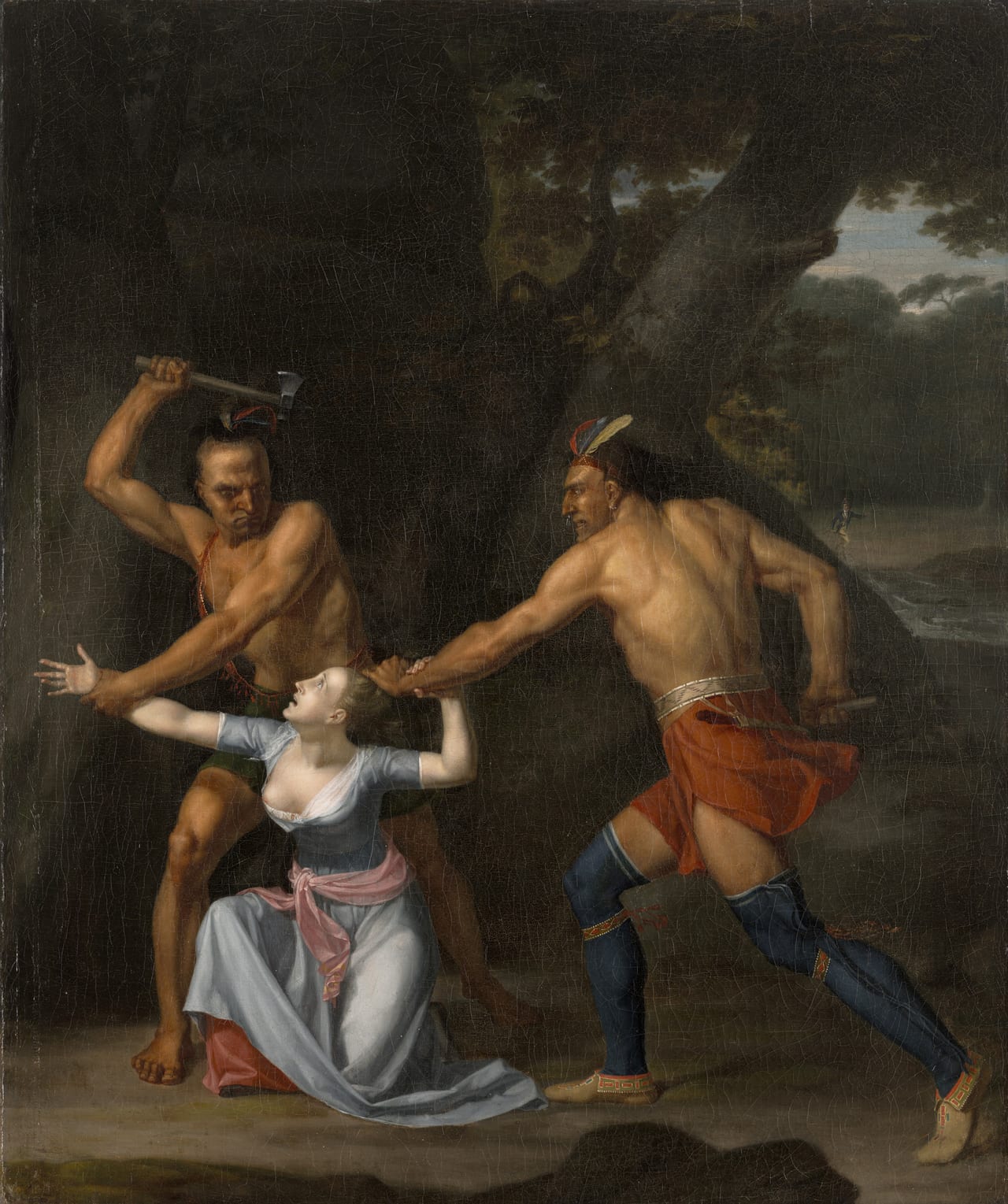
The Death of Jane McCrea
John Vanderlyn · 1804
Two Native American warriors kill Jane McCrea during the Saratoga campaign of 1777, and in the distance her fiancé, the Loyalist officer David Jones, rushes to save her, dressed not in British red but in the blue coat of the Continental Army. It was Vanderlyn’s first history painting, shown at the Paris Salon of 1804.
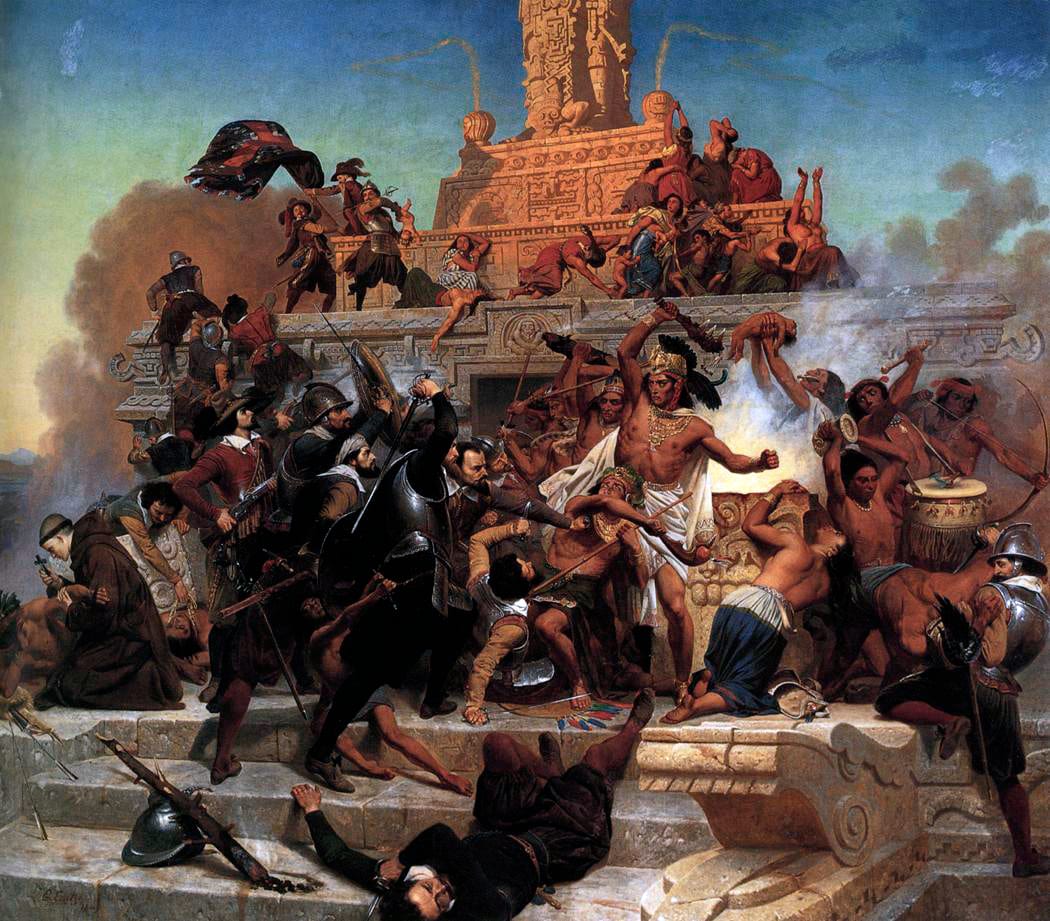
The Storming of the Teocalli by Cortez and His Troops
Emanuel Leutze · 1848
Heavily armed Spaniards under Hernán Cortés fight the Aztecs at the teocalli of Tenochtitlan, and the Aztecs, for all their weaker weapons, put up a fierce but futile defence. Leutze painted it in Düsseldorf in 1848 from William H. Prescott’s History of the Conquest of Mexico; when it was shown in New York the next year, some took it as a comment on the recent Mexican–American War.
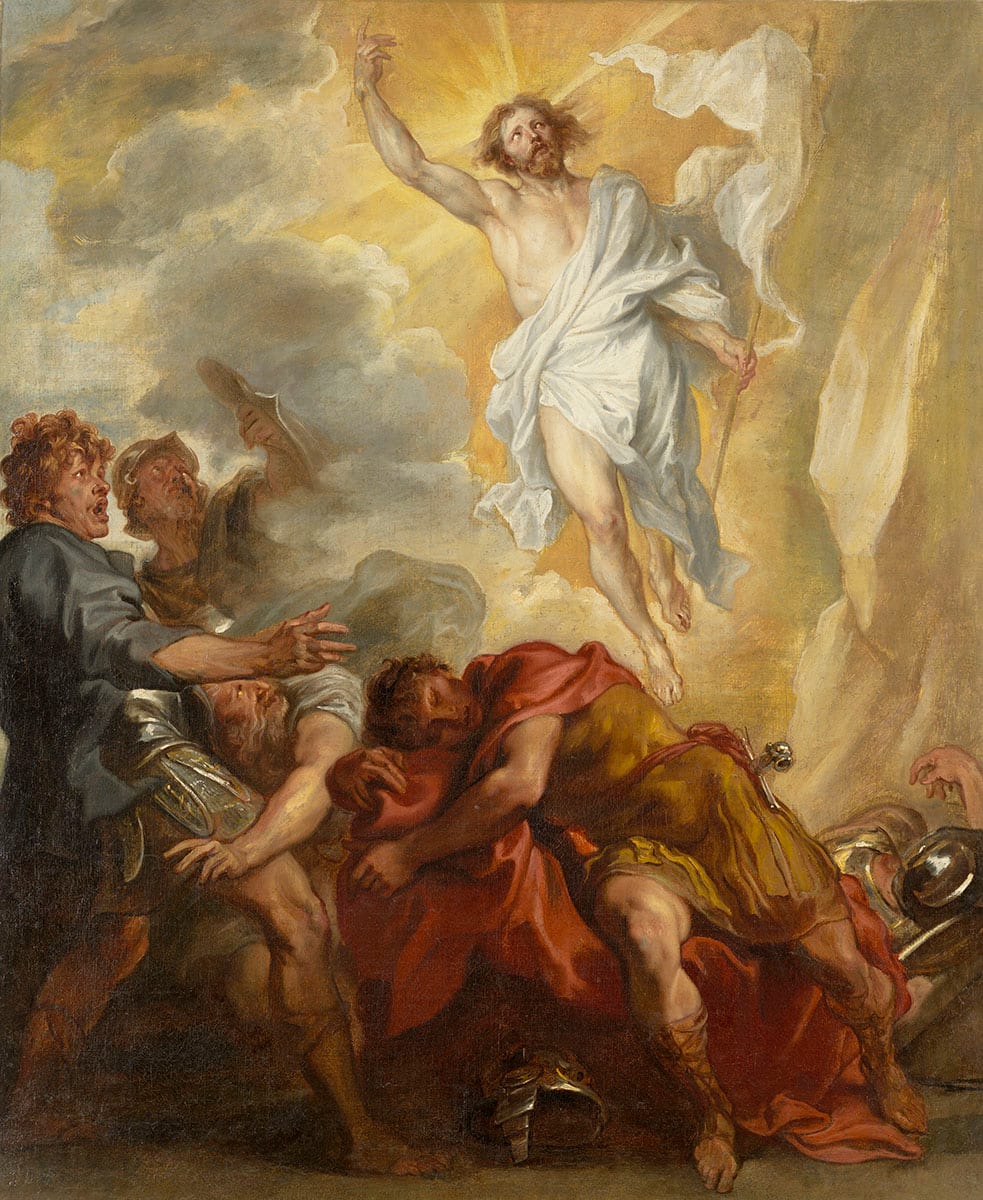
The Resurrection
Anthony van Dyck
Dressed in white, with red hair and bright rays of light coming from his head, Christ points up to heaven with his right hand and holds a staff with his left, hovering in the air. The five huddling soldiers below are in darker tones and shadow. The guards at the left corner show fear and astonishment, while along a diagonal to the right soldiers are still asleep. Experts place it in Van Dyck’s second Antwerp period.
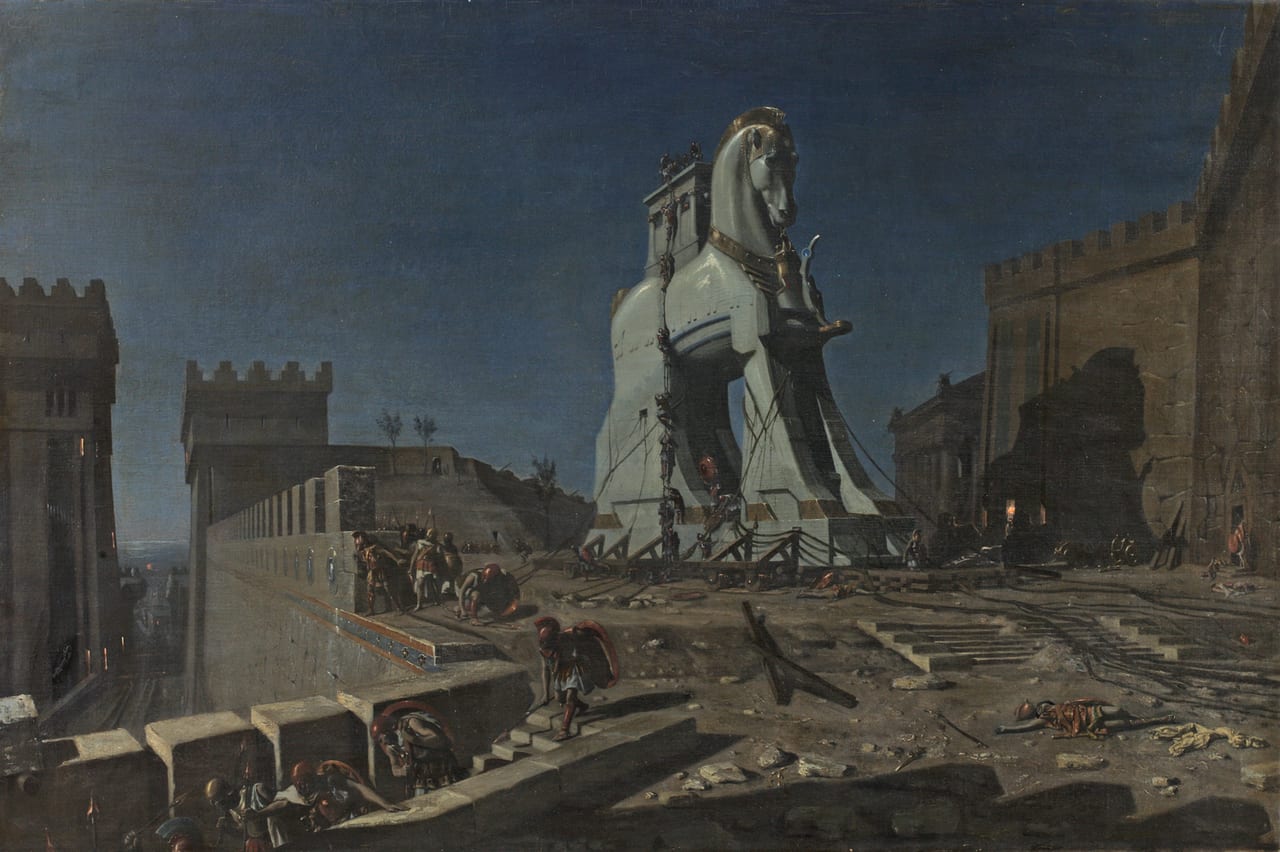
Le Cheval de Troie
Henri-Paul Motte
Motte’s Trojan horse was the first of his paintings shown at the Paris Salon, the Salon of 1874, and the Atheneum acquired it in 2011. A pupil of Jean-Léon Gérôme, Motte specialised in historical subjects.
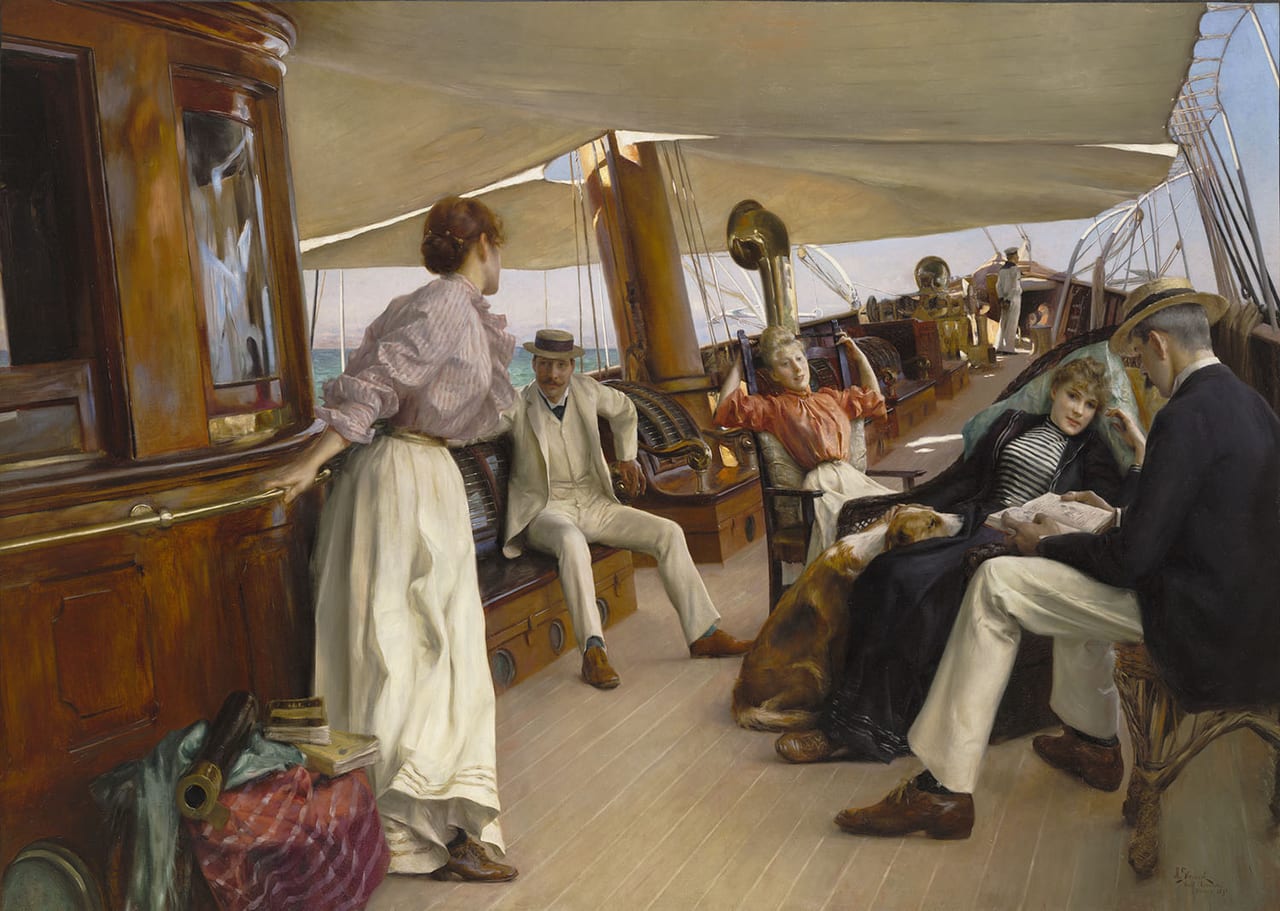
On the Yacht “Namouna”, Venice
Julius LeBlanc Stewart · 1890
Stewart shows a sailing party on deck and includes among them a portrait of the actress Lillie Langtry. Born in Philadelphia, he spent his career in Paris.
Artists
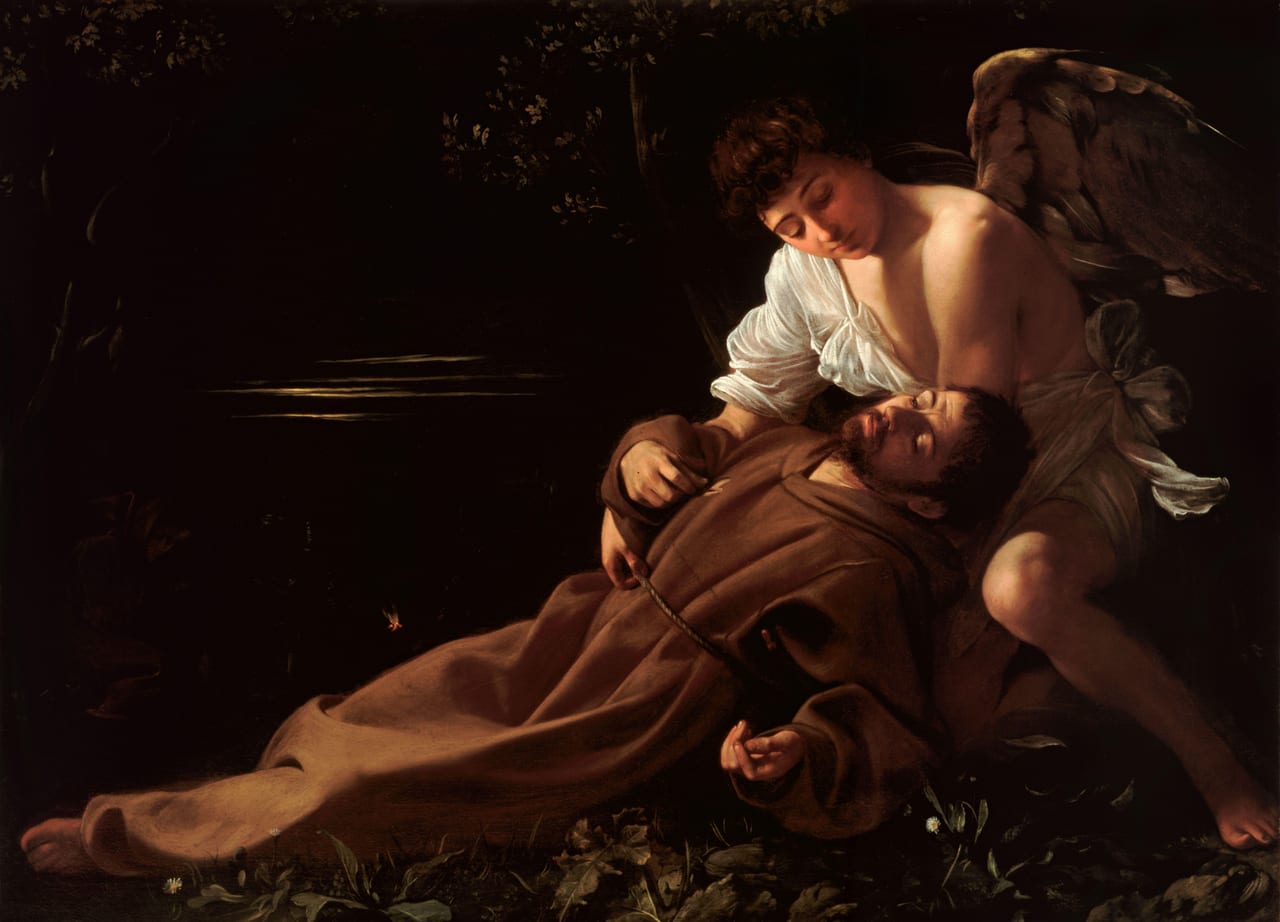
Caravaggio
Saint Francis of Assisi in Ecstasy
Saint Francis of Assisi in Ecstasy was the first of Caravaggio’s religious canvases. A two-winged angel takes the place of the six-winged seraph in Brother Leo’s account, and there are no streams of fire; the gentle-seeming angel bulks far larger than the unconscious saint. Caravaggio, a leading Italian painter, became famous for the intense and unsettling realism of his large religious works.
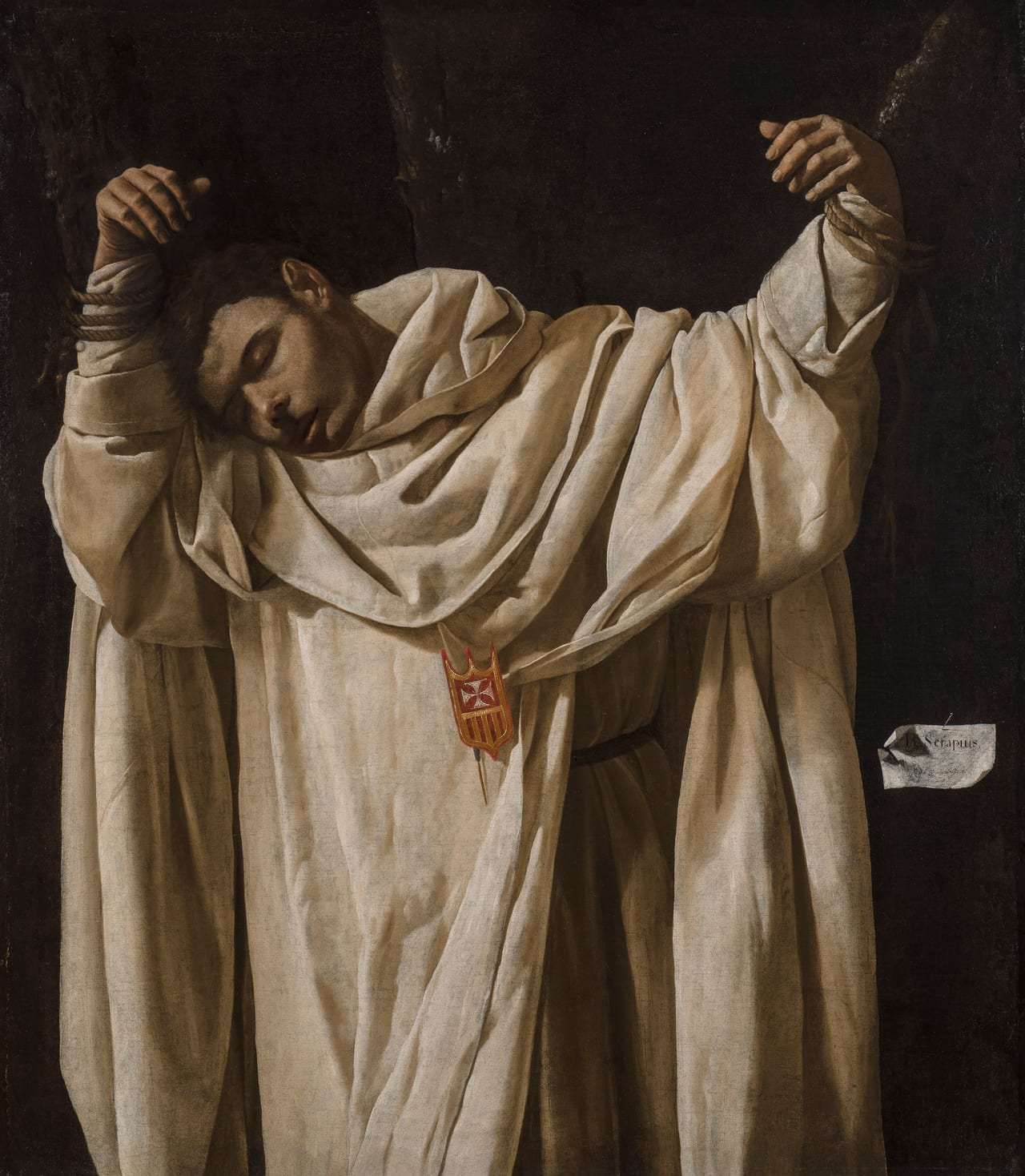
Francisco de Zurbarán
Saint Serapion · 1628
Saint Serapion stands in a quasi-crucified pose, each hand bound by ropes and chains to a pole overhead, and the canvas stops at his knees; a small note to the left of his chest names him. Zurbarán, a major painter of the Spanish Baroque, is noted above all for religious subjects, painted with Caravaggesque naturalism and tenebrism.
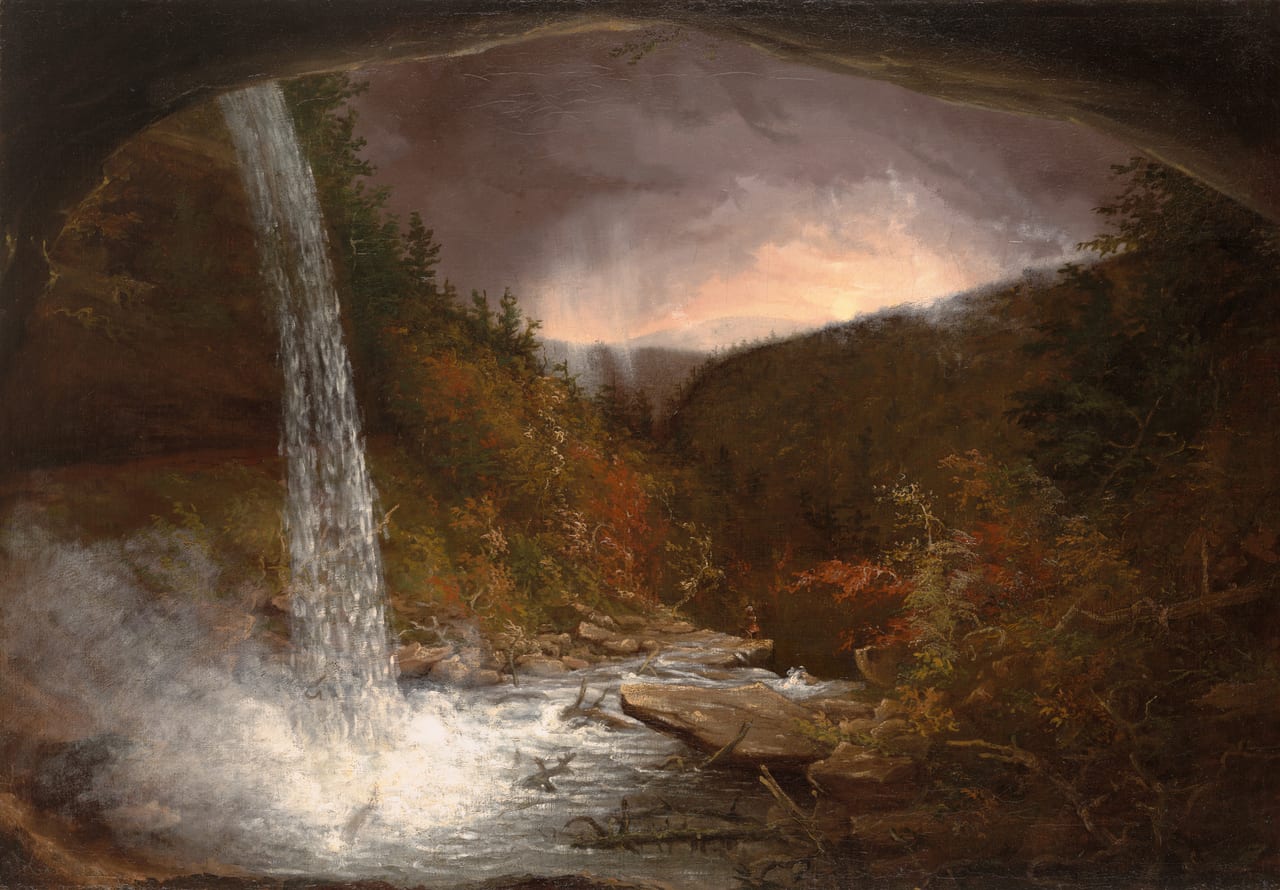
Thomas Cole
Kaaterskill Falls · 1826
Kaaterskill Falls, showing the falls in upstate New York, was Daniel Wadsworth’s commission of 1826; he left it to the Atheneum by bequest in 1848, and the museum still owns it. Born in Lancashire, Cole was a Romantic who painted the American landscape and helped found the Hudson River school.
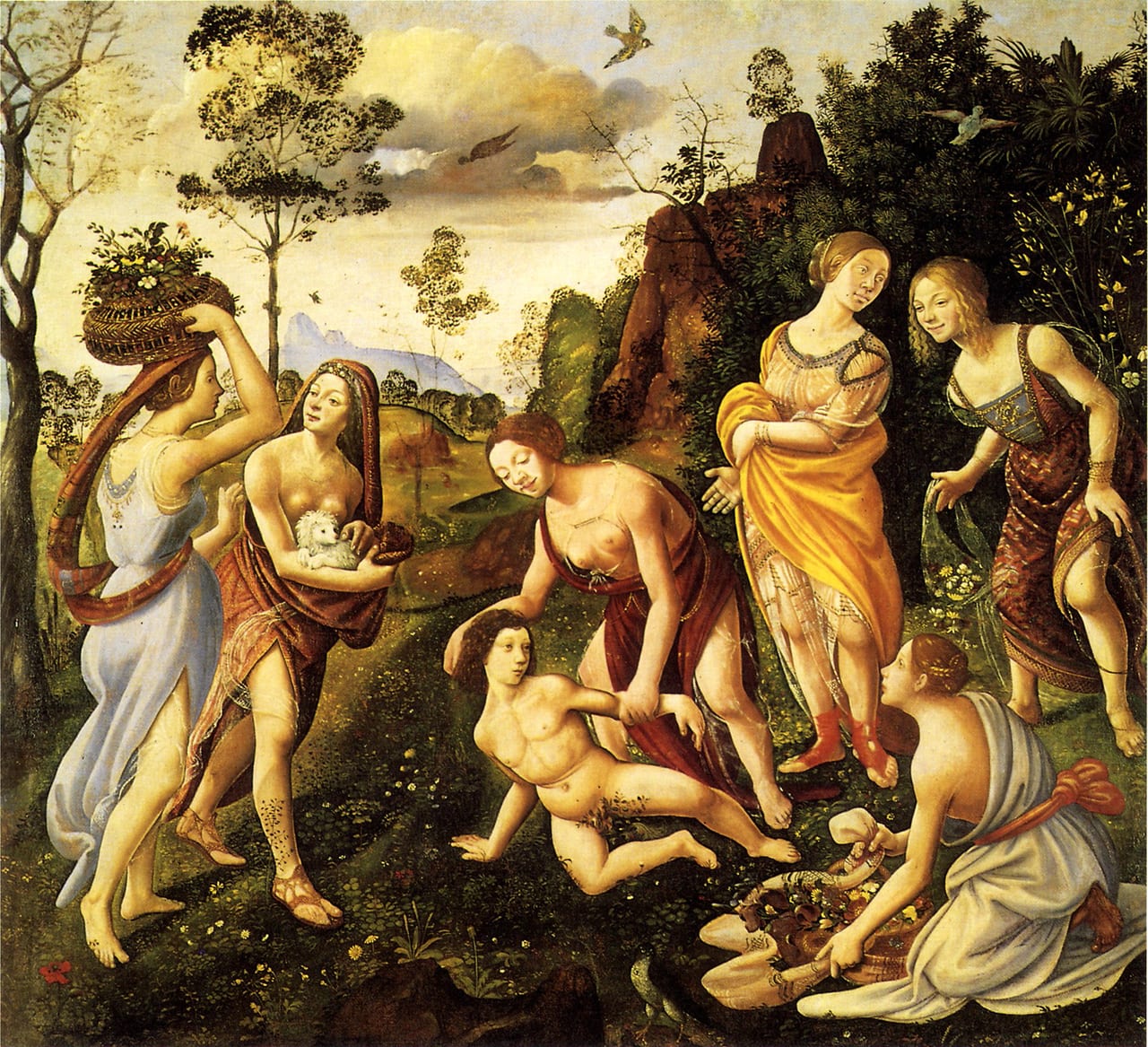
Piero di Cosimo
The Finding of Vulcan on Lemnos
The Finding of Vulcan on Lemnos, in oil and tempera on canvas, is the work of a Florentine Renaissance painter known for his eccentric character and his fanciful mythological pictures.
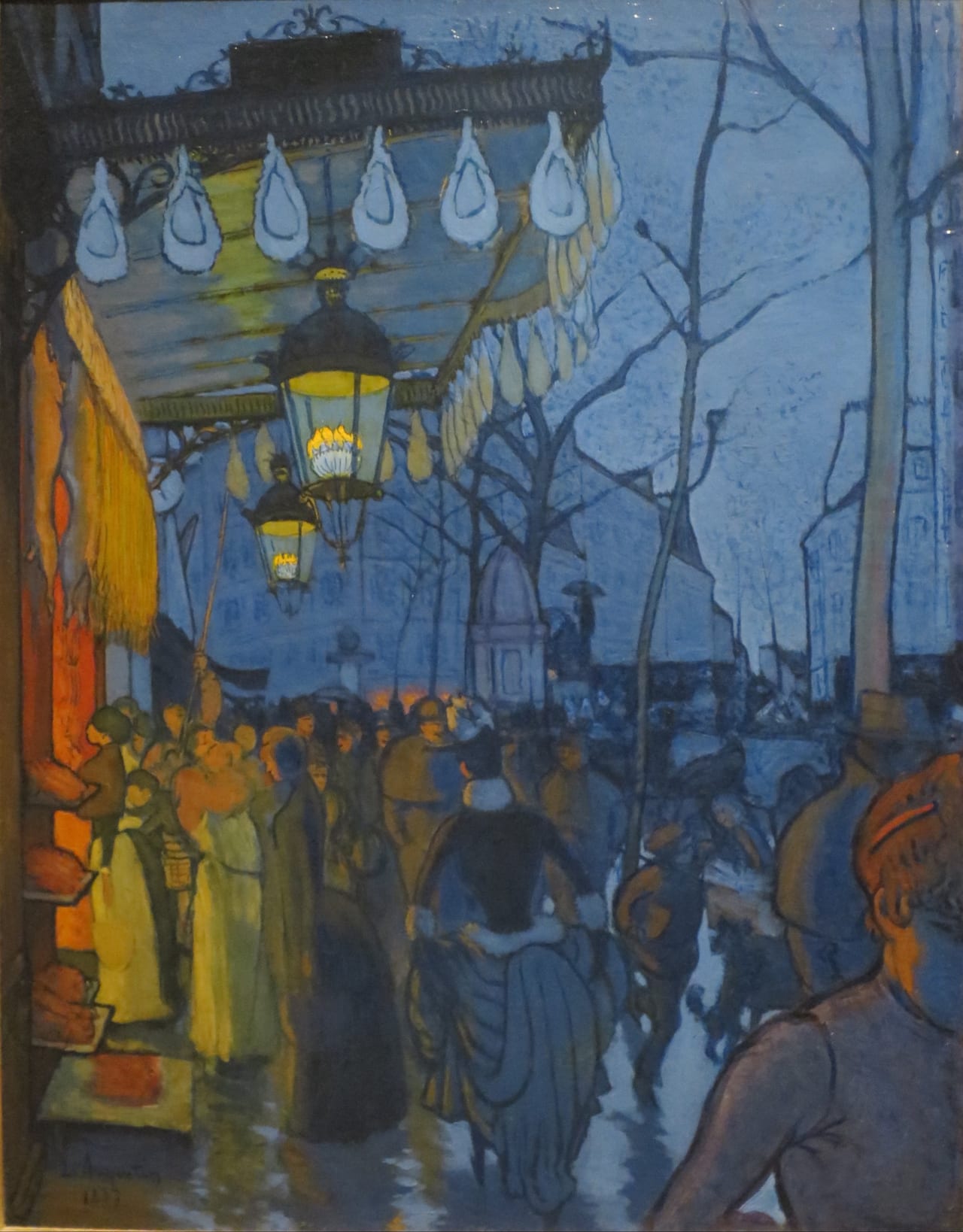
Louis Anquetin
Avenue de Clichy: Five O’Clock in the Evening · 1887
Avenue de Clichy: Five O’Clock in the Evening is an example of the style of flat colour and thick black outlines that Anquetin and Émile Bernard developed around 1887. The scholar Bogomila Welsh-Ovcharov has argued that it inspired Van Gogh’s Cafe Terrace at Night.
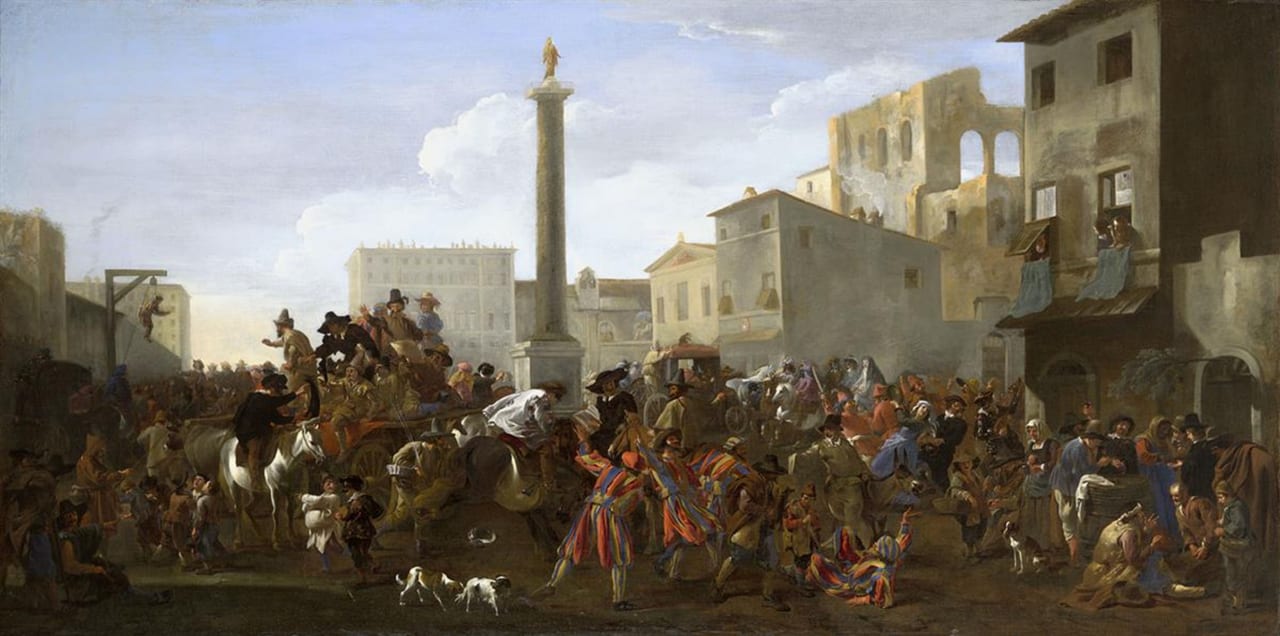
Jan Miel
Carnival on the Piazza Colonna · 1645
Carnival on the Piazza Colonna gives a powerful picture of carnival’s fury, the subject of Miel’s most original genre paintings. A Flemish painter active in Italy, he first belonged in Rome to the Bamboccianti, painters of the city’s lower classes.
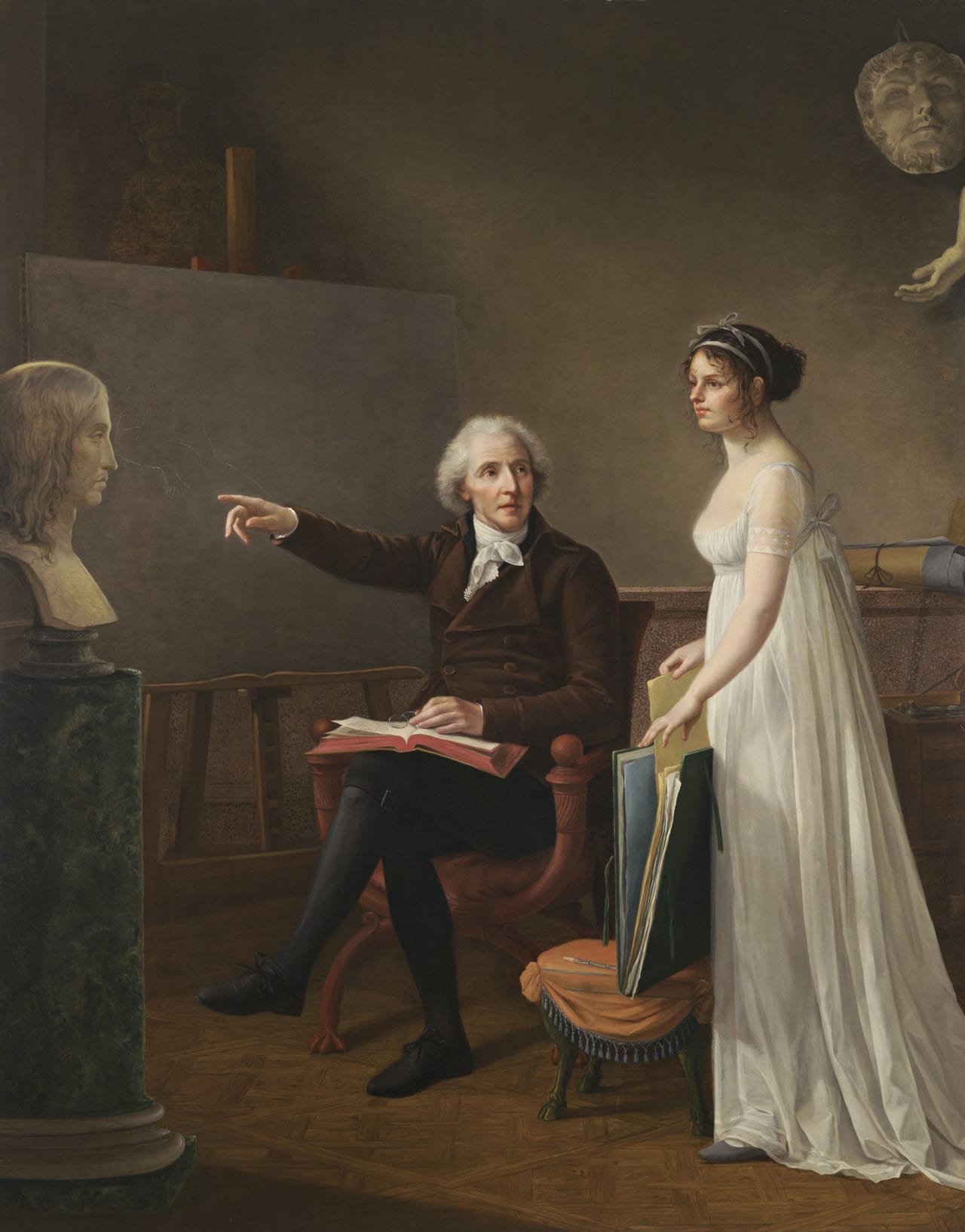
Constance Mayer
Self-Portrait of the Artist with her Father
Self-Portrait of the Artist with her Father shows Mayer beside her father Pierre, who points to a bust of Raphael as her example. First shown at the Paris Salon of 1801, it was bought by the Atheneum at Sotheby’s New York in 1989 for $120,000.
Artworks
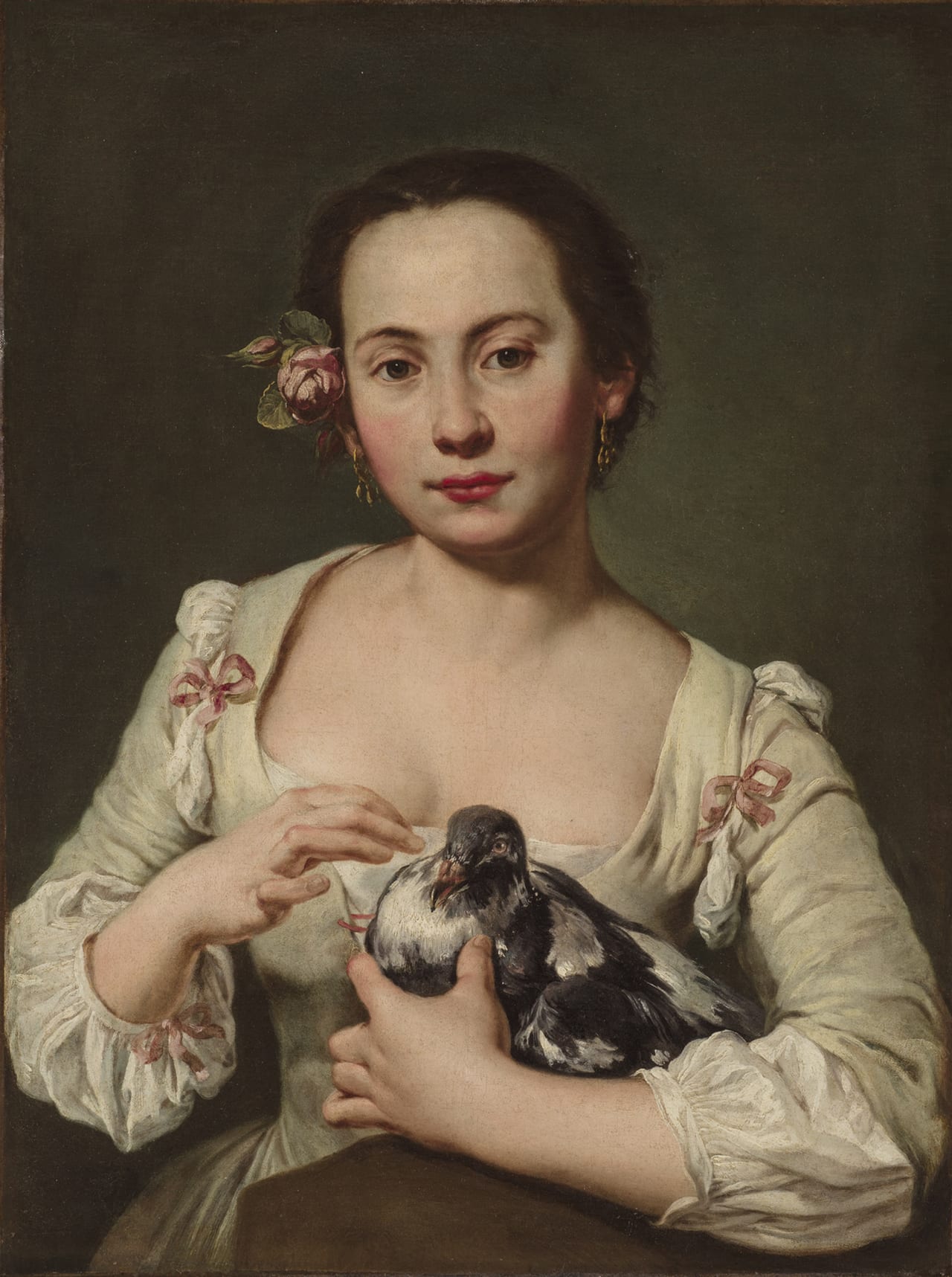
Young Woman with a Dove
Giacomo Ceruti
Sources
- The Wadsworth, “Collection”
- The Wadsworth, “European Art”
- The Wadsworth, “Restoration: Francisco de Zurbarán’s Saint Serapion”
- Britannica, “Wadsworth Atheneum”
- Britannica, “Piero di Cosimo”
- Britannica, “Frederic Edwin Church”
- Britannica, “James McNeill Whistler”
- Wikipedia, “Wadsworth Atheneum”
- Wikipedia, “Daniel Wadsworth”
- Wikipedia, “Hudson River School”
- Wikipedia, “Frederic Edwin Church”
- Wikipedia, “Saint Francis of Assisi in Ecstasy (Caravaggio)”
- Wikipedia, “Self-Portrait as a Lute Player”
- Wikipedia, “Saint Serapion (Zurbarán)”
- Wikipedia, “Kaaterskill Falls (painting)”
- Wikipedia, “The Lady of Shalott (William Holman Hunt)”
- Wikipedia, “Vase with Poppies”
- Wikipedia, “Anne Parrish”
- Wikipedia, “The Dauphin’s Entry Into Paris”
- Wikipedia, “The Death of Jane McCrea”
- Wikipedia, “The Storming of the Teocalli by Cortez and His Troops”
- Wikipedia, “The Resurrection (van Dyck)”
- Wikipedia, “The Coast of Brittany”
- Wikipedia, “Piero di Cosimo”
- Wikipedia, “Henri-Paul Motte”
- Wikipedia, “Giacomo Ceruti”
- Wikipedia, “Julius LeBlanc Stewart”
- Wikipedia, “Louis Anquetin”
- Wikipedia, “Jan Miel”
- Wikipedia, “Self-Portrait of the Artist with her Father”
- Britannica, “Caravaggio”
- Britannica, “Francisco de Zurbarán”
- Britannica, “Thomas Cole”
- The Coast of Brittany — Public domain via Wikimedia Commons (Public domain)
- Self-Portrait as a Lute Player — Public domain via Wikimedia Commons (Public domain)
- The Lady of Shalott — Public domain via Wikimedia Commons (Public domain)
- Vase with Red Poppies — Public domain via Wikimedia Commons (Public domain)
- The Dauphin's Entry Into Paris — Public domain via Wikimedia Commons (Public domain)
- The Death of Jane McCrea — Public domain via Wikimedia Commons (Public domain)
- The Storming of the Teocalli by Cortez and His Troops — Public domain via Wikimedia Commons (Public domain)
- The Resurrection — Public domain via Wikimedia Commons (Public domain)
- Le Cheval de Troie — Public domain via Wikimedia Commons (Public domain)
- On the Yacht “Namouna”, Venice — Public domain via Wikimedia Commons (Public domain)
- Saint Francis of Assisi in Ecstasy — Public domain via Wikimedia Commons (Public domain)
- Saint Serapion — Public domain via Wikimedia Commons (Public domain)
- Kaaterskill Falls — Public domain via Wikimedia Commons (Public domain)
- The Finding of Vulcan on Lemnos — Public domain via Wikimedia Commons (Public domain)
- Avenue de Clichy: Five O’Clock in the Evening — Public domain via Wikimedia Commons (Public domain)
- Carnival on the Piazza Colonna — Public domain via Wikimedia Commons (Public domain)
- Self-Portrait of the Artist with her Father — Public domain via Wikimedia Commons (Public domain)
- Young Woman with a Dove — Public domain via Wikimedia Commons (Public domain)
Invite the Wadsworth Atheneum into your living room