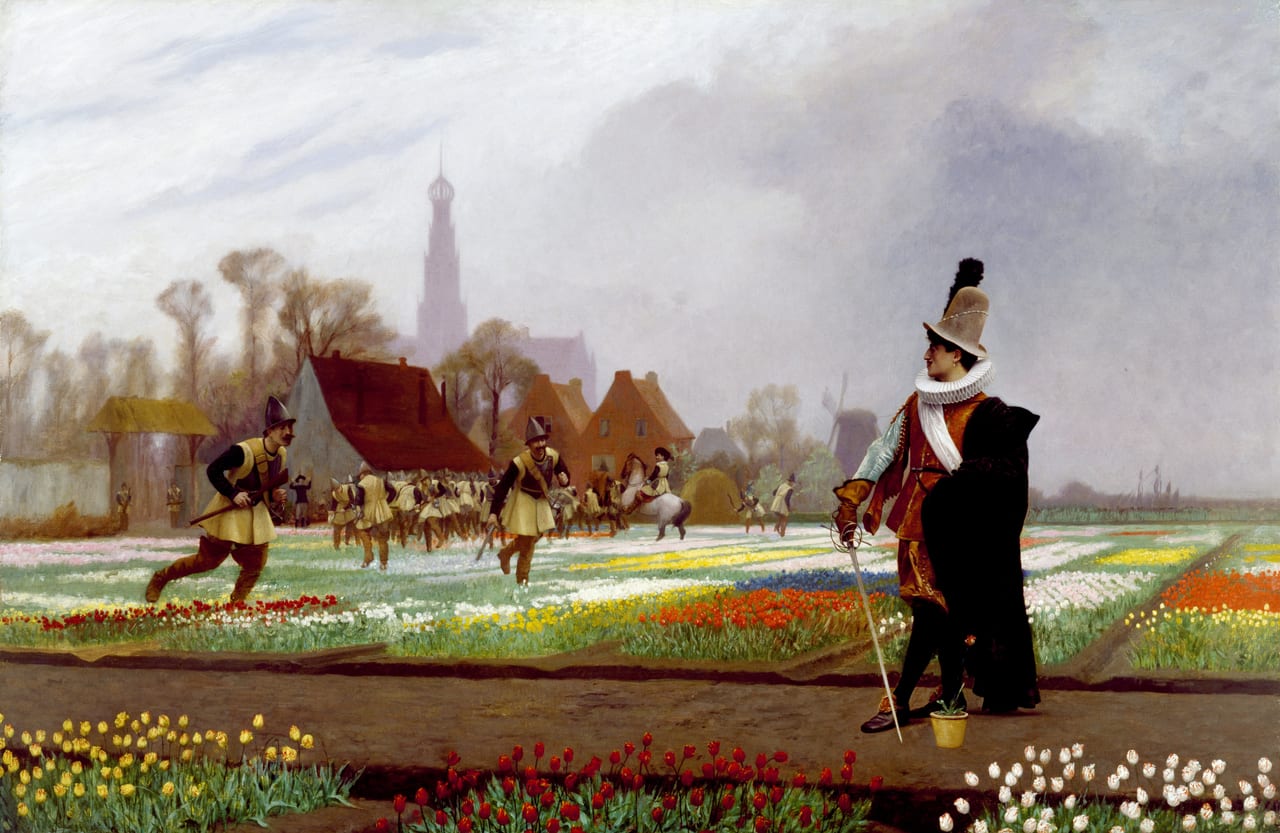
The Christian Martyrs’ Last Prayer
Jean-Léon Gérôme · 1863–1883

Walters Art Museum
Baltimore
Henry Walters left the City of Baltimore the art collection his father William had begun, with two buildings and an endowment, and in 1934 the Walters opened “for the benefit of the public.” Its permanent collection now spans seven millennia: Roman sarcophagi and images of the Buddha, Ethiopian icons, Gospel books and illuminated Qur’ans, and paintings including Raphael’s Madonna of the Candelabra and Monet’s Springtime.
- spanned by the permanent collection, with art from cultures around the world
- 7 millennia
- of art across a campus of five historic buildings
- 36,000 objects
- in the collection Henry Walters bequeathed to Baltimore at his death in 1931
- 22,000+ works
From Baltimore to Paris
William Thompson Walters moved to Baltimore in 1841, traded in grain and in 1847 founded an importing firm, William T. Walters & Co., as a liquor wholesaler. When the American Civil War broke out in 1861 he moved to Paris, a nominal Confederate loyalist, and he spent much of the war in Europe, studying works of art and buying them. In 1859 he had begun working with George A. Lucas, an American dealer then new to the Paris trade.
William Walters bought major works at auction or commissioned them straight from the artists, among them Barbizon masters such as Millet and academic masters such as Gérôme and Alma-Tadema. He commissioned Durand’s The Catskills in 1858, and that July ordered 200 watercolours from the Baltimore-born painter Alfred Jacob Miller. Gérôme took twenty years to deliver The Christian Martyrs’ Last Prayer, which Walters had commissioned in 1863. Besides contemporary European work he also took up collecting Asian art and ceramics, and from 1874 he opened his house on Mount Vernon Place to the public most springs, giving the proceeds to charity.
Earlier accounts of William and Henry Walters dwelt on their philanthropy and their collecting. The museum is now addressing and examining both men’s support of the Confederacy, and the Eurocentric bent of what they collected.
Henry Walters and a palace in Rome
At William’s death in 1894 the collection passed to his son Henry Walters, who greatly broadened the range of his acquisitions. In 1902 Henry bought the contents of the Palazzo Accoramboni in Rome. Many of its works proved to be by masters other than those named on them, and others were by painters out of fashion at the time, El Greco’s Saint Francis Receiving the Stigmata among them; the purchase also brought seven sarcophagi from a burial chamber associated with the Calpurnii Pisones family.
To show the whole collection, Henry had a palazzo-style gallery built in Baltimore’s Mount Vernon neighbourhood, designed by William Adams Delano, and it opened to the public in 1909 as the Walters Art Gallery. Its exterior took its cue from the Hôtel Pourtalès in Paris; inside, it followed the seventeenth-century Collegio dei Gesuiti, built for the Jesuits in Genoa. Ingres’s The Betrothal of Raphael and the Niece of Cardinal Bibbiena came in 1903, the same year Henry, who was not fond of French Impressionism, bought two works from Mary Cassatt, Monet’s Springtime among them.
Henry Walters died in 1931 and left the collection, then over 22,000 works, to the City of Baltimore, with two buildings and an endowment. The museum opened its doors as a public institution on 3 November 1934. It was called the Walters Art Gallery until 2000, when it became the Walters Art Museum; the original collection, and three of the museum’s five buildings today, belong to the city and are in the museum’s care.
Seven millennia under one roof
The collection reaches from ancient Egypt, Greek sculpture and Roman sarcophagi to medieval ivories, illuminated manuscripts and Renaissance bronzes, Old Master and nineteenth-century paintings, Chinese ceramics and bronzes, and Art Deco jewellery; among the jewelled objects by the House of Fabergé are two Russian Imperial Easter eggs. Medieval art is the part of the collection the museum is best known for internationally. The collection as a whole is especially renowned for ivories and enamels, reliquaries, early Byzantine silver and post-Byzantine art, and illuminated manuscripts, and for holdings of Ethiopian Orthodox Church art described as “the largest and finest collection of Ethiopian Orthodox Church art outside Ethiopia.”
Nearly 20,000 of the museum’s own images of its collection went out under a Creative Commons licence in 2012, and the Walters helped upload them to Wikimedia Commons. It now releases high-resolution images of its objects into the public domain, free for any use, through its online collection and its manuscripts website, Walters Ex Libris.
What to see
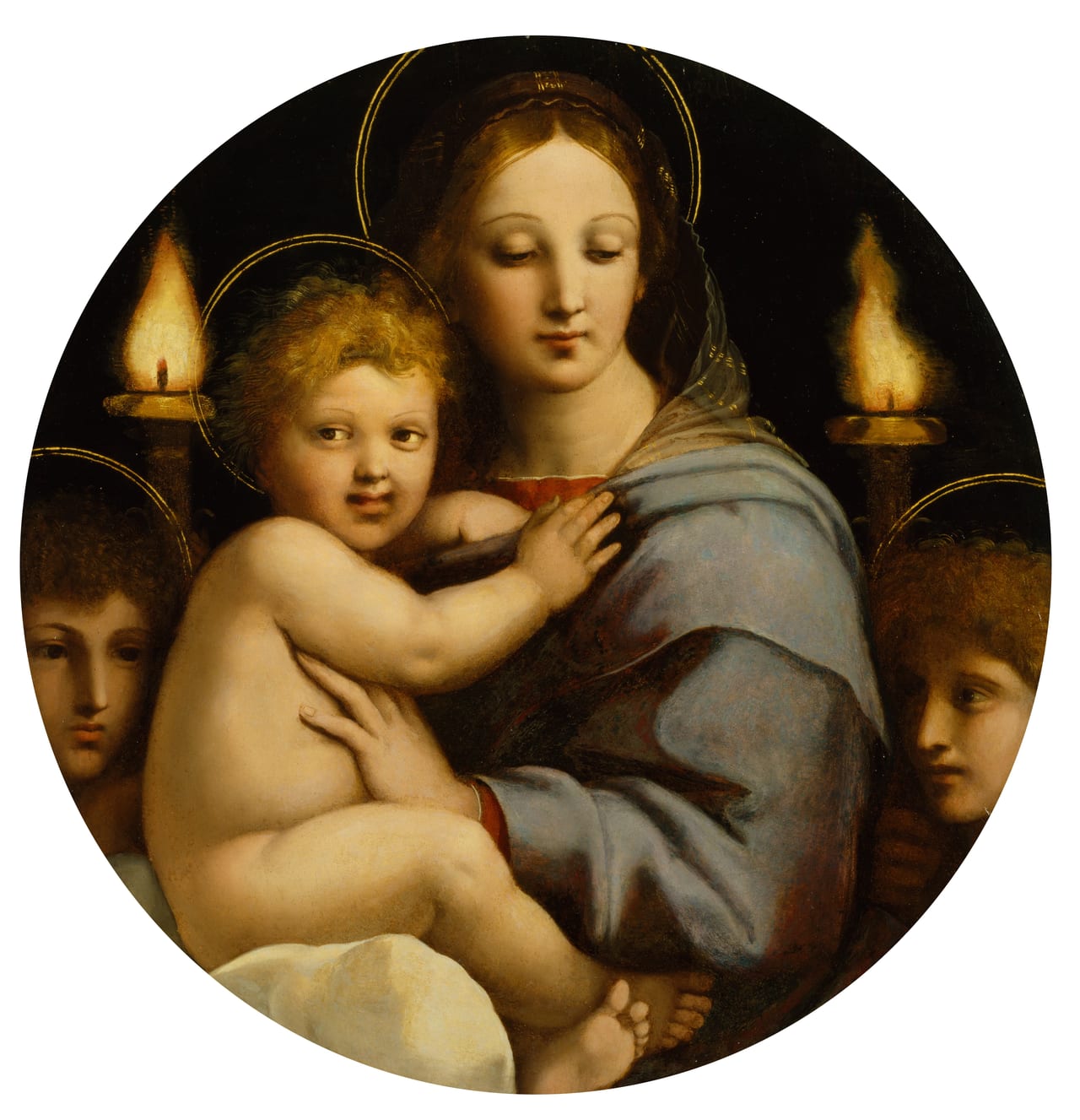
Madonna of the Candelabra
Raphael · c. 1513
Painted in Rome, this round Virgin and Child is flanked by candelabra, a rare motif borrowed from images of ancient Roman emperors, so that Mary and Christ appear as queen and king of Heaven. Raphael’s workshop had a heavy hand in it, and his assistants certainly painted the two angels. It had passed through the Borghese and Bonaparte family collections, and it was the first Madonna by Raphael to reach a North American collection.
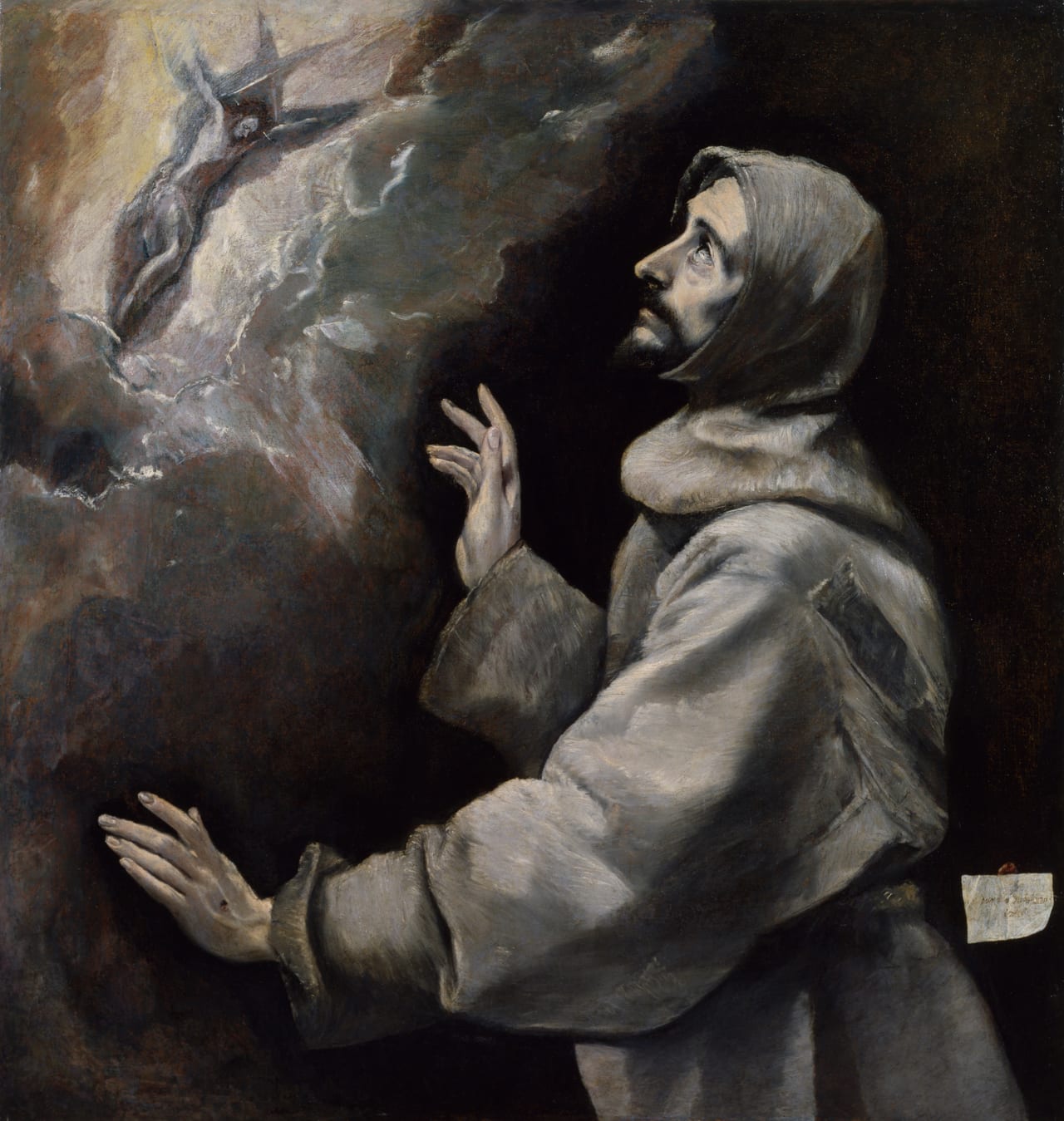
Saint Francis Receiving the Stigmata
El Greco · 1585–1590
In 1226 Francis of Assisi saw a vision of a seraph bearing the image of the crucified Christ, and received the wounds of the Crucifixion. With no setting, a dazzling apparition and a lengthened figure, El Greco makes the scene unearthly; the wounds mark the saint’s elegant hands and his transfixed gaze carries the moment. What appears to be a slip of paper, stuck to the canvas, reads in Greek “Domenikos Theotokopoulos Made This”.
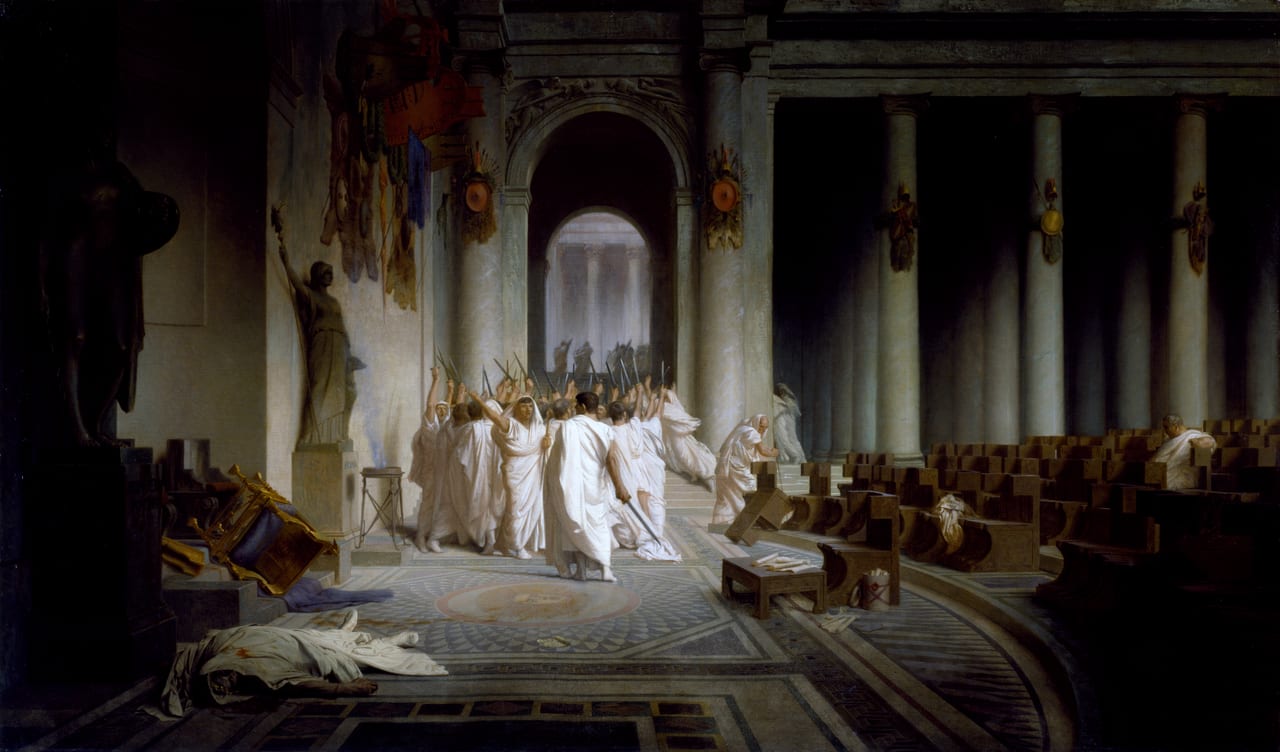
The Death of Caesar
Jean-Léon Gérôme · 1859–1867
Gérôme passes over the stabbing itself, the moment artists before him had often chosen, for the instant after it. Caesar’s body lies abandoned beside an overturned throne in the foreground while the senators surge out into the sunlight, swords raised; in the seats at right a single man stays behind, brooding. Gérôme’s carefully staged pictures went on to influence early film-makers.
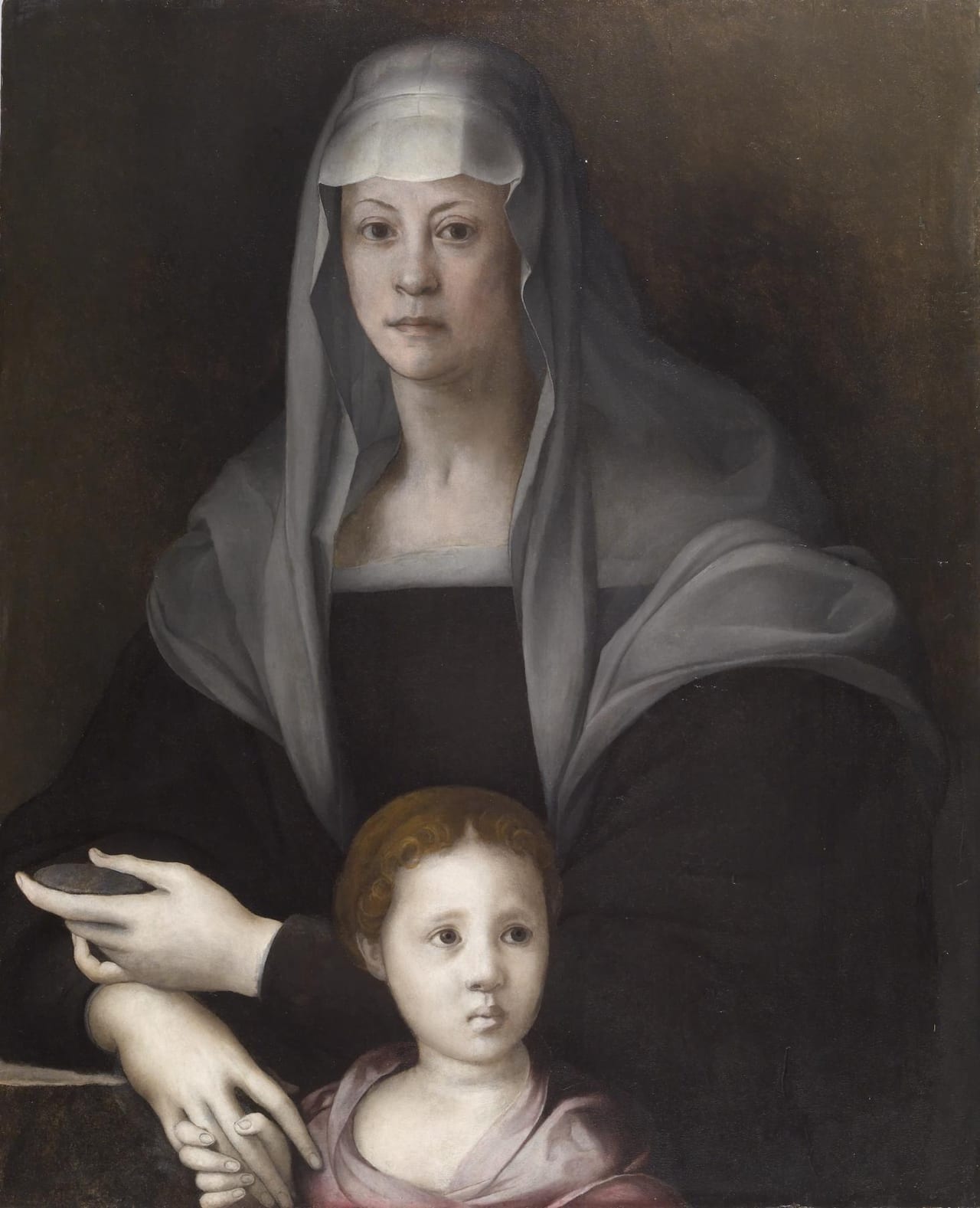
Portrait of Maria Salviati de’ Medici and Giulia de’ Medici
Pontormo · c. 1539
Maria Salviati, widow of the soldier Giovanni delle Bande Nere and mother of Cosimo I, holds the hand of a little girl, surely Giulia, left in her care when her father, Duke Alessandro de’ Medici, was murdered. Alessandro was the son of a Medici cardinal and an enslaved African servant, so this may be the earliest formal portrait in European art of a girl with African ancestry. The child was painted out in the nineteenth century, apparently to sell the picture as a portrait of a childless woman, and found again when it was cleaned in 1937.
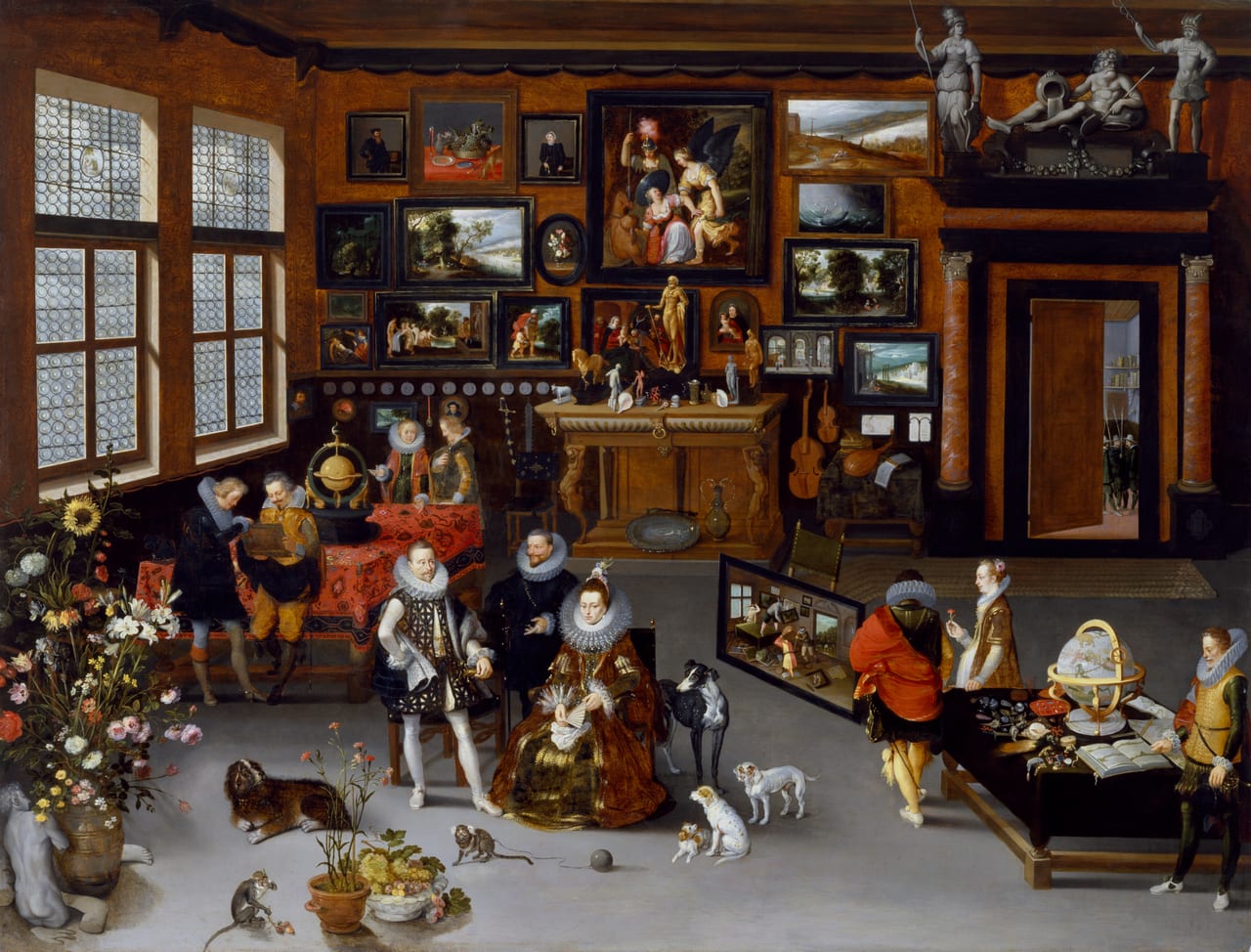
The Archdukes Albert and Isabella Visiting the Collection of Pierre Roose
Hieronymus Francken II and Jan Brueghel the Elder · c. 1621–1623
Albert and Isabella, Habsburg governors of the Southern Netherlands, call on the Brussels collector and statesman Pierre Roose: Isabella sits, Albert stands at her right and Roose stands behind. Flemish paintings cover the walls. A monkey is chained out of mischief, a dog seems to have two heads where an alteration has bled through, and the globe-like object on the left-hand table is one of Cornelis Drebbel’s attempts at a perpetual-motion clock.
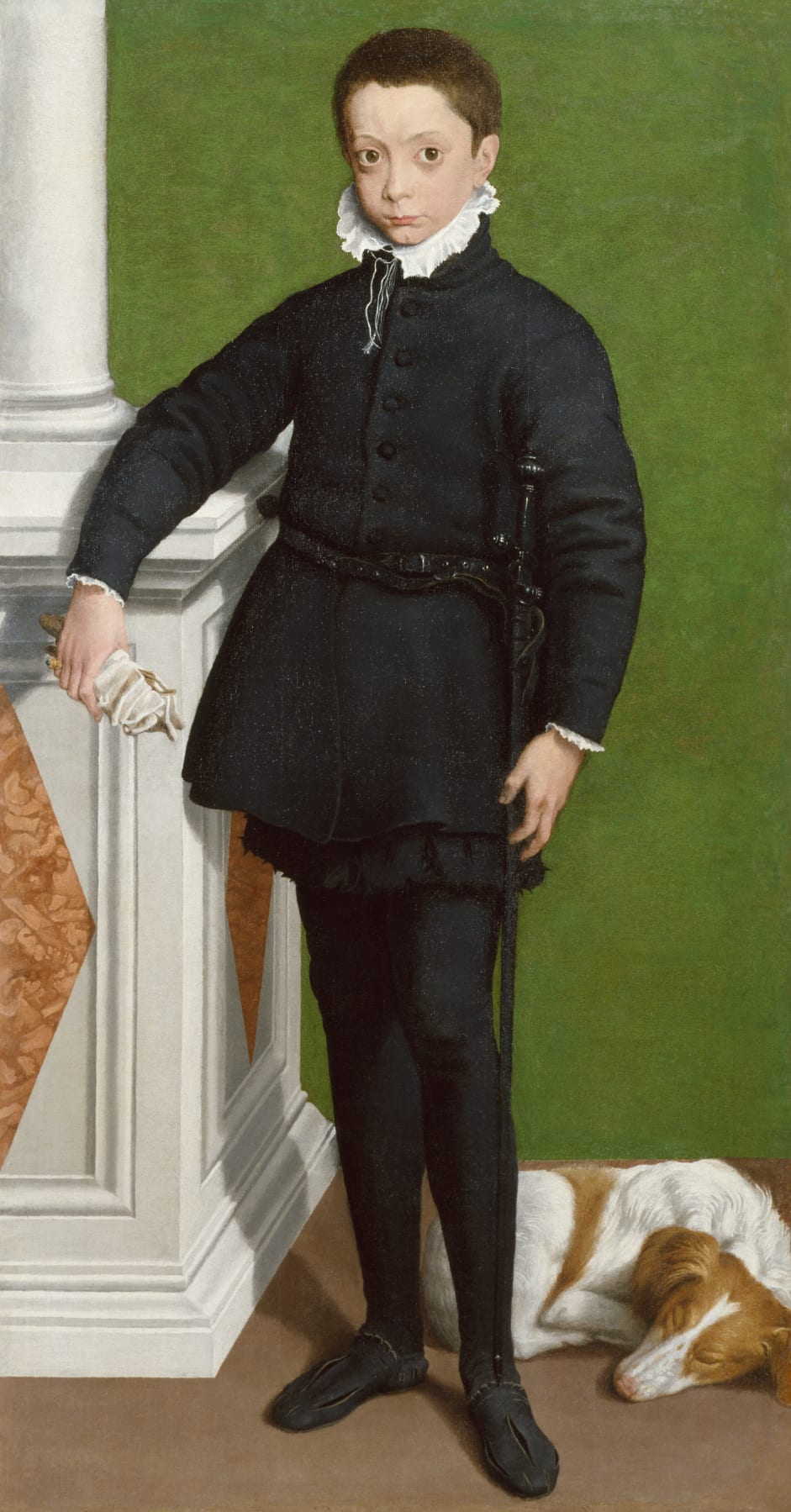
Portrait of Marquess Massimiliano Stampa
Sofonisba Anguissola · 1557
A note on the back of the canvas names the sitter: nine-year-old Massimiliano Stampa, third marquess of Soncino, painted in 1557 when his father’s death made him heir to the title. It was Sofonisba Anguissola’s first major commission. She softens the severe full-length format and the black dress of the Italian courts with the boy’s hesitant look and his sleeping pet.
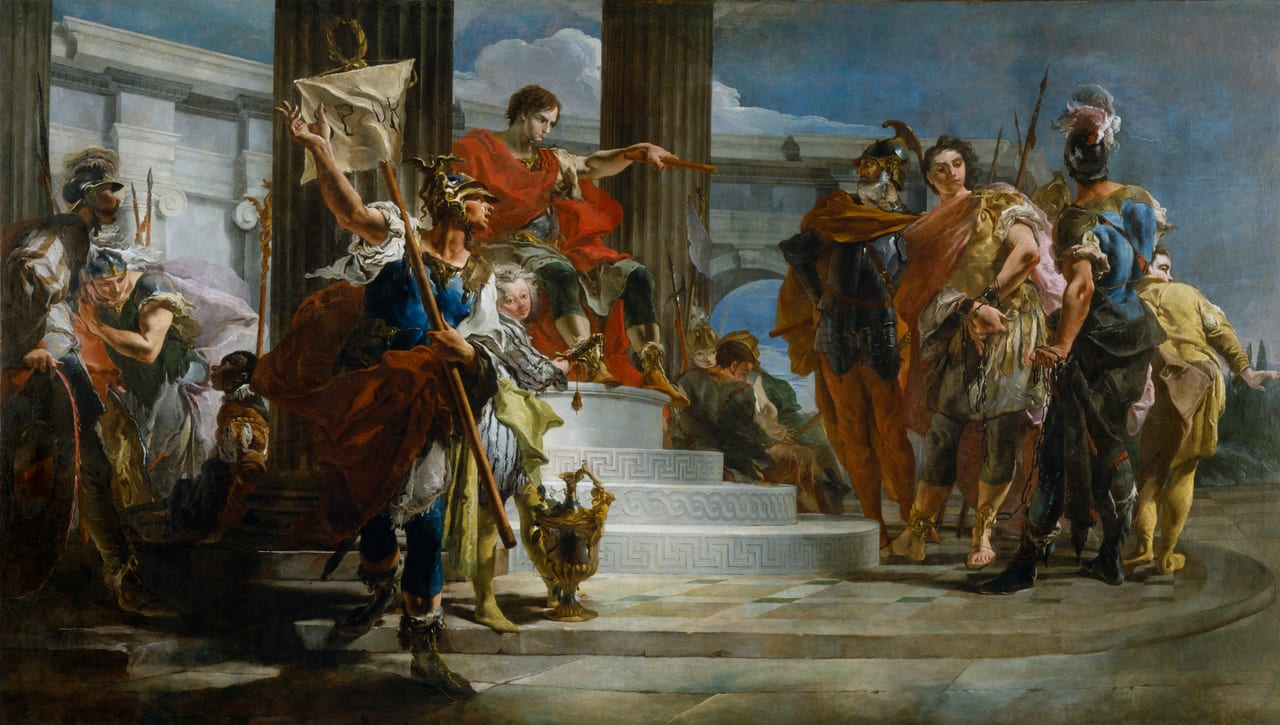
Scipio Africanus Freeing Massiva
Giovanni Battista Tiepolo · 1719–1721
Massiva, young nephew of a Numidian prince, went to battle though forbidden, was captured and brought before the Roman general Scipio Africanus, who scolded him and sent him home laden with gifts; his uncle, moved by such honour, changed sides. A banner bearing the initials of the Roman state sets the scene in Roman history. Following an eighteenth-century convention, Tiepolo paints the high-ranking North Africans much like Europeans except in dress, and he relies on those same artistic conventions to imply that the Black youth at left was Scipio’s servant.
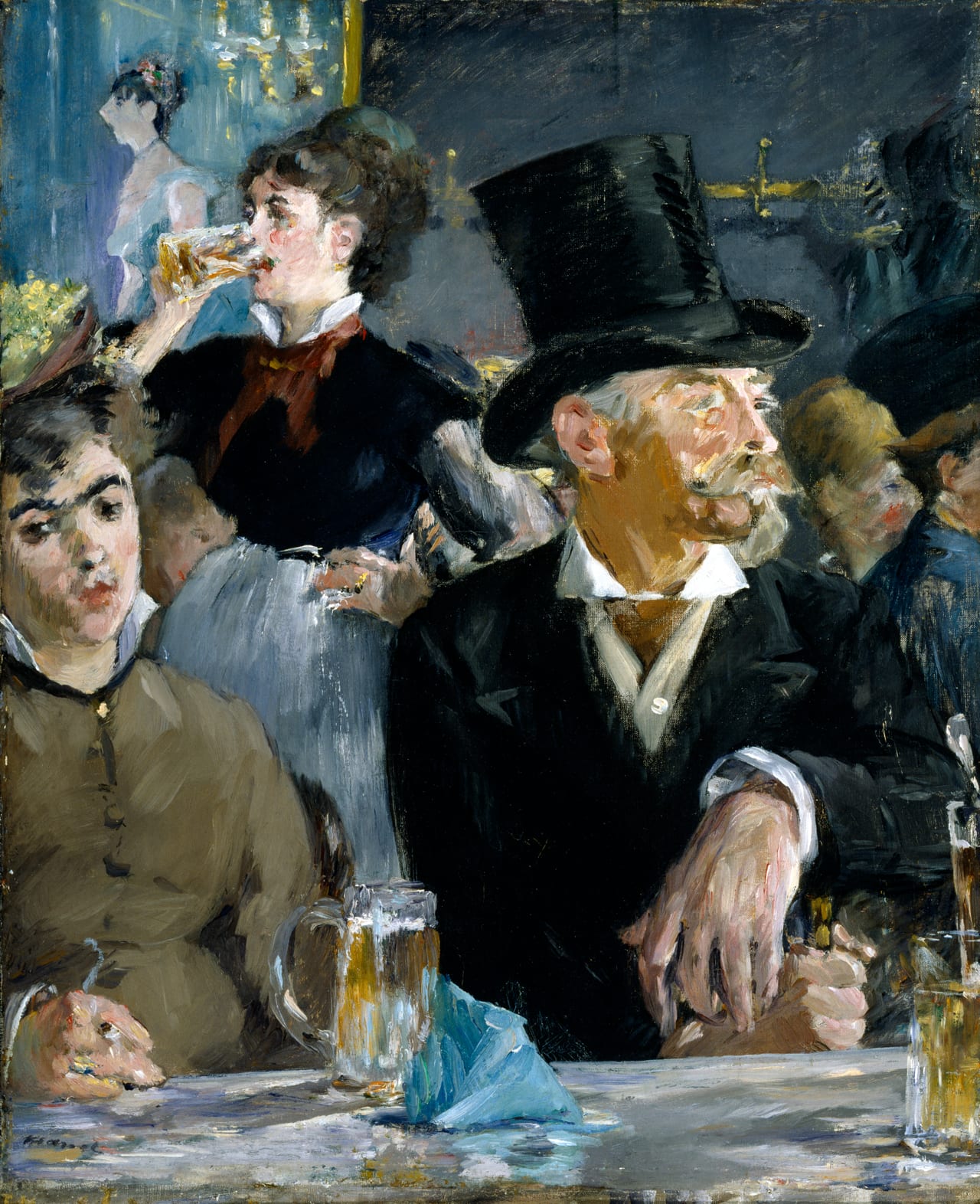
The Café-Concert
Édouard Manet · c. 1879
In 1878–79 Manet painted several scenes set in the Cabaret de Reichshoffen, where women on the edges of society mixed freely with prosperous men. Here the figures are packed into a tight space, each apparently unaware of the rest. Shown at the gallery of La Vie Moderne in 1880, it was praised by some for its unflinching realism and faulted by others for its apparent crudeness.
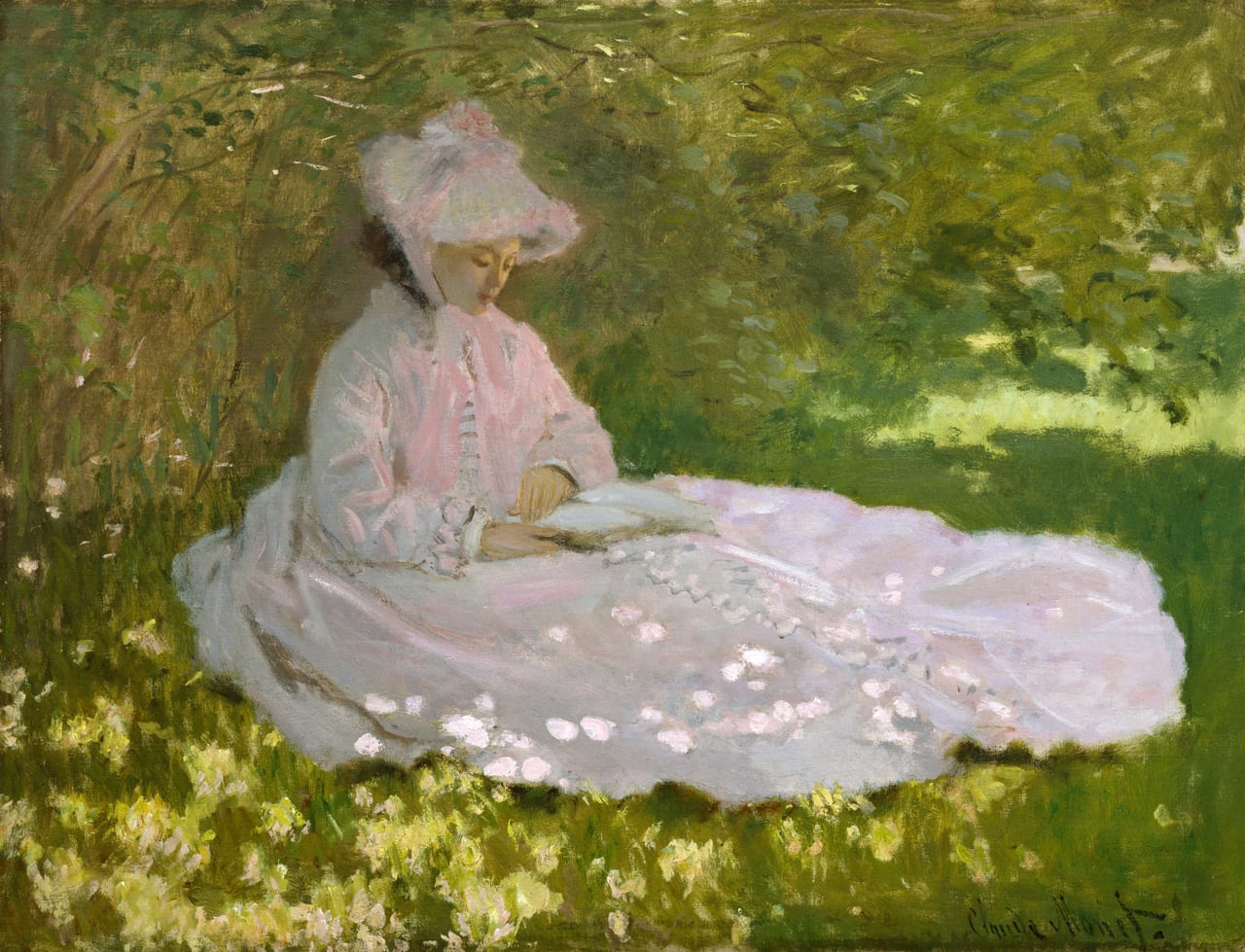
Springtime
Claude Monet · 1872
Camille, Monet’s first wife, sits under the lilacs in the garden of their house at Argenteuil, the Paris suburb they had moved to late in 1871; her fashionable dress places the picture squarely in its own day. It hung in the second Impressionist exhibition in 1876. Henry Walters, no admirer of Impressionism, bought it from Mary Cassatt in 1903.
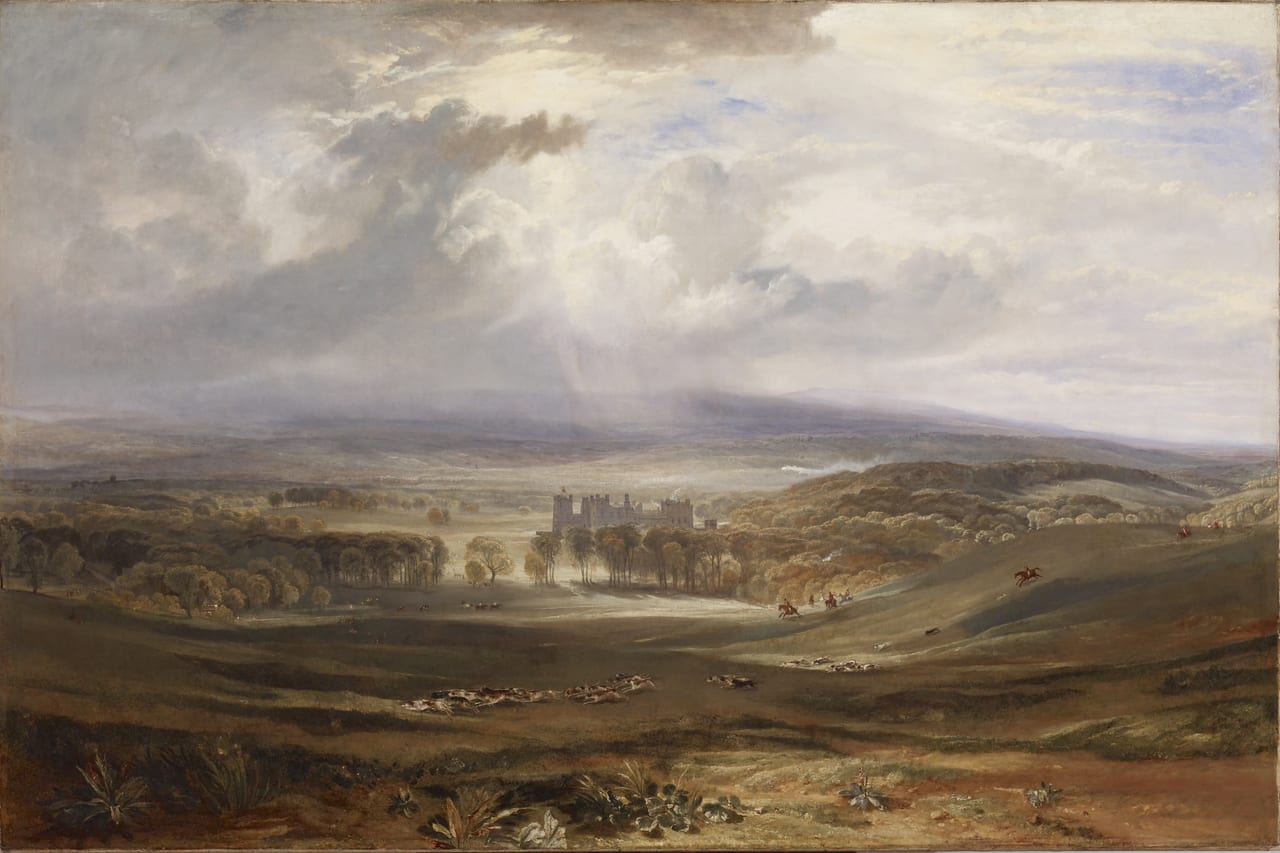
Raby Castle, the Seat of the Earl of Darlington
J. M. W. Turner · 1817
The 3rd Earl of Darlington commissioned this “house portrait”, one of the first pictures in which Turner made full use of a dramatic sky. A mounted huntsman stood in the foreground when it was shown at the Royal Academy in 1818; Turner painted him out after the picture was condemned as a “detestable fox-hunting scene.” The Earl jointly owned a plantation in Barbados worked by around two hundred enslaved people.
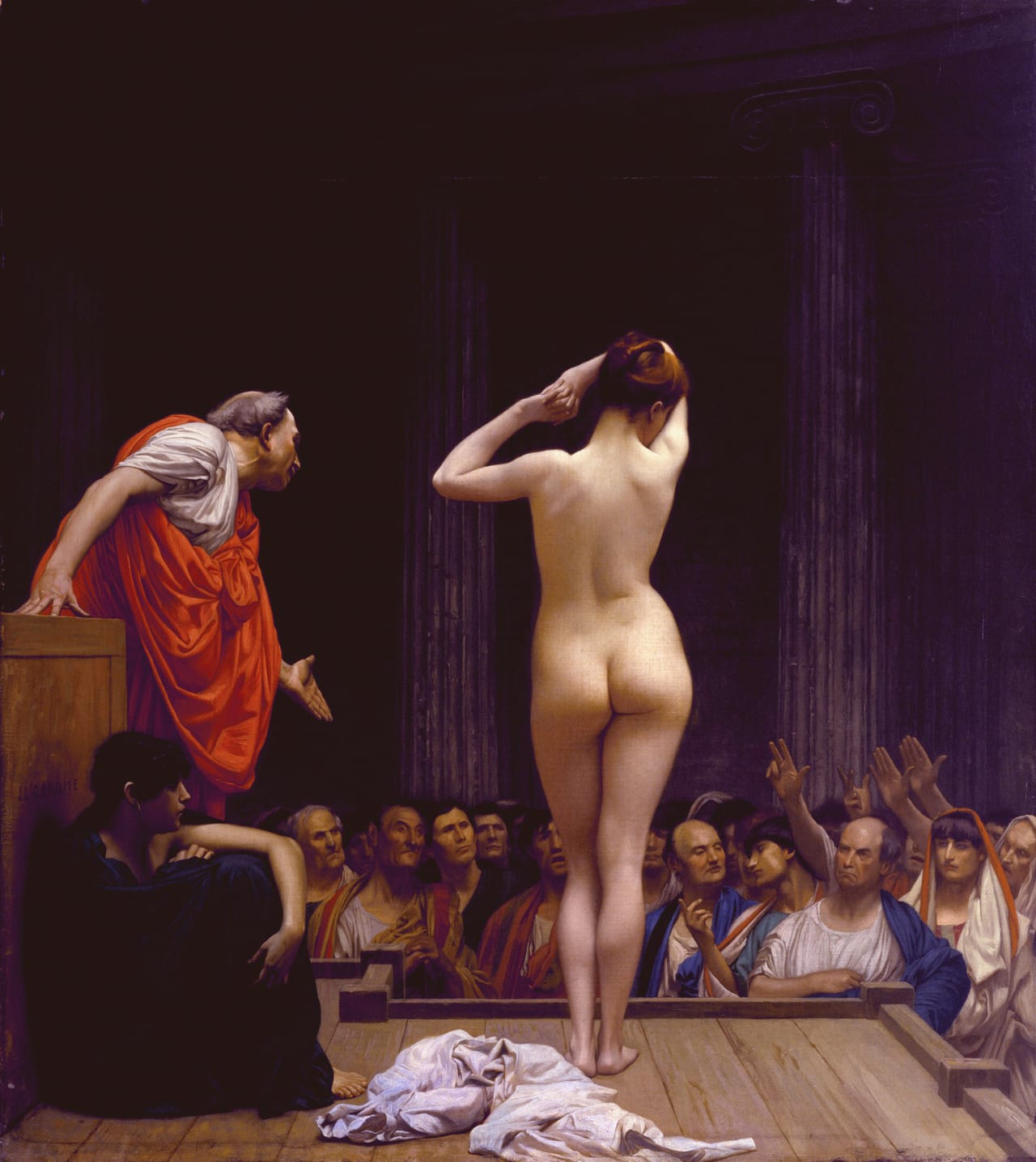
A Roman Slave Market
Jean-Léon Gérôme · c. 1884
A woman is auctioned in a slave market of ancient Rome, and Gérôme puts the sensuality of her nude body in the foreground, before a crowd of leering men. His choice of a white enslaved woman may have been influenced by the Circassian women sold into slavery in the 1860s, after Russia defeated the Circassians in the Caucasian War. His pictures of nudes in slave markets spread widely as prints and photographs, giving nineteenth-century viewers titillation despite, or perhaps undeterred by, the brutality of the subject.
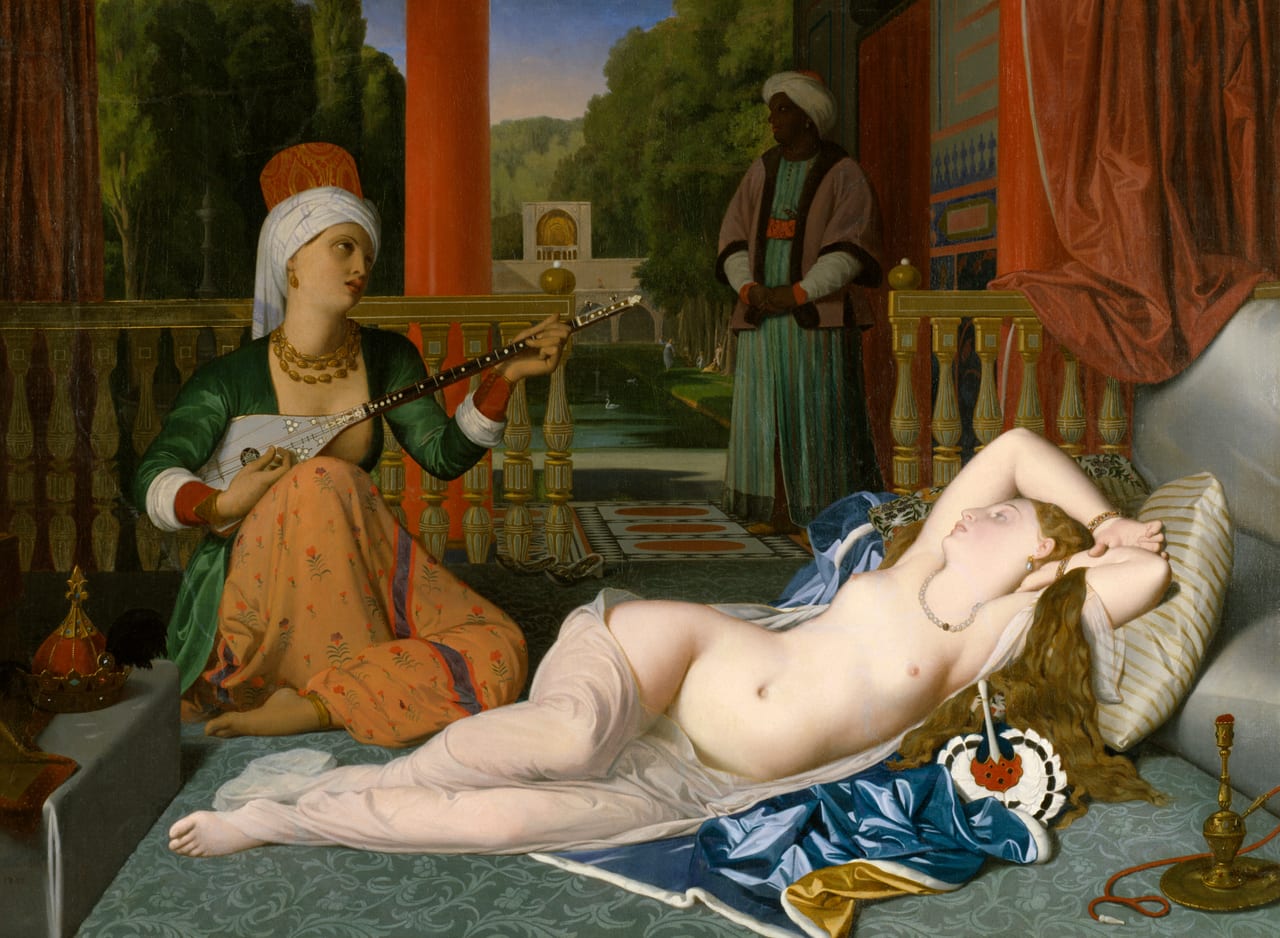
Odalisque
Jean-Auguste-Dominique Ingres and Jean-Paul Flandrin · 1842
An imagined harem scene, highly eroticised and shaped by long-held prejudice about beauty. The reclining white woman is attended by a darker-skinned companion who entertains her, while a Black man stands guard behind: cues that reinforce linked hierarchies of gender, race and labour. King Wilhelm I of Württemberg commissioned it, and Ingres painted it with the help of his pupil Flandrin; a version of three years before sets the scene in a closed room, without the garden view.
Artists
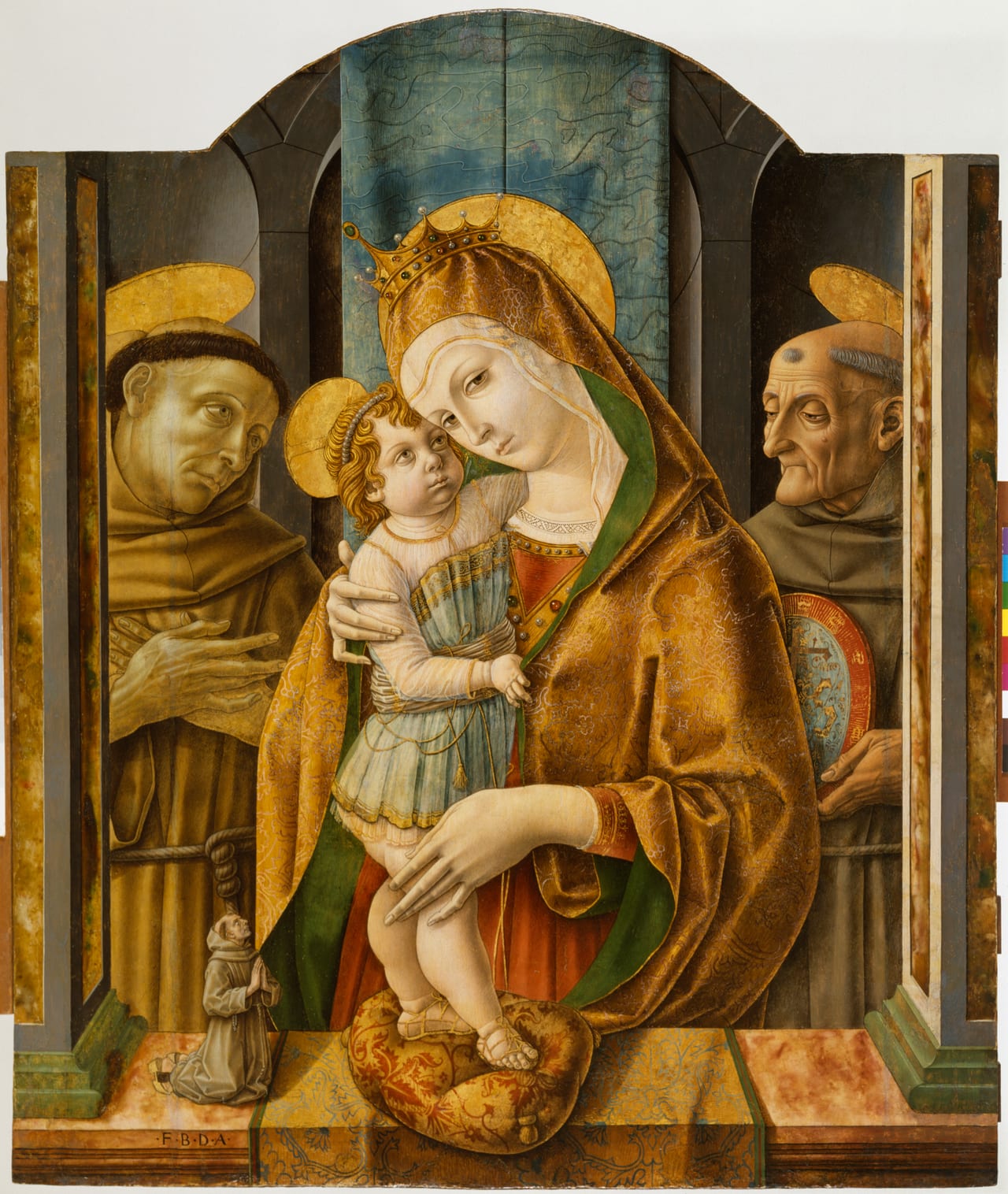
Carlo Crivelli
Virgin and Child with Saints and Donor · c. 1490
Perhaps the most individual Venetian painter of the fifteenth century; his personal, mannered style carried Renaissance forms into an unusual expressionism. Here Saint Francis stands at left and Saint Bernardino of Siena at right with his plaque of Christ’s initials.
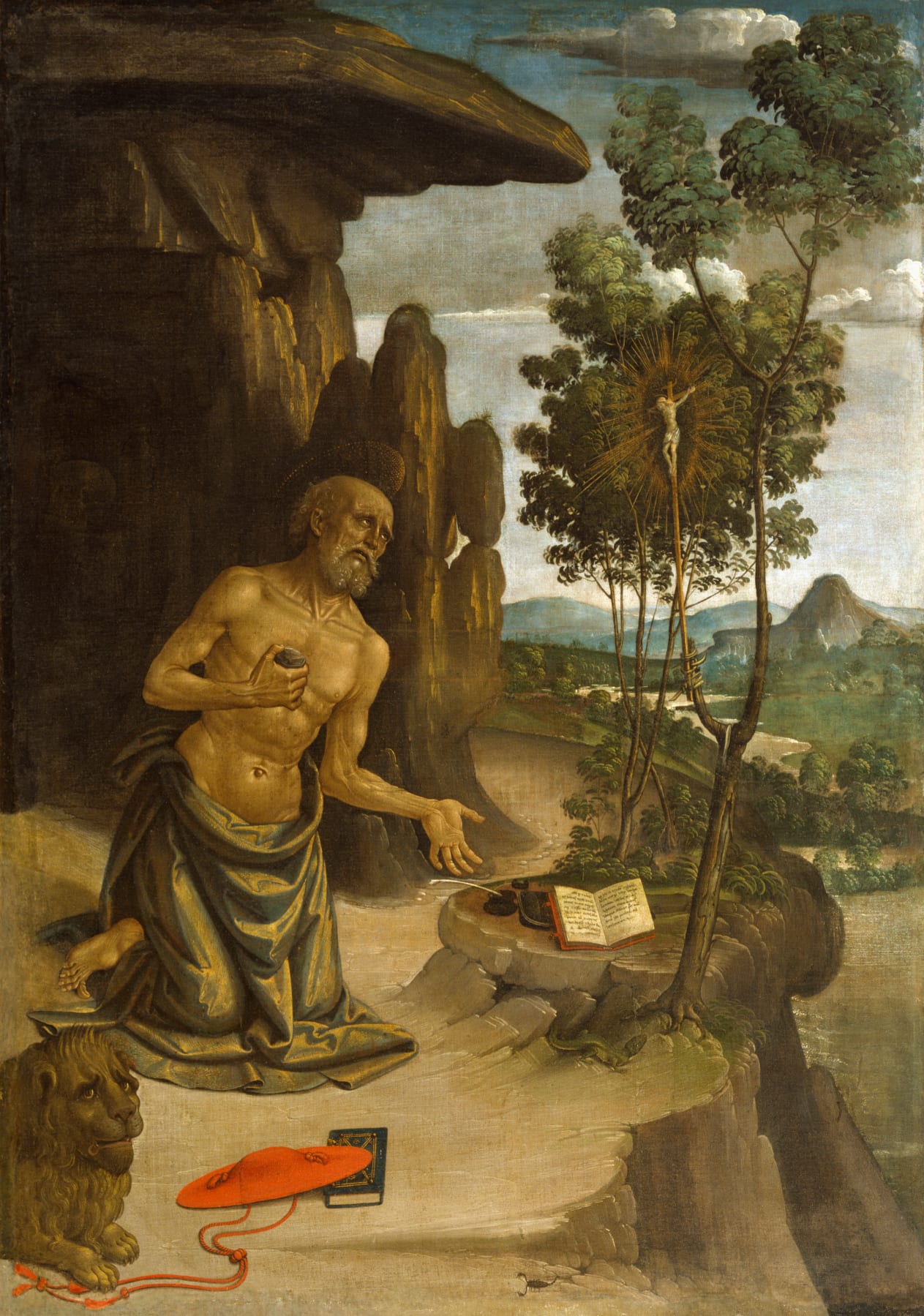
Pinturicchio
Saint Jerome in the Wilderness · 1475–1480
In this canvas a lizard and a scorpion mark how desolate the saint’s rocky wilderness is. Pinturicchio was an early Renaissance painter from Perugia, known for his highly decorative frescoes.
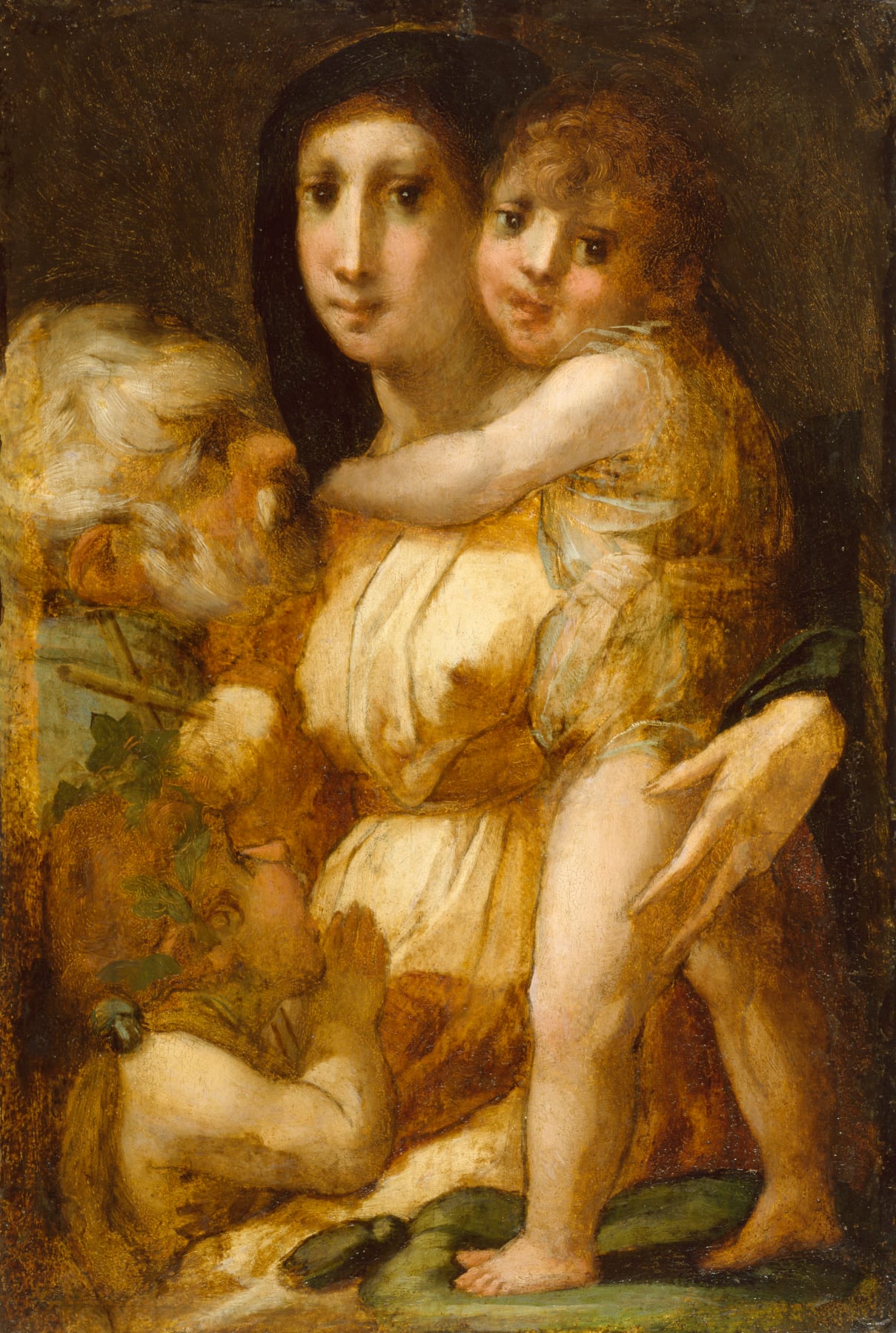
Rosso Fiorentino
The Holy Family with the Infant Saint John the Baptist · c. 1521
Rosso Fiorentino left this panel unfinished, and its underdrawing shows through. He was a Florentine painter of the expressive early Mannerist style and one of the founders of the school of Fontainebleau.
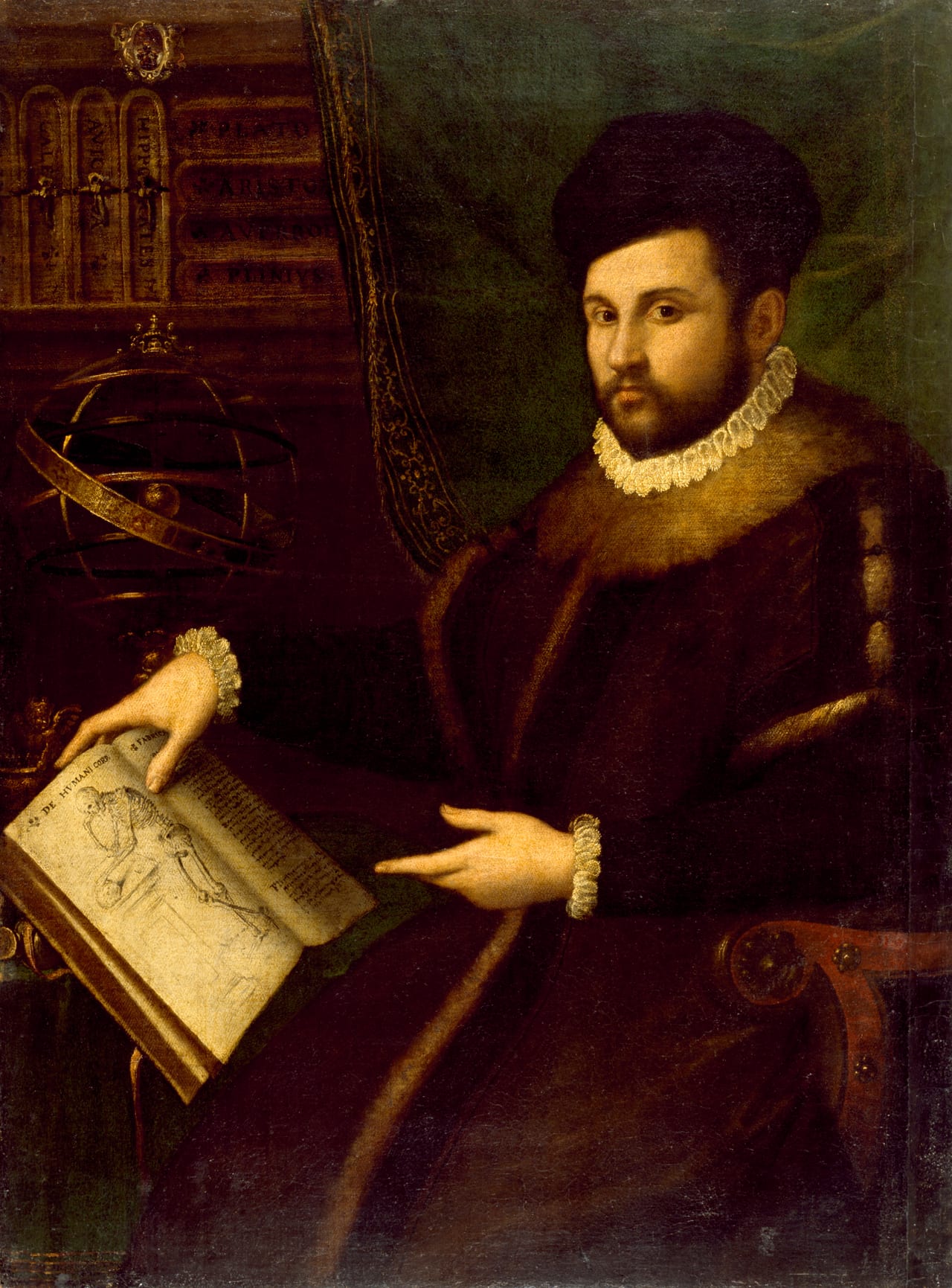
Lavinia Fontana
Portrait of Girolamo Mercuriale · 1588–1589
The physician she painted points to one thought-provoking illustration in his anatomy book: a skeleton meditating on a skull. Lavinia Fontana was a Mannerist painter and one of Bologna’s foremost portraitists of the later sixteenth century; she was among the first women to carry out large figure paintings commissioned publicly.
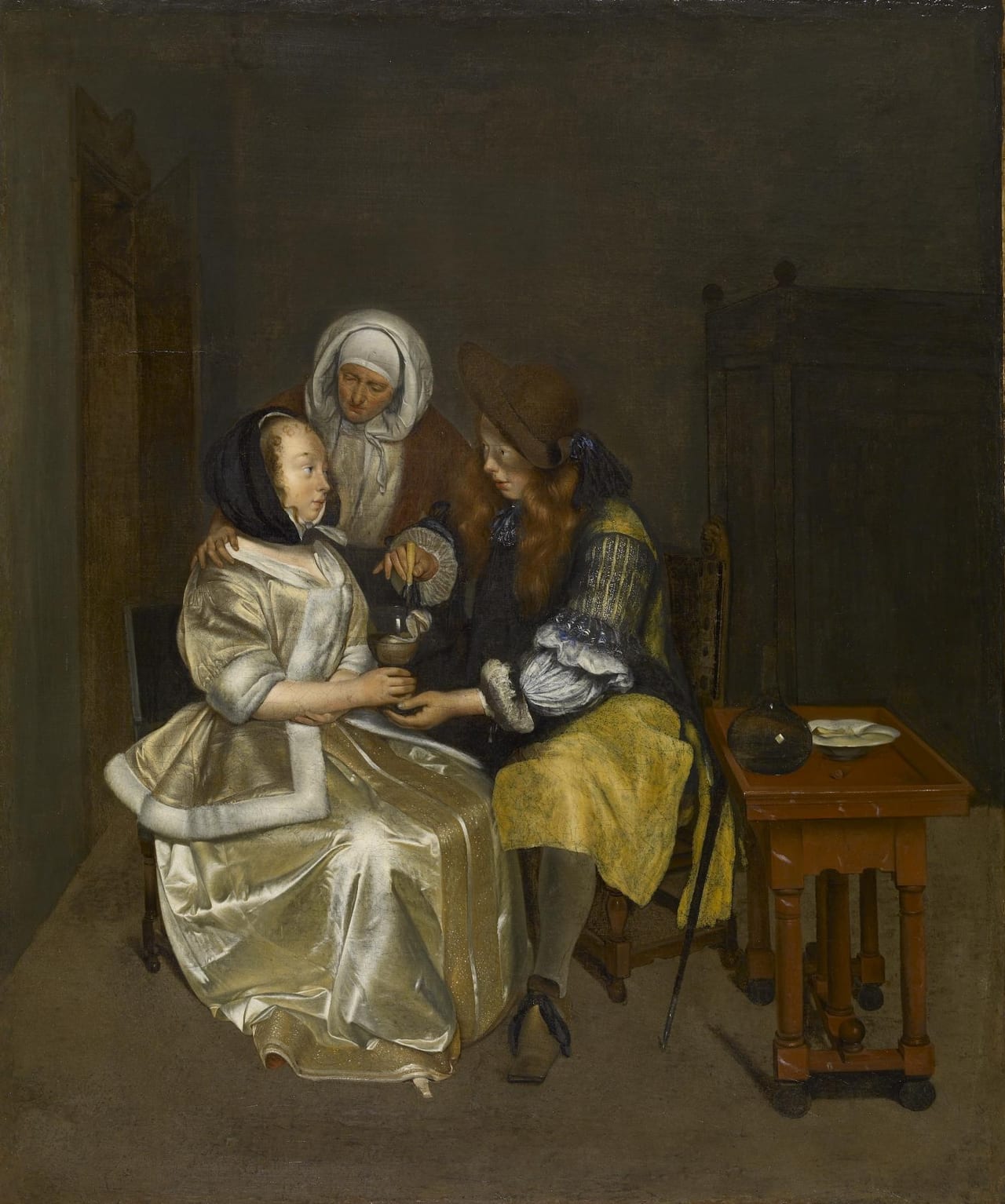
Gerard ter Borch
A Glass of Lemonade · c. 1664
A young man mixes a glass of lemonade, presumably to tell the “love-sick” young woman his feelings, while a chaperone looks on. Gerard ter Borch was a Dutch painter who made an interior genre of his own, showing comfortable middle-class life with grace and fidelity.
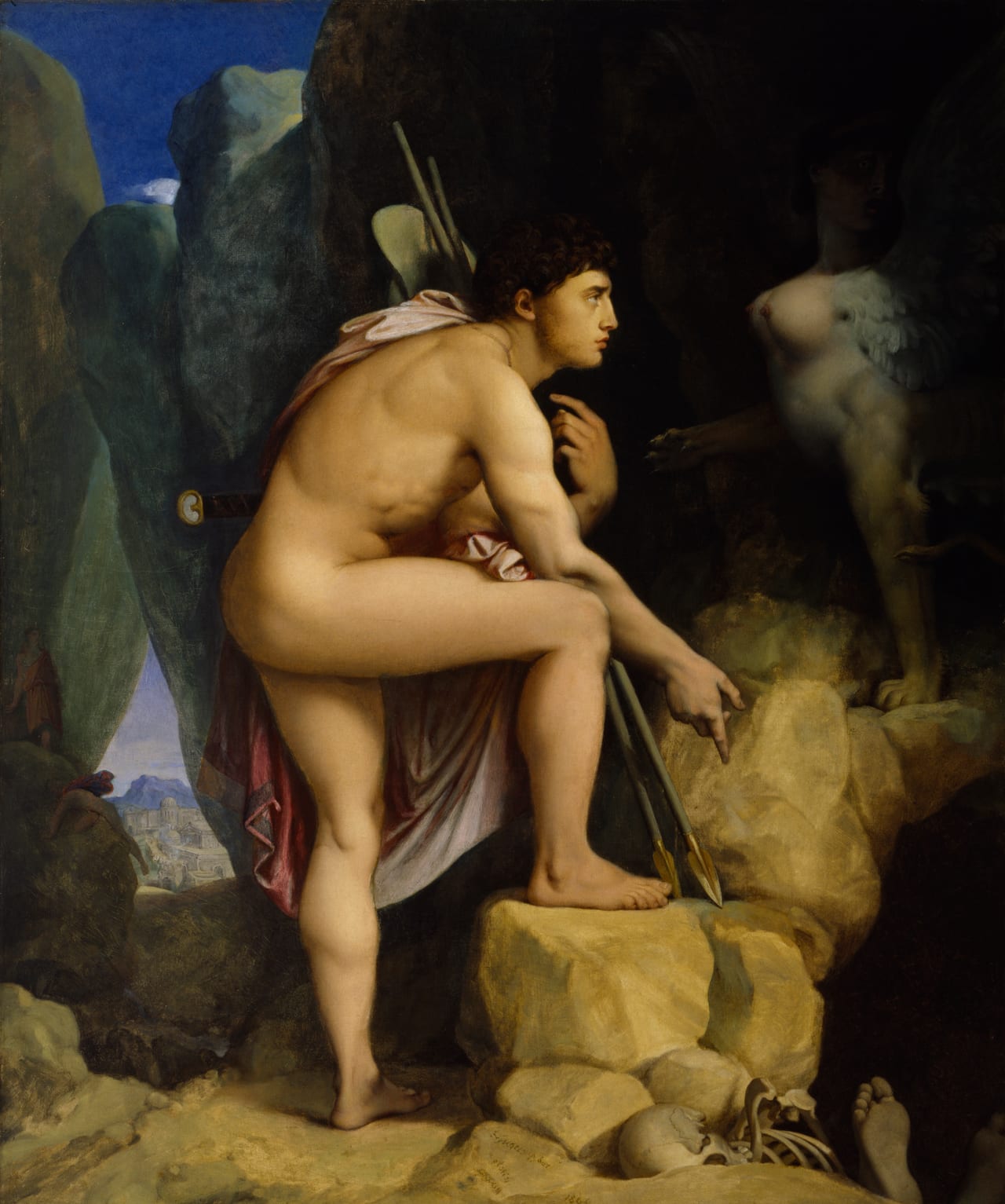
Jean-Auguste-Dominique Ingres
Oedipus and the Sphinx · 1864
After the death of his mentor Jacques-Louis David he became the chief champion of French Neoclassical painting. He returned to this subject several times after first painting it early in his career, turning the figures to face the other way.
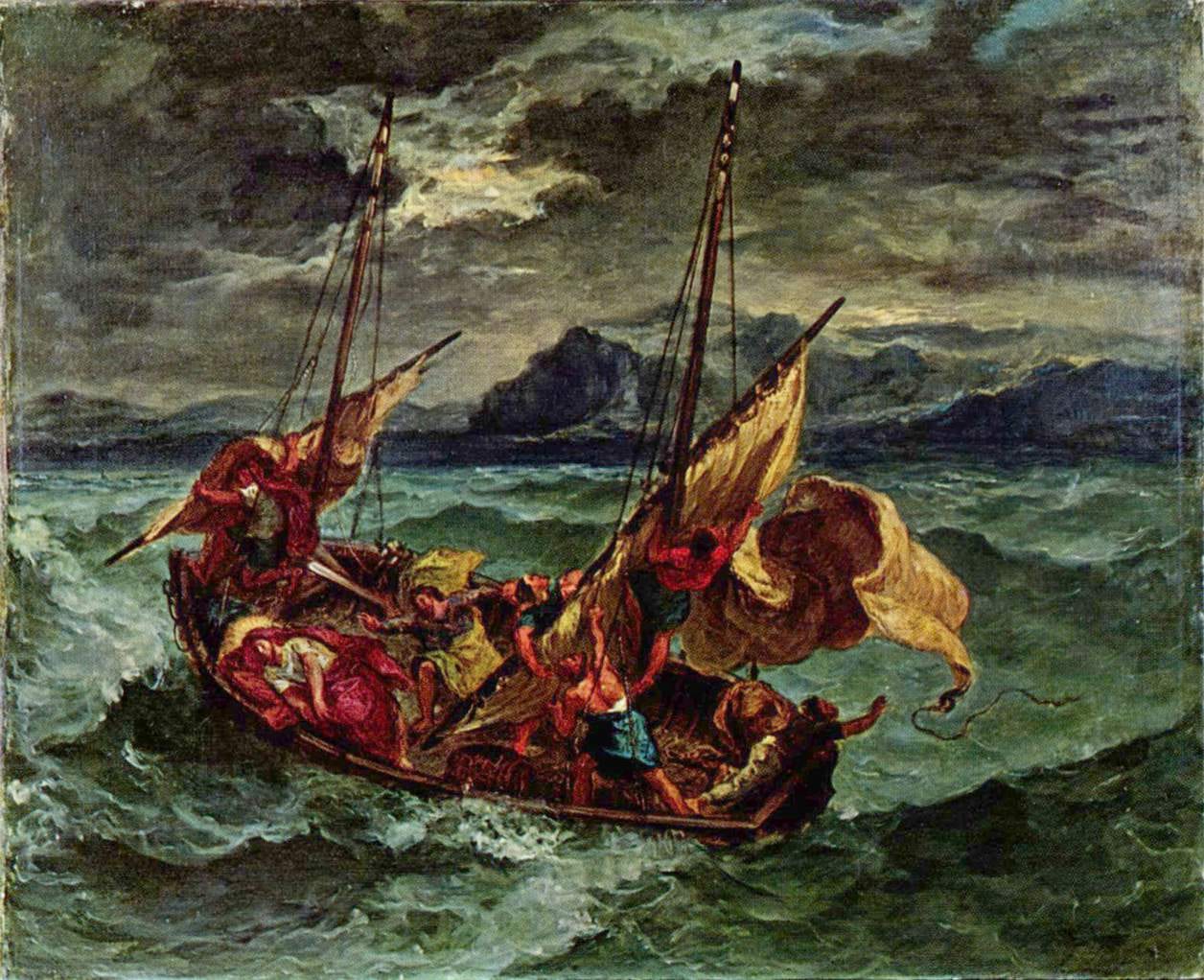
Eugène Delacroix
Christ on the Sea of Galilee · 1854
One of the greatest French Romantic painters, whose colour was influential in the development of Impressionism and Post-Impressionism. Here Christ stills the storm, to his disciples’ amazement.
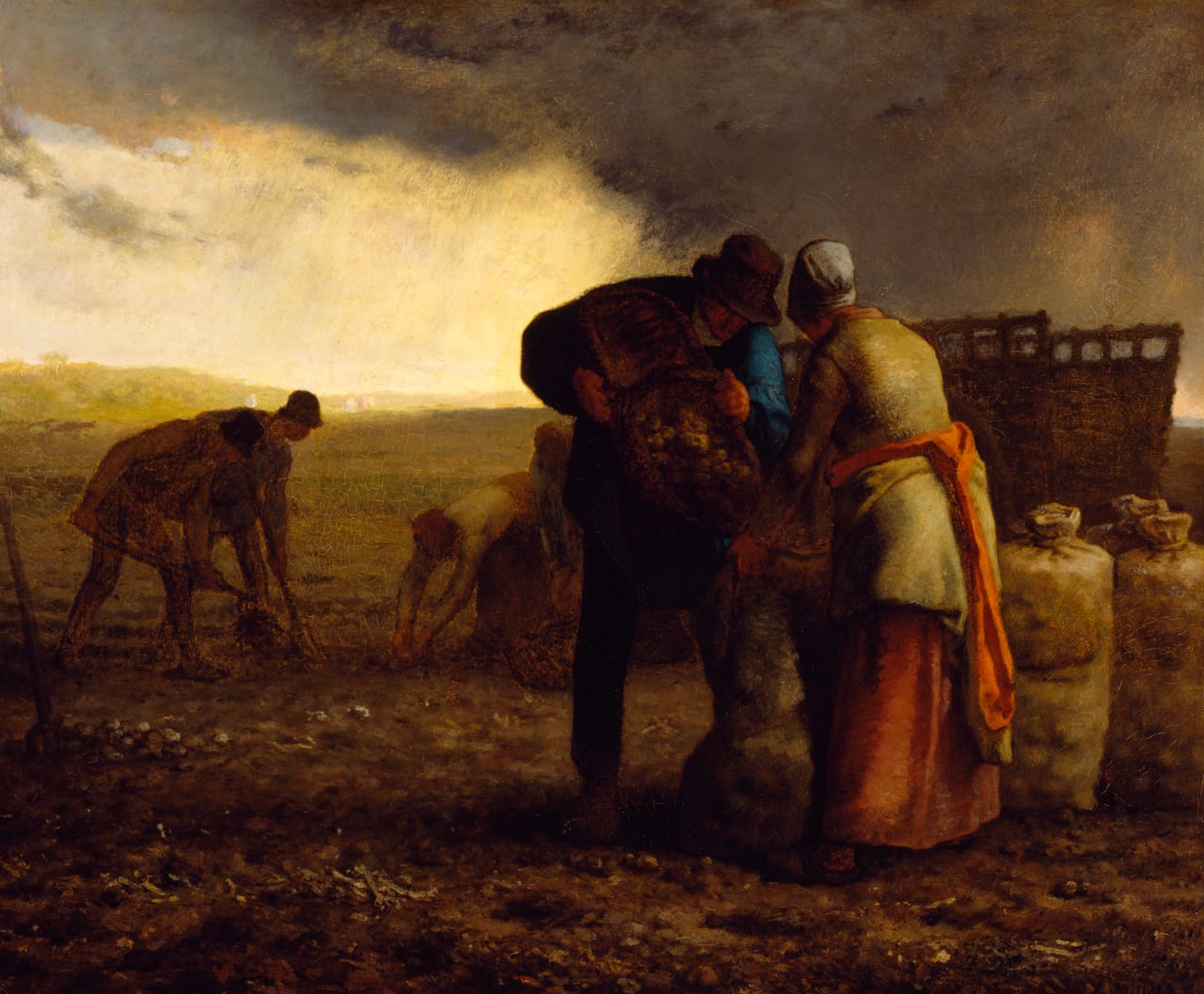
Jean-François Millet
The Potato Harvest · 1855
At right a farmer tips a basket of potatoes into a sack a woman holds open. Jean-François Millet was a founder of the Barbizon School, known for his pictures of peasant farmers.
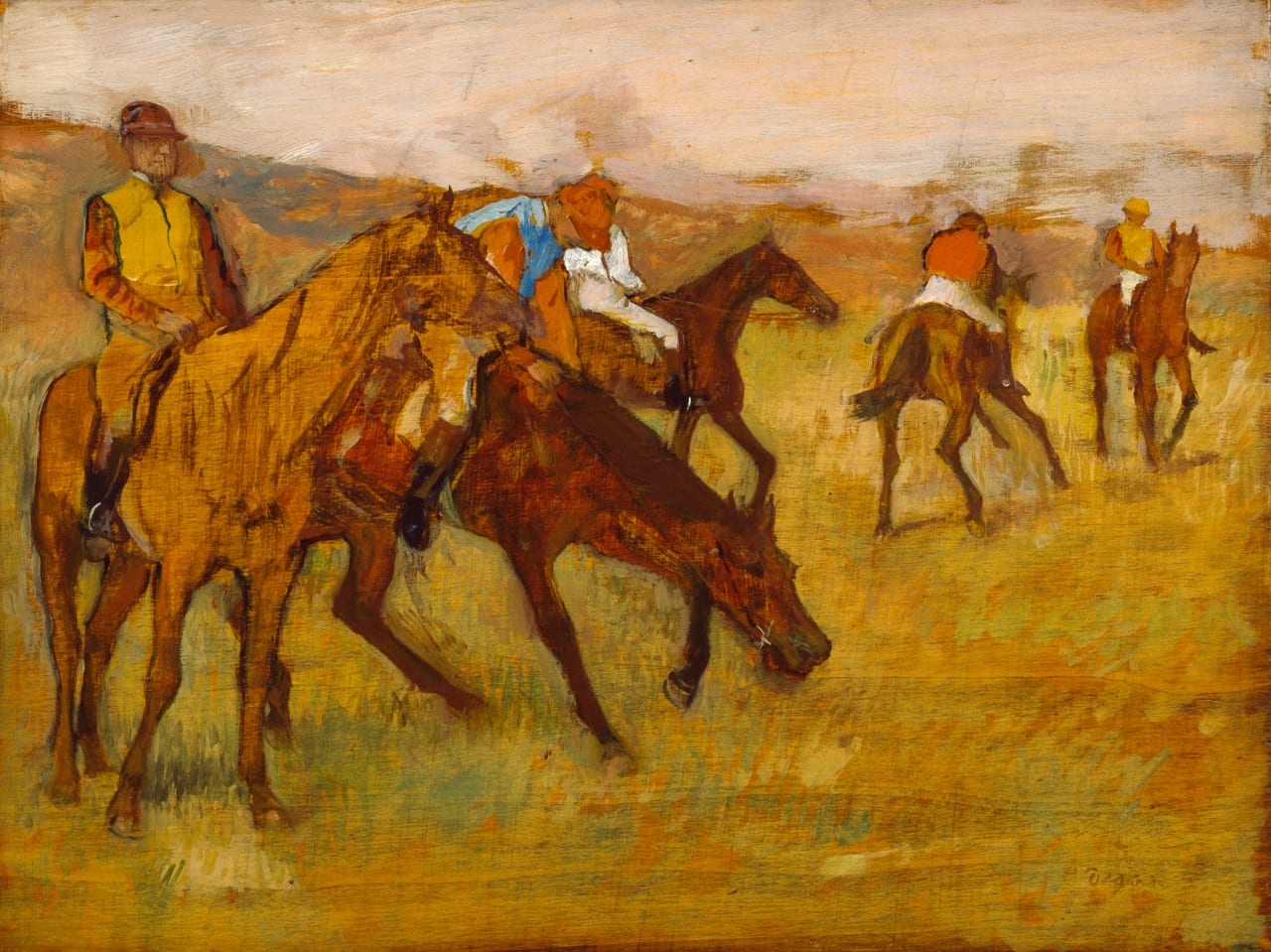
Edgar Degas
Before the Race · 1882–1884
Painter, sculptor and printmaker, prominent among the Impressionists and celebrated for images of Parisian life. His jockeys and horses move here between calm and agitation.
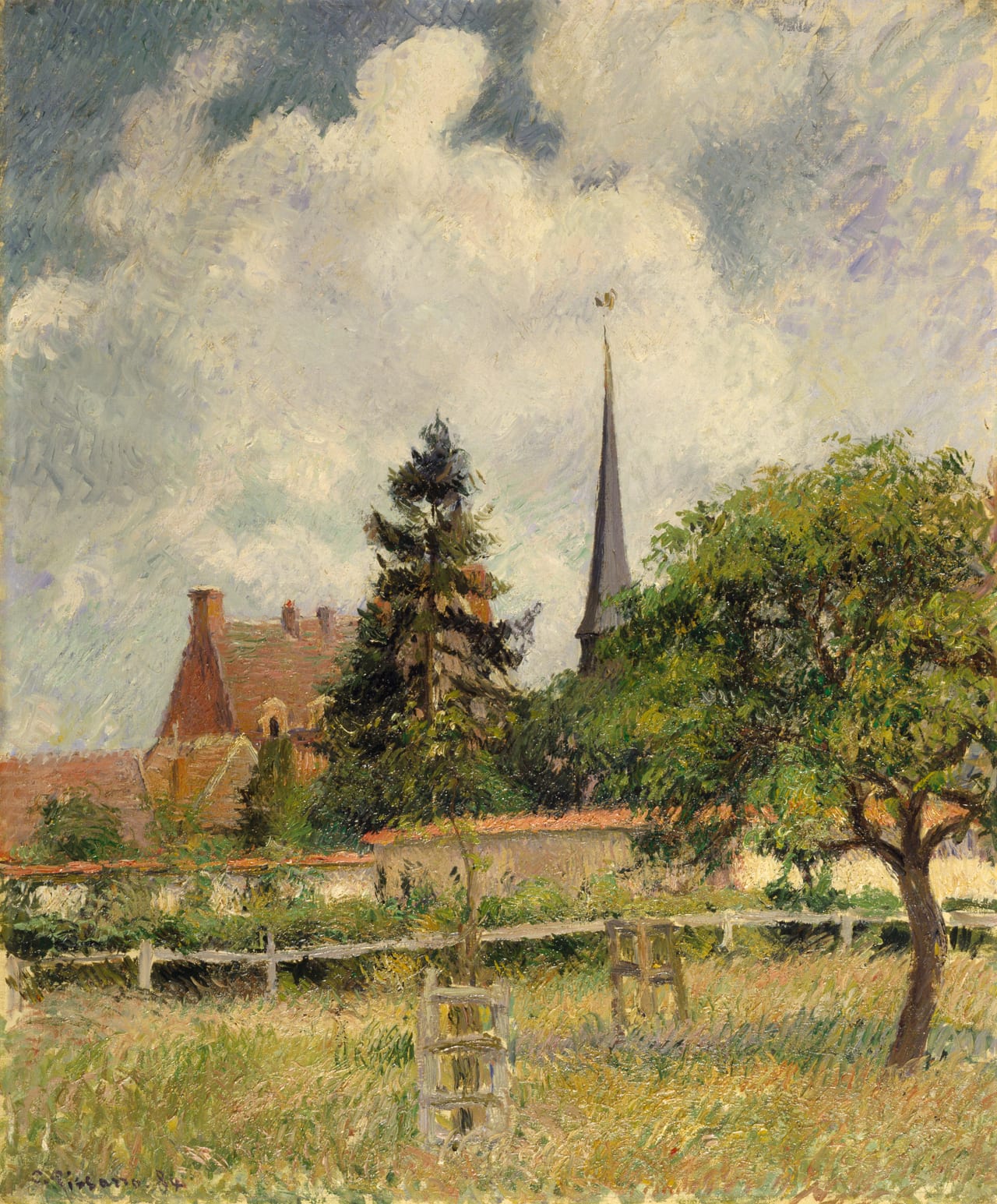
Camille Pissarro
The Church and Manor House at Éragny · 1884
Camille Pissarro painted this view soon after moving to Éragny in 1884; somewhat unusually for him, no working people appear in it, and the stillness is almost eerie. He was the only artist in all eight Impressionist group exhibitions, and a mentor to Cézanne and Gauguin.
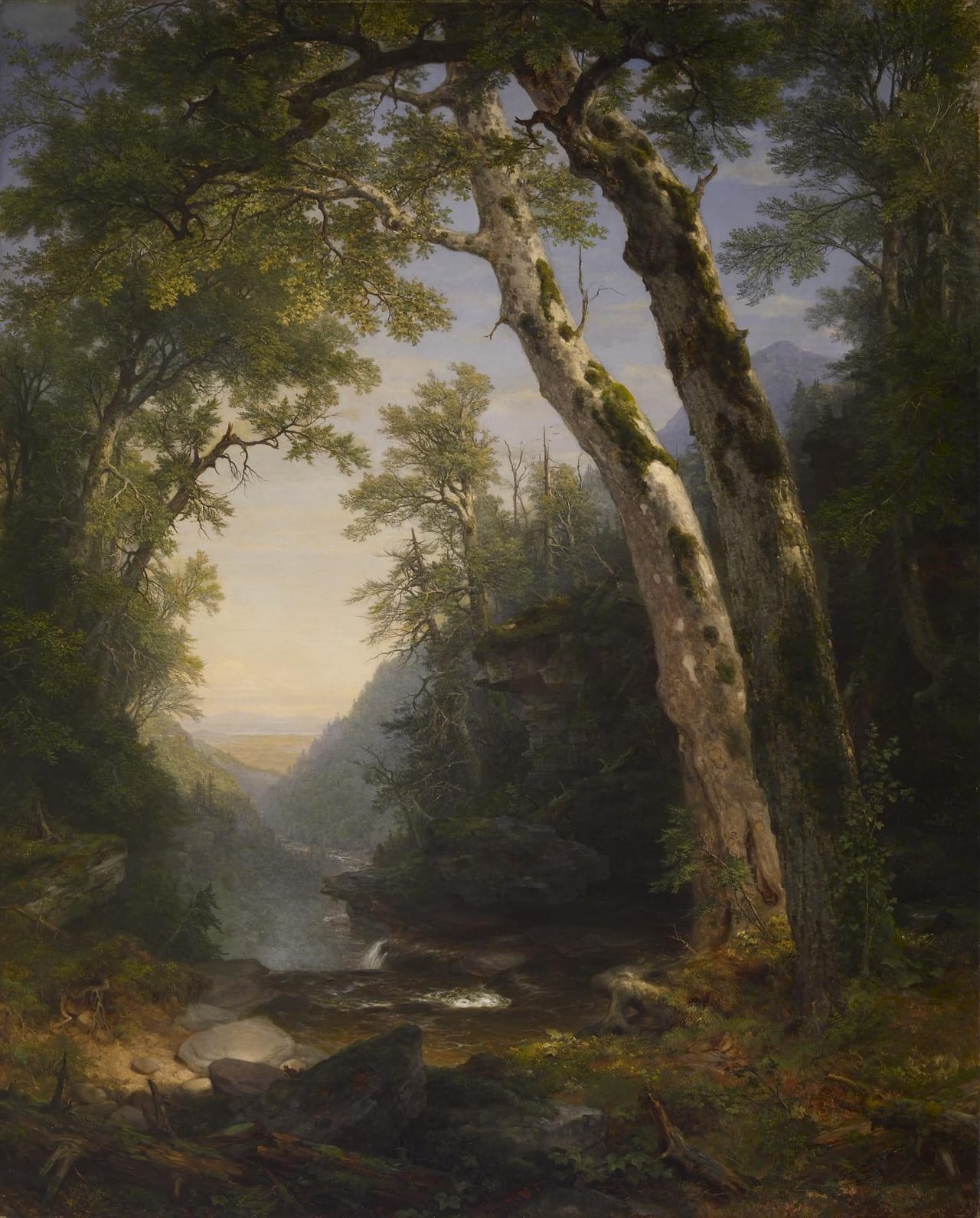
Asher Brown Durand
The Catskills · 1859
Painter, engraver and illustrator, and one of the founders of the Hudson River school. Sycamores frame the broad landscape beyond, in the upright format that was his trademark.
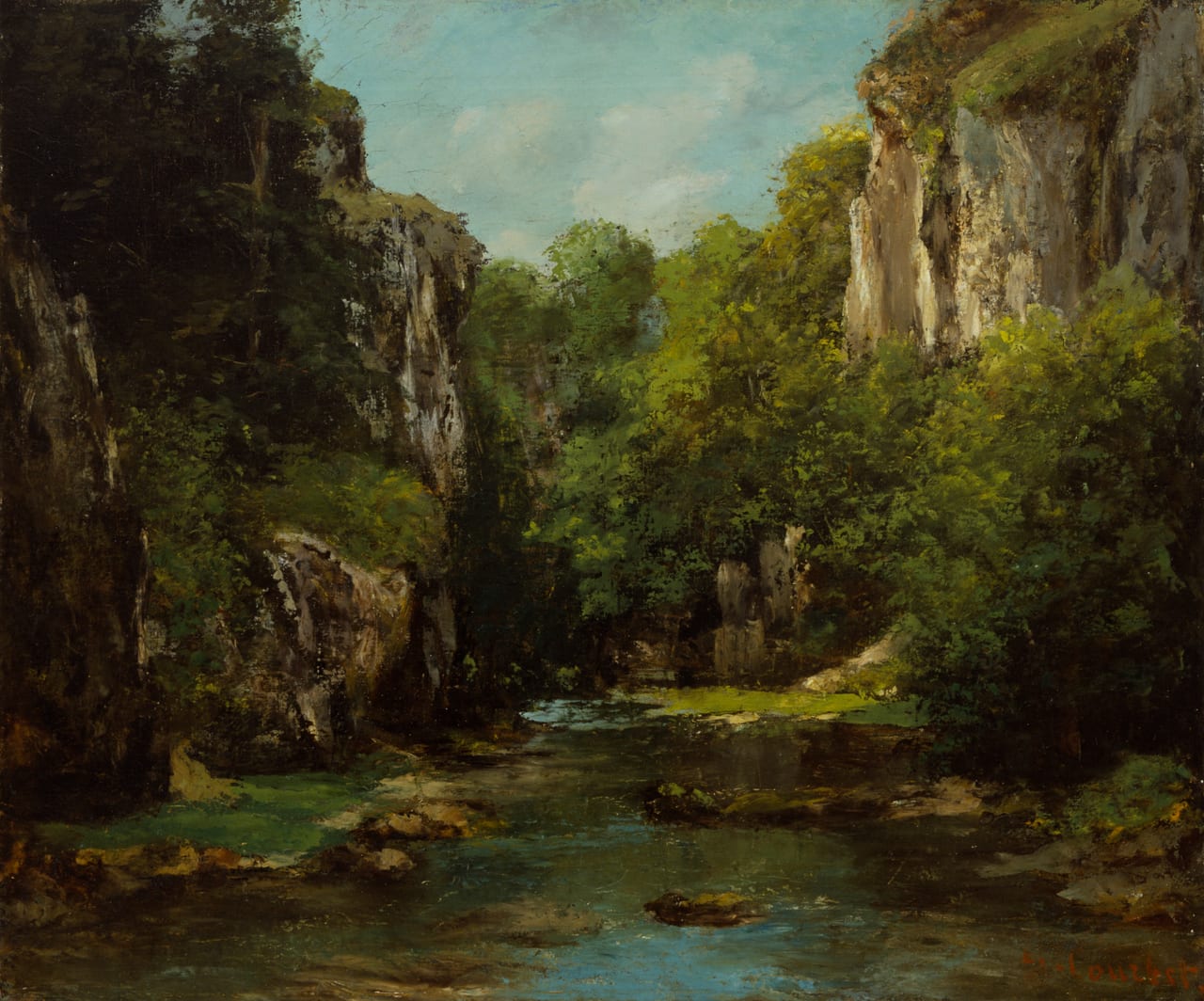
Gustave Courbet
The Stream of the Black Well · 1872–1877
Leader of the Realist movement, who turned from Romantic painting to everyday subjects. He painted this secluded spot in his native Franche-Comté some 20 times.
Artworks
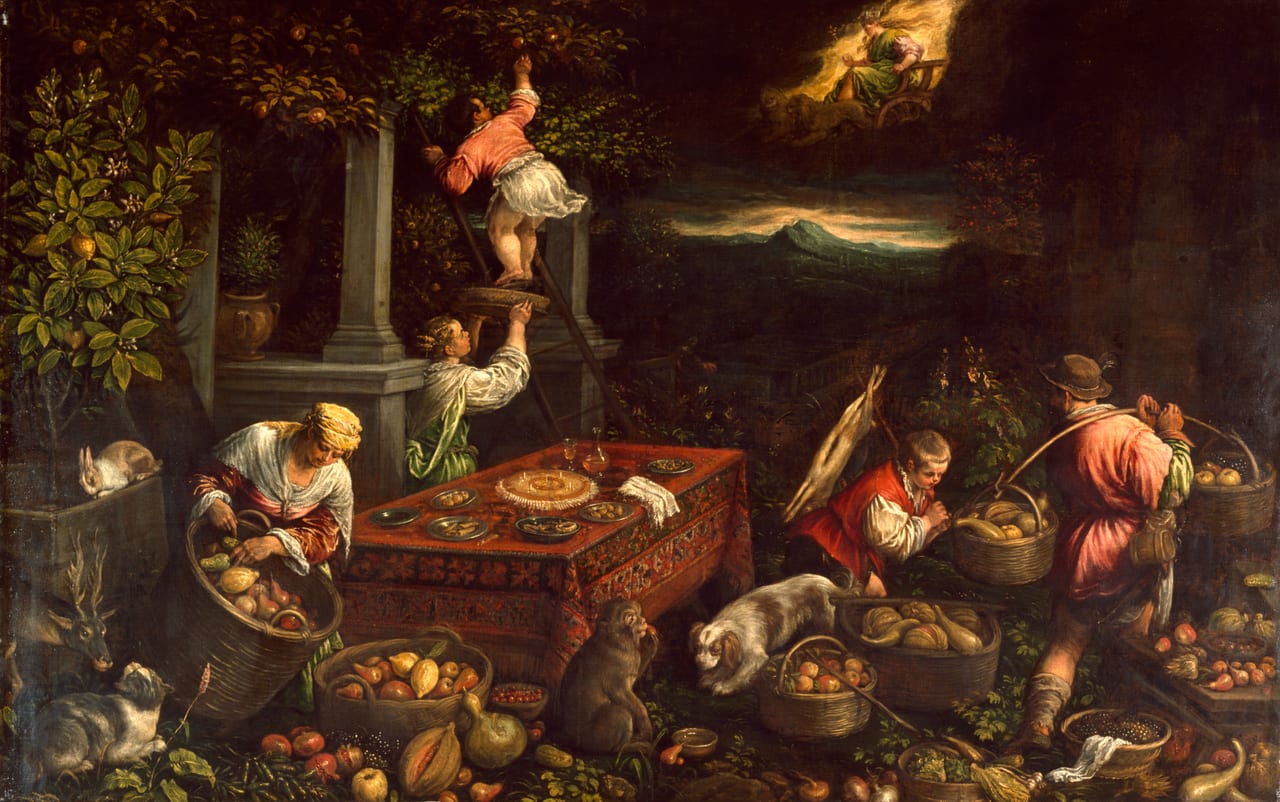
Allegory of the Element Earth
Leandro Bassano · c. 1580
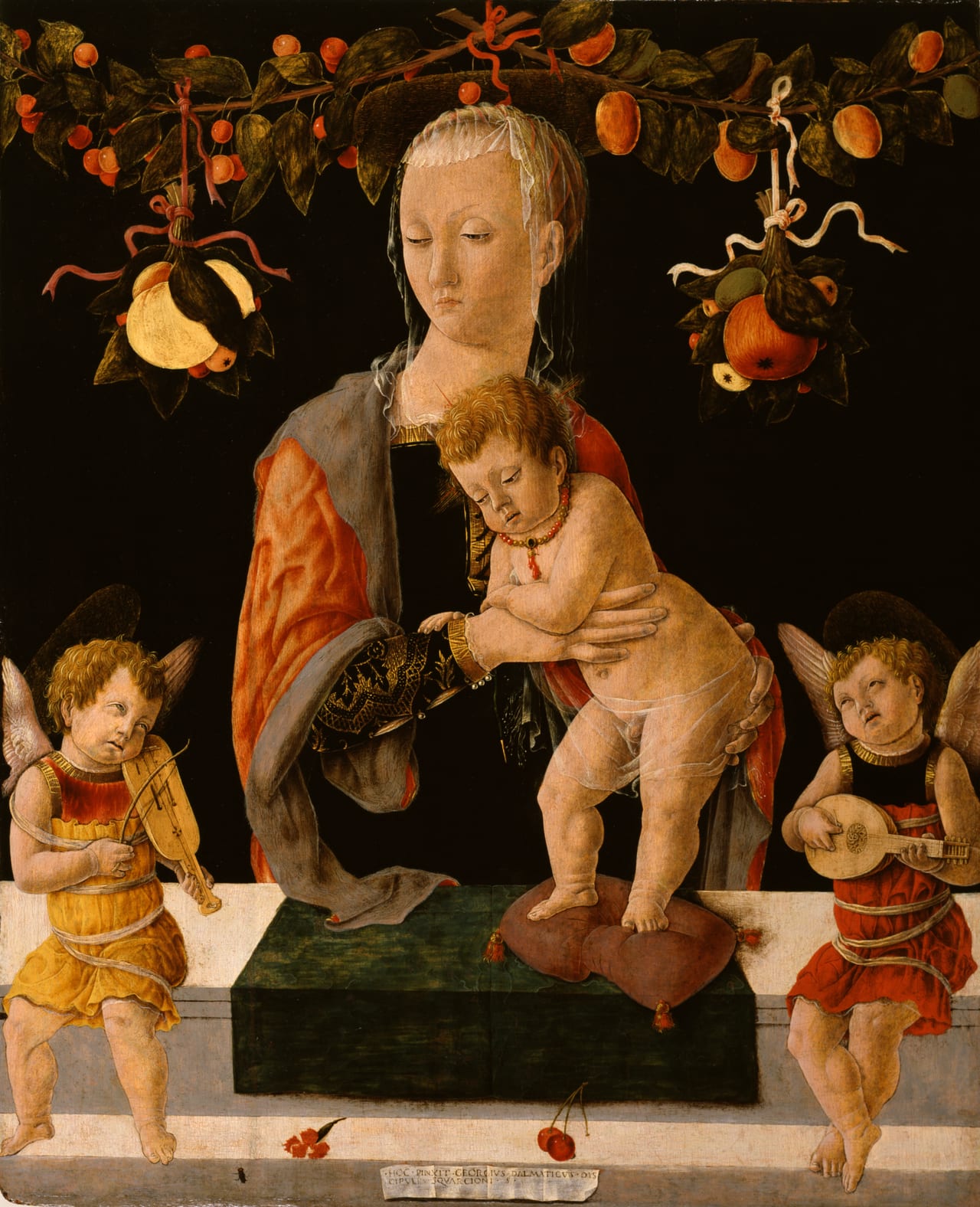
Madonna and Child with Angels
Giorgio di Tomaso Schiavone · 1459–1460
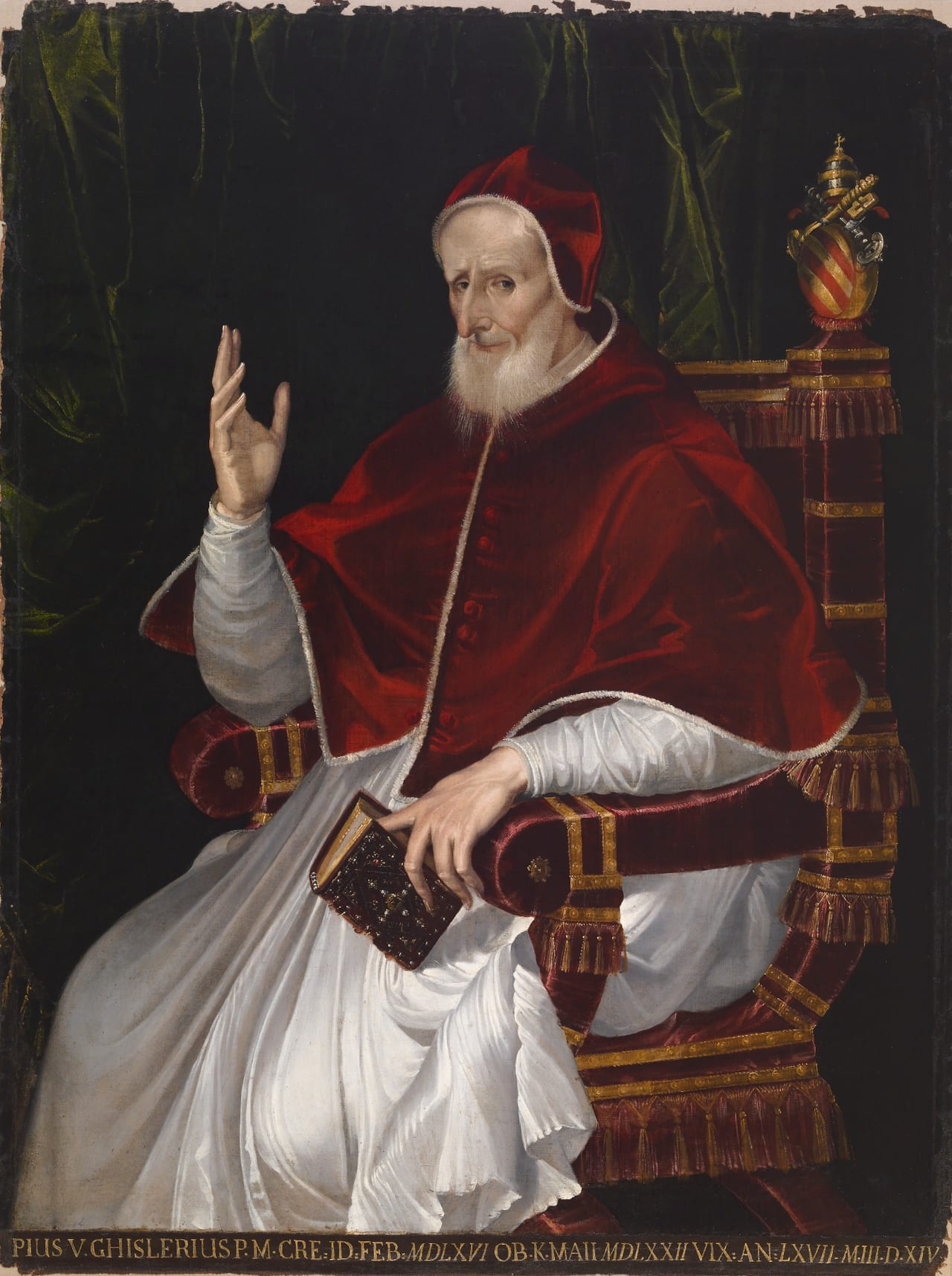
Portrait of Pope Pius V
Bartolomeo Passarotti and workshop · c. 1566
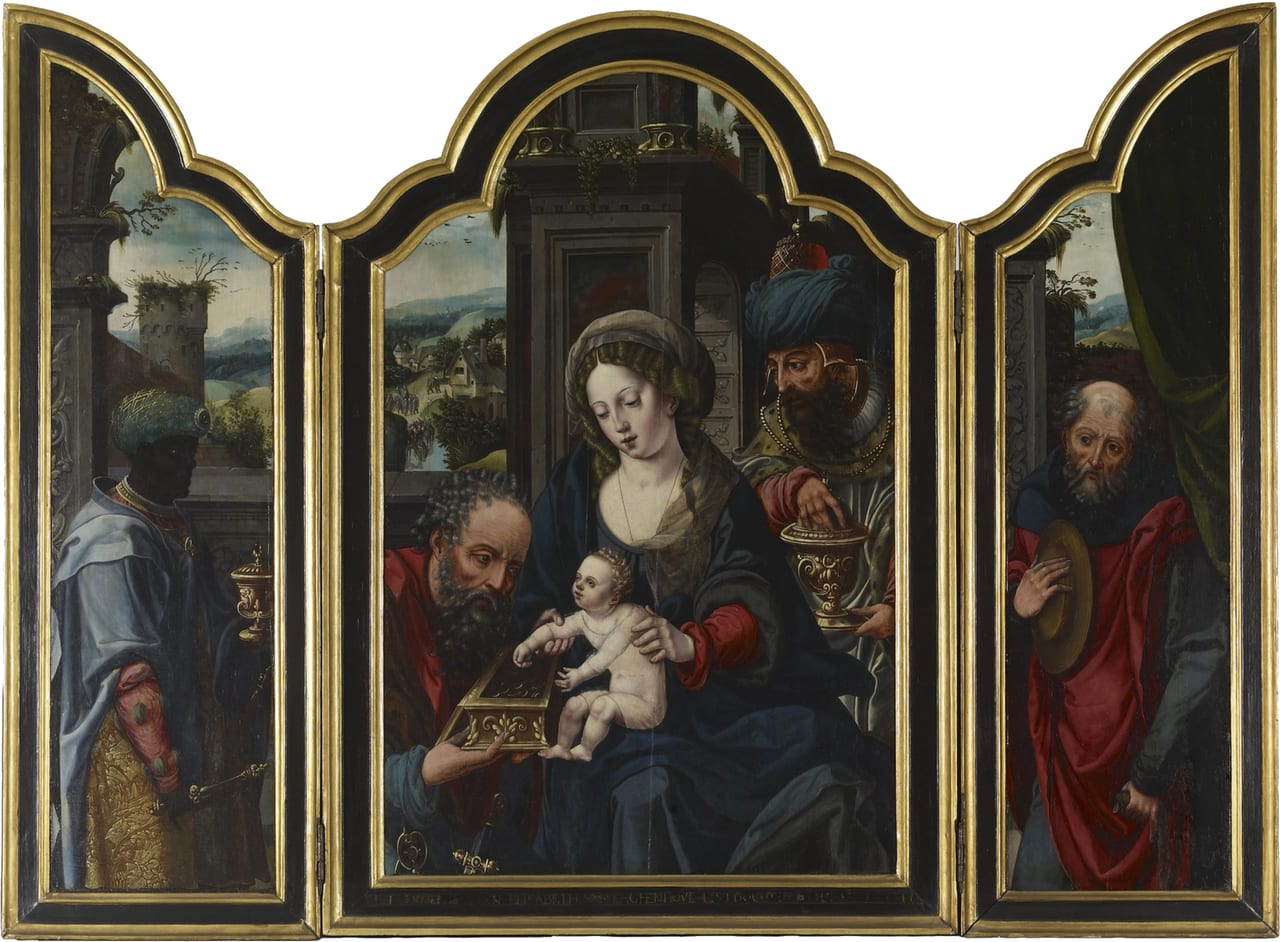
Adoration of the Magi
Pieter Coecke van Aelst · 1540–1549
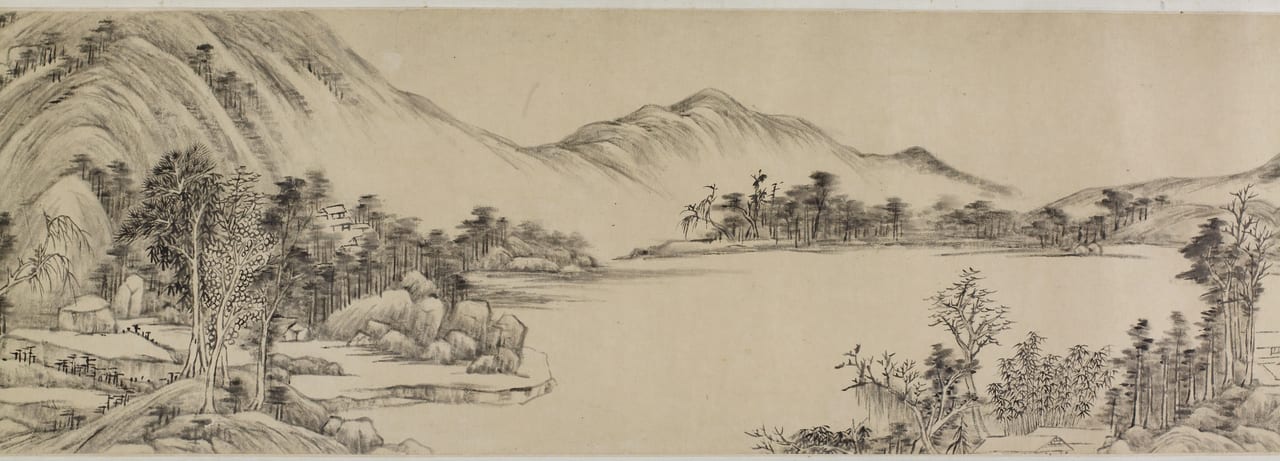
Free Spirits Among Streams and Mountains
Wang Yuanqi · 1684
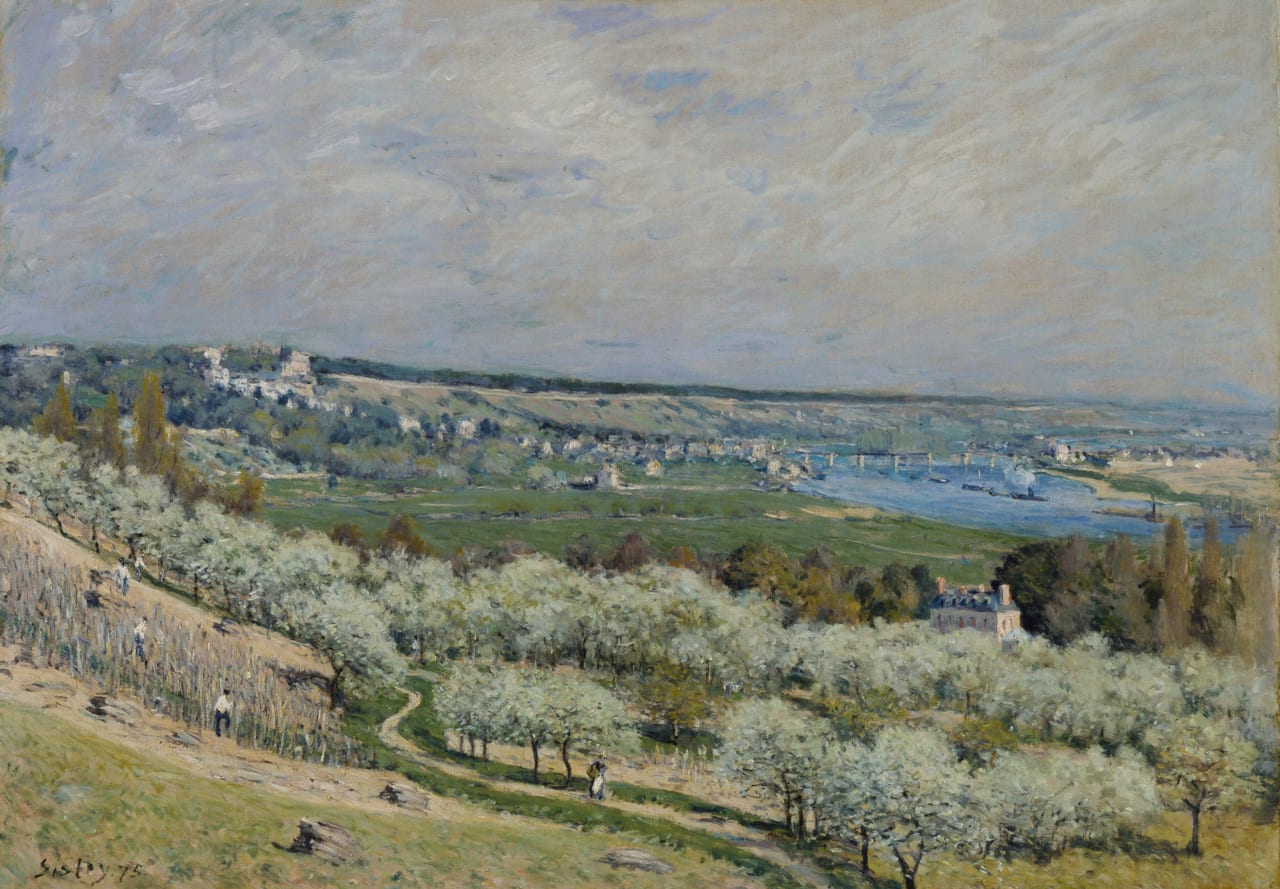
The Terrace at Saint-Germain, Spring
Alfred Sisley · 1875
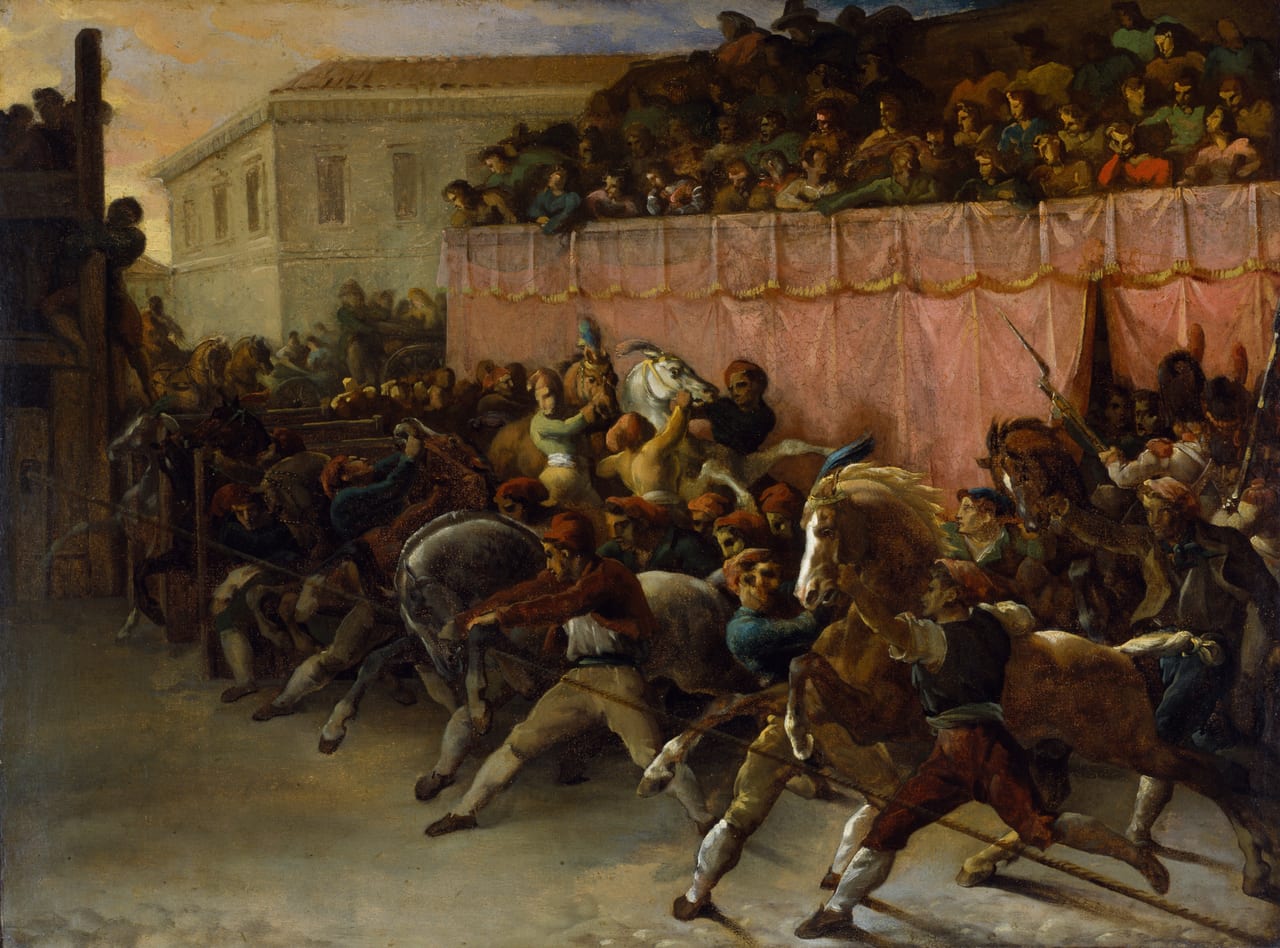
Riderless Racers at Rome
Théodore Géricault · 1817
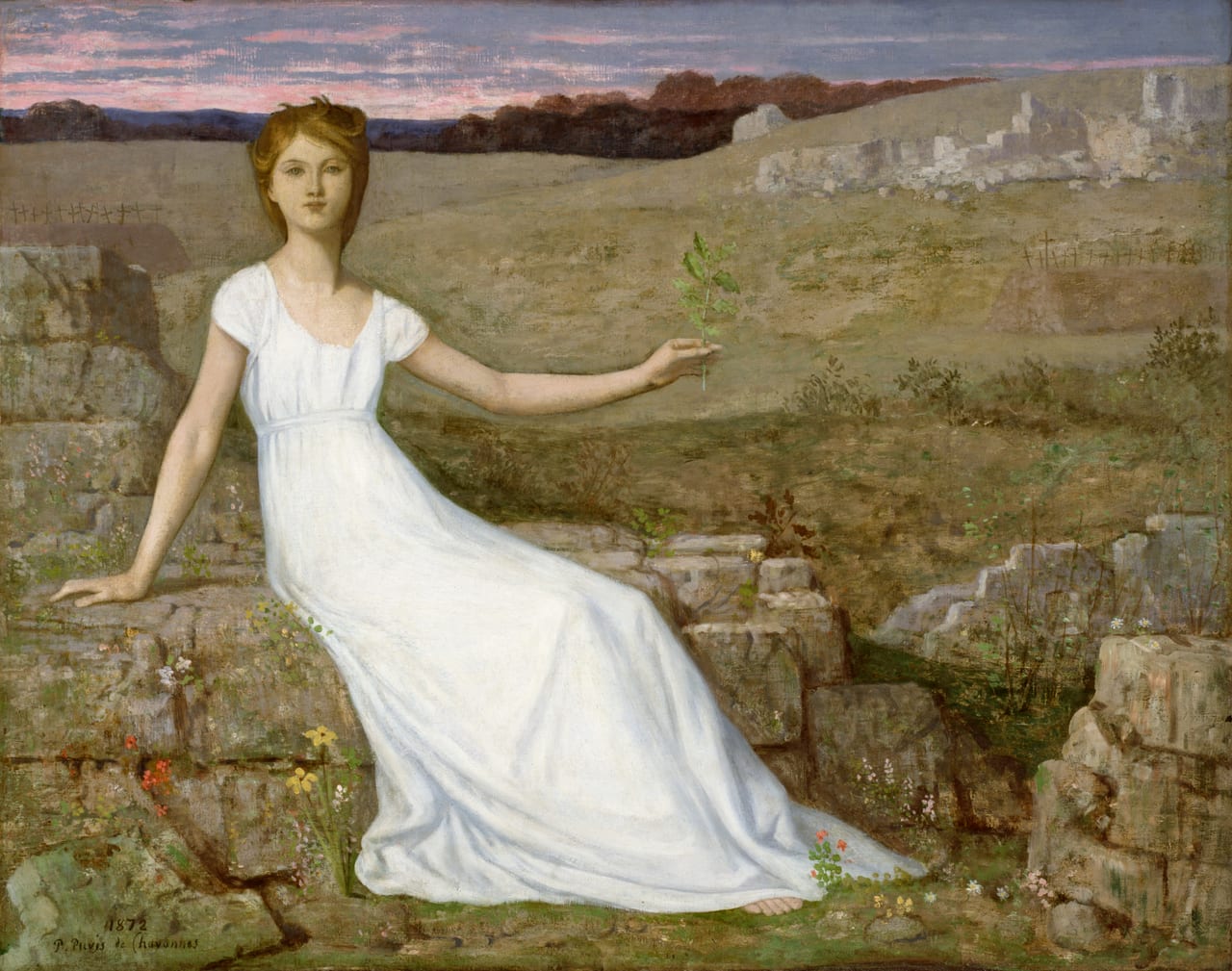
Hope
Pierre Puvis de Chavannes · 1872
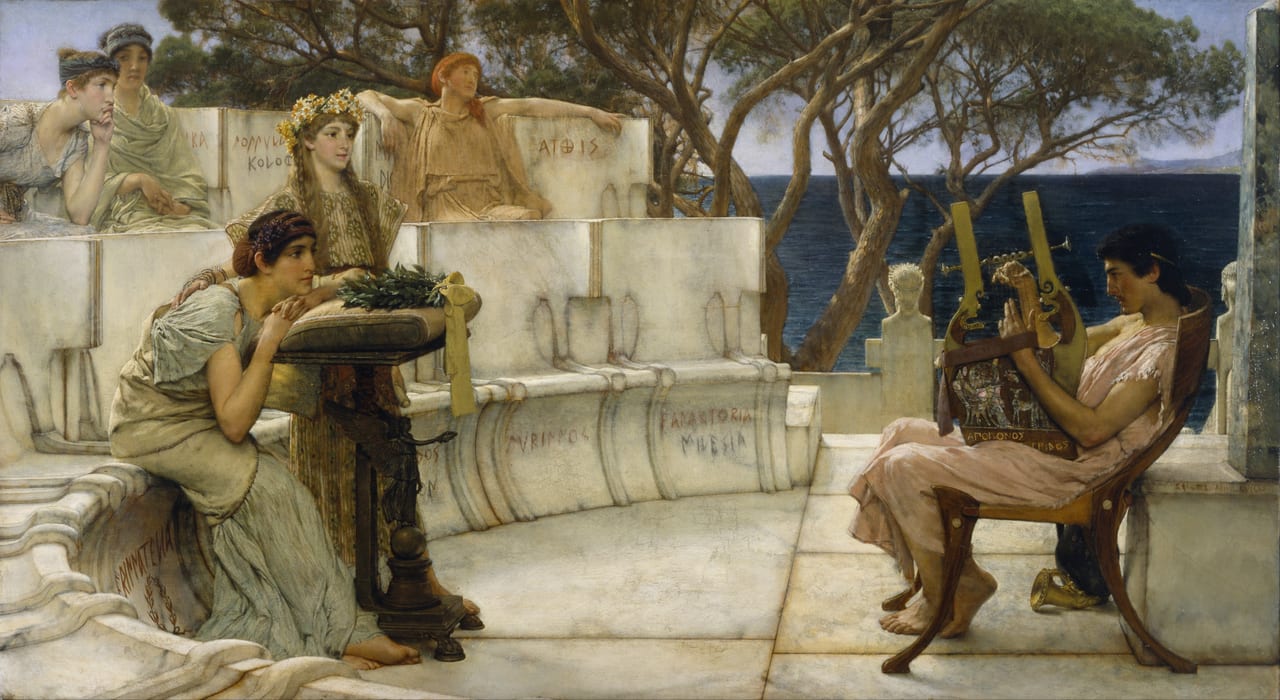
Sappho and Alcaeus
Lawrence Alma-Tadema · 1881
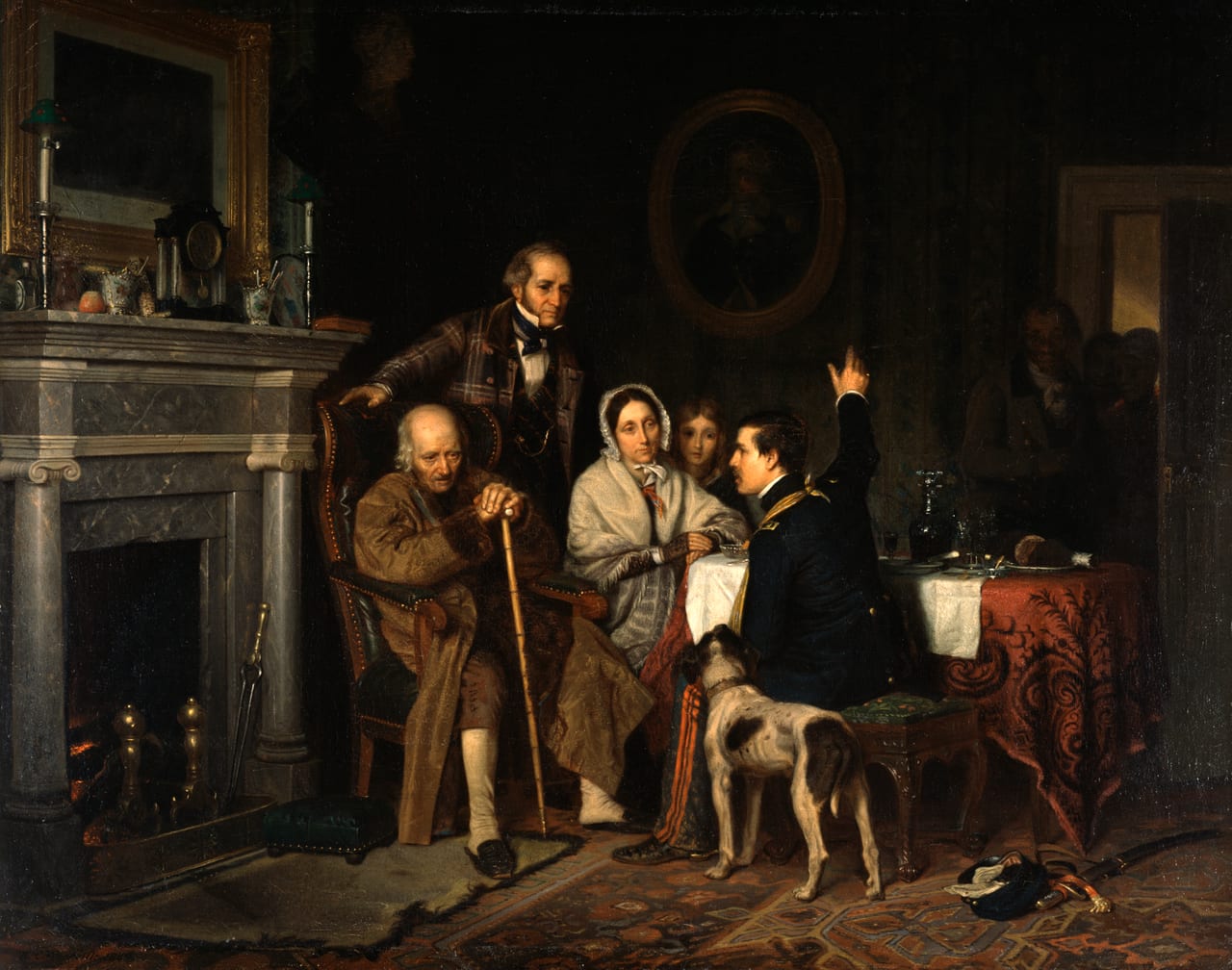
Old ’76 and Young ’48
Richard Caton Woodville · 1849
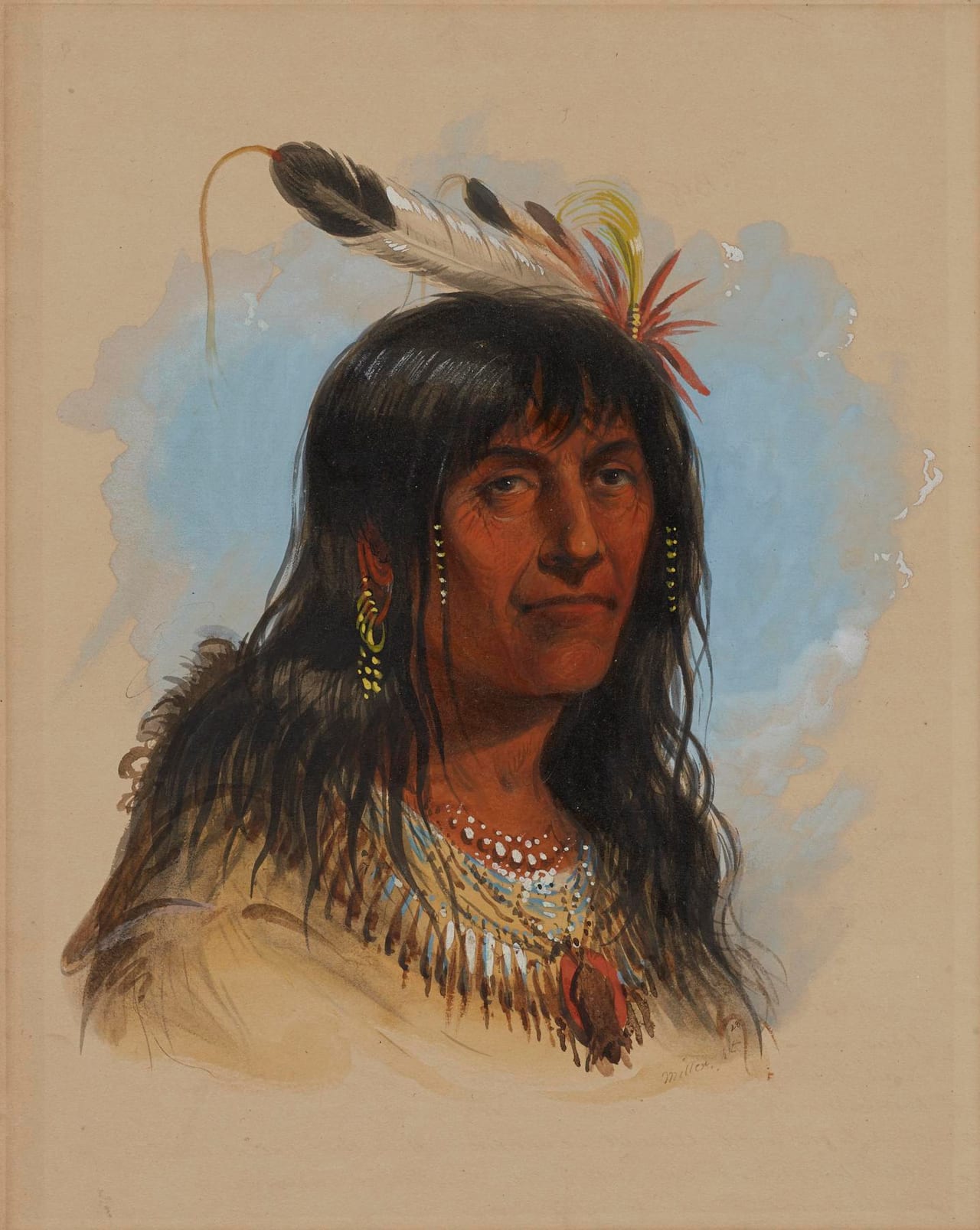
“Big Bowl” (A Crow Chief)
Alfred Jacob Miller · 1858–1860
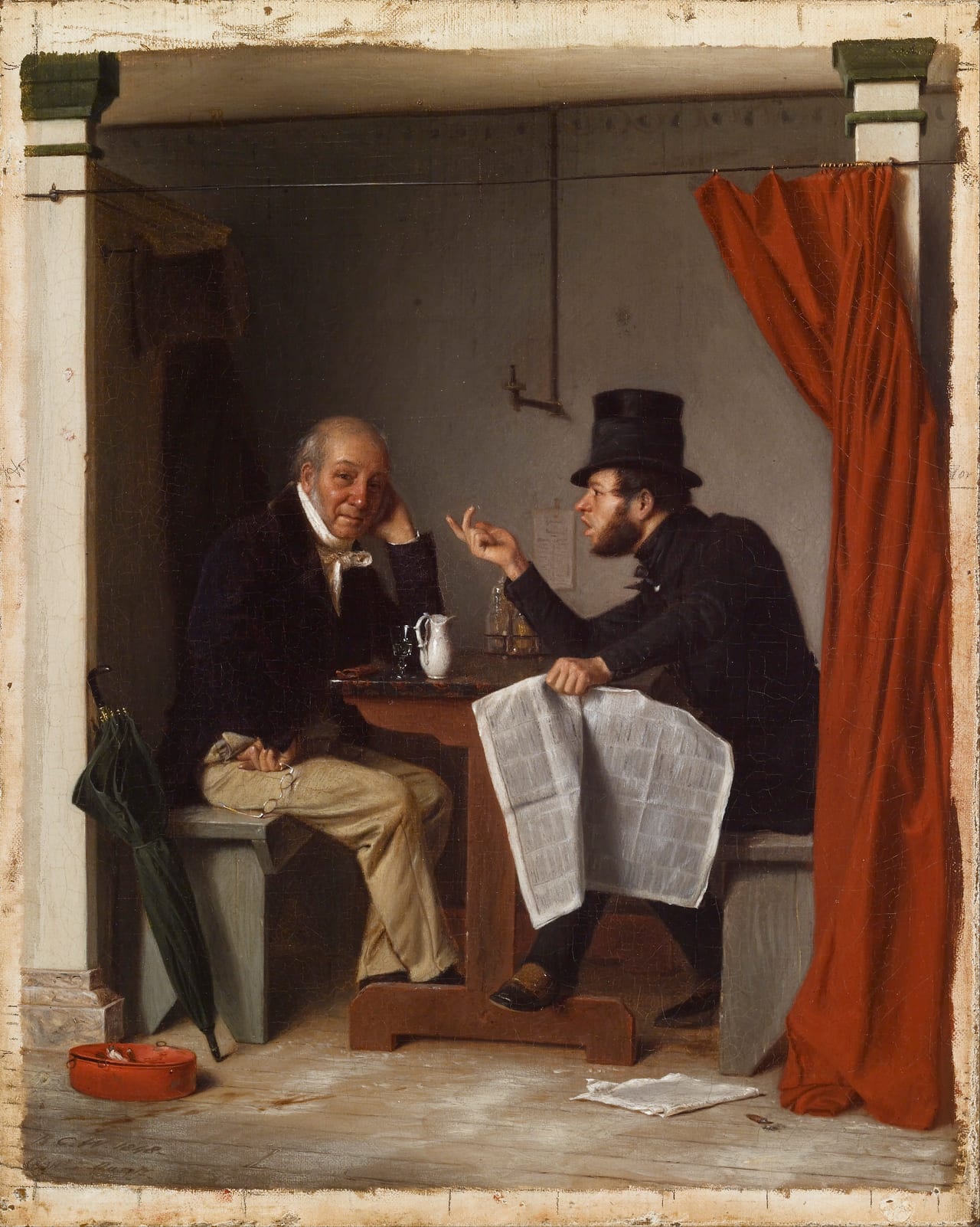
Politics in an Oyster House
Richard Caton Woodville · 1848
Sources
- Walters Art Museum, “About the Walters Art Museum”
- Wikipedia, “Walters Art Museum”
- Wikipedia, “Henry Walters”
- Wikipedia, “William Thompson Walters”
- Walters Art Museum, “Madonna of the Candelabra”
- Walters Art Museum, “Saint Francis Receiving the Stigmata”
- Walters Art Museum, “The Death of Caesar”
- Walters Art Museum, “Portrait of Maria Salviati de’ Medici and Giulia de’ Medici”
- Walters Art Museum, “The Archdukes Albert and Isabella Visiting the Collection of Pierre Roose”
- Walters Art Museum, “Portrait of Marquess Massimiliano Stampa”
- Walters Art Museum, “Scipio Africanus Freeing Massiva”
- Walters Art Museum, “The Café-Concert”
- Walters Art Museum, “Springtime”
- Walters Art Museum, “Sappho and Alcaeus”
- Walters Art Museum, “Raby Castle, the Seat of the Earl of Darlington”
- Walters Art Museum, “Old ’76 and Young ’48”
- Walters Art Museum, “Virgin and Child with Saints and Donor”
- Walters Art Museum, “Saint Jerome in the Wilderness”
- Walters Art Museum, “The Holy Family with the Infant Saint John the Baptist”
- Walters Art Museum, “Portrait of Girolamo Mercuriale”
- Walters Art Museum, “A Glass of Lemonade”
- Walters Art Museum, “Oedipus and the Sphinx”
- Walters Art Museum, “Christ on the Sea of Galilee”
- Walters Art Museum, “The Potato Harvest”
- Walters Art Museum, “Before the Race”
- Walters Art Museum, “The Church and Manor House at Éragny”
- Walters Art Museum, “The Catskills”
- Walters Art Museum, “The Stream of the Black Well”
- Walters Art Museum, “Allegory of the Element Earth”
- Walters Art Museum, “Madonna and Child with Angels”
- Walters Art Museum, “Portrait of Pope Pius V”
- Walters Art Museum, “Adoration of the Magi”
- Walters Art Museum, “Free Spirits Among Streams and Mountains”
- Walters Art Museum, “The Terrace at Saint-Germain, Spring”
- Walters Art Museum, “Riderless Racers at Rome”
- Walters Art Museum, “Hope”
- Walters Art Museum, ““Big Bowl” (A Crow Chief)”
- Walters Art Museum, “Politics in an Oyster House”
- Walters Art Museum, “A Roman Slave Market”
- Walters Art Museum, “Odalisque”
- Walters Art Museum, “The Christian Martyrs’ Last Prayer”
- Encyclopaedia Britannica, “Carlo Crivelli”
- Encyclopaedia Britannica, “Pinturicchio”
- Encyclopaedia Britannica, “Rosso Fiorentino”
- Encyclopaedia Britannica, “Lavinia Fontana”
- Encyclopaedia Britannica, “Gerard Terborch”
- Encyclopaedia Britannica, “Jean-Auguste-Dominique Ingres”
- Encyclopaedia Britannica, “Eugène Delacroix”
- Encyclopaedia Britannica, “Edgar Degas”
- Encyclopaedia Britannica, “Camille Pissarro”
- Encyclopaedia Britannica, “Asher B. Durand”
- Encyclopaedia Britannica, “Gustave Courbet”
- Wikipedia, “Jean-François Millet”
- The Christian Martyrs’ Last Prayer — Public domain via Wikimedia Commons (Public domain)
- Madonna of the Candelabra — Public domain via Wikimedia Commons (Public domain)
- Saint Francis Receiving the Stigmata — Public domain via Wikimedia Commons (Public domain)
- The Death of Caesar — Public domain via Wikimedia Commons (Public domain)
- Portrait of Maria Salviati de’ Medici and Giulia de’ Medici — Public domain via Wikimedia Commons (Public domain)
- The Archdukes Albert and Isabella Visiting the Collection of Pierre Roose — Public domain via Wikimedia Commons (Public domain)
- Portrait of Marquess Massimiliano Stampa — Public domain via Wikimedia Commons (Public domain)
- Scipio Africanus Freeing Massiva — Public domain via Wikimedia Commons (Public domain)
- The Café-Concert — Public domain via Wikimedia Commons (Public domain)
- Springtime — Public domain via Wikimedia Commons (Public domain)
- Raby Castle, the Seat of the Earl of Darlington — Public domain via Wikimedia Commons (Public domain)
- A Roman Slave Market — Public domain via Wikimedia Commons (Public domain)
- Odalisque — Public domain via Wikimedia Commons (Public domain)
- Virgin and Child with Saints and Donor — Public domain via Wikimedia Commons (Public domain)
- Saint Jerome in the Wilderness — Public domain via Wikimedia Commons (Public domain)
- The Holy Family with the Infant Saint John the Baptist — Public domain via Wikimedia Commons (Public domain)
- Portrait of Girolamo Mercuriale — Public domain via Wikimedia Commons (Public domain)
- A Glass of Lemonade — Public domain via Wikimedia Commons (Public domain)
- Oedipus and the Sphinx — Public domain via Wikimedia Commons (Public domain)
- Christ on the Sea of Galilee — Public domain via Wikimedia Commons (Public domain)
- The Potato Harvest — Public domain via Wikimedia Commons (Public domain)
- Before the Race — Public domain via Wikimedia Commons (Public domain)
- The Church and Manor House at Éragny — Public domain via Wikimedia Commons (Public domain)
- The Catskills — Public domain via Wikimedia Commons (Public domain)
- The Stream of the Black Well — Public domain via Wikimedia Commons (Public domain)
- Allegory of the Element Earth — Public domain via Wikimedia Commons (Public domain)
- Madonna and Child with Angels — Public domain via Wikimedia Commons (Public domain)
- Portrait of Pope Pius V — Public domain via Wikimedia Commons (Public domain)
- Adoration of the Magi — Public domain via Wikimedia Commons (Public domain)
- Free Spirits Among Streams and Mountains — Public domain via Wikimedia Commons (Public domain)
- The Terrace at Saint-Germain, Spring — Public domain via Wikimedia Commons (Public domain)
- Riderless Racers at Rome — Public domain via Wikimedia Commons (Public domain)
- Hope — Public domain via Wikimedia Commons (Public domain)
- Sappho and Alcaeus — Public domain via Wikimedia Commons (Public domain)
- Old ’76 and Young ’48 — Public domain via Wikimedia Commons (Public domain)
- “Big Bowl” (A Crow Chief) — Public domain via Wikimedia Commons (Public domain)
- Politics in an Oyster House — Public domain via Wikimedia Commons (Public domain)
Invite the Walters Art Museum into your living room