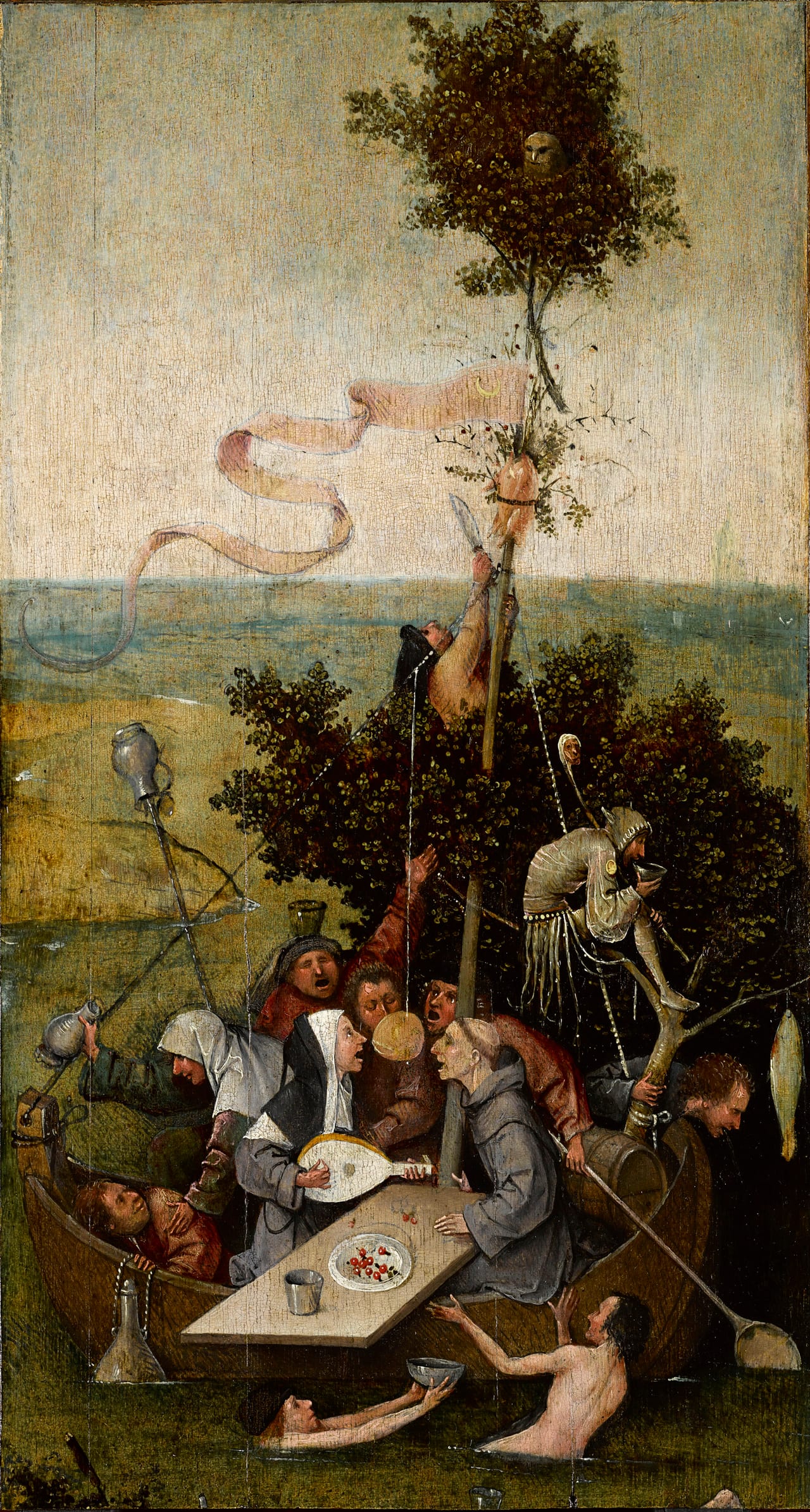
Miraflores Altarpiece
Rogier van der Weyden · c. 1442–45

Early Netherlandish painting
The Burgundian Netherlands
Early Netherlandish painting starts in the 1420s, approximately, with Jan van Eyck and Robert Campin, in the cities of the Burgundian Netherlands. With Rogier van der Weyden the two sought to show the world as it actually was, and oil, slow to dry and laid in transparent glazes, let them render light from shadow to bright beams. The period lasts at least until the death of Gerard David in 1523, and a number of its masters were much sought after by patrons across Europe.
Bruges, and the court of Burgundy
Its painters were once called the Flemish Primitives. They worked in the Burgundian and Habsburg Netherlands, above all in Bruges, Ghent, Mechelen, Leuven, Tournai and Brussels, all cities of today’s Belgium. The story opens in the 1420s, approximately, with Jan van Eyck and Robert Campin, and runs at least until Gerard David’s death in 1523; many scholars carry it on to the start of the Dutch Revolt in 1566 or 1568, and Max J. Friedländer’s surveys reach as far as Pieter Bruegel the Elder.
Burgundy gave it its ground. Philip the Bold, who reigned from 1363 to 1404, founded the Flemish-Burgundian alliance, which held until 1482, and began a habit of patronage that lasted almost as long. Philip the Good, who reigned from 1419 to 1467, moved his capital to Bruges, the hub of the northern wool trade, turned the merchant city into a centre of art, and in 1425 formally took Jan van Eyck into his service. With Burgundian influence at its height, the Low Countries were the political and economic centre of northern Europe, famous for their crafts and luxury goods.
In the early and middle decades of the century, as trade and private fortunes grew, so did the demand for pictures. Patrons came from the Baltic coast, northern Germany and Poland, the Iberian Peninsula, Italy, and the great families of England and Scotland. Smaller pictures were seldom painted to order: they were sold ready-made at fairs or shown in the workshop’s front window, and a merchant might order a devotional panel on a set subject, with his own portrait added, or often just his coat of arms.
Most of the work is religious, or else small portraits; stories and myths are rare, and landscape, however richly described, stays in the background until the early sixteenth century. It is generally painted in oil on panel, as single pictures or as altarpieces of two, three or many panels. Waves of iconoclasm in the sixteenth and seventeenth centuries destroyed most of it. A few thousand works survive, and only about two dozen are confidently attributed to Jan van Eyck himself.
Oil, light and the visible world
Campin, van Eyck and Rogier van der Weyden made naturalism the leading manner of northern painting in the fifteenth century. They wanted to show the world as it really was, and people with a fuller range of feeling than painting had given them before; they watched light, shadow and reflection, and, in Erwin Panofsky’s phrase, painted “gold that looked like gold”. In the Arnolfini Portrait van Eyck stages the scene as though we had just stepped into the room with the two figures.
Oil itself was not new: northern painters had used it on panels and walls in the thirteenth and fourteenth centuries. What changed was how van Eyck and Campin exploited it. Egg tempera, the usual medium until the 1430s, dries fast and makes natural textures and deep shadows hard to achieve. Oil dries slowly and can be worked while wet, and laid in transparent glazes it grades light from shadow to brilliance. Van Eyck is credited with a style built on that: surfaces and natural light rendered minutely, the paint built up layer on translucent layer.
Giorgio Vasari, the sixteenth-century biographer of artists, said that van Eyck invented oil painting. The claim is exaggerated, but it shows how far van Eyck spread the technique, which Campin and Rogier quickly took up and refined. Van Eyck’s major works, the Ghent Altarpiece and the Arnolfini Portrait among them, are at once the beginning and the summit of early Flemish painting, and no later painter’s pictures have kept so fresh a surface or such brilliant colour.
The Ghent Altarpiece was installed in the church of St John at Ghent, now St Bavo’s Cathedral, on 6 May 1432. It has been called the first major oil painting, and it is taken to mark the passage from the Middle Ages to the Renaissance. Its inscription names Hubert van Eyck as the painter who began it and Jan, his brother, as the one who carried it through; but the inscription is a sixteenth-century transcription, earlier references never mention Hubert, and his exact part in the work remains unknown. Closed, it shows the Annunciation in a low room running across four panels, and beneath it the two donors kneeling before John the Baptist and John the Evangelist, both painted as stone statues.
Robert Campin, a master painter in Tournai in 1406, is now usually taken to be the artist known as the Master of Flémalle, though some scholars have taken that group of pictures for early works by Rogier himself. With van Eyck he founded the realistic manner of oil painting in the Netherlands. His figures have a weight associated with Burgundian sculpture, and in the Mérode Altarpiece he set the Virgin in a scene of bourgeois realism, its furnishings painted with a loving care for detail that became a Flemish tradition. Van Eyck seems to have learned his bold realism from Campin, and Rogier van der Weyden was Campin’s apprentice from 1427 to 1432.
Rogier, his heirs, and Bosch
Except perhaps for van Eyck, Rogier van der Weyden was the most influential northern artist of his time, famed internationally for natural detail and expressive pathos. He settled in Brussels, where he became city painter, worked for Philip the Good and for foreign princes, and in the Jubilee year of 1450 visited Rome; he was warmly received in Italy. Christus, Bouts, Hugo van der Goes and Memling, the painters of the next generation, all built on his models, and in the second half of the century his influence dominated painting in France, Germany and Spain.
In Bruges, Petrus Christus, a citizen from 1444 and believed to have trained in van Eyck’s studio, is reputed to have brought geometric perspective to the Netherlands, and no Netherlandish painting before his Virgin with Saints Jerome and Francis has a single vanishing point. Dieric Bouts, born in Haarlem, worked chiefly in Louvain, where the lines of his Last Supper converge on one point above Christ’s head. In Ghent, Hugo van der Goes, a master of the guild from 1467, painted the Portinari Altarpiece for the Medici agent in Bruges; it arrived in Florence in 1483, made a considerable impression and influenced artists there, Ghirlandaio among them.
Memling, born at Seligenstadt in Germany, is recorded as a citizen of Bruges in 1465 and was its leading artist for the rest of his life; when he died, a Bruges notary called him the most skilful painter in all Christendom. In the late fifteenth century the tradition declined, as the house of Burgundy fell and the economy of Bruges collapsed. Gerard David, the last great Bruges painter in the line of realism that van Eyck founded, led the city’s painters after Memling’s death, and his Judgment of Cambyses of 1498 is among the earliest Flemish paintings to use the Italian devices of putti and garlands. Italian influence first appears in Netherlandish art in the late fifteenth century, when some painters began to travel south.
Hieronymus Bosch, one of the most important and popular of the Netherlandish painters, stands apart. He took his name from ’s-Hertogenbosch, where he seems to have spent most of his life; he largely set aside realistic rendering of nature and perspective, and his work is almost entirely free of Italian influence. His mature pictures speak an original and often macabre language of symbols, sermons on folly and sin, and of the approximately 35 to 40 paintings attributed to him, only seven are signed and none is dated. In the Garden of Earthly Delights, of 1490 to 1500, humankind swarms out of paradise into perversion and then punishment.
Then taste turned. By the middle of the sixteenth century Netherlandish painting was thought crude, Michelangelo saying it pleased only “monks and friars”, and it fell almost wholly out of favour in Italy; in the eighteenth century its painters were largely forgotten. Museum-goers took to it again late in the nineteenth century, and in 1902 Bruges held the first exhibition of Netherlandish art. It drew 35,000 visitors and became a turning point in how the school was valued.
Artists
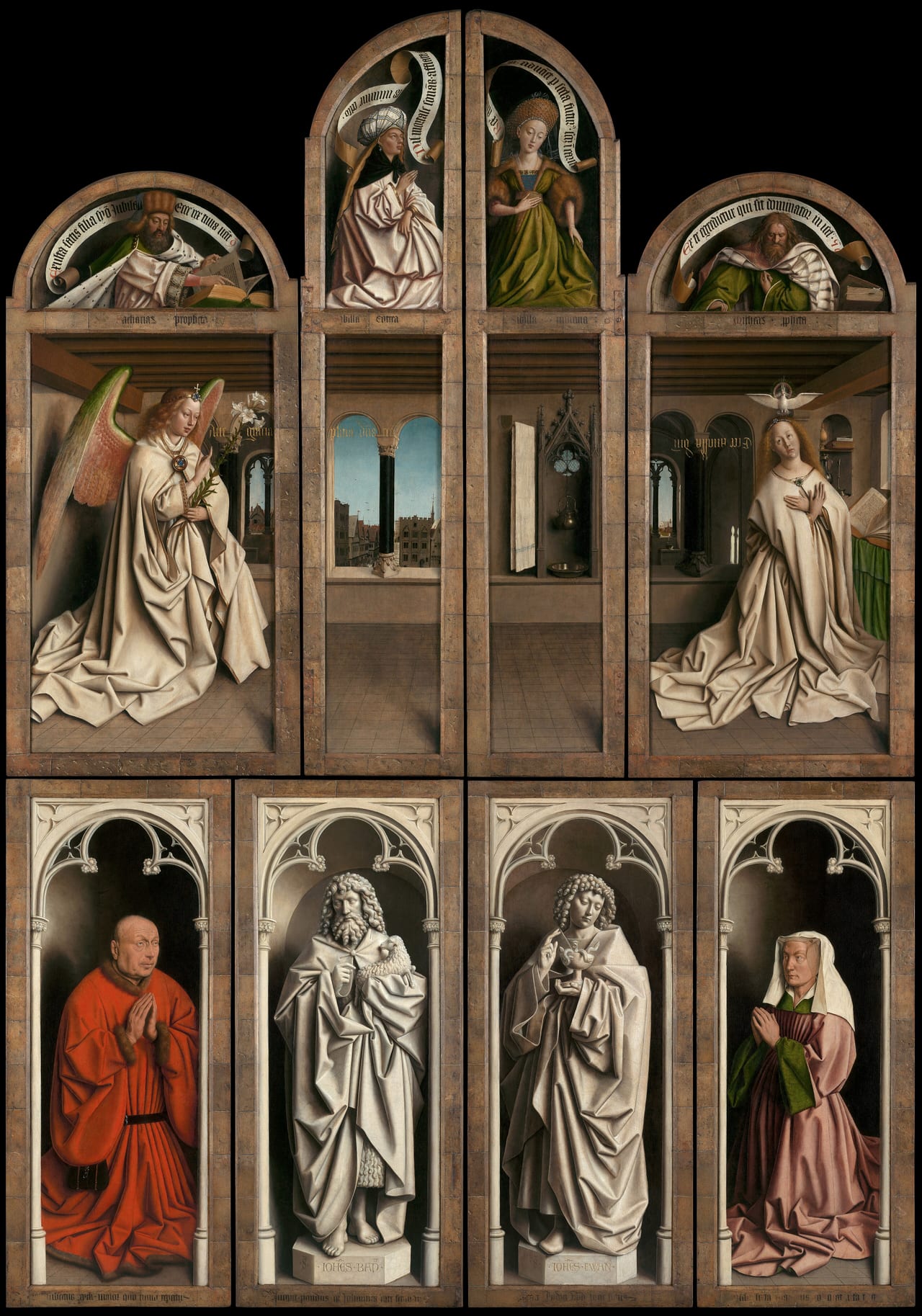
Jan van Eyck
The altarpiece in Ghent’s cathedral, the Adoration of the Mystic Lamb, of 1432, is the masterpiece of Jan van Eyck, a Netherlandish painter who brought the newly developed technique of oil painting to perfection. Summoned to Lille in the summer of 1425 to serve Philip the Good, Duke of Burgundy, he stayed in the duke’s employ until he died.
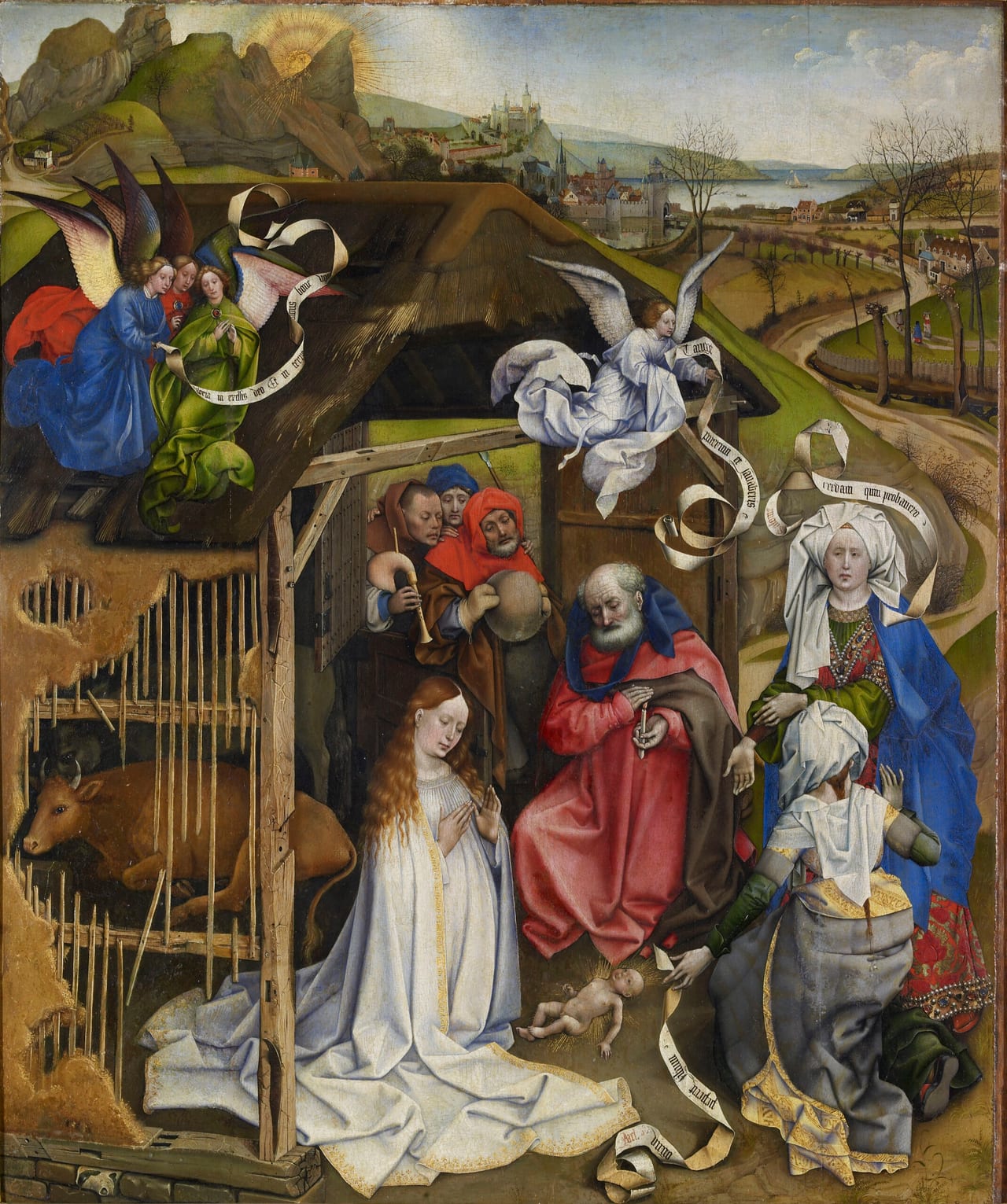
Robert Campin
One of the earliest and greatest Flemish masters and a master painter in Tournai in 1406, he has been identified with the Master of Flémalle. His natural sense of form and his poetry of everyday things broke with the International Gothic; the Nativity is among the works generally ascribed to him.
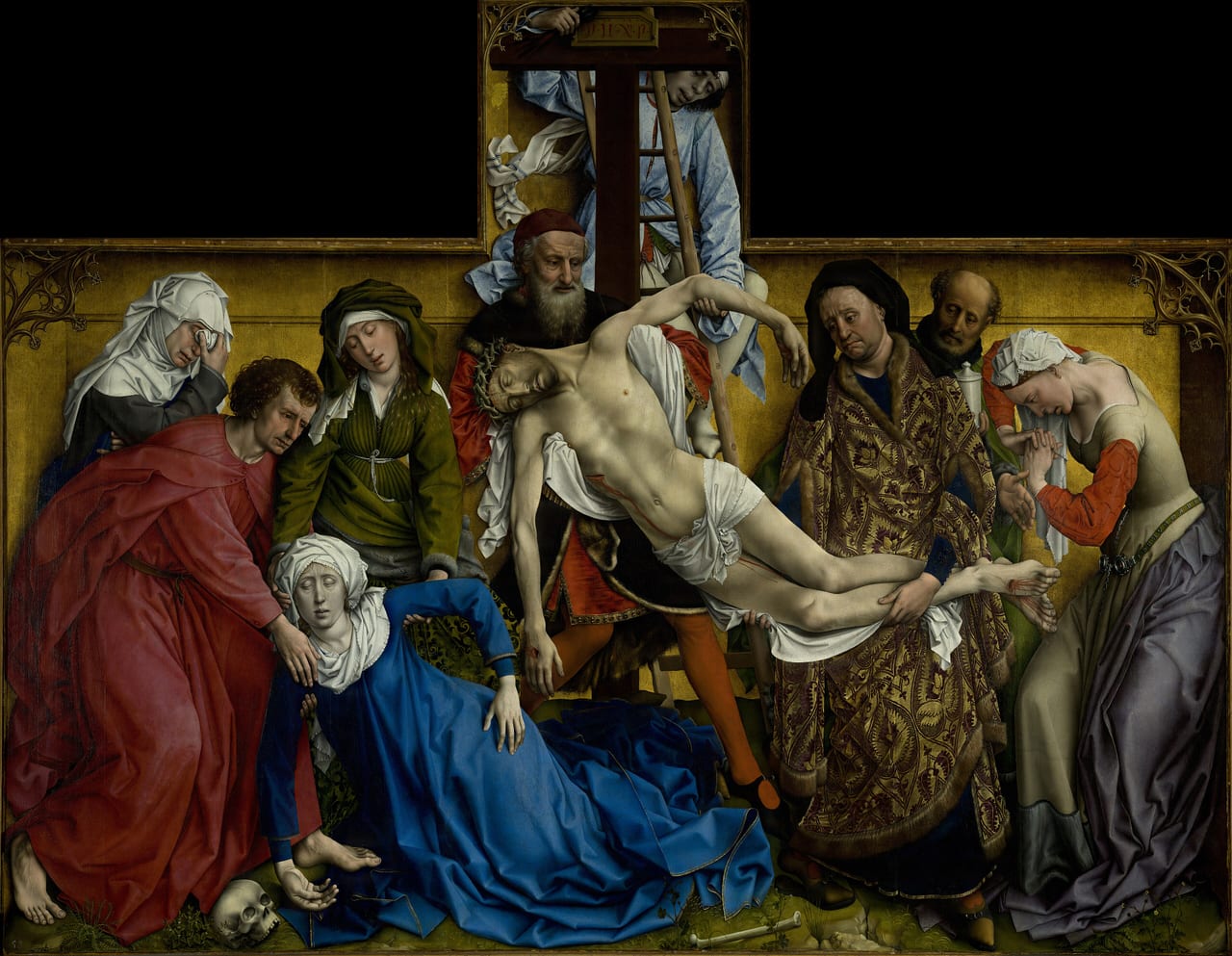
Rogier van der Weyden
Apprenticed to Campin in Tournai in 1427, he settled in Brussels and became its city painter; apart perhaps from van Eyck, no northern artist of his time had more influence. The Descent from the Cross was his panel for the chapel of the archers’ guild in Louvain.
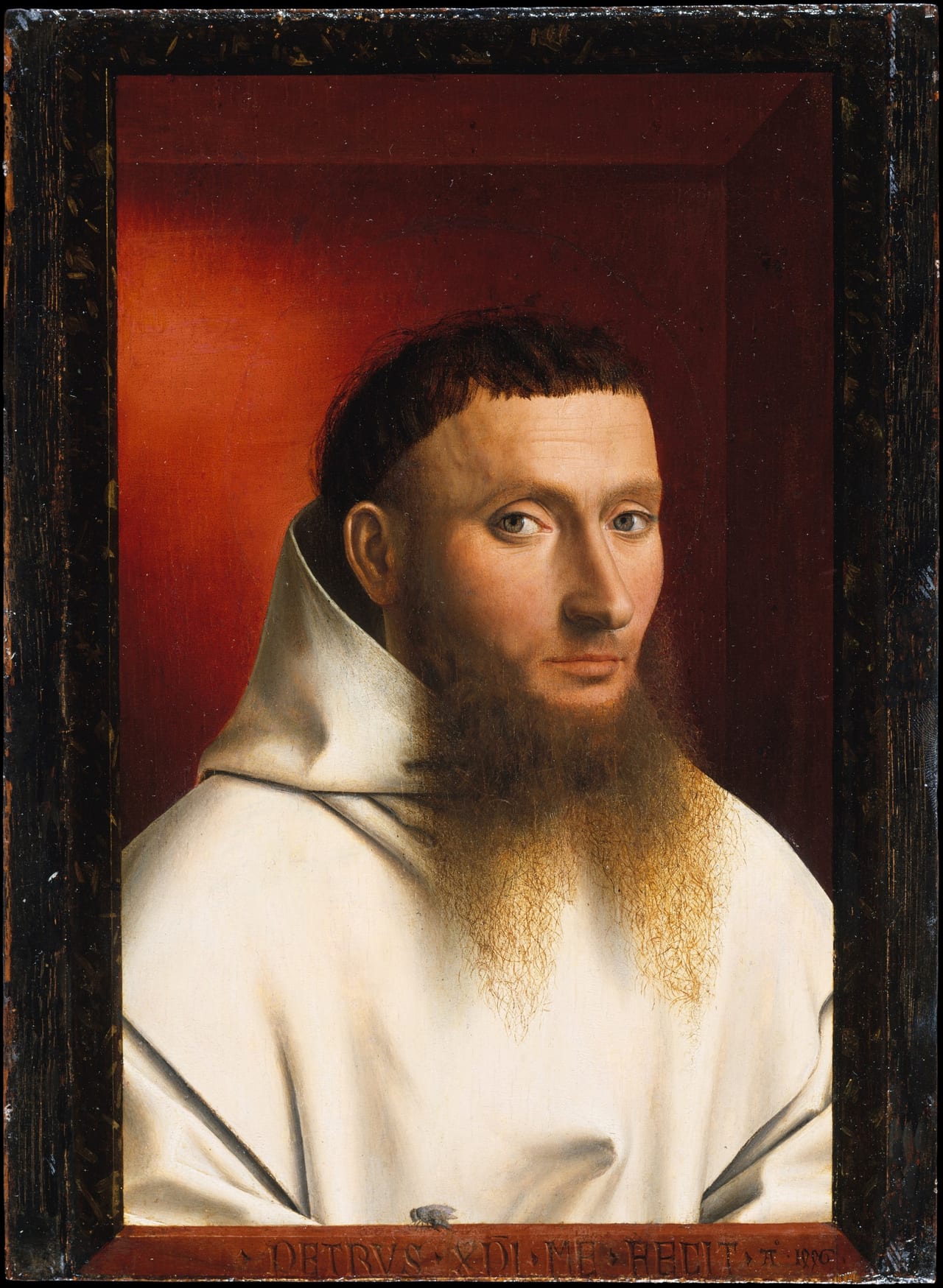
Petrus Christus
A citizen of Bruges from 1444, believed to have trained in van Eyck’s studio, he is reputed to have brought geometric perspective to the Netherlands. The Portrait of a Carthusian, of 1446, is among his most important paintings.
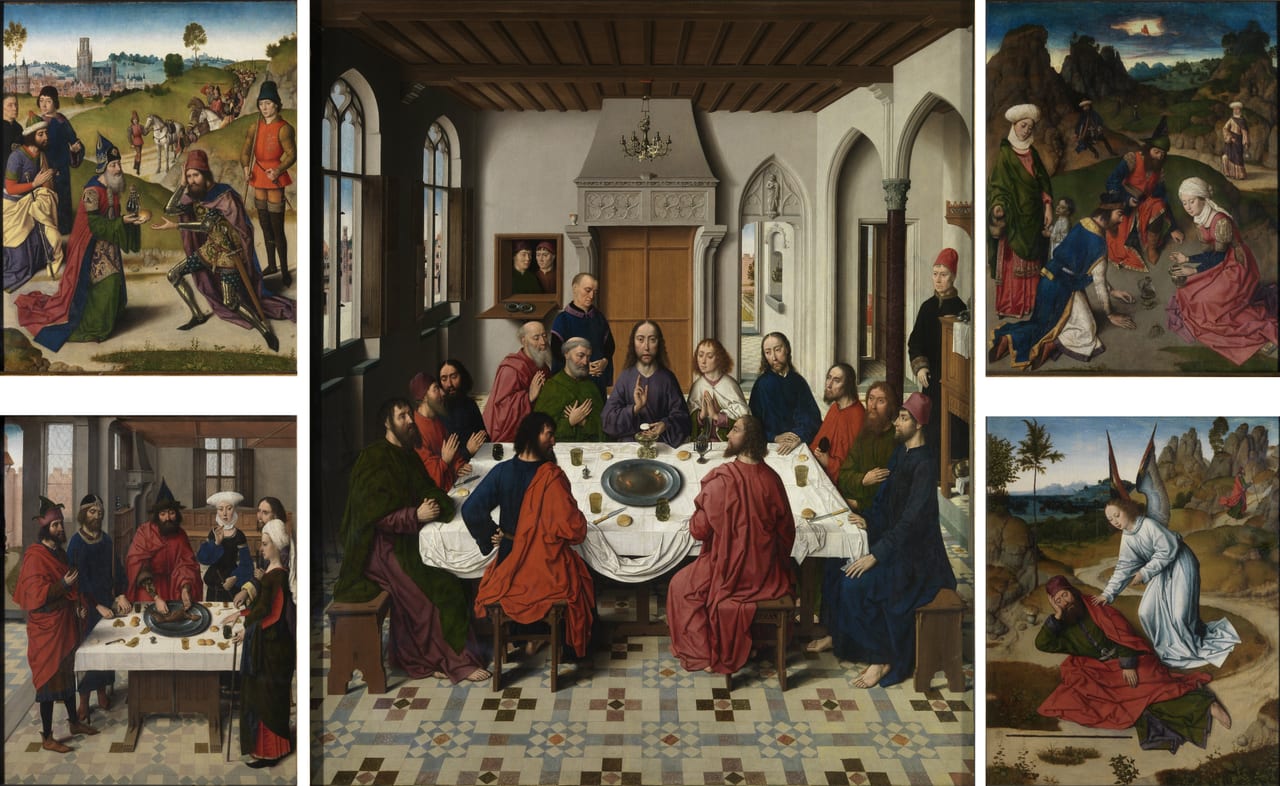
Dieric Bouts
The Last Supper altarpiece, one of the two best-known works of Dieric Bouts, was ordered in 1464 for the Church of St Peter by the Confraternity of the Holy Sacrament, and sets the Last Supper between four scenes from the Hebrew Bible that foreshadow the Eucharist. Bouts was born in Haarlem and died in Louvain, whose official painter he became in 1468.
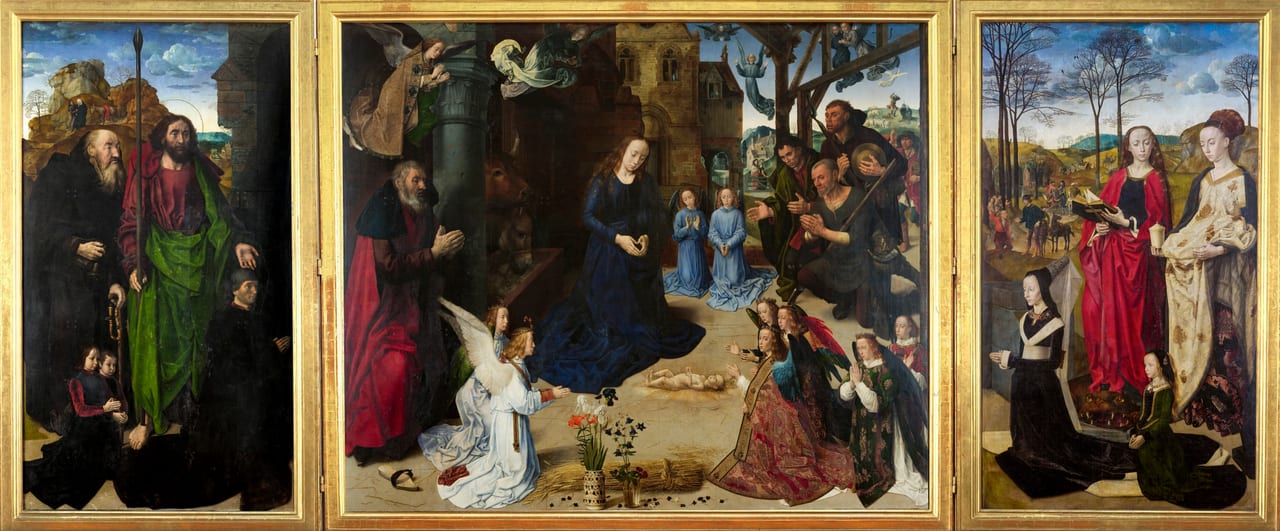
Hugo van der Goes
The Portinari Altarpiece, commissioned by Tommaso Portinari, the Medici agent in Bruges, is the only securely documented work of Hugo van der Goes. He was a master of the Ghent painters’ guild from 1467 and its dean in 1474, entered the Roode Kloster near Brussels as a lay brother the next year and went on painting there.
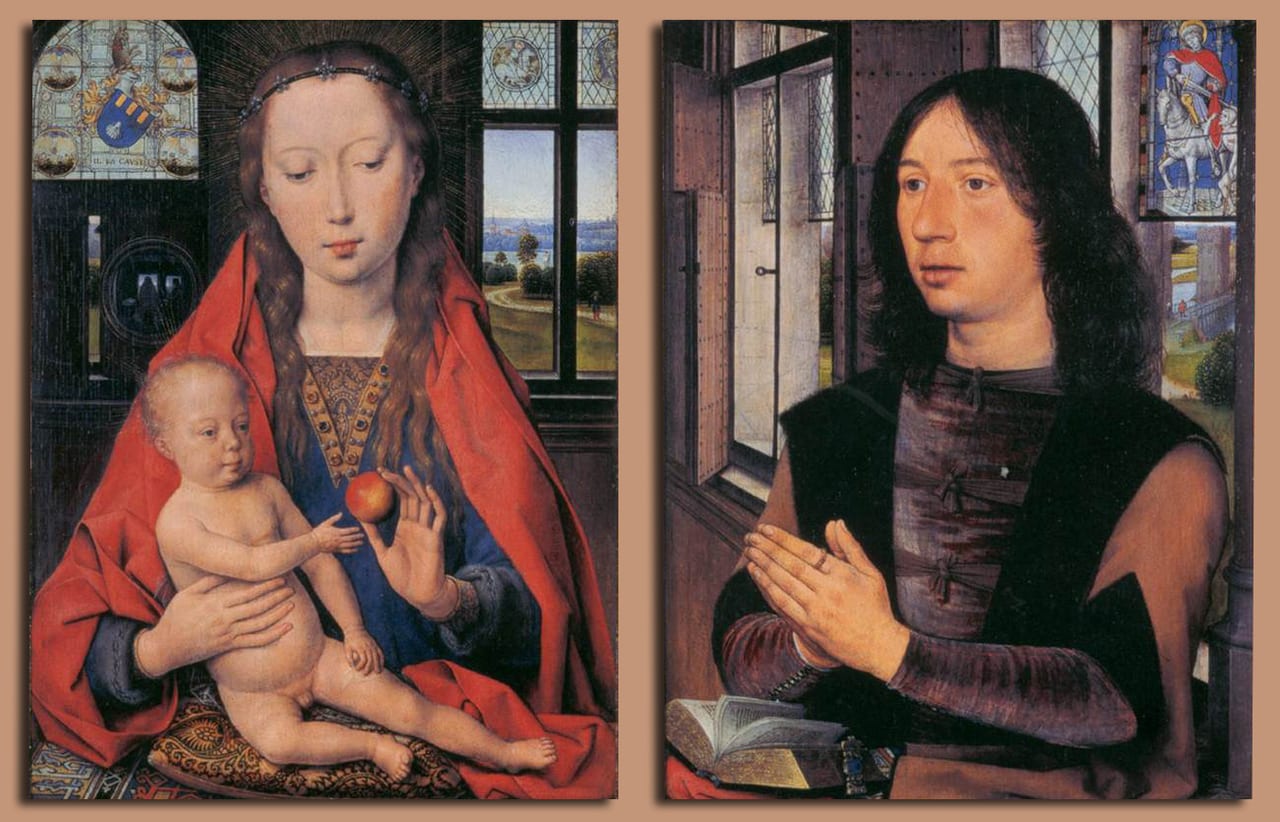
Hans Memling
Probably trained in Rogier van der Weyden’s workshop, he settled in Bruges in 1465, ran a large shop and by 1480 was among the city’s wealthiest taxpayers. He often paired a half-length Madonna and Child after Rogier with a panel portraying the donor, as in the diptych for Maarten van Nieuwenhove.
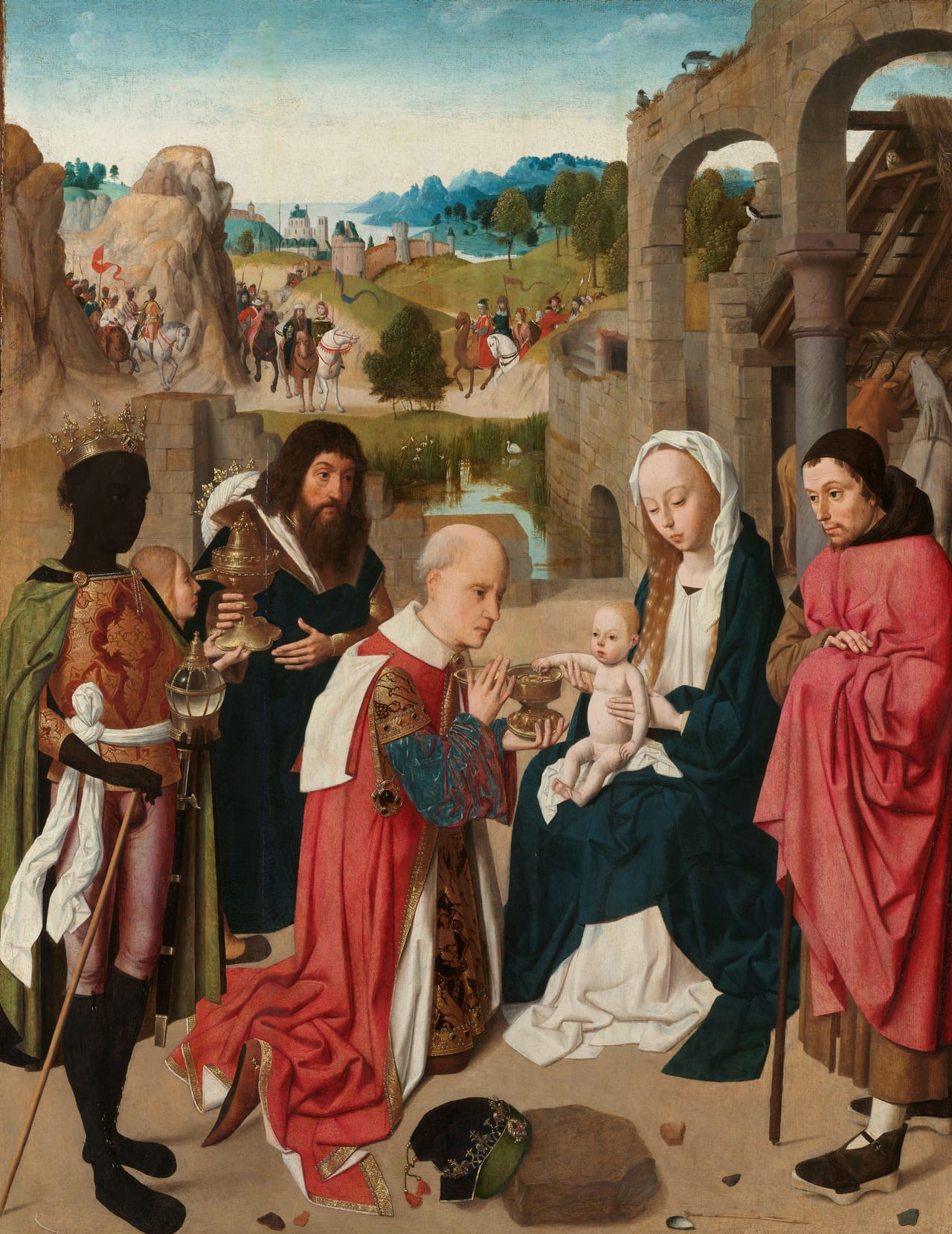
Geertgen tot Sint Jans
An Adoration of the Magi is among the works ascribed to Geertgen tot Sint Jans on grounds of style; he is known for the harmony of his landscapes. A North Netherlandish painter of religious subjects who flourished about 1475 to 1495, he is named after the Knights of St John at Haarlem, with whom he lived, and was a pupil there of Albert van Ouwater.
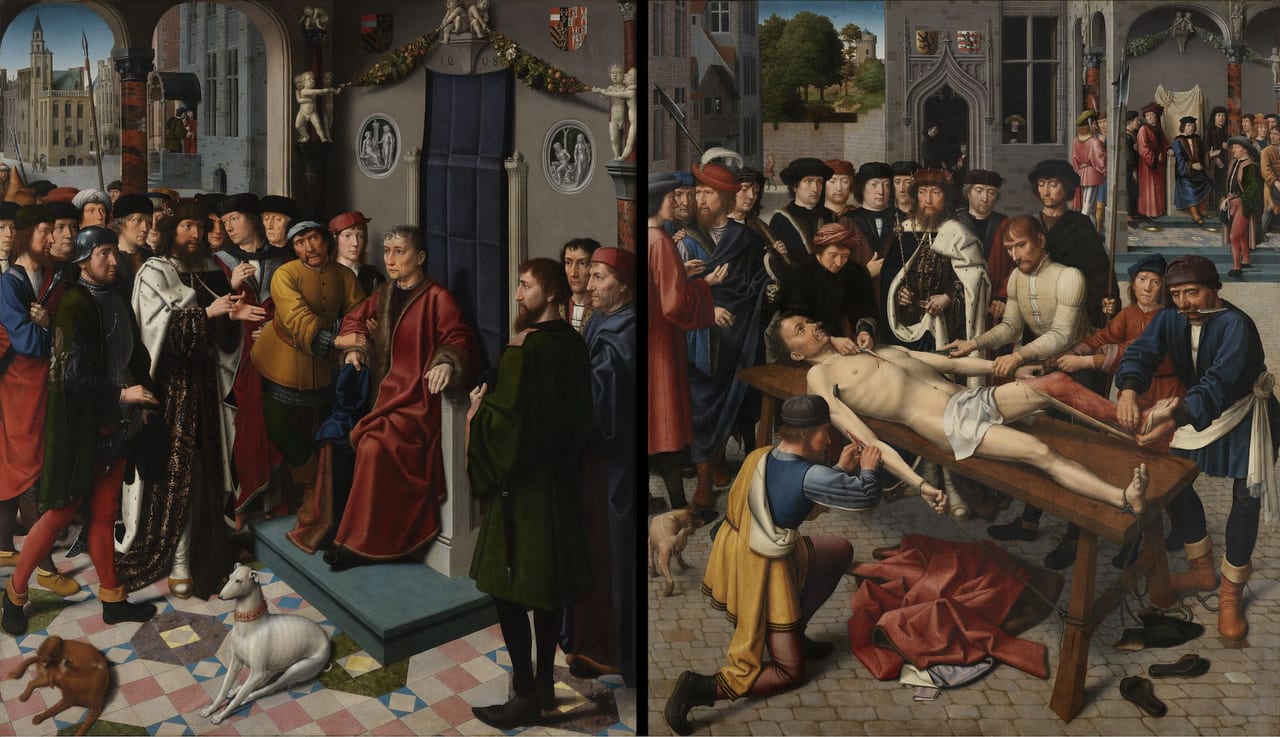
Gerard David
The two panels of the Judgment of Cambyses of 1498, some of the first Flemish paintings to use Italian putti and garlands, are among the altarpieces on which the fame of Gerard David rests above all. He was the last great master of the Bruges school; he joined the city’s guild of St Luke in 1484 and became its dean in 1501.
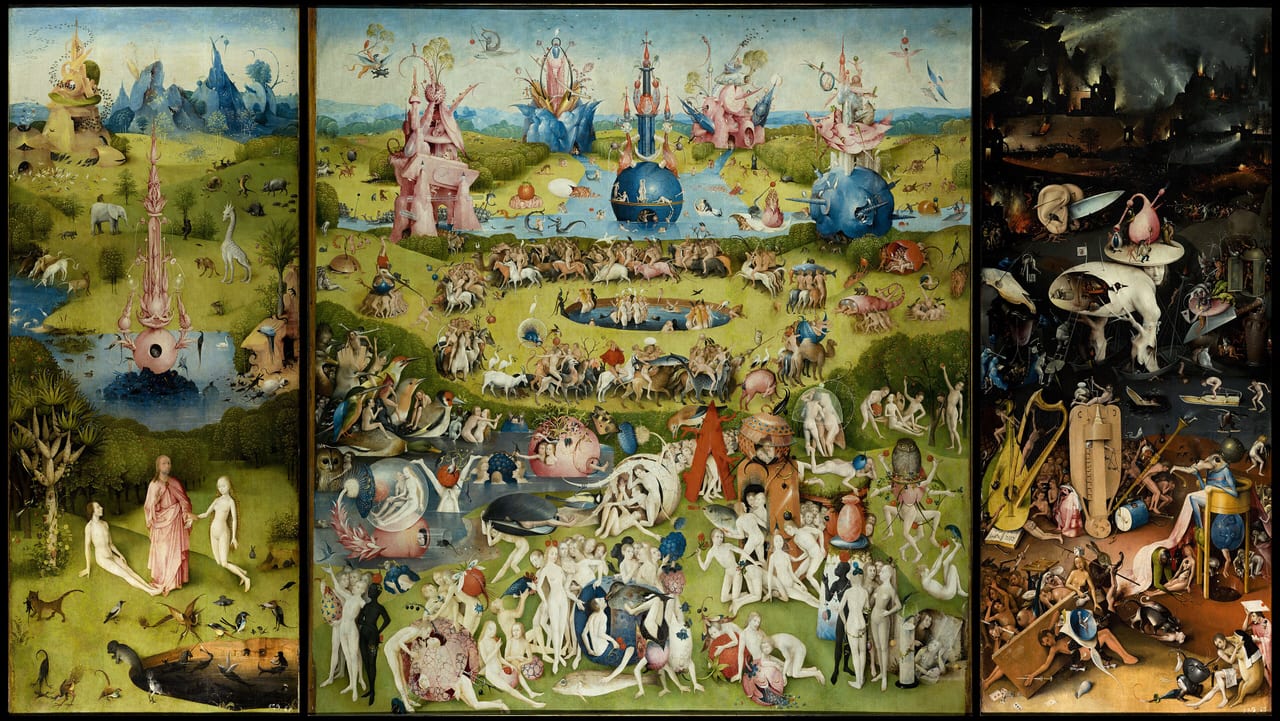
He took his name from ’s-Hertogenbosch and is famous for the fantastic, disturbing detail of his panels and for an original, often macabre language of symbols. The Garden of Earthly Delights in the Prado is perhaps his most famous work, and Philip II of Spain collected his paintings.
Artworks
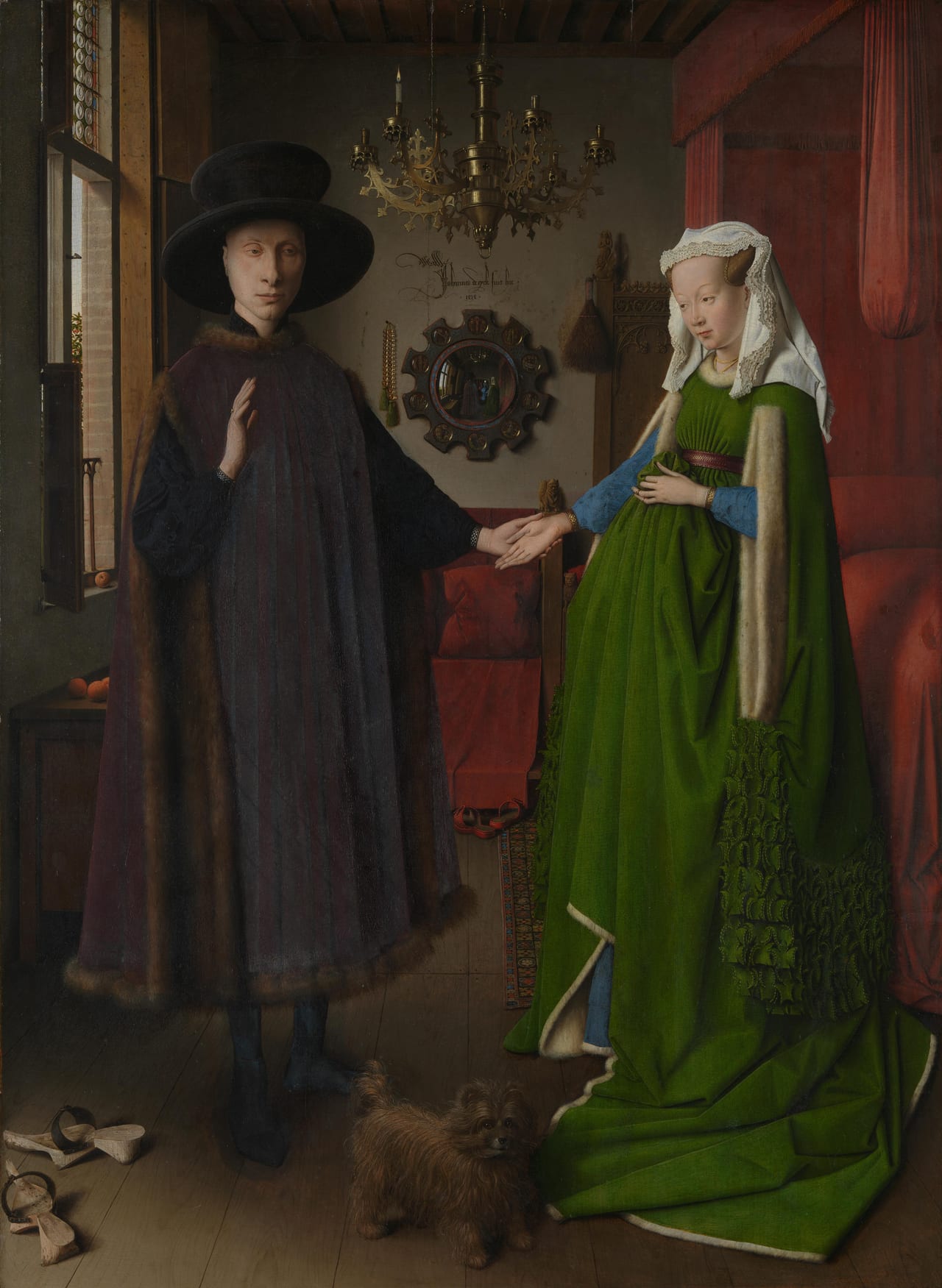
Arnolfini Portrait
Jan van Eyck · 1434
National Gallery
The richly dressed pair in this private room are probably the Italian merchant Giovanni di Nicolao di Arnolfini, who worked in Bruges, and his wife. For many years the picture was read as a marriage ceremony; it no longer is. The convex mirror on the back wall shows two men entering the room, and above it van Eyck wrote, in Latin, Jan van Eyck was here, 1434. The National Gallery bought it in 1842.
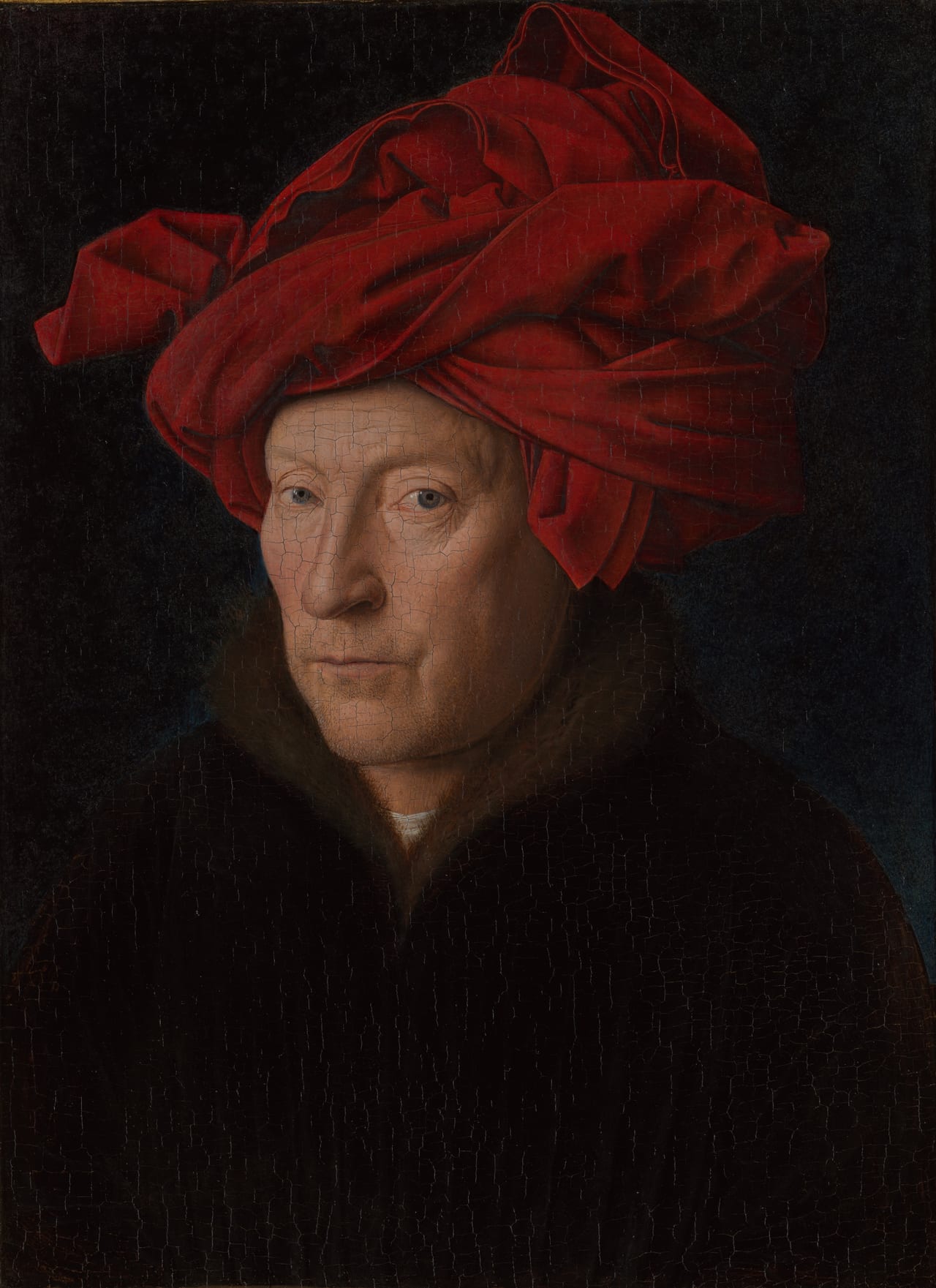
Portrait of a Man (Self Portrait?)
Jan van Eyck · 1433
National Gallery
The sitter, impassive and intent, is almost certainly van Eyck himself: he leans forward a little, as if into a mirror, and his eyes look in slightly different directions, as though the painter had studied each in turn. The red headdress is a chaperon, a man’s fashion of the fifteenth century. Across the top of the original frame his motto, Als Ich Can, a play on his name, is painted in Greek letters, and the Latin inscription at the foot records that Jan van Eyck made the picture on 21 October 1433.
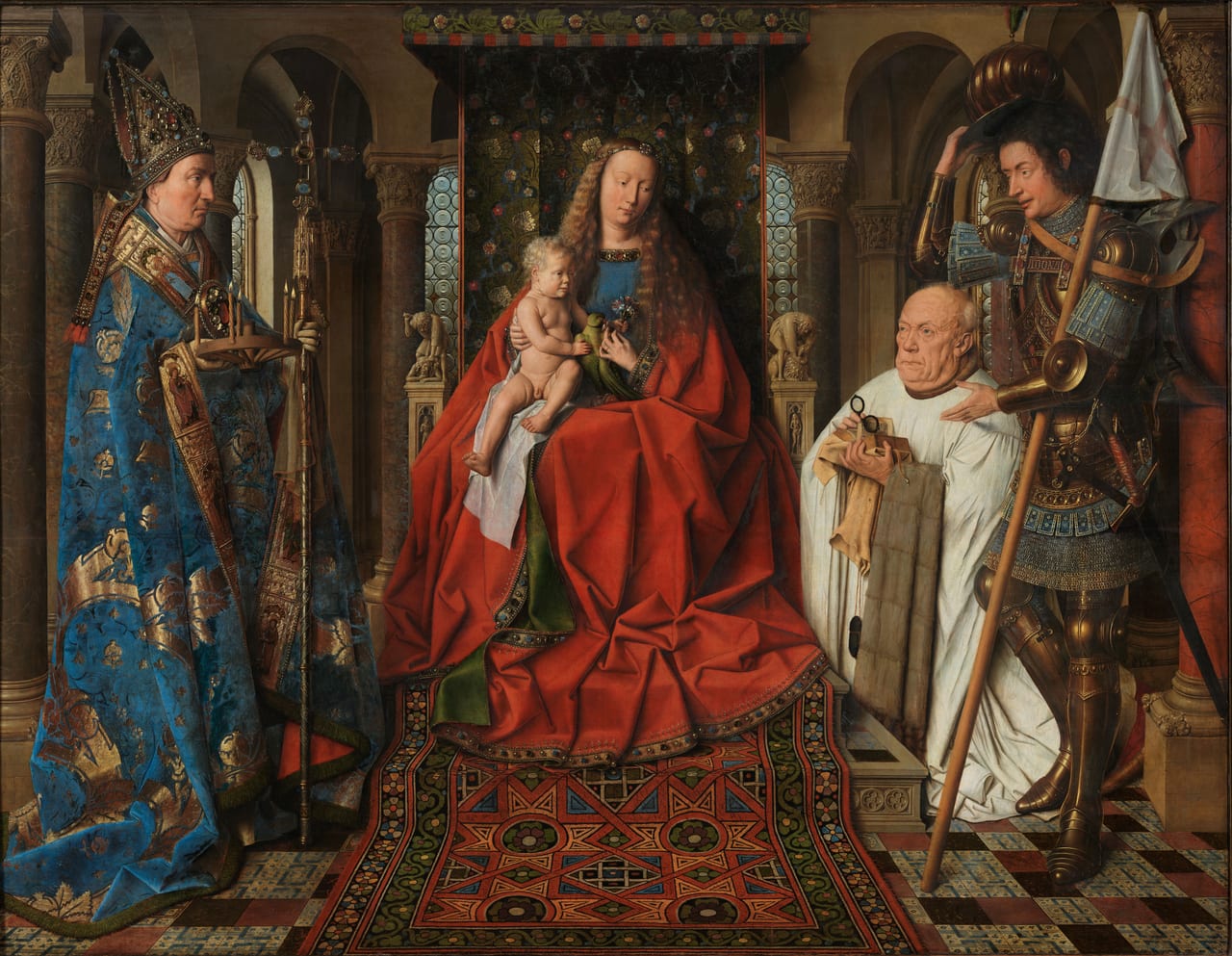
Madonna with Canon Joris van der Paele
Jan van Eyck · 1434–36
Groeningemuseum
Joris van der Paele, a wealthy clergyman of Bruges, old and gravely ill, commissioned this altarpiece as his memorial. The Virgin sits enthroned with the Child on her lap in what is most likely a church interior, Saint Donatian on one side and, on the other, Saint George, the canon’s name saint, who lifts his helmet as he presents him; the canon, in a white surplice, reads from a book of hours. Painted around 1434 to 1436, it has been called a masterpiece of masterpieces.
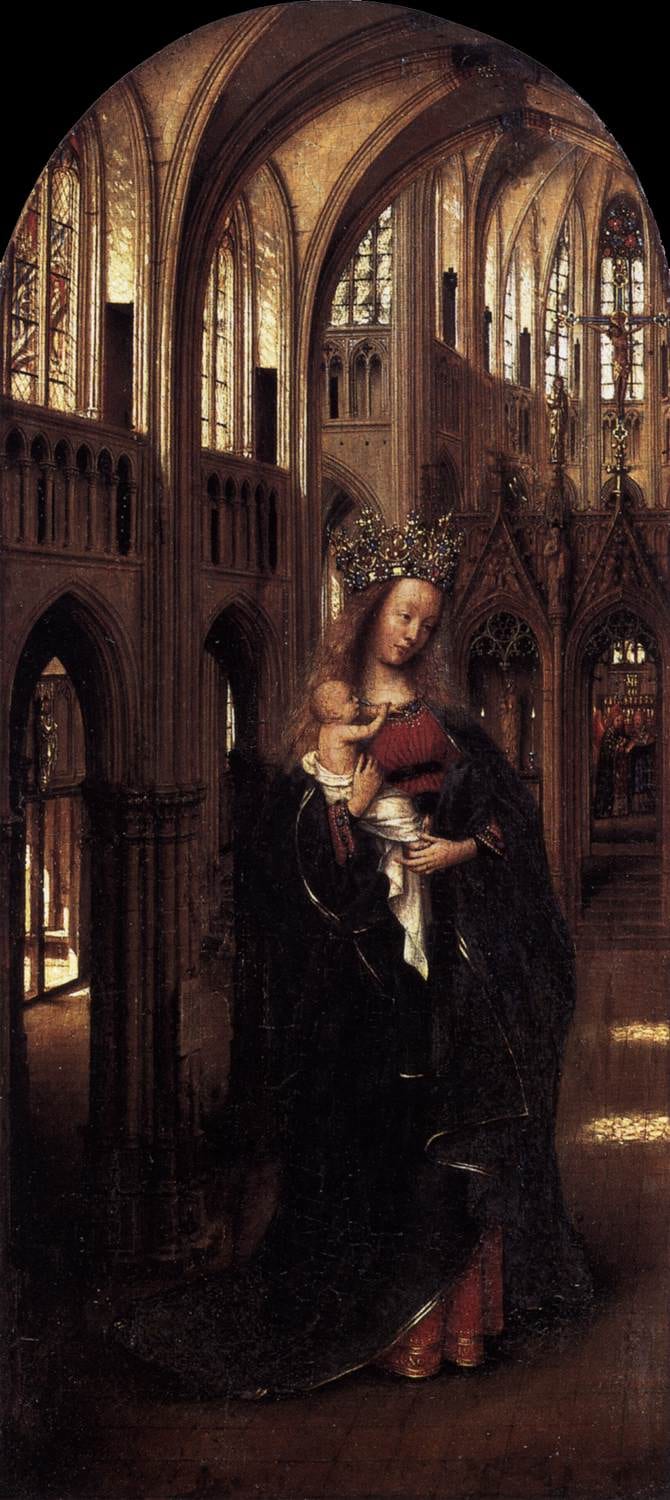
The Madonna in the Church
Jan van Eyck · c. 1438–40
Gemäldegalerie Berlin
A small panel, probably of about 1438 to 1440. The Virgin, crowned as Queen of Heaven and far too large for the Gothic church around her, holds the Child, who grips the neckline of her red dress; light falls through the windows and gathers in two pools on the floor, which alludes to her purity and to God’s presence. Most historians take it for the left wing of a diptych taken apart. It came to Berlin in 1874, was stolen in 1877 and soon returned, but without its inscribed frame.
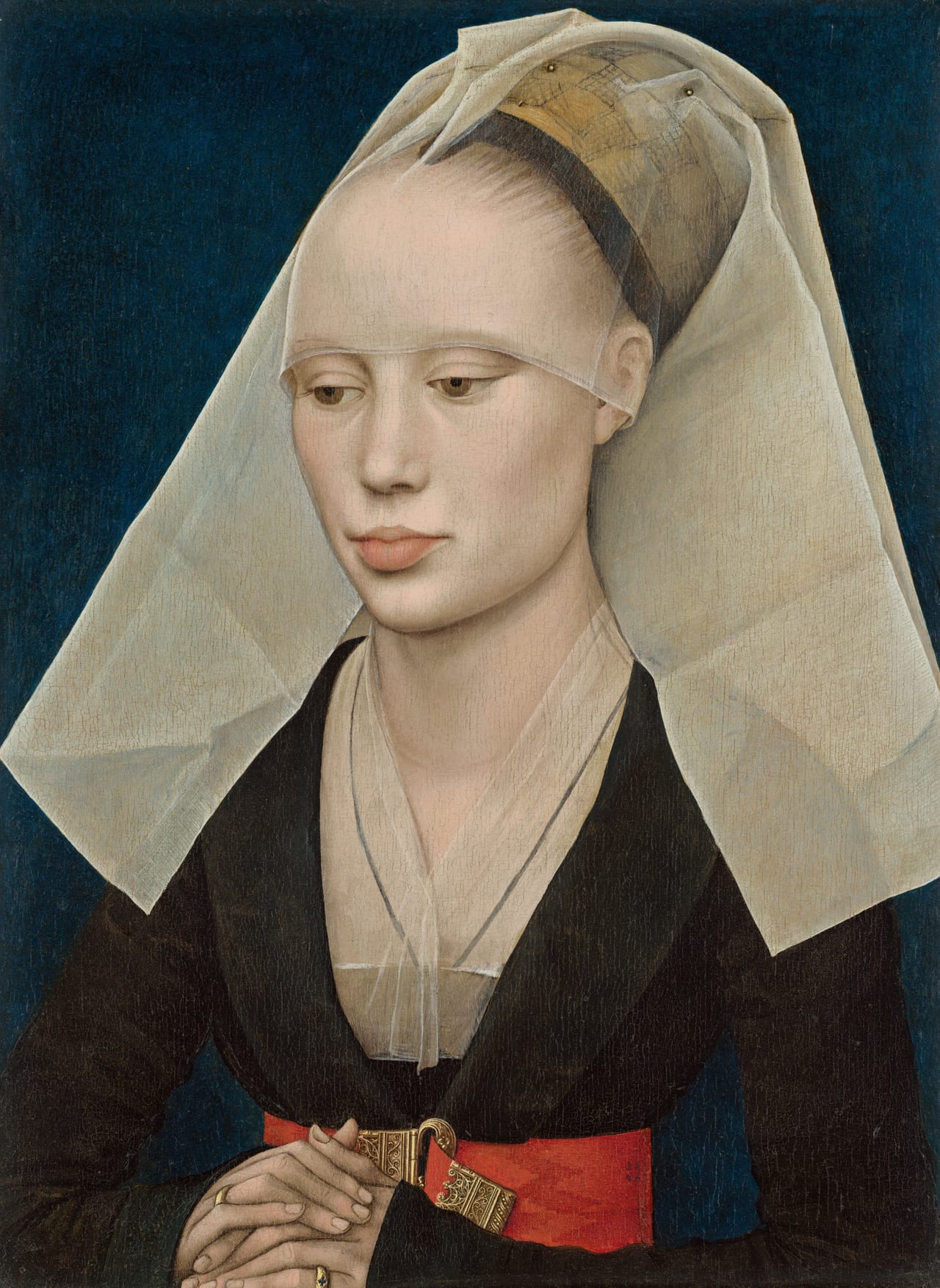
Portrait of a Lady
Rogier van der Weyden · c. 1460
National Gallery of Art
Painted around 1460, this is the only portrait of a woman accepted as Rogier’s own work, and the sitter’s name is not recorded. Light falls on her face and headdress, and her lowered eyes, slight frame and tightly held fingers convey her humility and reserve. It has been in the National Gallery of Art in Washington since 1937.
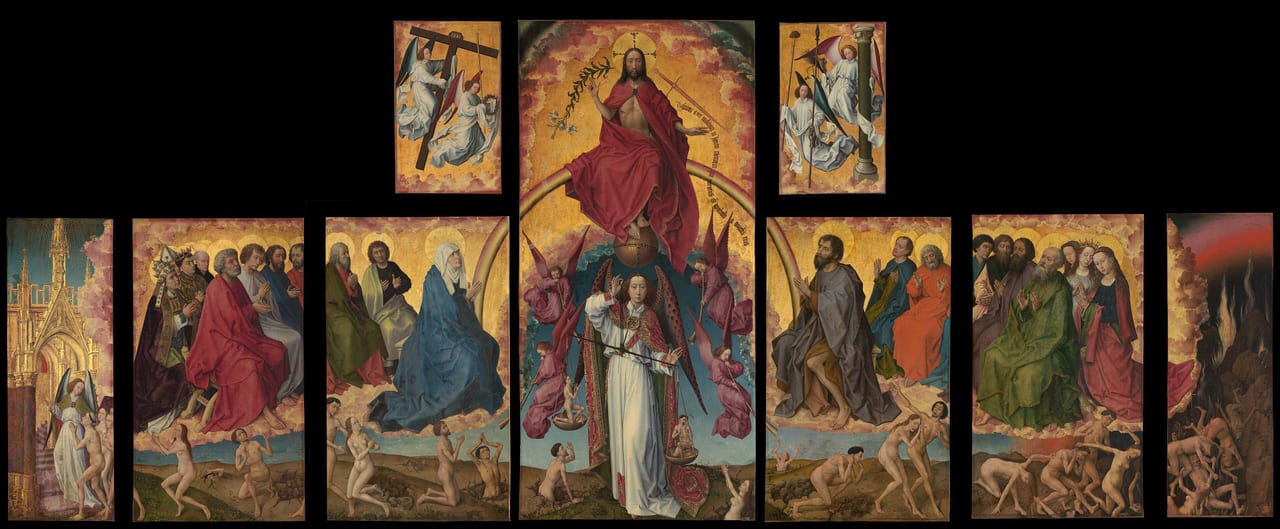
The Last Judgment (Beaune Altarpiece)
Rogier van der Weyden · c. 1443–51
Hospices de Beaune
Nicolas Rolin, Chancellor of Burgundy, and his wife Guigone de Salins commissioned it in 1443 for the Hospices de Beaune. Fifteen paintings on nine panels set out the Last Judgement: Christ sits on a rainbow, the Archangel Michael weighs souls below him, and the dead rise from their graves and move toward the gates of heaven or the entrance to hell. Here the settings are stark and the figures delicate Gothic types; the action is stilled yet exquisitely expressive.
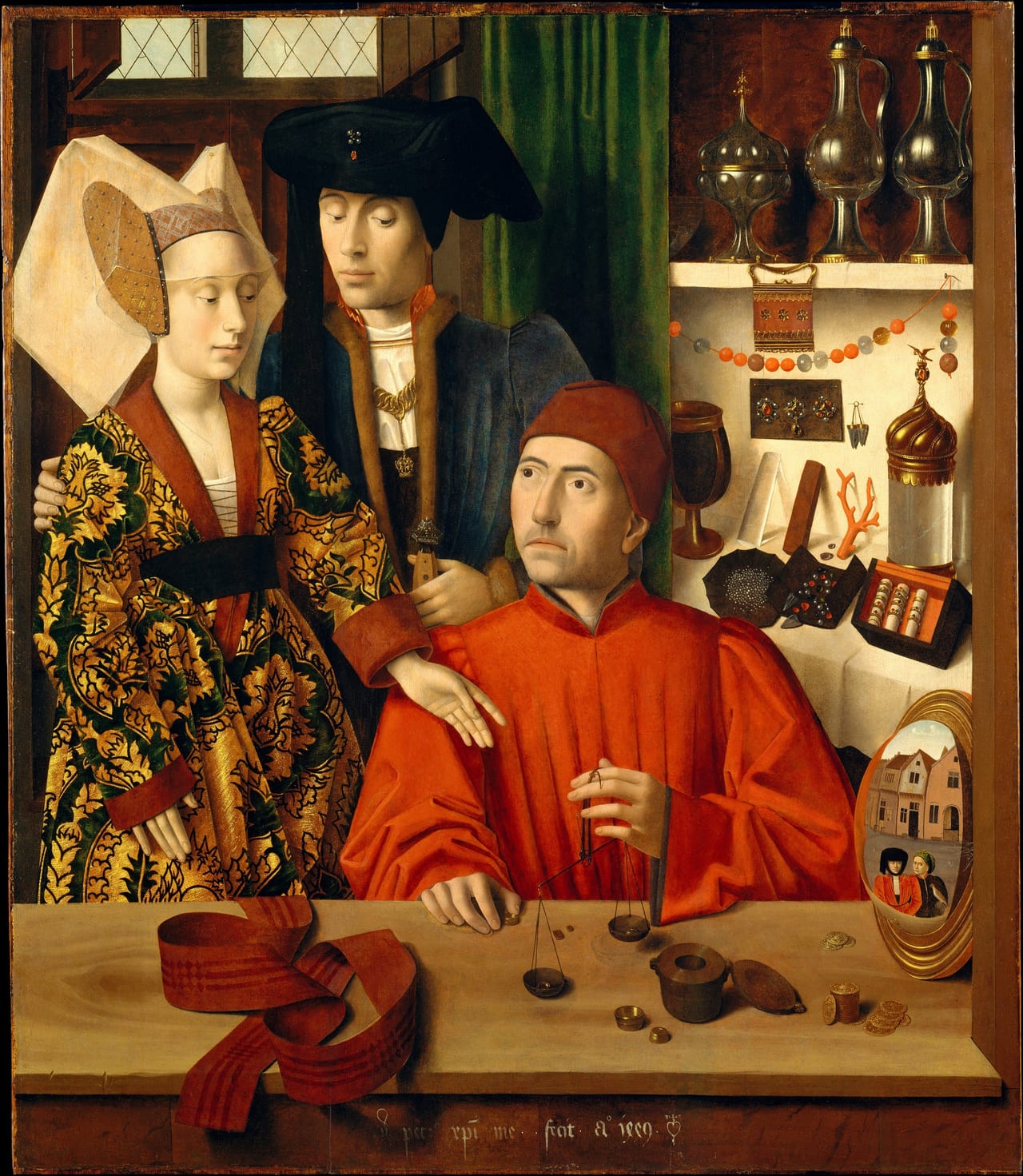
A Goldsmith in His Shop
Petrus Christus · 1449
Metropolitan Museum of Art
Signed by Petrus Christus and dated 1449, it may have been commissioned by the goldsmiths’ guild of Bruges as an advertisement. Some sources call it Saint Eligius, after the goldsmiths’ patron saint, because a halo once hung over the goldsmith’s head; the halo proved to be a later addition and was removed.
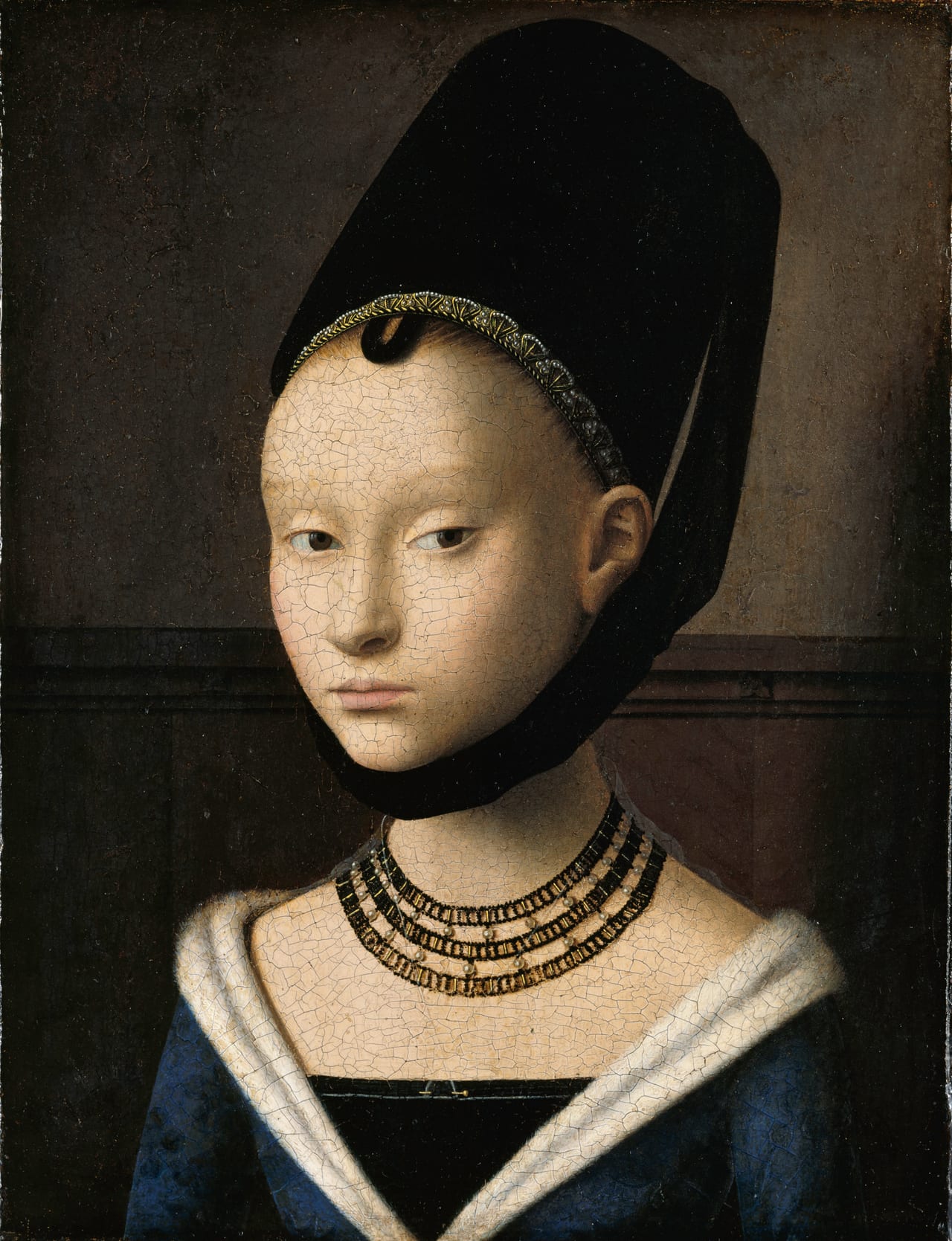
Portrait of a Young Girl
Petrus Christus · 1465–70
Gemäldegalerie Berlin
Painted between 1465 and 1470, near the end of Christus’s life, it sets the girl in an airy, three-dimensional space before a wainscotted wall, a marked advance in the portraiture of its day. Her gaze is reserved yet alert, made the more intriguing by eyes that are slightly out of line. It is in the Gemäldegalerie in Berlin.
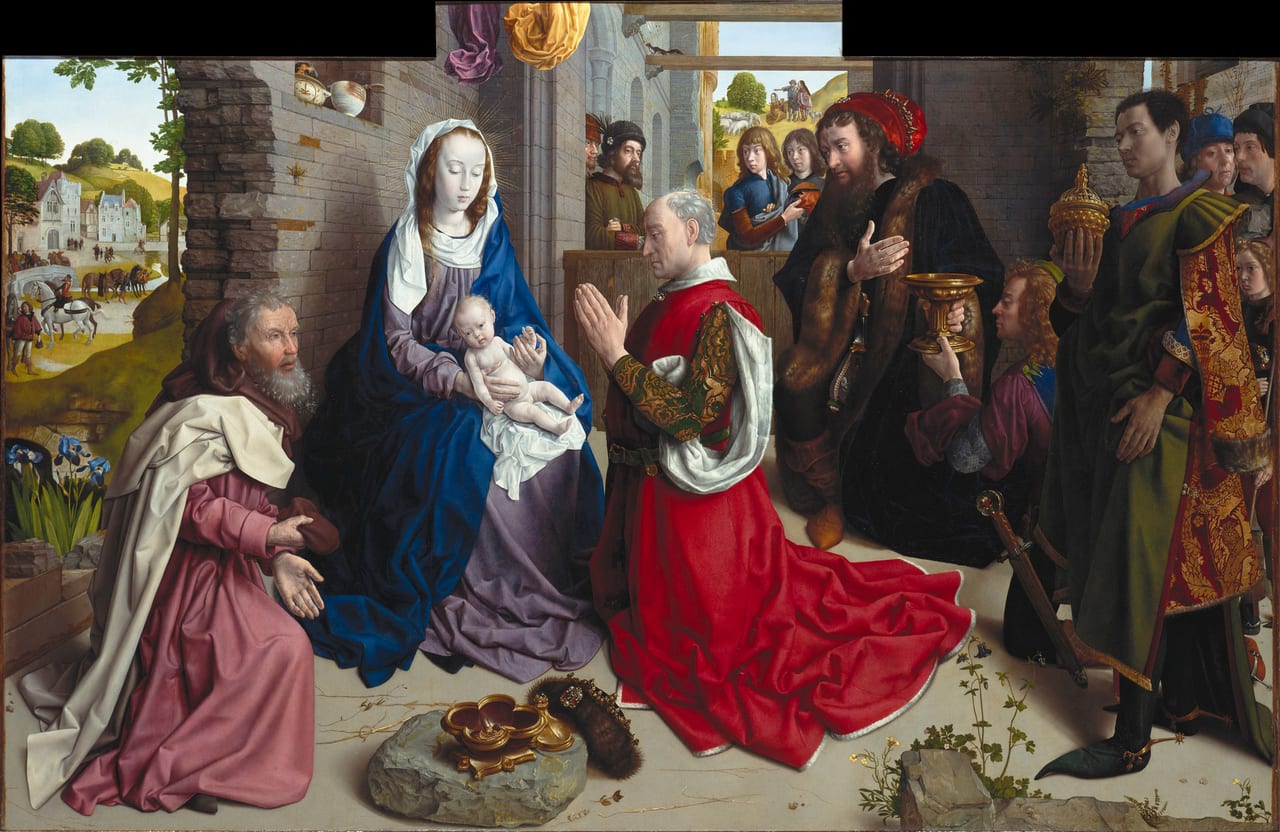
Monforte Altarpiece
Hugo van der Goes · c. 1470
Gemäldegalerie Berlin
An Adoration of the Magi that was once the centre of a triptych; its wings are lost and the panel has been cut down at the top. It is named after a convent at Monforte de Lemos in northern Spain, where it is presumed to have arrived in the early sixteenth century, and it is dated to about 1470 on grounds of style. Berlin acquired it in 1914. Heinrich Wölfflin thought it far too late to be by van der Goes, but the attribution is now generally accepted.
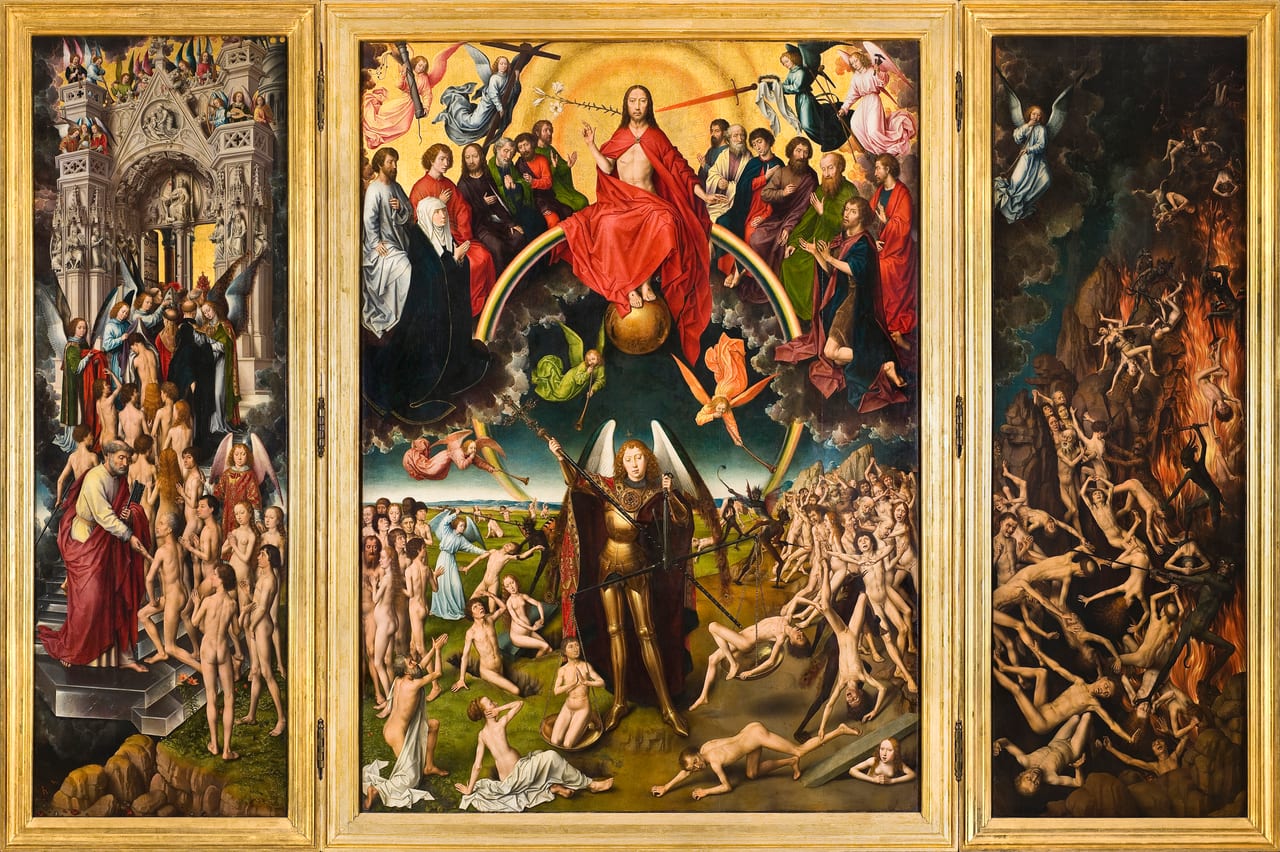
The Last Judgment
Hans Memling · 1467–71
National Museum in Gdańsk
A triptych attributed to Memling and painted between 1467 and 1471 for Angelo Tani, agent of the Medici at Bruges, for a chapel at Badia Fiesolana. Christ sits in judgement while Saint Michael weighs souls, and on the left wing Saint Peter and the angels lead the saved into heaven. In 1473, on its way to Italy, it was seized by pirates. Paul Beneke, the privateer from Danzig who captured it at sea, gave it to his patrons, lay brothers of the Brotherhood of Saint George, who gave it to their church; it remained in the Basilica of the Assumption until 1807.
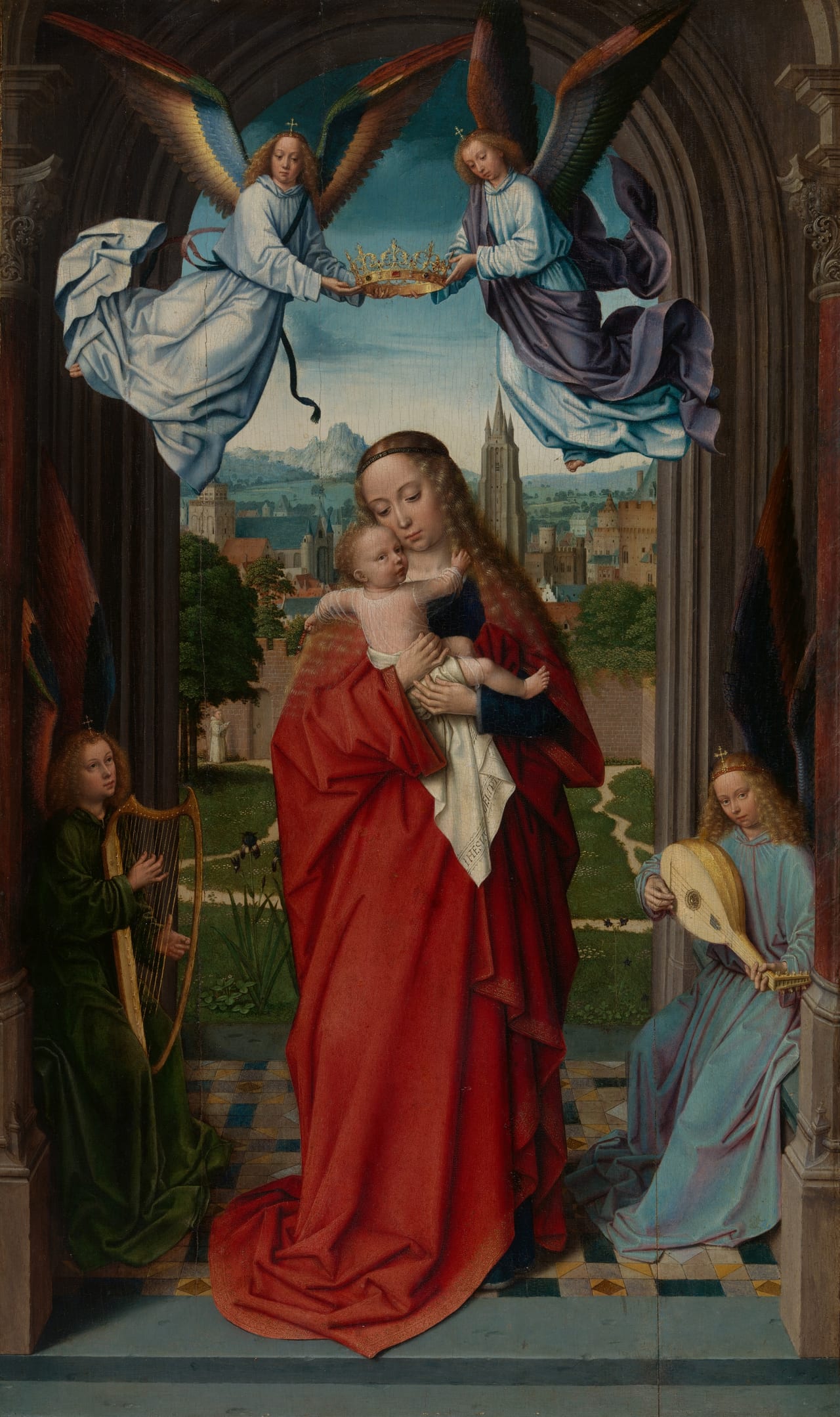
Virgin and Child with Four Angels
Gerard David · c. 1510–15
Metropolitan Museum of Art
A small picture for private devotion, probably finished between 1510 and 1515. Two angels crown the Virgin as Queen of Heaven while two more play harp and lute beside her, in a walled garden under a Gothic arch with a view of Bruges beyond. It draws heavily on Jan van Eyck’s Virgin with Child at a Fountain, and it has been in the Metropolitan Museum of Art since 1977.
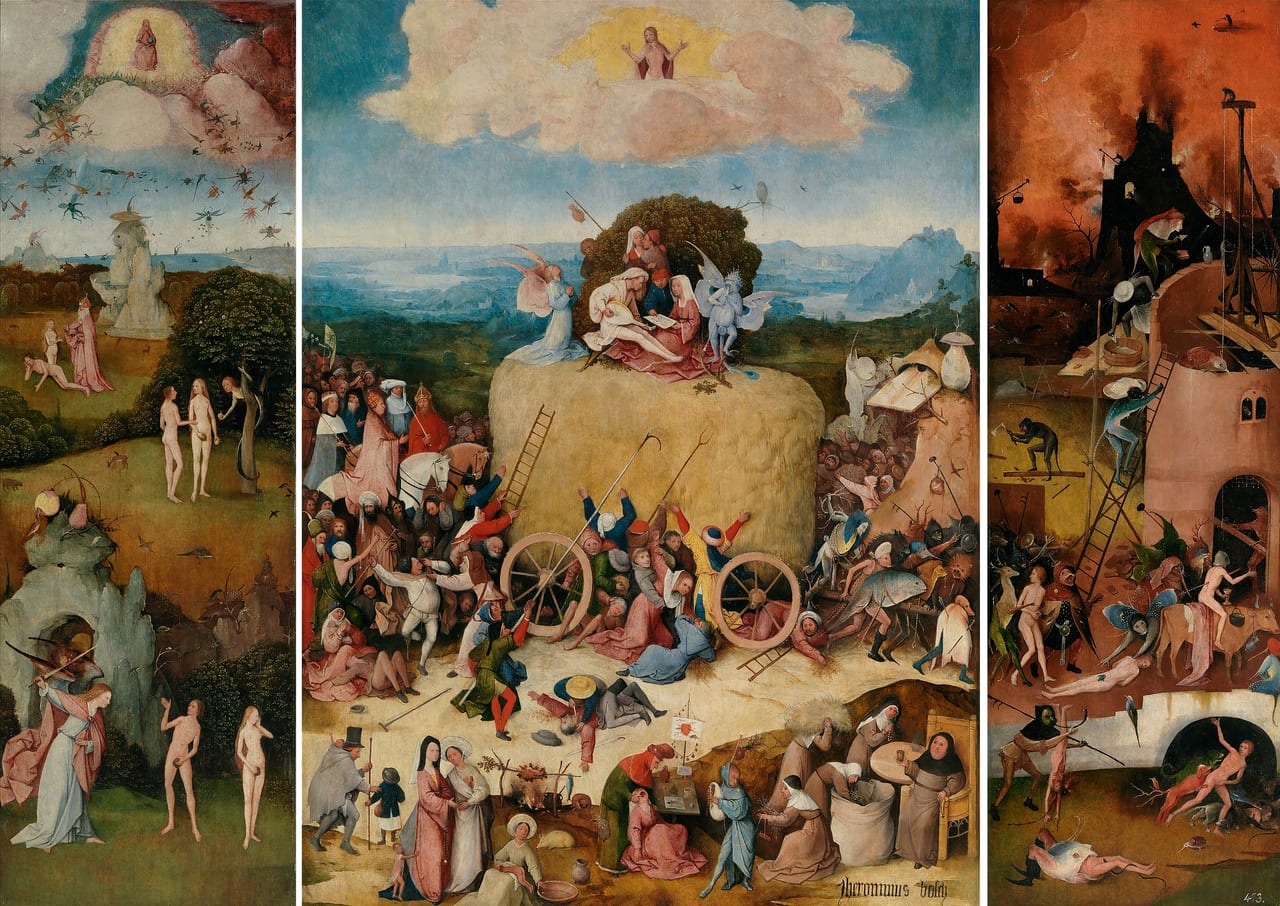
The Haywain Triptych
Hieronymus Bosch · c. 1516
Museo del Prado
In the central panel, a wagon of hay is mobbed by fools at their sins and hauled by infernal creatures toward hell on the right wing, while paradise lies on the left; the scene renders a Flemish proverb, that the world is a haystack and everyone grabs what he can. The outer shutters carry Bosch’s Wayfarer. Philip II of Spain acquired it in 1570; it is now in the Prado, where it was put back together in 1914. Tree-ring dating places it around 1516.
Sources
- Wikipedia, “Early Netherlandish painting”
- Britannica, “Flemish art”
- National Gallery, London, “Jan van Eyck”
- Britannica, “Jan van Eyck”
- Britannica, “Ghent Altarpiece”
- National Gallery, London, “Oil”
- National Gallery, London, “Robert Campin”
- Britannica, “Robert Campin”
- National Gallery, London, “Rogier van der Weyden”
- Britannica, “Rogier van der Weyden”
- Britannica, “Petrus Christus”
- Britannica, “Dieric Bouts”
- National Gallery, London, “Dirk Bouts”
- Britannica, “Hugo van der Goes”
- National Gallery, London, “Hugo van der Goes”
- Britannica, “Hans Memling”
- National Gallery, London, “Hans Memling”
- Britannica, “Gerard David”
- National Gallery, London, “Gerard David”
- Britannica, “Hieronymus Bosch”
- National Gallery, London, “Hieronymus Bosch”
- Britannica, “Geertgen tot Sint Jans”
- National Gallery, London, “Portrait of a Man (Self Portrait?)”
- Wikipedia, “Virgin and Child with Canon van der Paele”
- Wikipedia, “Madonna in the Church”
- Wikipedia, “Portrait of a Lady (van der Weyden)”
- Wikipedia, “Beaune Altarpiece”
- Wikipedia, “A Goldsmith in His Shop”
- Wikipedia, “Portrait of a Young Girl (Christus)”
- Wikipedia, “Monforte Altarpiece”
- Wikipedia, “The Last Judgment (Memling)”
- Wikipedia, “Virgin and Child with Four Angels”
- Wikipedia, “The Haywain Triptych”
- Wikipedia, “Altarpiece of the Holy Sacrament”
- Wikipedia, “Diptych of Maarten van Nieuwenhove”
- Wikipedia, “Miraflores Altarpiece”
- Wikipedia, “Ship of Fools (painting)”
- National Gallery, London, “The Arnolfini Portrait”
- Wikipedia, “Death of the Virgin (van der Goes)”
- Miraflores Altarpiece — Public domain via Wikimedia Commons (Public domain)
- The Ghent Altarpiece (wings closed) — Public domain via Wikimedia Commons (Public domain)
- Nativity — Public domain via Wikimedia Commons (Public domain)
- The Descent from the Cross — Public domain via Wikimedia Commons (Public domain)
- Portrait of a Carthusian — Public domain via Wikimedia Commons (Public domain)
- Triptych: The Last Supper — Public domain via Wikimedia Commons (Public domain)
- Portinari Triptych — Public domain via Wikimedia Commons (Public domain)
- Diptych of Maarten van Nieuwenhove — Public domain via Wikimedia Commons (Public domain)
- Judgement of Cambyses — CC0 via Wikimedia Commons (CC0)
- The Garden of Earthly Delights — Public domain via Wikimedia Commons (Public domain)
- Arnolfini Portrait — Public domain via Wikimedia Commons (Public domain)
- Portrait of a Man (Self Portrait?) — Public domain via Wikimedia Commons (Public domain)
- Madonna with Canon Joris van der Paele — Public domain via Wikimedia Commons (Public domain)
- The Madonna in the Church — Public domain via Wikimedia Commons (Public domain)
- Portrait of a Lady — Public domain via Wikimedia Commons (Public domain)
- The Last Judgment (Beaune Altarpiece) — Public domain via Wikimedia Commons (Public domain)
- A Goldsmith in His Shop — CC0 via Wikimedia Commons (CC0)
- Portrait of a Young Girl — Public domain via Wikimedia Commons (Public domain)
- Monforte Altarpiece — Public domain via Wikimedia Commons (Public domain)
- The Last Judgment — Public domain via Wikimedia Commons (Public domain)
- Virgin and Child with Four Angels — CC0 via Wikimedia Commons (CC0)
- The Haywain Triptych — Public domain via Wikimedia Commons (Public domain)
Invite Early Netherlandish painting into your living room