Saint Martin and the Beggar
El Greco

Mannerism
Florence and Rome
Mannerism takes its name from maniera, Italian for “manner” or “style”. It ruled Italian art from the close of the High Renaissance in the 1520s until the first signs of the Baroque around 1590, began in Florence and Rome, and travelled through northern Italy into much of central and northern Europe. Its painters valued the seemingly effortless answer to an intricate problem, such as the nude in a complex, artificial pose, and their figures often have graceful, elongated limbs and small heads.
Florence and Rome, after Raphael
The style began as a reaction against the harmonious classicism and idealized naturalism with which Leonardo, Michelangelo and Raphael had painted in the first twenty years of the sixteenth century. Michelangelo had set the standard of complexity for the human nude, and Raphael the norm of ideal beauty; in the work of the painters who came after them, an obsession with style and technique in composing figures often outweighed the meaning of the subject. The name came much later: the Italian archaeologist Luigi Lanzi first used it, around the end of the eighteenth century, for sixteenth-century artists who followed the great Renaissance masters.
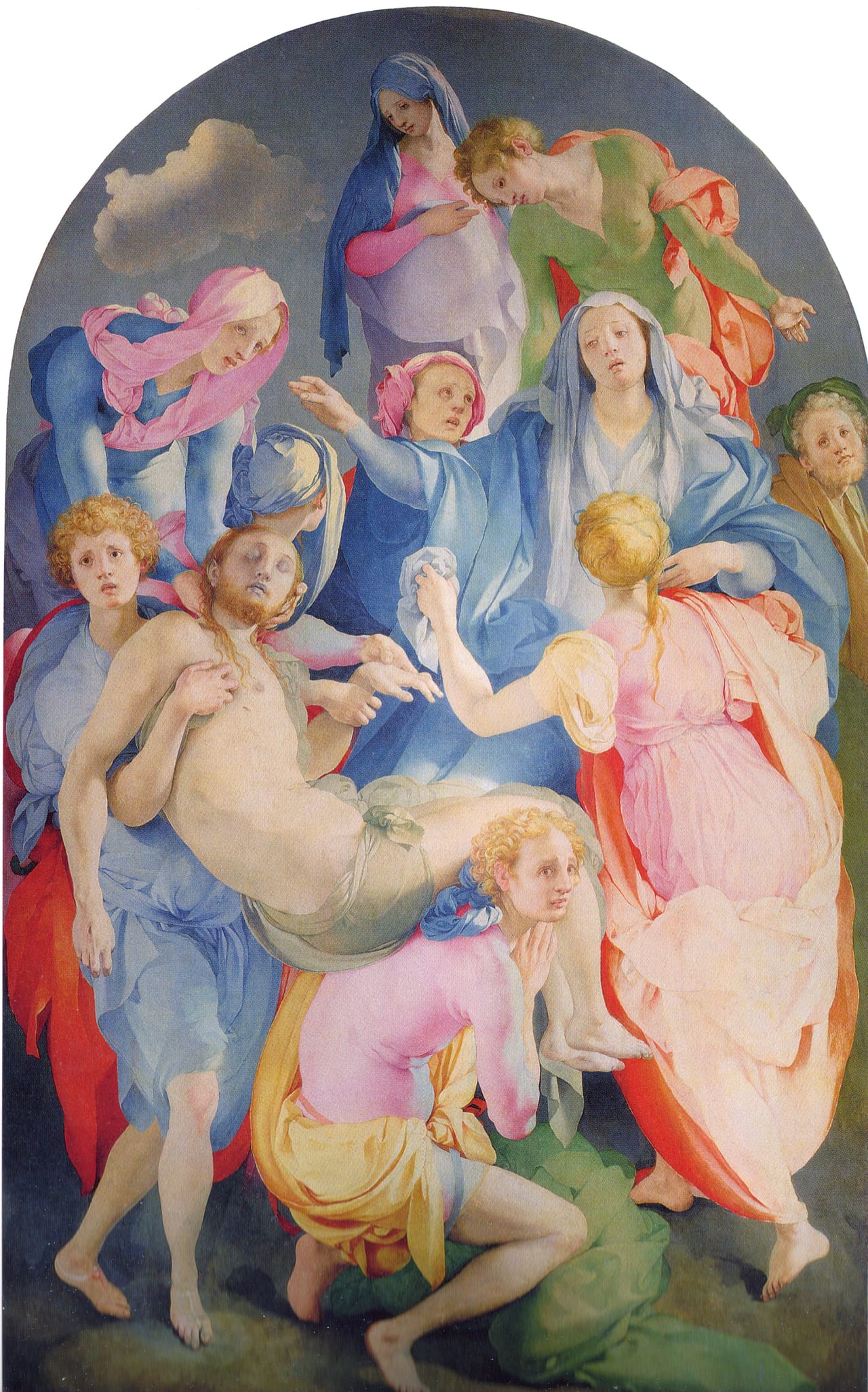
Mannerist elements already appear in some of Raphael’s later Roman paintings, notably the Transfiguration of 1517–20. Between 1515 and 1524 two Florentines, Rosso Fiorentino and Jacopo da Pontormo, who had trained side by side in the studio of Andrea del Sarto, turned from Renaissance classicism to an expressive, emotionally charged way of painting religious subjects. Pontormo’s altarpiece of 1518 in San Michele Visdomini and Rosso’s Deposition from the Cross of 1521 are among the most notable of these first Mannerist works.
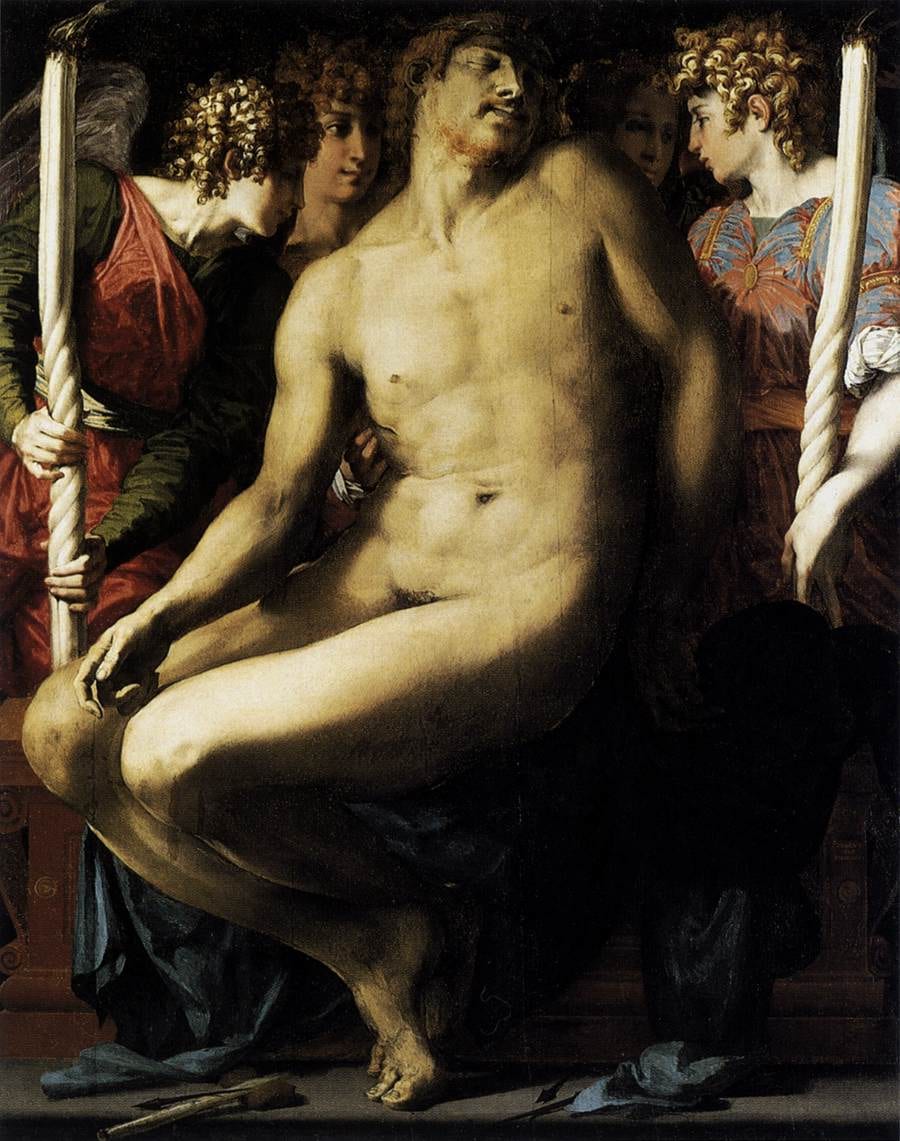
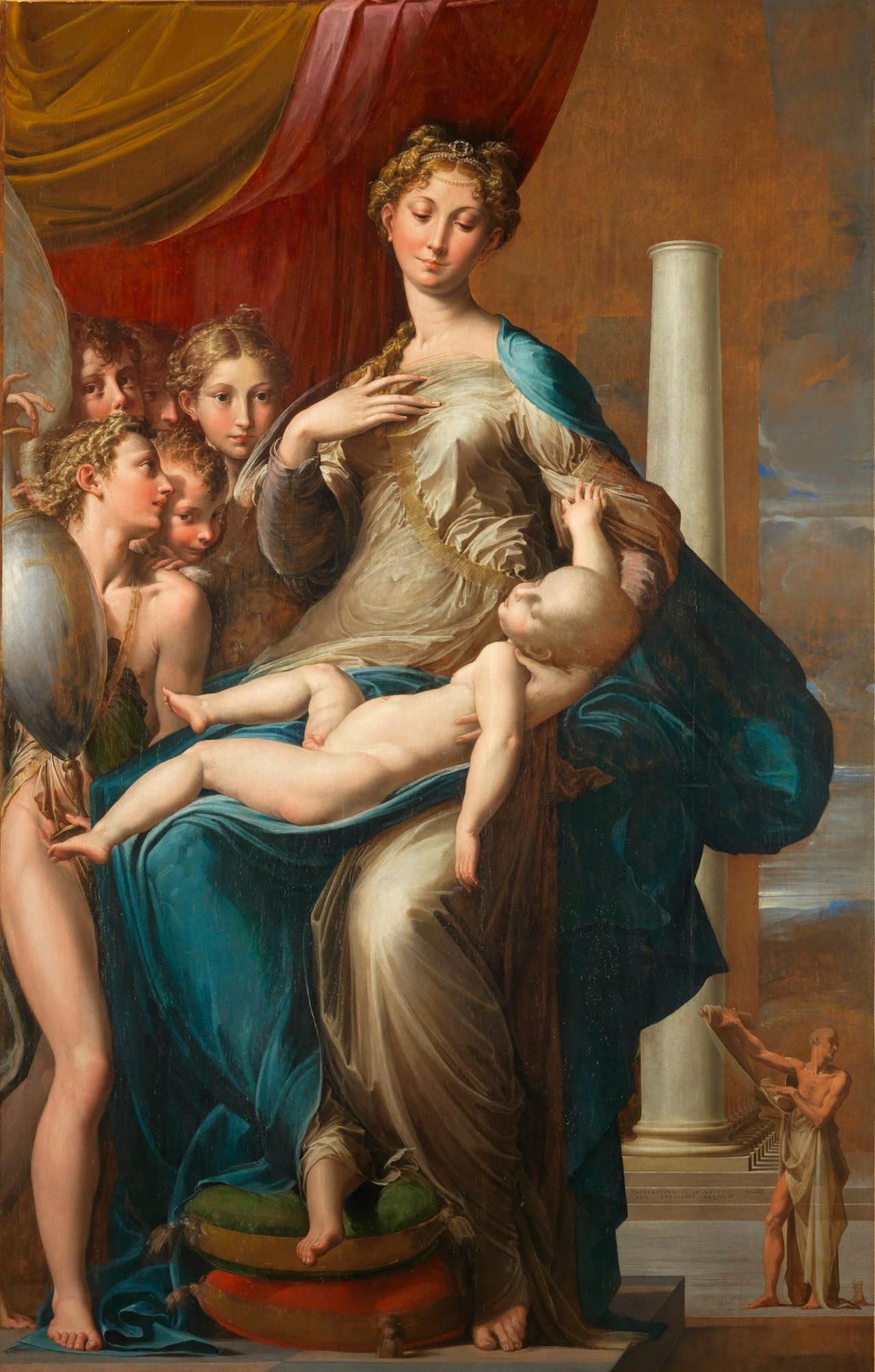
Early in the 1520s Rosso went to Rome and joined Giulio Romano, Perino del Vaga and Polidoro da Caravaggio, each a former follower of Raphael in his work for the Vatican; in their pictures, and in Parmigianino’s, the style came fully into being. Pontormo’s Deposition (1525–28), Parmigianino’s Madonna with the Long Neck (1534–40) and Rosso’s Dead Christ with Angels (c. 1526) stand out among the works of its maturity. When imperial troops sacked Rome in 1527, Rosso left for northern Italy and Parmigianino for Bologna, while Giulio had already left Rome for Mantua in 1524. Before he went, Giulio and other assistants of Raphael worked on the Hall of Constantine in the Vatican, where the Battle of the Milvian Bridge, after Raphael’s design, was most likely painted between 1520 and 1524.
The sophisticated manner formed in Rome before 1527 shaped a number of younger Italians working in the 1530s, ’40s and ’50s: Francesco Salviati, Giorgio Vasari, Domenico Beccafumi, Daniele da Volterra, Pellegrino Tibaldi, Federico Zuccari and, most notably, Bronzino, Pontormo’s pupil, who became the most important Mannerist painter in Florence at that time. Beccafumi’s Fall of the Rebel Angels in the Pinacoteca Nazionale, Siena, dates from about 1524. Michelangelo’s own Last Judgment in the Sistine Chapel, painted in 1536–41, shows strong Mannerist tendencies.
Grace, artifice and the long figure
Mannerist painting is artful by design, cultivating elegance and technical facility with full self-awareness and taking a refined pleasure in the bizarre. Its figures often have graceful, strangely lengthened limbs, small heads and stylized faces, and their poses look difficult or contrived. The deep perspective of the High Renaissance is flattened and blurred, so that figures read as a decorative pattern laid before a flat ground of no clear depth; the results include cramped space, clashing intense and unnatural colours, odd shifts of scale and sometimes wholly irrational mixtures of classical motifs.
In its narrower sense the term names an art of urban and courtly sophistication, highly finished and openly stylised. Its idealised human figure owed a great deal to the example of Michelangelo, and it used unnaturalistic colour for decorative and expressive ends; old subjects were painted this way, and so were new, deliberately intricate and witty compositions such as those of Pontormo and Bronzino.
Parmigianino gave the style one of its most brilliant and influential forms. His pictures are known for ambiguous space, for lengthened and distorted figures, and for the quality Giorgio Vasari called “grace”, a rhythmic, sensuous beauty beyond that of nature. He was among the first Italian artists to make etchings, and his widely circulated etchings carried his manner to painters across Europe.
At the Medici court Bronzino served as painter to Cosimo I, Duke of Florence, from 1539 until he died in 1572. His polished, elegant portraits embody the courtly ideal under the Medici dukes, and they influenced European court portraiture for the following century; his highly finished, intellectual works, the Allegory with Venus and Cupid above all, epitomise this learned, courtly art. In Venice, Tintoretto is usually described as a Mannerist, although he strove for effect less for the sake of stylishness than for narrative drama. El Greco, born in Crete, developed his intense, colourful Mannerist style while training in Venice, and by 1577 had settled in Toledo, in Spain, where The Burial of the Count of Orgaz, made between 1586 and 1588 for the church of Santo Tomé, is widely considered his masterpiece.
Fontainebleau, Prague and Haarlem
Rosso carried the style to France in 1530. Francis I, whose court gave the Fontainebleau school its name, had begun rebuilding the palace there in 1528, and Primaticcio joined Rosso there in 1532; together they evolved a brilliant way of combining painted panels with stucco nudes and garlands modelled in high relief, and Rosso’s principal surviving work, the decoration of the Galerie François I, dates from about 1534–37. Long after Rosso’s death, Primaticcio’s long-limbed, thin-necked, small-headed figures remained the canon for the rest of the century, though he tempered the violence of Italian Mannerism with a quiet French elegance.
Around the middle of the century the style crossed into central and northern Europe, through great numbers of engravings after Italian paintings and through northern artists who went to Rome to study. Hans von Aachen, Hendrik Goltzius and Bartholomaeus Spranger rose to be important Mannerist painters; Haarlem and Amsterdam grew into centres of the style, but its most ambitious patron was the emperor Rudolf II in Prague, for whom Spranger and others developed a Mannerism that at times turned grotesque. Spranger was appointed Rudolf’s court painter in 1581, after the court had moved its seat to Prague. The group known as the “Haarlem Mannerists” was principally Goltzius, Karel van Mander and Cornelis van Haarlem.
In sculpture, Mannerist ambitions followed the serpentine complexity of Michelangelo’s late figures, such as his spiralling Victory of 1532–34, and Bartolommeo Ammannati, Benvenuto Cellini and, above all, Giambologna became its leading masters. Giambologna designed his Rape of a Sabine (1579–83), in the Loggia dei Lanzi in Florence, to be seen to equal effect from every side, and he turned the Florentine Mannerism of the mid-sixteenth century into a style of European significance.
The style stayed popular across Europe until the paintings of Annibale Carracci and Caravaggio, around 1600, ended it and opened the Baroque. For a long time afterwards it was dismissed as decadent and anarchic, a falling-off from the High Renaissance. The twentieth century looked again, admiring its bravura, elegance and polish, and found in its spiritual intensity, experiments with form and persistent anxiety a kinship with modern expressionist art.
Artists
Jacopo da Pontormo
The Entombment (Deposition from the Cross), painted in 1525–28 for Santa Felicità, Florence, is where the mature style of Pontormo is best seen. He was a Florentine painter who entered Andrea del Sarto’s workshop at eighteen and broke away from High Renaissance classicism for a more personal, expressive style, sometimes classed as early Mannerism.
Rosso Fiorentino
Trained beside Pontormo in Andrea del Sarto’s studio, he was an exponent of the expressive manner known as early, or Florentine, Mannerism, and a founder of the Fontainebleau school. After he moved to Rome at the end of 1523, his exposure to the Sistine ceiling of Michelangelo, to Raphael’s late art and to Parmigianino’s work radically realigned his style; the Dead Christ with Angels, of about 1526, shows it in its rarefied beauty and subdued emotion.
Parmigianino
The Madonna with the Long Neck, painted when he was back in Parma from 1531, is one of the principal works of the last years of Parmigianino. Born in Parma in 1503, he was one of the first artists to develop the elegant, sophisticated version of Mannerism that became a formative influence on the post-High Renaissance generation.
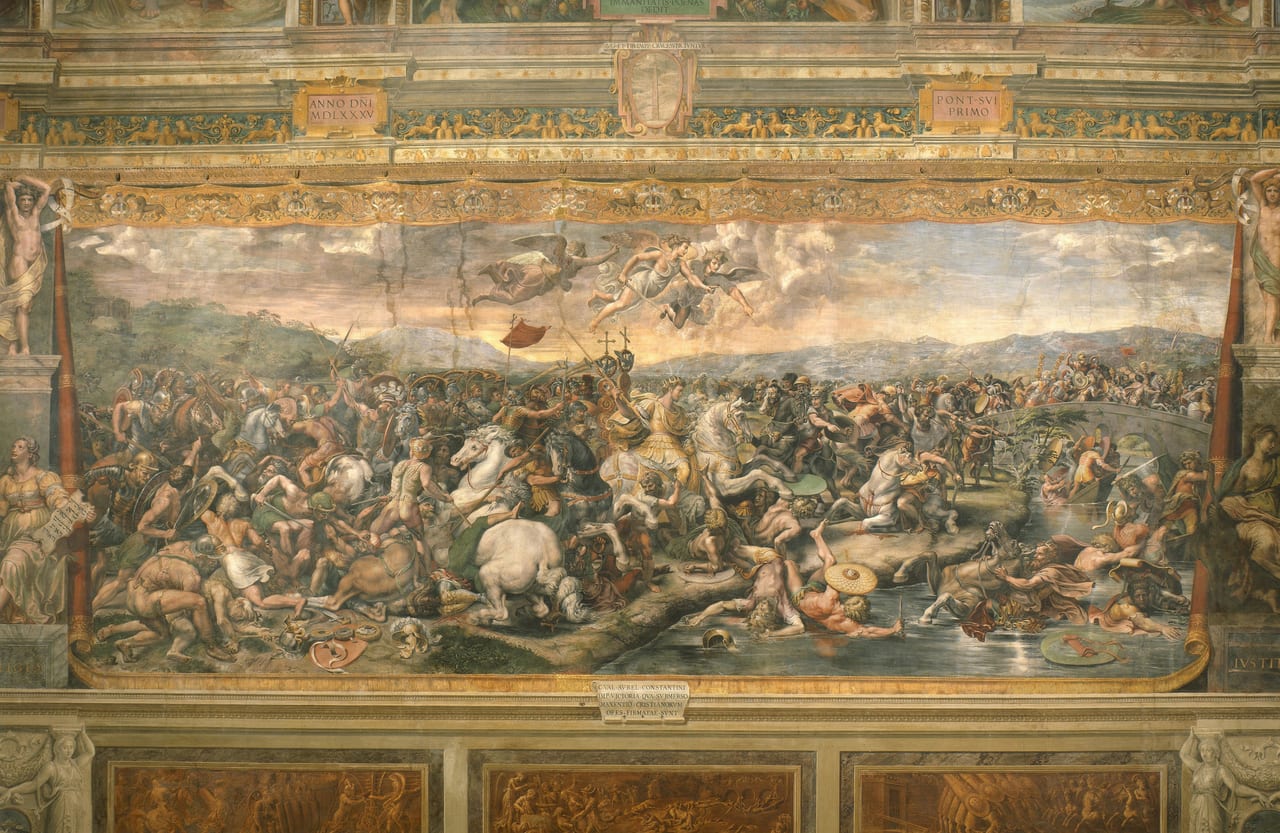
Giulio Romano
Raphael’s pupil, whose departures from High Renaissance classicism help define Mannerism. After Raphael’s death in 1520 he took a leading role in completing the commissions in the Vatican, among them designing the frescoes of Constantine’s life; from late 1524 he worked in Mantua, where the Palazzo Te is his masterpiece of architecture and fresco painting.
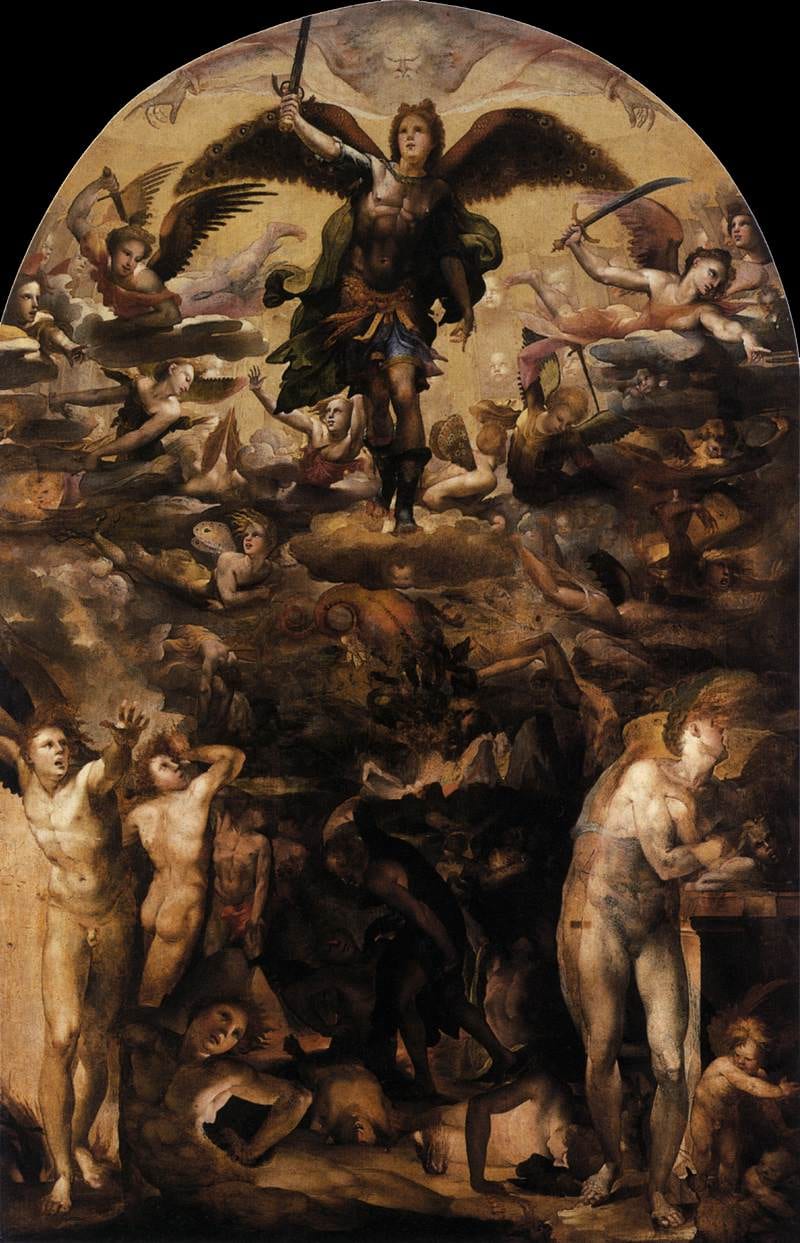
Domenico Beccafumi
The Fall of the Rebel Angels is by Domenico Beccafumi, a Sienese painter and sculptor and a leader of Mannerism. He studied Raphael and Michelangelo in Rome about 1510, and from 1518 to 1546 contributed many fine designs to the white marble inlay of Siena cathedral’s pavement. The “chromatic lyricism” of his work on the ceiling of the Palazzo Bindi Sergardi and in Siena’s Pinacoteca added to his reputation.
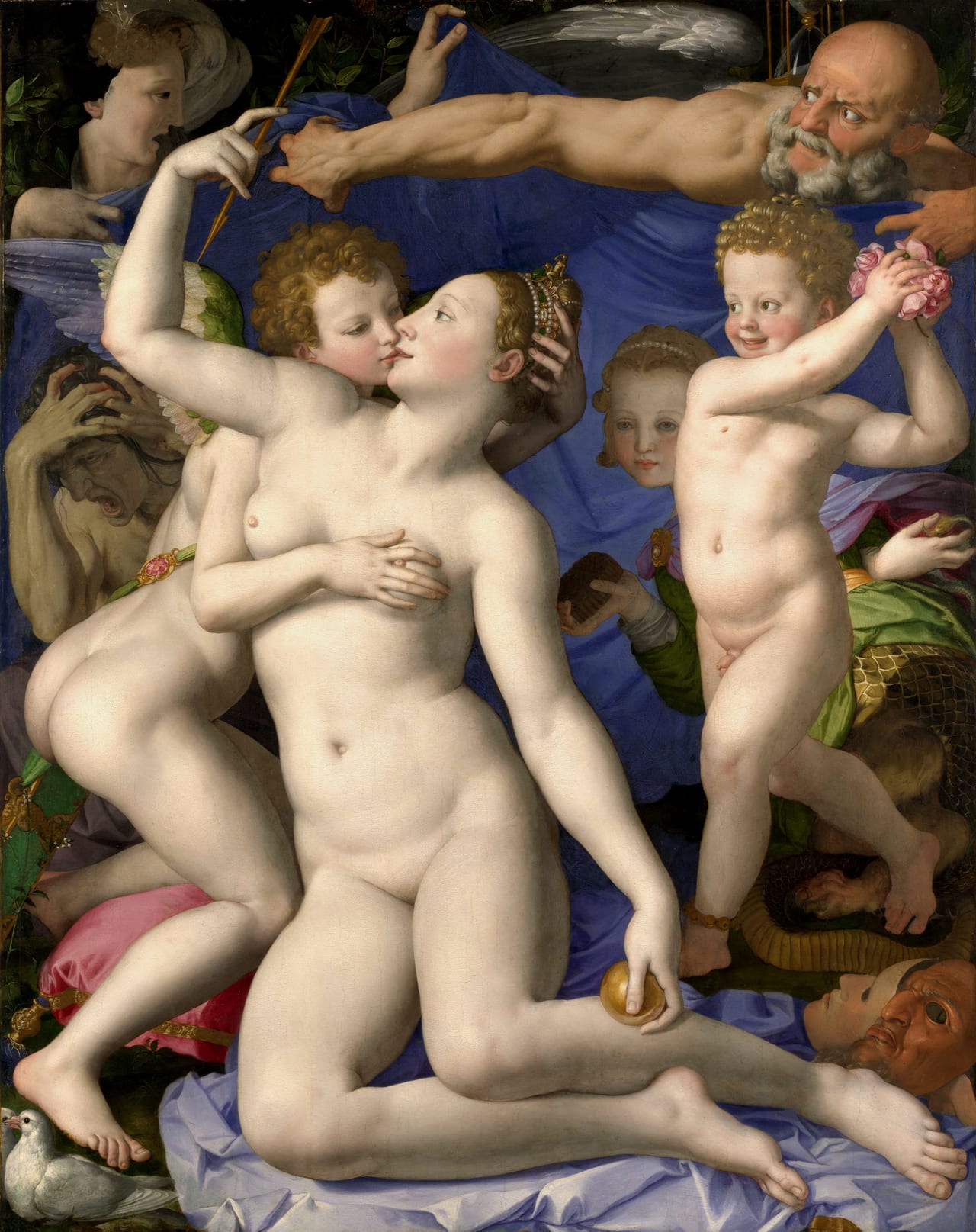
Bronzino
An Allegory with Venus and Cupid is where the refined, stylish artificiality of the Mannerist label is best seen. Agnolo di Cosimo, called Bronzino, the leading painter of Florence in the mid-sixteenth century, is classed as a Mannerist, influenced like many of his generation by Michelangelo; he is chiefly famous for his portraits of Cosimo de’ Medici, Cosimo’s wife Eleanor of Toledo, their children and their court.
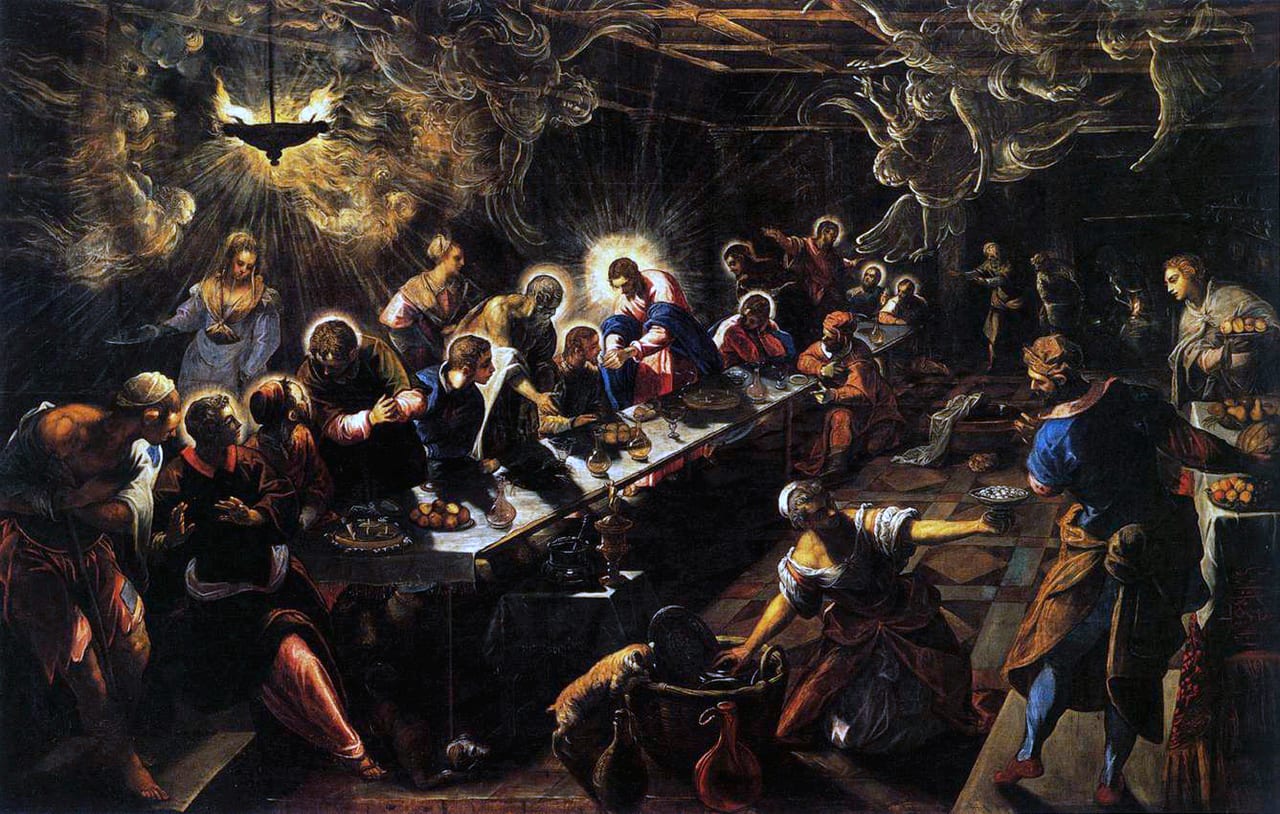
Jacopo Tintoretto
One of the most important artists of the late Renaissance and a great Italian Mannerist of the Venetian school, increasingly concerned with the drama of light and space. His masterpiece, painted in 1592–94, is the Last Supper of San Giorgio Maggiore.
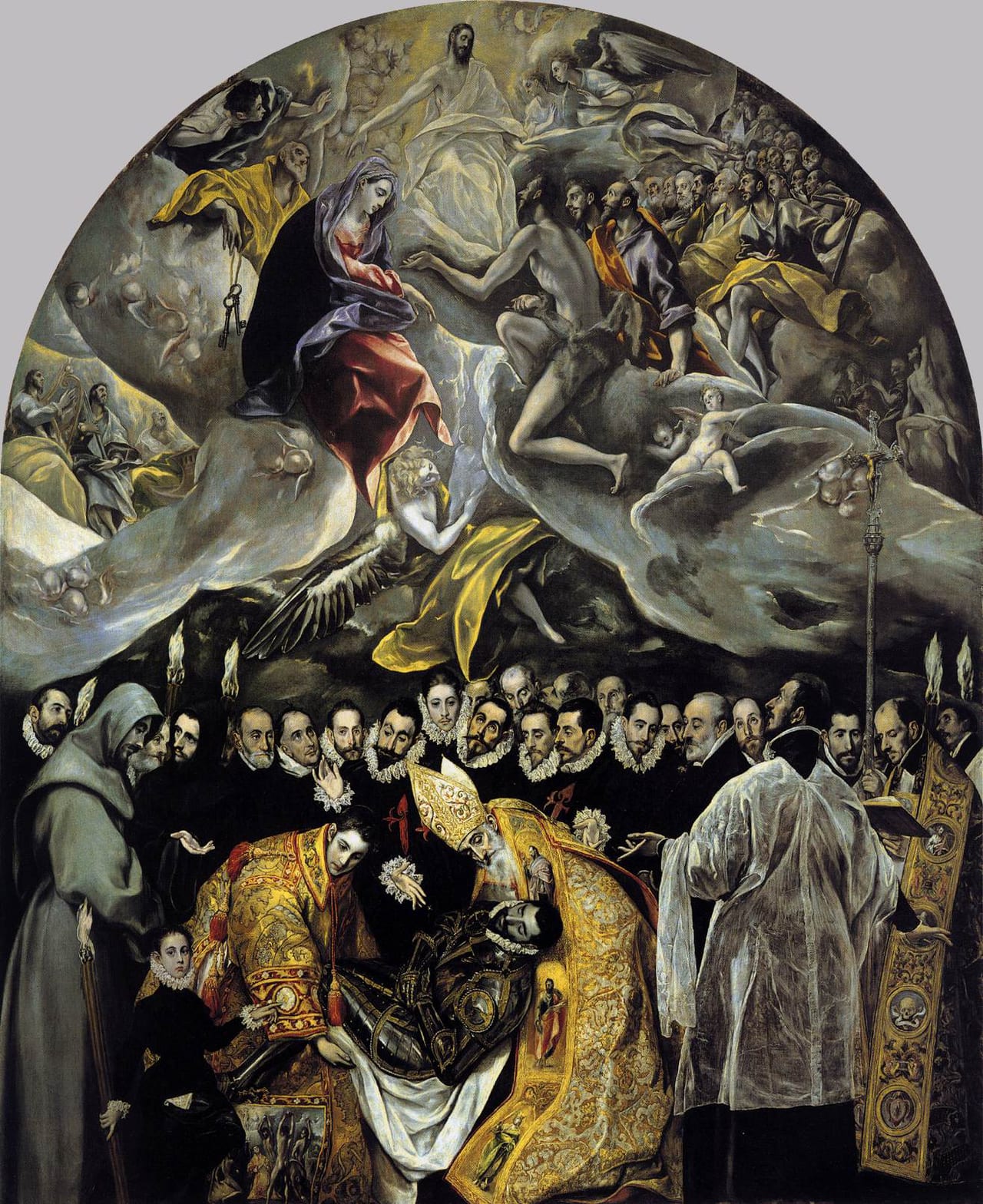
The Burial of the Count of Orgaz is universally regarded as the masterpiece of El Greco, and nowhere is his Mannerist way of composing clearer: all of the action takes place in the frontal plane. Born in Crete in 1541, he entered Titian’s studio in Venice and from 1577 worked in Spain, living the rest of his life in Toledo.
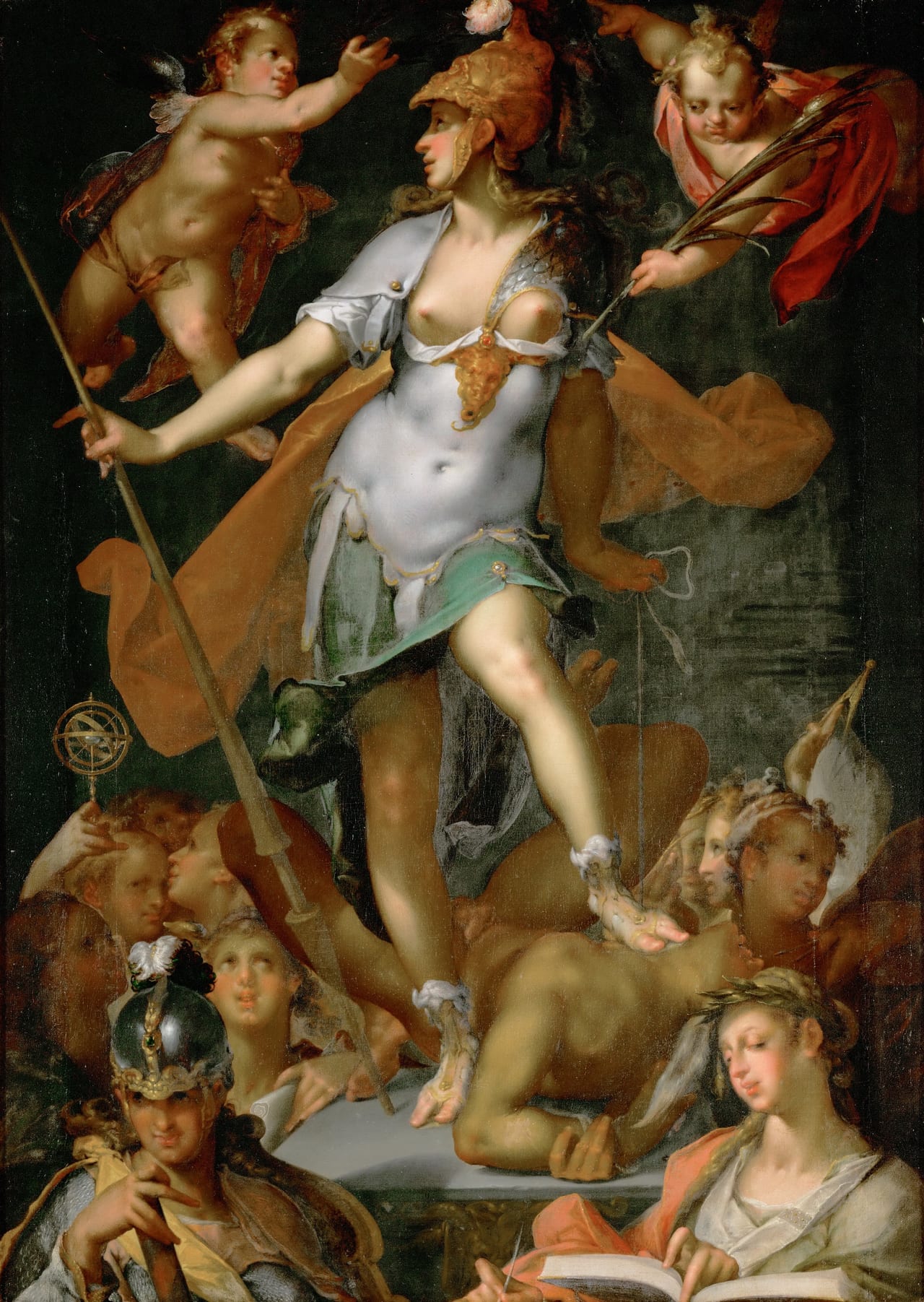
Bartholomeus Spranger
Minerva triumphing over Ignorance, in the Kunsthistorisches Museum, joins the two things Rudolf II liked: mythologies with nudes and allegories praising himself as ruler. Bartholomeus Spranger was a young Flemish painter summoned from Rome just before the death of the emperor Maximilian II; he made his base in Vienna and never left the service of Maximilian’s son, Rudolf II, whose court soon moved to Prague.
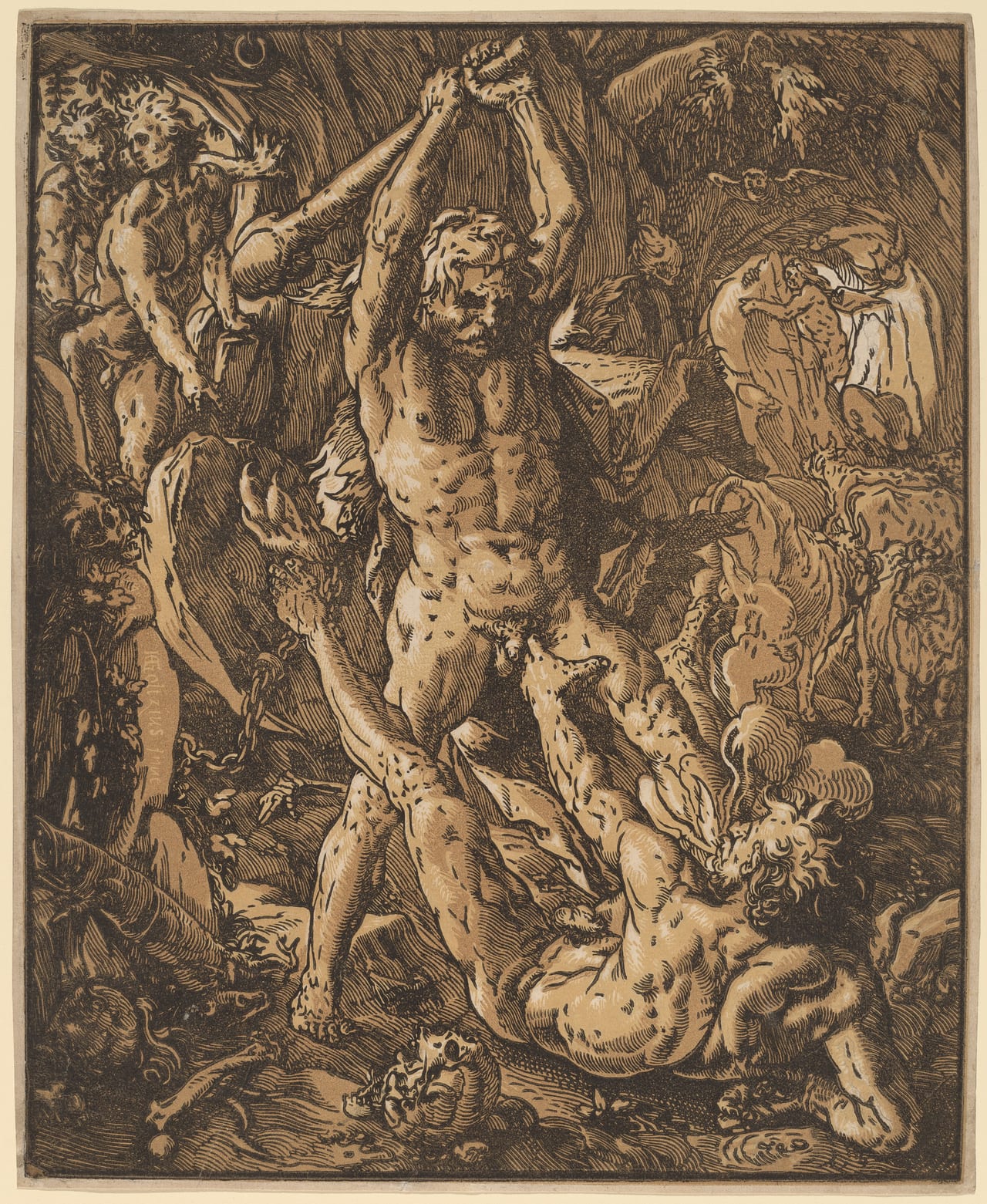
Hendrik Goltzius
The chiaroscuro woodcut of Hercules Killing Cacus is among the best-known prints of Hendrik Goltzius, who led the Mannerist school of Dutch engravers; printmaker and painter, he was based in Haarlem for the rest of his life. Between 1585 and 1590 he engraved mainly for Spranger.
Artworks
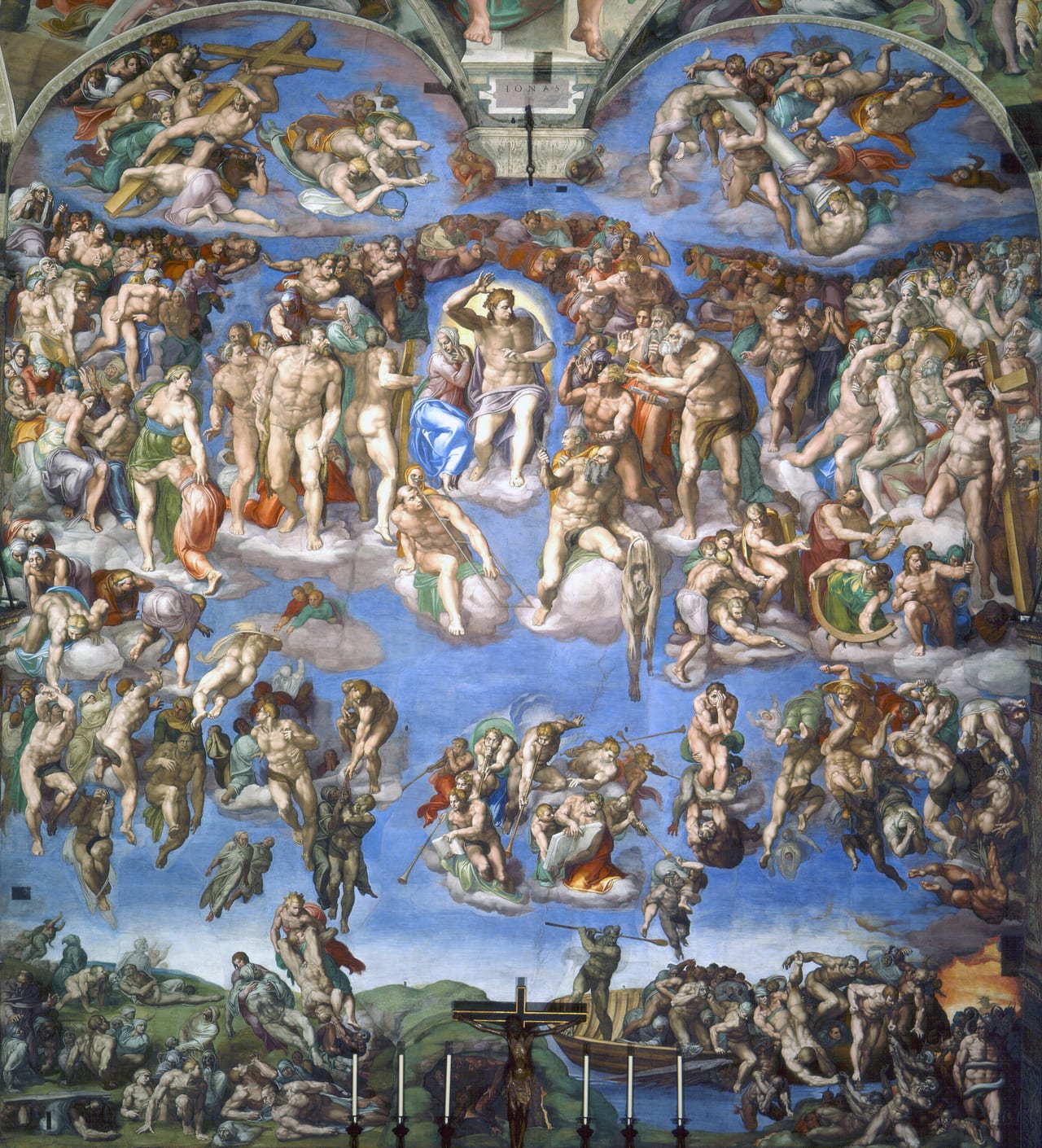
The Last Judgment
Michelangelo · 1536–41
Sistine Chapel
Michelangelo’s huge fresco on the west wall of the Sistine Chapel, painted in 1536–41. It shows strong Mannerist tendencies: an agitated composition, a formless and indefinite space, and crowded clusters of nudes in tortured poses with exaggerated muscles.
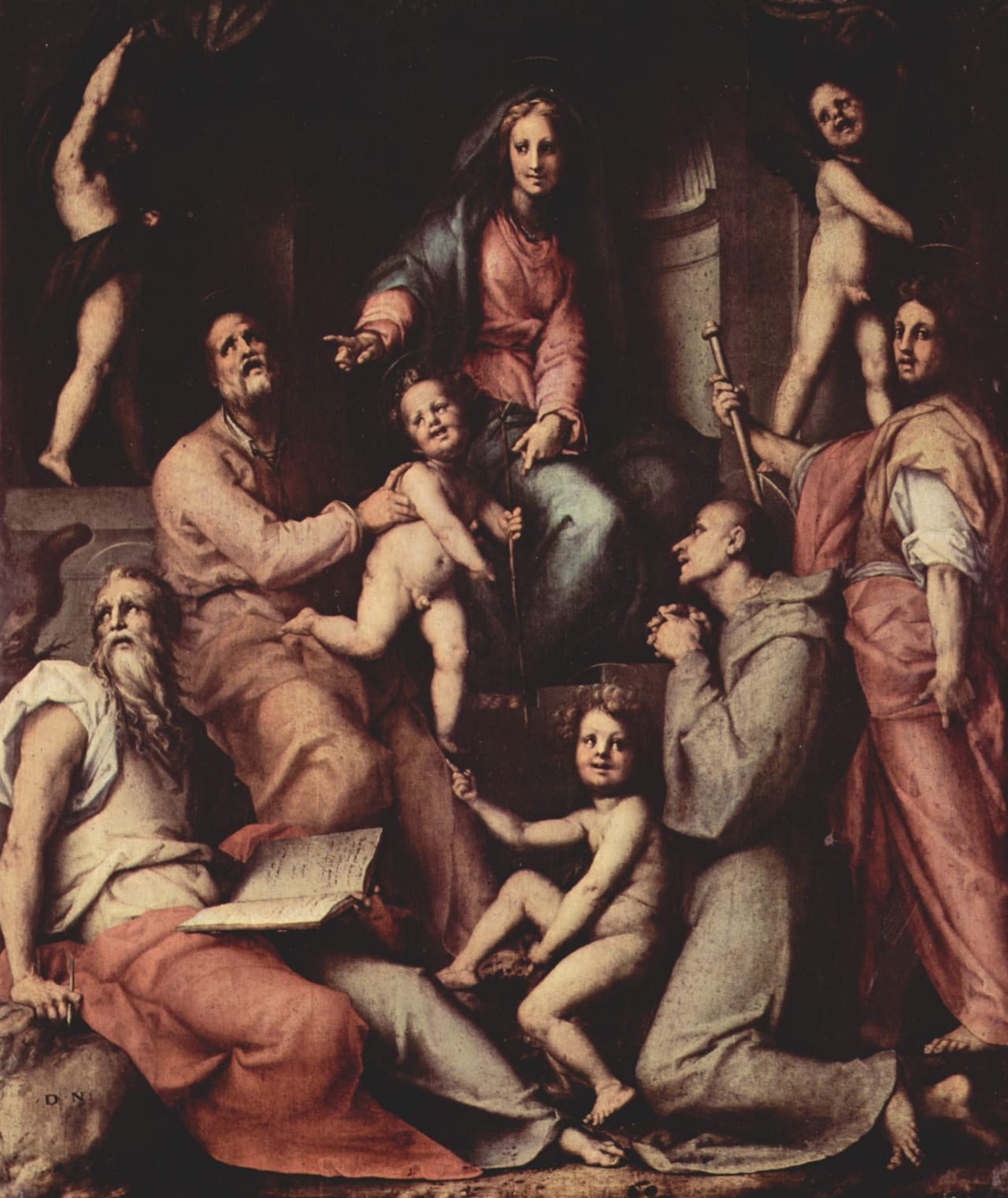
Pucci Altarpiece
Pontormo · 1518
San Michele Visdomini
Pontormo completed this altarpiece in 1518; it is housed in Florence’s Church of San Michele Visdomini, one of the few works by him still in its original location. Its agitated, almost neurotic feeling departs from the balance and calm of the High Renaissance. Saint Joseph, on the left, holds the Christ Child, a role usually given to the Madonna.
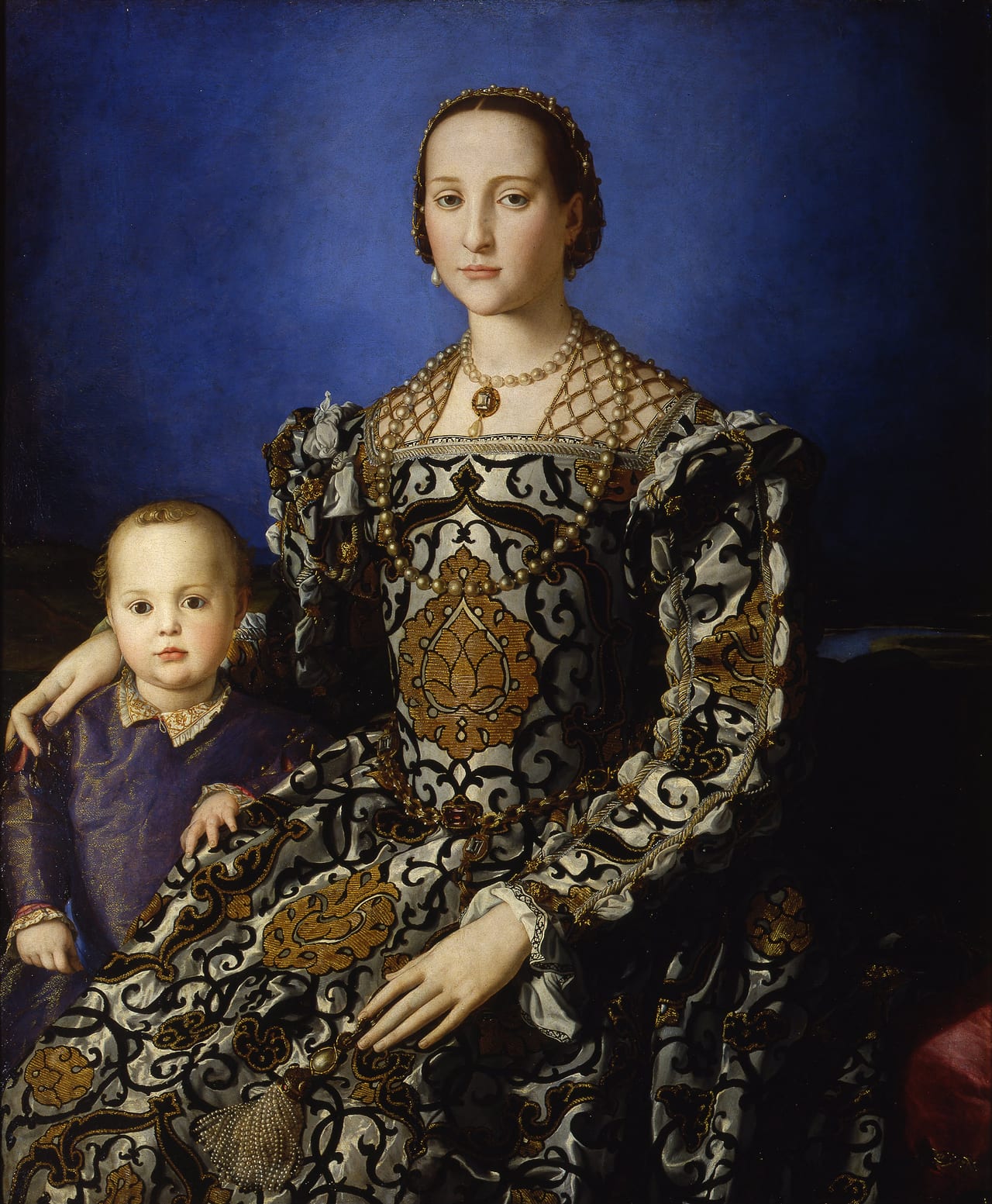
Portrait of Eleanor of Toledo and her son Giovanni de' Medici
Bronzino · c. 1545
Uffizi Gallery
Eleanor of Toledo, who married Cosimo I, Duke of Florence, in 1539, with her son Giovanni, painted by Bronzino about 1545 and now in the Uffizi. It is a preeminent example of Mannerist portraiture, reserved and without visible feeling yet arrestingly elegant and decorative.
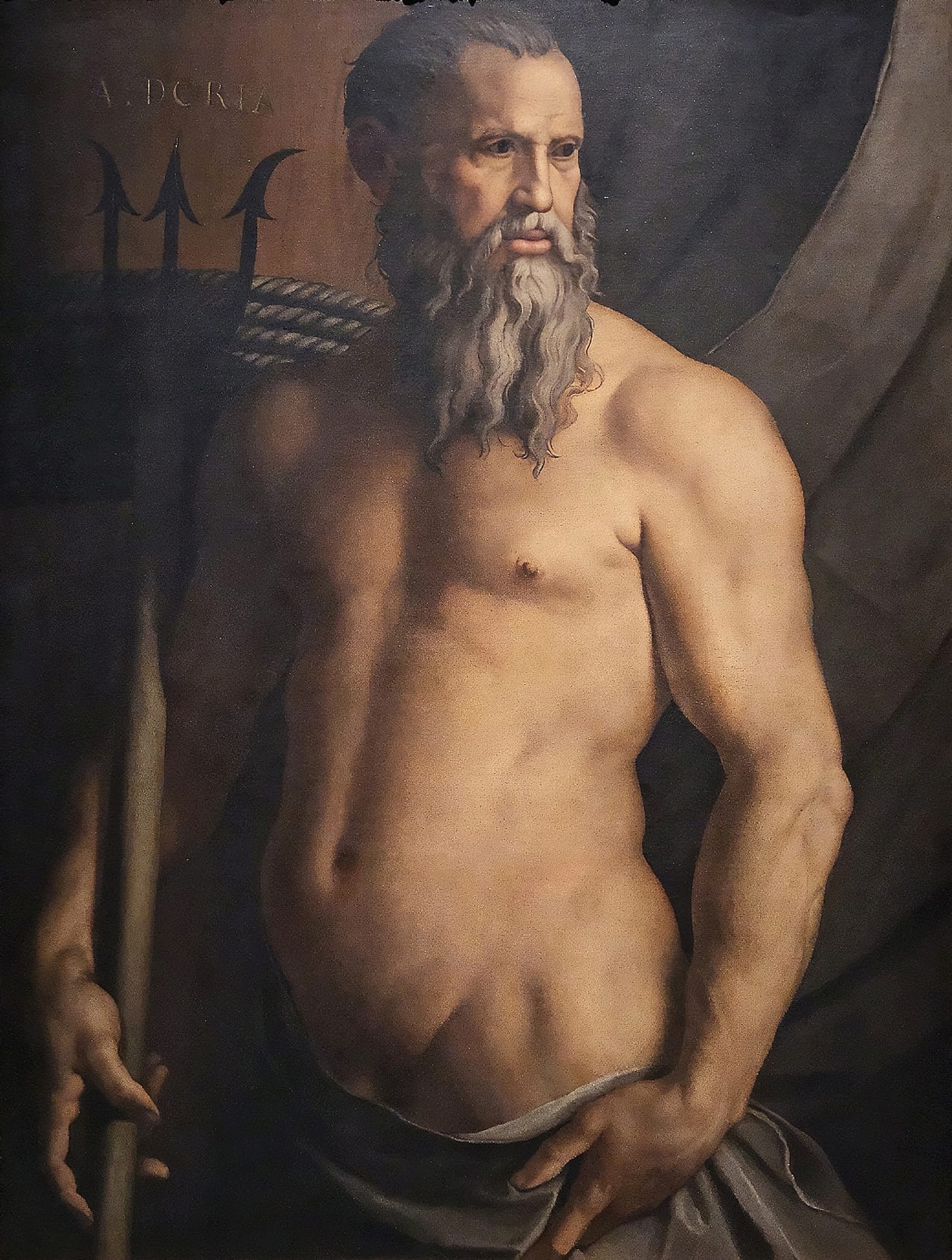
Portrait of Andrea Doria as Neptune
Bronzino · 1530s or 1540s
Pinacoteca di Brera
Bronzino shows the Genoese admiral Andrea Doria, around sixty when it was painted, though the date is somewhat disputed, as Neptune, god of the sea, consciously reviving the convention, borrowed from classical sculpture, of showing important political figures in heroic nudity. Completed in the 1530s or 1540s, it hangs today in Milan’s Pinacoteca di Brera. Doria first held a squared oar; the trident head was painted over it by an unknown artist.
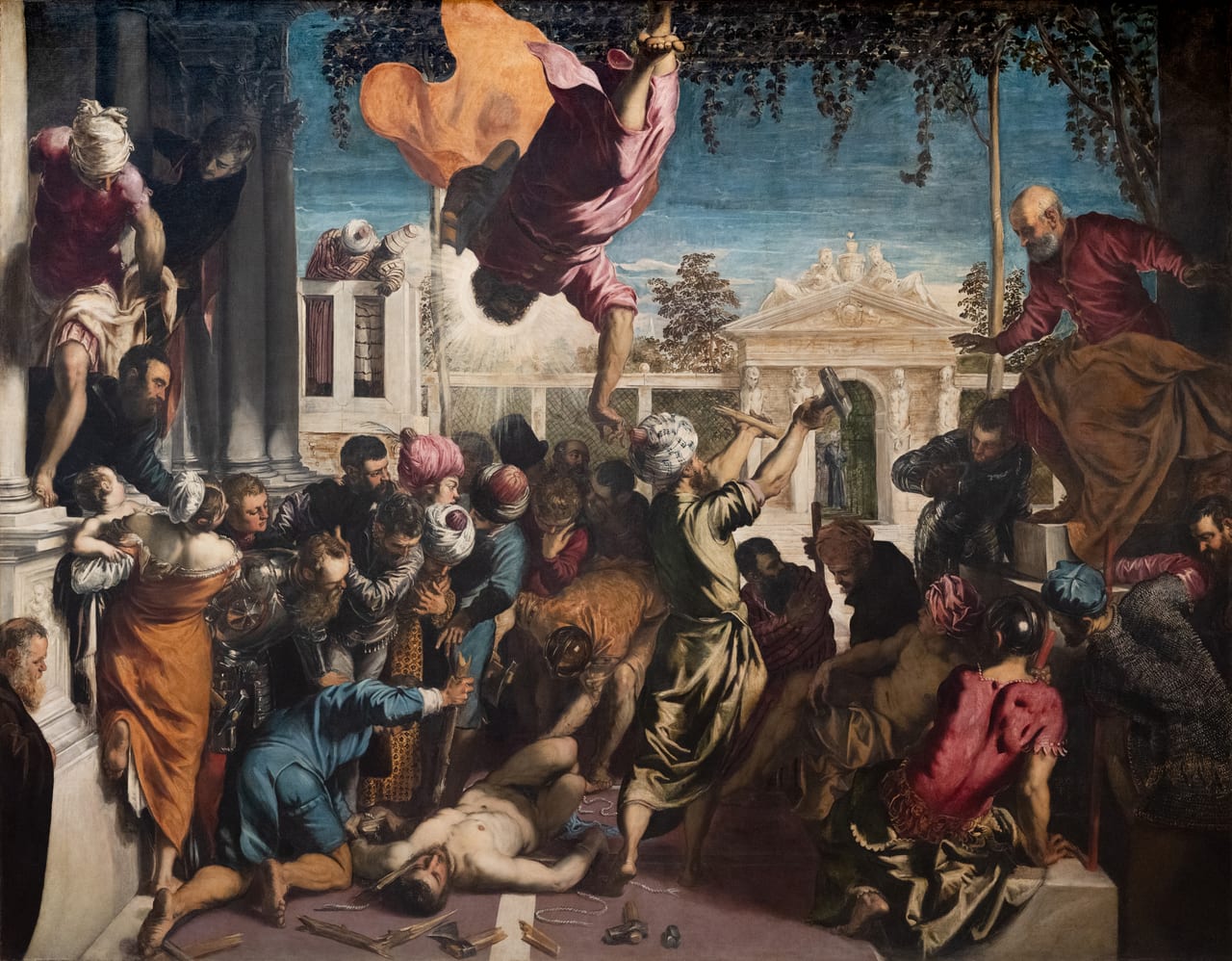
Miracle of the Slave
Jacopo Tintoretto · 1548
Gallerie dell'Accademia
Completed in 1548, it was originally commissioned for the Scuola Grande di San Marco, a Venetian confraternity, and has been in the Gallerie dell’Accademia since 1815. Saint Mark, patron saint of Venice, appears at the top, called on by a slave his master has ordered tortured, and the instruments break as the crowd looks on. With it Tintoretto became the centre of attention of artists and men of letters.
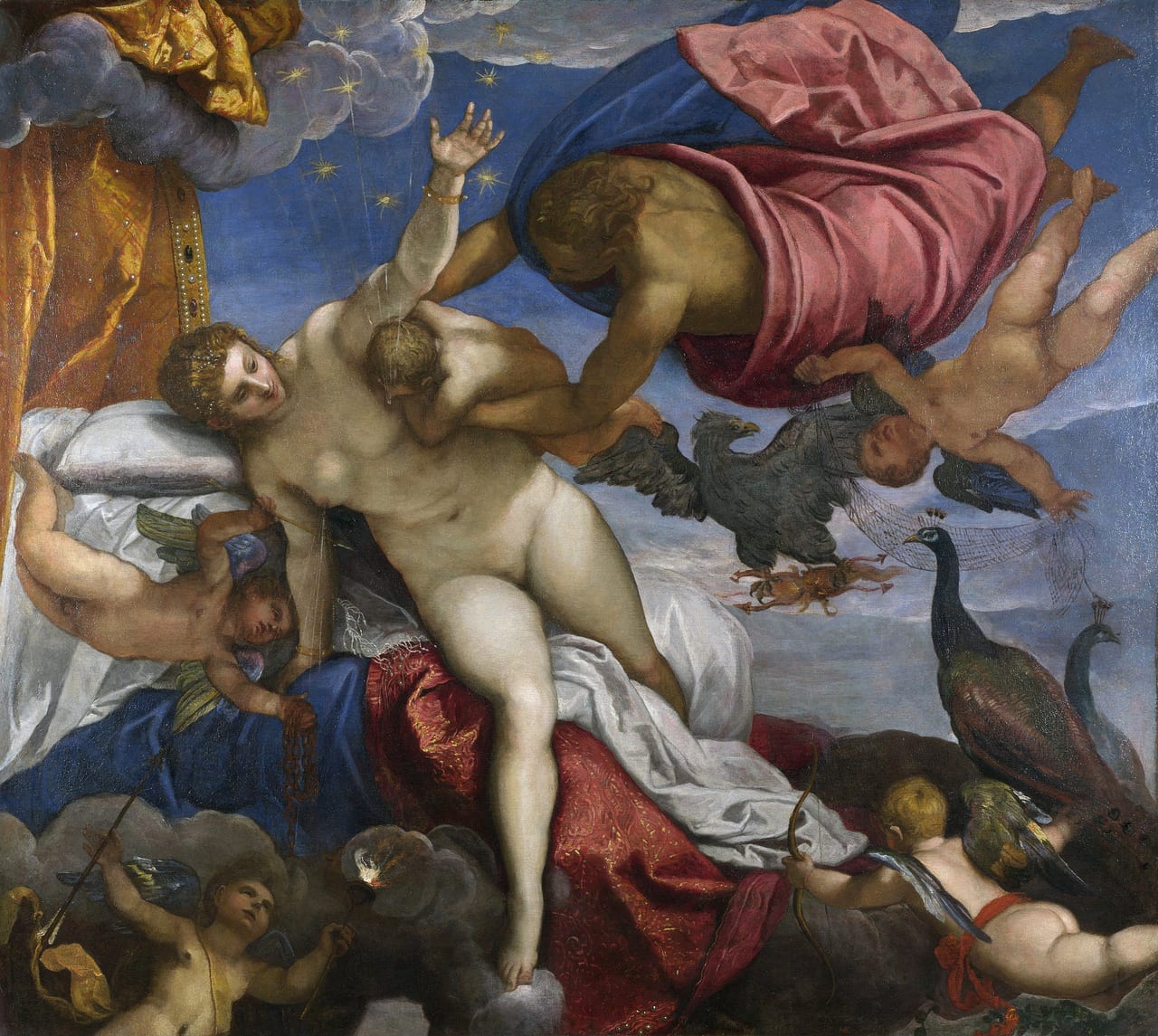
The Origin of the Milky Way
Jacopo Tintoretto · about 1575
National Gallery
Jupiter holds his infant son Hercules, whose mother was the mortal Alcmene, to the breast of the sleeping goddess Juno so that her milk will make him immortal; she wakes, and the milk that spurts upward becomes the Milky Way. Tintoretto painted it about 1575, and about a third of the canvas was cut away from the bottom before 1727.
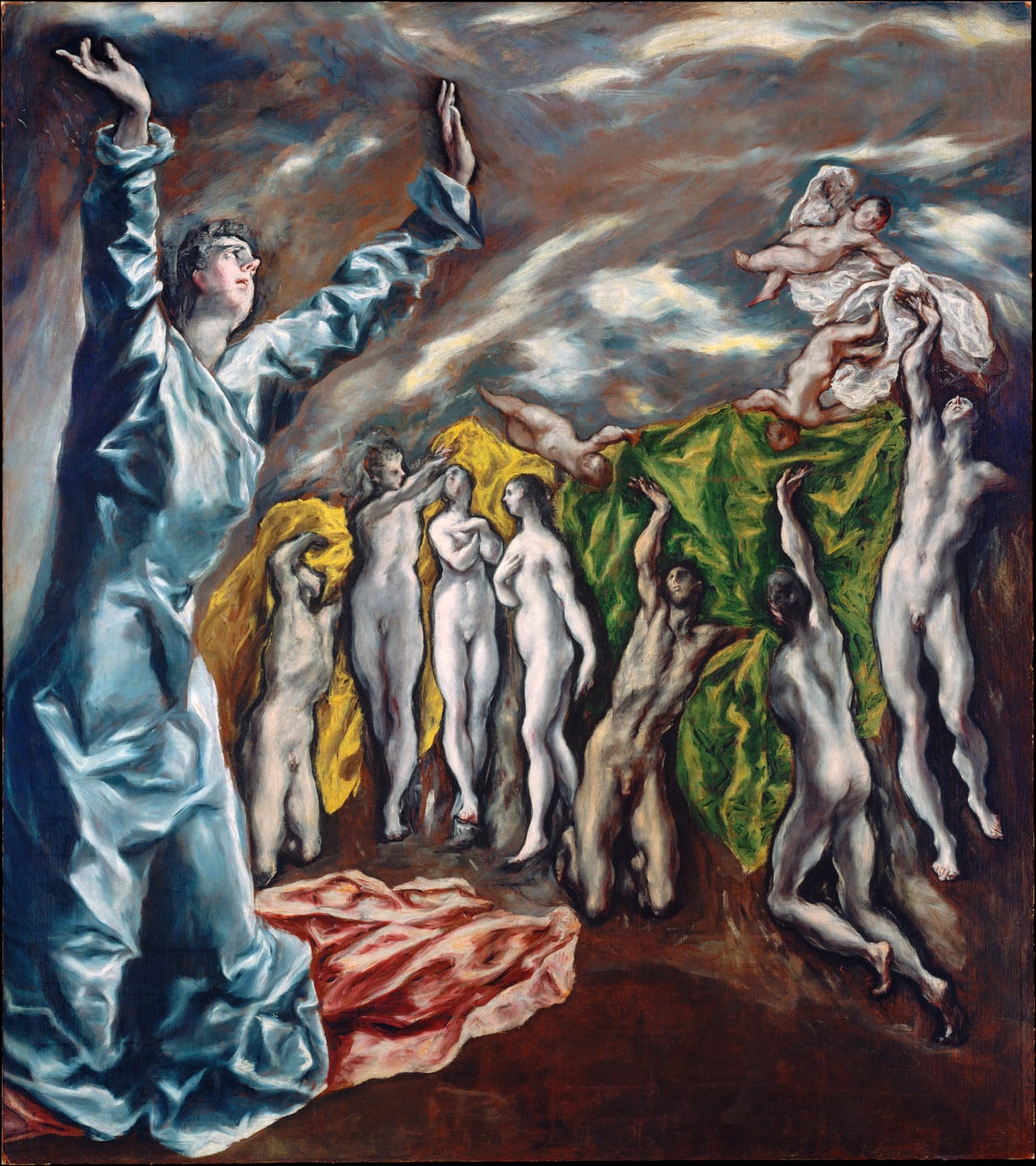
Opening of the Fifth Seal
El Greco
Metropolitan Museum of Art
Painted in El Greco’s last years for a side altar in Toledo’s church of Saint John the Baptist, outside the city walls; it is now in the Metropolitan Museum of Art. Saint John dominates the canvas while behind him naked souls of the martyrs, crying out for justice, receive white robes of salvation. The upper part of the painting was destroyed in 1880.
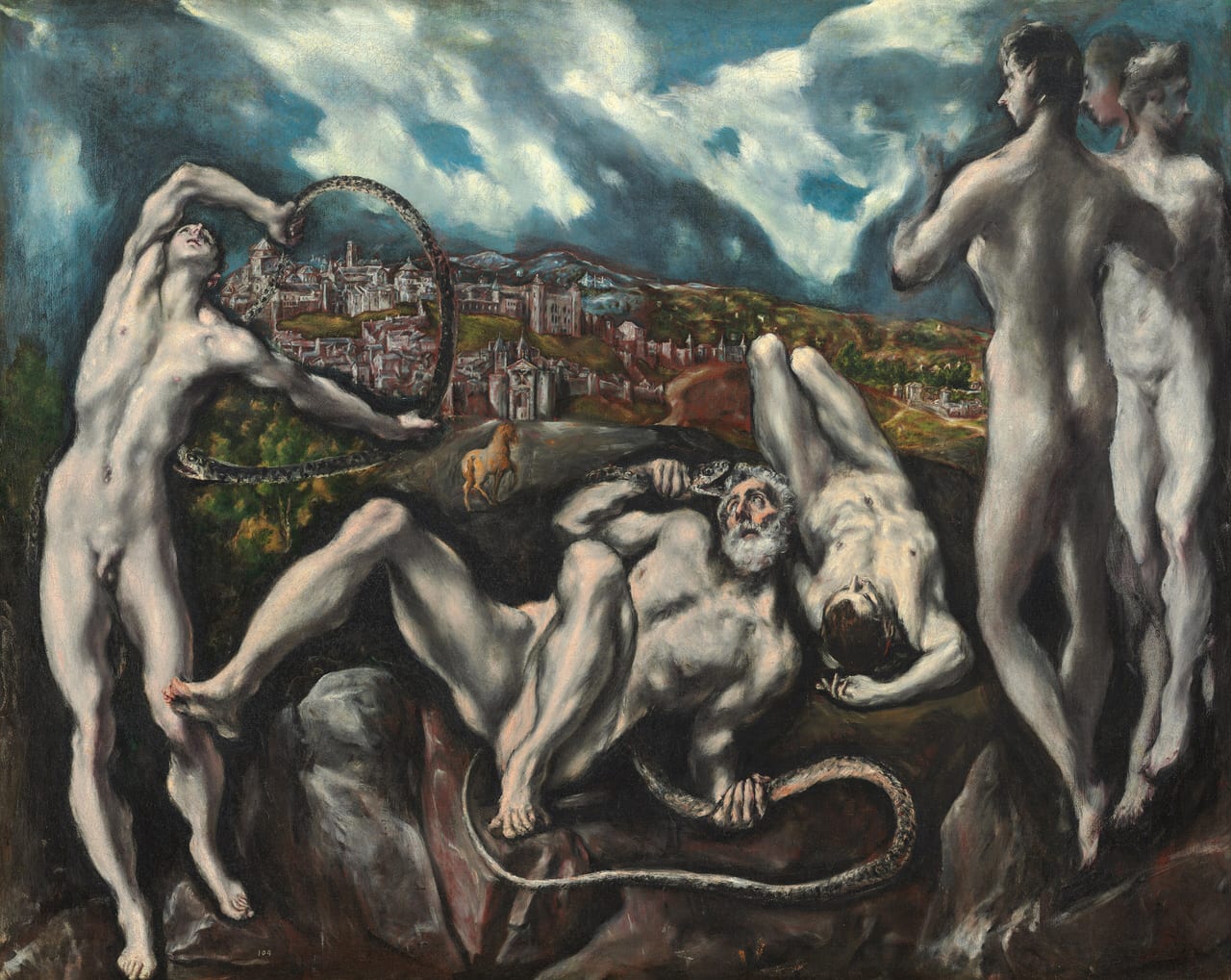
Laocoön
El Greco · 1610–14
National Gallery of Art
Painted between 1610 and 1614, it shows Laocoön, a Trojan priest of Poseidon, and his sons in their last struggle against the sea serpents sent to punish him, set against a gloomy view of Toledo. Inspired by the Hellenistic marble group unearthed in Rome in 1506, it is nonetheless a product of Mannerism, breaking from Renaissance balance and harmony with its distorted figures and charged emotion.
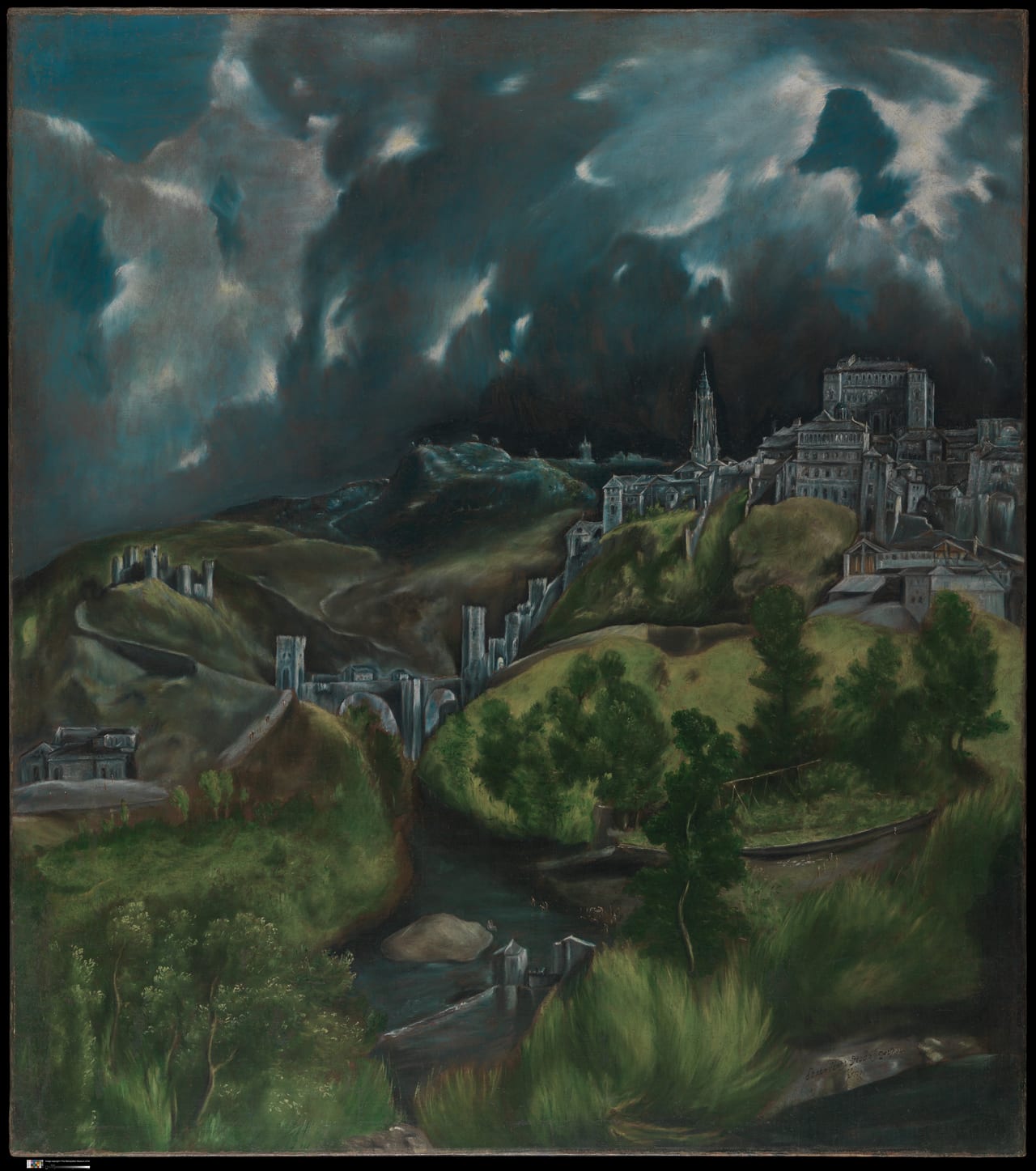
View of Toledo
El Greco
Metropolitan Museum of Art
One of two surviving landscapes by El Greco, now in the Metropolitan Museum of Art, and among the best-known skies in Western art: it grows very dark over the city, set high on rolling green hills. The Castle of San Servando, on the left, stands where it really is, but many other Toledo landmarks are not in their true places.
Sources
- Britannica, “Mannerism”
- National Gallery, London, “Mannerist”
- Britannica, “Jacopo da Pontormo”
- Britannica, “Rosso Fiorentino”
- National Gallery, London, “Rosso Fiorentino”
- Britannica, “Parmigianino”
- National Gallery, London, “Parmigianino”
- Wikipedia, “Giulio Romano”
- Britannica, “Domenico Beccafumi”
- Britannica, “Il Bronzino”
- National Gallery, London, “Bronzino”
- National Gallery, London, “An Allegory with Venus and Cupid”
- Britannica, “Tintoretto”
- National Gallery, London, “Jacopo Tintoretto”
- National Gallery, London, “The Origin of the Milky Way”
- Britannica, “El Greco”
- National Gallery, London, “El Greco”
- Britannica, “school of Fontainebleau”
- Britannica, “Francesco Primaticcio”
- Britannica, “Hendrik Goltzius”
- Britannica, “Giambologna”
- Wikipedia, “Northern Mannerism”
- Wikipedia, “Bartholomeus Spranger”
- Wikipedia, “Pucci Altarpiece”
- Wikipedia, “Portrait of Andrea Doria as Neptune”
- Wikipedia, “Miracle of the Slave (Tintoretto)”
- Wikipedia, “Opening of the Fifth Seal”
- Wikipedia, “Laocoön (El Greco)”
- Wikipedia, “View of Toledo”
- Britannica, “The Burial of the Count of Orgaz”
- Wikipedia, “The Battle of the Milvian Bridge (Giulio Romano)”
- Wikipedia, “Domenico Beccafumi”
- Britannica, “Giulio Romano”
- Saint Martin and the Beggar — Public domain via Wikimedia Commons (Public domain)
- The Deposition from the Cross — Public domain via Wikimedia Commons (Public domain)
- The Dead Christ with Angels — Public domain via Wikimedia Commons (Public domain)
- Madonna with the Long Neck — Public domain via Wikimedia Commons (Public domain)
- The Battle of the Milvian Bridge — Public domain via Wikimedia Commons (Public domain)
- The Fall of the Rebel Angels — Public domain via Wikimedia Commons (Public domain)
- An Allegory with Venus and Cupid (Venus, Cupid, Folly and Time) — Public domain via Wikimedia Commons (Public domain)
- Last Supper — Public domain via Wikimedia Commons (Public domain)
- The Burial of the Count of Orgaz — Public domain via Wikimedia Commons (Public domain)
- Minerva Victorious over Ignorance — Public domain via Wikimedia Commons (Public domain)
- Hercules Killing Cacus — CC0 via Wikimedia Commons (CC0)
- The Last Judgment — Public domain via Wikimedia Commons (Public domain)
- Pucci Altarpiece — Public domain via Wikimedia Commons (Public domain)
- Portrait of Eleanor of Toledo and her son Giovanni de' Medici — Public domain via Wikimedia Commons (Public domain)
- Portrait of Andrea Doria as Neptune — Public domain via Wikimedia Commons (Public domain)
- Miracle of the Slave — Public domain via Wikimedia Commons (Public domain)
- The Origin of the Milky Way — Public domain via Wikimedia Commons (Public domain)
- Opening of the Fifth Seal — Public domain via Wikimedia Commons (Public domain)
- Laocoön — Public domain via Wikimedia Commons (Public domain)
- View of Toledo — CC0 via Wikimedia Commons (CC0)
Invite Mannerism into your living room