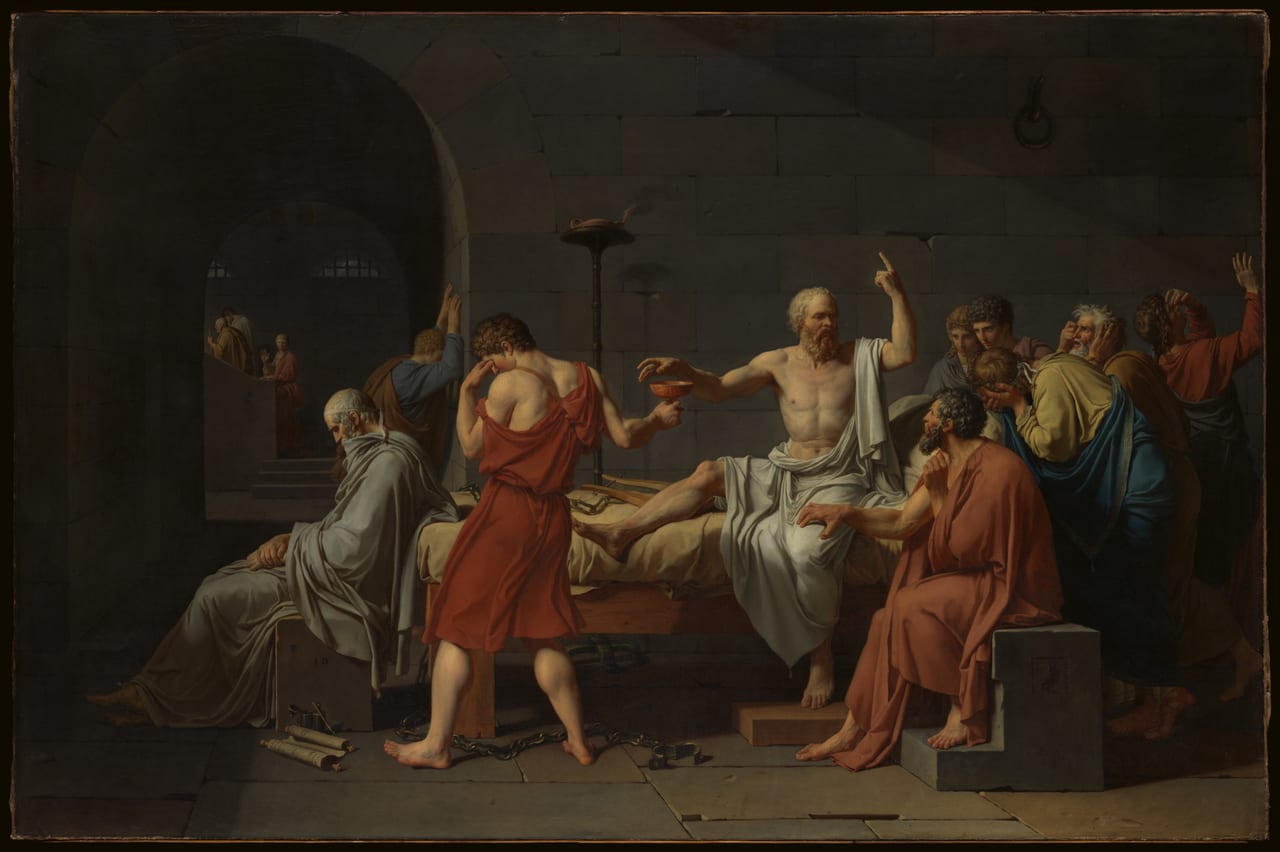
The Death of Socrates
Jacques-Louis David · 1787

Neoclassicism
Art turned back to Greece and Rome: after the ruins of Pompeii came to light, painters and sculptors rebuilt their work on the antique, with clean line, restraint and stories of civic virtue.
Play 12 works from this collection on your TV, phone or tablet with Momentable Art TV.
Play CollectionAfter Pompeii
Around the middle of the eighteenth century, taste swung hard toward the antique. Excavations at Pompeii put Roman painting and sculpture before people's eyes, and in 1764 the German scholar Winckelmann published a history of ancient art whose authority shaped a generation. What followed was classicism in its strictest form, and it carried painting, architecture and design with it.
David and Ingres
France gave the movement its painter. Jacques-Louis David made his name through the 1780s with severe, morally loaded canvases, and once the Revolution came he was inside it: until Napoleon fell, his studio more or less decided what French art was. He spent his last decade painting in Brussels, where he died in exile.
Ingres trained in that studio and spent his long career defending the line against colour, the antique against Delacroix's Romantics. He rated his portraits below his grand machines, yet it is the portraits, above all the seated Madame Moitessier, that most people now know him by.
Beyond the painters
The movement's greatest hand may have been a sculptor's. Antonio Canova worked in marble, and his carving, poised between warmth and repose, is what the ideal looked like when it was done perfectly. Painting, and above all David's, kept the civic edge; sculpture gave the style its gods and its lovers. Before all of them came Anton Raphael Mengs, a friend of Winckelmann's whose fresco of Parnassus for the Villa Albani in Rome won him the standing of a master, and who pushed the new painting past the Rococo taste it displaced.
Artists
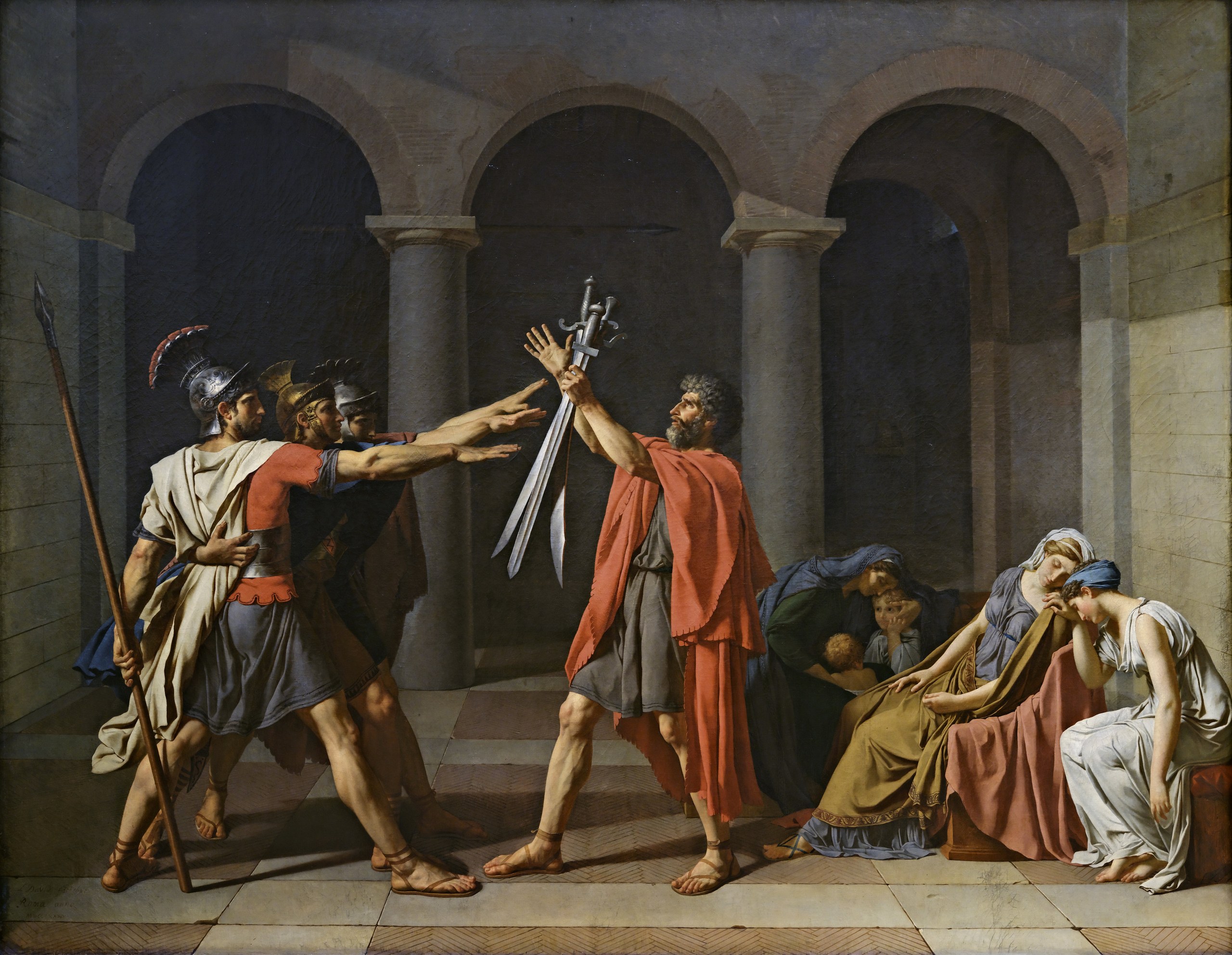
France's foremost Neoclassical painter: severe, morally loaded canvases from the 1780s on, and a studio that shaped the nation's art from the Revolution to Napoleon's fall.
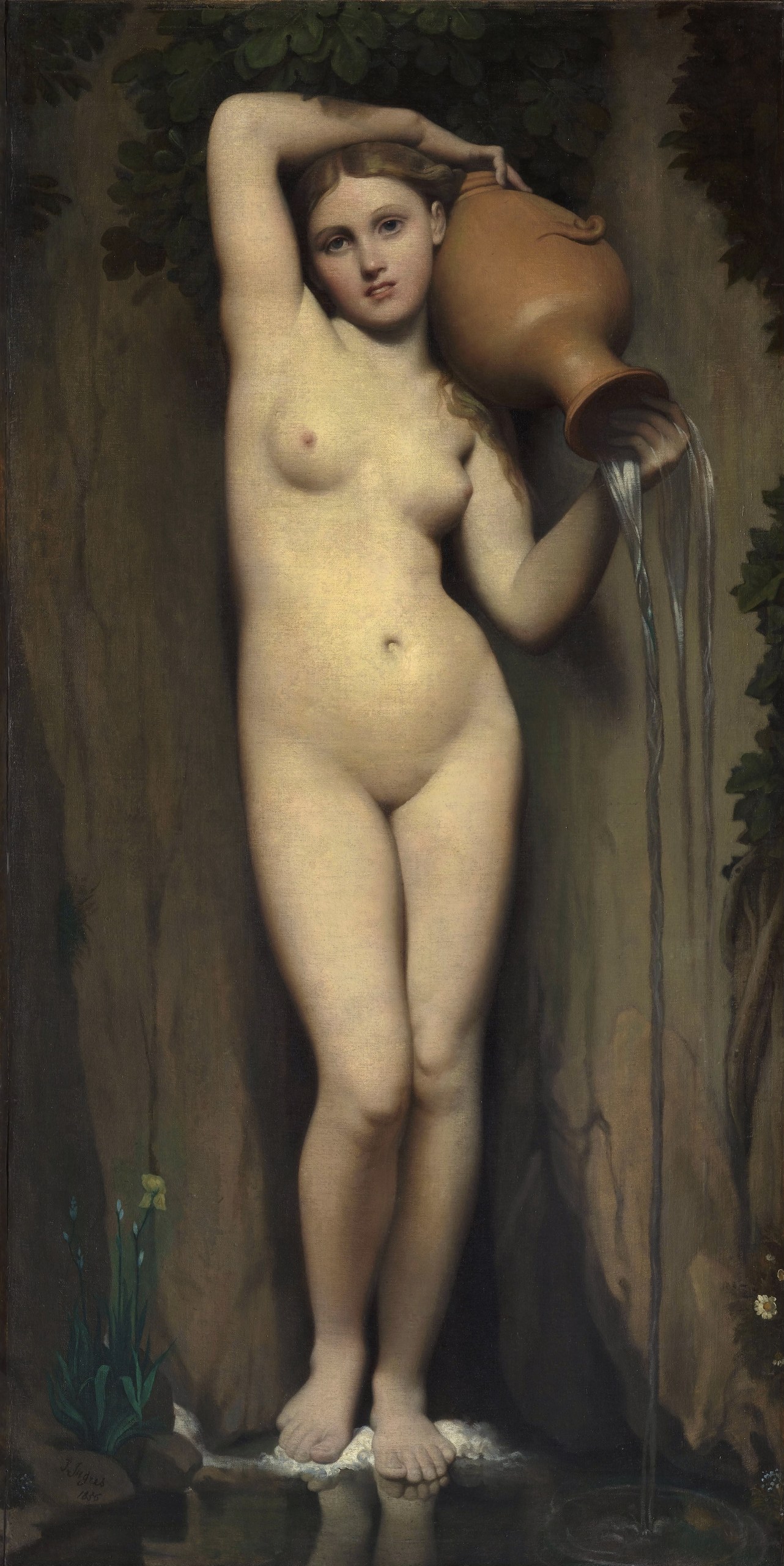
A pupil of David and the defender of a rigid classicism against the Romanticism of Delacroix; he saw himself as a history painter but is now most famous for his portraits, among them Madame Moitessier.
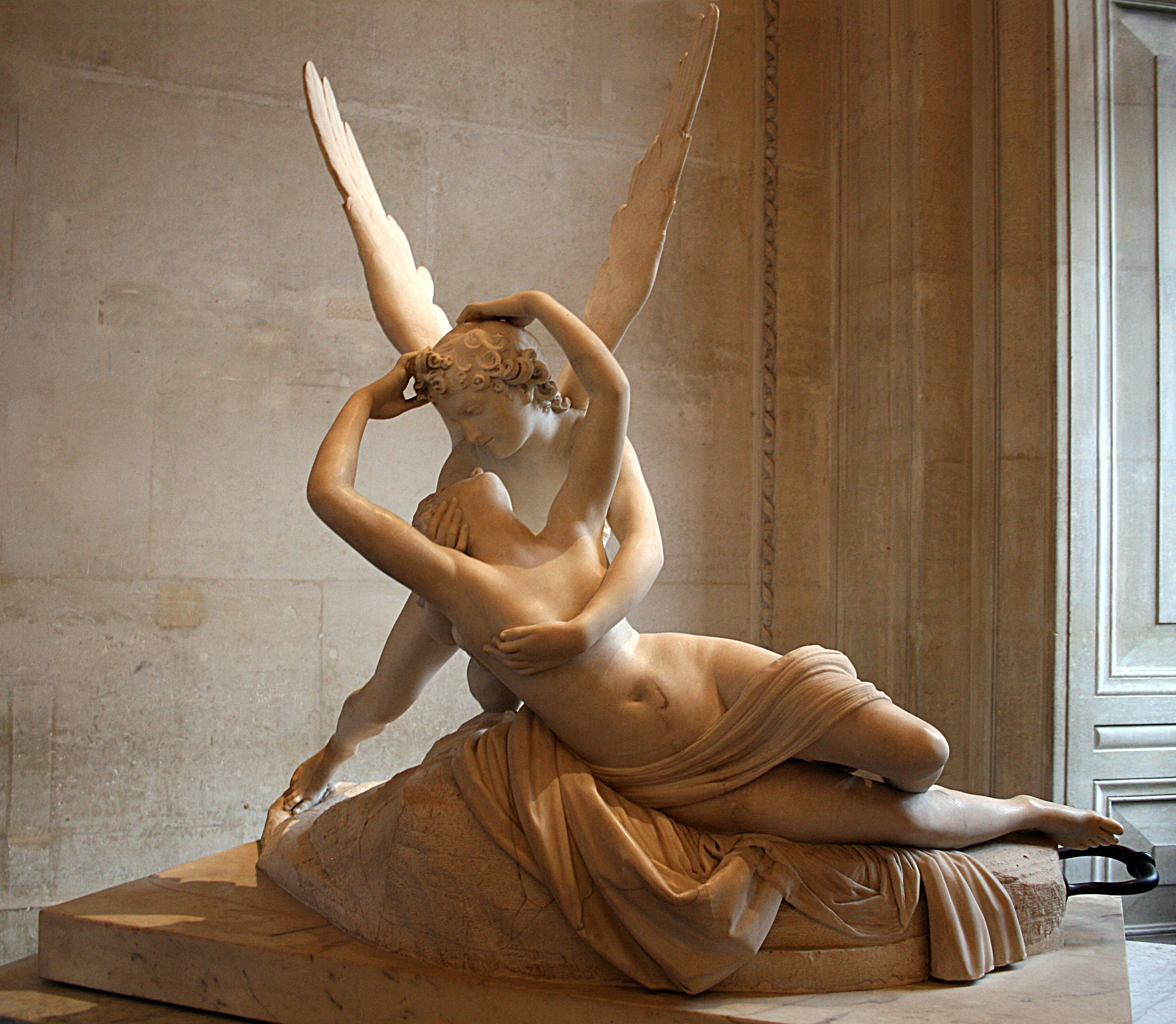
The movement's sculptor, and for many its finest artist outright: marble gods and lovers poised between warmth and perfect repose.
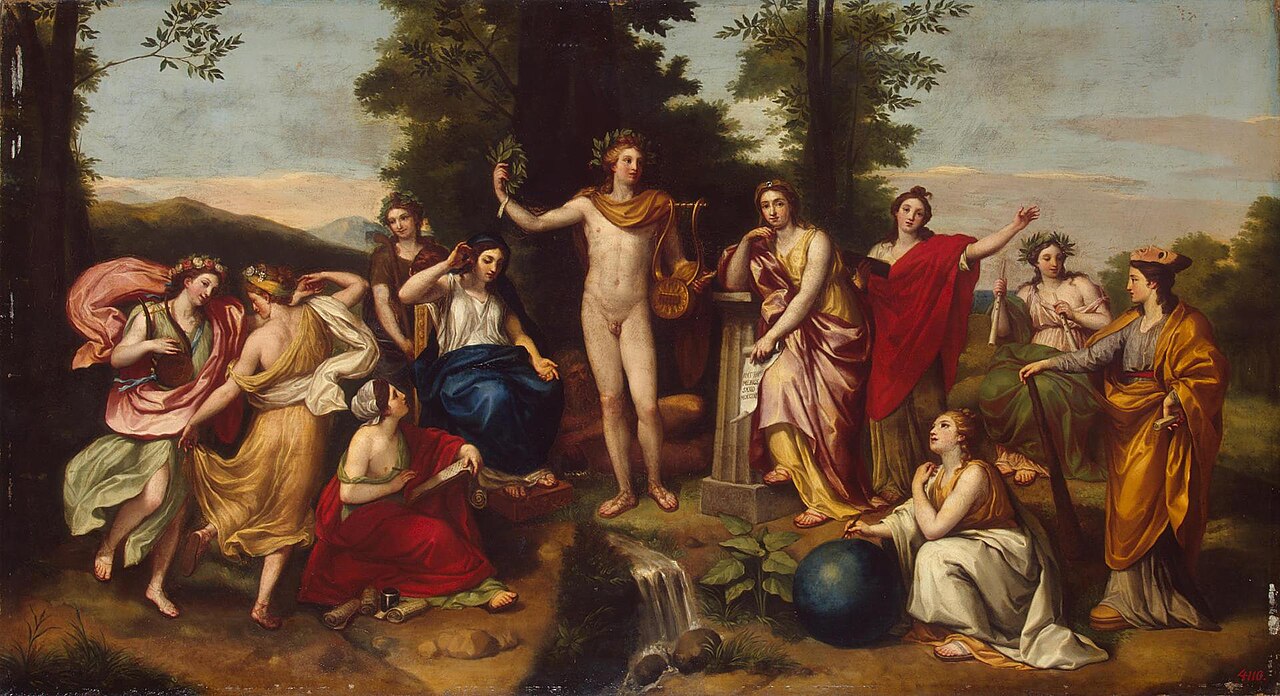
A German painter of the movement's first generation: close to Winckelmann, he worked to make Neoclassical painting dominant over the Rococo taste of the day, and his Parnassus fresco at the Villa Albani in Rome made his name.
Artworks
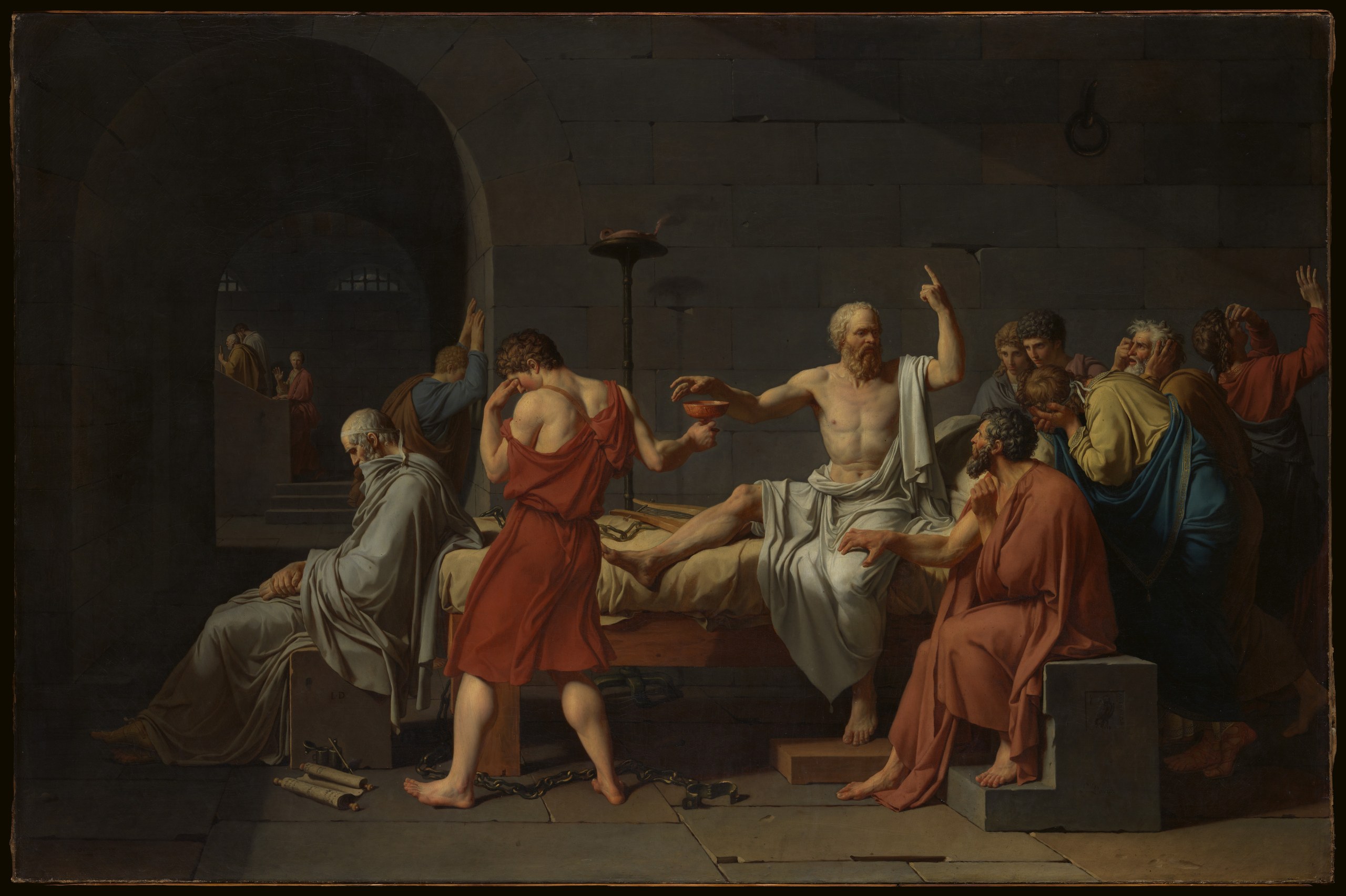
The Death of Socrates
Jacques-Louis David · 1787
The philosopher, condemned to drink hemlock, sits upright on his bed still teaching, one hand over the cup, his pupils in despair around him; painted in 1787, part of the neoclassical style popular in that decade for subjects from the Classical age.
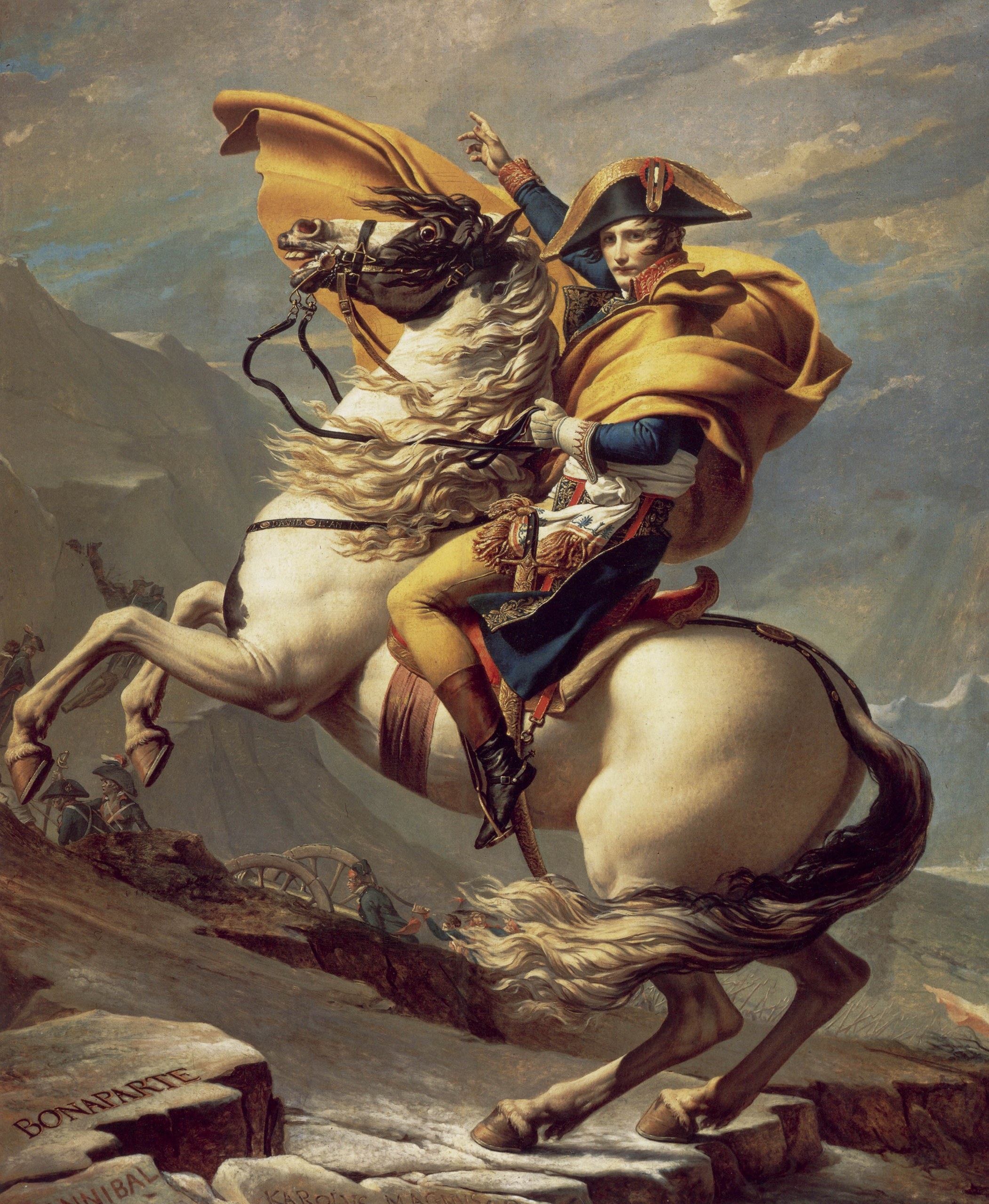
Napoleon Crossing the Alps
Jacques-Louis David · 1801
The first consul on a rearing horse. The first of five equestrian portraits David painted between 1801 and 1805, it turns the real Alpine crossing of May 1800 into an image of heroic will.
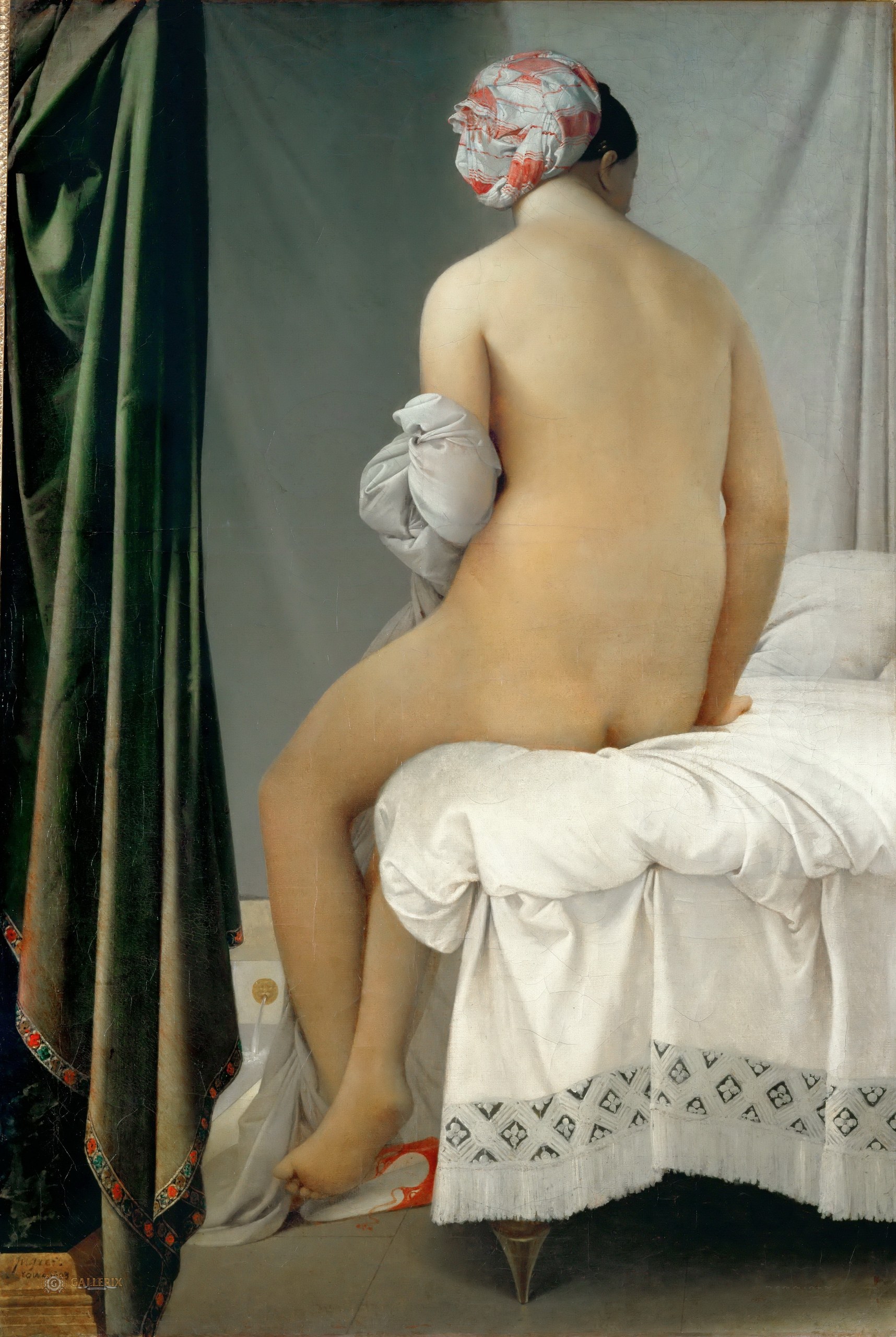
The Valpinçon Bather
Jean-Auguste-Dominique Ingres · 1808
A nude seen from behind on white drapery, in the Louvre since 1879 and widely regarded as Ingres's first great treatment of the subject.
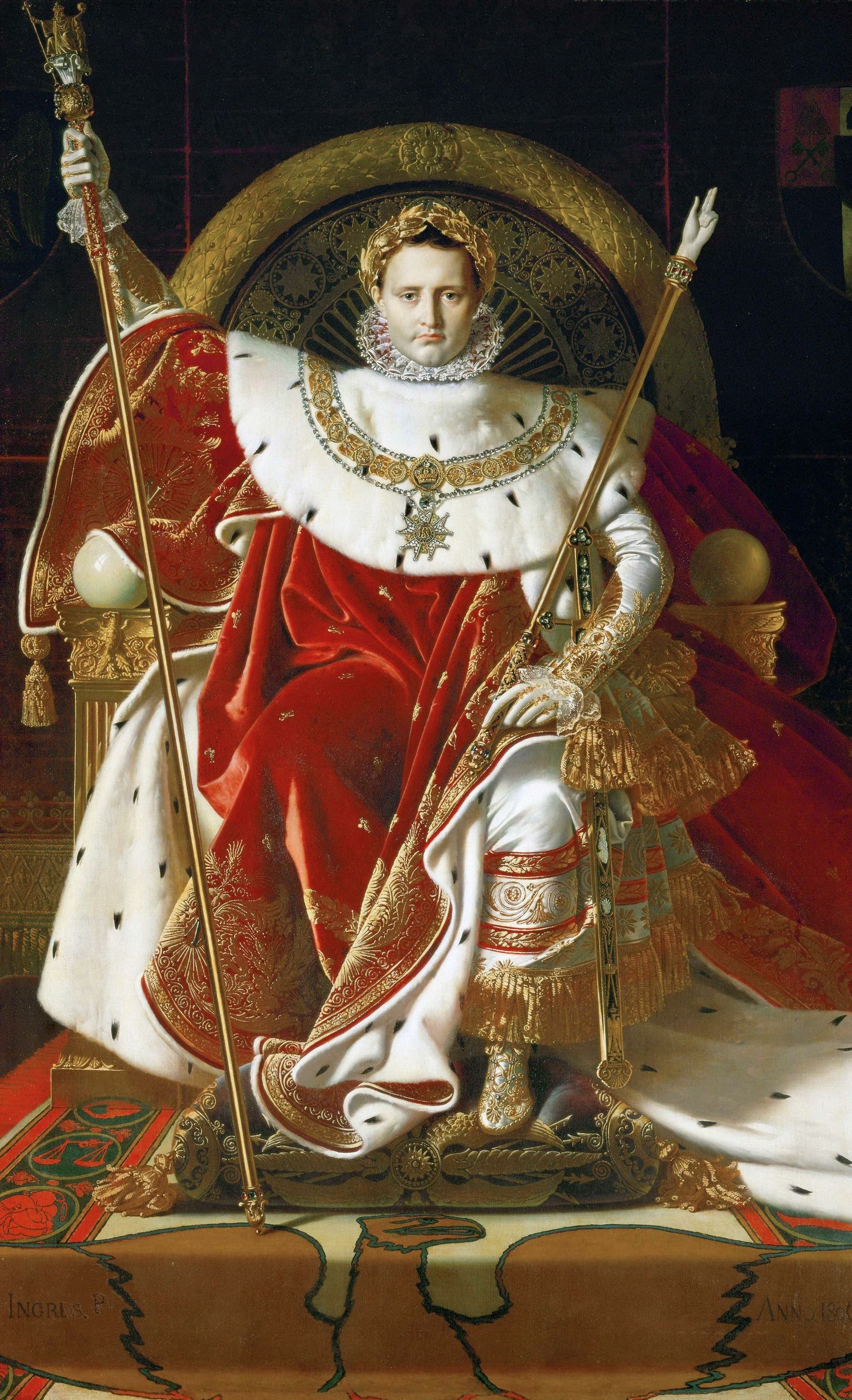
Napoleon I on his Imperial Throne
Jean-Auguste-Dominique Ingres · 1806
The emperor in his coronation costume, seated on a circular-backed throne, the scepter of Charlemagne in his right hand and a golden laurel wreath on his head.
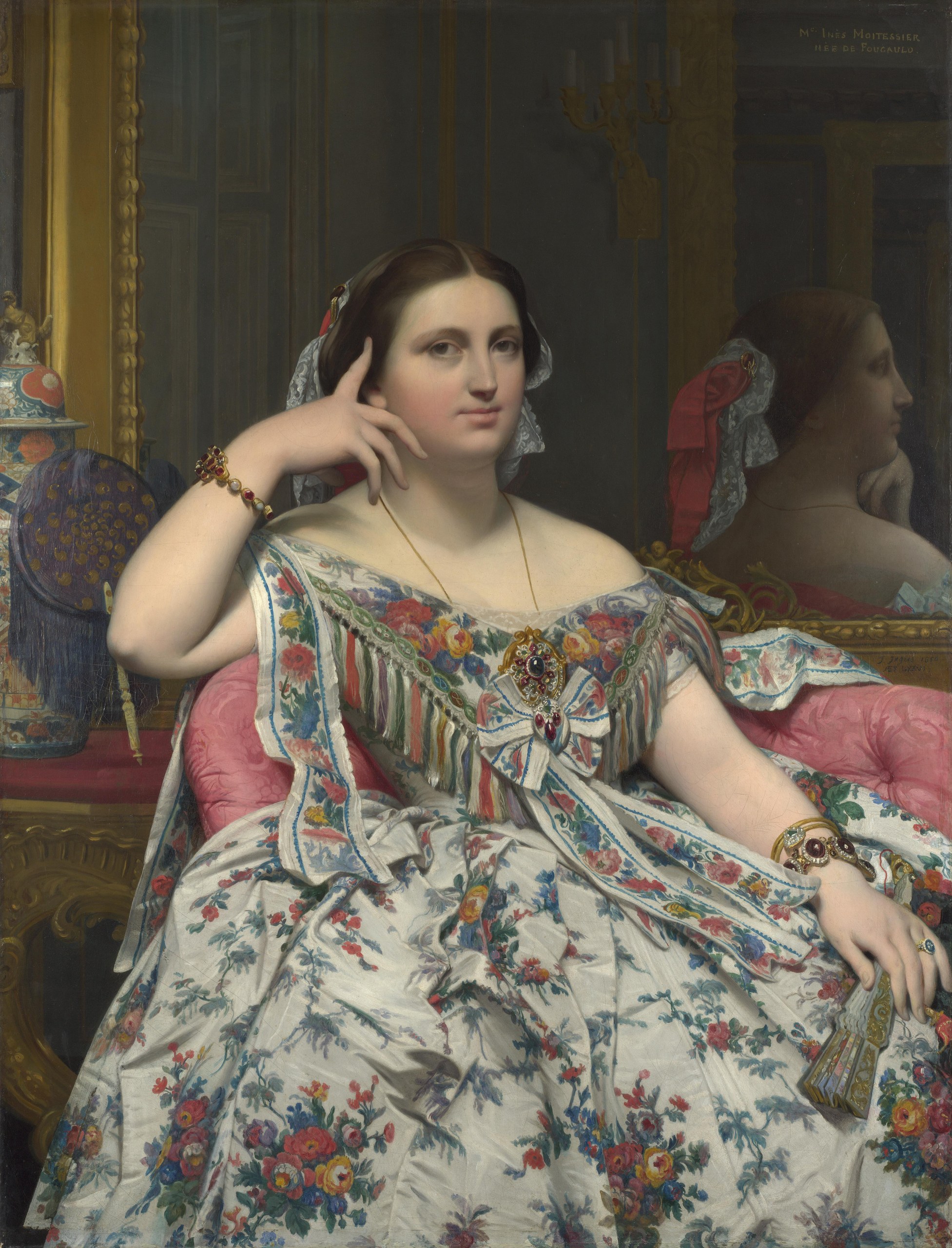
Madame Moitessier
Jean-Auguste-Dominique Ingres · 1856
A portrait begun in 1844 and completed in 1856, of a seated woman in a flowered dress against a cool ground; in the National Gallery in London since 1946.
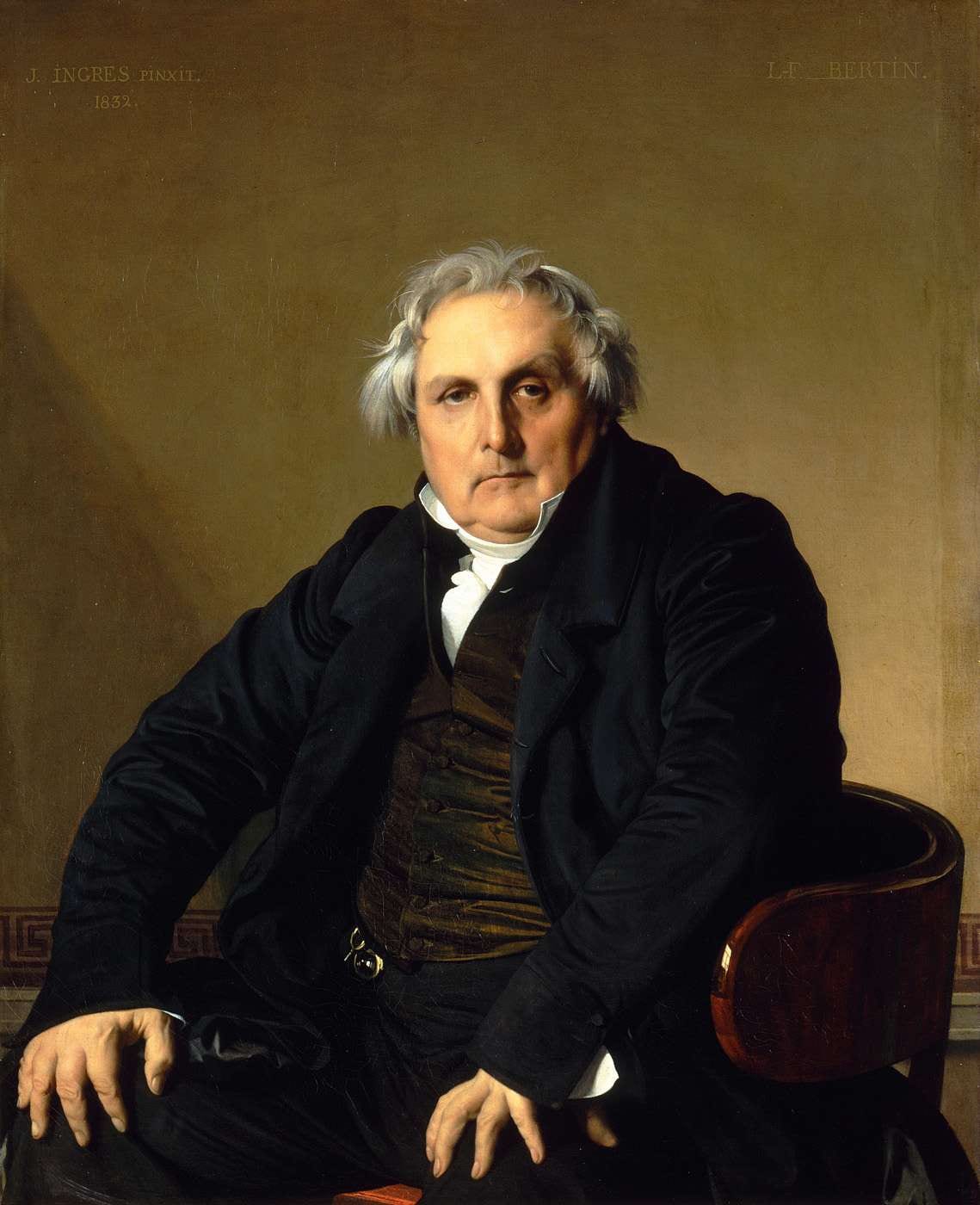
Portrait of Monsieur Bertin
Jean-Auguste-Dominique Ingres · 1832
A man planted on his chair, hands on his knees, physically imposing and self-assured; Ingres presents him as the embodiment of the commercially minded men who led France under Louis Philippe.
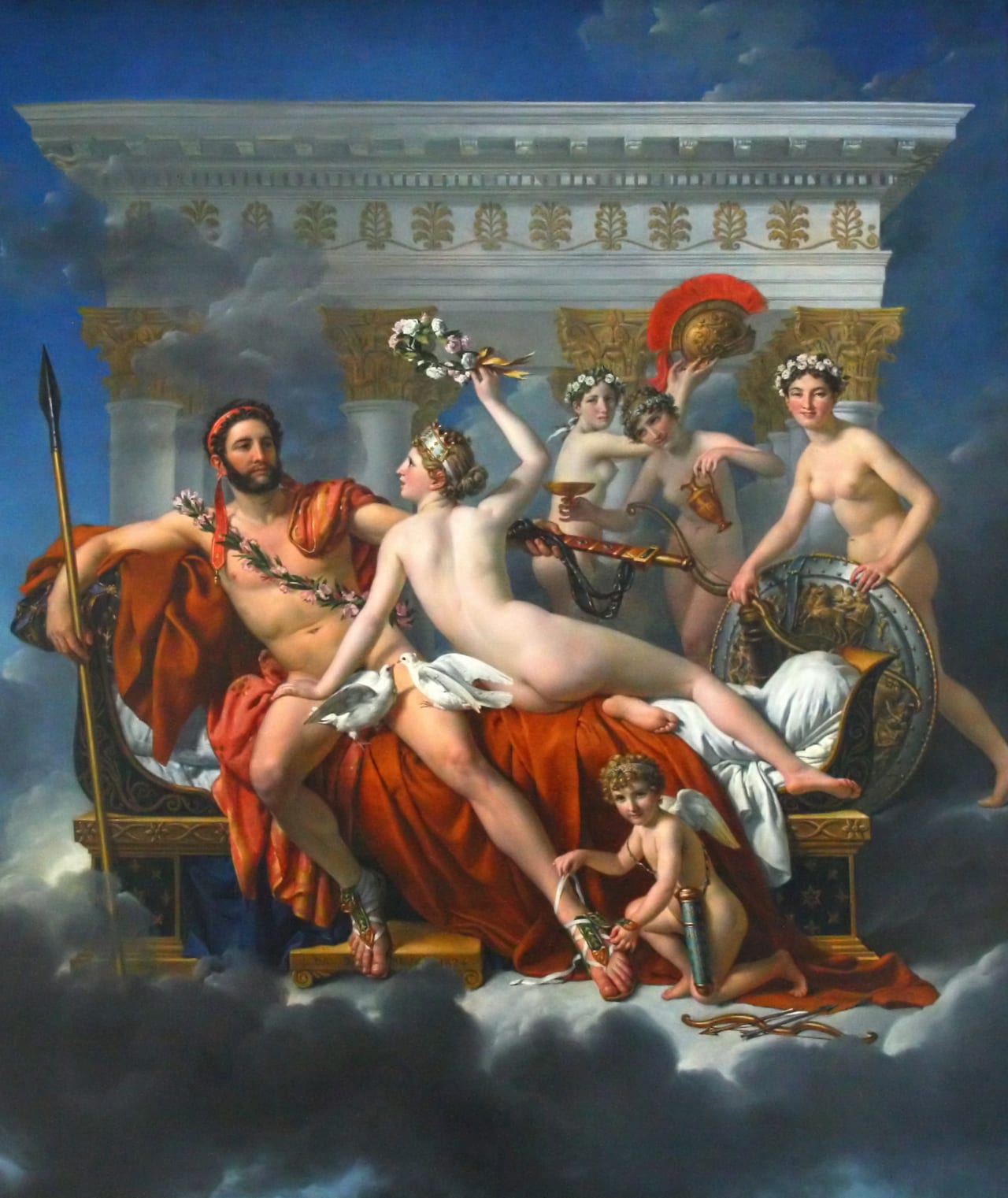
Mars Being Disarmed by Venus
Jacques-Louis David · 1824
David's final canvas, begun at seventy-three in Brussels, where the god of war gives up his weapons to graces and doves; the mythology is antique, the paint is soft and late.
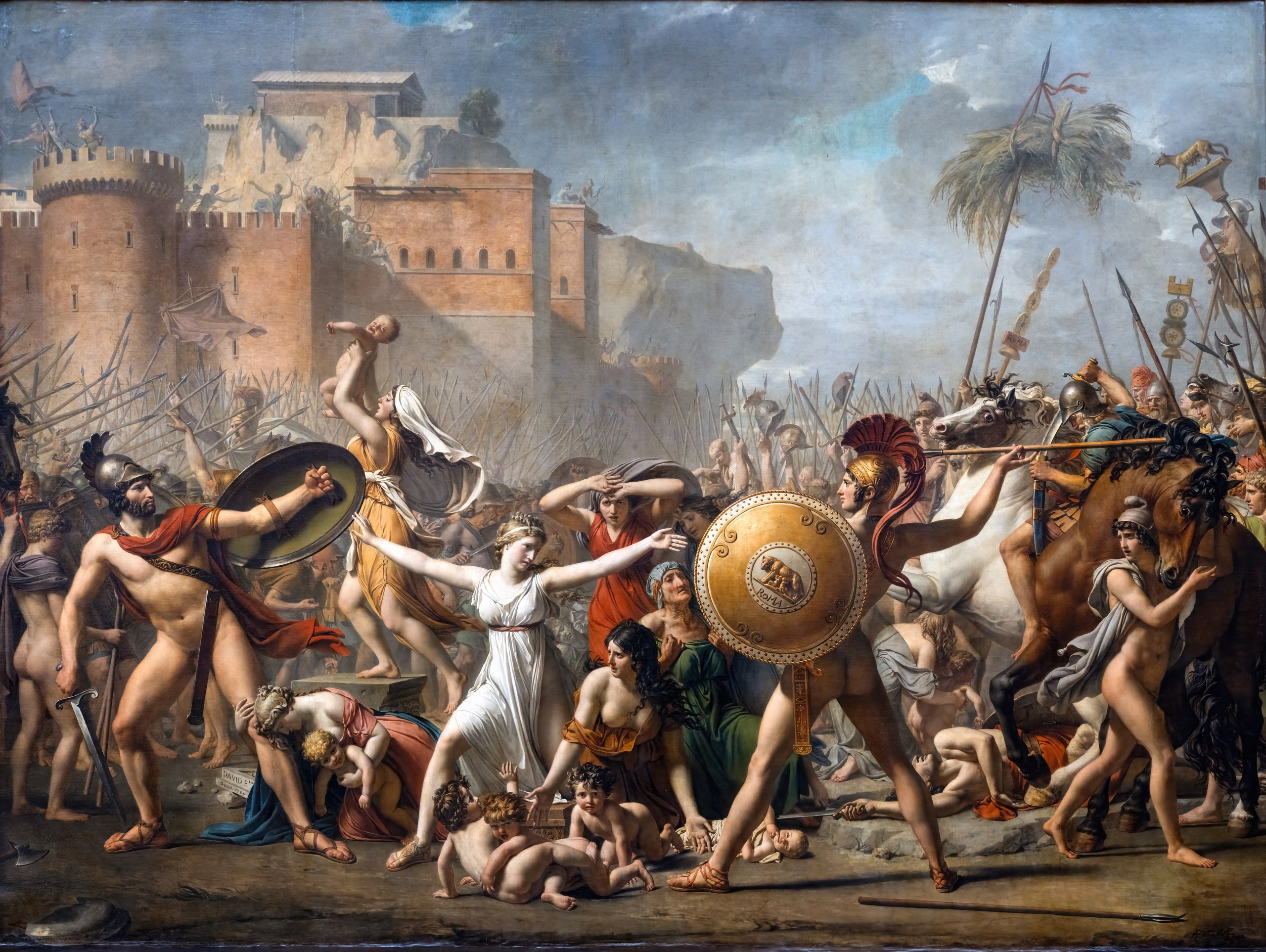
The Intervention of the Sabine Women
Jacques-Louis David · 1799
The women throw themselves between the armies, a legend of Rome's founding generation; painted while the Revolution's killing was fresh, it argues for reconciliation in the only language the age allowed a history painting.
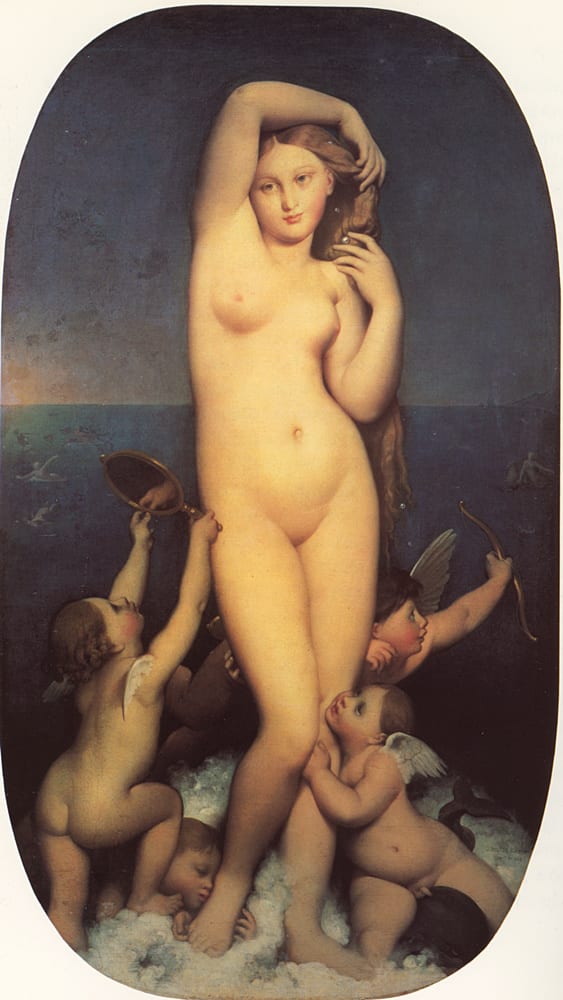
Vénus Anadyomène
Jean-Auguste-Dominique Ingres · 1808
The goddess rising from the sea and wringing her hair, a nude of the Venus-rising type begun in Rome in 1808; now at the Musée Condé, Chantilly.
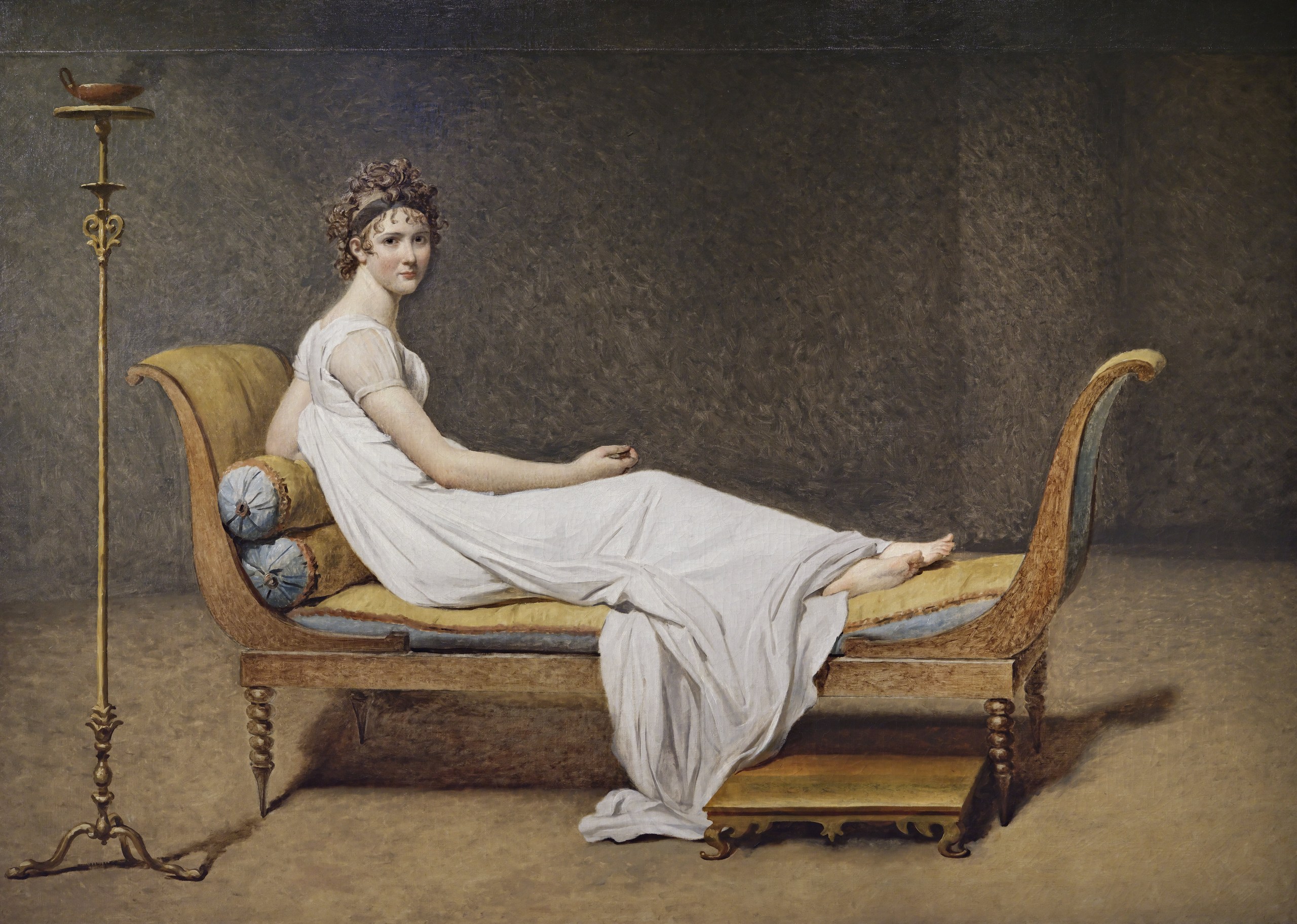
Portrait of Madame Récamier
Jacques-Louis David · 1800
A Parisian socialite reclining on a Directoire sofa in a simply cut Empire dress, in the height of Neoclassical fashion; the work is unfinished.
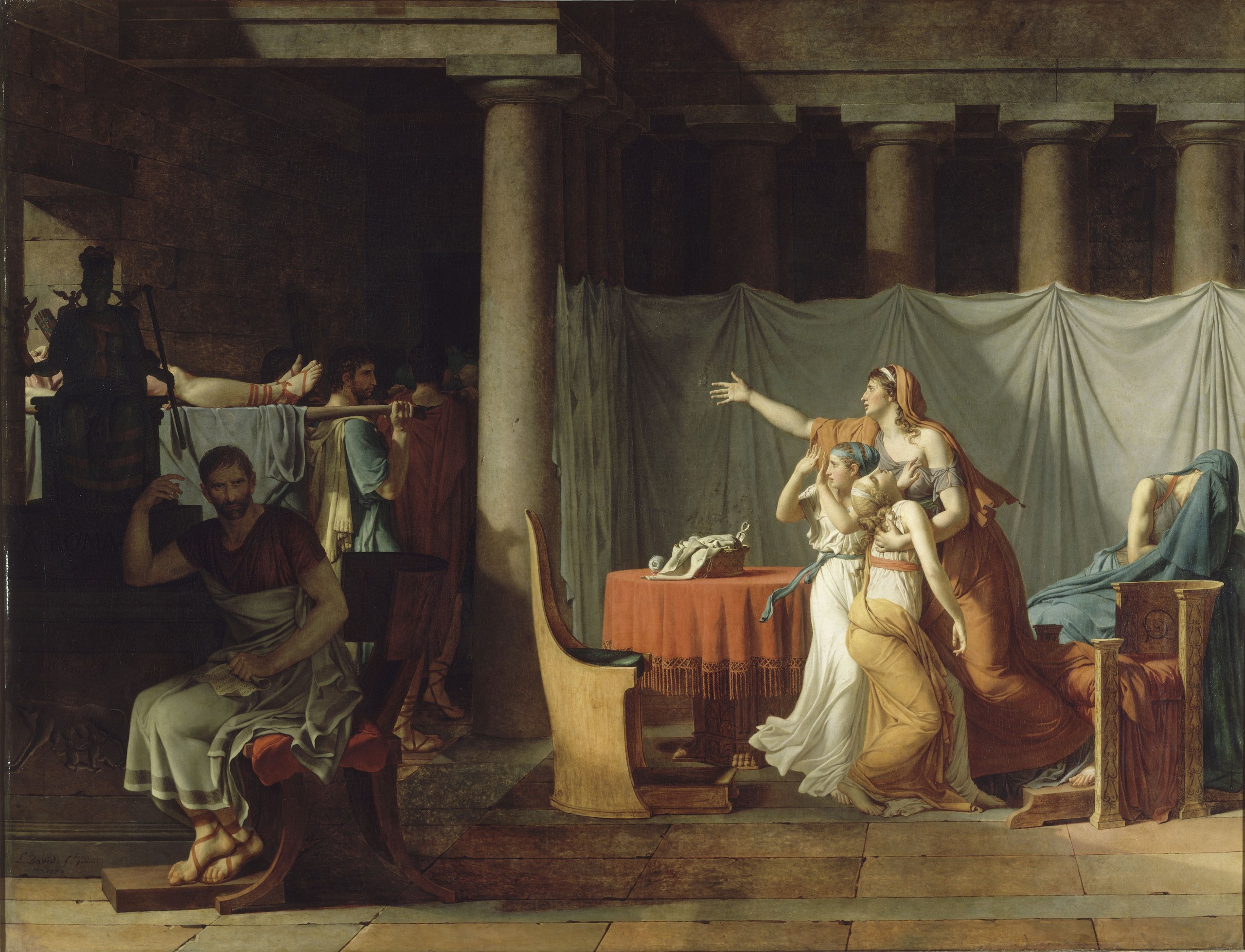
The Lictors Bring to Brutus the Bodies of His Sons
Jacques-Louis David · 1789
The founder of the Republic receiving the bodies of his executed sons while women weep behind him; first exhibited at the Paris Salon of 1789, a bold allegory of civic virtue for the cause of republicanism.
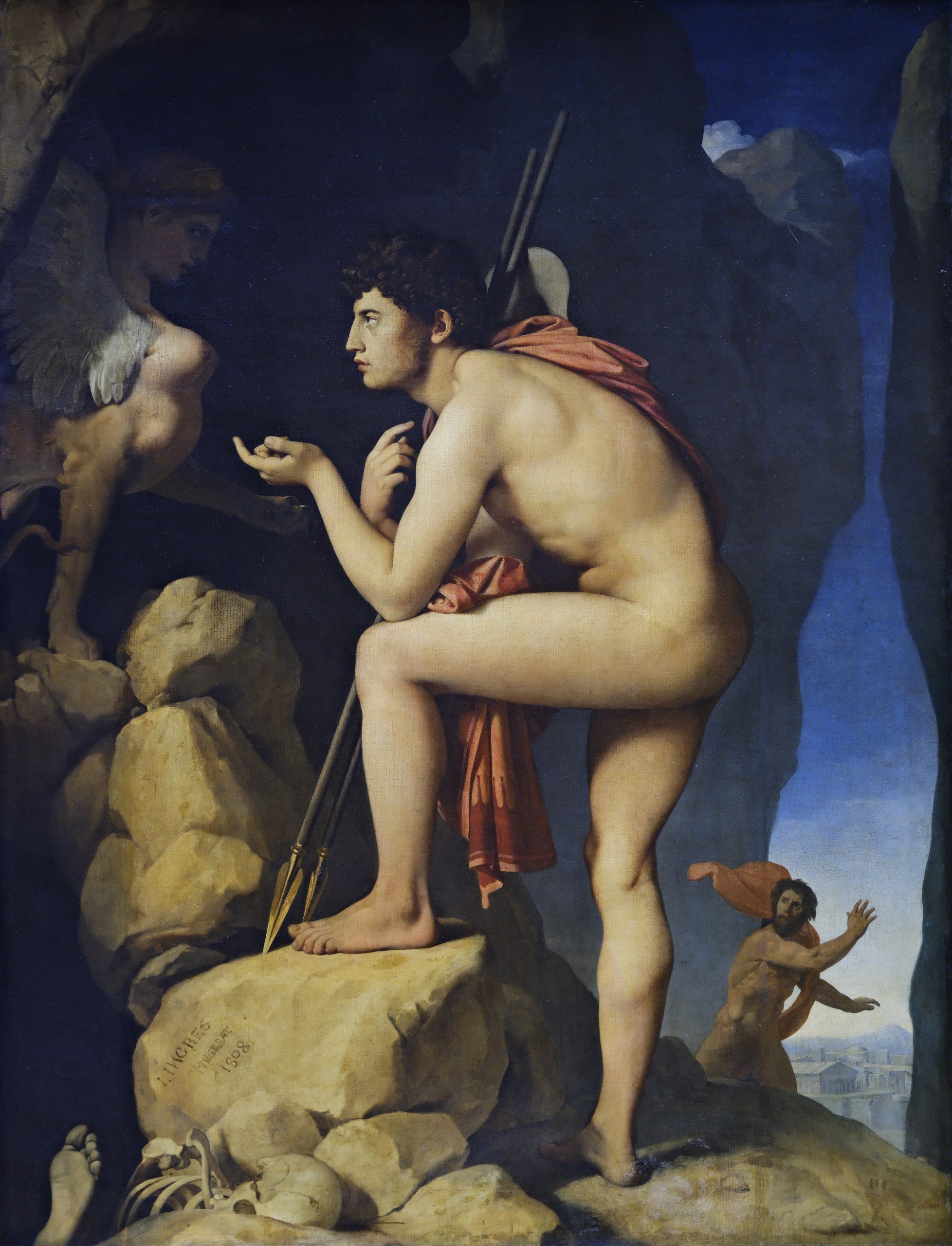
Oedipus and the Sphinx
Jean-Auguste-Dominique Ingres · 1808
The hero facing the monster and explaining her riddle; a student work of 1808 that Ingres enlarged and completed in 1827, now in the Louvre.
Sources
- Tate, “Neoclassicism”
- National Gallery, London, “Jacques-Louis David”
- National Gallery, London, “Jean-Auguste-Dominique Ingres”
- Wikipedia, “Antonio Canova”
- Wikipedia, “Anton Raphael Mengs”
- Wikipedia, “The Death of Socrates”
- Wikipedia, “Napoleon Crossing the Alps”
- Wikipedia, “The Valpinçon Bather”
- Wikipedia, “Napoleon I on His Imperial Throne”
- Wikipedia, “Portrait of Madame Moitessier”
- Wikipedia, “Portrait of Monsieur Bertin”
- Wikipedia, “Mars Being Disarmed by Venus”
- Wikipedia, “The Intervention of the Sabine Women”
- Wikipedia, “Venus Anadyomene (Ingres)”
- Wikipedia, “Portrait of Madame Récamier”
- Wikipedia, “The Lictors Bring to Brutus the Bodies of His Sons”
- Wikipedia, “Oedipus and the Sphinx (Ingres)”
Invite Neoclassicism into your living room
Play 12 works from this collection on your TV, phone or tablet with Momentable Art TV.