In the Arbour
Aleksander Gierymski · 1882

Aleksander Gierymski
Poland · 1850–1901
Ignacy Aleksander Gierymski was a Polish painter of the late 19th century, the younger brother of Maksymilian Gierymski. He was a representative of Realism as well as an important precursor of Impressionism in Poland. == Biography == Aleksander Gierymski completed Secondary State School nr III in Warsaw in 1867, and in the same year commenced drawing studies in Warsaw. Between 1868 and 1872 he studied at the Academy of Fine Arts in Munich and graduated with a gold medal.
Independent artist guide by Momentable. Biography from Wikipedia; artworks credited to the museums that hold them.
 LIVENow streaming · In the Arbour
- life
- 1850–1901life
- rights
- Public domainrights
The work
A selection of 2 works, free to stream.
In the Arbour
Aleksander Gierymski · 1882
National Museum of Warsaw
Jewess with Oranges
Aleksander Gierymski · 1880
National Museum of Warsaw
Works worth knowing
What Aleksander Gierymski made, and why each one is worth looking at.
In the Arbour
Aleksander Gierymski · 1882
National Museum of Warsaw
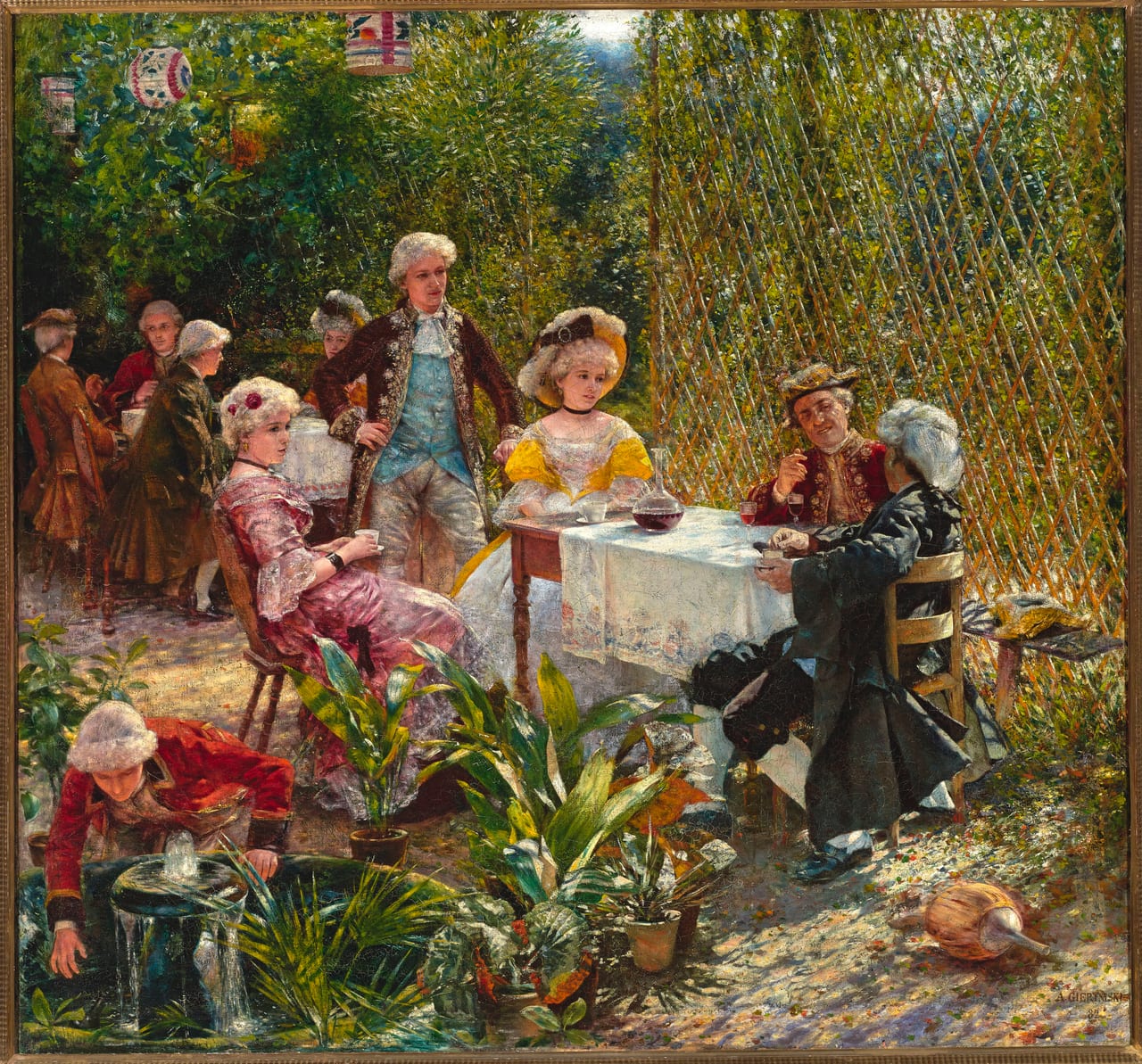
In the Arbour (Polish: W altanie) is an oil painting created by Polish Realist painter Aleksander Gierymski in 1882. It is displayed at the National Museum in Warsaw, Poland. The painting shows a social gathering of a group of aristocrats portrayed in 18th-century clothes, which takes place on a summer day in a garden.
Jewess with Oranges
Aleksander Gierymski · 1880
National Museum of Warsaw
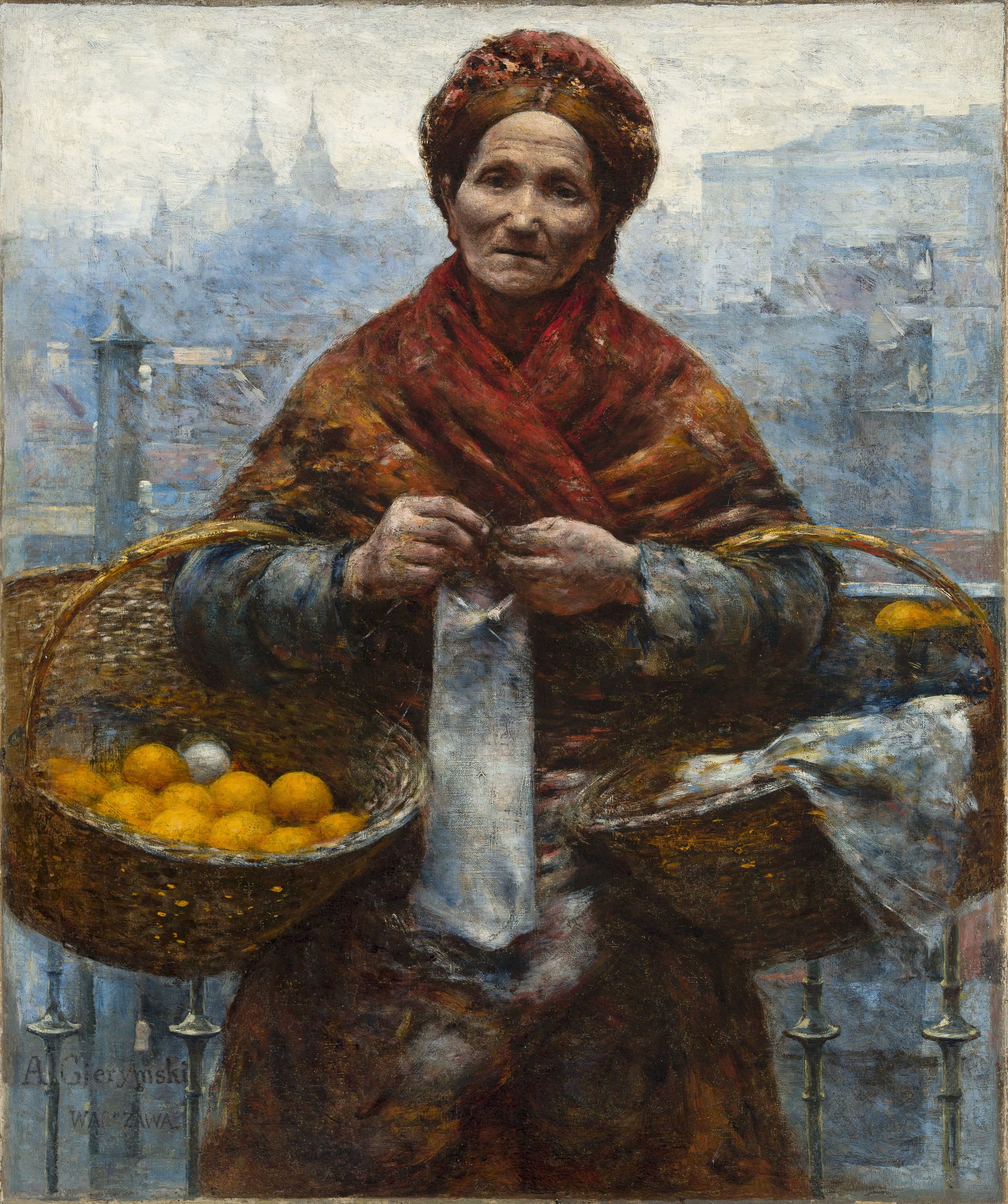
Jewess with Oranges (Polish: Żydówka z pomarańczami, Pomarańczarka, Przekupka z pomarańczami) is an oil painting on canvas by Aleksander Gierymski finished in 1881 and purchased by the National Museum in Warsaw in 1928. It was looted by the Nazis in Germany-occupied Poland during World War II, and recovered only in 2011. It was painted in oil technique between 1880-81 in Warsaw.
Where the work hangs
The museums that hold it, and their visitor guides.
If you like Aleksander Gierymski
Artists held by the same museums.
Invite the masters into your living room.
Aleksander Gierymski on your TV, phone, or tablet. Free to start.
View on MomentableIndependent guide by Momentable · biography from Wikipedia · artworks are in the public domain and credited to the museum that holds them