Kritios Boy
Critius · 480s BC

Critius
Classical Athens · 600–500 BC
Kritios (Ancient Greek: Κριτίος, ) was an Athenian sculptor, probably a pupil of Antenor, working in the early 5th century BCE, whose manner is on the cusp of the Late Archaic and the Severe style of Early Classicism in Attica. He was the teacher of Myron. With Nesiotes (Νησιώτης,) Kritios made the replacement of the Tyrannicides ("Tyrant-killers") group by Antenor, which had been carried off by the Persians in the first stage of the Greco-Persian Wars. The new group stood in the Agora of Athens and its composition is known from Roman copies. With Nesiotes Kritios made other statues, of bronze, dedicated on the Acropolis, of which only their inscribed bases remain to give testament.
Independent artist guide by Momentable. Biography from Wikipedia; artworks credited to the museums that hold them.
 LIVENow streaming · Kritios Boy
- life
- 600–500 BClife
- rights
- Public domainrights
The work
A selection of 1 works, free to stream.
Kritios Boy
Critius · 480s BC
Acropolis Museum
Works worth knowing
What Critius made, and why each one is worth looking at.
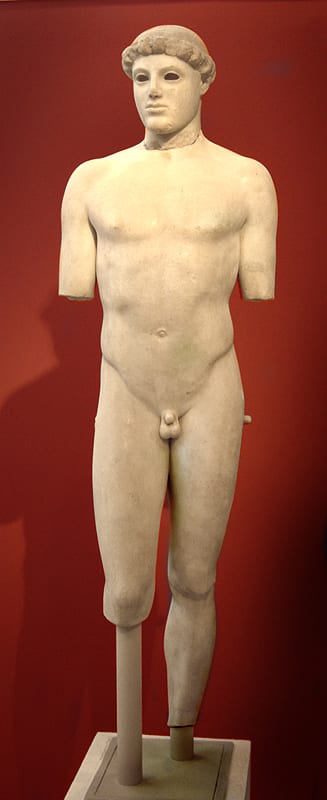
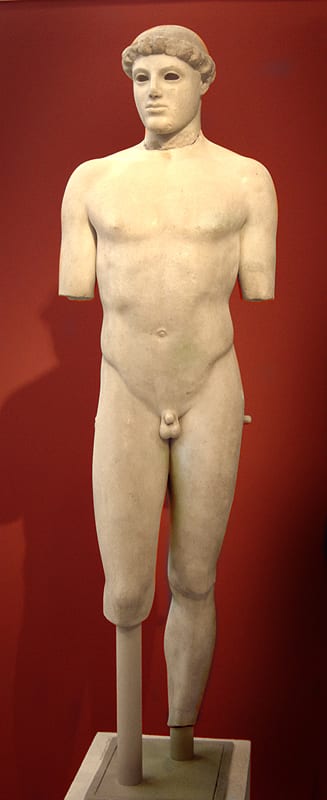
Kritios Boy
Critius · 480s BC
Acropolis Museum
The marble Kritios Boy or Kritian Boy belongs to the Early Classical period of ancient Greek sculpture. It is the first statue from classical antiquity known to use contrapposto; Kenneth Clark called it "the first beautiful nude in art" The Kritios Boy is thus named because it is attributed, on slender evidence, to Kritios, who worked together with Nesiotes (sculptors of Harmodius and Aristogeiton) or their school, from around 480 BC. As currently mounted, the statue is considerably smaller than life-size at 117 cm (3 ft 10 ins), including the supports that replace the missing feet.
Where the work hangs
The museums that hold it, and their visitor guides.
If you like Critius
Artists held by the same museums.
Invite the masters into your living room.
Critius on your TV, phone, or tablet. Free to start.
View on MomentableIndependent guide by Momentable · biography from Wikipedia · artworks are in the public domain and credited to the museum that holds them