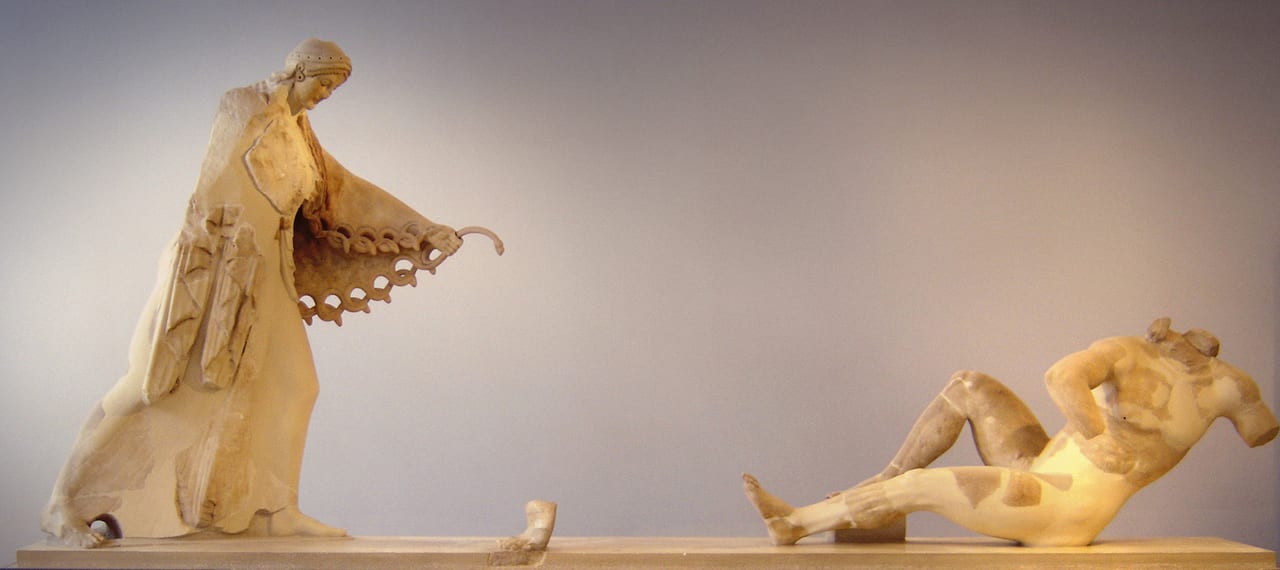
Moschophoros

Acropolis Museum
Athens · Founded 2003
The sculpture from the Acropolis, shown in daylight with the Parthenon itself through the window. It stands over the ruins of the ancient city, and you walk above them on glass on the way in.
- 2M
- Visitors a year
- 2003
- Founded
- €20
- Admission
- Summer hours
- Opening hours now
35 works from this collection play free on your TV, phone or tablet. Press play and one starts now.
Watch it nowWhat to see
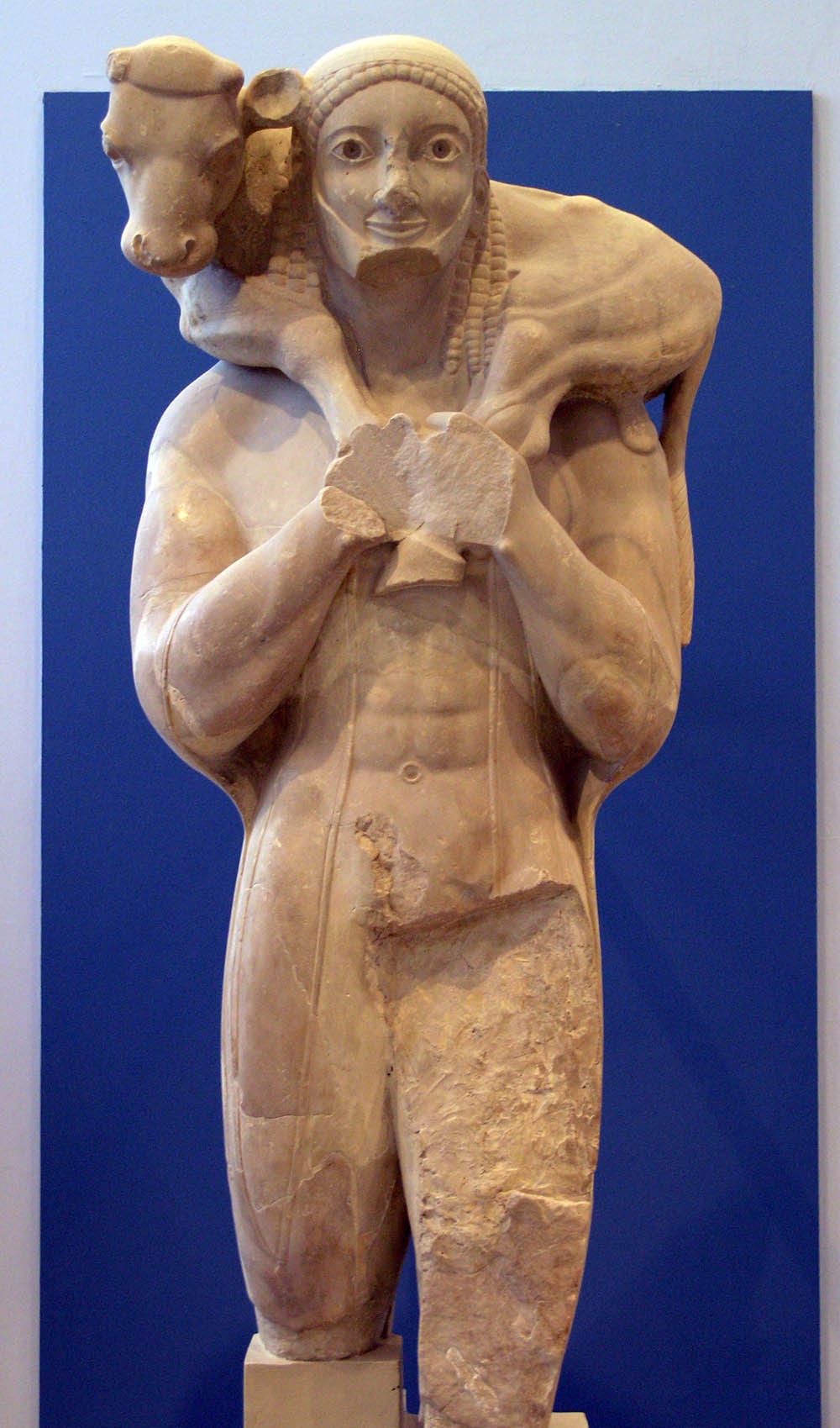
Moschophoros
Moschophoros is an ancient Greek statue of the Archaic period, also known in English as The Calf Bearer. It was excavated in fragments in the Perserschutt on the Acropolis of Athens in 1864.
Kritios Boy
Critius · 480s BC
The marble Kritios Boy or Kritian Boy belongs to the Early Classical period of ancient Greek sculpture. It is the first statue from classical antiquity known to use contrapposto; Kenneth Clark called it "the first beautiful nude in art" The Kritios Boy is thus named because it is attributed, on slender evidence, to Kritios, who worked together with Nesiotes (sculptors of Harmodius and Aristogeiton) or their school, from around 480 BC.
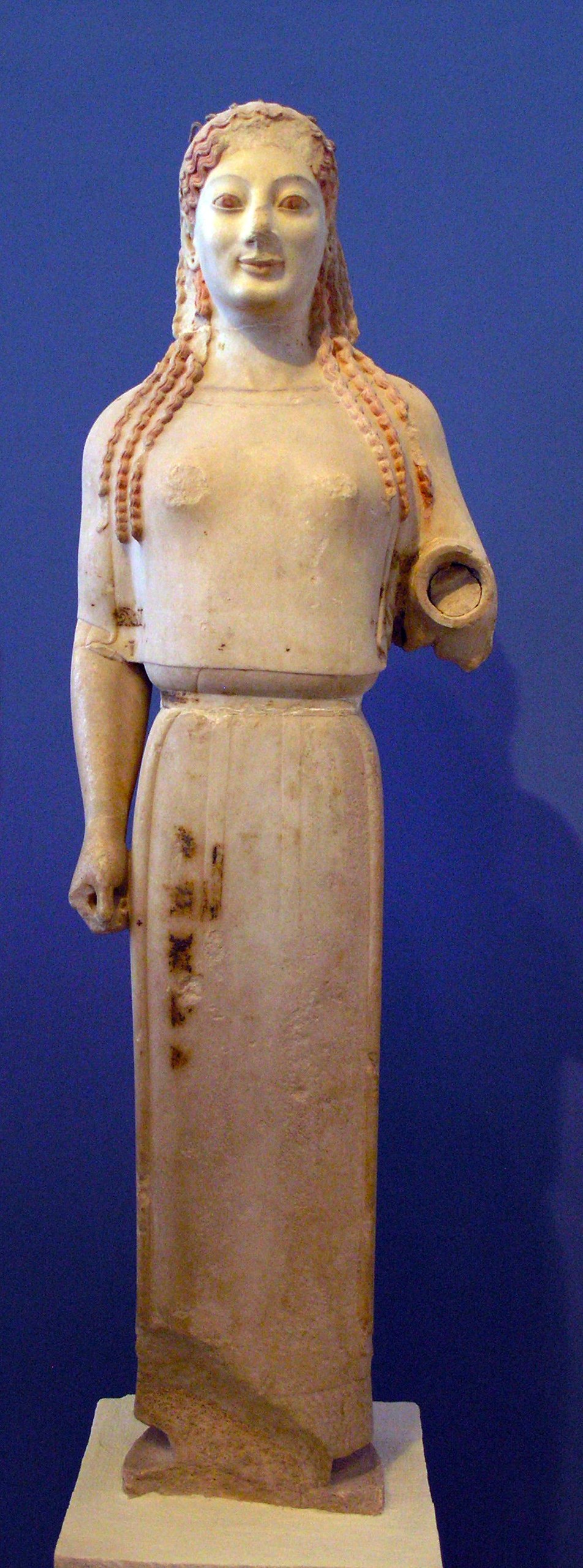
Peplos Kore
540s BC
The Peplos Kore is an ancient sculpture from the Acropolis of Athens. It is considered one of the best-known examples of Archaic Greek art.
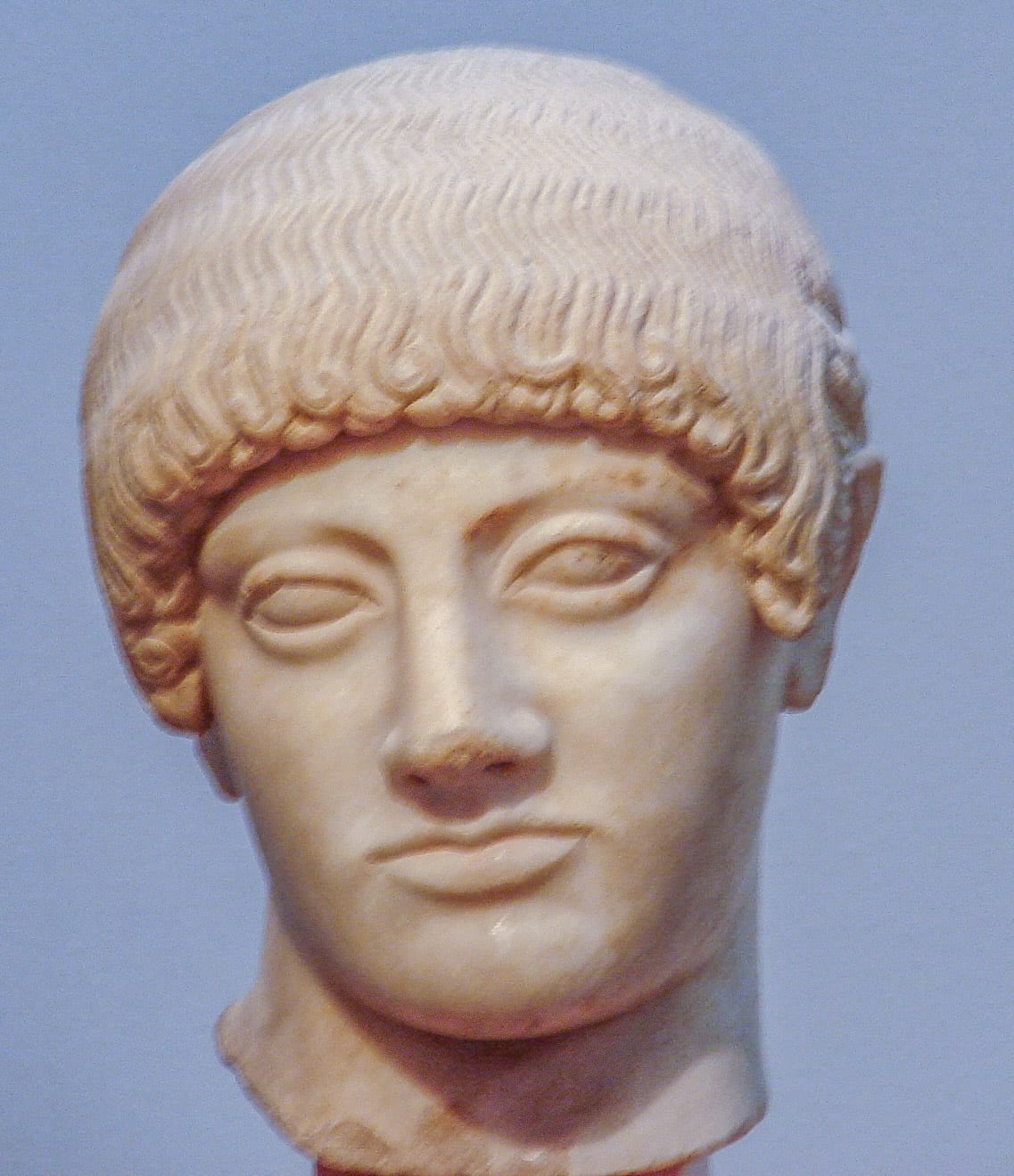
Blond Kouros's Head of the Acropolis
The so-called Blond Kouros's Head of the Acropolis is the head of a lost marble statue of a young man (Kouros or Ephebe sculpture type) of ca 480 BC, in the Acropolis Museum in Athens, Greece. The head and part of the pelvis were found in 1923 northeast of the museum site on the Acropolis of Athens.
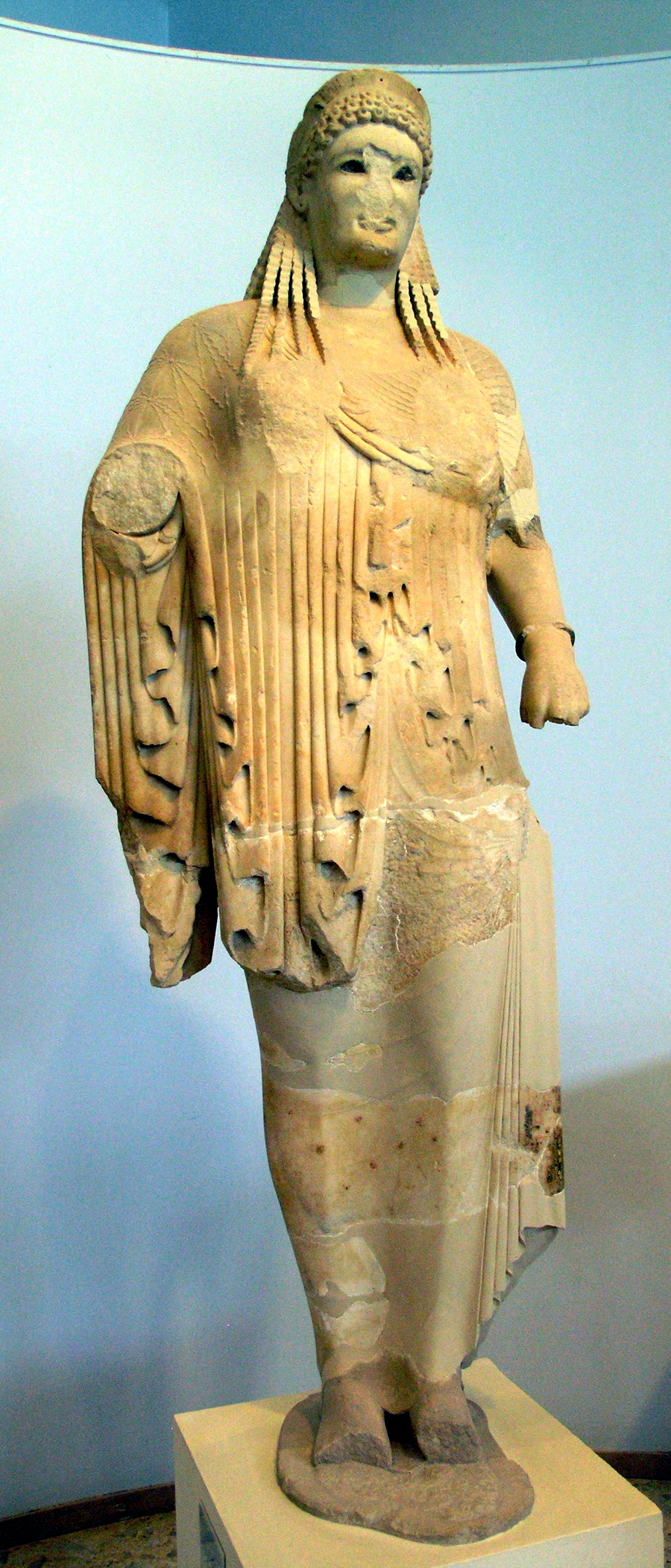
Antenor Kore
The Antenor Kore is a Late Archaic statue of a girl (Kore) made of Parian marble, which was created around 530/20 BC. The statue was found in several fragments during excavations on the Athenian Acropolis in the so-called Perserschutt.
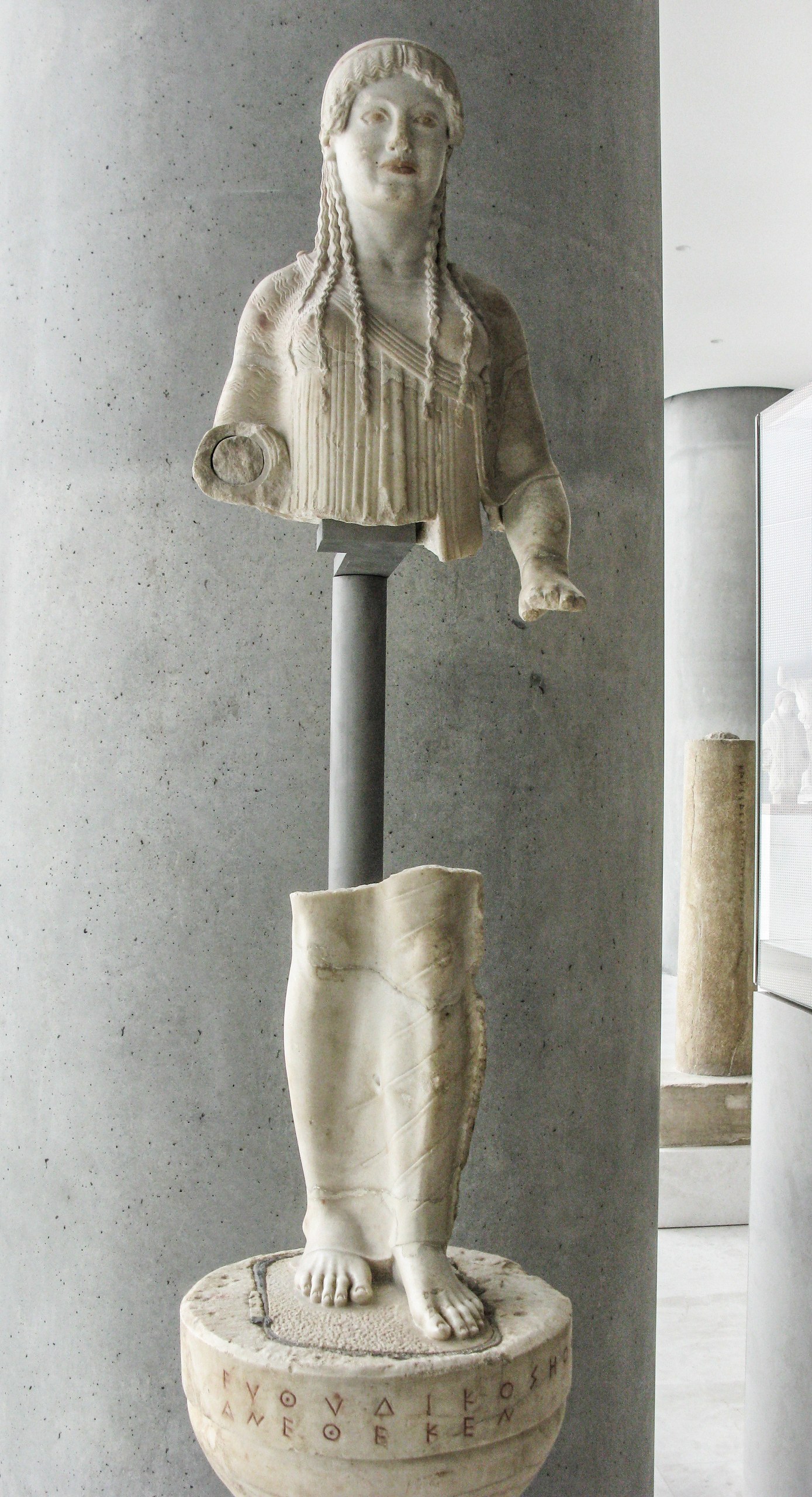
Euthydikos Kore
480 BC
The Euthydikos Kore is a late Archaic, Parian marble statue of the kore type, dated to c. 490, 480 BCE, that once stood amongst the votive sculptures on the Acropolis of Athens.
Why part of this gallery is plaster
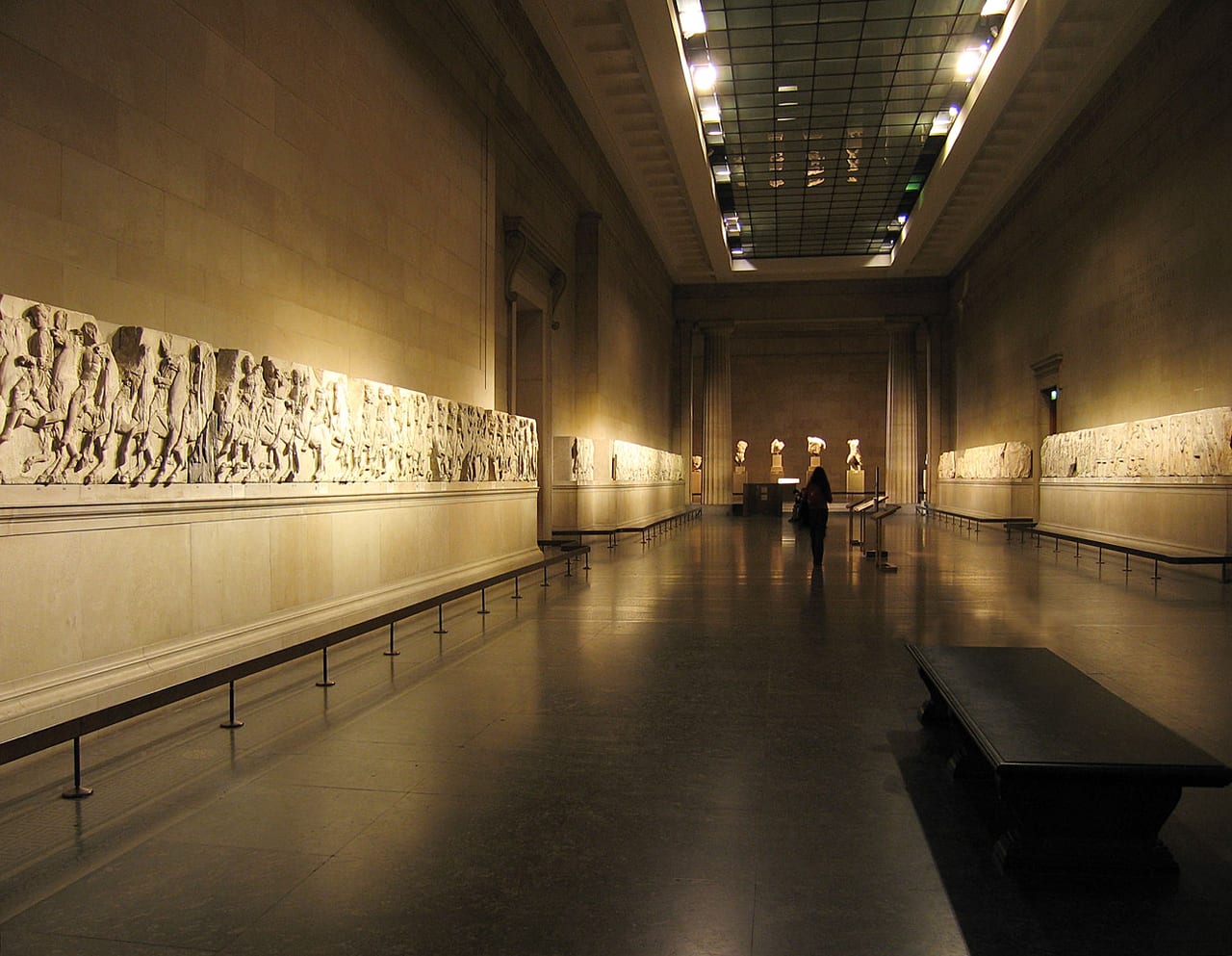
The Acropolis Museum's third-floor gallery is built as a glass-walled chamber matching the orientation and dimensions of the Parthenon's cella, with the frieze mounted where it stood on the monument and in direct sight of it. Part of what is on view is not original: the museum displays plaster copies in place of the sculptures retained in the British Museum and other foreign museums, so the gaps in the display are the argument. The British Museum holds 15 metopes, 17 pedimental figures and 75 metres of frieze, and states that Lord Elgin removed them between 1801 and 1805 under an Ottoman permit found legal by Parliament in 1816. The Acropolis Museum calls the removal a seizure and disputes that the permit existed.
Artists
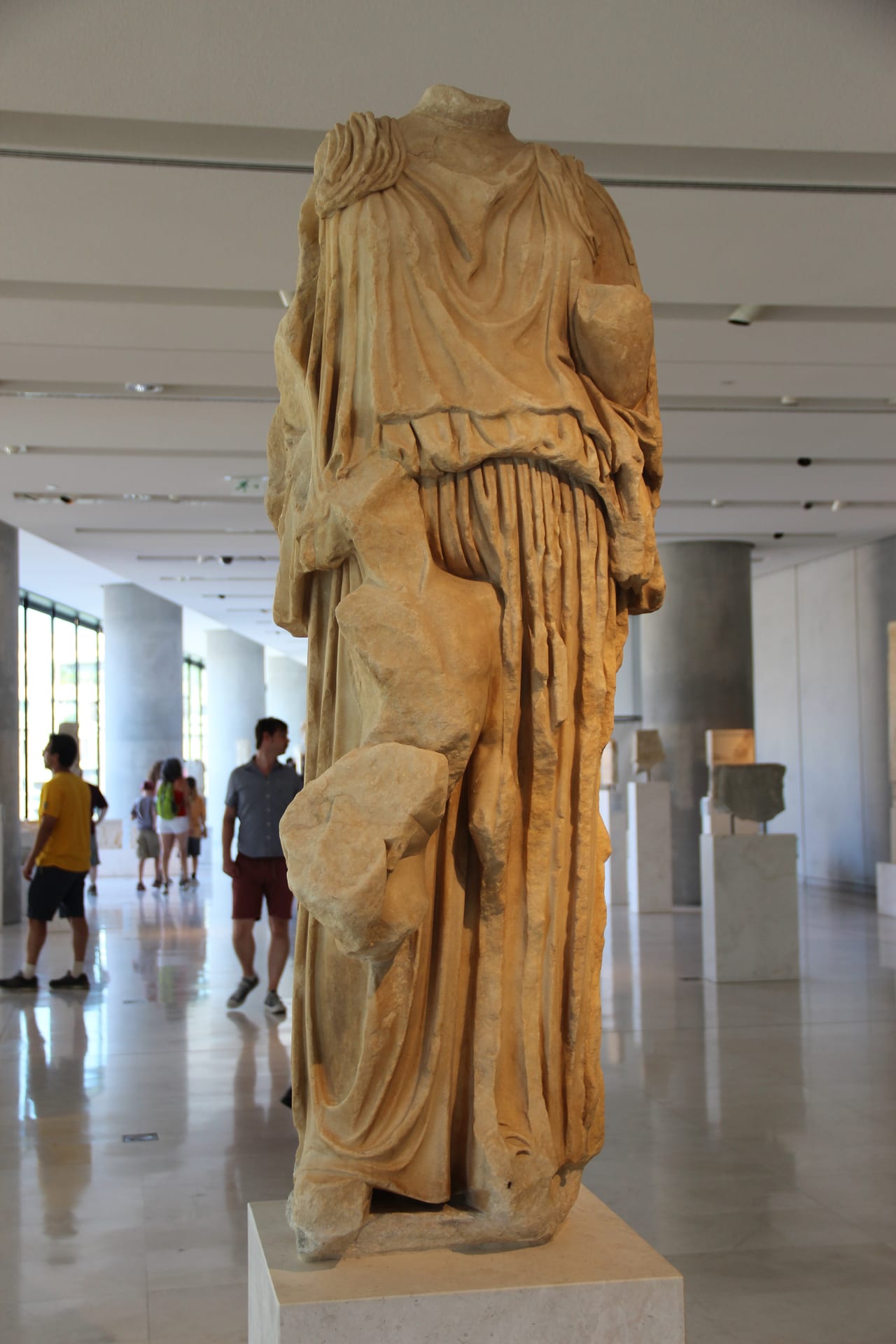
Classical Athens · 500–400 BC
Alcamenes (Ancient Greek: Ἀλκαμένης) was an ancient Greek sculptor of Lemnos and Athens, who flourished in the 2nd half of the 5th century BC.
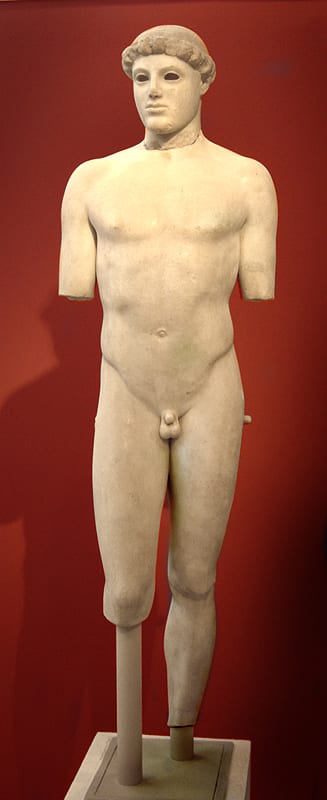
Classical Athens · 600–500 BC
Kritios (Ancient Greek: Κριτίος, ) was an Athenian sculptor, probably a pupil of Antenor, working in the early 5th century BCE, whose manner is on the cusp of the Late Archaic and the Severe style of Early Classicism in
Classical Athens · 400 BC
Leochares (Greek: Λεοχάρης or Λεωχάρης) was an ancient Greek sculptor from Athens, who lived in the 4th century BC.
Classical Athens · 490–430 BC
Phidias or Pheidias (; Ancient Greek: Φειδίας, Pheidias; c. 430 BC) was an Ancient Greek sculptor, painter, and architect, active in the 5th century BC.
Artworks
Parthenon Frieze
Phidias
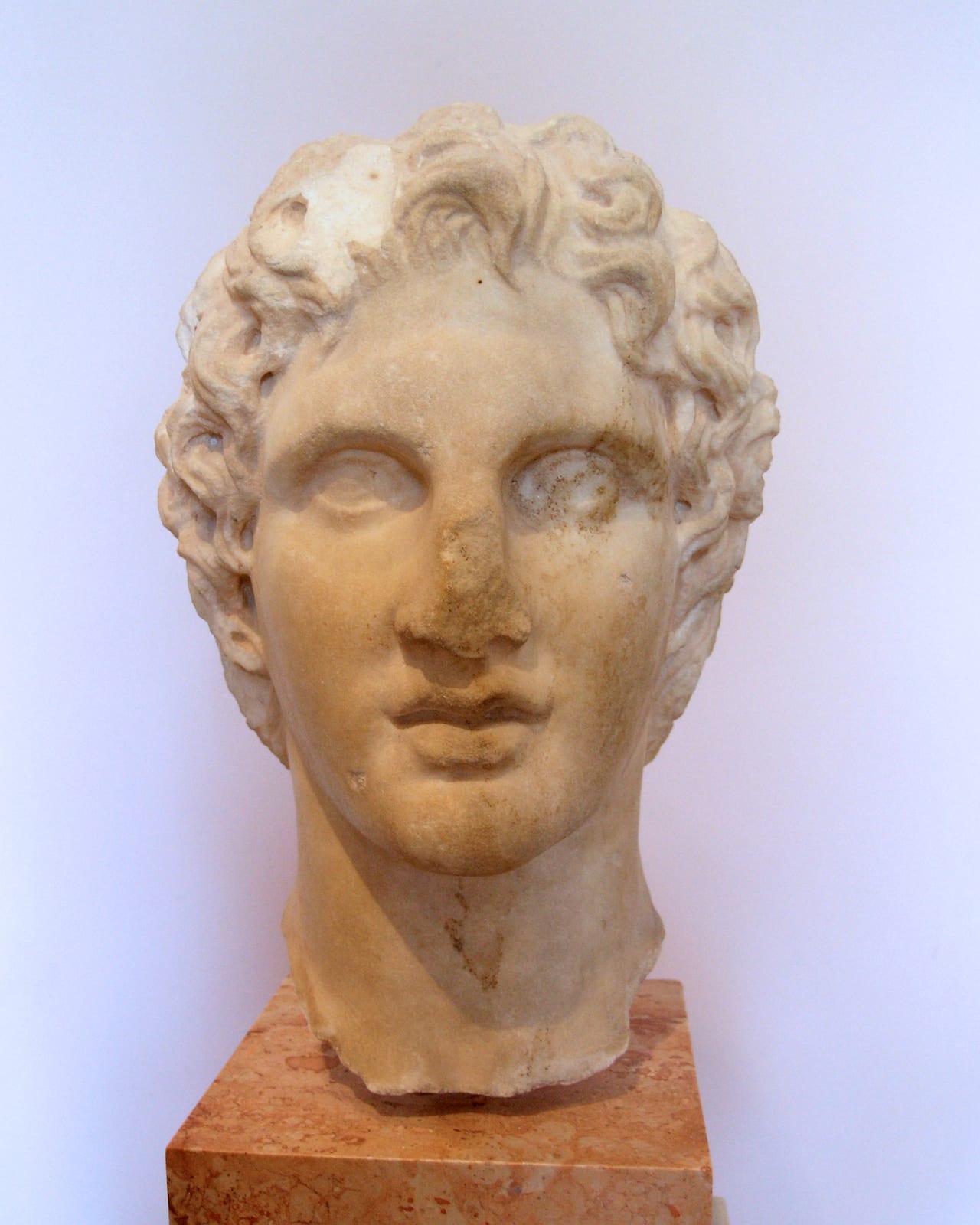
Bust of Alexander (Acropolis Museum n. 1331)
Leochares · 4th century BC
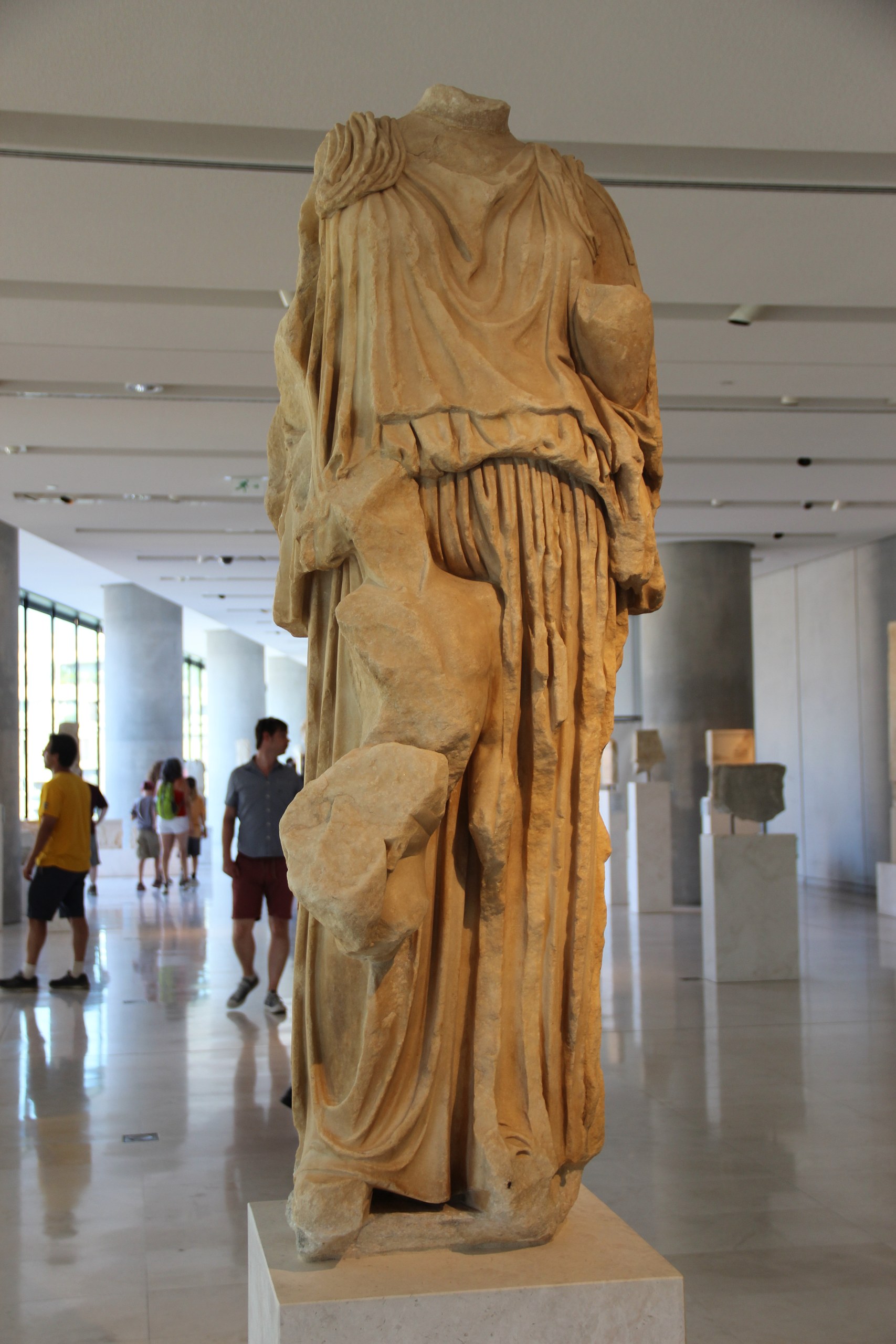
Procne and Itys
Alcamenes
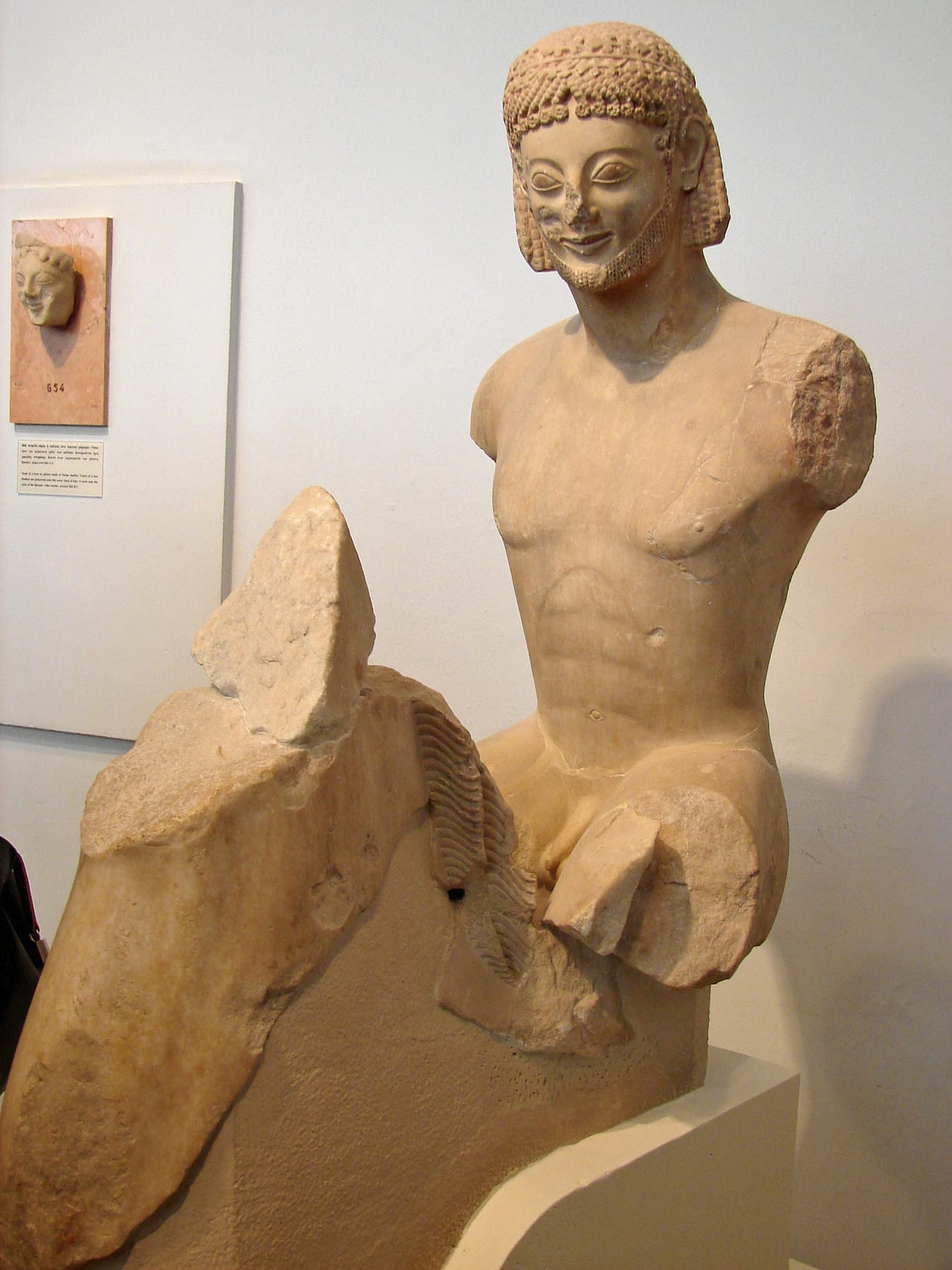
Rampin Rider
550s BC
Colossal Owl
5th century BC
Sacrifice relief (Acropolis Museum n. 581)
Sphinx (Acropolis Museum n. 632)
Trisomatos Typhon
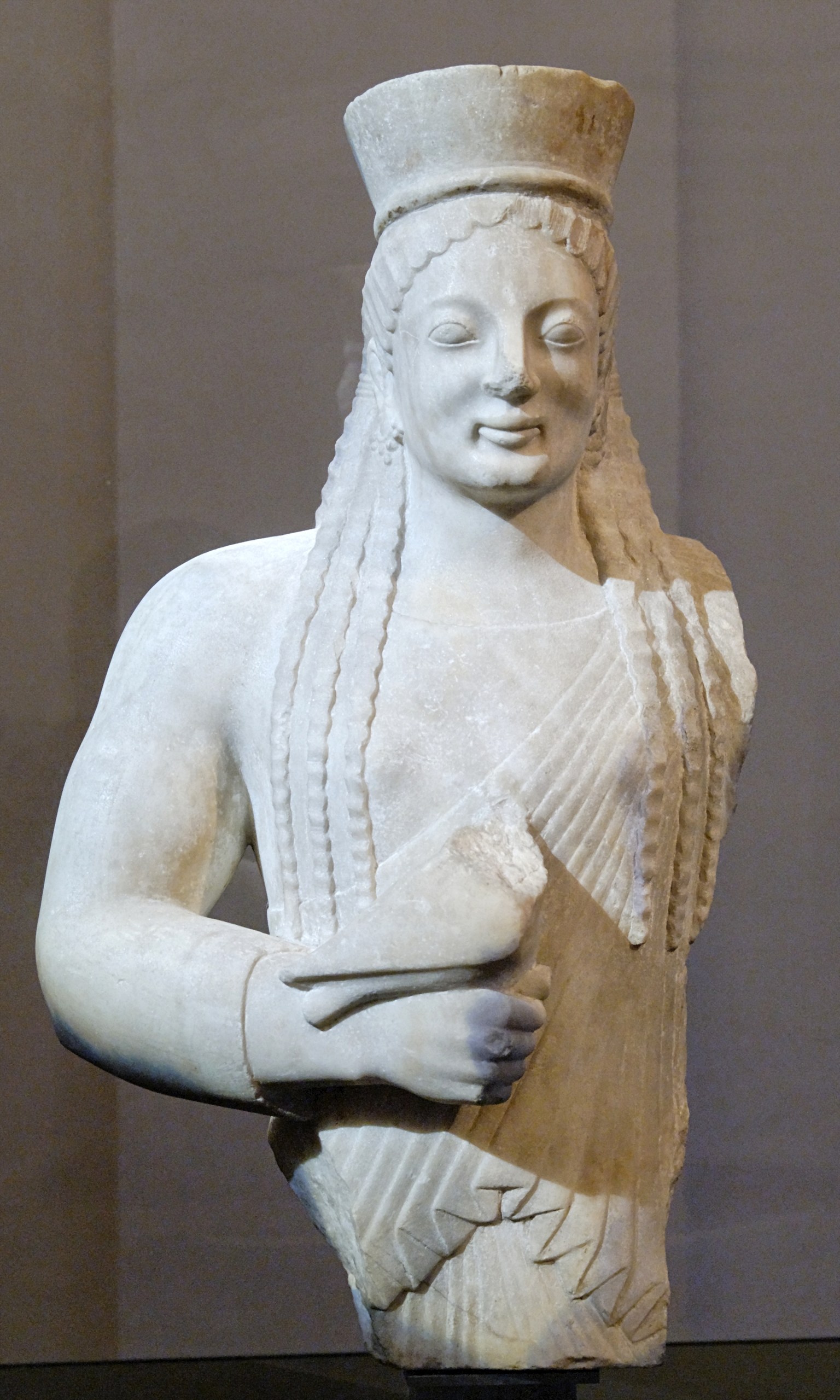
Kore of Lyons
Plan your visit
Summer hours
9am to 5pm Monday, 9am to 8pm Tuesday to Sunday, and 9am to 10pm Friday. Last entry thirty minutes before closing. Winter hours: 9am to 5pm Monday to Thursday, 9am to 10pm Friday, and 9am to 8pm Saturday and Sunday. Last entry thirty minutes before closing. Confirm on www.theacropolismuseum.gr before you travel.
Admission
20 euro general admission, 10 euro reduced. Free for visitors under 25 from EU member states, and for several other categories the museum lists.
Getting there
Διονυσίου Αρεοπαγίτου 15.
On their own site
Opening hours, tickets and current exhibitions are on the museum’s own site.
More guides to explore
Invite Acropolis Museum into your living room
35 works from this collection are available on Momentable, free to view, on your TV, phone, or tablet.