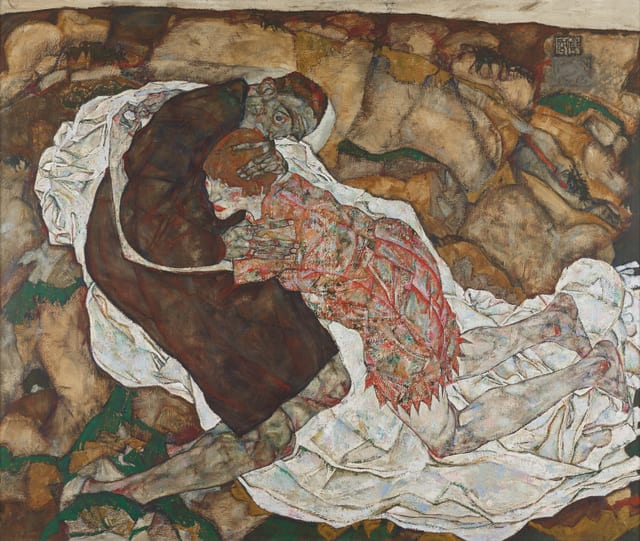
Death and the Maiden
Egon Schiele · 1915

Egon Schiele
Cisleithania · 1890–1918
Egon Leo Adolf Ludwig Schiele was an Austrian Expressionist painter. His work is noted for its intensity and its raw sexuality, and for the many self-portraits the artist produced, including nude self-portraits. The twisted body shapes and the expressive line that characterise Schiele's paintings and drawings mark the artist as an early exponent of Expressionism. Gustav Klimt, a figurative painter of the early 20th century, was a mentor to Schiele. == Biography == === Early life === Egon Leo Adolf Ludwig Schiele was born on 12 June 1890 in Tulln, Lower Austria.
Independent artist guide by Momentable. Biography from Wikipedia; artworks credited to the museums that hold them.
 LIVENow streaming · Death and the Maiden
- life
- 1890–1918life
- rights
- Public domainrights
The work
A selection of 6 works, free to stream.
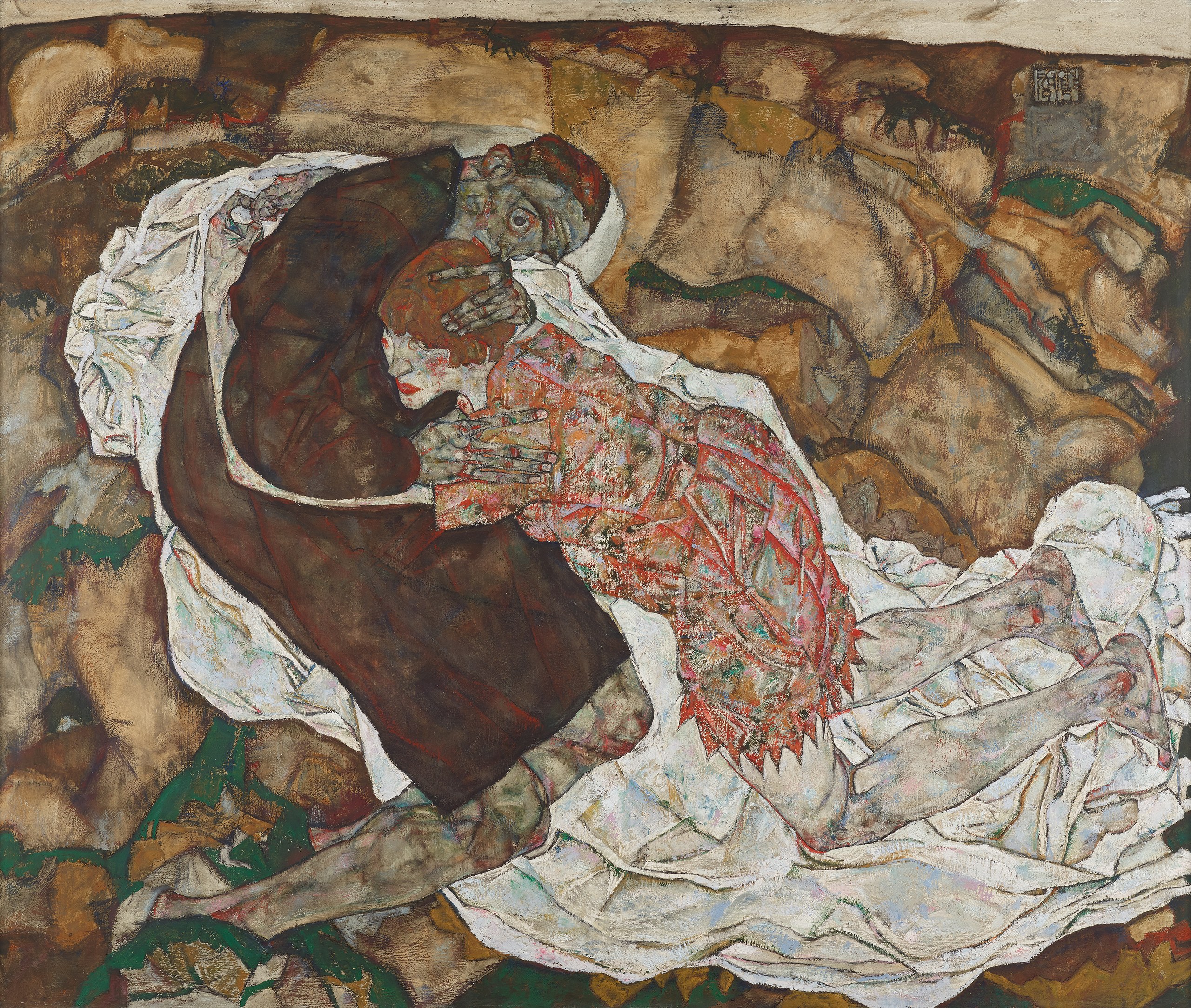
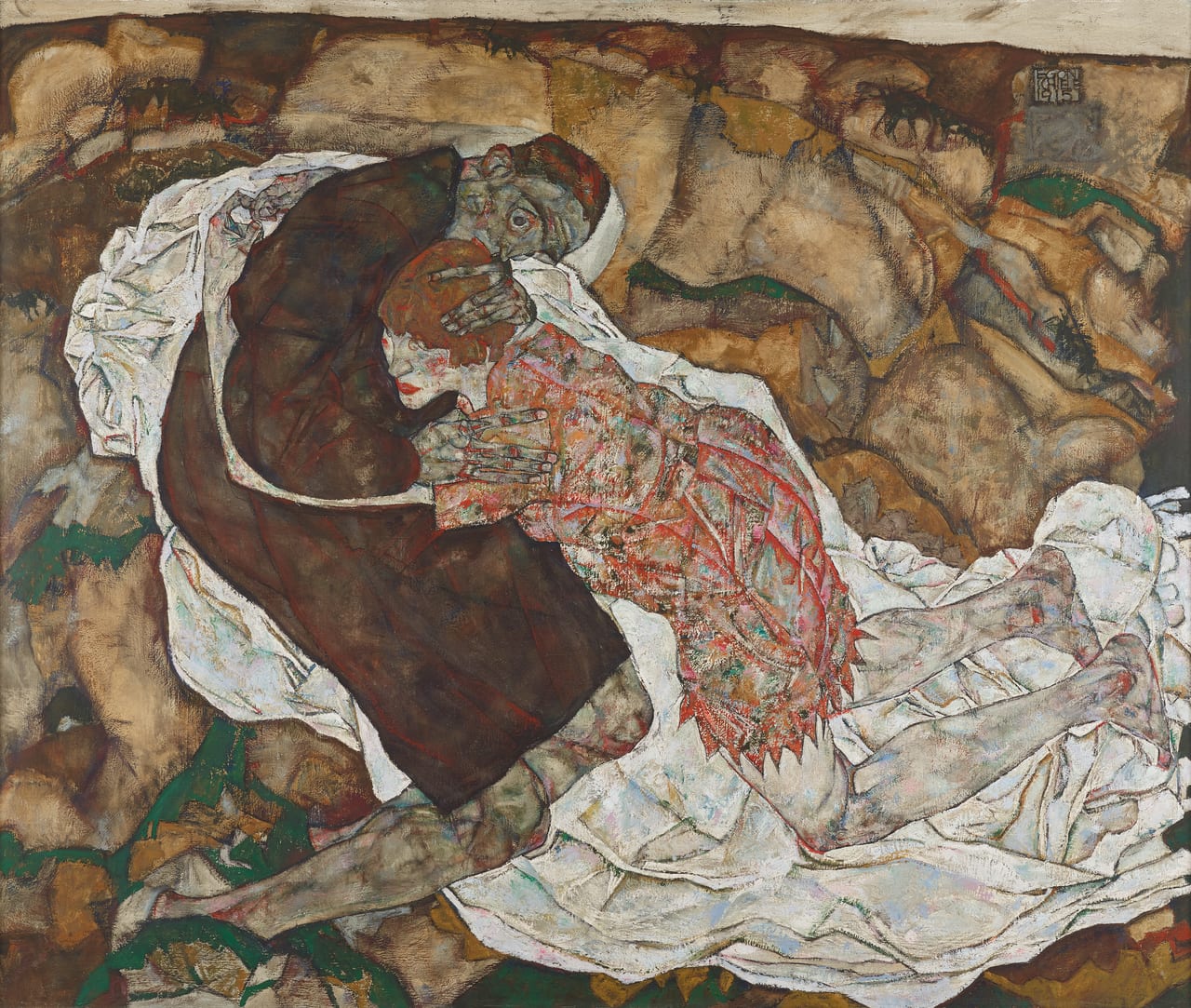
Death and the Maiden
Egon Schiele · 1915
Upper Belvedere
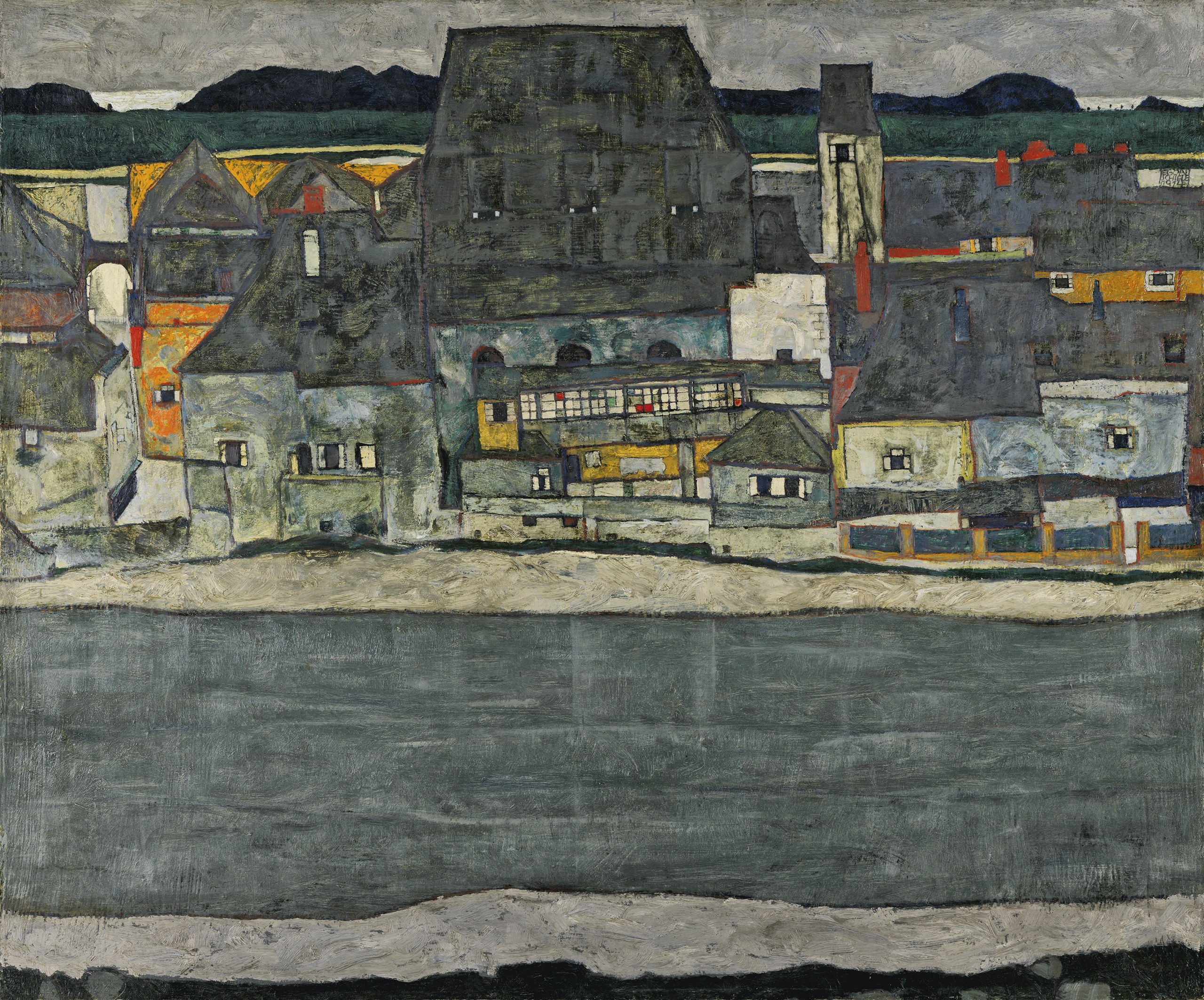
Houses on the River (The Old Town)
Egon Schiele · 1914
Thyssen-Bornemisza Museum
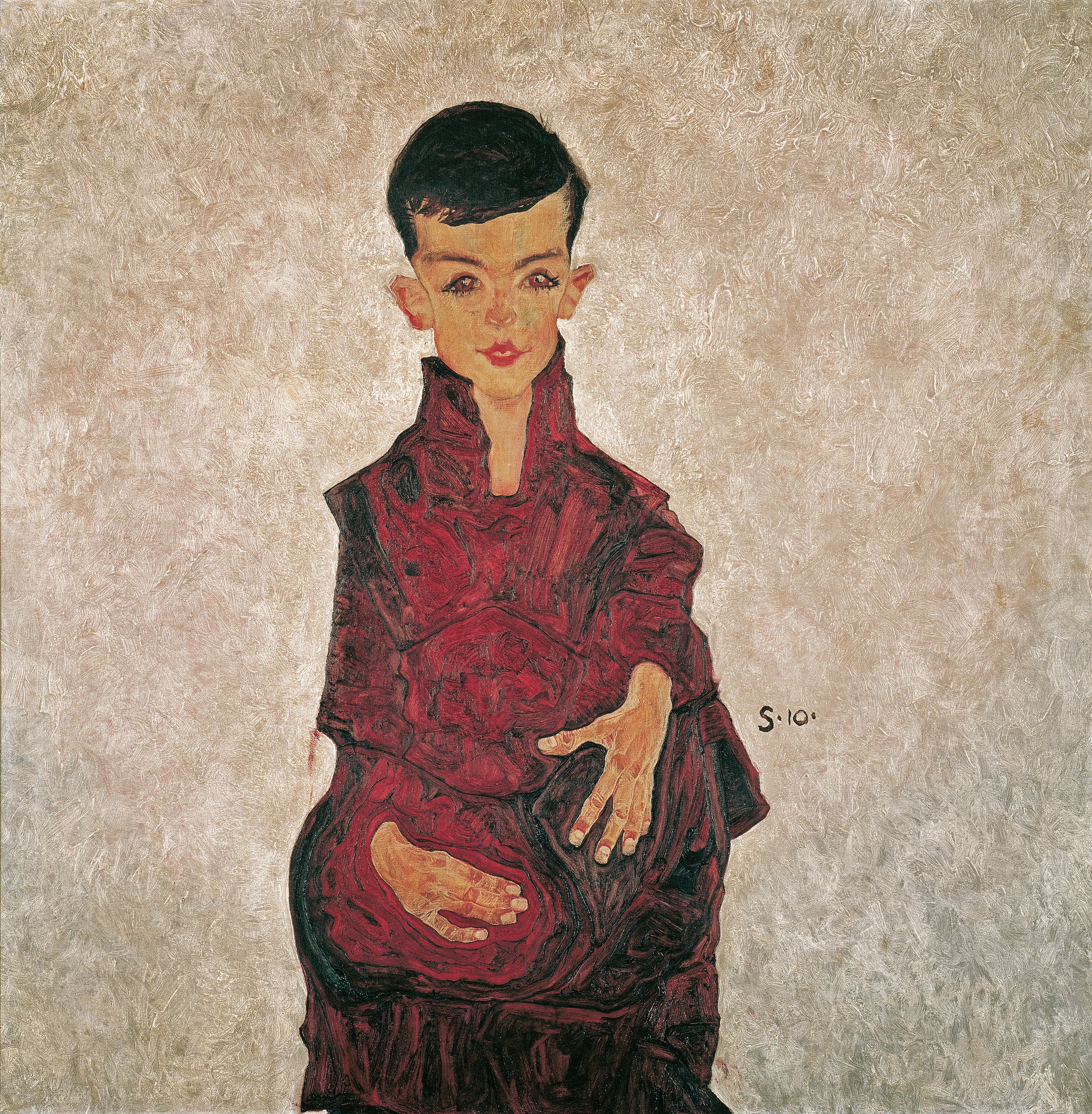
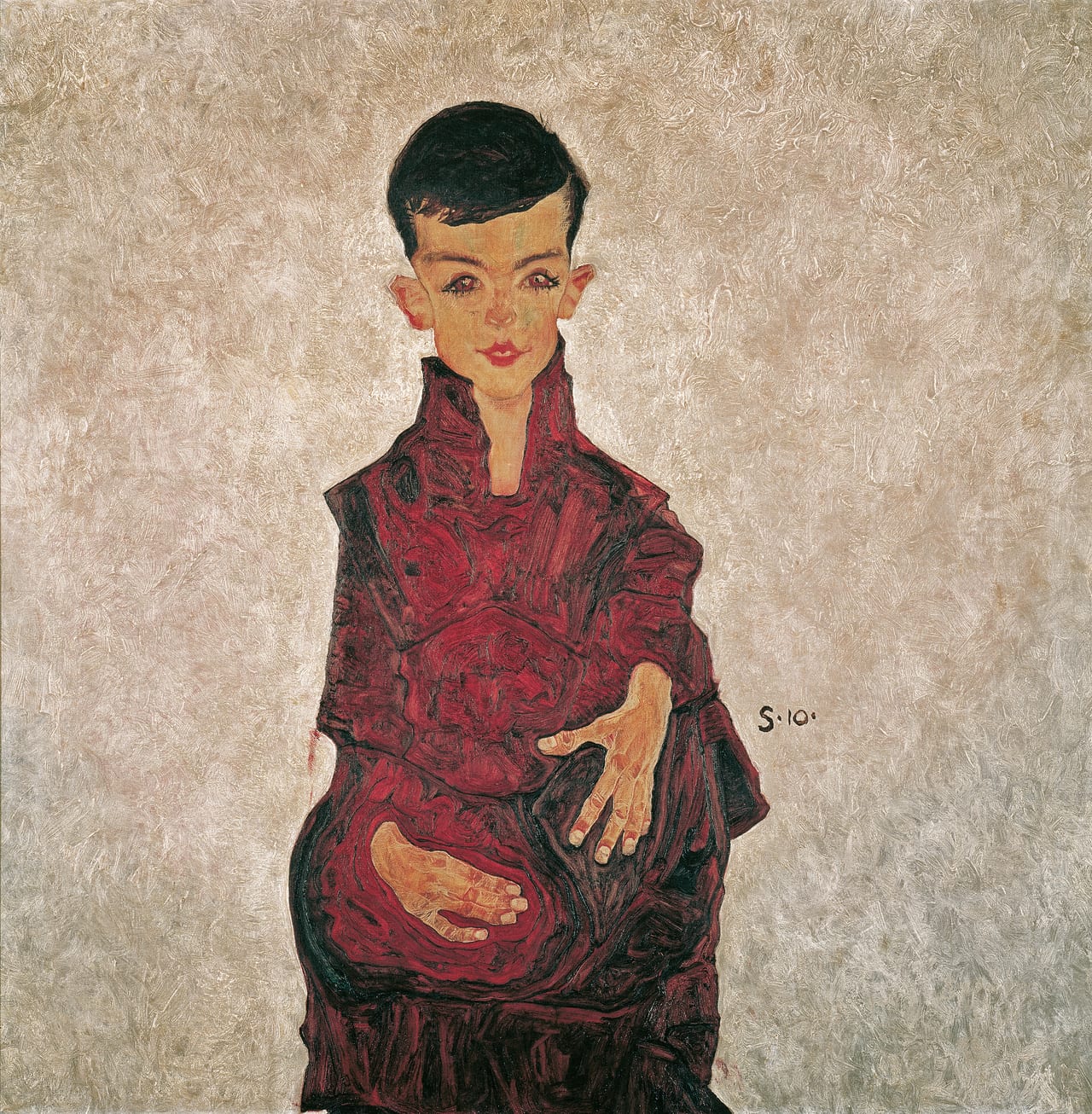
Portrait of Herbert Reiner
Egon Schiele · 1910
Upper Belvedere
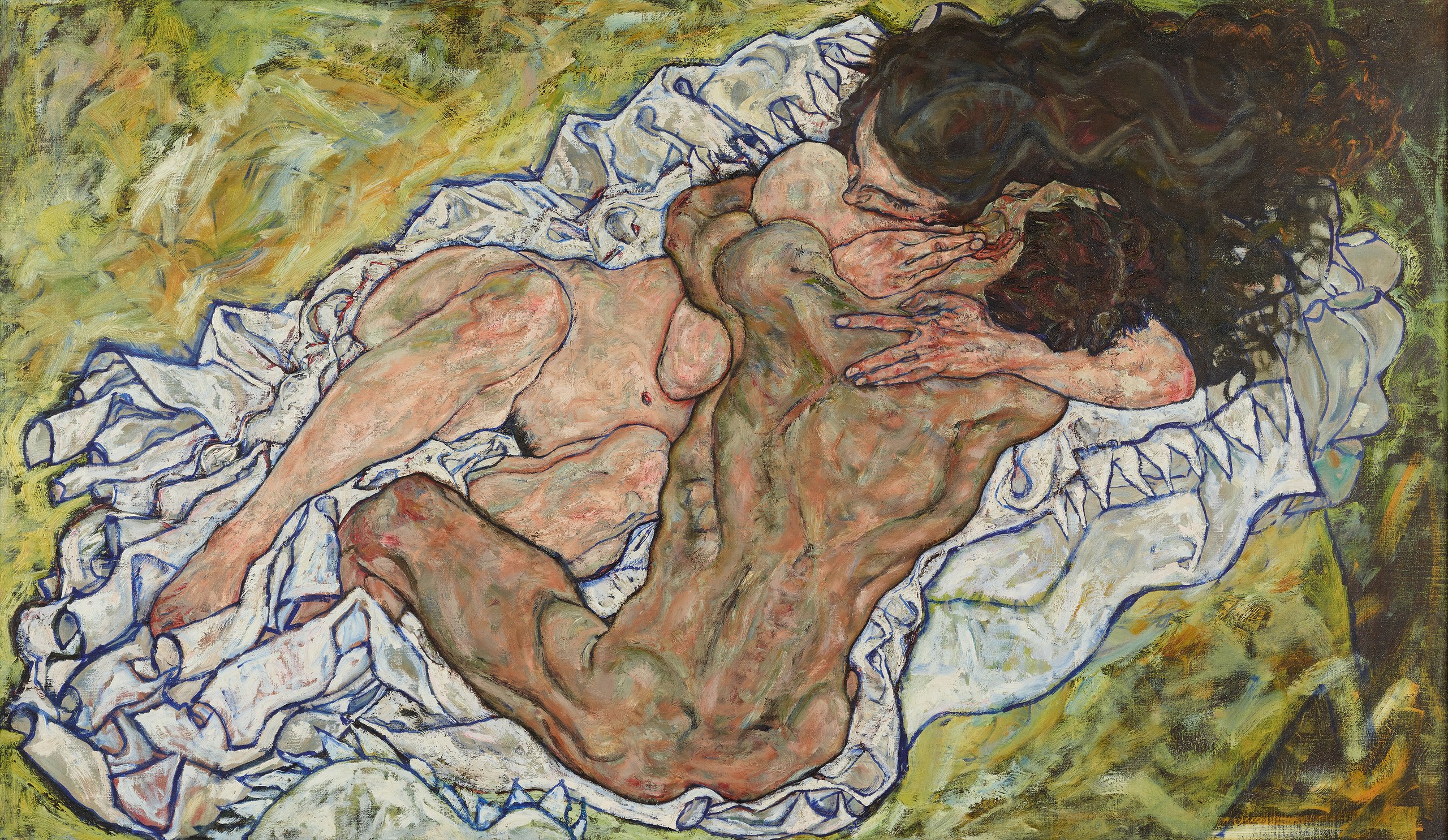
The embrace
Egon Schiele · 1917
Upper Belvedere
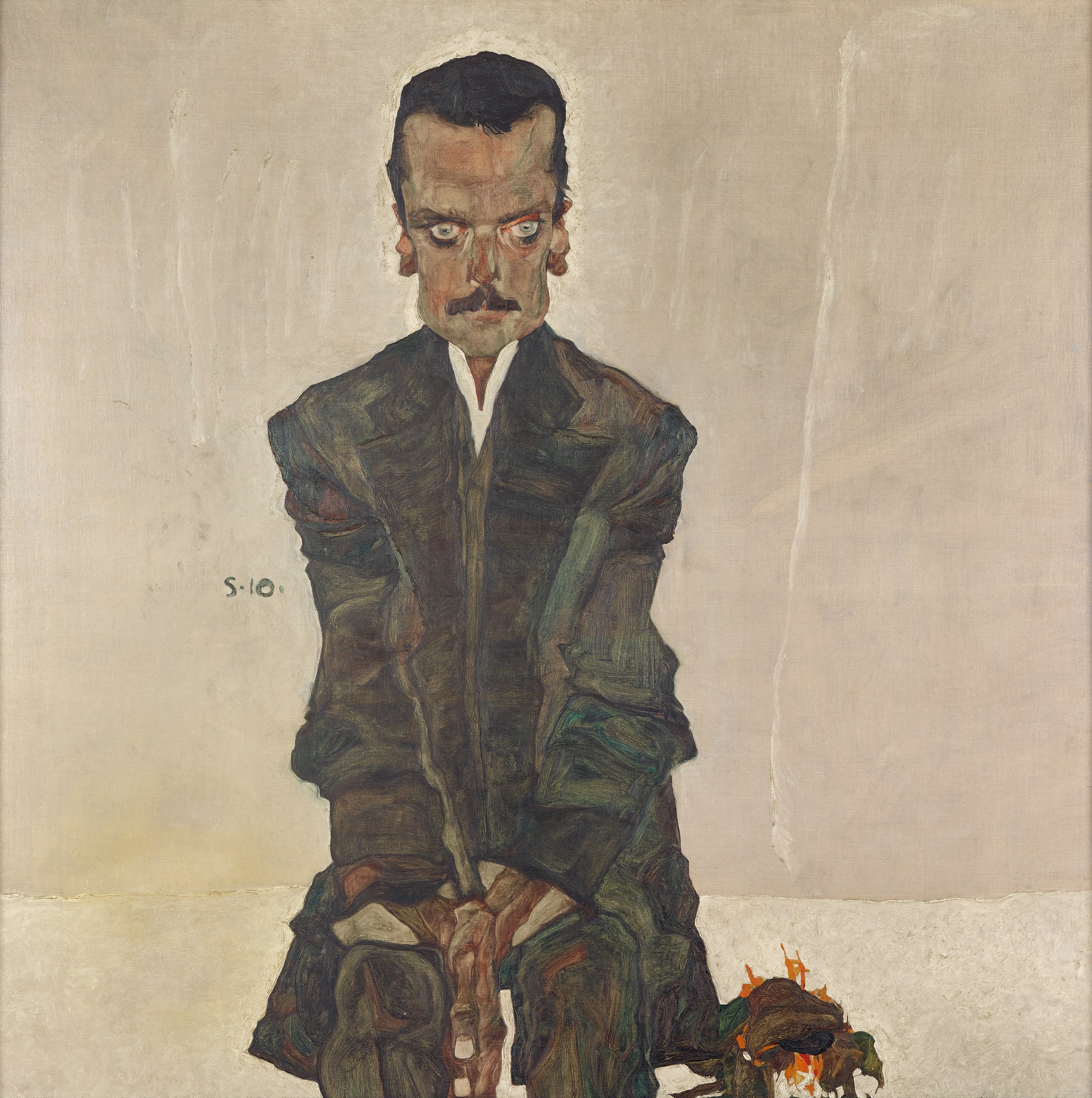
Eduard Kosmack
Egon Schiele · 1910
Upper Belvedere
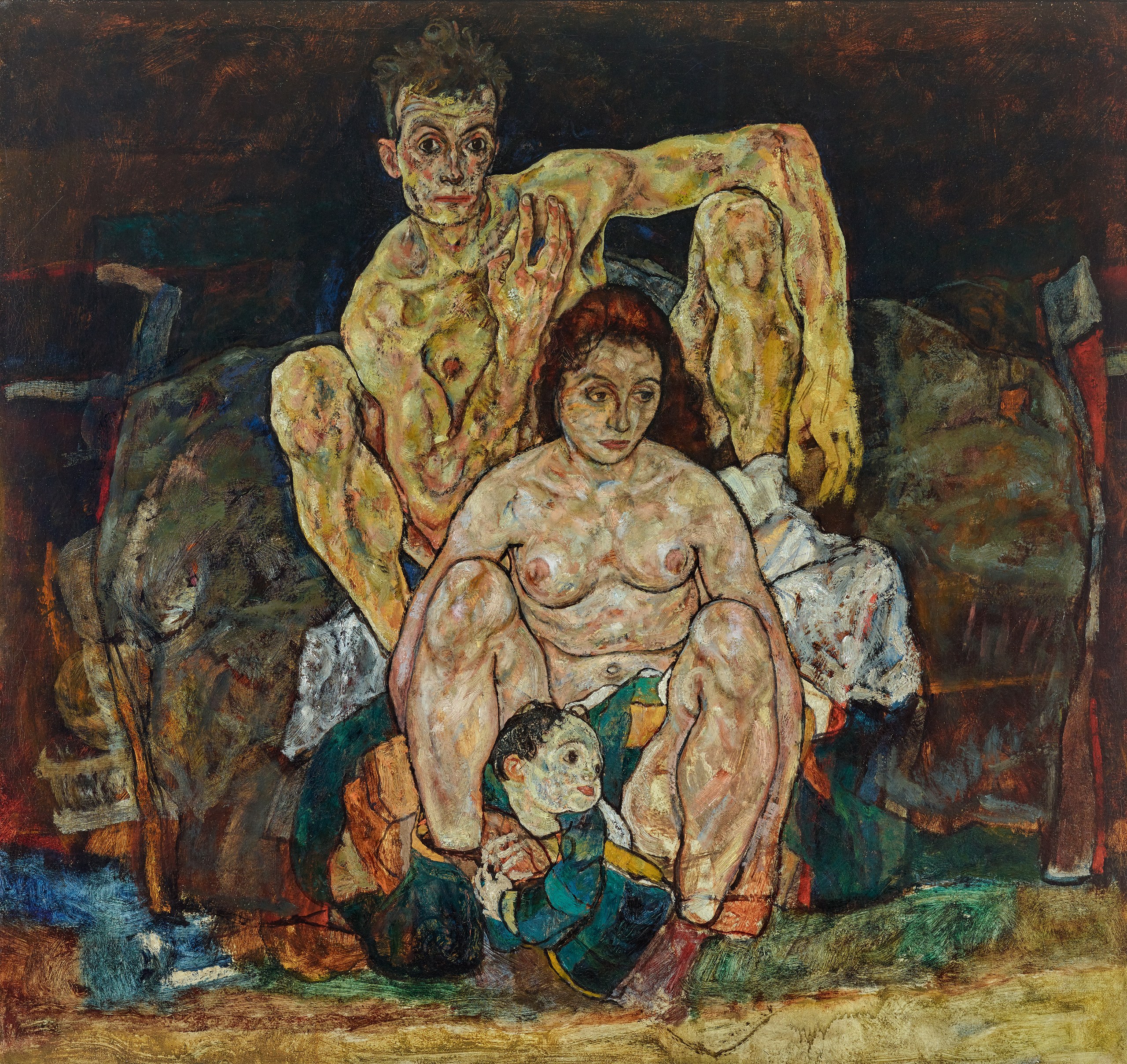
The Family
Egon Schiele · 1918
Upper Belvedere
Works worth knowing
2 of Egon Schiele's works, and what makes each one worth a look.
Death and the Maiden
Egon Schiele · 1915
Upper Belvedere
Death and the Maiden is an oil on canvas painting by the Austrian painter Egon Schiele from 1915. It is exhibited in the Österreichische Galerie Belvedere, in Vienna. Schiele initially named the large picture measuring 150 by 180 centimeters as Man and Girl and also Entwined People.
The Family
Egon Schiele · 1918
Upper Belvedere
The Family (in German, "Die Familie") was one of the last oil paintings made by Austrian painter Egon Schiele before he died of Spanish flu on 31 October 1918. The work measures 152.5 cm × 162.5 cm (60.0 in × 64.0 in) and is held by the Belvedere Gallery in Vienna. The painting was initially entitled Crouching Couple and depicted the artist and a woman, both squatting naked with knees raised.
How Egon Schiele worked
From the record of their own practice.
Jane Kallir has described Schiele's work as grotesque, erotic, pornographic, or disturbing, with a focus on sex, death, and discovery. He focused on portraits of others as well as himself. In his later years, while he still worked often with nudes, they were done in a more realist fashion. From a young age, Schiele drew with "manic fluency". Art critic Martin Gayford wrote in The Spectator: Kallir and scholar Gerald Izenberg regard Schiele as fluid in sexuality and gender.
Where the work hangs
The museums that hold it, and their visitor guides.
If you like Egon Schiele
Artists held by the same museums.
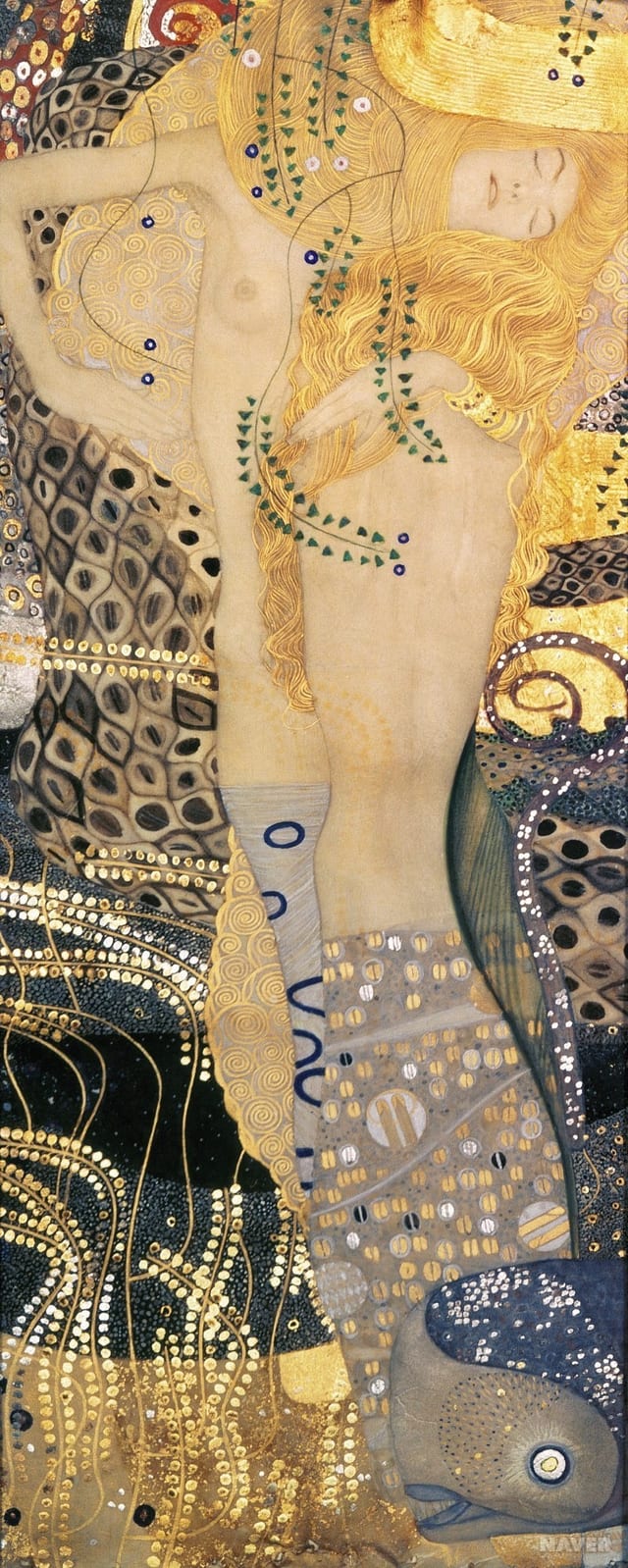
Gustav Klimt
Austrian Empire · 28 in the archive
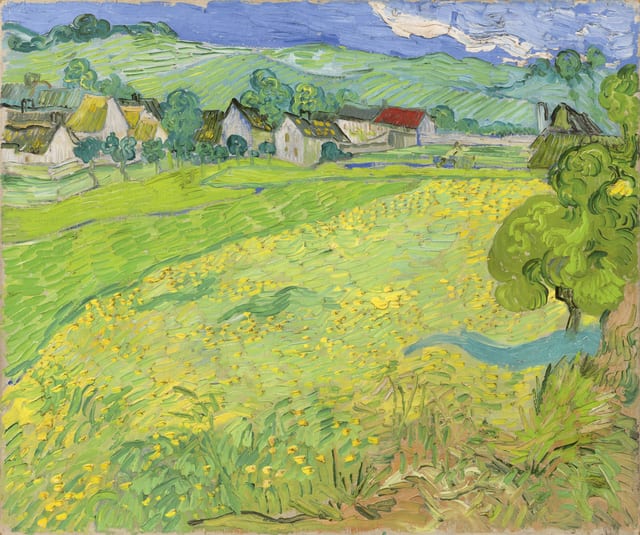
Vincent van Gogh
Dutch · 7 in the archive
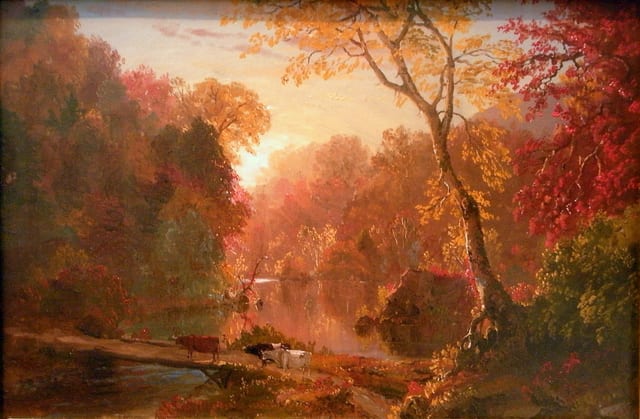
Frederic Edwin Church
American · 6 in the archive
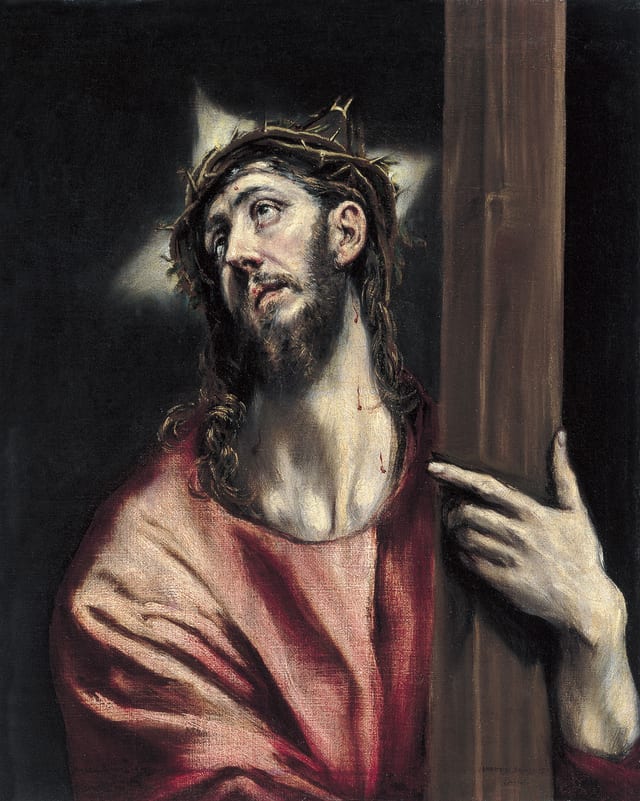
El Greco
Greek · 5 in the archive
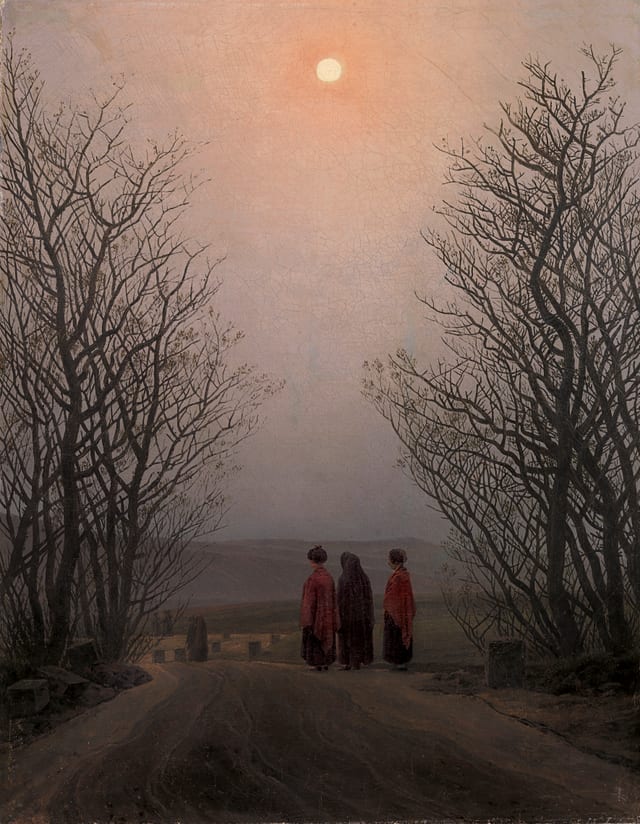
Caspar David Friedrich
Kingdom of Prussia · 4 in the archive
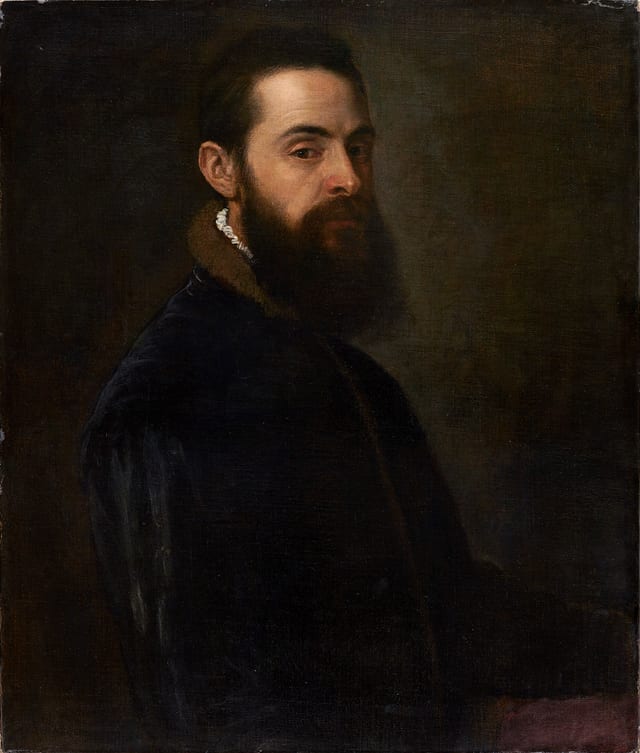
Titian
Italian · 4 in the archive
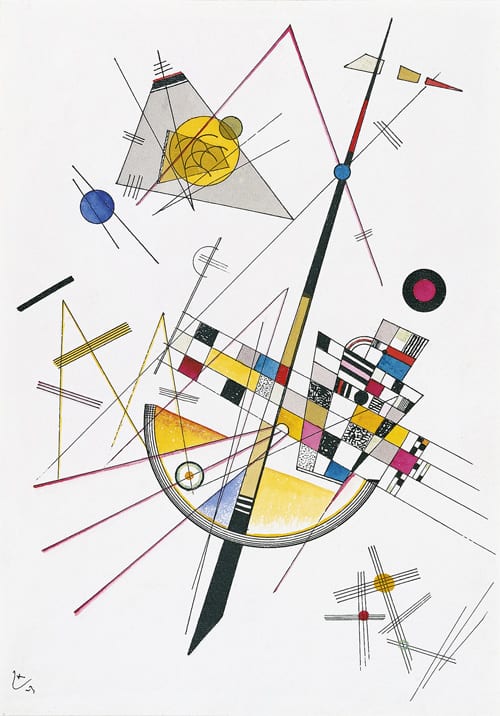
Wassily Kandinsky
Russian Empire · 4 in the archive
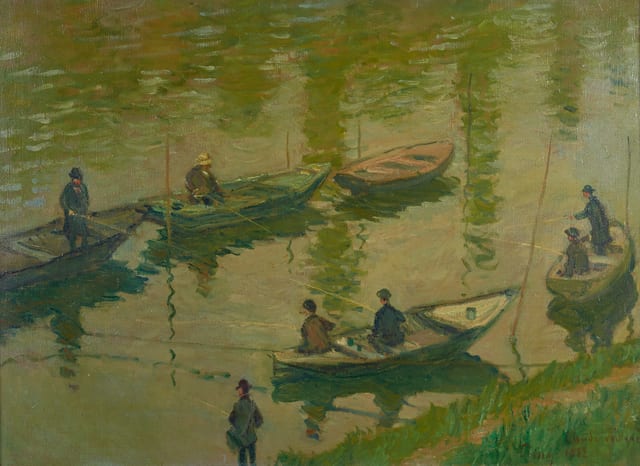
Claude Monet
France · 3 in the archive
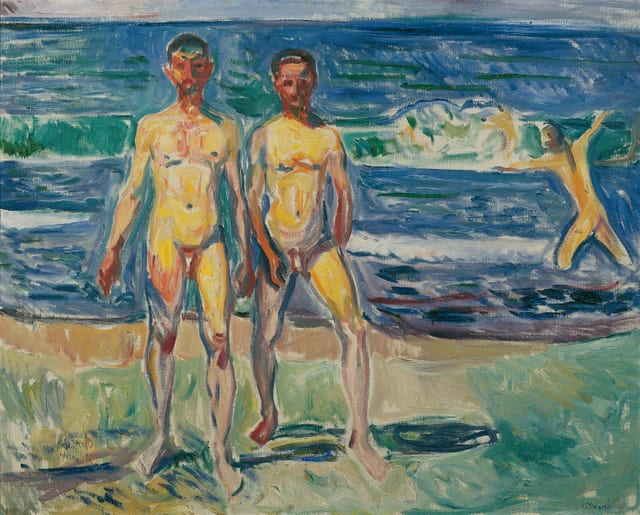
Edvard Munch
Norway · 3 in the archive
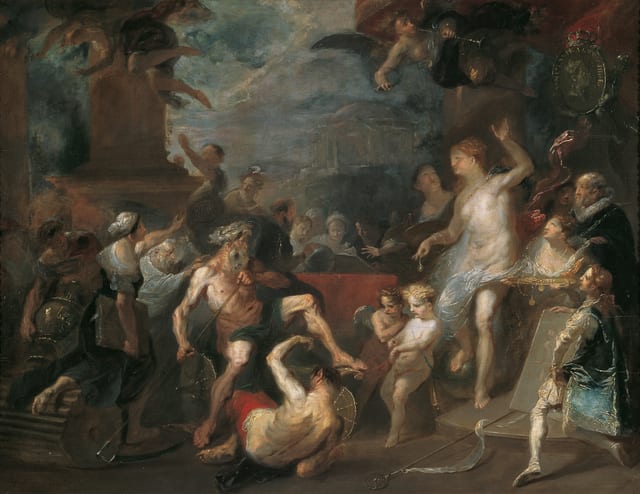
Franz Anton Maulbertsch
Germany · 3 in the archive
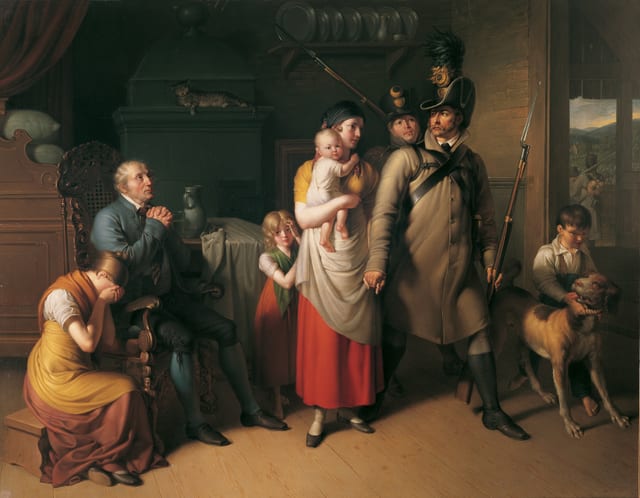
Johann Peter Krafft
Landgraviate of Hesse-Kassel · 3 in the archive
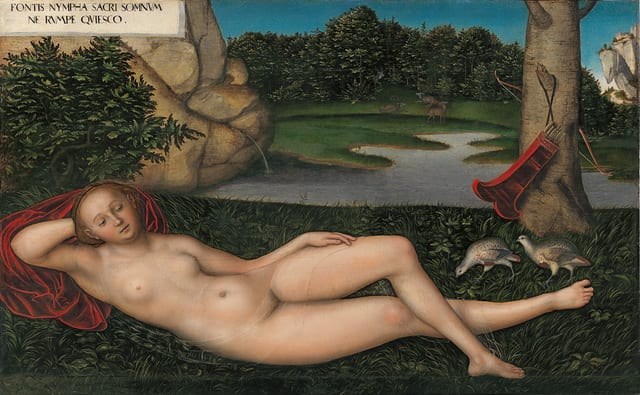
Lucas Cranach the Elder
German · 3 in the archive
Invite the masters into your living room.
Egon Schiele on your TV, phone, or tablet. Free to start.
View on MomentableIndependent guide by Momentable · biography from Wikipedia · artworks are in the public domain and credited to the museum that holds them