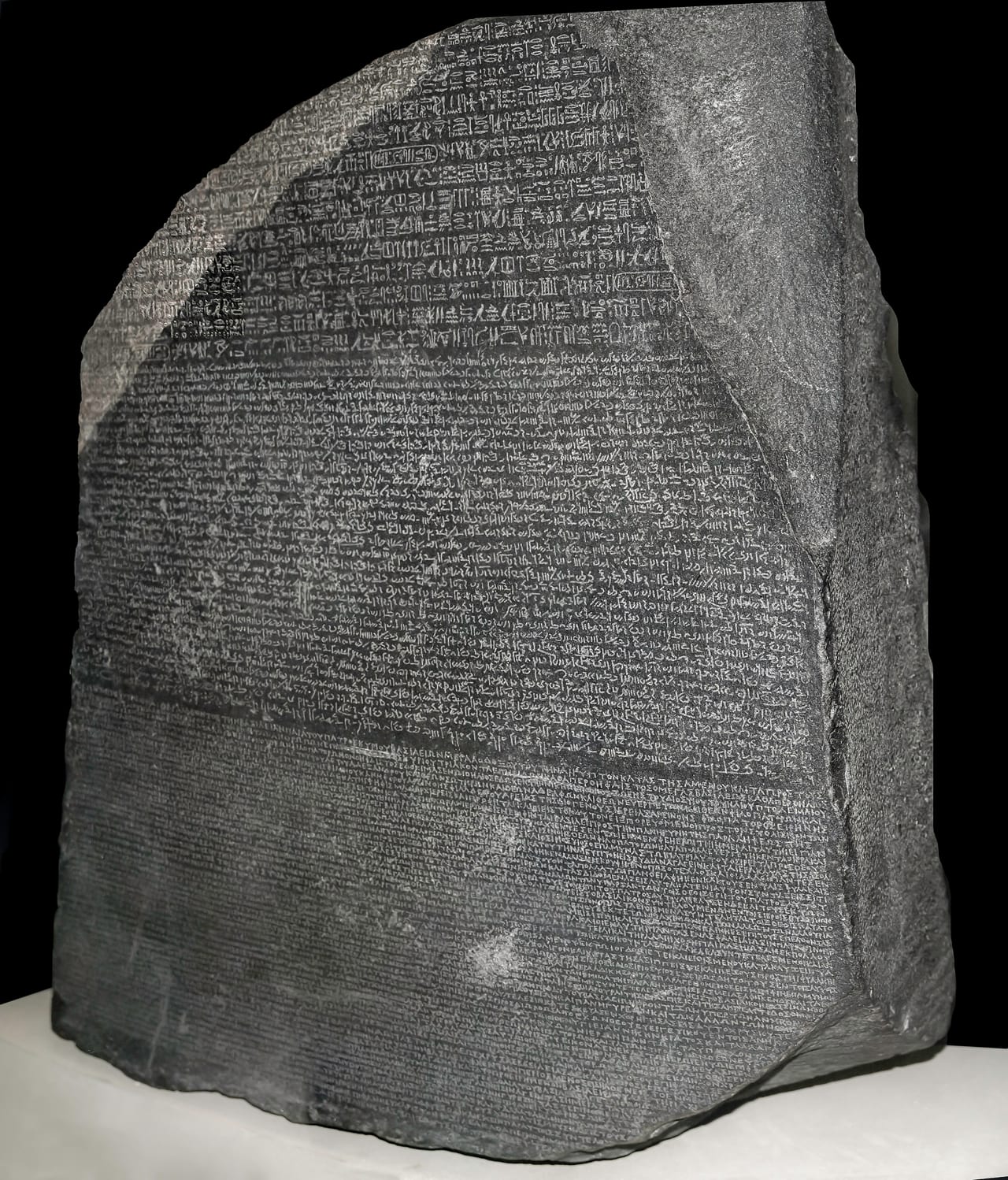
Rosetta Stone
196 BC

British Museum
London
The first public national museum in the world: a collection of eight million objects, from a stone that unlocked Egyptian writing to a relief of a Mesopotamian goddess, gathered under one roof in Bloomsbury since 1753.
- 8 million
- objects in the permanent collection
- 6,440,120
- visitors in 2025
- 94
- galleries open to the public
Play 25 works from this collection on your TV, phone or tablet with Momentable Art TV.
Play CollectionFounded by an act of Parliament
The museum began with one man's cabinet. Sir Hans Sloane, physician and collector, gathered more than 71,000 objects in his lifetime and, wishing the collection to stay together after his death, left it to the nation. An act of Parliament, given royal assent on 7 June 1753, established the museum as the first public national museum in the world. The founding collection has since grown to more than thirteen million objects.
What holds the eight million objects of the permanent collection, said to be the largest anywhere, together is the founding idea of a museum for everything and everyone. Nearly one hundred galleries are open to the public, ranged around the covered court of 2000, said to be the largest covered square in Europe, at its centre. In 2025 the museum counted more than six million visitors, second only to one other attraction in the United Kingdom.
How the objects arrived
Every universal museum lives with the story of how its treasures travelled. The Rosetta Stone was found in July 1799 by a French army officer, Pierre-François Bouchard, and has been on public display here almost continuously since 1802, the most visited object in the building. The Parthenon sculptures, the work of hands directed by Phidias in the 5th century BC, were shipped to Britain by agents of the Earl of Elgin. The Benin Bronzes, plaques and sculpture from the royal palace of Benin, in present-day Edo State of Nigeria, were seized in the punitive expedition mounted against the Benin ruler in 1897. Each of these histories is told beside the objects themselves.
What to see
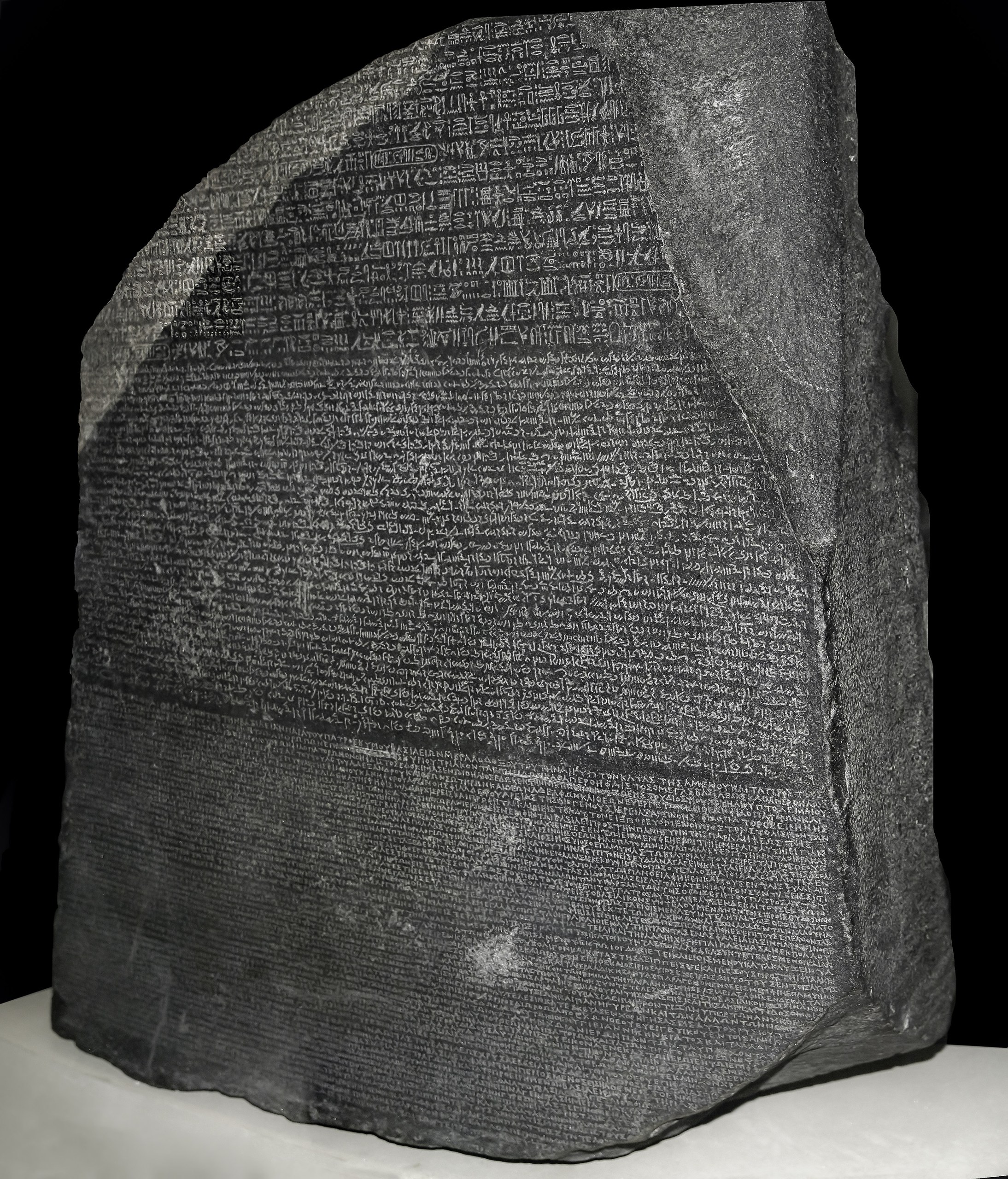
Rosetta Stone
196 BC
An Egyptian stele carrying three versions of a decree of 196 BC, the key to reading hieroglyphs. Found in July 1799, it has been on show here almost continuously since 1802 and is the most visited object in the museum.
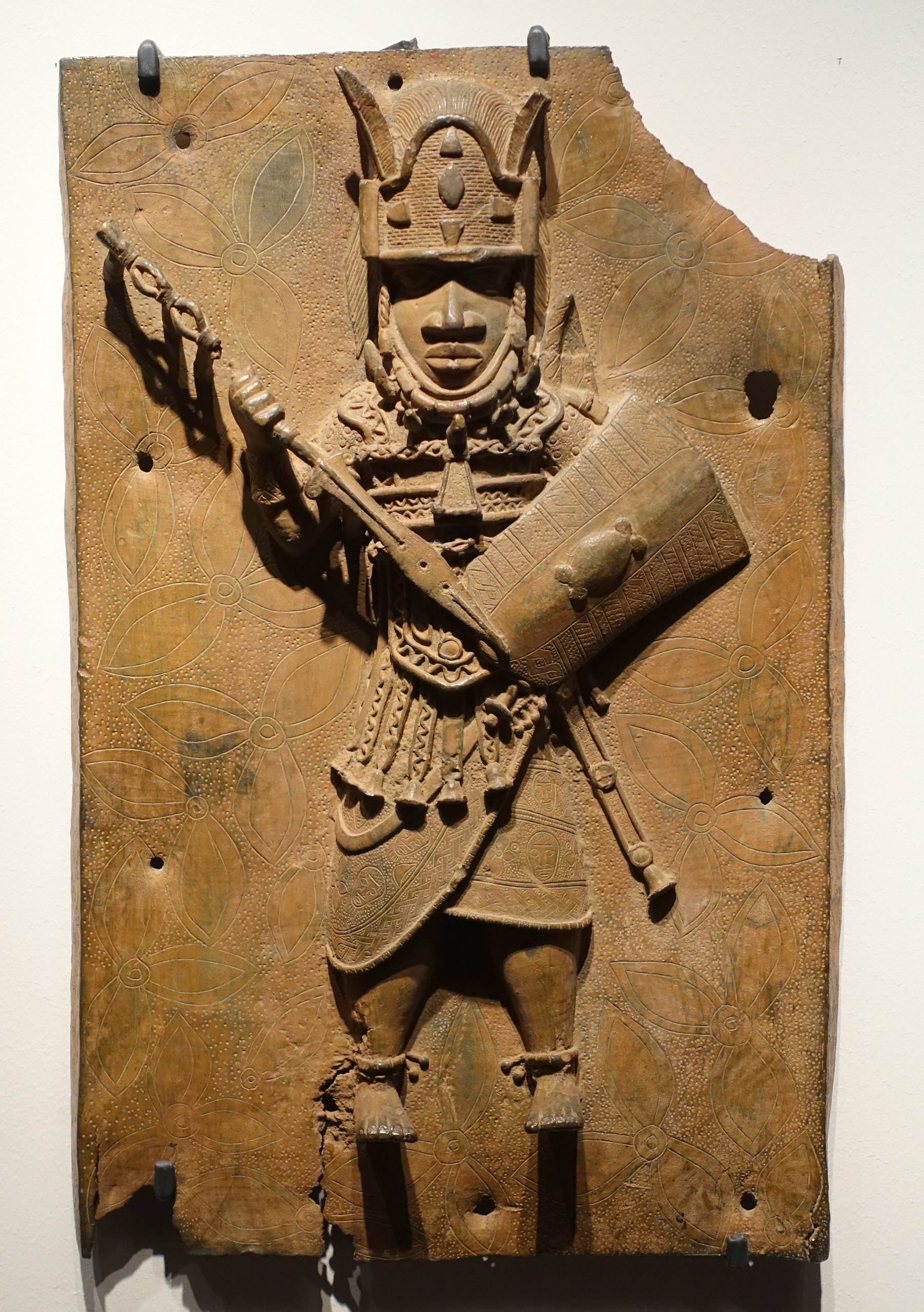
Benin Bronzes
Metal plaques and sculpture from the royal palace of Benin, in present-day Edo State, Nigeria. Together they are the finest examples of Benin art, made by Edo artists from the fourteenth century onward.
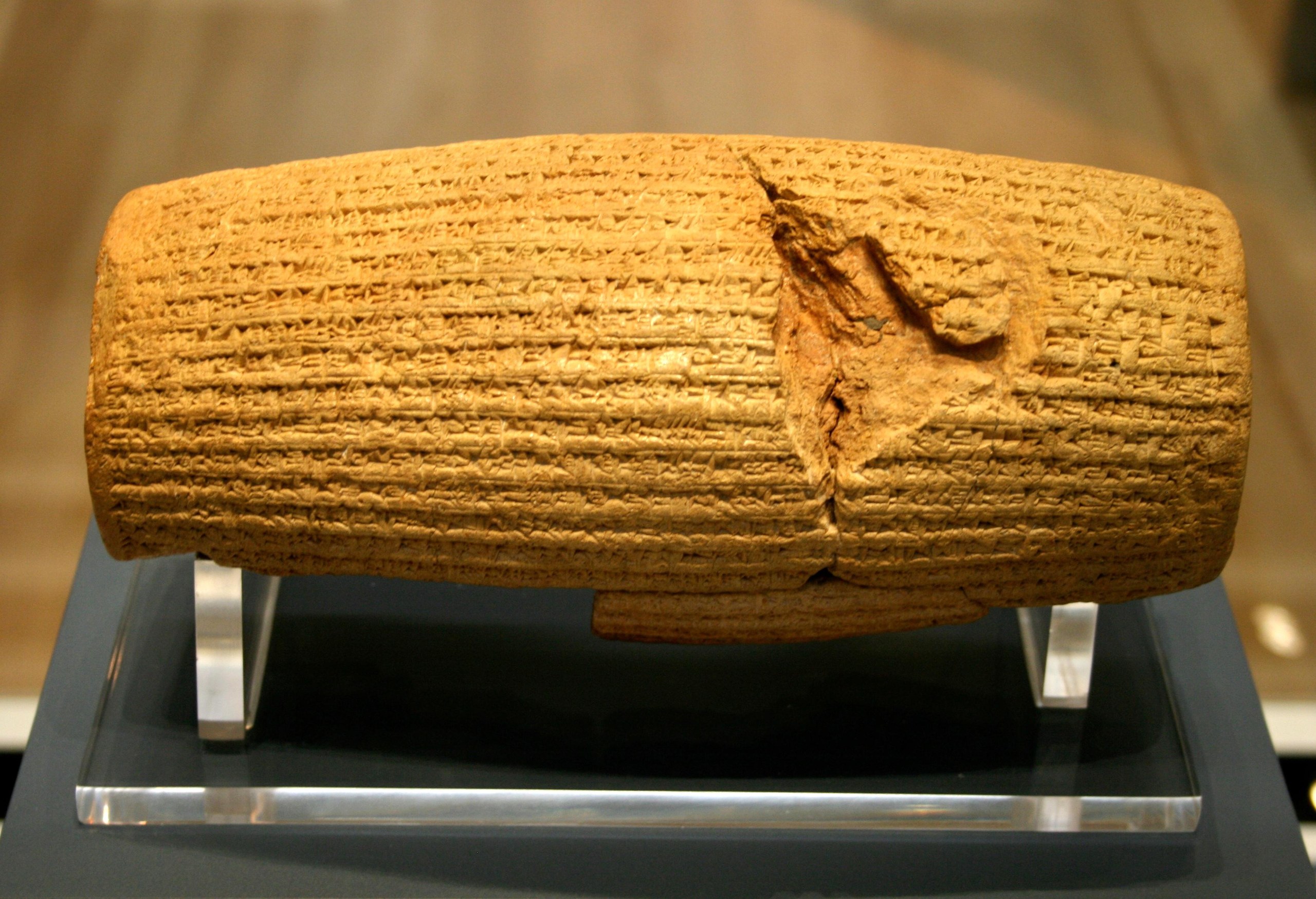
Cyrus Cylinder
539
A clay cylinder, now broken into pieces, carrying a royal inscription of the Persian king Cyrus the Great in Akkadian cuneiform. It was buried as a foundation deposit after the conquest of Babylon in 539 BC and came to light again in the city's ruins.
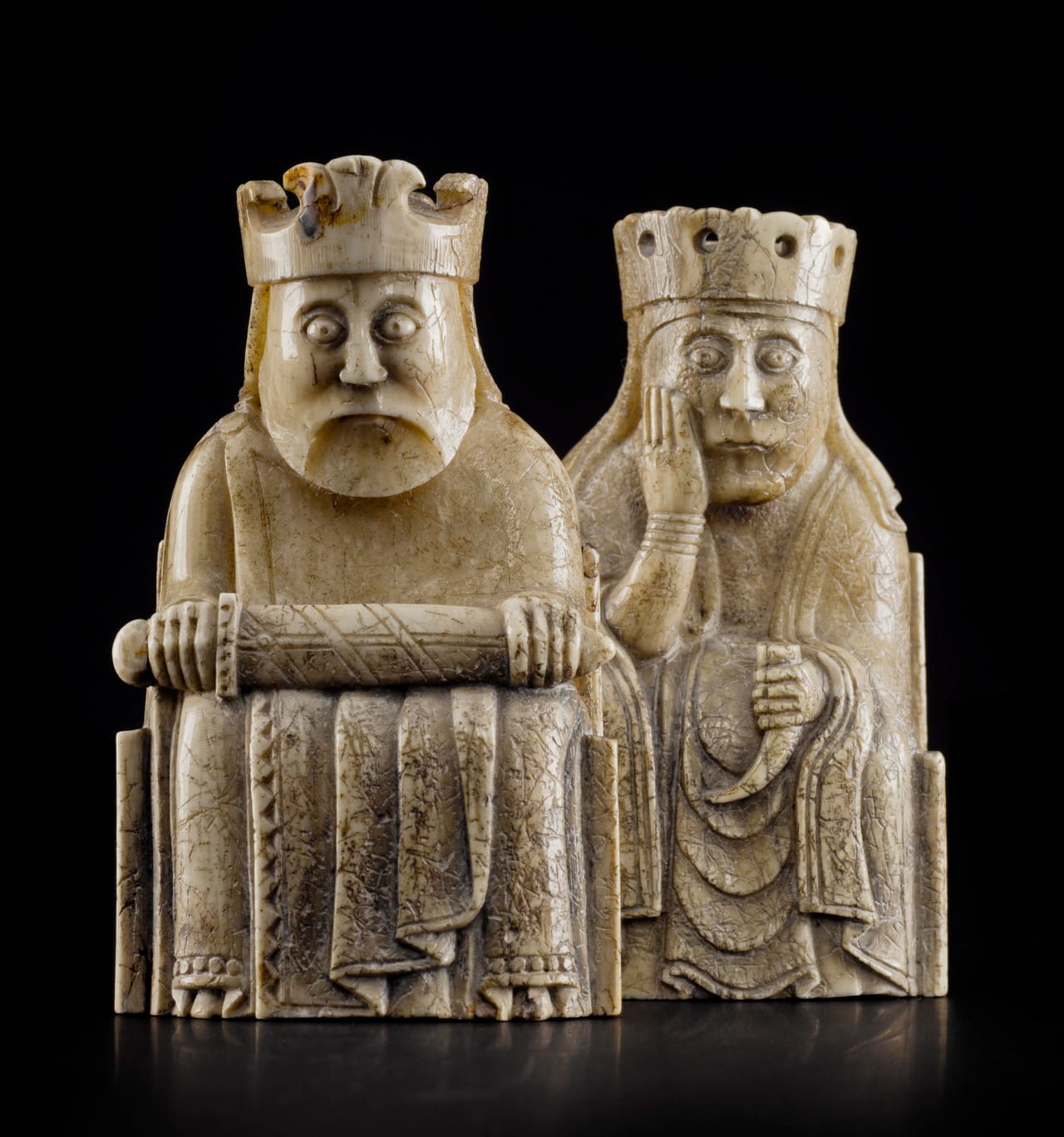
Lewis chessmen
1200
Chessmen of the distinctive 12th-century sort, most of them carved from walrus ivory and found in 1831 on Lewis, an island of the Outer Hebrides. The museum owns and usually exhibits 82 of the pieces.
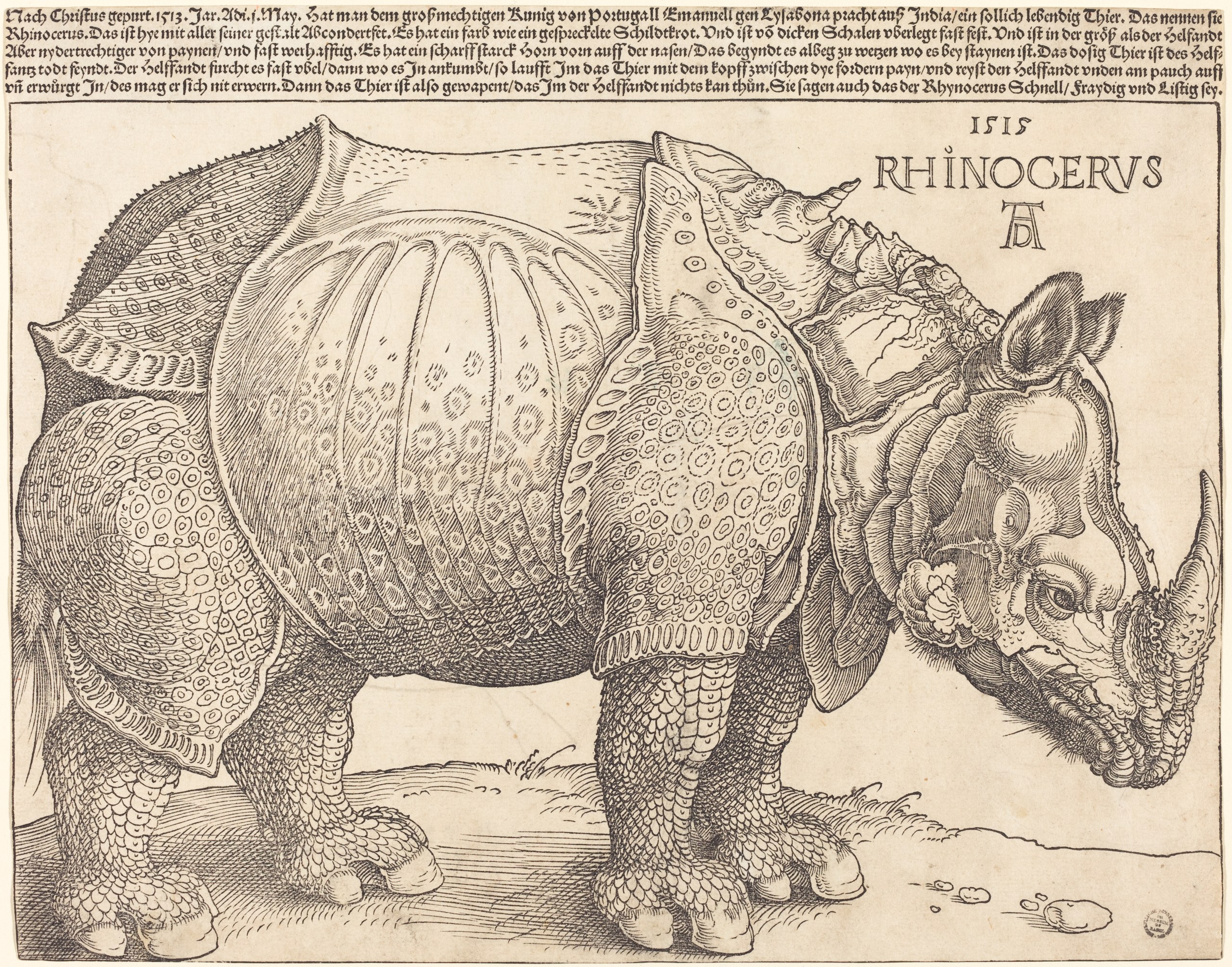
The Rhinoceros
Albrecht Dürer · 1512
Dürer's woodcut of 1515, drawn from a written description and a quick sketch of an Indian rhinoceros that had reached Lisbon that year. He never saw the animal, the first living example in Europe since Roman times, and the museum holds the original drawing.
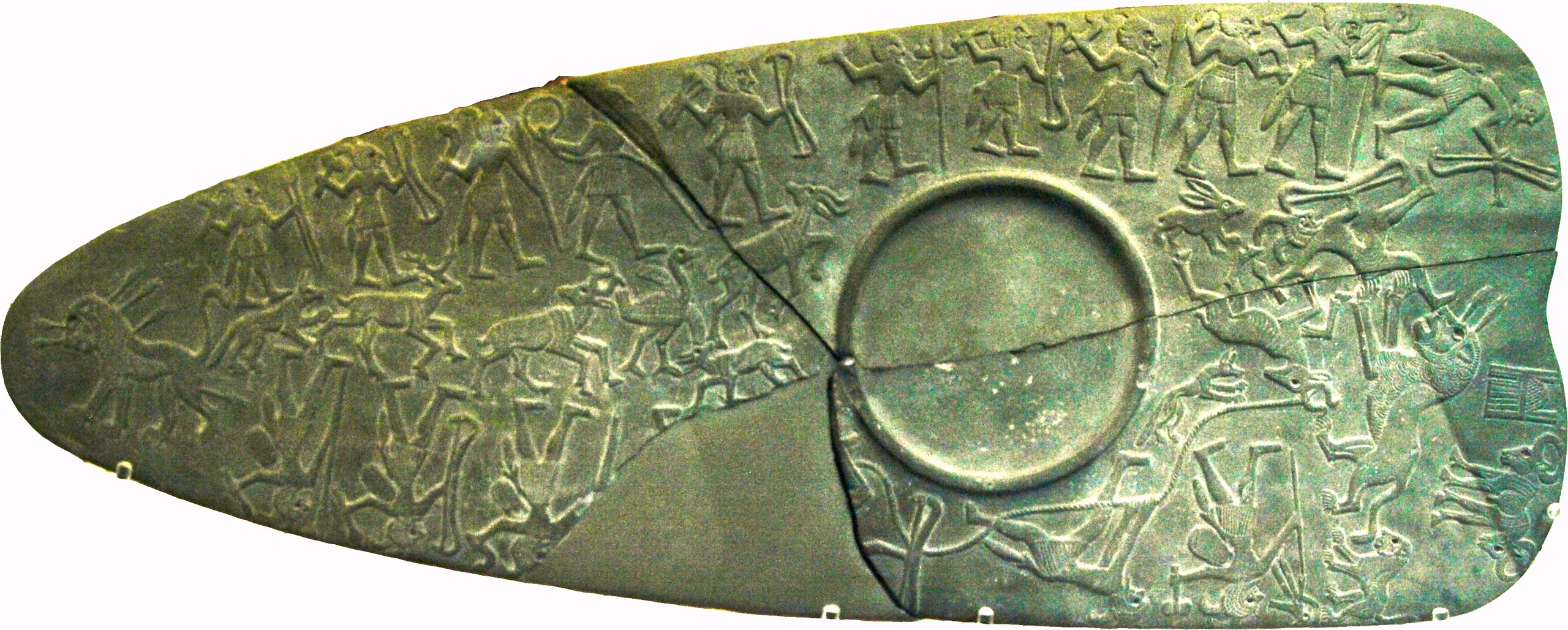
fragment of the Hunters Palette EA 20790
A cosmetic palette of about 3100 BCE from late prehistoric Egypt. The palette is broken, one part held here and the other in the Louvre.
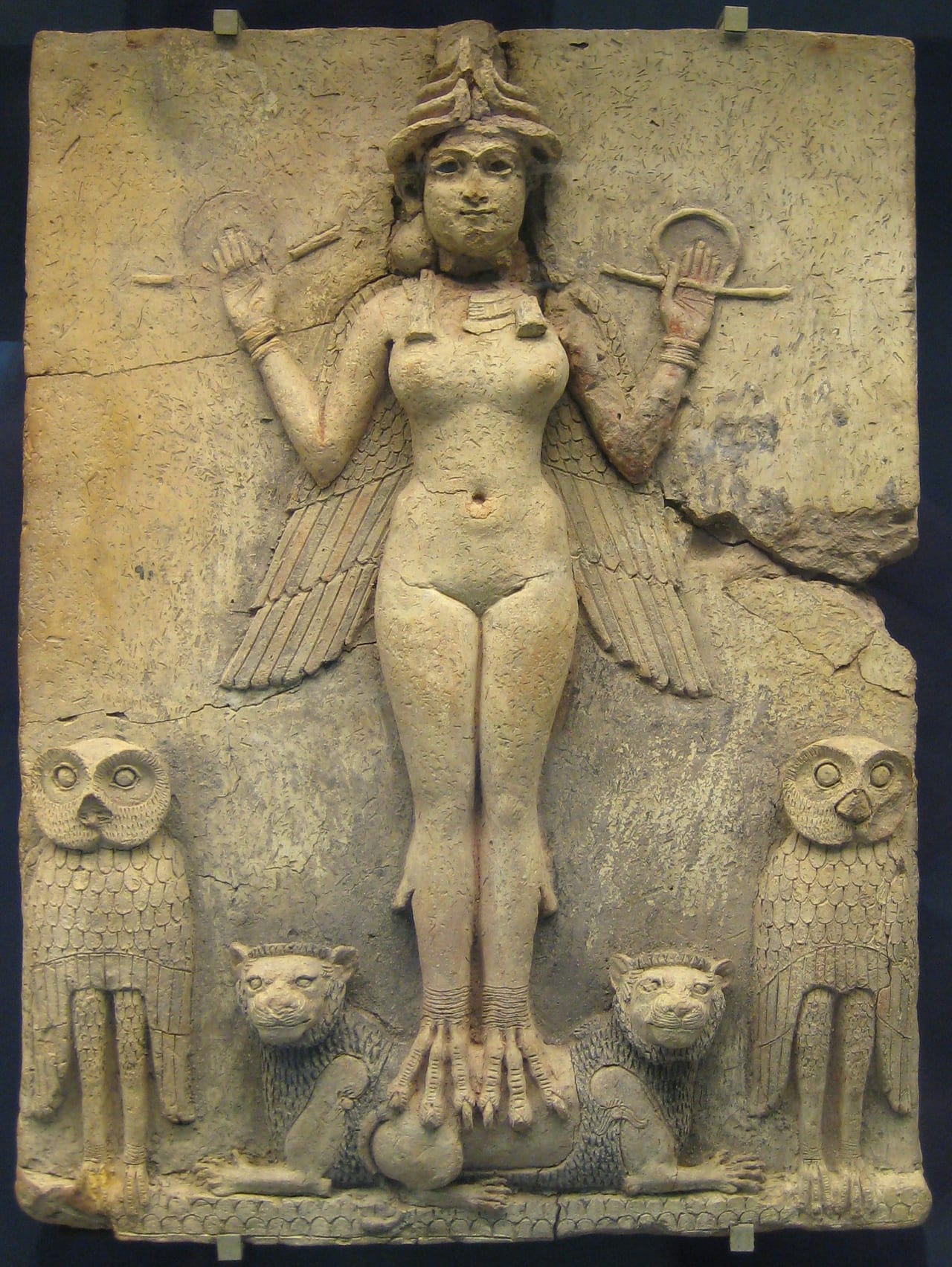
Burney Relief
A Mesopotamian terracotta plaque in high relief: a winged naked figure with the talons of a bird, owls at either side, standing upon two lions. The museum dates it between 1800 and 1750 BCE.
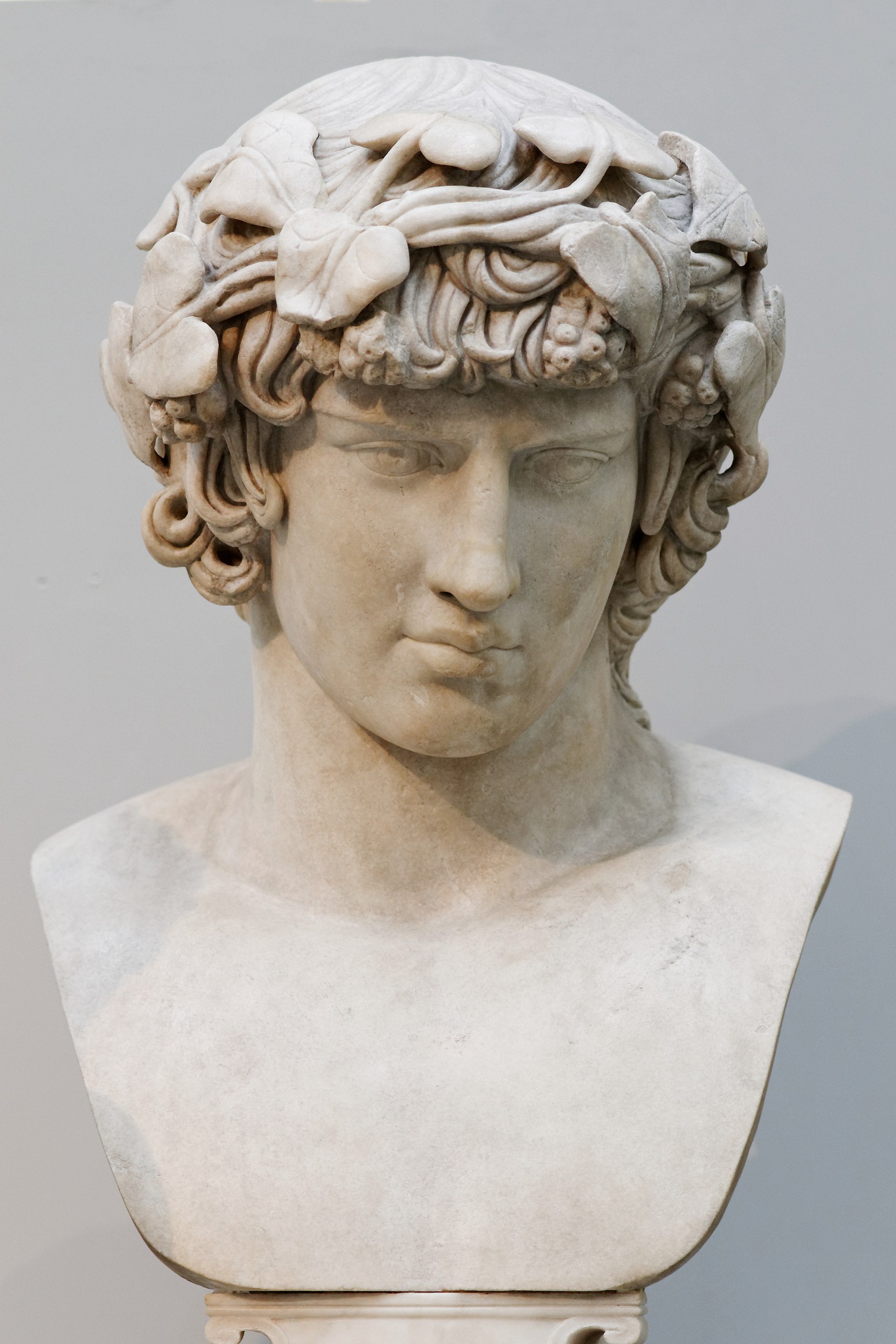
Townley Antinous
130
A bust of the young Antinous, owned in the 18th century by the collector Charles Townley; after his death in 1805 his family sold his marbles to the museum.
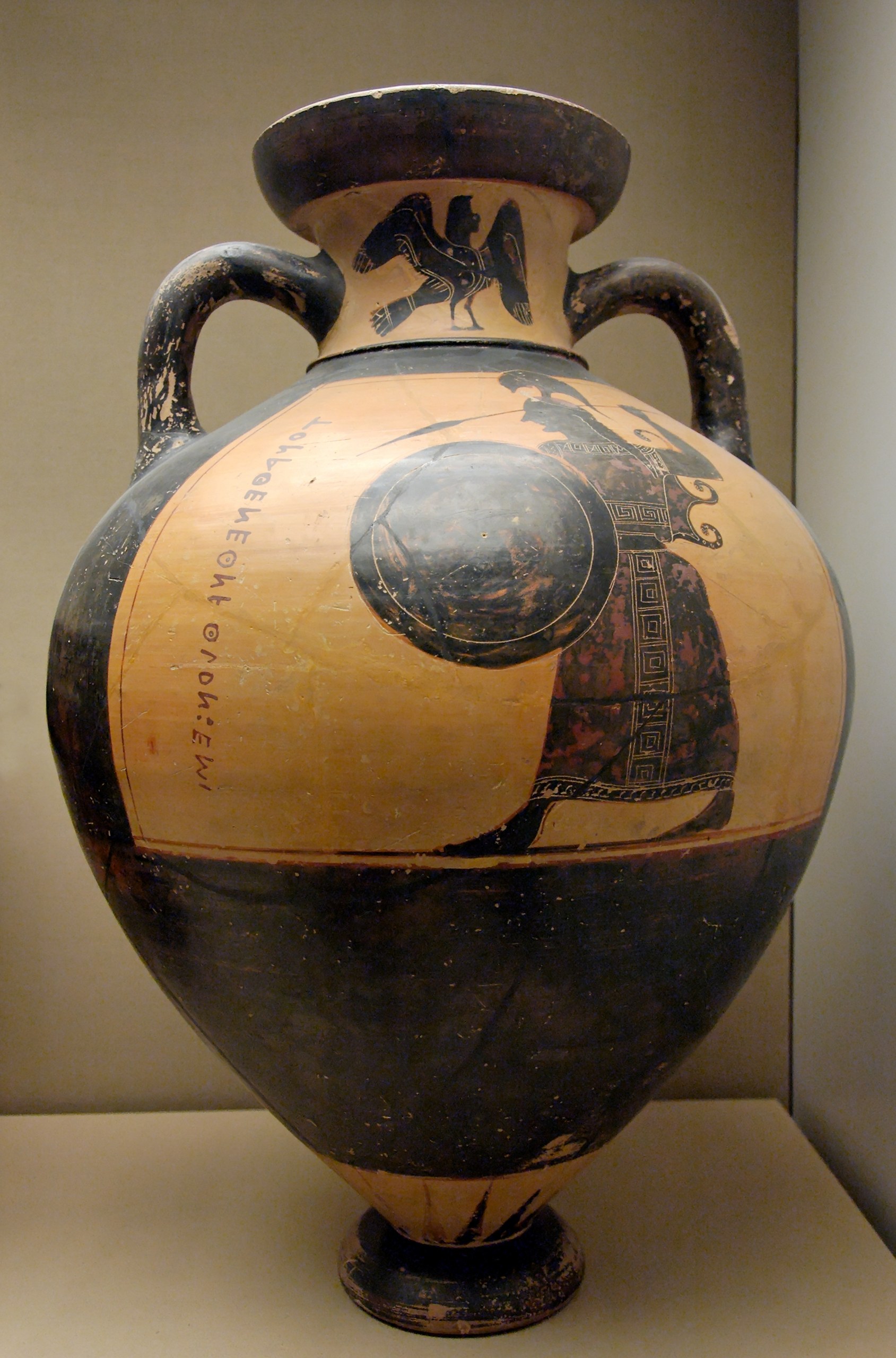
Burgon vase
Burgon Group
A Panathenaic amphora, one of the large ceramic vessels that held the olive oil which was the prize of the Panathenaic Games of ancient Athens.
Collections
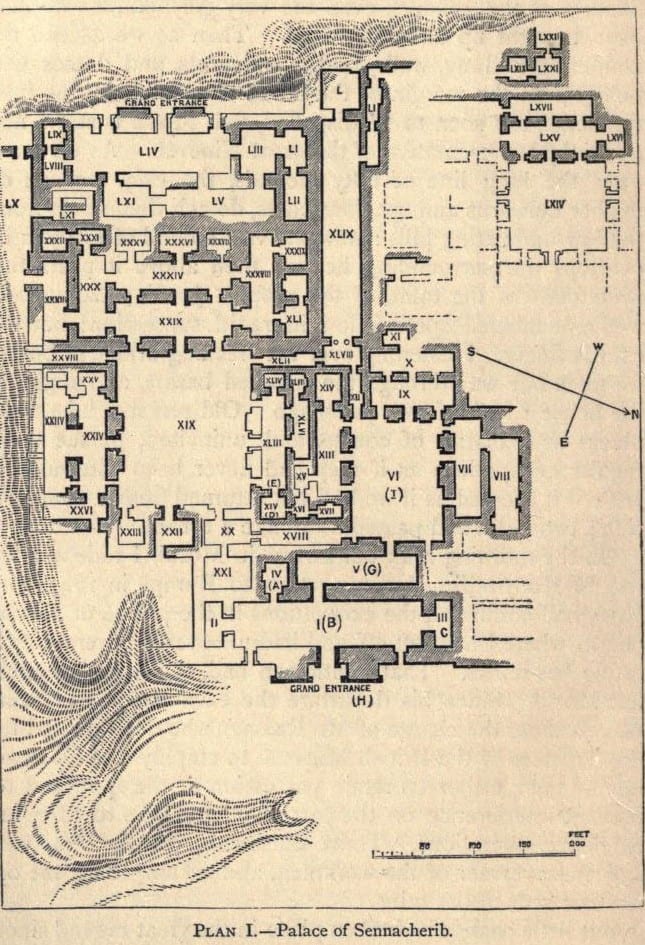
Middle East
Library of Ashurbanipal
The Assyrian palaces and the library of Nineveh: clay tablets and fragments numbering more than 30,000, texts of the 7th century BCE, among them the Epic of Gilgamesh.
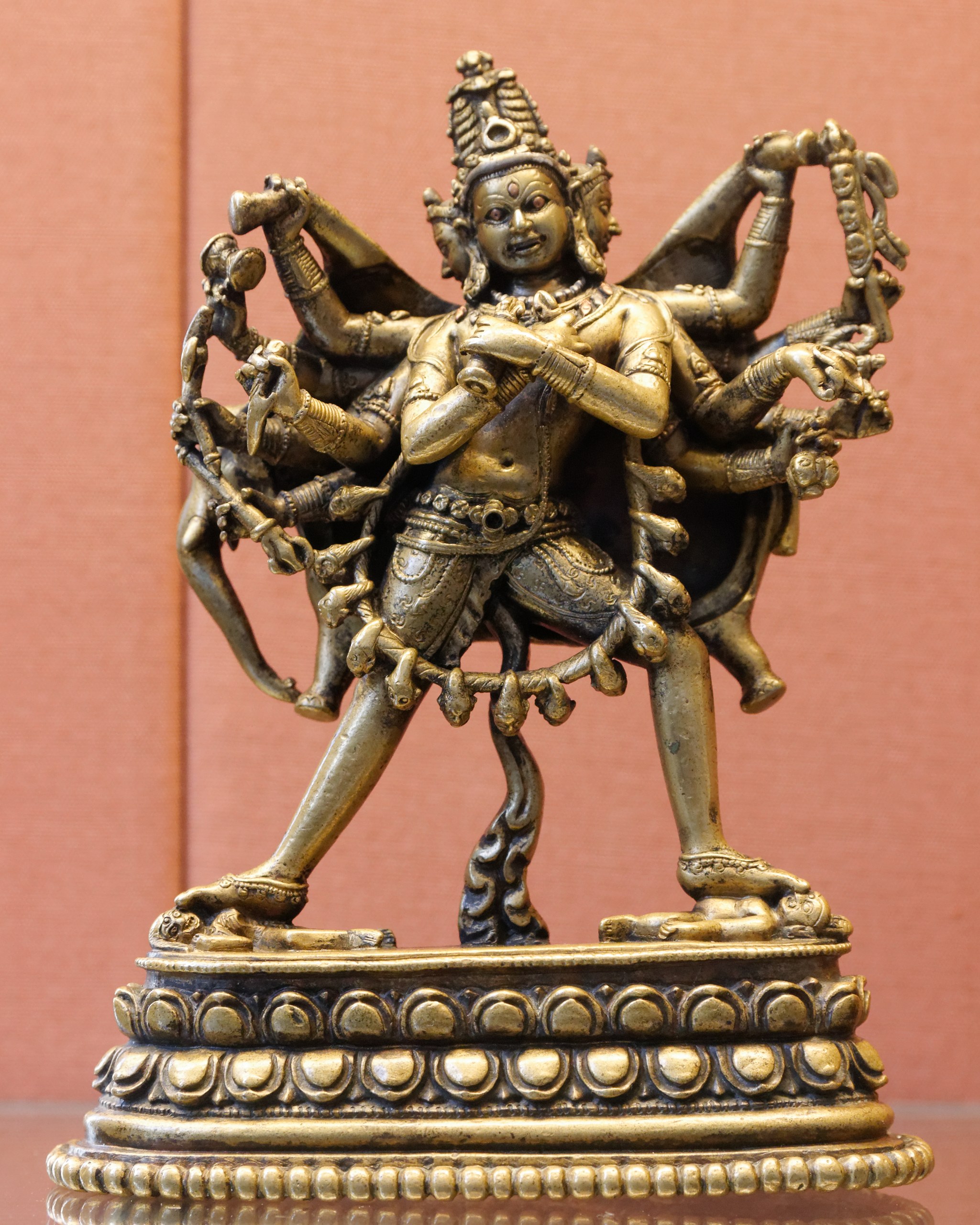
Asia
bronze figure of Samvara · 1150
Holdings running from Indian bronze to Japanese prints. The figure of Samvara, a Buddhist deity, was cast in the twelfth century.
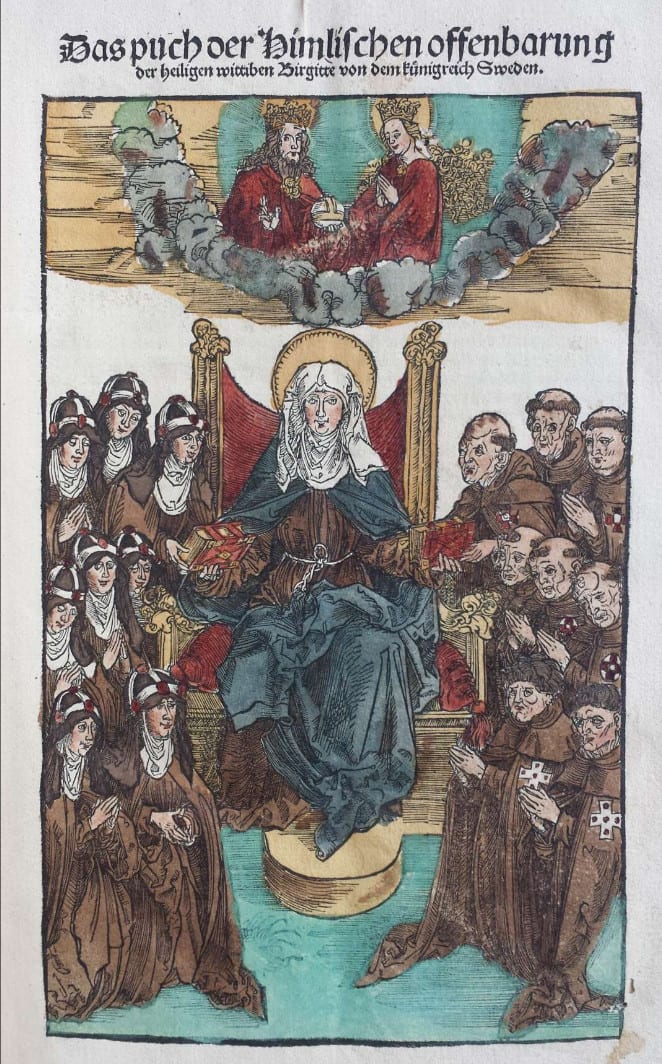
Prints and Drawings
St. Bridget divides her works among nuns and monks (leaf 1) · Albrecht Dürer · 1500
Dürer and his time: this leaf of the Revelationes of St Bridget, a woodcut attributed to him, was cut in 1500.
Where the Parthenon Sculptures came from
The Parthenon Sculptures are contested. The British Museum holds 15 metopes, 17 pedimental figures and 75 metres of the frieze, removed from the Parthenon between 1801 and 1805 by Lord Elgin, then British Ambassador to the Ottoman Empire, which had governed Athens for around 350 years. The museum states that Elgin held a permit, a firman, from the Ottoman authorities, that a Parliamentary Select Committee found his actions entirely legal in 1816, and that the sculptures entered the collection by Act of Parliament. The Acropolis Museum in Athens describes the same events as Elgin's seizure, and in a 2024 exhibition put Byron's own Sultanic firman on display to challenge, in its words, the alleged existence of Elgin's firman. Greece first formally requested permanent return in 1983. The British Museum says it has never received a loan request and that successive Greek governments have declined to acknowledge its Trustees' title; it has called for a Parthenon partnership.
Artists
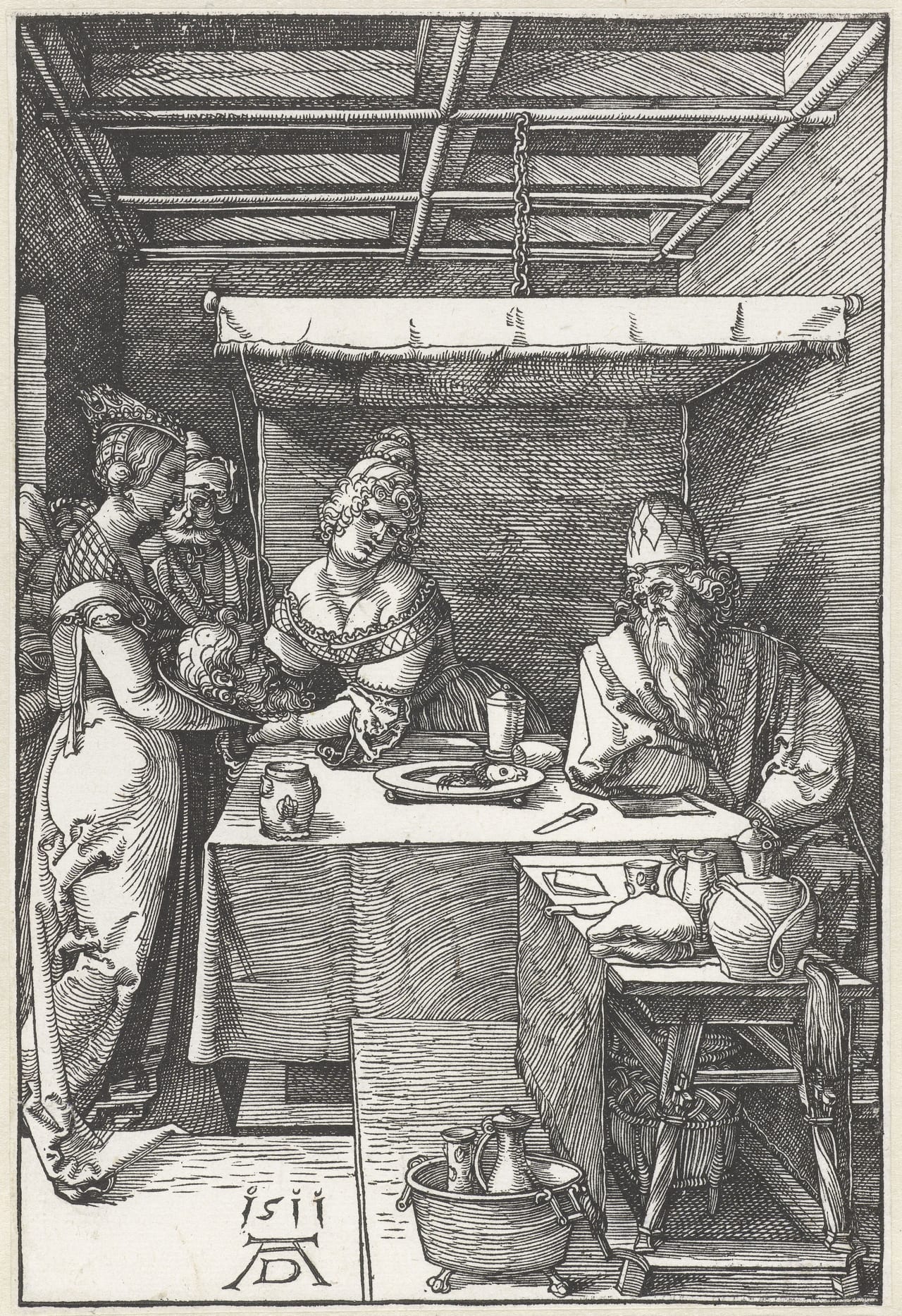
Herodias with the Head of Saint John the Baptist · 1500
A German painter, printmaker and writer on art of the Renaissance north of the Alps, born in Nuremberg, who made his name across Europe in his twenties through woodcuts of the highest quality and served the Emperor Maximilian I from 1512.
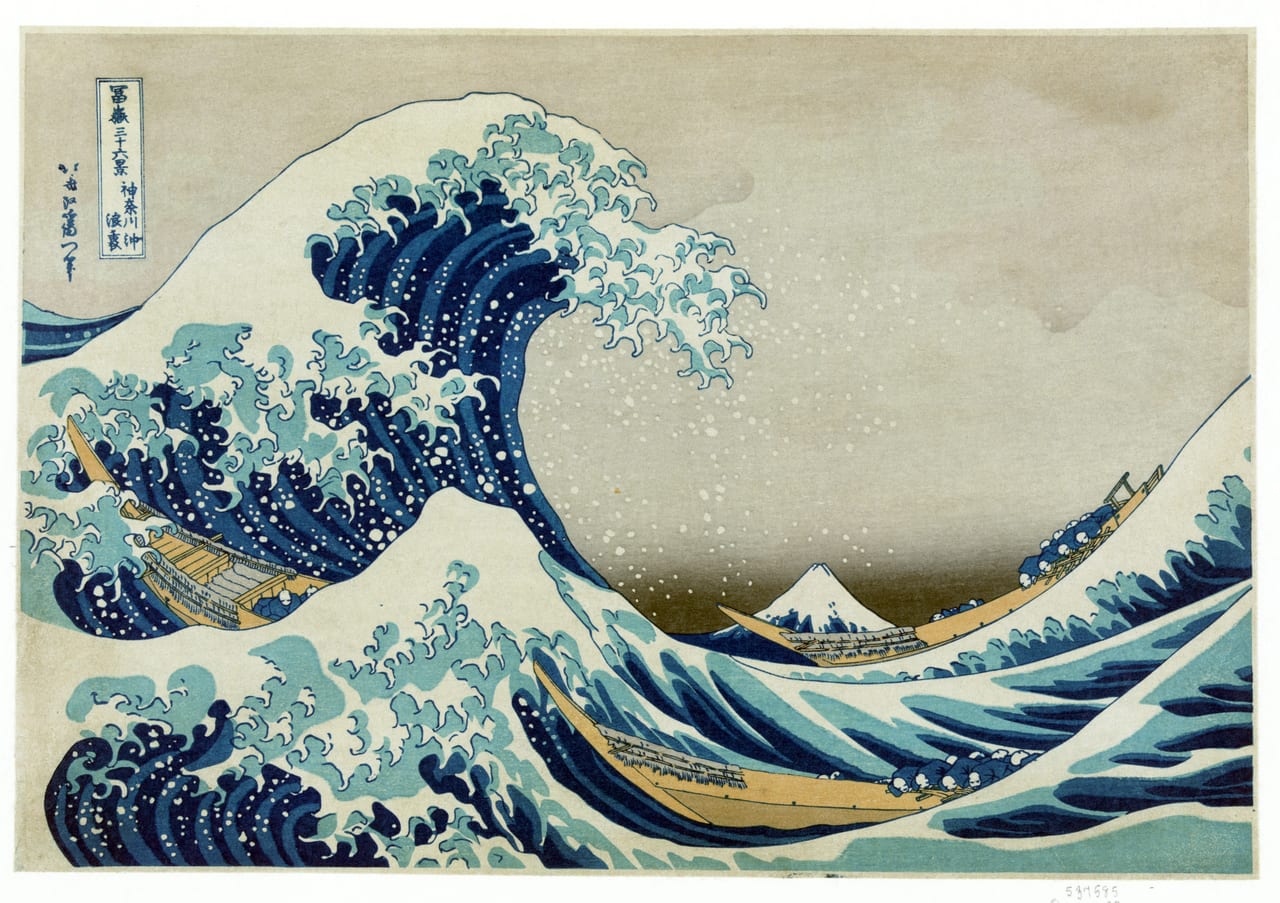
The Great Wave off Kanagawa · 1831
A painter and printmaker of Edo Japan who lifted the ukiyo-e print from portraits of actors and courtesans to landscapes, plants and animals; his Thirty-Six Views of Mount Fuji carries the famous Wave.
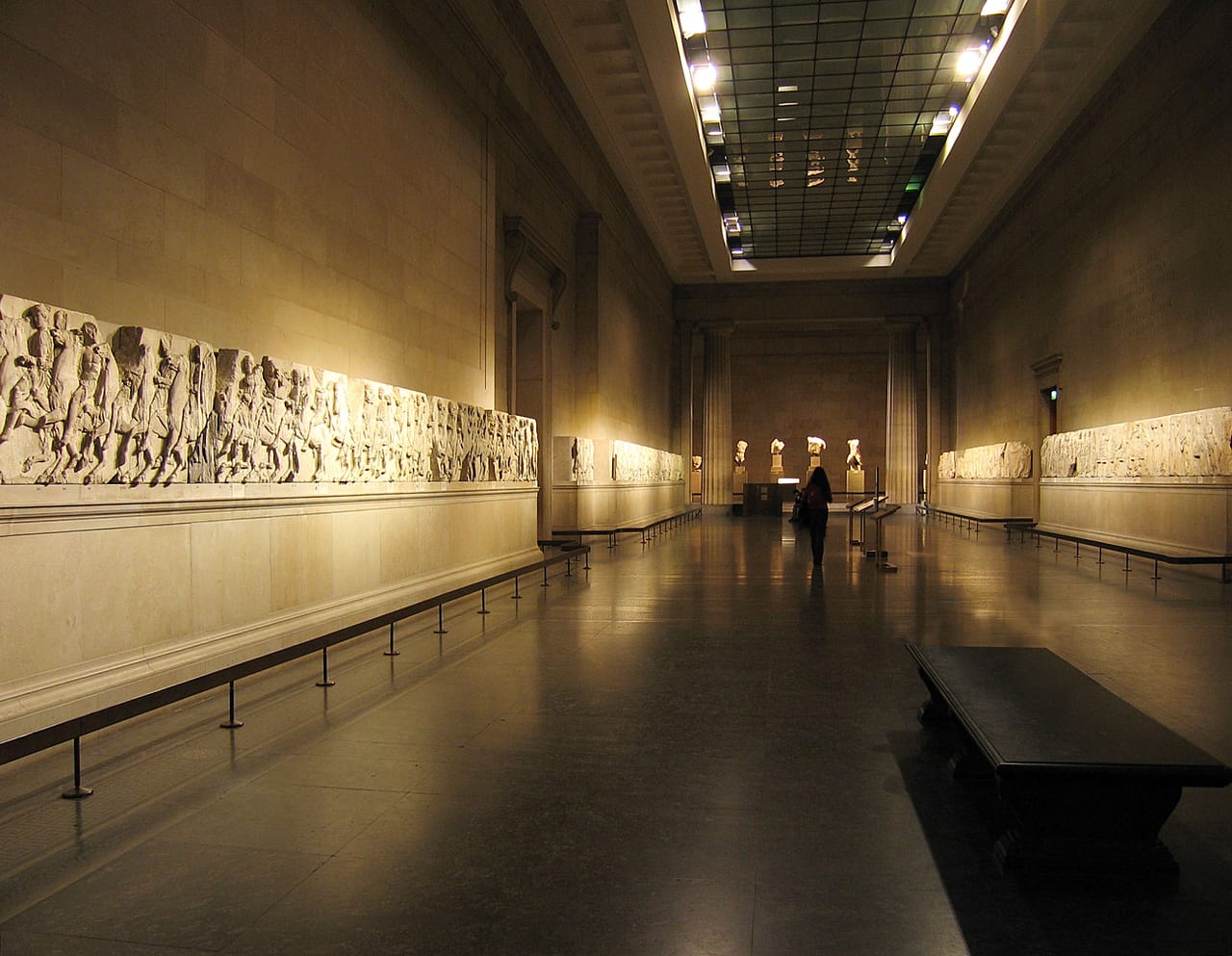
Elgin Marbles · 447 BC
The Ancient Greek sculptor, painter and architect of the 5th century BC who directed the Parthenon's sculptures; his Zeus at Olympia ranked among the Seven Wonders of the Ancient World.
Artworks
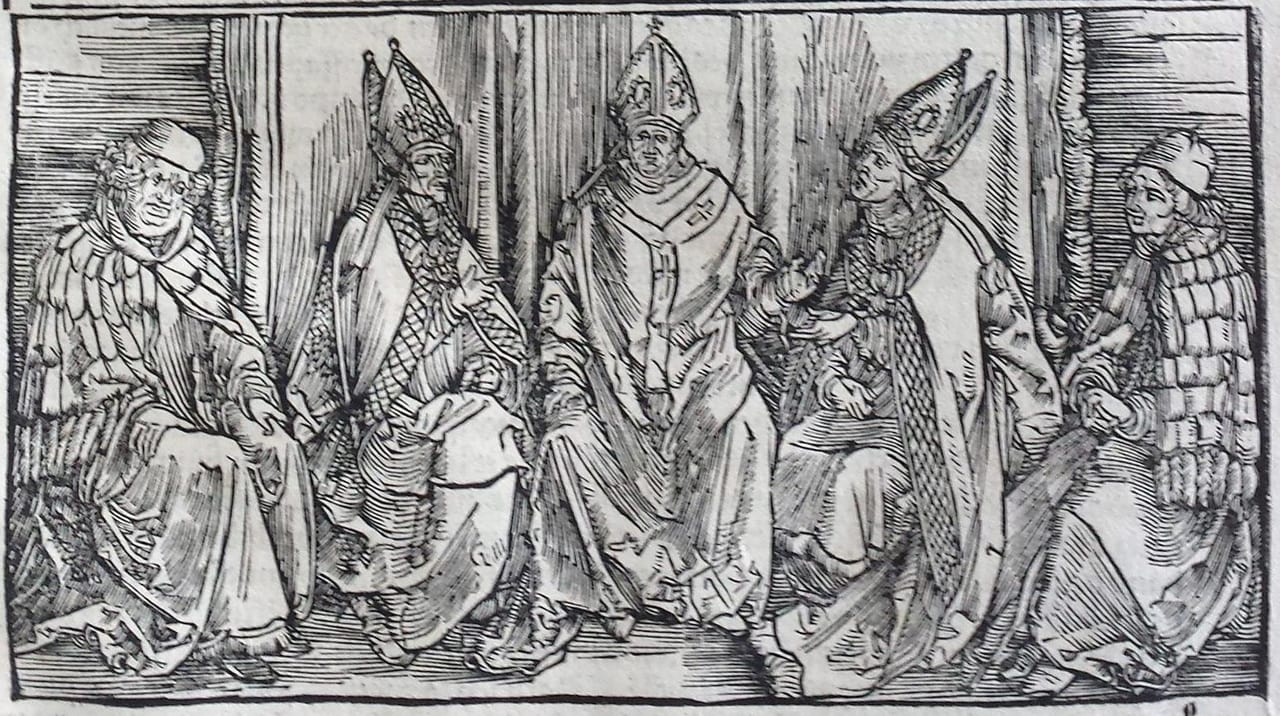
Three bishops and two monks (from leaf 9)
Albrecht Dürer · 1500
Clergy in procession, part of one leaf of the woodcut series attributed to Dürer for the printed Revelations of Saint Bridget, cut about 1500.
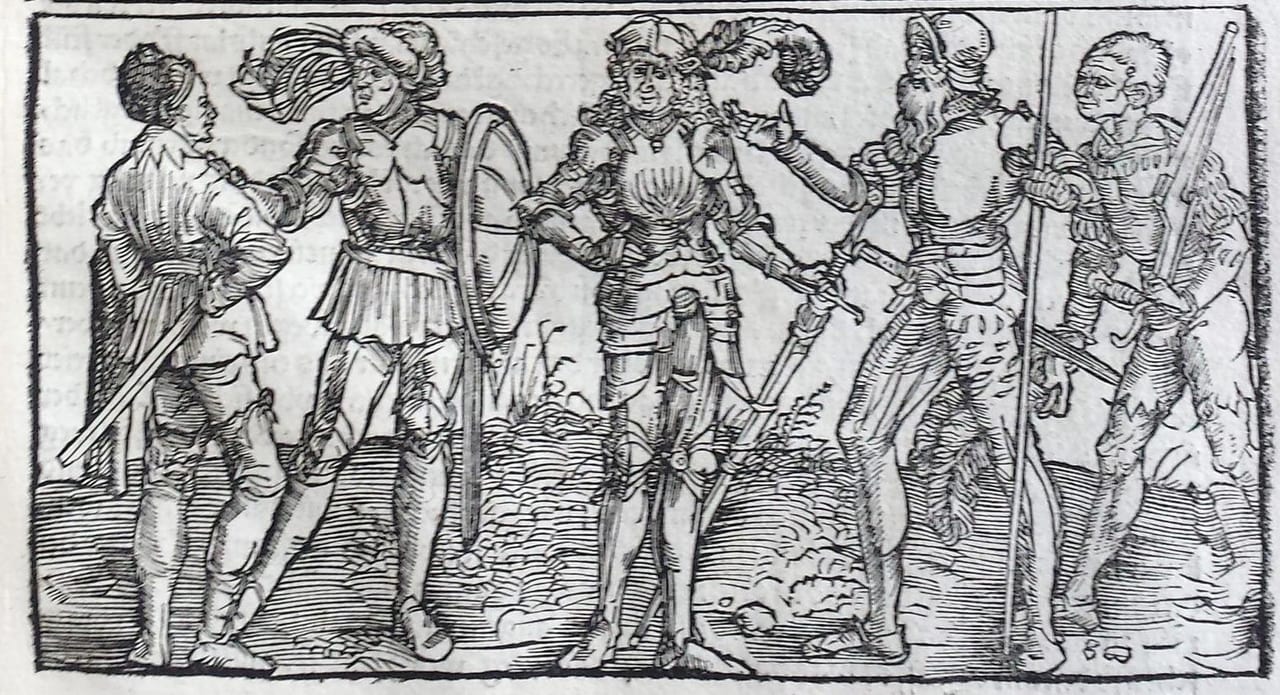
Knights and Soldiers (from leaf 8)
Albrecht Dürer · 1500
Another leaf of the Bridget woodcuts attributed to Dürer, with the armed men of the visionary host.
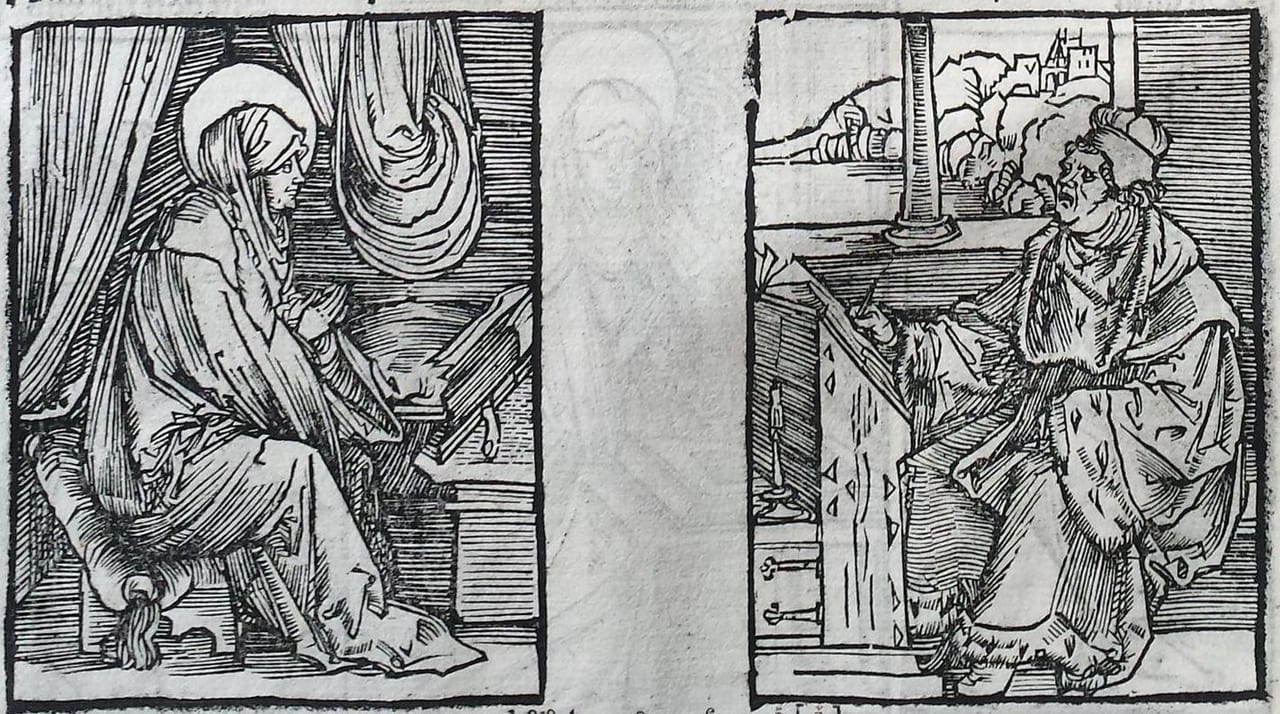
Magister Matias of Lincopenus and St Bridget (from leaf 6)
Albrecht Dürer · 1500
The scholar and the saint together, one more leaf of the attributed series of about 1500.
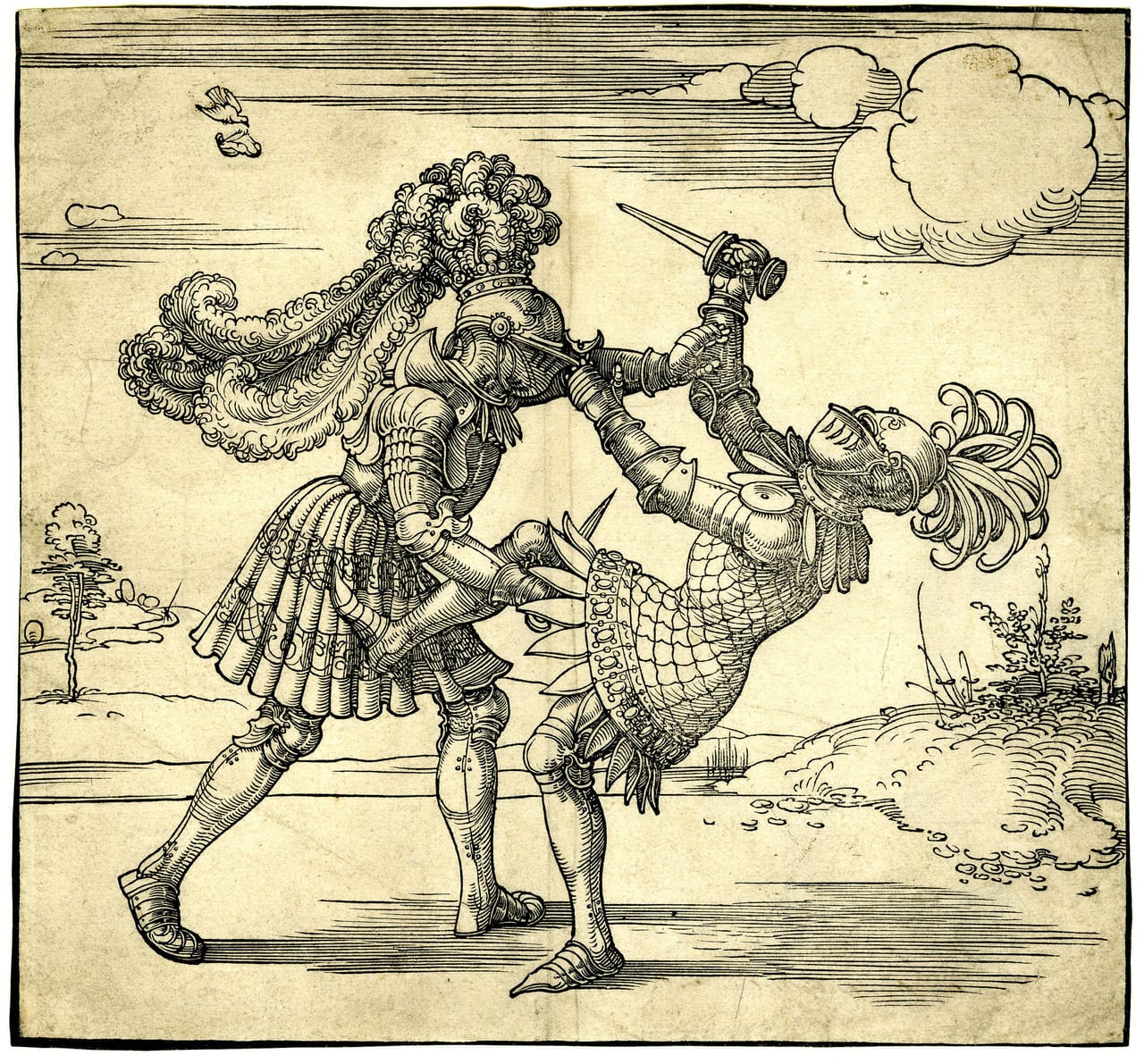
The combat on foot with daggers
Albrecht Dürer · 1516
A duel with daggers on foot, a print Dürer drew in 1516. Two fighters lock together at the chest, each gripping the other's blade arm.
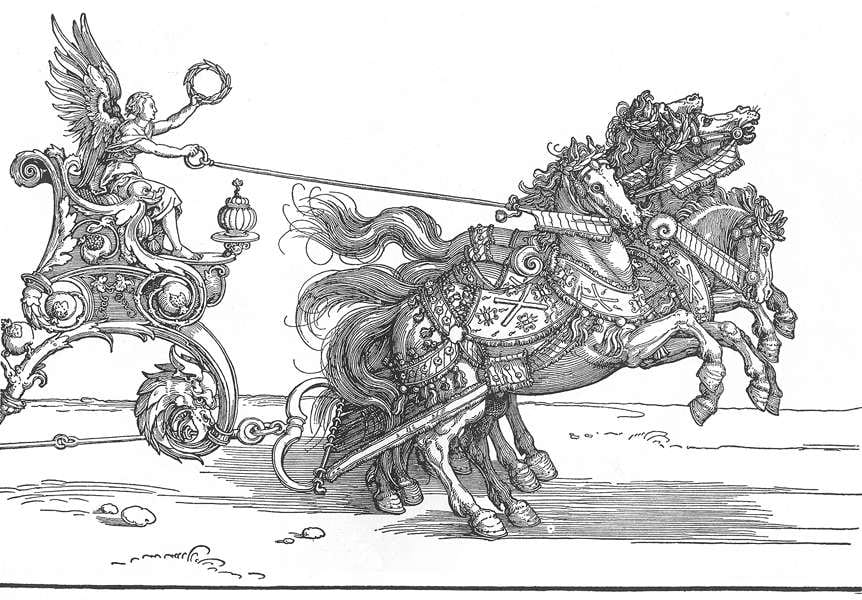
The Small Triumphal Car or the Burgundian Marriage (right part)
Albrecht Dürer · 1518
A woodcut print by Dürer, the right-hand sheet of the pair.
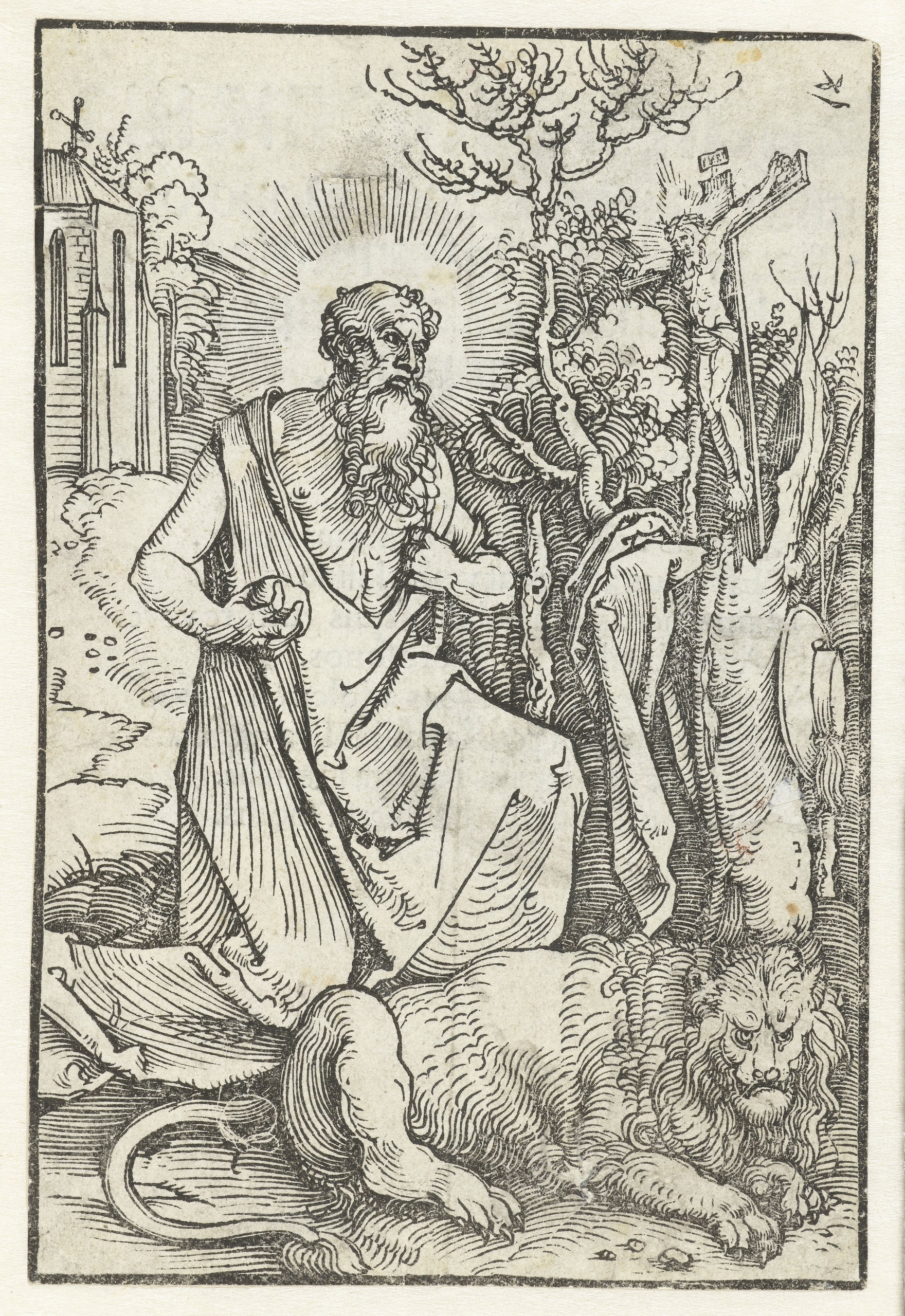
Saint Jerome
1510
A woodcut print from the school of Dürer, the penitent hermit of the desert.
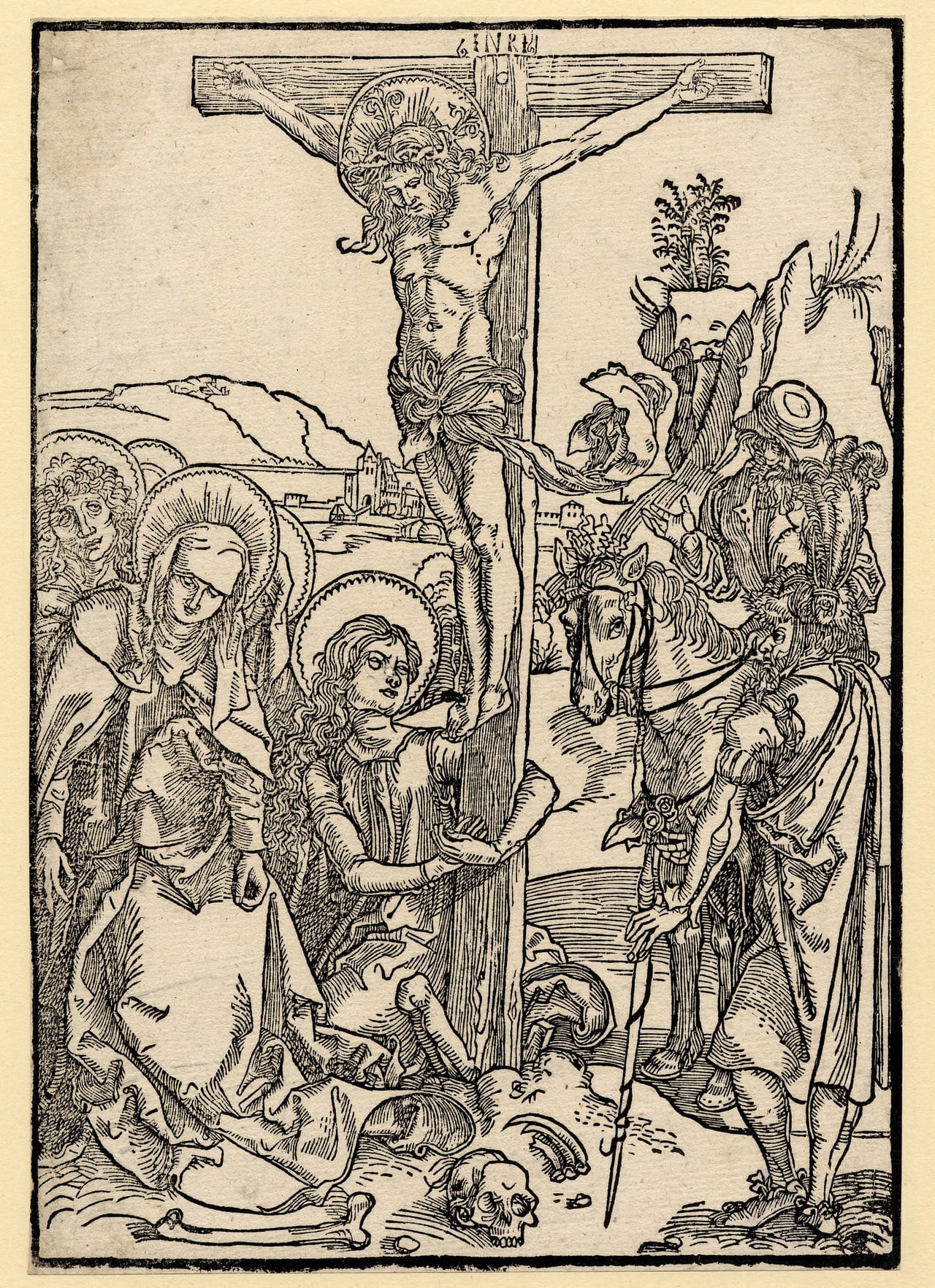
Christ on the cross
Albrecht Dürer · 1496
A print possibly by Dürer, from his Albertina Passion series.
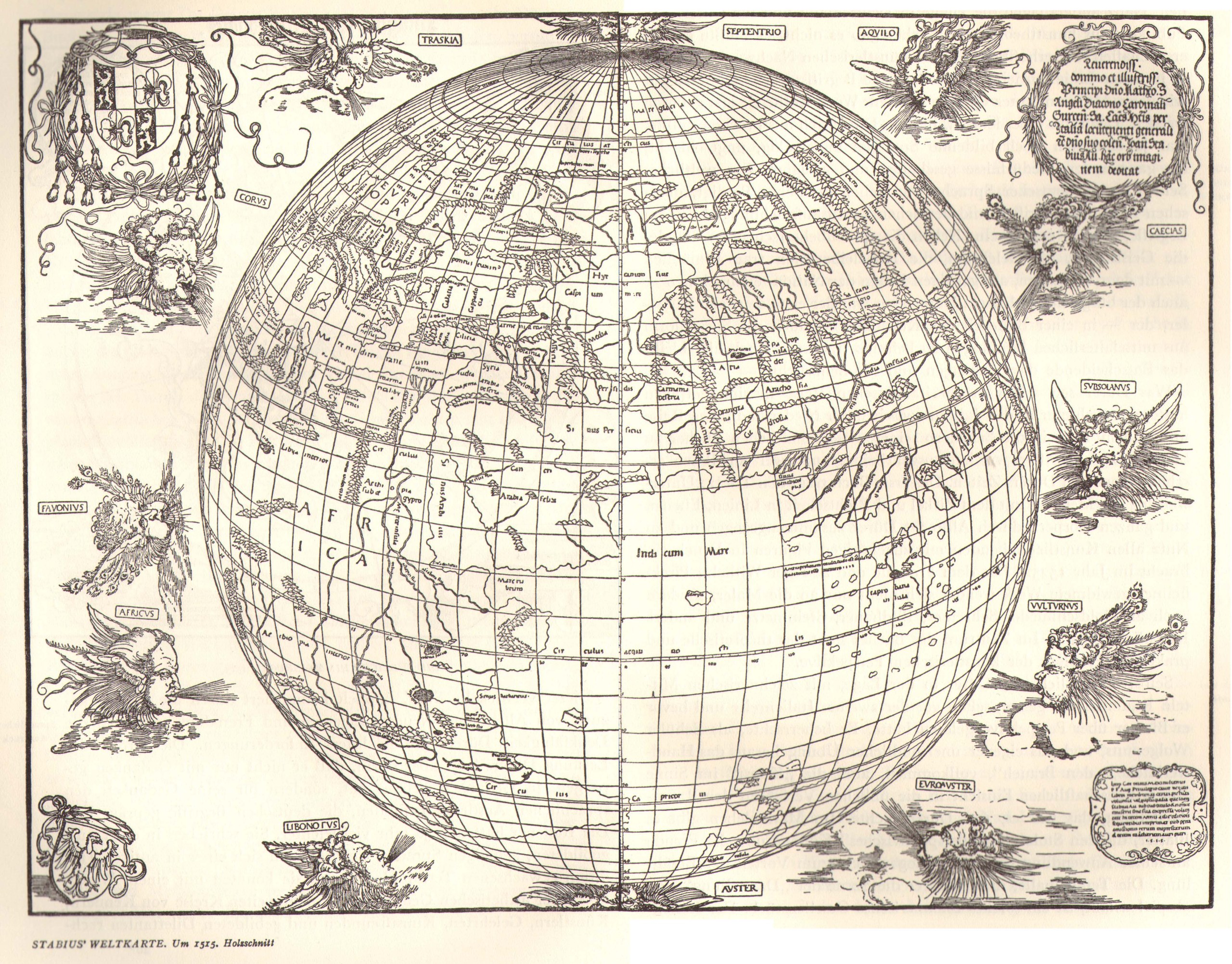
The Stabius World Map
Albrecht Dürer · 1515
In 1515 Dürer made this world map with the Viennese cartographer Johannes Stabius, its surface worked out for a solid geometric sphere.
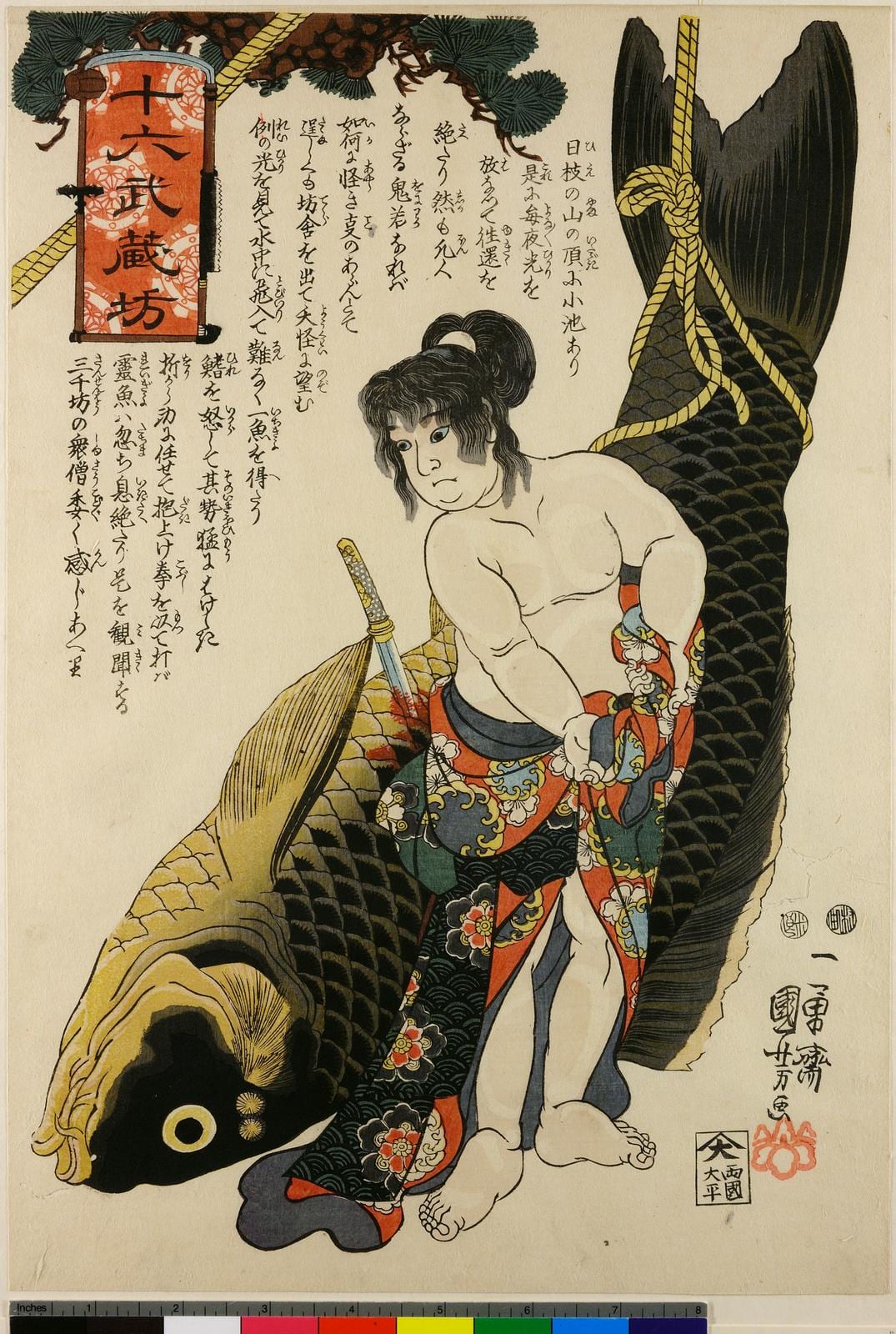
Hie no Yama no itadaki ni
1850
A print by Utagawa Kuniyoshi, a late master of the Japanese ukiyo-e tradition of woodblock printing: travellers on a high mountain road.
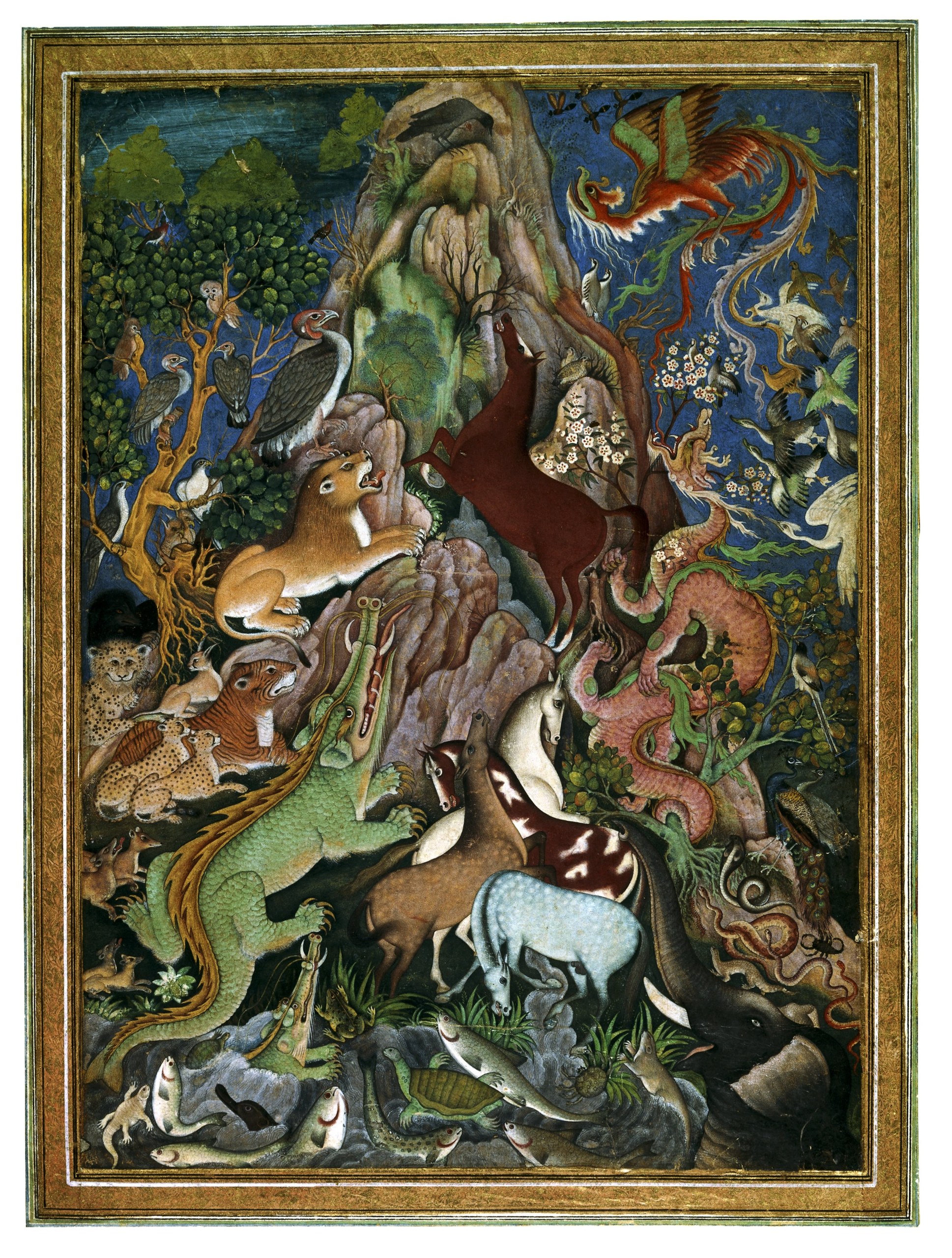
The raven addresses the animals
Miskina · 1590
A painting of 1590 by Miskina: a crow holds forth to a gathered circle of animals, rendered with the close observation of a naturalist.
Sources
- Wikipedia, “British Museum”
- Wikipedia, “Rosetta Stone”
- Wikipedia, “Elgin Marbles”
- Wikipedia, “Cyrus Cylinder”
- Wikipedia, “Lewis chessmen”
- Wikipedia, “Dürer's Rhinoceros”
- Wikipedia, “The Great Wave off Kanagawa”
- Wikipedia, “Hunters Palette”
- Wikipedia, “Benin Bronzes”
- Wikipedia, “Burney Relief”
- Wikidata, “Townley Antinous”
- Wikidata, “Burgon vase”
- Wikidata, “Benin Bronzes”
- Wikipedia, “Albrecht Dürer”
- Wikipedia, “Katsushika Hokusai”
- Wikipedia, “Phidias”
- Wikidata, “St. Bridget divides her works among nuns and monks (leaf 1)”
- Wikidata, “St. Bridget as intercessor, with married couple praying (leaf 4)”
- Wikidata, “St. Bridget and the Virgin interceding for the Damned (leaf 11)”
- Wikidata, “Three bishops and two monks (from leaf 9)”
- Wikidata, “The combat on foot with daggers”
- Wikidata, “The Small Triumphal Car or the Burgundian Marriage (right part)”
- Wikidata, “Saint Jerome”
- Wikidata, “Christ on the cross”
- Wikidata, “The Stabius World Map”
- Wikidata, “Hie no Yama no itadaki ni”
- Wikidata, “The raven addresses the animals”
- Wikidata, “Knights and Soldiers (from leaf 8)”
- Wikidata, “Magister Matias of Lincopenus and St Bridget (from leaf 6)”
- Wikipedia, “Hans Sloane”
- Wikipedia, “Johannes Stabius”
- Wikipedia, “Utagawa Kuniyoshi”
- Wikipedia, “Charles Townley”
- Wikipedia, “Library of Ashurbanipal”
- Wikidata, “bronze figure of Samvara”
- Images via Wikimedia Commons
- Awikimate, CC BY-SA 4.0
- Wikimedia Commons, CC BY-SA 4.0
- Wikimedia Commons, CC BY-SA 2.0
- Unknown artistUnknown artist, CC BY 2.5
- Wikimedia Commons, CC BY 3.0
Invite the British Museum into your living room
Play 25 works from this collection on your TV, phone or tablet with Momentable Art TV.