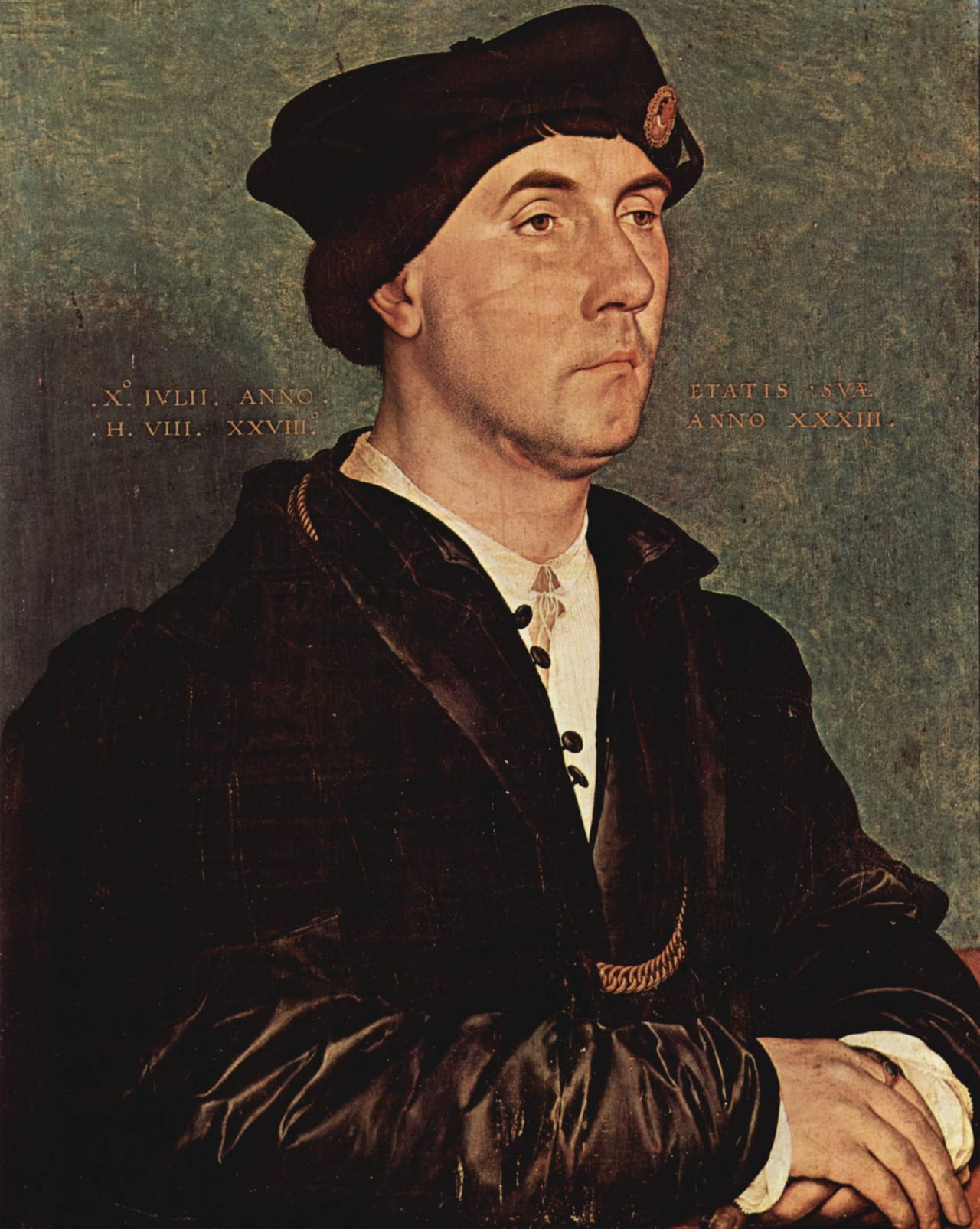
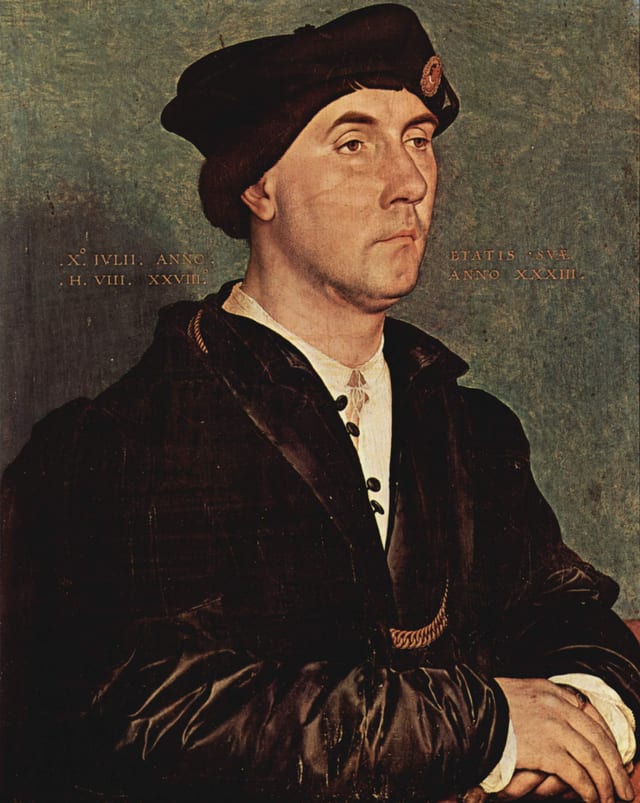
Portrait of Sir Richard Southwell
Hans Holbein the Younger · 1536

Hans Holbein the Younger
German · 1497–1543
Hans Holbein the Younger was a German painter and printmaker active in Switzerland and England. He worked in a Northern Renaissance style, and is considered one of the greatest portraitists of the 16th century. He also produced religious art, satire, and Reformation propaganda, and he made a significant contribution to the history of book design. He is called "the Younger" to distinguish him from his father Hans Holbein the Elder, an accomplished painter of the Late Gothic school.
Independent artist guide by Momentable. Biography from Wikipedia; artworks credited to the museums that hold them.
 LIVENow streaming · Portrait of Sir Richard Southwell
- life
- 1497–1543life
- movement
- German Renaissancemovement
The work
A selection of 8 works, free to stream.
Portrait of Sir Richard Southwell
Hans Holbein the Younger · 1536
Uffizi Gallery
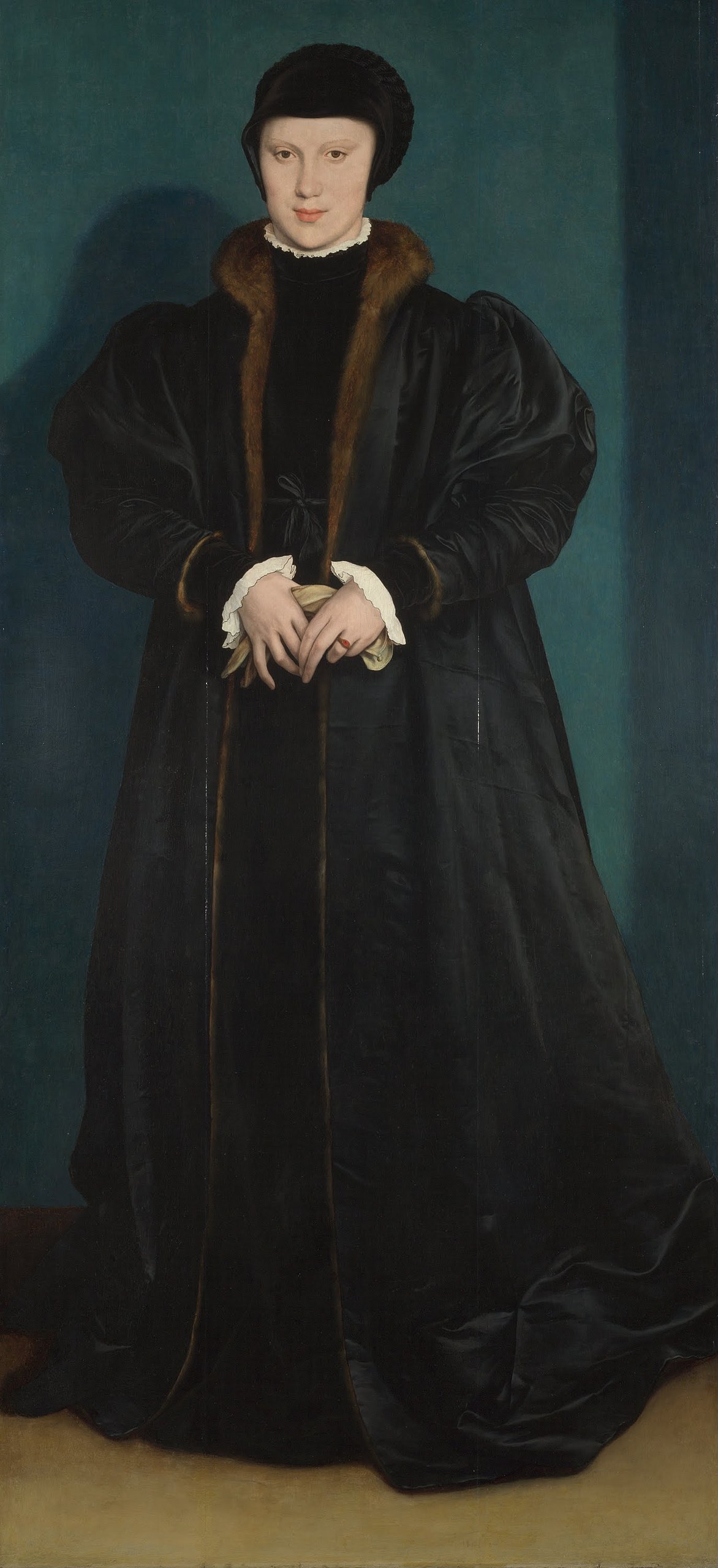
Christina of Denmark, Duchess of Milan
Hans Holbein the Younger · 1538
National Gallery
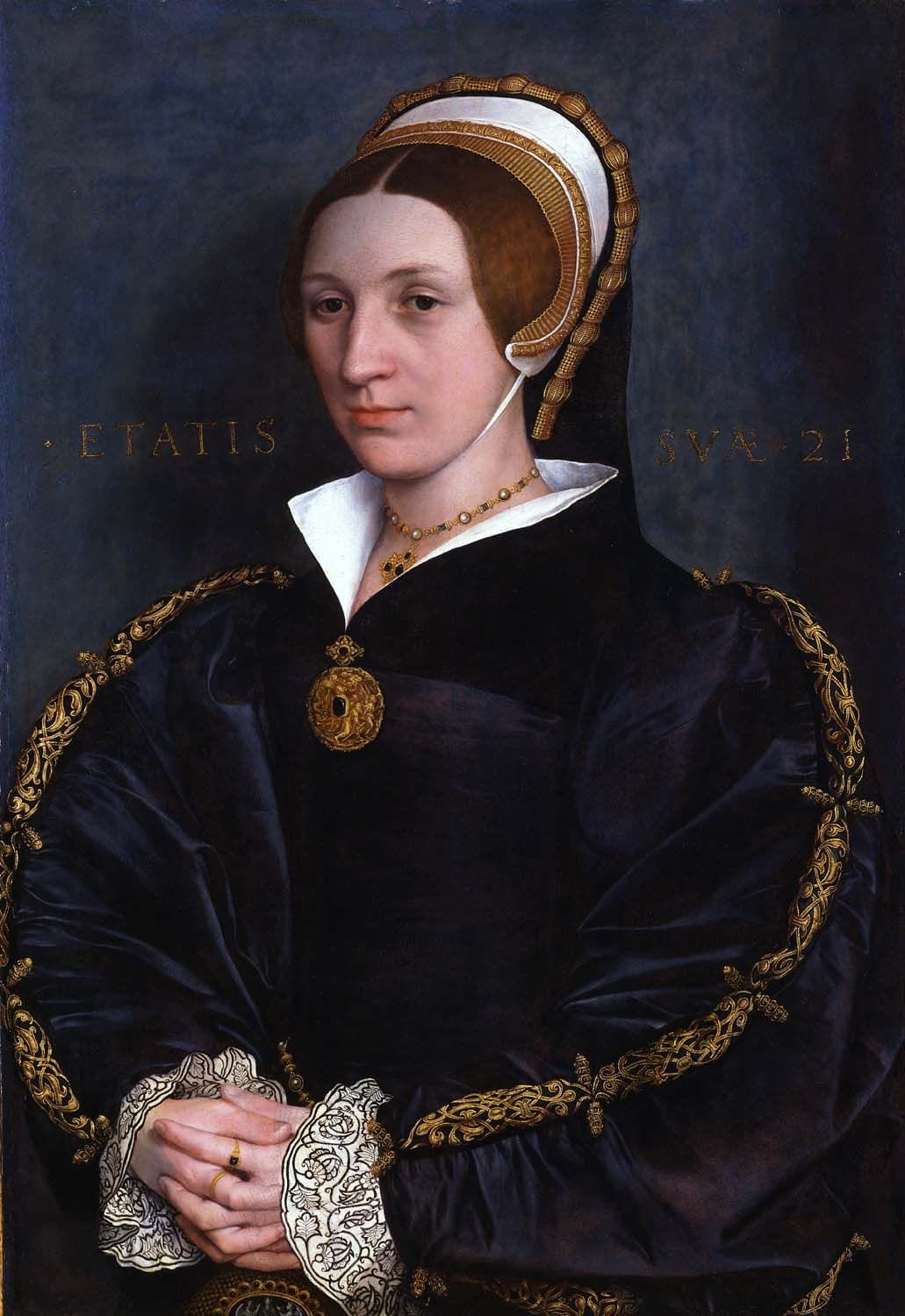
Portrait of a Lady, probably a Member of the Cromwell Family
Hans Holbein the Younger · 1540
Toledo Museum of Art
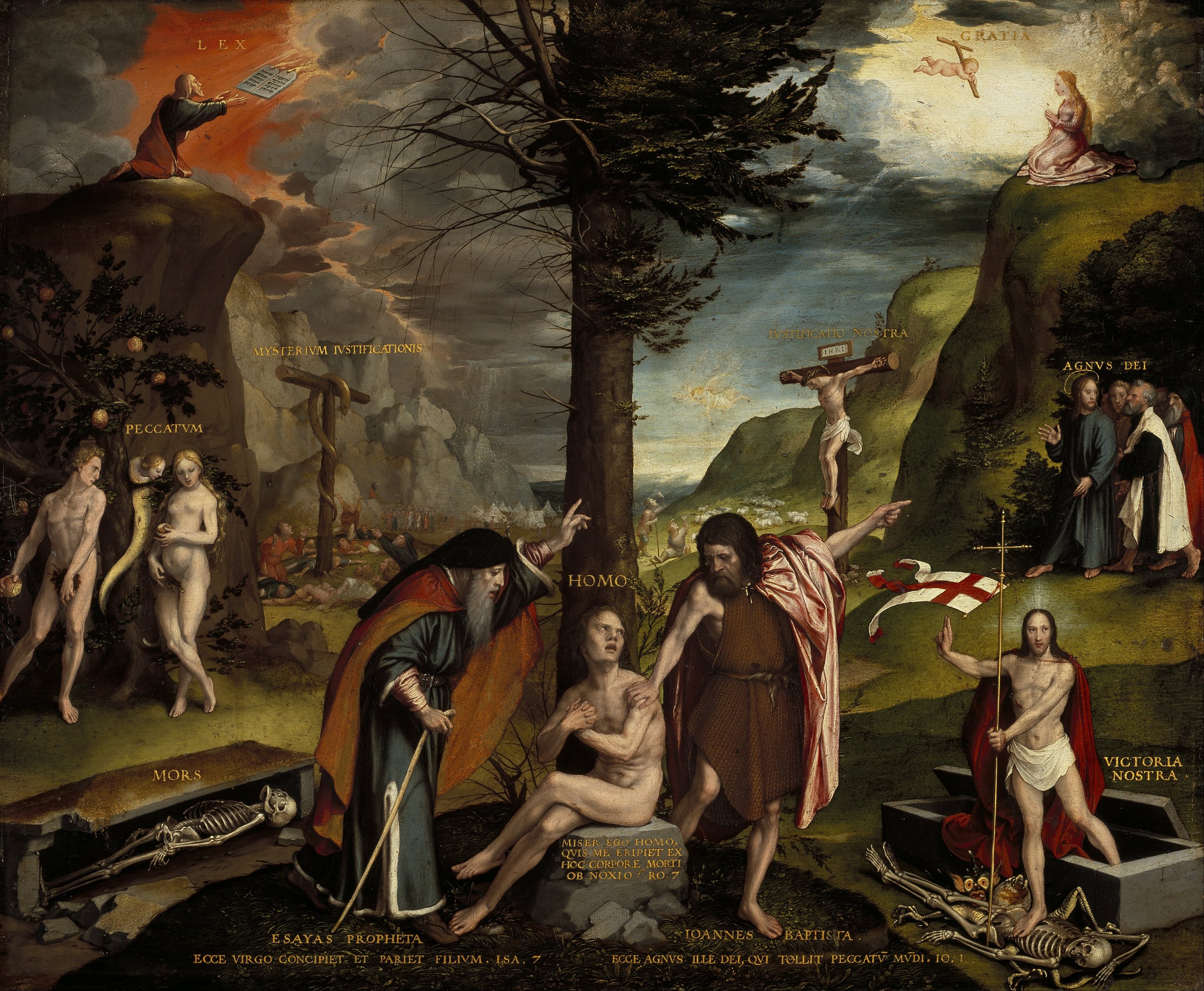
An Allegory of the Old and New Testaments
Hans Holbein the Younger · 1530
Scottish National Gallery
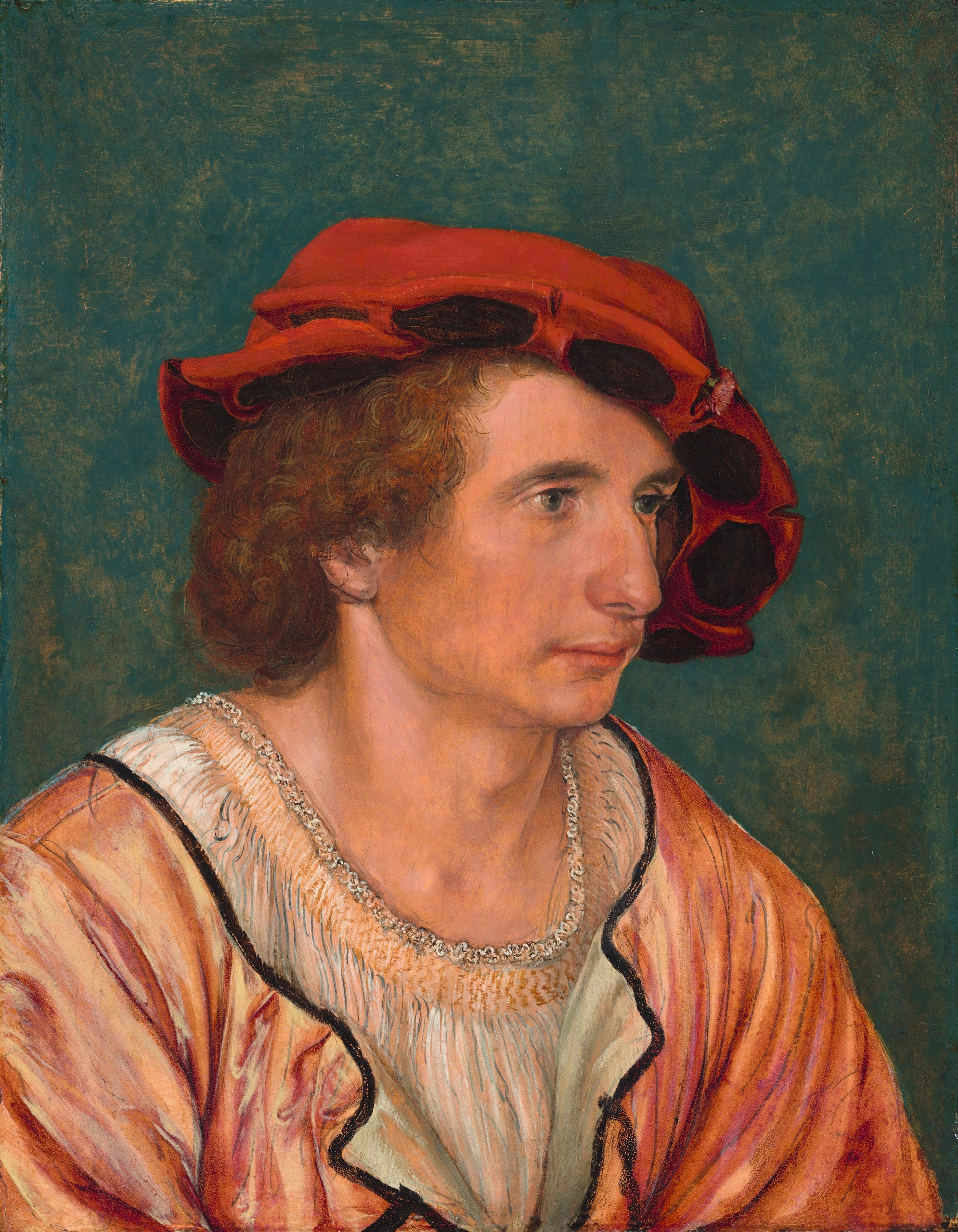
Portrait of a Young Man
Hans Holbein the Younger
National Gallery of Art
The Ambassadors
Hans Holbein the Younger · 1533
National Gallery
Self-portrait
Hans Holbein the Younger · 1542
Uffizi Gallery
Sir Brian Tuke
Hans Holbein the Younger
National Gallery of Art
Works worth knowing
What Hans Holbein the Younger made, and why each one is worth looking at.
Portrait of Sir Richard Southwell
Hans Holbein the Younger · 1536
Uffizi Gallery
The Portrait of Sir Richard Southwell is a painting by the German Renaissance master Hans Holbein the Younger, executed around 1536 to 1537. It is housed in the Uffizi, Florence. The painting was required by Grand Duke Cosimo II de' Medici in 1620 to Thomas Howard, Duke of Arundel, to fill a gap in the family collections.
Christina of Denmark, Duchess of Milan
Hans Holbein the Younger · 1538
National Gallery
Portrait of Christina of Denmark (or Portrait in Mourning) is an oil on oak panel painting by Hans Holbein the Younger completed in 1538. It was commissioned that year by Thomas Cromwell, agent for Henry VIII, as a betrothal painting following the death of the English Queen Jane Seymour. It shows the then sixteen-year-old Christina of Denmark, widow of the Duke of Milan since age 13.
Portrait of a Lady, probably a Member of the Cromwell Family
Hans Holbein the Younger · 1540
Toledo Museum of Art
Portrait of a Lady, probably a Member of the Cromwell Family is an oil on panel portrait completed in around 1535 to 1540 by Hans Holbein the Younger now at the Toledo Museum of Art. The painting shows an elegantly but demurely dressed young woman sitting against a blue-grey background. The subject of this portrait is thought to be a member of the Cromwell family, perhaps Thomas Cromwell's daughter-in-law, Elizabeth Seymour, sister to Jane, third consort of Henry VIII.
An Allegory of the Old and New Testaments
Hans Holbein the Younger · 1530
Scottish National Gallery
An Allegory of the Old and New Testaments is an allegorical and typological oil on panel painting by Hans Holbein the Younger, painted between 1532 and 1536. In 1981, the painting was acquired by the Scottish National Gallery in Edinburgh. It is inspired by Lucas Cranach the Elder, especially the versions of his Law and Grace now in Prague and Gotha, both produced in 1529 and both influenced by Martin Luther's teachings on justification by faith.
Portrait of a Young Man
Hans Holbein the Younger
National Gallery of Art
Portrait of a Young Merchant is an oil on oak painting completed in 1541 by German painter, Hans Holbein the Younger, now in the collection of the Kunsthistorisches Museum, Vienna. It depicts an unidentified young man against a blue-grey background. One of the finest portraits of Holbein's later years, it is one of his customary half-length figures, less than life-size, seated at a table, the body turned to the right, and the face looking out at the spectator.
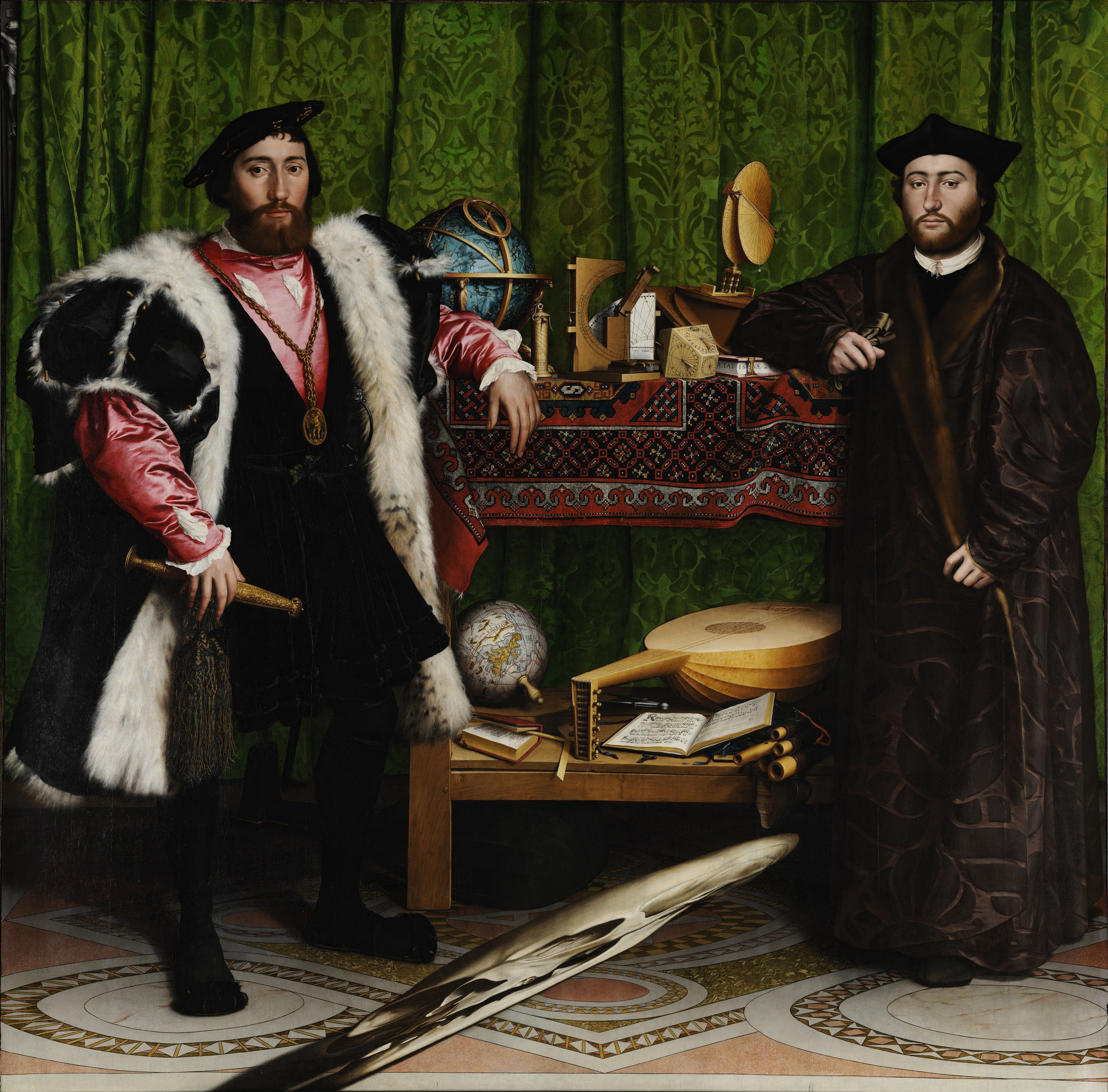
The Ambassadors
Hans Holbein the Younger · 1533
National Gallery
The Ambassadors is a 1533 painting by Hans Holbein the Younger. Also known as Jean de Dinteville and Georges de Selve, after the two people it portrays, it was created in the Tudor period, in the same year Elizabeth I was born. Franny Moyle speculates that Elizabeth's mother, Anne Boleyn, then Queen of England, might have commissioned it as a gift for Jean de Dinteville, the French ambassador, portrayed on the left.
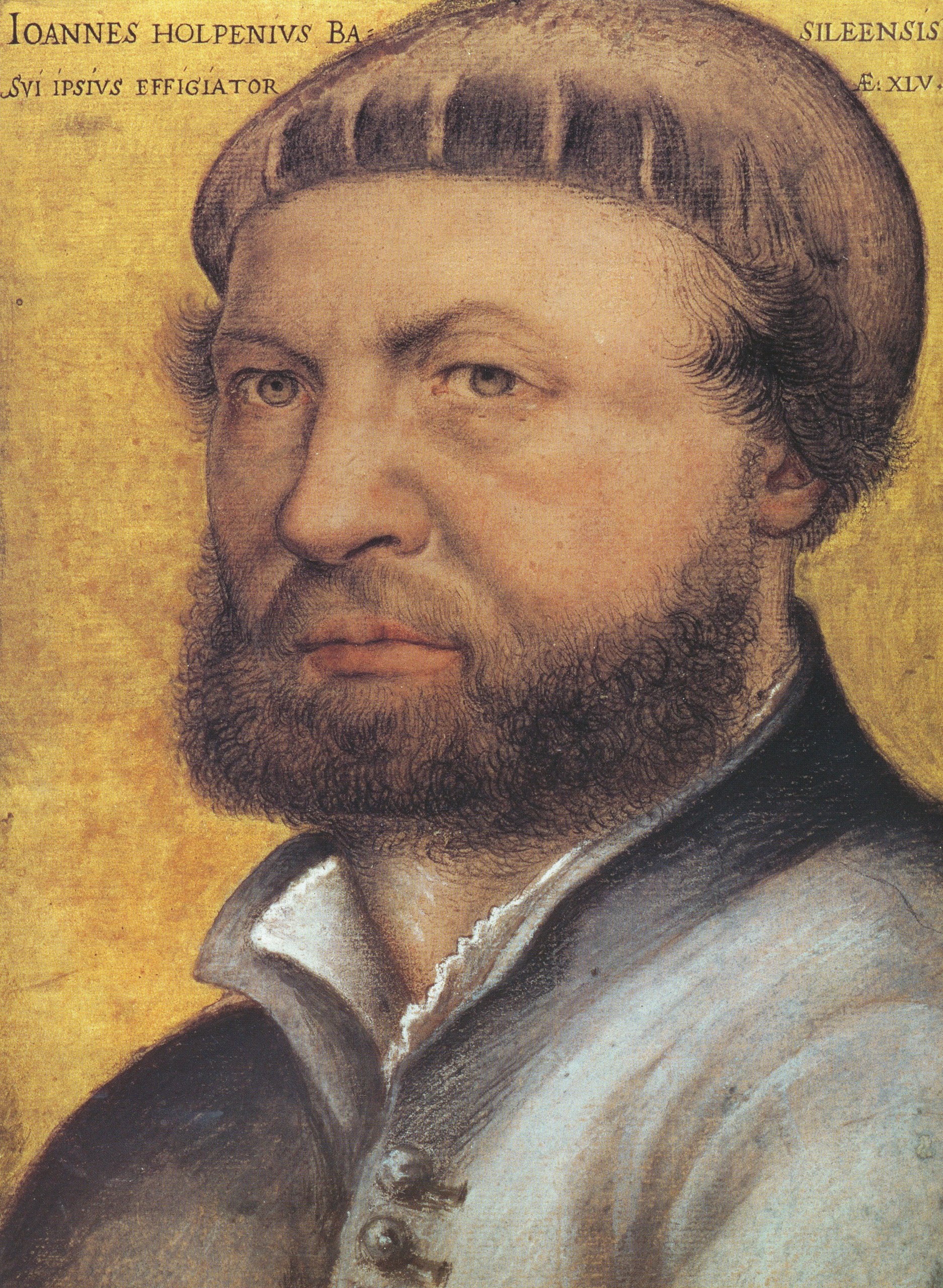
Self-portrait
Hans Holbein the Younger · 1542
Uffizi Gallery
The Self-portrait is a small drawing by the German Renaissance artist and printmaker Hans Holbein the Younger, completed around 1542 to 1543, and housed in the Uffizi, Florence. The gold background was added later by a different artist. According to art historian John Rowlands, "Although this drawing has been enlarged on all sides and heavily reworked, enough of it still shows to allow the assumption that the original work was executed by Holbein.
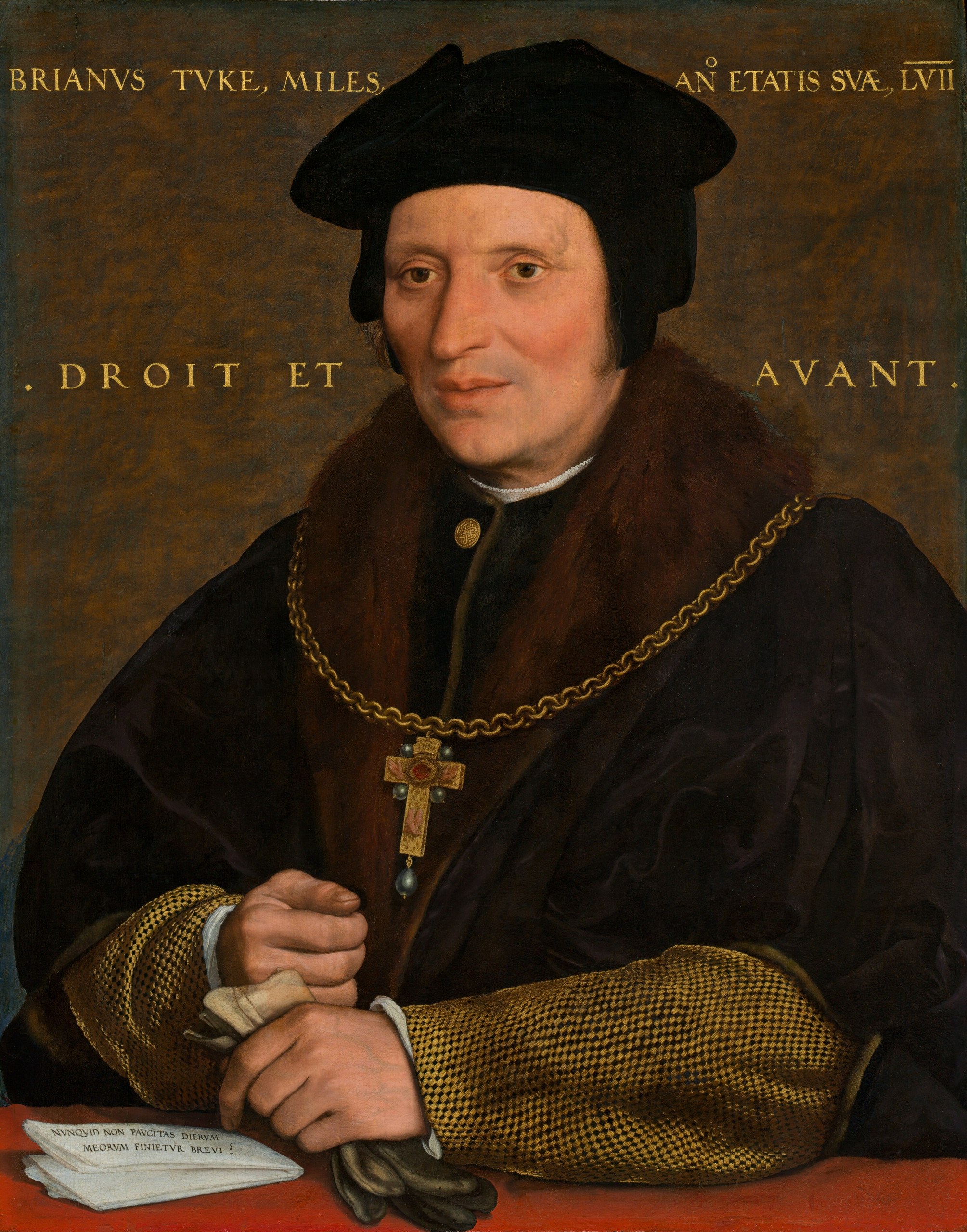
Sir Brian Tuke
Hans Holbein the Younger
National Gallery of Art
Henry Scott Tuke (12 June 1858, 13 March 1929) was an English artist. His most notable work was in the Impressionist style and he is best known for his paintings of nude boys and young men. Trained at the Slade School of Art under Alphonse Legros and Sir Edward Poynter, Tuke developed a close relationship with the Newlyn School of painters, his work being exhibited at the Royal Academy of Arts, of which he became a Full Member.
Where the work hangs
The museums that hold it, and their visitor guides.
If you like Hans Holbein the Younger
Artists held by the same museums.
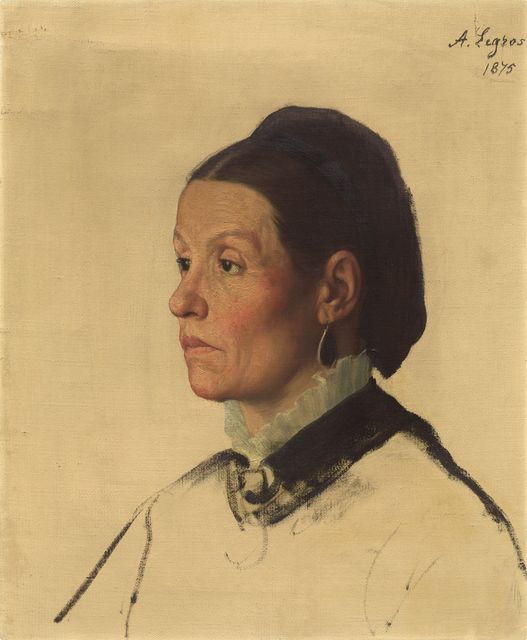
Alphonse Legros
French · 561 in the archive
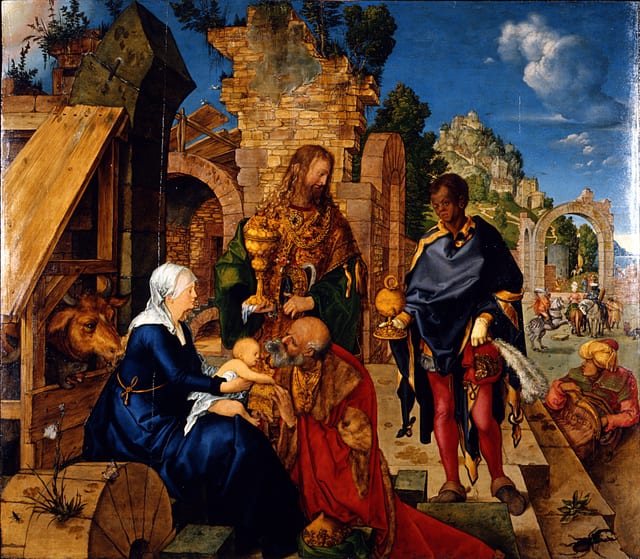
Albrecht Dürer
German · 290 in the archive
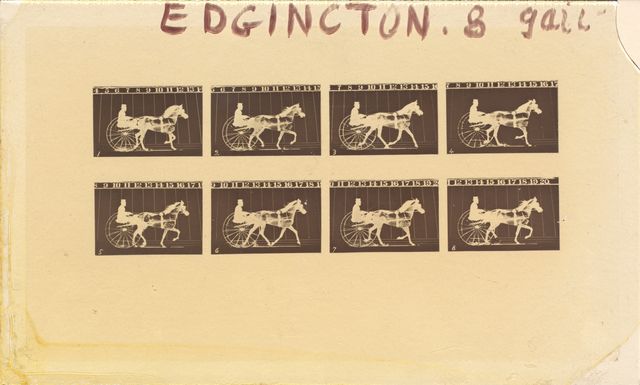
Eadweard Muybridge
English · 259 in the archive
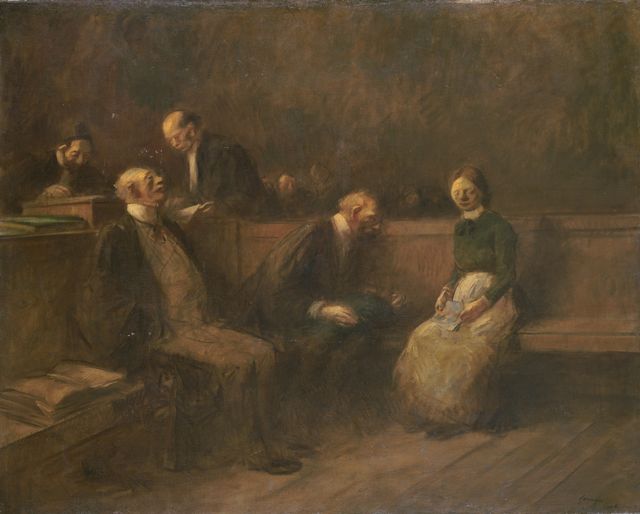
Jean-Louis Forain
French · 259 in the archive
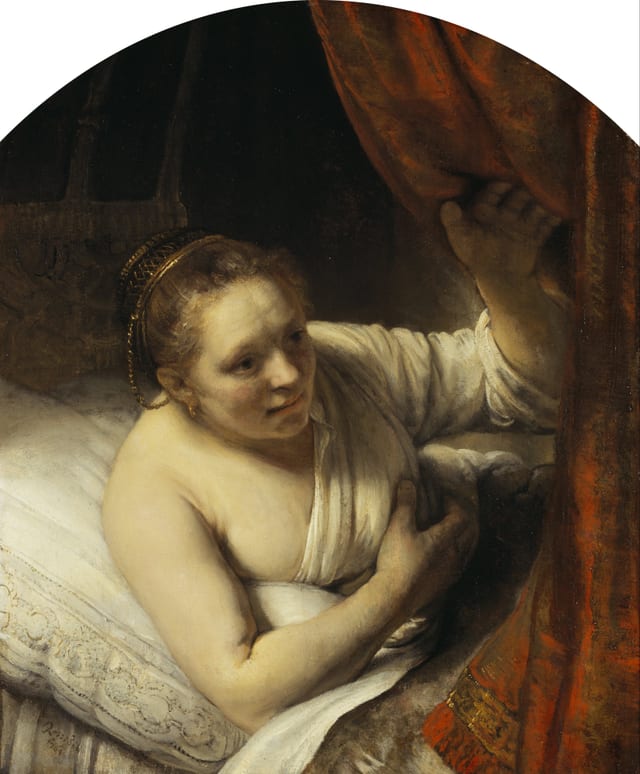
Rembrandt van Rijn
Dutch · 257 in the archive
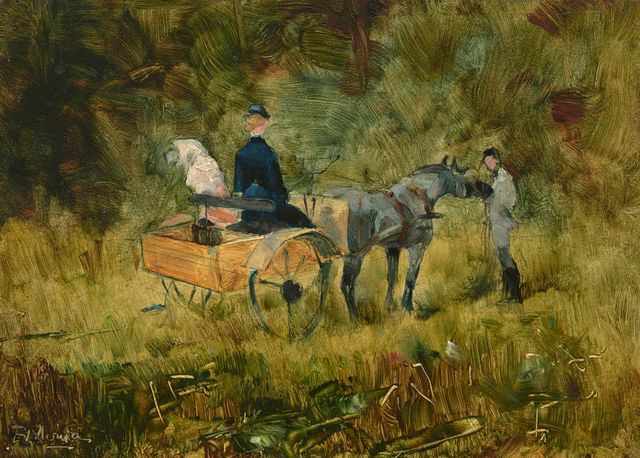
Henri de Toulouse-Lautrec
French · 242 in the archive
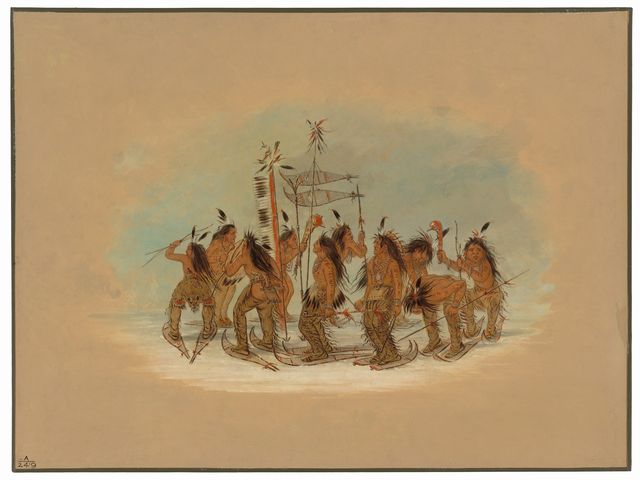
George Catlin
United States · 223 in the archive
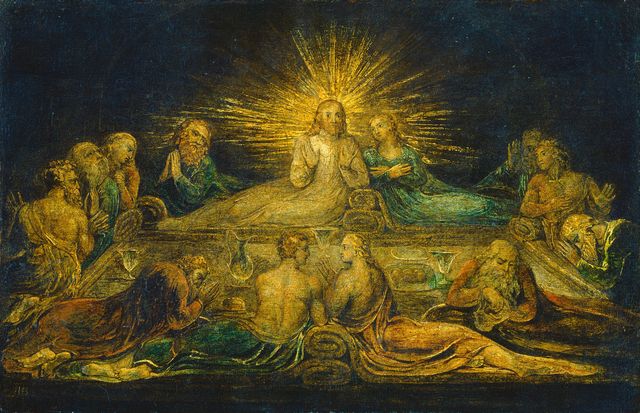
William Blake
United Kingdom of Great Britain and Ireland · 173 in the archive
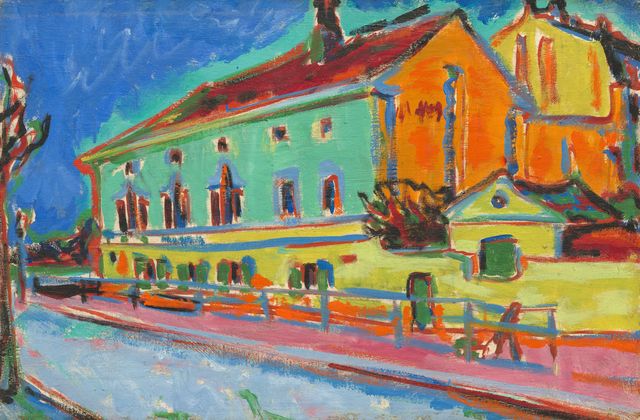
Ernst Ludwig Kirchner
German · 147 in the archive
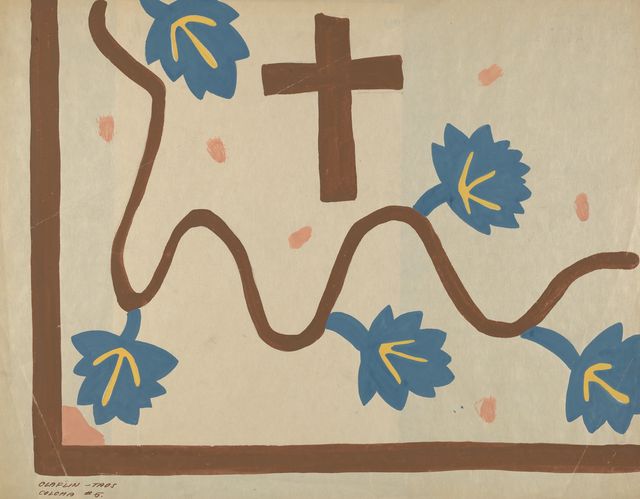
Majel G. Claflin
United States · 135 in the archive
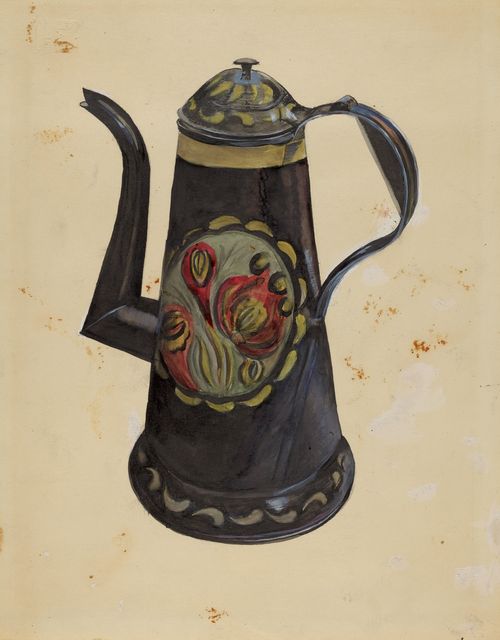
Mina Lowry
United States · 124 in the archive
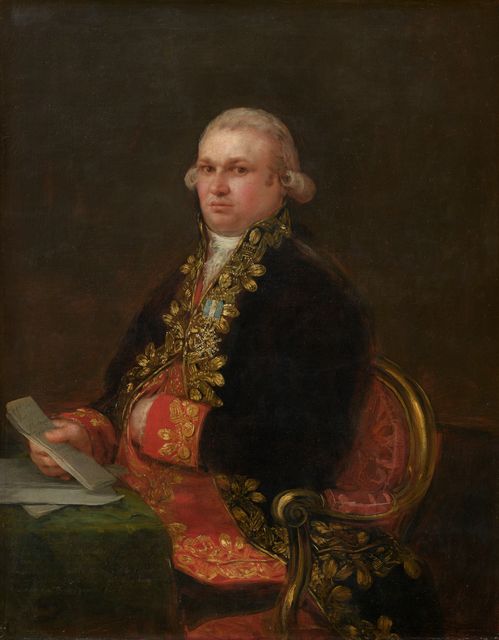
Francisco Goya
Spanish · 115 in the archive
Invite the masters into your living room.
Hans Holbein the Younger on your TV, phone, or tablet. Free to start.
View on MomentableIndependent guide by Momentable · biography from Wikipedia · artworks are in the public domain and credited to the museum that holds them