Pietà
Pietro Perugino · 1483

Pietro Perugino
Italian · 1448–1523
Pietro Perugino was an Italian Renaissance painter of the Umbrian school who developed some of the qualities that found classic expression in the High Renaissance. Raphael became his most famous pupil.
Independent artist guide by Momentable. Biography from Wikipedia; artworks credited to the museums that hold them.
 LIVENow streaming · Pietà
- works in the archive
- 12works in the archive
- life
- 1448–1523life
- movement
- Umbrian schoolmovement
The work
A selection of 10 works, free to stream.
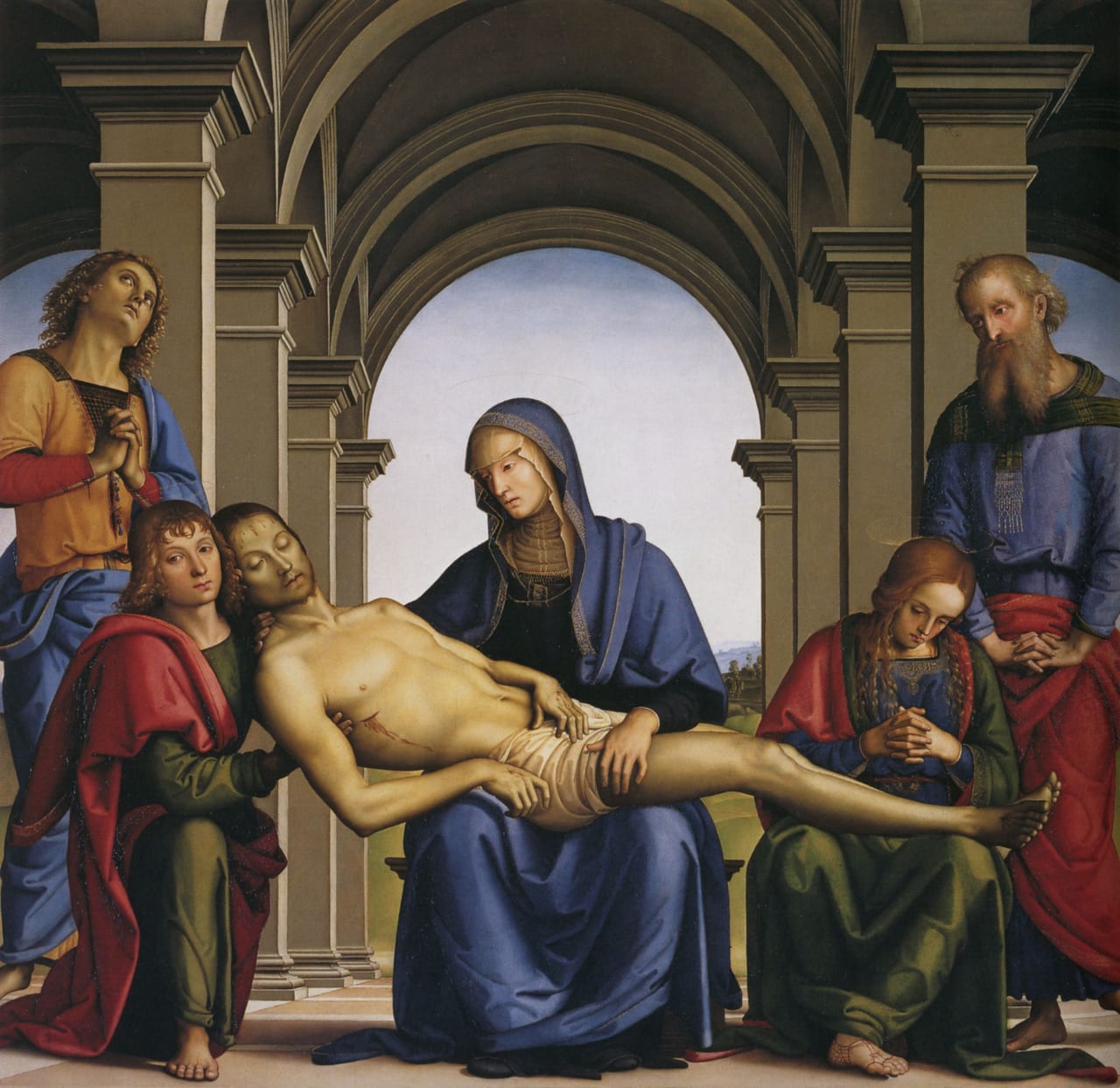
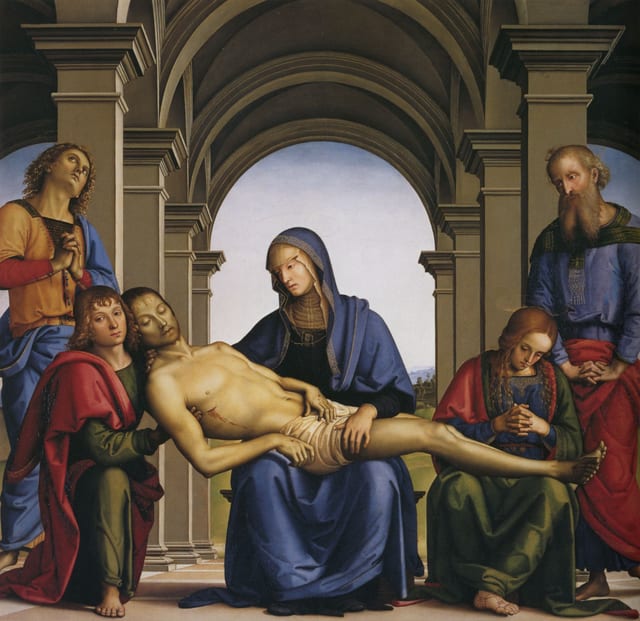
Pietà
Pietro Perugino · 1483
Uffizi Gallery
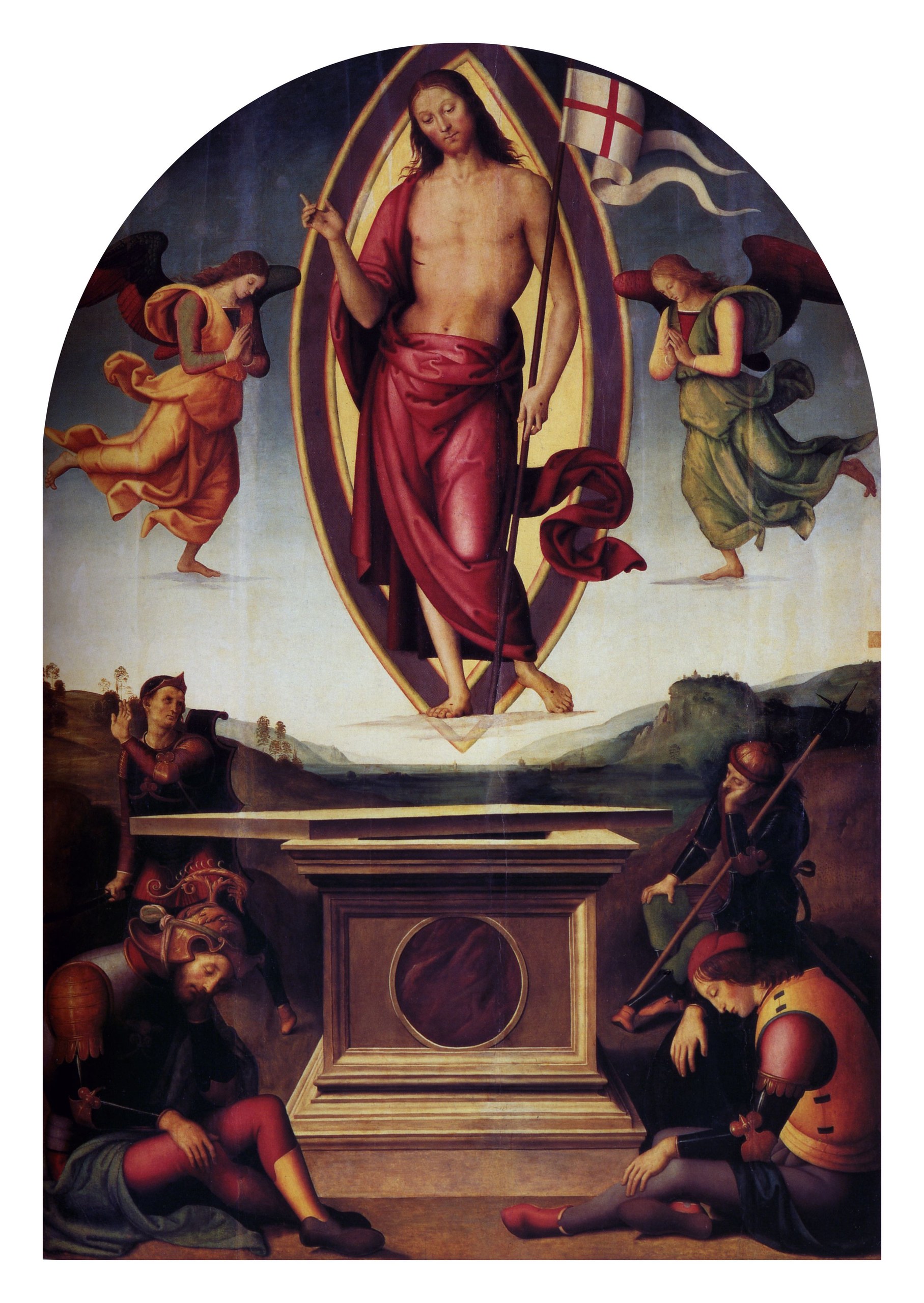
San Francesco al Prato Resurrection
Pietro Perugino · 1499
Vatican Museums
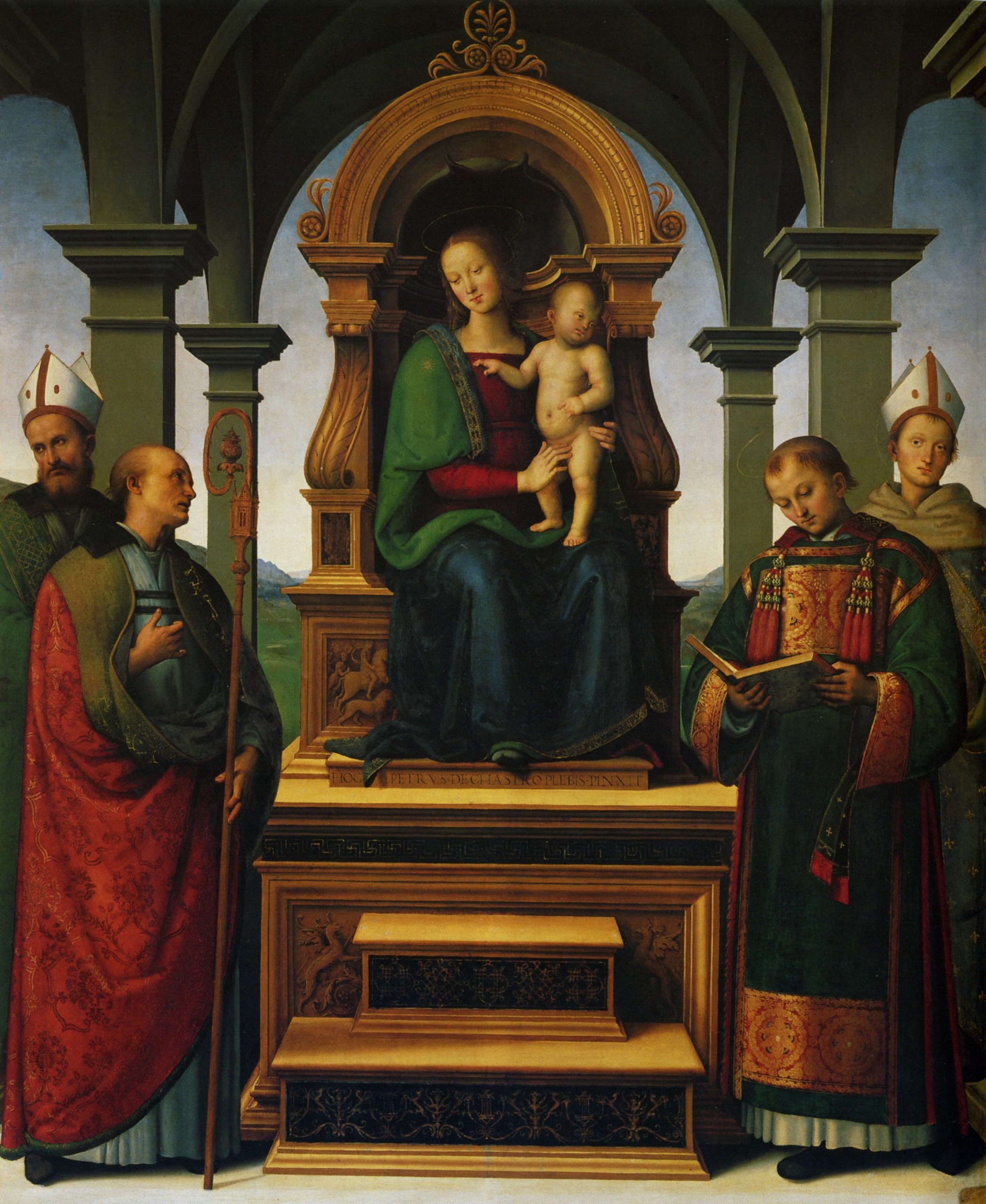
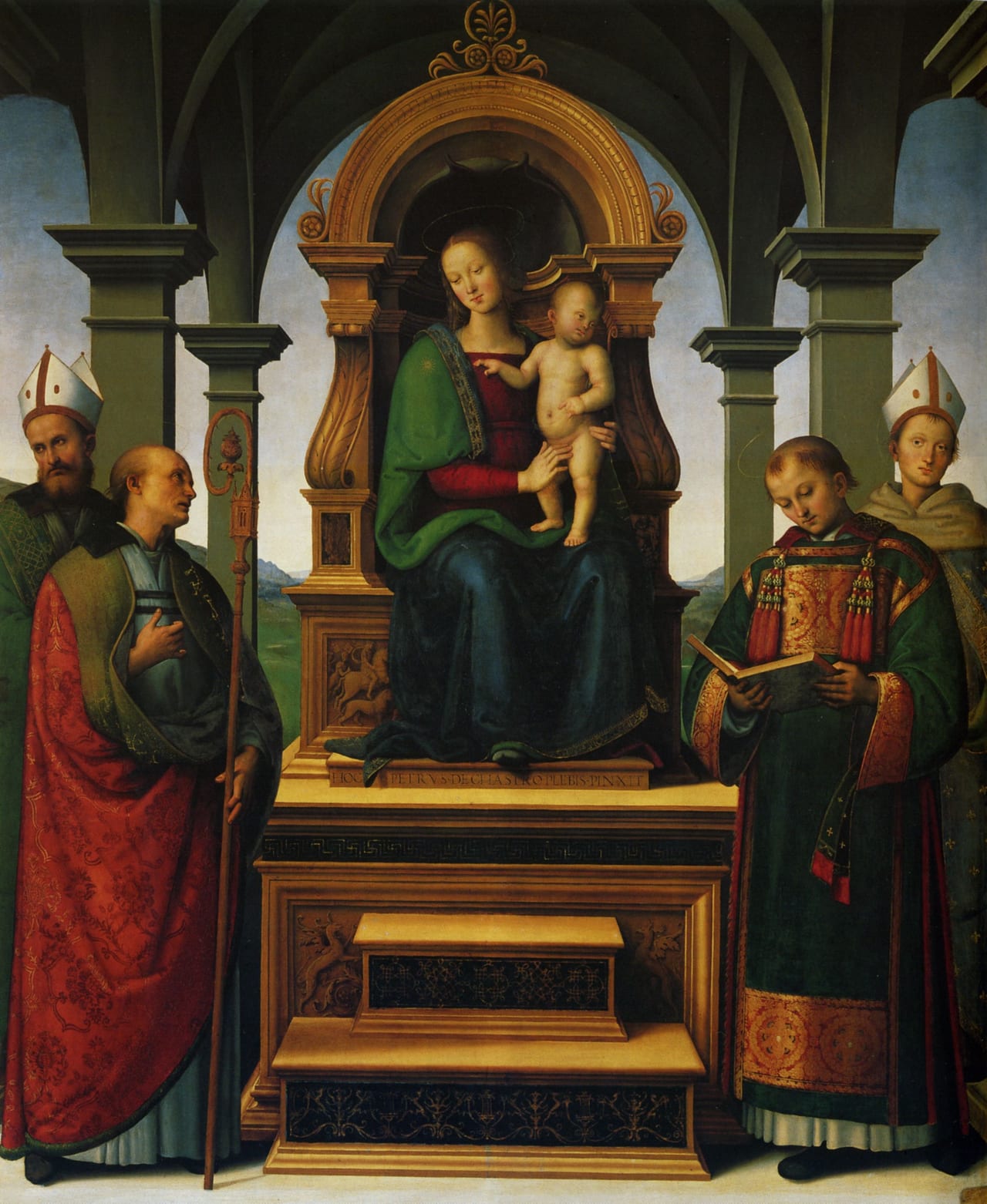
Decemviri Altarpiece
Pietro Perugino · 1495
Vatican Museums
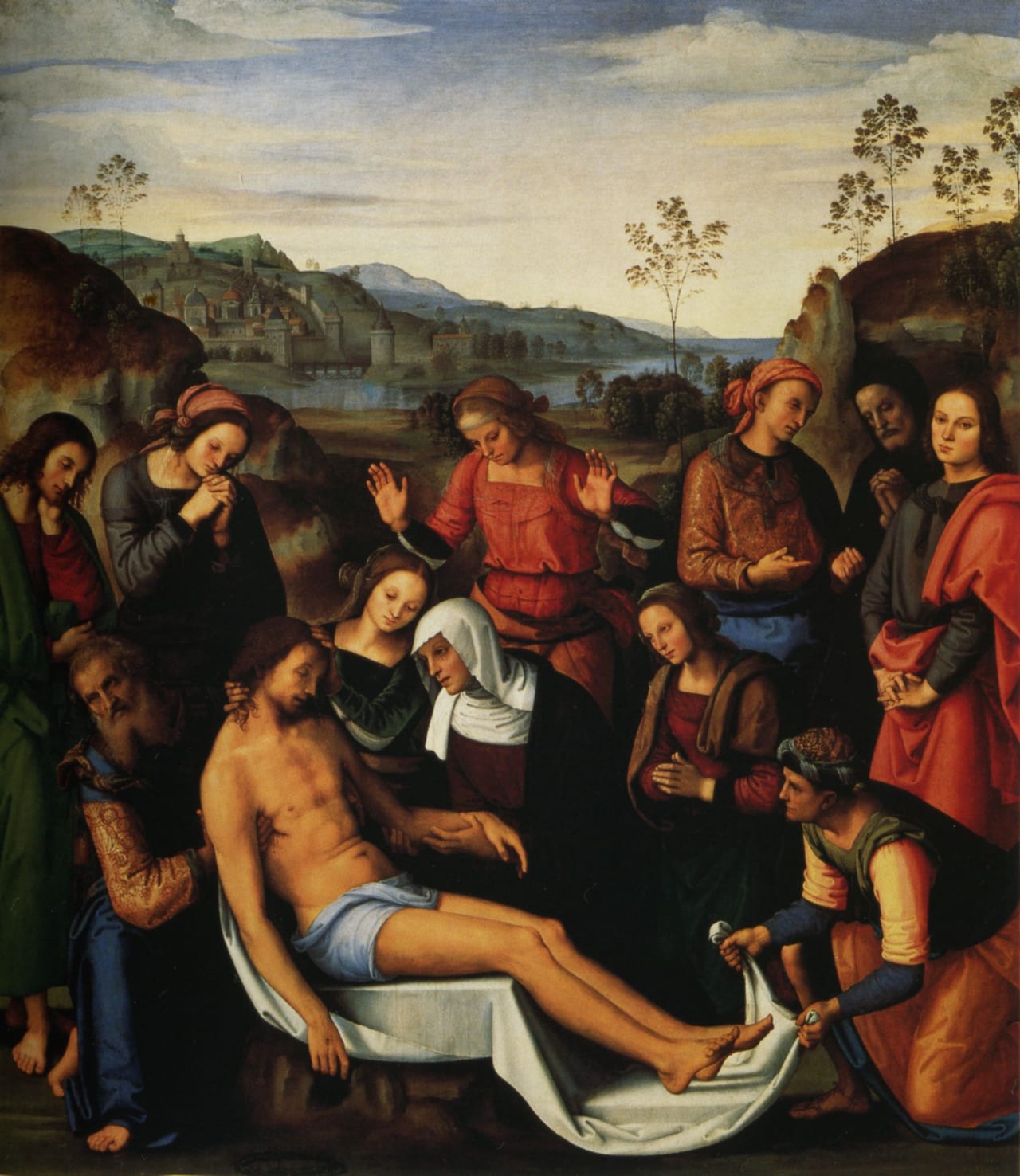
Lamentation over the Dead Christ
Pietro Perugino · 1495
Palazzo Pitti
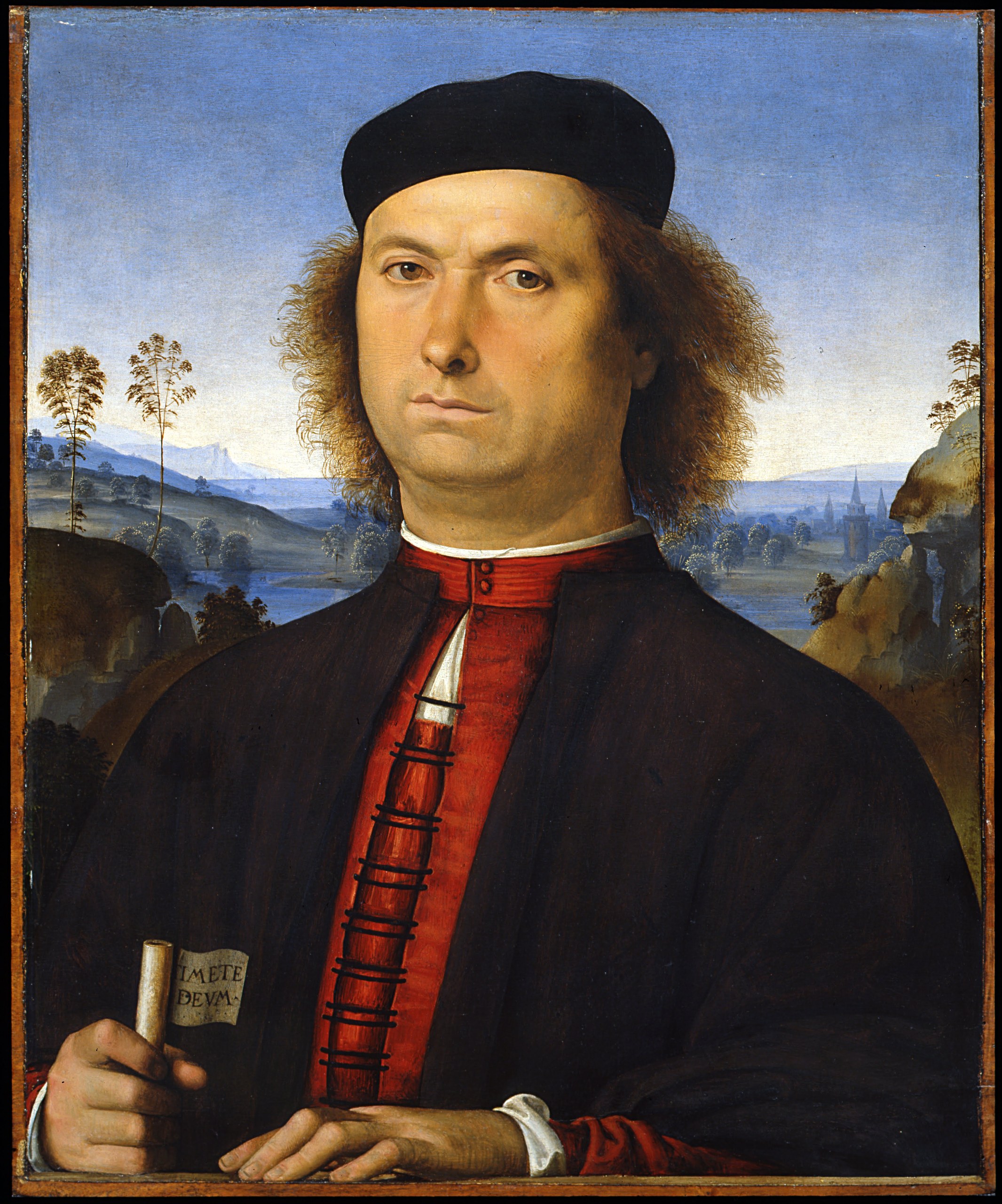
Portrait of Francesco delle Opere
Pietro Perugino · 1494
Uffizi Gallery
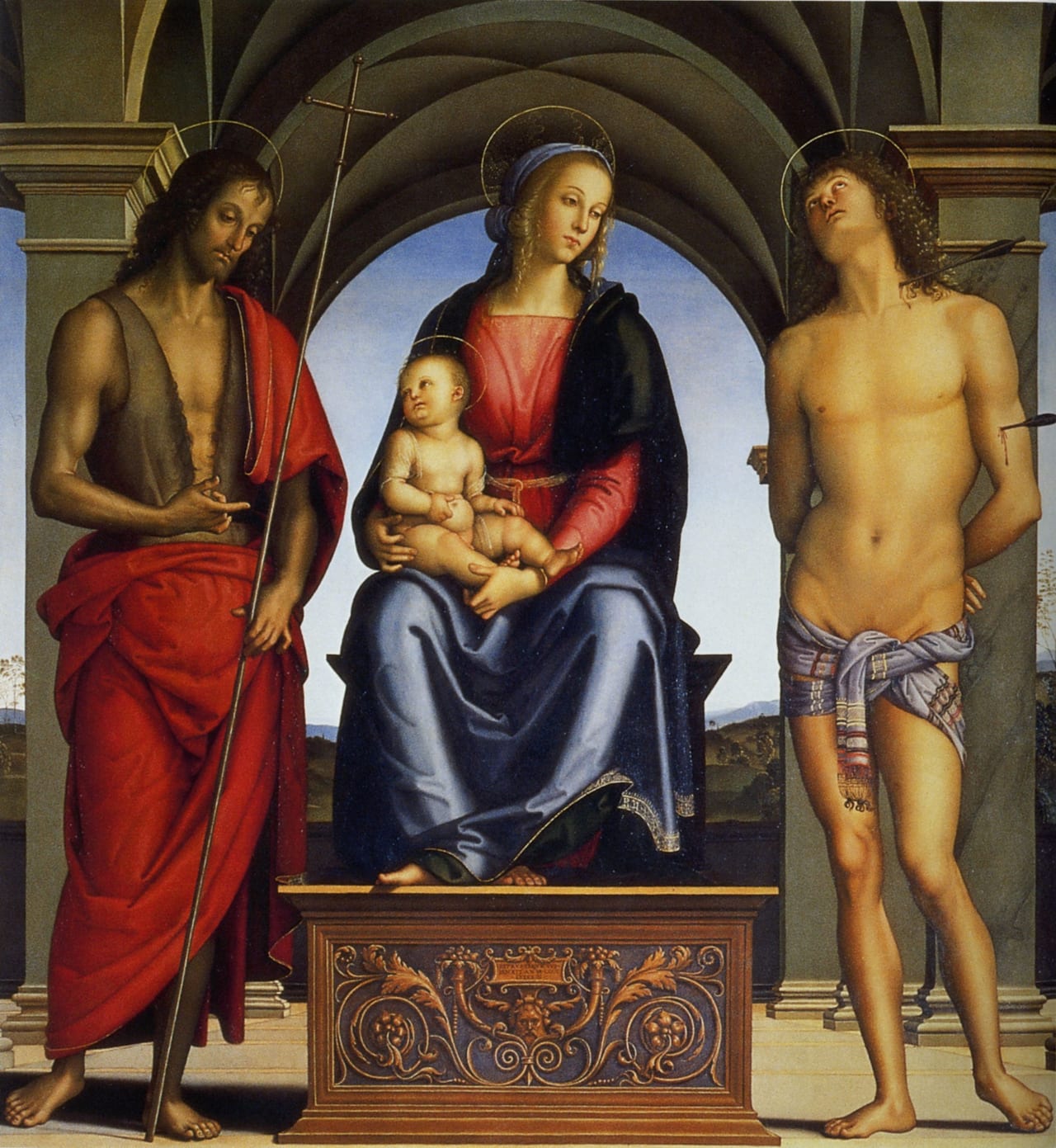
Madonna and Child Enthroned with Saints John the Baptist and Sebastian
Pietro Perugino · 1493
Uffizi Gallery
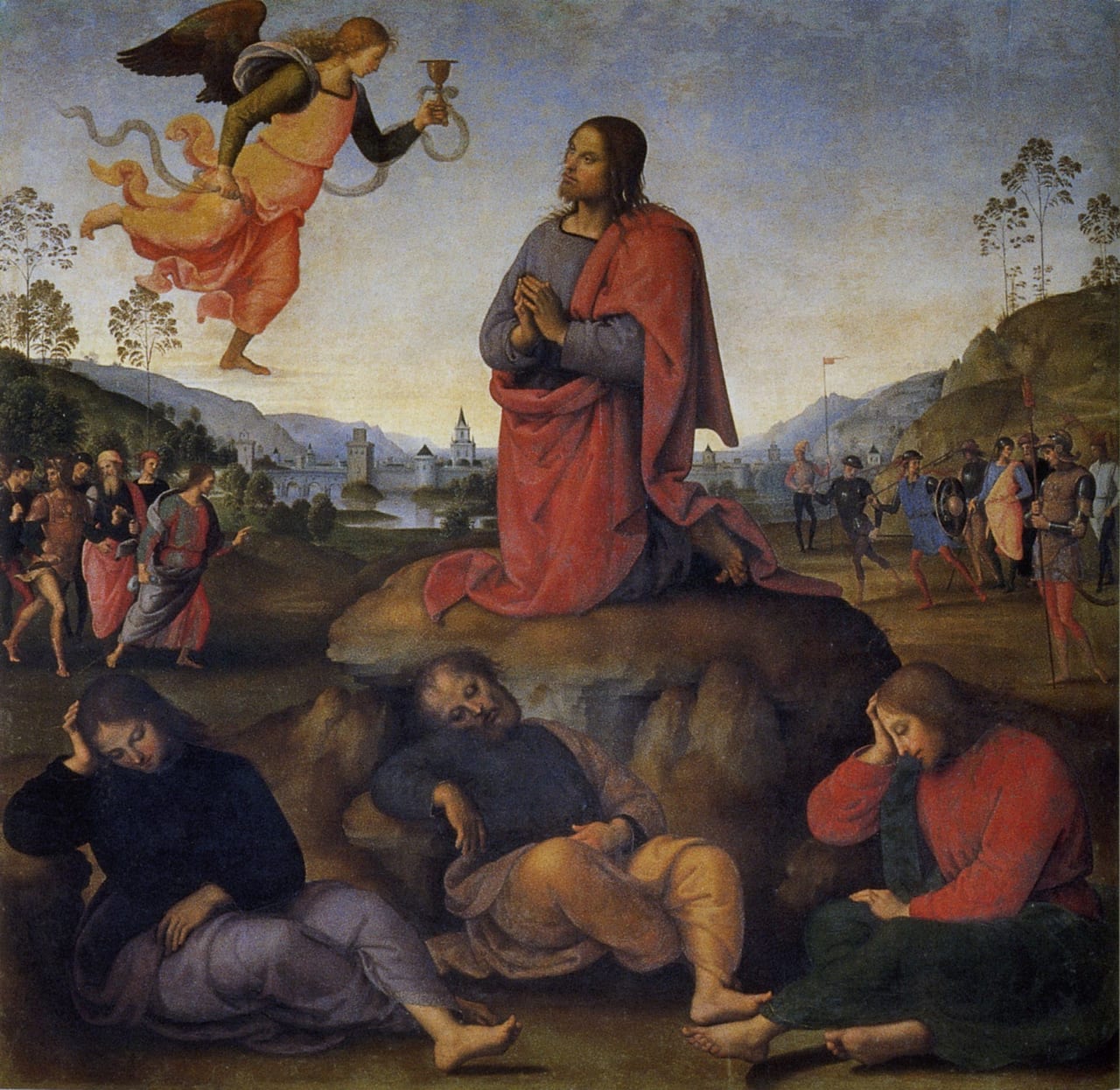
Agony in the Garden
Pietro Perugino · 1483
Uffizi Gallery
![The Crucifixion with the Virgin, Saint John, Saint Jerome, and Saint Mary Magdalene [right panel]](https://art.momentable.art/momentable/nga/31_w2560.jpg)
The Crucifixion with the Virgin, Saint John, Saint Jerome, and Saint Mary Magdalene [right panel]
Pietro Perugino
National Gallery of Art
![The Crucifixion with the Virgin, Saint John, Saint Jerome, and Saint Mary Magdalene [left panel]](https://art.momentable.art/momentable/nga/29_w2560.jpg)
The Crucifixion with the Virgin, Saint John, Saint Jerome, and Saint Mary Magdalene [left panel]
Pietro Perugino
National Gallery of Art
![The Crucifixion with the Virgin, Saint John, Saint Jerome, and Saint Mary Magdalene [middle panel]](https://art.momentable.art/momentable/nga/30_w2560.jpg)
The Crucifixion with the Virgin, Saint John, Saint Jerome, and Saint Mary Magdalene [middle panel]
Pietro Perugino
National Gallery of Art
Works worth knowing
9 of Pietro Perugino's works, and what makes each one worth a look.
Pietà
Pietro Perugino · 1483
Uffizi Gallery
Pietà is a painting by the Italian Renaissance artist Pietro Perugino, executed around 1483 to 1493, and housed in the Uffizi Gallery, Florence. The work was painted for the church of the convent of San Giusto alle mura together with the Agony in the Garden and a Crucifixion. Renaissance art biographer Giorgio Vasari saw them in side altars of the church of San Giovanni Battista alla Calza, after the original location had been destroyed during the Siege of Florence in 1529.
San Francesco al Prato Resurrection
Pietro Perugino · 1499
Vatican Museums
The San Francesco al Prato Resurrection is a painting by the Italian Renaissance painter Pietro Perugino, dating to c. It is housed in the Pinacoteca Vaticana, Rome. The work takes its name from the church of San Francesco al Prato of Perugia, where it was originally located.
Decemviri Altarpiece
Pietro Perugino · 1495
Vatican Museums
Decemviri Altarpiece is a painting by the Italian Renaissance artist Pietro Perugino, executed in 1495 to 1496, and housed in the Pinacoteca Vaticana in Vatican City. The work was commissioned by the Decemviri ("Ten Men") of Perugia for the chapel in the Palazzo dei Priori, and was executed 1495 to 1496. It was originally surmounted by a Pietà (87 × 90 cm), now at the Galleria Nazionale dell'Umbria.
Lamentation over the Dead Christ
Pietro Perugino · 1495
Palazzo Pitti
The Lamentation over the Dead Christ is a painting of the common subject of the Lamentation of Christ by the Italian Renaissance painter Pietro Perugino, executed in 1495 and now in the Galleria Palatina of Palazzo Pitti, Florence, Italy. The painting was commissioned by the Poor Clares of the convent of Santa Chiara in Florence. Highly admired by its contemporaries, the work inspired other paintings such as Fra Bartolomeo's Pietà and Andrea del Sarto's Luco Pietà, both in the same collection.
Portrait of Francesco delle Opere
Pietro Perugino · 1494
Uffizi Gallery
The Portrait of Francesco delle Opere is a painting by the Italian Renaissance artist Perugino, dating to 1494 and housed in the Uffizi Gallery, Florence. The first mention of the painting is in the inventory of Cardinal Leopoldo de' Medici's artworks, as a work of "Second Manner Raphael". In the 19th century it was attributed to Perugino and Jacopo Francia, and then again to Perugino by Antonio Ramirez de Montalvo, who discovered an inscription in the rear.
Madonna and Child Enthroned with Saints John the Baptist and Sebastian
Pietro Perugino · 1493
Uffizi Gallery
The Madonna and Child Enthroned with Saints John the Baptist and Sebastian is a painting by the Italian Renaissance artist Pietro Perugino, executed in 1493 and housed in the Uffizi Gallery, Florence. The work was commissioned by Cornelia Salviati, widow of the Venetian merchant Giovanni Martini, and his son Roberto, for the chapel of the convent of San Domenico, Fiesole, which had been perhaps restored by Giuliano da Sangallo a few years before. In 1493 Perugino had married Chiara Fancelli, daughter of the architect Luca Fancelli; the face of the Madonna is a portrait of her.
Agony in the Garden
Pietro Perugino · 1483
Uffizi Gallery
Agony in the Garden is a painting by the Italian Renaissance artist Pietro Perugino, executed around 1483 to 1493, and housed in the Uffizi Gallery, Florence. The work was painted for the church of the convent of San Giusto alle mura together with the Pietà and a Crucifixion. Renaissance art biographer Giorgio Vasari saw them in side altars of the church of San Giovanni Battista alla Calza, after the original location had been destroyed during the Siege of Florence in 1529.
The Crucifixion with the Virgin, Saint John, Saint Jerome, and Saint Mary Magdalene [right panel]
Pietro Perugino
National Gallery of Art
The Mond Crucifixion or Gavari Altarpiece is an oil on poplar panel dated to 1502 to 1503, making it one of the earliest works by Italian Renaissance artist Raphael, perhaps the second after the c.1499 to 1500 Baronci Altarpiece. It originally comprised four elements, of which three survive, now all separated: a main panel of the Crucified Christ with the Virgin Mary, Saints and Angels which was bequeathed to the National Gallery, London, by Ludwig Mond, and a three-panel predella from which one panel is lost; the two surviving panels are Eusebius of Cremona raising Three Men from the Dead with Saint Jerome's Cloak in the Museu Nacional de Arte Antiga, in Lisbon, and Saint Jerome saving Silvanus and punishing the Heretic Sabinianus in the North Carolina Museum of Art. This early work by Raphael was commissioned by the wool merchant Domenico Gavari as the altarpiece for his burial chapel in the south aisle of the church of San Domenico in Città di Castello, in Umbria, near Raphael's home town of Urbino.
Where the work hangs
The museums that hold it, and their visitor guides.
If you like Pietro Perugino
Artists held by the same museums.
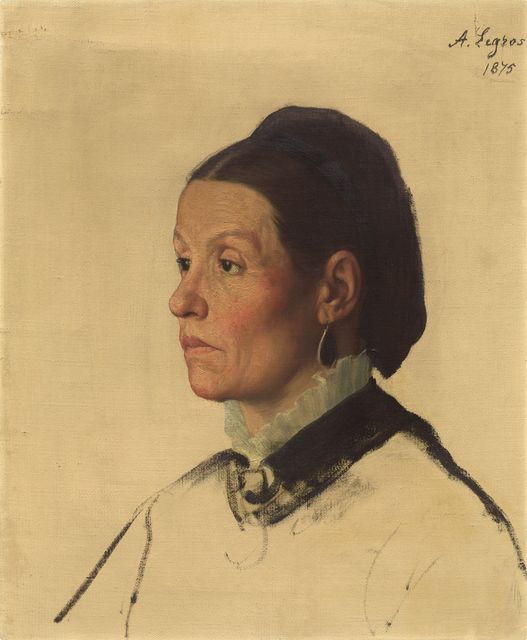
Alphonse Legros
French · 561 in the archive
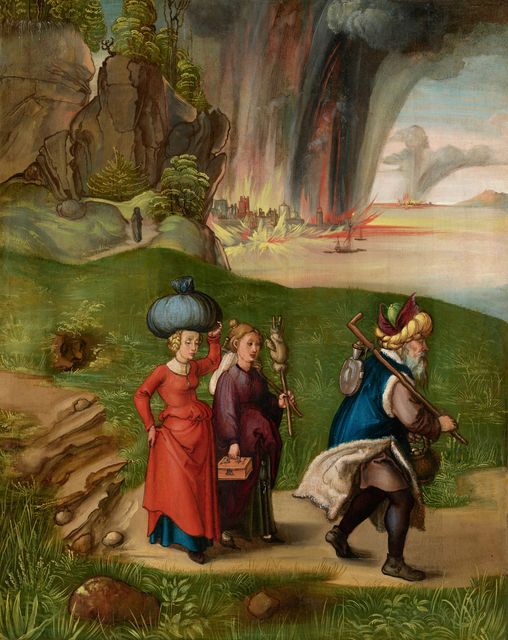
Albrecht Dürer
German · 289 in the archive
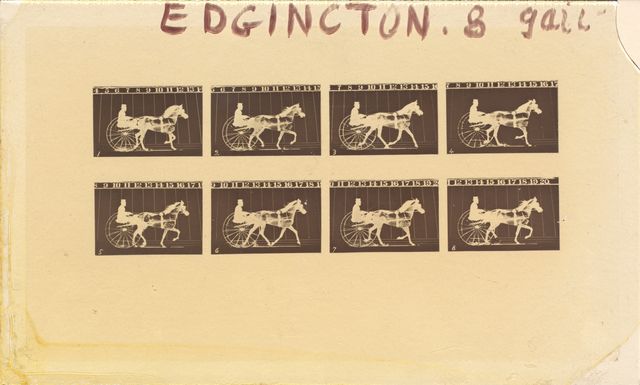
Eadweard Muybridge
English · 259 in the archive
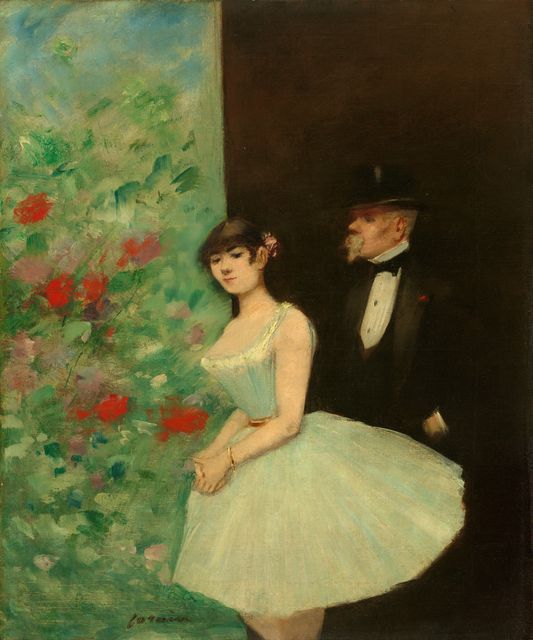
Jean-Louis Forain
French · 259 in the archive
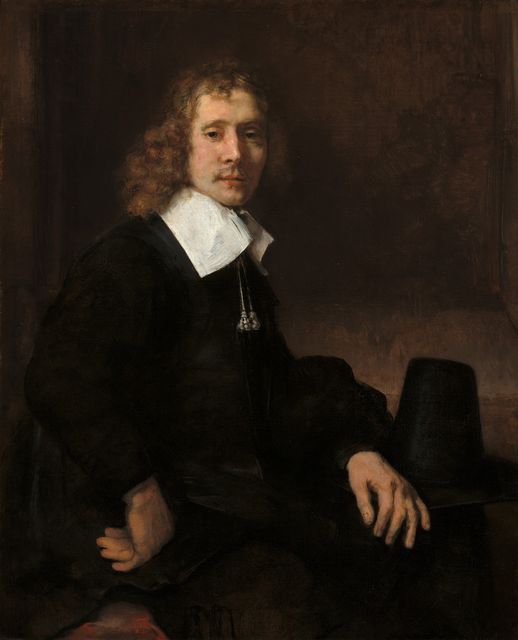
Rembrandt van Rijn
Dutch · 252 in the archive
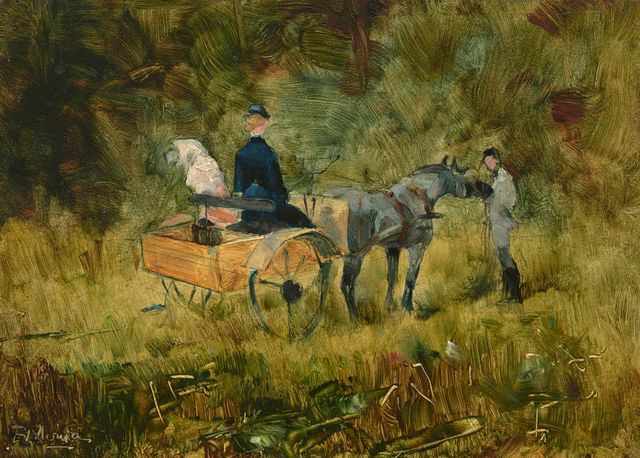
Henri de Toulouse-Lautrec
French · 242 in the archive
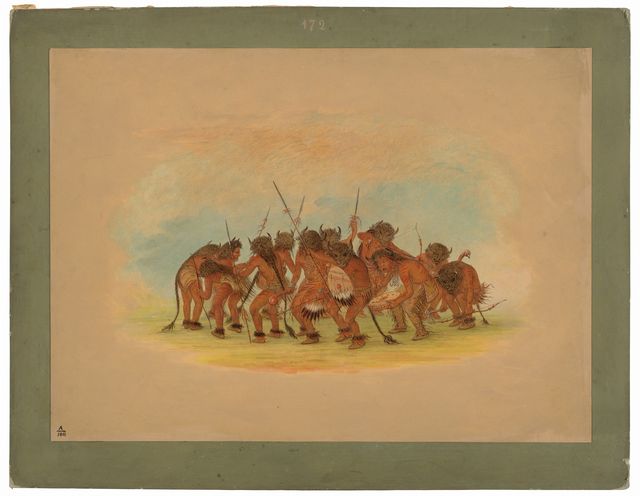
George Catlin
United States · 223 in the archive
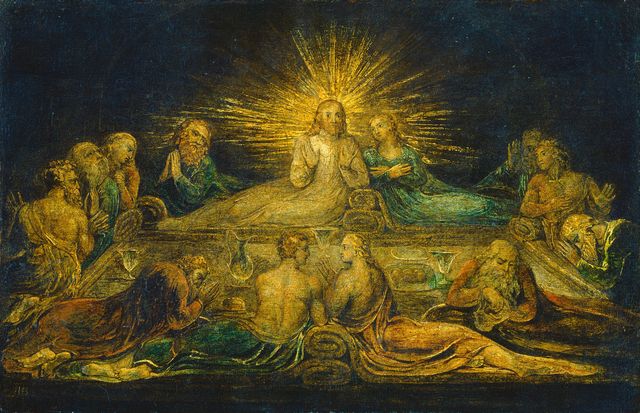
William Blake
United Kingdom of Great Britain and Ireland · 173 in the archive
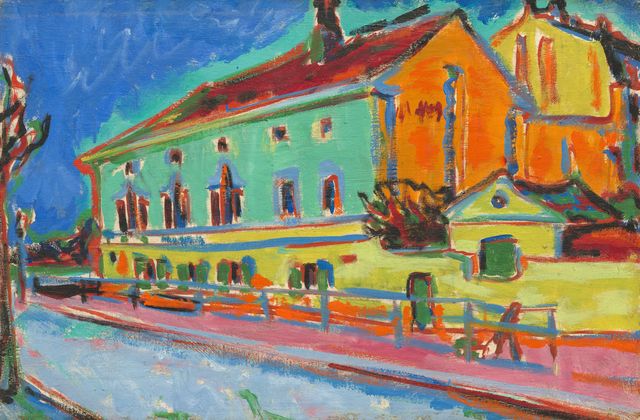
Ernst Ludwig Kirchner
German · 147 in the archive
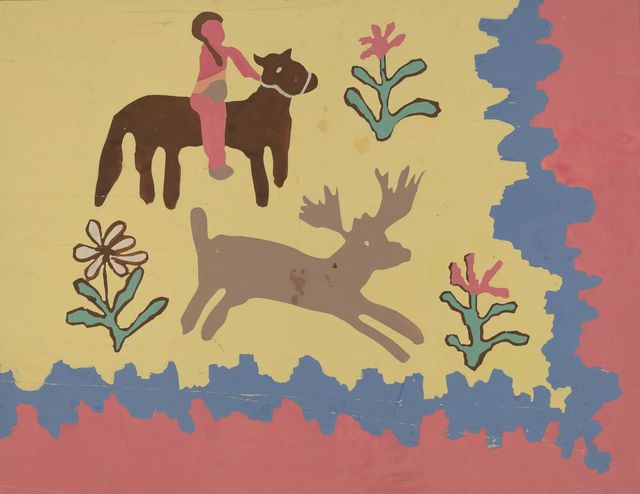
Majel G. Claflin
United States · 135 in the archive
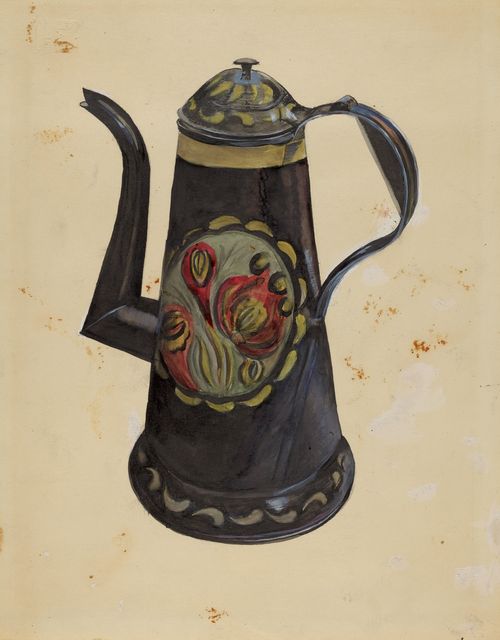
Mina Lowry
United States · 124 in the archive
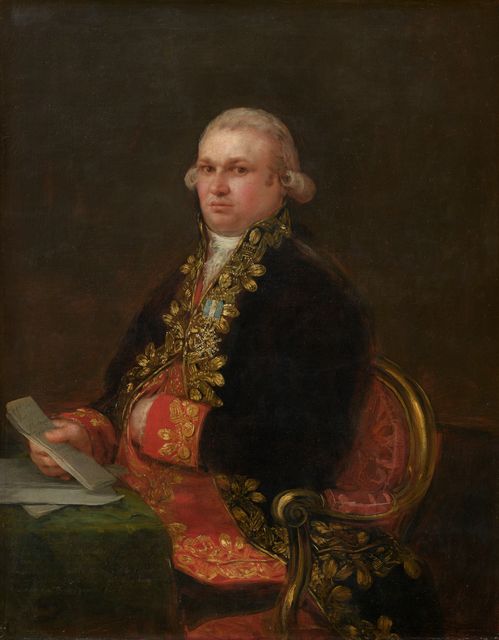
Francisco Goya
Spanish · 113 in the archive
Invite the masters into your living room.
Pietro Perugino on your TV, phone, or tablet. Free to start.
View on MomentableIndependent guide by Momentable · biography from Wikipedia · artworks are in the public domain and credited to the museum that holds them